Chateaux Overload
After leaving Angers we drove along the Loire river to the town of Saumur. Here we found an Aire on an island of the river opposite Saumur’s Castle.
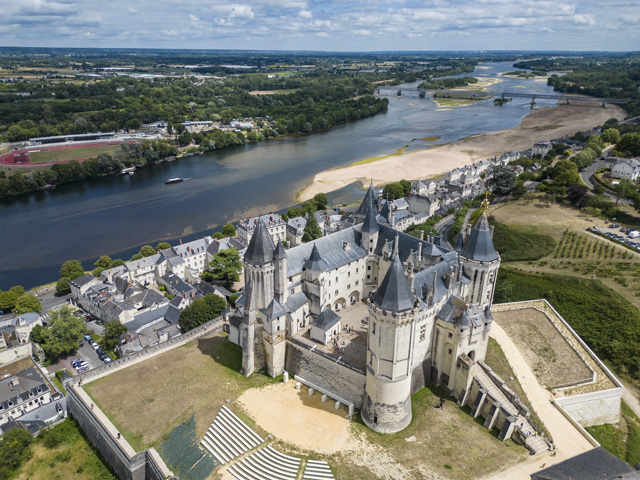
Saumur Castle was originally built in 962 but was burnt down in 1026. It was rebuilt and was primarily a defensive structure until 1368 when Louis I decided to turn it into a palace. It continued in this guise until Napoleon decided to turn it into a prison in 1808 but this was only the case until 1814 when it reverted to the Ministry of war as a fortress. It was transformed into a museum in 1912.
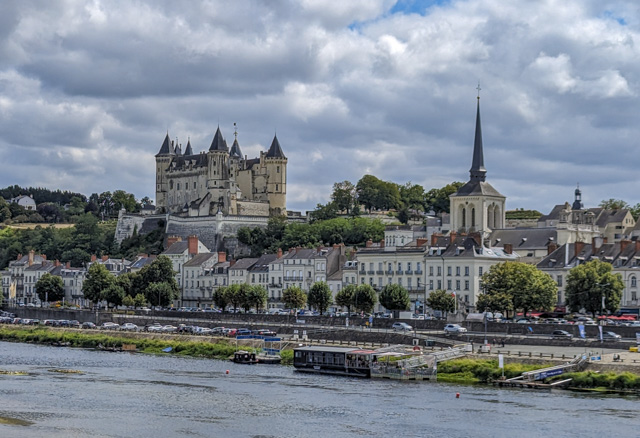
The castle looks like a fairytale castle from the outside but the inside is mostly bare stone and is now the municipal museum. Most of the castles/palaces/ chateaus we’ve visited are reasonably priced when compared to home, but for me I’m just not sure this one is worth the money to go inside, although it is certainly impressive from the outside.
After leaving Saumur we continued driving down the Loire river which is a wide river with many islands and some dry channels.
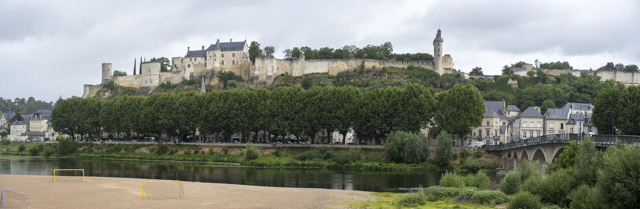
We stopped off in the town of Chinon which has a long castle towering above the town but didn’t stay too long other than to get soaking wet in a downpour as we had a wander around the town.
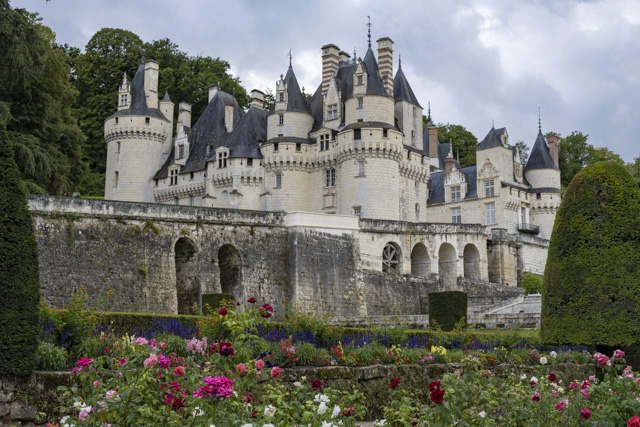
We ended our day parked outside the Chateau d’Usse, allegedly the inspiration for the Sleeping Beauty Disney castle. We waited out the rain and visited the castle in the hour before closing time, avoiding the rain and the crowds.
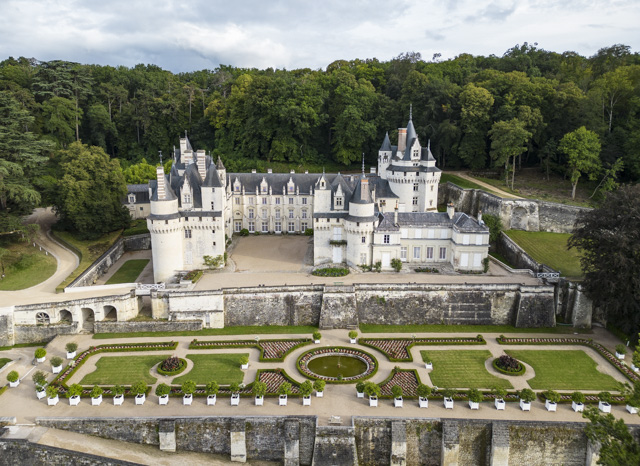
The parking area was absolutely rammed when we arrived but overnight there were only 3 or 4 other motorhomes.
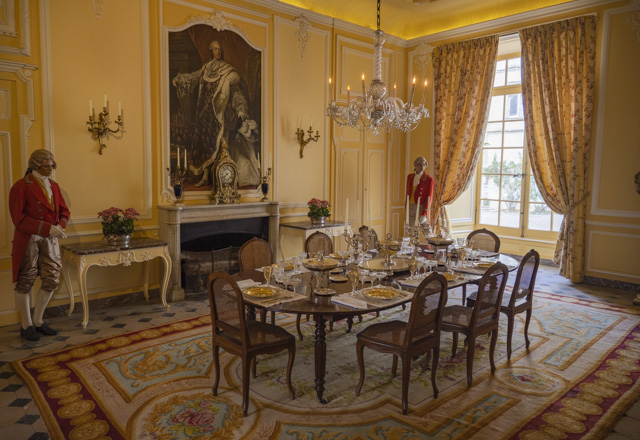
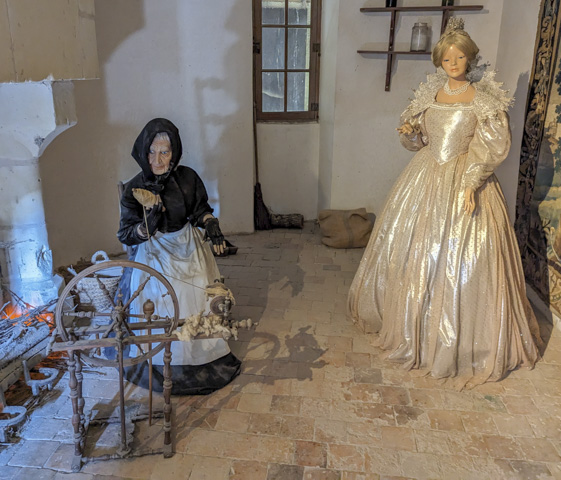
The Chateau d’Usse has a number of restored rooms with a collection of mannequins showcasing women’s dresses from 1863 onwards . There are also some pretty formal gardens and quite strangely, in one of the towers, dioramas of the Sleeping Beauty story.
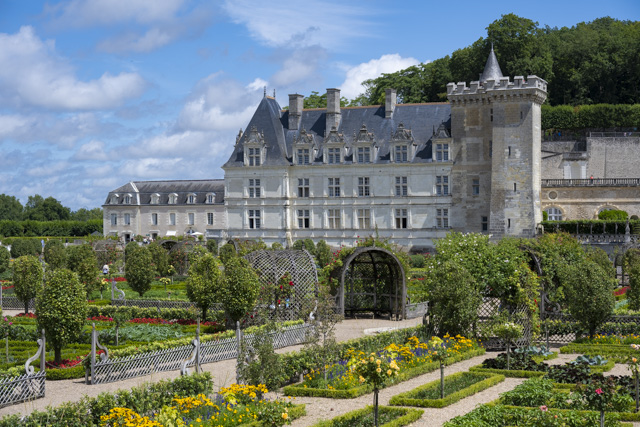
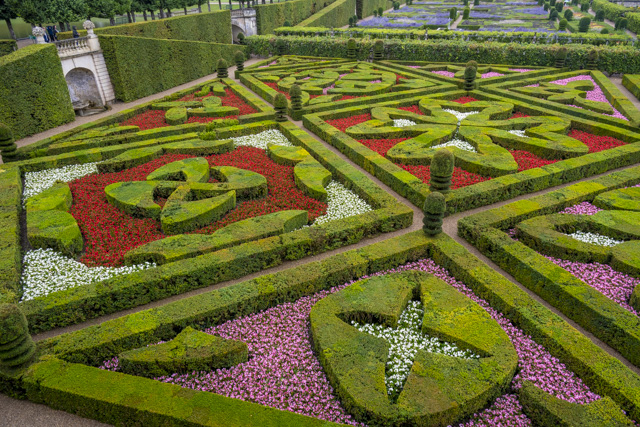
Our next stop was one of the most impressive Loire chateau, Villandry. Here the gardens are the star, although the interior of the chateau itself is also interesting. The gardens are very large and are the best of French formal gardens.
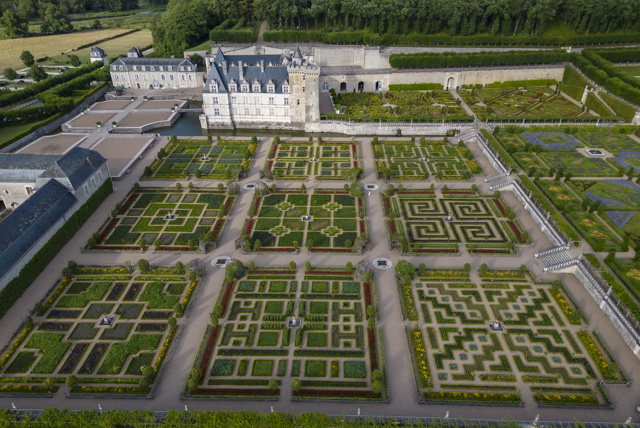
There has been a fortress at Villandry since the 12th century but in 1532 Francois I’s treasury secretary, Jean Breton, razed the building, with the exception of the turreted tower on the right, and built the Chateau on the foundations. The gardens we see today have been re-modelled to look as they would have in the 16th century as in the 19th century the gardens were turned into a large English style park. English style gardens in France seem to mean grass and trees and little in the way of flowers.
The largest part of the formal gardens in the ornamental kitchen garden which is planted in a multicoloured chequerboards design . All the plants are edible and include blue leeks, red cabbage, beetroot and carrots.
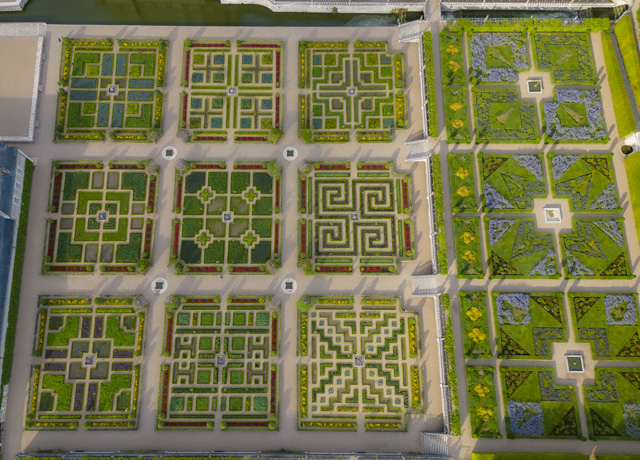
Only 10 full-time gardeners are employed at Villandry and they plant 115,000 flowering and vegetable plants every year and prune over 1000 lime trees.
While at Villandry I took the opportunity to get on my bike and cycle through the sunflower fields to the Chateau Azay Le Rideau and back. Fields of sunflowers have been a real feature of our journey through central France and always make us smile.
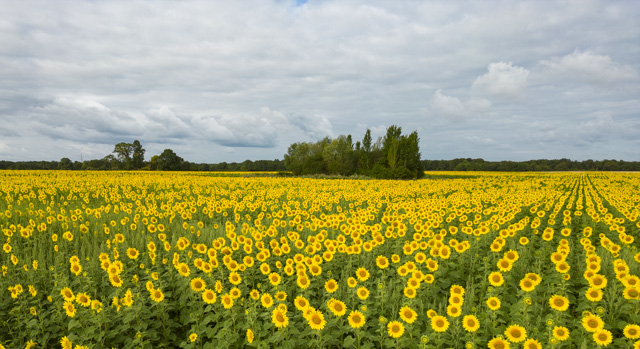
This was a really nice cycle on quiet back roads with hardly any cars.
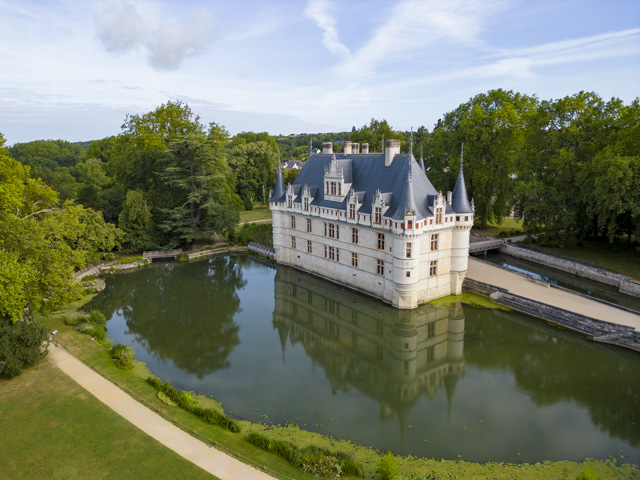
From Villandry we continued West to the town of Amboise. Another town with a chateau at its heart. We stayed on another island in the Loire river here.
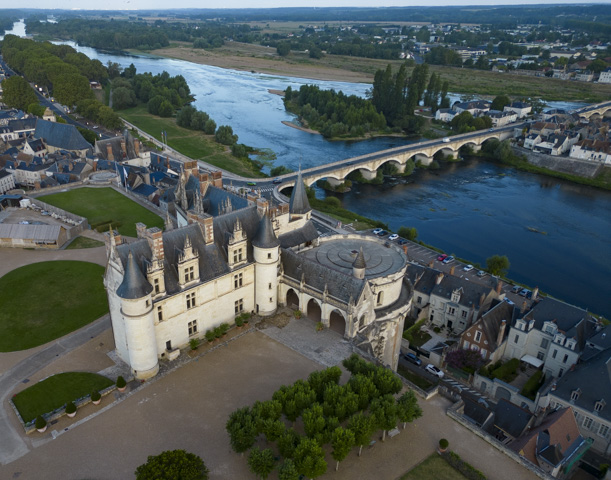
We elected not to go in the chateau here. At €10-15 each to go in each of these chateau we’d soon be broke if we went in all of them and completely chateau’d out. We’ve left plenty of chateau to see on our next visit to the Loire so we know we will be back.
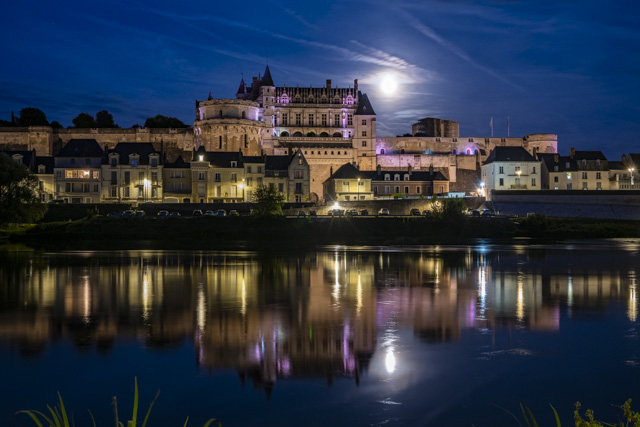
Amboise is a very nice and very busy tourist town with a main street packed with restaurants catering to the many tourists here. There is a pretty clock tower and a very good free municipal museum in the town hall which we checked out. Amboise is also well known as it was where Leonardo da Vinci spent his final years and it is possible to visit his house.

As it was our wedding anniversary we booked a restaurant for the evening and had a fantastic meal with maybe a little bit too much wine. This was definitely the best meal we’ve had since getting to France and I would highly recommend La Terrace restaurant in Amboise.
There is no let up in our touring though and the next day we were off to the next chateau on our list which is Chenonceau.
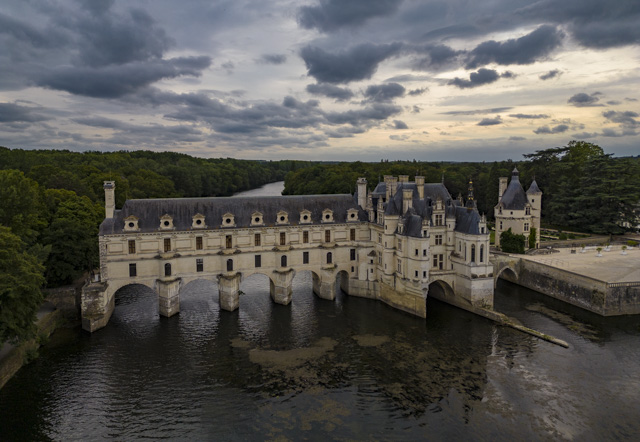
This chateau is a bit different to the others as it is built straddling the river Cher. This is one of the busiest French tourist sites with 800,000 visitors a year. So our plan was to stay just outside the chateau overnight and be one of the first in as soon as it opened in the morning.
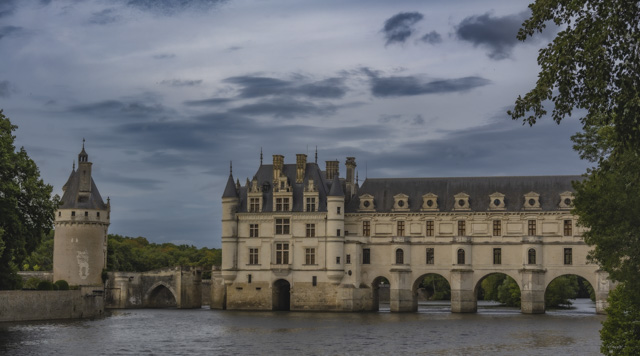
This really paid off as by the time we had finished touring the interior of the building the number of visitors was crazy and you could hardly move in the rooms.
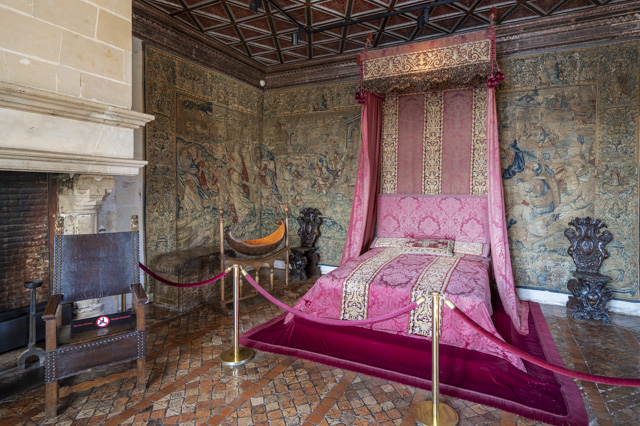
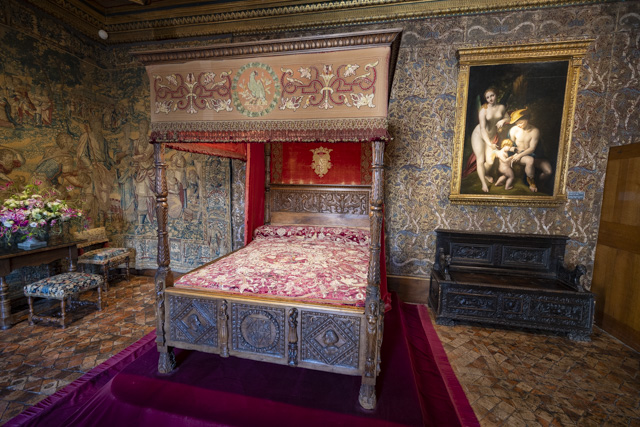
Chenonceau is known as the Ladies Chateau and was the residence of a number of important French women. The two most famous were Diane de Poitiers, 1499-1566, mistress to Henry II of France, who was responsible for building over the river Cher, and Catherine de Medici, 1519-1589, wife of Henry II of France, who governed France as regent from here.
The most impressive room here is definitely the 60m long gallery over the river which was used as a ballroom.
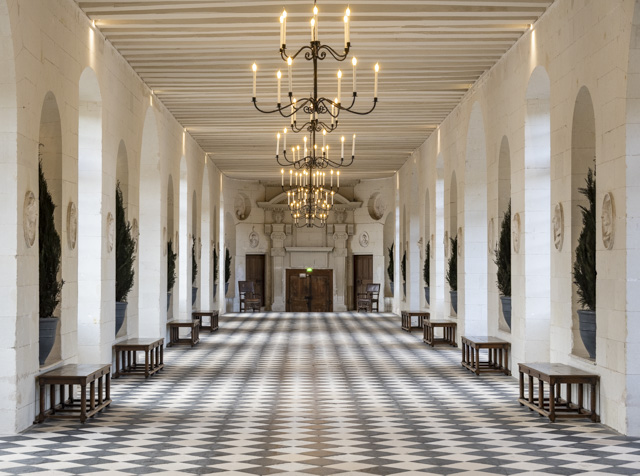
Interestingly, during WWI the galleries were temporarily converted into military hospital wards where 120 beds were installed as well as an operating theatre on the ground floor and during WWII the river cher was the demarcation line between the occupied zone and the free zone, so the resistance used the chateau to pass large numbers of people through from the occupied zone.
And so to our last Chateau of the Loire valley and probably the grandest of them all. Chambord was built as a hunting lodge for King Francis I and is situated in a walled park of 55 sq km.
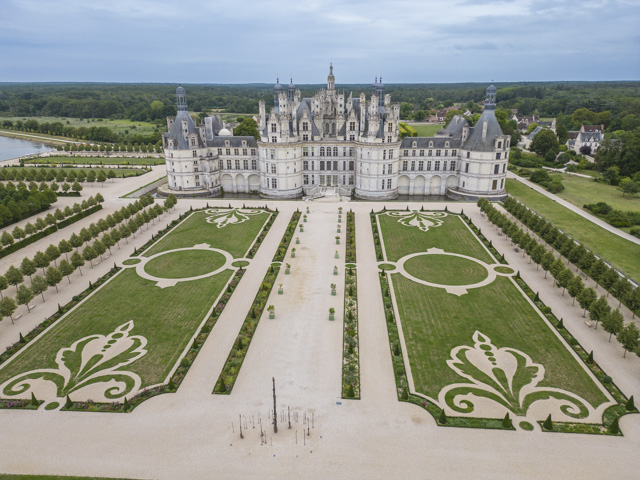
The scale of Chambord is enormous with 426 rooms, 282 chimneys and 77 staircases and even with the map and signage it was easy to get lost exploring the inside of this giant.
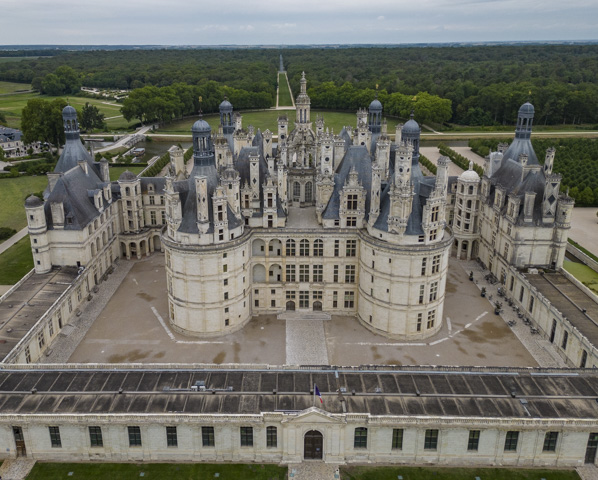
Construction was started in 1515 by Francois I but it wasn’t completed until 1686 during the reign of Louis XIV. Although huge in scale it was never popular with the Kings of France because it was considered very drafty and almost impossible to heat.
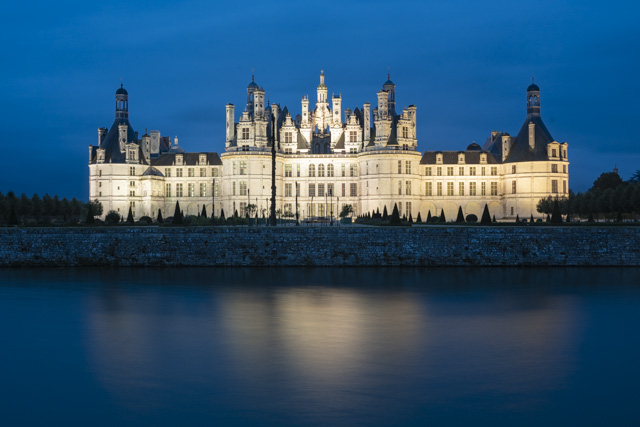
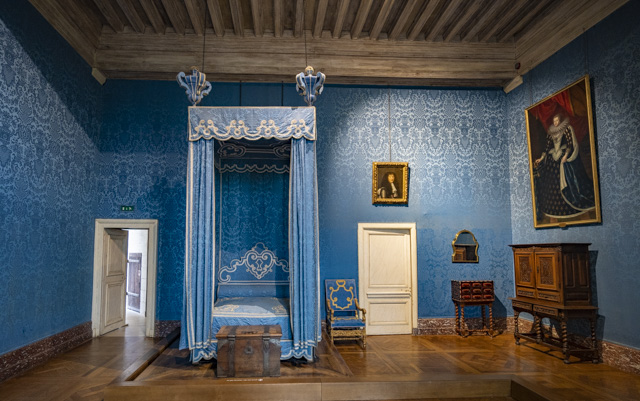
Most of the time the chateau was kept empty, other than a small staff, until the Court decided to visit. Then an army of people would descend in order to furnish it and get it ready for the Court.
Even today the majority of the park is not accessible to the public and is used as a hunting preserve by high ranking French government officials. I am certain the British government would never be allowed to get away with this, although apparently no French president has hunted here since at least 2010.
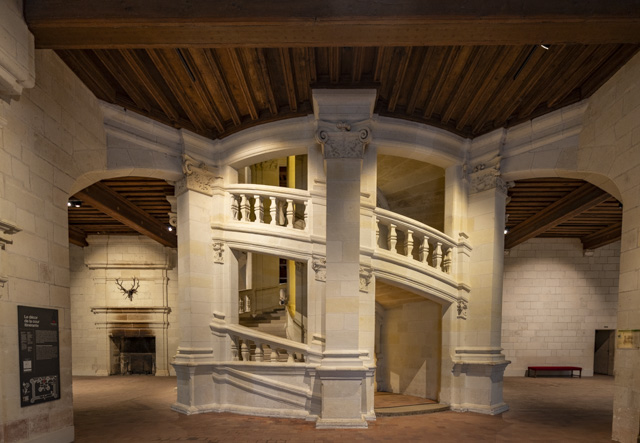
Chambord is famous for its double helix staircase in the centre of the keep, said to be the brain child of Leonardo da Vinci. This staircase has two independent sets of stairs that twist around a central core and because of the design someone ascending one side can never meet someone descending on the other side. Its certainly very grand and on a fitting scale for this castle.
 FromAtoB