Escape to the Alps
The heatwave was in full force with temperatures of 38c to 40c in the lowlands so it was definitely time to find some altitude and cool nights at the very least.
We were meeting family in Italy so we drove up towards the Col du Val Cenis as our best way to get into Italy without paying a high toll to drive through one of the tunnels. Going over one of the Cols (mountain pass) is also a great way to get stunning views and a breath-taking drive, although it does take longer and the mountain roads can be a bit hairy.
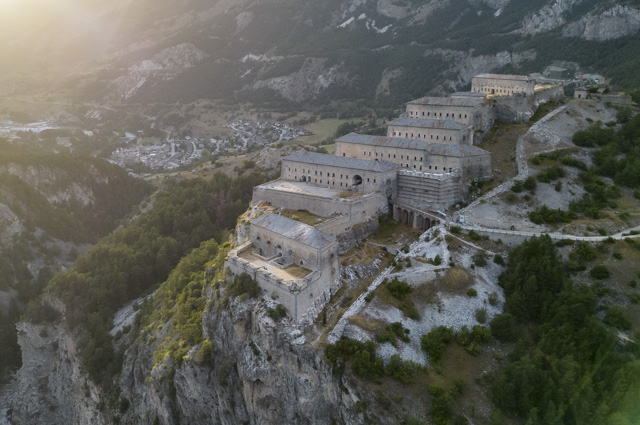
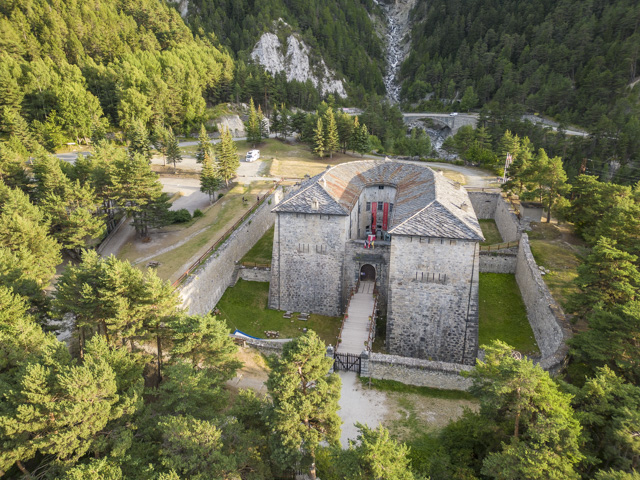
Our first stop was just above the town of Modane, parked just under one of the forts of the barrier Esseillon, called Fort Victor-Emmanuel. This was a collection of fortifications built between 1819 and 1834 to protect the Italian Piedmont from French incursions.
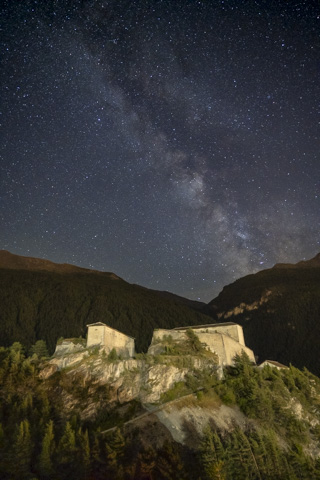
Fort Victor-Emmanuel was built into the rock with 8 separate buildings up the side of the mountain which could house up to 1500 men.
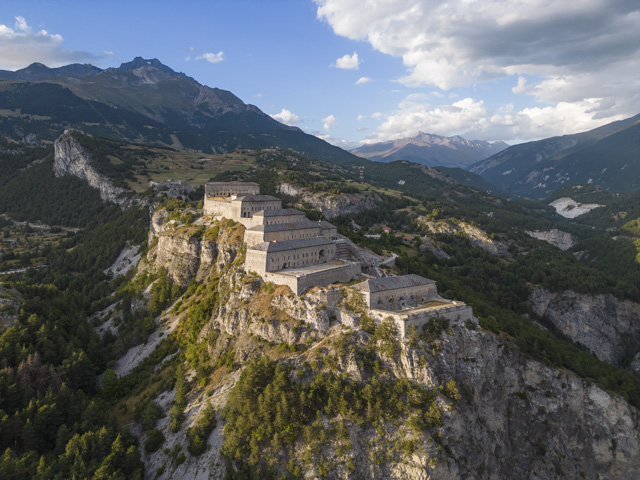
We had a quiet night here, at around 1200m, where the temperature dropped nicely making it the first comfortable night in at least a week.
Our next stop was a campsite in the village of Bramans, further up the road towards Italy. We don’t stay in campsites often as they can be very expensive but this one was the same price as some of the Aires we’ve been staying in but with the added bonus of a toilet and shower block. There is an extra charge of €5 per day for electricity but this isn’t something we need with our lithium batteries and solar setup.
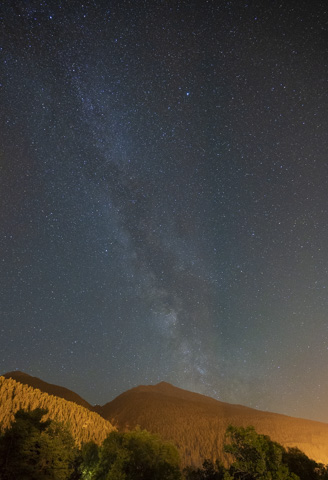
The campsite was made up of a number of fields and you could park up anywhere you wanted. We found a lovely spot next to a shade-giving tree with great views of the surrounding mountains.
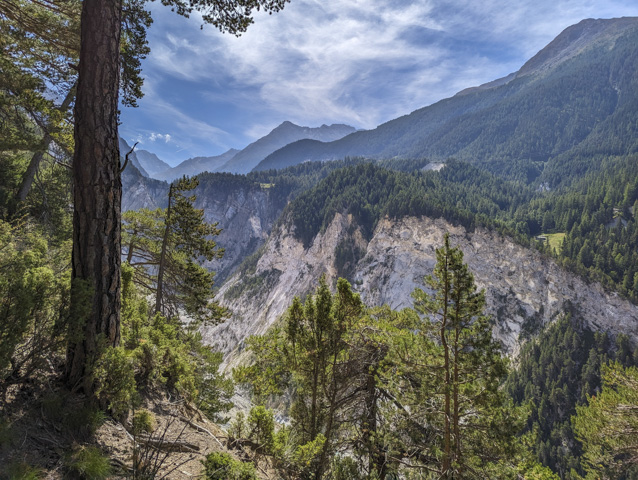
The village of Bramans is the starting point for a number of hikes and we enjoyed discovering the surrounding area.
While looking at a map of the surrounds on the maps.me app I managed to find the entrance to a cave called Grotte de 14 Chapeau (cave of 14 hats) a couple of kilometres from the campsite and couldn’t resist having a bit of an explore.
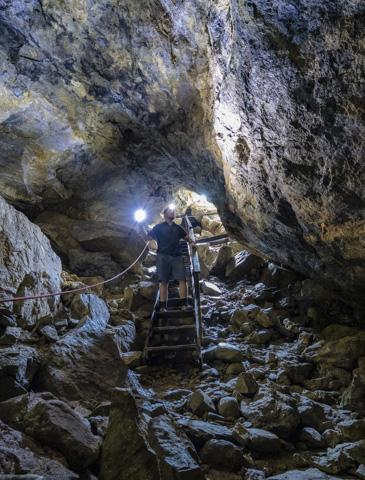
The cave entrance was really well hidden by long grass off the main path. I would never have known it was there if I didn’t have a gps map. The entrance to the cave is a narrow slit with a wooden staircase leading underground.
The first large room has wooden staircases at each end and ropes to help you descend. None of this is maintained and the staircases are wet, beginning to rot and very wobbly. Once past the first bit of the cavern all the assistance disappears and you are on your own.
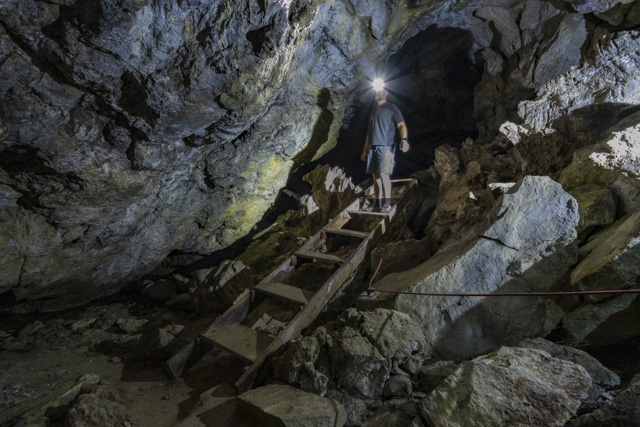
I managed to make it to the third large room but then came across a narrow crawl way that I didn’t feel comfortable attempting on my own.
It was definitely fun exploring the cave and it was very cool underground, in fact it was something of a shock when I came back up into the full heat of the sun !
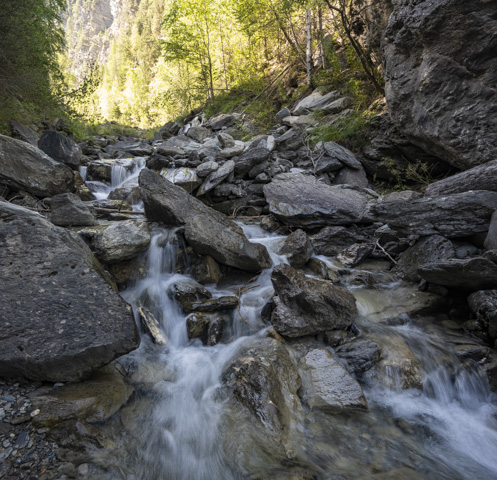
We were very much enjoying ourselves in the mountain but we had an appointment to keep in Italy. My mother was visiting my step-sister who lives in St-Gervais, near Chamonix, and we had all agreed to meet up in the Aosta valley in Italy to celebrate her birthday together.
This meant that we had to drive across the mountains, up through Val Cenis, a ski resort that turns the main road into a ski slope during the winter season and past a large dammed lake on the pass to get to Italy.
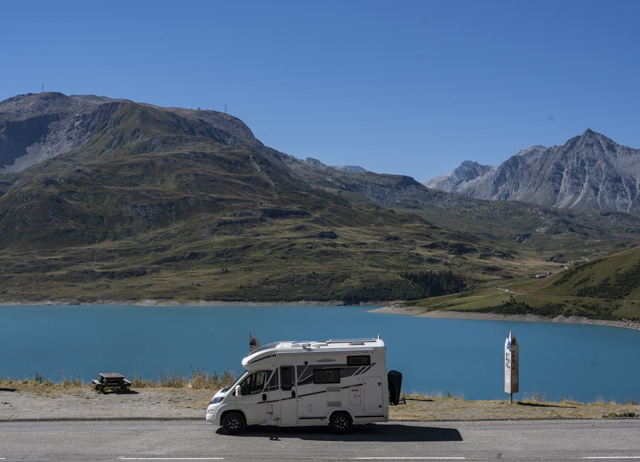
The road led us past Turin, where temperatures were hitting 40c, to the small village of Strambinello in the lowlands of the Aosta valley.
We were staying in a small B&B called Castello Strambinello, which has been lovingly restored by the owner creating 3 incredibly beautiful suites, each with their own lounges. Conveniently, we were able to park our camper just outside the gates. I have to say it was a welcome relief to spend a couple of nights in air-conditioned luxury!
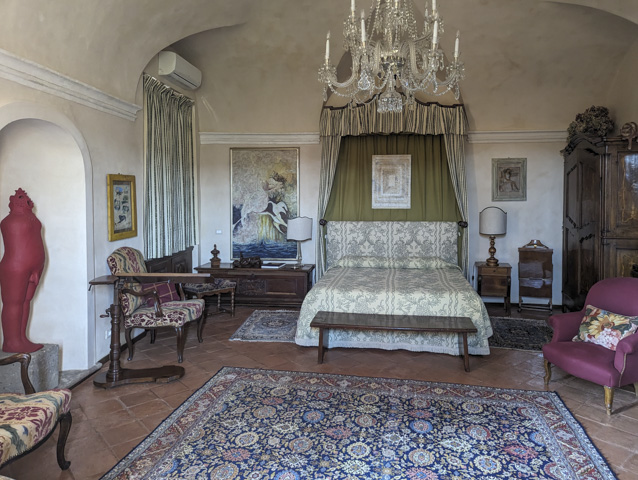
The rooms were beautiful and spacious, each different, with an eclectic mix of art and beautiful antique furniture.
We had a couple of lovely days in Italy catching up with the family.
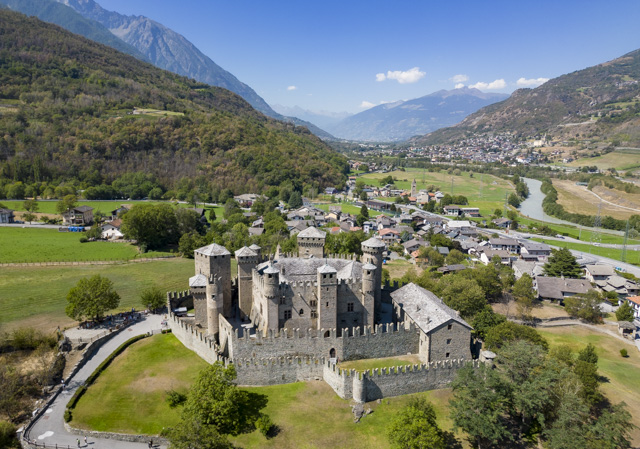
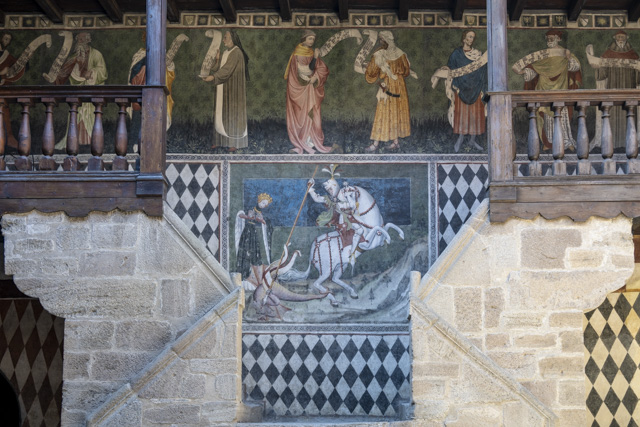
We also visited an Italian castle while we were there, the Castelllo di Fenis, first built in 1242 although the current structure dates back to the 14th century. It was built to be a prestigious residence for the Lords of Challant and their families.
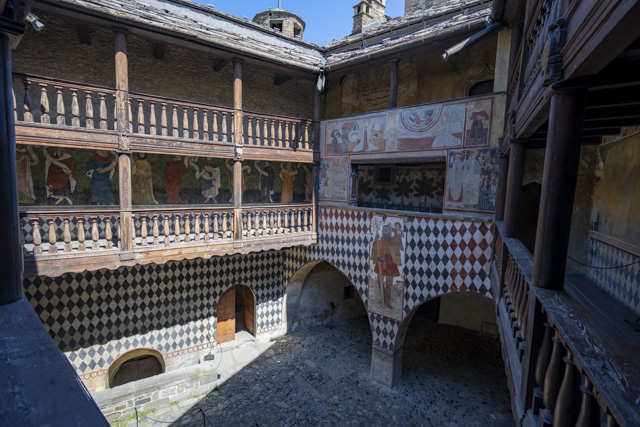
Most impressive were the frescoes on the walls that date back to the 14th century.
Soon enough our very enjoyable mini-break came to an end and we were back in the camper. The heat dome affecting southern Europe was still in full effect so we wasted no time in heading straight back up to the respite of the Alps.
 FromAtoB