And More Provence
Provence is famous for its hilltop villages and we were heading towards one of the most famous of them – Gordes. However before this we stopped off at Saignon, a quieter and less heralded village where we wandered the pretty quiet streets and enjoyed the countryside views.
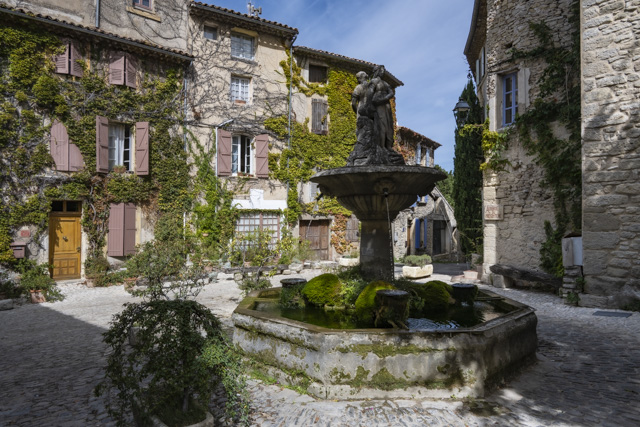
The great thing about being out of season and less touristy is that we managed to find parking with just a short uphill walk to the village with its maze quaint winding narrow streets. To our surprise there was a also a good selection of restaurants for such a small place and a very nice bar right on the main square.
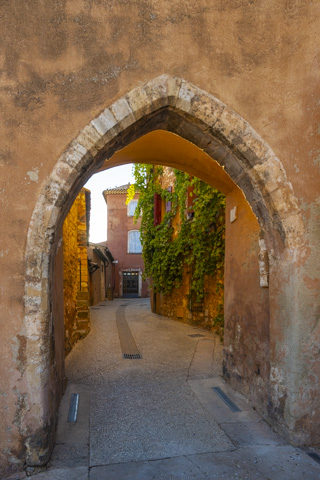
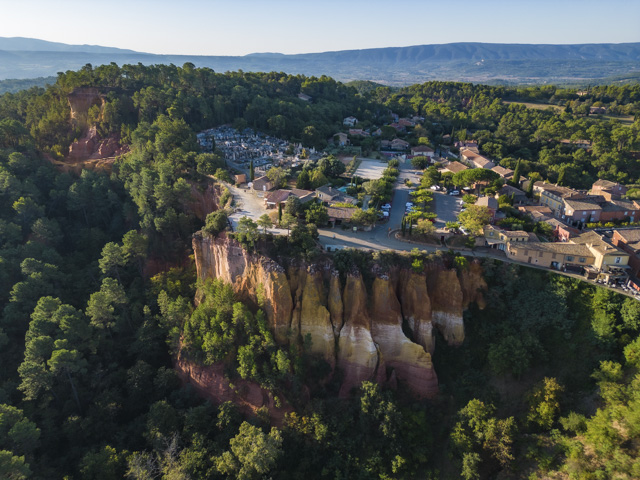
From here drove onto another very pretty hilltop town called Rousillon, where we spent the night. Rousillon is listed as one of the ‘Les plus beaux villages de la France ‘.
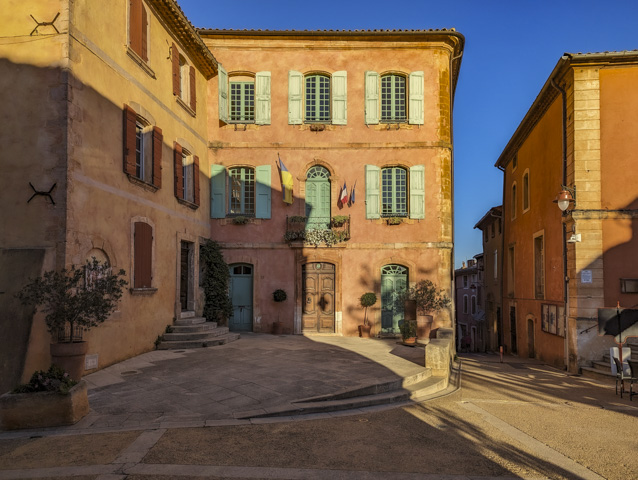
It is bigger and more touristy than Saignon with a good selection of shops, bars and restaurants and a striking red cliff backdrop.
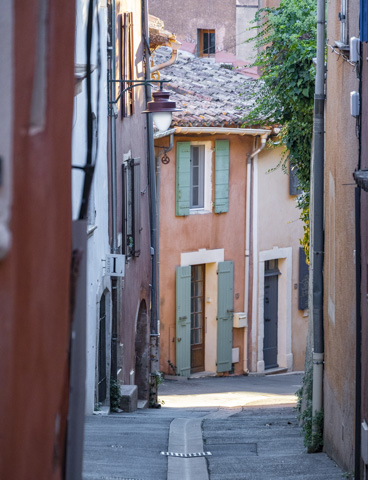
Rousillon is famous for having ochre mines and as a result there is a palette of approximately 40 shades of red that must be applied to all the houses, making the town very pretty and very photogenic! We stopped in the main square for drinks in the late afternoon Provence heat.
Another of the ‘Les plus beaux villages de la France‘ is Gordes. This is ‘another level’ touristy compared to the other towns we have visited, with tour buses disgorging the masses into the village throughout the day, most of which seemed to be large groups of Americans and Japanese. It is not a very big town so it does get pretty crowded.
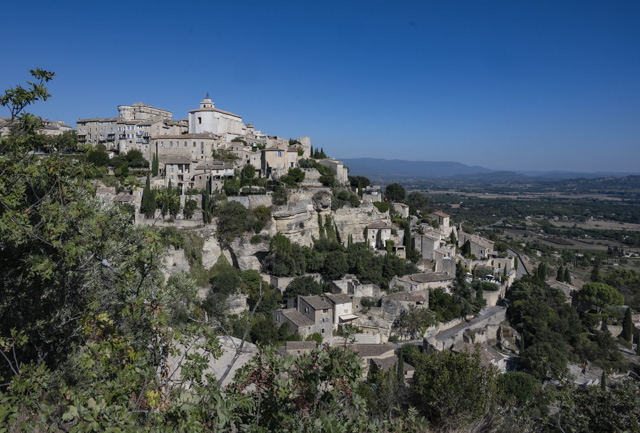
It’s also a town that knows it’s popular so the parking is very expensive and for motorhomes there is only one car park which costs €15 whether you park for 2 hours or 24 hours. We had intended to stay the night here but it wasn’t flat and it was so hot in the glaring sun, on bare concrete with no shade, that we decided to find somewhere a bit more comfortable.
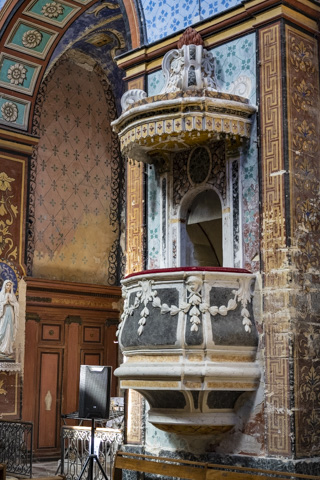
Gordes itself looks spectacular from the viewpoint just below the village but once in amongst the buildings we were a little disappointed. It is nice, but for us it wasn’t ‘the jewel in the crown of Provence’ as the guidebook describes it and certainly didn’t justify the cost of parking. Some of the restaurants in the back streets looked very good but unfortunately we made a poor choice and had a very mediocre and overpriced lunch.
Near to Gordes is the Abbey Notre-Dame de Senanque. This is famous for being set amongst fields of lavender and no doubt looking spectacular when the flowers are out but of course in September we were too late to see this with the Lavender having already been harvested.
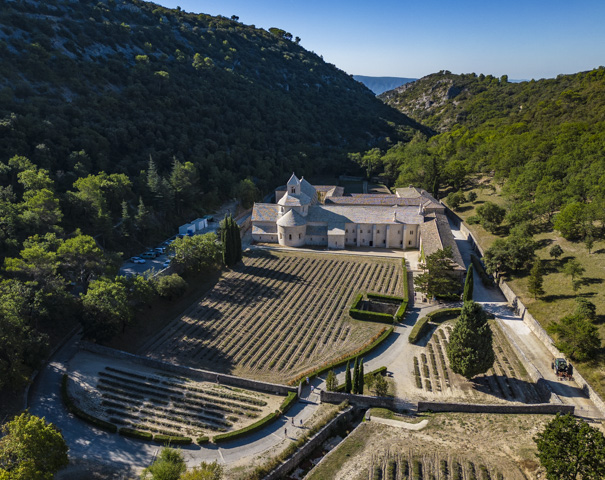
This is another popular tourist spot and the setting of the Abbey is beautiful, in its own secluded valley.
We paid to go inside and were handed fancy tablets which filled us with hope of a really informative guided audio tour. Alas it was not to be. The tablets had minimal detail on them, just 2 or 3 lines of information about each (bare) room and there were no panels in English so we got around the whole tour in less than 10 minutes! I expect the tours with the guides is far more interesting but these were only in French so unless you speak French I would say that it definitely isn’t worth paying to go inside and there are much better Abbeys to be seen in France.
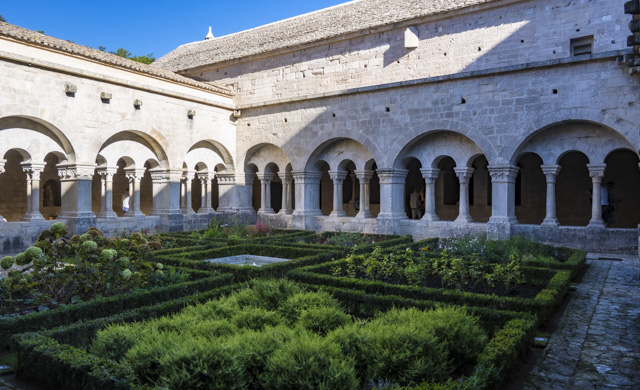
The next stop for us was the lovely little village of Fontaine du Vaucluse, famous for being the site of the spring which is the source of the Sorgue river. This is the largest spring in France and the fifth largest in the world. The walk up to the spring passes mossy waterwheels, an old papermill with demonstrations on how paper was made in the 15th century and the sparklingly clear water of the river which has an emerald green appearance due to the mossy riverbed.
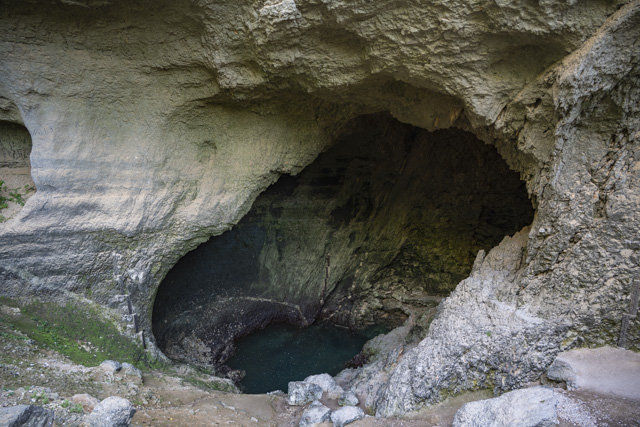
At this time of year the source is very low but in March it surges and the water comes up an over the sides of the cave causing the river to flood.
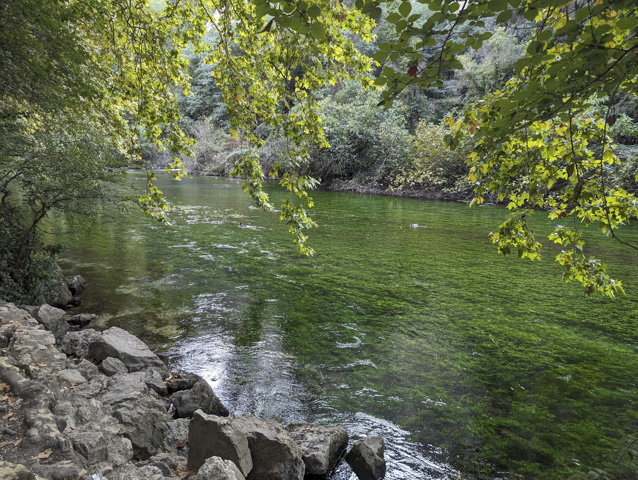
The village is very nice, an easy short walk from the Aire and we had a lovely meal out to celebrate my birthday, at a restaurant on the banks of the river.
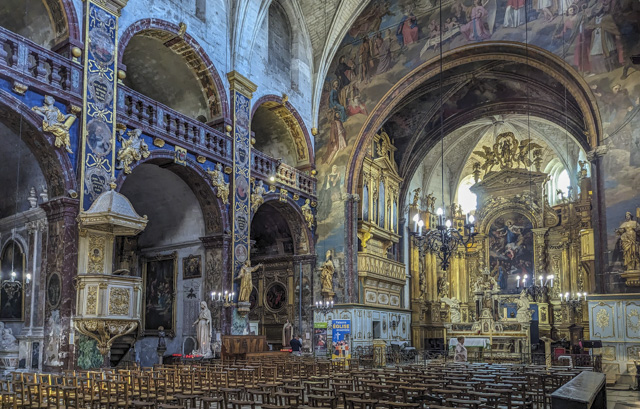
The next morning we were up early to hit the Sunday market at the nearby town of L’Isle sur la Sorgue, known as the Venice of Provence due to the river and canals through the town. The town gets incredibly busy for the market and we had heard that the usual motorhome parking was closed that weekend so an early start was a must to secure a parking place. Within an hour of our arrival the car park was full and when we left, several cars were vying for our parking space, so much so that none of them would move not wanting to miss out on the space, which meant we couldn’t actually leave as they were blocking us in. Eventually common sense prevailed.
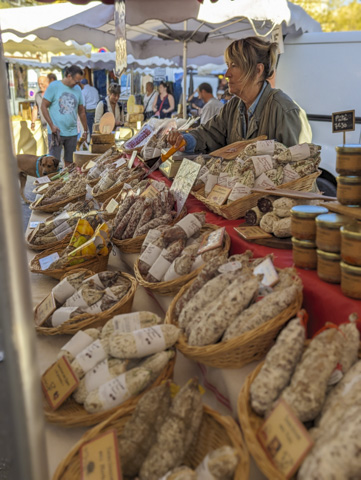
This is probably the biggest market that we have been to in France (or anywhere for that matter) and the whole of the centre of town was taken up with it on both sides of the water, with stalls for pretty much everything from fruit and veg, flowers, clothing, bags and hats to art and antiques.
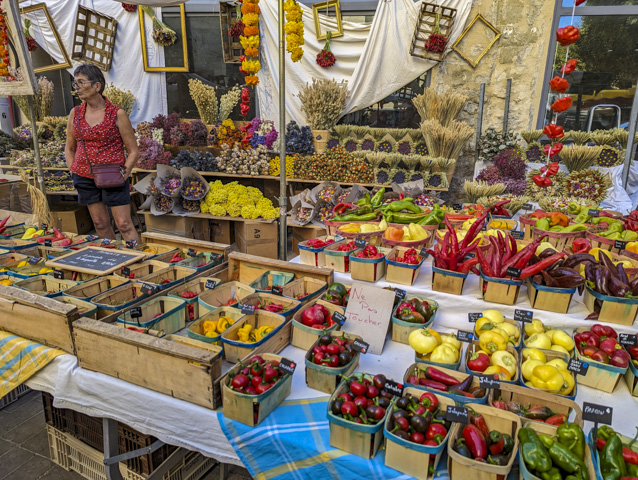
We really enjoyed wandering around the streets, nosing into all the stalls and filling our bag with treats but our ultimate destination for the day was the much larger town of Avignon.
Unfortunately, Avignon is a town with a reputation for camper break-ins so we decided to stay in the Municipal campsite to give us a bit ore security. The campsite is well located on an island in the middle of the Rhone river and close to the medieval city.
When we arrived we discovered that there was a Medieval fair taking place right next door, so we decided to check this out.
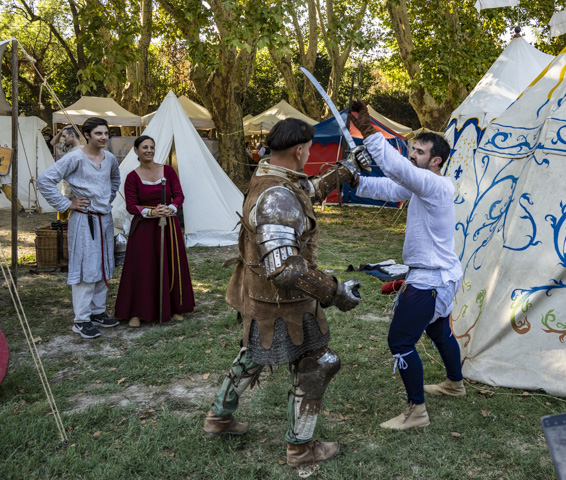
We’ve seen this type of thing going on in other European countries, where people love to dress up in Medieval clothes and re-enact past times. It seems a bit barmy to us but seems very popular.

It was very crowded and it was difficult to see what was going on in the central arena, which was a shame.
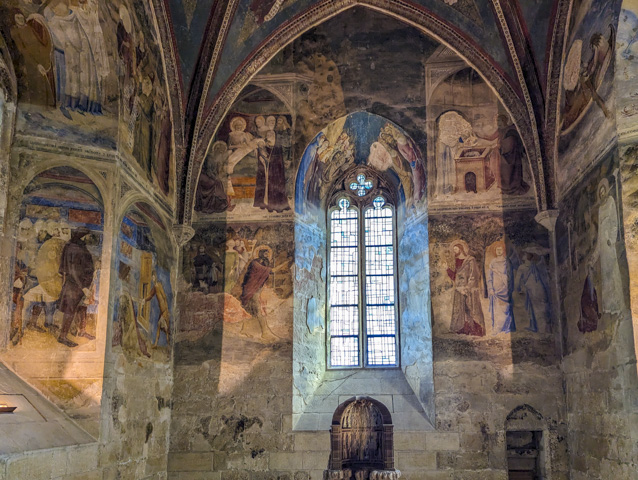
Anyway the reason we were in Avignon was to visit the Palace of the Popes. Avignon wasn’t part of France from 1309 until 1791 and was a Papal territory. In fact between 1309 and 1377 the Popes of the era resided in Avignon. This made it, for a time, the most important city in the medieval world.
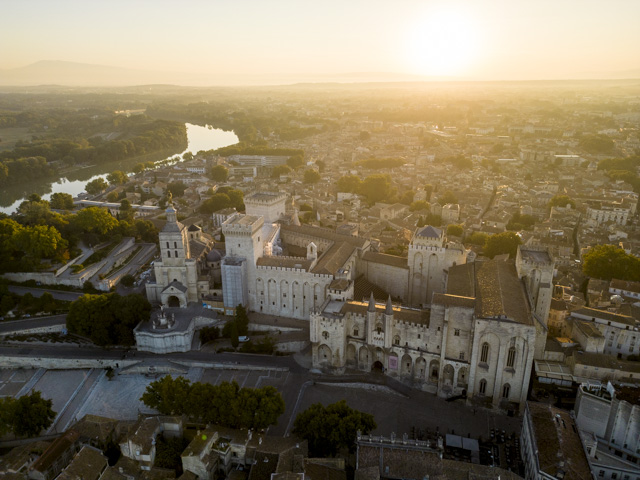
In total 9 Popes resided in Avignon and this led to the construction of the city walls and the expansion of the Palace of the Popes. This is a massive building that kept us busy for a good couple of hours. It was built between 1335 and 1364 and has walls up to 5m thick rendering it almost impregnable to attack. The palace is unfurnished but you do get a tablet which has masses of history and information on it (unlike the Abbey Notre-Dame de Senanque) and if you hold up the tablet and span the rooms it displays graphics of how the rooms would have looked in the past. They’ve obviously put a lot of effort into this historical site and we thought it was well worth the money.
Underneath the wall of the city is the Saint-Benezet Bridge or Pont d’Avignon, of which only four of the original 22 spans still stand. This bridge was 920m long and linked the Papal territory with France. Work to build the bridge began in 1177 and took only 8 years to complete.
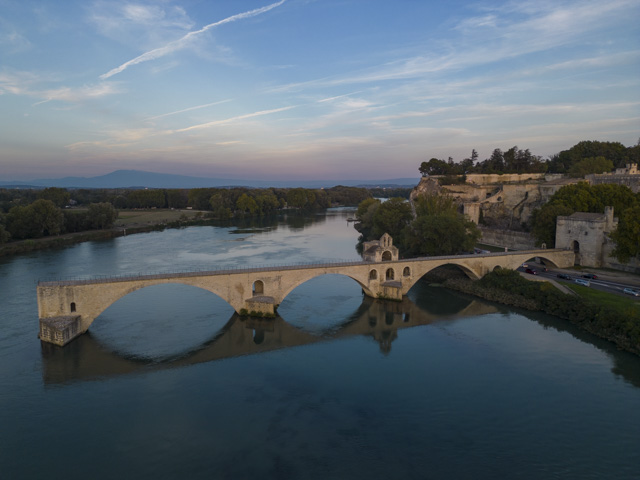
The bridge has had a difficult history being destroyed by both wars and floods, and then rebuilt several times over the years until it was finally abandoned in the 17th century. It is very narrow and made narrower by the chapel that is built on it and would be difficult to get a horse and cart across.
On the opposite banks of the Rhone is the smaller town of Villeneuve-Les-Avignon which was in French territory. However some of the Cardinals from Avignon built their houses here to avoid the stench of the big busy city and commuted over the Saint-Benezet Bridge.
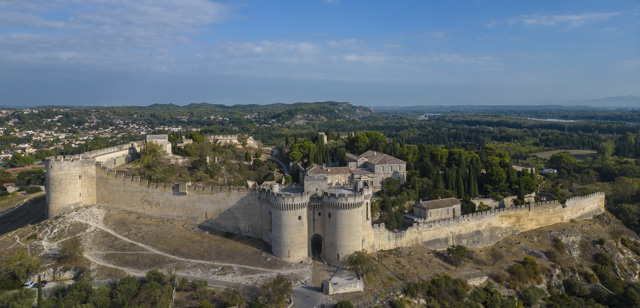
The centre of Villeneuve-Les-Avignon is the Fort Saint-Andre which also incorporates the beautiful gardens and ruins of the Benedictine abbey of Saint Andre. Together they made for a great excursion. The history of the Abbey and gardens in particular was very interesting and the large terrace provides a lovely view of Avignon across the river.
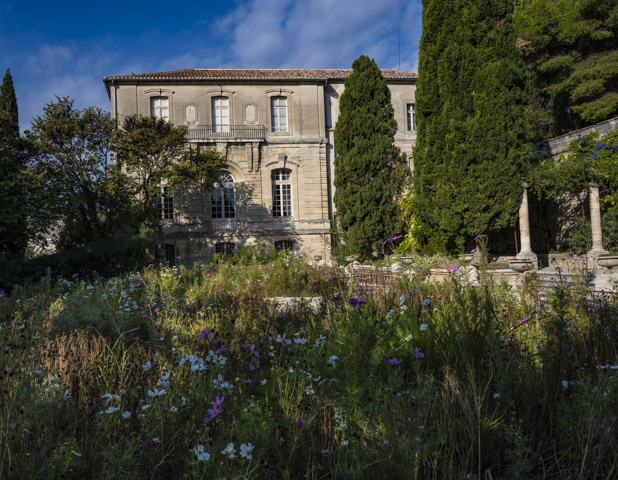
Avignon is an attractive city and well worth a visit. There is plenty to do and we spent a few days here soaking it all in. It is a city that is very manageable to get around and has a fascinating history.
 FromAtoB