Romans, Pre-History and Paddling
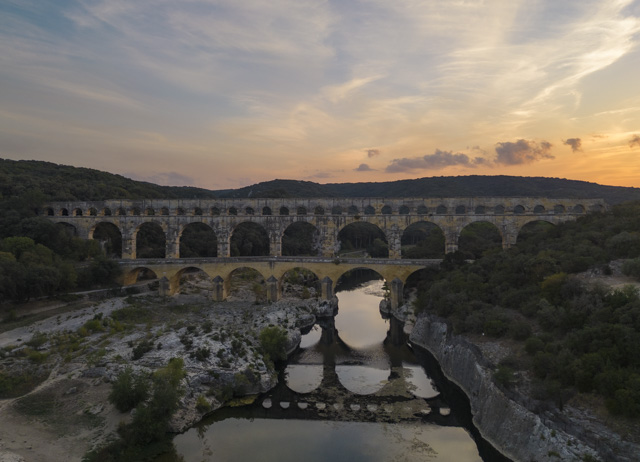
Just North of Avignon is one of the most impressive Roman constructs in France. The Pont du Gard, a striking three level combined viaduct and aqueduct across the Gardon river.
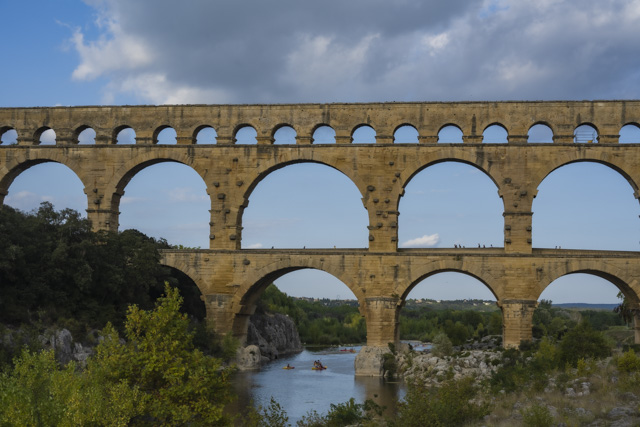
It is 49m high and spans 275m across the river at the highest level. The aqueduct part was built to carry water to the city of Nimes (or as it was known in Roman times, Nemausus). Construction started in BC 19 and took about 15 year to be completed.
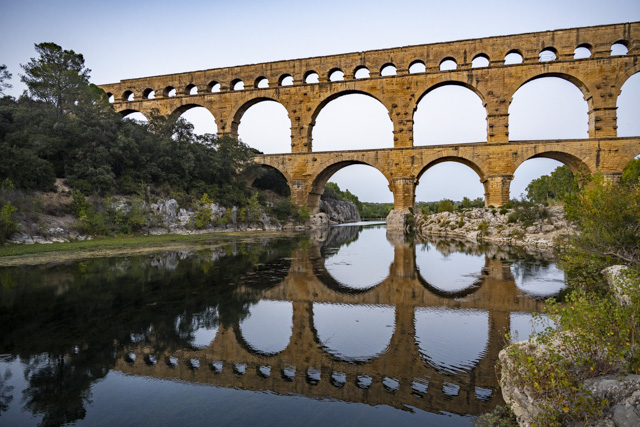
The amazing thing about the construction is how precise it was. In order to keep water flowing it has a gradient of about 1cm in 180m. This was much shallower than most Roman aqueducts and this was compensated by having a steeper gradient before the actual bridge. However a steeper gradient on the bridge would have made it too high for Roman construction methods – as it is, it is the highest Roman Aqueduct that we know about.
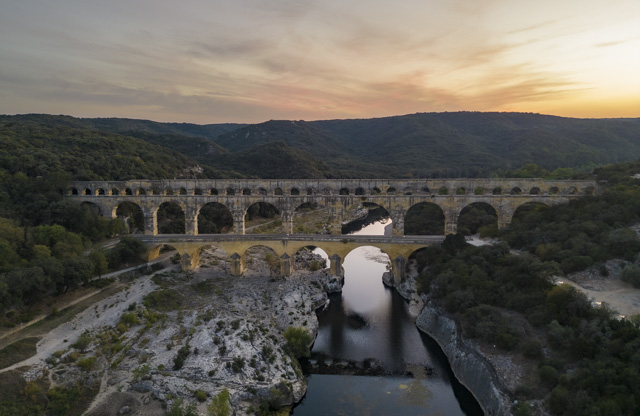
Overall, the aqueduct that the Pont du Gard is part of, winds for 50km from the spring that is its source and water took over 27 hours to reach the fountains and Roman baths of Nimes.
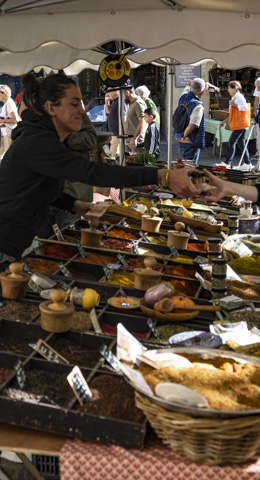
After visiting the Pont du Gard we headed to the town of Uzes, arriving on market day to a lively market in the central square.
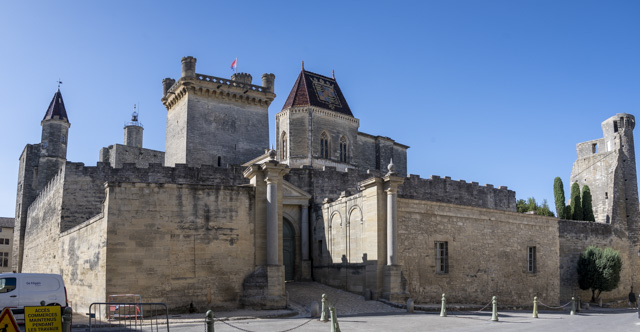
We had visited Uzes with the hope of visiting the Duche (the fortified chateau belonging to the House of Crussol, the dukes of Uzes) but disappointingly it was closed and we only got to see the outside.
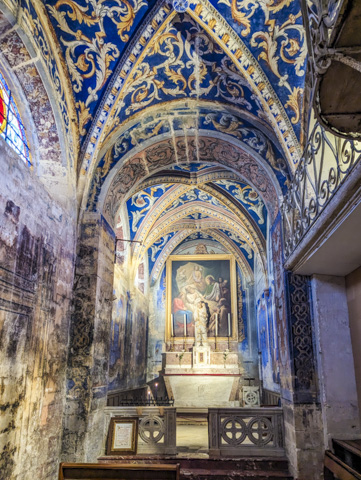
The town had a nice vibe and was fun to walk around despite missing the main highlight. We did have a nose around the cathedral with its painted interior. The variety of churches in France are amazing and the way they are decorated varies region by region.
Somewhere that I had wanted to go ever since planning our trip to France was the reconstructed cave called Chauvet 2.
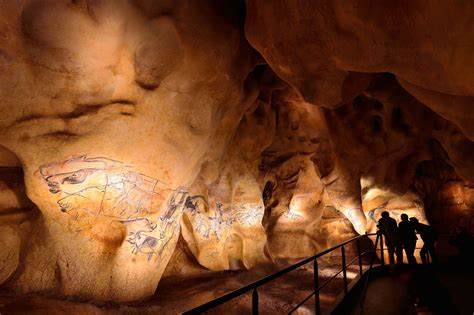
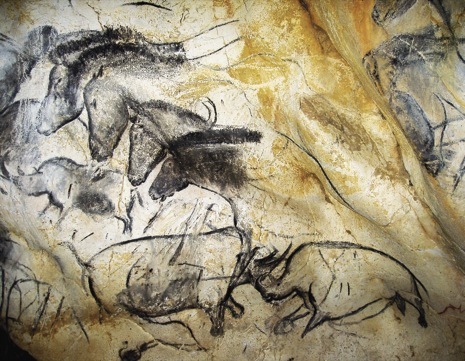
The Grotte Chauvet is a cave that was only discovered in 1994 and it has the oldest and best preserved cave paintings in the world. The original cave is a UNESCO world heritage site and is closed to the public. However an amazing replica has been made a few kilometres away from the original site which recreates the exact dimensions of the cave, including all the stalagtites/mites etc and other cave features, such as hundreds of animal bones, foot and paw prints and of course the paintings.
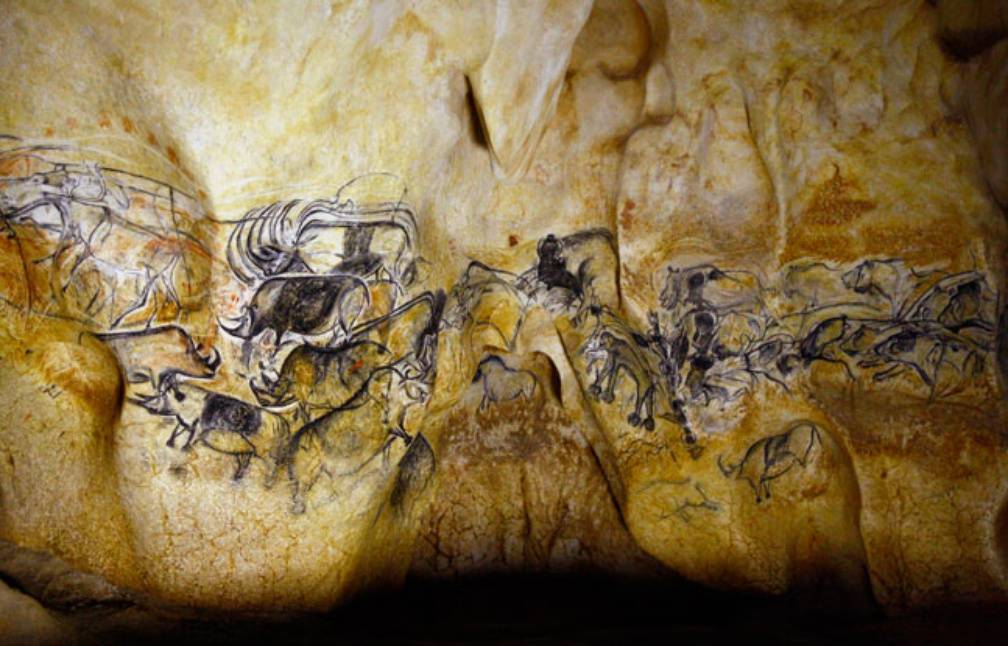
The only way to visit the replica is by guided tour and no photos are allowed inside, so I have copied pictures from the official website to illustrate my words. The tours are in French but there are audio-guides in other languages available. A bit annoyingly they manage the group by controlling the lighting so you can’t always see what you want to when you want to. It seems strange that self-guided tours and photos are not allowed here given that it is a replica and nothing original can be damaged.
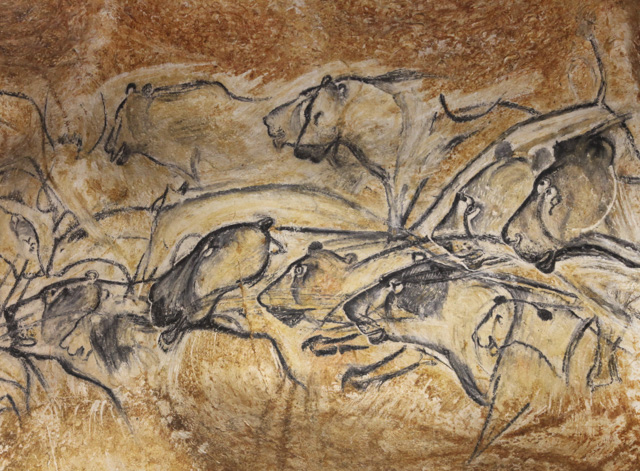
The cave was the winter home of a large number of cave bears and early man would have braved encounters with these bears to enter and paint in the cave. There is no evidence that the cave was used as a human dwelling which has led them to believe that it may have been a sacred place. The paintings were made around 36,000 years ago and the entrance to the cave collapsed around 30,000 years ago which is how they were so well preserved. There are over 1000 paintings, of which, at least 400 are depictions of animals with the only examples of certain animals found in the world (panthers and owls for example).
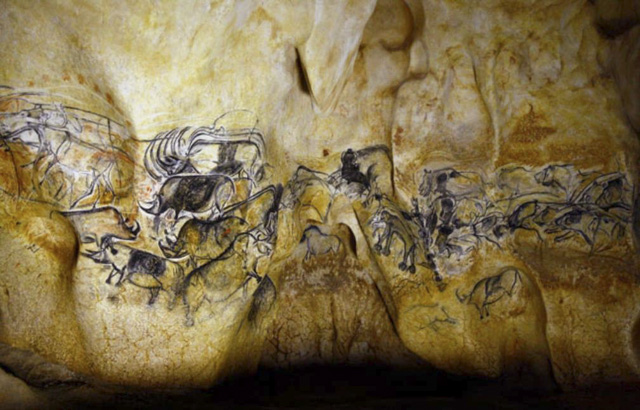
The quality of the paintings is incredible and the final panel which is 12m long with 92 animals is far beyond any of the neolithic paintings we have seen before.
After touring the cave we drove to the nearby village of Ruoms to a lovely campsite by the river which proved to be a great place from which to explore the Gorges de L’Ardeche.
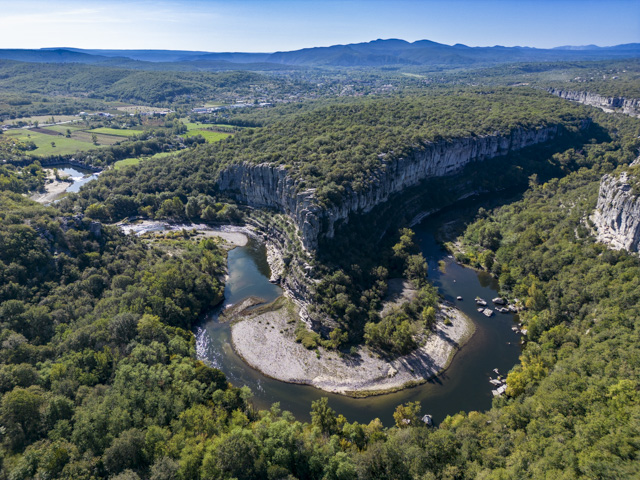
We booked a kayaking trip down the gorge with a company called LouLou Bateaux. We had intended to do a full day trip, but this would have meant starting at 9am and the overnight temperatures were under 5c so we didn’t fancy being on the river that early! Its been a huge diurnal range as the daytime temperatures have been hitting the high 20’s.
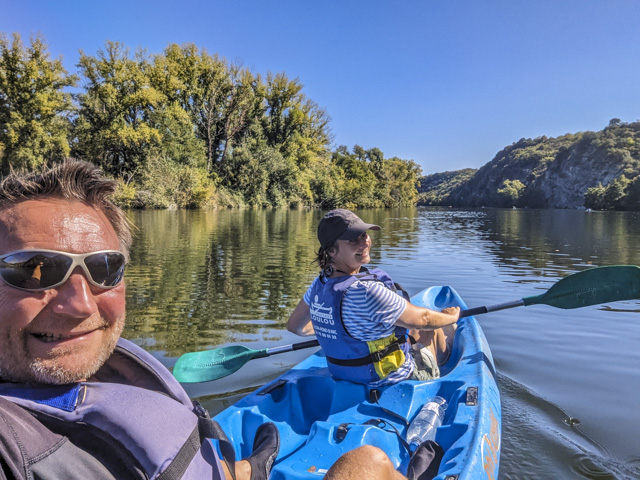
This kayak trip was great because we just had to go with the current down river and were dropped off and picked up at the start and end points.
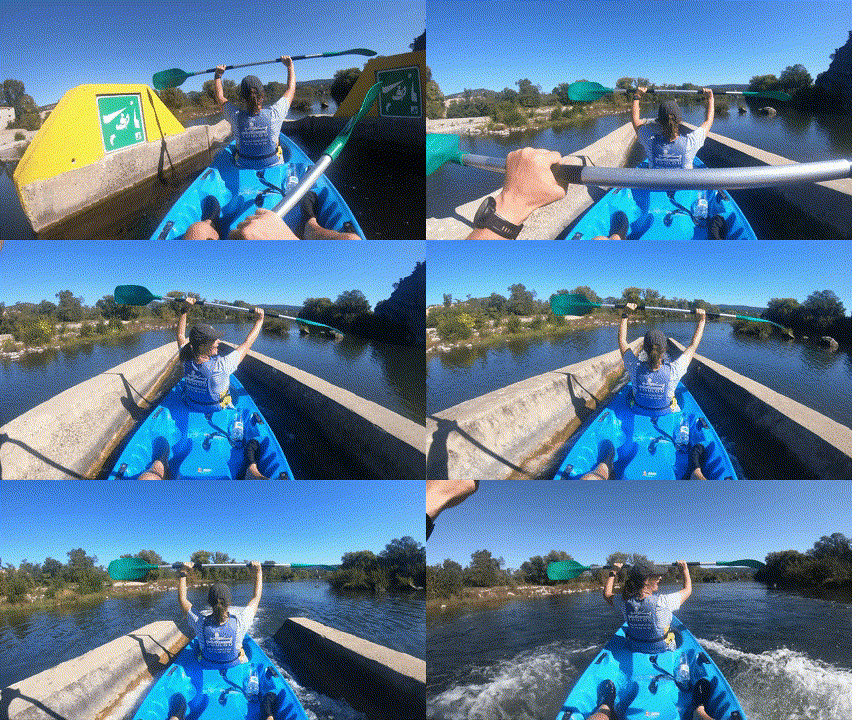
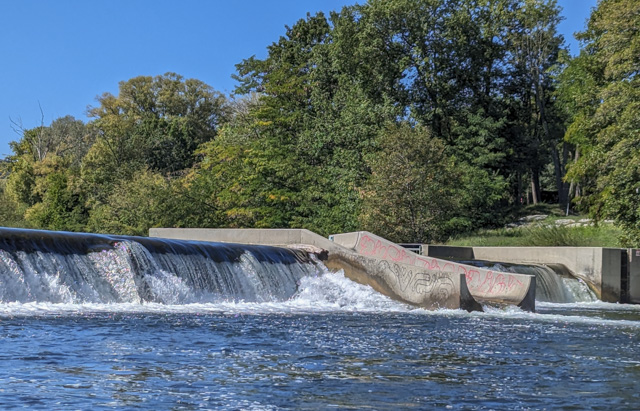
The river was wide and gentle but in the first section there were 4 chutes to go down to navigate the weirs. These were great fun, a bit like a log flume, and when you hit the bottom a big wave crashes over the person at the front of the kayak!
After navigating the Weirs we stopped for a picnic and a swim in the river which was very refreshing, some might say a bit chilly, but in the hot sun it was a welcome opportunity to cool off.
After lunch came a number of small grade 1 and 2 rapids as we moved down the canyon and then the highlight of the trip – the Pont d’Arc – a big natural arch spanning the river. The pickup point was soon after this.
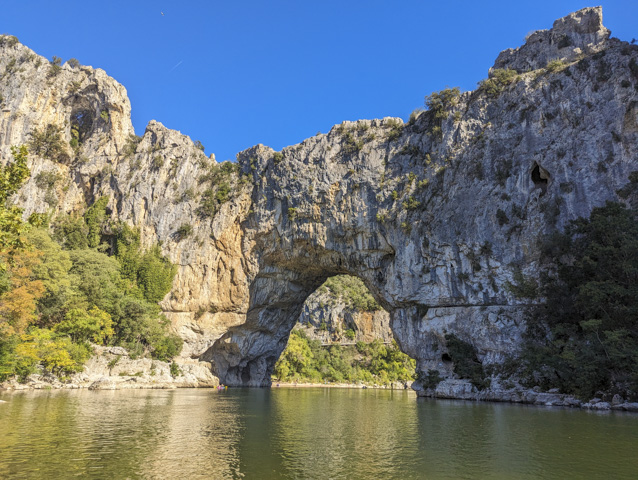
This was a really fun trip and we paddled most of the river in lovely solitude. This is the beauty of October paddling but I imagine in August the river would be very crowded as there are lots of kayak companies in this area (most of which are closed in October).
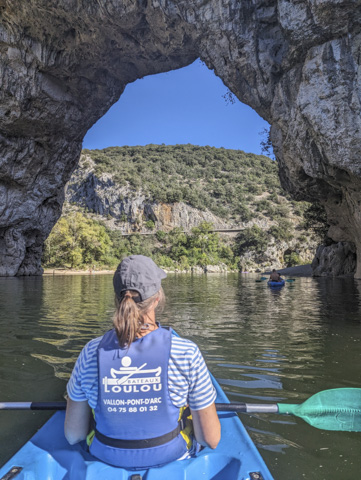
The paddle was about 12km in total and the whole trip, including our picnic and swim stops, took around 4 hours. It also helped that there was a bit of a current so we didn’t have to paddle too hard.
 FromAtoB