From Gorges to Carcassonne
To the west of Ardeche is mountainous countryside that is cut through with canyons. This is the land of the Cevennes National Park.
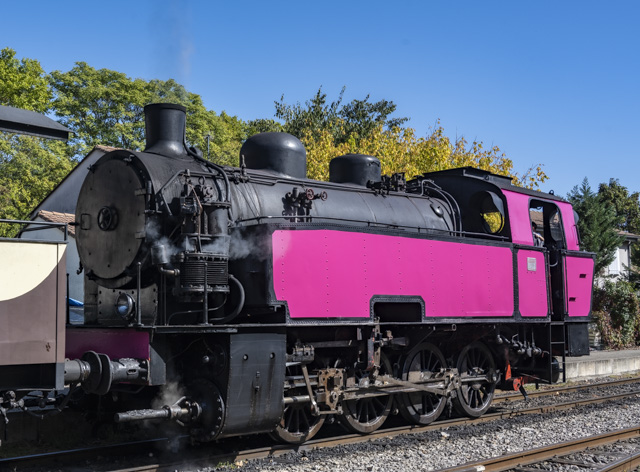
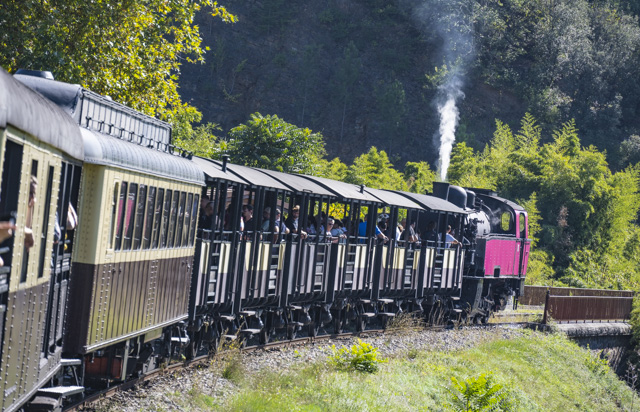
On our way there we stopped off at the town of Anduze which is famous for its volunteer run steam railway. We decided to give this a go. It only runs 25 kilometres to the town of Saint-Jean-du-Gard and back again. You can ride both ways the same day and the train stops at Saint-Jean-du-Gard long enough to have a wander around, grab some lunch and get back on.
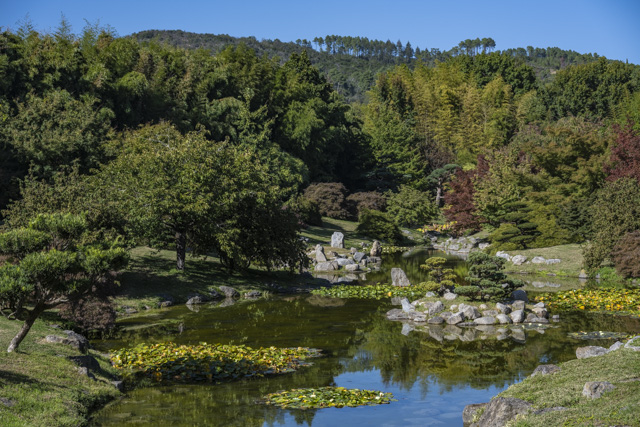
On the way back we stopped off at the Bambouseraie garden which specialises in Asian plants and Bamboo. To be honest it’s a bit over priced and it was very crowded at the entrance as everyone does the same thing. The Japanese garden and the valley of the dragon were pretty though.
It was a bit unusual that the steam train was pink but we worked out that this was a wrap to mark Breast Cancer Awareness month.
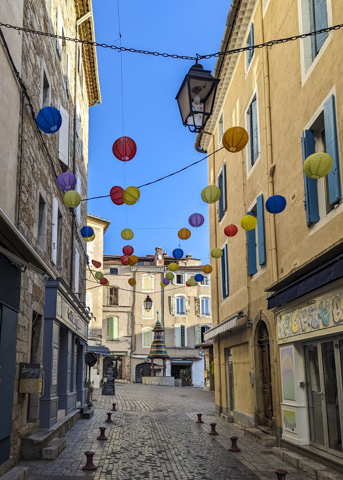
With the stops and the journey each way the train took all day so we stayed overnight in the station car park. This gave us the opportunity to explore the town of Anduze which was another pretty French medieval town.
The next day we headed towards the Parc National des Cevennes and the town of Florac-Trois-Rivieres, so named for the three rivers that meet in the town. This was a great staging post for our drive the following morning through the Gorges du Tarn.
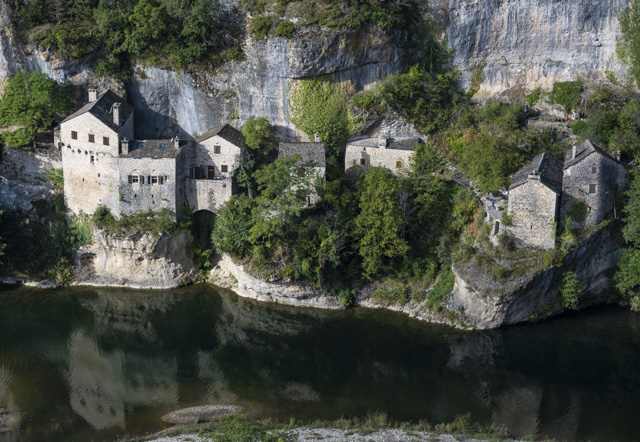
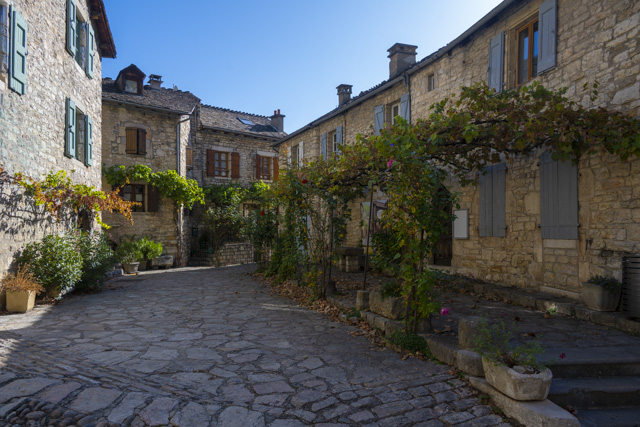
The gorge was spectacular with towering walls, cliffside villages and a beautiful medieval town called Saint-Enimie half way through the drive, with steep narrow streets paved with pebbles, an old mill and the source of the river Burle.
We stopped for the night at a campsite by the river in the town of Boyne, at the far end of the Gorges du Tarn. Campsites are a rare treat but we’d seen the sign advertising the swimming pool so we were sold. It wasn’t until after we’d paid and settled in that we found out the swimming pool was closed for the season despite the weather being perfect in mid-October for a refreshing dip.
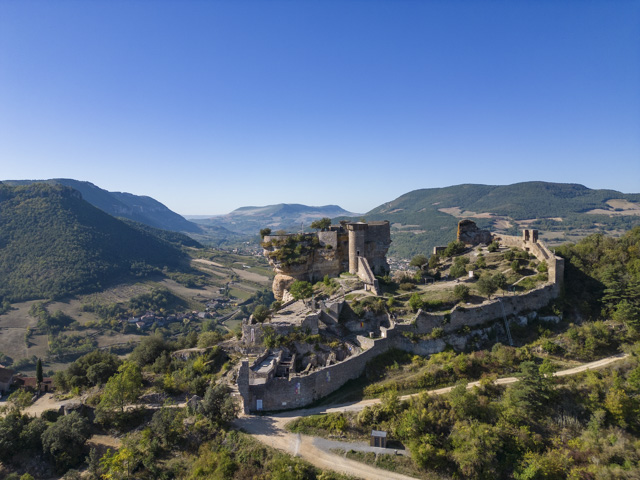
The next day we tackled another Gorge, The Gorges de la Jonte. This was another lovely drive and we stopped at the town of Meyruis for a walk and to stretch our legs after the drive. Our destination for the day was a bit further though.
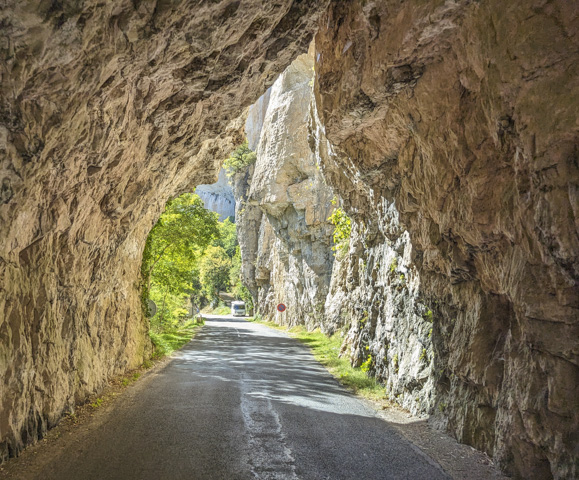
This area is absolutely riddled with caves, over 3000 of them have been discovered and we wanted to visit the biggest of them. This was called the Grotte D’Argilan and is accessed from on top of the walls of the canyon.
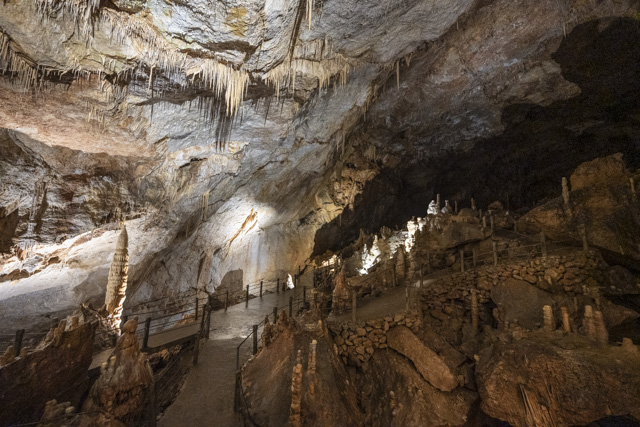
This is actually the first cave in France to be opened to the public in 1890 and the old infrastructure of ladders can still be seen inside although it has been replaced by modern walkways and stairs.
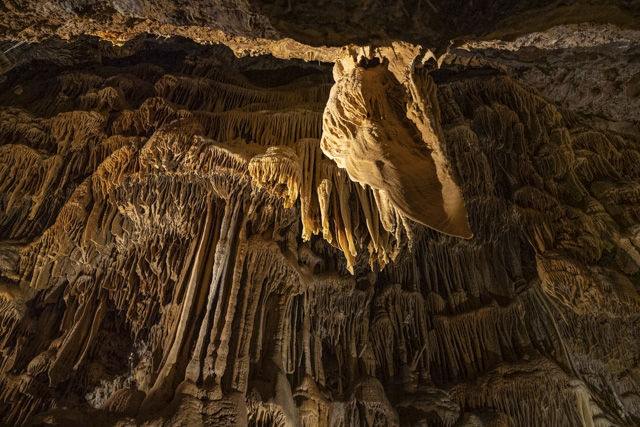
Some of the formations in the cave are as much as 500,000 years old.
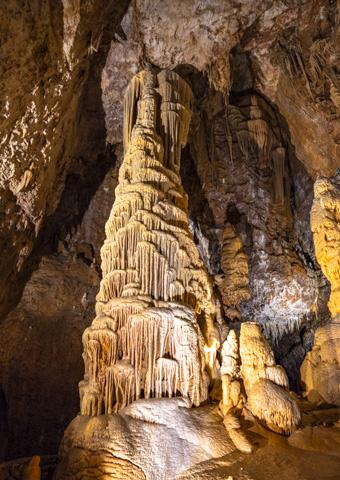
The tour through the cave actually takes you down more than halfway to the bottom of the canyon and there are bats in the cave which access the outside through small fissures in the rock.
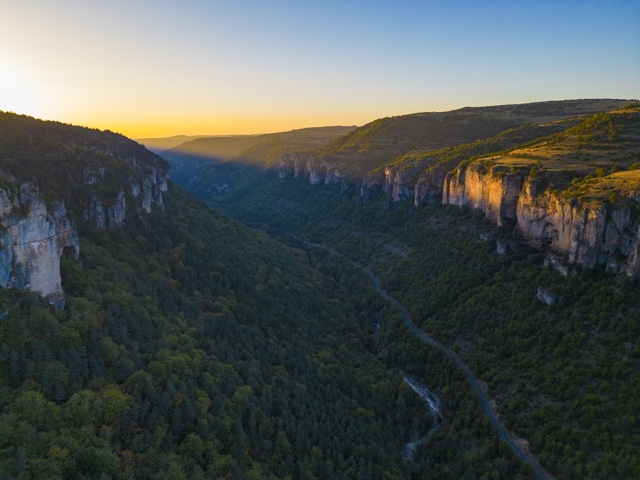
The grassy car park of the cave was one of our most remote and quietest nights of the trip, with no one else around.
In the morning we crossed the Noir Causses which is the plateau between the gorges that the cave is found on. We were heading for an Aire, formerly a campsite, next to a lake in a town called Salles Curran. We wanted to enjoy a day lakeside while the weather was still warm enough for sunbathing and swimming.
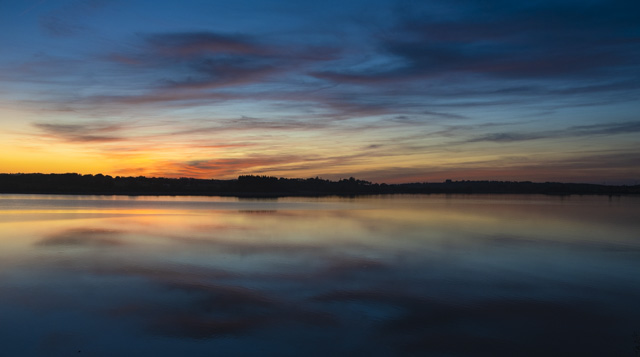
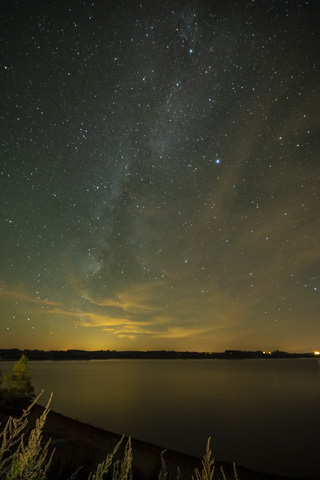
We managed to find a place to park overlooking the lake with fabulous views and we were treated to some beautiful sunsets here.
It was soon time to get back on the road and we headed for the rugby town of Beziers. We arrived at Bezier in the middle of their annual urban walk, so there were streams of people walking around every corner as the route seemed to criss-cross the town down nearly every street.
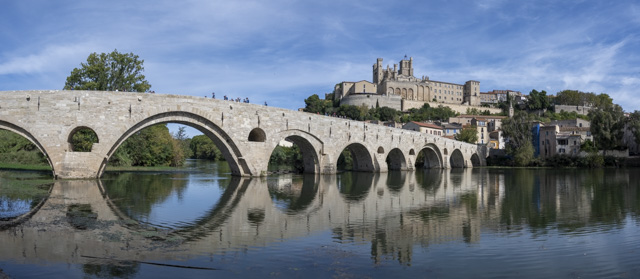
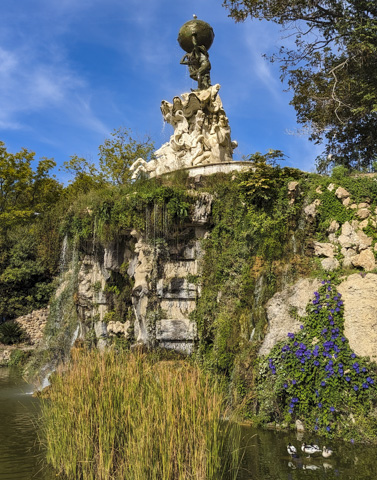
It was a lovely town with leafy wide boulevards and felt like a very liveable city but maybe not a huge tourist destination. The Poets Garden was a real oasis though and worth a visit if you find yourself there, in particular Titans Fountain and waterfall into lac des grottes.
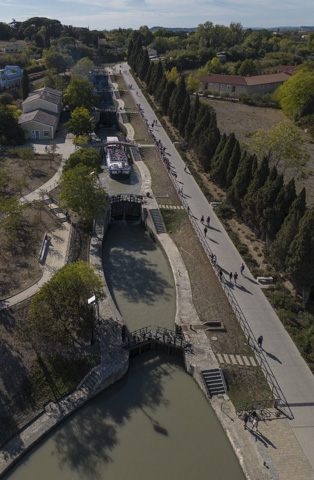
Just outside the town, we went for a very pretty cycle over the Orb Aqueduct and along the canal du Midi, which has a famous sequence of eight locks in a row, called the Ecluses de Fonseranes, dropping the canal 21.5m down to the level of the River Orb.
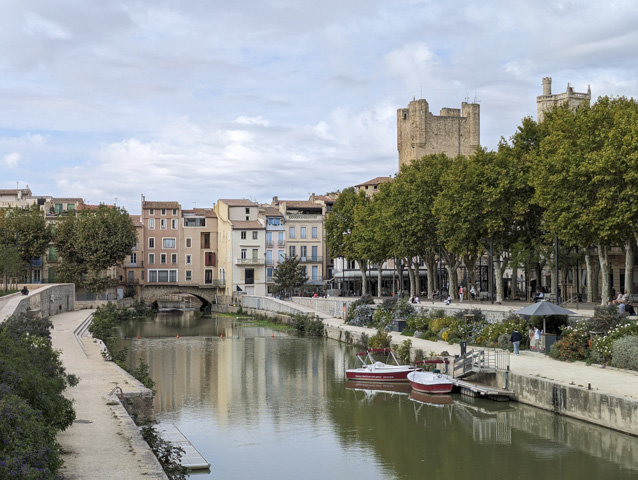
Narbonne, which was our next destination, felt very similar to Beziers, except with canals through the middle. We passed an enjoyable couple of hours walking the streets of the town and poking around the basilica and cathedral, although we decided to skip the Archbishops Palace. Narbonne was a significant Roman city, built up around a major Roman road, Via Domitia, that ran from Spain to Rome. The remains of the road have been uncovered right in the middle of town.
Next we drove to Homps as a stopover on our way to our next destination.
We had found a lovely free park-up overlooking a lake which is used as a reservoir to keep the Canal du Midi, which passes through the town, topped up. The canal du Midi is a 360km network of navigable waterways which links the Mediterranean to the Atlantic.
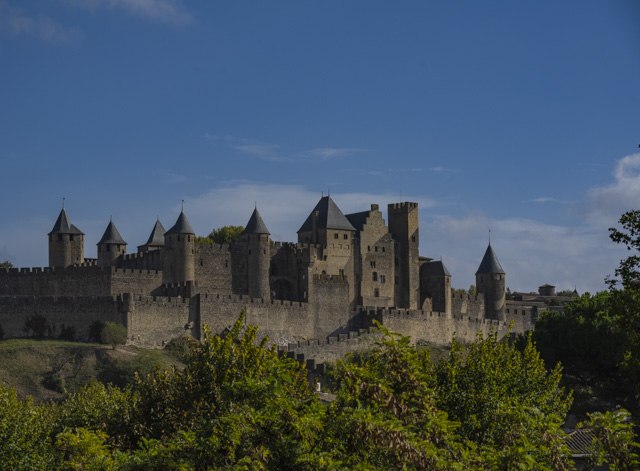
We had been making our way towards Carcassonne which was on both our lists as a must-see destination in the South of France. Ever since reading the book, Labyrinth by Kate Mosse we had both been intrigued to visit this fortified town with its fairytale castle, perched on a hill above the modern town.
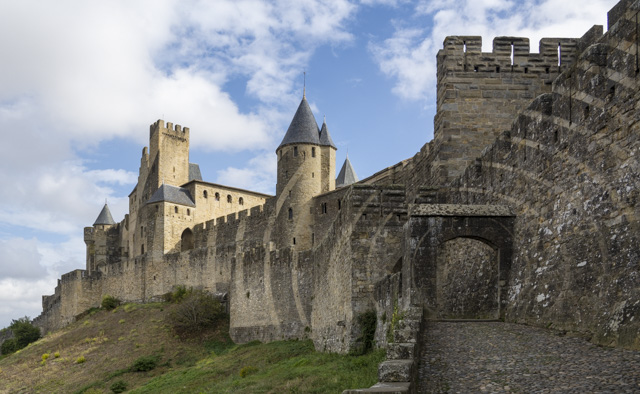
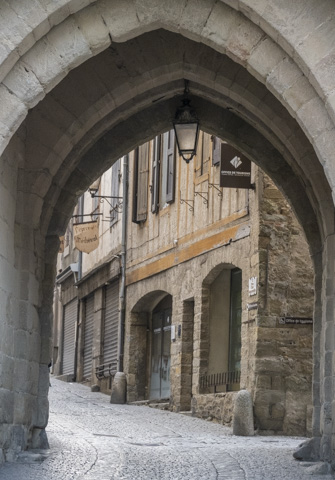
The Citadel, know as the Cite de Carcassonne, has a massive double wall surrounding it and then in the centre of the town there is another moat and wall with the inner castle inside. There are 52 stone towers in the outer walls, many with the witches-hat roofs that were added as part of the 19th century restorations.
The Ville Basse which is the lower city on the other side of the river Aude was at one time in competition and a separate town to Carcassonne. However, these days it is all considered as one town.
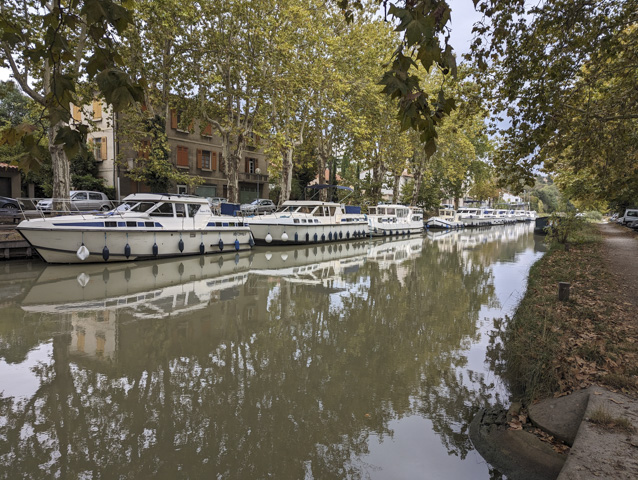
The Canal du Midi passes through the lower town and we took the opportunity to go for a cycle ride along part of it.
 FromAtoB