Siem Reap – A Templetastic Time
We arrived at Siem Reap’s new international airport quite late but it was fairly easy to get a taxi for the 1 hour journey to town. The airport has only been open a couple of months and replaces one that was only 7km from town. The locals are not so happy with the new airport as there are fairly significant fees for using the new road to the airport and for parking.
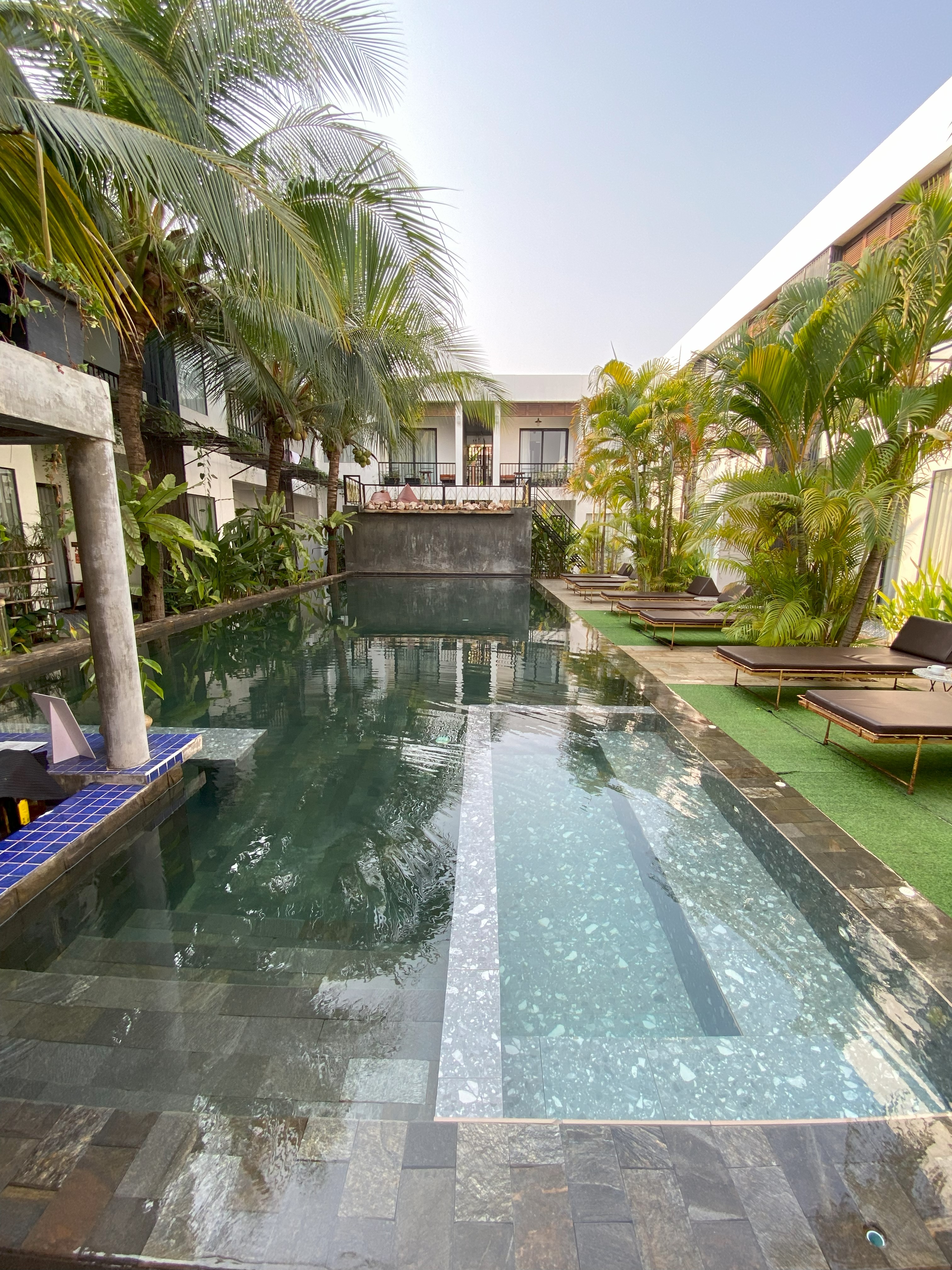
Hotels in Siem Reap are great value and we had a lovely room facing onto a pool complete with wet bar. Given how hot it is in this part of the world we would use this pool a lot.
The reason that everyone comes to Siem Reap is for the Angkor ruins that consist of 100’s of temples spread over a huge area of 1000sq km’s. This was the capital of the Khmer civilization and is considered to be the site of the largest pre-industrialised city in the world with a population of up to 1 million people.
The city of Angkor flourished between the 9th and 15th centuries. Since being named a world heritage site in 1993 there has been considerable preservation work carried out on the site, involving investment from a range of countries but using Cambodian workers, to preserve and restore many of the temples.
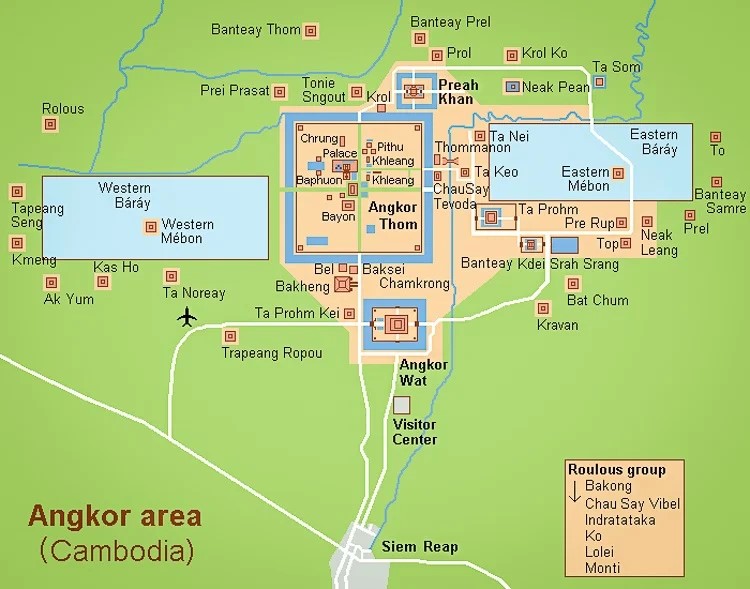
The Temple complexes start about 5km from town and the best way to access them is to hire a driver for the day. It’s possible to hire a car but we chose the option of a Tuk Tuk. The Tuk Tuk’s in Siam Reap are a bit different from the standard type. They consist of a motorbike with a connector (a bit like a semi-truck) to a carriage which holds up to four people. They are definitely more comfortable than a standard Tuk Tuk and we only paid US$18 for a day hire.
There are two standard tours around the Siam Reap temples: The Big loop and the Small loop. They both travel around a similar area but visit different temples. The big loop actually visits smaller temples so takes less time, although it has marginally more driving.
We decided to spend three days visiting the temples so did the small loop, the big loop and then a bespoke day visiting temples that weren’t on the two loops.
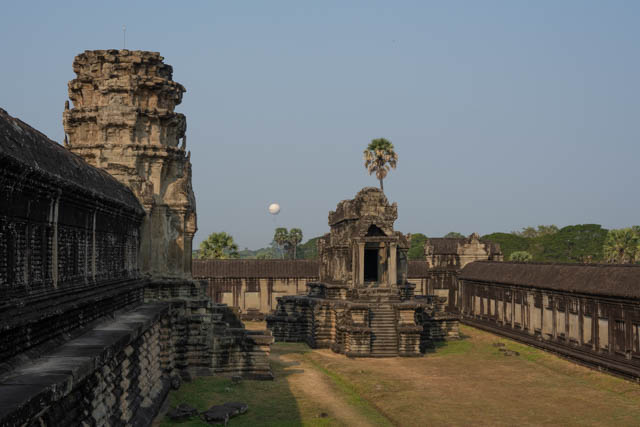
Angkor Wat is the biggest temple and the one that everyone has heard off. This means that it is by far the busiest of all the temples. It is in fact considered the largest religious structure in the world.
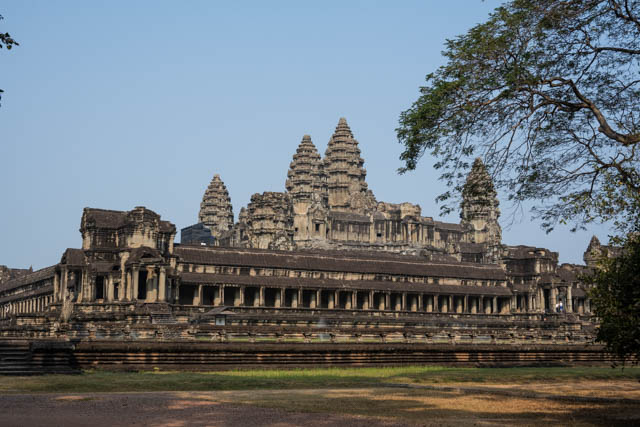
Angkor Wat was built in the 12th century as a Hindu temple dedicated to Vishnu by King Suryavarman II. However over time it was converted into a Buddhist temple. There is a large moat surrounding the complex which is over 5km long and 200m wide. Inside the moat is a gatehouse and wall and then inside this is the temple complex proper (a 350m walk inside).
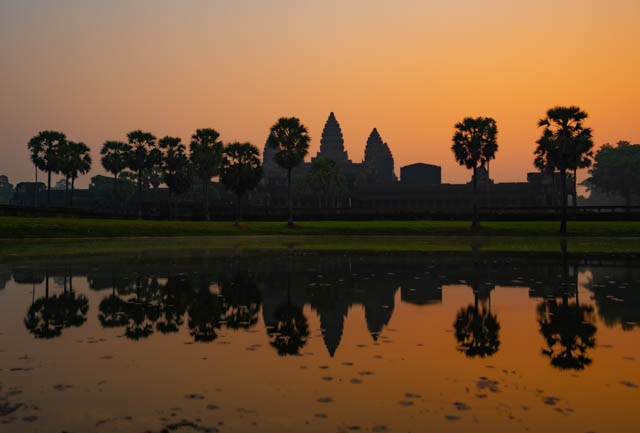
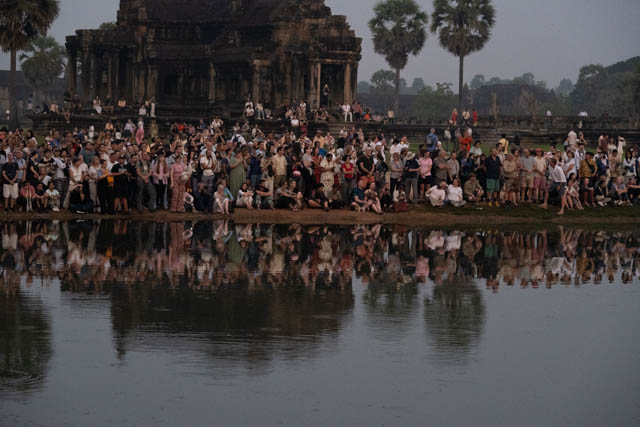
I decided to come to Angkor Wat to watch the sunrise, as this can be really spectacular. Unfortunately on this day the sunrise was more a gentle lightening of the sky with no particular stunning colours and of course you are sharing the experience with all the other like-minded tourists. It reminded me a bit of when we watched sunrise at Machu Picchu as it was similarly crowded. Just you and 1000 other people! If you want to pick and choose your position for photos you need to arrive in the pitch dark at least an hour before sunrise and then you’ll have no chance to reposition during sunrise as it is just way too busy.
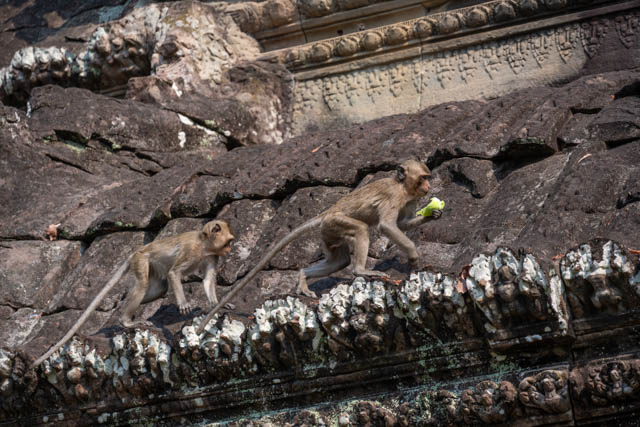
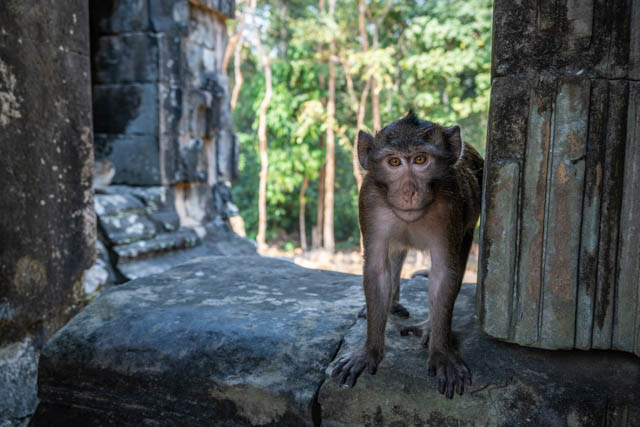
Actually my favourite bit of Angkor Wat was one of the gatehouses (the South) which contains a small Buddhist shrine. This was seemingly off the beaten track as there were no other tourists there – only a handful of locals visiting the shrine and there was a group of monkeys crawling over the building – trying to get at the food offerings made at the shrine.
Definitely take some water when walking around Angkor Wat as its so big – the walk from the taxi/ Tuk Tuk drop off point to the central temple complex is 1 km itself.
After leaving Angkor Wat we headed towards the walled city of Angkor Thom which was the capital of the Khmer empire and was built in the 12th century. The city covers 9km2 and between 80k and 150k people lived there at its height.
The city was abandoned sometime before the start of the 17th century although it is not known exactly when.
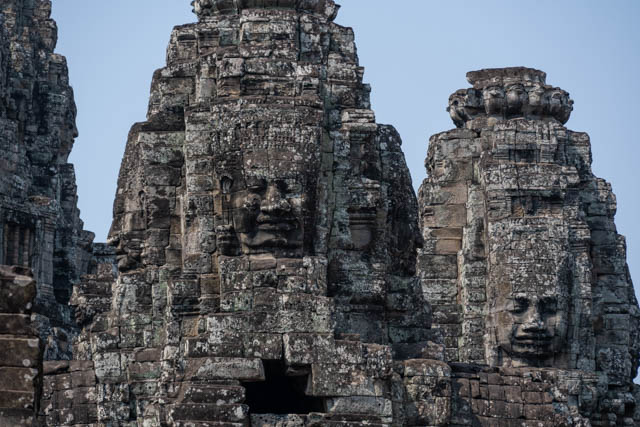
At the centre of the city is the temple of Bayon. This temple is striking for its towers decorated on all four sides by the smiling face of Buddha (said to have been modelled on the face of King Jayavarman VII). In all, there are 216 faces carved into the temple.
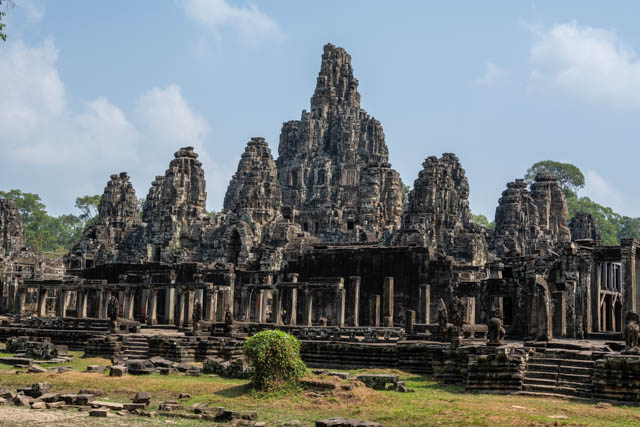
On the outside walls of the temple are detailed bas-reliefs of lots of different scenes including battles and armies. There is some debate on the meaning of many of these scenes.

Once inside this temple feels claustrophobic and densely packed in real contrast to the sprawling nature of Angkor Wat. This made it one of our favourite temples to visit.
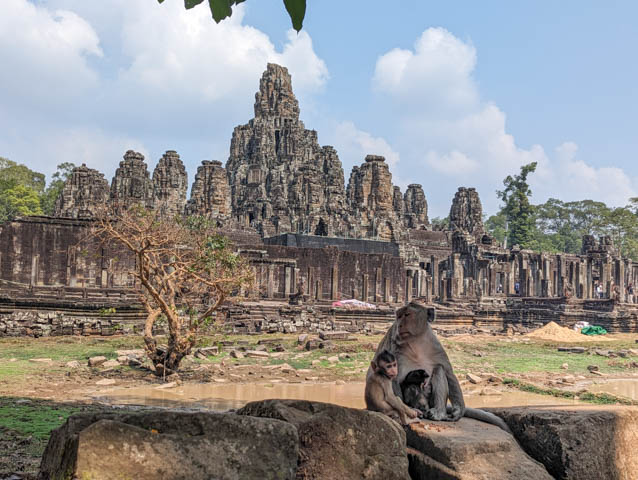
In the area around Bayon there are a number of other temples in walking distance. These are all less visited as they are not on the Big or Little circuits.
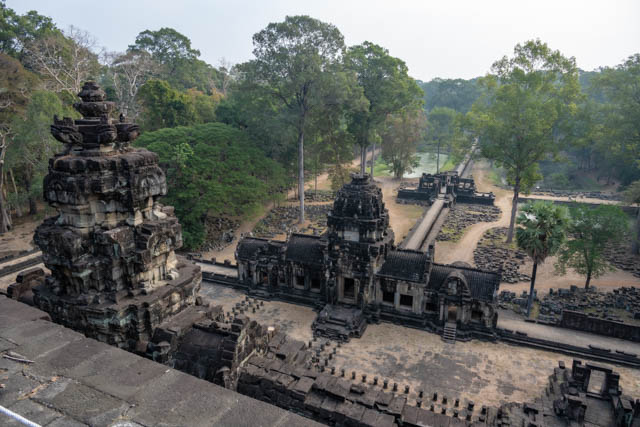
Baphuon is a big blocky temple with a long raised walkway to approach it.
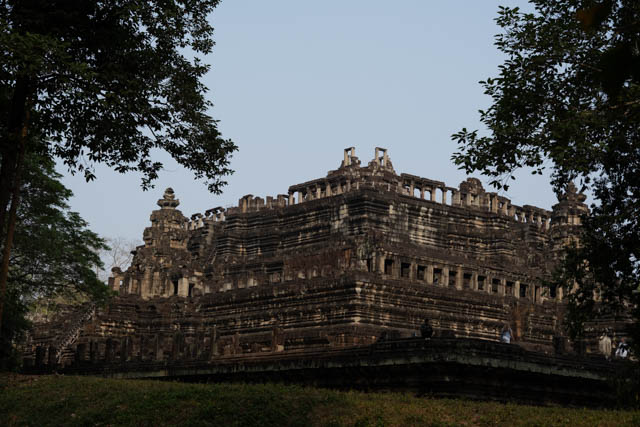
You can climb this temple but like all of the temples in the area it just isn’t quite high enough to see over the tops of the surrounding trees.
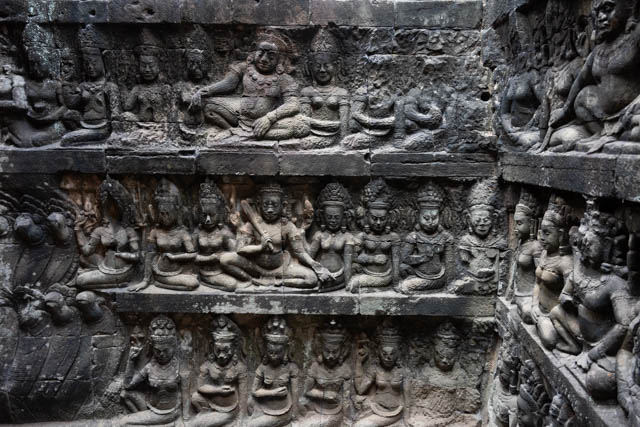
In the same area are the two impressively carved terraces: the Elephant Terrace and the Terrace of the Leper King. It is not known who the Leper King actually was although it is suspected it might have been Yasovarman I.
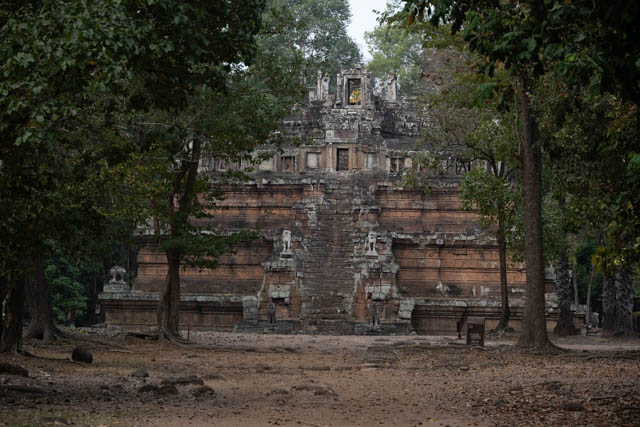
After leaving the city of Angkor Thom we visited a lot of other temples:
Preah Khan
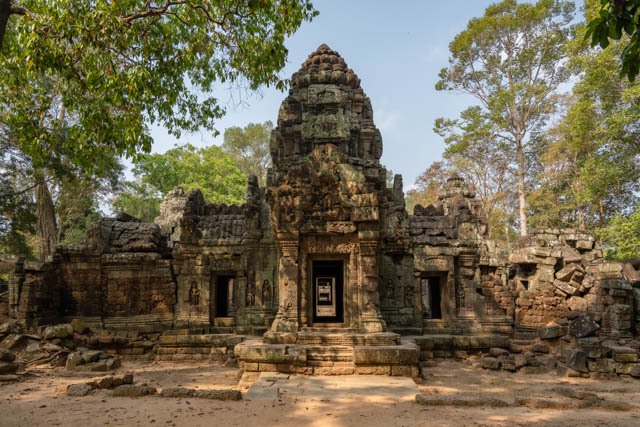
Banteay Prei
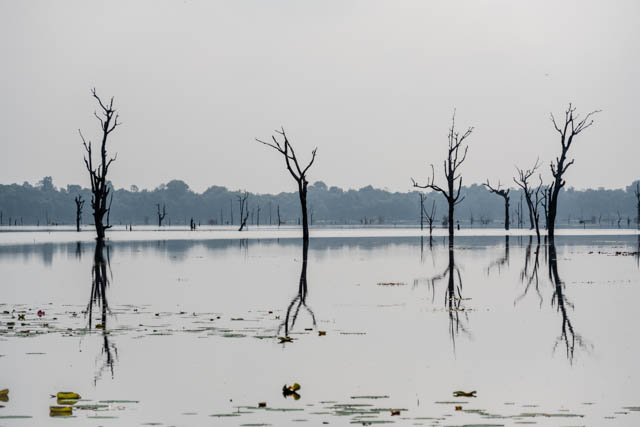
Neak Pean
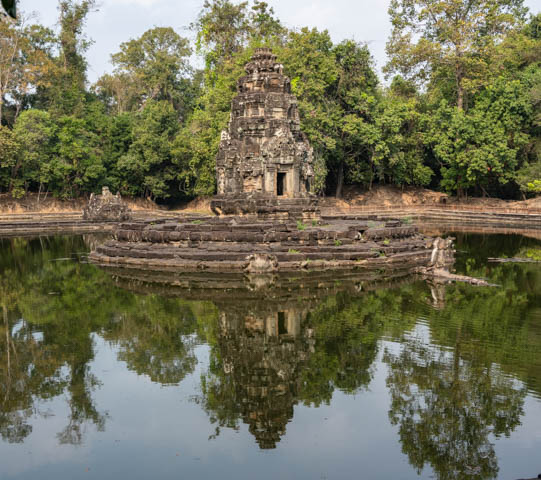
Ta Som
Eastern Mebon
Ta Prohm
Pre Rup
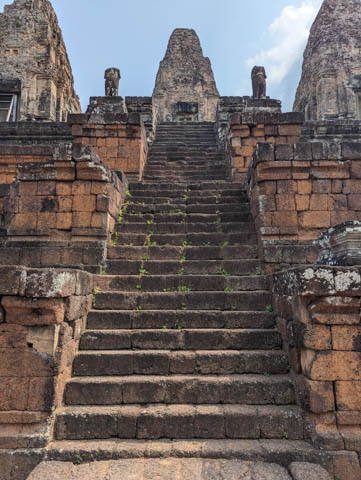
Banteay Samre
Srah Seang
Banteay Kdei
That’s an awful lot of temples but there is a lot of variety in there. Some are big like Ta Prohm which is a kilometre from one gate to the other side and some like Neak Pean are very small (It’s a small temple in a pond on an island). Some are very tall like Eastern Mebon and some are single story like Preah Khan. And they are all in different levels of being swallowed by the jungle, reclaimed and restored.
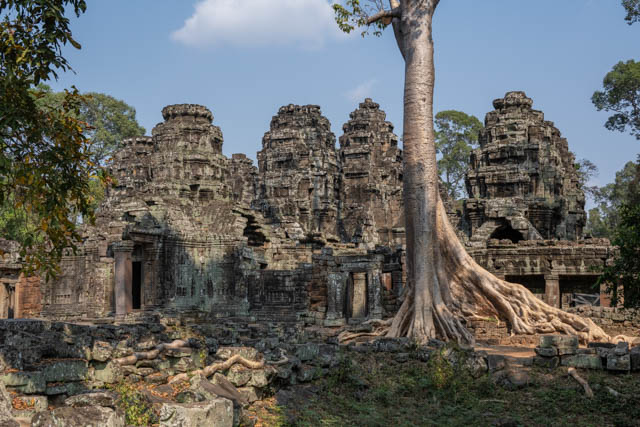
Ta Prohm is probably the most famous of the temples other than Angkor Wat. Its other name is the Tomb Raider temple and it was featured in the tomb raider film starring Angelina Jolie. Construction on Ta Prohm started in 1186 by King Jayavarman VII.

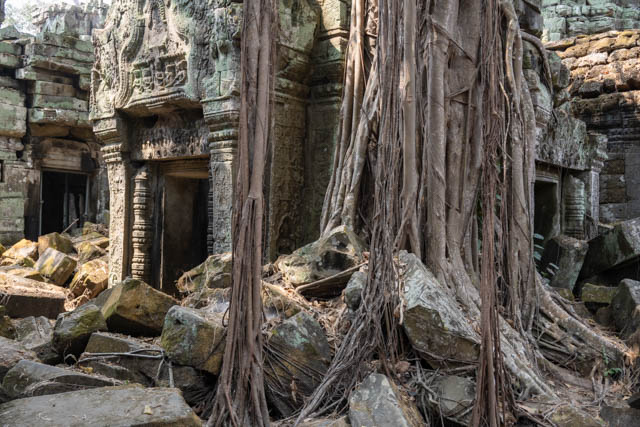
It was abandoned In the 15th century and the jungle took over until restoration works started in the early 21st century. Since then the restoration has been sensitive to the fusion of ruin and Jungle leaving the very picturesque remains today where large trees still grow atop many of the ruins.
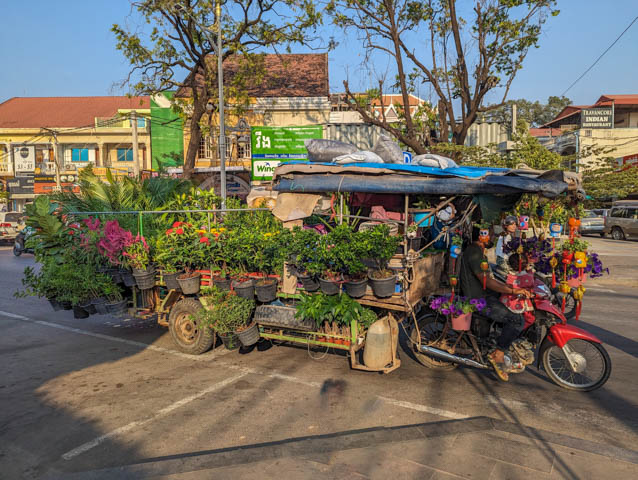
The town of Siem Reap itself is built around wide streets and is fairly quiet. There are very few cars, as these are expensive, and motorbikes have been adapted to many different roles. We’ve never seen such a variety. My favourite was definitely a florist that must have been more than 5m long.
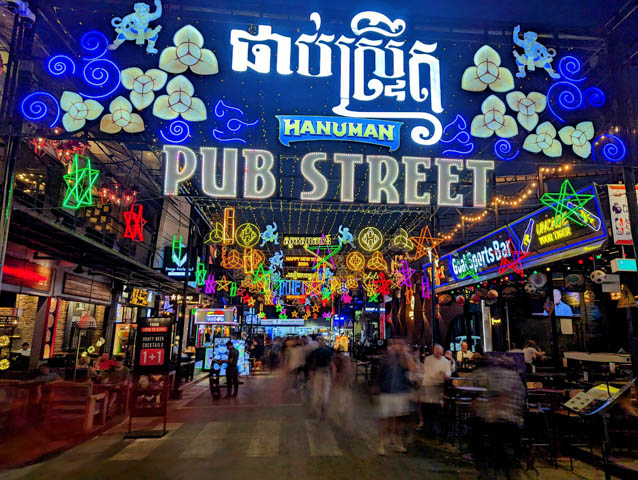
At the centre of town is the lively Pub Street which has the bright lights and music of places like Patong but none of the seediness. It was actually quite a nice place to wander around and have a cheap beer. The best bit was that a beer could be had for as little as USD 0.5.
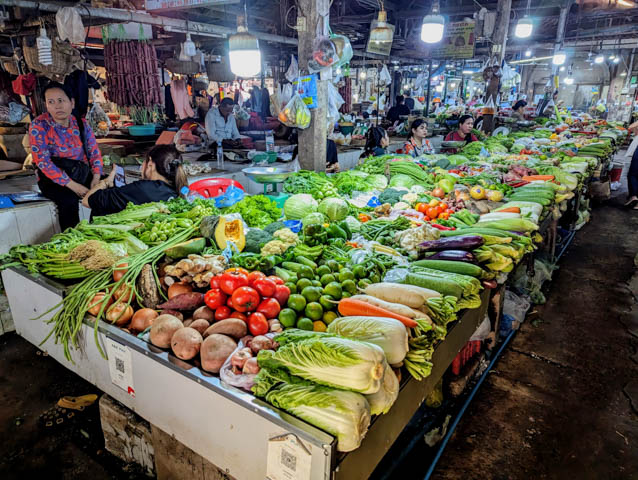
Right next to the Pub Street area is the local market which has the normal tourist tat around the outskirts but inside are the food sellers for the locals where women perch on top of their produce tables offering there wares to anyone that passes by.
We really enjoyed our time in Siem Reap and were really glad to have a few days to enjoy it. Most people seem to fly in and fly out with only enough time to do a couple of days at the temples. This can be exhausting because of the heat and lack of shade in many of the ruins. We took a day off between our visits and enjoyed the pool (and pool bar) which made us much more enthusiastic when we visited the temples.
Our time in Cambodia was over for this visit but we’ve seen enough of the country to want to come back and travel more widely next time. For now we were heading to Vietnam and the sweltering heat of Ho Chi Minh City.
 FromAtoB