Kosovo
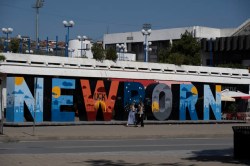
Having ensconced ourselves in the mountains of Serbia and Montenegro for several weeks now, we noticed an approaching weather window where the temperatures were due to dip into the 20’s, so this was our chance to make a break for the lowlands!
Having visited the coastline of Montenegro previously we decided to bypass this area and instead whizz around the tiny country of Kosovo.
Kosovo was part of Serbia until it unilaterally declared its independence in 2008. This is categorically not accepted by Serbia who still treat it like a province of their country. If you enter Kosovo from a third party country you cannot cross the border into Serbia as you are deemed to have illegally entered the country. Fortunately the surrounding countries recognise Kosovo and our route in from Montenegro was fine, although the Montenegrin border was only agreed in 2018. Only 104 of the 193 United Nations countries actually recognise Kosovo as an independent nation.
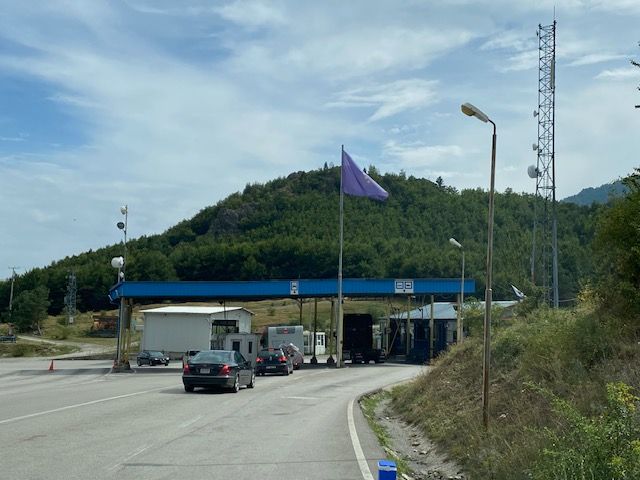
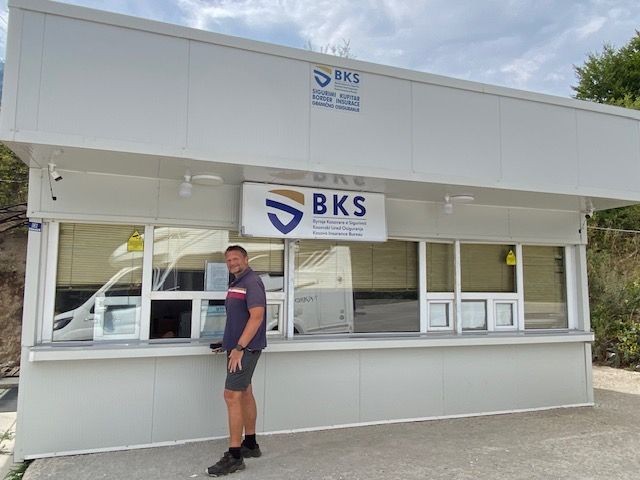
The drive over the mountains from Montenegro into Kosovo is a scenic winding route through pine forests and the border crossing was quick, easy and friendly. Unlike Montenegro, buying vehicle insurance on the border here is straightforward (there is a small standalone building on the right just before you get to the border) and essential – you can’t get into the country without it.
We should have known it was all going far too smoothly. We had a night spot planned for that evening at a restaurant not far from the border, with a view to visiting the city of Peja the following day to buy sim cards. However, when we arrived at our planned spot (having driven down the steepest slope we’ve ever driven and I’m still not sure it wasn’t in fact a crazy-paved footpath, rather than a road), the place was heaving with cars and people. Having connected with a proper road at the bottom of the slope (with much relief as I don’t think we would have got back up), it was clear that this was a very popular place with the locals. As well as this, there were skips overflowing with rubbish and the smell was pretty awful so we decided to move on. Our ‘back-up’ night stop options were on the other side of Peja so we forged a new plan to drive into Peja, get our Sim cards and then find somewhere to spend the night.
What we hadn’t realised though, is that the traffic through Peja is bad, I mean really bad and by the time we had driven to and then through Peja (at 0-5mph), it was already 6.30pm with a darkening and stormy looking sky. On the plus side, it wasn’t hot and we had manged to buy a couple of Sims after 5 attempts, firstly at a petrol station and then at mobile phone shops (who by the way do not sell them).
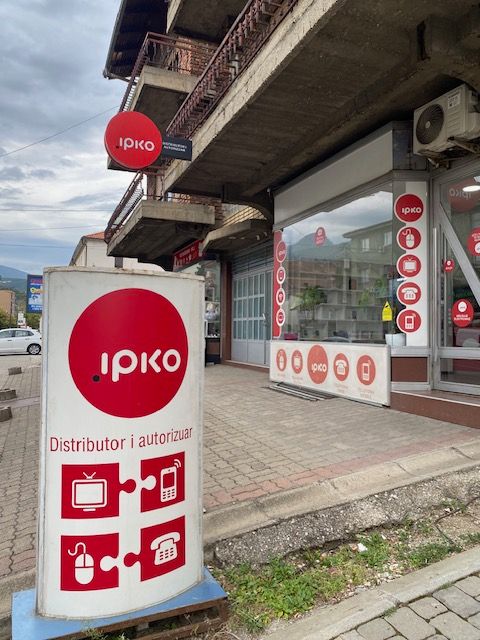
For anyone venturing into Kosovo and in need of a local Sim, the shop you need is called Ipko and there is one handily located on the main road out of Peja. We probably would have known this if we had researched online before getting to Kosovo but things were very easy in Montenegro and we became a little lax. Lesson well and truly learned after a stressful couple of hours negotiating the chaotic city streets of Peja without any phone data or google maps!
With the night drawing in we decided to ditch wild camping and head for the nearest campsite in Junik. A small family run business that has given over its front garden to campers.
The next morning, we were keen to visit the historical town of Gjakova and, as it isn’t too far from Junik (although too far for us to cycle), we asked the campsite owner about taxis, which led to her offering us the use of her car for the day for €25. Result! And once we had got used to being in a much smaller vehicle again it was quite refreshing driving around the chaotic streets not having to worry about fitting down a road because, in true Balkan style, people have just left their cars wherever they want (I won’t flatter it by calling it parking).
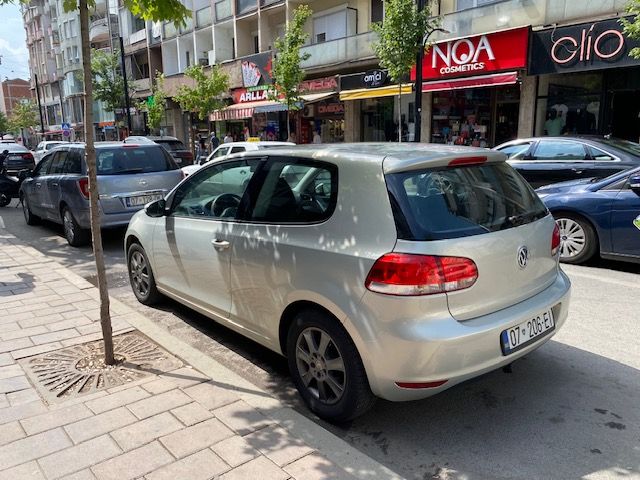
Driving through Gjakova you get a sense of a modern mid-sized town, until that is, you take a couple of turns and find yourself driving on the cobbled streets of the old district.
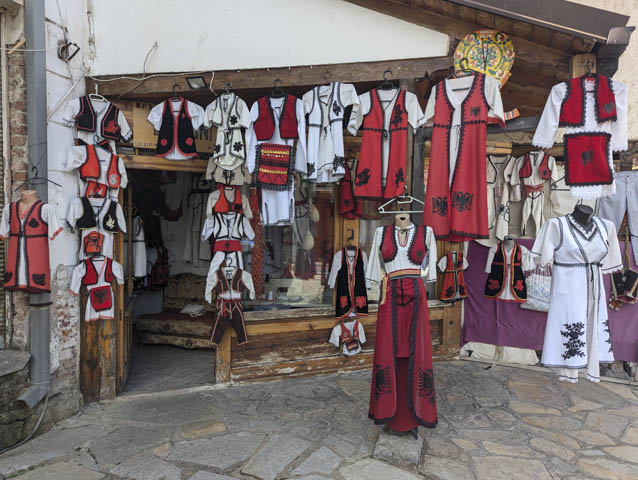
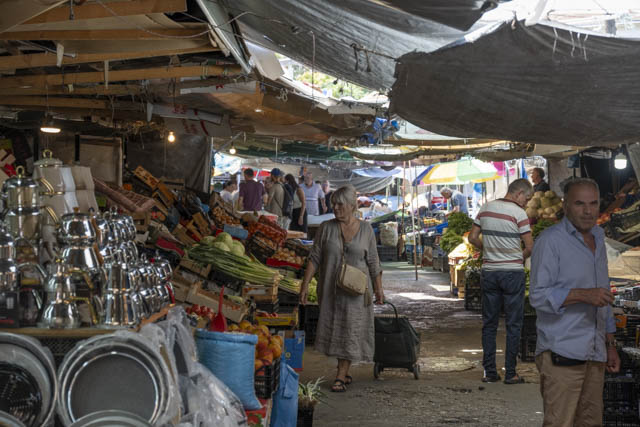
The bazaar has a distinctly Turkish feel to it with groups of men occupying the tables and chairs of the many coffee shops lining the streets. Drinks were limited in the town however as we found out when we were told the water was off (this also meant no access to any toilets!). So maybe not so modern after all. In fact, Gjakova is said to have been populated from the prehistoric era and served as a trading route between Shkoder (Northern Albania) and Istanbul.
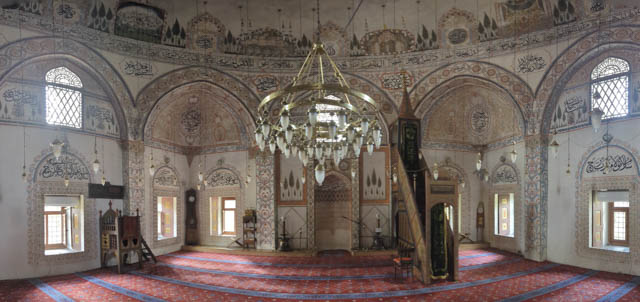
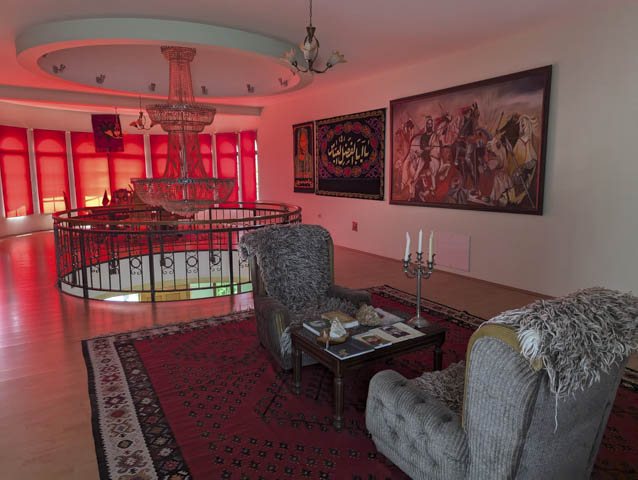
Other than the bazaar, the main sights are the decorative Hadumi Mosque and a Bektashi Tekke which we stumbled on purely by chance when we decided to see what was on the other side of a closed wooden door. I am still not sure we were supposed to go in but we were greeted by a lovely lady who spoke very little English but gave us a tour of the building and offered us coffee. In a separate building in the peaceful walled courtyard of the grounds, there are also the graves of seven Bektashi Fathers dating back to the 17th century.
After strolling around town and enjoying a very cheap lunch (two pizzas and bottled drinks – still no running water, for a bargain €7.40!) we retraced our steps back to the car and drove past our campsite in Junik and back through the traffic of Peja to visit the 13th century Patriarchate of Pec monastery and Rugova river canyon. Well, we wanted to get our monies worth out of the car hire!
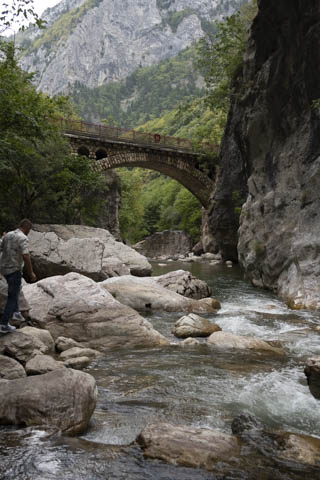
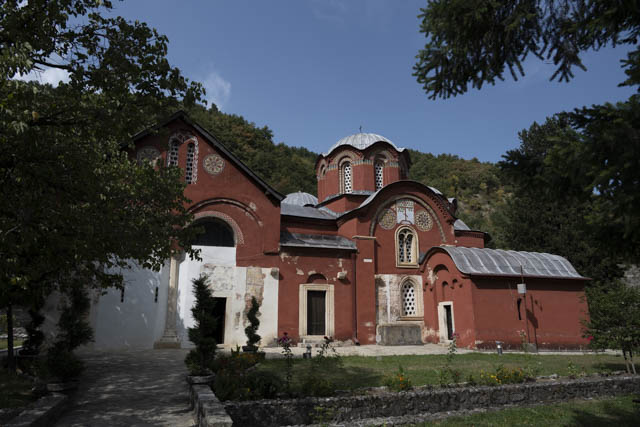
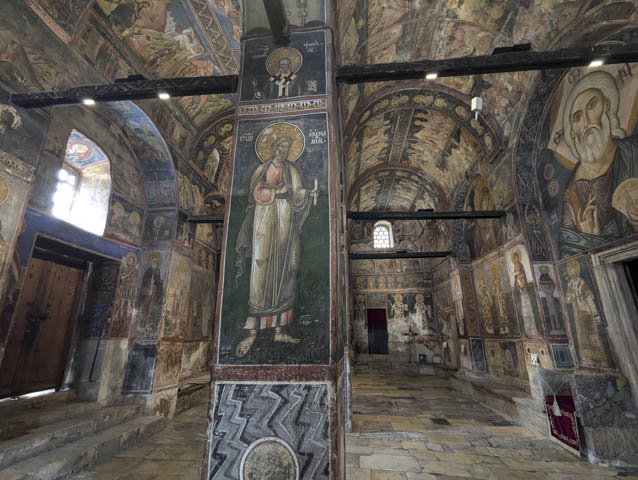
The Patriarchate of Pec, a UNESCO world heritage site, is an impressive Serbian Orthodox monastery with three churches in one building with polished flagstone floors and high frescoed walls with domed ceilings. Outside are the ruins of a 14th century palace and 16th century monastic dormitories and a much more modern 20th century bell tower.
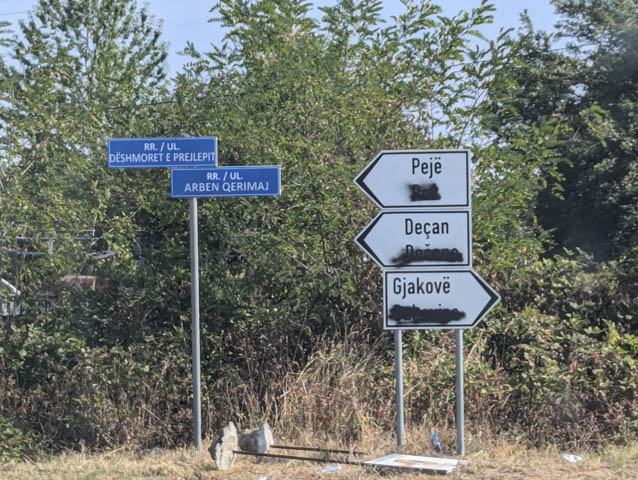
Interestingly, having only been in the country for one day it was already very clear that some underlying tension remains here. The road signs are all in Algerian and Serbian but it is common to see the Serbian names have been spray painted out.
The Serbian religious buildings are all protected either by police or KFOR (NATO peace-keeping force) with heavily armoured vehicles and to gain entry you need to hand over your passports. Even walking down the street in Gjakova we were passed by a group of NATO soldiers.
KFOR have had a tough job in Kosovo and in the 20 years that they have been in place over 200 soldiers have lost their lives. As recently as September 2023 KFOR troops have been reinforced to address Serbian troop mobilisations on the border so the political climate is definitely not settled yet.
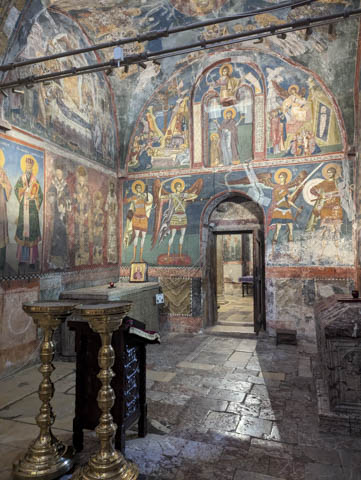
The following day and back in the camper, we set off early to drive to Prizren, stopping first at another impressive UNESCO site, Decani Monastery.
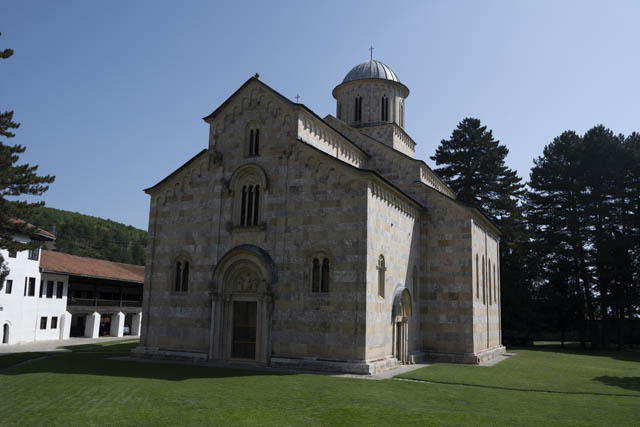
Founded in the 14th century, Decani is the largest medieval church in the Balkans and is the most heavily protected of all the churches, having suffered violent unrest and attacks in the early 2000’s.
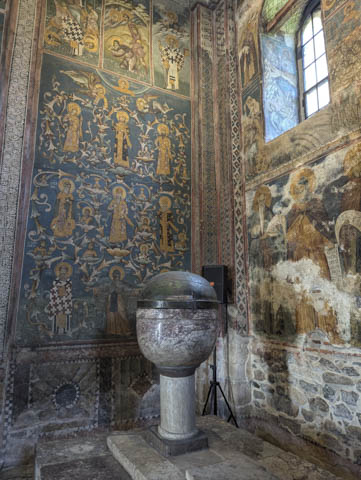
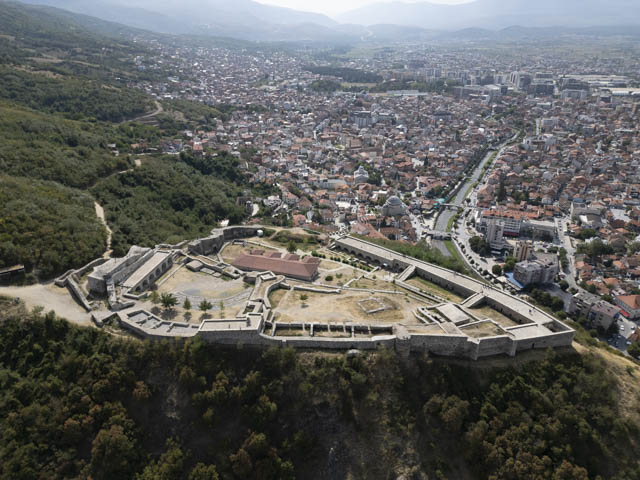
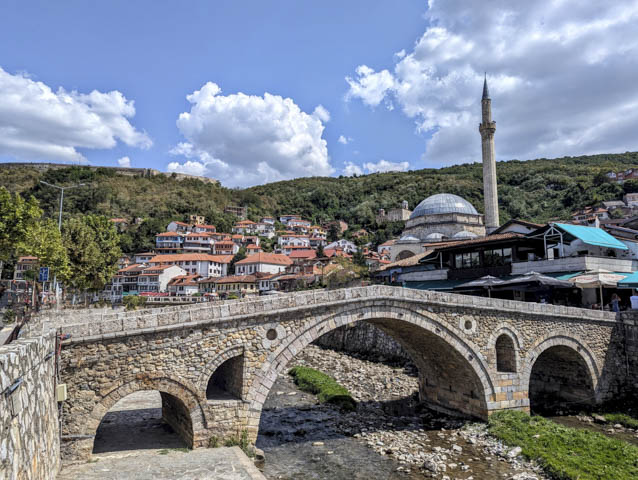
Prizren is the second largest city in Kosovo and Peja is the third largest, so we were expecting chaotic streets and crazy traffic much like Peja, but in fact there is a much greater sense of space in Prizren with a much more laid back vibe and with far more navigable streets. It is an attractive city built along the banks of Prizren river, over which spans the 16th century Old Stone Bridge, with the Sinan Pasha mosque rising against a wooded hillside, atop which, you will find Prizren Fortress.
In addition to the above, we felt that we should probably also visit the Albanian League of Prizren Museum. Built on the complex where, in 1878, the original League of Prizren was founded, this Assembly went on to establish the first Albanian government in 1881. The museum (which was destroyed in the Kosovo War but rebuilt in 2000), houses documents, objects and clothing from the time of the Assembly and with an entrance fee of only €1 we decided to take a look but unfortunately there are no explanations in English, so unless you speak the local language you don’t really learn anything from the visit.
If you continue to drive up the river valley out of town you get to the 14th century ruins of the Serbian Orthodox Monastery of the Holy Archangels, and once through the police guard we were met by the one remaining monk who lives here. He very kindly offered us cold bottled water (we must have looked a bit hot after an afternoon of cycling around town) and of course the usual offer of coffee. If only we drank coffee we would never have to buy our own, we get offered it so frequently. Balkan hospitality continues to impress us. This monastery was looted and destroyed by the Ottomans and over a century later, the materials were used to build the Sinan Pasha Mosque on the banks of Prizren river.
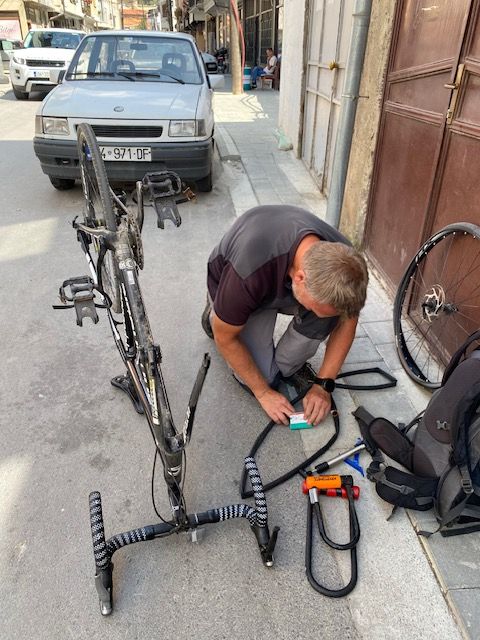
All in all, we really enjoyed our day in and around Prizren, although it wasn’t all smooth sailing as we managed to get two punctures while cycling around town.
After a busy day we headed North of Pristina, the capital, where we spent a free but sleepless night in the car park of Prishtina Bear Sanctuary listening to the stray dogs barking. Tired but still excited to see some bears, we started the hilly 2km route around the complex, where strangely they also house a lion?!
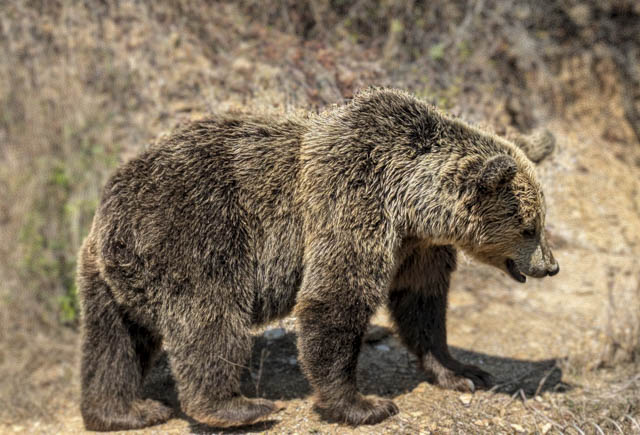
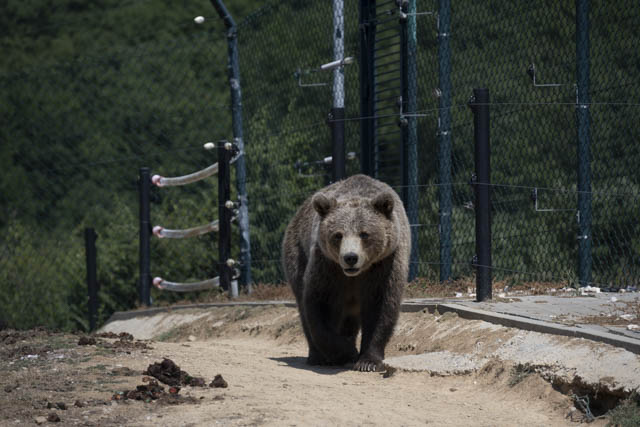
We had visited a very good bear sanctuary in Croatia so we were a little disappointed by this one. While their enclosures were generous with water and shady areas, much of the ground was dry dirt – although in this climate in August I guess that is normal. Despite this, the work they do is commendable. Many of the rescued brown bears were from small cages at restaurants, where until 2010 it was legal to privately own bears in Kosovo. There are currently 20 bears in their care… and one lion.
After a sweaty morning walking around the sanctuary (take a hat if you plan on visiting, there is very little shade) we drove to Gracanica where we knew of a hotel (with showers and a pool) that welcomed campers, but first, a visit to Gracanica Monastery. The monastery now serves as a convent and there are currently 24 nuns in residence. The reason we wanted to visit this monastery is because we had already visited the replica of it (or one of, there is another in Chicago) on this trip in Trebinje, Bosnia.
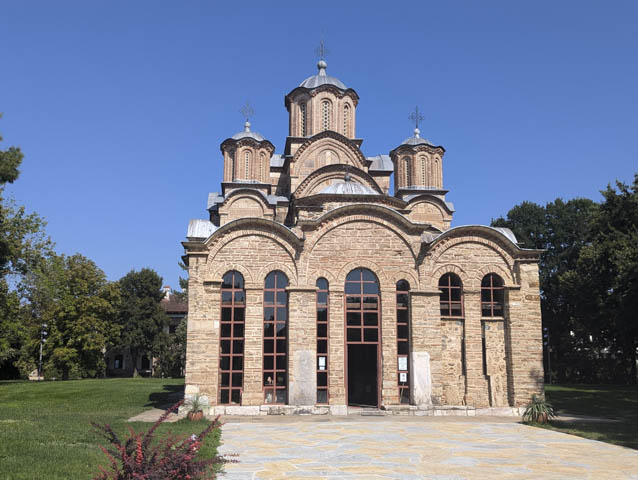
Gracanica is only a short drive from Pristina, our last stop in Kosovo but our short weather window had closed and the afternoons were becoming pretty unbearable for sightseeing, so we decamped to the grounds of the hotel, had a lovely cool shower and sat in the shade by the pool with a cold beer enjoying some R&R, ready to hit Pristina first thing tomorrow.
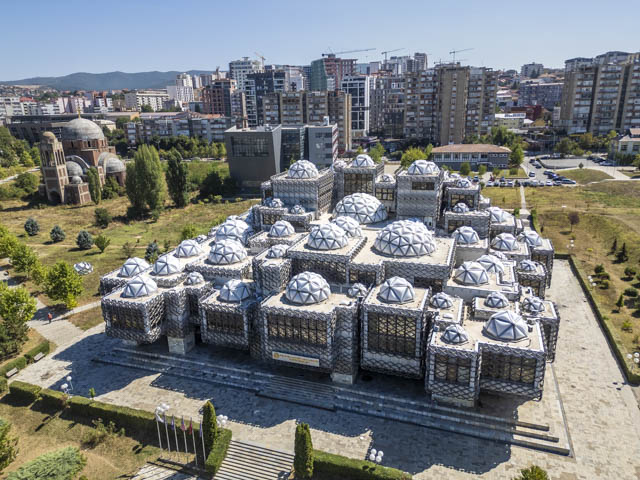
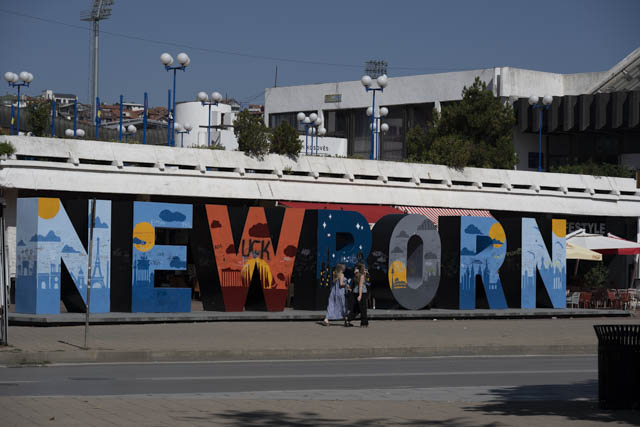
Pristina is a big city but we had no problems finding a large parking lot near the sports stadium and from there cycled around the town to all the main sights. The best of which is the view of the space-age National University Library of Kosovo building, taken from the bell tower of the Catholic Cathedral of St. Mother Teresa. It is also worth going into the library as the main atrium is quite impressive.
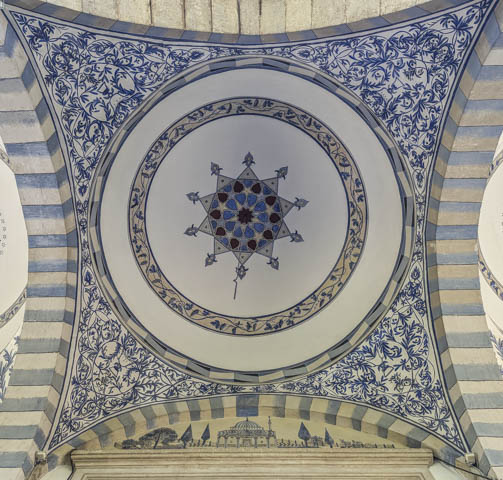
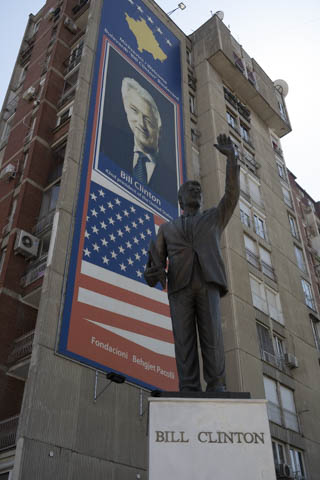
Of course, visiting the Great Mosque complex is also a must as well as the many monuments of independence and heroism but besides all of this, Pristina is just a nice city to explore.
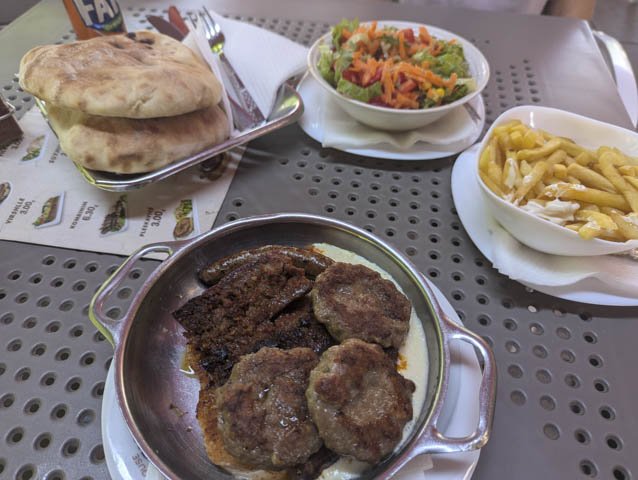
After cycling across the town we had worked up an appetite so we we finally tried some local Kosovan food, before the drive back to Junik for our border crossing into Albanian the next day.
And that is how to do Kosovo in a whirlwind 5 days! We could definitely have stayed longer and would have, had the weather been cooler but it was into the Albanian Accursed Mountains for us as the temperatures soared back into the high 30’s.
 FromAtoB