Finally Greece
After 3 months out of Schengen we were clear to go back into the Schengen zone once again and we wouldn’t have any problems with timings for the rest of our trip. It felt like we had been heading for Greece for a long time and it was exciting to finally get to the southernmost country of our journey.
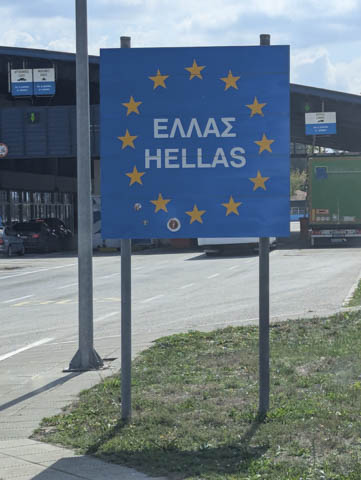
After a quick border crossing, where bizarrely there were peacocks roaming around the border security booths, we were back in the EU.
Hardly surprisingly, as we approached Greece from North Macedonia, we entered the country through the Macedonia region, which is fairly mountainous and seems to have more in common with the rest of the Balkans than the coastal regions of Greece that are more familiar to us.
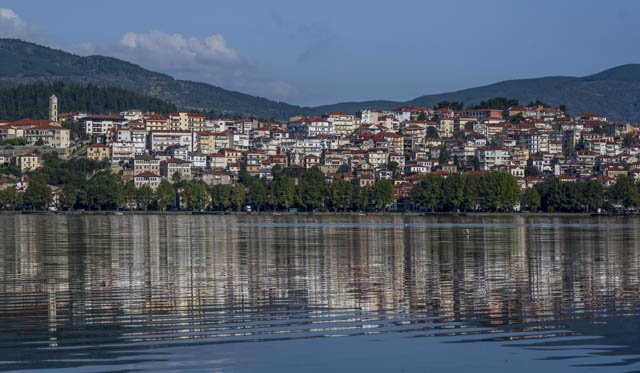
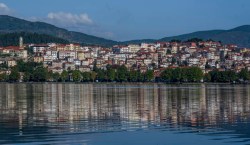
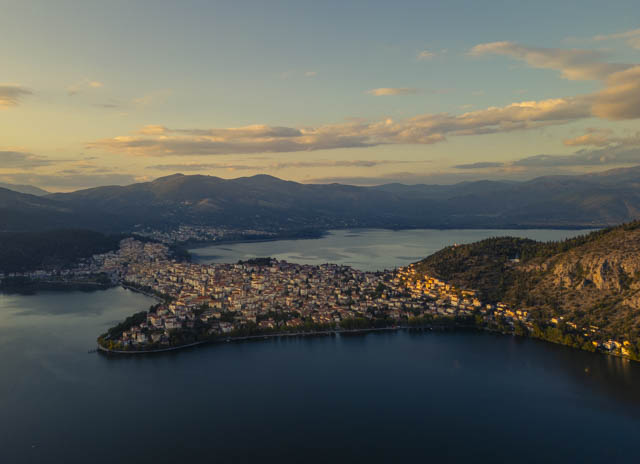
Our first port of call was Kastoria, a lakeside town on an isthmus, with an old town on the side of a steep hill. We parked up in a free lakeside car park for the night and were treated to beautiful sunset views across the lake.
The following morning we jumped on our bikes to explore the old town. Kastoria is a town that grew rich on the fur trade using the pelts of local wild beavers. Unfortunately they were hunted too extinction in the area by the 19th century. Despite this, the fur trade was kept alive with farmed beavers and imported pelts and even today, we were surprised to see, that there are still many fur shops around the town.
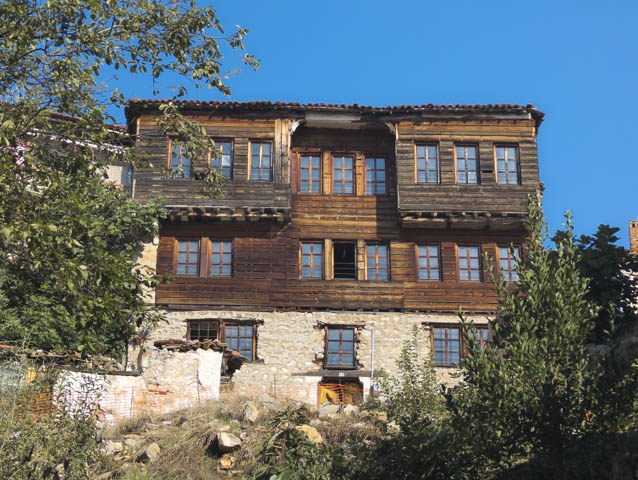
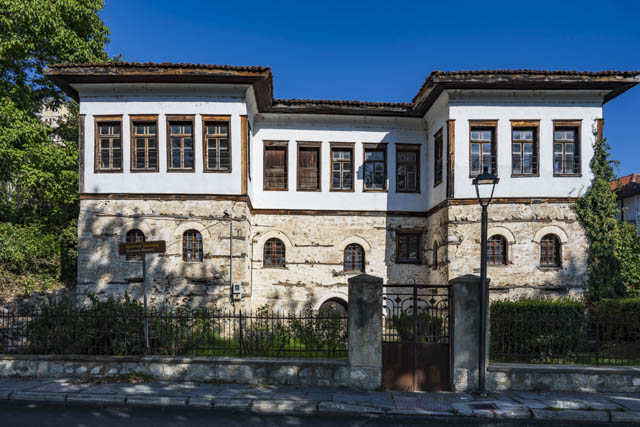
One of the highlights of Kastoria are the grand old mansions of the fur-trade families, which date from the 17th-19th century.
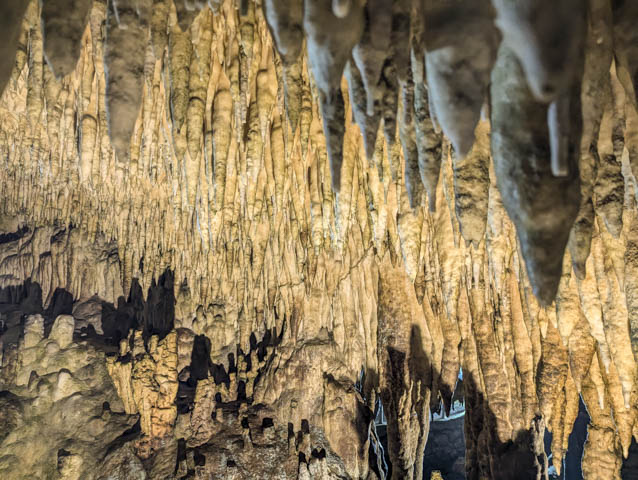
After exploring the town we headed to Dragon Cave where we did a self guided tour of the main chambers, one of which had more stalactites than I have ever seen before in one cave.
After Kastoria we continued to head South with the ultimate goal of getting to the Peloponnese but we were soon distracted by the beautiful Greek mountains.
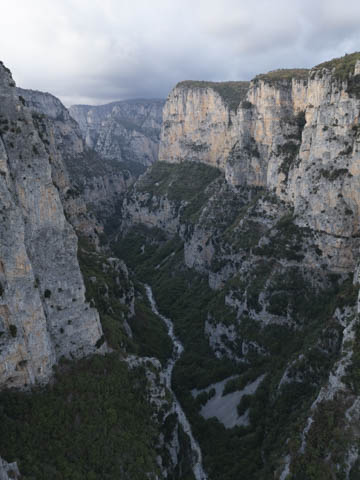
We headed to the village of Monodhendhri which overlooks Vikos Gorge and is a great starting point for a hike into the gorge. The village itself is a great example of a Greek mountain village with narrow stone paved streets.
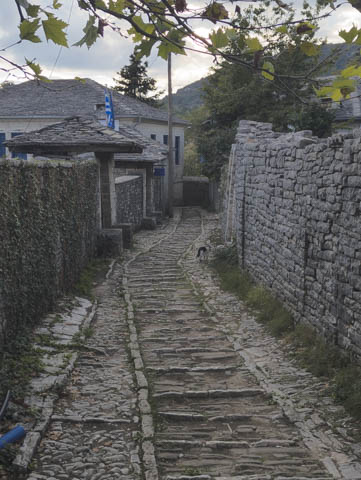
A short walk from the village itself is the monastery of Ayia Paraskevi which is perched right on the edge of the gorge and from here, there is a cliff edge walk that goes to a cave, Megali Spilia, which was once used as a safe haven for the villagers when they were under threat. A head for heights is definitely needed for this path as it is narrow and the drop off to the gorge would almost certainly be fatal.
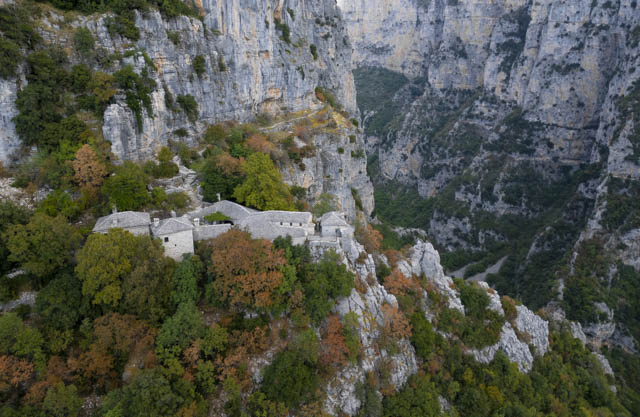
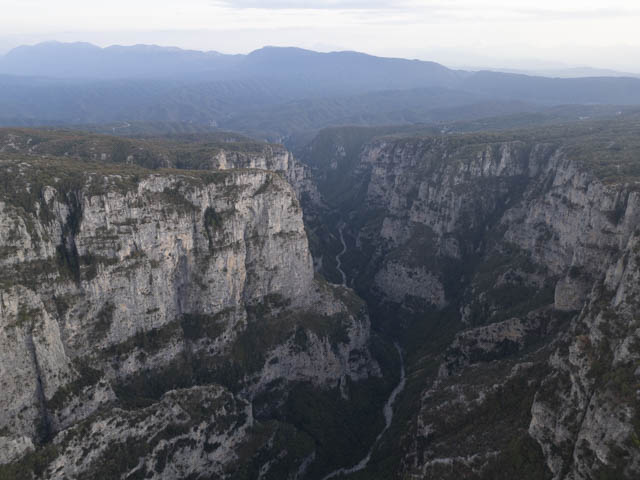
Vikos gorge itself is 1,000m deep in places but while we were there the river running through the gorge was dry with only some puddles along the way.
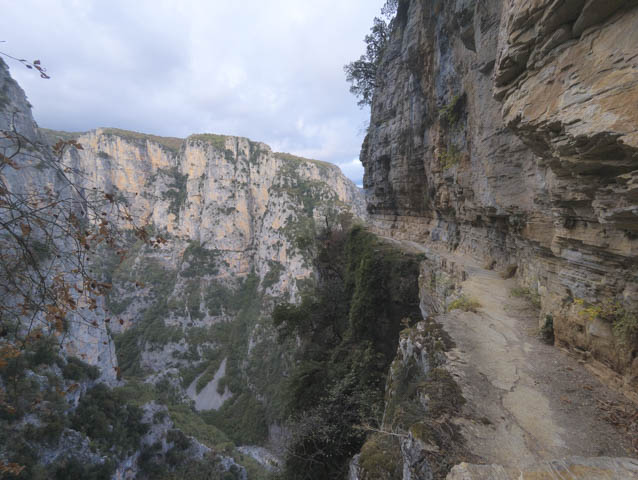
I hiked down into the gorge from Monodhendhri and walked around 8km along the river bed but the views were limited as much of the hike was under trees and the hike back up was fairly brutal, so I wouldn’t say it was particularly worthwhile.
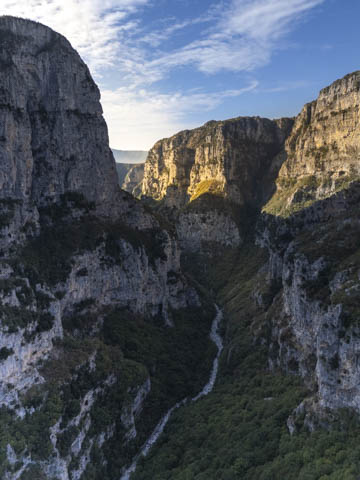
After leaving Monodhendhri we drove back down into the adjacent valley and headed around and back up to another village on the other side of the gorge – Vradeto. The road here was spectacular and the village felt much more authentic as it was far less touristy.
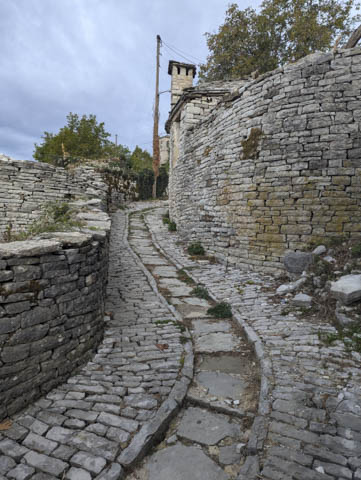
Vradeto is famous for the Vradeto steps which were the only way to reach the village until the road was built in the 1970’s. There are over 1200 steps and the staircase took over 20 years to build.
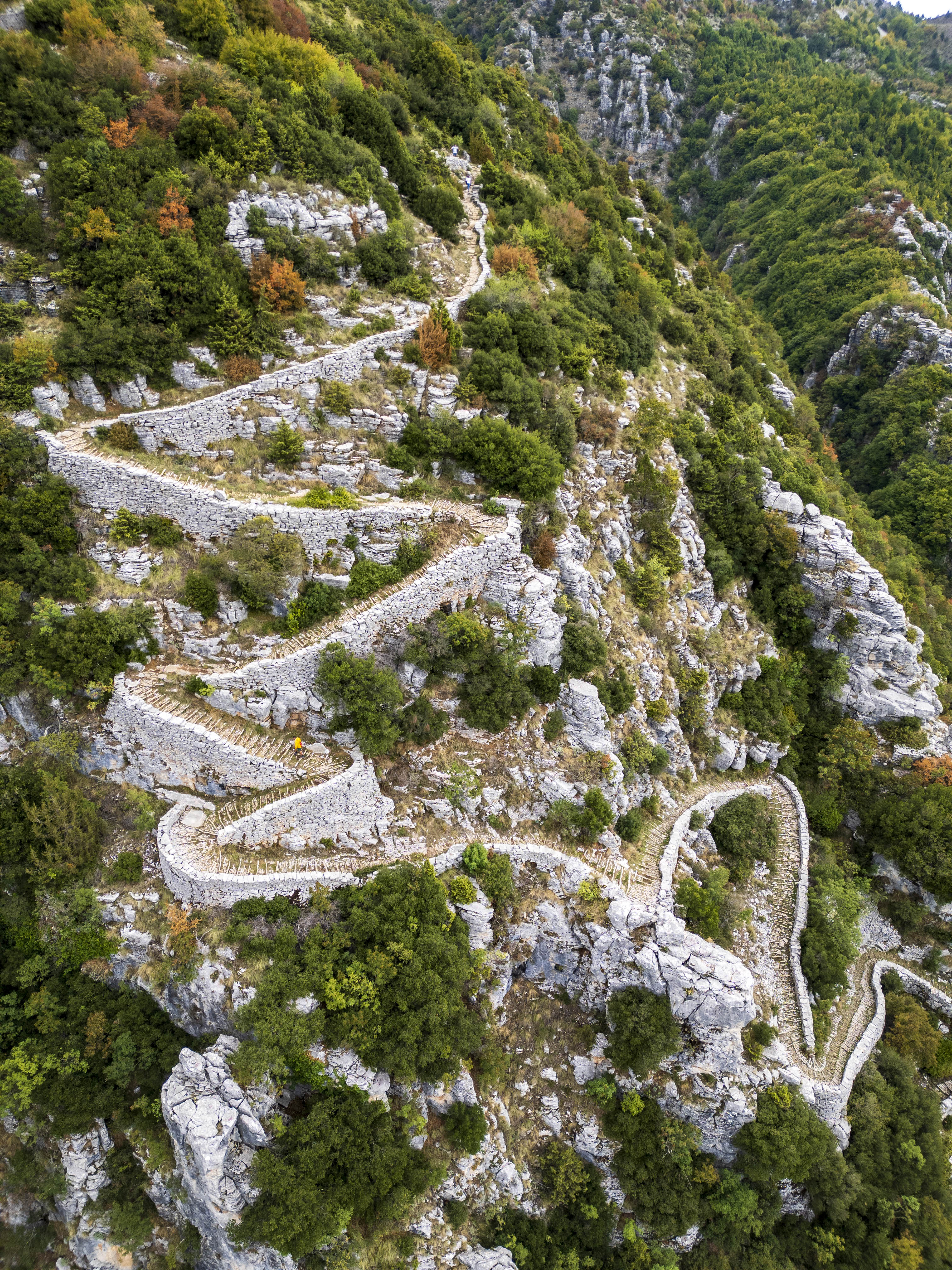
Vradeto is a great place to start the hike to the Beloi viewpoint over the Gorge which is one of the most spectacular places to see the canyon.
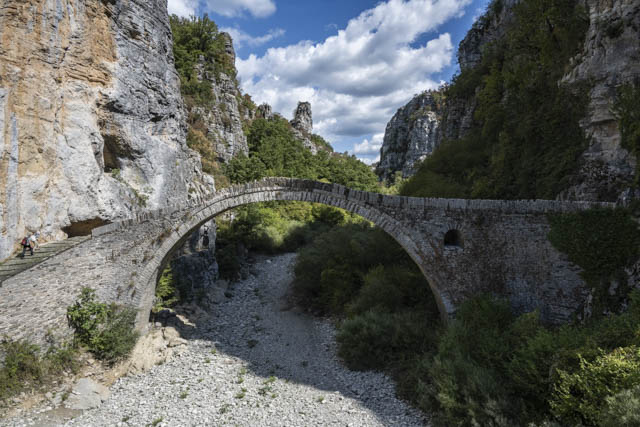
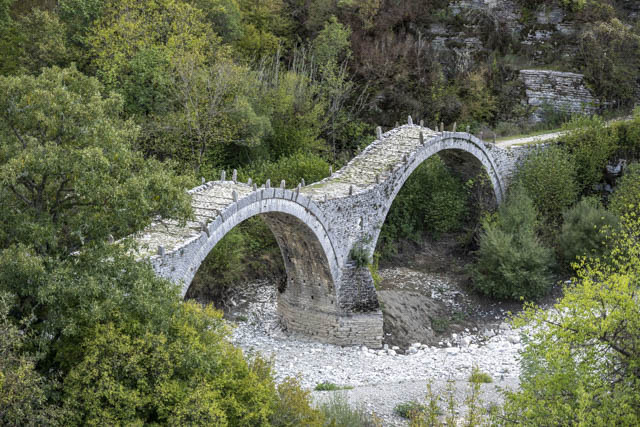
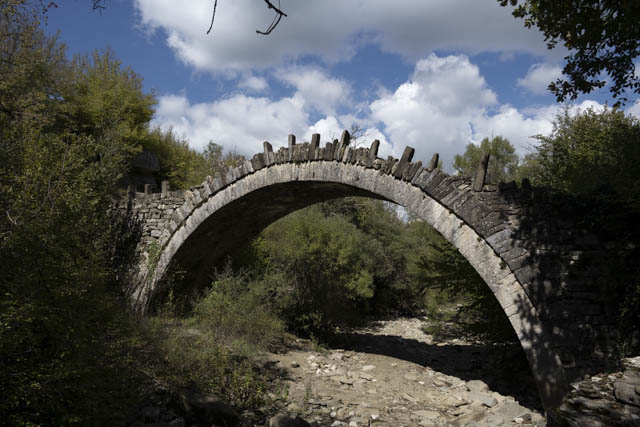
On the way to Vradeto we stopped off to see three stone bridges which date back to the 1700’s. The most visited of these is the Kokkoros bridge which is right next to the road. Unfortunately at this time of year the river beds were all dry. The other two were the Captain Bear Bridge and the Monk Bridge.
After leaving behind Vikos Gorge we headed to the regional capital town of Ioannina which is another lovely lakeside town. There is a great parking for motorhomes right beside the lake which is only a 5 minute walk from the old town.
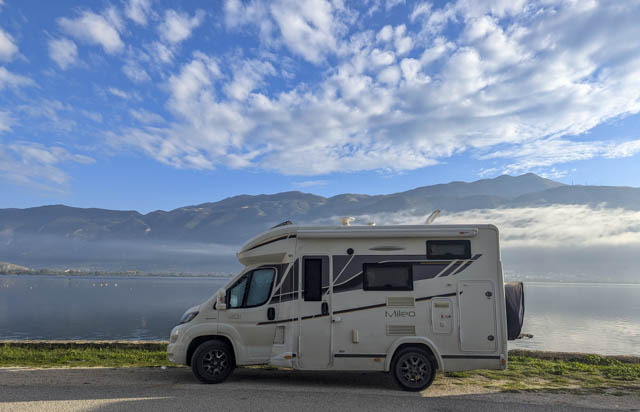
Ioannina is an easy city to explore with a walled old town that for once isn’t on top of a great big hill. Outside the walls of the old town Is a lively modern new town with a relaxed feel. Its not a particularly big town but one that we immediately felt comfortable in.
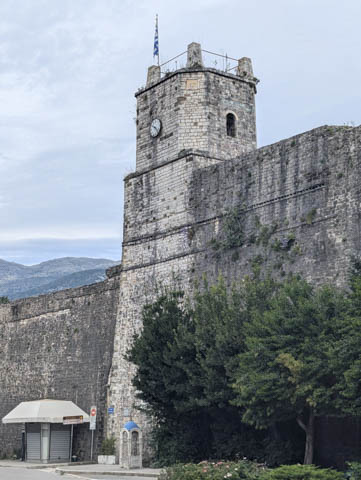
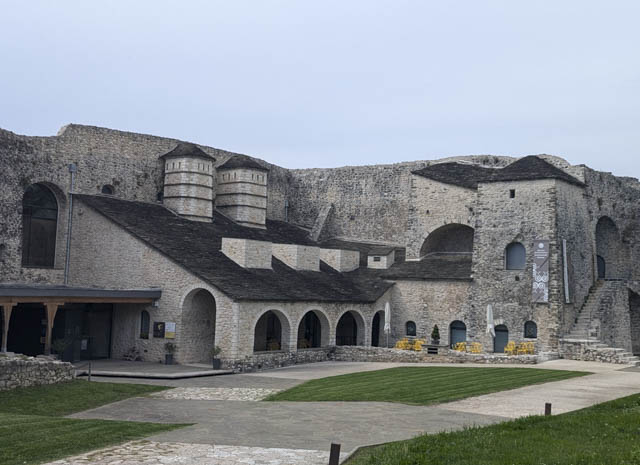
Within the walls of the old town the highlights include the silversmithing museum which was the town’s treasury in years gone past and the tomb of Ali Pasha.
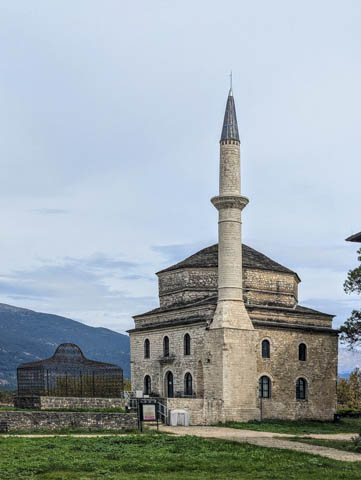
Ali Pasha was an Albania born in 1741 and he became a brutal leader, conquering Ioannina in 1787 which he then made the capital of a personal kingdom which he seized from the Ottomans. He showed no loyalty to any nation and in turn allied with the French, Turks and British depending on which suited him best at any one time. He managed to rule for 33 years until, in 1821, the Ottoman Sultan decided that enough was enough and sent an army of 50 thousand to capture him. He was duly decapitated and his head was sent Istanbul. His body is buried here in Ioannina.
We capped off our day in Ioannina with a visit to a waterfront grill – although it was pretty windy so we actually sat on the terrace away from the water, where we had a great value meal which we thoroughly enjoyed. If you are passing this way we would recommend “Something is Grilling on the Corner” for a great cheap feed.
 FromAtoB