The Baltics
After enjoying a few days in the big smoke exploring Helsinki and then Tallinn, we were glad to get out into the countryside again.
We found a flooded quarry not too far from Tallinn which was a great location for a swim and a quiet spot to spend the night. The sky was overcast but it was a lovely warm day.

We decided to head West to Estonia’s largest island, Saarema. Estonia actually has more than 2,000 islands but Saarema is the biggest at 2,673km2 and it is only a 30 minute ferry journey over to the island.
On our arrival in Saarema we headed to a campsite that had good reviews on Park4Night but when we got there it was deserted, teeming with mosquitos and had a real cabin in the woods horror movie vibe, not to mention the long drop toilet which was a horror show of its own, so we decided to beat a hasty retreat. Instead we headed over to the North coast of the island where there are a series of RMK sites.

RMK’s are rural camping areas which are free to use and which usually provide a long drop toilet and free firewood.

The one that we used on Saarema was a strip of woodland along the coast with a series of unmarked bays for camping. We managed to park up with our door facing out right onto our own little beach among the fir trees. We enjoyed a couple of days chilling here with a campfire in the evenings, watching the beautiful sunsets. This peaceful little spot was as close to perfection as Vanlife gets !

After dragging ourselves away from our beautiful little campsite we headed to the only town on Saarema to visit Kuressaare Castle.
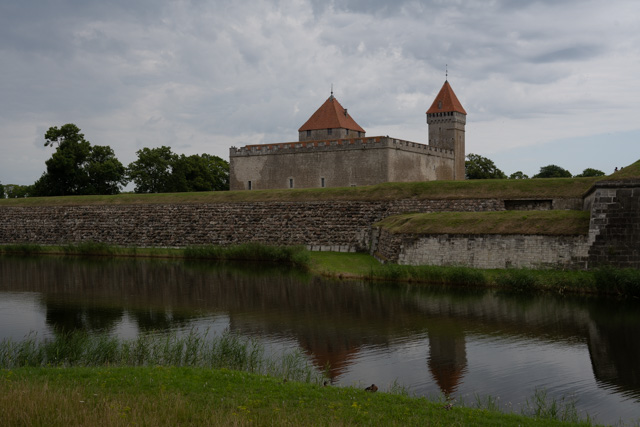
The castle has a central tower that contains a very good museum and you can climb right up to the top and look out at the area from the battlements. The castle is old and the first reference to its existence is in 1381 but the current form of the castle wasn’t built until the 17th century.

After leaving Kuressaare Castle we drove back to the ferry terminal and caught an afternoon ferry back to the mainland. We found another RMK site not too far from the ferry to spend the night. It was really busy when we arrived with a children’s birthday party but they soon left and we enjoyed a really quiet night.
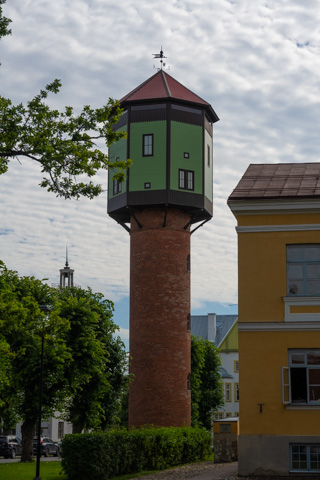
The next day we drove towards Tartu, the second biggest city in Estonia (with a population of just under 100k), stopping along the way in the small town of Viljandi. This is a pretty town with a small Old town. It is perhaps best known for its 30m high red brick water tower which has been converted into an observation tower.
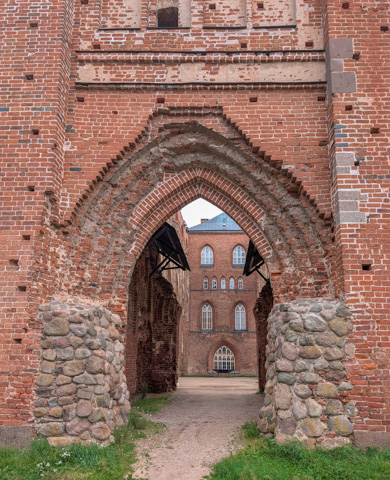
The town is also known for its ruined castle in a park just next to the old town . At one time it was the largest castle in Livonia (the territory of the Livonian Brothers of the Sword who ruled what is now Estonia and Latvia from the 13th century until the 16th century), but it was damaged in the early 1600s in the Polish-Swedish war.

We made it to Tartu and found a great place to park for the night at a cycle track just at the edge of town, from where we cycled into the centre. It is a very pleasant town with no particular big hitting tourist attractions, although most people will visit the ‘kissing students’ fountain, the unusual statues dotted around and the large ruined Cathedral. Tartu is the site of one of the oldest universities in Europe (founded in 1632) and 1 in 5 of the people in Tartu is a student.
We enjoyed our afternoon in Tartu and rounded off the day at a pavement bar with a beer and, what was becoming a fast favourite of ours, some garlic bread.
Mindful that we needed to keep moving, our next stop was in the town of Cesis, in Latvia. Cesis is a small medieval town known for its castle, which was built in 1209 by the Livonian Knights.

In 1577 during the Livonian war, which reduced the territory of the Livonians drastically, the Russians captured the castle and over 300 people committed suicide by blowing themselves up with gunpowder.
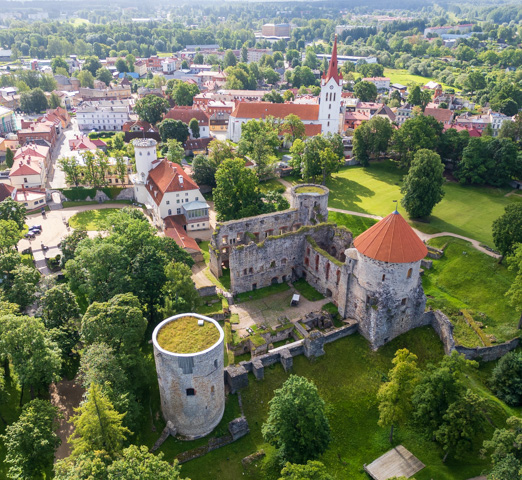
Visiting Cesis Castle is actually a 2 for 1 treat as following the war, the medieval castle fell into disrepair and in the 1800’s a new modern castle was built alongside it. The new castle is more like a stately home and is now an art and history museum.

In the old castle, part of the visit involves being given a lantern with a candle inside to light your way through some of the passages. It was definitely a fun touch and added to the atmosphere but it gave out so little light that in the end we did cheat and resort to using our phone torches once the novelty had worn off.
Our next stop in Latvia was Sigulda, which is another town with two castles built together. Again the medieval castle in the town is in ruins and it has been superseded by a more modern castle which is more like a stately home.

The old castle was built by the Livonians in 1207 and was later abandoned after the Swedish-Polish wars. The family who owned it decided to build a new castle in the 19th century to live in, which was then destroyed in WW1. However it has since been rebuilt.
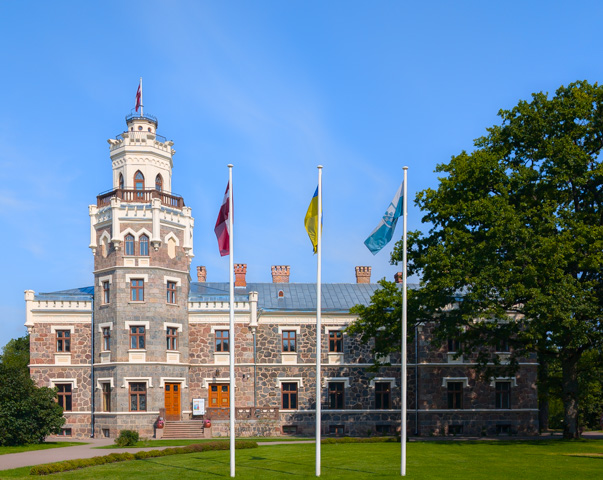
In addition, just outside the town is yet another medieval castle, just the other side of the valley. The Turaida Castle was again built by the Livonians, this time a little later in 1214, and was abandoned after a fire in 1776. The castle has now been refurbished and you can climb the tower for views of the surrounding countryside.

On the way to Turaida Castle from Sigulda we made a brief stop at the famous Gutman’s Cave, a shallow cave in a hillside which has had thousands of engravings carved into it.
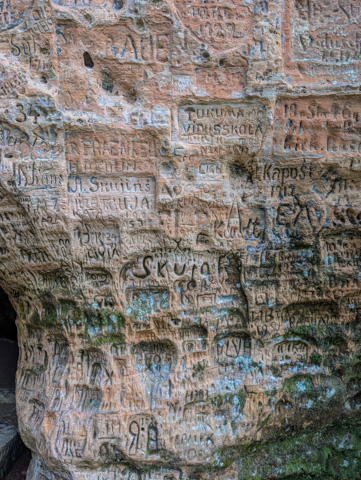
The oldest is from 1654 but most date from the 19th and 20th centuries. There is a local legend believed to be based on a true story, that a beautiful girl known as the Rose of Turaida, who was lured to the cave, tricked her kidnapper into killing her rather than betray her true love.

As a bonus the weather seemed to be warming up and as we hadn’t seen much sun this summer, when it did suddenly make an appearance we made a snap decision to make the most of it and headed to Pludmale Beach for the day. The beach is an easy day trip from Riga.

Pludmale Beach is a lovely long sandy beach with small dunes at the back and we had a relaxing time soaking in the sunshine. The only downside was that the water was a really brown tannin colour and was too shallow for a good swim – you needed to head out for around 100 metres just to get to waist deep water.

The best bit of our beach visit was that you could spend the night there, so after our day on the beach we headed to the beach bar where we settled down for some refreshingly cool beers, calamari and, of course, some more garlic bread!

Of course you cannot go Latvia and not visit Riga, so after our lovely beach day we headed into the city and parked at Riga Waterfront, which is right on the cycle path into the town centre.
Riga feels like a much bigger city than Tallinn and the medieval centre is more spread out and interspersed with modern buildings.

One of the first places that we came across was the House of the Blackheads which is a gothic structure originally built in 1334. It wasn’t until we did the tour that we found out the original building was destroyed in WW2 and that this replica is relatively new, having been rebuilt in the 1990’s. Nowadays it houses an interesting museum on the history of the guild as the headquarters of unmarried male merchants and ship owners.
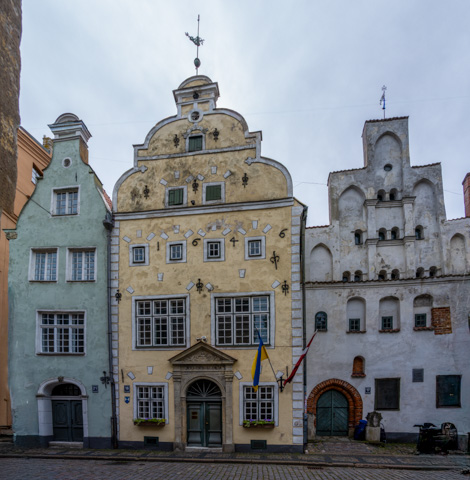
We also found the oldest houses in Riga which are called the three brothers and used to be the houses of craftsman. Legend has it that they were built by three brothers however the oldest was built in 1490, the middle one in 1646 and the third in the second half of the 17th century so this story seems unlikely
Just outside the centre of town are 5 massive old German Zeppelin Hangers which now house the Riga Central Market which was fun to walk around. The area was really bustling and the markets get between 80- 100,000 visitors every day.

Just the other side of the market is the towering Stalinist Latvian Academy of Sciences. This has a 17th floor observation deck which we visited, fortunately by lift, which gives panoramic views across the city.

Near to the freedom monument which is guarded by Latvian soldiers we found a pop up street market with bands playing. There were two rows of tents competing with each other to produce the most delicious smelling street food. We decided to have lunch here and each had a burger from a different tent – Sarah won !
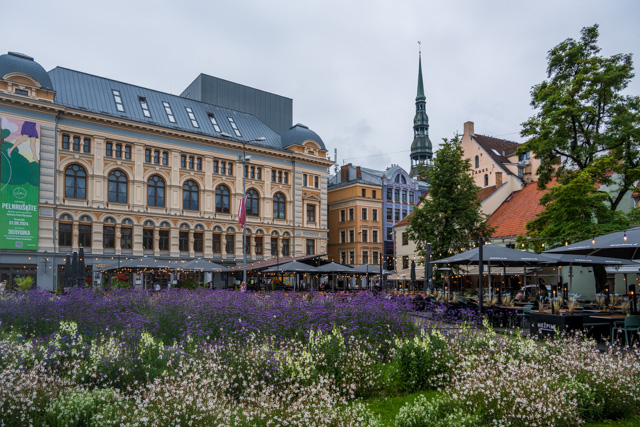
In the evening we had arranged to meet our friend Jolanta, who we met in Kenya earlier this year, for dinner. She took us to a well known Latvian restaurant and we had a lovely evening together catching up. She introduced us to Kvass which is a fermented drink made from rye bread and malt. It is only lightly alcoholic and has an oddly sweet taste.

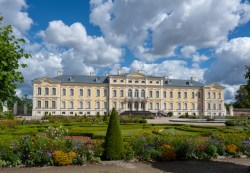
After a good nights sleep we headed off the next morning for our last Latvian stop, Rundale Palace. This is a huge stately home with formal French style gardens.

The palace was built in the 1730’s and 1760’s for the Dukes of Courland. However the Duchy of Courland was absorbed into the Russian Empire in 1795 and, after the palace was gifted by Catherine the Great to Count Zubov – youngest brother of her lover, it eventually ended up in the hands of the Shuvalov family where it remained until WWI.
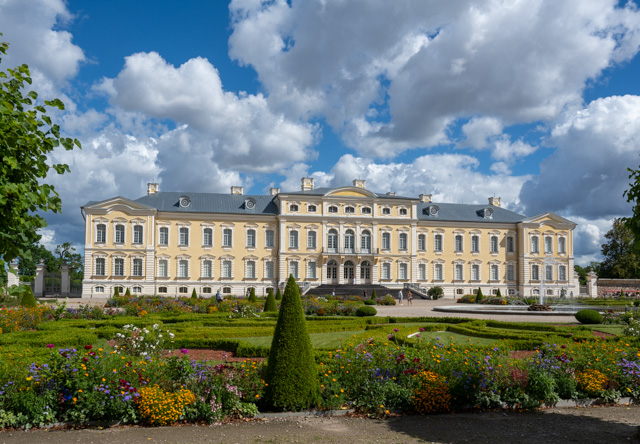
The Palace was damaged in the war of Latvian independence and again in WW2 but it was fully restored by the soviets in the 1960’s and completed in 2015. It is certainly a spectacular building and definitely worth visiting.

It is probably one of the most impressive palaces that we have been too.

Sadly we had to leave Latvia and keep moving as our Schengen days were fast running out, so we crossed the border into Lithuania, with our first stop being the Hill of Crosses.

This is a small hillock that was a symbol of Lithuanian resistance to the Soviet invaders. Locals would plant crosses on the hill under cover of darkness and the Soviets would rip them down and punish any transgressors that they found. This did not deter the Lithuanians and today the hill is covered in crosses with so many that they are draped over each other and have started spreading away from the hill.

We found a spot by a lake for our first night in Lithuania and the next day headed to the town of Kaunas. This is the second biggest city in Lithuania but only has a population of around 300,000.

We only spent an hour or so wandering the streets of Kaunas but we did visit the Ninth Fort of Kaunas just outside the town. This is the site of one of a network of forts ringing the town for its protection.

However in WW2 it became a concentration camp and the site of the massacre of 30,000 jews who had lived in Kaunas. Today it is a very moving and well put together museum as well as a memorial to those who were killed here.

The next stop on our whirlwind tour of the Baltics was the Lithuanian capital, Vilnius.
Vilnius was another city that we decided to explore on our bikes as it was easier for us to park up a few kilometres outside of the centre. It is a pleasant medieval city with a big complex in the centre made up of the Catherdral and the Palace of the Grand Dukes of Lithuania.
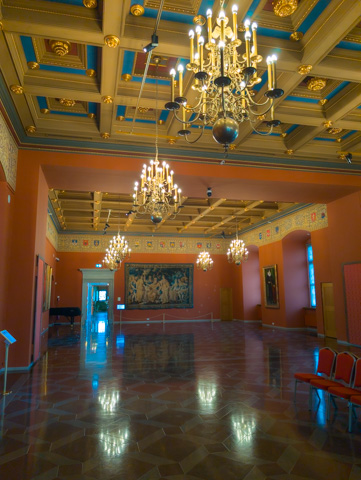
This Palace is quite complicated to visit as it is split into a number of different sections each with its own ticket. We picked one which was to see the apartments of the Dukes but it was a bit disappointing as they were not fully furnished.

Next to the palace is the cathedral which we also visited and walked around and then we headed up the road to find a restaurant for lunch.

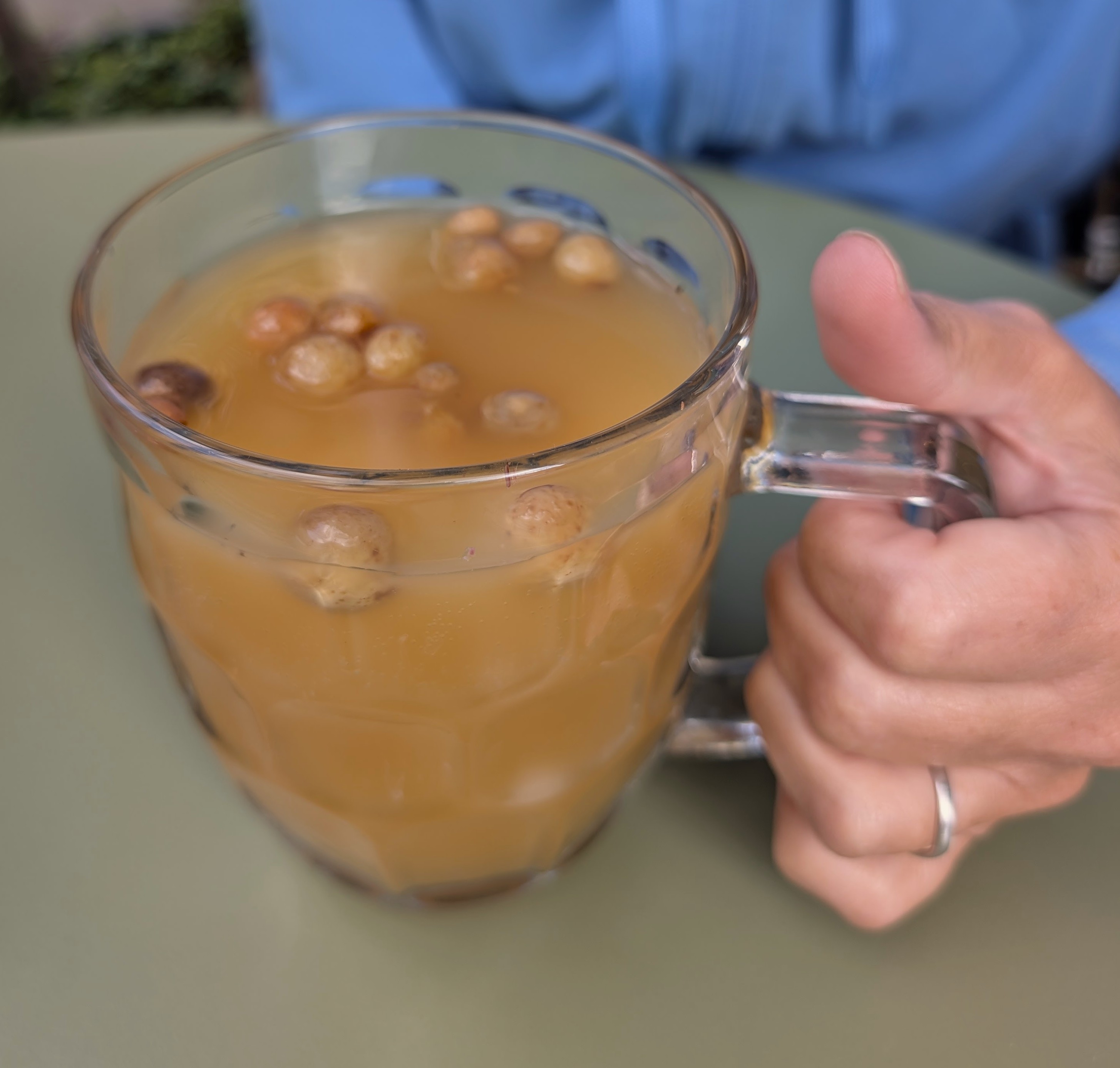
We had a lovely meal of dumplings and Sarah decided to try a bread drink having been inspired by Jolanta in Riga. However this was called Gira and was slightly different from the one we had tried before and not it a good way. I very much enjoyed my beer though !
We didn’t have anywhere to stay in Vilnius so we drove down the road to a great parkup overlooking Trakai castle.
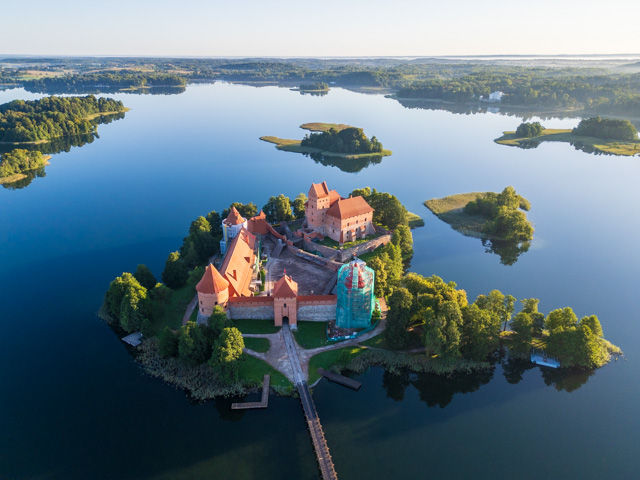
Trakai is a lovely town on a lake and the castle itself is on an island in the lake. In the morning we got up and headed to the castle for opening time. We thought we would beat the crowds and how wrong we were. It was absolutely packed which coach loads of tourists. To be honest the location is gorgeous and it looks amazing from the outside but there wasn’t much to see inside.
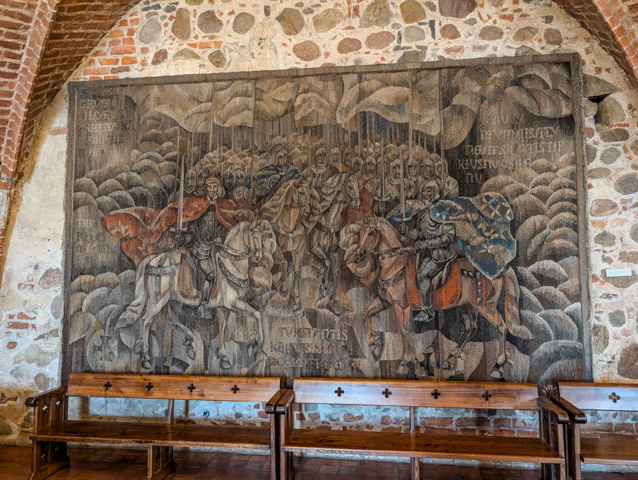
We didn’t really enjoy the castle because of the crowds but we did enjoy walking around the lake and hopping across the bridges linking the islands on the lake.
Trakai Castle was our last stop on our flying visit to Lithuania. Next stop Poland !
 FromAtoB