Scotland – Touring the Highlands and Islands
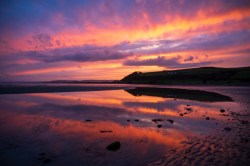
After returning from our Norway and Baltics trip we found ourselves in a bit of a bind having used all of our Schengen time, which meant that we were limited to either the UK or Ireland if we wanted to stay in the camper. So, having seen very little of Scotland, we decided to stay in the UK and head North for a three month trip around Scotland’s West Coast and Islands.
The trip North started well with a stopover to visit friends Donna and Jon (@theroverlanders) in Yorkshire who are busy remodelling their Land Rover Defender ambulance conversion, before heading West (stopping at the lovely Tan Hill Inn – the highest pub in Britain, for refreshments along the way), across to Cumbria and into Scotland.
We were looking forward to seeing the stunning scenery that Scotland is renowned for but we also had some question marks around travelling Scotland in a camper – would it be easy to find park-ups and motorhome services, would we be eaten alive by midges and what would the Autumn weather hold for us.
We started our trip at the beginning of September in good weather with no signs of any midges. So far so good!
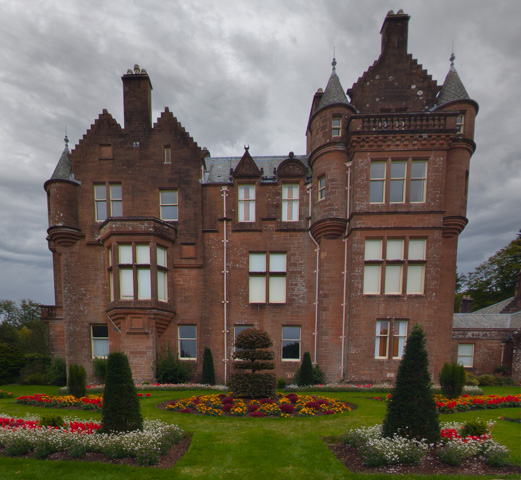
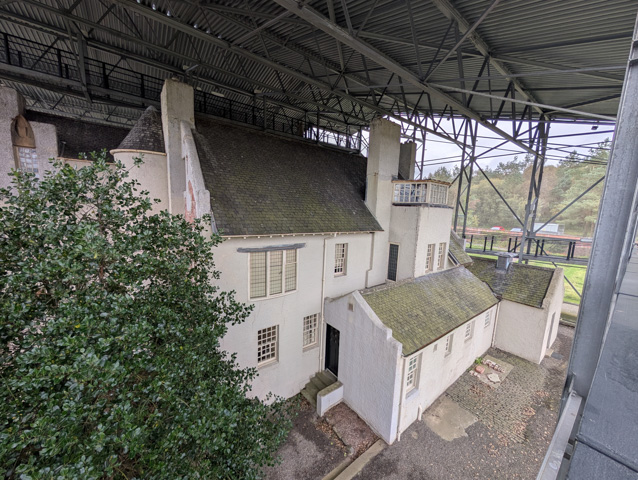
Knowing we were going to be in the UK for a while we decided to buy joint membership to the National Trust of Scotland, cheaper than National Trust England membership but with full reciprocal rights. Determined to get the best value out of our membership our first stop in Scotland was at a National Trust garden (Threave Gardens) and then shortly after we visited Hill House, built in the Art Nouveau style from the early 1900’s. Besides its Art Nouveau style, this house is also interesting because the walls have become waterlogged so the house is in danger of collapse. To help it dry out a temporary roof has been built over the top and the sides are now protected by a massive chain mail tent to aid air flow. This structure affords you the opportunity to walk the scaffolding which gives you an interesting new perspective that is not usually possible.
We spent our first week exploring the South West corner of Scotland (Dumfries and Galloway), learning the ropes of travelling in a motorhome in Scotland. In fact we found it fairly easy to find wild camping spots in Scotland (of course it might not be as easy in the summer months) and we spent most of our nights off grid, which started by design but turned into necessity from mid October when most of the campsites closed for the season straight after the October half term (note the Scottish half-term is earlier than the English half-term).
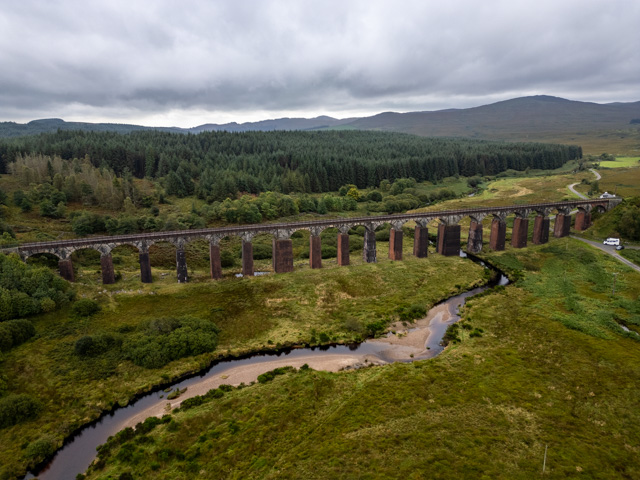
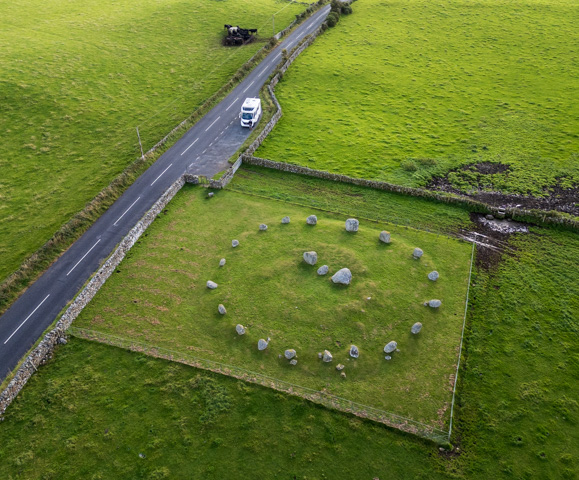
One of our favourite stops around Dumfries and Galloway was the Big Water of Fleet Viaduct. This would be a lovely park-up in good weather but as you can see from the sky, we were forecast some heavy rain and the area is prone to flooding so we decided to move on to Wigtown, Scotland’s national book town and then onto the Torhouse Stone Circles. Scotland is not short of viaducts and stone circles so these would be the first of many! Not all stone circles are as good as this one though – sometimes it’s difficult to see the circle at all.
We travelled all the way down to the Mull of Galloway which is the Southernmost point of Scotland and the site of a Robert Stevenson built lighthouse from 1828.
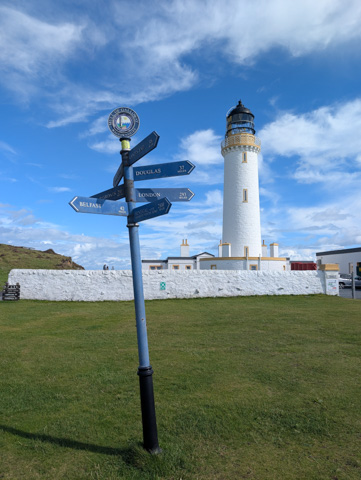
Dumfries and Galloway was a relaxed way of introducing ourselves to motor-homing in Scotland but the lack of other motorhomes and tourists pointed to the fact that the big hitting grandeur lay elsewhere.
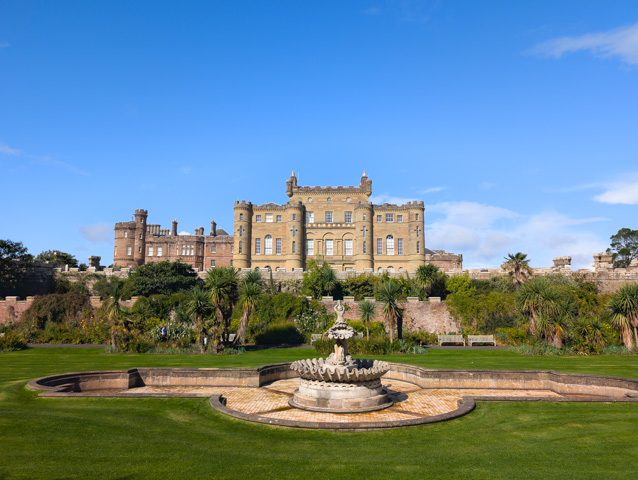
We headed North towards Argyll where the Highlands and Islands region of Scotland really starts and along the way stopped off at the very impressive Culzean Castle, getting more value from our National Trust membership.
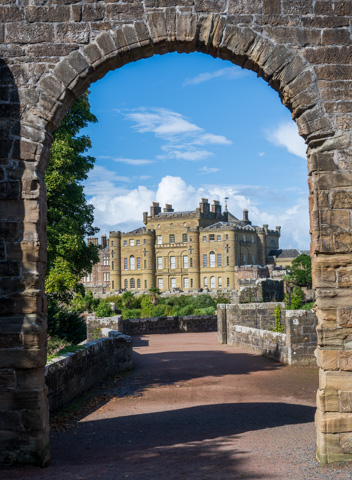
Culzean Castle was built in the 1780’s by the 10th Earl of Cassillis. It is perhaps most famous however for having been on the RBS £5 note between 1972 and 2015. It’s a big impressive castle with amazing sea views as it’s perched atop the Ayrshire cliffs and sits in a large 260 hectare estate.
On our way Northwards we took a detour inland to visit Loch Lomond and hike Ben Lomond – the most southerly of the Munros. Munros are Scottish mountains that are over 914m (that’s 3000ft so there is some sense to the figure) and there are 282 of them.
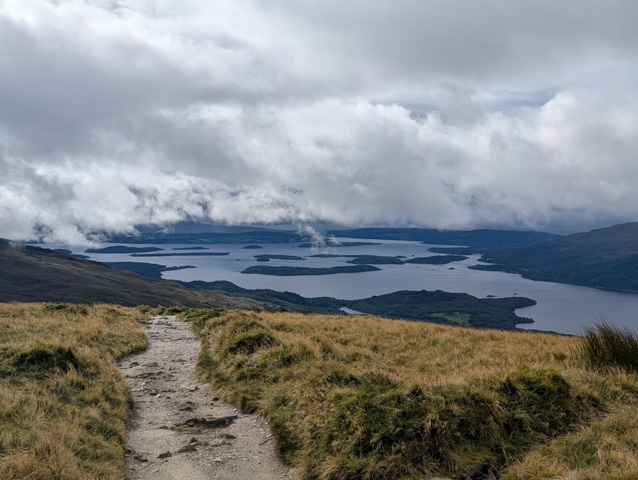
My hike up Ben Lomond had some lovely views over the Loch but unfortunately I didn’t get to the top – a thick layer of cloud blanketed the final ascent and I didn’t see the point in pushing on with zero visibility.
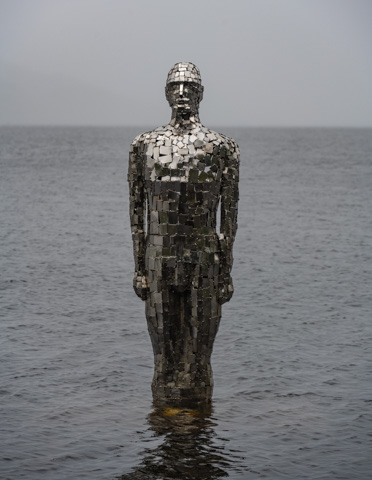
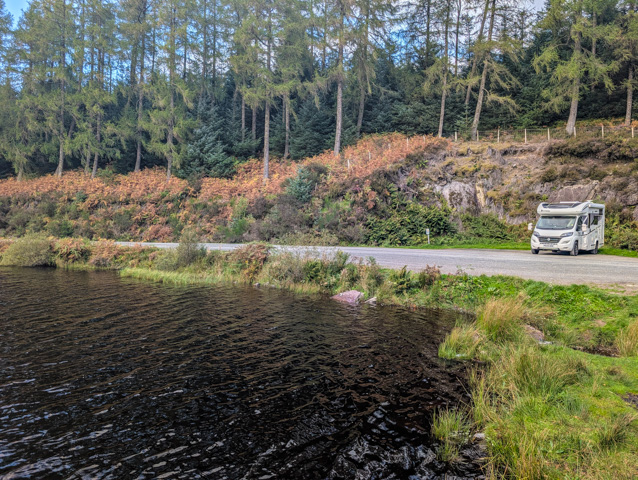
After Loch Lomond we carried on with a loop to take us up and around the end of the Loch before heading down towards the Isle of Bute. We stopped off at a Forestry Scotland scenic drive called the Three Lochs Drive, where we had booked a spot for the night – just a roadside bay on the unpaved road around the drive but with a lovely lake view.
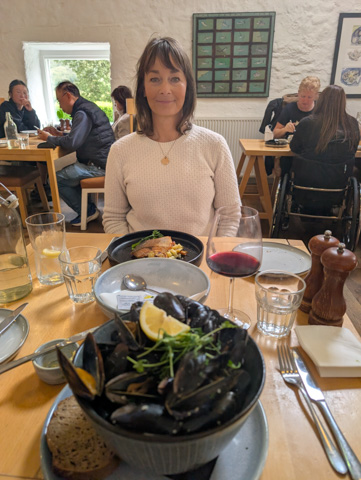
We drove around the top of Loch Fyne where we stopped at the famous Loch Fyne Oyster Bar and Restaurant to celebrate my birthday. This original restaurant spun off into a chain across the UK, which is now defunct, but this is the original and much better than the franchised chain. We had a lovely seafood meal with all the ingredients having being sourced locally.
We found the roads around the Lochs quite narrow and busy with forestry lorries so after our wing mirror clash in Poland we took it quite cautiously but even so, there were some squeaky bum moments as the lorries came hurtling towards us.
Leaving the Lochs temporarily we ventured across to the first of the islands that we visited on this trip, Bute. This tiny beautiful island is only 15 miles long and the ferry crossing that we took was only 300m – practically spitting distance.
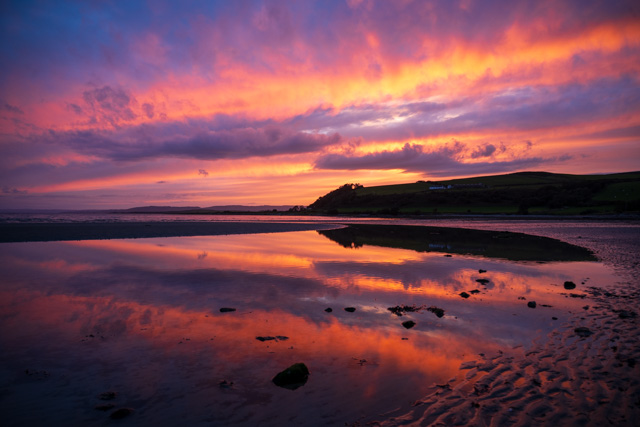
We spent our first night on the island parked alongside a beach and were treated to an amazing sunset.
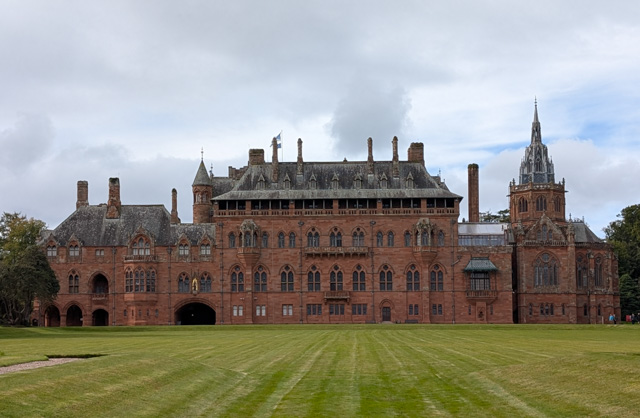
I suspect that the biggest tourist attraction on Bute is the large stately home, Mount Stuart and that is exactly where we headed the following day.
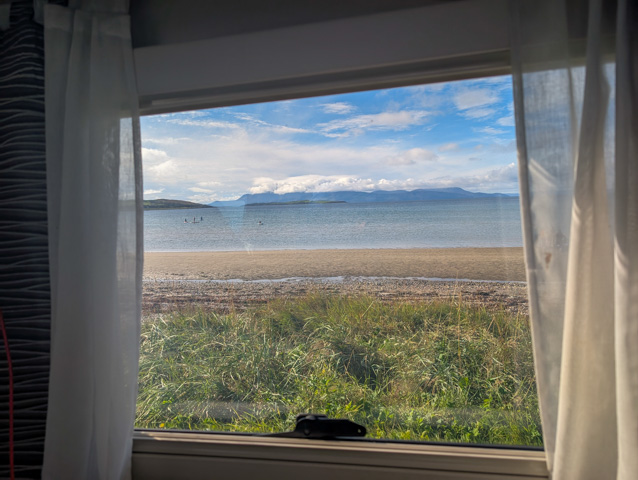
Mount Stuart was built by the 3rd Marquess of Bute in the late 1870’s and was designed by the same architect as Cardiff Castle which was also owned by the Marquess. John Patrick Crichton-Stuart was the 3rd Marquess of Bute and when he inherited his title he was reputed to be the richest man in the world. He also owned Chiswick House in London and the Falkland Palace in Fife. Unfortunately this is not part of the National Trust of Scotland but it well worth spending the money to visit.
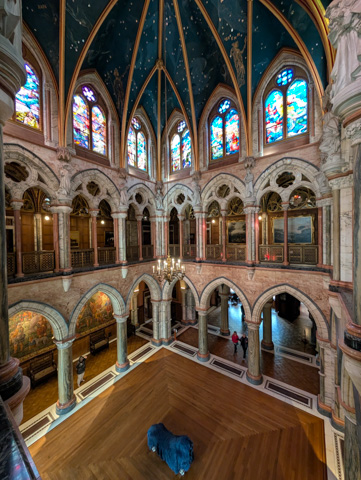
The highlight of the house is definitely the enormous marble hall/ atrium with its vaulted ceiling themed by the four seasons and studded with crystals mapping the zodiac constellations. The whole atrium is flooded with multicoloured light through stained glass windows.
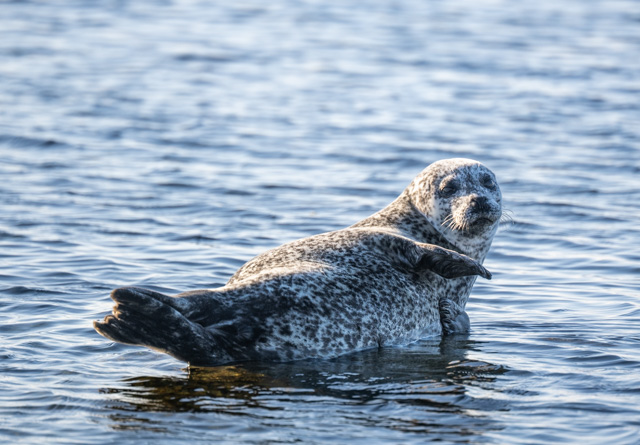
Our second night on Bute we parked up in a viewpoint overlooking a bay with a rocky beach that gave us our first sighting of seals. Walking on the beach they were very curious, swimming backwards and forwards keeping their eyes on us.
We only spent a couple of nights on Bute as it is really quite small but we thought it was a very pretty and laidback island. Leaving Bute we looped around Loch Fyne again to drive down the Western side and head down towards the Isle of Arran. Although you can see Arran from Bute the drive around is just under 100 miles if you don’t take any of the ferries. It is a beautiful drive though.
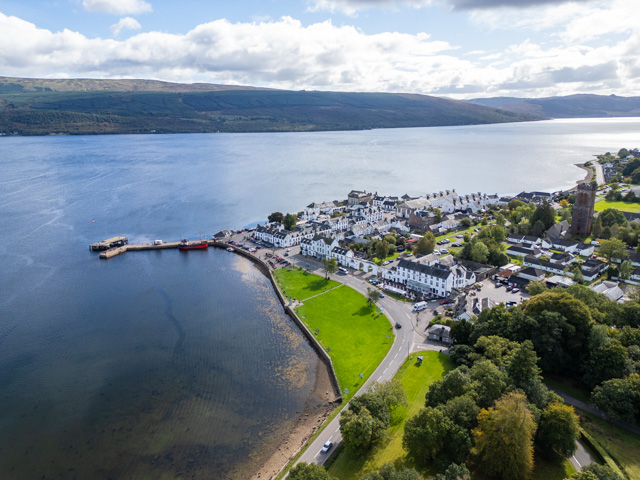
We had decided to take the short crossing from Claonaig to Lochranza on Arran because the more popular crossing that would have been much quicker to Brodick was booked solid and was disrupted by mechanical problems with the ferry. The plus side of this was a very quick ferry journey over to the island.
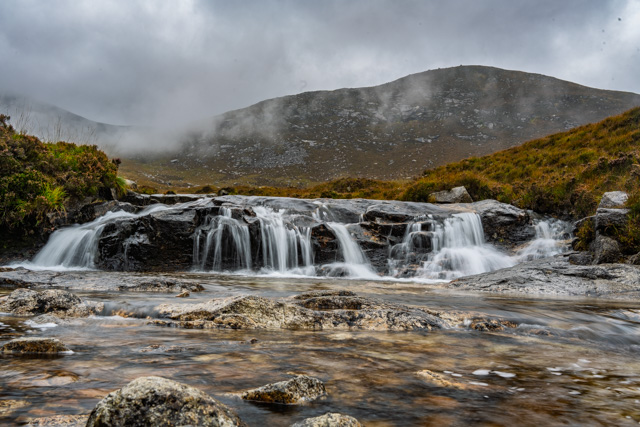
Arran is about 4 times the size of Bute – around 20 miles long and 9 miles wide but with a smaller population. Arran is often referred to as a scaled down version of Scotland as it is mountainous in the North and much flatter in the South.
We spent a week on Arran and absolutely loved it. We found the scenery beautiful, the locals very welcoming and good motorhome service areas that ask for a small donation. We had a real mixture of weather from blue skies and sunshine to pouring rain. But Arran delivers in all weathers as long as you are willing to get outside.
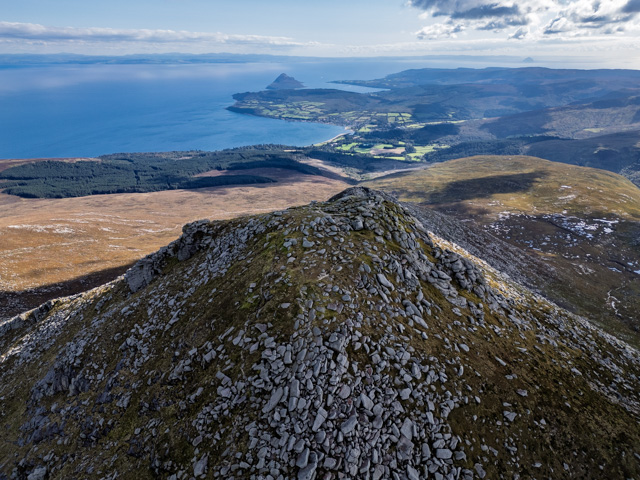
There is lots of hiking to be done on the island. The hike up Goatfell which is the largest mountain on the island has absolutely amazing views of mountain ridges from the top and is probably the most popular hike on the island.
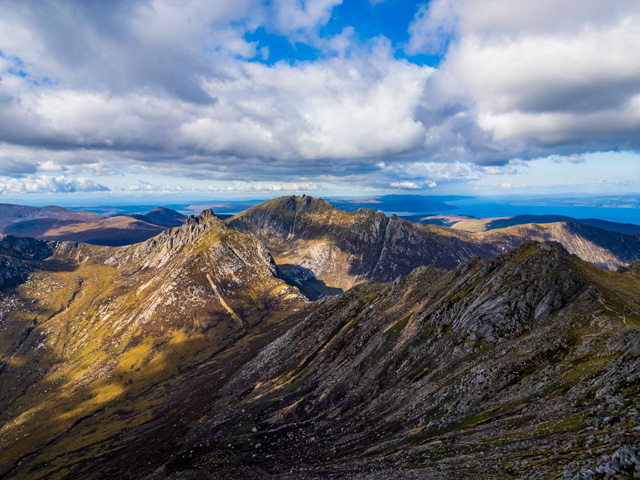
The west of the island is largely uninhabited and has a number of lovely beach parkups that are perfect for wild camping.
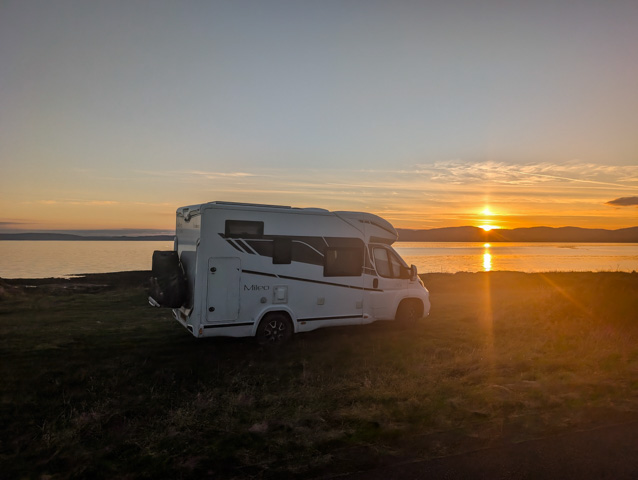
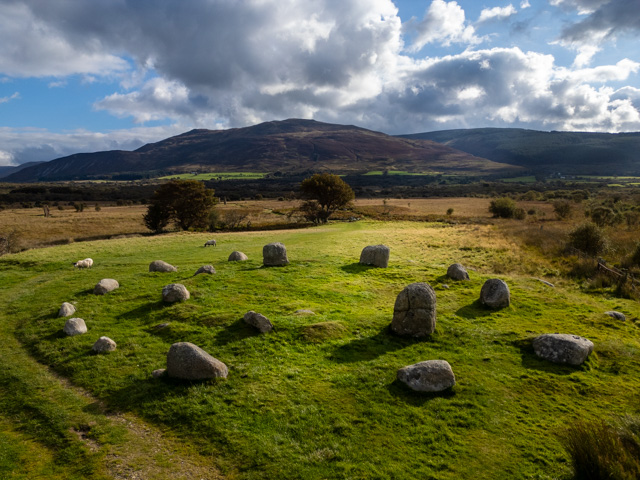
There are also some good hikes to stone circles and to King’s Cave, which is said to be the cave where Robert the Bruce was inspired by watching a spider trying to build its web.
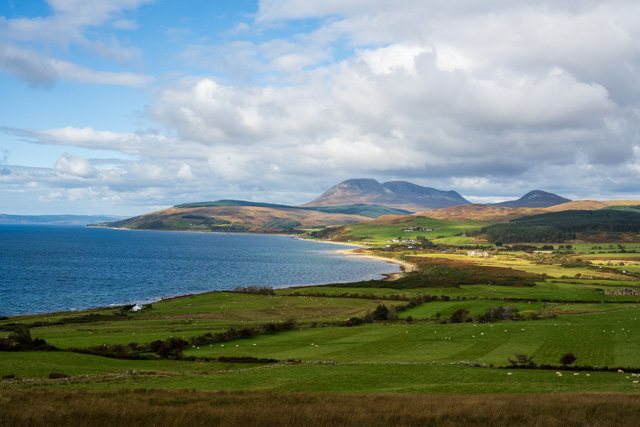
As you drive round the southern end of the island and start up the east coast there are a number of small villages and then you reach Brodick, the capital of the island. It’s a very small town stretched along the seafront. The main shop there is a Co-Op supermarket which serves as the only proper grocery store on the island.
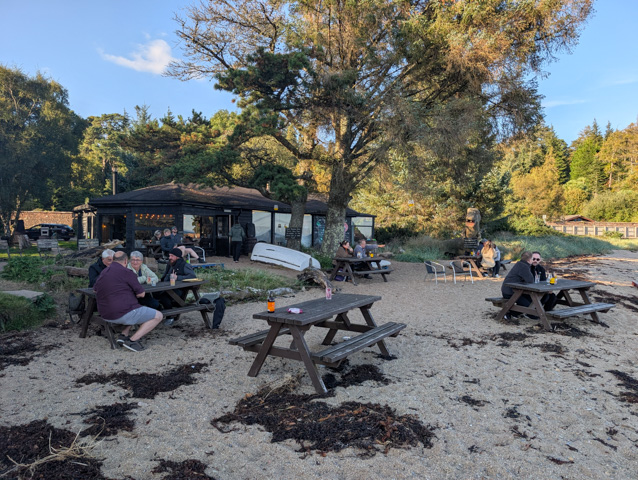
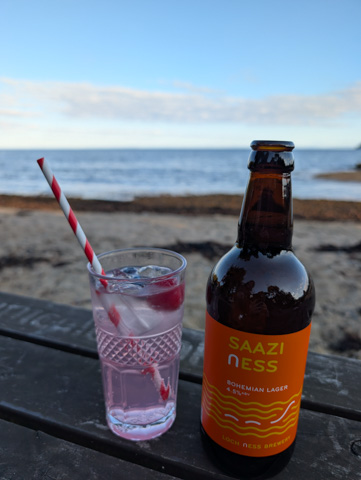
One of our favourite finds on the island was a little beach bar that sits right on the beach, Arran Botanical Drinks. If you didn’t know better you’d think you were in the Caribbean, well… with a little imagination and some warm clothing, but we loved it.
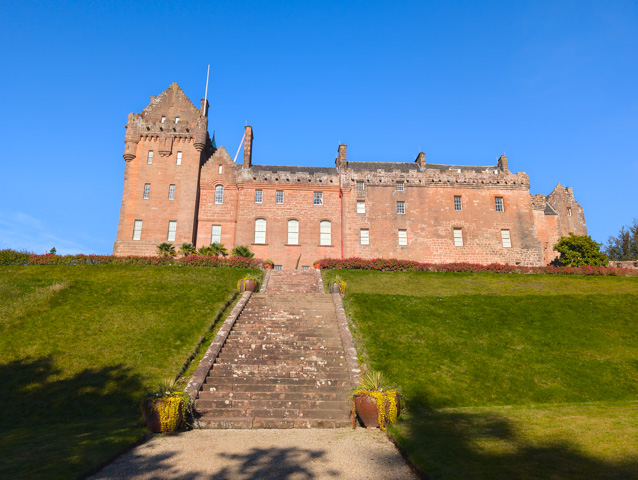
Just North of Brodick is Brodick Castle which was the historic seat of the Dukes of Hamilton. There has been a fortress on this site since the fifth century but the current castle was built in 1844. This castle has featured on the Royal Bank of Scotland £20 note since 1972.
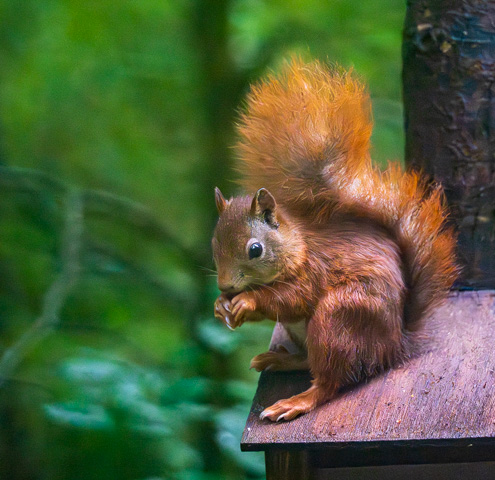
In the gardens which stretch from the house down to the sea shore there is a hide setup for red squirrels and we were lucky enough to see some of these timid creatures that had so far eluded us on this trip.
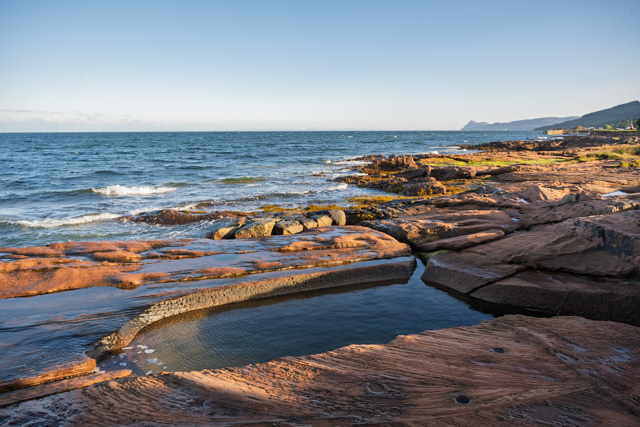
On the Eastern coast of Brodick there is a curiosity. It is known as the Doctor’s Bath, a man-made basin that was carved out of the sandstone rock on the sea shore. At high tide it fills with water and provides a safe bathing environment on the rocky coast. It was cut in 1835 for use by a Dr McCredy who provided saltwater therapy to his patients.
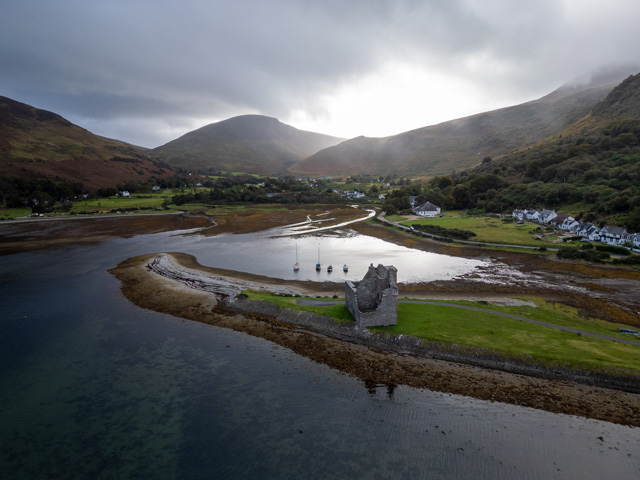
Just before we left Arran, we stopped off to see the ruins of Lochranza Castle and were treated to some lovely light – just before it started to pour with rain. That pretty much sums up Scottish weather – anything can happen.
We absolutely loved Arran and could have spent longer than a week there as there was plenty of hiking that we left undone but it was time to move on and we took the ferry back to the mainland (but not before bagging a delicious bacon butty from The Sandwich Shop next to the ferry terminal, yum).
Next up – heading north to Oban and beyond.
 FromAtoB
Lovely pictures! Scotland is beautiful!
Beautiful but the Weather can be challenging !