Aconcagua
After our pig out we were bound for Chile as we had booked a trip to Easter Island leaving from Santiago. The good road from Mendoza goes up through Uspallata (the town used in the filming of the Brad Pitt vehicle 7 Years in Tibet) and then follows a train line up over a pass (fairly low level at under 3500m) and then into Chile.
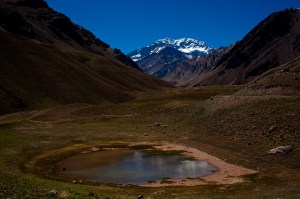
On the way up to the pass there are a couple of ski resorts next to the road – but nothing to get too excited about – and then looming on the right hand side of the road is Aconcagua, the highest mountain in South America and indeed the Western Hemisphere at 6962m.
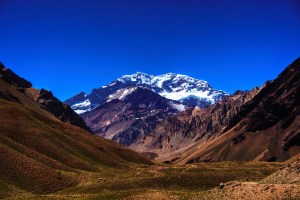
Unfortunately without paying for a trekking permit, it is only possible to go on a short 2 km walk around 3 small but very pretty lakes with views of the mountain in the distance. The Trekking permits are seriously expensive as are the Climbing permits.
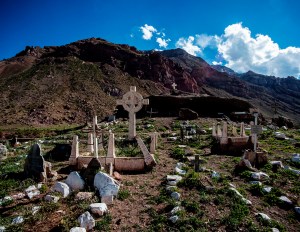
Just down from the mountain itself is the climber’s cemetery which is a sobering and very interesting location to visit. There are at least 200 graves here of climber’s who have died on Aconcagua.
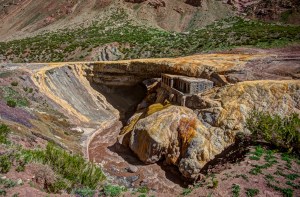
Also in this area is a natural bridge spanning a small river, the Inca Bridge, which has been formed by deposits from a geothermal spring.
We stayed the night, along with Mike and The Remotelys, in a ski resort that was closed for the winter and offered free camping. The wind was fairly ferocious but thankfully died down substantially at night. In the morning we were ready to drive down to Santiago.
The 10 Things we couldn’t Live Without
1) Ipad

Games, Films, TV programmes, email, internet access. Need I say more !
2) Mosquito Net
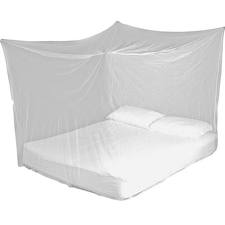
It doesn’t matter how careful you are bloody mosquitos get in. When its hot you’ve got to sleep with the windows open and then they just swarm you. We’ve got a mosquito net that we can hang above our bed, tucking in under the mattress so we are 100% protected from the little blighters. Central America wouldn’t have been bearable without it !
Don’t let anyone tell you that the mosquito nets in Seitz windows work. These are near ubiquitous in European built campers and though the nets are great at stopping flies they just don’t stop mosquitos – it’s a common complaint when overlanders meet.
3) GPS
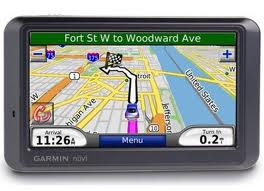
We seriously couldn’t do this without our GPS. You just can’t get paper maps which are detailed enough to drive round the towns and cities but every country in the Americas has decent maps available for a Garmin GPS – although sometimes it takes some looking.
We’ve even found ourselves 100km from the nearest paved road, on a track and the GPS is happily pointing the way.
Just don’t make the mistake that a couple of overlander’s we’ve met have and buy a Tom Tom. All the maps are available only for Garmin and Tom Tom’s are pretty useless in the overland world.
4) Kindle
Books are dead. Long live E-Books.
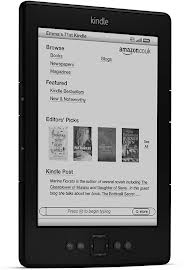
Thank god for E-books and the kindle which is probably the best e-reader out there. Although to be honest its got a long way to go to be a truly great device. The big flaw in the Kindle is that they are damn fragile – just be really careful because the screen breaks far too easily. We would seriously recommend a hard case.
Carrying books on a 2 year trip in the limited space of a truck just isn’t possible. There are plenty of book exchanges around at various hostels but for some reason they all seem to have the same books and most of them are at least 20 years old – Jeffery Archer, Michael Crichton and obscure American Romance Novels.
5) Sand Ladders
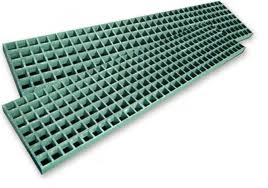
We carry two reinforced fibreglass waffle boards which are around 2m long and can be used to give us traction in muddy conditions, help us out on soft ground or even bridge over holes.
They also double as levelling blocks if our campsite isn’t quite level.
6) BBQ and Dutch Oven
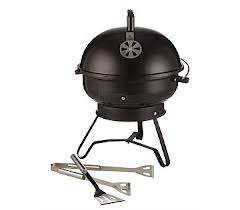
 Our cheapo Walmart charcoal BBQ is looking pretty battered but is still helping us cook up some great dinners when the weather is good. Pesto Chicken and Salmon in white wine are our two favourites.
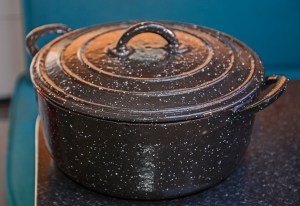
The dutch oven is amazing – it gives you an oven without taking up the space in the camper. A dutch oven is basically a very heavy duty cooking pot which can be used over a fire – its very important that the lid can be used to place coals on so you can cook from both ways (ours does this very well when inverted).
Our two favourite recipes are without a doubt Empanadas and Chocolate Brownies.
7) Fake Driver’s Licence
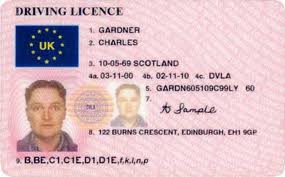
Before we left home we made some copies of our driver’s licences and laminated them up. When we’re stopped by the police we hand them these instead of our real licences and that way if they decide to hang onto them then its no big deal.
As luck would have it we haven’t had a real problem with the police so far, cross fingers !
8) Sterling Power ProCharge Ultra Battery Charger
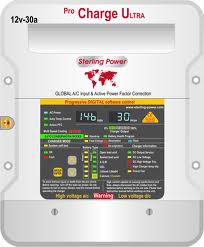
Ok so not strictly an item as we installed it in the truck but this baby rocks. It’s a mains battery charger for the truck that is rated for 90-270v at 40-70hz. If it comes out of a mains socket anywhere in the world this thing takes it.
Our truck is set up at the UK standard 240v so this charger lets us charge our batteries both in the US, Central America and the North of South America where 110v is standard and also in the South of South America where 240v is standard. It also keeps charging when the power is less than perfect.
http://www.sterling-power.com/
9) Ether
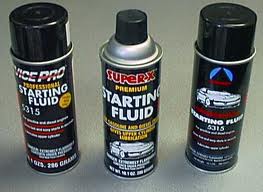
The Beast is a reliable starter. One turn of the key and it starts every time. However when the temperature drops below -5c overnight it becomes a bit reluctant.
The Beast has a special port that the army used to fill up with ether and there is a plunger in the cab which adds the ether to the cylinders for fast starting in seriously cold temperatures. We don’t have the proper adaptor for this so we have spray cans of ether (arrancador in Latin America). A quick spray of this into the air intake and the engine explodes into life.
This is way easier than lighting a fire under the engine – something some overland truck drivers have been known to do !
10) High Power WIFI Aerial
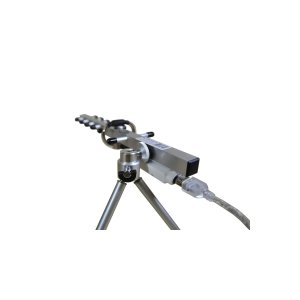
For those occasions when you’re just too far from a WIFI signal to logon. This aerial not only pulls in those weak signals but finds WIFI that just isn’t close at all. It means that you can get WIFI from in the truck much more often that otherwise and you don’t have to go and find an internet café. Ours is a 007GTi NextG USB-Yagi antenna (snappy name I know).
Some form of WIFI extender is an essential purchase for overlanding.
11) Thermometer
And one more for luck –
Ok I admit it, I’m obsessed with the temperature. In the both the truck and the camper we have a digital thermometer which gives us internal temperature and then at the touch of button gives us the outside temperature from a sensor on the roof.
I check this at least 10 times a day (probably more).
Potrerillos Pig Fest
Parque Suizo was a hive of activity as we all packed up for the short trip to Potrerillos. The Remotelys (as we now affectionately call them, aka Jared, Jessica and Kobus) were off to pick up the pig, while we went off in search of some wire (to attach the pig to the grill) before converging on the campsite that Evelyn and Ben had found for us. ‘Mike the Biker’ was also on his way.
By the time we were all at the campsite it was after midday and definitely time to get the pig on the BBQ. We were the last to arrive, being that much slower, and since we were carrying the re-modelled shopping trolley the pig had to wait on us.
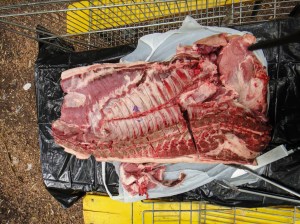
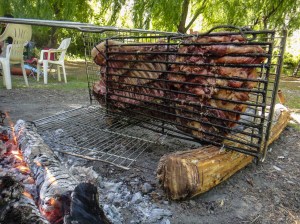
This is when Jared really fired into action and quickly wired the pig to the grill, which we had scrubbed clean in the river at the bottom of the campsite. Kobus built a fire and when it was ready the Frankenstein shopping cart grill was put into action. It wasn’t long before we realised that there wasn’t enough wood but Kobus and Mike drove out and came back with a pile of free wood that they had weasled out of some locals.
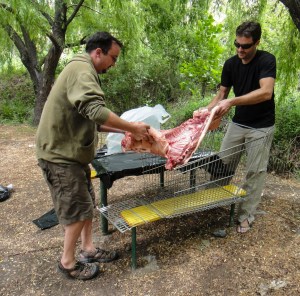
Meanwhile Jessica was preparing a whole pile of snack food for the day and working hard on the side dishes for the evening meal.

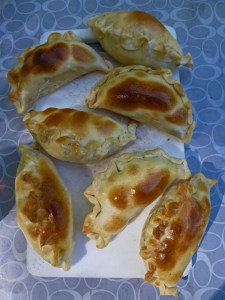
We were not idle either as Sarah made a few batches of empanadas to cook in our dutch oven – using sausages we had cooked the previous night and cheese as the filling (A Remotely’s recipe and very tasty too!).

We were delighted and a little surprised when they turned out practically perfectly – beginners luck or simply good instruction from our culinary friends! They made great snacks for the afternoon as we waited for the pig to be ready.
It seems that it takes a long time for a pig to cook over a fire and we were all getting a little restless. By 9pm we were ready to throw Jared on the fire, grill and eat him! He finally relented and agreed to take the pig off the fire for the chow down to commence.
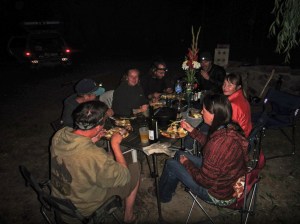
We all sat down around our collection of tables for the feast and my god it was good. As Brits we don’t know much about Thanksgiving but it seems to me that a lot of it is about stuffing your face with great food (much like Christmas at home). I definitely approve. The meal was fantastic and the sides that Jessica had prepared – mashed potato, stuffing, gravy and a whole bunch of veggies were also amazing. All of this was washed down with some amazing Argentinian wine.

A big shout out to www.liferemotely.com for masterminding an amazing dinner and introducing some non-Americans to Thanksgiving.
Jared in particular really showed his skills both in cooking the pig and in knowing exactly how to carve it up. These guys really are the masters of campfire cooking.
Mendoza
Mendoza is a big city of just over 1 million people. The area around Mendoza is responsible for 70% of Argentina’s wine production and is the home of Malbec, the wine that Argentina is famous for.
On arriving in Mendoza we were greeted by two days rain so we huddled down and waited it out for a couple of days. Once normal service was restored and we had blazing sunshine again it was time to explore the town.
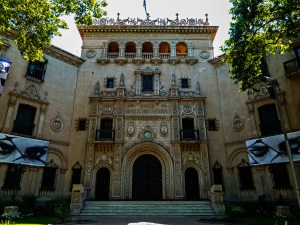
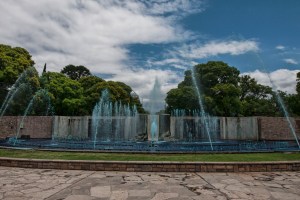
The town of Mendoza itself is very nice, green leafy wide avenues with a huge fountain in the main square but although there are some beautiful big houses on the roads into town there isn’t much in the way of old colonial buildings and the cathedral is very disappointing.
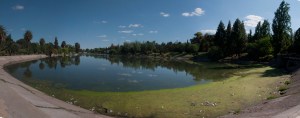
Mendoza reminded us a lot of London, just quieter with better weather and more trees. There’s also a large park (San Martin) with a boating lake and rose garden which is very reminiscent of London’s many parks.
The highlight, without a doubt, for us was a visit to the tasting rooms of Vines of Mendoza. This is an upscale wine bar which specialises in the tasting of wines. We visited on a quiet afternoon and had the attentions of a very knowledgeable Sommelier practically to ourselves.
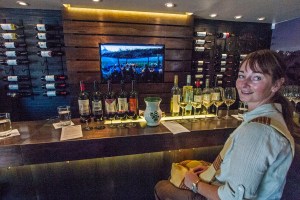
We started off with a flight of wine each – this is five half glasses of different wines for tasting. The flight came with a leaflet which described each wine. Mine was a flight of Malbec and Sarah’s was a flight of whites from the region.
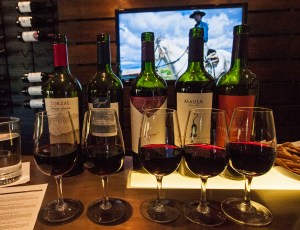
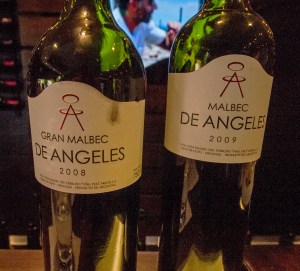
Things got really fun after the flight as we talked to the Sommelier and got more expensive wines which were similar to the ones we had liked from the flight. We both ended up tasting some much better wines for free until I ended up with some really expensive wines for free.
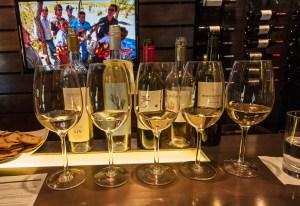
My favourites were two wines from De Angeles at over $100 per bottle.
When we headed back to the campsite we were more than a little unstable on our feet !
We stayed at Campo Suizo which is in the camping zone of Mendoza. That’s right, the town actually has a designated camping area with a whole bunch of campsites ! This was a lovely place with a pool and shaded campsites each with its own Palapa.
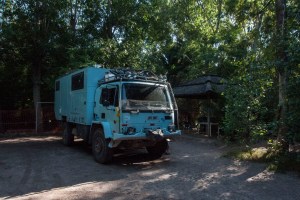
The campsite was a very social place as our friends from www.liferemotely.com turned up a couple of days after us. This inevitably led to some boozy late nights. There was also Mike the Californian biker at the site whose passion for Fernet Blanca still didn’t manage to convert anyone. Evelyn and Ben a UK based, dutch/oz biker couple, who had just started their South American adventure and were on their 2nd night of camping also arrived at the campsite while we were there.
‘The Remotelys’ are camp cooking experts and we have been taking lessons from them. Their amazing empanadas convinced us to buy a Dutch oven and when they managed to cook some brownies as well the deal was sealed – we headed off into town and bought our very own Dutch oven !
It was while we were drinking around the campsite that the plot to roast a pig for thanksgiving was hatched ! The first task was to source a pig and the second a rack to grill it on. The first was easily solved as The Remotely’s ordered half a pig in the central market – the cleanest market we’ve seen in Latin America. The second was more difficult but Mike recalled seeing a scrap yard where a dirty old shopping trolley was acquired.
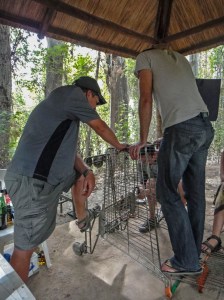
After modifying the trolley with a hacksaw and borrowed angle grinder, Evelyn and Ben were sent off on a scouting mission to find the perfect campsite for the Pigstravaganza. They reported back from a town called Potrerillos and we were all set to head out the next day.
Ischigualasto and Talampaya
From Cafayate we continued South on Ruta 4 heading for our next major destination – Mendoza. On the way to Mendoza we visited two National Parks which are situated next to each other but are very different in their character.
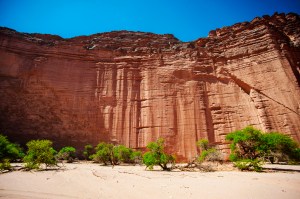
The first park that you come to is Talampaya (which translates as “Dry River of the Trees”). The visitor centre is only a few hundred metres off the main highway. This park is slightly frustrating in that the only way to visit it is on a guided tour in tour bus. There is however a small campground next to the parking lot and good hot showers (only after 6pm).
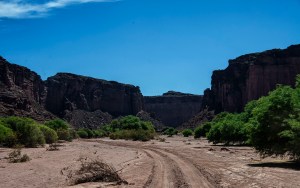
We decided to book a trip (really expensive at AR$ 175 each) on a 4×4 bus into the Canon de Talampaya for the following day and sleep the night at the campground – well in the car park anyway.
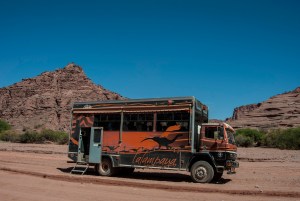
We had a good night’s sleep here – despite the strong wind all night. There were a number of foxes walking round the car park all night – obviously scavenging for food.
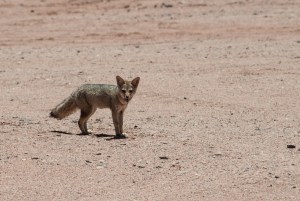
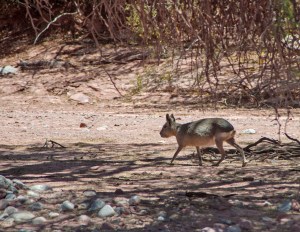
In the morning we loaded up into the truck bus and headed off into the park. We’d only just got going and the driver stopped to point out an armadillo snuffling under a bush. This was our first ever armadillo and we were pretty excited – unfortunately its head was away from us and we couldn’t take a decent photo.
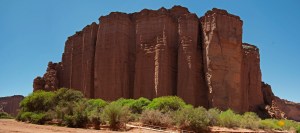
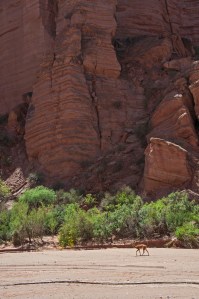
After this the truck turned off the gravel road onto a sand track which led us into a large canyon, very reminiscent of Zion NP in the USA. There were a number of stops where we got out and had a short walk around.
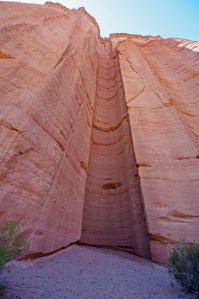
Perhaps the best was where there are semi-circular channels running down the cliff face caused by running water. A shout into one of these channels causes a delayed echo from the other side of the canyon. This is known as the Chimenea del Eco.
The trip was over priced and the 4×4 truck was a waste of time as we didn’t go anywhere that the minibus tours couldn’t – I would have much preferred to drive the Beast into the canyon myself.
When we finished the tour we drove for about 45 minutes to get to Ischigualasto (also known as Valle de Luna) Provincial Park which is in the same area but a different watershed. Here you are also forced to take a tour but this time you drive yourself and follow the lead car which has a park ranger in.
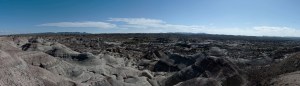
This was good in that the ranger explains a bit about the park at each of the stops but was bad because the lead car driver thought he was Colin McRae and drove as fast as his nice 4×4 could. This meant that we had to push it to keep up at a speed on the relatively rough dirt road that I was not comfortable with.
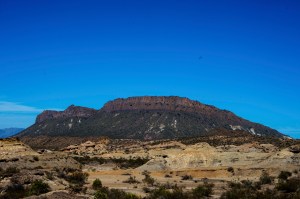
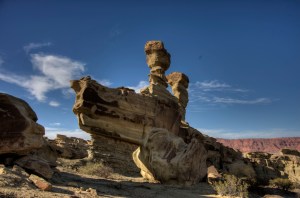
Anyway the scenery in this area was nice and definitely worth visiting, particularly for the last tour of the day (4.30pm) which means that you get some nice evening light.
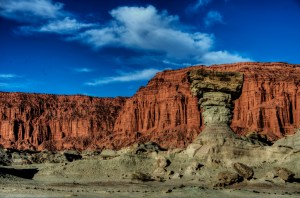
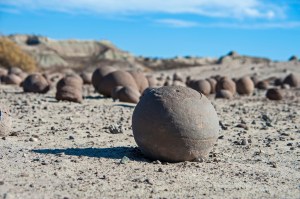
There was a field of bowling ball sized balls which have been formed by the wind blowing a rock core through the sand like a rolled snowball.
The tour was 3 hours (involving about 40km of driving) and we didn’t get back to the visitor centre until 7.30pm. Far too late to set off so we camped there – for a fee – unfortunately we couldn’t get to the camping area so were just parked in the car park. This actually was a blessing as there was a strong gusty wind all night and we were able to park in the wind break of an earth ridge rather than in the exposed campsite. There was even wifi in the car park – albeit heavily controlled as not even facebook was allowed.
Cafayate
After leaving Cachi we continued down the unpaved Ruta 40 through the beautiful Valles Calchaquies to the wine town of Cafayate.
In Cafayate we have been introduced to the Argentinian siesta habit. Not content with the couple of hours of Southern Europe, the shops in Northern Argentina close at around 1pm and don’t reopen for business until 6 or 6.30pm (this includes most restaurants so getting lunch can be a problem). This means there is some serious planning to do when it comes to shopping for dinner – that is if you want to eat at a normal time and not the Argentine standard of 10pm !
When we did finally manage to get to the small supermarket we found there wasn’t much to buy, however the butcher, called Super Pollo, next door was a different story. Two nights in a row we asked the butcher what he would recommend to put on the BBQ. The first night it was the tenderest steaks we’ve had on the trip and the second a gorgeous strip of ribs which were the best ribs we’ve ever tasted. Its difficult to go wrong with Argentinian beef !
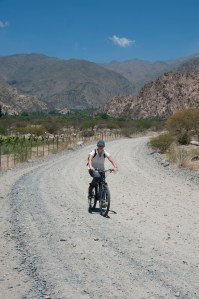
For the first time in what seems like ages we took our bicycles down off the roof. There is a hike just outside town to a waterfall and we thought we’d cycle there and do the hike. The ride there was pretty hard, although only 5km, it was all dirt road and all uphill. Once we reached the start of the hike we took a while to actually find the right valley to walk up as the river had a number of branches and there were no signs. Once we were going in the right direction it was really hard going as there wasn’t much of a path and we had to keep crossing the river on slippery rocks. We kept this up for a while but in the end we gave up trying to reach the waterfall and stopped at a crystal clear pool in the river for a swim.
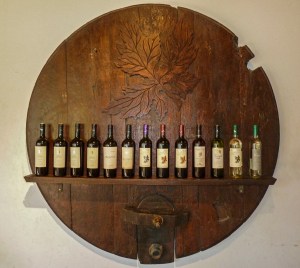
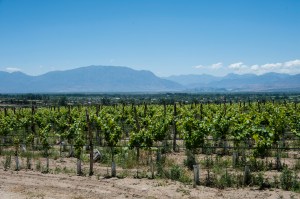
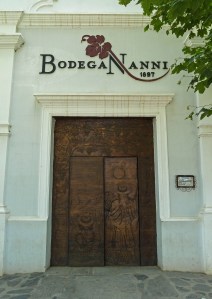
Cafayate is the centre of one of the most important wine making areas in Argentina. Their main claim to fame is the white Torrontes grape but they are also one of the few areas to use the Tannat grape. We spent a day doing some wine tours and tasting and in all visited 4 different wineries. The stand out by far was Bodega Nanni where free English language tour was followed by a leisurely tasting with big glasses and in depth explanations of the wine.
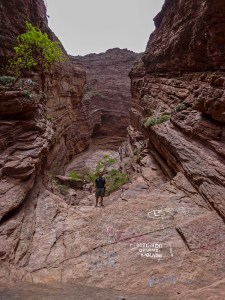
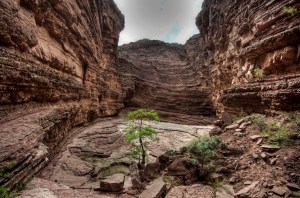
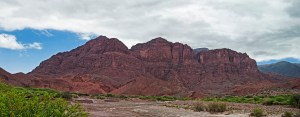
On the road between Cafayate and Salta there is a stunning canyon called the Quebrada de Cafayate which is made of red rock formations much like those found in Utah. We drove up here and visited formations with great names such as the Obelisk, The Devil’s Throat and the ampitheatre.
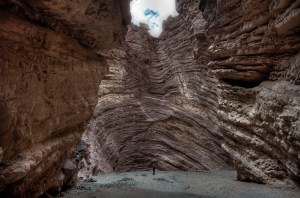
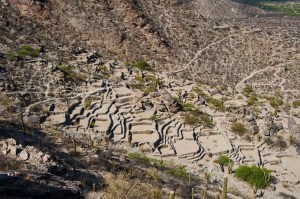
Just South of Cafayate is Quilmes which has a reputation as being the best set of pre-Colombian ruins in the country and was a city of more than 5000 people in its heyday. With this recommendation in mind we decided to visit. We were actually pretty under whelmed by the site but the lookout fortresses on each side of the city were cool. You could see for miles from them and they were unassailable from below.
Ruta 40: The North
We left Salta behind and started to head South but after only a few miles we turned West to head up into the mountains and onto the legendary Ruta 40. Ruta 40 is an amazing road that runs the whole length of Argentina and one we will be seeing a lot of. When we turned onto it the first kilometre marker we saw was around 4500km to the end of the road.
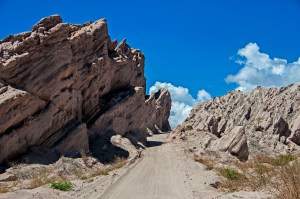
The road itself is a mixture of pavement and dirt of various degrees of quality. The first section that we hit was dirt but in relatively good shape apart from some muddy patches and some relatively deep sand. We didn’t have any problems with this in our truck but according to a biker friend it’s not so much fun on a motorbike.
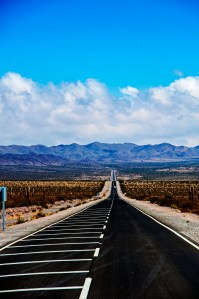
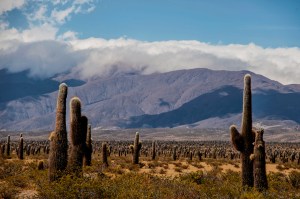
The route to Cachi climbs a mountain pass – where we drove past competitors in a mountain bike race up the hill, they all looked absolutely knackered and definitely not enjoying themselves. After this you pass through Parque National Los Cardones, an upland desert covered with thousands of giant cacti.
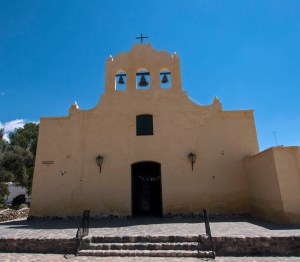
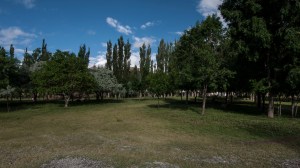
Cachi is a sleepy little oasis village with a surprisingly large municipal campsite. We spent an enjoyable day here relaxing and hanging out in the shaded town square watching the world go by and enjoying the local wine.
In fact it’s fair to say that this is where we started our love affair with Argentinian wine, buying both a red and white at the local vinoteca, to enjoy later with our barbequed steak dinner. It’s great to have good wine again after travelling for so long in countries where decent wine is either very difficult to come by or very pricey.
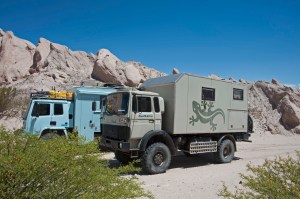
While in Cachi we met another German overlanding couple called Jens and Kristina, who’ve got a big truck like ours. Jens is a carpenter and built the truck himself.
Salta
Salta is the biggest city in the Northwest of Argentina with a population of roughly 500,000. It is sited at only 1187 metres above sea level so has a warm spring like climate all year.
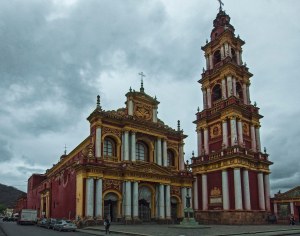
We’ve been to quite lot of towns that are described as having a ‘spring-like’ climate and I can assure you that they do not mean a British Spring but I think more of a Mediterranean spring where it’s hot, doesn’t rain too much and has somewhat cooler nights.
Salta is the start of the wine region of Argentina and is famous for having the best empanadas in Argentina so we were looking forward to trying a few.
The place to stay in Salta, for overlanders, is the Municipal campground which is a short bus ride from the centre of town. It is notable for its absolutely enormous swimming pool – at least 300m long, unfortunately it was being refurbished when were there and was empty. It is said that it takes up to a week to fill it.
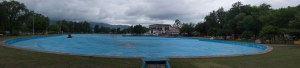
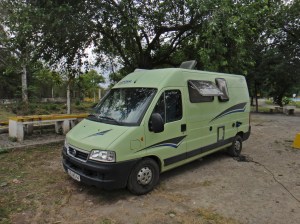
We ended up surrounded by Germans in this campground and we met a lovely older German Couple called Walter and Getti, in a little Fiat Ducato camper.
Our first day in Salta we headed into town and our first port of call was finding some of the world famous empanadas for lunch. We headed to the Patio de Empanadas – according to our guidebook the taxi drivers favourite. We figured that taxi drivers must know their empanadas.
On arriving in Salta the previous night we had learnt an important empanada lesson at the bakery next door to the campsite. We had ordered 4 empanadas for dinner thinking we would have a feast (as usually we would eat just one each). We waited patiently for 40 minutes as they made them and packed them up in a little box for us to take away. We probably should have paid more attention to the size of the box but we were hungry and hurried back to the campsite to gorge on them while they were still piping hot. However when we opened the box we were greeted by 4 tiny ‘canape-sized’ empanadas that wasn’t enough to satisfy one person let alone two!
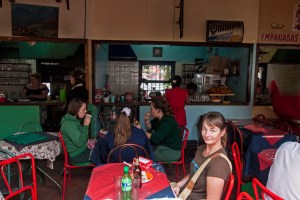
Having learnt this valuable lesson we ordered a massive pile of the little pastry parcels of Cheese, beef and chicken at the Patio de Empanadas, half of which we had fried and the other half baked. There is no denying that they were good but not the best we’ve had. This accolade goes to the Empanada lady in Rio Verde, Ecuador whose freshly made, and big, empanadas were truly awesome. The empanadas from the bakery by the campground, although small, were excellent.
The centre of Salta itself was not that impressive. There is a really big shopping area and we saw things for sale that you would only dream of in Bolivia, however the old colonial centre is very small and really not much to get excited about.
What we did get excited about was our first big supermarket since Arequipa in Peru – we seriously stocked up our fridge and cupboards.
Border Crossing: Paso de Jama (Chile into Argentina)
This has to be the biggest distance between two sets border posts that we’ve ever seen. The Chilean formalities have to be dealt with in San Pedro de Atacama and then the Argentinian border post is around 160km down the road from here.
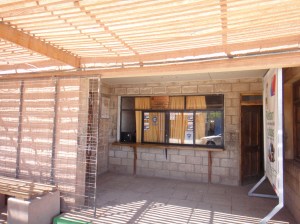
In San Pedro it should be very quick and easy. First visit the immigration window where you hand over your passport to get an exit stamp (on the right hand side of the building) and then visit aduana (on the left hand side of the building) where all you have to do is hand over your car papers and then you are free to leave.
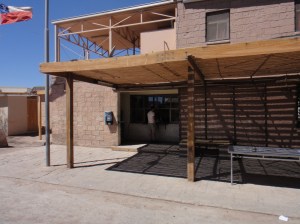
This border can be very busy so try to time it when there aren’t any buses around.
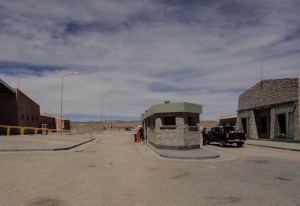
It will take a while to drive up to the Argentinian Border and the Paso de Jama itself which is at over 4000m. You will however eventually arrive at the big modern buildings of the Argentinian border.
When we arrived it was absolutely deserted with no queues whatsoever.
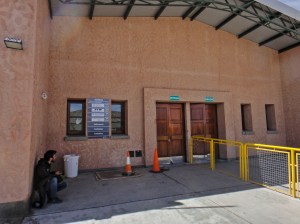
The first stop, as always, was immigration where our passports were stamped without fuss. Then we progressed to the Aduana window, a couple of metres to the right, and filled out a short form before being given our import papers for the truck. In Argentina we received an 8 month import for the truck – by far the longest we have got anywhere.
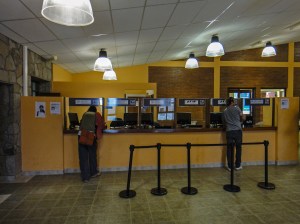
Our crossing was made a bit longer as Michael, the Polish backpacker that we’d picked up, was struggling to be allowed across. They were telling him that he couldn’t walk across the border but had to have a vehicle. However eventually the immigration woman got bored and wanted her coffee break so just stamped his passport anyway.
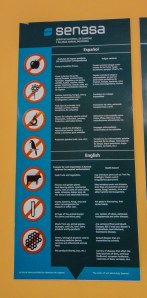
The last stage of the process should be a food check. However we drove up to the barrier and were allowed straight through without even being asked if we had any food !
Into Argentina
From San Pedro de Atacama there are two local passes that allow you to pass into Argentina. The first and most popular is Paso de Jama which is paved all the way and the second is Paso de Sico which is unpaved. After our exertions on Bolivia’s Southwest Circuit we decided that we would take the Paso de Jama – and this was the most direct route to Salta anyway.
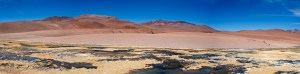
Before leaving San Pedro you have to visit customs and immigration, even though the actual border is 100 miles away. After this the road starts climbing and climbing up to 4500m and past the entry to Bolivia and the Bolivian Southwest circuit as we kept driving through the high pass towards Argentina.
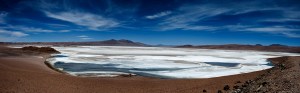
Next to a large salt lake we came across a film crew of around 100 people who were sitting down for lunch which they generously shared with us. They were waiting for sunset to capture 1 shot before driving back down into Chile.
A bit further on we came across a couple of fellow travellers who waved us down. These were an odd couple of a Polish backpacker, Michael, and an Argentinian cyclist, Aerial. Aerial’s bike was literally falling apart and he was desperate to get home to Buenos Aries. We gave them a lift to the border post – a bit of a squash in the cab as we’ve only got two seats but with 30 kms left to go and very little traffic they were more than grateful for the uncomfortable ride.
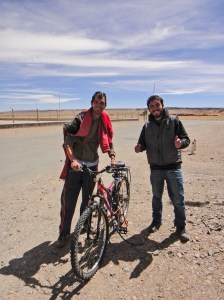
The Argentinian border post was pretty deserted and we passed through quickly and kept driving through the mountains. The road passes a big salt flat called Salinas Grande which is mined for salt. We stopped for the night in a small gravel pit where we could get some shelter from the wind.
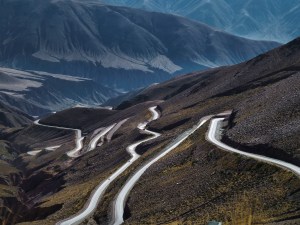
From here it was a few hours easy drive down to Salta after driving through the town of Purmamarca and the beautiful multi-hued canyon it’s in.
 FromAtoB