Sillustani
Leaving Colca Canyon we were on our way out of Peru. However we couldn’t make the drive to the border in one day and aimed to stay at the pre-inca ruins of Sillustani for the night before pushing on.
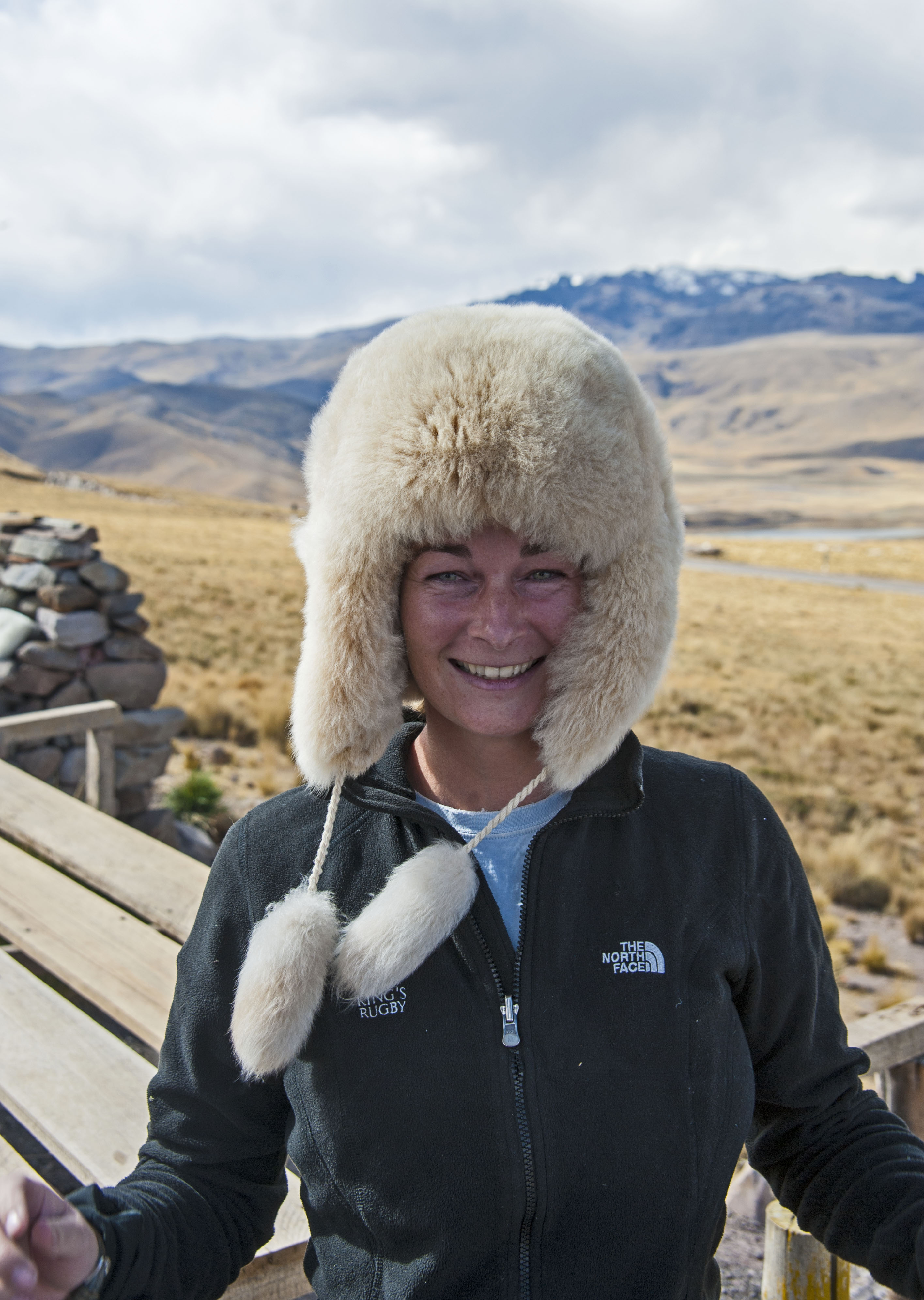
On the way we stopped off at a roadside mirador where Sarah decided to try on and then buy a small hat ! I’m not sure when she’s going to wear it though.
We were making smooth progress until we hit the town of Juliaca where the roads were blocked by a parade causing a serious traffic snafu. We finally fought our way through, with the help of a friendly policeman who blocked the traffic so we could make a couple of turns, and reached Sillustani just as night was falling.
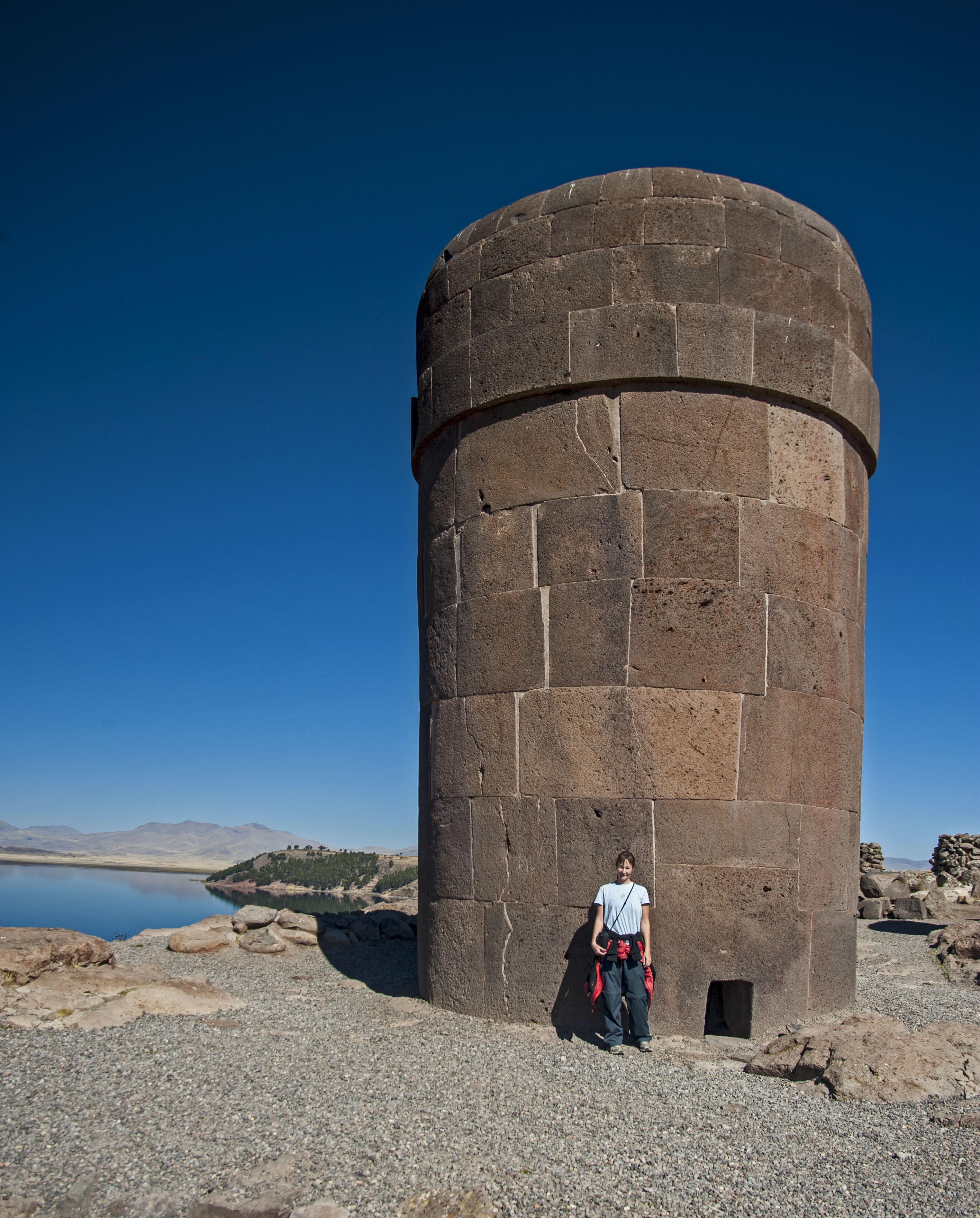
Fortunately the car park guy was still there and said we could stay overnight if we bought tickets for the ruins for the next day.
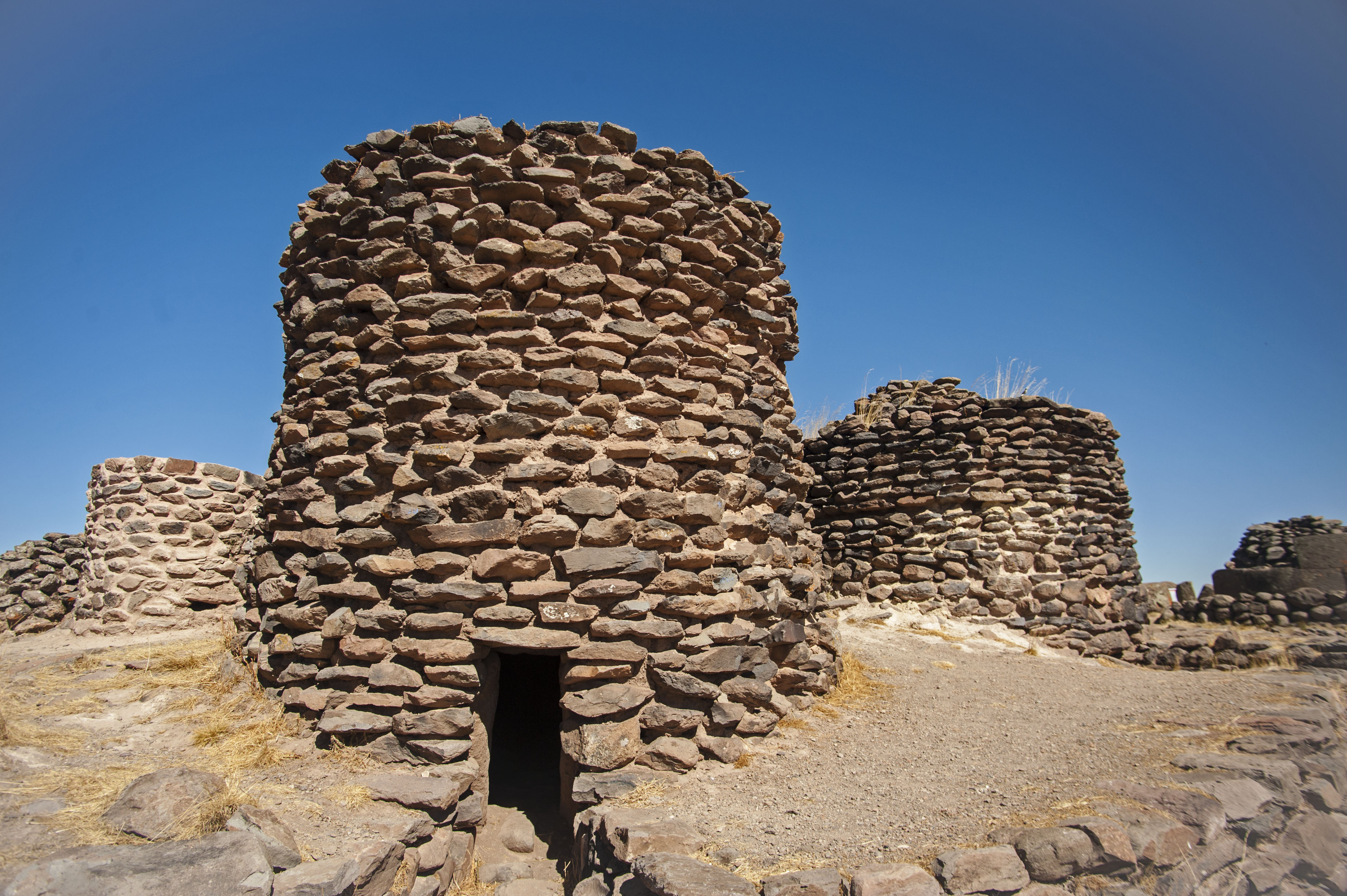
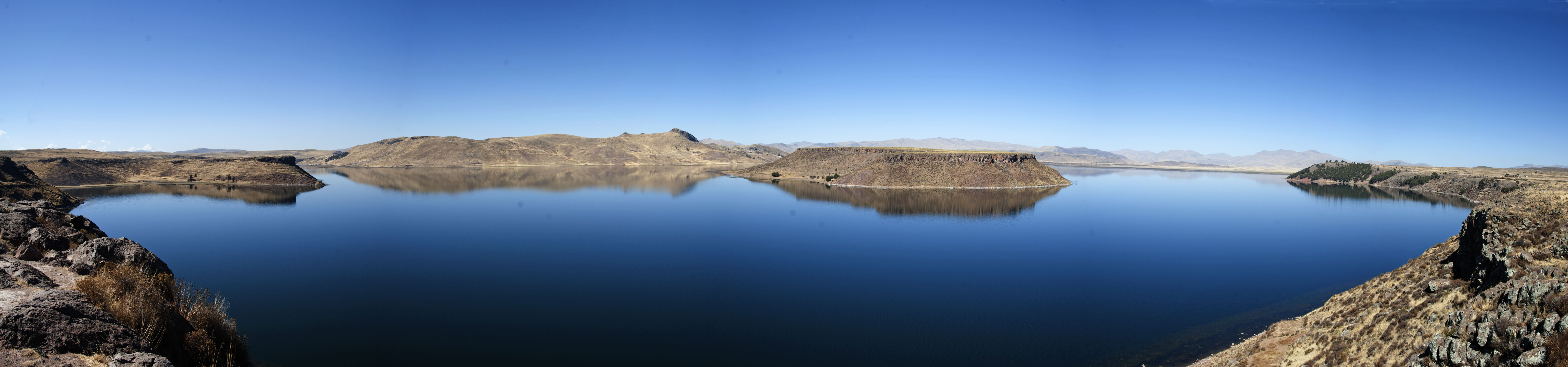
Early in the morning we set out up the hill from the car park to the site itself which is on top of a small hill looking out over Lake Umayo.
The site was in use for a long period of time and has both Inca and pre-Inca constructions. There are a large number of tower like constructions, called Chullpas, which were burial tombs. The towers were built to house whole family groups.
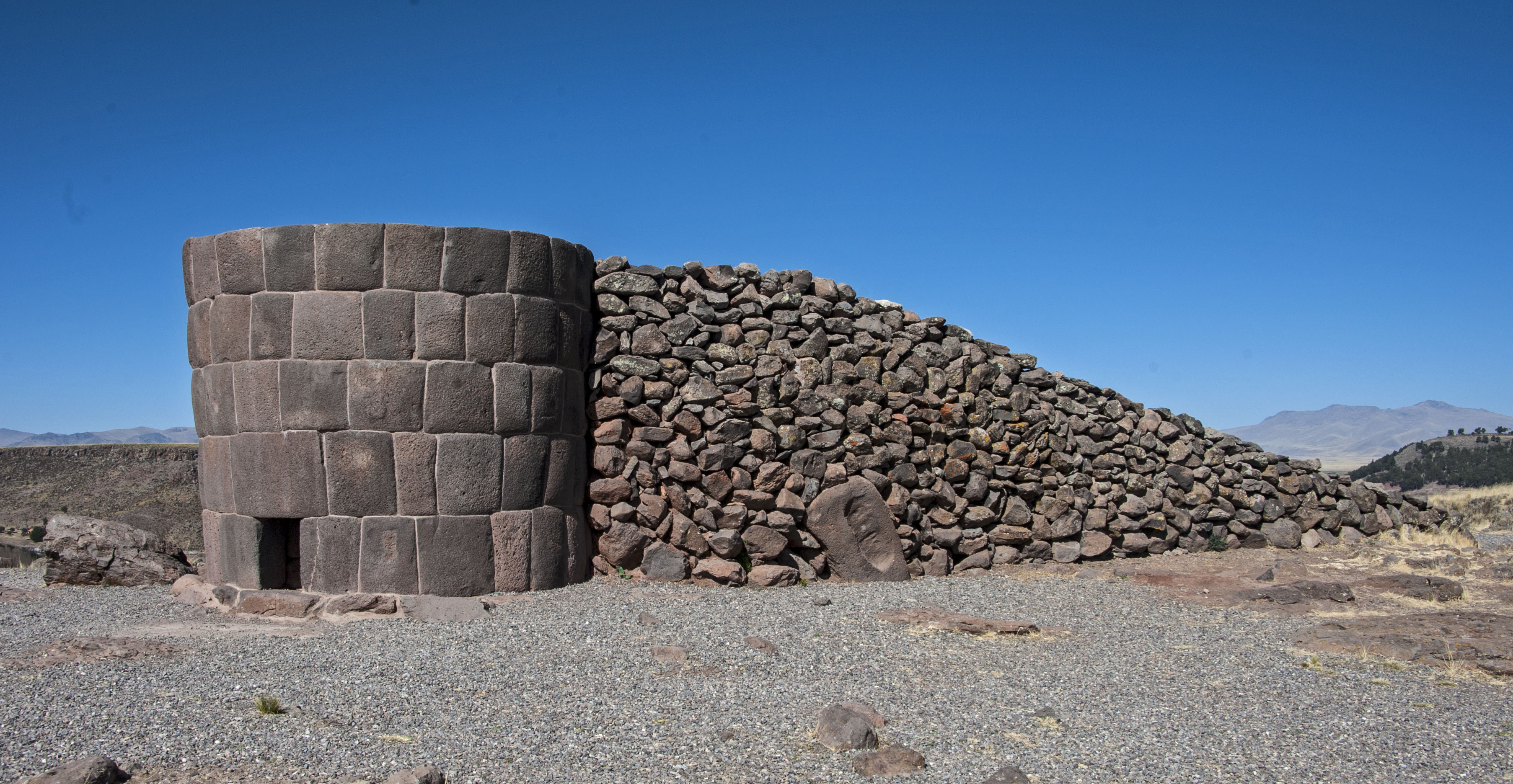
After a pleasant couple of hours walking round the deserted site it was time to head out towards the Bolivian border. Our time in Peru was at an end.
Colca Canyon
Colca Canyon is the second deepest canyon in the world only beaten by its close neighbour Cotahausi Canyon. However it is still over 1km deep at its deepest point.
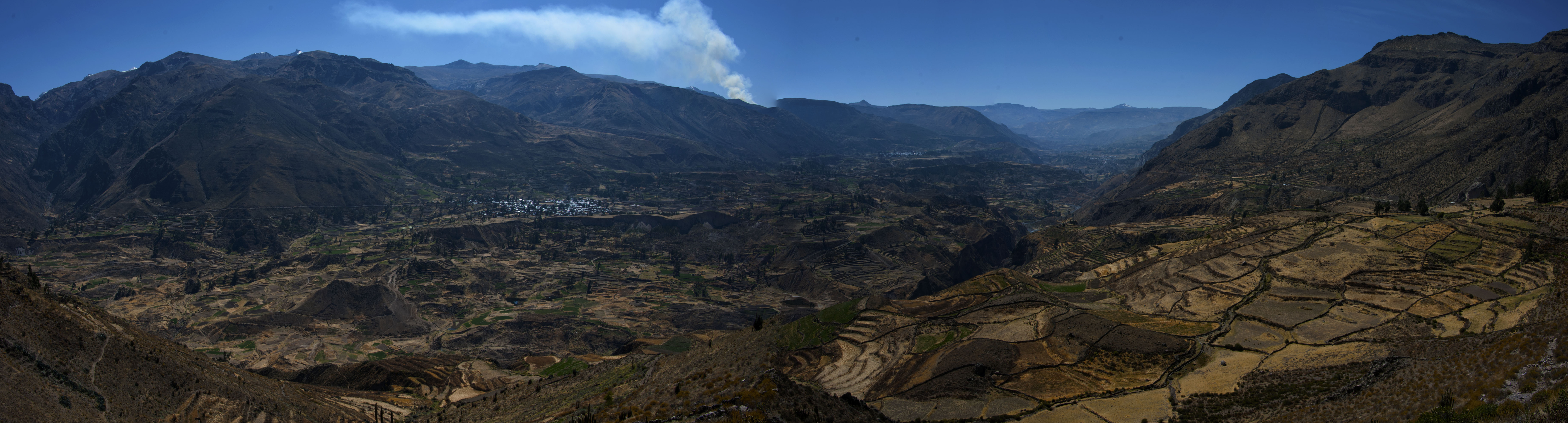
The actual canyon is at one end of a beautiful valley which you reach over a high pass at 4800m. After crossing the pass the road drops down to the town of Chivay where you have to pay a high entrance fee to the valley of S70 per head (about USD 25 each). This does entitle you to up to 10 days in the valley however.
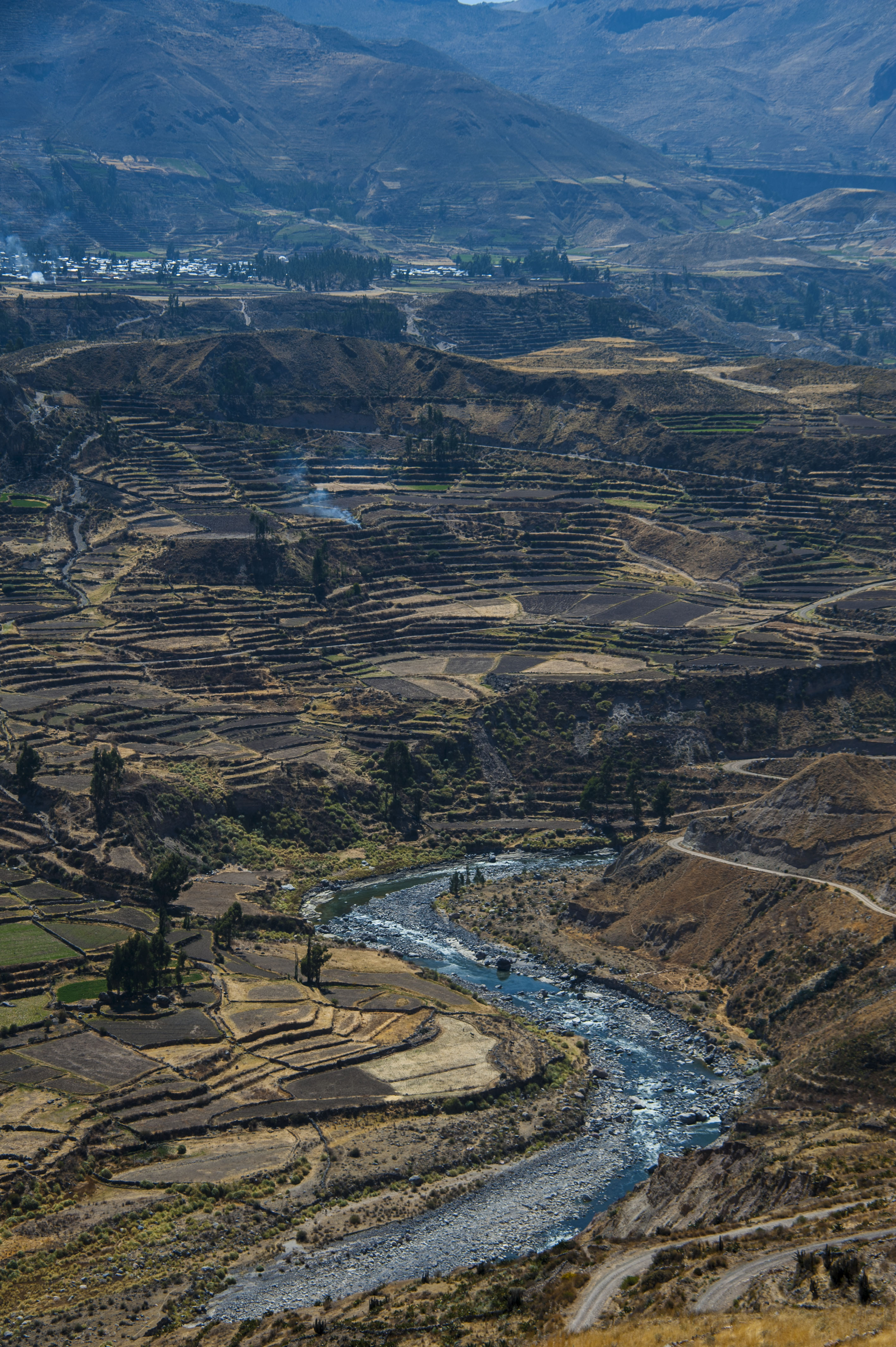
As you drive through, along a bumpy dirt road, the canyon begins to deepen and the sides of the valley are heavily terraced. By the time you reach a rough cut tunnel almost every inch of non-vertical ground is terraced across the whole breadth of the valley.
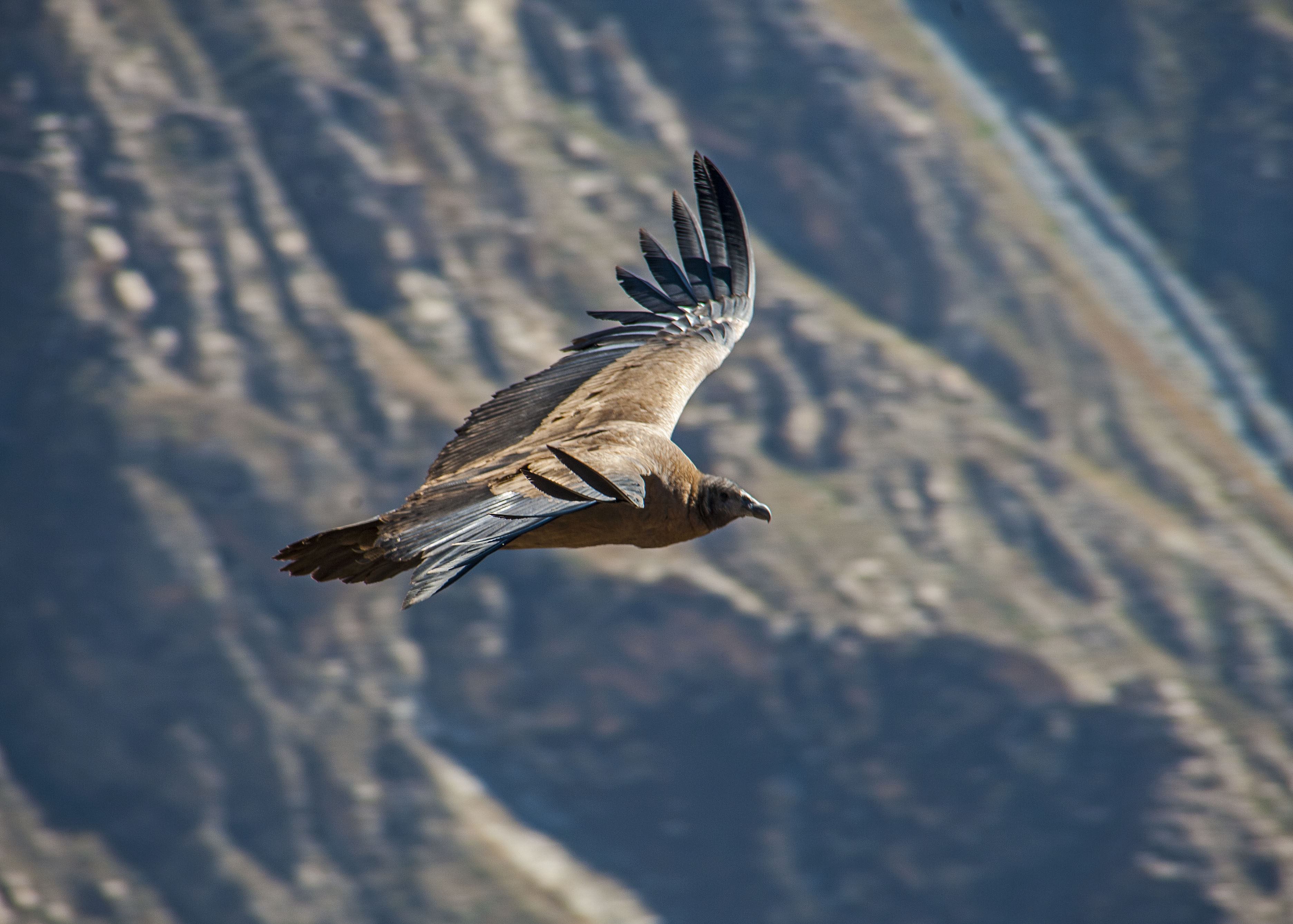
The main reason for visiting the Colca Canyon is the Condors which rise up from the depths of the valley as the sun creates thermals in the mornings. We spent the night at the Mirador Cruz del Condor so we were ready bright and early the following morning for the appearance of the condors.
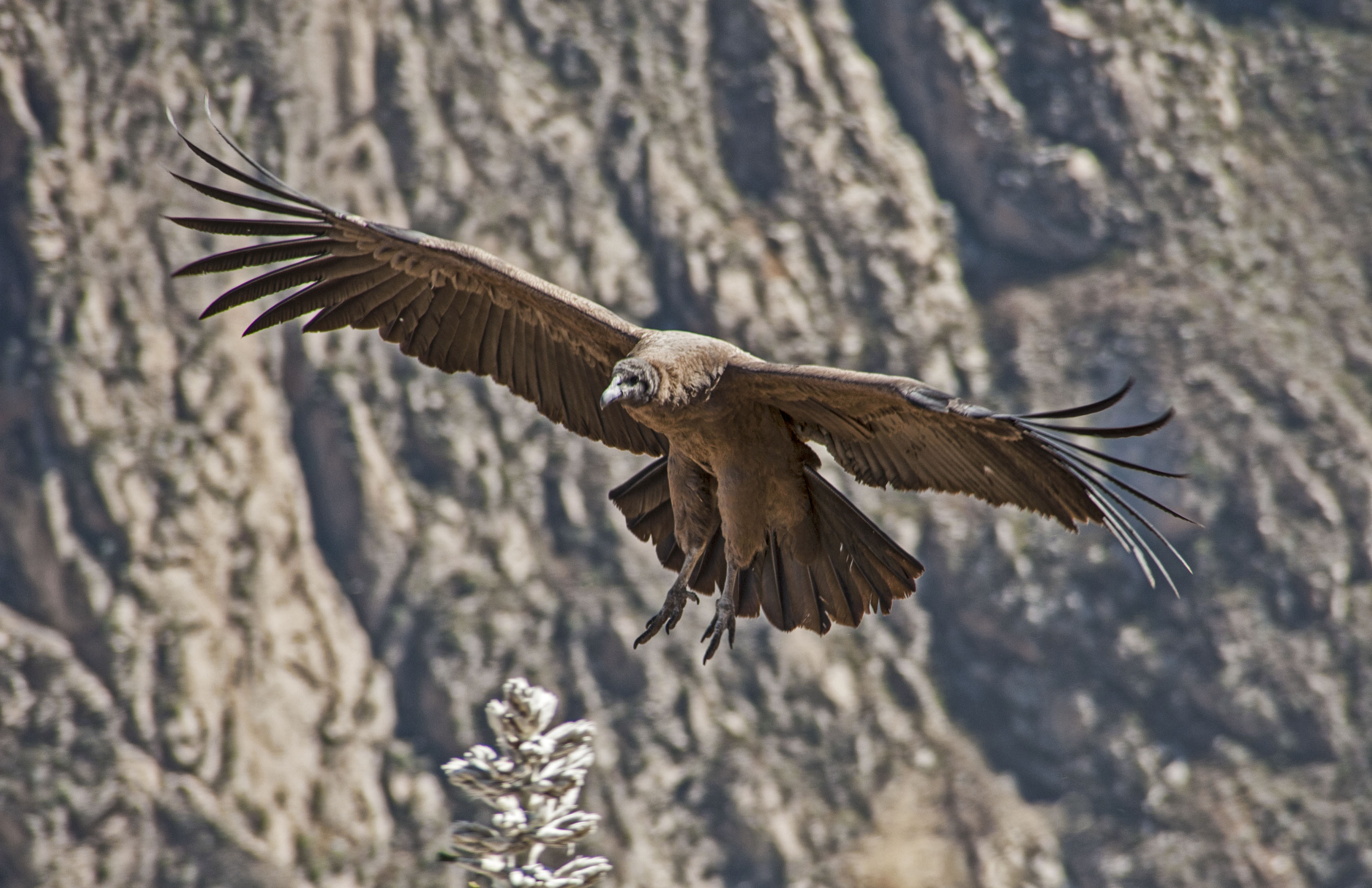
It gets very crowded here in the morning with bus after bus of tourists arriving one after the other. As we were here overnight we were sitting in a prime position on a wall next to the high part of the Mirador at 7.30am ready for the Condors to start flying.
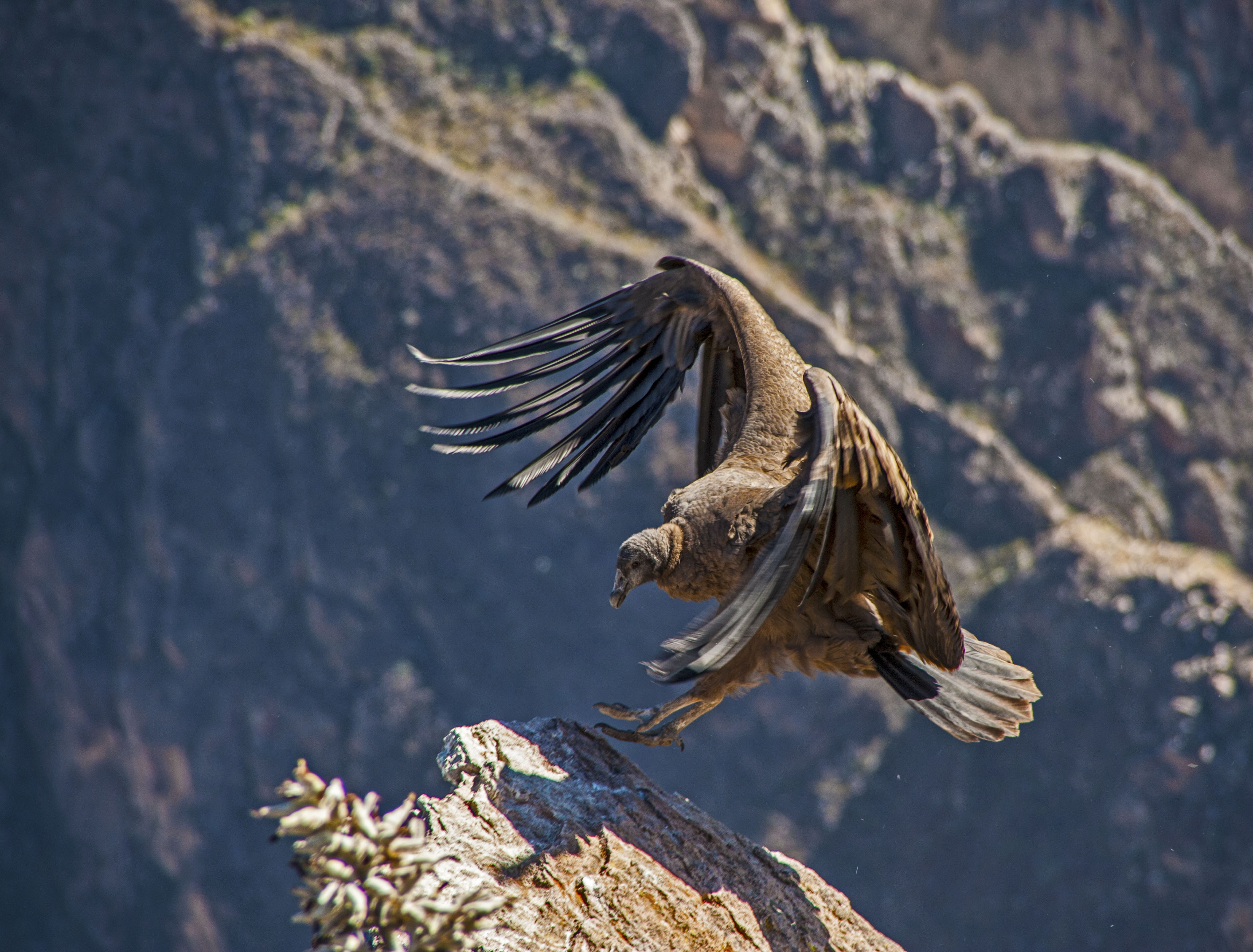
They begin low down in the canyon but as the sun gets hotter you can see the lift generated bringing them higher and higher. Eventually they should be eye level with the Mirador and then above. It was an amazing sight.
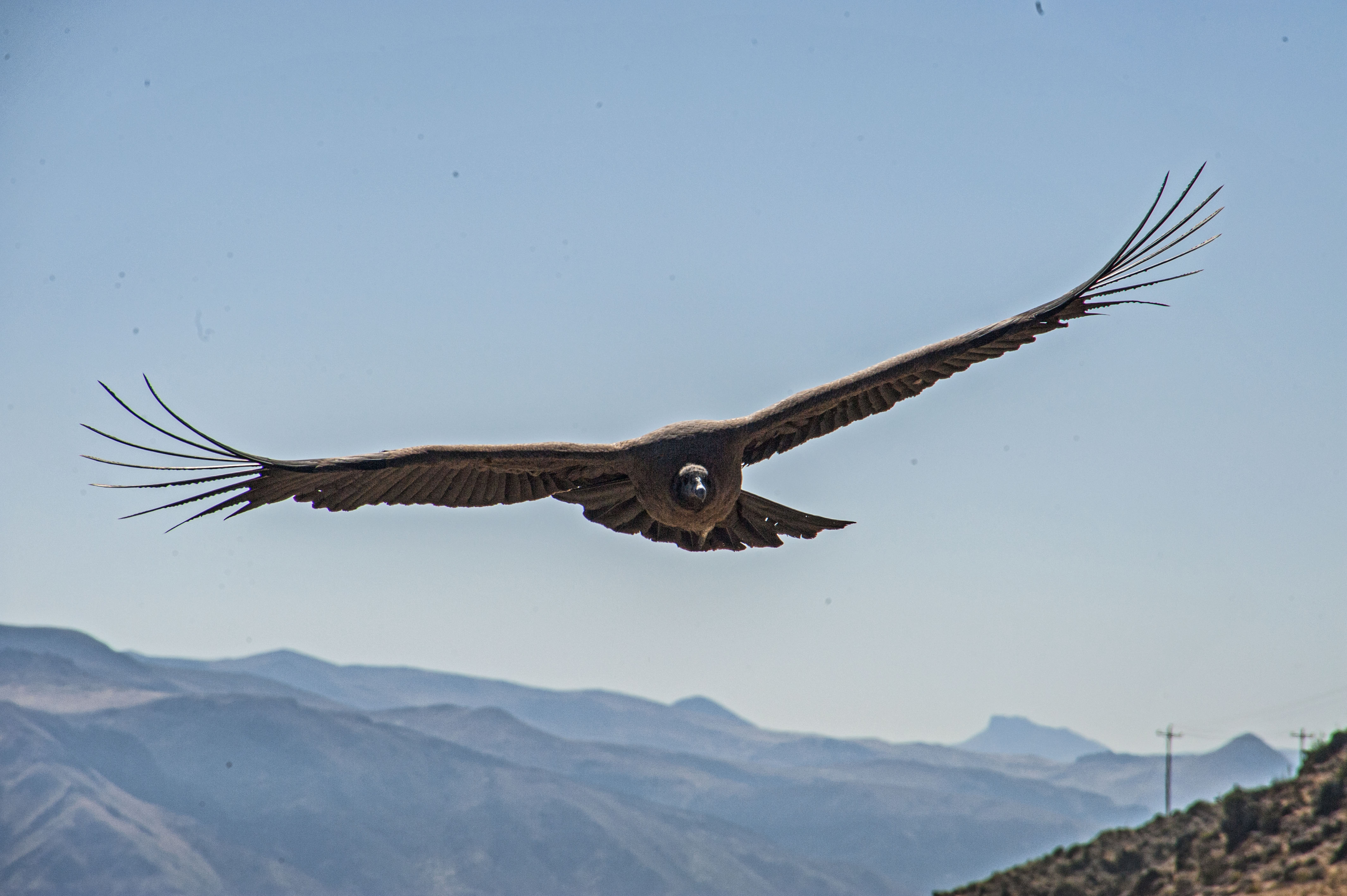
For us the condors disappeared shortly before 9am and we decided to leave the tour buses behind and be on our way.
Arequipa
The drive from Cusco to Arequipa is a long one over a high altitude (4000m) section of Altiplano. We spent a night on route at a truck stop and reached Arequipa at lunchtime on our second day. The road into the city passes an enormous cement factory which meant lots of really slow moving trucks.
In Arequipa there is a lovely hotel called Las Mercedes that has an area set outside for Overlanders and we made ourselves comfortable on arrival, with the very friendly staff making us feel more than welcome.
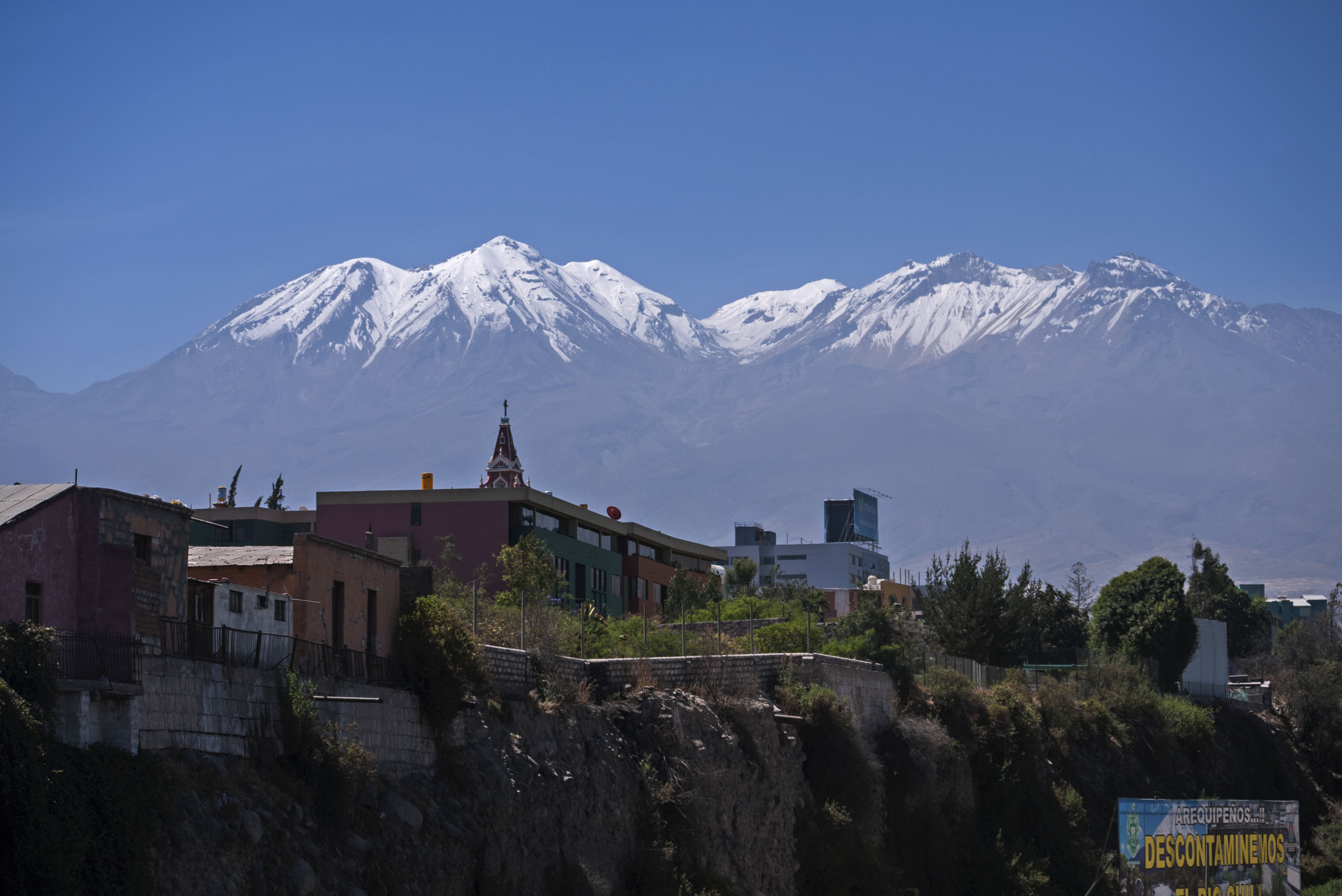
Arequipa is the second biggest city in Peru with a population of around 1m and has the full range of modern malls and shops. Snowcapped peaks tower over the city but the mid range altitude gives it a beautiful climate with hot days and cool nights.
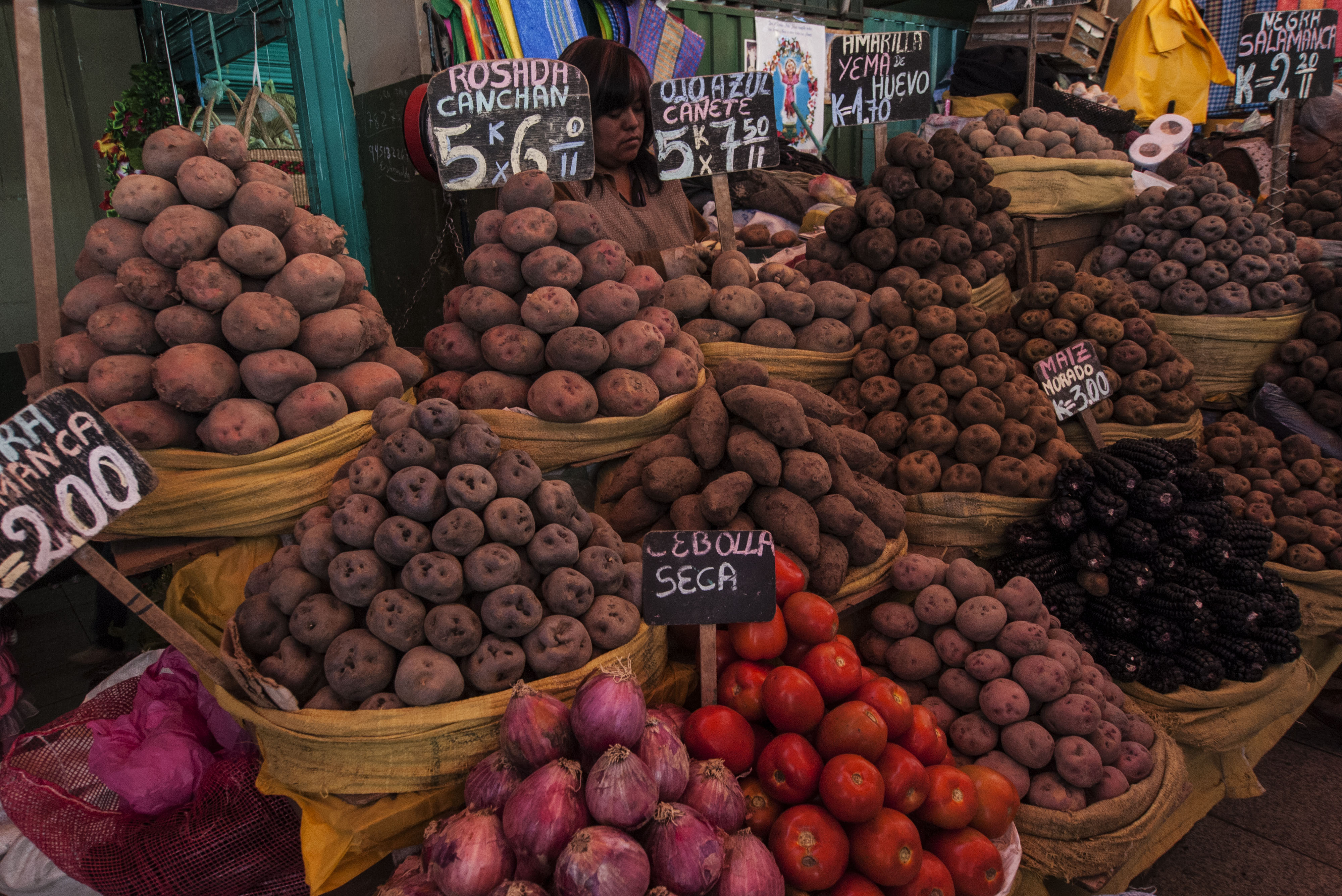
One of the first things we did was head out to a big mall with a large DIY shop (called Sodimac, just like B&Q at home) to buy some things.
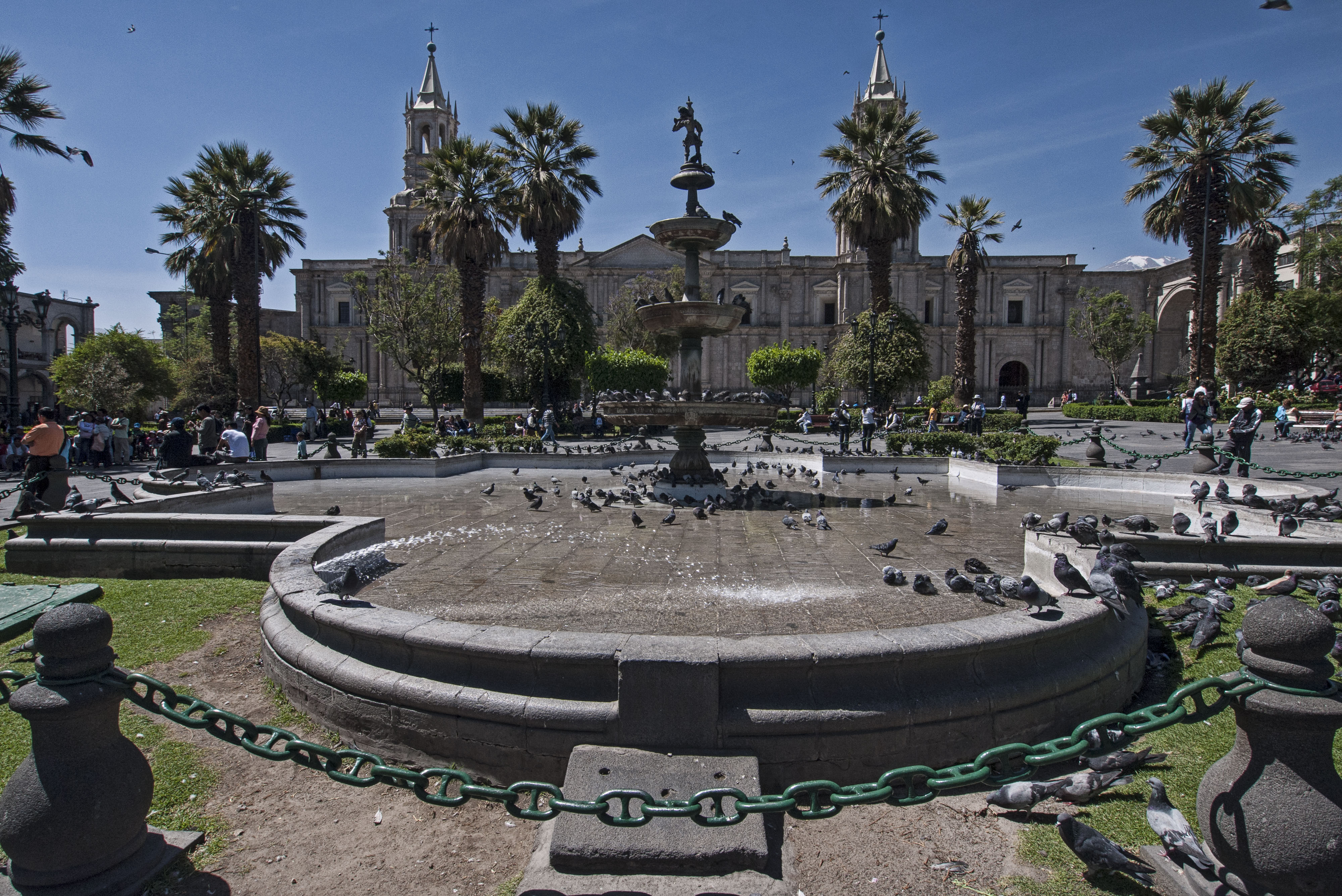
The city itself is very pretty and is known as the “White City” (every country seems to have one) because of the stone used to make the buildings. The central area is quite small with a number of historic churches and a large Plaza de Armas with the main cathedral on one side.
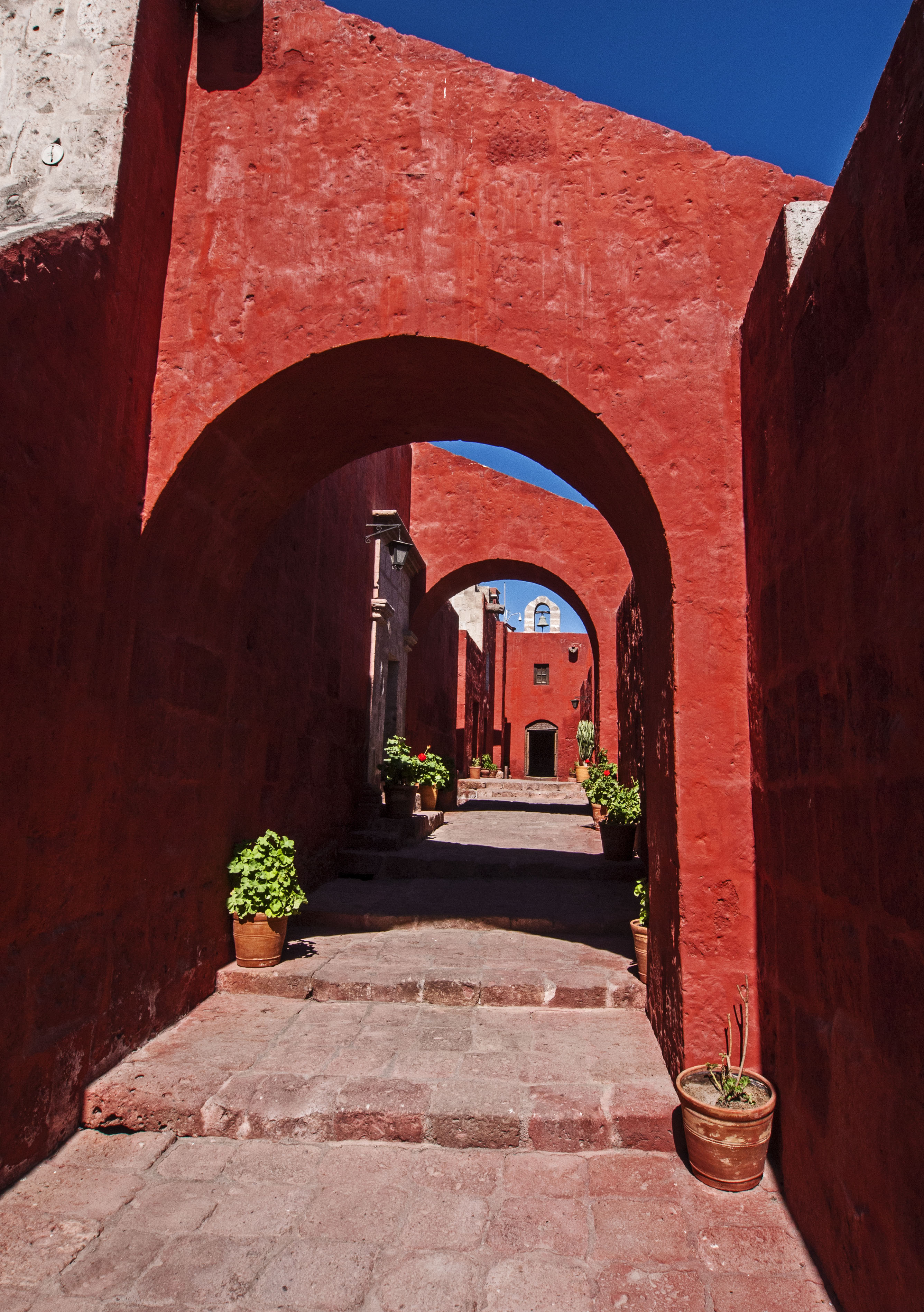
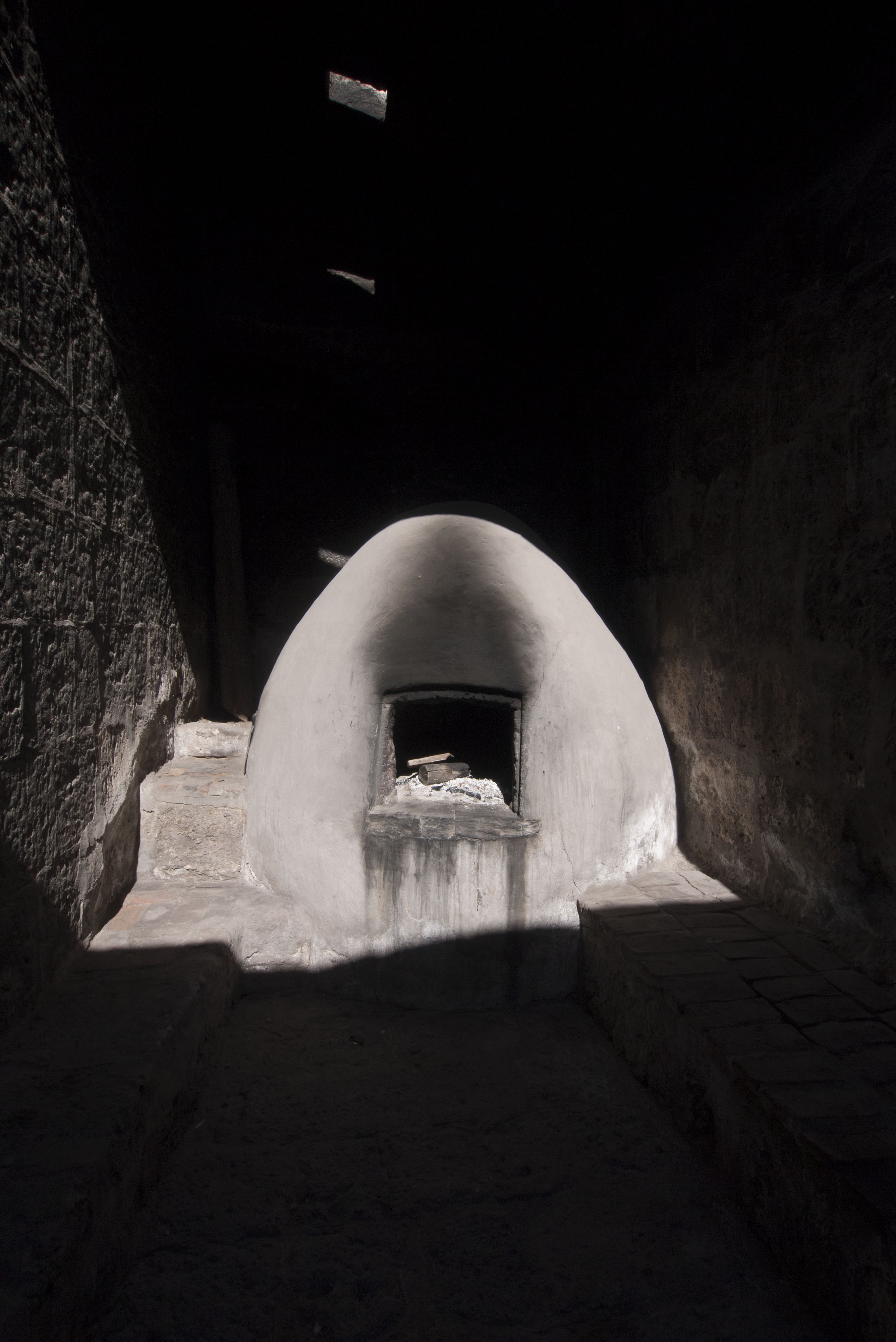
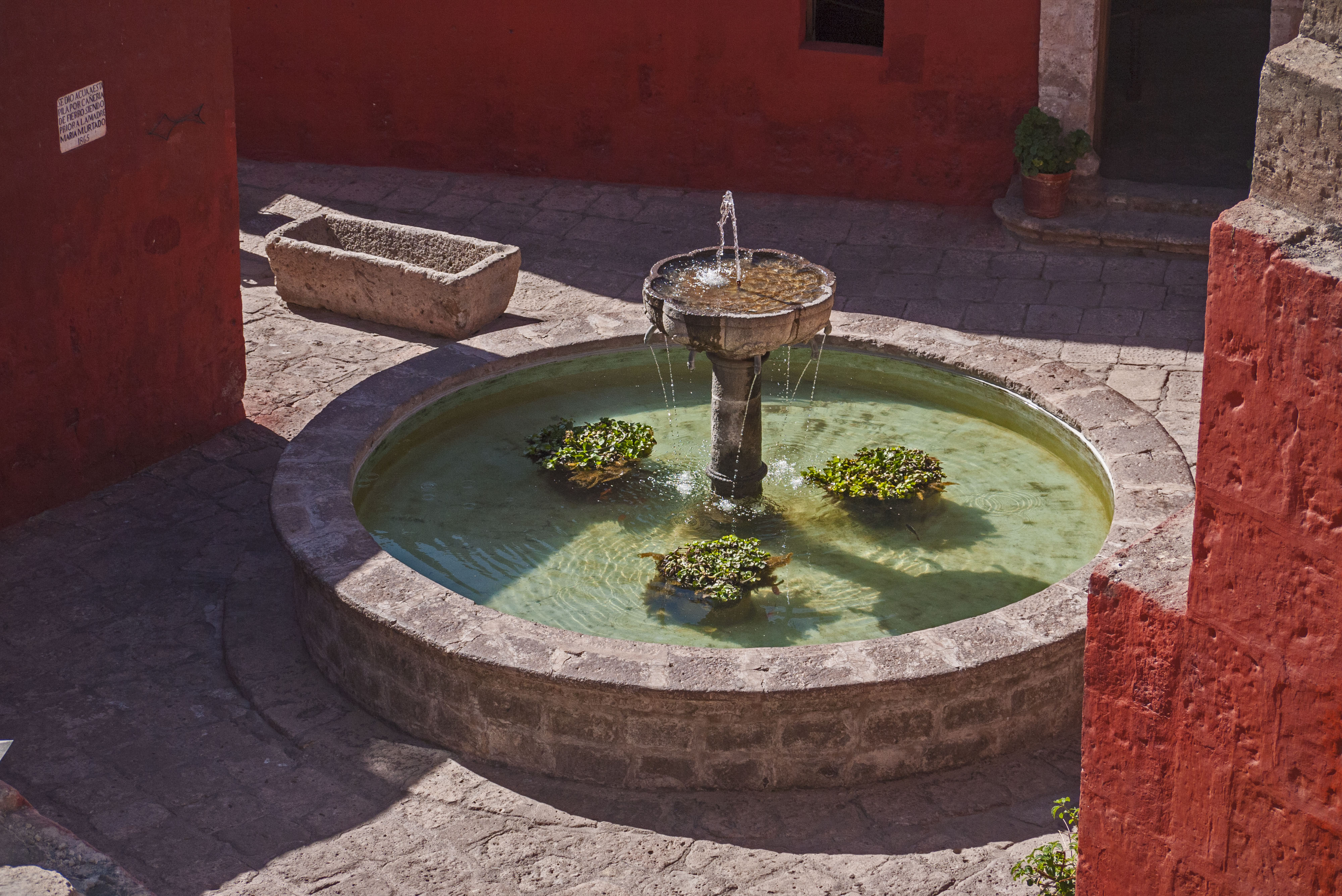
The premier tourist site in Arequipa is the Monasterio de Santa Catalina which was actually a convent. This is like a city within a city and used to house 200 nuns and 300 servants. The nuns lived in fairly palatial quarters and each had their own kitchen with a large oven for baking goods to be sold in the city. Definitely worth a visit.
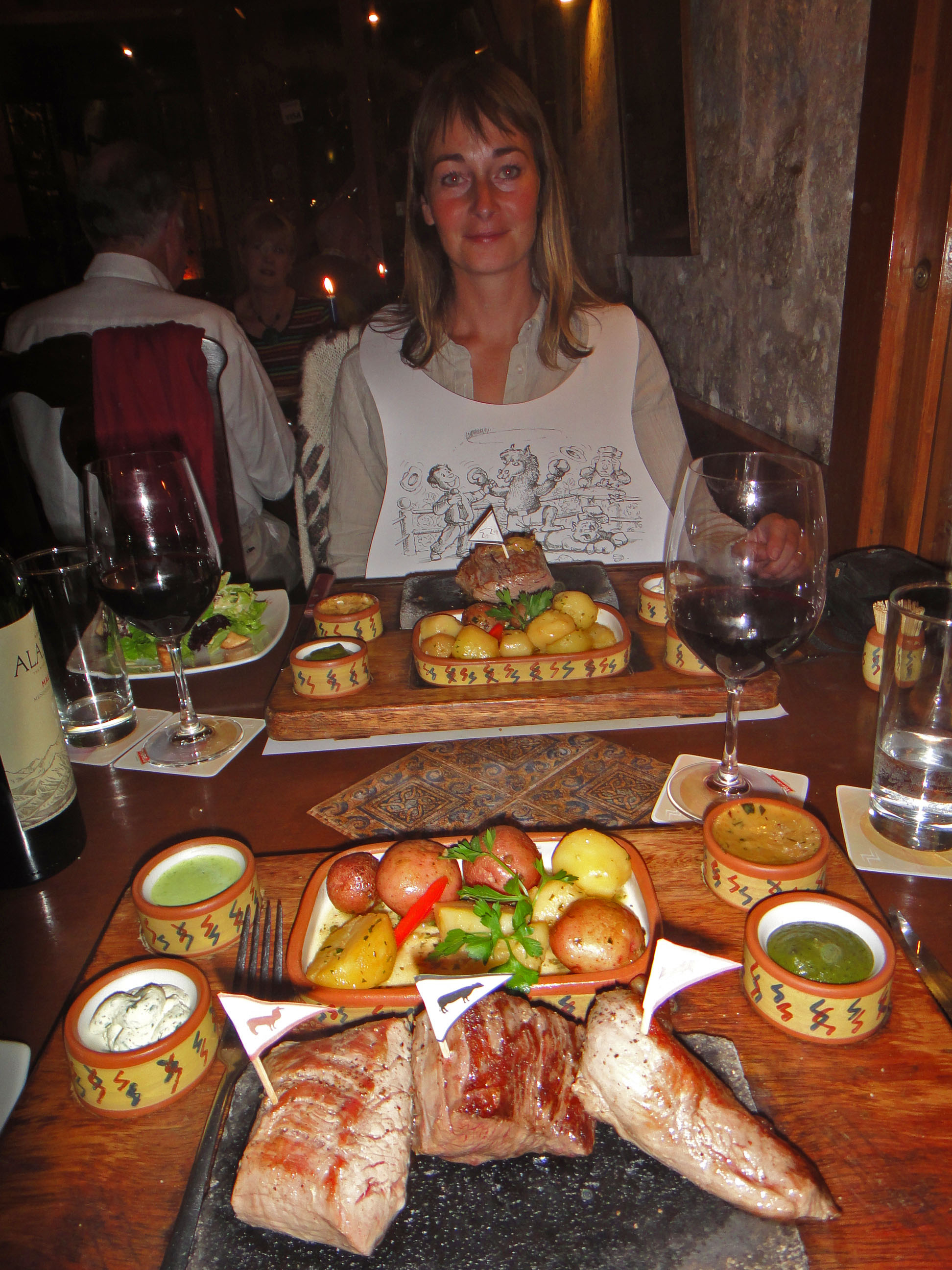
Perhaps the highlight of our time in Arequipa was going out to dinner on my birthday. We went to a restaurant called Zig Zag (No.1 rated on Trip Advisor) where we had a fantastic meal. For the first time in a year we also had a good bottle of wine – an Argentinian Malbec. We were in heaven.
Manu – The Return
The journey back to Cusco was a long an ardous one. The novelty of being on the canoe had worn off and we had a couple of long days of travel on the river to endure.
We set off from the Sajino camp early in the morning and started to head down the Manu river. The lack of rainfall meant that the river was very low and therefore the journey would be longer than normal.
,There was no way we would be able to get all the way to Erika Lodge in one day so after 8 hours in the canoe we reached Boca Manu, a small town at the mouth of the Manu river. We had been hoping to see a jaguar on the way back but no such luck, Juan Carlos felt that it was because the day was just too hot.

Boca Manu is a very small town with very limited power, evenings only, and we stayed in a small hostel there, used by several other companies.
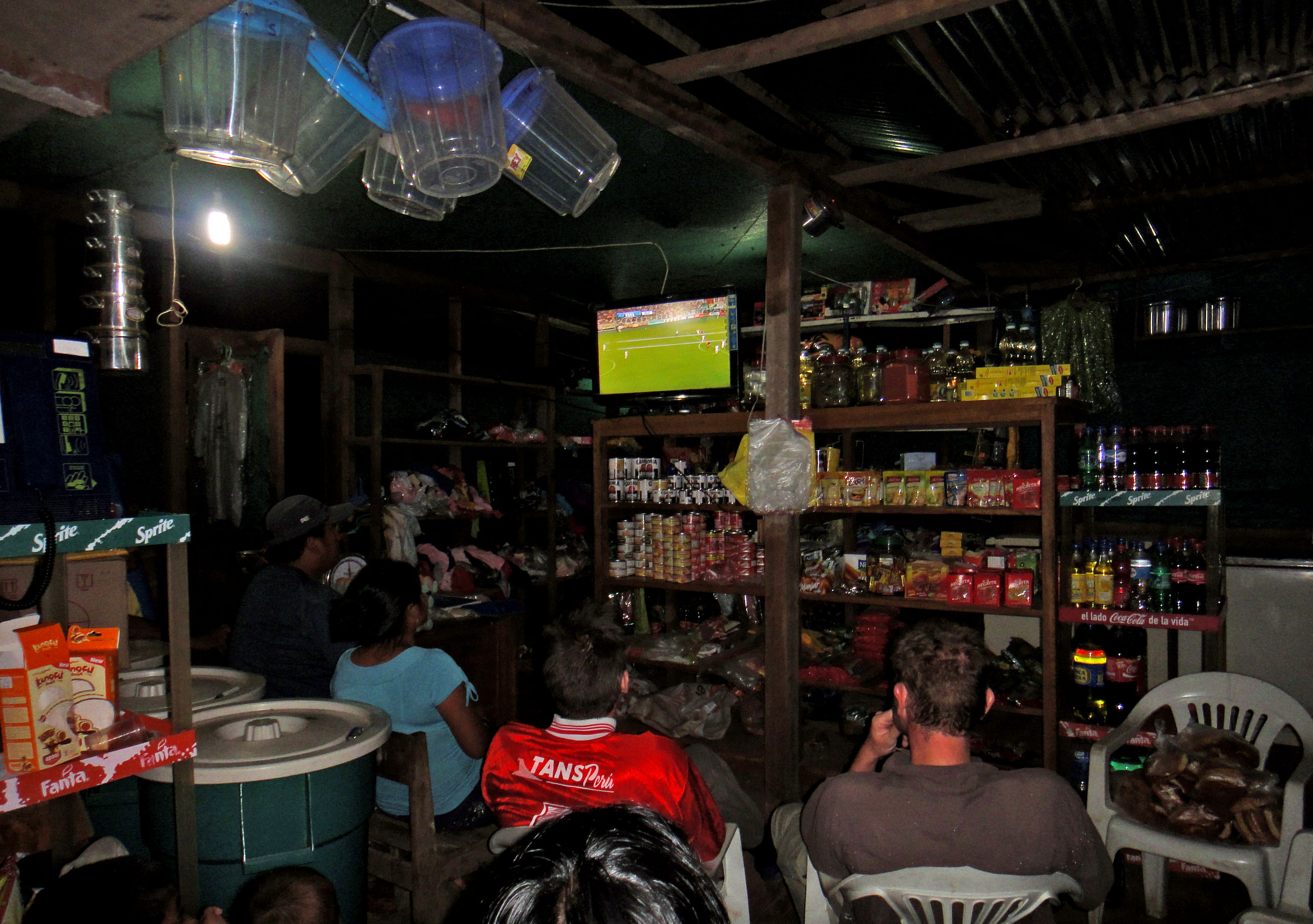
There was some excitement to be had as there was a small bar which had power so could serve up cold beer as it had its own generator – very welcome after a few days with no cold drinks. Peru were playing Venezula that night in Football which meant that the power would be left on longer than normal. The place in town with the biggest screen was the local general store. It was slightly strange but good fun to be sitting in a shop drinking a cold beer and watching football with the locals.
After breakfast we set out again but this time heading up river. There still hadn’t been any rain and the rapids on the river were very low. It wasn’t long until we were out of the boat and pushing !
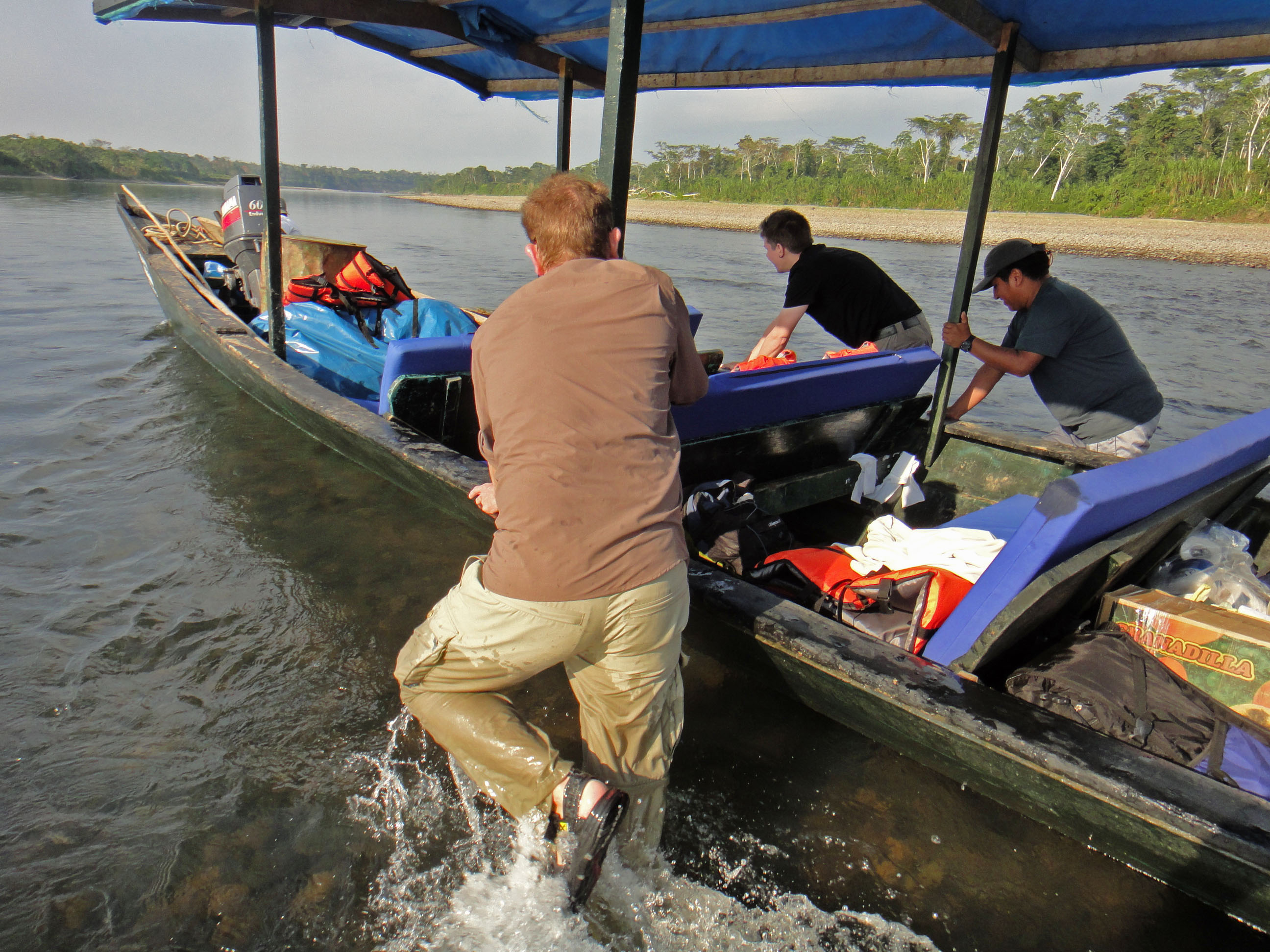
And then the river changed colour, started to swell and rose dramatically – it was raining in the cloudforest. That was the end of pushing but meant that some of the rapids took full power to navigate and we slowed to less than walking pace. There was some drama when the engine failed but there was a spare on board and the boatmen managed to change it in midstream !
This was a full day in the boat with very little to see and only toilet breaks to allow us to stretch our legs. We didn’t arrive at Erika Lodge until about 5pm but soon after arriving we headed off on a walk around the rainforest.
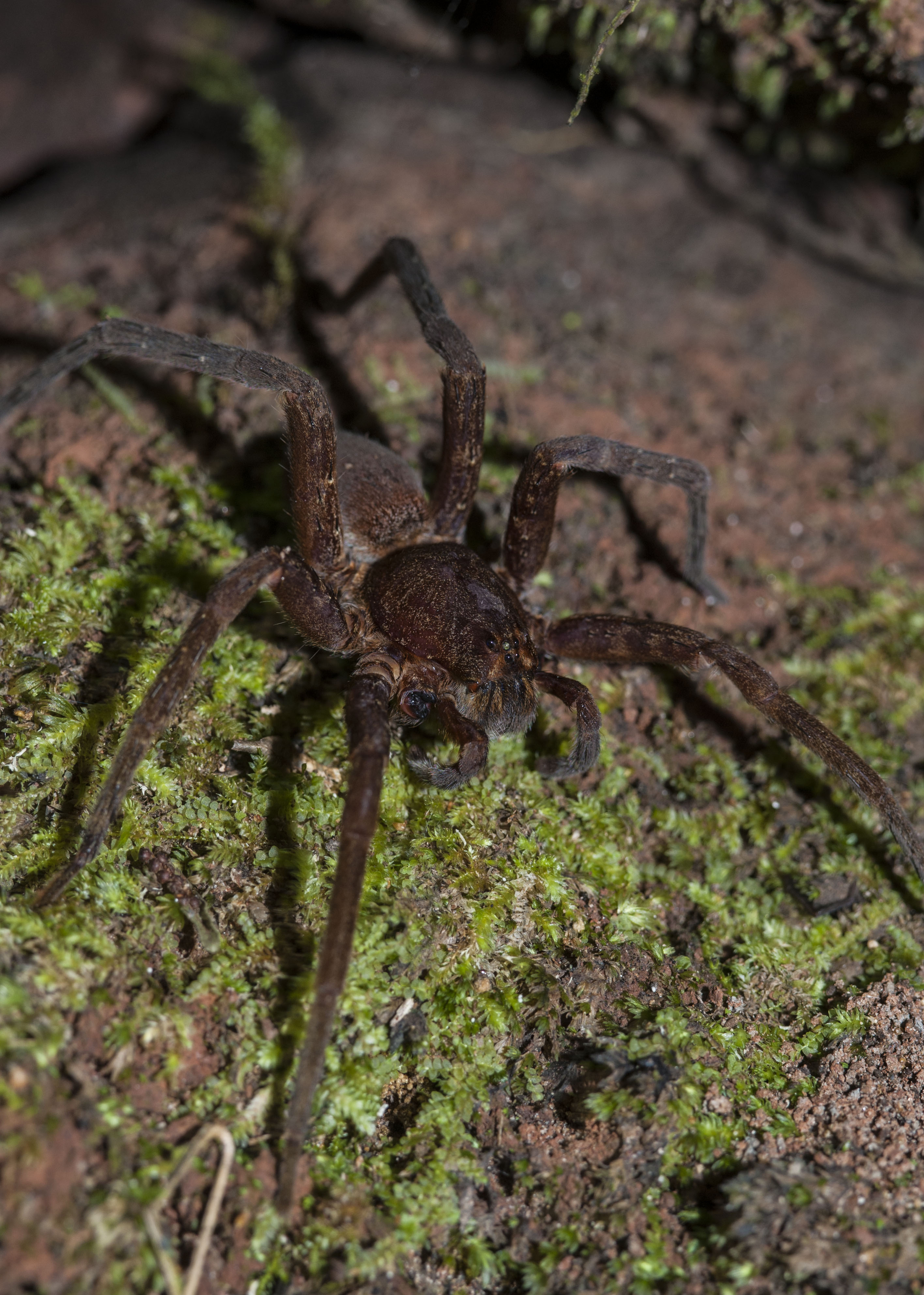
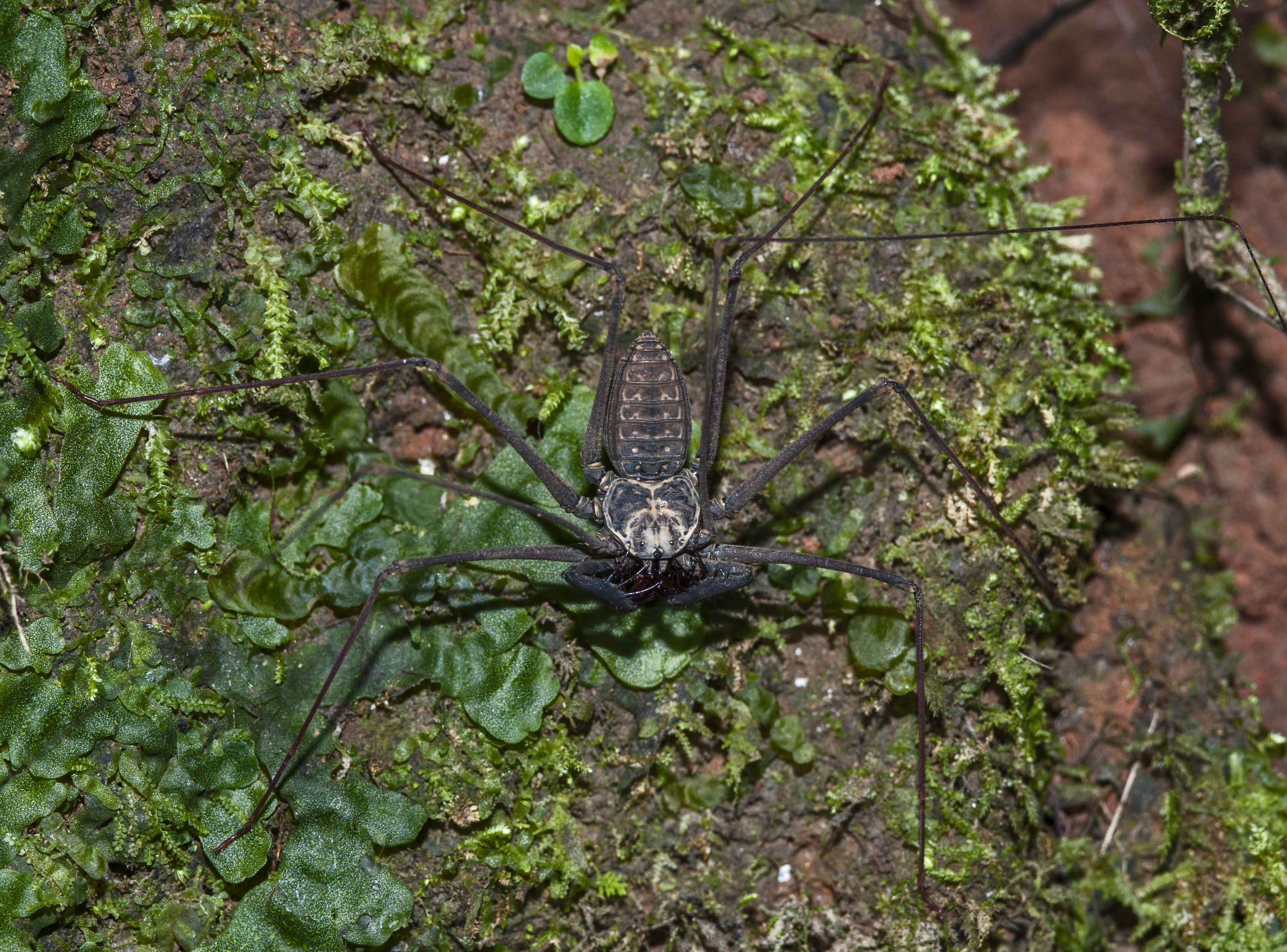
This was interesting as we walked in both daylight and darkness and saw a variety of things particularly spiders and ants. The flora was different in this transition area seeming to be a mix of plants from the cloudforest and those from the rainforest. This area has a large number of Bullet Ants, so called because being bitten feels like being shot, so we had to be careful where we put our hands.
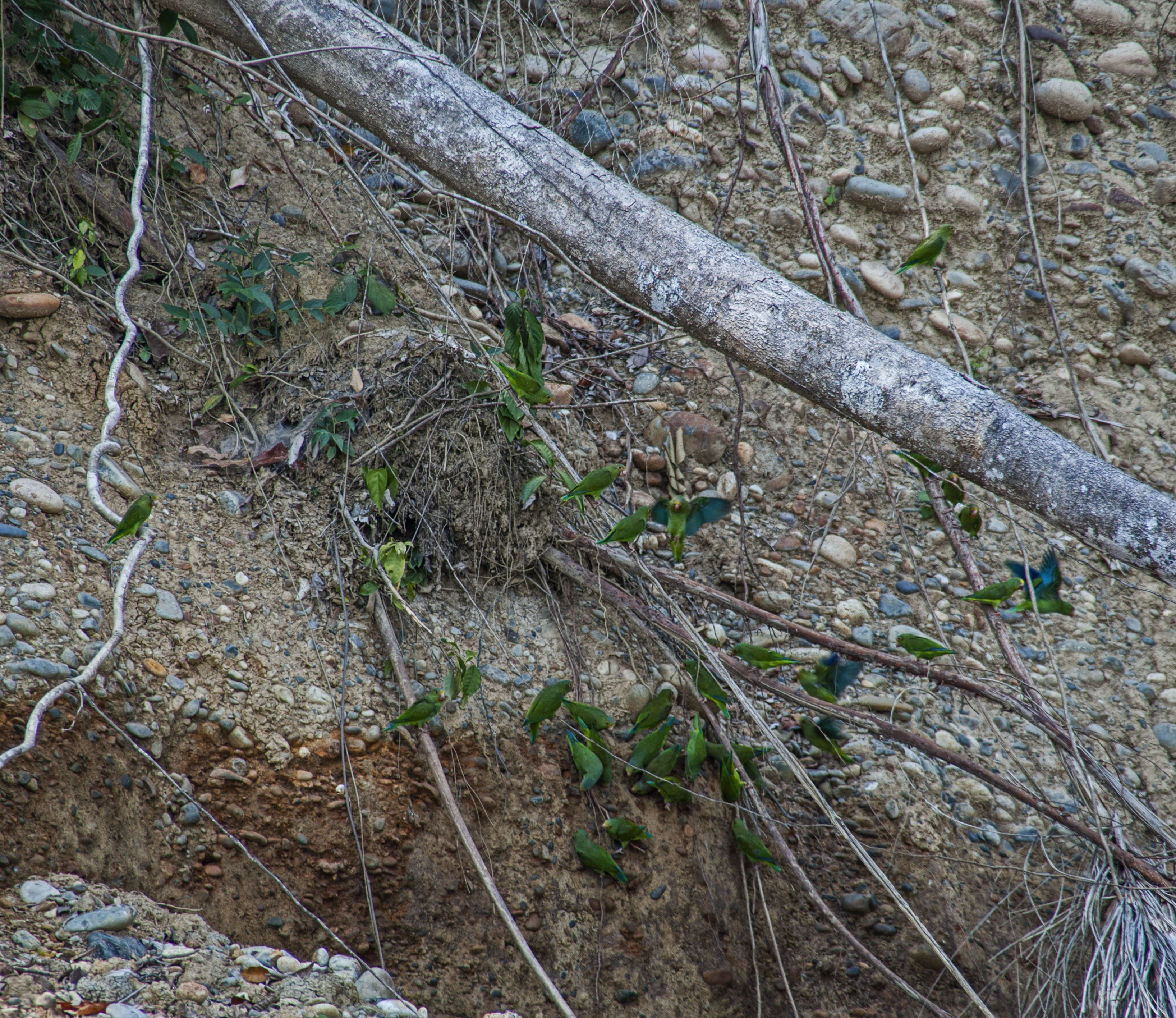
In the morning we were back on the river early as we travelled downstream to a Parrot Clay Lick. Unfortunately, it was raining lightly which meant that only limited numbers appeared on the clay wall, most of which took to the still dry clay under overhanding foliage so our visibility wasn’t great. Fortunately we had seen a clay lick on the river the day before with a full complement of parrots so we weren’t too disappointed.
After breakfast we headed upstream but only for 45 minutes as we went back to Atalaya and then got back in the car. We were going to drive all the way back to Cusco in one day.
The driver of the car was different from the one on the way down and this time he was crazy – a true Peruvian driver – but it did mean that we got back quickly and for that we were thankful.
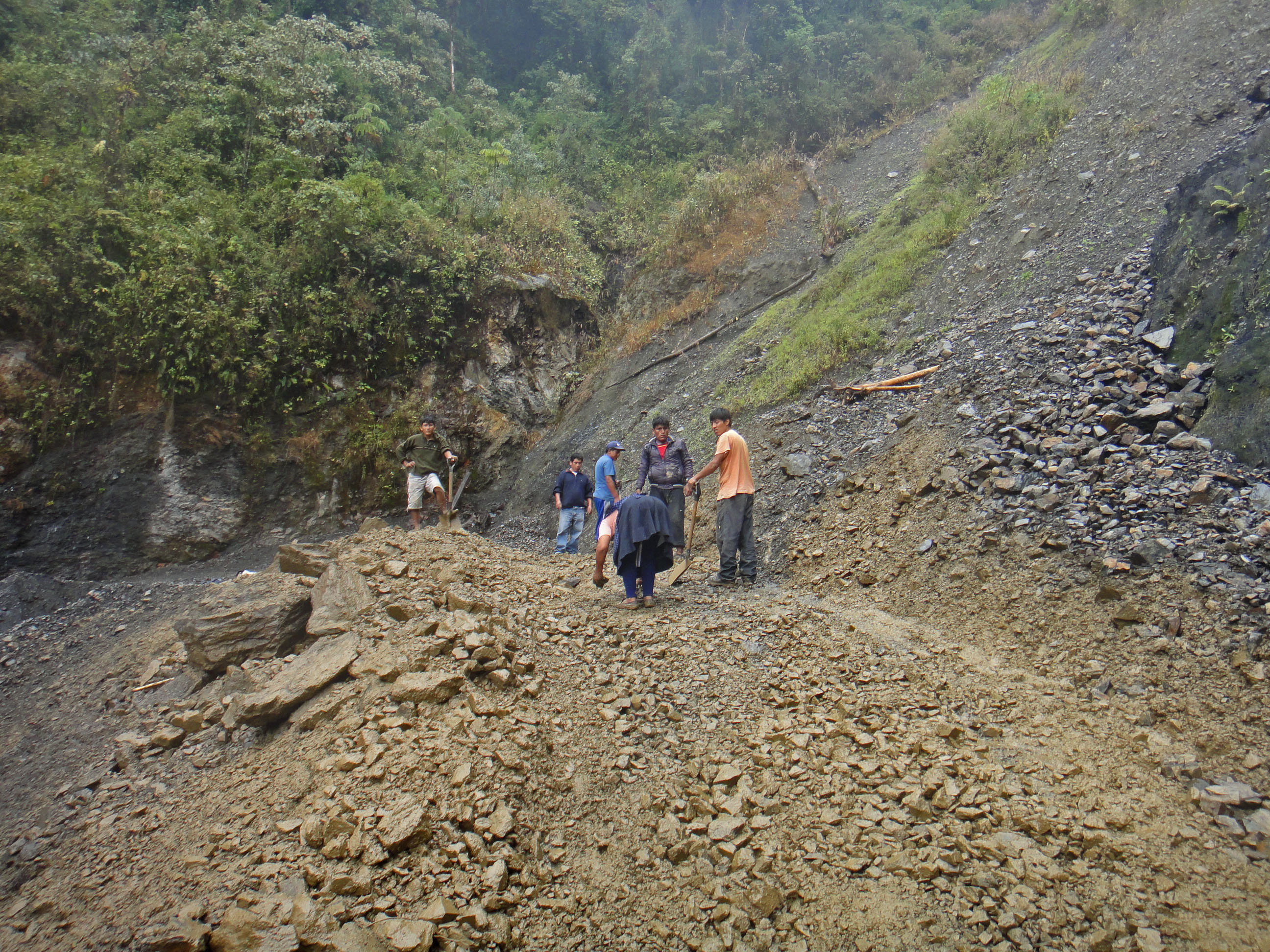
On the way through the cloudforest we saw that the heavy rain the day before had made a difference and we were lucky to overtake a truck just before fallen rocks that would have blocked him and anyone behind him. A while after this we reached a large line of trucks that were stopped by a landslide that had happened the day before. People were digging at the landslide to try to create a path through. After getting am shovel and helping with the digging our driver told us all to get out of the mini-van, took a run up and flew over the obstruction. I told you he was crazy.
Once we were out of the park it wasn’t long until the driver was stopped by the Police – a S10 bribe got us on the way again !
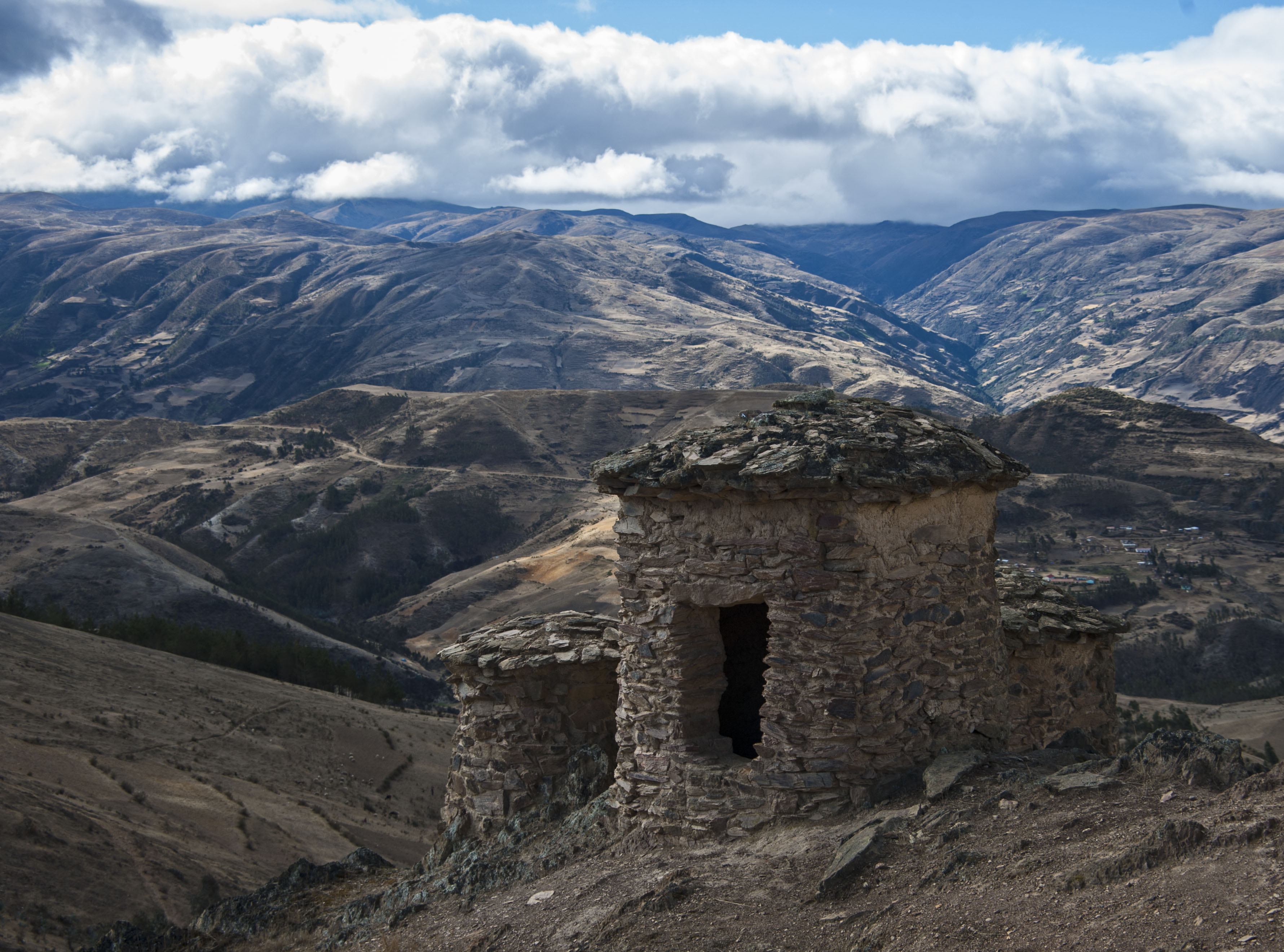
After this it was a long slog back towards Cusco. We stopped in Paucartambo to stretch our legs and then again at the tombs of the Ninamarca, known as Chullpas, but not for long.
We finally made it back to Cusco at around 6pm after a long and tiring day.
Manu – The Jungle
In the morning we woke to discover what the Sajino Safari Campsite was actually like. There is no power here at all, unlike the previous two lodges which had two hours of power in the evening but having been warned of this we had charged our camera batteries in advance.
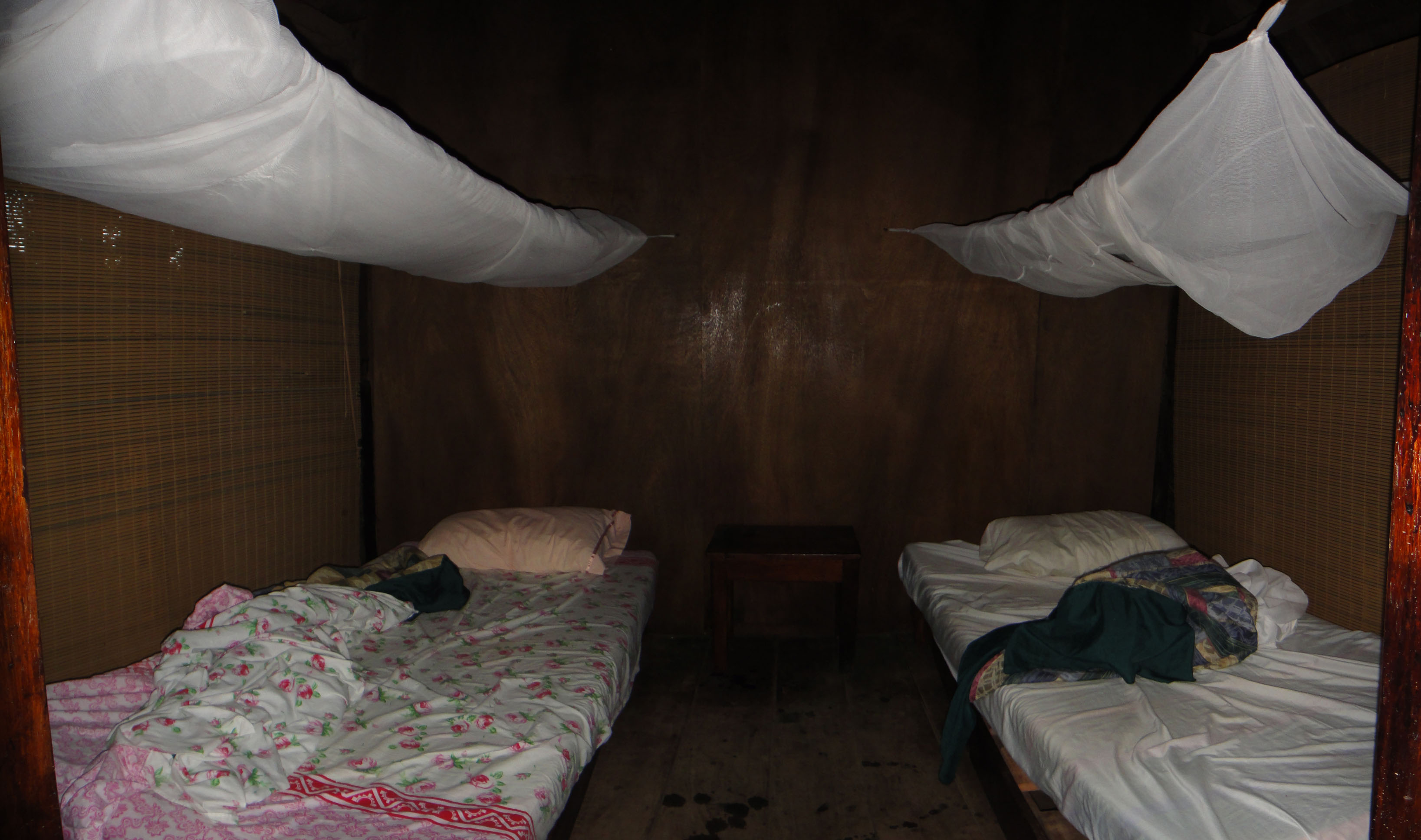
The rooms were very small in basic huts which were insect screened. Unfortunately the insect screening was old and had a few holes in it. This made it essential that the Mosquito nets were in good shape and fortunately this was the case.
There was a canteen hut with a small kitchen in which the cook produced some really nice food with very limited resources. Despite having no refrigeration or indeed power she managed to produce 3 tasty meals each day and use meat right up until the end of the trip.
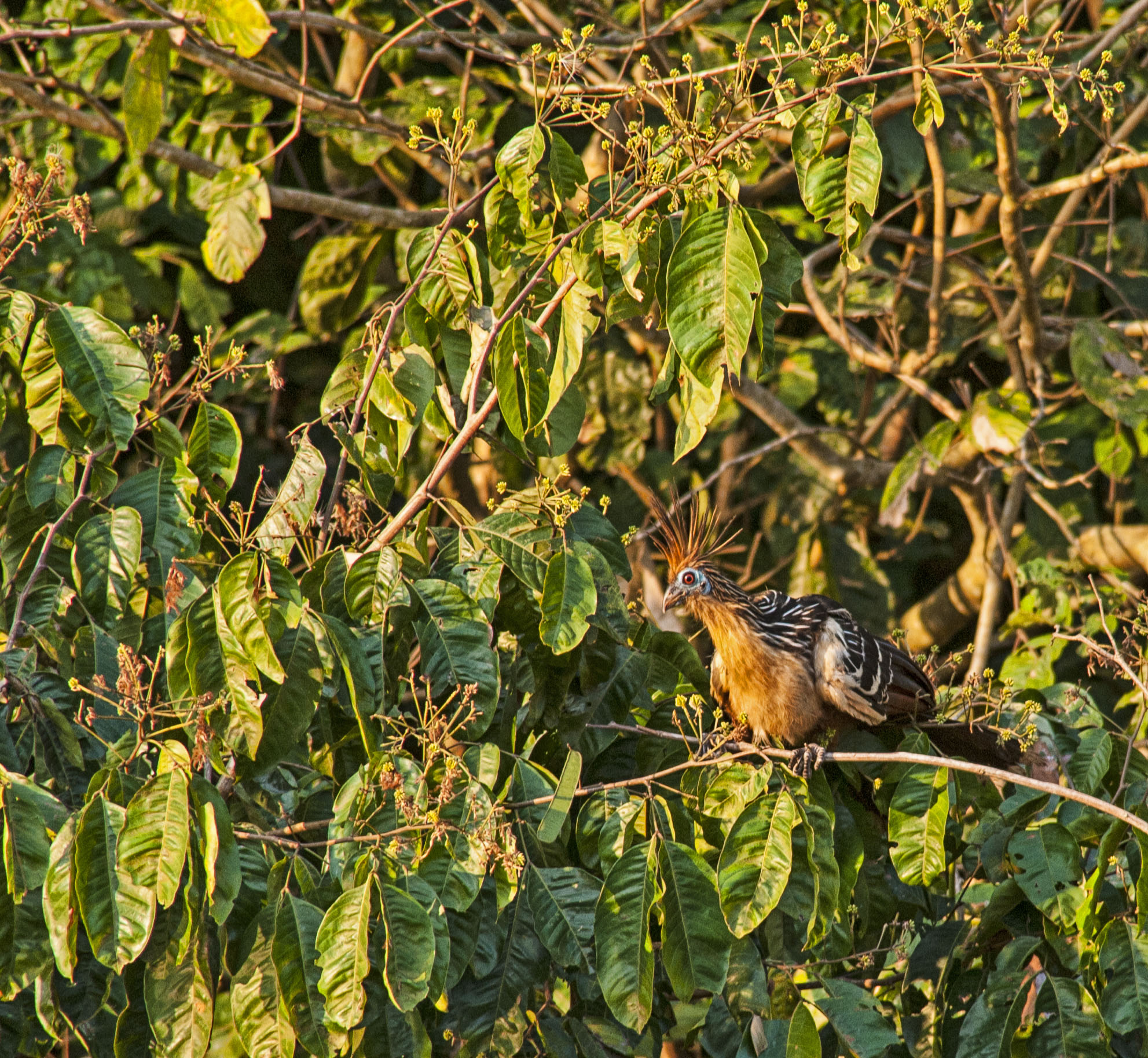
The first thing we did in the jungle was head off for a walk looking for any wildlife we could see. This is something that we would do several times in the two days that we were at the Manu campsite.
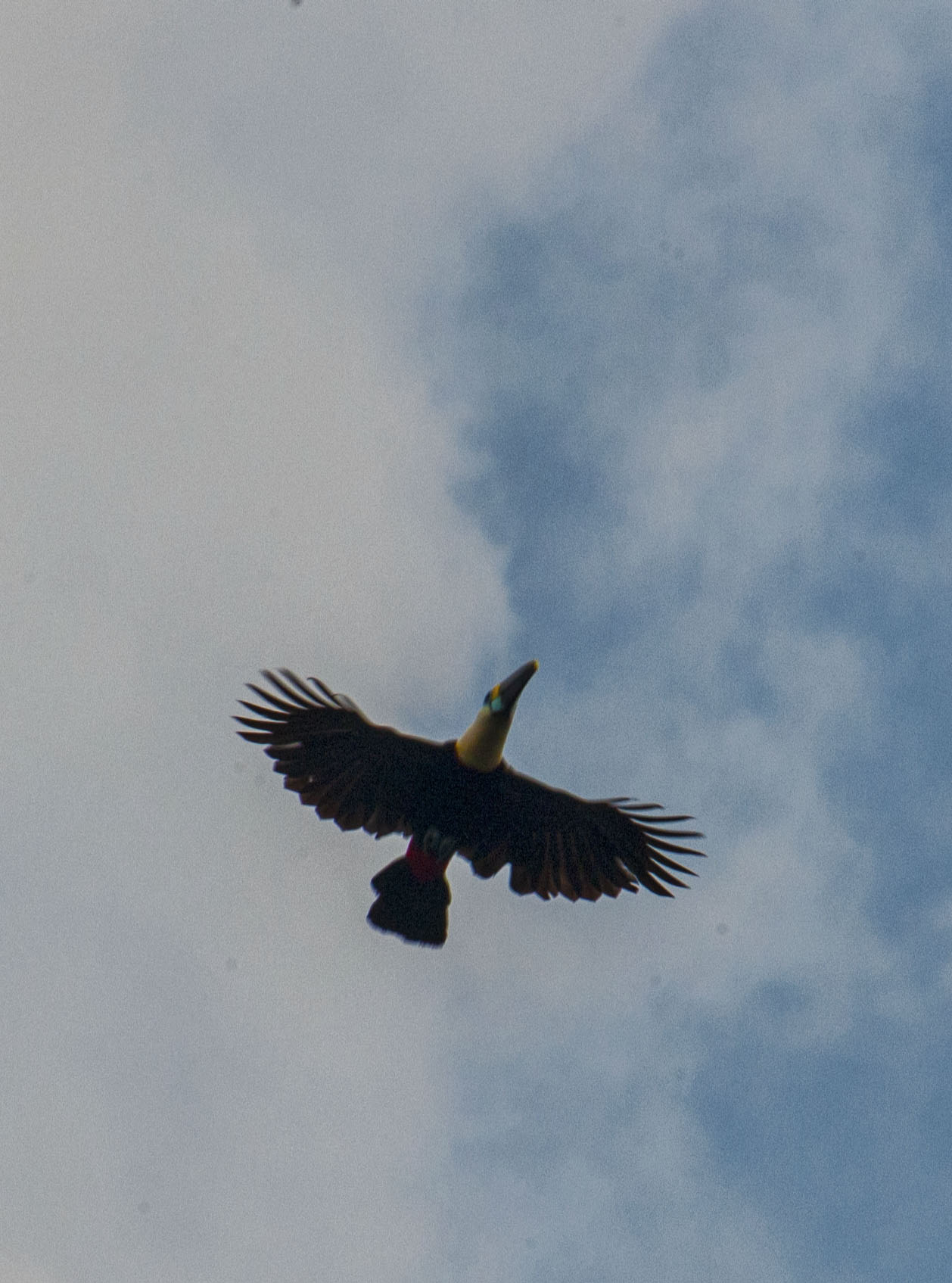
As soon as we stepped out of the relative cool of the camp and under the canopy the humidity shot up and the light dropped. Although the temperature wasn’t that high (28c) the humidity meant that every time we came back from under the canopy we were drenched – not helped by wearing long sleeves and trousers to protect from insects.
The jungle is almost synonymous with mosquitos but we were pleasantly surprised that there were very few while we were there. Probably as a result of the dry spell that had lasted the whole time we were there – it usually rains most days. There were however a lot of sand flies at the edge of the river and these were really a pain.
The Sajino lodge is situated only 15 minutes walk from Salvador lake which is one of the highlights of the Manu Rainforest Reserved Area. It is famous for its population of Giant Otters. In Manu there are actually 5 Jaguars for each Giant Otter but Salvador Lake has a resident population which tourists have a very good chance of seeing.
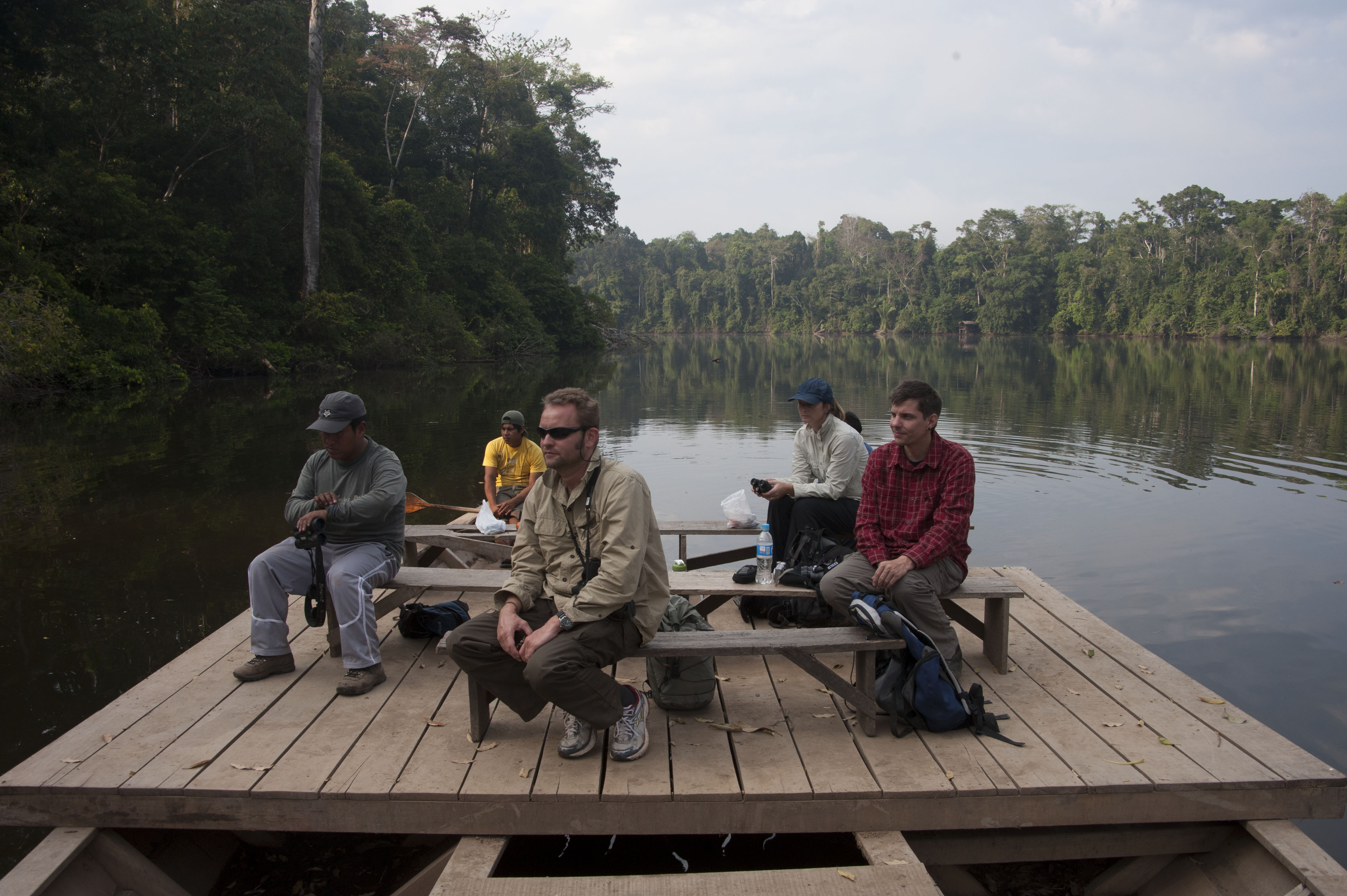
There is a large catamaran raft at Salvador Lake and we went out on this twice during our time in the Rainforest. Once in the early evening and once in the morning. Around the lake it is very easy to spot Monkeys and birds. On our morning paddle we saw the Giant Otters devouring fish after fish and playing amongst some fallen trees in the lake.
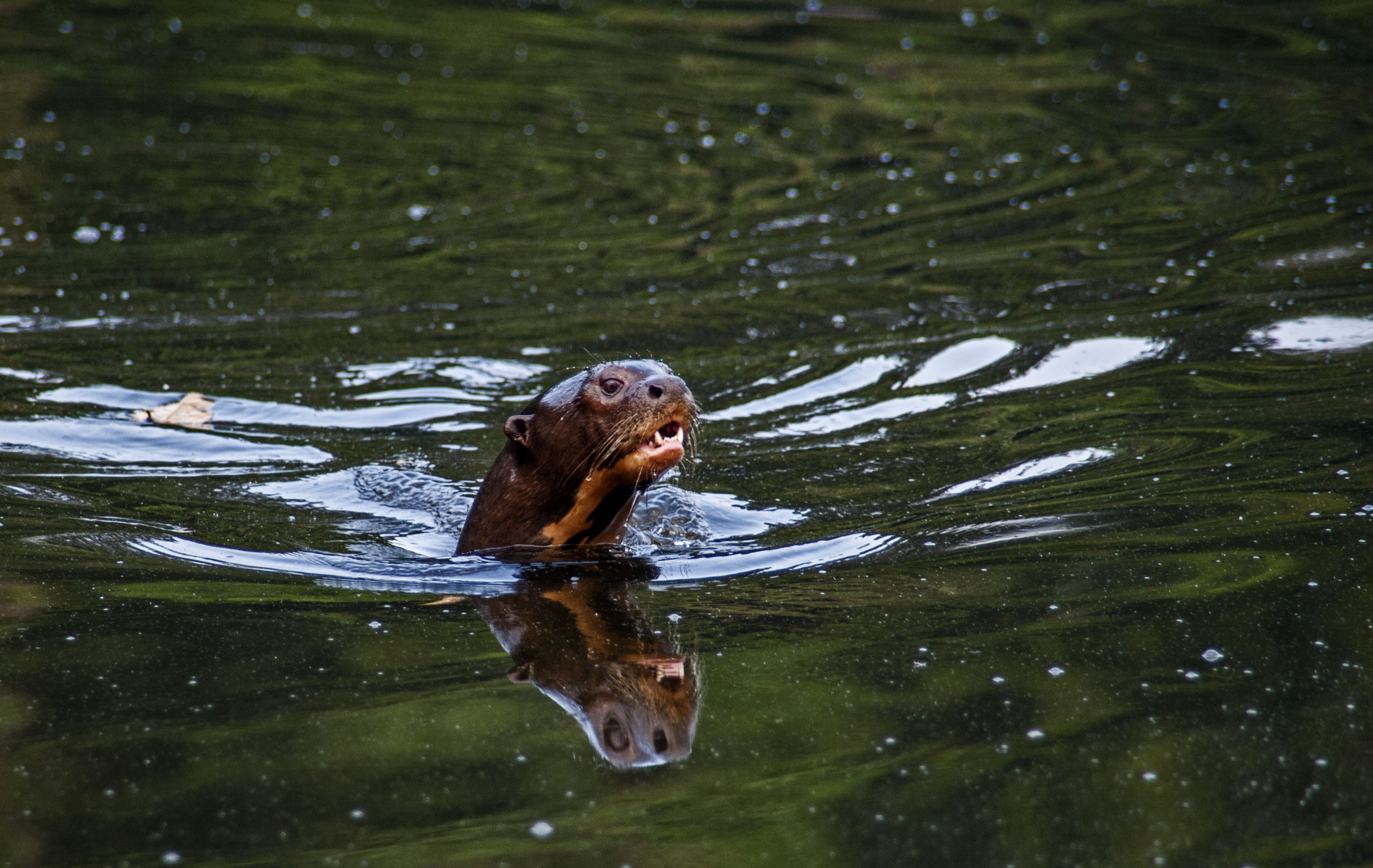
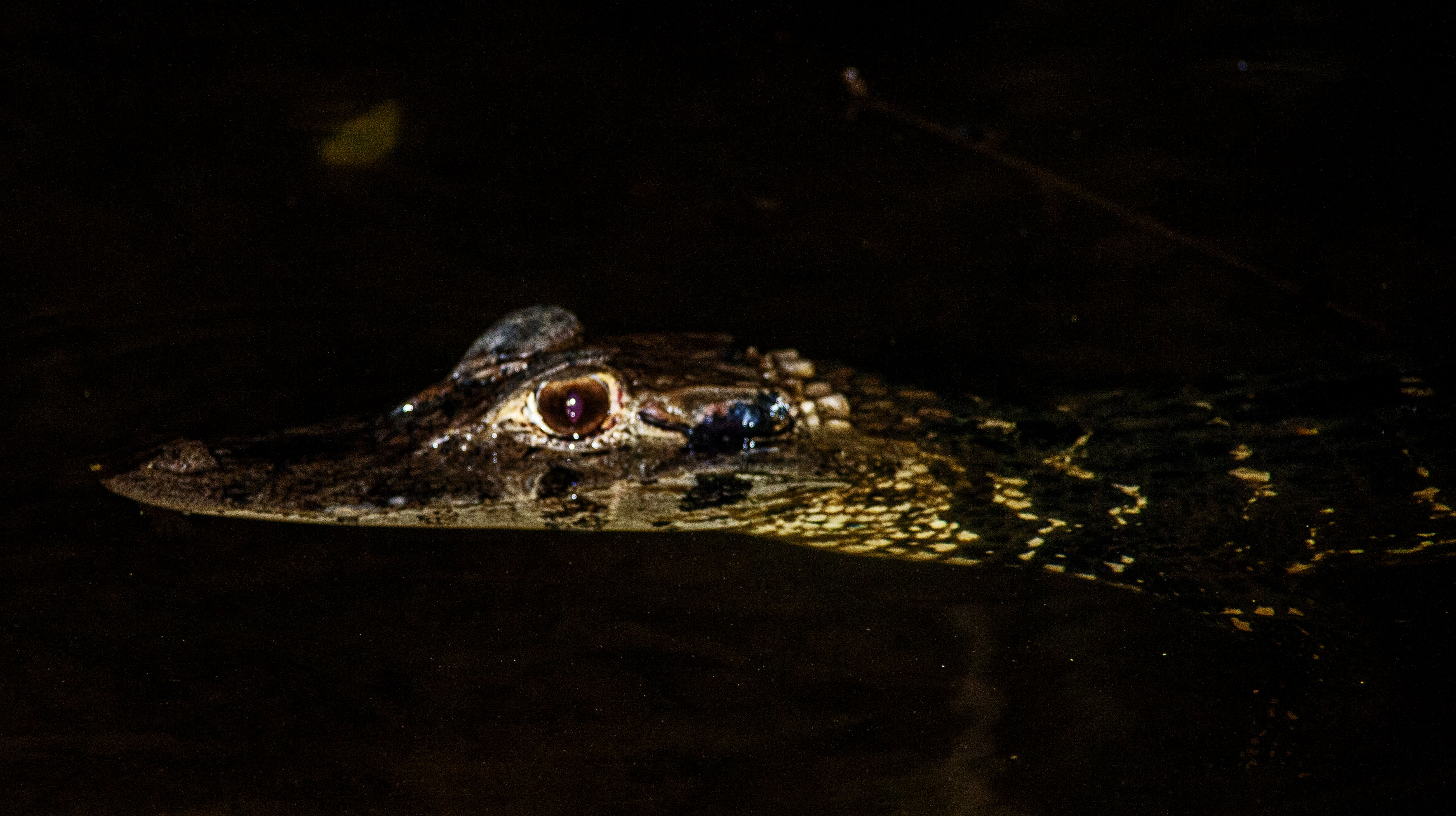
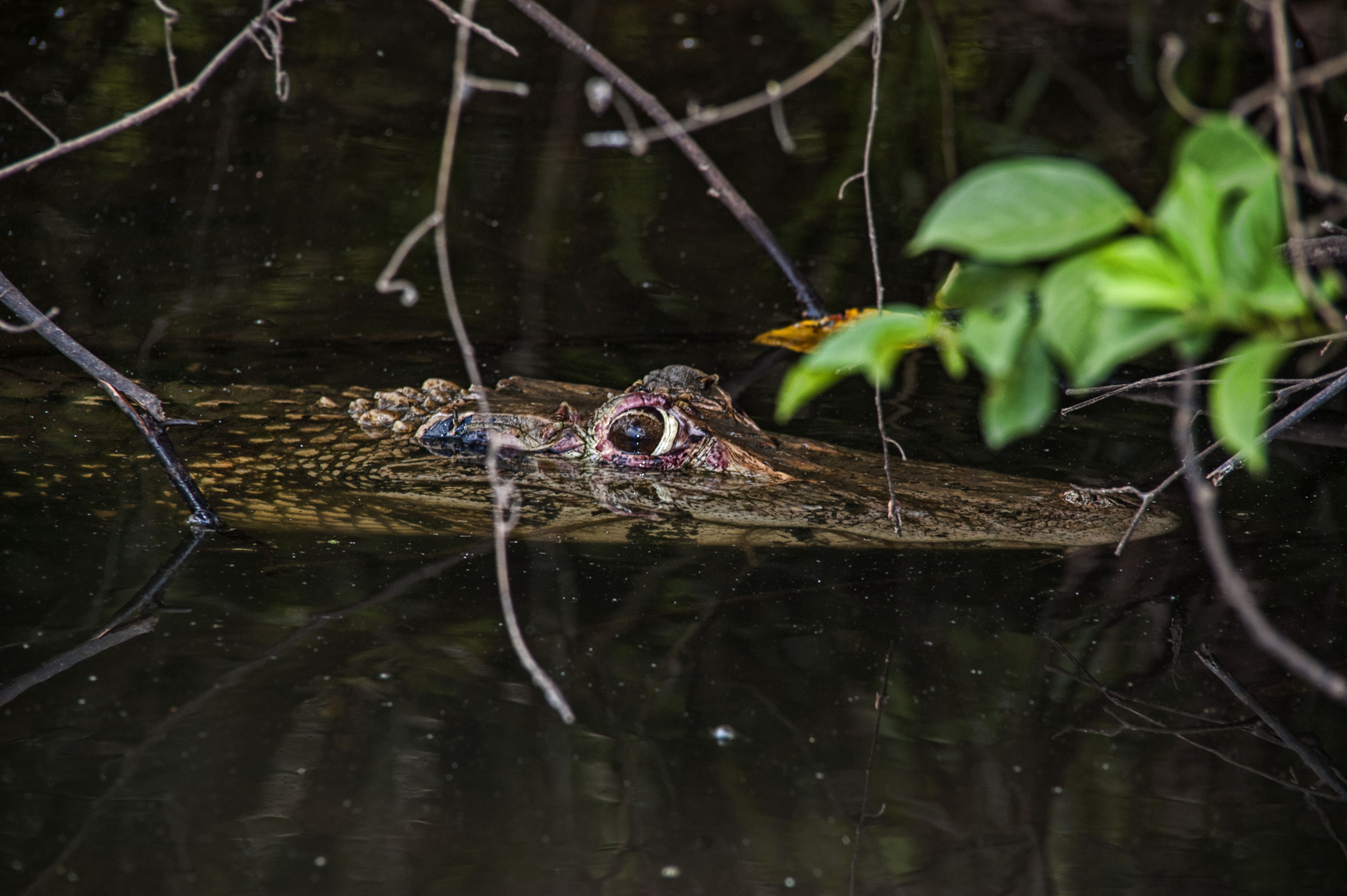
At one point they even swam around the catamaran and came quite close, checking us out. On the evening paddle we spotted Caimans by their eyes reflected in torchlight.
A 30 minute boat ride downriver is another famous lake, Otorongo, which we visited.
Unfortunately this area seemed devoid of wildlife. There is an observation tower overlooking the lake which we climbed but didn’t really see anything while we were up there. This area housed a couple of other companies lodges but the area around Salvador Lake seemed much more heavily populated with animals.
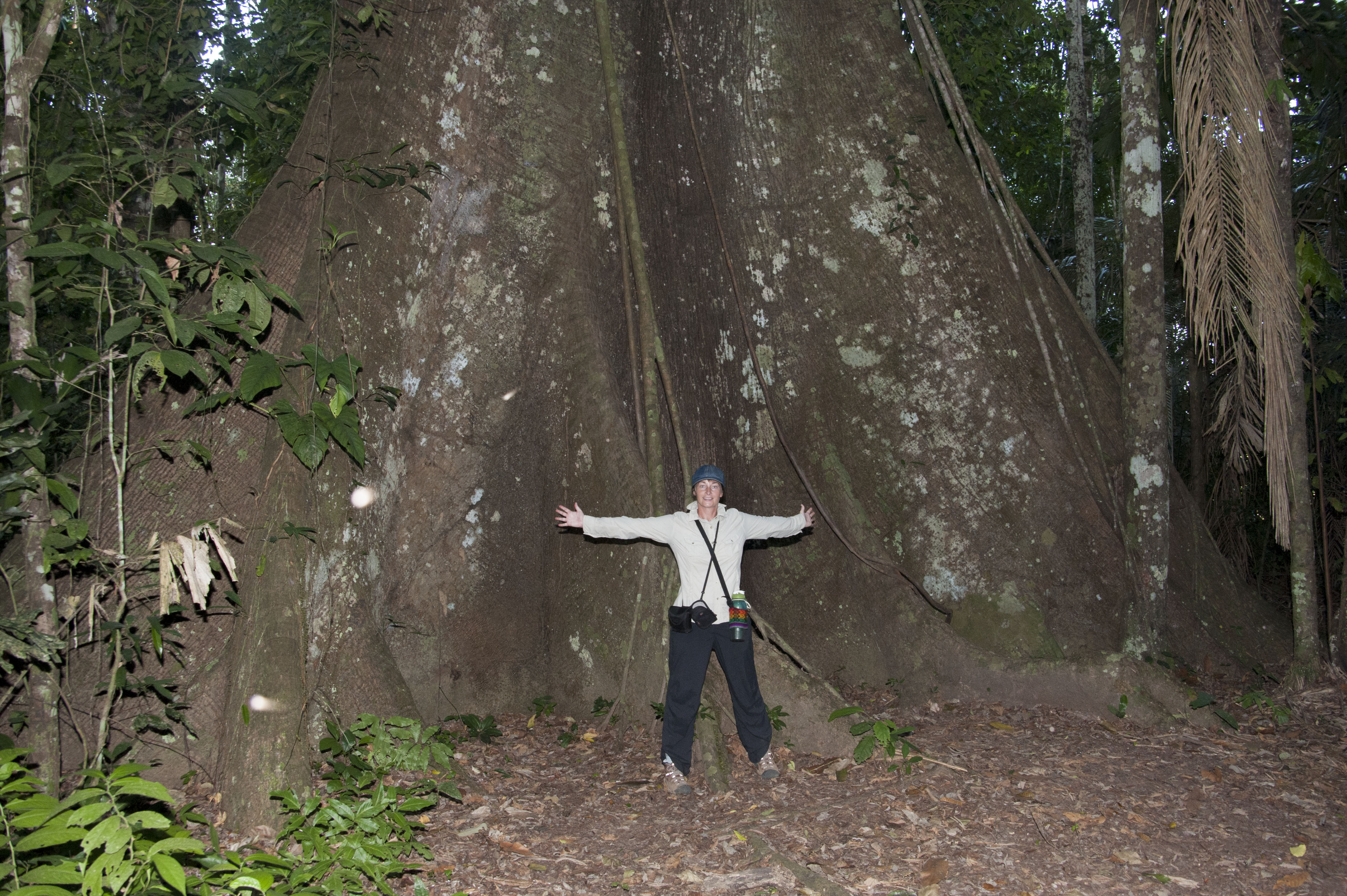
What we did see in the Otorongo area is the biggest tree in the tourist area. This was a massive Ceiba and was truly enormous.
During the course of our trip we saw the lodges of several other companies and although they seemed in slightly better repair they were all broadly similar and certainly didn’t justify the price differential. In fact it seems that the other companies trips are very similar so it is difficult to see what the extra money buys you.
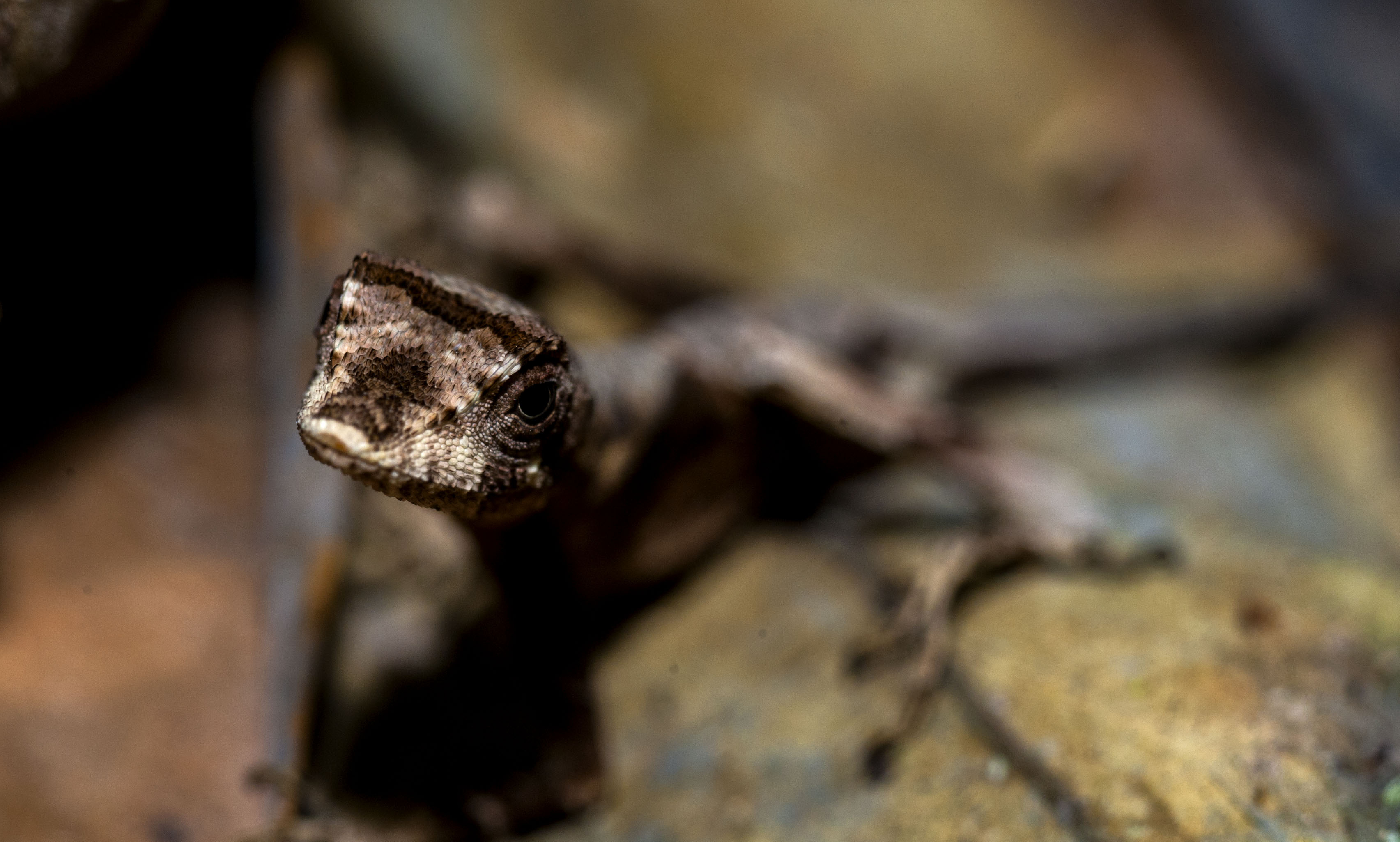

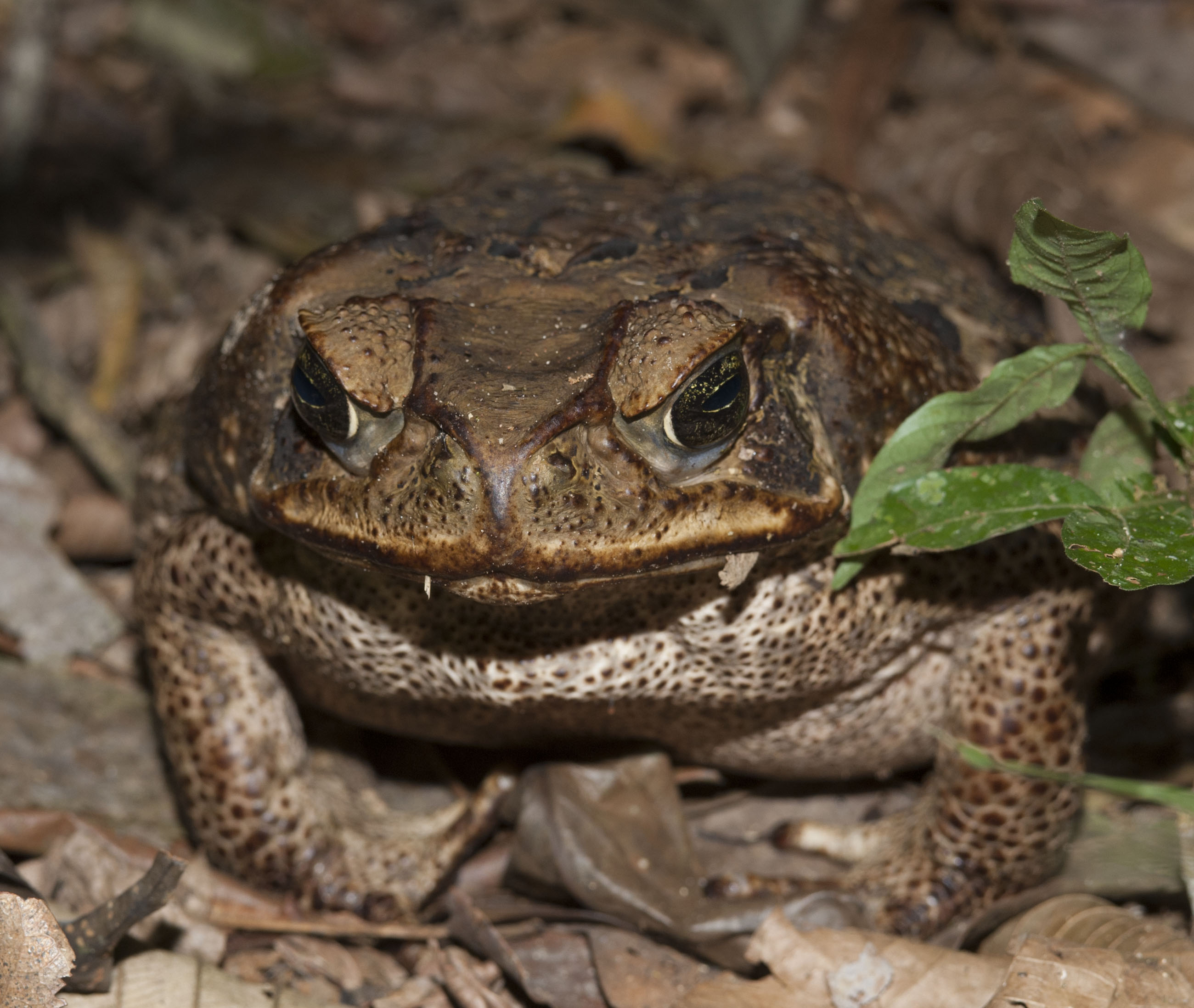
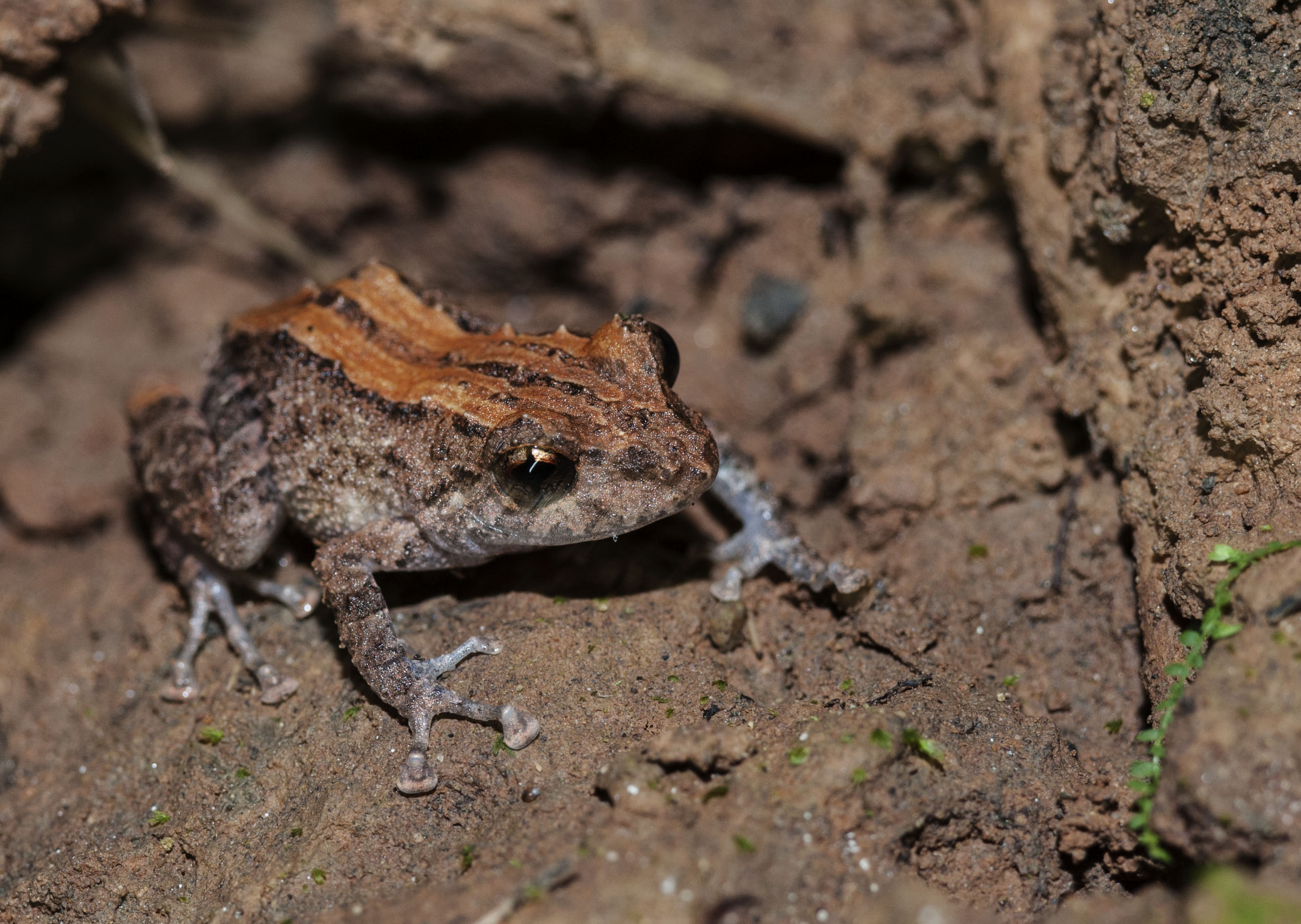
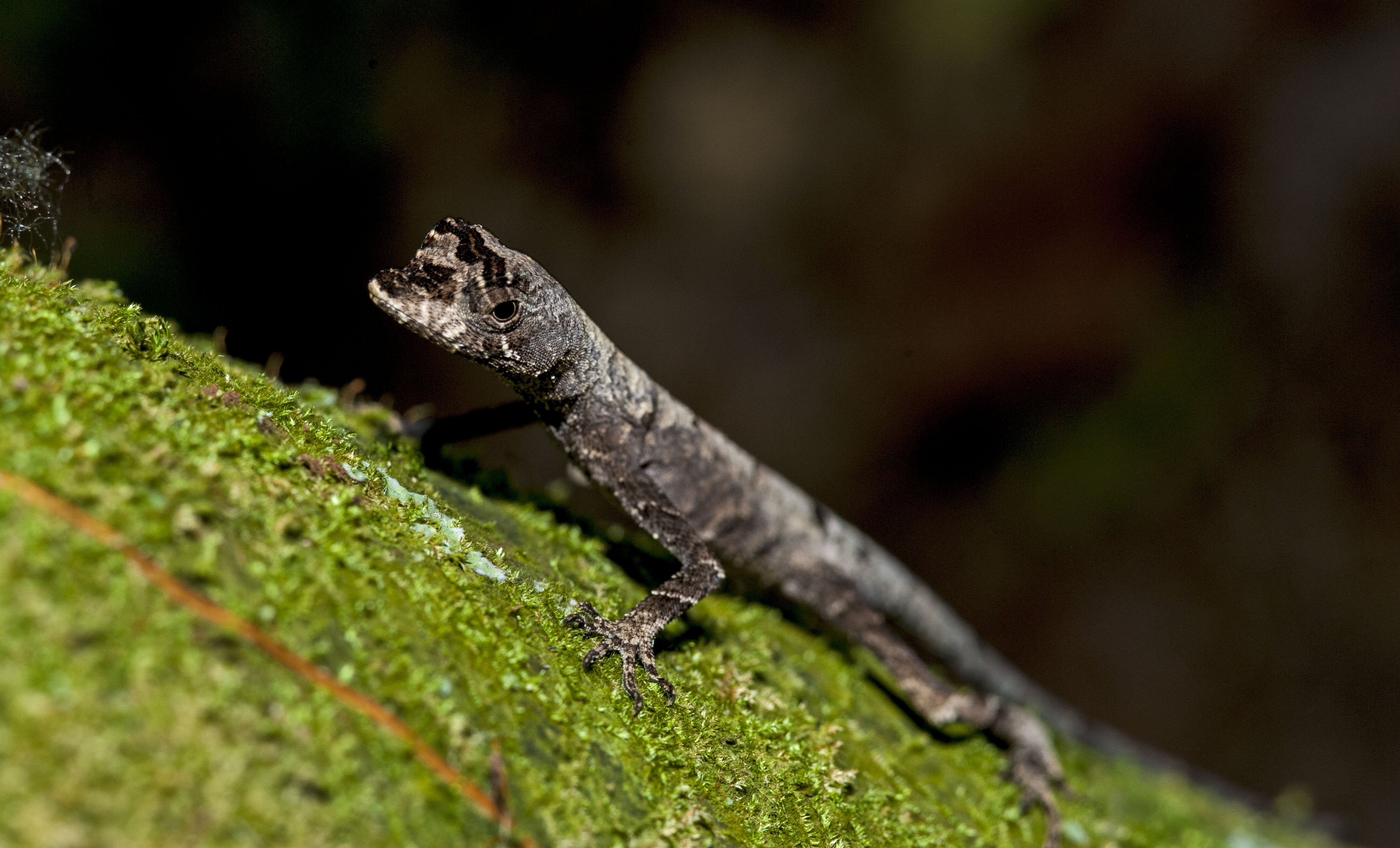
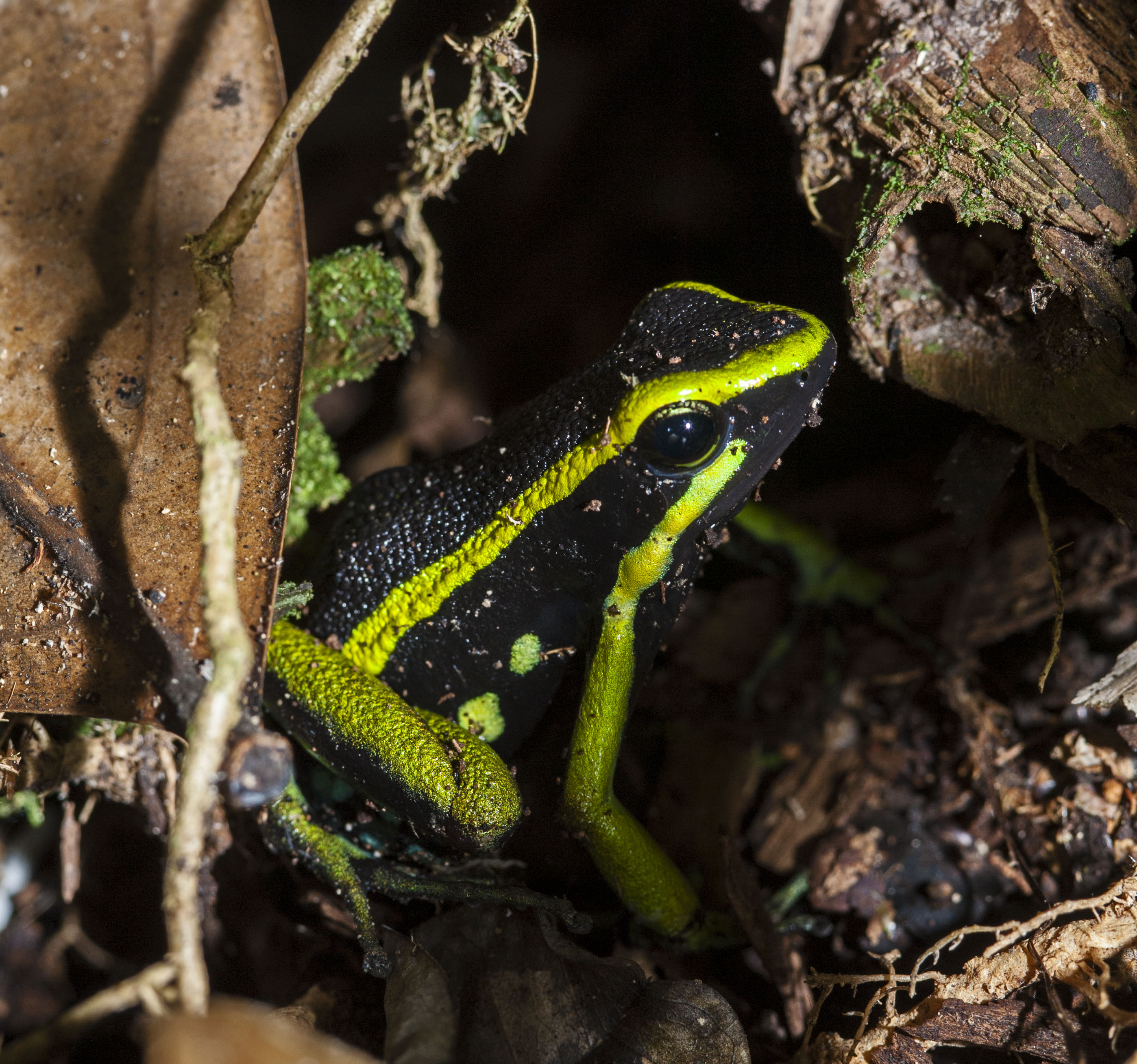
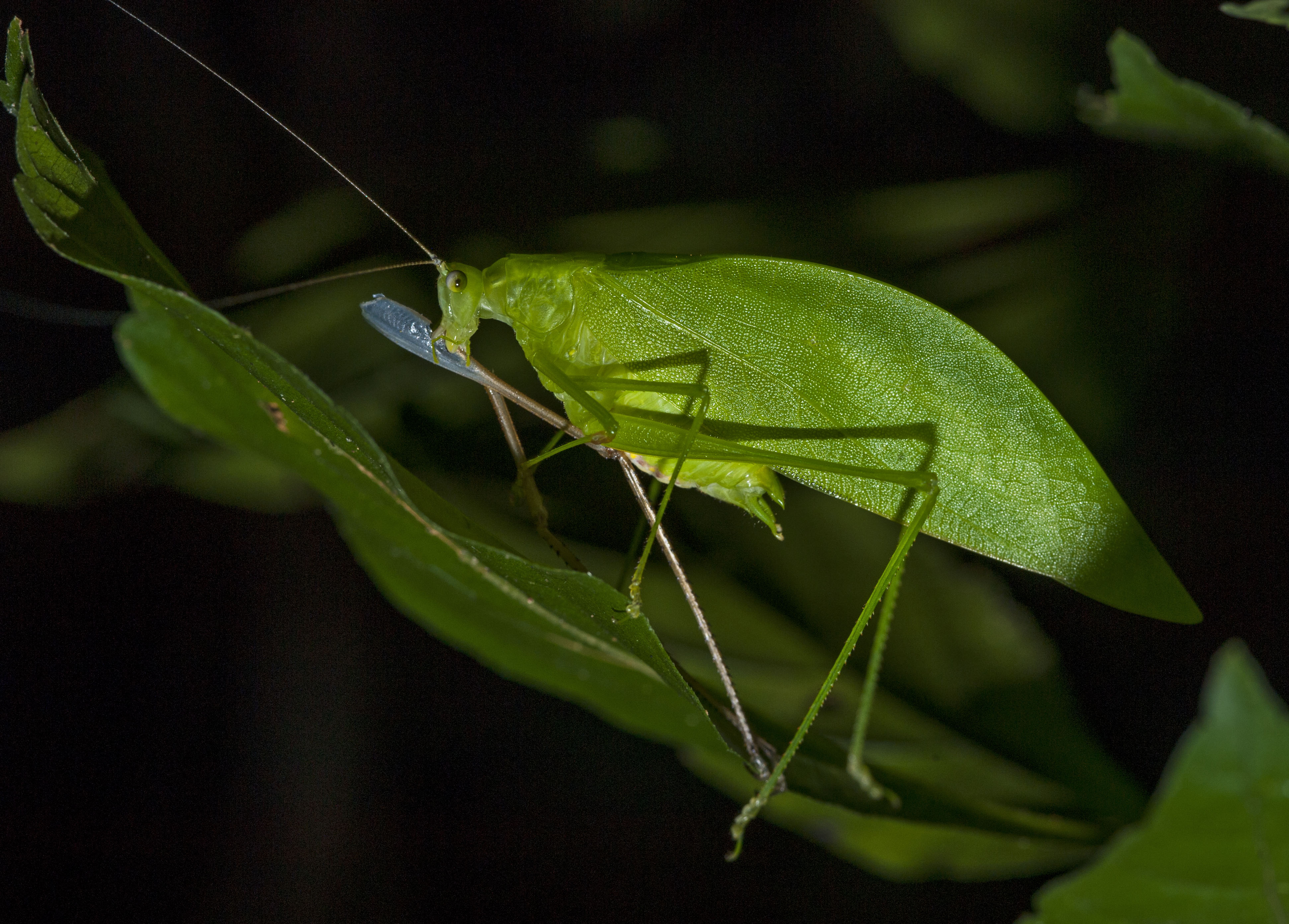
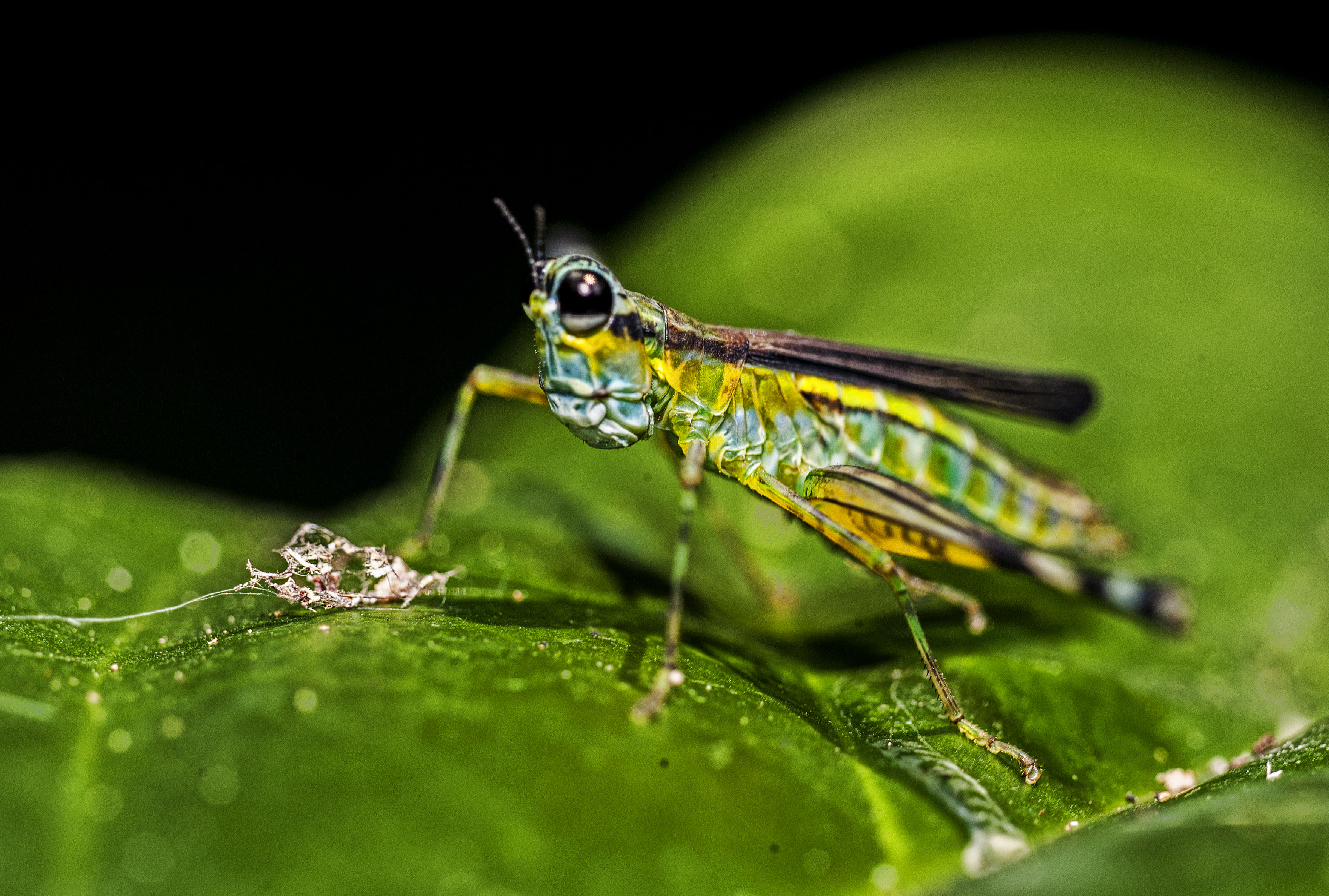
One of my favourite parts of our rainforest experience were the night walks. This was all about the smaller things and we saw lots of different insects, spiders toads and frogs.
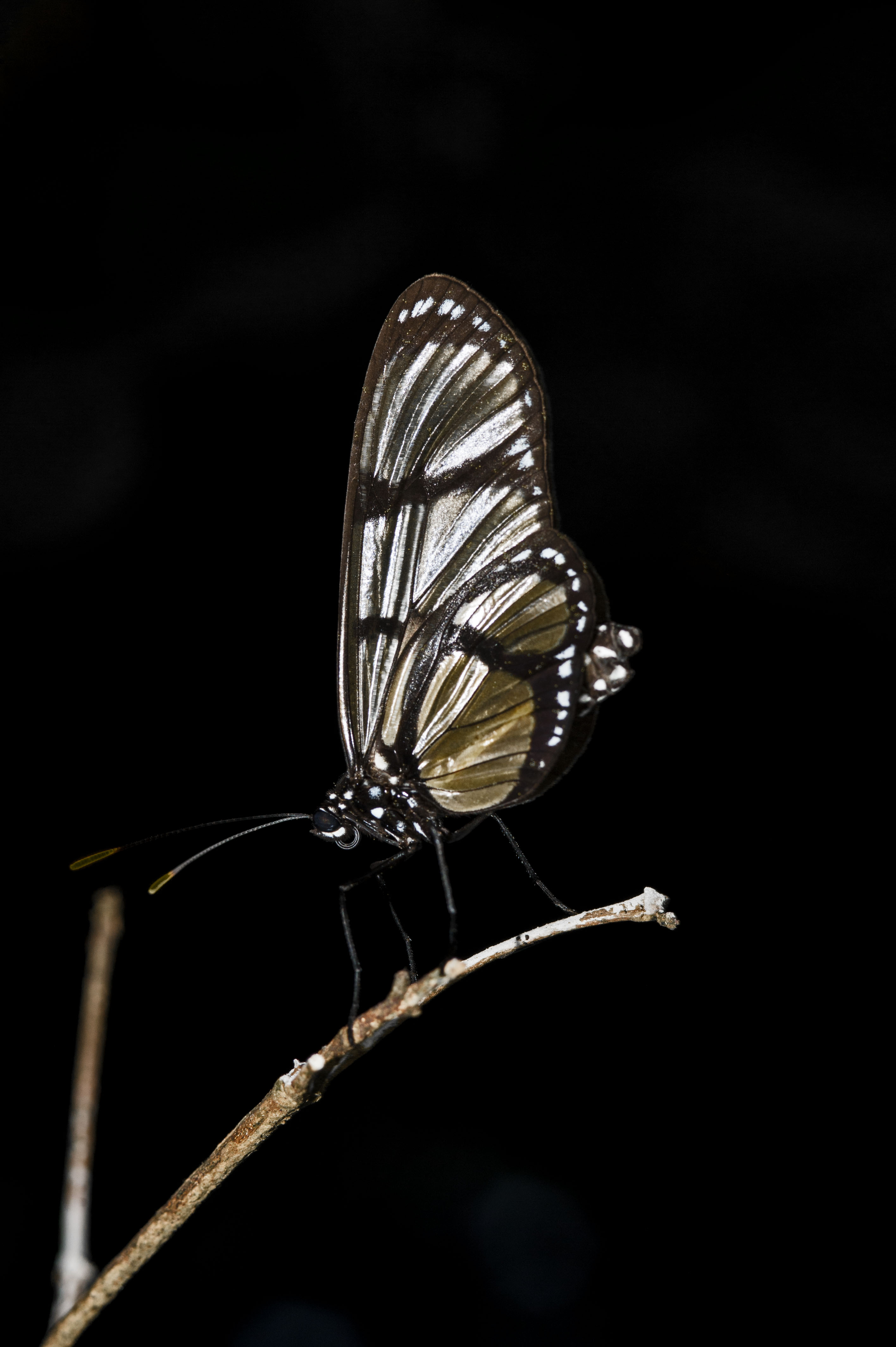
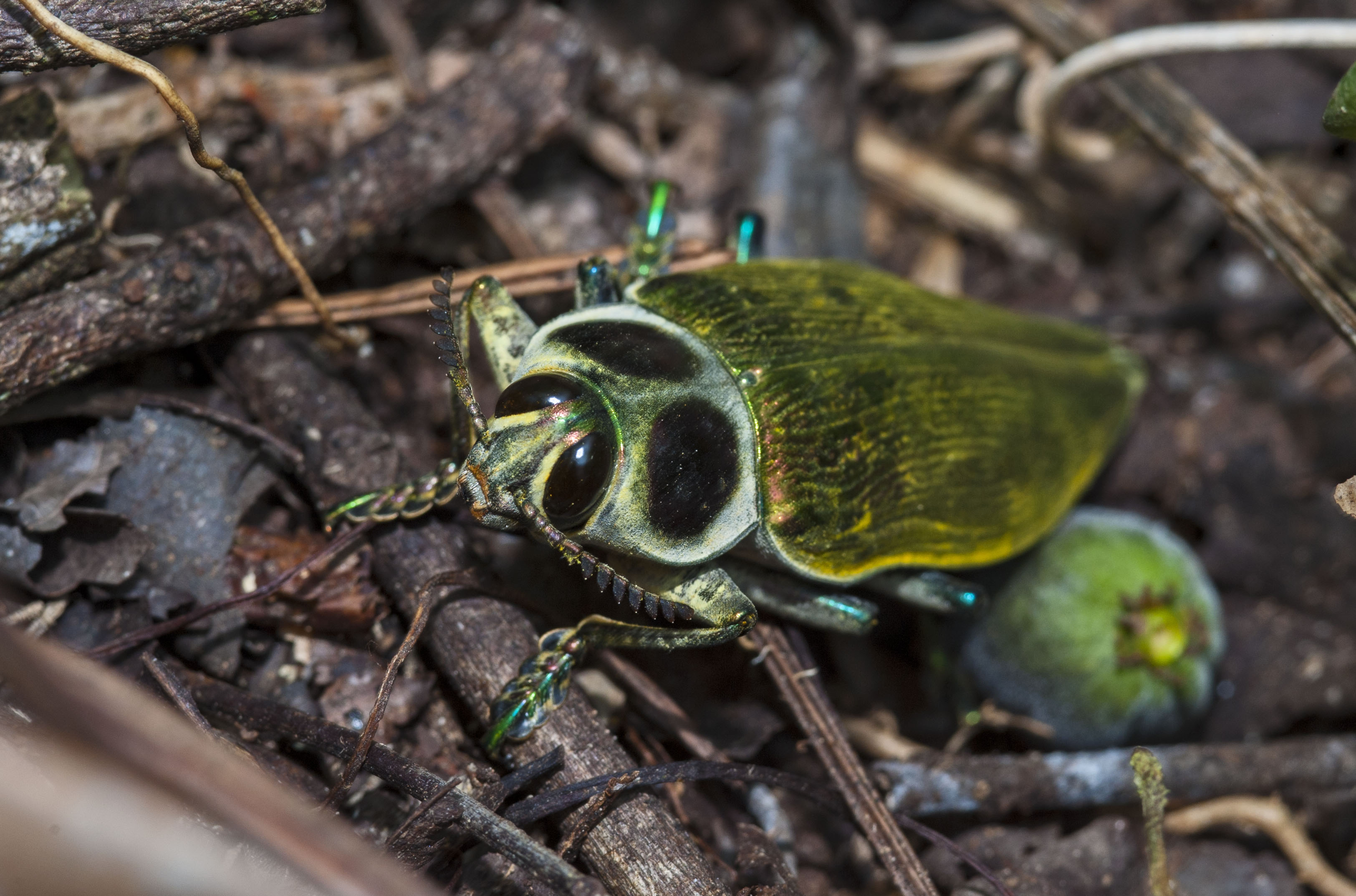

After three nights in the jungle it was time to leave and although we loved seeing the various denizens of the rainforest the relentless heat and humidity made us quite content to leave !
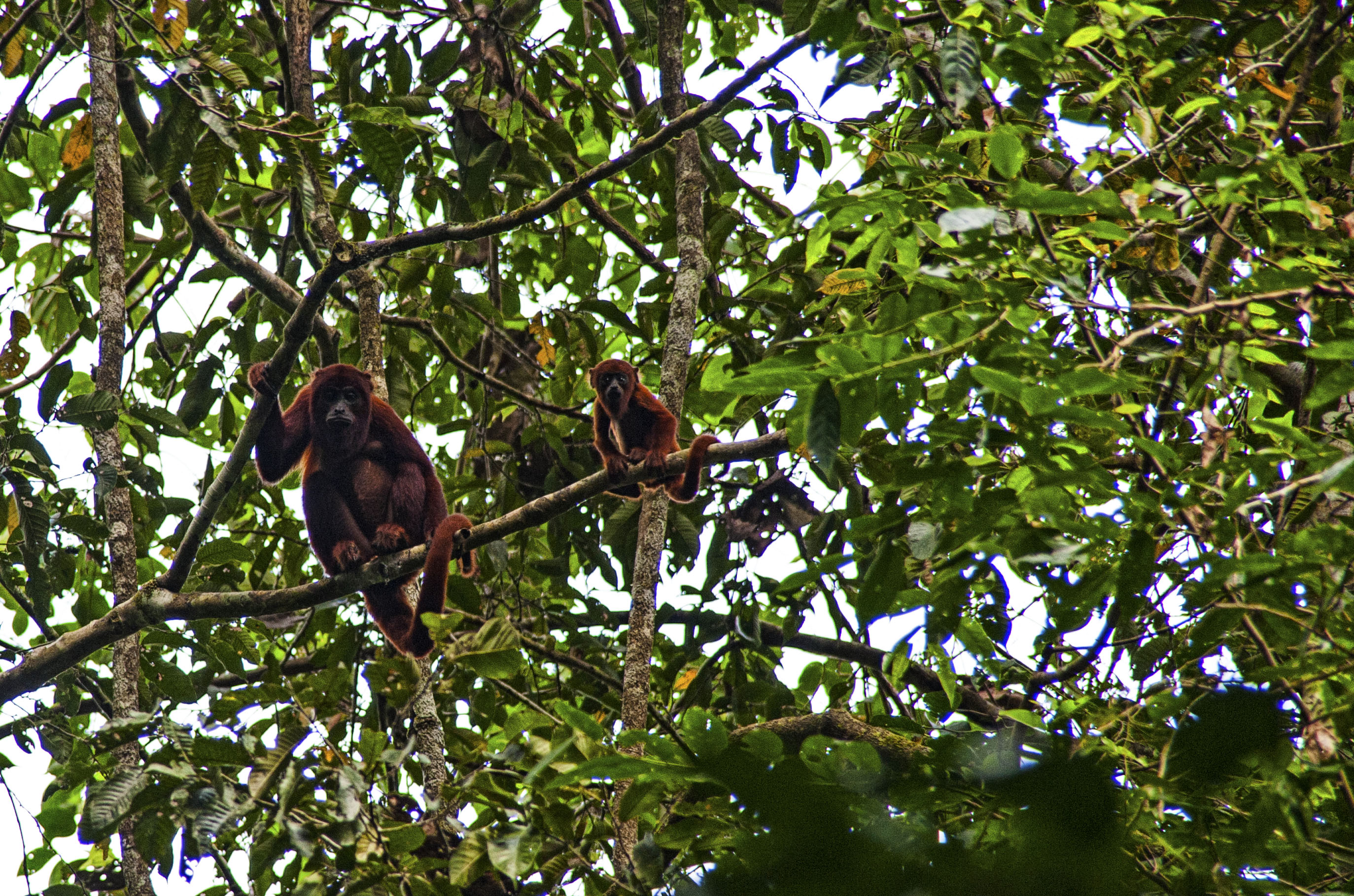
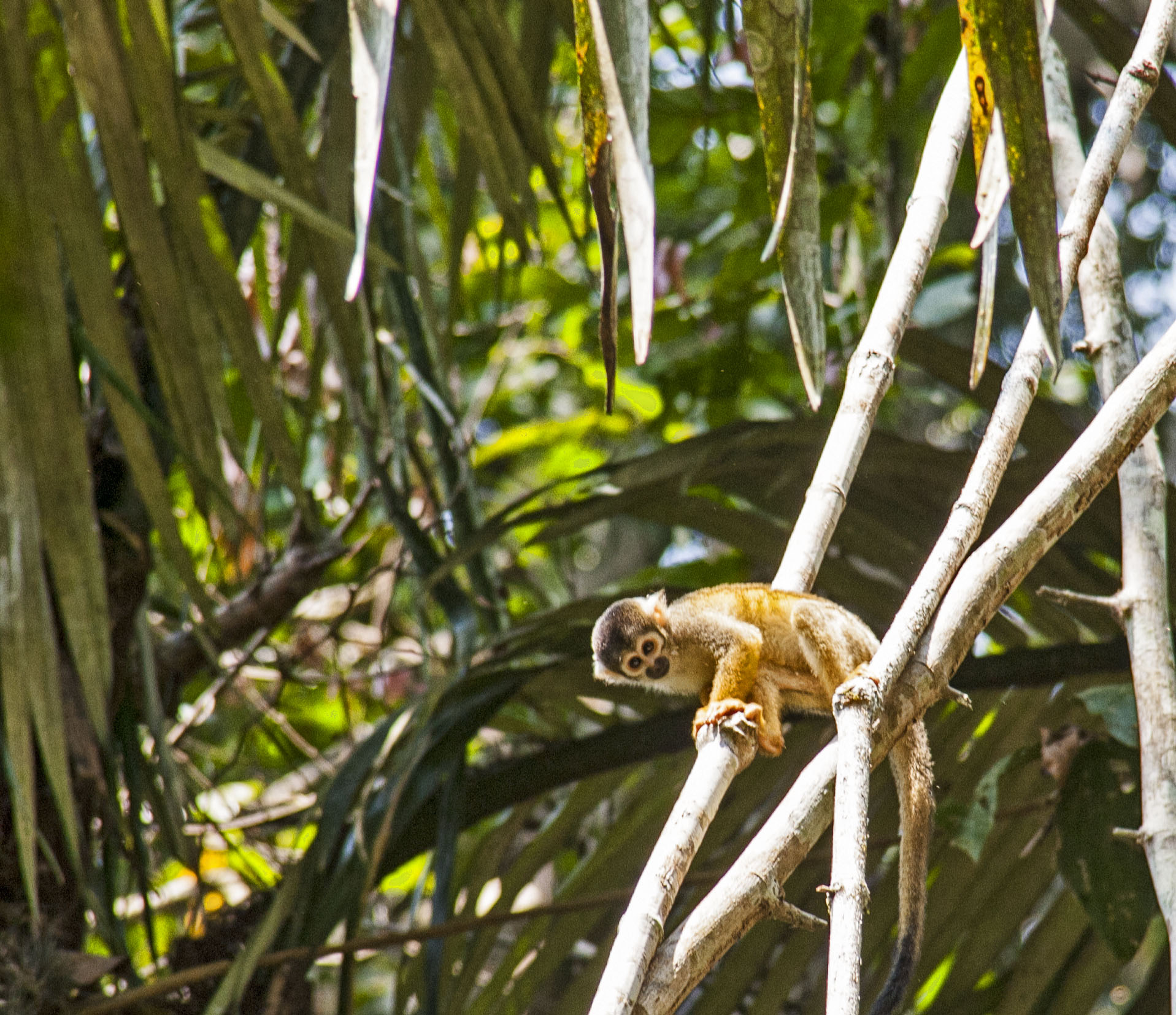
While in the Rainforest we were lucky to see ten different types of monkey (of the 13 in the region):
Red Howler Monkey Brown Capuchin White Fronted Capuchin Spider Monkey Squirrel Monkey Saddleback Tamarin Imperial Tamarin Wooly Monkey Dusky Titi Night Monkey (Sarah only)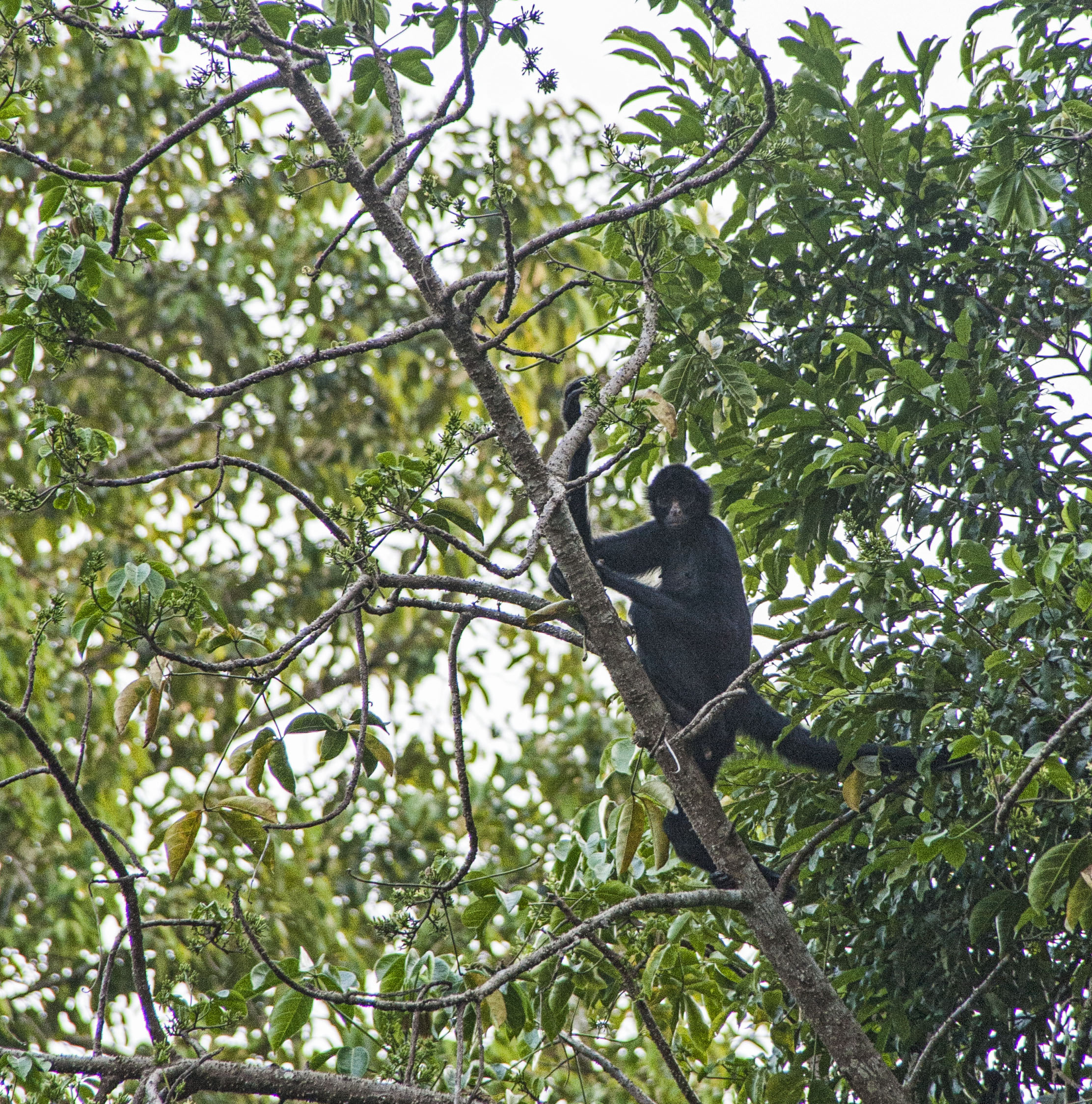
Manu – The Journey
After returning to Cusco from Ollantaytambo we headed into town for our pre-trip meeting. A few days earlier we had arranged an 8 day trip to the Manu Reserved Zone with the tour company, ‘Manu Ecological Adventures’.
When we got to the briefing we realised that there were only two other people in our group, 2 Germans called Ulf and Sven. Our guide was a personable Peruvian guy from Cusco named Juan Carlos, who spoke very good English.
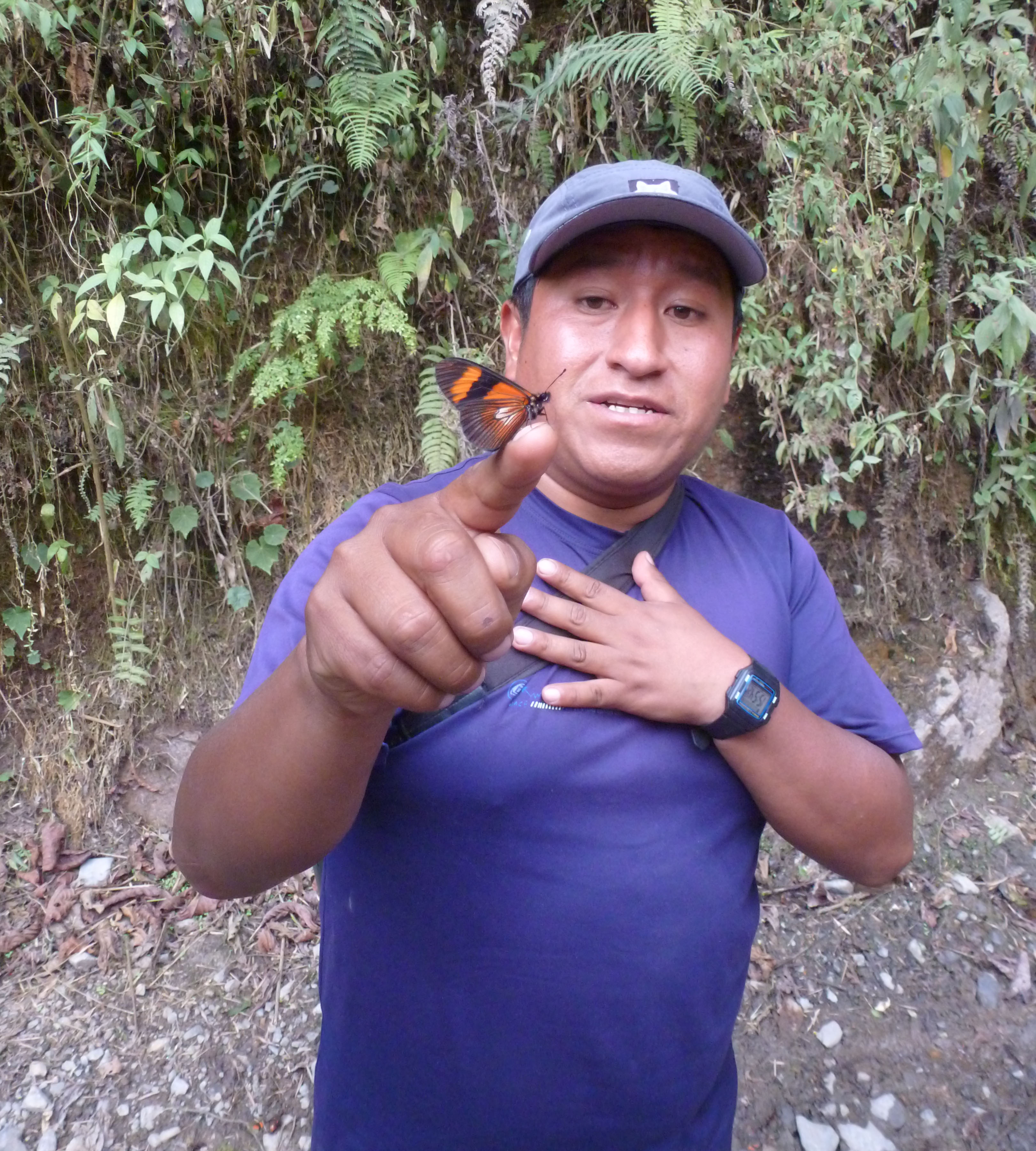
We quickly discovered that the USD 650 per head (for cash) that we’d paid was something of a bargain as the others had paid USD100 more per person, having gone through a third party booking agent. This was significantly less than the other companies that we visited, the most expensive of which was USD 1200. Some of the comments on Trip Advisor were not overly complimentary of Manu Ecological Adventures so we were slightly concerned (the area reviews were most critical of was the transport).
We were told that we would be picked up at our campground at 6.30am the next morning. Actually the pick up was early at 6.15am and we were very pleased to see that the car was a new Hyundai 9 seater mini-van.
This comfortably seated all of us (4 tourists, a guide, a driver and the cook) with room for our luggage inside and a whole pile of food for the week on the roof. The aim on Day 1 was to get to a lodge in the cloudforest which was 8 or so hours drive.
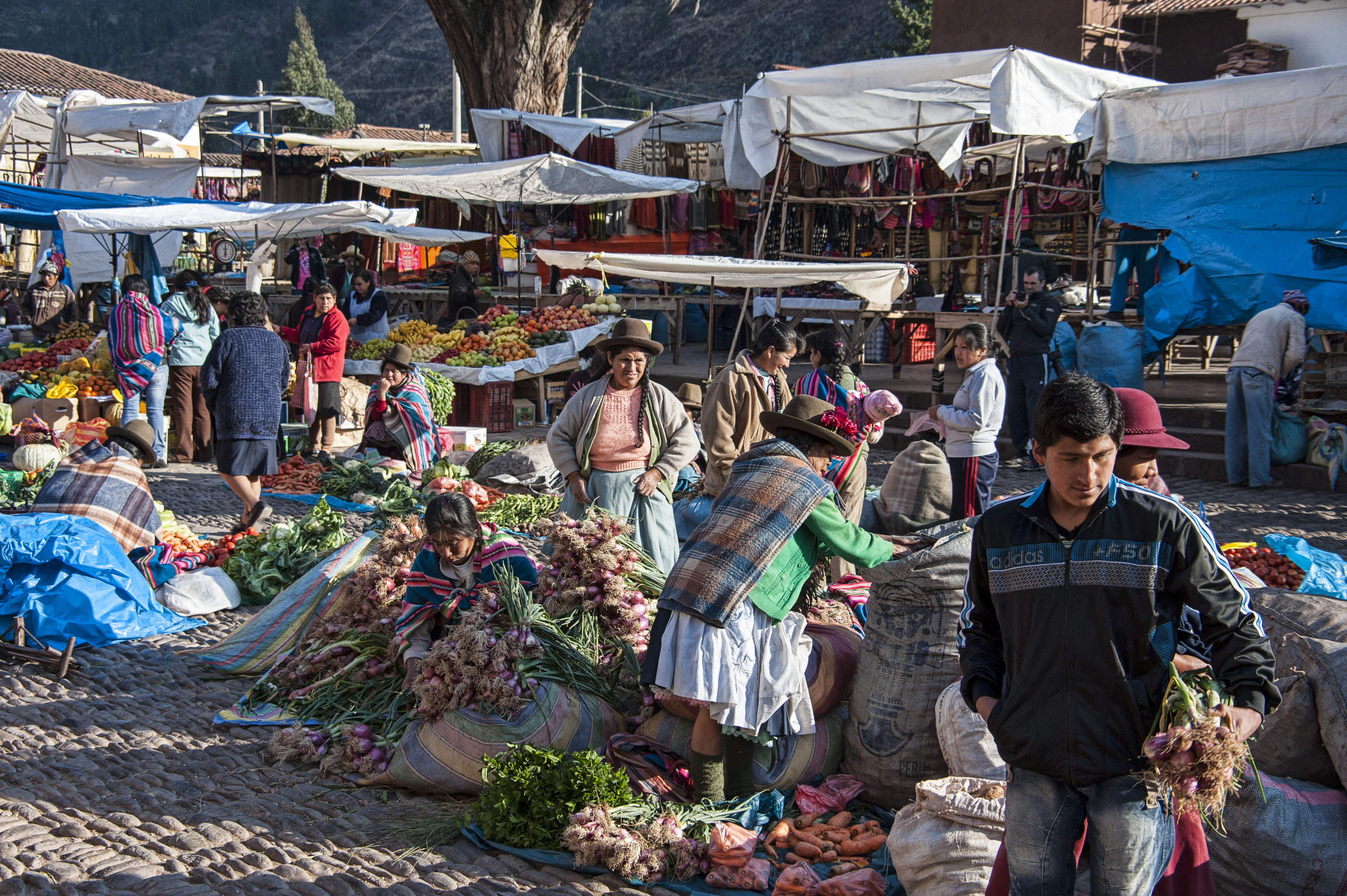
After 40 minutes we stopped for breakfast at the town of Pisac and found a really good café on the main plaza called The Blue Llama which served delicious Hot Chocolate. A well as it’s ruins, Pisac is famous for its Sunday market, which was just setting up for the day.
Then it was back in the car for another hour before we had a very quick stop at the highest point of the trip with a view of the highest mountain in the region, Ausangate. Another 2 hours down the road we stopped at the town of Paucartambo to stretch our legs, visit the shops and do a bit of sight-seeing.
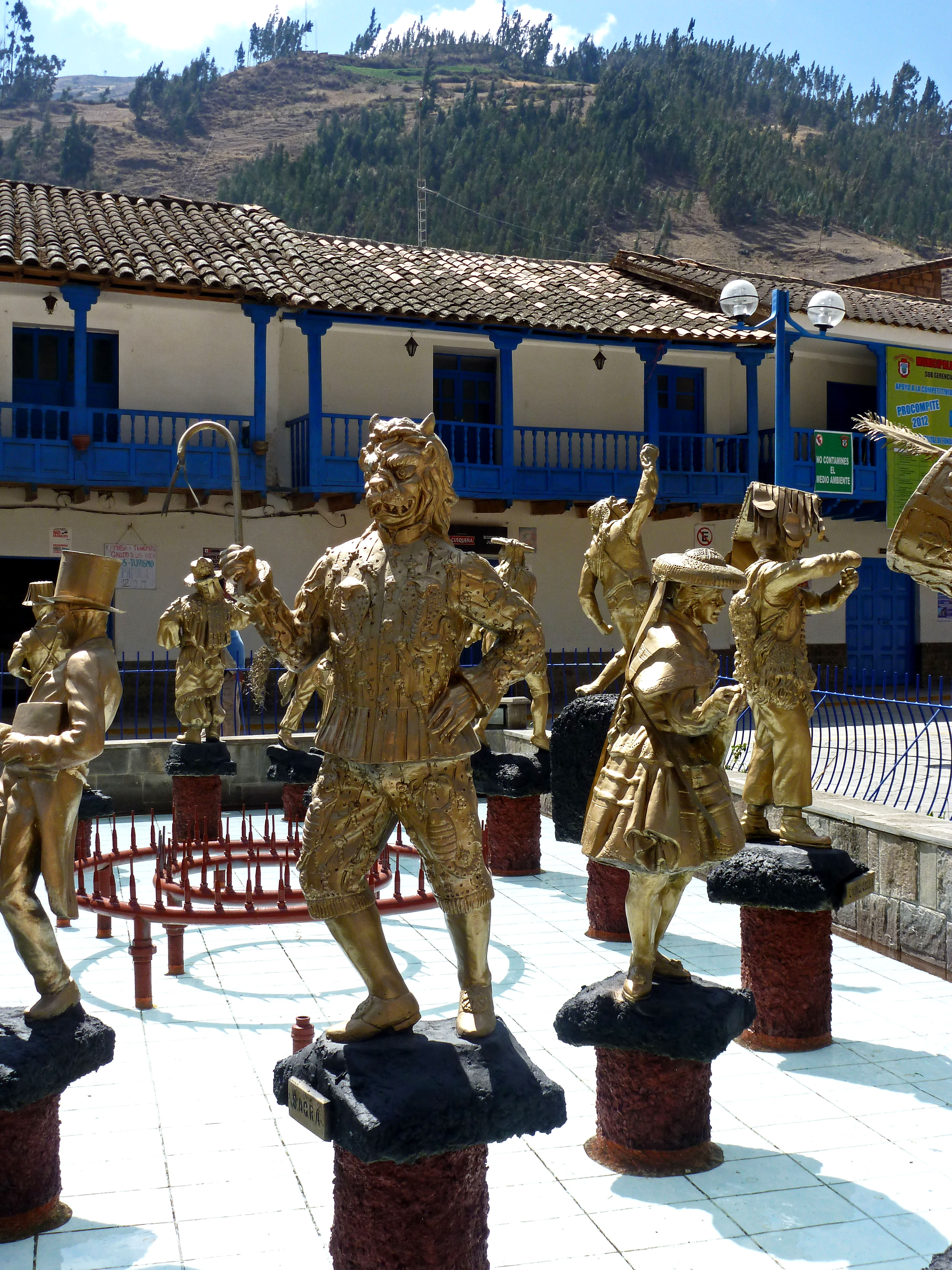
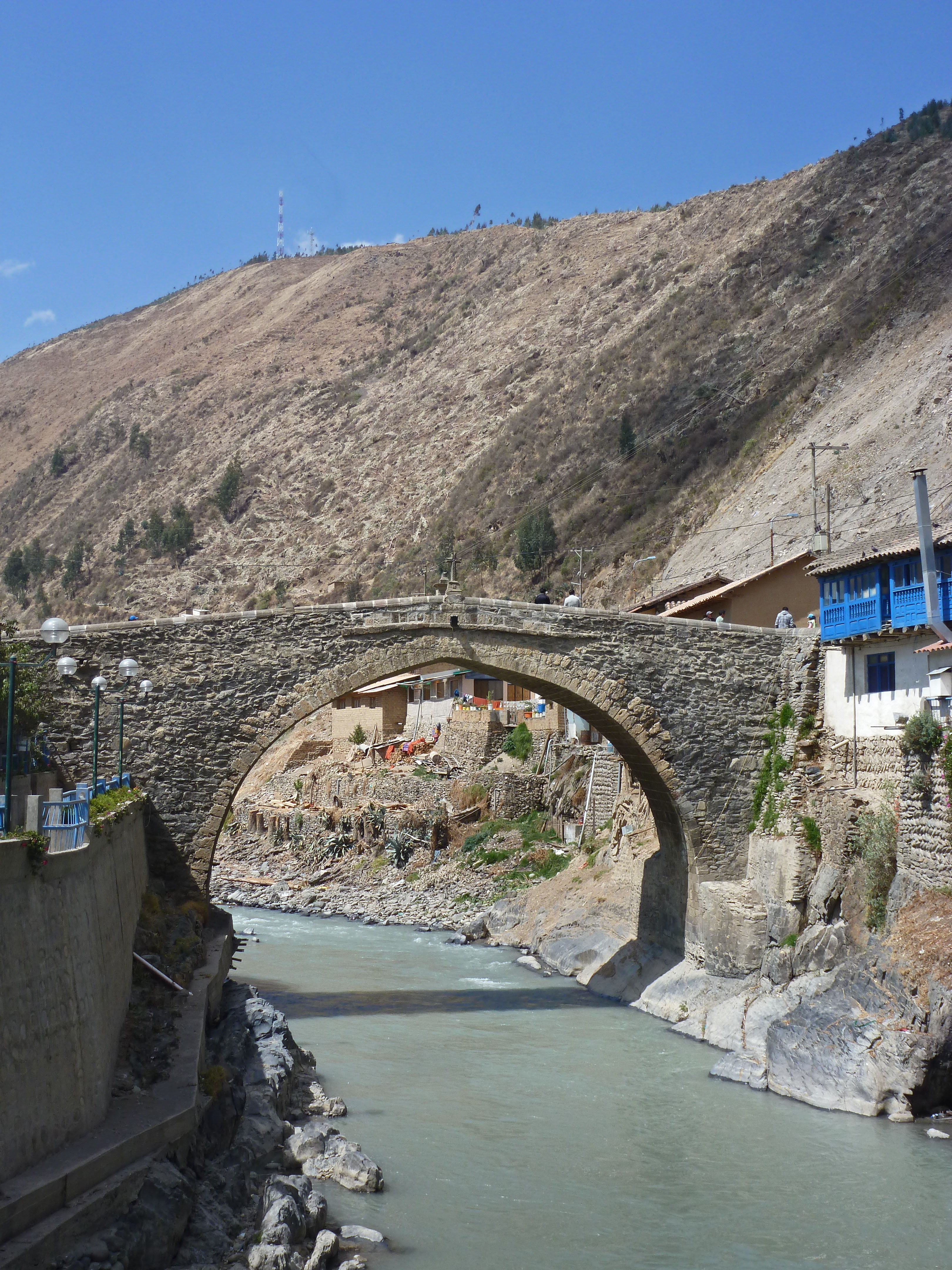
Paucartambo is a small but important town, famous for the riotous annual party that is the Fiesta de la Virgen de Carmen. At this festival a cast of characters representing different groups of people from Peru are employed and there are statues of these in the central square. There is also a beautiful old colonial bridge which was apparently built to ensure the safe supply of Coca leaves to the King of Spain after one rather large delivery was lost down the river!
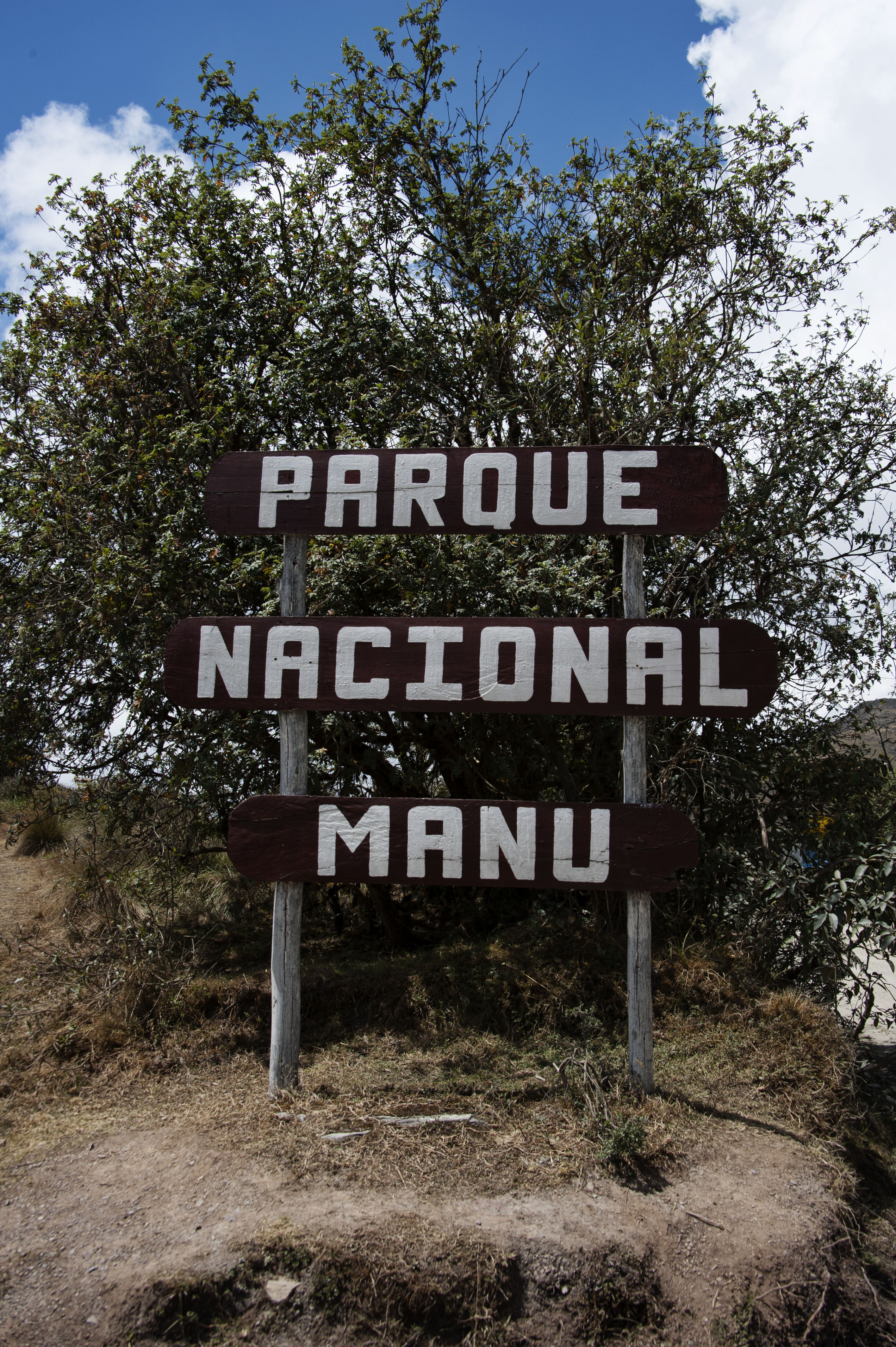
Our next stop in the journey was at the entrance to Manu Park which is at the top of a pass leading down into the jungle. We stopped here for lunch and a view of the unusually cloud-free Cloudforest. This is the beginning of the Cultural Zone of Manu where people live and hunting and fishing is allowed. The Reserved zone where we were headed is a protected area of rain forest with no inhabitants. There is a third Zone, the protected zone, where tourists are not allowed and this is by far the largest part of the park, populated by uncontacted natives.
Another two hours of driving and we were within shouting distance of our cloudforest lodge so Juan Carlos decided that we should get out and walk in order to see what wildlife was around.
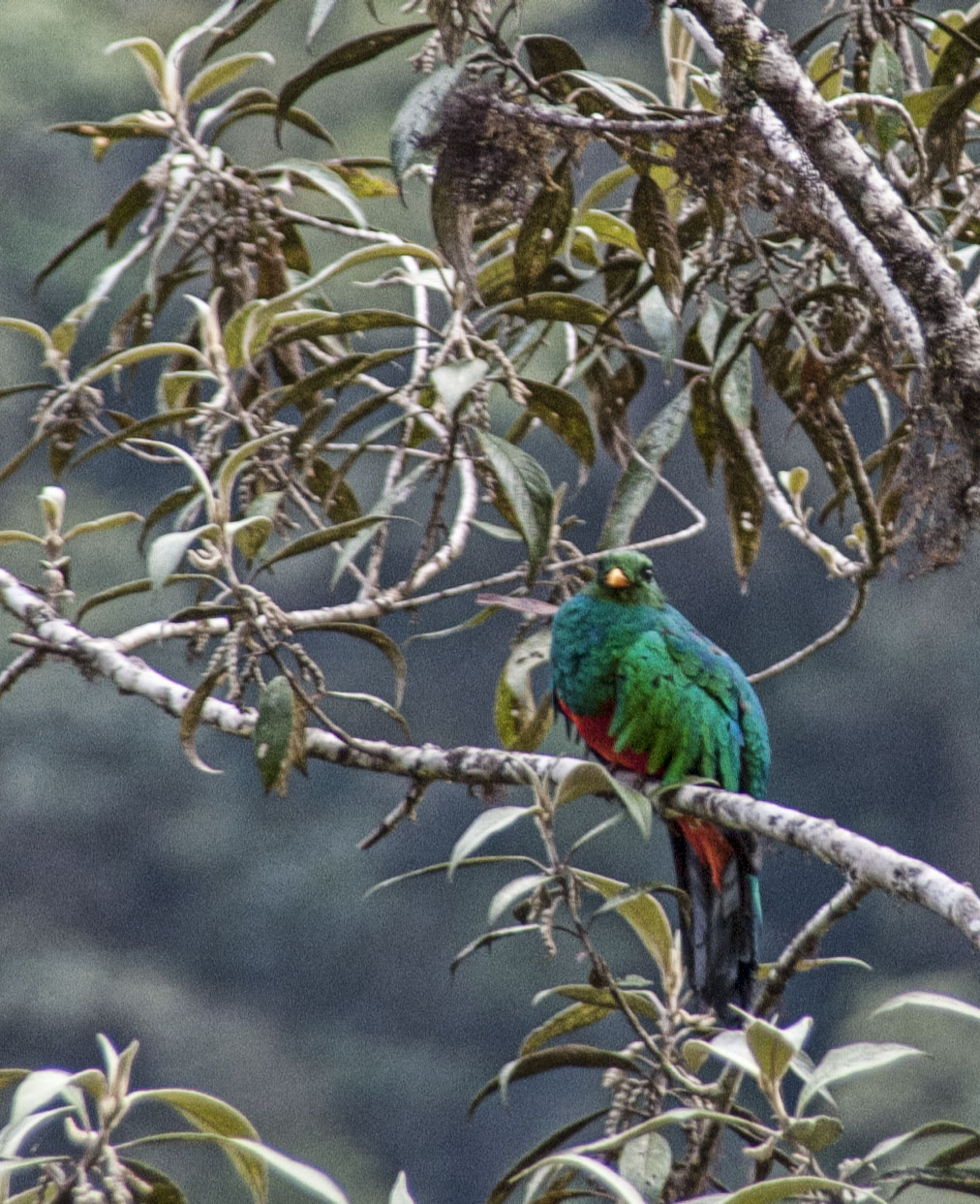
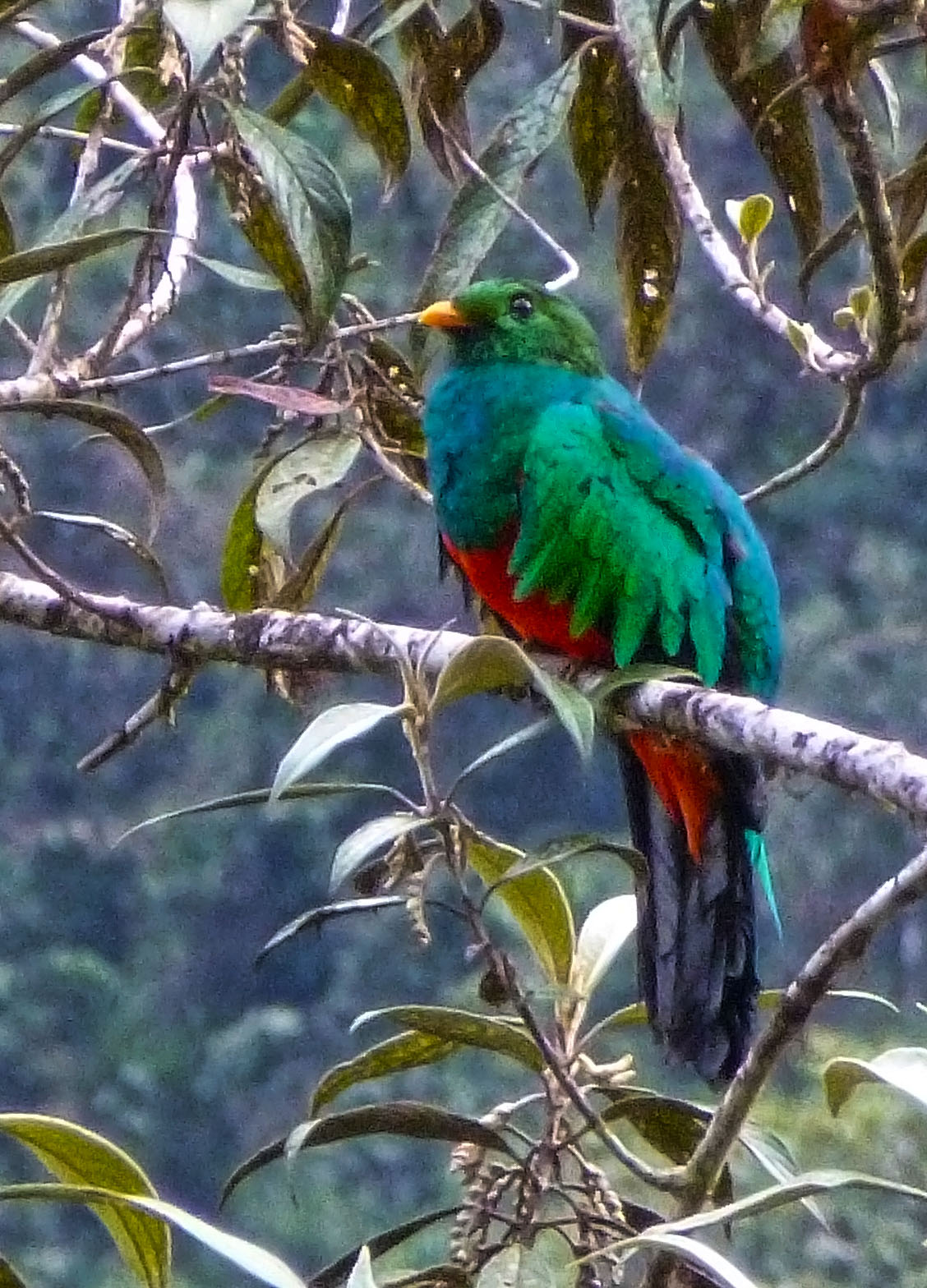
We walked for around two hours and saw several species of birds. The most surprising of which were three Quetzals in the open just at the side of the road. Wow !
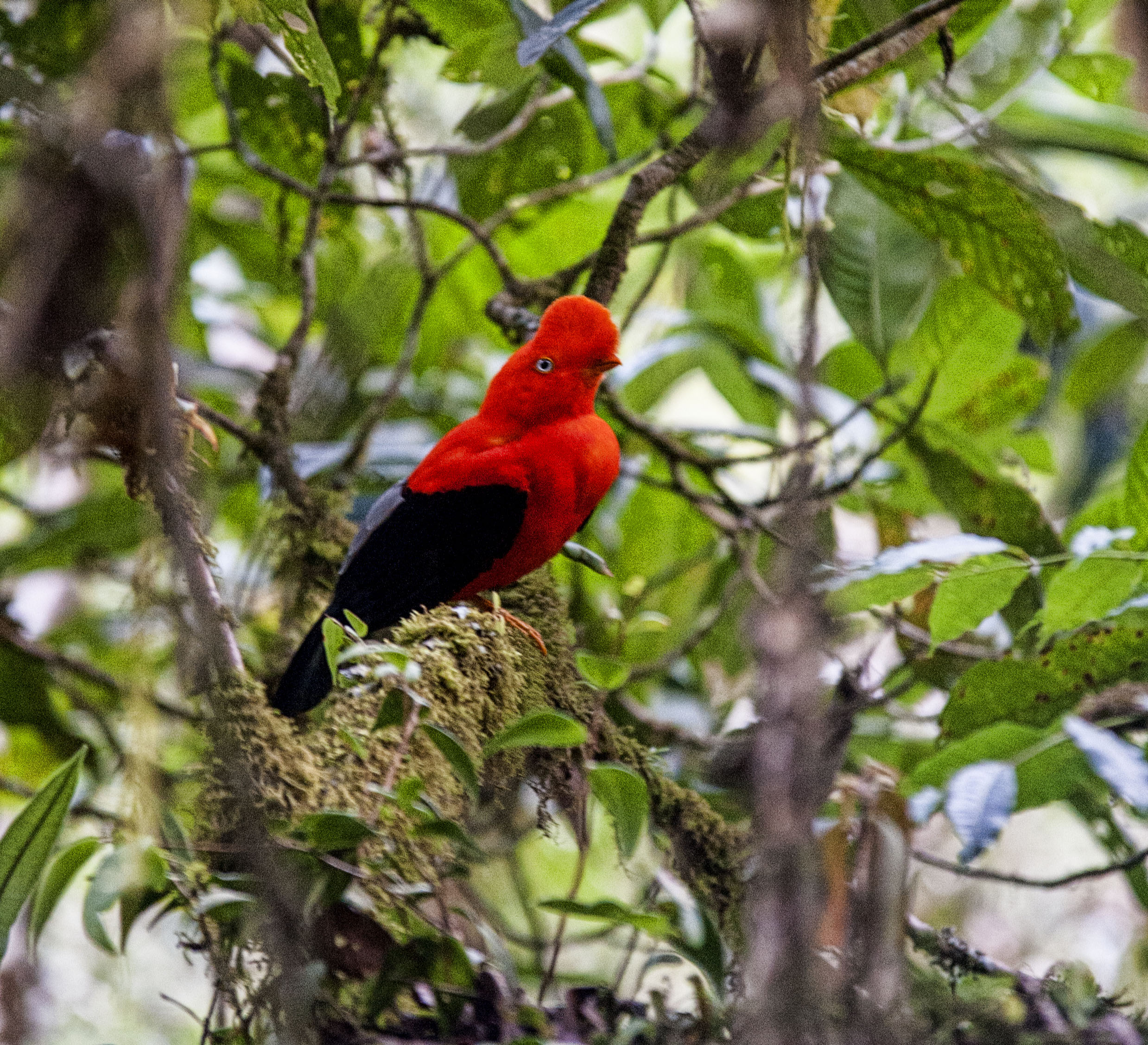
Just before reaching the lodge we stopped off at a Hide next to a Cock of the Rock Lek. I was not expecting much as the last time we visited a Lek in Ecuador we barely saw anything. However this time there were around 15 male Cocks in full mating fury which was amazing.
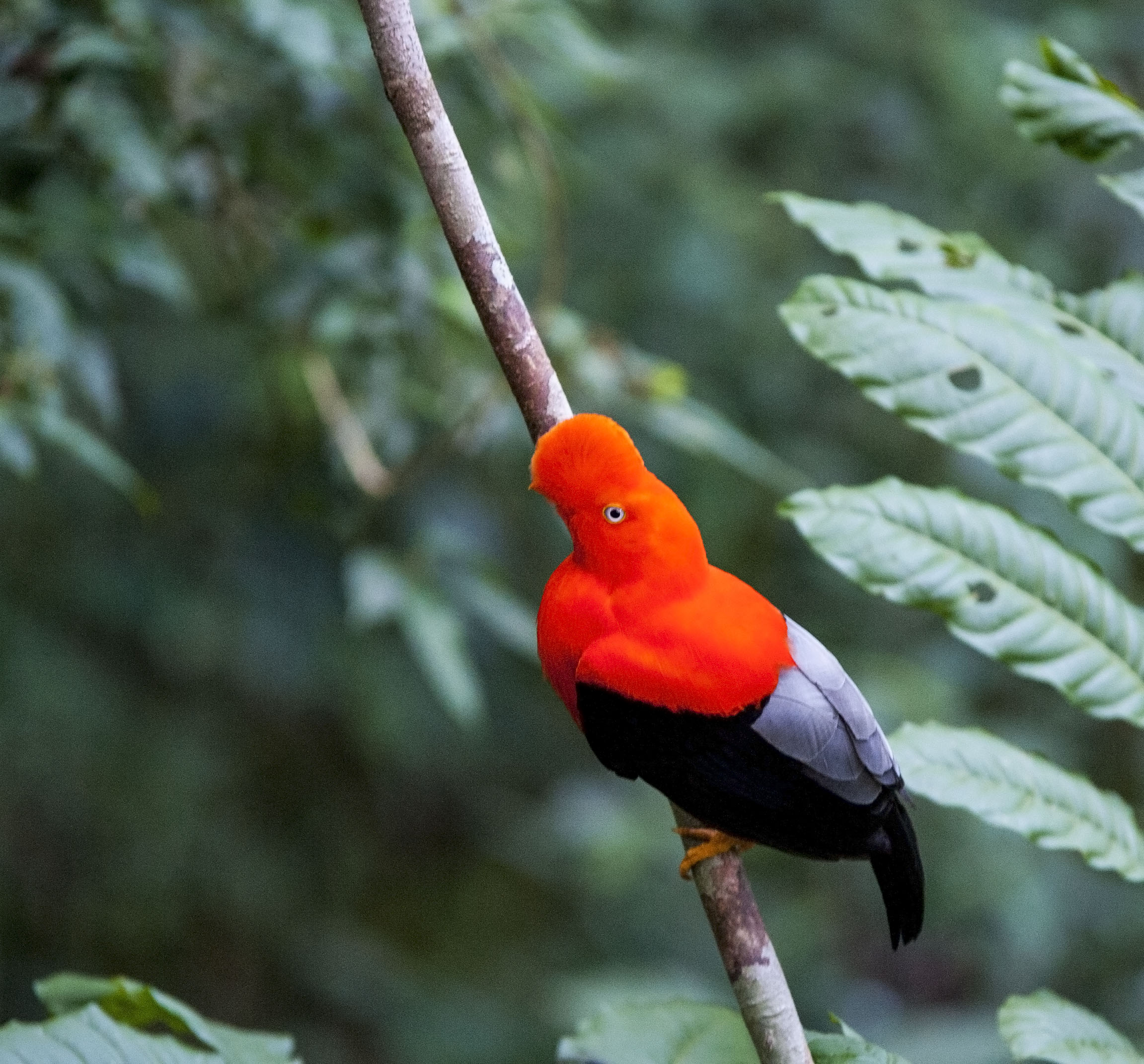
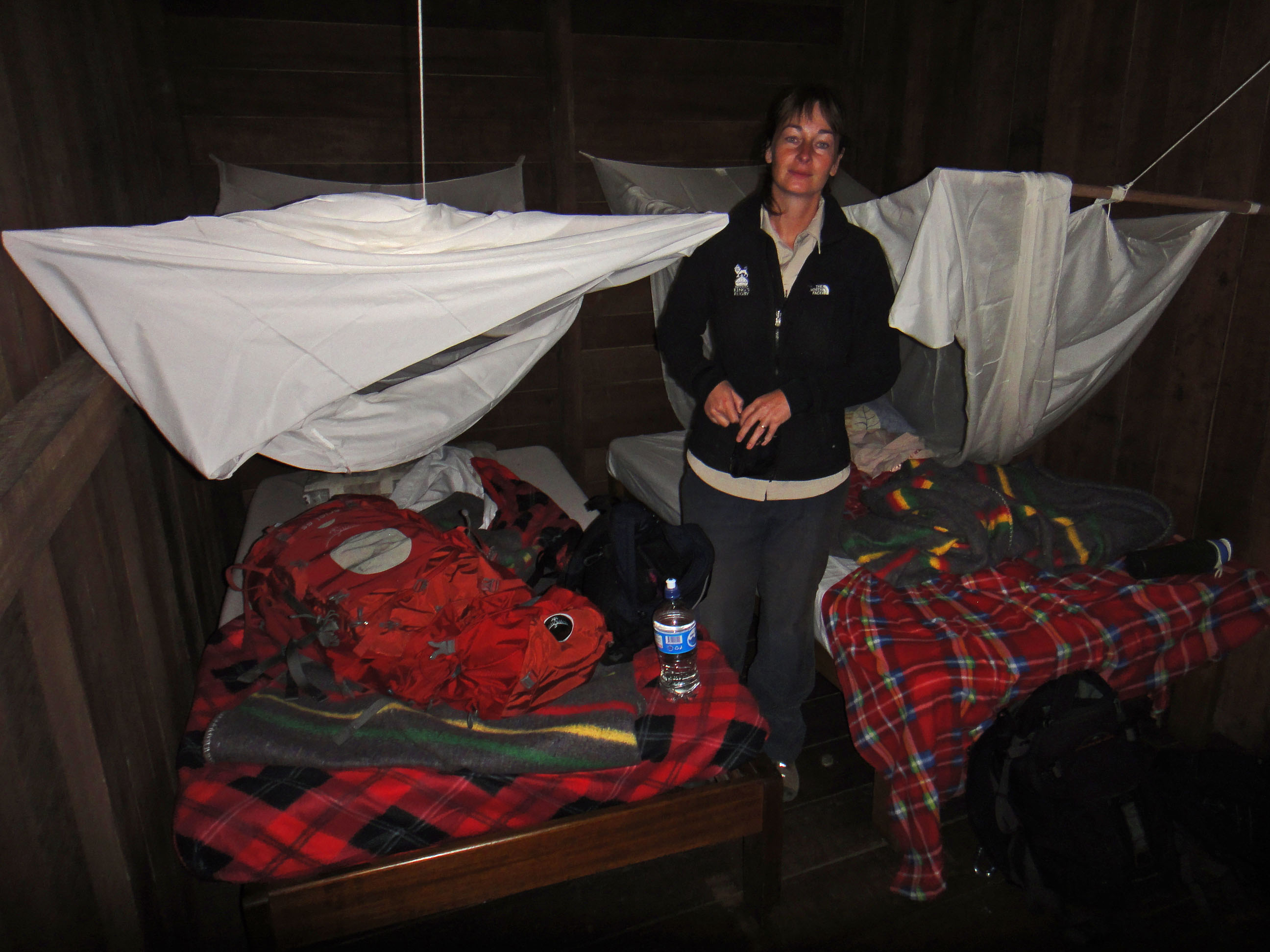
The lodge was just around the corner, and although rustic, was perfectly acceptable. The rooms had mosquito nets and it was surprisingly and comfortably cool overnight. The lodge was called Orquideas de San Pedro and was at 1349m.
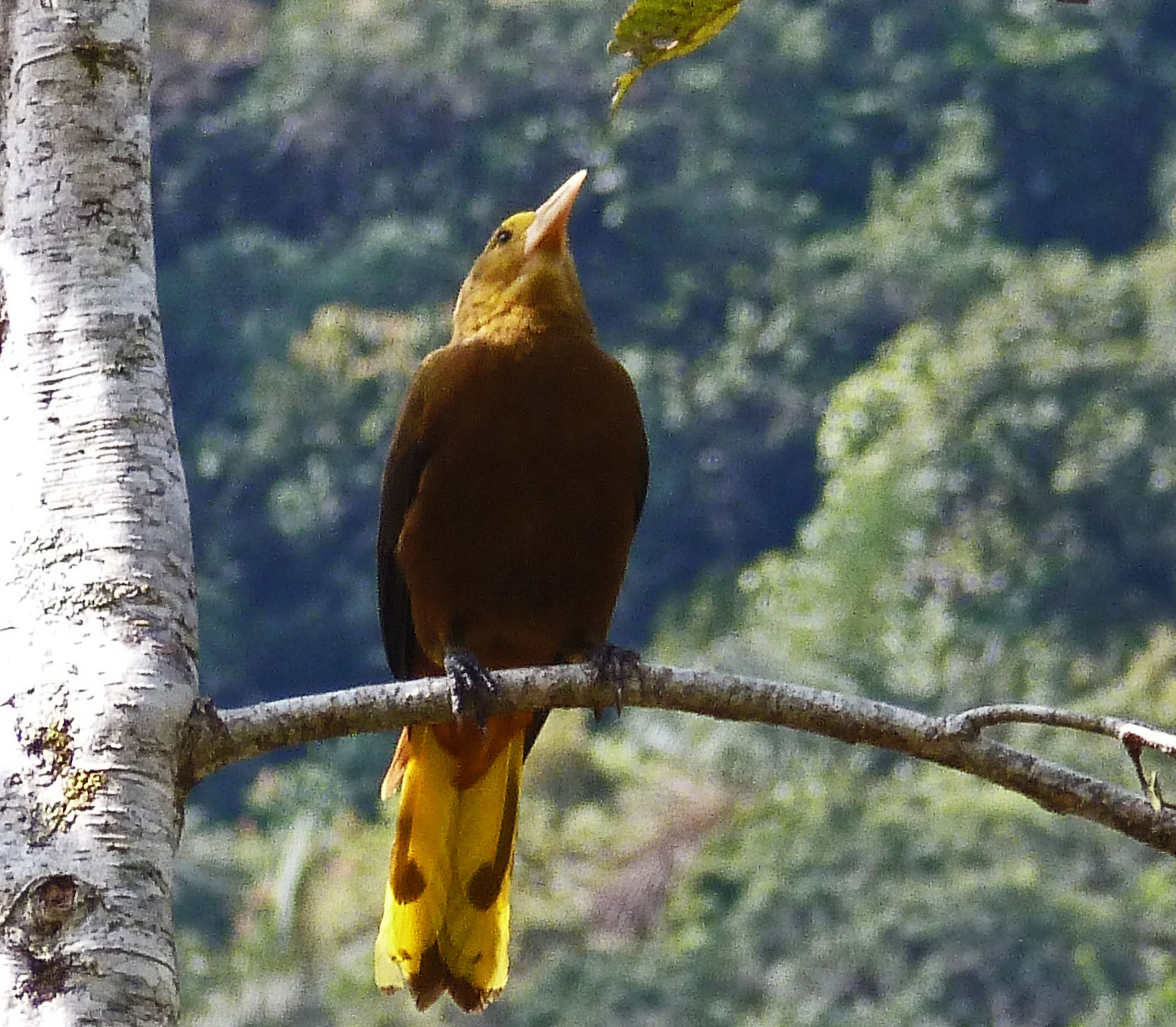
The next morning we kicked off with a walk along the cloudforest road to spot birds. We saw Orropendulus next to their hanging nests and also a Crested Eagle and Roadside hawk.
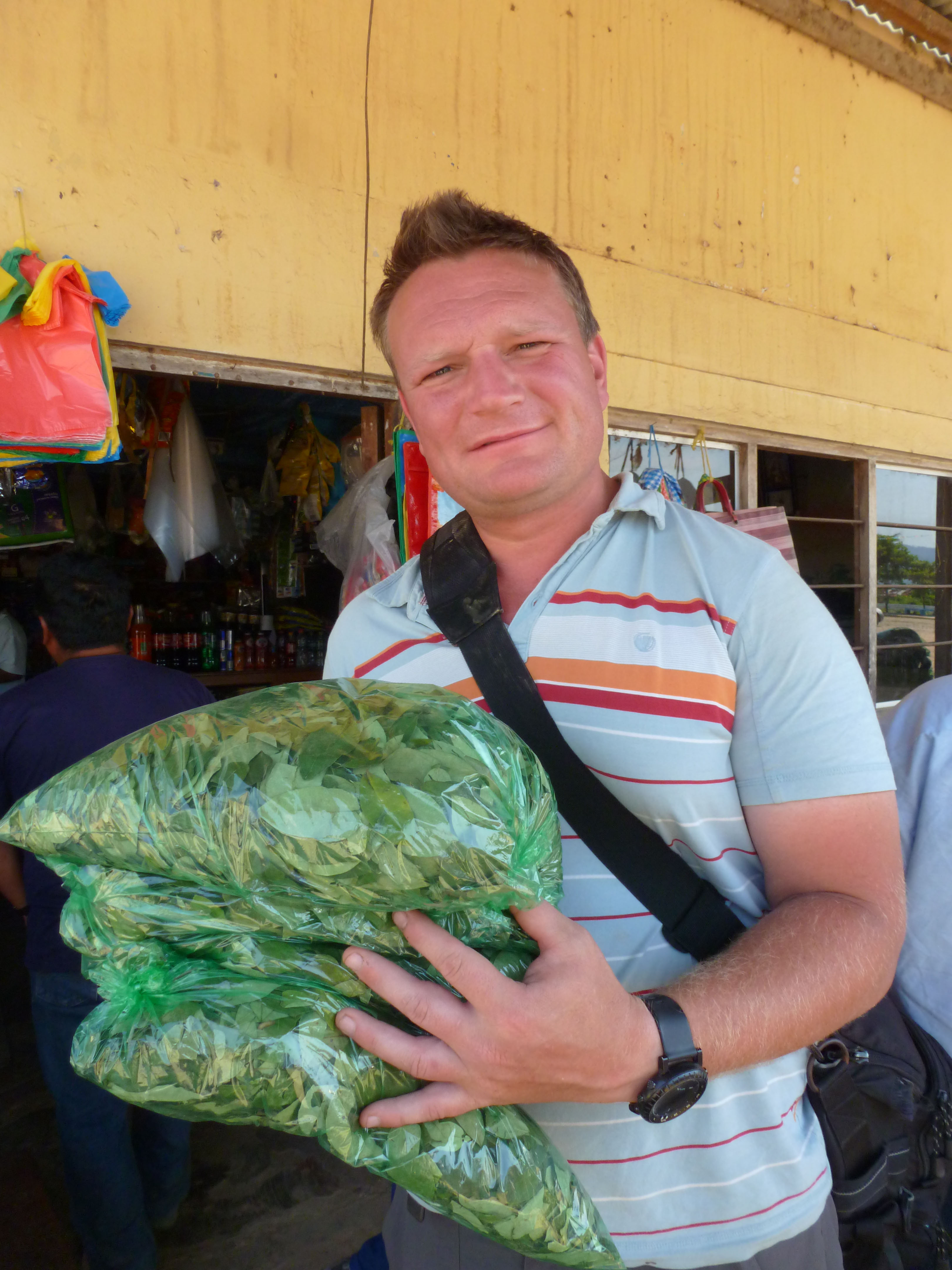
After 1.5 hours the car picked us up and we continued to head down the road stopping off at the town of Patria to buy some freshly baked bread. In Patria there were big bags of coca leaves for sale, much cheaper than in the mountains as the police search trucks on the road to Cusco. Transporting large quantites is illegal but the only punishment is confiscation.
Our destination was Pilcapata where we would white water raft the rest of the way.
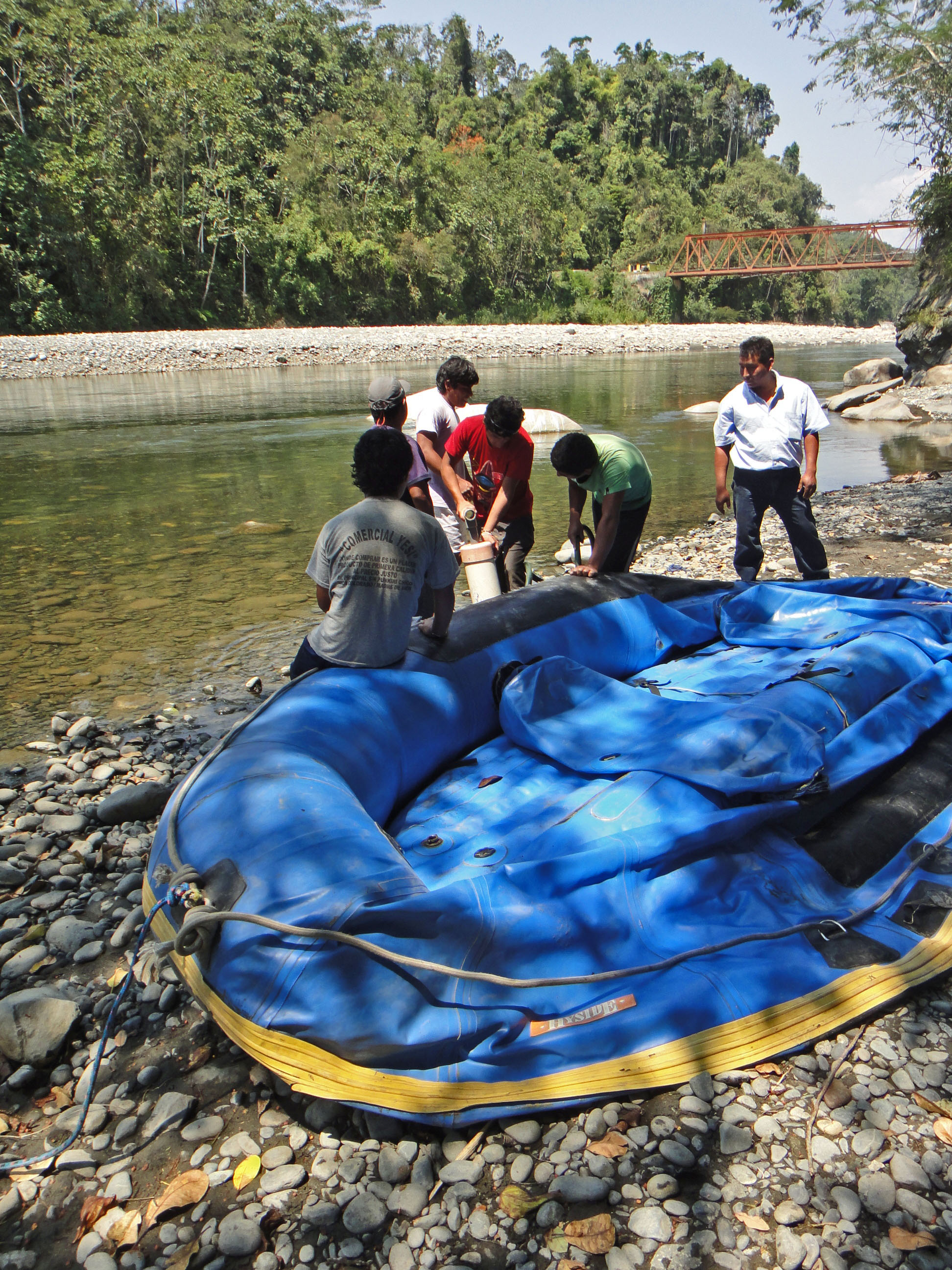
When we arrived there was no sign of the Rafting guide so Juan Carlos seemingly picked 4 youths of the street who agreed to raft with us. After blowing up the raft where we all had to take turns pumping we launched into the river. The water was relatively calm (Grade 2 with one Grade 3 rapid) and we progressed down the Koshnipata River which grew in size when it joined the Alto Madre de Dios river.
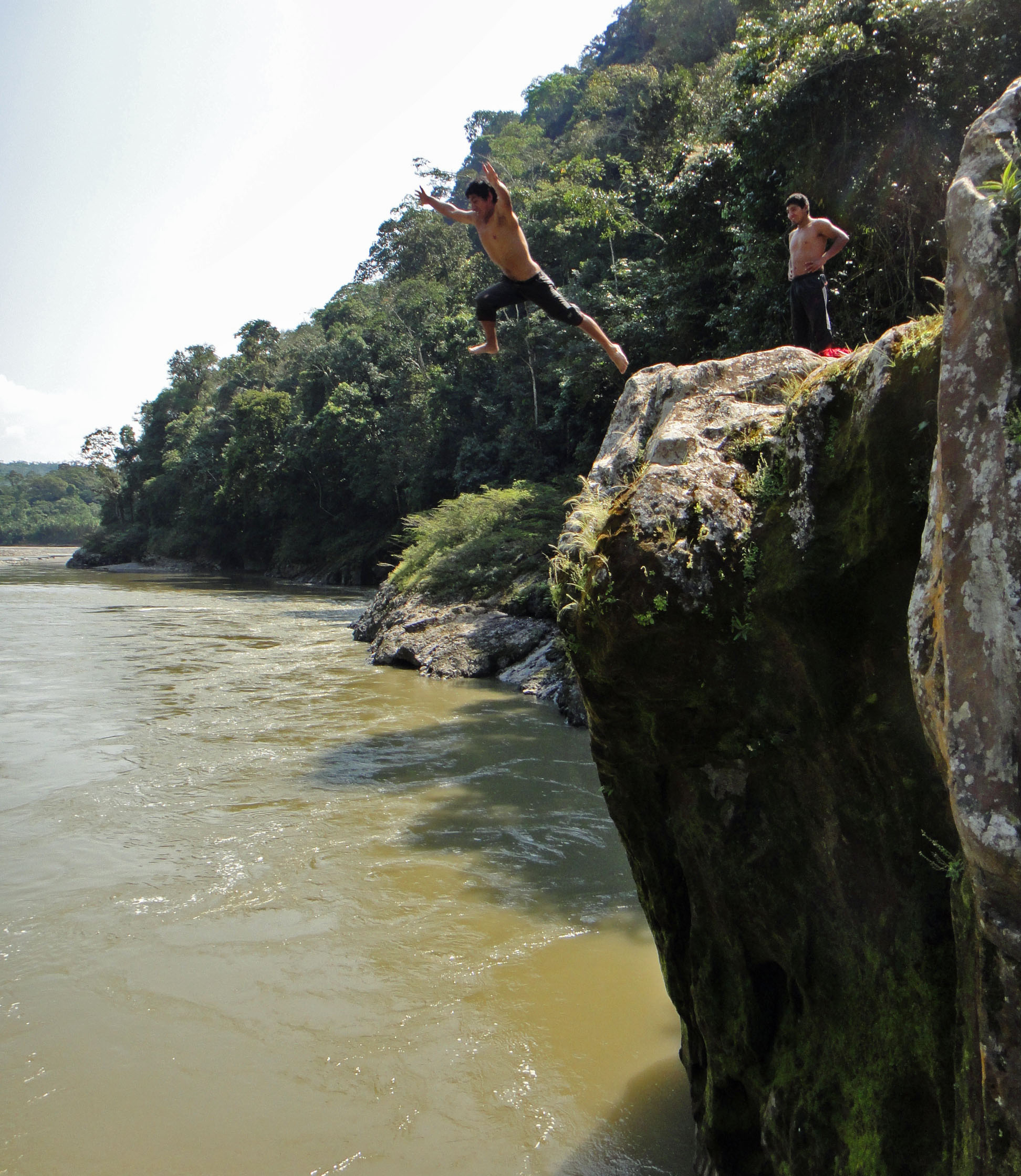
We reached a large rock protruding into the river. The “guides” climbed out and showed us that you could jump of the top (about 6m) and I couldn’t resist giving it a go. The water definitely cooled me down.
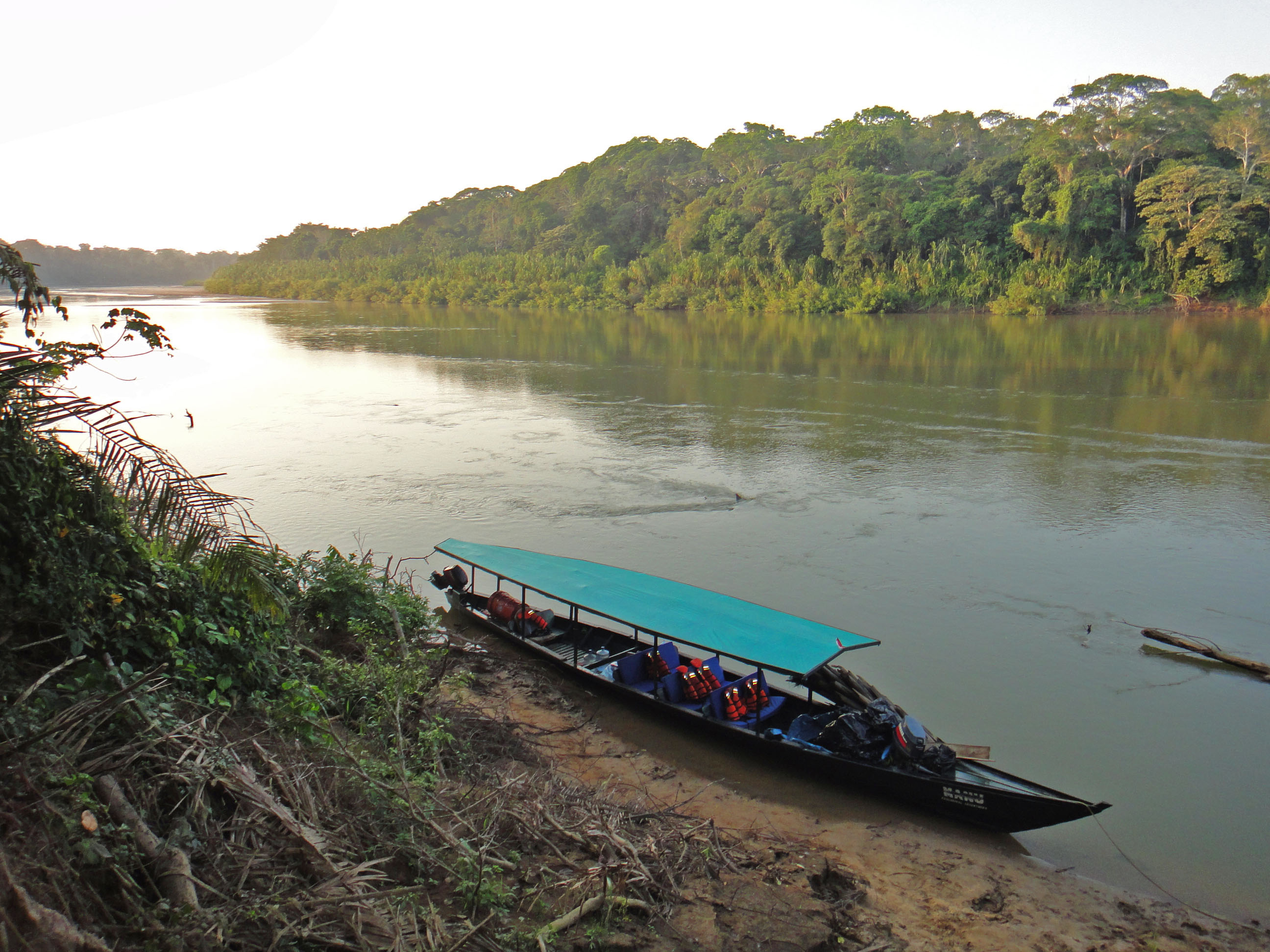
The end of our rafting experience was the port town of Atalaya which is the end of the road. Here we boarded a powered canoe for a 30 minute trip down to our residence for the night, Erika Lodge (489m). Erika Lodge is the final destination of those doing the shorter 4 day trip.
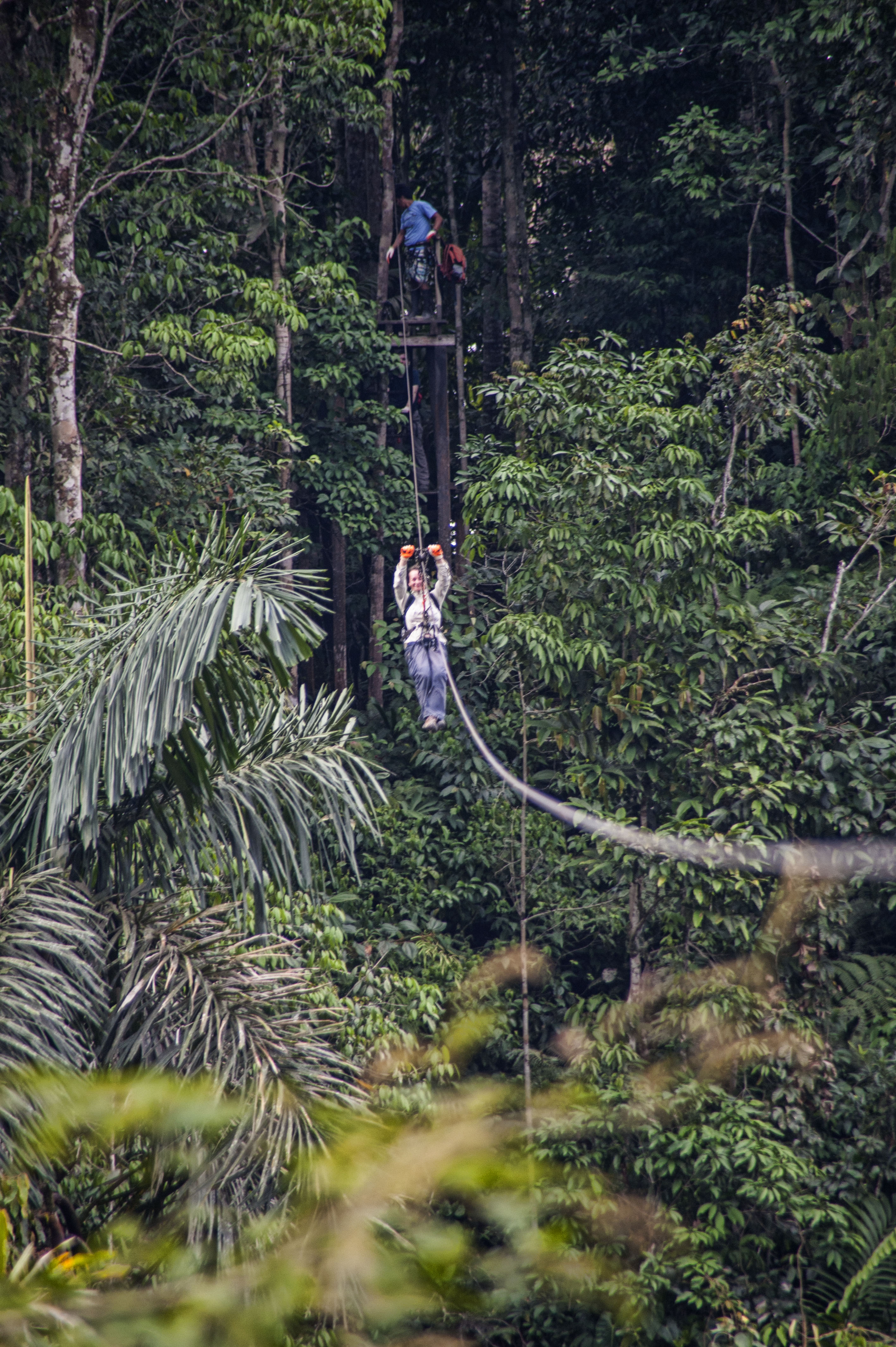
As soon as we arrived at Erika Lodge we were marched pretty quickly (due to fading light) through the jungle for our second adventure activity of the day, zip-lining and rapelling through the forest, both of which were good fun and felt very safe.
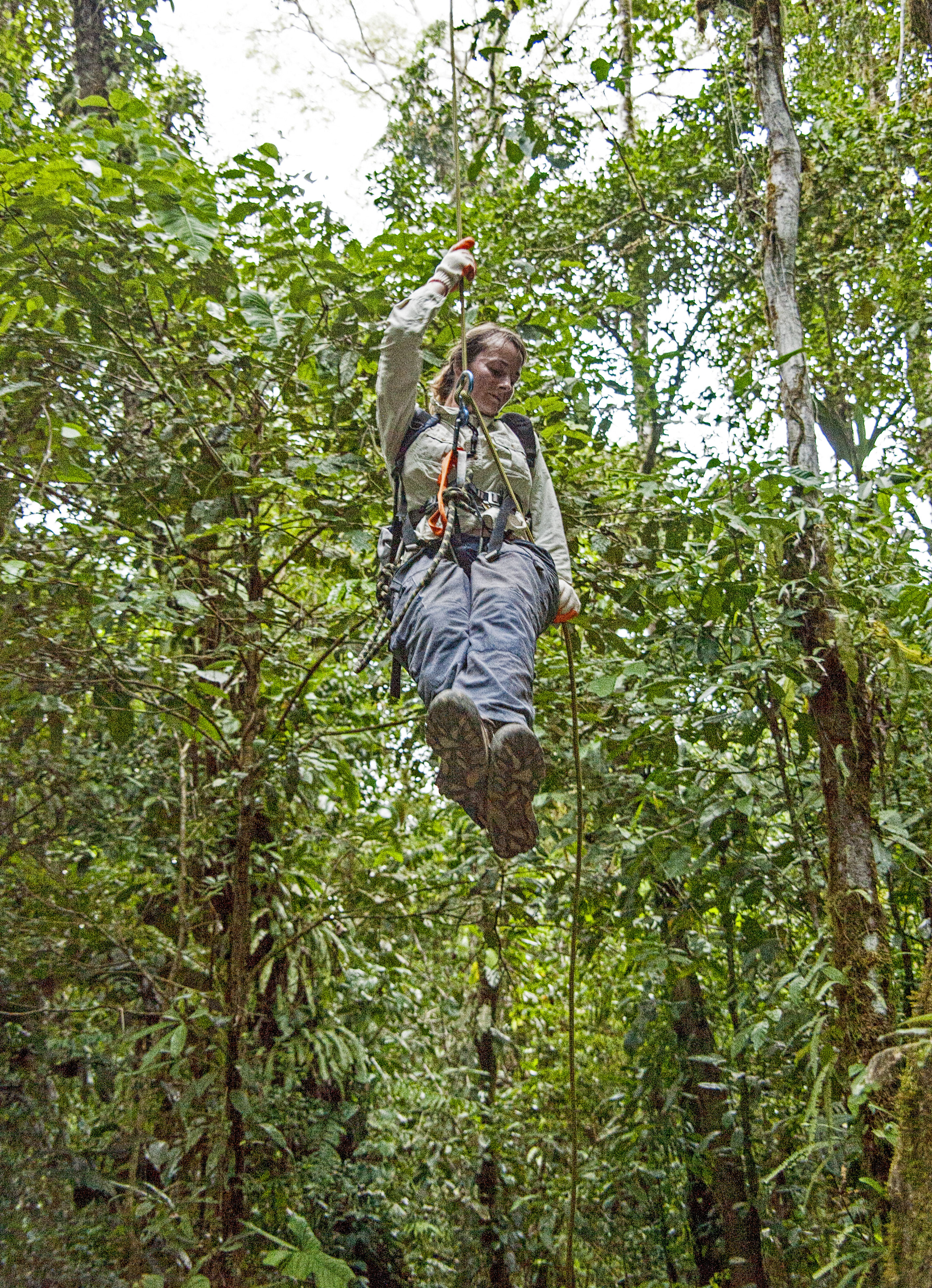
Erika lodge was a little more comfortable that the Cloudforest Lodge with a lovely shaded hammock area overlooking the river. Though there were one or two more insects around to share the bathrooms with as we came closer to the jungle!
Our journey was by no means finished and the next day we boarded the Canoe again (which was surprisingly comfortable) and headed down the river. You can also spot quite a lot of wildlife from the river so despite being in the canoe all day the journey was actually OK. We stopped briefly at the village of Diamonte so the cook could have 10 minutes with her family and then turned off the Alto Madre de Dios River, where we had been heading downstream, and onto the Manu River, where we had to move upstream.
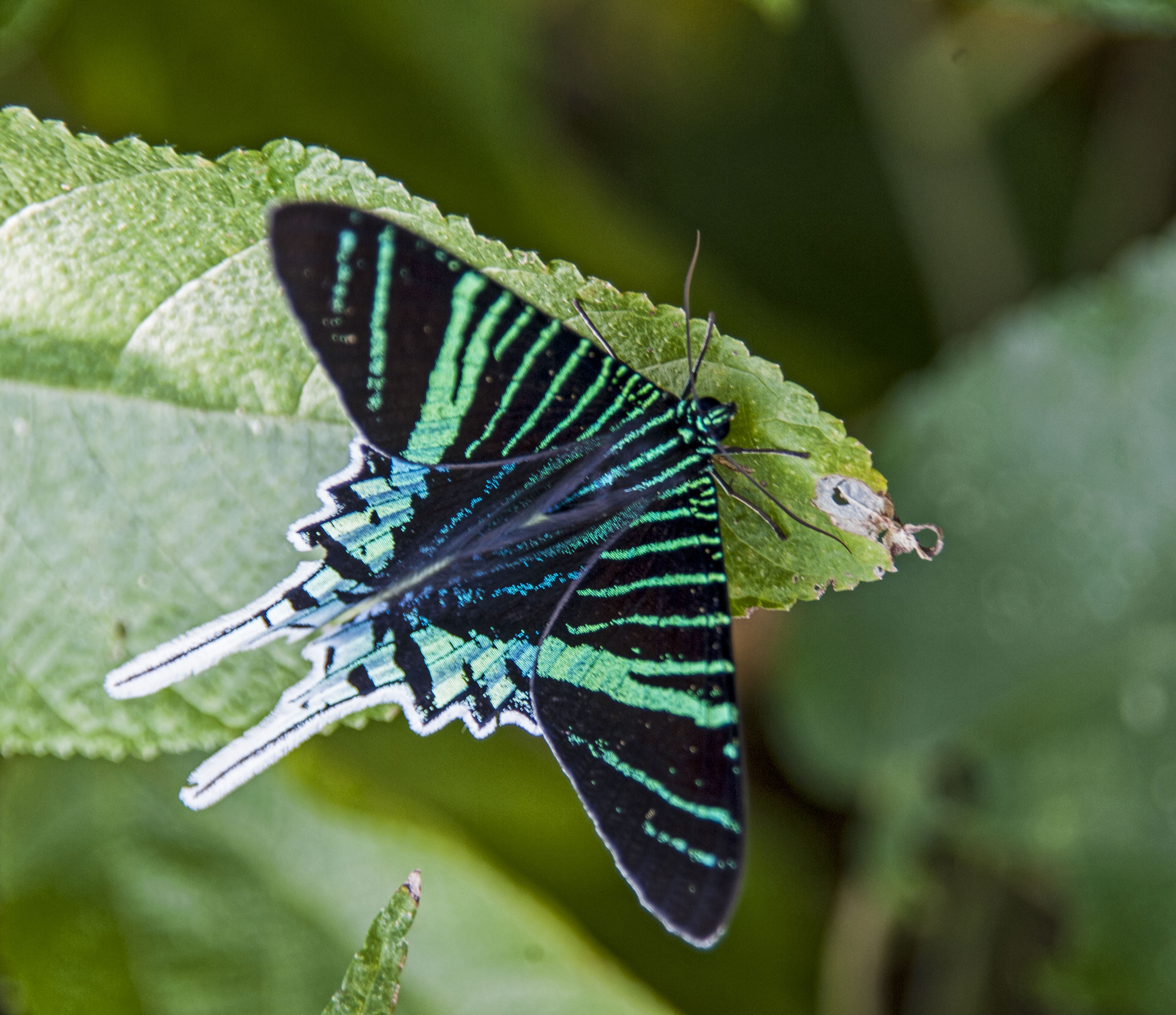
We were now entering the Reserved area and the landscape changed with the Rainforest becoming much thicker, the water warmer and more birds and animals appearing.
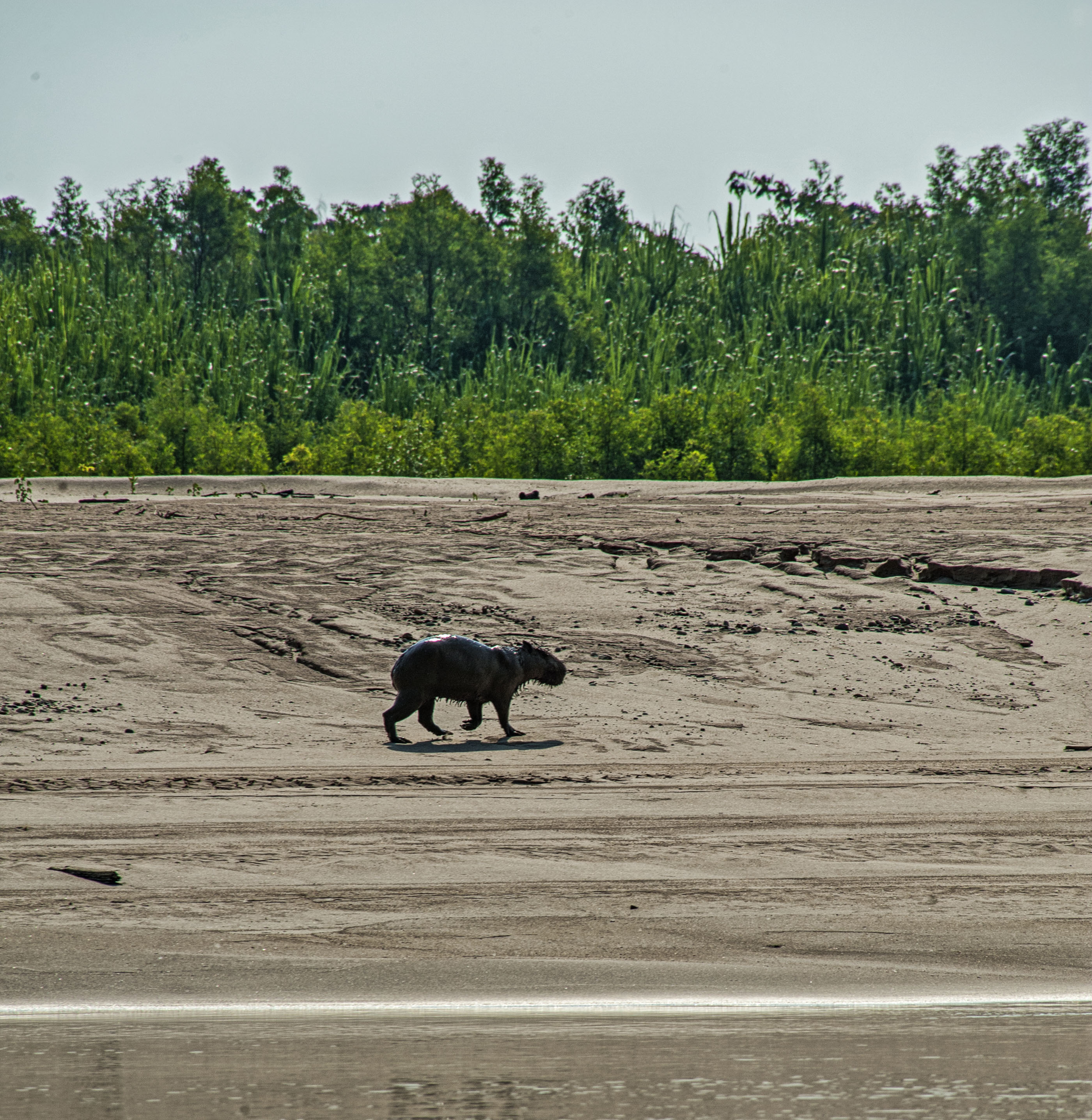
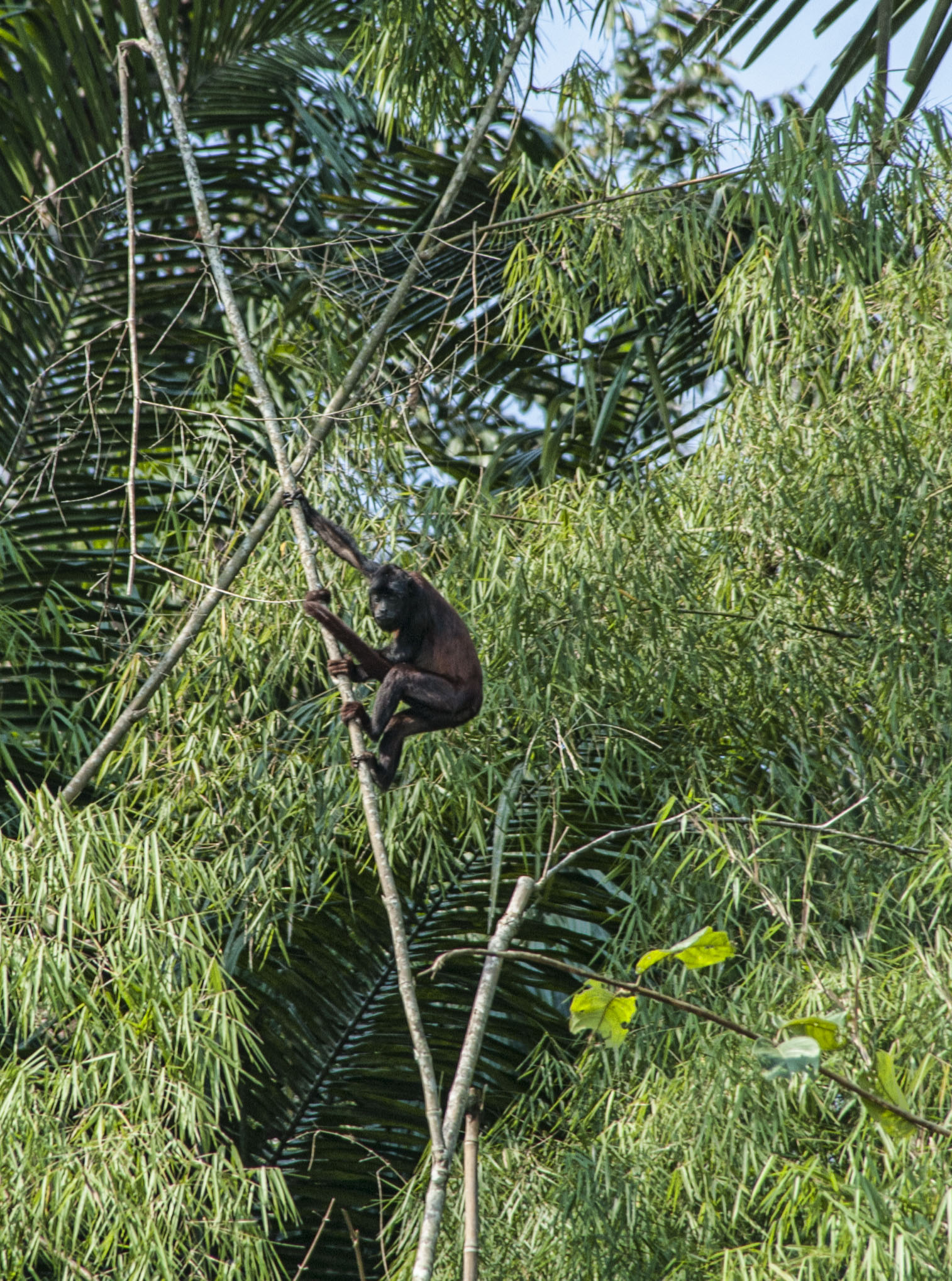
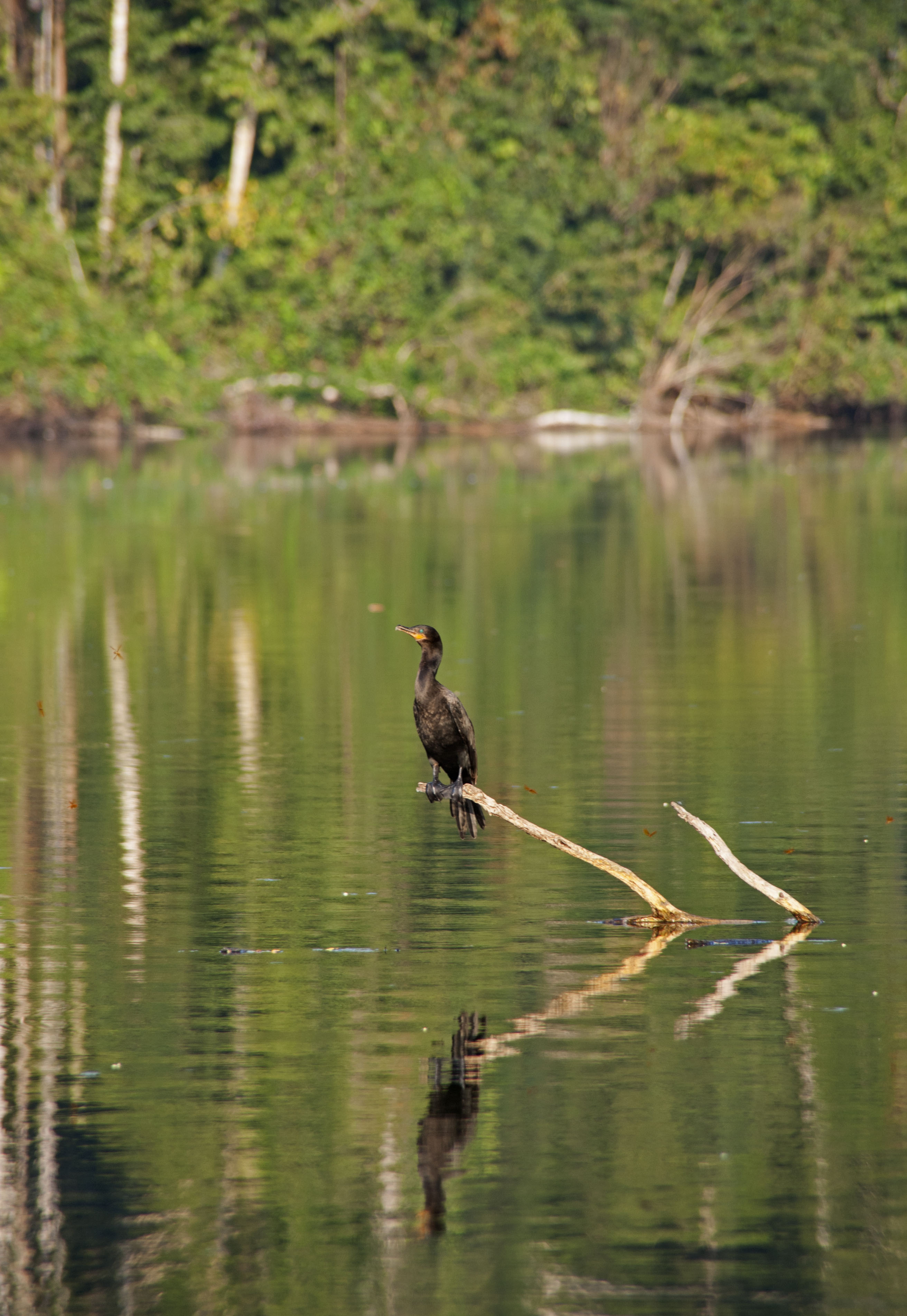
We saw a Capybara wallowing in mud by the river, caiman, an otter and some Red Howler monkeys from the boat as well as countless birds.
As night was falling we should have arrived at the Manu lodge but the river was very low as it hadn’t rained for over a week meaning that we had to go very slowly. There were also a lot of dead trees in the river where the river had changed its course and so it became increasingly difficult to navigate as the light faded. The two boatmen did a fantastic job of getting us to our destination safely and calmly.
We eventually arrived at the Sajino Safari Campsite in the Manu Reserved Zone at around 8.30pm after 13 hours on the river.
Machu Picchu
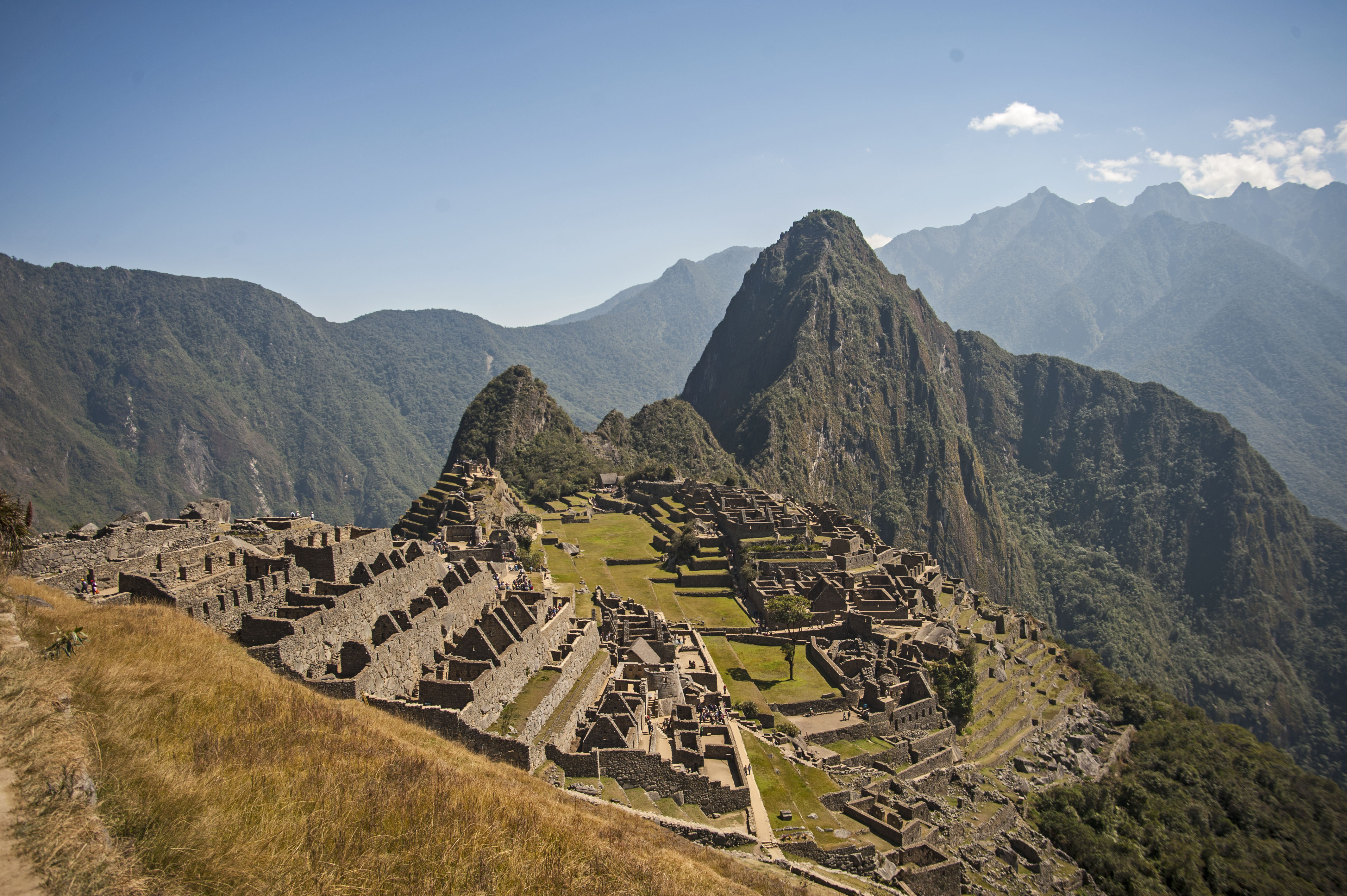
We had elected to take the train from Ollantaytambo to Aguas Calientes (sometimes called Machu Picchu Pueblo) which is the gateway to Machu Picchu.
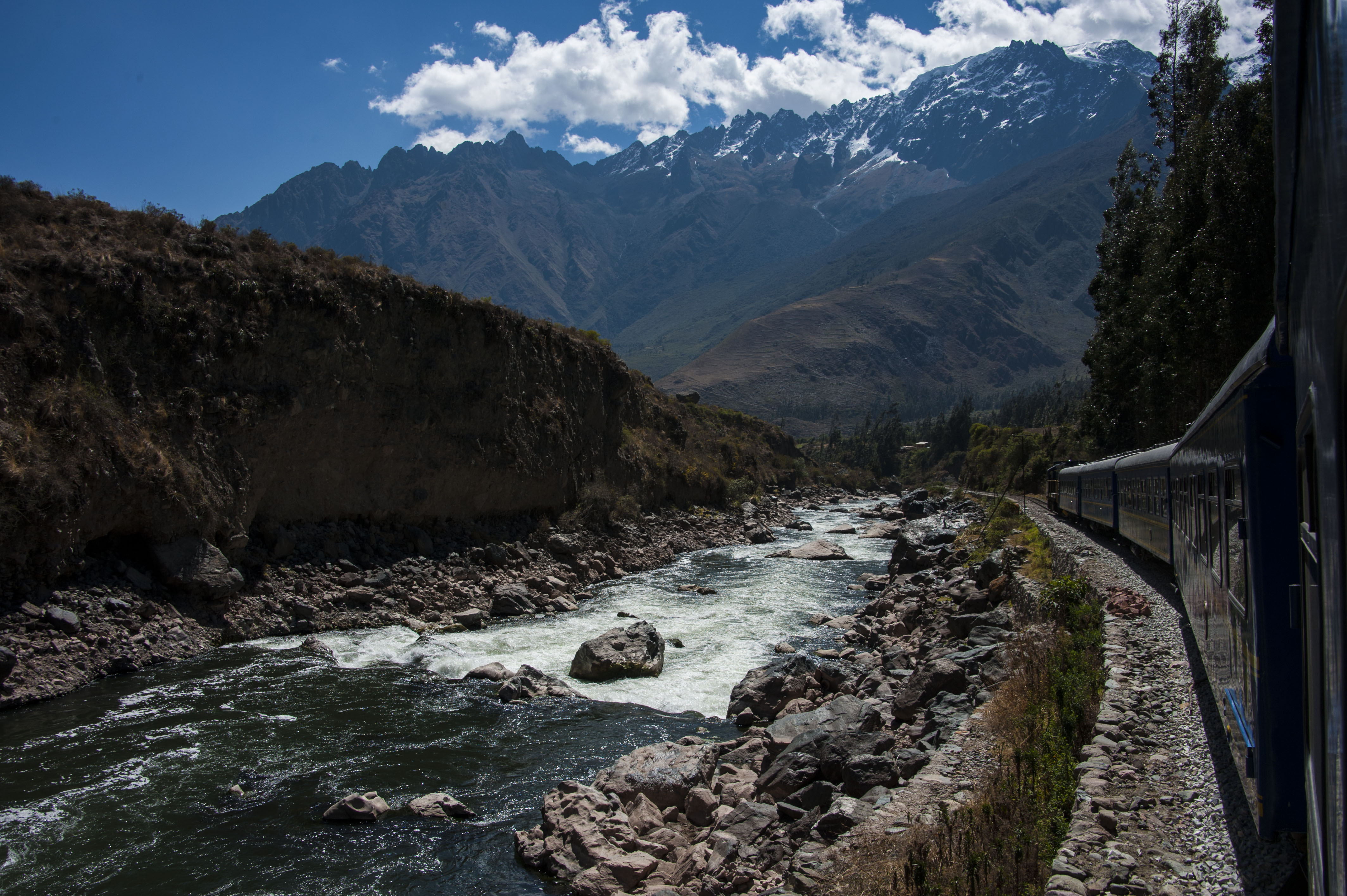
Our train was at 2pm so it would give us a good view of the route along the Rio Urumbamba. Once we got on the train we had a very social 1hr 30 journey to the station at Aguas Calientes. Everyone on the train was very friendly, it being the cheapest train and full of backpacker’s.
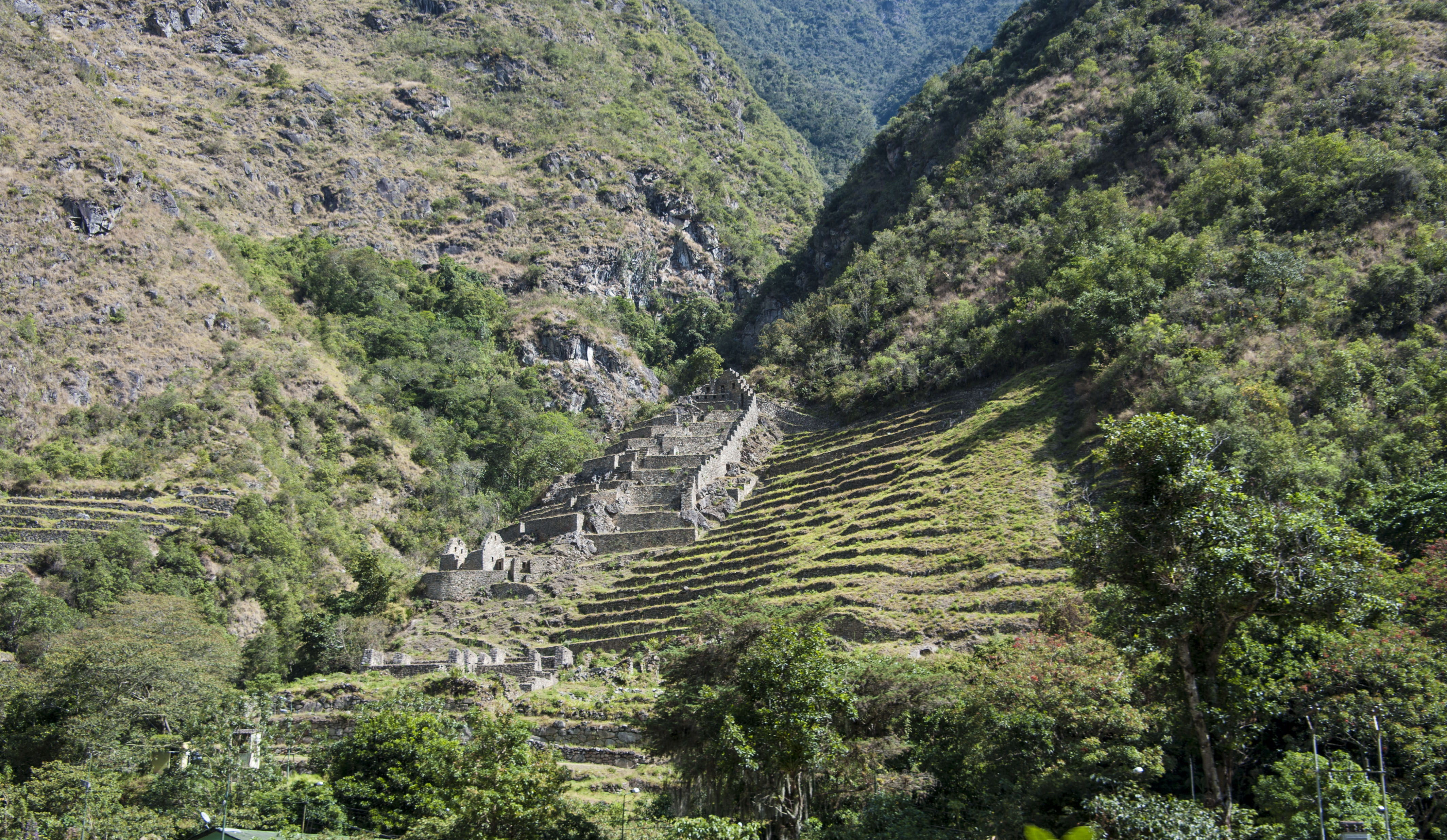
Arriving at Agua Calientes is a bit disorienting as the exit from the station is straight into a tourist market and there are no signs pointing the way out. We were approached by a tout for a hostel on arriving and agreed to go with her to Hostal No.1. The hostal wasn’t very nice but it was for one night and all we would do is sleep there so we agreed to stay.
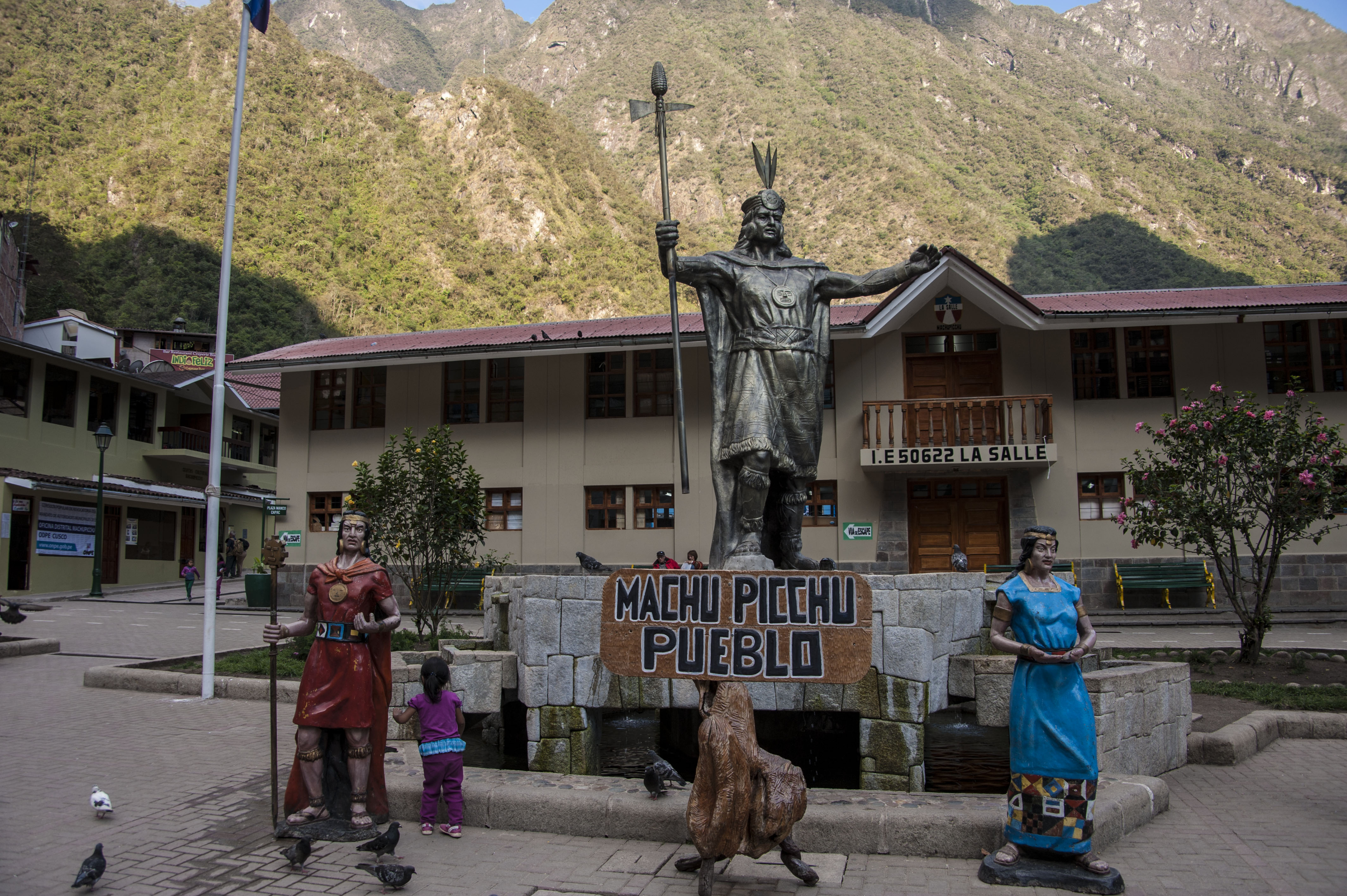
Our first tasks were to arrange our visit to Machu Picchu for the next day. We first had to buy a site ticket. After wandering around town for 15 minutes we found the correct place to buy a ticket. We bought our tickets for the site including the climb up Cerro Machu Picchu. We then needed to buy tickets for the bus ride up to the site – at a booth just up from where the buses pick up.
There is not much to Aguas Calientes. Its really an ugly concrete town which is 100% focused on tourists to Machu Picchu. This means everything is expensive. We had a simple pizza and beer meal which cost over S100. Unheard of in other towns.
We went to bed early as we knew we had to be up early the next morning. We were up early and got to the bus stop for 5.30am – to find a big queue already there. Well it wasn’t so bad and we were on the 7th bus to leave.
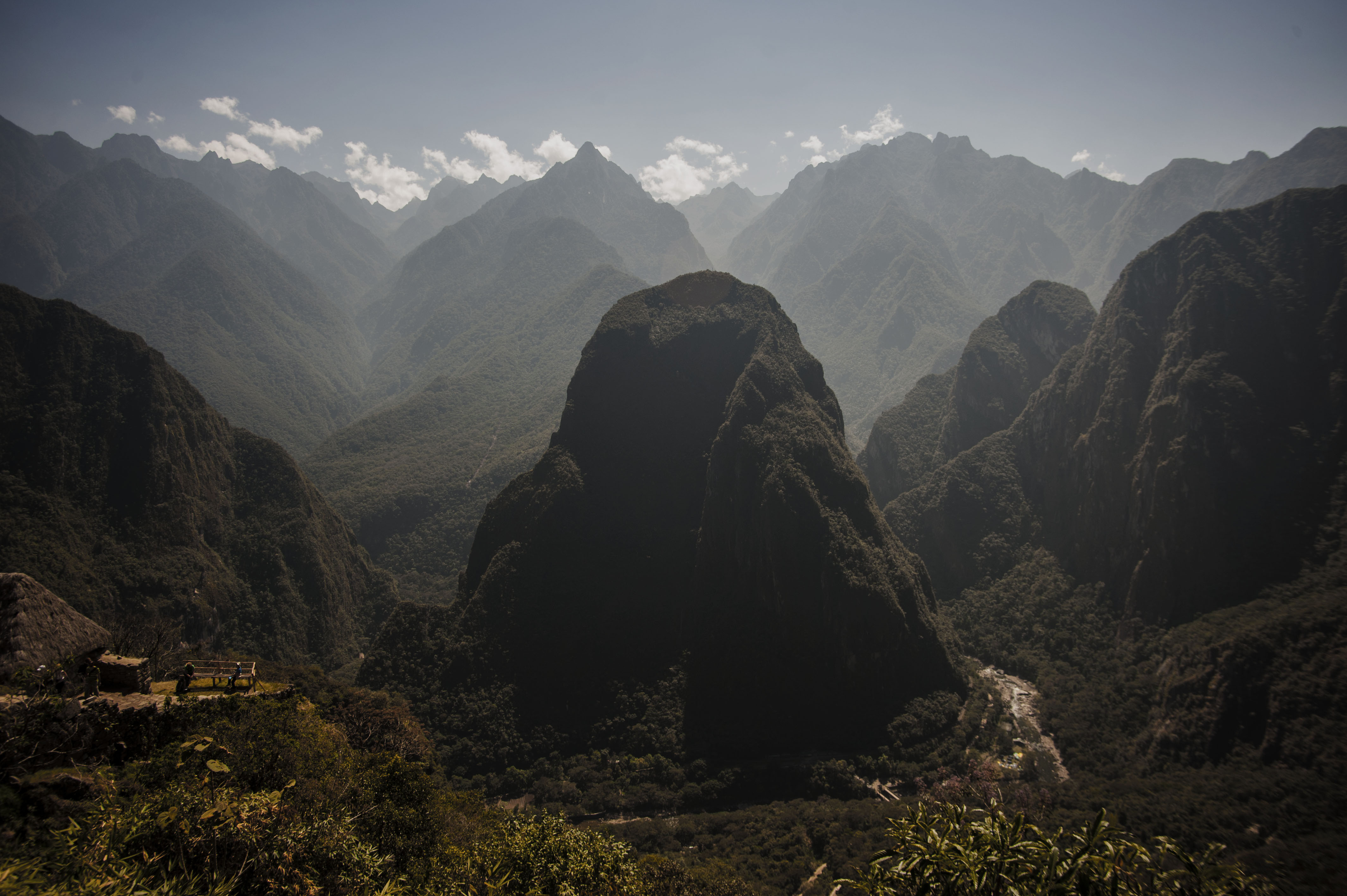
The journey to the Machu Picchu site takes about 30 minutes as you wind your way up a really switchbacky road to the top. Once there you have to present your ticket and passport to get into the site proper.
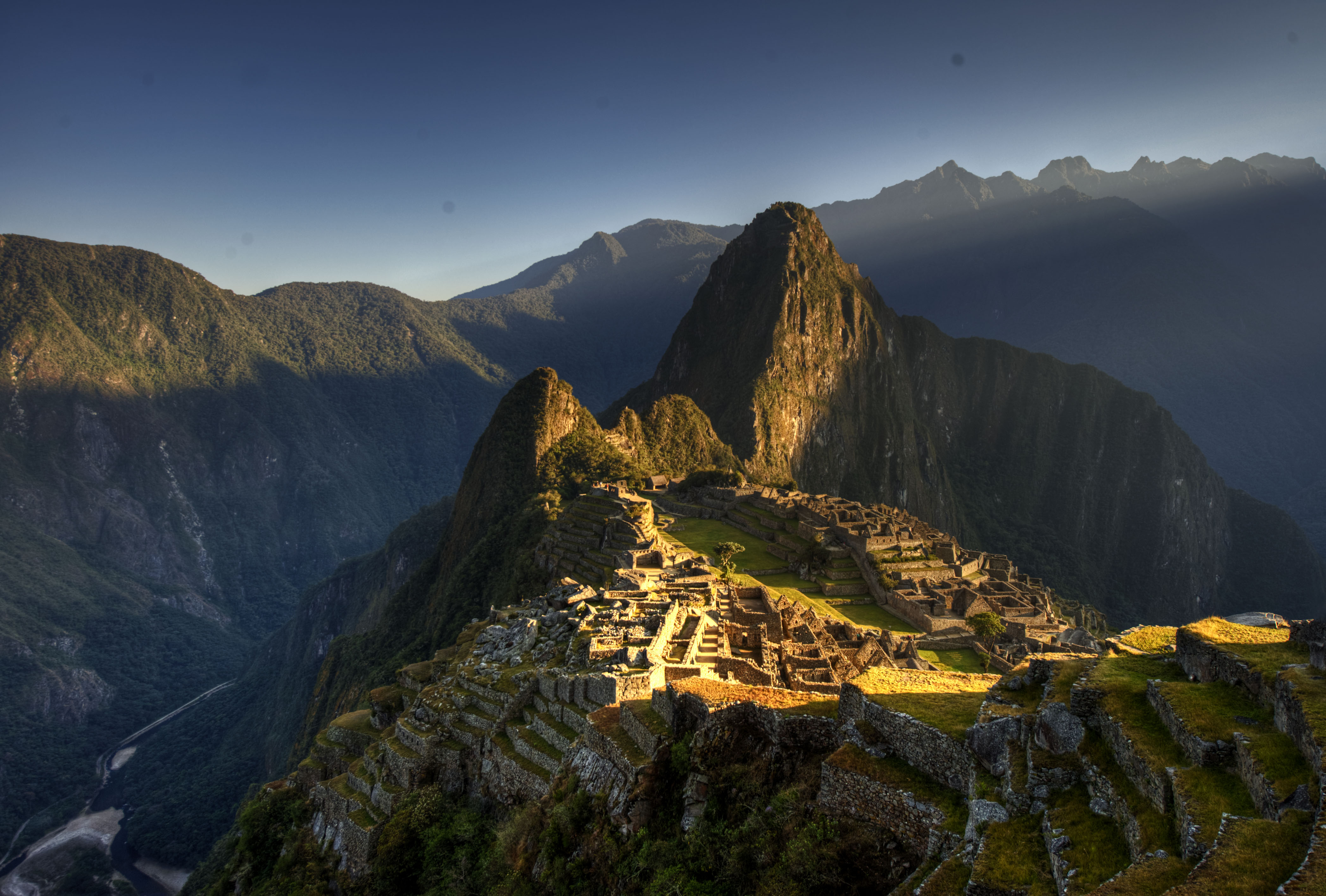
We headed up straight away to get to the Caretaker’s Hut which is the highest point in the city. It was shortly after 6am at this stage and although everything was light the sun hadn’t yet reached the city. We sat down, about 50m from the hut, to wait for sunrise.
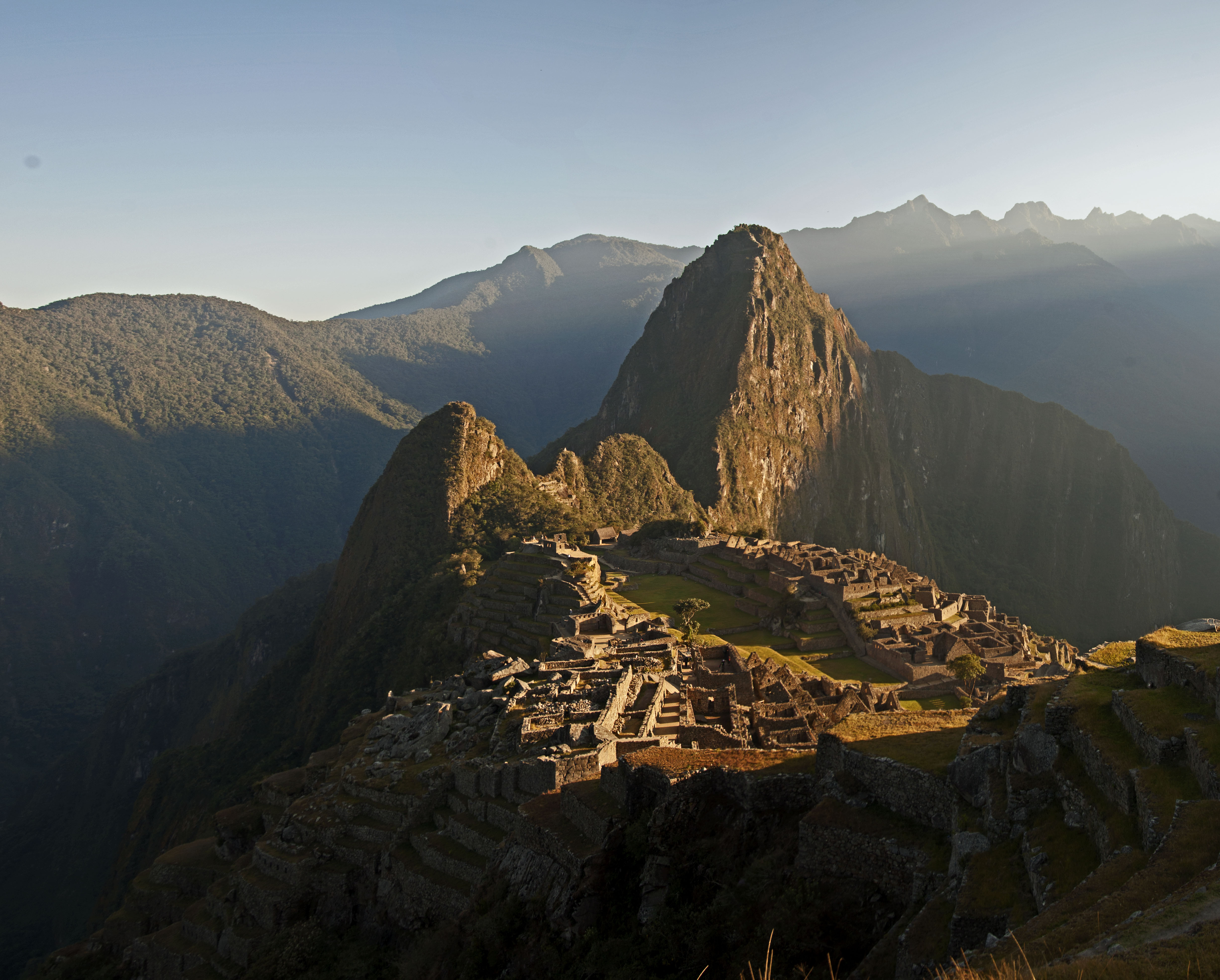
When the sun crests the mountains and the sunbeams cross the city it is a beautiful sight. This is what makes Machu Picchu one of the top tourist sites in the whole world. Watching the sunrise we were far from alone though with probably 500 people scattered around.
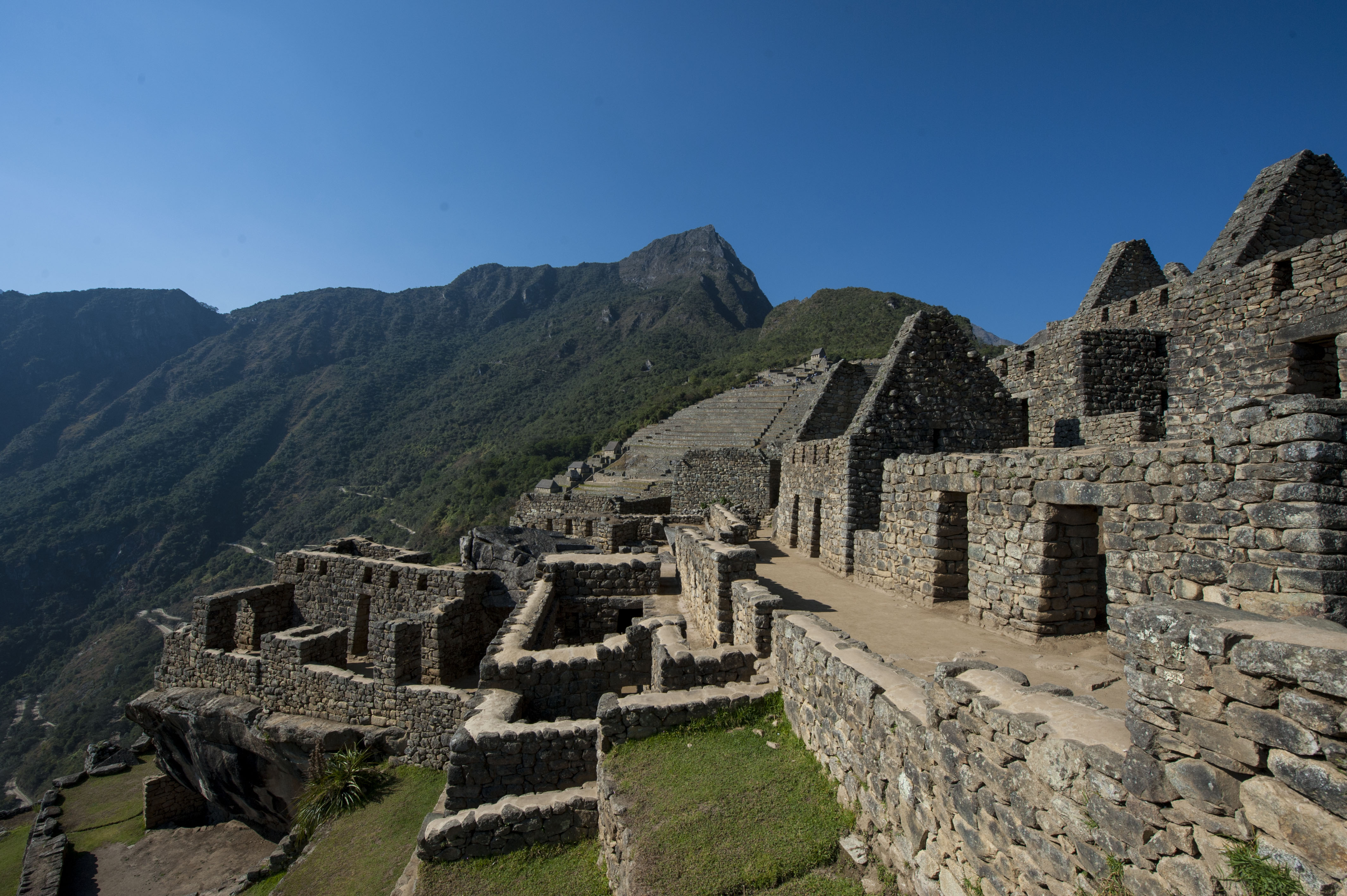
Once the sun was well and truly up we made our way down into the city itself and followed a clockwise route around. It took about 3 hours for us to make our way totally around, seeing all the different areas.
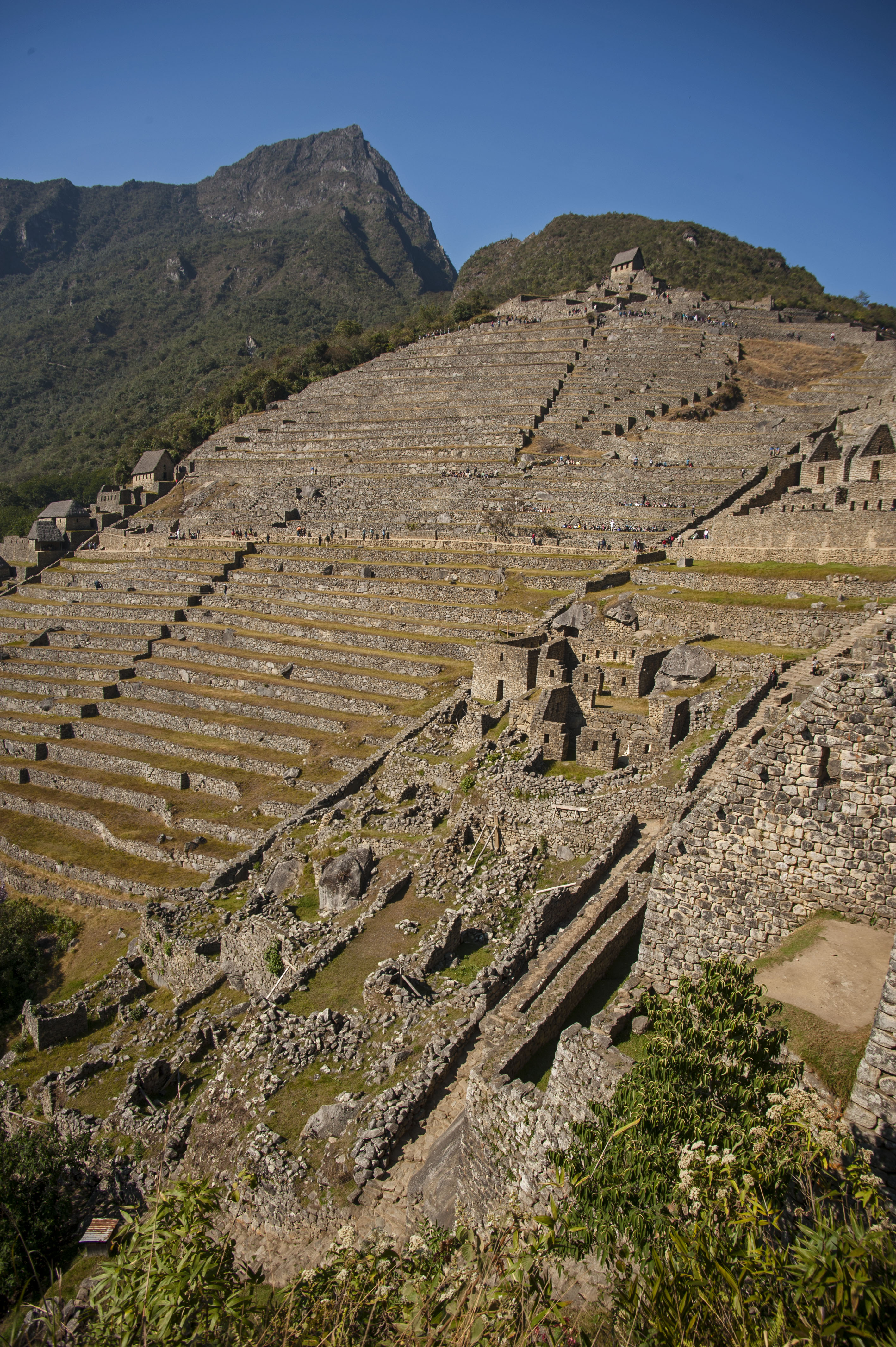
The thing about Machu Picchu is that although the ruins are interesting they are by no means the most amazing that we seen. In fact the Mayan ruins of Mexico and Guatenmala have way more impact. However the setting is incredible with sheer drops to either side of the city and then mountains ranges surrounding the area. This is what makes it an amazing place. There seemed to be very few couples or individuals at Machu Picchu. Most of the people there were in big groups with a guide so it was possible to get a bit of peace and quiet for a few minutes between the groups.
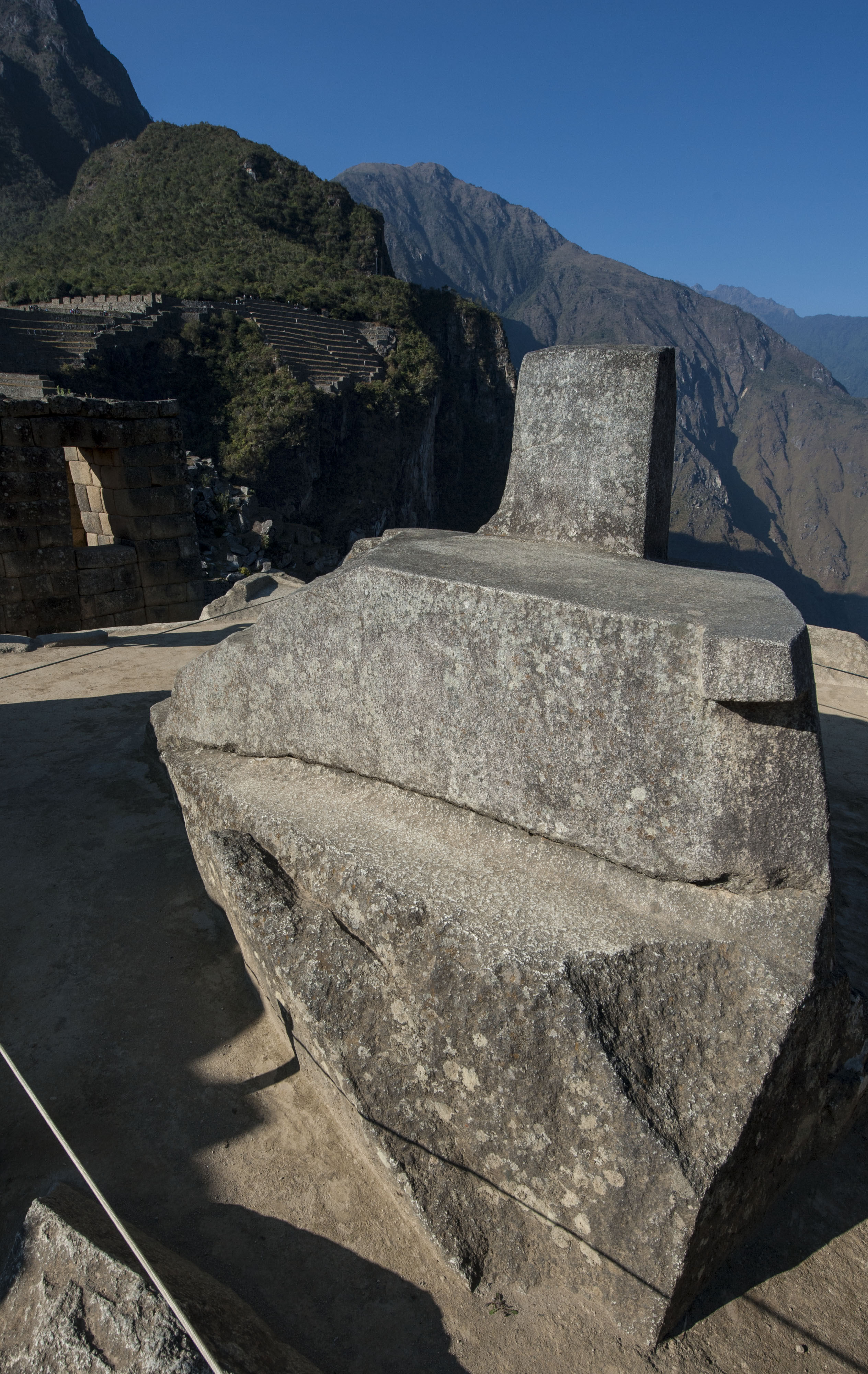
One of the busies places in the city was the Intihuatana which is a large rock that was an astro-agricutural clock and it is aligned in four directions with mountains that were important to the Inca. Machu Picchu is at only 2492m but feels much higher than many of the 3000m+ places in Peru because it is perched on a mountain ridge.
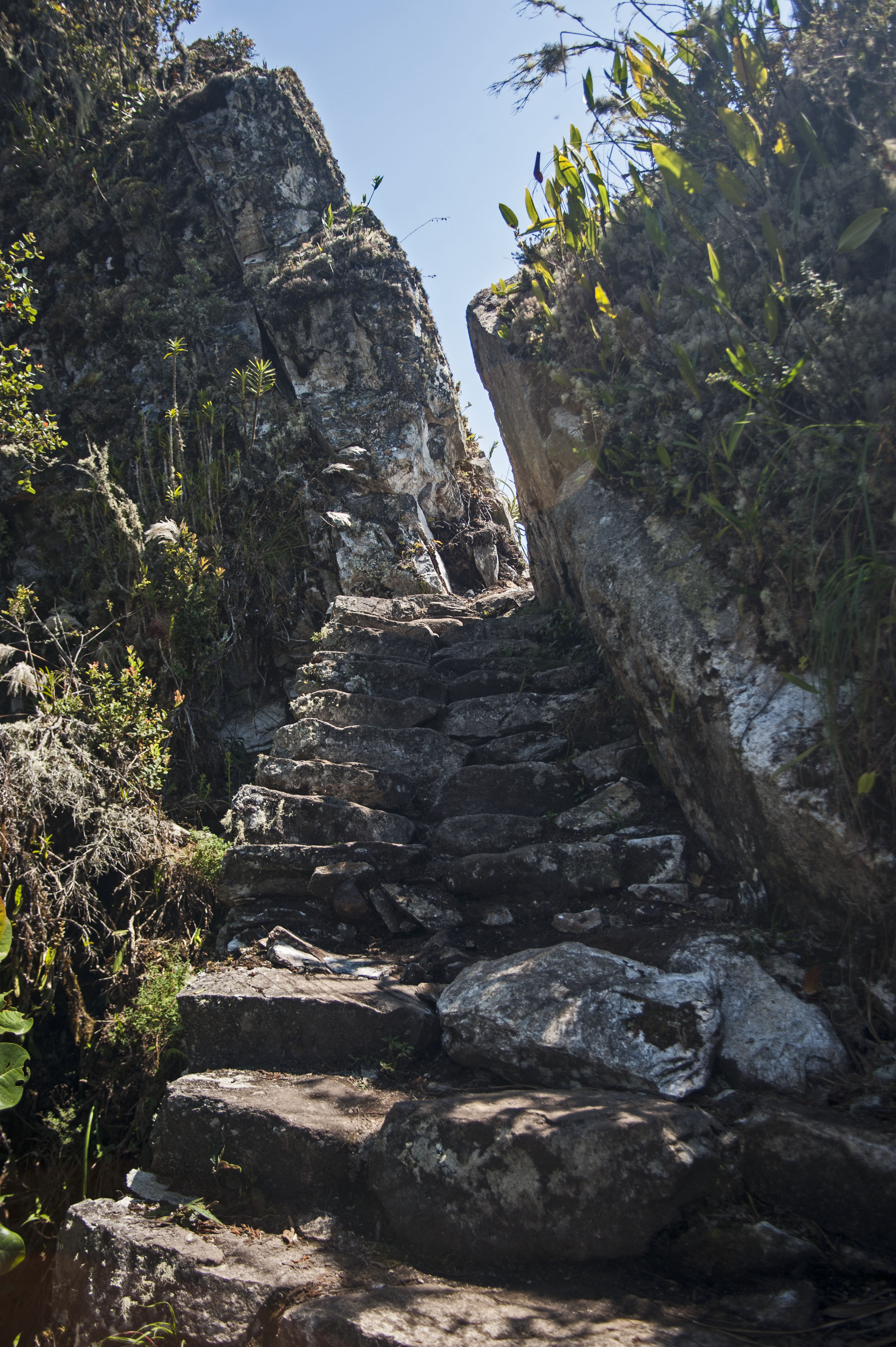
After we’d seen the city, and as time wore on more and more people were arriving, we decided that we should climb the Machu Picchu mountain, which overlooks the city from the Sun Gate end, to get away from all the people. The climb up the mountain was hot and hard work as the path is stairs the whole way – the variation is the size of the stairs as some are much higher and steeper than others. Its a 600m climb above the city so about double the climb of Huayna Picchu.
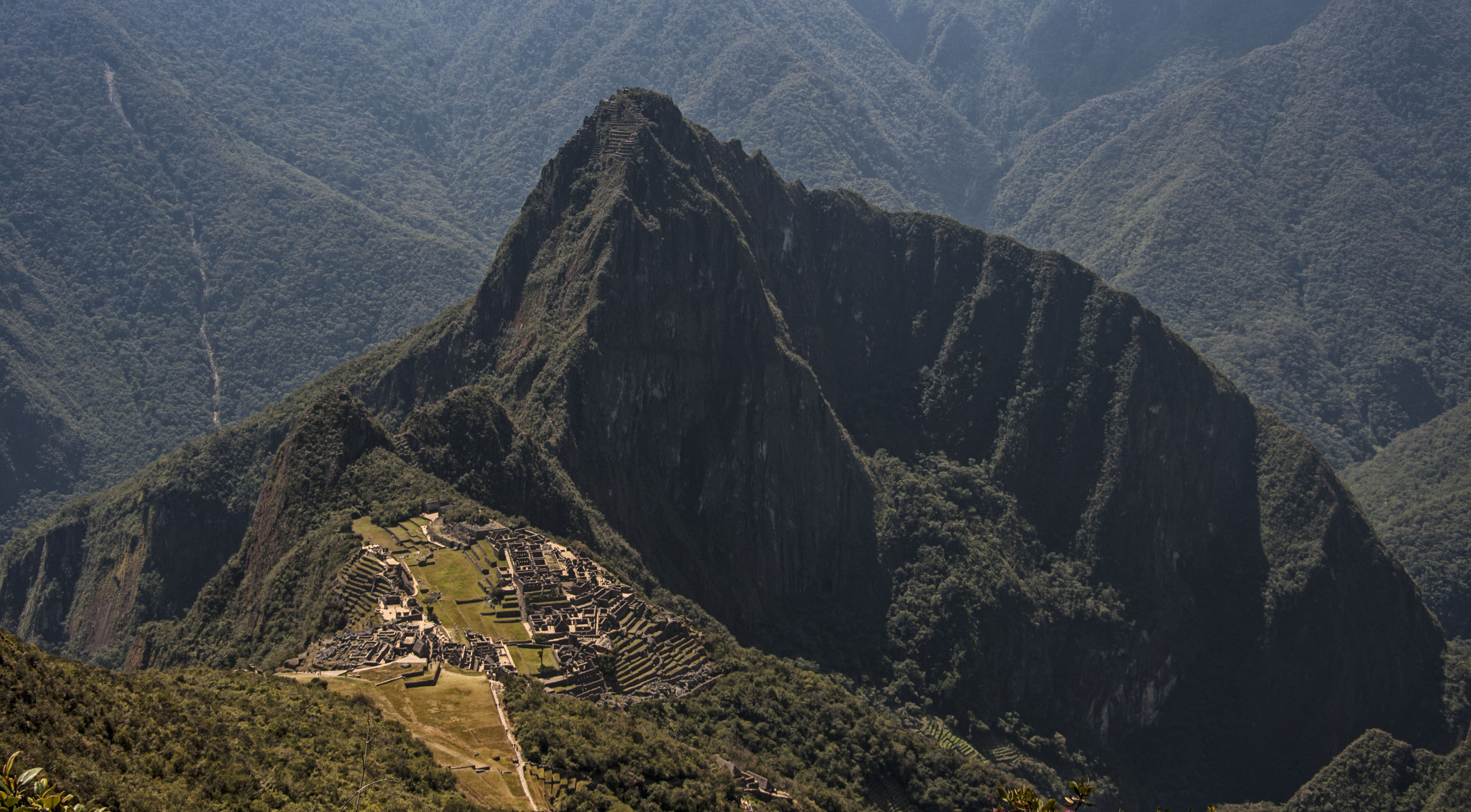
Reaching the top of the mountain after about 1.5 hours of climbing we were rewarded with an amazing 360 degree view of the mountains and a beautiful view down to Machu Picchu itself which looked pretty small below us.
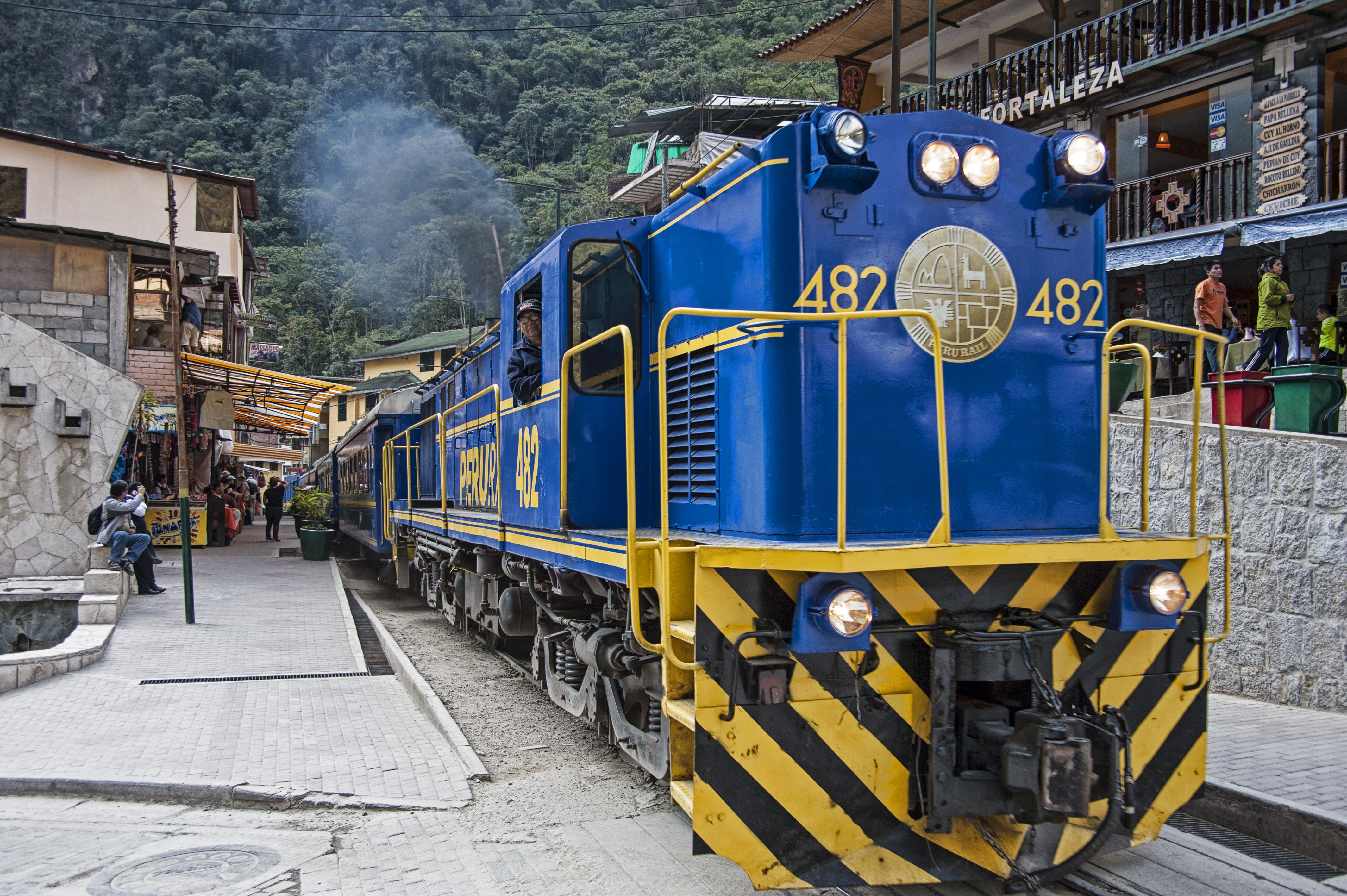
By about 3pm we were back in Aguas Calientes with three hours to kill before our train back to Ollantaytambo. We had a leisurely lunch and then went to the exceptionally crowded station to wait. The train back was quite slow and took over 2 hours as there was a broken down train ahead. It was a bit like our commute from back home !
The Sacred Valley
We decided to take the train from Ollantaytambo to Aguas Calientes (in order to get to Machu Picchu) which would allow us to visit the Sacred Valley on the way.
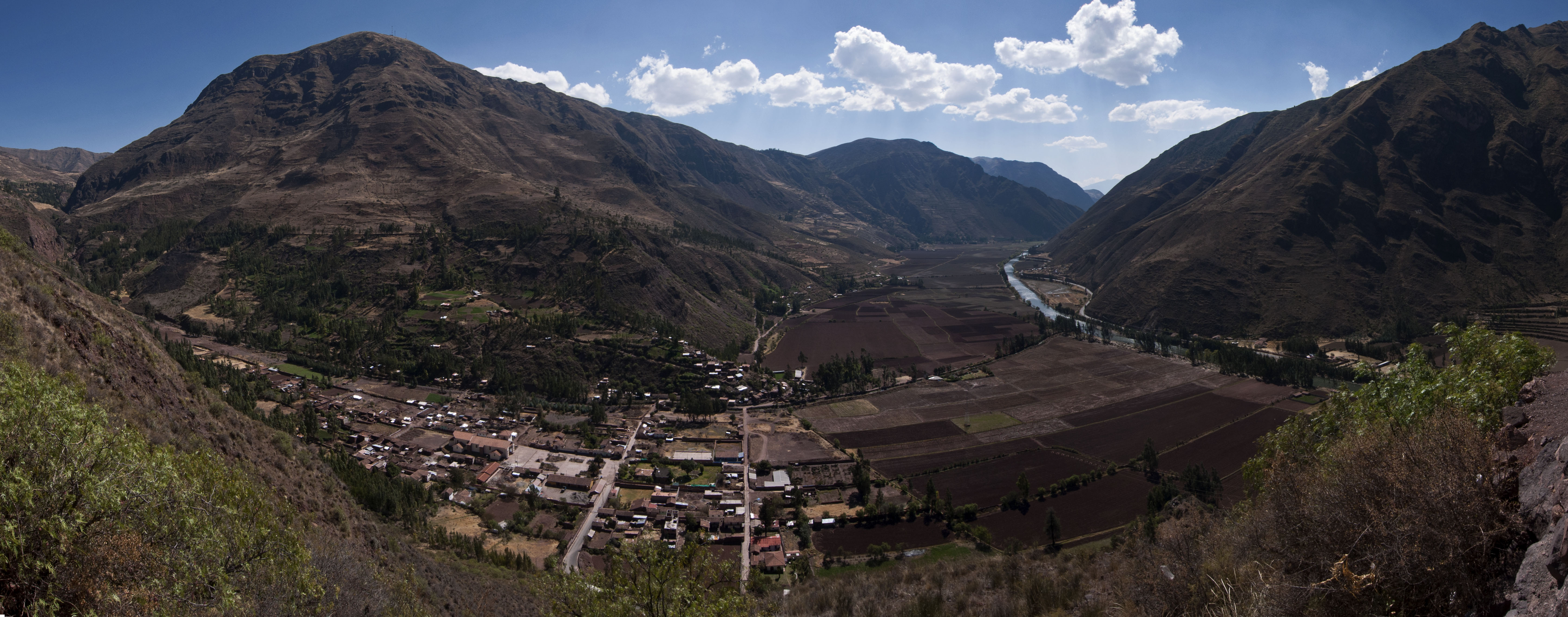
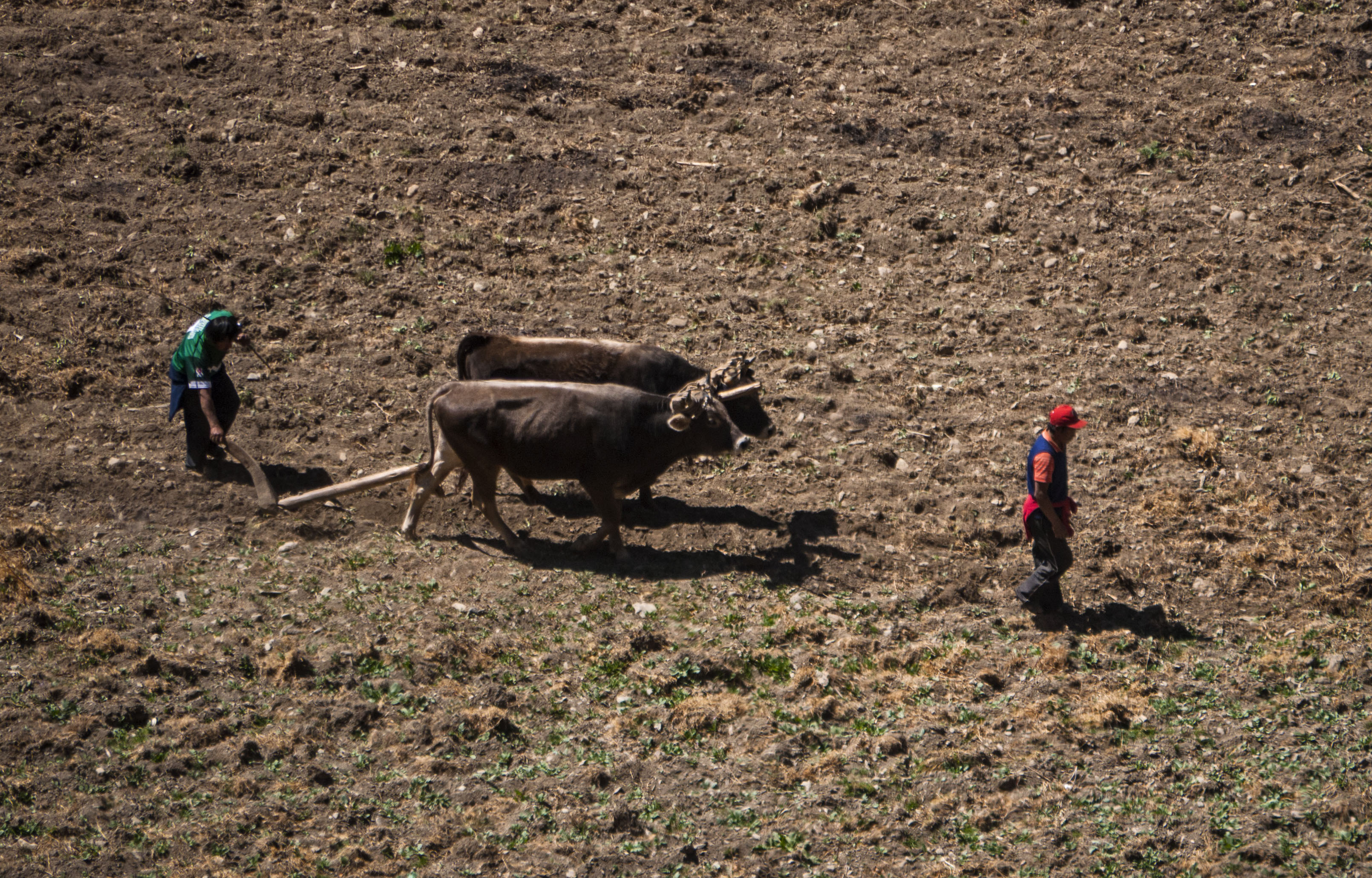
The Sacred Valley is a steep sided river valley with a narrow but extremely fertile alluvial plain. This plain was heavily exploited agriculturally by the Inca. The Rio Urubamba provides the water source for this valley and this is the river that flows below Machu Picchu.
From Cusco to Ollantaytambo via Pisac is around a 3-4 hour drive and is through a beautiful valley (the sacred valley). There are a number of Inca ruins to stop off on the way.
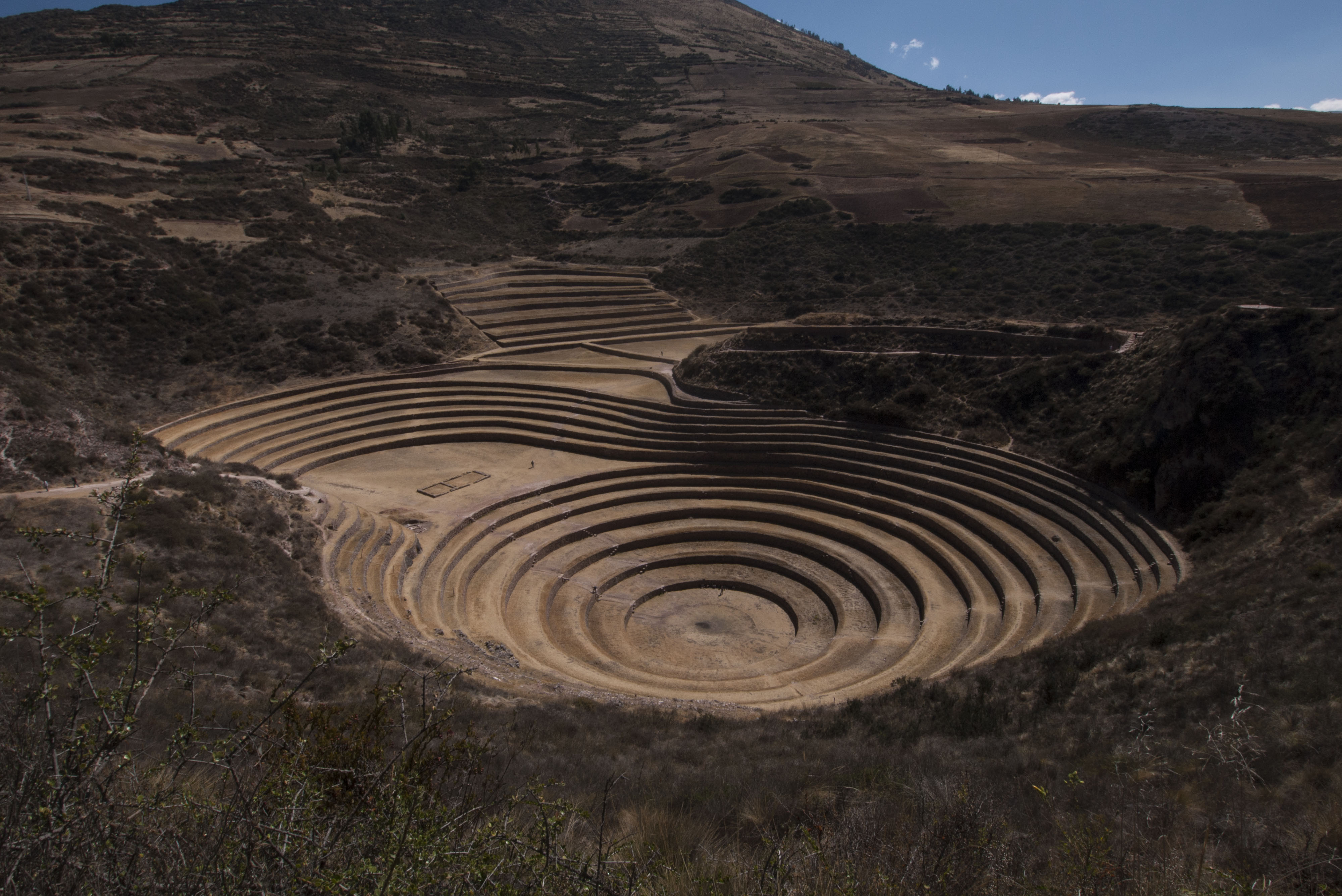
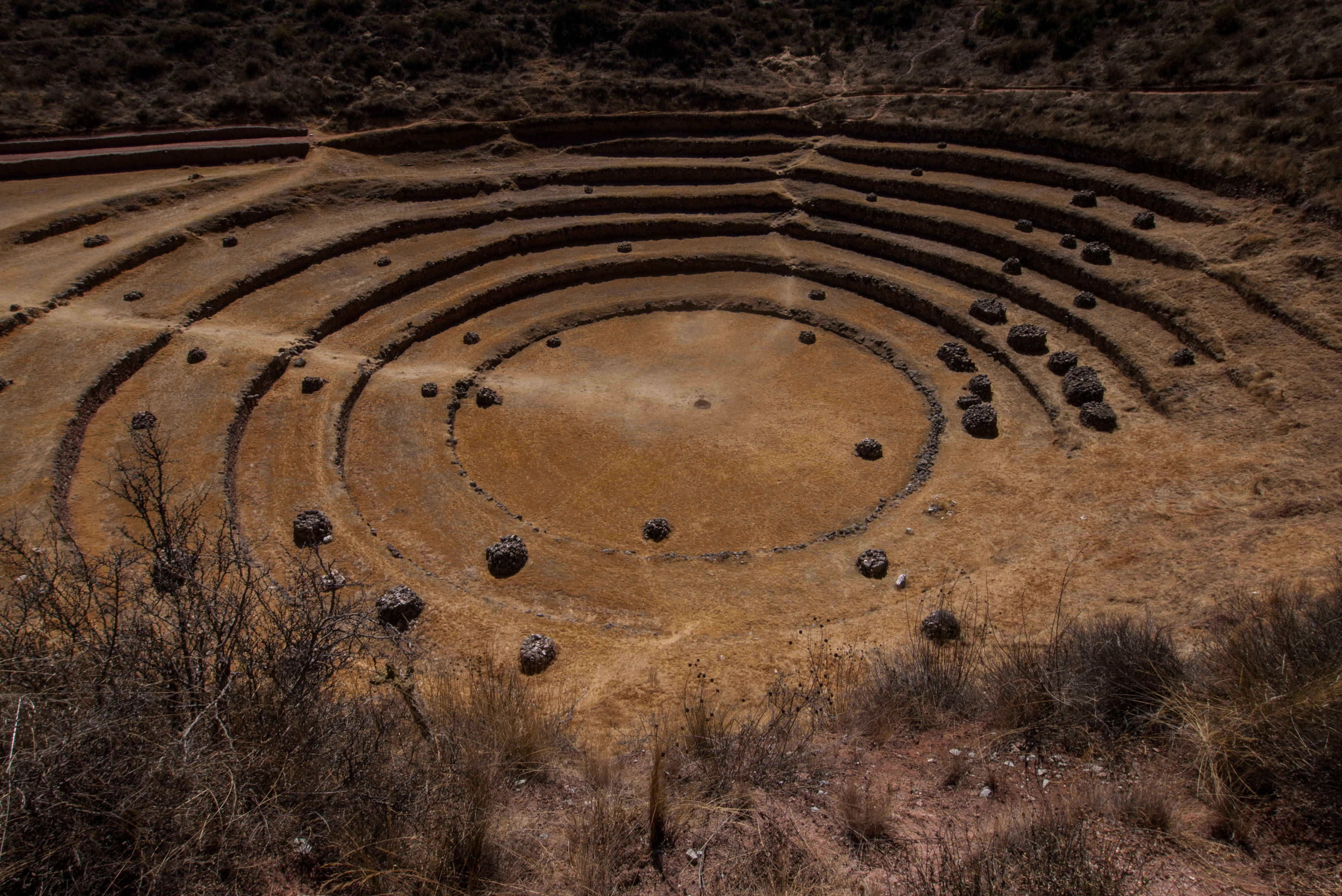
We decided to visit Moray on the way. Moray is an Inca agricultural laboratory that was used to assess the growth of crops under different climates. Each of the terraces in the circles provided a slightly different microclimate.
Unfortunately to get to Moray you have to drive through the town of Maras. This wouldn’t have been so bad if the Plaza de Armas wasn’t completely dug up and a building site. This meant we had to drive through a diversion which took us through some really narrow lanes and we got a little lost so had to drive around the town much more than necessary.
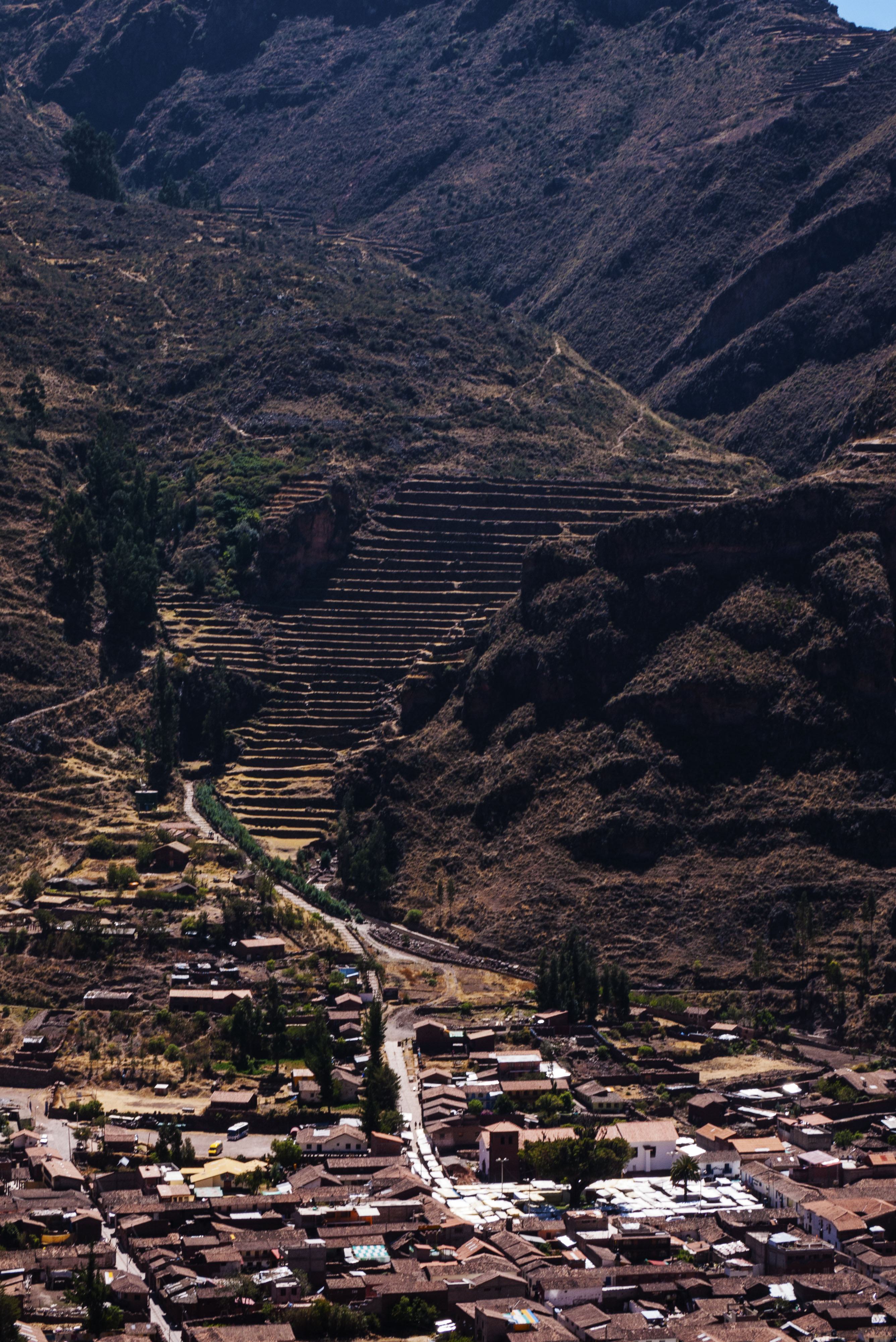
After leaving Moray and driving, a bit more directly this time, through Maras we headed to Ollantaytambo. We had the address of hotel that supposedly took overlanders, the Ollantaytambo lodge. However they told us we couldn’t stay. Fortunately just down the road was a lovely Cochera, guarded parking lot, with lots of space and a lovely grass surface – even a toilet – who were happy for us to stay.
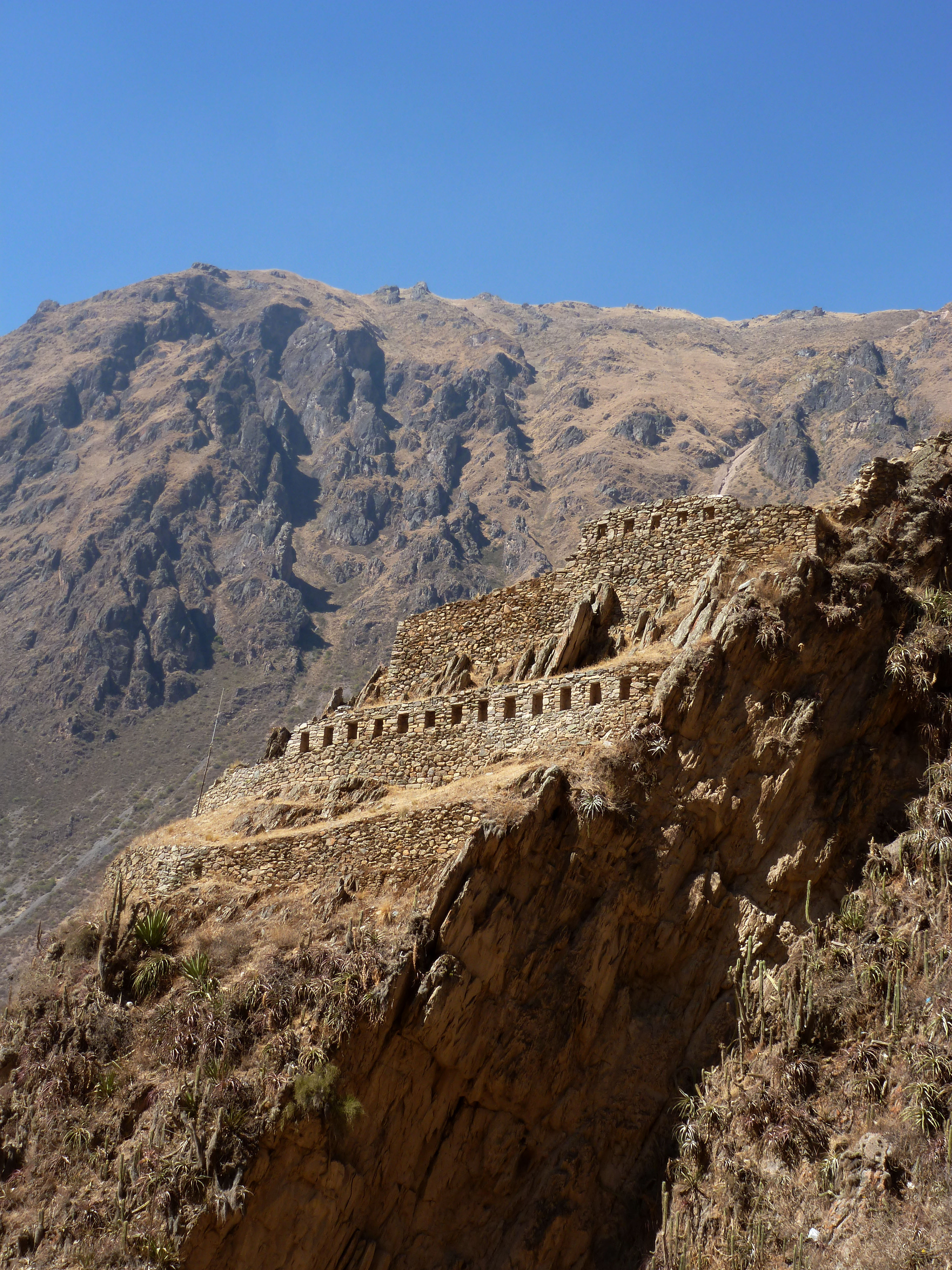
The town of Ollantaytambo is a lovely and relaxed town, despite the large number of tourists who pass through on their way to Machu Picchu. There are a number of good restaurants and some small shops with surprisingly good stock. The only downside is the traffic entering/exiting town where there is a one lane road bottleneck which can cause substantial tailbacks.
We overnighted here and the next morning headed to the ruins at Ollantaytambo early. This was the fort guarding one end of the Sacred Valley (the other end is guarded by the fort at Pisac).
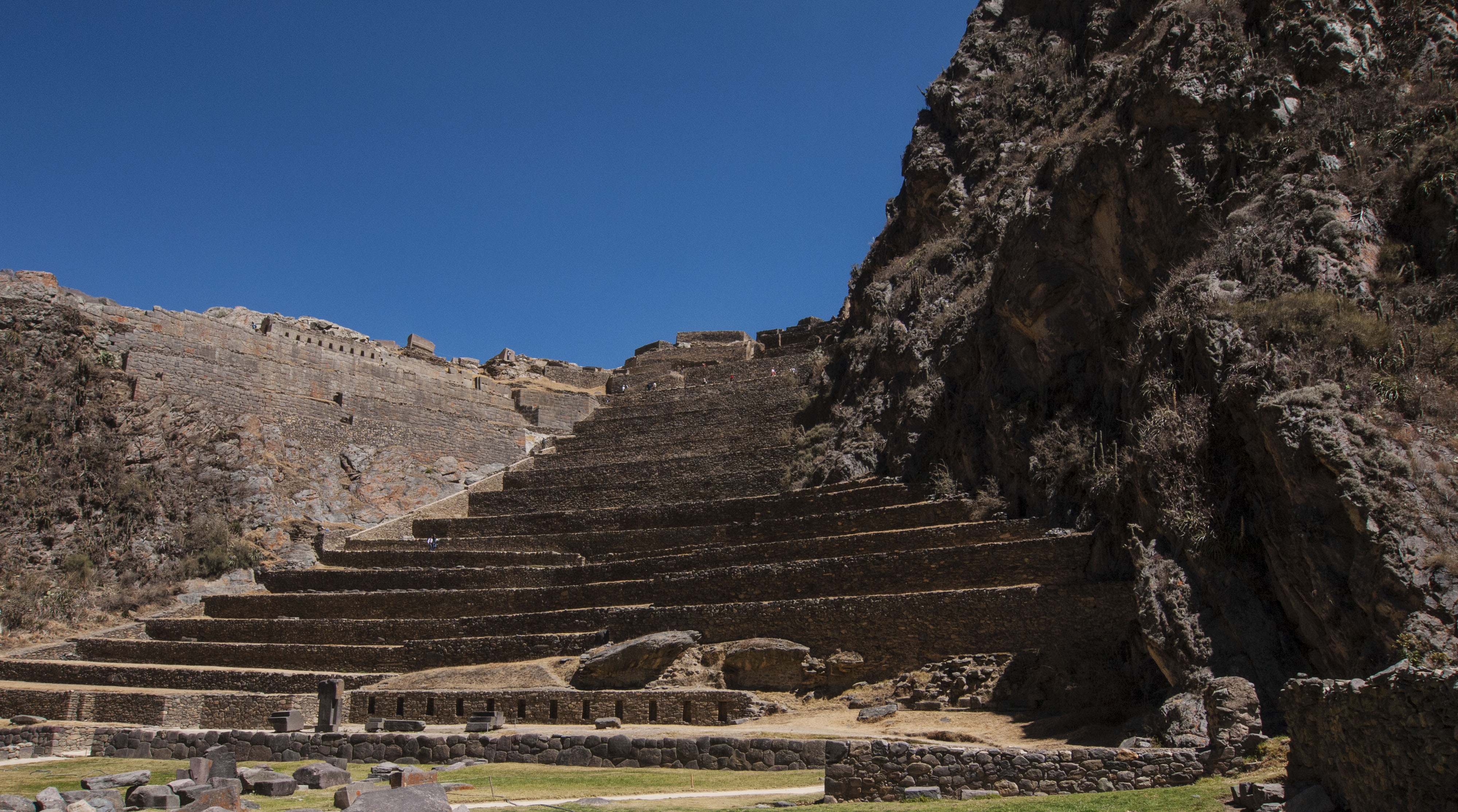
These ruins were very interesting with agricultural terraces, great views of the valley, a ceremonial district and even a baths area. The baths area was really interesting as there were lots of channels diverting water from the river to different places in the ruins.
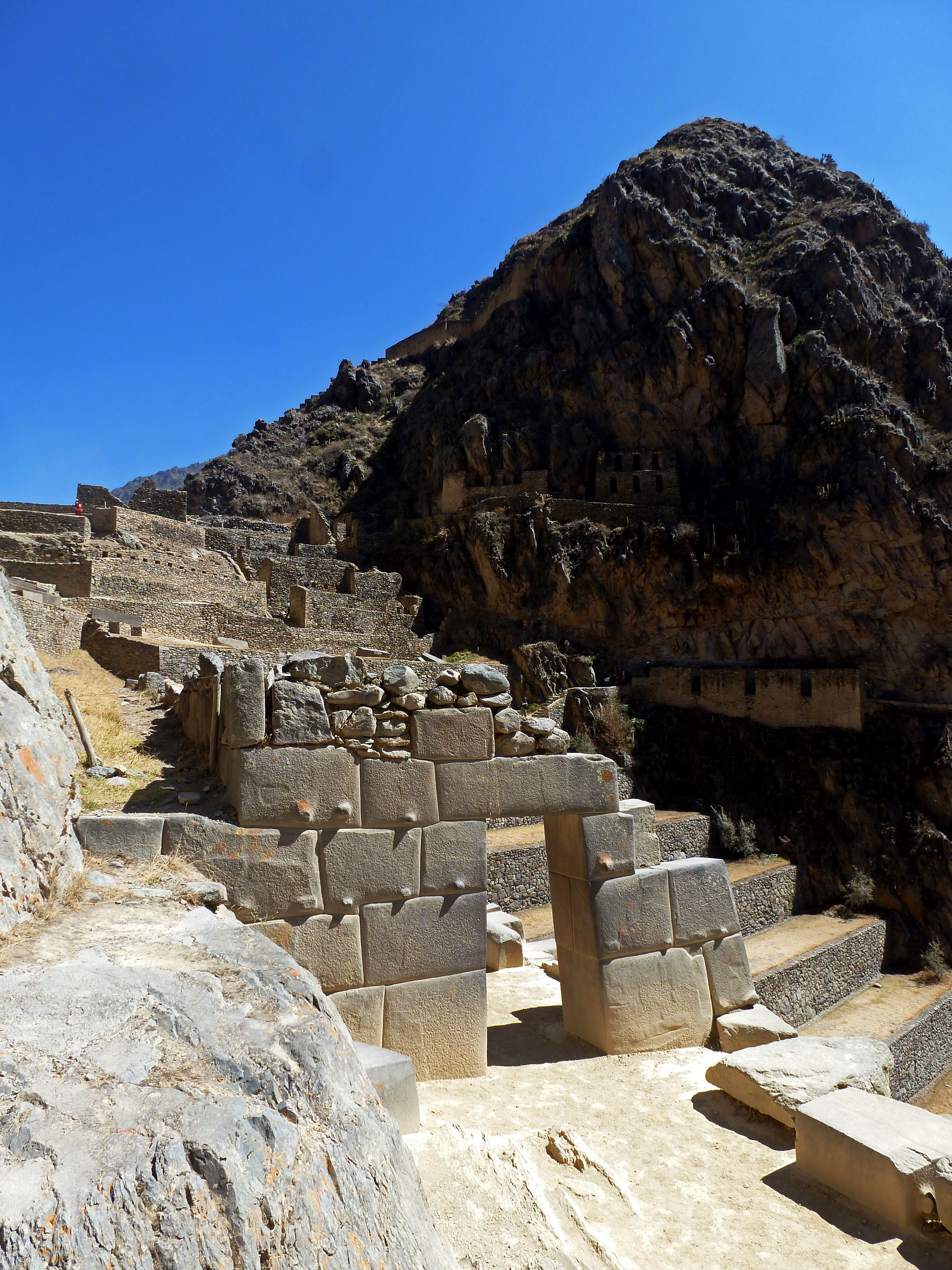
After a couple of hours visiting these ruins we needed to go back to the truck and get our stuff. We had a 2pm train to Aguas Calientes for our trip to Machu Picchu.
Guide to Machu Picchu
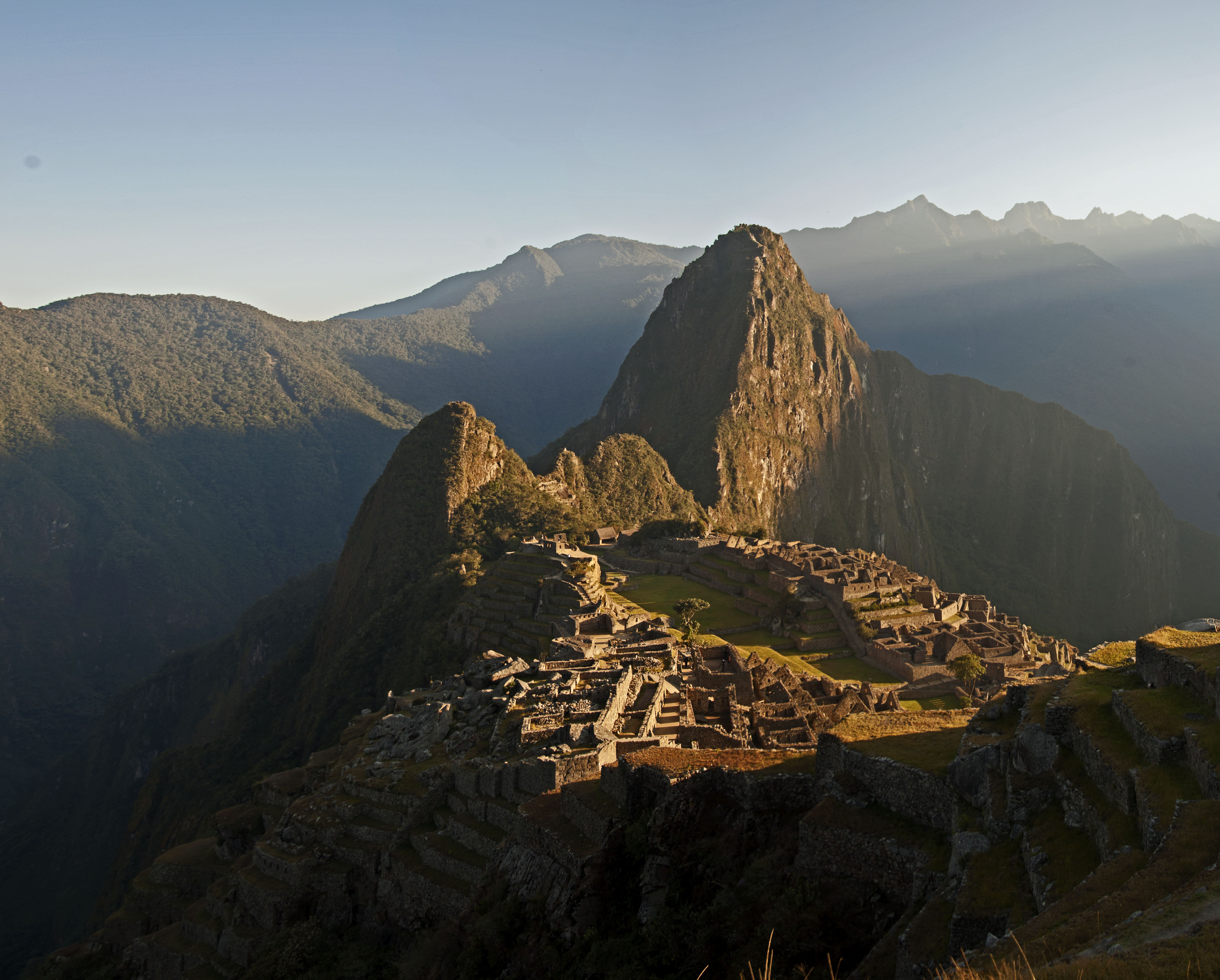
Machu Picchu is perhaps the most famous ancient city in the world. Consequently it is also one of the most visited. However the Peruvian government has taken action to limit the numbers to “only” 2500 per day. The site is not particularly large and this number makes it seem pretty crowded at peak times.
Entrance Costs
The entrance fee to Machu Picchu is also pretty expensive:
Machu Picchu Entrance fee S128
Machu Picchu Entrance + Museum S150
Machu Picchu + Huayna Picchu S152 (at either 7am or 10am – 200 at each time)
Machu Picchu + Cerro Machu Picchu S150
Ticket Purchase
Tickets can be purchased in advance at www.machupicchu.gob.pe , in Aguas Calientes at the ticket office or in Cusco at the ticket office (Oficinas de la Dirección Regional de Cultura Cusco,Av. de la Cultura 238 Condominio Huáscar.Cusco). Tickets are not available at the entrance gate.
If you buy tickets online you must pay by VISA. If you don’t have a Visa card you can pay at the following places:
Oficinas de la Dirección Regional de Cultura Cusco (Av. de la Culture) Banco de la Nación del Perú (Any Branch) Asociación de Agencias de Turismo del Cusco AATC Dirección Regional de Comercio Exterior y Turismo DIRCETUR.It is probably best if you don’t have a Visa to go to the Oficinas de la Direccion Regional de Cultura in Cusco to get it done.
There are also a number of Travel agents that can sell tickets, a list of which is available at :
www.drc-cusco.gob.pe/callcenteresp1/dmdocuments/call/agenciasmapi.pdf
Due to the limitations on tickets per day it is best to buy your ticket in advance in Cusco or online to avoid disappointment.
Machu Picchu Rules
Once you have arrived at the site you will need your passport for identification and this is checked at the entrance gate. Also note that big packs are not allowed in (only up to 20l or so) but there is a storage booth outside the gate and one just inside which are reasonably priced. The one inside is slightly cheaper than the one outside. No food is allowed in the site but we carried food in our backpacks and didn’t have any problems. Also be aware that walking sticks or hiking poles are not allowed.
The only option to buy food is a restaurant just outside the gate and this is very expensive. There are many places in Aguas Calientes that sell packed lunches at reasonable prices so this is recommended.
There are no toilets actually in the site itself. At the entrance there is a toilet which costs S1 to use. A complete con considering how much you have paid to visit !
The day trippers from Cusco arrive about 10am and the site becomes really crowded by this time.
How To Get to Machu Picchu
There are a number of ways to get to the site itself. Only the Inca Trail arrives at Machu Picchu directly, all the other ways end at the town of Aguas Calientes or Machu Picchu Pueblo, which lies at the foot of the mountain that Machu Picchu sits on top of.
1) The Inca Trail
Perhaps the most famous way is to walk there on the Inca Trail. This is very popular and has been limited to 500 people per day – although this does mean 500 people arriving pretty much en masse at Machu Picchu, camping at the same places and hiking together. Don’t expect quiet and solitude. The 500 people however includes everyone on the trail (hikers, porters, guides, cooks etc) so there are actually only about 220 places per day for hikers. To do the Inca Trail a guide is required and due to the number limitations it is recommended to book at least 6 months in advance !
The Inca trail is 43km and takes 4 days arriving at Machu Picchu at sunrise on the 4th day. The prices for this trek vary between USD500 and USD800 per person.
2) Do one of the other treks (eg. Salkantay)
These treks end at the town of Aguas Calientes. The advantages are less people, no need to book way in advance and cheaper (we saw Salkantay for USD 160) . They are just as spectacular as well, if not more so.
3) Take the Train from Cusco
There are three train services available. Peru Rail, Inca Rail and Machu Picchu Rail. Peru rail is by far the biggest though and also the cheapest.
The train station in Cusco is actually outside town (at a place called Poroy, about 20 minutes by taxi from central Cusco). There are a number of trains that leave throughout the day. The cheapest is the expedition (sometimes known as Backpacker), more expensive is the Vistadome and most expensive the Hiram Bingham.
The Expedition and Vistadome are broadly similar although the Vistadome has more windows and more comfortable seats. The Hiram Bingham is ridiculously expensive and run by the Orient Express – the tickets include entry to Machu Picchu, a guide for the site and gourmet meals.
The journey from Cusco to Machu Picchu takes 3 hours.
The pricing is very variable (by date and by time on the day) but expect to pay for a return trip per person: Expedition (USD 130), Vistadome (USD 150), Hiram Bingham (USD 660).
4) Take the train from Ollantaytambo
Ollantaytambo lies at the far end of the Sacred Valley from Cusco and is a lovely little town with its own set of very interesting Inca Ruins.
Trains run from here to Aguas Calientes – the same types as from Cusco – but are much quicker, and therefore cheaper, taking only 1 .5 hours..
The pricing is very variable but expect to pay for a return trip per person: Expedition (USD 90), Vistadome (USD 130), Hiram Bingham (USD 600).
In general day trips are more expensive and going in the afternoon and returning the following evening is the cheapest way.
5) Walk from the Hydroelectrica
The road continues from Ollantaytambo, following the river and railway tracks to the small town Santa Teresa. It is possible to take a collective from Ollantaytambo to Santa Maria where you change to another which goes to Santa Teresa.
Alternatively it is possible to drive to Santa Teresa. There is a campsite here (Genaro Moscosco la Torre (S13 07.903 W72 35.781). The road is paved half of the way (to the start of the Inca trail) and good dirt after this.
From Santa Teresa you need to either walk to the Hydro Electric plant (2 hours) or take a collectivo (about 5 Soles). Once at the plant it is a 3 hour walk along the train lines to Aguas Calientes or you can also take a train (much less frequent than from Ollantaytambo). Just remember to be careful when walking along the train lines as they are in use.
How to get from Aguas Calientes to Machu Picchu
There are two ways to get from Aguas Calientes to Machu Picchu
1) Walk
There is a trail from the town to the site entrance. It opens at 5am in the morning. It follows the road up from the valley but there are steps that cut the switchbacks. It is a pretty strenuous climb but should only take between 1 and 2 hours. It is recommended to tackle it early before the sun becomes too hot. Bus tickets can be purchased at the top if you want to avoid the walk down !
2) Bus
From 5.30 in the morning buses leave the town of Aguas Calientes for the 30 minute journey to the site entrance. These depart when full and therefore leave very frequently. Early in the morning there is usually a large queue by 5.30 but there will also be a large number of buses leaving. The cost of the bus is USD 17 return.
The preferred time to arrive at the site itself is for sunrise. However the sun does not hit the site until well after first light because of the surrounding mountains. This should be just before 7am.
The Climbs
At each end of the site there is a mountain. In order to climb either of these there is an additional charge and the ticket must be purchased with the entrance ticket. Most guidebooks claim that you can buy the tickets to climb at the site – This is no longer correct.
1) Huayna Picchu
This is the shorter of the two climbs and there are more Inca ruins at the top. This is limited to 400 people per day (200 at 7am and 200 at 10am). The route to the top is stairs and the climb is fairly strenuous.
2) Cerro Machu Picchu
This climb takes you well over the top of Huayna Picchu at the other end of the site and gives great views of the surrounding valleys and the site itself. There are no limits to the number of people although the climb must be started before 11am. The route is very steep and is stairs the whole way.
Aguas Calientes
Aguas Calientes is a new town and pretty ugly with it. There are a large number of accommodation options and it is not necessary to pre-book. Agents for many of the hotels/hostels meet the trains and rooms can be got for as little as S20per person. They may not be of very good quality though.
The restaurants in Aguas Calientes are expensive as befits a tourist town as are the shops. Aim to minimise the time that you spend in the town !
There is also a municipal campground slightly out of town towards Machu Picchu.
Sacsayhuaman, Qenko, Puca Pucara and Tambo Machay
Quinta Lala, our Cusco campground, is right next to the big Inca ruins of Sacsayhuaman. This is just one of four Inca sites that are in a line along the road from Cusco to Pisac. It’s very easy to see all four of these in one day as Collectivos (50c per person) ply the road between the sites. All the sites can be visited using the Cusco Tourist Ticket. Note that there are several spellings of all these sites and I have used the one from the Rough Guide.
The Cusco tourist ticket is an expensive (S/130 each) ticket which covers sixteen destinations both near Cusco and in the Sacred Valley. There are some museums but these are the less interesting ones in Cusco and the better ones have separate entrance fees. You can pay individually at the sites you want to visit so if you will only visit a few its not worth buying the Boleto Turistico General. We were determined to visit as many as possible to get our money’s worth.
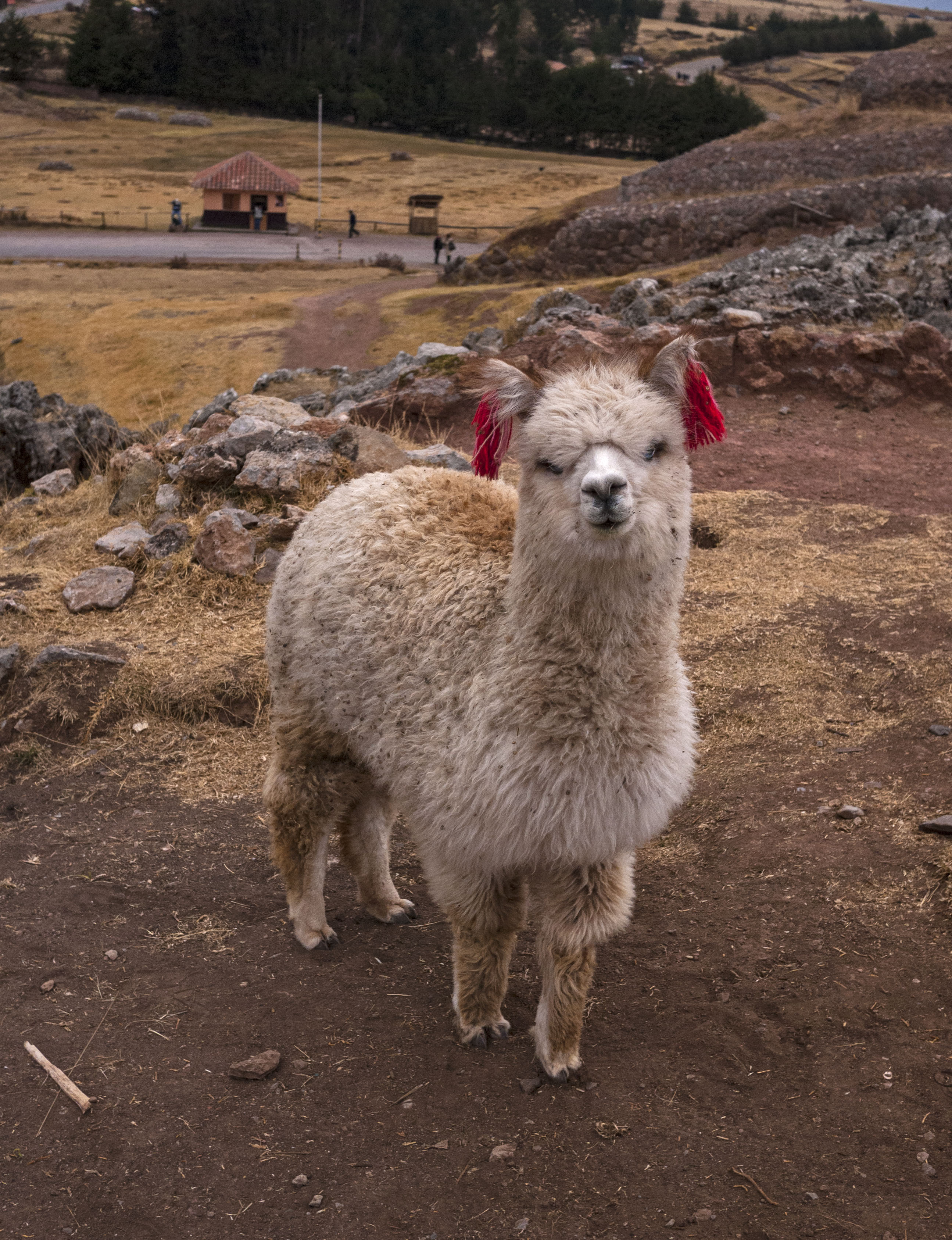
Tambo Machay and Puca Pucara are only 200m apart and Sacsayhuaman and Qenko are only 500m.
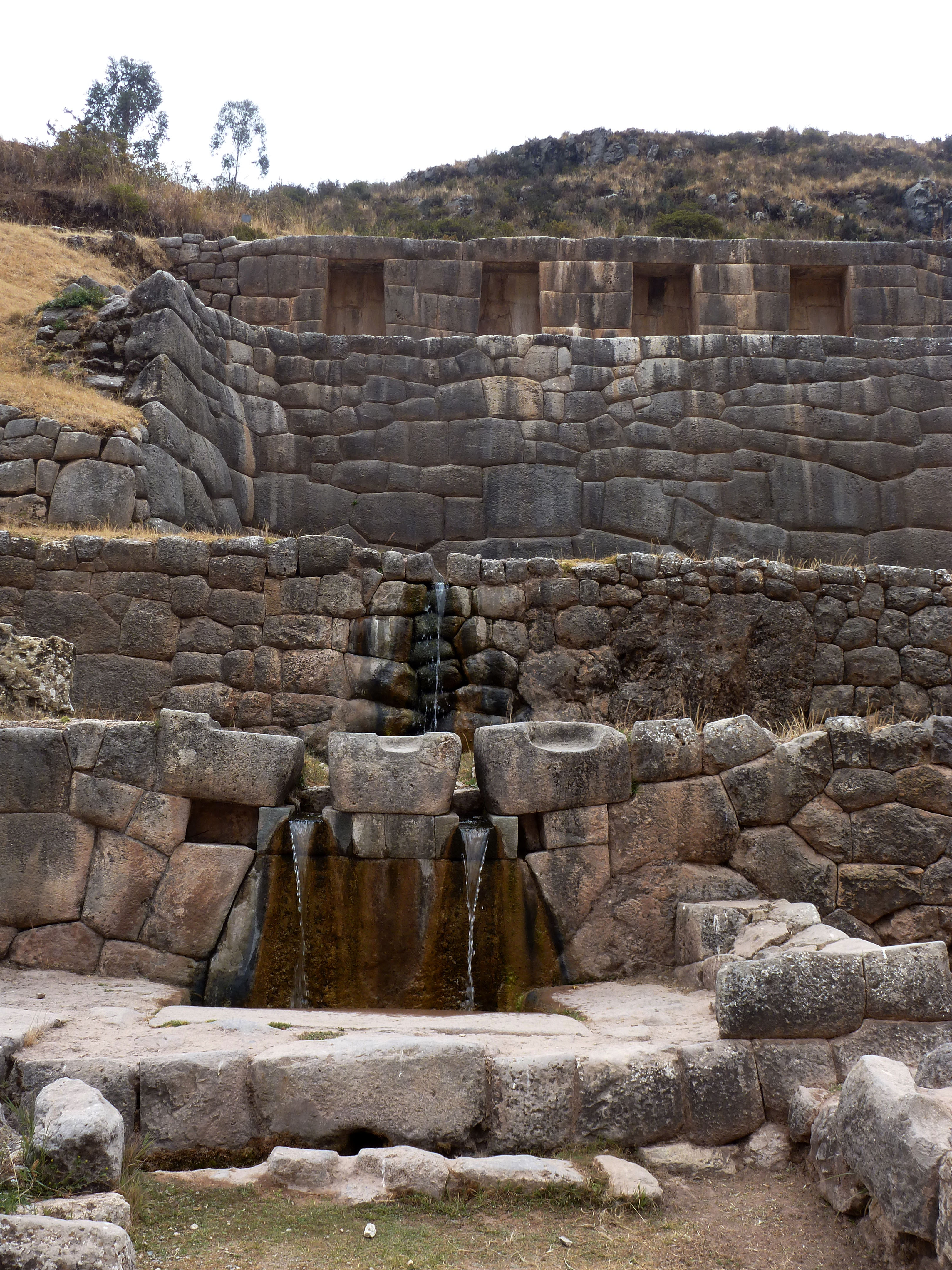
We decided to start with the site that is furthest away from Quinta Lala, Tambo Machay. This was an Inca baths and as such was an important pace for both ritual and physical cleaning. The site isn’t that interesting and takes only a few minutes to walk around.
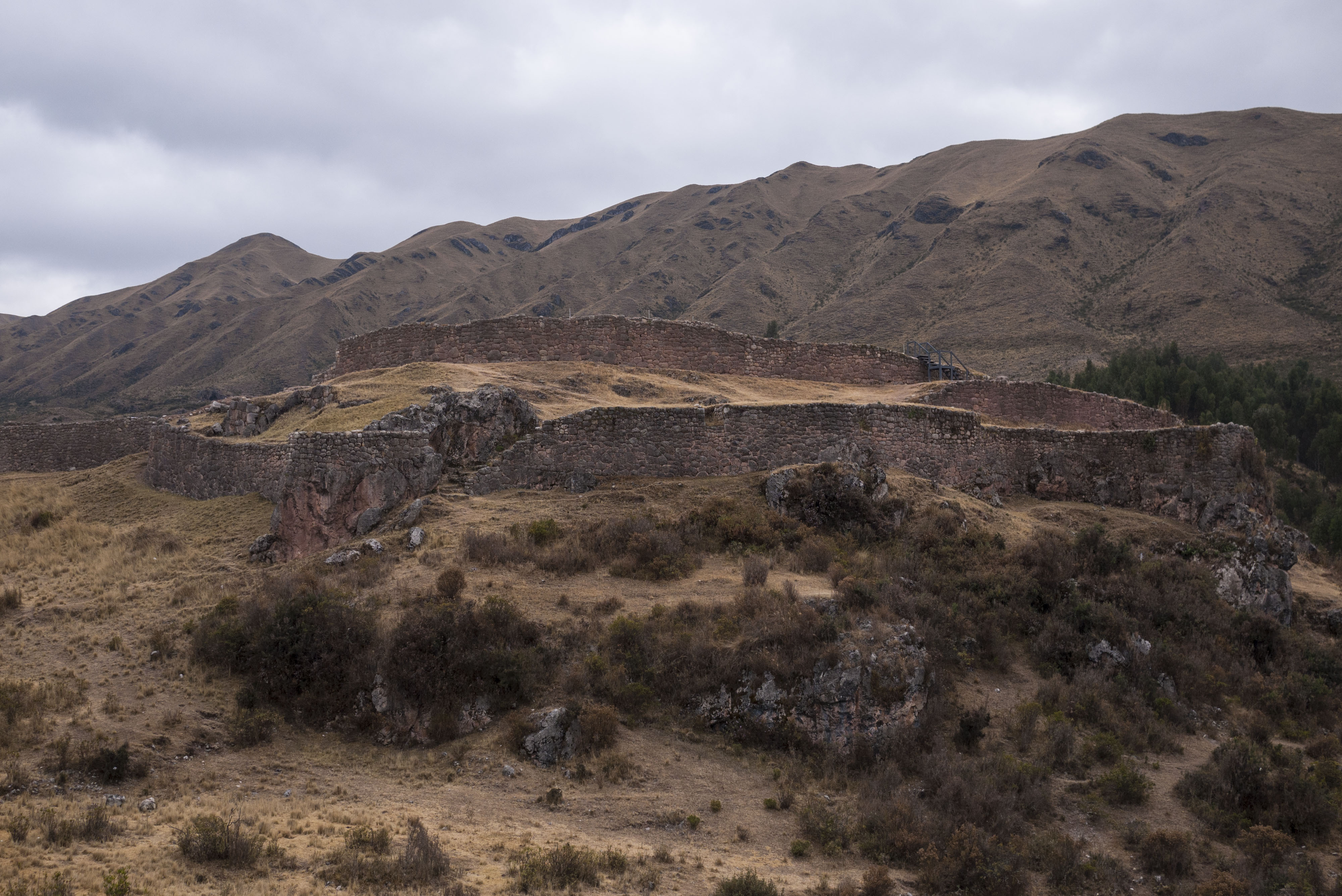
Just up the road from here is Puca Pucara which means “Red Fort” and is a relatively small structure with great views down into the Cusco valley. Archaeologists debate whether this was a defensive structure or merely a hunting lodge for the Emperor.
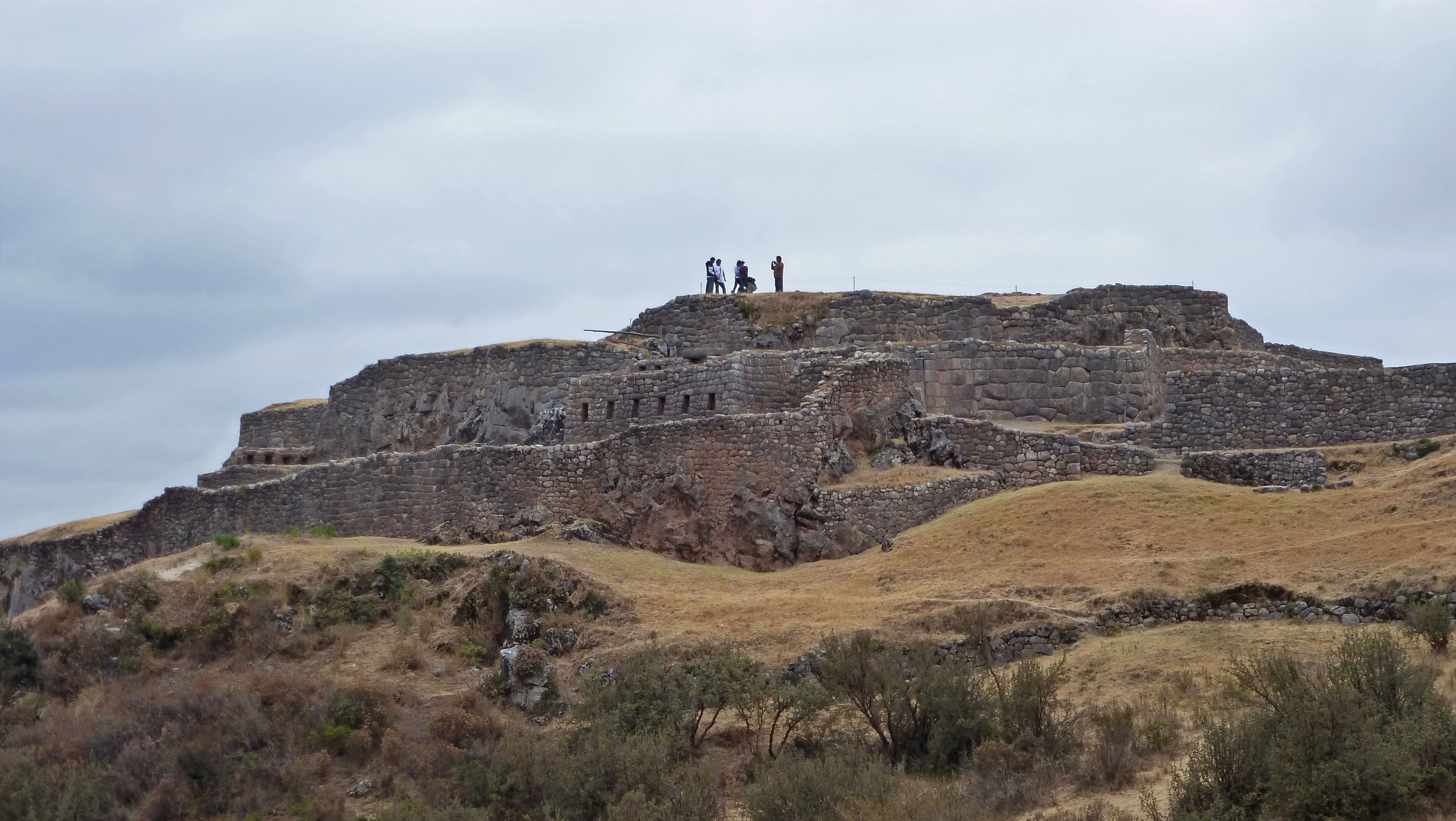
After a short ride in a collective (stuffed in with a lot of children returning from school) we arrived at Qenko. At Qenko a trainee guide approached us and offered to show us round for free as it would help him learn.
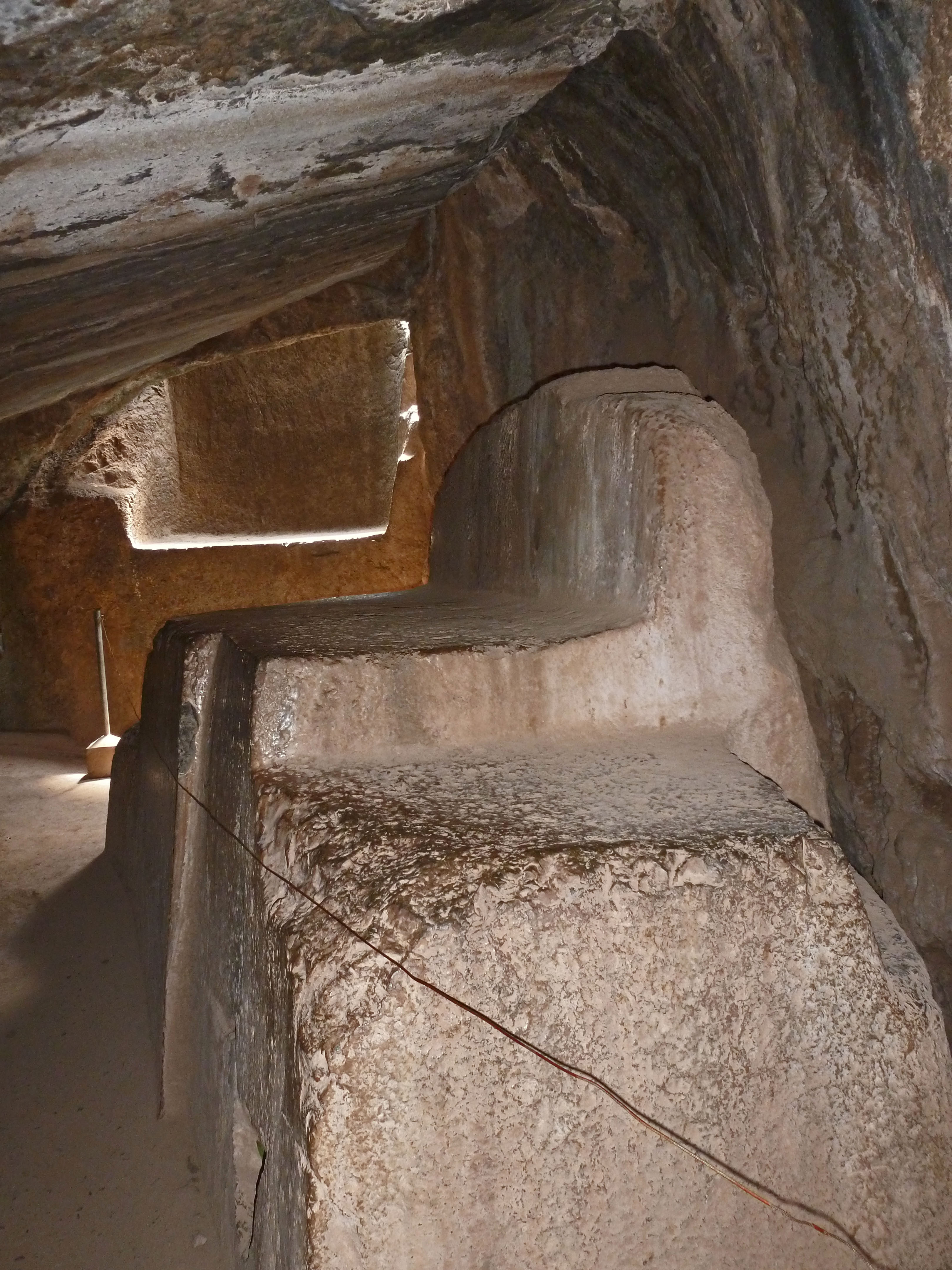
Qenko is a massive stone, cut with passages, surrounded by inca walls and seats. On a yearly basis sacrifices would be made at an altar under the stone and based on the direction that the blood flowed would predict whether the forthcoming year would be good or bad.
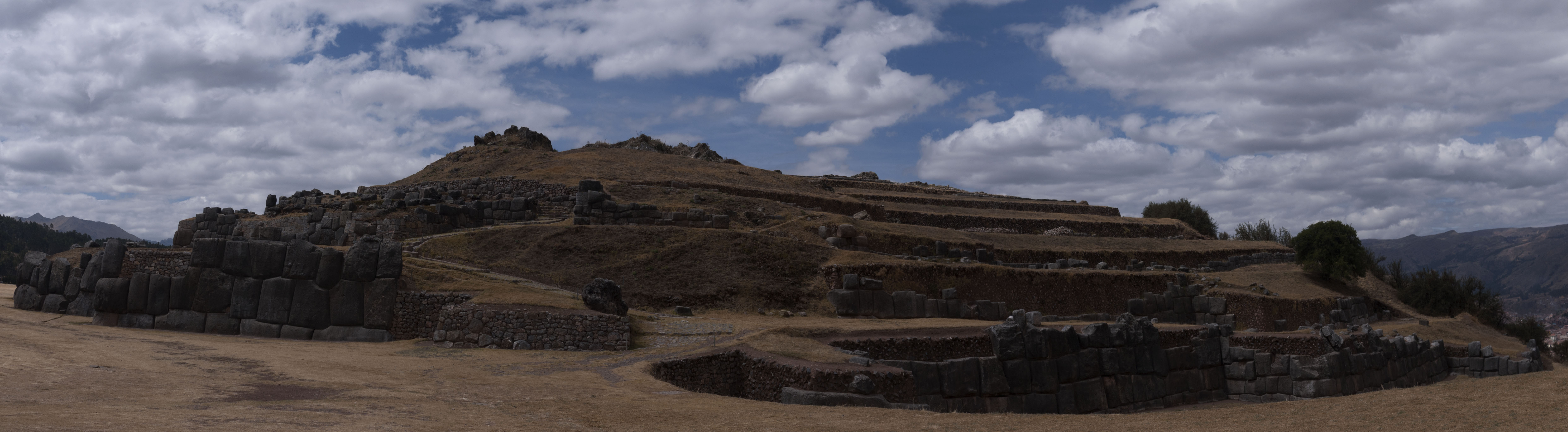
The biggest of the four sites is Sacsayhuaman. This site, although significantly deconstructed by the Spanish, is still very impressive. The main feature is a massive defensive wall built with enormous blocks of stone.
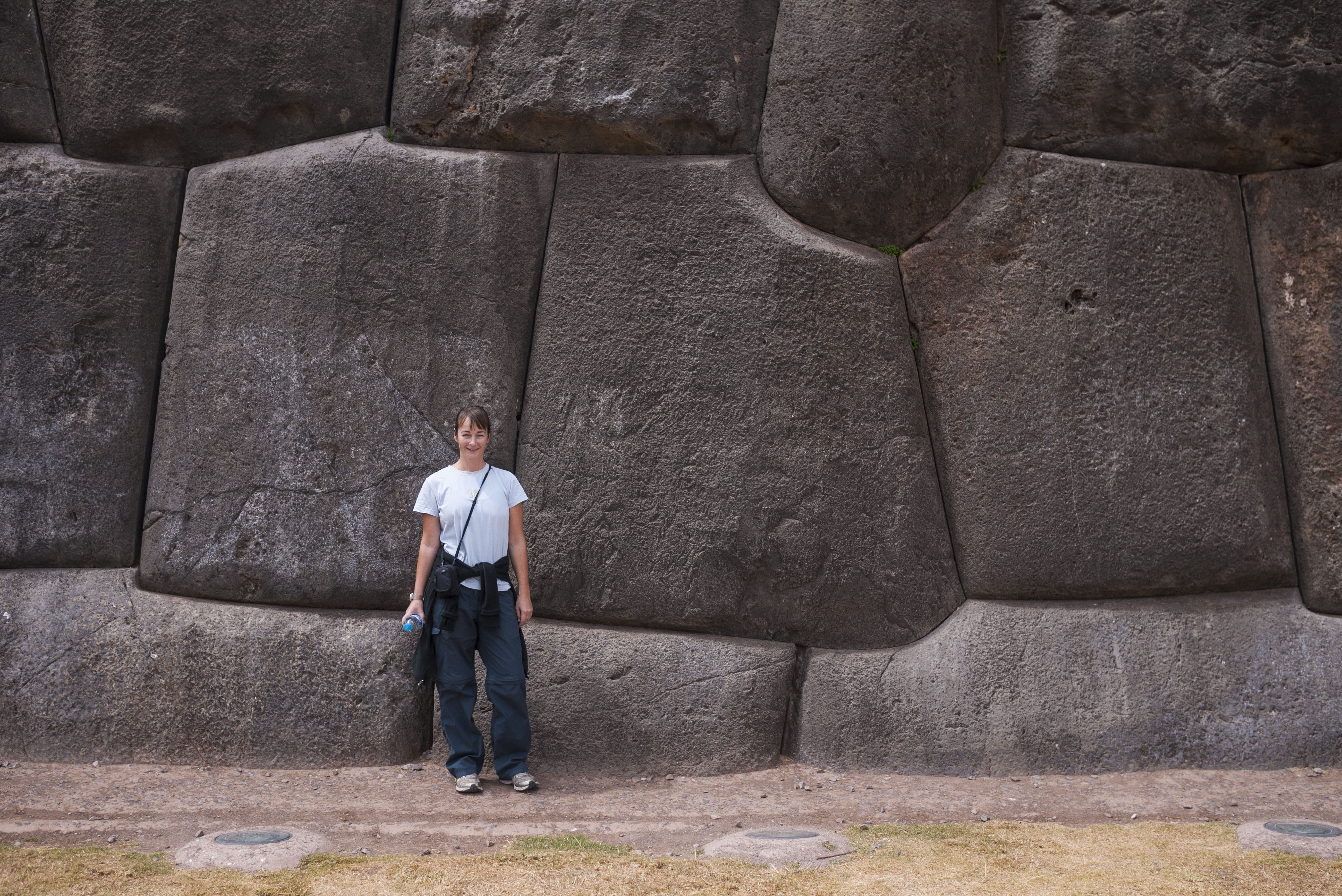
The wall stands 20m high and some of the blocks weigh up to 300 tonnes. The wall itself is 600m long and zig zags leading the shadows to look like cats teeth but also forcing any attackers to expose their flanks.
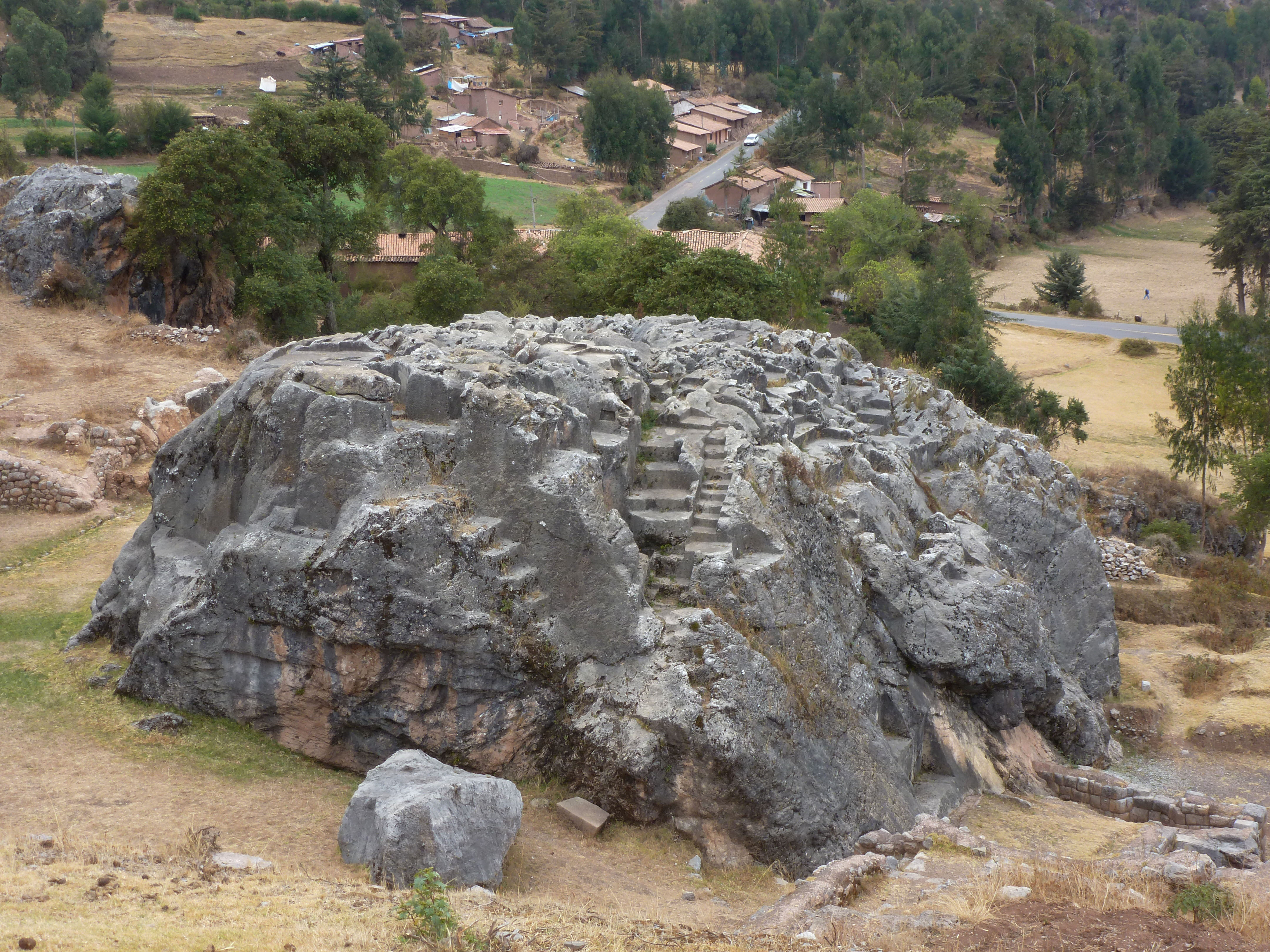
Opposite the defensive wall is a large volcanic outcrop which overlooks a large amphitheatre. Here the Inca Emperor presided over large ceremonial gatherings.
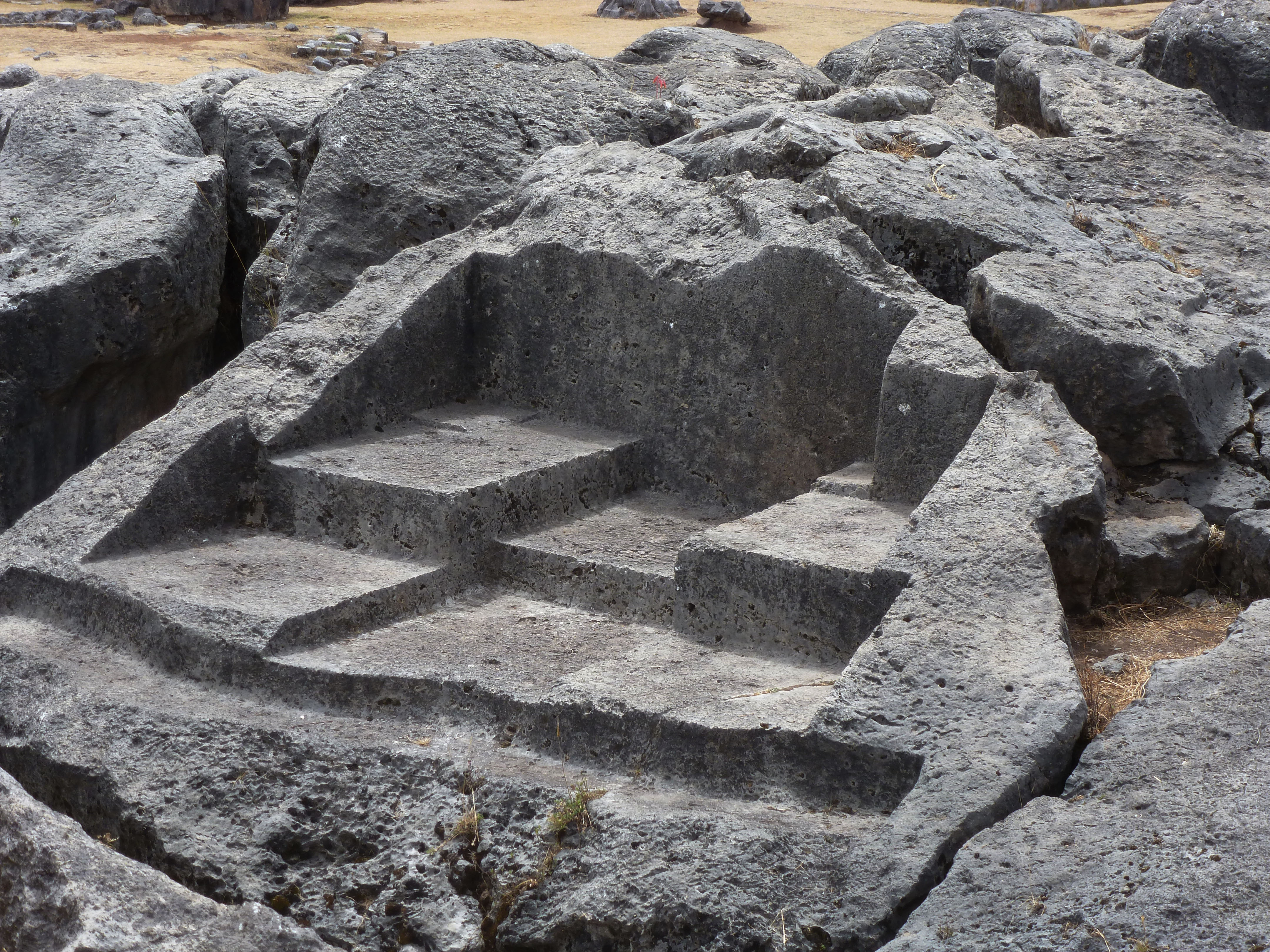
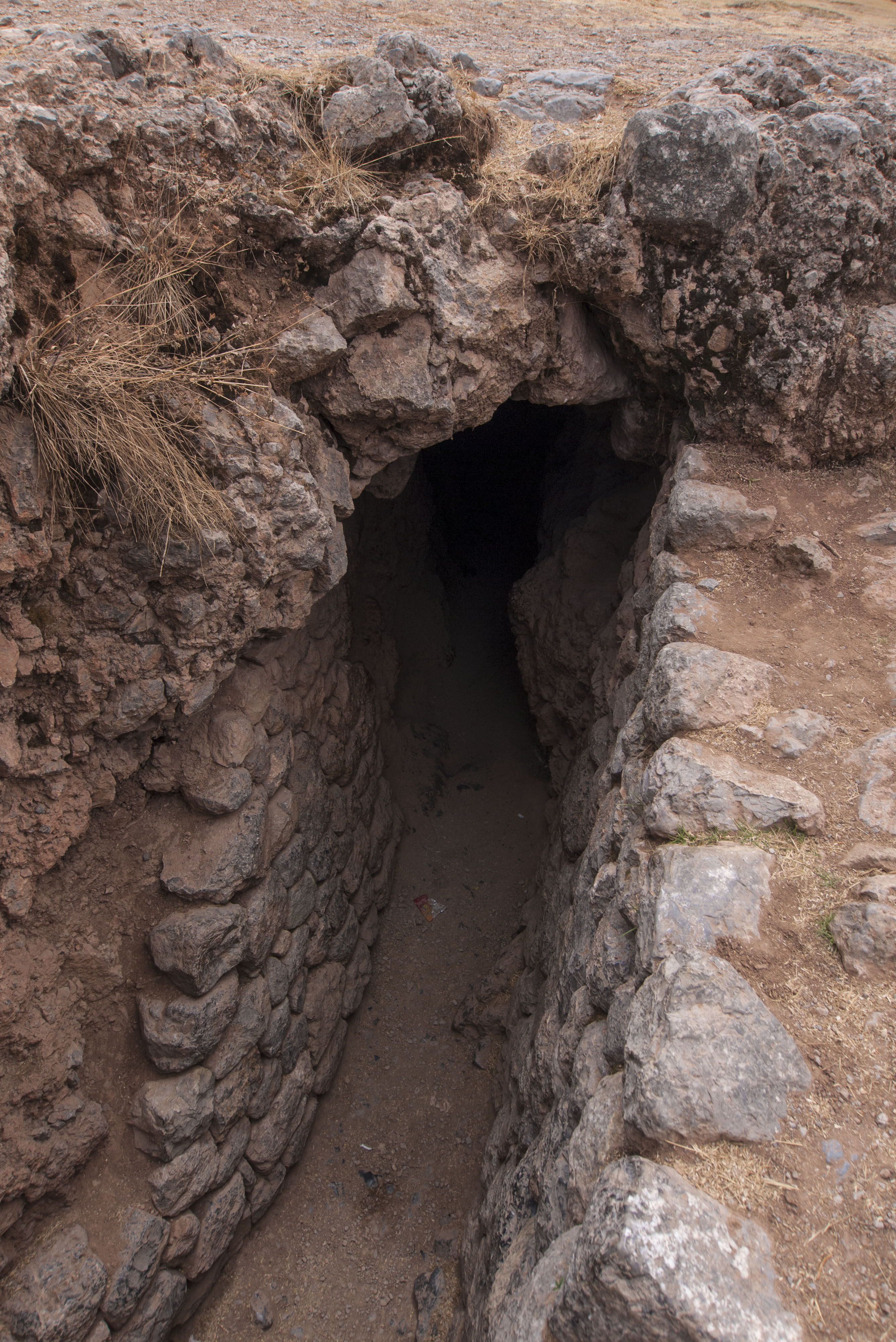
At one end of the site there are a large number of tunnels that honeycomb an area of fractured rock. These were fun to explore but pitch black !
 FromAtoB