Volcan Masaya and The Secret Prison
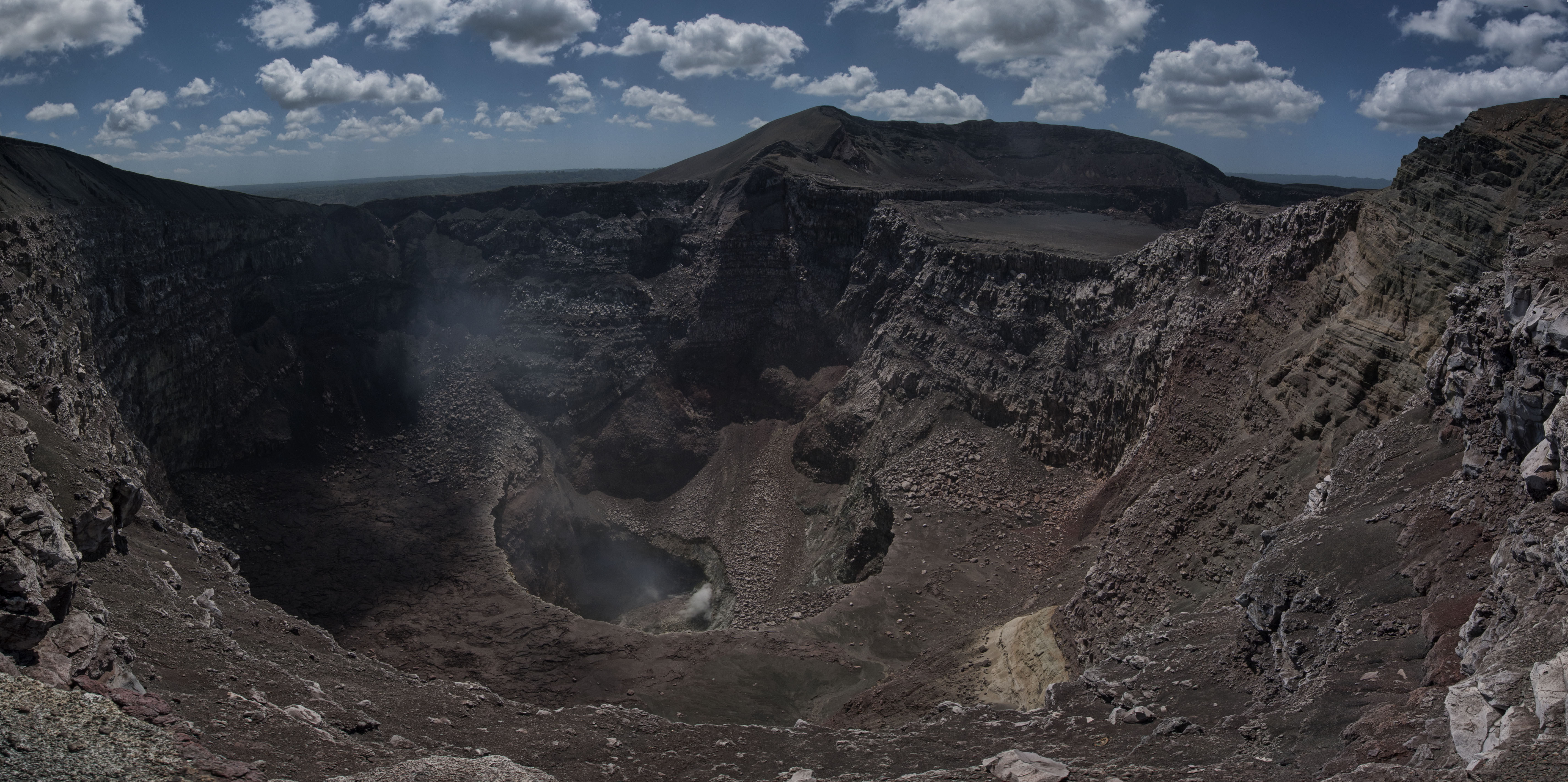
Only around 20km from Granada is the National Park of Volcan Masaya. This is a volcano with three craters, one of which is smoking and putting out large amounts of toxic gases.
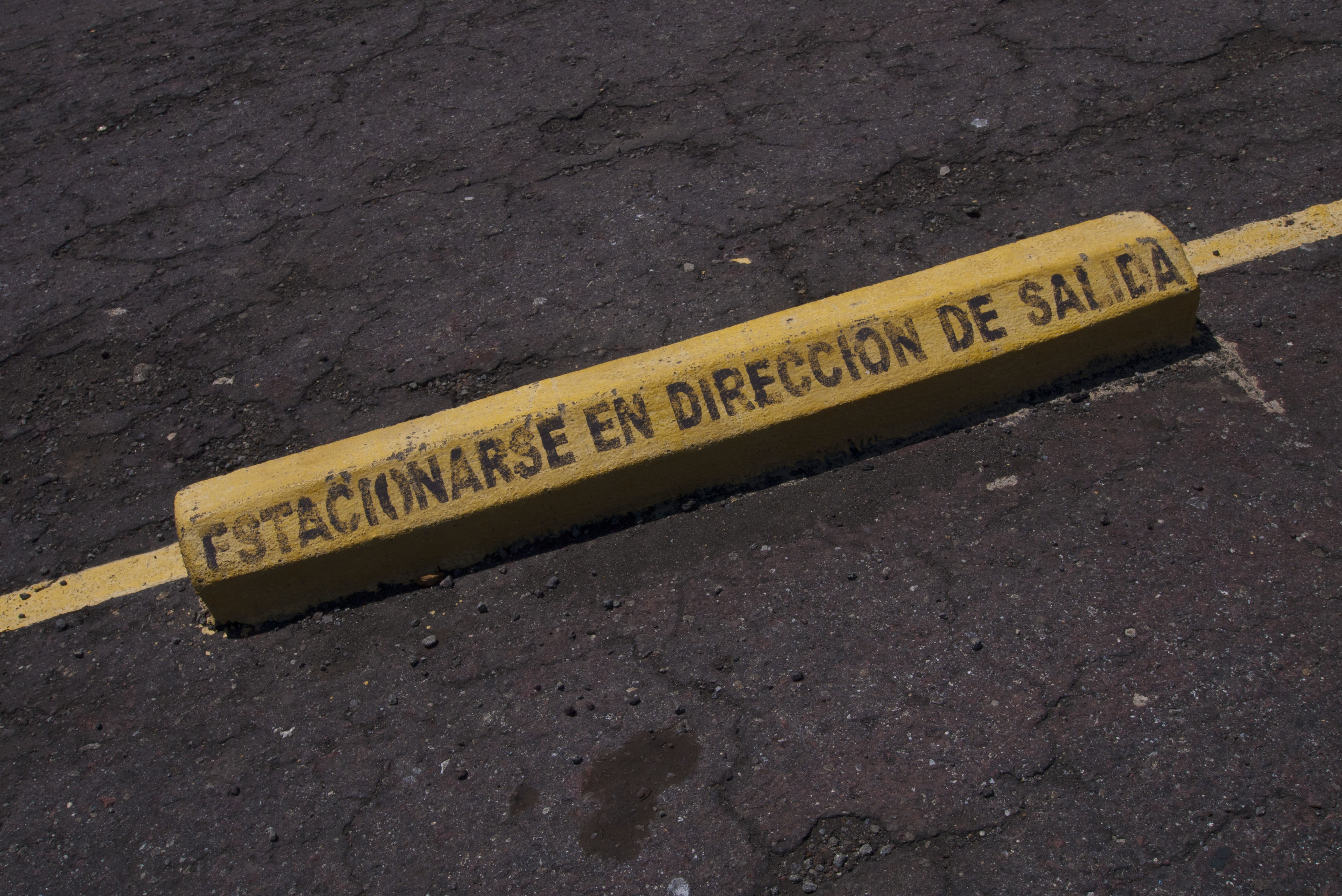
At the crater parking lot you are advised not to stay more than 20 minutes and to park facing away from the crater to facilitate a quick escape if necessary.
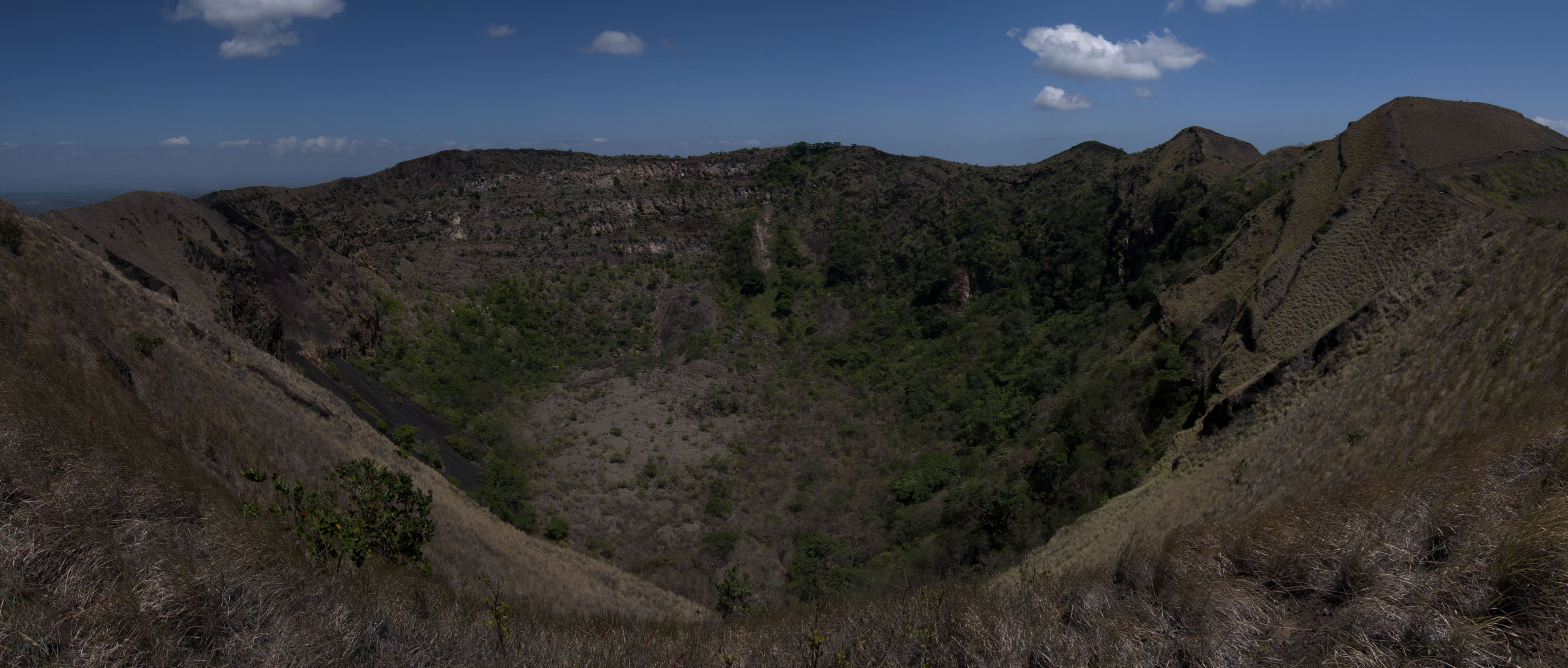
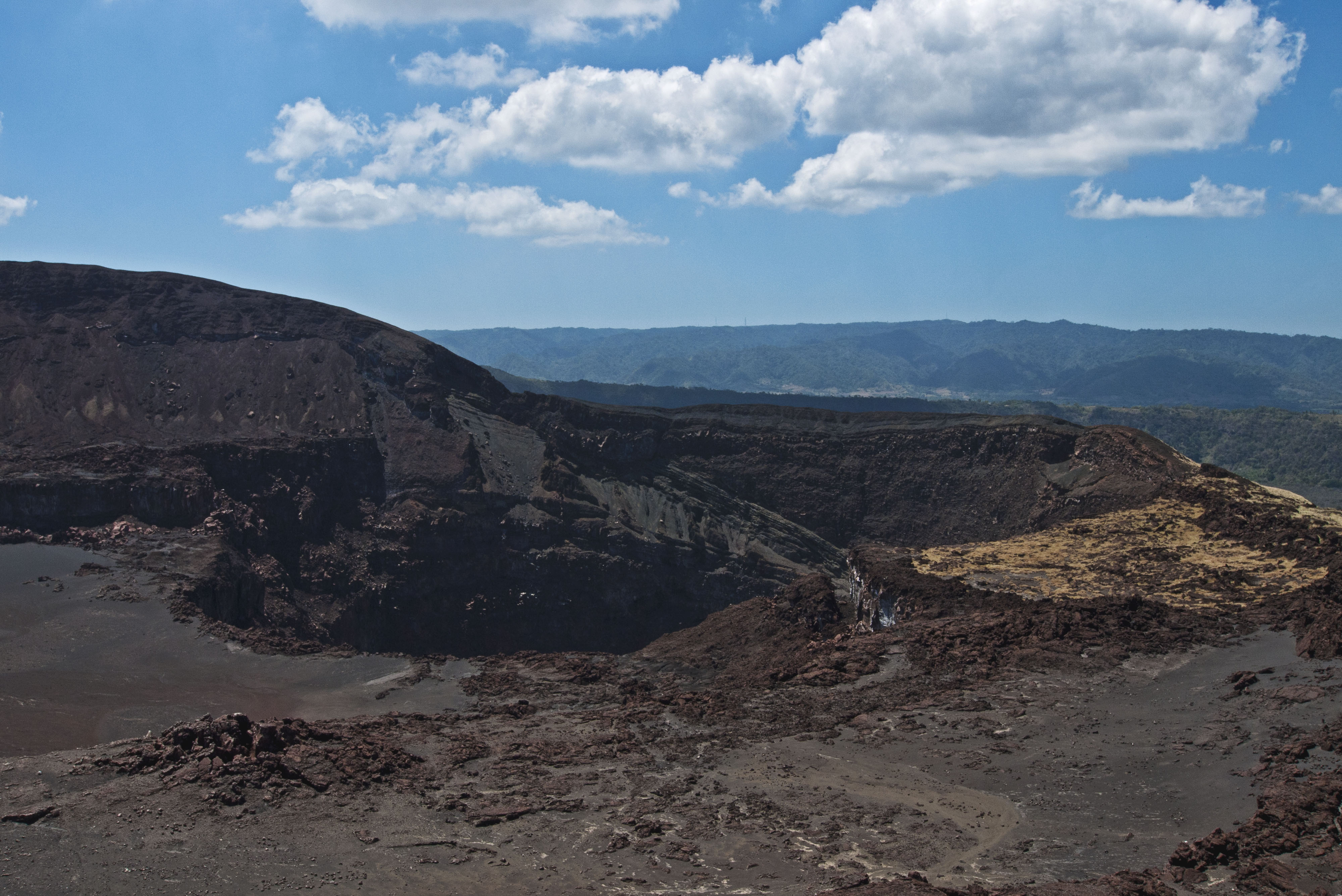
After checking out all the craters and we headed back down – we’d only breathed a bit of the noxious gas but it was enough. We camped for the night at the Museum/visitor centre of the park.
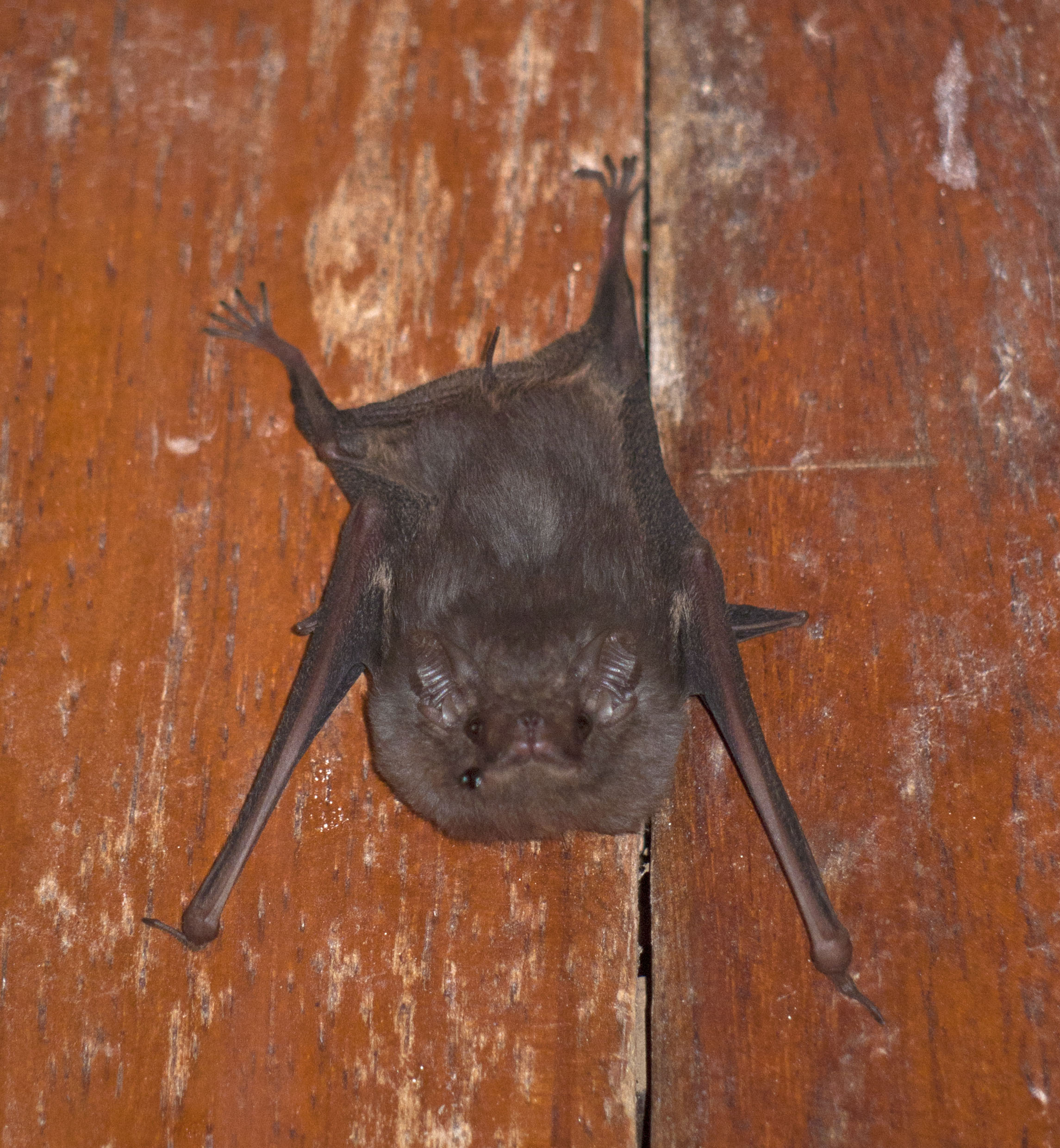
The next morning we drove a couple of miles up the road to Fortaleza de Coyotepe which was an old Military fort with a very dark history.
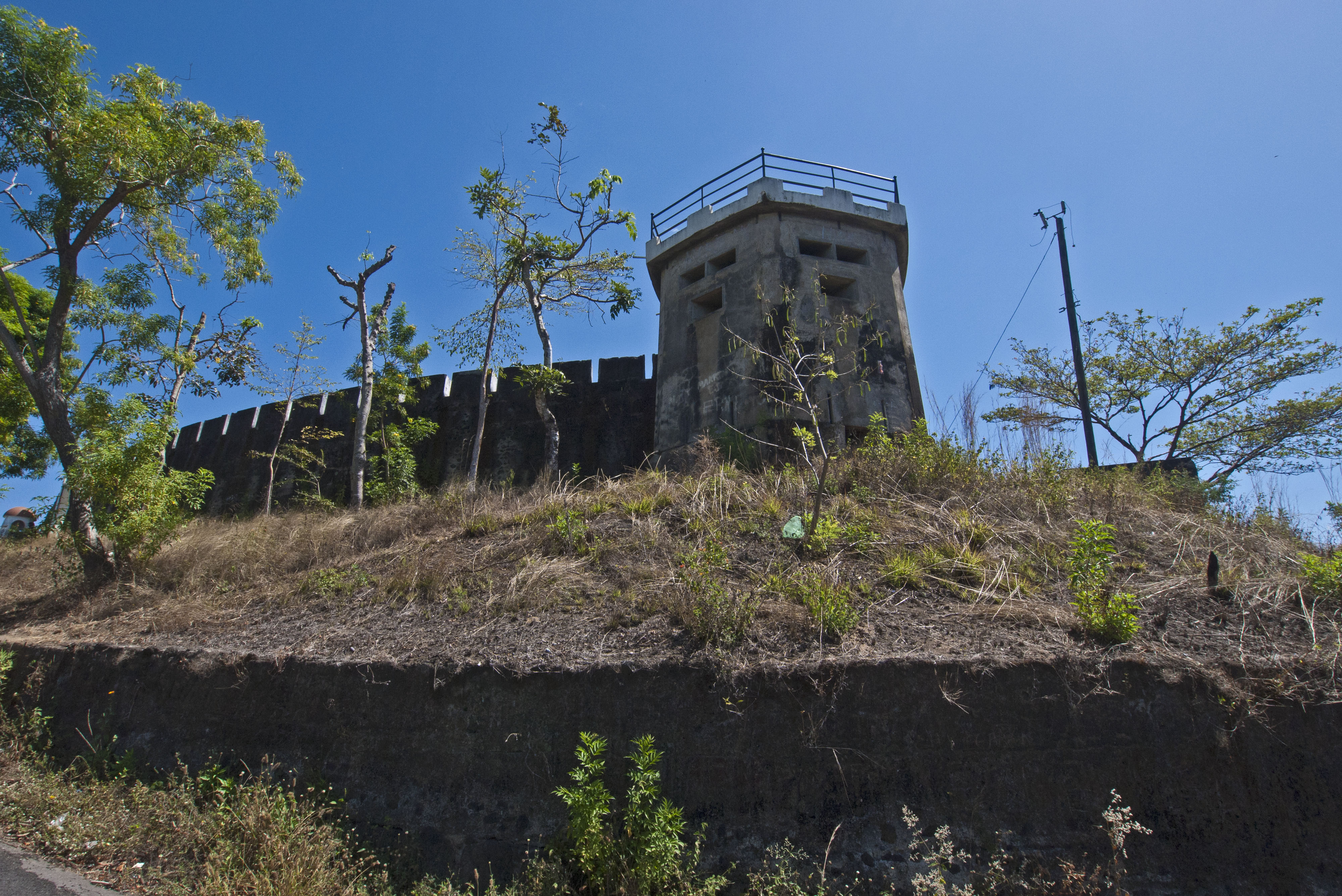
This was a military outpost built in 1893 which was attacked and overrun by the US in 1912. It was later used by the Somosa regime (three dictatorial presidents who were Father, Eldest Son and then youngest Son each more brutal than the last). When the Sandinistas finally conquered it in the revolution they discovered that it had been a prison for more than 400 political prisoners. These were people who had been disappeared. They were held in two levels the deepest of which was almost constantly dark.
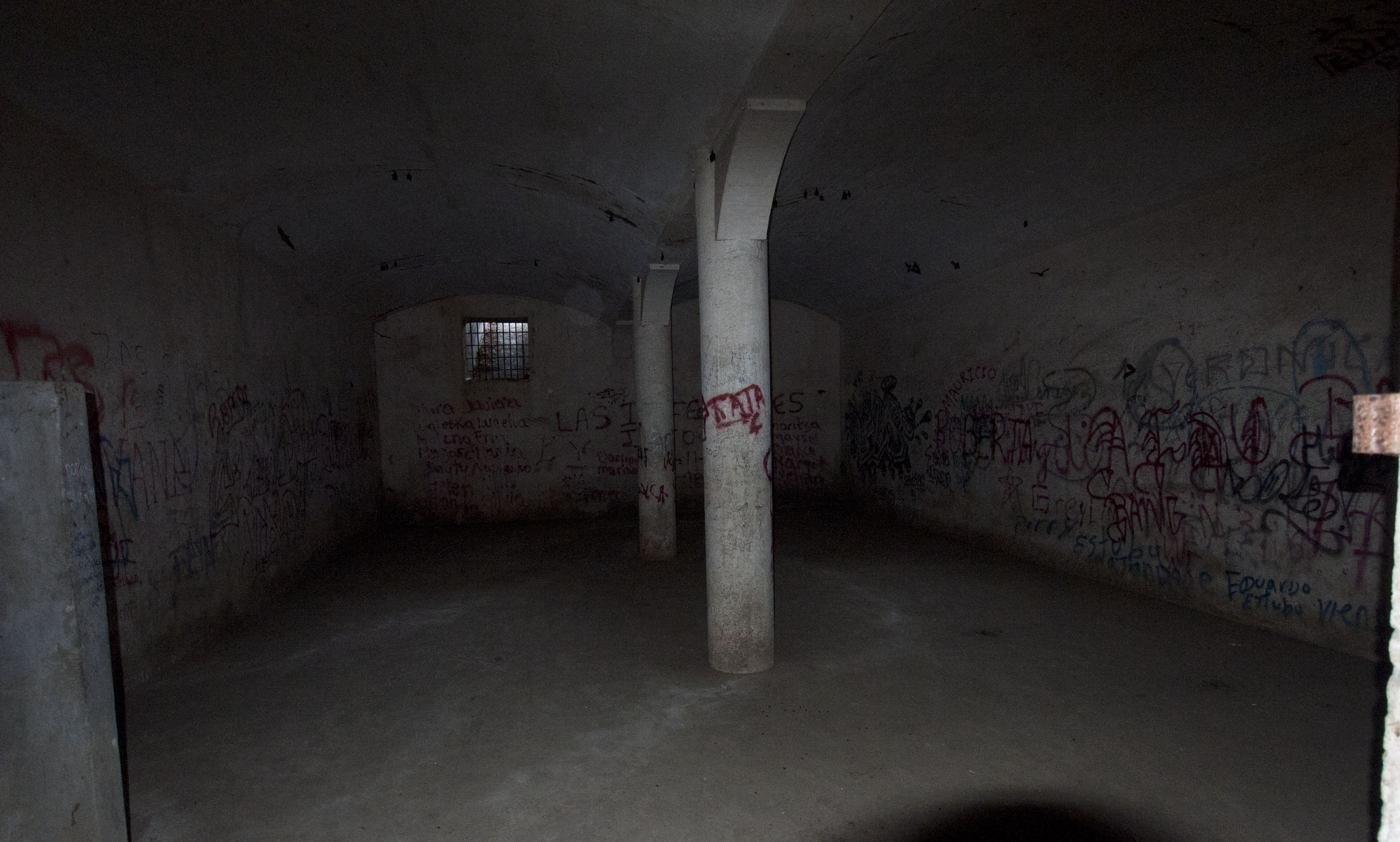
In this second level there were torture chambers where political prisoners were interrogated. The conditions must have been horrendous with large numbers of inmates crammed into small areas with no facilities for indefinite periods. These inmates were never allowed to leave their cells. After the Sandinistas liberated the prisoners they threw the guards in the prison and operated it for another 4 years – they did however put toilets in the cells and were slightly more humane than the Somosa regime.
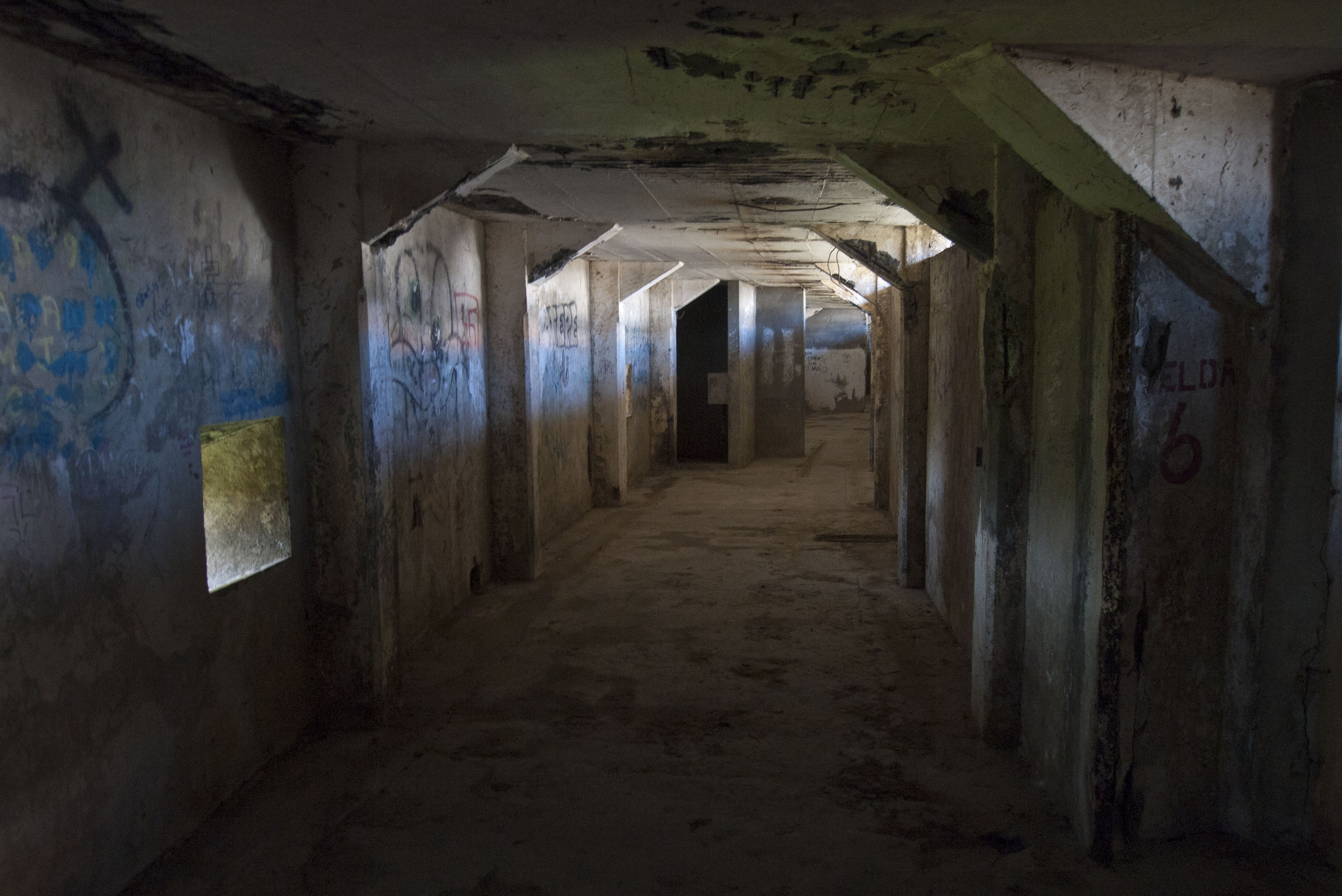
The picture above shows the 1st level of cells. There were bars along the middle of the corridor and one side were the cells the other the corridor.
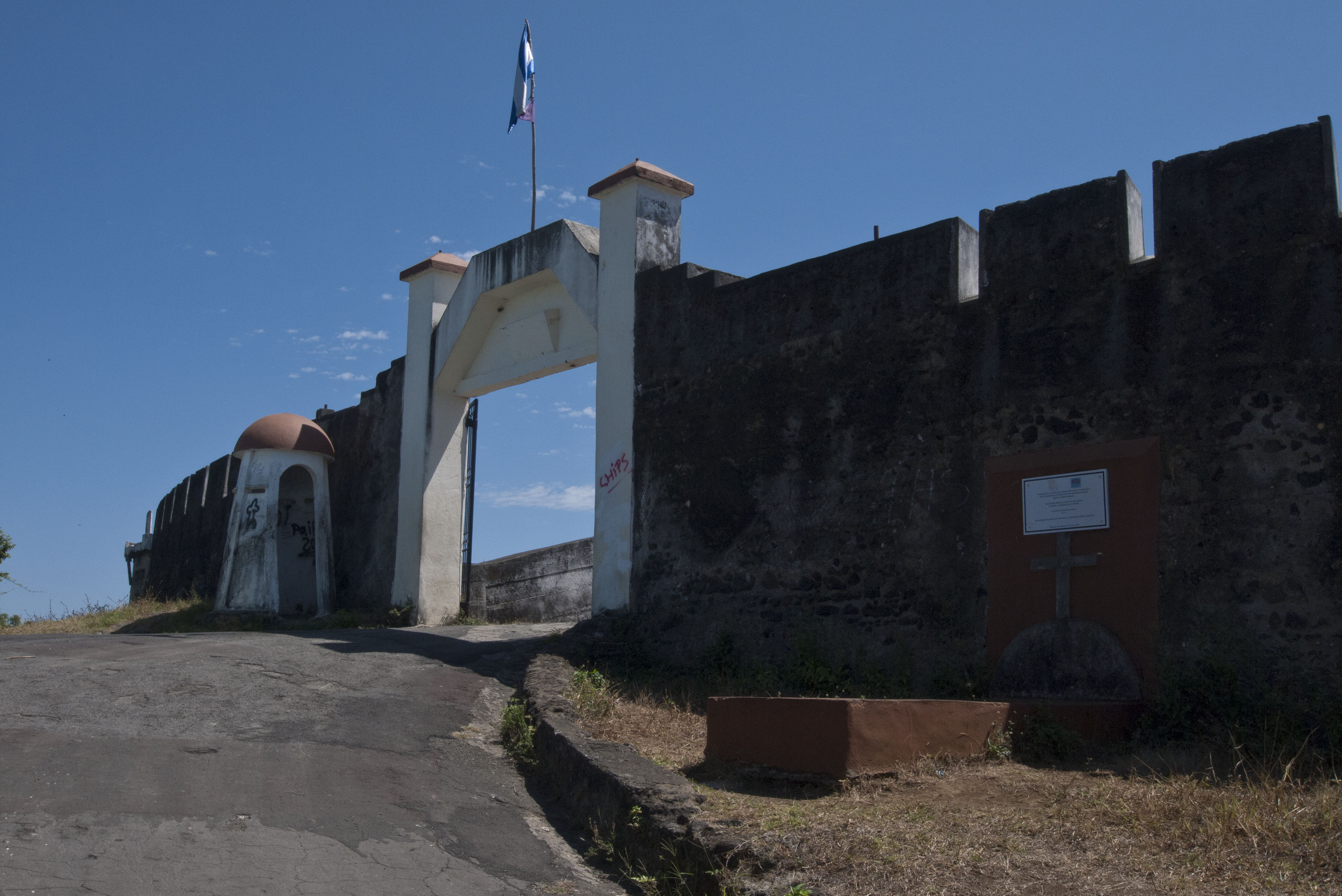
We were shown around the prison by a tour guide who had met some of the prisoners who were incarcerated here. Its difficult to imagine how tough it was in the searing heat here with disease rife, limited rations and poisonous snakes and spiders invading the cells – many of the inmates did not survive their incarceration. It was a very sobering tour and a real insight into the darker turbulent history of Nicaragua.
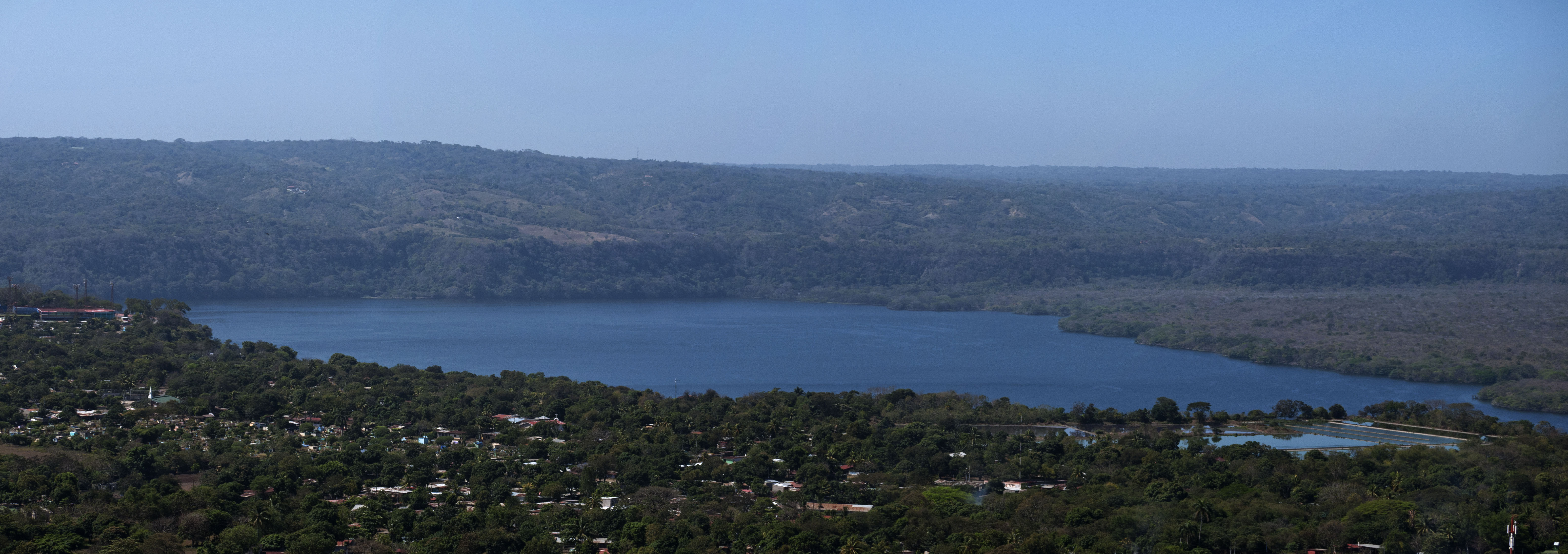
After leaving the Fort we drove to a Mirador overlooking Laguna Apoyo where we had lunch in a small restaurant. After this we drove South towards San Jorge which is gateway to the Isla de Omtepe in Lake Nicaragua.
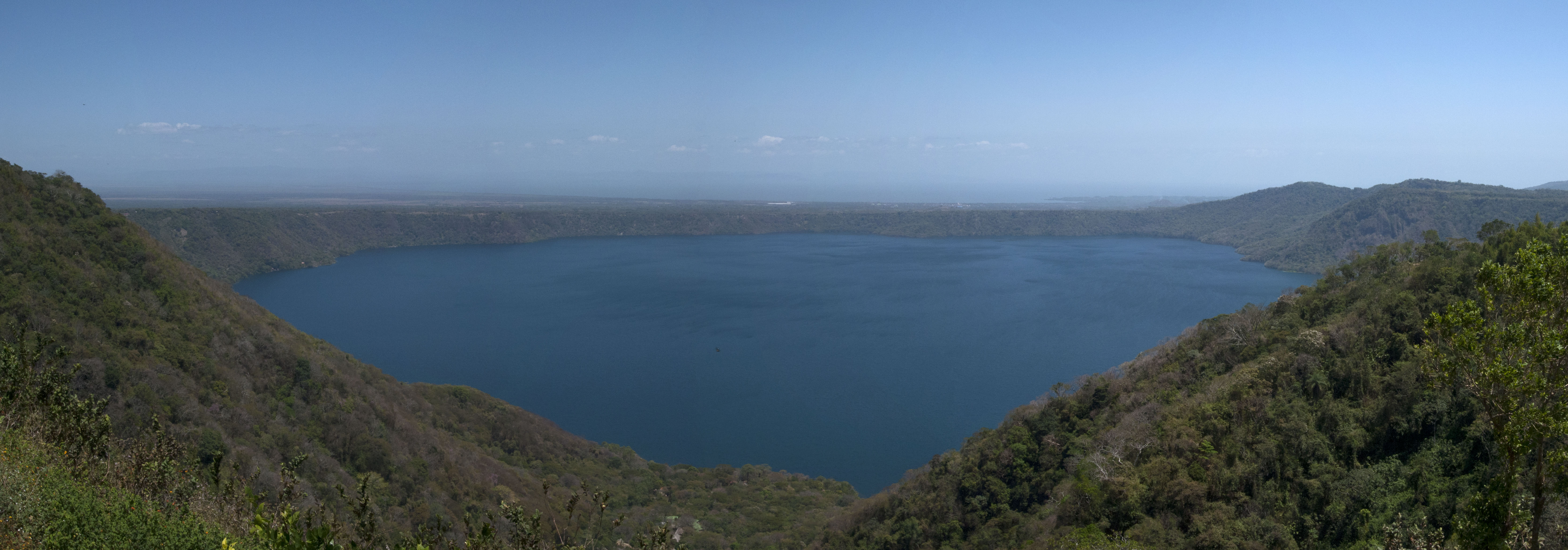
Granada
Granada is an old colonial city with a distinctly Nicaraguan twist. It hasn’t got the polished feeling of Antigua in Guatemala and feels fairly shabby in comparison but this is its charm.
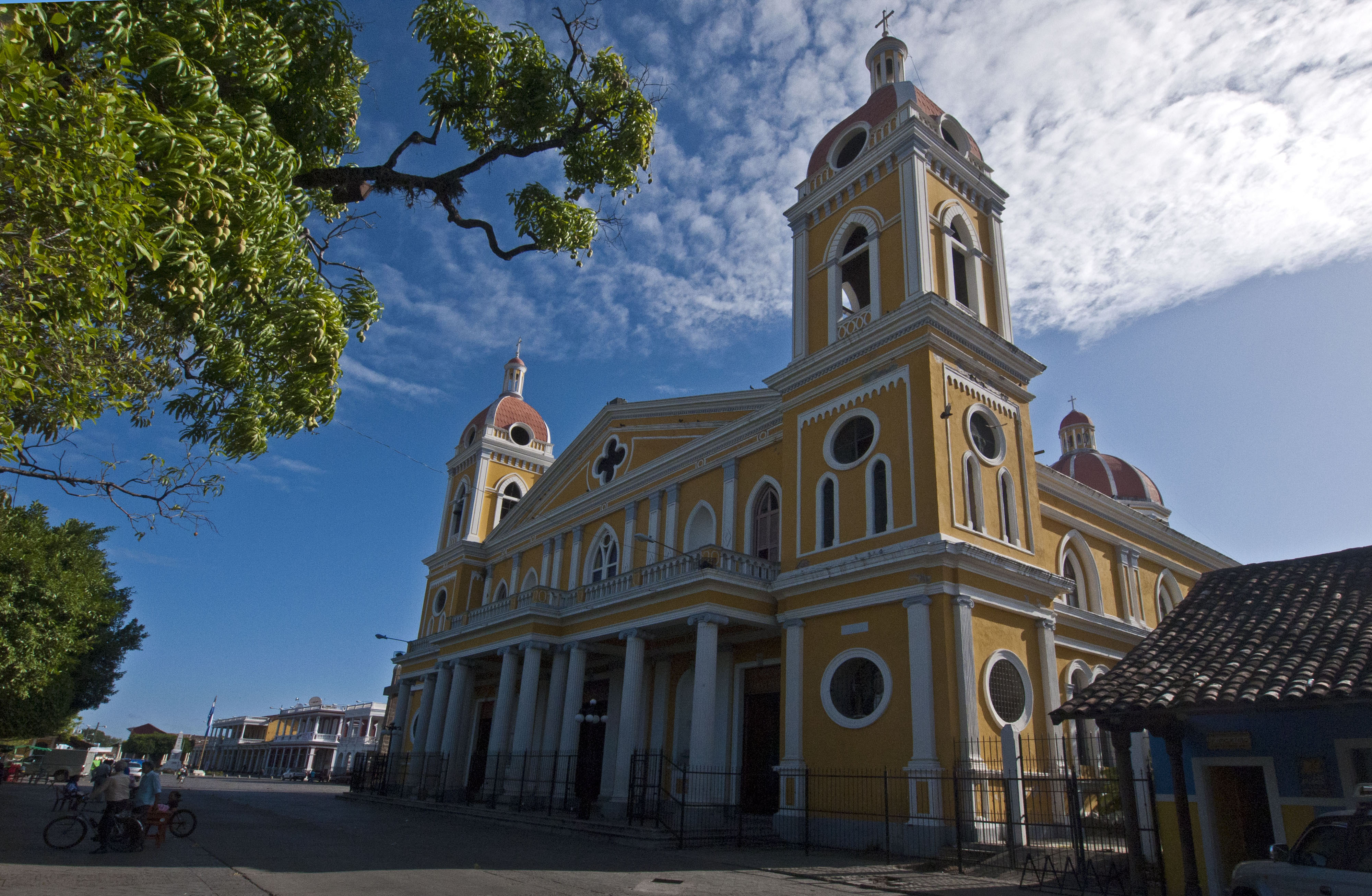
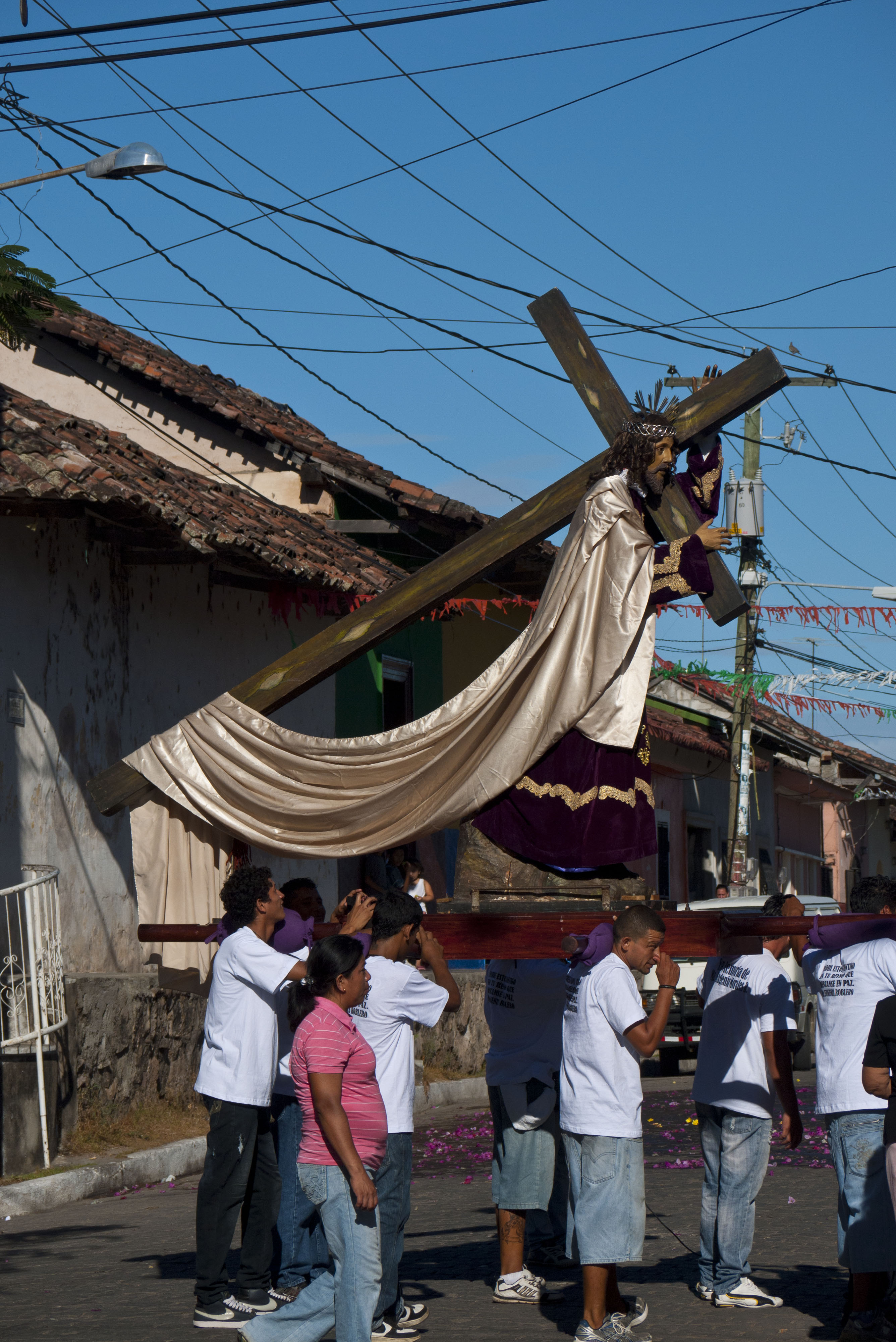
A stone’s throw from the centre of town is the fire station which welcomes travellers to park inside the station and provides 24hr security. The firemen were very welcoming and it made a great place to stay.
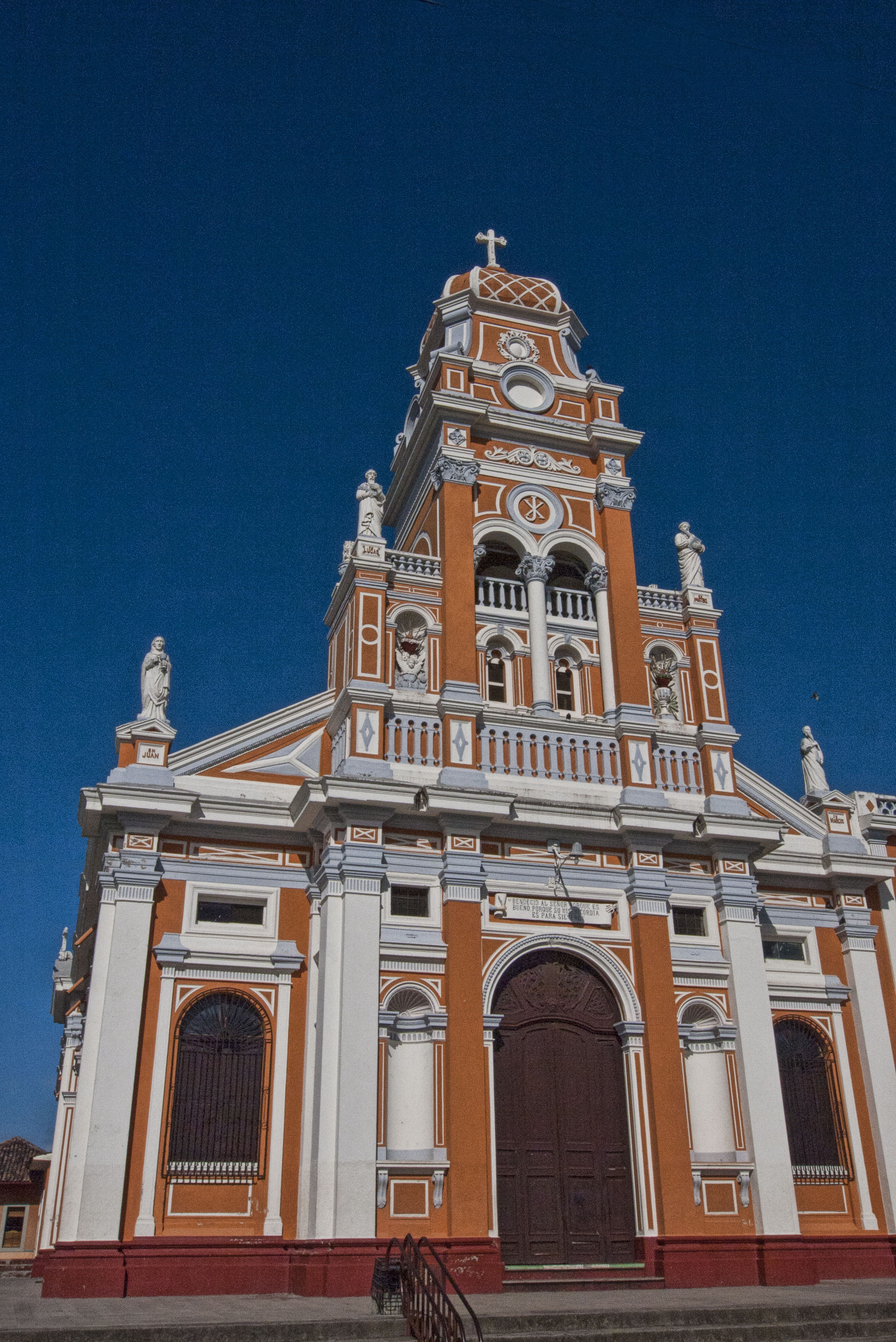
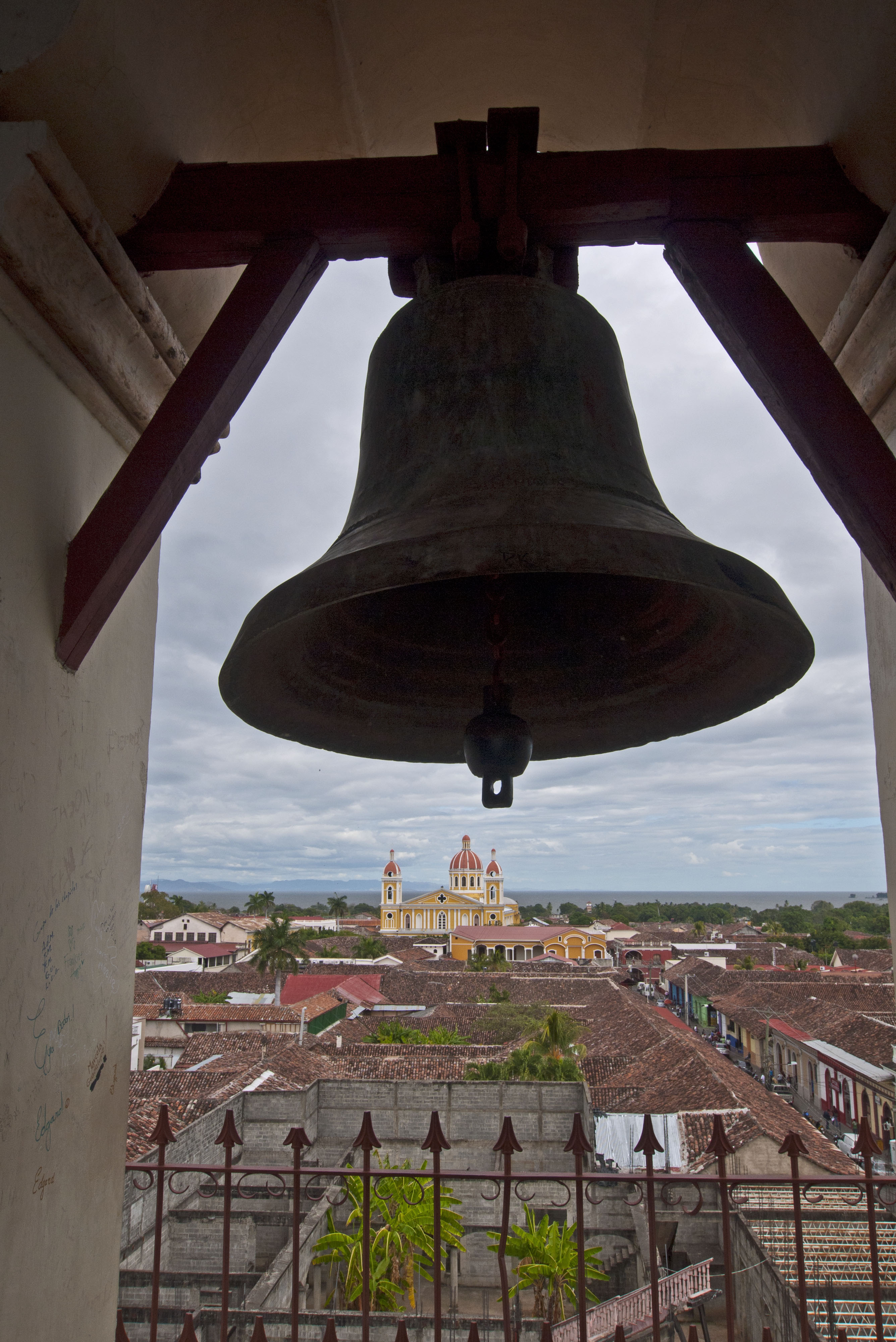
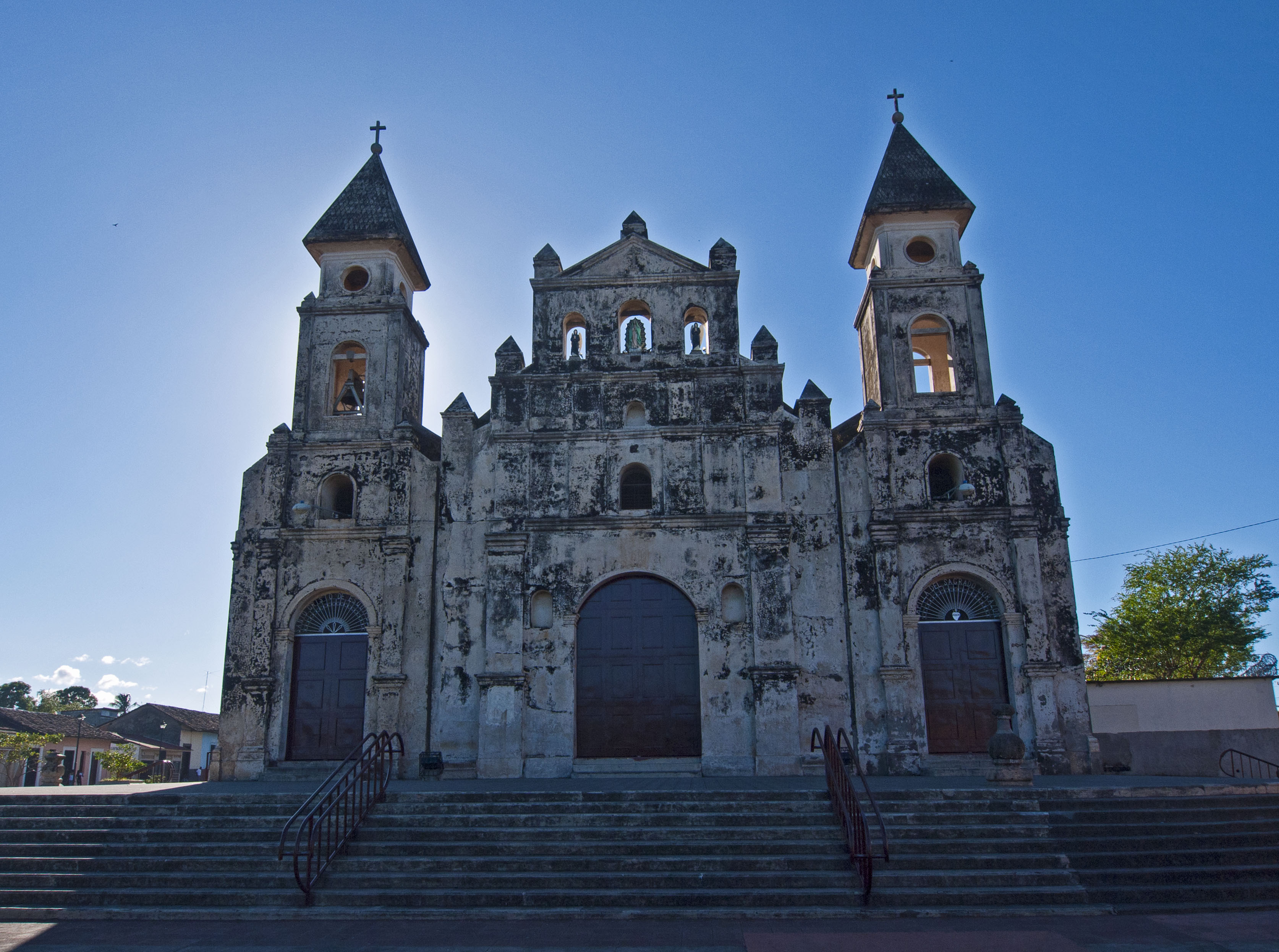
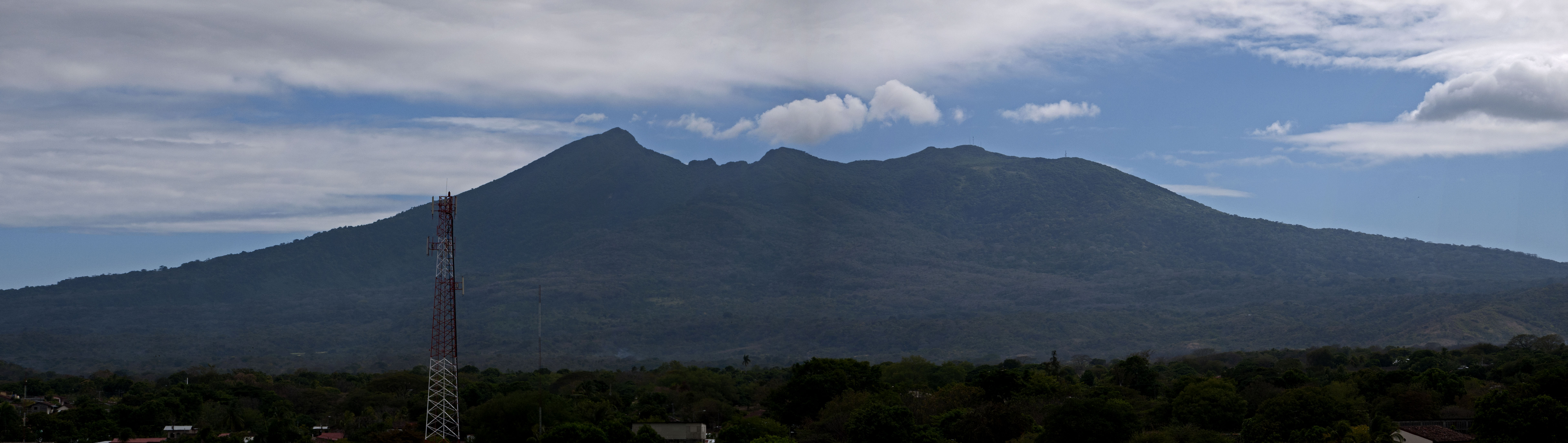
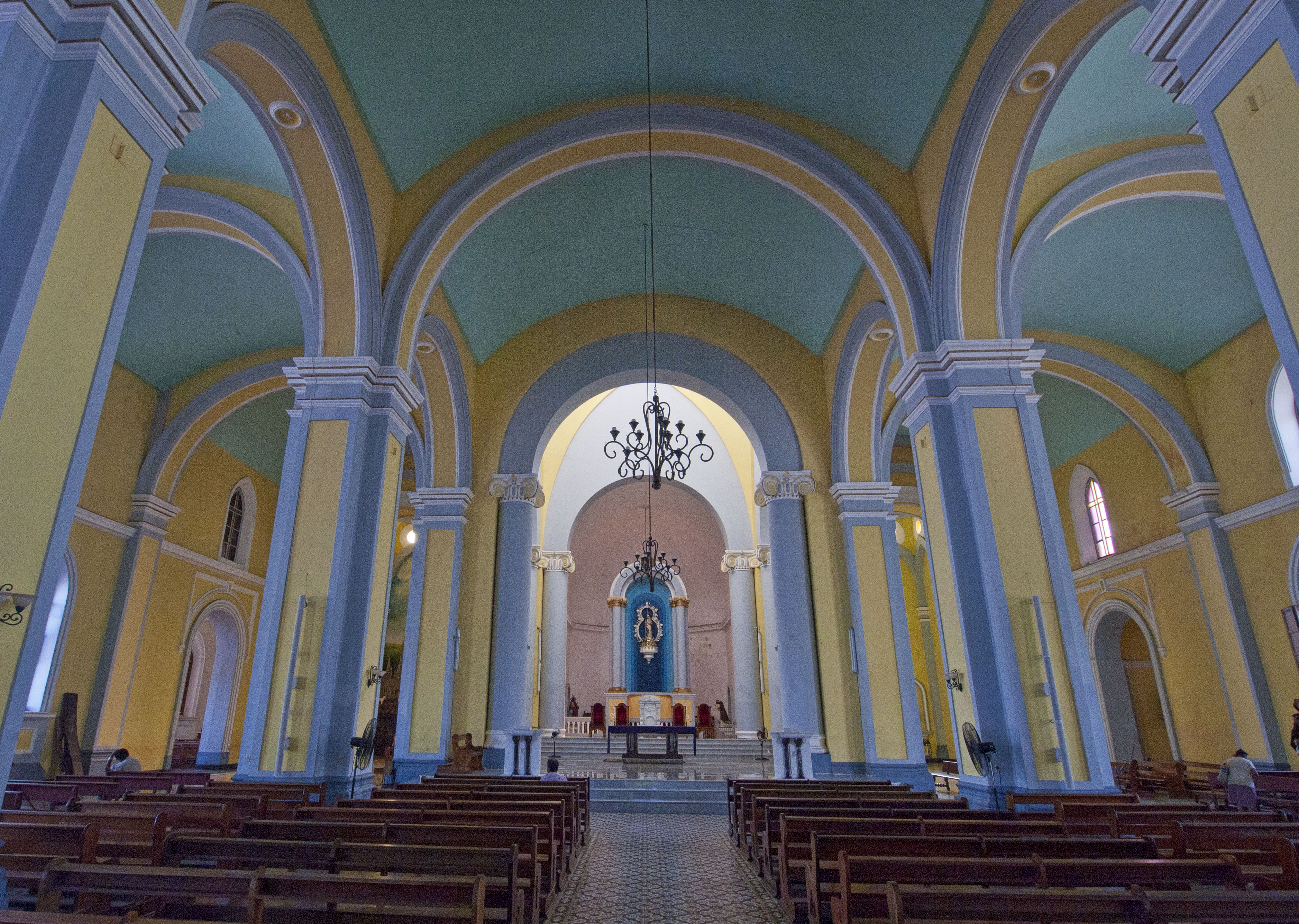
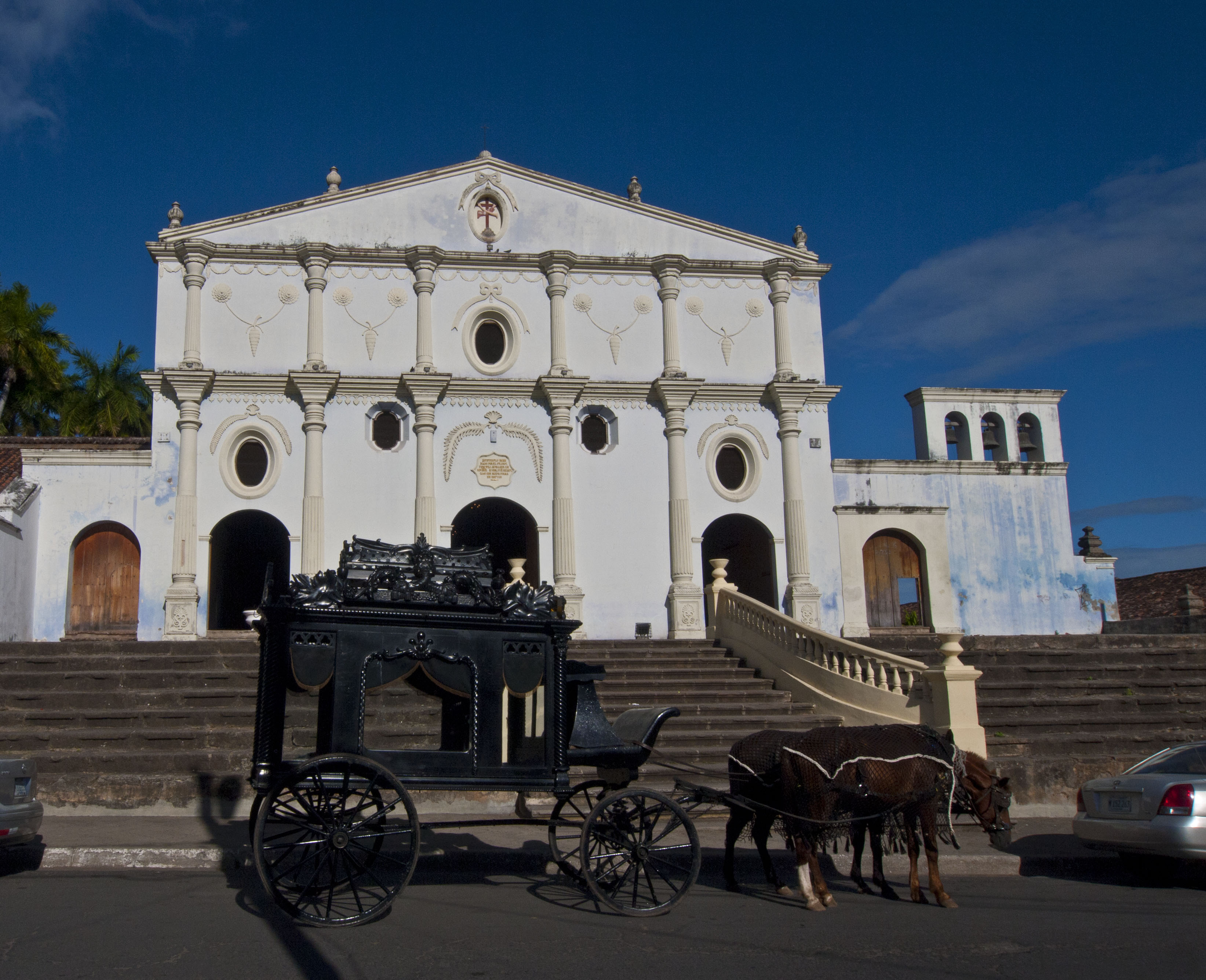
We did a walking tour of the city taking in many of the churches including the cathedral. We climbed the bell tower of the Iglesia de La Merced which gave great views of the city and also Volcan Mombacho which is the highest volcano in Nicaragaua (1345m).
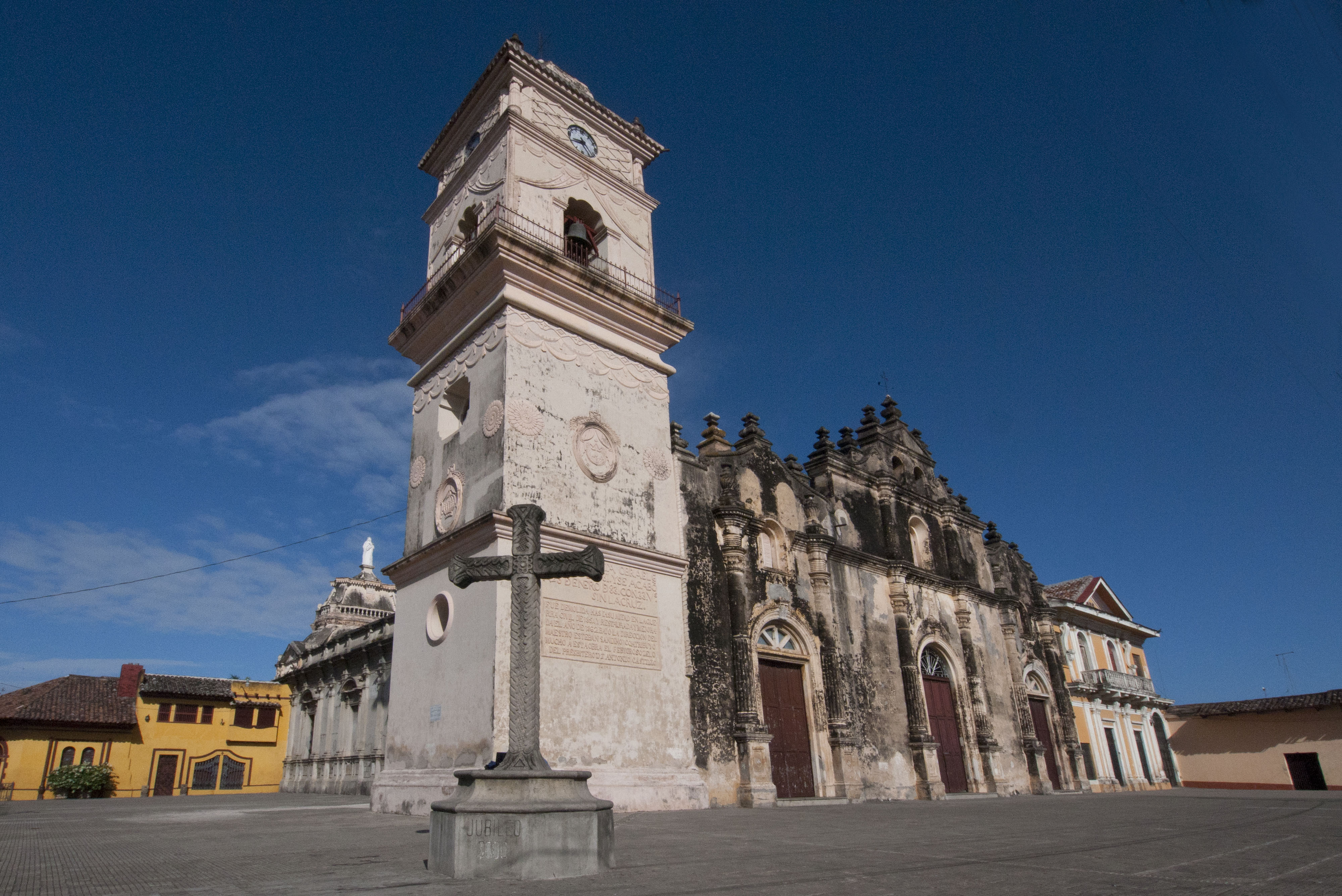
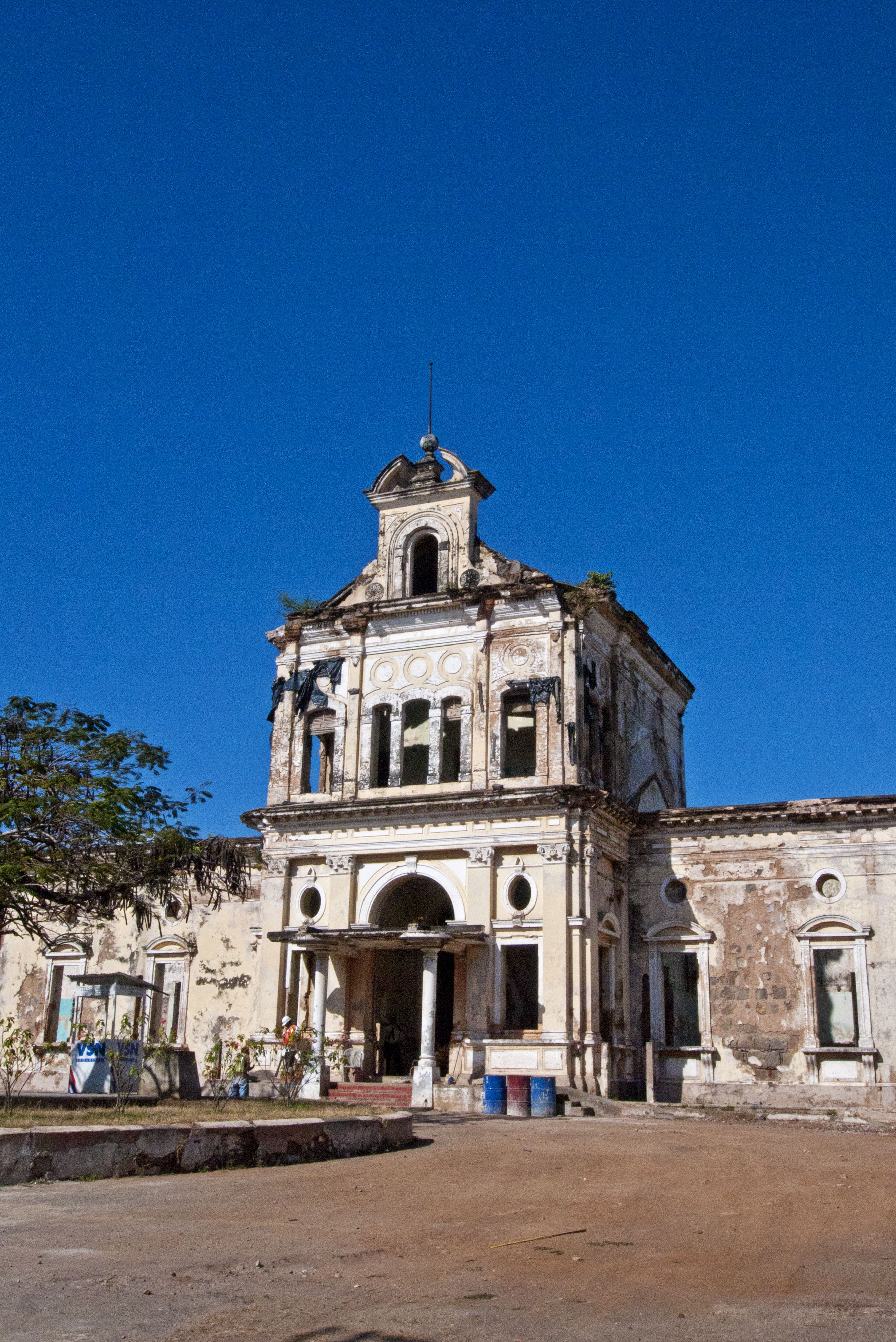
One of the stops on our walk was the Antiguo Hospital which was abandoned in the 80’s and has been derelict since. Refurbishment work has started on this to become a tourist destination but it is early days yet. The extent of the deterioration in such a short period is surprising.
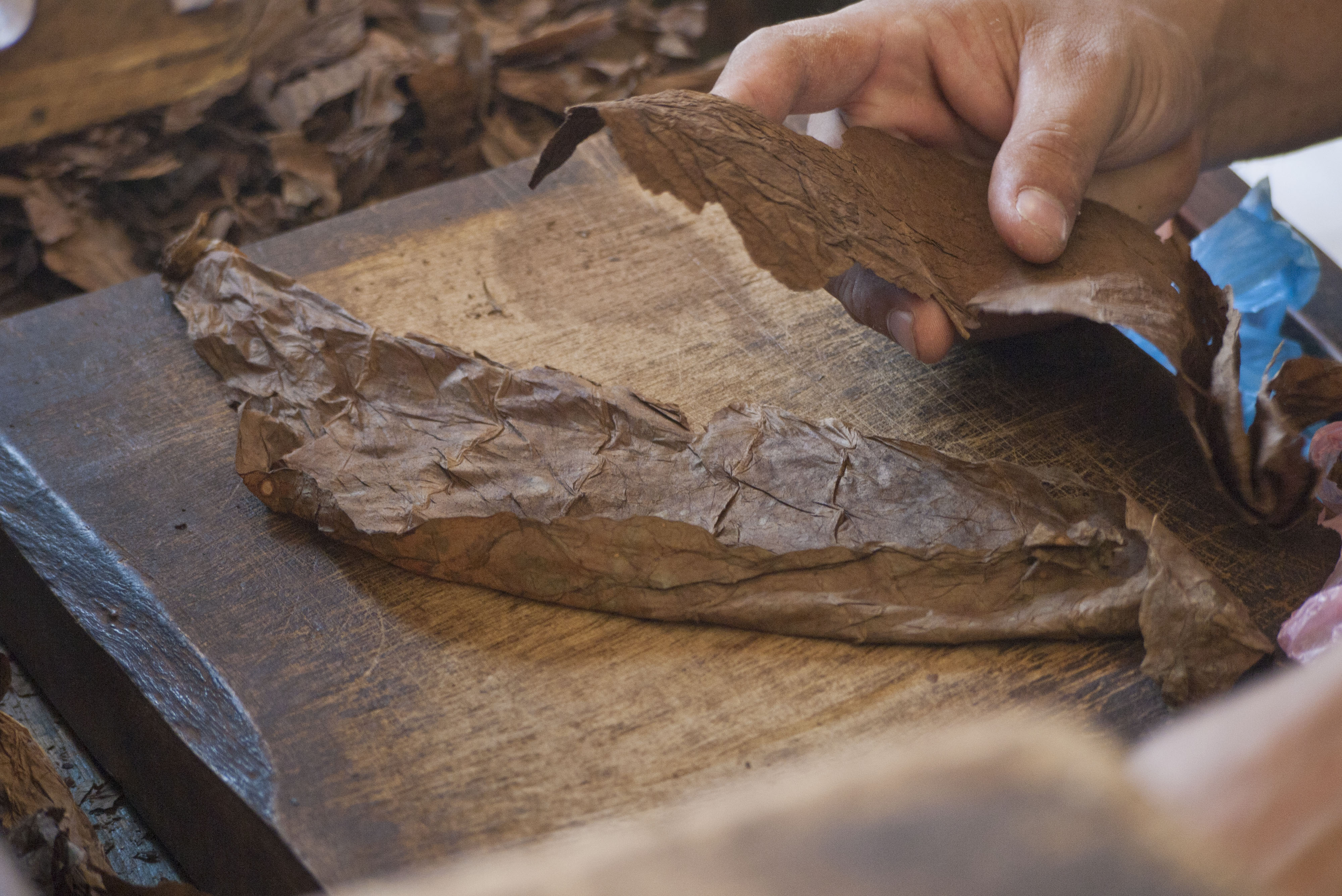
We also visited a cigar shop which creates its own cigars and watched one of the workers deftly rolling the cigars taking only a few seconds for each one.
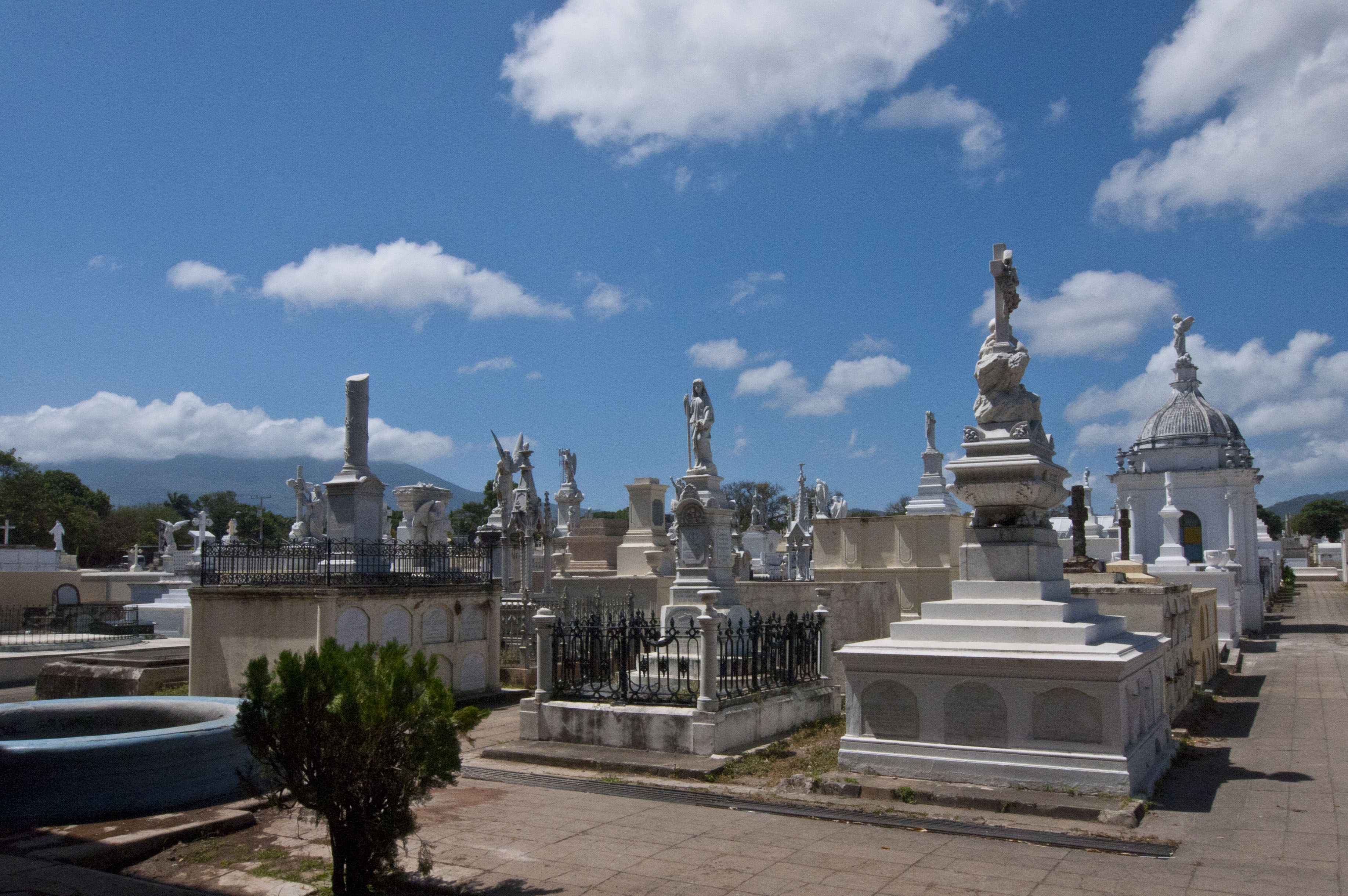
The cemetery in Granada is also worth visiting. There is a tomb where 9 former presidents of Nicaragua are buried. What was striking about the graves was that all of them were a stark white whereas most other places in central America there has been a lot of colour In the cemetaries.
On the lake there is an old park which has a number of clubs and bars in it. This is the local nightlife centre of Granada at the weekend but quite dangerous and very shabby. There is certainly not much to recommend it. The lake itself is surprisingly rough.
Near the cathedral there is a street with 500m or so of bars and restaurants aimed at tourists. There is a great variety and the area has a real buzz at night. We had a nice dinner out here at a steak restaurant (El Zaguan) where Sarah had the best steak she’s had on the whole trip – mine was a bit disappointing though.
We also managed to try Quesillos which are one of the most popular meals in Nicaragua. It’s melted mozarrella cheese wrapped in a corn tortilla with spicy onion chutney inserted in a plastic bag. It was pretty horrible and the first local dish on our trip that we haven’t liked.
We also managed to find a laundry in Granada after having searched high and low in El Salvador. We were relieved at this as we were down to our last clean clothes.
It is very understandable why Granada is a popular tourist stop and it definitely made an engaging stop for a couple of days.
Miraflor

Our first stop in Nicaragua was a town called Esteli where a swimming pool complex made the ideal stop over for the night. In the morning after checking out the fairly nondescript town of Estelli we headed North on a rough dirt road to the mountain region of Miraflor. The road from Estelli is unpaved and in the dry season is pretty rough in parts but does not need 4 wheel drive – some bits are very steep though and pretty rocky.
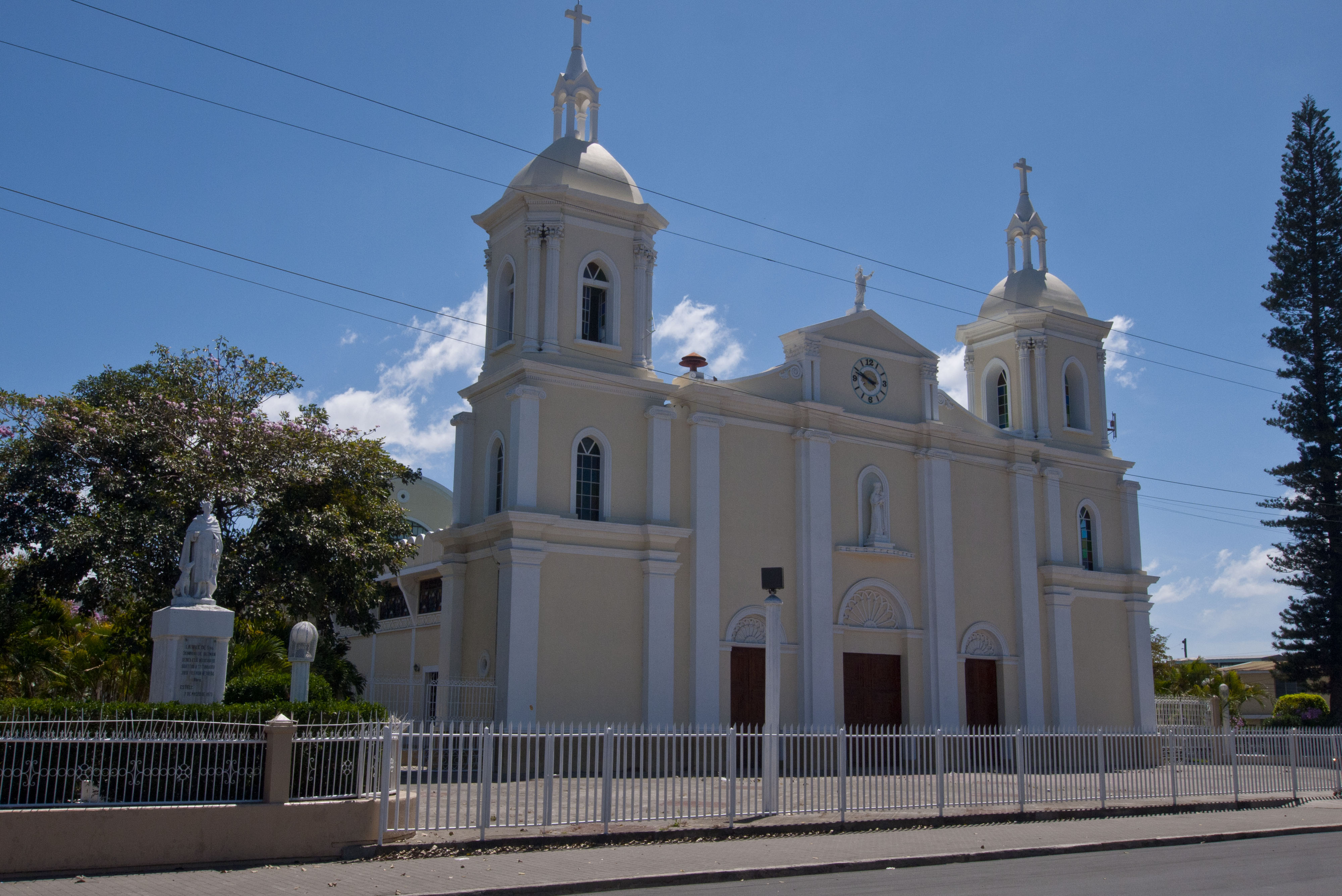
The Area Protegida Miraflor is an upland area ranging from 800m to 1400m which is a mix of farmland and primary forest. The way of life here is much as it has been for the last 100 years and the horse is the major form of transport.
We had read online about a small Finca called Lindos Ojos. This has some 10 rooms and is run by an expat German guy. When we arrived we were welcomed to camp on the lawn out front which we managed after negotiating the very tight entrance gate.
As soon as we arrived Sarah got chatting with one of the guides and arranged for us to do a horse ride to a local waterfall. Those who know me will also know my aversion to horses but I agreed anyway.

The horses were in good condition and very responsive. On the way out we took it very easy as we rode down the main highway – a narrow dirt road. The waterfall itself was fairly small but pretty and had a fairly cool pool where I went for a quick dip.
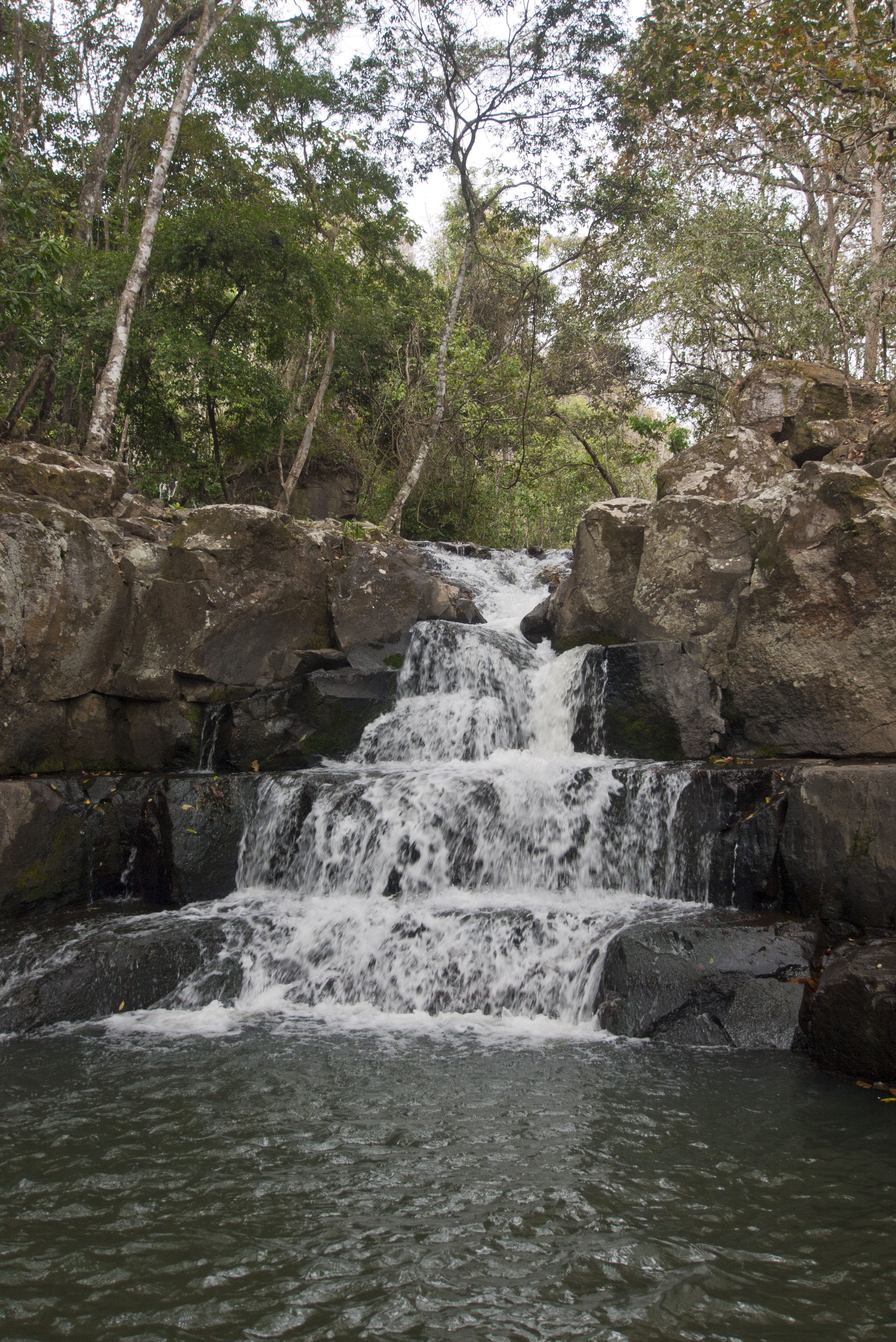
The way back to the finca was much more interesting as Sarah decided to go for a bit of a canter. Her horse decided that this meant a full gallop and it went tearing away down the road. She couldn’t stop it and just had to hold on and wait for it to slow down. At one stage she flew past a group of local lads who shouted “Yee ha” as she went past.
The guide and I trotted after her and finally caught up at which stage the guide informed Sarah that the horse was “loco” and laughed ! We made it back without too much misadventure after this.
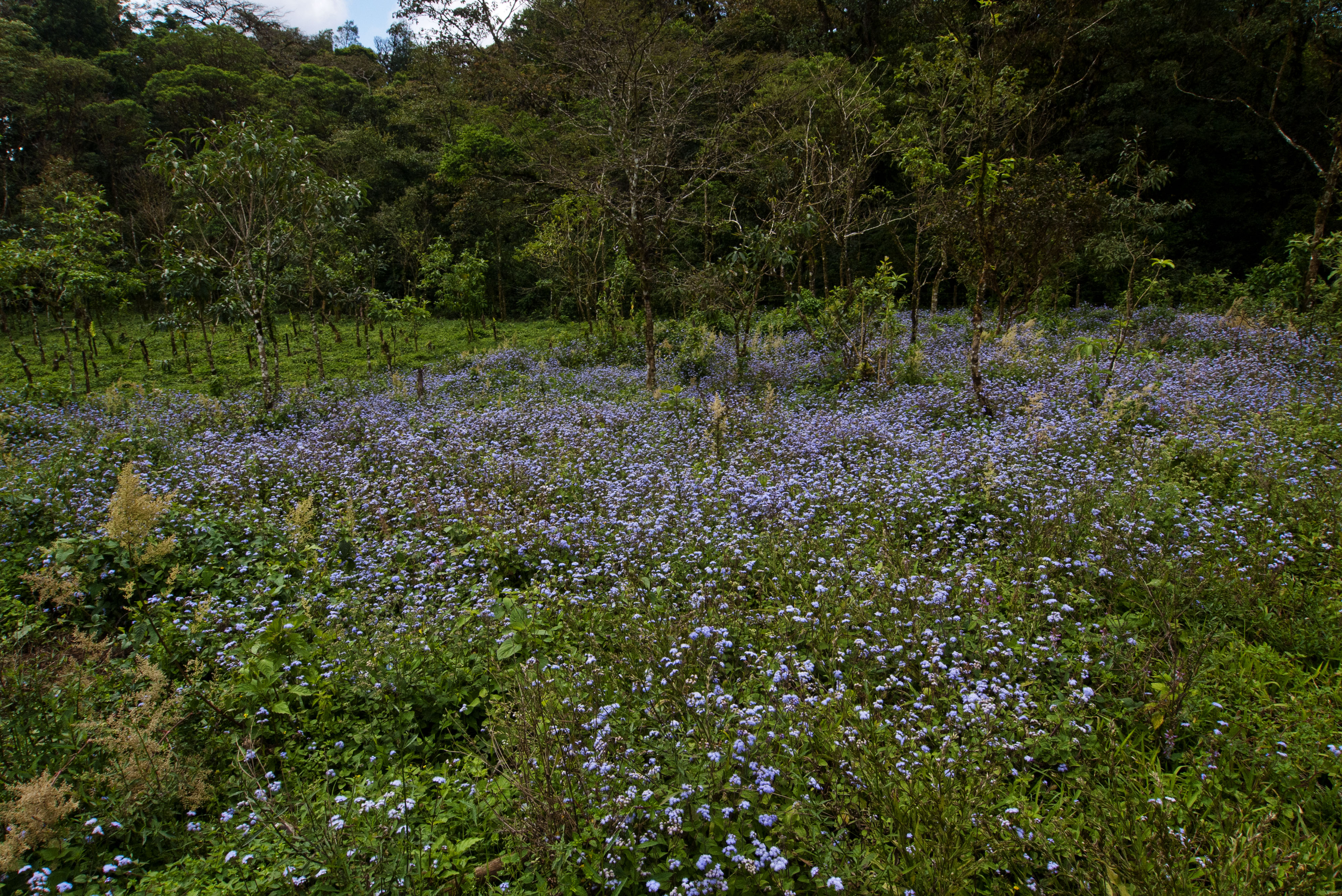
Once back at the finca we had a communal dinner with the other guest which was nice particularly as one of the other couples were British. We hadn’t seen anyone British for some time.

The next morning we arranged a guided walk through the local forest which was really interesting. At one stage the guide asked us to stop and then pointed to a very poisonous Coral Snake which was crossing the path in front of us. The phrase “Red on Yellow kill a fella” went through our heads when we saw it.

The area is very beautiful and there is a really good mix of small holdings of coffee, cocoa and undeveloped forest. One of the best features is the sheer size of some of the trees – they dwarf the biggest Oak in the UK.
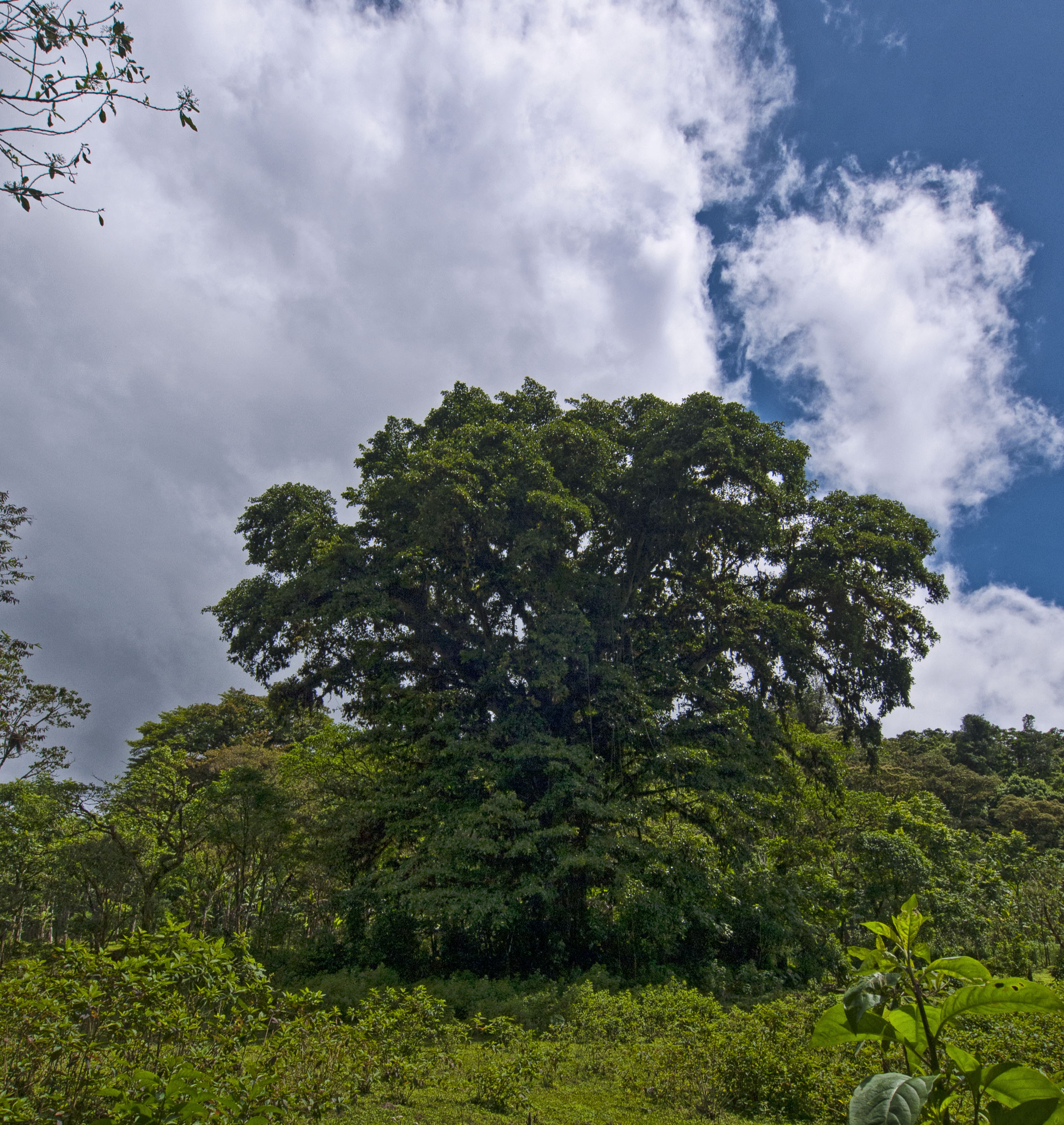
On the walk about we stopped off at a pretty cool tree house. As we climbed up and in we startled a woman who was asleep on a bed in there but our guide seemed to think this was fine and led us out to the viewpoint.

Honduras – Nicaragua (El Espino)
We found this to be one of the easiest borders that we done in Central America. We had decided to arrive early so we could drive through the remaining 80k of Honduras before the cops were on the prowl. This paid off as we didn’t get stopped in the morning and we arrived at the border at 8.00am.
Everything was pretty quiet and we were the only vehicle on the Honduras side. Instead of the normal scrum of tramitadores only one guy came up to us offering to help. He had decent English – we thought we knew what we were doing but he helped us anyway.
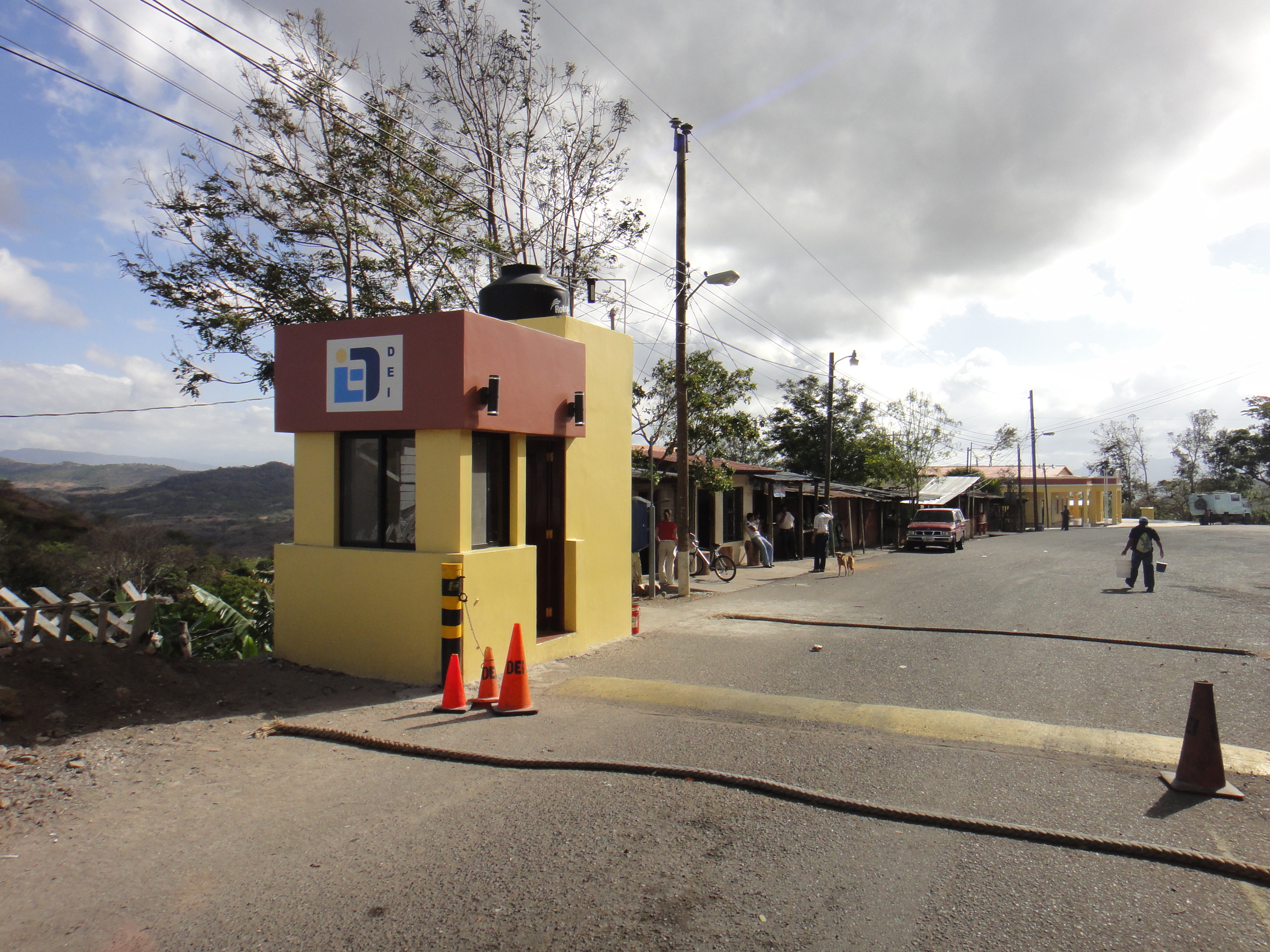
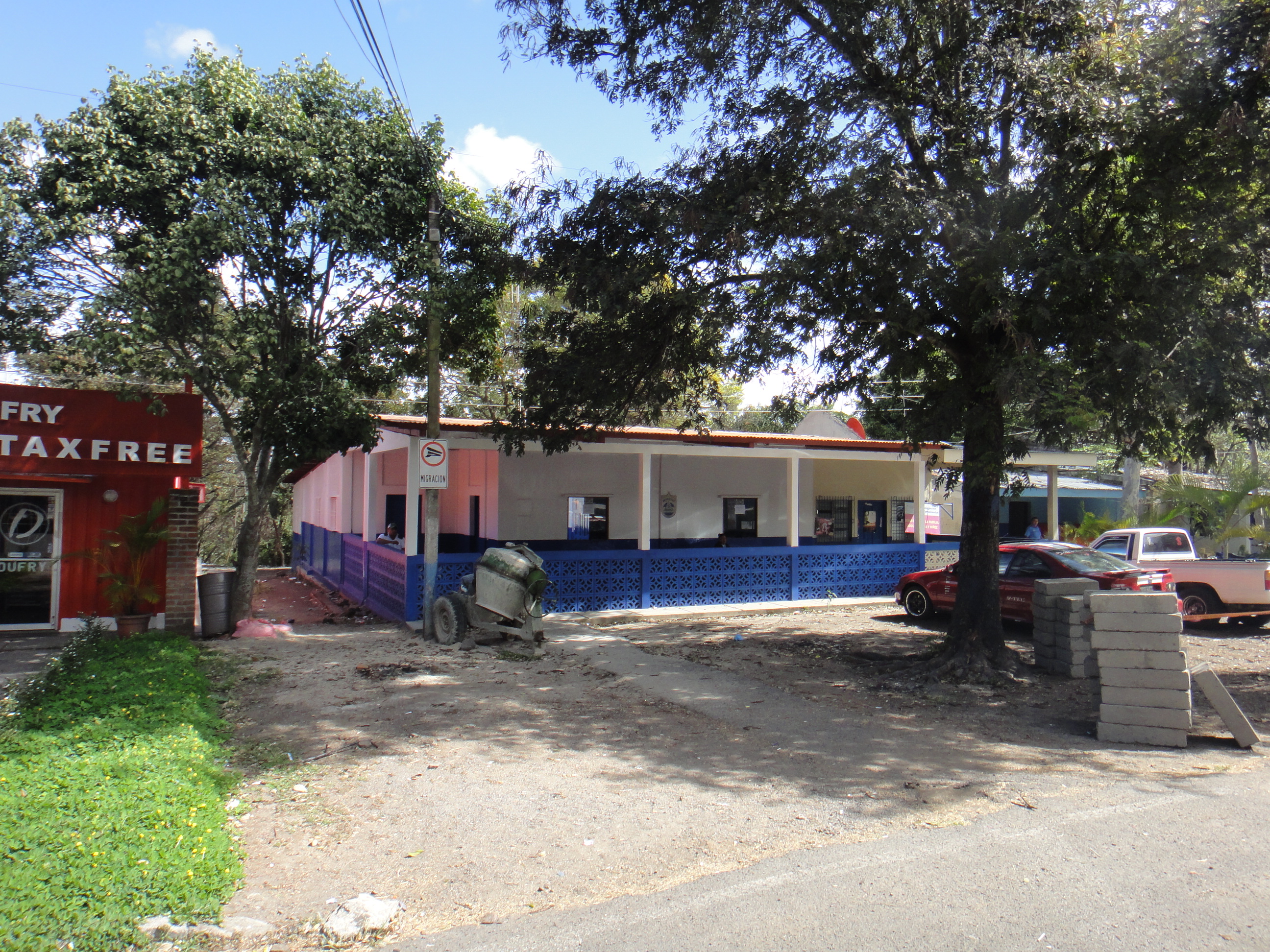
First step is to go to pull up at a rope across the road where there is a small blue hut. I think this is new and has replaced a wooden shack. The first thing that you have to get done is to get this guy to sign off on your Vehicle Import Permit. He needs a copy of your driver’s licence, passport, registration and the original vehicle import permit.
When we arrived the guy in the booth was out to breakfast so we went to Migracion first. This is on the left hand side of the big yellow building. We had to hand over our passports and then we got stuck for a USD3 exit fee each. We got our passports stamped and then back to the booth at the rope.
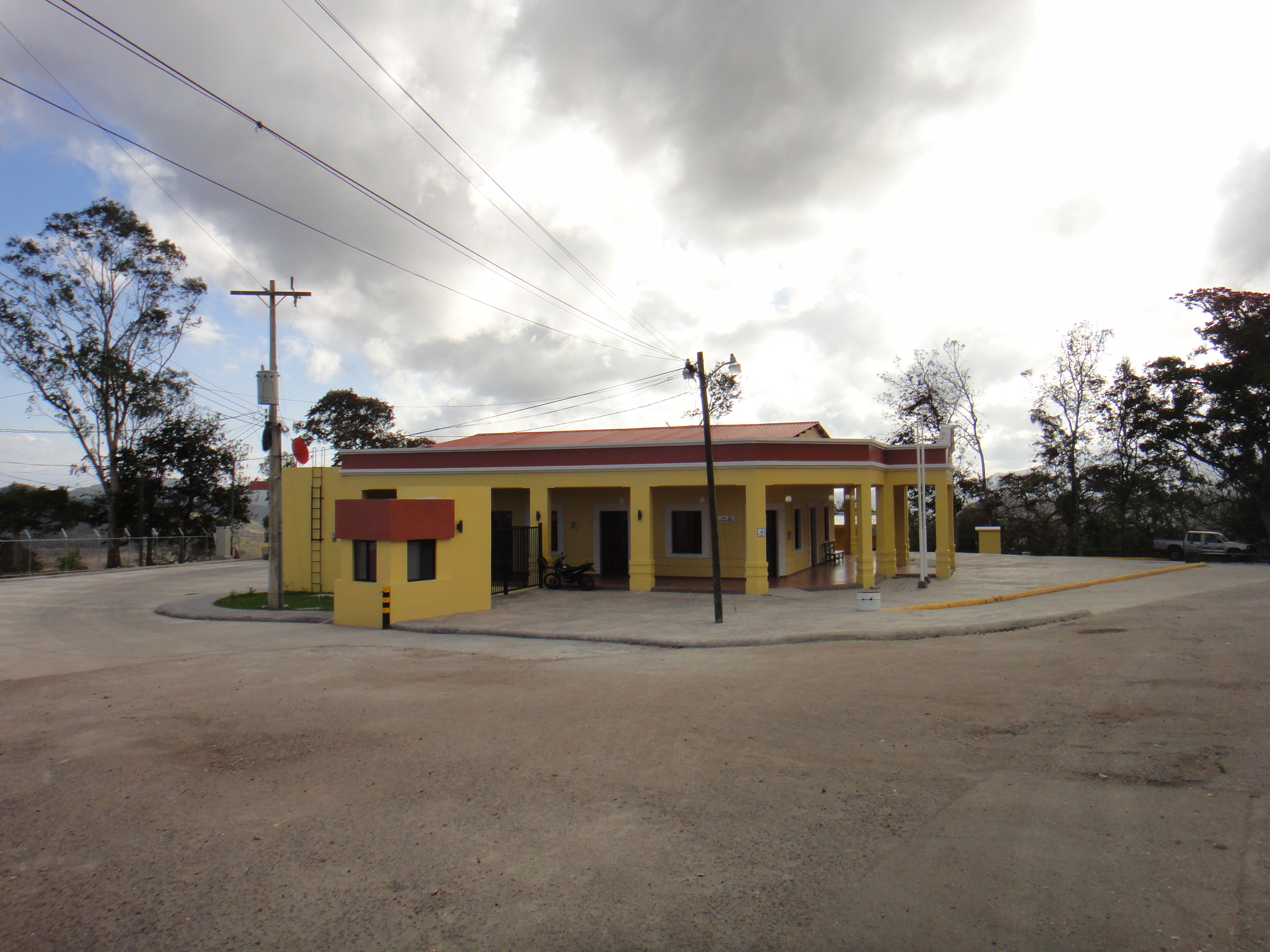
The guy in the booth had reappeared and he came out checked our VIN number. He then stamped our Import Permit. Next stop is the aduana part of the main building. You can drive and park outside the main building at this point.
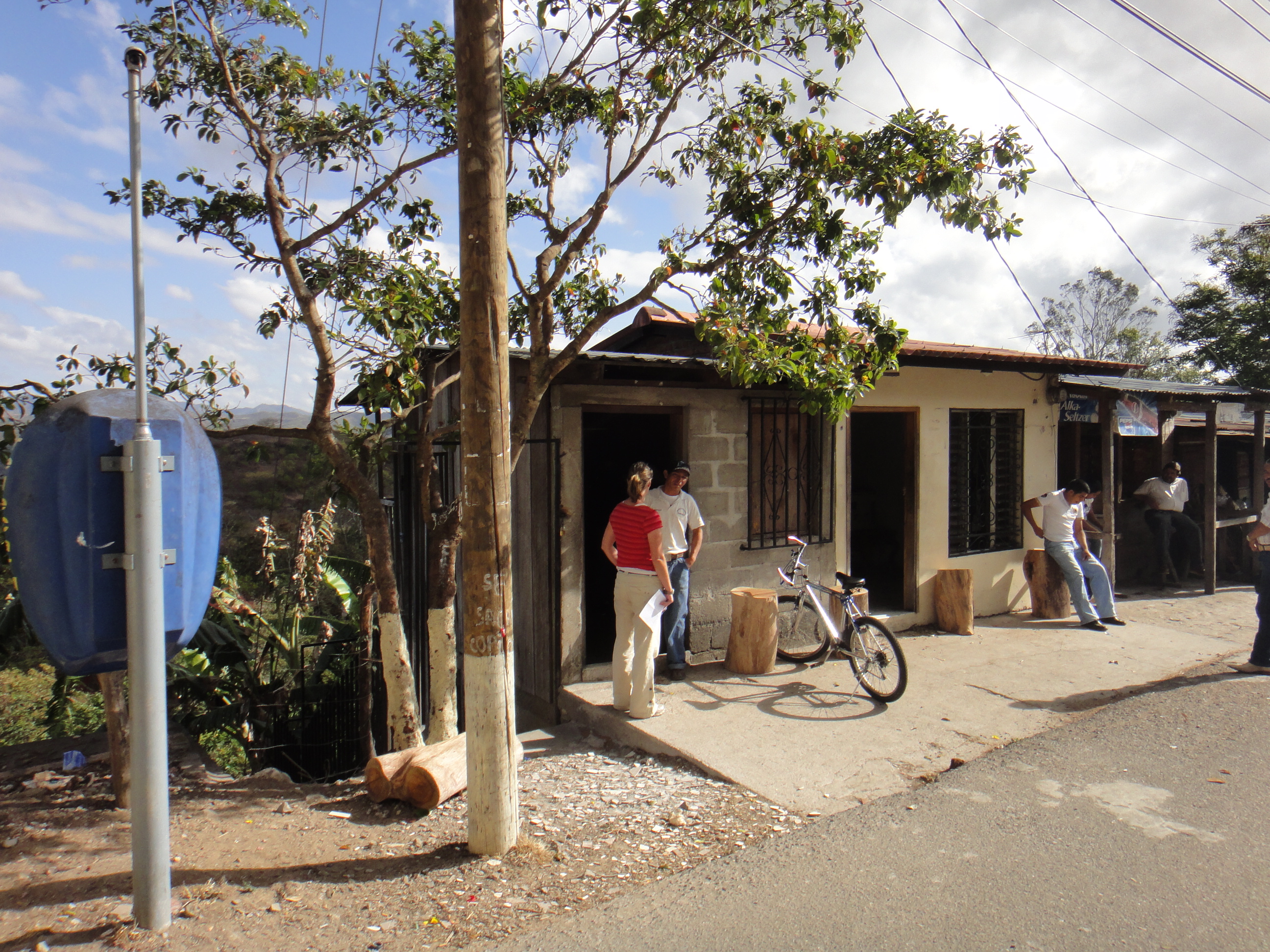
Instead of going in the main doors which are marked Aduana you need to go to the right and you’ll find a window into the customs office. Hand over your import permit here .#

Hanging round at this point will probably be some money changers – we got a good rate of 22 Cordovas to the USD (the actual mid market rate was 23 at the time we hit the border).
We paid our helper USD2.50 as he hadn’t done too much
At this point we were free to go and hit the Nicaraguan side of the border. We drove out of Honduras and then quickly came to a stop by a small blue and yellow hut. This is the fumigation facility. You will have your wheels sprayed and then have to pay the man in the hut – he will also need your licence plate number. It cost us USD5 for fumigation but there is a price list posted on the hut and smaller vehicles are less.

After this drive a couple of hundred metres and park on the left hand side of a large circular blue and white building. This houses customs. It used to house immigration as well but this has now moved to a small building across the road on the left hand side of the big building.
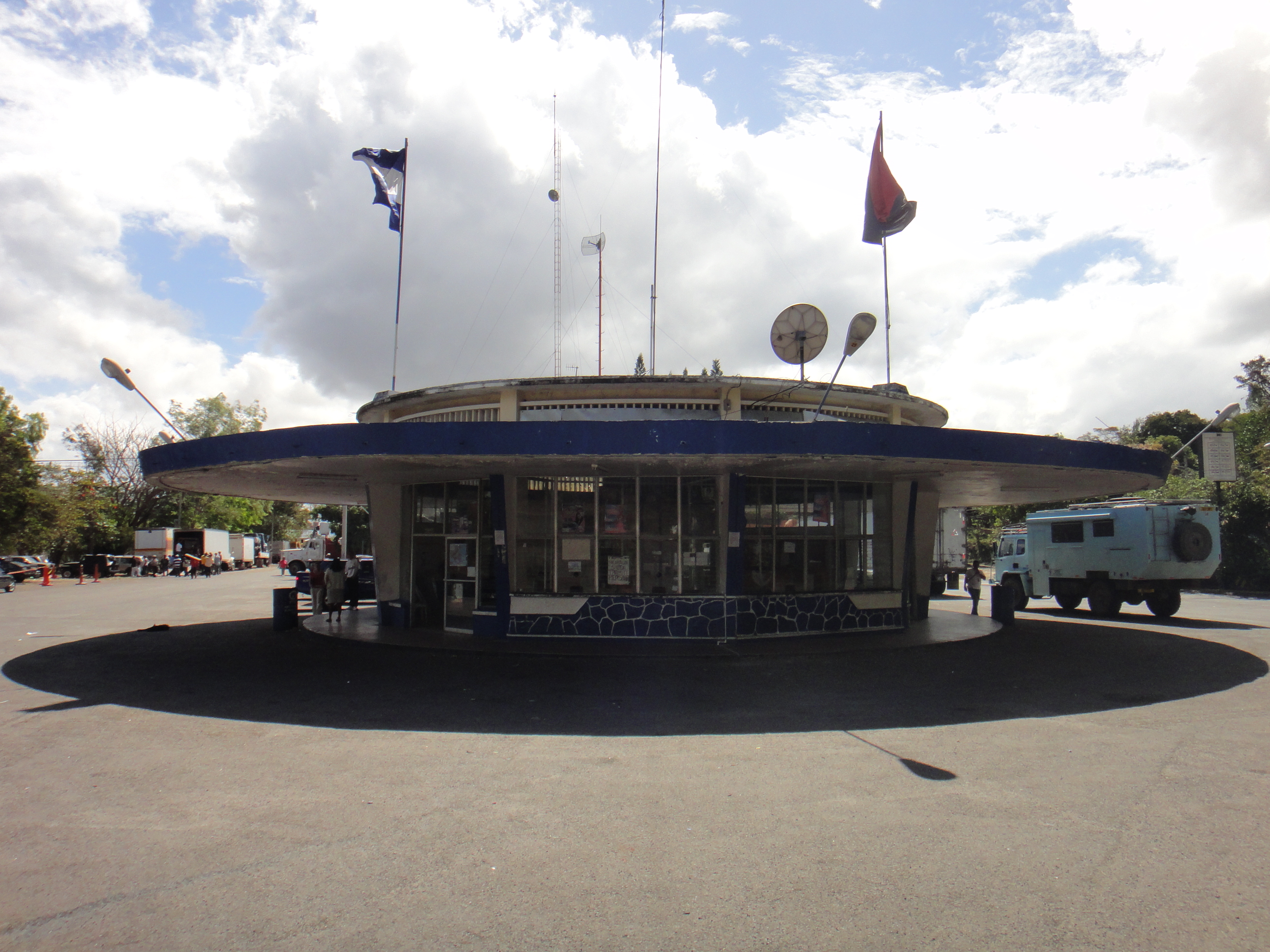
This is your first stop to get your passports stamped. We had to pay $12 each for our tourist cards. This part was very straight forward.
Next stop is the customs window in the circular building (to the right). Here we had to wait awhile because the clerk was busy. There was no queue though.

While we were waiting a man with a clipboard came over and offered to sell us insurance. The insurance is mandatory and costs a set $12 for a month. He filled out the forms for us and gave us the insurance documents.
The customs guy needed a copy of our vehicle registration, driving licence and my original passport. With these he filled out the import form – he did come out and do a vehicle inspection briefly and check the VIN number. The photocopy booth is in the customs building which is convenient and sensible – why can’t all borders be like this !

Once we had the permit the last step was to get the police to sign off on it. They need copies of the permit, driving licences and passports of the drivers. They are situated in a small building to the left of the migracion building. The police just sign off the permit and didn’t require to see the vehicle.

Once all this is done you can drive to the exit are where another man stops you. You have to give him a copy of your import permit which he will check and then you are free to go.
Crossing Honduras
The Pan-American in Honduras is really bad with lots of potholes. This is by far the worst stretch of the road that we have come across in any country.
Honduran police are notorious for stopping travellers driving on the stretch of road between El Salvador and Nicaragua and we had gone less than 30km before being stopped.
In fact we passed a couple of motorbike cops who had stopped a truck and as soon as we passed them had a feeling that we would be seeing them again. Only about 2 minutes later they came cruising past and waved us over to the side of the road.
It didn’t take long for one of them to get to the point and tell me that I owed a USD100 fine. He then explained to me that the reason why was that we didn’t have any reflective tape on the front of the truck. I told him that our front number plate was reflective and refused to pay. After about 10 minutes of back and forth where I alternated between telling him I didn’t understand and I wasn’t going to pay he handed me back my licence and told us to get on our way.
We had decided to drive only to Choluteca as we couldn’t face two border crossings in one day. There is a hotel here where you can stay in the car park and use their pool. Very welcome as the temperature here was hot.
The next morning we stated very early and drove towards the Nicaraguan border. This involves going up into the mountains and we didn’t see any cops – I think it was too early for them to be up. The turn up into the mountains is also onto a much quieter road with virtually no trucks and no potholes. Its still officially the PanAm but most traffic stays in the lowlands.
When we reached the border crossing it was 8am and pretty cool – nice !
El Salvador – Honduras (Amatillo)
This has the reputation as one of the most stressful border crossings in Central America. We had heard that it is much quieter on a Sunday so we decided that it would be better to cross on a Sunday. This also means that payments can be made to direct to the officials rather than having to pay at the banks.
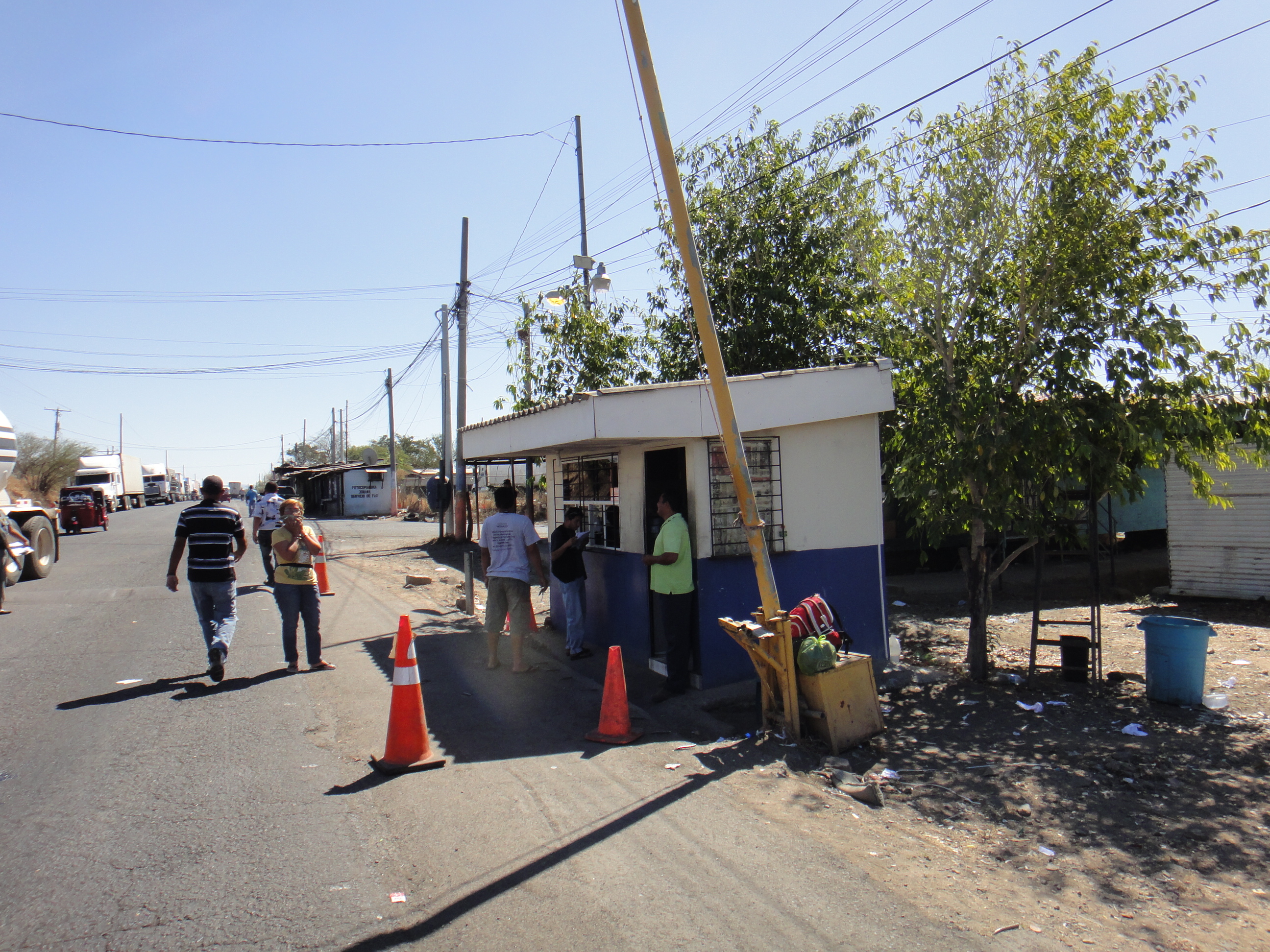
The first stop is a small shack on the right where you need to get your vehicle permit cancelled. At this point we were jumped on by a whole bunch of tramitadors so we picked one who spoke good English and asked him to help us through the process.
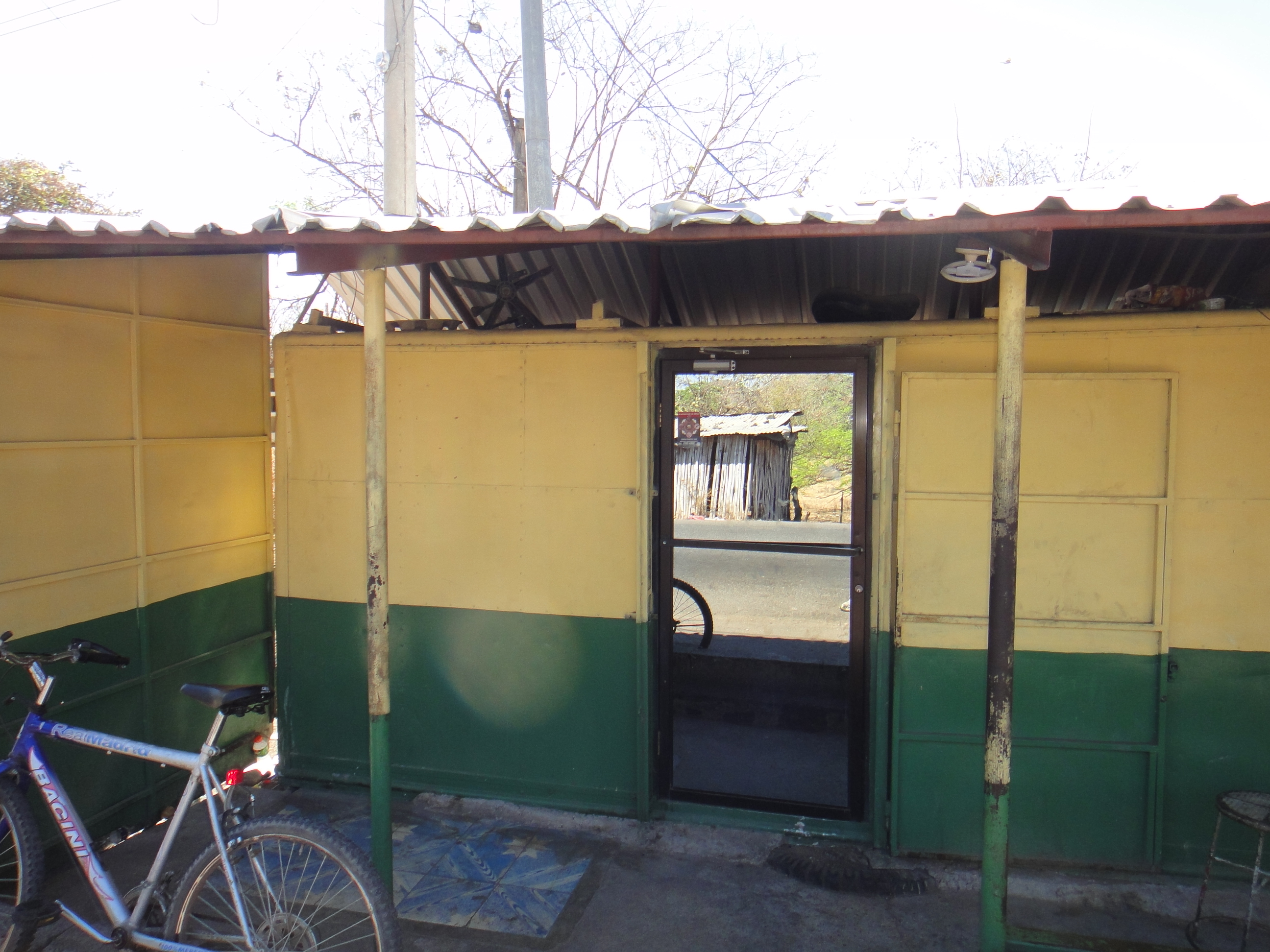
This border is a bit of a Xerox party and after you have your permit cancelled you need to make 5 copies of it. This can be done in a small shack next to the official shack.
After this get back in your vehicle and drive along the road. There is a shiny new bridge to the right but you need to turn away from this to the left. The new bridge is only for Trucks.
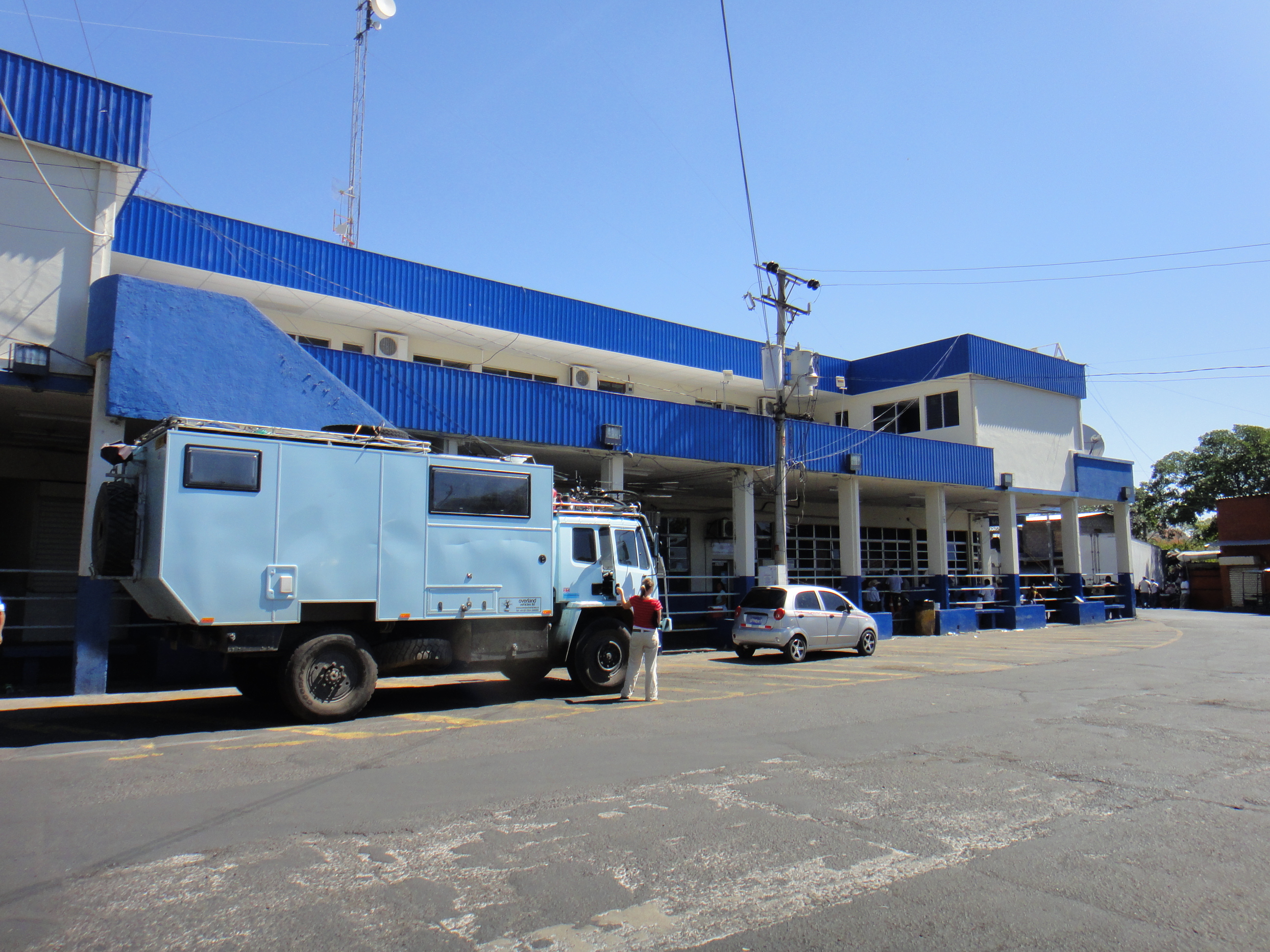
You will arrive at a big blue and white building which you shoud park on the right off. This is El Salvador immigration. There is a window for Migracion which you should visit and get your passports stamped.

Once this is done get back In drive over the bridge. Before you cross the bridge an official will take a copy of you cancelled vehicle permit.

The next building you will see is a big and old blue and white building which is the Honduras side of the border crossing. You should park to the left of this building outside a low slung white building that looks a little derelict.
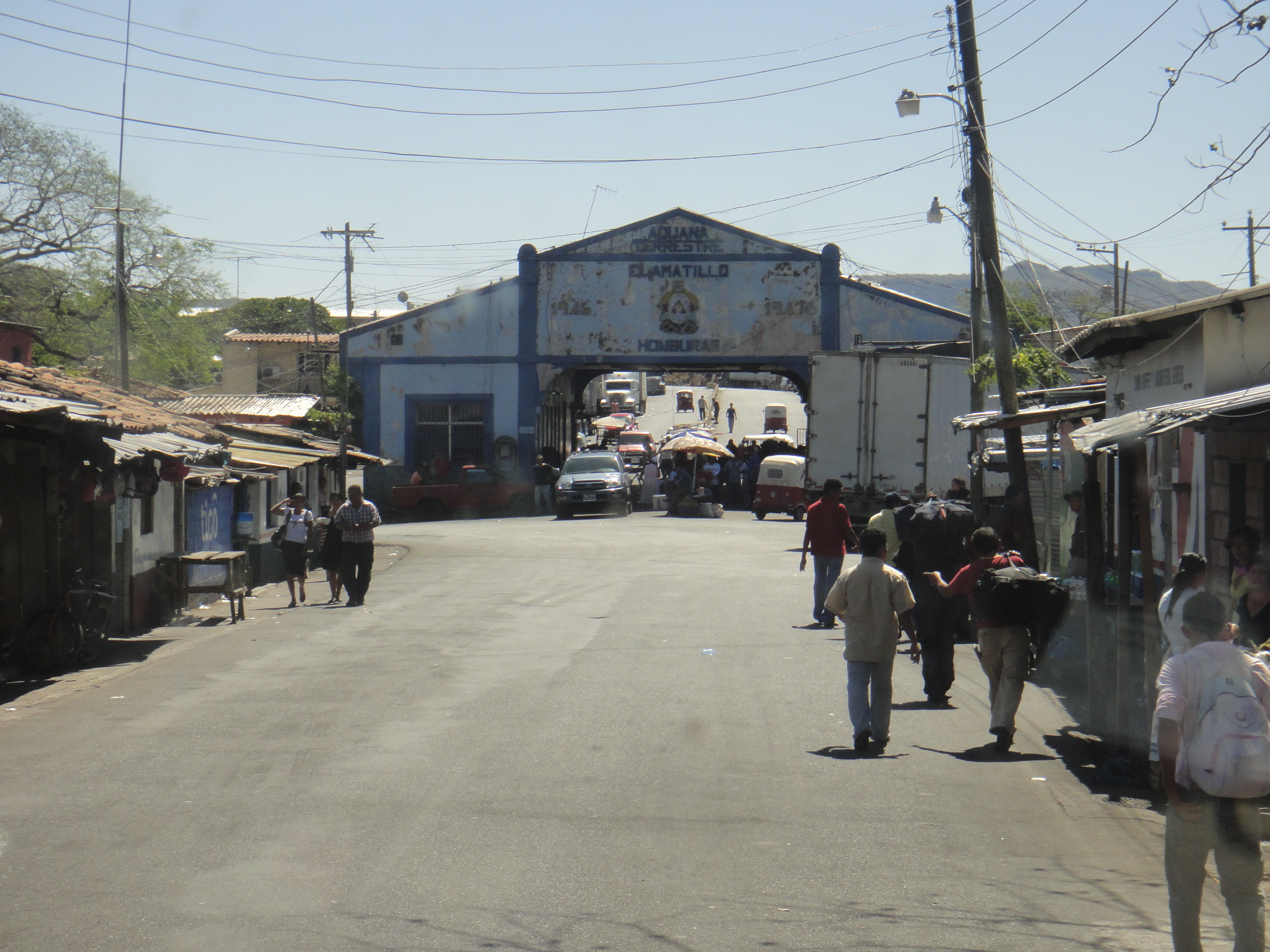
First stop was to go into the derelict looking building where there is an office on the right just inside the door. They are refurbishing this building but it looks like it might be a long time. In the office was a woman sitting behind and she was Aduana and responsible for issuing the import permit for the truck.

I gave her copies of the vehicle registration, my passport and drivers licence and the originals. She had a lot of difficulty filling out the paperwork. This is where our tramitador earnt his money and he went to another office and fetched a massive customs manual which enabled her to look up the codes necessary to process our vehicle. We have found being British can be a problem at borders as Britain can be listed as many things: England, UK, United Kingdom, EU: UK etc. and they are not used to processing British vehicles. Patience is usually rewarded though. It also doesn’t help that our vehicle is a DAF which is not a common vehicle make over here.

Out tramitador at this stage suggested we should bribe the customs woman for doing her job but we declined.
She also came out and did a vehicle inspection including looking inside. This was quick and not very onerous.

The process of getting the import permit took over an hour and this was on a Sunday where there was really no one else around and no queue for Aduana. When we finally had the visa it was only for 3 days. The tramitador had told me that at one stage it looked like we were only going to get a 7 hour transit visa. The 3 days wasn’t a problem for us as we only intended to spend one night but be aware of how long you are getting. This permit was also really expensive and we paid USD37 for it. We had to pay in Honduran currency. The tramitador tried to rip us off at this stage by suggesting that is was USD45 and that is how much we should change.
After she finally issued the permit we went to a copy shop the other side of the road to take some copies of it.
The immigration office is an unmarked door within the old blue and white building. Hand your passport to someone in here, along with USD3 each for the tourist visa and you will get a stamped passport back. There was no paperwork to be filled out here.

After this we drove to the exit where we had to hand over a copy of the import permit and then one last thing was fumigation which cost USD3. Again the tramitador tried to rip us off and told us it was USD6 and then acted all confused when I said it was only 3. You have got to watch these guys. Anyway we paid him USD5 because he had helped with the import permit and we were in Honduras.
Laguna de Alegria
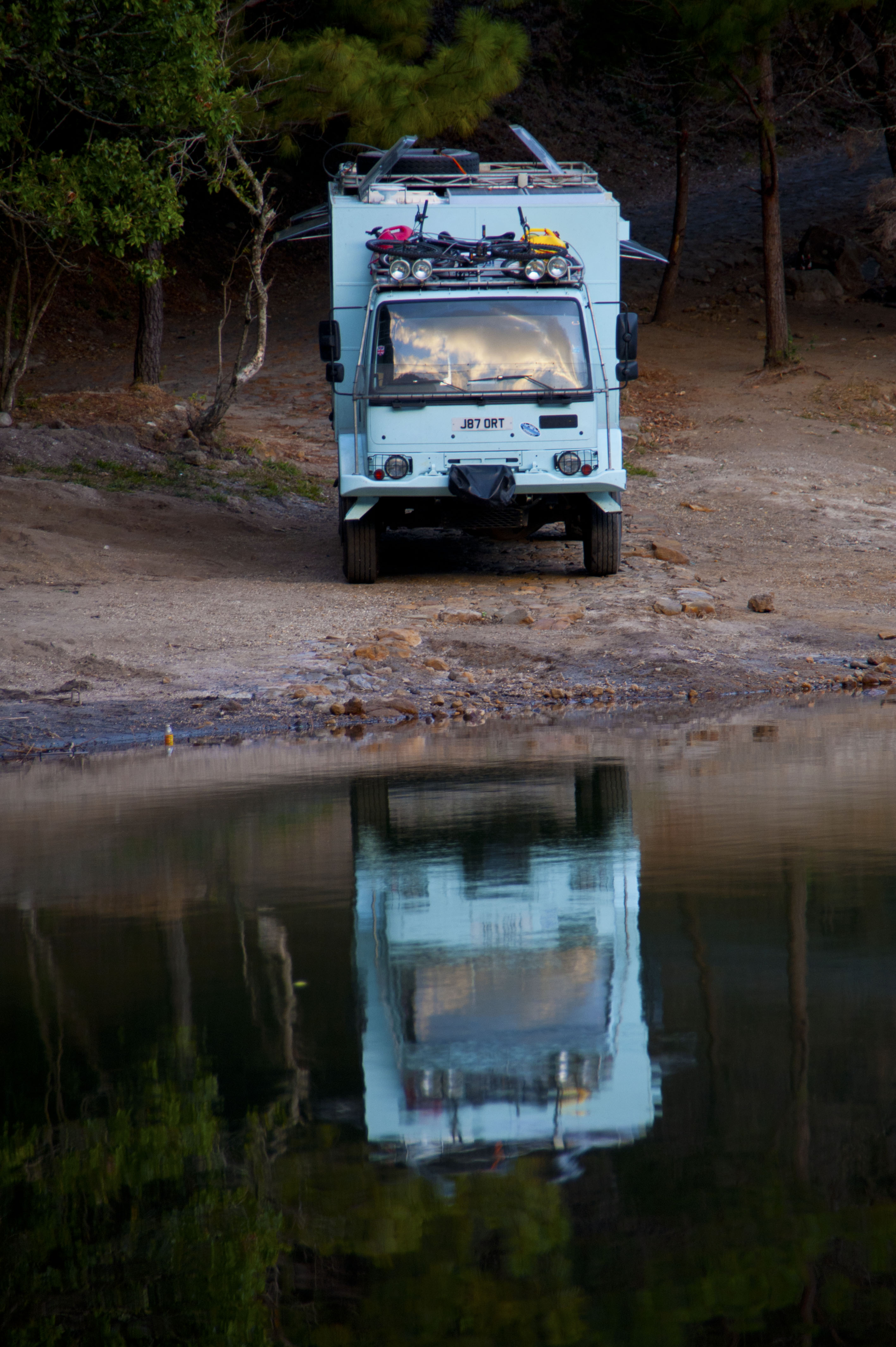
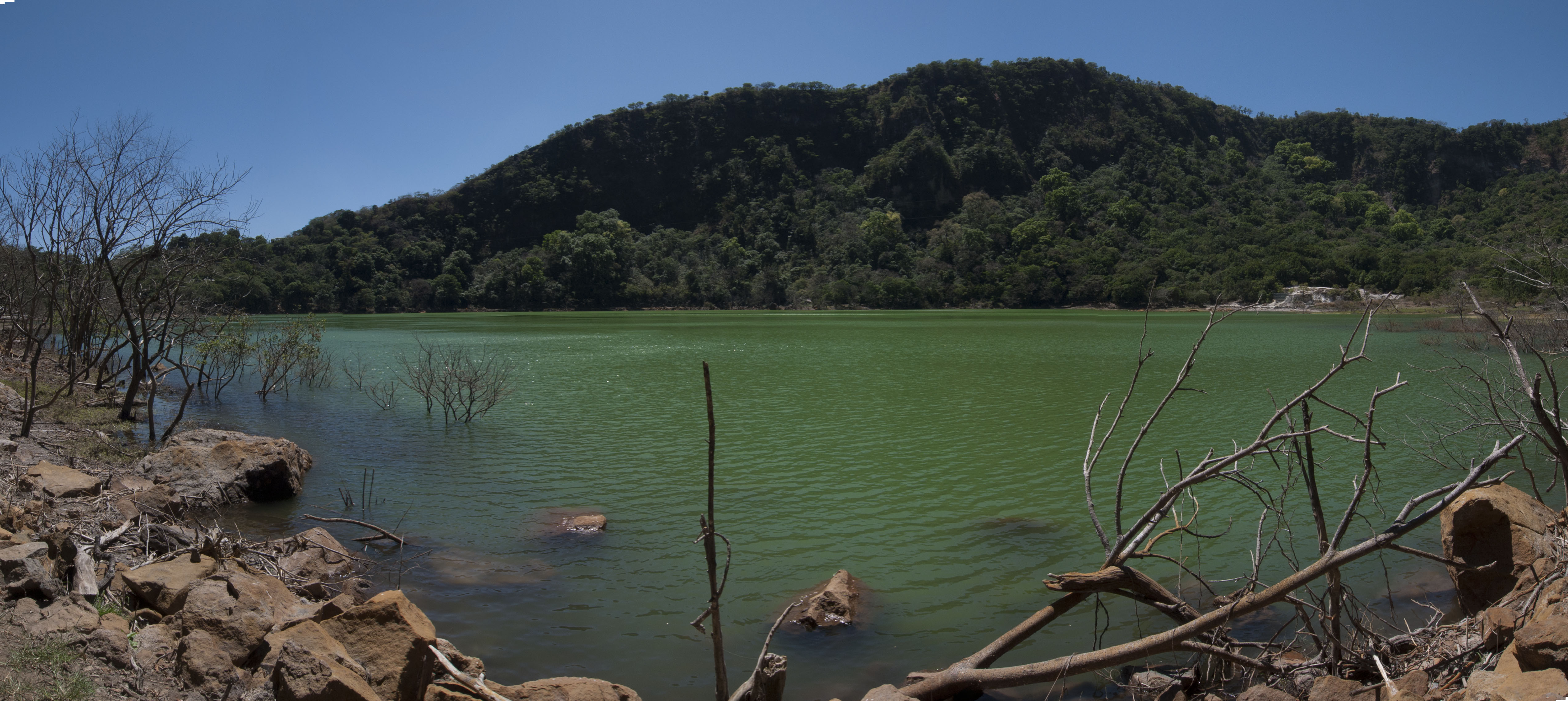
After the heat of Suchitoto we wanted a night in the mountains so we headed along the Panamericana towards the highest town in El Salvador, Alegria. The drive from the Panamerican into the mountains was very pretty on a good paved road. In fact the roads in El Salvador have been very good, few potholes and almost everything is paved. 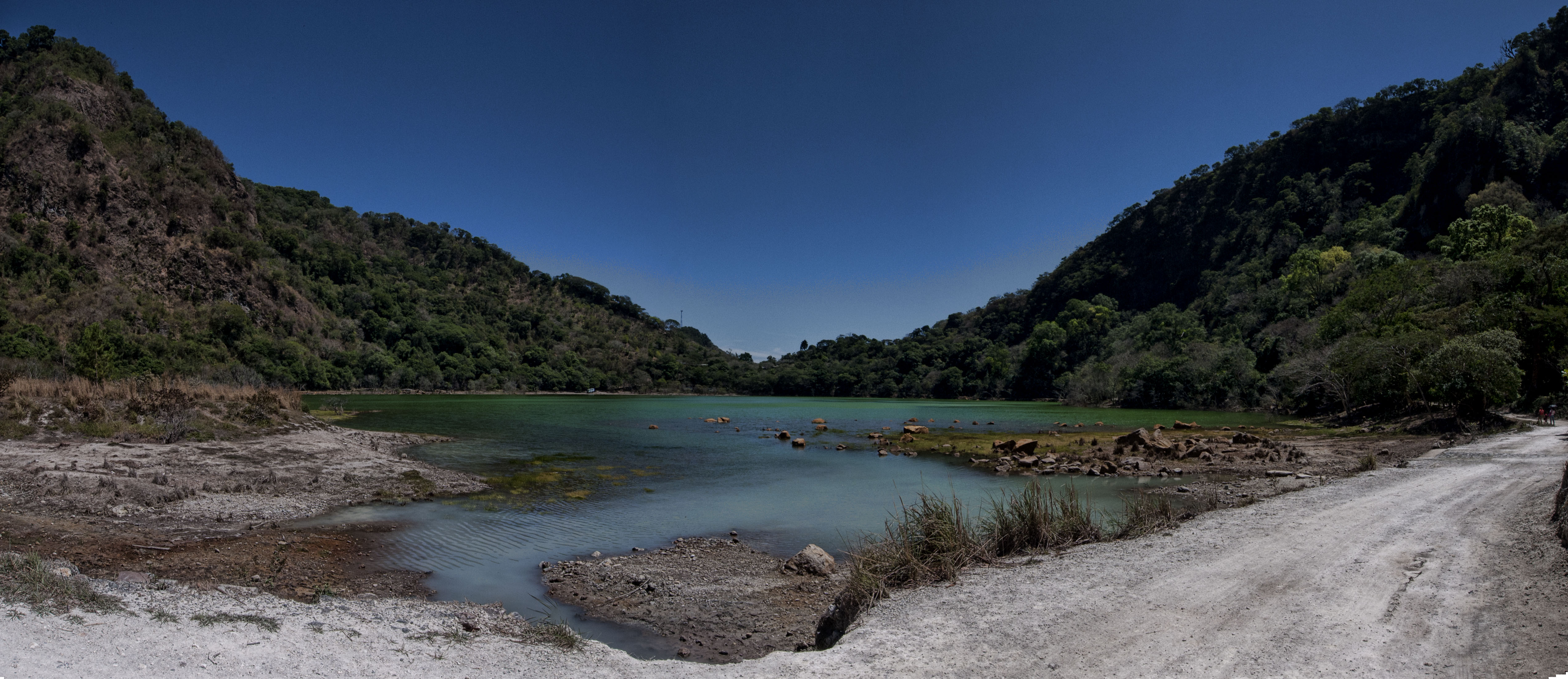 We reached the small town of Alegria at just over 1000m and drove through and up a very steep and cobbled road to the crater of the Tecapa Volcano. This is called the Laguna de Alegria and is a popular tourist spot. We paid the $1 entry fee and this entitled us to camp the night there. The water of the lake is a vibrant green and the water itself is a bit sulphurous.
  Just down from where we parked up there was a vendor under a tarp selling Pupusas which are the national dish of El Salvador. We tried this tortilla wrapped potato, cheese and meat pasty and it was very tasty – $1 for three.
  The night at the laguna was very quiet and cool and we woke refreshed in the morning ready to leave El Salvador and head into Honduras.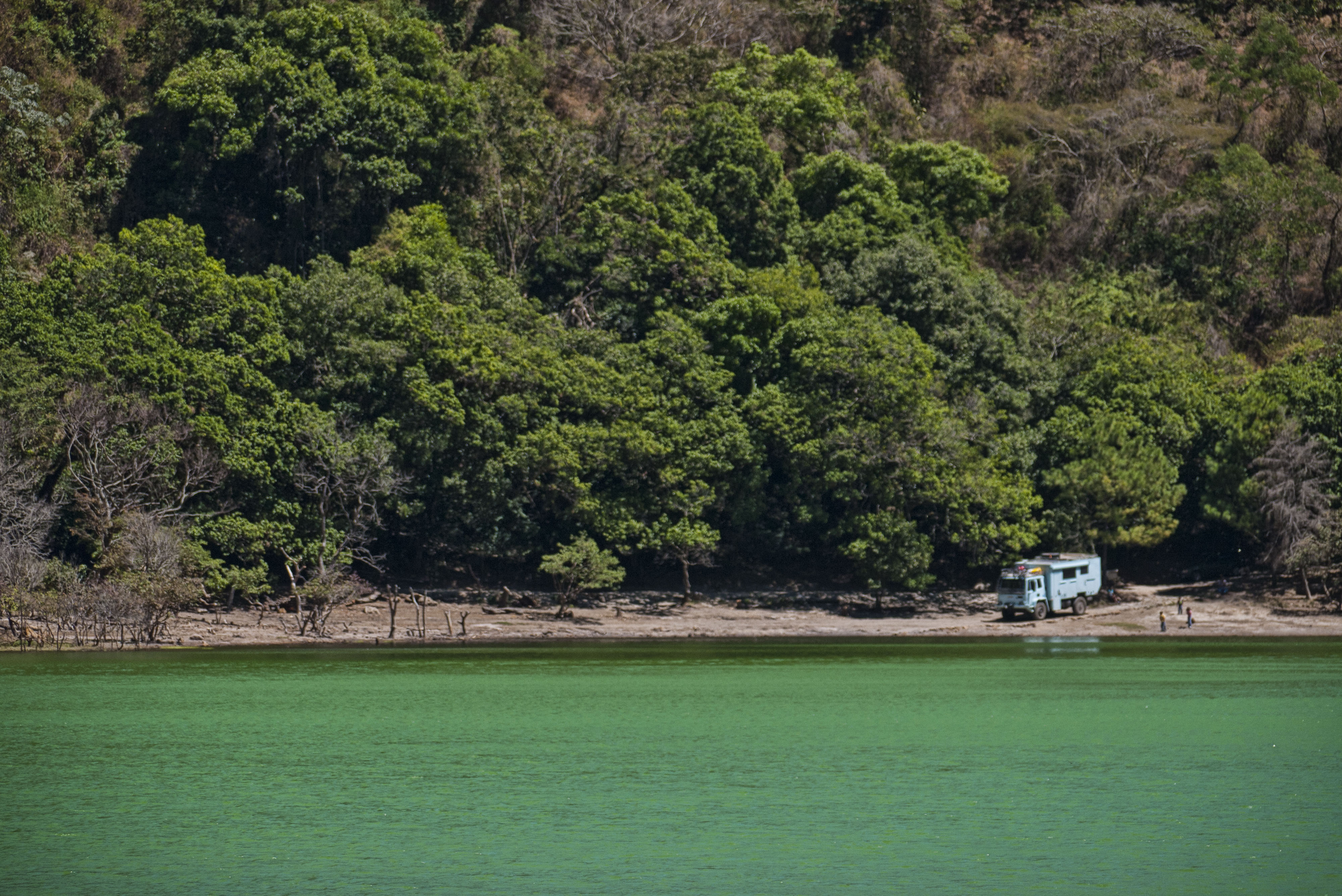
Suchitoto
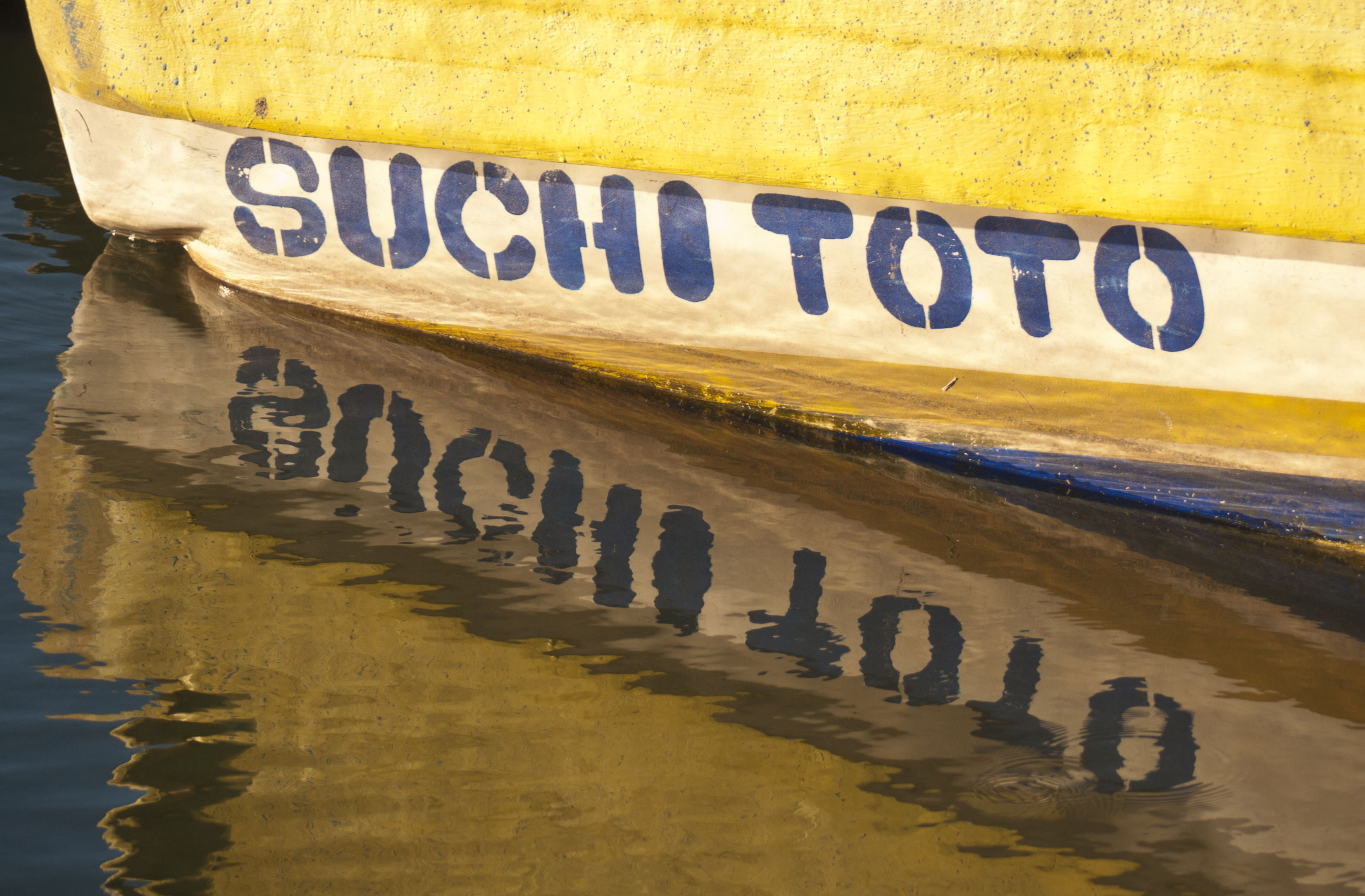
Suchitoto is one of the prettiest little tourist towns in El Salvador and is a short drive inland from San Salvador. We managed to negotiate our way around the San Salvador ring road and from there it is only a short hop down a good road to the town of Suchitoto on the banks of Lake Suchitlan.
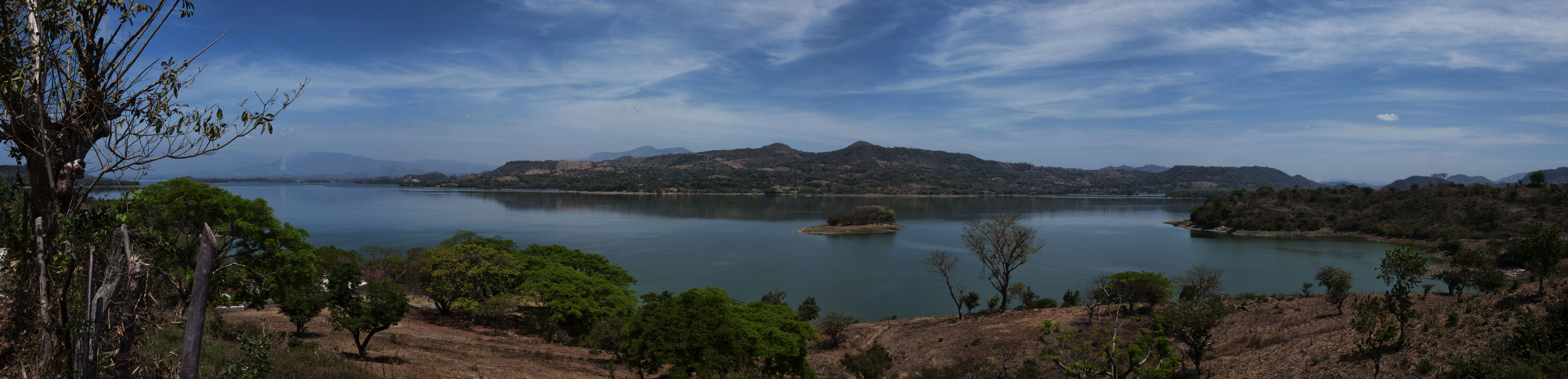
We drove through the town itself and down towards the lake as we knew there was a restaurant with Swimming pool that allowed camping for a nominal fee. After arriving at El Mangal restaurant we hopped straight in the pool as it was blisteringly hot. In fact this was the hottest place that we had been. The sun was unbearable at the hottest part of the day – generally between 2pm and 3pm.
We walked down to the lake and the tourist centre there. There are lake tours available but at USD20 each for an hour this seemed way overpriced so we passed.
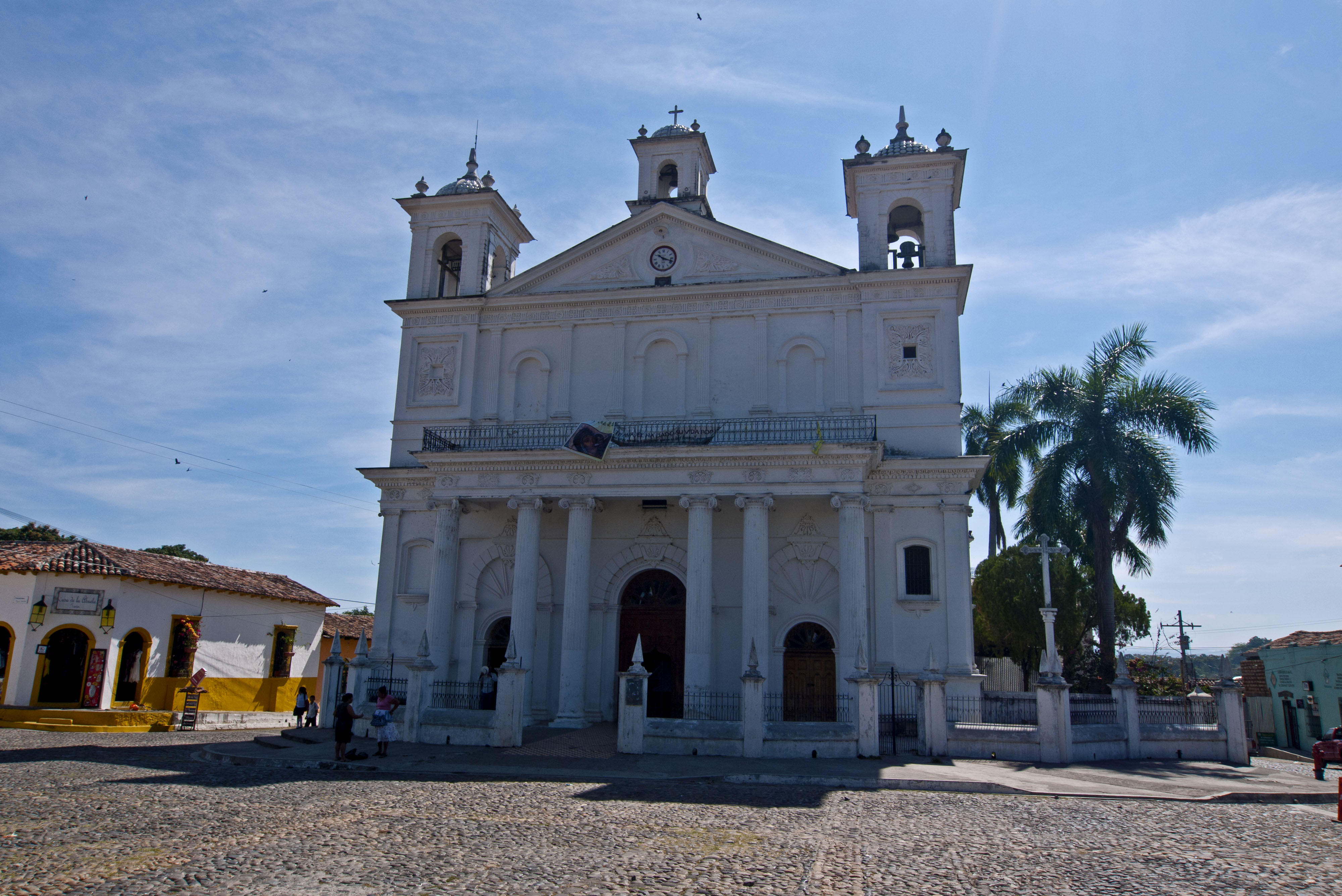
The next morning we caught the bus into town (all of 60c each) and wandered round the town for a couple of hours. To be honest there wasn’t that much to see. We did wander into the museum of money which had money from countries all around the world but this didn’t hold our interest for too long.
Cerro Verde
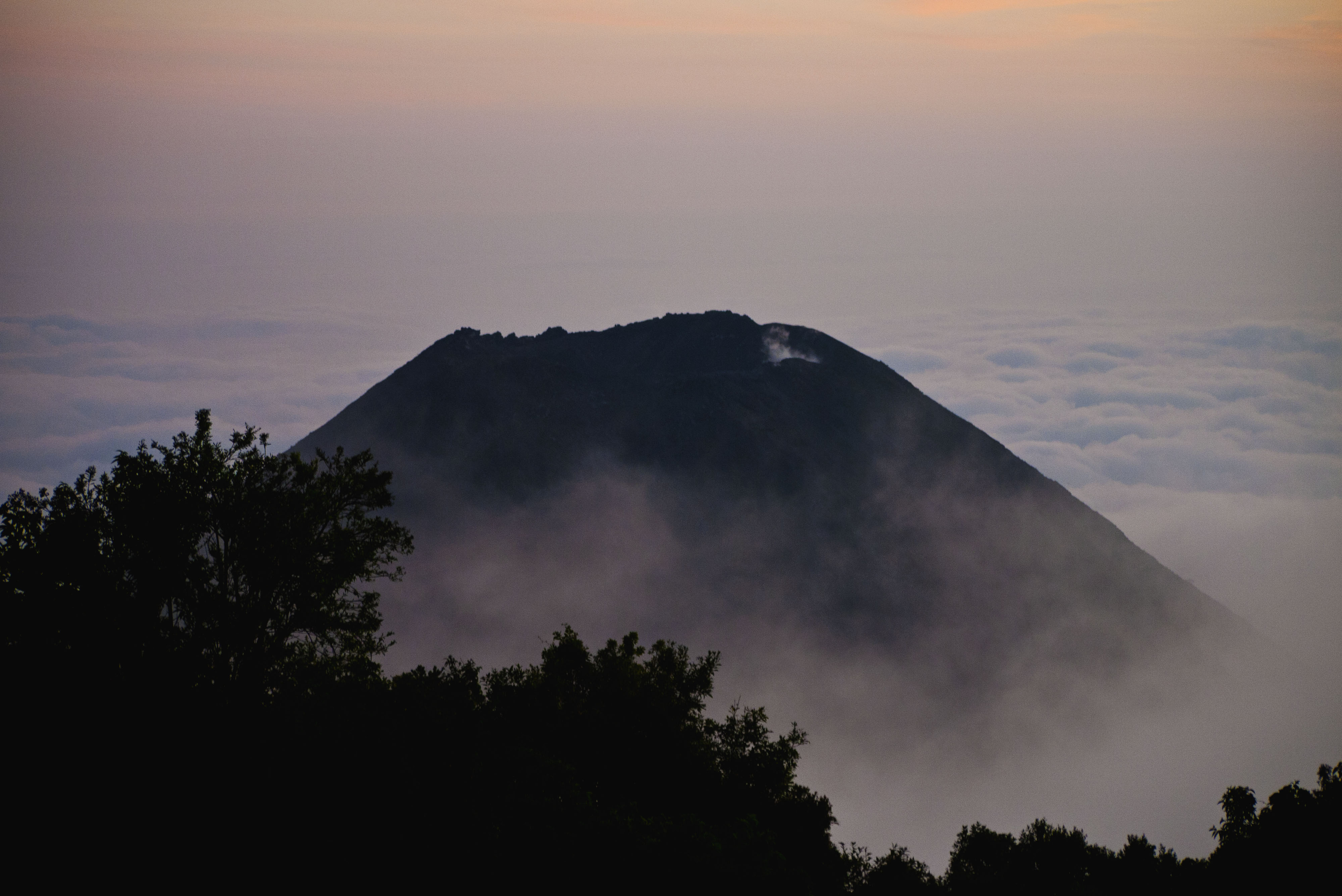
After the heat of El TUnco our weekend break was up in the mountains at an altitude of 2000m. We drove up to the National park of Cerro Verde which is a collection of three large volcanos.
The change in temperature was immediate. Falling from the mid 30’s down to the mid 20’s. We arrived at Cerro Verde late in the afternoon and arranged to camp there for the night. This a great campsite which is completely silent at night and even has access to power.
The only way to hike the volcanoes in the park is to go on an organised hike which start from the parking lot at 11am. We had decided to climb Santa Ana which is 2381m high. Santa Ana last erupted in 2005 when it killed people with massive boulders thrown from the crater. The other major volcano here is called Irazu and is a bare cinder cone which isn’t as rewarding to climb but is a classic volcano shape.
We were soon setting out with a guide who couldn’t have been older than 14 and two policeman to guard the group. There have been violent robberies in this area.
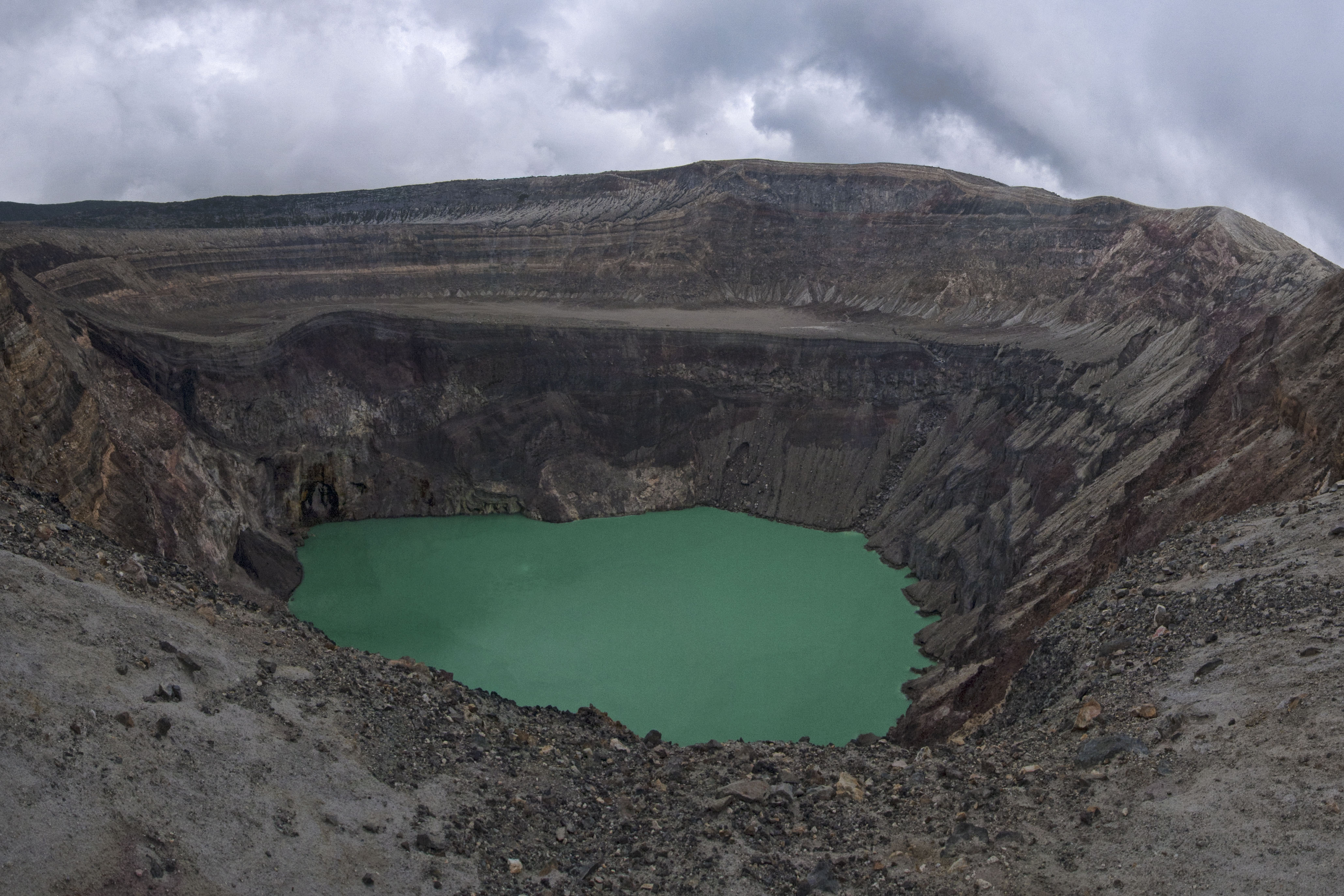
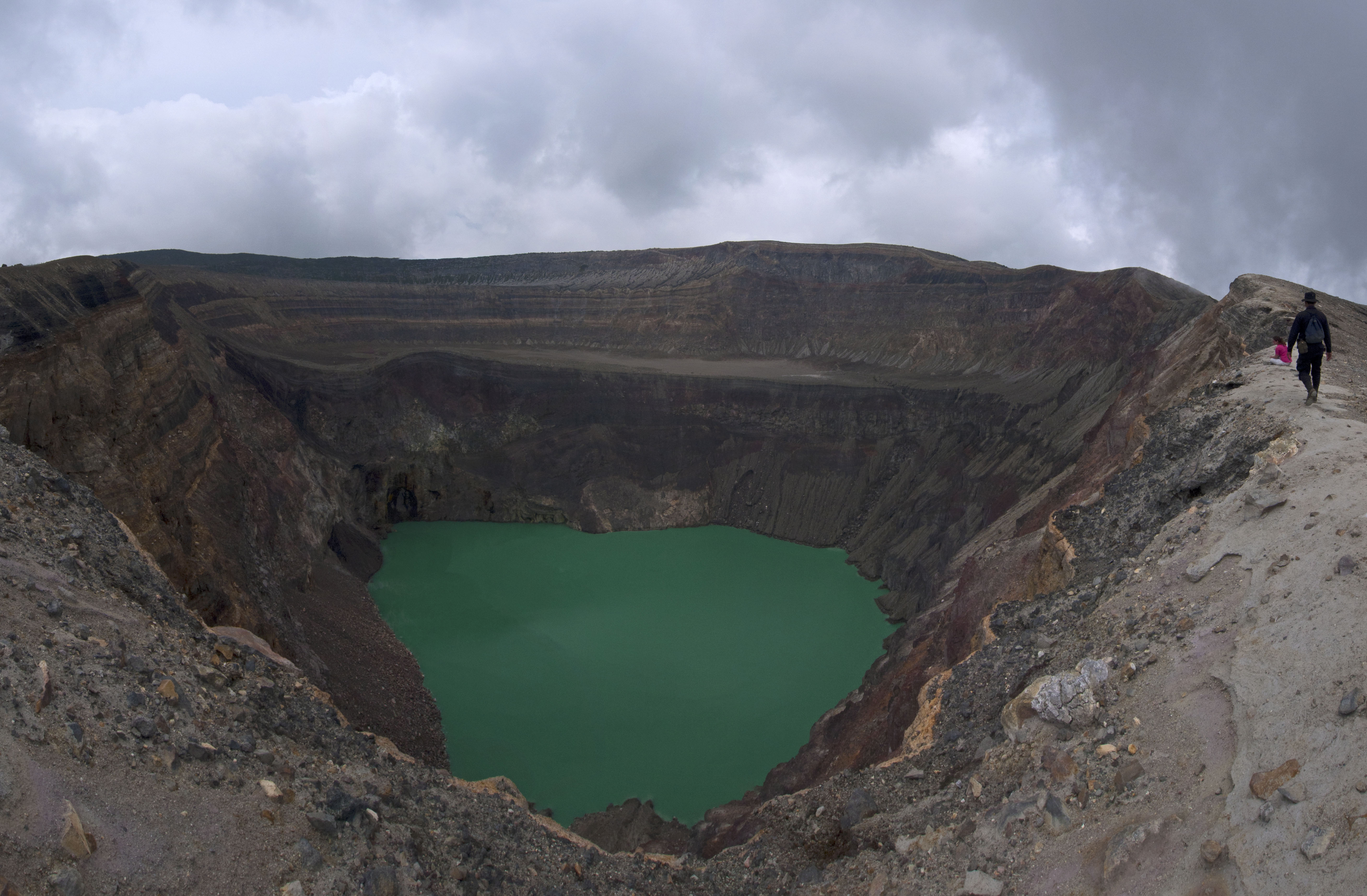
The hike first descended the side of the volcano we were on and the views were obscured by cloud which was rolling in and out. Then there was a slog up Santa Ana itself. It took 2 hours to walk to our destination which was a the beautiful crater lake of the Santa Ana volcano. There was a slight sulphurous smell and the waters of the lake were a vibrant green. Unfortunately the views off the volcano were obscured by cloud.
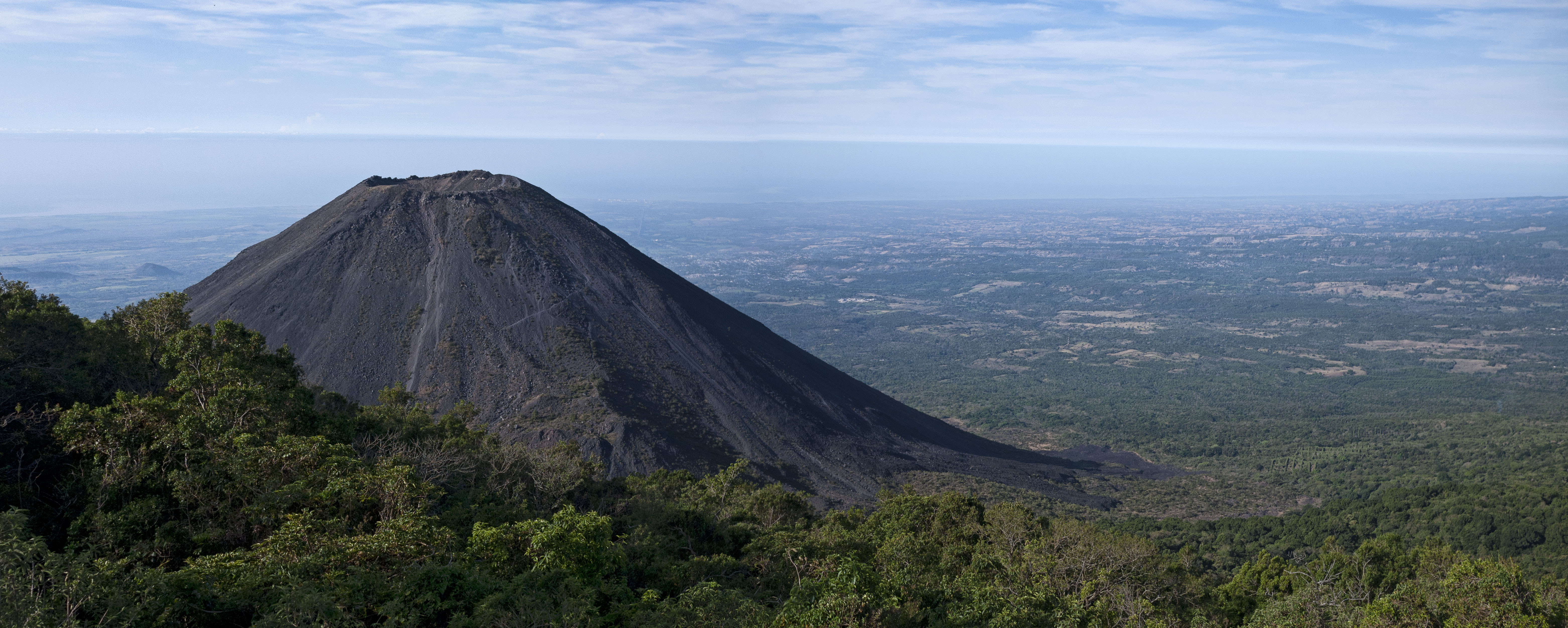
On returning to the truck we decided to stay another night in Cerro Verde and enjoy the cool climate. In the morning there were clear skies and we could see all the way to the pacific coast.
After leaving Cerro Verde we visited Lago de Coatepeque and drove down to the lake. However the lake is completely surrounded by houses which are all walled off and we couldn’t find a place to get close to the lake other than a couple of unattractive looking restaurants.
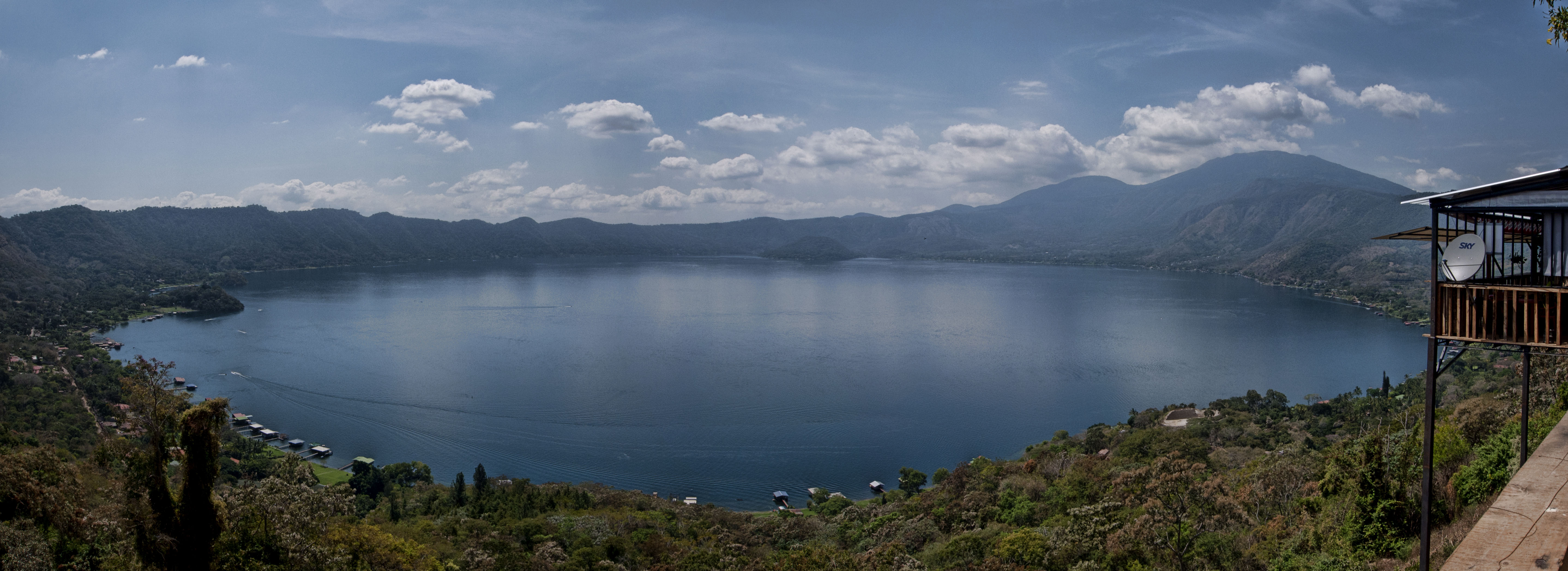
We decided to head back to the beach !
Playa El Tunco
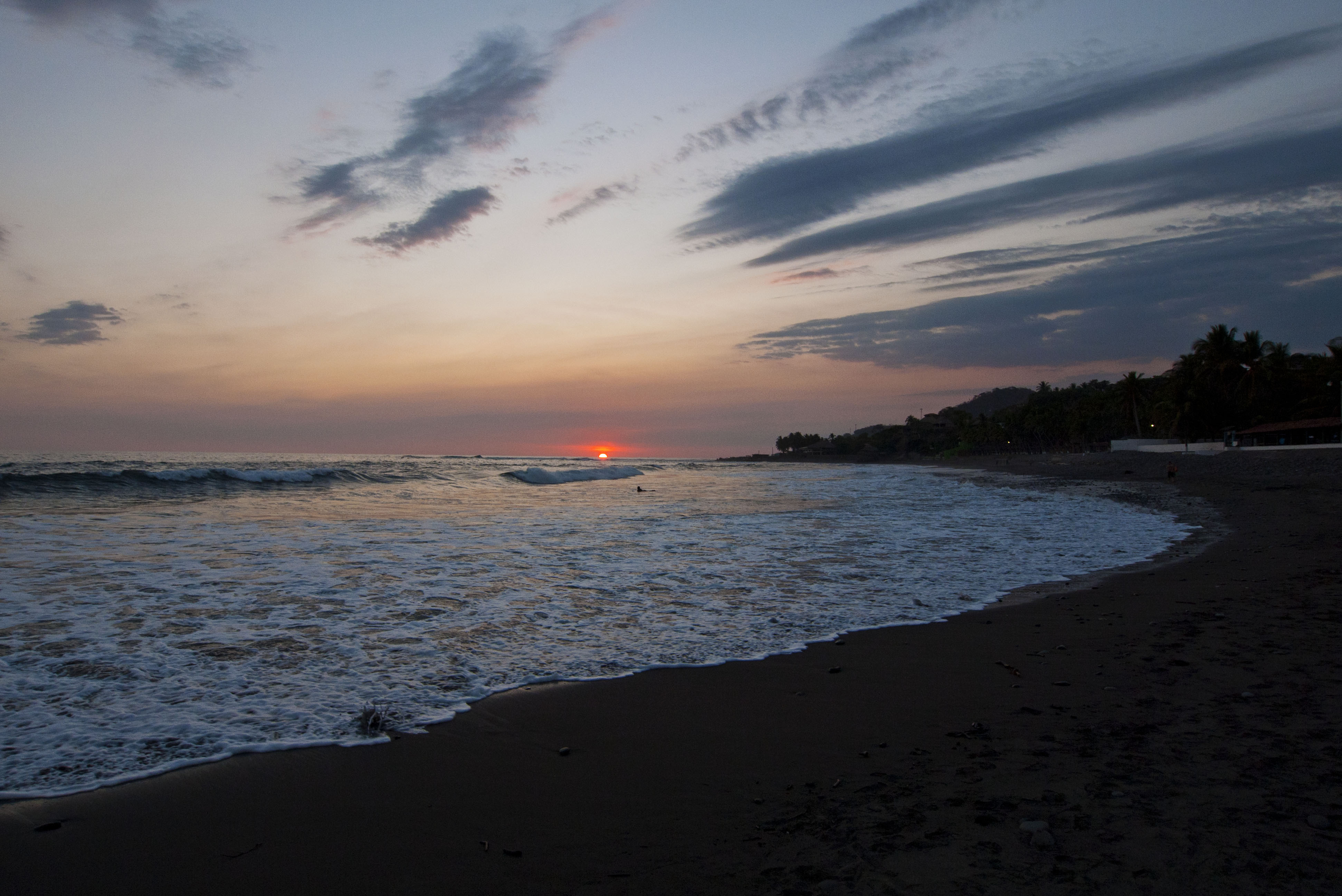
Our first full day in El Salvador we decided that we wanted to head to the beach. Just West of La Libertad (a town know for violent gangs) there are a number of beaches with small surf communities. We decided to go to El Tunco where there is a small street of bars and restaurants and a long beach with some sizeable surf.
On arrival we sussed out the little town and settled on staying at Roots Campground. The place wasn’t much but it was almost on the beach (you had to walk through a bar to get there) and we could get power for the truck. In the heat of this part of the world our fridge never turns off .
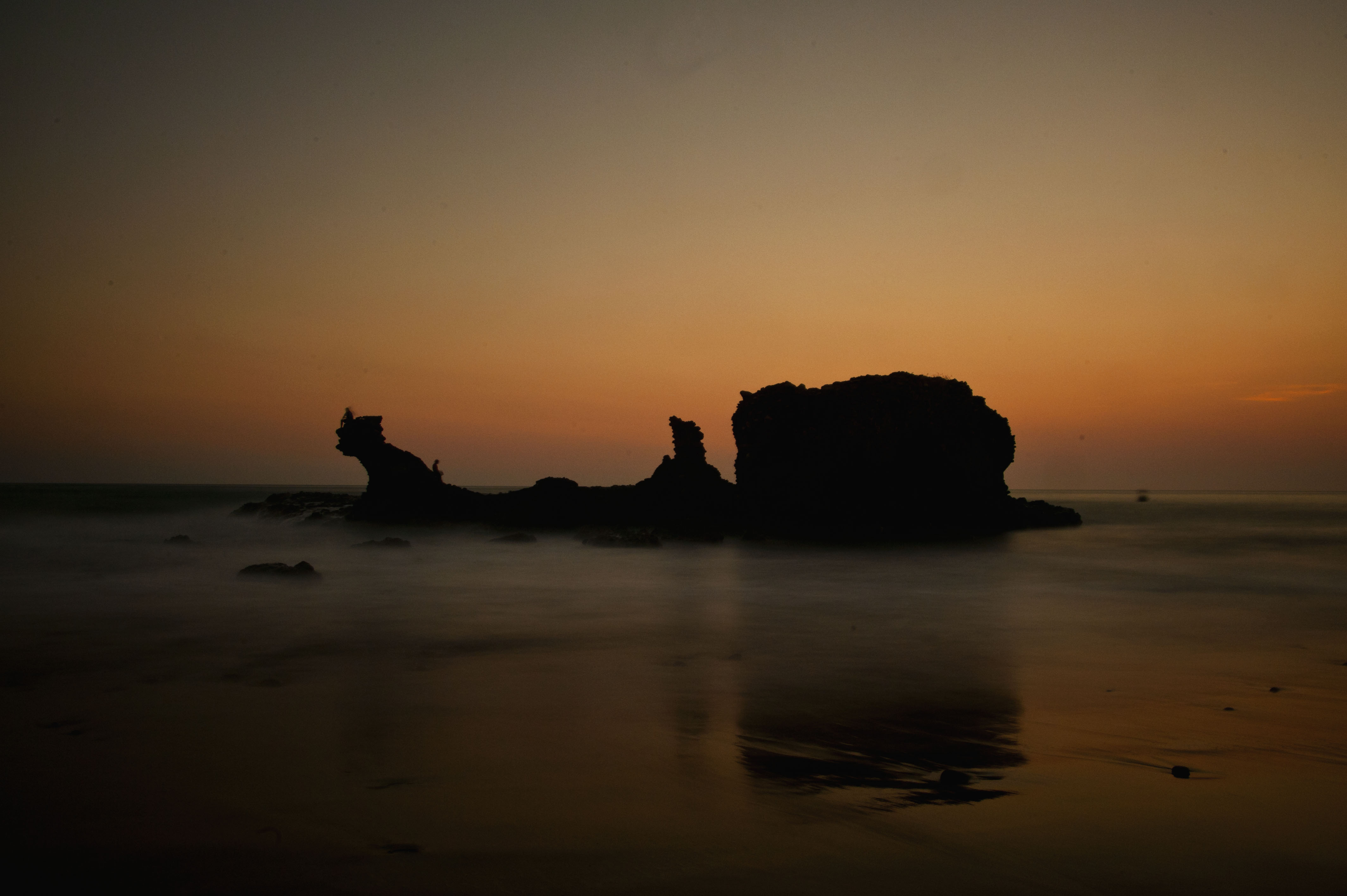
We spent 2 nights at El Tunco and then left for the weekend because it gets really busy with El Salvadorians, particularly at the bar next to our campground where they have parties at the weekend, but then came back the next week for another 4 nights.
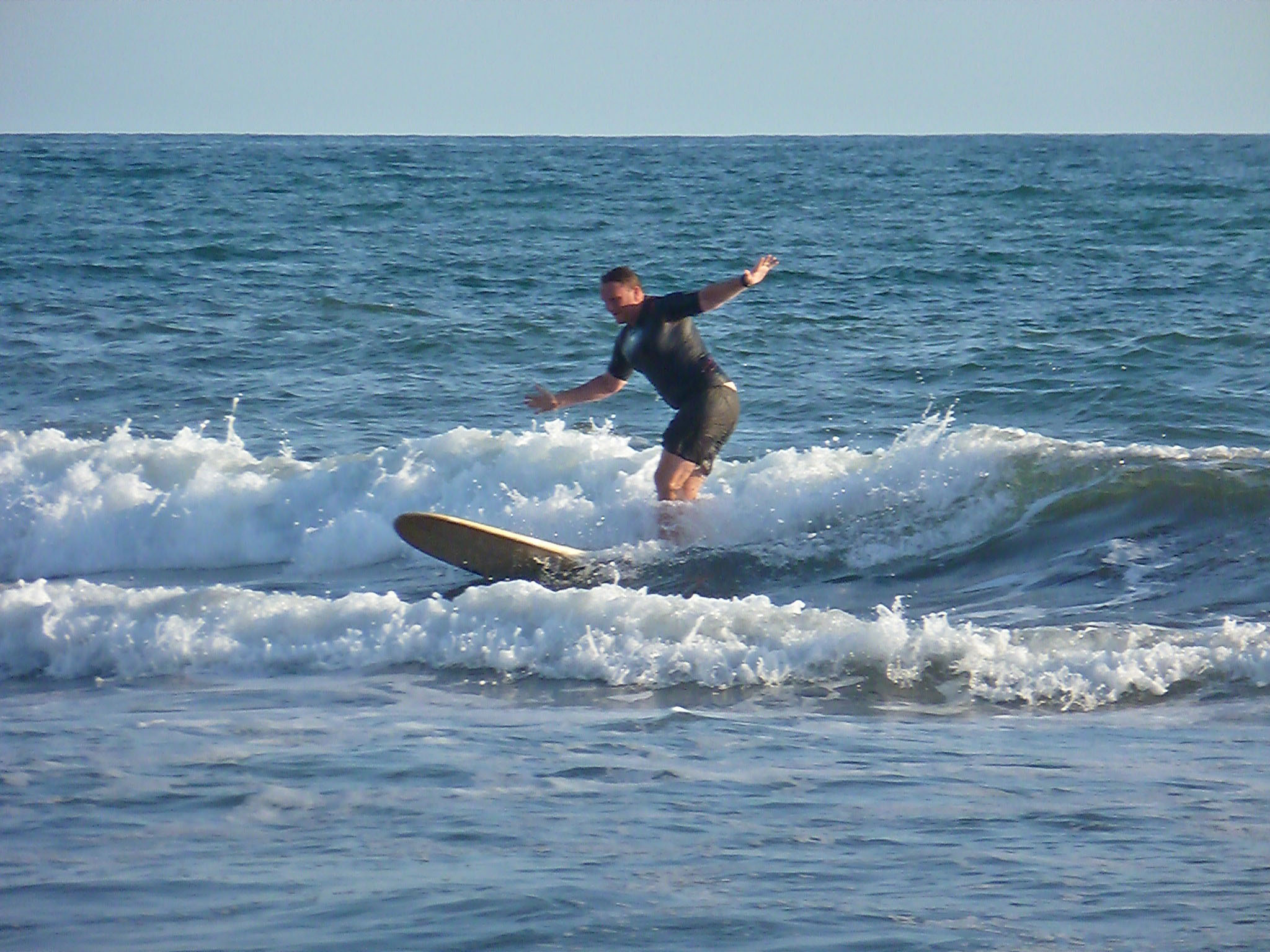
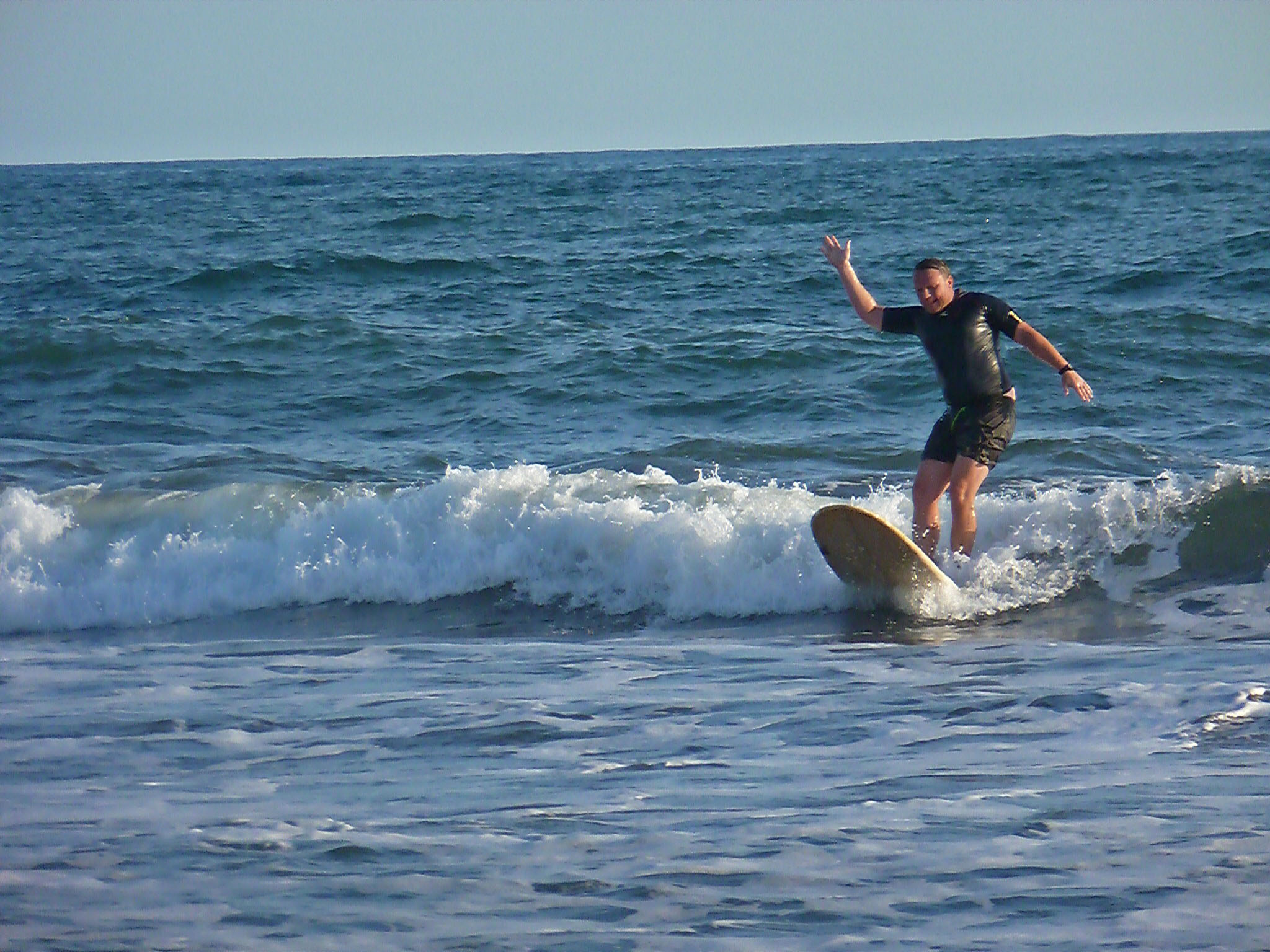
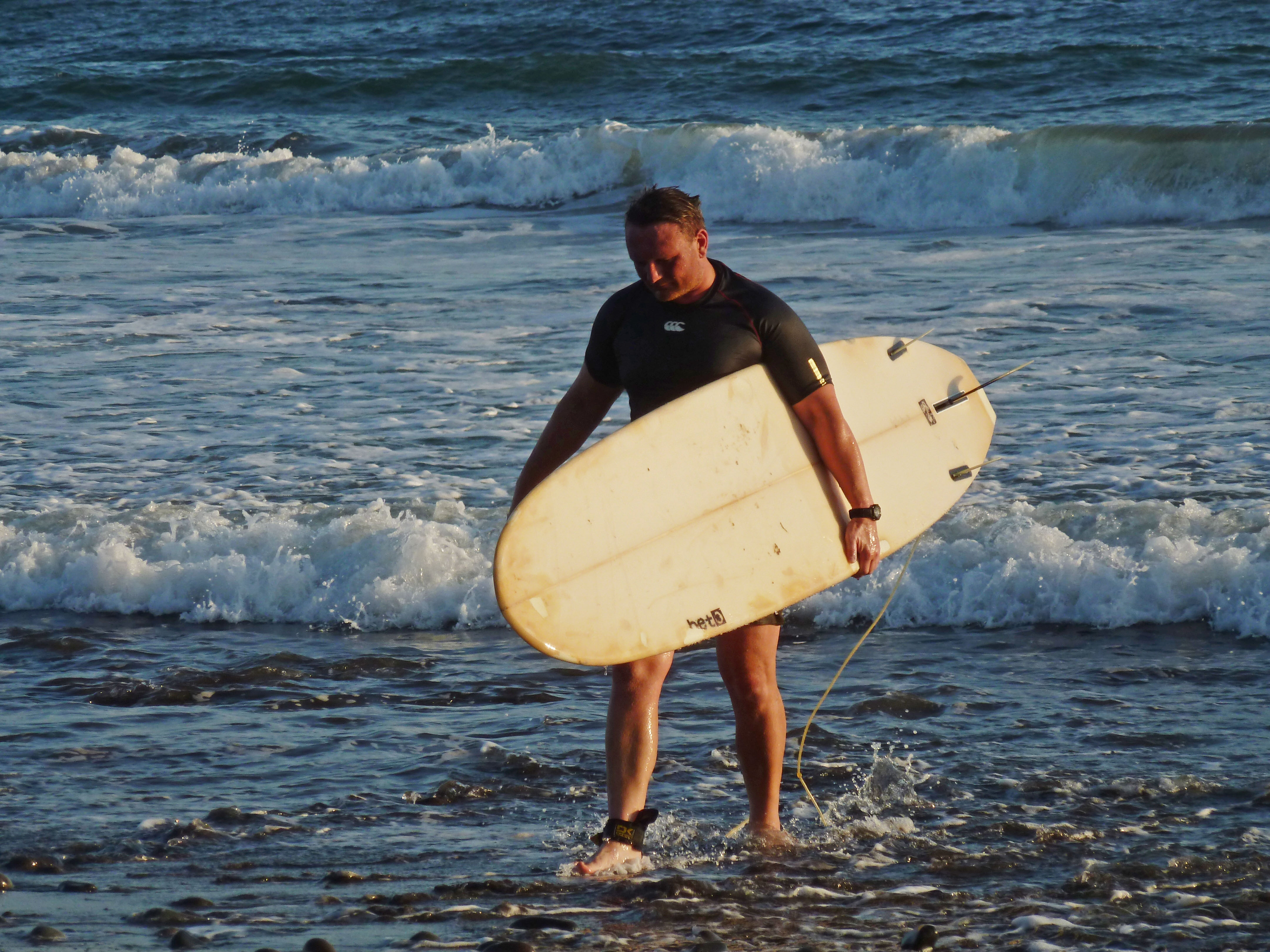
In El Tunco I did a surf lesson with a local surfer dude. He spoke no English at all apart from some key words such as “paddle”. Well I managed to stand up a couple of times but I still haven’t mastered surfing.
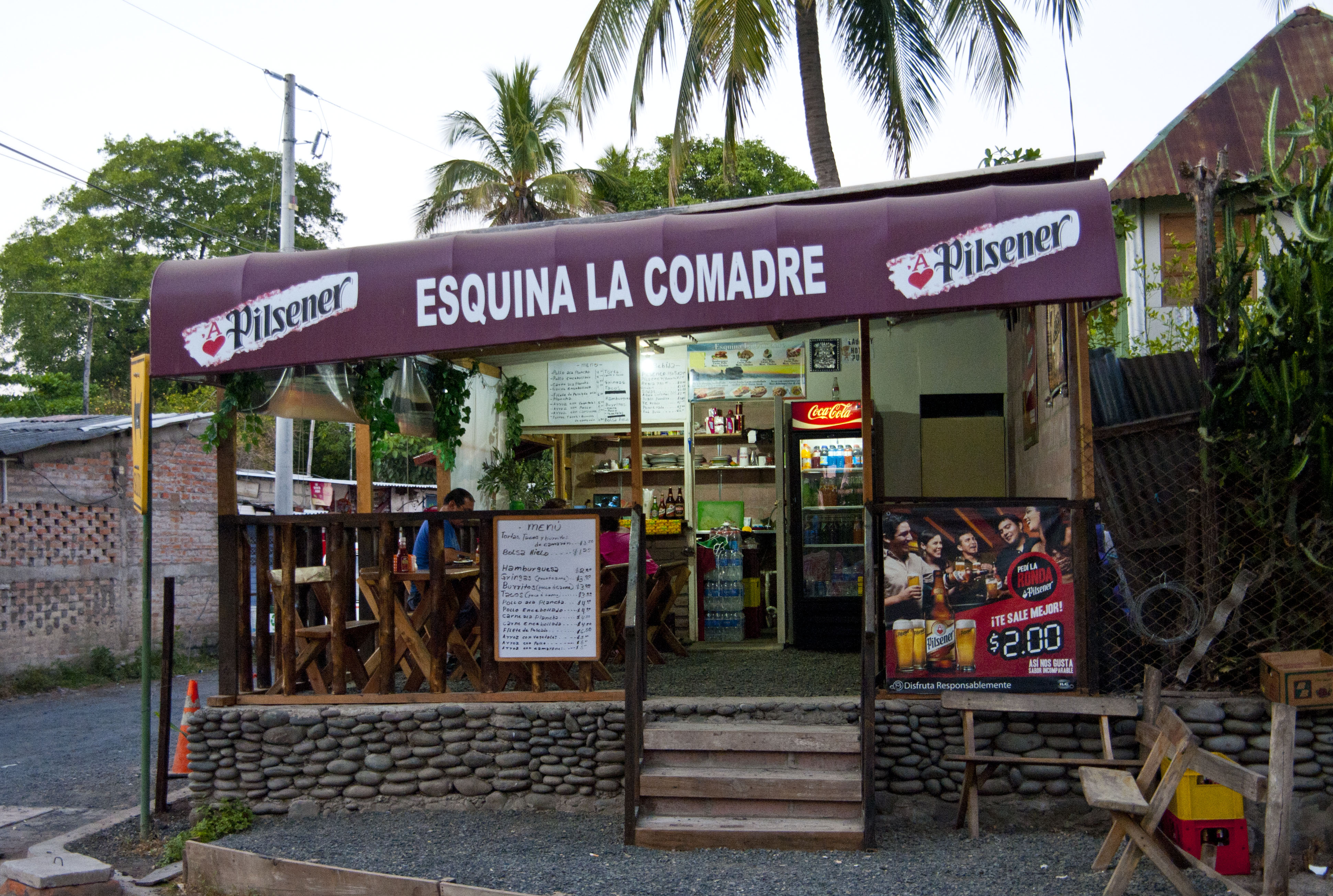
We found a great little outdoor restaurant where you could eat with a big bottle of beer for $4 each. We didn’t do a lot of cooking in El Tunco !
As we head further South it is getting hotter and hotter. It makes you realise how important elevation is in getting cooler. We’re now starting to plan regular breaks at altitude to have a cool nights sleep !
 FromAtoB