Community Baboon Sanctuary
After entering Belize we drove down to Orange Walk where we stopped for a quick lunch and a walk around. We weren’t very impressed so we carried on Southwards. The great thing about Belize is that it is tiny and you can get anywhere in a fairly short drive.
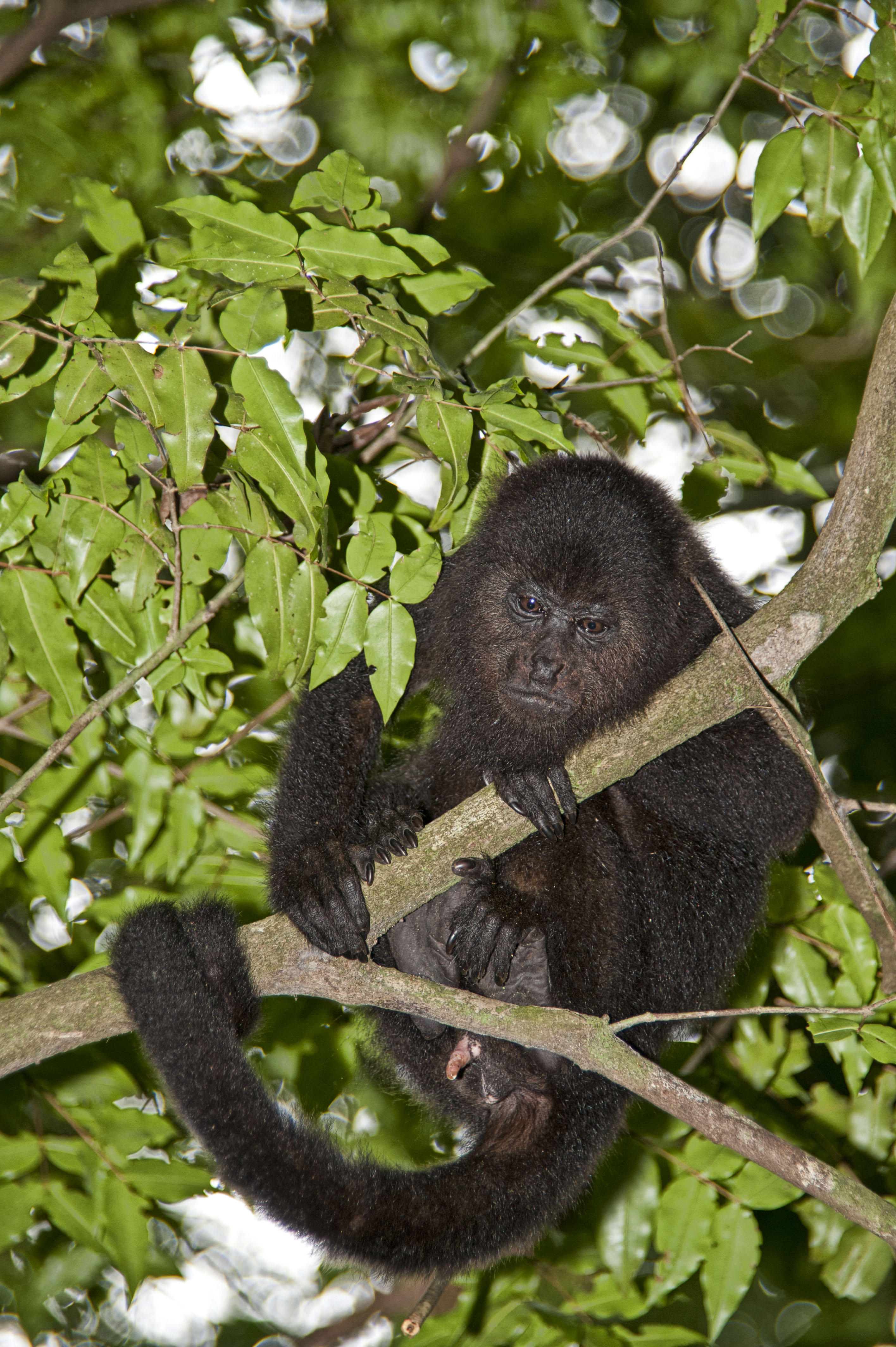
A paved road leads off the main highway to a place called Bermudian Landing. This is the home of the Community Baboon Sanctuary. Over 200 land owners in the surrounding area have joined the association and agreed to keep a 50ft strip of land at the edges of their property as original jungle. This creates corridors of 100ft for wildlife to move around. The main reason for this is the preservation of the Black Howler Monkey which has become endangered.
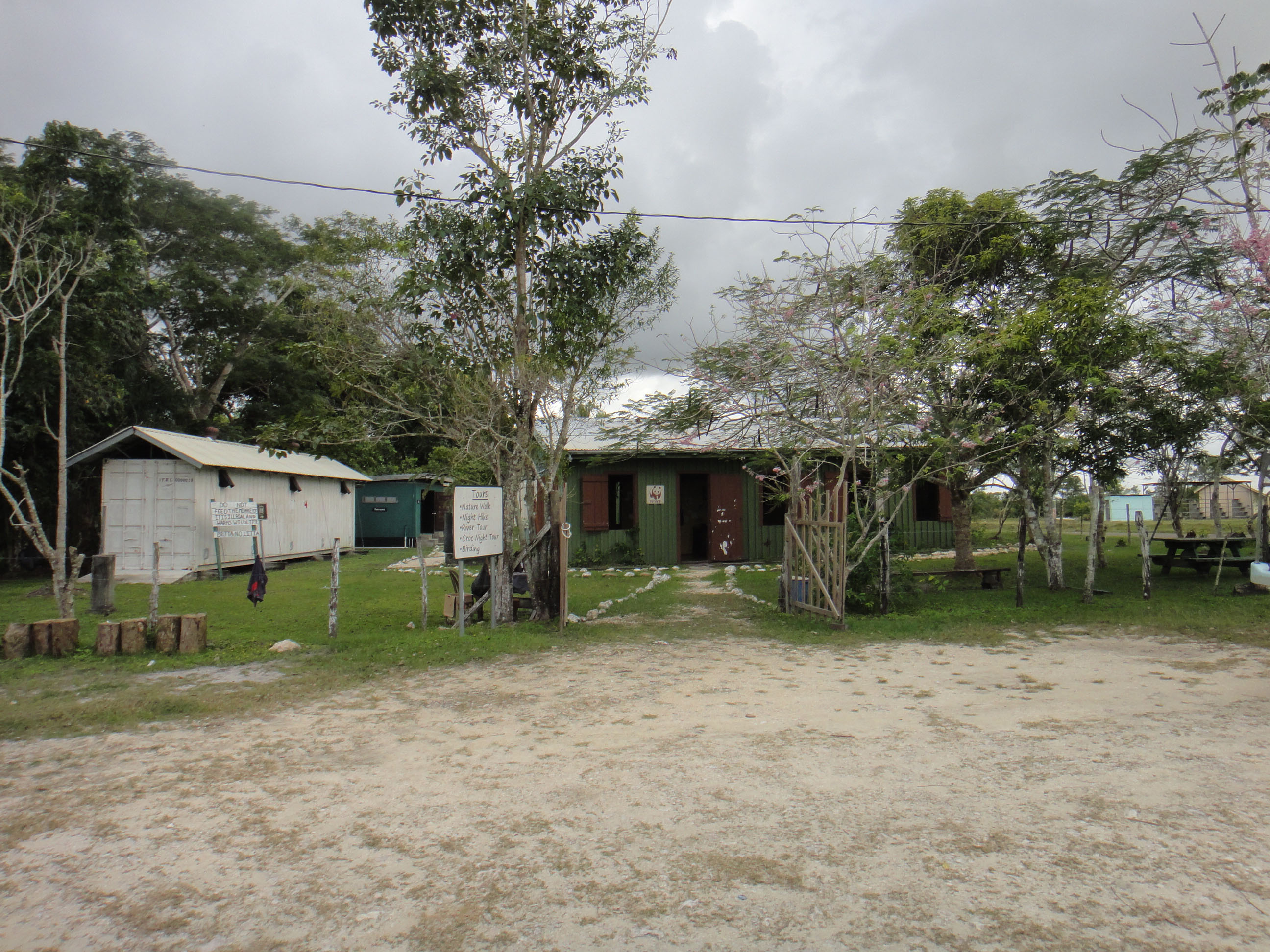
We arrived at the HQ of the sanctuary – a fairly unimpressive wooden hut with bats on the ceiling – quite late so we checked in with the guy there and paid BZ$10 to camp for the night. This only involved parking outside the building. It was really hot and humid in this part of Belize and just didn’t cool down at all over night.
We decided to do a night hike through the reserve with a guide to see if we could see any nocturnal animals. This was a complete bust but we did see a nocturnal bird. The guide that we had was completely drunk which was quite amusing. On the way to the jungle he stopped off at a bar to say hello to some of his friends and they persuaded him to sing for him. So we hung out here for a few minutes while one of the guys in the bar played guitar and he sang a real bluesy number.
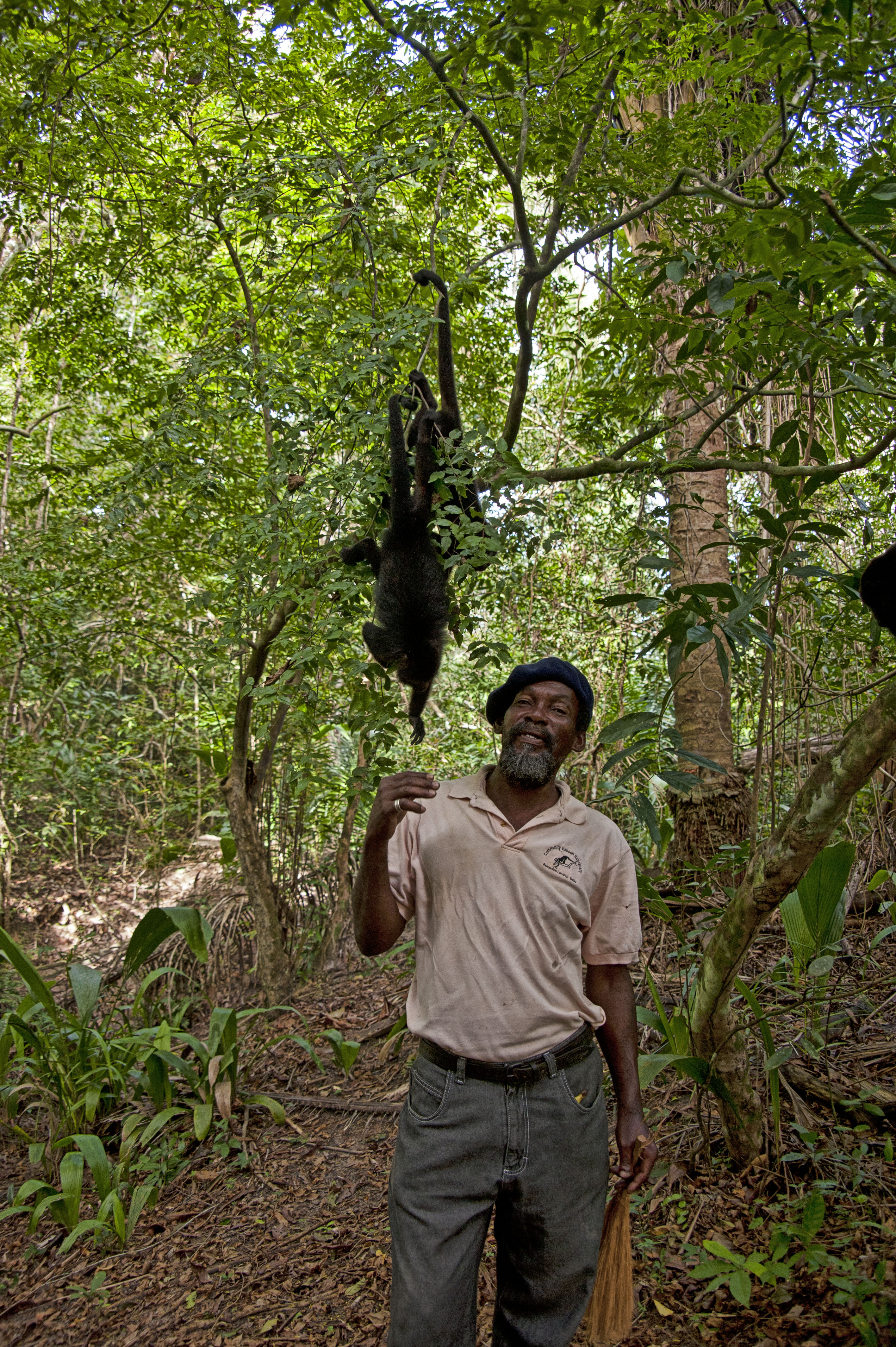
In the morning we had arranged another hike to go and see the Howler monkeys and we were slightly dismayed to see the same guide. However he was completely different and really professional now !
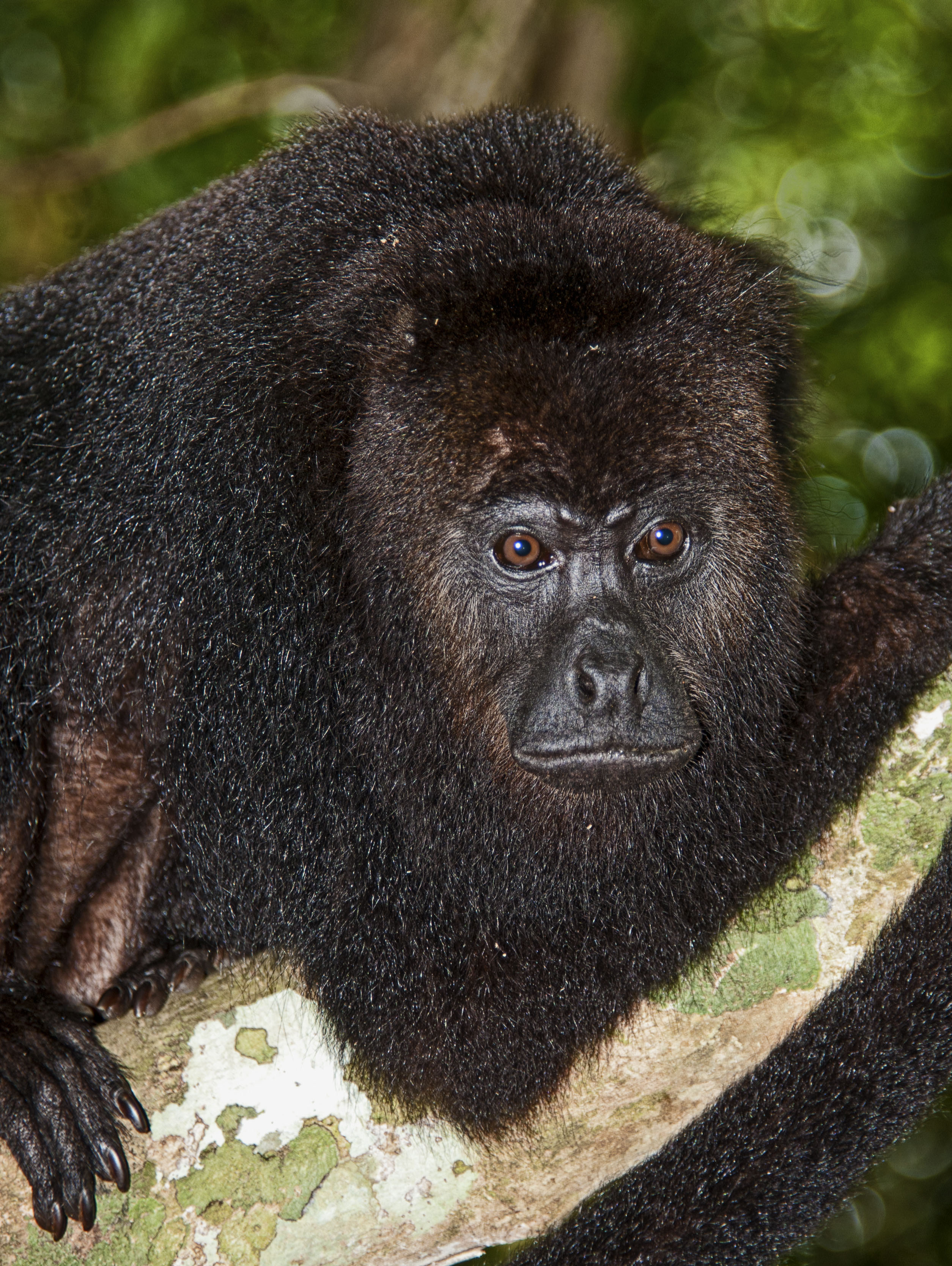
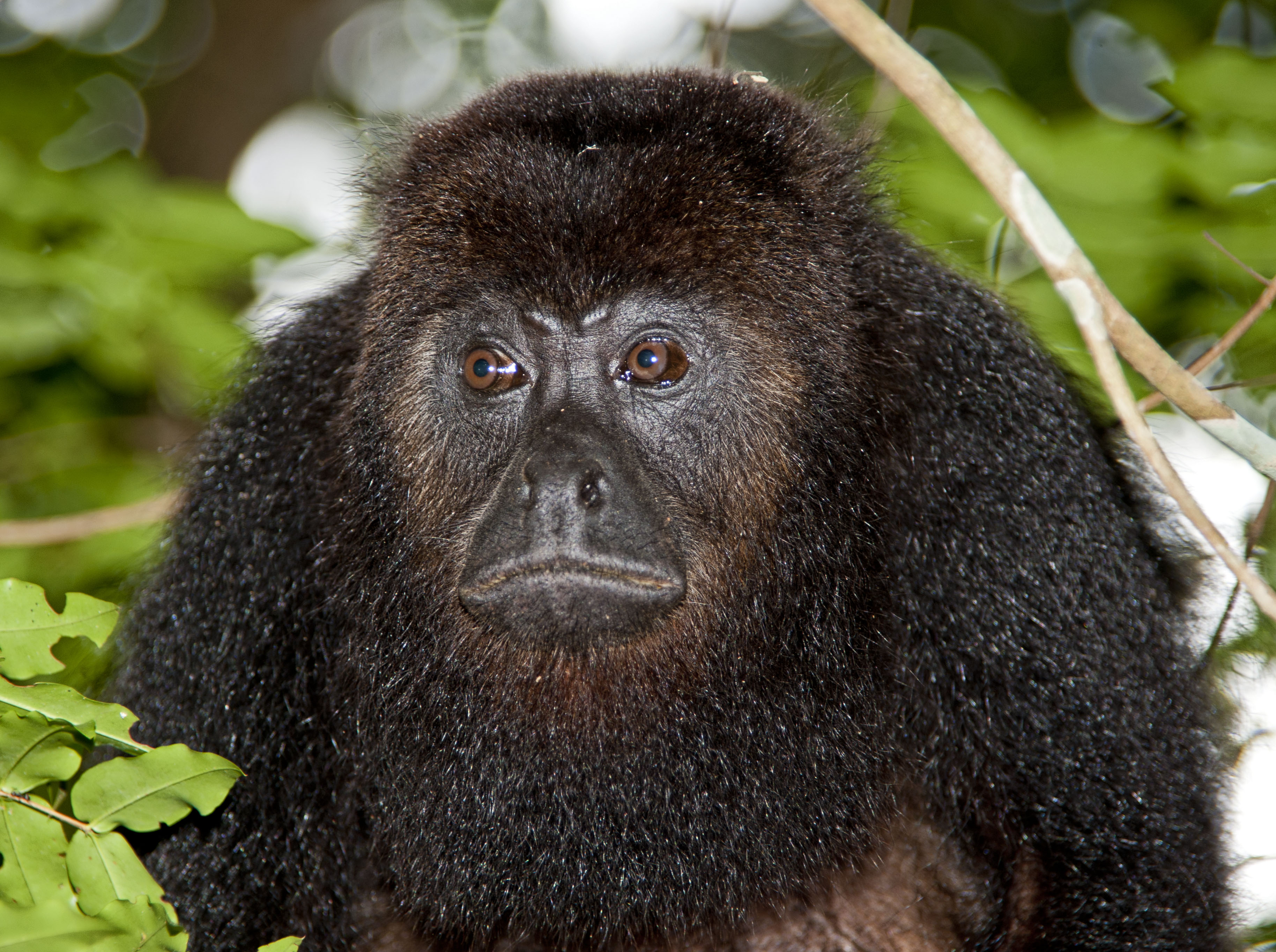
We walked through the jungle for about 15 minutes before we came to a tree with a family of five howler monkeys and our guide, Brian, held out a piece of banana (a cliché I know) and called them down. They came scampering down the tree – all except the adult male who stayed aloof and occasionally made the challenging roar that Howlers are known for.
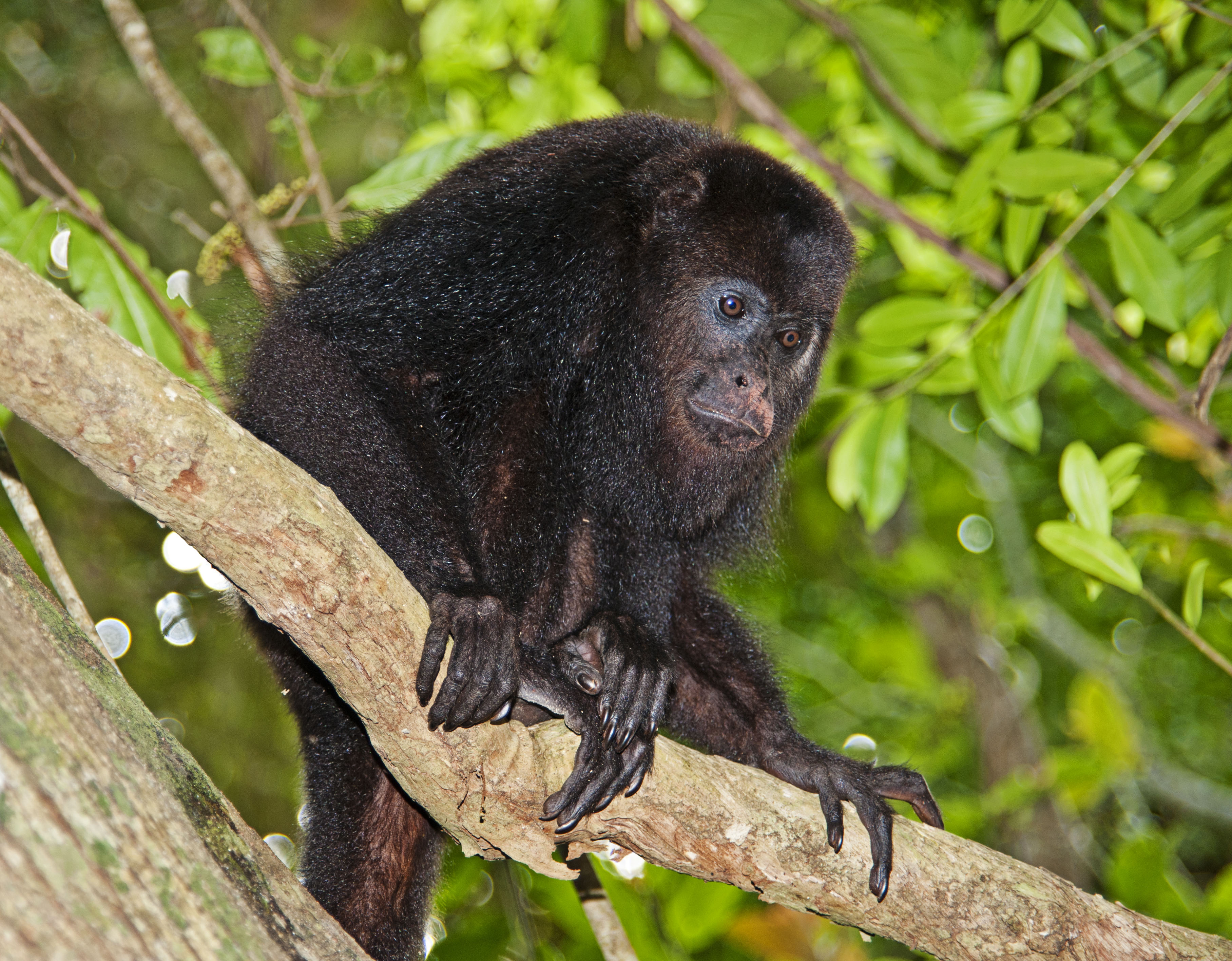
We spent about half an hour with the monkeys which was really cool and then went back to the truck before heading off.
Mexico – Belize Border Crossing
There is only one border crossing between Mexico and Belize and this is just South of Chetumal.
Before crossing the border make sure you fill up with Fuel as it is way cheaper in Mexico than Belize. Belize is over US$5 per US Gallon for Diesel compared with under US$3 per US Gallon in Mexico. We actually met a Belizean truck driver filling up just before the border so we knew it was the right thing to do.

As you approach the border you can see a bridge in the distance. The river is the actual border between the countries. But first you have to check out with immigration on the Mexican side. This is a small shack at the side of the road just before you come to the border station. You need to pull in alongside the road next to this shack (there isn’t much space to park but someone should show you where to go). You need to show your passport here and hand over your tourist card. We weren’t asked for any money but some people have been asked to pay US$20 to exit the country – this isn’t a real charge so always ask for a receipt.

After this you should have a stamp in your passport. The next step is to drive through the border post and pull in immediately on your left. This is the Banjercito where you need to get them to cancel your vehicle import documentation. Only do this if you don’t intend to drive through Mexico again in the next ten years. They should refund your deposit if you gave one – we didn’t. Someone will come out to your vehicle and take digital picture of it and should remove the sticker on your windscreen too.
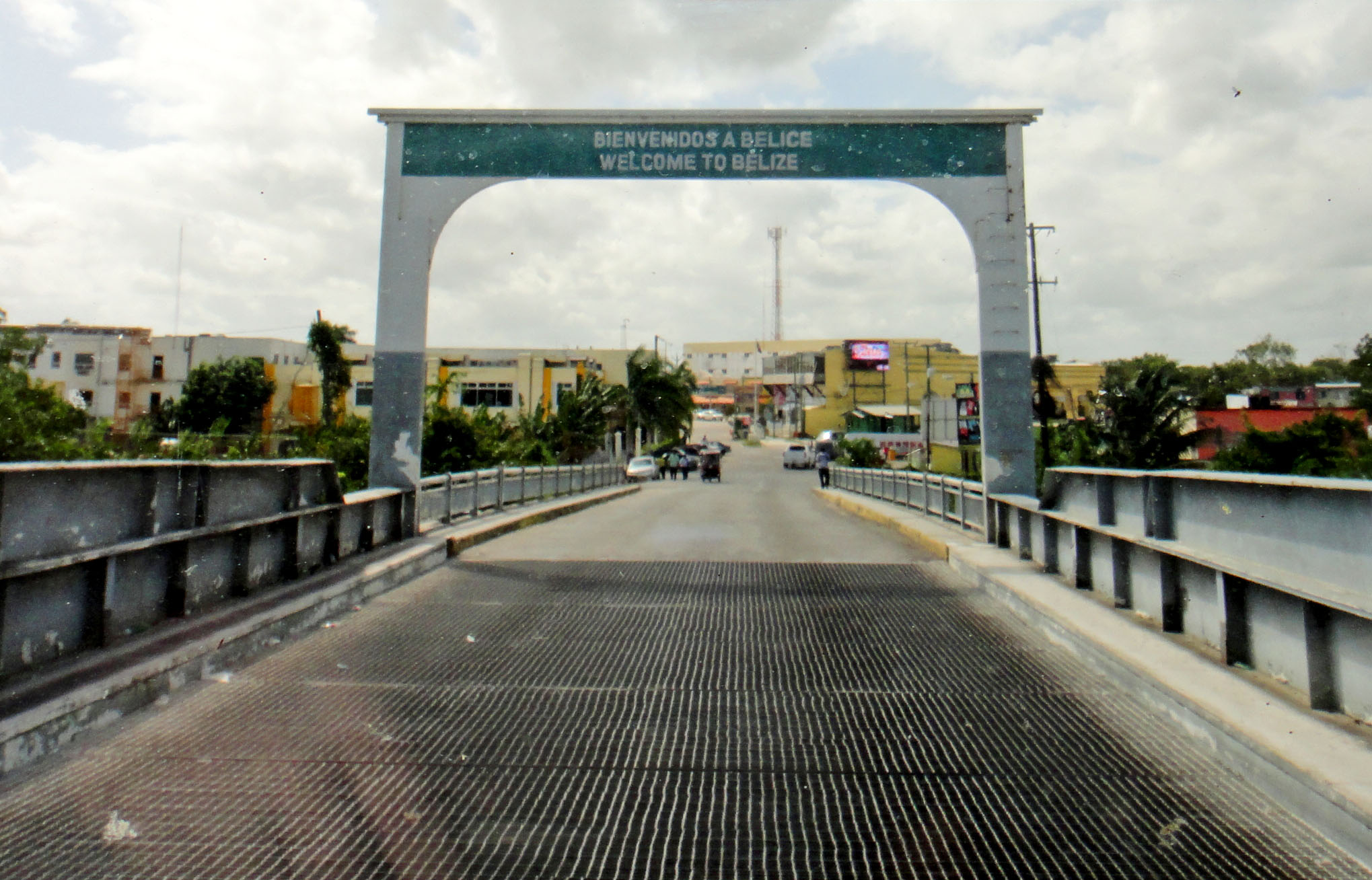
That’s the Mexican formalities done with so you then get back in your vehicle and drive over the bridge.
Almost immediately the other side of the bridge you should see a small white building with “Atlantic Insurance” written on it. You should stop here and go inside and buy liability insurance for your time in Belize. We paid US$25 for 1 month of insurance (way too much but 1 month was basically the same price as 2 weeks). Liability Insurance is mandatory in Belize.

After this get back in your vehicle and drive down the right hand fork in the road (to the left is the free trade zone with lots of duty free shops). You will drive past a casino on the left and then soon after this you will see a sign saying something about Quarantine just by a road going to the right. Don’t got the right but immediately after this fork in the road is a small hut. You must stop there to get your wheels sprayed with disinfectant. We paid US$6.50 for this privilege. You will receive a receipt for this which you will need to enter Belize. We didn’t stop here and were sent back before we could go any further.

A bit further on the road bends to the left – you should go straight on and park in small car park on the left next to a building.
Next to the car park is a fence and behind this fence are the moneychangers. You have to do business with them through the fence but they seem fairly honest and the guy we dealt with was fair.
The immigration building is just next the car park and you need to go in here and first go to the immigration desk. This was really quick for us – the immigration officer asked us how long we were planning to stay and we got our entry stamp straight away.
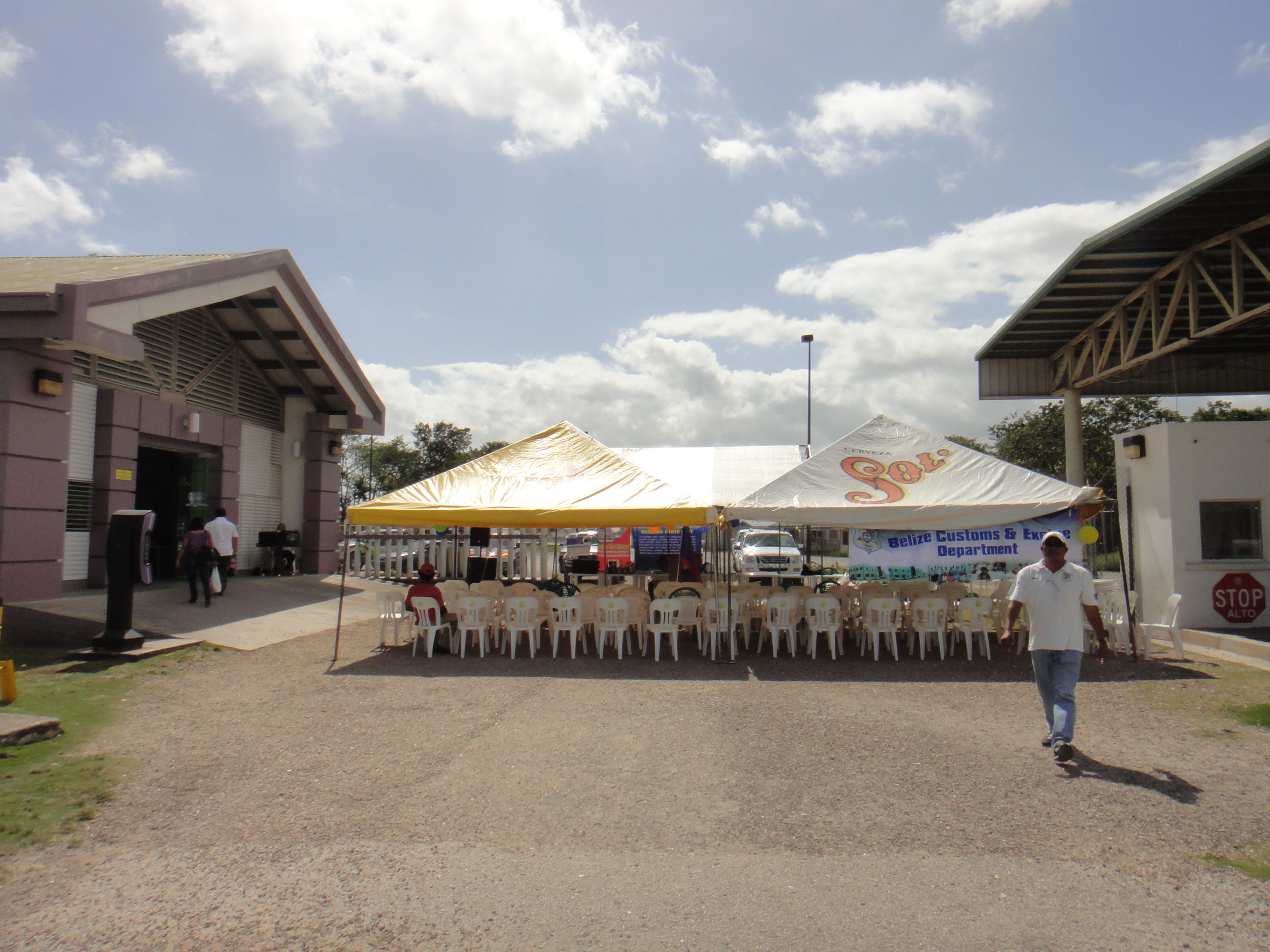
When we arrived they were celebrating International Customs Day or some such which involved a Customs officer DJ’ing load reggae music. So loud that you could hardly hear inside the immigration building. No stern faces here – they do things differently in Belize !
Just past immigration is the customs desk and you need to visit this (on the something to declare side) and get a temporary import form for your vehicle. You also get a stamp in your passport which links to your vehicle. This only took a few minutes and the documents we needed to show were our registration form, our insurance and passport – that’s it – no copies of any document were required.
At this point you turn round and walk back out of the immigration building the way you came – although any passengers need to keep walking and meet the driver the other side of the border.
You pick up your car and drive through the border. At this point you will have to show your import documentation and your proof of being sprayed. Importation of fruit, vegetables, meat and alcohol is not allowed so you will be asked about this. I said we had nothing but a couple of beers and this was accepted as fine and I was allowed to drive through and pick Sarah up. At this point we were in Belize.
The whole process had taken about an hour. The great thing about everything that happens on the Belize side is that it is in English !
Tulum & More Cenotes
We had a serious problem – we hadn’t done any washing in around 3 weeks and we’d pretty much run out clean clothes to wear. We decided to drive down to Tulum to find a laundry and go to visit the ruins at the same time. Its only about 40k down the road and we got there fairly early before we realised that it was Sunday and everything was shut – you can lose track of days really easily when travelling.
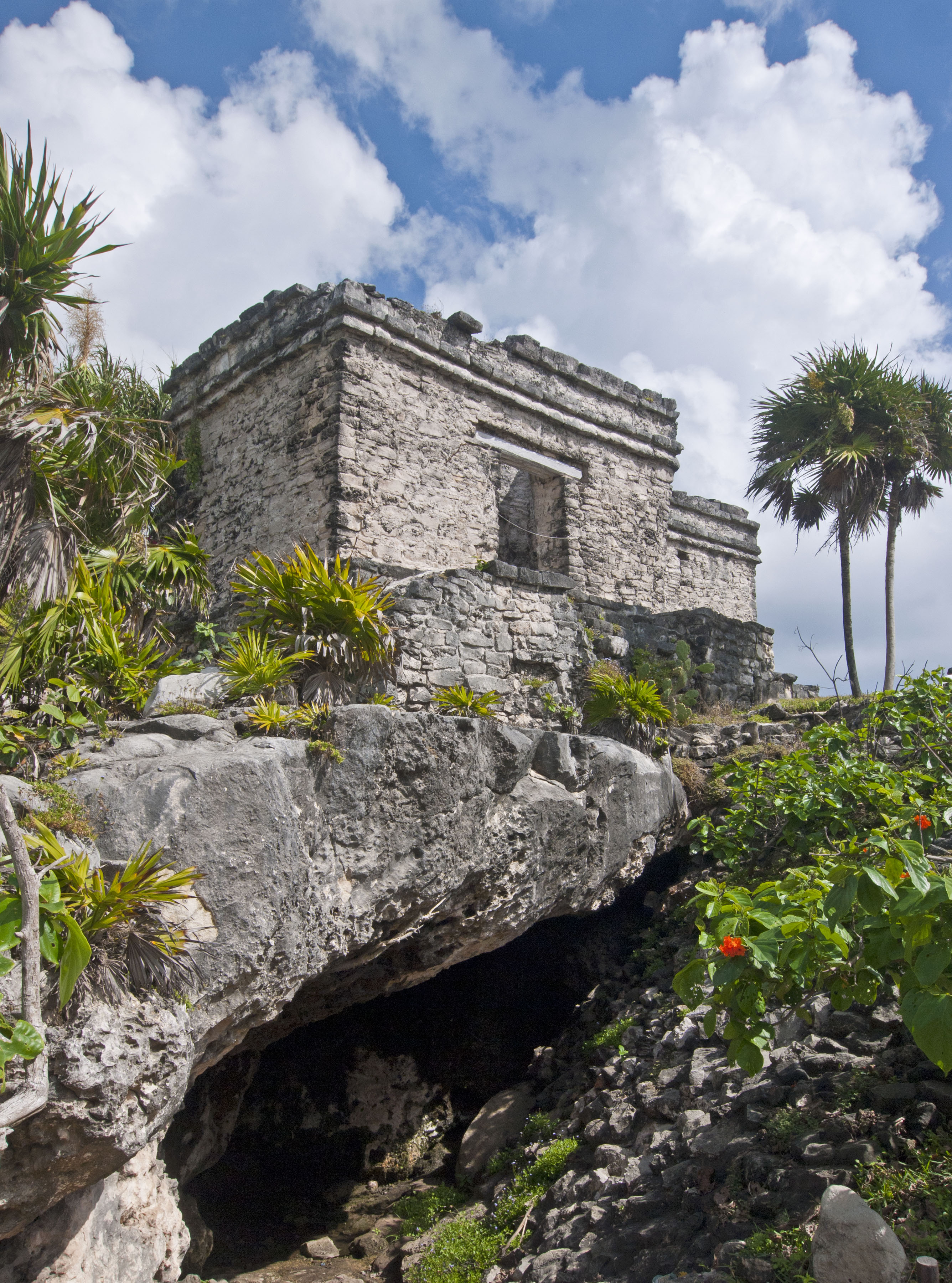
As we’d have to wait until the next day to get our washing done we decided to spent the morning checking out the ruined Oceanside city of Tulum.
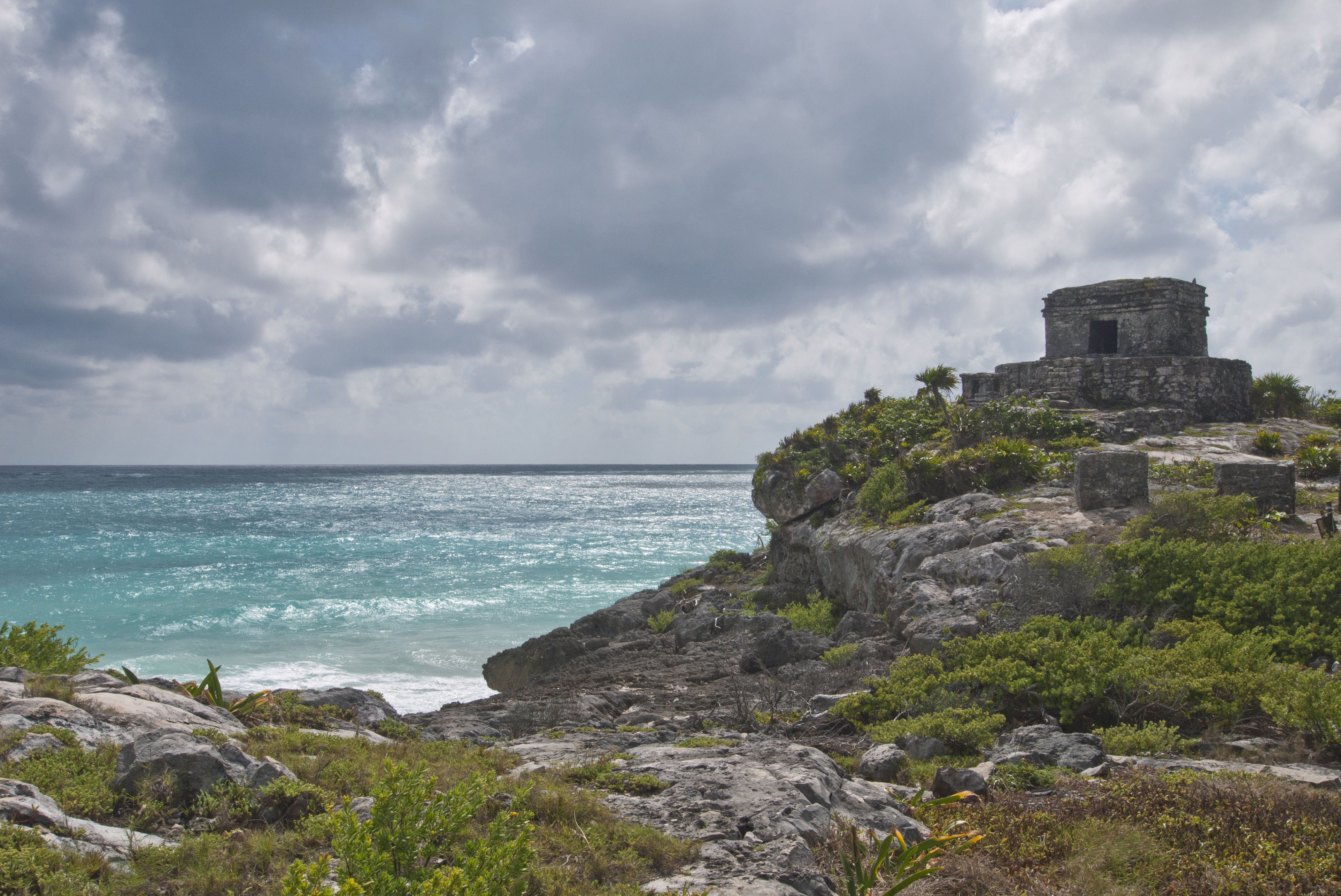
Tulum was built in the Late Post-Classic period so is younger than most of the big cities that we have seen having only been started after 1200 AD. However this meant that it was still in use when the Spanish arrived in the early Sixteenth century. The site continued to be used even into the Caste Wars of the 1890’s when Mayans held the site against the Mexican Army for over 25 years.
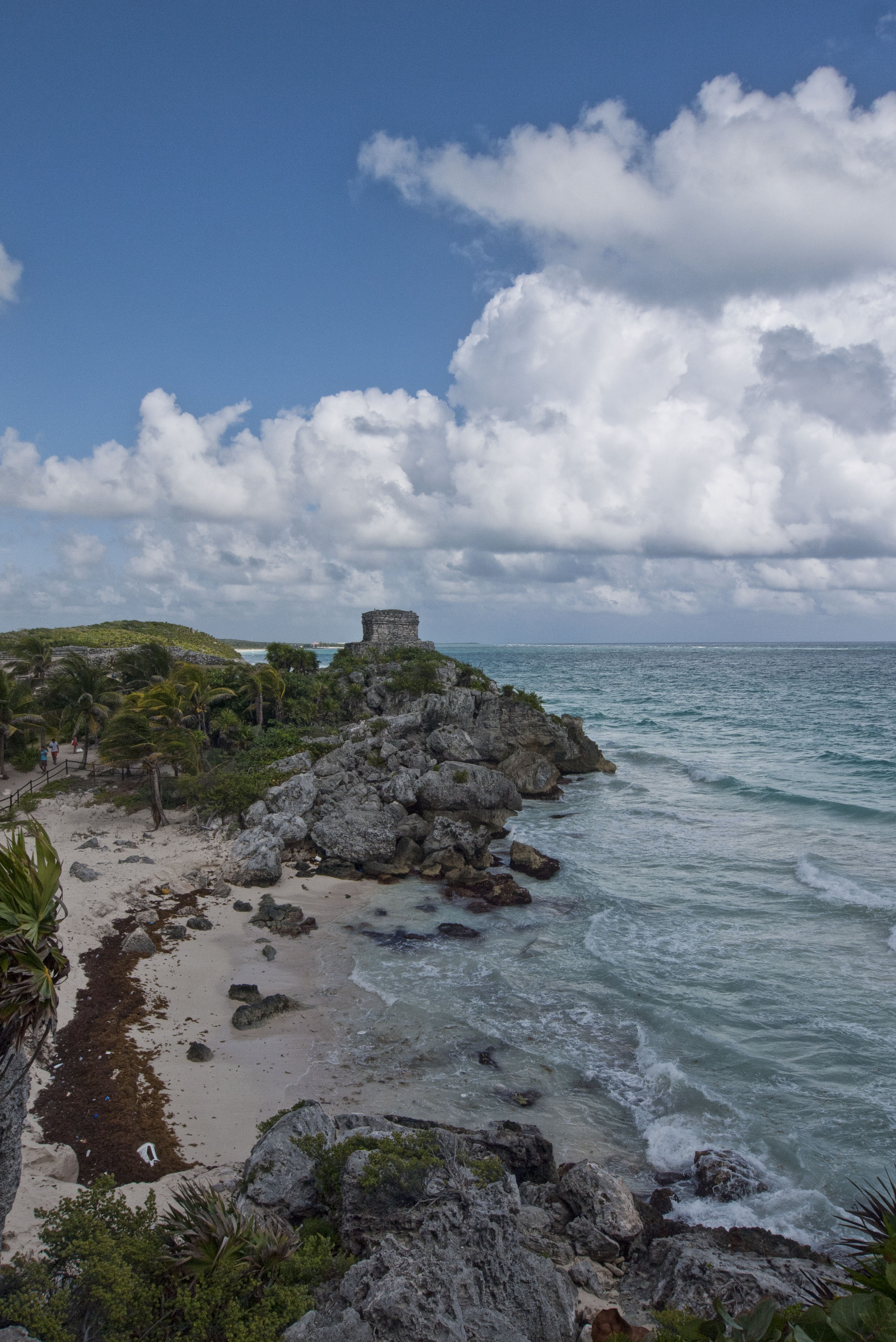
To be honest the ruins aren’t that great – there aren’t any towering temples or massive acropolii but they city is built on cliffs overlooking the Caribbean and has a stunning outlook. The ruins even have their own beach which seems to get ridiculously crowded with tourists.
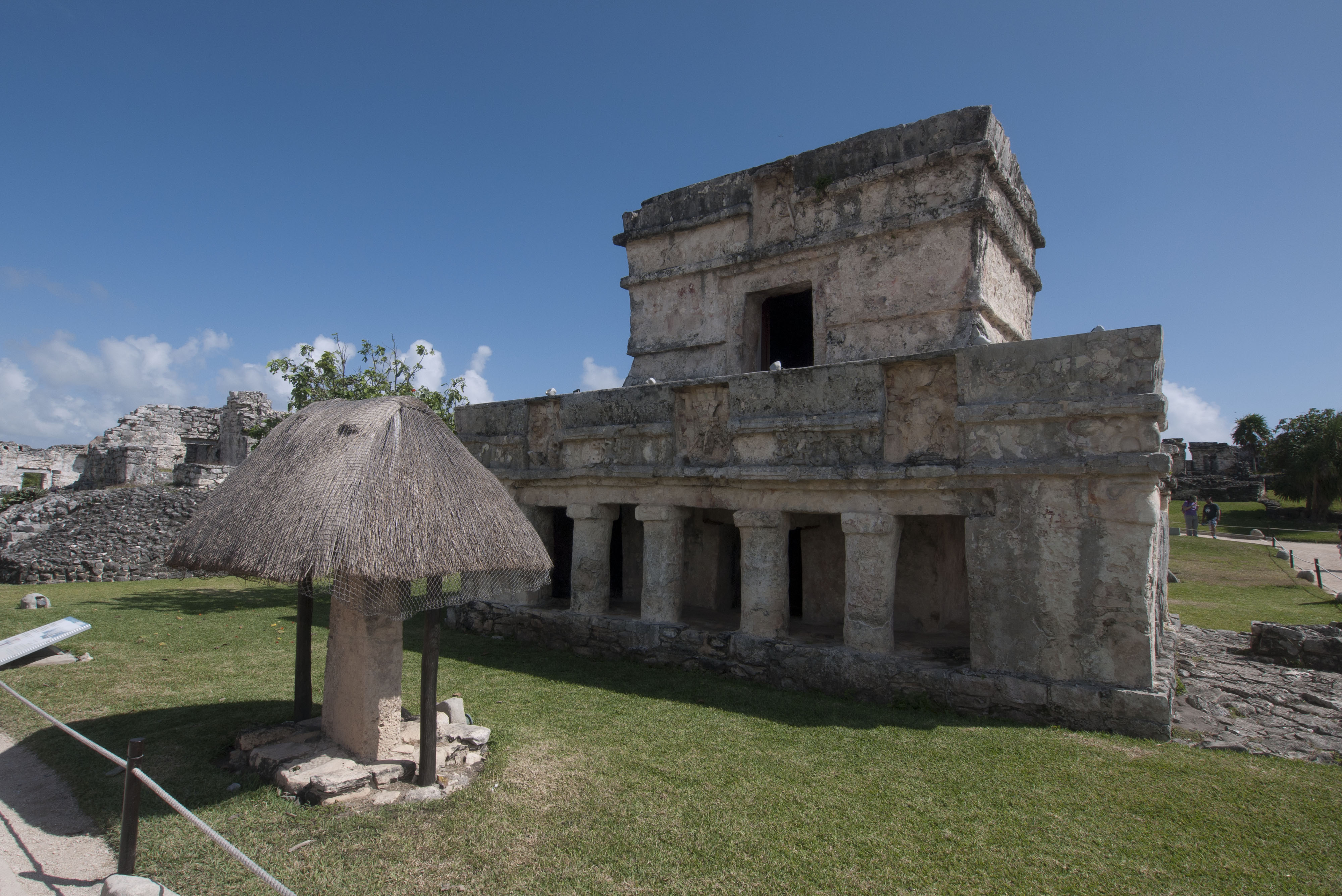
The weather was really hot so by the time we’d walked around the site we were ready for the beach. We drove back up the coast a bit to a place called Xpu-ha which has a couple of small guest houses on the beach which allow RV’s to park. We spent the afternoon on the beach and in the water.
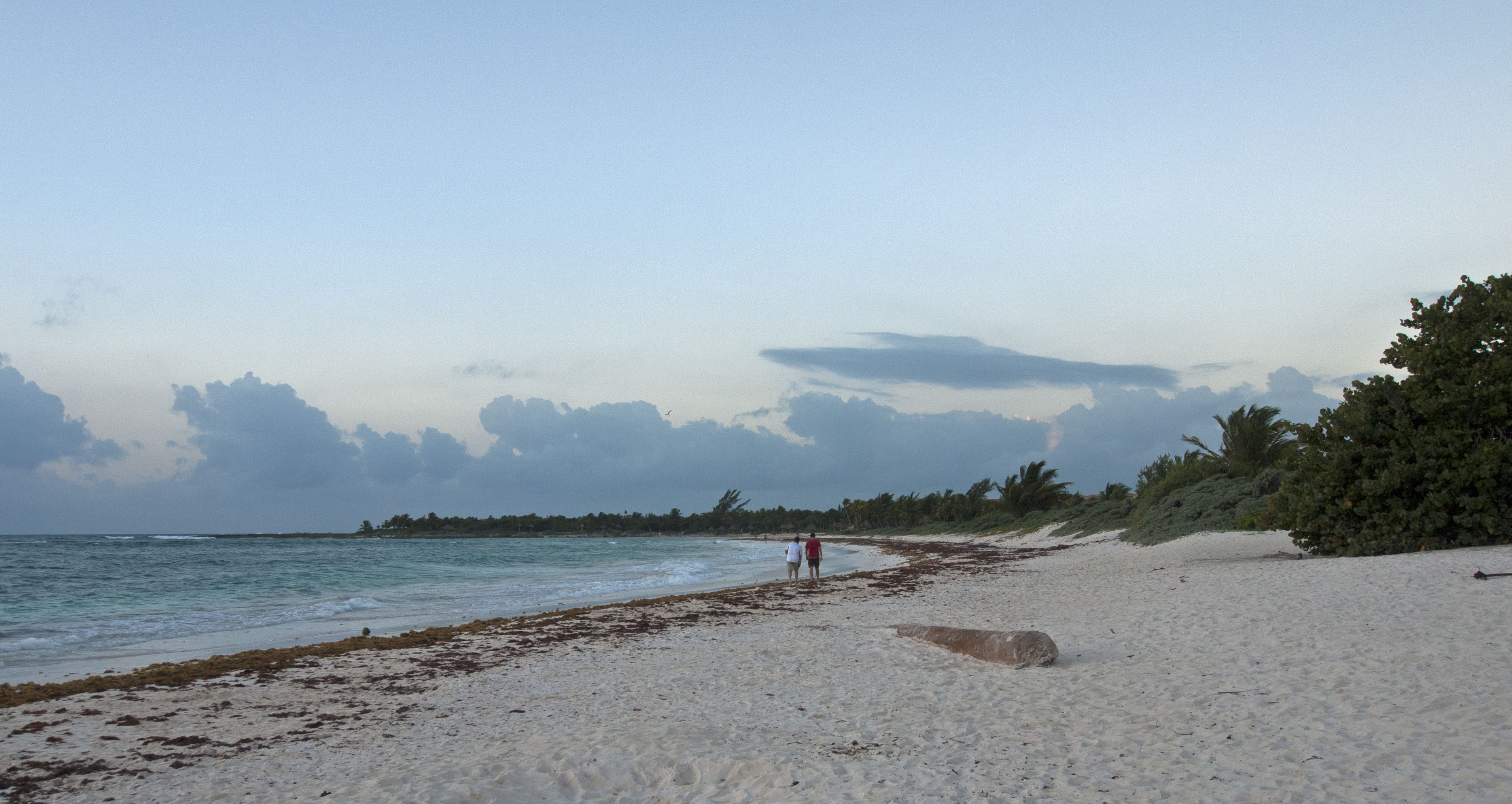
The next morning we were up early to get back to Tulum and get our washing done – oh the excitement of the travelling lifestyle. We found out that our washing would take until 6pm that evening so we were stuck in Tulum for the day.
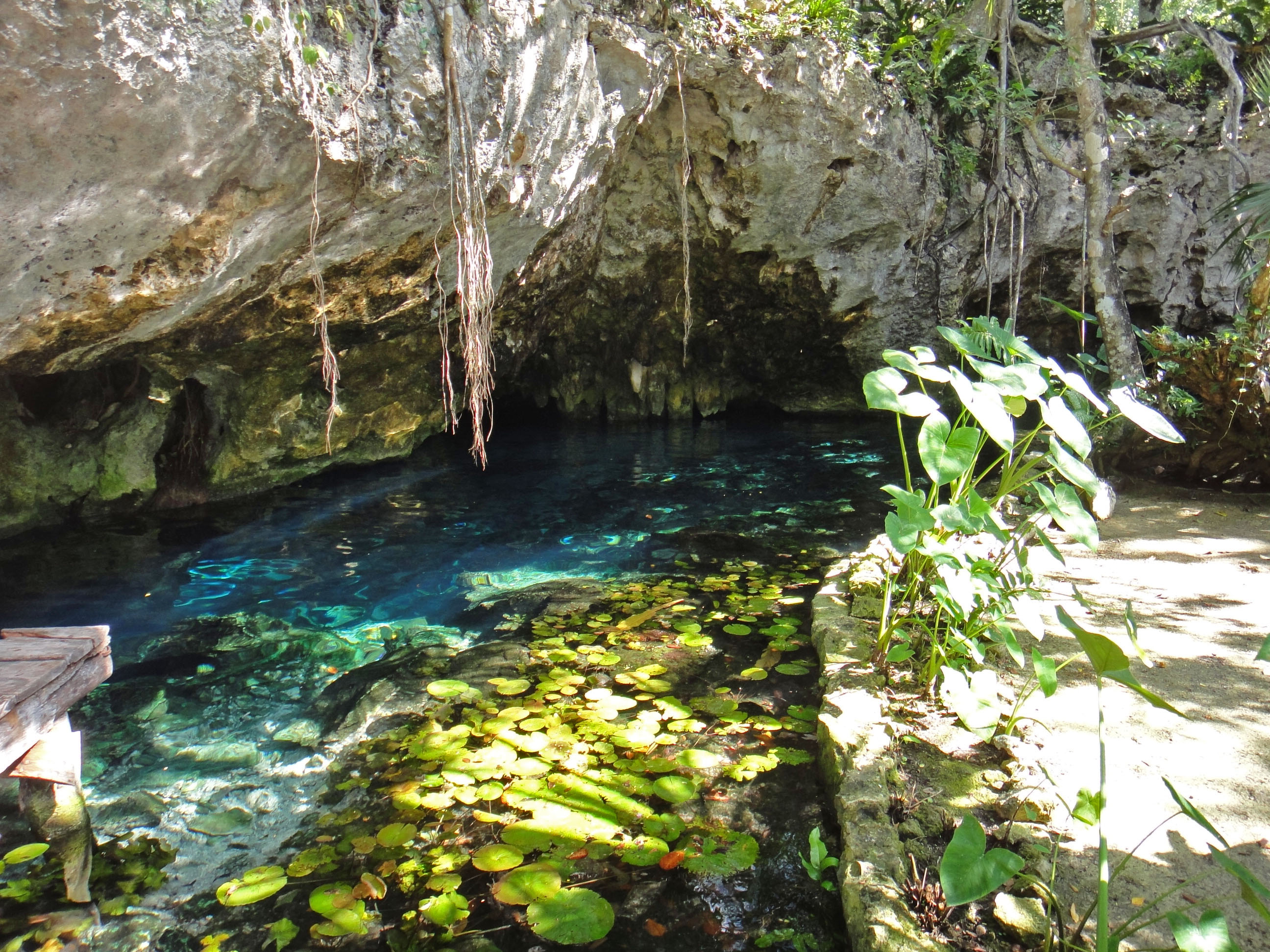
Sometimes the most unexpected things are the best when you are travelling and so it turned out today. We decided to go to Gran Cenote first thing.
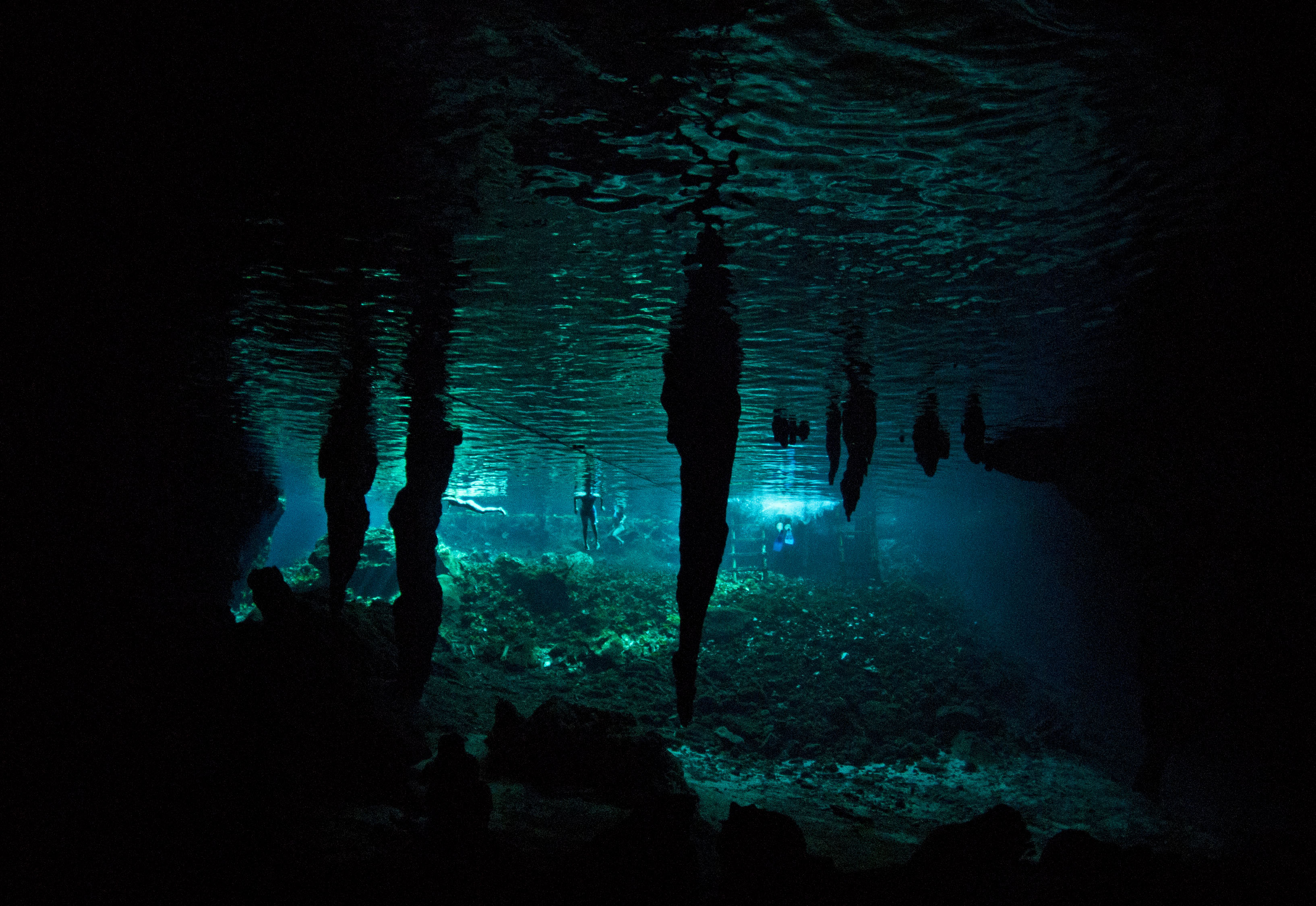
This Cenote was amazing. At first glance the cenote didn’t look much but once you were in the water and snorkelling round the edges you realised that there were some amazing caves hidden under the edges of the rock. One in particular was a great big cave with some serious decoration in the form of stalactites.
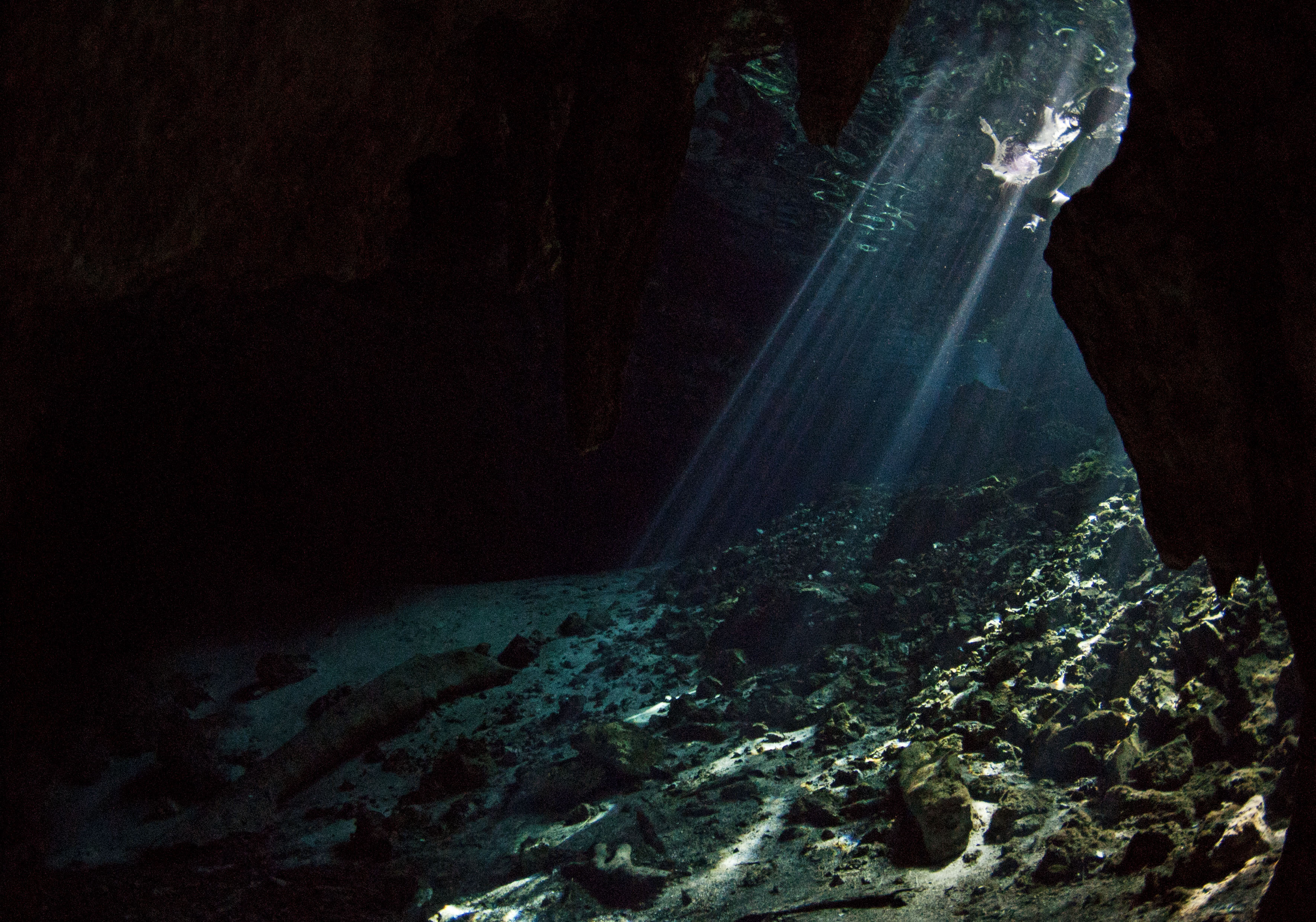
There was also a 2nd cenote linked to the first by a tunnel. The second one was very shallow except the water dropped off round the edges into deep caves. Snorkelling round here I found a big freshwater turtle but it wasn’t really interested in hanging round !
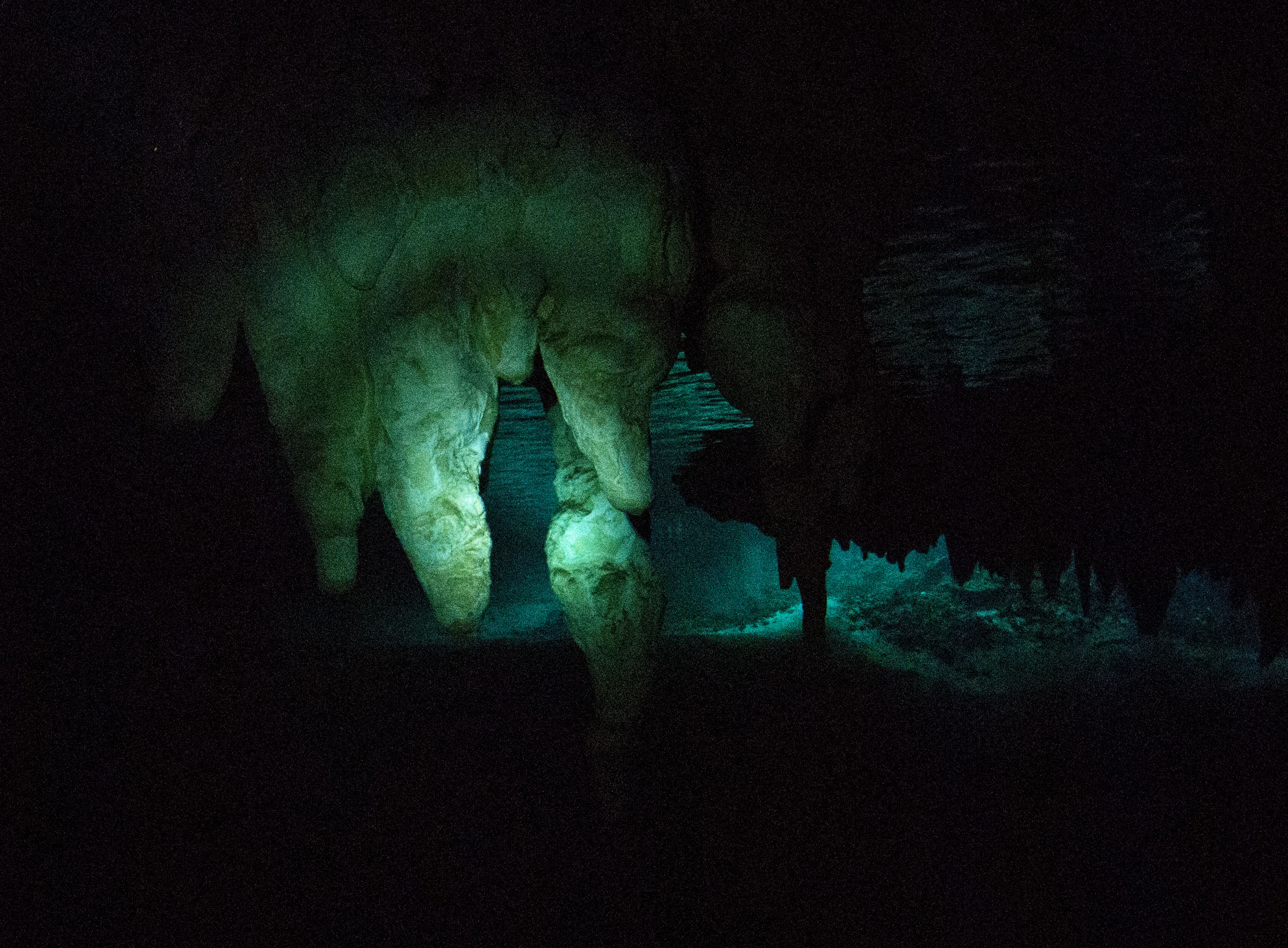
After spending a couple of hours and Gran Cenote we drove to another Cenote – Casa Cenote which was a couple of miles down the road. This Cenote is very different in that it looks more like a river than a cavern. However it is only 20m from the sea and at the seaward end there is a deep cave that looks like it leads out to the sea. The water in the cenote was brackish so there is obviously a link to the sea.
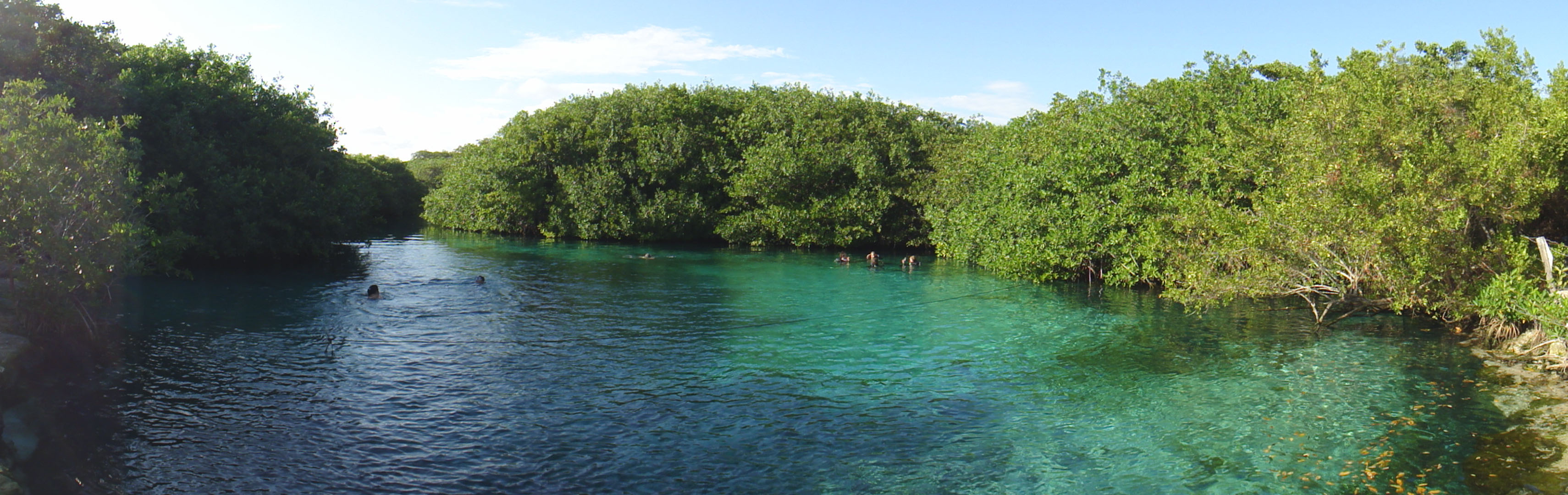
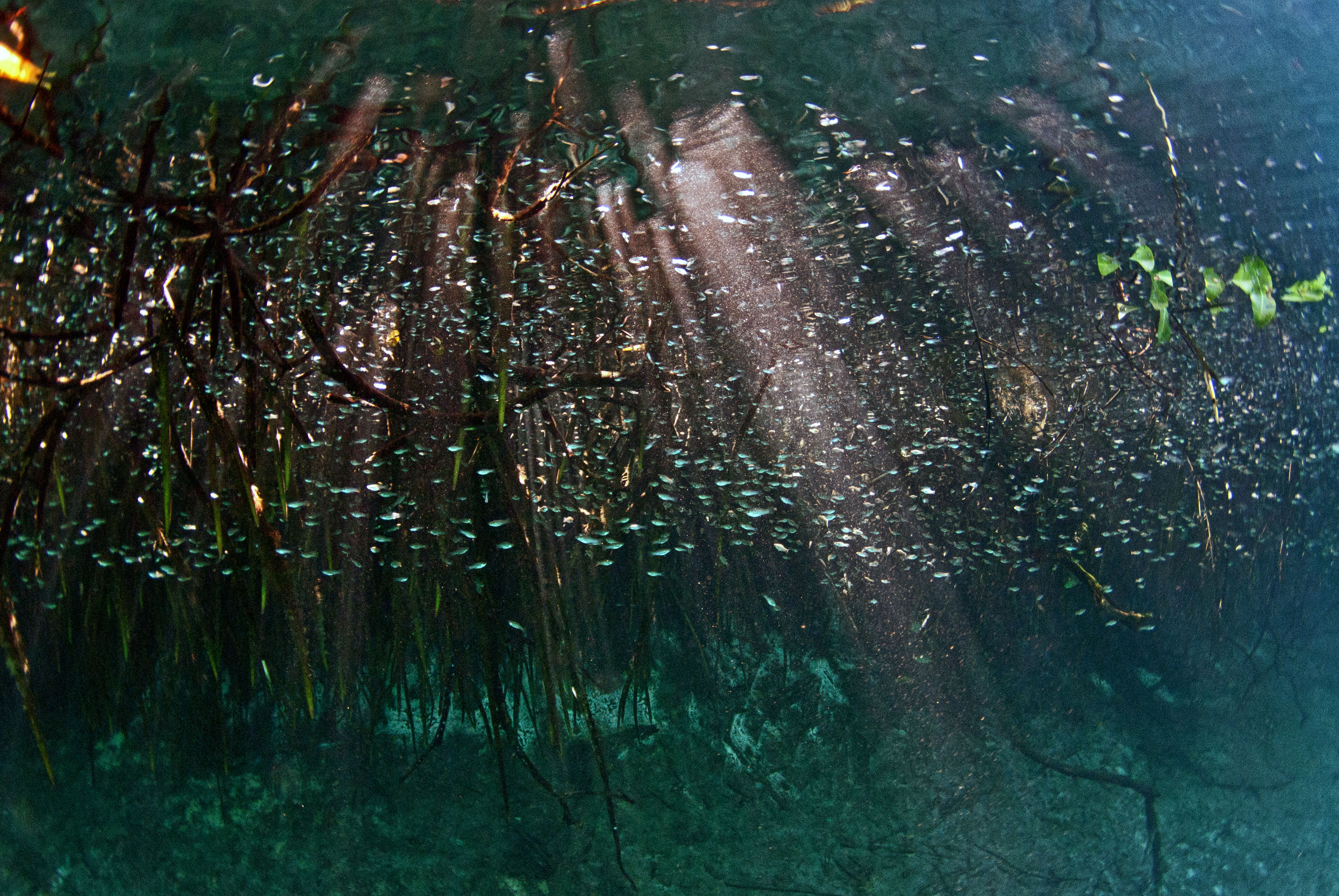
The cenote itself is quite long and is actually a number of collapsed cenotes which have all merged together. There are mangroves lining the sides walls of the cenote which are home to thousands of juvenile fish. This in turn has attracted some predators both in the form of birds and fish to the cenotes.
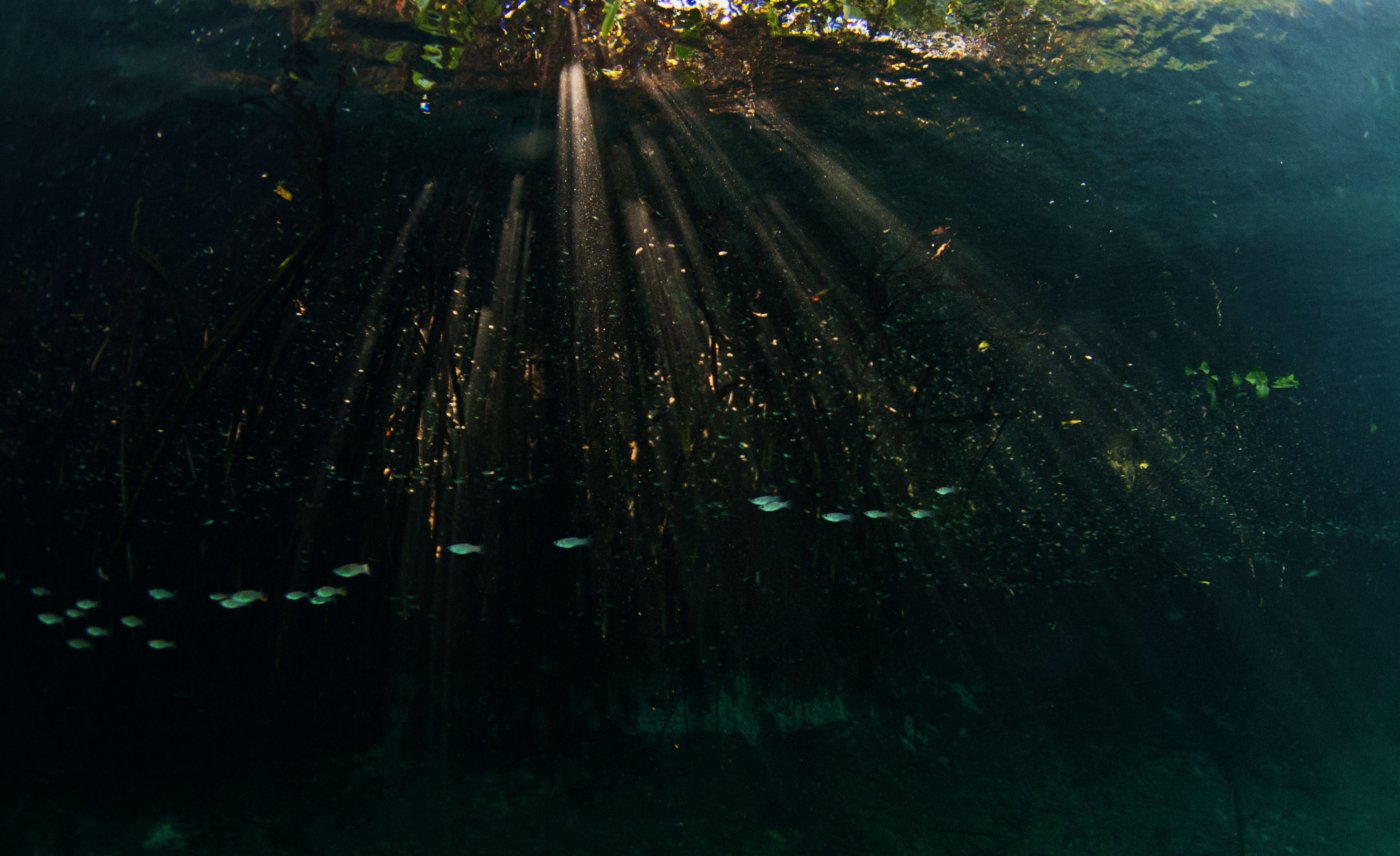
Swimming in these cenotes was really different to the ones that we dived in and really good fun.
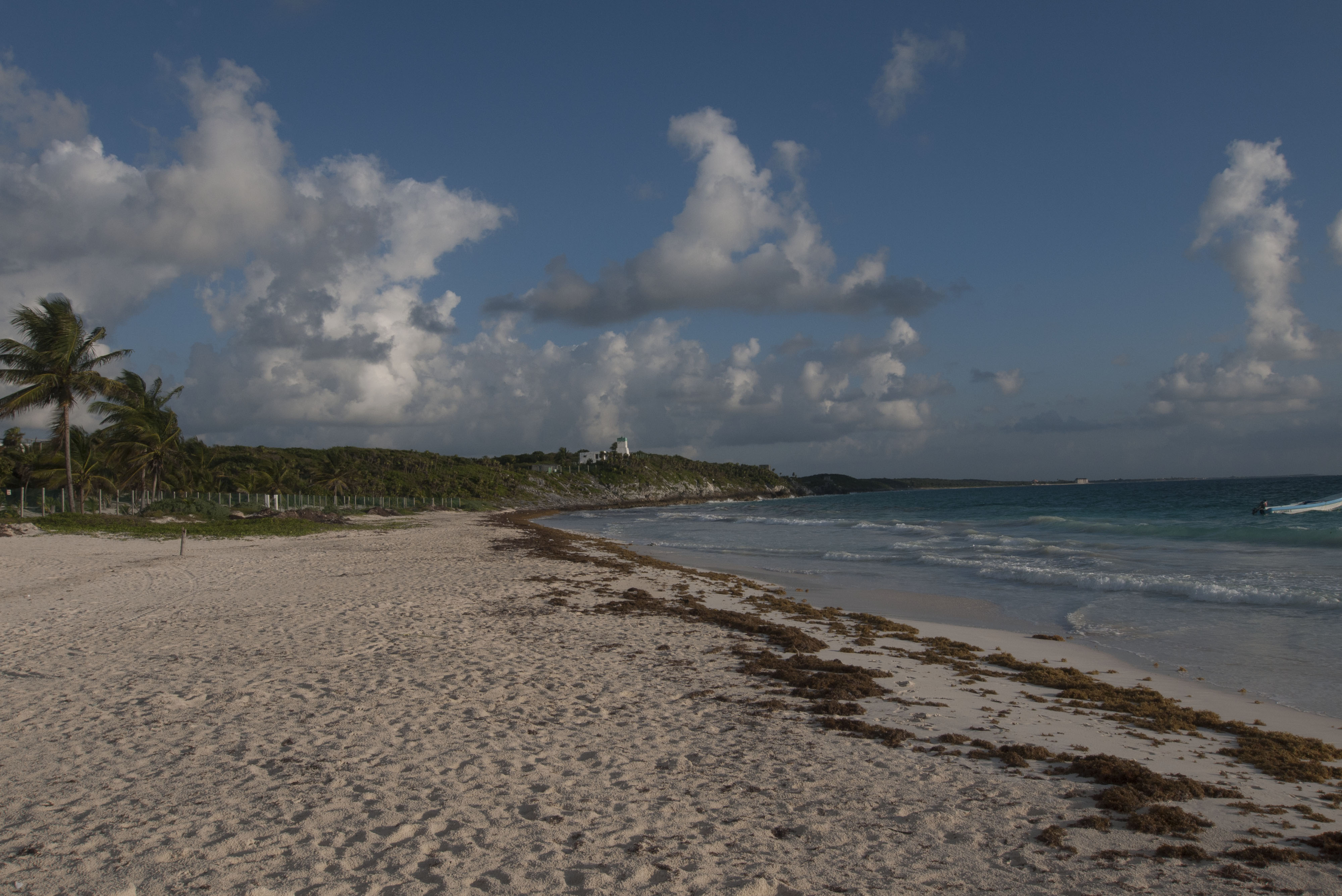
We decided to find somewhere in Tulum to spend the night so drove down the beach road. At the end of a short but rough track we found a little beach bar that also does camping. The Tulum beach is gorgeous and so less poncey than further North. If you are looking for the “real” Yucatan then head down here – its also way cheaper than further North.
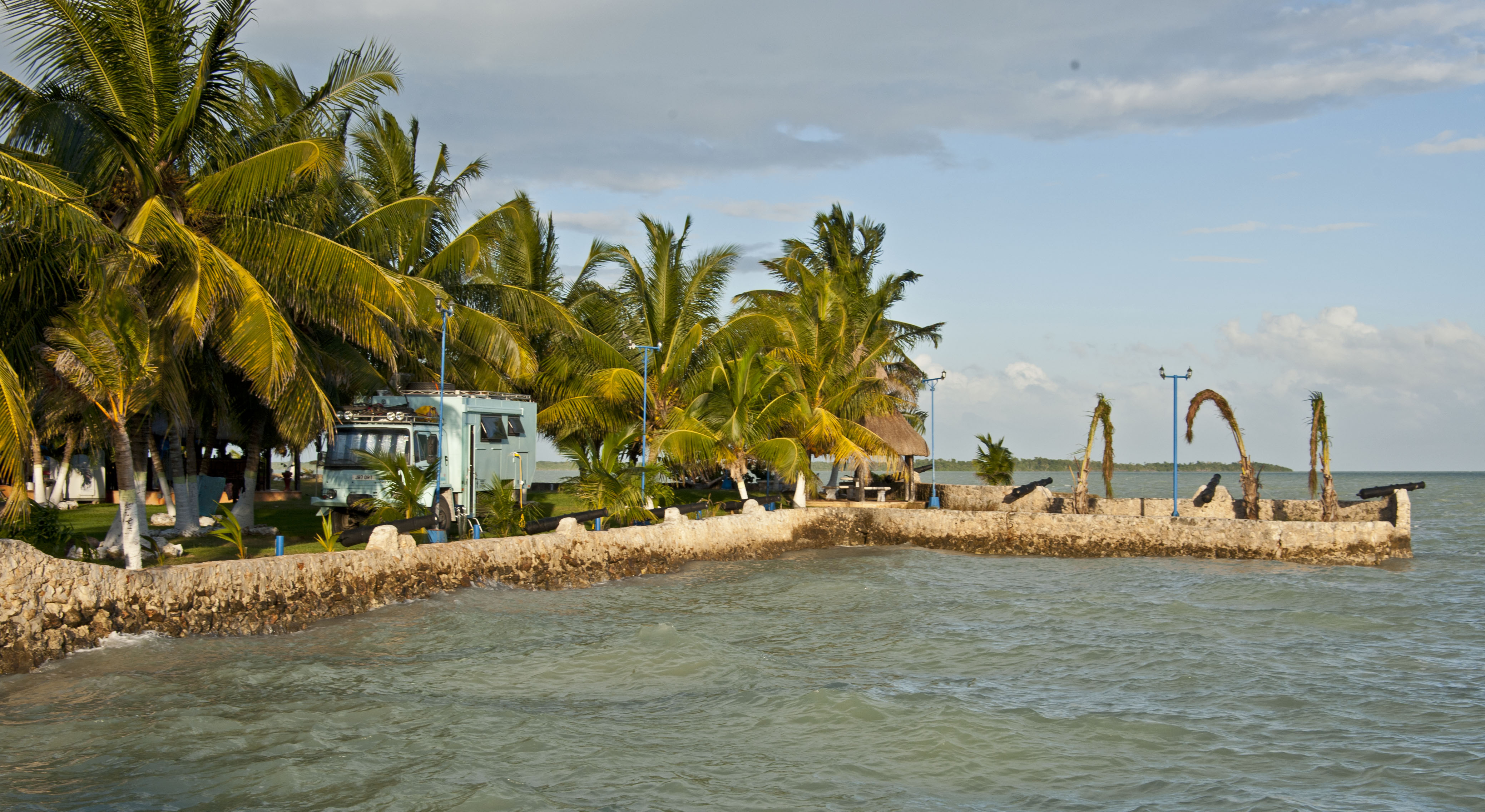
After we finally got our washing back we set out for Belize. It’s fairly long drive to the border though so we stopped off at Chetumal in one of nicest campgrounds we’ve been too (Yax-ha). We parked right on the sea along a sea wall with an orderly row of cannons on it. There was a swimming pool and a nice restaurant. We could have stayed here longer but the road was calling.
A Diving Interlude (Sea & Cenotes)
First thing in the morning a dive boat goes out from Paa Mul for a single tank dive. I decided to join in and see what Mexican Carribean diving was like. The owner of the dive shop had sworn to me that the diving along the mainland coast was better than on Cozumel.
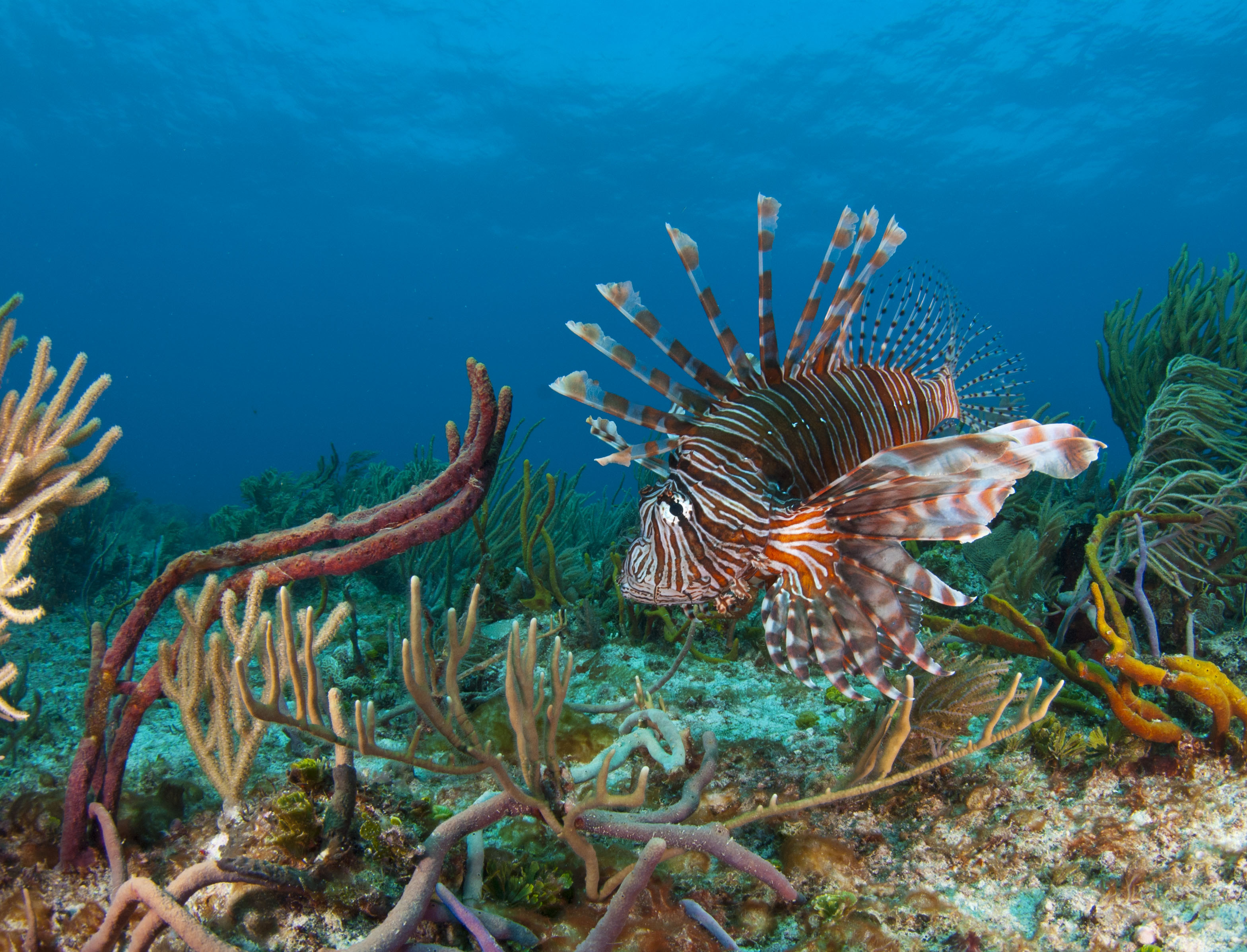
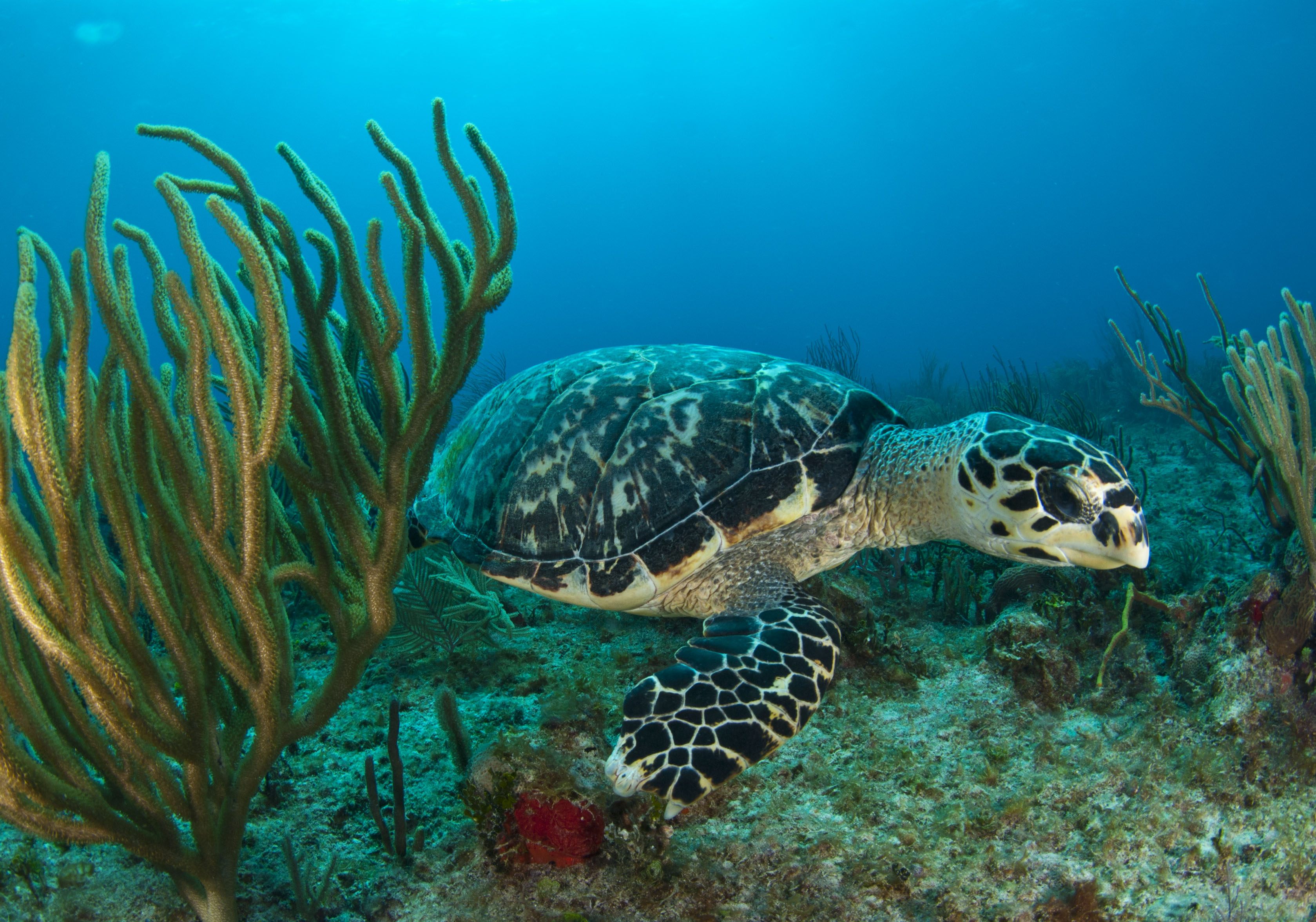
Well my impressions of the diving here are that it is OK – standard Caribbean but without any significantly interesting reef structures. The reef we dived was fairly flat – standing between 2-5m proud of the sea bed. There was a reasonable amount of life but again nothing stunning and no pelagics. However we did see two turtles and a couple of lionfish. Clearly Lionfish have made it this far South – and further I understand.
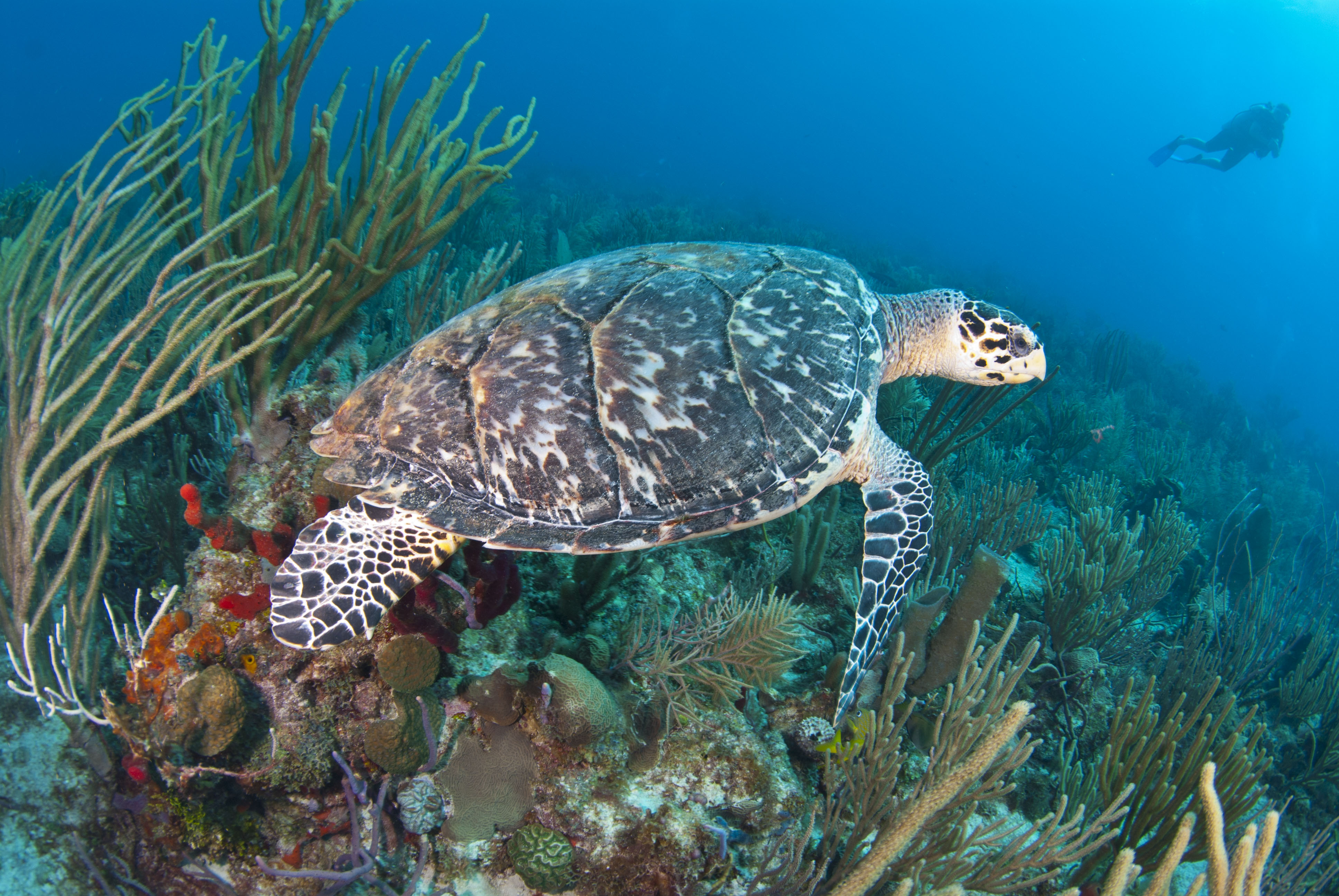
On Returning from the dive which was a generous 65 minutesI collected Sarah and we set off for the more interesting diving of the day. We had arranged to dive in two different cenotes with an instructor from the dive shop.
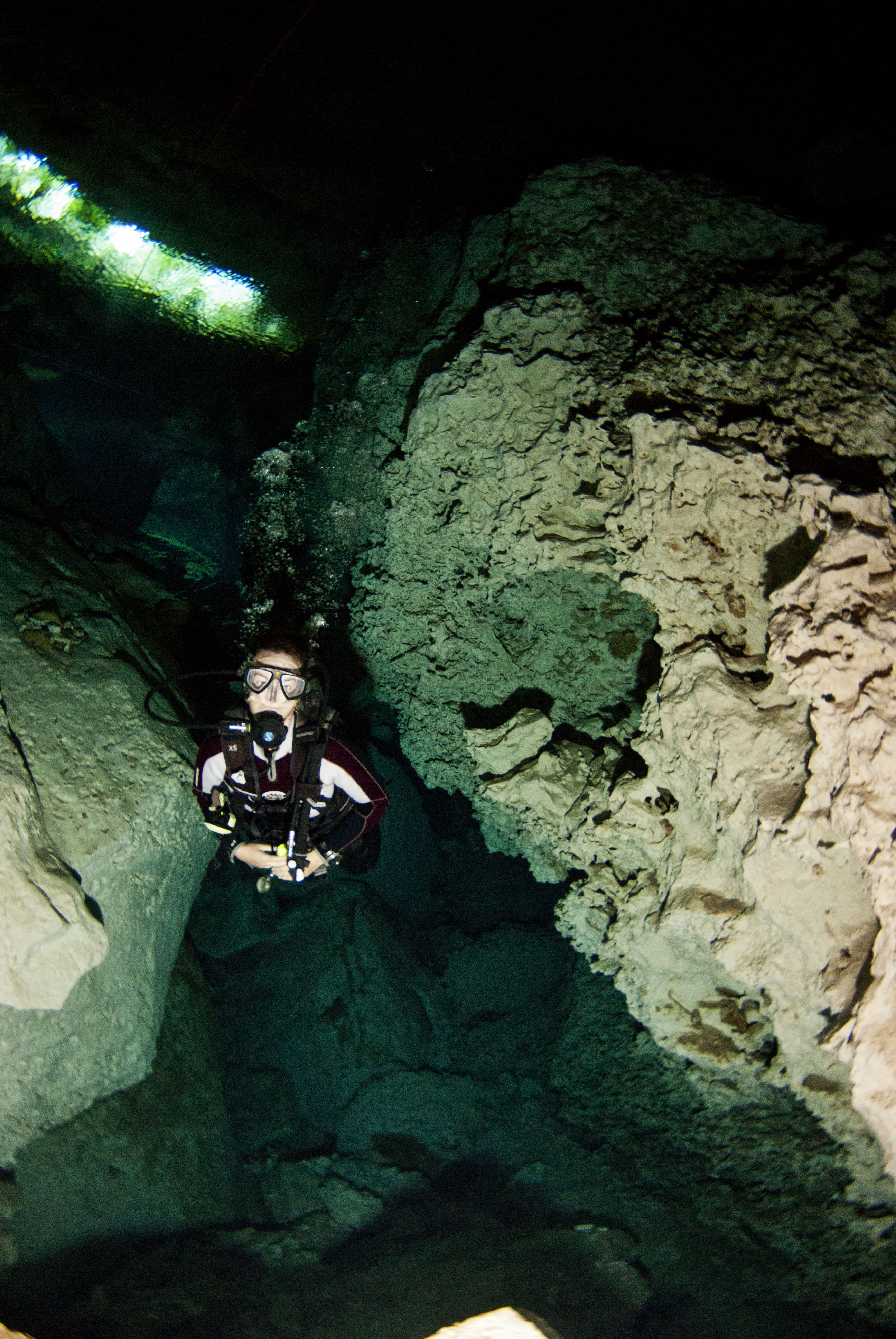
The instructor, Mario, a Spaniard who has lived in Mexico for the last 20 years drove us the 10 minutes to the first cenote – Chicken-Ha. We scoped out the entry which was fairly straightforward and involved jumping in off rock (not a giant stride but jumping in and landing on your back).
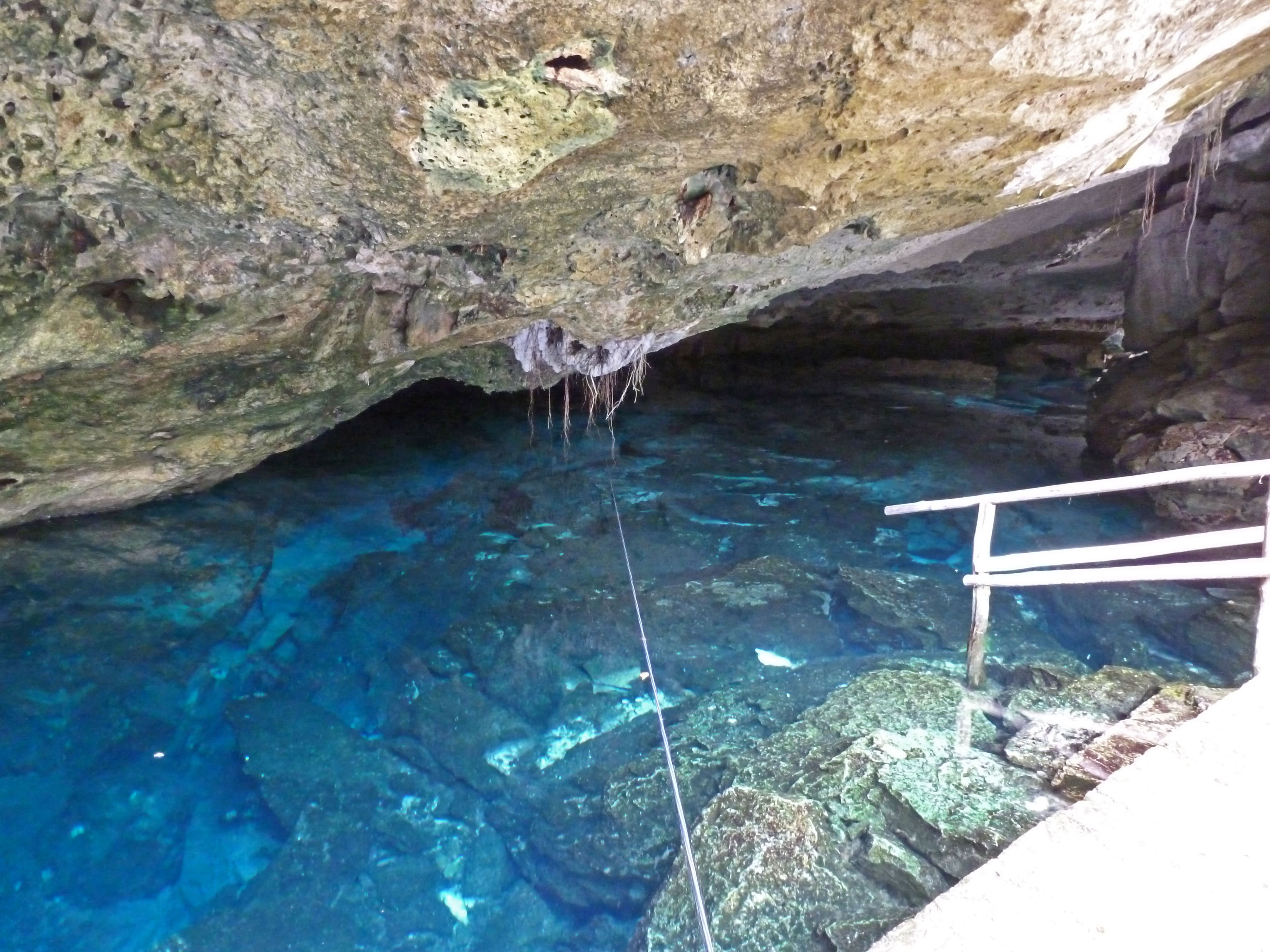
Once in we headed down and toured around in the cavern. There were several dark passages leading off from the main room (but these are the preserve of cave divers). This cenote does not have lots of decoration in the form of stalactites and stalagmites but watching the light come in from the surface and the various haloclines is fascinating.
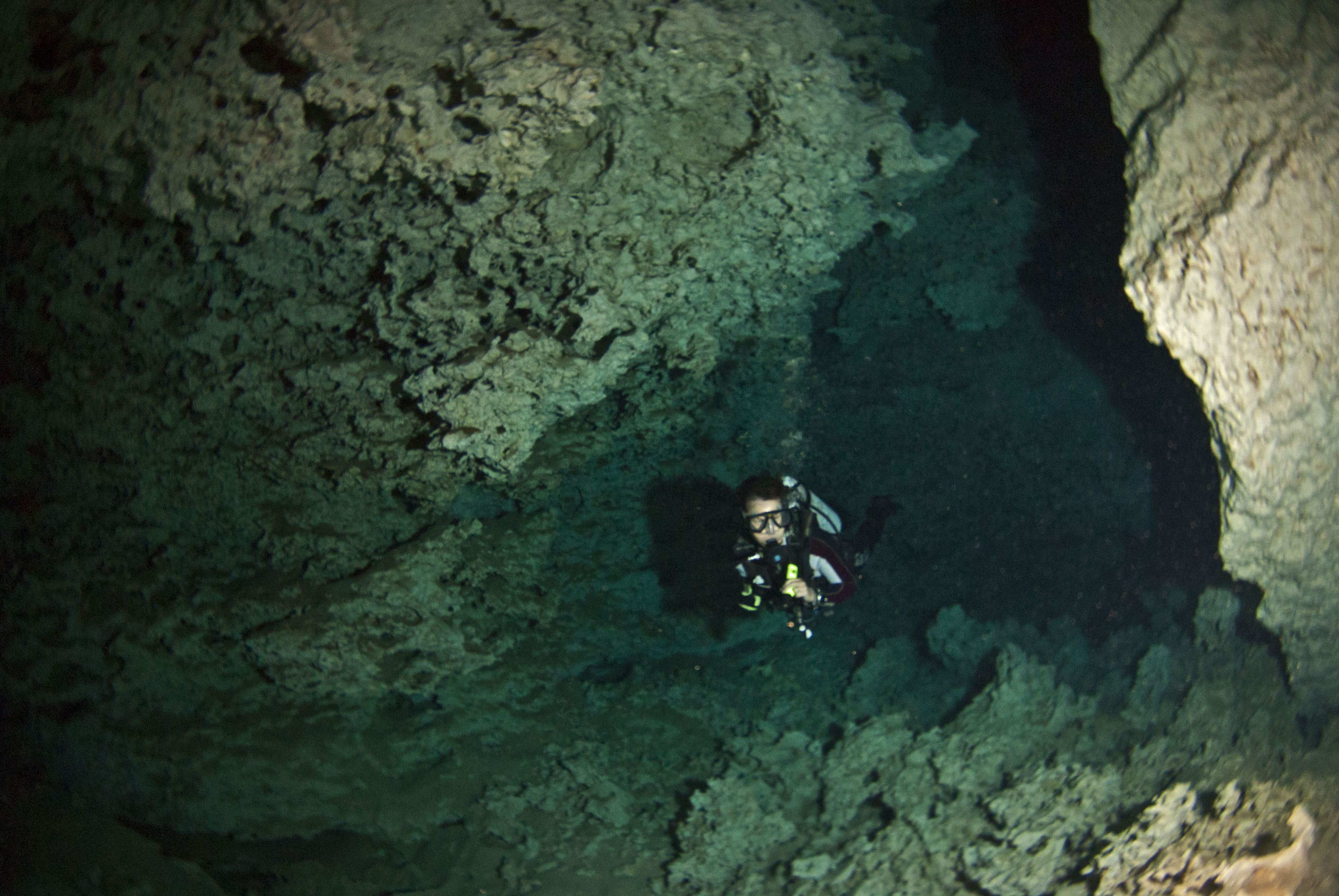
After being down for 45 minutes we were pretty cold despite our 3mm wetsuits – the water temperature is definitely colder than the sea.
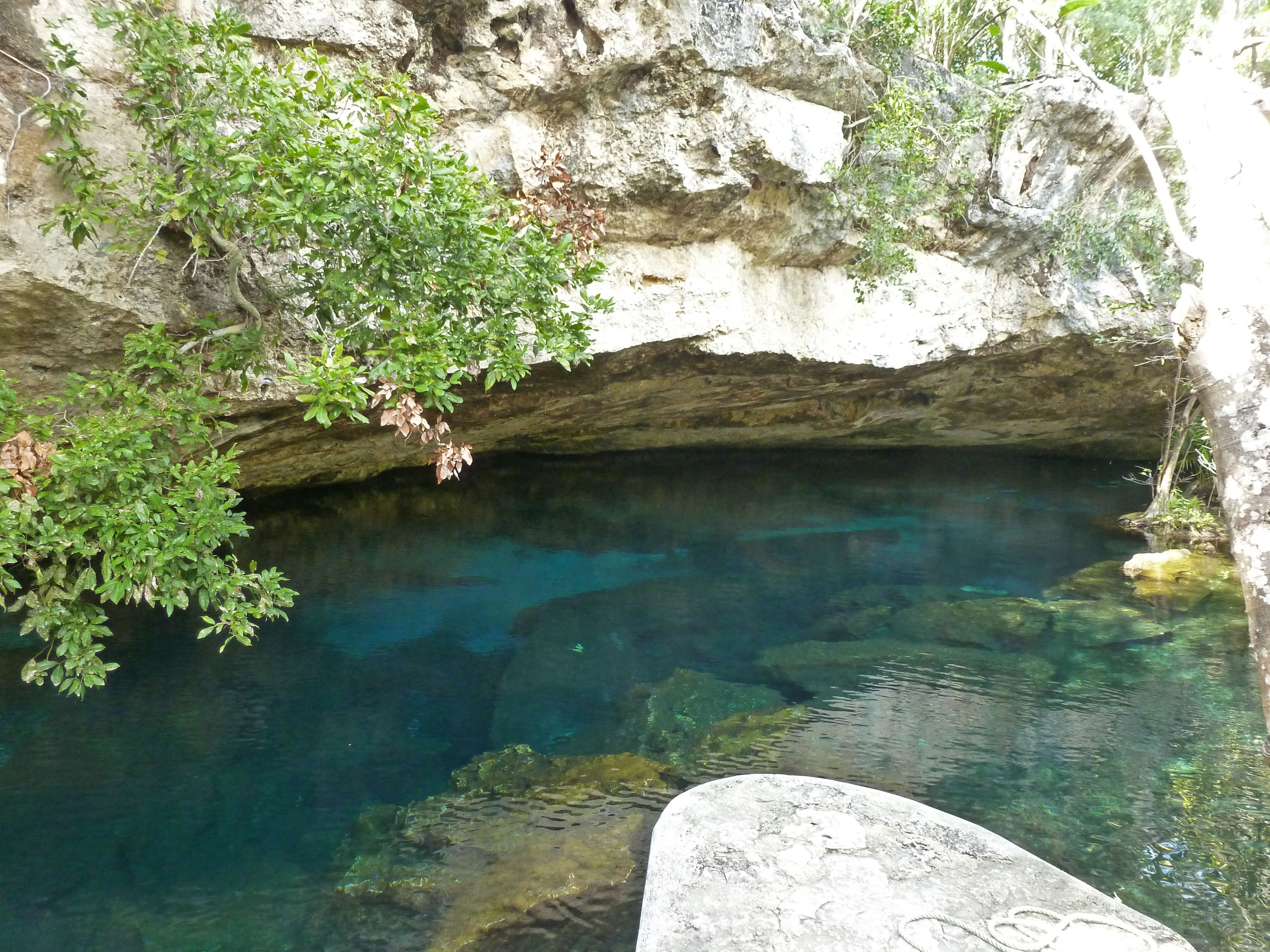
We went back to the truck and warmed up a bit in the sun before moving to the next cenote – Chaac Mul fro our next dive. This was a much more complex cenote with multiple sinkholes and rooms connected by passages.

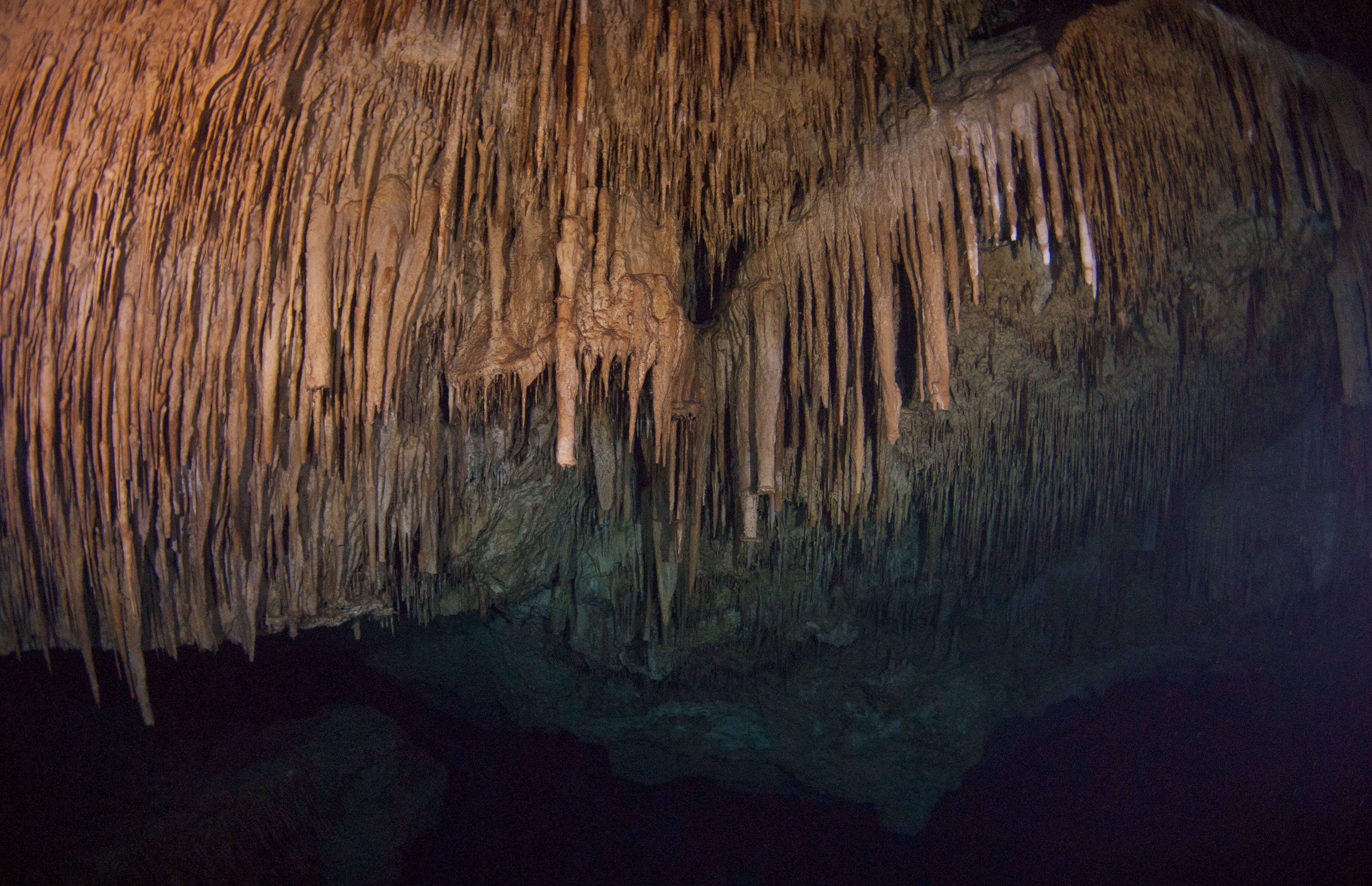
The dive we did here was much longer at 60 minutes and this cavern was much more interesting with lots of stalactites and near the end a big dark room with an air pocket in the ceiling which we popped up into for a couple of minutes. There were roots in the water here from the trees on the surface. This was a progression for our cavern diving as we were away from the light much more and in more overhead environments here.
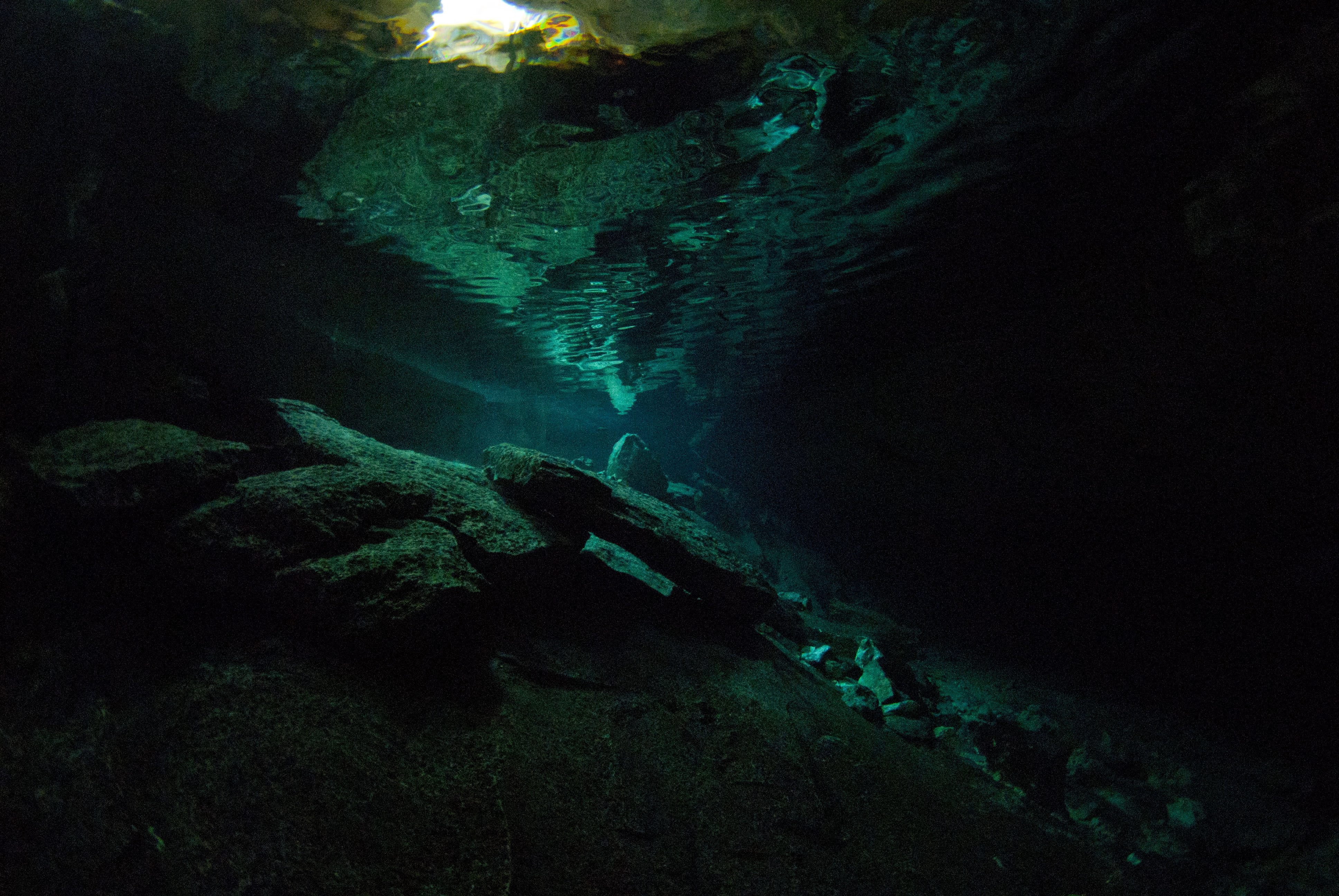
The cenote diving was really cool and different. The best thing was watching the interplay of the light coming down from the surface into the depths. The colours it produced were beautiful and really difficult to replicate in the photos.
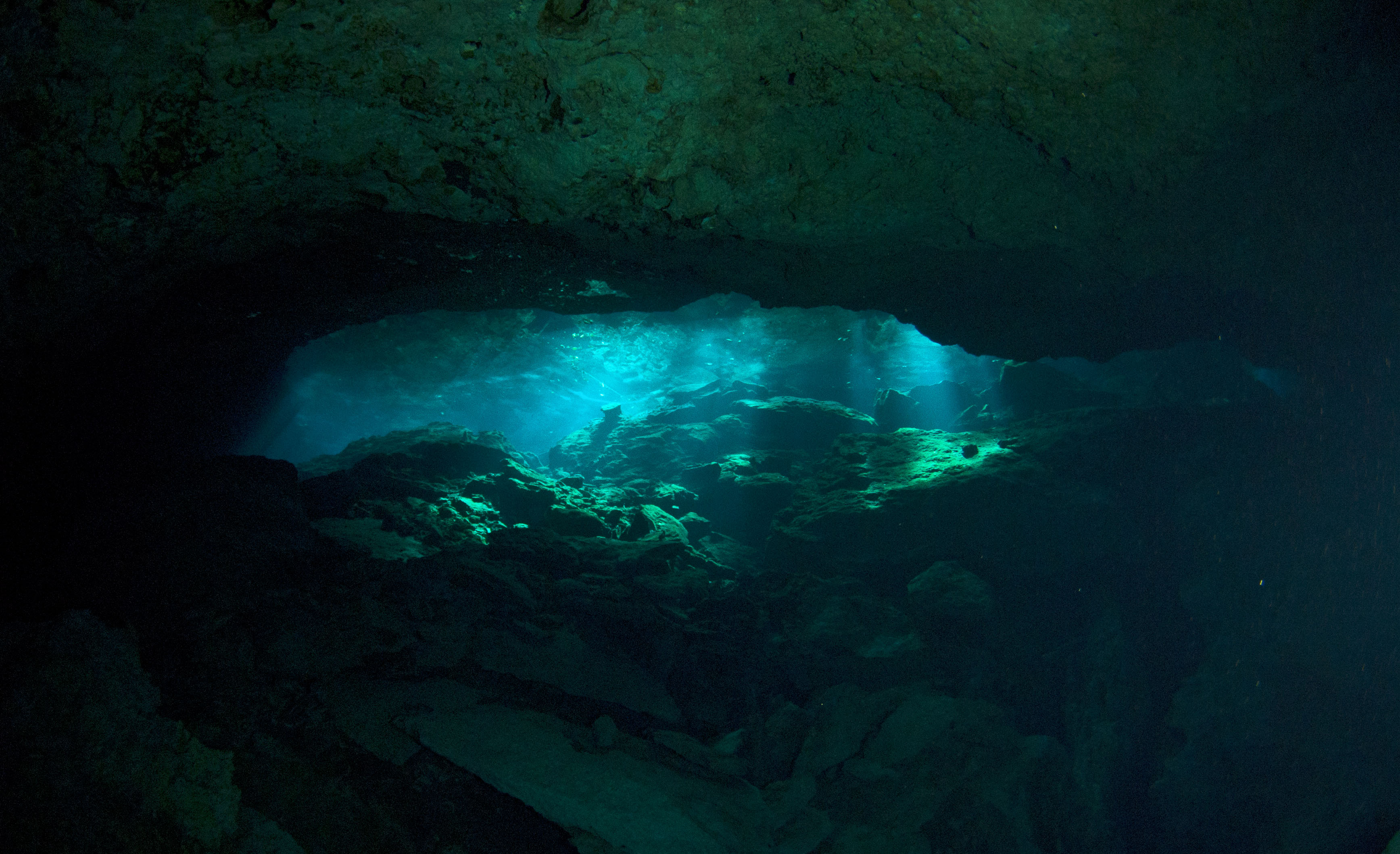
In this area there are lots of cenotes so the opportunities for both cavern and cave diving are immense. You could easily spend a week of diving here just diving in the cenotes.
The Riviera Maya
From Piste we drove into Cancun – a big town with no way to get to the water and a barrier island just off shore which was lined with big high rise hotels. To be honest it looked horrendous and we stopped off to do some shopping and then headed South towards Playa del Carmen.
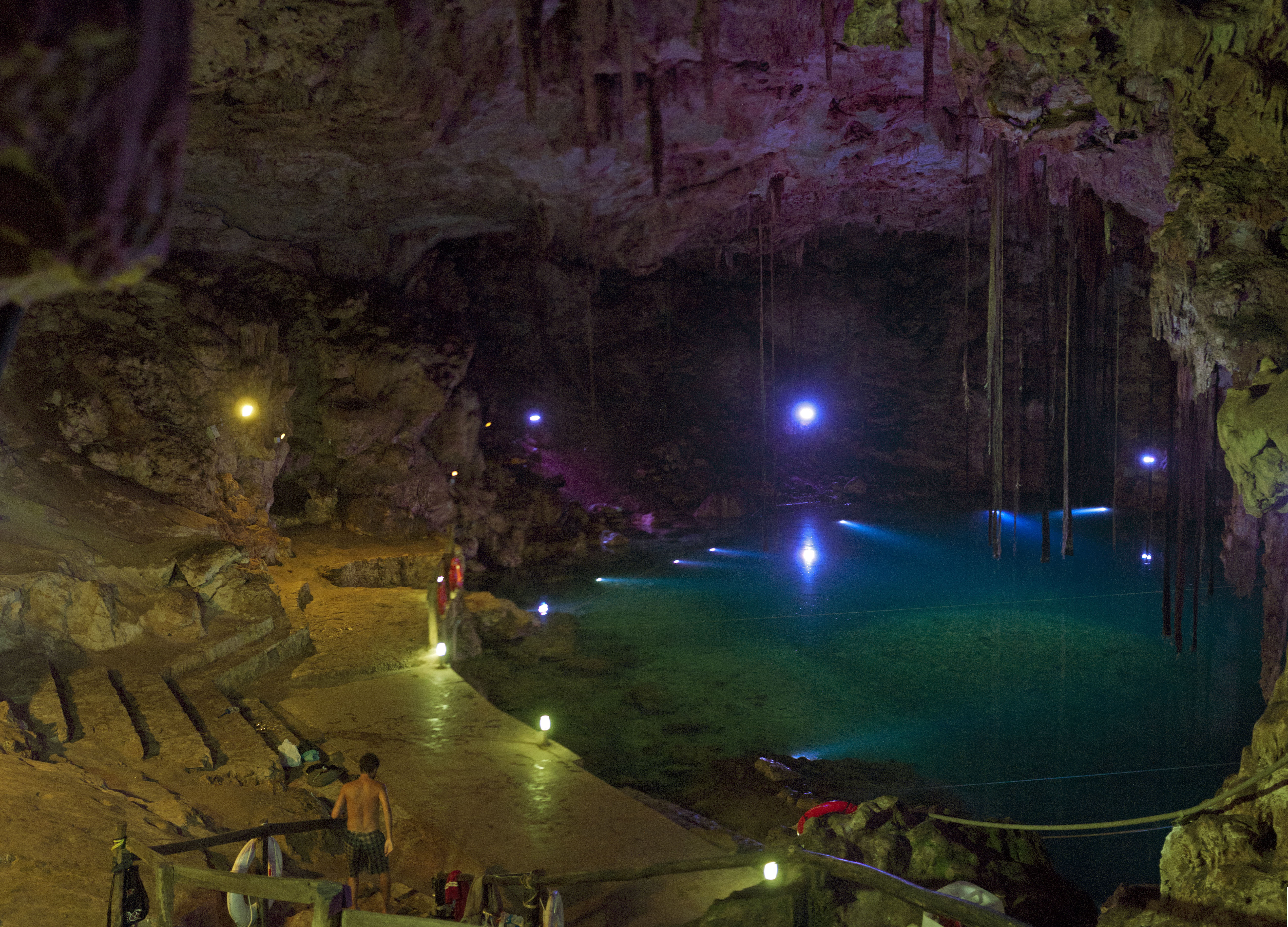
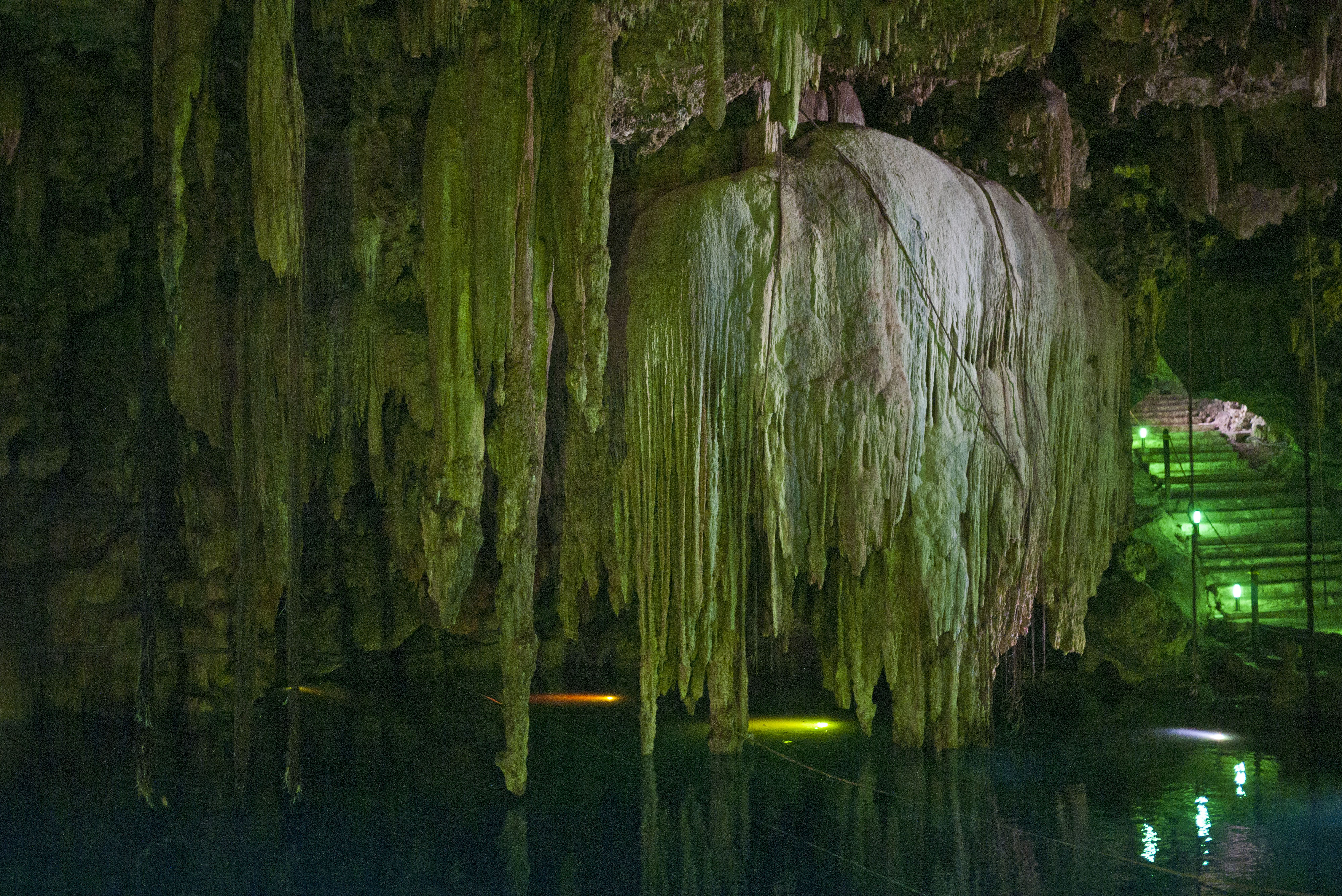
On the way though we stopped off at a cenote which is just outside Valladolid called Cenote de Dzitnup.(or X’Keken). This is a cenote (an underground lake basically) which is still completely underground. There is a small hole in the roof which lets some light in but the cavern is mostly lit by artificial, unfortunately coloured lights that spoil it a bit. We went swimming in the cave and you can swim right under some of the hanging stalactites. There are some small fish in the water and roots from the trees on the surface hanging right down into the water – some 50 feet.
Just South of Playa Del Carmen is an RV Park, Paa Mul, which is mostly inhabited by permanents. Many of these have built cabanas around their RV’s to such an extent that it is really hard to tell there is an RV in there. The spots for travellers are really just car park spaces although there was a bit of shade. We were quite aggrieved at the price which was US40 per night which didn’t include WIFI (only available on a monthly basis for 450 pesos/month).
We quickly discovered after lighting our BBQ for dinner that this was not allowed and we were told we had to extinguish it. We were feeling pretty ripped off by this stage.
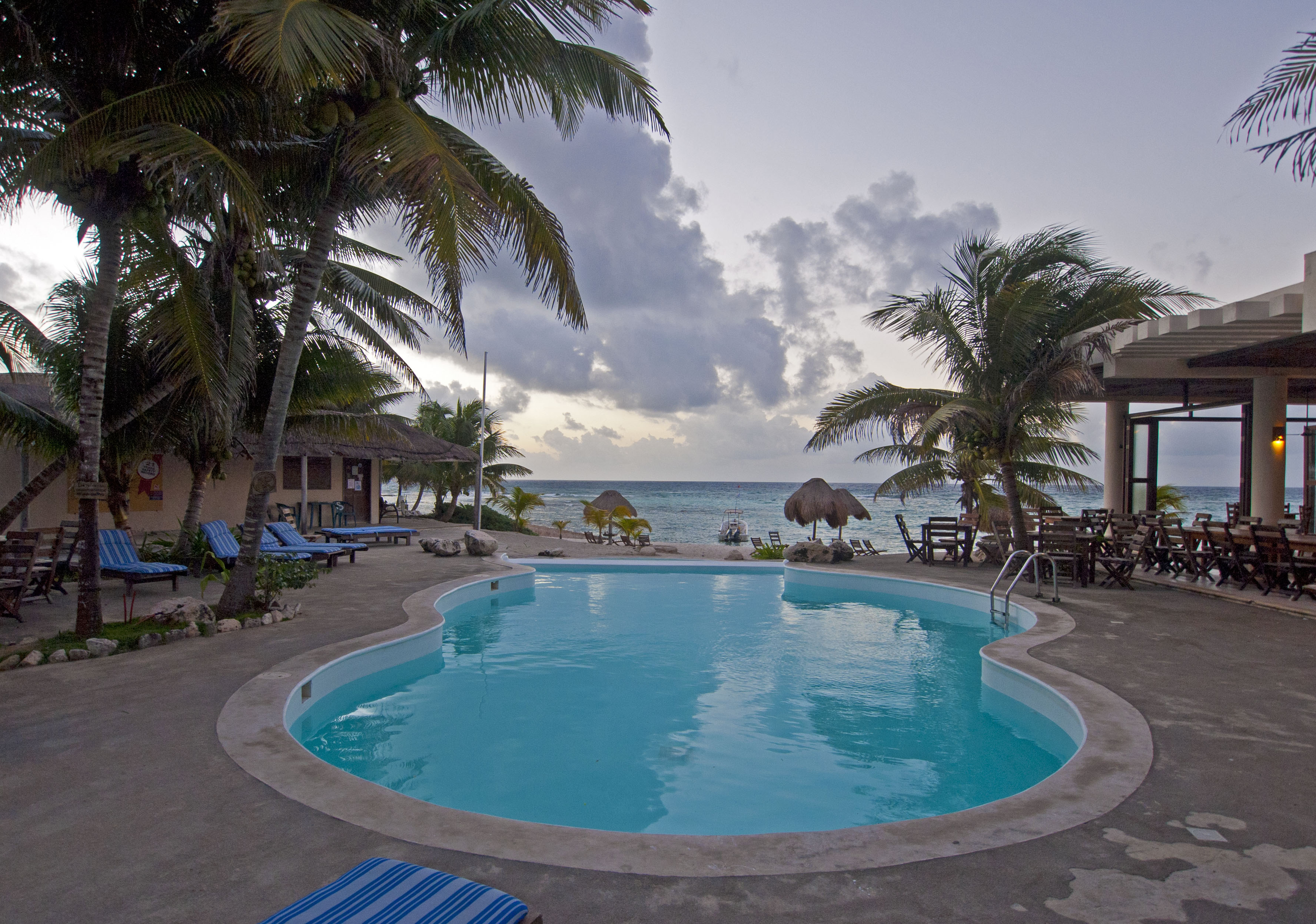
However there is a really nice infinity pool at the RV Park and a restaurant which was pretty nice. There is a sandy beach and of course the Caribbean sea. For me the saving grace was an onsite dive shop.
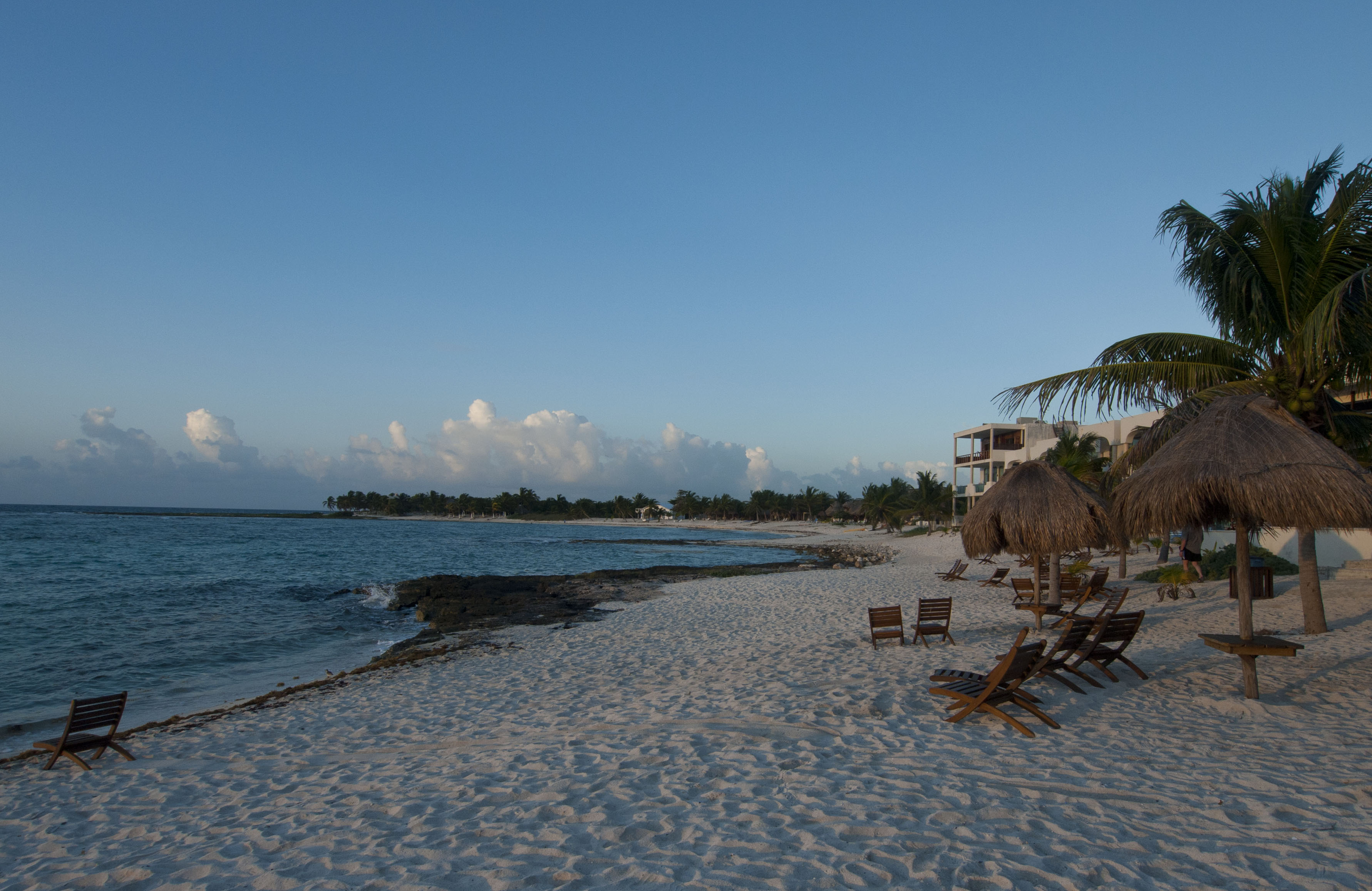
We decided to spend a couple of days here and the first day we spent chilling out. Sarah lay on her newly bought hammock and we relaxed a bit after a hectic couple of weeks. On the second day I was determined to do some diving though !
Chichen Itza
Between Merida and Cancun lies Chichen Itza which is by far the busiest of all the archaeological sites in Mexico. When we arrived the queue to enter the site was at least 100 people long. We were a bit bad and pushed in near the front – all the people queuing were from coach parties so we didn’t feel too bad.
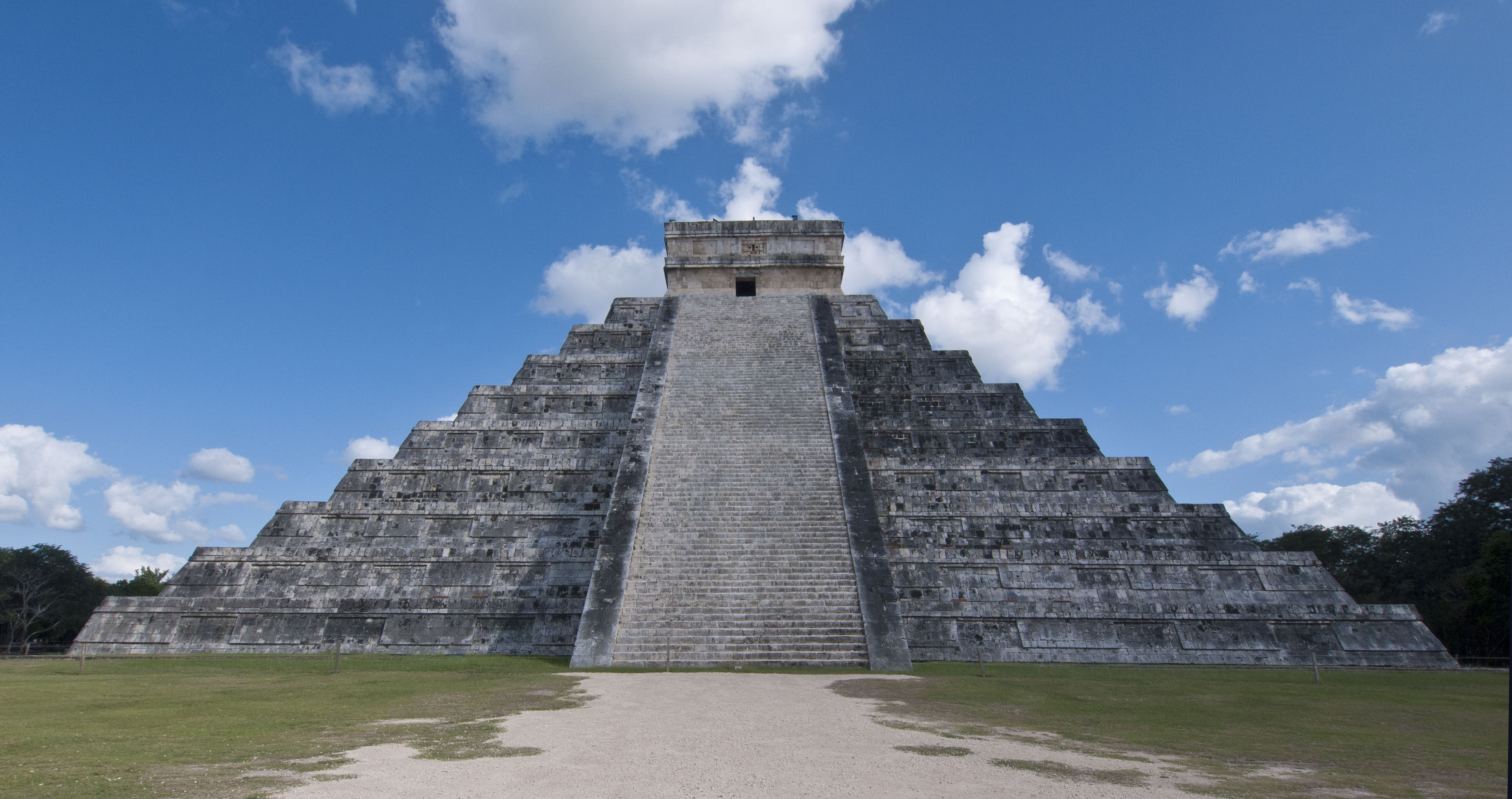
Chichen Itza was established around 300 AD and peaked in the years between 925 and 1200 AD. The centrepiece of the site is El Castillo which is a 25m high pyramid whose design is heavily based in the Mayan calendar and at the equinoxes an undulating shadow links the head and tails of a carved serpent.
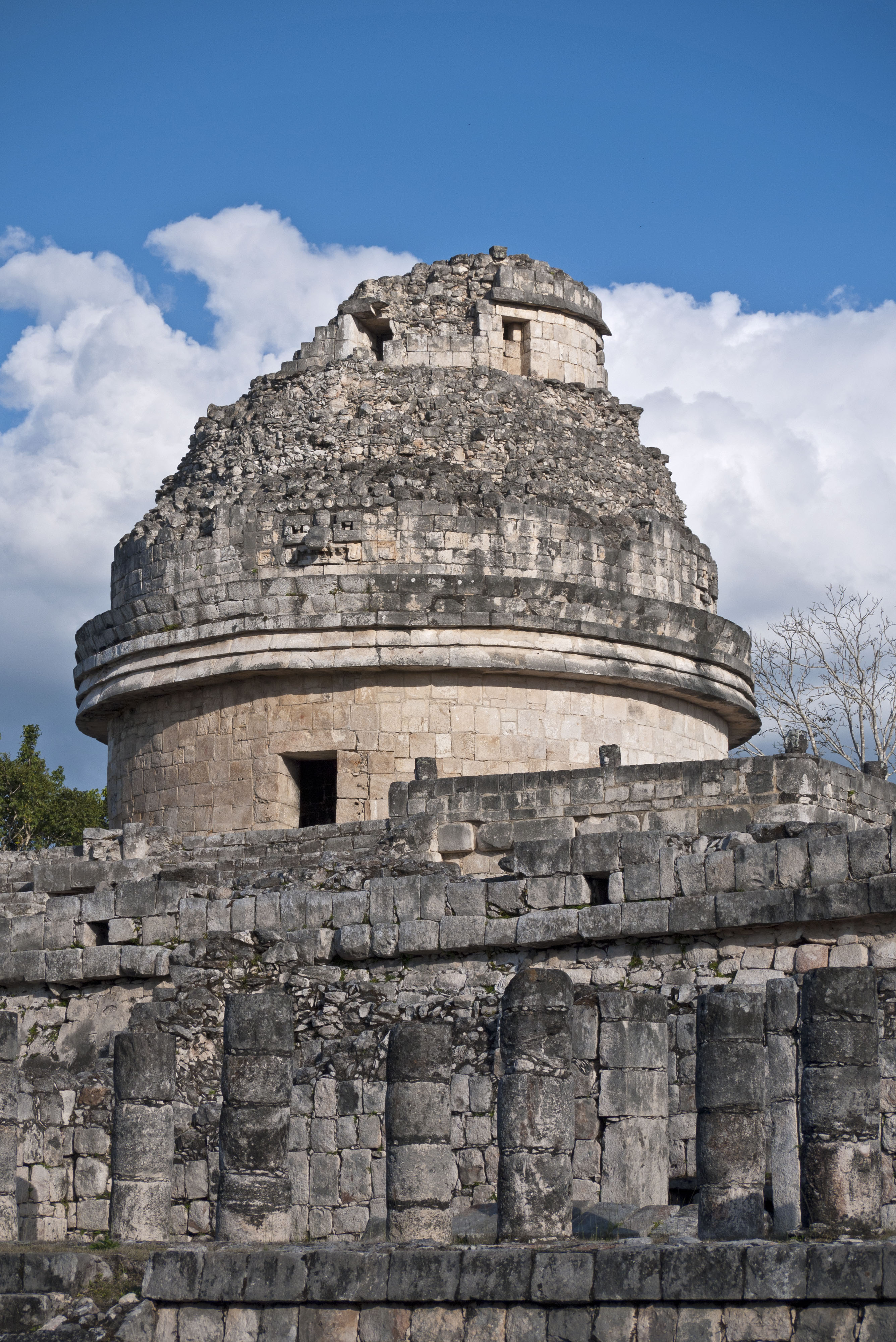
The rest of the site has a number of important buildings which are unique in the Mayan world such as El Caracol with its circular, domed tower.
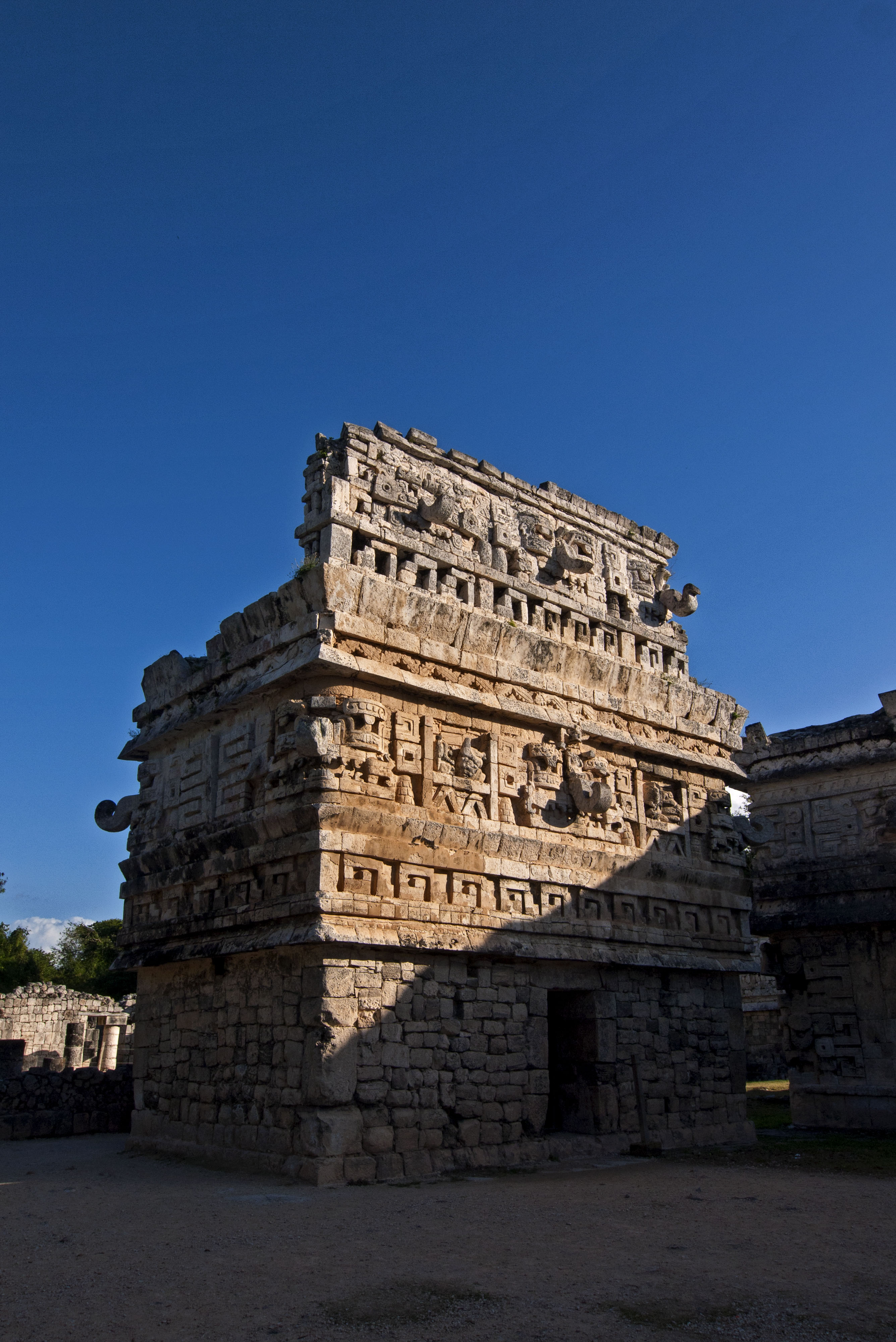
We arrived at Chichen Itza just after lunch and the temperature was melting hot but this hadn’t deterred the crowds.
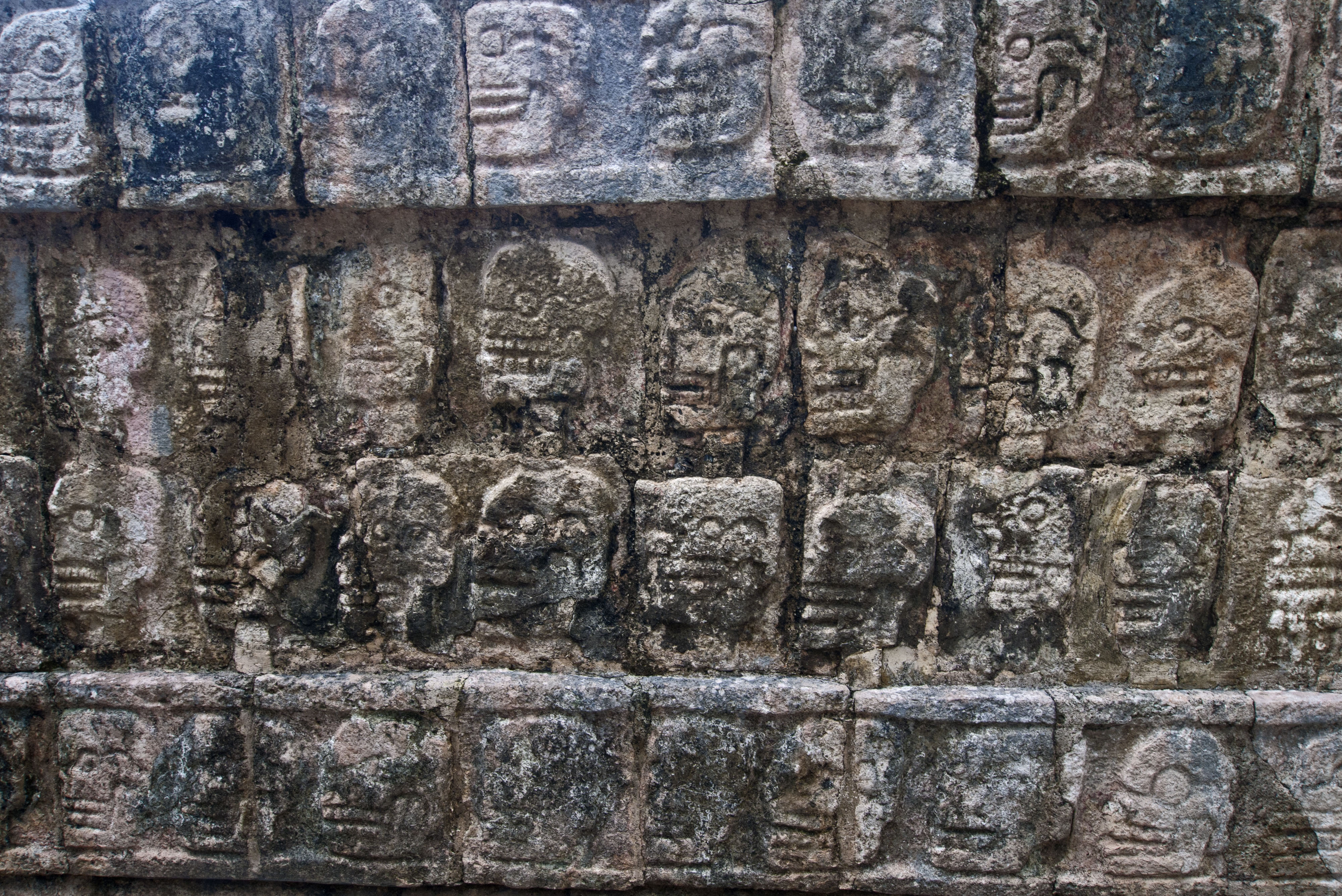
We were definitely less impressed with Chicken Itza than with Uxmal.
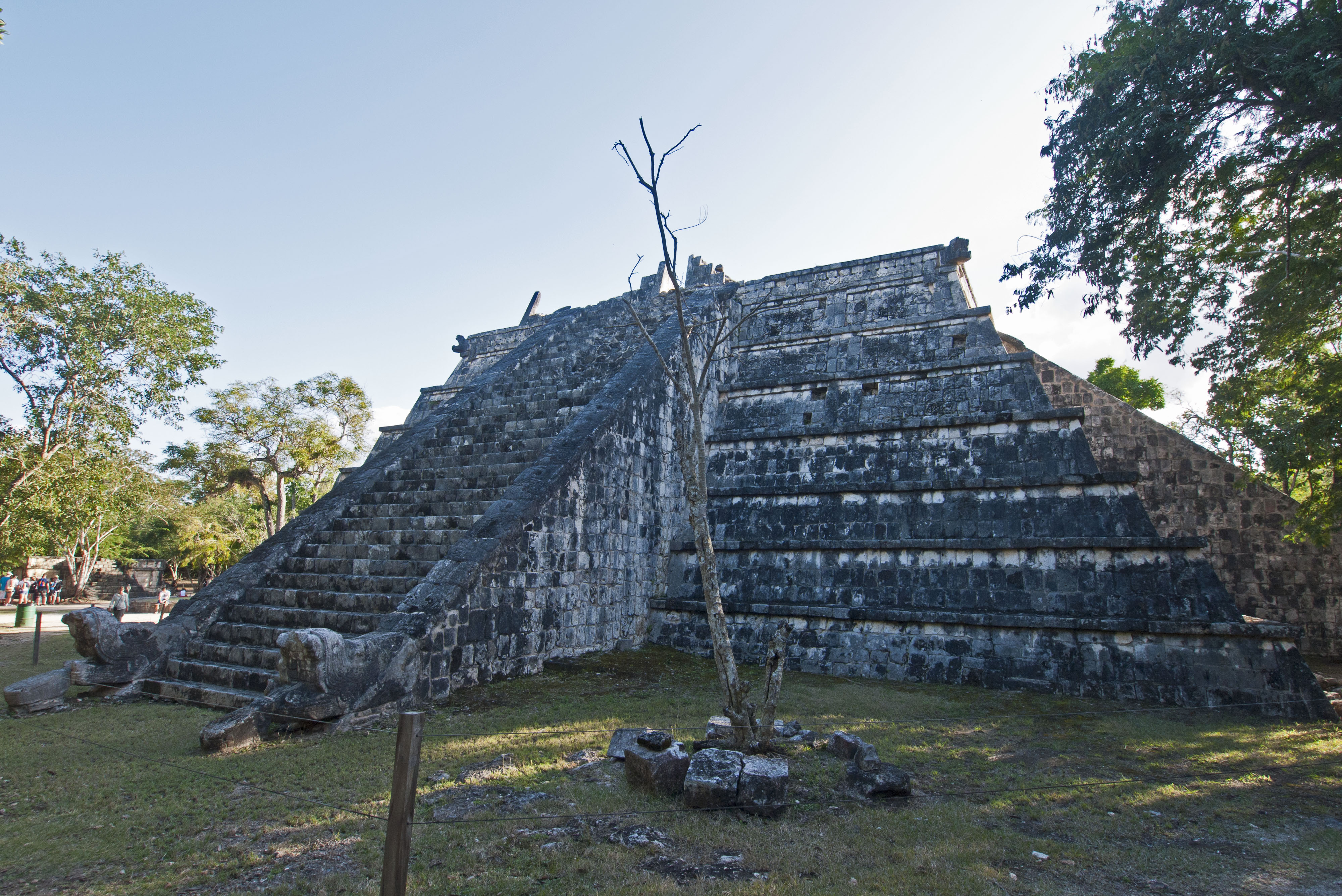
You can’t stay at Chichen Itza as it is guarded by the police at night however in the small town of Piste which is 2km down the road there are two options. We chose the Starlight Inn which has a grassed courtyard which was very private and has lots of space. There was a cold shower and a toilet. Supposedly there were electric hook-ups although we didn’t get these to work but you could run a cord to the bathroom which also has a power outlet.
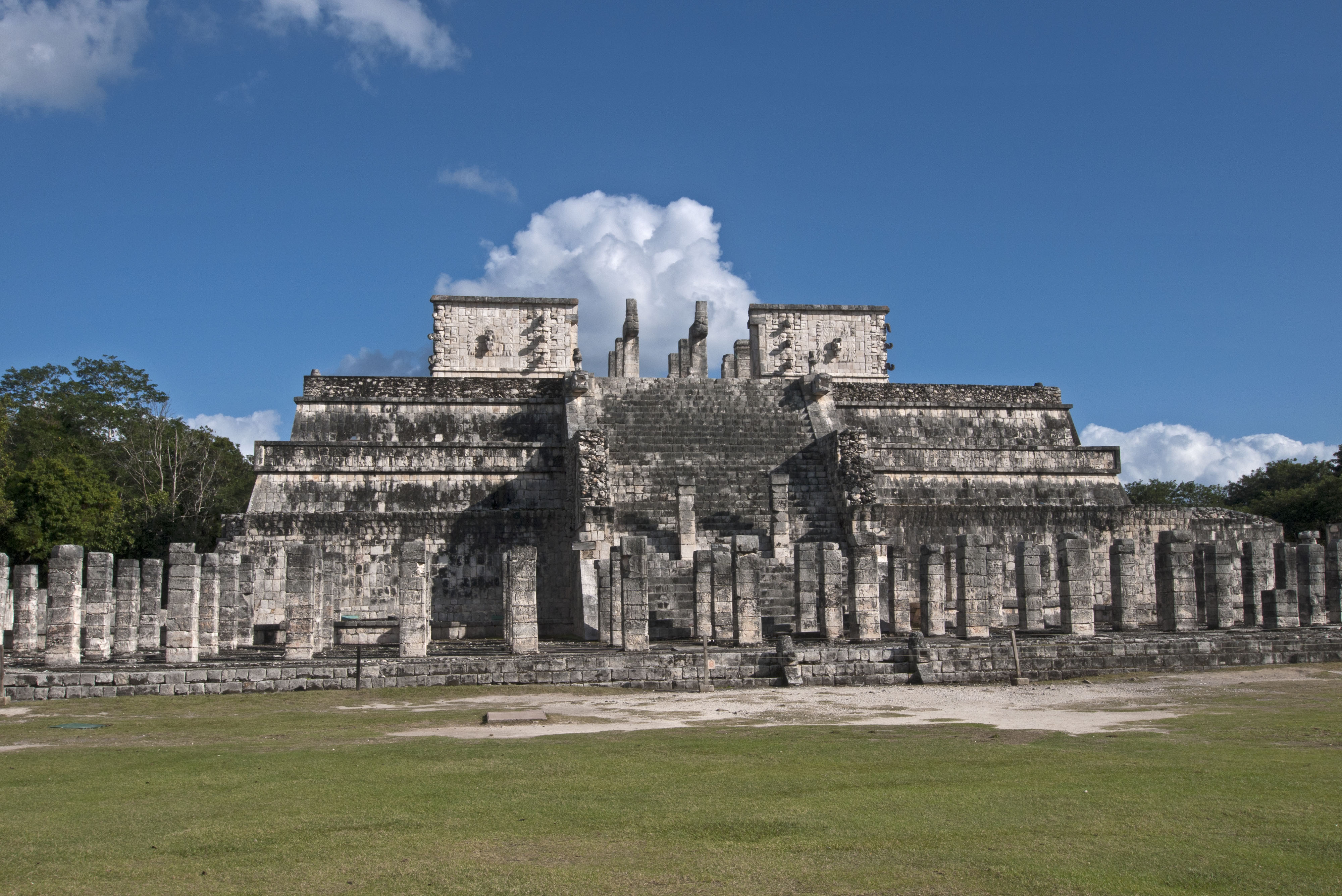
The little town of Piste has a number of small restaurants and we visited one for a dinner of Tacos. The nice thing about Mexico is that Tourist destinations do not necessarily mean everything is really expensive.
Uxmal
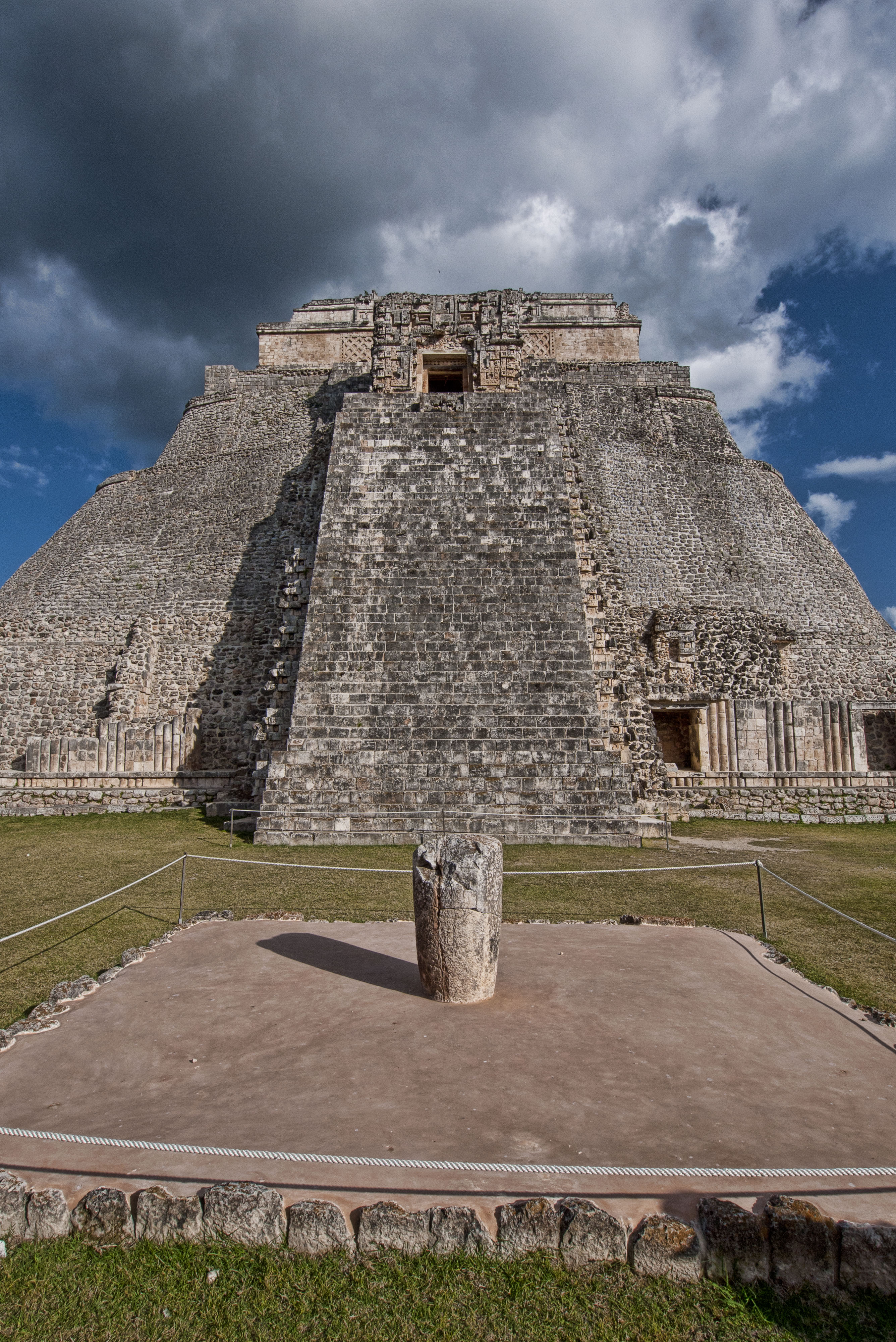
Uxmal is one of the top four Mayan sites in Mexico and as a result is more expensive and more crowded than most of the others we have been too. It is only an hours drive from Merida (either on a fast toll road or a slightly slower but still good Libre) but it is also within day trip range of tour buses from Cancun.
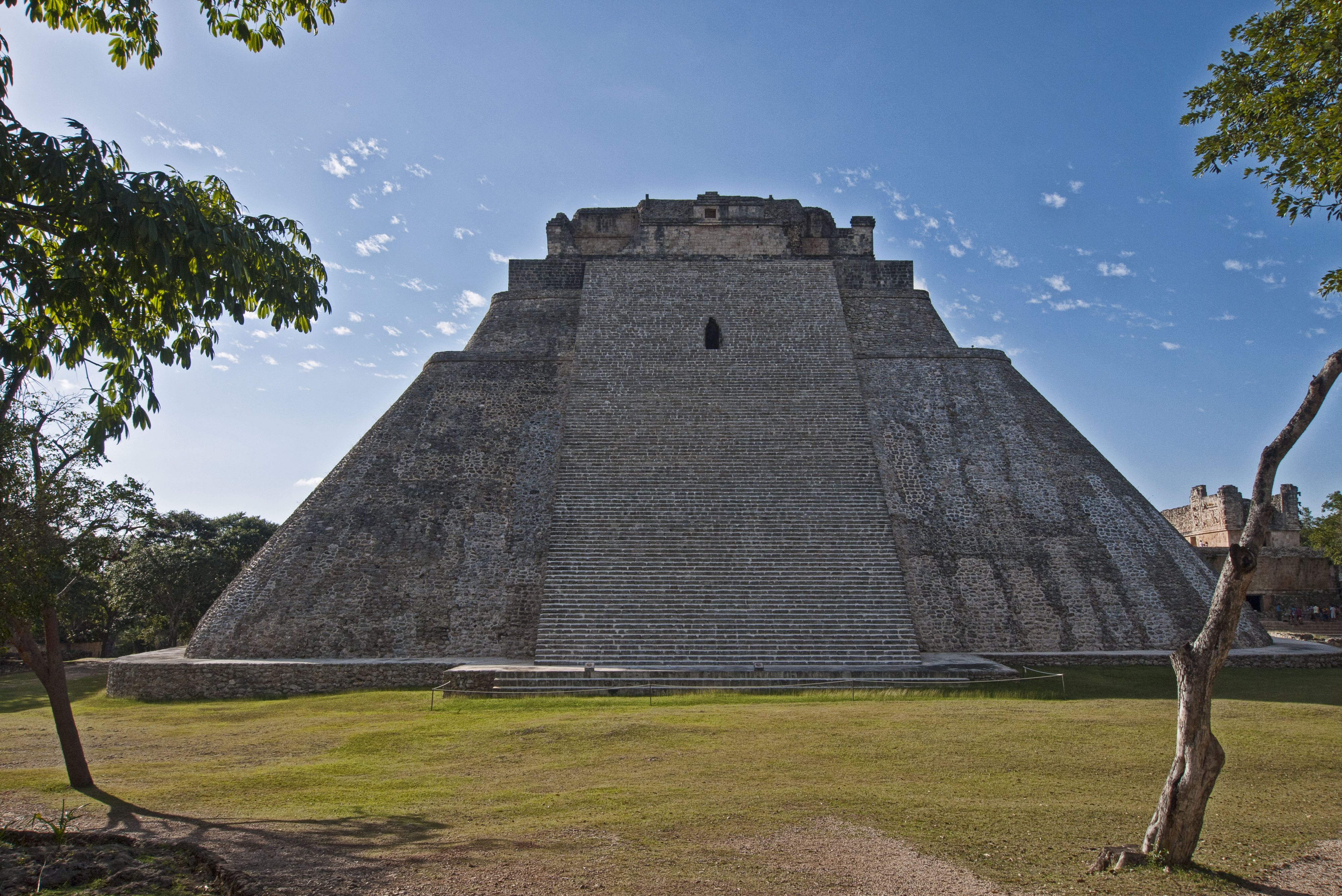
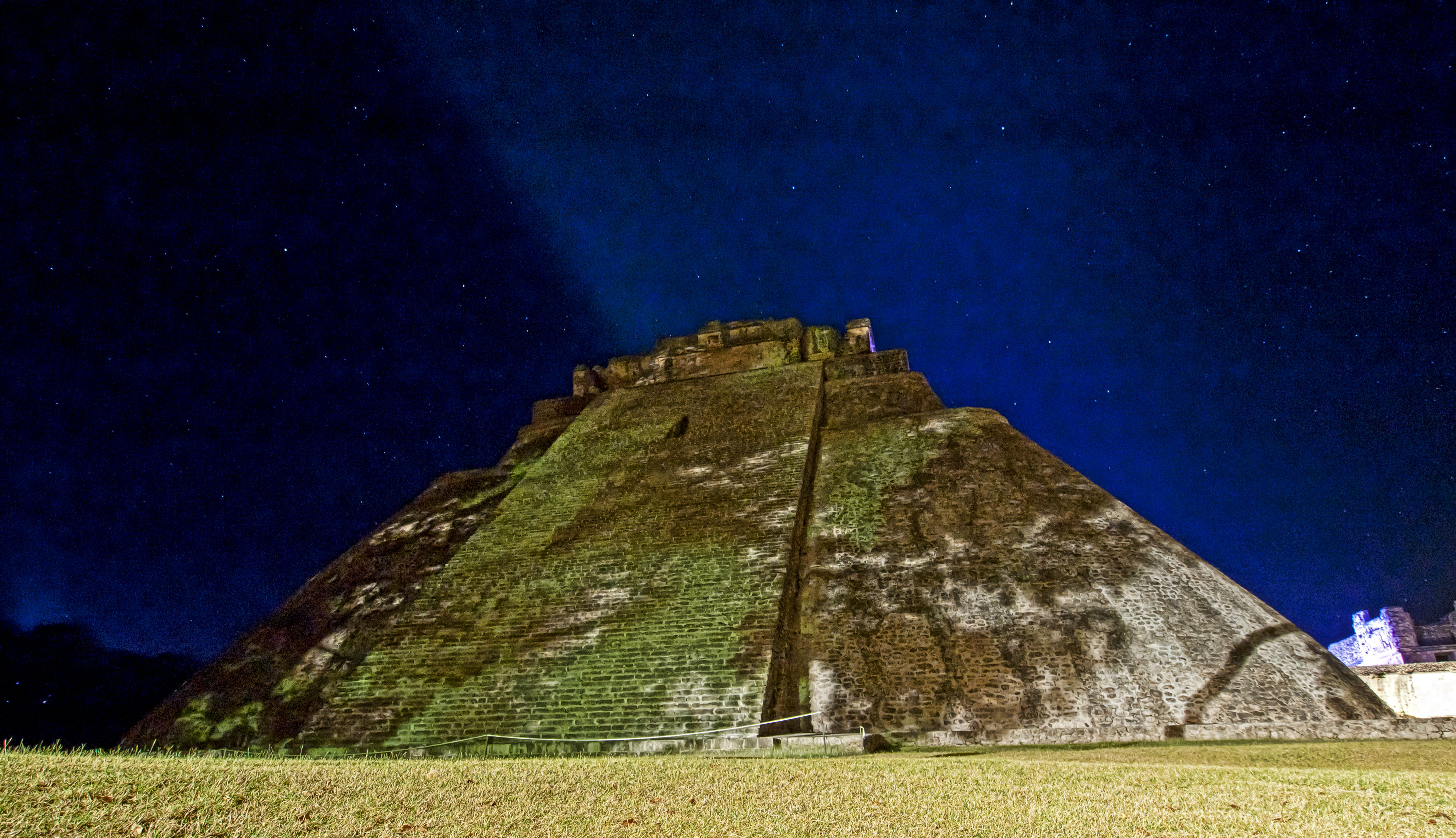
The nice thing about Uxmal is that they let you camp in a grassy lot next to the ruins and there is even free WIFI. If you camp overnight you can visit the Sound & Light show in the evening which is included with your entrance fee.
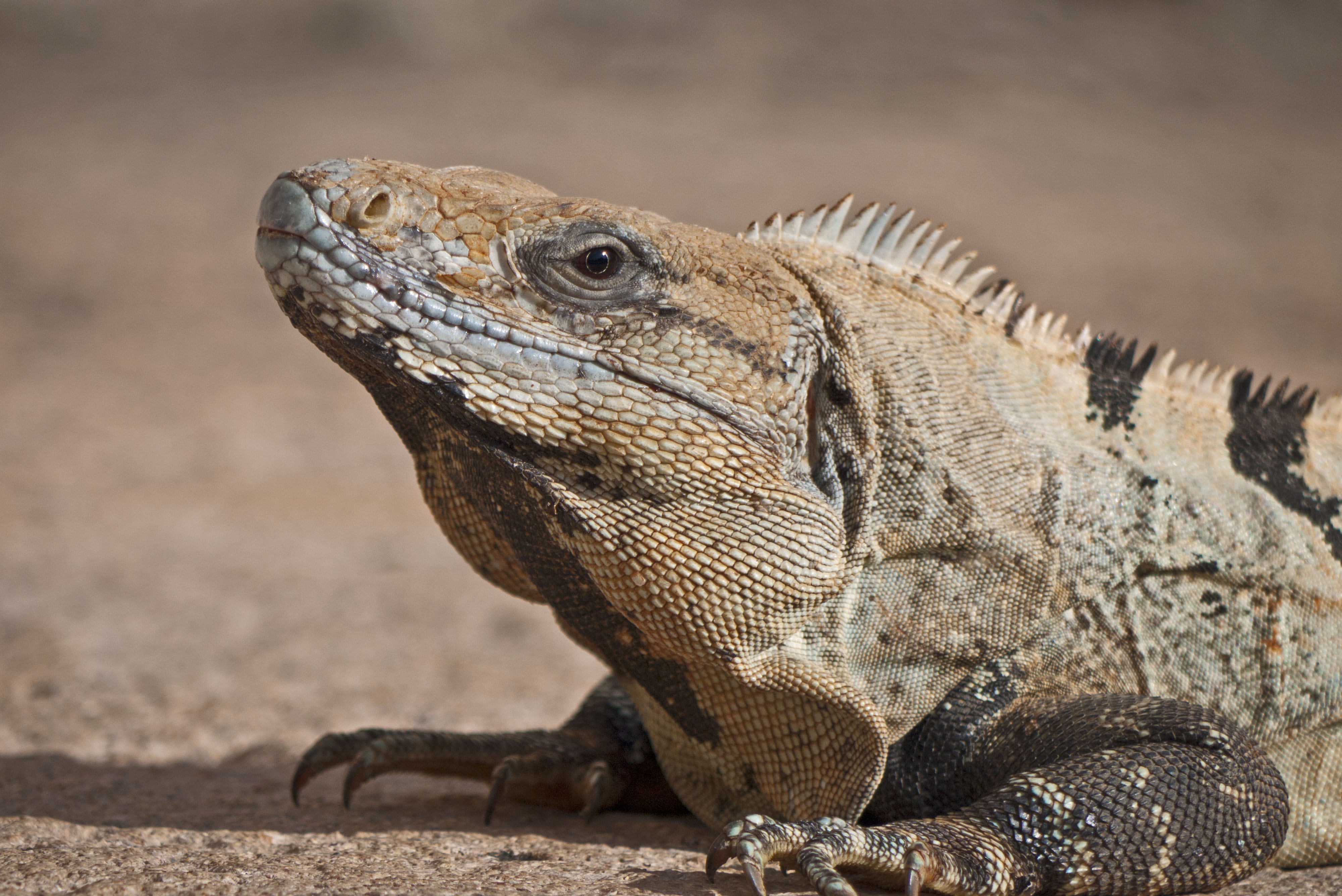
The Site of Uxmal itself is nice with a much higher level of ornamentation on the buildings than we had seen elsewhere.#
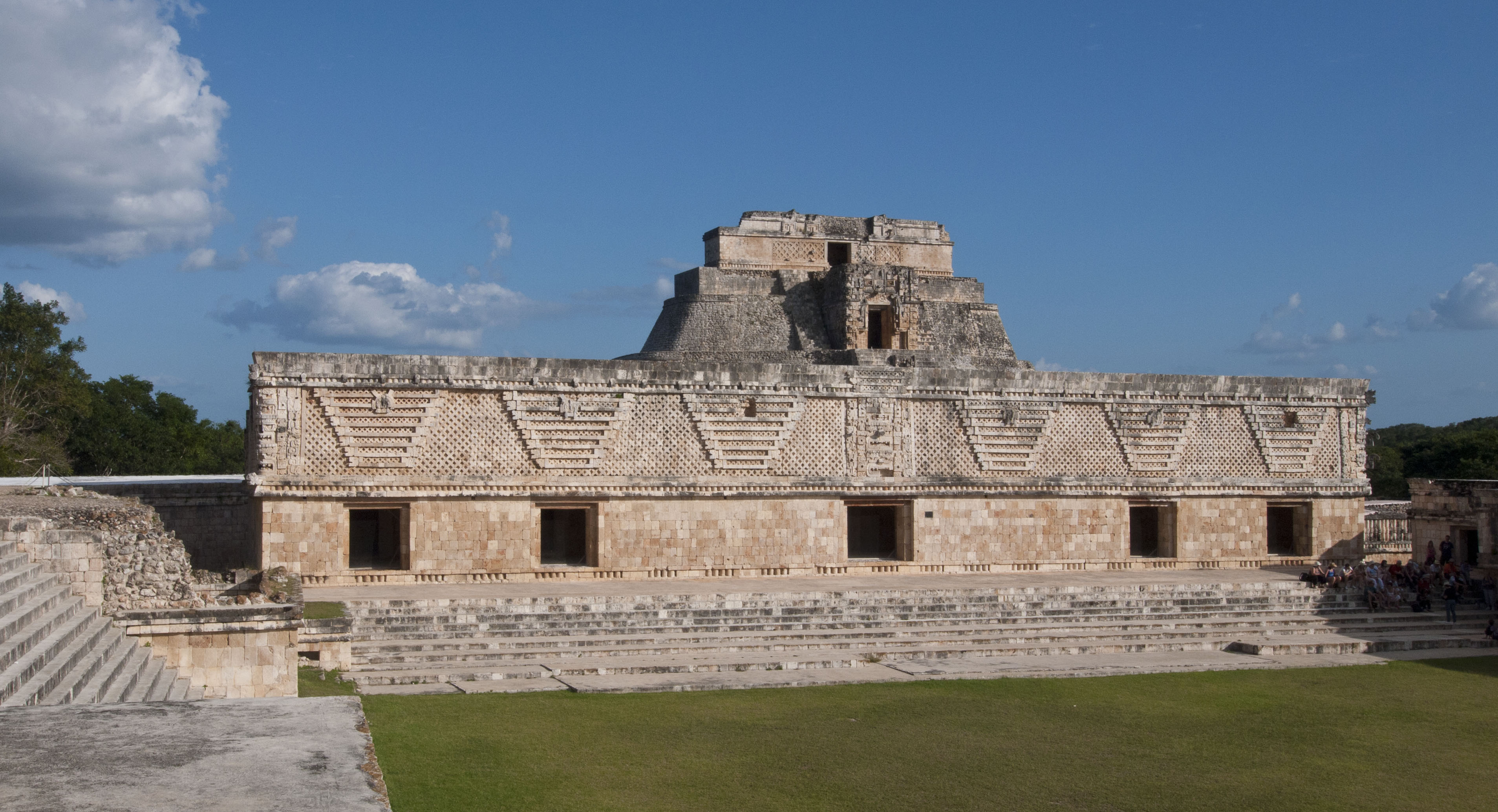
Uxmal is an Unesco World Heritage Site and is considered to be the finest achievement of the Puuc-region Maya who rose to power hen many of the other Southern cities were disintegrating. The city started its ultimate decline near 1000 AD.
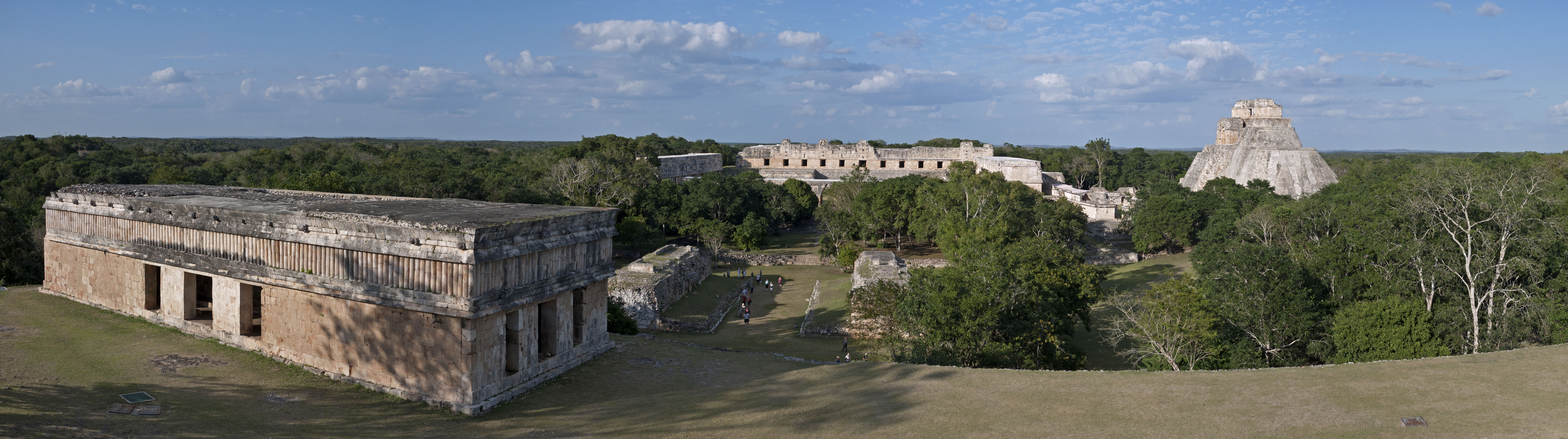
The site is split into two main parts: near the entrance are the Piramide del Advino which stands 30m high and is part of the same complex as the Cuadranglo de los Pajaros and Cuadranglo de las Monjas. The other part of the site consists of the Palacio del Gobernador and the partly restored Gran Piramide. One thing that is really nice about the site is that it is surrounded by almost unbroken jungle for as far as the eye can see.
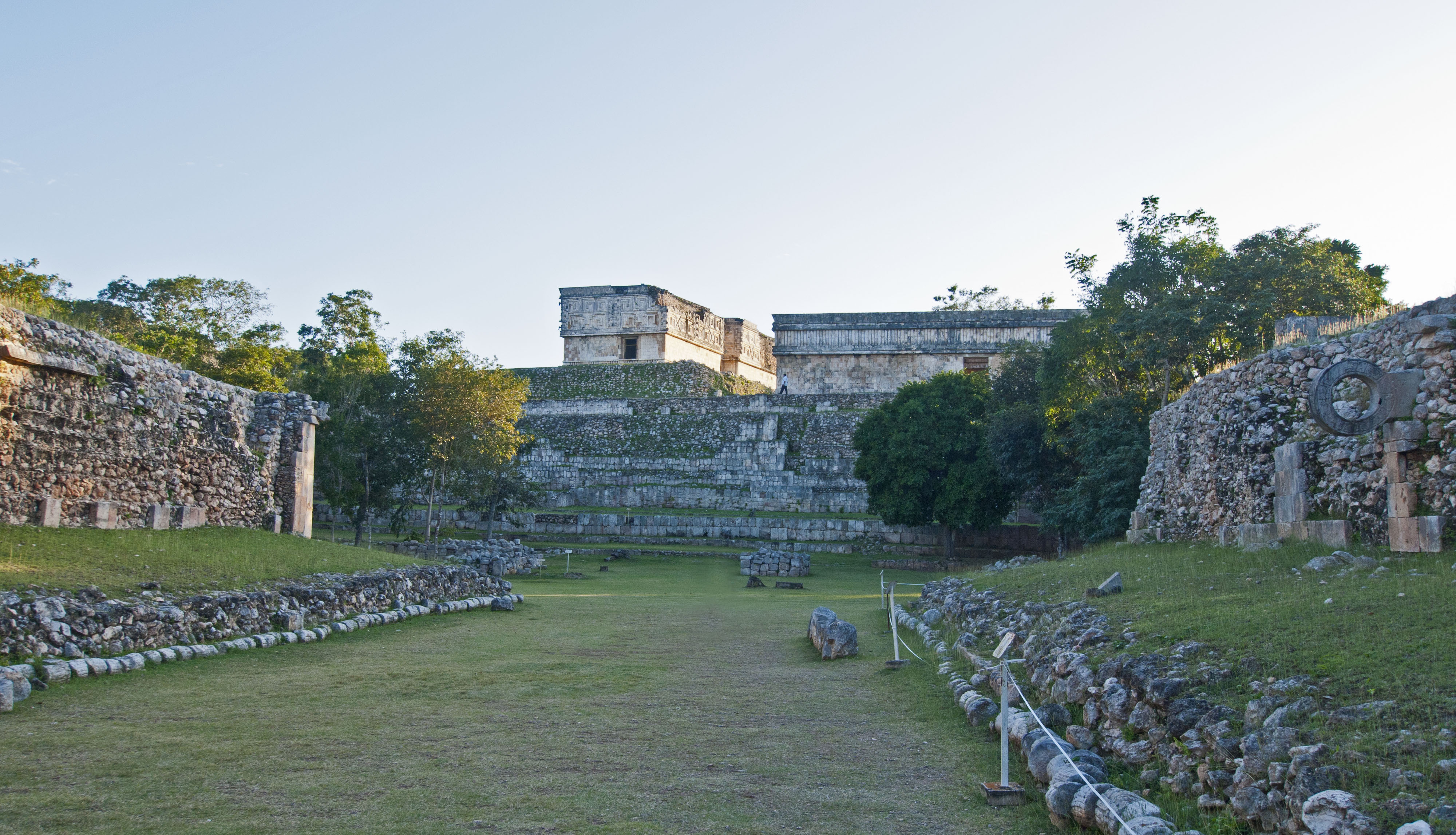
We returned to the site at 7pm for the Sound & Light show and after 5 minutes the excitement of seeing the buildings lit up in various colours had abated and it a was pretty boring 45 minutes . You sit in the Cuadranglo de las Monjas and can see much of the site from here. There is a story (in Spanish) which is belted out by big speakers but we didn’t have the translation headsets (which we would recommend).
Into The Yucatan
Palenque is the gateway to the Yucatan and we left here to drive Northward into the flat jungle plains of the Yucatan. The first thing that hit us was how hot it was with each day in the mid-30’s and the nights only really dropping to 26 or 27c.
The West coast of the Yucatan is not really a major tourist destination so we made our way fairly quickly up to Merida.
We did stop at a couple of places on the way. Firstly just outside Escarcega we stopped at a Rancho where the camping area was in a lovely garden surrounded by untouched forest – supposedly full of peccaries and deer but we didn’t see any. We then stopped at Campeche and stayed at Club Nautico overnight which was a big beach club which was completely deserted apart from a couple of RV’s parked off to the side. We enjoyed the infinity pool and posh showers here ! It was our most expensive night in Mexico though at 350 pesos.
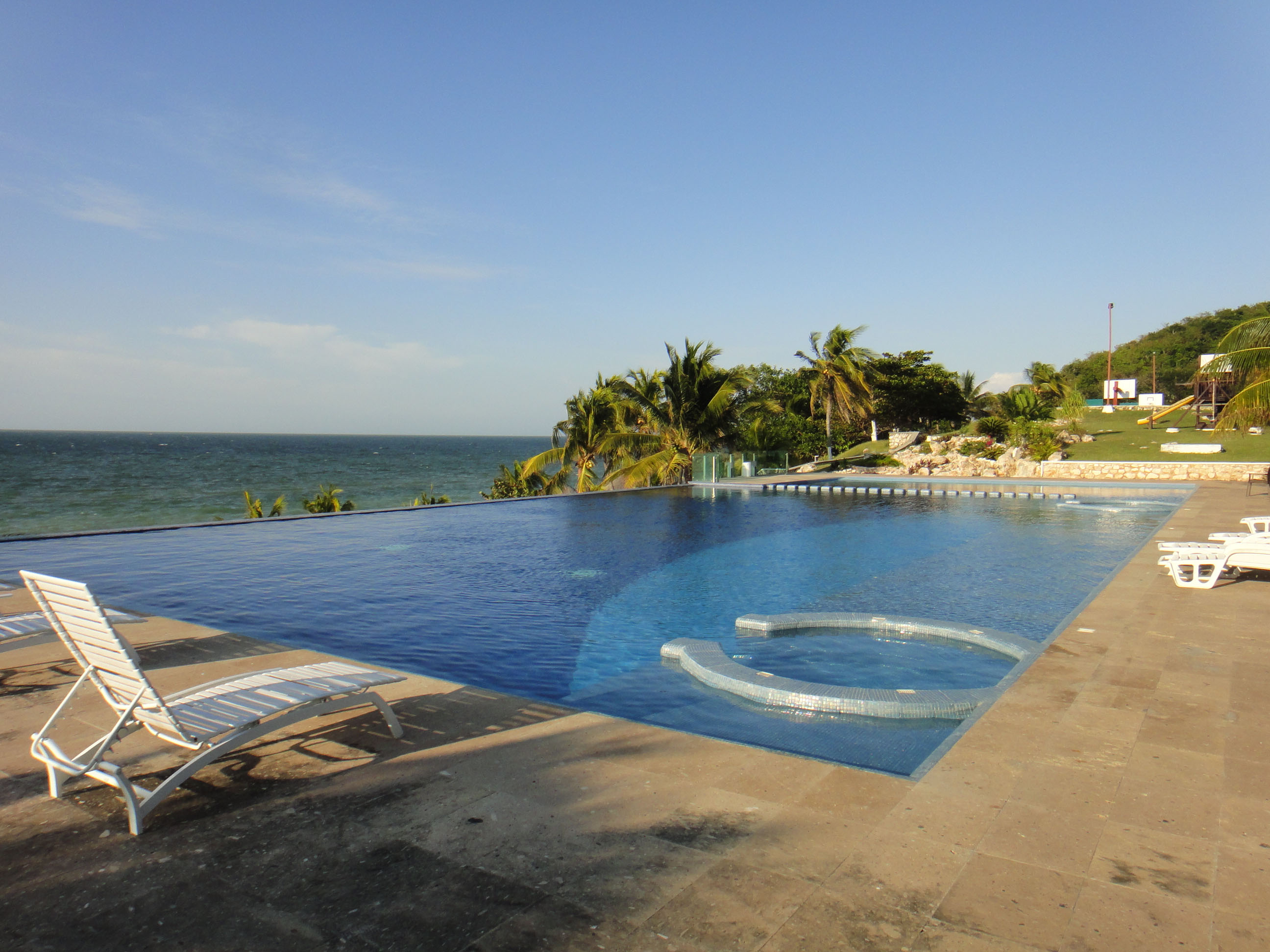
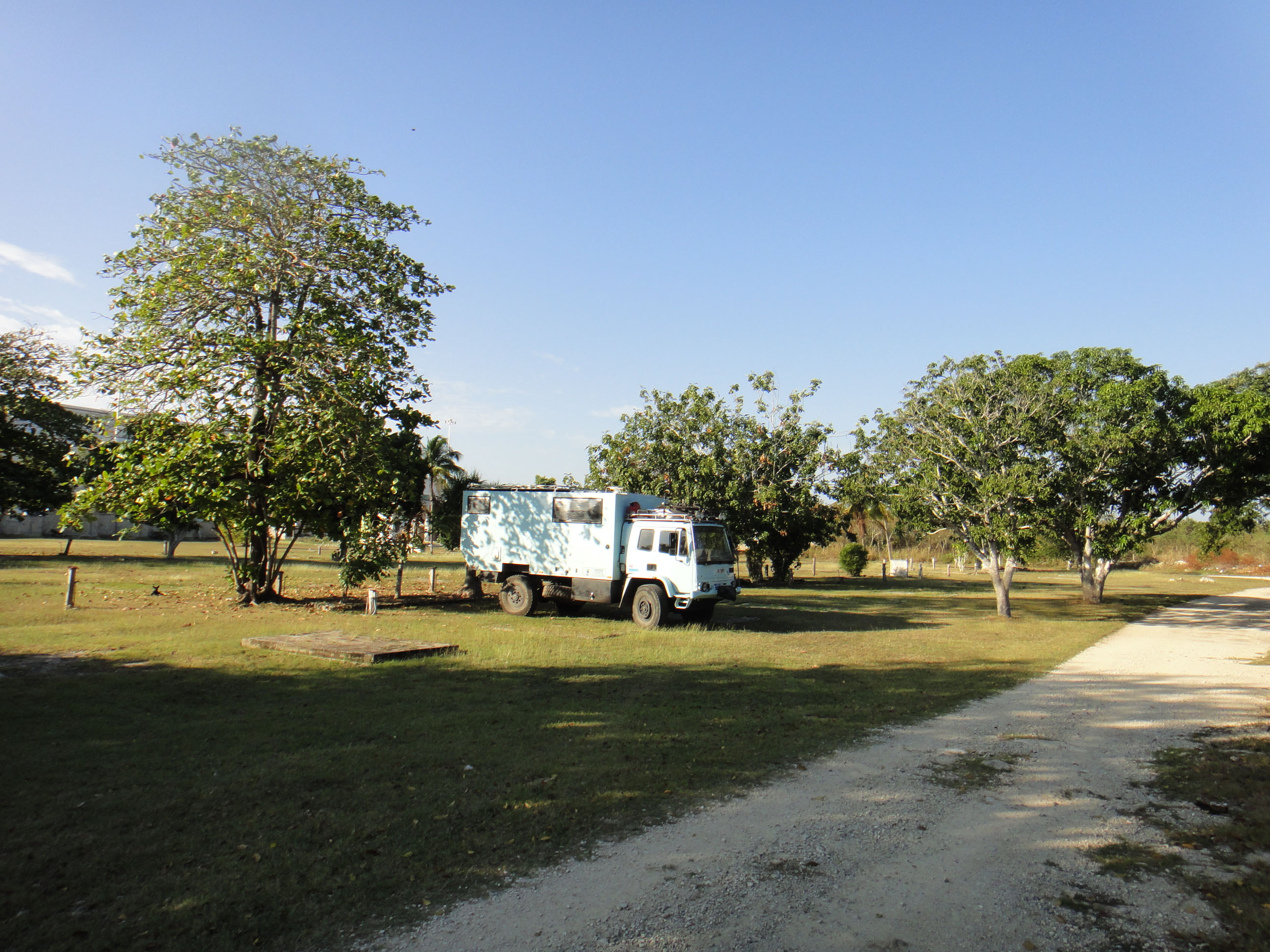
From Campeche it is only a couple of hours drive to Merida which is the capital of the Yucatan. There is only one campground in Merida and this is very large (100 site or so) but also very run down and over-priced. It is right next to a big shopping mall which looks like it has been lifted right out of the USA. Its centrepiece is an ice rink and a department store called Liverpool. The fact that the watchword for exclusive shopping in Mexico is Liverpool seems slightly ironic. The real positive about the campground is that it is right off the ring road which is a big freeway so no navigating difficult roads to get here.
As there was a big cinema attached to the shopping mall we decided to take advantage and went to the cinema for a night out. We saw Mission Impossible 4 which was nicely in English (as all the films seemed to be). A ridiculous film but good entertainment.
We had to spend a couple of nights in Merida because we had managed to damage one of our front tyres and it needed replacement. The cheap tyres that we had bought in California have proved to be a bad buy and just not up to the task. Serves us right for buying some Korean crap. We had managed to track down a tyre shop in Merida with good brand replacement front tyres for us (Pirelli) and we picked them up on Saturday but we couldn’t get anywhere to fit them until Monday morning.
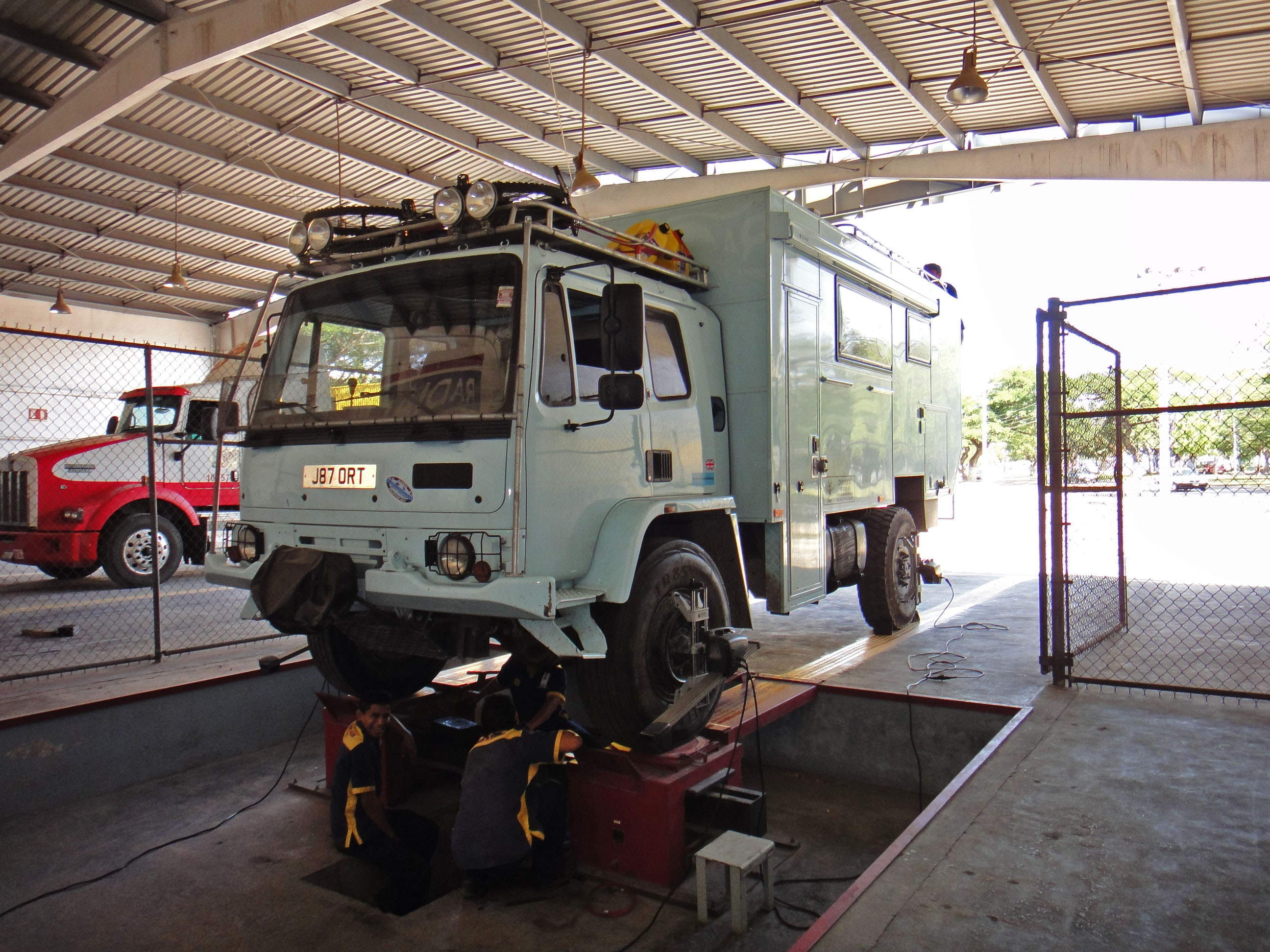
On Monday morning we went to Radial Llantas to have our new tyres fitted, balanced and the truck alignment done. The alignment on the truck was way out and was causing tyre wear so needed fixing. These guys were really good and had a fancy electronic system for doing the alignment. They were set up to do big trucks so we weren’t a problem at all.

Yaxchilan and Bonampak
A spur road from Palenque (the Carretera Fronteriza) leads 100 miles down along the Guatemalan border to an area where the majority population is still Mayan. In this area are two important sets of ruins, both of which are interesting for different reasons.
Rather than drive ourselves and work out all the different bits of transport to the two sites we decided to book a tour to Yaxchilan and Bonampak which would enable us to see both in one day and let someone else worry about the driving for a change.
It was really easy to book a tour through the reception at Mayabell and we were told to be ready to be picked up at 6am in the morning. As it turned out our minibus didn’t turn up until 6.30am but we were the last on the trip to be picked up.
As we dozed the bus drove towards the ruins but after about an hour stopped at a roadside restaurant to give us a very tasty Mexican breakfast of eggs, rice, beans and tortillas. This was a surprise as we hadn’t realised breakfast was included.
We were soon back on the road for the remaining hour to the boat dock at Frontera Corozal. The only way to get to Yaxchilan is a 30 minute boat ride down the river Usumacinta. This is one of the reasons that our trip was good value as to arrange a boat is 700 pesos if you are on your own and can’t find anyone to share with (not easy given the rarity of independent travellers in this area).
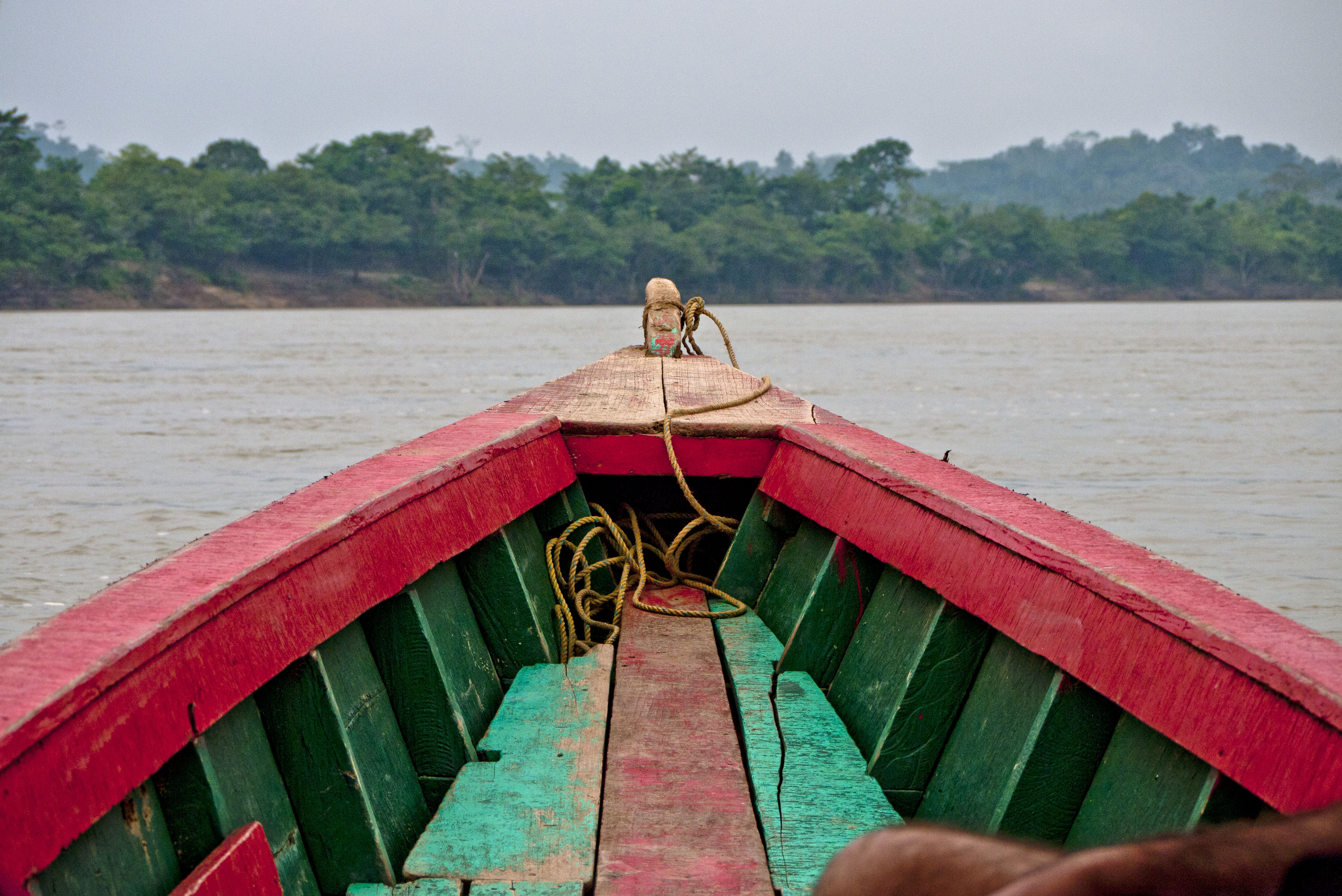
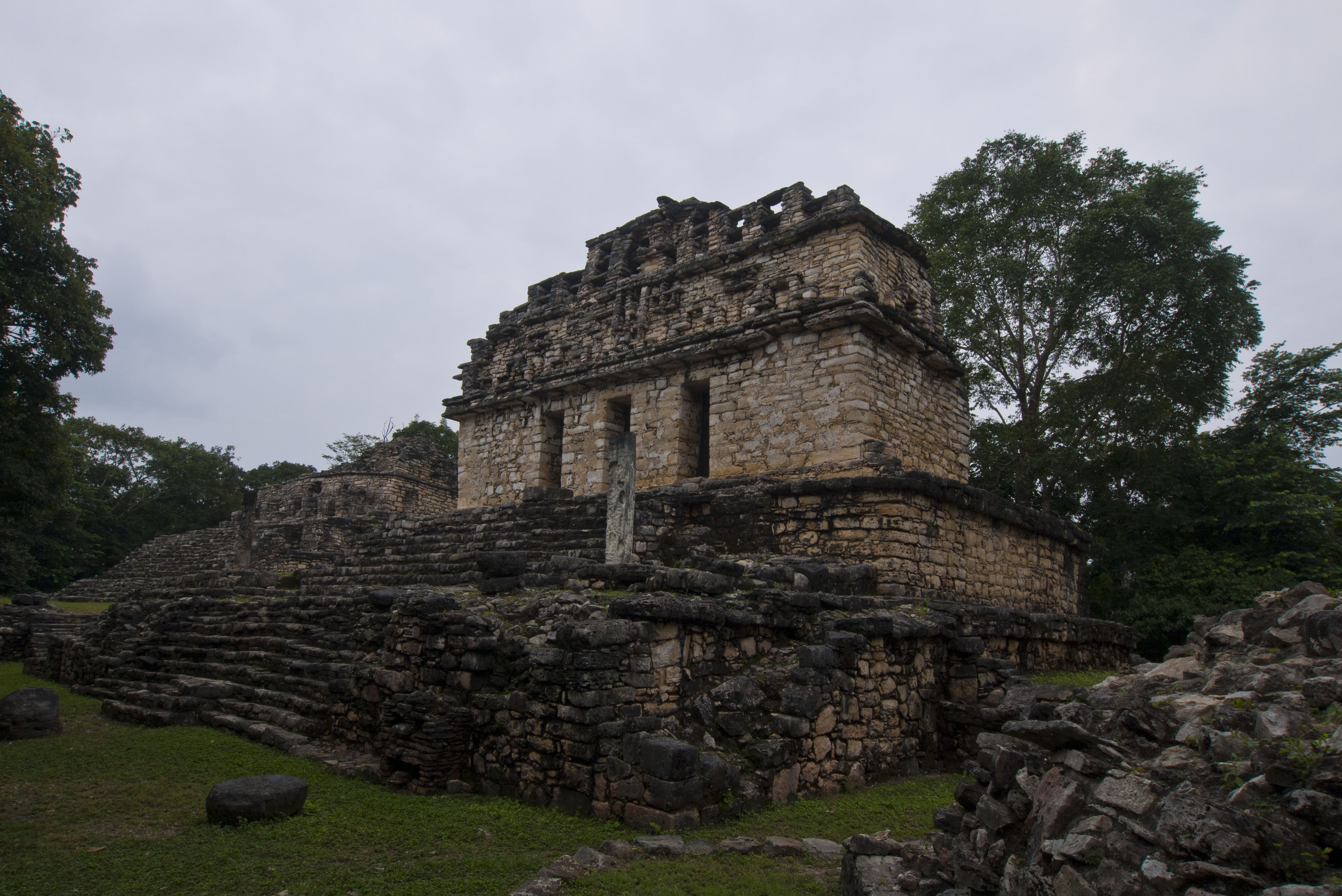
The boat was pretty rapid and delivered us down the river to a stone staircase (no dock) at Yaxchilan. There was no sign of the city from the water and all you could see was hot,humid, dense jungle.
Yaxchilan was an important city of the Classic-period and was at its height from 680 to 760 AD when its sphere of influence stretched up and down the Usumacinta river under the two kings Shield Jaguar and Bird Jaguar.
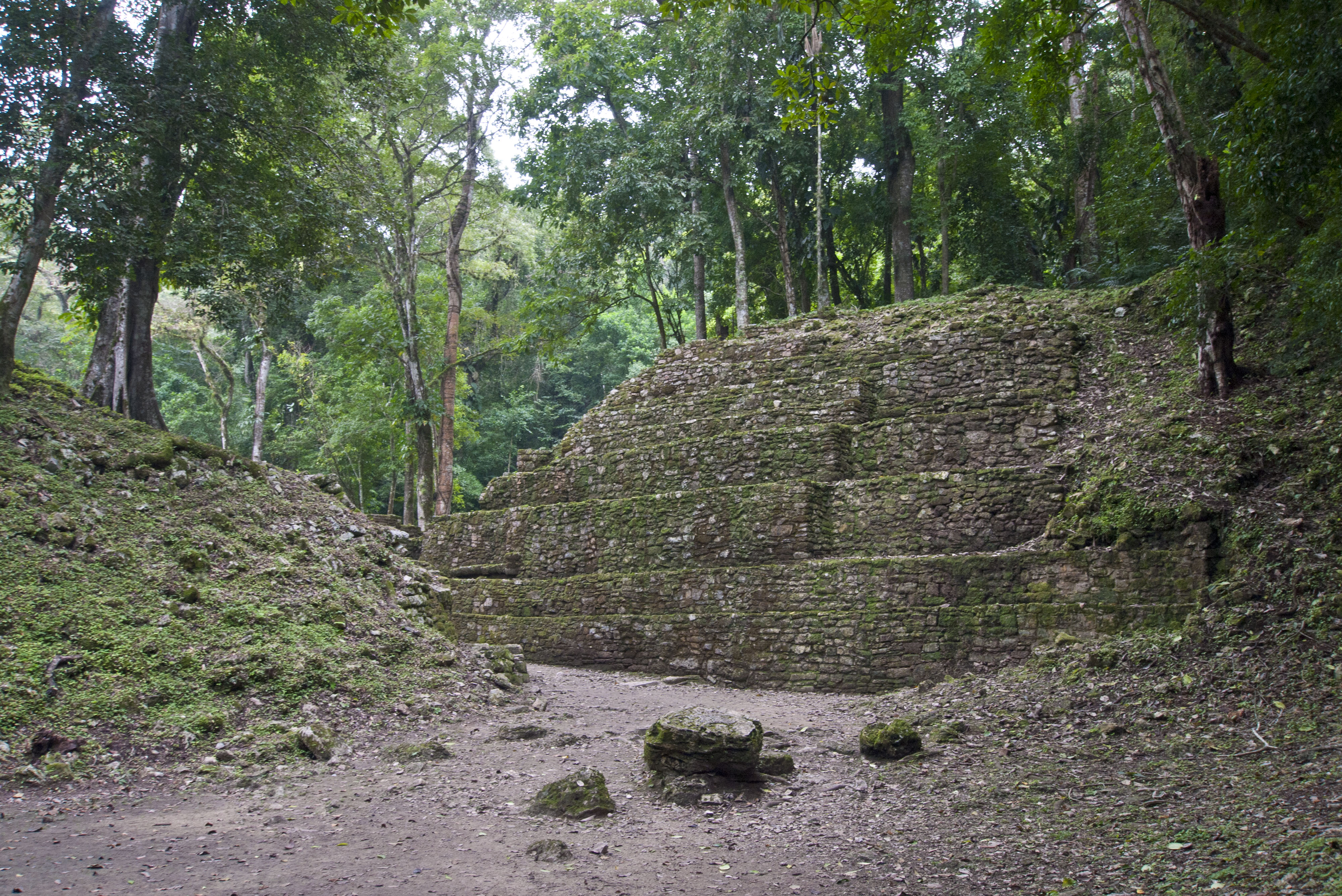
A short walk down a jungle path however and you come to a small pyramid and some dark doors. This is the entrance to the Labyrinth which is a building with a number of passages. You climb up stairs in the dark (we’d though to bring a torch which was very helpful) to emerge from a temple into the city proper.
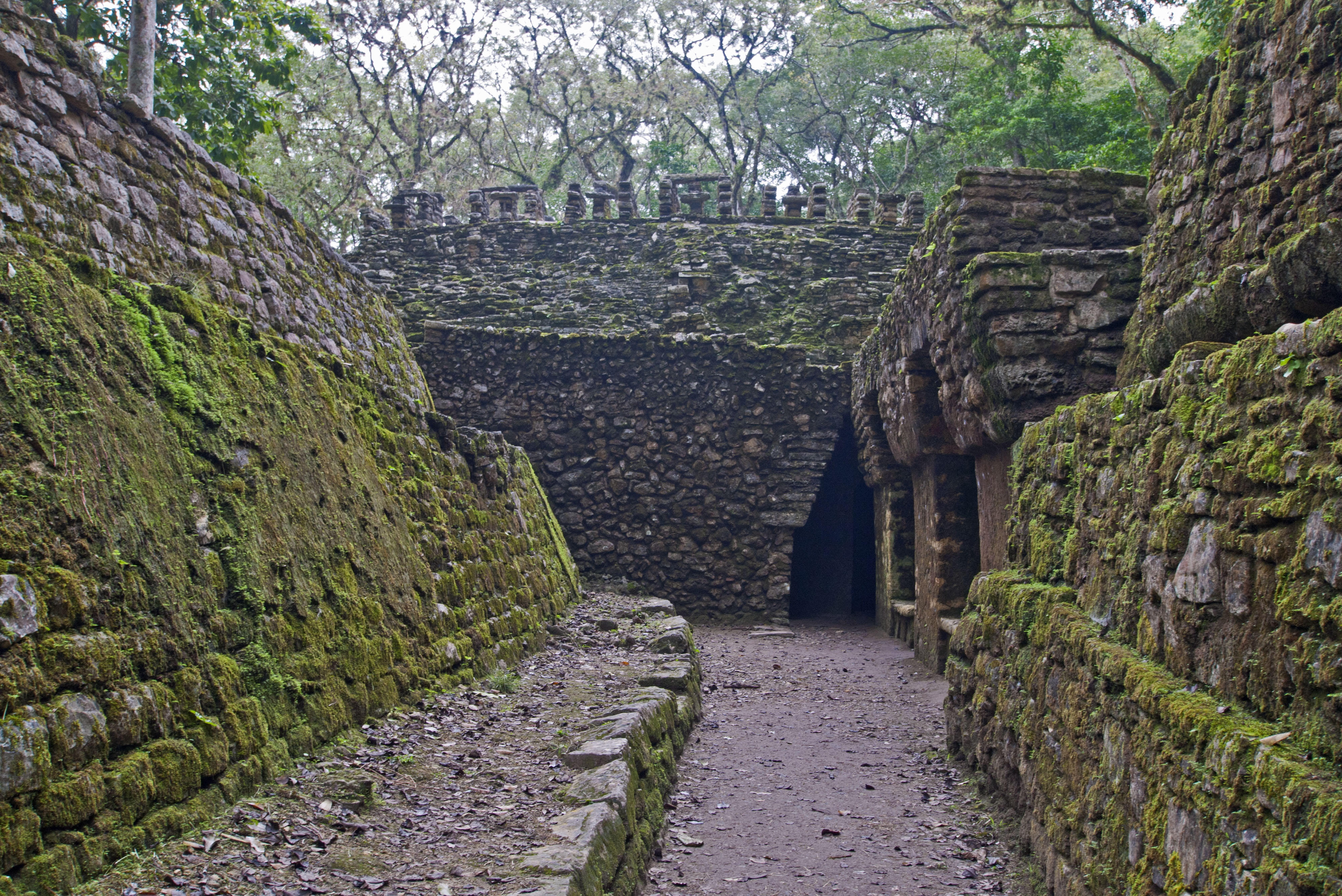
The sounds of the jungle were all around with the cries of howler monkeys almost constant. It wasn’t long until we saw our first monkeys in the trees over our heads.
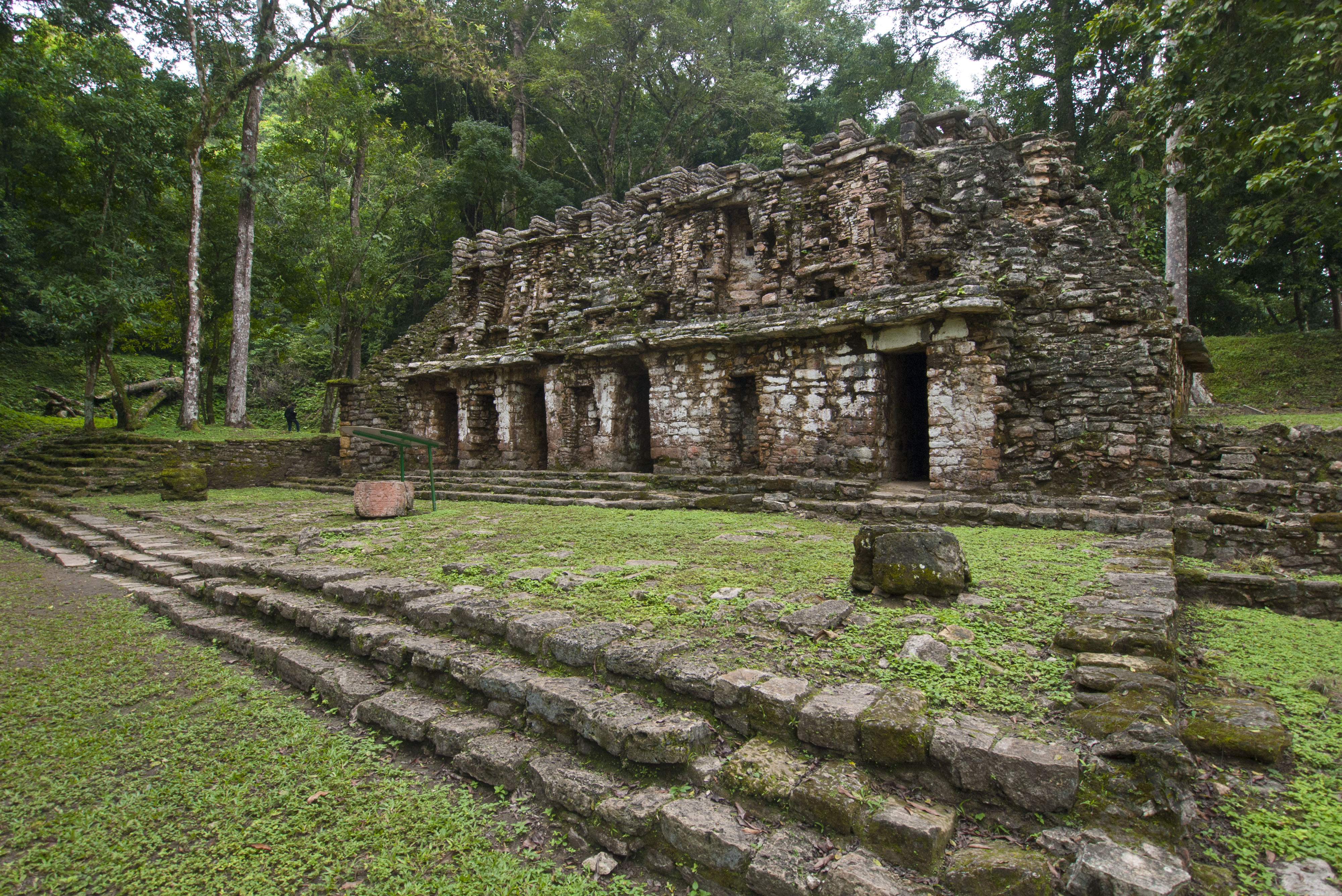
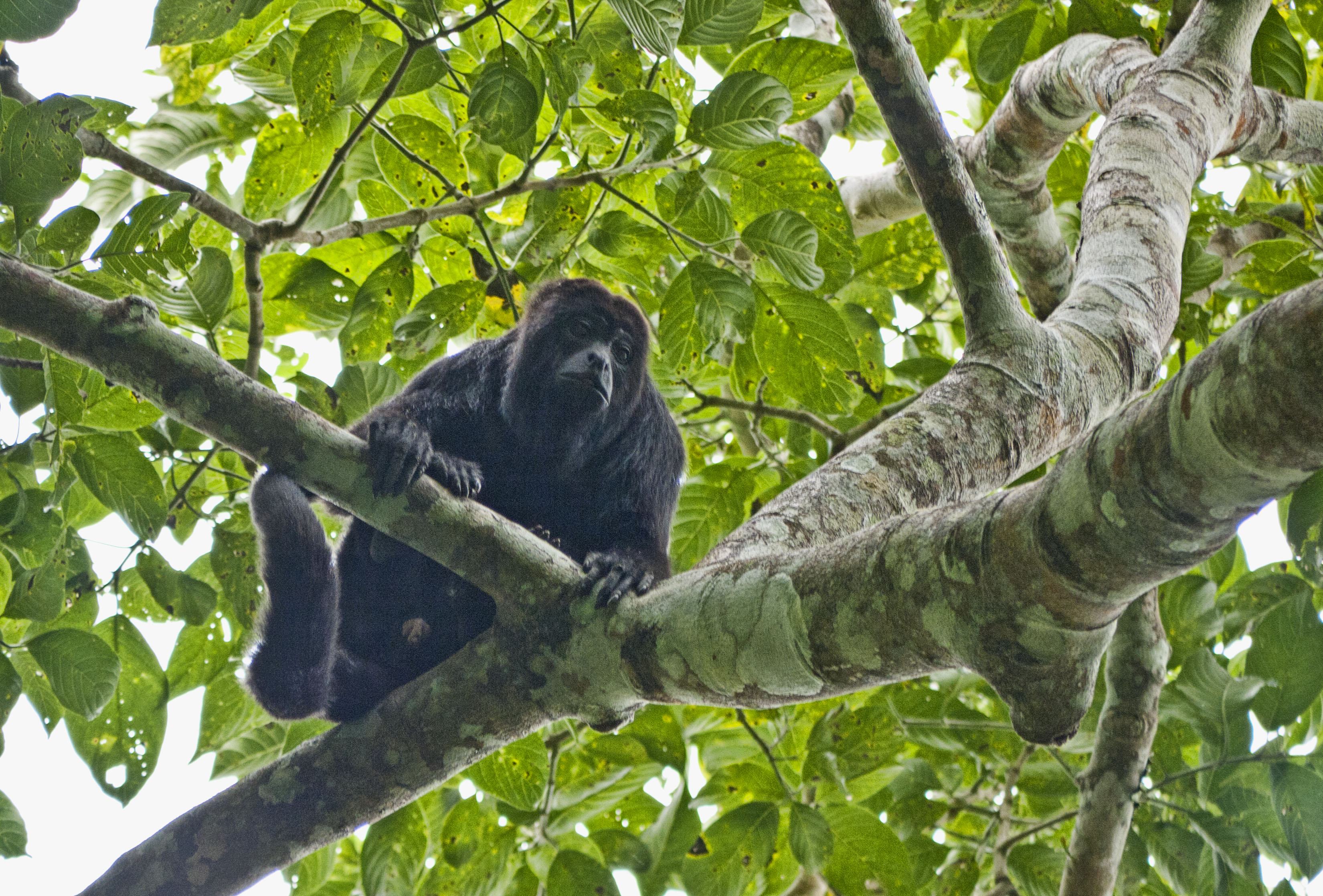
The downside of the tour was that we only had an hour and a half to explore the city and we could have easily spent another hour – particularly as you could sit and watch the jungle itself.
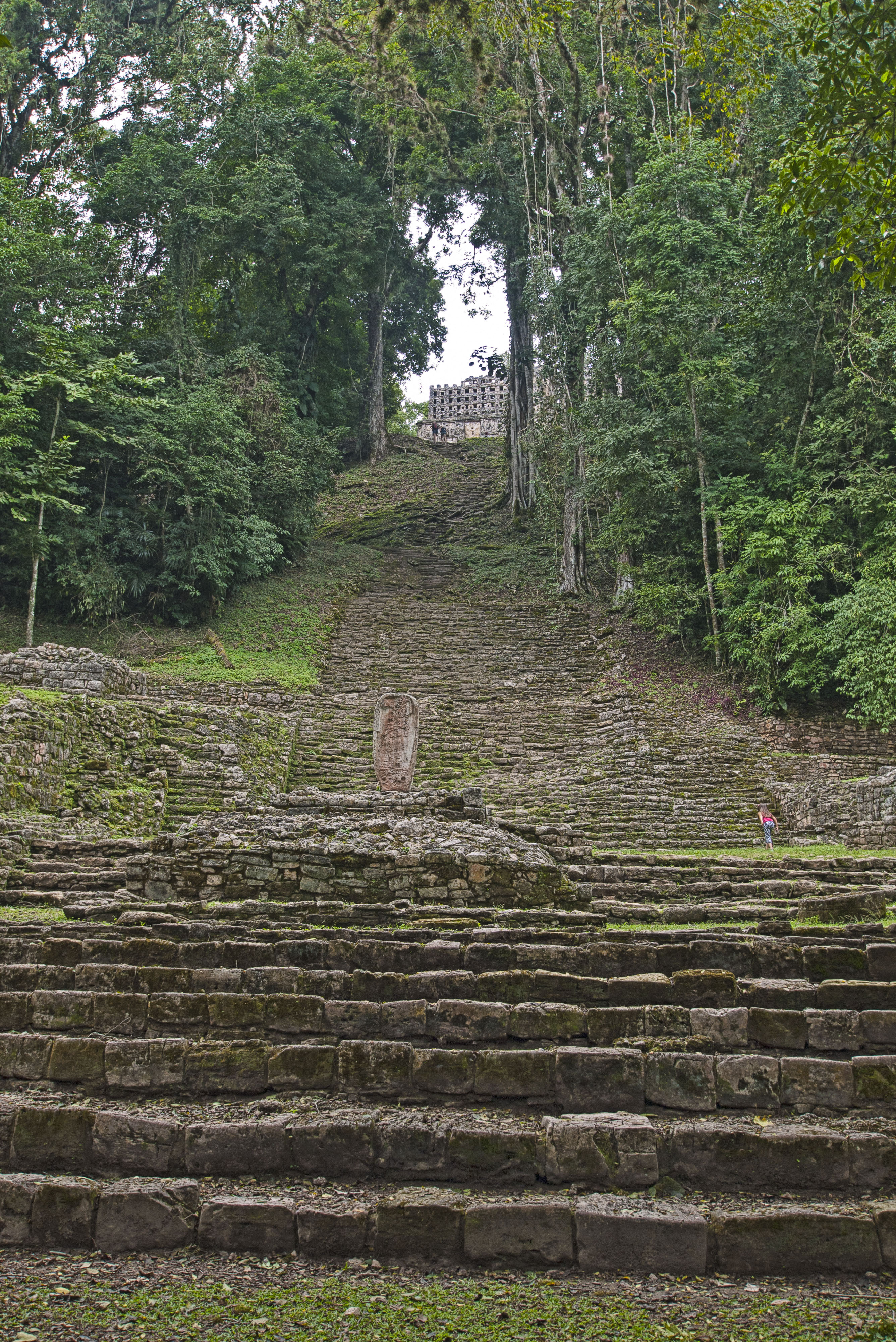
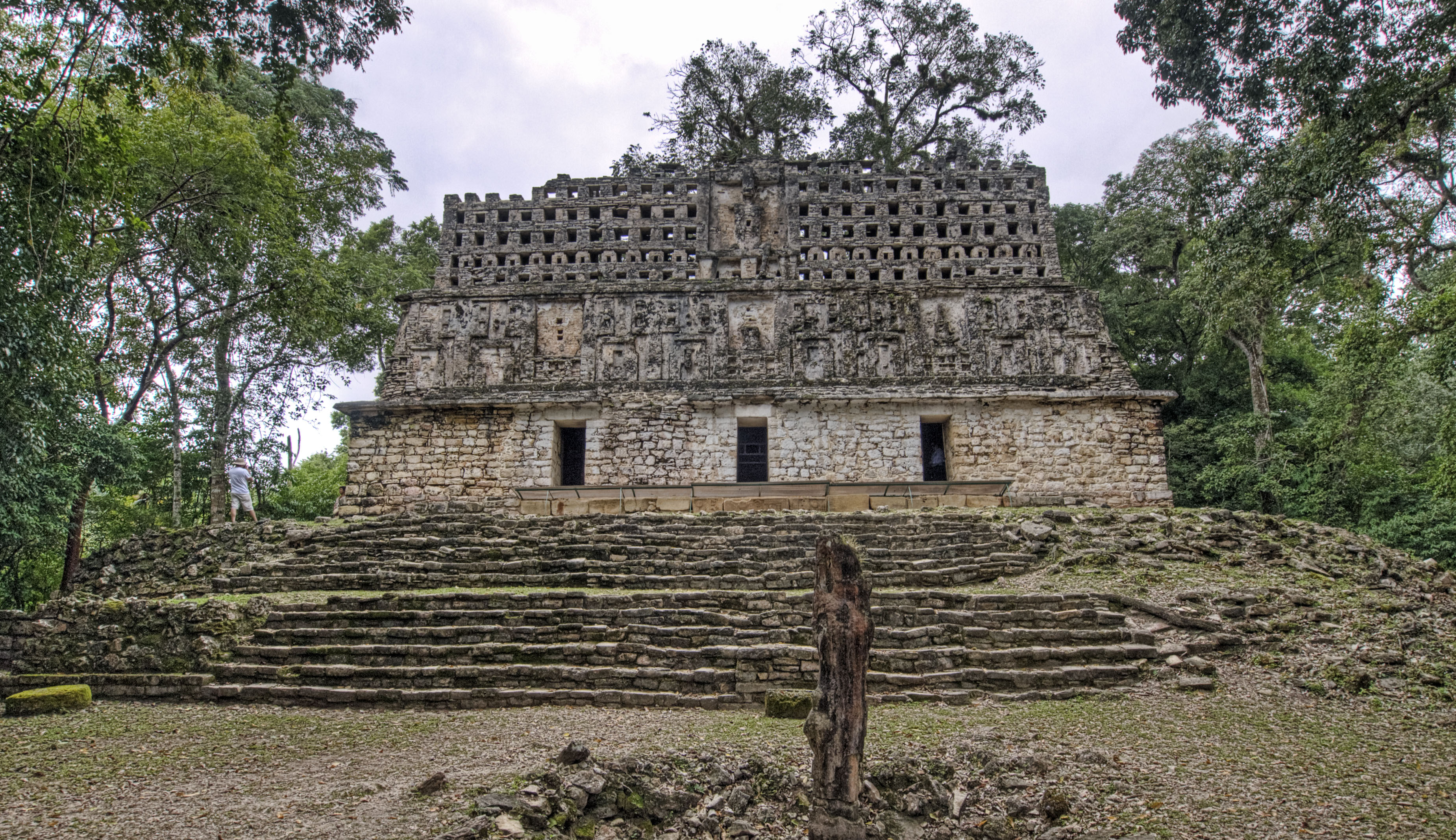
The boat ride back to the dock was longer than the ride out as it is up stream but we arrived back and jumped back in the minibus to be taken to a restaurant where a three course lunch was served up – very nice.
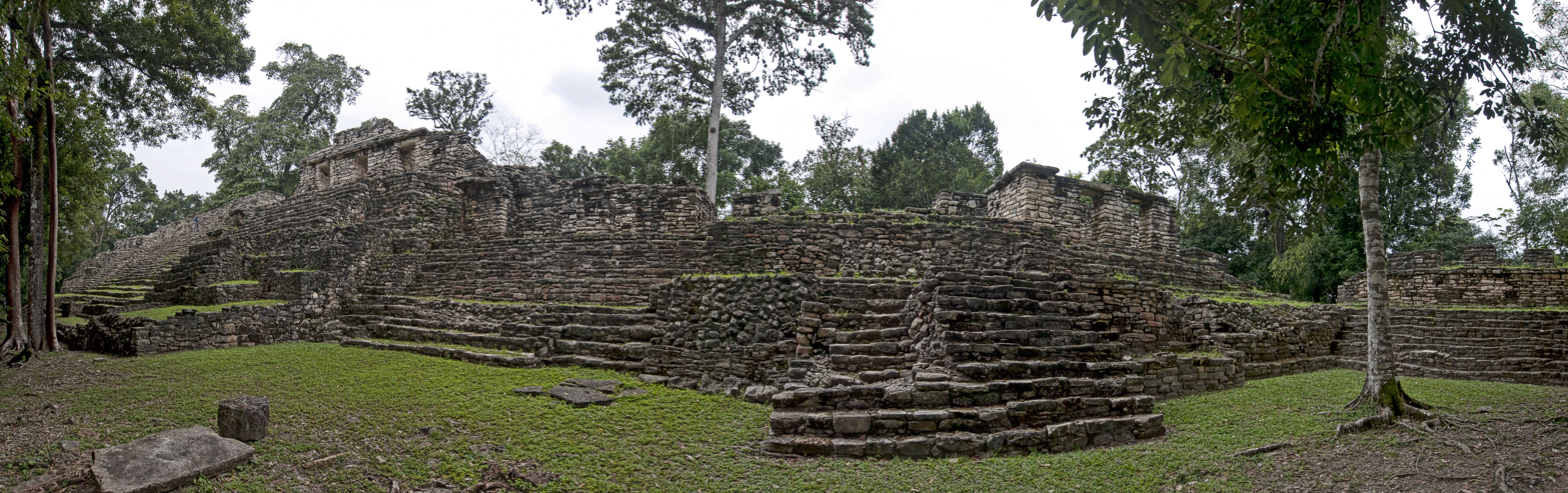
Then we drove to the entrance road to Bonampak where we had to get out and transfer to a Mayan owned minibus (the locals are called the Lacandon Maya). Even if you drive yourself you still have to use local transport to get down this road.
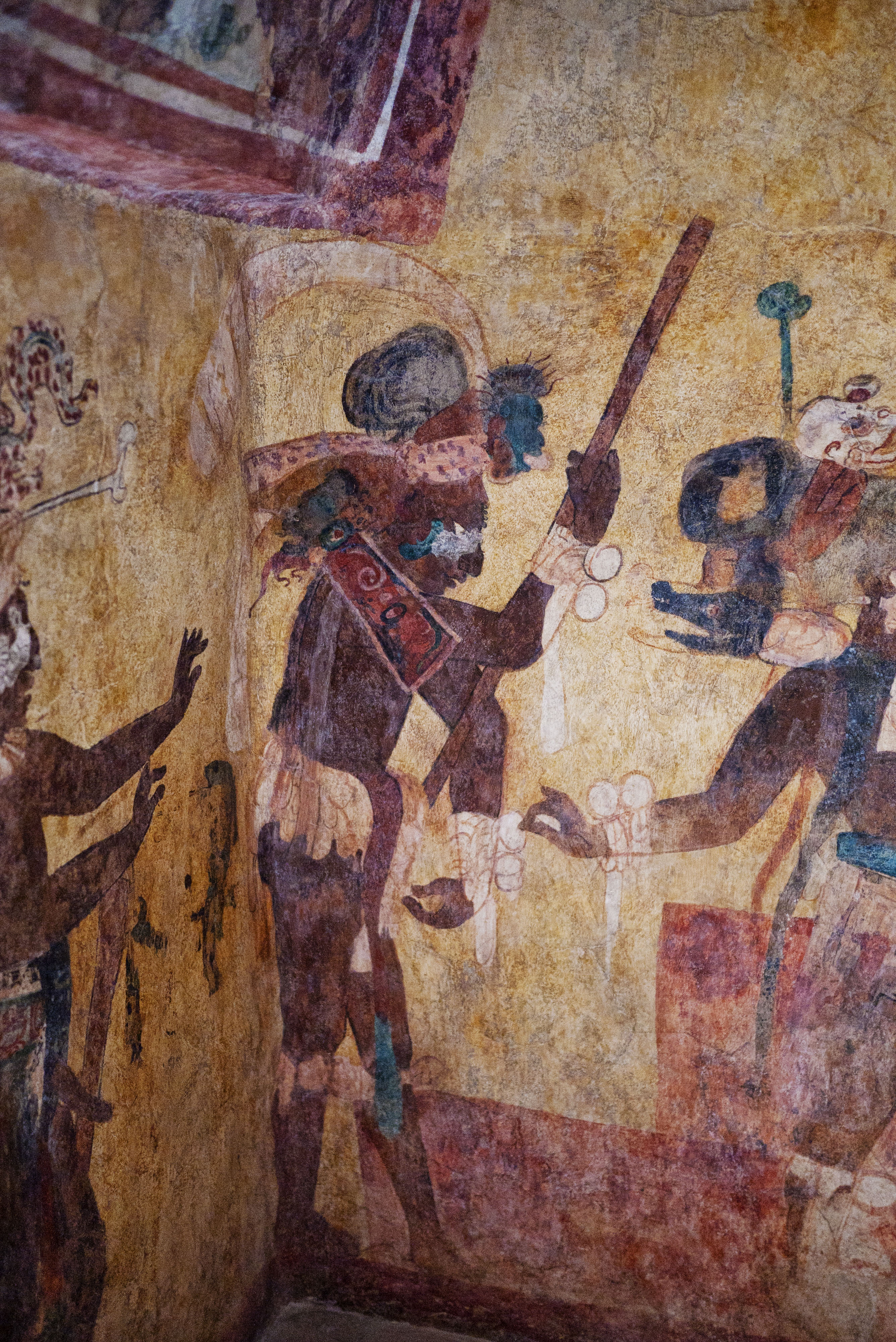
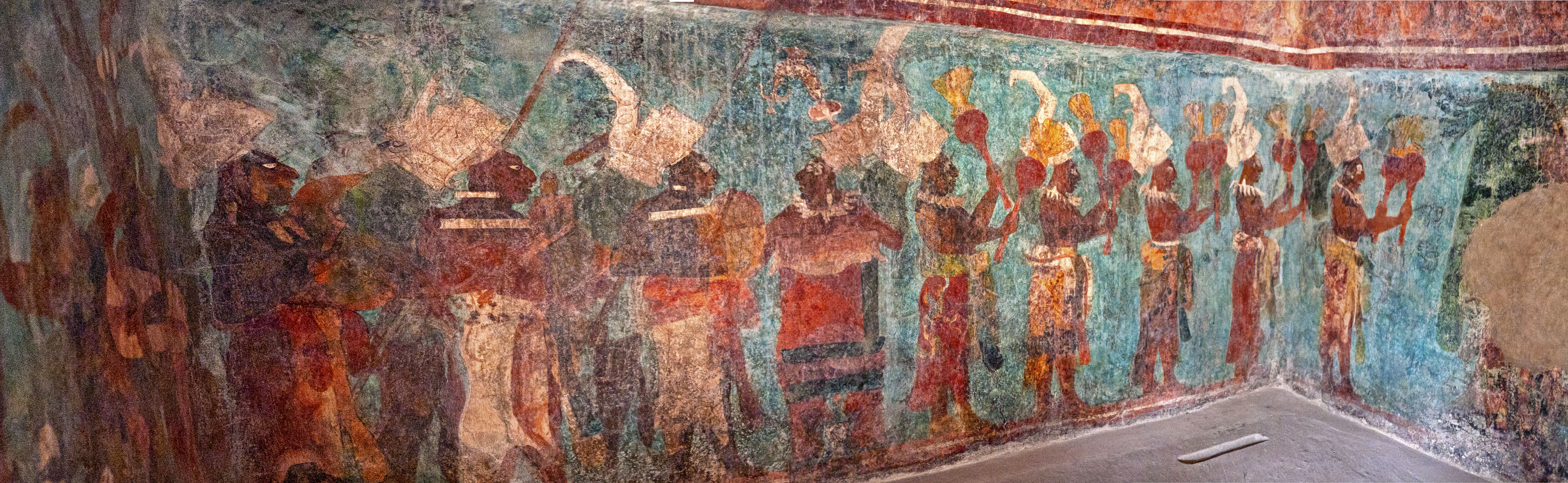
Bonampak itself is a small set of ruins but is remarkable for a small building with three rooms which have the most intact Mayan murals found anywhere. These rooms are very nice but the rest of the site is small and you really only need an hour to look round here.
After doing Bonampak we were back on the road for the two hour ride back to Palenque and we weren’t back until about 7pm. It had been a busy day !
The whole trip had cost us 750 pesos each. This isn’t much more than it would have cost us to do it ourselves if you count the cost of diesel too so we felt it was pretty good value. The road is in pretty good condition though so It wouldn’t be a problem to do it yourself – and there are places to stay at both Frontera Corozal and Bonampak.
A Day on the Water (Agua Azul and Misol-Ha)
While chilling out at Mayabell we had got talking to Nancy & Drew and together we hatched a plan to go together to a couple of places near to Palenque but up that awful road that we had both driven the day before. We were overjoyed at the offer so we wouldn’t have to drive the Beast – Nancy & Drew have a much smaller mini-van type camper which is much more nimble.
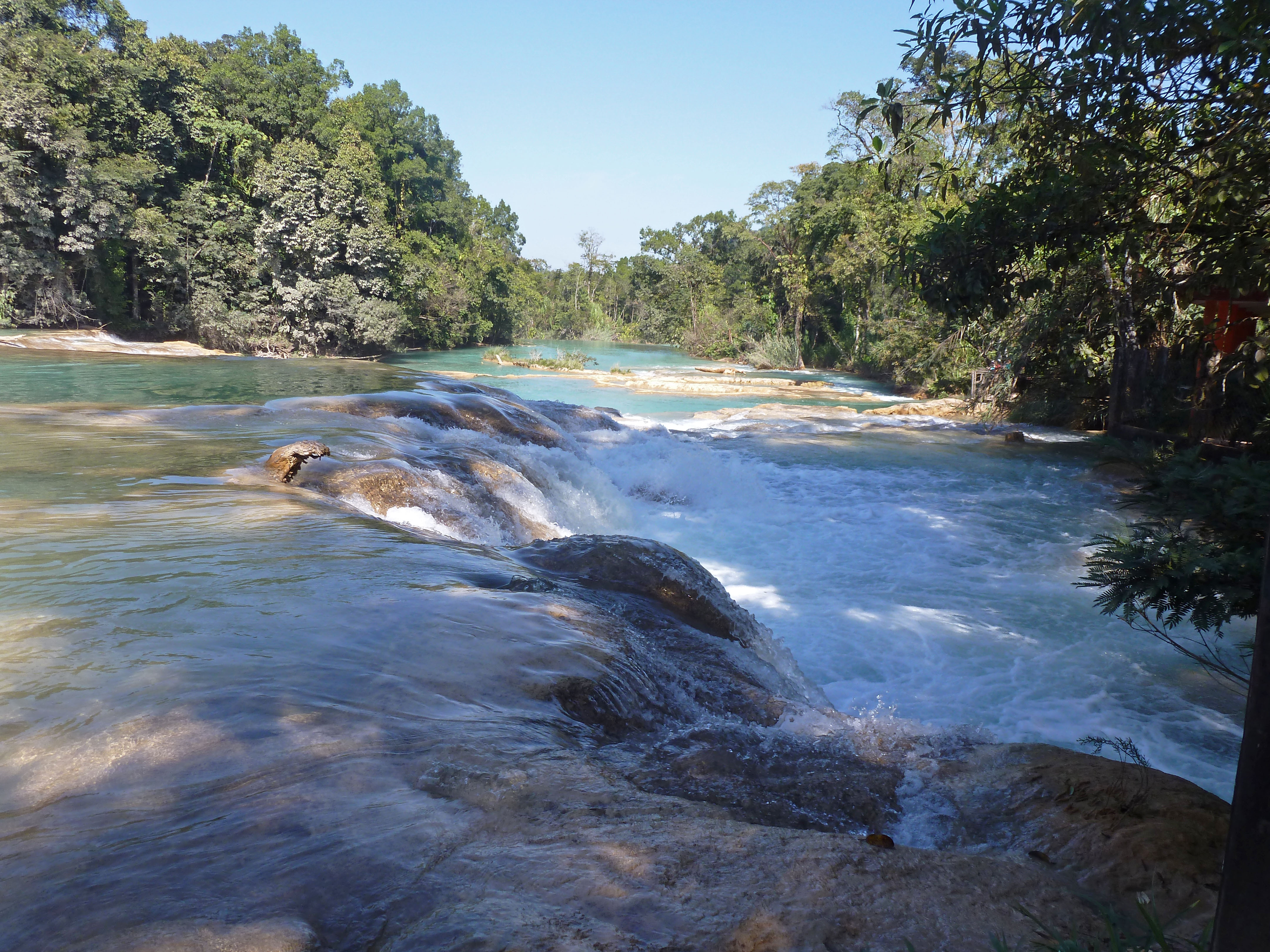
So we set off for the hour long drive back up into the mountains to Agua Azul. This is a park where a mountain river cascades over a number of waterfalls and in between the waterfalls there are swimming holes. The water is a beautiful turquoise colour.

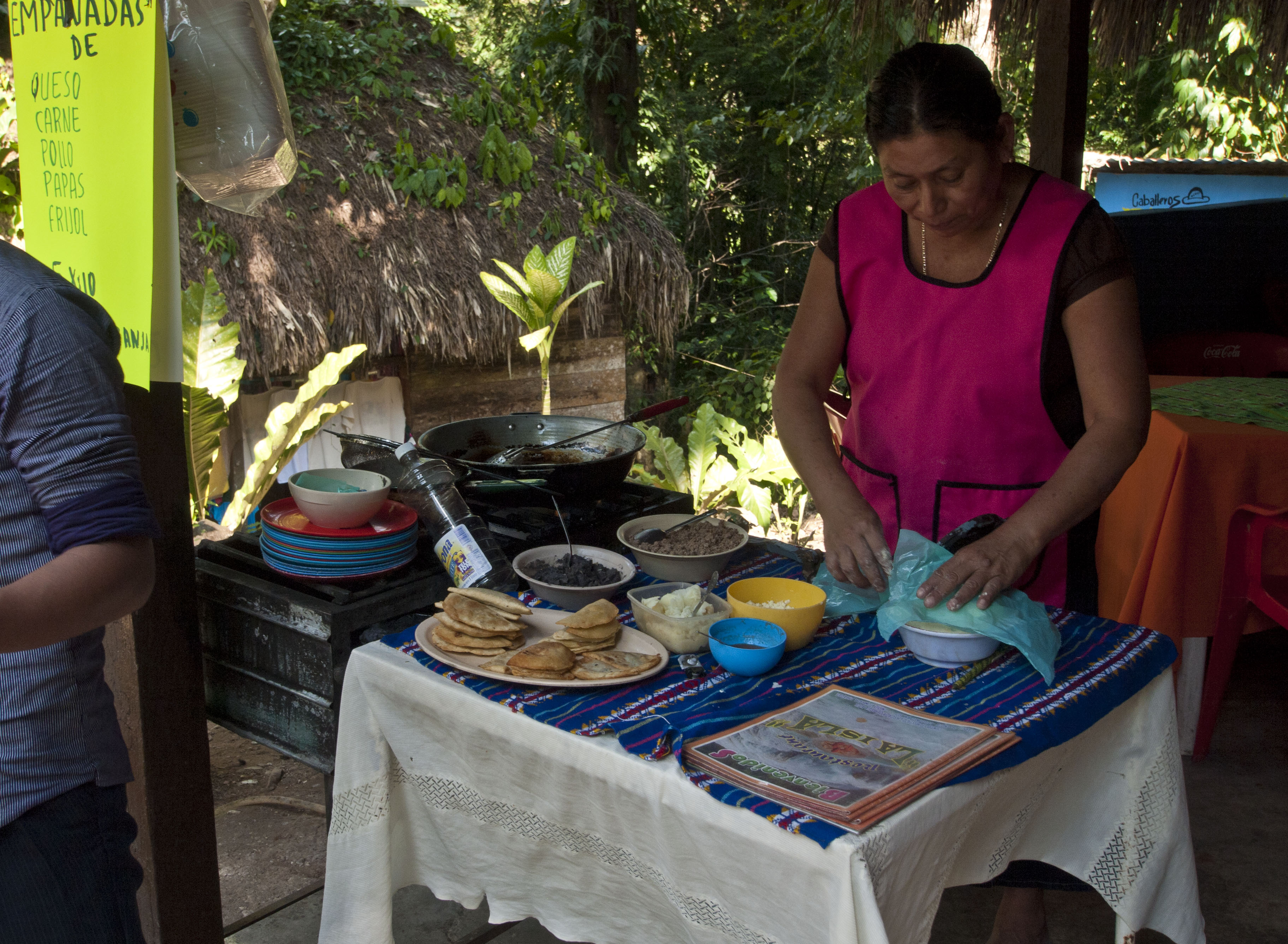
The path up the river is lined with restaurants and vendors. We decide to stop off for lunch in one of the little restaurants. We all decided to go for the Empanadas at only 10 pesos (under 1 USD) for 5 with a choice of chicken, cheese, meat and potato.. Not only were they really cheap but the woman cooking made them from scratch right in front of us. Probably the best value meal I’ve ever had.
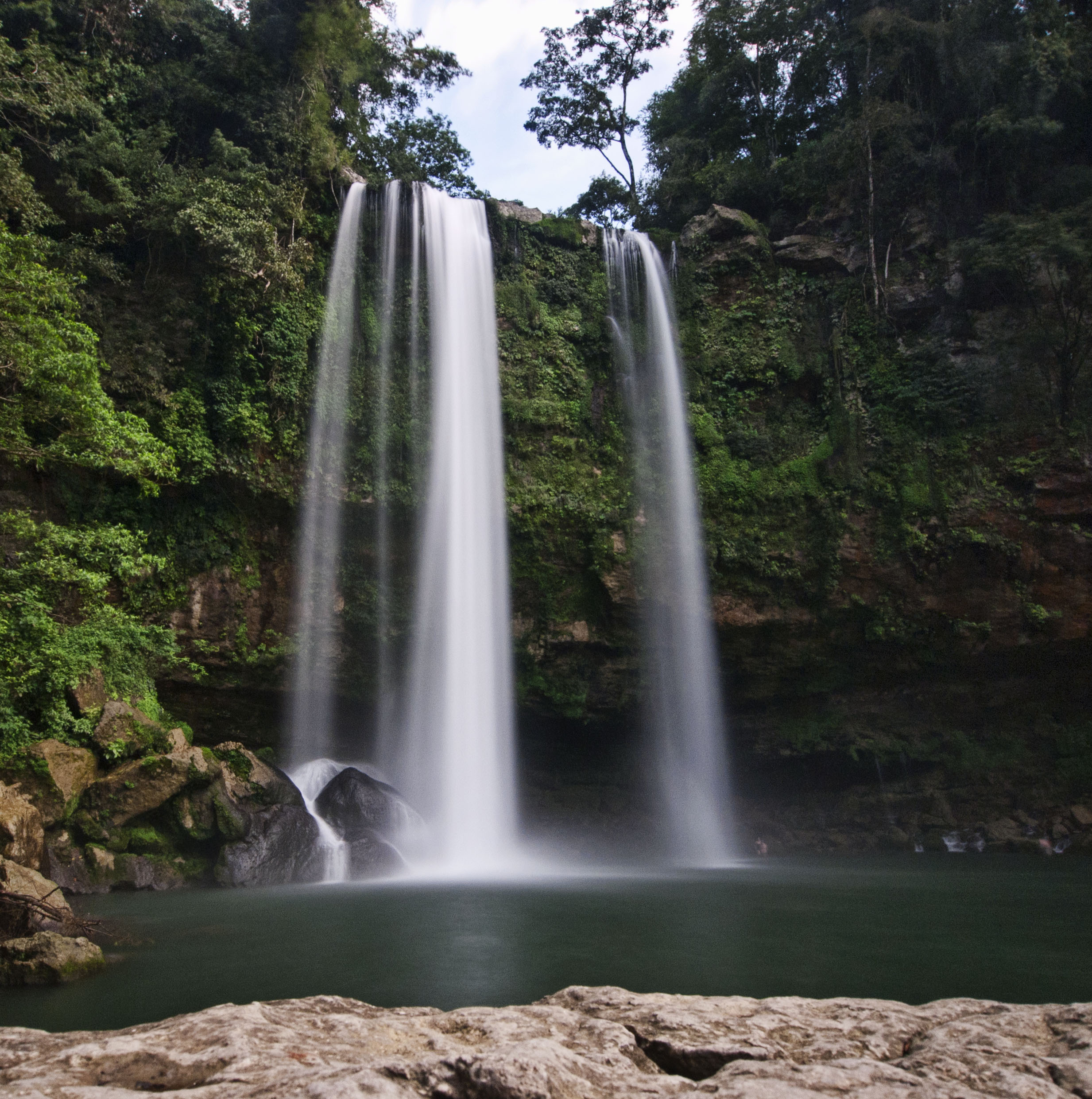
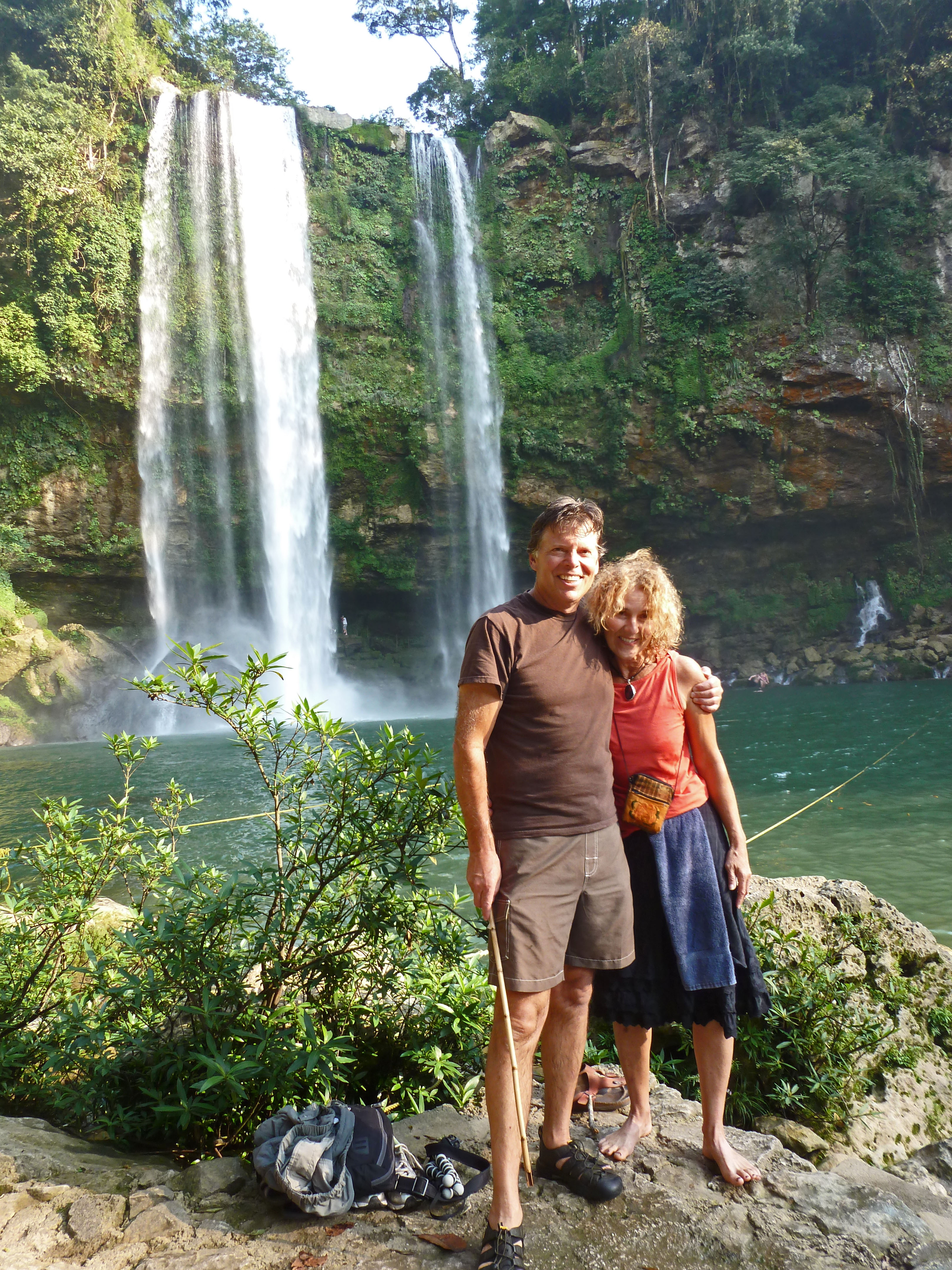
After lunch we headed back down the road towards Palenque for our second stop of the day at Misol-Ha. This is a 30m waterfall with a big pool in front of it.
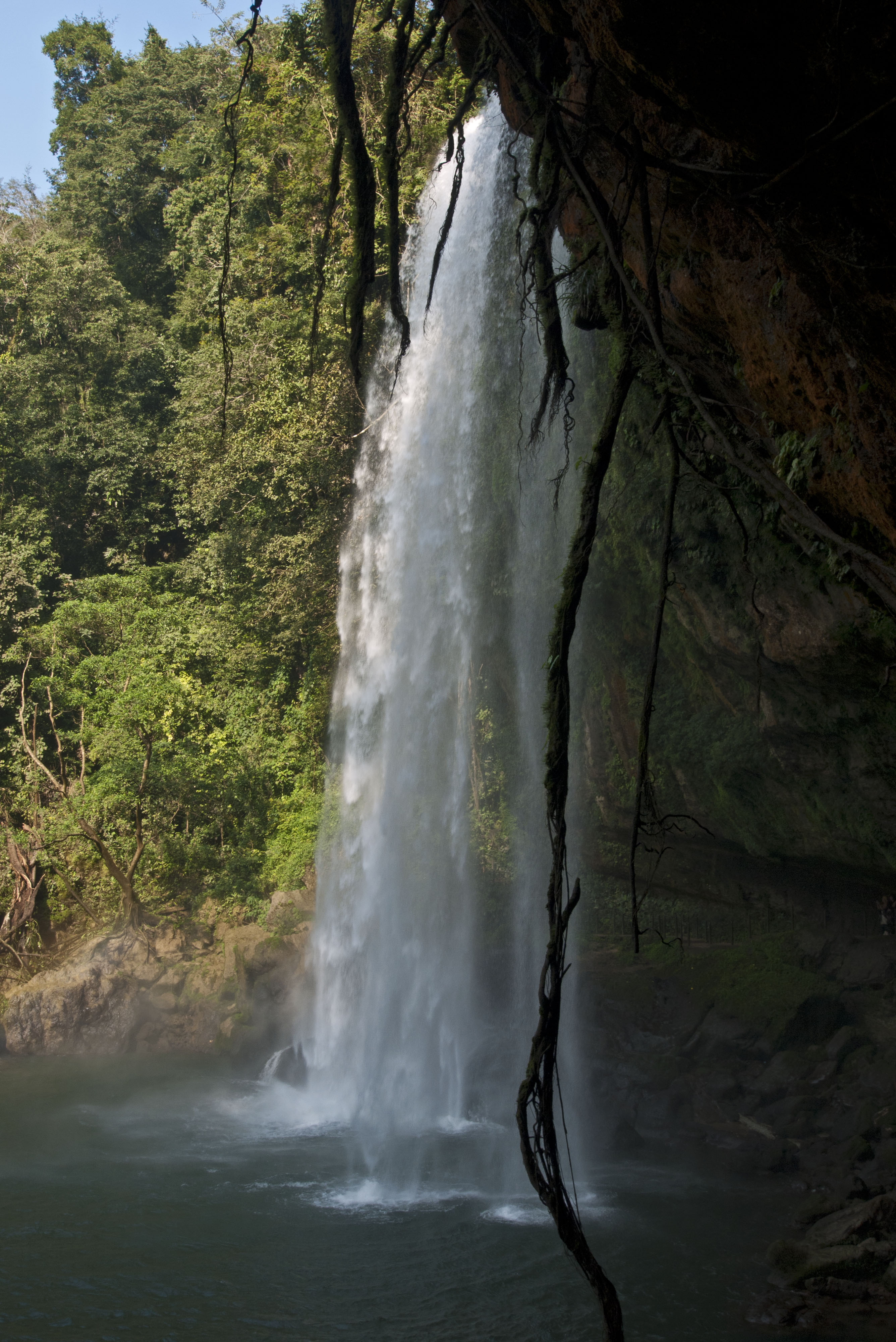
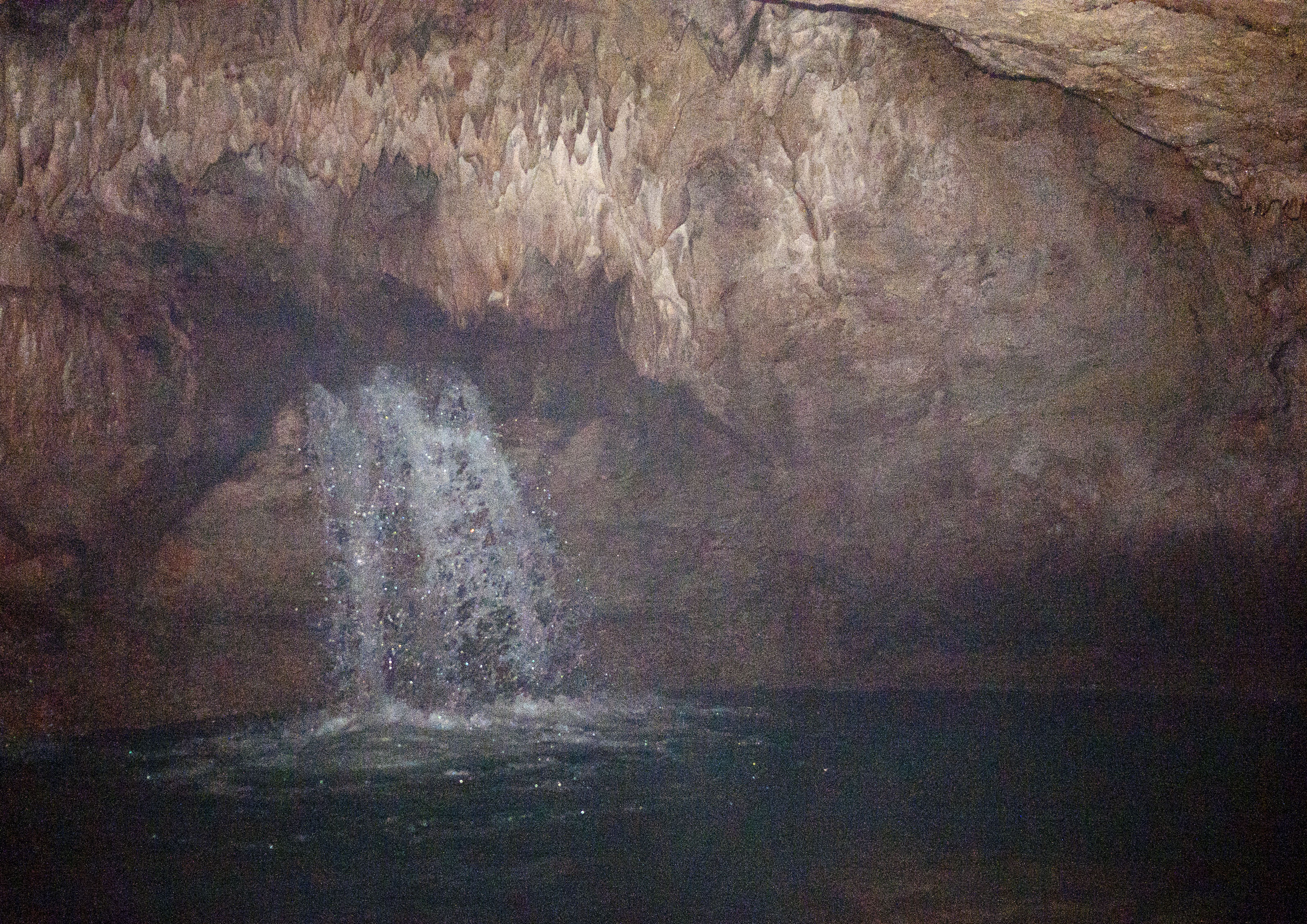
There is a path around behind the waterfall which climbs to the top of a second smaller waterfall for which the water comes out of a small cave. You can walk into the cave and about 20m in is a cavern with another small waterfall in it among bats and glow-worms. There is a guy sitting at the entrance who tries to charge us another entrance fee but we just ignore him – by the time Drew who is the last of us to go in he gets quite irate – but none of us pay !
After visiting this waterfall we all went for a swim in the lake which was quite cool but really refreshing in the jungle heat.
After leaving here we drove back to Palenque having had a thoroughly good day. It was really nice to do something with other people for a change. Big thanks to Nancy & Drew for driving us around – and also good vibes to Rocky, their gorgeous dog, who unfortunately hasn’t been very well recently.
 FromAtoB