Valdez Again
On returning to Valdez we had a first port of call as the launderette – we needed to dry our clothes that had got soaked in Cordova and all our towels which were wet as well. Drying things in the camper is really hard.

We went back down to the Dayville road to look for bears and got a brief glimpse of a black bear. We checked out the Salmon Hatchery as well and as the tide was going out the water was really pumping out. The Salmon were fighting hard to get up the river and were getting nowhere.
Cordova
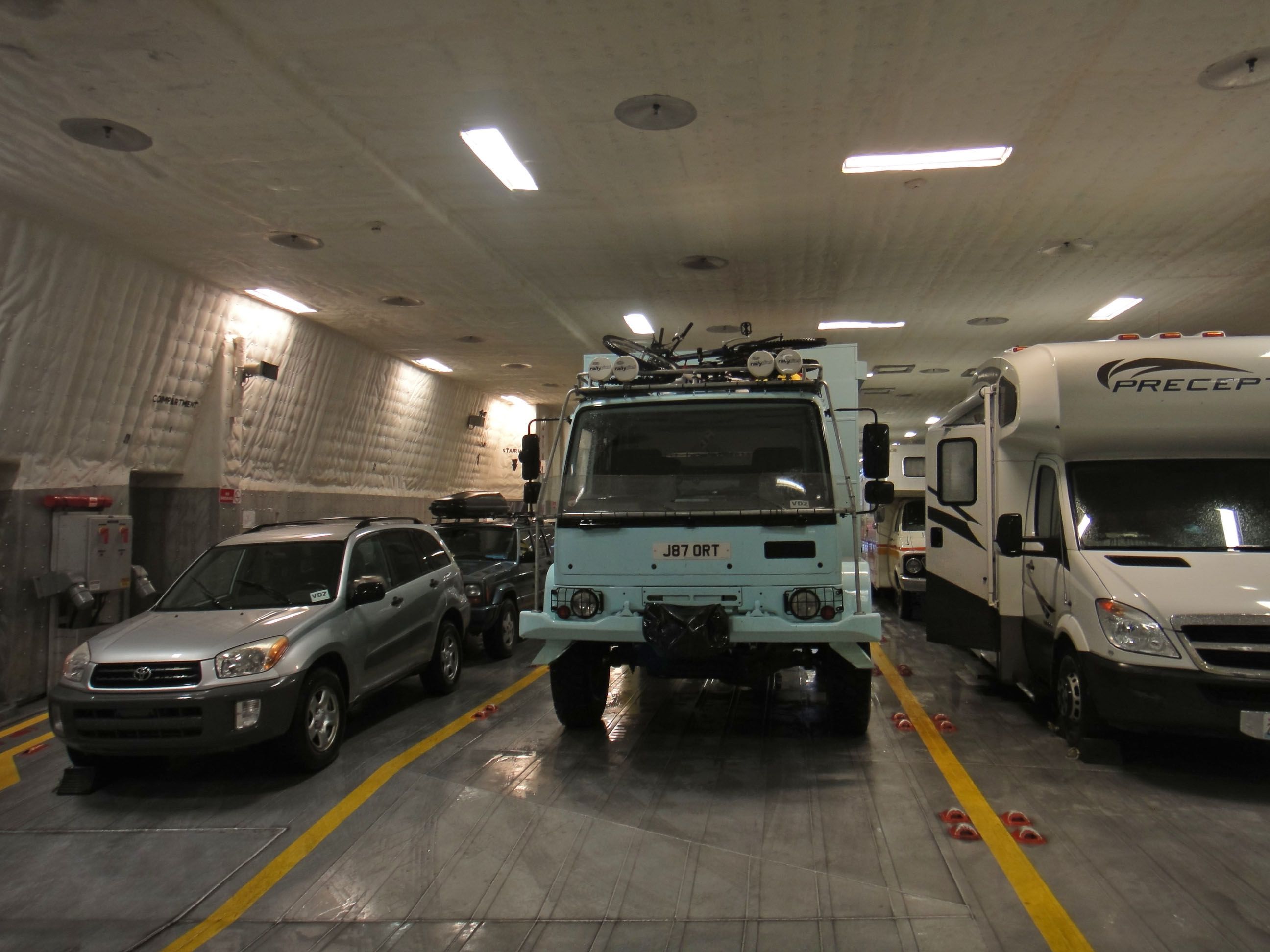
The ferry to Cordova was a modern fast one which reached speeds of up to 70km per hour. The capacity of the ferry was about 200 but only about 50 people were on board. The journey took just over 2 hours and the inside of the ferry was very comfortable with a choice of seating and even work cubicles.
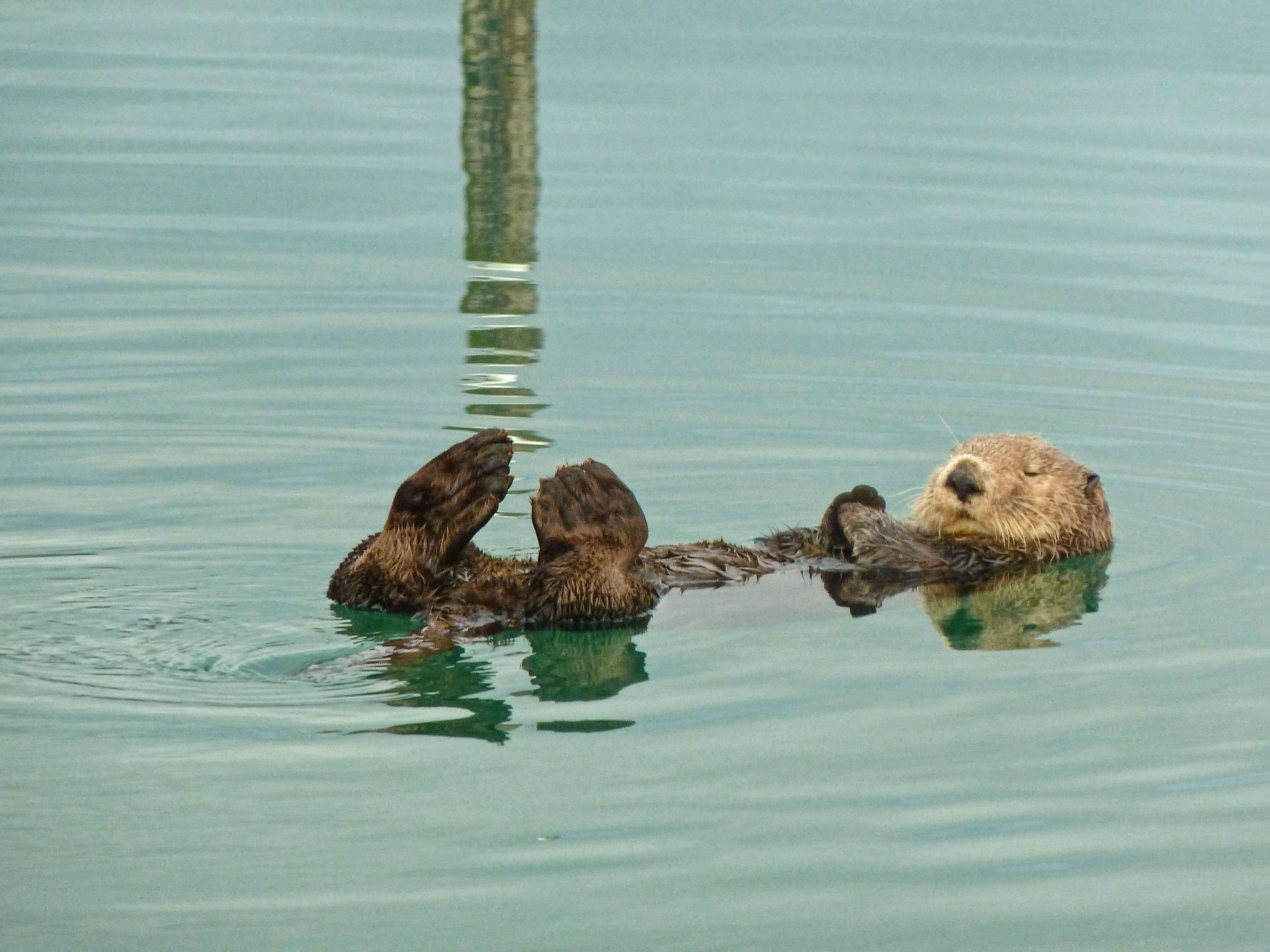
We arrived in Cordova at around 7pm which gave us time for a wander around town. Town was pretty small so this took around 10 minutes but we did spend some time in the harbour where there was a really cute otter floating around on his back looking very chilled out.
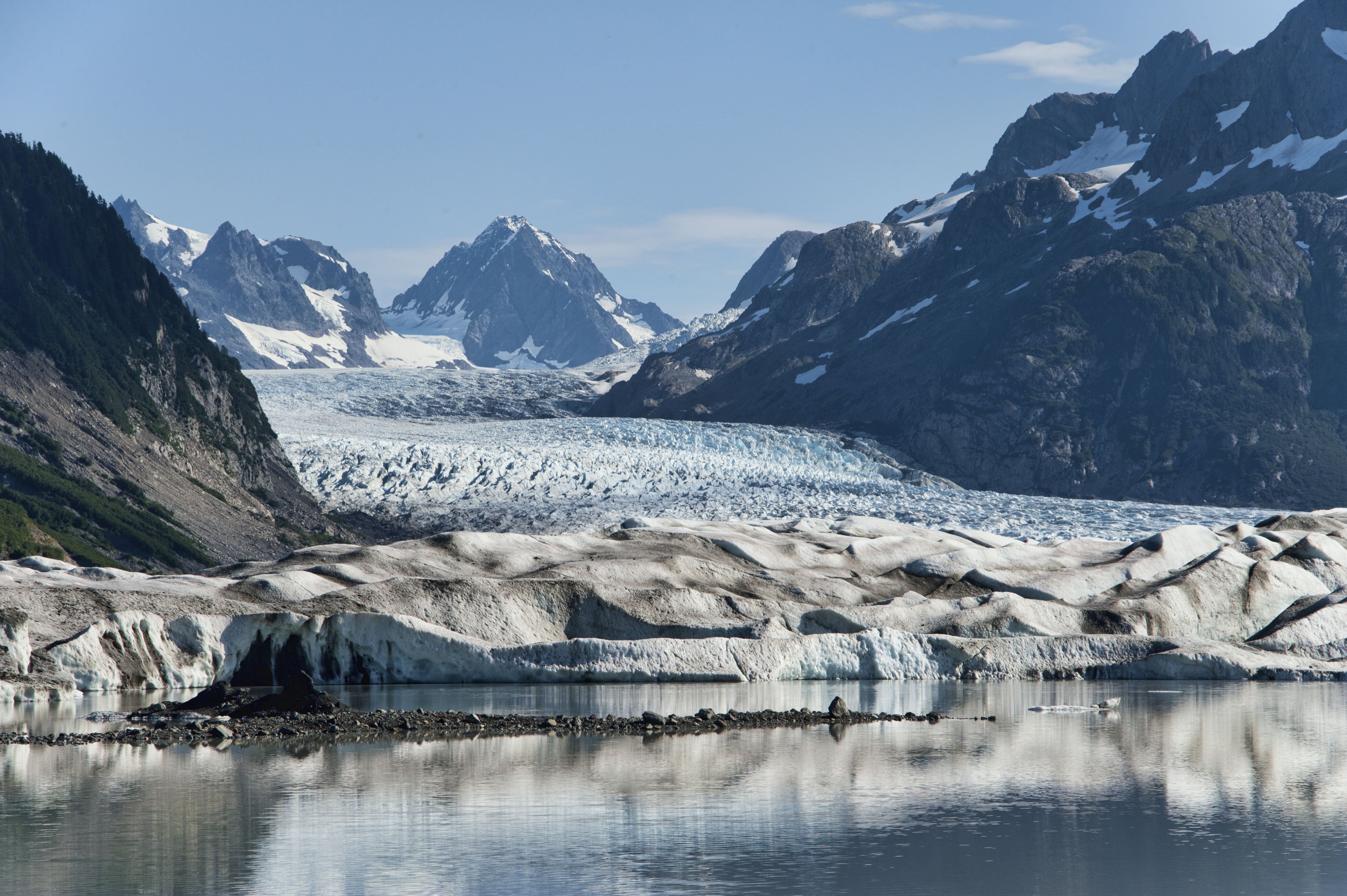
We headed out of town to Mile 13 of the Copper River Highway and took an unmarked turnoff leading to the Sheridan Glacier Trailhead where we camped for the night. In the morning we woke up to a lovely sunny day (such a rarity in Alaska) and we walked around the moraine lake of the Glacier and were rewarded with some stunning views of ice in the lake and up the glacier.
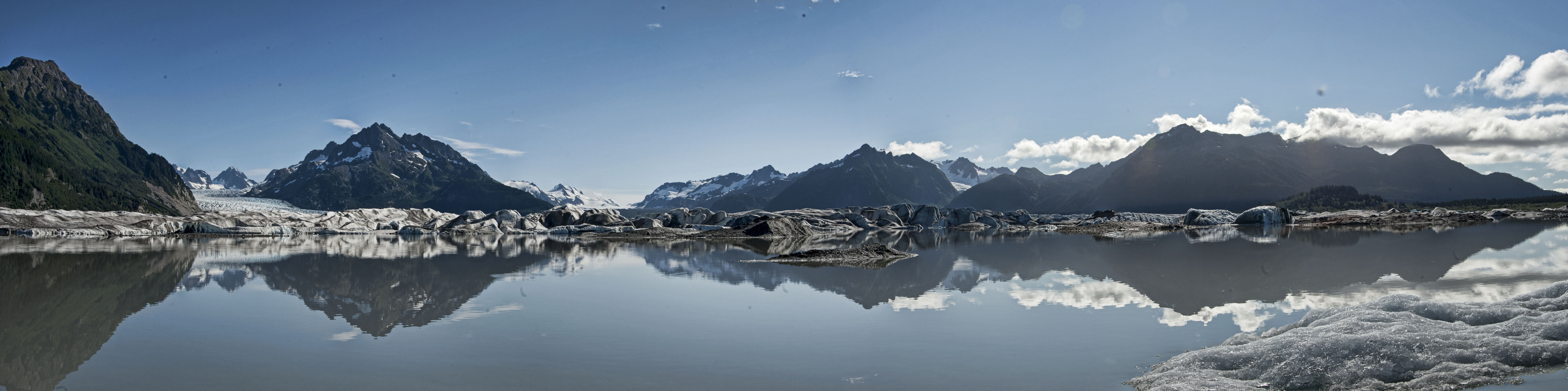
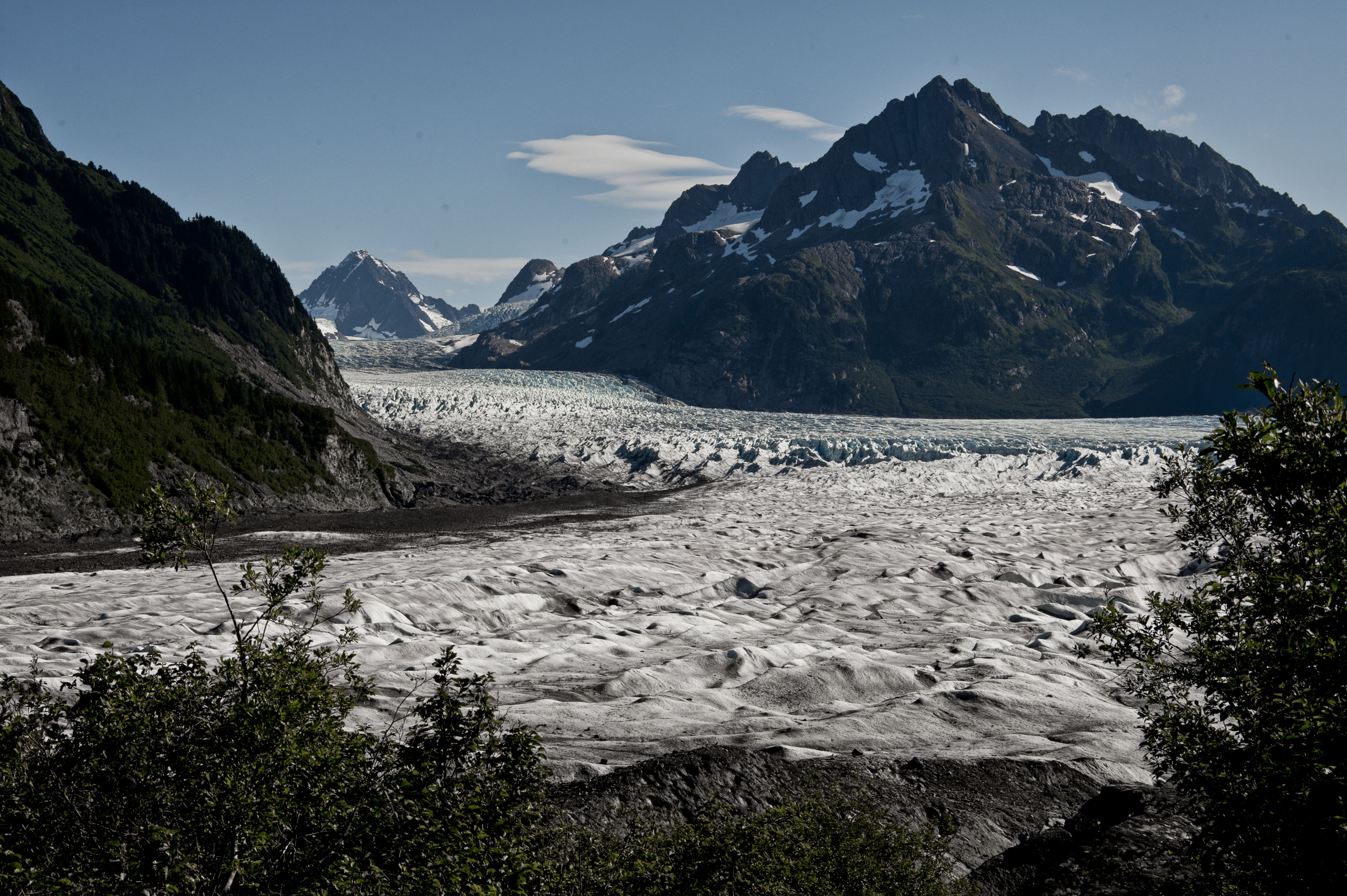
As it was such a nice day we really wanted to drive the length of the Copper River Highway and see the Childs Glacier in the sun. So we got in the Beast and drove the road which was pretty stunning in places. The last 10 miles before reaching the Glacier there are a series of bridges all crossing the Copper River which is heavily braided but each braid is seriously pumping water.
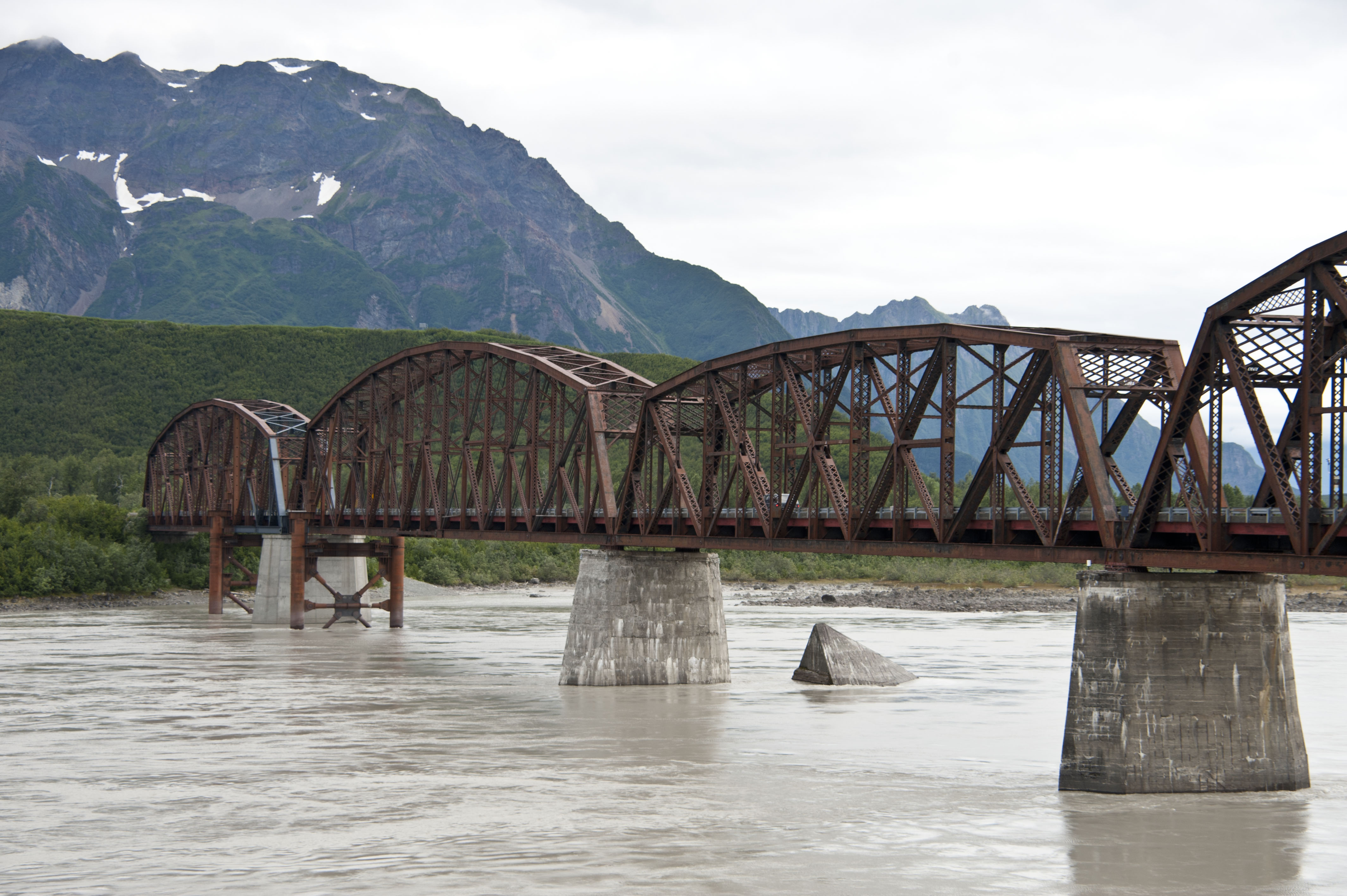
As we were driving we turned a corner and there was a big lattice work bridge in front of us and we just carried on over it. About half way across we realised that this was the Million Dollar Bridge – built in 1910 and heavily damaged in the 1964 earthquake. It was repaired in 2005 but now has a weight limit of only 6600 pounds – which we significantly exceed (we’re around 18,000 pounds). We made it across without collapsing the bridge but then we had to go back. We seriously crossed our fingers and drove back across – again no collapse but we weren’t going to try that again!
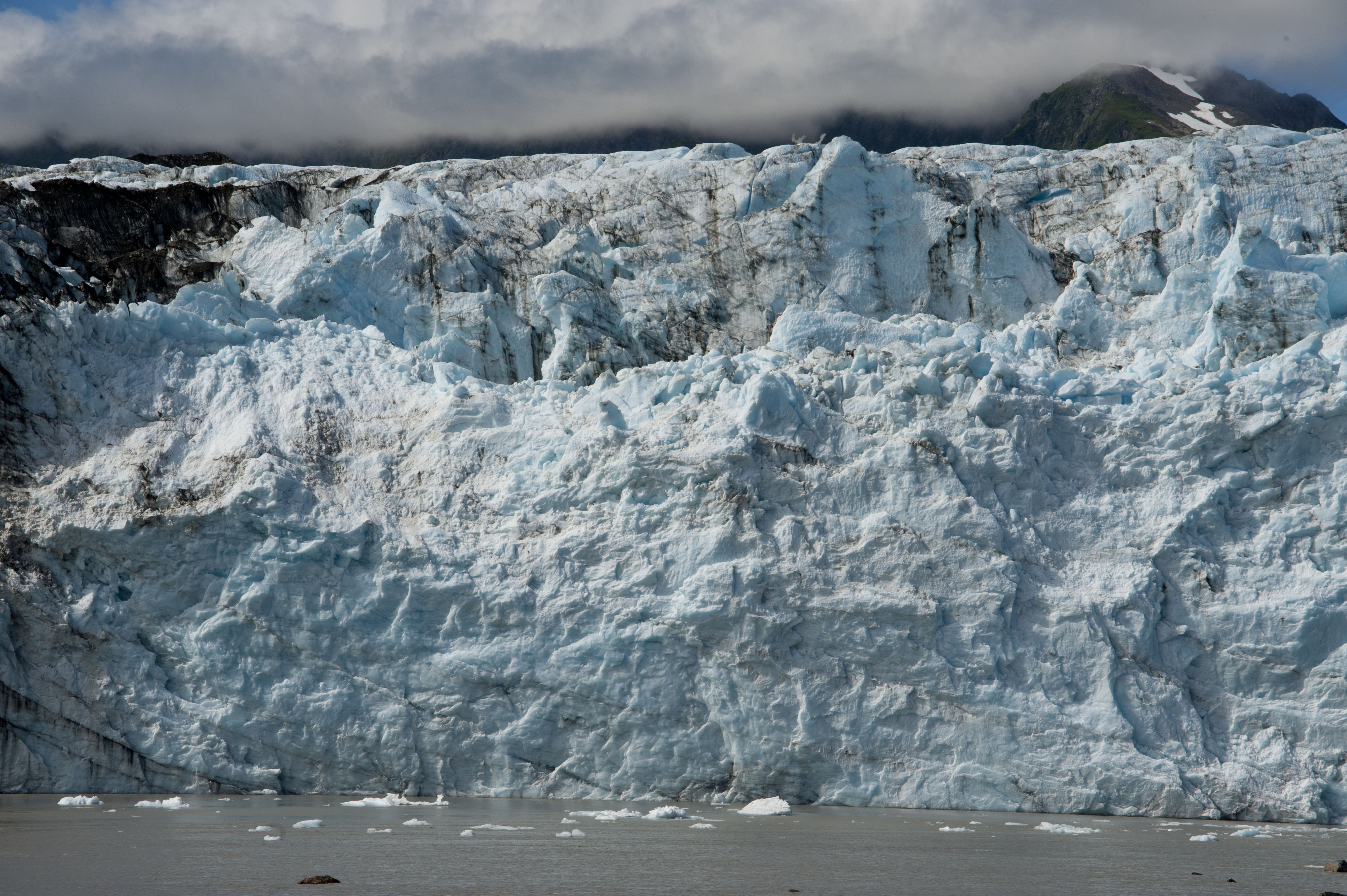
We parked up in the Childs Glacier viewing area and sat down to watch the glacier for a bit. This glacier is 300 feet high and 3 miles wide. The face is across the Copper River from the viewing area and is 1200ft away but feels much closer. There are signs up in the viewing area to be aware that waves up to 60ft high can sweep across the river from large pieces of ice carving. The instructions in our guidebook are if this happens to run.
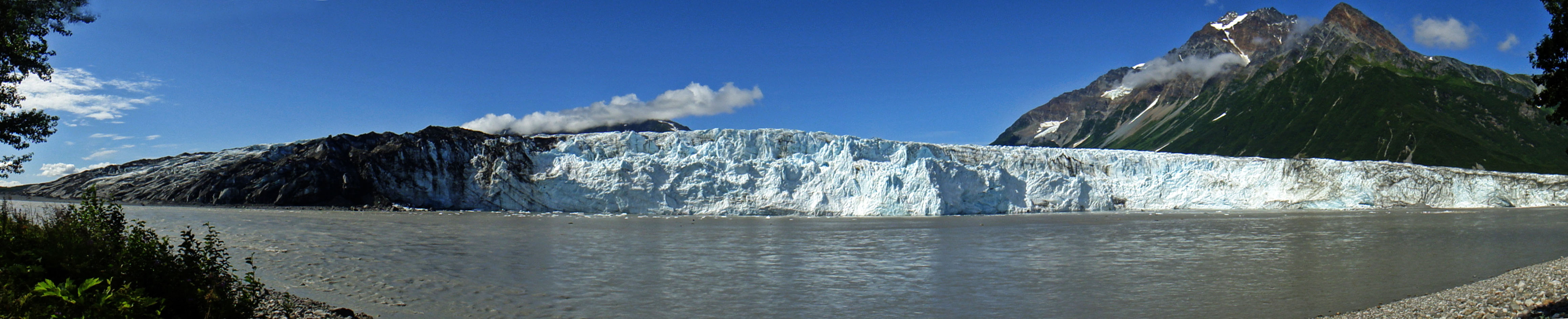
After this we walked down to the Million Dollar Bridge and walked across from where you can see the Miles glacier which is huge around 14 miles away.
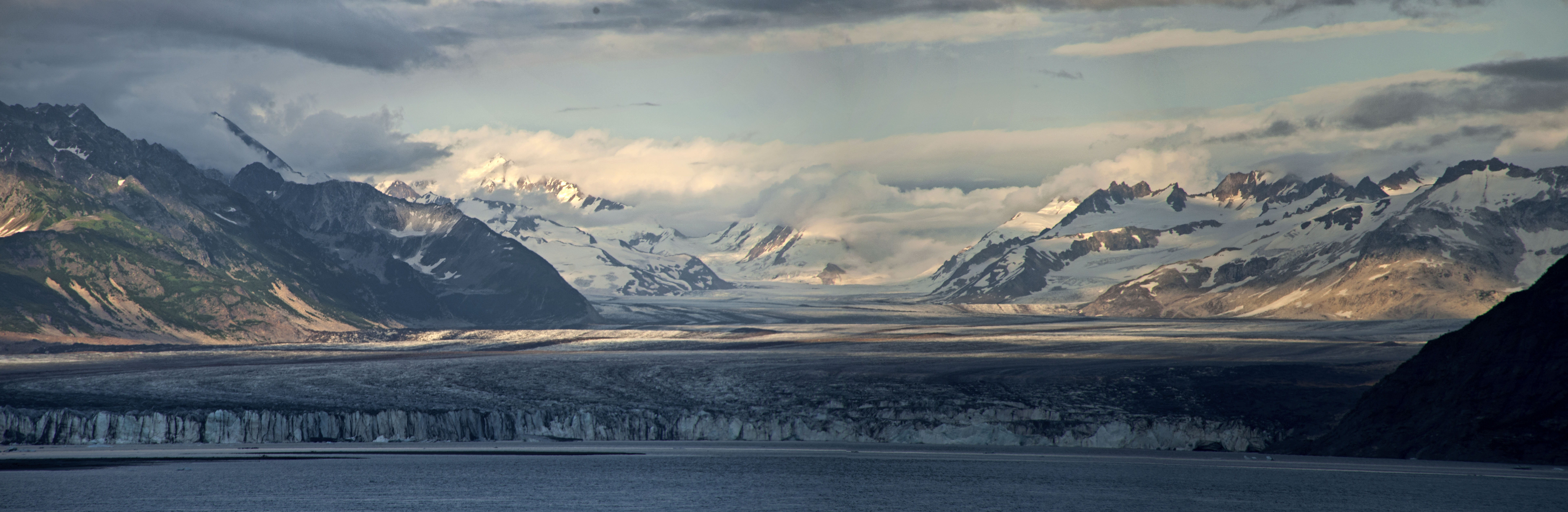
The campground at the Childs Glacier is $25 for no facilities other than picnic tables and pit toilets so we parked just outside the entrance in a turnout for free.
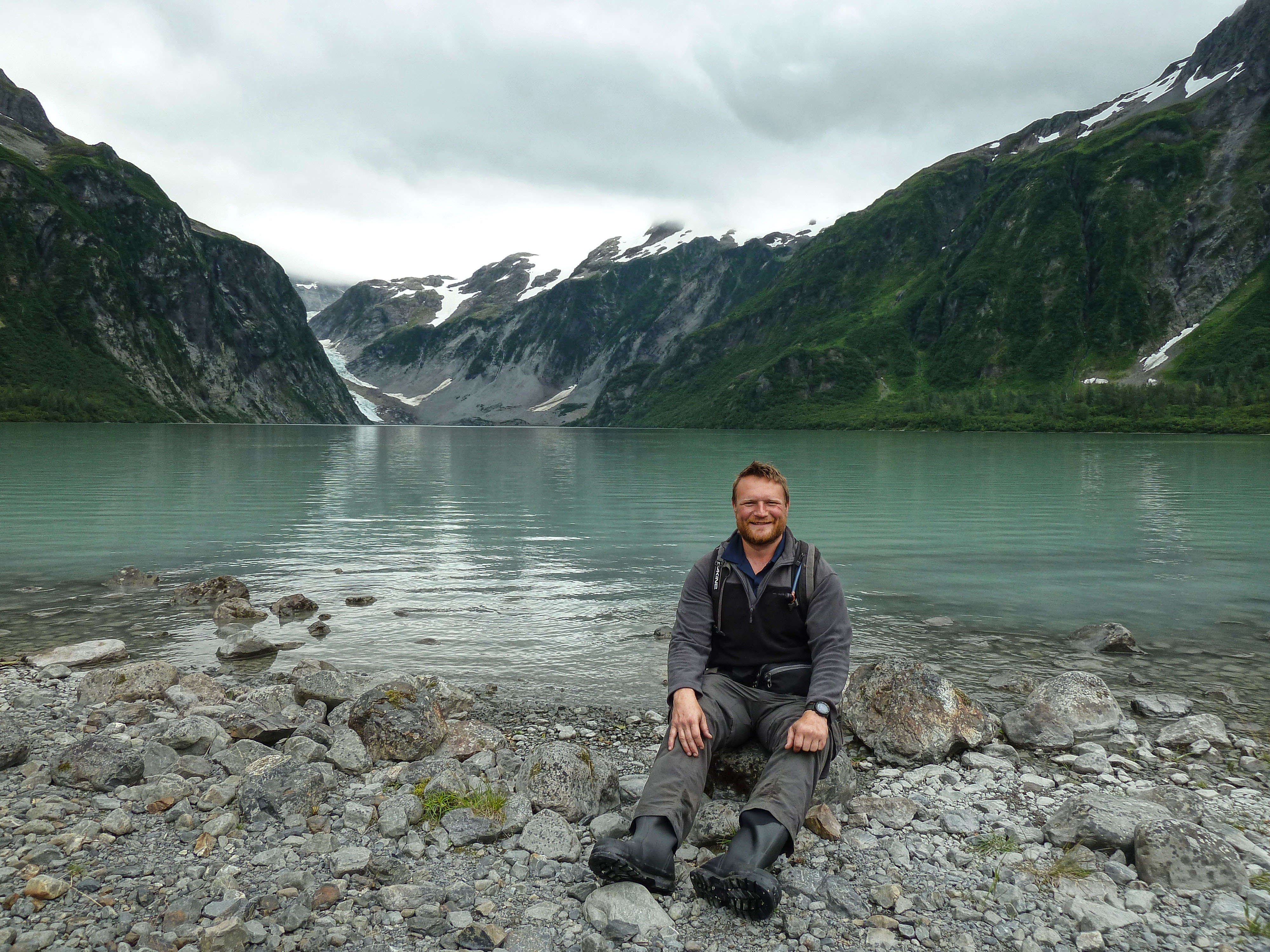
The next day we started slowly driving back along the Copper River Highway and we stopped off at the Saddlebag Glacier Trail. This was a 6 mile hike through woods to an alpine lake at the head of a glacier. The hike was a bit disappointing though and the glacier has obviously been retreating so the final views weren’t really worth the effort of getting there.
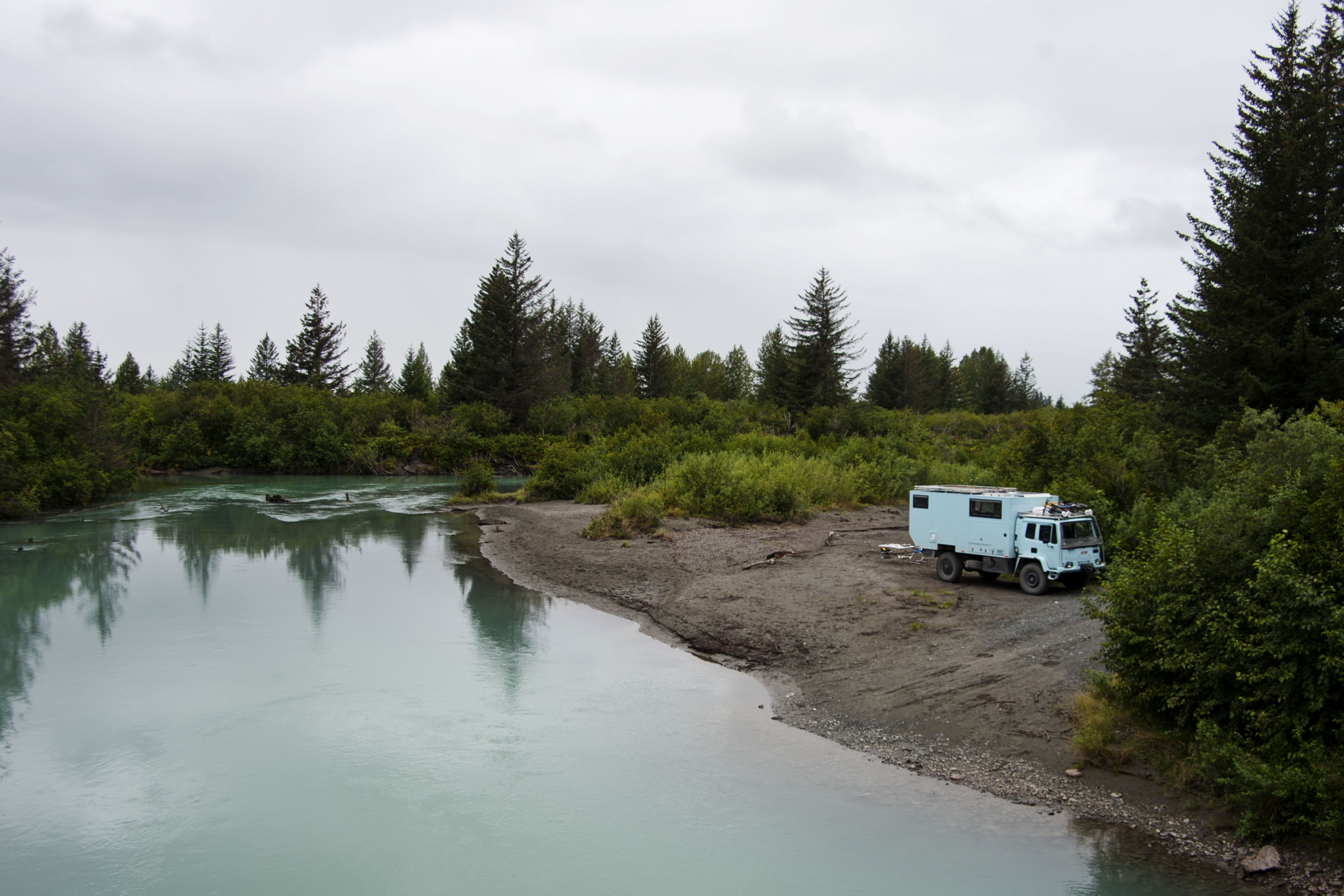
We spent the night by a river on a beach which was a really nice campsite. Although around dinner time a couple of locals turned up, caught a salmon and departed.
On our last day in Cordova we went back to the Sheridan Glacier trailhead and walked the Sherdian Mountain Trail. This was a pretty taxing hike which was about 4 miles each way but with a climb of 700m along the way. What made it hard work was that the upper section of the trail before reaching the alpine zone was very rocky and covered in foliage. In the rain (it was raining all day) this was very slippery and consequently slow going.
Near the top we lost the trail and accidentally climbed a near vertical scree slope – Sarah was not impressed with my navigation. What we hadn’t realised was that the trail went through a gully filled with snow (around 50m wide). From our elevation we spotted the correct route though and climbed up to a knife-edge ridge with a great view of the glacier and the moraine lake where we had walked a couple of days before.
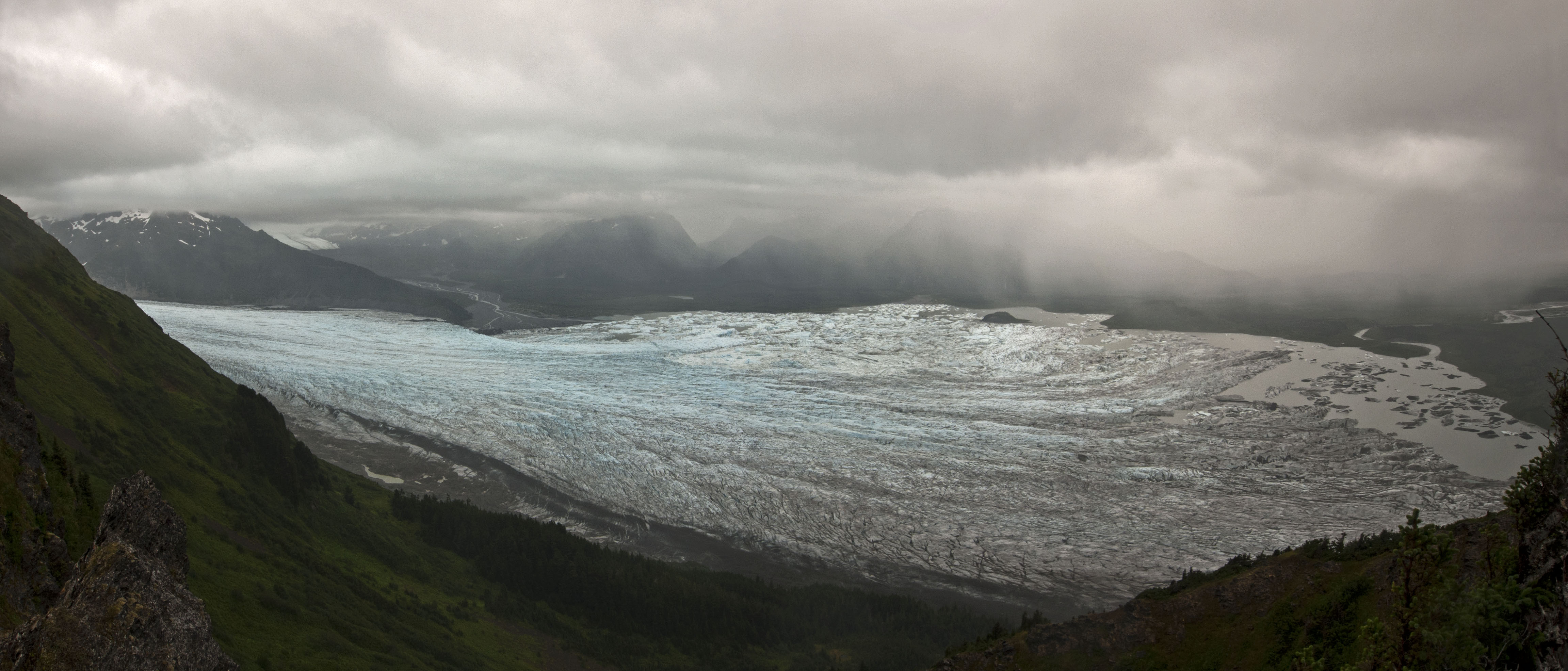
Soon after reaching the ridge the drizzle which we had had all day turned into rain (little did we know this would last over 36 hours without let up – the capacity for rain in Alaska is amazing). By the time we got back to the Beast we were soaked through.
That evening we drove back to Cordova itself and camped by the sea on the Orca Road ready for our early morning ferry.
Valdez
Valdez is perhaps best known for being the site of the 1989 Exxon Valdez oil spill disaster. However the clean up from this is well past and the town is a peaceful fishing port which just happens to be the southern terminus of the Trans-Alaska Pipeline.
The road into Valdez is pretty spectacular and it starts around 30 miles away with the Worthington Glacier. We found a great campsite here with a great view of the glacier.
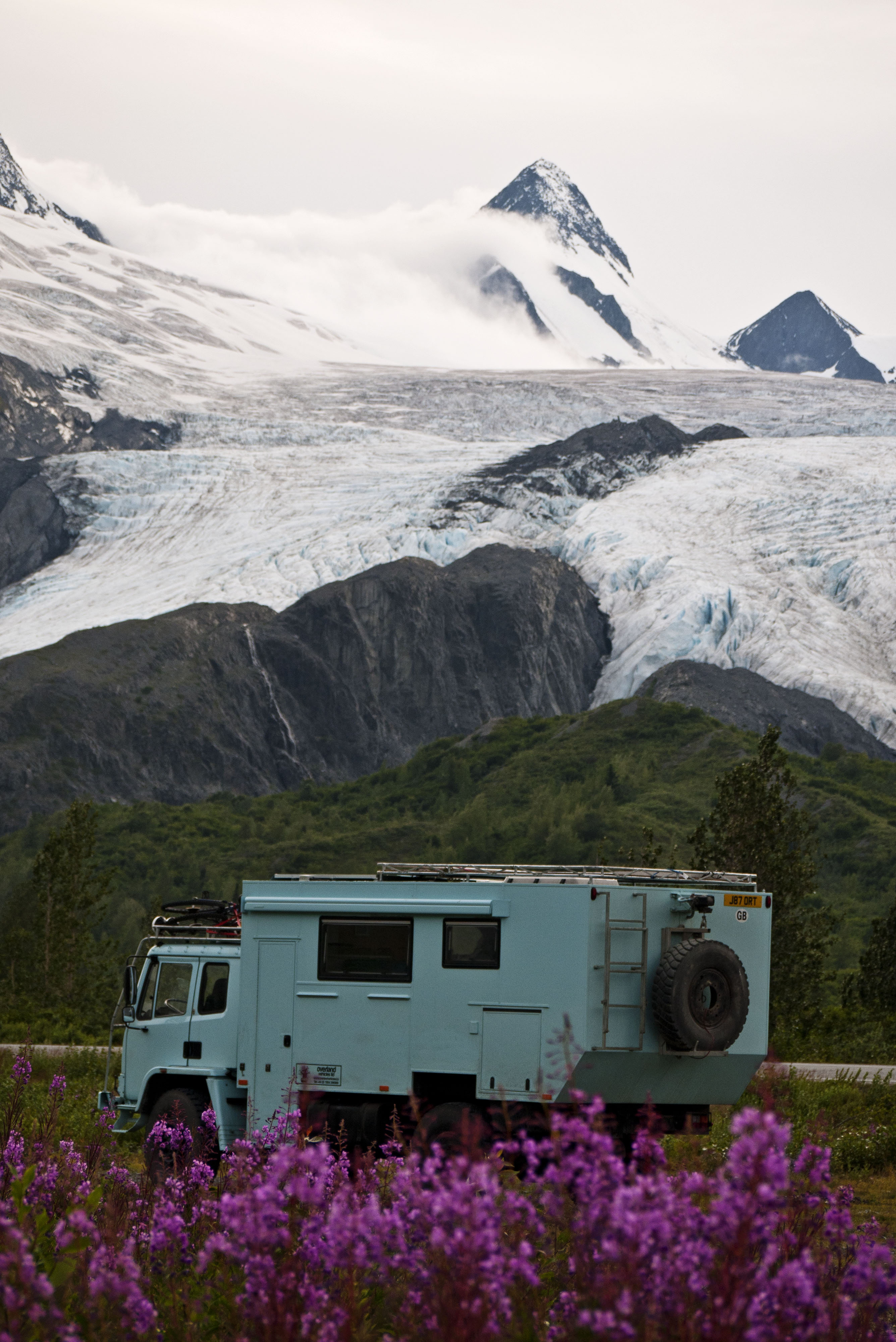
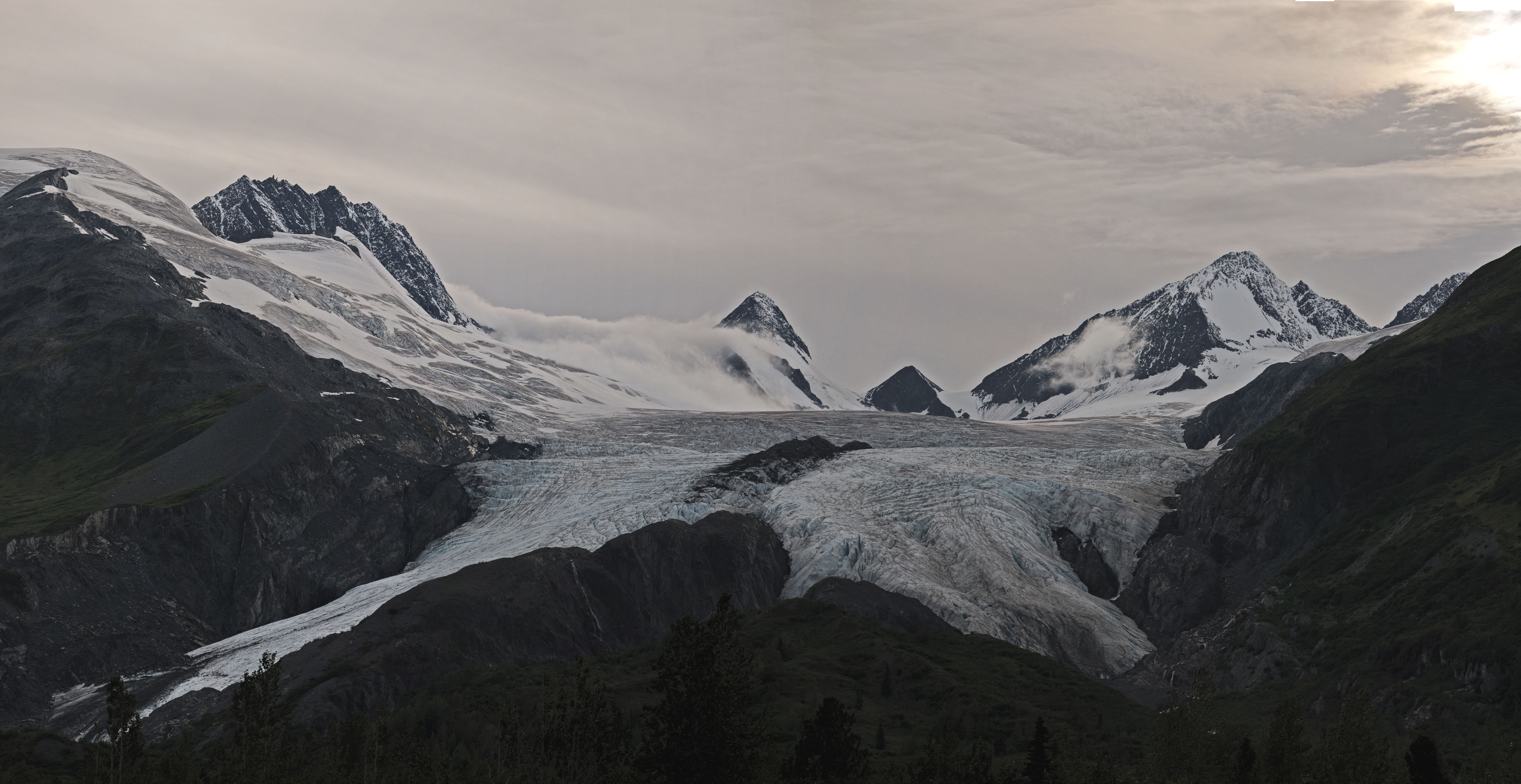
In the morning we checked out the glacier and walked around the moraine lake and then drove into town through Keystone Canyon and briefly met another set of overlanders, Juergen and Margarite in a smaller truck based on an Iveco.
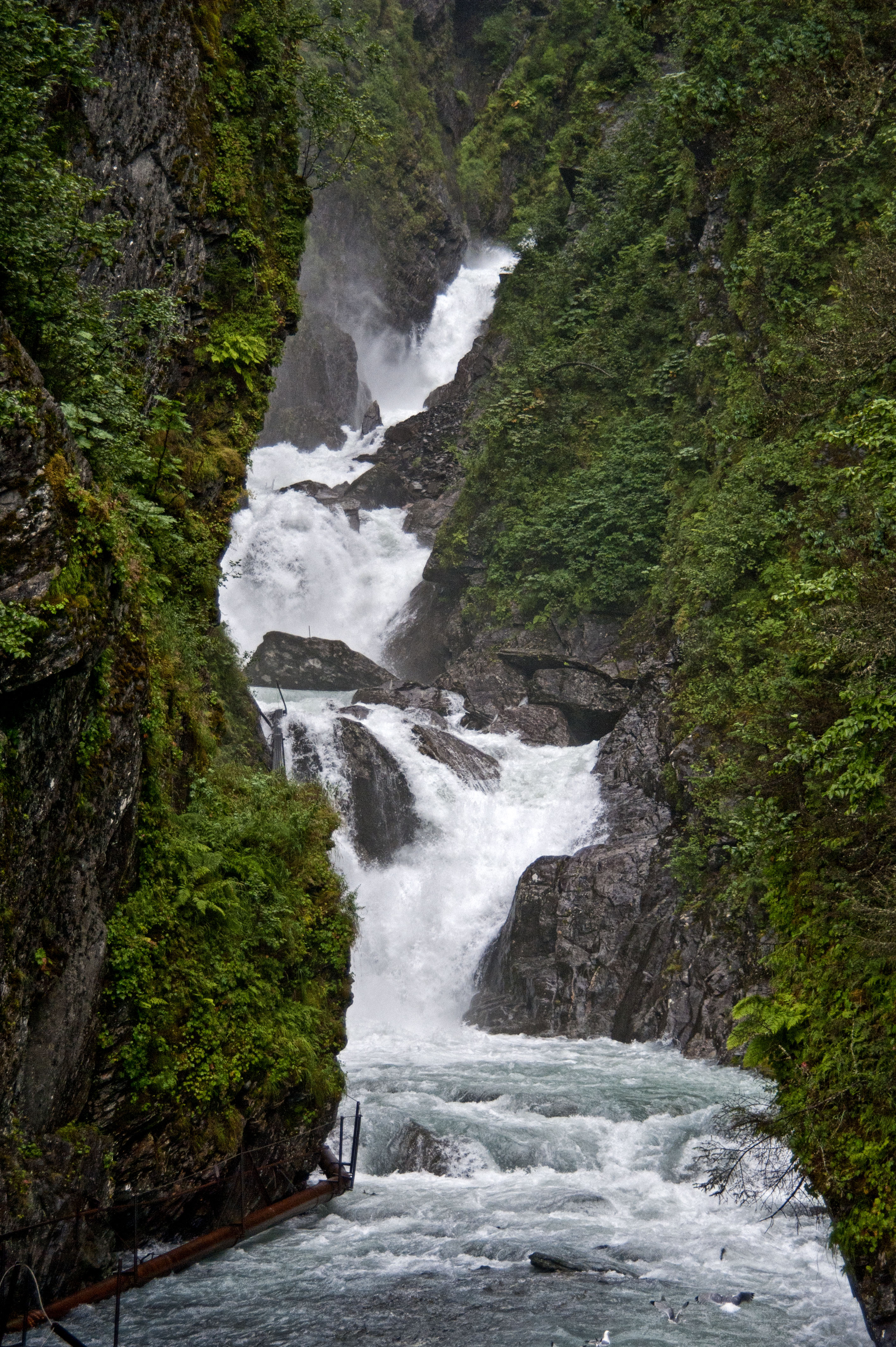
The canyon itself had a couple of big waterfalls in(Bridal Veils, Horsetail Falls) it but grey skies meant poor photos.
On reaching Valdez itself we went to the visitor centre to get the lay of the land only to discover that half the town was without power as a result of a transformer blowing at the power station.
After that we went to the ferry terminal to book onto the next day’s ferry to Cordova. This was to be our first experience of the Alaska ferry system. There are a lot of communities in Alaska that have no road access and they can only be accessed by plane or boat (this includes the capital, Juneau). The 100km trip to Cordova was $476 return for us and the Beast. This was a bit less than we expected because of a deal where the driver goes for free.
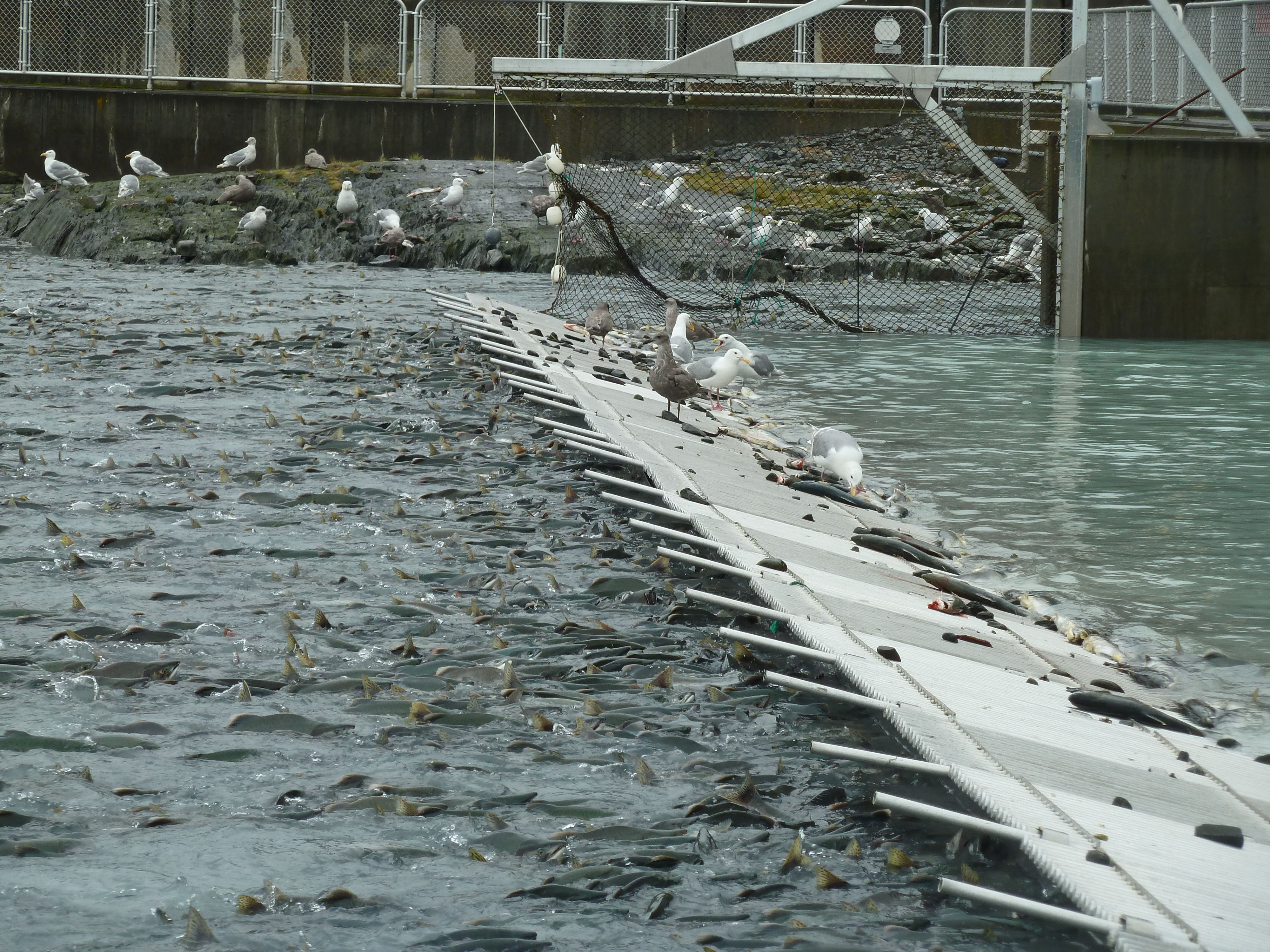
In our remaining 24 hours in Valdez we checked out the Salmon Hatchery on Dayville road. This was amazing with literally thousands (probably hundreds of thousands) of Salmon trying to swim up a river which was blocked by a fish weir. There was a small fish ladder off to one side that some of the Salmon were finding and battling up. In places the number of Salmon were so dense that you could pick one out with your hands. The salmon were fighting to get up the weir so hard that some were jumping out of the water and dying. This made a feast for the hundreds of seagulls that were also around. The Salmon that do make it the hatchery then spawn and these eggs are used to produce more salmon. The hatchery is not operating commercially yet and is being developed to replace the pipeline as a business for the area when the oil stops flowing.
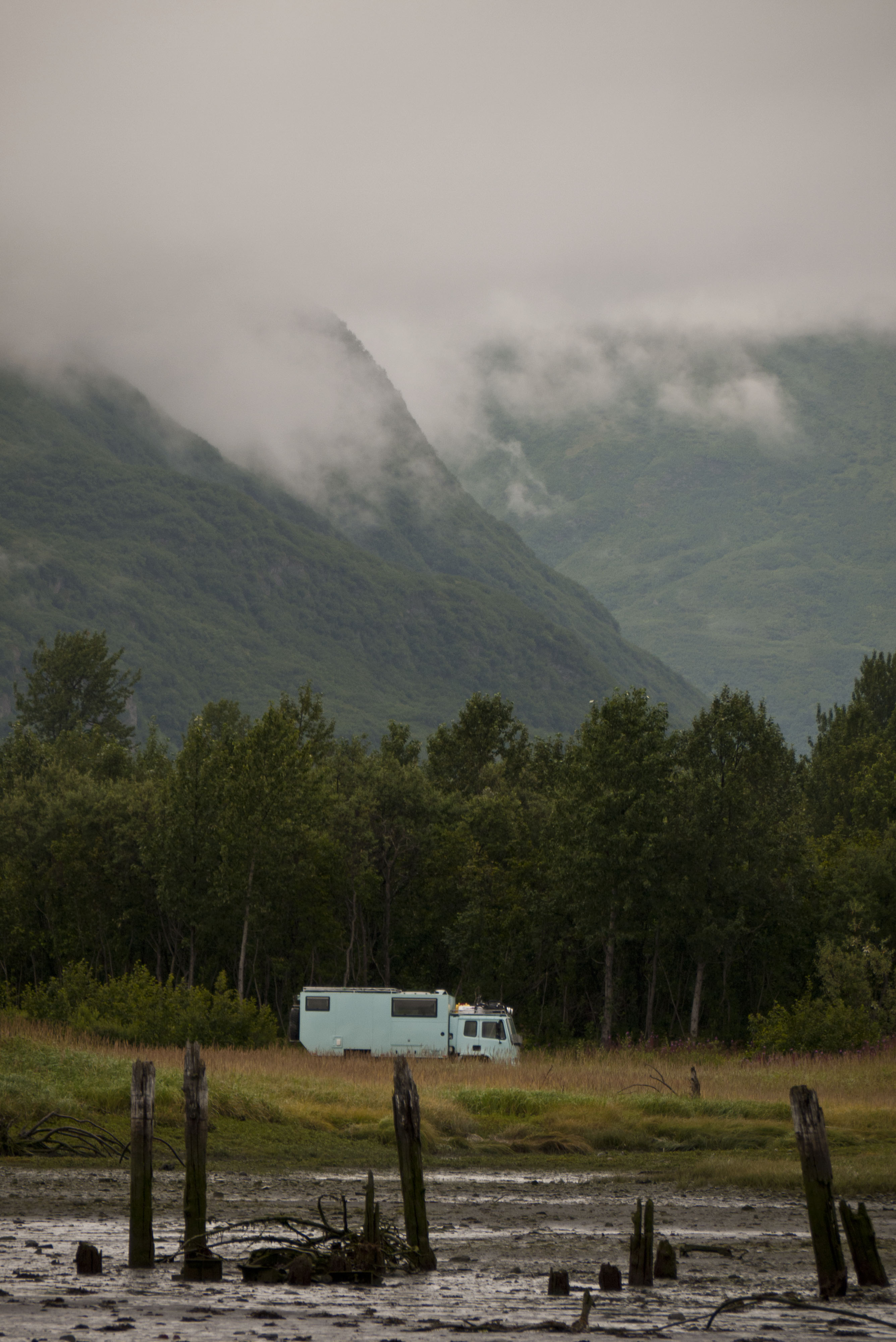
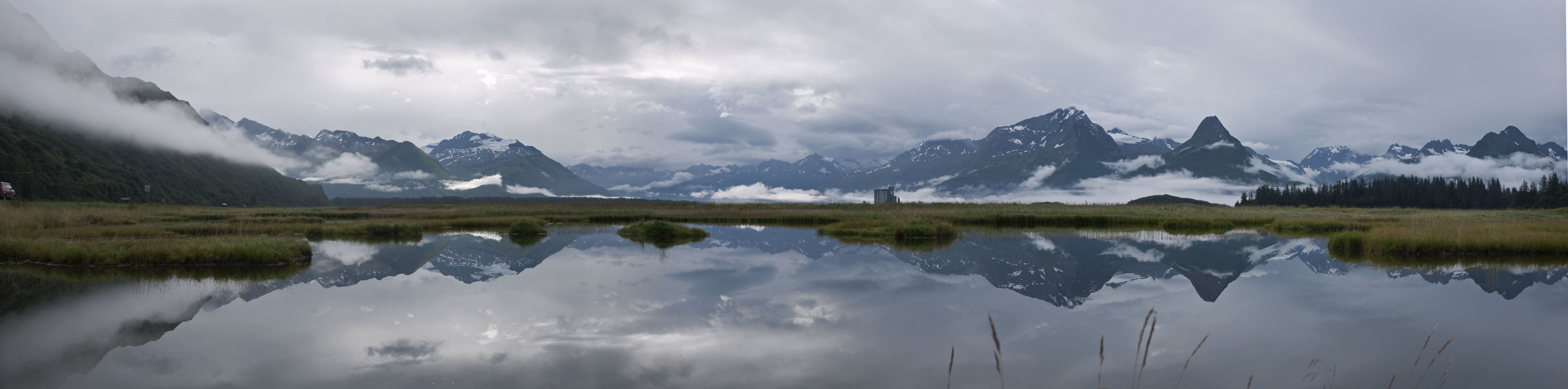
In the evening we found a nice place to camp in the site of the Old Valdez town. On Good Friday 1964 the biggest earthquake to hit the USA destroyed Valdez (it was a 9.2 on the Richter scale). This led to the Old town being condemned and the town being re-established on its current site 4 miles south. This has left a perfect camping spot with a great view of the fjord that Valdez sits in.
Free Camping 101 or Don’t Pay to Park
There are a lot of campsites in North America at a real variety of prices. There are RV parks, many of which resemble car parks, which can charge up to $50 a night. You get hook-ups with electricity and water and most of them have WI-FI. However the setting is horrible and you are on top of each other. We avoid these as much as we can.
There are also State run campgrounds which are often in really beautiful spots and provide minimal facilities – usually a table, firepit and some pit toilets. These range in price from around $10 to $20. National Parks have similar campgrounds but these can be more expensive.
However I think what marks a true Overlander is Free Camping. What some call boon docking or bandit camping. This is finding spots to camp for the night which are free and it is this that we have learnt to do.
In fact some of the most beautiful spots that we have stayed at have been free campsites. They can range from turnouts by roads (most of which have minimal traffic late at night) to unmarked unpaved roads leading to viewpoints or other interesting places.
The only disadvantage to free camping is the lack of toilets. However it is possible to even find places with access to toilets which make great overnight stops (such as rest areas).
The key things are to look for the NO CAMPING signs or NO OVERNIGHT PARKING and if you see these then roll on by and look for somewhere else. There is always somewhere near by.,

Now this strategy has worked great in Canada and Alaska – we will see how we get on as we go further south.
Hatcher Pass Road and The Independence Mine
As we headed South instead of taking the Parks Highway down to the Glen highway we took a “shortcut” across the Hatcher Pass Road. The scenery along this road is absolutely stunning but the road is very badly potholed and we could only crawl along at 5- 10 mph for large stretches.

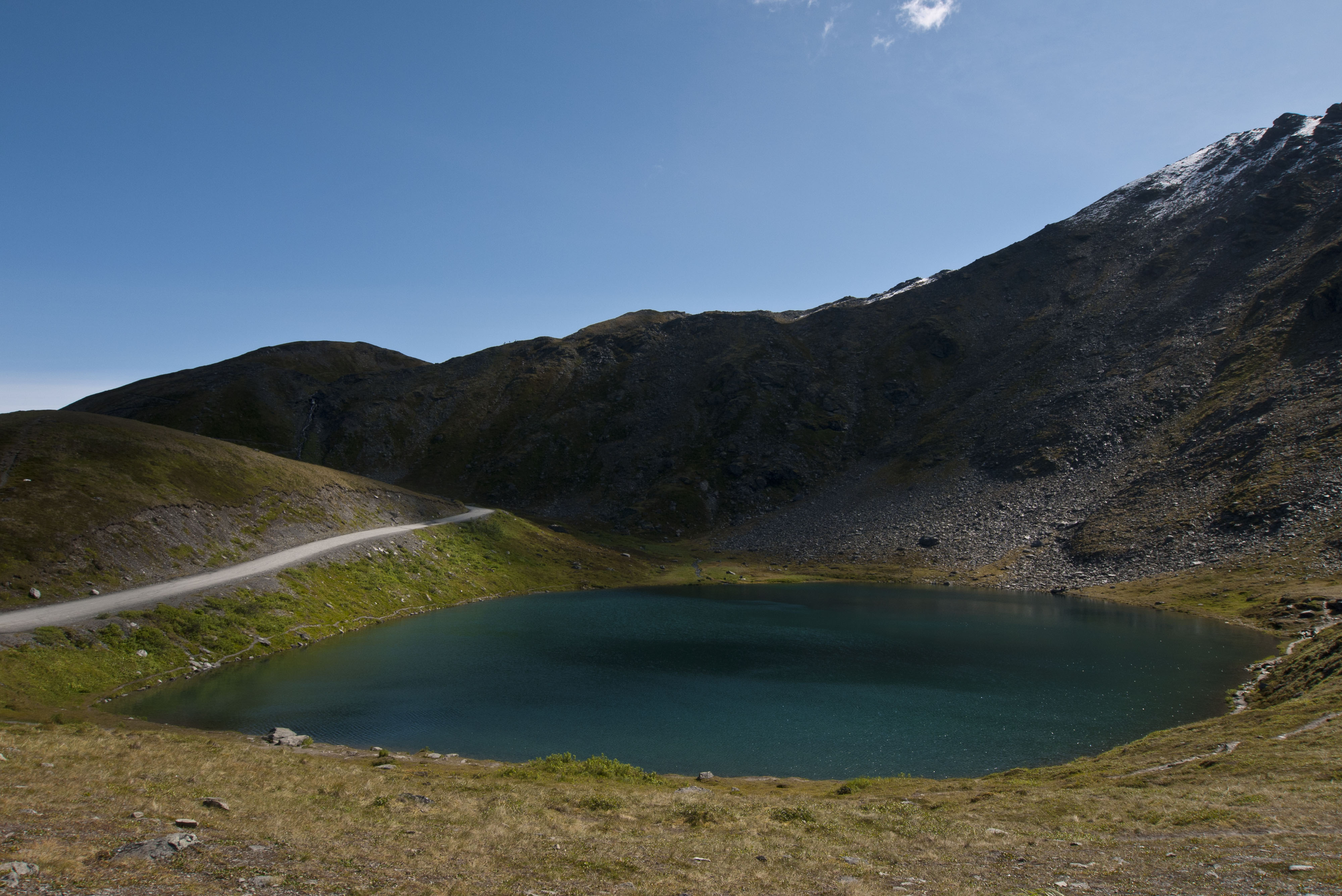
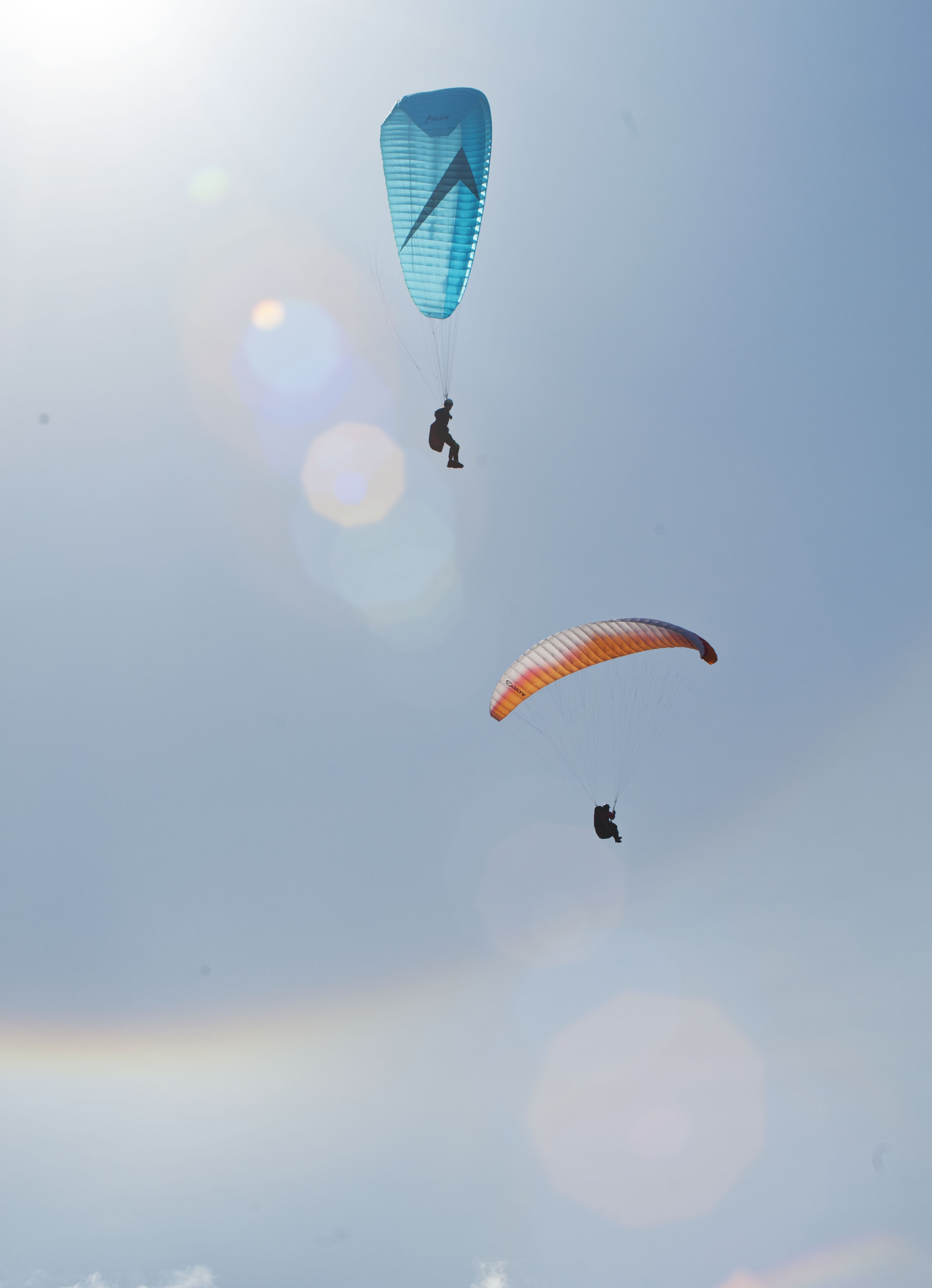
At the top of the pass is a small lake called Summit Lake where we stopped for lunch and we watched some paragliders. One guy was out for his first time – and it showed – while another guy was clearly very experienced and made it look easy.
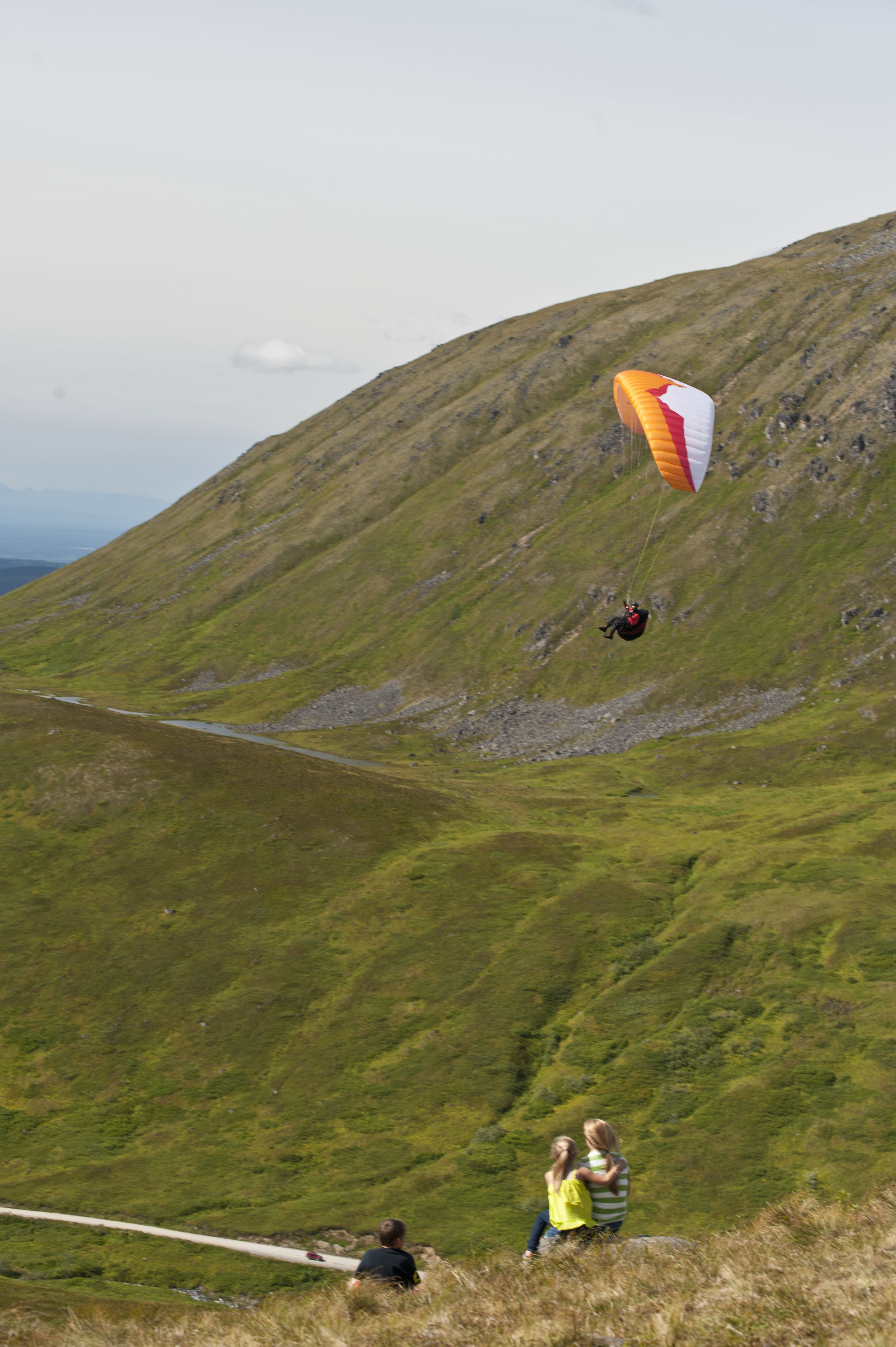
Just after Hatcher Pass the road becomes paved – Hurrah – and there is an old abandoned gold mine called Independence Mine which we decided to take a look at.

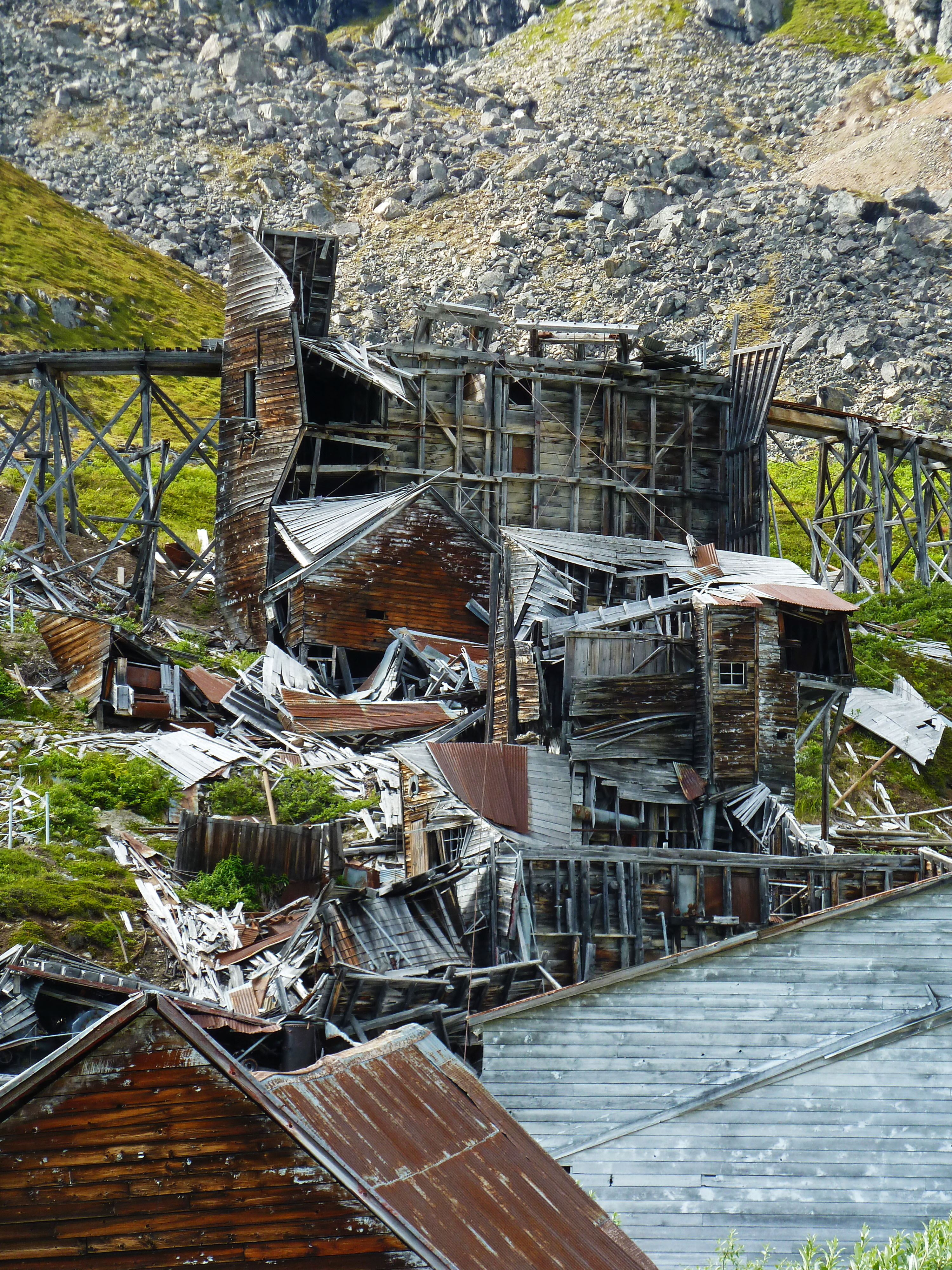
This is partly restored and partly in original condition and made an absorbing couple of hours hike. Particularly the higher portions where you could get away from the madding crowd. We often find this – most people are happy to walk around on the flat but give them a hill to walk up and they choose not too. This is great because even at the most crowded places you only have to walk for a few minutes to find peace.
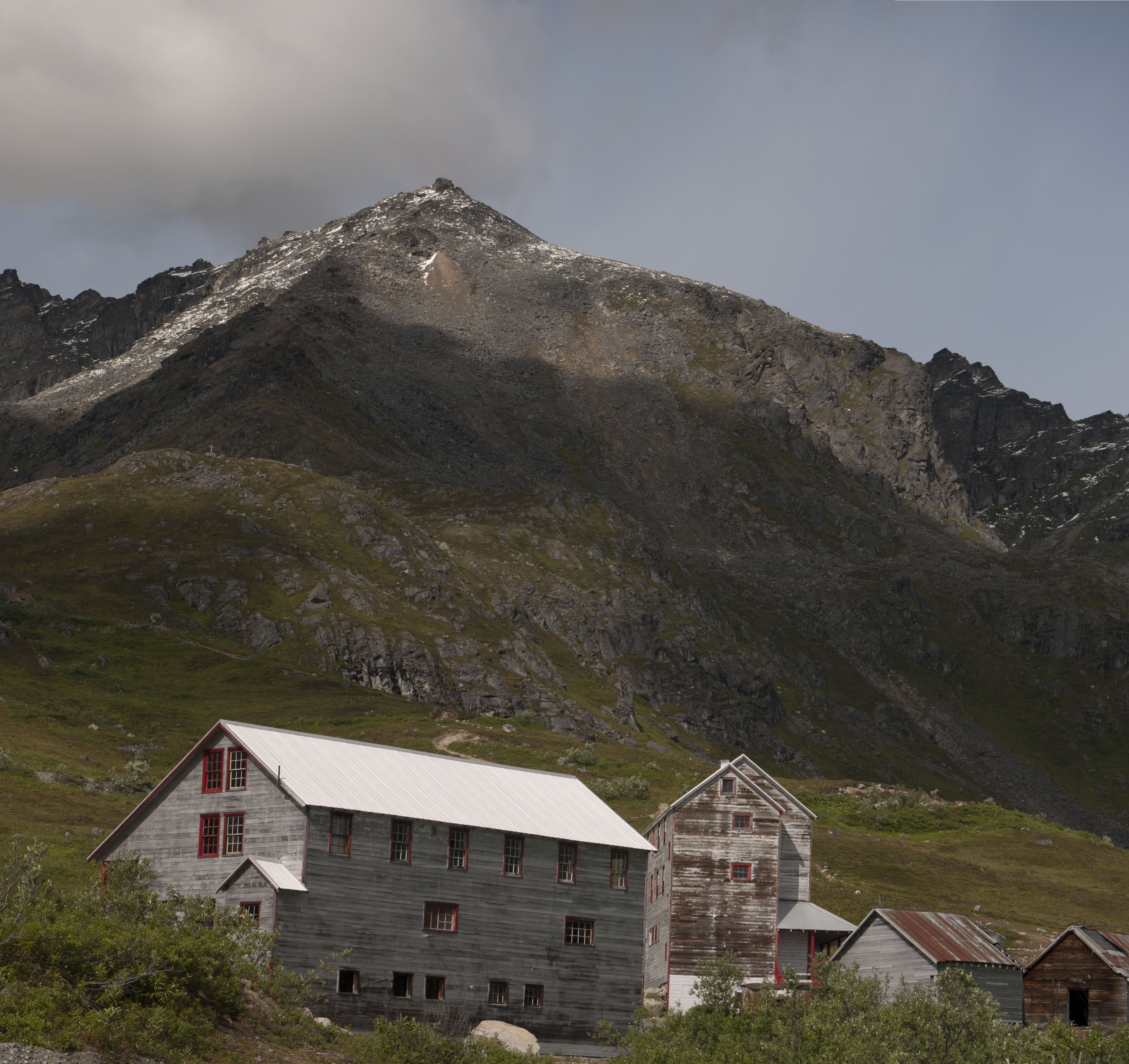
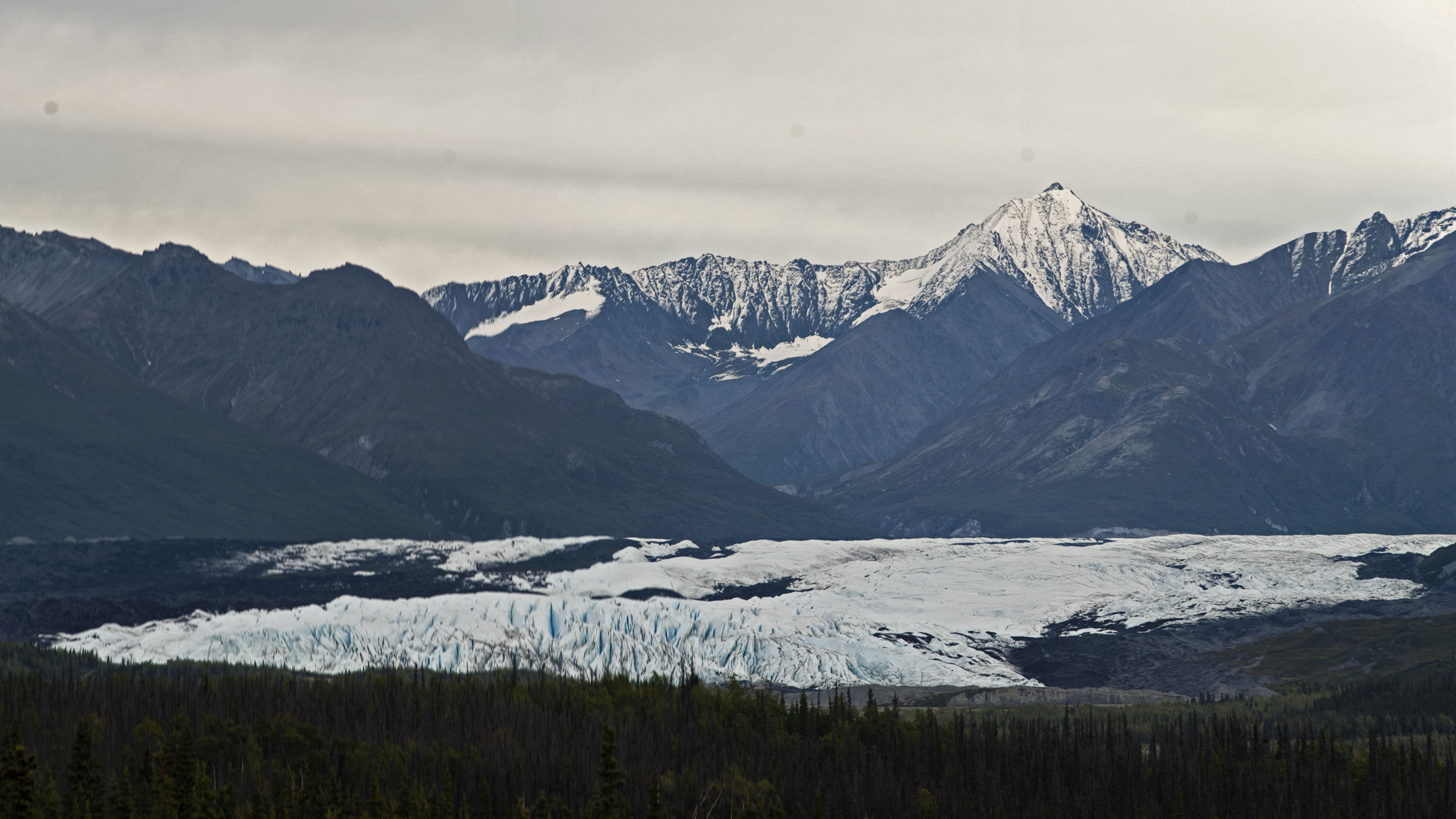
After the Independence mine we drove down to Palmer and onto the Glen Highway going past the Matanuska Glacier before stopping for the night in a rest area which we had to ourselves. This was very quiet and even had toilets but these were unusual in that they didn’t have any doors – so not that appealing really.
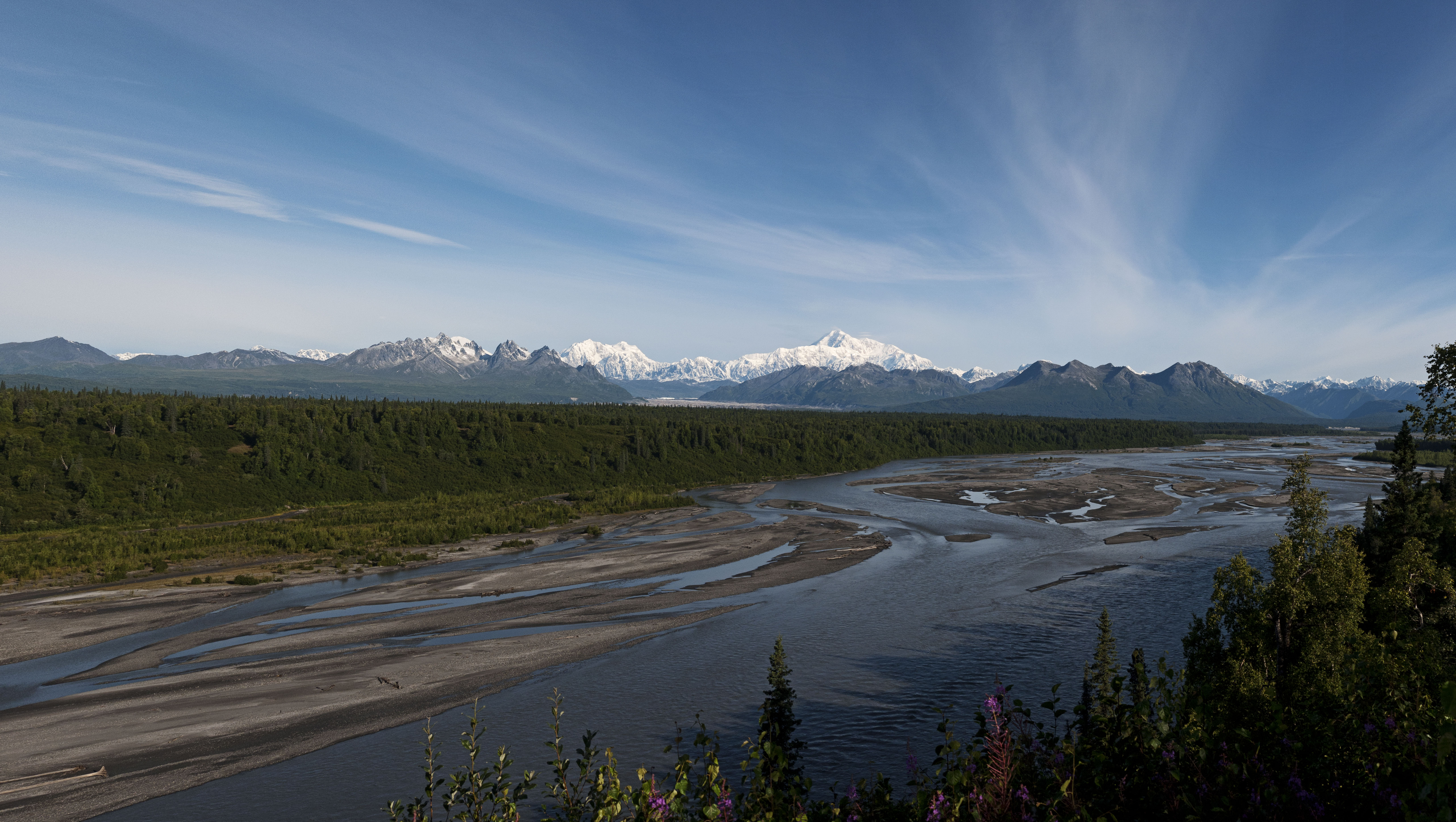
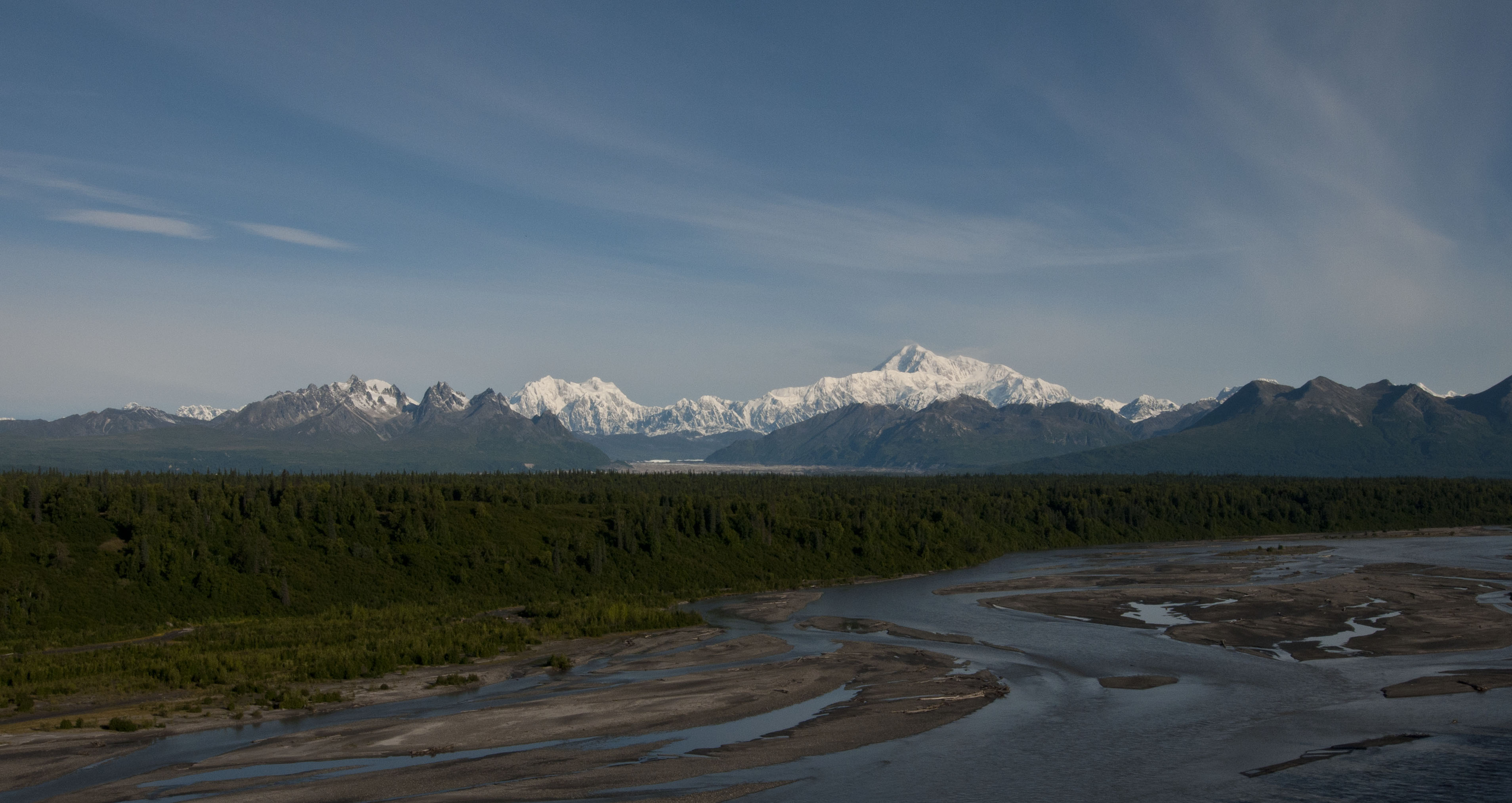
Mount McKinley and the 30% Club

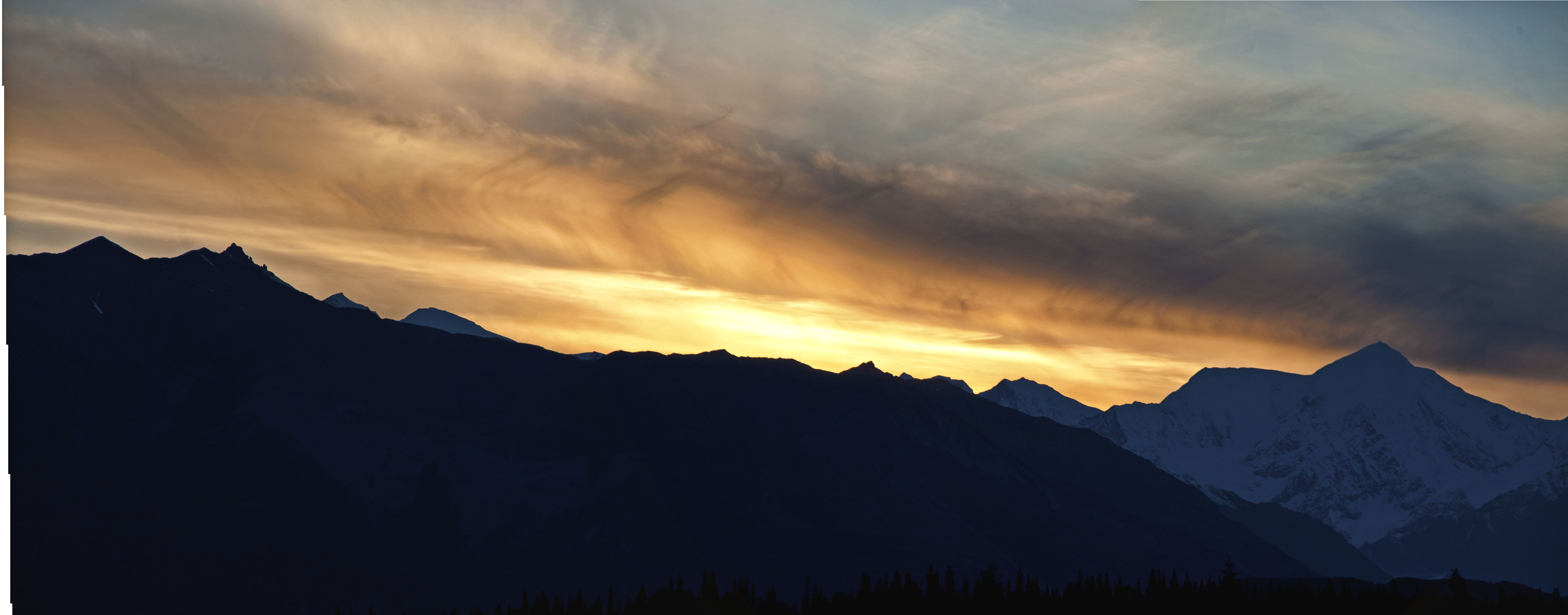
On waking at the North Denali Viewpoint the skies were still blue. This is almost unprecedented in Alaska. I woke Sarah early than she would have liked and we started driving to get all the view of the mountain we could.

The ones from the South Denali Viewpoint were the best that we saw.
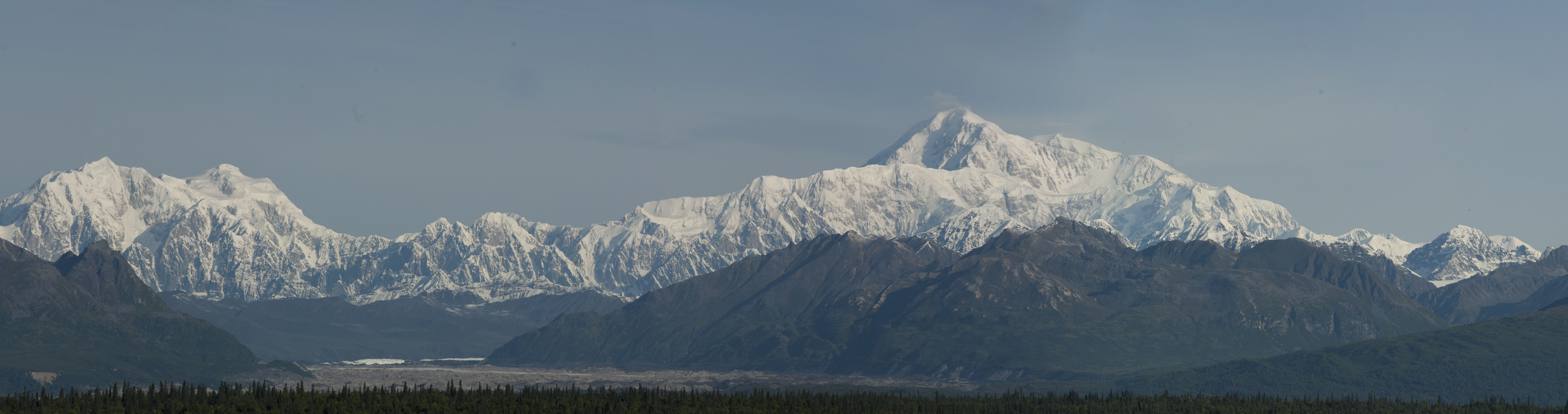
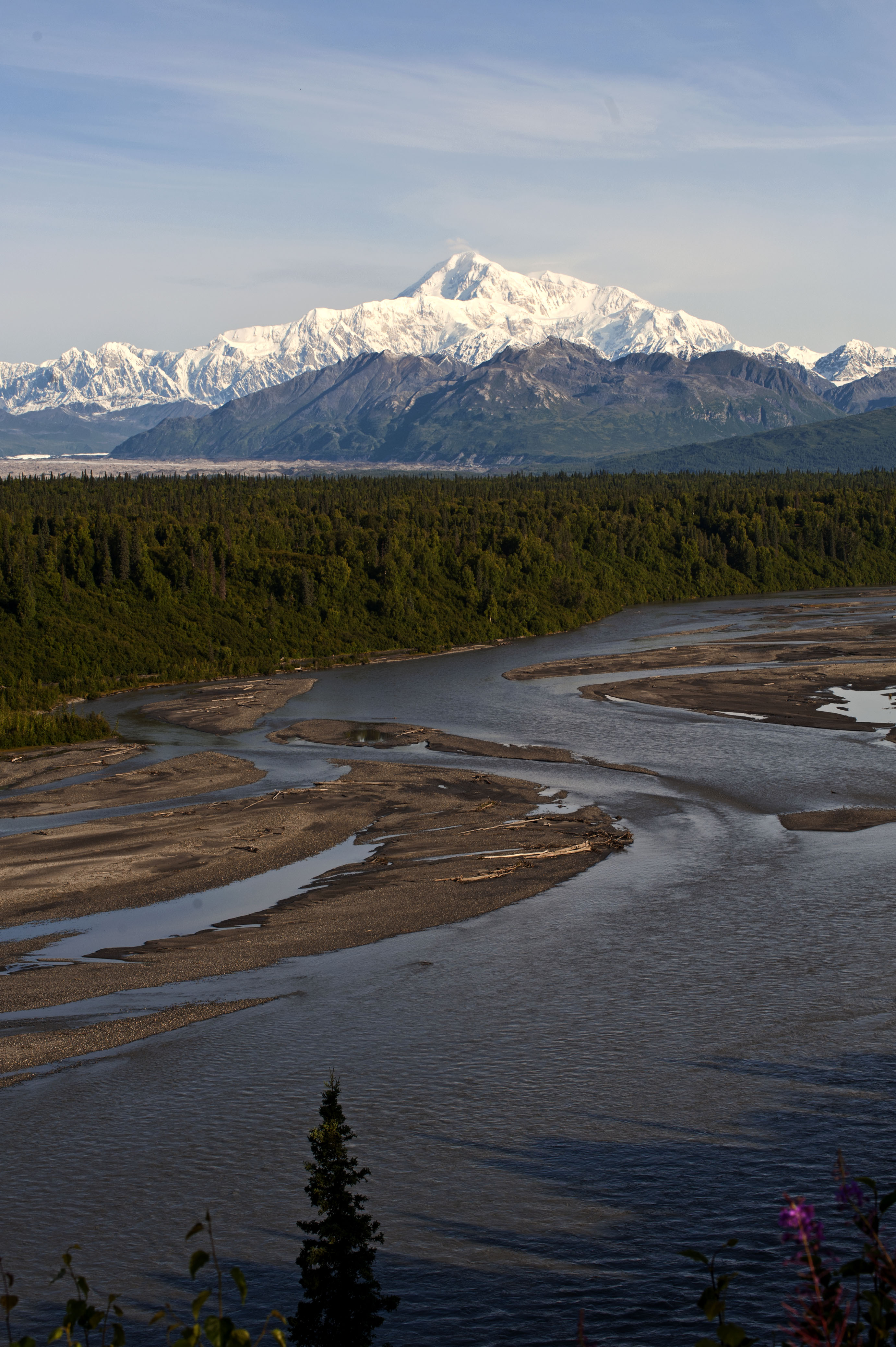
We are now officially part of what is called the ‘30% club’ as only 30% of visitors to this area ever get to see Mt McKinley at all because of the almost constant cloud cover.
Denali National Park
We arrived at Denali for the second time to overcast skies with the mountains surrounding the visitor centre shrouded in cloud. This looked very much like the last time we were here, a couple of weeks ago, but at least without the rain.
The first thing we did was check out the weather forecast for the next couple of days. It was for 40% chance of rain the next day and only 10% the day after – around these parts it doesn’t get much better than this – so we set about arranging to go for an overnight hike in the park.
Denali is different to most US National Parks in that there are no trails. Any hikers must forge their own trails. The only road through the park is closed to private vehicles and you must take a bus along it which allows you to jump off at any stage to go hiking. However the freedom from trails comes at a price which is that Denali is the most regulated of the parks we have been to. In order to go for an overnight hike there is a process you must go through.
1) Go to the Backcountry Office to obtain a permit.
This sounds easy but Denali is divided into 87 Units each of which has a limit to the number of campers allowed each night (most seem to be about 6). On average the more accessible units are around 20K Acres or so. So you have to choose a Unit for your stay which has availability on the night you want.
Once you have chosen your unit you have to fill out an application form, watch a 30 minute video on backcountry safety and then attend a safety talk by a ranger. At the safety talk you are given a BRFC (Bear Resistant Food Canister), a mini-barrel, which you have to store your food in while in the backcountry to prevent any bears being able to get at it.
The one plus side of this process is that the backcountry permit is free.
2) Pay for Access to Park
You can pay for a seven day park access pass which costs $20 or you can use an Annual Inter-agency National Park Pass which costs $80 which can be used in any US National Park. We chose the Annual Pass because we will be visiting a number of US National Parks. These costs are per couple.
Annoyingly only the visitor centre sells the annual pass and this is around a mile and a half from the Backcountry office so we had to pop in the Beast and drive there – then drive back to the Wilderness Access Centre – next to the Backcountry Office.
3) Book onto a Bus
At the Wilderness Access centre you book tickets on the buses into the park. There are basically three types of bus – Tour buses where people stay on all day and do a tour – full of oldies, Shuttle Buses which take people into the park for day trips and day hikes (although a lot of people sit on the bus for the whole journey there and back as a cheaper alternative to the tours) and the Camper Buses which take people into the Park who are camping (these have more room for gear).
We booked onto a camper bus at a cost of $31.50 each leaving at 7am the next morning.
That night we stayed in the Riley Creek Campground which is just in the Park by the entrance for the princely sum of $28 for a fairly basic campsite. We spent the evening packing for our night away – a stressful time for Sarah as she has never spent a night under canvas before.

In the morning we got up bright and early to get the camper bus and still managed to have to run for it with our full packs on – we made it with seconds to spare though. The camper bus itself is an old school bus and not that comfortable. It takes around 6 hours to drive the 90 mile road – and can be longer because the bus stops for wildlife.
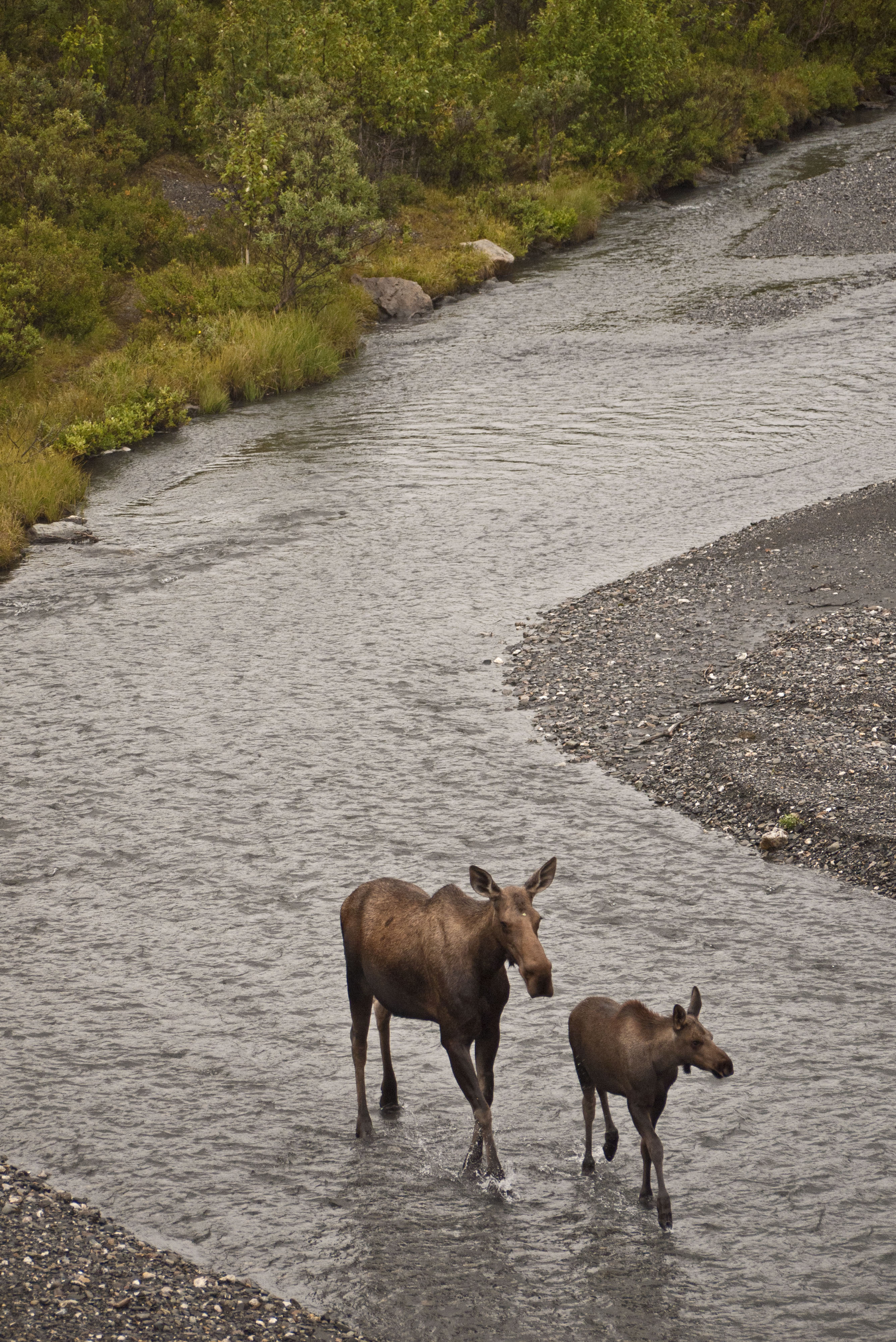
We had chosen to Camp in Unit 8 which is the Polychrome Pass area of the Park. This is around 50 miles along the road and took us around 2.5 hours. We saw a lot of wildlife on the bus – a moose and calf, 3 grizzly bears, snowshoe hare and Caribou. Most of it was at quite a distance though.

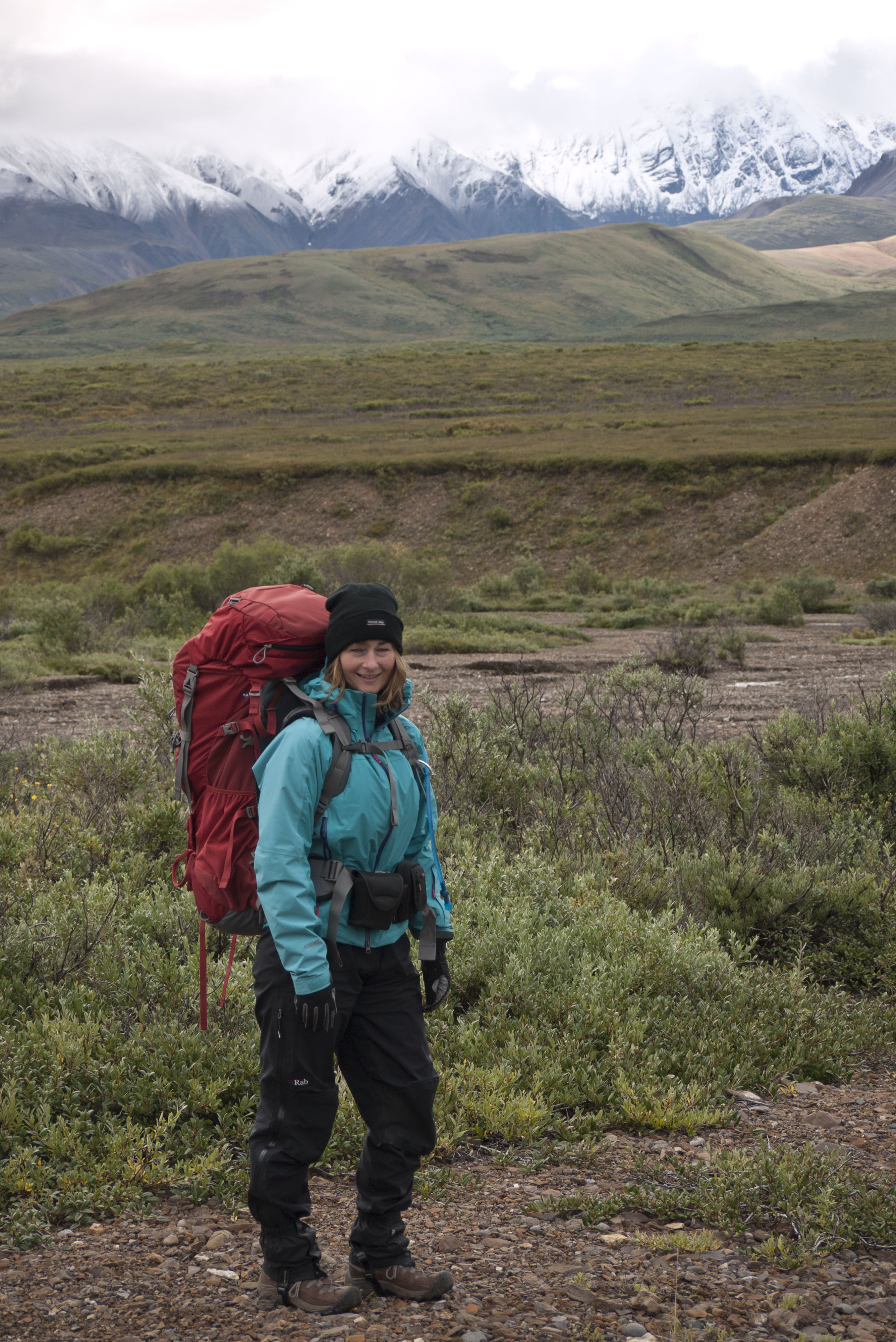
We were dropped off the bus where a small stream flowed down away from the road and we initially walked down the rocky bed of this stream. However we wanted to head for the mountains so soon had to walk across some Tundra. This started off pretty firm with a lot of animal trails for us to follow but soon became much spongier and the brush thicker – not surprisingly the animals seemed to avoid this area so there were fewer animal trails to follow –and the going got a lot slower. After over an hour of this we finally reached the bed of a river coming out of the mountains. This was much easier going although still hard work as the ground was pretty rough.
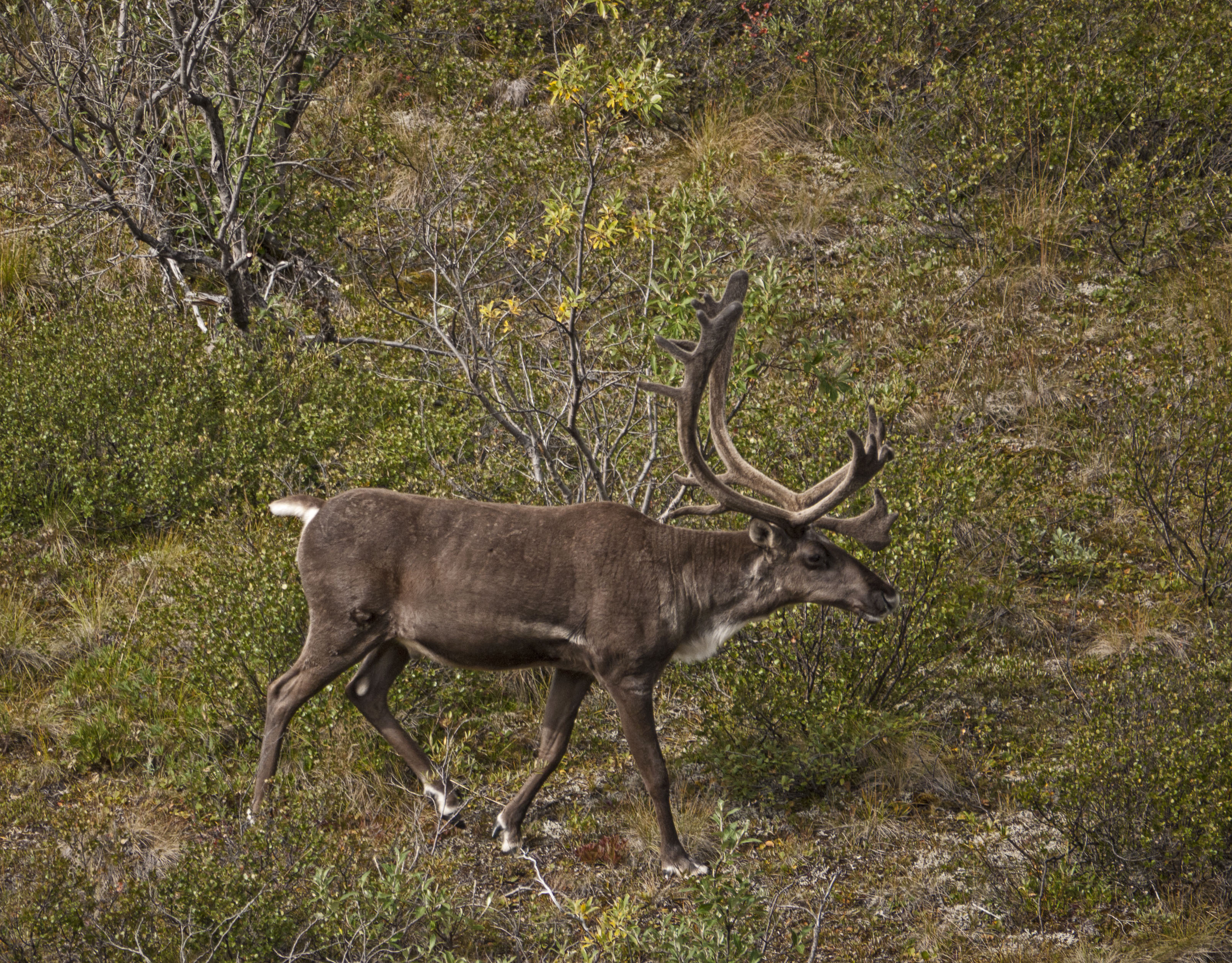
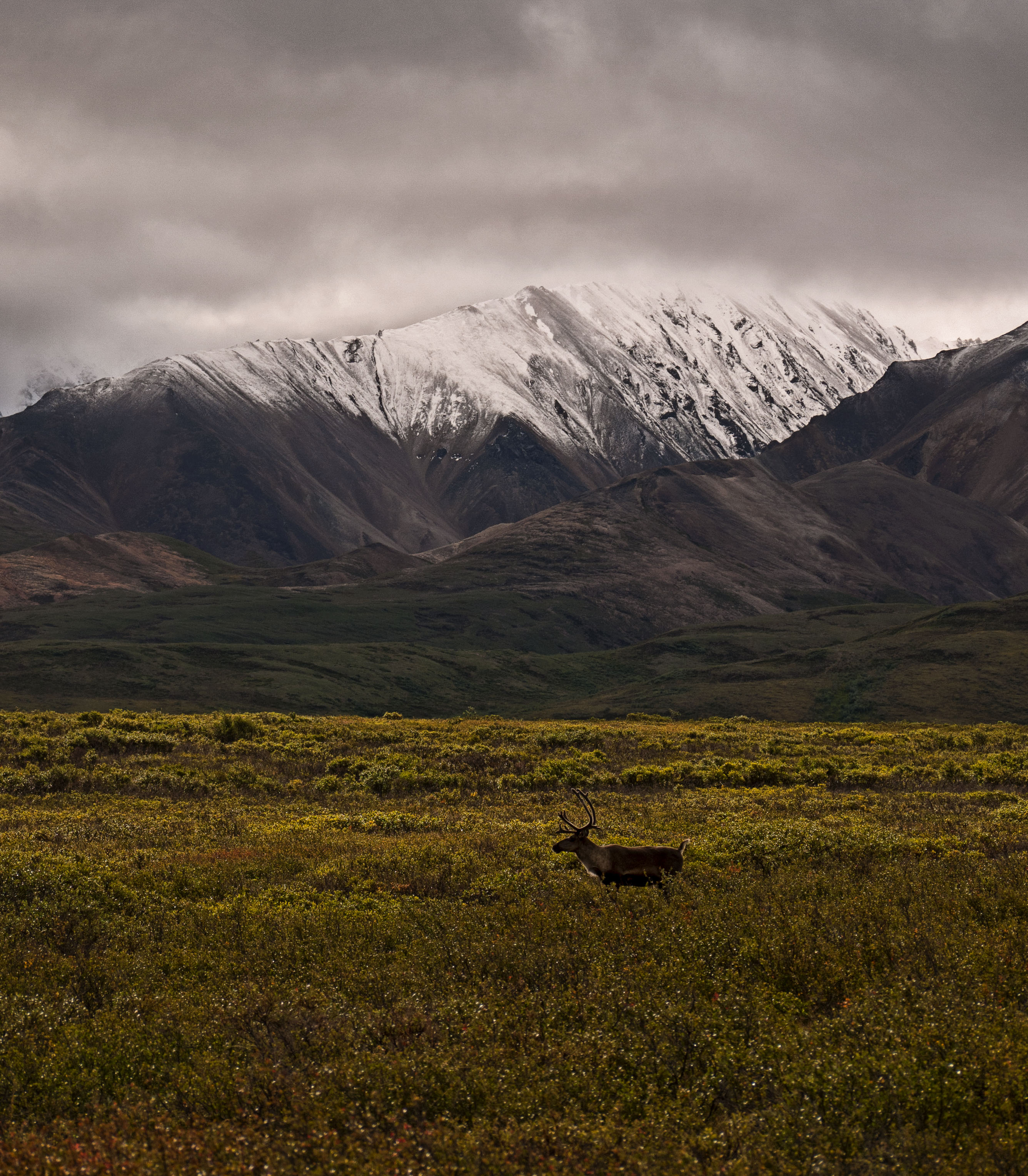
We weren’t quite sure which of the valleys ahead of us we wanted to walk up so we climbed a nearby ridge for a better view and had some great views of Caribou below us. A really impressive male with a massive rack was right below us – I don’t know how they lift their heads with that much antler on board.
We now knew where we wanted to go and started hiking up the valley following the meandering river. This meant that we had to keep hopping across the water which became deeper and faster flowing as we moved upstream. It had been nicely braided lower down.
I had chosen to wear my gore-tex hiking boots and gaiters which meant that I could walk straight through the water. However Sarah’s hiking boots aren’t waterproof s so we had to ford the river several times to avoid wet feet. This got harder and harder as we went upstream until eventually Sarah had to change shoes into sandals she had brought for this purpose on every crossing. I didn’t envy this as the water was VERY COLD.

On entering the valley a huge bird circled above us – our first golden eagle – unfortunately it was raining at the time so no pictures.

The weather in Denali is the most changeable I have ever seen. We had sun, rain, wind, overcast and even snow in alternating waves over the course of the day. Mostly it was pretty cold though as we were quite high up.
We eventually reached the end of the valley where the river entered a gorge we couldn’t hike round but there was a very nice flat grassy area which was perfect for camping. We set up the tent and set about dinner (siting our kitchen the approved 100 metres downwind of the tent). We ate some lovely freeze dried food (actually surprisingly good) and hit the sack pretty early as were both tired. Of course before retiring for the night we put our BRFC 100 metres downwind of the tent and 100m from the cooking area.
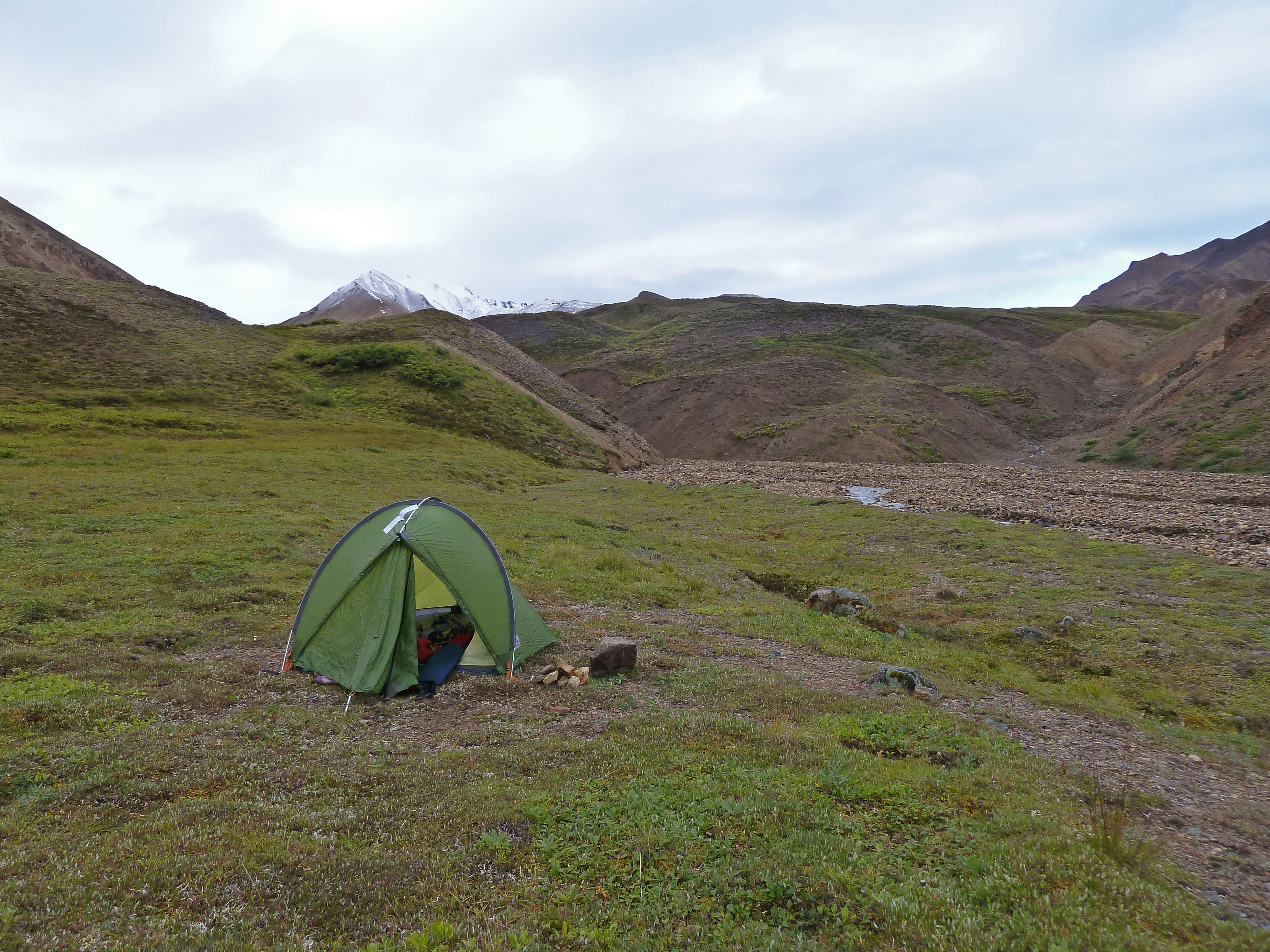
I slept very soundly despite some rain in the night and awoke refreshed the next morning (not sure Sarah would say the same). After cooking breakfast of freeze dried scrambled egg and bacon we packed up the camp and set off again.
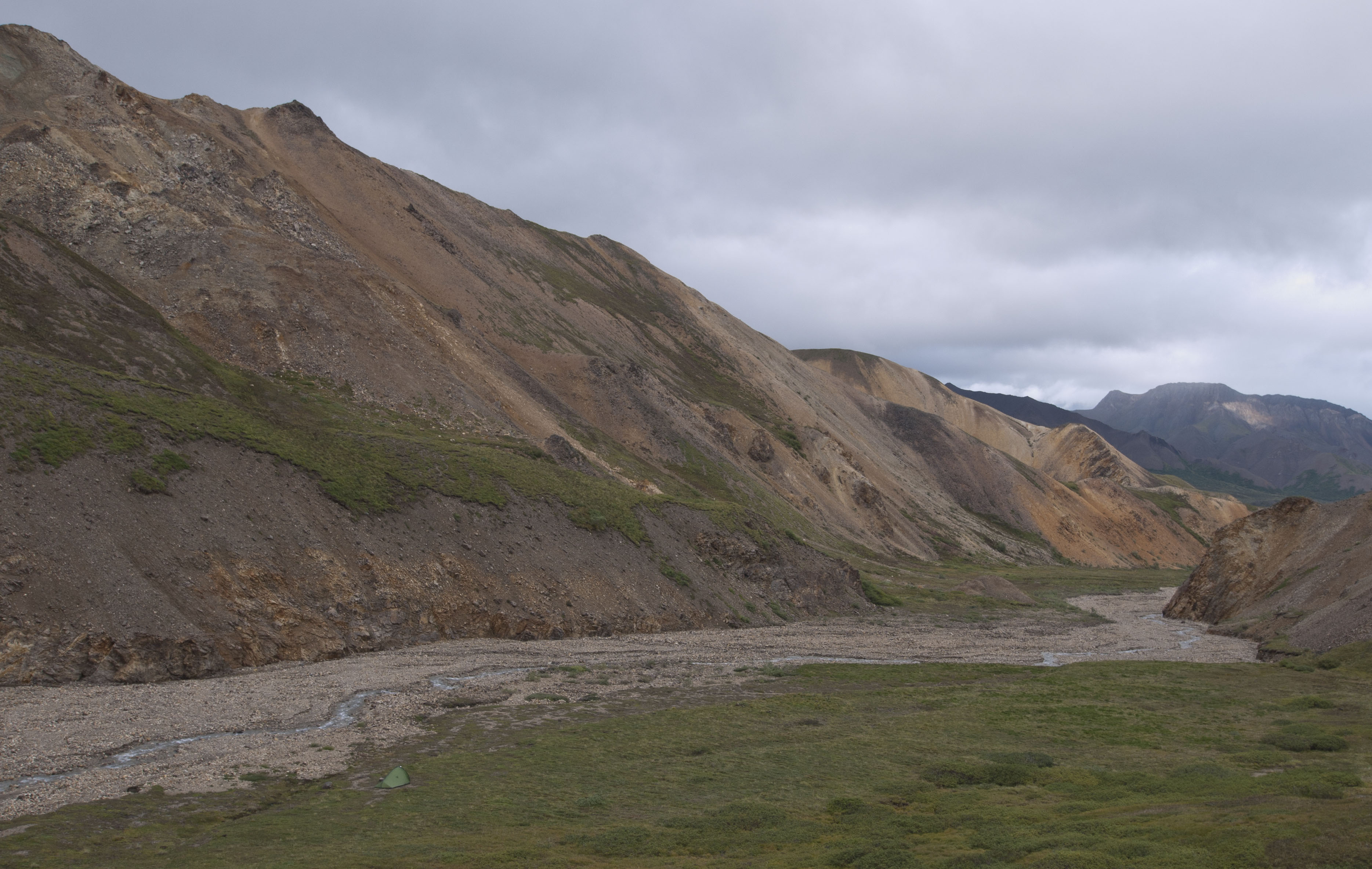
We had decided to hike down the river right back to where it meets the East Fork of the Toklat river and back to the road there. This was about 5k or so West of where we had started the previous day.
The walk was pretty uneventful until near the end. We didn’t see much wildlife but we did see a lot of tracks including caribou, Bear and Wolf.

As we approached the end the volume of water in the river increased and it became much deeper and wider. Sarah had to change into her Sandals a number of times and I had to jump through the river as the water was much deeper than the top of my boots – I found if I moved quickly the gaiters would keep my boots dry. We must have crossed deep water about 5 times.

Right near the end we were walking past some brush and we could see the road where three camper buses were stopped. Everyone in them was looking right at us which we thought was a bit strange but we carried on.
When we got back to the road we were faced with our last challenge which was a 25m high near vertical bank to climb to the road – or a very deep (waist deep) river to cross to get to a gently sloping incline back to the road. We choose the bank and managed to climb it helping each other and using brush to pull ourselves up.
On reaching the road we scanned the area where we had just been and saw a Grizzly Bear right by where we had walked. We now know what the buses were looking at. We must have walked within 5m of him and never realised.

While waiting for a bus to take us home we saw an arctic fox cross the river we had been too chicken to cross. He swam the first part and then across the second he took a massive leap almost as high as long to g et across – very impressive.
The first two buses that came past were full but luckily some people got off the third one that came past – we didn’t tell them that they’d be stuck there without climbing down the really steep bank coz by this time we had waited over an hour and were getting quite cold (sorry guys!) – so we got on.
The trip back was also full of wildlife – 2 grizzlies, some caribou, Dall Sheep and Moose.
We got back to the Beast knackered and very dirty but having thoroughly enjoyed ourselves. Even Sarah admitted that she would go camping again – although she did caveat it by saying preferably in warmer weather.
We decided to leave the Park after our hike and began the drive back South intending to find a place to free camp fairly close by but as we drove away the clouds began to clear. We hit Broad Pass and amazingly we actually saw Mount McKinley. We couldn’t believe it after so many days around this area where the clouds had never lifted. So we immediately resolved to drive South to get a better view and ended up camping at the Official North Denali Viewpoint on Parks Highway.

Bear Time: Hallo Bay, Katmai National Park
One of the things that we had always wanted to do in Alaska was spend some time bear viewing. The best place to do this is in Katmai National Park. There are two different areas where Grizzly bears can be seen reliably, on the coast and Brooks Falls in the interior. We decided that the coastal area was where we wanted to go. Most of the trips out to the coast are day trips but one place is a permanent camp where you can stay overnight. This is called Hallo Bay and was the location used by the BBC to film the bear footage for the TV series ‘Life’.
To get out to Hallo Bay you have to take a Bush plane flight which takes around 1 hour. We left Homer just after lunch in a small 6 seater plane (1 pilot and 5 passengers) and flew up over the Spit and across the bay before entering the clouds. The day was raining and overcast so for the majority of the flight all you could see was a complete whiteout.
However about 10 minutes before landing we dropped down under the clouds and within a couple of minutes we had seen our first bear – slowly walking down a gravel spit. Sarah was on the other side of the plane and saw three bears and a whale before we landed.

The plane lands on the beach right next to the Hallo Bay Camp and we were greeted by Brad who is the camp manager. He took us the 100 yards from the plane, over a sand dune to the camp. The camp consists of one big tent which is the dining hall and kitchen – with a wood burning stove, a permanent toilet and shower block and a number of smaller sleeping tents. The capacity of the camp is only 12 guests at any time. Over the winter the whole camp is packed up and stored before being re-erected in the spring. The season is only June to Mid-Sept – so pretty short.
After giving us a safety talk and showing us to our tents we were ready to hopefully see some bears as of course there is no guarantee. We learnt that the bears in Katmai are known as Brown bears, they are the same as Grizzlies but are called Brown bears to differentiate them because they grow much bigger than the inland Grizzlies as a result of the abundance of food at the coast.
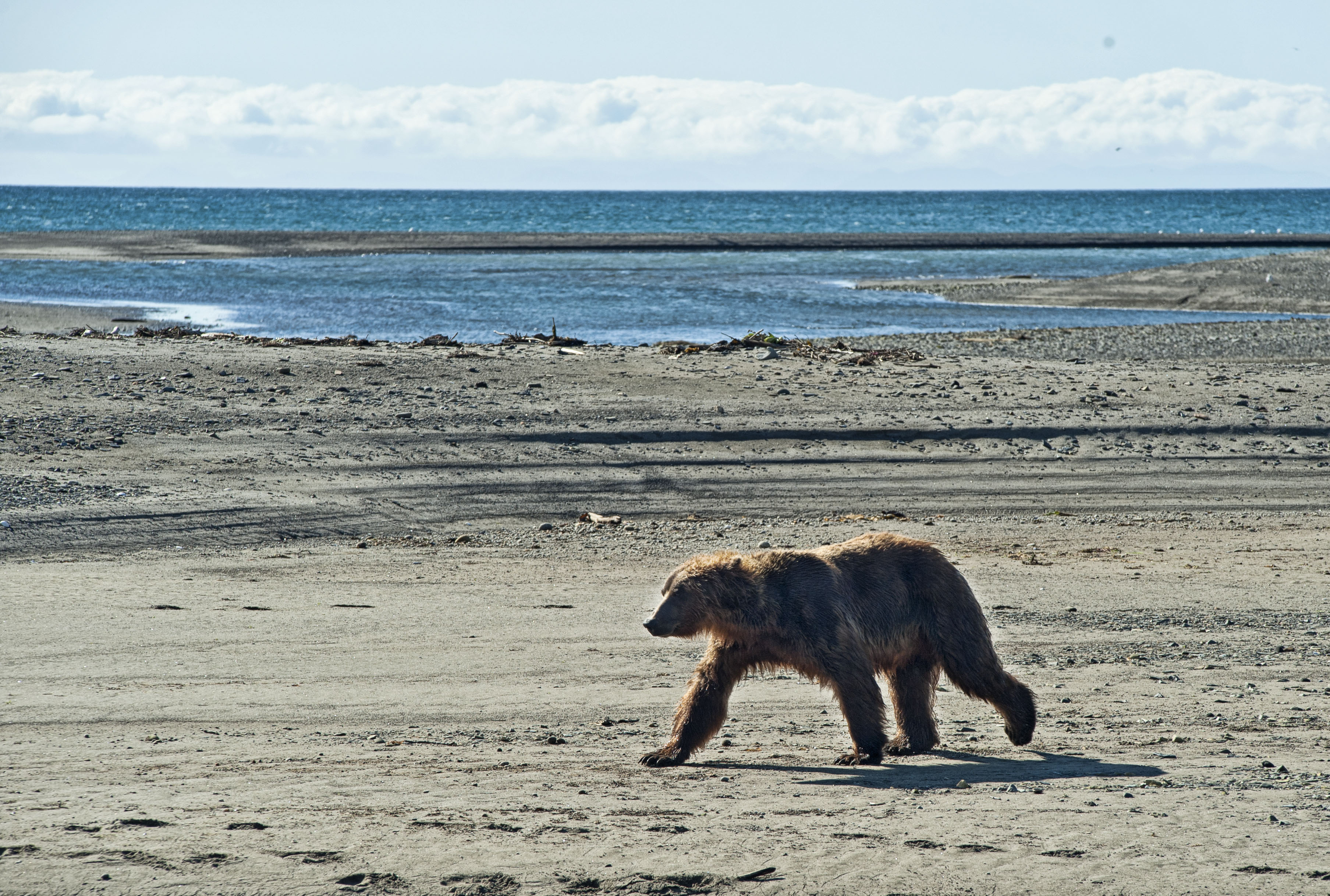
It didn’t take long to see our first bear which was down the beach walking away from us. We only really got a glimpse of its butt though.

About 500m from the camp is an inlet to a creek which is where in August the bears fish for salmon. We walked a couple of hundred metres down the creek to a fallen tree where we sat down and waited. There were no bears in sight but Payne (our guide) told us that this was the best place to see bears at this time and patience would be rewarded. This was a bit uncomfortable because it was raining and pretty cold.

After waiting around 30 minutes a bear walked around the corner and walked past and sat down. The bear didn’t start fishing but waited watching the water – waiting for the Salmon to appear. He moved around a bit but nothing really happened.
So our first Bear viewing session was pretty disappointing and we walked back through the meadow behind the beach to the camp, soaked and a bit disheartened. Dinner was good and filling though so this perked us up a bit. After dinner we chatted to the other guests in camp, they were a good crowd and one of them sat out on the porch playing his guitar so we had some entertainment thrown in for free as well.

The dining hall was closed at 10pm and Sarah and I checked out the beach before heading off to bed. Amazingly as soon as we got to the beach we saw a bear right in front of the camp and 2 seals popping their heads out of the water.
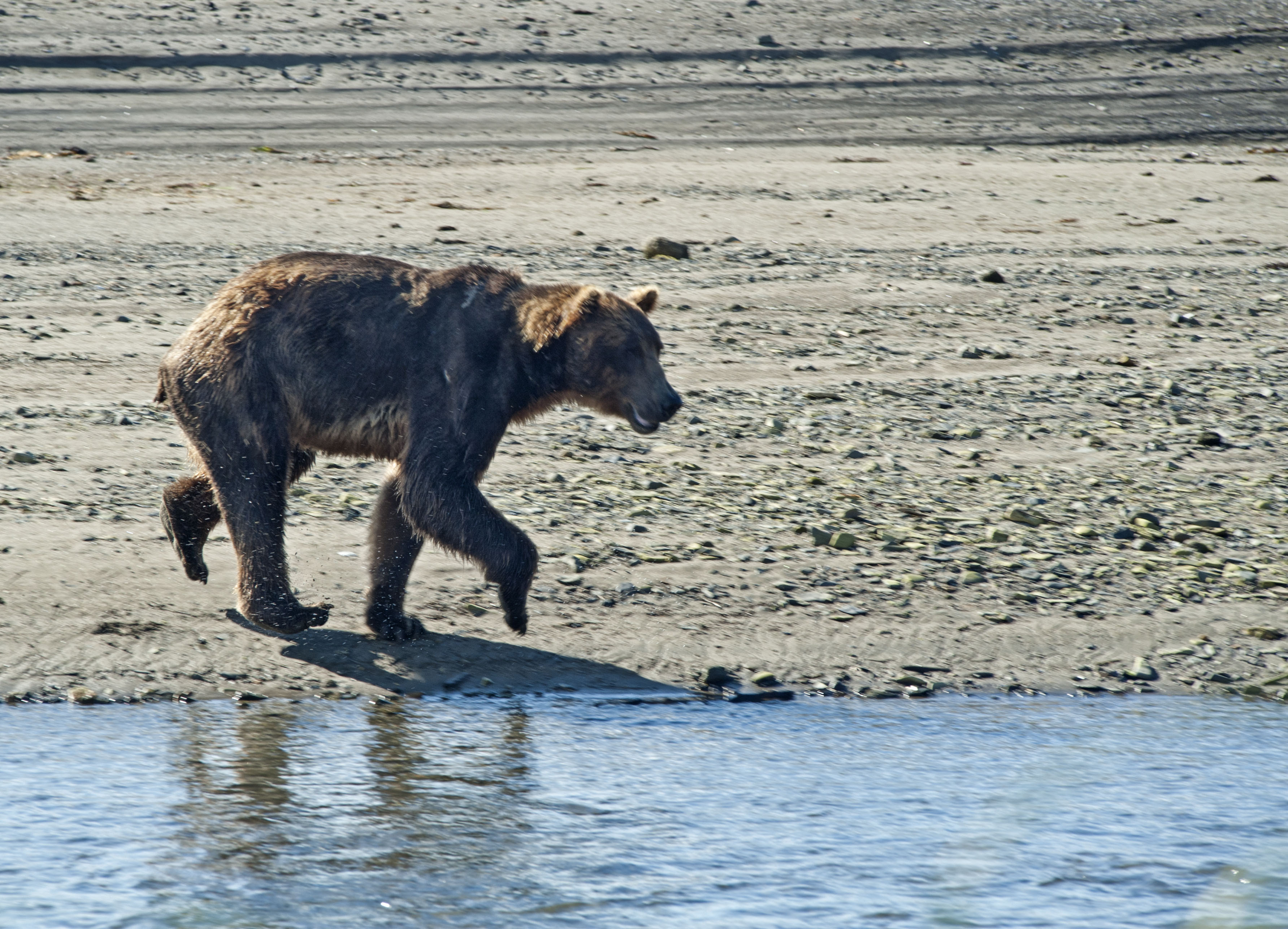
Our nights sleep was pretty poor, the tent was cold even with the small gas heater they provided and the canvas was rattling to and fro in the wind. I think it takes a couple of nights to get used to this type of accommodation! We did get up in the night reluctantly for a toilet visit but the plus side to this was a beautiful clear sky filled with stars. A first for us in Alaska.
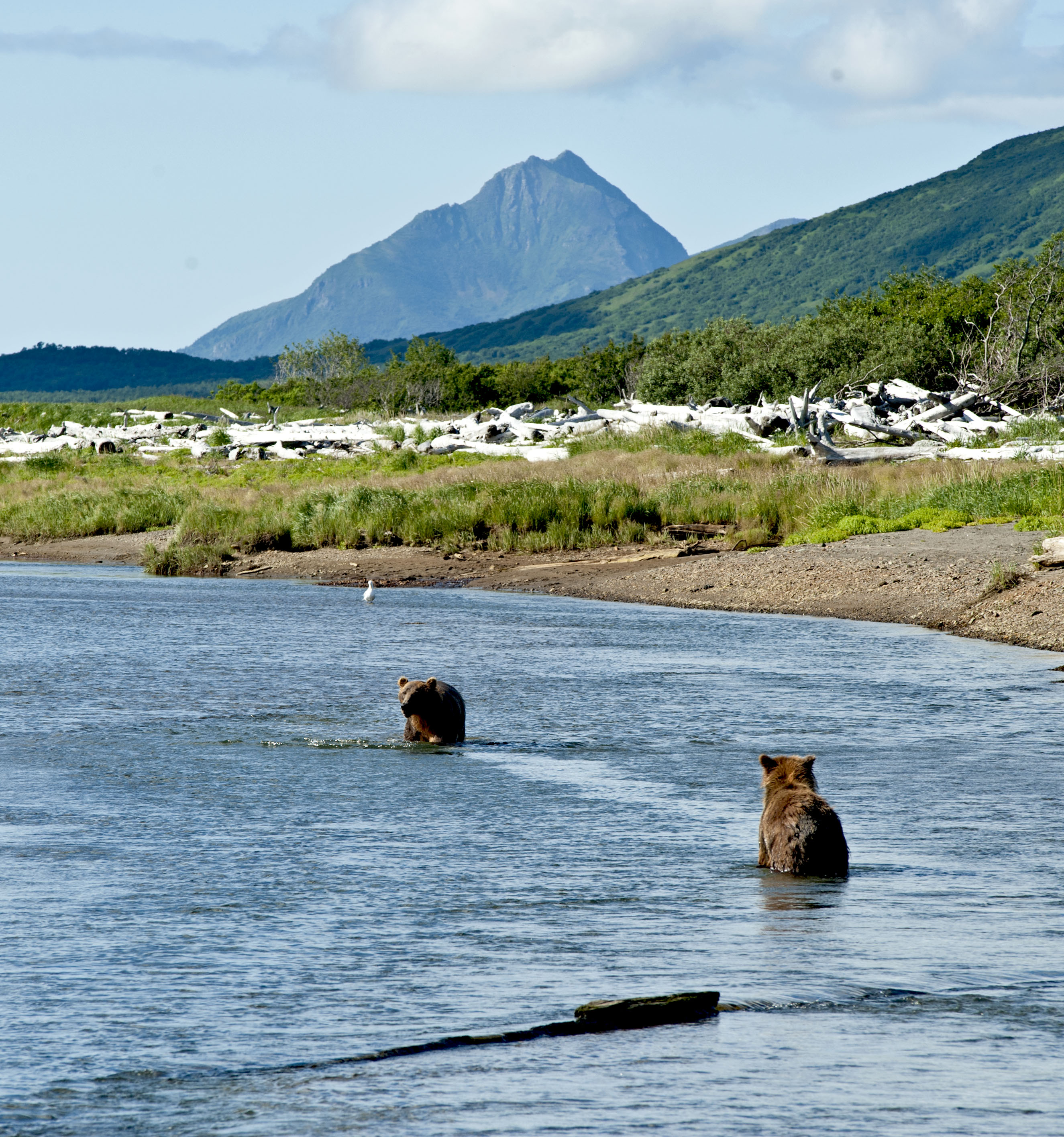
The next morning we were up early – it was warmer outside the tent than in – so we didn’t hang about. We were heading out for a bear viewing by 8am.

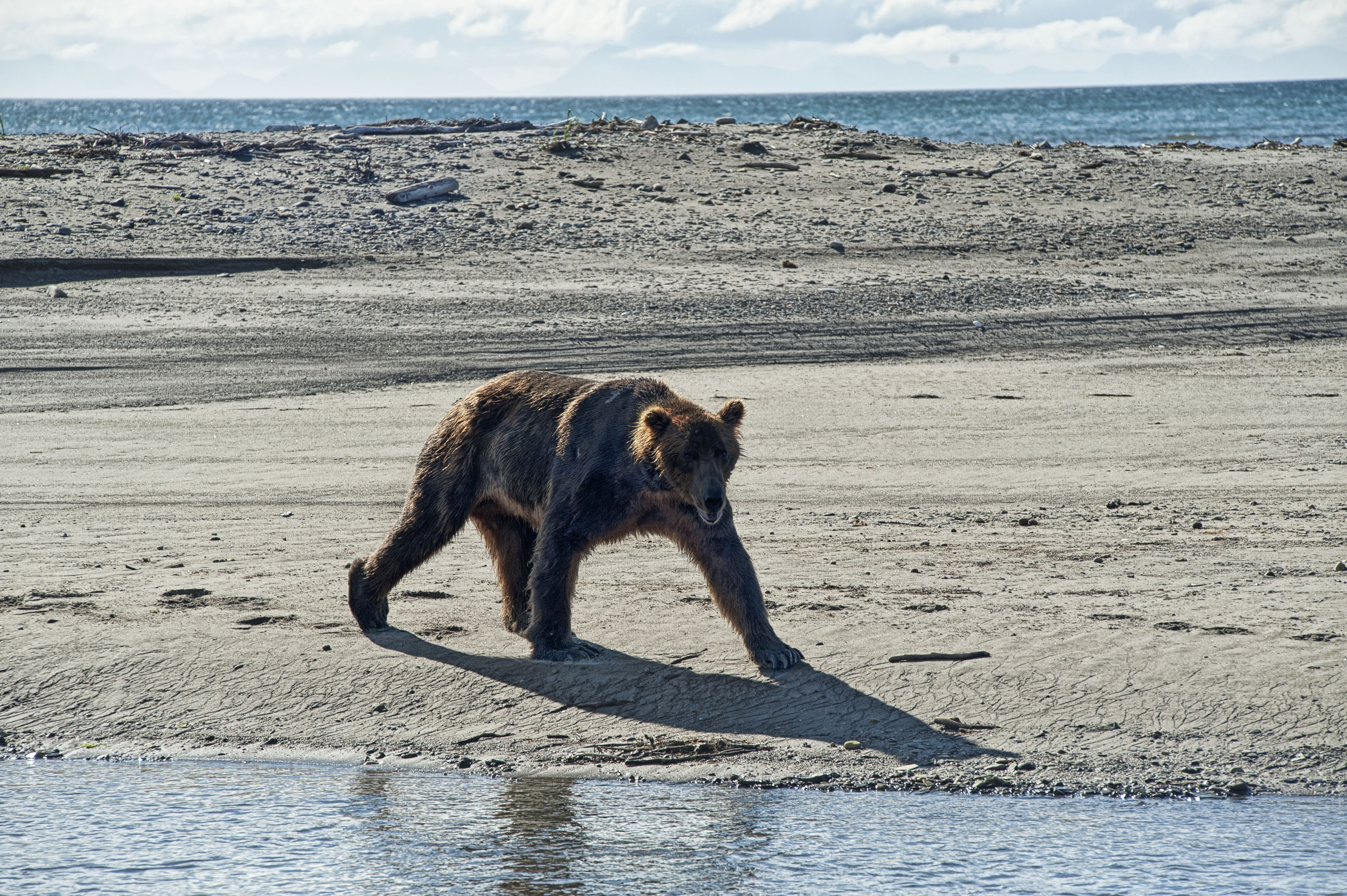
This day couldn’t have been more different. The sky was blue, the sun was out and so were the bears. Within 100m of the camp we came across a bear sitting on the beach have a cat nap (or should that be bear nap?) We sat and waited for him to move off down to the creek and we followed some distance behind, moving to the same log as the previous day.
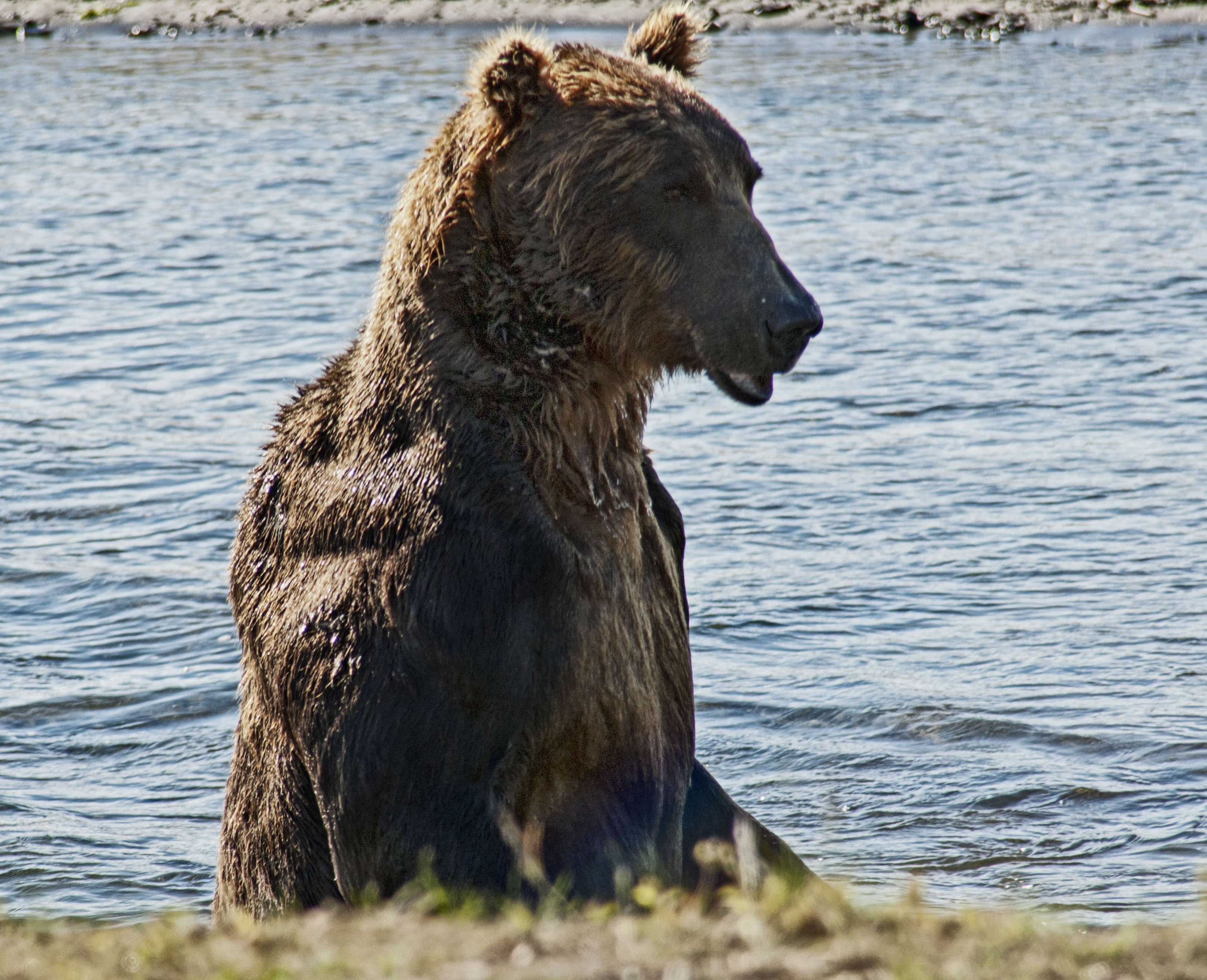
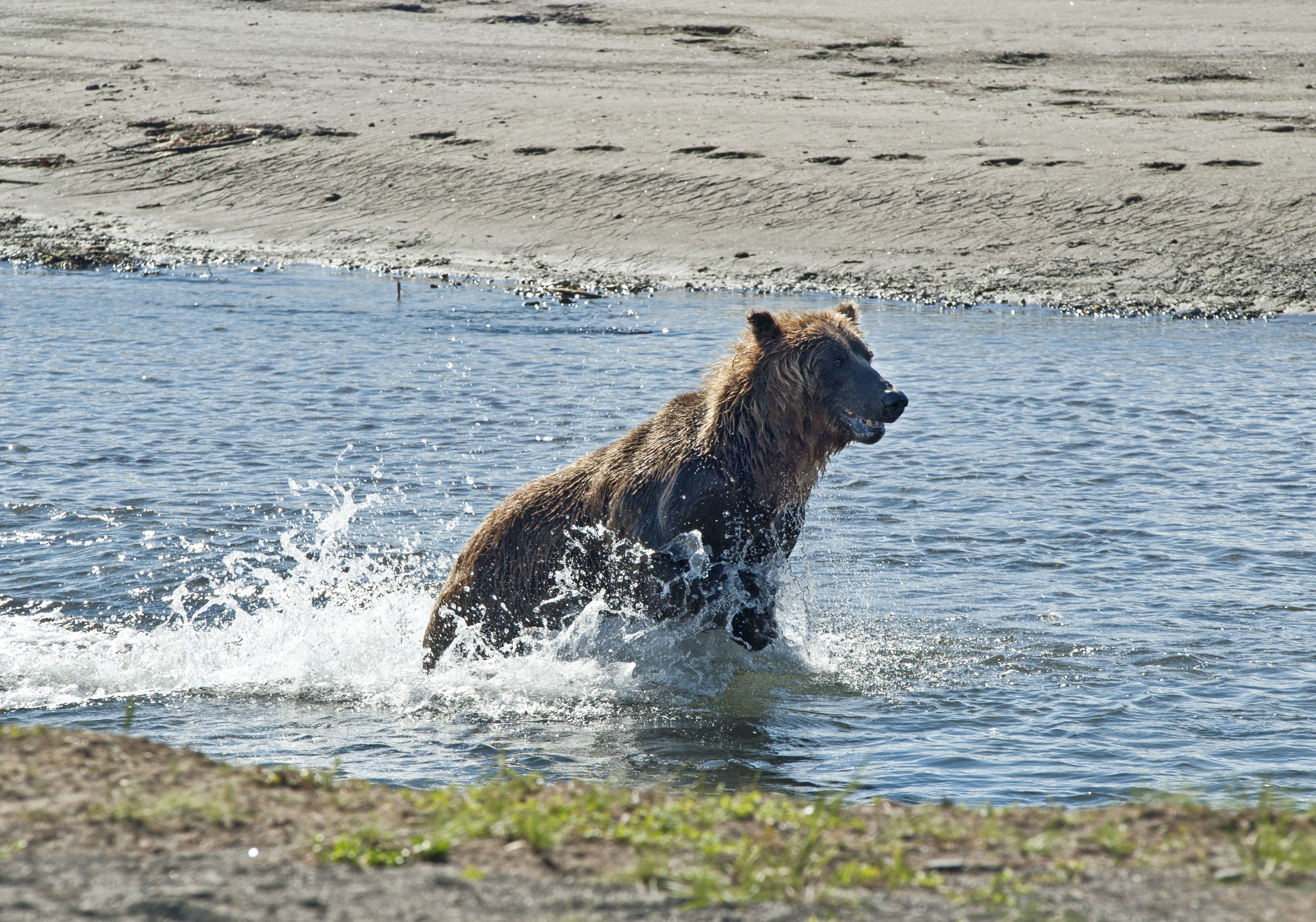
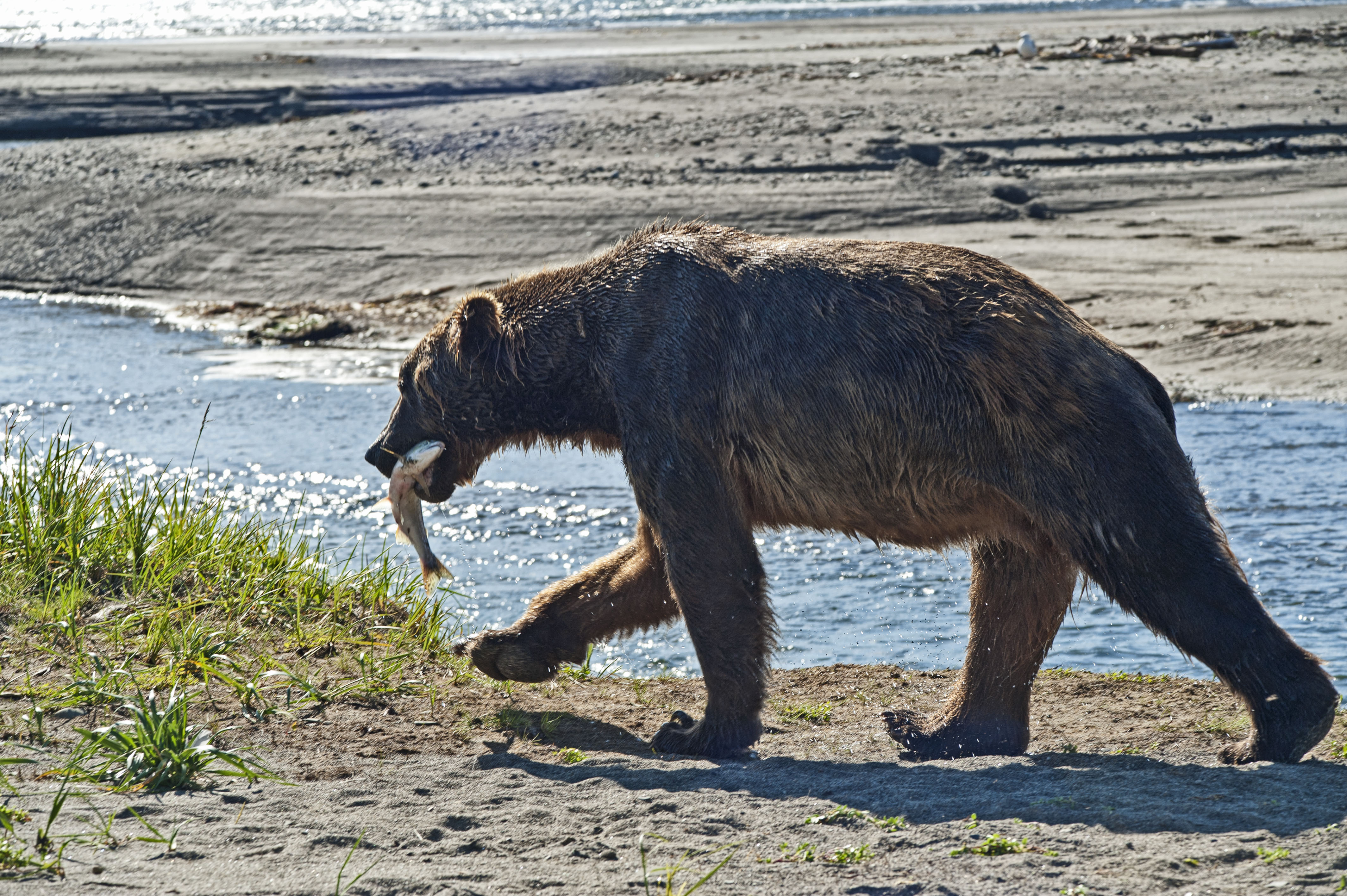
After our disappointment the previous day, this bear viewing was a different story. Over a four hour period we were lucky enough to see three bears (Audrey, Murphy and Ted) fishing, challenging each other and moving around very actively. At times we could see all three bears at once. Ted, the Alpha male of the area, was massive – he was also a brilliant fisher-man/bear and we saw him catch 7 salmon. He would body slam the water left to right to stun the fish until he caught one, which has landed him the nickname ‘ Tsunami Ted’.

Murphy was a slightly younger and smaller male who wasn’t quite ready to challenge Ted but he would stand his ground in the stand offs that they had, until the last minute when he would give way. He was also a good fisher and we saw him catch 3 fish, 2 of them at the same time! He was also watching Ted fish and we saw him copy Ted’s technique which was very interesting.

Audrey was a smaller female who was submissive to both the males and moved away when approached by any of them. She spent less time fishing than the others and spent a lot of time resting.

The bears where completely oblivious to our presence and at times came within 2 metres of us. We kept quiet when they were close and spent as much time as possible sitting to ensure that we did not appear a threat. It is certainly an amazing experience to be so close to such a massive predator.
All too soon our time was up and we had to go back to camp. The flight back was much better than the one out in clear skies for the most part and we had magnificent views of mountains and glaciers as we flew back to Homer.

This was, all in all, an amazing experience and I wish we had had longer. We will definitely come back at some future point in our lives for a longer visit with the Bears of Katmai National Park.
Kachemak State Park
Across the bay from Homer is Kachemak State Park which is over 400,000 acres of wild mountains, glaciers and forests. The only way to access this park is by boat.
We booked a water taxi to take us from the Homer Spit across to a gravel bar in the park known as the Glacier Spit. The taxi would then pick us up at a different place – the saddle trailhead, a protected cove, later in the day.
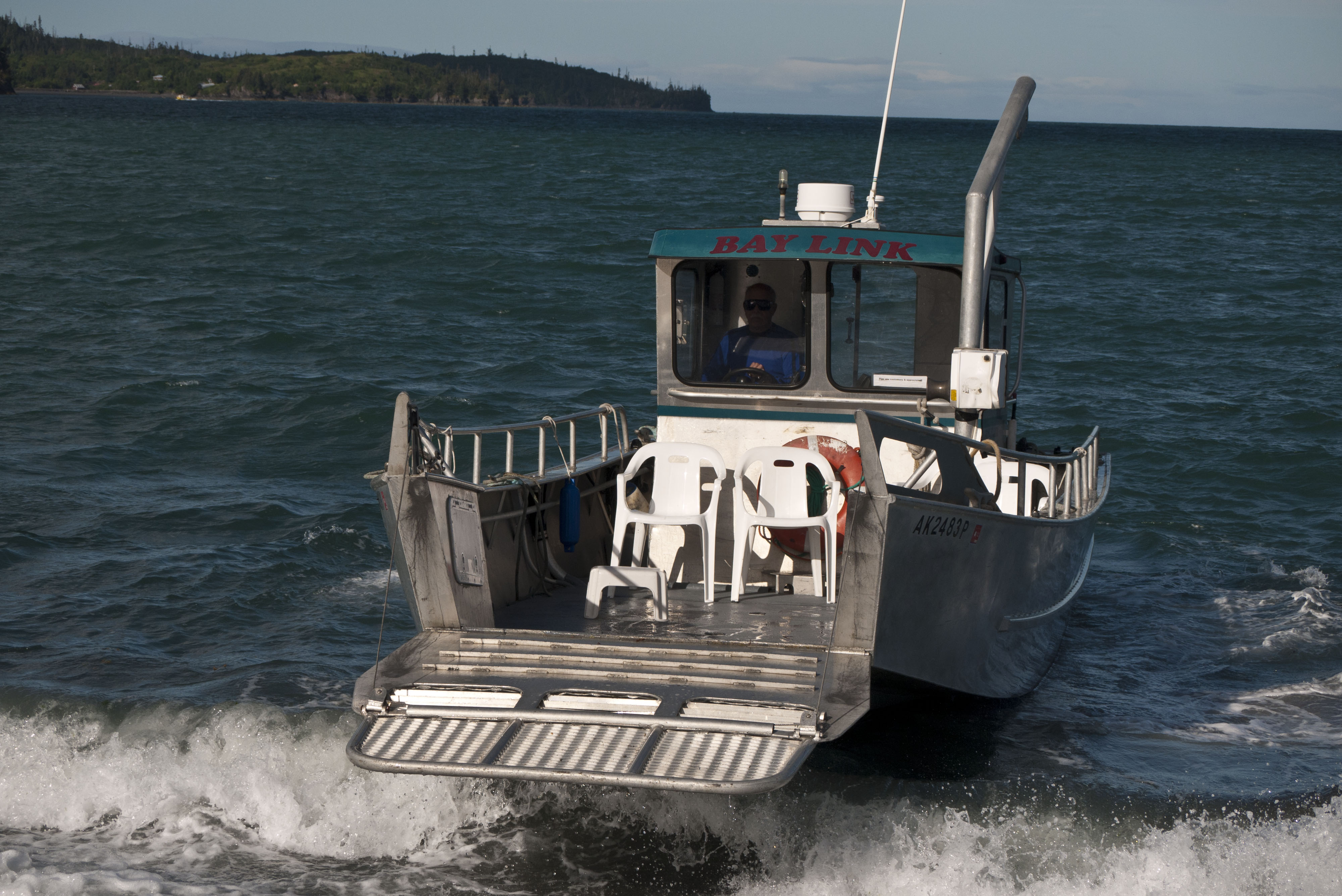
The journey across the bay was fine, a little bit lumpy, but not a problem and the captain dropped us on the beach using without getting our feet wet using his landing craft door.
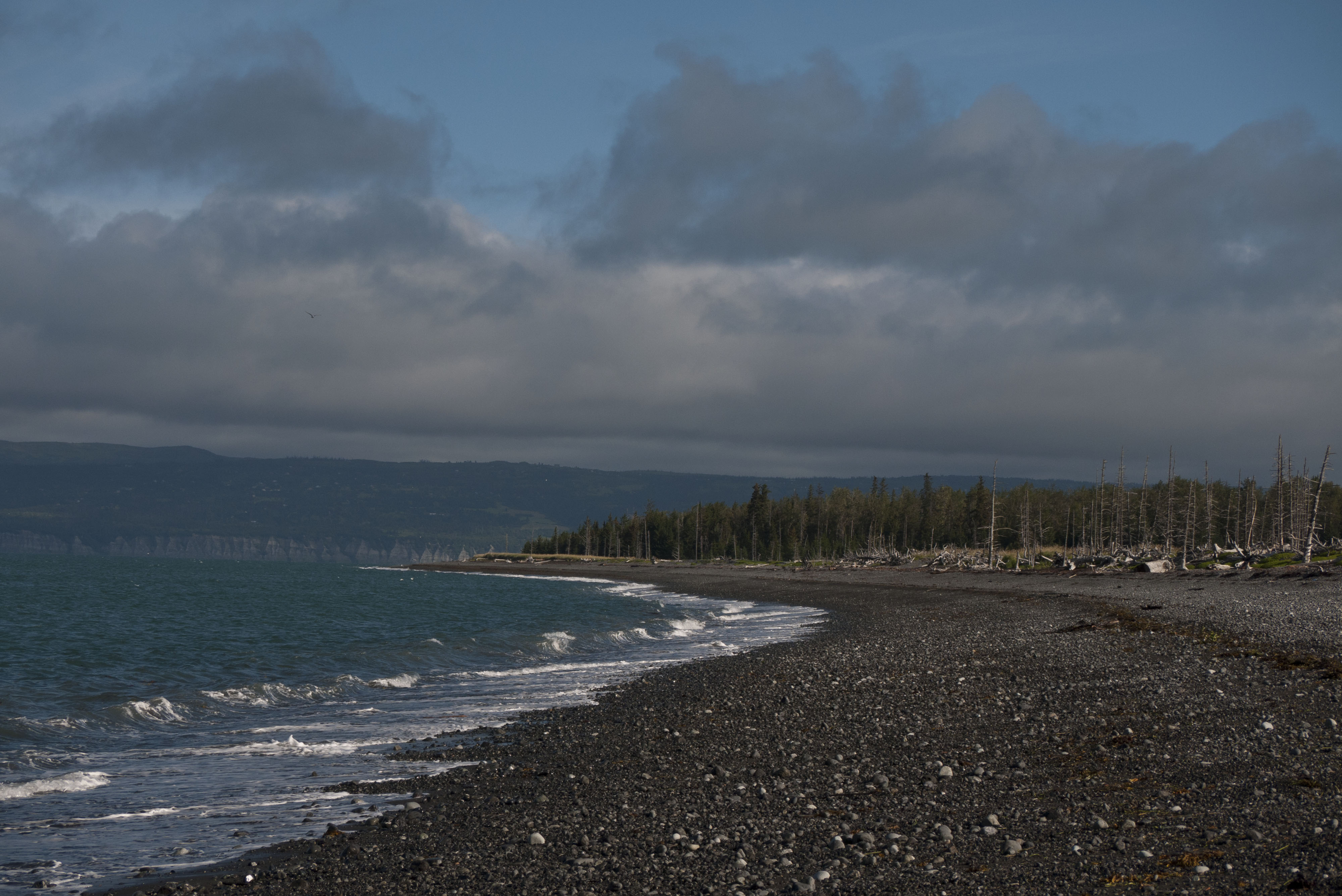
Almost immediately on landing we saw a black bear cub but it ran into the woods before we could get a picture. Where there are cubs there is an adult but fortunately we were going the other way. Throughout the walk we saw an enormous amount of bear poo – there must be a lot of bears around – but didn’t see any.
We soon came to the trailhead and started walking through a thick forest which gave way to less dense forest as we walked down the glacial valley. It takes around 200 years for an established forest to grow – so the state of regrowth gives you an idea of the retreat of the glacier.
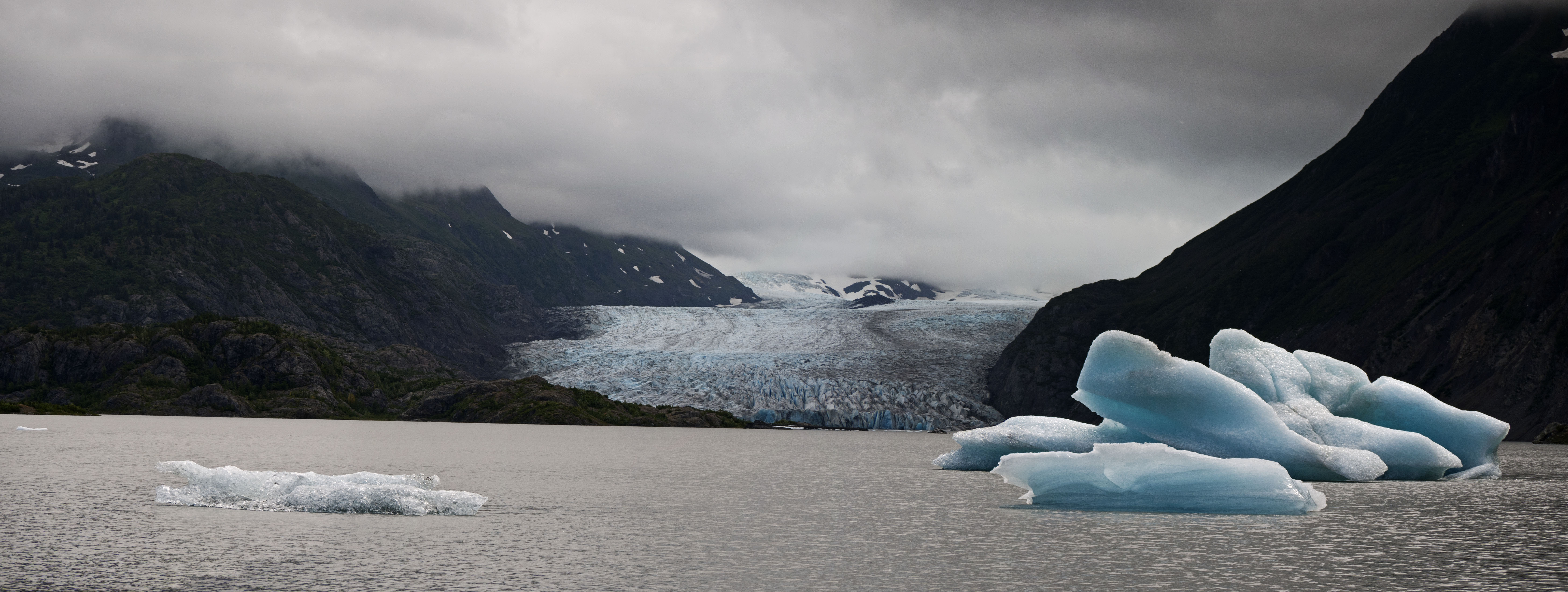
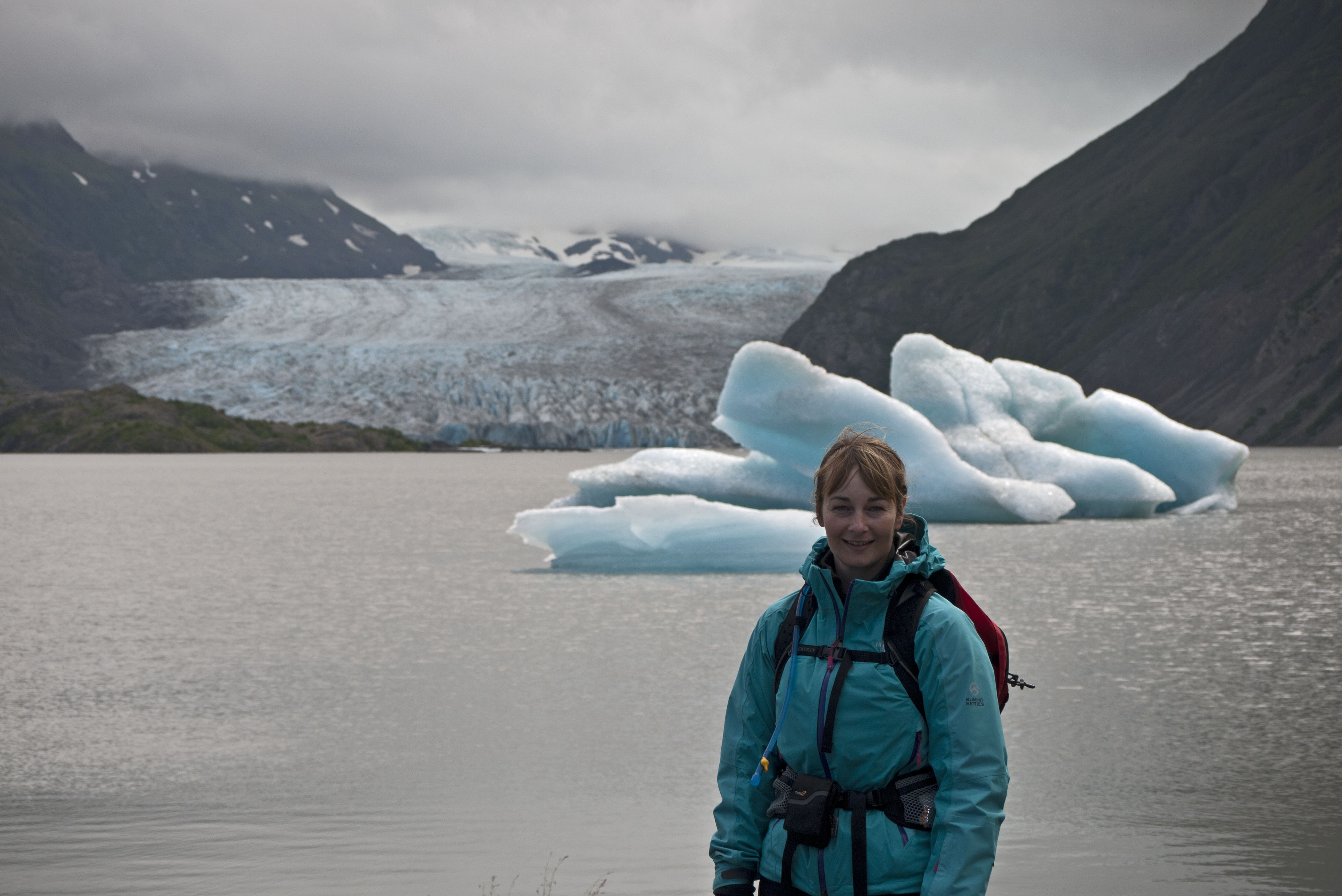
The first port of call on the hike was the glacial lake at the front of the Grewingk glacier. This had a few icebergs floating in it but the glacier was still at least a couple of miles away.
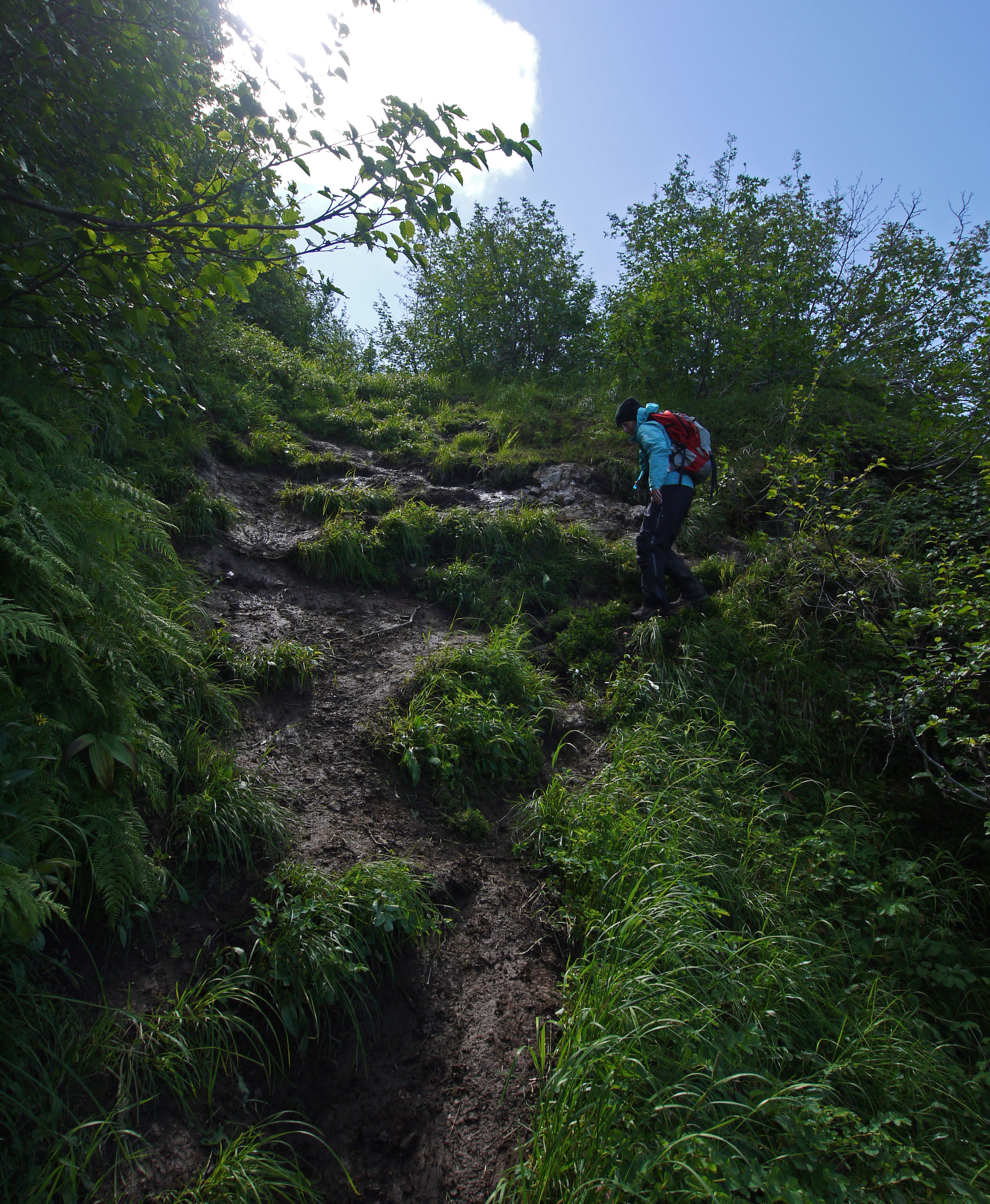
From here we walked up a really overgrown trail which climbed over 600m in 2 miles up a really slippery slope. There were times we had to use the branches from trees at the side of the path to haul ourselves upwards. The view from the top, once we’d entered the alpine zone was worth it though.
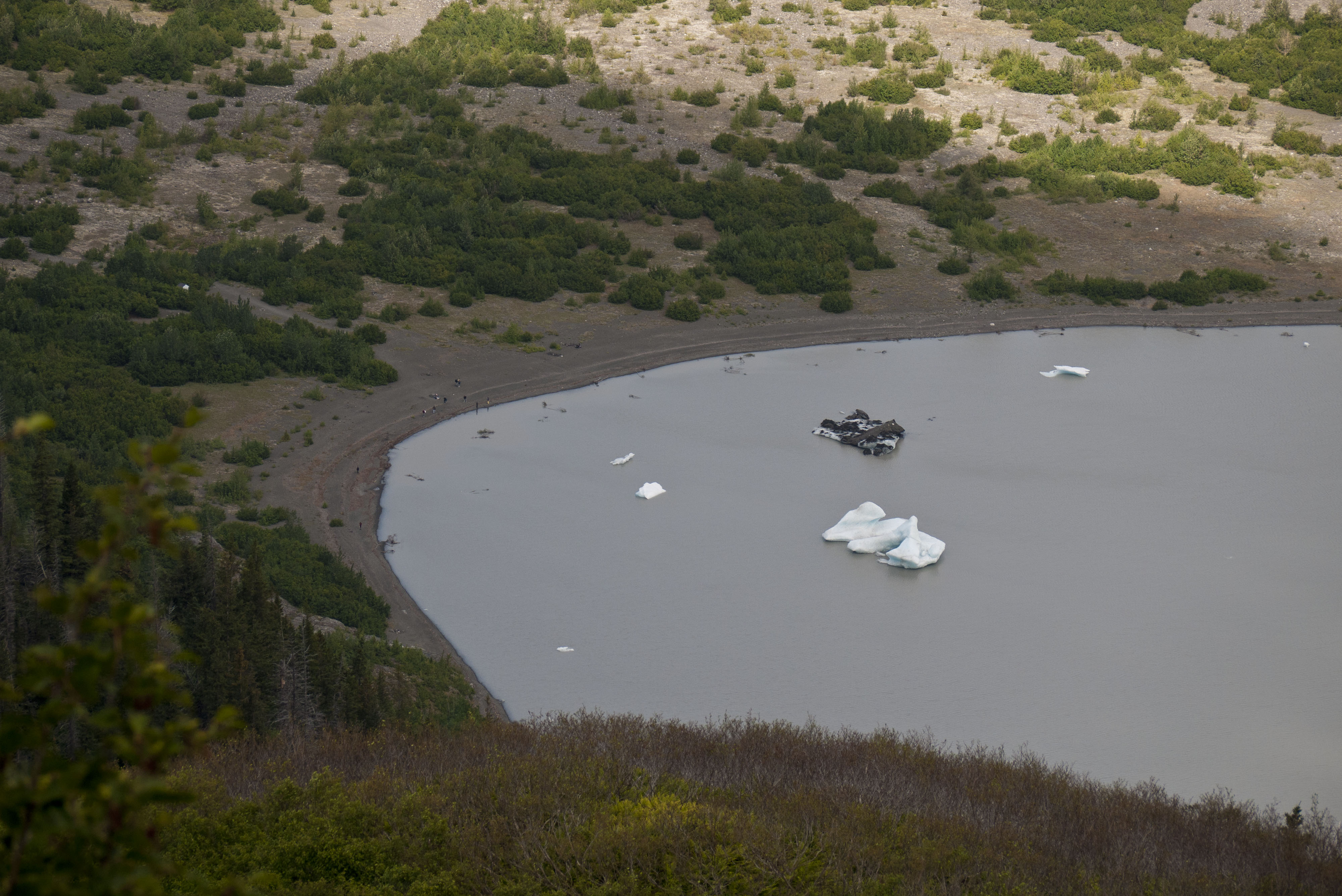

After reaching the top we were running a bit late for our water taxi so had to bomb it downhill to the pickup point. The journey back wasn’t as smooth as the trip out and we were airborne for a lot of it.
Homer – Halibut Fishing
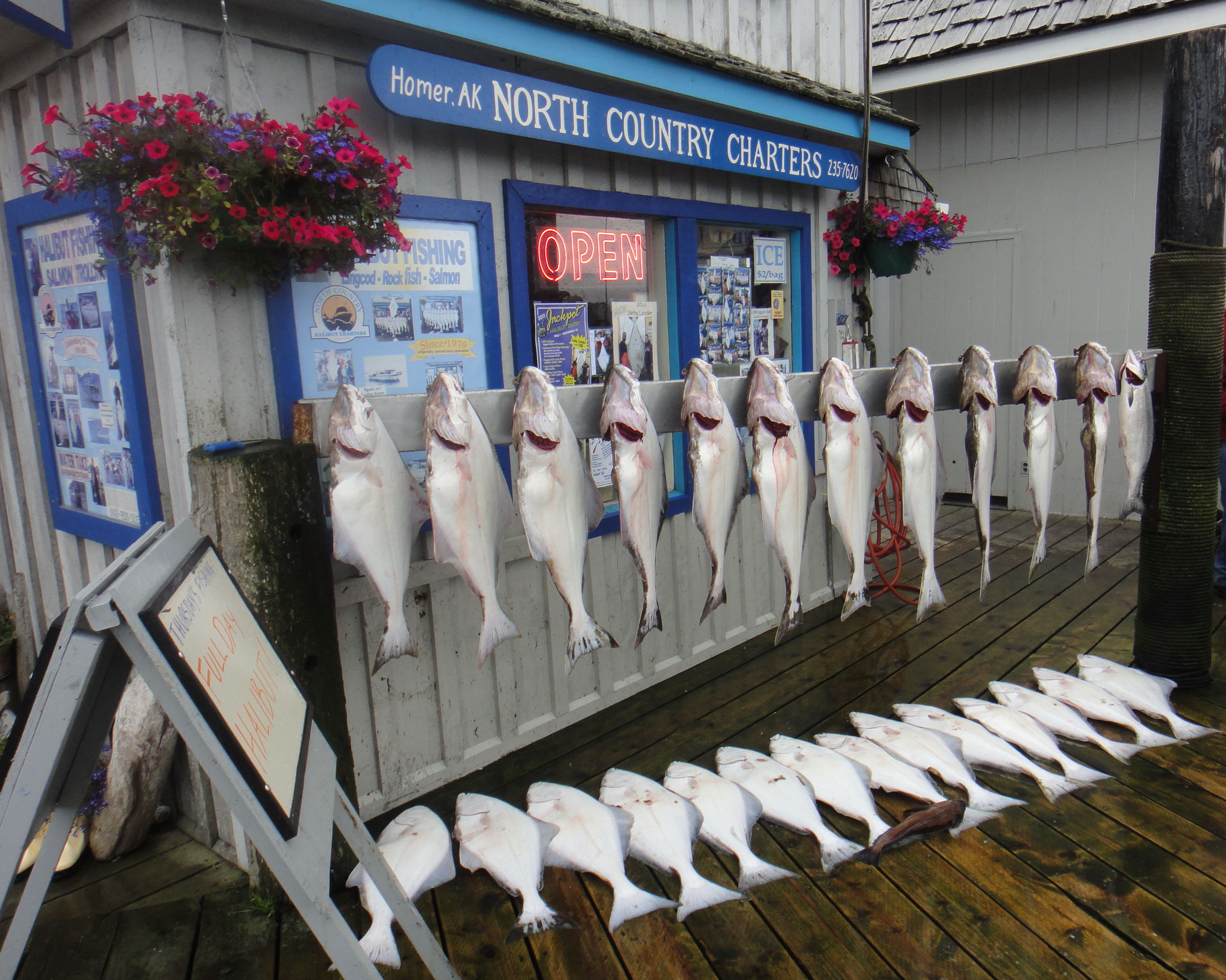
Homer bills itself as the halibut fishing capital of the world. As you walk down the spit every other shop advertises halibut fishing trips, fish processing or some other service related to fishing. We figured we’d better give it a go despite the fact that neither of us has fished before – so we signed up for a ½ day halibut trip with Homer Ocean Charters.

We had the choice of morning (5.30 start) or afternoon – so afternoon it was then. We met at the shop and then went down to the “Bay Explorer” with 14 other passengers and Captain Dave. It was an hour or so out to the fishing grounds – in the comfort of the cabin. When we got there Captain Dave gave a rapid description of how to fish – basically through the line down and reel in the fish – we were handed rods and told to get on with it.
Now both of us had gone into this expecting to catch nothing. Within 30 seconds I had caught my first fish – a good 20 pound halibut. After 10 minutes I had 2 and that’s your limit for the day. Sarah wasn’t far behind. So we had 4 fish – around 40 pounds of meat. We gave two of them away as we figured we just couldn’t keep that amount of fish in the freezer or even eat it any time soon.
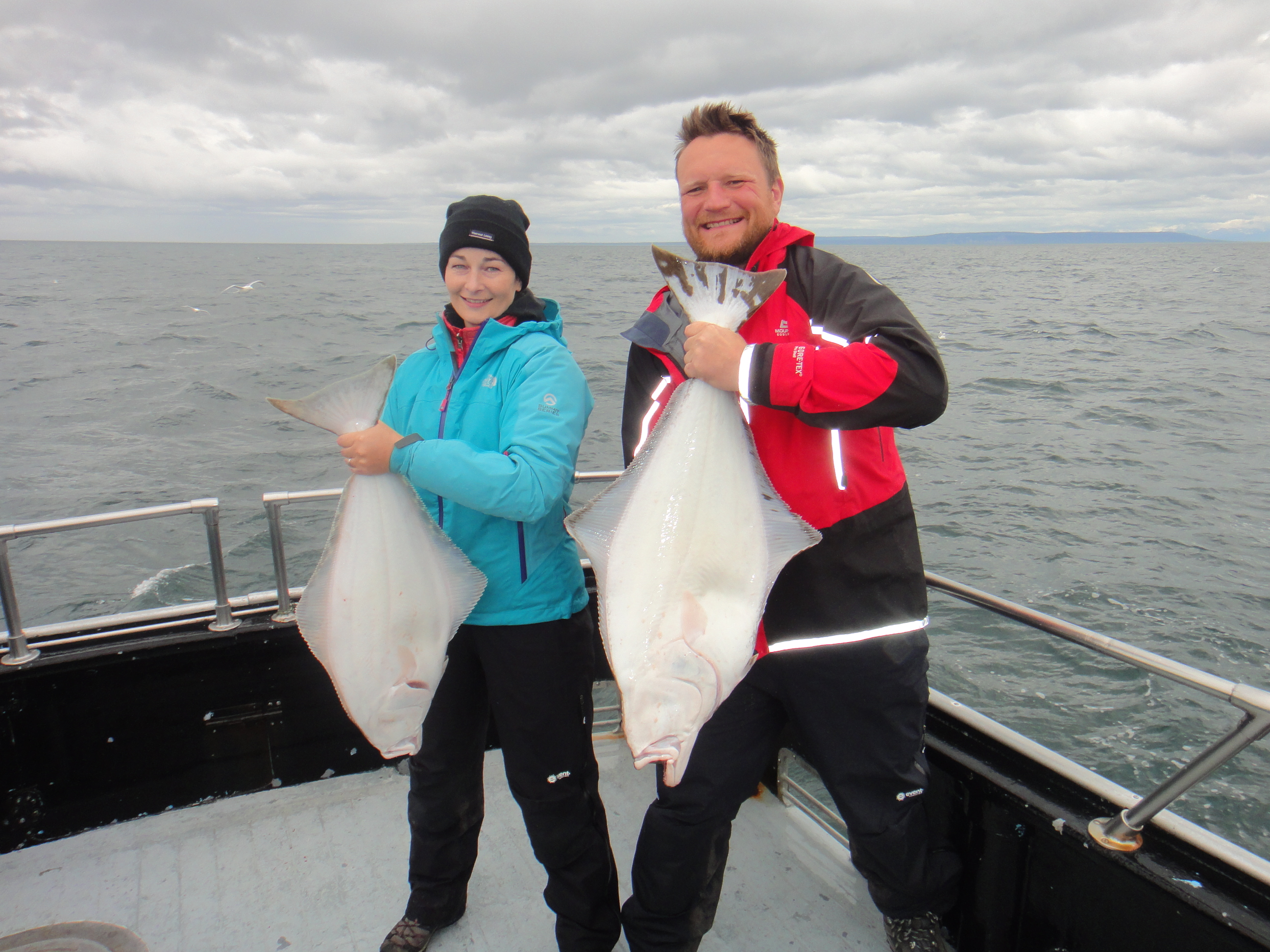
After catching my two I did a bit more fishing – catch and release – but only caught another two before calling it a day. After around an hour fishing everyone on board had caught their two fish so we headed back to the shore.
On the way back the deck hands filleted the fish and by the time we got back to shore it was all ready to be either taken away or sent to a fish processor for freezing and packing. We took 2 fillets in a bag and sent the rest for freezing.
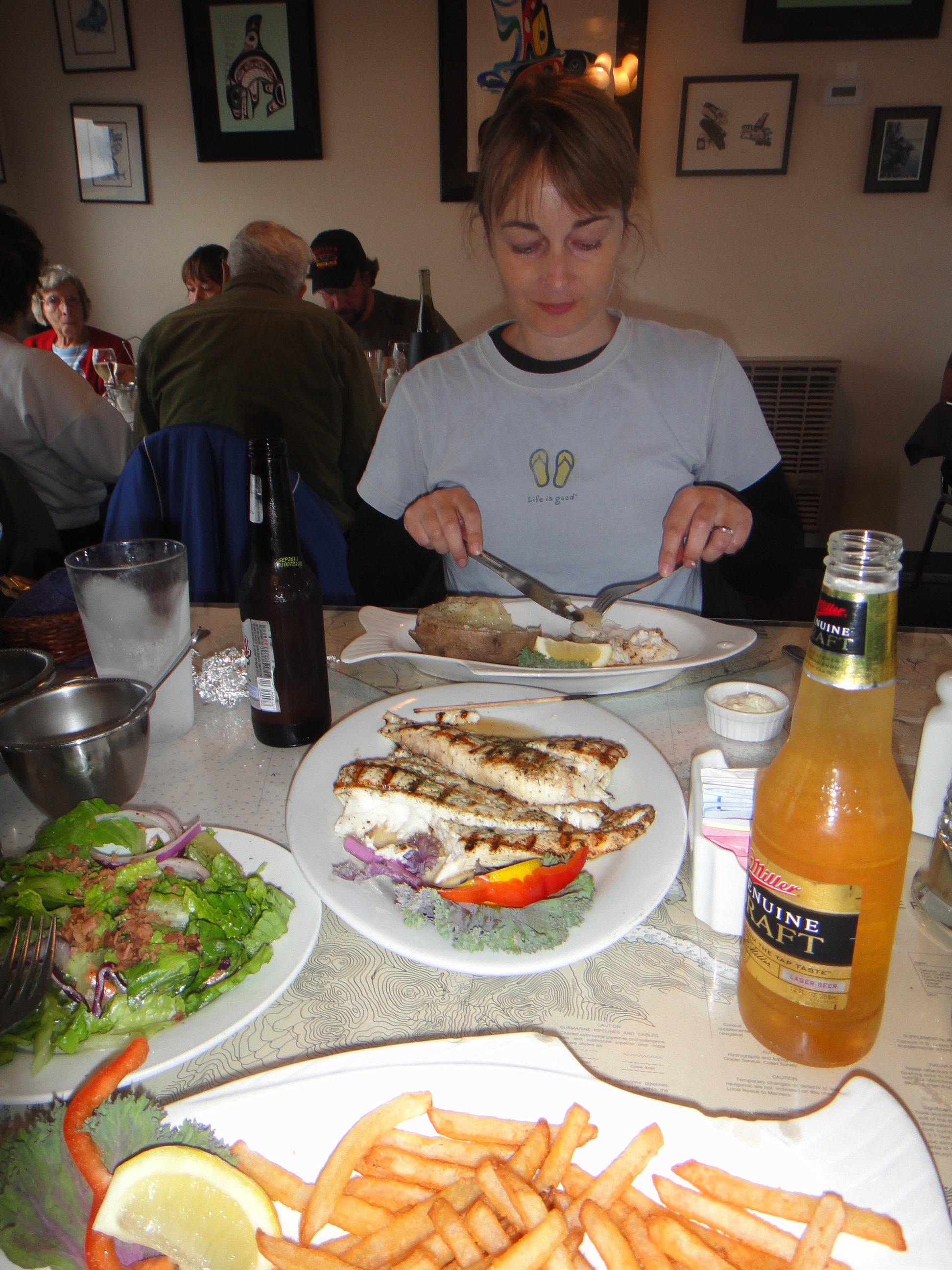
We headed to a local restaurant called Captain Pattie’s where they will cook your fish for you and you pay for the side orders. I can honestly say it was the best fish I’ve ever had – caught by my fair hand and eaten within 2 hours of being caught.
If you think you can’t fish – think again – Halibut fishing is so easy even we can do it !
 FromAtoB