North Macedonia – Part Deux
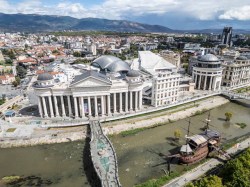
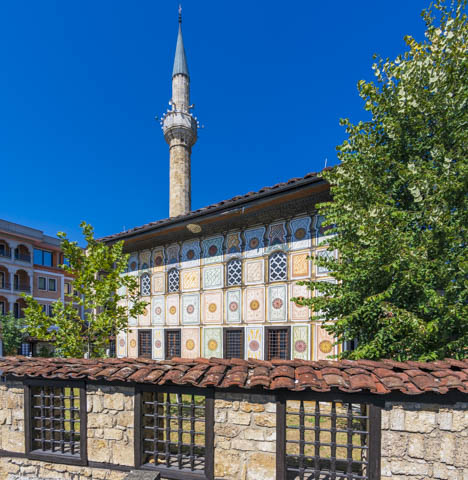
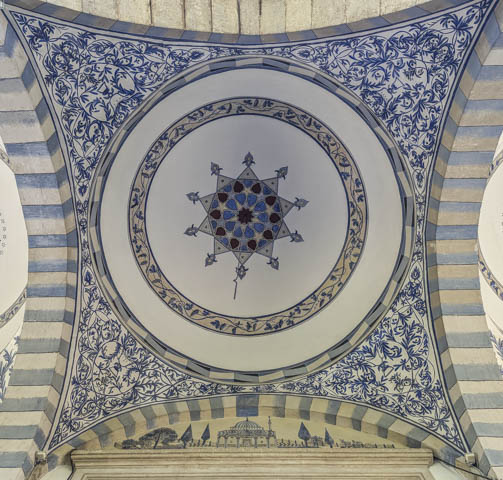
With the capital city, Skopje, in our sights we stopped briefly in the crazily busy city of Tetova to see the famous and impressive 19th century reconstruction of the Painted Mosque (or Pasha’s Mosque), before carefully reversing back out of a road (with the unsolicited ‘help’ of two locals) onto a busy roundabout and getting the hell out of dodge.
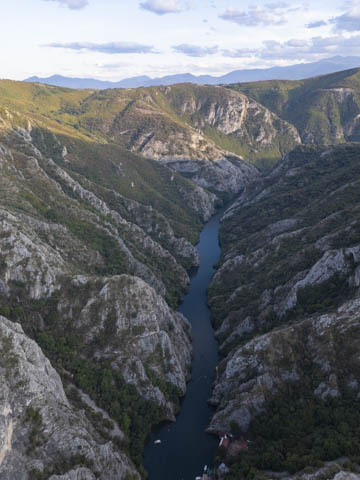
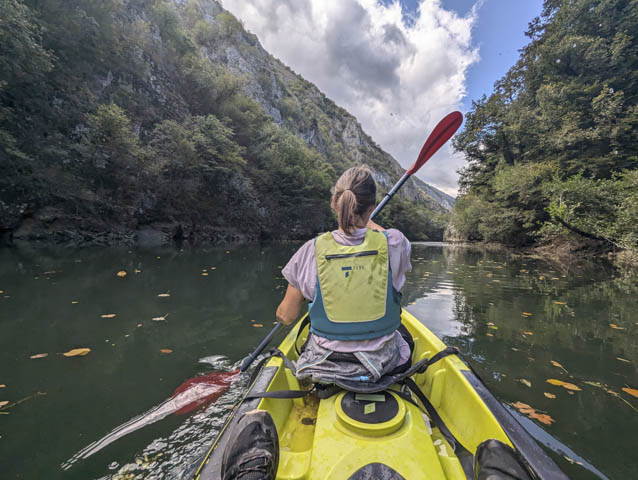
Just before you get to Skopje if you are travelling from the East, is Matka Canyon. Due to its proximity to the Capital it is a popular destination with limited parking so we made sure we arrived early to avoid disappointment. The water of the dammed Treska River is a beautiful turquoise blue and we had a fun couple of hours kayaking through the canyon to visit Cave Vrelo – one of a network of caves thought to be among the deepest in Europe.
The focus here however seems to be the boat tours. When we asked about the kayaking we were told to walk down to the platform where someone would help us. After waiting for 5 minutes or so and with no-one in sight, we helped ourselves to a couple of life jackets, untied a kayak and set off.
While there is no assistance in taking the kayak at the start, the situation is even worse when you arrive at the cave. There seems to be little thought as to how, in a kayak, you access the cave. It looks like there was once a pier but the broken debris was piled onto the steep grainy walls of the river and so it took some very careful manoeuvring and paddling around to find somewhere we could safely get ashore before then clambering over the debris to reach the boat pier and stairs.
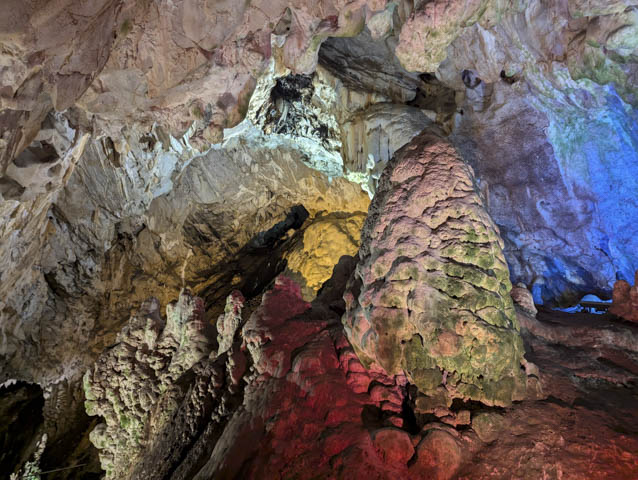
The benefit of kayaking was that we had the cave to ourselves until right at the end when a boat tour turned up but by that point we were already on our way out.
After a leisurely paddle back we were actually greeted at the platform by a couple of people who, despite not bothering to come and assist us when we left, knew exactly what time we had departed to charge us the correct fee. Still we had a good time and afterwards found a nice spot to park up for the night down by the river and away from the comings and goings of the busy car park.
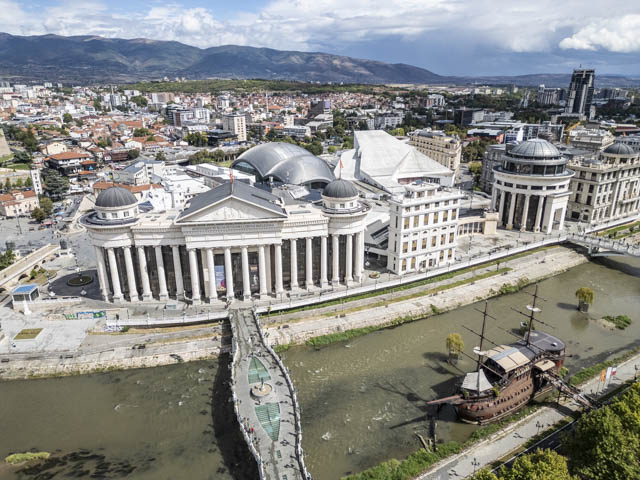
The capital of North Macedonia is called Skopje and it is an extraordinary city. Around 65% of the city’s buildings were destroyed by a massive earthquake in 1963. This led to a rebuilding programme of large buildings in a modernist style.
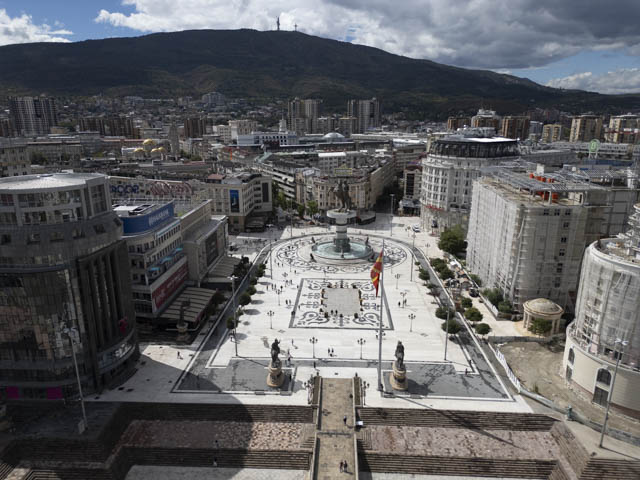
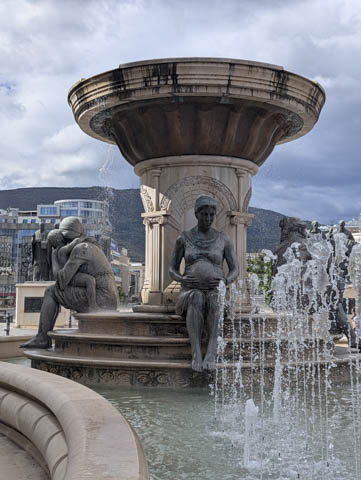
This was then followed in the 2010’s by a programme of building monuments and statues throughout the city as well as large classically styled public buildings which were implemented by the prime minister at the time, Nikola Gruevski.
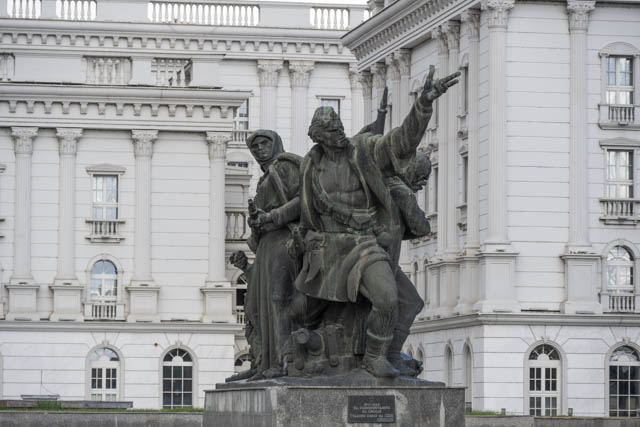
It gives the centre of the city a weird feel of a fake classical city but the statues are certainly impressive.
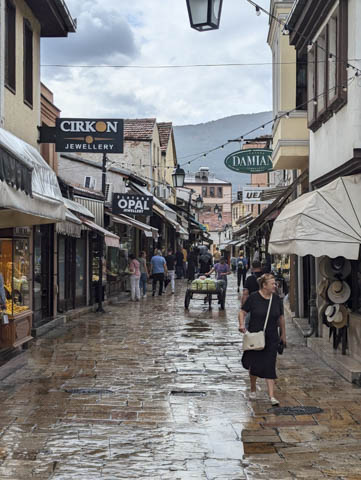
Just a stones throw from the planned but attractive classical centre is the real heart of the city in the Carsija area. Here the narrow cobbled streets bustle with people and there is a large food market.
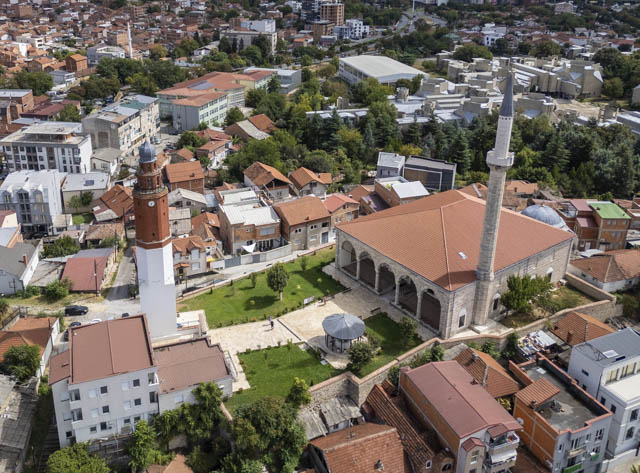
This area is full of ancient mosques and feels like a real lived city as opposed to the centre which has the feel of a set from a dystopian future.
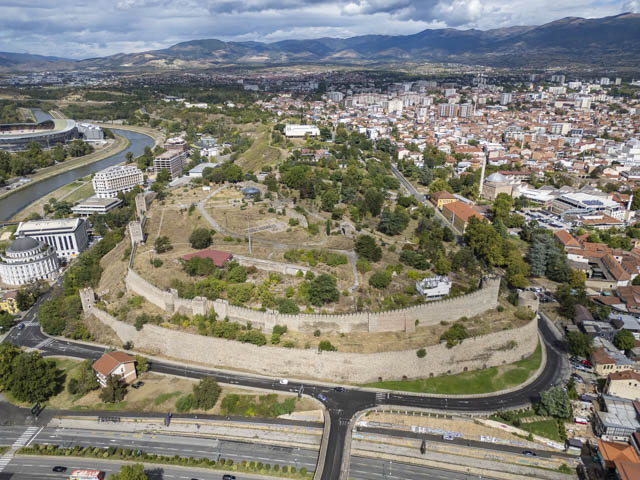
On a hill overlooking the town is the Trvdina Kale fortress, built in the 5th century, which gives good views over the city but only the walls are left now and there is nothing to really see inside them.
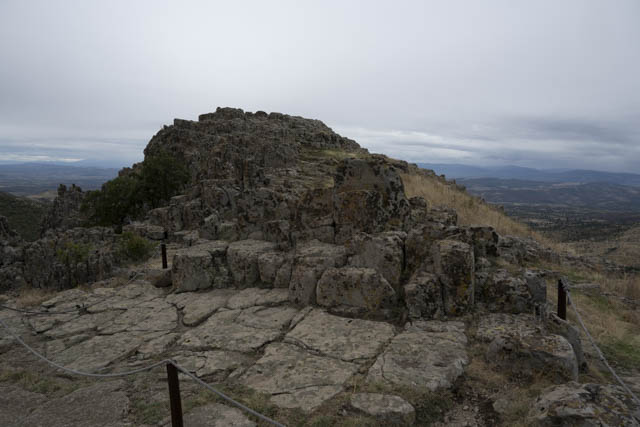
After spending a full day in Skopje we drove back to the nearby Matka canyon for another peaceful night by the river. We were up early the next morning to drive to the Northern end of the country to visit the Kokino Observatory, a Bronze Age archaeo-astronomical site. The site was used for a number of rituals at different times of the year and notches were cut in the rocks where the suns rays outline key points at certain times over a cycle that lasted 19 lunar years.
There is a “throne” for four people where the rising sun would mark out the four rulers one by one on a certain day of the year. We had fun trying to line up the notches in the rock with the different times of year and where they would light up but a few more photos on the information boards would be helpful.
After leaving the Kokino Observatory we moved a little south to Kuklica which is small area with some interesting geological features where “rock dolls” have been created by erosion and are thought to be 30 million years old.
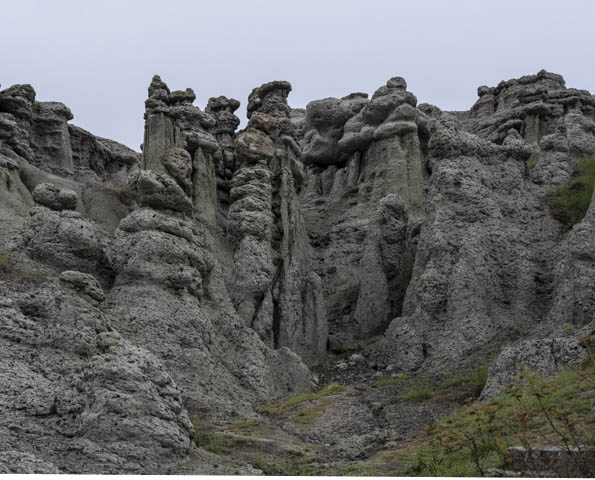
Much like those to be found in Utah in the USA but on a much smaller scale.
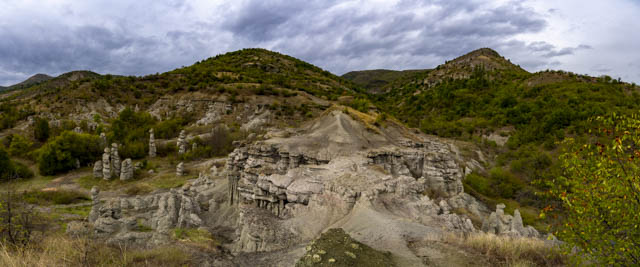
Surprisingly we were greeted by a British accent and we had a good conversation with a guy who runs the site with his wife. They had moved to North Macedonia a few years previously and he seemed pretty pleased to meet some fellow Brits for a chat.
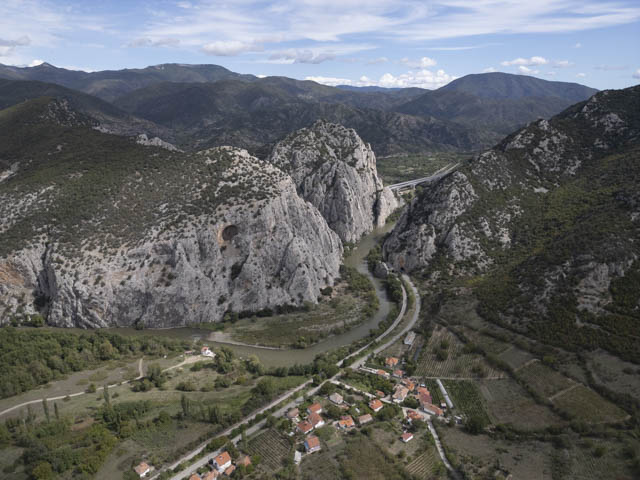
We eventually stopped for the night at Rock Land Camp in the town of Demir Kapija. This was near to our destination for the following day so a convenient stopover. The area has lots of hiking and some great climbing so although we didn’t stay long enough to explore, it’s definitely somewhere to return to in the future.
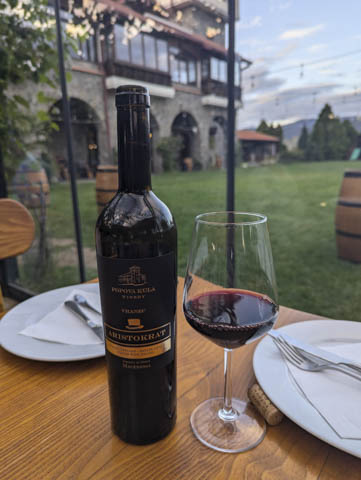
It was my birthday while we were in North Macedonia so Sarah organised a night out at one of North Macedonia’s top winery’s, Popova Kula. They allowed campers to stay overnight in their car park so we could have a good night out and not have to worry about getting home.
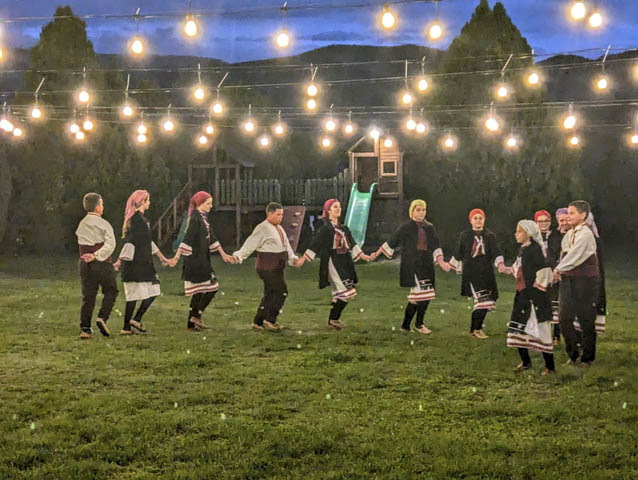
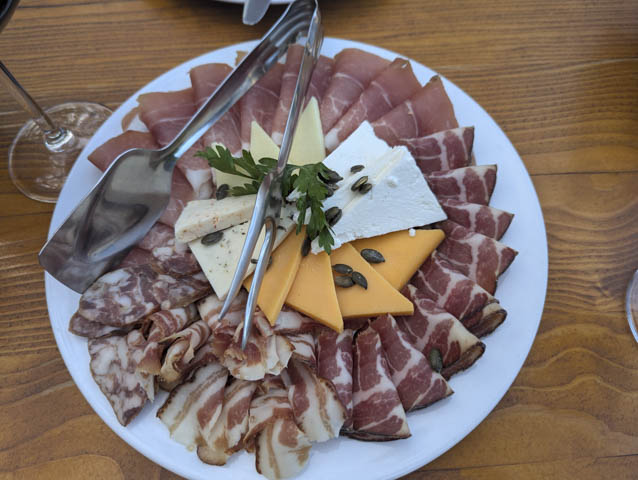
We had a lovely evening at the winery. They even had entertainment in the form of some local children folk dancing and of course the wine was excellent. We splashed out on a much nicer meal than we would normally have, the highlight of which was definitely the huge starter in the form of a charcuterie plate featuring local meats and a generous basket of warm bread – absolutely delicious. To be honest, we didn’t need anything else after that, so we were pretty full by the end of the meal!
The next morning we were a little sluggish getting going but we eventually managed to set off, heading South towards Greece.
We stopped for a remote night in an area below the Treskavec monastery which sits on top of a bare rocky mountaintop. Although much of the monastery has been damaged by fire, the inside of the 14th century central church, which is being restored, still includes some impressive frescoes.
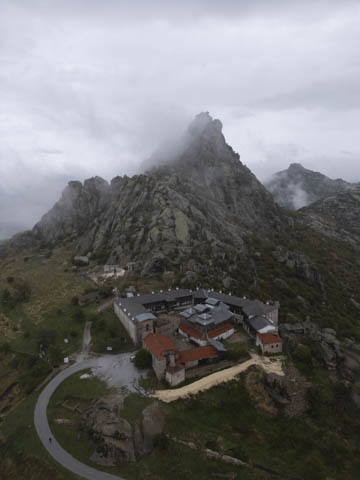
The site has been used as a place of worship since Roman times and there is a still a monk in residence here – plus some chickens and two small dogs.
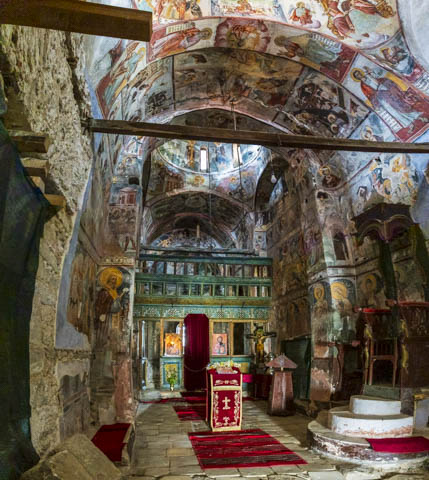
We left the peak of the Treskavec monastery on a cloudy and dull day and headed to the mountain town of Krusevo which was really shrouded in cloud, to see the Ilinden uprising monument. This space age construction commemorates the 1903 uprising which was the country’s first step towards independence, although only lasting 10 days before being ended by the Ottoman empire.
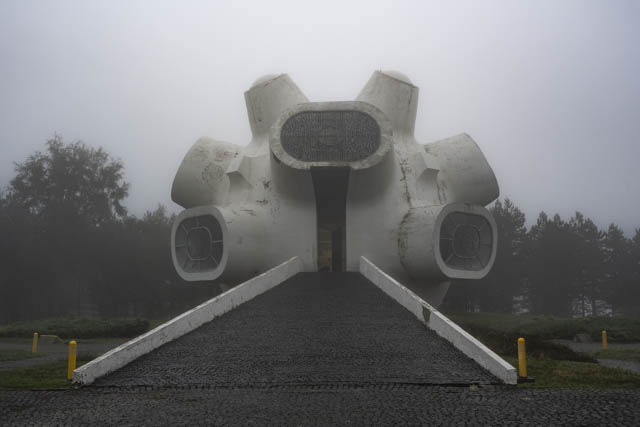
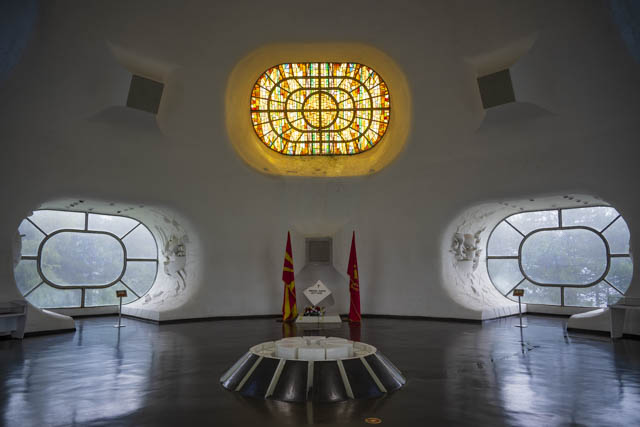
Unfortunately visibility was limited although we did get to see the monument and had a look around inside. It is in need of some TLC though, as testified by the peeling paint and puddles in the interior from the leaking roof.
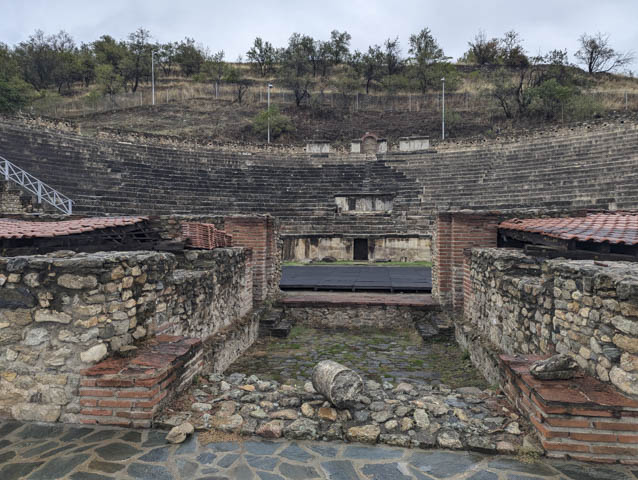
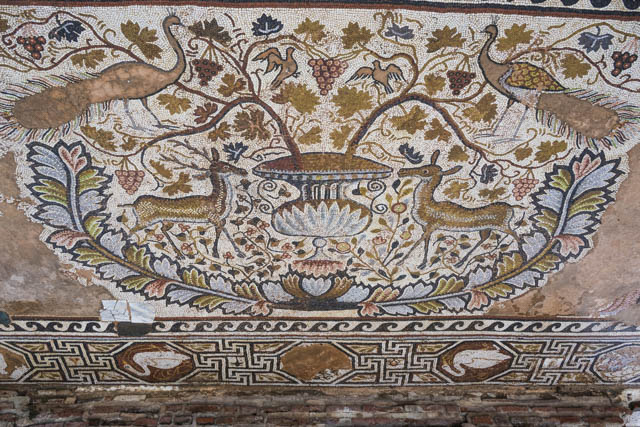
Our final stop in North Macedonia was the town of Bitola. Bitola is a charming town but the real draw here is the old Roman ruins at Heraclea Lyncestis. The site is small but has some excellent mosaics and a partially restored theatre. The city was important for trading from around 200 BC to the 4th century but unfortunately was then sacked by the Goths and abandoned.
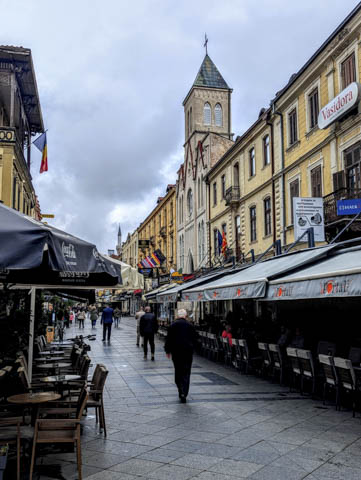
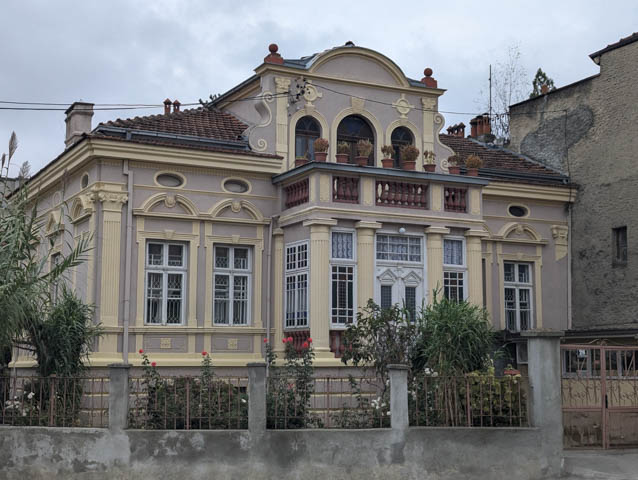
The city of Bitola is known as the city of consuls as during Ottoman times many European countries had their consulates there. Today the city is very much one of faded glories with lots of 18th and 19th century grand townhouses looking worse for wear.
It is one of those cities where nothing is particularly spectacular but it’s just a nice place and we spent a few hours wandering around. We visited the big central market and walked around the Stara Carsija, Bazaar area, as well as the main shopping street where we stopped to people watch from one of the many cafes.
Bitola was our last stop in North Macedonia and we had thoroughly enjoyed this country. It feels like a bridge between the other Balkan countries and the EU and we will certainly be back to explore in more depth. But next for us is Greece, our ultimate goal of this trip.
North Macedonia – Part 1
We didn’t have to travel far to cross from Lin on Lake Ohrid into North Macedonia. It was an easy crossing with the ability to buy insurance at the border. The town of Struga (also on Lake Ohrid), is just a short distance away where you can easily park up on a quiet side street and walk into the centre to pick up some local currency, sim cards and anything else you may need.
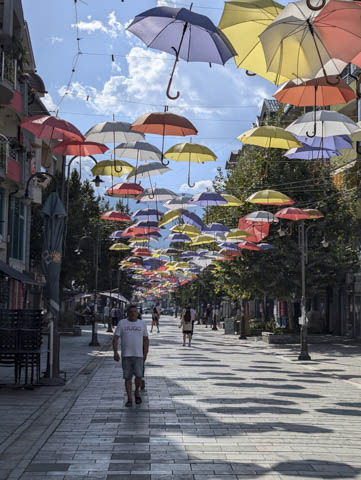
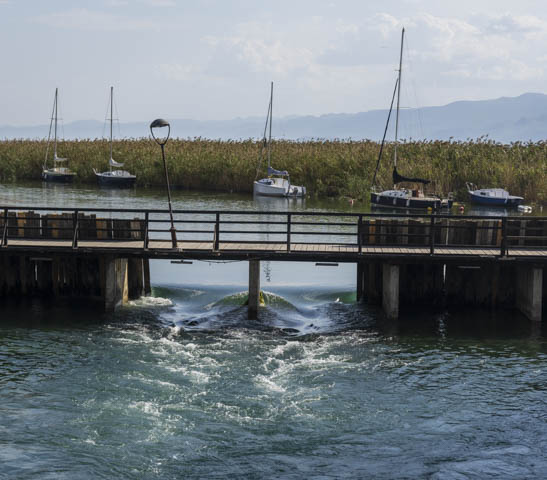
Struga has the feel of a holiday destination with hotels on the lake shore lined with sun loungers and plenty of bars and restaurants to choose from. The Black Drin river runs from the lake and is a good place to go for a stroll or a swim to cool off from the heat of the day.
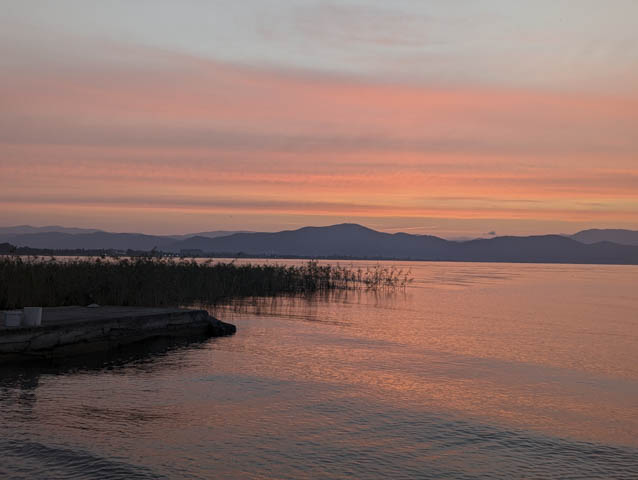
From here we chose one of the many campsites that line the shore before jumping on our bikes and heading off to explore the area.
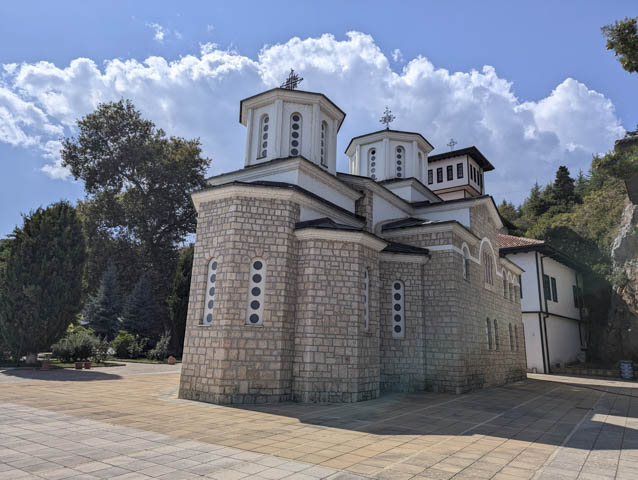
A short cycle from the campsite is Kalista Monastery. The monastery’s church has a great position overlooking Lake Ohrid and unusually, we were able to access the upper floor of the church which provided a great viewing platform. While we were visiting, a boat arrived with a bride and groom and their wedding party. Not a bad wedding venue!
The real reason for visiting this monastery complex however is not the beautiful lakeside location, attractive monastery church, or the smaller Church of St. Peter and Paul, it is the connected 14th century cave church. There is a small fee for entering the cave church but as there wasn’t anyone on the desk when we arrived we entered without charge, although the lights were off and we had to sneakily locate the key to turn them back on!
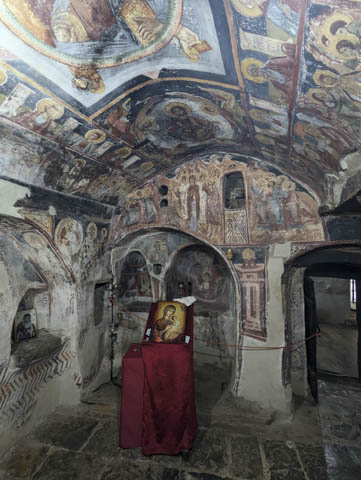
About 500 meters further along the coast, past a hotel and leisure complex, is another one of these very cool cave churches, the 14th century cave church of St. Athanasija. Based on the style of the frescoes it is thought that they were painted in 1360’s. We thought that it may be locked but upon climbing the metal staircase we found it open and unattended.
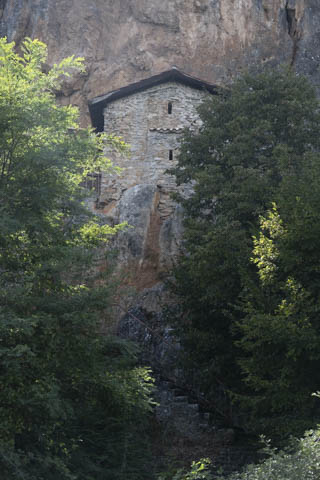
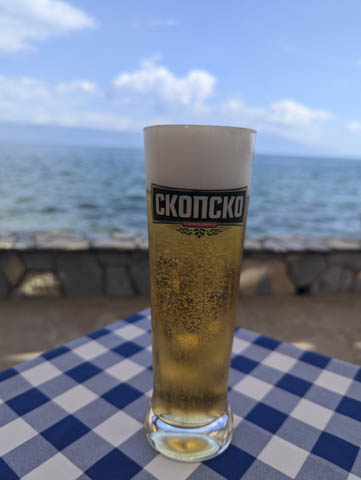
Having come to the end of the path, we walked back to retrieve our bikes and headed to a lakeside bar to quench our thirst.
The following day we drove further along the shore of the lake to the attractive but bustling town of Ohrid. As it happened, we turned up in Ohrid on Independence Day, so the place was pretty busy with locals enjoying a long weekend. There is a lot to explore here and enough cafes, bars and restaurants to cater for everyone.
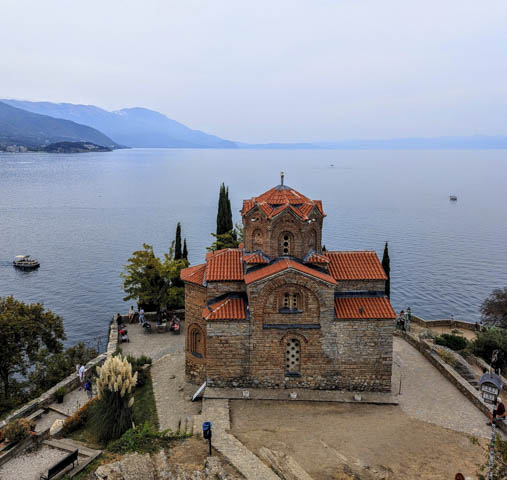
The walking tour takes you down narrow cobbled streets, past numerous churches, along a cliff-side boardwalk, past beautiful waterfront restaurants where we decided to stop for a leisurely lunch and a glass or two of wine, before climbing up to the picturesque Church of Sveti Jovan overlooking the lake.
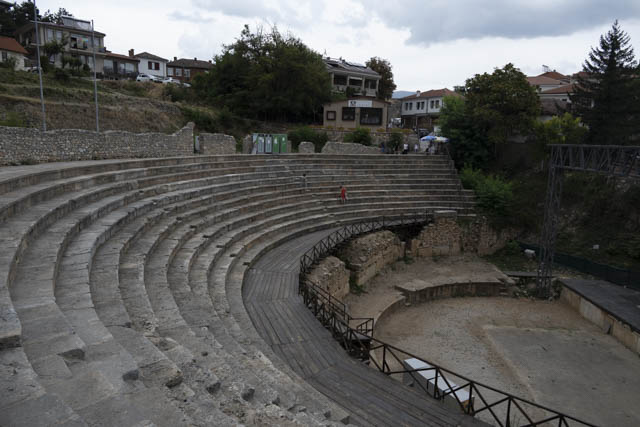
Next up was the Hellenistic Amphitheatre that dates back to 200 BC. Later, during Roman times, as well as plays and performances, it was also used for gladiator fights and executions. The latter is believed to have made it unpopular with locals and so, with the downfall of the Roman Empire, the theatre was buried and consequently well preserved. It wasn’t until the 1980’s that it was accidently discovered during building works in the area.
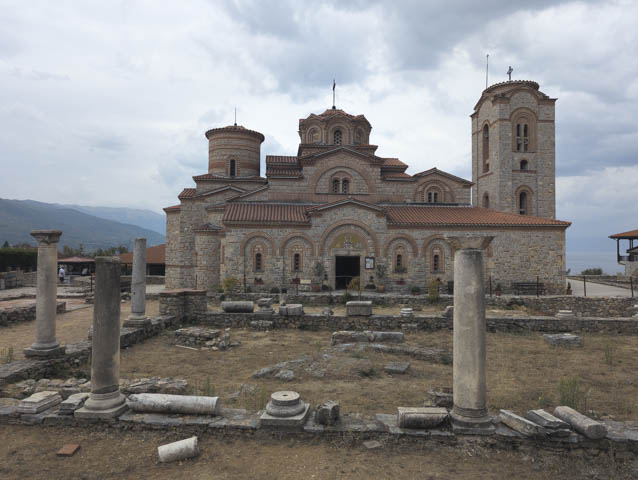
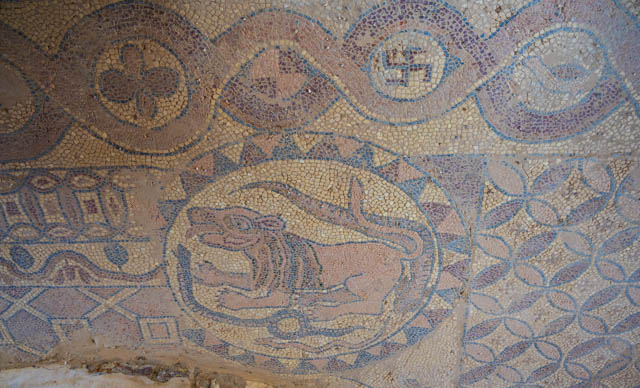
From here we walked to the archaeological site of Plaosnik – which contains the church of St. Clement from 893, the ruins of a 5th century basilica and some impressive floor mosaics.
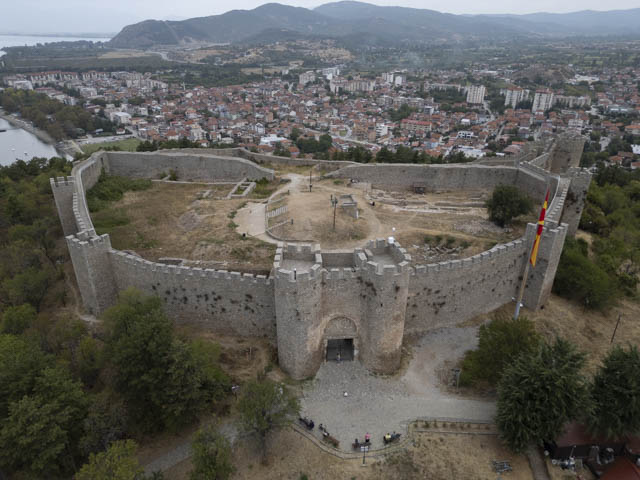
And, last but not least, we completed the walk to the very top of the hill to the gates of Samuel’s Fortress – one of Macedonia’s largest medieval fortifications dating back to 209 BC. Unfortunately for us, having made it all the way to the top, we found that it is closed on Mondays.
Ohrid is sometimes referred to as the Jerusalem of the Balkans (because it once had 365 churches), but there is a fee to enter many of the remaining churches and as photography is also forbidden we decided to give them a miss.
With a full day of sightseeing behind us and a couple of lunchtime drinks, we decided to stay put for the night in the lakeside car park where we had parked to visit the town. As a general rule, we prefer not to stay in town car parks if at all possible as they tend to be the meeting place for groups of teens and couples until the early hours of the morning, however thanks to an evening of torrential rain we spent a very peaceful night here!
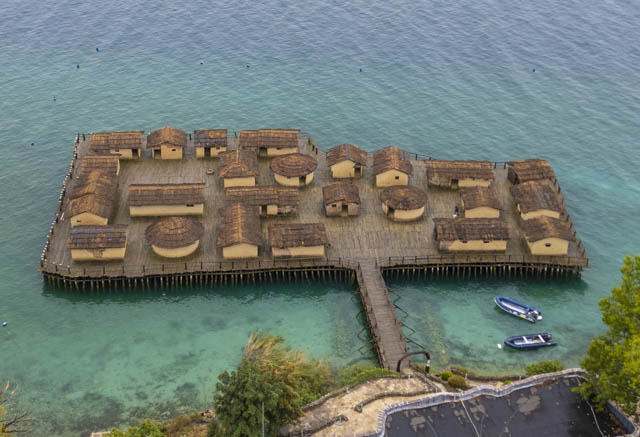
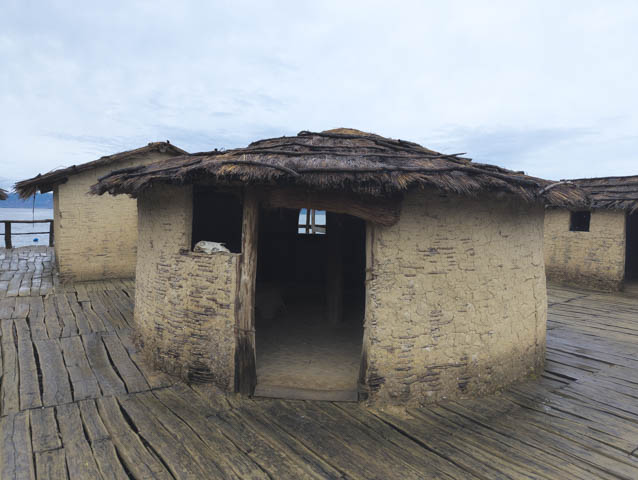
The next day we drove to the eerily named, Bay of Bones, museum on water. This is a reconstruction of a prehistoric settlement on Lake Ohrid, dating back to between 1200 and 700 BC, where, rather than live on the shore, the villagers drove up to 10,000 wooden piles into the lakebed and built their modest homes over the water. Historians have dated the settlement to the end of the Bronze Age and beginning of the Iron Age and, given its fascinating history, this should be a really interesting attraction. However, there is minimal information at the site to bring this attraction alive and it really feels like with a little effort they could make the experience far more interesting.
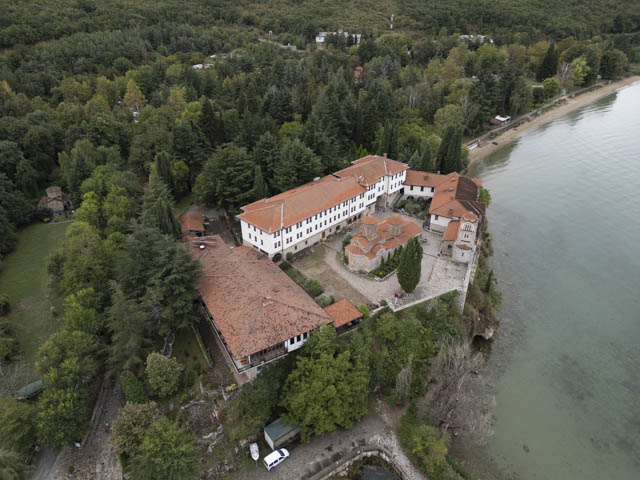
Further still along the shore is the Sveti Naum Monastery. This was unlike any other monastery we had seen so far on this trip, in that it seemed more like a monastery theme park. There is a boating lake with boat trips to the Springs, roaming peacocks, restaurants, a hotel and souvenir shops lining the promenade up to the monastery. The place is a money-making machine with coachloads of people being bussed in, including from over the border in Albania. The original church on this site was built in 900 but this was destroyed by The Ottomans in the 15th century and the current Church of Sveti Naum was rebuilt in the 16th and 17th centuries.
After the recent hustle and bustle we decided to head into the mountains for a little peace and quiet to Galicica National Park which provides fantastic views of both Lake Ohrid and Lake Prespa. This is a pricey park to spend the night though with an entrance fee the equivalent of €13 (600 dinar for the vehicle and additional 100 dinar per person)! Having spoken to fellow travellers who visited the park recently and were only charged for the vehicle, it is possible the additional 200 dinar was a nice little tip for the ranger!
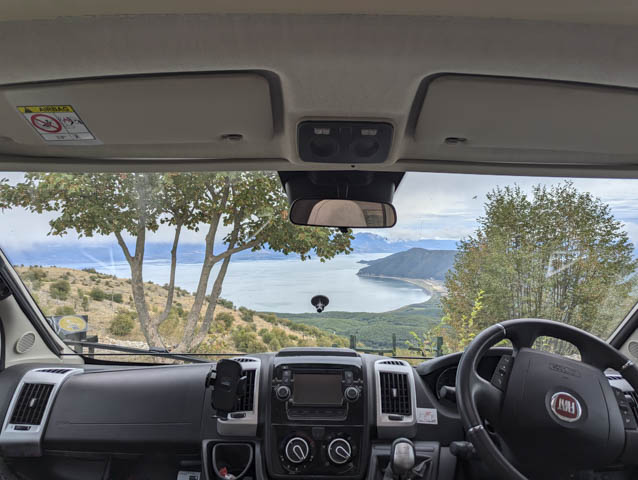
There is a very nice park-up along a narrow spur road with a beautiful view of Lake Prespa, which had barely any passing traffic, so we were a little surprised when three 4×4 vehicles on a tour parked up around us and took their groups to the view point where they gave them some local information about the area. However, the good thing about being this high is that it is pretty cold out of the sun, so it wasn’t long before we had the place to ourselves again.
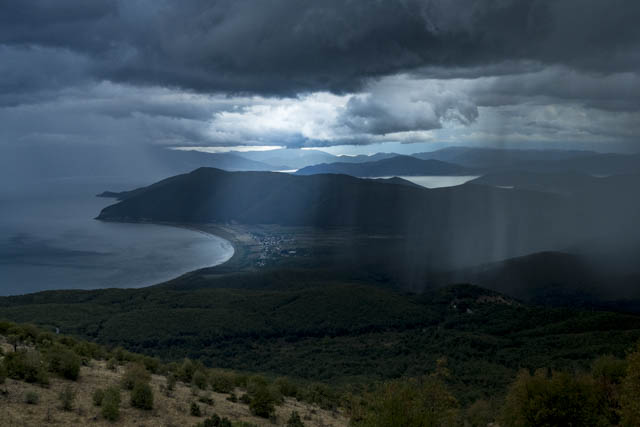
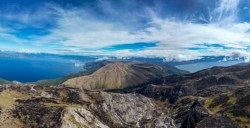
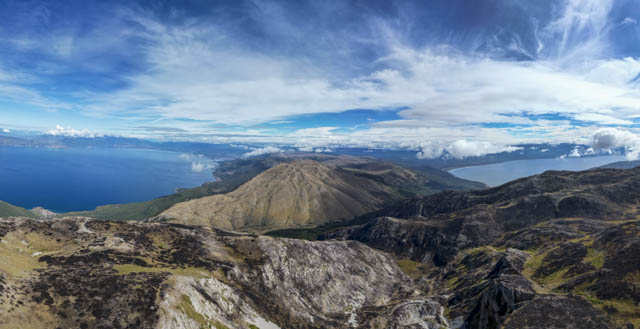
There are lots of hikes in the park and the next morning I set off on the hike to Magaro Peak. The first section is a steep hike up through forest and into a gully but eventually you reach a crossroads at a saddle. There is a choice of two directions but both go to the same place. I chose the steeper of the two and after another 30 minutes or so of climbing along a ridge and around a cirque there was a traverse across to the peak. The views from the peak aren’t actually as good as the views from the route up, where you can see both Lake Ohrid and Lake Prespa at the same time.
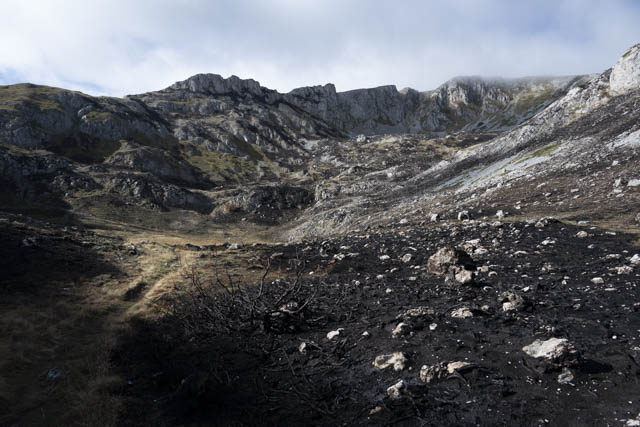
For the route down I looped around the other way which Is a bit longer and the views definitely weren’t as good. There had also been a forest fire come through this area recently and there were still lots of patches of slightly smoking ground !
Having hung around the South Western corner of the country for a while it was time to start heading north and the next stop on our clockwise circuit around the country was Mavrova National Park and the Monastery of Sveti Jovan Bigorski. Unlike Galicica, there was no fee for entering this park. It is a beautiful drive following a winding river through a narrow gorge and is home to the country’s biggest ski resort in Mavrova town.
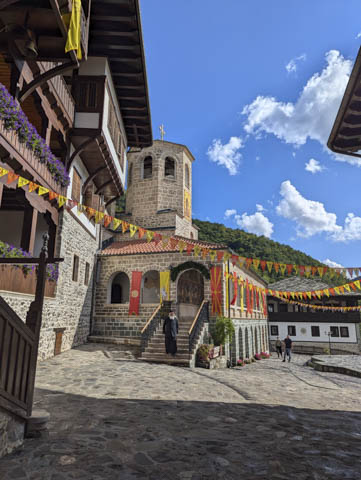
The monastery of Sveti Jovan Bigorski (St. John the Baptist), is a Byzantine monastery from 1020 which has been painstakingly restored and, from its hillside perch, has stunning views of the surrounding mountains. While the monastery itself was quite busy with visitors, there were very few people elsewhere in the park and we spent a quiet night on a grassy picnic area next to a river with only a couple of cute stray dogs for company.
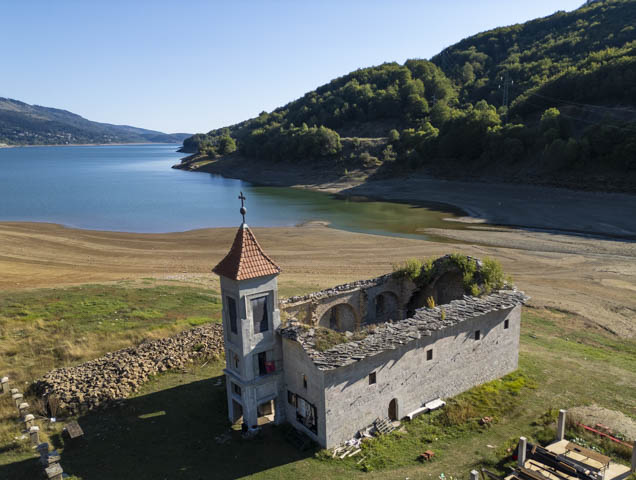
We ventured into Mavrova ‘town’ the next day which is no more than a village really but it is in a lovely setting overlooking Mavrova lake where we visited the abandoned roofless church of St. Nicholas with its impressive tiled floor. What’s even more impressive is that since 1953 the church has been submerged on and off through the seasons by the lake depending on the water content and yet it’s still standing. There are even objects in the church which suggest that it is still in use despite the new church in town.
Albania
With our stressful drive through Peja on our first day in Kosovo not far from our minds, we made sure we were properly prepared for the crossing into Albania, which subsequently went without a hitch, although we were a little flummoxed as there didn’t seem to be a Kosovo border.
Every border crossing we have ever done has entailed two crossings, a border to leave one country and a second border to enter the next country. After passing through the first border and assuming it was the Kosovo border, we drove for several kms wondering where the Albanian border was before looking at our passports to see that we had already been stamped in. Oh well, that was easy!
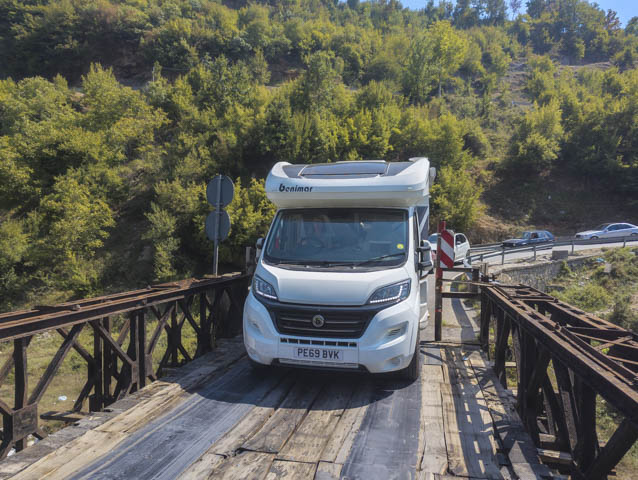
Unlike the Kosovo border there isn’t anywhere at the Albanian border to buy insurance for the motorhome, so we drove to the nearest sizable town of Bajram Curri (via a very narrow bridge that we only just managed to fit), where we parked on the main square about 100m from a Vodaphone shop and bought a couple of local Sim cards for €25 each (the most expensive we’ve had so far and with hindsight completely unnecessary because our Kosovo Sim continued to work throughout our time in Albania).
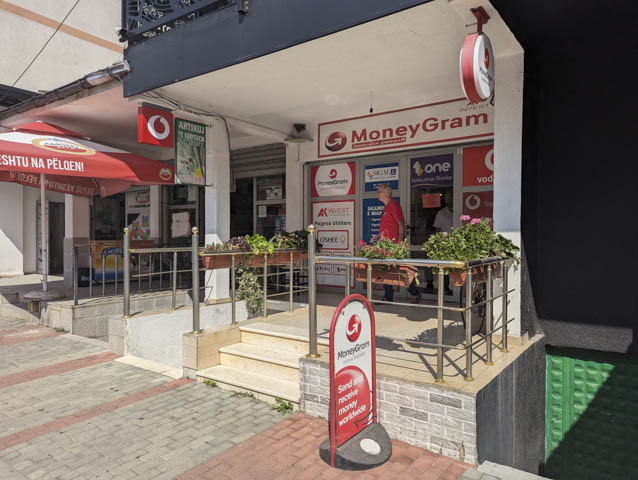
About 500m in the opposite direction we found a shop selling border insurance, although they couldn’t as they had run out of paper(!), luckily there was another one that they directed us to, with paper, a 100m away.
Lastly, in between the Vodaphone shop and the insurance shops was a bank, so that was the currency sorted as well. With the usual new-country-admin taken care of, we hopped back into the camper and headed for the remote village of Valbona in the Accursed Mountains.
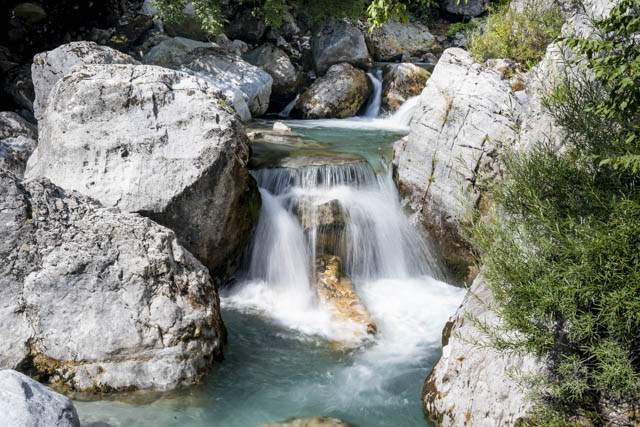
After five days of hectic sightseeing in Kosovo we were ready for a couple of days R&R so we found ourselves a lovely little campsite next to a river, aptly named Riverside Camp and settled in.
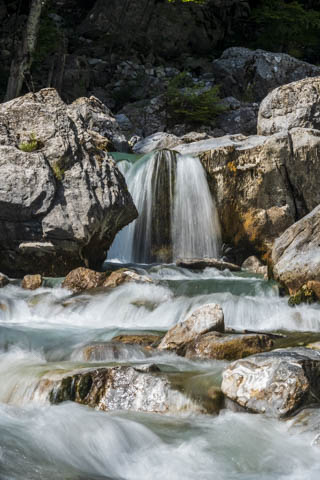
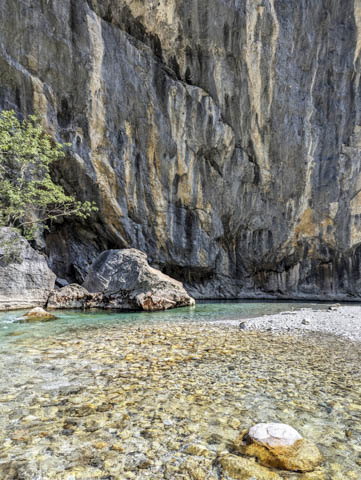
Unfortunately, on our second evening there, we managed to give ourselves food poisoning from our BBQ’d burgers and ended up staying another 4 days feeling pretty rough. This wasn’t ideal, as we had only bought insurance for 2 weeks and had now spent almost a week in the same spot, so we needed to get our skates on. However, we couldn’t resist stopping off briefly at a lovely swim spot on the drive out of Valbona, which looked too good to pass up.
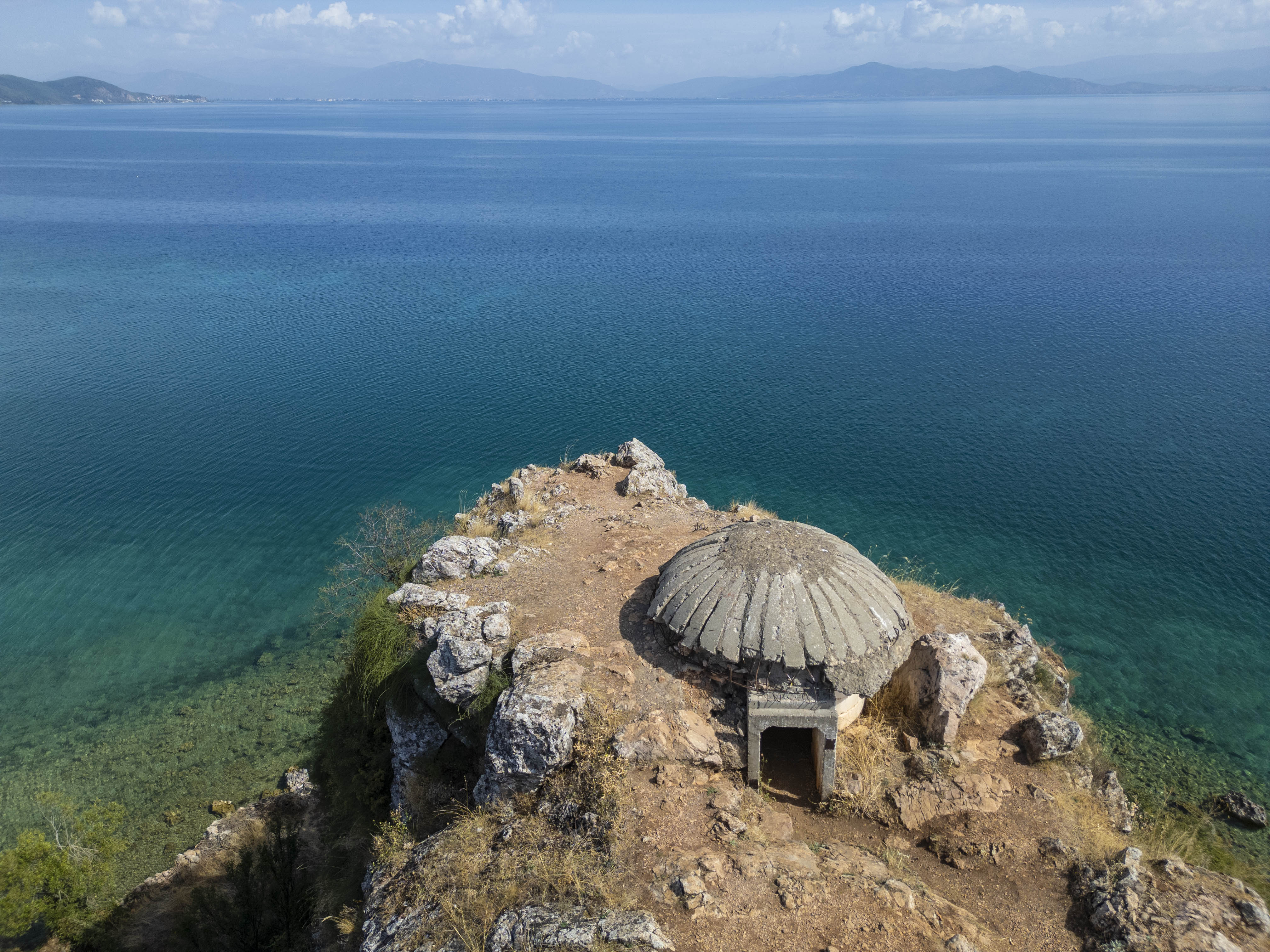
We also spied a couple of Hoxha’s concrete bunkers on the drive, which we were excited about until we started seeing them everywhere. Hoxha’s (Albanian Leader between the 1960’s – 1980’s) had over 750,000 of these bunkers built in every corner of Albania.
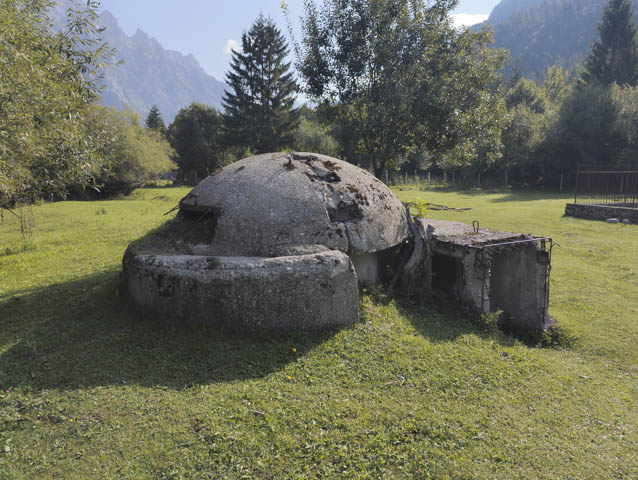
It is said there are an average of 5.7 bunkers for every square kilometre. The bunkers were generally erected in groups of three with interconnecting tunnels. As a result, Albania is said to be the 2nd most tunnelled country in the world after North Korea. Of course, much like Tito’s bunker in Bosnia, the bunkers were never used and were a huge drain on the country’s economy.
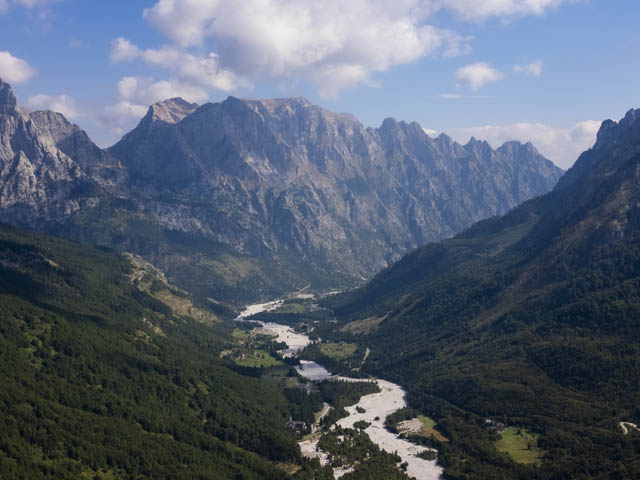
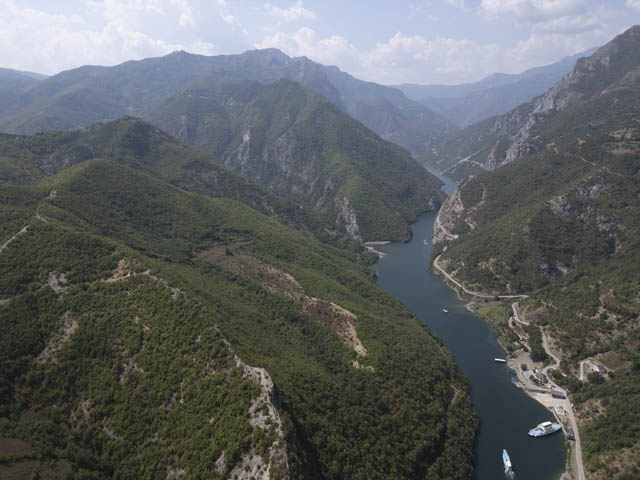
Although we were leaving Valbona, we wanted to stay in the mountains and visit the ‘next door’ town of Theth. However, while you can hike between Valbona and Theth in 6-7 hours, it takes the same amount of time to drive between the two as there is no direct road. You can take a ferry between Fierze and Koman to break up the drive, which is supposedly very pretty (although no quicker), however it is quite pricey at €150, so we opted to drive instead, which afforded us lovely views of the mountains and the dammed river Drin below us.
The drive to Theth by-passes the city of Shkodra on the Albanian side of Lake Skadar, so after a cool night spent in the mountains, we got up super early and headed down to sea level to make an early morning visit to this attractive town and its fortress.
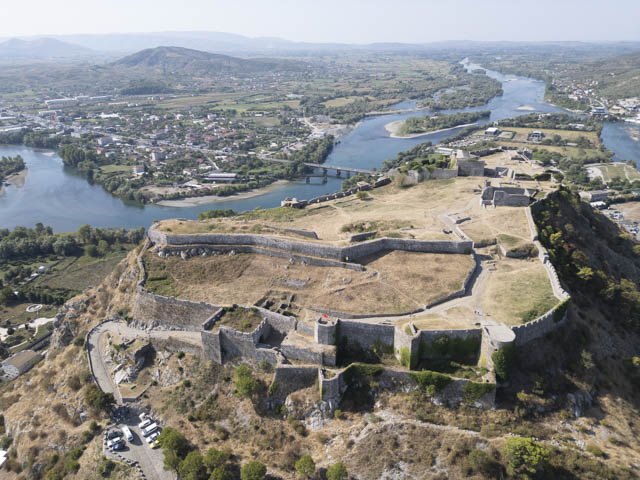
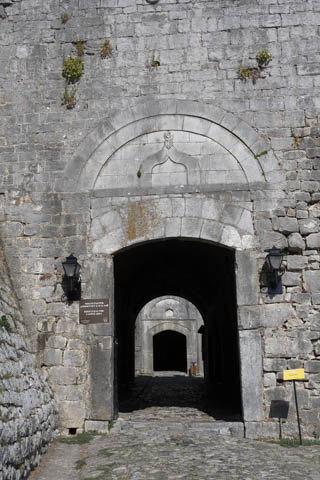
Rozafa Castle, dating back to the 4th century BC is definitely worth a visit and while, as with all ruins, you have to use a little imagination, there has been enough restoration work here to make it interesting, which is helped by English information boards and a small museum. The 13th century church is the most intact building inside the perimeter walls and was in use up until the 15th century when the city fell to the Ottomans and the building was converted into a mosque and later still, an ammunitions depot.
From Shkodar we started the long winding drive back up into the mountains towards Theth.
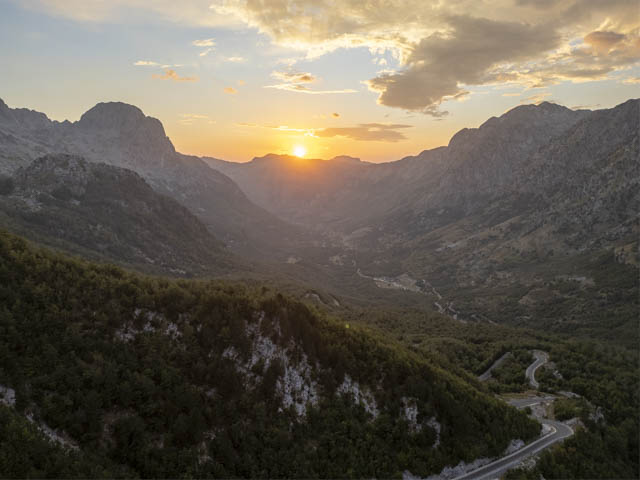
Having been in beautiful, quiet, laid back Valbona we had been lulled into a false sense of peace and tranquillity. So we were very much taken by surprise by the masses of people, mini buses and tour groups on the road to Theth. I suppose it was the last Saturday in August, so perhaps it was a bad weekend to drive up there, as everyone was enjoying their last hurrah before heading back to work, but despite the road being in good condition and fully paved the whole way, the drive was a nightmare. It just isn’t quite wide enough for a motorhome and a car to pass each other easily.
This meant that we had to slow down and pull over for practically every vehicle we met on the road – and there were a lot. This became very tiresome after two hours of driving the mountain road so by the time we’d reached the pass at 1700m we’d had enough for that day and spent the night there, with a view to heading down into Theth, which is at 600m, early the next day.
Funnily enough, the road down from the pass into Theth which was only paved a couple of years ago is slightly wider (although it is steeper with more switchbacks) so it would have become easier if we had carried on, but regardless, we had a cool night up high without any noise from the town to disturb us.
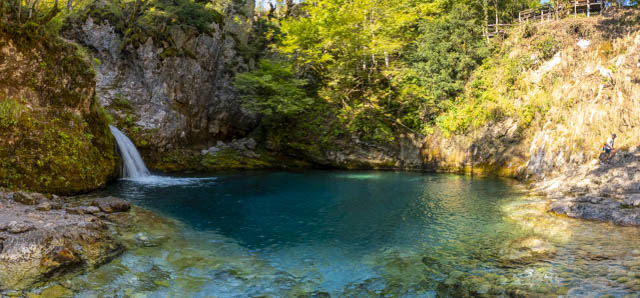
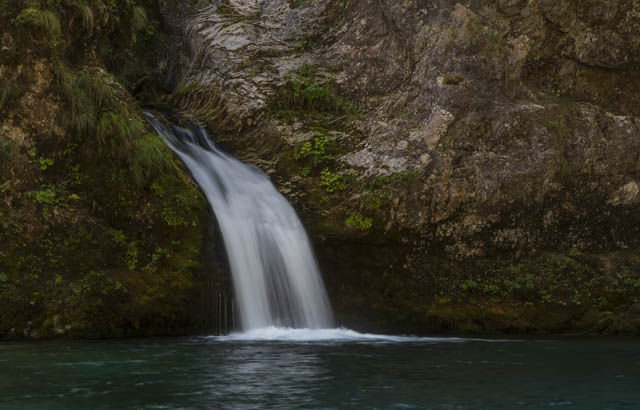
Once we were in Theth we headed to the large trailhead carpark for the Blue Eye hike, a beautiful walk that ends in a turquoise pool of water (hence the name), fed by a small waterfall. The water was really cold but oh so clear and it was a refreshing swim after a hot hike up here. This was a lovely walk but doing it early is key, because on the way back, there was a long line of people walking the trail in and the large car park was full.
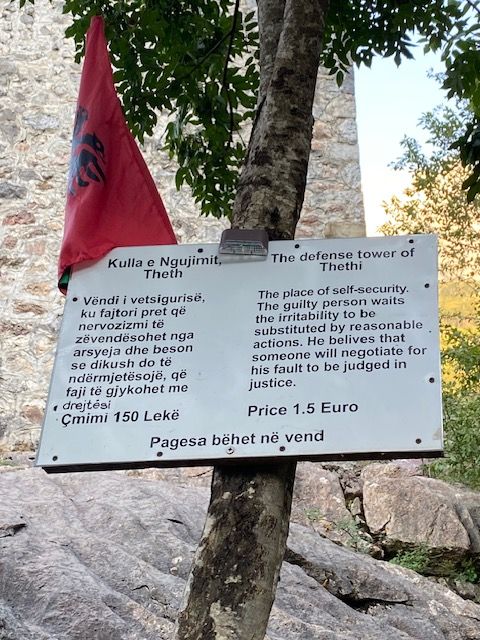
After the hike we visited the 19th century village church (which is said to have been used as the village hospital in the communist era (meaning that most locals over the age of 25 were born there) and Kulla Tower. This is a 400 yr old stone tower where people were held during a family blood feud before they were either killed or spared – at least that is how I have interpreted the sign. See what you think!
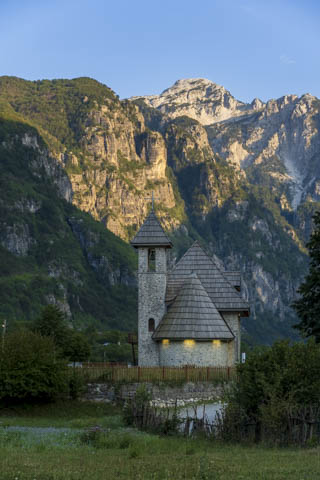
That night we relocated to a campsite on a meadow just outside town, where the music from the bar by the river (they are clearly big ABBA fans) and the noise of the zipline were less audible, ready for the big hike to Valbona Pass tomorrow.
Having set off early for the hike we passed through the centre of Theth on the way to the trailhead. A dog that we had seen the previous night in the central cark park decided to come with us and in fact came all the way to the pass. That’s a hike of around 7.5km to the pass and 1250m of vertical. He must have figured that hikers having lunch at the top were worth the effort !
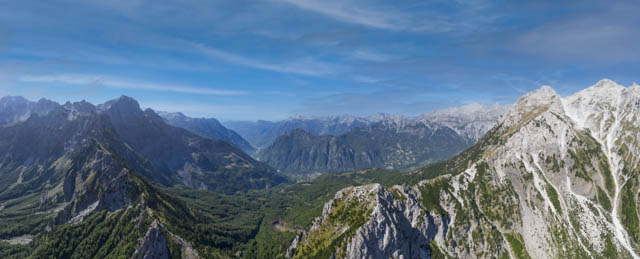
The hike from Valbona to Theth or the other way round is lauded as the best hike in Albania. We could only do half of it eg. To the pass as its too far for an out and back in one day. However although the pass has spectacular views most of the hike on the Theth side is spent in the forest and views are few and far between.
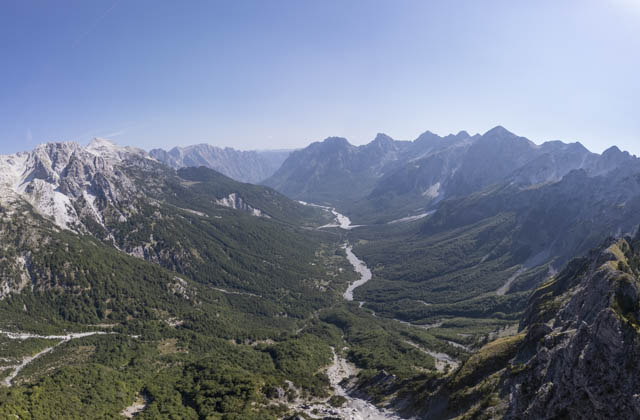
Like at Bobotov Kuk in Montenegro there were some dogs at the top of the pass although this wasn’t as inhospitable as that peak. I’m not sure if these are all commuters like my hiking buddy or actually stay there.
After a punishing hike, we enjoyed a couple of beers and a meal at a local restaurant for our last night in Theth, before getting up early the next morning to do the drive out of the mountains – which was far easier without all the traffic to contend with.
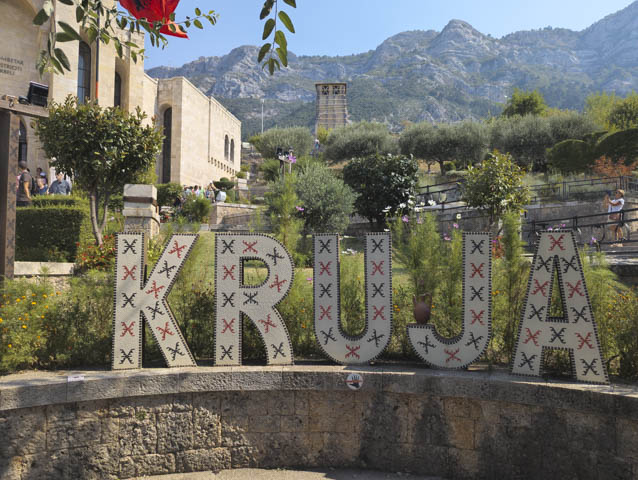
With time running out in Albania and some miles to get under our belt, we headed out of the Accursed Mountains and started the drive towards Lake Ohrid and the border with North Macedonia, stopping on the way at the town of Kruja.
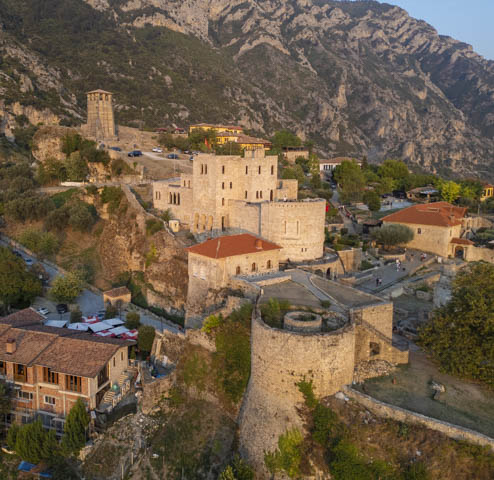
There isn’t much to the town of Kruja itself but it does have a very good castle and museum complex as well as a bazaar to nose around, and it kept us happily occupied for a good few hours.
We particularly enjoyed the ethnographic museum (which is laid out in a beautiful 18th century Ottoman-style house).
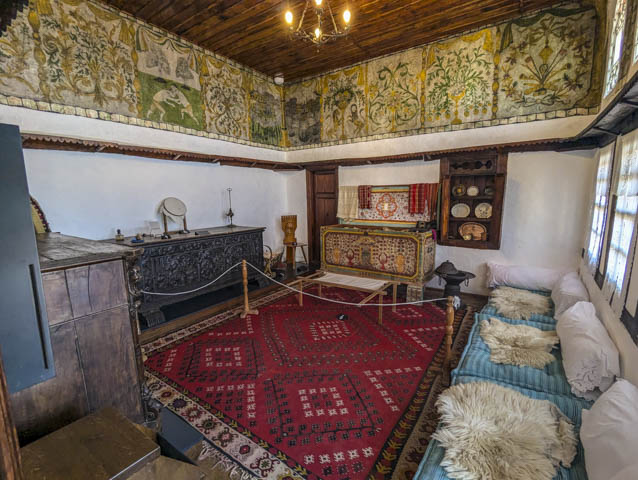
They have made a real effort to provide lots of information about the life and social customs of that time using information cards, interactive screens and videos, and even a virtual reality dressing-up room, where you can ‘try on’ the different traditional costumes.
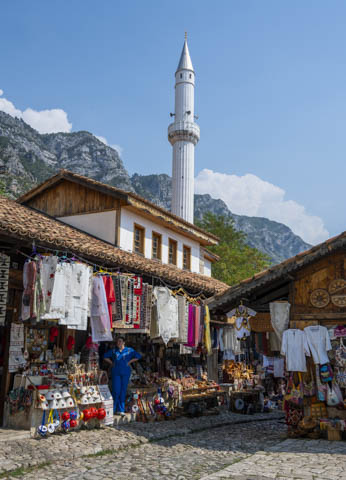
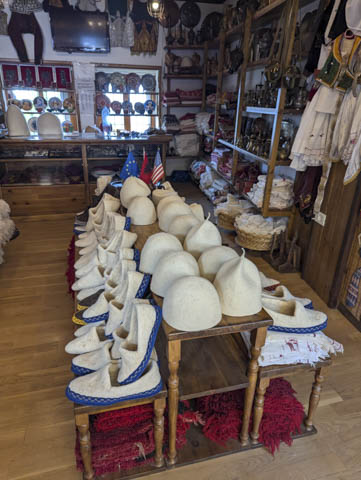
Kruja’s narrow, cobbled Bazaar is mostly filled with tourist souvenirs but there are a couple of little gems hidden amongst them, including a shop with traditional felt products such as slippers, lampshades and different types and sizes of Qeleshe (white felt skull caps). Apparently, you can tell which part of Albania someone is from by the height and shape of the Qeleshe they wear! The owner wasn’t keen on us taking photos but he did invite us downstairs into his workshop where he patiently answered all our questions and even demonstrated how he made his own felt from a pile of wool in the corner.
Our final destination in Albania was Lake Ohrid and the small fishing village of Lin, although we made a small detour to visit Golikut Bridge and the Royal Tombs of Selca first.
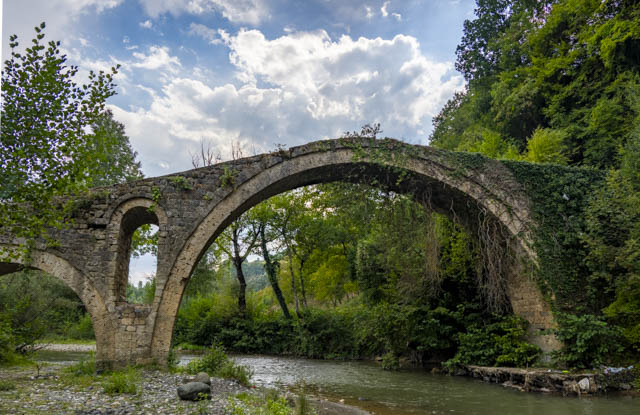
Golikut Bridge is a 2nd century, 3-arch narrow stone bridge that was part of the old Roman road Via Egnatia that ran from Durres on the Albanian coast to Istanbul and it’s incredible to see this piece of history still standing. Yet you could easily miss it with no fanfare or signposting to highlight its significance. In fact, it would look completely forgotten if it weren’t for a brand new, half-finished gravel road leading part way down to it before ending in a ploughed field.
The Illyrian Royal Tombs of Selca (the remains of the ancient city of Pelion and its necropolis) are apparently in the same vicinity but the road is currently being built and despite having the GPS co-ordinates from the UNESCO website we still couldn’t find it (they aren’t big on sign-posting their attractions in Albania). The torrential rain that fell soon after visiting the bridge also didn’t do much to motivate our efforts, so we’ll have to save this attraction for another time. With the completion of the new road no doubt mass tourism will follow. Whether that’s a good or bad thing, who knows, but at least we should be able to find it then!
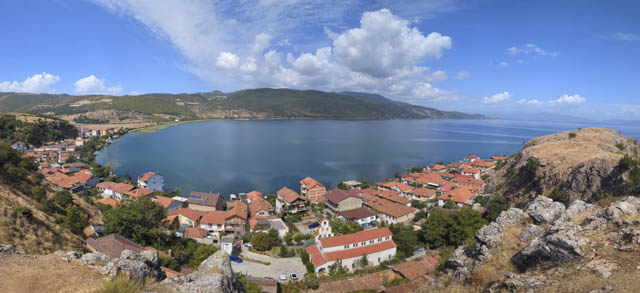
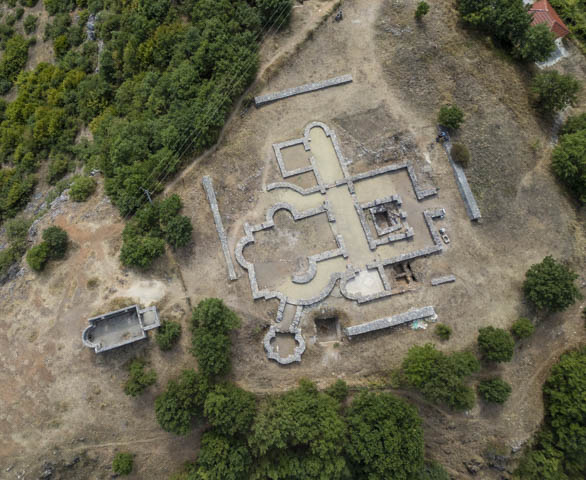
We had no such problems locating the pretty little fishing village of Lin on the shores of Lake Orhid. Said to be one of the oldest inhabited villages of Europe, a short walk through the village up onto the peninsula takes you to the ruins of a 6th century Paleochristian basilica. Some of the mosaic floor is still intact but we were unable to see it as it is now covered by sand to help preserve it.
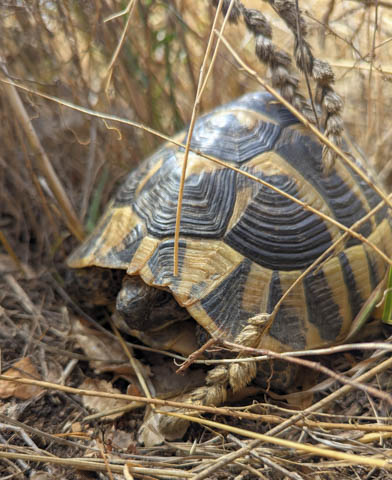
While visiting the church we heard some rustling In the grass and were delighted to see a wild tortoise pushing its way through.
A little further along, on a small rocky promontory sits the Bunker Church. The site was previously a tiny church but a concrete dome was placed over the top to create a bunker as part of Hoxha’s crazy bunkerisation project previously mentioned.
We have deliberately not visited Southern and coastal Albania at this time due to the heat but intend to spend some time there on our way home when the temperatures have cooled!
Kosovo
Having ensconced ourselves in the mountains of Serbia and Montenegro for several weeks now, we noticed an approaching weather window where the temperatures were due to dip into the 20’s, so this was our chance to make a break for the lowlands!
Having visited the coastline of Montenegro previously we decided to bypass this area and instead whizz around the tiny country of Kosovo.
Kosovo was part of Serbia until it unilaterally declared its independence in 2008. This is categorically not accepted by Serbia who still treat it like a province of their country. If you enter Kosovo from a third party country you cannot cross the border into Serbia as you are deemed to have illegally entered the country. Fortunately the surrounding countries recognise Kosovo and our route in from Montenegro was fine, although the Montenegrin border was only agreed in 2018. Only 104 of the 193 United Nations countries actually recognise Kosovo as an independent nation.
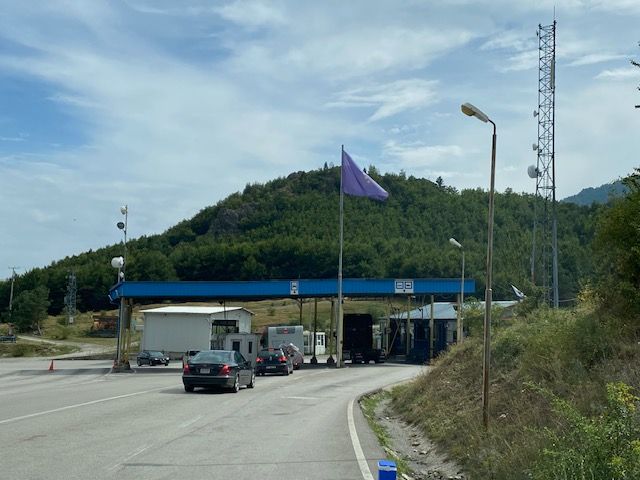
The drive over the mountains from Montenegro into Kosovo is a scenic winding route through pine forests and the border crossing was quick, easy and friendly. Unlike Montenegro, buying vehicle insurance on the border here is straightforward (there is a small standalone building on the right just before you get to the border) and essential – you can’t get into the country without it.
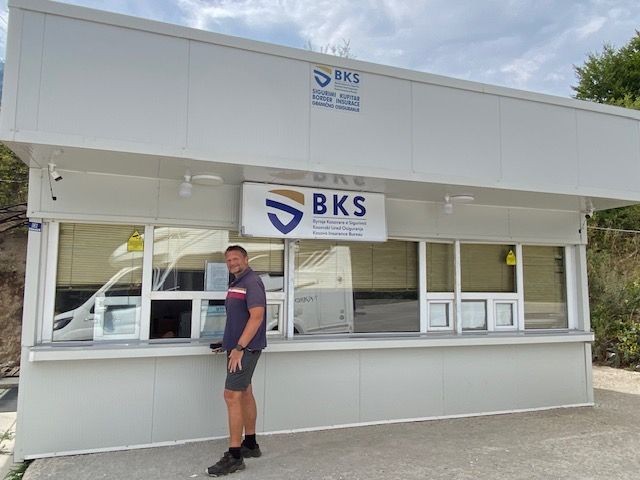
We should have known it was all going far too smoothly. We had a night spot planned for that evening at a restaurant not far from the border, with a view to visiting the city of Peja the following day to buy sim cards. However, when we arrived at our planned spot (having driven down the steepest slope we’ve ever driven and I’m still not sure it wasn’t in fact a crazy-paved footpath, rather than a road), the place was heaving with cars and people. Having connected with a proper road at the bottom of the slope (with much relief as I don’t think we would have got back up), it was clear that this was a very popular place with the locals. As well as this, there were skips overflowing with rubbish and the smell was pretty awful so we decided to move on. Our ‘back-up’ night stop options were on the other side of Peja so we forged a new plan to drive into Peja, get our Sim cards and then find somewhere to spend the night.
What we hadn’t realised though, is that the traffic through Peja is bad, I mean really bad and by the time we had driven to and then through Peja (at 0-5mph), it was already 6.30pm with a darkening and stormy looking sky. On the plus side, it wasn’t hot and we had manged to buy a couple of Sims after 5 attempts, firstly at a petrol station and then at mobile phone shops (who by the way do not sell them).
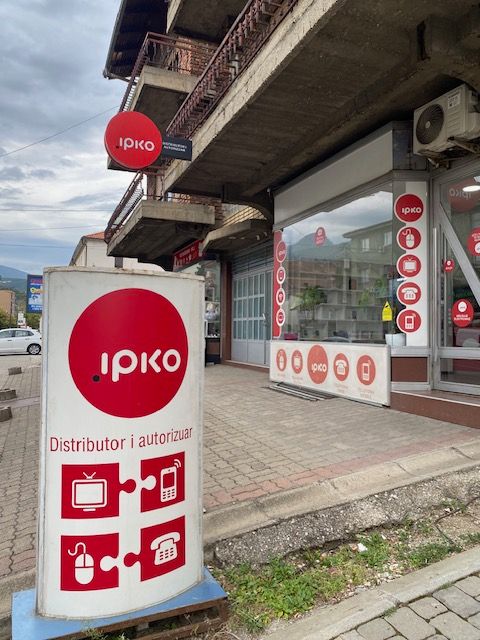
For anyone venturing into Kosovo and in need of a local Sim, the shop you need is called Ipko and there is one handily located on the main road out of Peja. We probably would have known this if we had researched online before getting to Kosovo but things were very easy in Montenegro and we became a little lax. Lesson well and truly learned after a stressful couple of hours negotiating the chaotic city streets of Peja without any phone data or google maps!
With the night drawing in we decided to ditch wild camping and head for the nearest campsite in Junik. A small family run business that has given over its front garden to campers.
The next morning, we were keen to visit the historical town of Gjakova and, as it isn’t too far from Junik (although too far for us to cycle), we asked the campsite owner about taxis, which led to her offering us the use of her car for the day for €25. Result! And once we had got used to being in a much smaller vehicle again it was quite refreshing driving around the chaotic streets not having to worry about fitting down a road because, in true Balkan style, people have just left their cars wherever they want (I won’t flatter it by calling it parking).
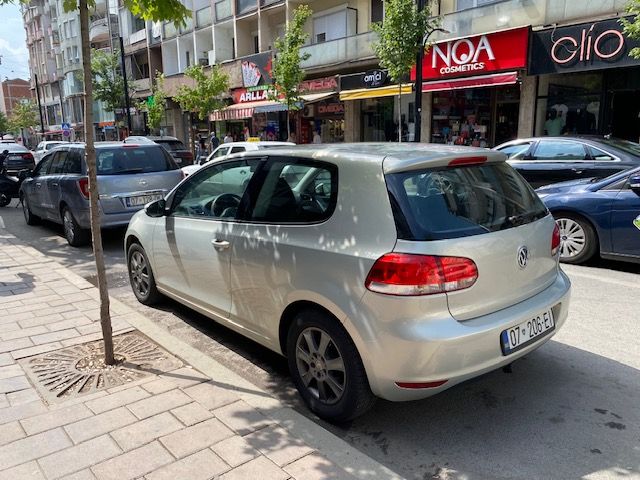
Driving through Gjakova you get a sense of a modern mid-sized town, until that is, you take a couple of turns and find yourself driving on the cobbled streets of the old district.
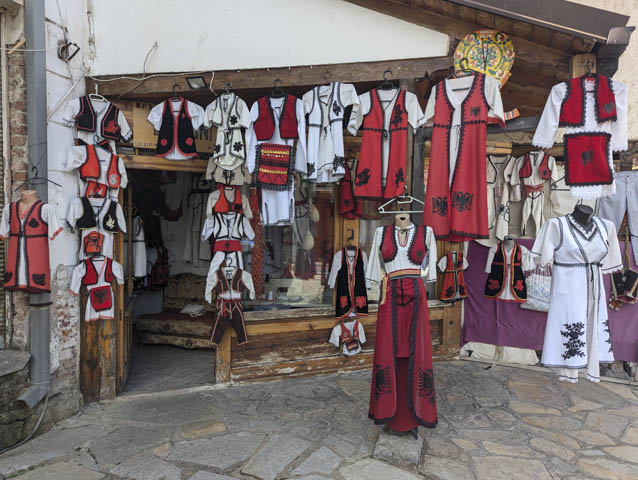
The bazaar has a distinctly Turkish feel to it with groups of men occupying the tables and chairs of the many coffee shops lining the streets. Drinks were limited in the town however as we found out when we were told the water was off (this also meant no access to any toilets!). So maybe not so modern after all. In fact, Gjakova is said to have been populated from the prehistoric era and served as a trading route between Shkoder (Northern Albania) and Istanbul.
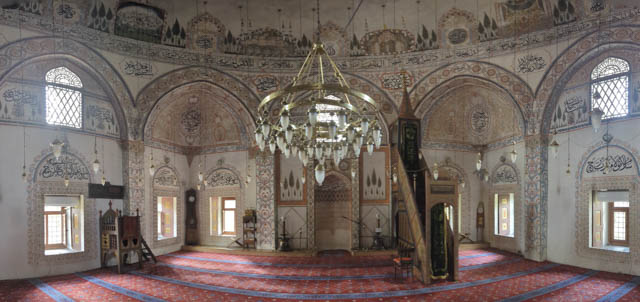
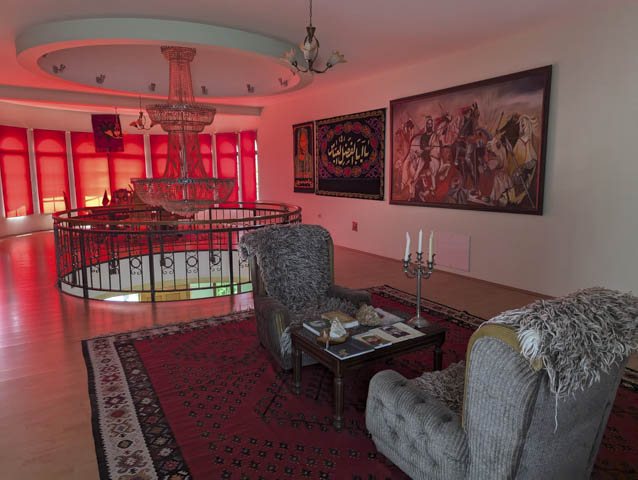
Other than the bazaar, the main sights are the decorative Hadumi Mosque and a Bektashi Tekke which we stumbled on purely by chance when we decided to see what was on the other side of a closed wooden door. I am still not sure we were supposed to go in but we were greeted by a lovely lady who spoke very little English but gave us a tour of the building and offered us coffee. In a separate building in the peaceful walled courtyard of the grounds, there are also the graves of seven Bektashi Fathers dating back to the 17th century.
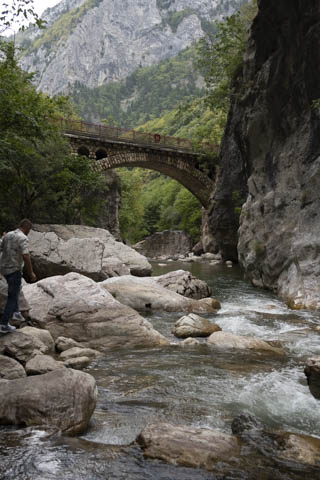
After strolling around town and enjoying a very cheap lunch (two pizzas and bottled drinks – still no running water, for a bargain €7.40!) we retraced our steps back to the car and drove past our campsite in Junik and back through the traffic of Peja to visit the 13th century Patriarchate of Pec monastery and Rugova river canyon. Well, we wanted to get our monies worth out of the car hire!
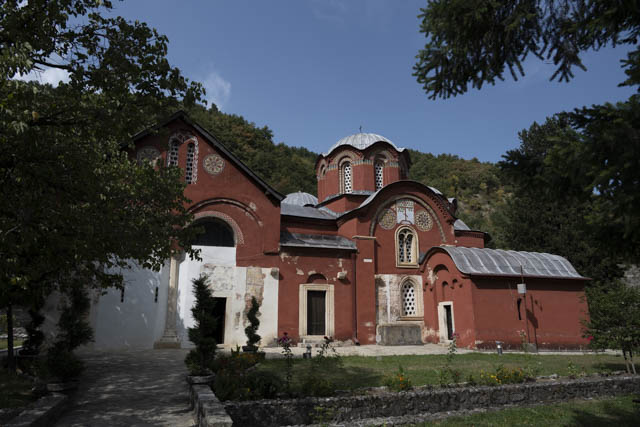
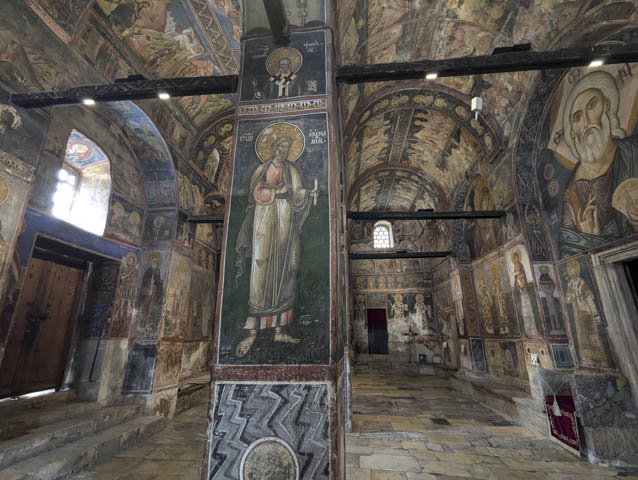
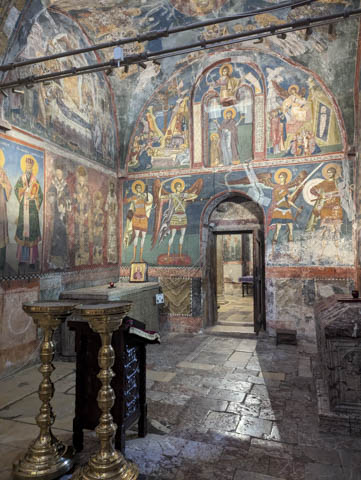
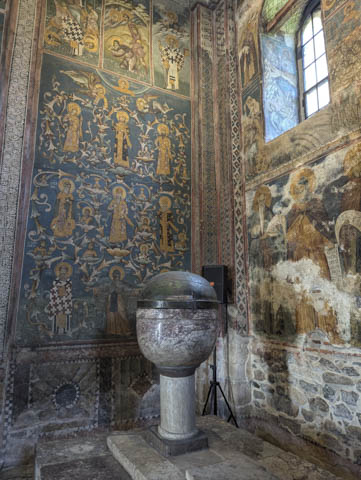
The Patriarchate of Pec, a UNESCO world heritage site, is an impressive Serbian Orthodox monastery with three churches in one building with polished flagstone floors and high frescoed walls with domed ceilings. Outside are the ruins of a 14th century palace and 16th century monastic dormitories and a much more modern 20th century bell tower.
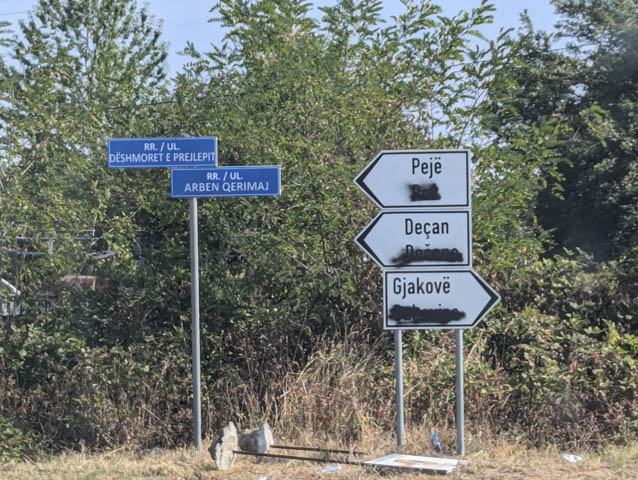
Interestingly, having only been in the country for one day it was already very clear that some underlying tension remains here. The road signs are all in Algerian and Serbian but it is common to see the Serbian names have been spray painted out.
The Serbian religious buildings are all protected either by police or KFOR (NATO peace-keeping force) with heavily armoured vehicles and to gain entry you need to hand over your passports. Even walking down the street in Gjakova we were passed by a group of NATO soldiers.
KFOR have had a tough job in Kosovo and in the 20 years that they have been in place over 200 soldiers have lost their lives. As recently as September 2023 KFOR troops have been reinforced to address Serbian troop mobilisations on the border so the political climate is definitely not settled yet.
The following day and back in the camper, we set off early to drive to Prizren, stopping first at another impressive UNESCO site, Decani Monastery.
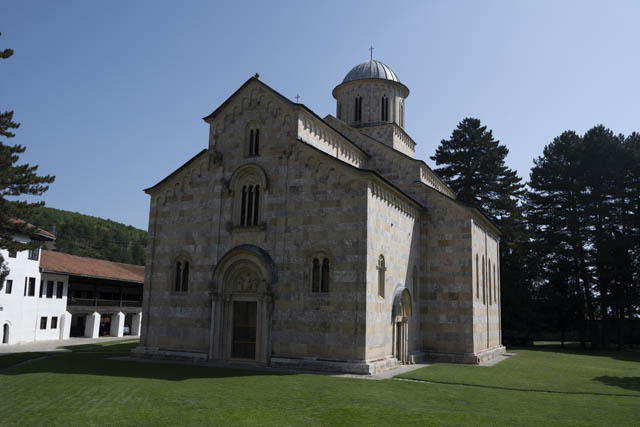
Founded in the 14th century, Decani is the largest medieval church in the Balkans and is the most heavily protected of all the churches, having suffered violent unrest and attacks in the early 2000’s.
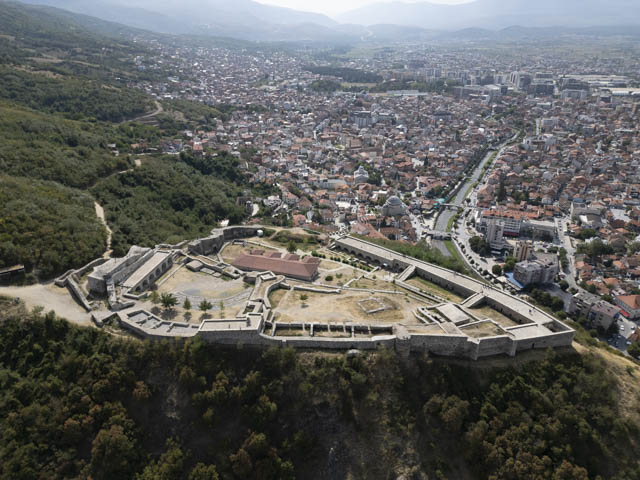
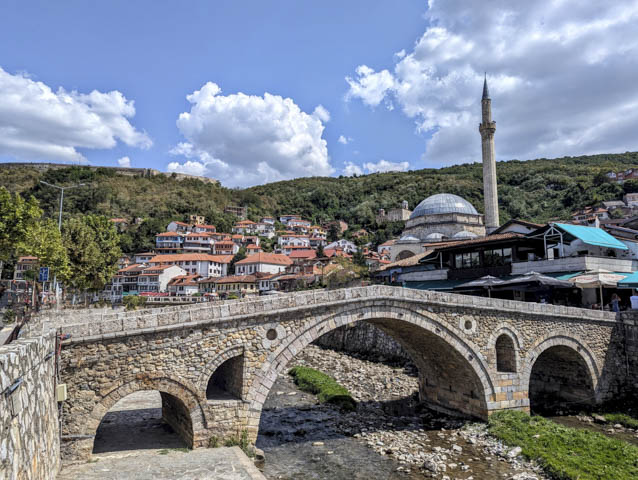
Prizren is the second largest city in Kosovo and Peja is the third largest, so we were expecting chaotic streets and crazy traffic much like Peja, but in fact there is a much greater sense of space in Prizren with a much more laid back vibe and with far more navigable streets. It is an attractive city built along the banks of Prizren river, over which spans the 16th century Old Stone Bridge, with the Sinan Pasha mosque rising against a wooded hillside, atop which, you will find Prizren Fortress.
In addition to the above, we felt that we should probably also visit the Albanian League of Prizren Museum. Built on the complex where, in 1878, the original League of Prizren was founded, this Assembly went on to establish the first Albanian government in 1881. The museum (which was destroyed in the Kosovo War but rebuilt in 2000), houses documents, objects and clothing from the time of the Assembly and with an entrance fee of only €1 we decided to take a look but unfortunately there are no explanations in English, so unless you speak the local language you don’t really learn anything from the visit.
If you continue to drive up the river valley out of town you get to the 14th century ruins of the Serbian Orthodox Monastery of the Holy Archangels, and once through the police guard we were met by the one remaining monk who lives here. He very kindly offered us cold bottled water (we must have looked a bit hot after an afternoon of cycling around town) and of course the usual offer of coffee. If only we drank coffee we would never have to buy our own, we get offered it so frequently. Balkan hospitality continues to impress us. This monastery was looted and destroyed by the Ottomans and over a century later, the materials were used to build the Sinan Pasha Mosque on the banks of Prizren river.
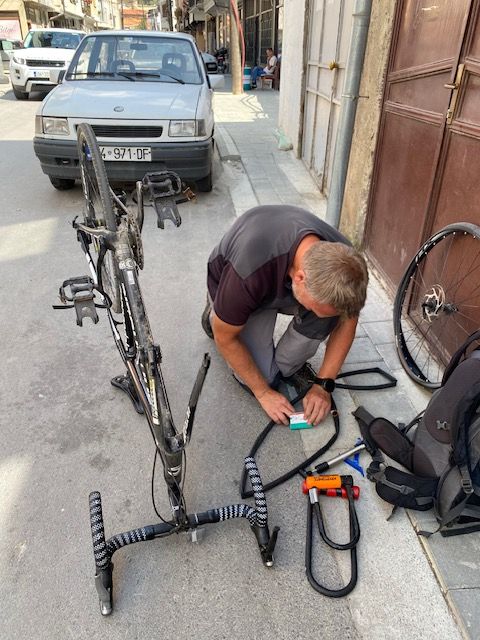
All in all, we really enjoyed our day in and around Prizren, although it wasn’t all smooth sailing as we managed to get two punctures while cycling around town.
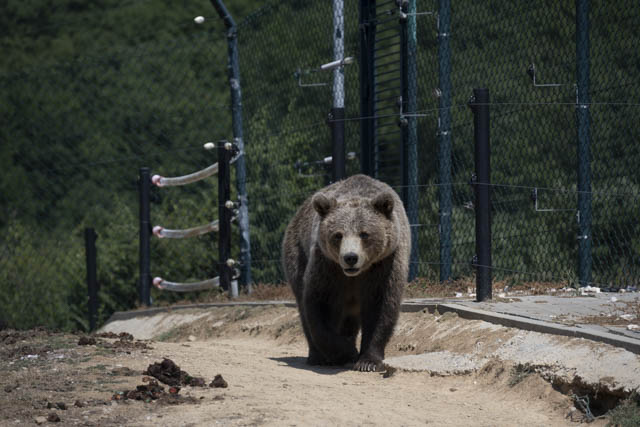
After a busy day we headed North of Pristina, the capital, where we spent a free but sleepless night in the car park of Prishtina Bear Sanctuary listening to the stray dogs barking. Tired but still excited to see some bears, we started the hilly 2km route around the complex, where strangely they also house a lion?!
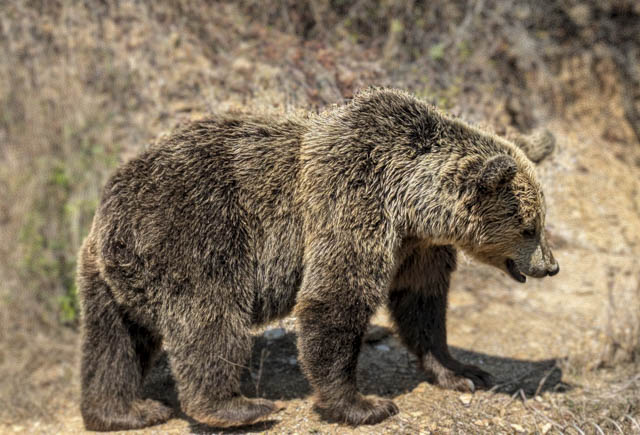
We had visited a very good bear sanctuary in Croatia so we were a little disappointed by this one. While their enclosures were generous with water and shady areas, much of the ground was dry dirt – although in this climate in August I guess that is normal. Despite this, the work they do is commendable. Many of the rescued brown bears were from small cages at restaurants, where until 2010 it was legal to privately own bears in Kosovo. There are currently 20 bears in their care… and one lion.
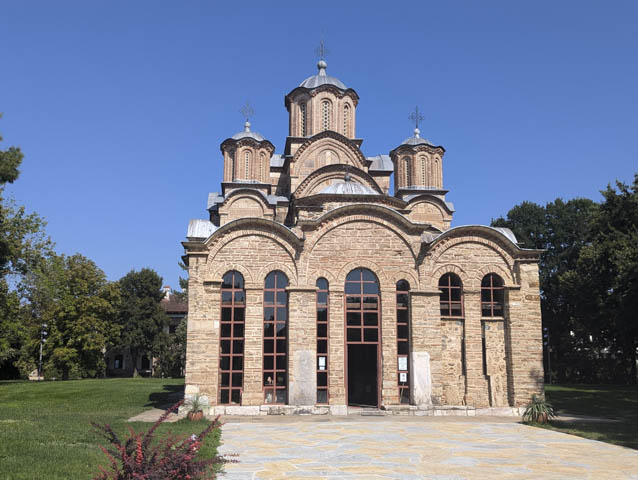
After a sweaty morning walking around the sanctuary (take a hat if you plan on visiting, there is very little shade) we drove to Gracanica where we knew of a hotel (with showers and a pool) that welcomed campers, but first, a visit to Gracanica Monastery. The monastery now serves as a convent and there are currently 24 nuns in residence. The reason we wanted to visit this monastery is because we had already visited the replica of it (or one of, there is another in Chicago) on this trip in Trebinje, Bosnia.
Gracanica is only a short drive from Pristina, our last stop in Kosovo but our short weather window had closed and the afternoons were becoming pretty unbearable for sightseeing, so we decamped to the grounds of the hotel, had a lovely cool shower and sat in the shade by the pool with a cold beer enjoying some R&R, ready to hit Pristina first thing tomorrow.
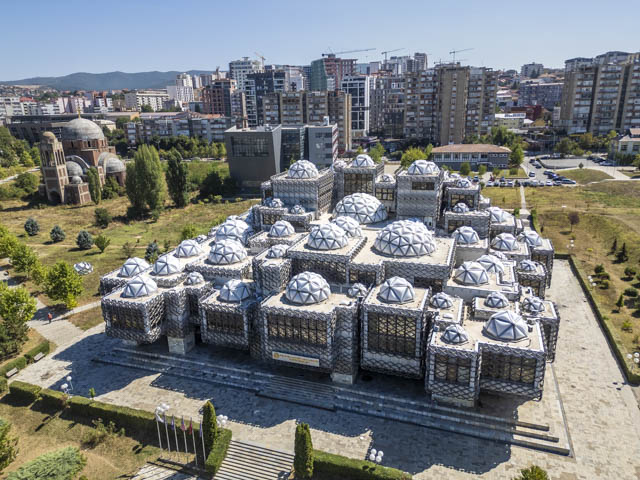
Pristina is a big city but we had no problems finding a large parking lot near the sports stadium and from there cycled around the town to all the main sights. The best of which is the view of the space-age National University Library of Kosovo building, taken from the bell tower of the Catholic Cathedral of St. Mother Teresa. It is also worth going into the library as the main atrium is quite impressive.
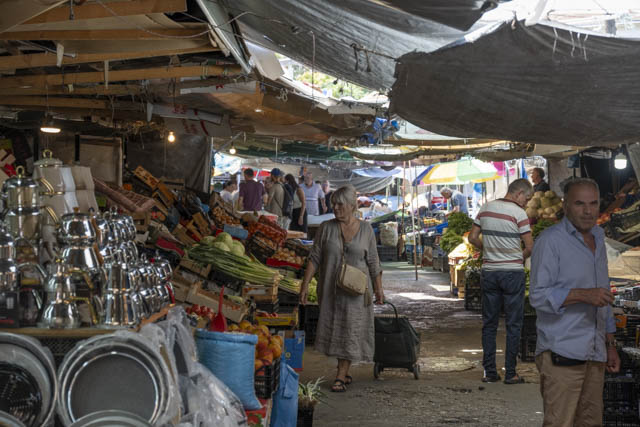
Of course, visiting the Great Mosque complex is also a must as well as the many monuments of independence and heroism but besides all of this, Pristina is just a nice city to explore.
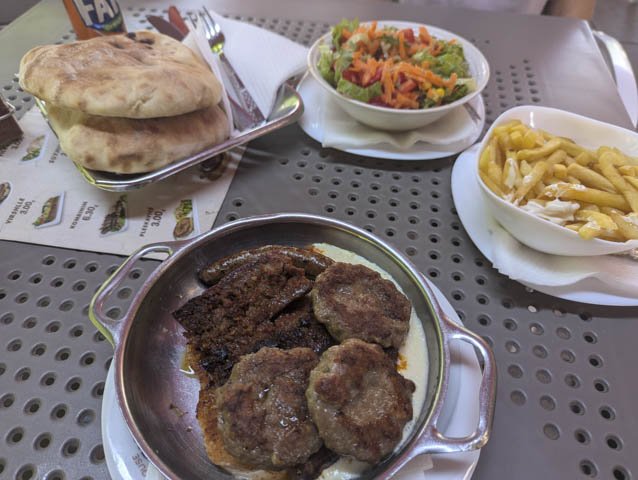
After cycling across the town we had worked up an appetite so we we finally tried some local Kosovan food, before the drive back to Junik for our border crossing into Albanian the next day.
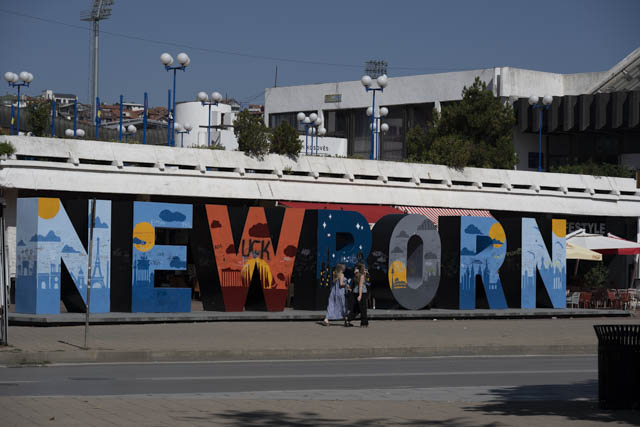
And that is how to do Kosovo in a whirlwind 5 days! We could definitely have stayed longer and would have, had the weather been cooler but it was into the Albanian Accursed Mountains for us as the temperatures soared back into the high 30’s.
More Montenegro
We left Sedlo Pass at first light the next morning to drive across Durmitor Park on the scenic P14 road. It was a good decision because it was a beautiful drive down a narrow windy road and, having left so early we were able to do it without the hassle of meeting any oncoming traffic. We took our time meandering through the mountains (so much so that we were overtaken by a bicycle), stopping to admire the scenery and watch a herd of flighty wild horses.
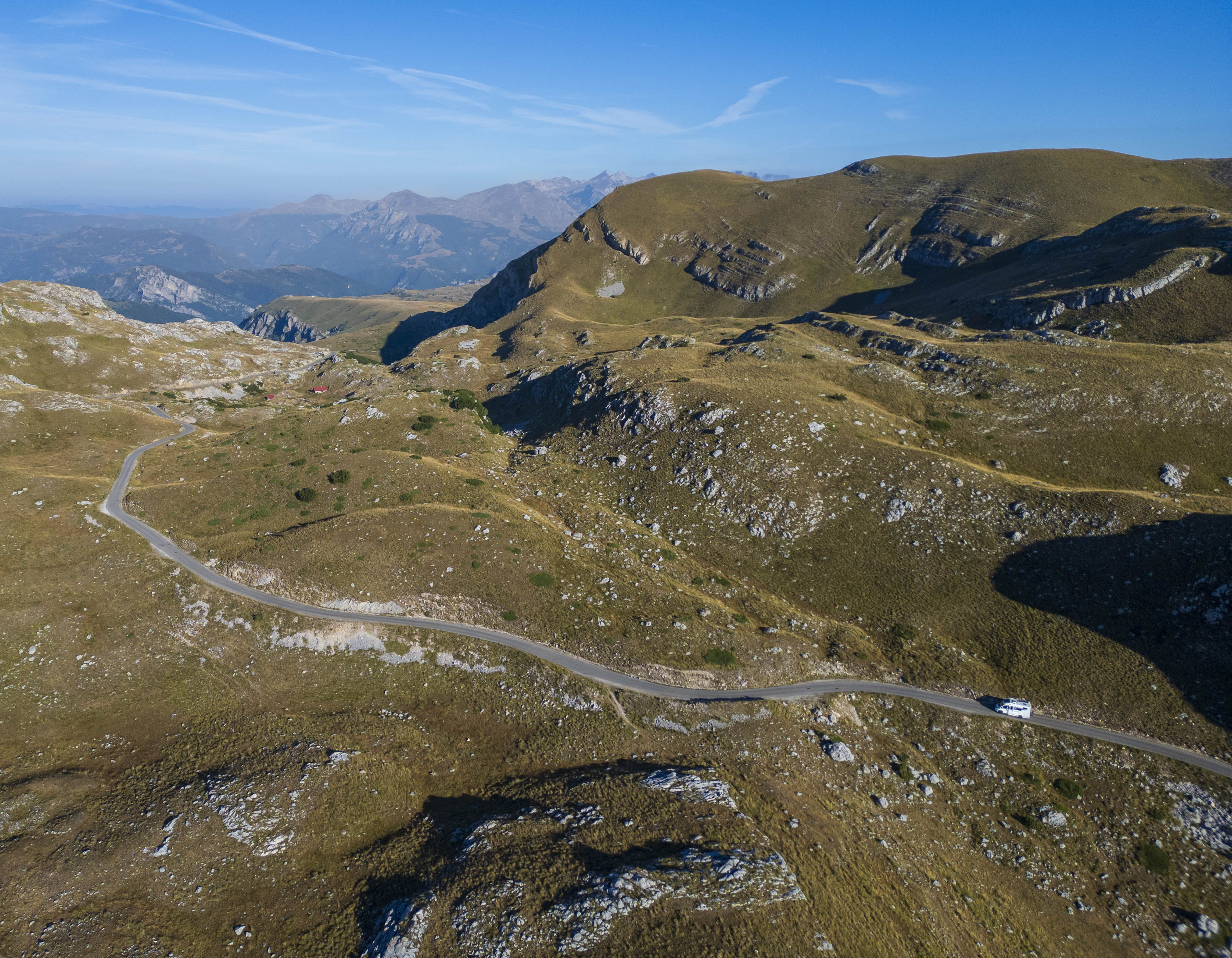
Once through the mountains of the National Park, the road starts to descend through some farm land and then, as you turn a corner, there is another wow moment when you first glimpse the aquamarine Piva Lake far below.
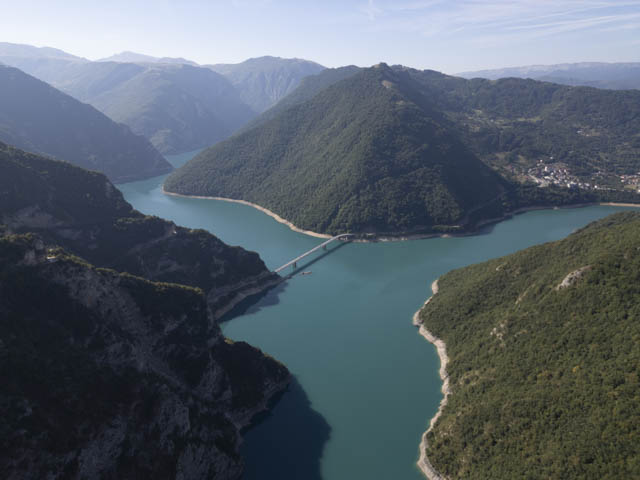
The road then descends alongside the lake through a series of tunnels cut through the rock walls of the cliff. We arrived at the lake and the small town of Pluzine where we got out for a walk around, but there isn’t a great deal here to hold your attention so it wasn’t long before we were back on the road.
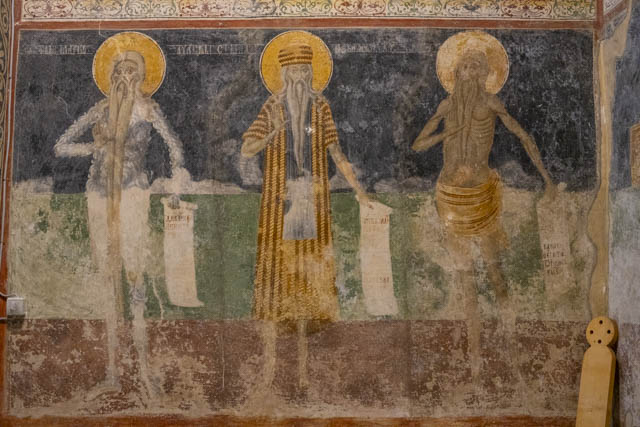
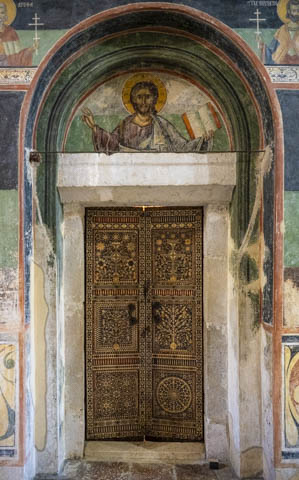
However, not far from the town is Piva Monastery. Originally built in 1573 the monastery was relocated from its original location 3km away and 100m lower in 1982 when the dam was built, to prevent it being flooded. The exterior of the monastery is fairly uninspiring but the frescoes inside are much more impressive. They were originally painted between 1604 and 1639.
It is possible to spend the night at the monastery but the car park was baking hot as we were now much lower than we were in the mountains so we decided to keep going.
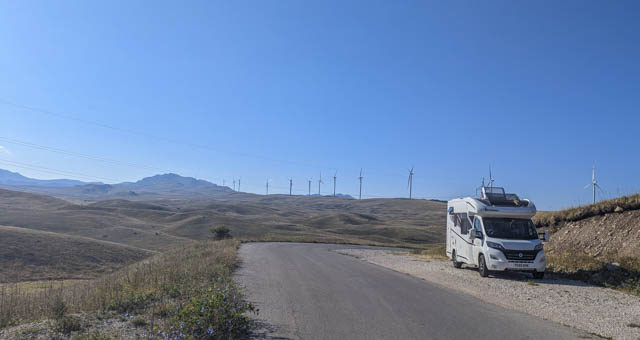
We actually headed in a big loop back up towards Durmitor National Park although that hadn’t been the original plan, or even the back-up plan. We were heading for a mountain lake above the town of Niksic which would have made a great place to stay the night. We turned off the main road and drove up and over a high plateau studded with wind turbines, past a remote farming village, until we reached a tiny ski resort that looked very run down and abandoned. Just past the resort there was a barrier half way across the road which then narrowed into a gravel mountain track. At this point it was early evening so we decided to abandon the idea of finding the lake, and started to look for an alternative spot for the night.
We retraced our steps and settled at the side of the road where we enjoyed a peaceful night.
In the morning we drove the rest of the way back to Durmitor and Zabljak where we restocked at the small local supermarket and then drove to the Savin Kuk ski area.
The ski lifts here are really old, slow attached lifts. There are two lifts to get to the top and the dismounts are definitely interesting as you have to hit the deck running and jump off a platform to the side to avoid being hit from behind by the lift as it comes past. If you are lucky, one of the lift attendants might grab your hand and swing you off and around but for lift attendants they weren’t all that attentive.
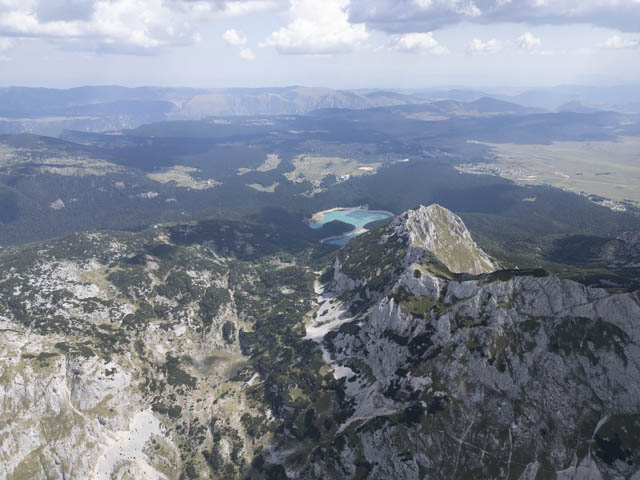
The peak of Savin Kuk was an easy 10 minute walk uphill from the top of the chairlift, which affords you incredible views across to Black lake in one direction, Bobotov Kuk in the other and then, away from Durmitor, you are treated to views across the rolling hills of a high altitude plateau.
We had a lovely picnic lunch at the summit, drinking in the views but, as we were finishing up, the wind started to pick up, the skies darkened and we could hear distant claps of thunder and see the rain falling across the plain. As it takes about 20 minutes on the chairlift we decided it was time to head down the mountain and back to the Beastlet.
Fortunately the rain held off until we were back at the camper but then the heavens opened and it absolutely chucked it down. From where we were parked we could see people coming down the ski lift and legging it to their cars looking particularly bedraggled. I shouldn’t say it but it provided us with some good entertainment!
We had been planning to go to a campsite for the night but the campsite was on grass and, given the terrible weather, which lasted for hours, we decided to stay put on hard-standing ground, where we had no concerns about getting stuck.
We now felt like we had spent enough time in the Durmitor area so we headed back out, on the road we had already driven three times. This time we were relocating to the East of Montenegro to another area of mountainous national parks.
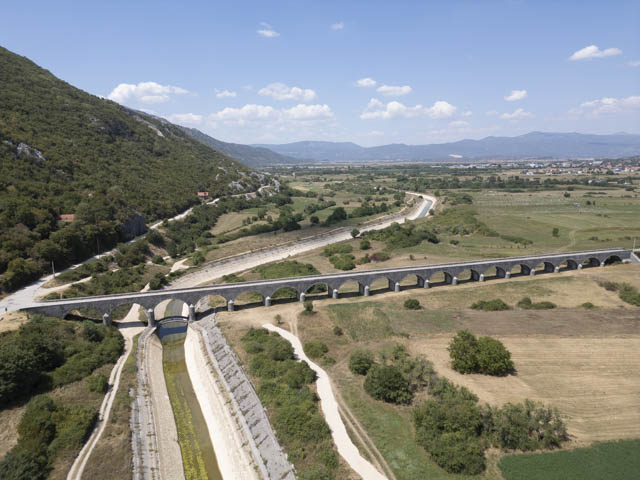
However, this involved dropping down into the lowlands to get there as the main route through the mountains was closed due to a landslide. On the way, we stopped off to see a big old bridge, the Emperor’s Bridge, which was built in 1894 and used to be the main highway.
As we were passing by Niksic we decided to spend a night at the Ilijin Vir campsite that we had enjoyed so much previously with The Roverlanders. You know, the one where we tried and failed to visit Ostrog Monastery and no, we didn’t even bother to try again. After all, we’ve seen a lot of monasteries and there are many more to come! Instead, we spent a lovely day here relaxing and swimming again in the amazing river, which is definitely going down as one of the best swim spots on this trip so far.
Suitably refreshed despite the 30c+ temperatures, we moved on through the capital of Montenegro, Podgoirca (although we didn’t visit the city as the forecast was for 40c). We did however stop off to see a waterfall near the city, called Niagara Falls.
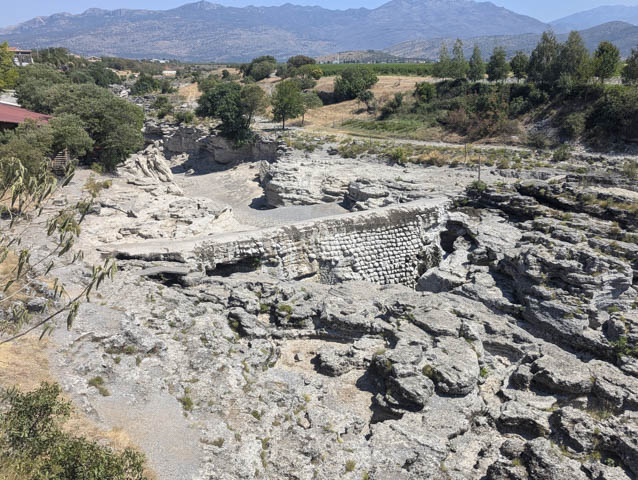
On arriving at the waterfall we discovered that, not only was it dry but the entire river didn’t have a drop of water in it!
So, a little disappointed, we headed back into the mountains. The main road from Podgorica into the mountains is now a brand new toll road but, preferring to take the scenic route, we took the old road which goes up a gorgeous canyon to the town of Kolasin.
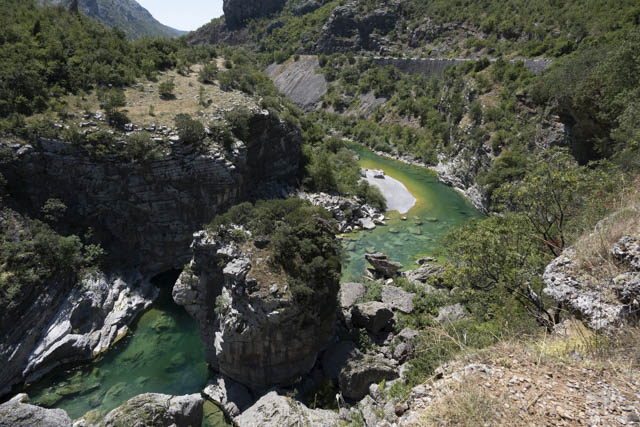
Of course on the way up the gorge there was a monastery to stop off at, the Moraca Monastery, which was built in 1252.
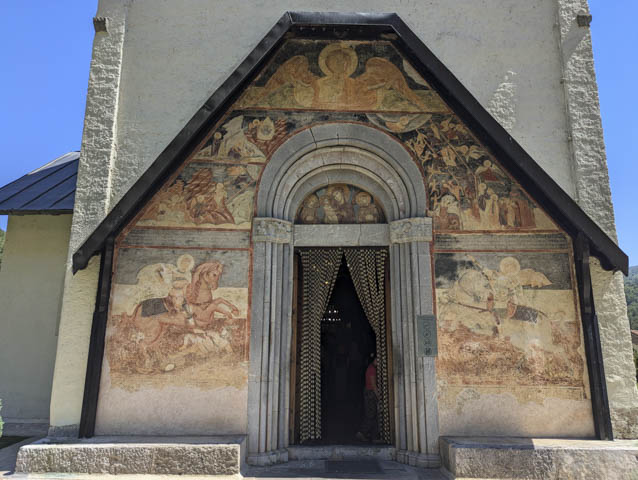
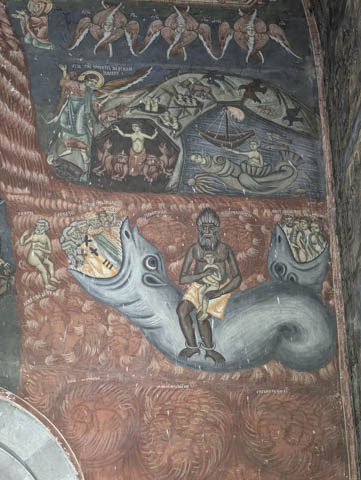
This one had some interesting frescoes and I’ve no idea what the one below is meant to depict.
Kolasin is a busy little town but we managed to stop in the centre to visit the supermarket, albeit double parked in typical Balkan style. From here we drove up to Kolasin 1600, which is the biggest ski resort in Montenegro. It looks like there is a ton of investment being put into the area with the construction of a number of large hotels.
This was a great high altitude location to spend a couple of nights and, in the summer, the new, quick chairlift from 1600 (which does not bash you from behind as you get off), can be used to access the top of the mountain where you can go hiking.
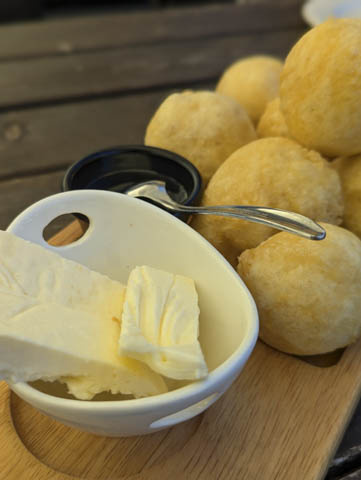
One of the things that makes this a good stop over (other than the free toilets) is the bar/restaurant on site. It would of course have been remiss of us not to enjoy a local beer and try a local specialty – fried dough balls with hard cheese and honey on the side. These were not quite what we had expected (think Pizza Express garlic dough balls – yum), and I can’t say that we enjoyed them, but it was interesting to try them none the less.
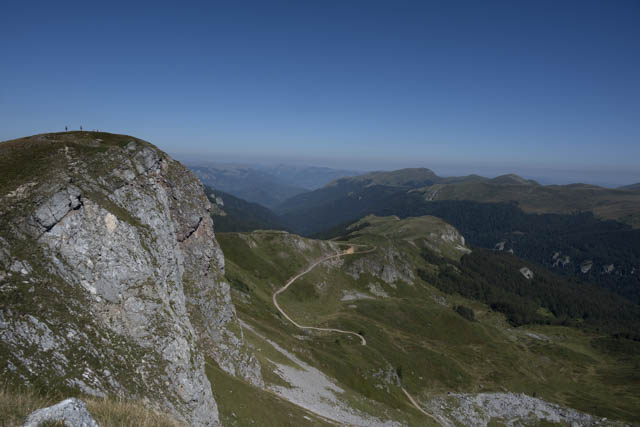
We took the modern detachable chairlift (which has wifi and is even heated in the winter) to the top where there is a lovely hike to a valley behind the ski area with a picturesque lake, Pesica Lake. This is in Biogradska National Park.
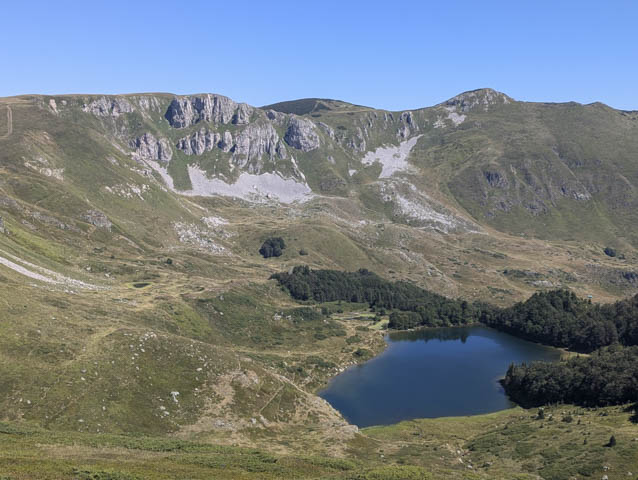
When we left Kolasin we drove down to a parking area which is the main access area to Biogradska, next to Lake Biograd.
We arrived around 9am to secure a parking spot, which this was a good thing because by 10.30am the parking was completely full and complete chaos ensued.
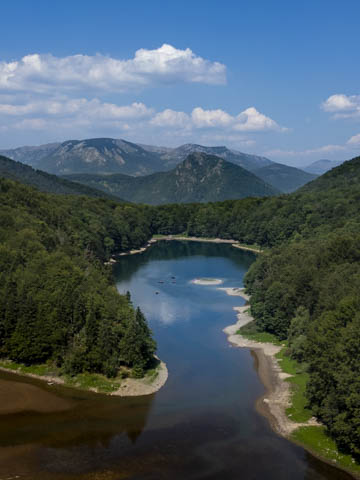
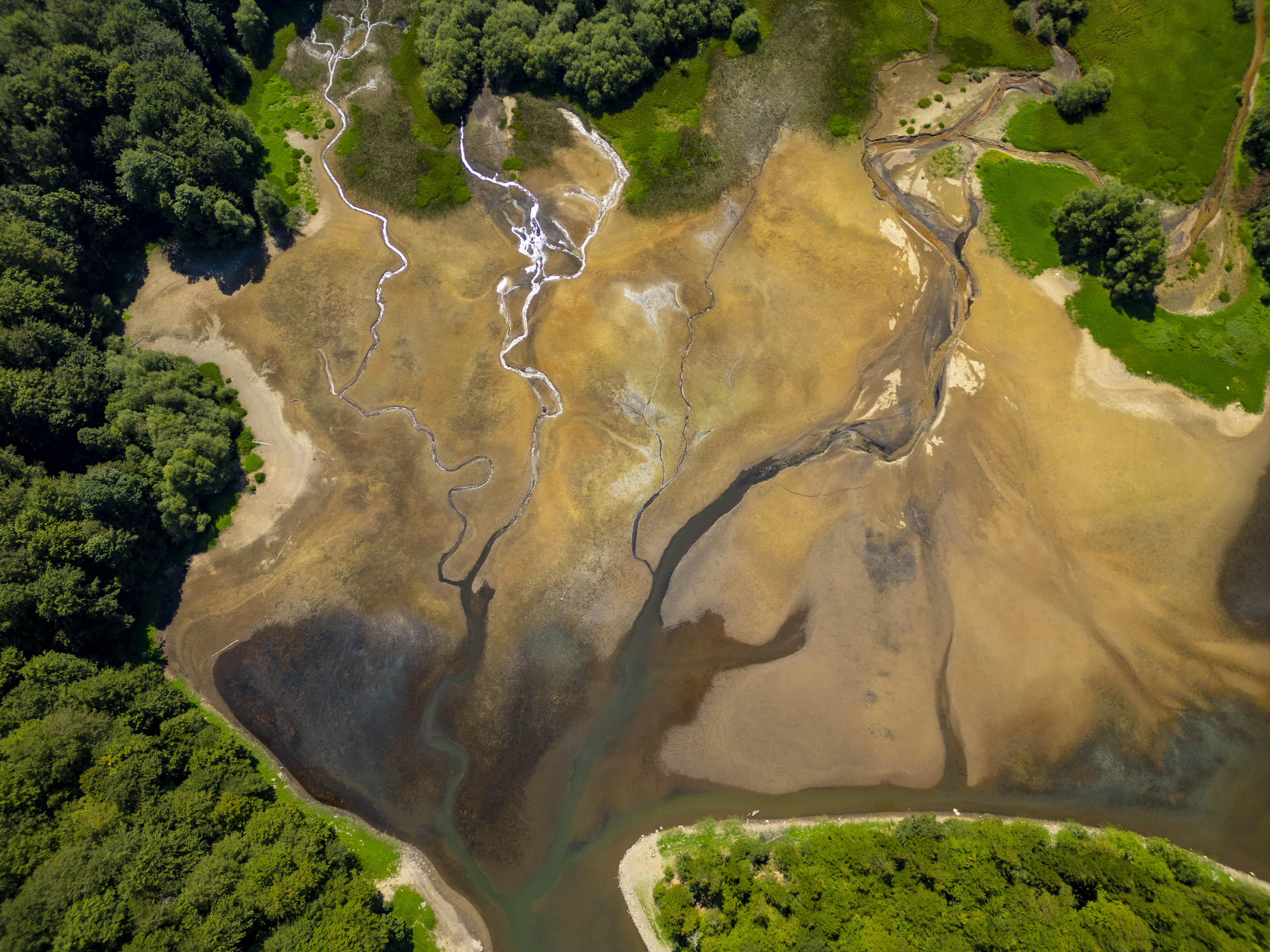
The main attraction here, apart from some trailheads to long hikes, is the walk around Lake Biograd. After a hot summer the water level in the lake was low and the whole back section had pretty much dried out which was a shame. The forest around the lake is lovely though and is one of the oldest in Europe.
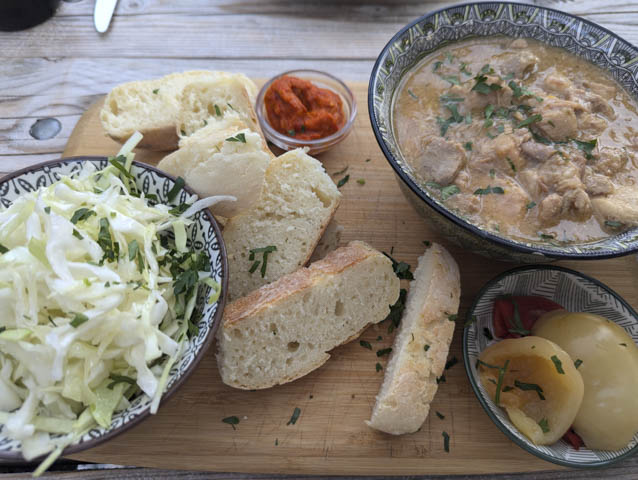
After spending the morning at the lake we decided to leave the busy car park before we got boxed in and headed to a campsite near Kolasin, owned by a young Dutch couple. It was in a lovely setting with a very pretty stream running alongside it but unfortunately it wasn’t deep enough to swim in. We did however lie down in it in an attempt to cool off! There was also a restaurant on site and the owners cooked us a really delicious dinner of local goulash.
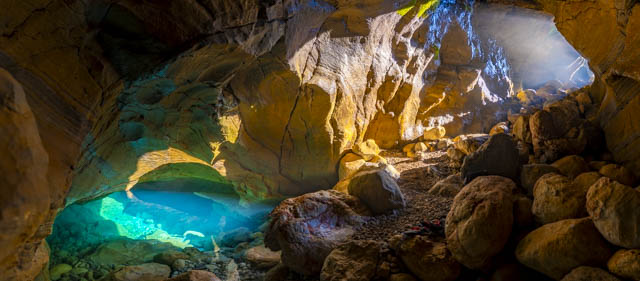
The campsite was an easy 4km walk from a really cool cave which was the source of a river in the area. At this time of year the river was mostly dry but at the bottom of the cave was an icy pool of water. I took the opportunity for a swim but the water was definitely the coldest we have come across and I only lasted under a minute !
While we were at Camp Lipovo, our friends the Roverlanders weren’t too far away (Montenegro really is a very small country), so we arranged to met up again for a night back at Kolasin 1600. This was our last opportunity for some socialising as our paths were soon to diverge as we were heading in opposite directions. We had another great night with Jon and Donna before heading to our next and final destination in Montenegro, Prokletije National Park.
Prokletije National Park is in the Accursed Mountains and is right on the border with Albania. The Peak of the Balkans multi-country hike goes through this park and I decided to hike part of this trail which, if I kept going, would take me to Albania.
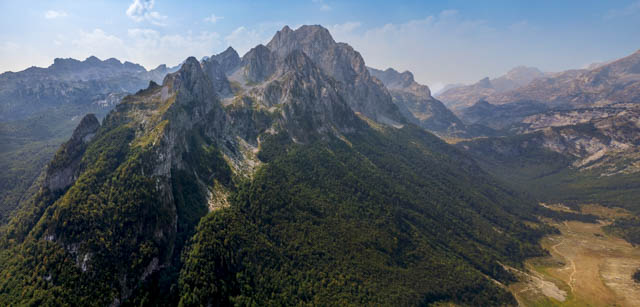
Unfortunately the hike I chose should have had the highlight of a couple of waterfalls and a finish at a mountain lake, but given the heatwave that has plagued the Balkans for the last two months both waterfalls were dry, as was the lake. The mountains however were spectacular!
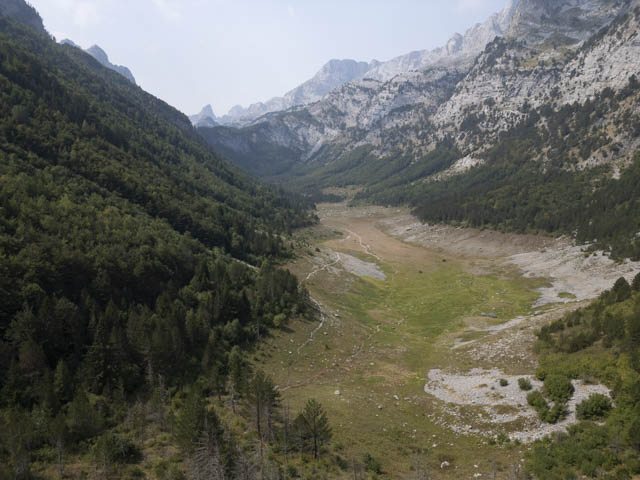
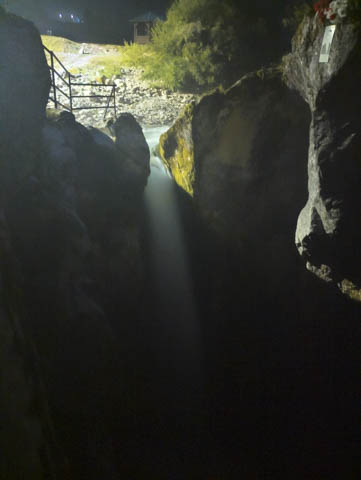
We had parked up at the trail head of the hike and in the early evening it started to rain heavily for an hour or two. After the rain had finished it was fascinating to watch water begin to flow down the dry river and just after night had fallen it reached the dry waterfall by the parking lot, which then began to run. We were so glad we went out to take a look even though it was dark because by sunrise the next morning all the water had gone and the river and waterfall were dry once again.
This was to be our last stop in Montenegro and the next country was Kosovo – one of the newest countries in the world and only recognised by just over 50% of the world’s states.
The Mountains of Montenegro
Entering into Montenegro from the North means that the first place you hit is the Tara River. First though we needed to get through the border. While waiting in the queue of cars, we noticed a woman going around all the vehicles. We initially thought she was going to hassle us to buy something we didn’t want but actually she was handing out free sim cards for one of the Montenegrin mobile phone networks. This was really useful and a first for us at a border crossing, saving us a task at the first town we came across.
The border itself was really easy and we weren’t asked if we had insurance – good thing too as our insurance didn’t cover Montenegro!
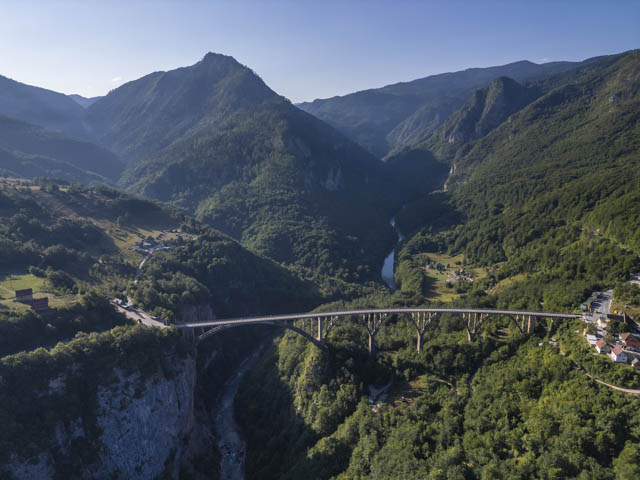
From here it was a short drive to our first stop which was a rafting camp high on the Tara river Gorge’s sides. We arrived in the afternoon and arranged to go rafting the next morning.
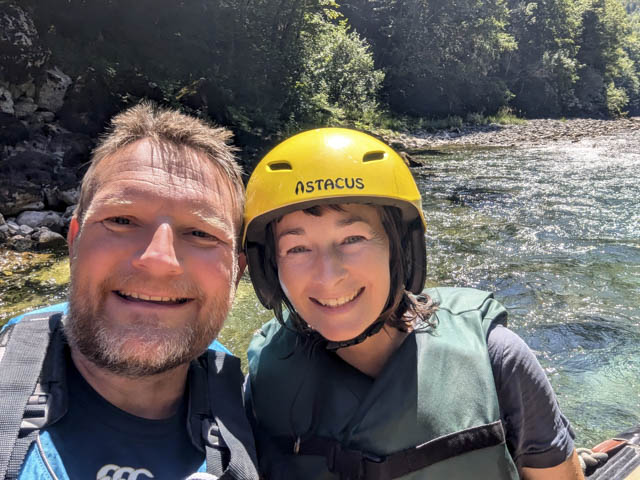
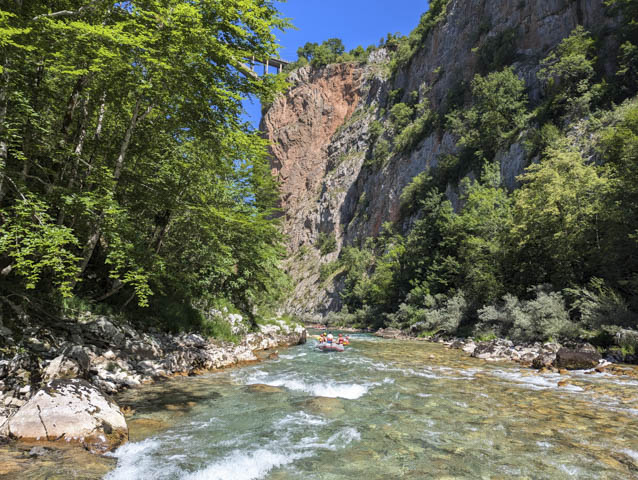
After a short minibus ride down to the river we joined up with another company as our camp only had three passengers for our rafting trip. The river was a beautiful turquoise colour and the trip down through the gorge was very beautiful. The river was pretty placid though given the time of year so there wasn’t a great deal of white-water rapids.
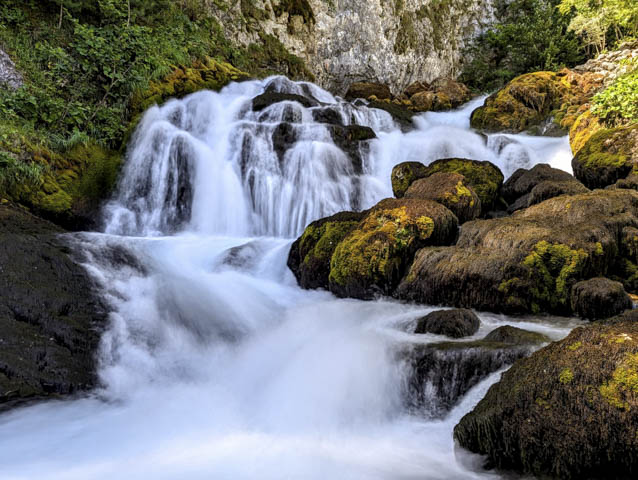
We stopped a couple of times on the trip. The first stop was to see a spring-fed waterfall that ran into the main river. The second, was a small beach where we could climb some rocks and jump into the river or simply enjoy a swim. The water was definitely on the cool side but we are getting pretty used to that.
At the end of the trip the minibus ground its way up a very steep gravel road out of the gorge, getting us safely back to the camp where we were served a hearty lunch and spent the rest of the day relaxing in the sun.
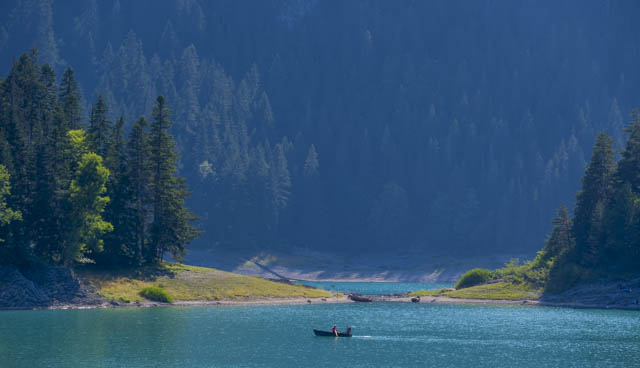
The next morning we moved onwards to a campsite in Durmitor National Park, only a 10 minute walk from Black Lake which is the most visited place in the Park.
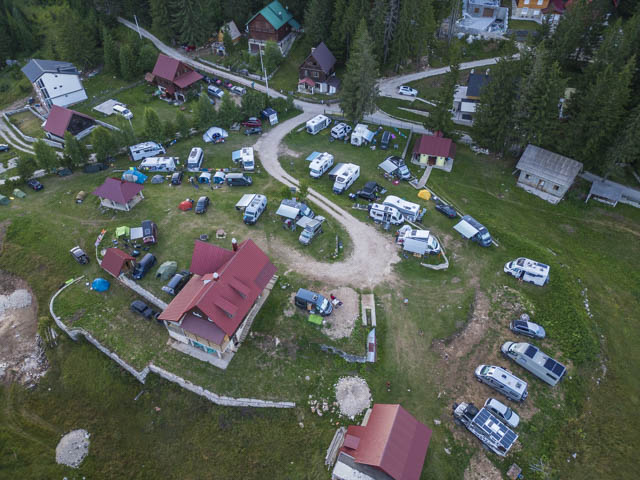
The busy campsite was a real shock to us. We hadn’t seen this many campers anywhere on our whole trip.
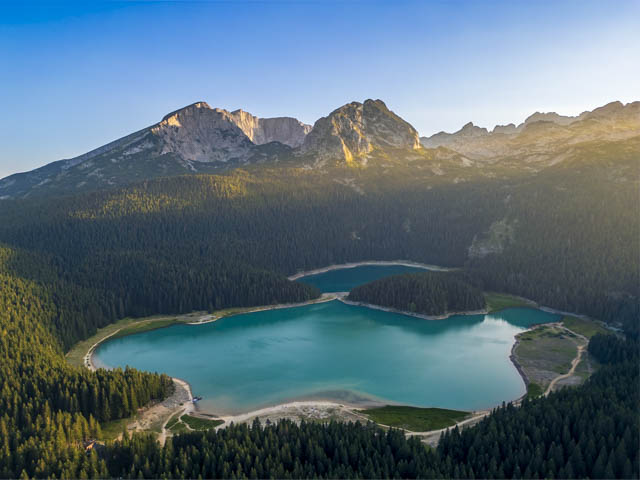
The location was great though, being so close to Black Lake, which has a few sandy beaches and was a lovely temperature for swimming.
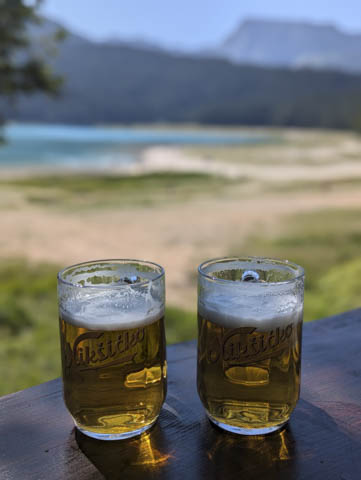
There is also a lovely bar overlooking the lake where we had a couple of afternoon beers in the sunshine with a great view.
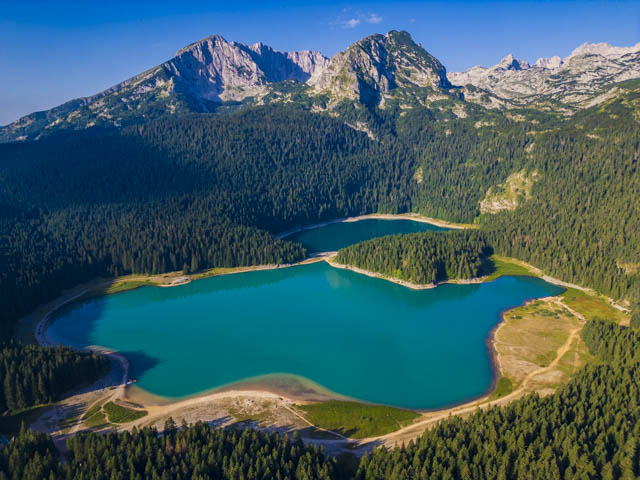
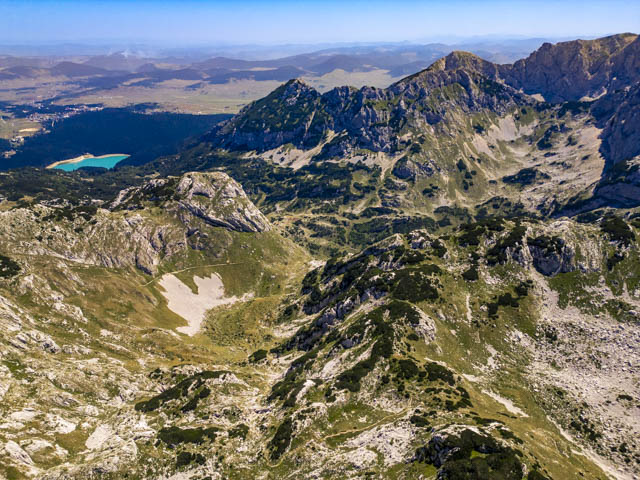
While staying at the campsite I did the popular hike up to cave Ledena Pecina. It was a reasonably hard hike with 1000m of vertical and a total distance of over 15k.
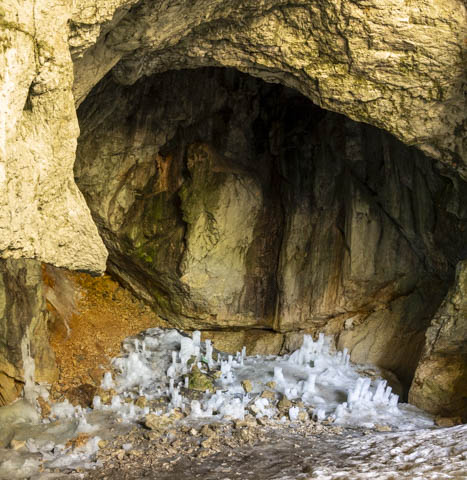
The views from the top were spectacular but the most interesting things were the ice formations in the cave. You could climb down into the cave to see them closeup but it was really slippery as you were basically walking on ice. During the winter the whole area is in deep snow and the bottom of the cave never thaws out.
When we were in Serbia we bumped into a British couple travelling in a Land Rover camper conversion, Donna and Jon from the Roverlanders (@theroverlanderadventures on instagram). We got on so well that we arranged to meet up with them in Montenegro in a few weeks.
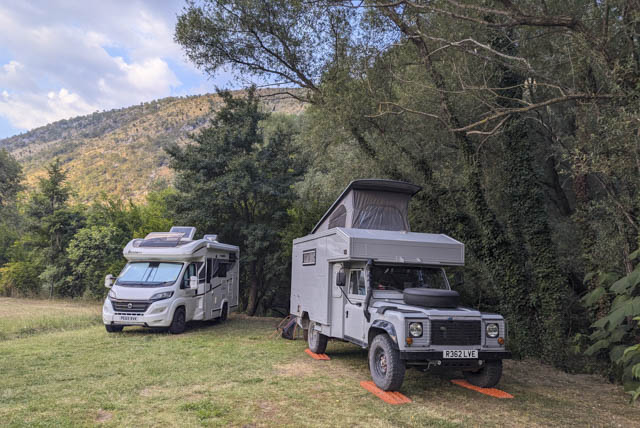
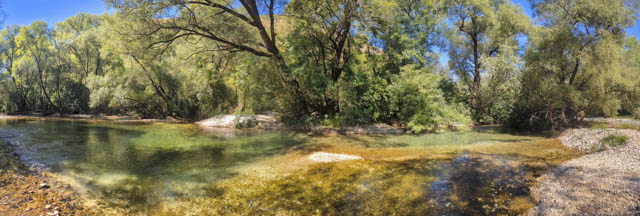
We had agreed to meet in a campsite in a valley just to the East of Niksic in a lovely campsite called Ilijin Vir. The campsite is by a beautiful river with a swimming hole – the source of the river was nearby so the water was freezing cold which was a good thing because the campsite was out of the mountains and very hot.
We spent a couple of nights exchanging travel stories with our new friends and in typical British fashion a few bottles of wine were consumed.
High up a cliff side above the campsite is one of the most famous monasteries in Montenegro, Ostrog Monastery so we all decided to drive up there when we left the campsite.
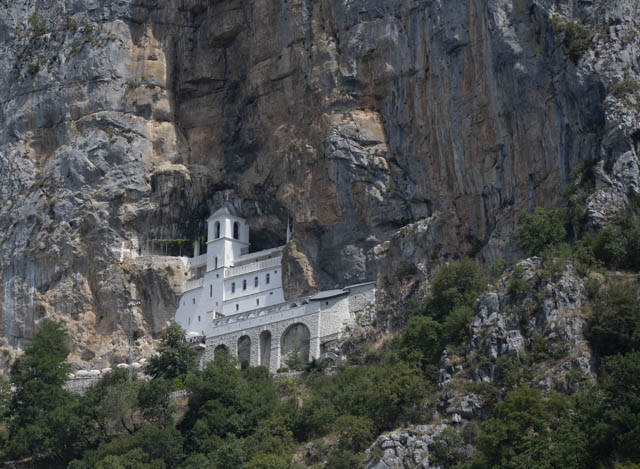
Not unexpectedly, the road was narrow and pretty busy with traffic but we managed to make our way up to the final set of switchbacks below the monastery when we hit a queue of stationary traffic. After sitting in this barely moving queue for around 30 minutes we finally got to the front where a guy marshalling the traffic told us that we were too big for the already full car park and we needed to turn around. This was pretty frustrating but we weren’t deterred as he also told us there was a bus that would bring us up for €1 from the half way stage, where we could park the motorhome.
After a tricky U-turn on a switchback, we slowly inched our way back down the mountain past the queue of traffic on the one lane road and made it to the mid way car park where we spent around an hour trying to find a bus or taxi up to the monastery without any luck. It seems we were not meant to see this particular monastery so we decided to call it a day and head back into the mountains of Durmitor National Park.
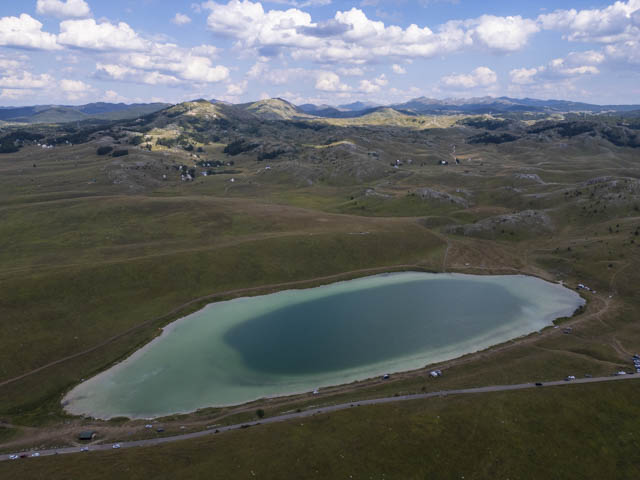
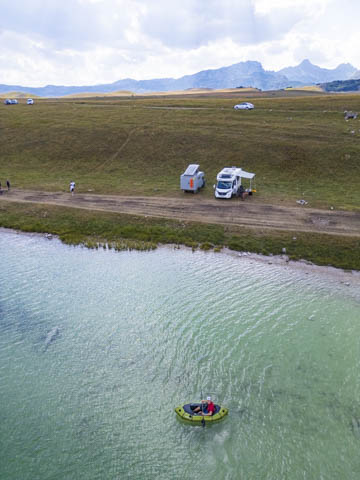
Our first stop was a lovely lake where we were able to park right on the lake shore. Unfortunately it wasn’t great for swimming as the floor of the lake was deep, soft mud but we got the kayak out and had a play with that instead. Jon was also keen to give it a try as he’d been thinking of getting a pack-raft himself.
After spending the afternoon by the lake we all packed up and headed up the P14 road to Sedlo Pass. The P14 is a really scenic road that crosses Durmitor National Park but it is narrow and gets pretty busy. That’s why with our bigger vehicles we wanted to do the drive towards the end of the day to minimise the amount of traffic that we met. It was still fairly frustrating when we met oncoming traffic but at least it was a lot quieter than it would havr been during the day.
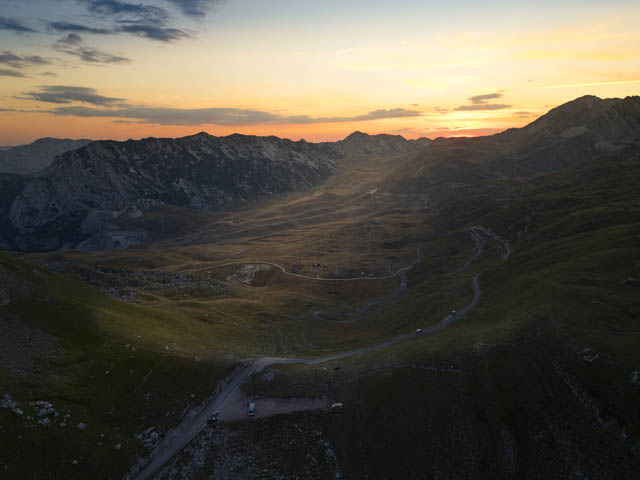
Sedlo Pass is at 1900m so we had a lovely cool night and were well placed for a hike the following morning to the highest peak in the park, Bubotov Kuk. This is listed as the highest mountain in Montenegro but there are actually a couple of higher mountains in the Accursed mountains to the East.
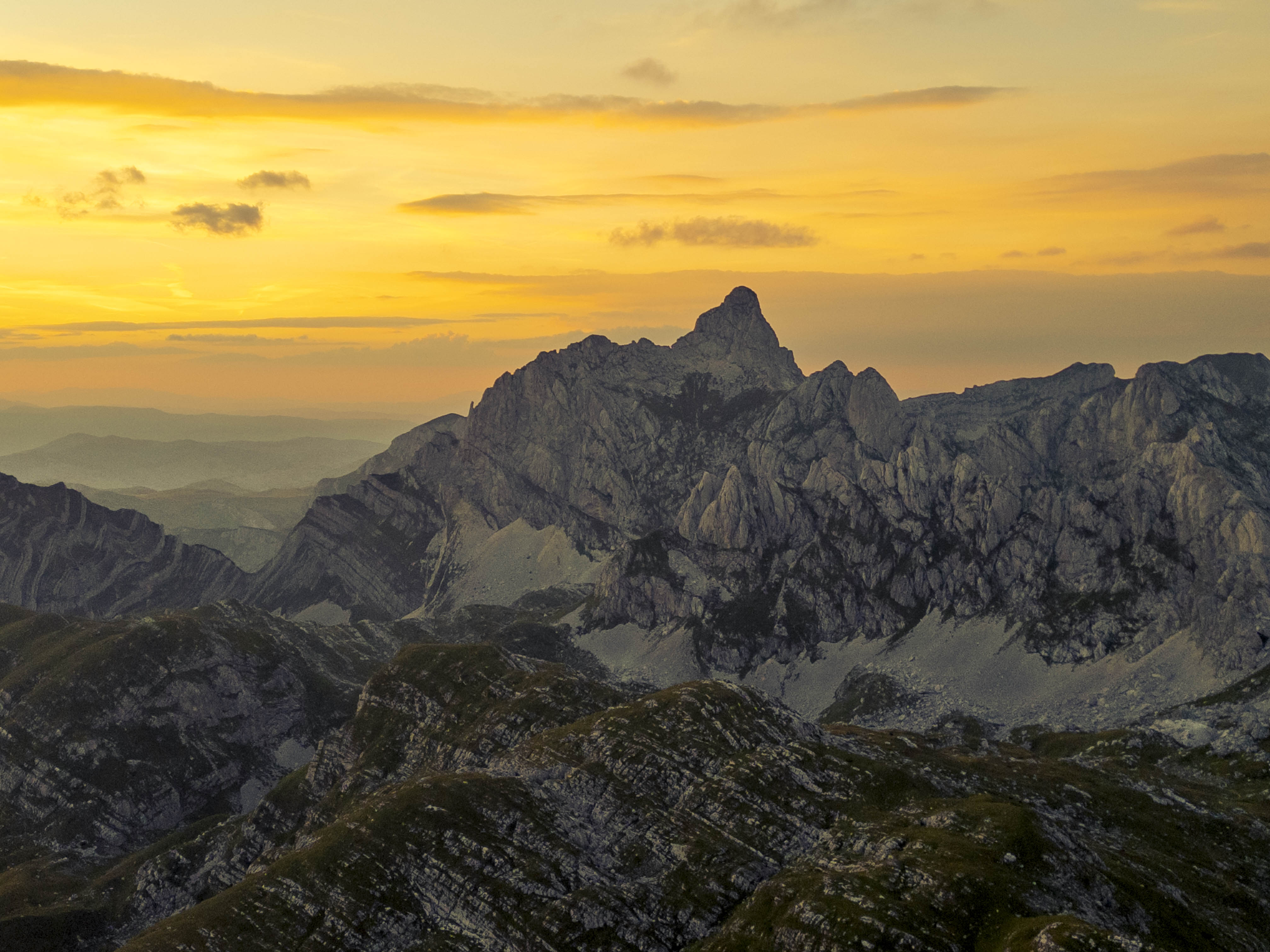
It was great to have some company on the hike as Donna and Jon had invited me along.
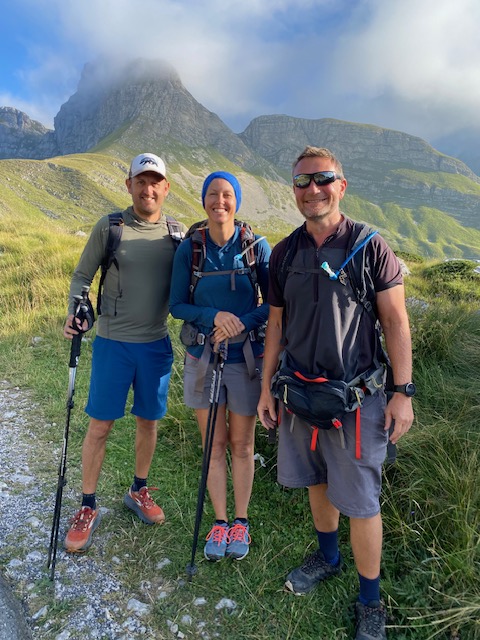
The hike up to Bobotov Kuk was very steep and quite a lot of climbing was required in the final ascent. But eventually we reached the top at 2,523m. This was fairly misleading as the route to the top had involved traversing a fairly deep valley at the foot of the peak, so we had still managed to climb a gruelling 1,000m on the hike.
On reaching the top we were shocked to find a few stray dogs sleeping at the peak. I suppose they must get good pickings from hikers having lunch but it’s a first for me finding dogs on a mountain peak.
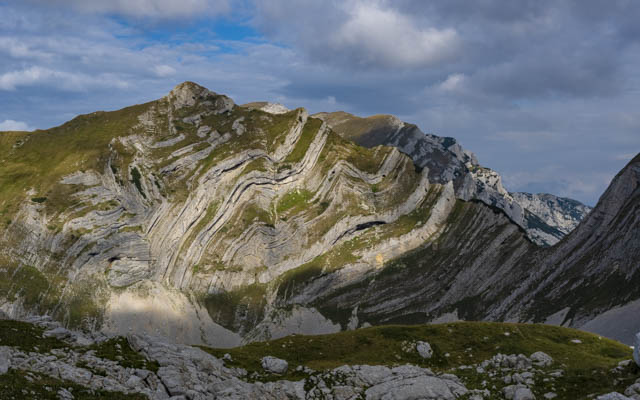
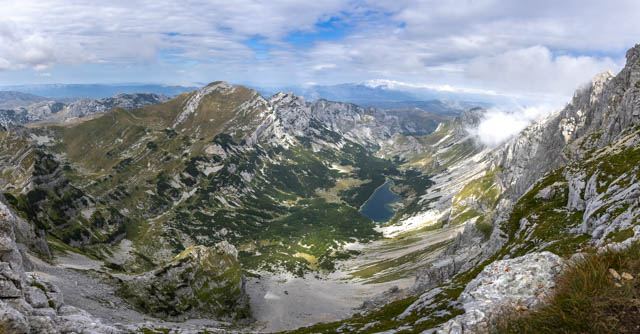
The views were fantastic and we were able to see all the way to Black lake and beyond one way and views of the intricately folded Prutas mountain the other. We felt lucky to see the views when we did as not long after we arrived the clouds came in.
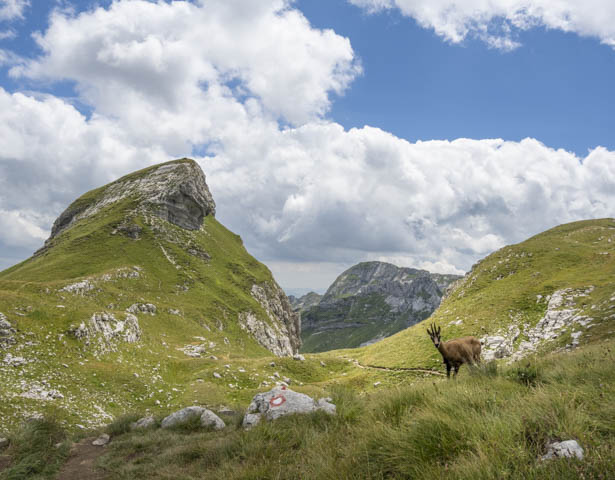
On our way back down we were also pretty stoked to run into some relatively tame Chamois and one almost seemed willing to pose!
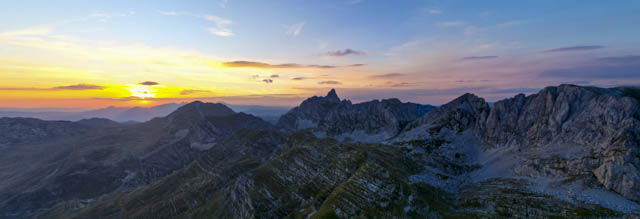
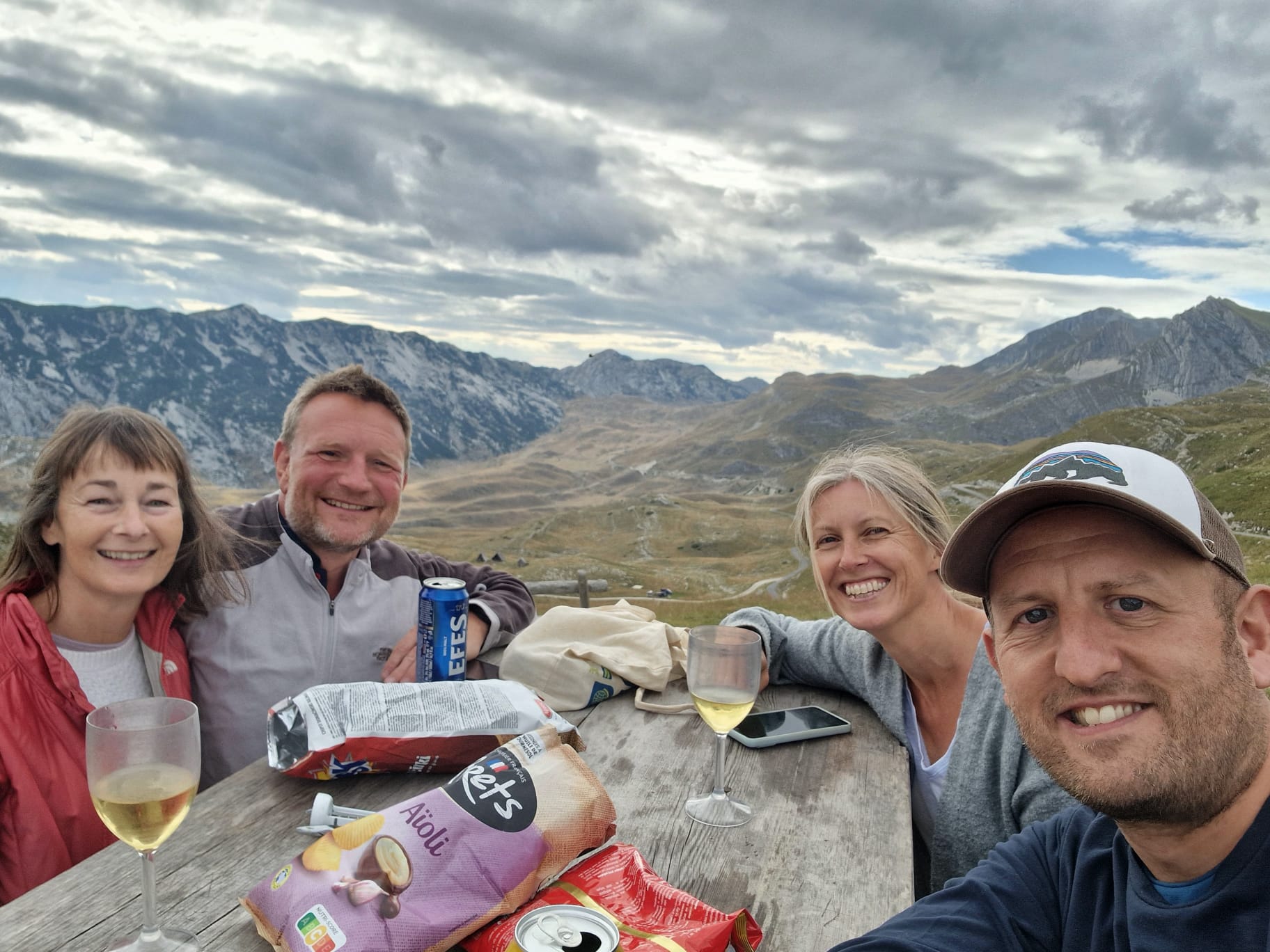
This was our last night in Durmitor with Donna and Jon and we were heading off early the next day, so we found a picnic table with a view on top of Sedlo pass and shared some drinks, snacks and stories as the sun went down. We retreated pretty quickly to the warmth of our vehicles after sunset though as the temperature fell pretty quickly.
Back to Serbia
After our brief trip into Bulgaria we headed back out of the Schengen zone and back into Serbia. We crossed over into the South Eastern corner of the country but we actually wanted to spend the remainder of our time in Serbia in the South Western corner. So we drove across to the tip of Kosovo and a mountain area called Kapaonik National Park.
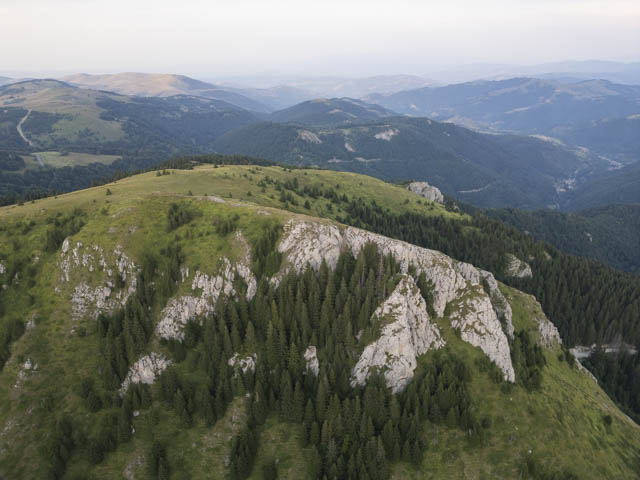
As the heat wave in the Balkans was still raging with temperatures hitting the high 30’s and low 40’s at sea level, we were really pleased to see the mercury dropping as we drove up the access road to Kapaonik. We finally settled down on a ridge at 1700m with a great view looking back down onto the plains below. The temperatures over night were down low enough for us to actually use our duvet and it was great.
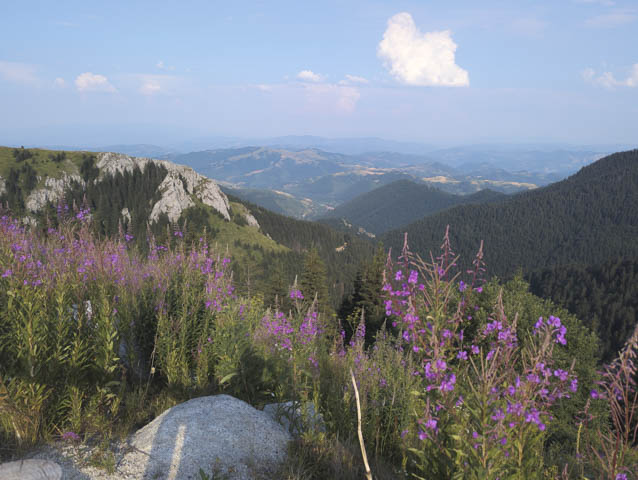
We spent four nights in total at Kapaonik, enjoying the cool temperatures and visiting the modern ski resort.
We did descend the mountain for a day of exploring, which included a visit to Maglic castle, which was built in 13th century and conquered by the Turks in 1438. The castle is perched on a crag overlooking the Ibar river. There isn’t much left of it now, other than its walls and the remains of the keep.
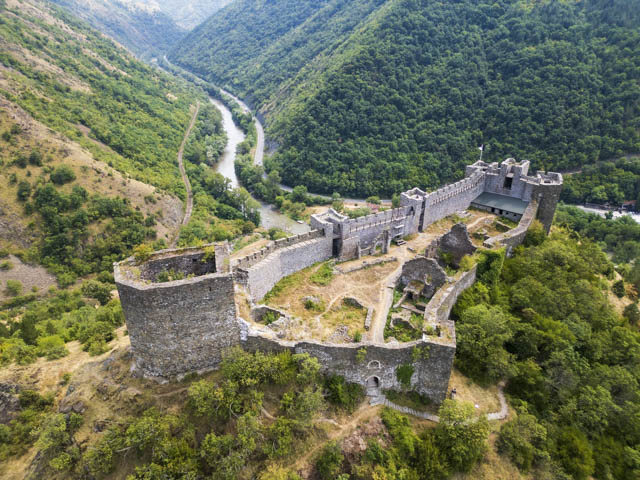
There is no access road to the castle and the old bridge has collapsed, so to get here you have to take a hand-pulled ferry across the river and then hike up the steep path.
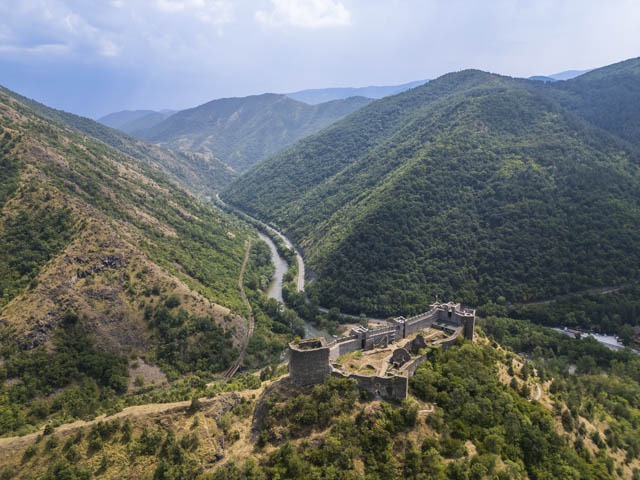
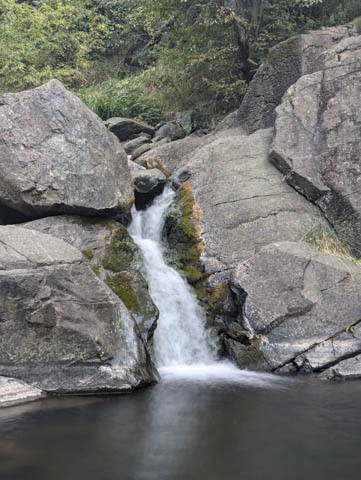
At the base of the crag upon which the castle sits, is a tributary river with a small waterfall and a perfect pool for swimming. Just what I needed to cool off. However, on returning to the ferry the wind had risen and the temperature was plummeting. In the space of about 20 minutes the temperature fell almost 15c and once safely back in the camper the heavens opened.
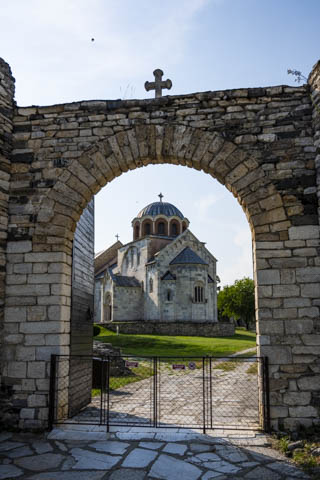
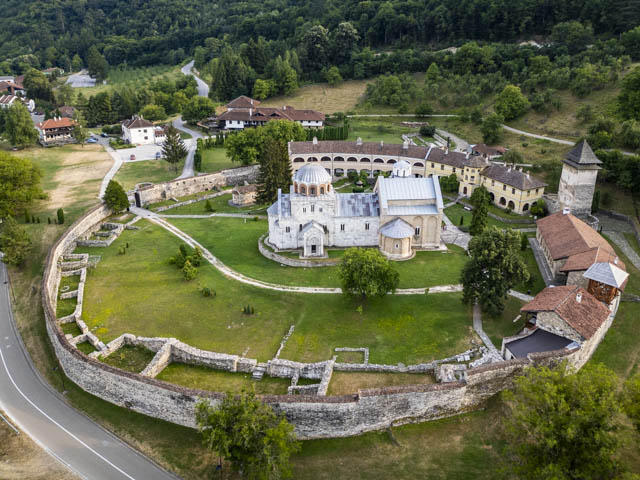
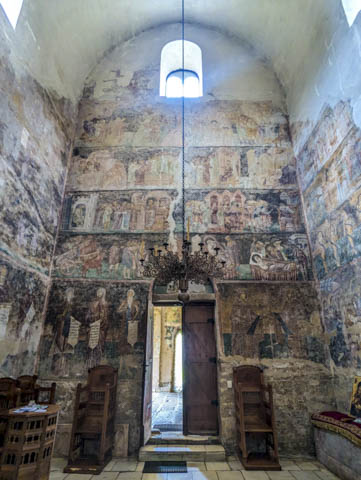
We moved on to our next destination, the Studenica Monastery, which is considered one of Serbia’s most sacred sites. It was established in 1196 and within its white marble walls there are two churches with acclaimed frescoes.
We had planned to spend the night at the Monastery but as the thunderstorm passed and the clouds dispersed the temperature headed back into the 30c despite it being early evening, so we decided to make a dash back up to Kapaonik for a cool night.
We finally prised ourselves free from Kapoanik National Park and drove to the town of Novi Pazar which is at the foot of Kapoanik. It is a typical border town being close to both the Kosovo and Montenegro borders and we did not linger long.
We had come to this area because we wanted to visit two more monasteries. The First is a very popular destination and easy to reach from Novi Pazar.
This is the Sopocani Monastery, which was built in 1265 but was subsequently destroyed by the Turks in 1689. The frescoes contained within are superb examples of medieval art and the site is Unesco listed having been fully restored in 1929.
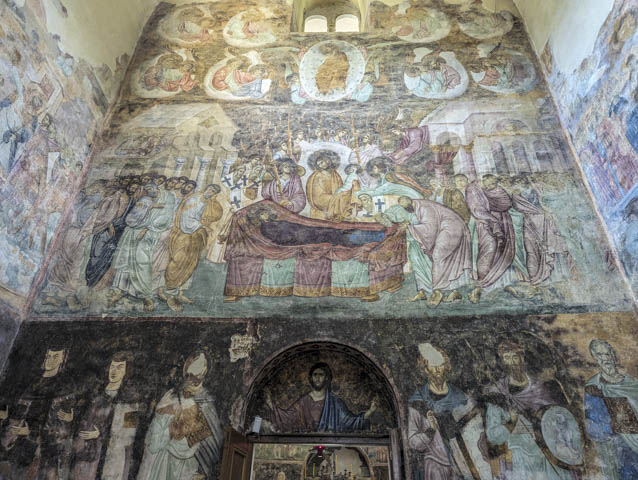
The next monastery on our tour was Crna Reka, which was a little more tricky to get to. To get here we had to cross a narrow bridge over a lake and, unsure of what we would find at the top of the steep narrow drive up the mountain, we parked up and decided to cycle.
It was an exhausting cycle up (for those of us without an e-bike) and upon reaching the top we discovered there was just enough space to park. It was early evening when we visited though and we were the only visitors at that time, had there been any other visitors we would have struggled, so we were right to be cautious. On our way in, a priest intercepted us to say that I couldn’t enter the monastery in my shorts. Fortunately, he gave me a pair of tracksuit bottoms to cover my legs and spared me having to cycle down and then drive back up as there was no way I was cycling it again!
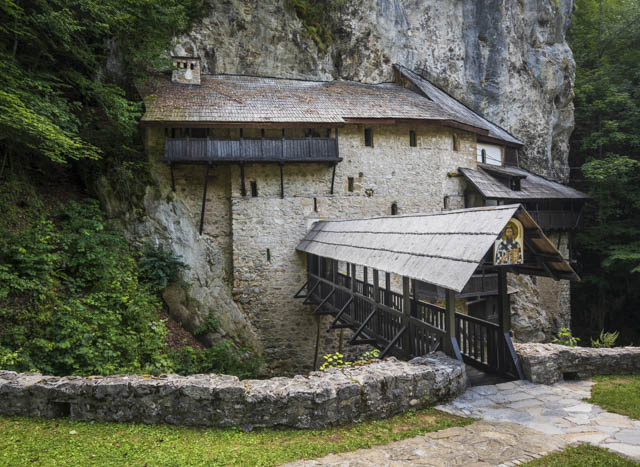
The 13th century Crna Reka monastery is built into the cliff side and many of the rooms are built into caves. The monastery is spread over four levels and each section is linked by staircases built along the cliff.
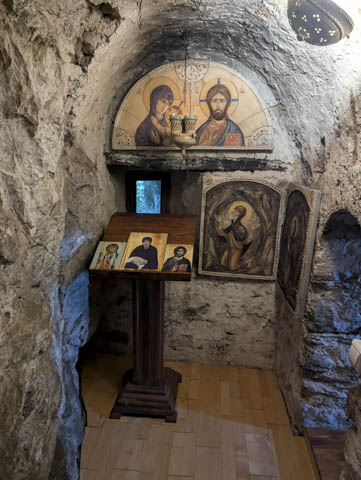
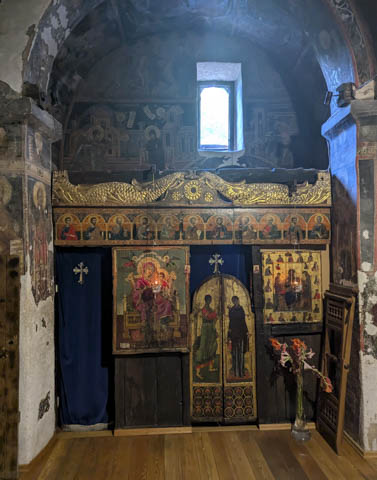
Being all alone visiting this monastery made a nice change and we really enjoyed poking our heads into all the nooks and crannies in the cliff side which had been made into little chapels.
For the night we drove up to another ski resort and found a huge deserted car park at the top of the mountain. The car park had been built a few years ago for a new ski resort but no further development has taken place so it’s just a big car park surrounded by trees.
The next morning we kept driving along the same road when the tarmac gave out and we had to continue down a reasonably rough gravel road. Then, just as abruptly, after about 5km of gravel the tarmac started again and we carried on back to the main road on a lovely smooth new tarmac road.
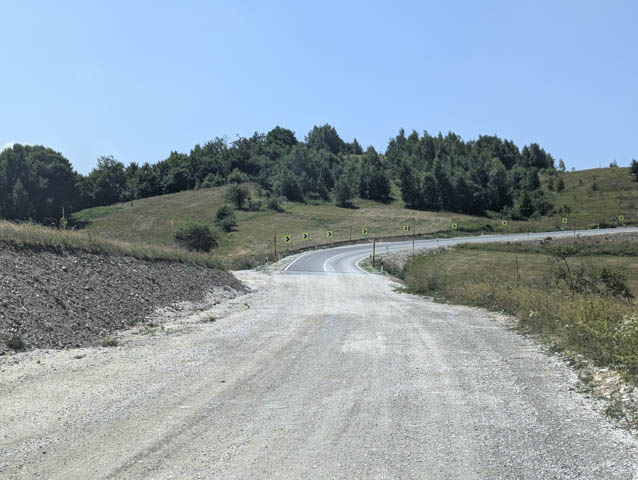
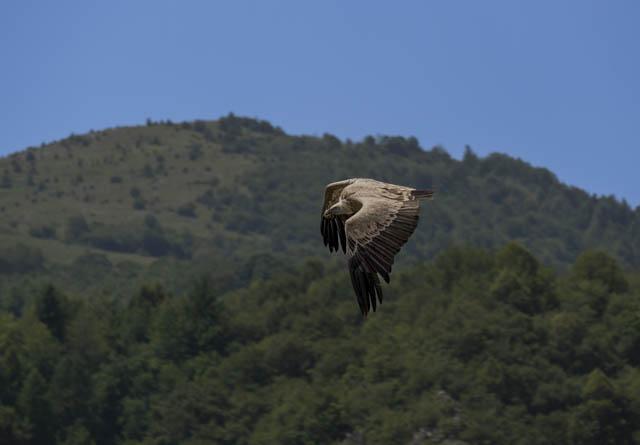
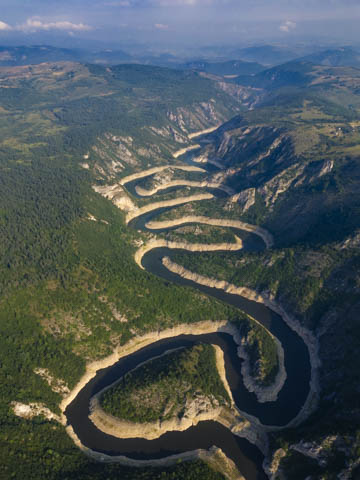
We arrived at our next destination which had a tarmacked road so new it’s not yet on google maps and we set out on a short hike to a viewpoint overlooking the amazing Uvac canyon. The river here is incredibly meandering and makes for an amazing view. There are also lots of vultures inhabiting the area so you can take turns looking at the river canyon or admiring the swooping vultures. If this was somewhere more accessible it would probably be very famous !
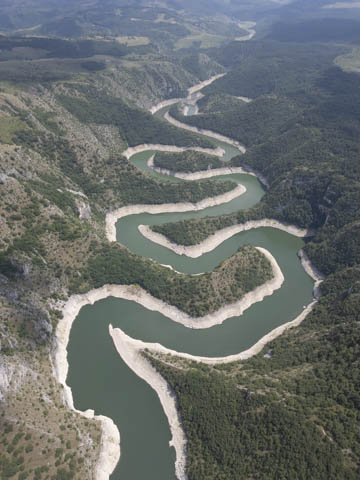
We decided to try to find a boat tour through the canyon which involved driving down a very steep, deeply rutted and crumbling dirt road to river level. As we were descending the road got worse and worse and we started to get pretty concerned about making it back up, but we were on a single track with no way of turning around so we were committed now. On arriving at the bottom, the area where boat tours were meant to leave from was littered with old beat up caravans that looked like they had been there for many years and a couple of closed-up buildings that likely used to be restaurants. The place had an eerie feel to it and it was clear any boat tour business that once existed here was no more. With nothing left to do, we girded our loins to drive straight back up the road – traction control and hill ascent on, we powered up the hill wheel spinning as we went. That was certainly as gnarly a road as we would want to do in our 2 wheel drive motorhome.
On reaching the top with our hearts racing, we stopped at a nearby restaurant, asked if we could stay the night and then promptly ordered some drinks to settle our very frazzled nerves.
Next stop in Serbia was the modern ski town of Zlatibor. Zlatibor has the feel of a modern American ski town with a Balkan flavour. The slopes are actually a bit out of town but connected by a new cable car.
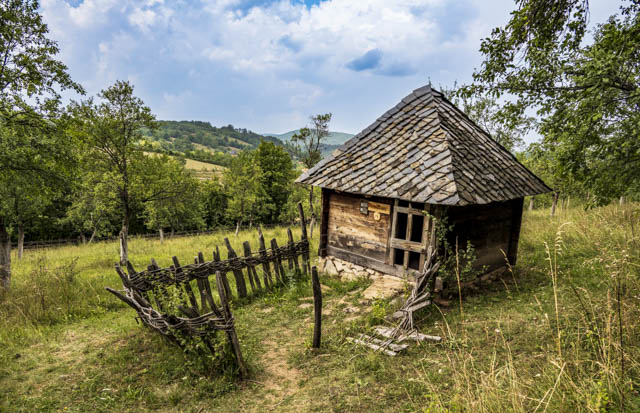
We stayed the night in a rare Serbian campsite but had a terrible nights sleep as somewhere nearby they were blasting dance music until 3 in the morning. The bass was so loud you could feel the vibrations through the camper. This isn’t unusual for a weekend but was unexpected on a Wednesday night !
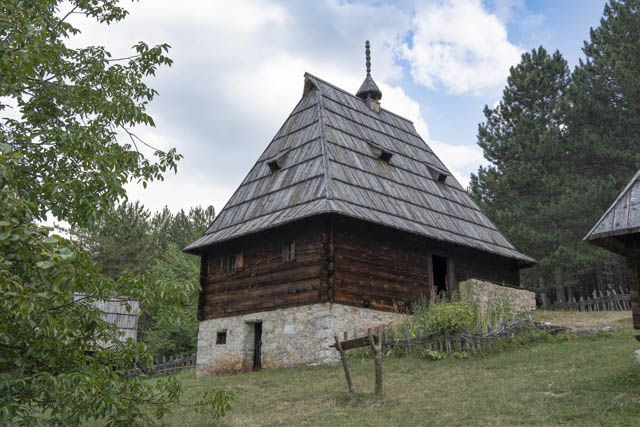
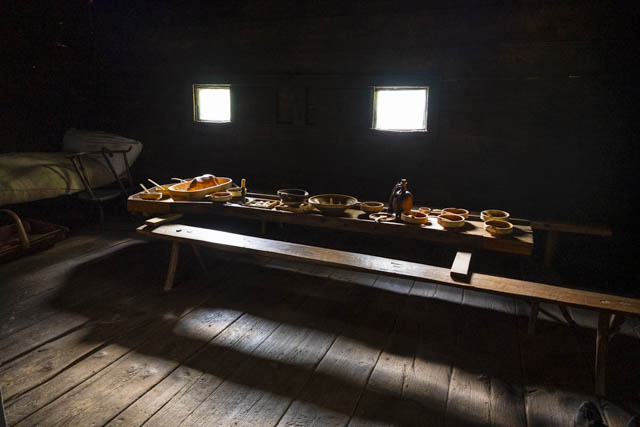
Near to Zlatibor is the Sirogojno Open Air Museum. This is a collection of traditional buildings which have been moved to this site to demonstrate how people in this mountain region of Serbia used to live.
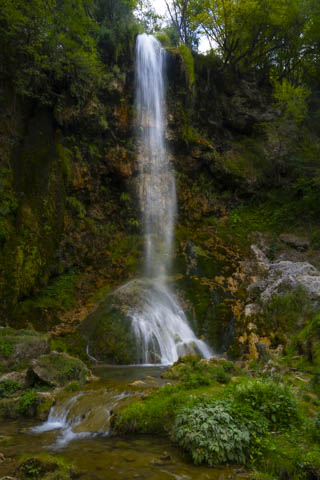
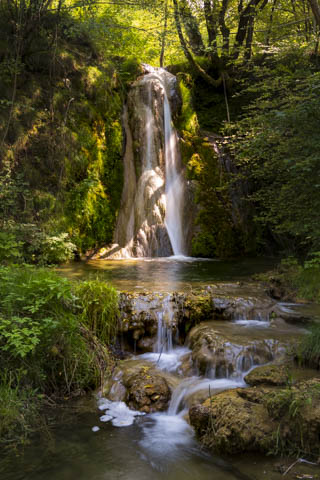
Close to Sirogojno is a park which is home to a series of waterfalls called Gostilje. This is a lovely 1km walk down along side a river which passes over a number of cascades before reaching a larger river at the bottom of the valley.
Sometimes you just get things wrong when you are researching and finding things to do and see in the areas which you visit. Everything we were reading online and in our guide book was that the Mokra Gora Sargan Eight railway was a fantastic trip that shouldn’t be missed.
With this in mind we set out early to secure a spot in the car park for the starting station and bought some tickets for the first journey of the day. This is an out and back train journey which takes an hour and a half each way. There are also a number of stops along the way to admire the views and stretch your legs.
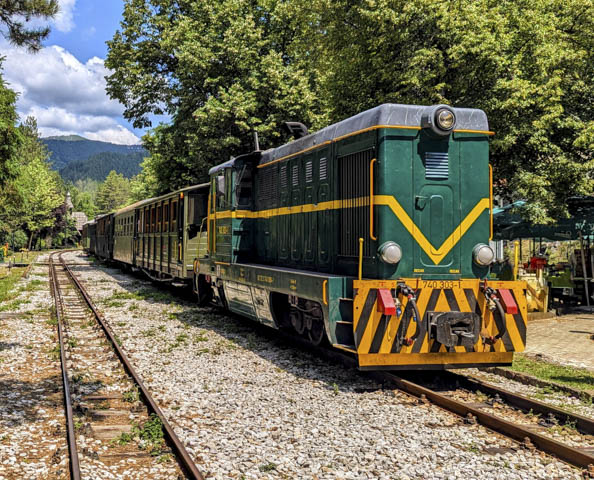
We have done a few rail trips while travelling and usually you can expect some amazing views (the Mont Blanc Tramway immediately springs to mind), but unfortunately the Mokra Gora railway just did not deliver, as 90% of the journey is through forest that blocks any views at all. The stations that you stop at are ok and did have some interesting old trains to look at but nothing that was worth spending 3 hours on this ride.
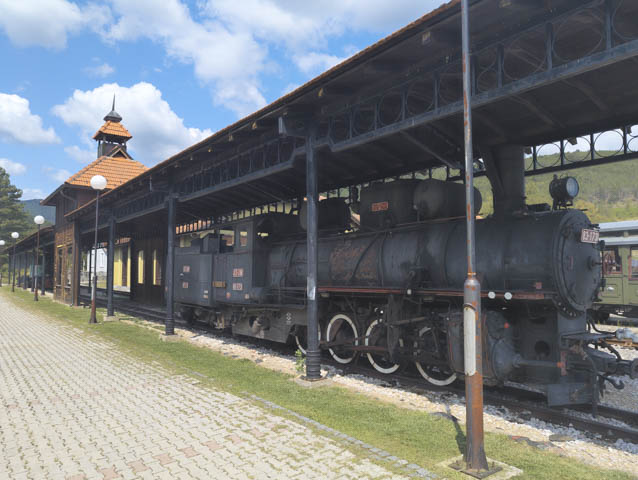
We made the best of it but just felt that it was something that could easily be skipped without missing anything special. The train line is called the Sargan Eight as it winds its way in a figure of eight as it climbs over 300m from start to finish through 22 tunnels in 15.5km. It is something of an engineering marvel, but you just can’t see that from the train itself and I suspect you’d need a birds-eye view to really appreciate it.
Near to Mokra Gora is the village of Drevengrad which on the face of it looks like a traditional Serbian village but was in fact only created in the 2000’s as a movie set for the film – “life is a miracle”. It made a diverting stop over for 20 minutes but no more.
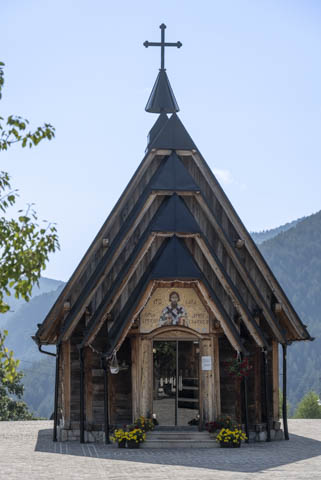
We were getting close to the end of our time in Serbia but before leaving we wanted to visit Tara National Park. This park consists of two different areas: the Tara river canyon and then a highland mountainous area overlooking the canyon.
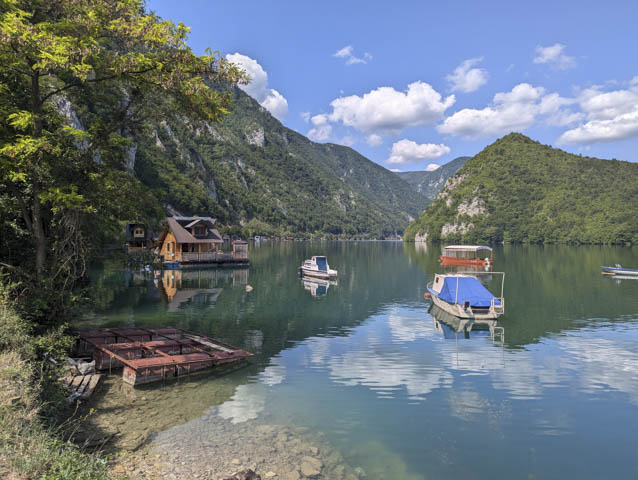
We stopped off at the river canyon and were interested to see the number of houseboats tethered along the canyon, being used as holiday lets.
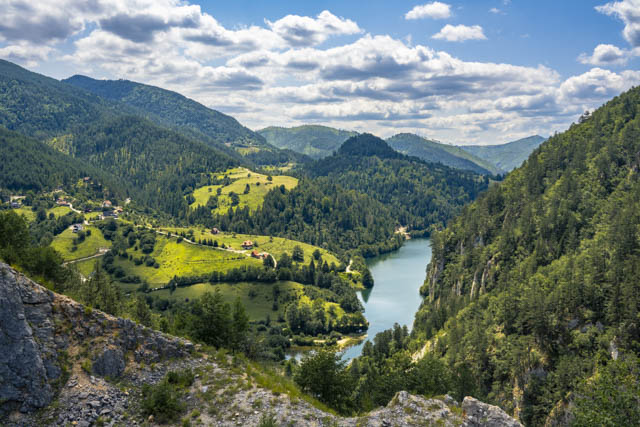
We then drove up into the highlands area and visited Zaovine lake – a large reservoir in the middle of the park. Nothing really piqued our interest though so after a day in Tara we headed to a campsite in the hills above the town of Uzice.
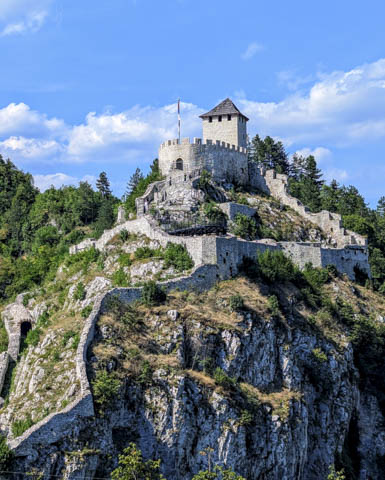
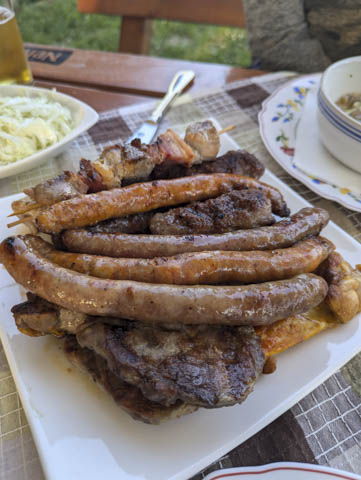
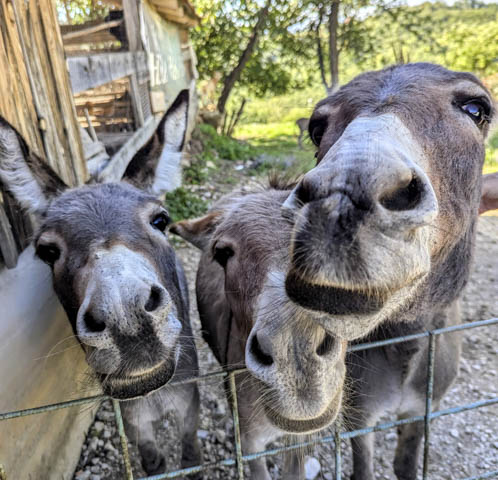
This was a great campsite, particularly because there aren’t very many in Serbia. It was a working small holding with donkeys and peacocks and we were welcomed by the elderly father with whom we sat and enjoyed several generous measures of his home-made Rakija. We also had a fantastic meal while we were here. There was so much food that we took a doggy bag away with us and had enough food for another two meals back in the camper.
After a relaxing day here we then headed south towards the Montenegro border and our next country.
Bulgaria
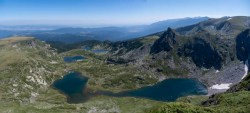
We hadn’t really planned to go to Bulgaria (particularly as they joined the Schengen zone earlier this year), but we ended up doing a week long detour into the Rila mountains due to a problem we were having with our gas.
After our last LPG fill we had been getting wafts of gas around the gas locker. It wasn’t happening consistently but tended to occur in the afternoons at the hottest part of the day. We also couldn’t get one of the tanks to work and having done some investigation it seemed to me that the tank had been overfilled and gas was being released through the safety value as it was expanding in the heat of the day, but it was difficult to know for sure. Gas is something that worries me, I don’t know enough about it other than its potential to go boom!
So after some discussion we decided we needed to talk to the experts at Gaslow (our LPG is a gaslow system) to work out if this was something serious we needed to worry about. We can’t make international calls on our local Serbian sim cards but luckily, we were in fact closer to Sofia across the border in Bulgaria than any major town in Serbia, so it seemed sensible to slip across the border into the EU where our home Sim cards would work and where there is an actual motorhome repair company (based in Sofia) if we needed it.
We crossed the border without any issues other than a lengthy queue, which turned out to be quite helpful as it meant we had plenty of time to see all the neon Vignettes signs and realised we needed to buy one before crossing over. After a quick internet search we were able to do this online while waiting in the queue.
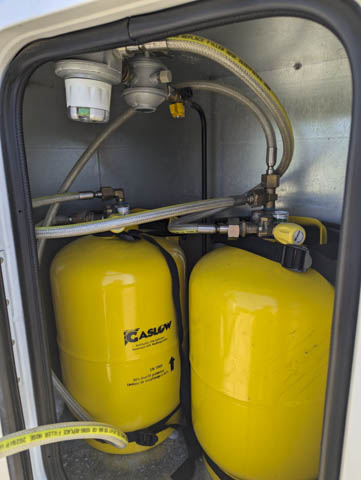
Once across the border we found a place to pull over and make the call to Gaslow. Long story short, after a very helpful and detailed exchange, we concluded that in all likelihood, our last LPG fill had been an overfill due a faulty pump and that once the tank we were using had emptied, the overfill tank should start to work as normal. Most importantly, they assured me that there was absolutely no chance of the aforementioned Boom. If this didn’t happen we needed to call them back.
So with that in mind, we needed to find a campsite for a few days to settle down and monitor what was happening. The campsite we found was only a 30 minute drive from where we were, in the foothills of the local mountains which meant the potential of cool nights despite the heat wave that was still engulfing the Balkans.
Sometimes with campsites you can really luck out and in this case we hit the jackpot. Blue Gates Camping was owned by a Bulgarian/Canadian couple who were really friendly and set us up in a lovely spot that had shade for most of the day.
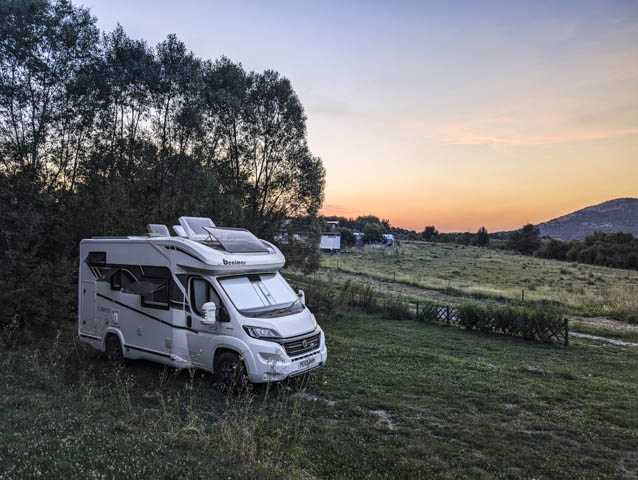
The campsite was based on a large, mostly shaded plot and the owners had marked out some walking trails that climbed up the ridge behind the camping area, which we explored. But by far the best thing about the campsite was the overground swimming pool, which was clean, cool and very refreshing.
After a couple of days of R&R at this lovely campsite, the gas tank switched over automatically to the overfull tank and, much to our relief, started working properly again. With that panic over, we were able to move on with our travels.
Since we had a few days left on our seven-day vignette we thought we’d make the most of it and see something of the country. After quickly consulting a map, looking for mountainous areas that would be cooler, we settled on the Rila Mountains.
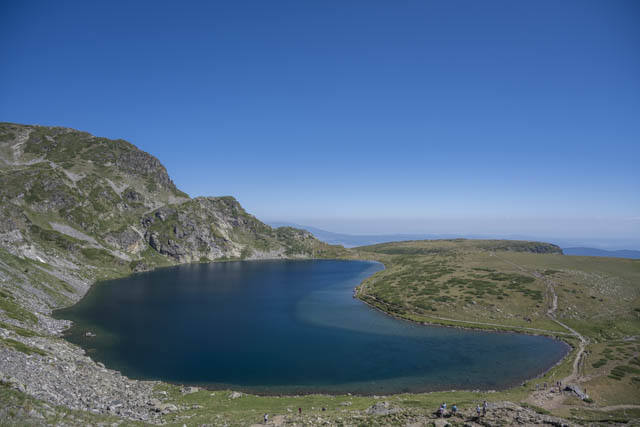
First up was the Rila Lakes hike, a lovely mountain trail which can be accessed by a chairlift. We free camped for the night in an area just below the main car park and then first thing, moved up to the chairlift car park to beat the crowds and jump on the lift as soon as it opened.
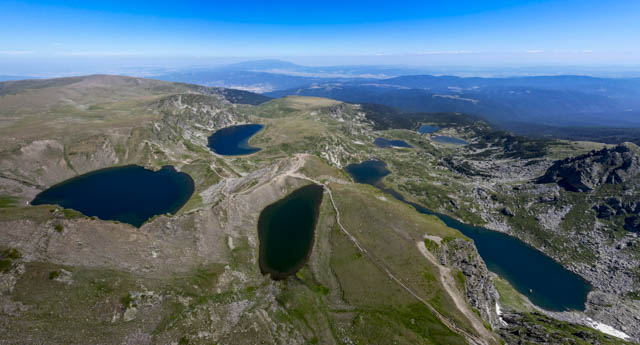
The great thing about the chairlift was that it took us up above the treeline to over 2000m and took away a lot of the uphill grind.
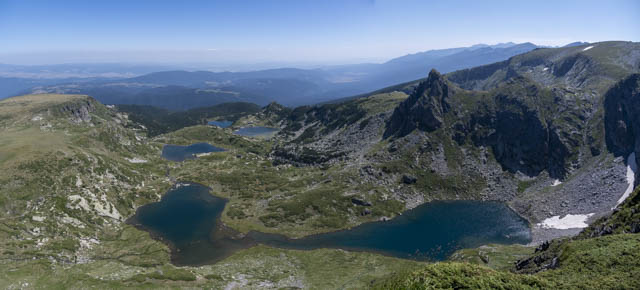
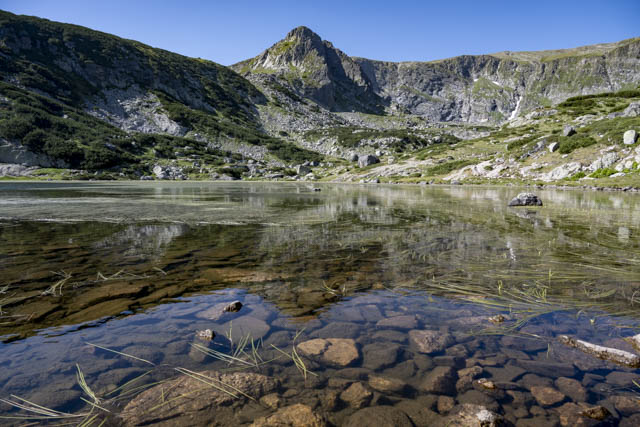
The hike here is around 10km long and takes in 7 alpine lakes of varying sizes. It’s a popular hike but as with most hikes in the Balkans if you start off early you’ll be pretty much on your own.
After leaving the 7 lakes area we had to drive down out of the mountains and then back up again to access a different area. We wanted to visit Rila Monastery, the most famous monastery in Bulgaria.
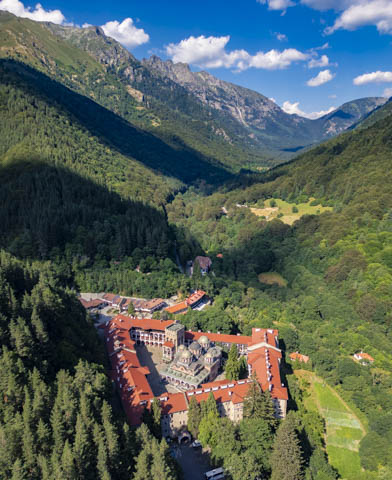
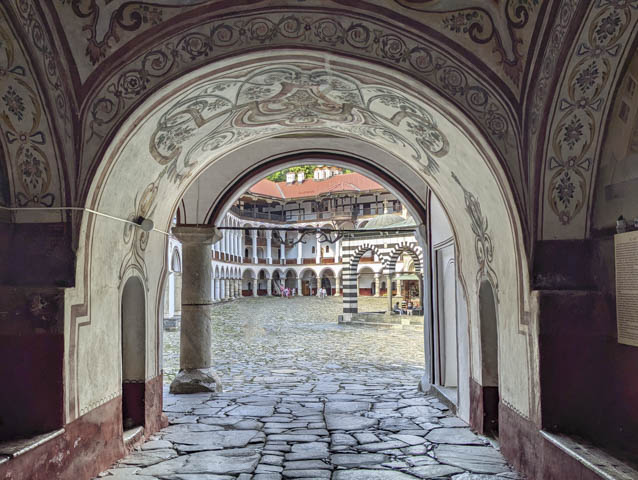
This impressively ornate monastery is surrounded by high stone walls and was founded in 927 AD.
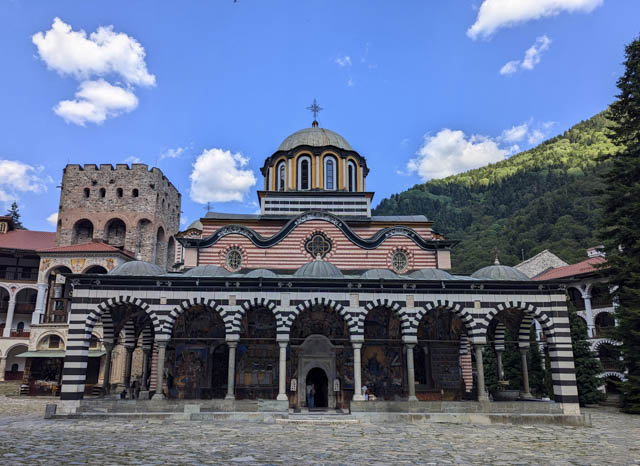
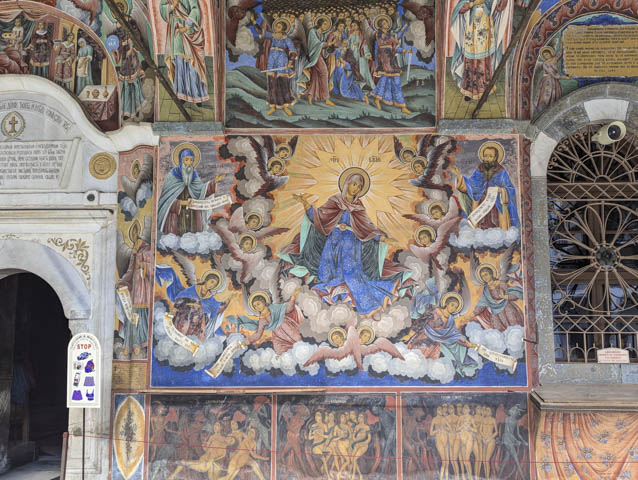
The central church is surrounded by a colonnaded walkway and is covered in frescoes.
The monks quarters are built several stories high against the interior of the walls of the complex.
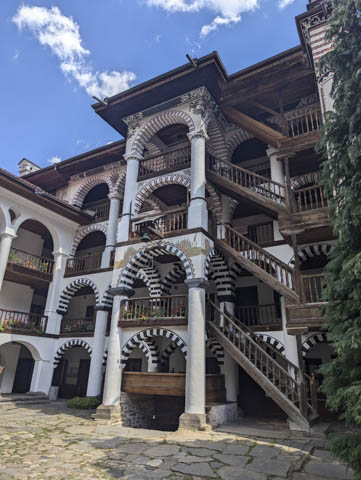
The quarters were added during the reconstruction of the monastery in 1469 after a series of raids destroyed it.
To finish off our day and our week long excursion into Bulgaria, we parked up at a mountain restaurant for the night where we treated ourselves to a meal out. Our first and last, in Bulgaria.
Central Serbia
From Golubac we carried along the Danube to the Mesolithic ruins of Lepinski Vir. This is close to the site of a mesolithic fishing village and a very modern space age building has been erected to protect and display the ruins of the village and artifacts from the archaeological dig.
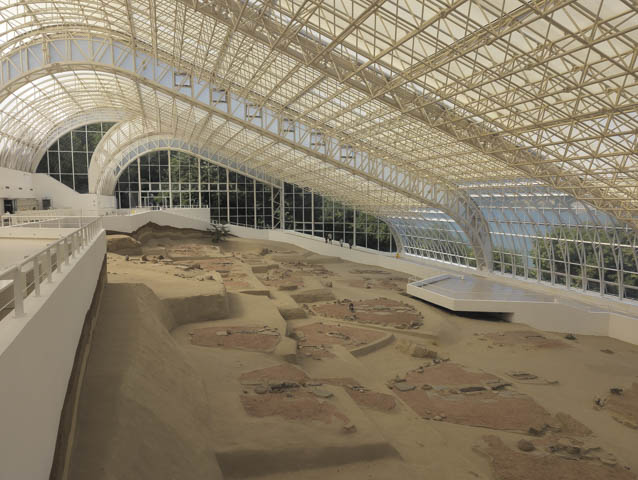
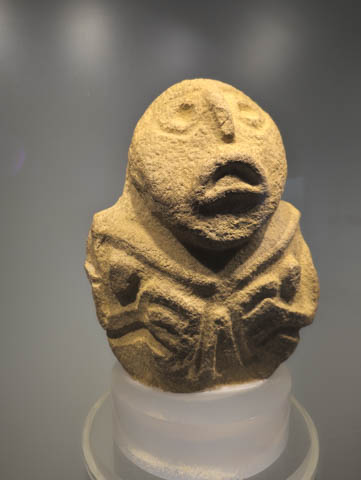
The museum shows a film made in the 1970’s during the original dig, which was very interesting and gave some real context to the remains. There were also some sculptures of fish-faced human idols which felt like modern art and were very impressive considering they were made 7000 years ago.
It was really hot after we finished looking round the museum so we decided to take a road up into the hills away from the Danube. The road was steep and although tarmacked, it was a patchwork of fixes, so much that you could barely see the original road in certain places, making it a slow and bumpy ride.
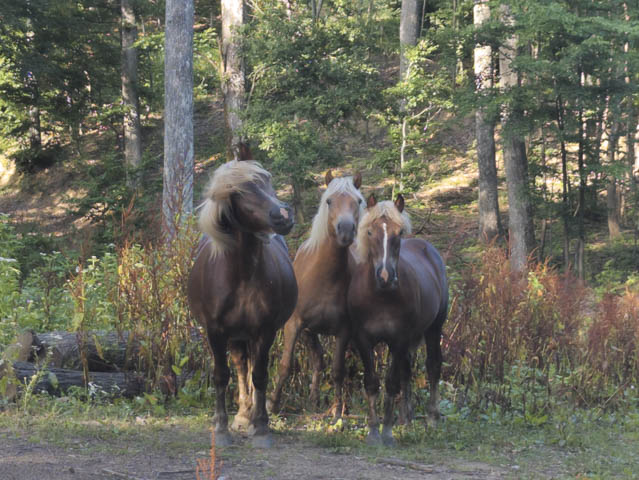
We drove up to 600m above sea level where things were a bit cooler and found a peaceful place to spend the night, a few hundred metres from an abandoned ski resort. The next morning we were treated with a visit from a small herd of beautiful wild horses.
We set off early that morning to the small town of Majdanpek and a visit to Rajko’s cave.
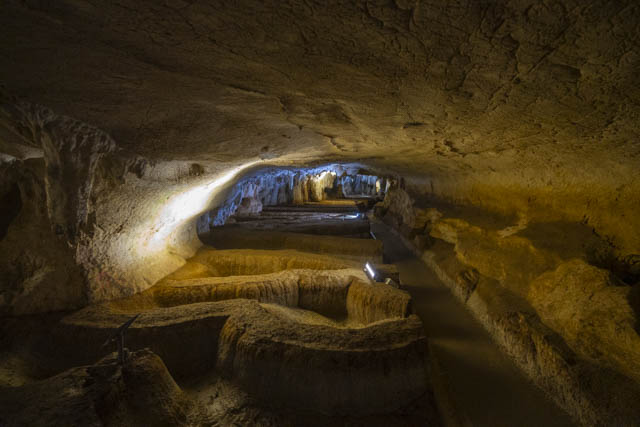
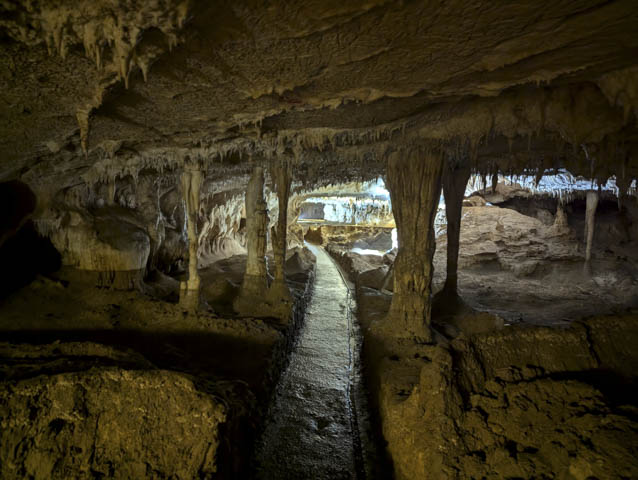
We arrived for opening time and were the only people there. The guy in the ticket office let us in and then left us to wander through the cave system at our leisure – a definite first! But it was great to be alone in the passages of this 1.5km long cave. There used to be a loop walk over two levels but flooding of the lower level means that you now have to retrace your steps.
After leaving the cave we headed down some narrow country lanes to park outside a nunnery which is the starting point to walk to the Vratna Gates, which are natural stone arches over a river in a canyon about a 20 minute walk from the nunnery.
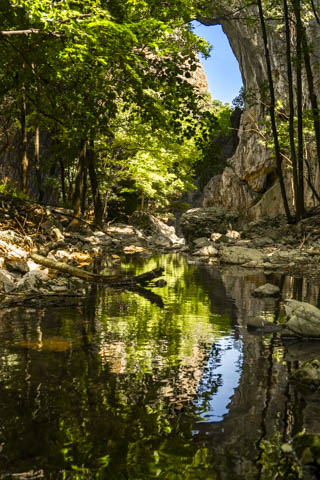
The canyon around the arches was shaded and cool, a nice relief from the heat and I enjoyed having a cooling paddle in the river.
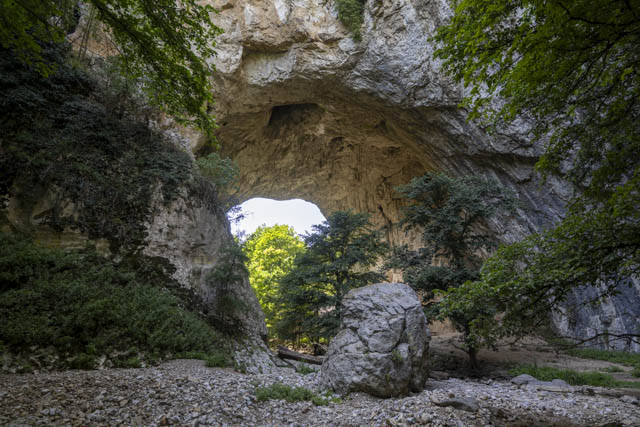
Having found a shady spot under a tree, right next to a small river, we decided to spend the night outside the nunnery and enjoyed taking dips in the chilly little river to cool down. We of course also visited the nunnery while we stayed there, which had a beautiful little church and were amused to see one of the nuns in full garb whizzing past us on an electric scooter with a big dog in tow.
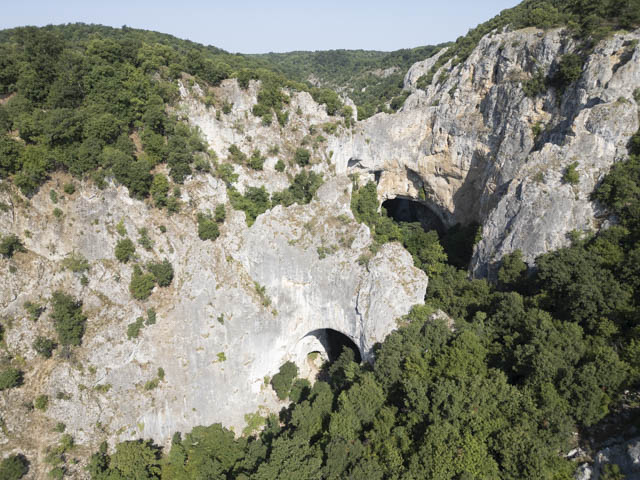
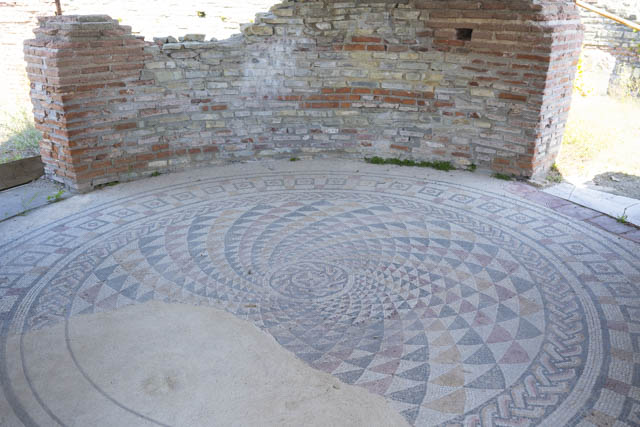
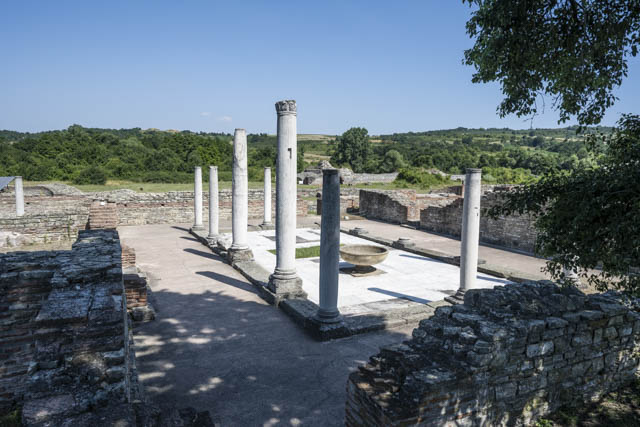
The next day we came out of the hills next to the Danube and headed towards the South of Serbia, however we stopped off at the Roman ruins of Felix Romuliana, a UNESCO World Heritage site that originally housed a complex of palaces and temples covering an area of 10 acres. The complex was built by Emperor Galerius and completed in AD313 but they are very much in ruins now and despite being a UNESCO site there isn’t a great deal to see.
However we did bump into a lovely British couple here (Donna and Jon, aka the Roverlanders on social Media – @theroverlandersadventures on Instagram), travelling full-time in their converted 4×4 Land Rover Ambulance. Luckily, there is a cafe on-site, so we made ourselves comfortable and after chatting for quite some time we agreed to meet up in a couple of weeks when we were both heading for Montenegro.
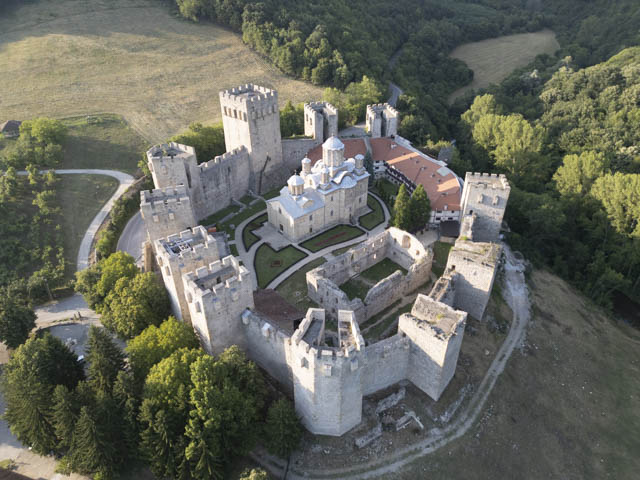
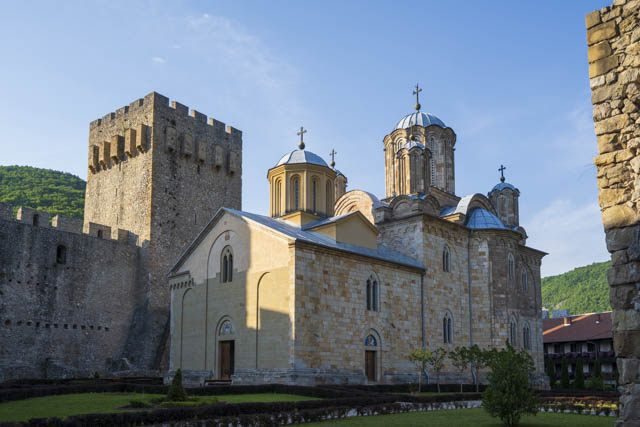
Having waved goodbye to The Roverlanders, our stop for the night was the amazing fortified Manisija Monastery. Built in 1418, it became a refuge for artists and writers fleeing the Ottoman invasion.
This is also a UNESCO listed site and one that is definitely much more impressive but unfortunately photography is not allowed inside.
We spent the night a short walk from the monastery where we found yet another river to cool off in, although this one had quite a few nibbly little fish! One of the best things about the Balkans (especially in the summer heat), is that the rivers here are abundant and mostly very clean, so we have no qualms about taking a dip. I’m not sure we’d be so eager in the UK!
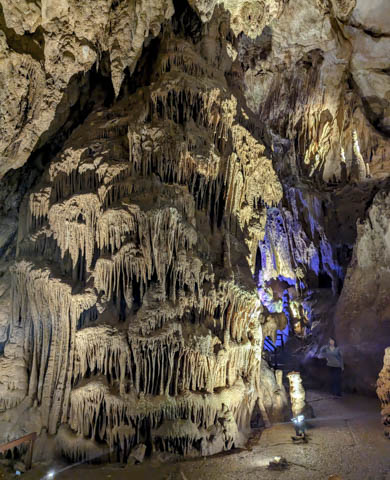
Close to the monastery is another cave, Resava. We had a private (no one else was there) guided tour around this very impressive cave. I wasn’t allowed to take photos with my camera (its was too professional-looking apparently) but we were allowed to take pictures with our phones. Of course it was only 10c inside so we had a lovely cool time but the tour only lasts an hour so it wasn’t long before we were kicked out into the heat once again.
Just down the road from the cave is a park with a pretty little waterfall on the Resava river, which made for a diverting 30 minute walk but unfortunately no swimming allowed!
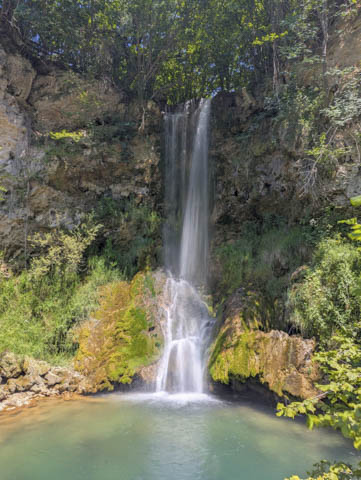
From Manasija we continued heading South to visit the town of Nis, which is the third biggest city in Serbia. Our first stop here was the Red Cross concentration camp.
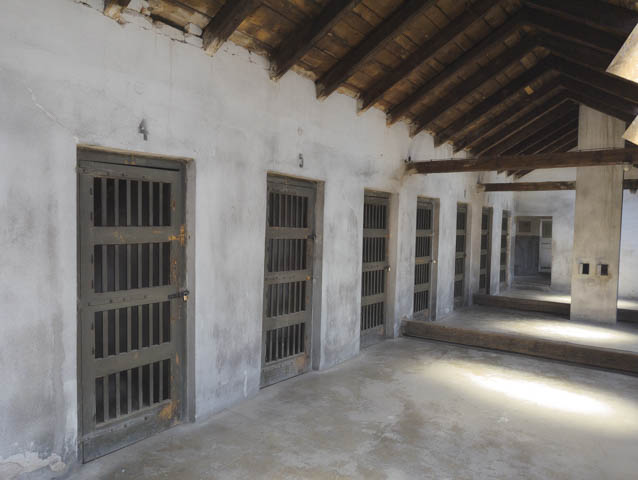
This is a well preserved Nazi Concentration camp and is named after the adjacent train station, the Red Cross. 30,000 Serbs, Romany and Jews were held here during the German Occupation of Serbia which lasted from 1941-1945.
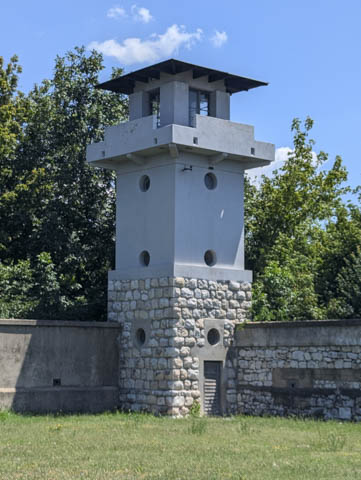
Mass executions were not performed on site but there were still many deaths here. Informative displays tell the stories of the inmates and the atrocities committed to both them and the people of Nis. Some of the personal stories are very moving and it is definitely worth a visit.
Our next stop in Nis was the Cele Kula or Skull Tower. This was built after the Turks defeated the Serbs in the 1809 Battle of Cegar. Over 10,000 Turks were killed in the battle and the Turks, in an attempt to ensure there were no future acts of rebellion, beheaded and scalped almost 1,000 Serbians. The skulls of these dead Serbs were then embedded in the Tower of Skulls as warning to any future rebels.
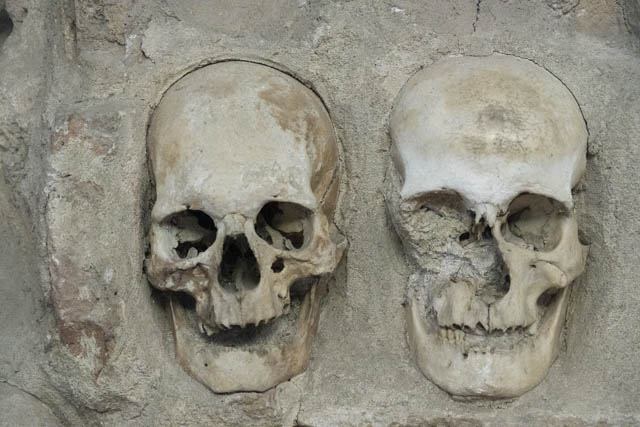
However the Tower had the opposite effect and became a symbol to the Serbians of their proud resistance against invaders. Most of the skulls have since been removed from the tower but 58 still remain.
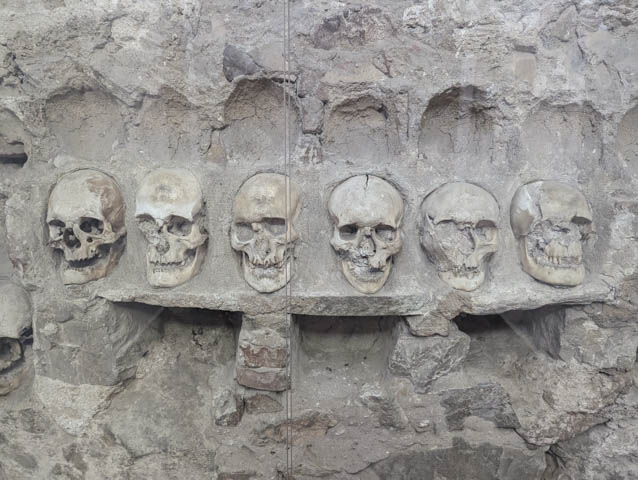
Not wanting to stay in the lowlands for the night we drove up into the Stara Planima Nature Park on the Bulgarian border to a high altitude lake, Zavojsko Jezero, to find another swim spot and a cool night.
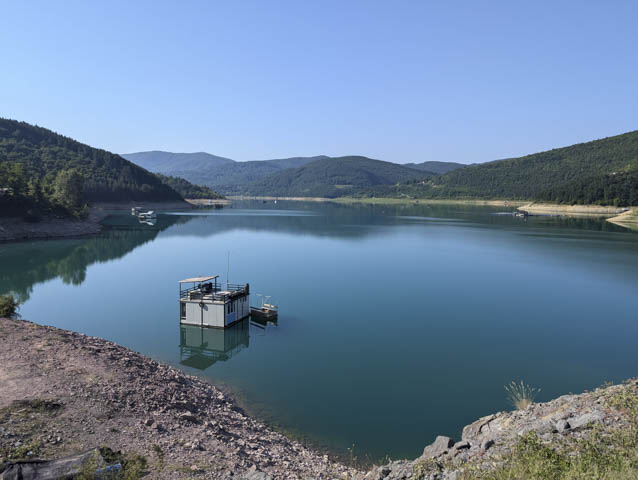
It wasn’t quite what we expected with lots of locals already there and quite a lot of noise but it sufficed for one night!
Serbia
After enjoying Bosnia so much we were a little bit reluctant to head into Serbia, particularly as our research indicated that it was a harder place to travel around than Bosnia.
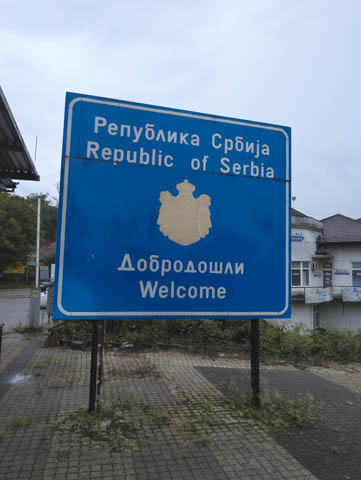
However, our first impressions were positive. The border crossing was quick and easy and we headed for the nearest town, Loznica, to get some currency and SIM cards for the country. This proved to be much easier than Bosnia and we each got a data SIM with 25GB of data from Yettel, the biggest mobile company in Serbia.
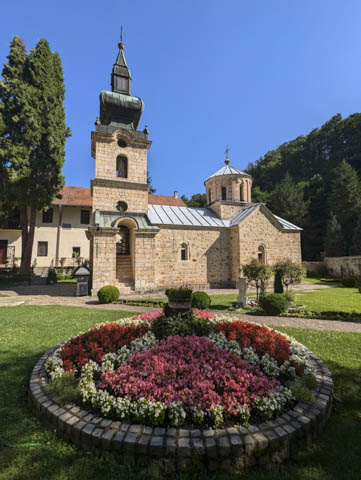
We found a spot for the night near Loznica and close to the Tronosa monastery, which we visited the next morning. This monastery had a small shrine with a spring and we filled our water with this lovely tasting spring water.
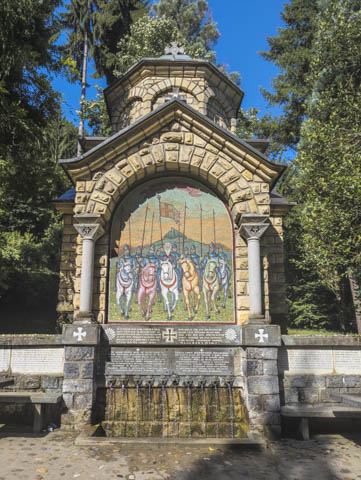
Our first main destination in Serbia was the city of Novi Sad. The North of Serbia is very flat and gets very hot in summer. We wanted to do a whistlestop tour of this part of the country and then head for higher (and cooler) ground in the East and South of the country.
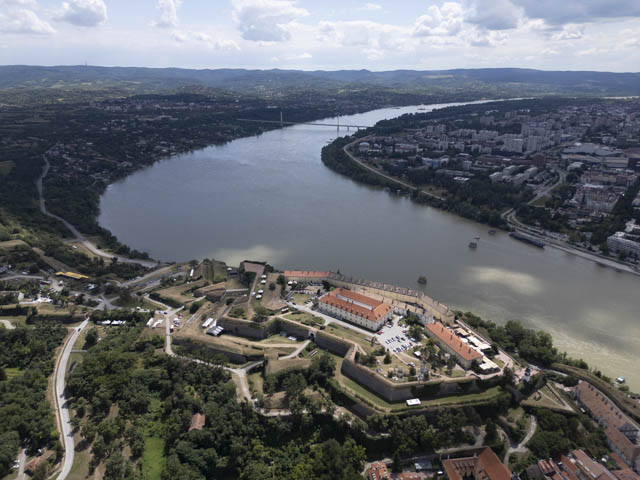
Novi Sad is the second city of Serbia and is located on the banks of the Danube river. On one side of the river is the huge Petrovaradin Fortress and its old town and facing it on the other side is the main town.
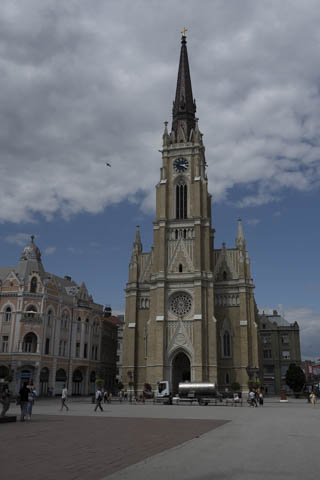
Novi Sad is a big modern town but the old town area has a laid back street culture vibe which is, I expect, what contributed to it being the first Non-EU European Capital of Culture in 2021.
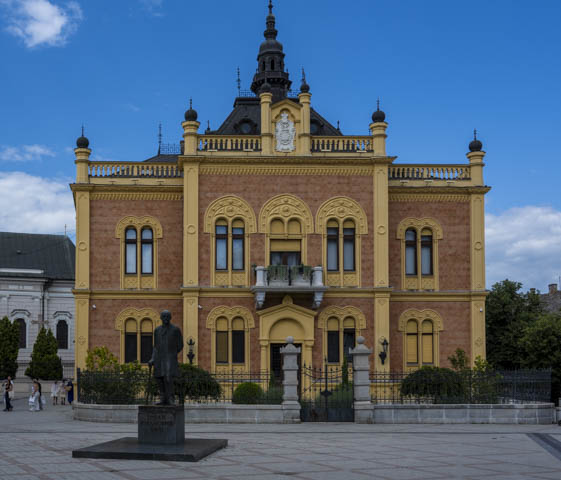
The Fortress is the second largest in Europe and is nicknamed “Gibraltar on the Danube”. It is the setting for the Exit Festival each year, an international music festival, which was being set up while we were there.
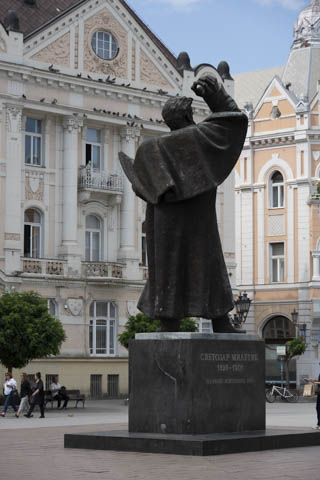
The town itself is big and modern with a large but attractive pedestrianised area filled with bars and cafes and outdoor seating. And so, after a good wander around we couldn’t resist sitting at one and having our first taste of local Serbian beer in the sunshine.
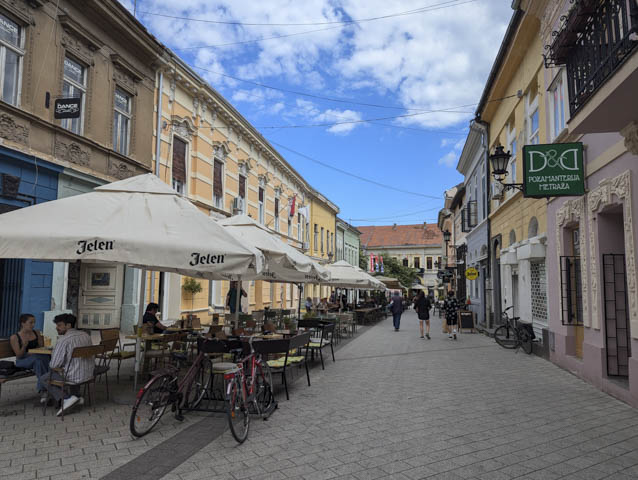
We liked Novi Sad and with hindsight it was definitely our favourite Serbian city.
From Novi Sad we headed North towards the Hungarian border. We started off eschewing the toll roads as is normal for us. However the roads in the North of the country aren’t in great shape and after bumping and rattling around for some time we eventually gave in and diverted to the Toll road (which, when we discovered it was only €4 realised we should have done this a lot sooner).
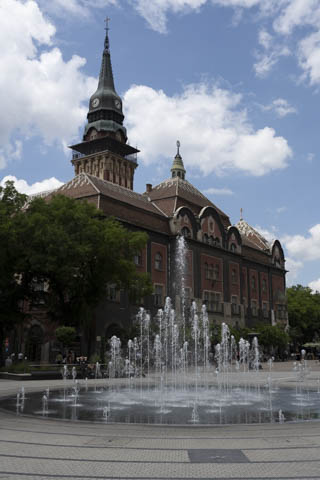
Our reason for heading North was to visit the city of Subotica. This small town, although the largest in the North of Serbia, is very multicultural with more Hungarians than Serbs living there.
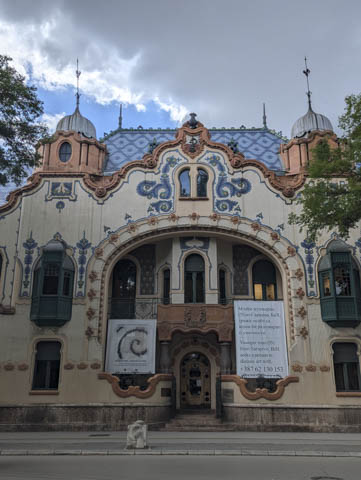
The centre of the town is the enormous City Hall which is a strange architectural style of a cross between Art Noveau and Guadi-esque. The interior of City Hall is said to be unmissable but unfortunately for us, tours take place daily at noon and unfortunately we arrived in town too late. The building itself is surrounded by pedestrian spaces and feels very much like the cultural centre of town.
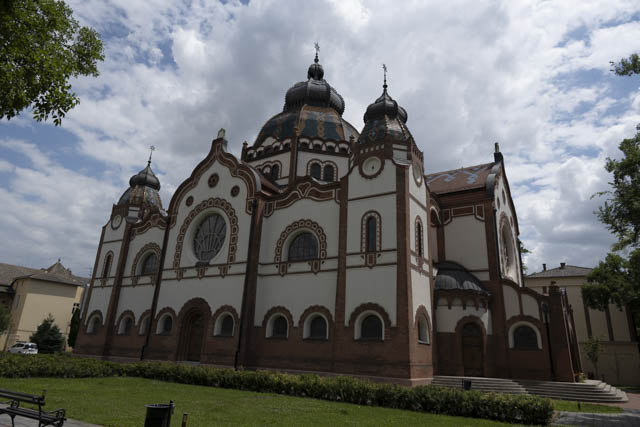
The first Art Noveau building to be built in town was the impressive Synagogue, built in 1902. This is impressive both inside and out, particularly inside. It is said to be the only surviving Hungarian Art Noveau Jewish place of worship in the world.
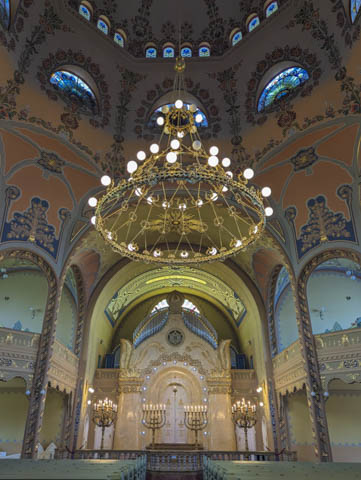
There were a lot of attractive buildings in Subotica but little else to hold us there for long, so we left town and headed to an artificial lake and recreation area for the night. We spent a peaceful but very hot and uncomfortable night here.
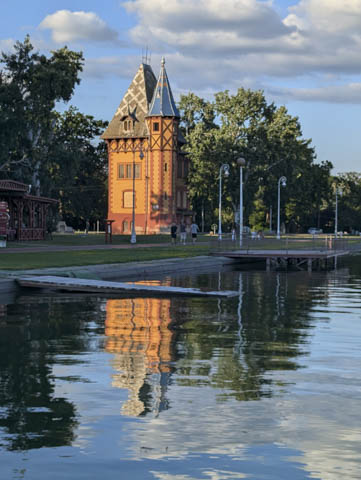
From Subotica we drove South, going back past Novi Sad to the Capital of Serbia, Belgrade – or Beograd as its locally known. The heatwave that was to grip the Balkans for the next few weeks was starting to make itself known and the plains of the Northern half of Serbia were beginning to really heat up.
To visit Belgrade, we stayed in one of the few campsites in Serbia, just outside of the city beside the Danube. It was a well set up campsite with new and very plush facilities but unfortunately it was absolutely plagued by mosquitoes. I can honestly say we haven’t seen so many since we were in the arctic in Alaska. There were so many that our screens became ineffective and so we spent a very hot night with all the windows closed, splatting all the mosquitoes that had worked their way inside. We were definitely glad to leave this place and strangely just 500m away there were hardly any mosquitoes!
Belgrade itself is a big modern city that could be anywhere in Europe. The contrast to Sarajevo in Bosnia is huge and makes Sarajevo feel like a provincial capital rather than a capital city.
We parked up in a free parking lot by the river and set off on our bicycles to explore the city.
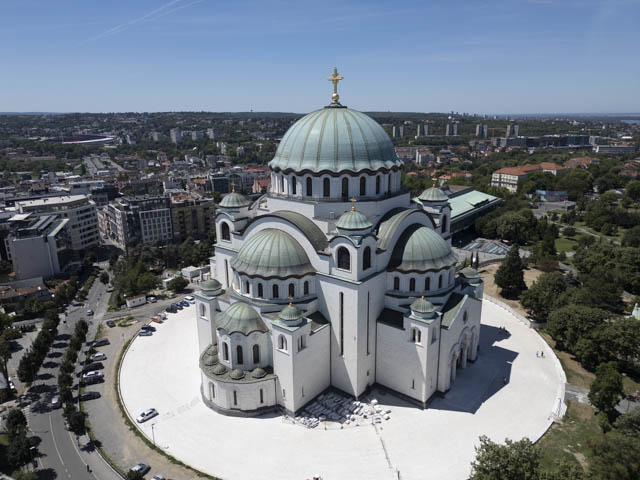
The Sveti Sava Temple is the Balkan’s biggest Orthodox church and it is absolutely massive, sitting in a square on a plateau in Belgrade which is quite a hilly city. It is the seat of the Serbian Orthodox church.
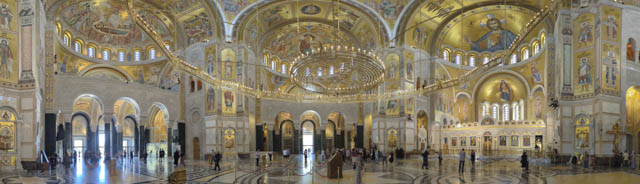
The temple was only opened in 1935 but building work continued until 2004. It is modelled on the Hagia Sophia in Istanbul.
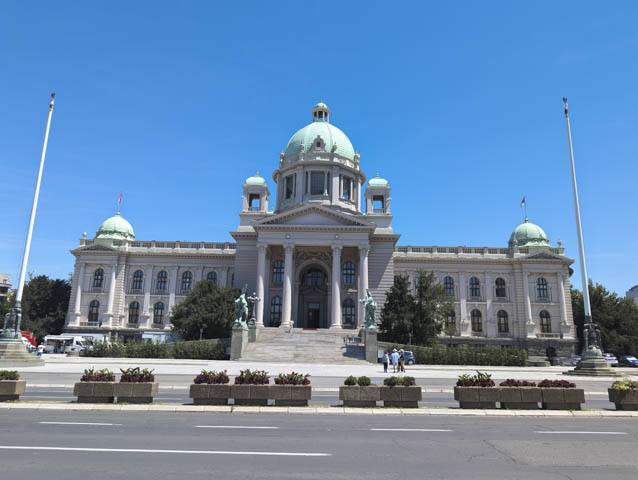
After visiting this very impressive church we cycled past the National Assembly of Serbia before heading into the main shopping area of the city, the Knez Mihailova Boulevard, which is pedestrian only and has the grandeur you expect from the oldest European cities.
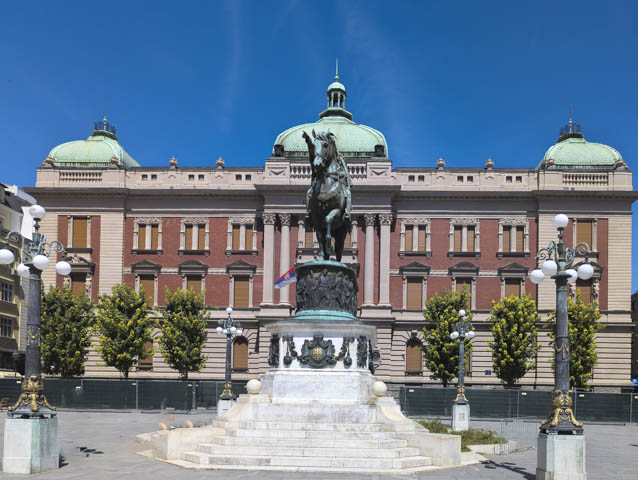
This leads up to Belgrade Fortress which sits on a hill overlooking the two mighty rivers that join in Belgrade, the Sava and the Danube.
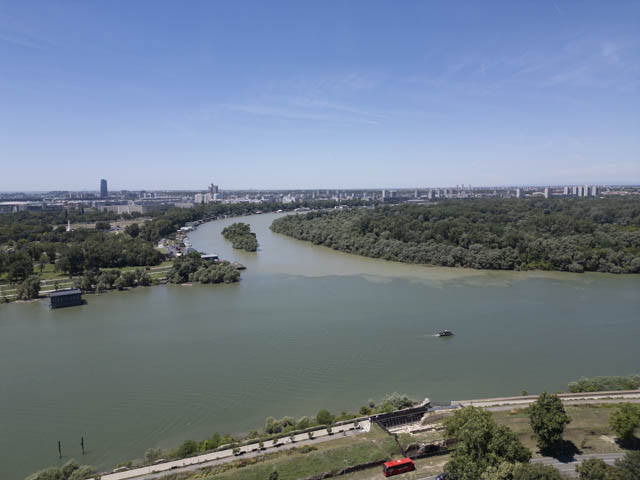
Belgrade Fortress has a very bloody history. With 115 battles being fought over it, the fortress has been destroyed over 40 times since the fortifications were first dug in the 3rd century BC by a Celtic tribe. It was later taken over by the Romans.
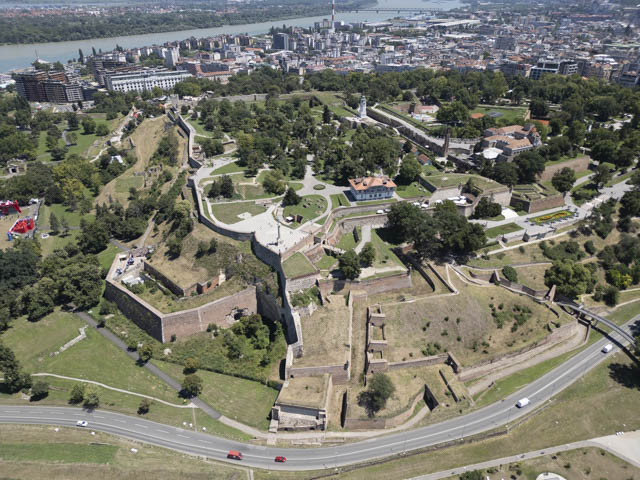
The fortress that we see today was largely built by the Ottomans who ruled this area from 1521 until 1867.
Today it is free to enter and is popular destination for locals and tourists alike as the top is landscaped into parkland and it is surrounded by Kalamegdan park.
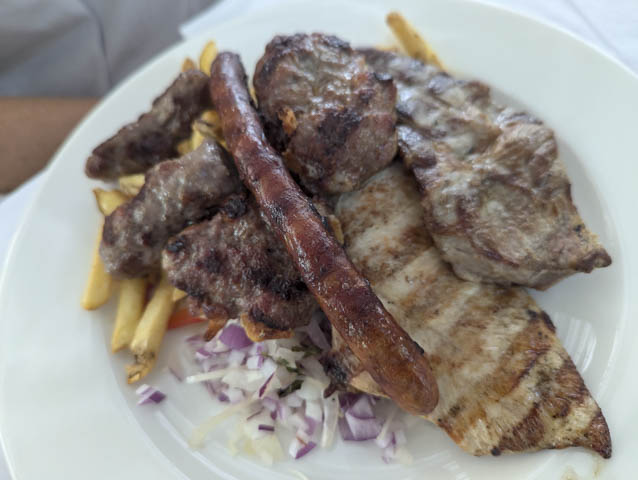
After leaving the fortress, we ended our trip to Belgrade by visiting the Skadarska quarter of town, the cobbled Bohemian District. We had worked up a hunger working our way around this big city so we found a restaurant for our first taste of local Serbian food. As we are learning, traditional food in the Balkans involves large quantities of meat, which is fine by us!
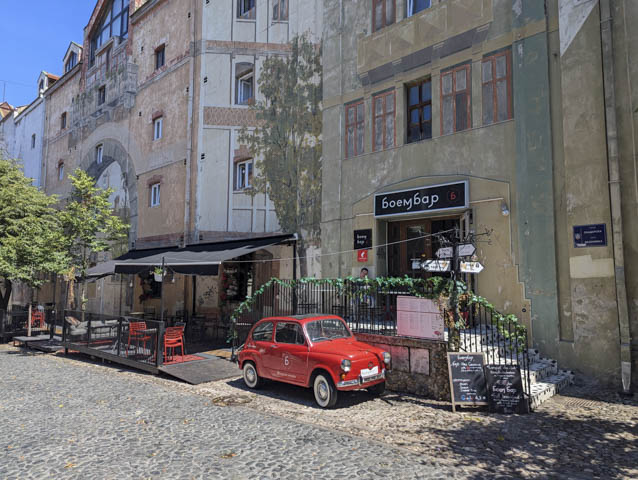
After three cities in a row and with the heat becoming unbearable, it was definitely time to head up and into the countryside. So we set off Eastward, following the Danube close to the Romanian border.
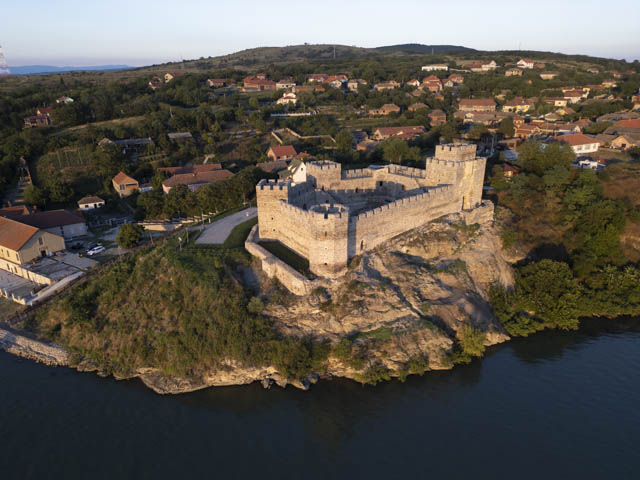
Here we decided to spend the night at the Ramsko fortress. This fortress was built by the Ottomans in the 1400’s to protect the right bank of the Danube. However there is evidence that there have been fortifications on this site right back to Celtic times.
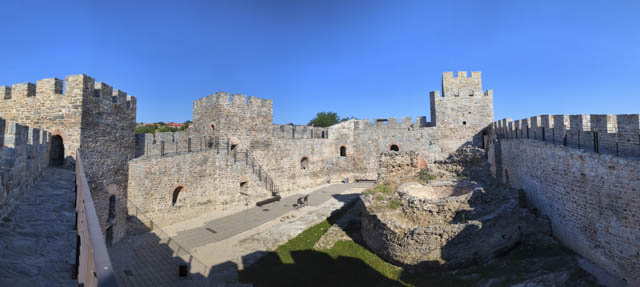
Just across from the fortress is a small but pretty church and down the hill along the waterfront, is a bar with a lovely view where we spent some of the evening before settling down for a quiet night on the headland, made bearable by a cooling breeze. In the morning we carried on to what is considered the jewel in the crown of Serbian castles, Golubac.
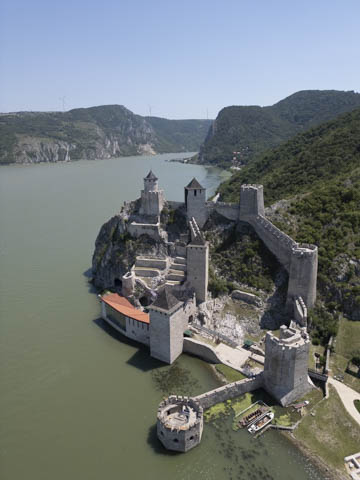
Golubac fortress in also on the banks of the Danube and was built in the 1400’s by the Serbian state. It has the distinction of having never been conquered and has repelled over 120 attacks.
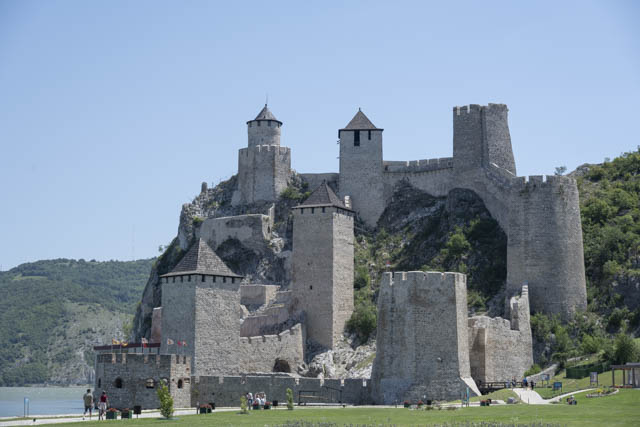
It did however fall into Ottoman hands when the Commander of the fortress demanded a payment to hand over control to the Serbian Despot. This was refused so he promptly sold it to the Ottomans. The Serbian Despot, Stefan Sigismund, tried to win it back many times with a large army but was heavily defeated at a cost that far exceeded what had been asked by the original Commander.
While in the fortress we came across a tent with a bird of prey handler where they had a peregrine falcon and a beautiful Euroasian Eagle-Owl.
 FromAtoB