Into Rural Bosnia
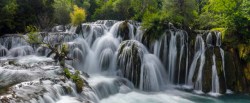
After leaving Sarajevo late Sunday afternoon we drove 50kms or so towards the town of Konjic in search of a peaceful park-up for the night. Travelling in the opposite direction to us was probably the most traffic we have seen in Bosnia, as all the locals return to the Capital after their weekend escapes.
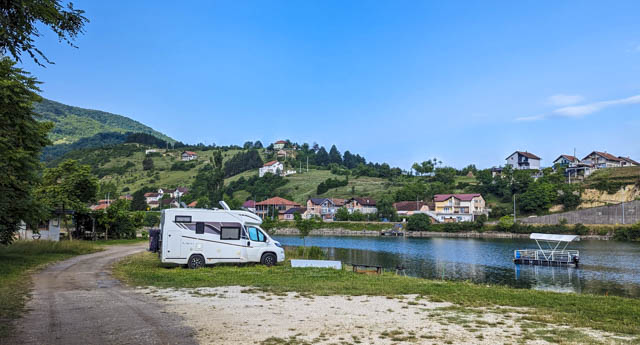
The next morning we headed back through Konjic and out into a deserted river valley and parked up at an anonymous locked gate. At exactly 11am the gate was opened and we were allowed to drive through into the complex.
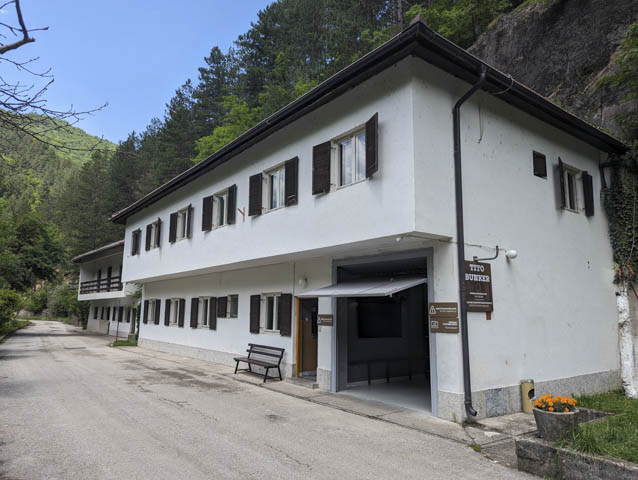
We had arrived at the site of President Tito’s (previously) highly secret and massive nuclear bunker, which is discreetly accessed through the garage of a small house. A tunnel snakes deep into the mountainside until it reaches thick metal doors and the actual bunker.
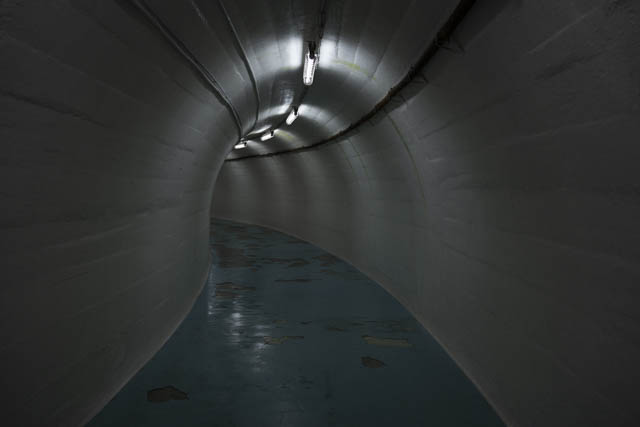
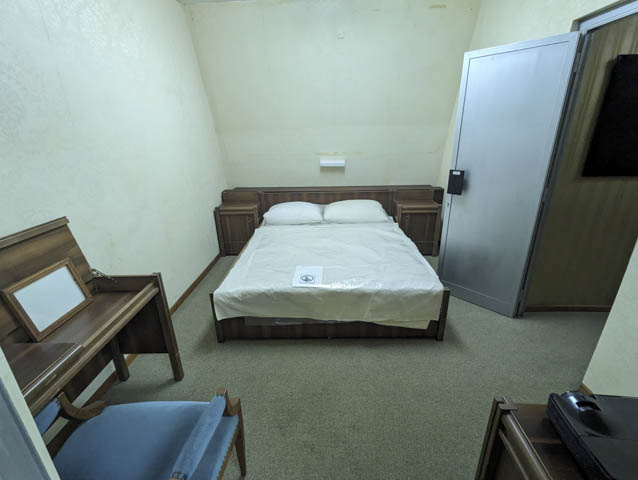
With space for 300 troops and 50 VIPS the bunker was built to withstand a 25 kiloton blast and had a hidden hydrolelectric power plant to provide power, as well as massive generators and diesel fuel if the hydroelectric was compromised. Built between 1953-1976 at a massive cost of US$4.6 billion, which is the equivalent of more than US$20 billion today, the bunker was kept secret until after the break up of Yugoslavia in the 1990’s.
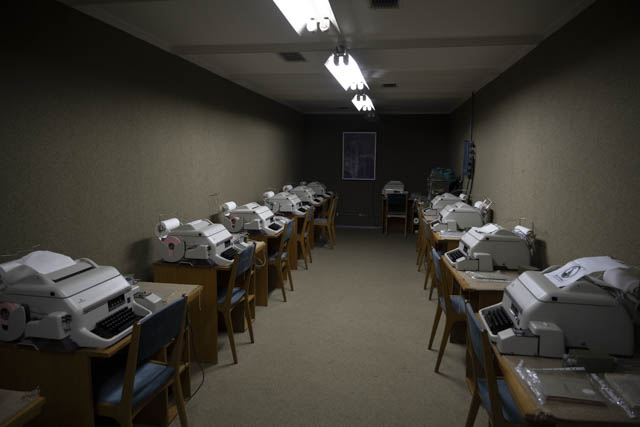
All of the equipment in the bunker is still in perfect condition having never been used and apparently all in good working order. The guide even turned on the air conditioning unit to demonstrate this. The whole bunker started thrumming with the pulse of fresh, clean air.
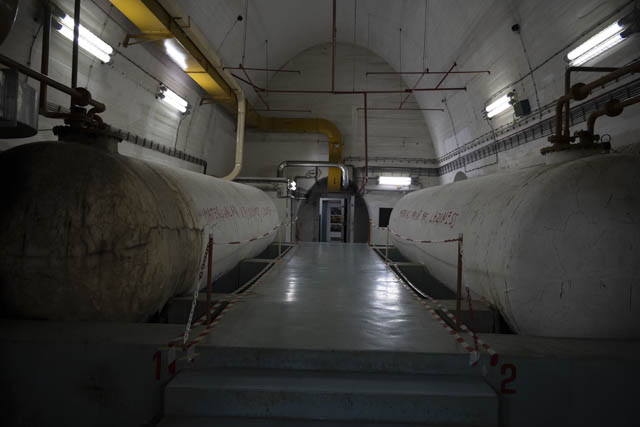
The tour was really fascinating and it felt like stepping back into the years of the cold war.
After leaving Tito’s secret bunker we drove into the centre of the country towards the very big and very beautiful, Ramsko Lake.
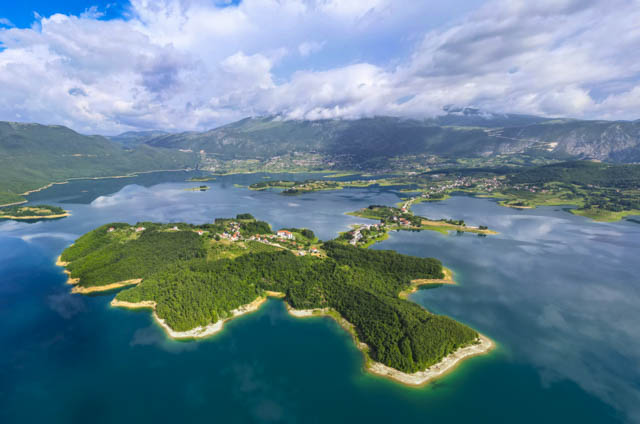
Here we settled down to enjoy the scenery at a campsite on a small peninsula jutting out into the lake, where we were able to park right on the waterfront and enjoy swimming in the surprisingly warm water.
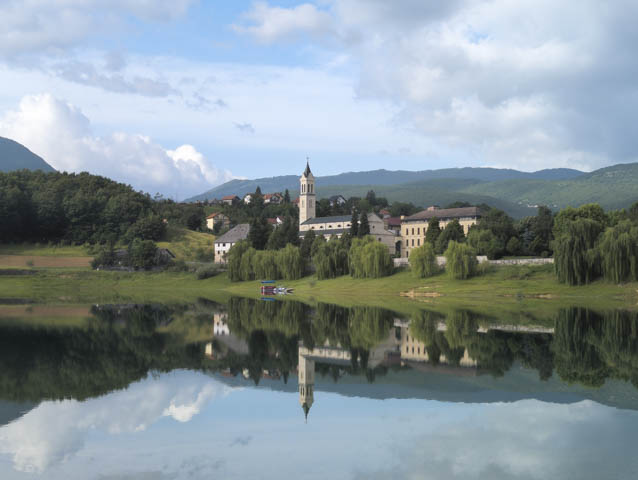
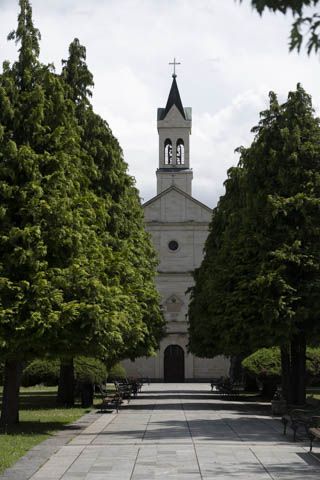
Just opposite us across the water was a monastery with a small museum of local history. The most entertaining bit of the museum was the top floor which held dioramas of stuffed animals from the region.
The owners of the campsite didn’t speak any English but they were incredibly friendly and we managed well with the help of Google translate. The woman who helped run the campsite came to see us each morning with a carrier bag full of freshly picked cherries from her orchard (which were delicious) and when we left she also gave us a bottle of their home-made moonshine, which we haven’t opened – yet!
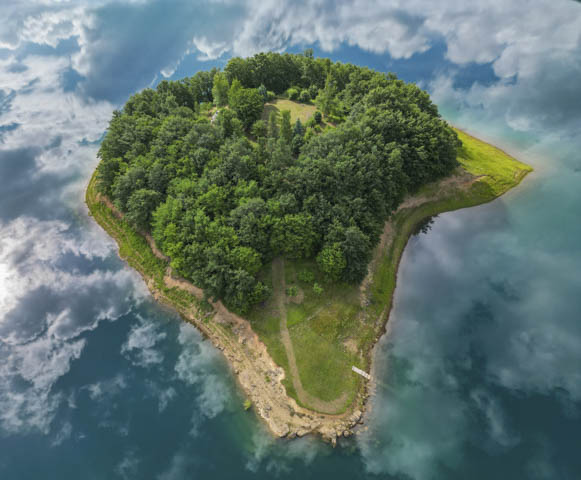
We spent a few really enjoyable, lazy days here by the lake but eventually had to leave and headed next for the town of Travnik.
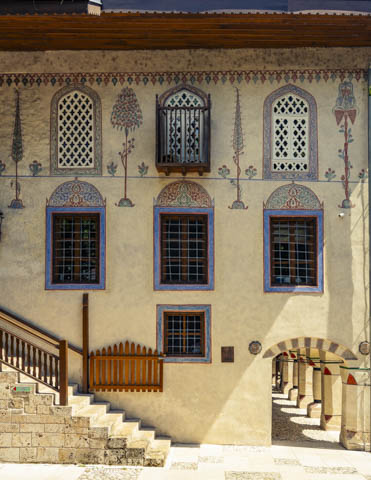
Travnik is a really pleasant town with a big pedestrianised centre and a relaxed vibe. The top tourist attraction is a mosque dating back to the 16th Century called the Many-Coloured Mosque.
We also visited Travnik Castle which is up a steep hill from the town centre and had some fun trying out the archery.
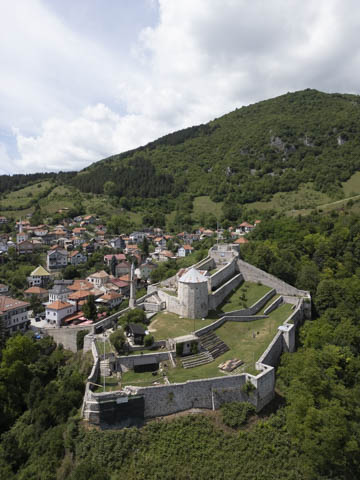
Our next stop was the town of Jajce where, for the first time in a while, we saw some other campers and other Brits. There is a large youth hostel next to the town’s supermarket which has parking for motorhomes overlooking the river.
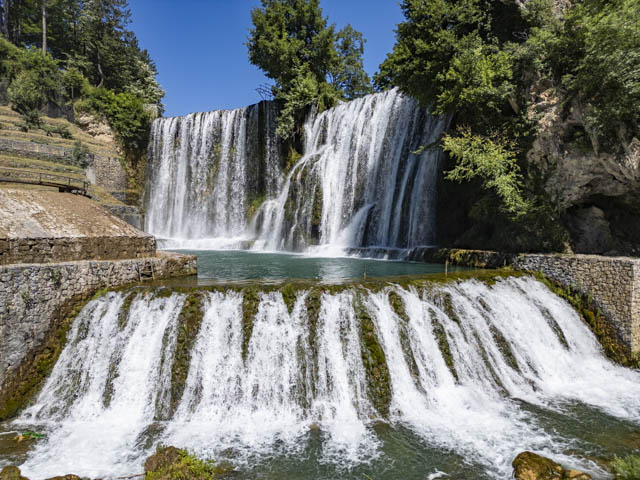
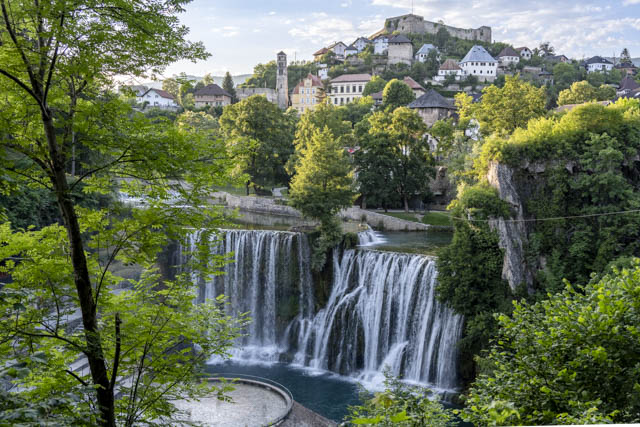
Although Jajce is only a small town, it is very pretty and there are a few things to see and do. First up, the town’s main attraction, the waterfall with a 21m drop on the Pliva river.
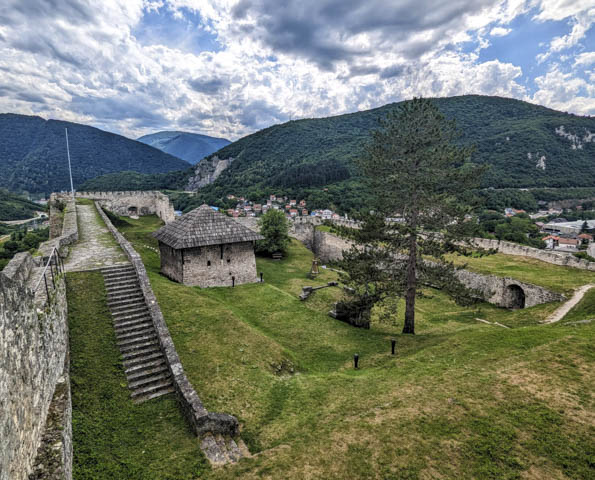
Then it was off to the castle which has a commanding aspect above the town, followed by a visit to the underground church/ crypt.
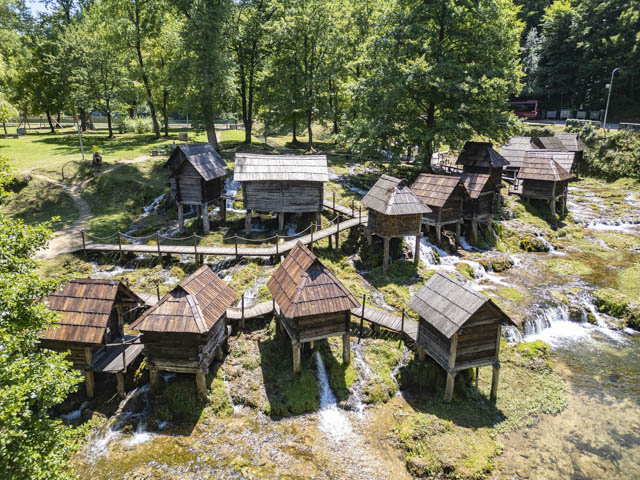
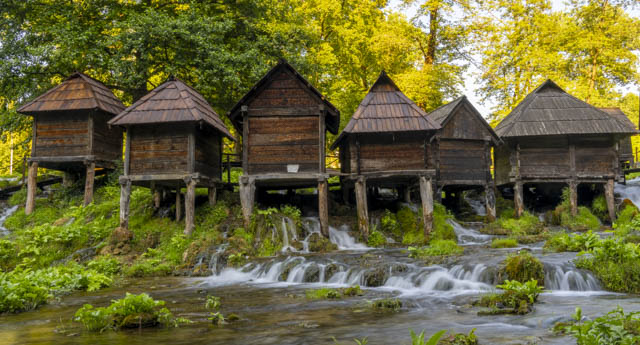
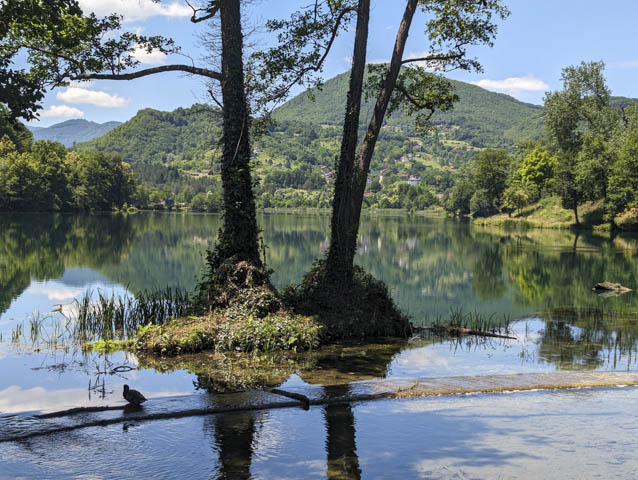
We took our bikes for a lovely ride along the river to the pretty Pilva lakes, which can be quite busy with picnickers at the weekend (and a music festival while we were there), and between the two lakes are the Mlincici, a collection of 20 tiny watermills which look like wooden shacks on stilts that date back to the middle ages. The mills were rented out by the owners to different families who each had one day of the week to grind their grain.
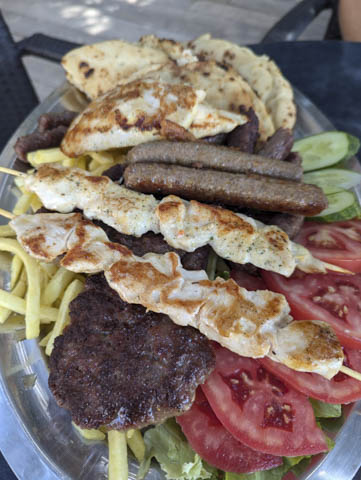
Finally we also enjoyed a couple of delicious meals out, one of which was a shared meat platter for two, which was definitely enough for three or more!
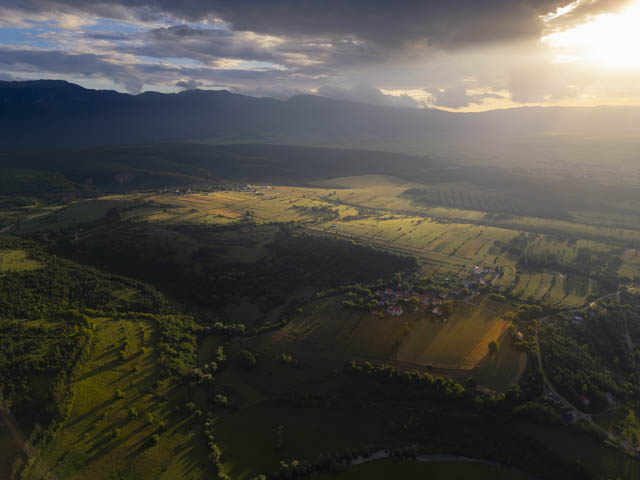
Once our time in Jajce was done, we headed South over an upland plateau where the highest ski resort in the country is situated at the town of Kupres and came back out of the high country to the town of Livno. The drive between Jajce and Livno was absolutely stunning and worth it just for the views, although we also passed many derelict, bullet-holed houses and once or twice what seemed to be whole abandoned villages. The war is present even deep in the countryside.
We had heard about a nice campsite near Livno with a rare and much needed washing machine! Kamp Sturba was down a narrow single track road about 5km away from the main road. On arriving though we realised that the drive to get there was definitely worth it.
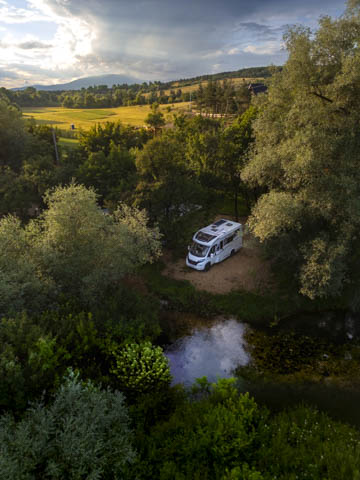
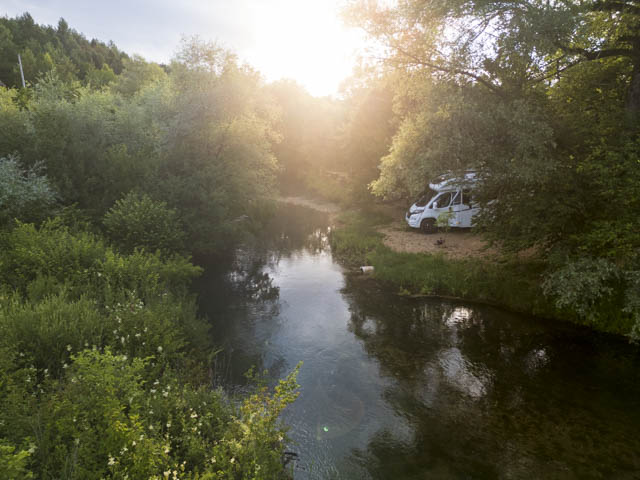
We settled in on a pitch right next to a small river, with a couple of pools deep enough for full immersion, although it was very cold (like many of the Bosnian rivers).
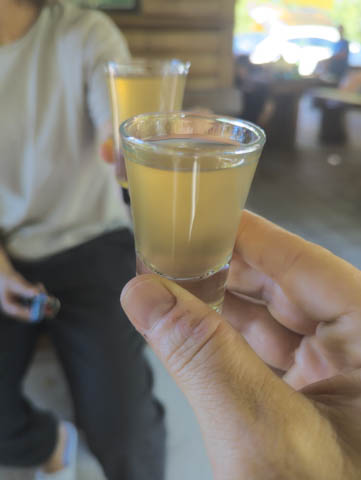
We enjoyed a welcome drink of home brewed Rakiya from the owner Bruno, which was actually very good and we met Bruno’s father who was cooking something in the outdoor charcoal oven. A casual enquiry into what he was cooking quickly led to an invite to dinner with the family.
Dinner was a tasty spread of pork with potatoes and veggies, bread and salad. Despite offering to pay they were adamant that we were guests. Bosnian hospitality is amazing.
We settled in at this lovely campsite for five days, which is a long time for us to stay in one place, but we really relaxed, cooked BBQ’s, went for walks, enjoyed cooling off in the river and of course, managed to do our washing. The nights here were lovely and cool and our spot was in the shade so we were really comfortable.
We couldn’t stay in Livno for ever though and our next stop was in the far West of the country in the Una National Park.
The Una National Park covers some of the length of the beautiful Una river, the source of which is just across the border in Croatia despite most of its length flowing through Bosnia.
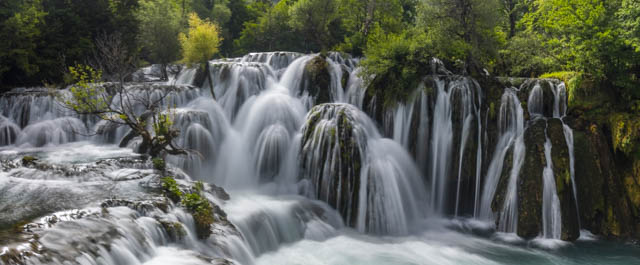
The river itself is around 8 degrees centigrade in the national park as it rises from an underground spring not that far away. You are not allowed to wild camp in the National Park so our first night was at a campground with a swimming pool and access to the river. It was a nice site but it didn’t have any shade to park in and it was quite busy so although we were able to cool off in the water we only stayed one night before moving on.
One oddity of this campsite was that they only had power and cell signal for a limited time (from 8pm to 9am). From speaking to other campers we learned that this was apparently because the power came from Croatia and they only turned it on for part of the day.
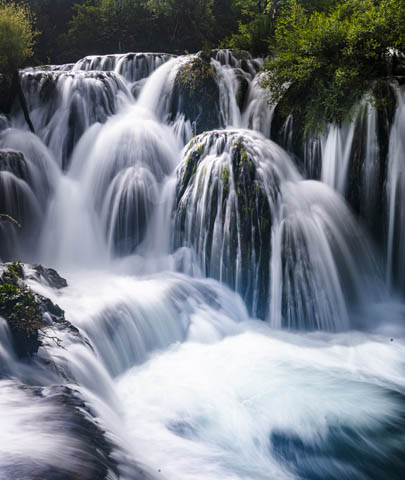
From the campsite we cycled to the Martin Brod waterfalls which cover a vertical drop of 50m in total. There is one main and very impressive waterfall however.
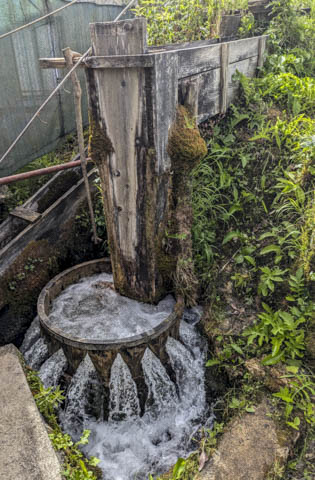
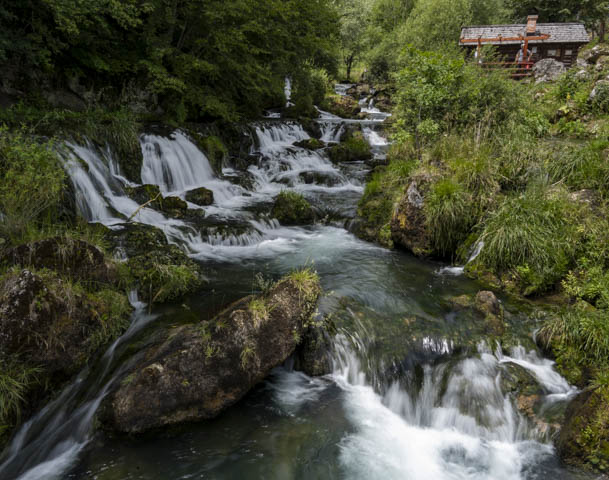
A short walk from the waterfalls we visited a local house where we were shown the owners working watermill where he demonstrated how grain had been milled for centuries as well as an amazing medieval washing machine that used the power of the water to clean large items like carpets and blankets.
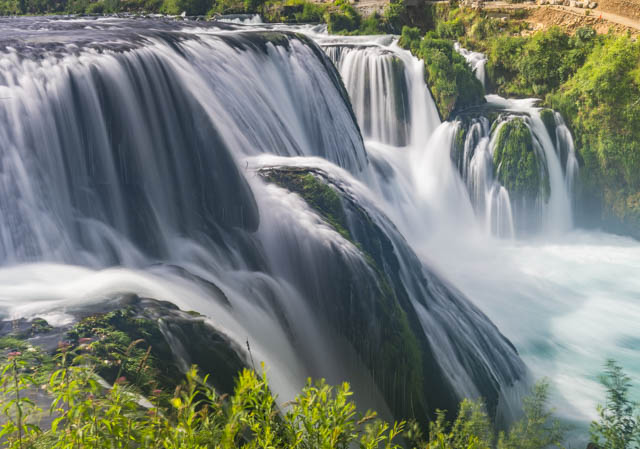
The highlight however of Una National Park is the Strbacki Buk waterfall. This has a main drop of 18m which is over 40m wide and is very impressive.
We met one of the National Park Ranges, a former Olympic Kayaker, who told us some terrible stories of executions at the waterfall during the 90’s. There doesn’t seem to be one corner of the country that was spared from this terrible conflict.
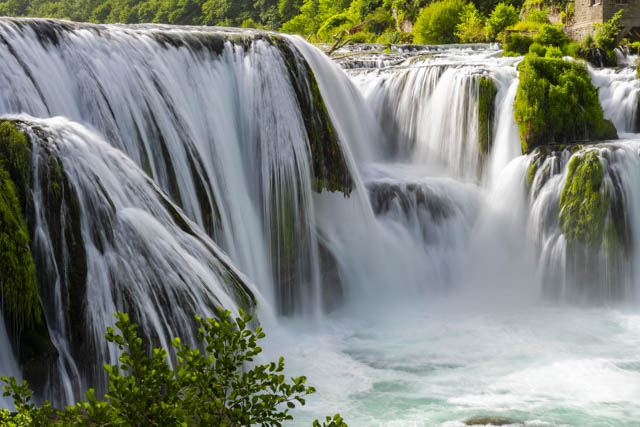
This waterfall was only a 5km cycle from our second Una campsite, the very rustic but perfect for us, Kamp Vasva and Hasim. We managed to park up here in the shade of the trees, side on to the river and, as we were the only ones here, we had the swimming spot to ourselves. Although cold, the river was teaming with fish and it was a lovely place to stay.
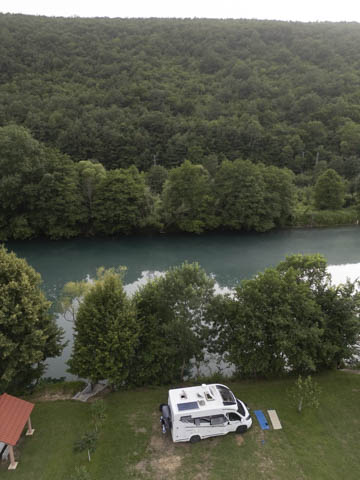
I also took the opportunity to get the kayak out and kayaked a couple of km’s upriver to a small waterfall and back.
After a great month in Bosnia it was time for us to make our way to Serbia, the next country on our Balkans tour.
We headed for the border on the other side of the country, stopping again at Jayce and then the Krupa waterfalls, just south of the town of Banja Luka.
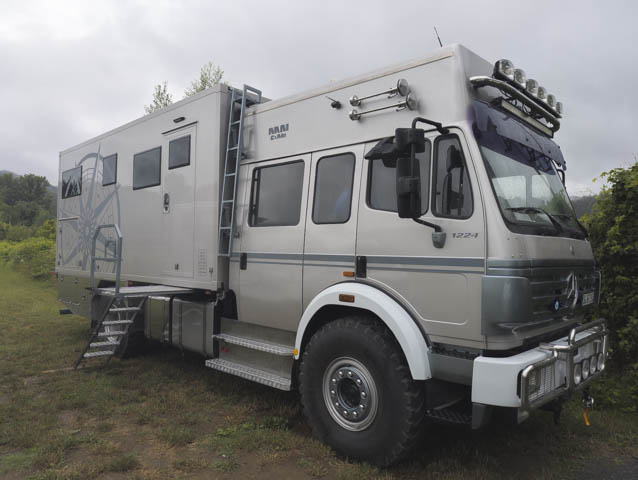
Our final stop in Bosnia was at a homestay where a German/Bosnia couple had just finished building an enormous expedition truck which is now for sale for €300,000. They gave us a tour of the inside and the quality of the workmanship was outstanding.
Unfortunately overnight we saw the first rain for some time and the area we were parked turned into slick mud. On leaving our wheels started spinning and we were stuck. For the first time we deployed our very flimsy looking, plastic mud mats and to our surprise they actually worked! Despite having to move forward half a metre at a time and replace them each time they were spat out the back, we were soon back on the gravel drive and away. Although not before hosing ourselves, the matts and the tires down which were all clad in a thick layer of stickly mud.
Onwards through Bosnia
Having hit the highlights up to Mostar, we decided to do a loop through to the East of Bosnia next, so reversed course and headed South East towards the town of Trebinje.
First however, we made a pit-stop at the town of Stolac where we drove into the town, got snarled up in the one tiny street with cars lining the road, couldn’t park and ended up doing an about turn and heading back to the outskirts, where we found a coach car park instead. People in Bosnia have an interesting approach to parking, meaning that they just seem to leave their car anywhere they like, at any angle, regardless of actual parking spaces. It can make driving through narrow roads a little challenging but on the plus side the roads generally aren’t very busy – except for Stolac on this particular morning!
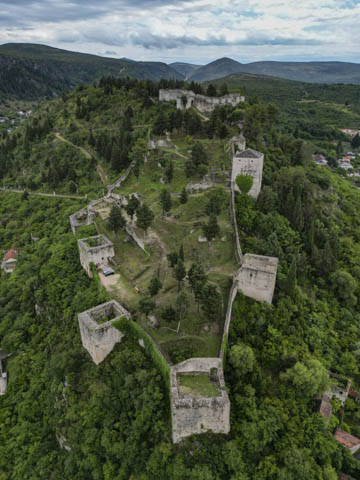
Stolac has two interesting things for visitors to see, the first is the castle which sprawls across a rocky outcrop above the town.
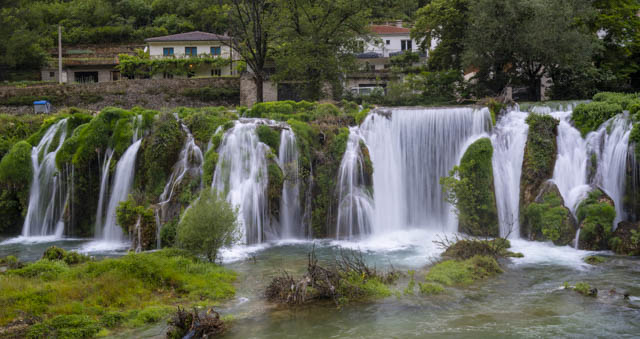
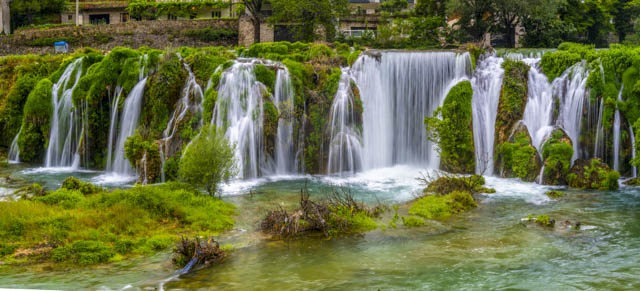
The second is a waterfall on the river that flows through the town. The medieval centre of the town is so small that if you blink you’ll miss it.
We reached the town of Trebinje in the early evening but rather than drive straight in, we parked up at the very peaceful Tvrdos Monastery for the night, just outside town.
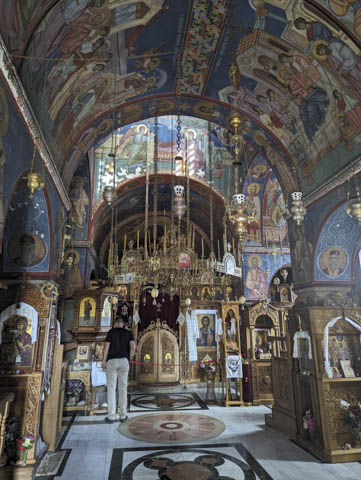
This was our first visit to a Christian Orthodox church and it was very ornate inside, with beautifully painted walls and a huge golden chandelier hanging down from the painted ceiling (which, having now seen several, seems to be the norm for these churches).
After spending a quiet night (not always the case when free-camping), we drove into Trebinje and found parking in a residential area by the river that flows through the middle of the town and from there, it was a quick cycle into the pretty town centre.
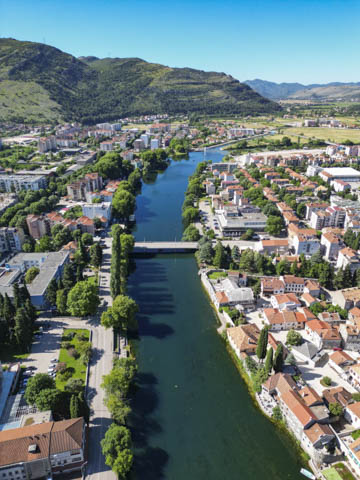
The high-walled, historical centre of the town is actually very small but we did finally manage to complete our most pressing task, which was to buy a local SIM card for our phones. This had surprisingly proved much harder than expected and was about our 10th attempt since entering Bosnia.
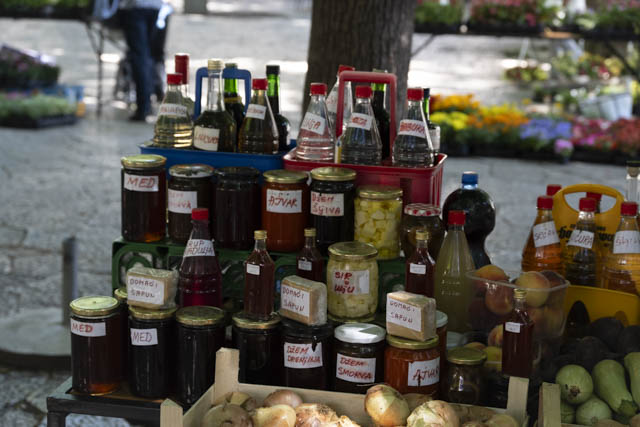
Outside the walled medieval centre there is a large, shady square called Trg Slobode, which is lined with cafes to one side and a small local market on the other.
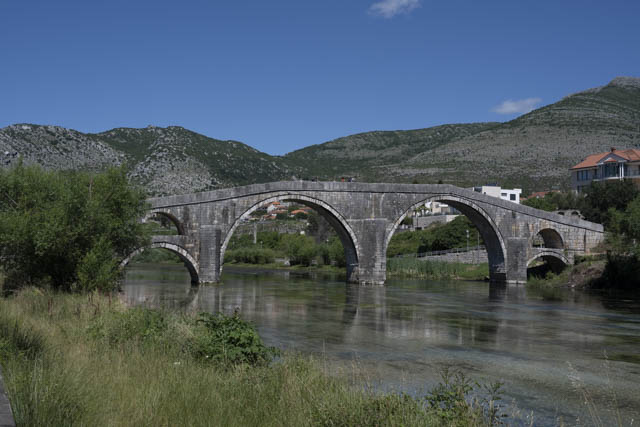
Trebinje is also famous for its ancient bridge over the river. The Arslanagic Bridge was originally built in 1574, 10kms further upstream but was flooded by a new reservoir in 1965. In order to ensure its preservation, it was rebuilt brick by brick in its current location. It’s not far out of town and we had a lovely cycle along the river past a few old water wheels to get to it.
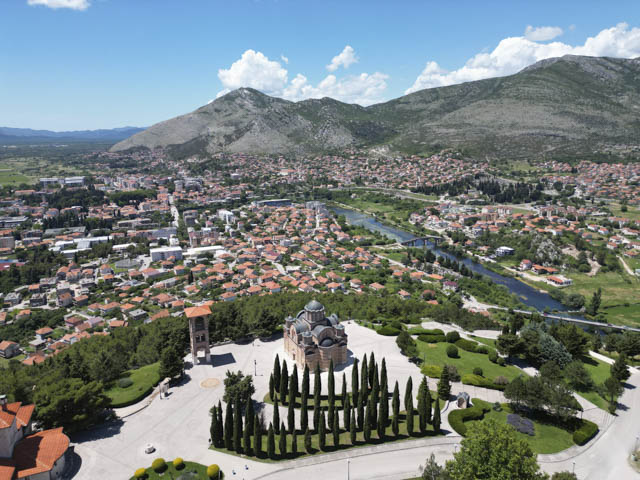
Having finished our wanderings through Trebinje (with Sarah saying she felt very under-dressed as the women in the town were all very chic-looking – her words not mine!), we drove up to a hill overlooking the town to visit the Hercegovacka Gracanica church.
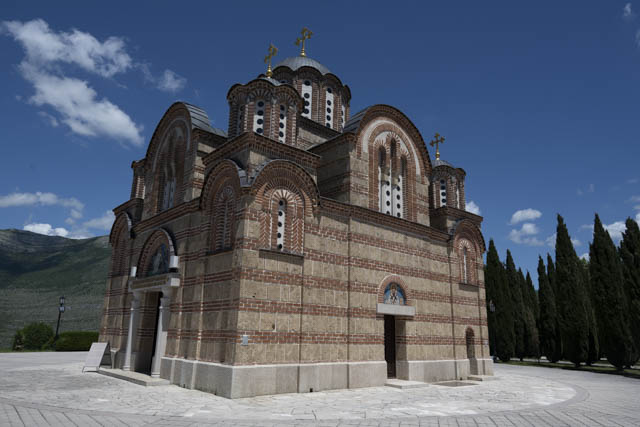
This is another orthodox church, apparently based on the Gracanica Church in Kosovo, but it is relatively new, having only been built in the year 2000 to rehouse the bones of a local poet, Jovan Ducic.
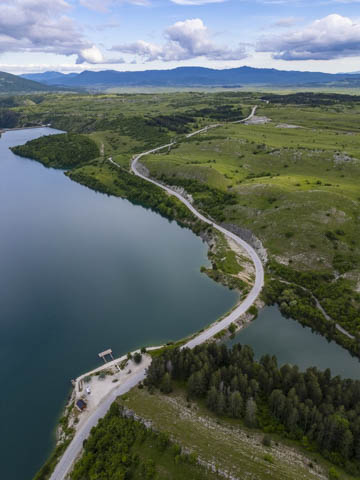
Leaving Trebinje behind, we drove North into the Sutjeska National Park, which has at is centre the Tara River. Our first stop was by a beautiful lake where we spent the night in a deserted swimming and fishing area. Although having seen some snakes in the shallows, we kept our feet dry!

Living under a brick built BBQ at this picnic spot, was a lovely stray dog called Lucky. We had learnt about her from a comment on Park4Night and we made sure she had lots of attention and a good meal while we were there. We sat out at one of the picnic tables most of the evening and next morning to keep her company.
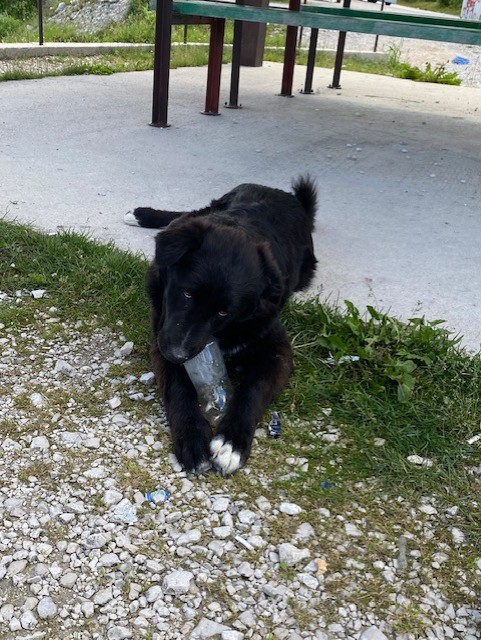
Being big dog lovers it absolutely broke our hearts to leave her behind, we were actually both quite choked up driving away. The only consolation was that she was in good condition and obviously well cared for by the locals whom we saw stopping by and dropping kibble on the floor for her.
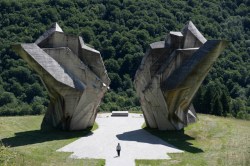
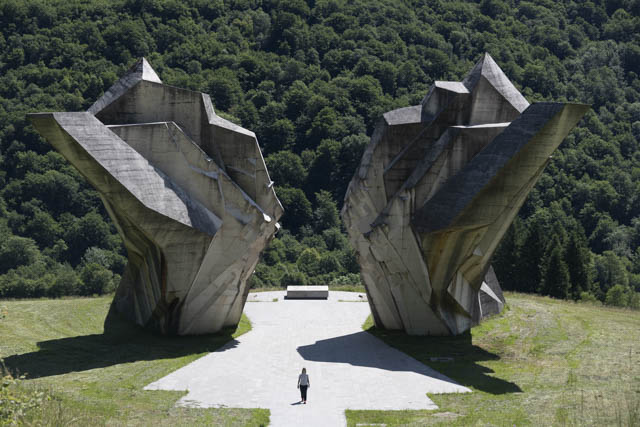
On our way through the National Park there is a massive, impressive WWII memorial sculpture which we stopped off at for a wander around and just a little further through the park we found our night spot, which was a small restaurant which allowed camper parking in its back garden/field.
The facilities were a bit rustic – the cold water shower (basically a hose on a pole in the middle of the field) with no shower curtain was definitely a step too far for Sarah. We did however enjoy dinner at the restaurant and a nice chilled beer in the garden afterwards.
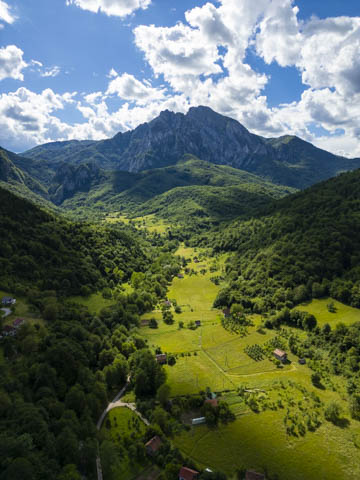
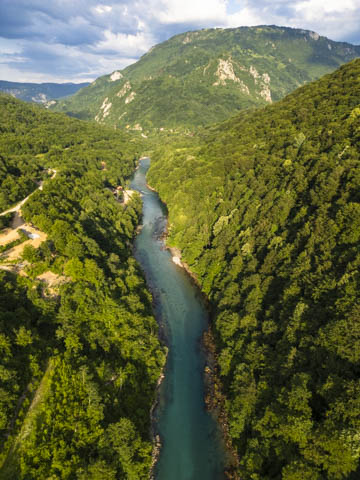
The scenery in the park is beautiful and we continued to drive down the road that follows the Tara river towards the border with Montenegro. The road was narrow and pretty rough but eventually a couple of km’s before the border we stopped off at Rafting Tara, a small camp with huts and a restaurant, as well as a lawn area for campers. We managed to squeeze ourselves between a couple of trees to get some shade and although it wasn’t that flat it was thankfully out of the sun!
Of course we couldn’t come to this beautiful spot and not enjoy the river. So the next day, we arranged to go white water rafting.
After being kitted out in a wetsuit (the water is very cold), lifejacket and helmet, we were driven down a narrow road across the border into Montenegro which was the start of the rafting.
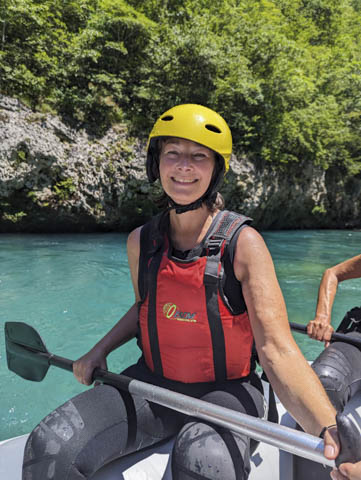
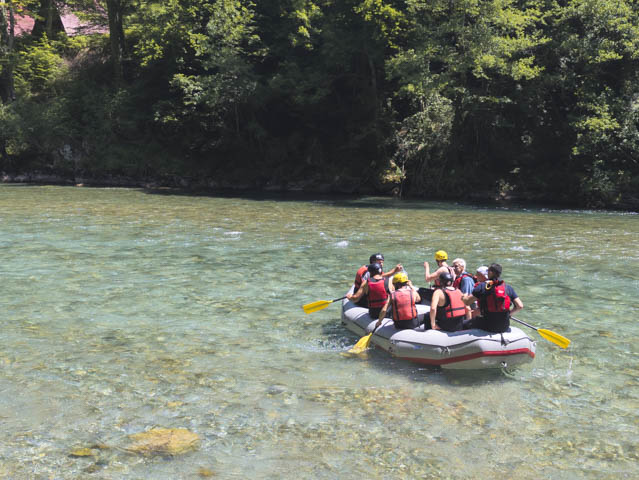
The water on the Tara river at this time of year is Grade 3 pushing Grade 4, so some of the short rapids were quite a bumpy ride but we didn’t feel at any point like falling in was a real risk and it was just good fun.
The guide who was steering the raft at the back had fairly limited English but he was clear with his calls of “Stop” and “Go” to tell us when to paddle.
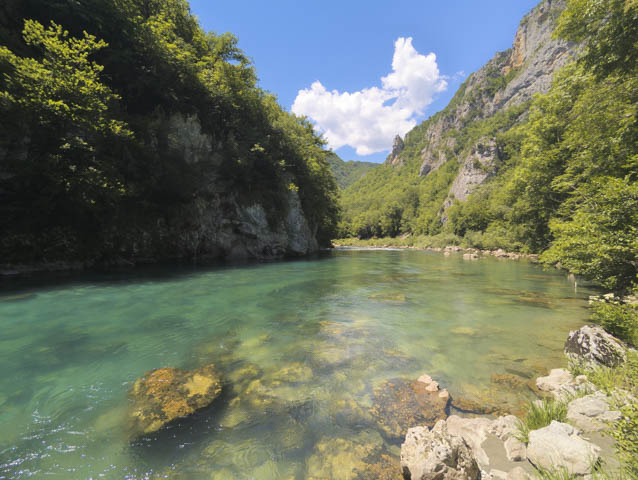
The river itself was really beautiful as we moved through the gorge and the water was incredibly clear. The guide told us it was clean enough to drink straight out of the river, although having been told that before in Sweden and subsequently been ill, this time we erred on the side of caution and abstained!
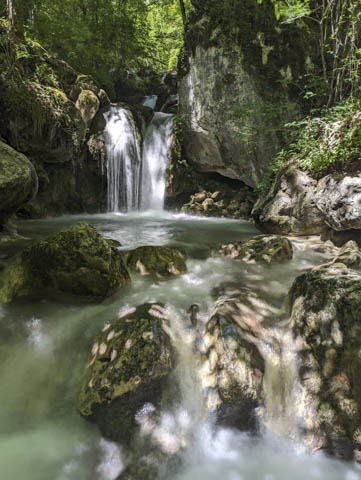
Just about half way through our descent we stopped off at a small beach for a short hike to a waterfall followed by a cooling swim/ float.
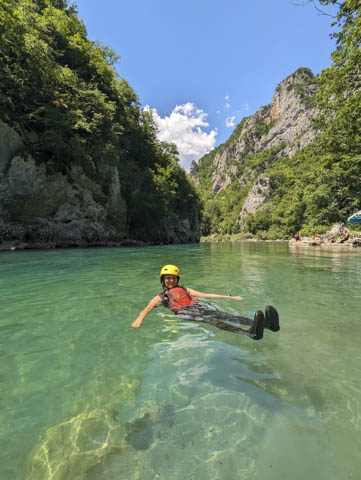
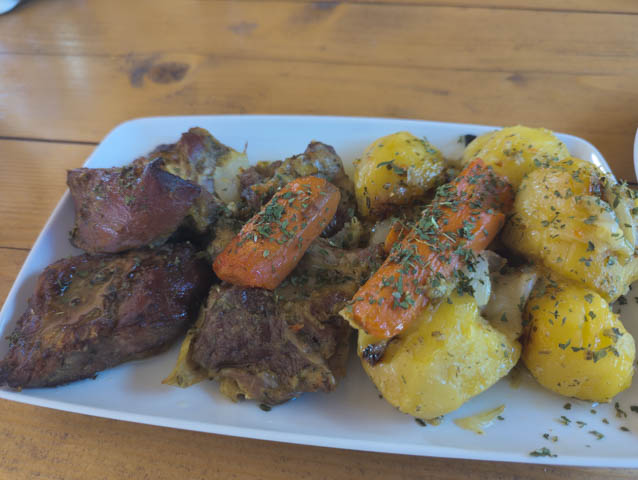
After a great but pretty tiring three-hour trip, we arrived back at the rafting camp where we were offered a hearty meal, and having worked up quite the appetite we did not turn them down. There was no menu, they simply brought us some soup with a big basket of fresh bread, followed by a big plate of slow roasted pork with veggies and a cabbage side salad, all washed down with some local beer. Absolutely delicious!
We spent a couple of fun days here but it was time to move on and Sarajevo was calling us.
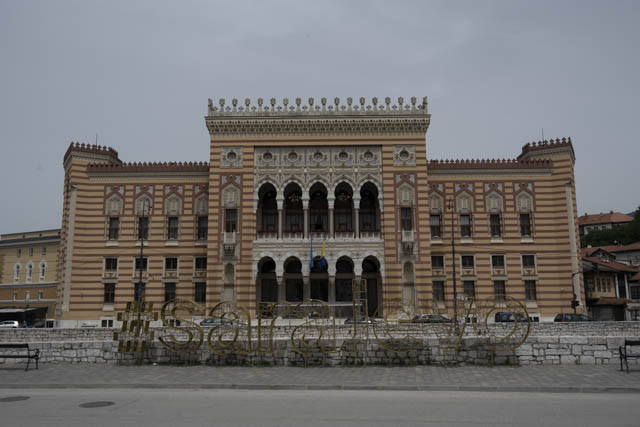
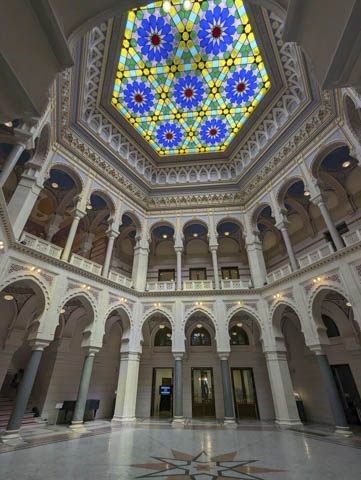
For a capital city Sarajevo feels quite small. Our first port of call was the City Hall. Seriously damaged in the 1990’s when Sarajevo was under siege for almost 4 years between 1992 and 1995, it now houses a number of interesting exhibitions, one of which tells the story of the siege and the lengths the population had to go to to survive. All the trees in the city were cut down and used for firewood, as was most of the furniture and people had to queue for hours under threat of snipers to collect water from only two sources in the whole city.
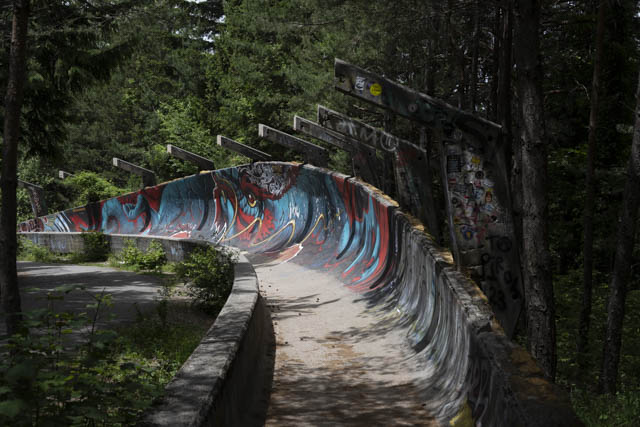
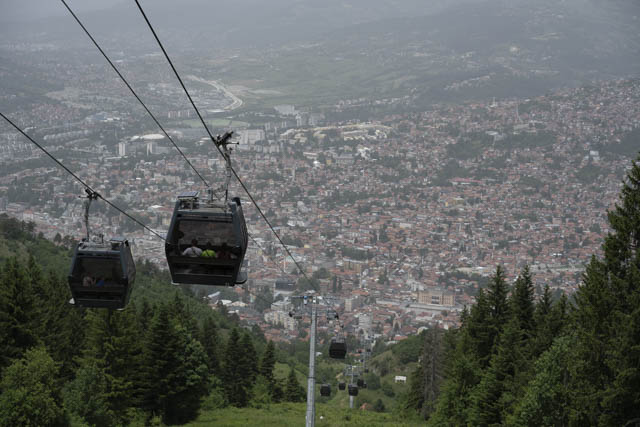
Not too far from City Hall is a cable car which goes up to a viewpoint and the Olympic Bobsleigh run which was built for the 1984 Olympics. The run has been allowed to decay (not surprisingly as the cable car was destroyed in the war and only reopened in 2018) and you can now walk down its length and admire the graffiti.
Unfortunately it was a hazy day so the views over the city were limited.
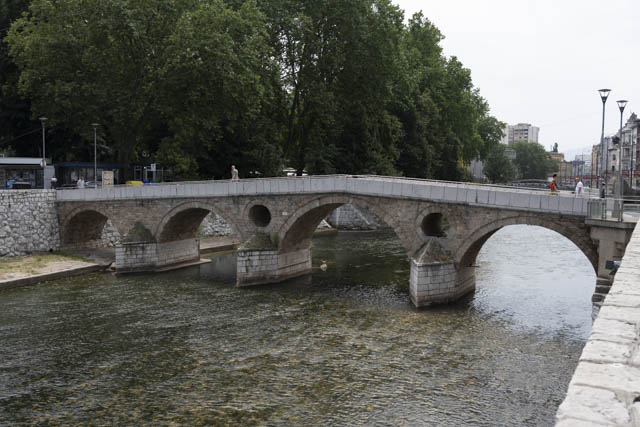
Next on our list was the bridge where Archduke Ferdinand and his wife were assassinated, which resulted in the start of WW1. There isn’t much to see now as the memorial was removed but it was certainly thought-provoking to stand on the spot that sparked such a terrible period in history.
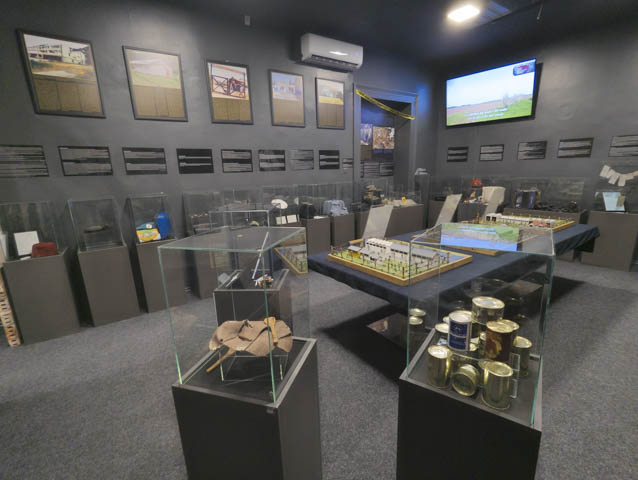
After wandering the old town and relaxing for lunch at Pigeon square, we visited the Museum of Crimes against Humanity and Genocide 1992-1995. This small museum is excellent although the subject matter is grim. There are testimonies of people who lived through the war and describe their experiences from rape and beatings to the murder and execution of their loved ones. Not an uplifting experience but an important one in terms of trying to understand the very complex history of this country, which we are still trying to get our heads around.
Bosnia: Into the Unknown
Crossing into Bosnia from Croatia couldn’t have been easier. In fact we had to ask both the Croatian side and the Bosnian side to stamp our passports as neither seemed inclined to do so. Other than that, we were through the border very quickly.
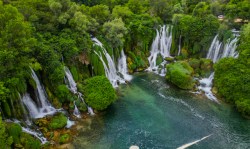
We noticed a lot of billboards in Southern Croatia advertising the Kravica waterfalls, which are just across the border and so that was where we were intending to spend our first night in Bosnia
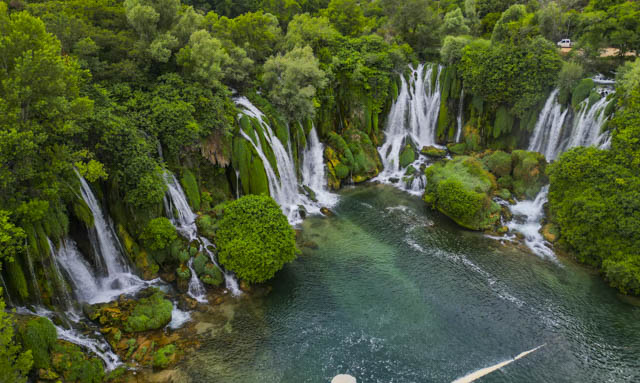
After paying an entrance fee for the waterfalls and indicating that we were hoping to spend the night, we by-passed the customer car-park and were waved through a barrier onto a very steep gravel road down to the Kravica Autocamp. This is basically a field alongside a lovely tree-lined green river, which was only a couple of hundred metres away from the Kravica waterfalls.
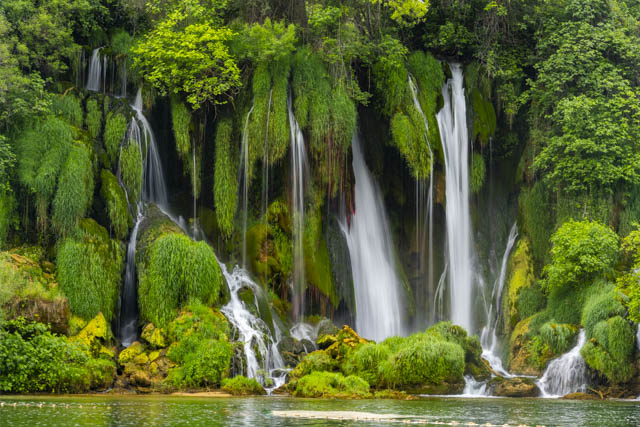
Unbeknown to us, we had arrived at Kravica on a local public holiday so it was much busier than we had expected, with children swimming in the chilly water and families picnicking and sunbathing around the edge of the lake. It wasn’t too bad though and after having a wander around ourselves we relaxed at a lakeside restaurant for a couple of drinks.
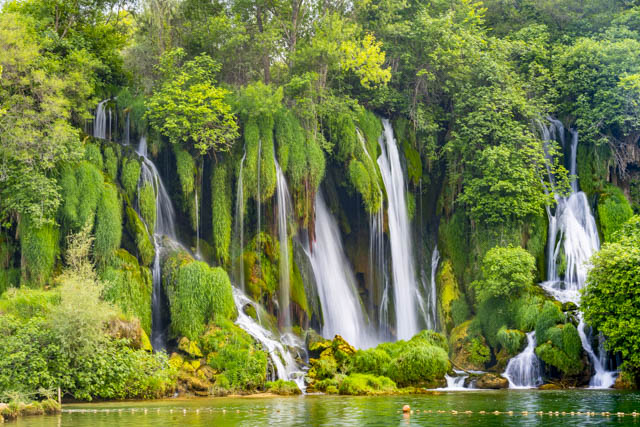
The waterfalls feel just like those at Plitvice or Krka in Croatia, except that they are all in one place so it’s quite nice to be able to sit down at one of the restaurants and enjoy the view. So our couple of beers turned into dinner, in the form of a big shared plate of Cevapi (Balkan sausages).
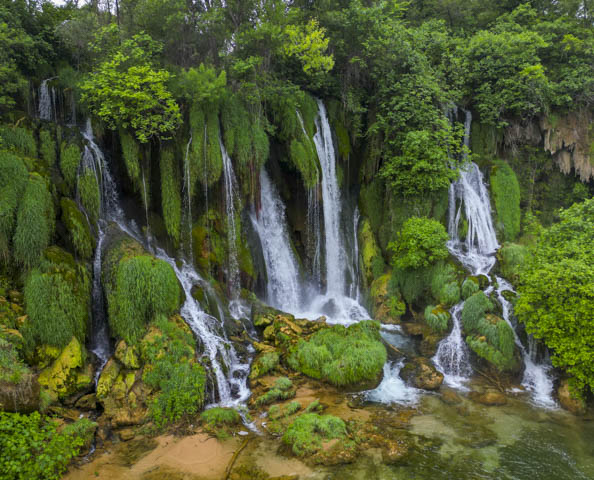
We also took advantage of being parked right on the river to jump in for a swim. It didn’t last very long as the water was very cold but it cooled us down nicely. We have learnt that a lot of the rivers in Bosnia are spring fed not too far away and so the water coming from underground is super cold.
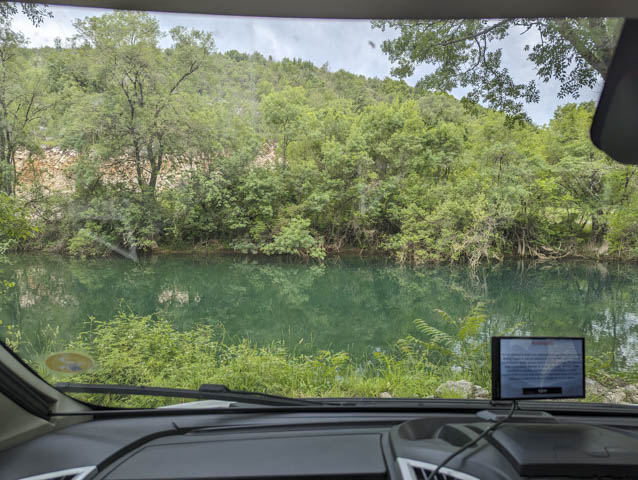
This was a great introduction to Bosnia but our next stop was a little further inland at the town of Blagaj. However, before reaching Blagaj we stopped off at an old town called Pocitelj (the names of the towns in Bosnia are proving somewhat challenging to pronounce!).
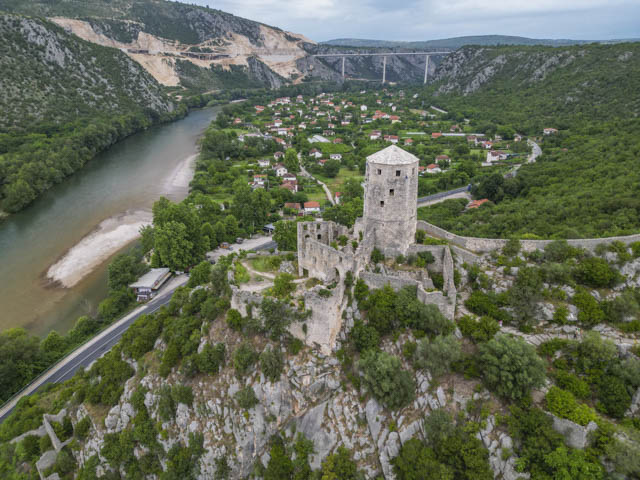
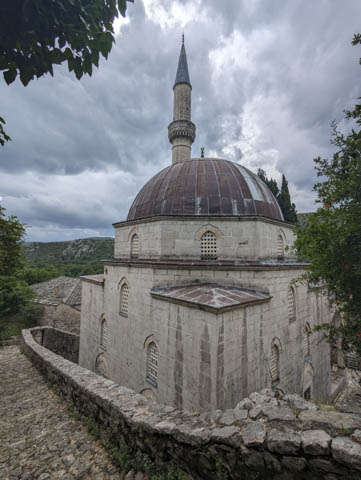
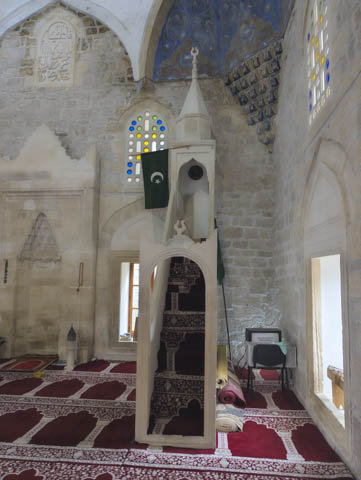
Pocitelj is an ancient town that is built into the hillside and topped by a fortress. We climbed up to the fortress, stopping in on the Hajji Alijia Mosque on the way up. This mosque was built in 1563 but was badly damaged by Croatian forces during the war in 1993.
Just next door to where we were parked at Pocitelj was a bakery, so we popped in to see what sort of delights a Bosnian bakery has to offer! We came out with a meat Burek, which is a traditional Bosnian snack consisting of minced meat and onion in filo pastry. It’s absolutely lovely and is somewhat reminiscent of a pasty.
Having devoured the Burek we got back on the road and reached our destination for the night – a campsite just outside of Blagaj town, aptly named Camping Blagaj, where we had the most amazing welcome.
After parking up we were shown around the campsite, ending up in their restaurant/bar, which sits alongside a very fast flowing (and very cold), beautifully blue, river. They then proceeded to offer us a welcome drink of our choice on the house (pints of beer on draft – thank you very much), and then appeared with a fruit plate, two slices of cake and a bottle of wine for us to take away!
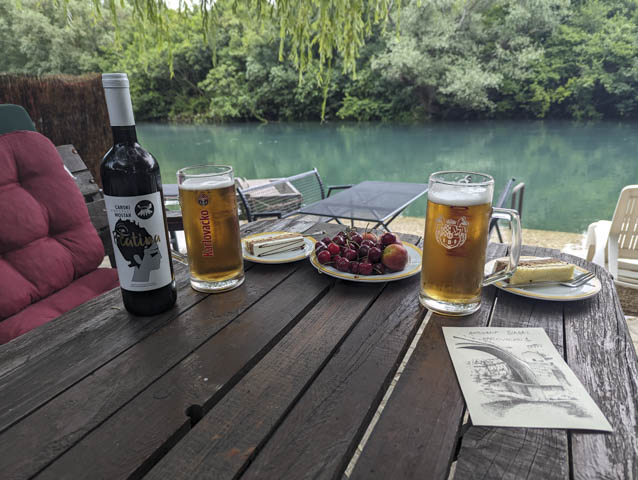
What an amazing welcome. We were really blown away. The campsite itself was really well setup with power, water and disposal on each site. If this is the standard of camping in Bosnia we are going to love it here.
Our reason for visiting Blagaj was to see the Blagaj Tekke, a historic Sufi monastery that is built into the cliffs by the source of the river Buna.
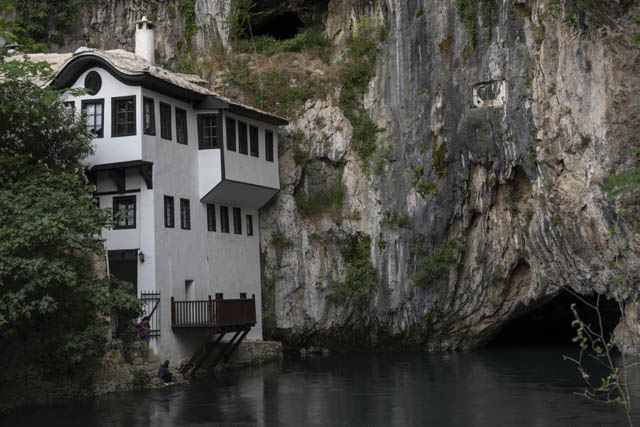
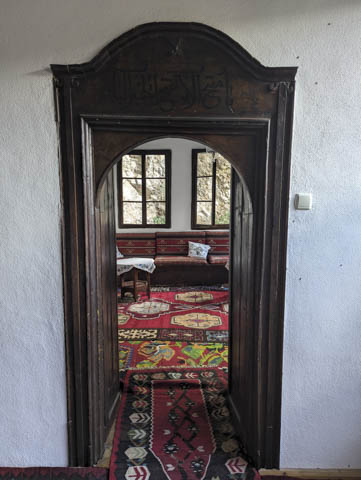
The classic view of the Tekke is from across the river, where there are a number of restaurants but you can also go inside the building itself. The rooms are very small but they have been updated a bit with electricity and heating. The floor is carpeted with lovely rugs which is a good thing as you have to remove your shoes to go inside.
Blagaj is only a few kilometres from the town of Mostar, which is perhaps the most well-known tourist destination in Bosnia. It is difficult to separate Mostar in our minds from the images of the famous bridge being blown up in the war that engulfed this region in the 1990’s. But the bridge has been rebuilt in the original style and despite the abandoned buildings and walls pockmarked with bullet holes the war is definitely in the past.
Before reaching Mostar we stopped at a small unmarked turn-off at the side of the road. The road is blocked but a path leads round the gates and after a couple of hundred metres a big black entrance built into the cliff comes into view.

This is a underground hangar for fighter jets that was used during the cold war by Yugoslavia. The hangar is now abandoned but makes a good place for some Urban Exploring. In total the hangar is almost 1km long and is designed to protect the fighter jets that would have been stored there from a nuclear blast as it is buried under a hill.

After this brief stop, we continued on to Mostar where we parked at the University and cycled into the old town.
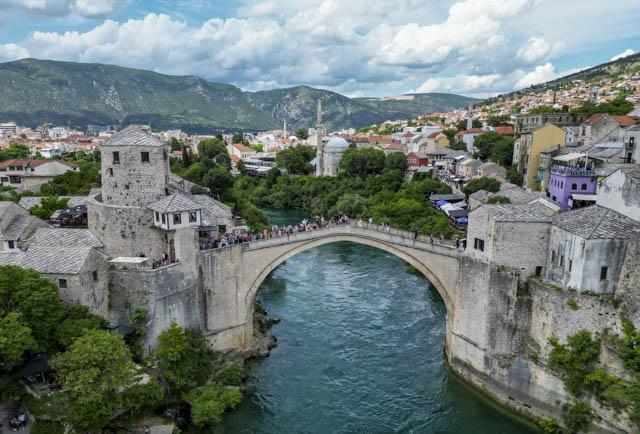
Mostar old town is very pretty but actually quite small, so even at the beginning of June it was very crowded with tourists (check out the photo below with all the tourists lining the bridge). The bridge, which is a UNESCO world heritage site, was built in the 16th century but as mentioned earlier it was destroyed in 1993 and the new ‘old bridge’ was reopened in 2004.
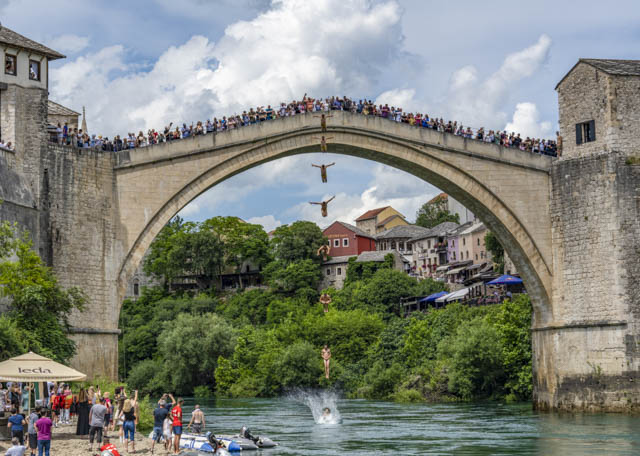
Members of the Stari Most Bridge Diver’s Club put on a show for tourists by diving off the bridge when they have collected enough money from onlookers. We were lucky enough to time our visit to watch one of the divers. It was definitely a case of rather you than me, especially given the temperature of the water.
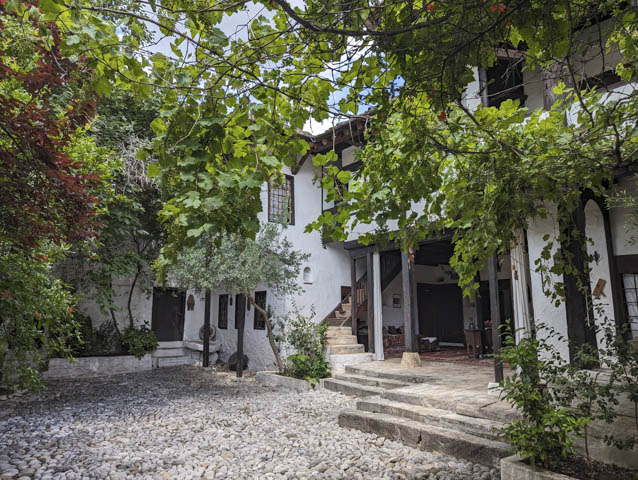
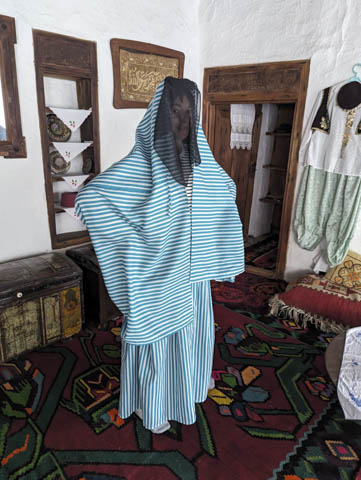
After sitting down for a quick lunch of Burek at a small café near the bridge, we headed to one of the lesser known attractions of Mostar, the Kajtaz house. This was one of the oldest merchant houses in Mostar, which has been preserved as a museum. This particular house belonged to a Judge and, as was typical for that time, would have been split into male and female quarters. Unfortunately the male quarters burned down but the female quarters has been beautifully preserved.
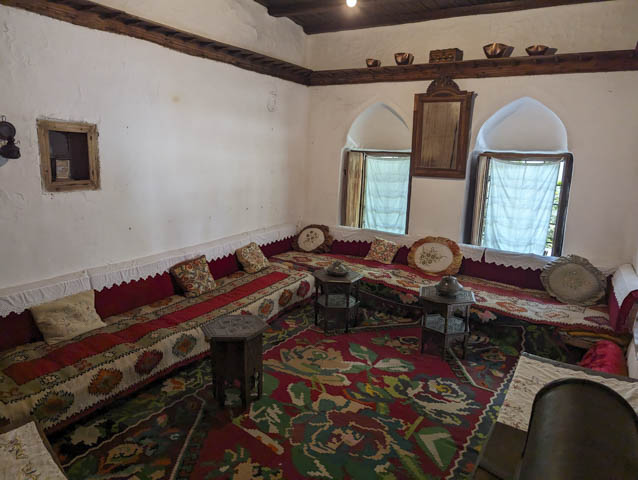
We were given a really informative and excellent tour of the building by a young woman who spoke almost perfect English and who convinced Sarah to try on some typical clothes from that period.
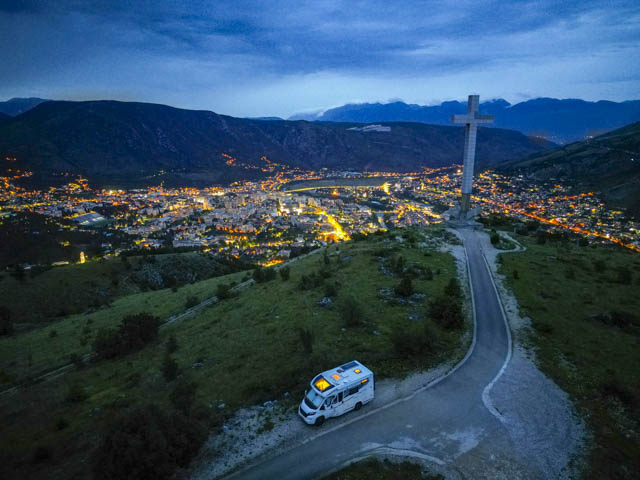
We had planned to stay the night at the university campus but there was a lot of activity going on when we returned to the camper, so in search of a quiet night, we drove up the steep and narrow road to the large cross that sits on the hills overlooking Mostar. This is where the Croatians shelled the city from in 1993 and you can still see the emplacements that they used to do this. We had a great view over the hillside and more importantly, we had a very peaceful night.
Croatia – Part 2
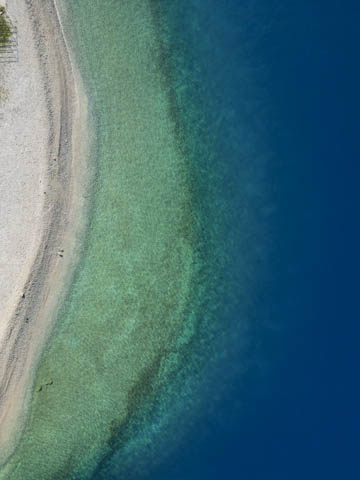
One of the things that has struck us most about Croatia is how amazingly clear the water is. Of all the places we have travelled, we can’t recall anywhere else where the water is so beautifully transparent. Everywhere we’ve been on the coast has had this amazing clarity but the inland water as well – the lakes and rivers, are just the same.
After we left Zadar we headed further south to Krka National Park. This is a lot like Plitvice Lakes but on a smaller scale. The plus side is that its nowhere near as busy but its just as expensive (€20 in the shoulder season – April, May and October and €40 in the Summer season).
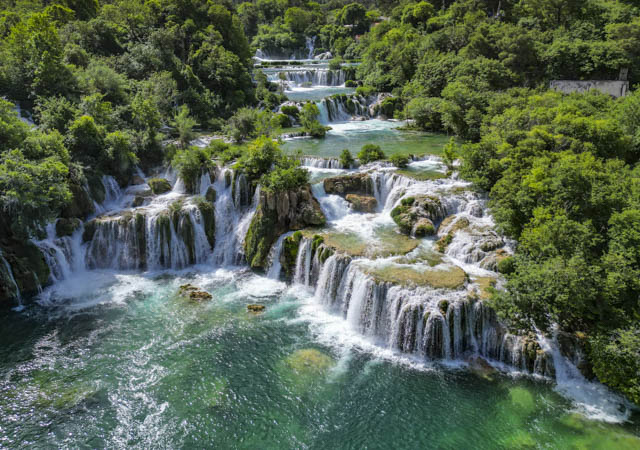
Krka is a lot more manageable than Plitvice as it really only involves 3-4kms of walking.
From the entrance, a bus that takes you down the mountain into the river valley to the waterfalls. There is a pretty and easy board-walked route over and around the rivers that make up the park.
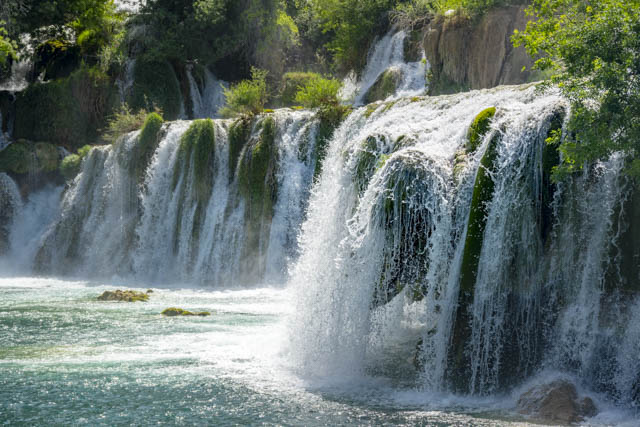
There are several waterfalls but the star attraction is the Skradinski Buk waterfall, which can be viewed from a boardwalk that crosses the river.
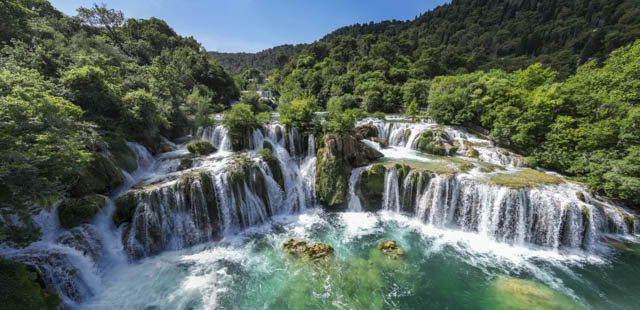
Conveniently for us, there is a campsite right next to the entrance to the falls so we had somewhere to relax in the afternoon sunshine after our visit.
The next morning we got going early, driving back towards the coast and the lovely little town of Sibenik.
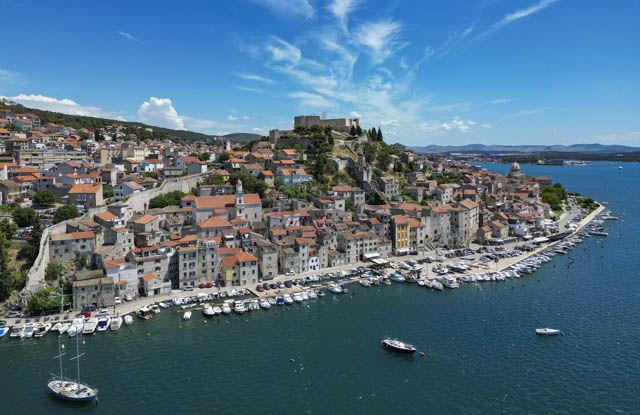
Sibenik is a medieval city with maze like streets, a hill top fortress and an impressive cathedral. Definitely worth a stopover and a visit to one of its many ice-cream shops.
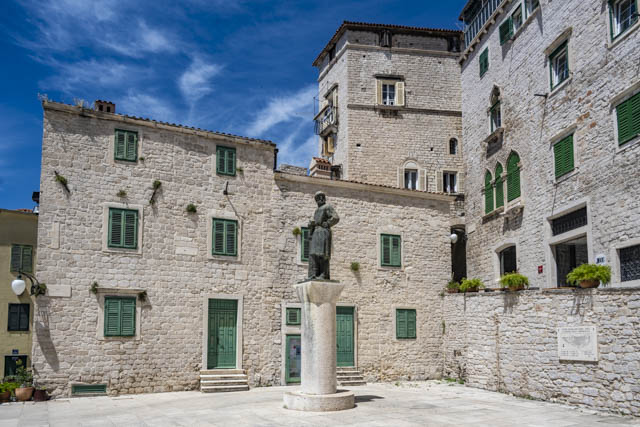
We didn’t want to stay the night at Sibenik as it was pretty hot, so we moved a bit further down the coast to a campsite right on the water (which was a little warmer than it was further North on Krk Island but still pretty cold!)
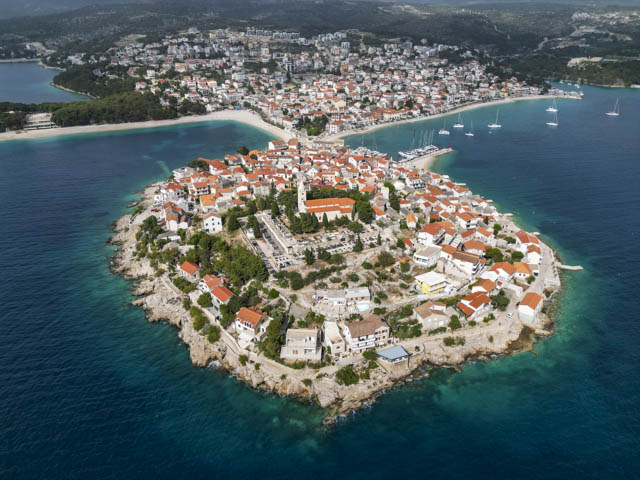
This was a great spot to cycle along the coast into the town of Primosten. Yet another beautiful little town built on a roundish island jutting out into the water but still connected to the mainland, of which there seem to be a lot in Croatia.
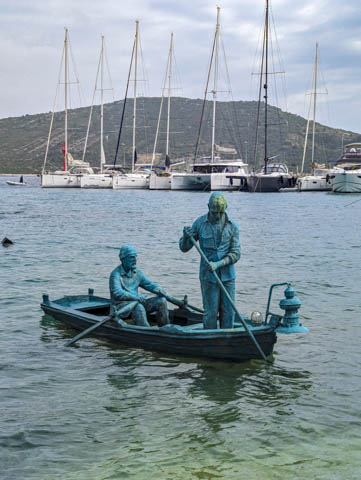
It didn’t take long to explore this very pretty old town, so having been tempted by all the wonderful smelling cafes and restaurants (of which there are many here), we settled down at a waterside taverna with a delicious plate of whitebait, a basket of fresh bread and a couple of cool beers. Simple but so tasty.
We had thought about staying here for a couple of days but the campsite was a bit busy for our liking and we felt a bit packed in like sardines. So we decided to move on in the morning and head for the island of Ciovo, where we had heard about a free park-up by a small beach. After following some narrow roads through the main town, we arrived at the parking area, right on the water and next to a small harbour.
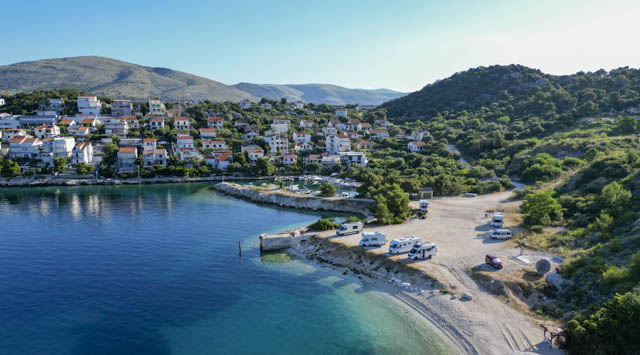
It was a beautiful location and the swimming/snorkelling here was great. The water was also getting a little warmer as we made our way further South, which was definitely a plus.
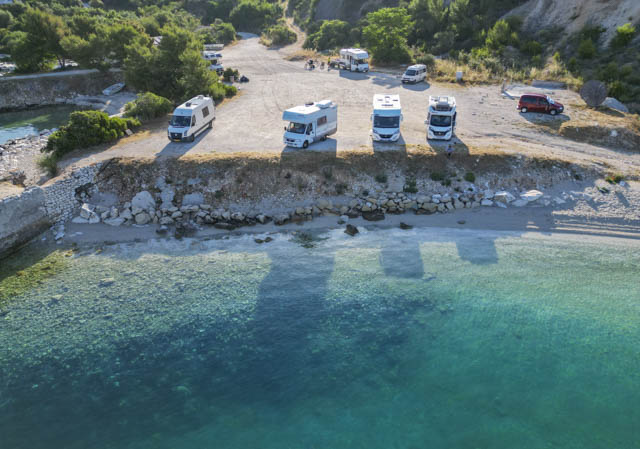
We had planned on spending a couple of days here but unfortunately on our second morning, some workmen arrived early with pneumatic drills and drove us away. It looked like they may have been building a beach bar, so perhaps not a free park-up for much longer.
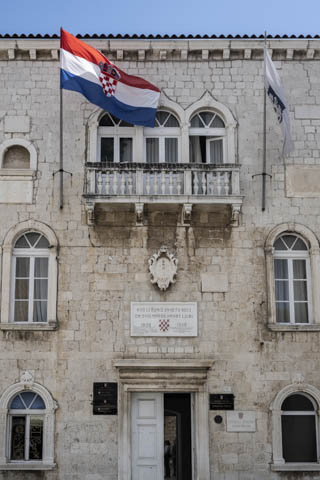
Right next to this big island is… yes you guessed it, another beautiful medieval old town on its very own little island. Trogir was founded by the Greeks in the third century BC and with the impressive cathedral and town hall at one end, fortress at the other end and a warren of narrow winding streets in between, it is a great place to spend some time wandering around or relaxing at one of the many eateries along the waterfront. It would have looked great from the air but unfortunately, due to its proximity to Split airport, I wasn’t able to put the drone up.

Making our way further down the coast, we stayed in a small, terraced, hillside campsite near the town of Gradac. This was a lovely location but it took a bit of careful manoeuvring to get into a spot. The access road was quite steep and the terraces were narrow. The other campers there were all in smaller van conversions, which it is probably better suited to. However, once we were in, we enjoyed a lovely few days here.

There was a nice little beach down the hill from the campsite and a few restaurant bars on the beach, although only one was open, so he was doing a good trade as there were plenty of tourists around. The end of May is still considered to be out of season despite the weather being glorious, but we could see work going on at the other tavernas, clearly preparing to open shortly. Unfortunately too late for us though, as after leaving Gradac we only had a few days left in Croatia.
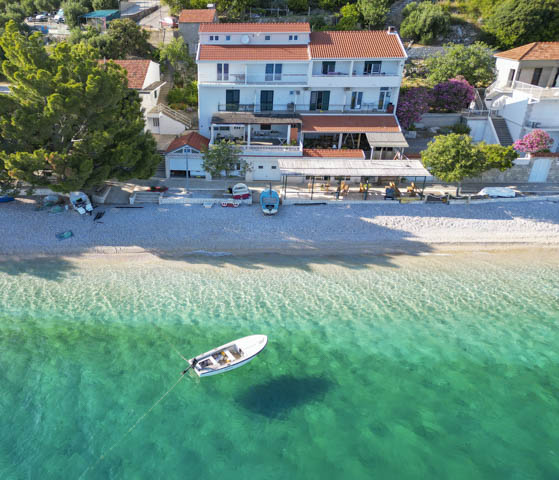
We were on a self imposed limit of 30 Schengen days as we want time at the end of our trip in the Schengen zone. Knowing that we were heading inland and wouldn’t see the coast again for some time we decided to spend out last days in Croatia relaxing by the sea and our next destination was a real gem.
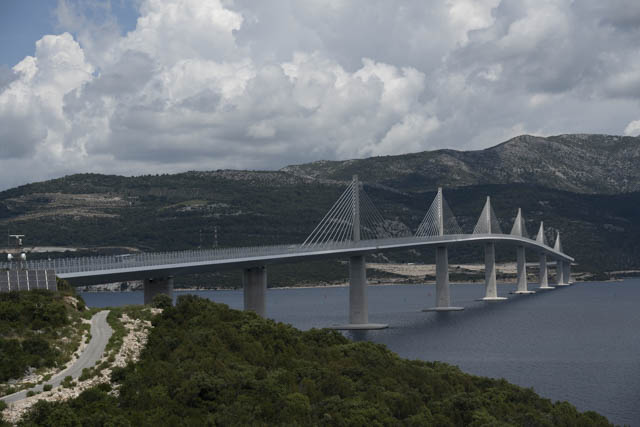
Flanking the Southern Dalmatian Islands is a long peninsula that juts out from the mainland, called the Peljesac Peninsula. There is actually a big new bridge linking the mainland to the peninsula and the main road runs across this to avoid the short bit of coastline that belongs to Bosnia, thereby ensuring that it is possible to drive to Dubrovnik without leaving Croatia.
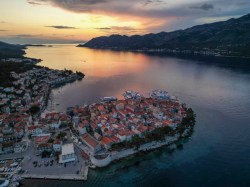
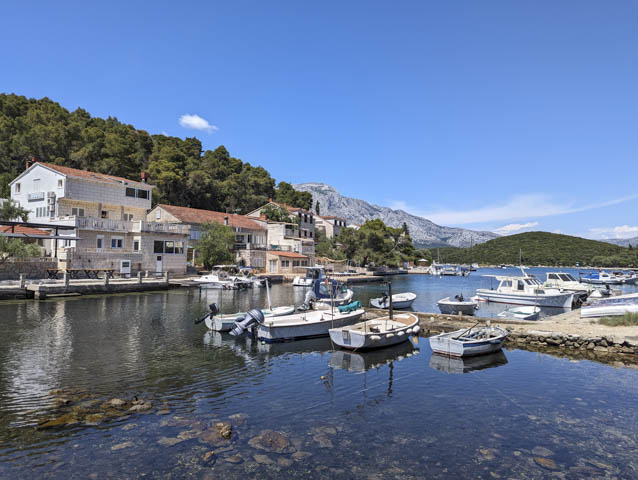
We drove along the peninsula and settled into the lovely Palme Campsite in the town of Kuciste, a short cycle ride from the larger and more well known town of Orebic. Although it was fairly busy, we managed to bag a spot at the front, facing onto the pebble beach. Across the water from here you can see the island of Korcula and the namesake town of Korcula.
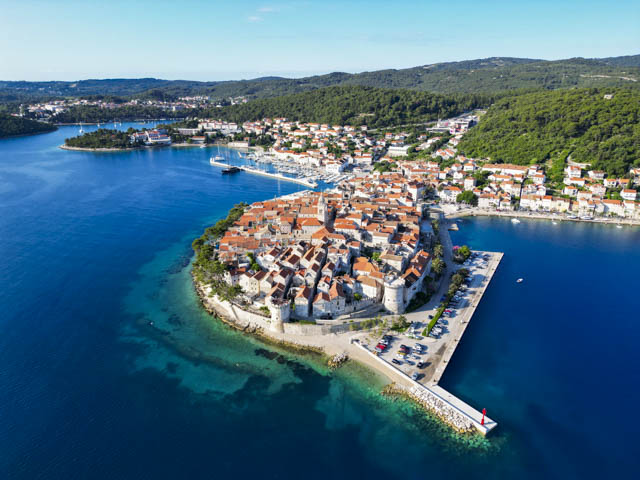
One of the reasons for coming here is that we wanted to take a day trip across to visit Korcula, which you can do from Orebic. The ferry only takes 20 minutes and you can travel across with vehicles, so we cycled the 5kms from the campsite to Orebic and after the short ferry ride, had another 3km cycle to get from the harbour to Korcula town. For foot passengers there are smaller ferries that dock in Korcula town harbour itself.

Korcula town is another walled medieval town set on an island and walking around it, it feels a bit like a miniature Dubrovnik but with much less tourists. Many believe that it was the birthplace of Marco Polo but this is not confirmed.
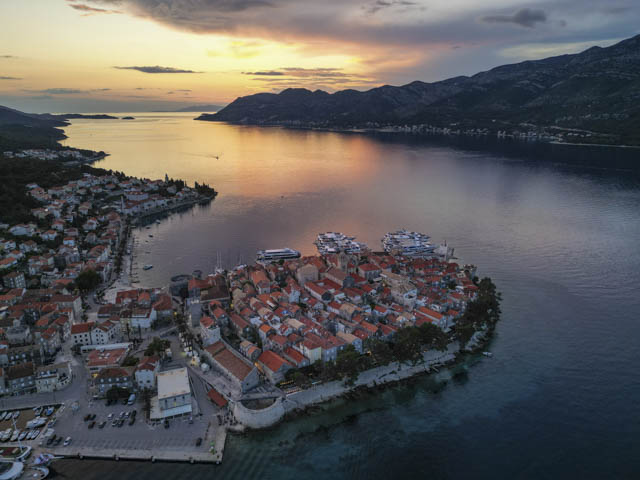
The town itself is very well ordered with a grid of tiny streets radiating from a central thoroughfare where there are several churches.
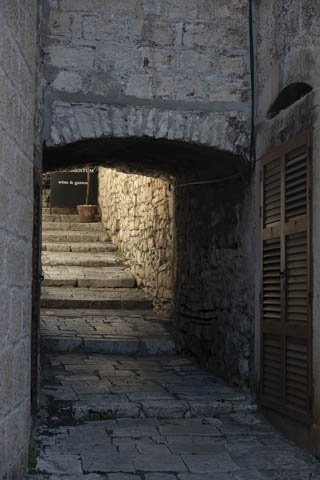
It is a lovely place for a day trip and it is crammed with very nice looking restaurants overlooking the water, so having worked up an appetite wandering the pretty, narrow, cobbled streets, we stopped for a bite to eat before heading back on a late ferry to Orebic.
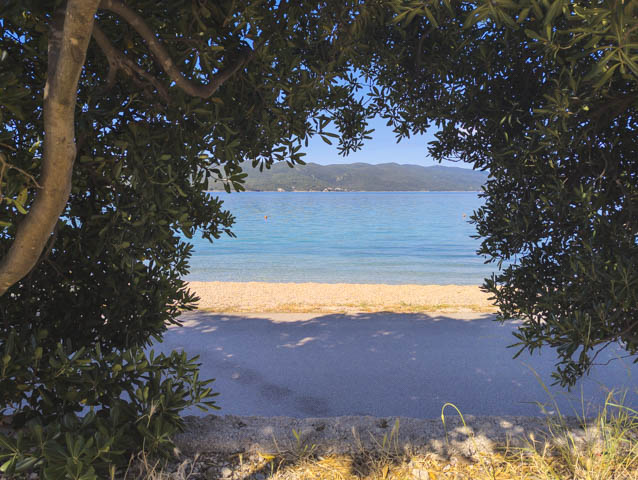
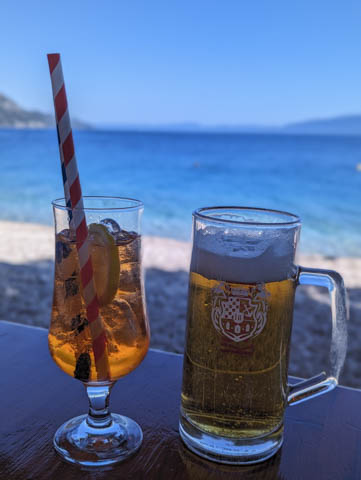
The next day we explored the coast of the Peninsula on our bikes, stopping off to watch the kite and wind surfers, enjoy an ice-cream and then finally a sunset beer, before heading back to the campsite for burgers on the BBQ. A perfect end to our stay in Croatia!
Croatia – Part 1
Tourism in Croatia is growing fast and was up 9% in 2023 on the previous year, with over 20 million tourist arrivals. This has led to rising prices and some seriously overcrowded places. Fortunately for us, May is before the real summer onslaught starts and we found that most places were fairly quiet, with some exceptions.
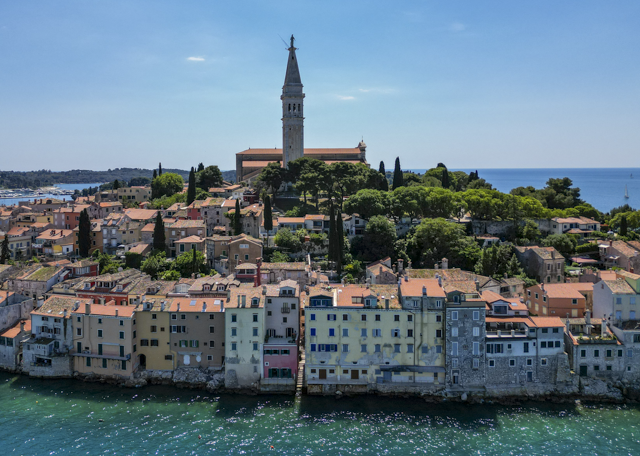
Our first stop in Croatia was not far from the Slovenian border in the lovely Adriatic town of Rovinj. Rovinj is the biggest tourist attraction of Coastal Istria and the old town, which was originally an island, is only connected to the mainland by a narrow isthmus. The water surrounding the “island” is stunning and so clear.
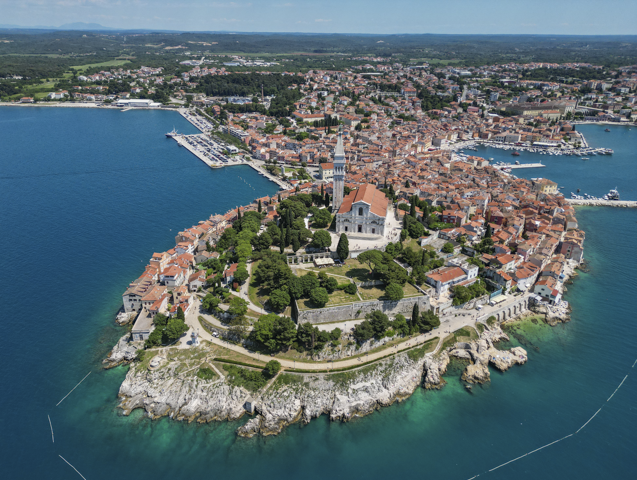
We spent some time wandering the narrow streets of the old town and of course stopped for a cold beer at one of the many waterfront bars with their fabulous views. The difficulty here is choosing which one.
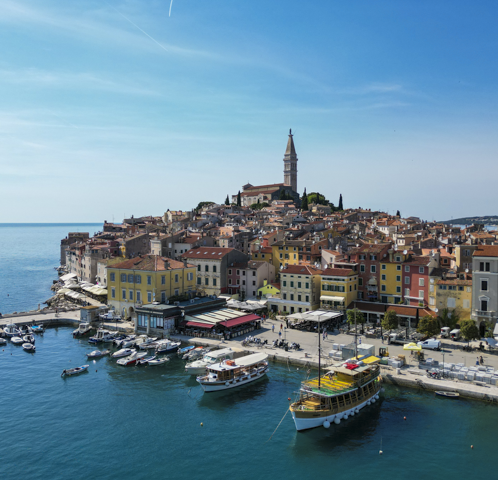
We stayed overnight in a large gravel car park just outside town (for which you practically needed a PhD to operate the pay machine – and before you think it, this was before we’d had the beers), which was made far more pleasant by meeting a lovely Polish/South African couple, Magda and Adrian (@adma_adventures on instagram) who just happened to be parked up next to us and on a pretty amazing trip themselves. So what better excuse than to spend the evening sitting outside, drinking a bit too much wine and comparing travel stories.
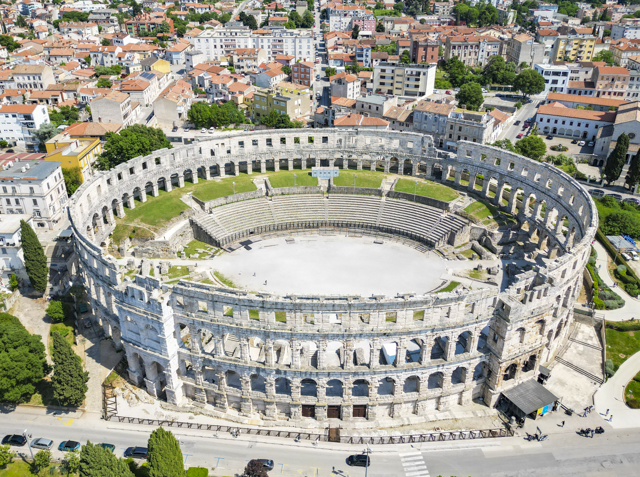
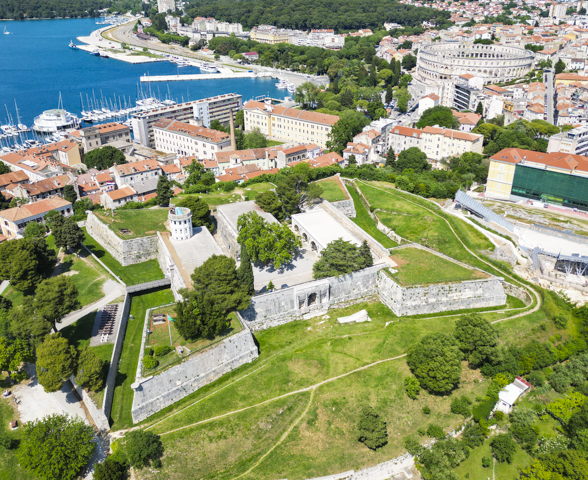
A little further along the coast from Rovinj is the busy commercial port town of Pula, with its two main attractions; the well-preserved Roman amphitheatre from the 1st century, which was able to hold up to 20,000 people for gladiatorial contests,
and the Venetian fortress built in 1630, which is atop a hill in the middle of town.
By this point we felt a little rest and relaxation was in order, so we decided to head to a waterside campsite on the island of Krk (connected to the mainland by a bridge). We had been recommended a great campsite just next to the tiny town of Silo.
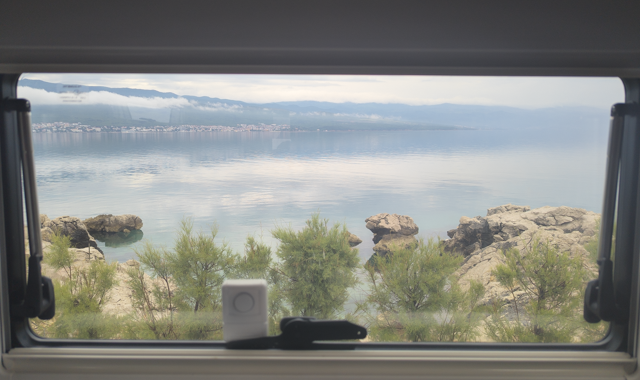
Tiha Camp becomes expensive In the summer and the cheaper plots are all on a slope and set back from the sea. However in May you can get a pitch right on the sea with stunning views at a bargain price with an ACSI card.
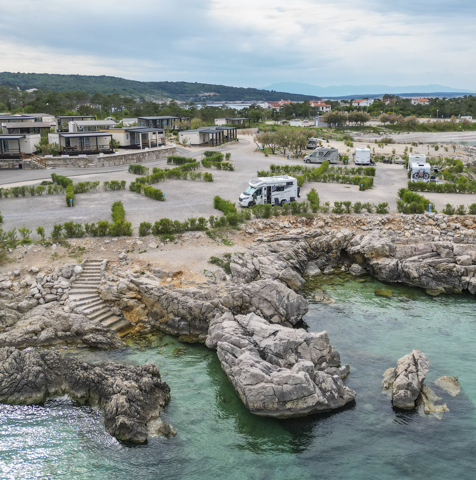
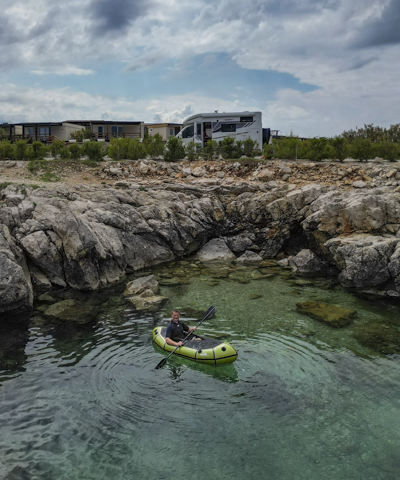
We kicked back and thoroughly relaxed here, simply enjoying swimming, snorkelling and kayaking in the incredibly clear, although very cold water. The weather was perfect while we were on Krk so we also managed to have our first BBQ of the season.
Feeling refreshed after our break we left Krk and drove into the hills, having heard of a bear sanctuary in Kuterevo village where you can overnight. We saw our fair share of bears on our travels through Canada and the US (mostly in the wild and occasionally a little close for comfort) but this was our first time seeing European bears.
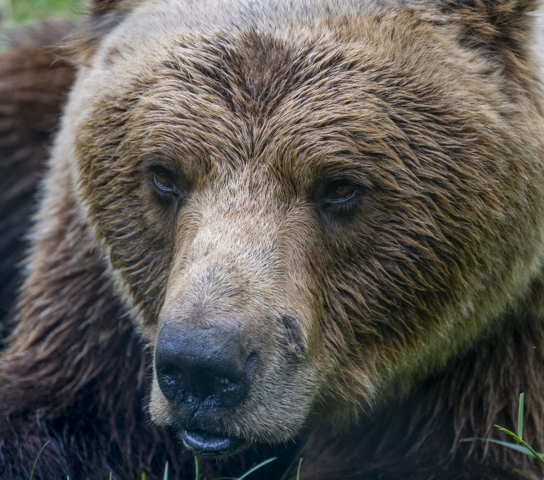
The bears at the sanctuary were all rescued and couldn’t be released back into the wild but they now have large pens on the hillside in which they can roam.
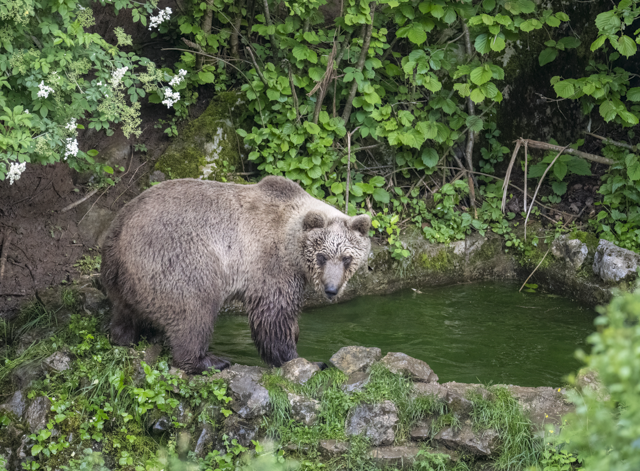
It was great to be able to see the bears as they interacted with each other and roamed around. They were surprisingly active. It is also possible to volunteer there if you were able to stay a little longer.
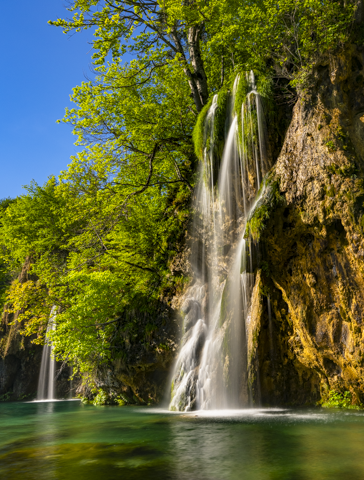
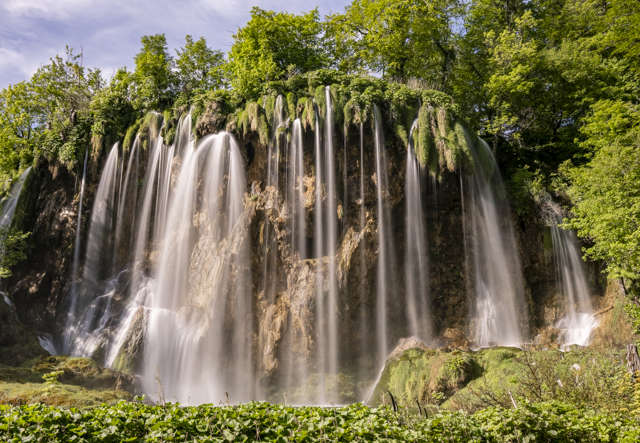
Something not to be missed and one of the jewels in the crown of Croatian tourism is Plitvice Lakes National Park. This is a series of interconnected lakes with a huge number of waterfalls between them. Fortunately we had been forewarned by Adrian and Magda that it gets incredibly busy, so we made sure that we arrived for opening time and got into the park before the tourist buses arrived and overwhelmed it.
In the summer months it costs a hefty €40 per person to visit (June to September) but luckily for us, in the shoulder months of April, May and October it is a more reasonable, but by no means cheap, €23 per person.
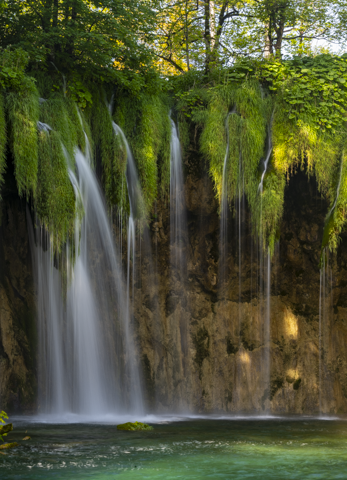
This is a large site and a visit here involves a lot of walking. I ended up walking around 20km to see everything, although you can reduce this as there are boats and a land train which are free with your entry ticket to help you get around. The queues for these however can get quite long and I ended up walking faster than the boat along the lakeshore as it goes very slowly!
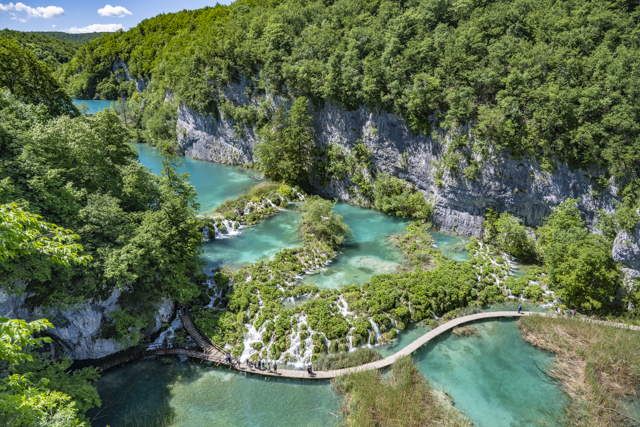
We had parked near Entrance 2 which is nearest to the Upper Lakes, so this is the area we tackled first and I think, the best bit of the park. There weren’t too many people on the boardwalks and it was very peaceful. This area of the park has the most waterfalls and they are stunning, as they drop from lake to lake and are covered with vegetation.
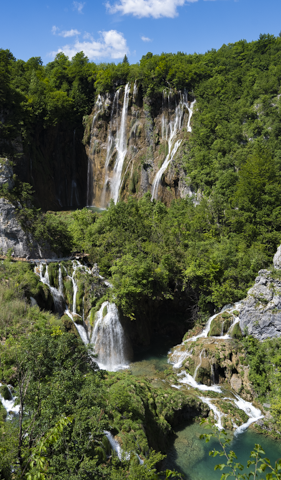
The biggest waterfall in the park, Veliki Slap, which is 78m high is in near to Entrance 1 in the lower lakes and by the time we made it down here it was getting very busy and the boardwalks along the lakes were packed with people, making progress very difficult.
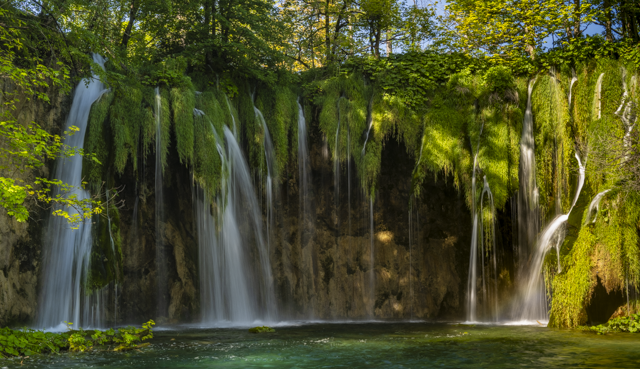
It is definitely a beautiful place and well worth visiting but to make the most out of it you definitely want to go out of season and/or get there for opening time as the mass of tourists jostling for position on the boardwalks can really take some of the fun out of it.
After leaving Plitivce we drove back to the coast to the town of Zadar, the capital of Dalmatia. It’s a sizeable town with a population of 75,000.
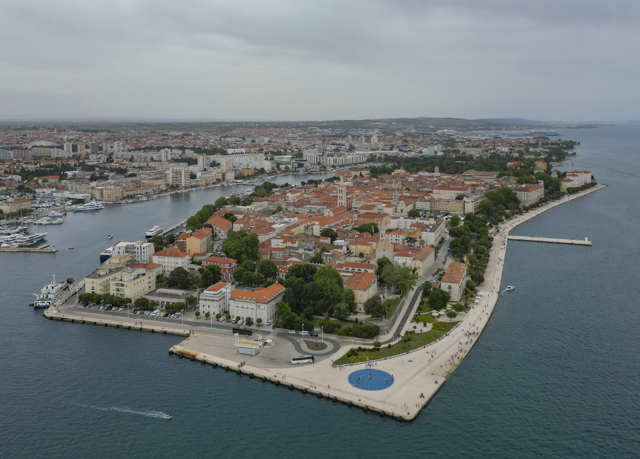
From 1921 until 1947 Zadar was actually part of Italy but it became part of Yugoslavia under the Treaty of Rapallo and most of the Italian residents were expelled. It was also heavily shelled by Serbian forces in the 90’s so is a bit of a mish-mash of old and new.
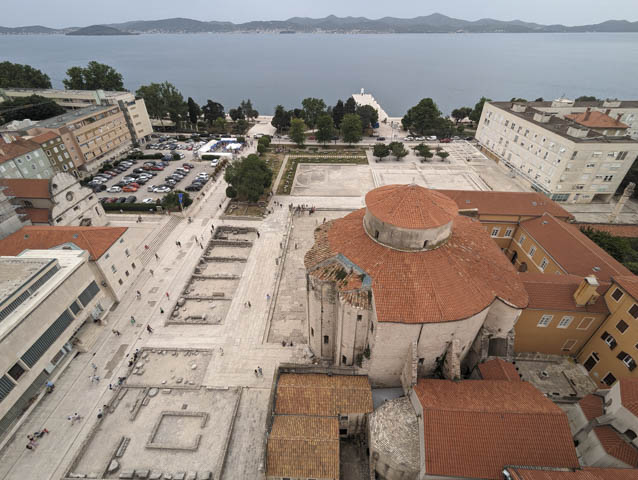
The central focus of the old town is original Roman marketplace, although not much of this remains. Churches have been built on the Roman remains using the old Roman stone.
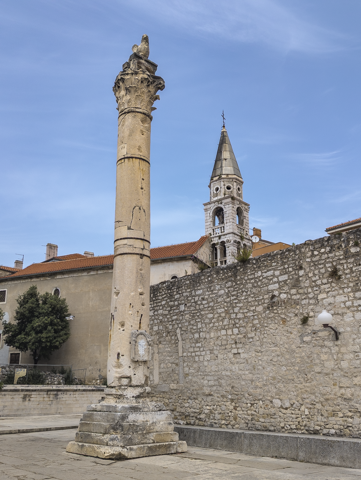
The 12th century cathedral has a 56m high bell tower or Campanile as it is known, which you can climb for sweeping views over the town and surrounding islands.
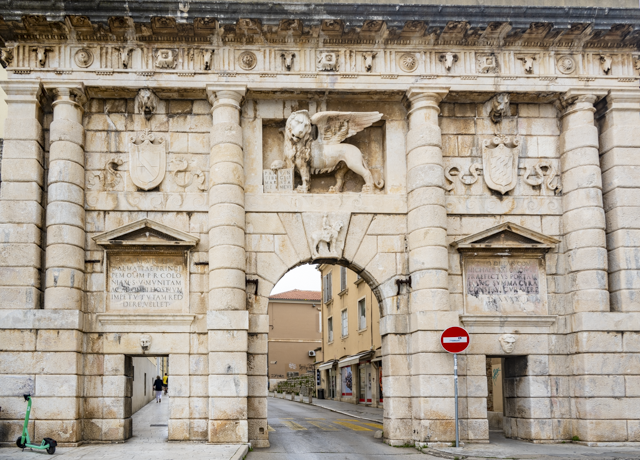
At the other end of town is the famous Land Gate which is a triumphal arch, featuring a row of eight cattle skulls along the top and, lying just outside the gate, a very pretty tiny harbour that I couldn’t resist photographing.
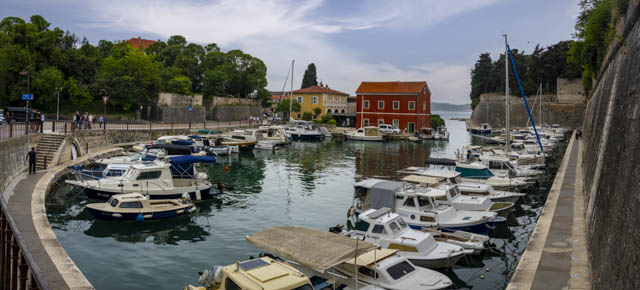
And with that, it was time to hit the road again but not before for a sneaky ice-cream – difficult to resist in Croatia when practically every other shop is an ice-cream parlour (OK I’m exaggerating but only slightly) and it is so delicious!
Balkans or Bust
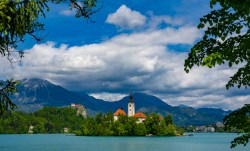
After our trip to Asia we had a whirlwind three-weeks back in the UK, where, with winter behind us, we moved back into the Beastlet (our Benimar Mileo 201 motorhome), got her serviced, mot-ed and otherwise ready for our next European trip, this time around the Balkans.
With hindsight, three weeks back home didn’t provide us with much time to catch up with everyone we wanted to see, as well as getting ourselves and the motorhome ready but on the other-hand, the weather through April in the UK wasn’t brilliant and heading South in search of some sunshine seemed like a good idea.
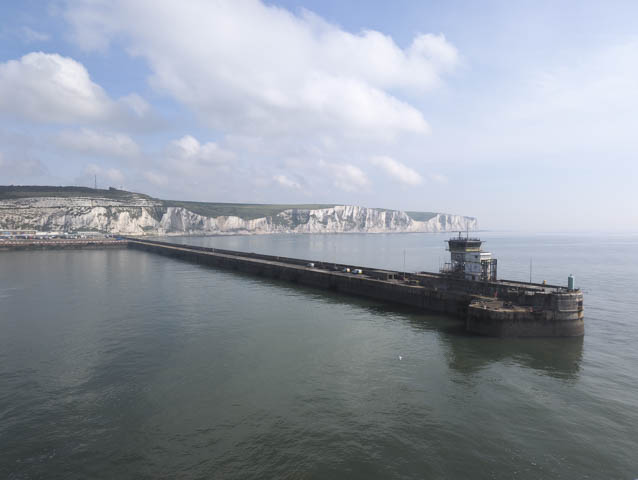
After overnighting at the motorhome Aire in Canterbury (otherwise known as the New Dover Road Park & Ride) we caught an early morning ferry from Dover to Calais. All went smoothly and we were soon on French soil again, this time turning left, heading towards Belgium.
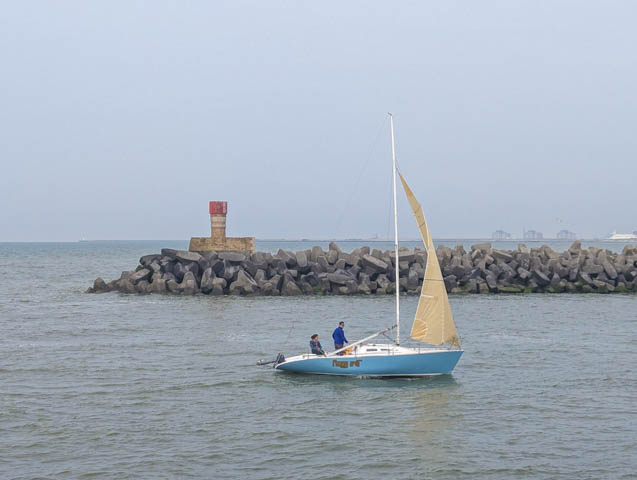
The ‘smoothness’ of our departure soon hit a minor bump. We had planned to stock up at a French supermarket before driving further South but unbeknown to us, we had arrived on one of the many French Bank Holidays, so of course everything was shut. We decided that after our early morning wake-up and three weeks of chaos it mightn’t be a bad idea to chill for an afternoon, so after finding a free Aire just North of Calais, we took a breath and relaxed.
Having spent the last three months travelling around Asia we hadn’t done much research for this trip, other than a rough plan to only spend the first 30 days in the Schengen Zone. This would then allow us a full three months back in Schengen at the end of the trip to make our way home. Let the Schengen shuffle commence!
We wanted to spend as much of the 30 days as possible in Slovenia and Croatia before heading out of the EU into Bosnia and Herzegovina, so this meant a few big driving days.
Our first day took us down through Belgium (avoiding the pricey French toll roads), through Luxembourg and into Germany. We had found what sounded like a good place to spend the night in the town of Merzig.
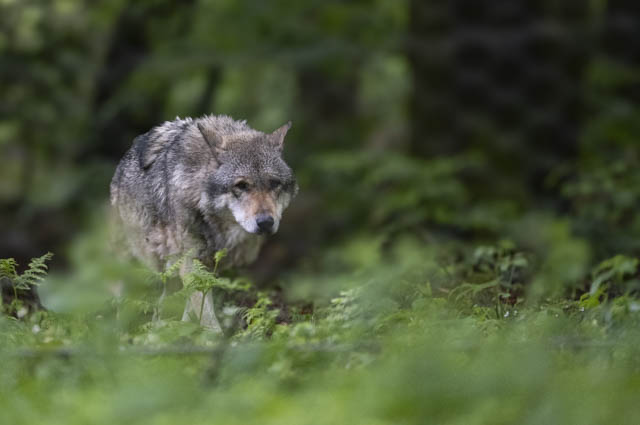
The Wolfspark Werner Freund is a rescue centre for wolves which are kept in large fenced enclosures. There is parking for motorhomes right outside and the toilets are open 24 hours, making it a great overnight stop. The Wolfspark doesn’t charge admission but there is a donation box.
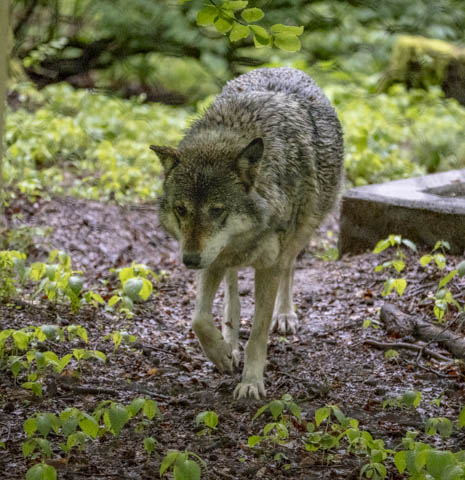
After a peaceful night we walked around the park and saw some curious wolves who were keen to check us out.
Back on the road, we continued our journey South to a stop just North of Munich at a motorhome dealership, where there were probably at least 40 motorhomes staying overnight in their overflow parking – another free stop. A genius idea by them as we saw countless people coming our of their salesroom with their new buys.
This was also a good stop for us as it was just a few km’s from the Dachau Concentration Camp, which has now been turned into a memorial.
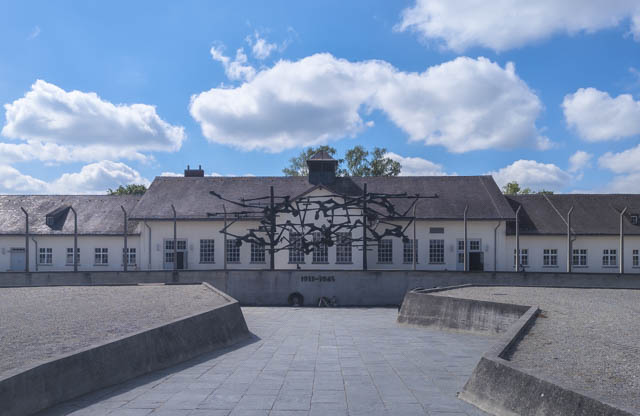
It is free to visit and there is an interesting museum on the site. Most of the buildings where the inmates were kept have been demolished but one has been reconstructed to help provide more insight.
Also still standing is the crematorium. There are gas chambers alongside it but according to the literature they were never actually used.
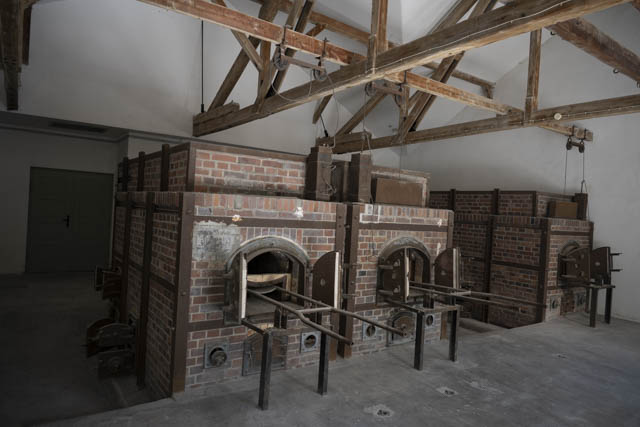
As you would expect, touring Dachau was a very sobering experience. However, it is important that places like this are maintained and visited so that we can never forget the horrors that were perpetrated in WW2 and hopefully never allow them to be repeated.
After a couple of hours in Dachau we were back on the move heading South into Austria. Our final stop on our headlong journey South was in a tiny village, just a stone’s throw from the Slovenian border.
We noticed that we were parked next to another British motorhome so we went over to say hello and to our surprise it was a British couple, Clive and Eva, who we had met on our travels last year in Normandy. It was lovely to see them again and we had an enjoyable evening catching up.
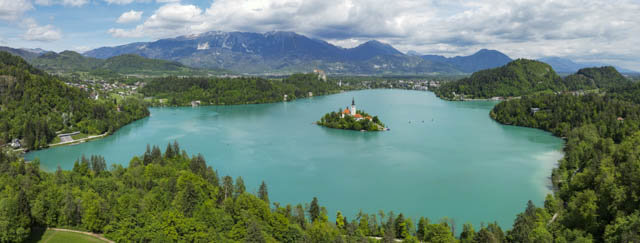
The next morning we drove into Slovenia and headed for what many consider the jewel in the crown of the country, Lake Bled. We stopped at a motorhome Aire just outside Bled but close enough for us to cycle to the lake.

We were only staying 2km from the lake but unfortunately road works were ongoing rebuilding the cycle path, so the diversion was a 5km route up a very steep hill. Alright for Sarah with her electric bike! However, once we were at the lake there is a nice flat path all the way around.
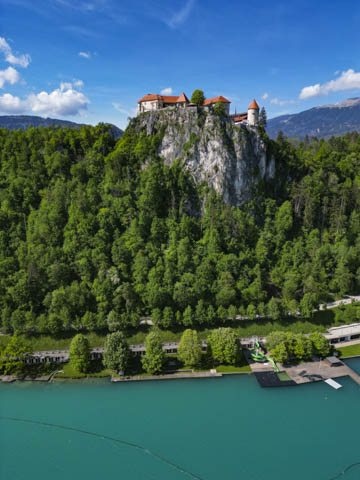
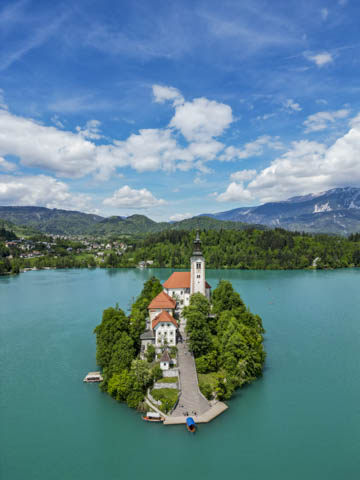
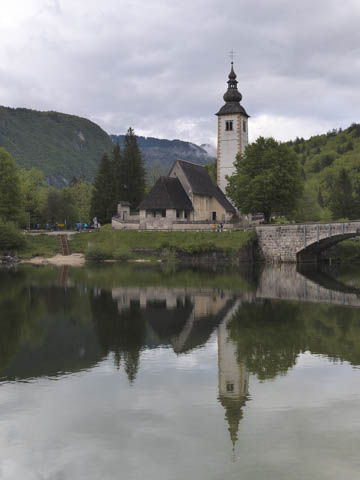
The lake is very pretty, with the castle on a crag above it and a church on an island in the lake. We stopped off on the lake shore for our first Slovenian pint, Lasko, which was much needed after our hot sunny day.
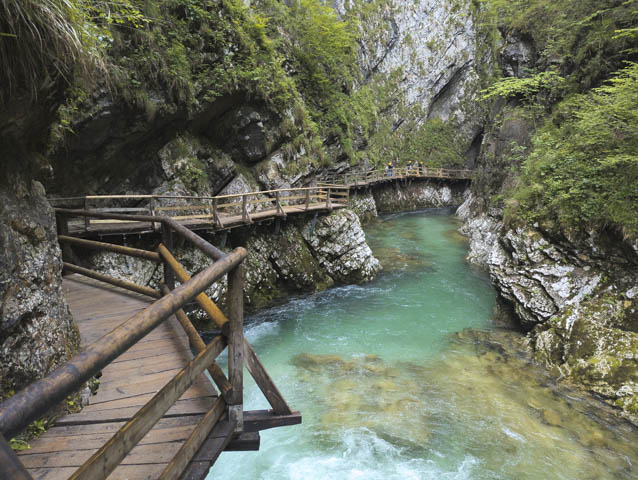
There are a couple of gorges in the area, so the next day we cycled to Vintgar Gorge, just the other side of the lake from where we were staying. Curiously though the river in the gorge flowed away from Lake Bled despite being higher.
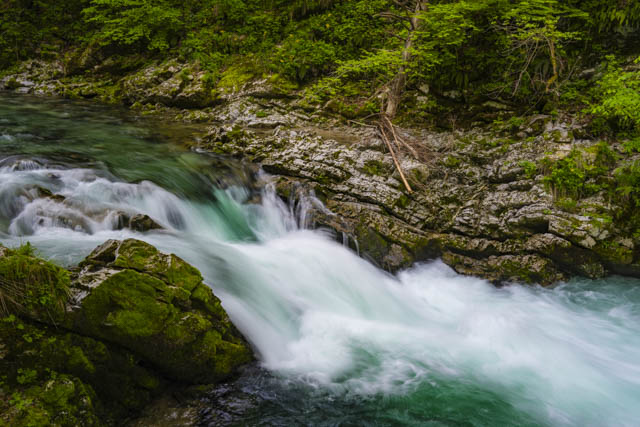
The gorge consists of a walkway through very narrow sections and finishes with a big waterfall. There was quite a long walk back to the parking lot and over the cliff walls of the gorge. Overall though it was very pretty.
Roughly 25kms southwest of Lake Bled and definitely worth the short drive is Lake Bohinj. A beautiful rural area which is much less developed and consequently less busy. It was a bit of a rainy day but we had a lovely cycle from our park-up through the countryside and along the river to the lake, said hello to a couple of rambunctious donkeys and enjoyed an ice-cream despite the somewhat chilly day.

Wild camping is not allowed in Slovenia and we were finding it to be quite expensive, not to mention that we had only bought a seven-day vignette, so we moved on pretty quickly towards the tiny Slovenia Adriatic coast, all 47km of it, but first, we stopped off at the utilitarian town of Postojna.
Postojna is home to the Postojna cave which is one of the largest in the world and consists of 24km of tunnels. This though is a good example of how Slovenia is an expensive place to be a tourist – the entry fee to the cave was €30 each.
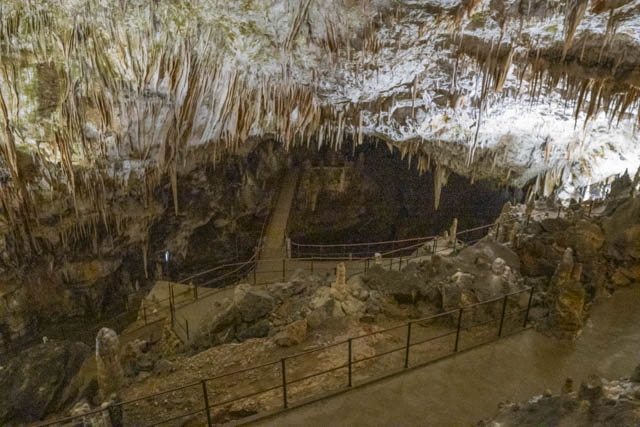
You start the journey on a small train which whisks you 5km through tunnels dripping with stalagtites to the biggest section of the cave where you have to get off and walk. After this there is a a 1.5km walk through some large tunnels where there are some very large stalgtites and stalagmites.
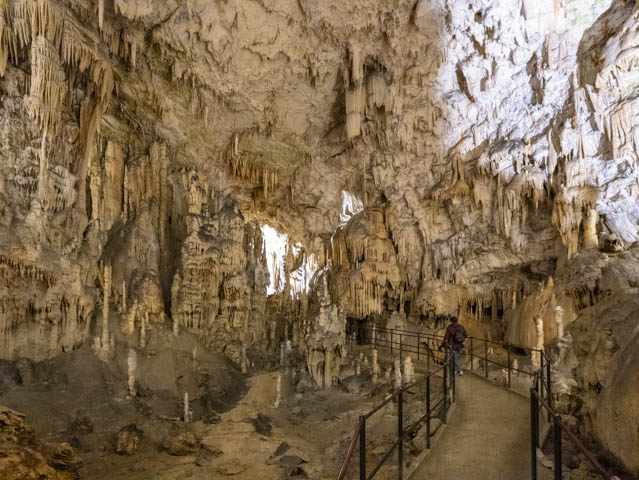
The walk ends in a massive cave which is known as the concert hall with great acoustics where concerts are actually held for up to 10,000 people.
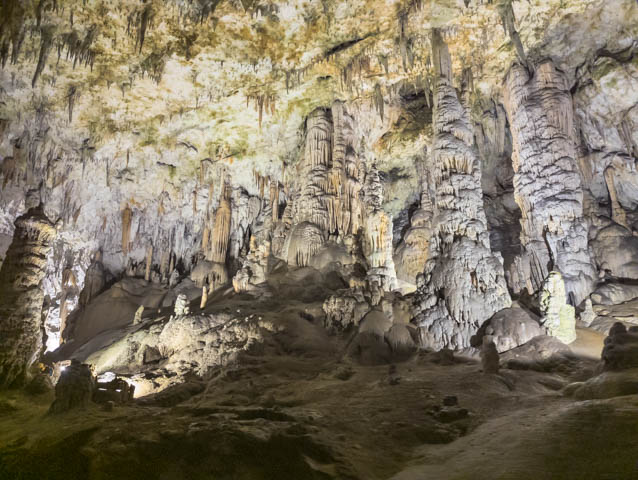
You then exit the cave via the train which takes you back to the entrance. It’s an interesting cave but I’m not sure it added anything I haven’t seen before and certainly not for the price.
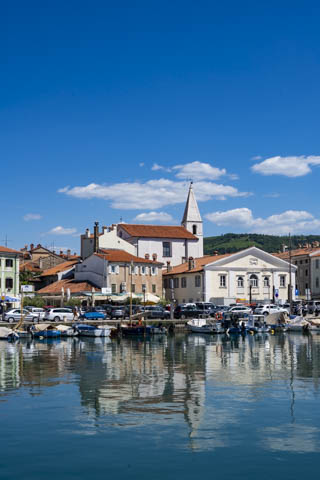
Our last stop in Slovenia was the pretty seaside town of Izola. This is a small town with a marina lined with bars and restaurants and a tiny beach with the clearest water. We visited on a hot sunny day and found lots of locals sunbathing on the promenade and dipping into the water to cool off.
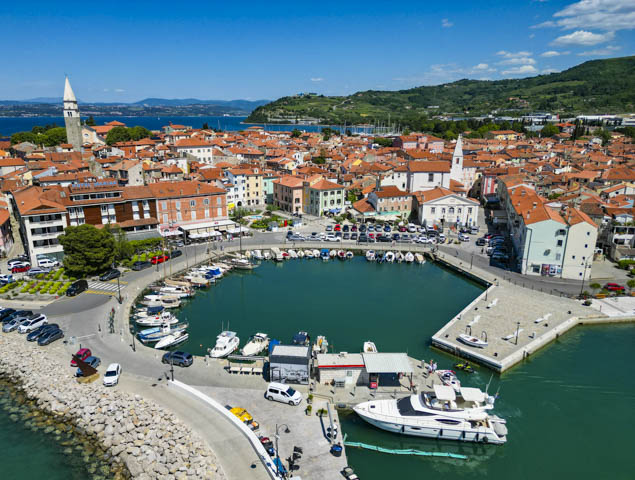
We stopped at a great local restaurant for a seafood lunch and after we had finished exploring, we headed back to the motorhome to pick up our hammock and books and spent the rest of the afternoon lazing in park at the waters edge.
Slovenia is a beautiful country and we have left much to explore, but with limited time, we were keen to head onto our next destination, Croatia.
Now we are travelling in Europe again we have joined a travel tool called Polarsteps, which tracks our journey in real time. If you are interested, you can find us on the link below or through the Polarsteps app.
http://www.polarsteps.com/markprior3/11448382-balkans-2025
We are also attempting the ‘Instagram a day’ challenge for 2024 which is called: fromatob2024.
Ubud and Some Diving

After we reluctantly left Nusa Lembongan and took a much less bumpy boat ride back to the mainland than our outward journey, we caught a taxi from the port to Ubud. Ubud is an inland town which is famous for its temples, paddy fields and waterfalls.
Unfortunately it is also well known for its traffic and the main street is clogged most of the day and into the night with a constant stream of cars and motorbikes.

We had booked into a hotel near the centre of town down a side street that was still really busy with traffic. We had an enormous room with a four poster bed, a big terrace and a carved wooden door. The whole room had the look of a temple from the outside. The hotel of course had a lovely swimming pool which was very welcome in the afternoon heat. Perhaps the best bit of the hotel though was the home baked cinnamon rolls for breakfast !
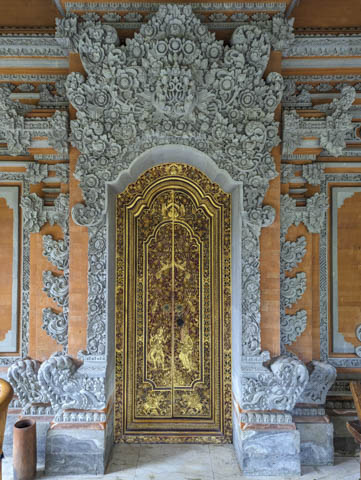
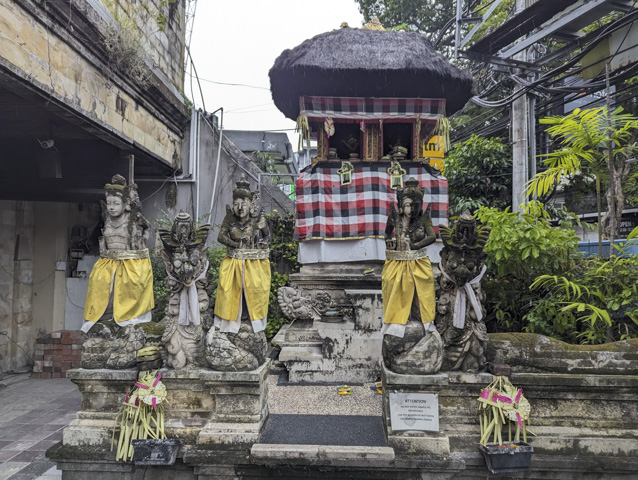
Within walking distance of our hotel were a number of temples which were very active. The temples are not open to tourists all the time as they are active sites of worship but when they are not being used for ceremonies it is possible to visit.
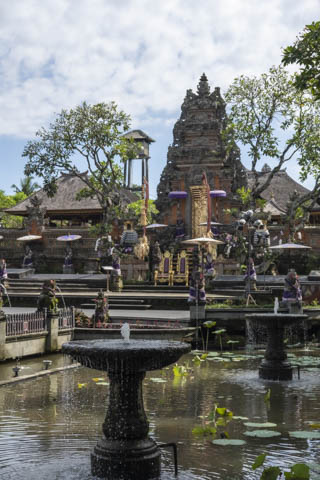
The Ubud Water Palace was very impressive with large ponds crossed by a bridge to reach the actual temple gates. The carvings in all these temples are very impressive.

Also Pura Dalem Ubud is just at the end of the street where we were staying. This was closed for much of the time we were in Ubud for ceremonies but this did mean that the stairs were decorated with flowers making it very pretty.

Ubud is also situated a stone’s throw from rice farming areas. Just a short walk from the main street leads you away from the hustle and bustle and into the very tranquil rice paddies.

Despite their being plenty of things to do in Ubud itself there are also lots of interesting places to visit in the surrounding areas. It is possible to hire a driver and car to take you to these places but given the traffic we decided that it would be easier and quicker to hire a couple of mopeds and drive ourselves.

The first place we headed for on our mopeds was in the Ubud itself – the Ubud Monkey Forest. This is a forested area that is in the middle of the built up area of Ubud but there are about 1200 long tailed macaques who make it their home.

In amongst the forest are also a number of temples – it is Bali after all – which the monkeys are quite happy to climb all over.

You have to be a bit careful around the monkeys as they can be aggressive and we saw a number of tourists being hissed at. There are frequently bites when tourists get too close.

Perhaps the funniest thing we saw here was a bloke sitting down with a backpack on. Two monkeys climbed onto his back and… well you can see below what happened next! Fortunately for the backpacker it was over quickly.

About a 30 minute scooter ride out of town is an area of rice terraces called the Tegallalang Rice Terrace.
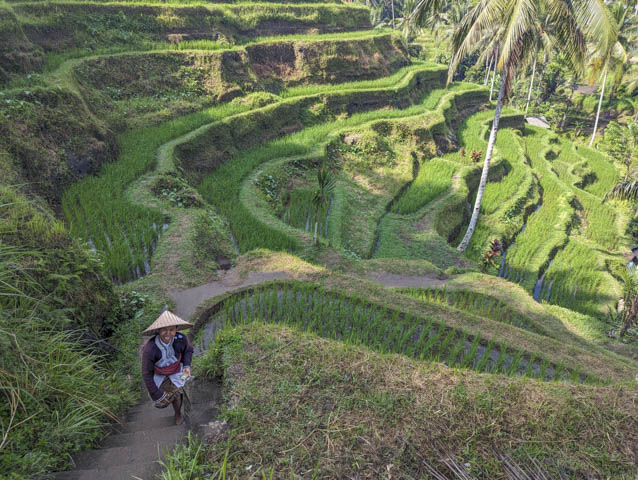
The local farmers have set a small fee allowing tourists to walk through their terraces which was well worth it. After the hustle and bustle of Ubud the peace and tranquillity here was a welcome break and it is a very beautiful place.

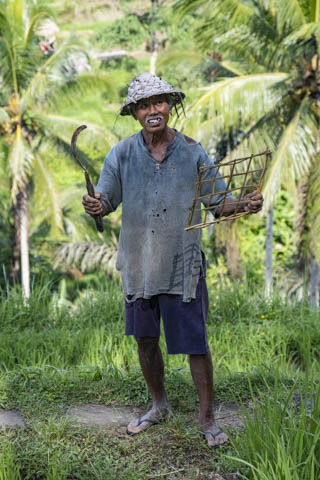
Of course enterprising locals have also set up swings and rent long flowing dresses to people who want to take photos for their Insta Accounts and many of the people working in the fields are more than happy to pose… for a small fee.
The area surrounding Ubud is very well known for its waterfalls and most of these have been commercialised to a greater or lesser extent. We visited a lot of waterfalls while here and they are really varied – some were very busy and others had hardly anyone there.
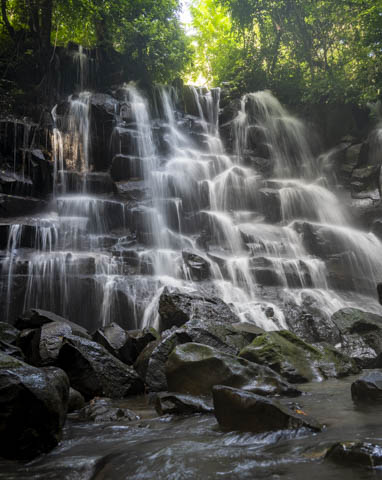
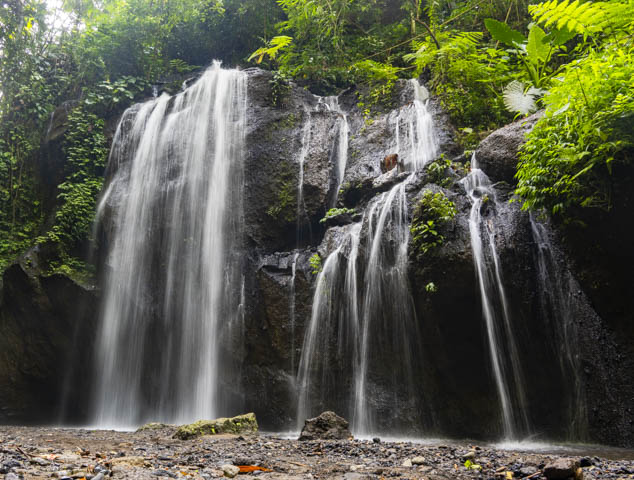

It is possible to swim at most of the waterfalls and as many of them involve what can be a strenuous walk in the heat to get there, it is a welcome treat to be able to jump in and cool off.
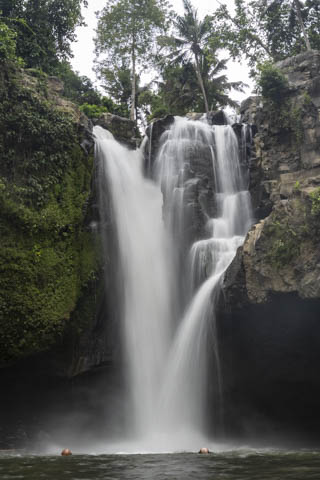
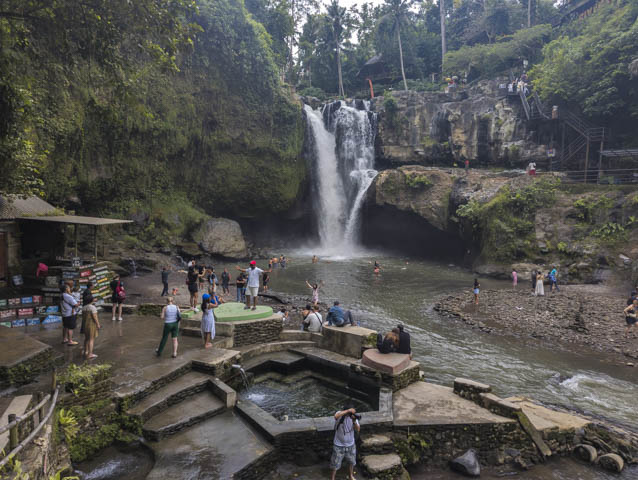
We ended up riding about 140km on our mopeds over a number of days as we zipped around the beautiful countryside. Most of the driving was on quiet rural roads although occasionally we’d end up on a busy road having to dodge traffic jams – although we tried to minimise this.

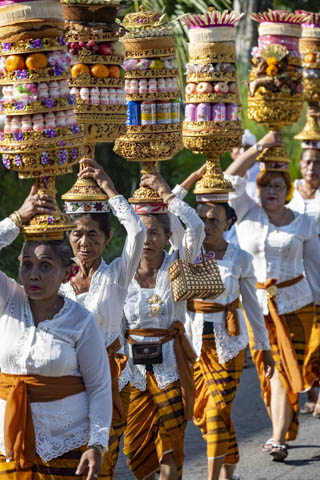
As we were driving along we came across a traffic jam on a small country road. This was, for once, a stroke of luck as there was a procession taking place to a local temple, with women carrying offerings to the temple. Bali is full of these sorts of things and there is always one temple or another having a special day or week of ceremonies.
On the rural roads they really are only wide enough for one car but despite this it gave is a giggle to see the white line painted down the middle!

While we had access to the mopeds we also visited two temples that are around a 40 minute drive away from Ubud.
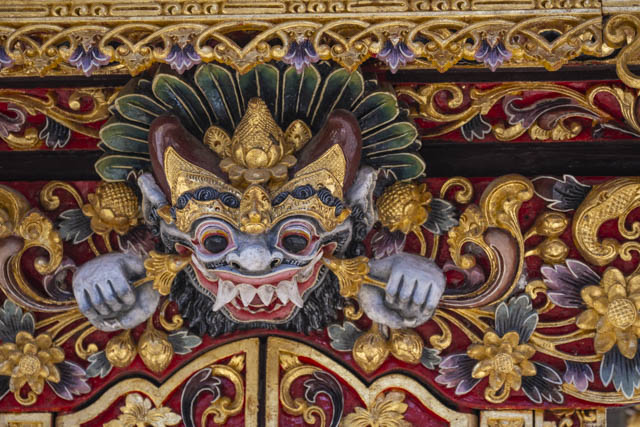
The first is a very popular stop on the tourist trail in Bali and is called Pura Tirta Empul. This is famous for its pools with water running into the pools under which people can undergo a cleansing ritual. If you arrive early you will see the locals at prayer but as soon as the coaches start to arrive it becomes very busy with tourists who are provided with the appropriate clothing to take part.

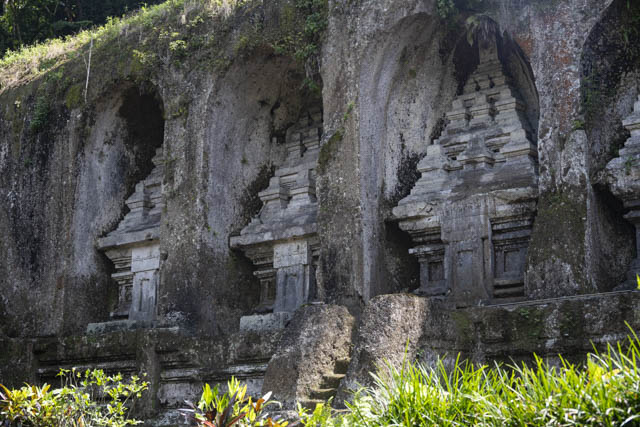
The second temple we visited that day was Gunung Kawi Tampaksiring. It was much less busy which surprised us as we actually preferred this site, which covered a larger area and had more things to explore off the beaten track. lt was also less commercial and subsequently felt more authentic. There was a long staircase leading down to this temple where the main attractions are two big walls of rock cut shrines dating from the 11th century.
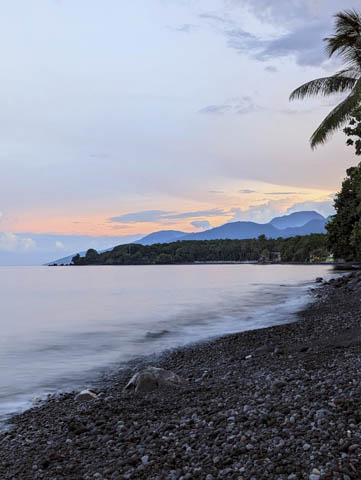
After Ubud we took a taxi to the East coast of Bali mainland, to a place called Tulamben. This was a 3 hour journey although its only just over 100km.
Tulamben is a really quiet region of Bali and the only real reason to come here is for the diving. There is a wreck called the USAT Liberty which has been rated as one of the best in the world.
This wreck was famous for its big schools of fish and in particular a group of Humphead Parrotfish that lived in the wreck. Having dived this wreck before on a previous dive trip to Indonesia I was looking forward to experiencing it again, however, sadly there has been a significant change. The fish life on and around the wreck is much depleted since covid. The lack of tourism for two years meant poverty for many and some locals took to spear-fishing on the wreck to simply survive.
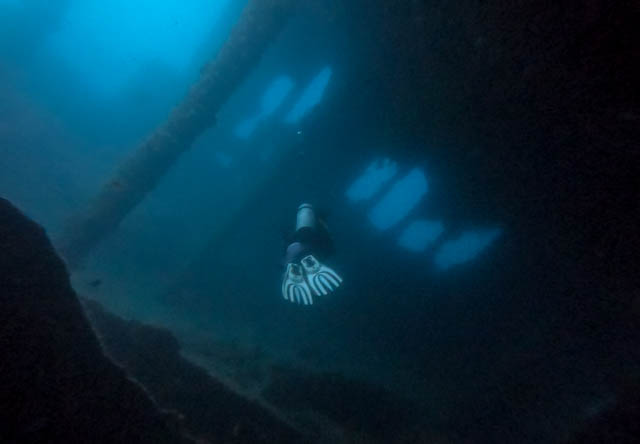
However Tulamben is also famous for its macro/muck diving and this has not been affected. I love a bit of muck diving although I concede that it is an acquired taste. I managed to see Harlequin shrimp, big seahorses and pygmy seahorses as well as a range of octopii. My guide got incredibly excited when we realised that an octopus that we were following was a mototi, a type of blue ring octopus. They are very rare and he had never seen one before – I’d only seen one once before. Very Cool.

We only spent 3 days on the East coast but I managed to fit in 6 long dives – over 1 hour each – and really enjoyed myself.
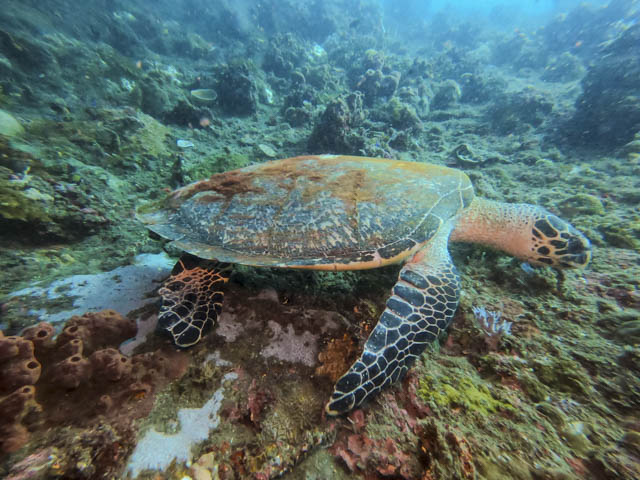
Unfortunately this was the end of our three month tour of Asia but it has been a fabulous trip and has definitely whet our appetite for future visits. For now though, it was time for us to head back to the airport in Denpasar and catch our flight back home.
The Two Faces of Bali
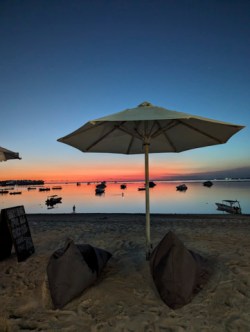
Bali is a heavily touristed island that is similar to the holiday islands of Europe in many ways. There are areas of cheap bars and drunken behaviour like in Ibiza or Magaluf and there are places that are quiet and have resisted the changes that mass tourism brings. Finding the right place for you is the challenge !
We arrived and immediately discovered the horrendous traffic that is the hallmark of rampant tourism and lack of infrastructure. Taxis are relatively cheap in Bali but getting anywhere takes at least an hour even for journeys of only 10km.
After our hectic time in Vietnam we needed a few days to relax, so we picked a nice hotel on the beach in Kuta, which is only a short distance from the airport. The hotel was pretty big with two restaurants, a cafe, large grounds, a lovely big pool and bizarrely, a tattoo parlour.
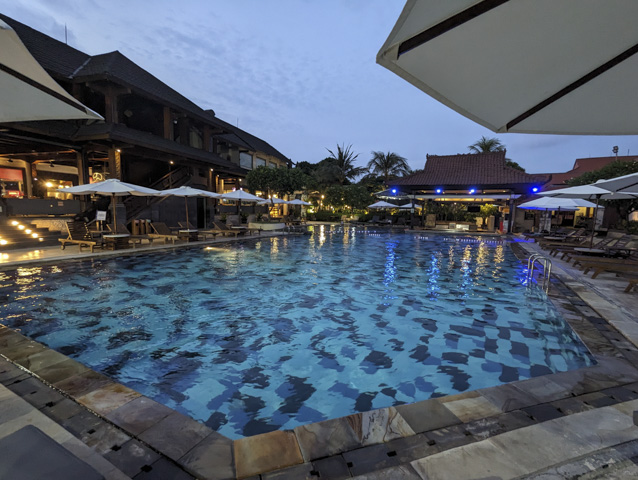
What we discovered is that Kuta is to Australians what Magalouf is to us Brits, an inexpensive holiday destination. There were rows of Aussie bars and tattoo shops advertising cheap beers and 3 for 2 tattoos, all competing with each other.
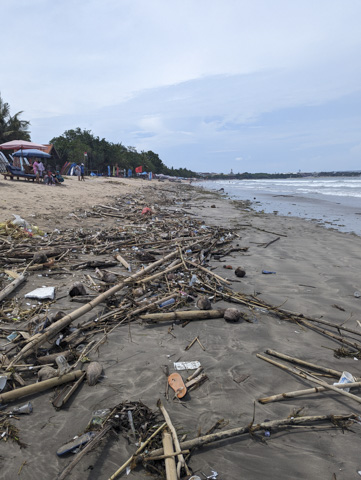
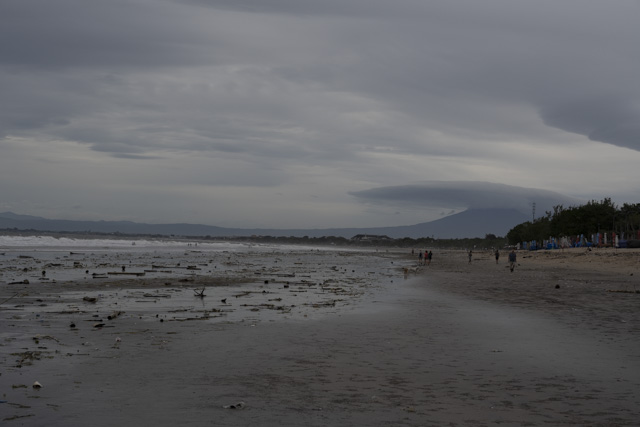
The beach in Kuta has a large tidal range, but the tide brings with it lots of debris and rubbish which a small clean-up crew try to keep on top of but largely fail.
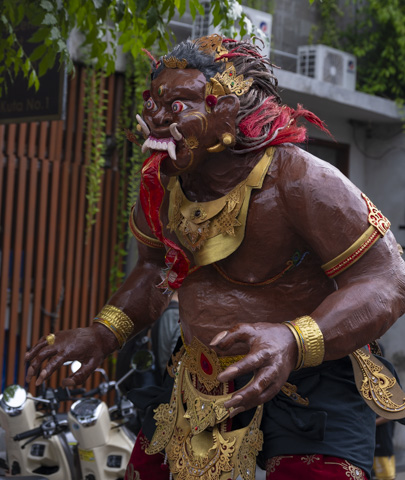
Kuta wasn’t really the peaceful retreat we were seeking after hectic Hanoi, but we were lucky to be in such a large hotel for one particular day of our stay – Nyepi Day. This is the Balinese day of Silence, their New Year’s Day, which they take very seriously. You are not allowed to leave your home (or hotel) on this day and should refrain from loud noise (including speaking or laughing), music and television. There is also no internet available and curtains should be kept drawn so no light can be seen from the outside. Fortunately our hotel let us use the pool and laid out a buffet dinner for us to help ourselves.
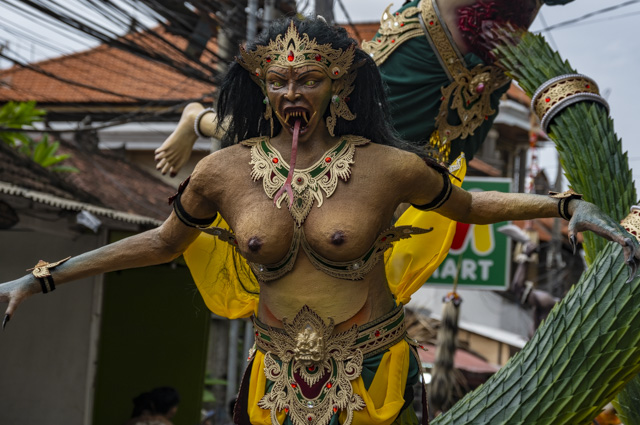
The plus side of Nyepi day is that the night before features Ogoh-Ogoh parades where the local communities build statues of demons that are then burnt to symbolise the destruction of evil and the purification of the island.
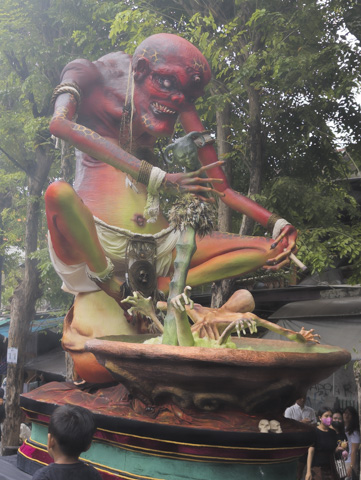
The statues themselves are huge, many metres high, and some have sound effects and moving parts. There is a competition where votes are collected for the best statue of the year.
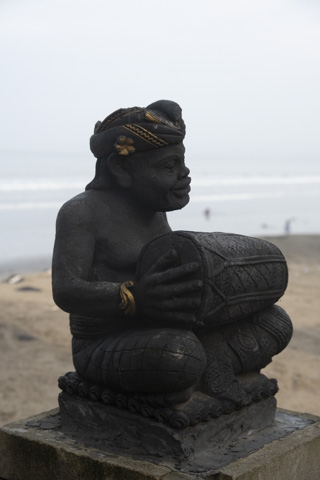
After Nyepi day was over and we were able to move freely again, we caught a taxi to the Sanur region where you can take a ferry to the islands. We were heading for Nusa Lemobongan, which is about 30 minutes from the mainland.
Sanur itself has a beach, which is a favourite with locals at the weekend.
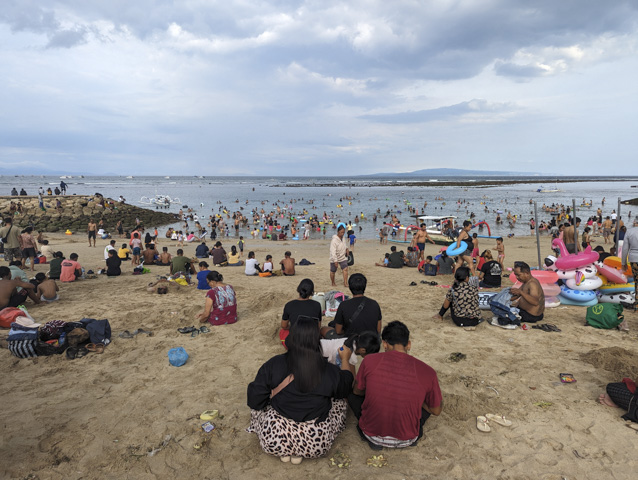
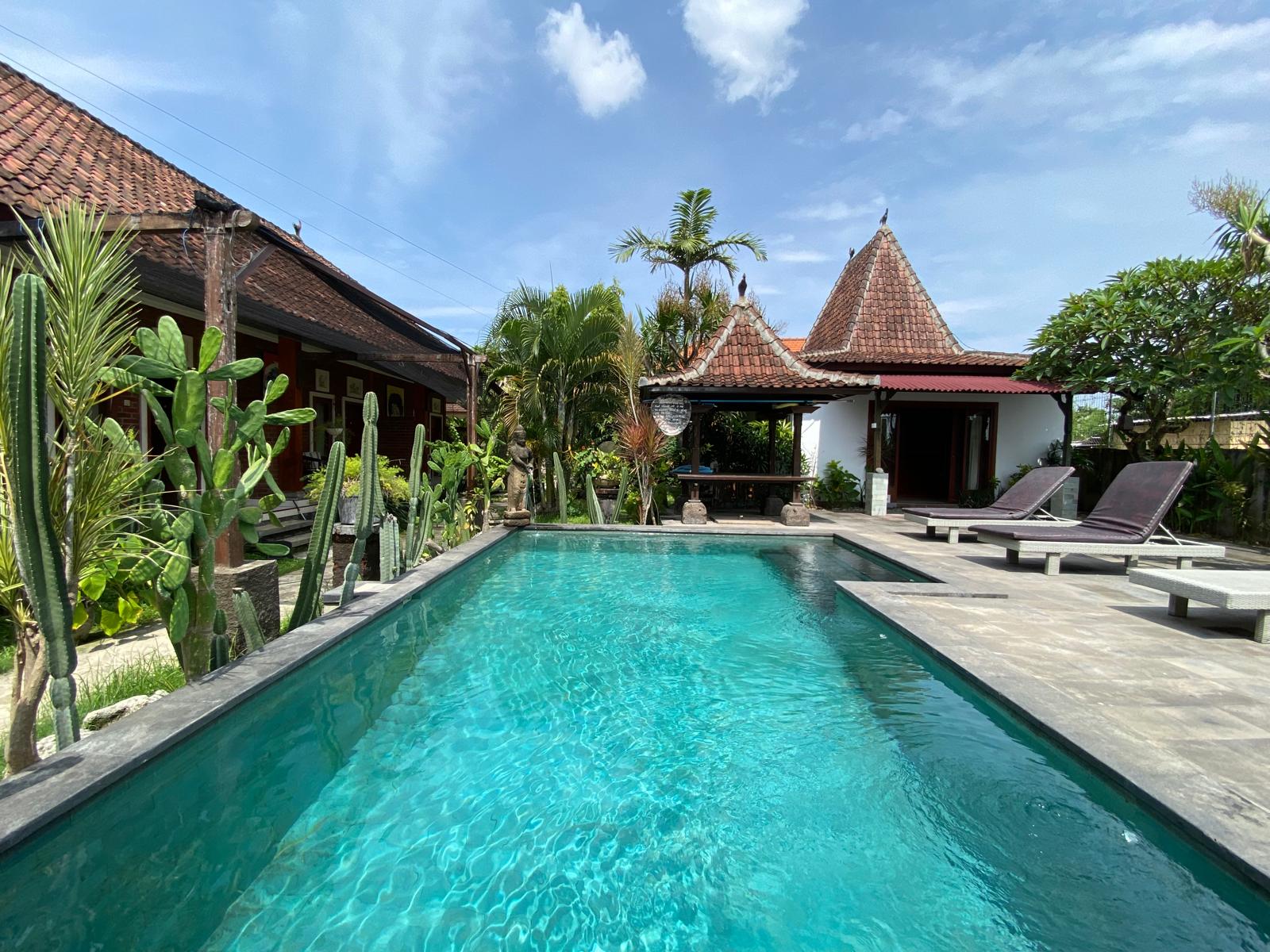
At Sanur, we stayed in a little guesthouse just 100m from the port for an easy transfer the next day but despite its proximity to the port, it felt like a real oasis of calm and we spent the afternoon chilling by the pool.
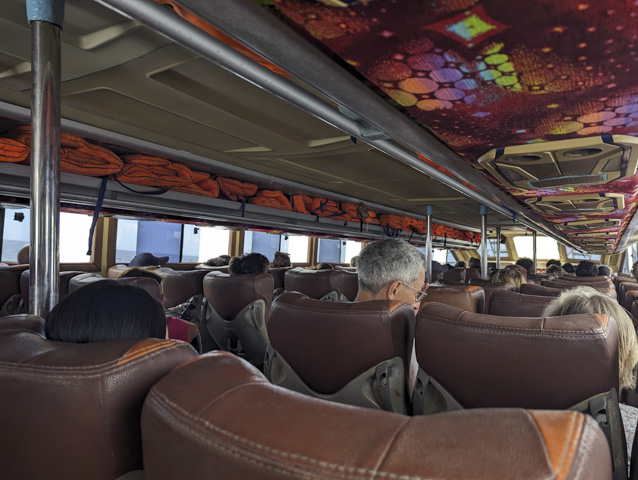
The ferry to Lembongan had airline like chairs inside and was very hot and stuffy. The journey out was pretty rough and not very enjoyable but it wasn’t too long before the island drew into view.
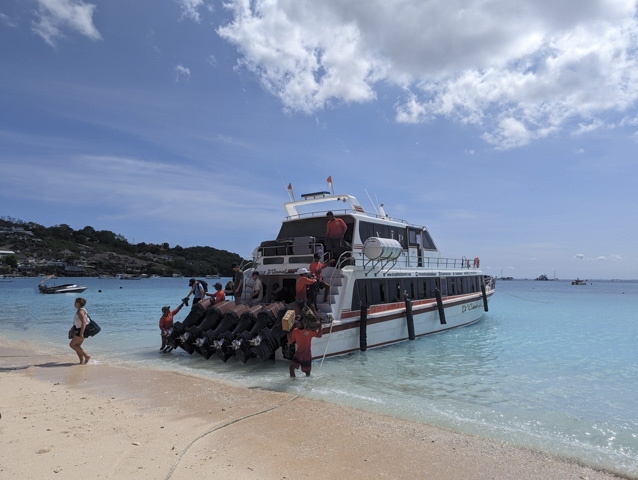
To our surprise we realised there was no dock here and we were going to land on the beach. The boat pulled up as close as it could to the shore and we all clambered down off the back with the waves breaking beneath us. With the rough weather, we had to time the climb down with the waves to avoid a soaking but even so, we both ended up quite wet and this is the side of the island protected by a barrier reef. It’s all part of the fun though and when it’s this warm you dry off pretty quickly!
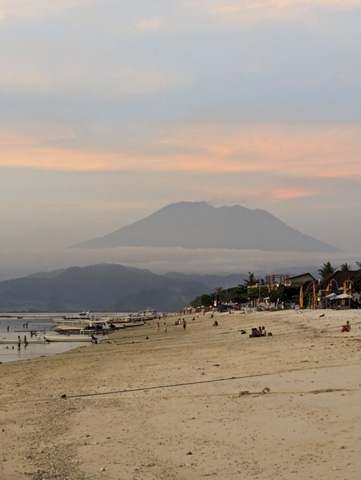
The hotel we had booked was only a 100m walk down the beach from where we landed so we didn’t even need to put our shoes back on to walk there. We were soon checked into our room, with a beautiful view from the balcony overlooking the beach. The hotel even had a small infinity pool right on the beach, amazing really for only £20 per night.
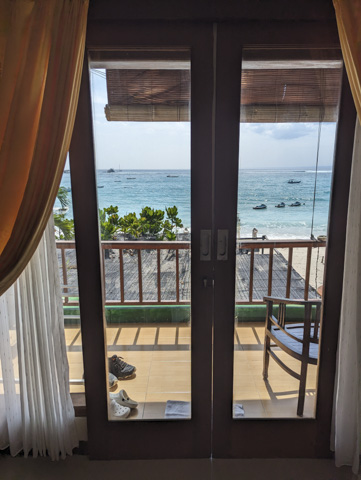
This was a welcome change of pace from Kuta. The island of Lembongan is really chilled out and this was the laid back Bali we had been looking for.
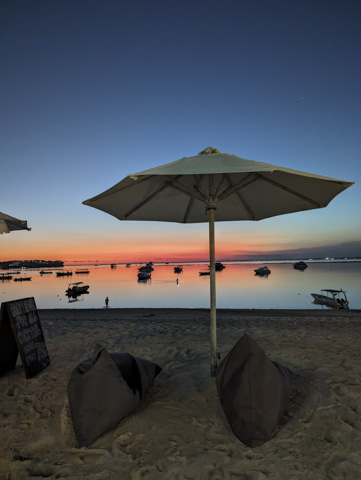
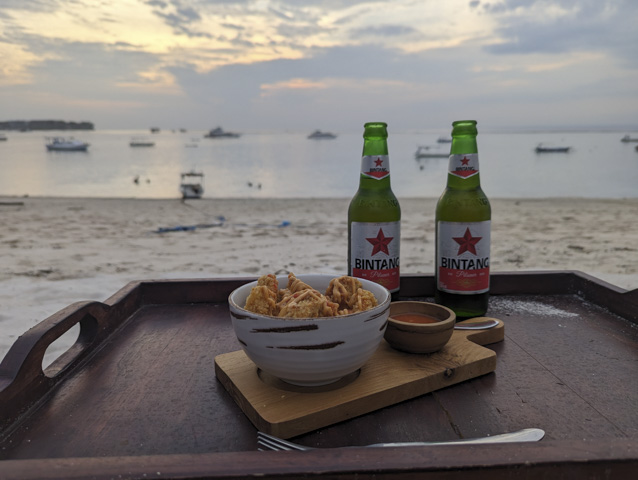
The hotel had beanbags right on the beach and it was the perfect location for a sunset beer or two. Finding a restaurant for dinner was easy as there are a number of small places along the beach – no need to even put shoes on to get there, but you did have to eat early, many were already closing up by 8pm! Our favourite restaurant by far was a Japanese place right on the beach, Warung Pacific Lembongan. The family who run it are incredibly friendly and the food is amazing, they even do freshly baked cinnamon buns in the afternoons. Needless to say we were frequent visitors!
While on the island it wasn’t all lazing on the beach – we hired a couple of scooters to explore the island. Our first stop was the mangrove forest, where we hired a kayak to explore the narrow tidal channels through the roots of the plants. This was where we got our first soaking of the day as we managed to capsize the kayak!
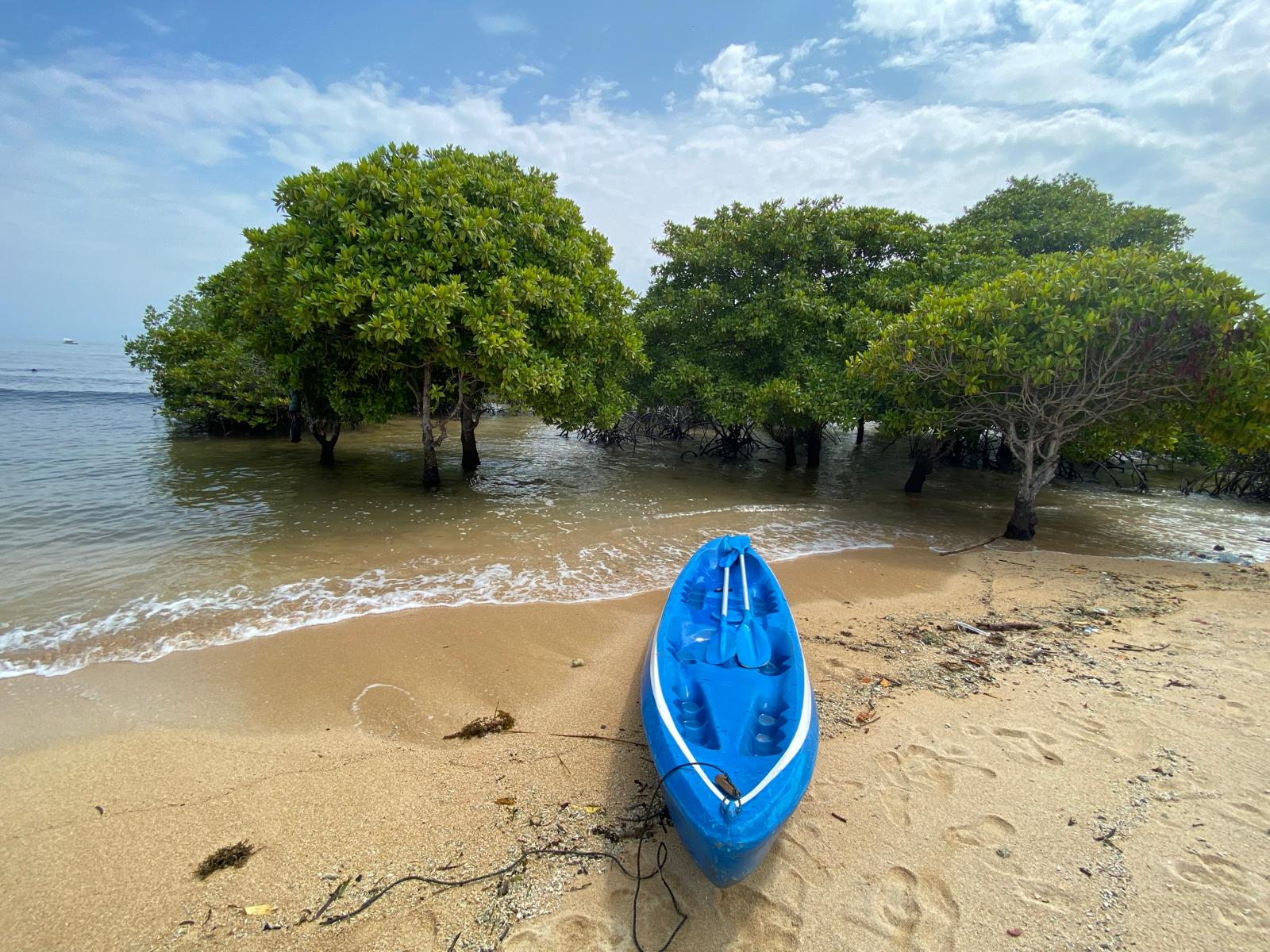
Who knew that mangrove roots are so strong and springy. When we lifted a low lying branch to get through a narrow channel, it sprung back hitting us and tipped us over – luckily the camera was in the dry bag at the time. Seeing as we were already wet from head to toe, once we made it through to the beautiful beach we decided to stop off for a swim. There is also fantastic snorkelling off the shore here, which we discovered on a boat trip on another day.
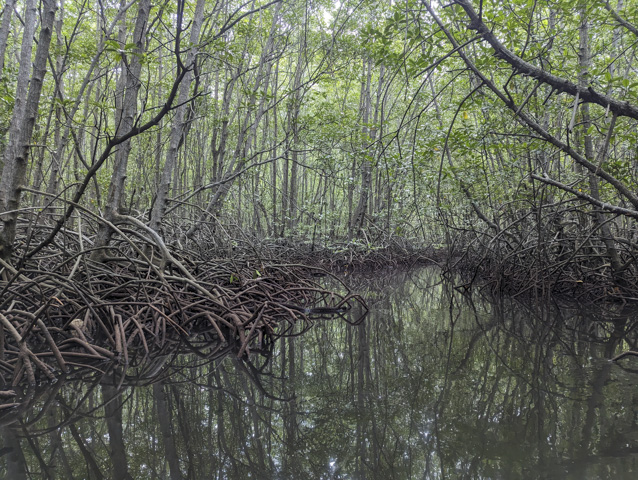
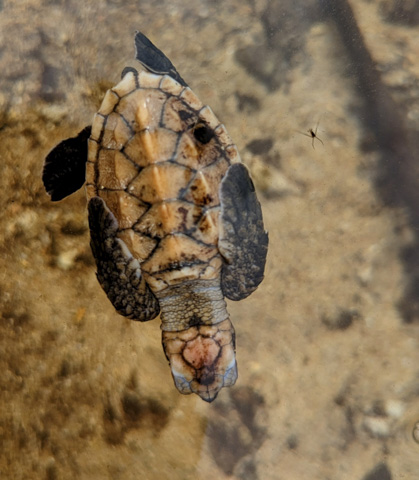
Just as we were getting into the kayak, before the capsizing, we saw a baby turtle swimming by our feet!
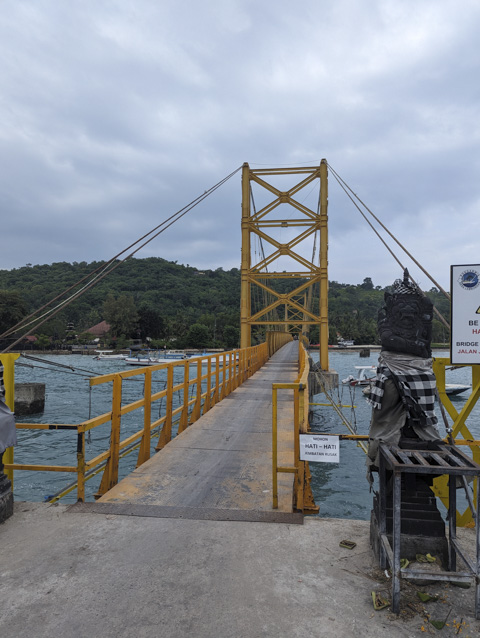
Once we had dried off we returned the kayak and scooted around the back side of the island where there is a small yellow bridge – known unsurprisingly as, The Yellow Bridge – which allows foot and scooter traffic to cross to Lemonogan’s sister island, Nusa Ceningan. This is the smallest of the three Nusa islands.
At the tip of Ceningan Island is a small restaurant built into the cliffs overlooking the sea from where you can cliff jump (for a fee), although not the day we were there as it was too rough. This was our second soaking of the day.
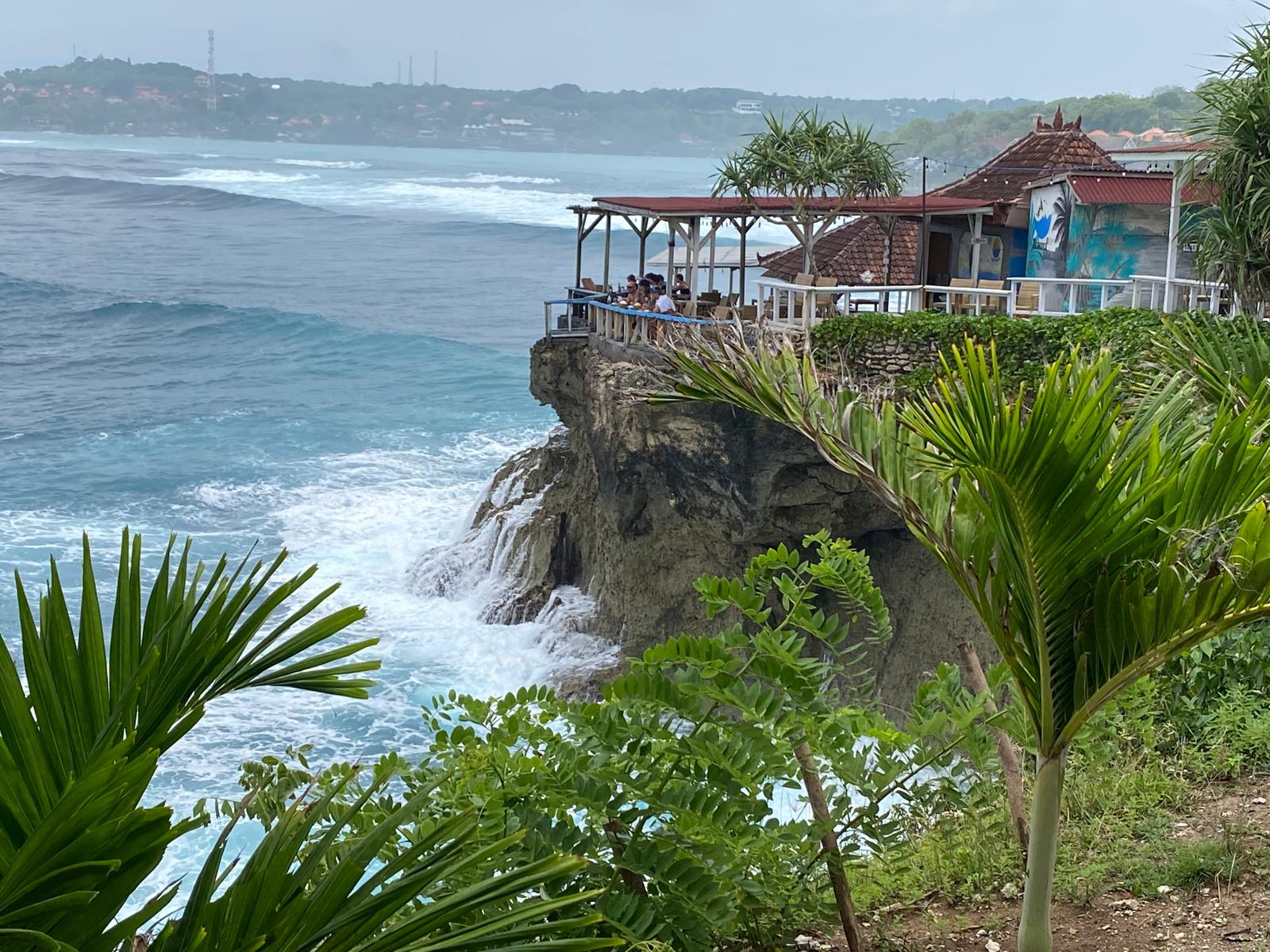
As we sat at a table close to the edge watching the surfers, a giant wave crashed against the cliff and drenched us – we weren’t having a lot of luck staying dry today! Having moved tables, we stayed for a leisurely lunch to dry off once again, before heading back to discover more of Lembongan.
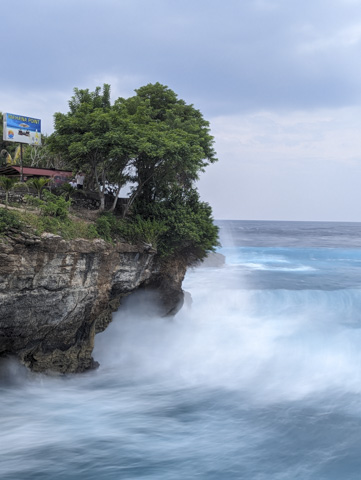
Here we stopped off at a couple of beautiful beaches, Mushroom Bay and Dream Beach and also visited the Devil’s Tears, where the rugged coast is pounded by waves and an undercut cave swallows the waves and then breathes back a cloud of spray with a hollow booming sound.
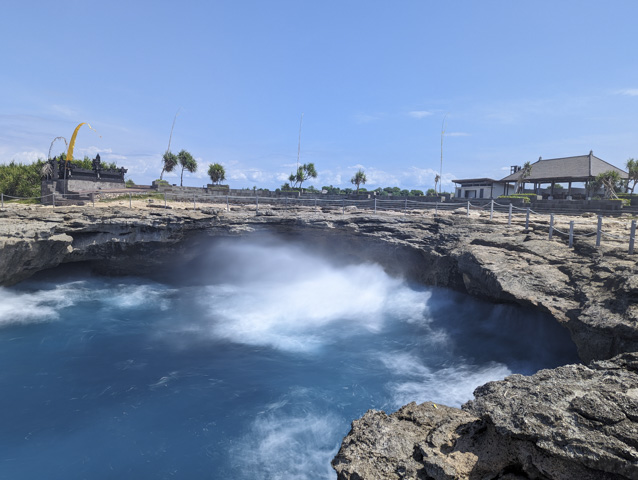
Soaking number three of the day was on the scooter ride back to our hotel when we got caught in a tropical downpour which flooded the narrow roads back. Definitely a day to remember.
As well as its beautiful beaches and laid-back vibe, Lembongan is also know for its diving, so I took advantage to fit in a few sneaky dives while we were here. All the diving is boat diving and there aren’t a huge number of dive sites around the island but the dive sites they have provide good quality diving.
The two stand out dives were Mangrove point and Manta point.
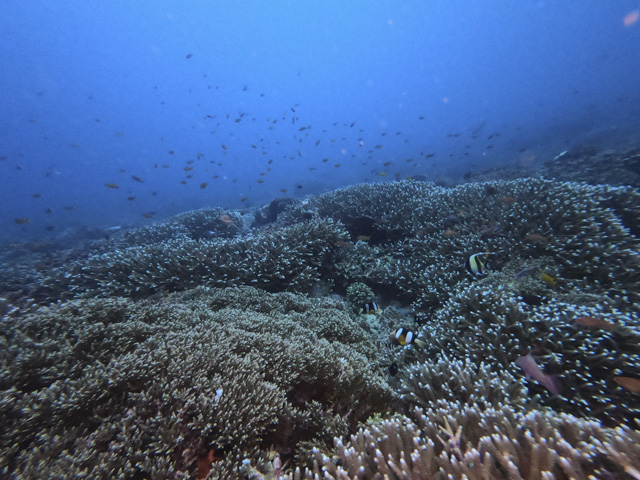
Mangrove point is a drift dive that can be a wild ride, depending on the tide. The hard coral reef is in very good condition and there is a ton of fish life. Although nothing particularly big, except for turtles.
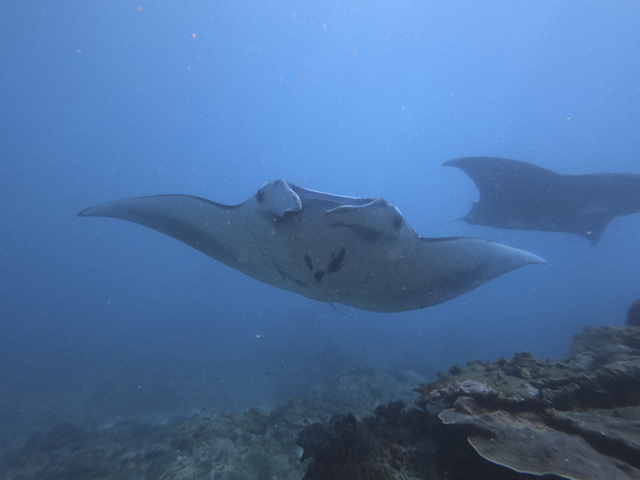
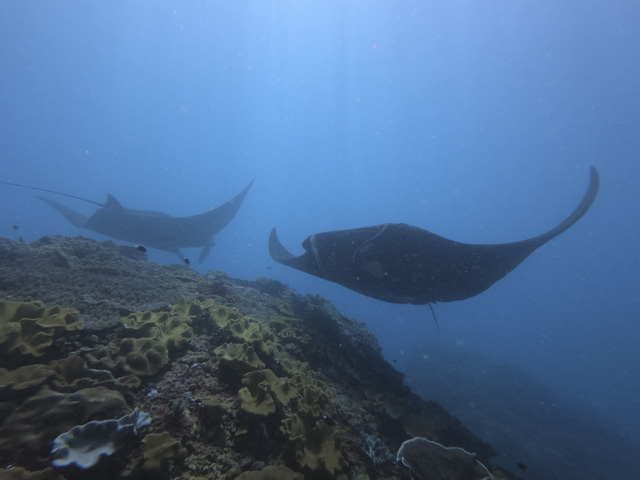
Manta point is a fairly long boat ride away and is off the island of Nusa Penida. It is a manta cleaning station, which depending on the season can be quiet or fairly busy. I was lucky and on the day of my dive there were around 15 mantas being cleaned.
The biggest of the Nusa islands is called Nusa Penida. This is about a 20 minute ferry ride from Lembongan and is a much bigger and wilder island. This is a mountainous island with the majority of the interior undeveloped. It is 202km2 compared to Lembongan’s 8km2 .
We decided to take a ferry over to Penida where we had arranged for a driver to pick us up. The roads in Penida are pretty rough, and their aren’t many of them so they are very busy with tours and it takes a long time to get anywhere.
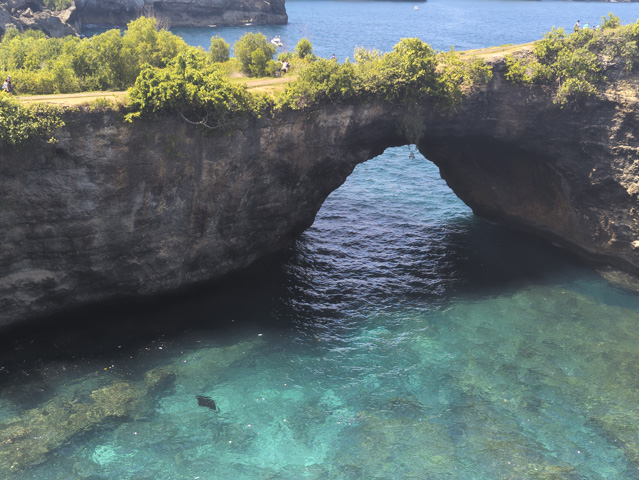
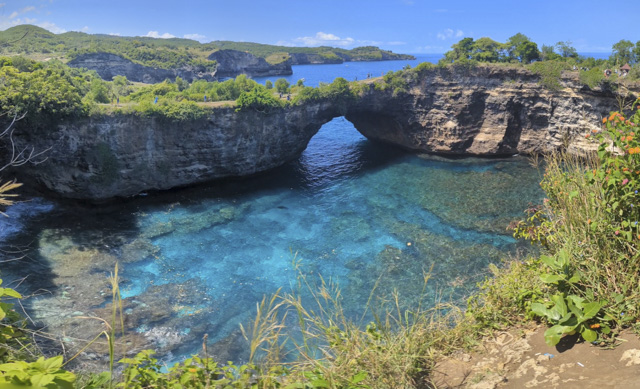
Our first port of call was Broken beach which is a small bay separated from the sea by an arch. The views of this bay are spectacular and it was made even better by seeing three mantas at one point swimming around in the protected bay.
Just outside the ‘bridge’ is the very popular snorkelling area of Manta Bay and we stood on the cliffs for a while just taking in the views and manta spotting before our driver came to hurry us along.
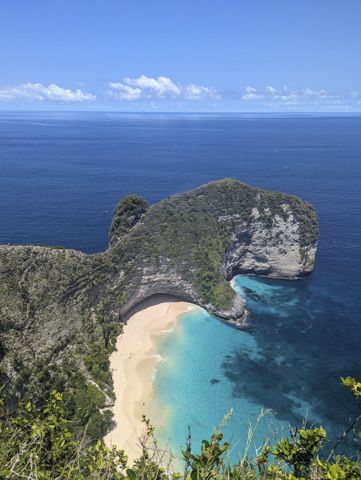
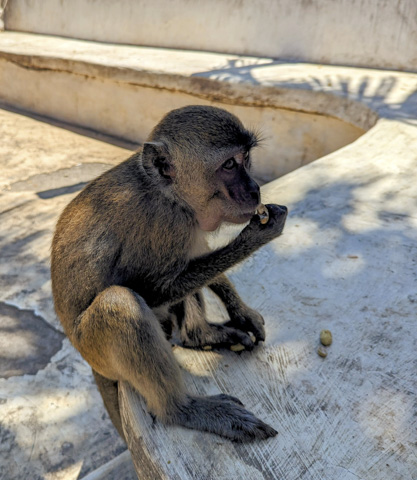
Our second stop of the day was Kelingking beach in a headland shaped like a whale, which you can see from the cliffs above. There is another stunning beach next to Kelingking which is only accessible by boat or a big staircase, so it usually deserted. The viewing area for Kelingking was home to a family of cheeky monkeys who were as busy watching the tourists as we were watching them.
After lunch our driver took us to Crystal Bay which is a nice beach on the island, although it was quite crowded as all the tours go here. We got to spend a bit of time on the beach to relax and swim before we had to head back to the ferry to pick up our ride back to Lembongan.
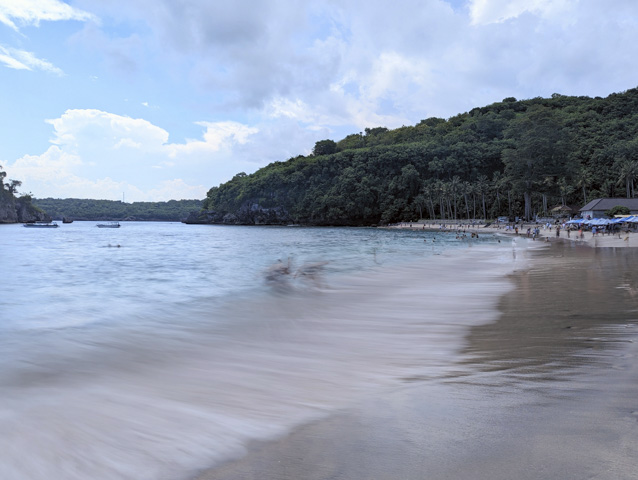
I’m glad we visited Nusa Penida but the traffic was crazy and it didn’t have the laid back feel of Lembongan – the downside of having spectacular highlights for day tours from the mainland !
Ha Giang

At a street food stall in Da Nang we had met two backpackers who told us they were going to do a motorbike trip in the far North of Vietnam. This was the first we had heard of the Ha Giang Loop.
Some research later, our interest was piqued and we were sold on the idea of this 350 Kilometre loop around the very North of Vietnam, which reaches to within sight of the Chinese border. So once in Hanoi we arranged the trip through our hotel. You can hire motorbikes and do the loop yourself or in a group following a guide but we chose the Easy Rider option, i.e. travelling pillion with our drivers as guides. The roads are rough and can be treacherous in places so it is much safer to be driven (although much less comfortable), with the added bonus of being completely free to enjoy the views.

While we were in the North of Vietnam there was an unseasonal spell of bad weather which brought with it much lower than average temperatures, in single digits. As we had come on the trip with no warm clothing we had little choice other than to buy some warm weather gear for the trip. Fortunately, the old quarter of Hanoi has lots of shops selling knock-off North Face clothing, so for around US$20 each (after some pretty intense haggling) we each came away with a warm down jacket and a waterproof outer jacket of surprisingly good quality, to keep us warm and dry.
The trip started with a 7pm pick up from our Hotel in a little minibus to take us to rendezvous with a sleeper bus for the 6 hour journey to the town of Ha Giang, which is the starting point for the loop.

The sleeper bus was really comfortable with flat beds, curtained-off into private alcoves for each person. The Vietnamese onboard were fitting at least two to each bed but that would have been far too cramped for us. The journey flew by as we sped through the darkness and arrived outside our guesthouse in Ha Giang at 2.00 in the morning.

We were directed upstairs with the other travellers to the sleeping area, which turned out to be a large space (with areas separated by curtains for privacy), filled with very thin and incredibly firm, mattresses on the floor – oh to be back in the comfort of the bus! We were however pretty tired by this time, so we did manage to get some sleep despite being pretty uncomfortable and what seemed like a party going on downstairs.
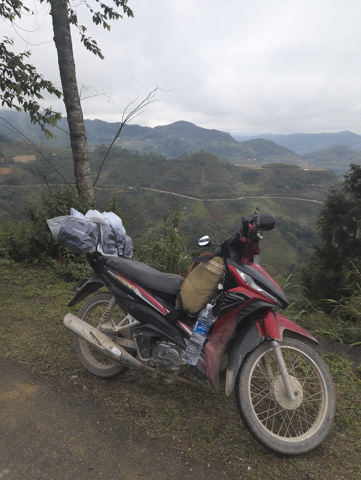
In the morning, with all our layers on, we came downstairs for breakfast, met our drivers and were kitted out in a helmet and red high-viz vest. Our guide, Windy, introduced himself and explained that we were the only ones that had booked the four-day loop (everyone else on the bus had booked the three-day option – maybe they knew something we didn’t!). On the plus side, this meant that we would be getting a private tour! When we got to the bikes we were a little surprised by their size, having assumed they would be similar to the bikes we rode on the Hue tour in central Vietnam. In fact, once our bags were strapped to the back, there really wasn’t a lot of room for us to sit comfortably. We started to think it might be a very long 4 days!
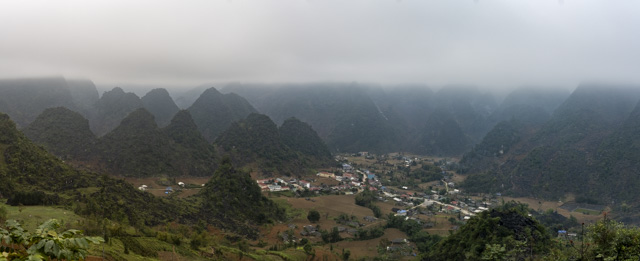
It didn’t take long for us to leave the town behind and head up into the mountains, surrounded by terraced rice fields. Growing rice up here is much harder than in the South where they are able to harvest four crops a year – only one per year is the norm up here.

Our first major stop was a viewpoint called Heaven’s Gate with a fantastic view over a neighbouring valley… allegedly. Unfortunately, due to the poor weather we would have to use our imaginations, here and at many of the viewpoints along the way. The whole region was socked in with low lying cloud that persisted for the whole trip. This meant that every time we headed up over about 850m we went straight into the cloud layer and there was nothing to be seen.

We started to realise that the bike tours had specific routine stops along the route, many of which were high up at the ‘stunning’ viewpoints. It took a couple of days for our guide to understand that we would prefer to stop below the cloud line so we could enjoy some views, rather than right up in the usual spots where it was a complete whiteout.
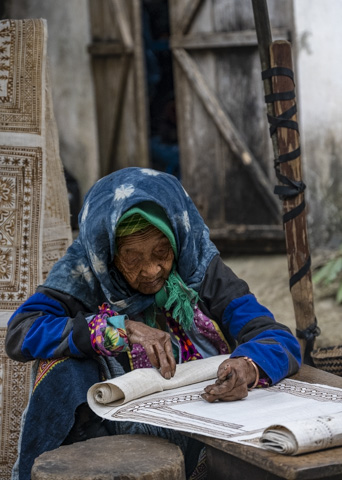
After dropping down from the mountain pass we visited a village called Lung Tam and a family that has been making clothes and material the traditional way for 100’s of years. The oldest member of the family was in her 80’s and still working every day. It was a fascinating insight into traditional methods of production.
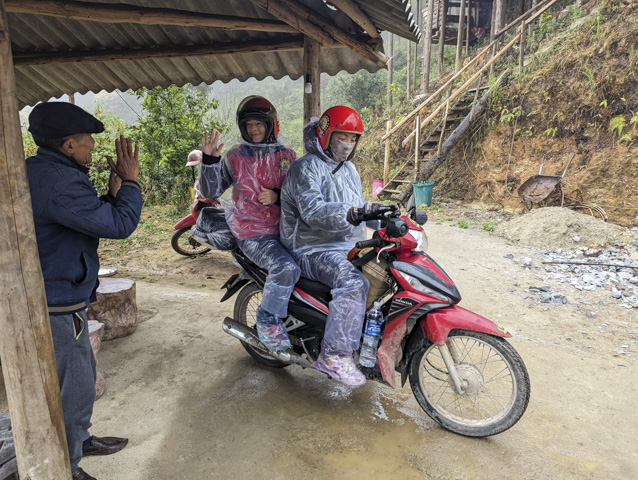
It was with some relief when we reached our stop for the night, just outside the town of Yen Minh. We were shown to our room, which had missing panes of glass in the window – with the temperature already in single figures by late afternoon and dropping. After a quick discussion we got a new room – still no heating but an extra blanket and this one was at least weather tight.

After dinner, eaten very quickly as the dining area was outside and all the food, other than the rice, was cold, we jumped into bed fully clothed to warm up. There was no hot water so a warm shower was out of the question. Under the blankets with all our layers on we were warm enough but we weren’t keen on getting out. In good weather none of this would have been an issue and I am sure we would have had a very different experience. It’s a real shame we were so unlucky with the weather. Fortunately for us, this turned out to be the most basic homestay on the loop. After this, the others did have some form of heating and hot water, but all the meals were still served outside so dinner was not to be lingered over.

The next morning we hopped on the bikes again to ride North, close to the Chinese border and the Lung Cu flagpole. This is basically a tall tower that can be seen from China with a large Vietnamese flag flying from the top. It’s a big symbol of national pride! Again, the views from the top were pretty limited while we were there.
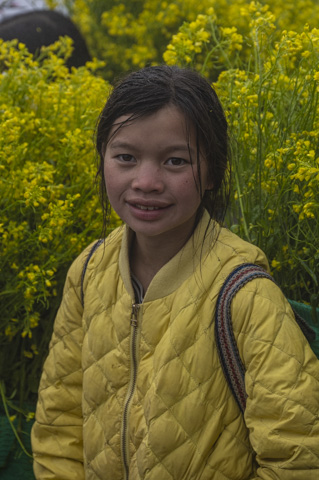
After this we headed to the Lo Lo Chai Village in a hidden valley in the mountains. It seemed to have its own microclimate because as we descended to the valley the clouds cleared.
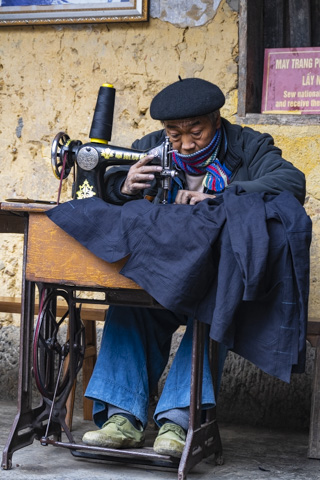
We were greeted by young girls carrying bunches of flowers – earning their money by being in shots for Instagram. We visited a traditional clay family home in the village of the Lo Lo ethnic minority people. The house was built around a courtyard and the rooms were sparsely decorated with almost no furniture.
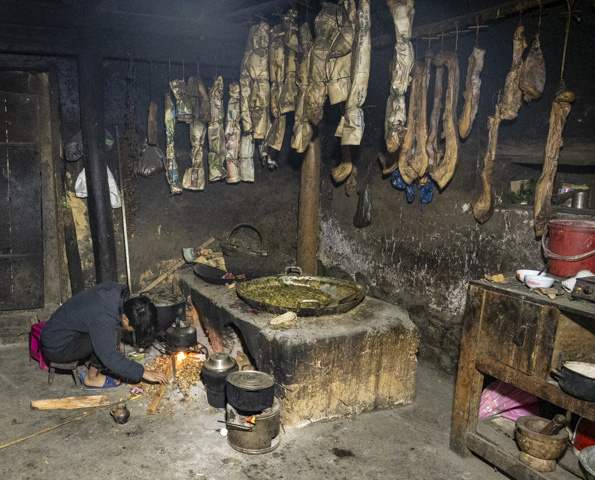
The next stop was the Palace of the H’Mong King. This large house was constructed in around 1919 as a house for King Meo who was the leader of the H’Mong people, who are the majority people in the Northernmost region of Vietnam.


The building cost was 150,000 Indochina white silver coins which is the equivalent of about 6 million USD today.
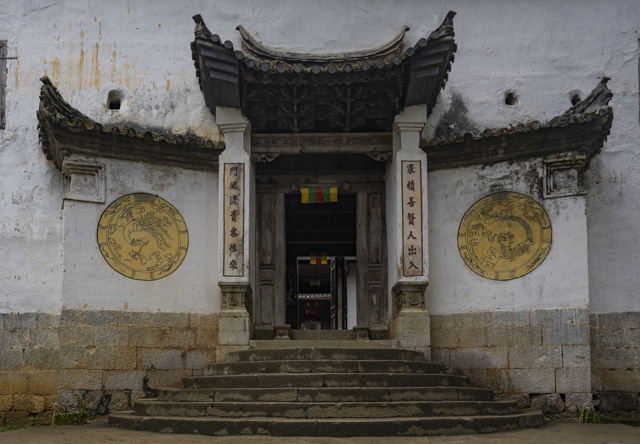
We ended the day at Dong Van which is a sizeable town and to our relief at a much more comfortable homestay – with heating.
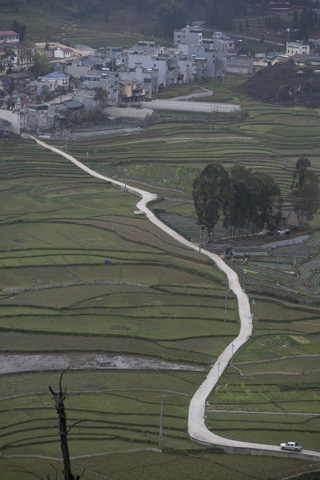
Overlooking the town is an old French fortress on a karst buttress above the town. I walked up to this first thing in the morning and had some good but intermittent views across the valley as the clouds came and went.

Day three was when we really started to feel achy from being on the back of a motorbike on rough roads for seven hours a day – perhaps this is what our fellow travellers were aware of! We had to grit our teeth a little, the whole experience was starting to feel like a test of endurance. We weren’t the only ones feeling it. At breakfast, we overheard a couple of people asking to be driven to the nearest bus station, making an early exit.

This was the day when we would go up to highest point of the trip at over 2000 metres and of course completely socked in by cloud. We had got into a rhythm with Windy though and were stopping at the point below the cloud where we could get some views. Much better.
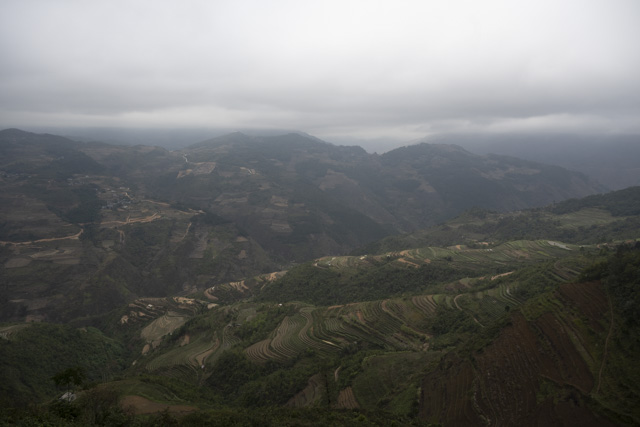
We skirted the Chinese border at one point and were the other side of a valley from the big fence that comprises the border. Our guide took the opportunity to vent his feelings about the Chinese by shouting a big FU accompanied with appropriate hand gestures. We’ve found that the people in Vietnam are not the biggest fans of China and their neo-colonial politics.
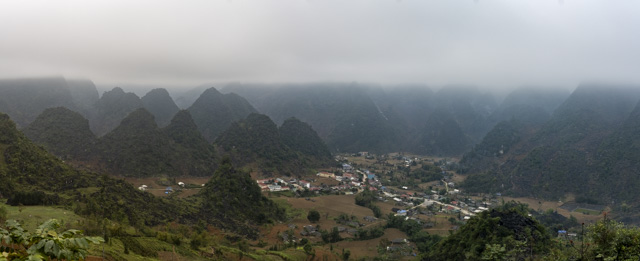
The highlight of the day was arriving at the final homestay of the trip in the Dua Gia village, which is a melting pot of seven different minority peoples. The homestay was set in the middle of rice fields in a verdant valley and the village market was in full swing when we arrived. This was a great insight into the lives of the Northern Vietnamese.

At dinner there were bottles of mineral water on each table – or so it looked. Luckily we didn’t pick it up and take a big gulp, as this was in fact “Happy Water”, which is home distilled rice based fire-water that our host encouraged us to drink with chants of “Một, hai, ba, dzô!” (the last pronounced Yo) or literally “1,2,3 Cheers”. After a couple of shots we left the younger backpackers to it – and judging by their sore heads at breakfast the next morning they had enjoyed quite a lot of it.

Our last day started with a visit to a small waterfall near the Dua Gia Village and then we had a lot of driving to do to leave the rural North and get back to Ha Giang town. The weather on the last day was a bit drizzly and we were more than grateful to arrive back in Ha Giang by lunchtime.

Then it was a case of getting on the sleeper bus (this time not an alcove sleeper but just reclining chairs) for the journey back to Hanoi. We arrived back in Hanoi at around 10pm pretty exhausted after the last few days.
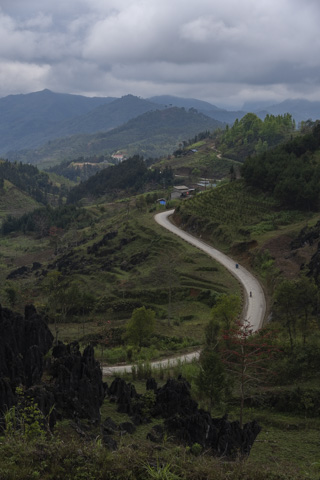
We are glad we did this trip, it will certainly be one we remember, but I think neither of us would want to spend four days doing so much bike-riding as an Easy Rider again, at least not on bikes of this size and quality. It was hard on the body, which I felt sure was to do with our age, so when I heard a much younger rider complain that her knees hurt it definitely made me feel a little better! We were clearly unlucky with the weather, which must have been unusual because even our guide said he wasn’t taking any more trips off the company until it had warmed up! It is a real shame that we missed out on the spectacular mountain views but unfortunately you can’t win them all!

And with that, our time in Vietnam had come to an end and it was on to our next stop, Bali.
Hanoi and Halong
A short flight from Hue airport and we were in Hanoi, the capital of Vietnam and its cultural heart.
We settled into a small hotel right near Hoan Kien Lake in the historic quarter of the city. Like many of the buildings in Vietnam the hotel was in the architectural style of a tall, narrow ‘Tube House’ – our small room was the entire width of the building.
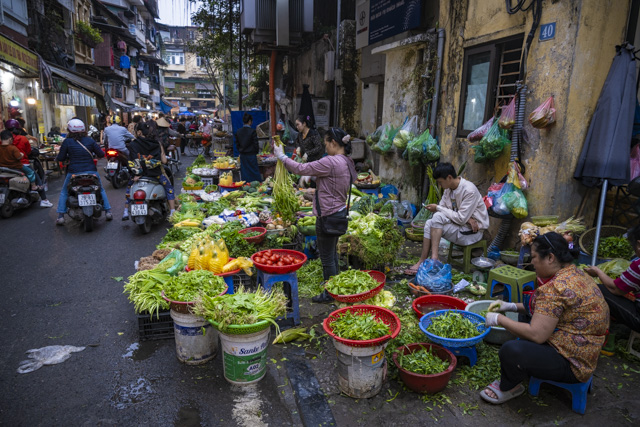
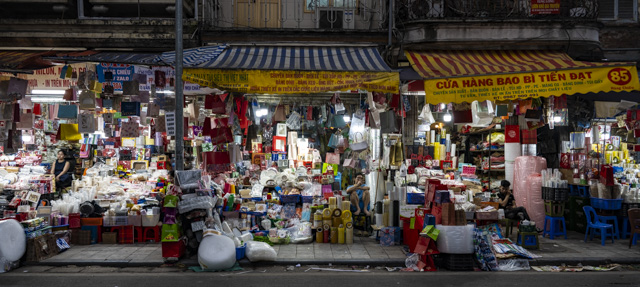
The central location of our hotel was great for walking around the historic quarter and there was always something interesting going on. Many of the streets have clusters of shops selling the same thing. We saw streets selling lights, hardware and even headstones.
On our first day in Hanoi we asked the receptionist at our hotel for a lunch recommendation and she sent us to a nearby restaurant which soon became our favourite. The ‘kitchen’ of the restaurant was in the narrow alleyway that you walk through to get to the small room at the back laid out with small tables and tiny plastic chairs. We returned to this restaurant a number of times, it was always busy but they never failed to squeeze us in.
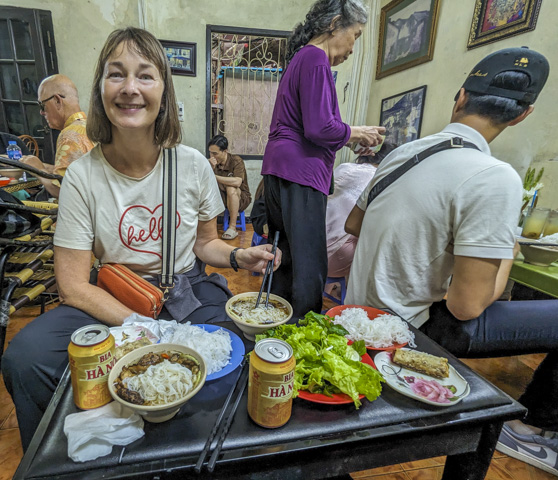
The restaurant serves only one dish, Bun Cha. This is a Hanoi speciality of noodles and grilled pork balls served with herbs and a spring roll. All the components are made separately and then added into a delicious broth and it was really the depth of flavours that impressed. The restaurant is called Bun Cha Hang Quat and we recommend this very highly to anyone visiting Hanoi (it’s only open between 10am and 2pm).
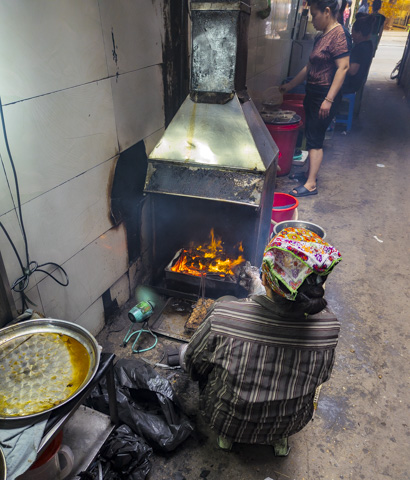
In the Northern part of the Historic quarter is the Dong Xuan market. This is a big non touristy market selling everything from food through to hardware. There were some stalls with big tanks of seafood and cages in the front holding freshwater turtles. That’s the first time we’ve seen that.

Something that Northern Vietnam is famous for is Water Puppetry. This is an art that has been practised since at least the 12th century. Historically, ponds or flooded paddy fields were used for the puppet displays using puppets carved from fig tree timber (which is water resistant) and suspended on poles from behind a curtain. Now a pool of waist deep water is used in a theatre. The puppets are used to tell the stories of legends and depict pastoral scenes.
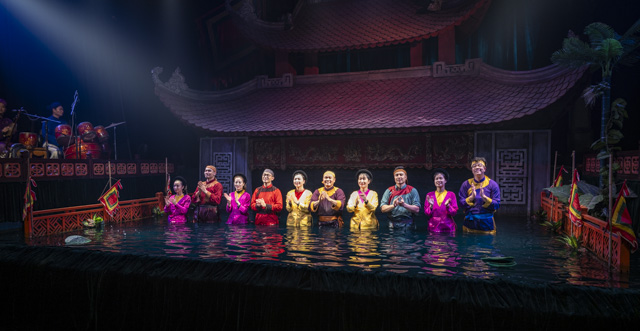
We visited the Municipal Water Puppet Theatre for a performance of their Water Puppetry which was entertaining and definitely different. There is lots of splashing water and thrashing puppets. The best bit was the music and singing which was performed live by musicians at the sides of the stage using traditional instruments and was very good.
Situated just over two hour’s drive South of the city is the province of Ninh Binh (pronounced Ning Bing). This area is famous for its karst mountains and rivers that cut through them. It is a very popular place for a tour from Hanoi and having seen the pictures we decided to check it out for ourselves.
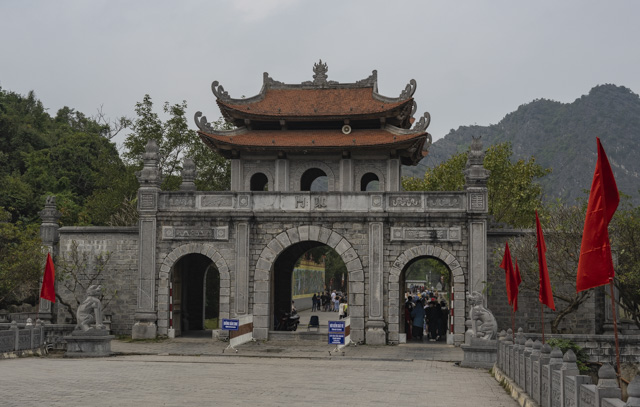
Our first stop for the day was Hoa Lu which was the first capital of Vietnam between 968 and 1009. There isn’t much left of the city that once existed here and covered 300 hectares but there is a complex of temples which are dedicated to the first emperors of Vietnam.
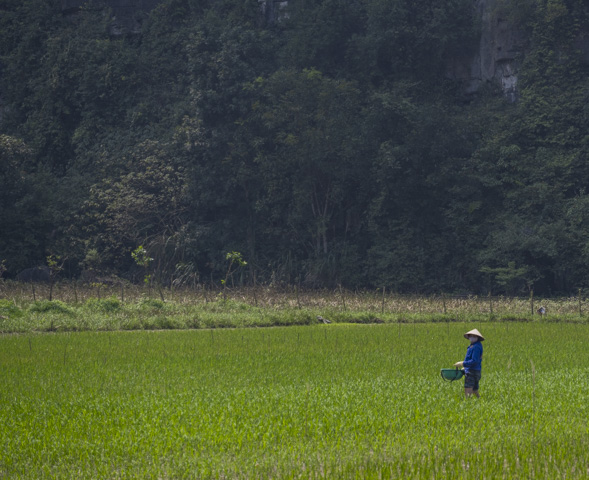
We cycled to the Hoa Lu from a restaurant a couple of Km’s down the road and after seeing the temples we looped back to the restaurant via some rice paddies and around some of the karst outcroppings, where we stopped for lunch. Like all the tours we have been on, it was a fairly bland buffet which didn’t reflect the beautiful food of Vietnam very well.

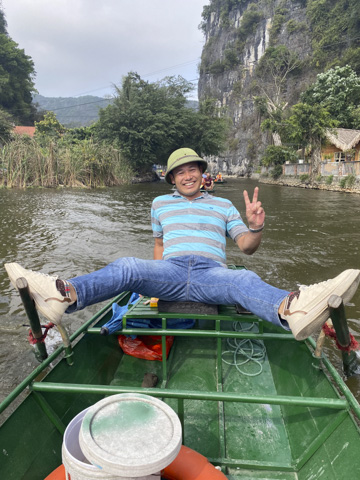
After lunch it was time for the highlight of the day which was a boat trip on the Tam Coc river. We were duly loaded onto a small boat with room for only two-three people and the rower. The interesting thing about these boats is that the rowers use their feet to push the oars. Some use a bicycle motion and others push the two oars together.
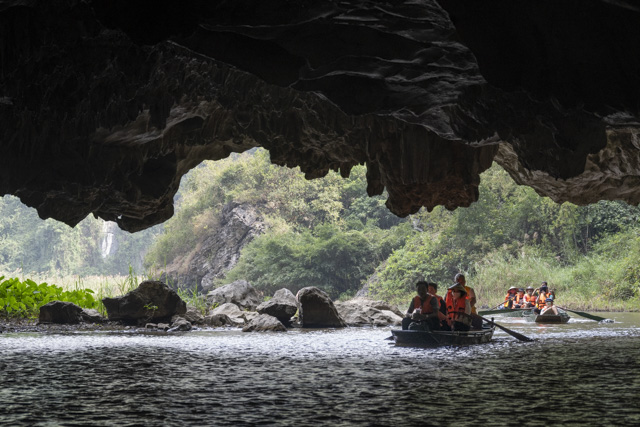
The river winds its way through the karst scenery and passes through several caves where you have to duck your head even sitting in the boat. It’s a beautiful ride.
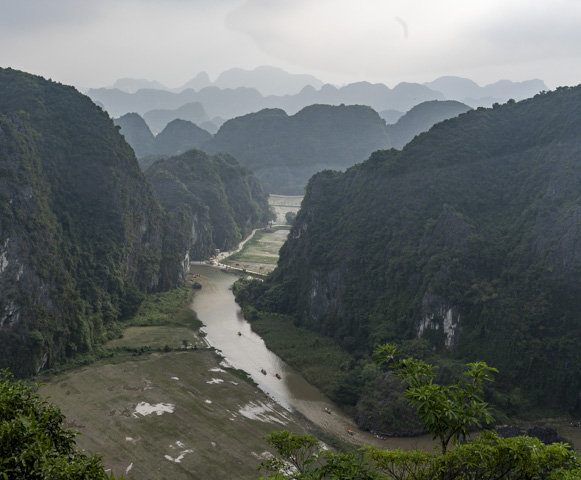
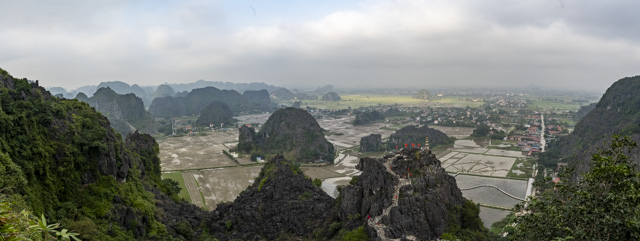
Our final stop of the day before heading back to Hanoi was the Mua Cave. Now the cave is not much to get excited about but here it is possible to climb up to a high view point on one of the karst pinnacles and the view of the rivers and paddies around is spectacular.
There is a dragon statue at the top of the pinnacle but the path up to it is very narrow and there was a queue of people wanting to take selfies so it didn’t really move.
From Ninh Binh we went onto one of the top tourist attractions of Vietnam, a boat cruise around Halong Bay. This is an area of karst outcroppings that form small islands in the sea. There are a lot of boats here that are basically floating hotels that vary in size, quality and of course price.
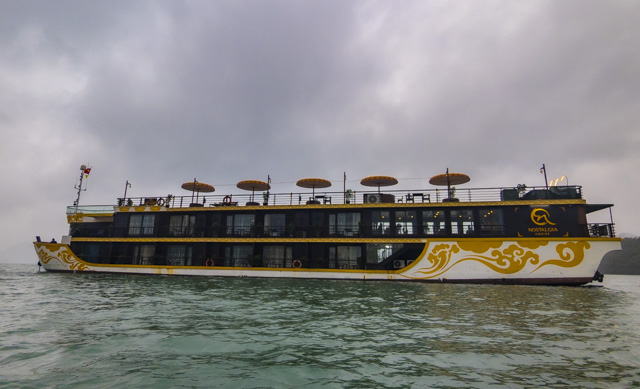
As we thought this was probably something you only do once, we decided not to cheapskate it and splashed out on one of the more exclusive boats called Nostalgia, which only had 10 cabins and a jacuzzi on the top deck (much needed as the weather wasn’t great).
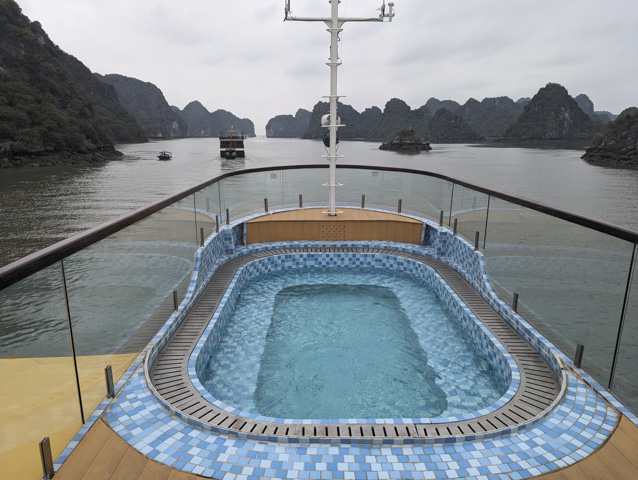
The Journey from Hanoi to Halong Bay is around 3 hours by minibus. On arrival at the port in Halong City we were transferred to a tender boat which took us out to the main boat. All of the ‘hotel boats’ stay out in the islands most of the time and don’t come back to port unless they have to.

We arrived at Nostalgia and were greeted with a lovely lunch. The food on the boat was absolutely fantastic and the service from our stew, Green, was friendly and very attentive.
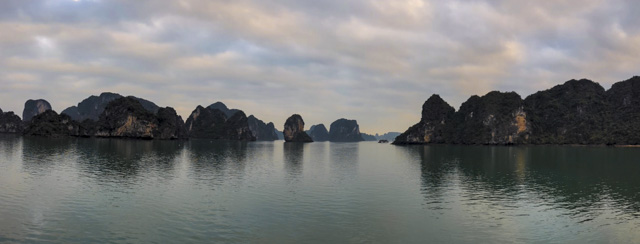
Our first excursion of the day was a visit to Cat Ba island (the largest island in the Halong Bay area) and Trung Trang cave. We left the main boat on a tender and headed to a bay on the island and were then taken by bus {along with people from other hotel boats) to visit the cave. The cave was ok but we have seen far more spectacular cave formations.
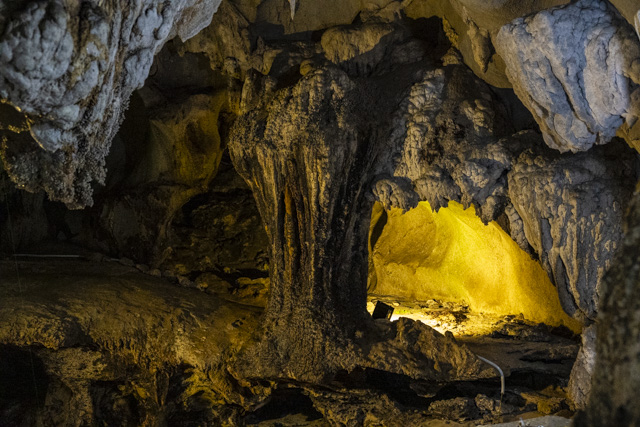
After this it was back to the main boat and time for the Jacuzzi while have sundowner cocktails on deck and watching the sunset.
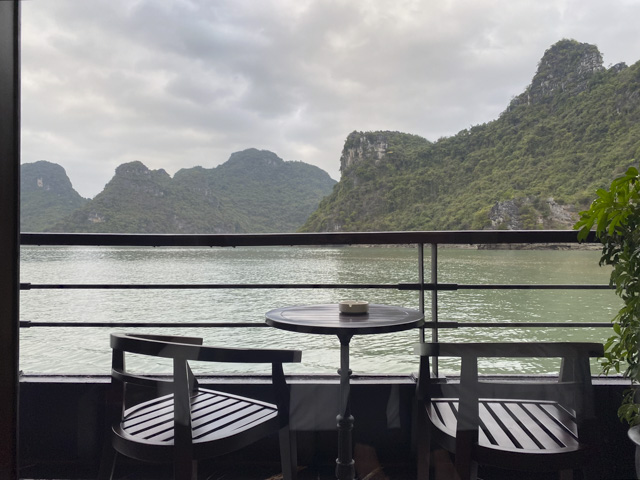
The boat had moved into Lan Ha bay which is a bit further afield than Halong Bay and a little less busy (supposedly) but there were still lots of boats there.
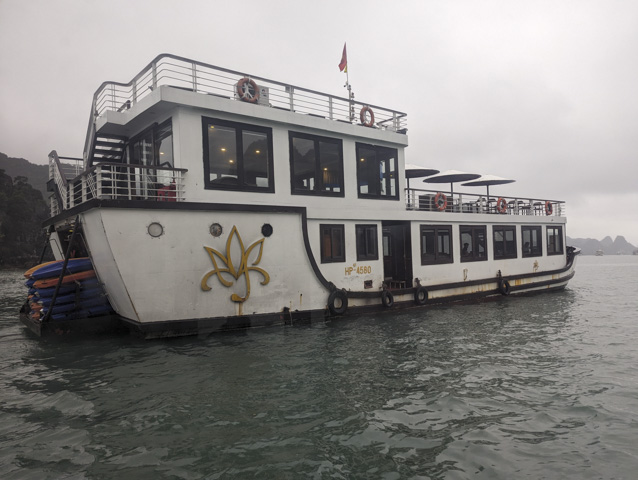
On Day 2 we started with an early morning Tai Chi lesson on deck and spent the rest of the day on a big day boat. The day boat headed further into Lan Ha Bay and we were dropped off at the other side of Cat Ba island where we did a cycle trip to Viet Hai village in the interior of the island. The scenery on the way to the village was interesting and it was nice to have the opportunity to cycle however the village itself was not particularly interesting. We did however get to try Snake wine (wine made in a vat of dead snakes) which was predictably not entirely pleasant!
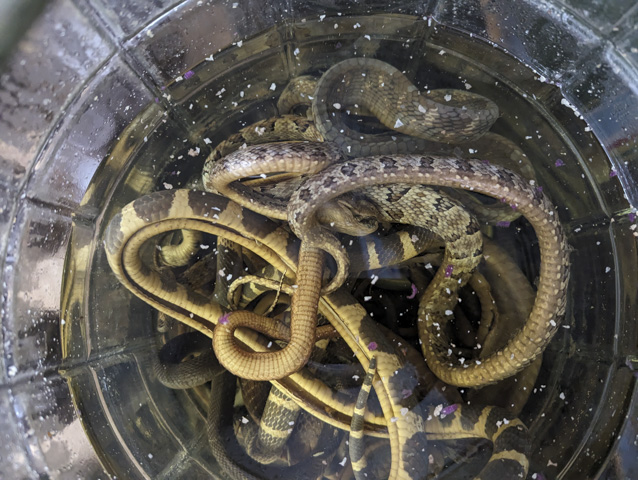
Back on the day boat we had lunch followed by the chance to go kayaking around some of the karst islands. The weather wasn’t brilliant but we jumped at the chance and set off around the islands in a double kayak, which we really enjoyed.
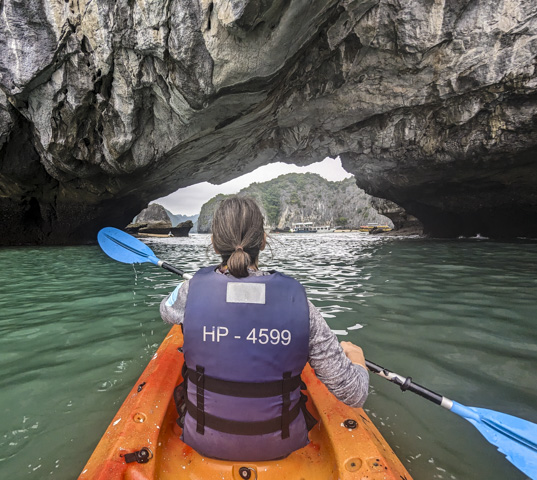
After the kayaking we headed back to the main boat for sunset (although this didn’t happen as the weather really came in), a cooking class where we learnt to make Vietnamese spring rolls and dinner.
The next morning we were given another opportunity to go kayaking, at 7.30am. Either the early time or the persistent drizzle failed to entice the rest of the guests onboard but we had a lovely kayak around the bay, which was particularly peaceful at that hour and gave us the chance to see some local fisherman and watch the birdlife. We were quite wet and cold by the time we returned to the boat but that was soon remedied with a dip in the jacuzzi followed by a warm bath back in our room.
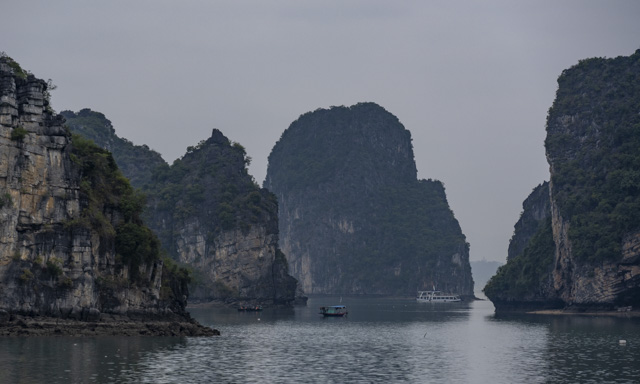
After this, there was just time for an early lunch before we were leaving the boat and reversing the journey back to Hanoi.
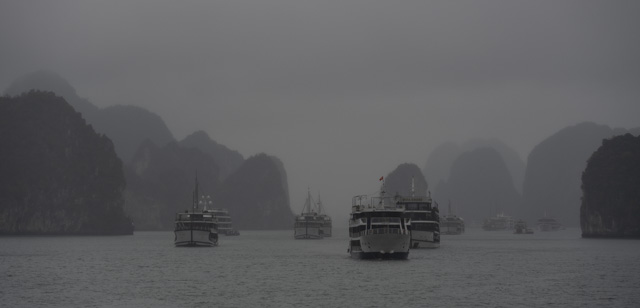
We both really enjoyed the trip and the service and the food on the main boat was very good. However it did feel a bit rushed despite having done the three day/ two night trip. Many people only do two days/one night trip and you barely arrive before you are leaving again. We were there in low season and unfortunately the weather wasn’t the best but there were still a lot of boats. High season must be very crowded.
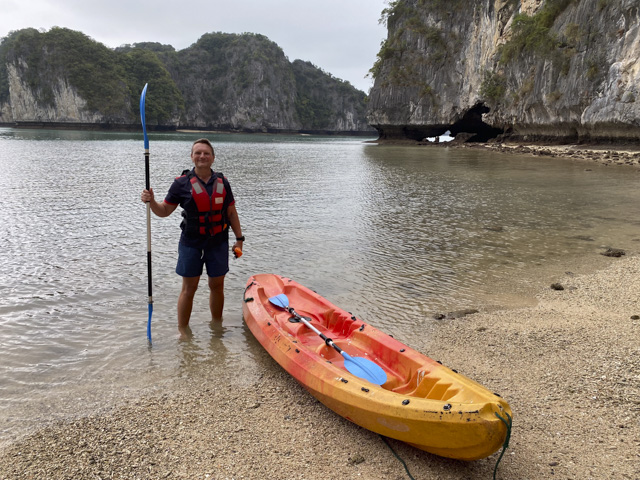
It is also worth mentioning that we were offered the chance to swim off the back of the boat every day. No one that I saw took this up on our boat or any other. This may have been due to the weather but I fear it was more likely due to the state of the water which didn’t look particularly clean and had a lot of plastic waste and polystyrene floating around in it which was sad to see. The impact of over tourism is definitely being felt in this area.
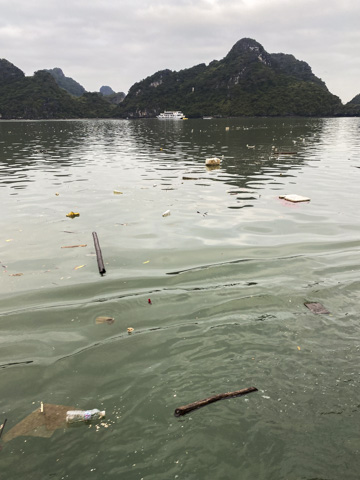
 FromAtoB