The Vietnamese Centre
Vietnam is a very long country and its overland transport is really slow. Our second destination after Ho Chi Minh City was the central region and the city of Da Nang. This is an 18 hour journey by bus or 19 hours by train. Neither of these were particularly attractive so we decided to take the 1 hour flight instead, which was in fact cheaper than the train!

We arrived in Da Nang on New Year’s Day to deserted streets but a warm welcome from our very quiet, almost empty hotel, which we had no problem locating due to it being 15 storeys of bright yellow. While the building was a nice sunny colour the flight northward to the central region meant a big change in the weather and a temperature drop of around 10-15 degrees.

Da Nang is famous for its Dragon bridge which breathes fire (and water) at 9pm on weekend evenings. Luckily we arrived at the weekend so after settling into the hotel and getting our bearings we headed down to the bridge to watch the display… along with hundreds of other people who seemed to appear out of nowhere.
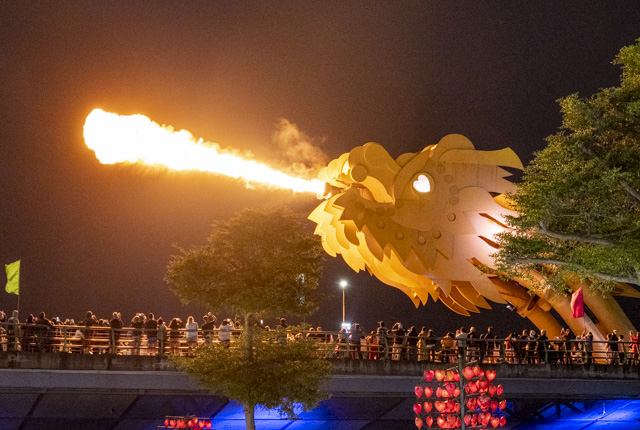
Next to the bridge is a large street food market, so with some time to spare before the show started, we wandered the stalls and tried a few of the local delights. One of our favourites was the snail stall, which had a vast array of molluscs (both marine and land) for us to try.


We walked over to the bridge with the rest of the crowd to watch the show and then back towards the market where there was a performance on a big stage with dancers and a DJ hyping up the crowd.

Although Da Nang isn’t really a big hitting tourist destination we actually really liked the feel of the city and there are a few tours that run from here but unfortunately for us, not during Tet. What it does have is a pretty lovely beach but as you can see from the picture, it wasn’t really beach weather.

After our brief stop in De Nang we headed to the stunningly beautiful and uber touristy town of Hoi An, which is about 30 minutes away by taxi.
Hoi An is an historic port town that dates back to the 2nd century when it was a busy seaport of the Champa kingdom. The town avoided damage during the Vietnam/American war and as a result there are over 800 historic buildings, meaning the town looks much as it has for hundreds of years.
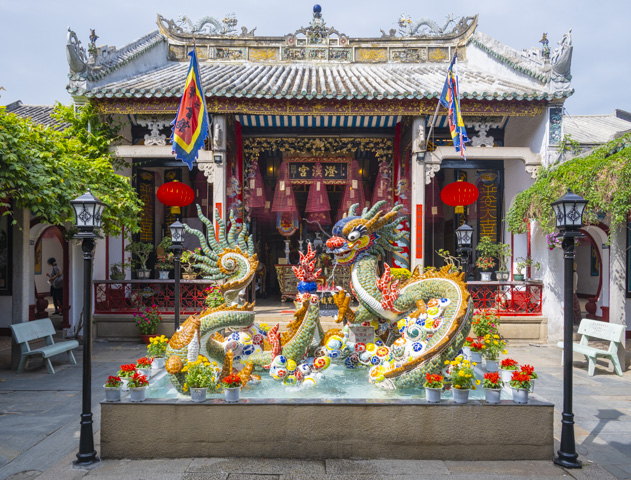
Unfortunately the Japanese covered bridge, which is one of the top attractions, is being refurbished and has been completely deconstructed but there were still plenty of temples and historic buildings to wander around and admire.

Just a few metres from our homestay was a street which became a vibrant night market with lots of vendors selling all sorts of food from frogs on sticks to Vietnamese pizza (which are nothing like pizza but are absolutely delicious).

In addition to foreign tourists, the town of Hoi An is really popular with Vietnamese tourists and therefore, we assume because of the Tet National Holiday, the volume of tourists was unbelievable. Think Venice and then double or triple the numbers. Early in the morning it was really pleasant with not many people around but by about 5pm the streets were packed and it was difficult to walk around.
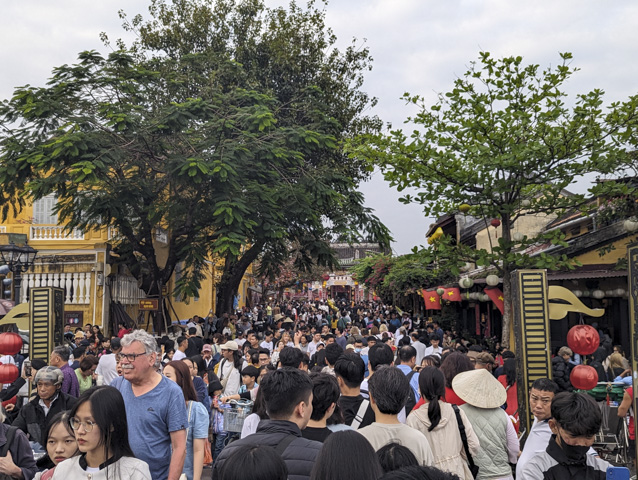
Many of these tourists (when not taking selfies in front of everything and anything) were taking small boats up and down the river, particularly at dusk when they would light small paper lanterns to float them down the river.

Hoi An is about 3km from An Bang beach, and when we woke up one day to a warm sunny day we decided to escape the hustle and bustle of town and head to the beach, only to find that everyone else (well, the Westerners) had the same idea! However, the crowds were clustered around a bunch of bars and restaurants with sun loungers and after a little walk along the beach the crowds fizzled out and we were treated to an empty sandy beach that stretched as far as the eye could see.

From Hoi An we also arranged a car to take us to the My Son ruins. It takes about an hour of driving through the countryside to get there from Hoi An.

My Son, meaning Beautiful Mountain, is the site of Vietnam’s biggest Cham remains. My Son was a religious centre and was occupied between the 4th and 13th centuries. Unfortunately many of the temples were destroyed by American bombing. At one stage the tops of the buildings were covered with a layer of gold but this is all gone now.

Today the Cham people remain a sizeable ethnic minority within Vietnam with around 140,000 people.
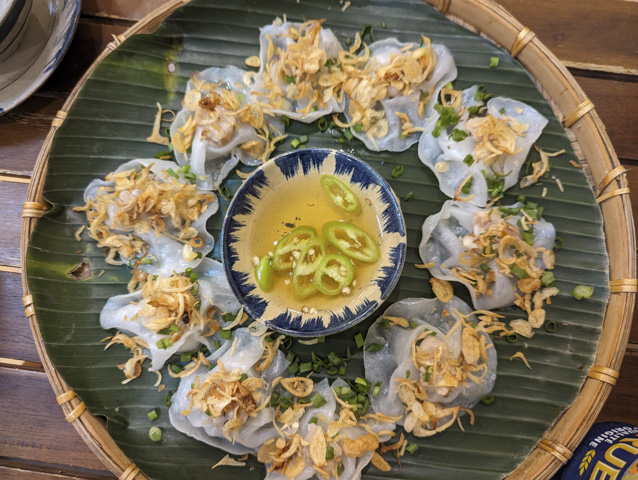
We have been really enjoying the food in Vietnam and each of the regions has its own speciality. In Hoi An there is a dish called White Rose which we absolutely loved. These are dumplings that are only made by one family who were Chinese immigrants and have been making White Rose for 130 years and only in Hoi An. They distribute the dumplings to many restaurants in town.
Our next port of call was to be Hue (pronounced H-way) which is about 120km North of Hoi An. The most interesting route is to drive over the Hai Van pass.

Through the owner of our homestay we arranged to do an easy rider trip (which means being a passenger on the back of a motorbike) across the Hai Van Pass.
We were picked up in the morning and rode back towards Da Nang. The bikes were actually really comfortable and the views were great.

Our first port of call were the marble mountains just outside Da Nang. These are a series of five marble hillocks which are topped by temples. There is an elevator to reach the top but there are still lots of steps when you reach the top to get between different areas. There are also a number of caves around the summits which have been converted into temples.
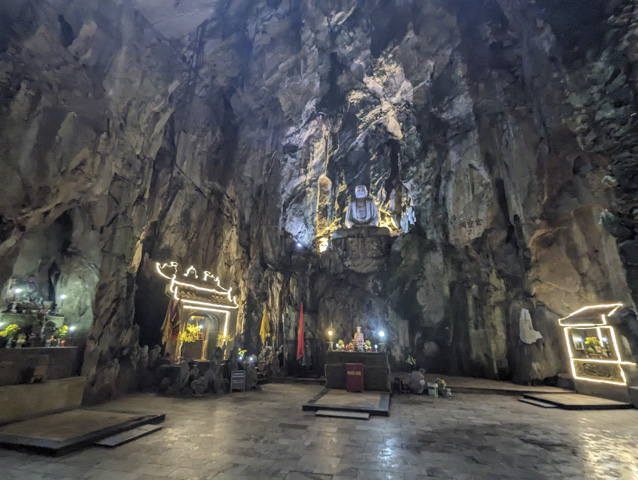
From here we looped through Danang and along the coast until we started climbing up the Hai Van pass. The pass is only 496m high but Hai Van means Sea Cloud which means that it is often buried in dense cloud. And so it proved for us. We stopped at a viewpoint but all we could see was white with the occasional glimpse of the rugged coast beyond.
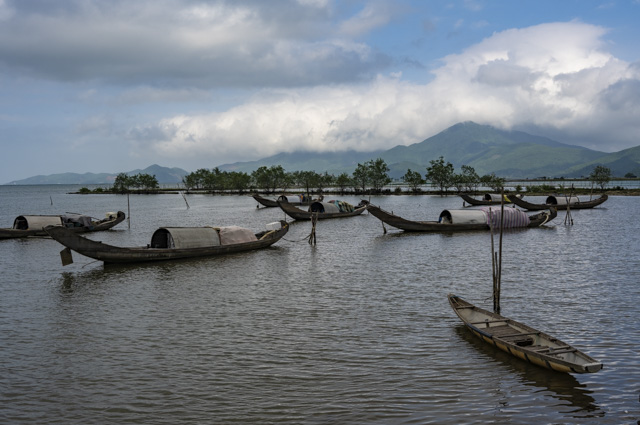
After stopping for lunch at a lovely fish restaurant on the beach we headed along the coast towards Hue. Stopping to learn about the fishermen who live in the Phu Loc Lagoon area.
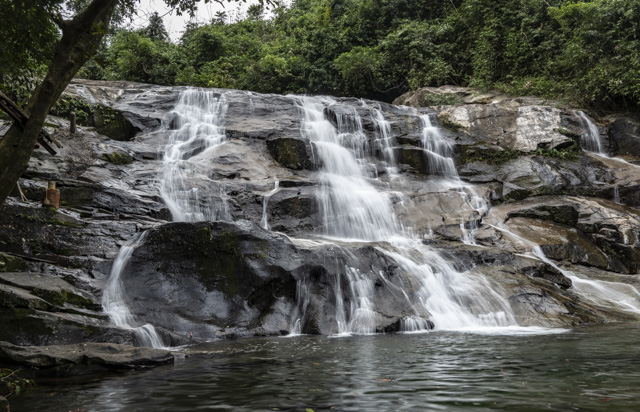
The weather this side of the pass was completely different and much better than it had been in the South so we next visited a waterfall for a refreshing swim.
We were now getting close to Hue and detoured through the rice fields on narrow dirt tracks and paths between the paddies before eventually entering the city and finding our hotel.
It had been a really good day despite the weather so we asked our guides whether we could book them the next day for a tour of the area around Hue, which they were happy to do.
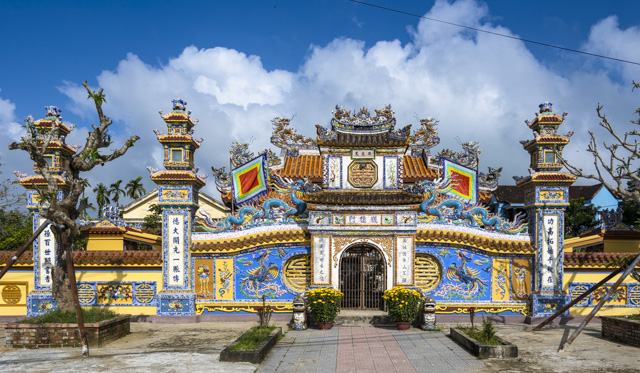
Early the next morning our guides/drivers turned up again and we were off to explore Hue, which is a much bigger city than Hoi An. Hue is sited on the Perfume river and was a centre for trading in the past with access from the sea and from inland. Traders came from all round the world to do business here. It was also the capital of Vietnam between 1802 and 1945 as the home of the Nguyen dynasty emperors.
For the morning we headed out of the city to visit a number of tombs of the emperors of Hue which are in the vicinity of the city.

Before starting with the temples we headed to the Thanh Toan Japanese footbridge (built in 1776) which is in a small village just outside Hue. There was a local market just next to the bridge and we stopped in a little unmarked restaurant for a breakfast of soy eggs in a sizzling skillet which was delicious.
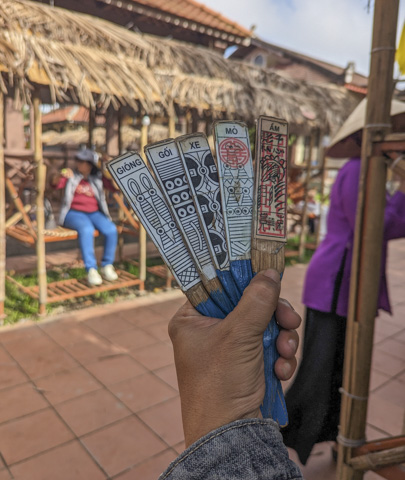
While we were looking at the bridge one of our drivers took part in a gambling game which was taking place near the bridge. It involved wooden battens with different drawings on which needed to be matched. The gamesmaster was a woman who would chant until someone claimed a match. It was all very mystifying.
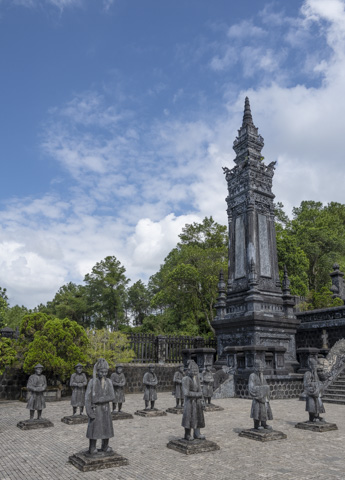
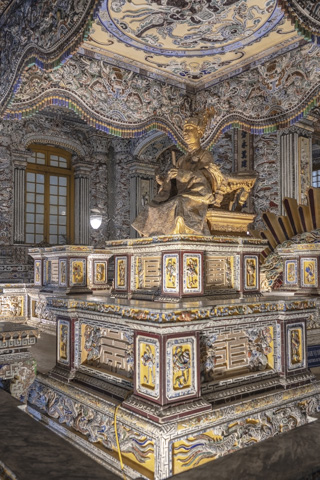
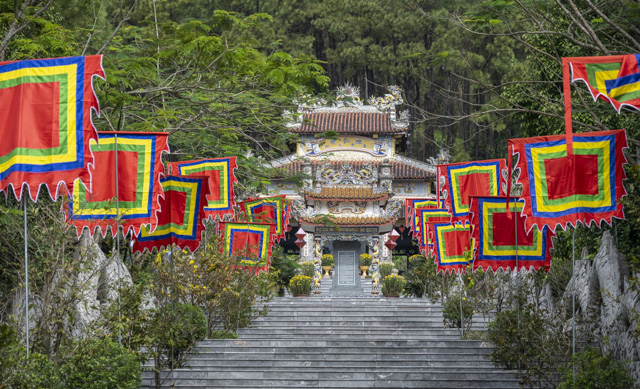
The first tomb we visited was the Tomb of Khai Dinh, built into the hillside and accessed by a grand staircase. Khai Dinh was the penultimate emperor of Vietnam and died in 1925. The interior of the tomb is decorated with a colourful ceramic mosaic.
Next was the Tomb of Tu Duc which was completed in 1867. This has a lake just inside the entrance with a small island and a beautiful pagoda overlooking the lake. In the grounds of the complex are a number of tombs.

As we rode between destinations we wound our way through a valley of gravestones. This ‘cemetery’ filled an entire valley and was at least 4kms long. We have never seen anything like it before, it was absolutely filled with small tombs and gravestones and quite a sight.
The next stop was a break from the history of the area as we visited an abandoned water park. This is due for demolition soon and the slides that used to be here have already gone.

Around lunchtime we rode back towards Hue, via a viewpoint over the perfume river where old American bunkers from the war are gradually crumbling, to a local restaurant down a back street where we were treated to some fantastic local food and were the only westerners in a very busy restaurant.
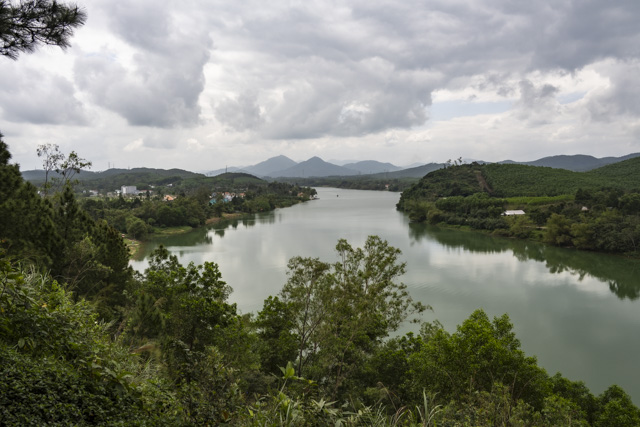
The biggest attraction in Hue is the Imperial Citadel and we had saved this for last, although it is huge. This is a city within a city and was built between 1804 and 1833. The whole citadel is surrounded by thick walls (2m thick and 10km long) and a moat (30m wide) so is well defended.
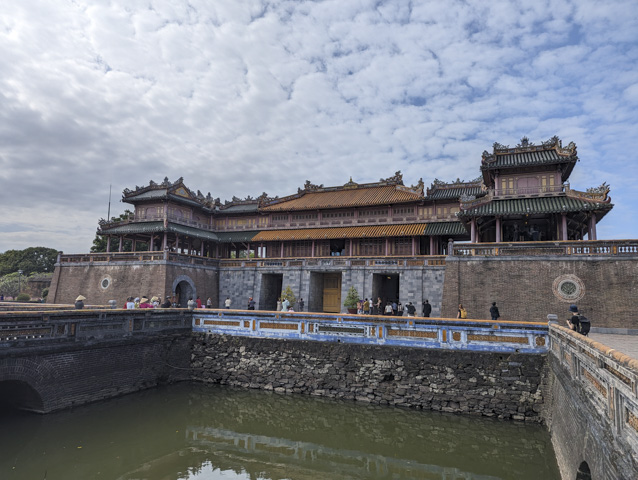
The centre of the citadel is the Purple Forbidden City which was the reserved solely for the emperor and his concubines. The only servants allowed here were eunuchs who wouldn’t be interested in the concubines !
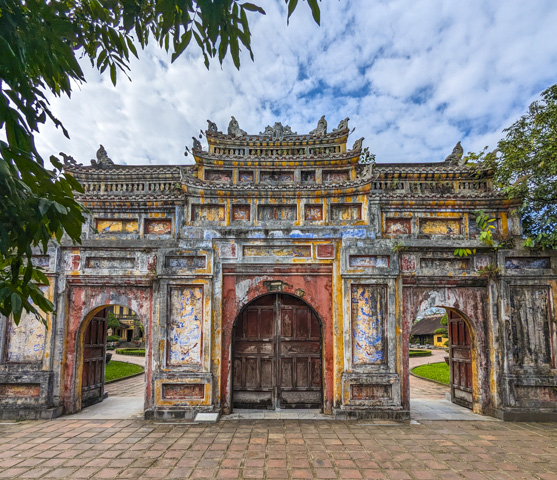
The stunning Kien Trung palace has recently been opened after being fully restored following its destruction in 1947 during the Indochina wars. This was the most recent and ornate of the palaces in the Citadel and was used by the last two emperors of the dynasty.

We managed to see the highlights of the Citadel but its sheer size defeated us and after a long day we were absolutely exhausted by the time we found our way out. We had seen temples, palaces, gardens and even a theatre in this vast site. It would definitely reward multiple visits. But this was the end of the day as we made our way back to our hotel (the themed Scarlet O’Hara hotel!).

We said goodbye to our drivers and guides from the last two days – HueToGoTours– who were absolutely excellent and we would thoroughly recommend.
Ho Chi Minh (or is it Saigon?) and the trials of Tet
Ho Chi Minh City may not be the capital of Vietnam but it is its biggest and most prosperous city, with a population of 9.5 million. Before 1976 HCMC was called Saigon and many Vietnamese still refer to it by the old name. After some discreet enquires of the locals it seems that either name is acceptable.
We arrived in Vietnam in the early evening but fortunately a cab into the middle of town was only 45 minutes. We had a great taxi driver who told us all the places we should visit and the foods we should eat – all while showing us pictures on his mobile phone and driving at the same time.
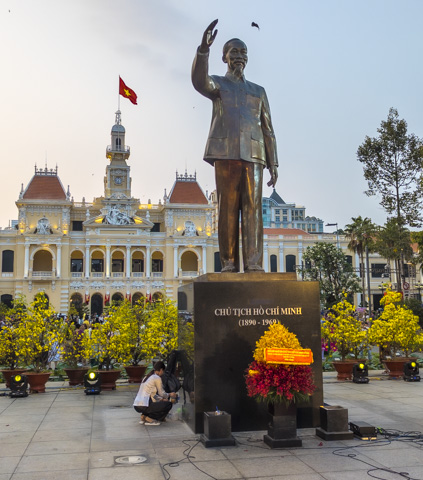
Our hotel was definitely not one of the best on our trip with no window but at least it was quiet at night and situated in the central District 1 near to all the tourist must sees.
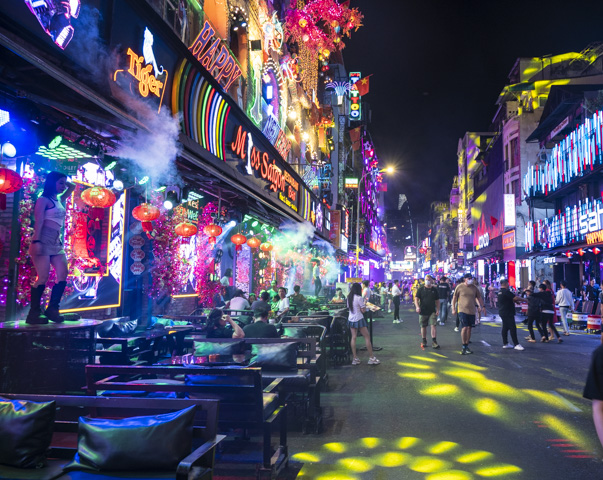
We had booked our trip to Vietnam before learning about the Tet holiday which was due to start soon after we arrived. Tet is the biggest holiday of the year in Vietnam and is the celebration of the Chinese New Year. A lot of businesses shut for a week around this time and most of the growing Vietnamese middle class go on holiday.
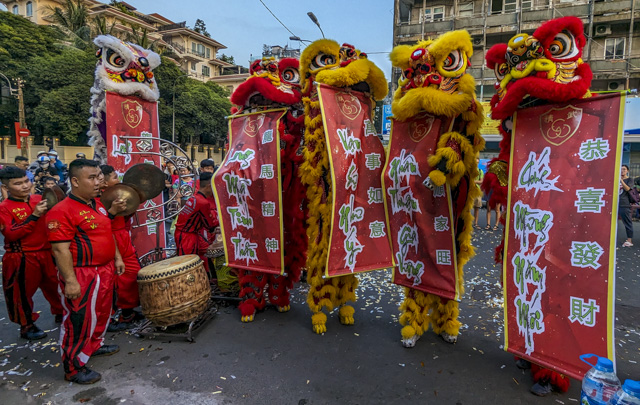
The upshot of Tet was that lots of tours weren’t running and many shops, restaurants and bars were closed. There were also huge numbers of Vietnamese tourists around making some places unbelievably crowded. Not the best for our first week in Vietnam.
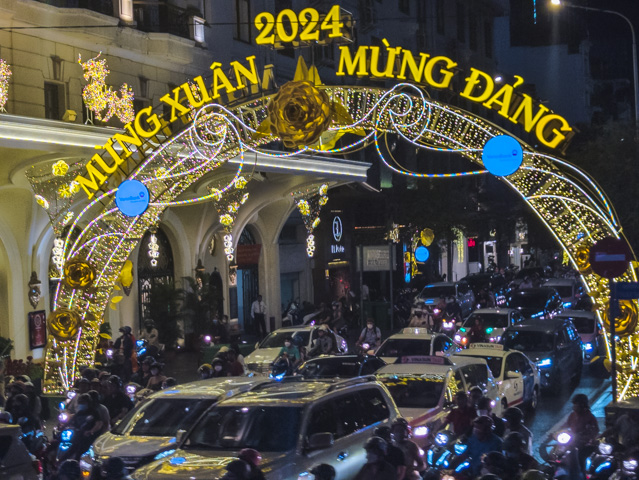
On the plus side however, there were huge numbers of decorations around the city, masses of flowers everywhere (the Vietnamese love their flowers) and there was a real party atmosphere in the lead up to the celebrations, which are usually spent with their families. A massive open air flower market opened up in District 1 to provide flowers for people’s Tet decorations.
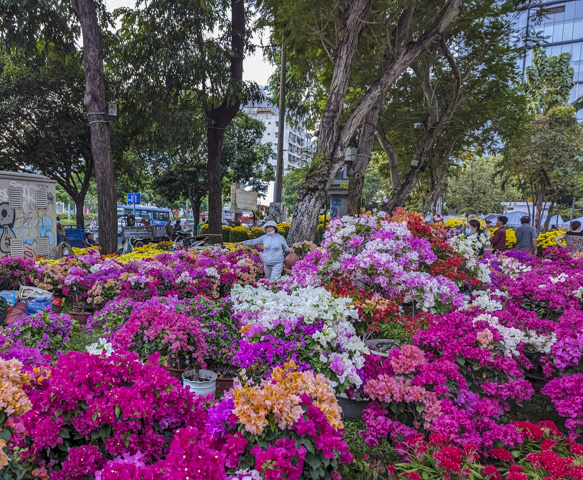
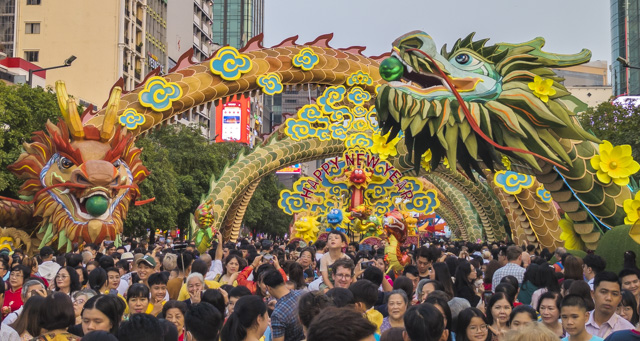
A major road in the centre of District 1 had been pedestrianised and decorated with flowers and dragons and there were signs everywhere saying “Chuc Mung Nam Moi” or “Happy New Year”.
Despite all of this we did manage to see some of the city. Our first port of call was the Independence Palace, which served as the seat of government between 1962, when it was built and 1975 when the puppet government in the South was overthrown by North Vietnamese forces to conclude the American war. (Unsurprisingly the war with America that is called the Vietnam war in the West is referred to as the American war in Vietnam).
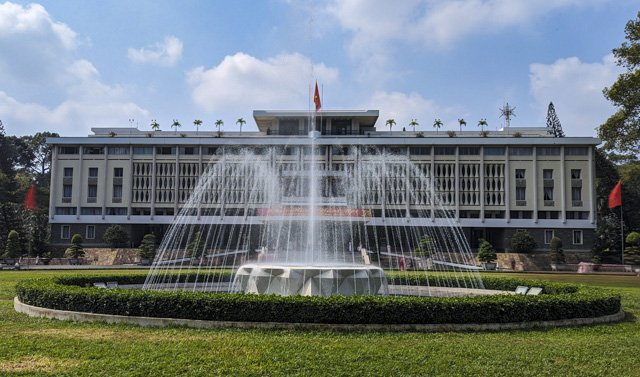
The building is in a Modernist style but the interior has been preserved in a gloriously 70’s style !
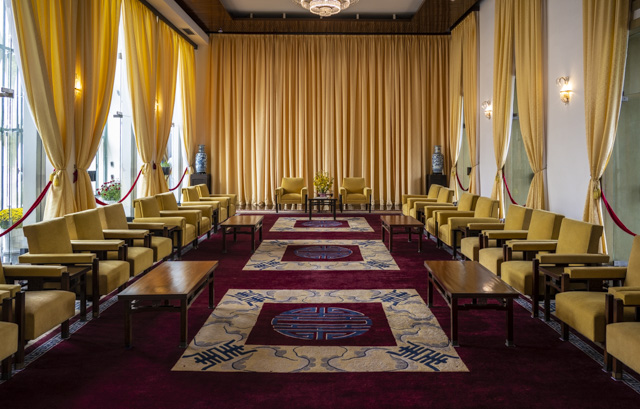
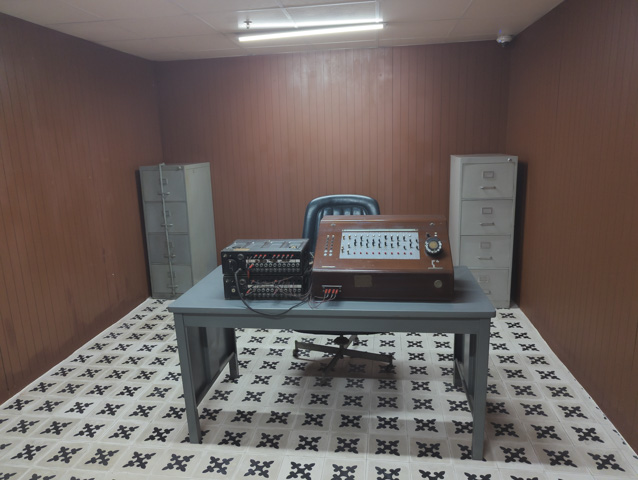
It feels like it could be a set for a Bond film and even has an underground bomb shelter with communication equipment from the 70’s and a situation room with maps of troop movements from the war.
After visiting the Palace our next stop was the highly thought provoking War Remnants Museum. This museum showcases the Vietnamese side of the American war and focuses on the atrocities committed by the American forces during the war. It also has a wing dedicated to the prison systems in the South of Vietnam where the North Vietnamese soldiers were incarcerated and the various tortures that were employed.
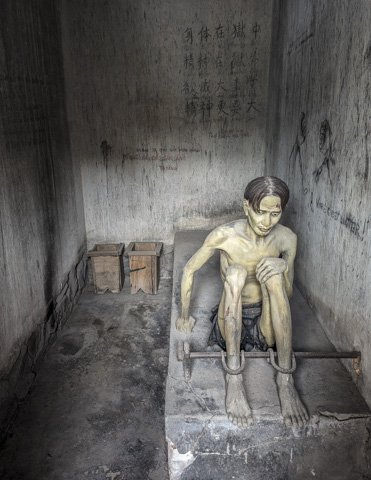
When trying to understand history it is important to realise that every source of information is biased depending on who is telling the story and there were clearly atrocities on both sides. However, the facts of the American war are horrendous with over 7.5million tons of bombs dropped on Vietnam by the Americans and their allies and 13 million gallons of Agent Orange (a herbicide designed to clear forested areas) sprayed in Vietnam leading to devastation of the environment and cancers, birth defects and neurological problems in the population for years to come.
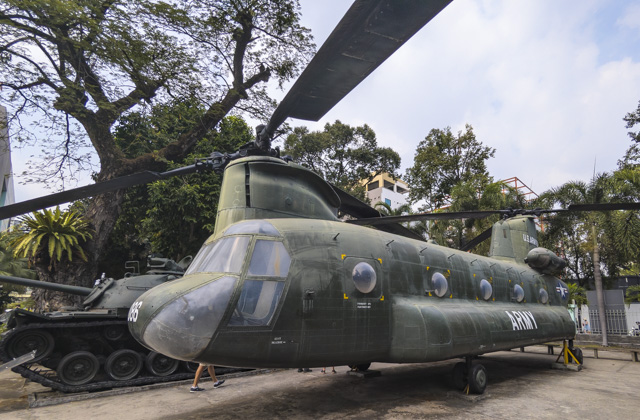
This is a sobering as well as thought-provoking museum and well worth a visit.
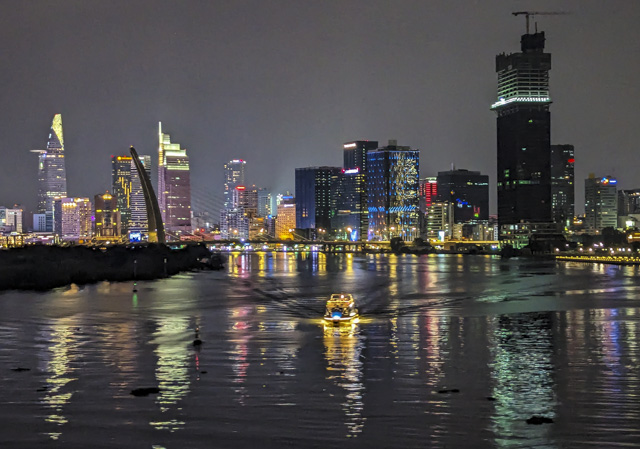
In the evening we jumped on a bus tour of the city which drove us around and gave us a great view of the skyline of Saigon. It’s a big modern city with lots of skyscrapers. At night they are all lit up with many having lightshows on their exteriors.
One of the most popular tours from Ho Chi Minh is to visit the Cu Chi tunnels. These are a preserved example of the tunnels that the Viet Cong lived in and used as a base to strike against American troops in the war.
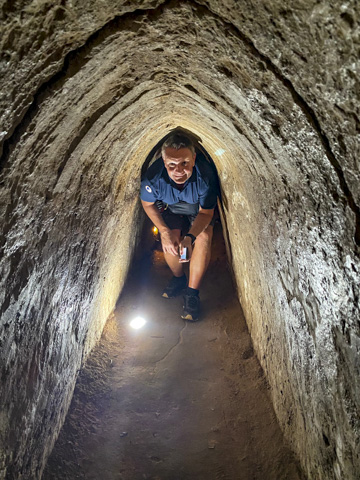
The half day trip to visit them is rounded out with a stop-off at an arts and crafts factory, providing work to those born with disabilities due to Agent Orange, and rather ironically, at the other end of the scale, a shooting range where you can shoot, among others, ak-47s and M16s.
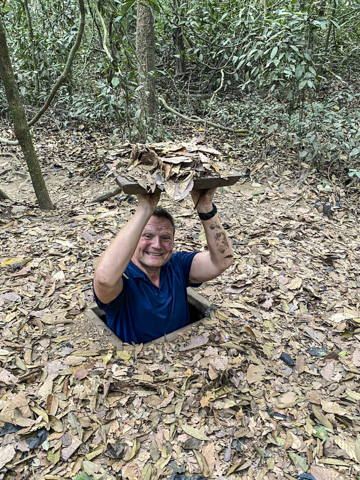
The tunnels that are open to tourists have been stabilised and enlarged for our western bodies to get down them. The original tunnels were absolutely tiny and with the heat and humidity in this part of the world must have been incredibly uncomfortable.
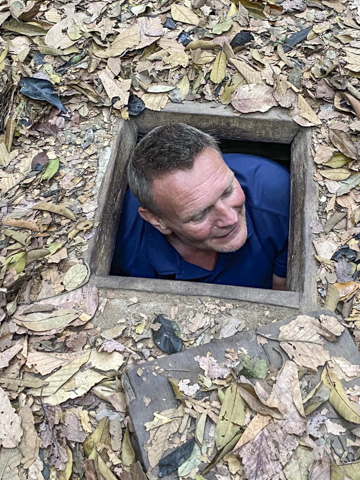
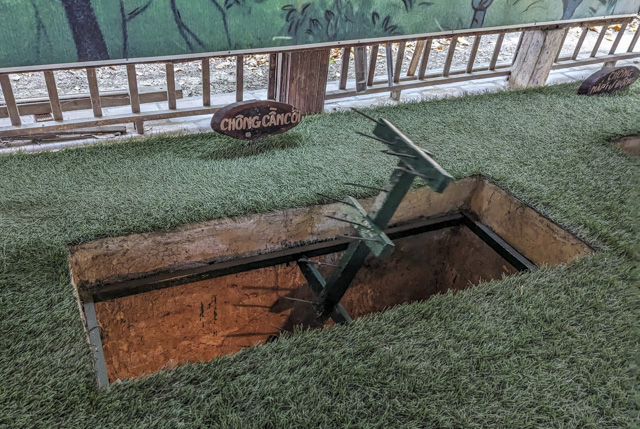
The whole tunnel complex was incredibly well hidden with ventilation pipes hidden in fake termite mounds. The area was also heavily booby trapped with traps designed to severely injure the American troops.
The tour was an interesting history lesson and a good insight into how horrific the war must have been for both sides.
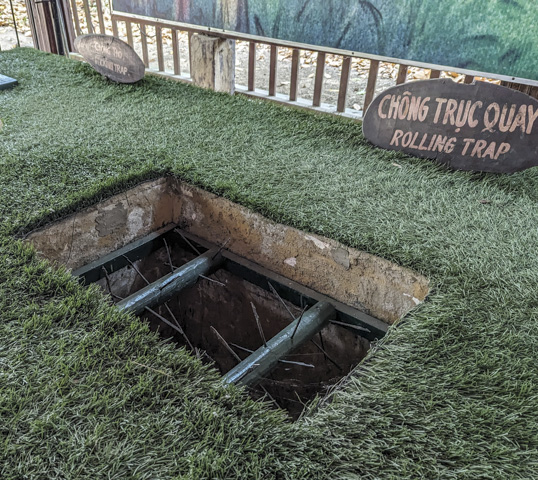
From Ho Chi Minh we also did a two day trip out to the Mekong delta which although only a 100km away is a good three hour drive on the congested roads.
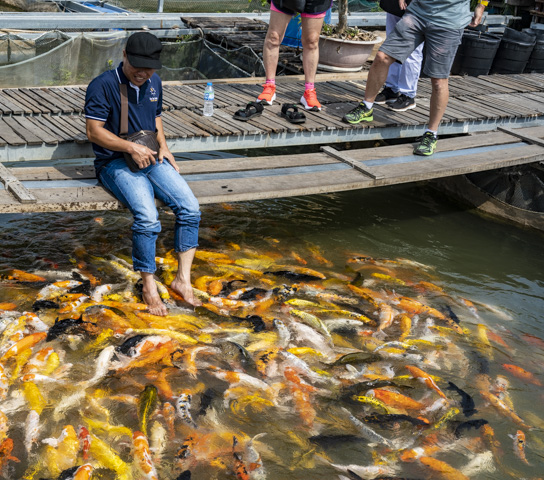
It was a really interesting trip that gave us an insight into the way of life in the delta which is of course based around the water ways which are branching with big and small channels.
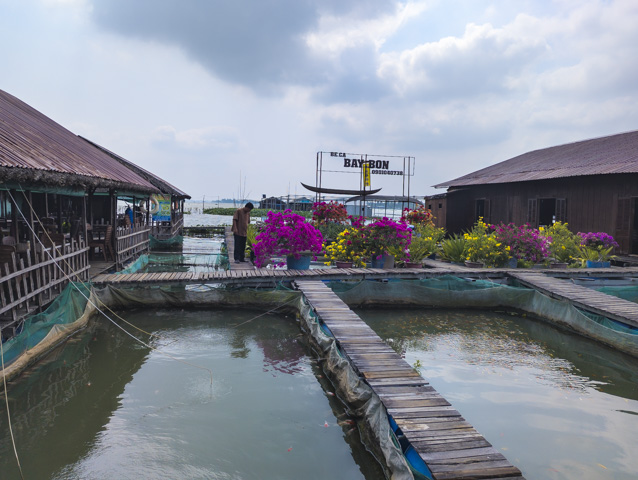
Fishing is obviously a very important activity in this area and we visited a floating fish farm which had a number of pens with both fish for consumption and ornamentals. All of this in the middle of one of the biggest channels of the Mekong Delta.
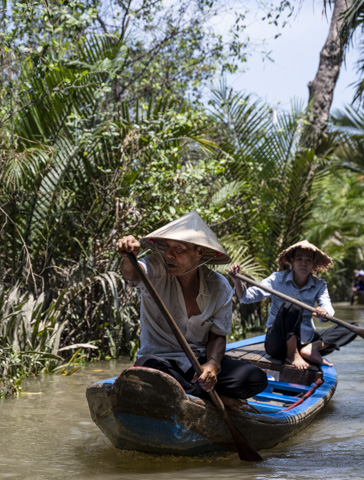
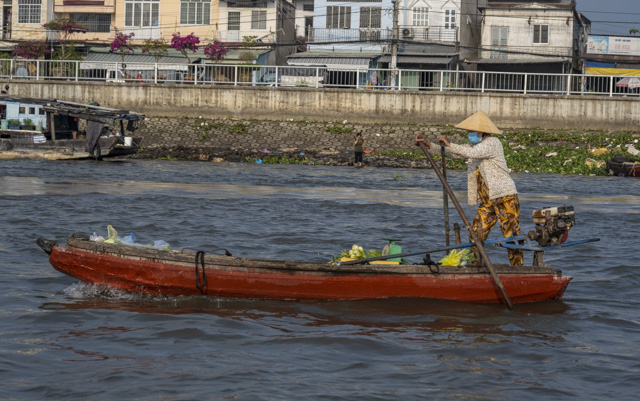
We also visited some of the narrower waterways and took a boat trip in a traditional hand paddled boat but for me, the most interesting part of the tour, was the trip to the Cai Rang floating market. This is close to the town of Can Tho and is different from the floating market we visited in Thailand as it’s a wholesale market.
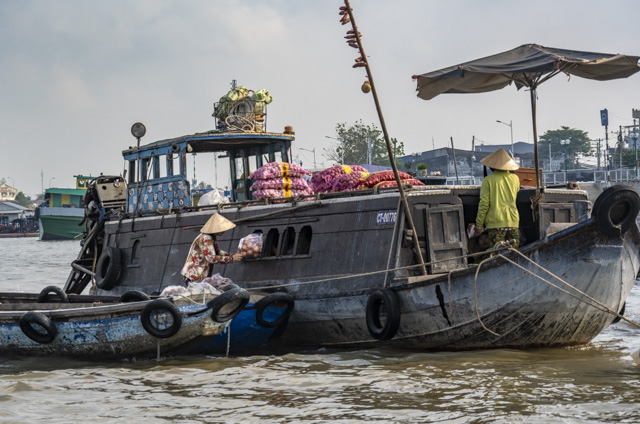
On each of the boats a pole with a sample of the goods that they sell is raised aloft to show what they deal in. Each of the boats tends to deal in only one type of product.
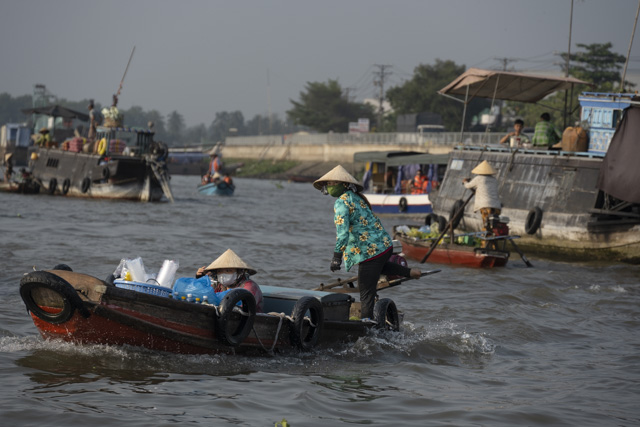
The action in the market happens early in the morning and we visited first thing but even then it was beginning to wind down. It all starts at 3 or 4am so by 7am it’s almost over but we got a glimpse of the action and really enjoyed the experience.
Siem Reap – A Templetastic Time
We arrived at Siem Reap’s new international airport quite late but it was fairly easy to get a taxi for the 1 hour journey to town. The airport has only been open a couple of months and replaces one that was only 7km from town. The locals are not so happy with the new airport as there are fairly significant fees for using the new road to the airport and for parking.
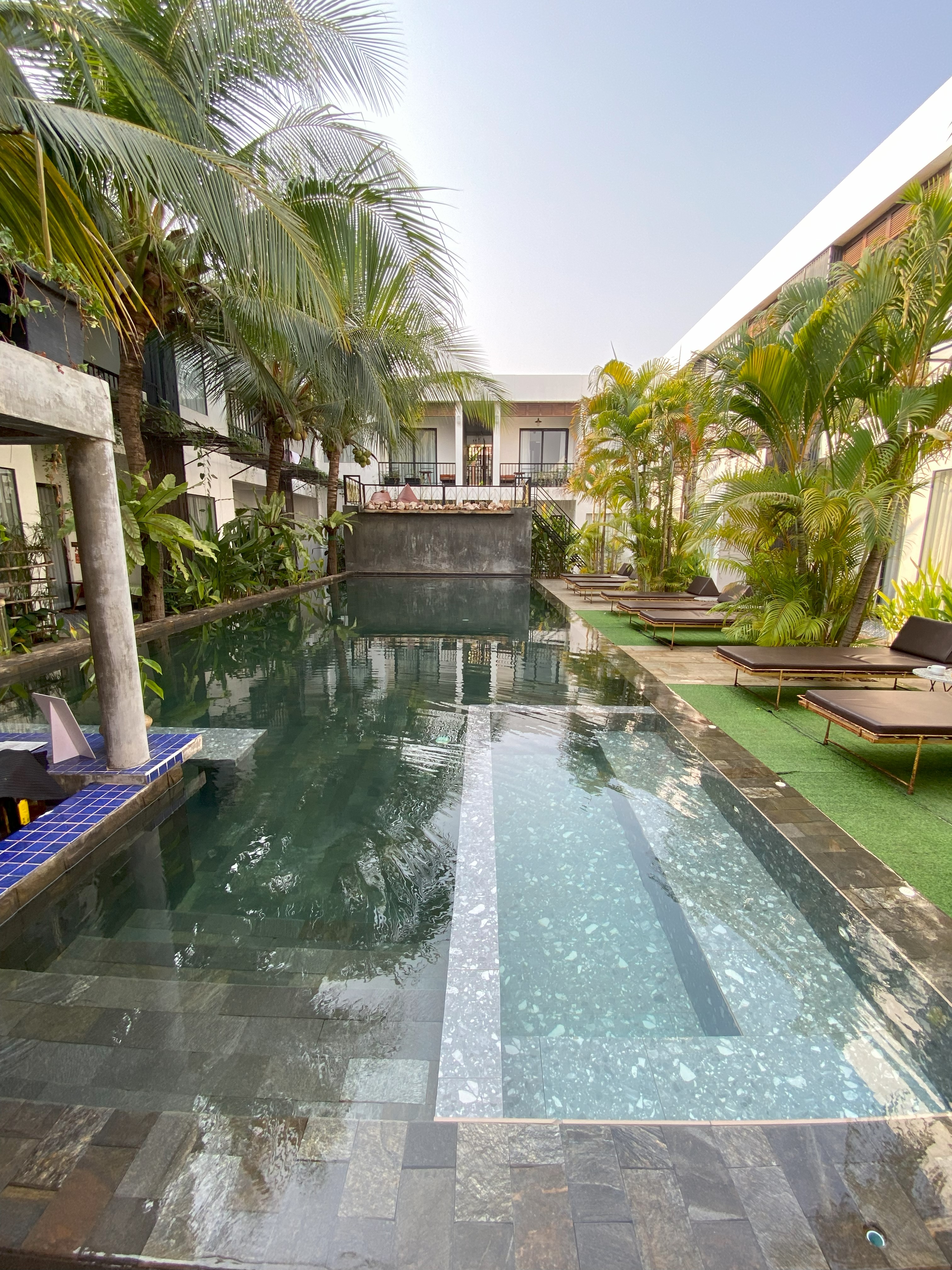
Hotels in Siem Reap are great value and we had a lovely room facing onto a pool complete with wet bar. Given how hot it is in this part of the world we would use this pool a lot.
The reason that everyone comes to Siem Reap is for the Angkor ruins that consist of 100’s of temples spread over a huge area of 1000sq km’s. This was the capital of the Khmer civilization and is considered to be the site of the largest pre-industrialised city in the world with a population of up to 1 million people.
The city of Angkor flourished between the 9th and 15th centuries. Since being named a world heritage site in 1993 there has been considerable preservation work carried out on the site, involving investment from a range of countries but using Cambodian workers, to preserve and restore many of the temples.
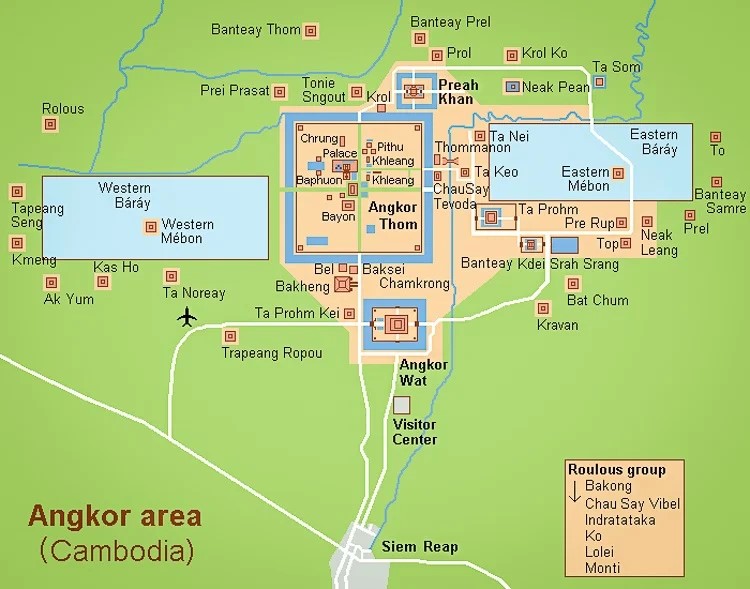
The Temple complexes start about 5km from town and the best way to access them is to hire a driver for the day. It’s possible to hire a car but we chose the option of a Tuk Tuk. The Tuk Tuk’s in Siam Reap are a bit different from the standard type. They consist of a motorbike with a connector (a bit like a semi-truck) to a carriage which holds up to four people. They are definitely more comfortable than a standard Tuk Tuk and we only paid US$18 for a day hire.
There are two standard tours around the Siam Reap temples: The Big loop and the Small loop. They both travel around a similar area but visit different temples. The big loop actually visits smaller temples so takes less time, although it has marginally more driving.
We decided to spend three days visiting the temples so did the small loop, the big loop and then a bespoke day visiting temples that weren’t on the two loops.
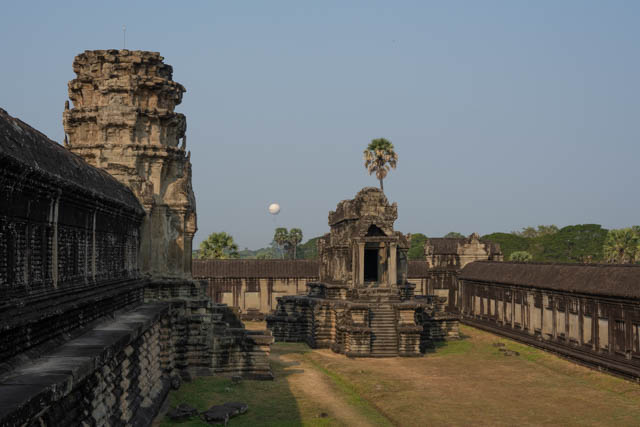
Angkor Wat is the biggest temple and the one that everyone has heard off. This means that it is by far the busiest of all the temples. It is in fact considered the largest religious structure in the world.
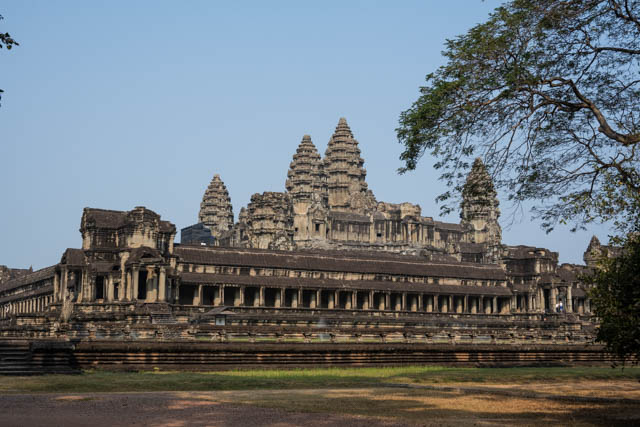
Angkor Wat was built in the 12th century as a Hindu temple dedicated to Vishnu by King Suryavarman II. However over time it was converted into a Buddhist temple. There is a large moat surrounding the complex which is over 5km long and 200m wide. Inside the moat is a gatehouse and wall and then inside this is the temple complex proper (a 350m walk inside).
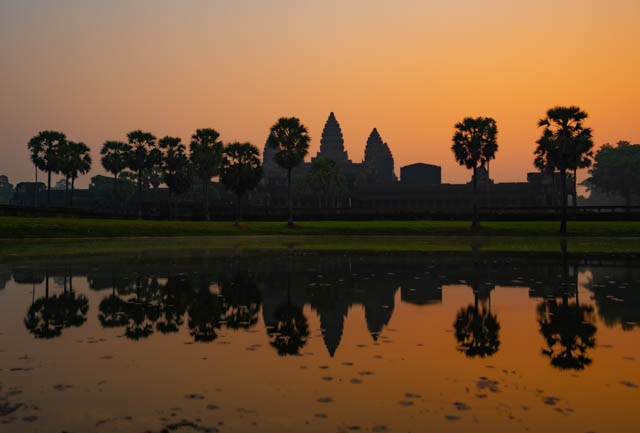
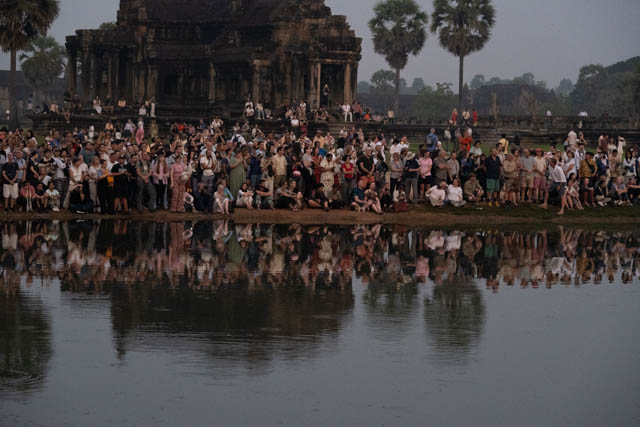
I decided to come to Angkor Wat to watch the sunrise, as this can be really spectacular. Unfortunately on this day the sunrise was more a gentle lightening of the sky with no particular stunning colours and of course you are sharing the experience with all the other like-minded tourists. It reminded me a bit of when we watched sunrise at Machu Picchu as it was similarly crowded. Just you and 1000 other people! If you want to pick and choose your position for photos you need to arrive in the pitch dark at least an hour before sunrise and then you’ll have no chance to reposition during sunrise as it is just way too busy.
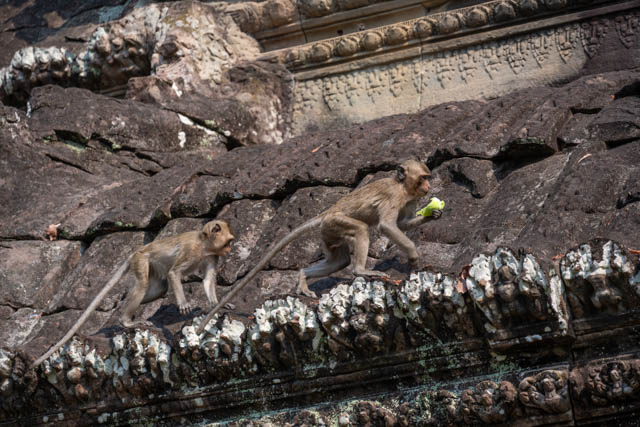
Actually my favourite bit of Angkor Wat was one of the gatehouses (the South) which contains a small Buddhist shrine. This was seemingly off the beaten track as there were no other tourists there – only a handful of locals visiting the shrine and there was a group of monkeys crawling over the building – trying to get at the food offerings made at the shrine.
Definitely take some water when walking around Angkor Wat as its so big – the walk from the taxi/ Tuk Tuk drop off point to the central temple complex is 1 km itself.
After leaving Angkor Wat we headed towards the walled city of Angkor Thom which was the capital of the Khmer empire and was built in the 12th century. The city covers 9km2 and between 80k and 150k people lived there at its height.
The city was abandoned sometime before the start of the 17th century although it is not known exactly when.
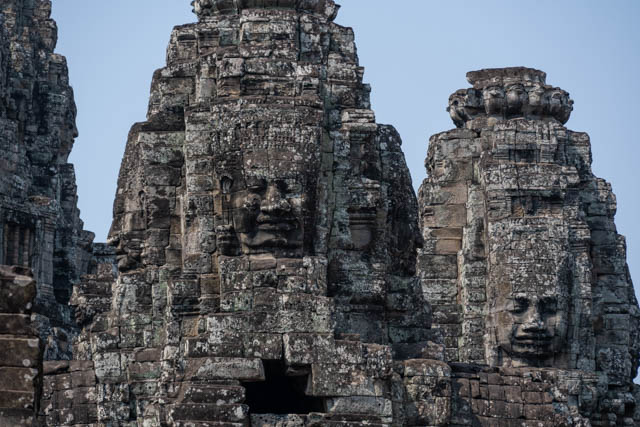
At the centre of the city is the temple of Bayon. This temple is striking for its towers decorated on all four sides by the smiling face of Buddha (said to have been modelled on the face of King Jayavarman VII). In all, there are 216 faces carved into the temple.
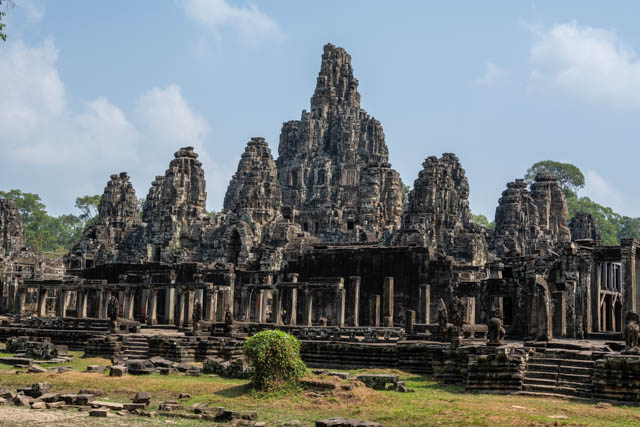
On the outside walls of the temple are detailed bas-reliefs of lots of different scenes including battles and armies. There is some debate on the meaning of many of these scenes.

Once inside this temple feels claustrophobic and densely packed in real contrast to the sprawling nature of Angkor Wat. This made it one of our favourite temples to visit.
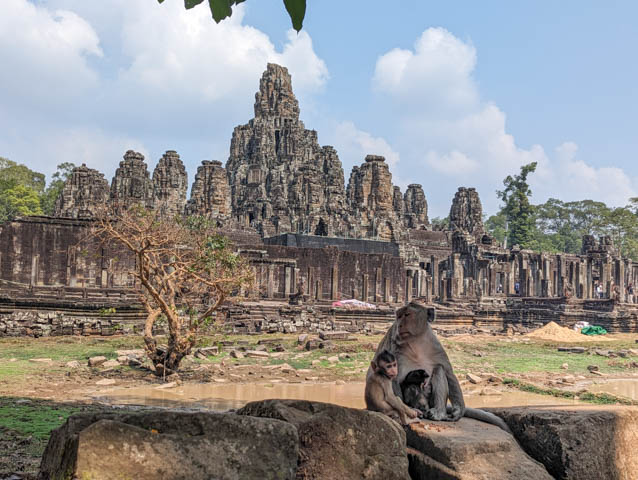
In the area around Bayon there are a number of other temples in walking distance. These are all less visited as they are not on the Big or Little circuits.
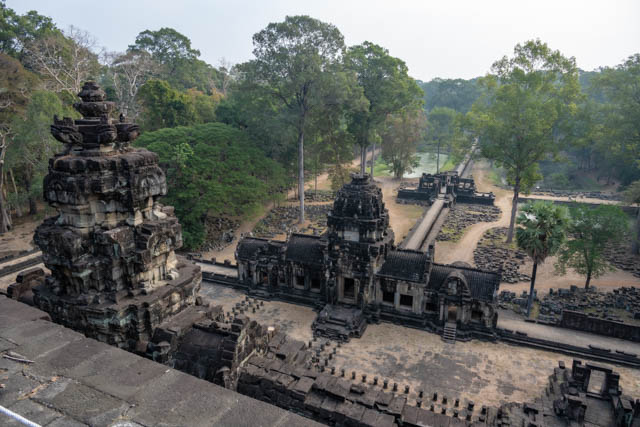
Baphuon is a big blocky temple with a long raised walkway to approach it.
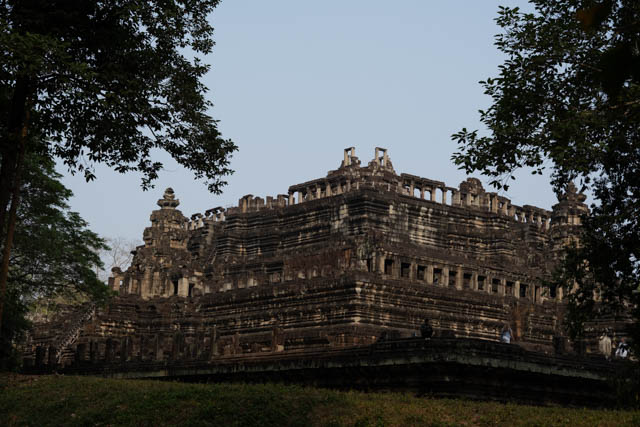
You can climb this temple but like all of the temples in the area it just isn’t quite high enough to see over the tops of the surrounding trees.
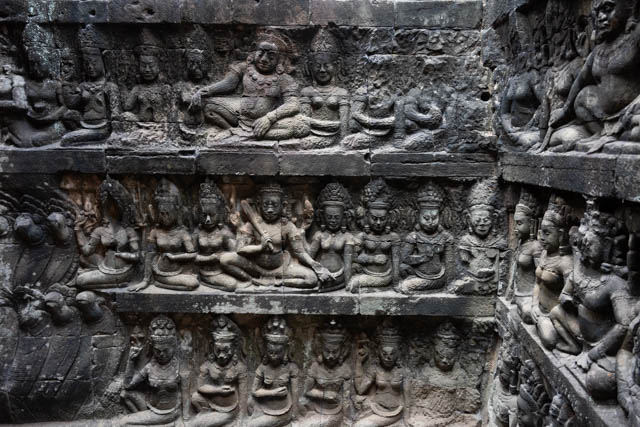
In the same area are the two impressively carved terraces: the Elephant Terrace and the Terrace of the Leper King. It is not known who the Leper King actually was although it is suspected it might have been Yasovarman I.
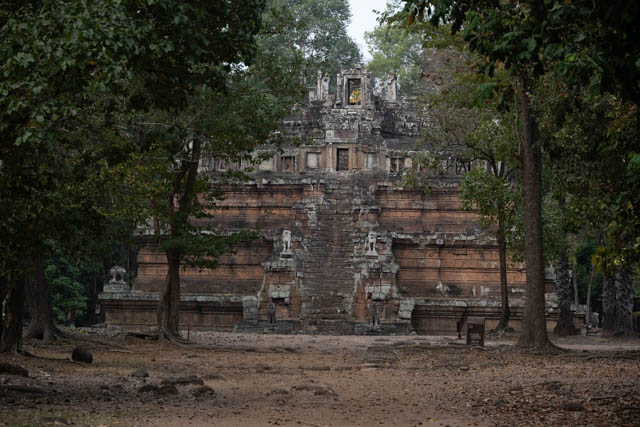
After leaving the city of Angkor Thom we visited a lot of other temples:
Preah Khan
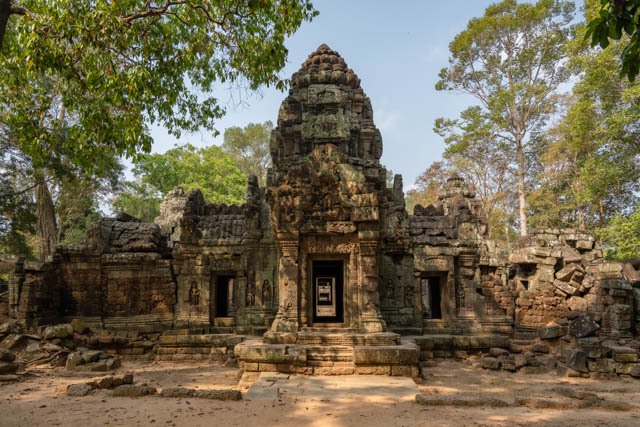
Banteay Prei
Neak Pean
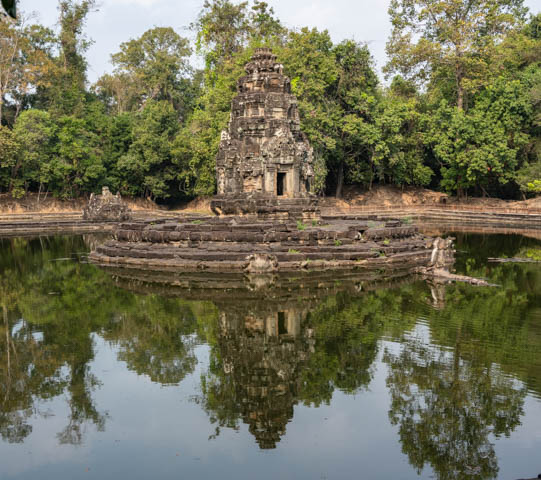
Ta Som
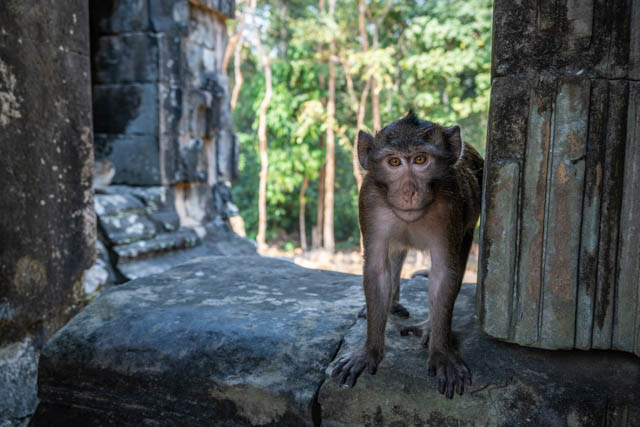
Eastern Mebon
Ta Prohm
Pre Rup
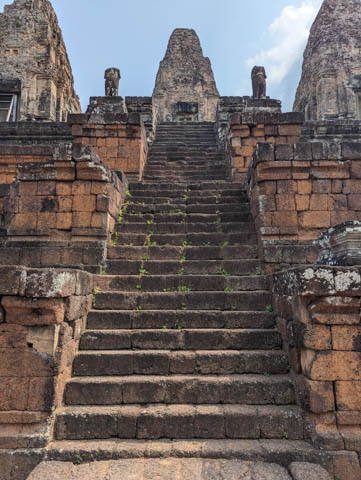
Banteay Samre
Srah Seang
Banteay Kdei
That’s an awful lot of temples but there is a lot of variety in there. Some are big like Ta Prohm which is a kilometre from one gate to the other side and some like Neak Pean are very small (It’s a small temple in a pond on an island). Some are very tall like Eastern Mebon and some are single story like Preah Khan. And they are all in different levels of being swallowed by the jungle, reclaimed and restored.
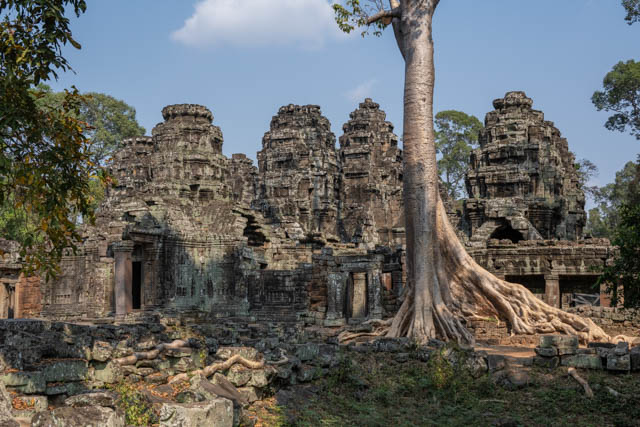
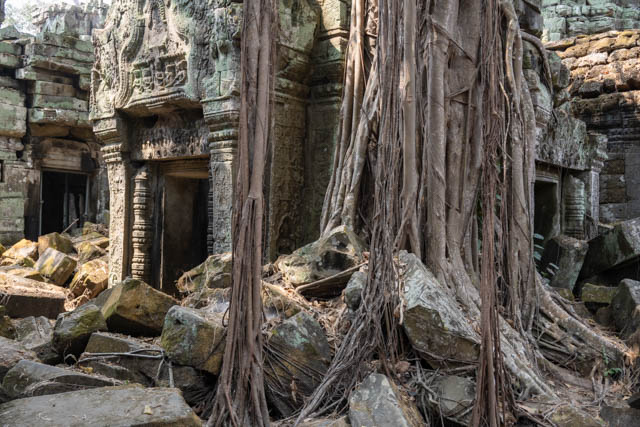
Ta Prohm is probably the most famous of the temples other than Angkor Wat. Its other name is the Tomb Raider temple and it was featured in the tomb raider film starring Angelina Jolie. Construction on Ta Prohm started in 1186 by King Jayavarman VII.

It was abandoned In the 15th century and the jungle took over until restoration works started in the early 21st century. Since then the restoration has been sensitive to the fusion of ruin and Jungle leaving the very picturesque remains today where large trees still grow atop many of the ruins.
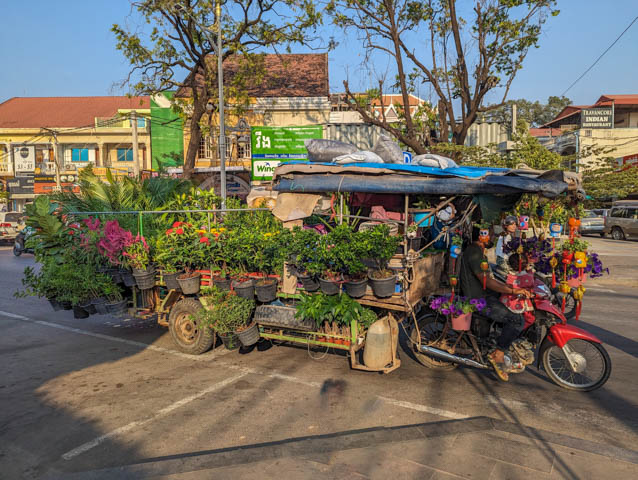
The town of Siem Reap itself is built around wide streets and is fairly quiet. There are very few cars, as these are expensive, and motorbikes have been adapted to many different roles. We’ve never seen such a variety. My favourite was definitely a florist that must have been more than 5m long.
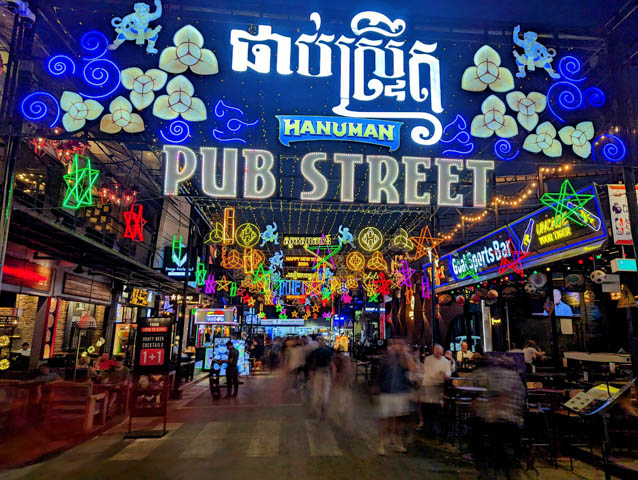
At the centre of town is the lively Pub Street which has the bright lights and music of places like Patong but none of the seediness. It was actually quite a nice place to wander around and have a cheap beer. The best bit was that a beer could be had for as little as USD 0.5.
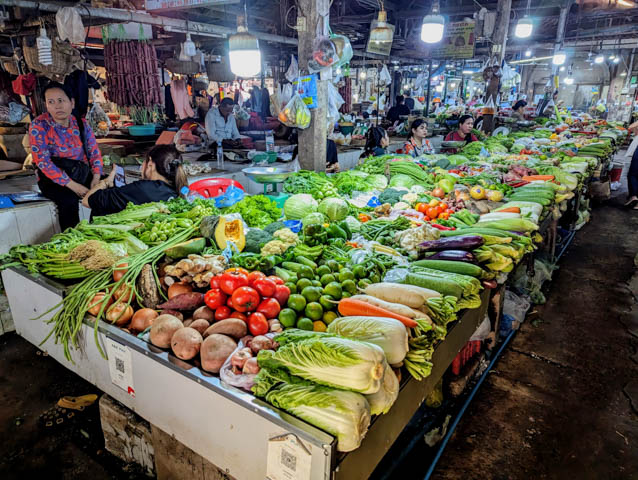
Right next to the Pub Street area is the local market which has the normal tourist tat around the outskirts but inside are the food sellers for the locals where women perch on top of their produce tables offering there wares to anyone that passes by.
We really enjoyed our time in Siem Reap and were really glad to have a few days to enjoy it. Most people seem to fly in and fly out with only enough time to do a couple of days at the temples. This can be exhausting because of the heat and lack of shade in many of the ruins. We took a day off between our visits and enjoyed the pool (and pool bar) which made us much more enthusiastic when we visited the temples.
Our time in Cambodia was over for this visit but we’ve seen enough of the country to want to come back and travel more widely next time. For now we were heading to Vietnam and the sweltering heat of Ho Chi Minh City.
Bangkok Nights (and Days)
Our next destination after Thailand is Cambodia but in order to get there we had to transit through Bangkok. Rather than just fly straight through we decided to take a couple of days to see the sights but we didn’t allow too long as Bangkok has a reputation as smelly, busy and not that interesting.
I had been to Bangkok in the nineties at the start of a round the world trip and it was my first time travelling out of Europe. I had found it meltingly hot, overwhelming and had a pretty miserable time of it. Fortunately the trip picked up when I reached my next destination of New Zealand.
Being a lot older and a little wiser I wanted to give Bangkok another try and it was a massive surprise – in a good way. We stayed in the Khao San road area, where I had stayed last time. Gone are the all night full volume electro beats, the harassing tuk tuk drivers and the massive culture shock. I think 30 years of travel experience has probably helped but the area itself has also changed a lot, having been cleaned up and gentrified.
The time of year also probably helped, although it is hot the crippling humidity of my last summer visit just isn’t present.
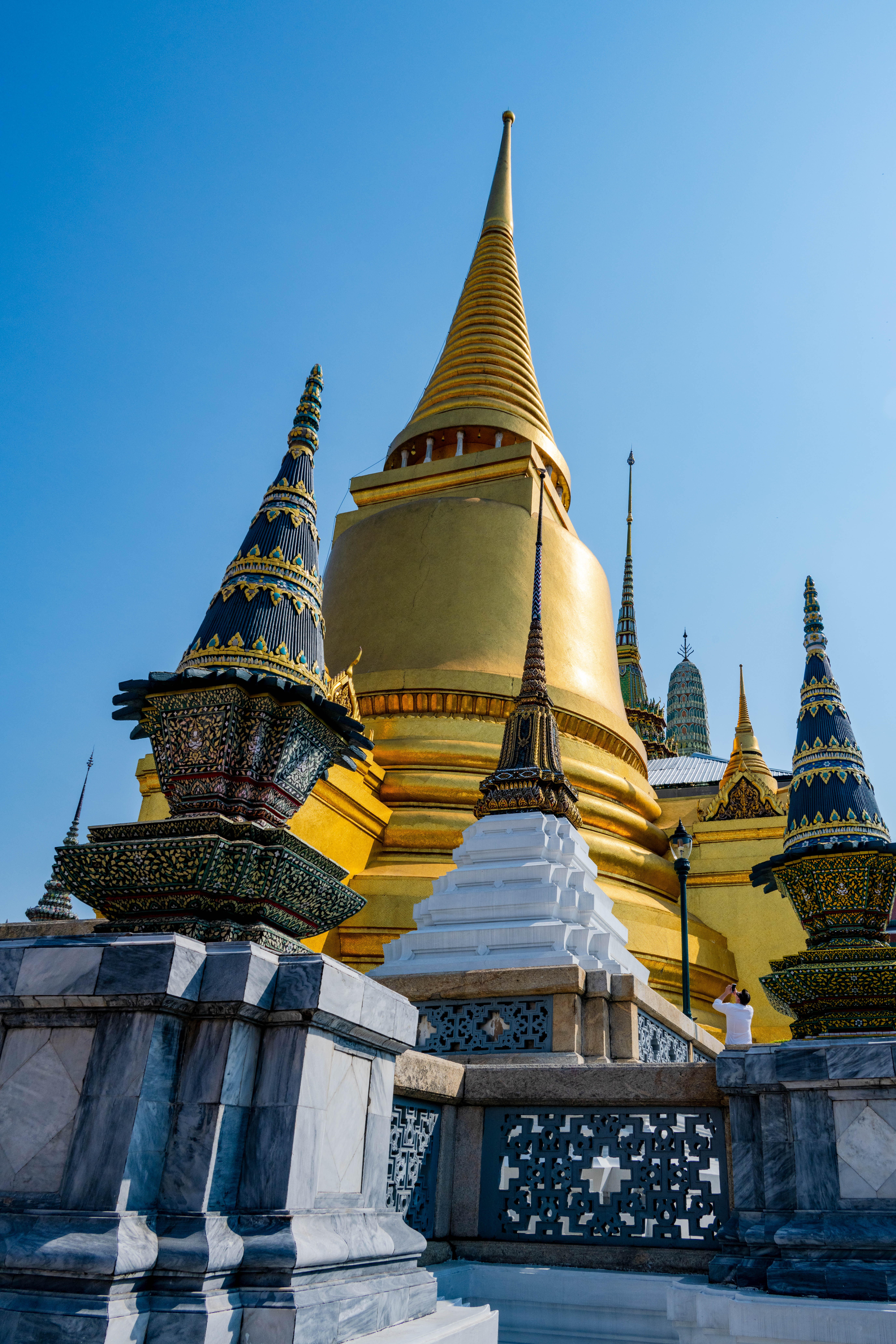
Day 1 of our plan was to visit the Grand Palace and Wat Pho, which are close to each other and only a 10 minute Tuk Tuk ride from where we were staying.
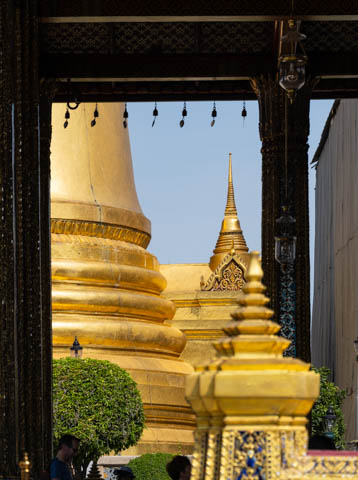
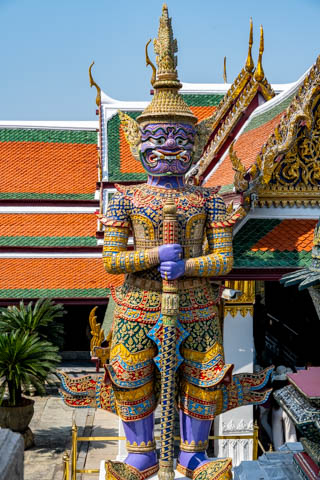
The Grand Palace is stunning but it was absolutely swarming with people making any serenity hard to find. The Grand Palace has been the official residence of the Kings of Siam (latterly Thailand) since 1782. The Kings, his court and the royal government were sited here until 1925 but it is still used for official functions.
The Grand Palace consists of a number of separate buildings spread over a large area, 218,000 sq meters and is enclosed by a wall. However there is an inner court area which is open to the public that contains most of the important buildings.
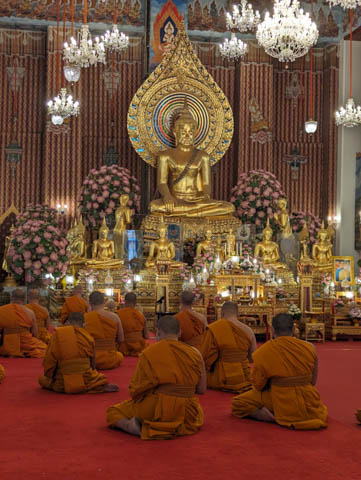
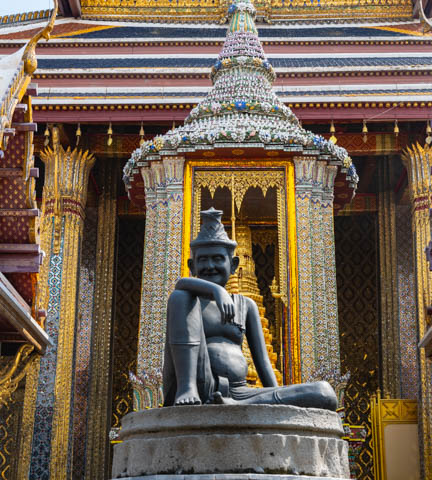
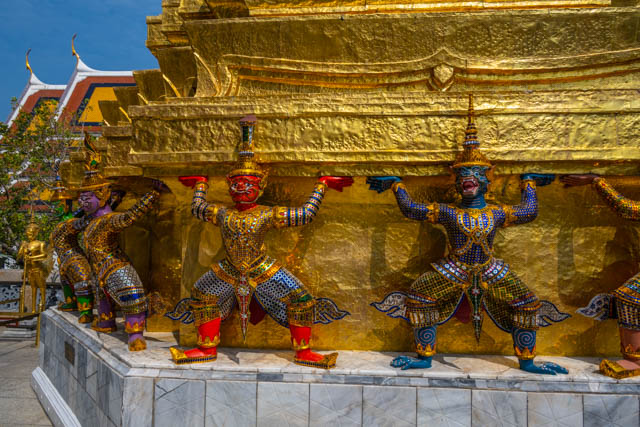
This includes the temple of the Emerald Buddha or to give it its proper name Wat Phra Sri Rattanasasadaram. This is the royal chapel and at its centre is a figurine of the Buddha made from green jade, and clothed in raiment’s of gold and diamonds.
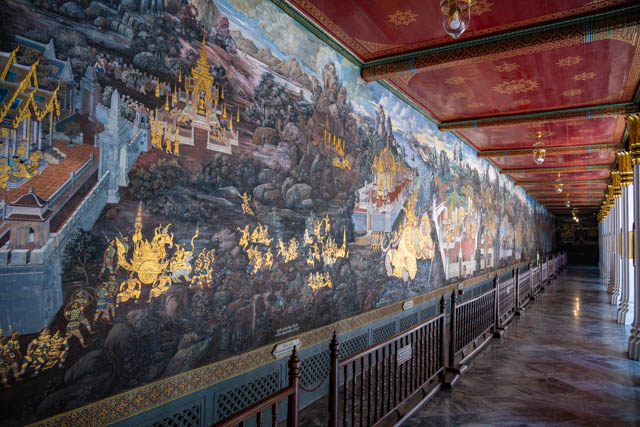
Surrounding the inner courtyard is a covered walkway which is painted with a classic Thai story of Good and Evil, The Ramakien. In all, there are over 2km of murals depicted. The first paintings were started in 1783 but they have been constantly touched up and indeed when we visited there were several painters working on restoring the murals.
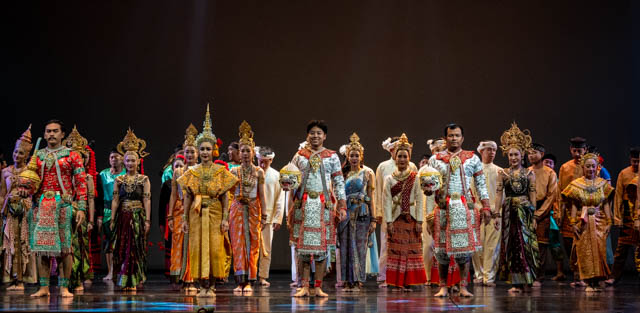
Part of the ticket to the Grand Palace included a free traditional dance show, so on leaving the Palace we jumped into n a small shuttle bus to take us to the theatre for the show.
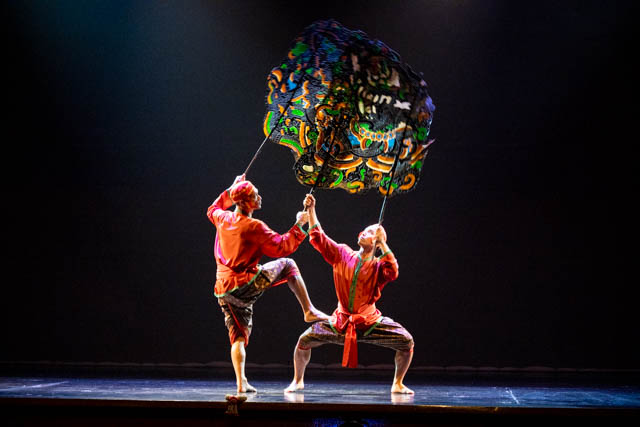
The show was very good, culminating in a dance story of how Hanuman conquered a Sea Nymph to allow a bridge to be build which was well-told with plenty of audience interaction.
Our next stop in Bangkok was Wat Pho or to give it is proper name, Wat Phra Chetuphon Wimon Mangkhalaram Rajwaramahawihan.
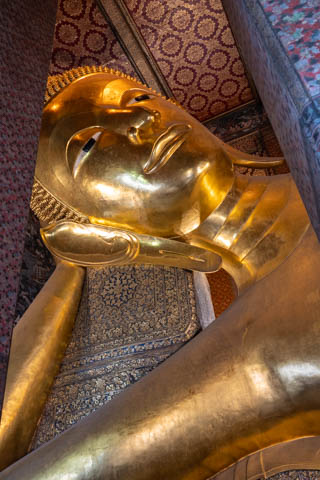
This is the home of the massive Reclining Buddha which is 15m high and 46m long.
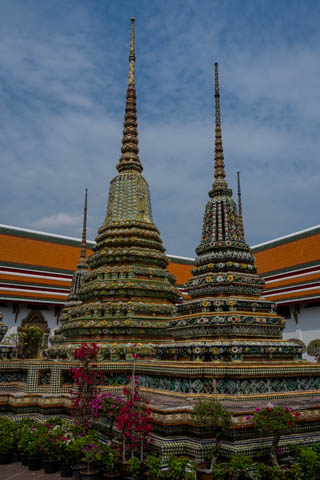
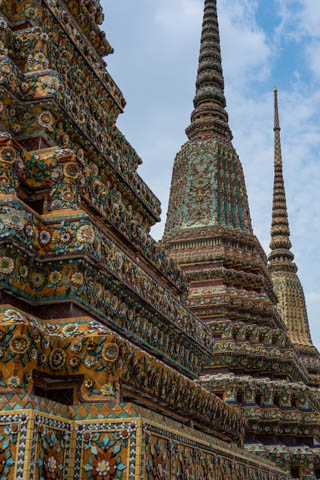
Wat Pho is one of the largest, oldest and most sacred temples in Thailand. It consists of many buildings in the large compound and some really large Chedis (tower structures) know as the Giants.
While in Bangkok we also wanted to visit a floating market. The best floating markets are outside the city so we signed up for a tour.
We were picked up at 7am in a small minibus and driven for around 90 minutes, through terrible traffic, to the first stop.
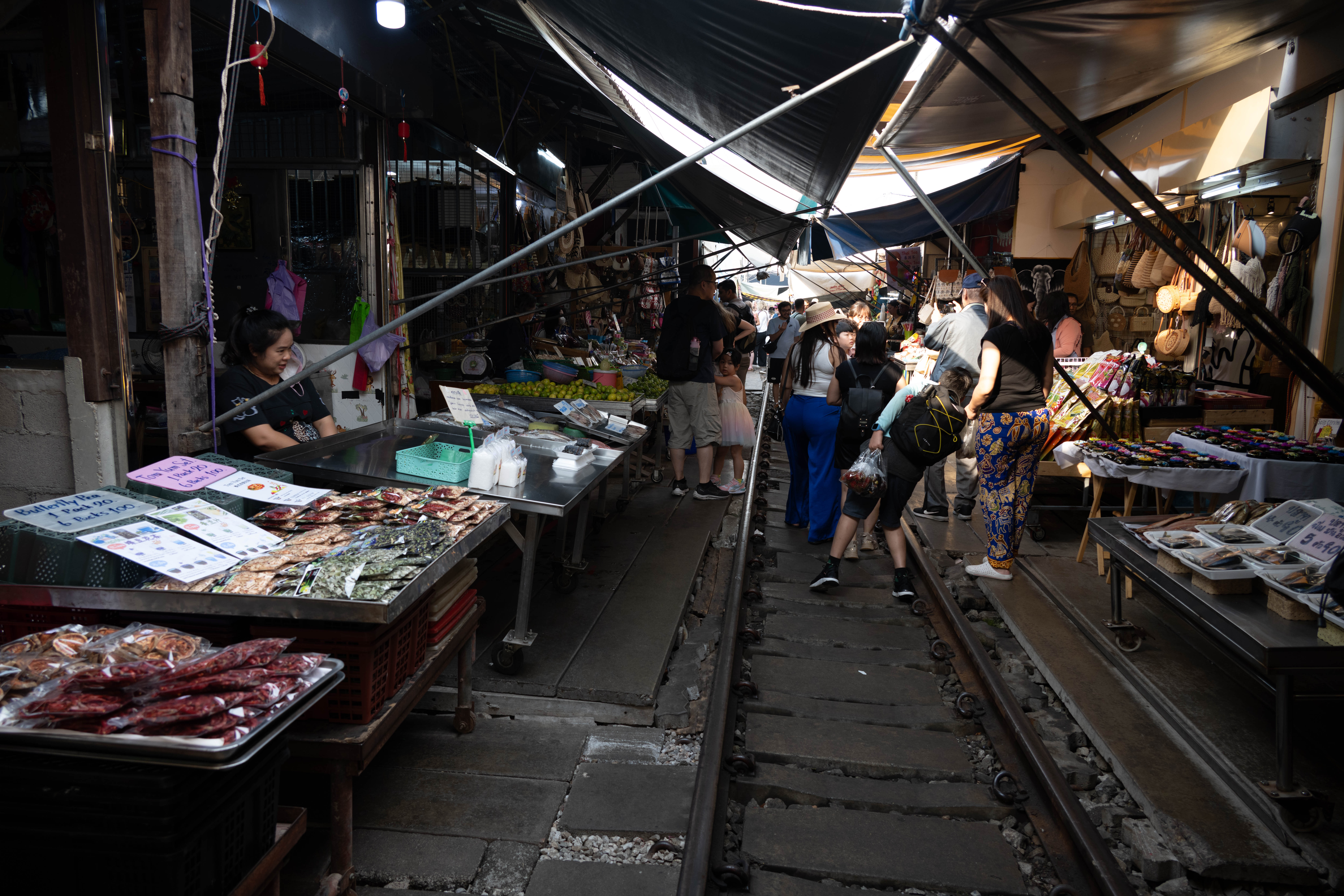
This was the train market or the Maeklong Railway market. This is a relatively small market but a fairly unusual one in that the market stalls are setup either side of a train track. The market very much encroaches on the tracks meaning that when a train comes along (4 times a day) the stall holders have to pack up their stalls to make room for the train to pass through.
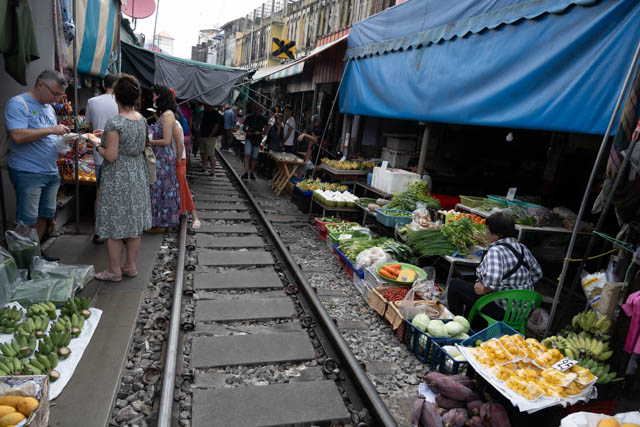
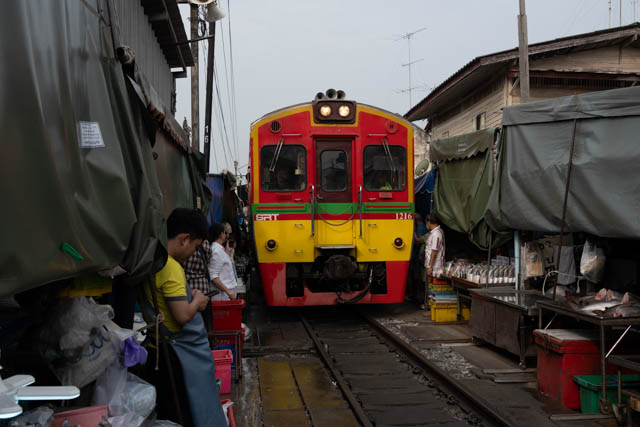
Once the train has gone past the market comes back to life and in a couple of minutes the stalls are open as if the train had never existed.
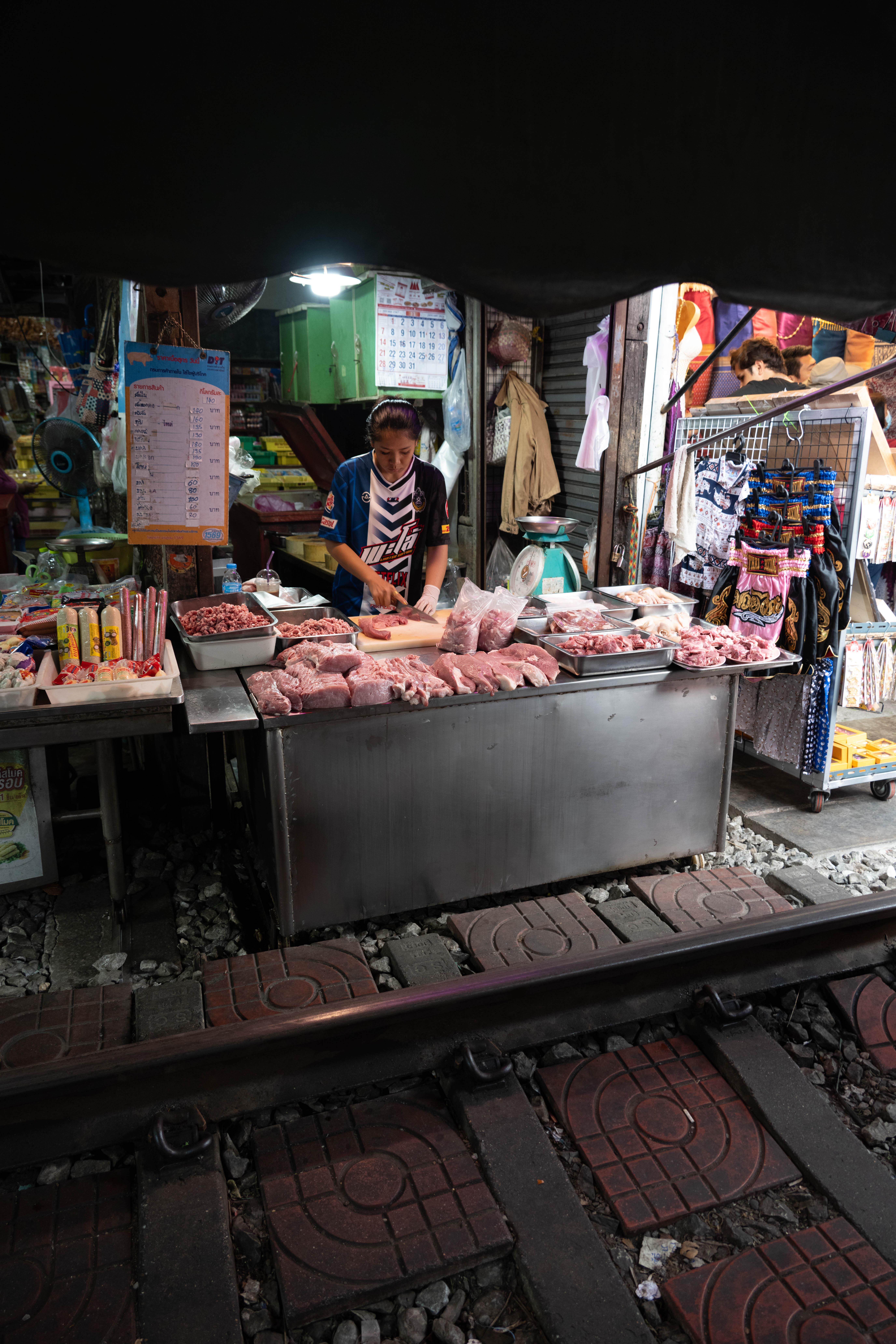
This was a pretty quick stop on the tour as we arrived 30 minutes before a train was due to arrive and left 15 minutes after the train passed through but is was definitely an interesting and enjoyable detour.
Back on the minibus for another 20 minutes or so and we had reached a small dock by a canal where we were transferred by longtail boat to the floating market. We flew through the canals and rivers, the engine of the longtail screaming until we arrived at the dock for the Damnoen Saduak Floating Market.
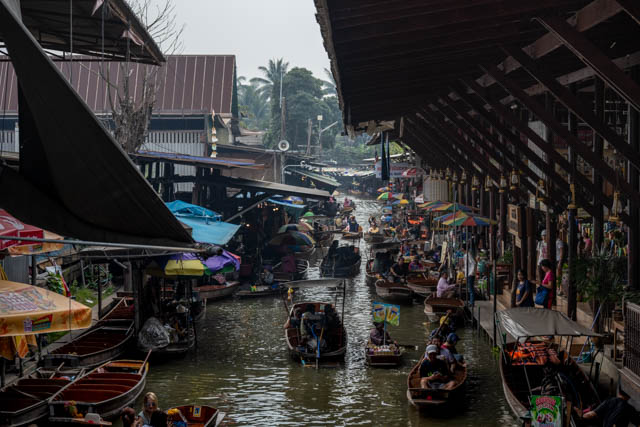
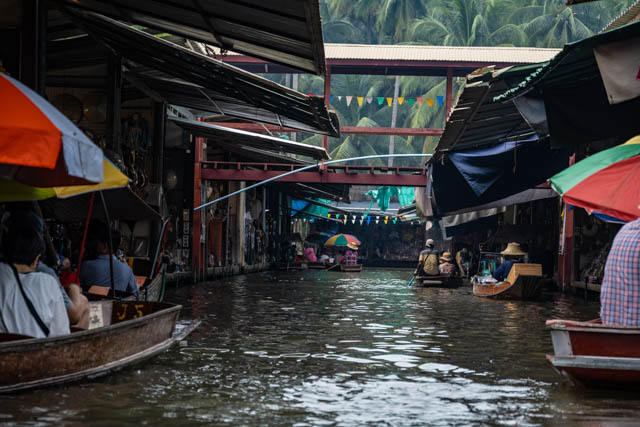
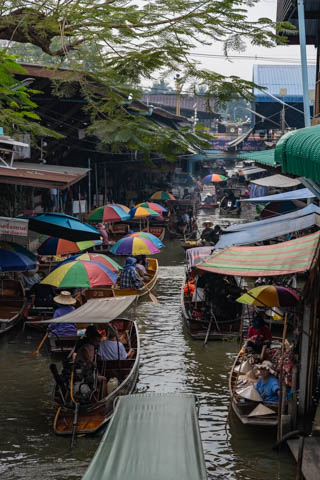
The market is split between areas that can be accessed from the banks of the canals and areas that can only be accessed from the water. The canals themselves were chaotic with lots of boats, some longtails with noisy engines but mostly row boats.
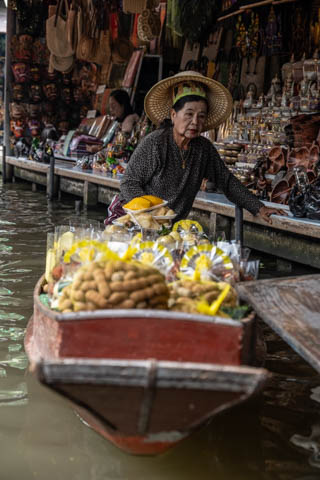
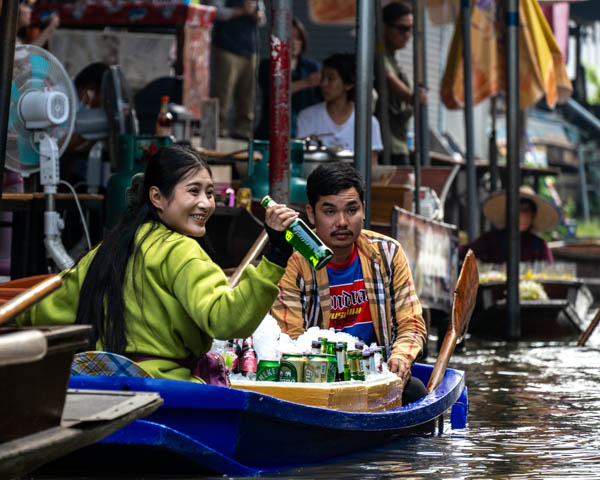
We decided to jump in a small row boat to get a tour around the market. After we had set off into the chaos of the main channel we very quickly passed a boat with a lady selling drinks. A quick beer for the journey was procured !
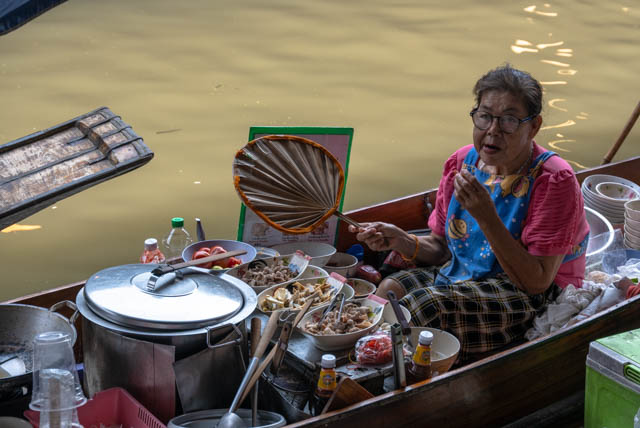
We slowly moved past all sorts of stalls and small boats where the stall/boat holders were managing to produce full meals from tiny woks in their floating kitchens.
Some of the stall holders would deploy long hooks to pull the boats in, enabling them to hawk their wares more easily.
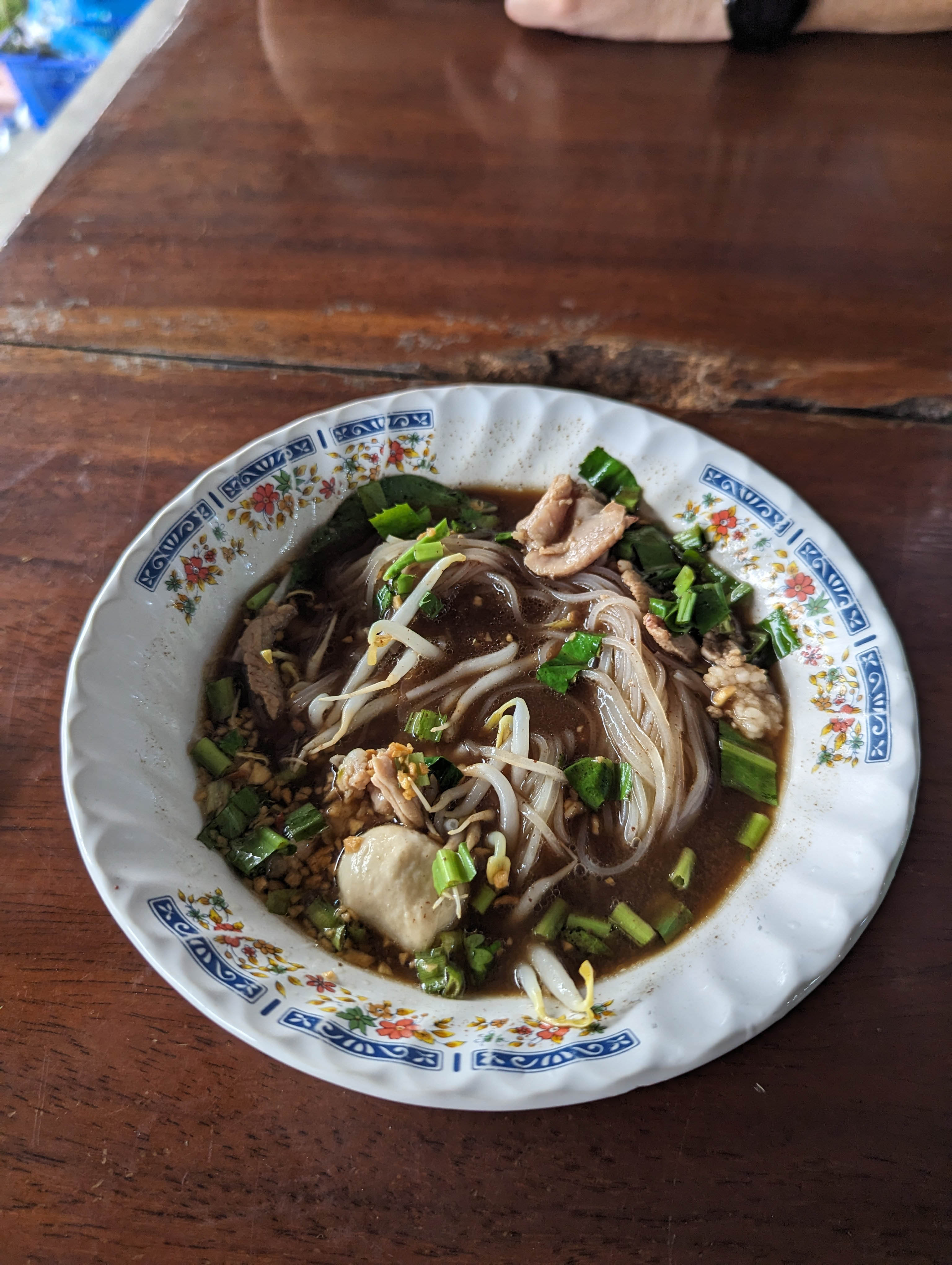
After our boat trip was finished we walked around the on-land portion of the market and bought some lunch from one of the tiny boats. I had ‘Boat Noodles’ which is a traditional dish from Bangkok’s canals. It was really rich tasting being seasoned with pig blood and it was pretty fiery !
Unfortunately our time at the market came to a close too soon and we had a 2 hour, very bouncy and uncomfortable minibus ride back to the centre of Bangkok.
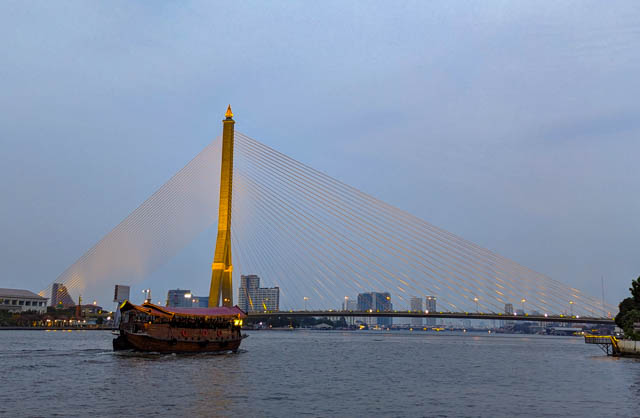
On the morning of our last day, we had a couple of hours to kill before heading to the airport for our flight to Cambodia so we decided to take a boat ride down the Chao Praya river. This is a major thoroughway with lots of commuter boats heading up and down the river.
We jumped on one boat and enjoyed a trip of a few kilometers up the river to Chinatown. A quick explore of Chinatown and then we were back on a boat to take us back to our hotel.
Unfortunately our quick trip to Bangkok was over. We actually wished we had more time there to continue exploring. I am so glad I decided to give Bangkok another chance and we are pretty sure we will be back but for now, it is on to the next destination, Siem Reap in Cambodia.
I have set up a FromAtoB instagram account for 2024 (fromatob2024) and have been doing a picture a day from our travels. If you are interested head on over to Instagram and do a search for “fromatob2024”.
Phuket’s Beaches
Our first stop on our tour of the west coast of Phuket was Kata Beach. This is a fairly family friendly area with a relatively toned down night life.
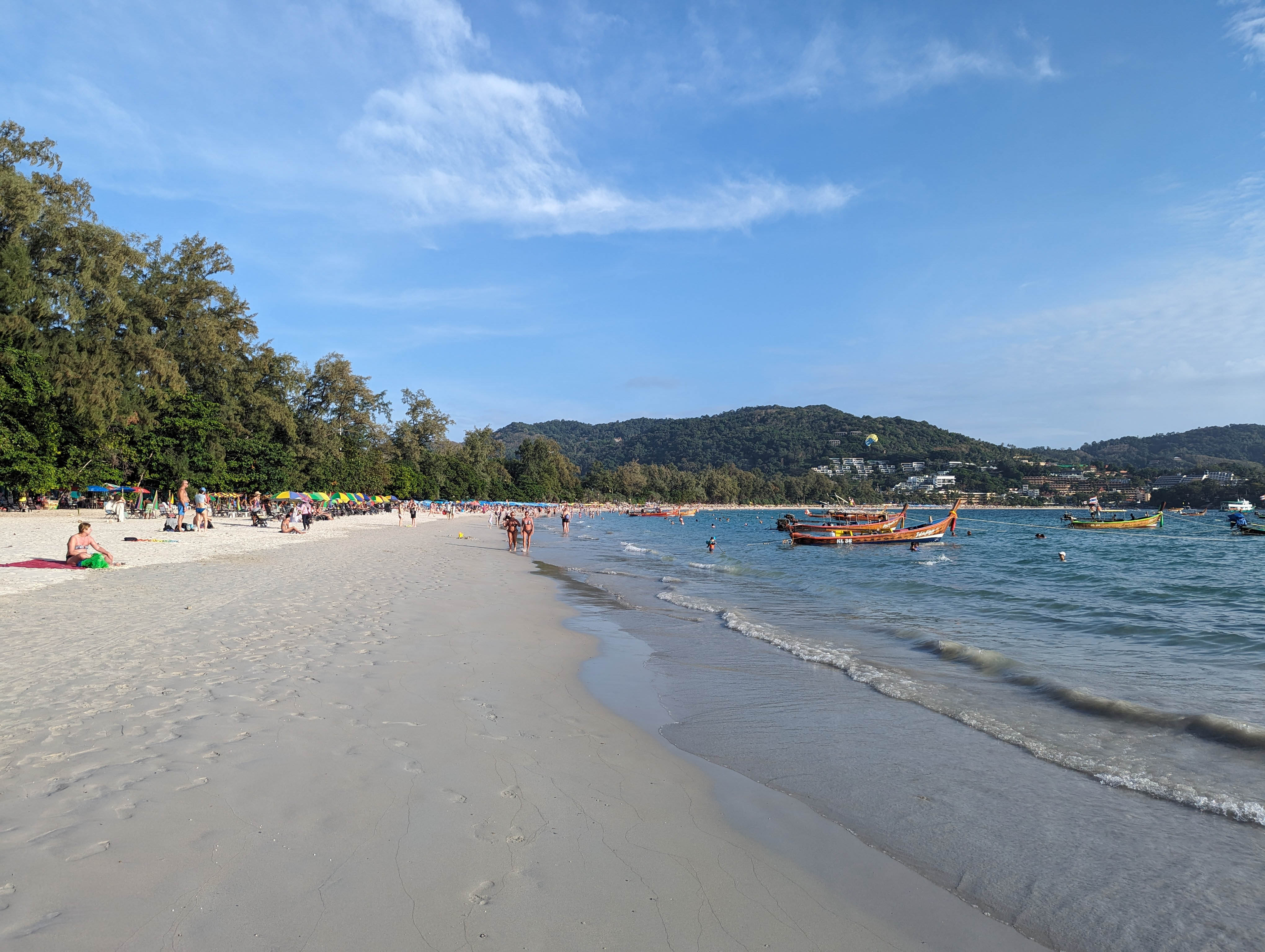
This doesn’t stop the beach being busy and the sunloungers being full by 9am in the morning. The beach is around 1 mile long but pretty much the whole length is full of people and its not brilliant for swimming as the water is fairly shallow.
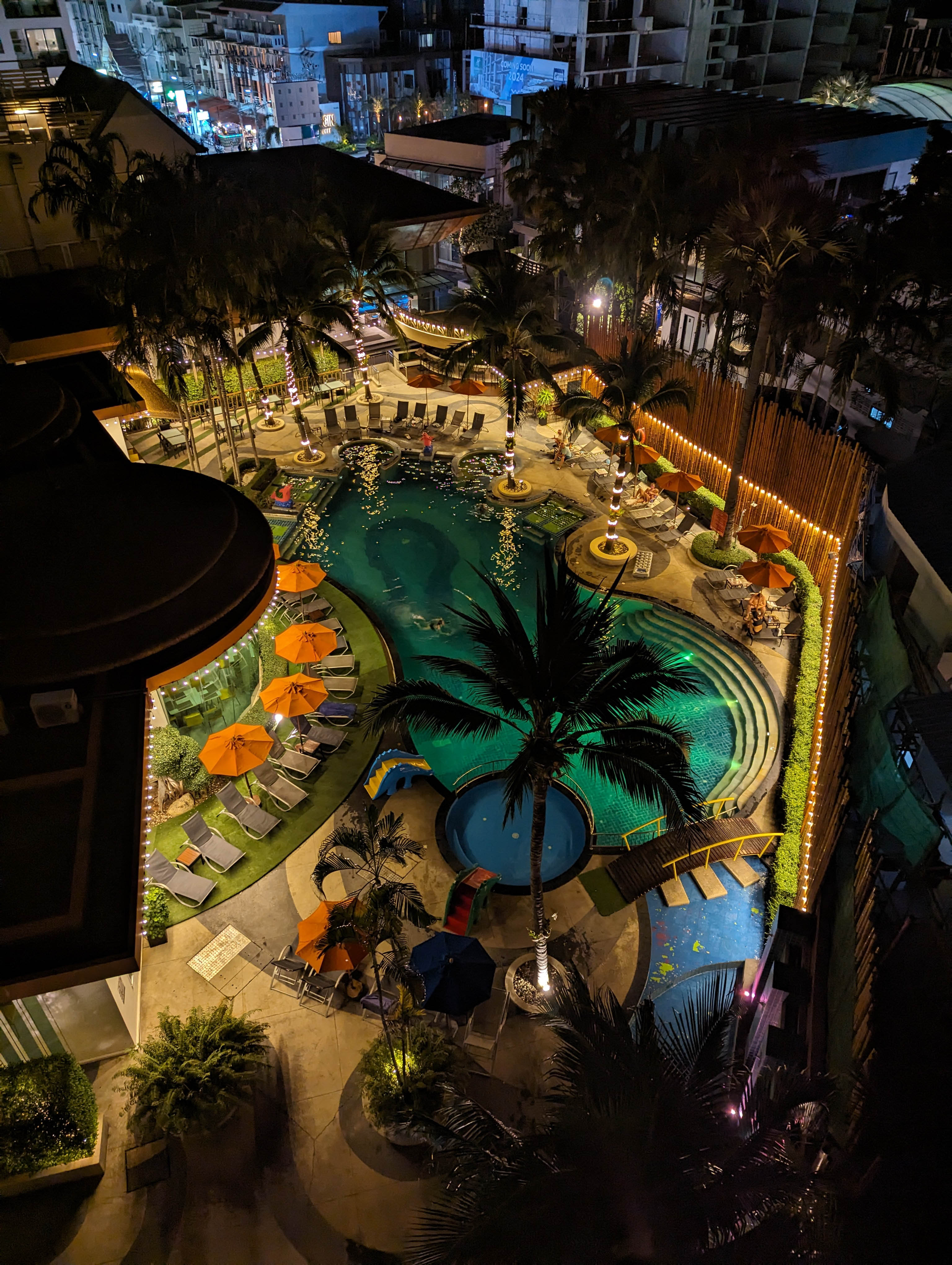
Fortunately we had booked an Airbnb which was a room in a hotel complex with a big pool surrounded by sunloungers. The perfect place to enjoy the sun and heat while thanking our lucky stars that we were away from the incessant storms battering the UK.
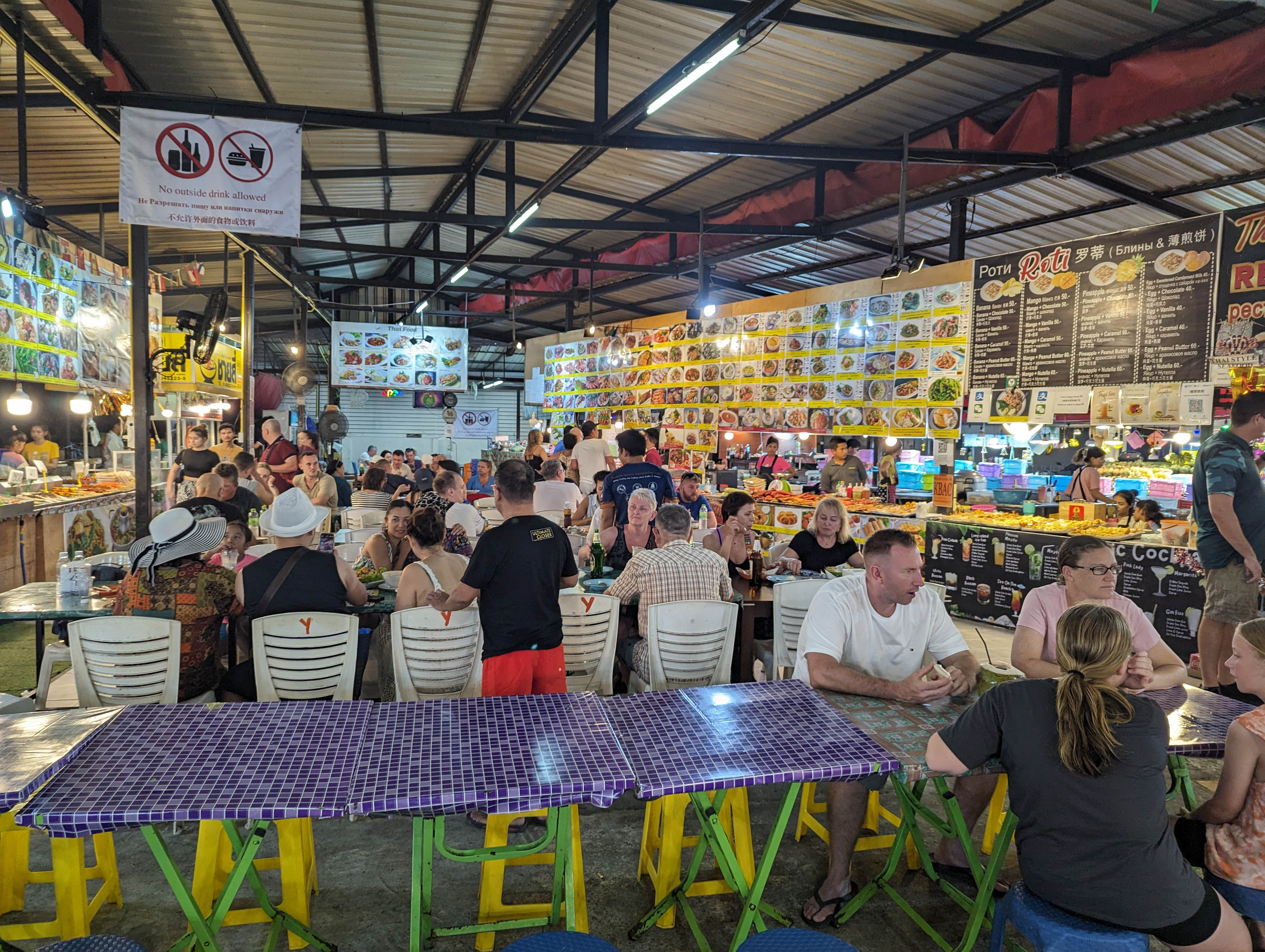
The street that our hotel was on had two night markets on it with a selection of restaurants and street food vendors to visit.
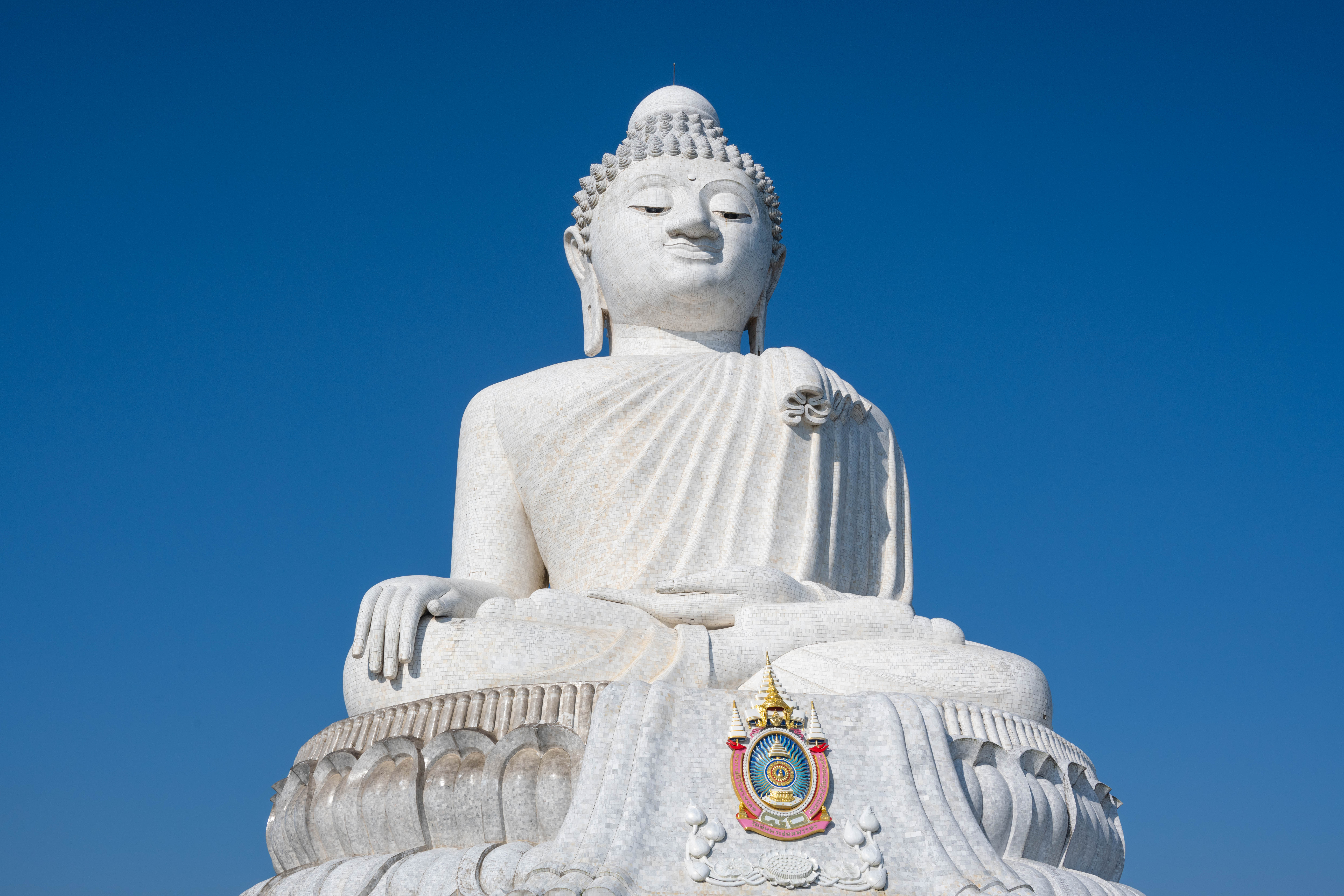
Kata beach hasn’t really got anything interesting for tourists other than the beach although up above the town at the top of a hill is the Big Buddha. This statue is relatively modern having been built in 2004 at a cost of around £1 million. Its 45m high and covered in marble. However it is still only the third tallest statue in Thailand.
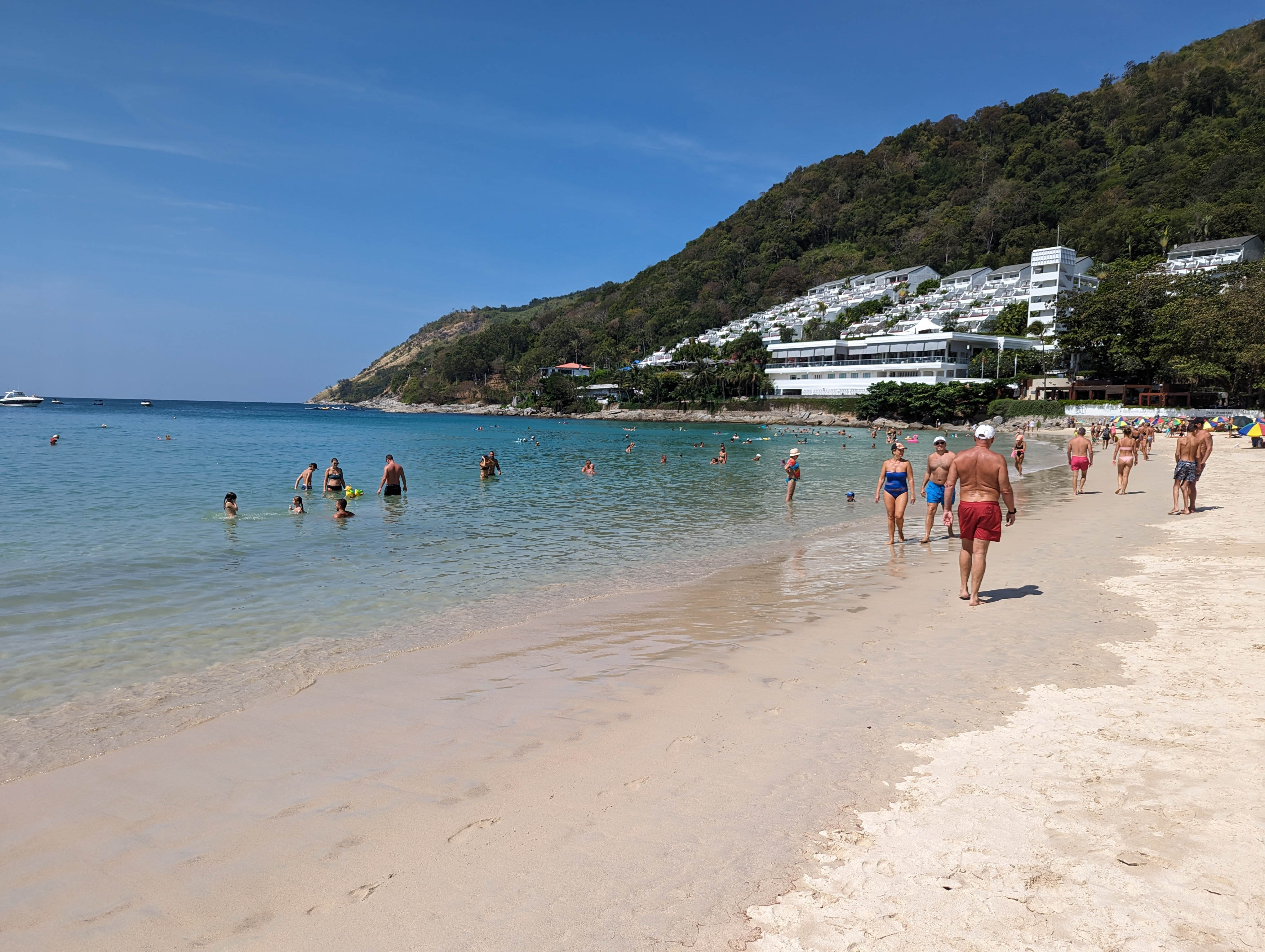
We visited Nai Harn Beach which is south of Kata and meant to be one of the best beaches on the island. To be honest though it wasn’t much different from Kata Beach (or Karon beach which is the next beach North from Kata). It was busy with lots of tourists and the water wasn’t very deep but the sand on the beach was lovely.
We had a relaxing time in and around Kata but after a week it was time to move on. We weren’t going far though, just 20 minutes up the coast to the hub of tourism in Phuket, Patong Beach.
If Kata beach is family friendly Patong feels like the opposite. Its loud, brash and bright with a pulsating if seedy feel.
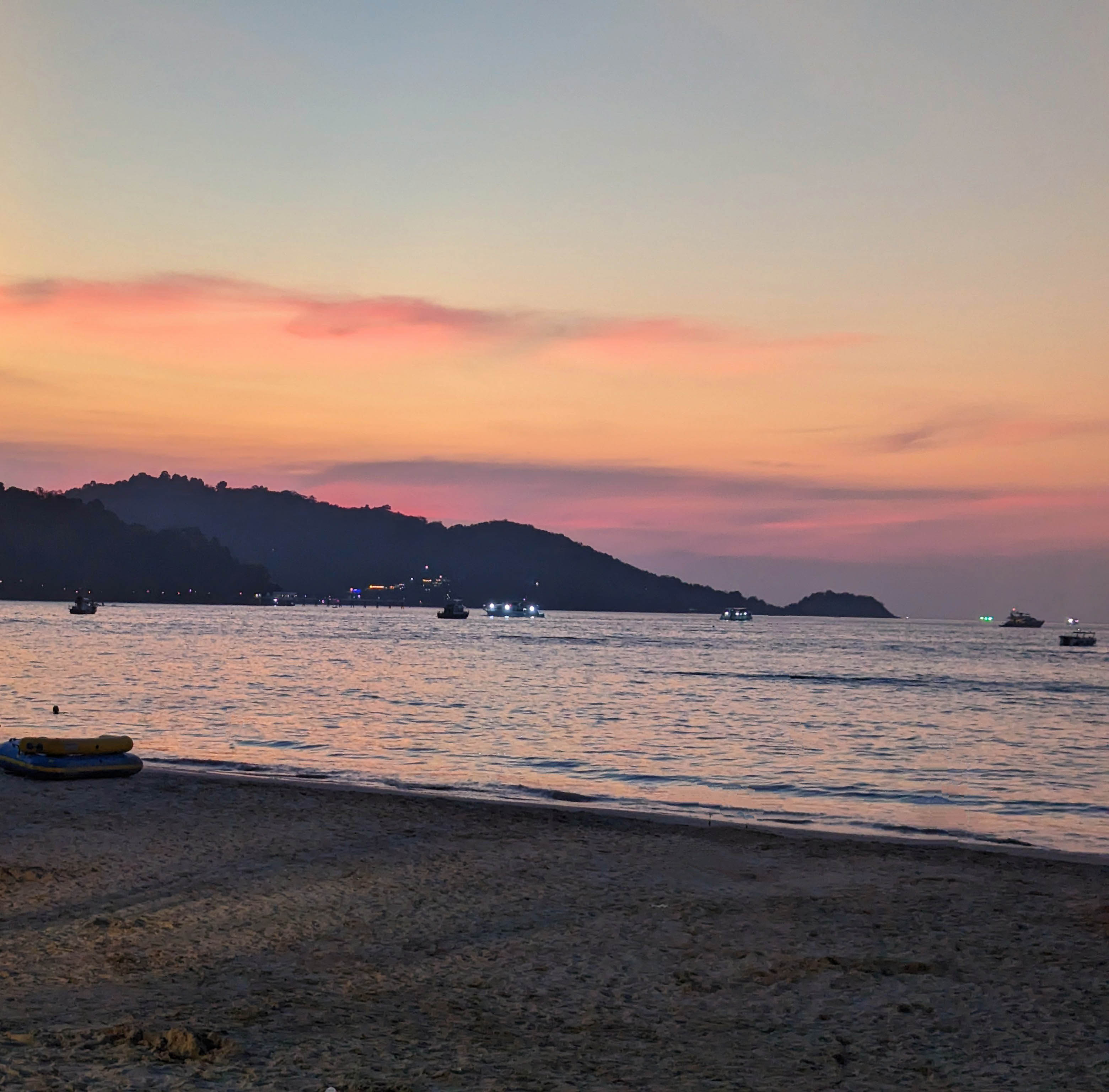
The beach itself is fairly small compared to the others, although stretching a good few kilometres along the coast and it is very busy, with jetskis, parascending, motorboats and plenty of people. Most days there is also a least 1 cruise ship parked in the harbour.
The seafront is packed with restaurants, bars and hotels but it is really back from the seafront where the real Patong lies.
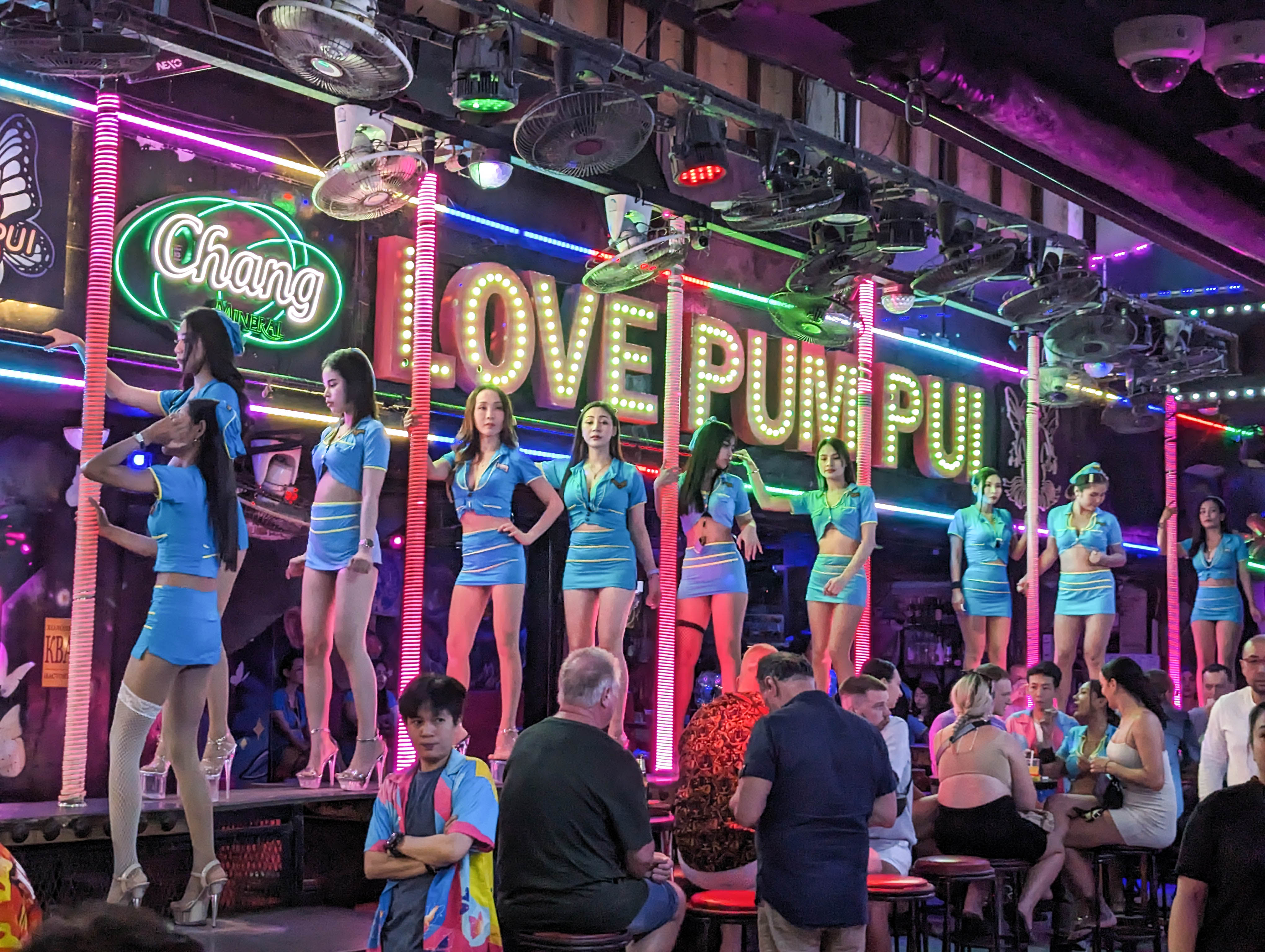
The (in)famous Bangla Walking street leads away from the beach and is 500m of bars, go-go bars, shows, nightclubs and marijuana shops. Its neon, loud and very in your face. After dark it fills up and there are constant crowds moving up and down the street.
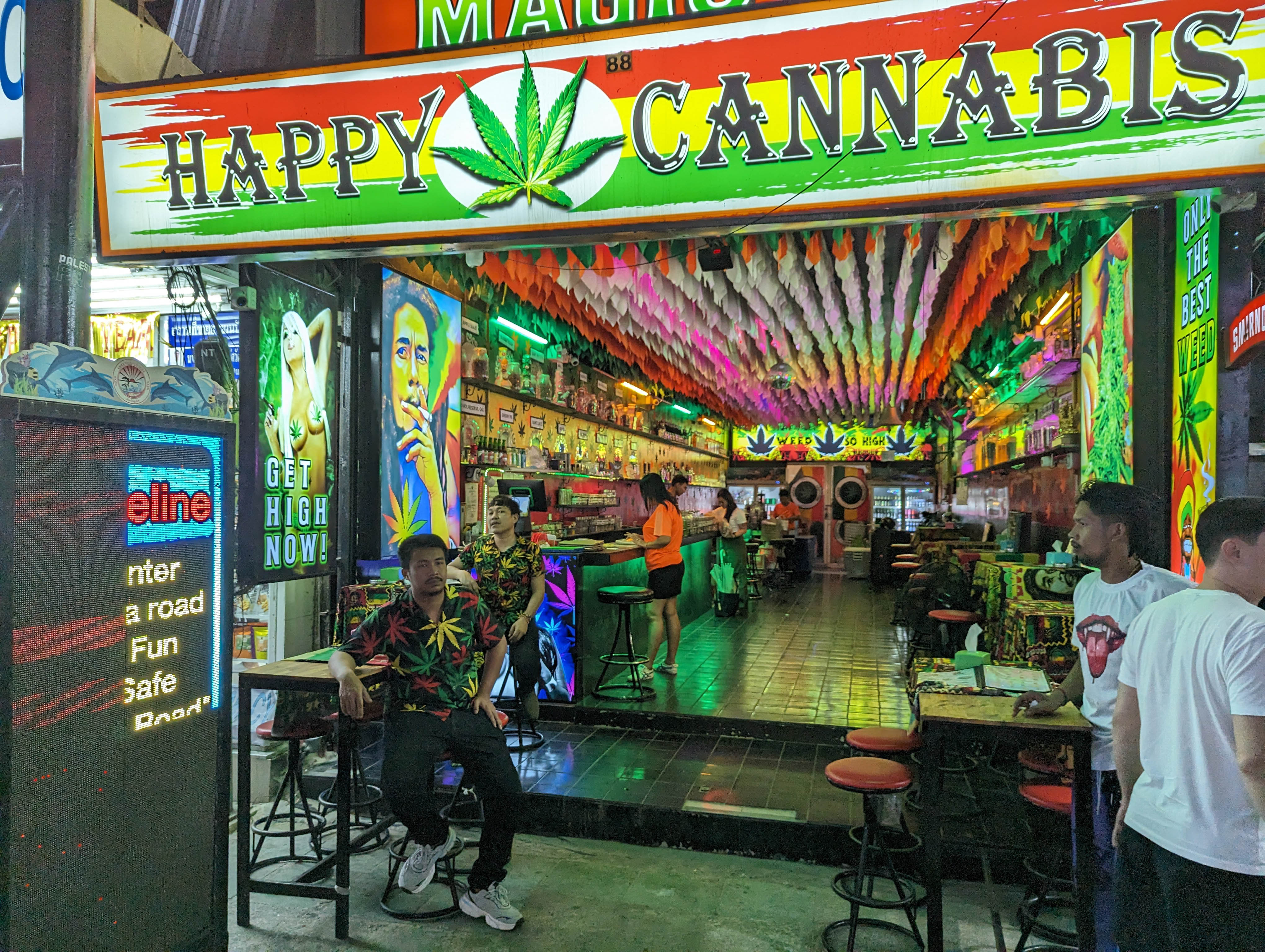
The roads surrounding this street are filled with massage shops with women chorusing “massage” as you walk by and some grabbing your arm in their attempts to lure you inside.
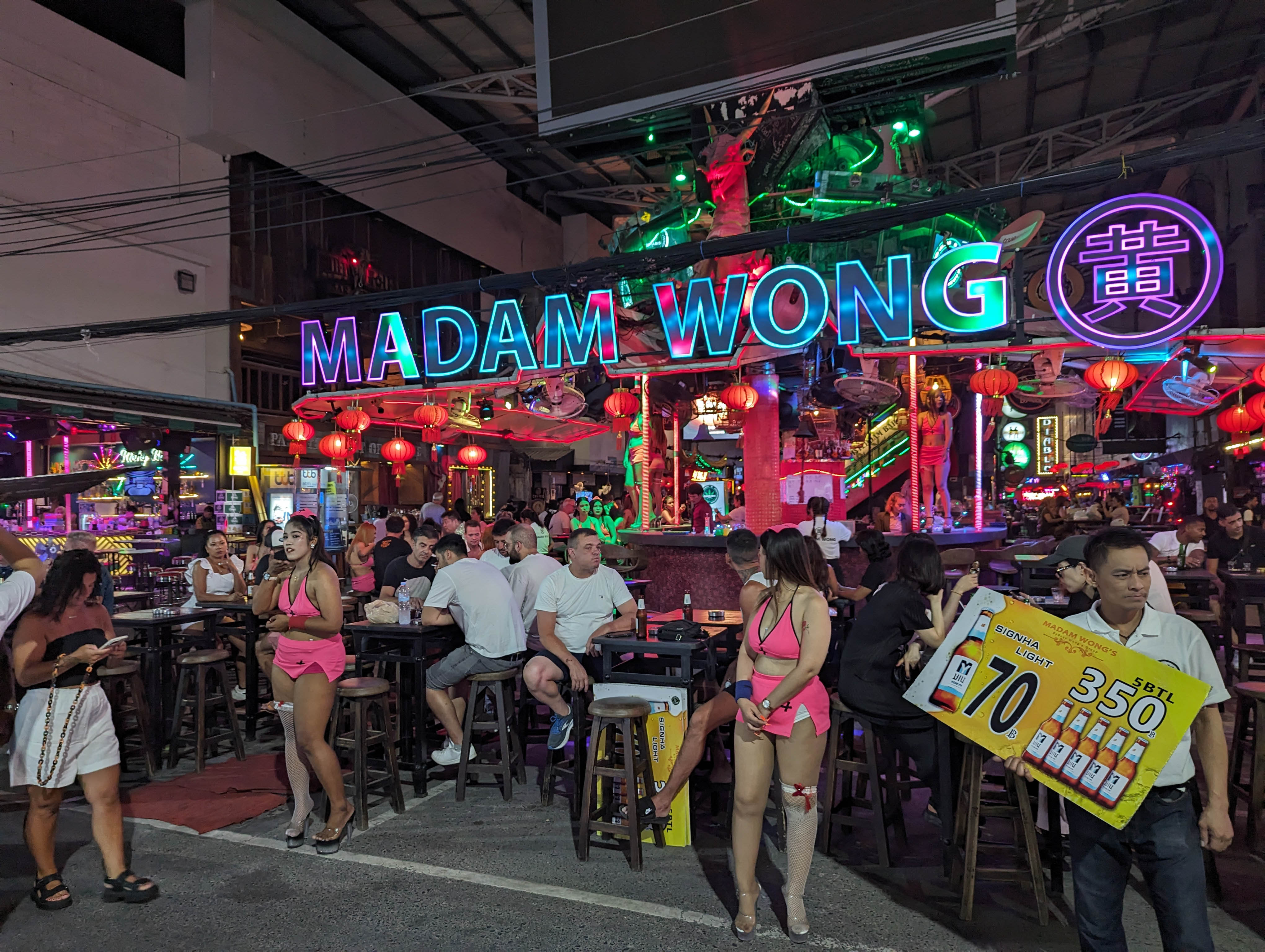
Our Airbnb was above a tailors at the end of a dead end street just 100m from the beach. Even this ‘quiet’ road had 5 massage shops, 3 marijuana bars, a karaoke bar, 3 restaurants and a normal bar.
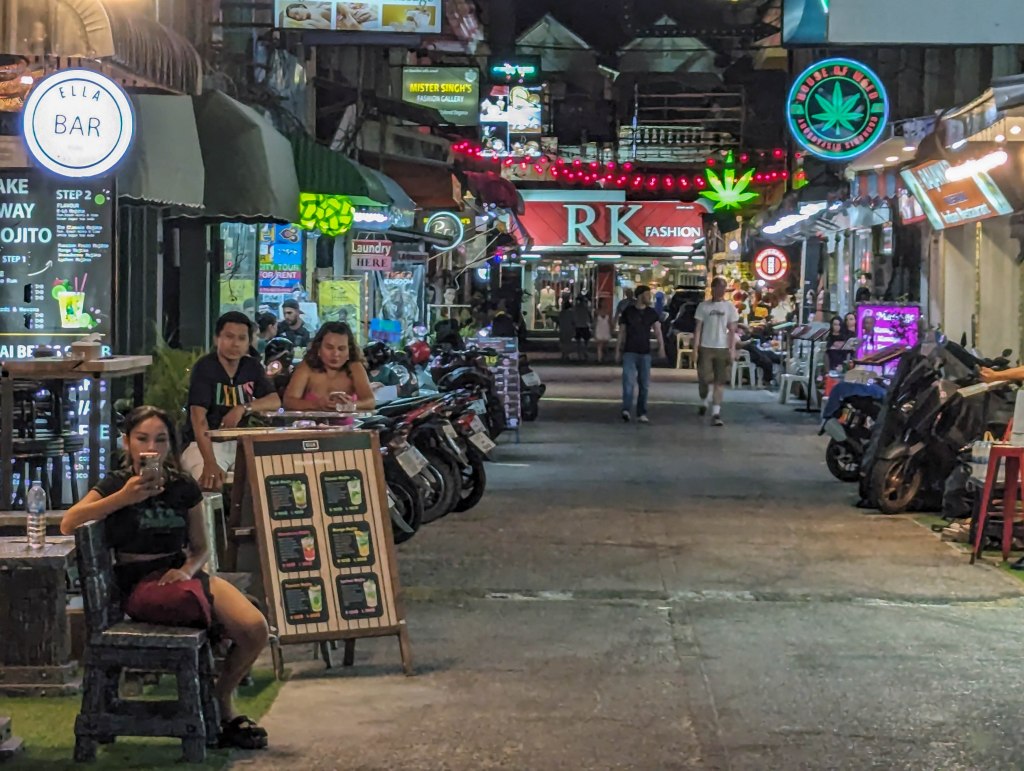
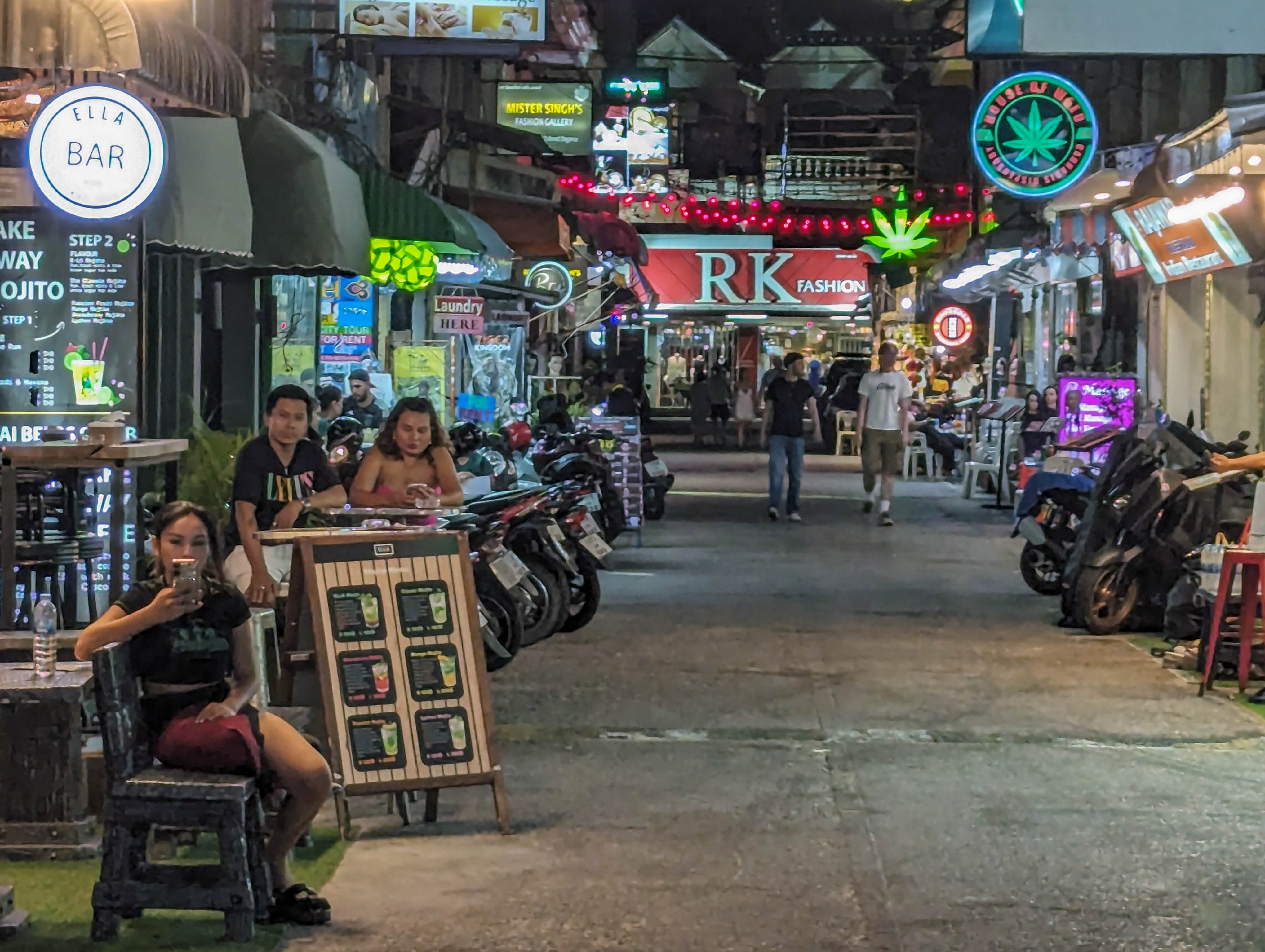
We would probably have appreciated Patong much more if we were 20… well let’s be honest, 30 years younger and unfortunately our Airbnb was pretty grim as well. So we spent most of our time in Patong trying to get out of Patong (not so easy as the traffic is horrendous) by booking tours and hiring a car for a few days. Although of course, we couldn’t come to Patong and not visit its most famous dance show.
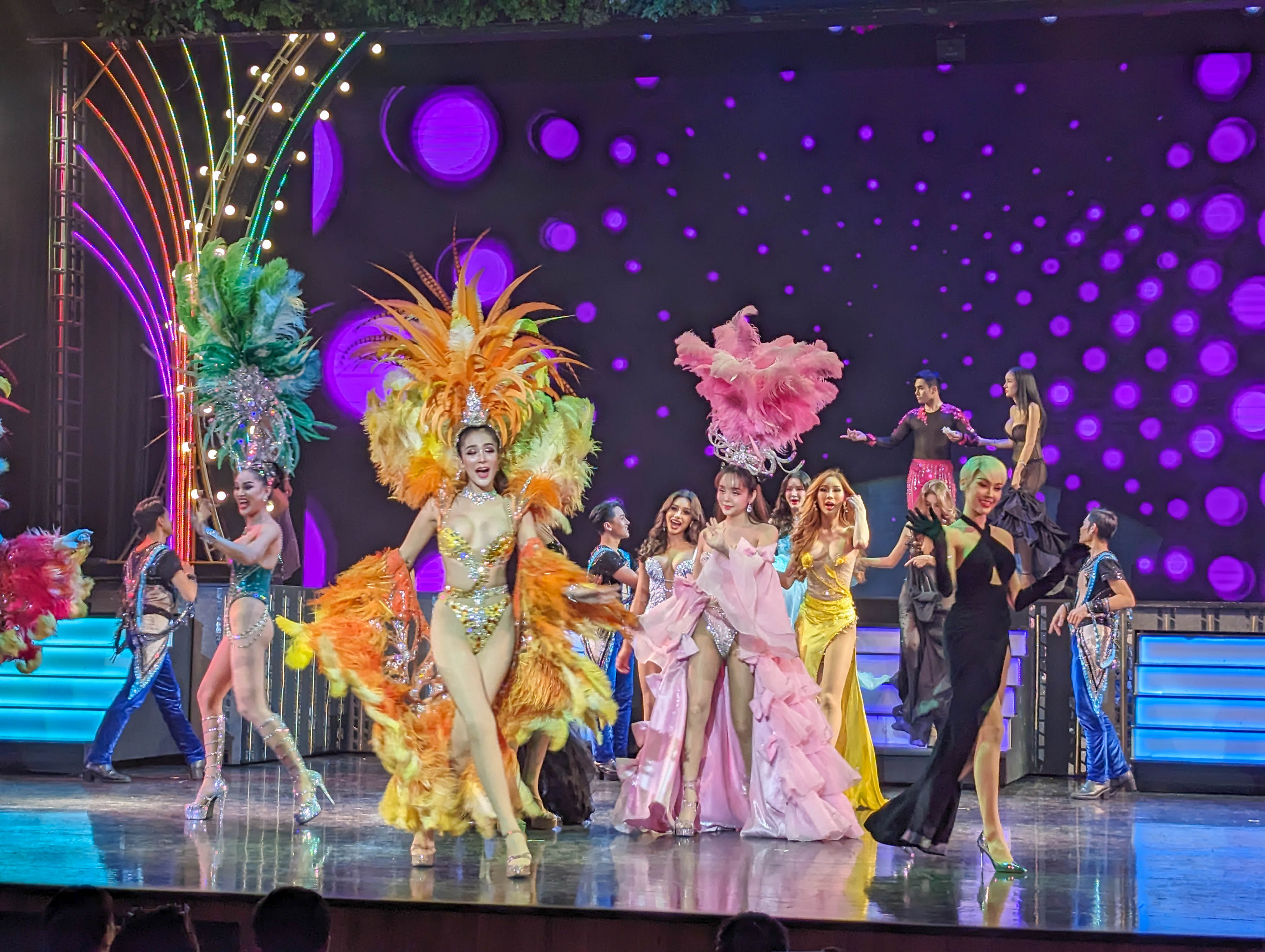
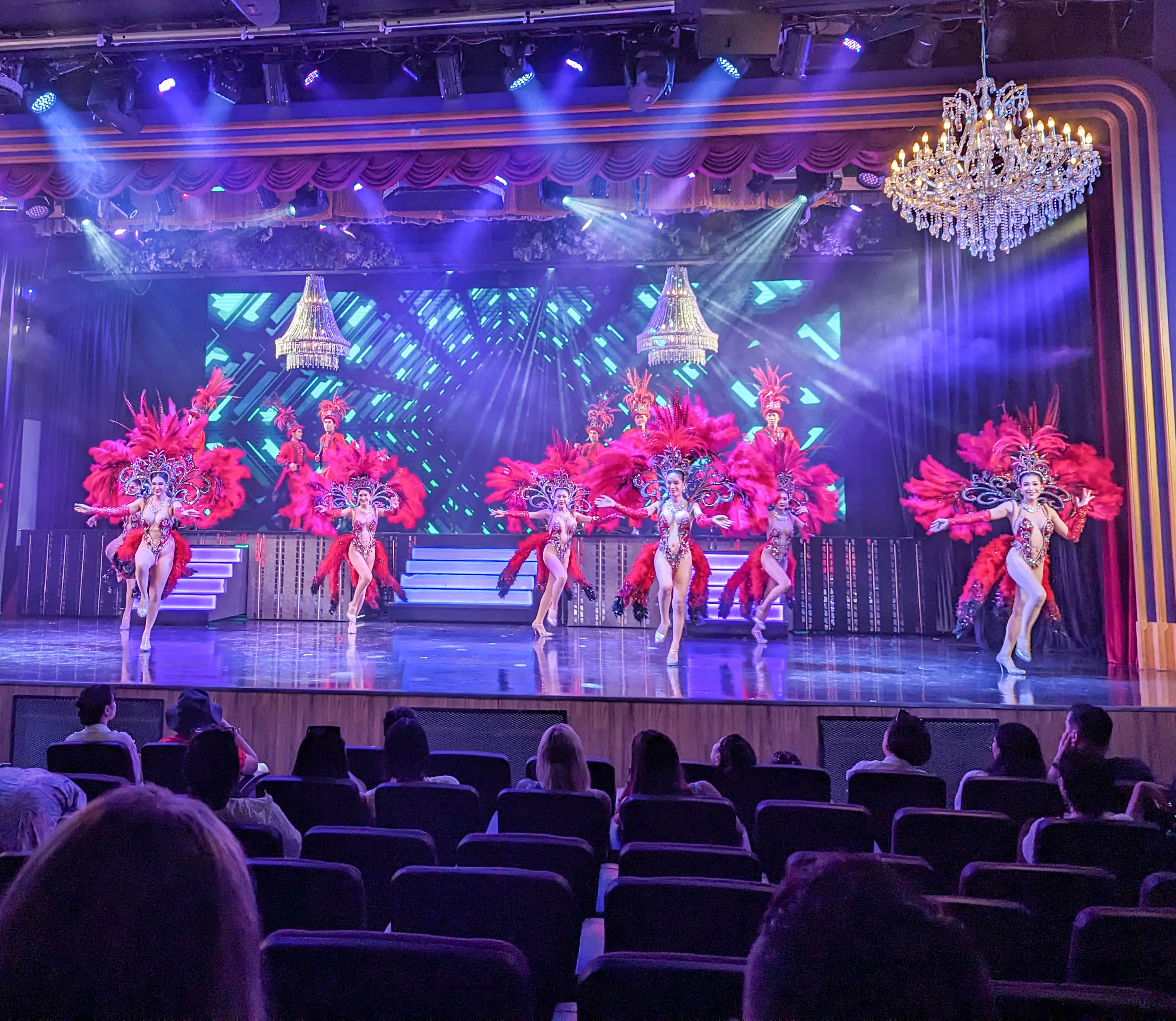
Patong is the home of Simon Cabaret, a vibrant dance show where all the dancers are Ladyboys. The shows sets and costumes were spectacular and we had a fun night out but if you are used to the Westend then be prepared to lower your expectations – a lot. They do have some star performers but the lack of co-ordination and even effort of some of the backing dancers, who would walk around the stage half-heartedly rather than dance, was so bad that it was laugh-out-loud funny. At least we saw the funny side of it. The French couple next to us were less easily amused!
With the car rental, we explored the South of the island first and tried out a few of the more remote beaches but these were all still busy and the traffic was pretty terrible.
It wasn’t until we headed North to the Sirinat National Park that we discovered a true tropical paradise. The beach of Mai Khao is a perfect 5km long beach which shelves steeply so its perfect for swimming. The beach is largely undeveloped with no sun loungers, no hawkers and only a handful of people and the beach is backed by tropical trees. Finally we had found what we were looking for.
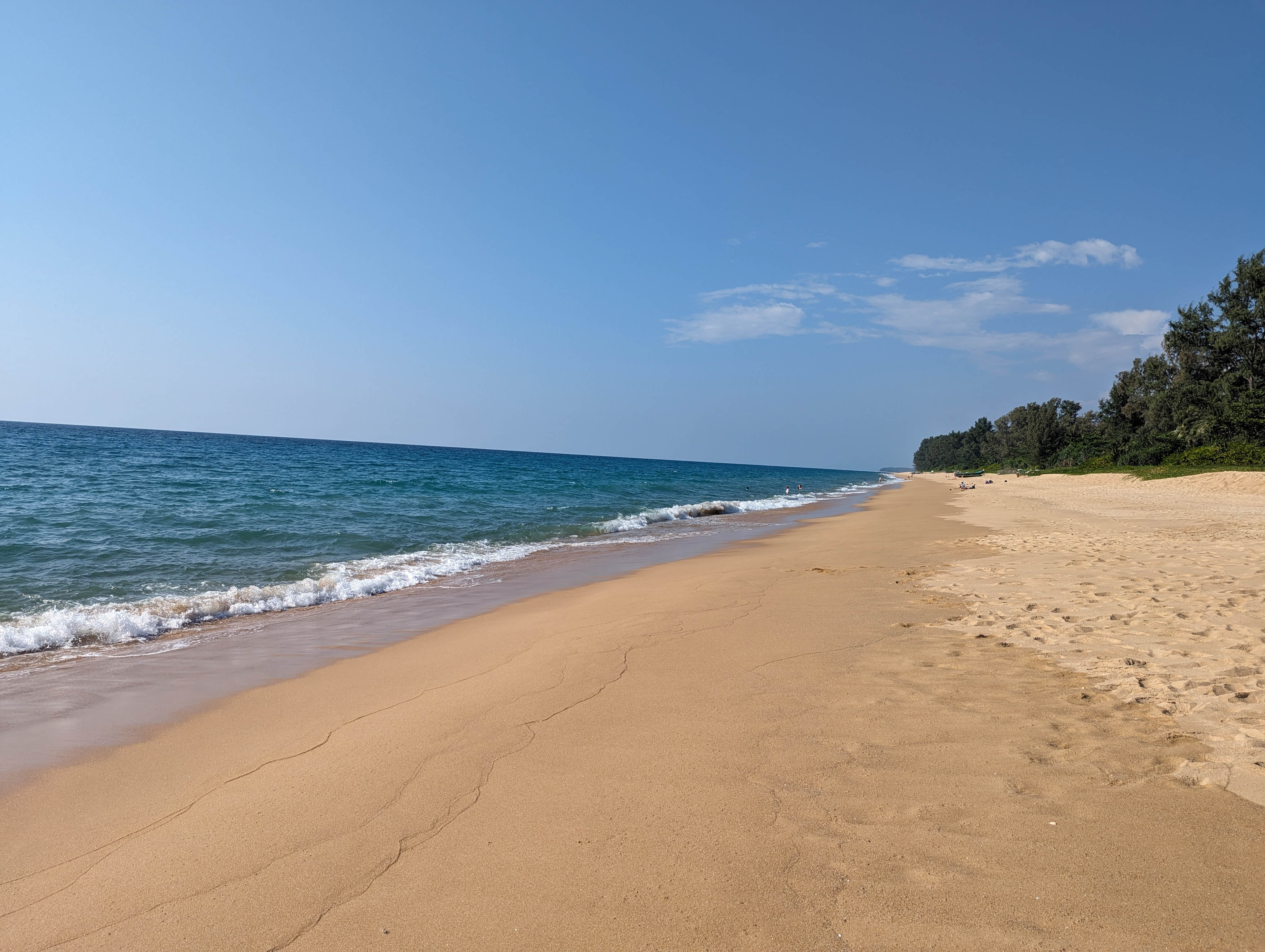
It was so perfect that we actually checked out of our Patong Airbnb early, booked a lastminute deal in a hotel up North on Mai Khao and spent our last few days in Phuket in this lovely paradise.
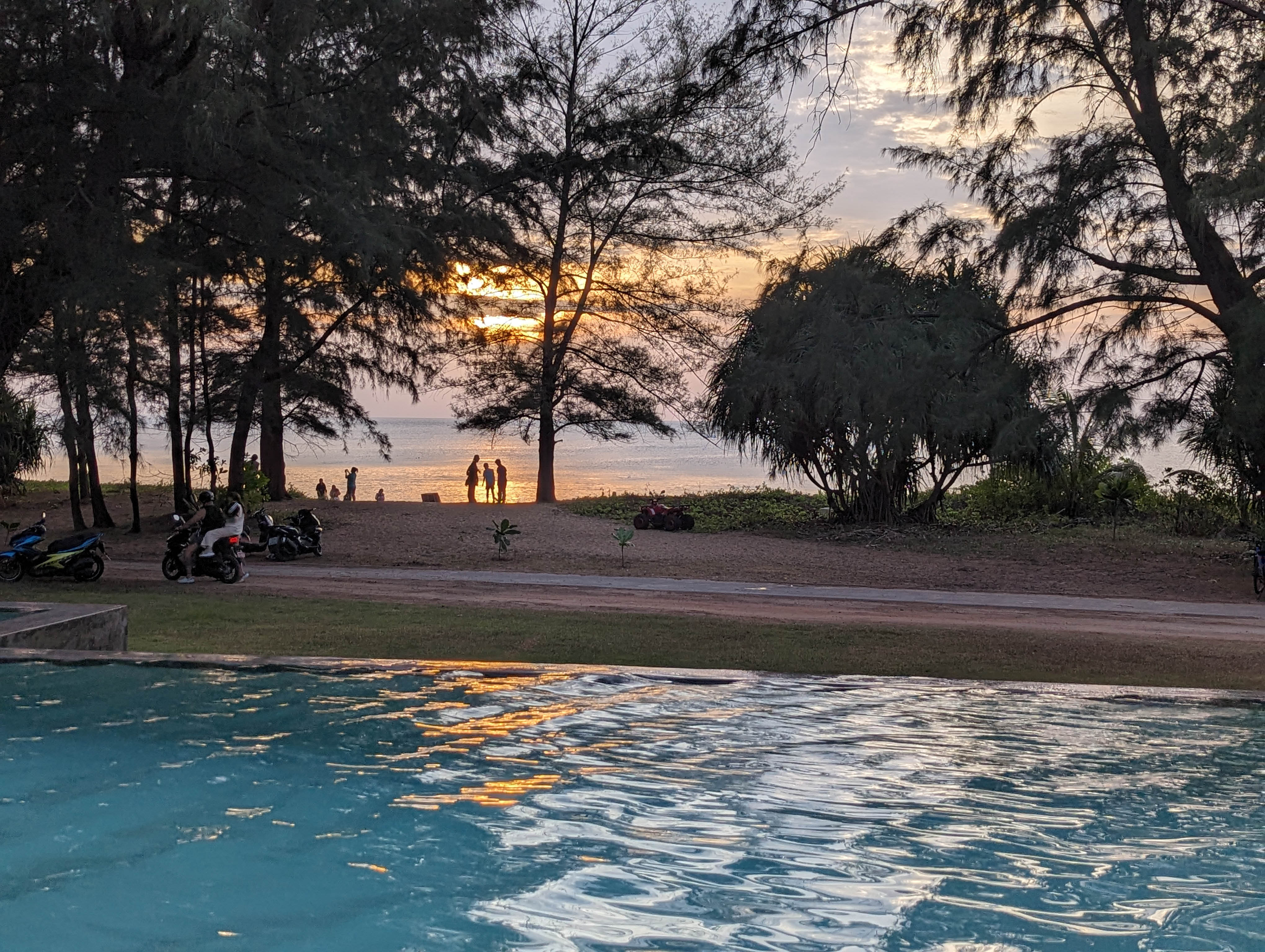
The beach was so clean we even saw an otter swimming in the shallows up the beach one morning. It is also a turtle nesting site but as ever we were there at the wrong time of year. The wrong time of year for turtles though did mean perfect weather for us!
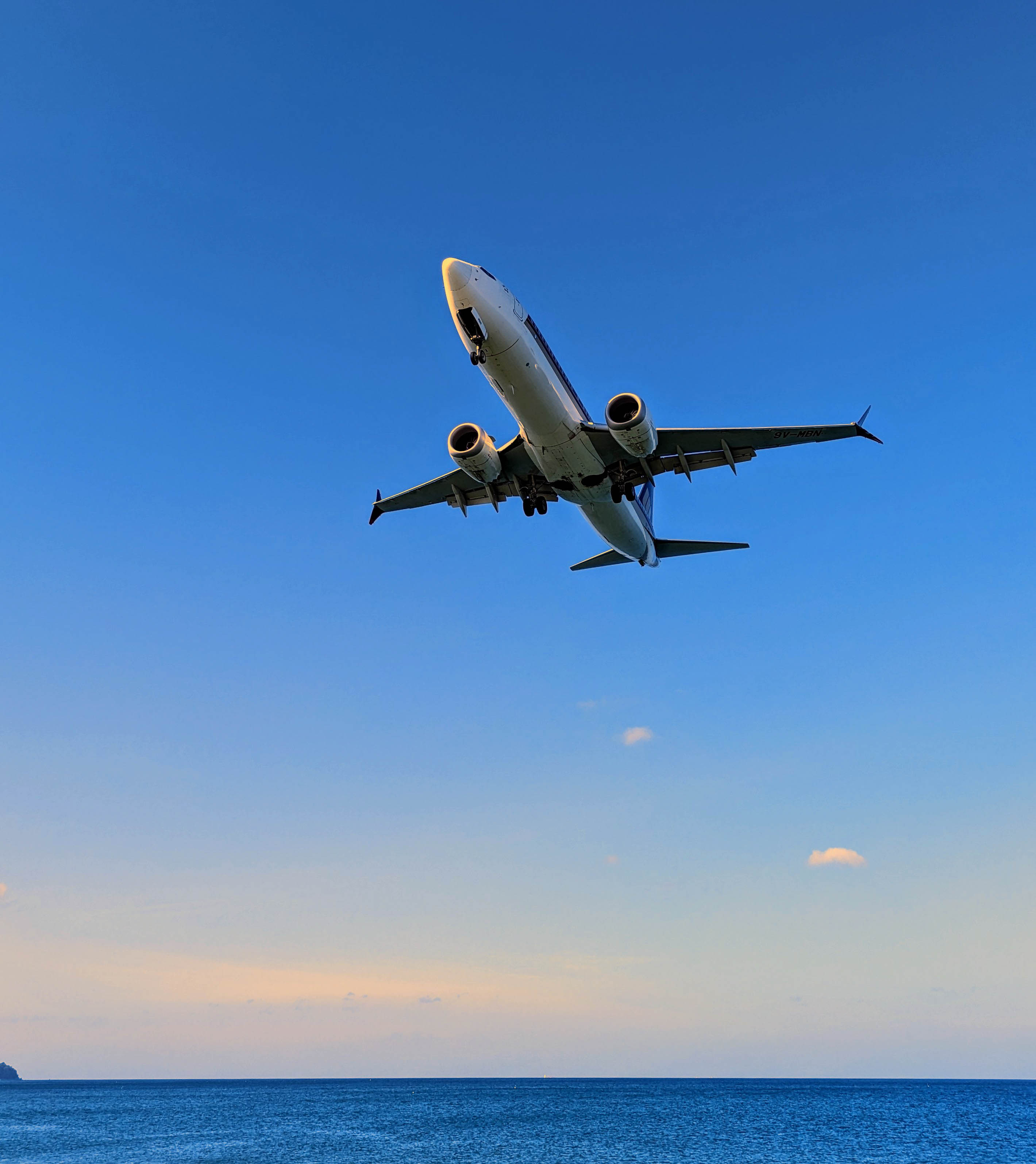
Before leaving Patong we signed up for an elephant tour. There are many elephant operators in Phuket and these can be split into two types: ethical and exploitative. I really wanted to spend some time with elephants but did not want to do a tour that was in any way cruel or forced the elephants to do anything they did not want to do.
After some research I discovered Elephant Jungle Sanctuary which is an organisation that rescues elephants from riding camps and private ownership where they are being mistreated. There is no riding of the elephants, which is apparently painful for them as they have weak backs. There are around 3000 wild elephants in Thailand and about the same number that are in private hands. They are expensive to keep so must be worked hard to pay for themselves.
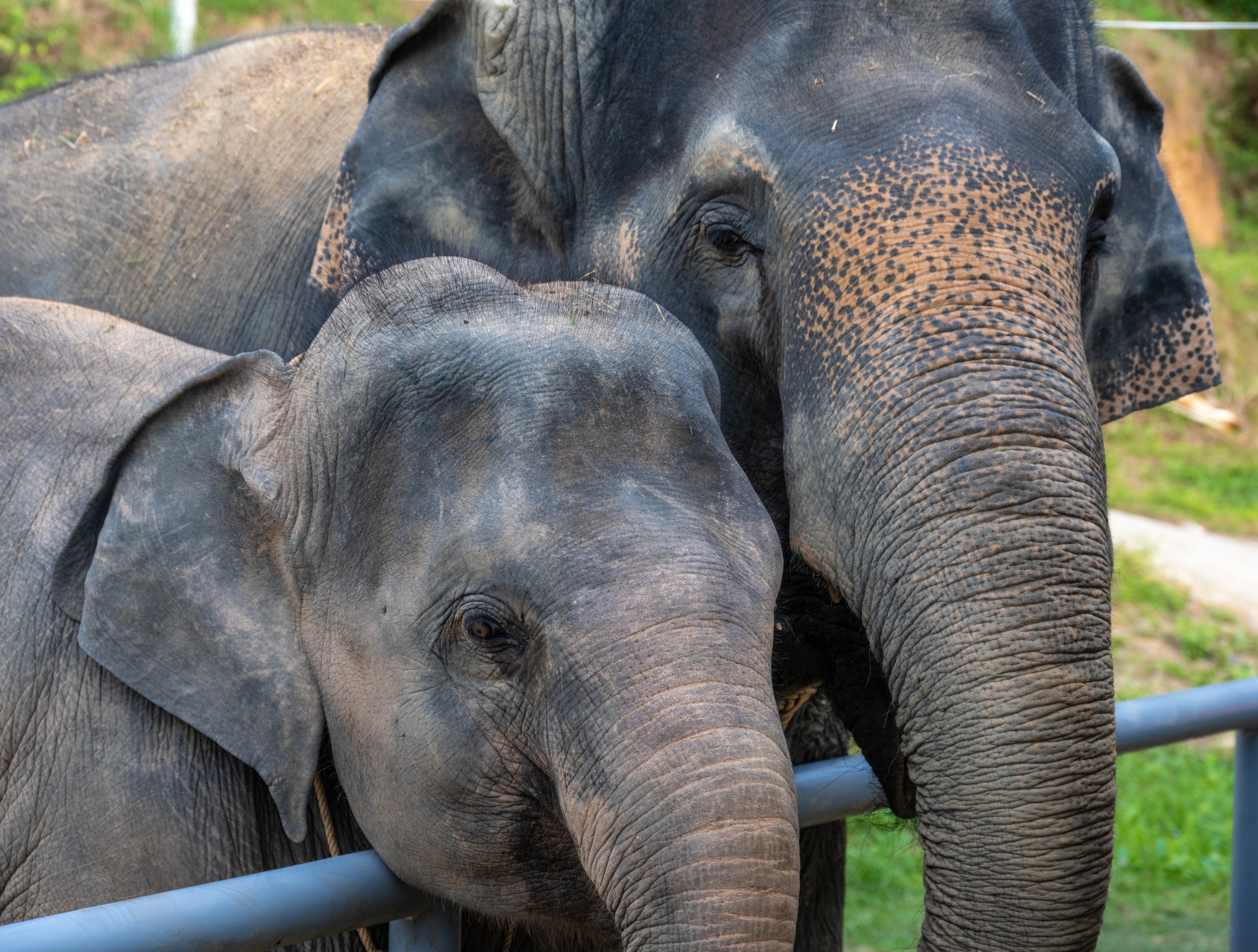
The half day tour with EJS was fantastic. It started off by being taken to one of the four camps that EJS have in Phuket. I was taken to camp 3 which was small and had 3 elephants, a 5 year old, 12 year old and 19 year old. The 5 year old was still very much a baby and was the most playful of the three. She had only been with them for 3 months having been given up by her owner who couldn’t afford the medical bills when she fell ill.
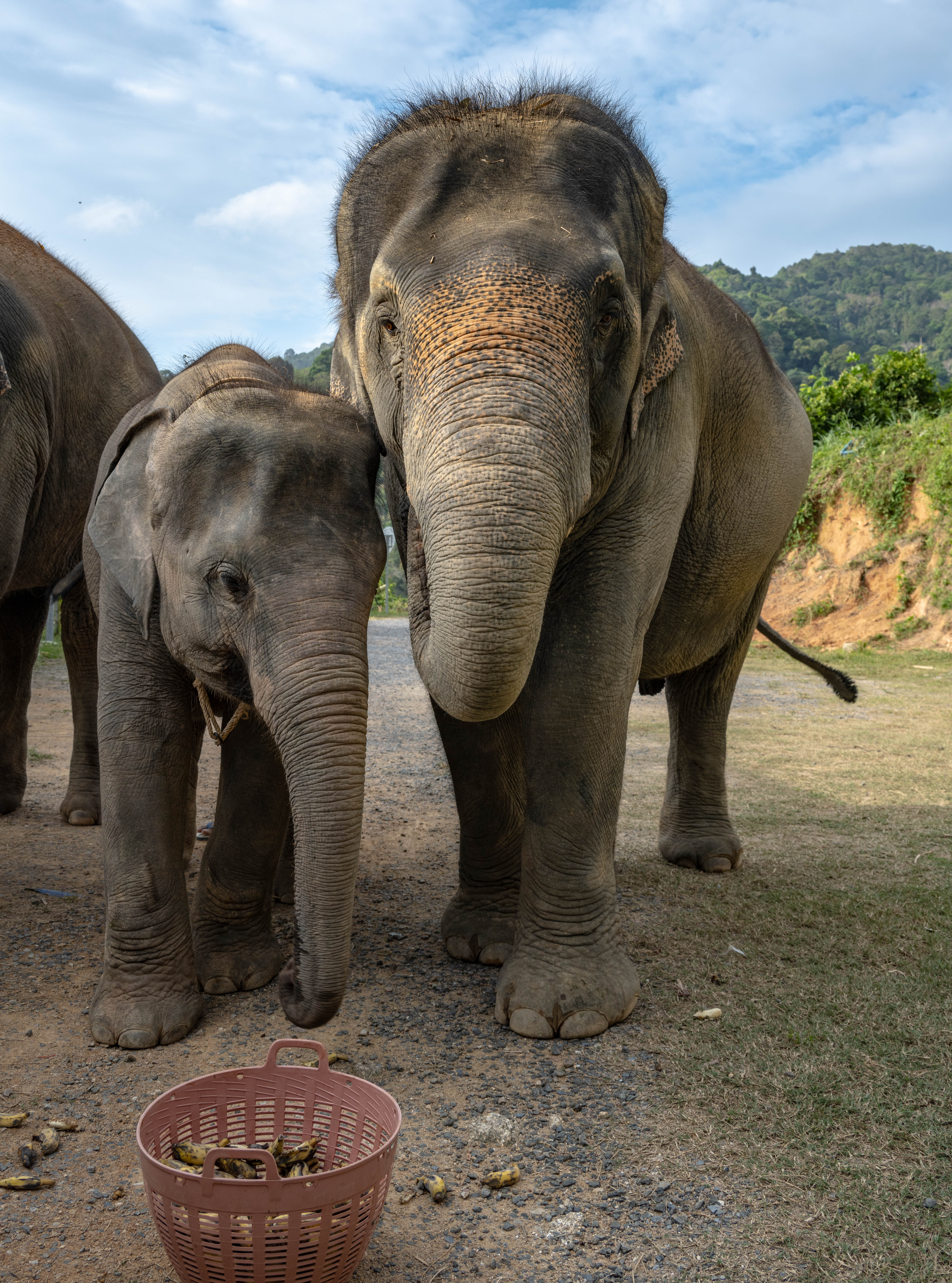
The first activity was to feed them their breakfast which consisted of watermelon and bananas. The elephants really like the watermelon and handing it to them meant that they grabbed it from your hands with their trunk and ate it gleefully. They eat around 300kg a day and are fed 5 times a day. The two older elephants weren’t so keen on the bananas but the baby was very keen and got the lions share of these.
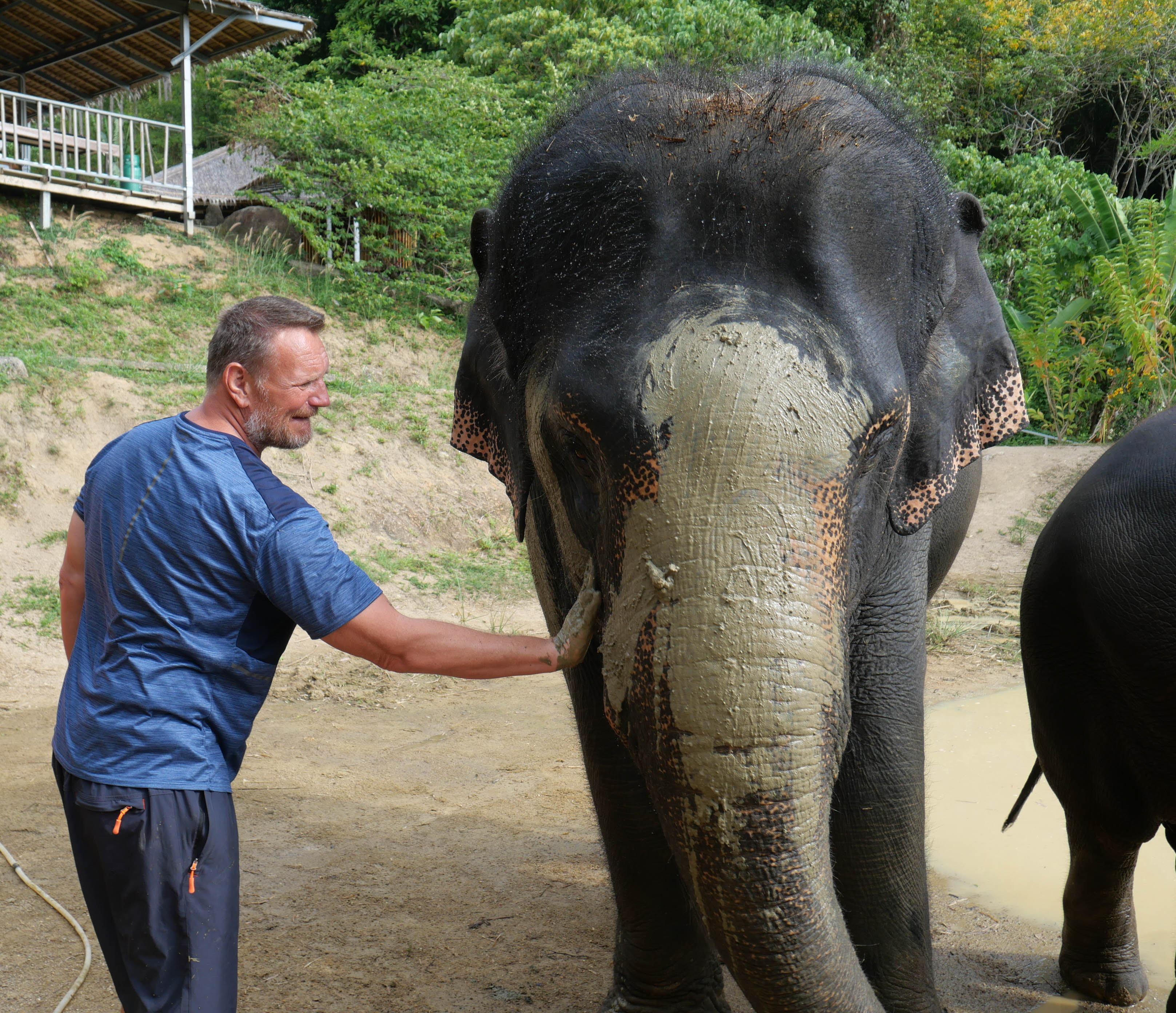
After their fruit breakfast we made up some supplemental breakfast balls from rice, banana, turmeric, papaya and some food pellets. We mixed this all together with our hands and offered it to the elephants. They clearly absolutely loved these because they disappeared very quickly !
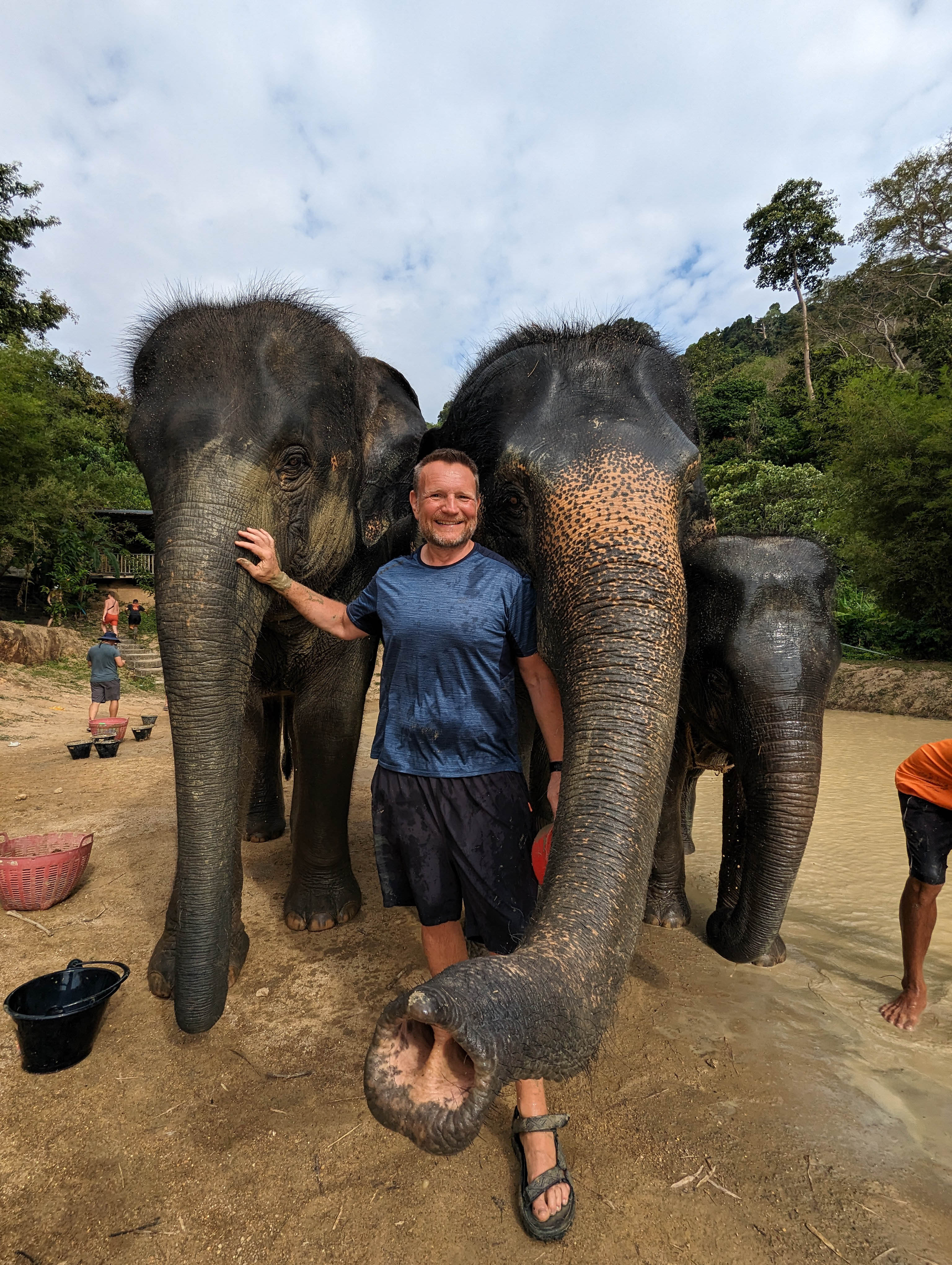
Next on the Agenda was a mud bath for the elephants. The mud acts as a moisturiser and as sun protection for them. So we traipsed down to a dirty mud hole and proceeded to cake big handfuls of mud onto the elephants. They seemed to enjoy this ! It was a good excuse to get wet and muddy though.
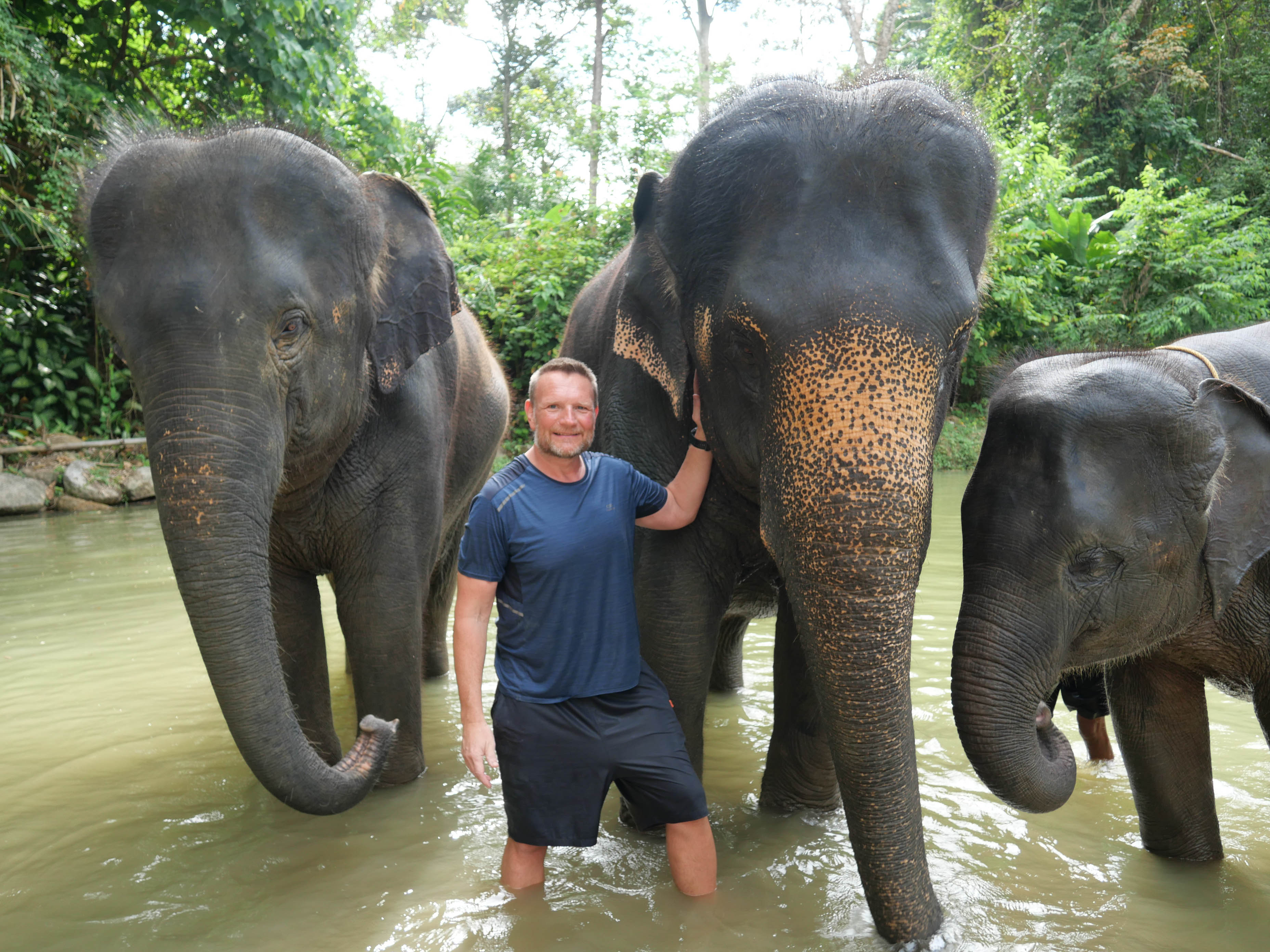
Fortunately the next part of the agenda was perfect for cleaning off as we moved over to a swimming hole which the elephants clearly liked as they proceeded to sink down into the water splaying their legs to get deeper. We got in the water with them and brushed and scrubbed their skin.
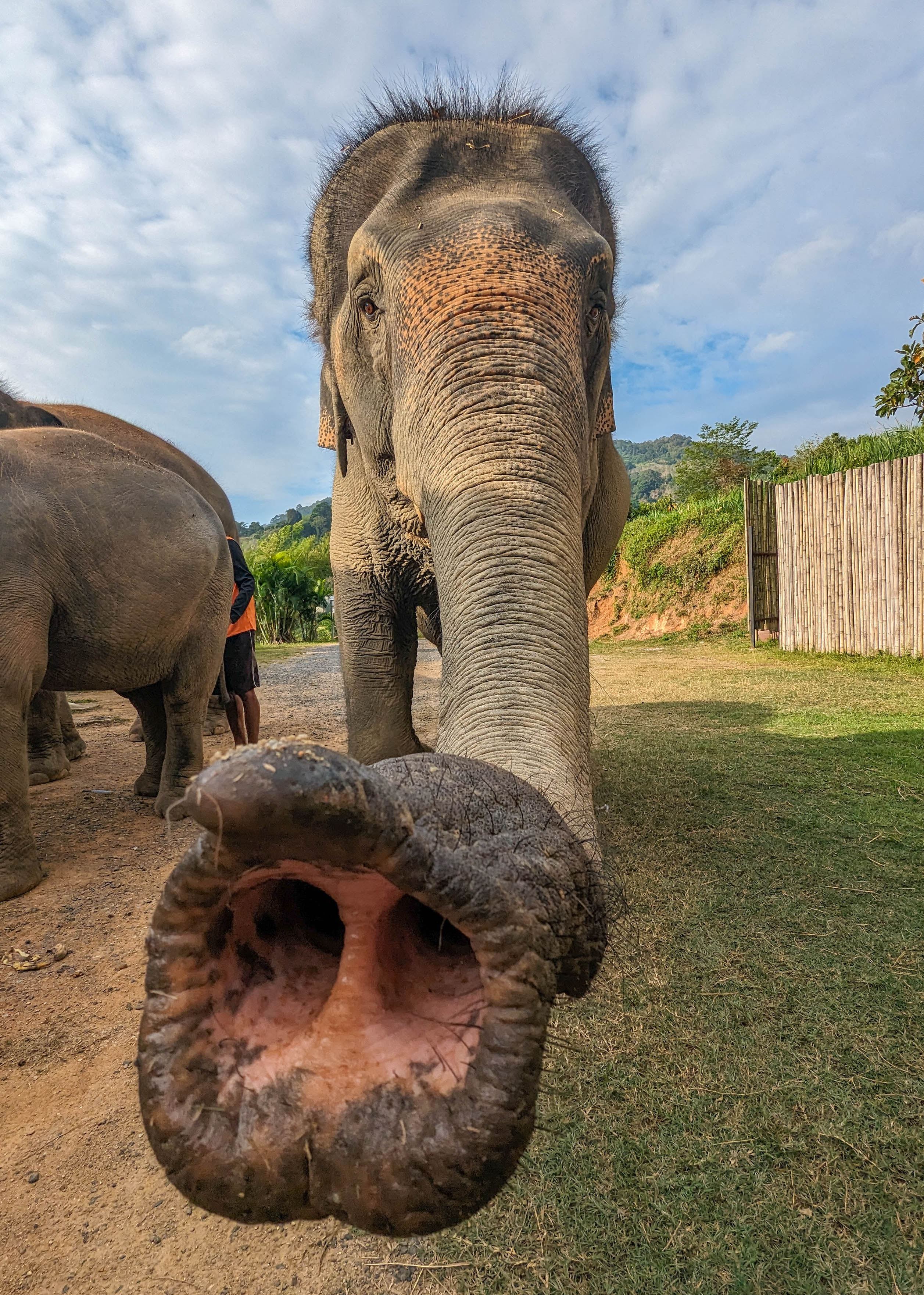
There were no sign of any chains or other forms of securing the elephants. Our guide told us that they were free to roam the camp during the night which is great especially as they only sleep for about 3 hours a night. This had been a lovely experience and a highlight of the trip, being able to spend time with such incredible animals.
Phi Phi
The Phi Phi Islands are a small collection of islands about 45 km’s Southwest of Phuket. It takes around 2 hours to get there by ferry or 1 hour by speedboat. We booked the tickets online at www.phuketferry.com and decided to take the budget option of the ferry. The advantage of this (in addition to the price), is more space to move around and some outside space, although the seating is airline like. We paid around £45 for two return tickets.
Getting from Phuket Town to Rassada Pier, where the boats to Phi Phi depart from, is a very easy 10 minute taxi ride. We have been using Grab for taxis, the Asian Uber, and it works well.
The pier was a bit chaotic but after showing our tickets on the phone, we were given stickers to wear and sent to the gate inside. Before the gate however, we had to check-in with our “agent” which involved writing our names on a list and receiving a paper ticket.
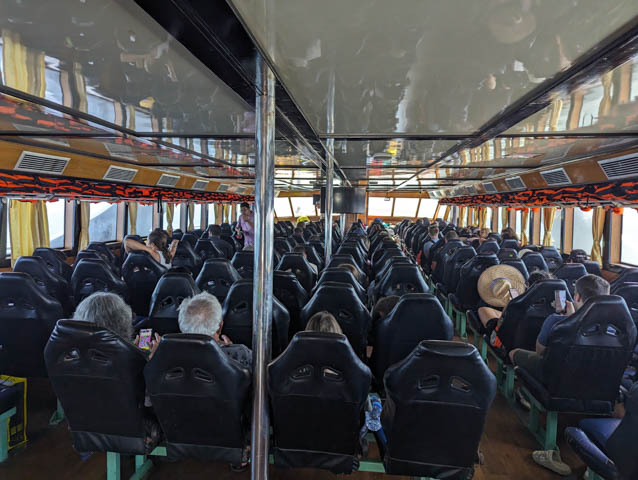
Once through the turnstile and onto the pier it’s a simple matter of clambering over one ferry to get to the next one across.
The journey was fine with flat water and before long we were pulling into the pier at Phi Phi Don Island. There is a small tourist tax upon arrival and once you are paid up and off the pier you land directly into the narrow streets of the islands main town, which provides welcome relief from the blazing sun.
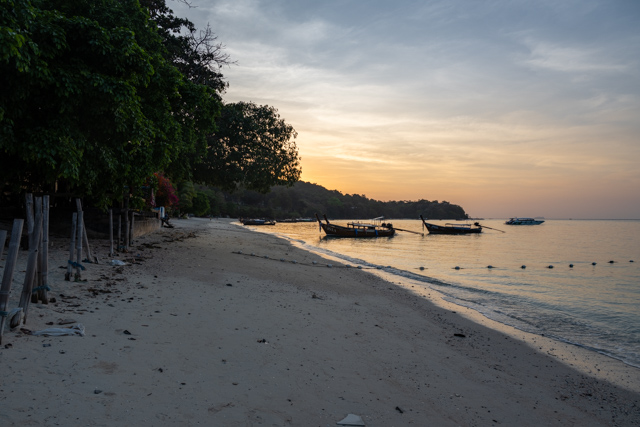
Fortunately our hotel, the curiously named Chukit Resort, is easy to find, just a 700m walk down the coastline from the port and Ton Sai pier and we are soon checked in and ready to explore the island.
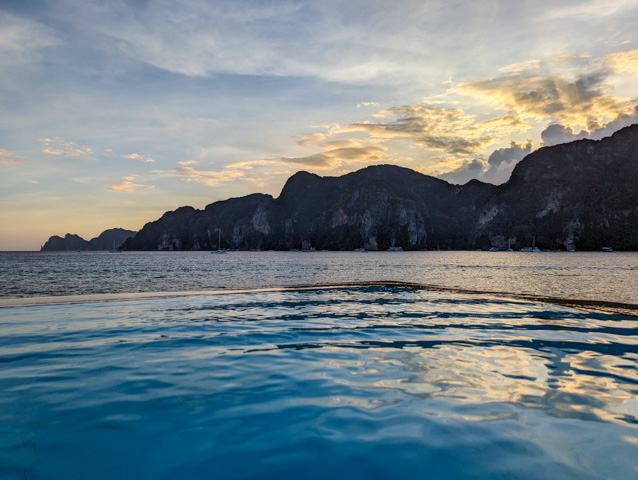
First stop is the hotel’s infinity pool looking out over the ocean, the only one on this side and maybe the whole island. Not bad for a budget hotel!
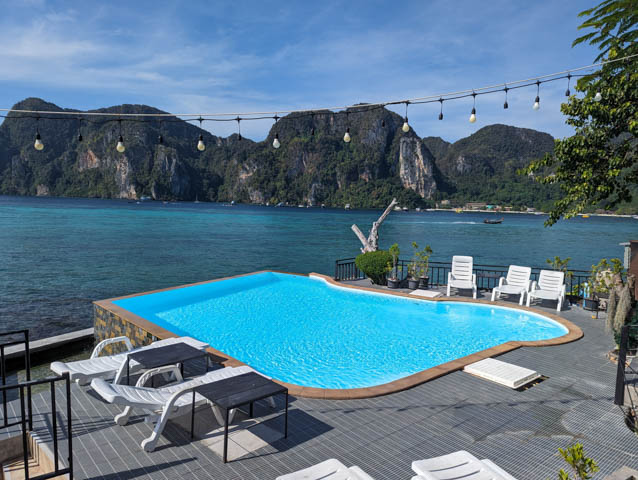
The side of the island we are on is the busier side with lots of longtail boats coming and going and the biggest concentration of shops, restaurants and hotels.
I didn’t waste a lot of time signing up to go diving the next day with an outfit called PKT divers, but this was only one of at least a dozen dive operators that I saw. I think the majority of divers in Phi Phi are doing courses or have just learnt as the operator seemed to want to do everything for you.
We left the dive shop for a five minute walk to the dock where the boat was moored. All the dive kit was already set up on tanks and the guides even set up the weight belts for you. I’m not sure that the dive guide was very impressed when I took the kit apart and put it back together again to make sure it was ok. There was only 180 bar in my tank which is apparently fine!
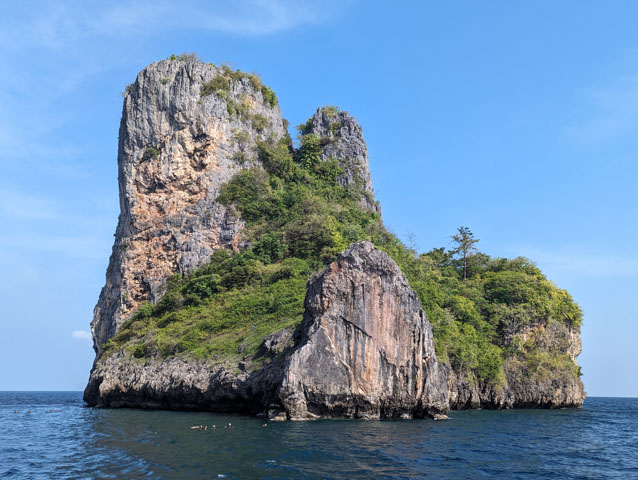
It was only about a 30 minute ride to the first dive site which was in a small bay on an uninhabited island in the Phi Phi group of islands. As we were arriving we had a very minimal briefing which was basically follow me. I was to be diving with two girls who had only done a handful of dives and they were to buddy up so I was loosely buddied up with the Spanish dive guide who had only been in Thailand for a week.
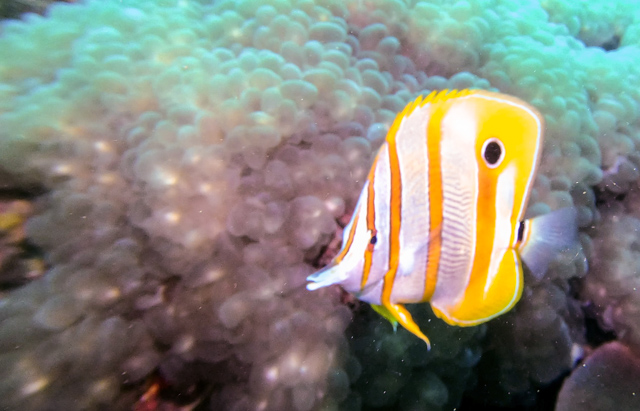
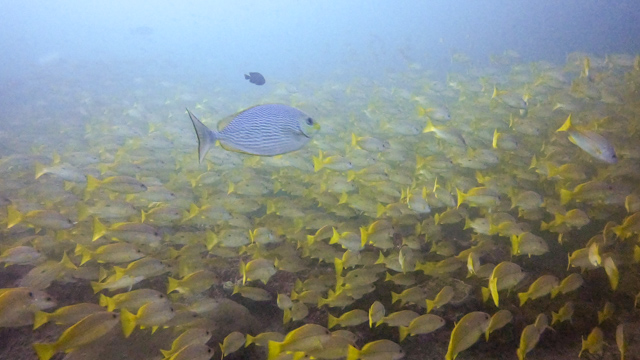
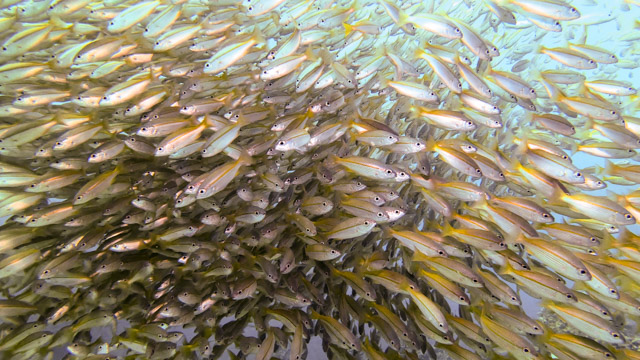
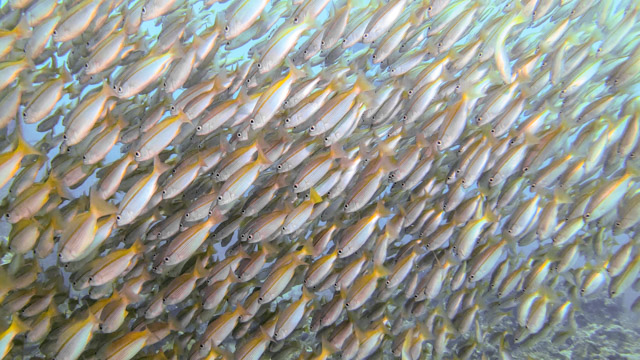
We entered the water with a giant stride and after meeting up on the surface descended to the bottom. Neither a depth gauge or a timing device was offered as part of the equipment hire so following the guide, who had a computer, was pretty essential. We made are way along a broken reef with relatively sparse coral but large schools of small fish. The visibility was ok but the biodiversity was pretty limited and there wasn’t much macro life in evidence.
After just over 30 minutes one of the two girls had run out of air so it was time to surface. I checked my gauge and still had over 100 bar left so this was disappointing.
The boat was around 100m away from the island and we had to swim to it before taking off our fins and climbing up a ladder to the back deck.
After quickly de-kitting and changing tanks, despite the guide suggesting he would do it, there was time for a short surface interval as the boat moved to another island for the 2nd dive.
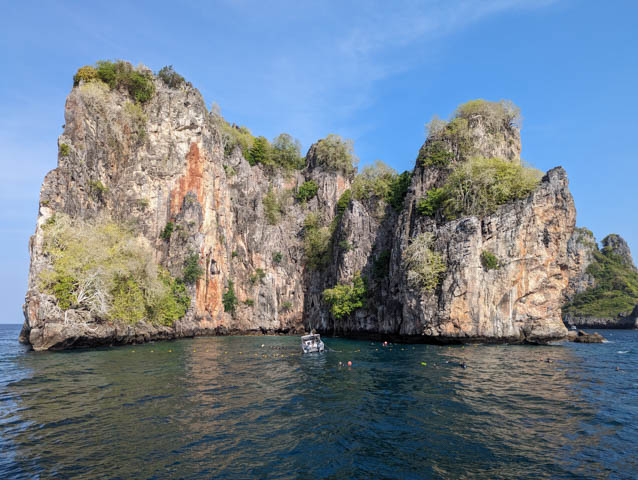
This time there was no briefing at all but the dive was much the same, although with a slightly nicer wall. Again at just after 30 minutes the dive was over as one of the girls was out of air.
There was a quick 20 minute run back to the dock and the diving was over.
Phi Phi is meant to be some of the better diving in Thailand and on this evidence I wouldn’t dive in Thailand again as it was very average. The operator, although mostly safe, had rented poor quality gear (one of the girls inflators barely worked and my gauge was fluttering the whole time), didn’t deliver on their promise to match me with similarly experienced divers to ensure better dive times and particularly for the novice divers, did not deliver adequate briefings.
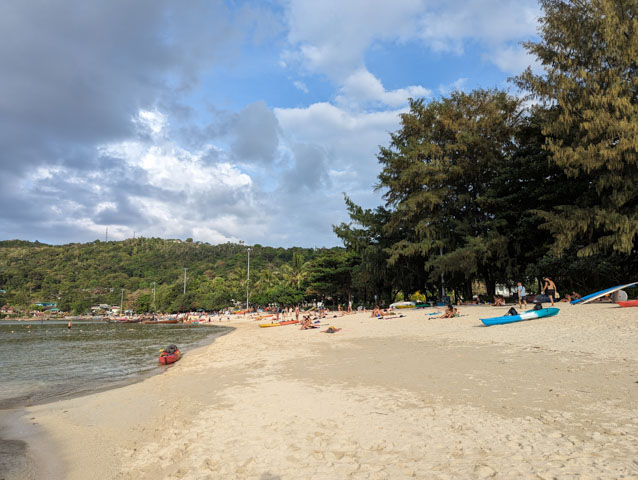
The other side of the island from our hotel is the main beach, called Loh Dalum beach. This is a lovely beach with lots of beach bars and even a couple of clubs. At one end is the Ibiza Beach Club which has a big swimming pool and holds big pool parties.
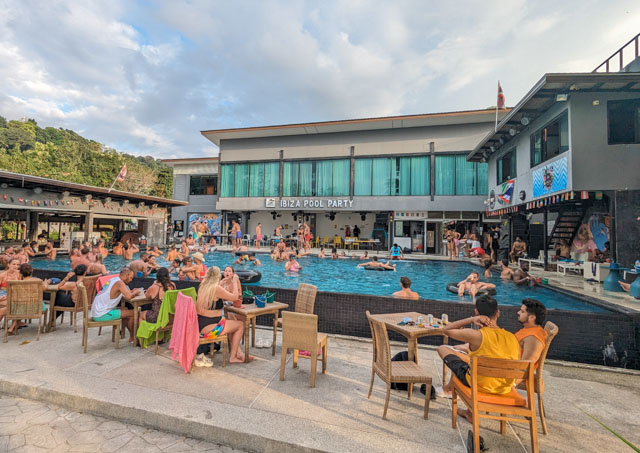
The beach although lovely has very shallow water and its very difficult to go swimming as you have to wade out a long way to find deep enough water.
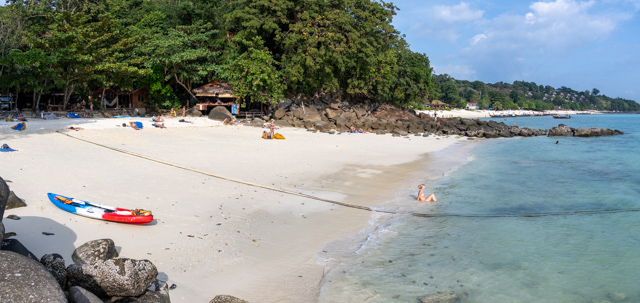
Perhaps the nicest beach on the island, that I saw, is Long Beach. This is about a 30 minute walk from Ton Sai Pier but is a long sandy beach with less people than Loh Dalum beach. However the water is still shallow and not brilliant for swimming.
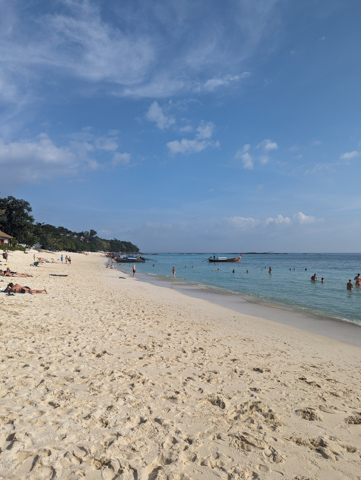
I walked back across the island and via a viewpoint of the island from Long Beach. The way up from the main town is a super steep flight of stairs and I’m very glad that I’d climbed up the back way which was longer but much easier.
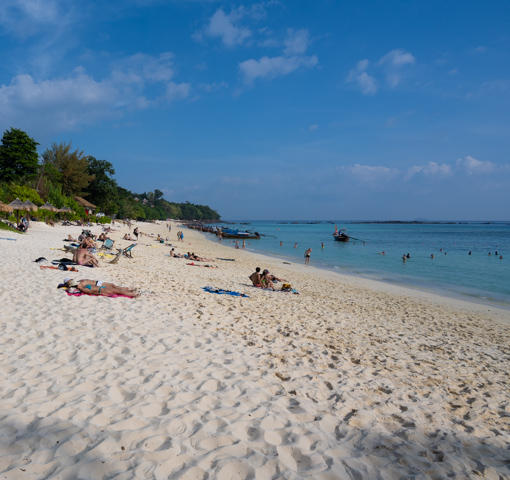
We were only on Phi Phi for a few days but it’s a really nice island. It’s very busy and there were a hell of a lot of people around. It really has a feel of somewhere that would have been very special 20 years ago but is a bit well known now.
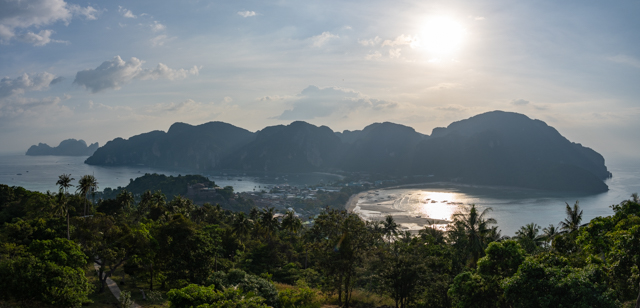
The journey back to the mainland was easy enough although did involve a 20 minute queue in the strong sunshine without shade to check-in, which was a bit unpleasant. We had a slightly smaller boat going back which had a bit less space on board but it was fine.
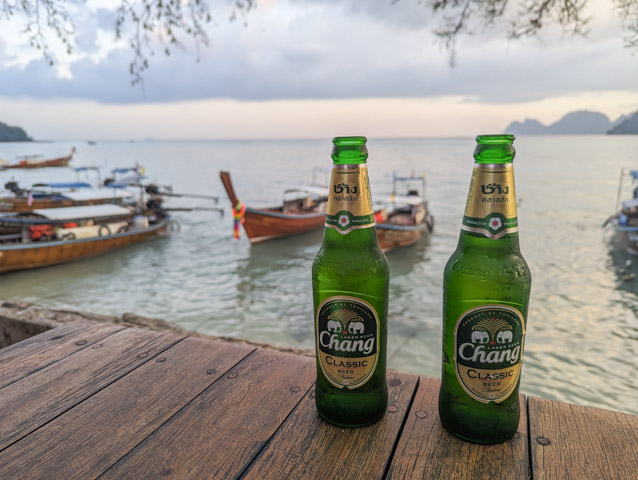
We arrived back in Phuket town and jumped in a shuttle bus to our next destination, Kata Beach.
Flying East for Winter
While birds migrate South for the winter, we decided to fly South East in order to avoid the Winter season this year. Last year we wintered in the UK Lake District and the French Alps which meant we had our fair share of snow, ice and cold, so this year we wanted some warmth and sunshine.
First stop on our trip is Thailand and the holiday island of Phuket. After travelling all of last year we wanted a few weeks of relaxation and sunshine before heading back into full travel mode for 2024.
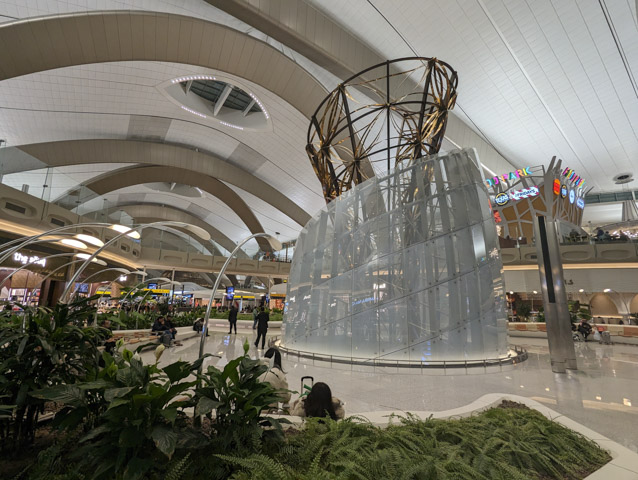
We flew from London Heathrow to Phuket on Etihad Airways with a stopover in Abu Dhabi on the way. We were only on the ground for a couple of hours which meant by the time you get off one plane and have to be at the gate to board the next, there was very little time to explore the new terminal, which only opened in November. It was nice and spacious but Singapore doesn’t have much to fear in terms of competition for the best airport in the world.
The flight on Etihad was very good with surprisingly good food, new airplanes and a decent amount of space.
We landed in Phuket early in the morning and after tackling the big queue for immigration we were through into Thailand. Rightly or wrongly we booked a cab from the transport window right opposite the arrivals and were given a fixed price of ฿650 (£14.50) which seemed reasonable to take us to Phuket Town where we had booked a hotel for a few nights.
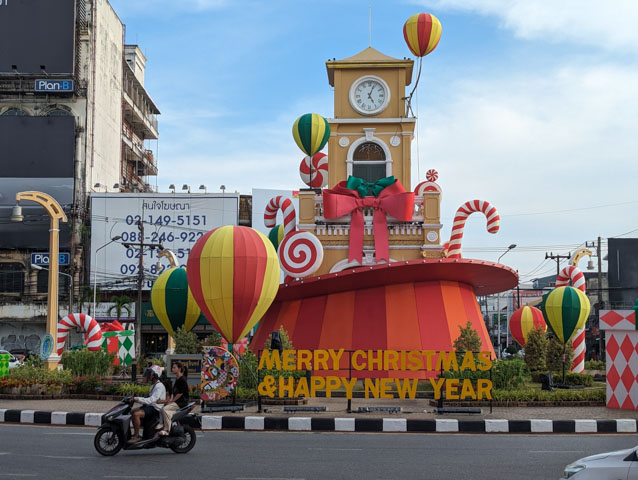
Our hotel was about 200m from the main streets of the old town but far enough away to be close to some good local, non-touristy restaurants.
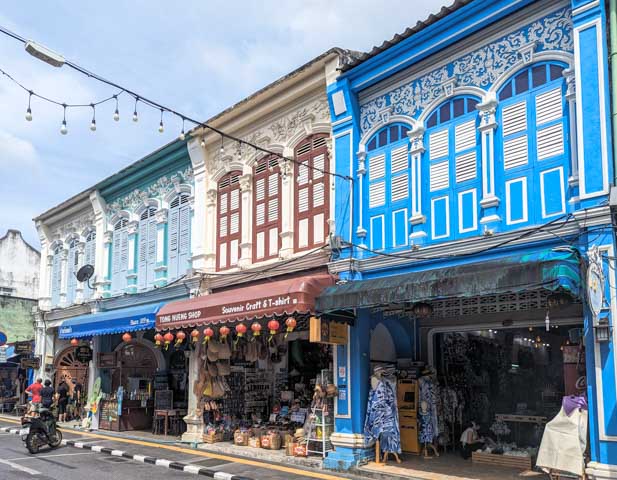
The old town of Phuket is composed of two main streets and a couple of cross roads so is pretty compact. The buildings in the old town are built in the Sino-Portuguese style which gives it a very colonial feel.
The streets are very busy and the buildings are an eclectic mix of cafes, bars, tourist shops and local shops. Instagram culture has very much taken hold with several spots swamped by selfie snapping tourists.
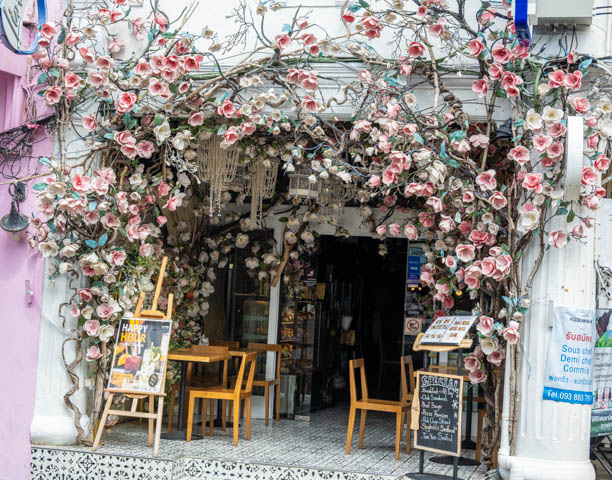
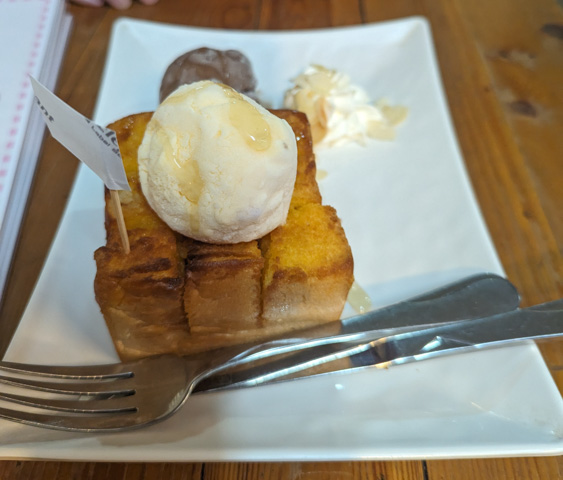
The streets around the old town are much less busy and there are hundreds of local restaurants with all types of specialities. Perhaps the strangest we tried is the puddings only restaurant that served very little of what I would describe as familiar food. We tried a honey soaked toast with ice cream dish which was really nice and definitely the tamest option on the menu.
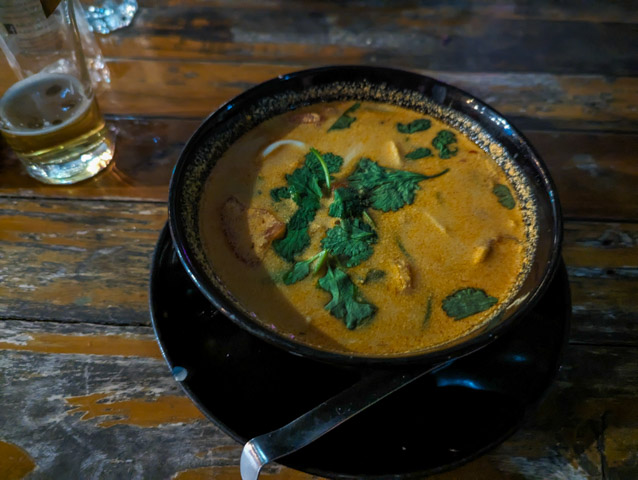
What we quickly discovered is that Western food is more expensive but if you stick with Thai Food you can eat very cheaply. The going rate for a Phad Thai is around 80-100THB (approx. £2).
On Sunday nights the old town is pedestrianised for a large market called Phuket Walking Street. Three roads are taken over by market stalls which are split around 50:50 between food stalls and stalls selling souvenirs to tourists.
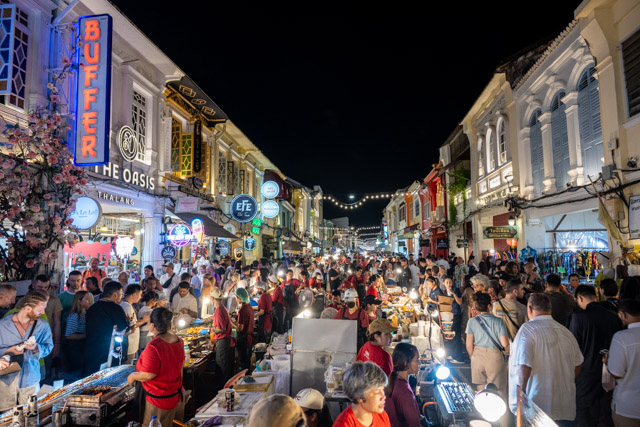
There is also entertainment with a selection of singers and bands spread around the streets.
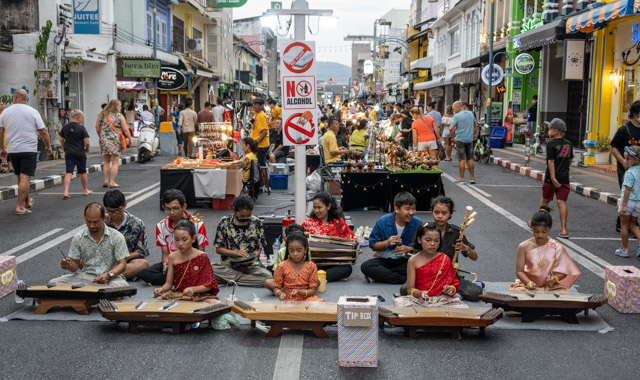
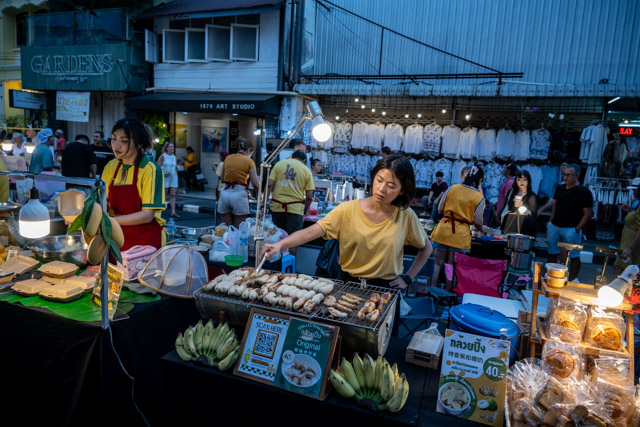
We took the opportunity to try some of the street food and discovered that fried squid eggs are delicious. If there is one thing you do need to be careful about in Thailand though it is the hot dips and sauces as these can be blow-your-head-off hot.
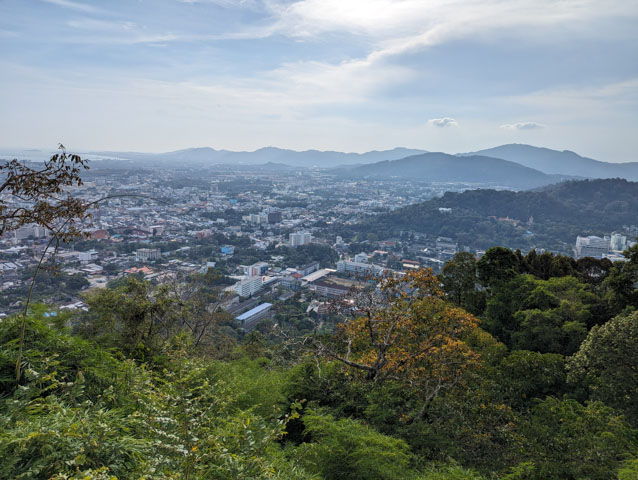
A short walk from the heart of Phuket is a hill called Monkey Hill. I decided to walk up this from our hotel which was only around a 7.5km round trip. Although, in the 30c+ heat with humidity it was quite hard work.
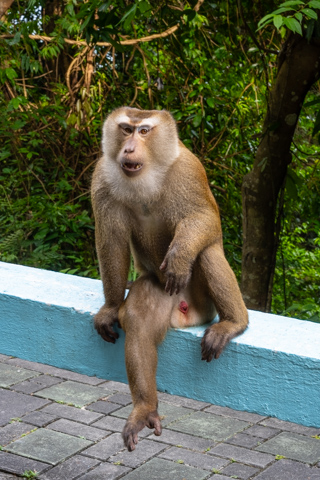
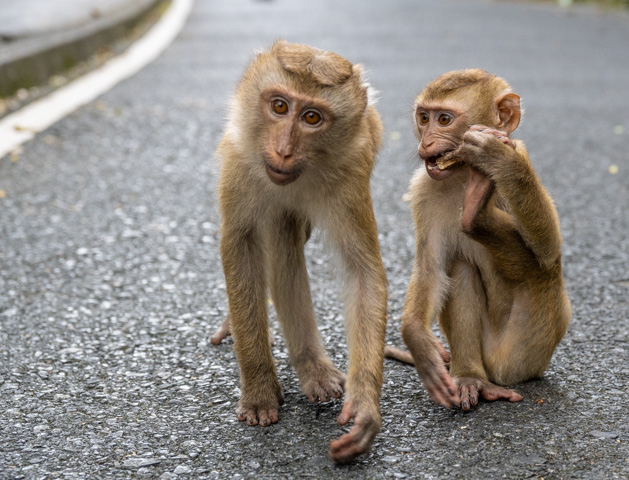
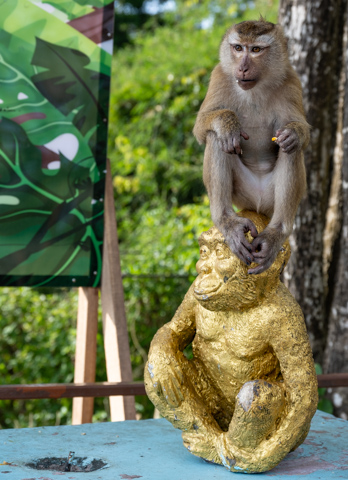
The views up the top of the hill are not that spectacular but all the way up you run into families of monkeys who check you out for food.
In fact just at the foot of the hill I was mugged by a monkey for a small bottle of water that I was carrying. He ran off to a safe distance and then unscrewed the top much to my surprise and and enjoyed a refreshing drink!
From Phuket Town we visited Wat Chalong which is the biggest and most revered Buddhist temple on the island. The first temple here was built in 1837 but others have been added since.
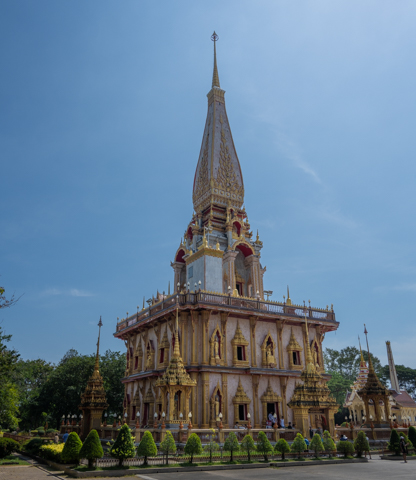
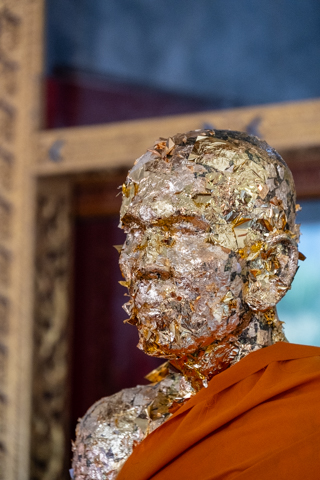
There is a large 3 story Chedi which is said to contain a bone fragment from Buddha, which is housed at the very top in a glass case.
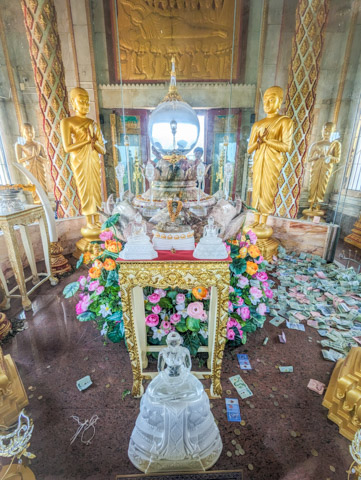
The whole place feels like a very active site with firecrackers being let off in a big oven to show gratitude for wishes coming true, monks chanting and lots of worshippers mixing with the tourists.

We enjoyed our first few days in Phuket town as we acclimatised to the heat and Asian culture and most importantly recovered from Jet Lag. It seems to me that Phuket is a very soft introduction to Asia with menus at restaurants in English (mostly) and signs in English everywhere.
Next stop is Phi Phi Island for a taste of backpacker culture !
Our Last Gasps of France
Time was ticking on and we had a date with a ferry for the end of November. The weather was taking an autumnal turn and our visa was almost at an end.
We needed to make tracks through Brittany, into Normandy and towards Calais.
Our first stop was somewhere that we had missed on the way South, Nantes. This is a Breton city that, as a result of the vagaries of borders, isn’t actually in Brittany.
Nantes is a big city but there is an Aire in the university district which is easily connected to the centre by tram, which an added bonus of being free at the weekend.

We took a tram into the middle of town and headed through the medieval centre to the Chateau de Ducs de Bretagne which is a walled castle in the middle of the city. Unfortunately, rather than showcasing the Chateau and its history the Chateau is the site of the municipal museum of Nantes which tells the history of the city. The most interesting section was on the slave trade and Nantes central role in the French movement of African slaves to the Caribbean.
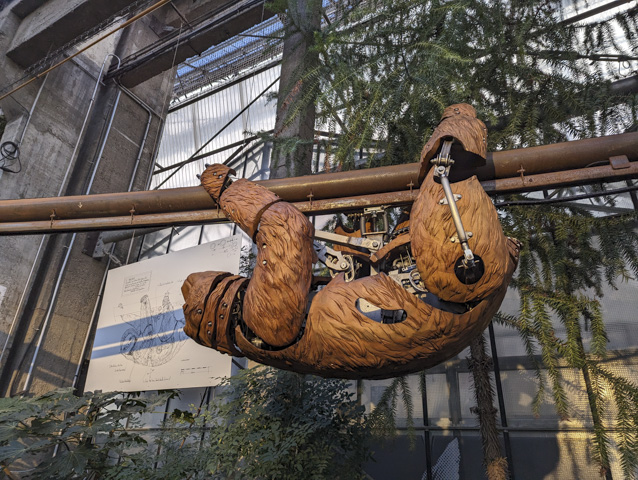
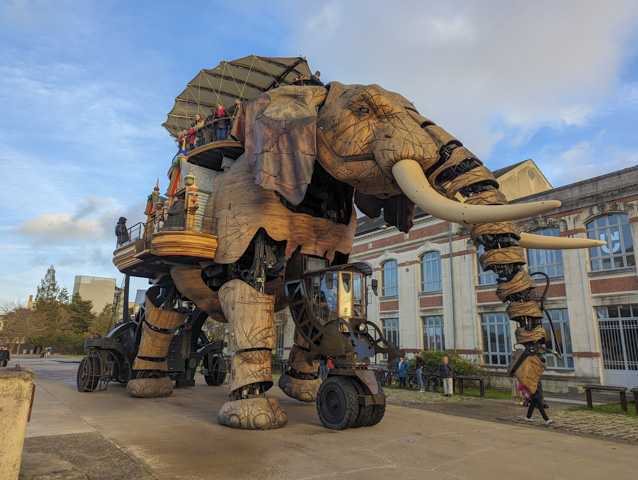
After learning about the history of Nantes we headed across town to Les Machines D’Ile which is a madcap steampunk workshop showcasing bizarrely constructed moving animals. It’s as though computers and electronics were never invented and all the exhibits are mechanical. The highlight is definitely the massive elephant which is 12 meters tall and takes people on rides around the area while blowing steam from its trunk.
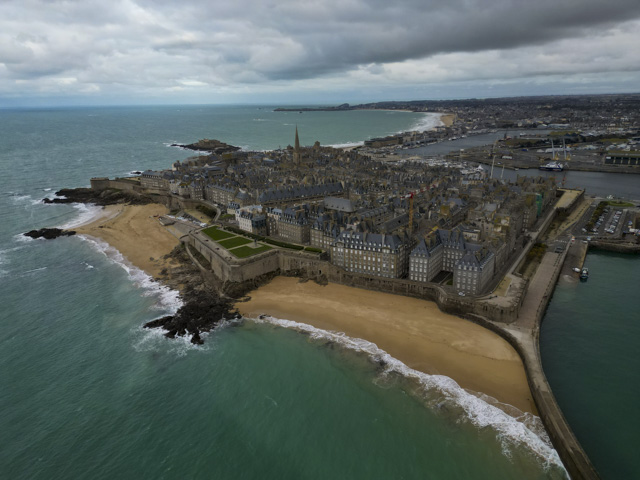
After Nantes we drove northwards to the coast of Brittany to revisit the town of St Malo as we felt that we hadn’t done it justice when we were here previously.
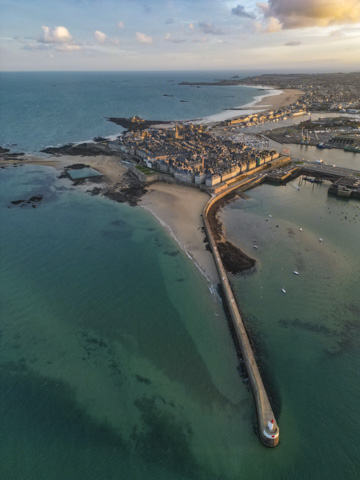
After spending time walking around the streets and around the walls, admiring the impressive townhouses we found a small French bistro to enjoy a fantastic set lunch.

Despite St Malo being virtually destroyed in WW2 it was amazingly rebuilt over a 12 year period ending in 1960 and certainly feels as if it is the original town. The tide here has a large range and it is fascinating to watch the changing face of the town and its beaches between high and low tide, as the receding water makes the fortified islands accessible on foot.
After St Malo we revisited another town that we had enjoyed on our way south, Honfleur. Honfleur is a lovely medieval port town that is full of restaurants and art galleries. It would make a terrific destination for a weekend getaway.
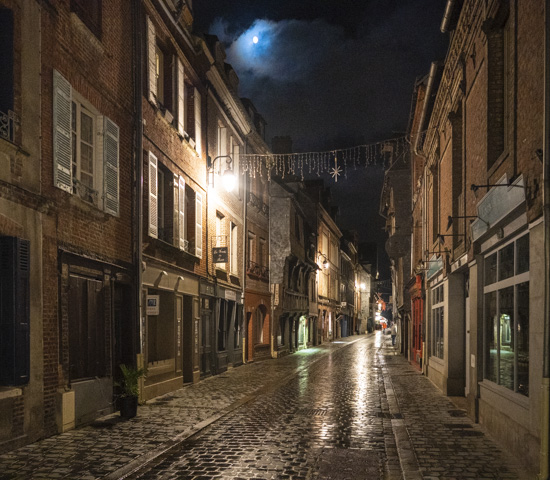
The Aire here is one of the biggest in France with space for over 150 motorhomes with electric hook-ups. Since we were here previously a new electronic access gate has been put in place and the price has been increased from €12 to €14. While it had been close to full in June it was fairly sparsely populated in late November.
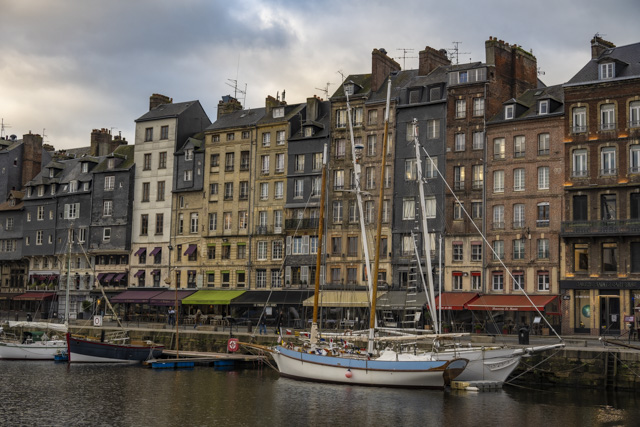
We decided that Honfleur would be the site of our ‘Farewell to France’ meal and we splashed out on a fantastic meal at a place called Au Petit Mareyeur. Not only did the food taste fantastic but the presentation was beautiful.

At this point we only had one week to get to Calais so we kept heading in that direction with our next stop being the town of Rouen.
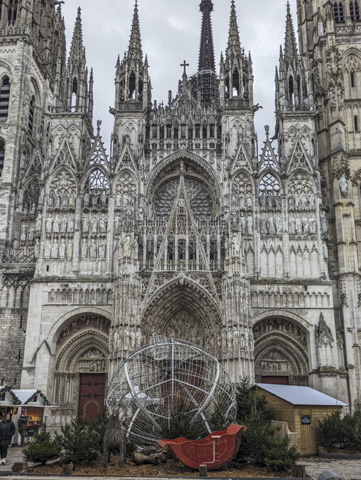
Rouen is the town where Joan of Arc was executed and there is a very good museum dedicated to her rise and fall, the trial that condemned her as well as the re-trial that posthumously acquitted her. We didn’t really know much about Joan of Arc but the story of the peasant girl who persuaded the French King Charles VII that she heard the voice of God and then went on to lead armies to successful victories over the English (during the 100 year war), before being captured and burnt at the stake in 1431 (after what seems to be a fairly biased trial) is a fascinating one and really worth learning about.

The town itself is rammed with medieval buildings and is great to wander around. Near the cathedral the Christmas markets had been set up and were very busy when we went into town.
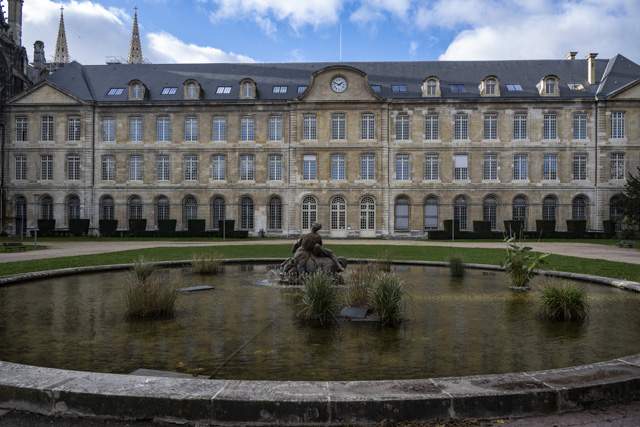
In Rouen we stayed in the Marina, a 15 minute cycle from the town centre. Almost all of this cycle was along a riverside walkway lined with pubs, clubs and restaurants which I am sure is absolutely buzzing in the summer.
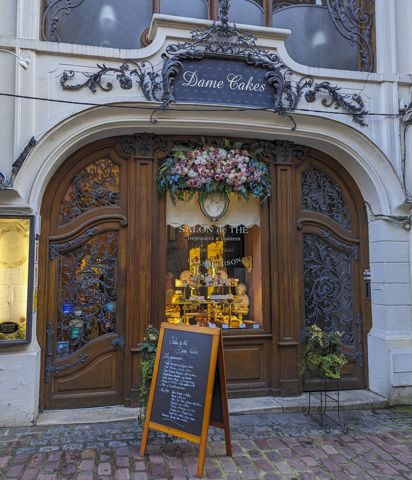
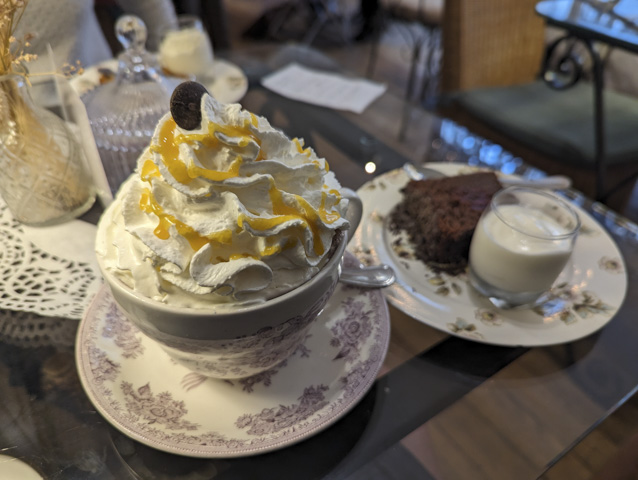
We found an amazing and very posh tea shop in one of the medieval streets where we stopped for a hot chocolate and a slice of cake. Very expensive but absolutely delicious.
We also visited an offbeat museum – the ironmongery museum – which was free to go in and actually much more interesting than its title suggests. It basically features anything and everything that can be made out of iron – from keys and locks, to weapons and fine street furniture.
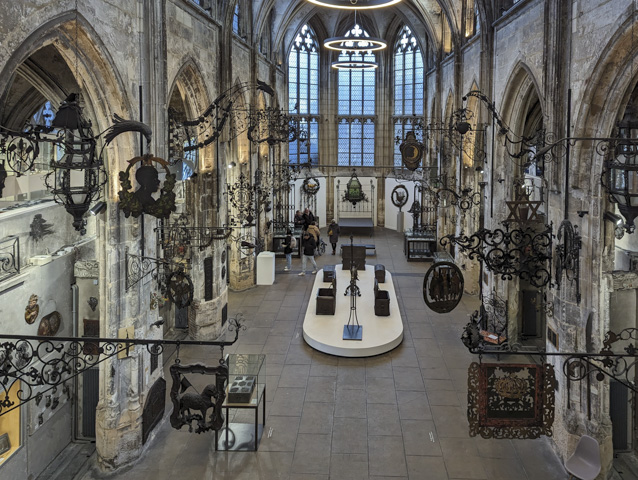
We really enjoyed Rouen and would definitely come back in warmer weather to enjoy the riverside.

On the way into France we had focused on the WWII cemeteries and Normandy beaches having skipped the WWI sites around the Somme. We wanted to put this right on the way back and brush up on our WWI history.
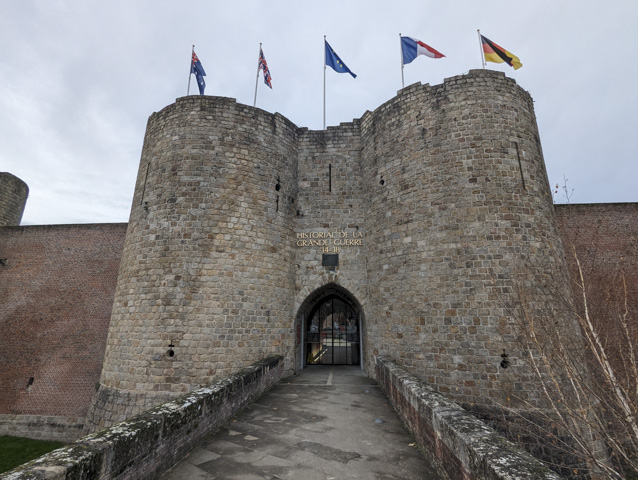
Our first stop was the WWI museum in Peronne, which is situated in a castle in the middle of town.
This taught us some facts and figures but it wasn’t until we visited the battlefields themselves that the reality and the scale of the loss of life really hit us.
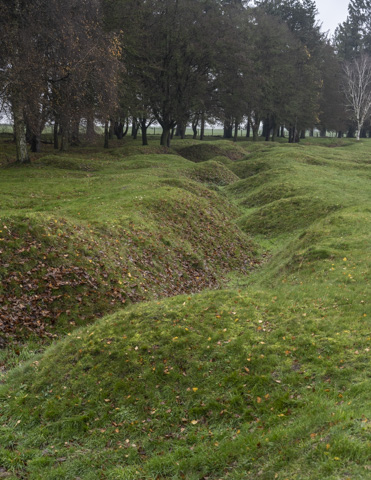
The Canadian Parks Service run two fantastic visitor centres on the battlefields of the Somme, staffed by volunteer Canadian Students.
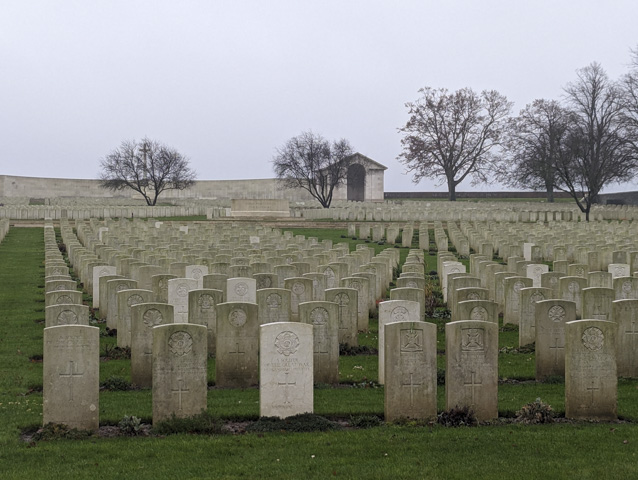
The first one we visited was Beaumont-Hamel, which was the site of intense fighting. On a drizzling and foggy day we walked around the trenches on both the allied forces and German sides of the conflict and contemplated the horrors of the battles and the horrendous loss of life on both sides.
When the allies went over the top at Beaumont-Hamel to begin the ”Big Push” of the Battle of the Somme on 1st July 1916 20,000 were killed and 38,000 were injured. Of the 800 Newfoundlanders who started the day only 68 were to survive.
We moved on from Beaumont-Hamel to the town of Arras where we had hoped to visit the WW1 tunnels that had been built by New Zealand engineers to muster troops before the “Big Push”. Unfortunately we had limited time and couldn’t get on a tour of these tunnels. This remains one to do on another trip to France.
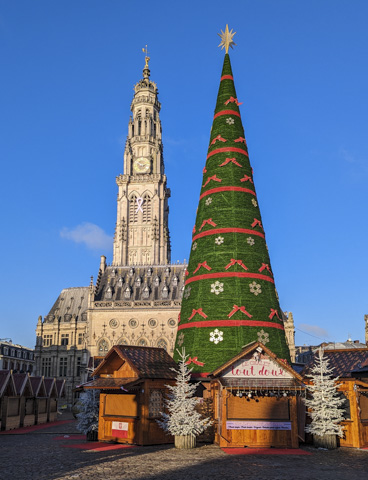
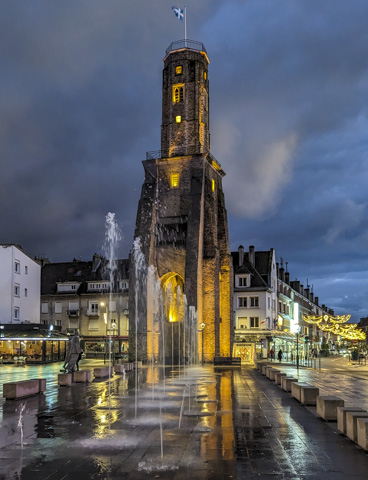
However we did climb the bell tower of the town hall to get a view of the town and the massive Christmas market that was spread across the big squares in the town. We also visited the huge Cathedral of the town.
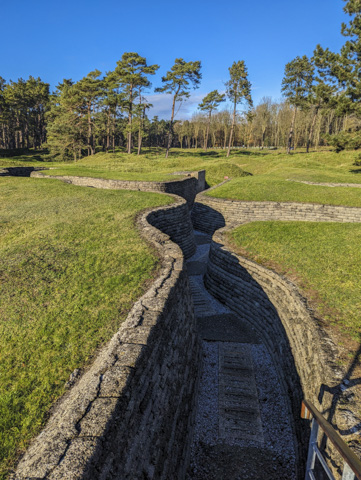
Our last stop before hitting Calais was the Canadian Memorial at Vimy Ridge. This is the site of another battlefield where the allied and German trenches were only a few metres apart. They were so close that in still conditions it was possible to hear the opposition talking in their trenches.
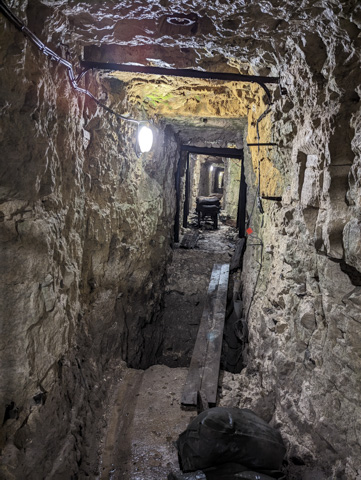
Some of the trenches here have been restored with concrete sandbags (instead of the original ones) to show what they would really have been like in the war. There are also some underground tunnels that can be accessed on a free tour. These tunnels were used to move between trenches and as the starting point for the sappers who dug deep tunnels under enemy lines, which were then detonated to cause breaches.
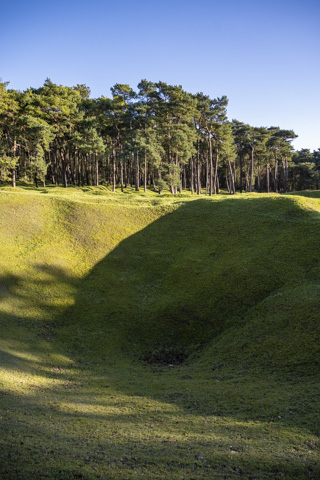
Above ground the massive craters from these explosions still pockmark the land.

Also at Vimy Ridge is the massive Canadian memorial for those who died during the war.
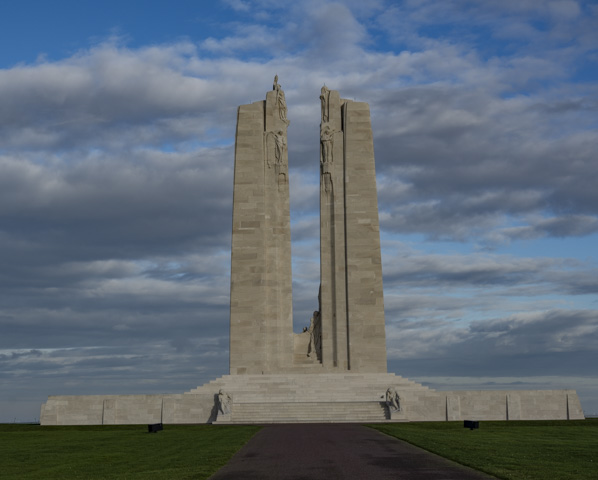
In total 425,000 Canadians were mobilised in Europe during WW1 of which 60,661 were killed and 172,000 were wounded. These are huge numbers but overall in WW1 between 9 and 11 million military personnel were killed and between 6 and 13 million civilians. Of the military deaths, around 2/3rds were killed in battle, which marks in out from all previous wars when disease was responsible for the majority of deaths. This really was a new type of conflict the horror of which had never been seen before. I think it is important for us to visit these sites if at all possible, to reflect on this part of history and ensure that the memory of those who lost their lives is kept alive.
After leaving the Somme we completed the short drive to Calais and stayed overnight in some free parking on the harbour wall before catching a ferry first thing in the morning to head back to the UK.
This brought to a close our 6 month tour of France which we have thoroughly enjoyed. A month in the UK seeing family and friends and enjoying a traditional British Christmas beckoned before we head to the Far East to avoid winter in Europe.
Atlantic Coast
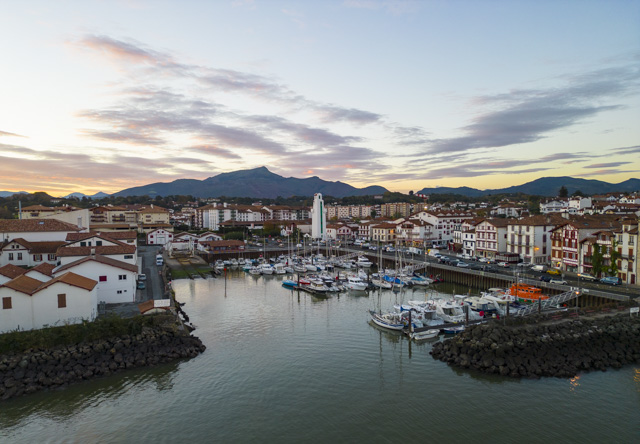
With our time in Spain at a close we crossed the border, by just a few km’s, to the port town of San Jean de Luz.
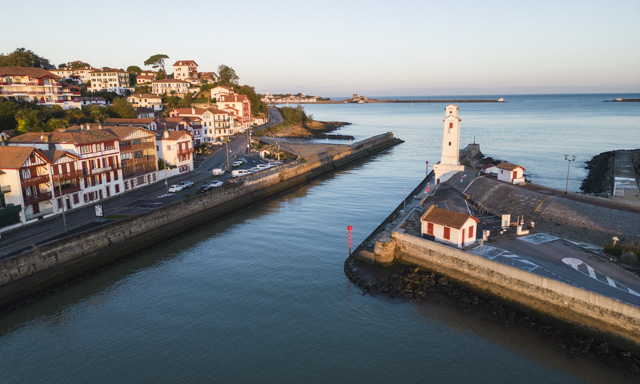
The municipality is generous enough to provide a very central Aire for motorhomes but unfortunately its sandwiched between a busy road and a railway line – notwithstanding this we managed a decent nights sleep and on the plus side, it is only a couple of hundred metres from the centre of town.
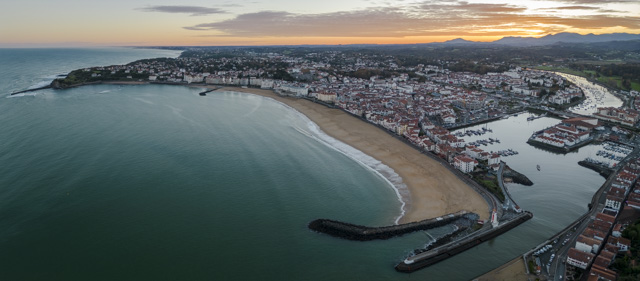
The town itself is a charming mix of an old fishing port and a turn of the century seaside resort. There is a big sandy beach and a surprisingly good shopping area.
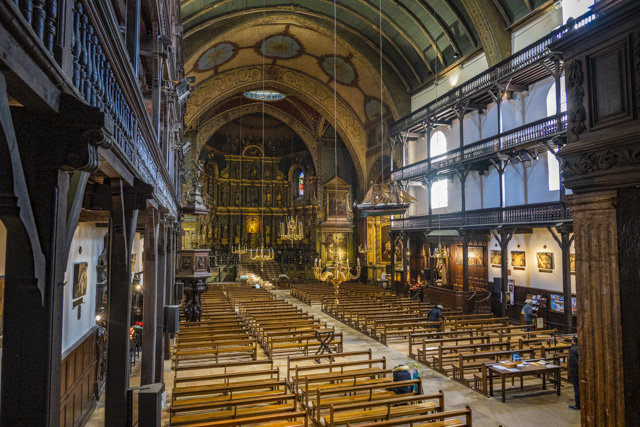
One of the highlights of our visit was the church (Eglise Saint-Jean-Baptiste). We have seen a lot of churches in France and, while most are very impressive, we were starting to feel a little churched-out, so much so that we very nearly skipped this one on our jaunt around town. At the last minute though, we popped our heads in as we were passing and are so pleased that we did because it is definitely one of the best. The outside is very plain and hemmed in by other buildings but once you go inside it is beautiful medieval building with three levels of wooden galleries running down each of the sides and back, a golden altar piece, decorative ceiling and hanging from the ceiling a model fishing boat.
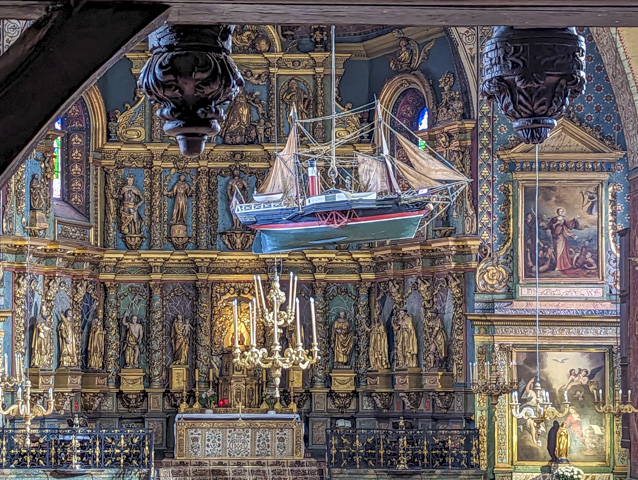
The church actually has a place in history as, here in 1660 Louis XIV (the Sun King) married Marie-Thérèse of Austria (the Infant of Spain). Traditionally the men would have sat on the balconies and the women on the main floor of the church.
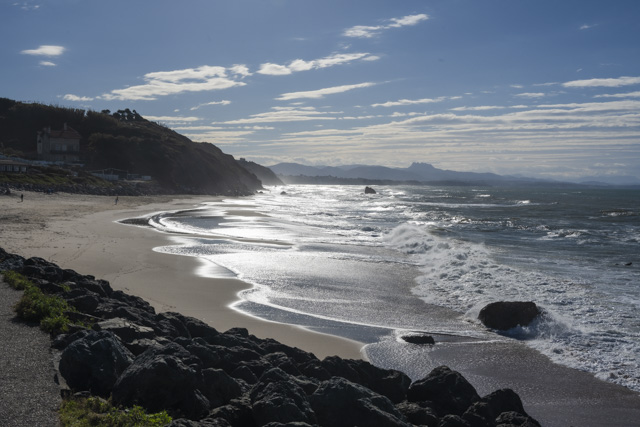
Our next stop on the way North was only a few km’s up the coast, just outside the town of Biarritz, at Milady Beach.
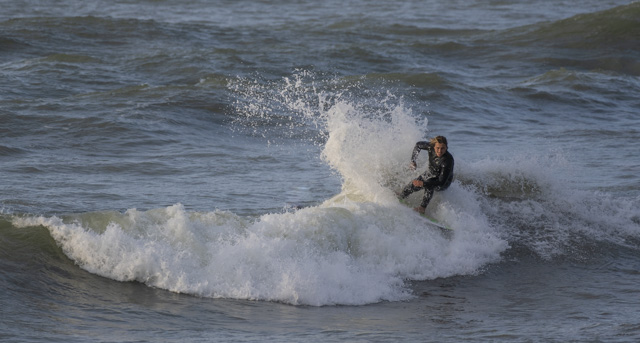
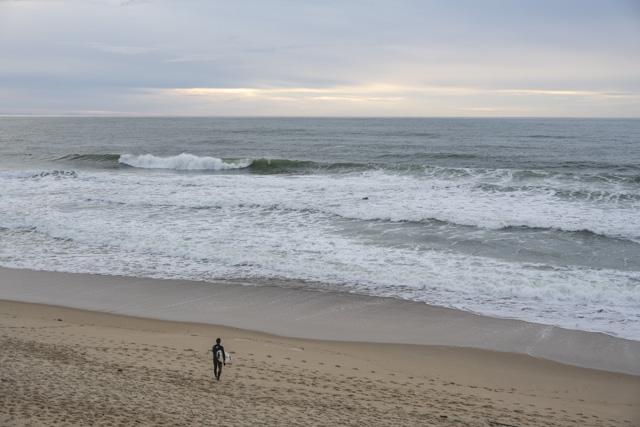
This wild surf beach is a magnet for surfers and we could spend hours just watching the surfers and the waves but it was definitely a bit too wild for my very amateur surfing!
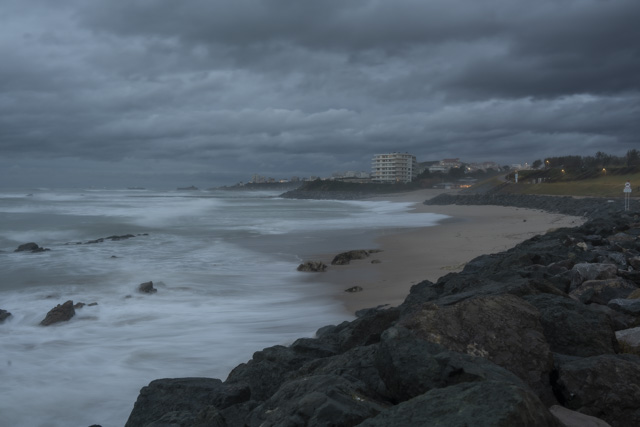
From here we got on our bikes to explore Biarritz which is a very grand town and is clearly an upscale seaside resort, a bit like a Posh French version of Brighton.
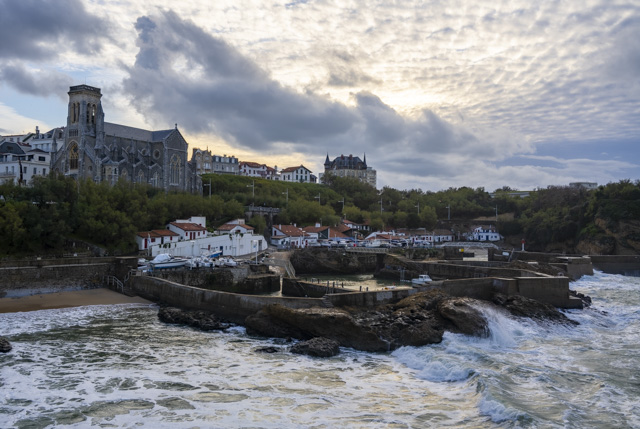
We cycled through the town to the lighthouse and then back along the seafront.
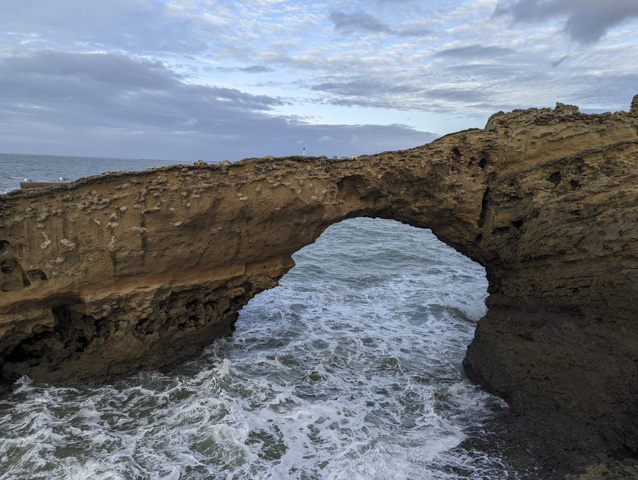
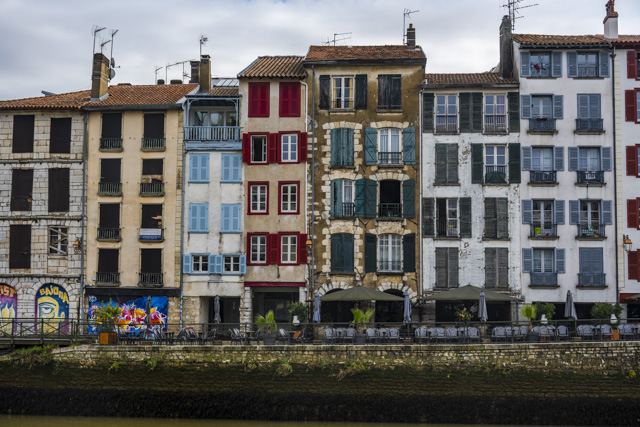
Right next door to Biarritz is the town of Bayonne on the banks of the rivers Adour and Nive. It is a lovely old city with cobbled streets of half-timbered houses.
There is a large cathedral with twin spires which can be seen throughout the city.
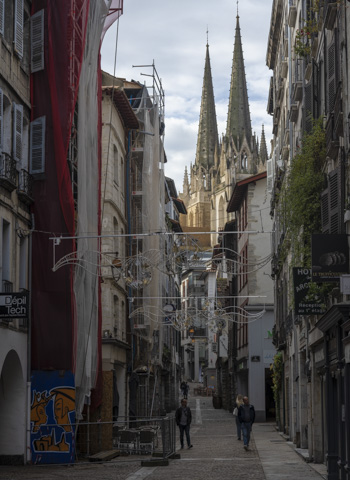
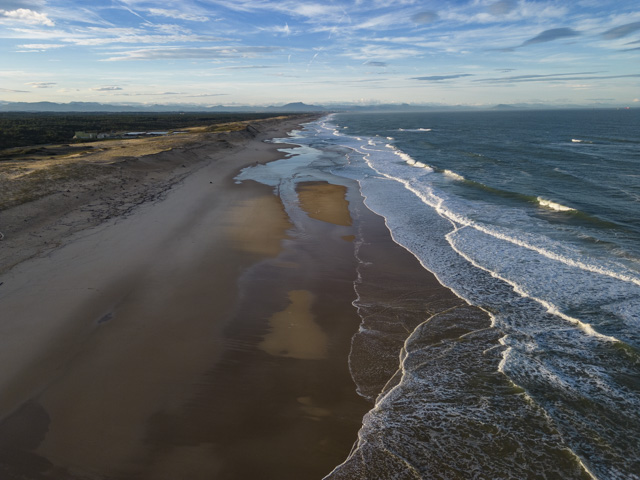
After spending an enjoyable day in Bayonne we continued up the Coast to the Landes Commune. This is an area of long undeveloped wild beaches. We found a great park-up, just behind the dunes at Capbreton.
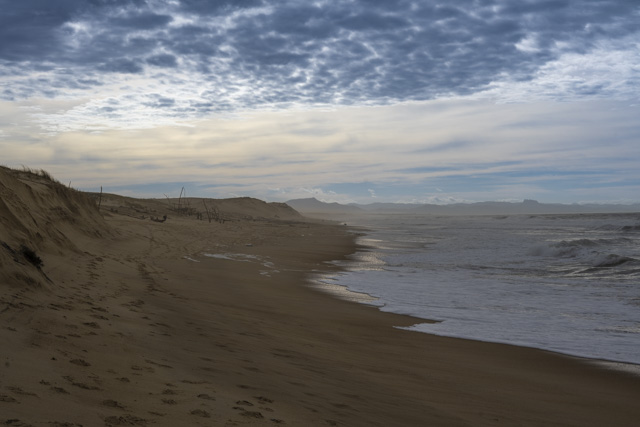
Here there is a trail through the dunes and along the beach in this nature reserve.
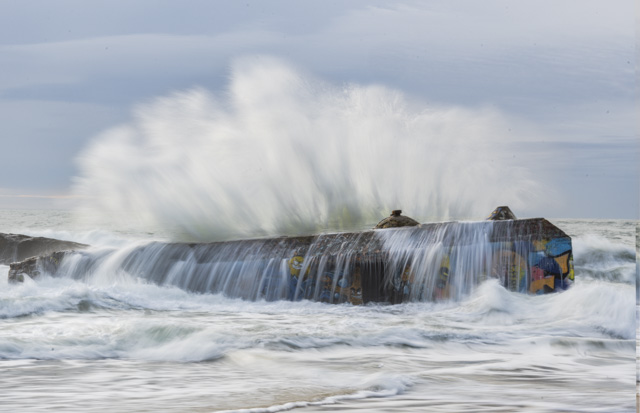
This area was part of the Nazi Atlantic Wall to defend against Allied invasion and there are a number of concrete bunkers that have fallen into the sea and sit on the beach.
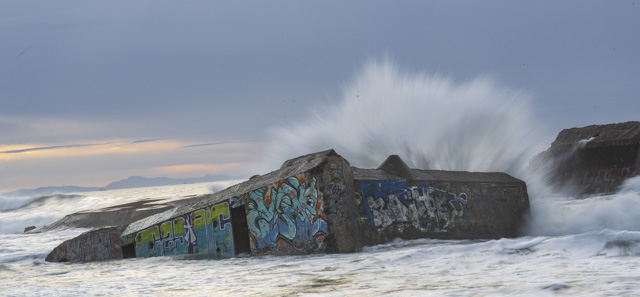
These have been decorated with graffiti and look spectacular in the crashing surf.
After some long walks on the beach we got back on the road and headed North towards the Dune du Pilat, which, at almost 3km long, 500m wide and over 100m high, is the tallest sand dune in Europe.
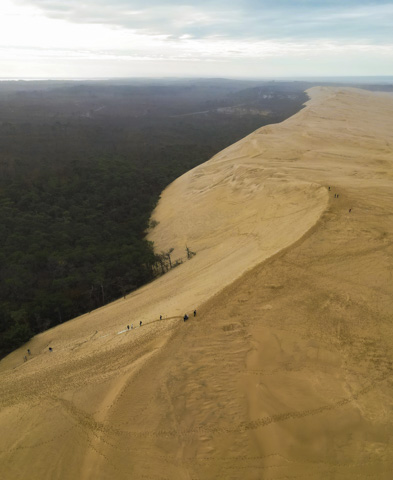
There is a temporary staircase erected every year which reaches almost to the top but the last few metres up the sand is hard work. Coming down is much more fun as you can run down, digging your heels in and flying metres at every step, unfortunately they do not allow sledging which would have been even better.
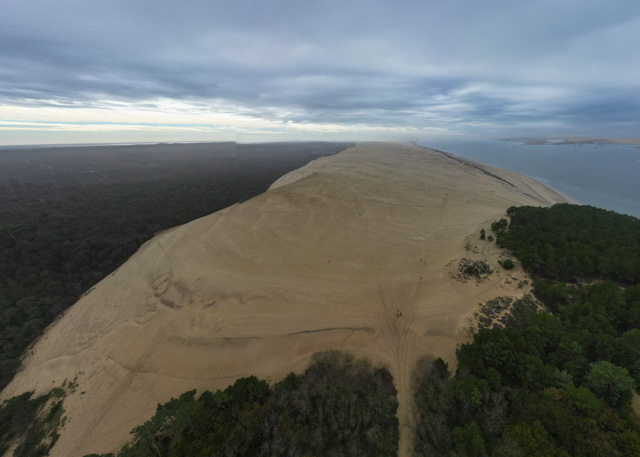
Dune du Pilat is not far from Bordeaux which is somewhere we would like to explore in the future but for this quick run back up North we set our sights on the much smaller and very beautiful wine producing town of Saint-Émilion, just to the east of Bordeaux. This proved to be a great choice as the town is not only a thriving centre of wine production but has some interesting history to explore.
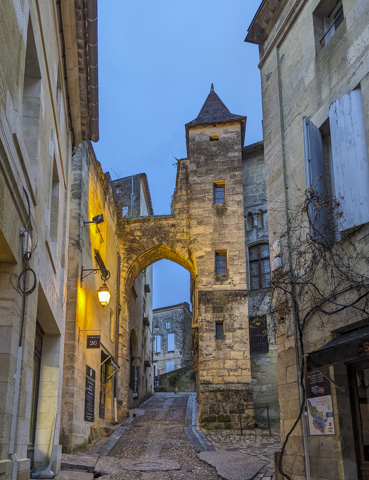
The town is named after a monk called Émilion who, legend has it, fled his hometown in Brittany, Vannes, in the 8th century to come to the area where he created a hermitage carved out of the limestone rock for which the area is also well known. He is credited with a miracle as when caught smuggling bread to distribute amongst the poor, he opened his coat and the bread had turned into logs of wood, thereby avoiding punishment. Later of course when delivering the ‘logs’, they had transformed back into loaves of bread.
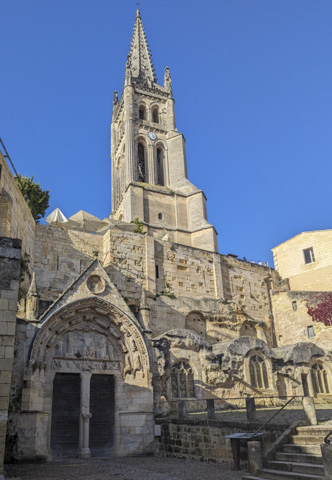
In the 11th century the construction of the monolithic church of Saint-Émilion, to protect the body of Saint-Émilion, was begun. When completed this church, which has been carved out of a limestone cliff, was and still is, the largest monolithic church in Europe with the main room being 38 metres long, 20 metres wide and 12 metres high.
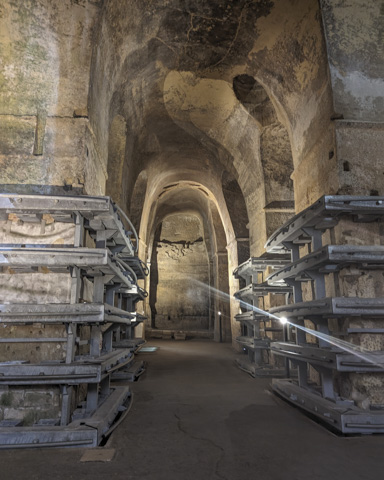
In recent times the columns holding up the roof have had to be stabilised with steel collars as they were subsiding as a result of the weight of the tower built on top of the cliffs and the porous nature of the limestone rock.
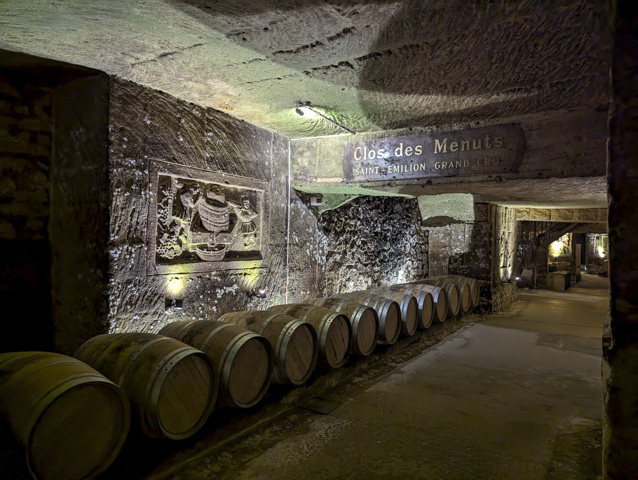
Beneath the streets of the town is a labyrinth of tunnels which were dug to extract the white limestone which was used for many of the buildings in nearby Bordeaux. Many of these tunnels are now used to store the wine for which the area is famous. We visited one of the wineries which allowed us to wander around some of their catacombs freely and see the ageing wine.
Knowing we needed to get some miles under our belts we moved North to the town of Rochefort, which is just south of La Rochelle.
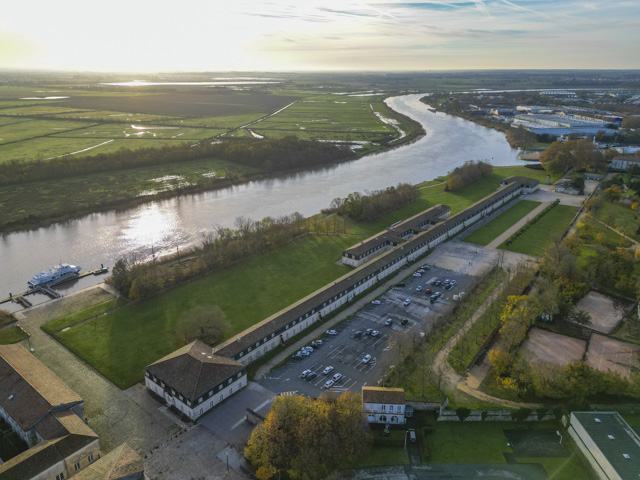
Rochefort is a maritime town on the Charente estuary which was the site of a naval base and dockyard from the 17th century through to its closure in 1926.
We explored the exterior of the docks and were all set to visit the maritime museum here but unfortunately it was closed when we turned up.
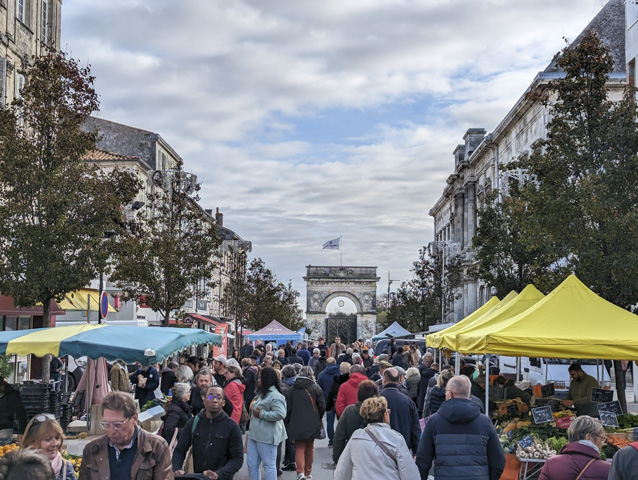
However we did stumble across a large Saturday market in the town which we enjoyed walking through and sampling some of the foods.
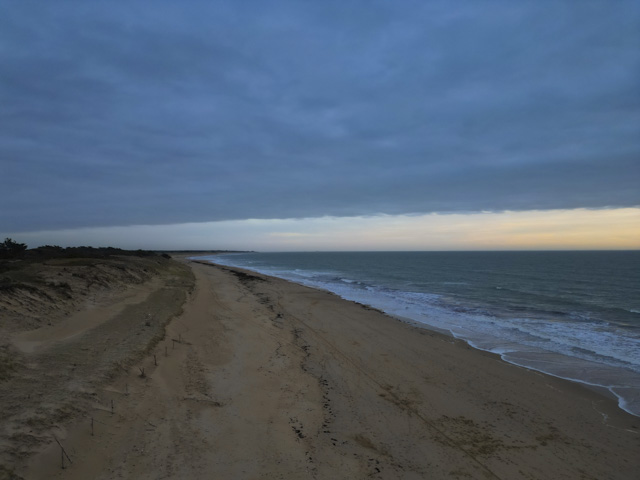
On our way South earlier in the year we had avoided visiting Ile de Re because it was summer and we expected it to be really busy but at this time of the year, on our trip back North, we decided to have a quick look to see what all the fuss is about.
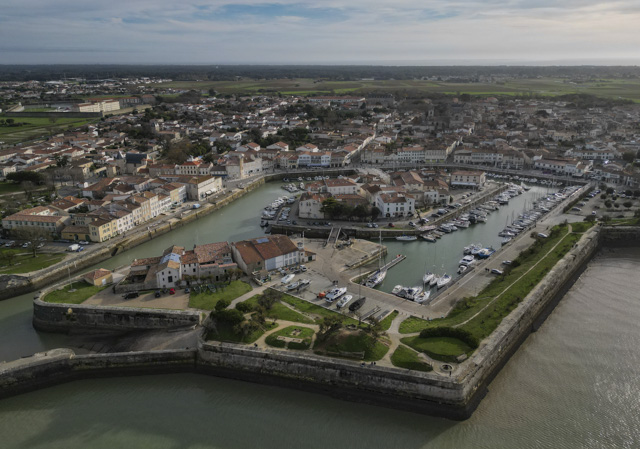
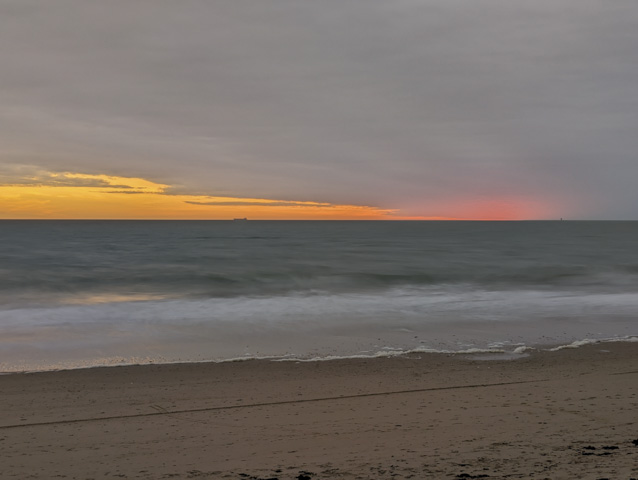
After crossing the toll bridge onto the island we managed to find a small wild camping spot right next to a beach to spend the night – something that I expect would have been impossible at the height of summer.
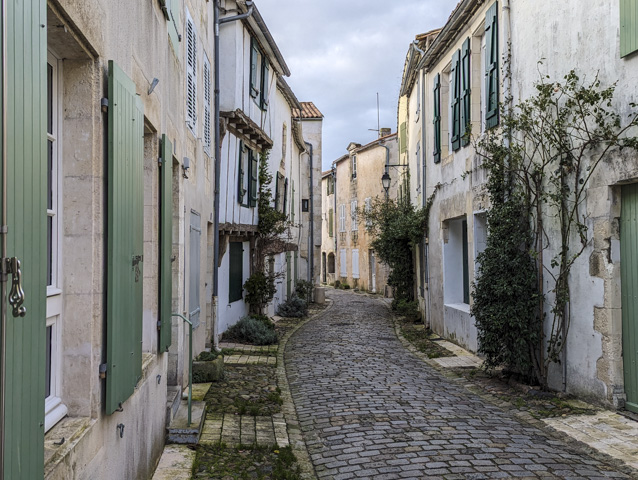
We didn’t waste anytime in getting on our bikes to explore the area. The island is criss-crossed with bike paths and its almost entirely flat and only 5km wide so perfect for biking around.
We headed to the town of Saint Martin de Re, which is the capital of the Island. It’s an attractive little town with most of the cafes, bars and shops situated around, and on the streets leading down to, the harbour. Understandably many of the shops were shut for the season and, it being November, the weather wasn’t that great, but despite this there were still a fair number of tourists around and plenty of opportunities for a hot chocolate or a vin chaud to warm us up!
Heading for the Coast
After tearing ourselves away from Zaragoza we carried on heading West towards the town of Ainsa. But first we stopped off at the waterfall at Salto de Bierge. This would be very busy in the summer season with a swimming beach above the falls, but in October everything was shut and no one was around.

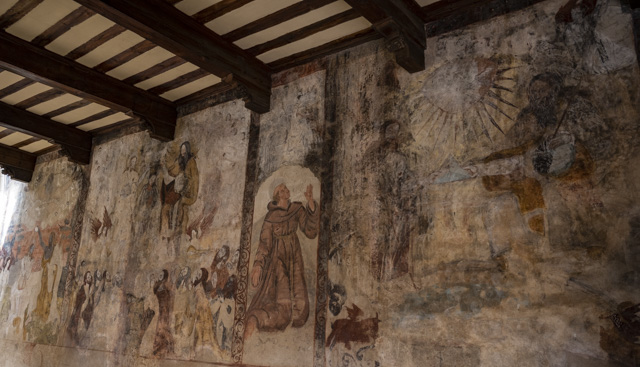
We also stopped off at the gorgeous hilltop Moorish town of Alquezar. The town is in the Sierrra de Guara national park and is in the foothills of the Pyrenees. There is a Moorish citadel set on a rocky outcrop above the town. This was built in the 8th century but Christians took over the area in the 11th century and built the Collegiate Church of Santa Maria La Mayor in the 12th Century.

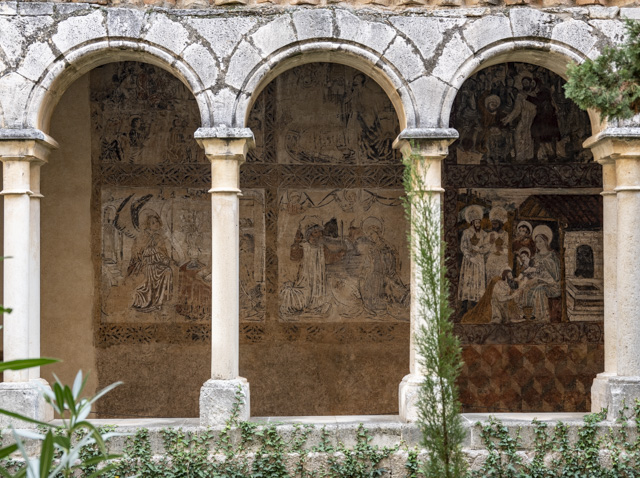
The church has a 2 storey cloister which has very well preserved original paintings on the ground floor walls and some intricate carvings on the internal stone pillars.
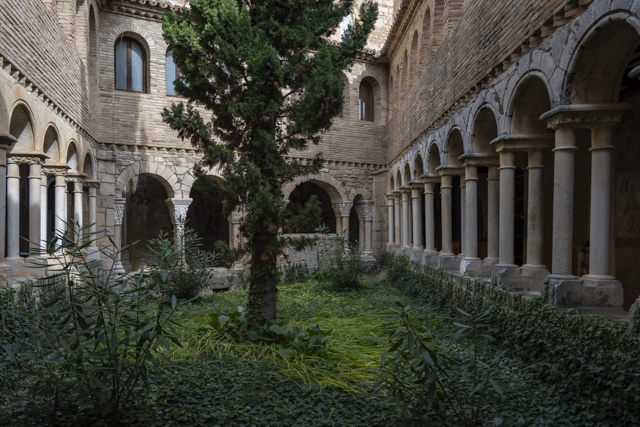
The town feels very similar to the Provence hilltop towns and the medieval streets were very pretty.
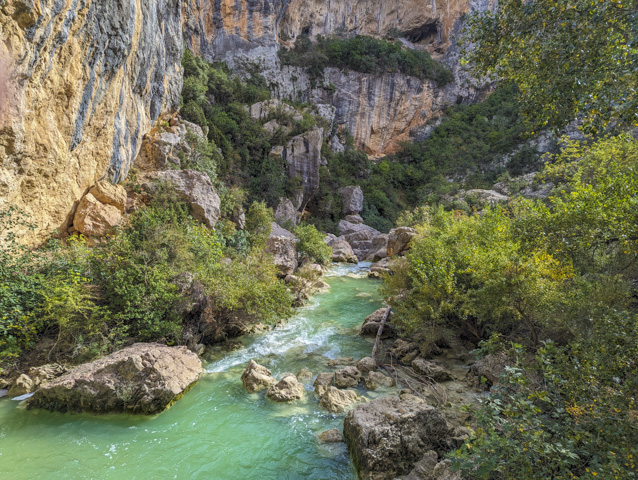
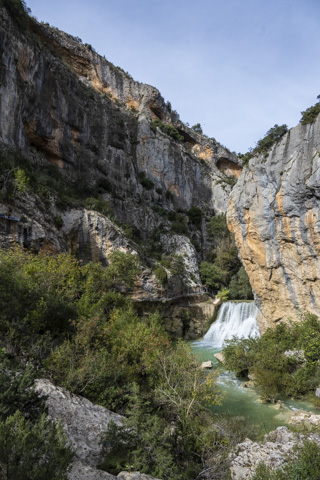
There is a short walk of around 5kms which drops down into the Rio Verre canyon below the town and then through a series of catwalks along the side of the canyon walls. The trail traverses around the town allowing you to climb back out and up to the other side of town from where you started. It was a really nice hike and well worth doing although the narrow catwalks must get congested in summer.
We left Alquezar and headed to Ainsa to spend the night there and to explore the town in the morning.
Ainsa was the capital of the old kingdom of Sobrarbe which became part of Aragon in the 11th century.
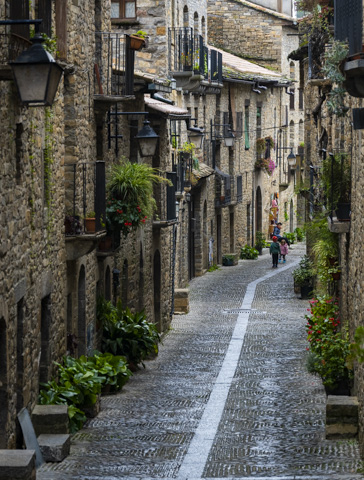
The town has a large castle, of which only the exterior walls remain and just outside the castle walls is a large market square. This is then abutted by a tangle of narrow medieval streets and closely packed houses.

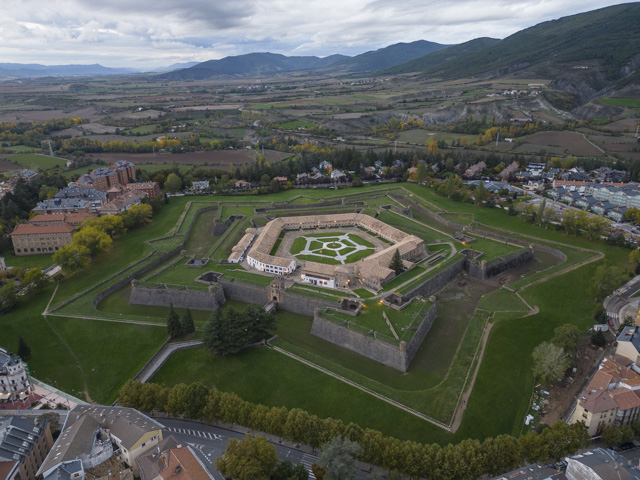
Our next stopover was the town of Jaca, which is a large town on a hilltop plateau and was the first capital of Aragon. There is a large fortress, the Ciudadela de Jaca, just a hundred metres from the centre of town. It is pentagonal in shape, which is more easily visible from a drone shot, and was the first citadel in Spain to be built to withstand cannon fire.
The town itself is very nice and we stopped in a bar on the main square for a hot chocolate, with a cheeky shot of Baileys in it to warm us up.
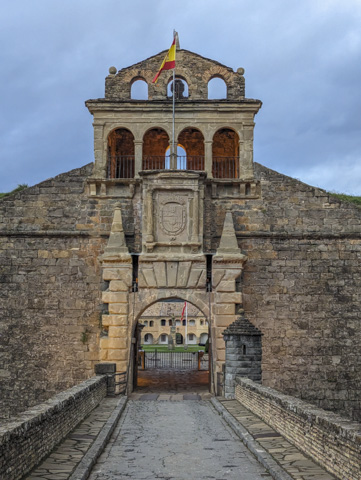
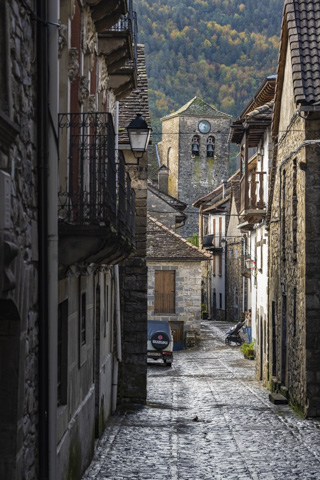
Leaving Jaca we decided to drive a loop further into the Pyrenees to see the mountain town of Anso. This is a really cute town but was fairly deserted when we visited. It seems like a lovely town though and would be a great centre for hikes in the summer.
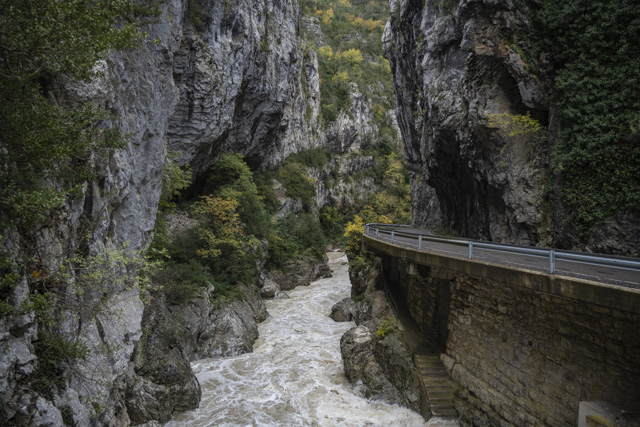
We quickly left Anso behind and drove, in pouring rain, to the lowland town of Sol de Rey Catolico. The drive was really spectacular and we saw several rivers that were swollen by the rain and were raging torrents.
Sol de Rey Catolico is an incredibly well preserved medieval town where the centre is unchanged in hundreds of years.
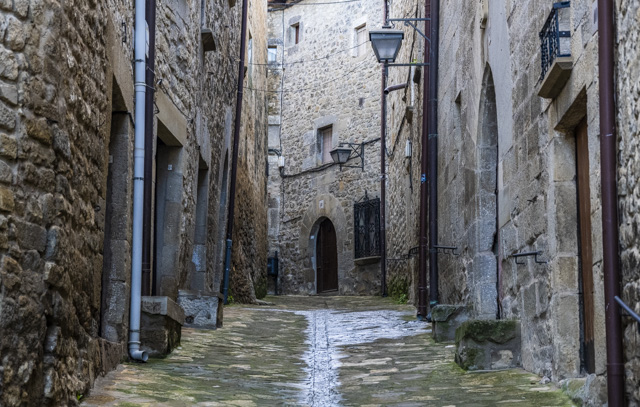
Unfortunately, we are finding in many of these small Spanish towns that they are mostly closed up out of season, even the church was locked up, which was a real shame.
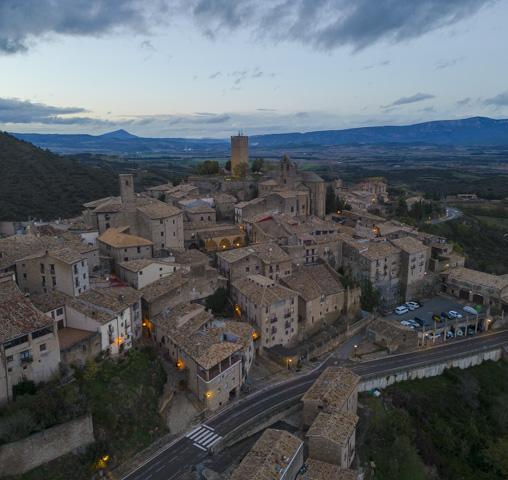
Our next destination though, the beautiful town of Olite, was fully open and actually had a fairly large number of tourists. Olite is a medieval town with Roman origins that is home to the Palace of the Kings of Navarre.
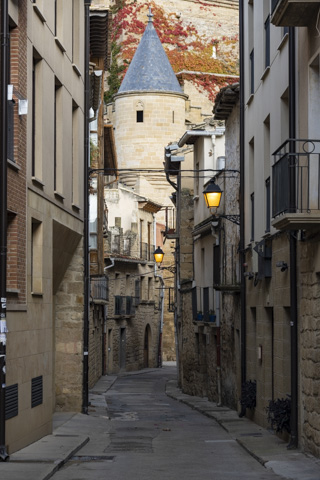
Built in the 15th Century by Charles III, the Palace complex with its high walls, towers and moats was considered one of the most beautiful in Europe. Beautiful gardens were added and elaborate furnishings. Charles even kept exotic animals such as giraffes and lions in a menagerie.
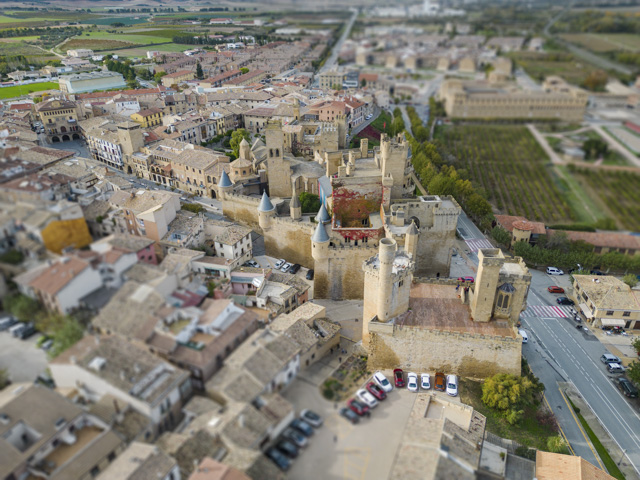
The palace was never intended to have a defensive aspect and as such the focus was on the aesthetics. Unfortunately the buildings were gutted by fire in 1813 but it was extensively rebuilt in the 20th Century. This palace is well worth a visit and has one of the best audio guides we have listened to.

Olite lies on the road to Pamplona which was the next destination on our whirlwind tour of Northern Spain. Pamplona is of course famous for its annual Running of the Bulls festival where bulls are set loose to run through town (and tourists) to the bull ring where they are then put to death.
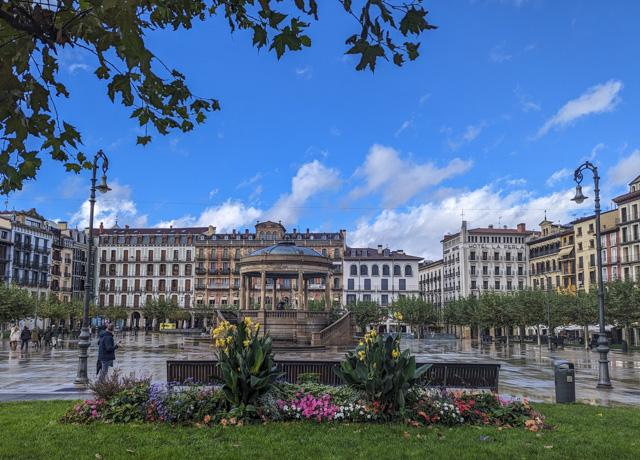
However that is in the summer and we were there in a blustery and showery autumn. What we saw of Pamplona is a large modern city with a buzzy central square and some attractive parks. Without the pull of the festival and nice weather though we weren’t persuaded to spend more than a day exploring the city.
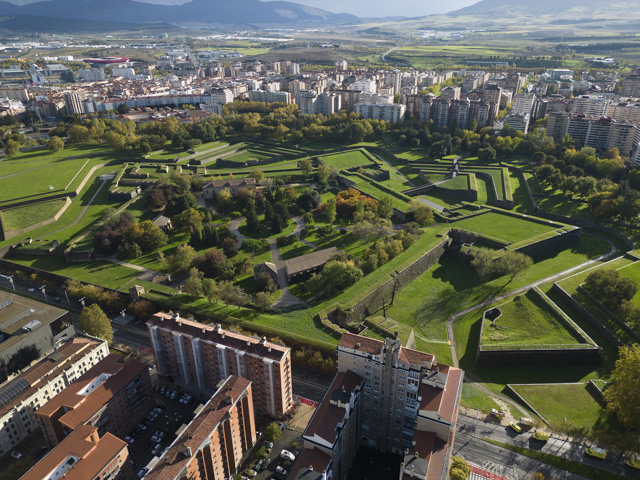
Our last stop in Spain, as we had reached the Atlantic Coast, was San Sebastian or Donsotia-San Sebastian as it is also known. There is an Aire here just next to the university which is an easy cycle or a 10 minute bus ride into the centre of town and it only costs €3 a night (off season). An absolute bargain and unsurprisingly it was very busy with most people using it as a stopover as they headed South for warmer weather.
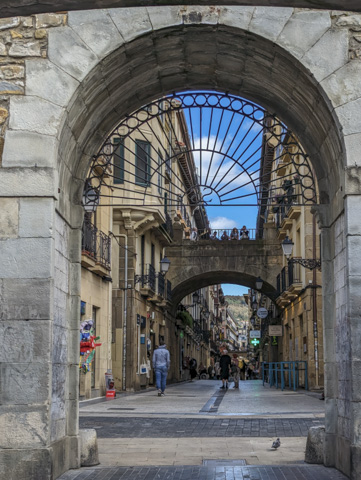
San Sebastian is world renowned for its amazing food and there are 19 Michelin stars in restaurants in the area. We weren’t here for the Michelin stars but we did want to experience the amazing Pinxtos scene. Pinxtos is the Basque word for tapas and San Sebastian has a reputation for having a very lively and high quality bar scene. The bars were busy at the weekend with locals but quietened down in the week when only a few tourists remained.
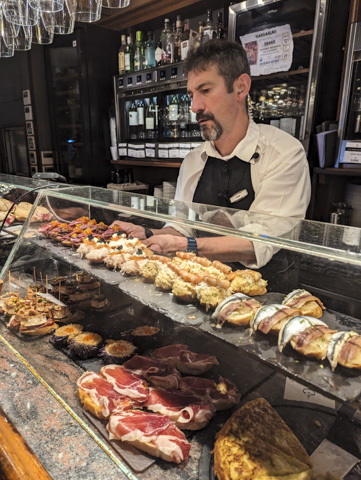
Just like in Zaragoza we enjoyed a bar crawl at lunchtime for two days in a row and had some amazing little dishes. Sarah really enjoyed a local wine called Txakoli which is a semi-sparkling dry white and I really enjoyed the Burnt Basque cheesecake. This is a local speciality which was only really developed in the last 50 years and involves a simple cheesecake which is cooked at too high a temperature to cook the outside but leaves the interior deliciously squishy and soft.

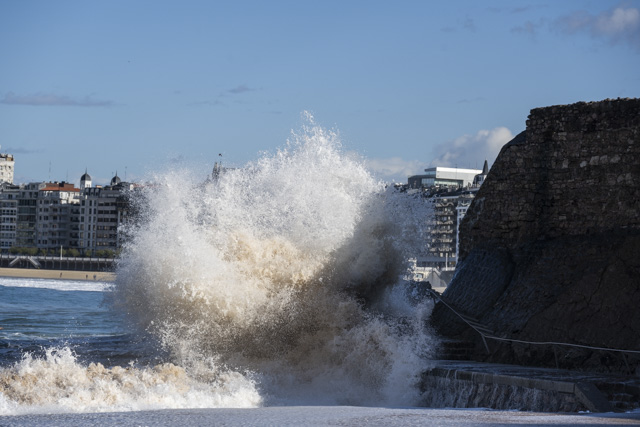
The beach at San Sebastian is huge and I imagine packed in the summer but at this time of year there were only a few walkers to be seen.

This was sadly the end of our trip through Spain and felt like the beginning of the end of our long summer trip. From here we were heading North to Calais for our ferry back to the UK. There was still time for some fun to be had on our way back North, but we needed to start getting some miles under our belt!
 FromAtoB