Going to Zaragoza
Our plan was to cross Spain from the Mediterranean across to the Atlantic following the Pyrenees without getting too high into the mountains which at this time of year were beginning to get snowy and cold.
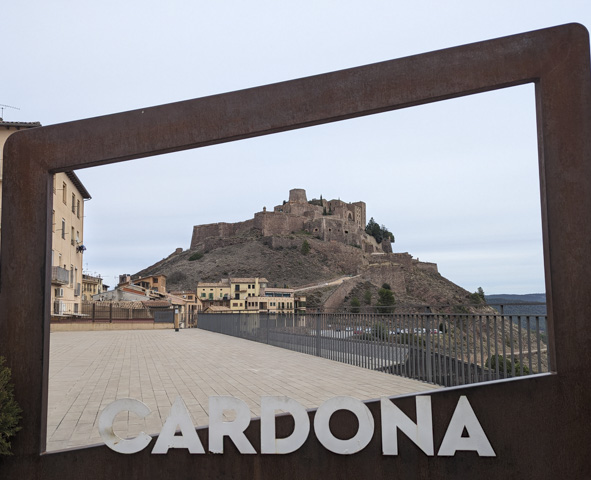
The first major stop on this route was the city of Zaragoza, the capital of Aragon and the fifth most populous city in Spain. But first we stopped over in the small hill town of Cardona.

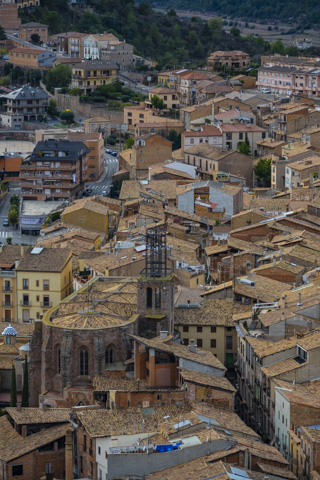
We were here to cut up the drive but also because of the castle on the hill and the medieval streets of the old town. The castle has been part converted into a luxury hotel but this has also meant that that the rest of the buildings have been restored as well – a good public/private partnership!
We moved on to Zaragoza from here to the large dedicated free motorhome parking area near the university. This is right opposite a tram stop so it’s really convenient to get into the centre of town.

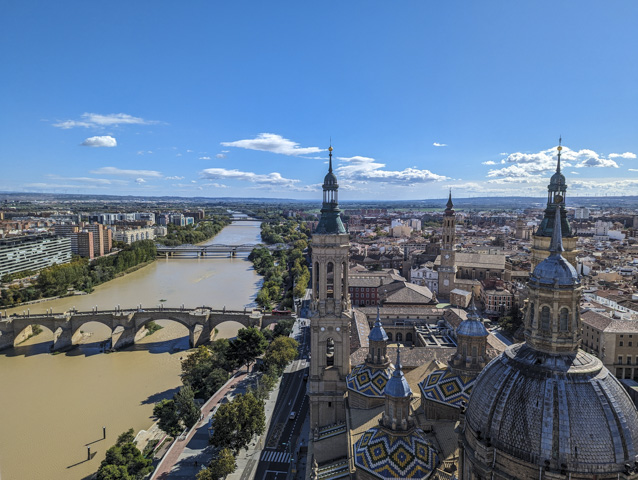
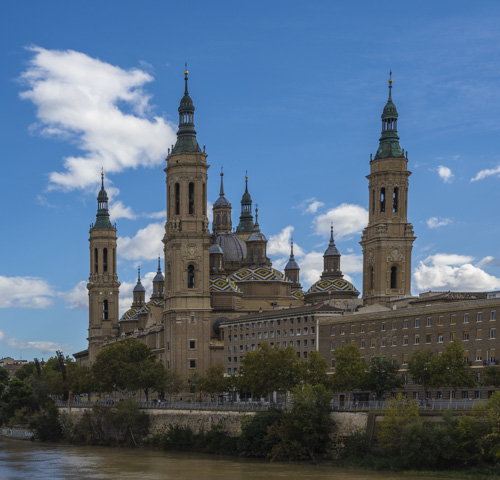
After a 10 minute tram ride we got off at the central city and walked into the large Plaza del Pilar. To one side of this is the massive Basilica de Nuestra Senora de Pilar and at one end the incredibly impressive Cathedral of the Saviour or La Seo de Zaragoza.

We spent some time in the Basilica, taking the lift to the top of one of the towers where there are great views across the city.

The inside of this cathedral is enormous and it is split into lots of different areas where services can be carried out independent of what is happening elsewhere in the building.
After this we went over to La Seo which has paid entry. The outside of this church is less impressive although it is a mix of mudejar (a mix of Jewish, Christian and Muslim created by Muslims who remained behind after Christians reconquered the Iberian peninsula) and gothic styles.
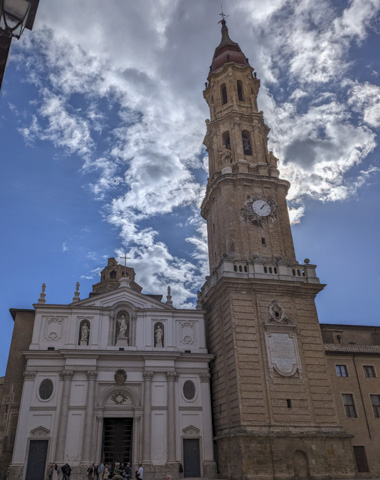
Inside there are 15 chapels around the outside of a large wooden choir and main altar which are very ornate. Each of the chapels is different to the next and are dedicated to different saints.

All of this culture was hungry and thirsty work so it’s a good thing that Zaragoza is considered the most happening city for Tapas in Spain.

Tapas in Zaragoza is a bit different to how it works in the tapas restaurants we’re more familiar with at home. It is considered more of a snack and an accompaniment to drinking and bars have rows of Tapas dishes on their counters (as well as hot dishes that you can order separately). You pick your Tapas dishes and buy your drinks and then find somewhere to sit, perch or stand and the food gets brought out to you.

To make the most of our short time in Zaragoza we decided to food crawl through the buzzy El Tubo area of town where there is a huge concentration of bars. We had 3 or 4 different dishes between us in each bar, all washed down with a cool beer. Each of the Tapas dishes cost around €3 so it’s really good value and you can have a filling lunch for a really reasonable price.
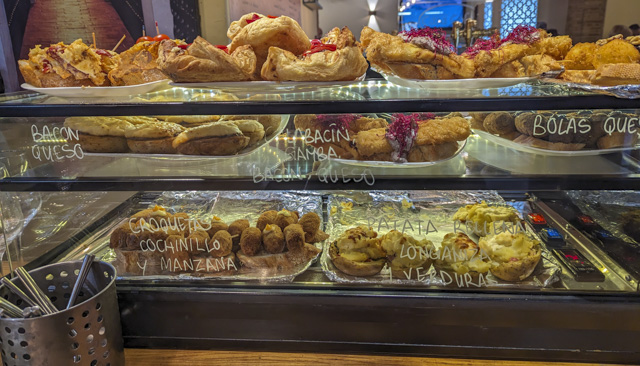
Some of the real highlights were the iberico ham (of course), crispy pork crackling and the Angulas eels (known as elvers in the UK).
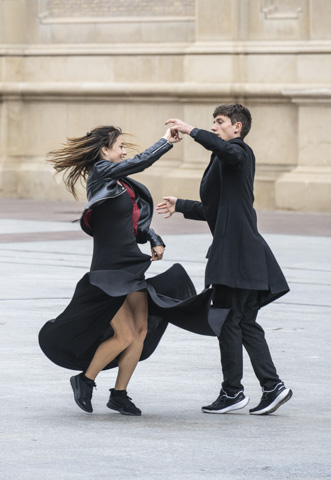
We had such a fun time in Zaragoza that we decided to stay a little longer. There is plenty to do and the previous day we had missed out on a major attraction, so we headed for the Aljaferia Palace first thing. This meant a tram ride followed by a bus but it was an easy journey, the public transport in Zaragoza is really good.
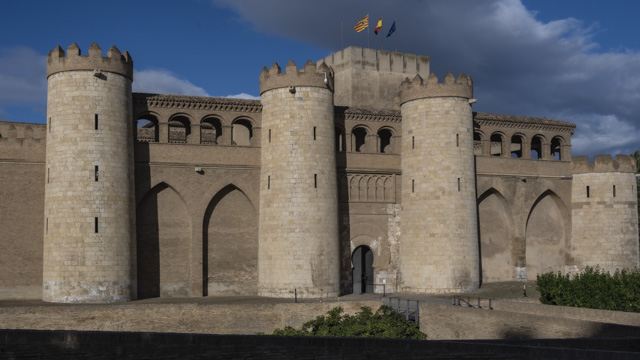
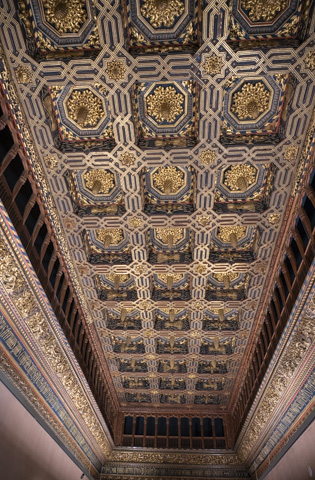
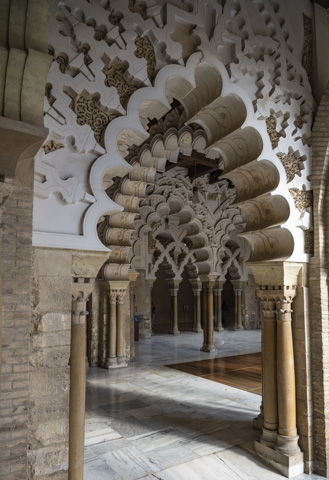
The Aljaferia Palace is a fortified medieval palace that was built in the 11 century for the Islamic rulers of Zaragoza. The palace passed into Christian hands in 1118 and was expanded in the 15th century. Since 1987 it has been the seat of Aragon’s regional parliament.
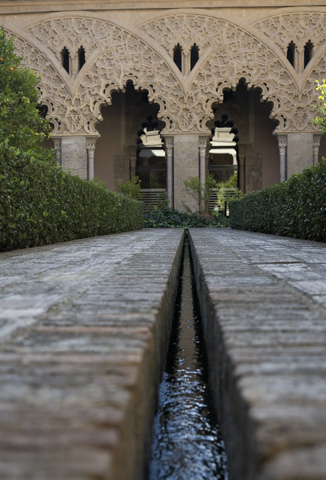
The intricate Moorish architecture of the building is amazing and many of the brightly painted ceilings are still intact today. However the walls are mostly bare as they would have been hung with tapestries.
After touring around the Aljaferia Palace we headed back to the El Tubo part of town for another Tapas crawl where we ate as well, if not better than the day before. Zaragoza is a great city which flies under the radar.
It would be a great place for a weekend away of sightseeing, eating and drinking without the massive crowds of cities like Barcelona.

Heading For Spain
From Carcassonne we were heading south with Spain in our sights. Having spent most of our time in France, we opted for a change of scenery and decided to travel across the Pyrenees on their Southern side in Spain, towards the Atlantic coast.
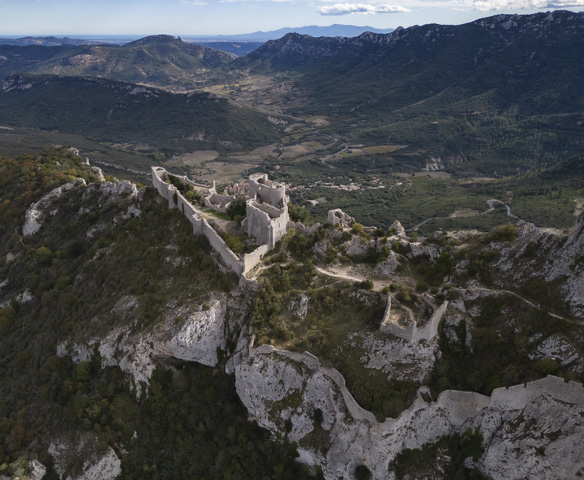
Our first stop was the small town of Peyperteuse, notable for its castle high above the village on a knife edge ridge. This is one of a series of Cathar castles that are called the Five Sons of Carcassonne all sited on rocky peaks in this region. Peyperteuse is known as Celestial Carcassonne because it is the biggest of the castles. First records of its existence are from the 1st Century BC but the first historical references to the castle are from 842.
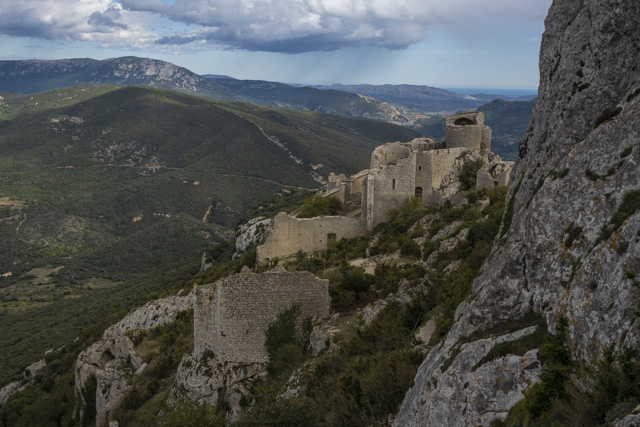
The castle itself was made of two parts with the upper castle only accessible from the lower one by a very narrow stairway. This has got to be one of the most unassailable castles that I have ever seen and not surprisingly it was never conquered.
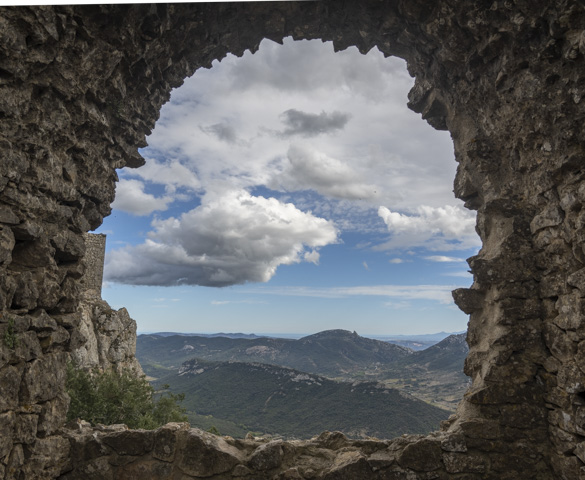
The castle acted as a border post to protect the Kingdom of France from the King of Aragon’s aggression. After the treaty of the Pyrenees in 1659 and the end of war between Spain and France, the castle lost its strategic importance.
After visiting Peypereuse we started heading towards the Mediterranean coast, for the first time, but not before we stopped off at Perpignan.
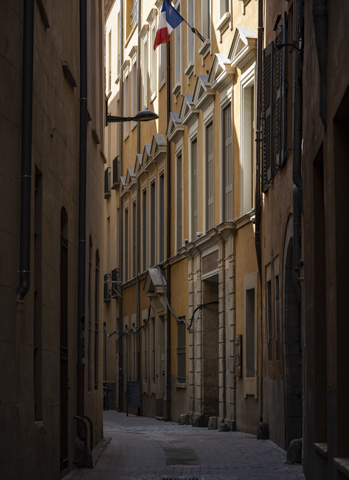
Perpignan has the feel of a Catalan town and for good reason, as historically, it was the capital of the Kingdom of Mallorca, which was a Mediterranean empire stretching from The Balearic Islands to as far North as Montpellier.
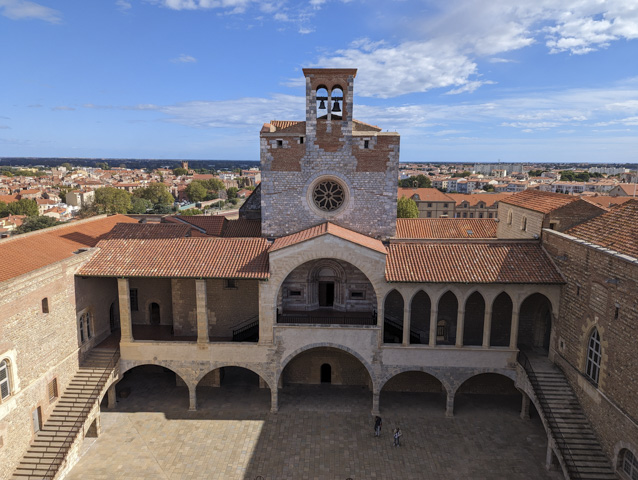
The biggest attraction in Perpignan is the massive Palais du Rois de Majorque or the Palace of the Kings of Majorca. This is a fortified palace in the gothic style organised around three large courtyards. It was completed in 1309 by King James II of Majorca who moved the capital of the Kingdom of Majorca to Perpignan in 1276.
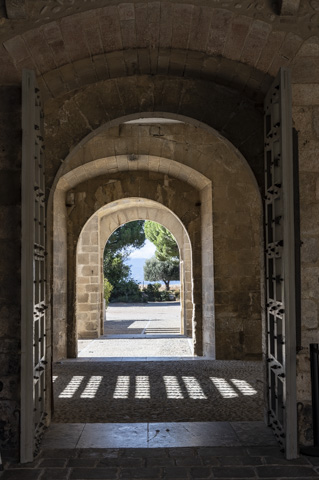
As well as visiting the Palace we cycled around the town and enjoyed immersing ourselves in the buzzy weekend culture.
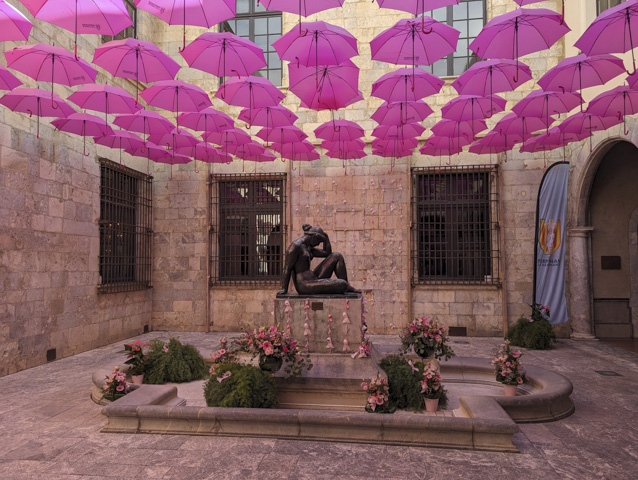
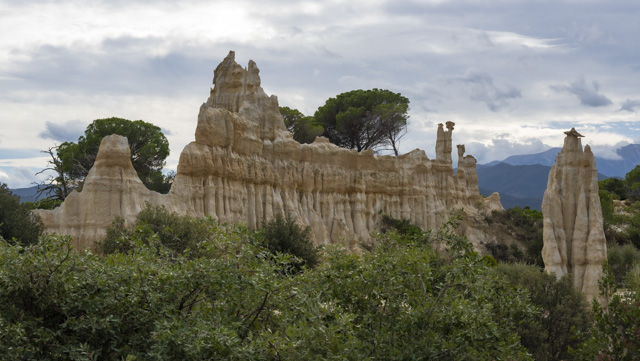
After leaving Perpignan we headed to the fairy chimneys of Les Orgues D’Ille Sur Tet. This felt like a little bit of Utah right in France with some Hoodoo formations and a really nice short walk around the area.
From here it was only a short stop on the way to the seaside town of Port Vendres, a working port close to its better known neighbouring town of Collioure. The local council provides a lovely motorhome parking area next to the port, which is just a short cycle along the headland to Collioure.
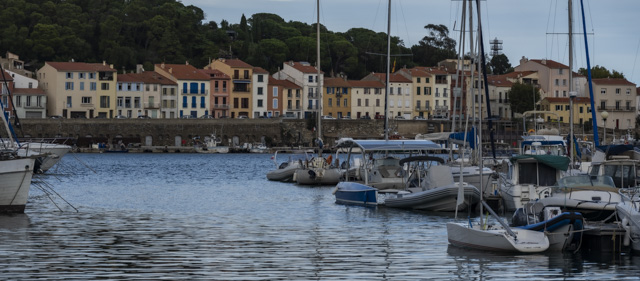
Port Vendres has an attractive harbour and in the summer season I expect it would be buzzing with lots of restaurants and bars along the harbour front. However out of season most were closed, but we did manage to find a bar for an early evening libation!
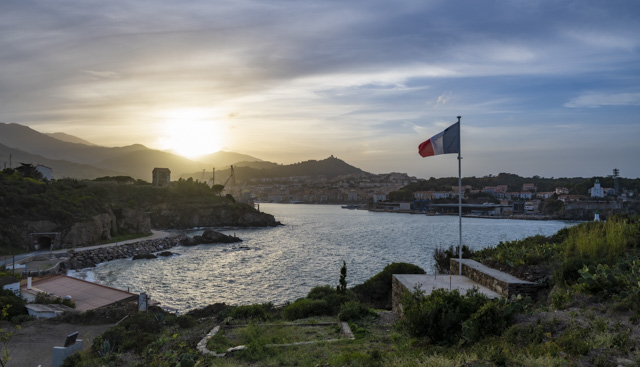
Our reason for staying in Port Vendres though was to visit the town of Collioure.
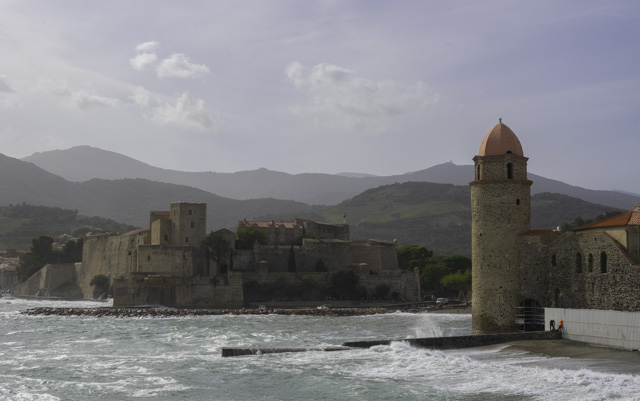
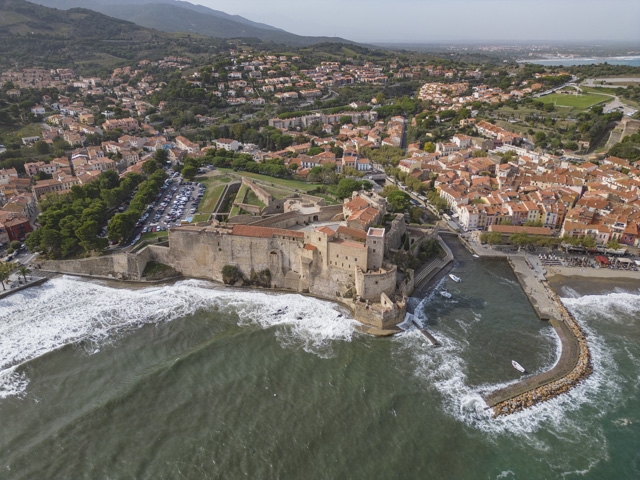
Collioure is an attractive little town based around a large fort which was built in the 13th century.
While Port Vendres is a beautifully protected harbour Collioure provides little protection for boats. It was packed with tourists, even out of season and there were lots of people swimming, enjoying the big waves even from behind the sea wall.
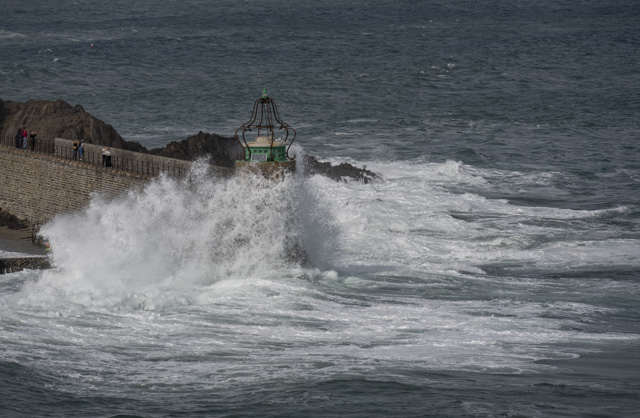
We sat and had a beer in the sunshine watching the waves and soaking up one of the last days of summer!
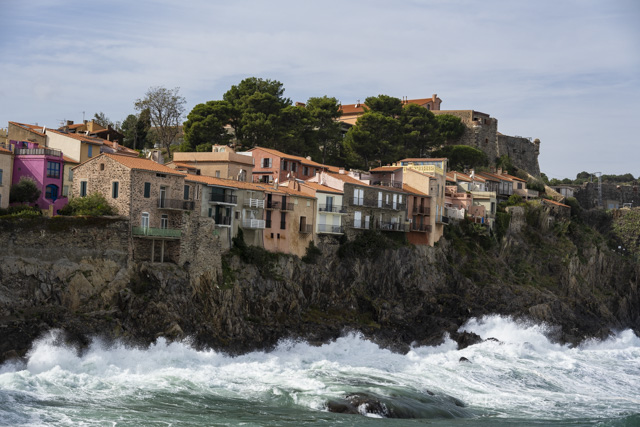
We also visited the castle, the Chateau Royal, which was built by the Counts of Rousillion and the Kings of Aragon. Later on in its history it was occupied by the Mallorcan court who ruled over Southwestern France and Northern Spain.
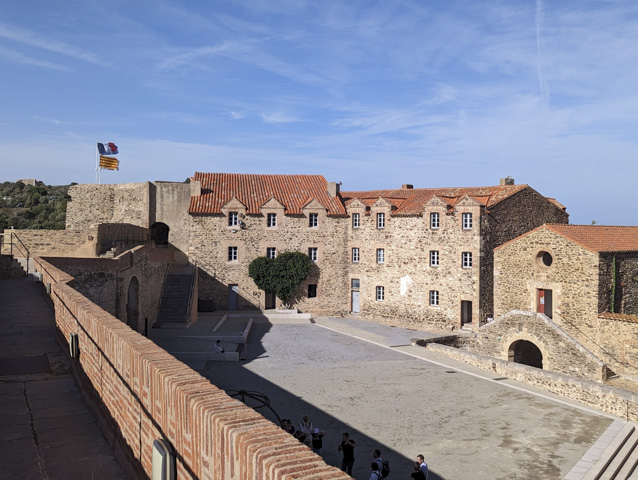
The fort was not furnished inside but the fortifications were very impressive, with very thick walls and it’s easy to see how this would have been daunting to attack.
From Port Vendres we headed South across the border into Spain to the town of Vic, in inland Catalonia.
There is a lovely Aire here with all the services and an added bonus of hot showers all for only €5 per night, and it’s right on the edge of town.
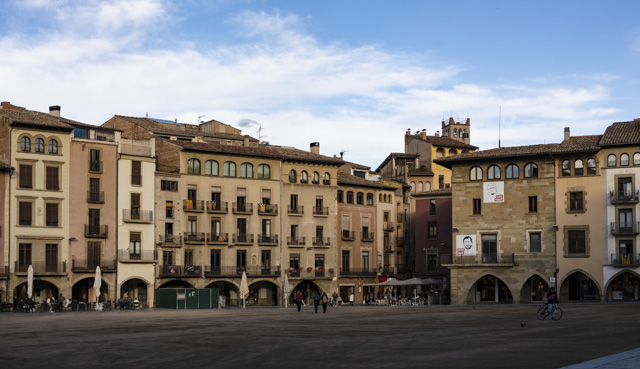
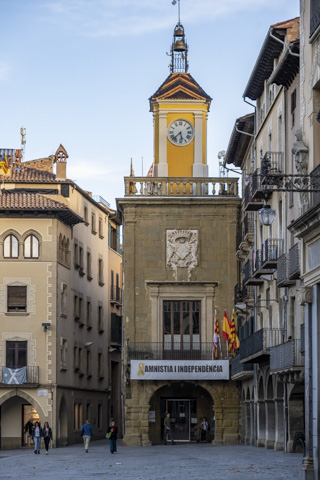
Although it isn’t a huge tourist destination, Vic is a lovely town and the local tourist office have put together a really good walking map of the town to show off its beautiful historic buildings, including to our surprise, a Roman Temple.
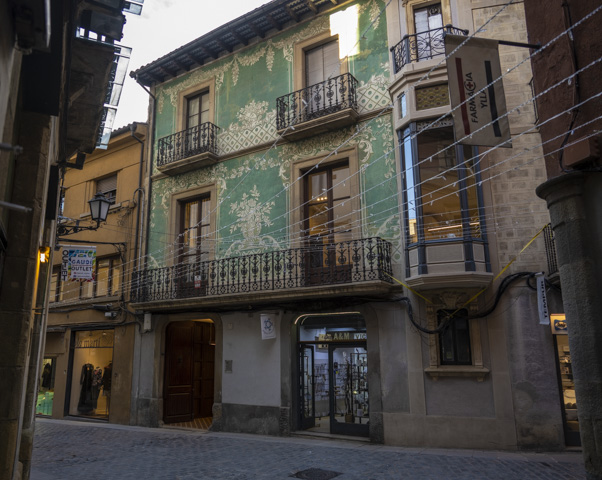
Vic was a great first stop in Spain as we tried to remember our rusty Spanish and substitute the Mercis and Bonjours of France with Gracias and Buenos Dias of Spain.
From Gorges to Carcassonne
To the west of Ardeche is mountainous countryside that is cut through with canyons. This is the land of the Cevennes National Park.
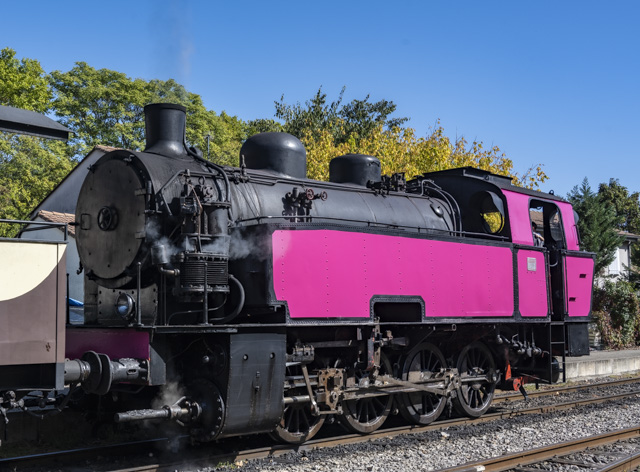
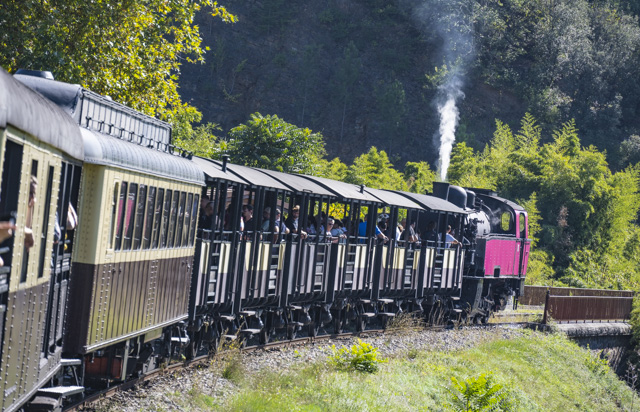
On our way there we stopped off at the town of Anduze which is famous for its volunteer run steam railway. We decided to give this a go. It only runs 25 kilometres to the town of Saint-Jean-du-Gard and back again. You can ride both ways the same day and the train stops at Saint-Jean-du-Gard long enough to have a wander around, grab some lunch and get back on.
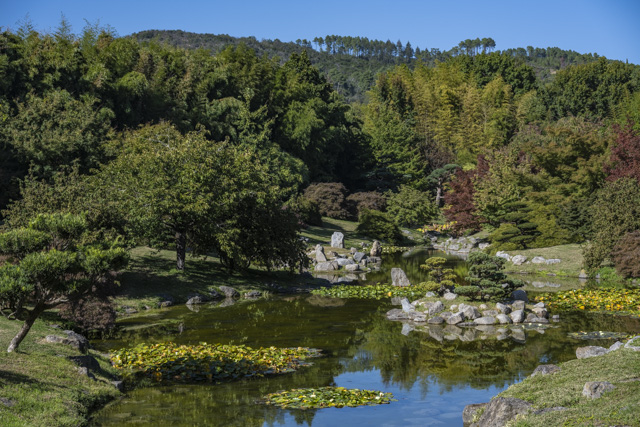
On the way back we stopped off at the Bambouseraie garden which specialises in Asian plants and Bamboo. To be honest it’s a bit over priced and it was very crowded at the entrance as everyone does the same thing. The Japanese garden and the valley of the dragon were pretty though.
It was a bit unusual that the steam train was pink but we worked out that this was a wrap to mark Breast Cancer Awareness month.
With the stops and the journey each way the train took all day so we stayed overnight in the station car park. This gave us the opportunity to explore the town of Anduze which was another pretty French medieval town.
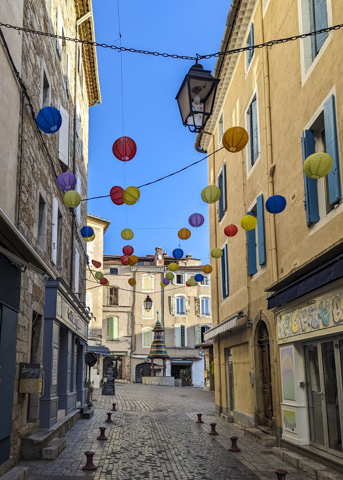
The next day we headed towards the Parc National des Cevennes and the town of Florac-Trois-Rivieres, so named for the three rivers that meet in the town. This was a great staging post for our drive the following morning through the Gorges du Tarn.
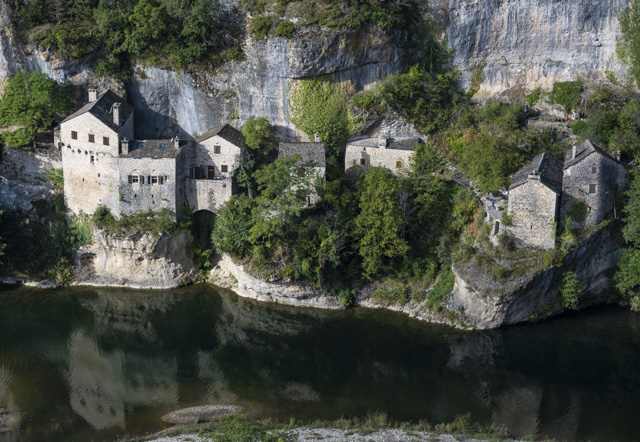
The gorge was spectacular with towering walls, cliffside villages and a beautiful medieval town called Saint-Enimie half way through the drive, with steep narrow streets paved with pebbles, an old mill and the source of the river Burle.
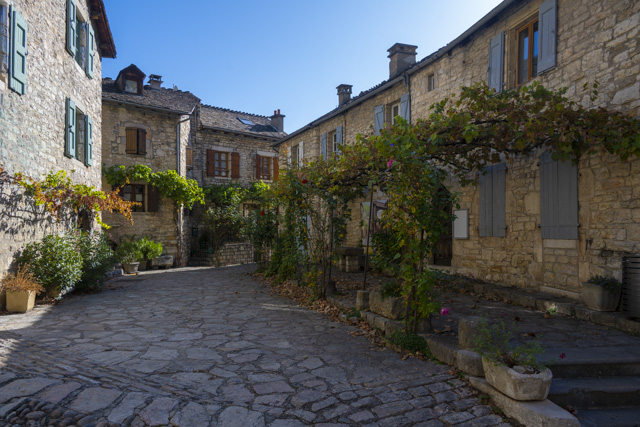
We stopped for the night at a campsite by the river in the town of Boyne, at the far end of the Gorges du Tarn. Campsites are a rare treat but we’d seen the sign advertising the swimming pool so we were sold. It wasn’t until after we’d paid and settled in that we found out the swimming pool was closed for the season despite the weather being perfect in mid-October for a refreshing dip.
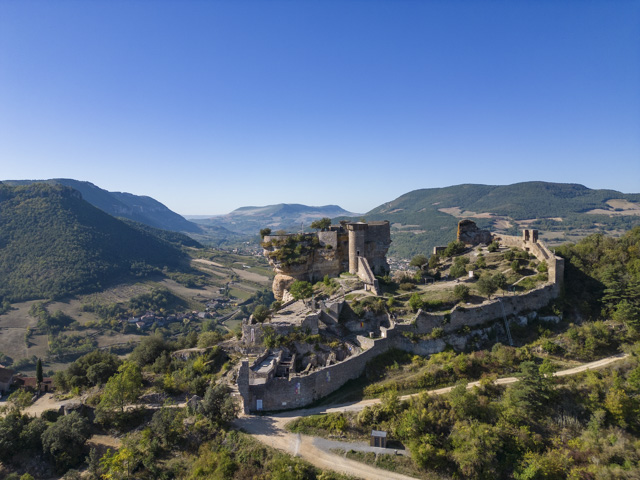
The next day we tackled another Gorge, The Gorges de la Jonte. This was another lovely drive and we stopped at the town of Meyruis for a walk and to stretch our legs after the drive. Our destination for the day was a bit further though.
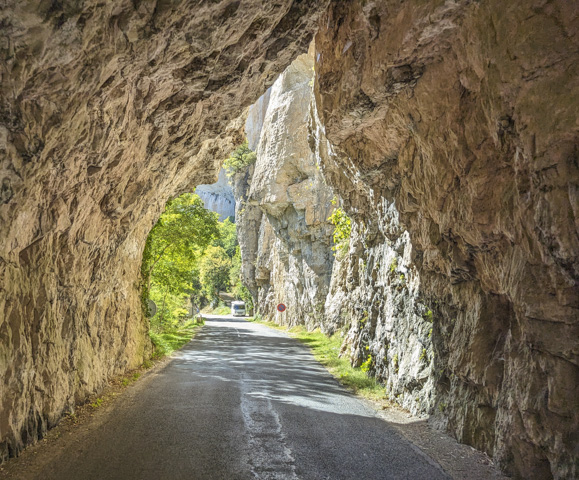
This area is absolutely riddled with caves, over 3000 of them have been discovered and we wanted to visit the biggest of them. This was called the Grotte D’Argilan and is accessed from on top of the walls of the canyon.
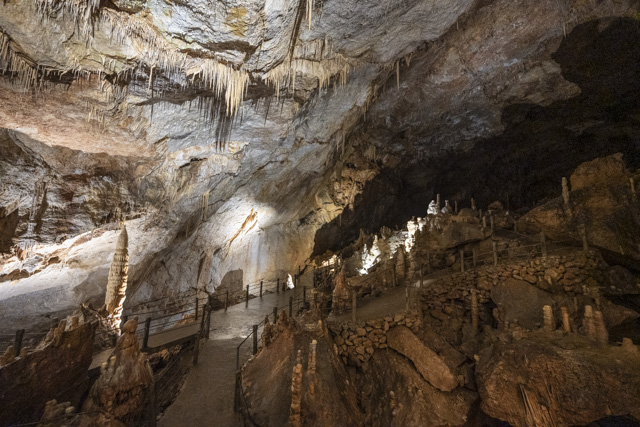
This is actually the first cave in France to be opened to the public in 1890 and the old infrastructure of ladders can still be seen inside although it has been replaced by modern walkways and stairs.
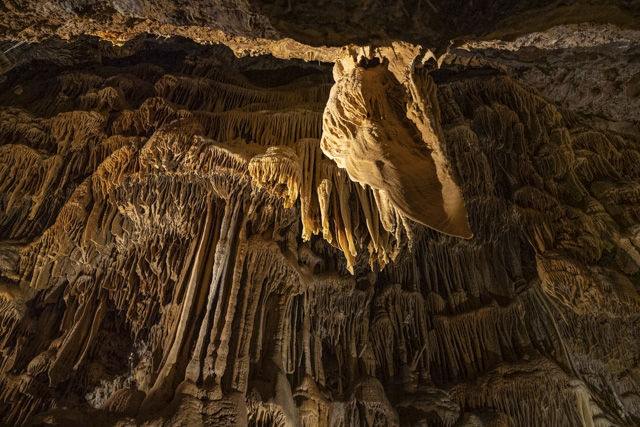
Some of the formations in the cave are as much as 500,000 years old.
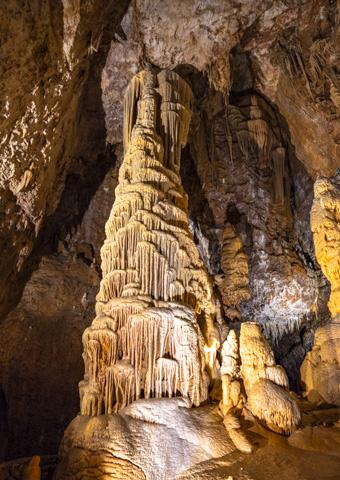
The tour through the cave actually takes you down more than halfway to the bottom of the canyon and there are bats in the cave which access the outside through small fissures in the rock.
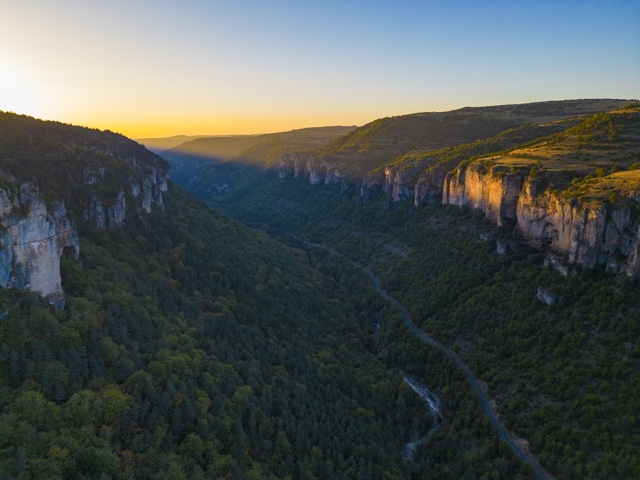
The grassy car park of the cave was one of our most remote and quietest nights of the trip, with no one else around.
In the morning we crossed the Noir Causses which is the plateau between the gorges that the cave is found on. We were heading for an Aire, formerly a campsite, next to a lake in a town called Salles Curran. We wanted to enjoy a day lakeside while the weather was still warm enough for sunbathing and swimming.
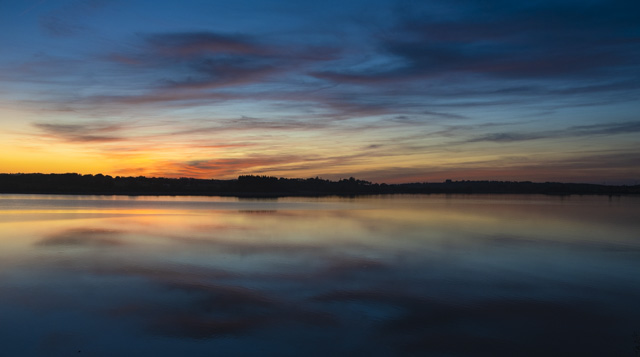
We managed to find a place to park overlooking the lake with fabulous views and we were treated to some beautiful sunsets here.
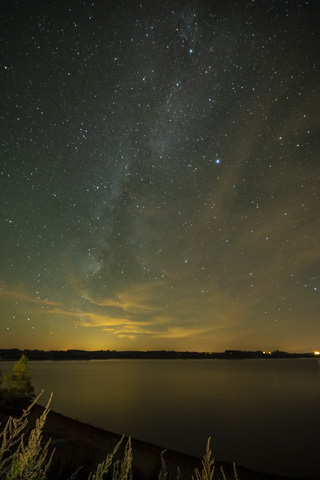
It was soon time to get back on the road and we headed for the rugby town of Beziers. We arrived at Bezier in the middle of their annual urban walk, so there were streams of people walking around every corner as the route seemed to criss-cross the town down nearly every street.
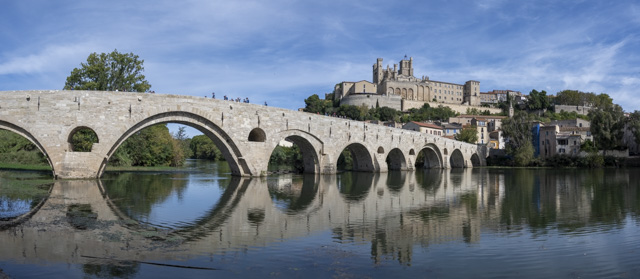
It was a lovely town with leafy wide boulevards and felt like a very liveable city but maybe not a huge tourist destination. The Poets Garden was a real oasis though and worth a visit if you find yourself there, in particular Titans Fountain and waterfall into lac des grottes.
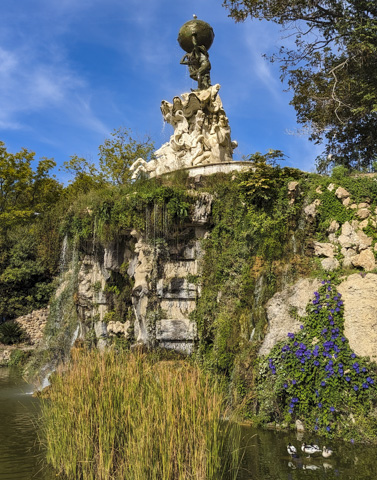
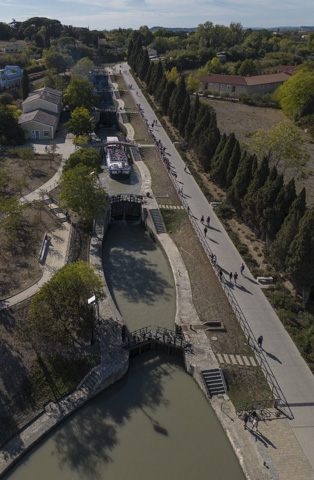
Just outside the town, we went for a very pretty cycle over the Orb Aqueduct and along the canal du Midi, which has a famous sequence of eight locks in a row, called the Ecluses de Fonseranes, dropping the canal 21.5m down to the level of the River Orb.
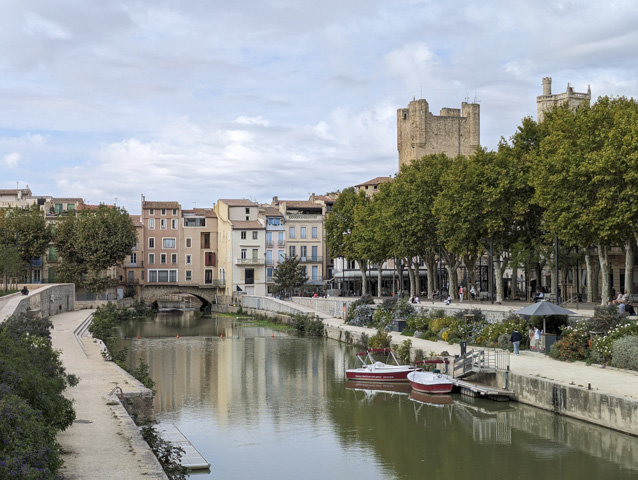
Narbonne, which was our next destination, felt very similar to Beziers, except with canals through the middle. We passed an enjoyable couple of hours walking the streets of the town and poking around the basilica and cathedral, although we decided to skip the Archbishops Palace. Narbonne was a significant Roman city, built up around a major Roman road, Via Domitia, that ran from Spain to Rome. The remains of the road have been uncovered right in the middle of town.
Next we drove to Homps as a stopover on our way to our next destination.
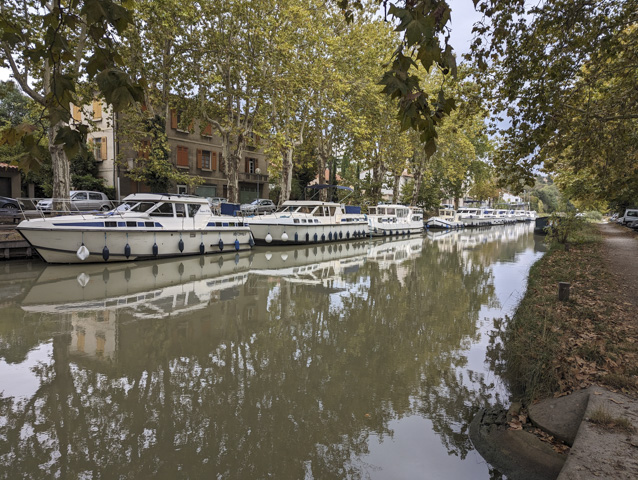
We had found a lovely free park-up overlooking a lake which is used as a reservoir to keep the Canal du Midi, which passes through the town, topped up. The canal du Midi is a 360km network of navigable waterways which links the Mediterranean to the Atlantic.
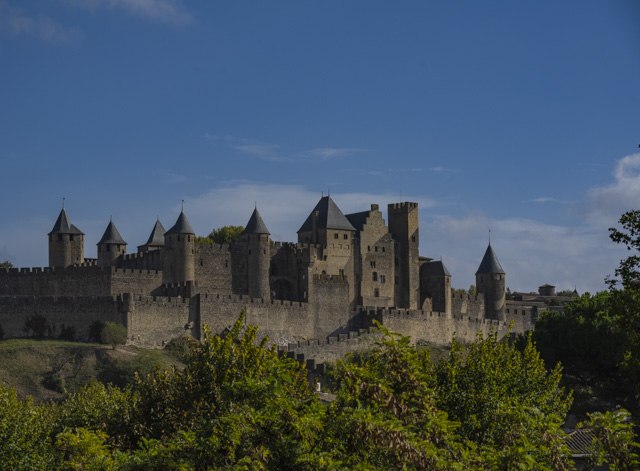
We had been making our way towards Carcassonne which was on both our lists as a must-see destination in the South of France. Ever since reading the book, Labyrinth by Kate Mosse we had both been intrigued to visit this fortified town with its fairytale castle, perched on a hill above the modern town.
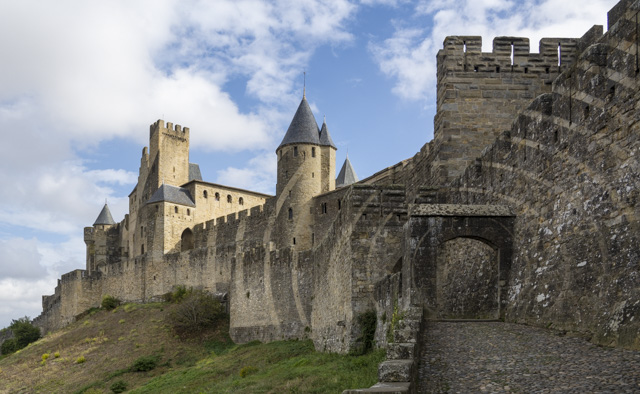
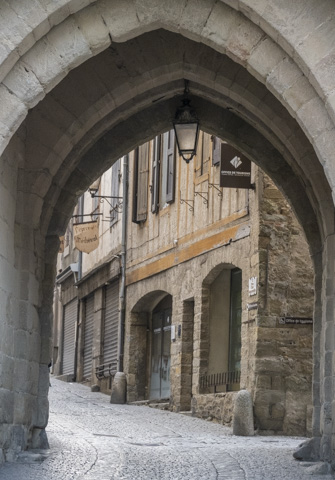
The Citadel, know as the Cite de Carcassonne, has a massive double wall surrounding it and then in the centre of the town there is another moat and wall with the inner castle inside. There are 52 stone towers in the outer walls, many with the witches-hat roofs that were added as part of the 19th century restorations.
The Ville Basse which is the lower city on the other side of the river Aude was at one time in competition and a separate town to Carcassonne. However, these days it is all considered as one town.
The Canal du Midi passes through the lower town and we took the opportunity to go for a cycle ride along part of it.
Romans, Pre-History and Paddling
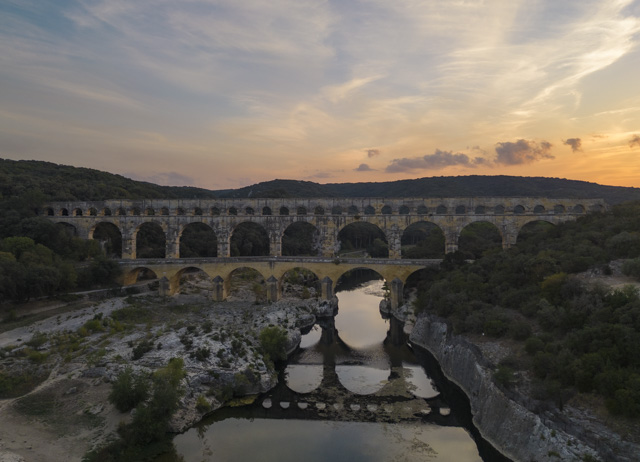
Just North of Avignon is one of the most impressive Roman constructs in France. The Pont du Gard, a striking three level combined viaduct and aqueduct across the Gardon river.
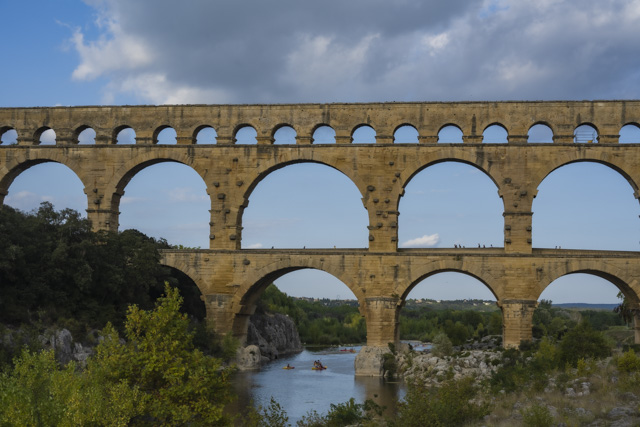
It is 49m high and spans 275m across the river at the highest level. The aqueduct part was built to carry water to the city of Nimes (or as it was known in Roman times, Nemausus). Construction started in BC 19 and took about 15 year to be completed.
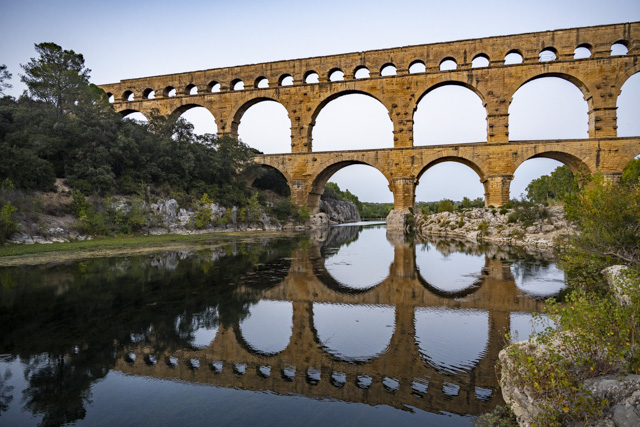
The amazing thing about the construction is how precise it was. In order to keep water flowing it has a gradient of about 1cm in 180m. This was much shallower than most Roman aqueducts and this was compensated by having a steeper gradient before the actual bridge. However a steeper gradient on the bridge would have made it too high for Roman construction methods – as it is, it is the highest Roman Aqueduct that we know about.
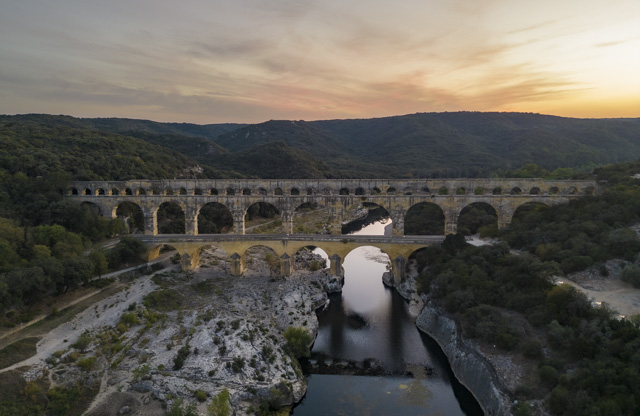
Overall, the aqueduct that the Pont du Gard is part of, winds for 50km from the spring that is its source and water took over 27 hours to reach the fountains and Roman baths of Nimes.
After visiting the Pont du Gard we headed to the town of Uzes, arriving on market day to a lively market in the central square.
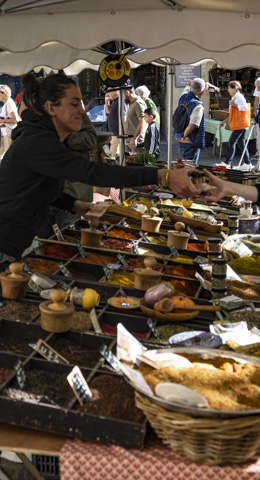
We had visited Uzes with the hope of visiting the Duche (the fortified chateau belonging to the House of Crussol, the dukes of Uzes) but disappointingly it was closed and we only got to see the outside.
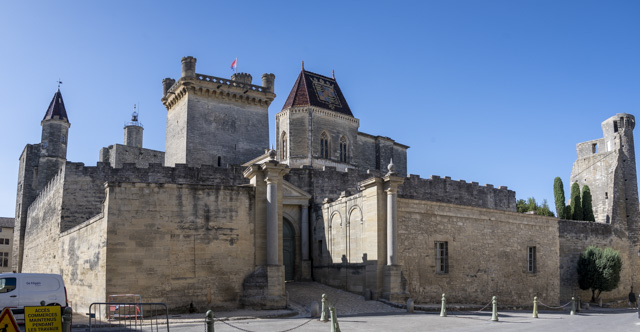
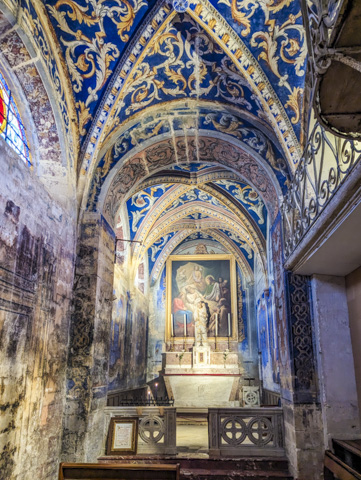
The town had a nice vibe and was fun to walk around despite missing the main highlight. We did have a nose around the cathedral with its painted interior. The variety of churches in France are amazing and the way they are decorated varies region by region.
Somewhere that I had wanted to go ever since planning our trip to France was the reconstructed cave called Chauvet 2.
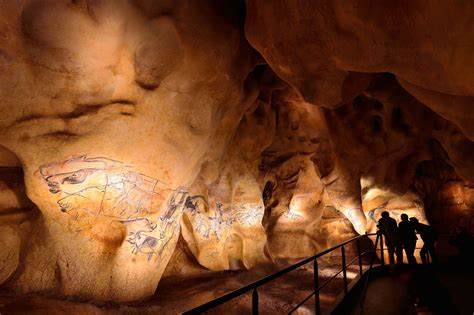
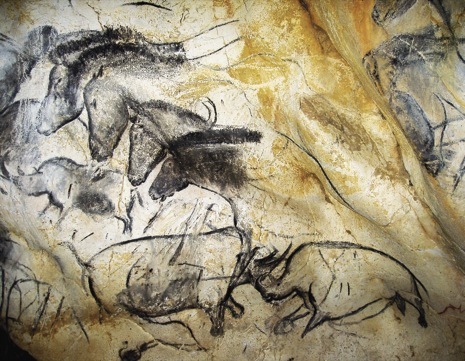
The Grotte Chauvet is a cave that was only discovered in 1994 and it has the oldest and best preserved cave paintings in the world. The original cave is a UNESCO world heritage site and is closed to the public. However an amazing replica has been made a few kilometres away from the original site which recreates the exact dimensions of the cave, including all the stalagtites/mites etc and other cave features, such as hundreds of animal bones, foot and paw prints and of course the paintings.
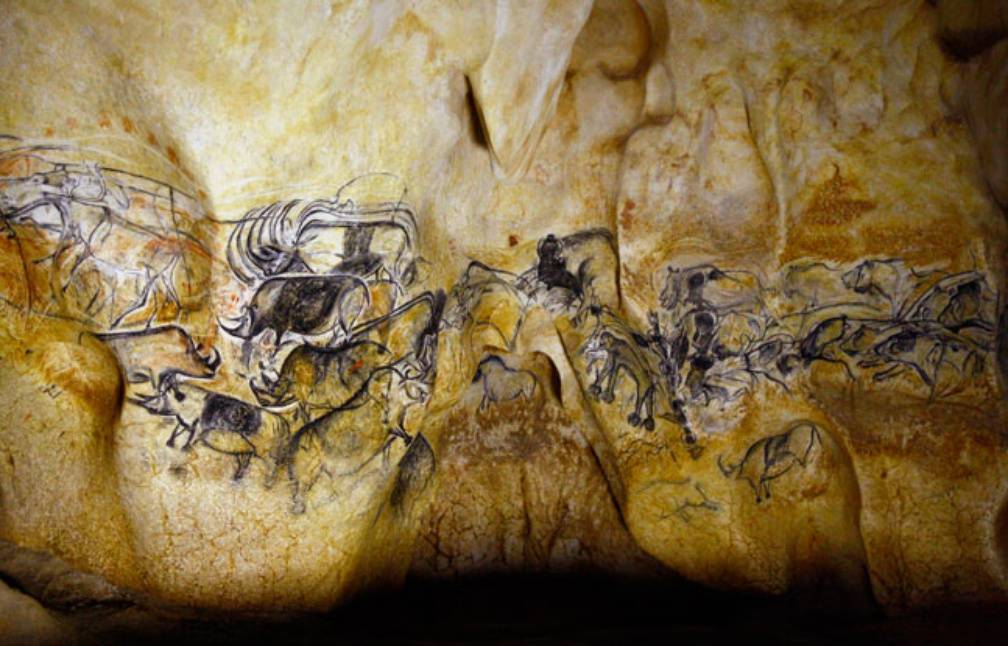
The only way to visit the replica is by guided tour and no photos are allowed inside, so I have copied pictures from the official website to illustrate my words. The tours are in French but there are audio-guides in other languages available. A bit annoyingly they manage the group by controlling the lighting so you can’t always see what you want to when you want to. It seems strange that self-guided tours and photos are not allowed here given that it is a replica and nothing original can be damaged.
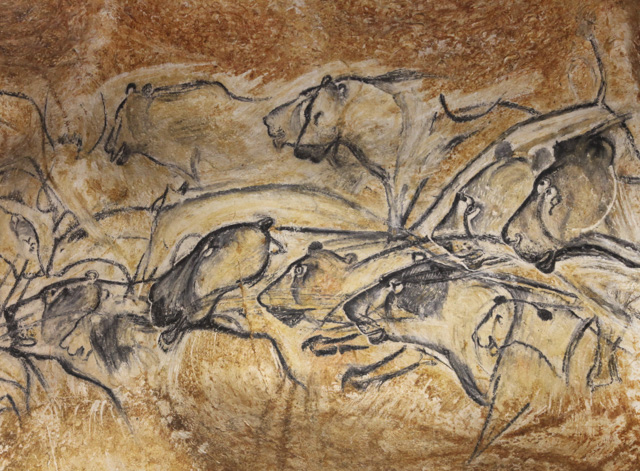
The cave was the winter home of a large number of cave bears and early man would have braved encounters with these bears to enter and paint in the cave. There is no evidence that the cave was used as a human dwelling which has led them to believe that it may have been a sacred place. The paintings were made around 36,000 years ago and the entrance to the cave collapsed around 30,000 years ago which is how they were so well preserved. There are over 1000 paintings, of which, at least 400 are depictions of animals with the only examples of certain animals found in the world (panthers and owls for example).
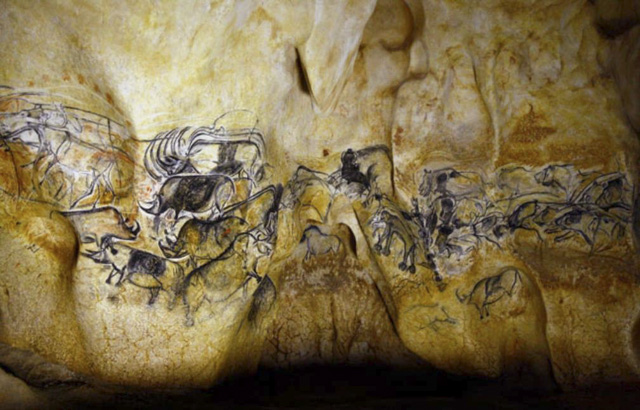
The quality of the paintings is incredible and the final panel which is 12m long with 92 animals is far beyond any of the neolithic paintings we have seen before.
After touring the cave we drove to the nearby village of Ruoms to a lovely campsite by the river which proved to be a great place from which to explore the Gorges de L’Ardeche.
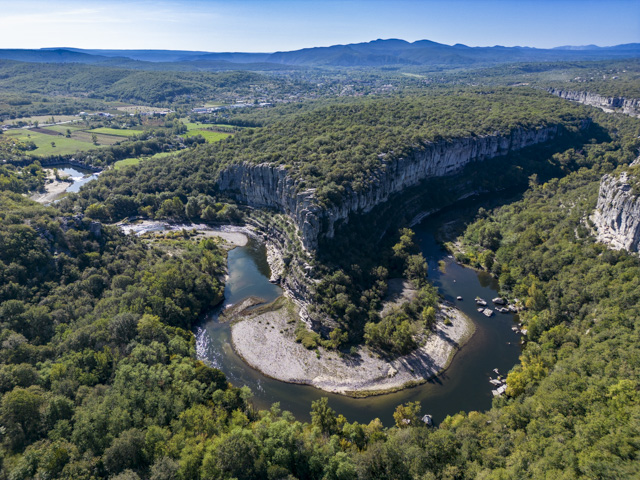
We booked a kayaking trip down the gorge with a company called LouLou Bateaux. We had intended to do a full day trip, but this would have meant starting at 9am and the overnight temperatures were under 5c so we didn’t fancy being on the river that early! Its been a huge diurnal range as the daytime temperatures have been hitting the high 20’s.
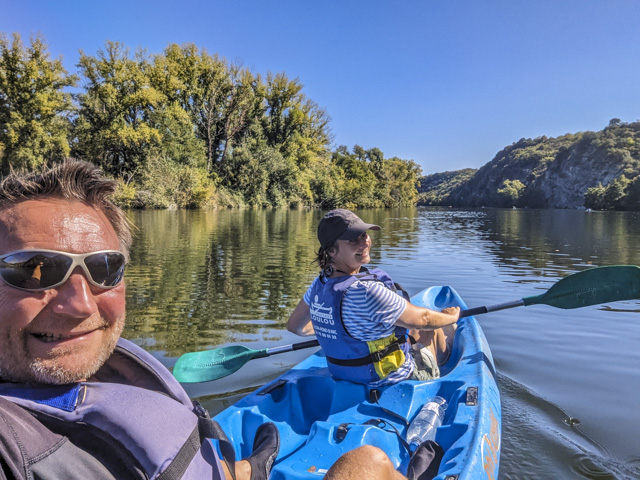
This kayak trip was great because we just had to go with the current down river and were dropped off and picked up at the start and end points.
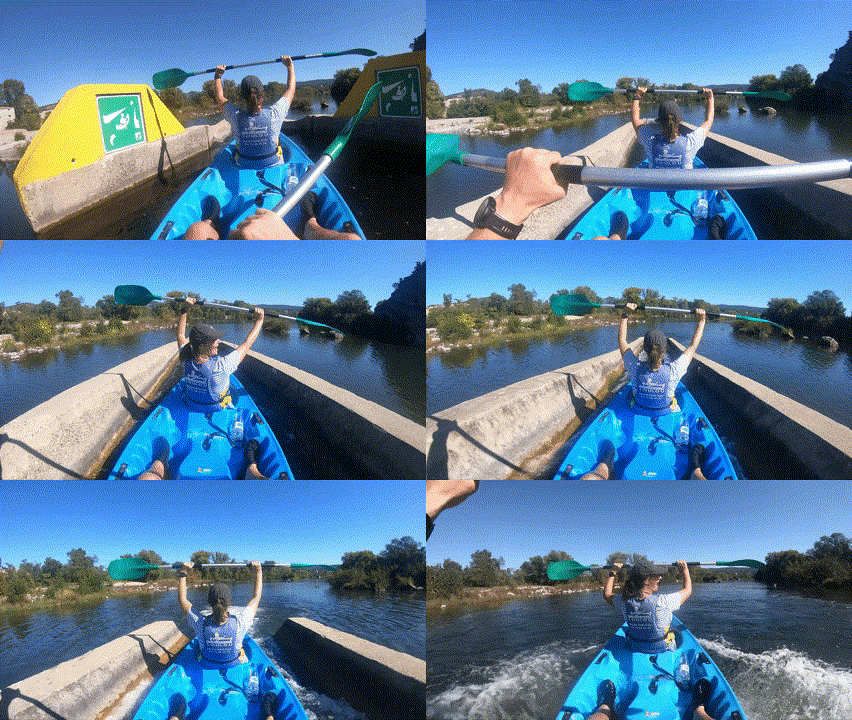
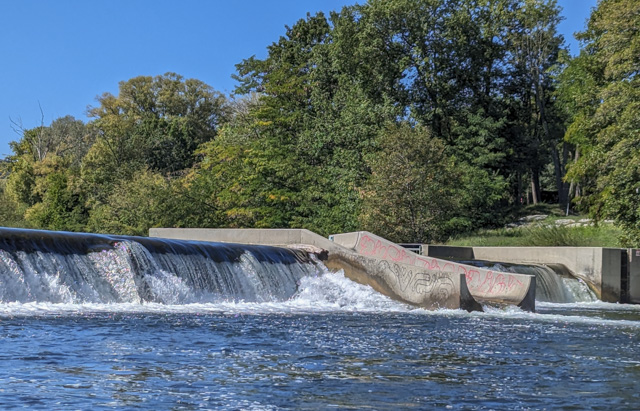
The river was wide and gentle but in the first section there were 4 chutes to go down to navigate the weirs. These were great fun, a bit like a log flume, and when you hit the bottom a big wave crashes over the person at the front of the kayak!
After navigating the Weirs we stopped for a picnic and a swim in the river which was very refreshing, some might say a bit chilly, but in the hot sun it was a welcome opportunity to cool off.
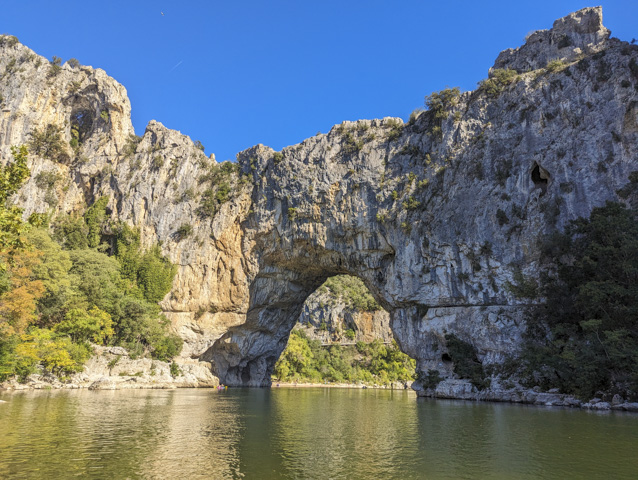
After lunch came a number of small grade 1 and 2 rapids as we moved down the canyon and then the highlight of the trip – the Pont d’Arc – a big natural arch spanning the river. The pickup point was soon after this.
This was a really fun trip and we paddled most of the river in lovely solitude. This is the beauty of October paddling but I imagine in August the river would be very crowded as there are lots of kayak companies in this area (most of which are closed in October).
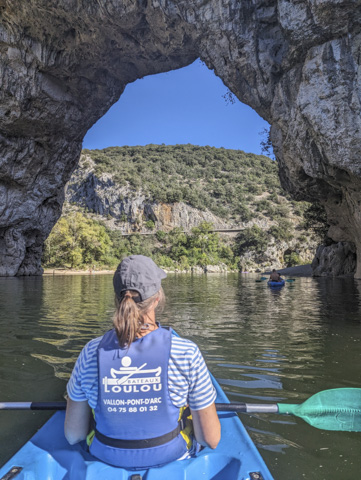
The paddle was about 12km in total and the whole trip, including our picnic and swim stops, took around 4 hours. It also helped that there was a bit of a current so we didn’t have to paddle too hard.
And More Provence
Provence is famous for its hilltop villages and we were heading towards one of the most famous of them – Gordes. However before this we stopped off at Saignon, a quieter and less heralded village where we wandered the pretty quiet streets and enjoyed the countryside views.
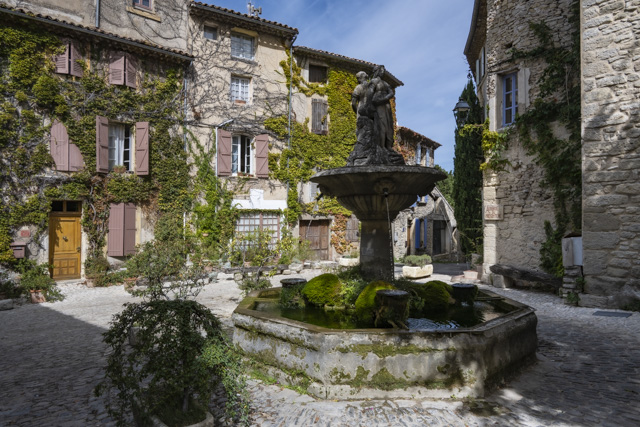
The great thing about being out of season and less touristy is that we managed to find parking with just a short uphill walk to the village with its maze quaint winding narrow streets. To our surprise there was a also a good selection of restaurants for such a small place and a very nice bar right on the main square.
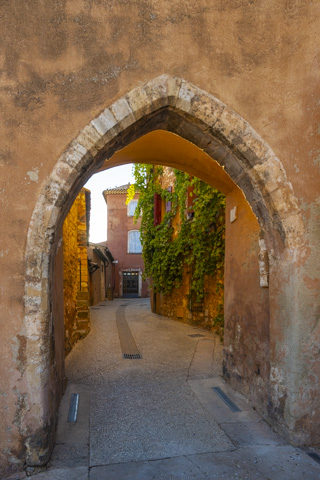
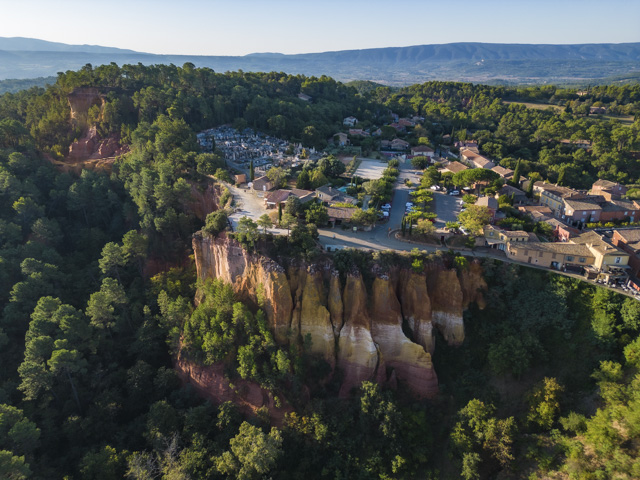
From here drove onto another very pretty hilltop town called Rousillon, where we spent the night. Rousillon is listed as one of the ‘Les plus beaux villages de la France ‘.
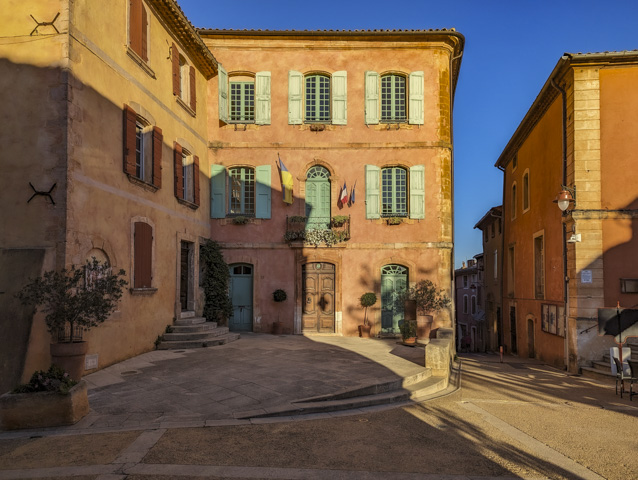
It is bigger and more touristy than Saignon with a good selection of shops, bars and restaurants and a striking red cliff backdrop.
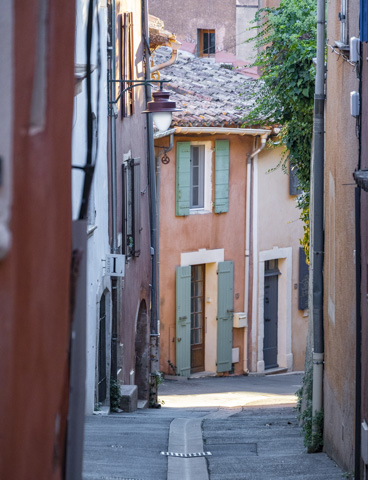
Rousillon is famous for having ochre mines and as a result there is a palette of approximately 40 shades of red that must be applied to all the houses, making the town very pretty and very photogenic! We stopped in the main square for drinks in the late afternoon Provence heat.
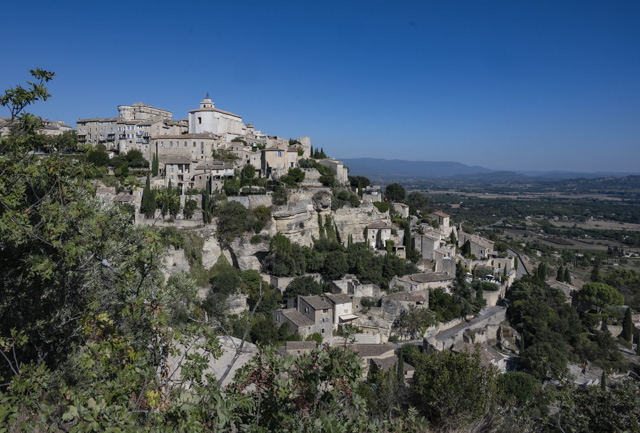
Another of the ‘Les plus beaux villages de la France‘ is Gordes. This is ‘another level’ touristy compared to the other towns we have visited, with tour buses disgorging the masses into the village throughout the day, most of which seemed to be large groups of Americans and Japanese. It is not a very big town so it does get pretty crowded.
It’s also a town that knows it’s popular so the parking is very expensive and for motorhomes there is only one car park which costs €15 whether you park for 2 hours or 24 hours. We had intended to stay the night here but it wasn’t flat and it was so hot in the glaring sun, on bare concrete with no shade, that we decided to find somewhere a bit more comfortable.
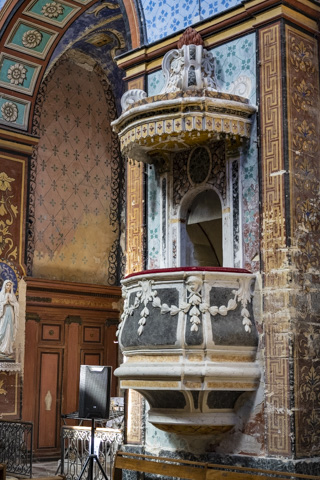
Gordes itself looks spectacular from the viewpoint just below the village but once in amongst the buildings we were a little disappointed. It is nice, but for us it wasn’t ‘the jewel in the crown of Provence’ as the guidebook describes it and certainly didn’t justify the cost of parking. Some of the restaurants in the back streets looked very good but unfortunately we made a poor choice and had a very mediocre and overpriced lunch.
Near to Gordes is the Abbey Notre-Dame de Senanque. This is famous for being set amongst fields of lavender and no doubt looking spectacular when the flowers are out but of course in September we were too late to see this with the Lavender having already been harvested.
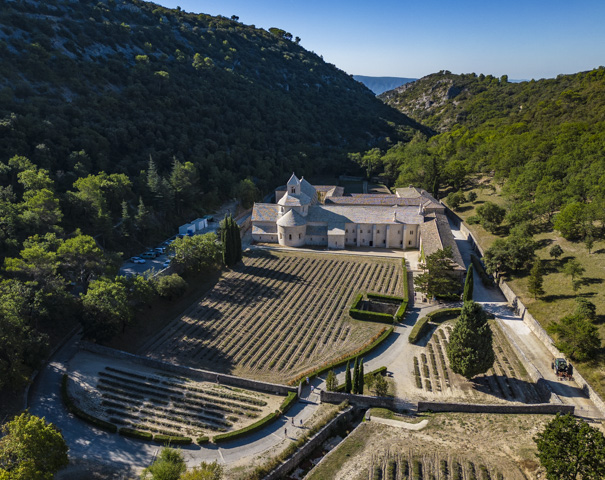
This is another popular tourist spot and the setting of the Abbey is beautiful, in its own secluded valley.
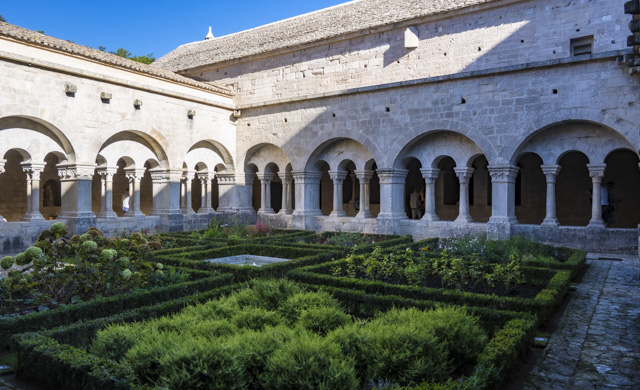
We paid to go inside and were handed fancy tablets which filled us with hope of a really informative guided audio tour. Alas it was not to be. The tablets had minimal detail on them, just 2 or 3 lines of information about each (bare) room and there were no panels in English so we got around the whole tour in less than 10 minutes! I expect the tours with the guides is far more interesting but these were only in French so unless you speak French I would say that it definitely isn’t worth paying to go inside and there are much better Abbeys to be seen in France.
The next stop for us was the lovely little village of Fontaine du Vaucluse, famous for being the site of the spring which is the source of the Sorgue river. This is the largest spring in France and the fifth largest in the world. The walk up to the spring passes mossy waterwheels, an old papermill with demonstrations on how paper was made in the 15th century and the sparklingly clear water of the river which has an emerald green appearance due to the mossy riverbed.
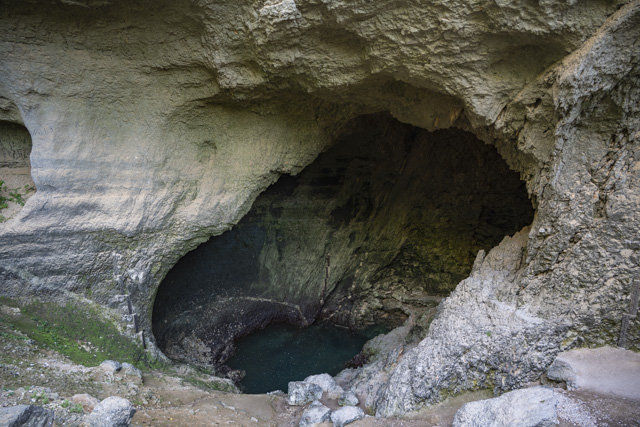
At this time of year the source is very low but in March it surges and the water comes up an over the sides of the cave causing the river to flood.
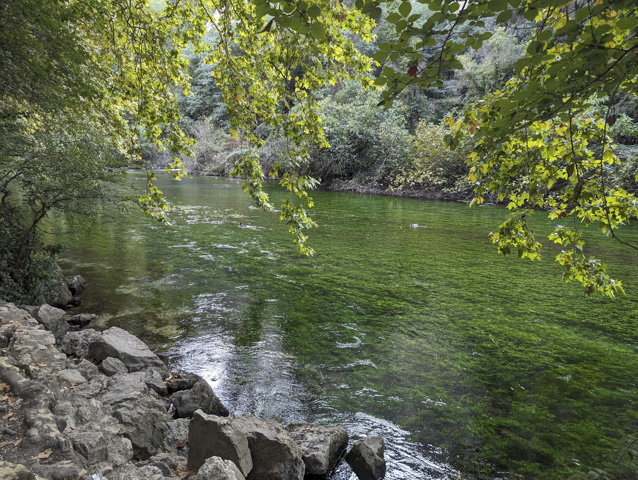
The village is very nice, an easy short walk from the Aire and we had a lovely meal out to celebrate my birthday, at a restaurant on the banks of the river.
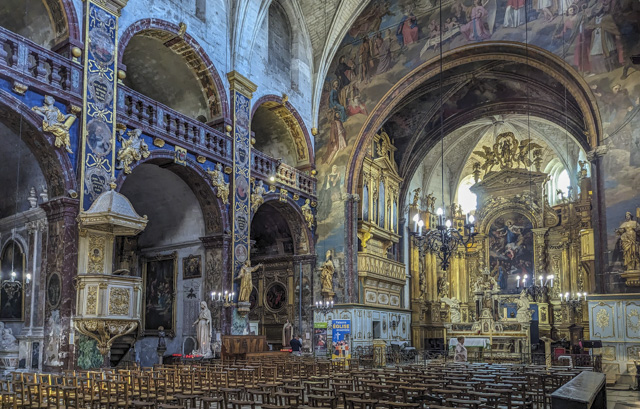
The next morning we were up early to hit the Sunday market at the nearby town of L’Isle sur la Sorgue, known as the Venice of Provence due to the river and canals through the town. The town gets incredibly busy for the market and we had heard that the usual motorhome parking was closed that weekend so an early start was a must to secure a parking place. Within an hour of our arrival the car park was full and when we left, several cars were vying for our parking space, so much so that none of them would move not wanting to miss out on the space, which meant we couldn’t actually leave as they were blocking us in. Eventually common sense prevailed.
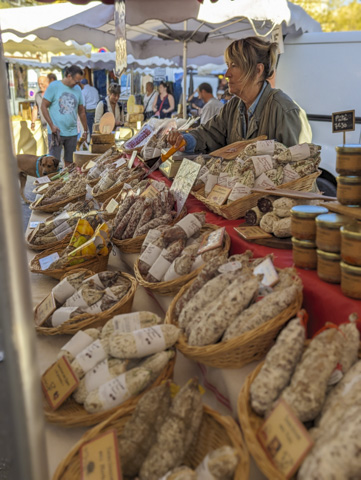
This is probably the biggest market that we have been to in France (or anywhere for that matter) and the whole of the centre of town was taken up with it on both sides of the water, with stalls for pretty much everything from fruit and veg, flowers, clothing, bags and hats to art and antiques.
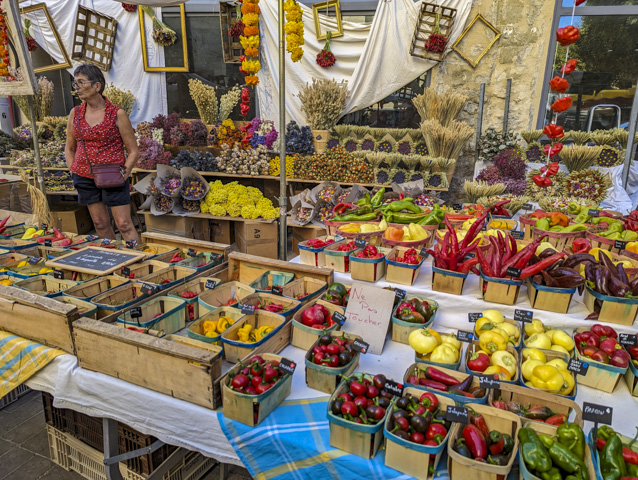
We really enjoyed wandering around the streets, nosing into all the stalls and filling our bag with treats but our ultimate destination for the day was the much larger town of Avignon.
Unfortunately, Avignon is a town with a reputation for camper break-ins so we decided to stay in the Municipal campsite to give us a bit ore security. The campsite is well located on an island in the middle of the Rhone river and close to the medieval city.
When we arrived we discovered that there was a Medieval fair taking place right next door, so we decided to check this out.
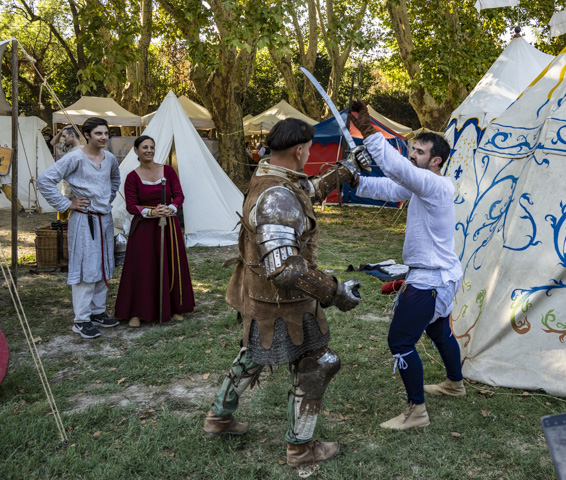
We’ve seen this type of thing going on in other European countries, where people love to dress up in Medieval clothes and re-enact past times. It seems a bit barmy to us but seems very popular.
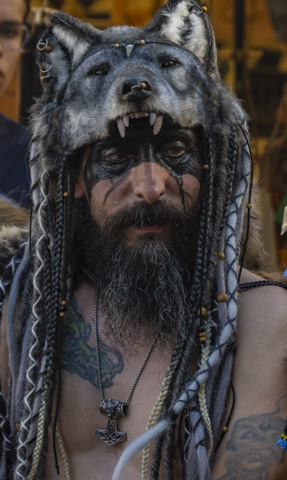
It was very crowded and it was difficult to see what was going on in the central arena, which was a shame.
Anyway the reason we were in Avignon was to visit the Palace of the Popes. Avignon wasn’t part of France from 1309 until 1791 and was a Papal territory. In fact between 1309 and 1377 the Popes of the era resided in Avignon. This made it, for a time, the most important city in the medieval world.
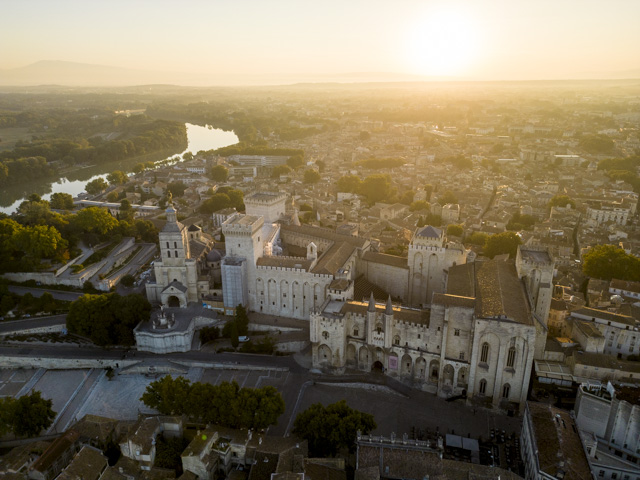
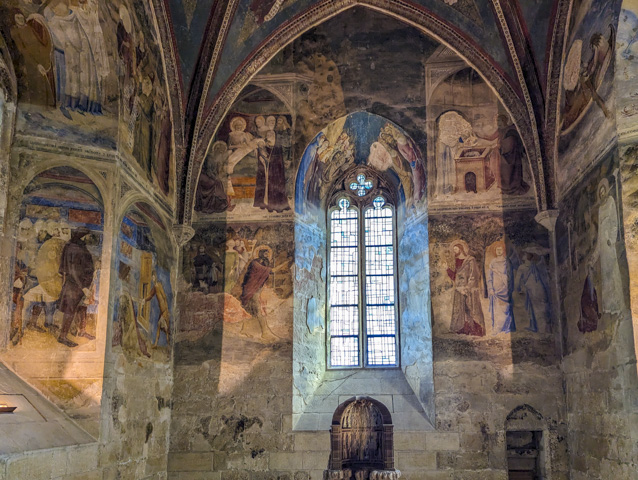
In total 9 Popes resided in Avignon and this led to the construction of the city walls and the expansion of the Palace of the Popes. This is a massive building that kept us busy for a good couple of hours. It was built between 1335 and 1364 and has walls up to 5m thick rendering it almost impregnable to attack. The palace is unfurnished but you do get a tablet which has masses of history and information on it (unlike the Abbey Notre-Dame de Senanque) and if you hold up the tablet and span the rooms it displays graphics of how the rooms would have looked in the past. They’ve obviously put a lot of effort into this historical site and we thought it was well worth the money.
Underneath the wall of the city is the Saint-Benezet Bridge or Pont d’Avignon, of which only four of the original 22 spans still stand. This bridge was 920m long and linked the Papal territory with France. Work to build the bridge began in 1177 and took only 8 years to complete.
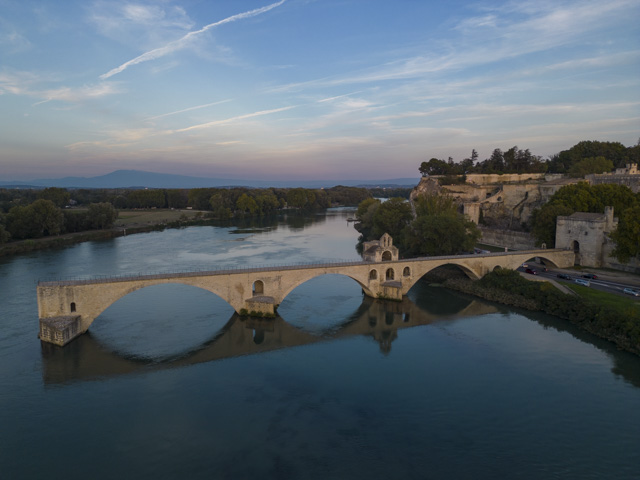
The bridge has had a difficult history being destroyed by both wars and floods, and then rebuilt several times over the years until it was finally abandoned in the 17th century. It is very narrow and made narrower by the chapel that is built on it and would be difficult to get a horse and cart across.
On the opposite banks of the Rhone is the smaller town of Villeneuve-Les-Avignon which was in French territory. However some of the Cardinals from Avignon built their houses here to avoid the stench of the big busy city and commuted over the Saint-Benezet Bridge.
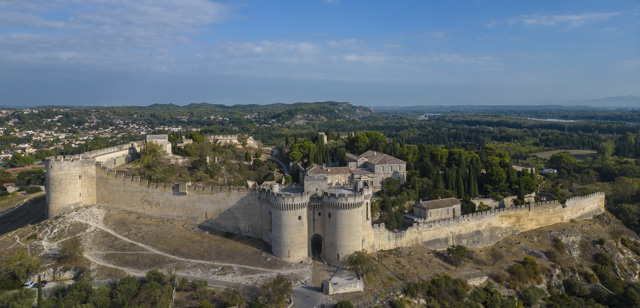
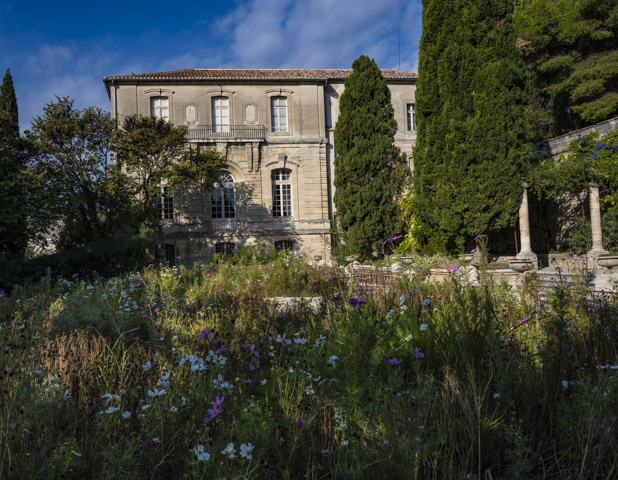
The centre of Villeneuve-Les-Avignon is the Fort Saint-Andre which also incorporates the beautiful gardens and ruins of the Benedictine abbey of Saint Andre. Together they made for a great excursion. The history of the Abbey and gardens in particular was very interesting and the large terrace provides a lovely view of Avignon across the river.
Avignon is an attractive city and well worth a visit. There is plenty to do and we spent a few days here soaking it all in. It is a city that is very manageable to get around and has a fascinating history.
And so to Provence
While we were away sailing the heat bomb had dispersed and it was now the middle of September so we didn’t mean to hang around in the Alps for much longer. We figured this was a good time to head down into Provence where the weather is still likely to be good but the crowds a little thinner than in July and August.
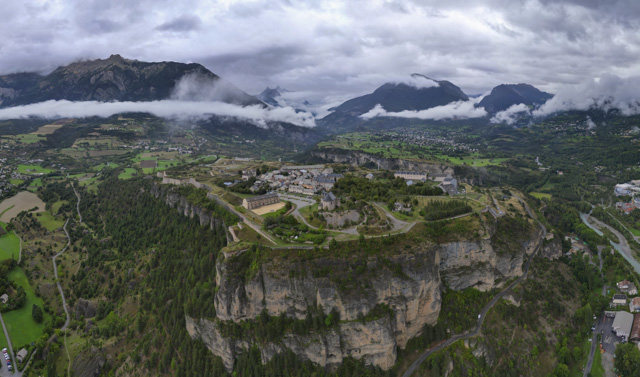
After a night in Digne les Bains, where it poured with rain and the rugby stadium car park where we spent the night sat under a couple of inches of water, we moved into the Northern part of Provence and the beautiful town of Moustiers-Sainte-Marie.
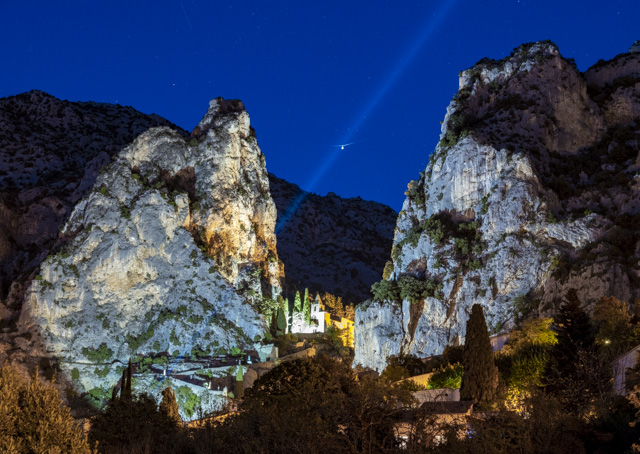
This is understandably a touristy town due to its stunning location, which is on the side of a cliff nestled under and between two peaks. Strung between the peaks is a star on a chain, floodlit at night. A steep 15 minute climb up the left cliff takes you to a precipitous church with vultures flying above and striking views below. According to legend the star was first hung in the 10th century by the Knight Bozon de Blacas, who, when captured in the crusades, vowed to hang a star if he ever returned home. The star of course has been replaced many times since then.
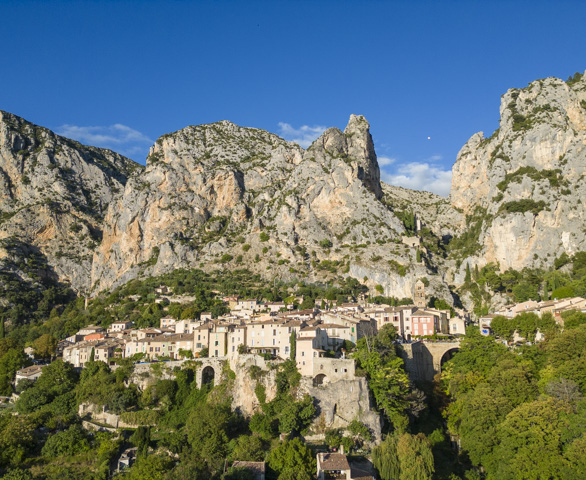
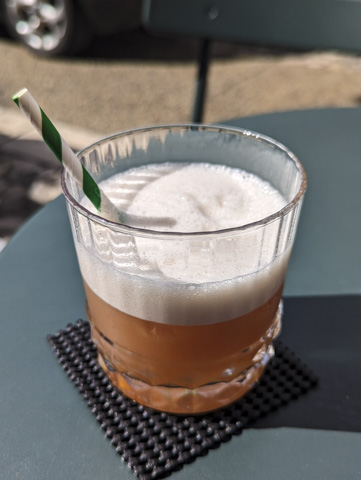
The town itself is built around a stream that rises from a spring at the base of the peaks. It is a very pretty town with lots of good restaurants and bars where, at one in particular, we enjoyed a well deserved rest in the afternoon sunshine while sampling their very tasty ‘cocktail of the moment’.
This is definitely one of the prettier towns we have visited and well worth a visit. Fortunately there is a Aire just outside the town where we stayed overnight.
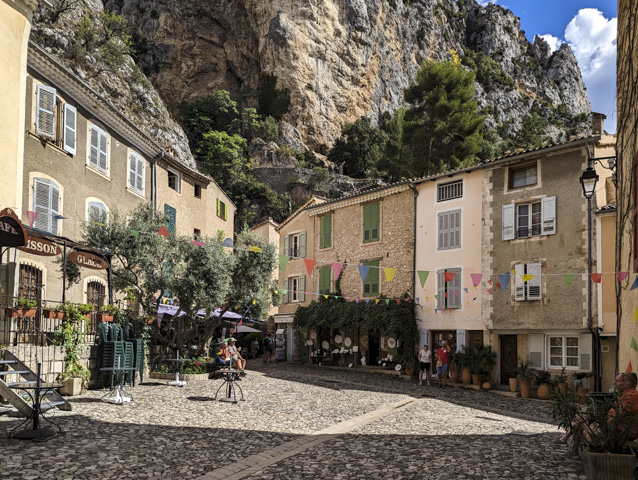
It is then a short but quite steep walk up into the town or, for the weary or less mobile, there is a tourist bus.
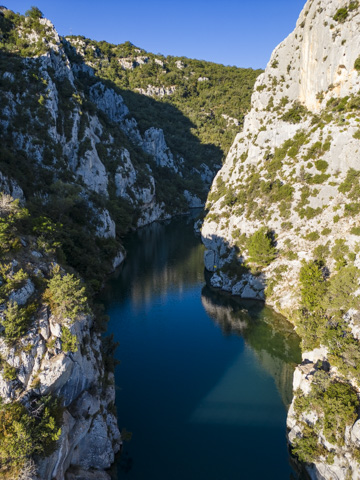
Form Moustiers we moved onto the town of Quinson which is on the Lac du Quinson and at the entrance to the lower Gorges du Verdon.
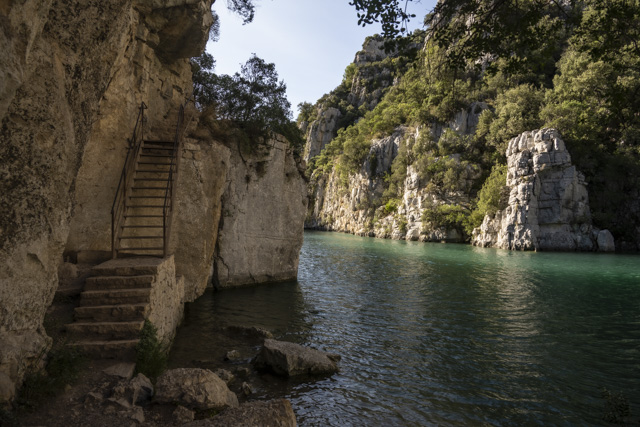
A short walk from the Aire is a canyon with a canal built into the rock walls which was used to transport water from Verdon to Aix en Provence.
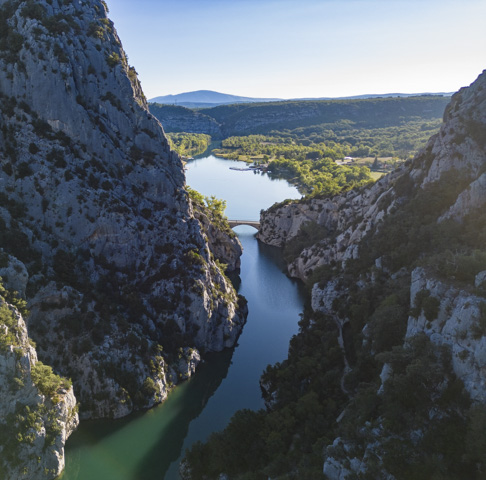
I hiked a few kilometres up the canyon along the side of the canal, sometimes along side it and sometimes walking on the walls of the canal.
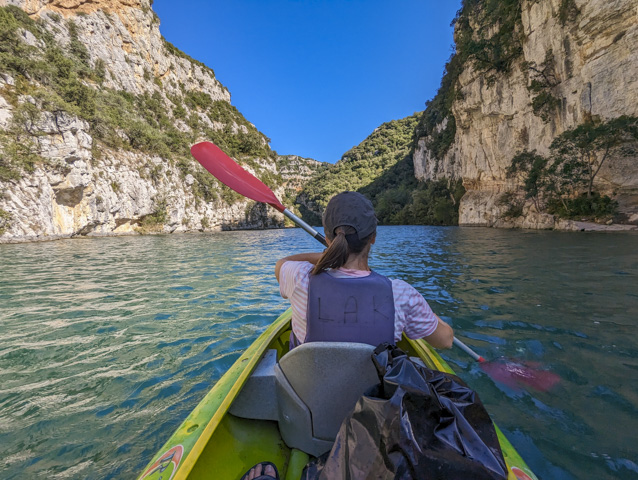
We also hired a kayak from a canoe hire place next to the Aire. It was a very windy day so depending on where we were in the gorge there were some areas where it got pretty blowy and a little chilly, but still enjoyable as we were able to find sunny sheltered spots along many of the bends where we could linger a little longer to warm up. That is, until about 5km into the gorge, where we turned a corner and hit a hugely strong wind which whipped the water up into small waves, spraying up over the kayak straight into our faces (or more to the point, Sarah’s face – sitting up front didn’t seem like such a good choice after all!). The strong wind was making progress really hard work and had the potential of turning a fun afternoon into a bit of a chore so this seemed like a good place to turn around and let the wind take us back.
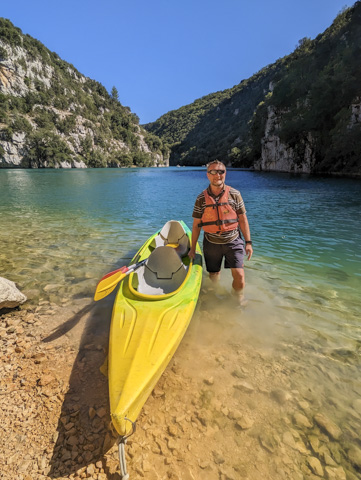
The canyon was at times sheer sided with high rock walls on either side but at other points it widened out a bit. We decided to drive around the whole of the Gorges du Verdon but first we stopped off on the banks of the Lac de Sainte-Croix for a day relaxing on the beach.
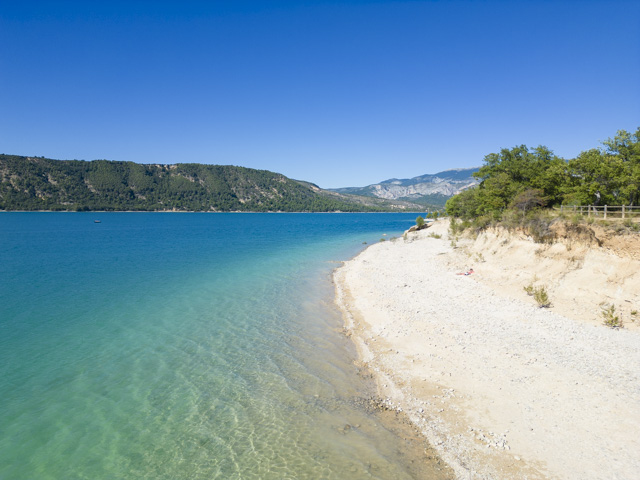
The water was a beautiful blue colour, lovely and warm and with only a few other people dotted around the shoreline we enjoyed a peaceful, relaxing afternoon in the sunshine.
The next day we got up early to make sure that we were driving the narrow road round the gorge before it got busier.
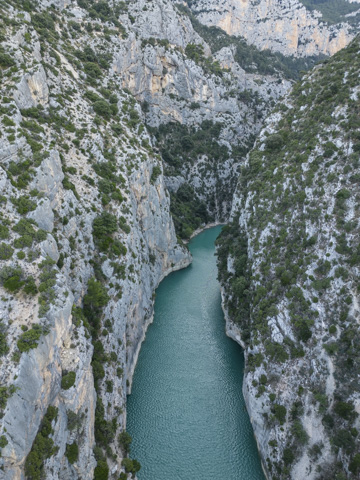
Our first stop off was the Pont du Galetas which is a bridge over the end of the gorge. This gets very busy with boats later in the day but we didn’t stay for long as there was a cold brisk wind blowing through the canyon making for a chilly start to the day.
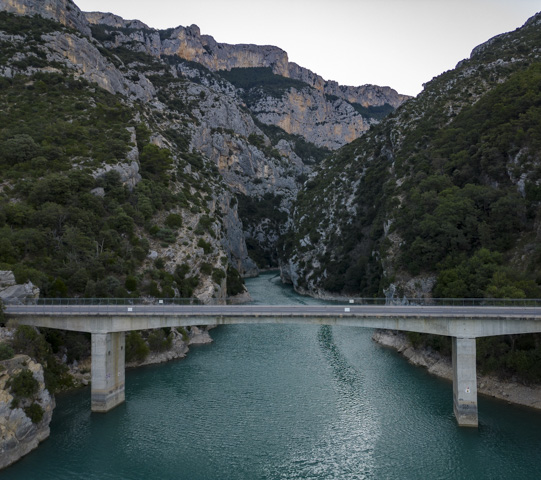
We decided to drive out along the South side of the gorge and this road takes you high up to the top of the gorge and over 1000m. The views along the gorge are stunning but there are very few places to stop so it’s difficult to take many photos. The gorges du Verdon are up to 700m deep at its deepest and only 6m wide at its narrowest although the distance from the top of the walls is up to 1200m.
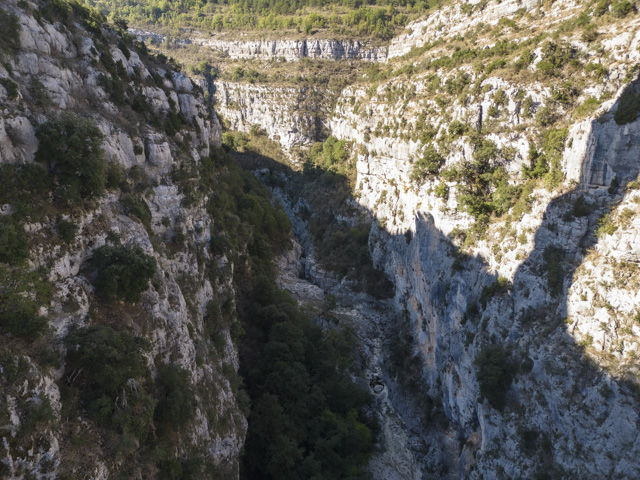
Eventually the road pulls away from side of the gorge and we headed to the pretty town of Castellane for the night. There is an Aire here alongside the river and a short walk to the main square of the town. At the time of our visit the payment terminal and barrier was broken so we had a free night.
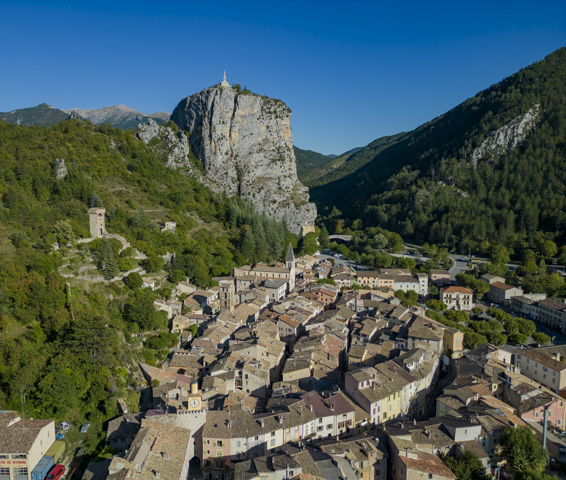
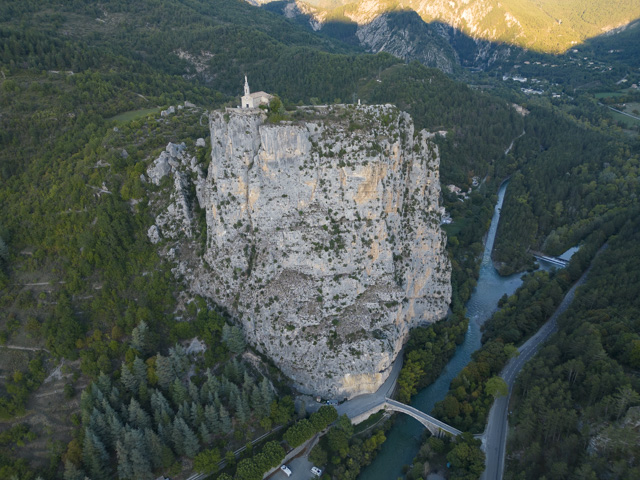
The town is notable for the large granite pillar at one end of the town with a church at the top, locally know as the Roc. This used to be where the Lords of the area had their house but it has been a church for hundreds of years.
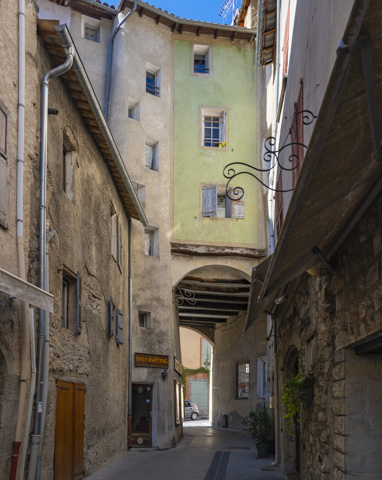
The town itself is very pretty with a maze of medieval streets, fountains and squares and a few old churches but much quieter than Moustiers.
The next morning we headed off to drive the North side of the gorge. This involves a loop drive called the Route des Cretes, from the town of La Palud-sur-Verdon. We had read some conflicting advice online as to whether this would be doable in a motorhome but after popping into the local Tourist office we were assured it would be fine.
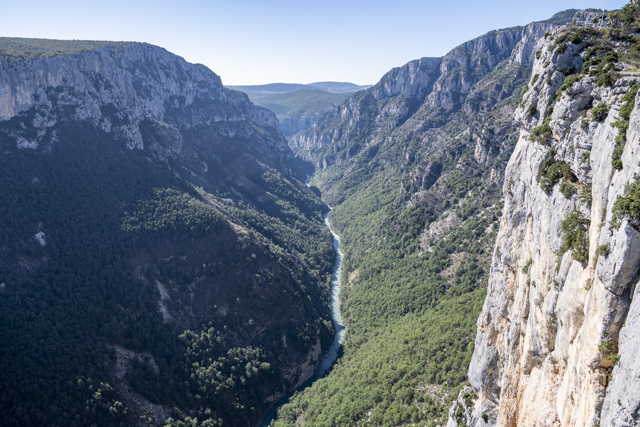
The loop road is 23km and it took us around 3 hours to drive round, not because of any problems with the road but because we stopped at viewpoint after viewpoint to take in the stunning vistas. Unlike the drive along the south side, this loop alone packs in 14 viewpoints as well as many more unofficial ones.
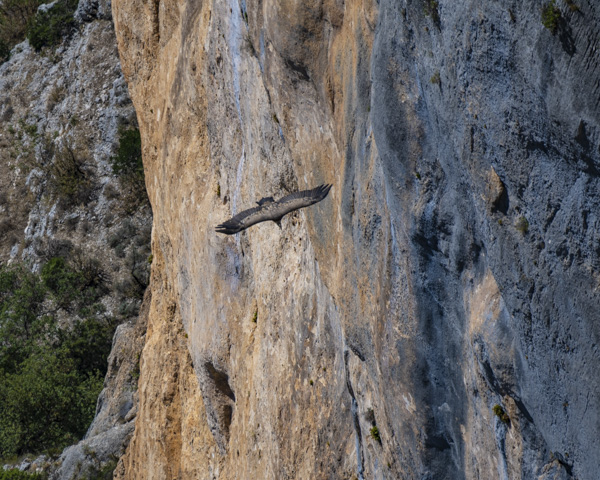
Pack your binoculars for this short road trip. We spent a long time watching vultures gliding and swooping around the steep cliff walls. At one stage we saw around 10 of them perched on top of a rocky pinnacle but unfortunately they were just a bit too far away for a good photo.
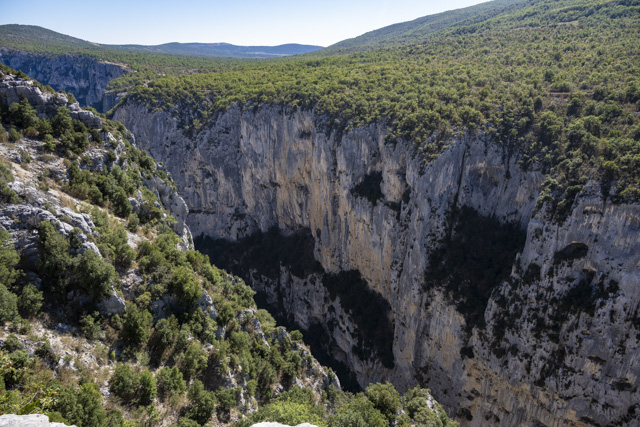
The road itself was absolutely fine and was an easy drive in a camper – the only surprise being on the one way section when we met someone driving their car the wrong way! The good thing about this loop was that there was plenty of parking at all of the viewpoints even for bigger vehicles.
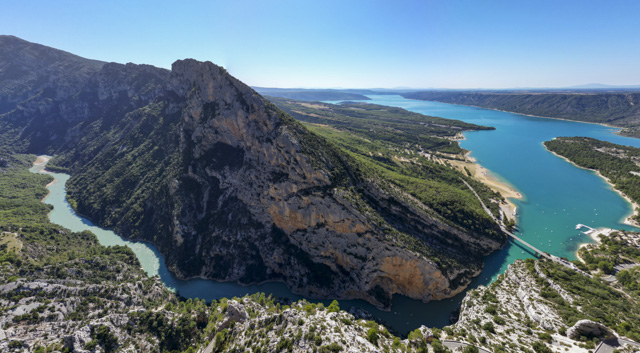
After completing the loop we drove back towards Lac de Sainte-Croix and had a great view from above of the Pont du Galetas where we had started the day before.
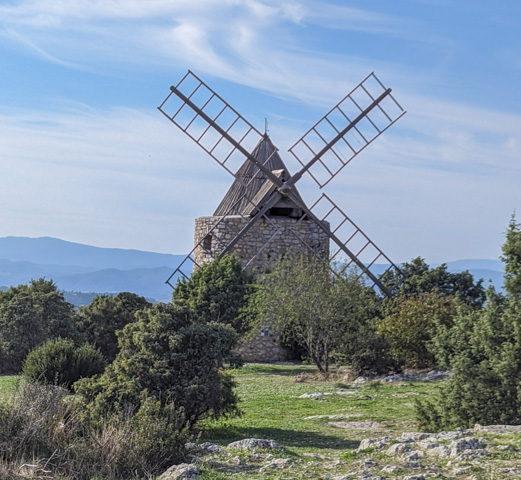
Our next stop was a leafy Aire at the foot of the medieval village of St Julien des Montagniers. The earliest buildings here date back to the 6th century. A tiny village on a hilltop with the remains of a defensive wall and an old windmill. Very pretty but a brief stop before heading on towards the more well-known parts of Provence.
Summer Holidays: Sailing in the Med
We are lucky enough to have a very good friend who owns a beautiful yacht which he sails around the med. We have sailed with him in Croatia, Italy and Greece and this year he invited us and some other really good friends to sail from Sardinia to Menorca.
We had arranged some parking for the Beastlet in a parking facility near Milan Malpensa airport and we had flights booked to get to Cagliari in Sardinia from here.
The temperature in the Alps was absolutely lovely but Europe was still in the grip of a heatwave so we knew that the lowlands of Italy would be super hot and uncomfortable. With this in mind we spent our last night in France in the ski resort of Montgenevre, which is right on the Italian border.
Montgenevre was completely closed up with the exception of 1 bar and a small convenience store, the summer season having finished and the winter season being some distance off. France is often like this. In many areas activities are only open for July and August and then shut until the next year which we are finding somewhat bizarre as the weather is still lovely and there are plenty of tourists still knocking around, just less French holidaymakers.
Anyhow, Montgenevre was well placed for us to drive straight to Milan in about five hours, the only downside being that it was a Sunday and the road out of the Alps was thick with bikers enjoying the windy mountain roads, or at least trying to enjoy them until a big, slow motorhome slowed them up. Oops!
Once in Milan – well Malpensa which is actually quite a long way from Milan, we spent the night in the industrial estate where the parking is based to make it easy to drop the camper off early the next morning.
It all went smoothly despite the language barrier and we arrived in Cagliari to meet one of our friends. It was then an hour by taxi across Sardinia and a 30 minute ferry ride to arrive at the harbour where the boat was waiting in Carloforte, San Piedro Island. This is a small island off the west coast of Sardinia.
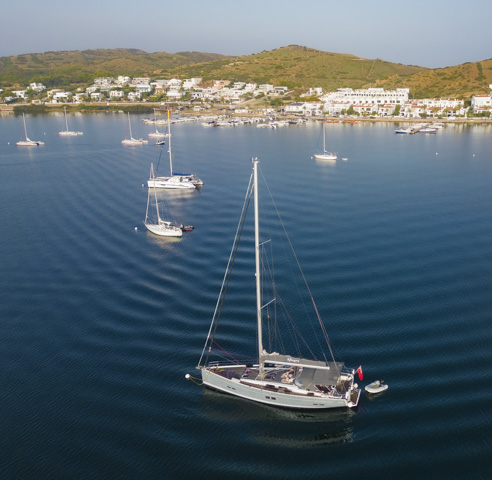
The boat is absolutely beautiful. It is a Hanse 575, which means its really big with a huge cockpit at the back and loads of room downstairs. It has four cabins including a big double bed in the owner’s suite and air conditioning which is a relief in the Mediterranean summers and a treat for us! At the back there is a garage for storing the tender. It used to have a jetboat in the back but the British made Williams was so heavy and unreliable that it has been swapped for a small, more reliable RIB.
On arriving at the boat the owner, Matt, was already on board and everything was ready to set off for the 29 hour sail to Menorca. We cast off straight away and were off.
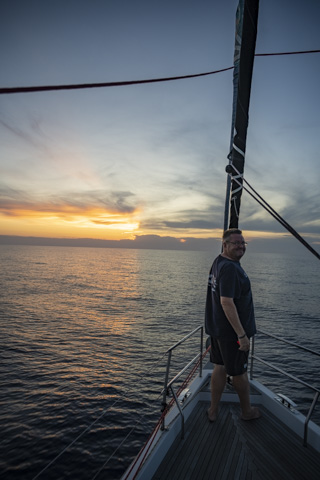
The weather was decent and we motor-sailed at around 7 knots most of the way.
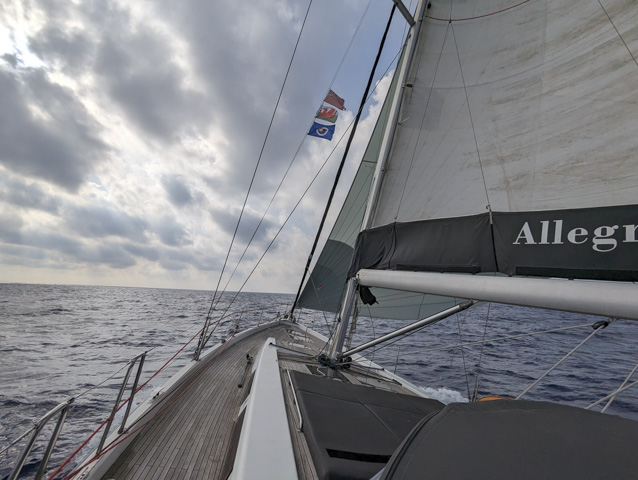
In the night we did 2 hour watches, alternating in pairs with no dramas at all and by the morning were over half way there.
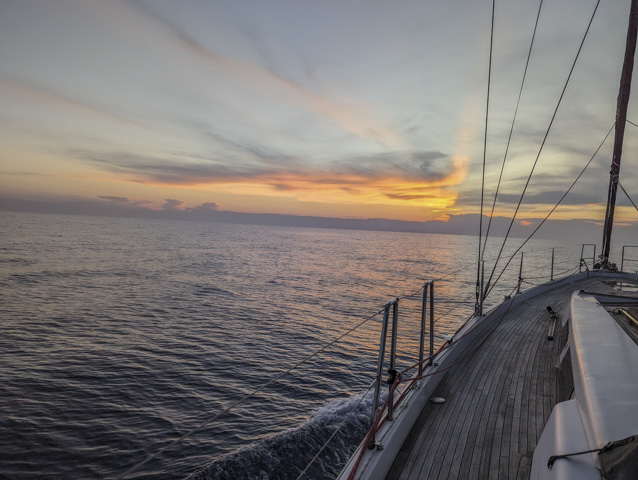
By the afternoon of the second day the wind picked up and we made good time, although it got a bit lumpy and stomach churning for us less experienced sailors.
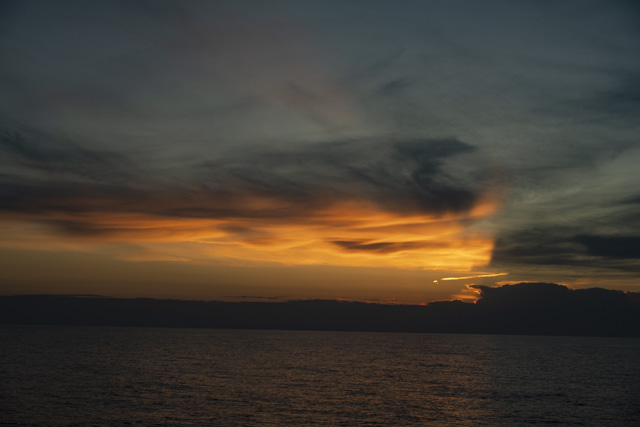
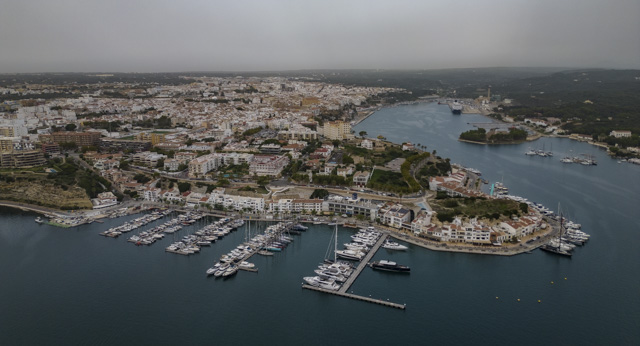
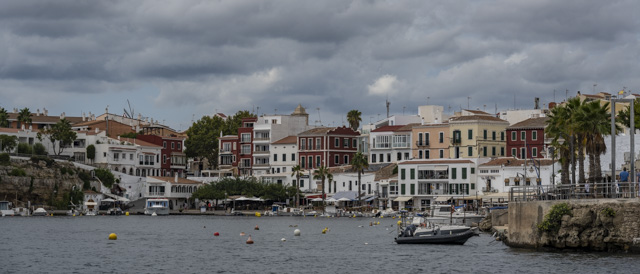
Menorca Is low slung and we didn’t spy land until strangely late at less than 10 miles from the main town of Mahon but by sunset we were sailing into the harbour to our berth right in the town itself.
After a celebratory drink on board we headed out for a lovely tapas meal on the harbour and got a relatively early night.
From about 11am the next morning the rest of our holiday crew began to arrive, until there were 8 of us in total, 4 couples, which fits the boats four cabins perfectly.
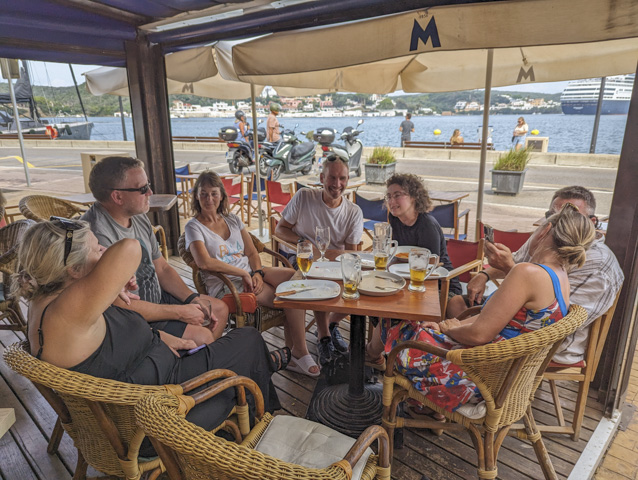
As is often the case with these type of trips we had a welcome drink in the bar opposite the boat – Captain Haddocks ! One drink turned into a few, some tapas for lunch – including the, I am sure unique, cold mussels and ready salted crisps combo – and we didn’t leave the bar until dinner time when we jumped in cabs to the Cales Fonts area. This is a pretty little bay ringed with restaurants and a great place to go for dinner.
The next morning things got off to a slow start as we headed to the supermarket to provision the boat with food and a big pile of beer.
Stocked up, we got going and headed up the coast for 4 hours to the little resort town of Arenal, where a pretty sandy beach is sheltered in a rocky cove. We anchored up, went for a swim and then got ready for dinner out.
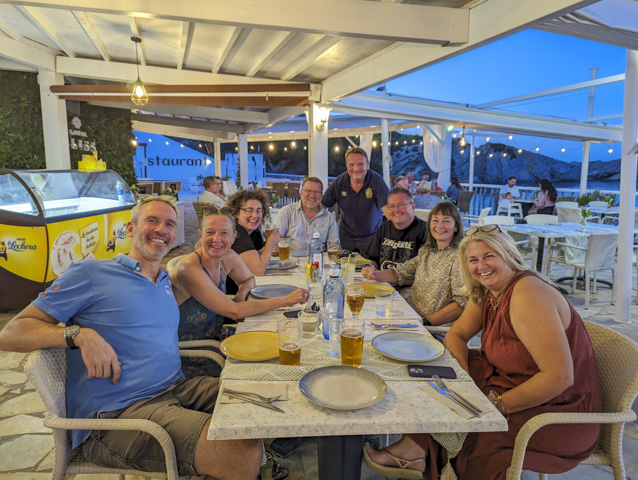
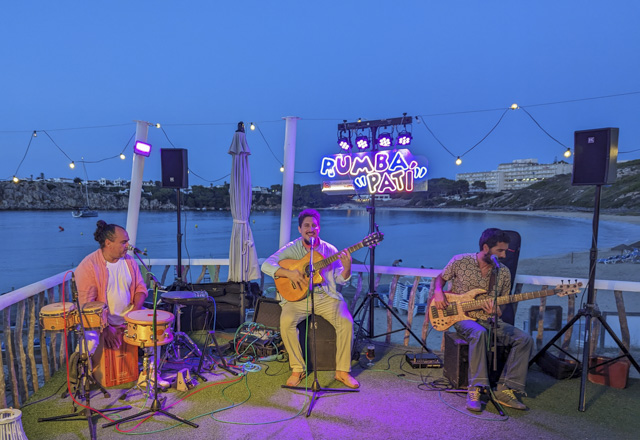
After heading to shore in the inflatable tender we went to the Arena beach club where a band called Rumba Pati were playing a crowd friendly mixture of hits.
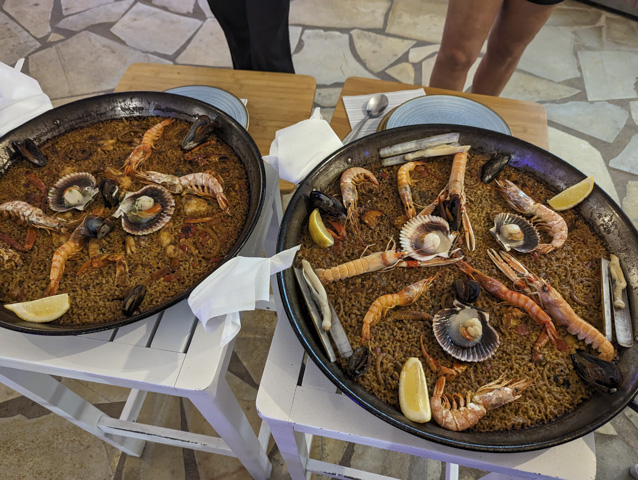
Dinner was paella all round and really tasty.
The next morning after breakfast on the shore the crew headed off around the coast to the protected harbour of Fornells. Good thing it was protected as a pretty strong squall passed through for a couple of hours.
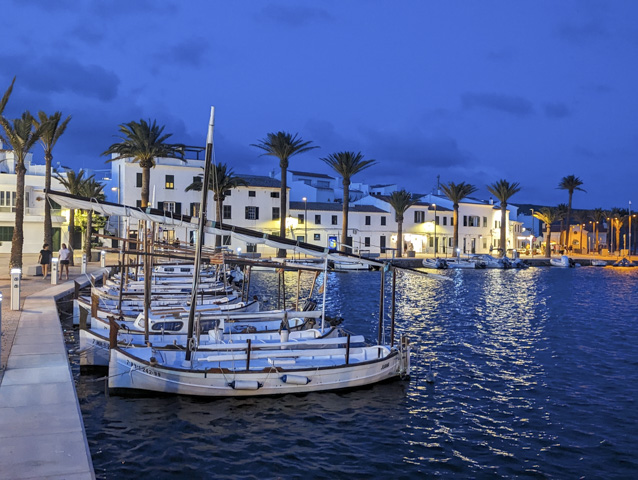
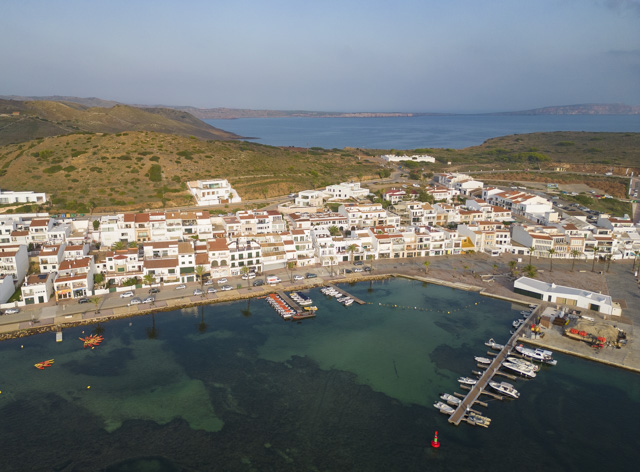
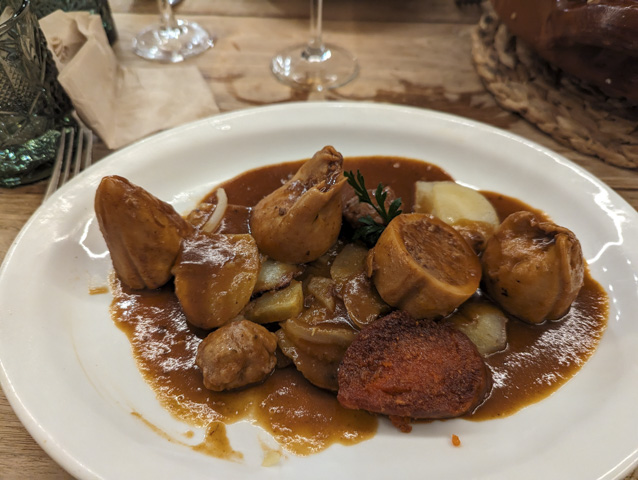
Fornells is a lovely town where we had an amazing meal. I had stuffed squid and some of the others had suckling pig. It was all excellent and we really enjoyed it.
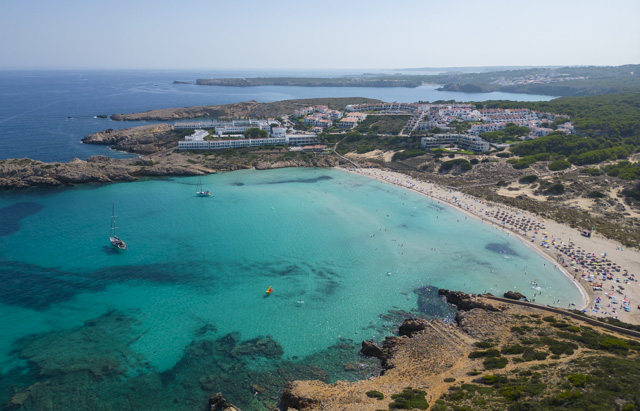
The next day we headed back towards Mahon, stopping at Arenal Son Saura for beach bar drinks and swims in the beautiful bay.
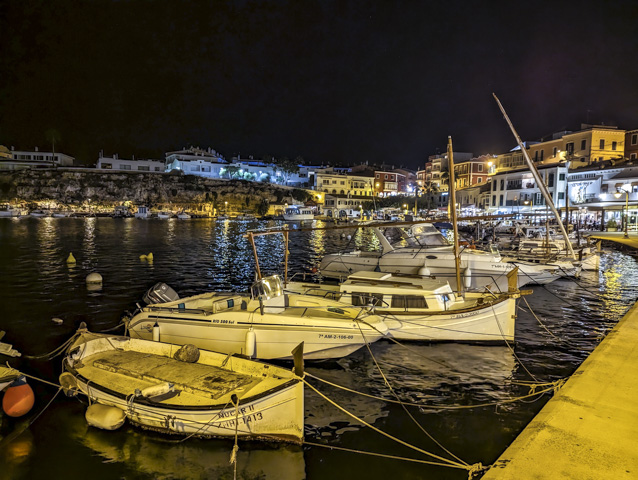
We had a lovely sail back to Mahon and once in Mahon we went back to Cala Fonts for another really good meal and some drinks. There are some fantastic restaurants in Menorca.
One of us had to head home from here, but the airport is only a ten minute taxi ride away. Everyone was flying home the next day apart from three who were sailing the yacht back to Sardinia.
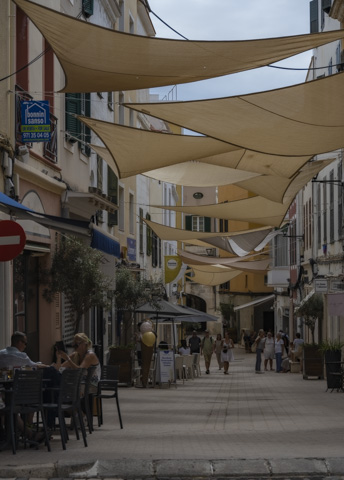
Sarah and I flew back to Milan from Mahon and jumped straight back in the Beastlet to drive back up into the cool of the mountains. After initially getting back at a very hot motorhome we were grateful to be back in the Briancon area of France for its cool nights.
From Vercors to the Alps
The Vercors region definitely feels like the road less travelled and it barely gets a mention in our guidebook. It’s a beautiful region though and despite a period of less than perfect weather (which didn’t last too long) we have very much enjoyed it.
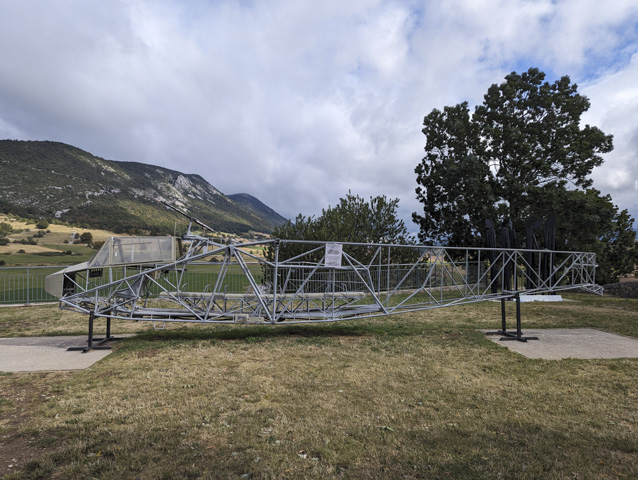
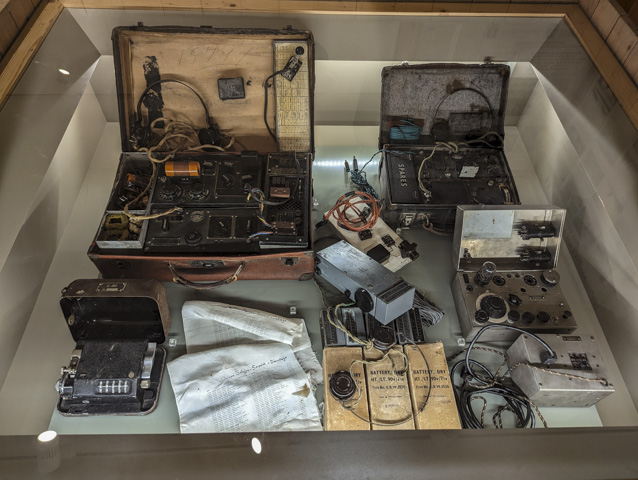
We spent a blustery night in Vassieux en Vercors which is the home of a very informative museum on the French Resistance from WW2, much of which pertained specifically to this area. The Vercors plateau was a hotbed of resistance, so much so that during the German retreat in 1944 they sent over 10,000 troops to the area, many landing by glider because of the inaccessible landscape, to crush the resistance and prevent them disrupting the withdrawal. Hundreds of resistance fighters and civilian lives were lost and 97% of the town of Vassieux en Vercors was destroyed. In acknowledgement of their great sacrifice the town was honoured by decree in August 1945 as a companionship city of the liberation – a rare honour granted only to four other towns, Paris, Nantes, Grenoble and Ile de Sein. The museum is very interesting and shines a spotlight on a lesser known (at least in the UK) part of the war.
From Vassieux en Vercors we headed down to the little town of Remuzat. The landscape has become distinctly more Mediterranean since leaving the Vercors Mastiff and as we got closer to Remuzat we were driving alongside fields of lavender (albeit pruned back to very neat, straight rows at this time of year). Remuzat is a great location for seeing vultures after they were reintroduced to the area in 1996. Vultures had become extinct in Southern France over 100 years ago as a result of poison laid down to destroy wolves and bears however the re-introduction programme has been very successful and they are now flourishing in a number of locations.
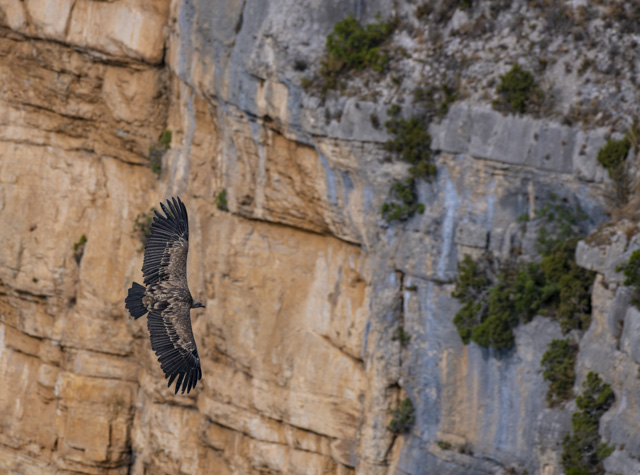
The Cliffs above Remuzat are home to four types of Vulture – Griffon Vultures, Vulture Monks, Egyptian Vultures and Bearded Vultures.
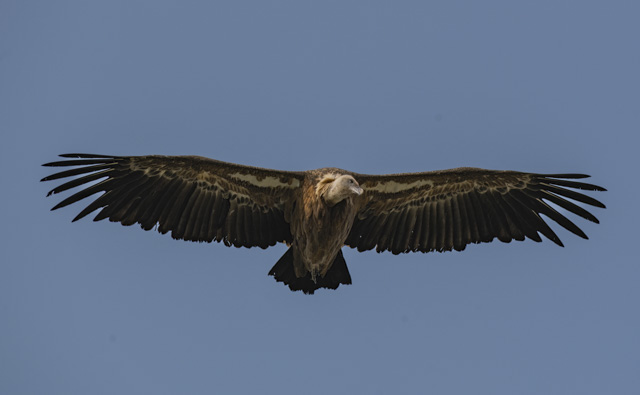
You can see the vultures circling by the cliffs from the town but to get a good view there is a pretty challenging hike up to the top of the cliffs.
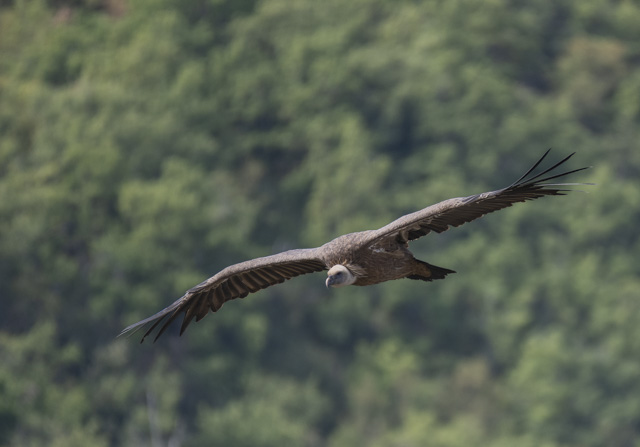
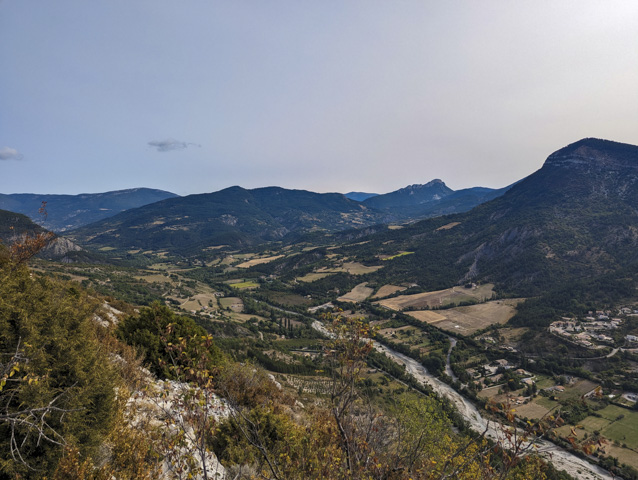
This is not a via ferrata but there are ladders and some other areas of protection as you climb very steeply up the cliffs. Once at the top though there are some amazing views and of course the vultures themselves.
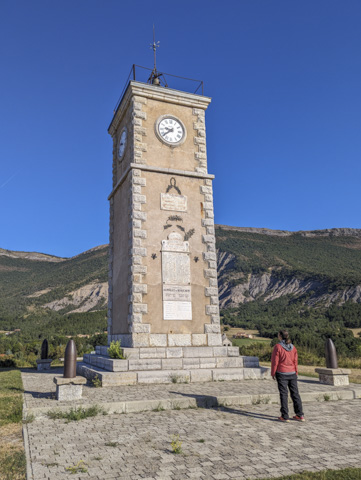
On leaving Remuzat we spent a night in the small town of Aspres sur Buech, notable for its clock tower on a hilltop in the middle of town.
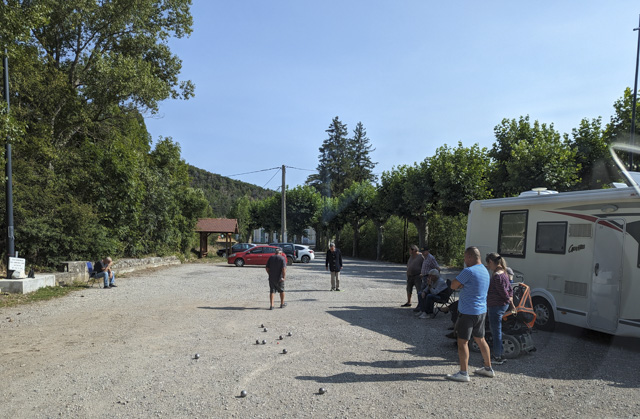
We parked in the town Aire and soon after we arrived the local pétanque club arrived and played pétanque right in front of our camper so we pulled out our chairs, poured some glasses of wine and enjoyed the show! It’s good to see how it should be done and mades our attempts seem pretty feeble by comparison.
We wanted to head back into the Alps in order to visit the some of the Southern Alps which we hadn’t been to before so we ended up in the beautiful Ecrins national park on the edge of a town called Pont du Fosse.
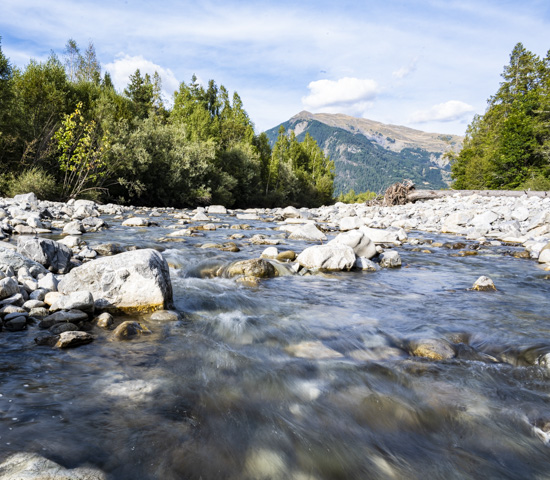
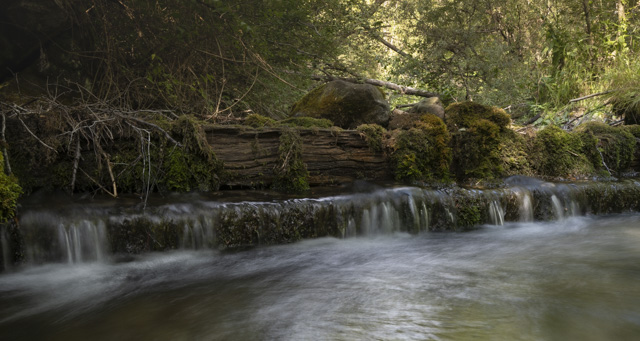
We had read online about a great Aire here that was usually quite expensive but had suffered a power failure so was currently free. This is probably in our top fives places to stay, it was absolutely lovely, next to a river, only 500m from town and with private, shaded grassy areas amongst the trees to park up and hang our hammock. We had a few days here to recharge our batteries before heading into the higher Alps.
We were heading up towards Briancon, which is the highest city in France, but on the way we passed the Lac du Serre Poncon. In the hot weather we couldn’t resist checking in to a campsite with lake-side parking just outside the town of Savines le Lac and enjoying a couple of days swimming and relaxing by the beach.
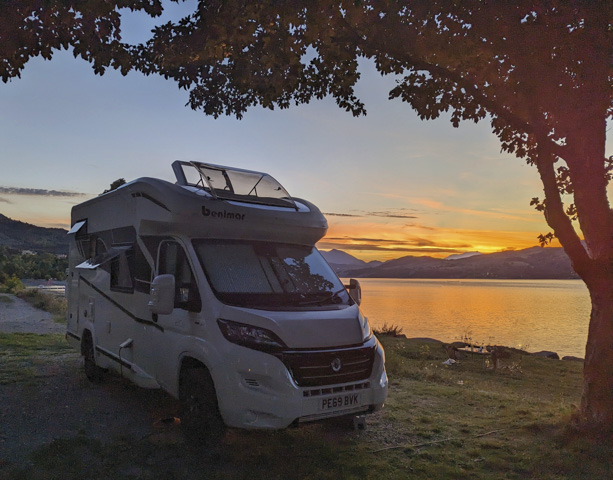
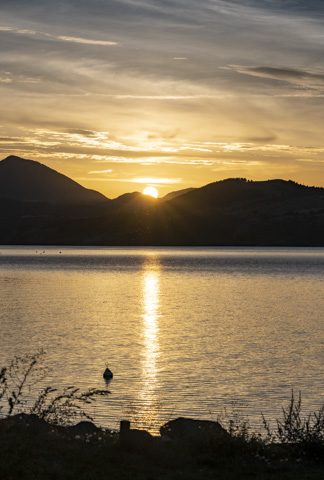
The sunsets across the lake were stunning.
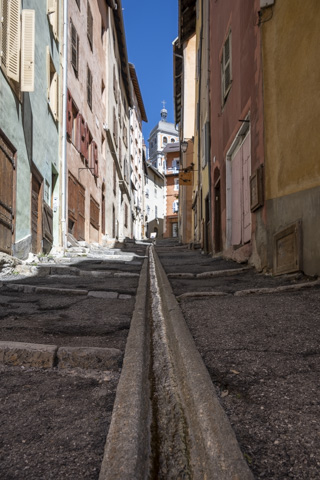
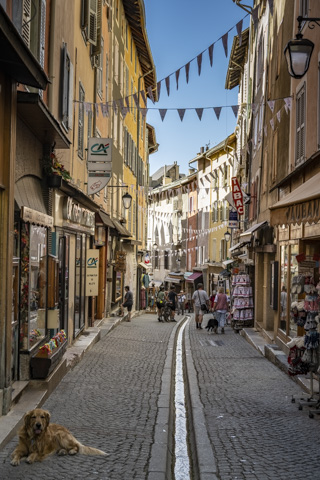
From Serre Poncon it is an easy drive up into the big mountains to the picturesque town of Briancon. The old town of Briancon is centred on a steeply sloping main street which must be precarious in winter.
There are a number of forts in the hills around the town and above the town itself there is a fort on a crag but unfortunately this is closed to visitors at this time of year.
Briancon doesn’t have a great selection of places to stay the night so on leaving we headed 45 minutes down the road to the Col du Lautaret which is on the way up to the famous Col du Galibier.
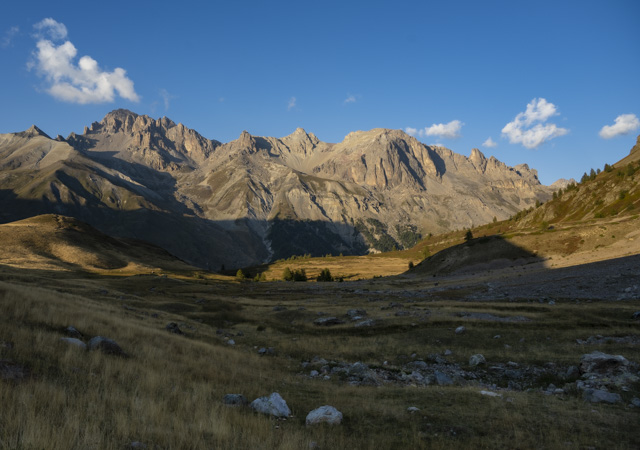
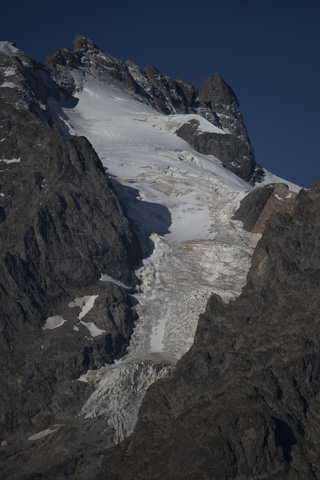
There is a large area with amazing views just on the Col itself where its possible to park up. The views are of mountains, upland fields and off to one side a collection of small glaciers.
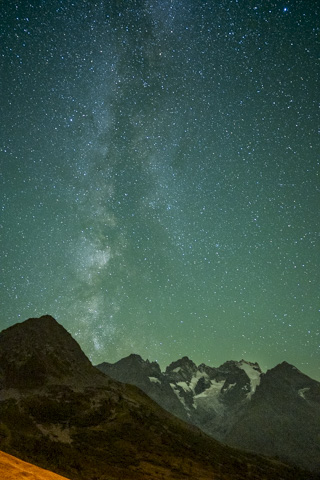
We went for a short walk and saw marmots and a flock of sheep protected by flock guardian dogs who warned us off approaching their charges.
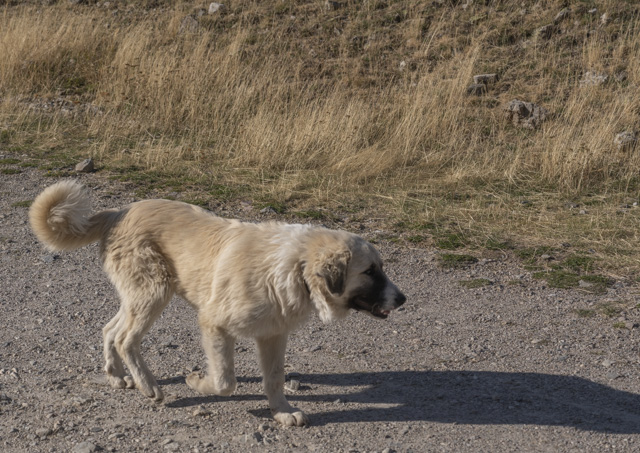
In the evening we were visited by two flock guardian dogs who were very friendly and it was a great opportunity to interact with these working dogs up close. We felt that this was probably a normal evening stop for them as they meandered around the motor-homers preparing their dinners !
Back to French Adventures
Italy had been so hot we were determined to have a night as high as we could to make it as cool as possible. So heading back into France we stopped for the night at the 2000m high Col du Mont Cenis and a parking area accessed by a dirt road next to the dam on Mont Cenis lake.
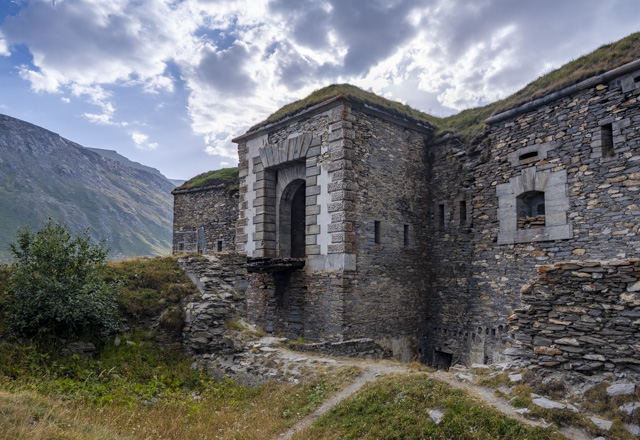
The air felt so fresh it was a welcome relief. We could see a fort from where we were parked so I decided to go for a little explore. I later found out that this was the Fort de Variselle which was built by the Italians in 1877 to defend against French attacks. However in 1947, in the Treaty of Paris, the area was handed back to the French.
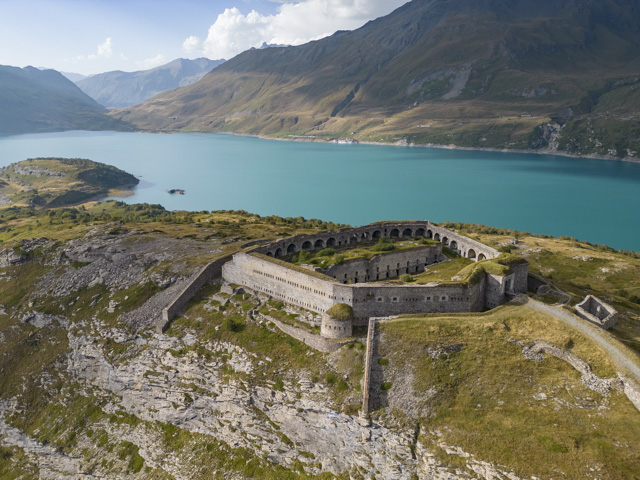
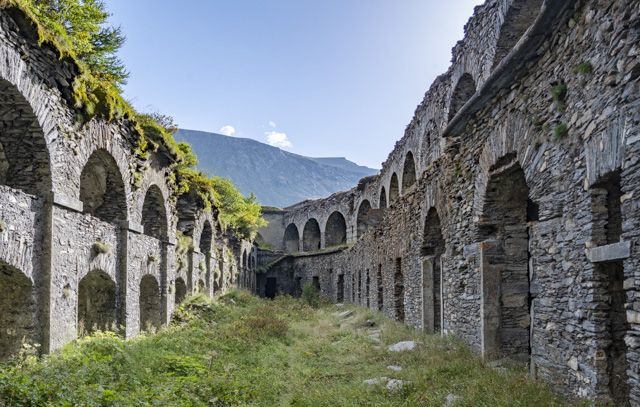
The fort itself is fenced off because of safety concerns with the bridge into the fort looking very treacherous. I managed to sneak in safely and explored the inside of this large fort which includes two levels of gun emplacements which would have originally been able to defend the entire plateau.
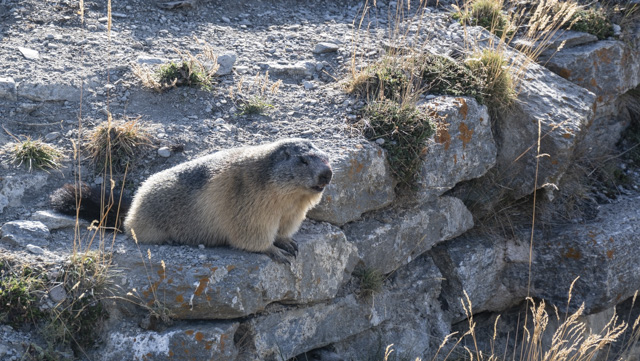
In the morning we woke to the cries of marmots and peered outside to see several scurrying around a few metres from where we were parked. This was a welcome surprise and we spent some time watching their antics.
We decided that we wanted to ride out the rest of the heatwave at high altitude, somewhere we could be outside. So we headed back to the same campsite that we visited on the way up to Italy, at Bramans.
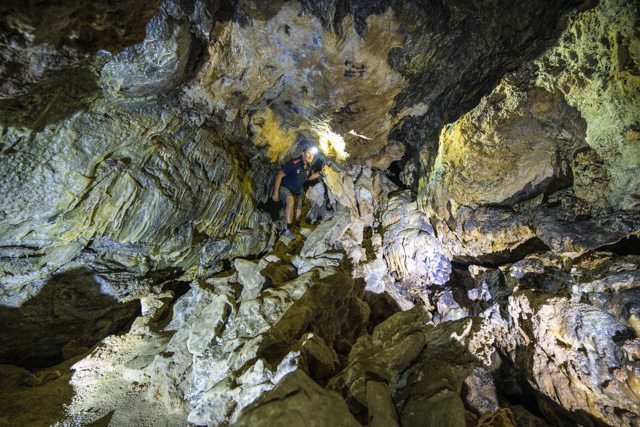
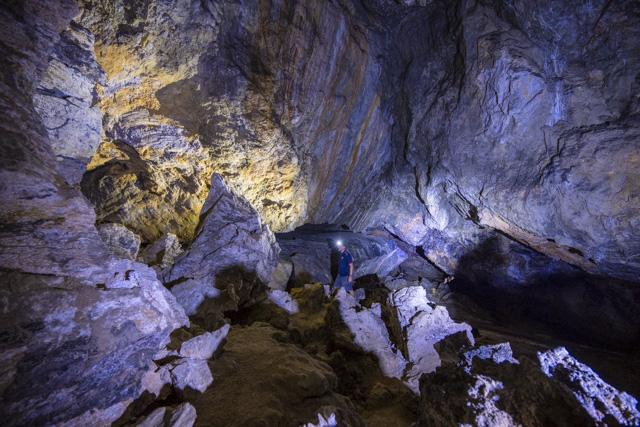
We had another couple of really good days here, it’s a great location. I re-explored the Cave of 14 Chapeaus and managed to wriggle my way deeper into the cave, taking a narrow passage high up rather than the lower passage that I had balked at last time.
I also decided to take my kayak down the Arc river that flows through Bramans. I hiked up river with my kayak and found a place to put in. It was probably a grade 2+ river at this point and my first time doing white-water with my pack-raft. This is the beauty of a pack-raft which weighs only about 5kg including paddle, you can hike with it, making trips like this possible.
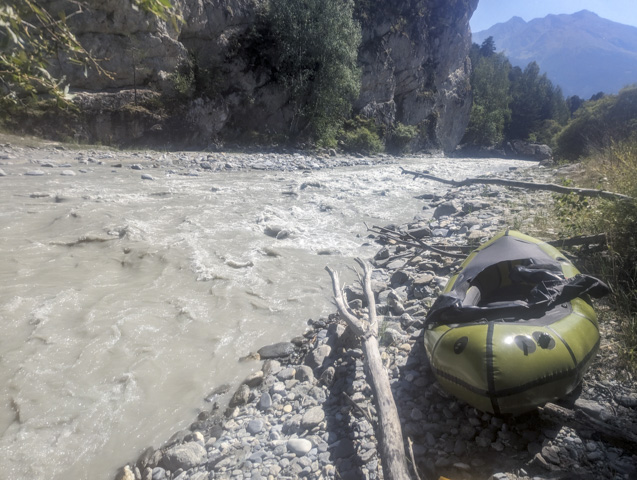
The first 1km was a really wild ride and I almost went over a couple of times but just managed to keep control. Overall I descended about 4.5km and it was great fun. I did have to stop after the first 1 km though to let some water out as I’d managed to accumulate a couple of inches in the bottom.
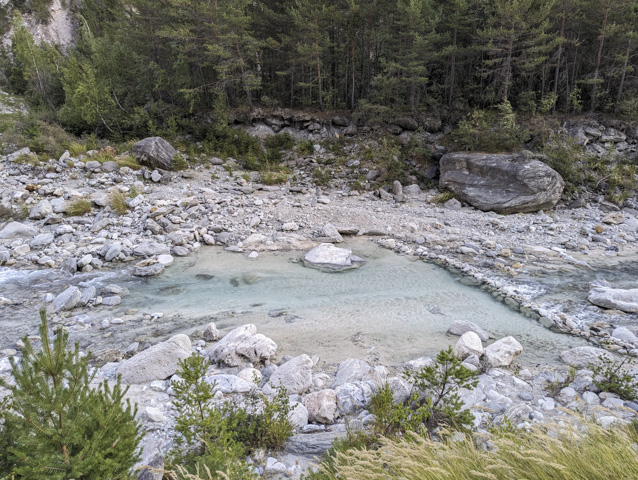
The other thing that we discovered in our second visit to this area was a swimming hole in a mountain river around 400m from our campsite. The water was not too cold and it was a perfect place to cool off in the hot weather with great views.
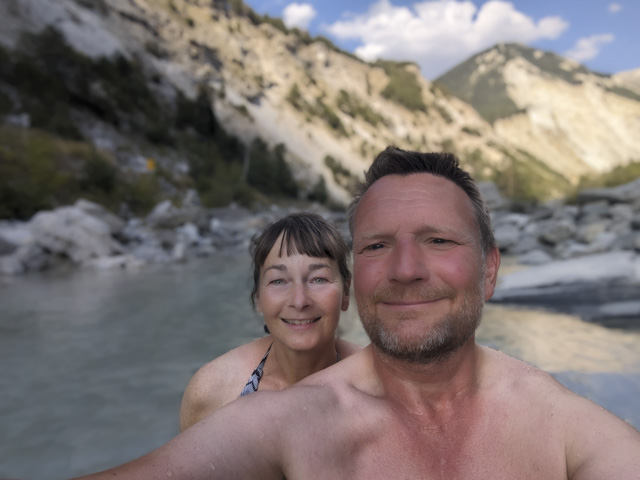
After a couple of days here the weather was scheduled to break so it was time to move on. In fact the temperature went from 35c to 10c overnight with some rain so we headed down the mountain and across to the Vercors plateau.
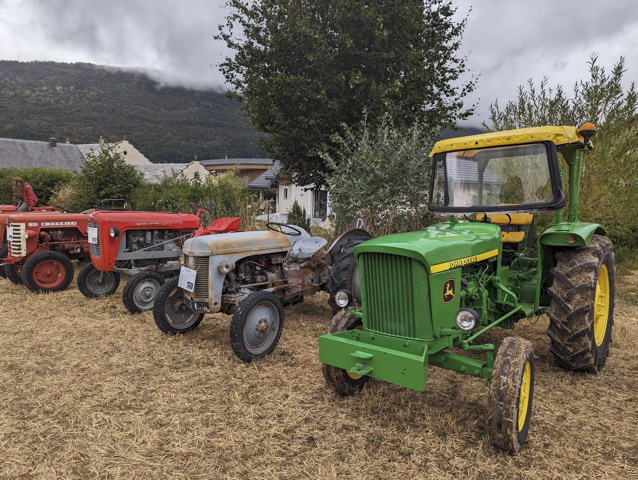
Our first stop was Lans en Vercors. We were stopping here purely as a free stop for the night but when we arrived we realised that there was a country fete on. There was a display of vintage tractors and men demonstrating how wheat was harvested in the olden days.
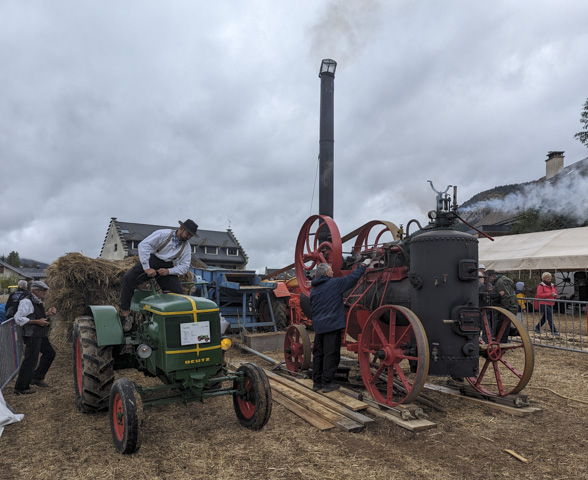
There was also a steam engine which was hooked up to an old hay baler. Alongside this were some food and drink stalls and we joined the town in their festivities.
Not too far from here is a cave with a very rare type of stalactite. We decided that this was worth a visit.
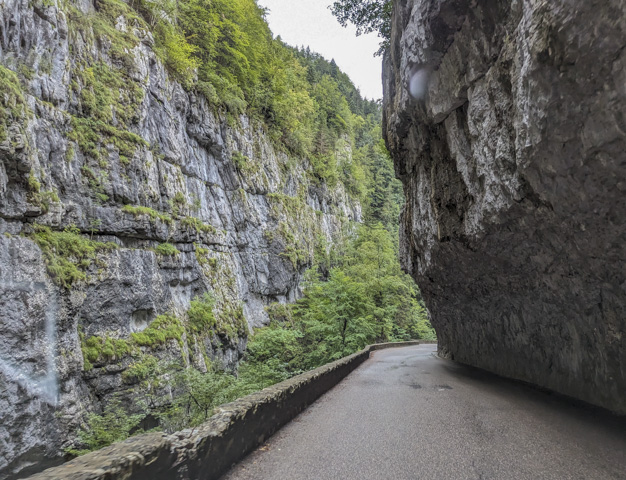
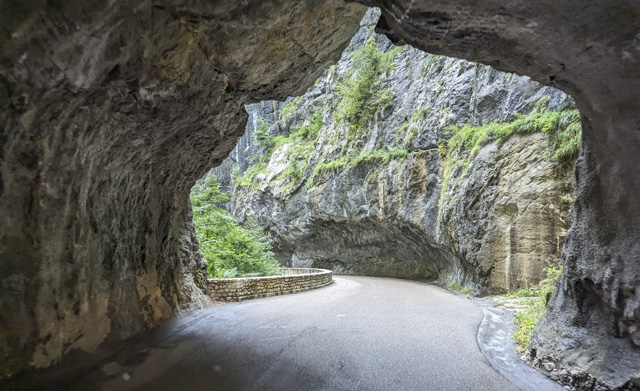
What we hadn’t bargained on was the road to get there which goes through the Gorges de la Bourne. This is a very narrow road with overhanging cliffs which is quite hairy when you are in tall and wide vehicle. It was a beautiful drive though – in the parts when we weren’t stressing about meeting any oncoming vehicles.
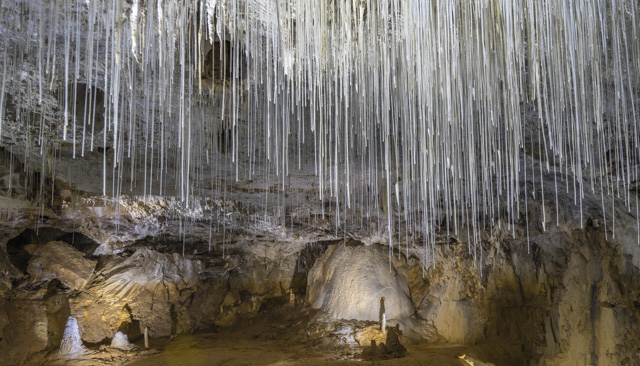
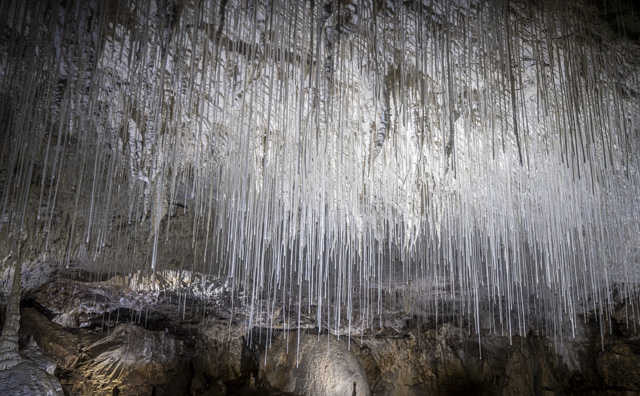
The cave itself, the Grotte de Choranche, is over 30km long although only a small part is accessible to the visitor. It is famous for the straw like stalactites called fistuleuses stalactites. These grow incredibly slowly around 5cm per 100 years and some are over 3 metres long !
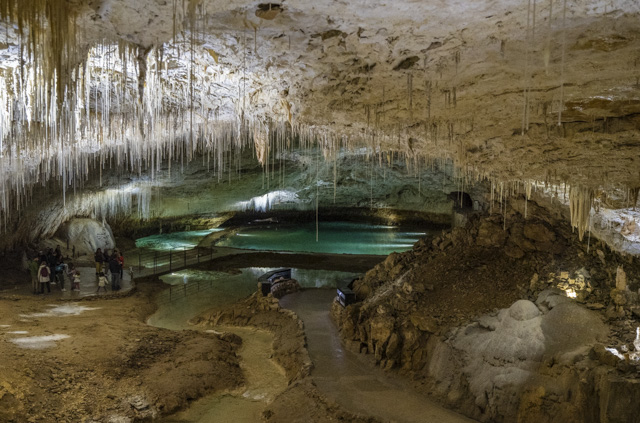
The cave was incredible and well worth a visit.
A short hike from the main cave is another smaller cave with a small river flowing out of it which was very pretty although inside there was not much to see.
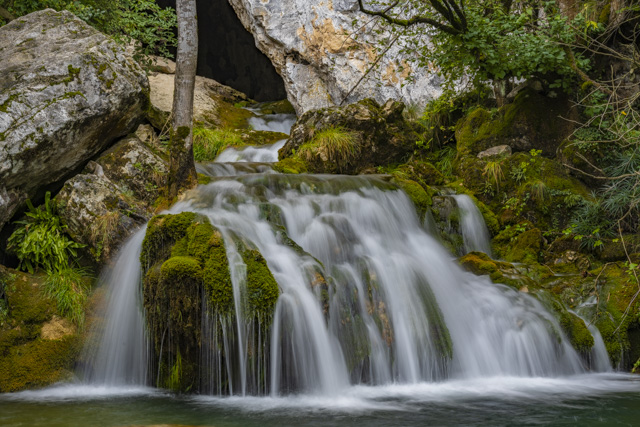
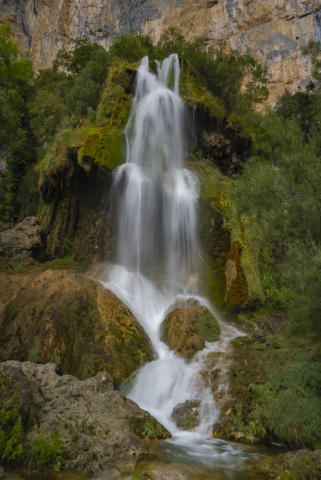
Near the entrance to the cave there is also a large waterfall which is a little difficult to access but well worth the effort.
Escape to the Alps
The heatwave was in full force with temperatures of 38c to 40c in the lowlands so it was definitely time to find some altitude and cool nights at the very least.
We were meeting family in Italy so we drove up towards the Col du Val Cenis as our best way to get into Italy without paying a high toll to drive through one of the tunnels. Going over one of the Cols (mountain pass) is also a great way to get stunning views and a breath-taking drive, although it does take longer and the mountain roads can be a bit hairy.
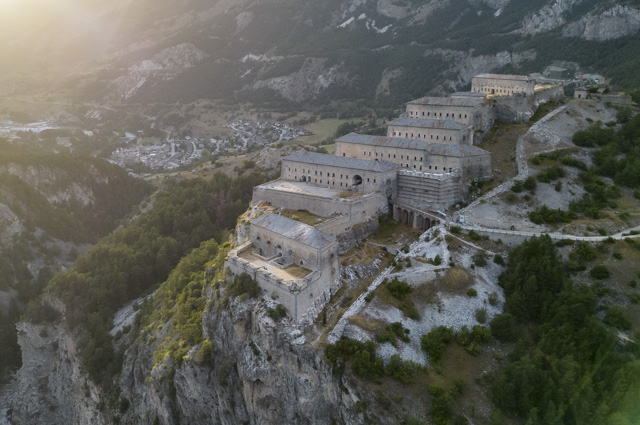
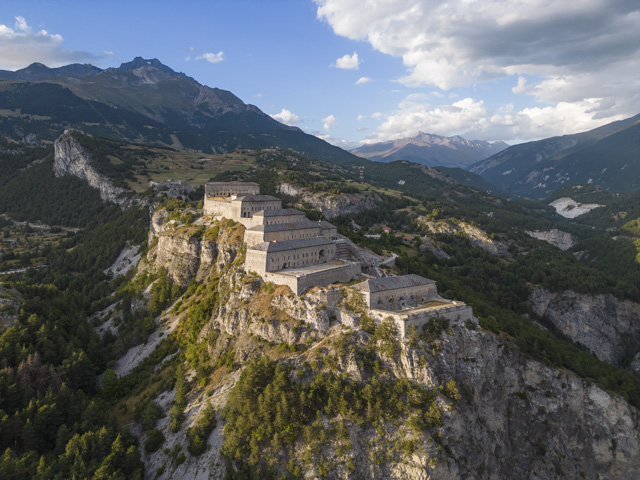
Our first stop was just above the town of Modane, parked just under one of the forts of the barrier Esseillon, called Fort Victor-Emmanuel. This was a collection of fortifications built between 1819 and 1834 to protect the Italian Piedmont from French incursions.
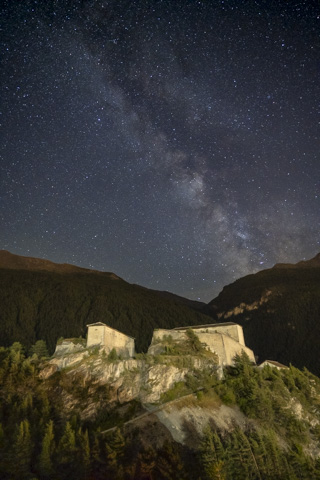
Fort Victor-Emmanuel was built into the rock with 8 separate buildings up the side of the mountain which could house up to 1500 men.
We had a quiet night here, at around 1200m, where the temperature dropped nicely making it the first comfortable night in at least a week.
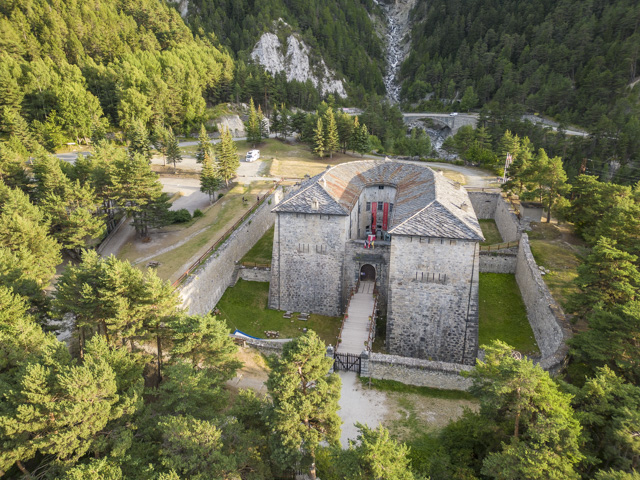
Our next stop was a campsite in the village of Bramans, further up the road towards Italy. We don’t stay in campsites often as they can be very expensive but this one was the same price as some of the Aires we’ve been staying in but with the added bonus of a toilet and shower block. There is an extra charge of €5 per day for electricity but this isn’t something we need with our lithium batteries and solar setup.
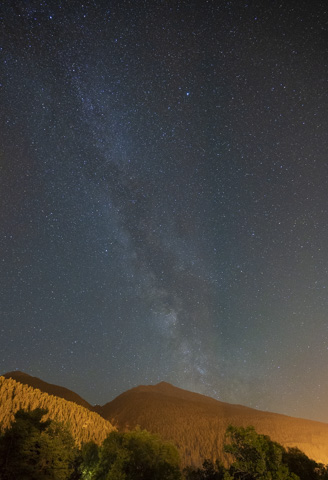
The campsite was made up of a number of fields and you could park up anywhere you wanted. We found a lovely spot next to a shade-giving tree with great views of the surrounding mountains.
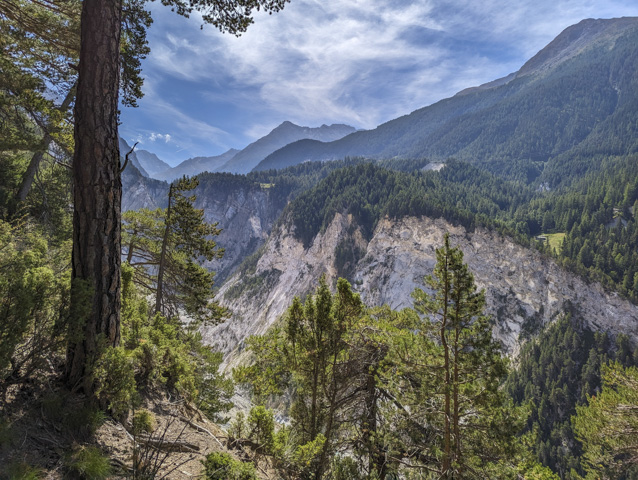
The village of Bramans is the starting point for a number of hikes and we enjoyed discovering the surrounding area.
While looking at a map of the surrounds on the maps.me app I managed to find the entrance to a cave called Grotte de 14 Chapeau (cave of 14 hats) a couple of kilometres from the campsite and couldn’t resist having a bit of an explore.
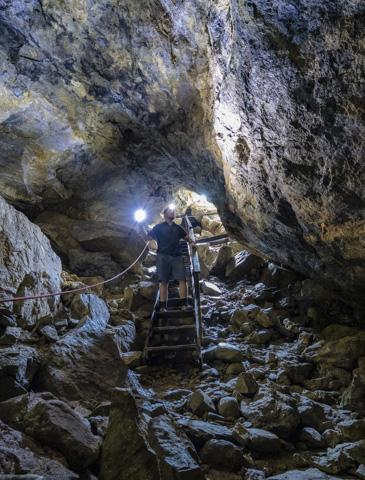
The cave entrance was really well hidden by long grass off the main path. I would never have known it was there if I didn’t have a gps map. The entrance to the cave is a narrow slit with a wooden staircase leading underground.
The first large room has wooden staircases at each end and ropes to help you descend. None of this is maintained and the staircases are wet, beginning to rot and very wobbly. Once past the first bit of the cavern all the assistance disappears and you are on your own.
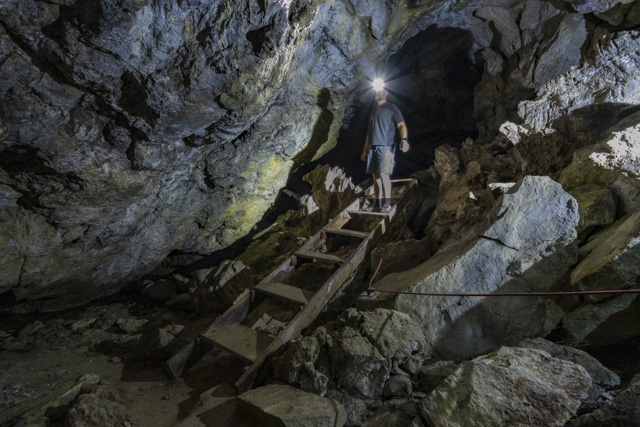
I managed to make it to the third large room but then came across a narrow crawl way that I didn’t feel comfortable attempting on my own.
It was definitely fun exploring the cave and it was very cool underground, in fact it was something of a shock when I came back up into the full heat of the sun !
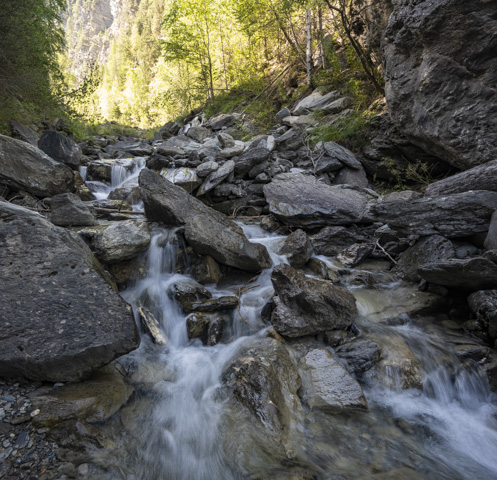
We were very much enjoying ourselves in the mountain but we had an appointment to keep in Italy. My mother was visiting my step-sister who lives in St-Gervais, near Chamonix, and we had all agreed to meet up in the Aosta valley in Italy to celebrate her birthday together.
This meant that we had to drive across the mountains, up through Val Cenis, a ski resort that turns the main road into a ski slope during the winter season and past a large dammed lake on the pass to get to Italy.
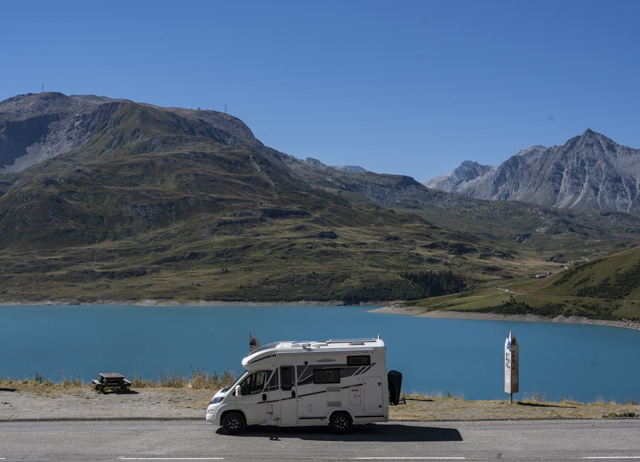
The road led us past Turin, where temperatures were hitting 40c, to the small village of Strambinello in the lowlands of the Aosta valley.
We were staying in a small B&B called Castello Strambinello, which has been lovingly restored by the owner creating 3 incredibly beautiful suites, each with their own lounges. Conveniently, we were able to park our camper just outside the gates. I have to say it was a welcome relief to spend a couple of nights in air-conditioned luxury!
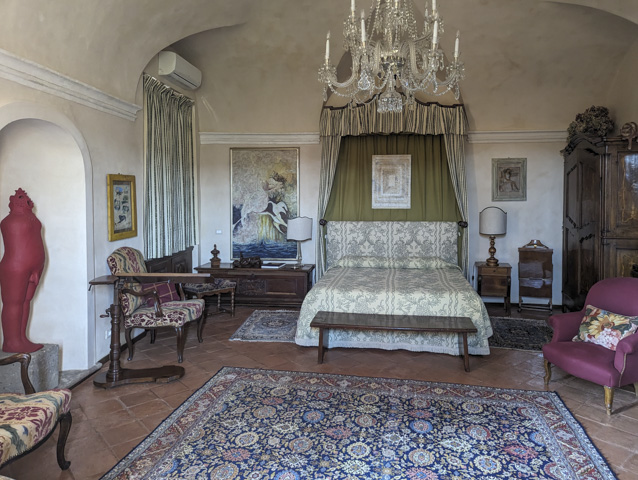
The rooms were beautiful and spacious, each different, with an eclectic mix of art and beautiful antique furniture.
We had a couple of lovely days in Italy catching up with the family.
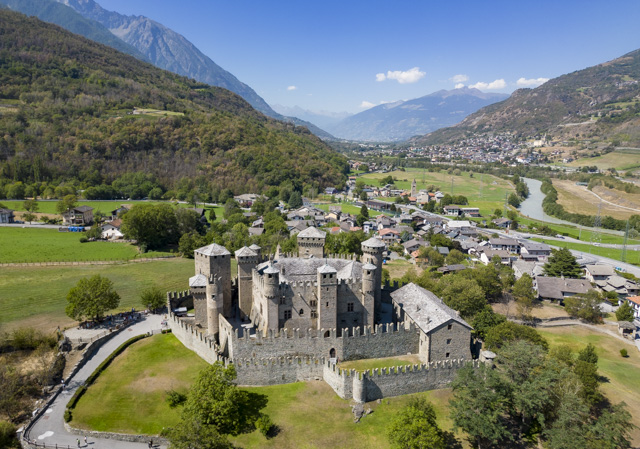
We also visited an Italian castle while we were there, the Castelllo di Fenis, first built in 1242 although the current structure dates back to the 14th century. It was built to be a prestigious residence for the Lords of Challant and their families.
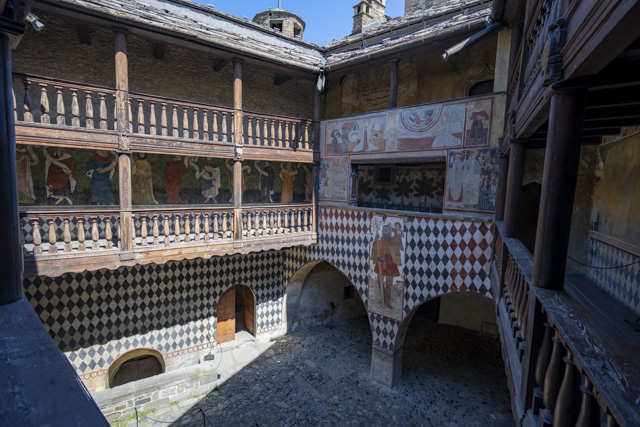
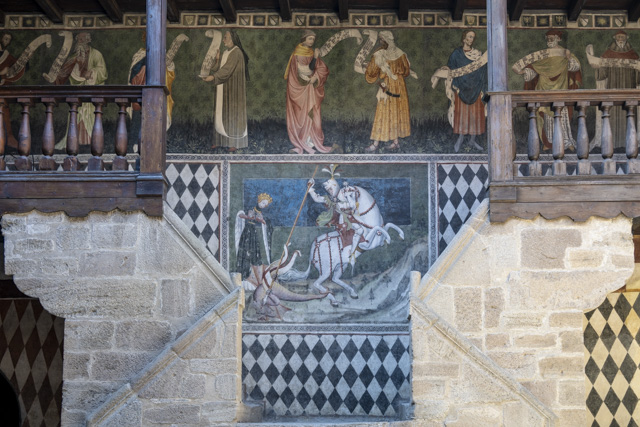
Most impressive were the frescoes on the walls that date back to the 14th century.
Soon enough our very enjoyable mini-break came to an end and we were back in the camper. The heat dome affecting southern Europe was still in full effect so we wasted no time in heading straight back up to the respite of the Alps.
 FromAtoB