Things are Heating Up
Despite our night out in Nuits St George we were up early the next day to get on the road as we had a lot planned for the day.
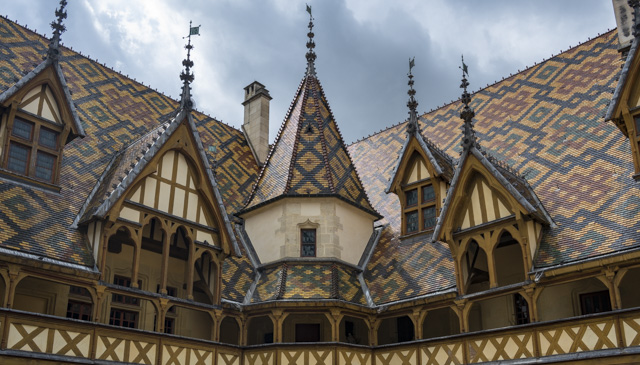
Our first stop for the day was Beaune, famous for its medieval hospital. We had originally planned to spend the night here but reports of camper break-ins at the popular parking places put us off.
However we thought we’d be pretty safe in broad daylight as there were plenty of people around, so we parked up just outside the old town and went to explore.
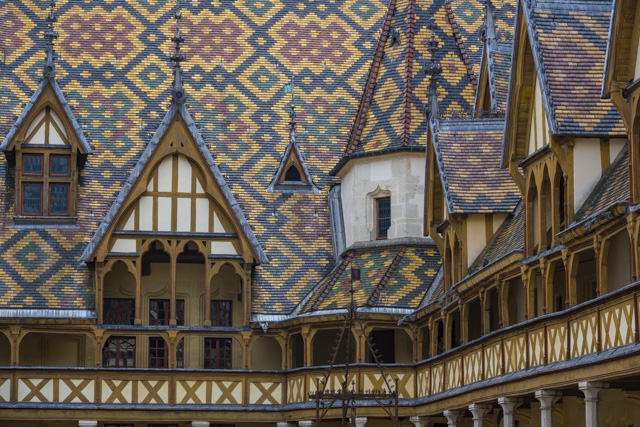
Beaune is a medieval city with the usual half timbered buildings and some partial city walls but the highlight is definitely the Hospices de Beaune. This, like many of the grand buildings of the area, has its roof tiled in the colours of the Duke of Burgundy. The Hospices de Beaune was founded in 1443 as a hospital for the poor and remained in operation in the same building until 1971. The Hospices de Beaune still operates today albeit in new buildings.
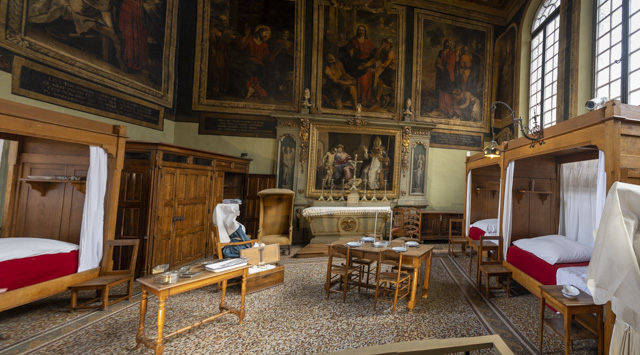
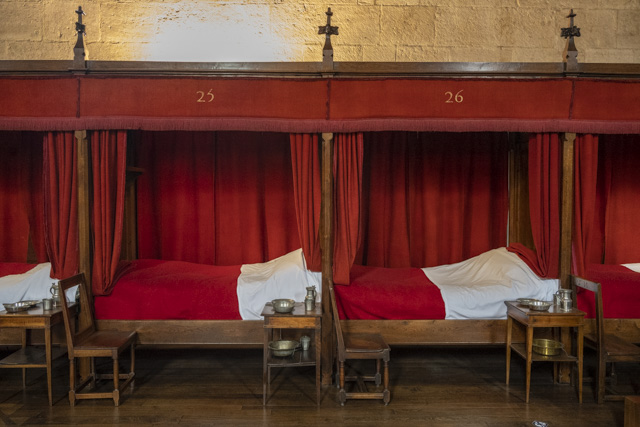
There is a large room with individual beds down each side where the poor were treated but there is also a much grander treatment room where those with money could receive paid treatment. At one end of the poor ward was the chapel which allowed those in the beds to attend mass without having to get up.
We decided to spend the night in Autun. This is a grand old town perched on the crest of a hill. We managed to find a great spot for the night just below the town overlooking a big leisure lake which gave us a lovely breeze, very welcome with temperatures beginning to rise.
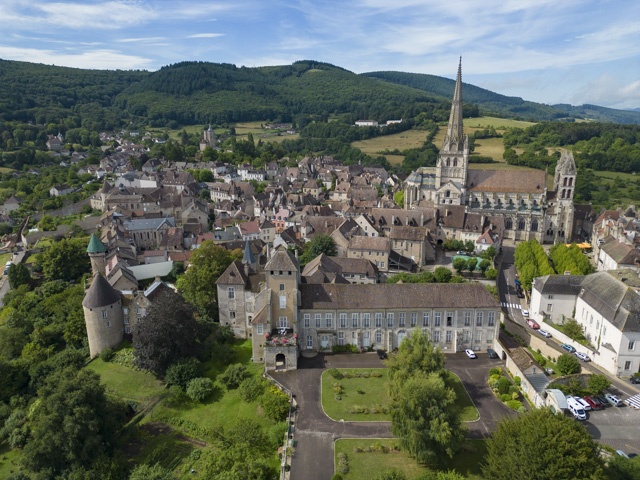
We explored the elegant and charming town by bike and although it was pretty quiet the buildings, especially the cathedral are very grand.
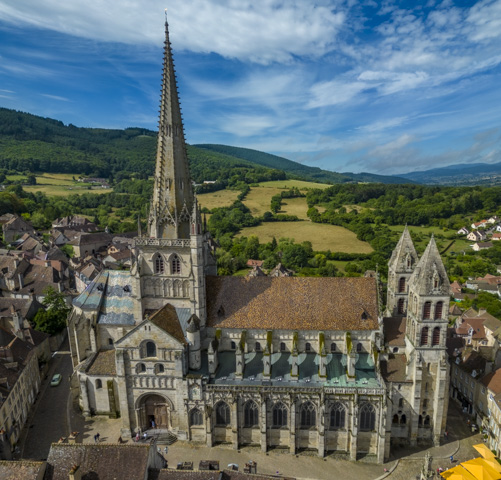
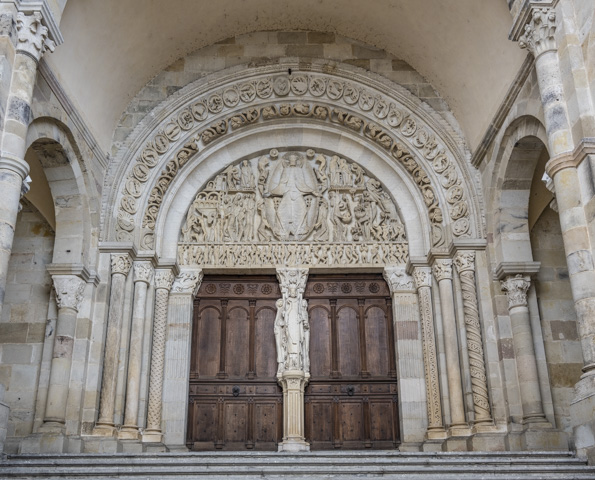
The cathedral is famous for a carving of the apocalypse above its main doors.
Autun is also where Napoleon Bonaparte went to school briefly in 1779, apparently to hone his French before joining Military school.
We had every intention of making our next overnight stop Chalon Sur Saone but when we arrived at the towns Aire we decided to have a re-think as although the Aire was nicely located just a short cycle from the centre of the city, it was directly under a busy by-pass, had no shade and a concrete floor which in temperatures of over 30c made it unbearably hot. So we went to explore the town knowing we would head off to stay somewhere else for the night (i.e. no sneaky beers at lunch!).
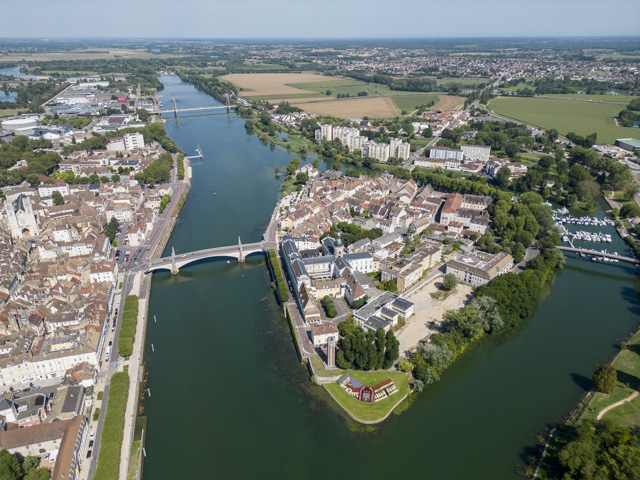
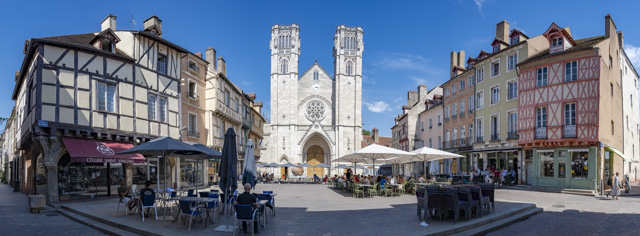
From where we were staying we had to cross over two islands, which make up part of the city, to get to the heart of the old town where there is lovely old cathedral off a square of pastel coloured half timbered buildings.
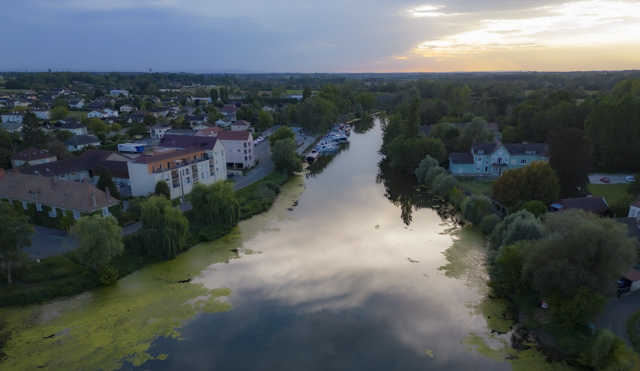
After exploring the town we made it back to Beastlet and drove around half an hour to the small town of Louhans, where we found a lovely Aire right on the river, which helped to cool things down.
As we have headed south the temperatures have really started to increase with the days in the mid 30s and nights staying pretty hot. This can be very uncomfortable in a camper and we weren’t sleeping too well so we decided that we needed to start staying places we could park on grass, preferably in shade and at altitude.
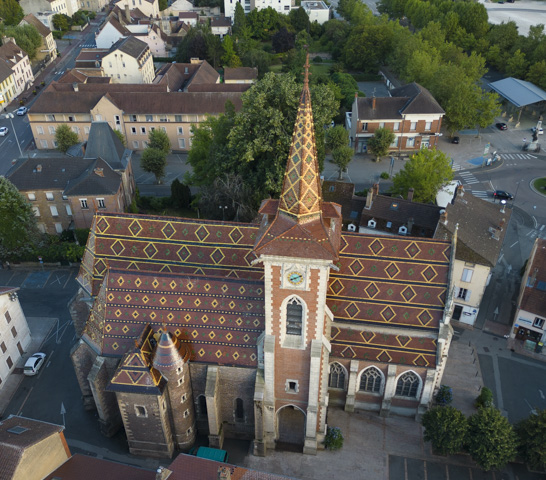
We had one last town in Burgundy that we wanted to hit up and that was Bourg-en-Bresse. So we decided to drop in on the way East towards the Alps.
We parked up by the football stadium and set off on our bikes to explore. Somehow we always seem to hit big towns on Mondays when many of the shops are shut which is frustrating, but its clearly a big shopping centre.
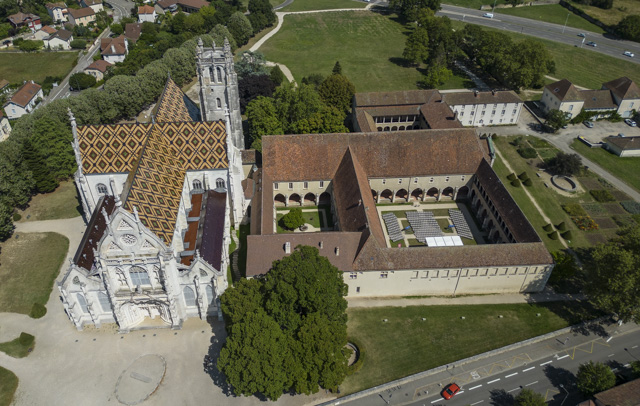
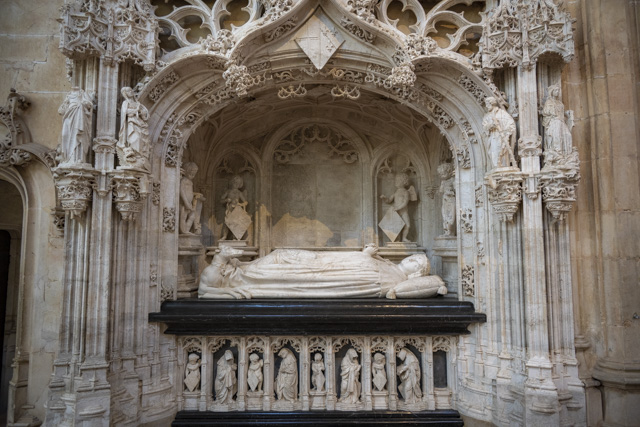
The place that we really wanted to see in Bourg-en-Bresse was the Monastere Royal de Brou. This impressive monastery was commissioned by Margaret of Austria between 1506 and 1532. She built it as a memorial to her third husband Philibert the Fair/Handsome, Duke of Savoy. Margaret of Austria was the daughter of Maximillian of Austria, who later became Holy Roman Emperor, and Mary of Burgundy. After Philibert’s untimely death she would later become governor of the low countries.
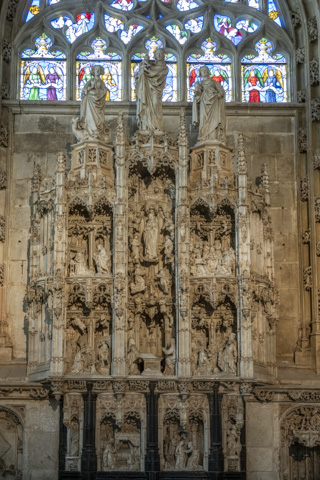
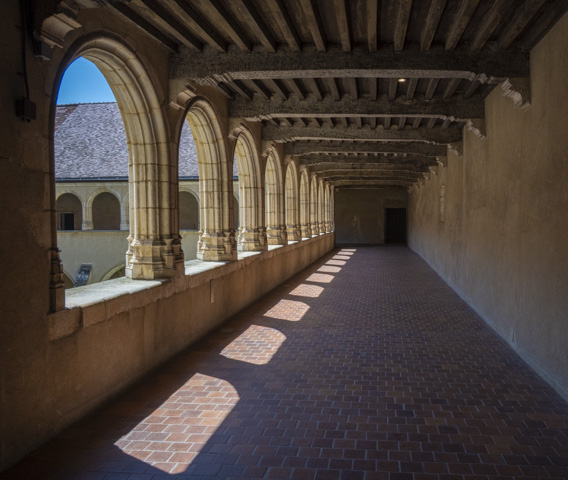
The construction of the monastery is interesting as there are three sets of double height cloisters (monks, clerks and guests cloisters), one for the monks, one for the day to day functions of the monastery with access to the kitchens and the other for guests to the monastery. The guest cloisters included apartments for Margaret of Austria as she intended to retire there but she unfortunately died 2 years before they were completed.
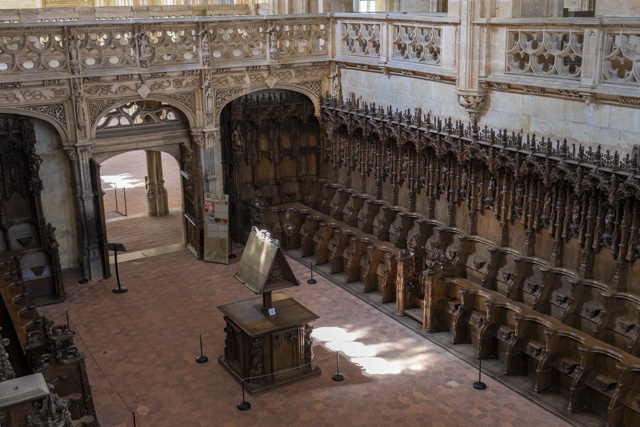
The cathedral attached to the monastery is very impressive with some of the most intricate stone, marble and wood carvings I’ve ever seen. This is a definite must see attraction for anyone in the area. We had also hoped to visit the Apothicaireie building (the pharmacy of the old hospital) which is practically next door to the Monastery but being a bank holiday, it was sadly closed.
After completing our tour of the monastery we headed further towards the Alps and a lovely little Aire in the small village of Begnier-Cordon. This was beside the Rhone river and beautifully shaded with very private hedged spaces.
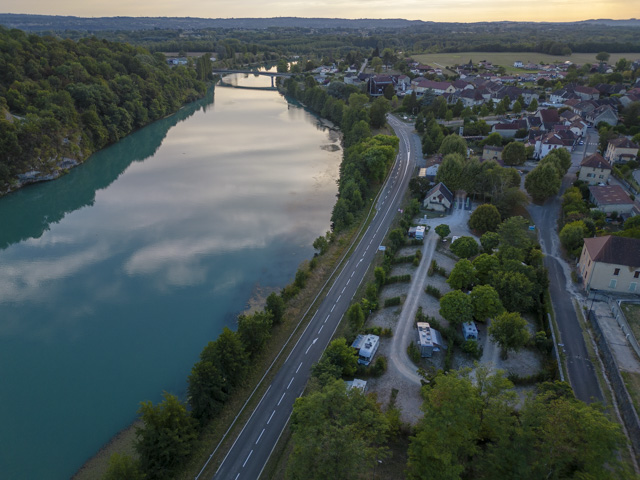
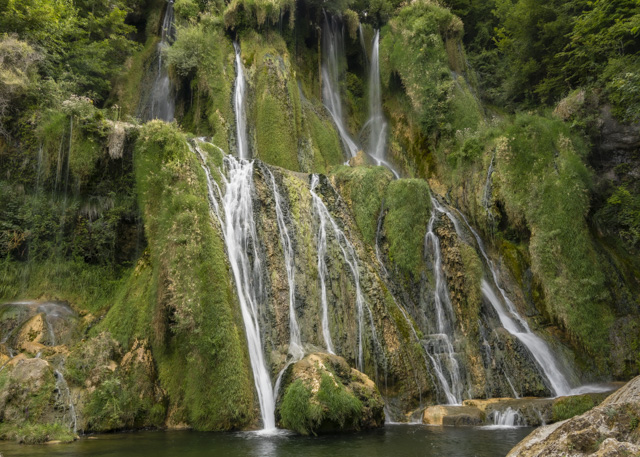
From here we enjoyed a cycle to a local waterfall called Cascade de Glandieu. This was a beautiful waterfall but unlike any other waterfalls we have visited, this one had security guards ensuring no-one disobeyed the rules, one of which was very officious. We were quickly told off for putting our bikes in the wrong place! While we were there he was constantly telling people off for various infarctions – who knew waterfalls had so many rules !
As the thermometer started approaching 35c we decide enough was enough and it was time to head for the mountains, but that is for the next blog.
Burgundy Calling
We’d been constantly on the move through the Loire, having a great time visiting all the chateaux but after all that activity we felt in definite need of some chill time.
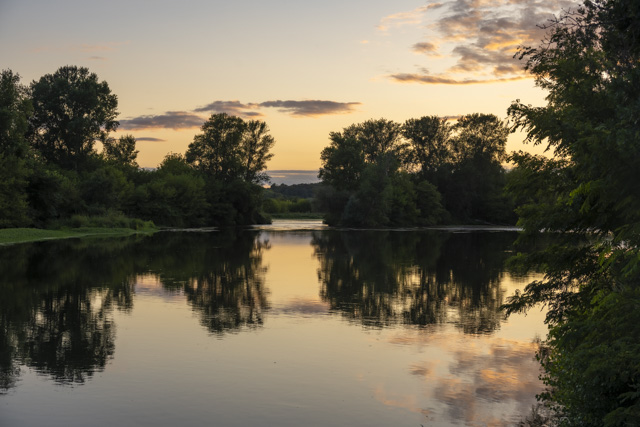
We found a lovely Aire by the Loire river with large grassy pitches that enabled us to set our table and chairs out and enjoy the weather. This was in the small town of Briare.
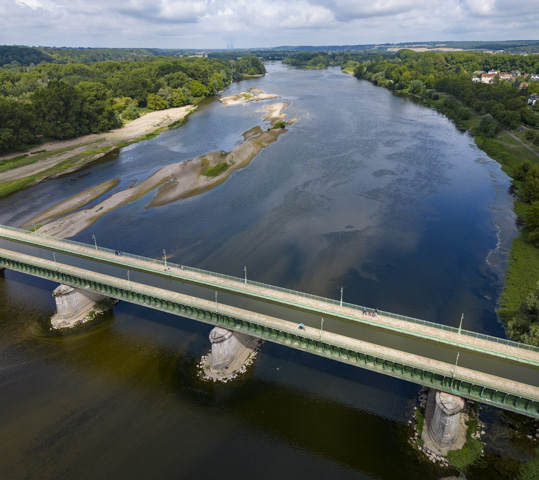
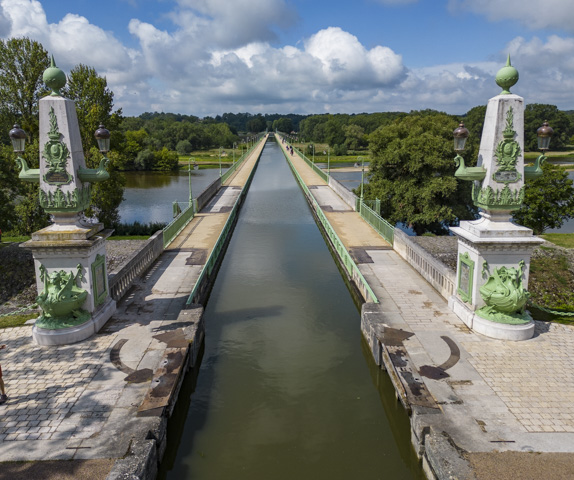
Briare is at the centre of a network of canals that parallel the Loire river and is the perfect place for leisurely cycles or strolls along the waterways. On our first day we returned from our cycle across a stunning aqueduct built over the top of the Loire river.
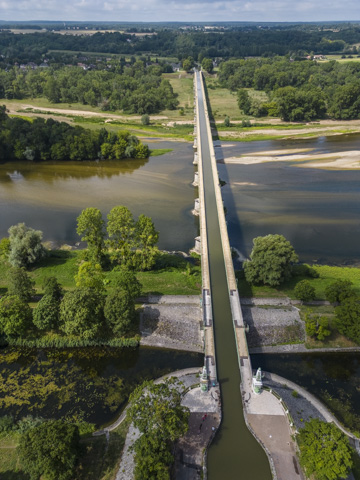
This aqueduct is part of the Canal latéral à la Loire and was opened in 1896. It was constructed by Gustav Eiffel, of the Eiffel tower fame, and was, until 2003, the longest navigable aqueduct in the world measuring 662m in length. That title now belongs to the Magdeburg Water Bridge across the Elbe river in Germany.
On our second day in Briare I headed off for a long cycle along the Loire but unfortunately when I was around 15km away from the Aire the chain on my bike snapped leaving me stranded, with no bike shop anywhere near. Sarah had to pack everything up to come and get me.
After a few days relaxing and feeling suitably refreshed, we moved on from the Loire region into Burgundy. Burgundy is best know for its wines and has over 4000 individual wine producers. The Burgundy region is responsible for 0.3% of the world’s total wine.
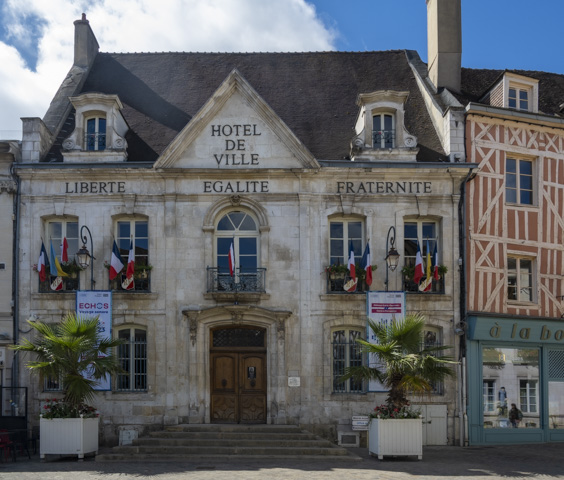
But first we had to get my bike fixed so we stopped off in the town of Auxerre. The bike shop here was fantastic. They fixed my bike while I waited.
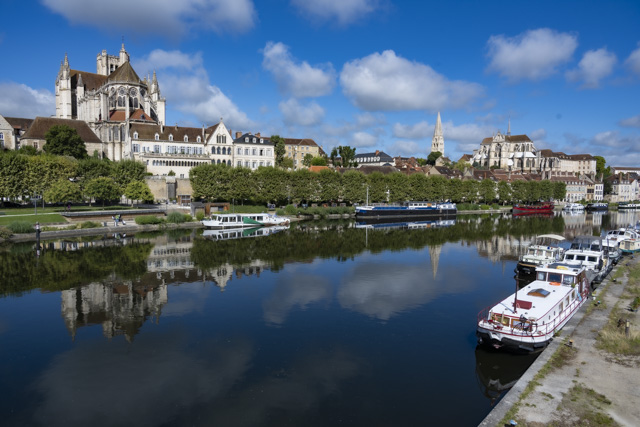
The town of Auxerre itself is very pretty and we took the opportunity to walk around it and enjoy a leisurely lunch.
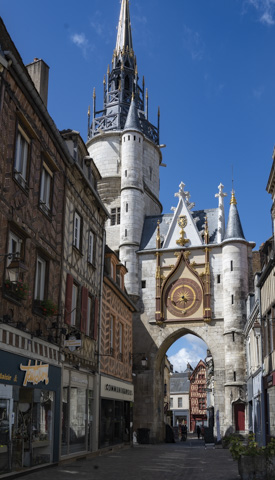
Given that Burgundy is a renowned wine region we made our first stop at a wine producer in the small town of Beine, which is in the area where Chablis is produced. We stopped at the Alain Geoffrey Winery who are very welcoming to motorhomers by providing free overnight parking with full services including power.
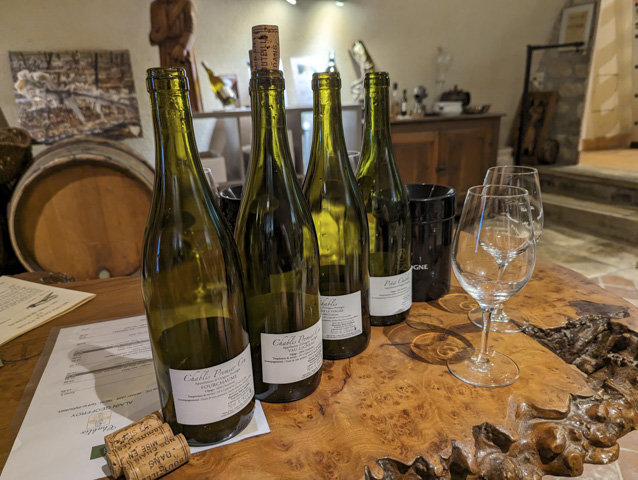
We repaid their generosity by taking part in a wine tasting of 4 Chablis wines of differing values. Surprisingly I liked the most expensive ones best, even though white wine isn’t really my thing.
On site they also have a museum of corkscrews and wine making equipment. They have over a thousand different types of corkscrews (who knew!).
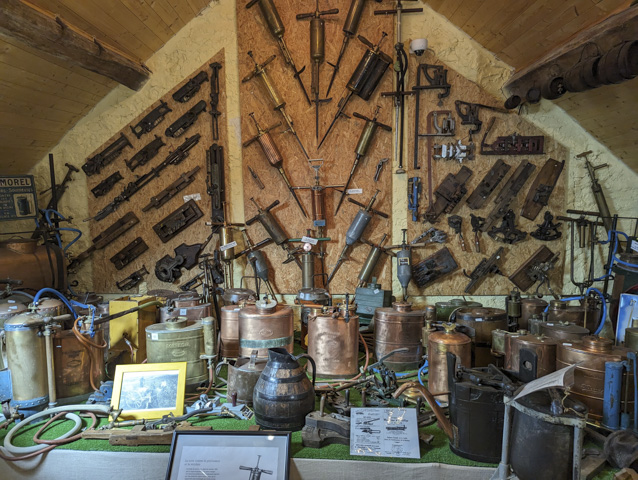
From Beine we started driving South and went to the small town of Vezelay.
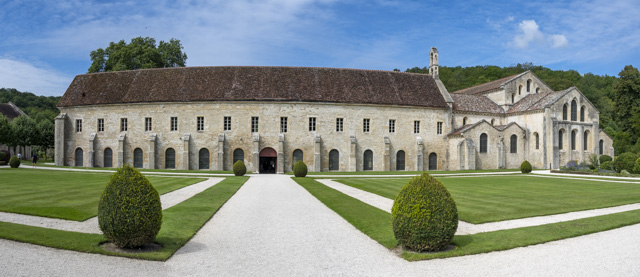
However on the way to Vezelay we stopped off at the Abbaye de Fontenay. This is a UNESCO World Heritage site and the abbey is the oldest Cistercian abbey in the world. It was founded in 1118.
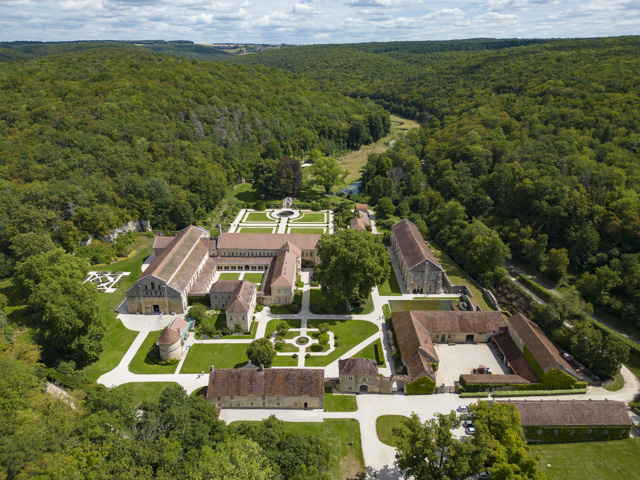
The abbey was beautifully kept and is situated in a lush valley amongst manicured gardens.
At Vezelay, there is a pay car park which isn’t very flat and just outside town a small campsite. We decided to head to the campsite and were pleased to find that staying here, without electricity, was actually cheaper than some of the commercial Aires we’ve been to.
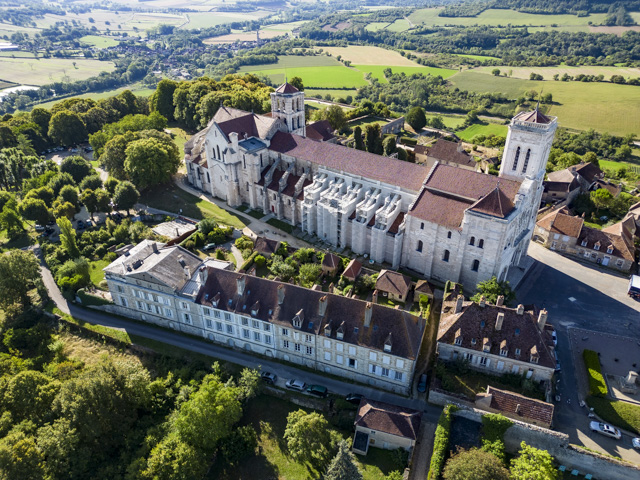
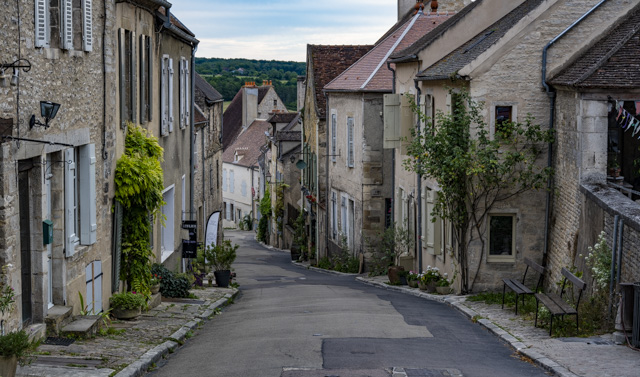
Vezelay is well known for its hilltop abbey and steep main street leading straight up to the abbey.
The abbey was founded on the site of a Roman villa but the current abbey was built between 1120 and 1150. The monks claim to have brought relics of Mary Magdalene here from the holy land in the 9th century and as a result the site became a destination for pilgrimages. Richard the Lion Heart departed from here for the third crusade.
It was round about now that summer was beginning to catch up with us and the temperature was hitting over 30c. It can get very hot in a motorhome making sleeping at night difficult so in these temperatures our main aim is to find places to stay which allow us to keep as cool as possible, which means heading back North (not an option), water, shade or height.
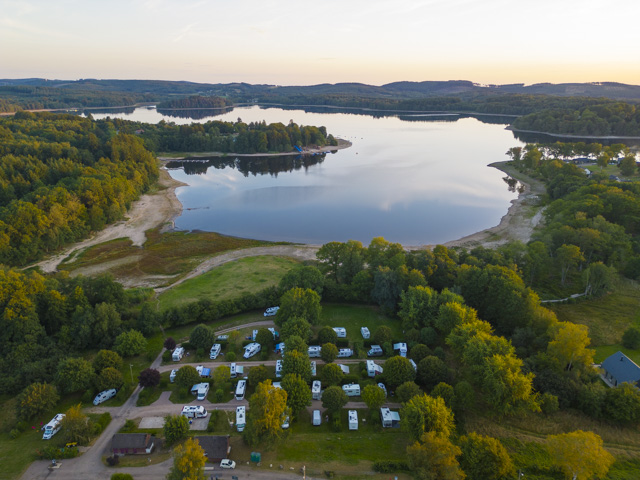
Burgundy has a lovely regional natural park with three large lakes in it. The park is called Morvan and the biggest lake is called Lac des Setton. We decided to spend a couple of nights in a shaded grassy pitch on the shores of the lake so we could enjoy the cool lake breezes.
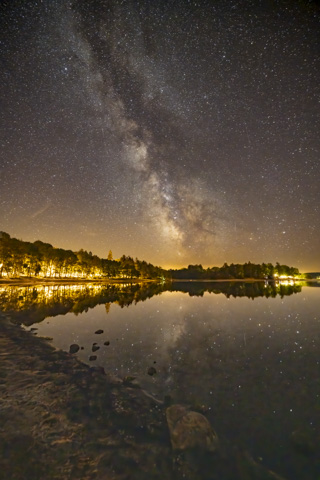
After dragging ourselves away from the beautiful relaxing lakeside we carried on south to the wine producing town of Nuits St George which is just south of Dijon. We had intended to spend a day exploring Dijon but on arriving there were some major roadworks blocking the road which lead to where we expected to park and we had to reroute ourselves on the fly and ended up abandoning the city for another time.
Nuits St George was a welcome surprise though. The municipality provides a small free Aire which is on a quiet road a five minute walk from the centre. The only downside was that it meant a hot night.
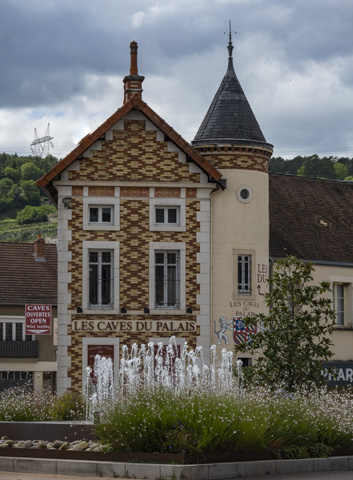
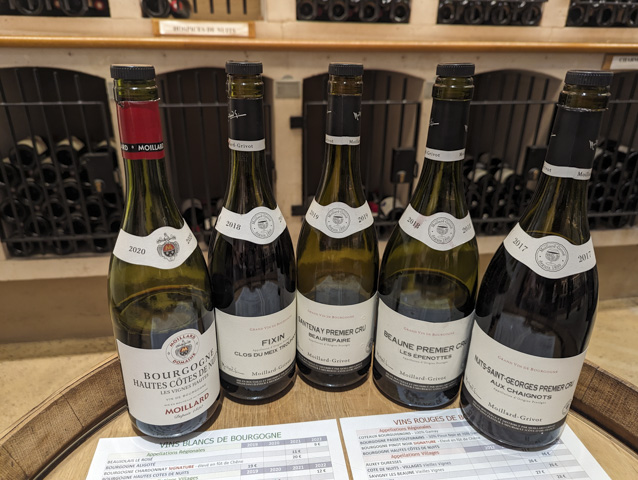
We went into the town and found one of many wineries, Caveau Moillard. Having enjoyed a white wine tasting this time we thought we would try the reds. This outfit was a little more upscale than the one we did near Chablis but the wines included were much more expensive and for me, being more of a red wine drinker, much tastier. They were all excellent with the Santenay, at €32 a bottle, probably being the best value in terms of taste but the Nuits St George Premier Cru was my favourite. Unfortunately, at over €60 a bottle it is unlikely to be a regular on my table.
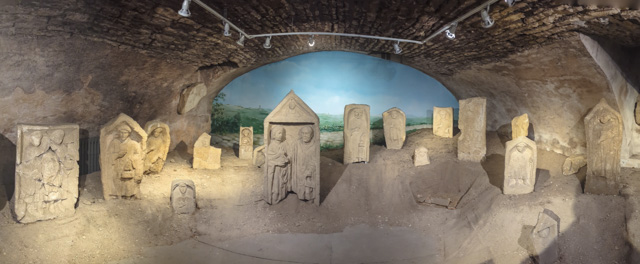
Before the tasting we checked out the free municipal museum which had a basement exhibit of roman remains from the area, including a couple of skeletons and lots of burial markers. It was actually surprisingly good.
As the sun was shining and we’d had some wine we stopped off at a bar in town for some beers and this turned into staying out for dinner with a little more wine. We had a lovely afternoon/evening out, made all the more enjoyable because it was completely unexpected. On returning to the Aire we were surprised that the quiet parking area where only one other camper was parked when we arrived was now full with campers parked in every official and some unofficial spots.
Chateaux Overload
After leaving Angers we drove along the Loire river to the town of Saumur. Here we found an Aire on an island of the river opposite Saumur’s Castle.
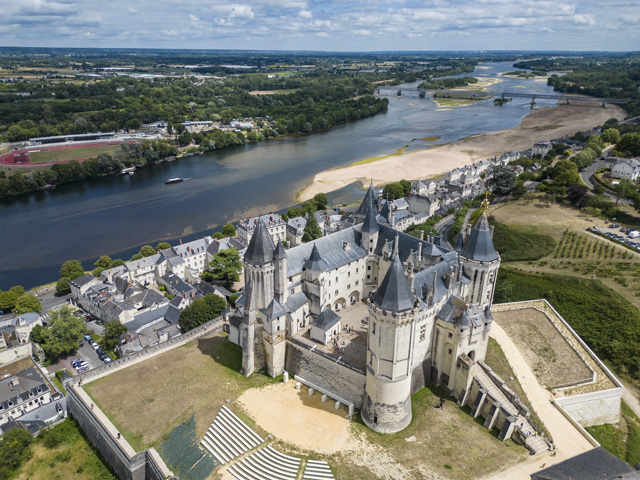
Saumur Castle was originally built in 962 but was burnt down in 1026. It was rebuilt and was primarily a defensive structure until 1368 when Louis I decided to turn it into a palace. It continued in this guise until Napoleon decided to turn it into a prison in 1808 but this was only the case until 1814 when it reverted to the Ministry of war as a fortress. It was transformed into a museum in 1912.
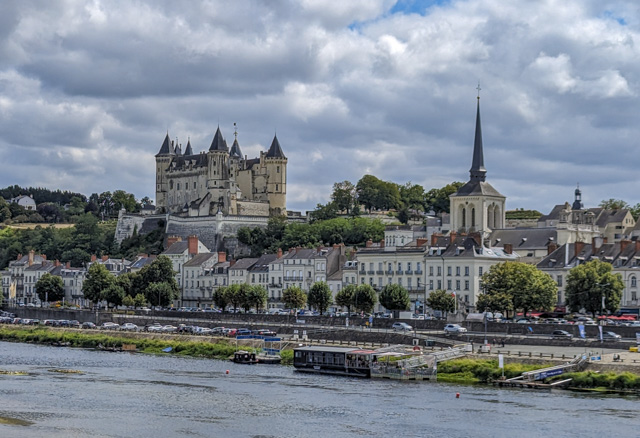
The castle looks like a fairytale castle from the outside but the inside is mostly bare stone and is now the municipal museum. Most of the castles/palaces/ chateaus we’ve visited are reasonably priced when compared to home, but for me I’m just not sure this one is worth the money to go inside, although it is certainly impressive from the outside.
After leaving Saumur we continued driving down the Loire river which is a wide river with many islands and some dry channels.
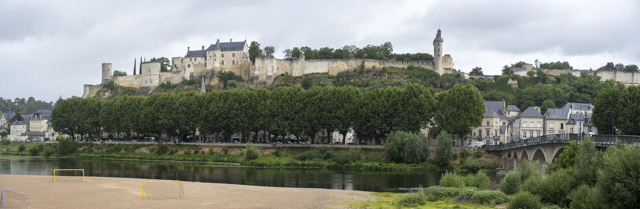
We stopped off in the town of Chinon which has a long castle towering above the town but didn’t stay too long other than to get soaking wet in a downpour as we had a wander around the town.
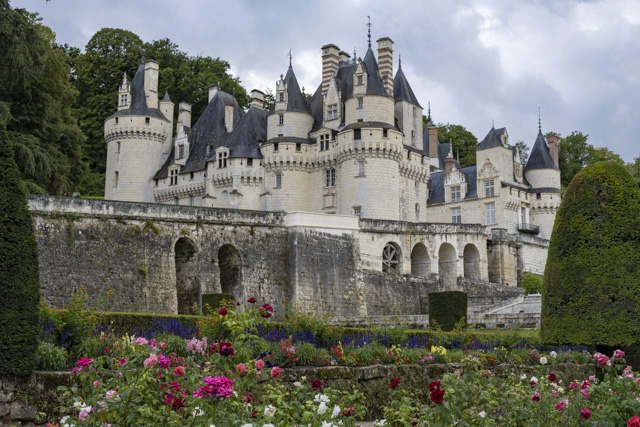
We ended our day parked outside the Chateau d’Usse, allegedly the inspiration for the Sleeping Beauty Disney castle. We waited out the rain and visited the castle in the hour before closing time, avoiding the rain and the crowds.
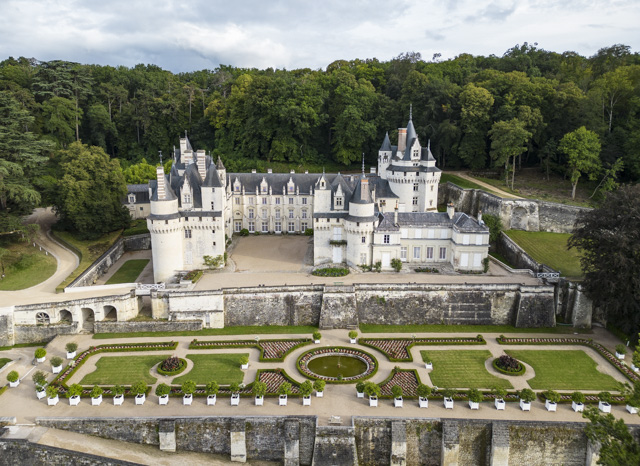
The parking area was absolutely rammed when we arrived but overnight there were only 3 or 4 other motorhomes.
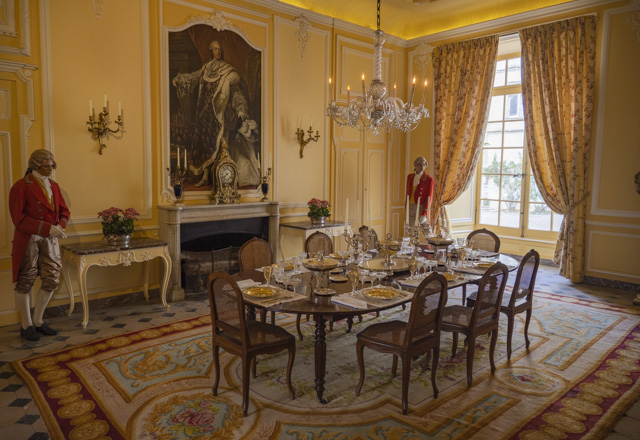
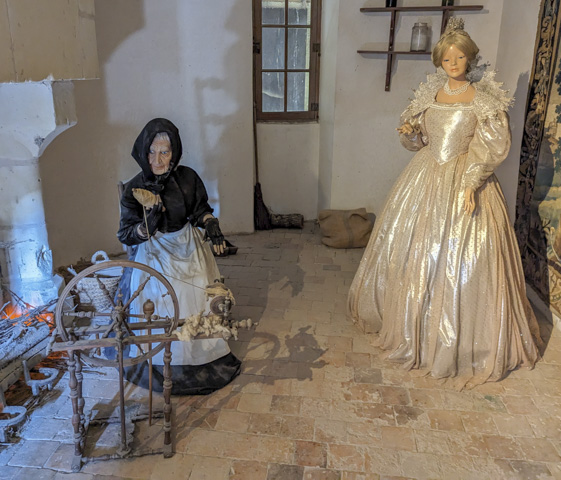
The Chateau d’Usse has a number of restored rooms with a collection of mannequins showcasing women’s dresses from 1863 onwards . There are also some pretty formal gardens and quite strangely, in one of the towers, dioramas of the Sleeping Beauty story.
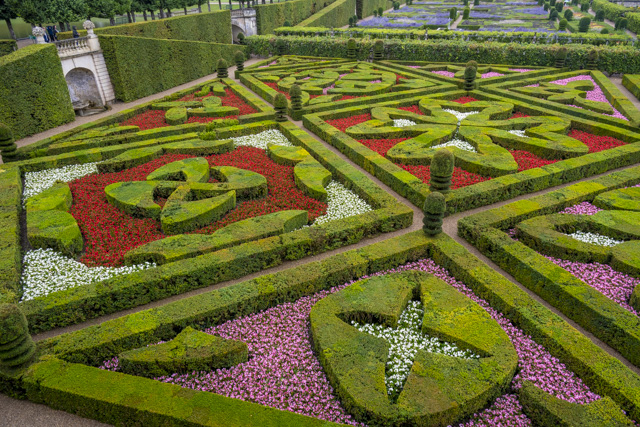
Our next stop was one of the most impressive Loire chateau, Villandry. Here the gardens are the star, although the interior of the chateau itself is also interesting. The gardens are very large and are the best of French formal gardens.
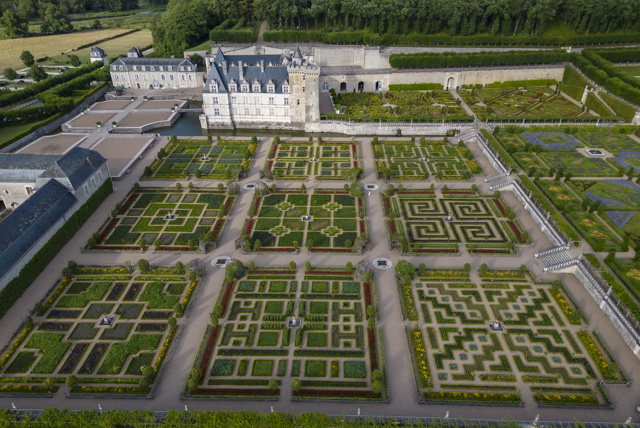
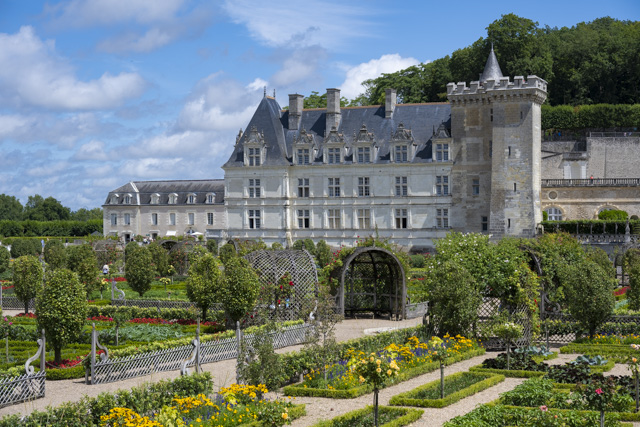
There has been a fortress at Villandry since the 12th century but in 1532 Francois I’s treasury secretary, Jean Breton, razed the building, with the exception of the turreted tower on the right, and built the Chateau on the foundations. The gardens we see today have been re-modelled to look as they would have in the 16th century as in the 19th century the gardens were turned into a large English style park. English style gardens in France seem to mean grass and trees and little in the way of flowers.
The largest part of the formal gardens in the ornamental kitchen garden which is planted in a multicoloured chequerboards design . All the plants are edible and include blue leeks, red cabbage, beetroot and carrots.
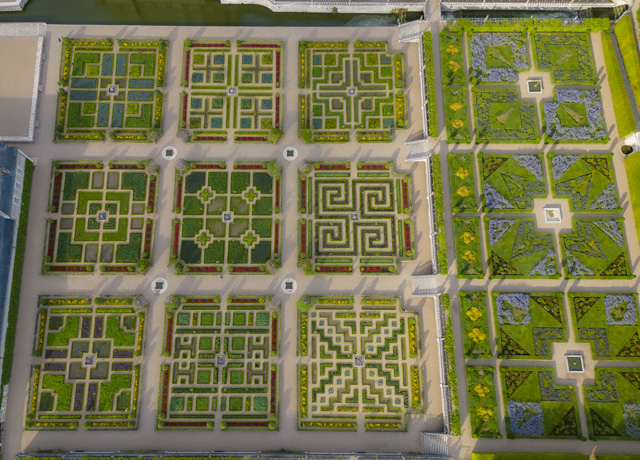
Only 10 full-time gardeners are employed at Villandry and they plant 115,000 flowering and vegetable plants every year and prune over 1000 lime trees.
While at Villandry I took the opportunity to get on my bike and cycle through the sunflower fields to the Chateau Azay Le Rideau and back. Fields of sunflowers have been a real feature of our journey through central France and always make us smile.
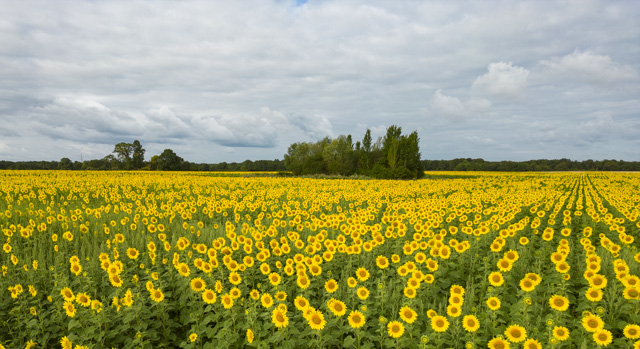
This was a really nice cycle on quiet back roads with hardly any cars.
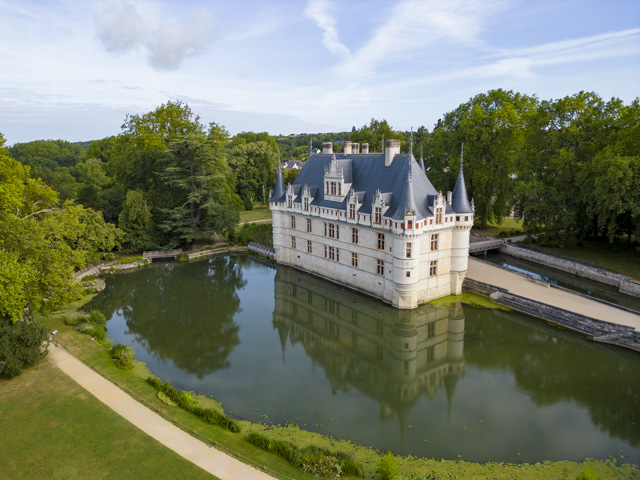
From Villandry we continued West to the town of Amboise. Another town with a chateau at its heart. We stayed on another island in the Loire river here.
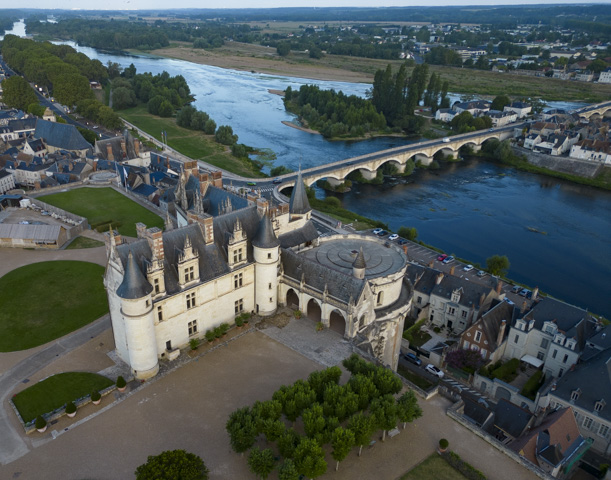
We elected not to go in the chateau here. At €10-15 each to go in each of these chateau we’d soon be broke if we went in all of them and completely chateau’d out. We’ve left plenty of chateau to see on our next visit to the Loire so we know we will be back.
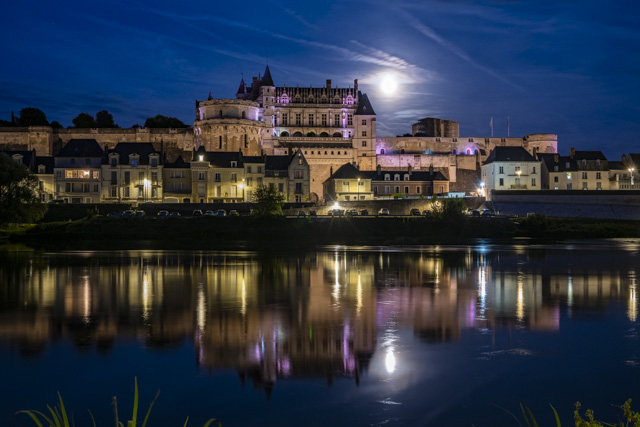
Amboise is a very nice and very busy tourist town with a main street packed with restaurants catering to the many tourists here. There is a pretty clock tower and a very good free municipal museum in the town hall which we checked out. Amboise is also well known as it was where Leonardo da Vinci spent his final years and it is possible to visit his house.

As it was our wedding anniversary we booked a restaurant for the evening and had a fantastic meal with maybe a little bit too much wine. This was definitely the best meal we’ve had since getting to France and I would highly recommend La Terrace restaurant in Amboise.
There is no let up in our touring though and the next day we were off to the next chateau on our list which is Chenonceau.
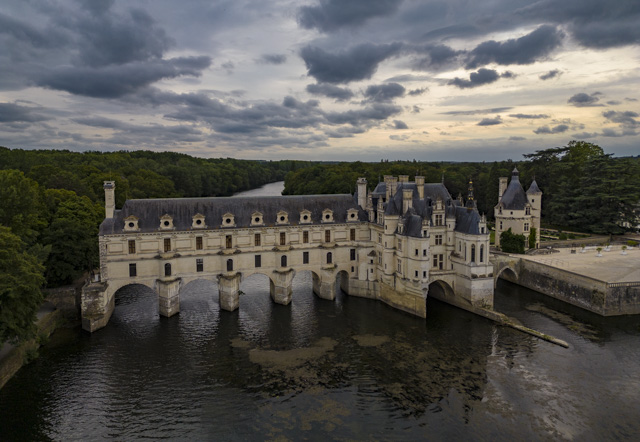
This chateau is a bit different to the others as it is built straddling the river Cher. This is one of the busiest French tourist sites with 800,000 visitors a year. So our plan was to stay just outside the chateau overnight and be one of the first in as soon as it opened in the morning.
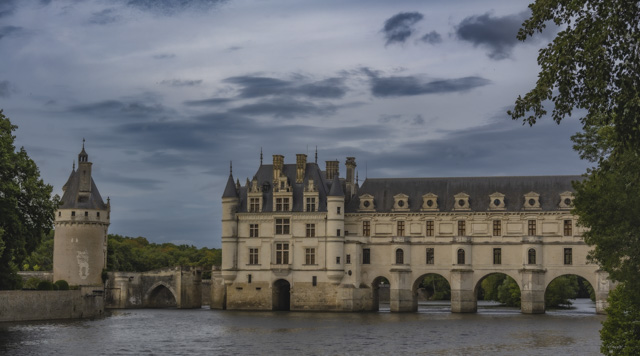
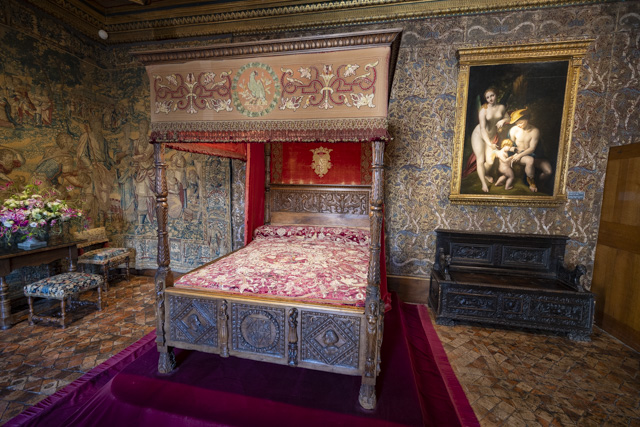
This really paid off as by the time we had finished touring the interior of the building the number of visitors was crazy and you could hardly move in the rooms.
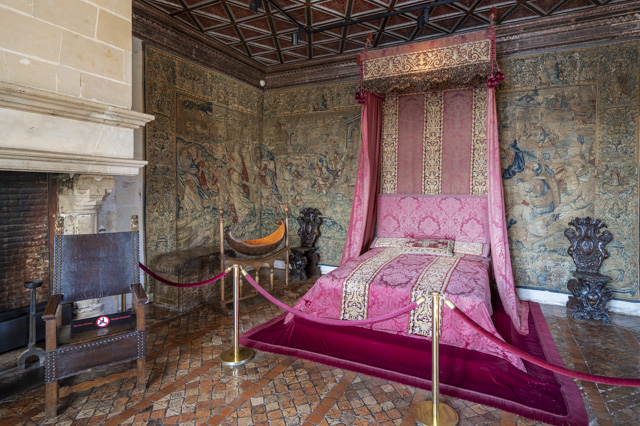
Chenonceau is known as the Ladies Chateau and was the residence of a number of important French women. The two most famous were Diane de Poitiers, 1499-1566, mistress to Henry II of France, who was responsible for building over the river Cher, and Catherine de Medici, 1519-1589, wife of Henry II of France, who governed France as regent from here.
The most impressive room here is definitely the 60m long gallery over the river which was used as a ballroom.
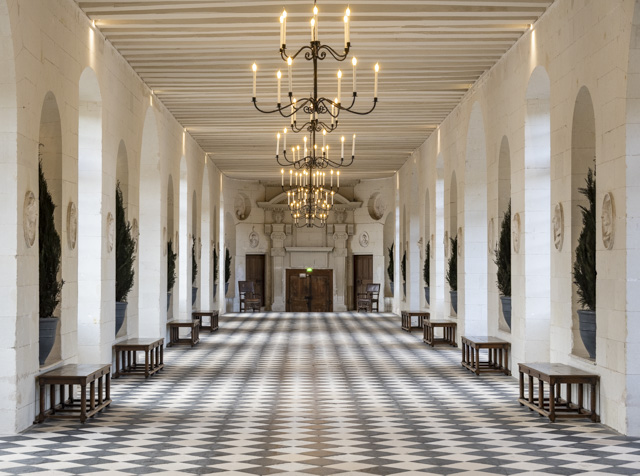
Interestingly, during WWI the galleries were temporarily converted into military hospital wards where 120 beds were installed as well as an operating theatre on the ground floor and during WWII the river cher was the demarcation line between the occupied zone and the free zone, so the resistance used the chateau to pass large numbers of people through from the occupied zone.
And so to our last Chateau of the Loire valley and probably the grandest of them all. Chambord was built as a hunting lodge for King Francis I and is situated in a walled park of 55 sq km.
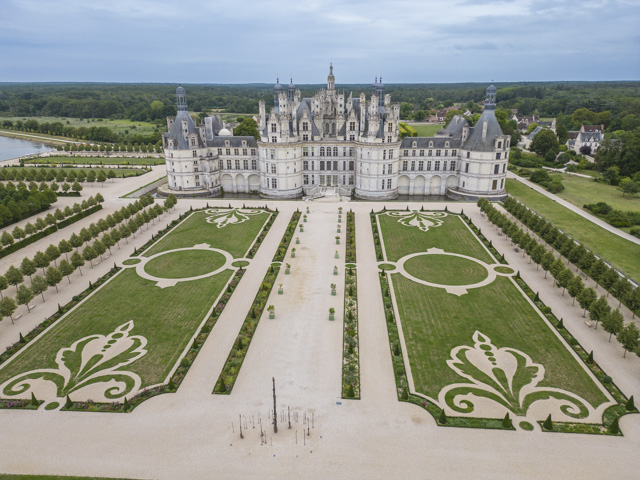
The scale of Chambord is enormous with 426 rooms, 282 chimneys and 77 staircases and even with the map and signage it was easy to get lost exploring the inside of this giant.
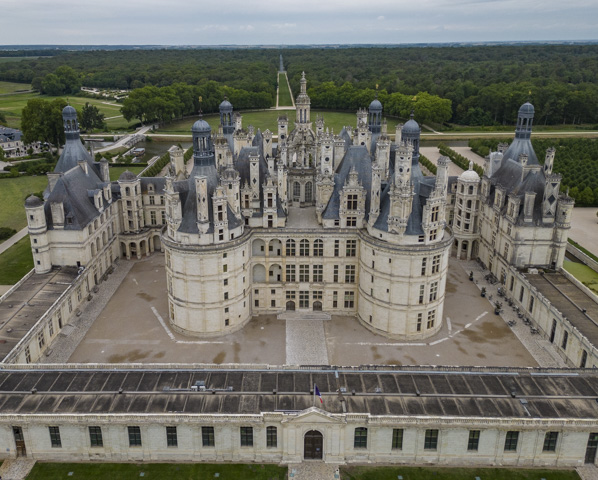
Construction was started in 1515 by Francois I but it wasn’t completed until 1686 during the reign of Louis XIV. Although huge in scale it was never popular with the Kings of France because it was considered very drafty and almost impossible to heat.
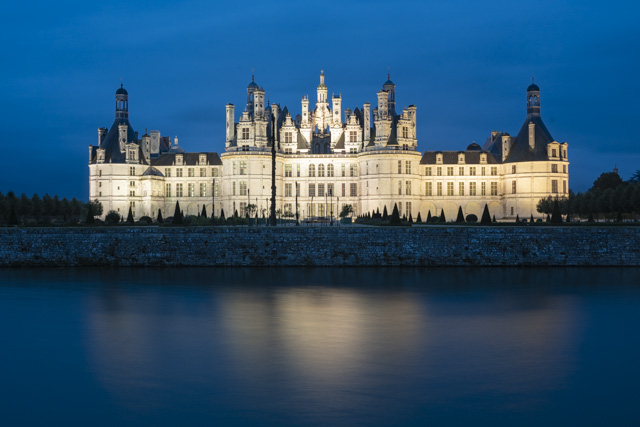
Most of the time the chateau was kept empty, other than a small staff, until the Court decided to visit. Then an army of people would descend in order to furnish it and get it ready for the Court.
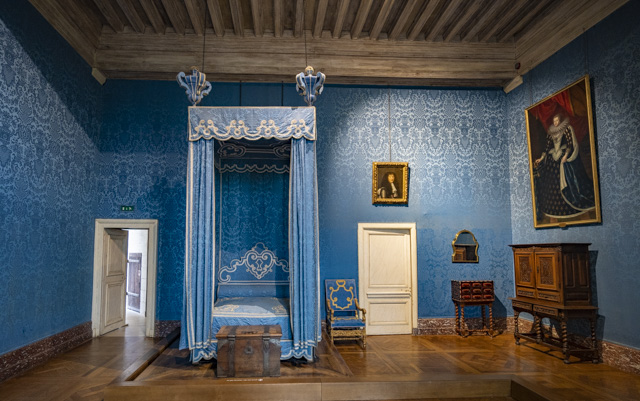
Even today the majority of the park is not accessible to the public and is used as a hunting preserve by high ranking French government officials. I am certain the British government would never be allowed to get away with this, although apparently no French president has hunted here since at least 2010.
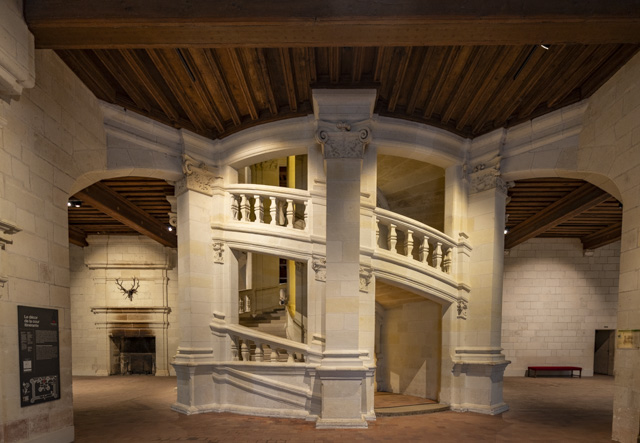
Chambord is famous for its double helix staircase in the centre of the keep, said to be the brain child of Leonardo da Vinci. This staircase has two independent sets of stairs that twist around a central core and because of the design someone ascending one side can never meet someone descending on the other side. Its certainly very grand and on a fitting scale for this castle.
Loire and its Chateaux: Angers
Having headed south to see the Marais we had always known that we would head back slightly North again to visit the Chateaux of the Loire Valley.
Our first stop in the Loire proper was the town of Brissac, which is the home of the tallest chateau in France, 7 stories high.
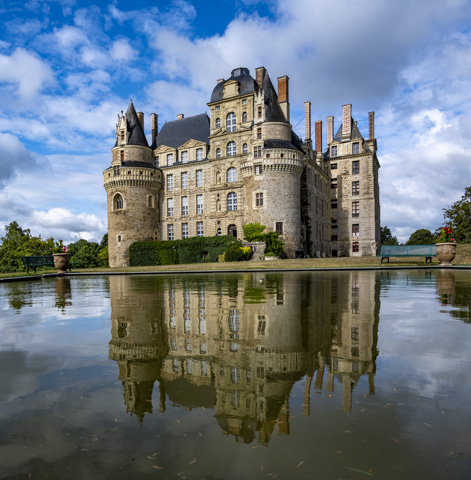
We have adopted a strategy for visiting the chateaux, first thing in the morning at opening time to beat the crowds as they get incredibly busy, especially when the tour groups arrive and fill entire rooms.
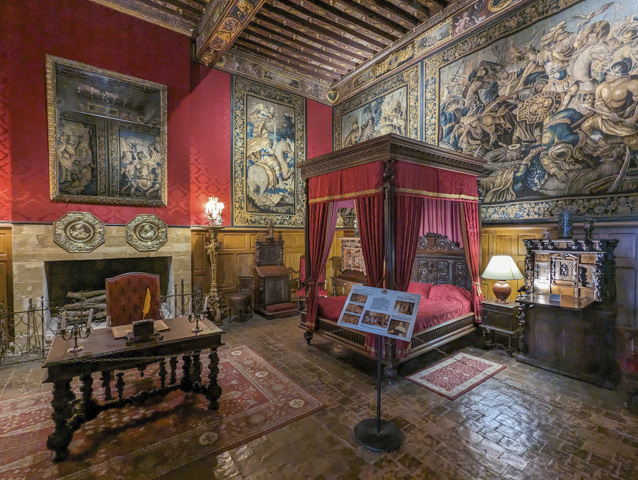
We did this with Brissac and really enjoyed the opulently furnished house which even had a 60 person theatre on one of the floors, used to stage operas. Only half the chateau is open to visitors as the other half is still lived in by the Cosse-Brissac family and one of the notable things about this chateau is that they have old and current photos of the family dotted around, which emphasises the fact that this is still very much a family home.
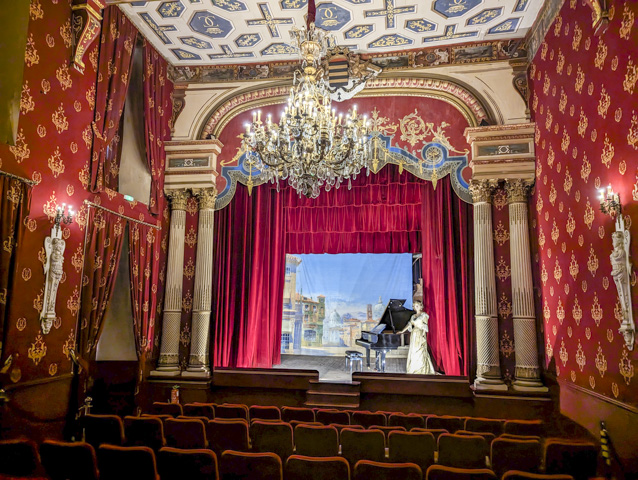
Although the chateau was originally built as a castle in the 11 century by the Counts of Anjou it was destroyed in the late 1500’s and the current structure was built in 1611 by Charles II de Cosse who became the Duke of Brissac after siding with King Henry of France in the French Wars of Religion.
This is one of the quieter chateau in the Loire region but one of the ones we enjoyed most and we would highly recommend visiting.
Whilst in Brissac we visited the tourist office and purchased a 2 day Angers city pass which would entitle us to visit a whole string of chateau and museums over a 2 day period. It also gave us access to overnight secure parking in the middle of Angers as part of the deal. In this case the city pass provides great value. We paid €52 for the passes and got well over €100 of value from them.
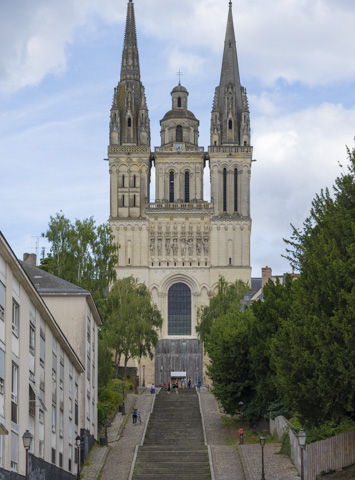
After enjoying our visit to Brissac we drove the 20km to the town of Angers, parked up in the central parking and then jumped on our bikes to explore the centre of the town.
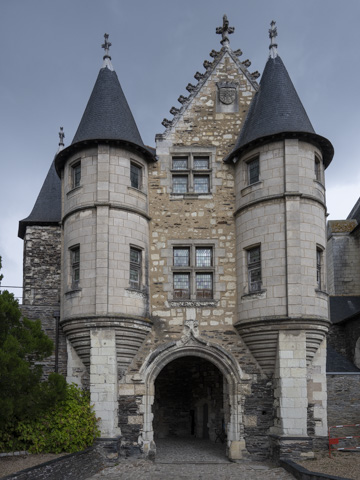
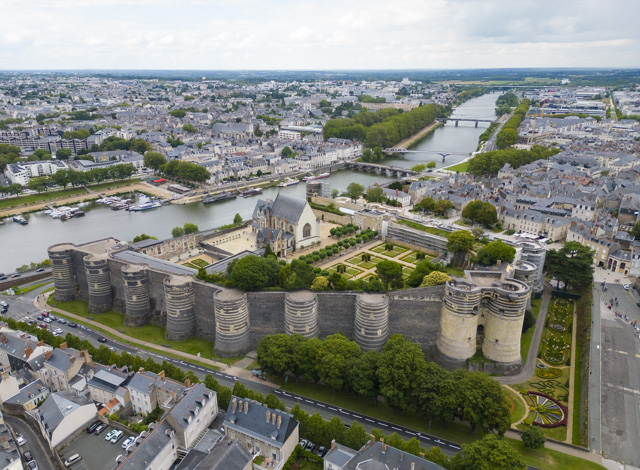
The most striking part of central Angers is the Chateau D’Angers which is very much at the castle-end rather than stately home-end of the chateaux. There has been a fortress here ever since the Romans first built one to take advantage of the defensive location but it wasn’t until the 9th century that the Counts of Anjou began construction of the first actual castle.
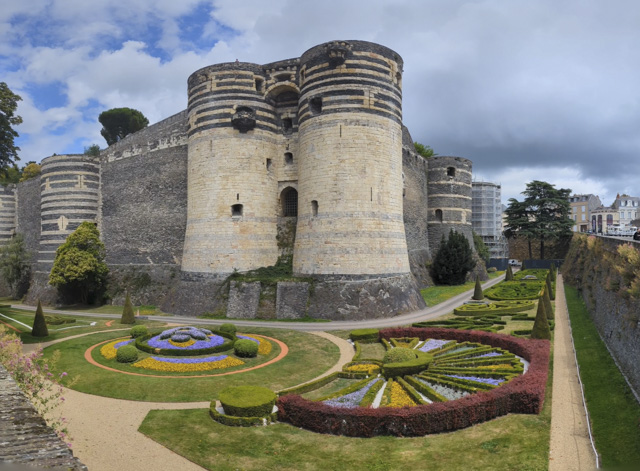
Some of the Chateaux are like big houses, some are like palaces and others have big fortifications and are more like the castles we see in the UK.
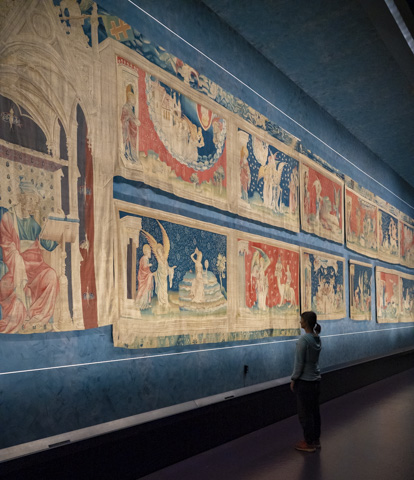
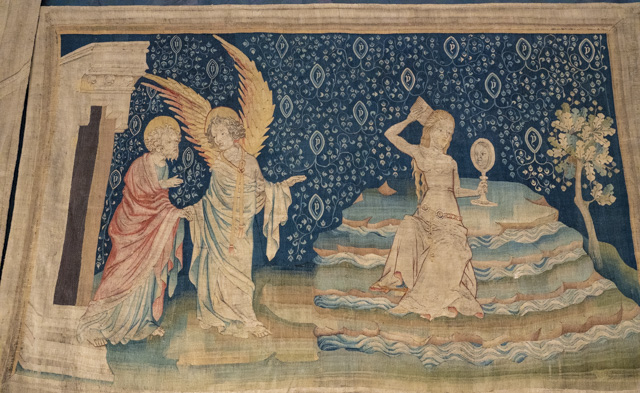
The real attraction of the Chateau D’Angers though is that it holds the Apocalypse Tapestry. This is an absolutely massive tapestry that was commissioned in 1373 and is 140 metres long and 6m high. It depicts the story of the Apocalypse from the Book of Revelation.
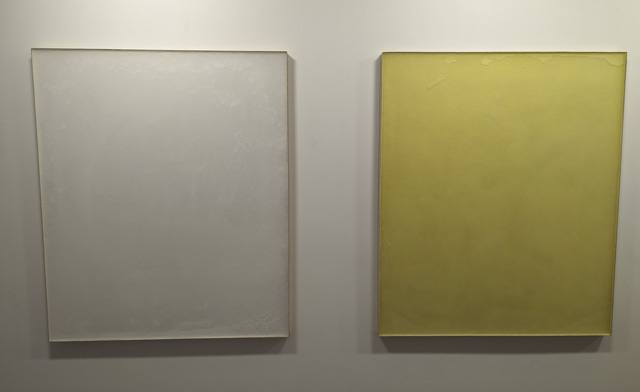
To make sure that we maxed out the Angers city pass we also visited the museum d’beaux arts, a gallery which houses a wide range of art from medieval religious art all the way through to modern art.
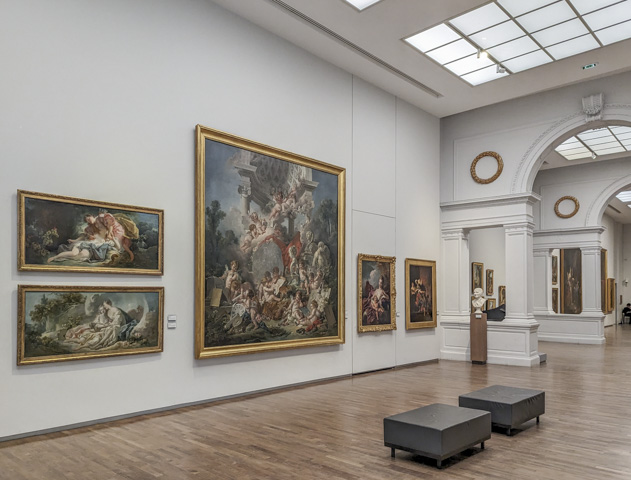
It tickled me to see a white canvas in the modern art section that felt like it could be part of a Monty Python sketch.
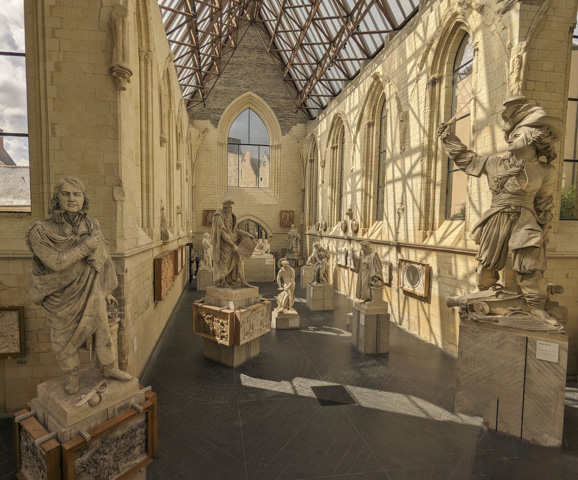
Next door to the art gallery is the gallery David D’Angers which is a converted church and is an exhibition of sculpture. This was really impressive with some very large pieces and I would thoroughly recommend a visit if you are in Angers.
On the second day of our Angers city pass we decided to visit some chateaux that are included but that are outside the city itself. They are each about 20km from the middle of Angers and make an easy circuit for a day trip.
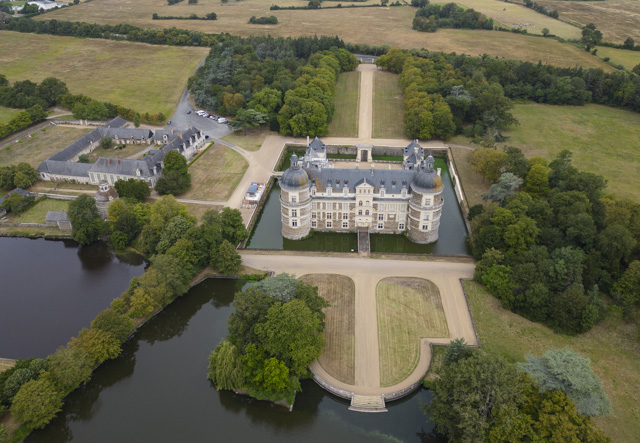
First up was Chateau de Serrant which is probably the most interesting of the three on the inside. The current building is built on the foundations of an older castle but now has no defensive role. The Brie family were the original builders but they fell on hard times and sold it in 1636 to Guillaume de Bautru who carried on the building according to the original plans and also founded the library.
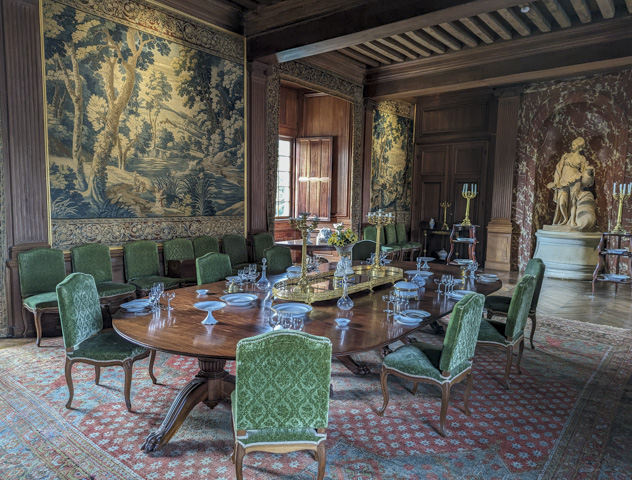
It is known for its library of over 20,000 volumes, but unfortunately this can only be visited as part of a French language tour.
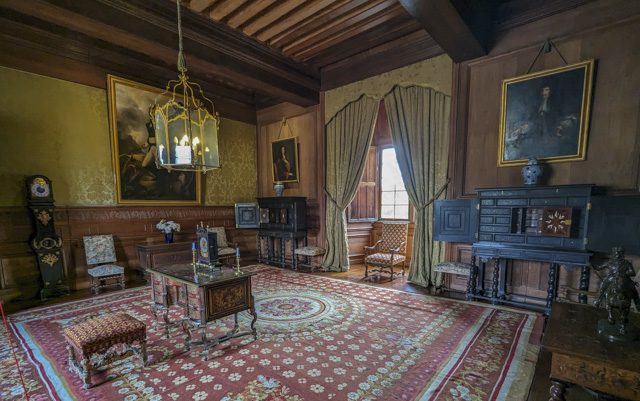
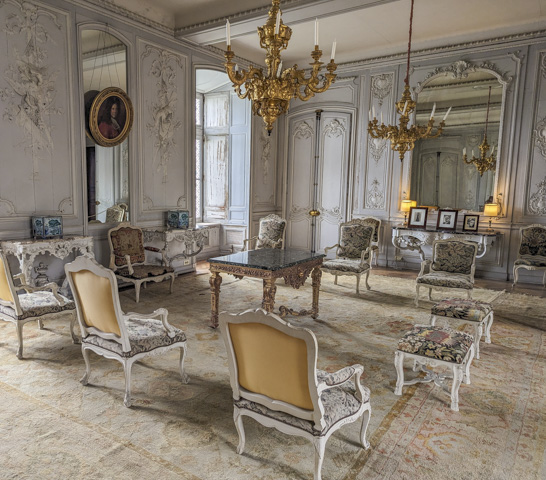
The second chateau we visited is called Plessis-Bourry and this was constructed over 5 years (1468-1473) by Jean Bourre who was Louis XI’s finance minister. It is still lived in today.
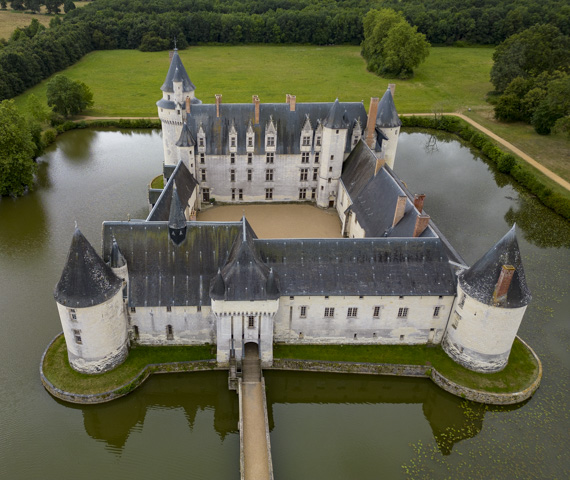
The chateau mixes the architectural style of a medieval castle with its drawbridge and large moats, with the comfortable living spaces of a renaissance chateau. This is known as transitional architecture.
Our final stop of the days chateau road-trip was the Chateau de Plessis-Mace where an original 11th century fortress has been replaced by a 15th century country residence which was rebuilt over 20 years from 1451 to 1474. The de Serrant family, who also owned the first chateau we saw today, owned this chateau from the 16th century but sold it off in the 19th century.
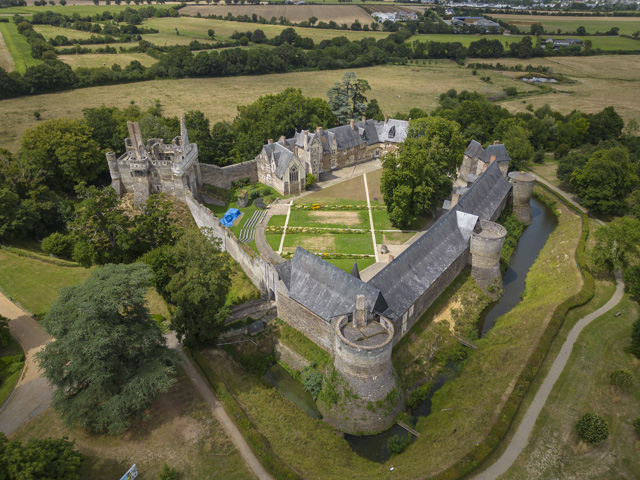
This chateau was not as accessible as the others and we couldn’t go inside anywhere, other than the chapel and some covered battlements, although this may have been possible as part of a guided tour.
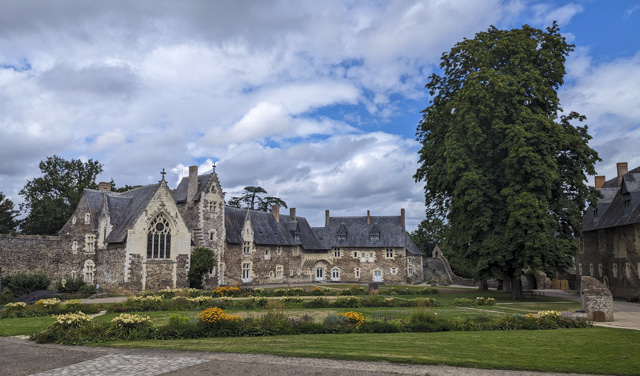
After our final chateau we headed back to Anger for our free secure overnight parking. This was to be the start of our trip through the Loire as we moved from chateau to chateau!
Loire-Atlantique
After over a month in Brittany we finally left and headed into the Loire-Atlantique province, south towards La Rochelle. We have really enjoyed Brittany with its empty roads, beautiful beaches and laid back vibe.
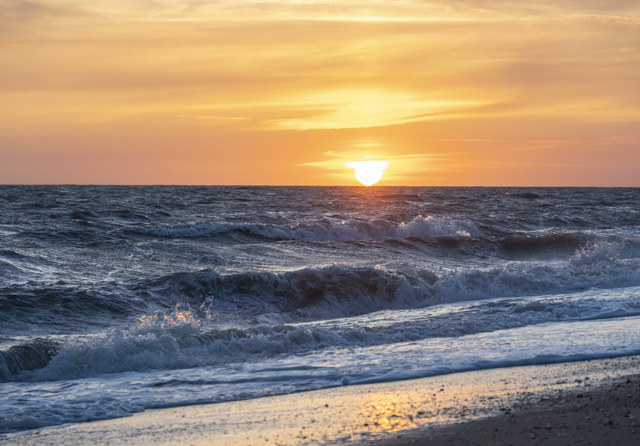
As we drove south towards La Rochelle, the home of the 2 times and current European Rugby Championship Holders, Stade Rochelais, we took our time to visit some of the popular beaches on the way.
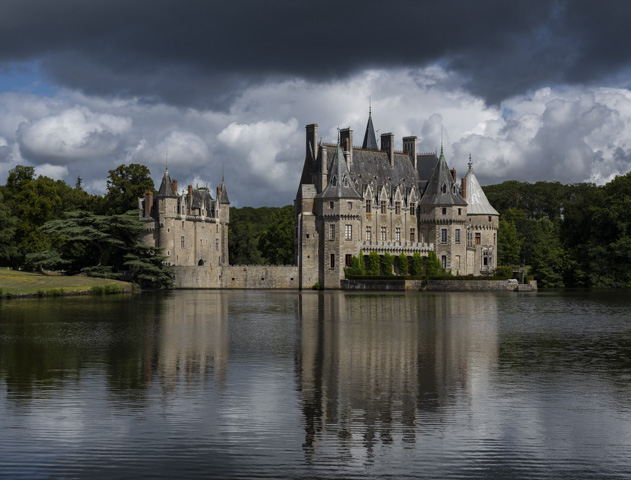
Our first stop was Prefailles but on the way, we drove straight past our first Loire Chateau and just had to stop to take pictures. This is the Chateau de la Bretesche, although unfortunately it wasn’t open so we could only stop and admire it from the outside.

The two pictures were taken only a couple of minutes apart and it goes to show how quickly the weather changes in this part of the world.
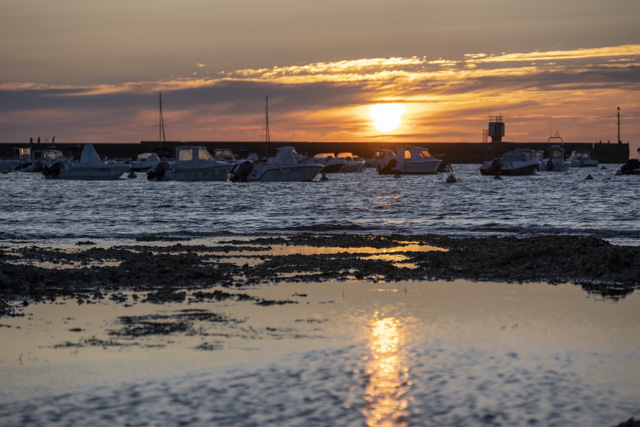
We parked at Prefailles, which is only about 50m from the sea but unfortunately with no sea view. There was a small rocky drop, maybe 4m, down to the beach. In this area there is a large tidal range and at low tide a large rocky area was exposed with only a narrow sandy beach. Although it was very pretty and we enjoyed a beautiful sunset, it wasn’t quite what we were looking for so we decided to move on the next day.
The second beach was at St Hilaire de Riez, which is a popular seaside resort town. We found somewhere to spend the night, again just 50m from the beach, this time through the dunes to a very long, seemingly endless, sandy beach where we were once again rewarded with an amazing sunset.
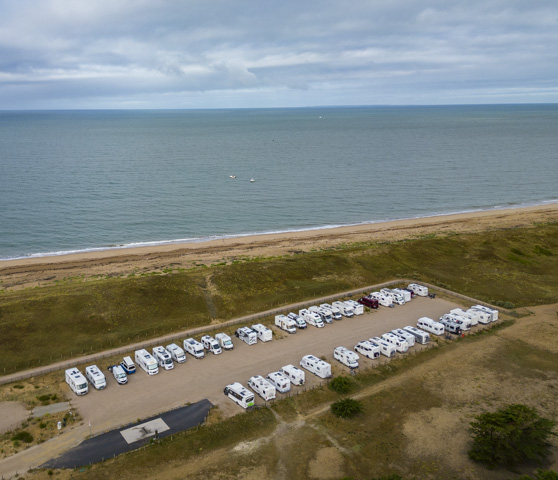
This is a lovely beach and had the weather been a little warmer and less windy we would definitely have stayed for longer.
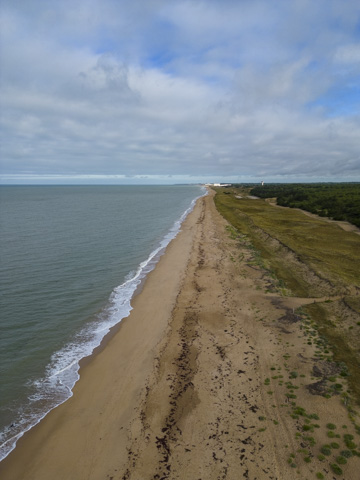
We continued to head south along the Atlantic coast to Longeville Sur Mer. It has been quite noticeable that the further south we drive the more developed the beaches and towns become.
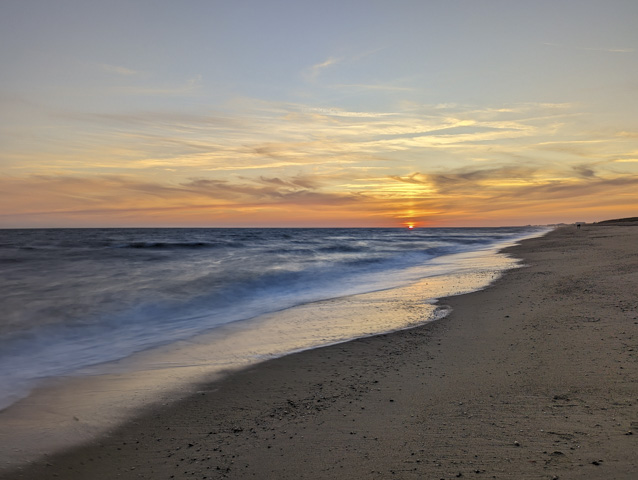
Longeville Sur Mer was probably our favourite beach of this last week and we spent a lovely afternoon lazing in the sun and watching the kite and wind surfers go whizzing past (a wind break on this coastline would definitely be a bonus!). The popularity of this beach was clear though as more and more people arrived as the afternoon wore on.
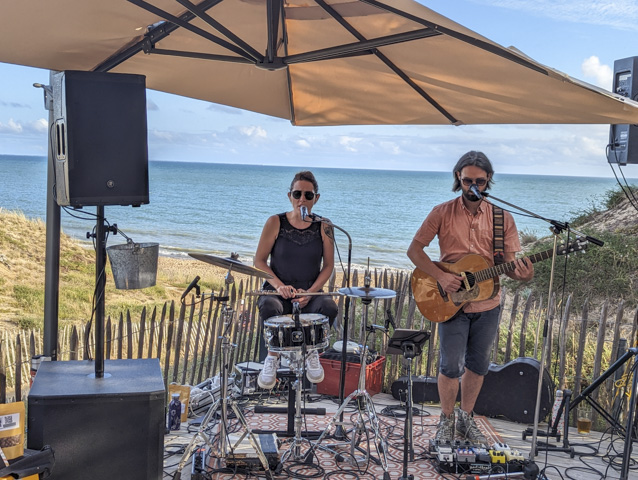
Another plus point of this location was a lovely little café just at the entrance to the beach where enjoyed listening to a local band in the evening.
Our next destination was La Rochelle. This is an impressive port city with a population of around 75,000 and the motto, “Belle et Rebelle” – Beautiful and Rebellious.
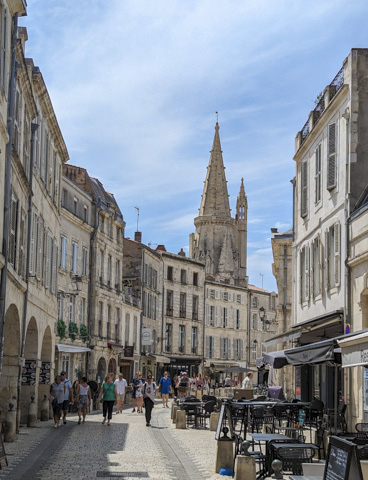
After trying, and failing to get into the municipal campsite right in the middle of town (this is the first campsite or Aire that has been full when we arrived), we headed a few km’s outside of town to a very nice Aire in Port Neuf. From here it was a 15 minute cycle, past the Stade Marcel-Deflandre – home of La Rochelle’s rugby team, into the centre of town but if there is a town fit for cycling it is La Rochelle, there are cycle paths everywhere, many of which are separate from the roads.
The centre of La Rochelle is a bustling city with a really buzzy atmosphere. Restaurants line the streets and harbour-side and the sun almost dazzles you as it reflects of the limestone pavements (sunglasses recommended!). It had a great vibe and we couldn’t help but get caught up in it.
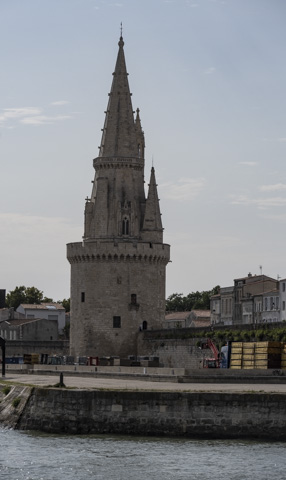
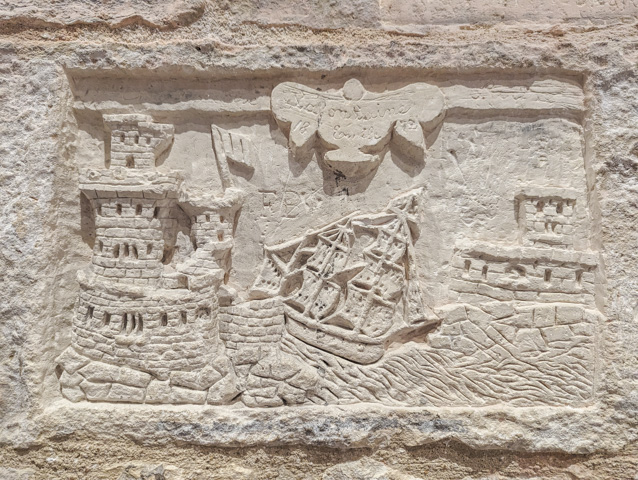
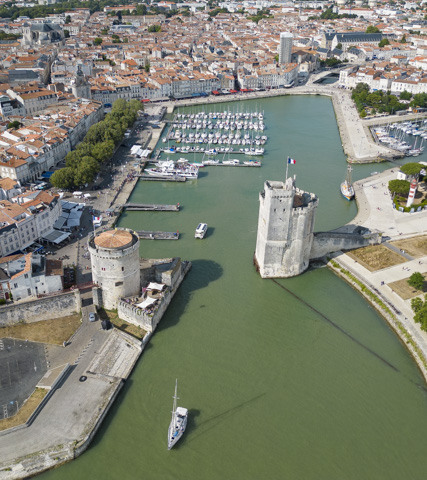
There are three towers remaining from the original port fortifications. The Tour de Lanterne, which looks likes a church spire, was used as the harbour’s lighthouse with an enormous candle. It has, in the past, also served as a prison and the interior walls are covered in graffiti (mostly of sailing boats), that was carved into the stone by the prisoners incarcerated there.
The other two towers are the Tour St-Nicolas and the Tour de la Chaine which flank the harbour entrance and between which a huge chain was pulled tight to defend the entrance at night and when threatened.
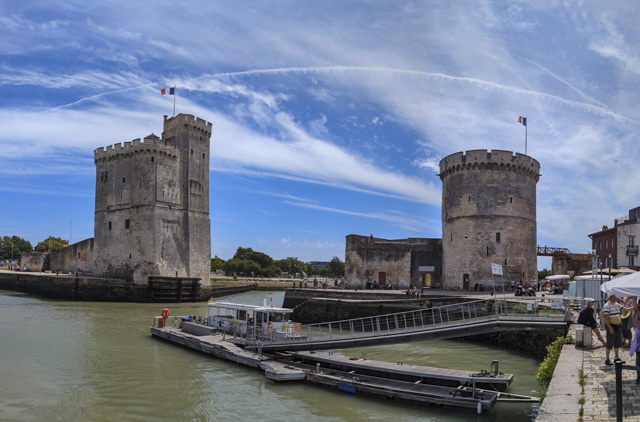
We visited the towers and walked around the busy shopping streets of the old quarter before settling down for drinks and dinner by the harbour side. We had a really lovely day out in La Rochelle, although after drinks we were a bit wobbly on the cycle back to the camper !
After leaving La Rochelle we headed slightly north into the Marais Poitevin. This is the real reason we had dipped down this far south. The Marais is sometimes known as the Green Venice and it is a regional park which is composed of a wide ranging network of canals and rivers. Some of the canals are only a couple of metres wide while the largest are much bigger.
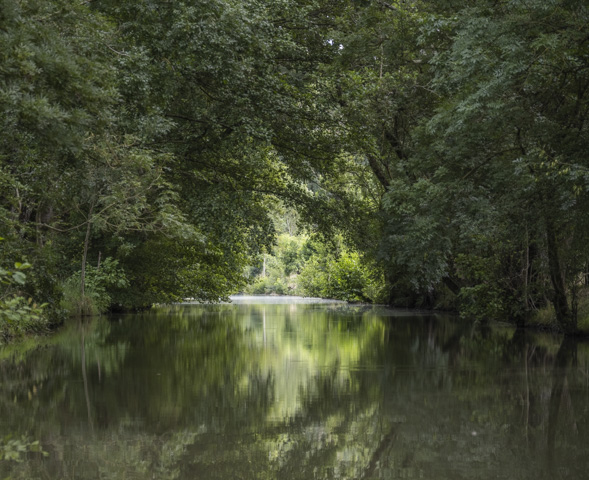
This is a perfect area to explore by water, so we hired a Canadian canoe and went on an arm-achingly four-hour tour of the canals.
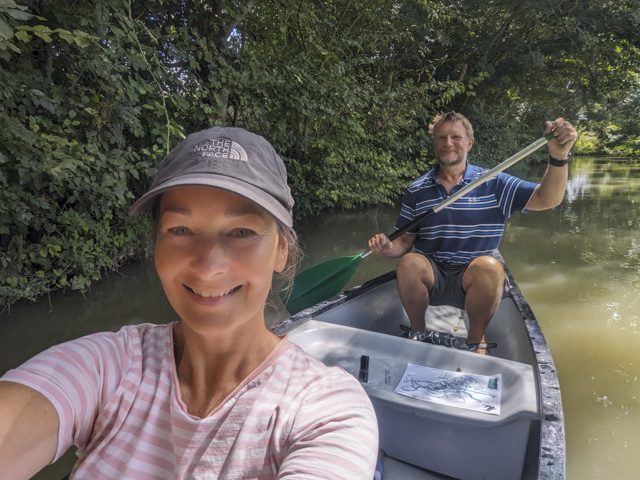
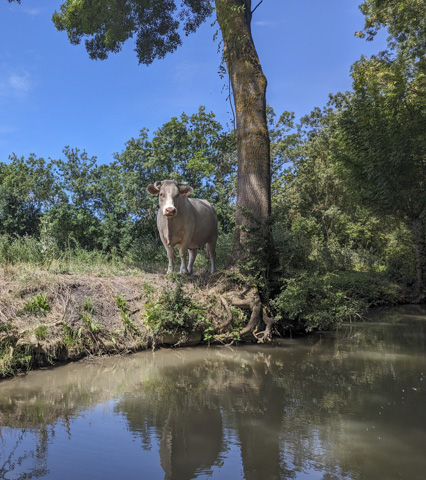
The waterways were teaming with wildlife, the highlights being a very chubby Coypu and herons but there were all sorts of birds and even the occasional inquisitive cow! Even better, we hardy saw another boat on the whole trip until we got back to the main channels close to the start. I can only assume most people that day chose the shorter routes so for the most part, we had the canals to ourselves.
This is such a lovely and peaceful place that we decided to settle in and spend a few days in the area as it is also a great place to explore by bike. The best bit of this was cycling along the river paths, visiting the little villages along the way, seeing the fields of sunflowers and soaking up the scenery.
Mystical Stones and Bastille Day
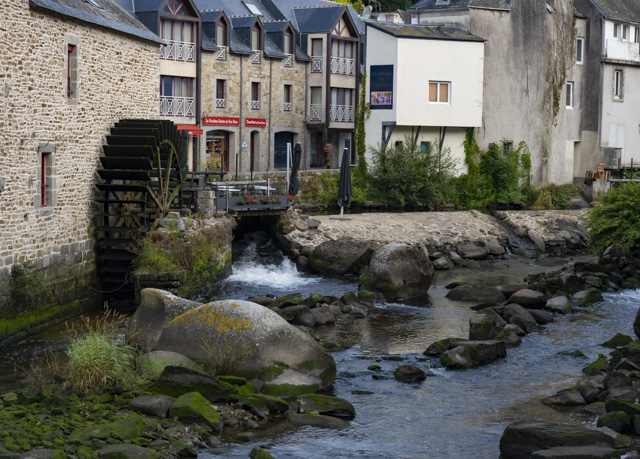
We headed inland from the coast after we managed to drag ourselves away from the beautiful beaches and found the small town of Pont Aven. This town is based around a port on a heavily tidal river and has a huge number of galleries with some really impressive artwork. Paul Gauguin started the artistic heritage in this town when he set up an artists colony here in the 1850’s.
This was always a quick stopover on our way to Carnac which is renowned as the site of the biggest collection of neolithic standing stones in the world. There is no agreement among academics as to why the stones were arranged like this but they do think it was possibly related to the early peoples religions. The original theories were that they were temples but this has now fallen out of favour with the latest theory being that the stones were some sort of warning.
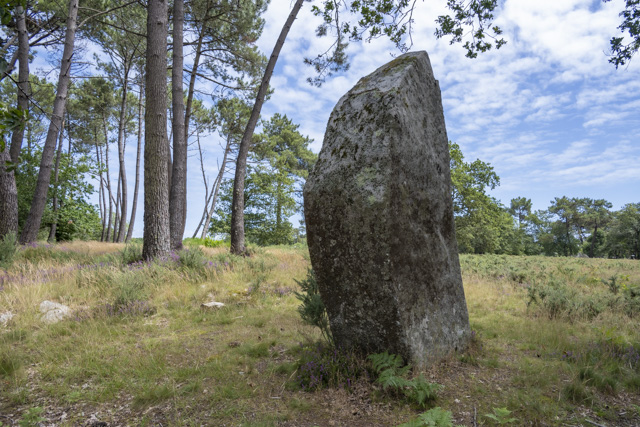
The megaliths are 6000 years old and were erected between the fifth and third millenia BC.
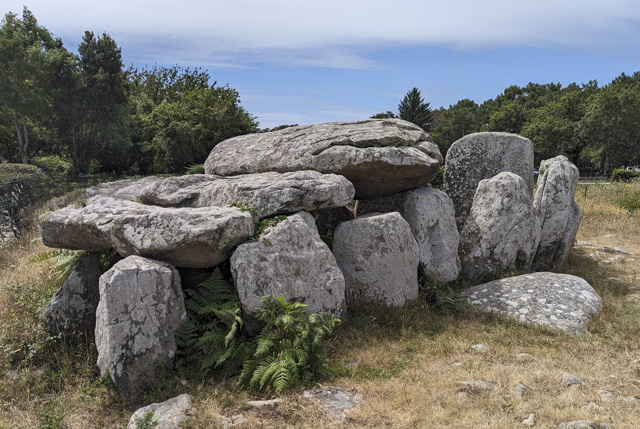
The stones in Carnac are spread over a large area and we spent some time cycling around to see the different areas. There are several sites but the largest, Le Menec, has 1,050 stones spread over 950 metres.
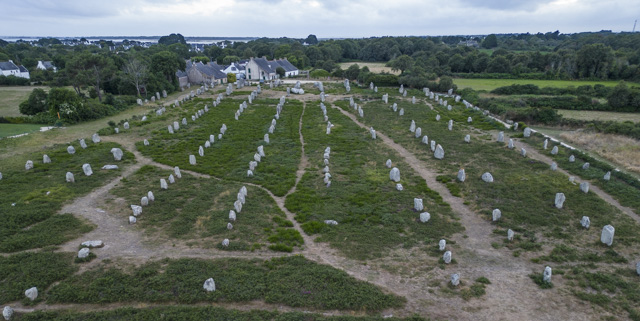
As well as the large fields of standing stones (menhirs), we saw some single large stones (also menhirs) , collective tombs (dolmens) , and a large burial tomb (tumulus) which you could go inside.
Our next stop after Carnac was the medieval town of Vannes. We found a good aire to stay in a few kilometers away from the city, just next to a little touristy island with a couple of lifeguarded small beaches and a saltwater swimming pool.
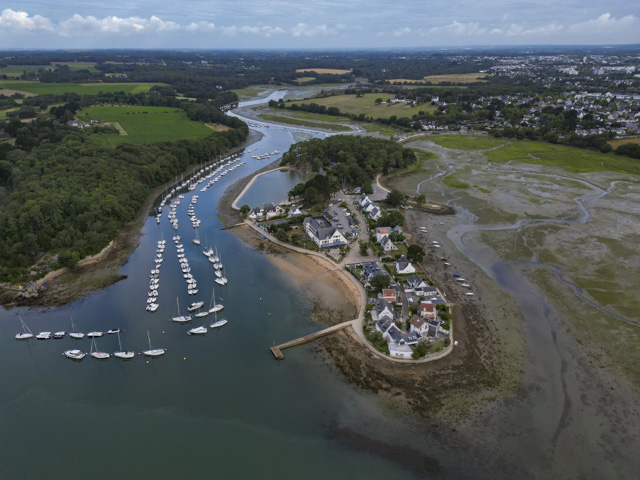
The bus stop for the electric bus into town is right outside the Aire. It was market day when we took the bus into town and the whole of the town centre was given over to a busy and vibrant market centred around a big indoor fish market.

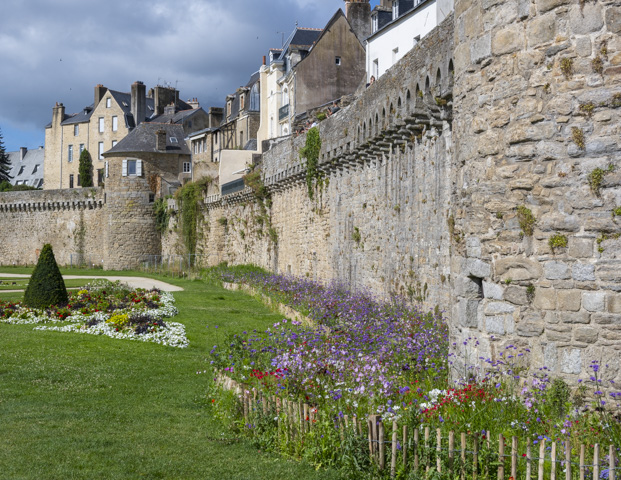
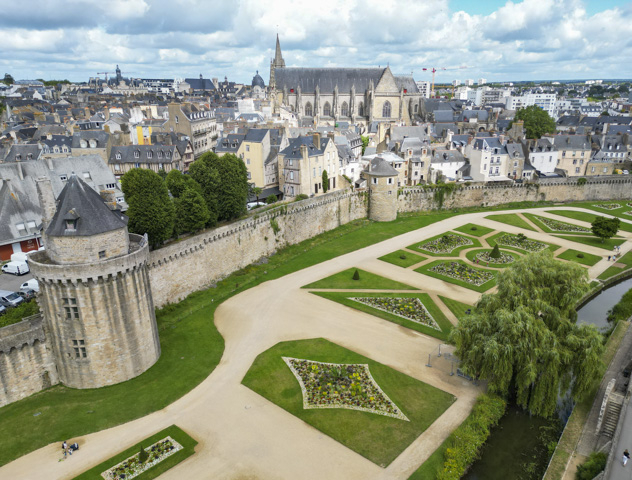
At one time Vannes was surrounded by big walls but only small sections of these are now left. A pretty park is in front of the main section of the remaining walls and a row of old wash houses run alongside the river where people used to wash their clothes.
Outside the walls is the port which is now a marina for sailing boats and a nice space for families to walk around as well as plenty of restaurants to rest and refuel.
We knew it was almost Bastille day coming up and we wanted to make sure that we had somewhere to stay for the holiday weekend knowing it was likely to get very busy, so once we left Vannes we headed to Josselin and small medieval town with a big chateau on the banks of the river Oust. The community provides a large free Aire for motorhomes only a couple of hundred metres outside town, alongside the river.
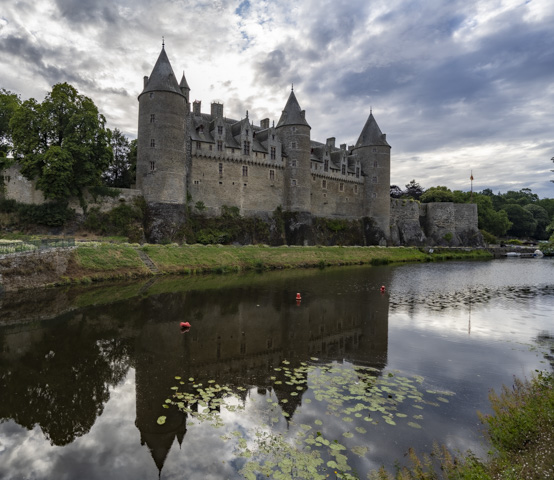
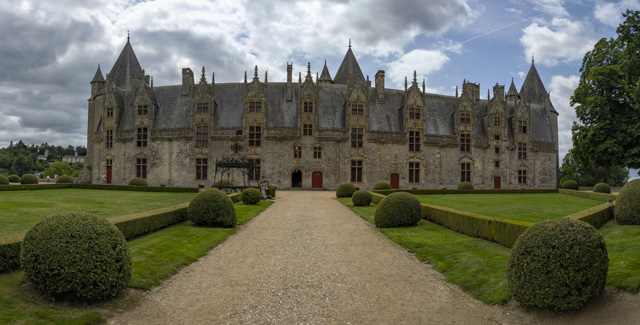
The Chateau, built in the 14th century, is a building with two faces and was the seat of the Counts of Rohan. On the river side it looks like a fortified castle with imposing walls and big turrets while the side facing town resembles a big manor house facing its beautifully manicured lawn and gardens.
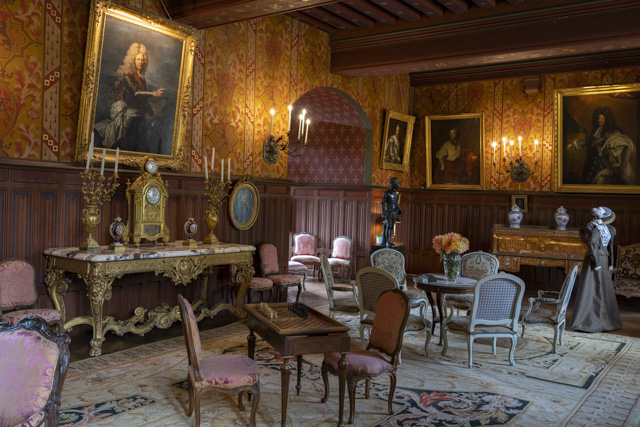
Inside the chateau the ground floor is accessible and the original furniture is on display providing some insight into how it looked in its heyday.
The town itself has a big church and a lovely central square surrounded by eateries and brightly painted half timbered houses.

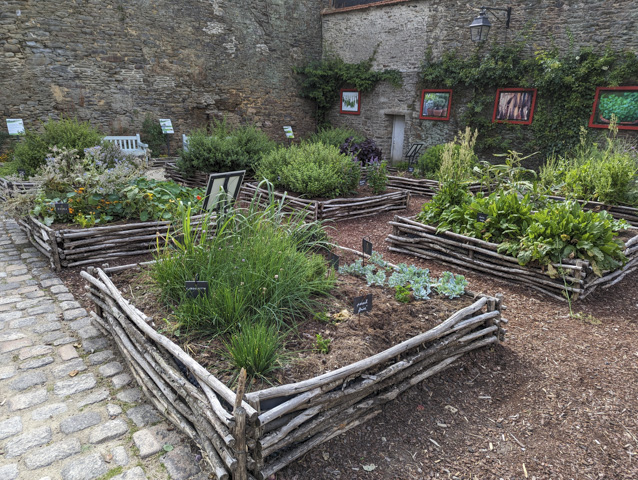
One of my favourite things in Josselin was a small walled community garden, allegedly in place since medieval times, growing lots of different types of herbs which had signs up inviting members of the community to take part and to help themselves to herbs that they needed. I thought that this was lovely.
Like most towns in France Josselin had plans to celebrate Bastille Day and we were more than happy to join in. Under the walls of the castle a rock band called “FAB” gave a free concert – mixing greatest rock hits of the 70s/80s with some, what I assume were, French classics. They were pretty good.
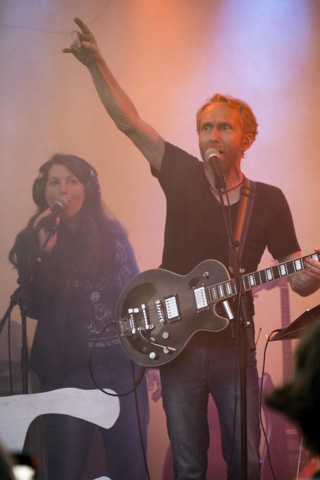
The only thing that was a bit odd was the breast-feeding backing singer of a toddler who spent most of the time running around the stage knocking things over, – all while singing at the appropriate points. He did get involved though, shaking a tambourine at certain intervals. A real family affair!
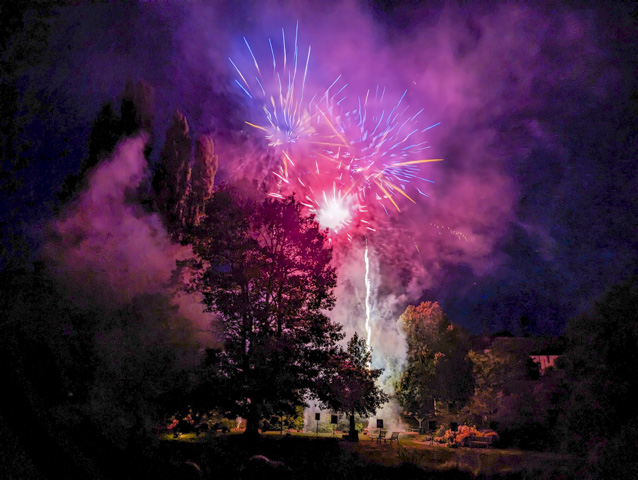
After the concert the whole town decamped to the banks of the river to watch a pretty impressive firework display put on by the commune.
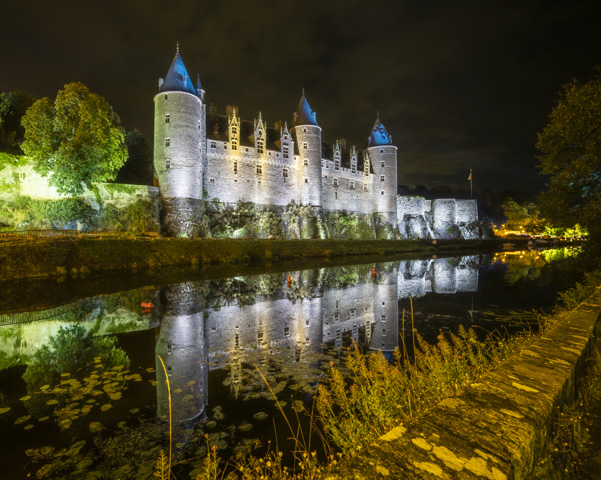
This was followed by a local restaurant hosting a dj with drinks and dancing late into the night.
All in all Josselin is a beautiful town and was a great place to hide out during the busy Bastille weekend !
While most of the town nursed their hangovers we headed to our next stop in the Paimpoint Forest, an ancient forest where, legend says, Excalibur was buried in the stone and where Merlin is buried.
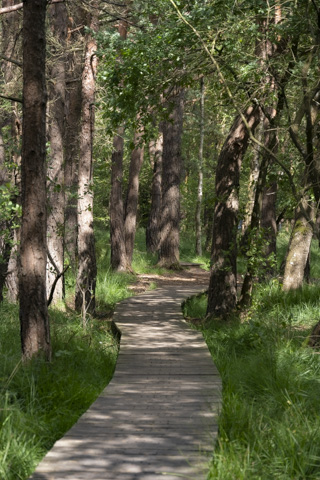
The town itself is pretty small and dominated by an old abbey, which was first constructed in the 7th century but was then destroyed before the current building was constructed in the 13th century. We went for a walk around the lake and through the woods. It was all very nice but not enough for us to stop for very long.
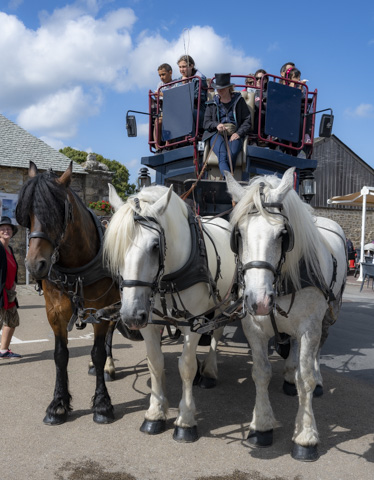
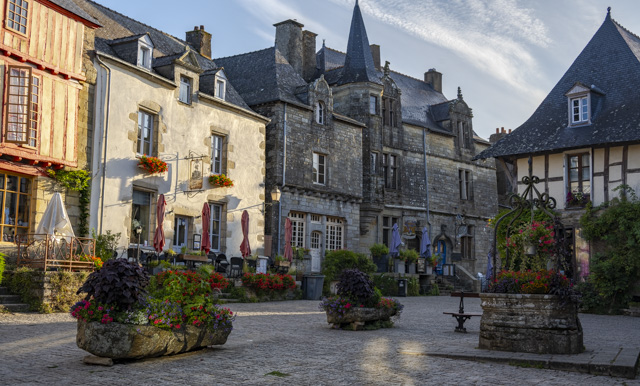
We drove to our next destination – the beautiful medieval village of Rochefort-en-Terre, another of the French “Petite Cite de Caractere”. This pretty village is very popular with tourists which is reflected in the large number of restaurants and galleries lining the high street.
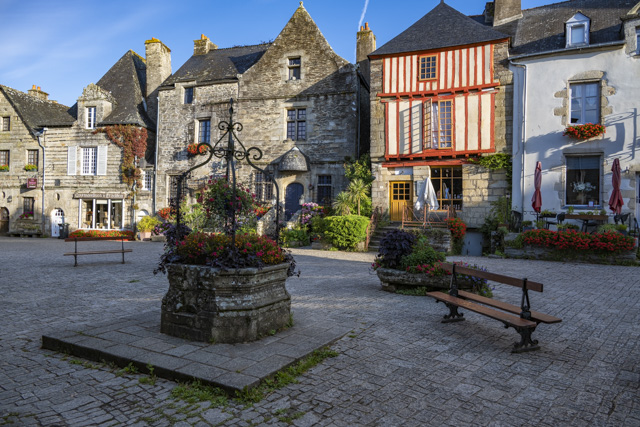
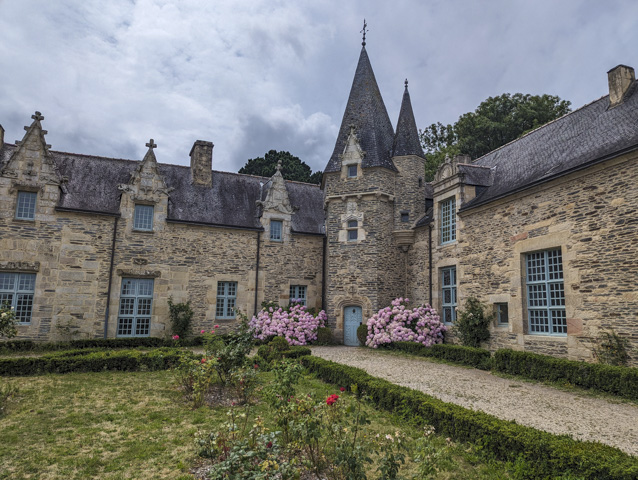
We enjoyed wandering the streets up to the “Chateau” – a big house overlooking the town, spent a bit too much of some very nice ham and cheese and had a very peaceful nights sleep in the motorhome parked just below the town.
Brittany’s Stunning Coast
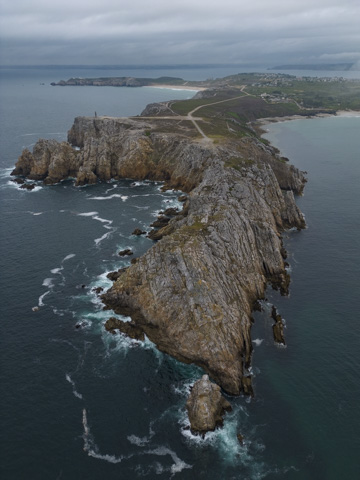
After taking a break in La Faou we decided to head to the Crozon peninsula and the town Camaret-Sur-Mer. We found a great place to stay the night just above the town and an easy cycle to the Pointe du Pen Hir. This is the end of the peninsula and a spectacular location with 70m cliffs and a chain of rocky islands stretching out to sea.
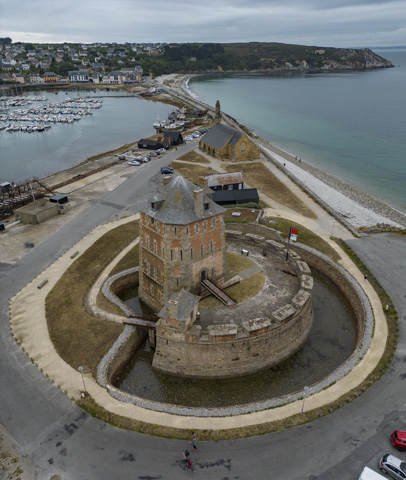
The town of Caramet Sur Mer is dominated by a large harbour, once the largest crayfish port in France, which is guarded by the Tour Vauban, built in 1669. On the harbourside there are a row of abandoned fishing boats from a bygone era which are being allowed to rot away in a boat graveyard but they look pretty cool and make great photo opportunities.
Just opposite our park-up is a field of around 80 neolithic stones called the Alignments of Lagatjar, and a little further along is a great surf beach, although swimming is banned due to the strong currents.
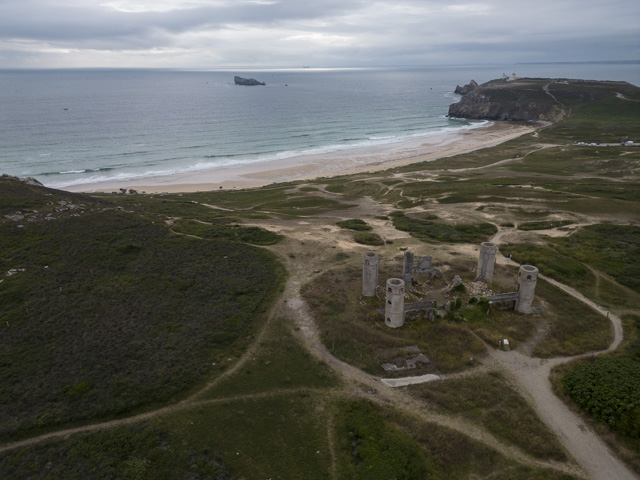
On the way to the Pointe du Pen Hir are the remains of one of the gun emplacements from the German WWII Atlantic Wall. There are big concrete bunkers and a network of trenches at the top of the cliffs.
After a very busy day exploring Camaret-Sur-Mer we headed slightly inland to the petite town of Locronan. This is considered a “small town of character” and a “most beautiful village in France” and it is easy to see why. The town has been frozen in time with vehicles banned during the day and no electric cables or aerials allowed. It is busy though with bus loads of tourists arriving from morning to evening.
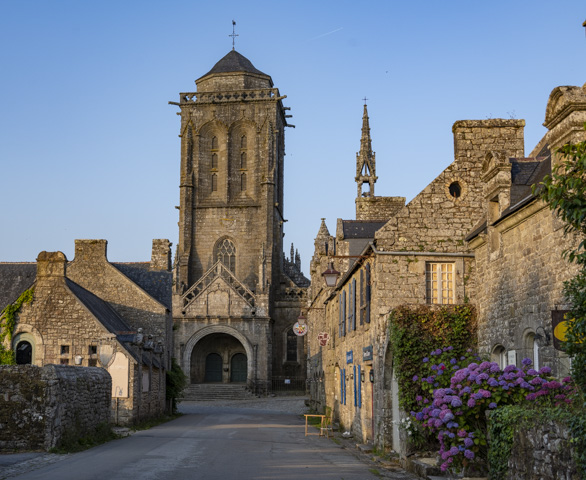
The centrepiece of the town is, as usual, the church which is dedicated to St Ronan. The village gained it prosperity in the 15th century as a centre for sailcloth production.
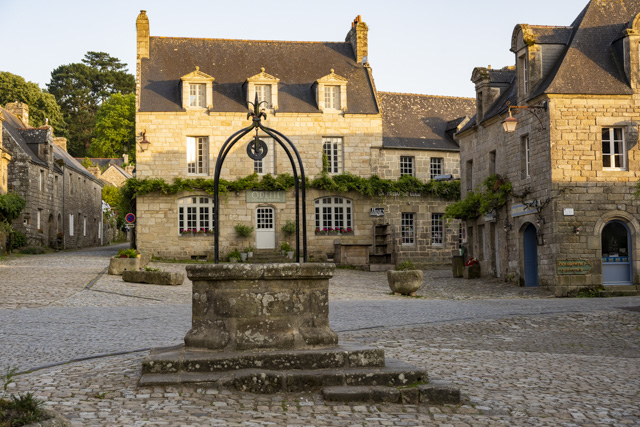
Not too far from Locronan is the larger town of Quimper. This is a shopping hub for the area and the central streets were busy with shoppers.
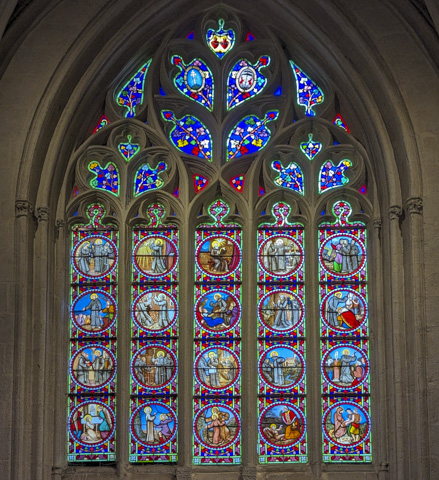
The standout feature of Quimper is the huge central cathedral. The stained glass windows here are amazing with each window panel telling a story.
From Quimper we headed back to the coast and another peninsula tipped by the Pointe du Raz which is the most Western point of the Finistere department. On the way there we passed by the pretty port town of Audierne.
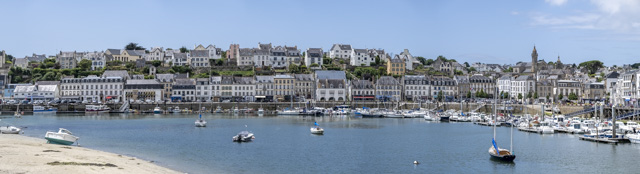
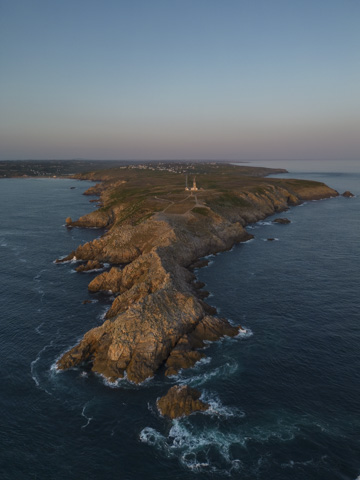
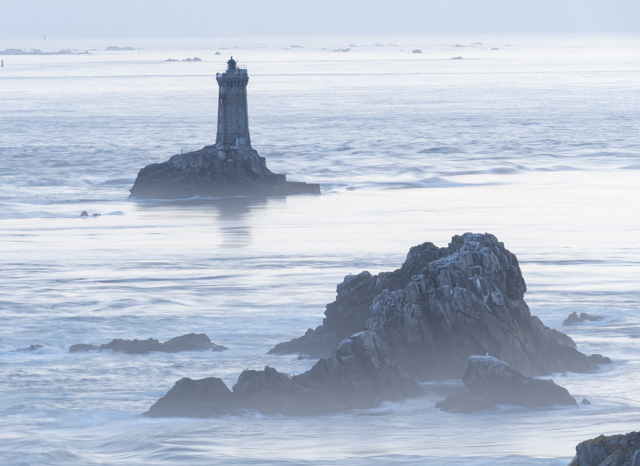
The Pointe du Raz is impressive for the flow of water past the rocks of its tip. The tides drive a raging torrent past the point that is like a river and shipping is warned away by a lighthouse.
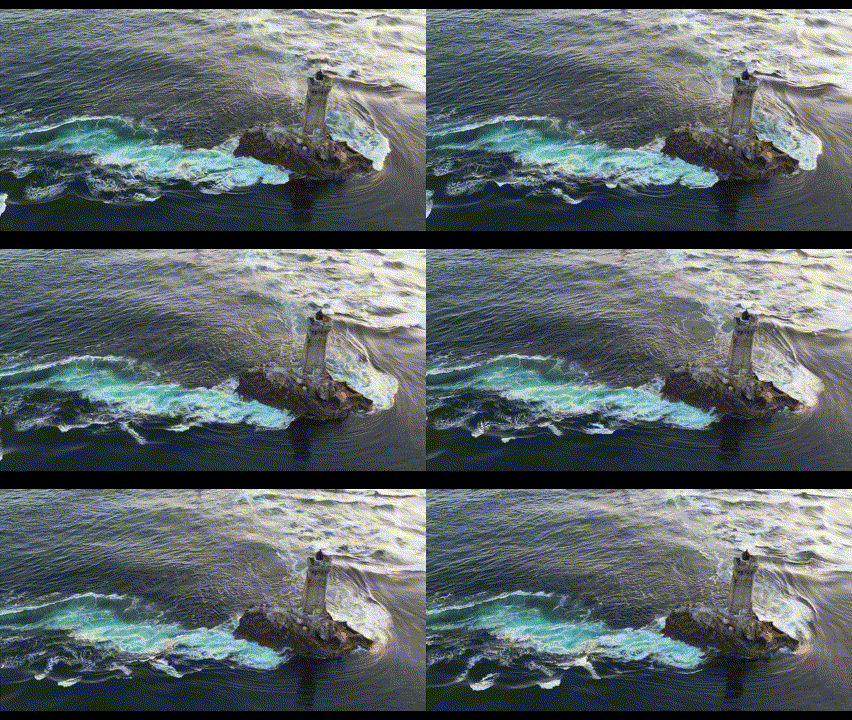
The Pointe du Raz was much busier than the Pointe du Pen Hir, I think partly because it is listed as “Grand site du France” and has a row of restaurants and shops next to the car park. The actual point is about 2km from here so is not built up but during the day there are a lot of people. We stayed in the car park overnight and visited again at sunset once the crowds had left.
After leaving Pointe du Raz we drove back to Quimper and then a bit further South to the town of Concarneau. This is another port town but the original medieval centre of this town is on a small island in the harbour. We stayed on the coast just South of the town with a lovely coastal walk to the main harbour and then took the small ferry boat across the water, which was all of 100m, in order to reach the medieval town. The ferry runs all day until 11pm and is only €1pp each way.
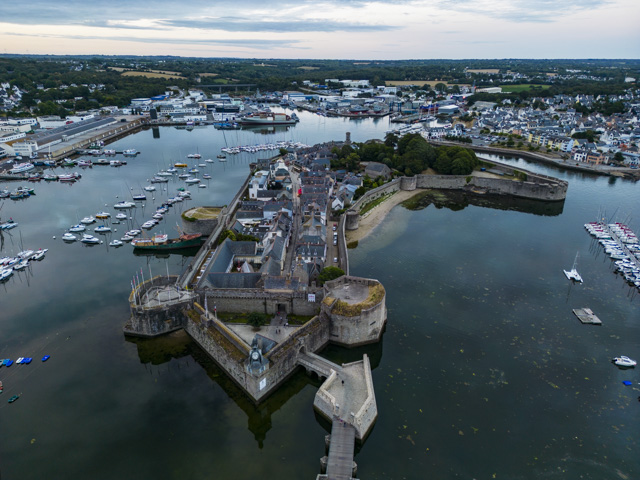
The old town is surrounded by high walls which you can walk atop and one of the towers houses a free local history fishing museum with some great photos from the early 20th century. There is only one main street in the town and this is lined with restaurants so there is plenty of choice and we took the opportunity stay for dinner and catch a late ferry home. We were not disappointed with our choice of restaurant – my mussels with scallop sauce were delicious.
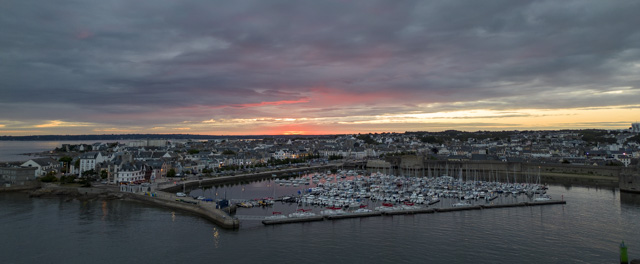
Concarneau has always been a fishing town and remains one of the biggest fishing ports in France. The main harbour is large and there are some fairly sizeable boats here in dry dock.
After 5 nights in 5 different places we were keen to chill for a couple of nights so headed along the coast and found a great little park-up opposite the beach (Plage de Don), near the town of Tregunc and a couple of kliometers from the marina of Trevignon.
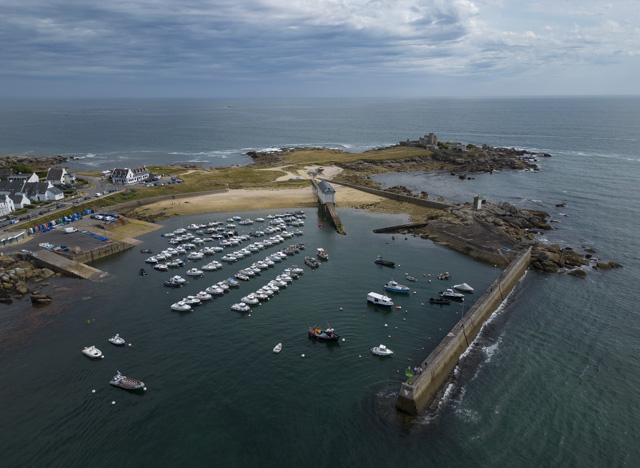
The small sandy car park has space for about 10 motorhomes and is free to stay for up to 48 hours. The beach is literally 25m away, the only downside being that there is no sea view from the parking due to a small dune. It is however a beautiful beach and a perfect place for those in self-contained motorhomes (although there is a toilet available). The French are very accommodating of motorhomes and there are designated parking areas for motorhomes practically everywhere we have been, making our travel very easy. This is in stark contrast to the UK where we seem to make it as difficult as possible.
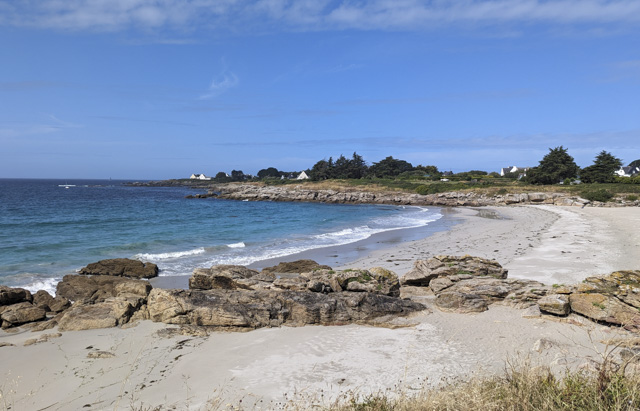
Despite a mixed weather forecast we decided to spend the full two nights allowed here and were rewarded with beautiful sunshine for the most part – despite a couple of hours of rain in between.
This is our first time swimming on the Atlantic coast and it’s definitely colder than the Channel although this didn’t stop us getting in (albeit briefly!) to cool off.
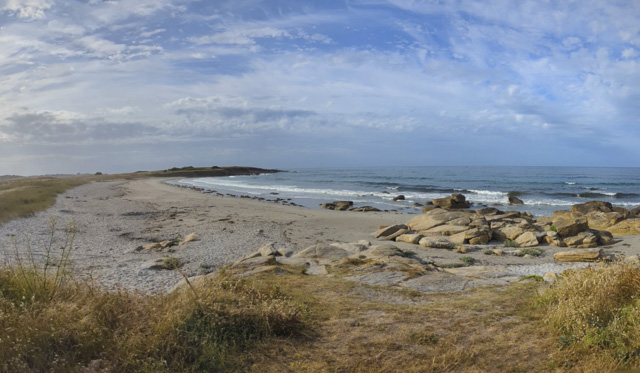
We really enjoyed chilling on the beach for a couple of days and it’s a good job there is a 48 hour limit on the parking otherwise we would probably still be there.
Island Life
We finally managed to drag ourselves away from our beachside paradise on the Emerald coast and headed further west in Brittany. Our first stop was Treguier where we stayed in a lovely free Aire alongside a tidal estuary. The tidal range in this part of France is huge and at low tide there is virtually no water near the shore.
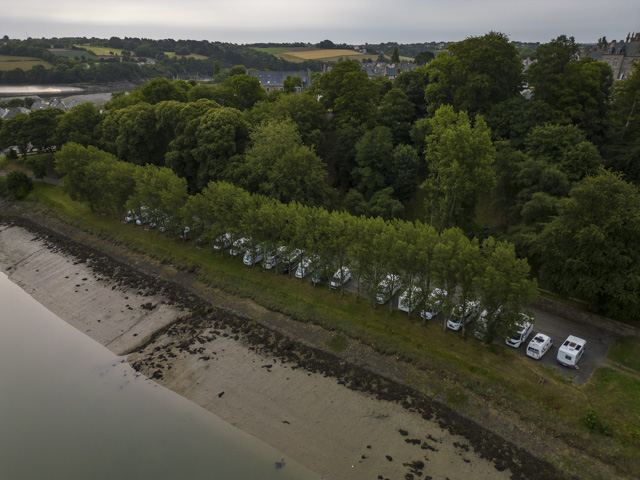
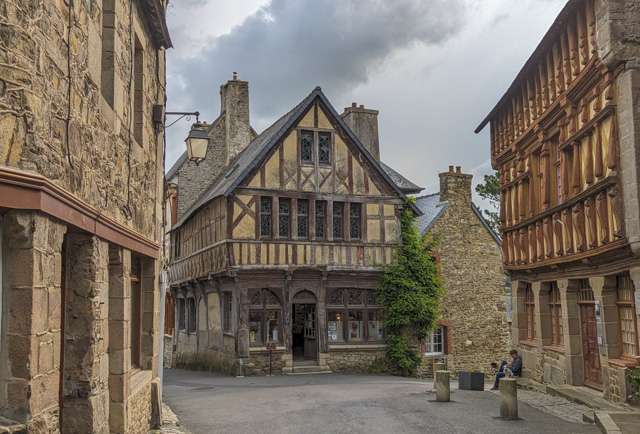
Treguier is one of the Petite Cités de Caractère and has a handful of pretty medieval streets and an impressive cathedral. Definitely worth a brief stop-over.
Next up was another small town about a 30 minute drive away called Trevou-Treguignec which has a sizeable beach and a pretty harbour but very little else to do other than enjoy the scenery.
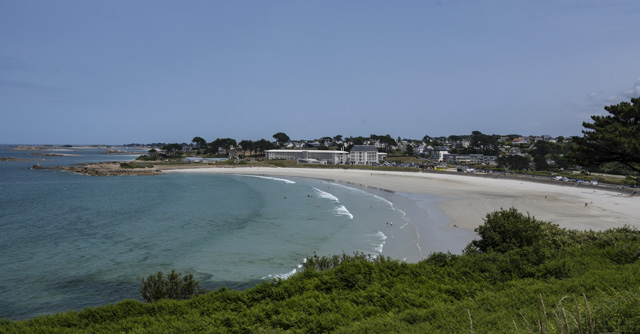
It is quite hilly along the coast so rather than walk we took the opportunity to get on our bikes and cycle to a couple of viewpoints. I had a good workout as it was even more hilly than expected but it was definitely worth it and we were rewarded with lovely views of the Pink Granite Coast. Although it seems to me that the pink granite is more grey granite depending on the light.
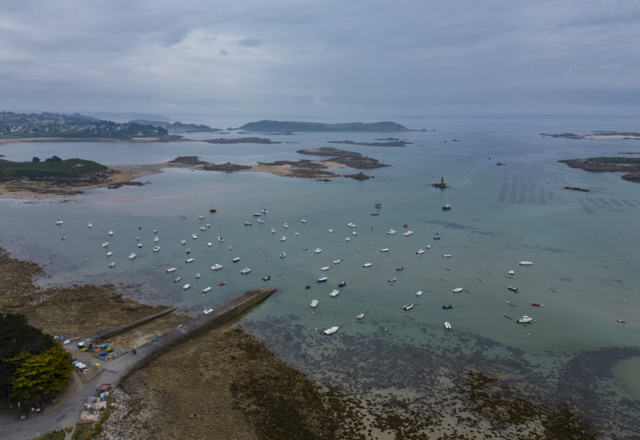
Yet another 30km down the coast we found ourselves at Ile Grande. Technically an island but connected to the mainland by a very small bridge.
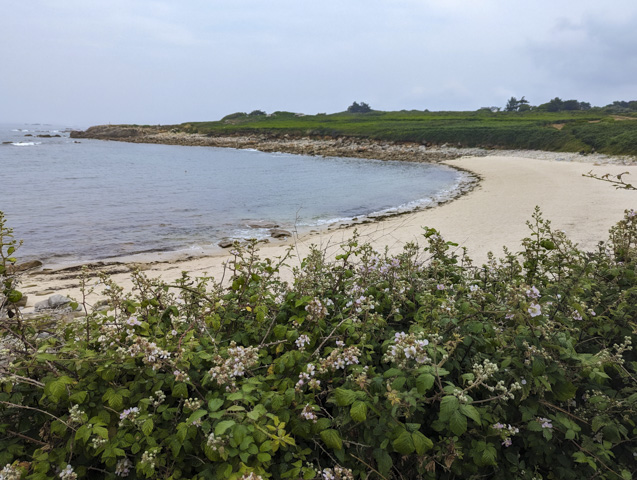
The island is only 7.5km around so I decided to walk the whole way round. There are definitely two sides to the island with the seaward side being fairly wild and the landward side much more sedate.
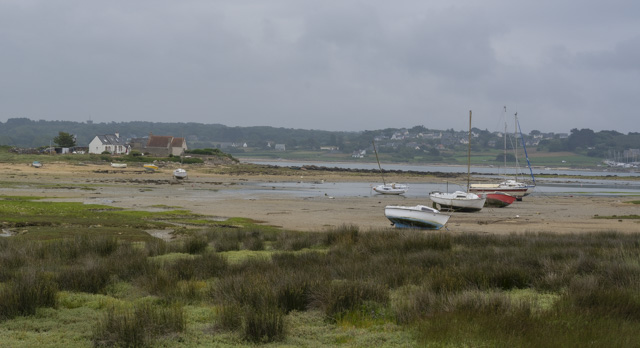
There are some beautiful beaches but unfortunately the weather wasn’t fantastic while we were there so we didn’t feel like taking advantage and only stayed one night before heading to our next destination, Roscoff.
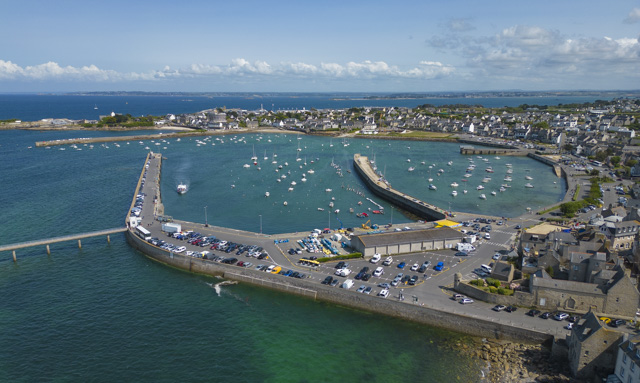
Roscoff is the furthest west of the ferry ports to the UK and is also the jumping off point to Ile de Batz, a 15 minute ferry ride from the harbour.
We decided to head across with our bikes and explore the island. You can hire bikes on the island but it works out about the same in cost and we had to cycle from the Aire to the port anyway. We left Roscoff in jumpers and rain jackets with black clouds overhead and arrived at the Ile de Batz in clear blue skies, it was as if we had crossed over to a different country. The island is known for its mild climate but we hadn’t expected the difference to be so stark as we looked across at Roscoff to see the dark sky still looming overhead.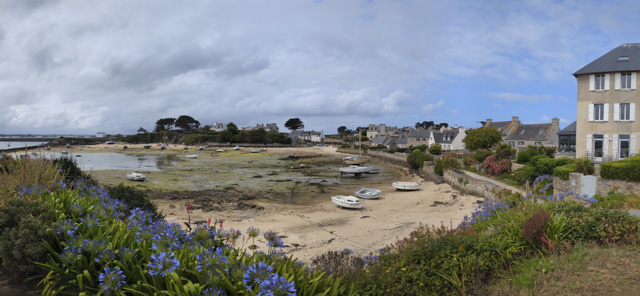
Leaving the island harbour we headed out along the main street past the church, café and houses that overlook a beautiful sandy beach and a much smaller harbour, and headed inland, coming across a big lighthouse before heading onto the seaward coast with its wild beaches.
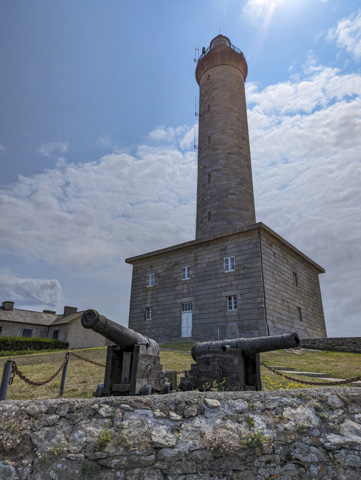
We ended up at the far end of the island to visit the popular George Delaselle exotic gardens which are right next to another lovely beach and, more importantly for us as we were pretty hot and thirsty by this point, a café with a sun deck outside, perfect for a break and a cheeky beer.
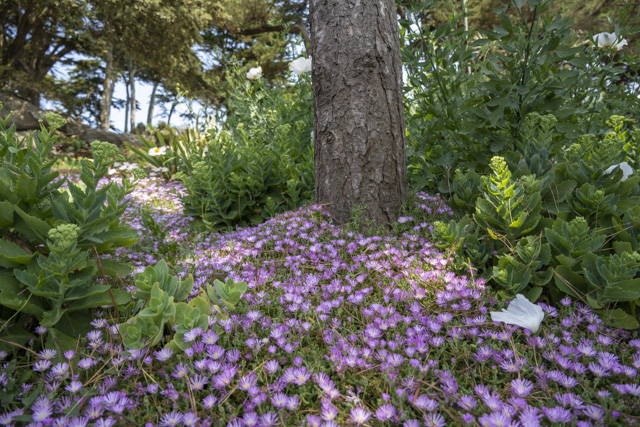
The garden itself which was first established in 1897 is divided into zones showcasing over 2,500 different plants mostly from countries in the southern hemisphere which are better suited to the warm microclimate on the island.
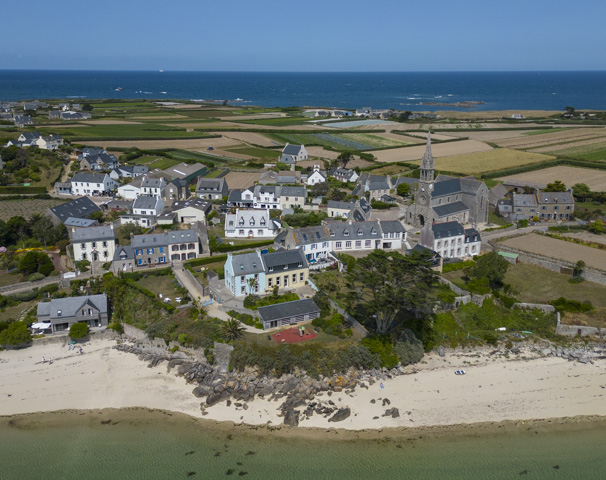
After enjoying meandering around the various gardens we headed back to the port for the ferry back to Roscoff. Had we known the weather would have been so good we would have taken our swimsuits and books and enjoyed some downtime on one of the beautiful beaches. A note to self for another time perhaps.
We had been on the move every day for a week so decided that we would hole up for a couple of nights at our next stop for a break. With this in mind we drove to a lovely little town called La Faou where we knew there was a grassy Aire next to an estuary. Perfect for a chill couple of nights.
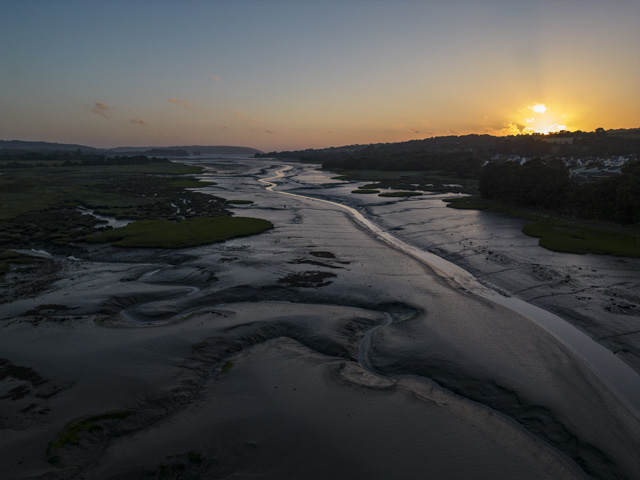
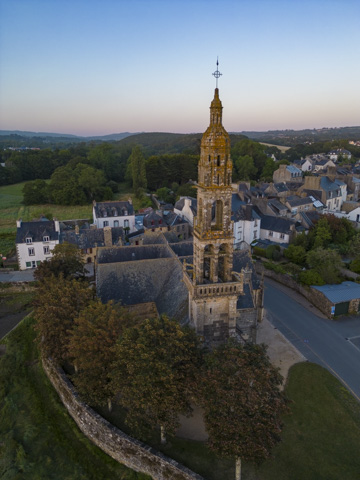
Like other estuaries we have seen in the area, this one also had a huge range, filling to the brim at high tide and then almost completely emptying at low tide, giving us an ever-changing view from the camper. The village itself is very pretty with plenty of eateries to choose from lining the main square and of course another spectacular church which we have become accustomed to travelling through France.
Brittany
The second region of France that we are exploring is Brittany, in the North West corner of the country.
Our first stop was the small coastal village of Hirel. We enjoyed a couple of days camping in a leafy shaded Aire across the road from the beach and while we were there, I cycled down the peninsula to the town of Cancale, the main oyster producing area of France. The streets are lined with shops selling various selections of oysters and I even came across an oyster vending machine. I’ve got used to seeing pizza vending machines in France but an oyster vending machine is definitely a first for me!
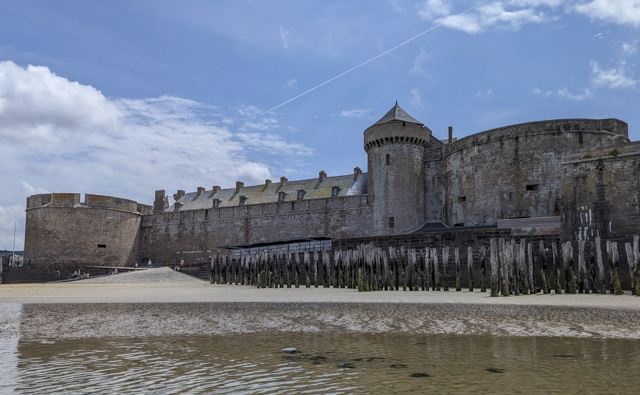
From Hirel we headed to the port city of St-Malo. St Malo has one of the broadest tidal ranges in the world and our visit was during low tide so we missed the spectacle of waves crashing against the walls but instead we were able to walk around the broad sandy beaches below the walls.
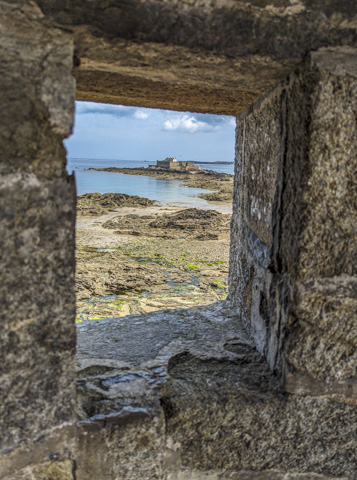
The old town of St-Malo, the intra-muros, is a maze of streets within the walls which were constructed from the 12th century onwards. Sadly, 80% of the town was destroyed by the Allies in an effort to drive the Germans out in 1944 but this has all been painstakingly rebuilt using the original materials to re-create this beautiful medieval town.

We spent the day exploring St. Malo and even though it is an ideal place to leisurely spend a couple of days we moved on that evening as the parking we found was just a car park next to a travelling circus and it was a hot day so we needed somewhere cooler to spend the night, so we drove the short distance to the port town of Dinan.
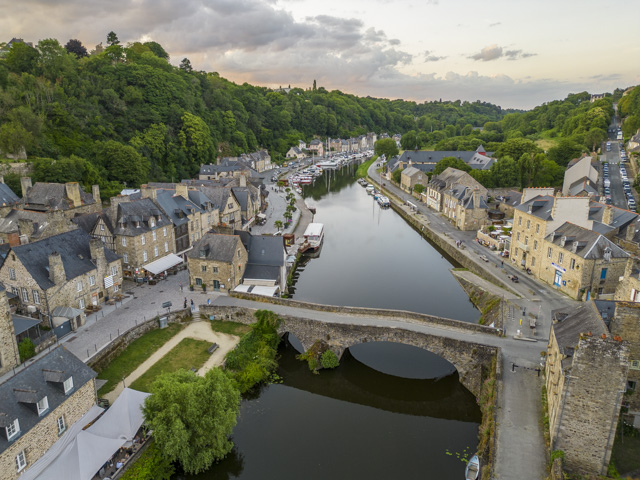
The very picturesque port of Dinan is on the river at the bottom of a steep hill with the medieval town protected by its walls at the top.
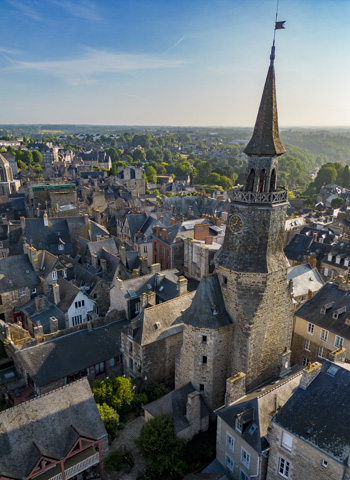
The municipality provides a great free parking place for motorhomes in a riverside field under the shadow of a huge viaduct, just a stone’s throw from the cafes lining the riverside and the narrow cobbled side streets leading up to the town centre – a 10 minute sharp uphill walk, or if you prefer, a much easier and free shuttle bus ride.
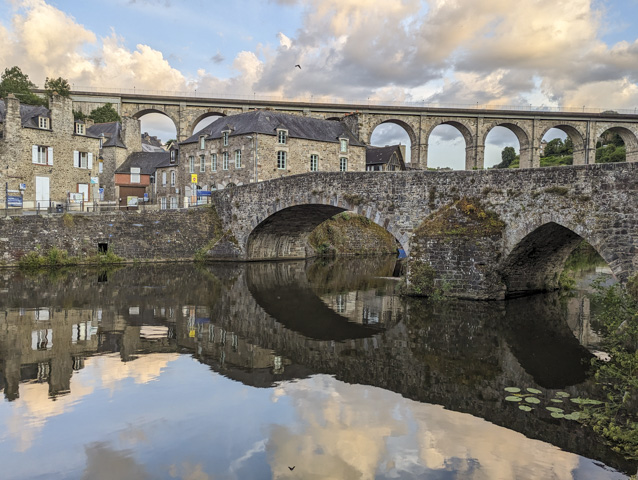
The town is one of the best preserved medieval towns in France and the half-timber faced houses are beautiful. There is a castle which was built in 1380 and was originally a ducal residence before becoming a prison.

One of the best roads is the Rue du Jerzual which runs from the town down to the port and dates back to the 12th century.
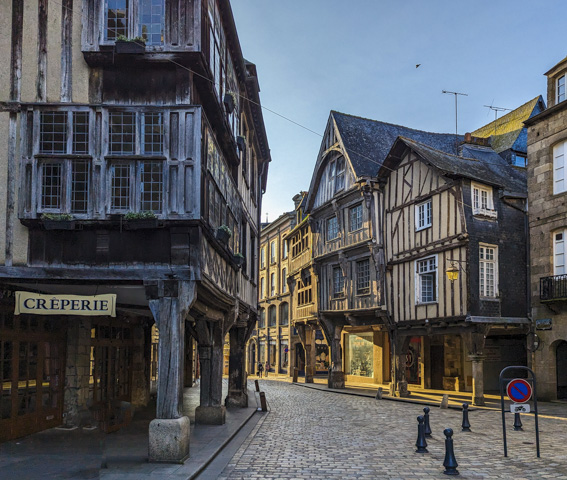
We spent a lovely couple of days relaxing in Dinan but having done quite a few towns recently we were keen on having some down-time in the country so we headed to the peninsula of Cap Frehel, part of the Emerald Coast. The coastline here is made up of rocky cliffs punctuated by beautiful golden sandy beaches.
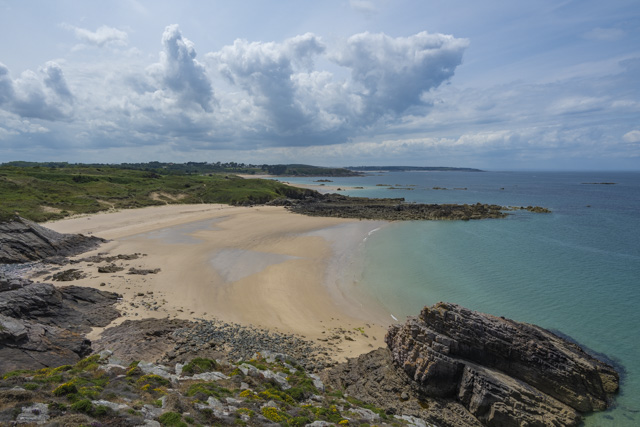
We stayed in the leafy municipal campsite across the road from a lovely small cove and were really grateful for the cooling sea breeze and extremely fresh temperature of the sea in this hot spell that we’ve been having recently. We had the best time swimming and kayaking at the beach, which unlike British beaches in hot weather, was surprisingly virtually empty.
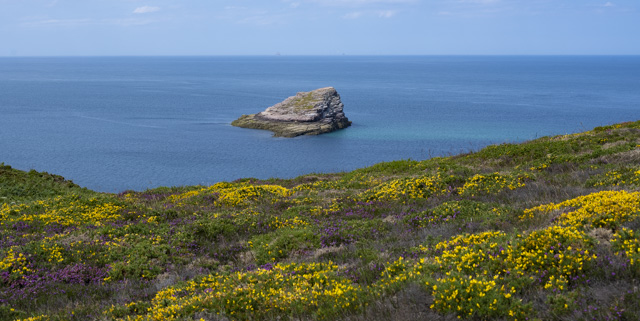
A few kilometres up the coast from the campsite along a clifftop footpath through gorse and wild flowers is the actual Cap Frehel point, atop 70m cliffs. There are three lighthouses here, progressively getting bigger through time, with the biggest built in the 1950’s.
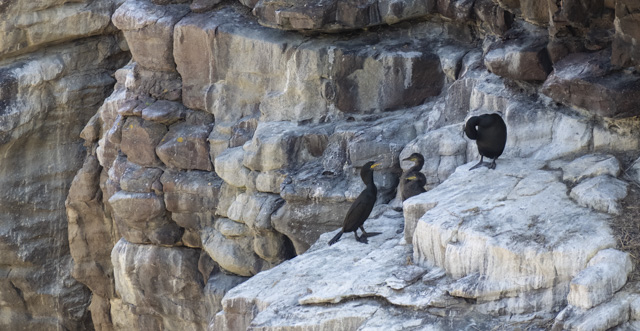
Just off the cape is a pinnacle covered with seabirds and lots of baby European herring gulls and Great Cormorants on the nest.
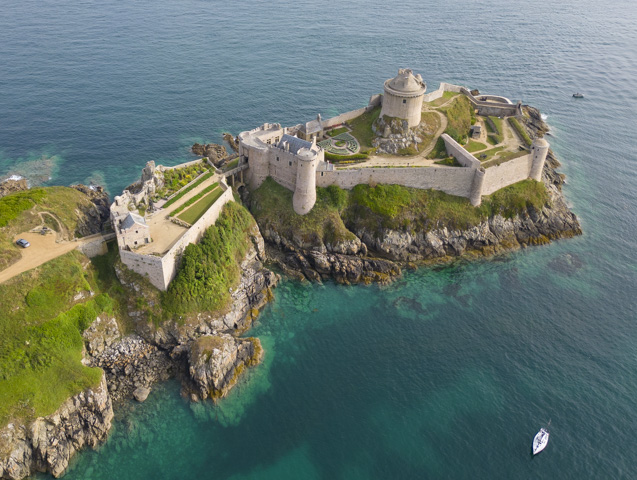
A little way further down the coast from the lighthouses and nesting seabirds is the castle, Fort La Latte. This was built in the 14th century and was used defensively until the 1800’s when the evolution of weaponry rendered it obsolete.
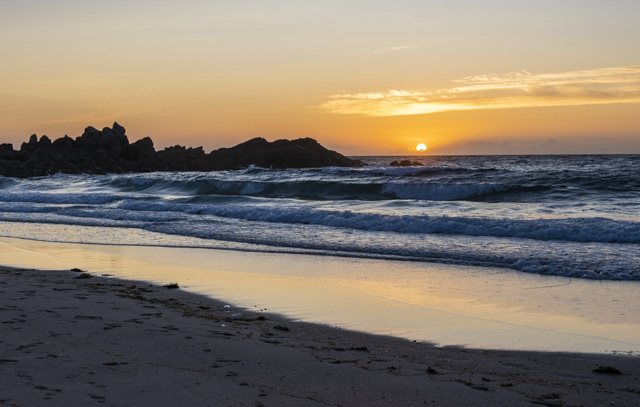
We initially planned to spend 2 nights here but the weather was so hot that we extended our time in this little paradise. It became something of a joke with the woman at reception when each morning we would arrive and extend our stay by another day. We ended up spending 5 nights here and loving our little beach holiday.
Mont-St-Michel
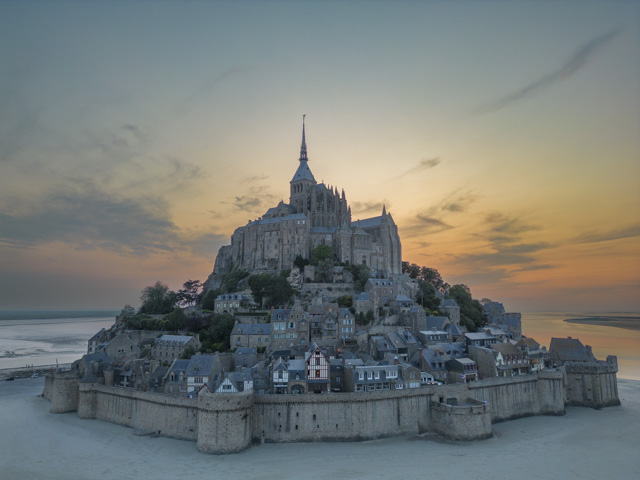
Our last stop off in Normandy was a visit to the ultra touristy island of Mont St-Michel. Only a week earlier the French tourist authorities had been complaining that it had been overwhelmed with tourists and that people should not visit.
Bearing this in mind we came up with a plan to visit and avoid as many tourists as possible. We would visit in the evening and first thing the next morning to try and get it as its best. As our base we used an Aire that is 5km away from the island with a handy cycle path that runs straight there.
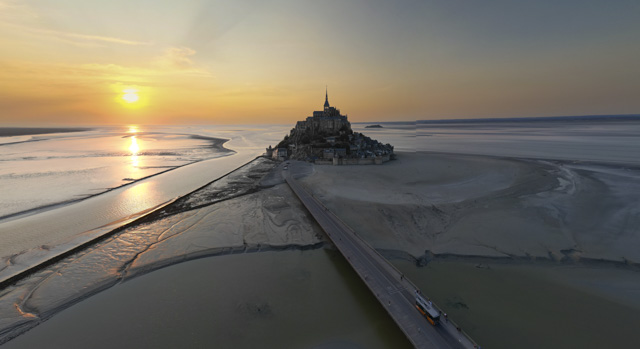
Mont-St-Michel is a small rocky island in a bay on the North coast of Normandy. It has been built up with an Abbey at the top and high walls around the perimeter. The crypts built under the abbey were designed to support the weight of the church itself at the top of the island. It was connected to the mainland by a causeway (built in 1878) that flooded at high tide but over the years sand and silt threatened to turn the island into a peninsula so this was replaced by a bridge in 2014.
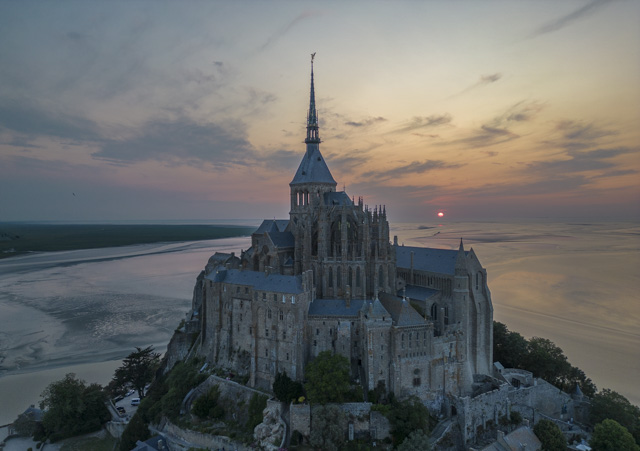
The bay around Mont-St-Michel is shallow and the tides move very fast – it has been said to move as fast as a galloping horse but while we were there the water was fairly low and a large sandy beach was in evidence around the island.
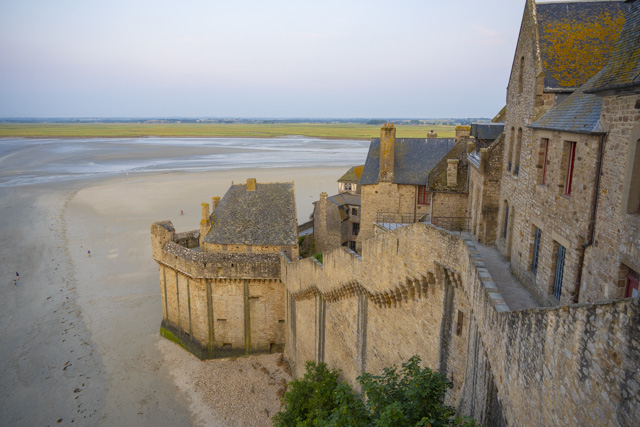
The first chapel was built on the island in 708 but it wasn’t until it was gifted to the Benedictines in 966 that work started to turn it into an ecclesiastical fortress which resisted blockades by the English three times during the hundred year war.
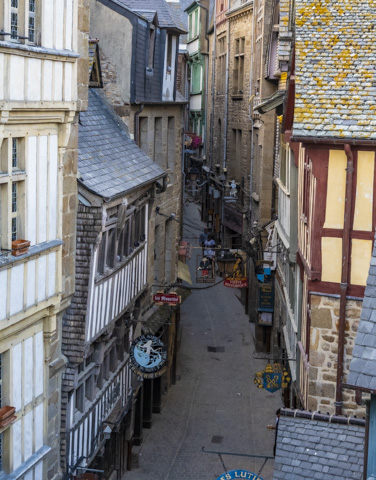
The main gate to the island is at sea level and the narrow, cobbled Grande Rue leads uphill to the Abbey. The street is lined with medieval buildings, now mostly housing restaurants and gift shops, and sweeps past a small church dedicated to St Michel.
The Abbey itself is entered by a steep set of stairs via a terrace with impressive views across the bay. The Abbey Church is the first part of the building that you enter.
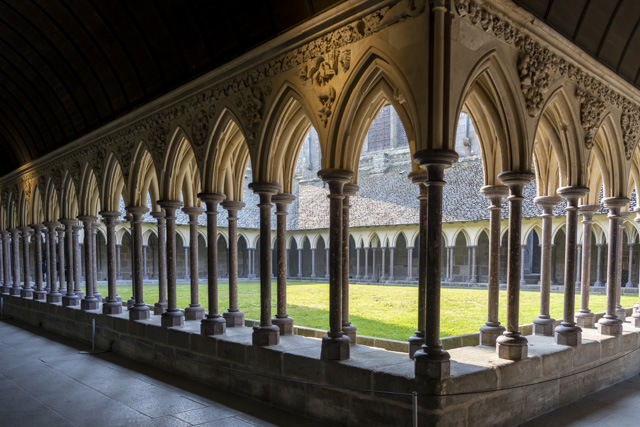
The tourist path through the abbey leads into the cloisters and from there around the refectory, through the crypt and into the guests hall.
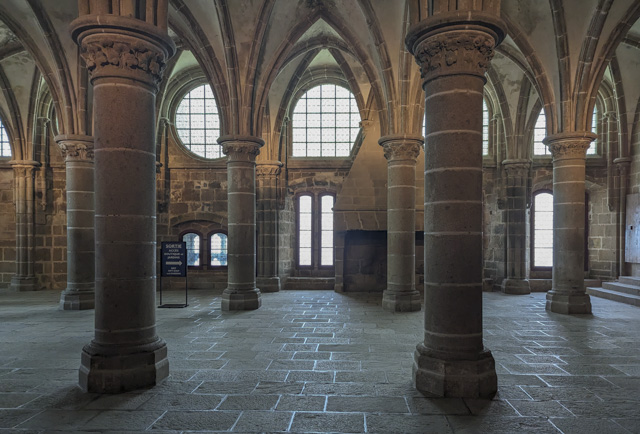
The rooms where the monks would have lived and worked were very austere but those where visiting nobility were received have large fireplaces and would have been much more comfortable.
In 1789 after the revolution monasticism was abolished and the Mont was turned into a prison.
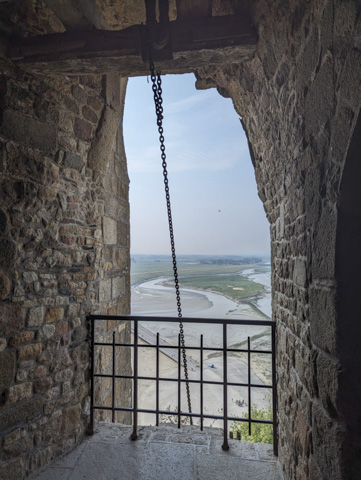
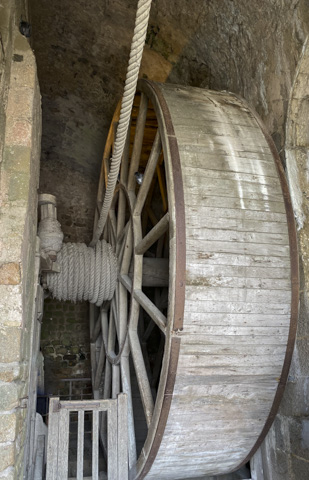
The large wooden wheel and pulley was a relatively new addition, only added in 1820 when the Abbey was turned into a prison. It was used like a hamster wheel with four prisoners walking two abreast inside the wheel in order to hoist up supplies from the bottom of the island.
 FromAtoB