Operation Overlord
After enjoying relaxing by the river for a few days in Pont d’Ouilly, we were persuaded to leave by torrential rain flooding our spot, although driving in it was about as much fun as sitting in it. Thankfully it eased towards late afternoon and having made it to the city of Caen (the capital of the Calvados region of Normandy and a sizeable town of 500,000 people), we parked next to the Caen Memorial and jumped on our bikes to explore the town.
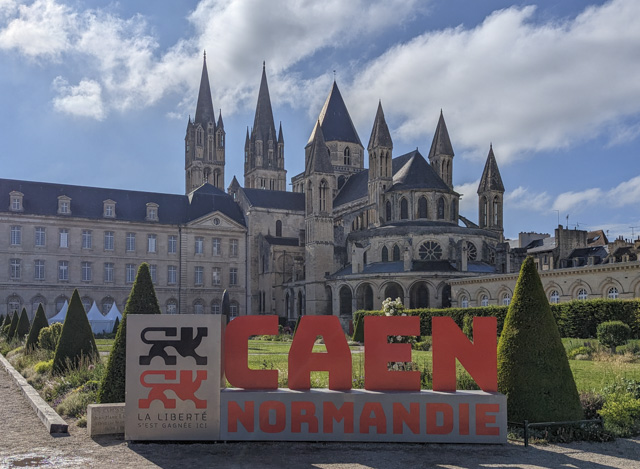
Caen suffered a lot of damage during WWII, 70% of the city was destroyed during its liberation in the Battle of Normandy but the impressive Men’s and Women’s Abbeys survived along with the impressively turreted adjoining church, Eglise St-Etienne. The Men’s Abbey is at least twice the size of the Women’s Abbey and is much grander.
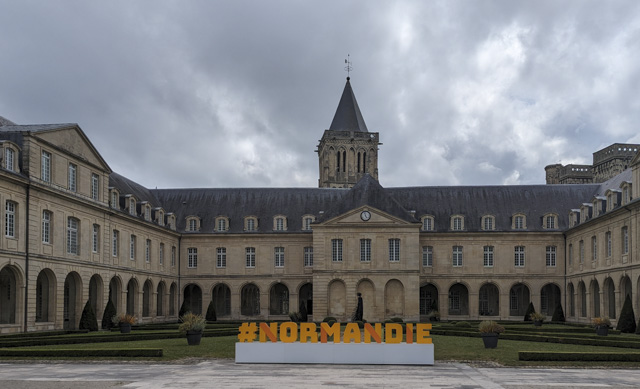
It is possible to visit both abbeys but the only areas that can be visited are the cloisters and some small exhibitions.
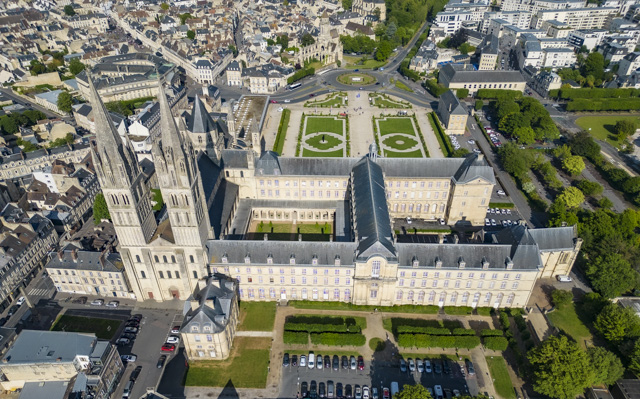
The Eglise St-Etienne is more like a cathedral it is so big and notable for containing the final resting place of William the Conqueror. However, his tomb has been sacked over the years and now all that apparently remains is one femur!
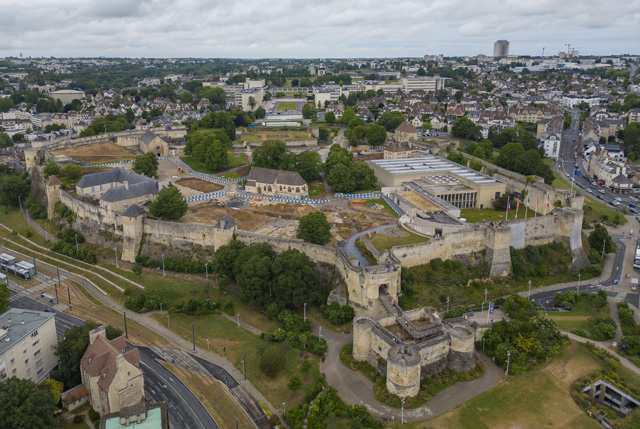
In the centre of Caen we visited the old castle, Chateau de Caen – but only the walls survive to this day.
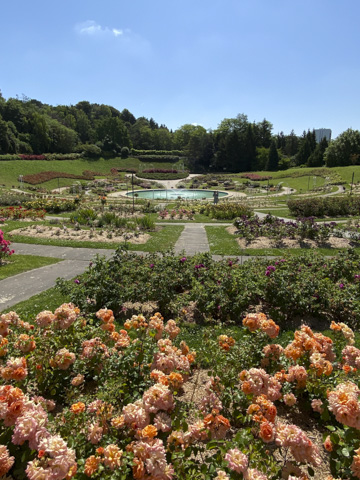
Next to the Caen Memorial is a D-Day museum but it is quite expensive so we elected to skip this one, knowing that we were due to visit more sites and museums in the coming days. Caen also has a beautiful park, the Parc du Colline aux Oiseaux which has a stunning rose garden, lakes and a panoramic view of the city.
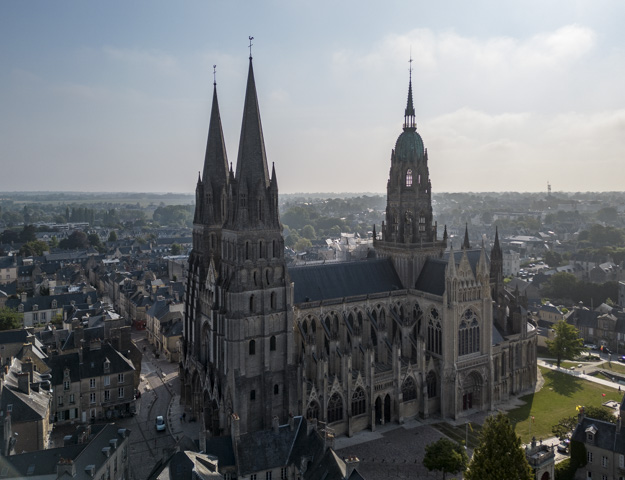
From Caen we moved onto Bayeux which is a lovely medieval town. Of course it is most famous for the tapestry which shares its name. The cathedral here is very grand and the Bishop when it was first built, Bishop Odo, was Willliam the Conqueror’s half-brother and is depicted fighting in the Bayeux tapestry.
The Bayeux tapestry itself is housed in a former abbey and is displayed in a low-lit room (to best preserve the fabric). As part of the admission price you are given an excellent audio guide which walks you through each scene of the 70m long tapestry. A further two rooms upstairs house a museum and a cinema running a short film at regular intervals about the tapestry and the history at the time.
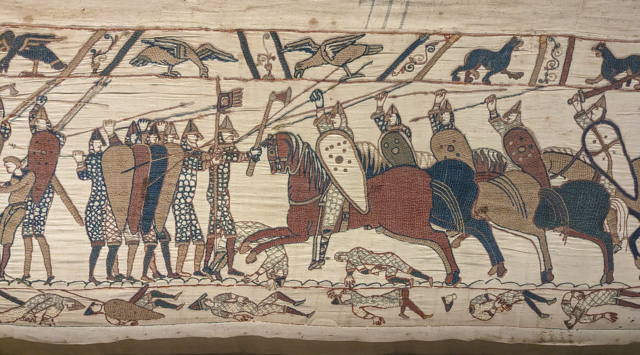
We thought the museum was absolutely excellent and really enjoyed seeing the tapestry which is in amazing condition for being nearly 1000 years old.
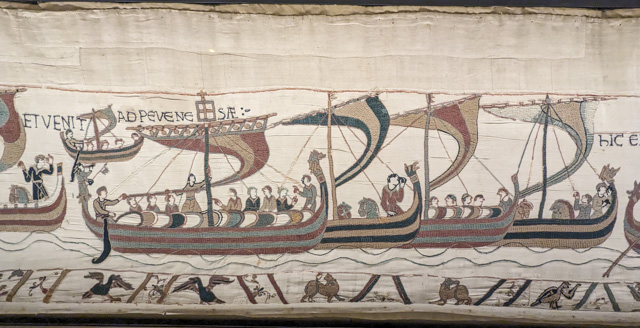
As an add-on to the ticket for the Bayeux tapestry an additional 2 Euros gets you admission to the Battle of Normandy Museum as well. We were parked in the Aire attached to this museum so we were well placed to check it out.
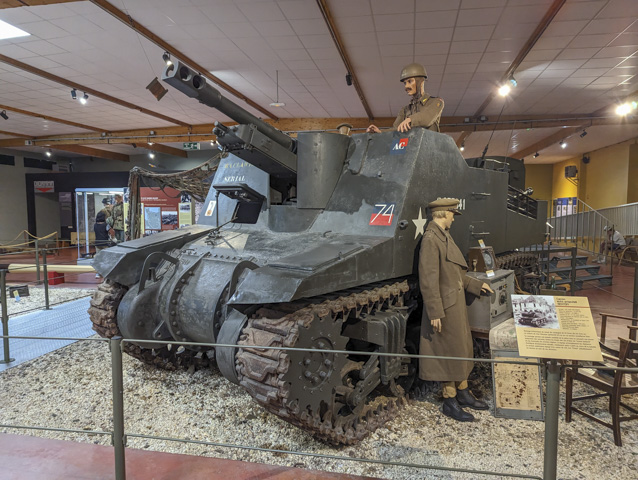
This museum uses a lot of narrative panels, alongside diaramas of soldiers and equipment, to explain D-Day (codenamed Operation Overlord) and the following 100 day war in Normandy. It was definitely worth the visit and we came away with a good overview of the events around the Allied invasion of Europe.
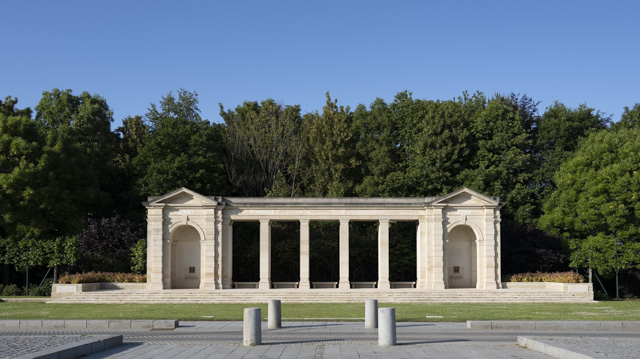
A few minutes walk from the museum is the Bayeux Commonwealth Cemetery. This is the largest of the 27 Commonwealth Cemeteries in Normandy. It contains 4,648 graves as well as a memorial to a further 1,807 soldiers with no known graves.
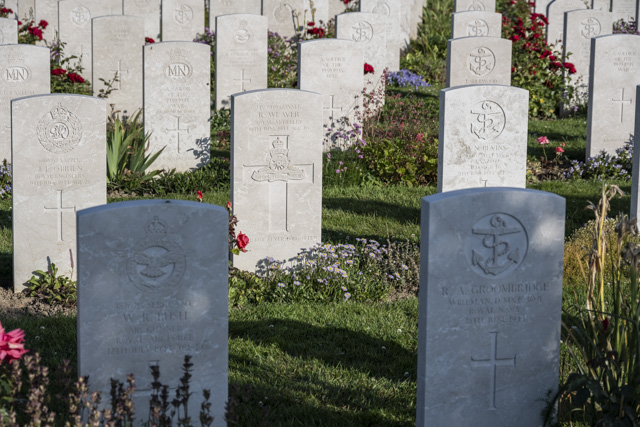
The graves were initially erected with simple crosses but in the 1950’s these were replaced with white headstones with the details of the person and a carving of their divisional emblem. They are beautifully kept with flowers planted around the graves.
It is a very moving and humbling experience walking through the cemetery and contemplating what these soldiers and sailors went through and the horrendous waste of life that war produces. The ages of the soldiers that died looked to range from 17 years to those in their sixties but the majority seemed to be very young.
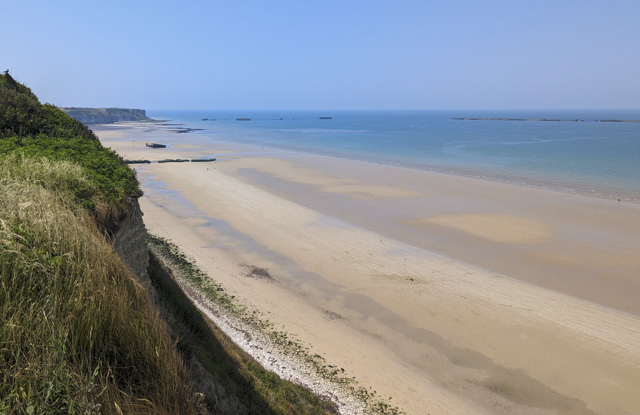
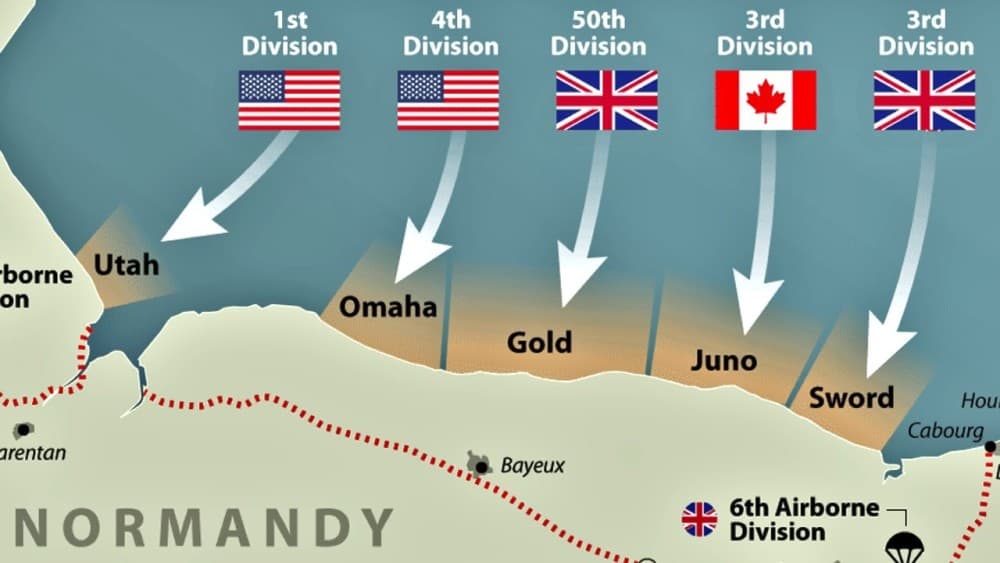
We moved from Bayeux towards the coast and the D-Day beaches. The D-Day landings were split into two halves – with the Americans in the West landing on Utah and Omaha beaches and the British and Canadians in the East on Gold, Sword and Juno beaches.
We stopped first at Gold Beach where you can see the remains of one of the massive Mulberry harbours that the British constructed after the first landings to enable them to bring in vast amounts of men and machinery.
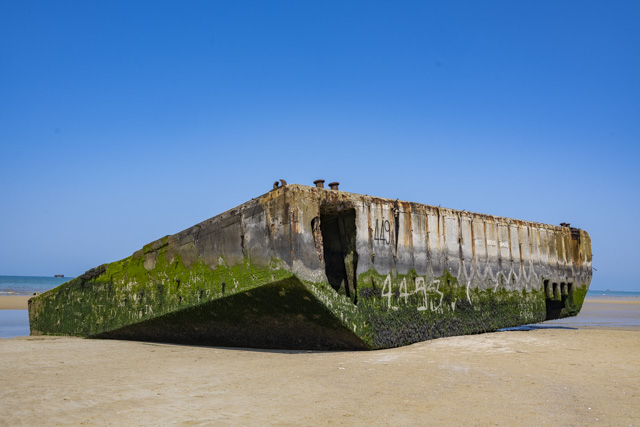
There were initially two of these harbours. The second, in the US sector, was destroyed by a big storm shortly after it was built.
We stayed the night in Arromanches, at the site of Gold Beach, parked on top of the cliffs overlooking the remains of the Mulberry harbour and in the morning moved further down the coast to Omaha Beach.
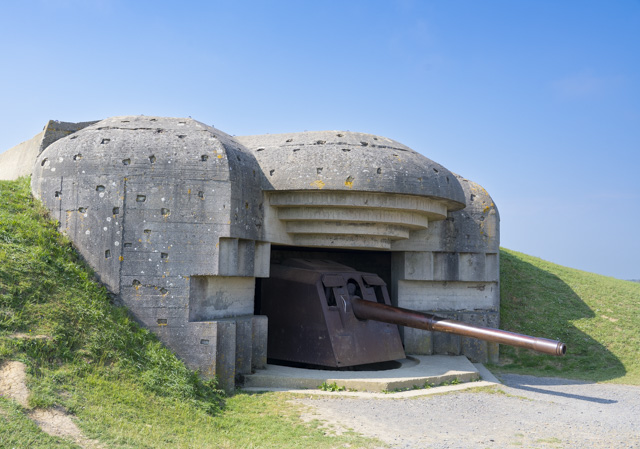
On our way to Omaha Beach we stopped off at Longues-Sur-Mer, the site of four intact German concrete gun encasements, still housing the artillery guns, which formed part of the Nazis’ Atlantic Wall.
Upon reaching Omaha Beach we find the excellent Overlord Museum and the absolutely enormous American Cemetery where 9,386 headstones, overlooking Omaha Beach, mark the graves for all the US servicemen who lost their lives in the Battle for Normandy.
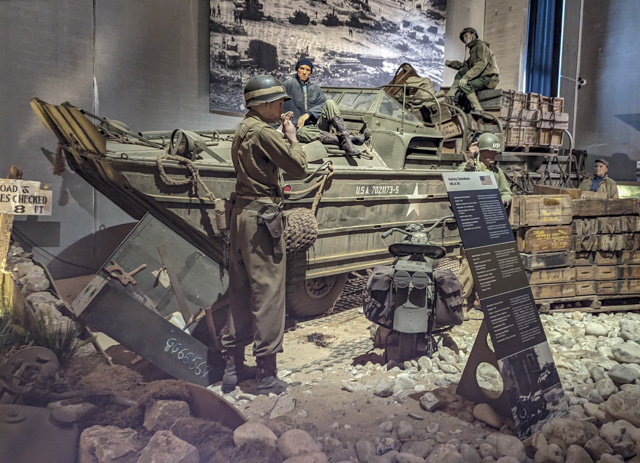
The Overlord museum is another museum dedicated to the D-Day landings which had a lot of military hardware recovered from the period, all set up in dioramas from the Battle for Normandy. However the highlight of the museum was a corridor dedicated to photos and stories of those who fought in the D-Day landings and their recollections. This really brought home the terror, brutality and chaos of the war.
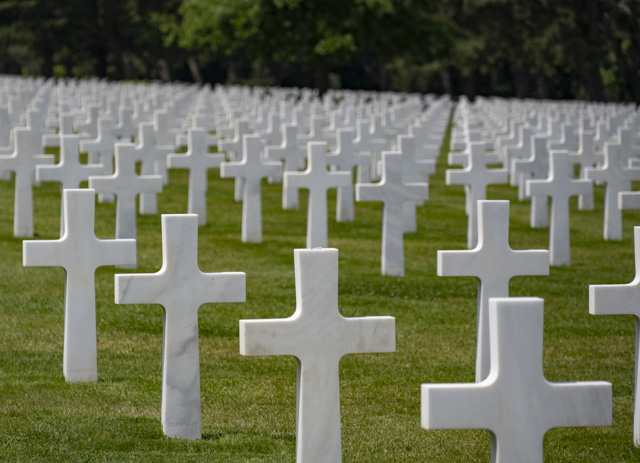
The American cemetery was immaculately kept with fresh cut grass between the gravestones and an army of gardeners working away. The crosses (and stars for the Jewish) of the headstones seem to stretch forever in this massive graveyard.
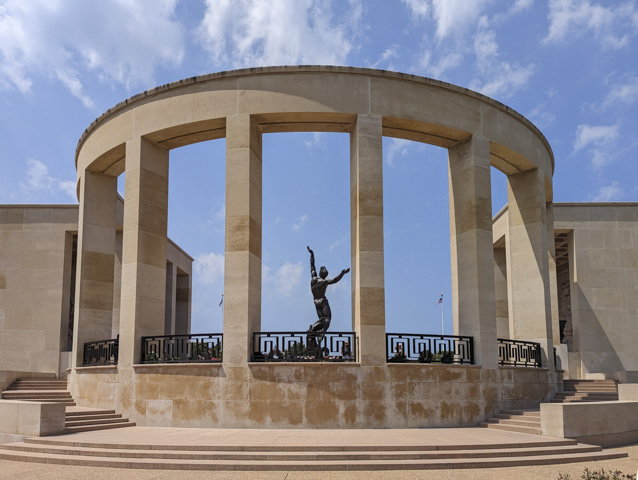
Our time in this area of France has taught us a lot about the events of D-Day and the horrors associated with it. Seeing the graves of the brave servicemen who were fighting to liberate Europe is something that we feel everyone should try to do once in their lifetime as it is a stark reminder that we must do everything we can to avoid anything like this happening again.
 FromAtoB