Heading For Spain
From Carcassonne we were heading south with Spain in our sights. Having spent most of our time in France, we opted for a change of scenery and decided to travel across the Pyrenees on their Southern side in Spain, towards the Atlantic coast.
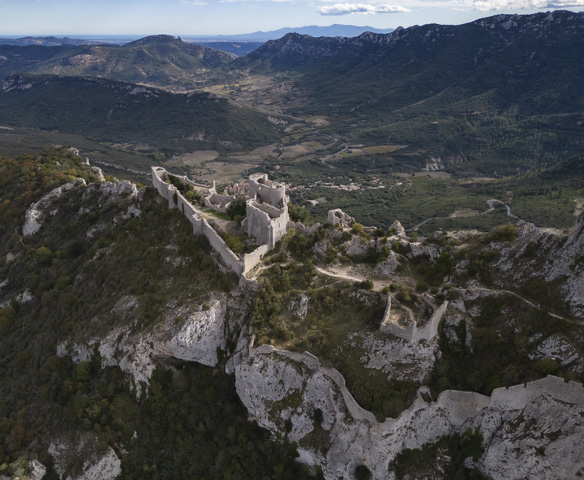
Our first stop was the small town of Peyperteuse, notable for its castle high above the village on a knife edge ridge. This is one of a series of Cathar castles that are called the Five Sons of Carcassonne all sited on rocky peaks in this region. Peyperteuse is known as Celestial Carcassonne because it is the biggest of the castles. First records of its existence are from the 1st Century BC but the first historical references to the castle are from 842.
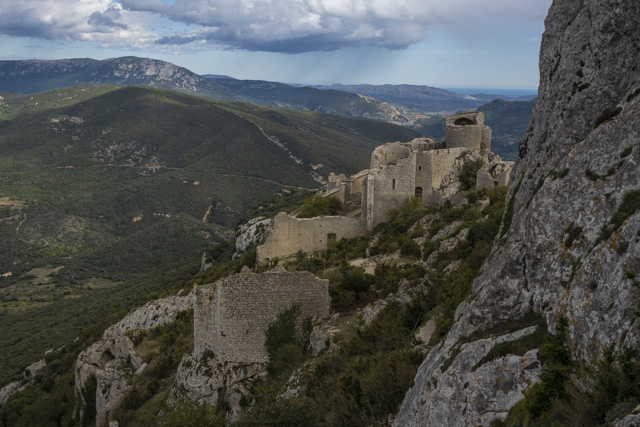
The castle itself was made of two parts with the upper castle only accessible from the lower one by a very narrow stairway. This has got to be one of the most unassailable castles that I have ever seen and not surprisingly it was never conquered.
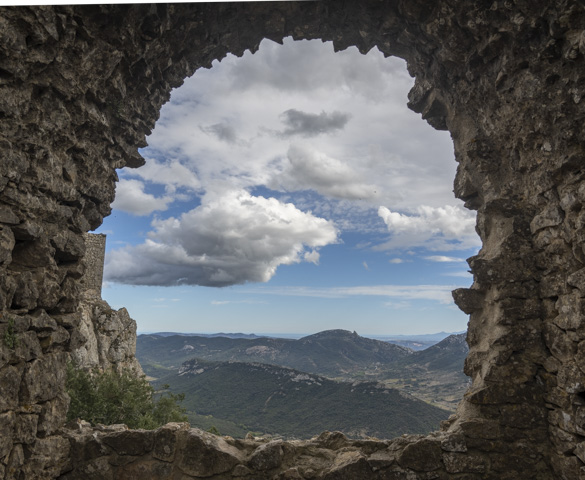
The castle acted as a border post to protect the Kingdom of France from the King of Aragon’s aggression. After the treaty of the Pyrenees in 1659 and the end of war between Spain and France, the castle lost its strategic importance.
After visiting Peypereuse we started heading towards the Mediterranean coast, for the first time, but not before we stopped off at Perpignan.
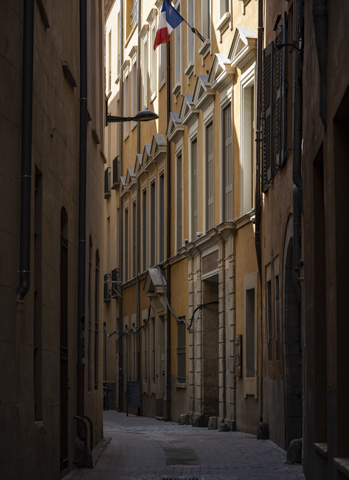
Perpignan has the feel of a Catalan town and for good reason, as historically, it was the capital of the Kingdom of Mallorca, which was a Mediterranean empire stretching from The Balearic Islands to as far North as Montpellier.
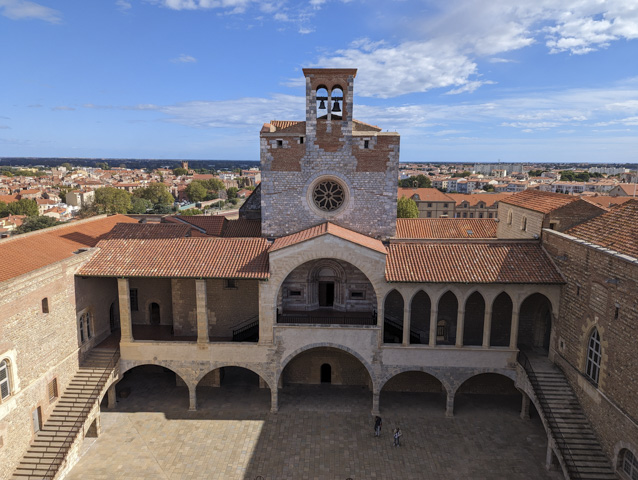
The biggest attraction in Perpignan is the massive Palais du Rois de Majorque or the Palace of the Kings of Majorca. This is a fortified palace in the gothic style organised around three large courtyards. It was completed in 1309 by King James II of Majorca who moved the capital of the Kingdom of Majorca to Perpignan in 1276.
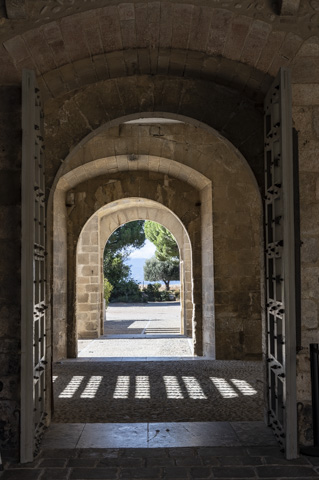
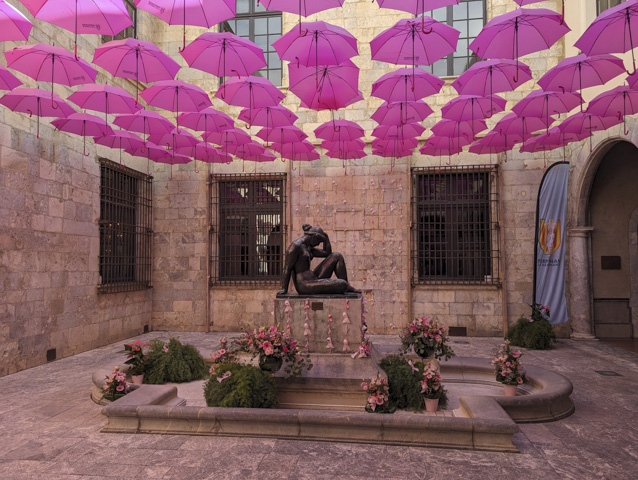
As well as visiting the Palace we cycled around the town and enjoyed immersing ourselves in the buzzy weekend culture.
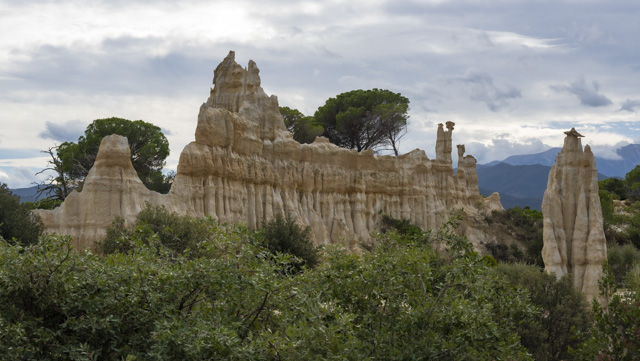
After leaving Perpignan we headed to the fairy chimneys of Les Orgues D’Ille Sur Tet. This felt like a little bit of Utah right in France with some Hoodoo formations and a really nice short walk around the area.
From here it was only a short stop on the way to the seaside town of Port Vendres, a working port close to its better known neighbouring town of Collioure. The local council provides a lovely motorhome parking area next to the port, which is just a short cycle along the headland to Collioure.
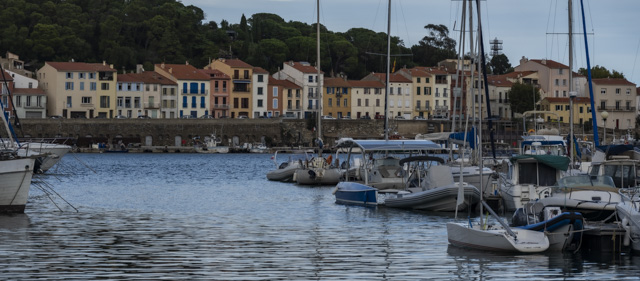
Port Vendres has an attractive harbour and in the summer season I expect it would be buzzing with lots of restaurants and bars along the harbour front. However out of season most were closed, but we did manage to find a bar for an early evening libation!
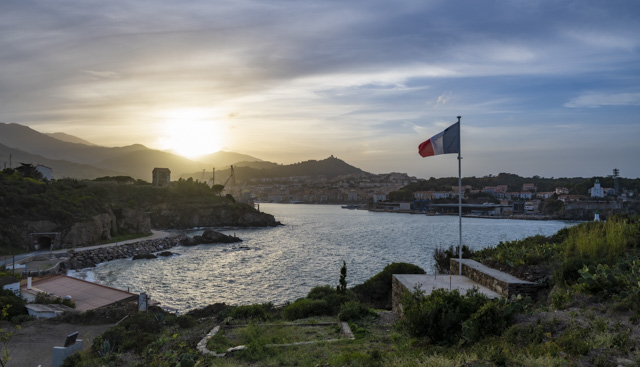
Our reason for staying in Port Vendres though was to visit the town of Collioure.
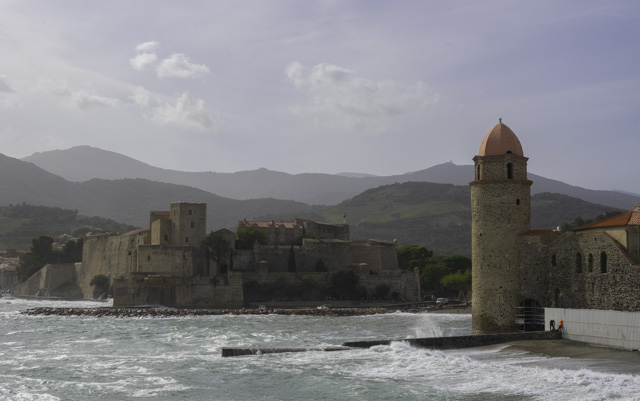
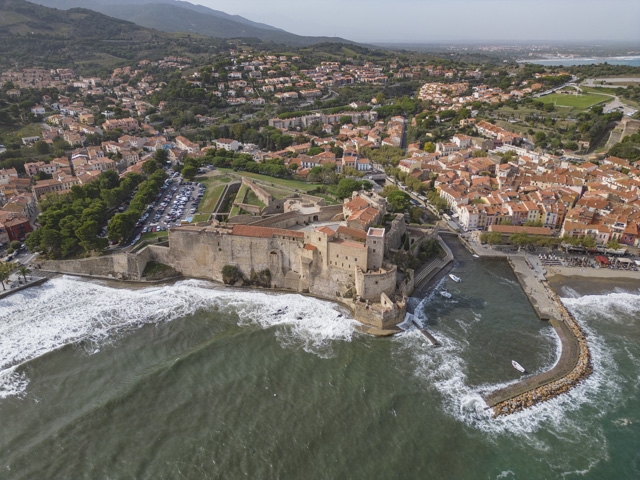
Collioure is an attractive little town based around a large fort which was built in the 13th century.
While Port Vendres is a beautifully protected harbour Collioure provides little protection for boats. It was packed with tourists, even out of season and there were lots of people swimming, enjoying the big waves even from behind the sea wall.
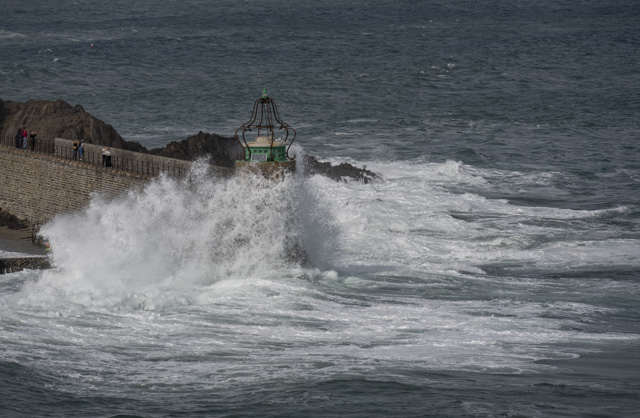
We sat and had a beer in the sunshine watching the waves and soaking up one of the last days of summer!
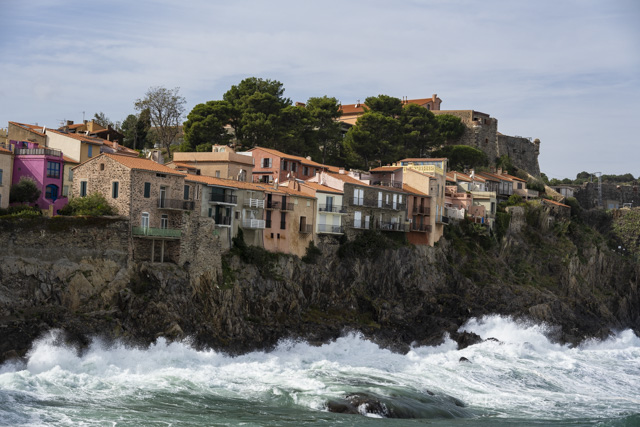
We also visited the castle, the Chateau Royal, which was built by the Counts of Rousillion and the Kings of Aragon. Later on in its history it was occupied by the Mallorcan court who ruled over Southwestern France and Northern Spain.
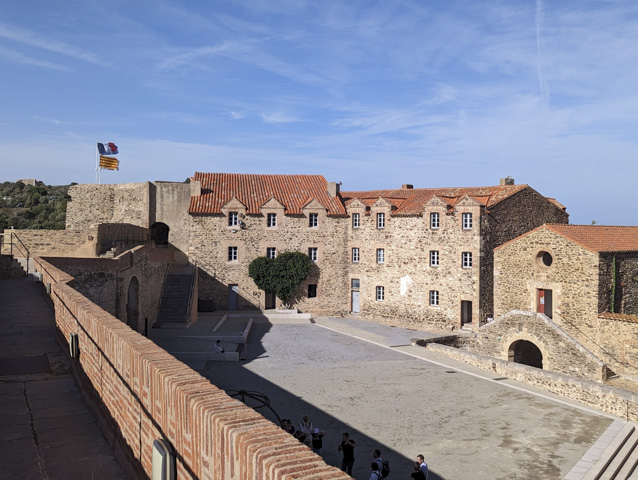
The fort was not furnished inside but the fortifications were very impressive, with very thick walls and it’s easy to see how this would have been daunting to attack.
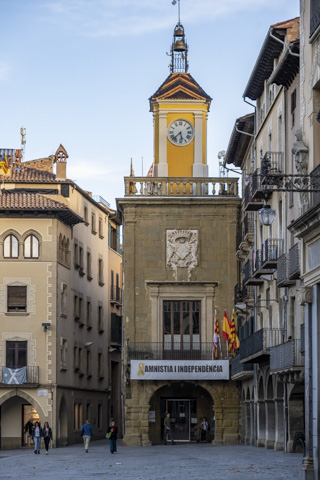
From Port Vendres we headed South across the border into Spain to the town of Vic, in inland Catalonia.
There is a lovely Aire here with all the services and an added bonus of hot showers all for only €5 per night, and it’s right on the edge of town.
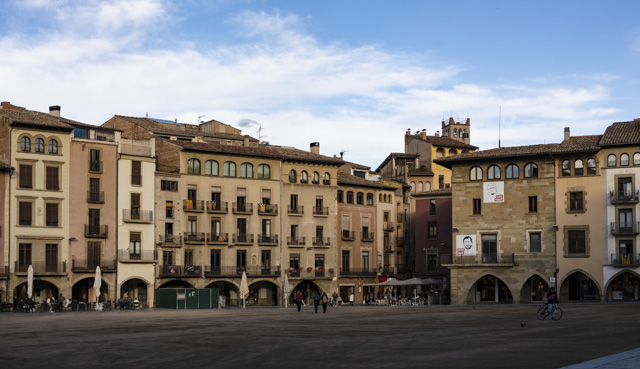
Although it isn’t a huge tourist destination, Vic is a lovely town and the local tourist office have put together a really good walking map of the town to show off its beautiful historic buildings, including to our surprise, a Roman Temple.
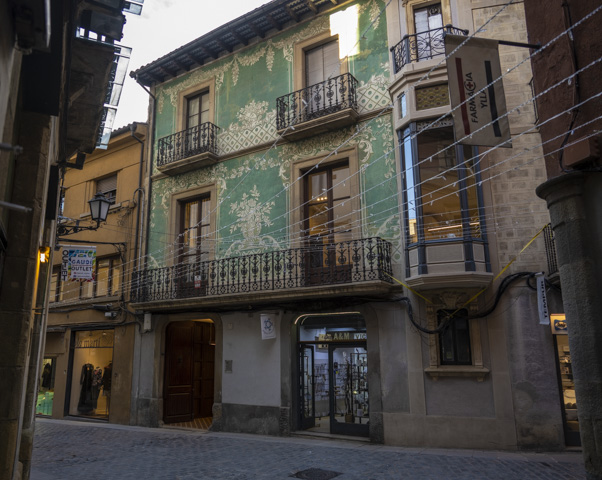
Vic was a great first stop in Spain as we tried to remember our rusty Spanish and substitute the Mercis and Bonjours of France with Gracias and Buenos Dias of Spain.
 FromAtoB