Bosnia: Into the Unknown
Crossing into Bosnia from Croatia couldn’t have been easier. In fact we had to ask both the Croatian side and the Bosnian side to stamp our passports as neither seemed inclined to do so. Other than that, we were through the border very quickly.
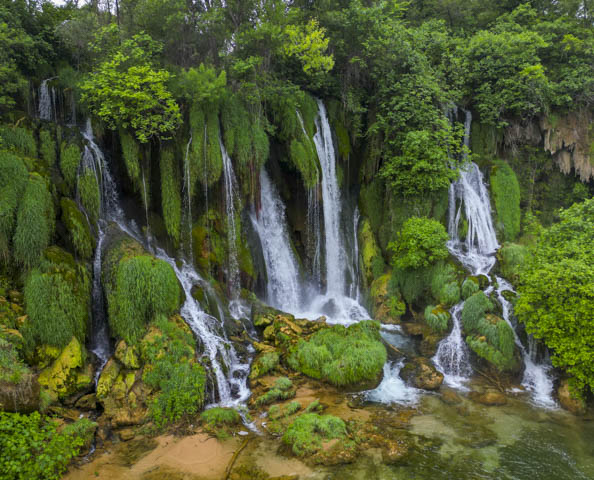
We noticed a lot of billboards in Southern Croatia advertising the Kravica waterfalls, which are just across the border and so that was where we were intending to spend our first night in Bosnia
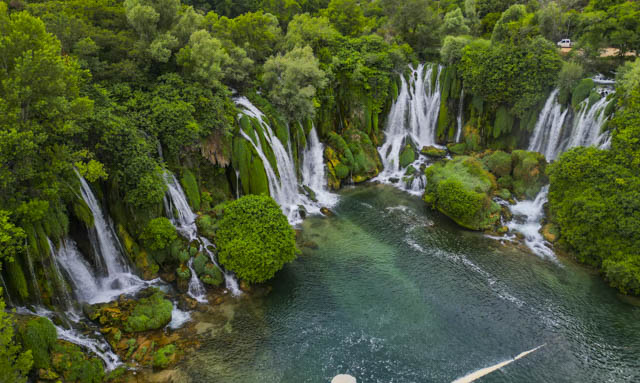
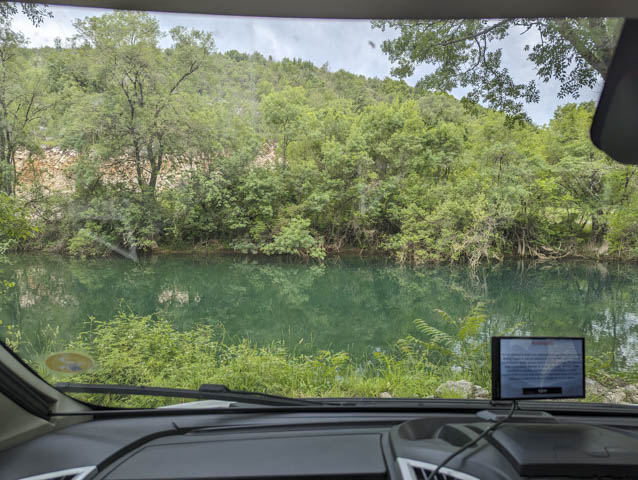
After paying an entrance fee for the waterfalls and indicating that we were hoping to spend the night, we by-passed the customer car-park and were waved through a barrier onto a very steep gravel road down to the Kravica Autocamp. This is basically a field alongside a lovely tree-lined green river, which was only a couple of hundred metres away from the Kravica waterfalls.
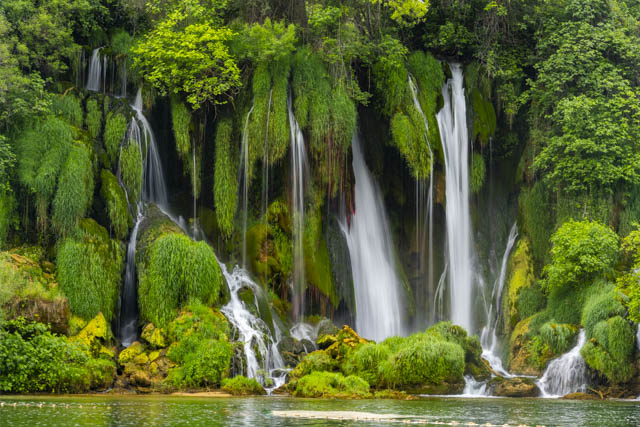
Unbeknown to us, we had arrived at Kravica on a local public holiday so it was much busier than we had expected, with children swimming in the chilly water and families picnicking and sunbathing around the edge of the lake. It wasn’t too bad though and after having a wander around ourselves we relaxed at a lakeside restaurant for a couple of drinks.
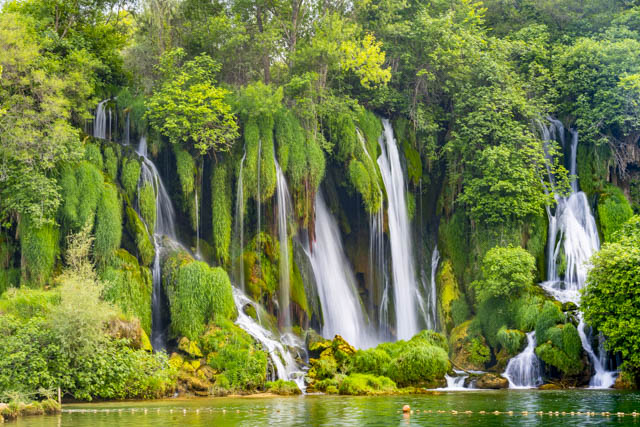
The waterfalls feel just like those at Plitvice or Krka in Croatia, except that they are all in one place so it’s quite nice to be able to sit down at one of the restaurants and enjoy the view. So our couple of beers turned into dinner, in the form of a big shared plate of Cevapi (Balkan sausages).
We also took advantage of being parked right on the river to jump in for a swim. It didn’t last very long as the water was very cold but it cooled us down nicely. We have learnt that a lot of the rivers in Bosnia are spring fed not too far away and so the water coming from underground is super cold.
This was a great introduction to Bosnia but our next stop was a little further inland at the town of Blagaj. However, before reaching Blagaj we stopped off at an old town called Pocitelj (the names of the towns in Bosnia are proving somewhat challenging to pronounce!).
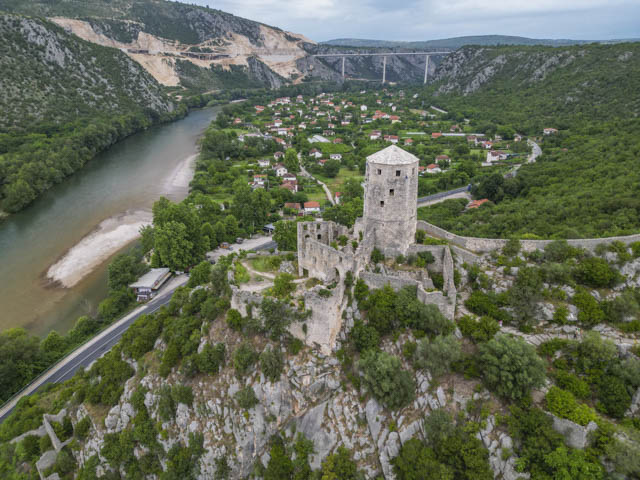
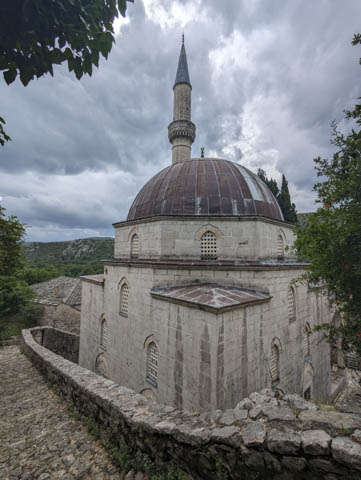
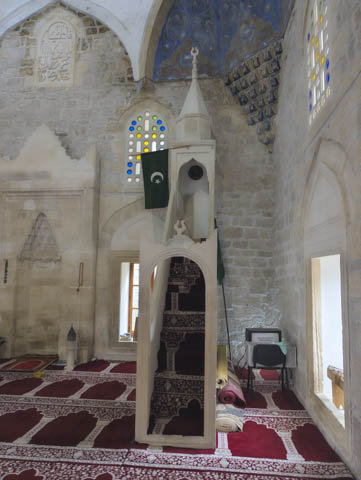
Pocitelj is an ancient town that is built into the hillside and topped by a fortress. We climbed up to the fortress, stopping in on the Hajji Alijia Mosque on the way up. This mosque was built in 1563 but was badly damaged by Croatian forces during the war in 1993.
Just next door to where we were parked at Pocitelj was a bakery, so we popped in to see what sort of delights a Bosnian bakery has to offer! We came out with a meat Burek, which is a traditional Bosnian snack consisting of minced meat and onion in filo pastry. It’s absolutely lovely and is somewhat reminiscent of a pasty.
Having devoured the Burek we got back on the road and reached our destination for the night – a campsite just outside of Blagaj town, aptly named Camping Blagaj, where we had the most amazing welcome.
After parking up we were shown around the campsite, ending up in their restaurant/bar, which sits alongside a very fast flowing (and very cold), beautifully blue, river. They then proceeded to offer us a welcome drink of our choice on the house (pints of beer on draft – thank you very much), and then appeared with a fruit plate, two slices of cake and a bottle of wine for us to take away!
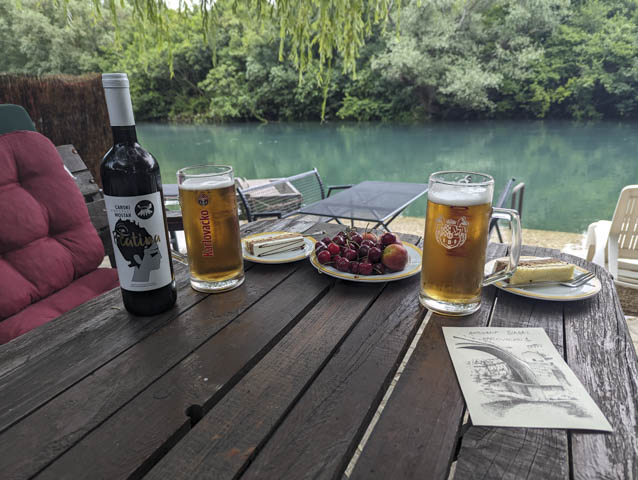
What an amazing welcome. We were really blown away. The campsite itself was really well setup with power, water and disposal on each site. If this is the standard of camping in Bosnia we are going to love it here.
Our reason for visiting Blagaj was to see the Blagaj Tekke, a historic Sufi monastery that is built into the cliffs by the source of the river Buna.
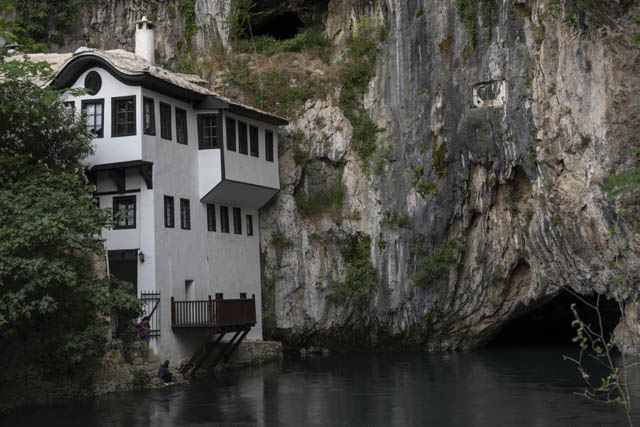
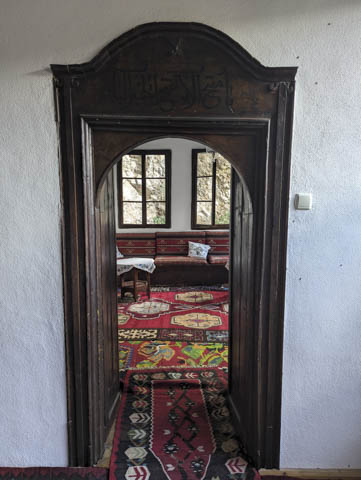
The classic view of the Tekke is from across the river, where there are a number of restaurants but you can also go inside the building itself. The rooms are very small but they have been updated a bit with electricity and heating. The floor is carpeted with lovely rugs which is a good thing as you have to remove your shoes to go inside.
Blagaj is only a few kilometres from the town of Mostar, which is perhaps the most well-known tourist destination in Bosnia. It is difficult to separate Mostar in our minds from the images of the famous bridge being blown up in the war that engulfed this region in the 1990’s. But the bridge has been rebuilt in the original style and despite the abandoned buildings and walls pockmarked with bullet holes the war is definitely in the past.
Before reaching Mostar we stopped at a small unmarked turn-off at the side of the road. The road is blocked but a path leads round the gates and after a couple of hundred metres a big black entrance built into the cliff comes into view.

This is a underground hangar for fighter jets that was used during the cold war by Yugoslavia. The hangar is now abandoned but makes a good place for some Urban Exploring. In total the hangar is almost 1km long and is designed to protect the fighter jets that would have been stored there from a nuclear blast as it is buried under a hill.

After this brief stop, we continued on to Mostar where we parked at the University and cycled into the old town.
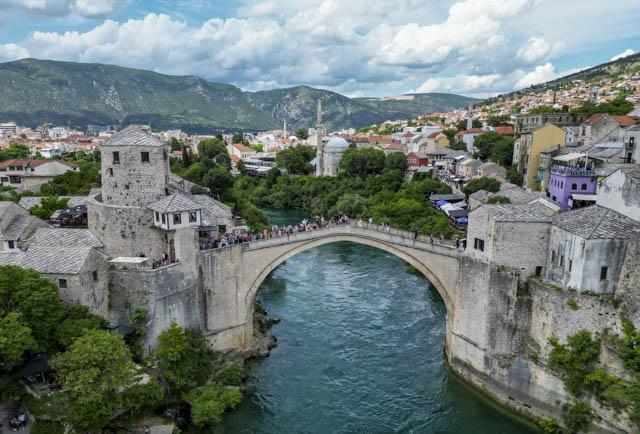
Mostar old town is very pretty but actually quite small, so even at the beginning of June it was very crowded with tourists (check out the photo below with all the tourists lining the bridge). The bridge, which is a UNESCO world heritage site, was built in the 16th century but as mentioned earlier it was destroyed in 1993 and the new ‘old bridge’ was reopened in 2004.
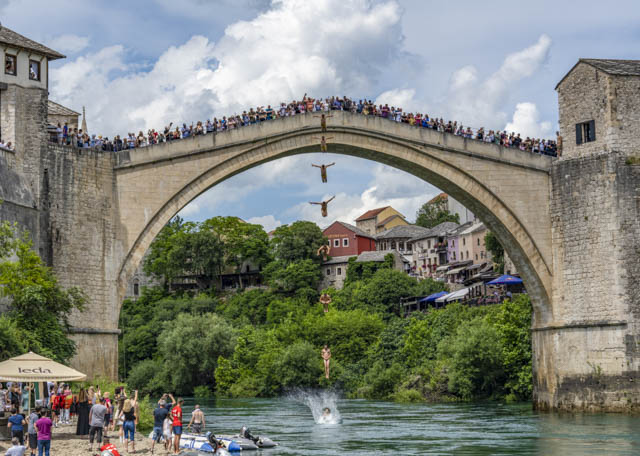
Members of the Stari Most Bridge Diver’s Club put on a show for tourists by diving off the bridge when they have collected enough money from onlookers. We were lucky enough to time our visit to watch one of the divers. It was definitely a case of rather you than me, especially given the temperature of the water.
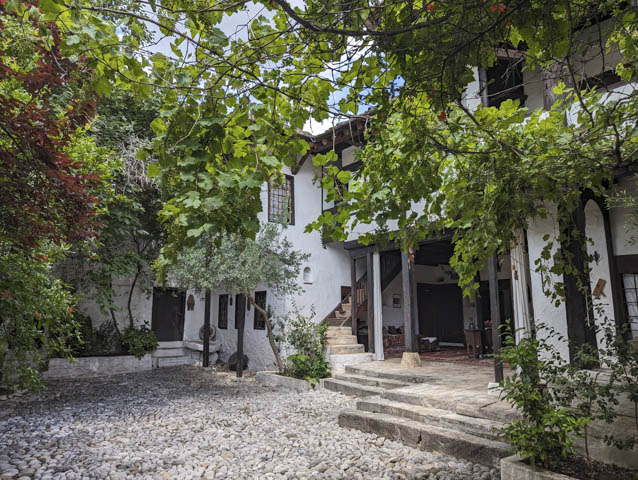
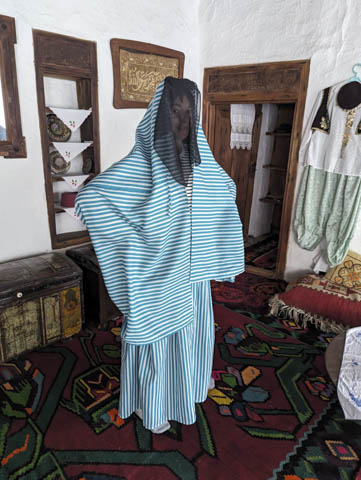
After sitting down for a quick lunch of Burek at a small café near the bridge, we headed to one of the lesser known attractions of Mostar, the Kajtaz house. This was one of the oldest merchant houses in Mostar, which has been preserved as a museum. This particular house belonged to a Judge and, as was typical for that time, would have been split into male and female quarters. Unfortunately the male quarters burned down but the female quarters has been beautifully preserved.
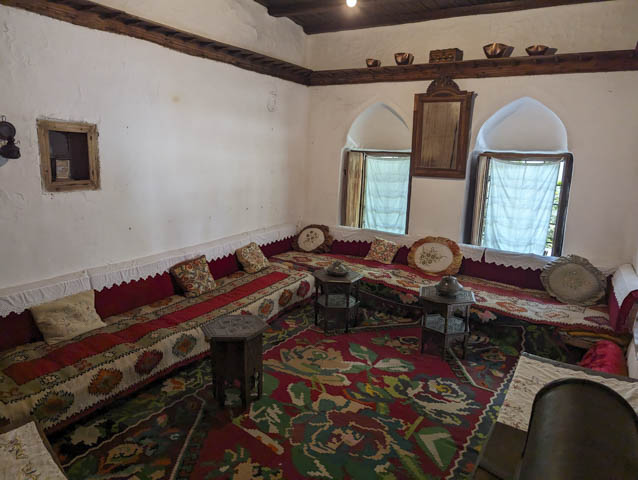
We were given a really informative and excellent tour of the building by a young woman who spoke almost perfect English and who convinced Sarah to try on some typical clothes from that period.
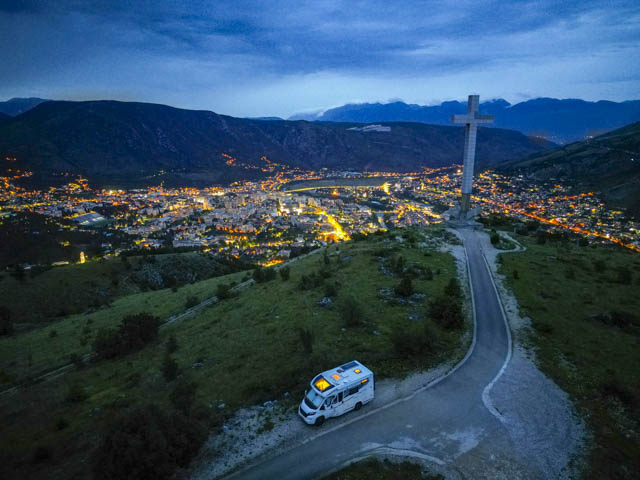
We had planned to stay the night at the university campus but there was a lot of activity going on when we returned to the camper, so in search of a quiet night, we drove up the steep and narrow road to the large cross that sits on the hills overlooking Mostar. This is where the Croatians shelled the city from in 1993 and you can still see the emplacements that they used to do this. We had a great view over the hillside and more importantly, we had a very peaceful night.
 FromAtoB