Onwards through Bosnia
Having hit the highlights up to Mostar, we decided to do a loop through to the East of Bosnia next, so reversed course and headed South East towards the town of Trebinje.
First however, we made a pit-stop at the town of Stolac where we drove into the town, got snarled up in the one tiny street with cars lining the road, couldn’t park and ended up doing an about turn and heading back to the outskirts, where we found a coach car park instead. People in Bosnia have an interesting approach to parking, meaning that they just seem to leave their car anywhere they like, at any angle, regardless of actual parking spaces. It can make driving through narrow roads a little challenging but on the plus side the roads generally aren’t very busy – except for Stolac on this particular morning!
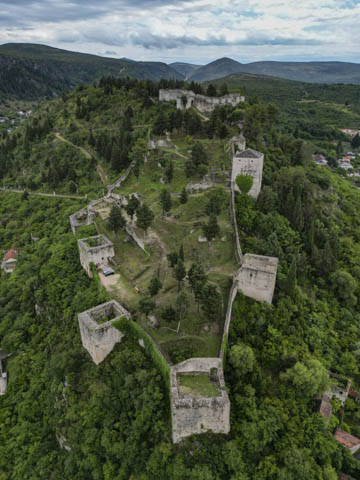
Stolac has two interesting things for visitors to see, the first is the castle which sprawls across a rocky outcrop above the town.
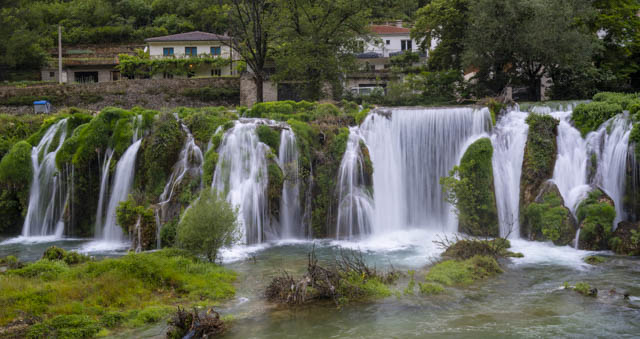
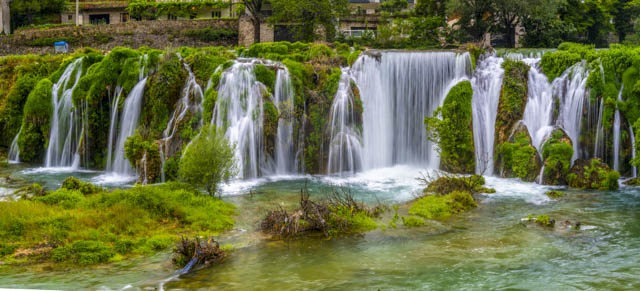
The second is a waterfall on the river that flows through the town. The medieval centre of the town is so small that if you blink you’ll miss it.
We reached the town of Trebinje in the early evening but rather than drive straight in, we parked up at the very peaceful Tvrdos Monastery for the night, just outside town.
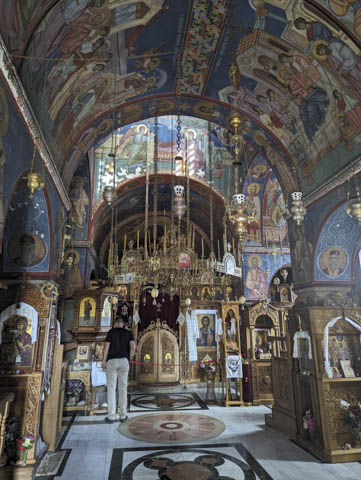
This was our first visit to a Christian Orthodox church and it was very ornate inside, with beautifully painted walls and a huge golden chandelier hanging down from the painted ceiling (which, having now seen several, seems to be the norm for these churches).
After spending a quiet night (not always the case when free-camping), we drove into Trebinje and found parking in a residential area by the river that flows through the middle of the town and from there, it was a quick cycle into the pretty town centre.
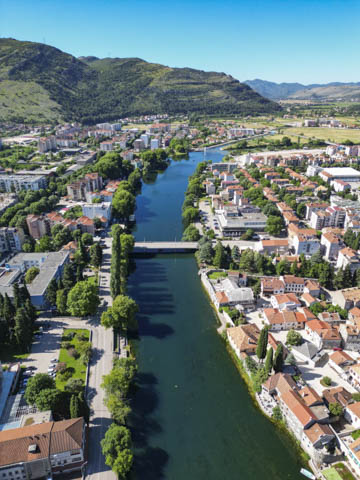
The high-walled, historical centre of the town is actually very small but we did finally manage to complete our most pressing task, which was to buy a local SIM card for our phones. This had surprisingly proved much harder than expected and was about our 10th attempt since entering Bosnia.
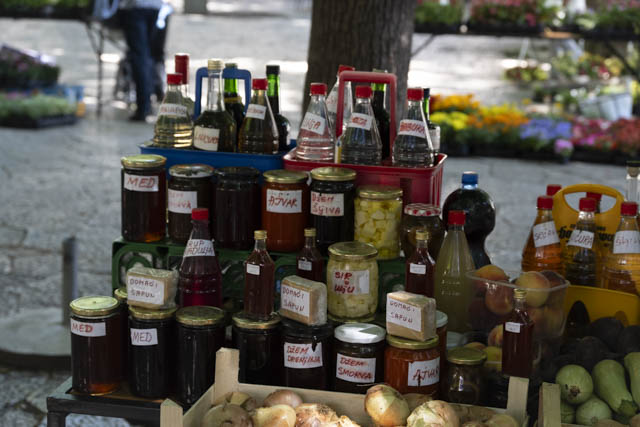
Outside the walled medieval centre there is a large, shady square called Trg Slobode, which is lined with cafes to one side and a small local market on the other.
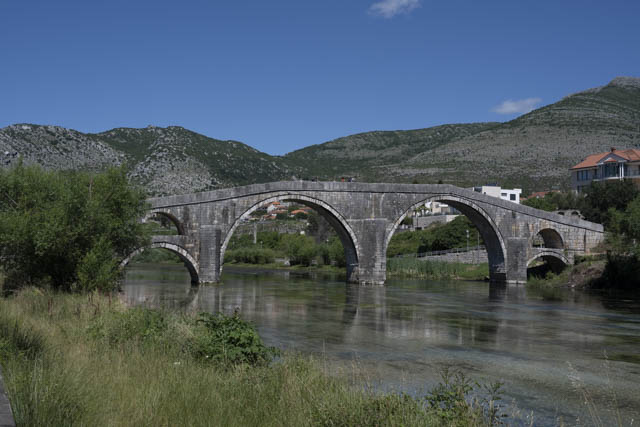
Trebinje is also famous for its ancient bridge over the river. The Arslanagic Bridge was originally built in 1574, 10kms further upstream but was flooded by a new reservoir in 1965. In order to ensure its preservation, it was rebuilt brick by brick in its current location. It’s not far out of town and we had a lovely cycle along the river past a few old water wheels to get to it.
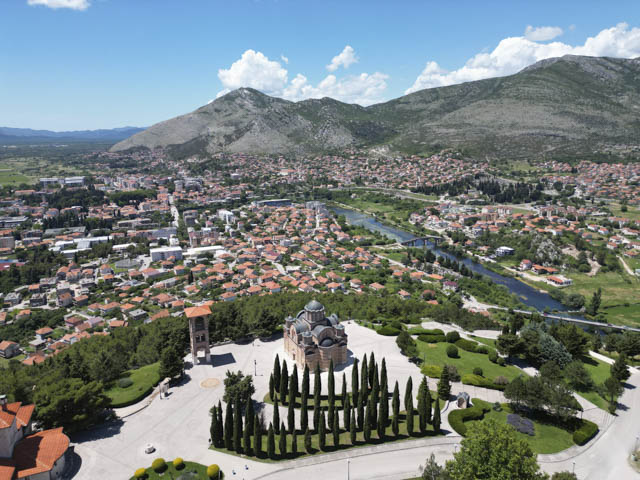
Having finished our wanderings through Trebinje (with Sarah saying she felt very under-dressed as the women in the town were all very chic-looking – her words not mine!), we drove up to a hill overlooking the town to visit the Hercegovacka Gracanica church.
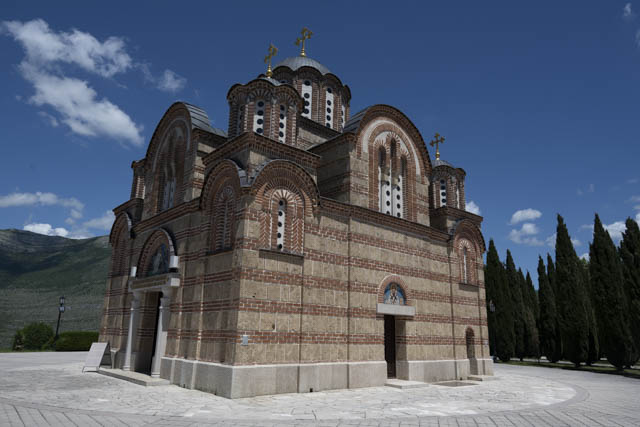
This is another orthodox church, apparently based on the Gracanica Church in Kosovo, but it is relatively new, having only been built in the year 2000 to rehouse the bones of a local poet, Jovan Ducic.
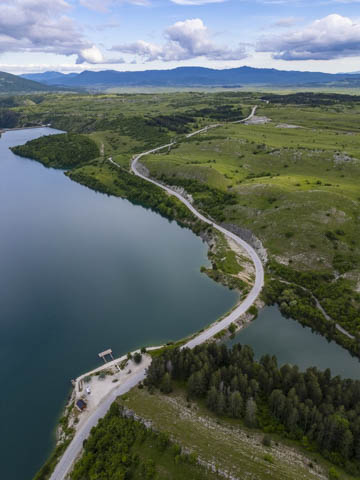
Leaving Trebinje behind, we drove North into the Sutjeska National Park, which has at is centre the Tara River. Our first stop was by a beautiful lake where we spent the night in a deserted swimming and fishing area. Although having seen some snakes in the shallows, we kept our feet dry!

Living under a brick built BBQ at this picnic spot, was a lovely stray dog called Lucky. We had learnt about her from a comment on Park4Night and we made sure she had lots of attention and a good meal while we were there. We sat out at one of the picnic tables most of the evening and next morning to keep her company.
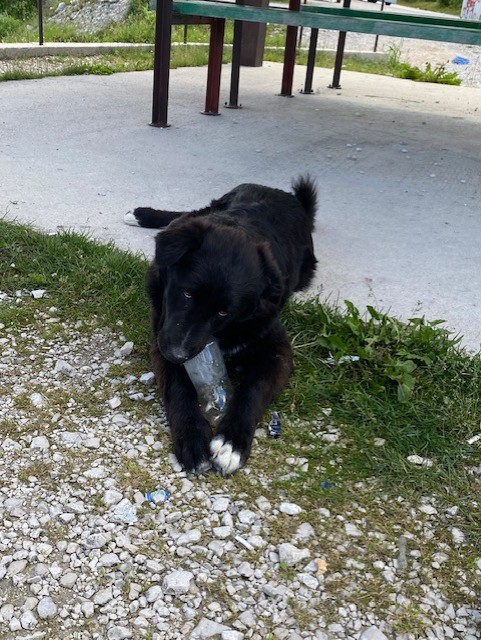
Being big dog lovers it absolutely broke our hearts to leave her behind, we were actually both quite choked up driving away. The only consolation was that she was in good condition and obviously well cared for by the locals whom we saw stopping by and dropping kibble on the floor for her.
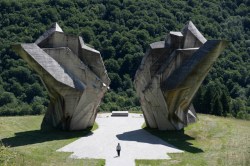
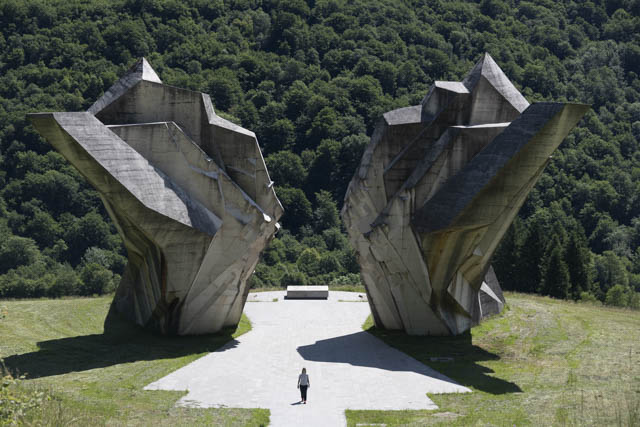
On our way through the National Park there is a massive, impressive WWII memorial sculpture which we stopped off at for a wander around and just a little further through the park we found our night spot, which was a small restaurant which allowed camper parking in its back garden/field.
The facilities were a bit rustic – the cold water shower (basically a hose on a pole in the middle of the field) with no shower curtain was definitely a step too far for Sarah. We did however enjoy dinner at the restaurant and a nice chilled beer in the garden afterwards.
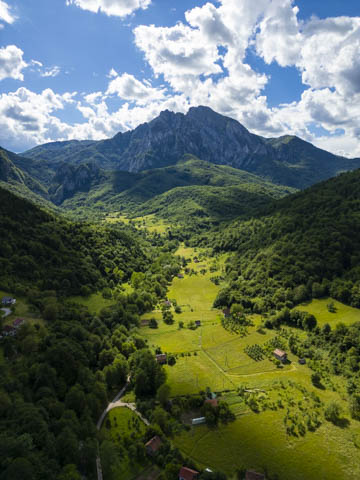
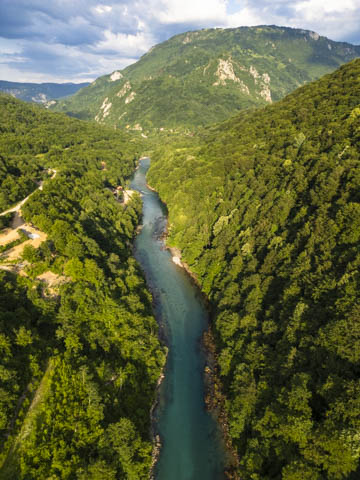
The scenery in the park is beautiful and we continued to drive down the road that follows the Tara river towards the border with Montenegro. The road was narrow and pretty rough but eventually a couple of km’s before the border we stopped off at Rafting Tara, a small camp with huts and a restaurant, as well as a lawn area for campers. We managed to squeeze ourselves between a couple of trees to get some shade and although it wasn’t that flat it was thankfully out of the sun!
Of course we couldn’t come to this beautiful spot and not enjoy the river. So the next day, we arranged to go white water rafting.
After being kitted out in a wetsuit (the water is very cold), lifejacket and helmet, we were driven down a narrow road across the border into Montenegro which was the start of the rafting.
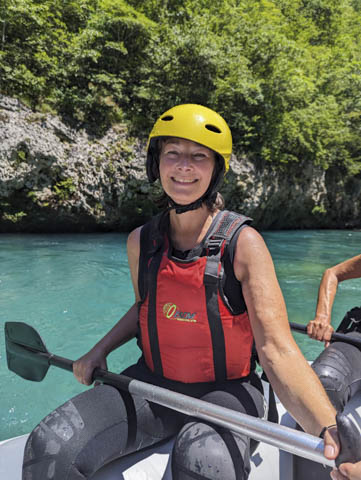
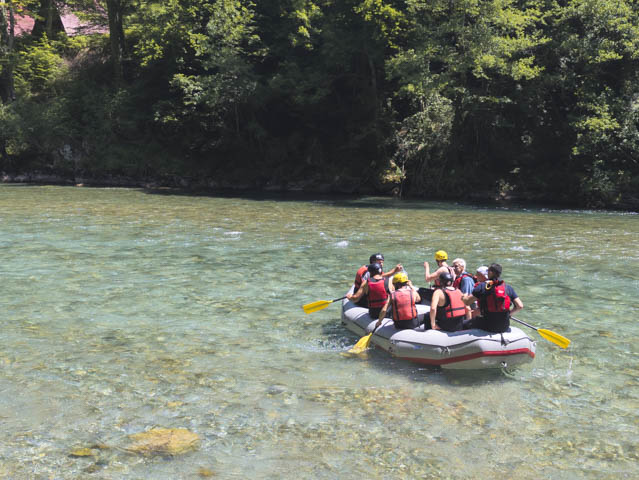
The water on the Tara river at this time of year is Grade 3 pushing Grade 4, so some of the short rapids were quite a bumpy ride but we didn’t feel at any point like falling in was a real risk and it was just good fun.
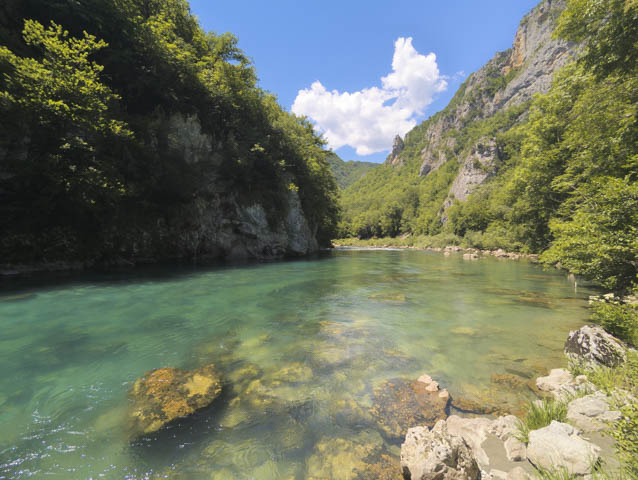
The guide who was steering the raft at the back had fairly limited English but he was clear with his calls of “Stop” and “Go” to tell us when to paddle.
The river itself was really beautiful as we moved through the gorge and the water was incredibly clear. The guide told us it was clean enough to drink straight out of the river, although having been told that before in Sweden and subsequently been ill, this time we erred on the side of caution and abstained!
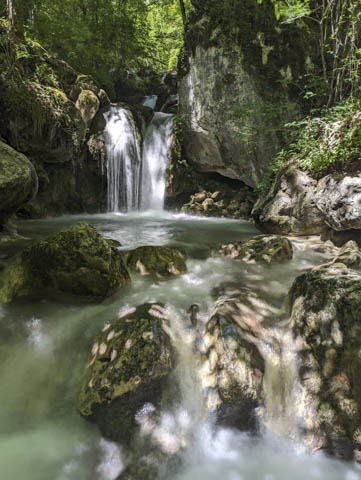
Just about half way through our descent we stopped off at a small beach for a short hike to a waterfall followed by a cooling swim/ float.
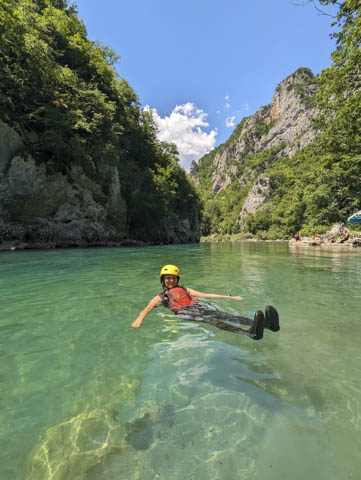
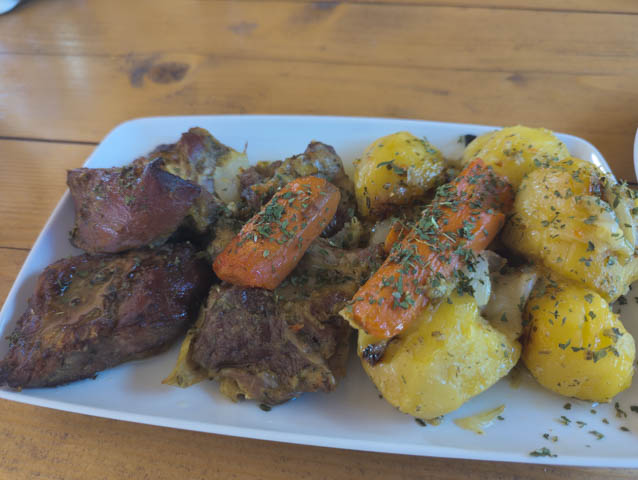
After a great but pretty tiring three-hour trip, we arrived back at the rafting camp where we were offered a hearty meal, and having worked up quite the appetite we did not turn them down. There was no menu, they simply brought us some soup with a big basket of fresh bread, followed by a big plate of slow roasted pork with veggies and a cabbage side salad, all washed down with some local beer. Absolutely delicious!
We spent a couple of fun days here but it was time to move on and Sarajevo was calling us.
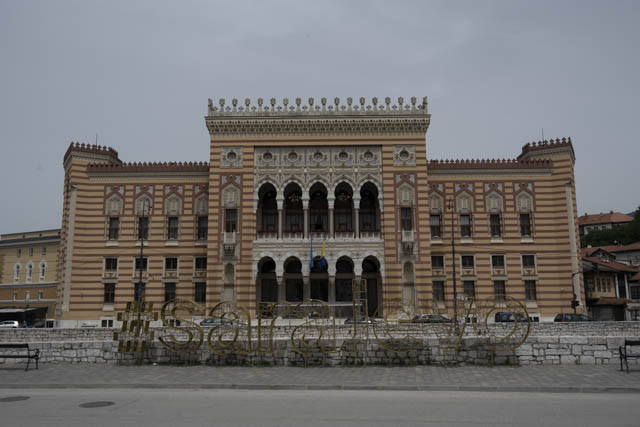
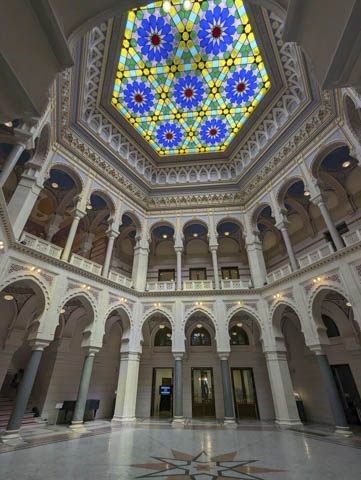
For a capital city Sarajevo feels quite small. Our first port of call was the City Hall. Seriously damaged in the 1990’s when Sarajevo was under siege for almost 4 years between 1992 and 1995, it now houses a number of interesting exhibitions, one of which tells the story of the siege and the lengths the population had to go to to survive. All the trees in the city were cut down and used for firewood, as was most of the furniture and people had to queue for hours under threat of snipers to collect water from only two sources in the whole city.
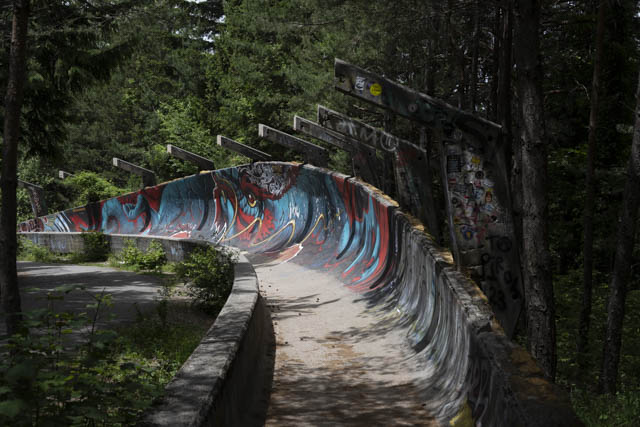
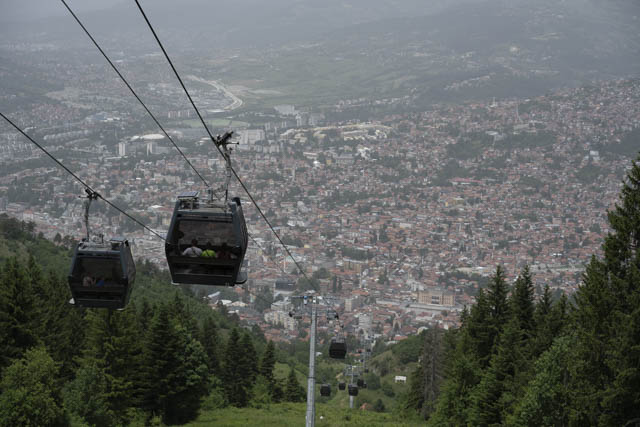
Not too far from City Hall is a cable car which goes up to a viewpoint and the Olympic Bobsleigh run which was built for the 1984 Olympics. The run has been allowed to decay (not surprisingly as the cable car was destroyed in the war and only reopened in 2018) and you can now walk down its length and admire the graffiti.
Unfortunately it was a hazy day so the views over the city were limited.
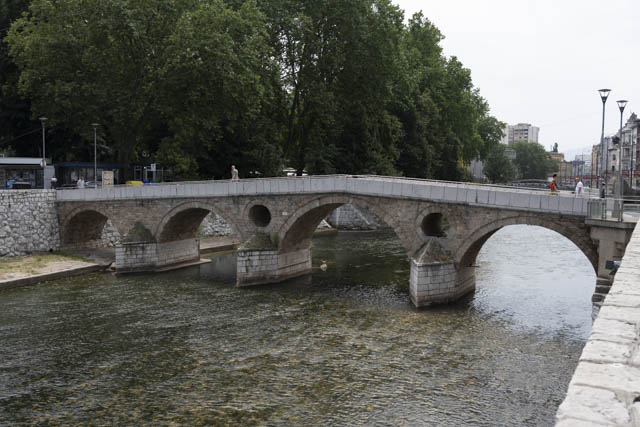
Next on our list was the bridge where Archduke Ferdinand and his wife were assassinated, which resulted in the start of WW1. There isn’t much to see now as the memorial was removed but it was certainly thought-provoking to stand on the spot that sparked such a terrible period in history.
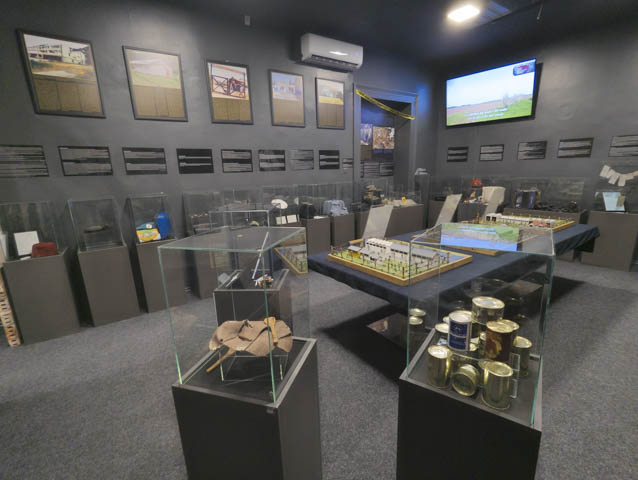
After wandering the old town and relaxing for lunch at Pigeon square, we visited the Museum of Crimes against Humanity and Genocide 1992-1995. This small museum is excellent although the subject matter is grim. There are testimonies of people who lived through the war and describe their experiences from rape and beatings to the murder and execution of their loved ones. Not an uplifting experience but an important one in terms of trying to understand the very complex history of this country, which we are still trying to get our heads around.
 FromAtoB