Serbia
After enjoying Bosnia so much we were a little bit reluctant to head into Serbia, particularly as our research indicated that it was a harder place to travel around than Bosnia.
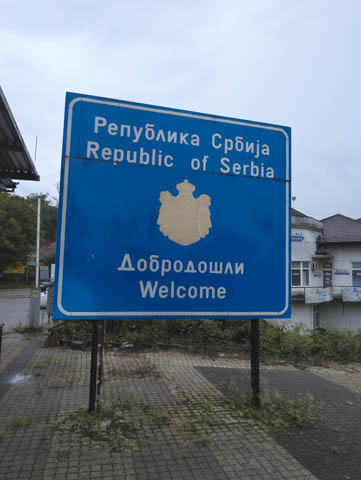
However, our first impressions were positive. The border crossing was quick and easy and we headed for the nearest town, Loznica, to get some currency and SIM cards for the country. This proved to be much easier than Bosnia and we each got a data SIM with 25GB of data from Yettel, the biggest mobile company in Serbia.
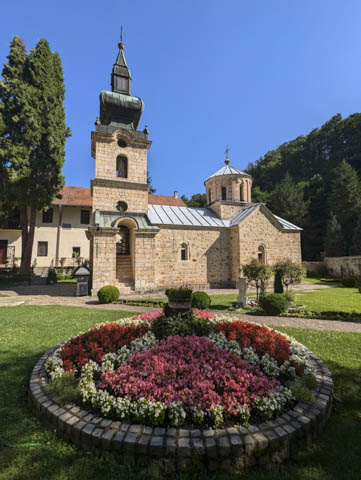
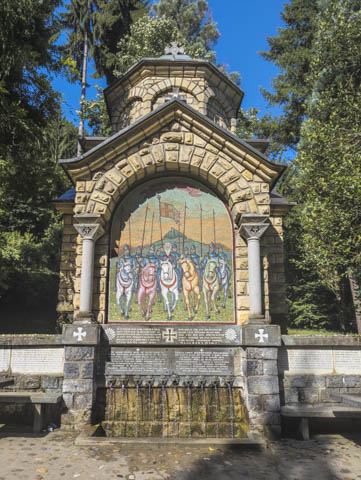
We found a spot for the night near Loznica and close to the Tronosa monastery, which we visited the next morning. This monastery had a small shrine with a spring and we filled our water with this lovely tasting spring water.
Our first main destination in Serbia was the city of Novi Sad. The North of Serbia is very flat and gets very hot in summer. We wanted to do a whistlestop tour of this part of the country and then head for higher (and cooler) ground in the East and South of the country.
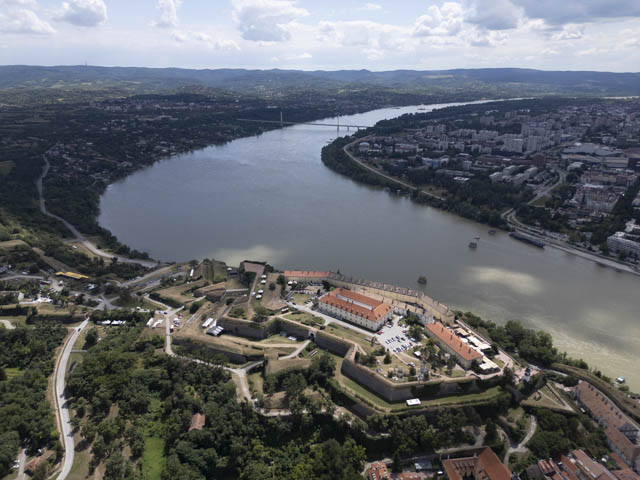
Novi Sad is the second city of Serbia and is located on the banks of the Danube river. On one side of the river is the huge Petrovaradin Fortress and its old town and facing it on the other side is the main town.
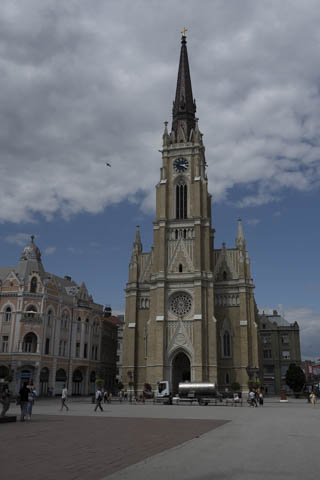
Novi Sad is a big modern town but the old town area has a laid back street culture vibe which is, I expect, what contributed to it being the first Non-EU European Capital of Culture in 2021.
The Fortress is the second largest in Europe and is nicknamed “Gibraltar on the Danube”. It is the setting for the Exit Festival each year, an international music festival, which was being set up while we were there.
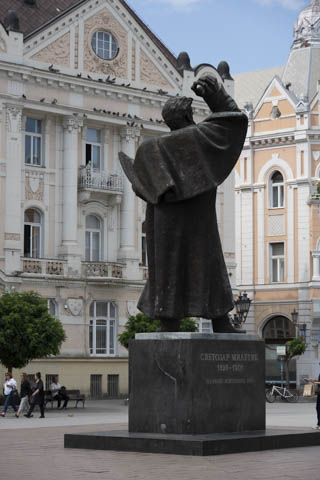
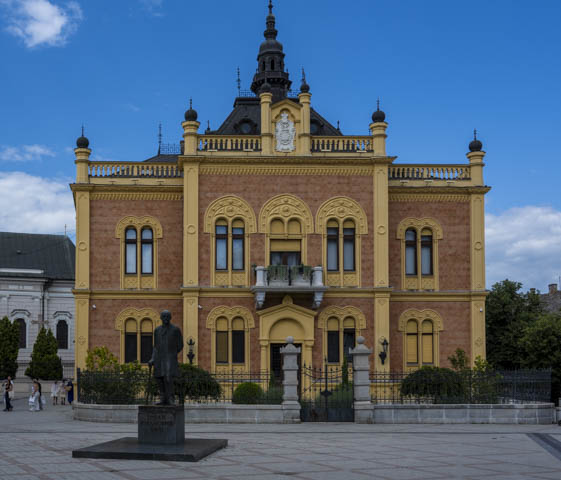
The town itself is big and modern with a large but attractive pedestrianised area filled with bars and cafes and outdoor seating. And so, after a good wander around we couldn’t resist sitting at one and having our first taste of local Serbian beer in the sunshine.
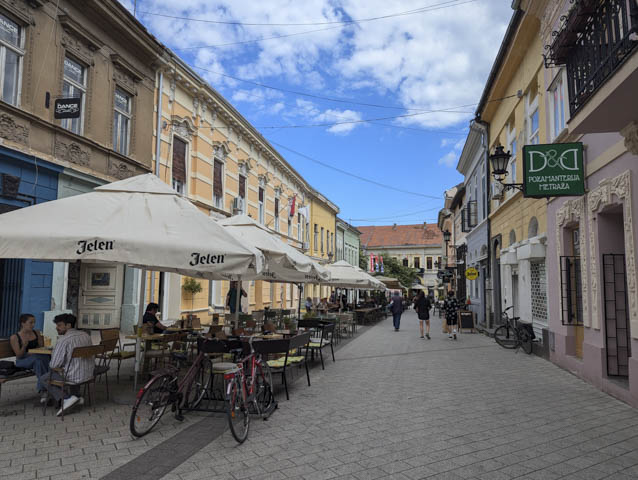
We liked Novi Sad and with hindsight it was definitely our favourite Serbian city.
From Novi Sad we headed North towards the Hungarian border. We started off eschewing the toll roads as is normal for us. However the roads in the North of the country aren’t in great shape and after bumping and rattling around for some time we eventually gave in and diverted to the Toll road (which, when we discovered it was only €4 realised we should have done this a lot sooner).
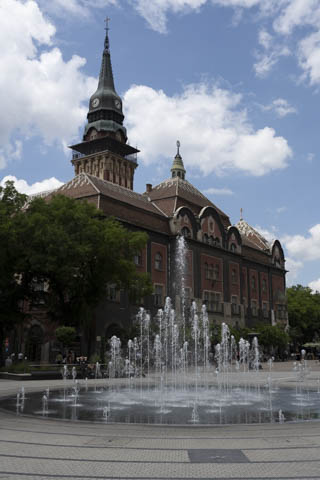
Our reason for heading North was to visit the city of Subotica. This small town, although the largest in the North of Serbia, is very multicultural with more Hungarians than Serbs living there.
The centre of the town is the enormous City Hall which is a strange architectural style of a cross between Art Noveau and Guadi-esque. The interior of City Hall is said to be unmissable but unfortunately for us, tours take place daily at noon and unfortunately we arrived in town too late. The building itself is surrounded by pedestrian spaces and feels very much like the cultural centre of town.
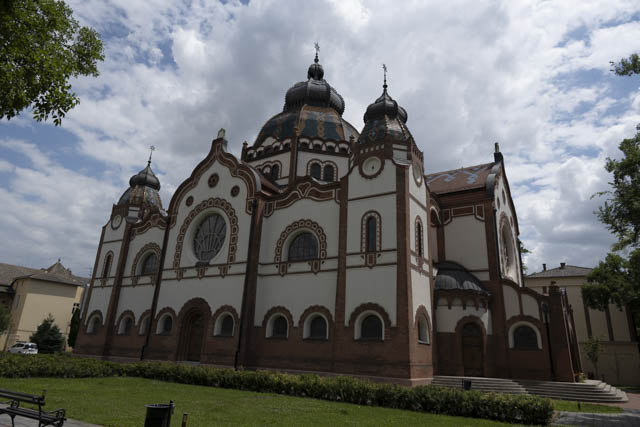
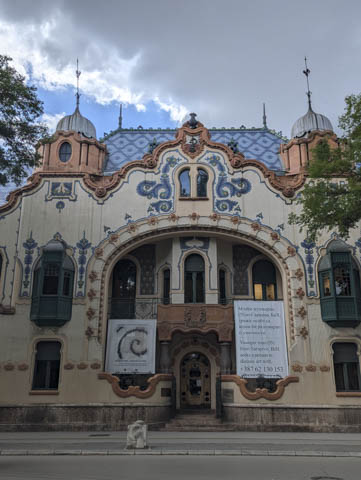
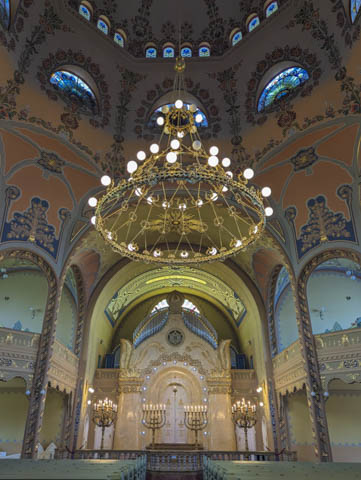
The first Art Noveau building to be built in town was the impressive Synagogue, built in 1902. This is impressive both inside and out, particularly inside. It is said to be the only surviving Hungarian Art Noveau Jewish place of worship in the world.
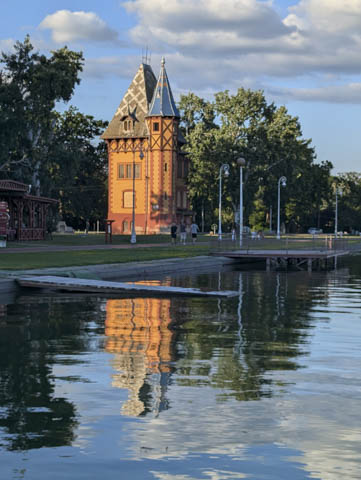
There were a lot of attractive buildings in Subotica but little else to hold us there for long, so we left town and headed to an artificial lake and recreation area for the night. We spent a peaceful but very hot and uncomfortable night here.
From Subotica we drove South, going back past Novi Sad to the Capital of Serbia, Belgrade – or Beograd as its locally known. The heatwave that was to grip the Balkans for the next few weeks was starting to make itself known and the plains of the Northern half of Serbia were beginning to really heat up.
To visit Belgrade, we stayed in one of the few campsites in Serbia, just outside of the city beside the Danube. It was a well set up campsite with new and very plush facilities but unfortunately it was absolutely plagued by mosquitoes. I can honestly say we haven’t seen so many since we were in the arctic in Alaska. There were so many that our screens became ineffective and so we spent a very hot night with all the windows closed, splatting all the mosquitoes that had worked their way inside. We were definitely glad to leave this place and strangely just 500m away there were hardly any mosquitoes!
Belgrade itself is a big modern city that could be anywhere in Europe. The contrast to Sarajevo in Bosnia is huge and makes Sarajevo feel like a provincial capital rather than a capital city.
We parked up in a free parking lot by the river and set off on our bicycles to explore the city.
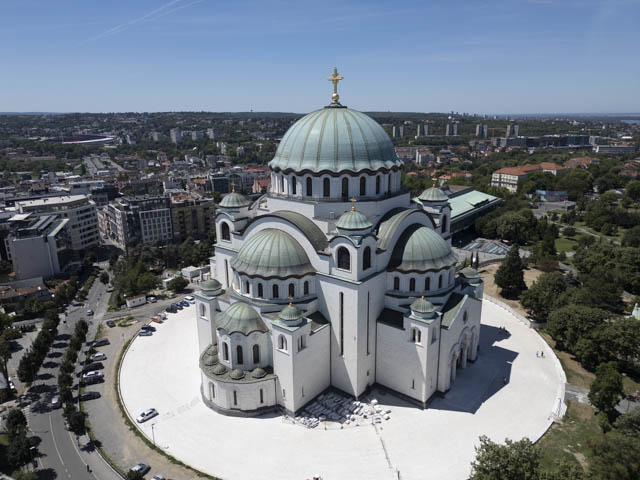
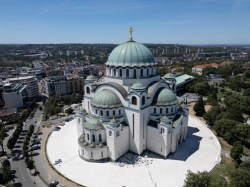
The Sveti Sava Temple is the Balkan’s biggest Orthodox church and it is absolutely massive, sitting in a square on a plateau in Belgrade which is quite a hilly city. It is the seat of the Serbian Orthodox church.
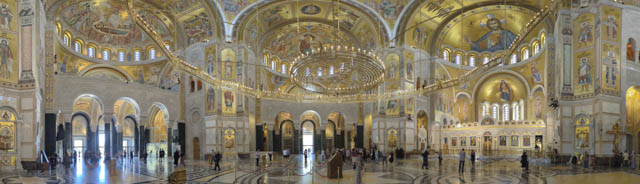
The temple was only opened in 1935 but building work continued until 2004. It is modelled on the Hagia Sophia in Istanbul.
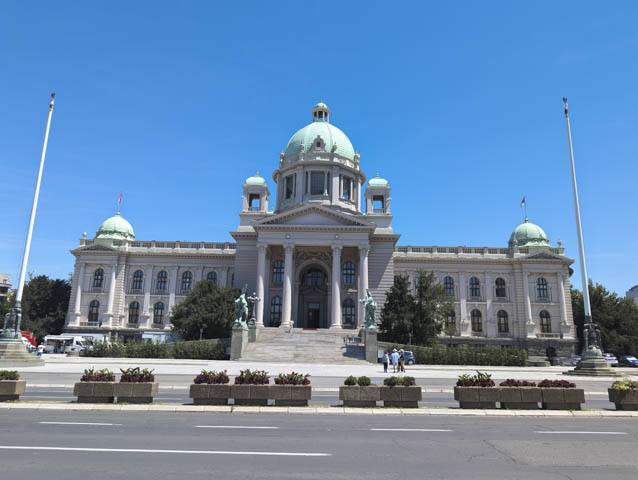
After visiting this very impressive church we cycled past the National Assembly of Serbia before heading into the main shopping area of the city, the Knez Mihailova Boulevard, which is pedestrian only and has the grandeur you expect from the oldest European cities.
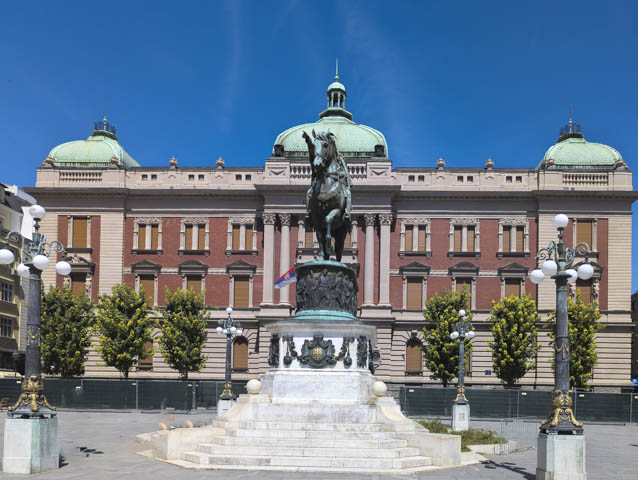
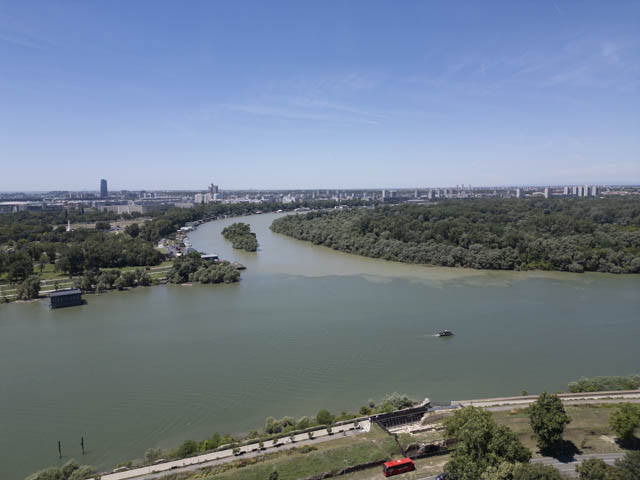
This leads up to Belgrade Fortress which sits on a hill overlooking the two mighty rivers that join in Belgrade, the Sava and the Danube.
Belgrade Fortress has a very bloody history. With 115 battles being fought over it, the fortress has been destroyed over 40 times since the fortifications were first dug in the 3rd century BC by a Celtic tribe. It was later taken over by the Romans.
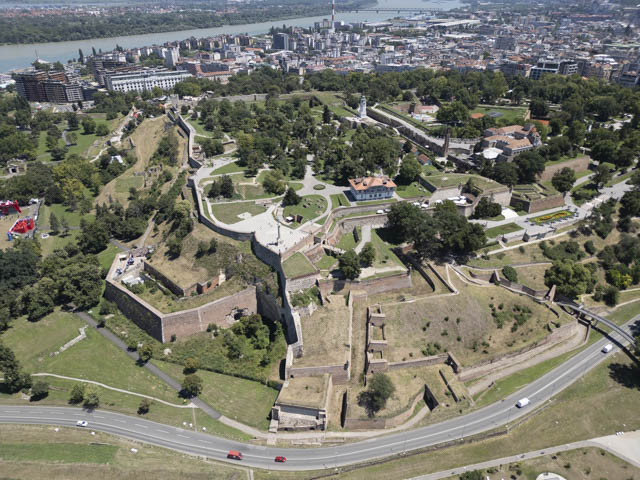
The fortress that we see today was largely built by the Ottomans who ruled this area from 1521 until 1867.
Today it is free to enter and is popular destination for locals and tourists alike as the top is landscaped into parkland and it is surrounded by Kalamegdan park.
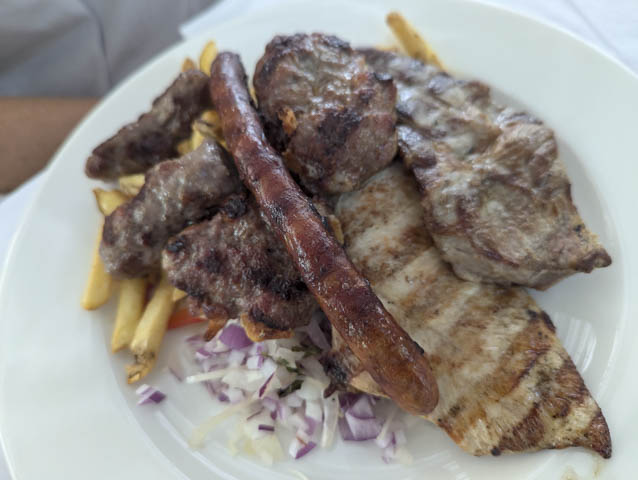
After leaving the fortress, we ended our trip to Belgrade by visiting the Skadarska quarter of town, the cobbled Bohemian District. We had worked up a hunger working our way around this big city so we found a restaurant for our first taste of local Serbian food. As we are learning, traditional food in the Balkans involves large quantities of meat, which is fine by us!
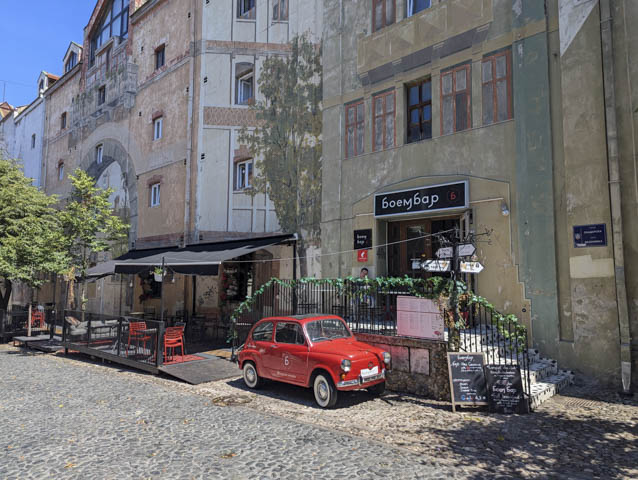
After three cities in a row and with the heat becoming unbearable, it was definitely time to head up and into the countryside. So we set off Eastward, following the Danube close to the Romanian border.
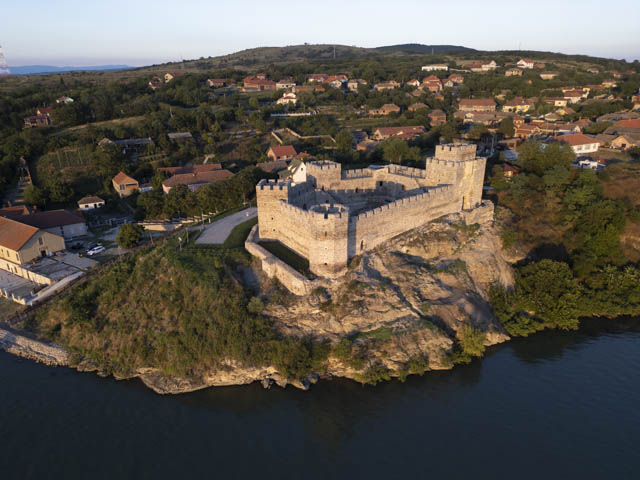
Here we decided to spend the night at the Ramsko fortress. This fortress was built by the Ottomans in the 1400’s to protect the right bank of the Danube. However there is evidence that there have been fortifications on this site right back to Celtic times.
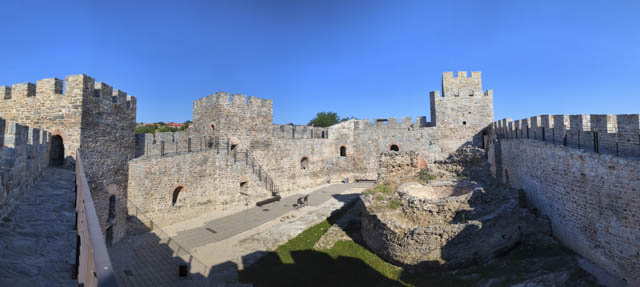
Just across from the fortress is a small but pretty church and down the hill along the waterfront, is a bar with a lovely view where we spent some of the evening before settling down for a quiet night on the headland, made bearable by a cooling breeze. In the morning we carried on to what is considered the jewel in the crown of Serbian castles, Golubac.
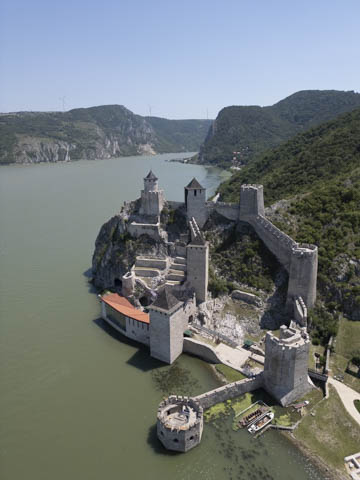
Golubac fortress in also on the banks of the Danube and was built in the 1400’s by the Serbian state. It has the distinction of having never been conquered and has repelled over 120 attacks.
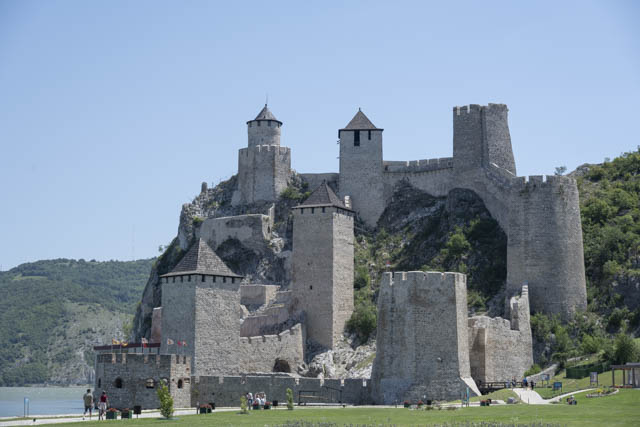
It did however fall into Ottoman hands when the Commander of the fortress demanded a payment to hand over control to the Serbian Despot. This was refused so he promptly sold it to the Ottomans. The Serbian Despot, Stefan Sigismund, tried to win it back many times with a large army but was heavily defeated at a cost that far exceeded what had been asked by the original Commander.
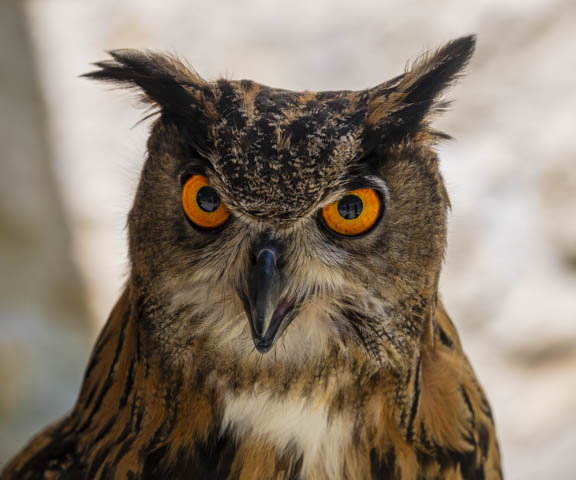
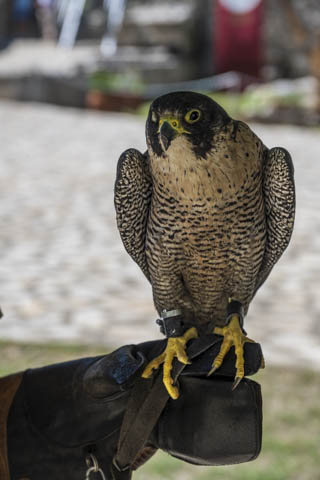
While in the fortress we came across a tent with a bird of prey handler where they had a peregrine falcon and a beautiful Euroasian Eagle-Owl.
 FromAtoB