Albania
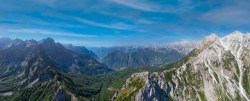
With our stressful drive through Peja on our first day in Kosovo not far from our minds, we made sure we were properly prepared for the crossing into Albania, which subsequently went without a hitch, although we were a little flummoxed as there didn’t seem to be a Kosovo border.
Every border crossing we have ever done has entailed two crossings, a border to leave one country and a second border to enter the next country. After passing through the first border and assuming it was the Kosovo border, we drove for several kms wondering where the Albanian border was before looking at our passports to see that we had already been stamped in. Oh well, that was easy!
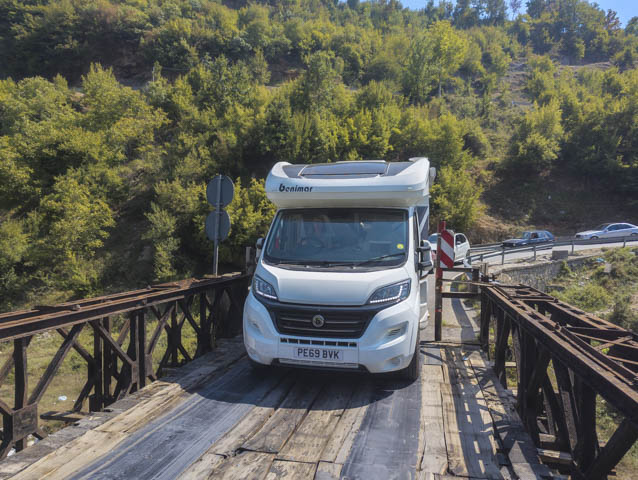
Unlike the Kosovo border there isn’t anywhere at the Albanian border to buy insurance for the motorhome, so we drove to the nearest sizable town of Bajram Curri (via a very narrow bridge that we only just managed to fit), where we parked on the main square about 100m from a Vodaphone shop and bought a couple of local Sim cards for €25 each (the most expensive we’ve had so far and with hindsight completely unnecessary because our Kosovo Sim continued to work throughout our time in Albania).
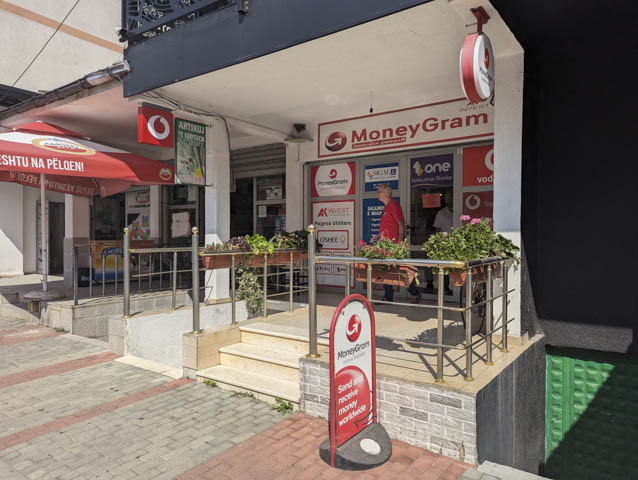
About 500m in the opposite direction we found a shop selling border insurance, although they couldn’t as they had run out of paper(!), luckily there was another one that they directed us to, with paper, a 100m away.
Lastly, in between the Vodaphone shop and the insurance shops was a bank, so that was the currency sorted as well. With the usual new-country-admin taken care of, we hopped back into the camper and headed for the remote village of Valbona in the Accursed Mountains.
After five days of hectic sightseeing in Kosovo we were ready for a couple of days R&R so we found ourselves a lovely little campsite next to a river, aptly named Riverside Camp and settled in.
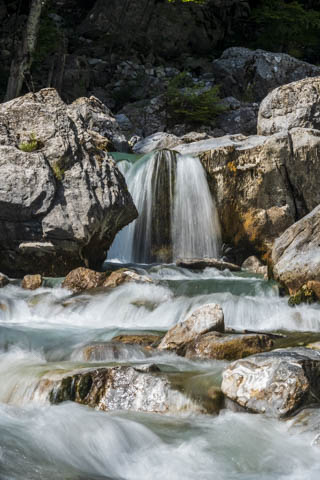
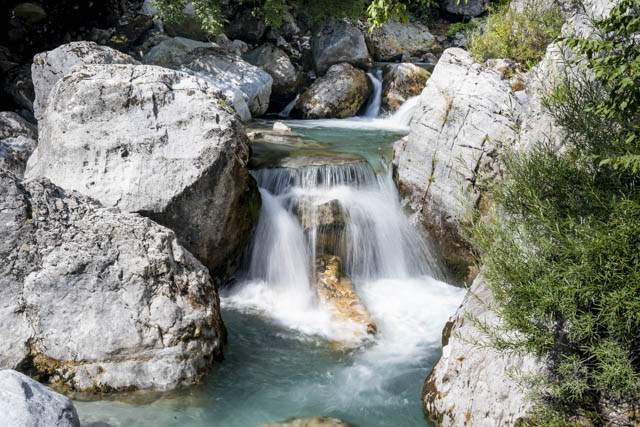
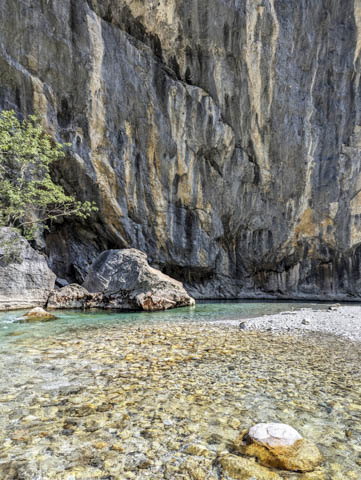
Unfortunately, on our second evening there, we managed to give ourselves food poisoning from our BBQ’d burgers and ended up staying another 4 days feeling pretty rough. This wasn’t ideal, as we had only bought insurance for 2 weeks and had now spent almost a week in the same spot, so we needed to get our skates on. However, we couldn’t resist stopping off briefly at a lovely swim spot on the drive out of Valbona, which looked too good to pass up.
We also spied a couple of Hoxha’s concrete bunkers on the drive, which we were excited about until we started seeing them everywhere. Hoxha’s (Albanian Leader between the 1960’s – 1980’s) had over 750,000 of these bunkers built in every corner of Albania.
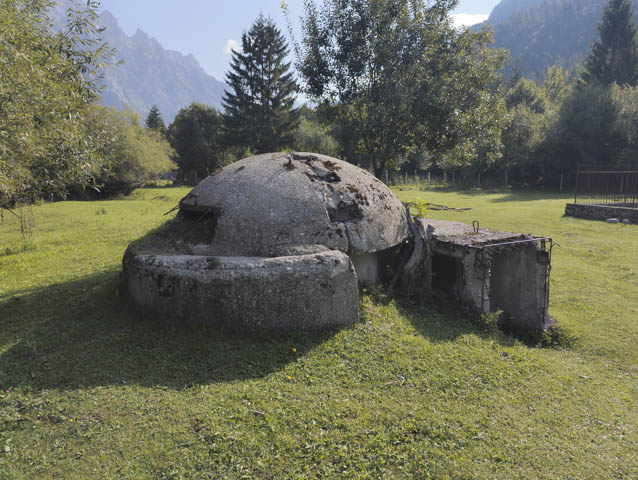
It is said there are an average of 5.7 bunkers for every square kilometre. The bunkers were generally erected in groups of three with interconnecting tunnels. As a result, Albania is said to be the 2nd most tunnelled country in the world after North Korea. Of course, much like Tito’s bunker in Bosnia, the bunkers were never used and were a huge drain on the country’s economy.
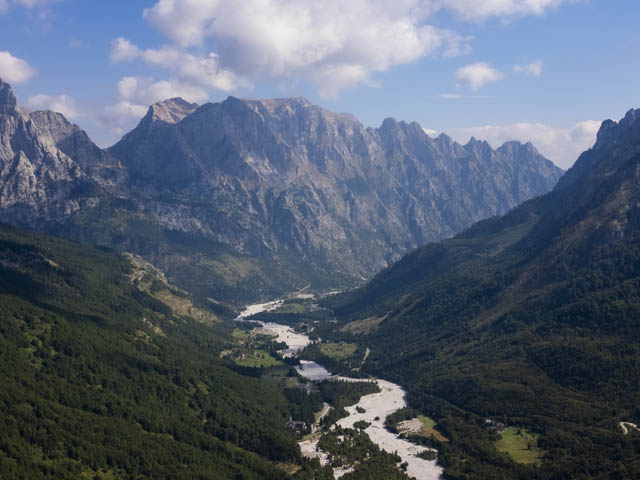
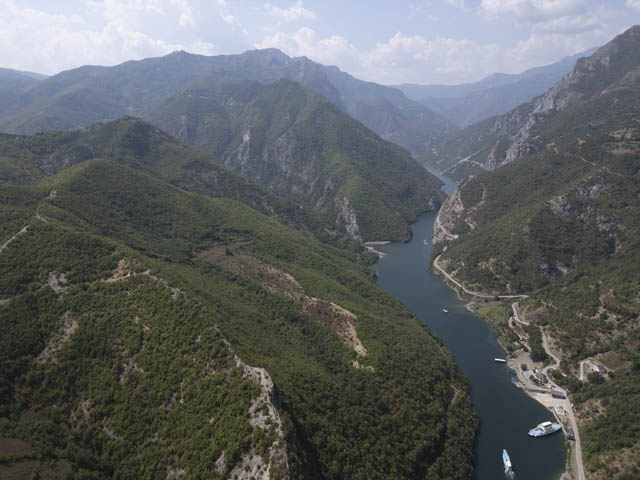
Although we were leaving Valbona, we wanted to stay in the mountains and visit the ‘next door’ town of Theth. However, while you can hike between Valbona and Theth in 6-7 hours, it takes the same amount of time to drive between the two as there is no direct road. You can take a ferry between Fierze and Koman to break up the drive, which is supposedly very pretty (although no quicker), however it is quite pricey at €150, so we opted to drive instead, which afforded us lovely views of the mountains and the dammed river Drin below us.
The drive to Theth by-passes the city of Shkodra on the Albanian side of Lake Skadar, so after a cool night spent in the mountains, we got up super early and headed down to sea level to make an early morning visit to this attractive town and its fortress.
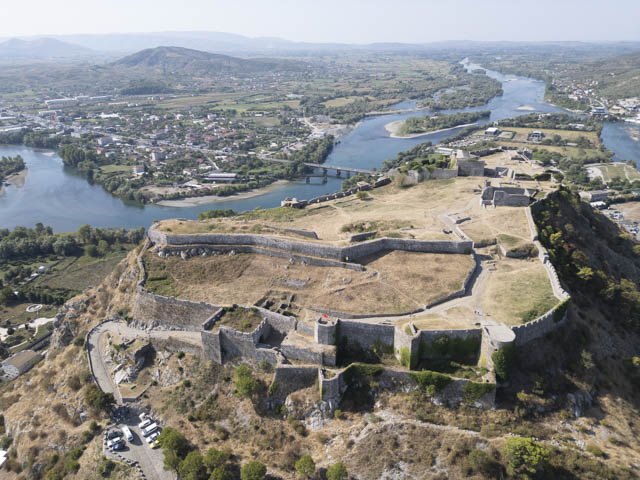
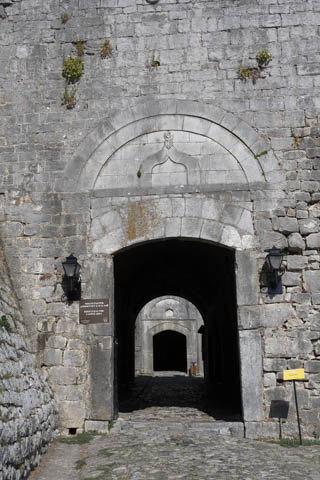
Rozafa Castle, dating back to the 4th century BC is definitely worth a visit and while, as with all ruins, you have to use a little imagination, there has been enough restoration work here to make it interesting, which is helped by English information boards and a small museum. The 13th century church is the most intact building inside the perimeter walls and was in use up until the 15th century when the city fell to the Ottomans and the building was converted into a mosque and later still, an ammunitions depot.
From Shkodar we started the long winding drive back up into the mountains towards Theth.
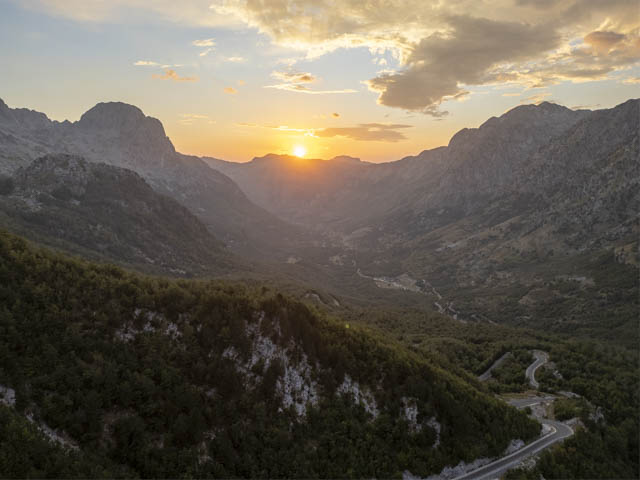
Having been in beautiful, quiet, laid back Valbona we had been lulled into a false sense of peace and tranquillity. So we were very much taken by surprise by the masses of people, mini buses and tour groups on the road to Theth. I suppose it was the last Saturday in August, so perhaps it was a bad weekend to drive up there, as everyone was enjoying their last hurrah before heading back to work, but despite the road being in good condition and fully paved the whole way, the drive was a nightmare. It just isn’t quite wide enough for a motorhome and a car to pass each other easily.
This meant that we had to slow down and pull over for practically every vehicle we met on the road – and there were a lot. This became very tiresome after two hours of driving the mountain road so by the time we’d reached the pass at 1700m we’d had enough for that day and spent the night there, with a view to heading down into Theth, which is at 600m, early the next day.
Funnily enough, the road down from the pass into Theth which was only paved a couple of years ago is slightly wider (although it is steeper with more switchbacks) so it would have become easier if we had carried on, but regardless, we had a cool night up high without any noise from the town to disturb us.
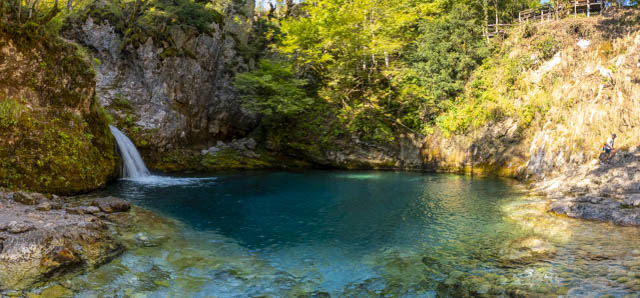
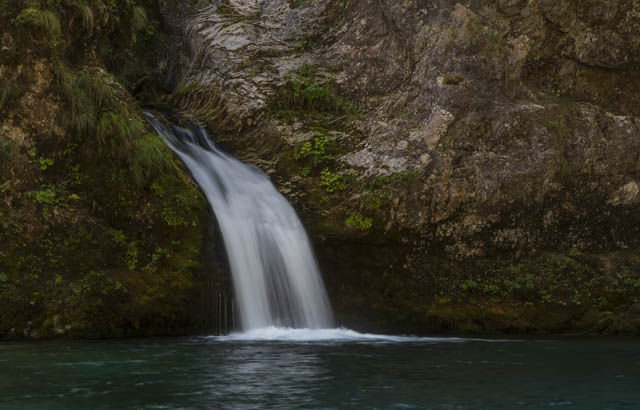
Once we were in Theth we headed to the large trailhead carpark for the Blue Eye hike, a beautiful walk that ends in a turquoise pool of water (hence the name), fed by a small waterfall. The water was really cold but oh so clear and it was a refreshing swim after a hot hike up here. This was a lovely walk but doing it early is key, because on the way back, there was a long line of people walking the trail in and the large car park was full.
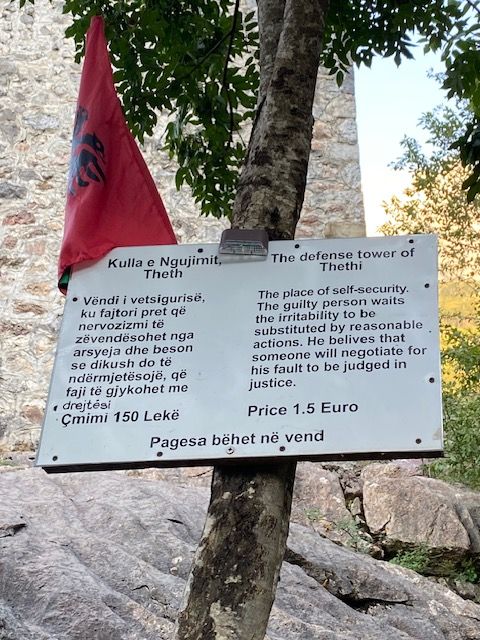
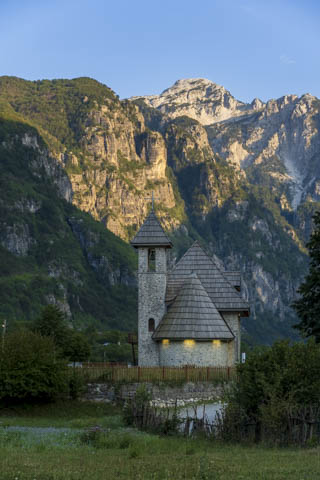
After the hike we visited the 19th century village church (which is said to have been used as the village hospital in the communist era (meaning that most locals over the age of 25 were born there) and Kulla Tower. This is a 400 yr old stone tower where people were held during a family blood feud before they were either killed or spared – at least that is how I have interpreted the sign. See what you think!
That night we relocated to a campsite on a meadow just outside town, where the music from the bar by the river (they are clearly big ABBA fans) and the noise of the zipline were less audible, ready for the big hike to Valbona Pass tomorrow.
Having set off early for the hike we passed through the centre of Theth on the way to the trailhead. A dog that we had seen the previous night in the central cark park decided to come with us and in fact came all the way to the pass. That’s a hike of around 7.5km to the pass and 1250m of vertical. He must have figured that hikers having lunch at the top were worth the effort !
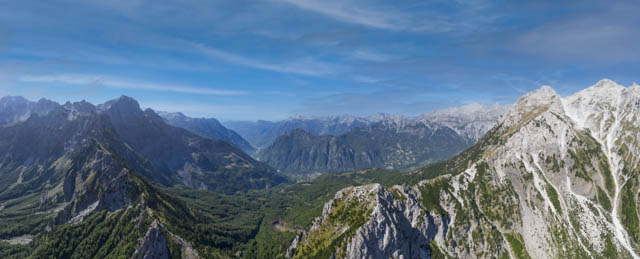
The hike from Valbona to Theth or the other way round is lauded as the best hike in Albania. We could only do half of it eg. To the pass as its too far for an out and back in one day. However although the pass has spectacular views most of the hike on the Theth side is spent in the forest and views are few and far between.
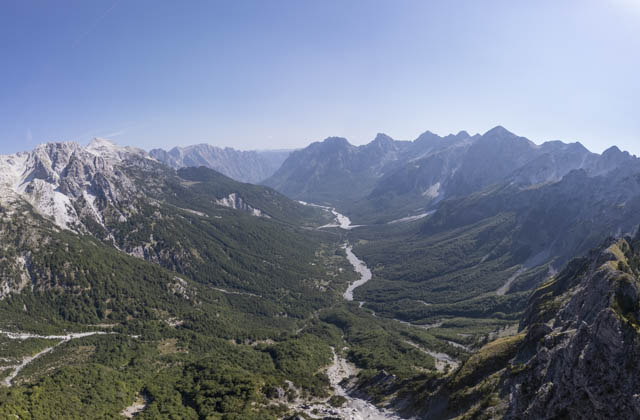
Like at Bobotov Kuk in Montenegro there were some dogs at the top of the pass although this wasn’t as inhospitable as that peak. I’m not sure if these are all commuters like my hiking buddy or actually stay there.
After a punishing hike, we enjoyed a couple of beers and a meal at a local restaurant for our last night in Theth, before getting up early the next morning to do the drive out of the mountains – which was far easier without all the traffic to contend with.
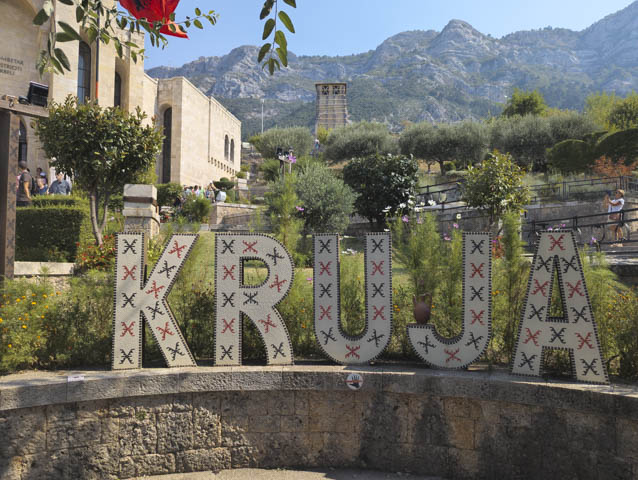
With time running out in Albania and some miles to get under our belt, we headed out of the Accursed Mountains and started the drive towards Lake Ohrid and the border with North Macedonia, stopping on the way at the town of Kruja.
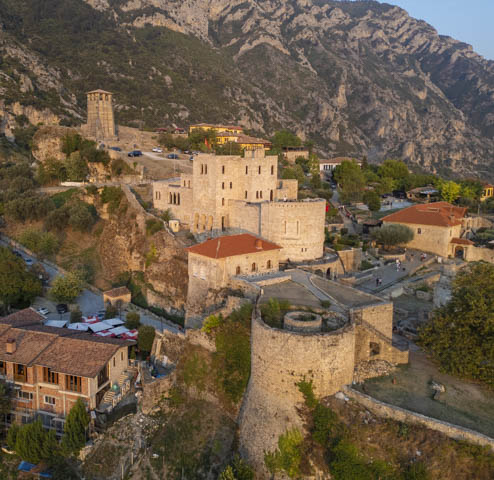
There isn’t much to the town of Kruja itself but it does have a very good castle and museum complex as well as a bazaar to nose around, and it kept us happily occupied for a good few hours.
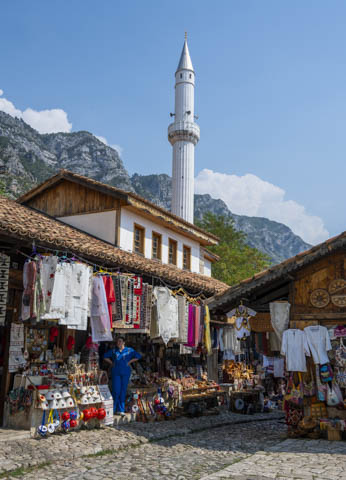
We particularly enjoyed the ethnographic museum (which is laid out in a beautiful 18th century Ottoman-style house).
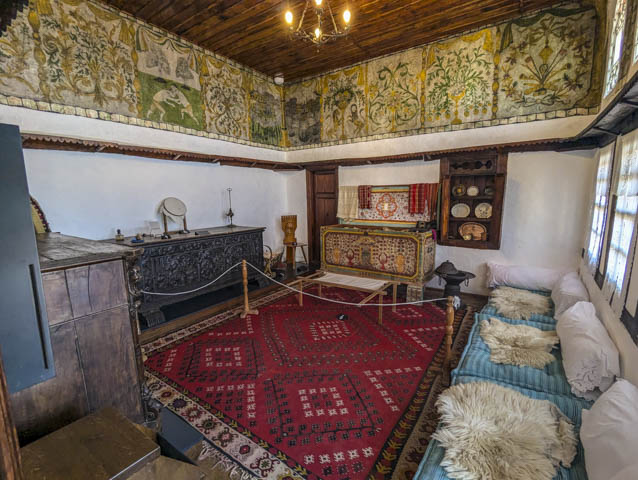
They have made a real effort to provide lots of information about the life and social customs of that time using information cards, interactive screens and videos, and even a virtual reality dressing-up room, where you can ‘try on’ the different traditional costumes.
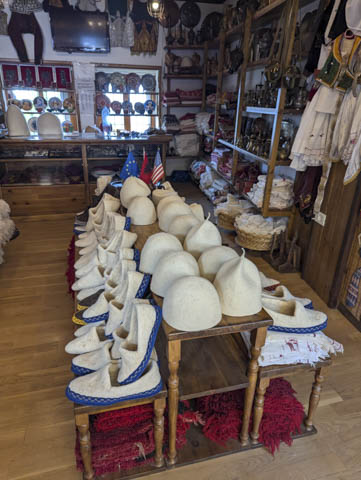
Kruja’s narrow, cobbled Bazaar is mostly filled with tourist souvenirs but there are a couple of little gems hidden amongst them, including a shop with traditional felt products such as slippers, lampshades and different types and sizes of Qeleshe (white felt skull caps). Apparently, you can tell which part of Albania someone is from by the height and shape of the Qeleshe they wear! The owner wasn’t keen on us taking photos but he did invite us downstairs into his workshop where he patiently answered all our questions and even demonstrated how he made his own felt from a pile of wool in the corner.
Our final destination in Albania was Lake Ohrid and the small fishing village of Lin, although we made a small detour to visit Golikut Bridge and the Royal Tombs of Selca first.
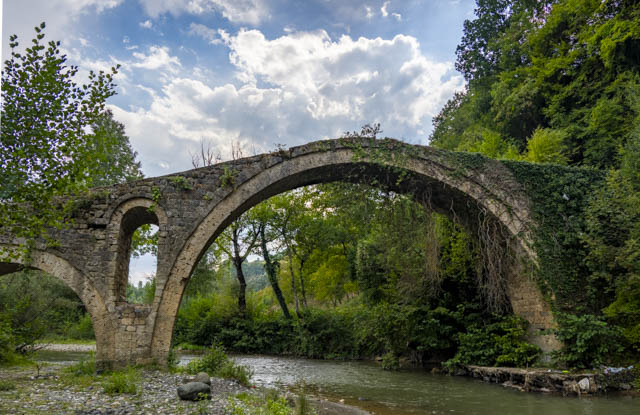
Golikut Bridge is a 2nd century, 3-arch narrow stone bridge that was part of the old Roman road Via Egnatia that ran from Durres on the Albanian coast to Istanbul and it’s incredible to see this piece of history still standing. Yet you could easily miss it with no fanfare or signposting to highlight its significance. In fact, it would look completely forgotten if it weren’t for a brand new, half-finished gravel road leading part way down to it before ending in a ploughed field.
The Illyrian Royal Tombs of Selca (the remains of the ancient city of Pelion and its necropolis) are apparently in the same vicinity but the road is currently being built and despite having the GPS co-ordinates from the UNESCO website we still couldn’t find it (they aren’t big on sign-posting their attractions in Albania). The torrential rain that fell soon after visiting the bridge also didn’t do much to motivate our efforts, so we’ll have to save this attraction for another time. With the completion of the new road no doubt mass tourism will follow. Whether that’s a good or bad thing, who knows, but at least we should be able to find it then!
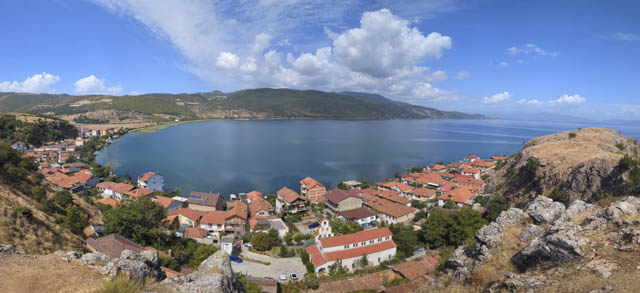
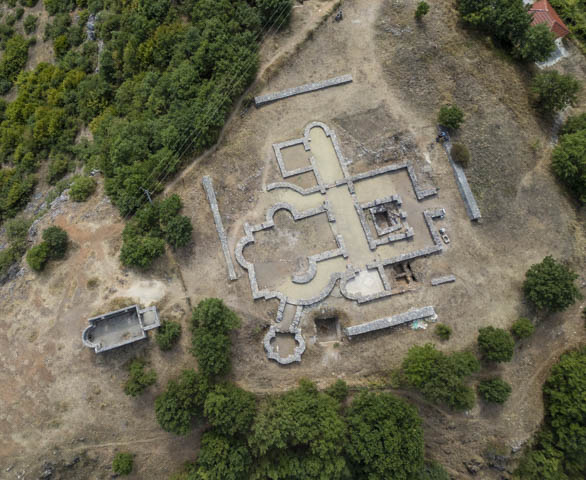
We had no such problems locating the pretty little fishing village of Lin on the shores of Lake Orhid. Said to be one of the oldest inhabited villages of Europe, a short walk through the village up onto the peninsula takes you to the ruins of a 6th century Paleochristian basilica. Some of the mosaic floor is still intact but we were unable to see it as it is now covered by sand to help preserve it.
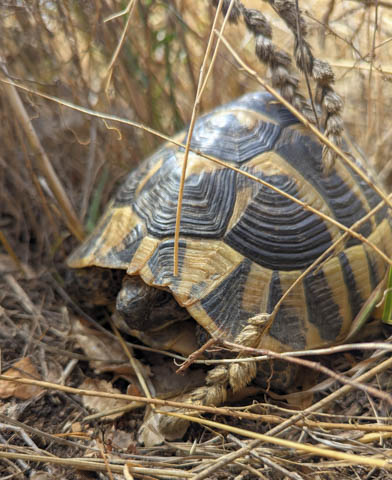
While visiting the church we heard some rustling In the grass and were delighted to see a wild tortoise pushing its way through.
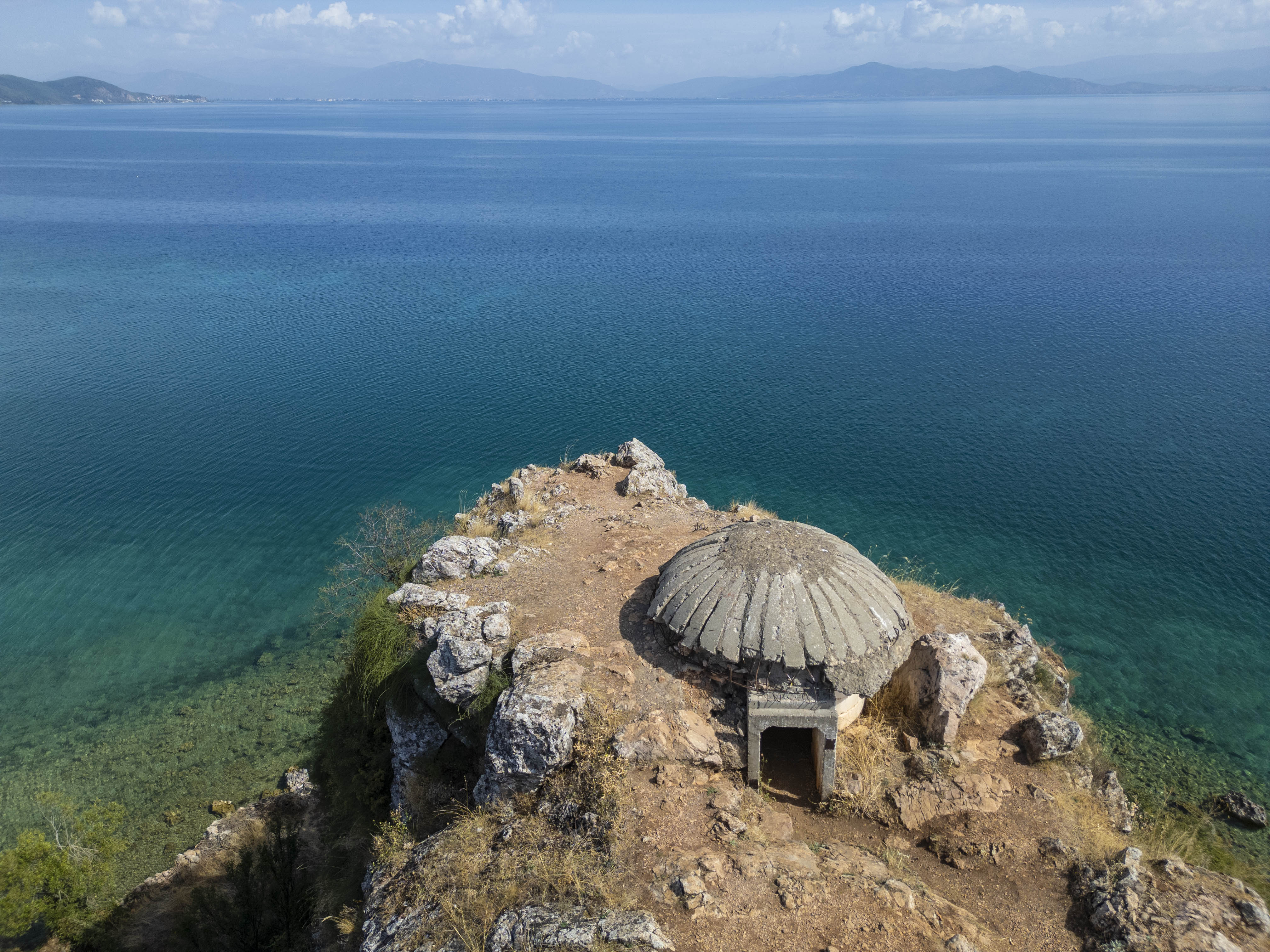
A little further along, on a small rocky promontory sits the Bunker Church. The site was previously a tiny church but a concrete dome was placed over the top to create a bunker as part of Hoxha’s crazy bunkerisation project previously mentioned.
We have deliberately not visited Southern and coastal Albania at this time due to the heat but intend to spend some time there on our way home when the temperatures have cooled!
 FromAtoB