Meteora and Delphi
Having enjoyed the Greek mountains so much we decided to prolong our time there before heading towards the coast, so we made our way to the lovely mountain town of Metsovo.
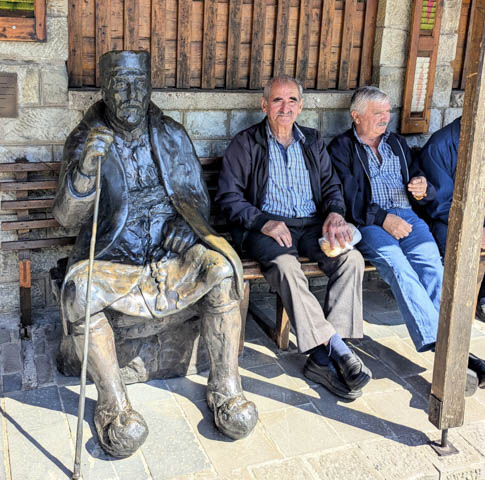
Metsovo, in the Pindus mountains, is the main regional hub for the surrounding area despite only being a small town. The elderly gentlemen who gather in the small, bustling main square each day to watch the world go by are very friendly and were keen to tell us all about the history of the town, its church and the ancient trees in the churchyard that have grown into the shape of a cross (although we couldn’t really make it out ourselves).
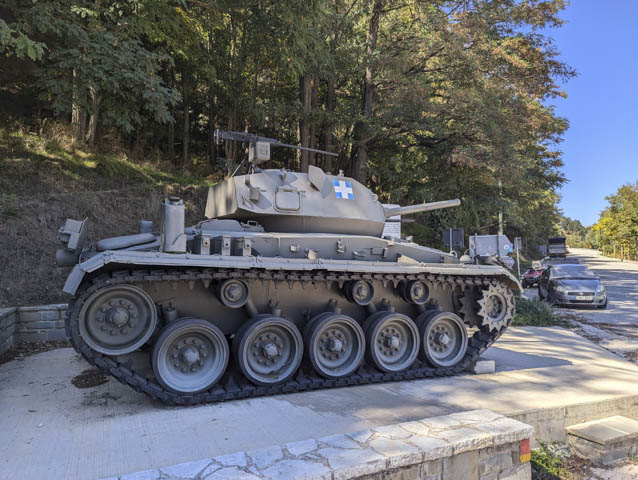
Above the steep-sided town, close to where we parked, is a memorial to the fallen of the 40th Cavalry Division fighting Mussolini’s army in 1940, as well as a genuine M24 battle tank.
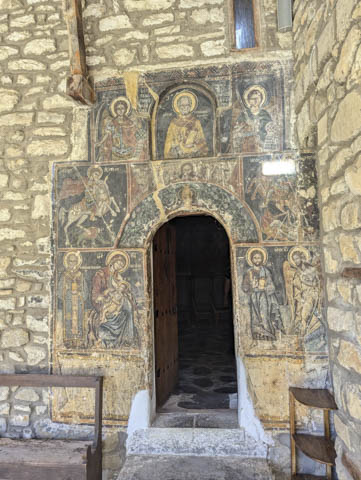
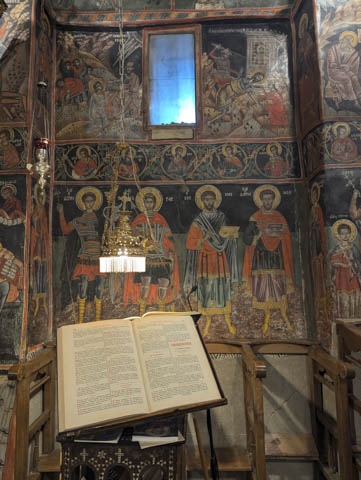
While below the town is the 14th century Holy Monastery of Saint Nicholas of Metsovo, which still has four resident monks. You can ring on the doorbell and a caretaker will appear and (somewhat grudgingly) show you to the beautifully painted church. There is also a little shop where you can buy some of their award-winning wine.
We decided to stay in the Metsovo area for a couple of days near an old ski resort, where we spent a peaceful couple of days with only the cows and a few stray dogs for company.
Not far from Metsovo but further up into the mountains is the reservoir of Aoos Spring Lake and this was a real gem. We drove all around the lake until we found the perfect spot for us.
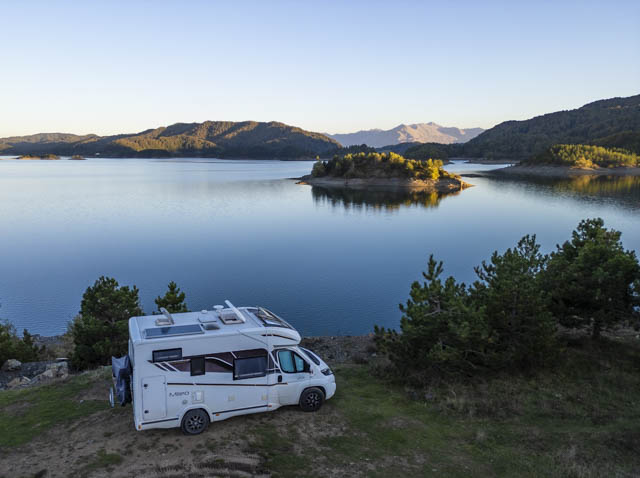
The view of the lake and its many islands was spectacular from here.
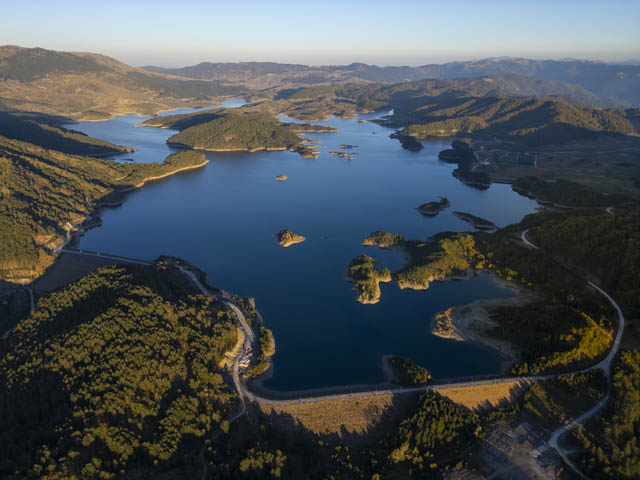
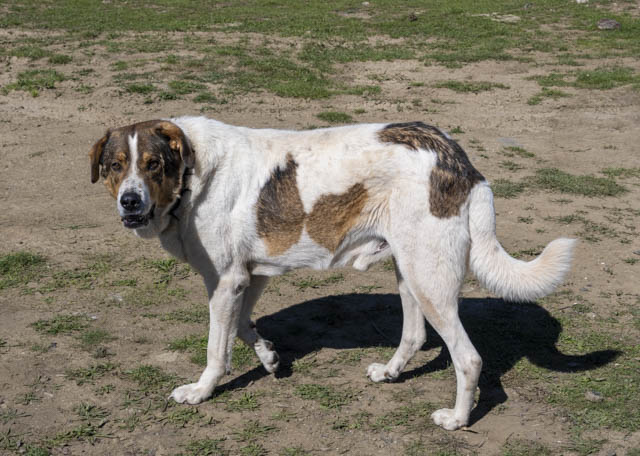
We loved this place so much that we stayed longer than expected. Each day in the morning a large flock of sheep was escorted passed us by a pack of flock guardian dogs and back the other way in the evening. There was no sign of a shepherd but the dogs seemed to have it well in hand. They were a mix of breeds and some were very friendly and others more wary. One dog, who we nicknamed Stavros, seemed to be less conscientious than the others and would spend the day with us, lazing in the shade of our camper, and then join his flock again on their way back in the evening.
The highlight of our time at the lake was on our final evening when we built a fire ring from stones lying around and had a campfire from wood that we scavenged from the area.
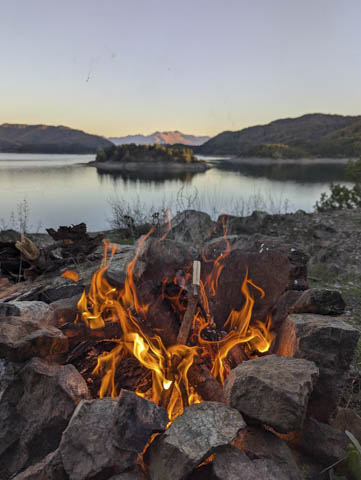
We kept it burning all evening and it provided enough warmth to allow us to sit out and watch the stars appear. The stars here were beautiful, far as we were from any light pollution.
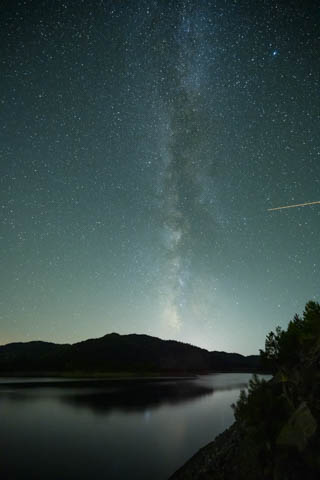
Unfortunately we couldn’t stay here forever and it was time to move on – our next stop was somewhere we had been looking forward to visiting ever since we had heard about it – Meteora.
Meteora is famous for its clifftop monasteries. Most people have heard of this place through the James Bond film, For Your Eyes Only, where Bond had to climb up the pinnacle to the monastery at the top.
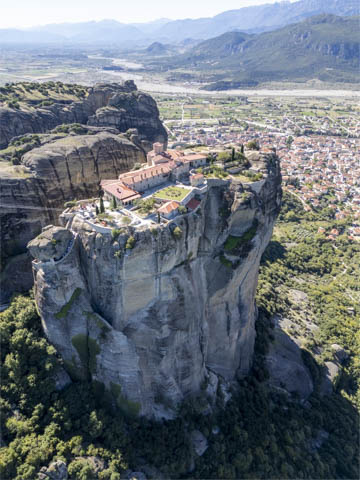
At one time there were 30 monasteries built on the cliffs in Meteora. They were built in these inaccessible places (only accessed originally by a network of ropes, ladders and pulleys before the modern staircases were carved into the sides of the rocks), not only to allow the monks to be closer to God but also to provide protection from bandits and oppression.
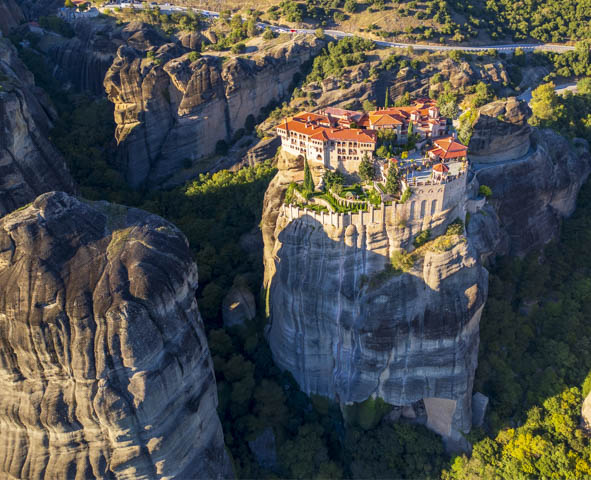
Monks have been living on these cliff tops since the 9th century but it wasn’t until the 14th century that the larger monasteries that we see today were constructed. The hey day of the monasteries was between the 15-17th centuries, after which time they started to decline mainly due to raids by thieves and conquerors. Many were abandoned and today only 6 monasteries are still active.
Staying the night in a motorhome near the monasteries themselves is prohibited, so we stayed in a campsite in the town of Kastraki, at the foot of the mountains. The campsite was absolutely heaving with around 100 campers each night. It did however have a nice swimming pool.
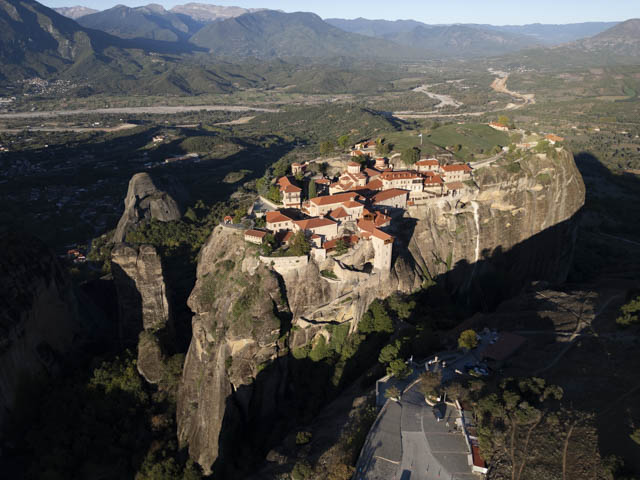
We got up very early to drive up to the monasteries for sunrise and to make sure we could get in the car parks before they filled up, which proved to be very sensible as it became very busy with tour buses as the day progressed.
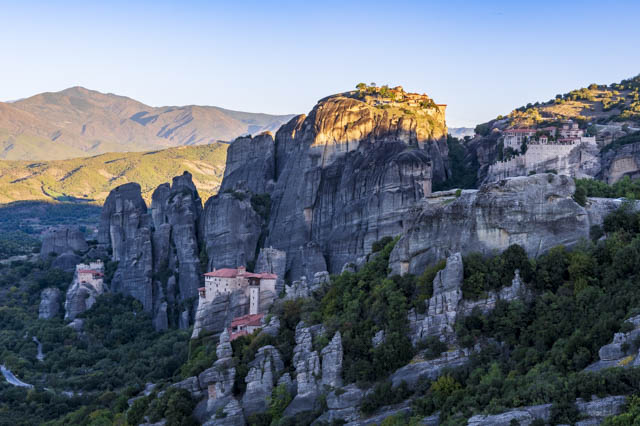
We visited two of the six monasteries and went to the major viewpoints to get a good look at the area. The interior of the monasteries wasn’t actually that interesting and they were very busy with big tour groups but the viewpoints definitely don’t disappoint.
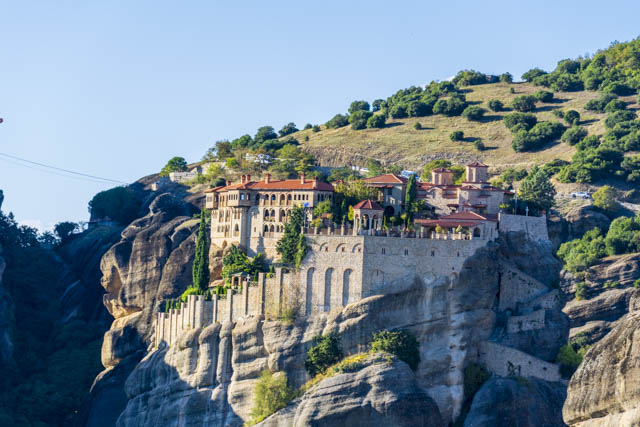
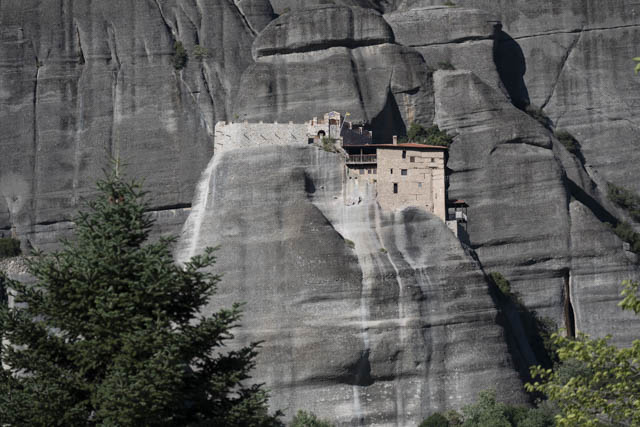
Only a 10 minute walk from out campground we found a monastery that is off the beaten track but it is not possible to visit the interior. The views from the outside were interesting and we saw a monk having his morning coffee on the balcony, safely ensconced above us. There were also old and broken down platforms around holes in the rock, where hermits used to live !
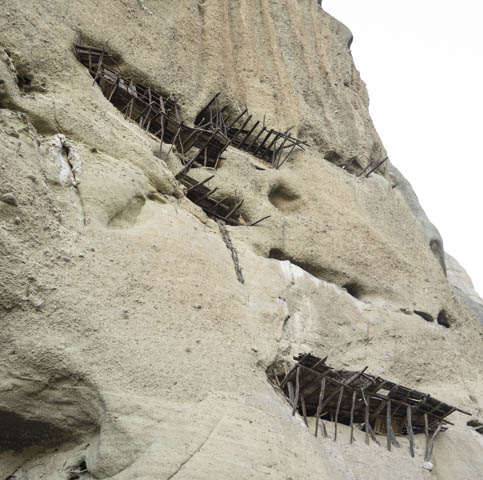
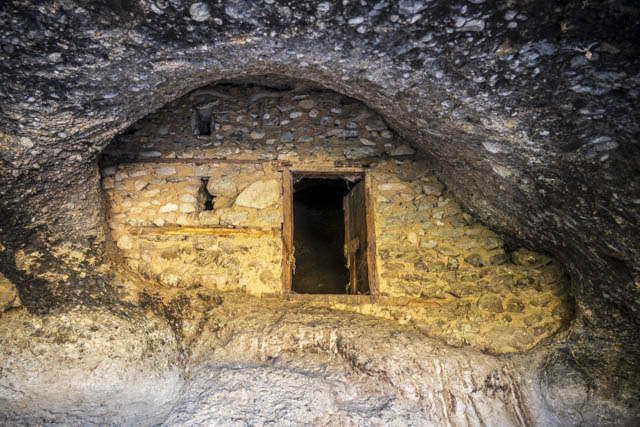
In the same area, and not connected to the monasteries, are some ancient rock dwellings that pre-date the monasteries themselves which can be visited and we enjoyed poking around in them.
Meteora is definitely spectacular but it was very busy with tourists and after we had seen what we came for we were glad to get away and we continued driving towards the coast. But first we stopped at Delphi, an ancient Greek site, famous for the Oracle of Delphi.
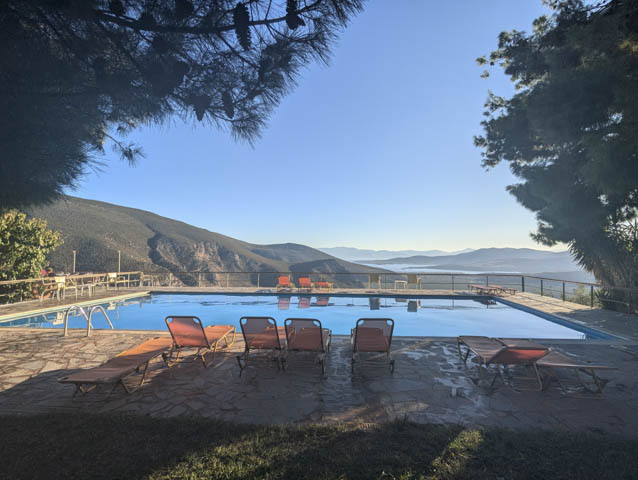
We stayed at a campsite which was perched on the hillside with an amazing view over a swimming pool to the coast far below. This was our first glimpse of the sea since May in Croatia.
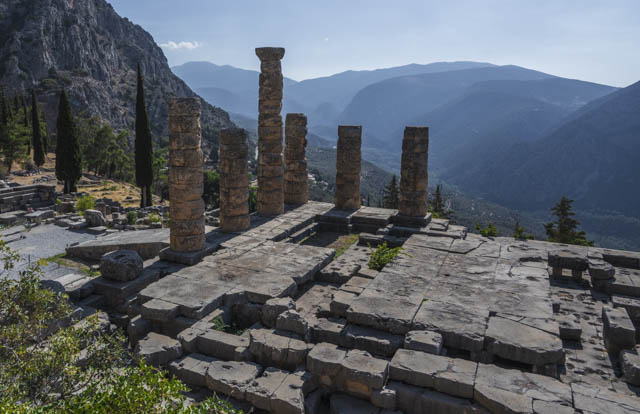
We visited Delphi first thing in the morning in order to get a parking place in the very small parking area and hopefully avoid the majority of the tour groups. We managed to get a place to park which wasn’t too far away from the entrance but we failed to avoid the tour groups and it was pretty busy.
As we were to discover, there is minimal reconstruction at Greek ancient ruins and the signage is fairly poor so it is difficult sometimes to understand what you are looking at. Greek sites definitely require a tour guide or some internet research beforehand to understand what you are seeing.
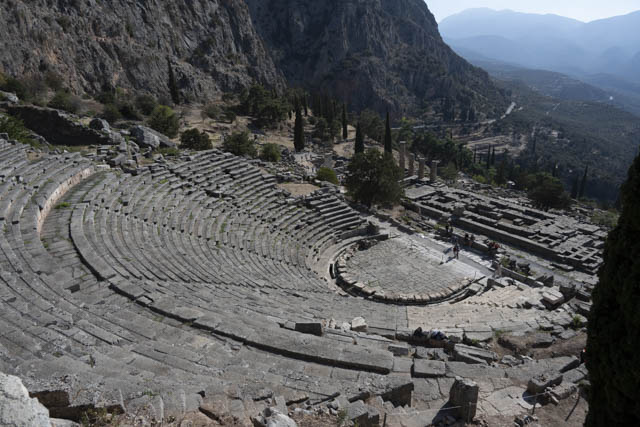
Delphi itself is built into a steep hillside with temples at the lower end, a theatre in the middle and a stadium right at the top. Delphi was a site built around the Temple to Apollo but it was also the site of the Oracle of Delphi. This was the most famous ancient Oracle, actually called Pythia, and was a woman over 50 who was supposed to communicate directly with Apollo. Pilgrims would seek Apollo’s wisdom and she was incredibly influential. The last prophecy was given in about 393 AD when the Romans passed laws to ban paganism.
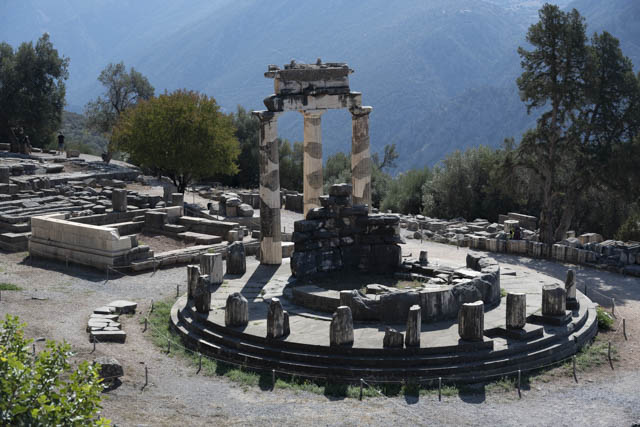
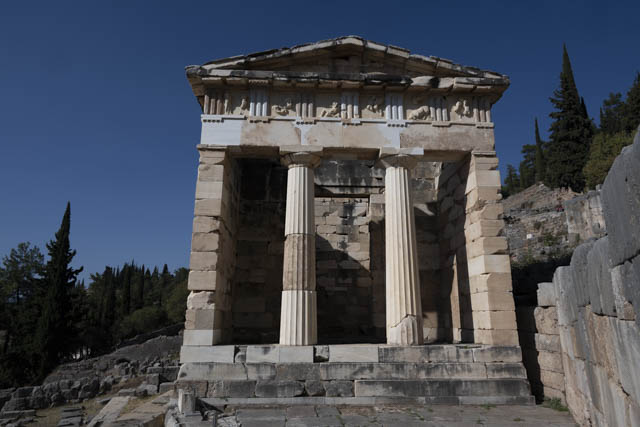
Down the road a few hundred metres from the main site is another site which holds the Athena Pronea Sancuary or Tholos which was the first temple that pilgrims to Delphi visited when they arrived.
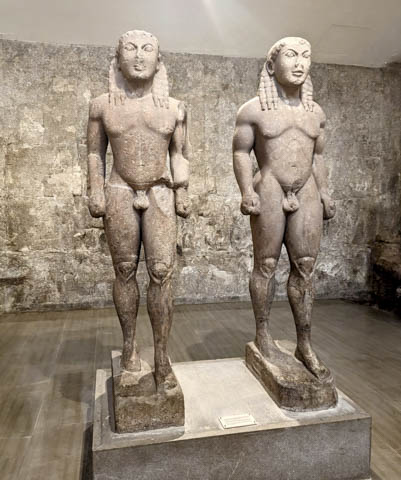
We were ultimately a bit underwhelmed by the site itself but the museum which is on site was very interesting with some very well preserved statues.
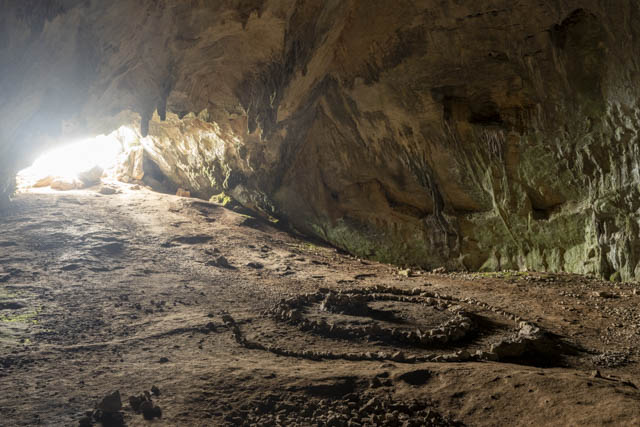
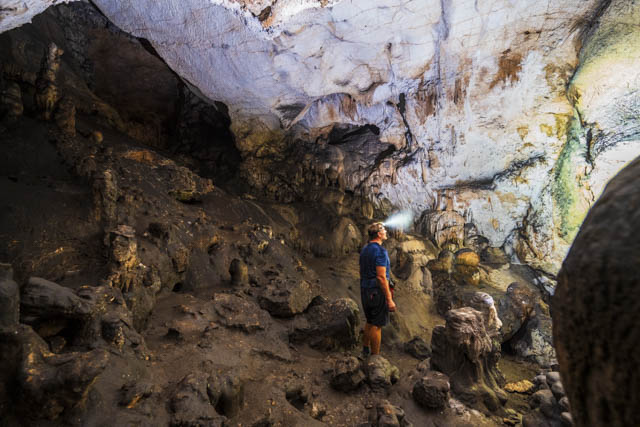
A few miles away from the site of Delphi, in the mountains above, is the Corycian Cave. The Corycian Cave was believed to be the home of the Corycian Nymphs and the ritual home of Dionysus. Even today some form of pagan worship is carried out here and the rock maze on the cave floor is testament to this. The cave can be accessed by a very rough 4×4 track but we parked up about 4km away and hiked up. The cave itself has an easy entrance and a large 1st chamber, however you can climb up the slope at the back of the cave and enter another chamber which is completely dark and then from there you can also go to a third chamber but it gets increasingly difficult to progress so I stopped at this point.
Next stop was the Peloponnese, more ruins and some lovely beaches but that is for the next post.
 FromAtoB