The Peloponnese – Part One
Having spent the best part of the last three months at altitude, it was time to descend the mountains and hit the coast where the temperatures were finally perfect for us, with the days in the high 20’s to early 30’s and cooler nights.
From Delphi we dropped down into the valley and drove along the coast, passing many tempting looking spots where we could have parked up on the water, until we reached the massive bridge which links the town of Patras with the mainland. The Rio-Antirrio Bridge is the longest fully suspended cable-stayed bridge in the world and was opened in 2004 (hitting its deadline of being opened by the Athens Olympics with 1 day to spare).
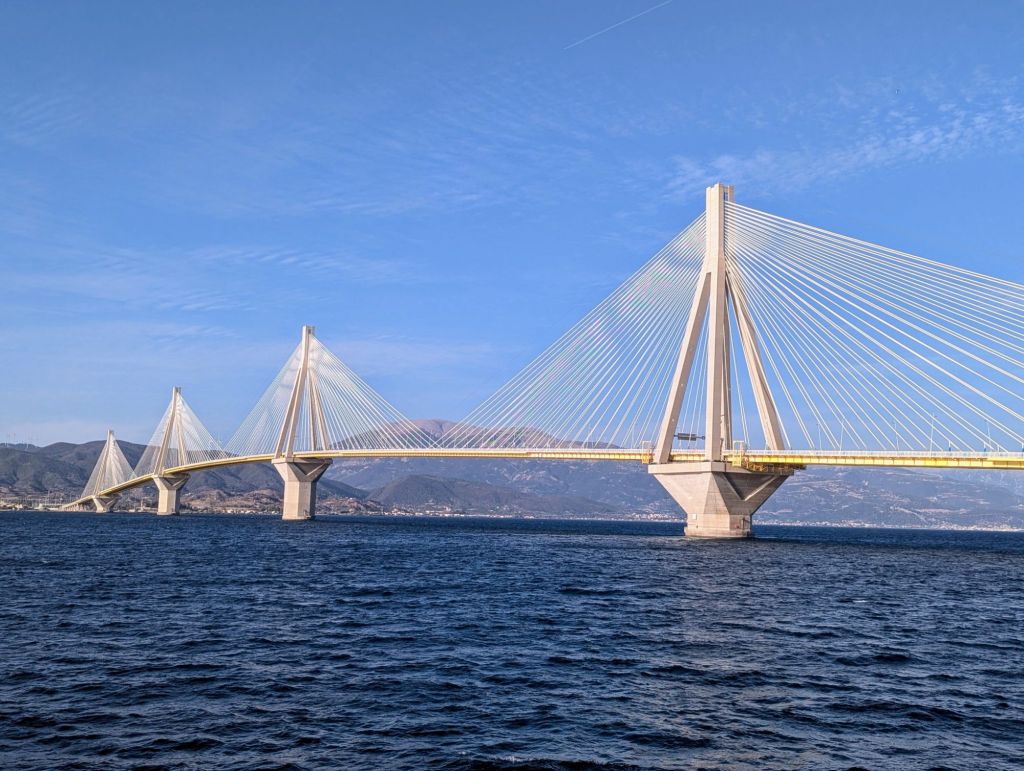
The toll for the bridge is pretty high and there are cheaper ferries which you can take to cross the Gulf of Corinth, however we missed the turn-off for the ferry and were stuck crossing the bridge.
Once across you are only a few kilometres from Patras and we had an appointment in the city. I had been suffering with fairly bad toothache recently so I managed to find an English speaking dentist in the city. We found free parking around 1 km from the centre, albeit in a fairly sketchy looking car park and I walked into town for my appointment leaving Sarah to guard the motorhome.
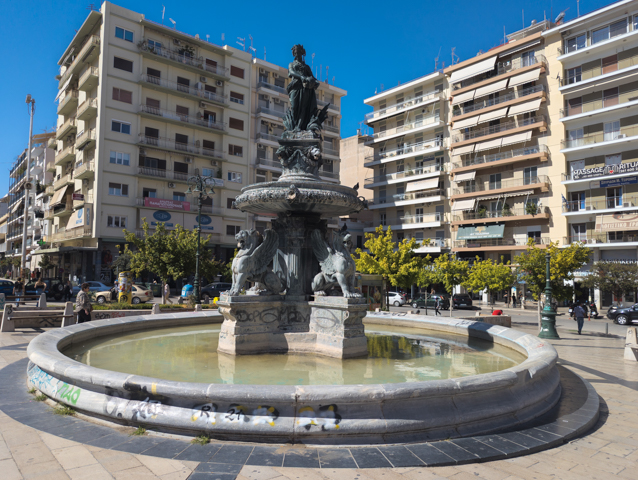
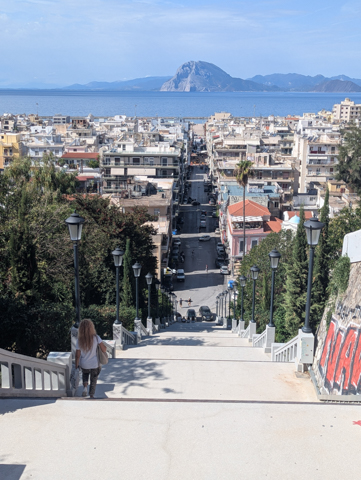
I took the opportunity for some sight seeing around town which is a busy port town with what felt like a real café culture in shady streets away from the still blazing daytime sun.
The dentist was super modern and although it turned out that I needed to have one of my wisdom teeth removed he dealt with it easily and it was probably the best dental experience I have ever had. Coincidentally, the dentist used to work in Fulham – London, very close to home, and spoke excellent English. The best bit was at the end when I was presented with the bill for €50! I actually did a comedy double take as in the UK this would probably have cost at least £300.
We didn’t intend to hang around Patras and we drove up into the mountains to the East of the city to visit a monastery which we knew allowed free overnight parking. Unfortunately the next day we woke to torrential rain and low cloud but it didn’t stop us touring the monastery first thing. This was to be the last we saw of rain for over a month so we shouldn’t complain.
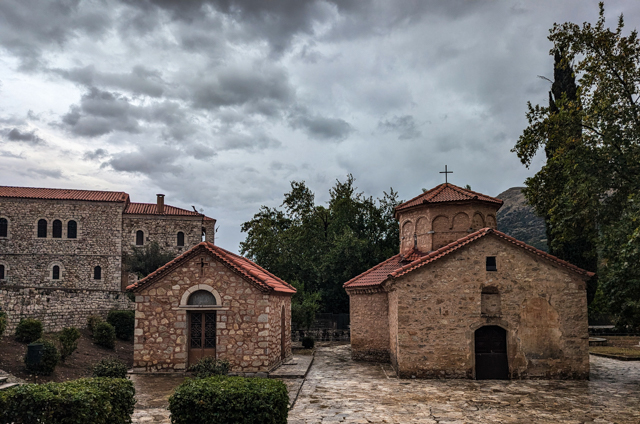
The Agias Lavras monastery is above the town of Kalavryta and sits at over 800m. It was built in the 10th century, although like many monasteries it has been repeatedly destroyed and rebuilt over the years. It is famous as it is credited by some as the birthplace of the Greek War of Independence in 1821.
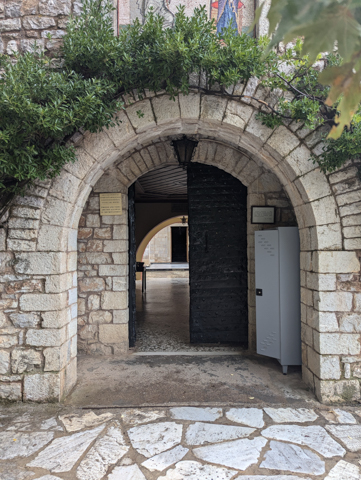
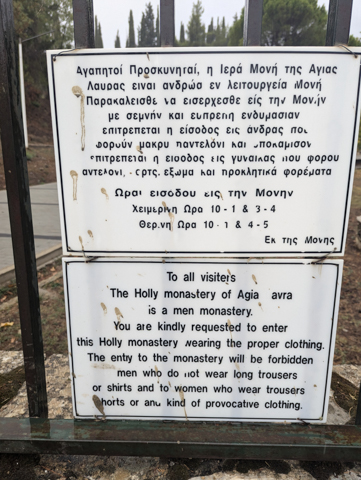
I enjoyed the warning sign on the gates of the monastery that prohibits women wearing provocative clothing, such as trousers – I shudder to think what they would think of a miniskirt.
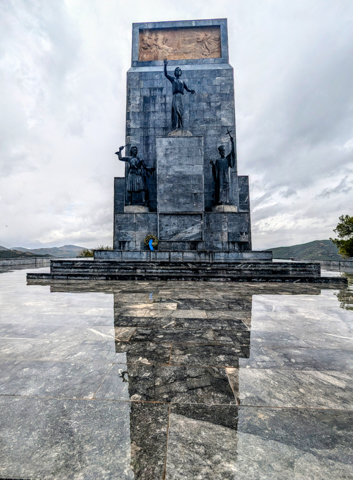
Upon leaving the monastery we immediately turned onto a very steep hill. The Beastlet was very cold and wet and as soon as we tried to accelerate up the hill the check engine light came on and we were plunged into limp mode. We managed to slowly grind our way to the top of the hillside where we visited a monument to the fallen heroes of the 1821 war of Independence.
Not knowing much about engines we were hoping that while we were checking out the sights the Beastlet would rest, the electrics would reset and all would be well with the world again. Unfortunately that was not the case. The check-engine light reappeared and, being on top of a hill-side in the middle of nowhere, we had no other option than to limp on and hope for the best but there was drama to come.
Following our sat nav (big mistake) we limped along through the town of Kalavryta and then up yet another hill to get onto the main road to the Cave of the Lakes in Kastria where we had originally planned to spend the afternoon and stay the night. The hill got steeper and steeper and as we turned a corner we saw the road surface change to a slippery marble-like material and a pickup truck ahead wheel-spinning and struggling on the wet surface – I knew then we were in trouble. There were two strips of concrete down the middle for the tyres but we were too wide to fit on them. It wasn’t long before our wheels started spinning and we came to a halt.
The road was so steep that our handbrake wouldn’t hold us and we just started sliding backwards. The only thing we could do was reverse a bit and try and hit the steepest bit again as fast as we could in the hope that we would keep traction and get over it. No luck though, we just spun out time and time again and being in limp mode from the check engine light was definitely not helping. At this point an elderly gentleman from the house on the corner, who clearly has to do this all the time, came out to ‘help’ us. I’m not sure whether adding a third person into the mix helped at all but with some hand gestures and broken English he did explain that there was a driveway half-way down the hill where we could turn and for that little piece of information we were grateful.
So we started the long, slow reverse where we then got stuck on a bend and couldn’t make the corner. Thankfully the corner wasn’t on the steepest section of the road so after several wheel-spinning and stalling attempts and a terrible burning smell coming from the engine, tyres or maybe both, we finally found some traction to move forward enough to re-align ourselves so we could continue to reverse back down the hill. We came within a centimetre of knocking down a wall and destroying the side of the camper, not to mention what we were doing to the engine but we eventually we reached the driveway, took a huge sigh of relief and turned ourselves around. The fact that there were no other cars on this country road in the half-hour it took for this drama to play out was a blessing but also a sign that somewhere close by there was a better road that we should have taken. Yes sat nav, I’m talking to you!
Once we got back to the town we pulled into a parking spot where we called our break-down cover (no help at all) and did an internet search trying out a bunch of methods to reset the check engine light while waiting for our blood pressure to go back to normal. However nothing we tried made any difference so we decided our best option was to ditch the Cave of the Lakes and head out of the mountains (at least we would be going downhill) to a campsite on the coast near the town of Akrata, where we would have more chance of finding a mechanic. The campsite we found was almost full and the pitches were so small that our 6m camper was sticking out of the pitch but it was right on the beach and best of all, it had a bar which we happily collapsed into after a very long, stressful day. The next day the skies cleared, the sun came out and when we tried the engine it started up without any problems and no check-engine light – what a difference a day makes!
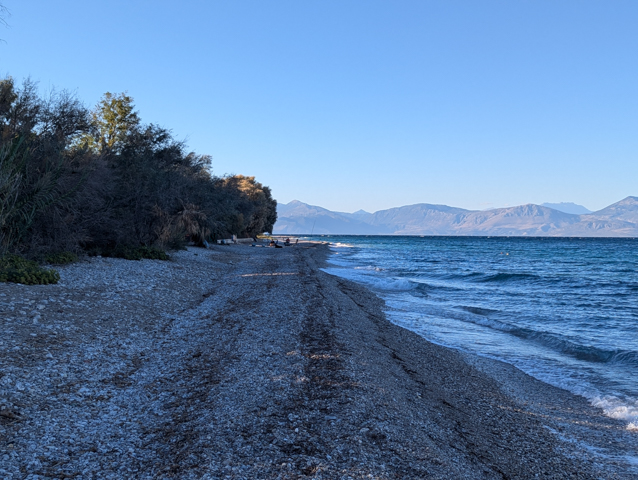
We decided to stay a couple of days turning the engine on each day in our paranoia just to check it was still OK before we gingerly drove off and thankfully put the engine problems behind us.
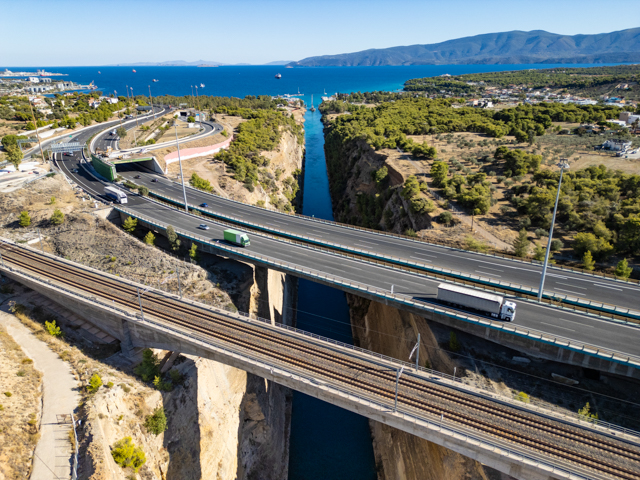
Our next port of call was the Corinth Area on the Eastern side of the Peloponnese where we visited the amazing Corinth Canal. This is a 6.4 km long narrow canal cut 90m deep through the isthmus of Corinth with near vertical cliff walls. It is only 24.6m wide at its narrowest bit and is therefore not suitable for most modern ships. However it cuts a significant distance off the journey from Athens to the West so it is still used by pleasure craft and some smaller commercial ships.
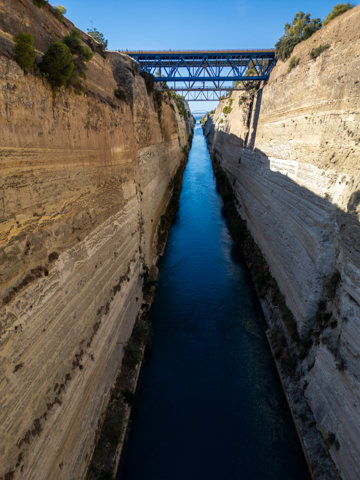
The canal originally started to be excavated in 67 AD but this attempt failed and despite other attempts over the years it wasn’t completed until 1893. It was never really a commercial success even in the early days and is prone to damage by seismic activity, in fact I was due to sail through it 2022 but it was closed due to earthquake damage and we had to go the long way around !
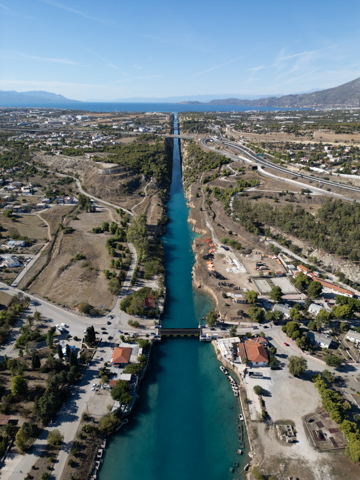
At both ends of the canal are submersible bridges which sink 8m down to provide for the draft of boats.
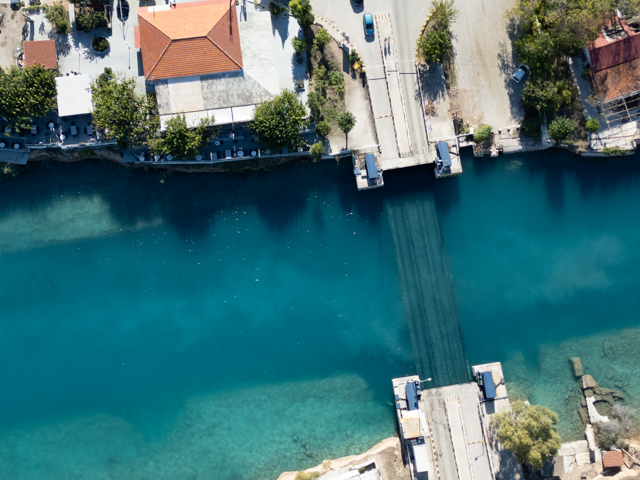
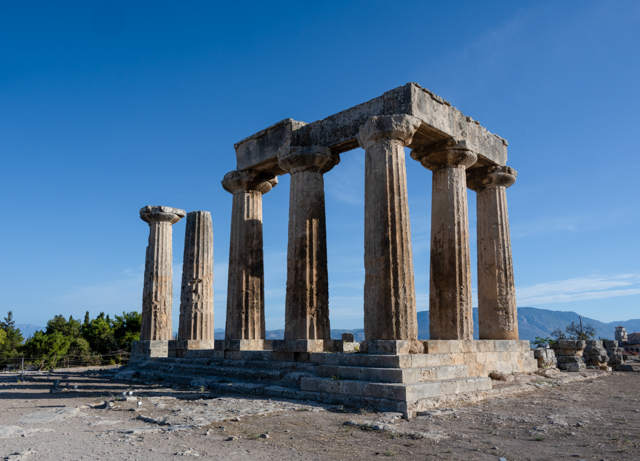
After spending some time at the canal we headed to the ruins of Ancient Corinth. The site of Ancient Corinth is 5 km’s away from the modern town and is a site that has been continuously occupied since 6500 BC. By classical times this was a big city and rivalled Athens in its wealth. It was known as “Sin City” in ancient times and was renowned for its large number of prostitutes.
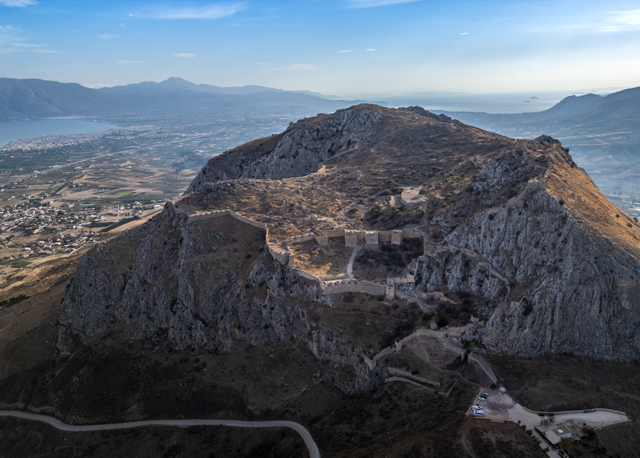
Built high on a hill at an altitude of 575m above ancient Corinth is a fortress known as Acrocorinth. The fortress has endured through many owners and Roman, Byzantine, Frankish, Ventian and Turkish construction is layered over and around each other.
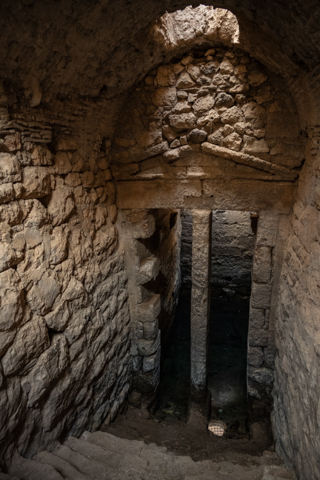
The castle surrounds the two peaks of the hill and beneath one is the Fountain of Peirene, supposedly the favoured watering hole of Pegasus.
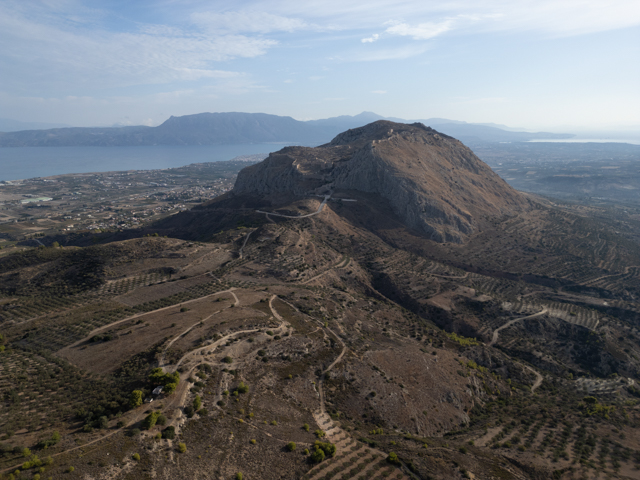
The castle allows for a good hike as it is large and built around the summits – there is a lot of climbing to be done in the castle itself to explore the ramparts and various ruined buildings.
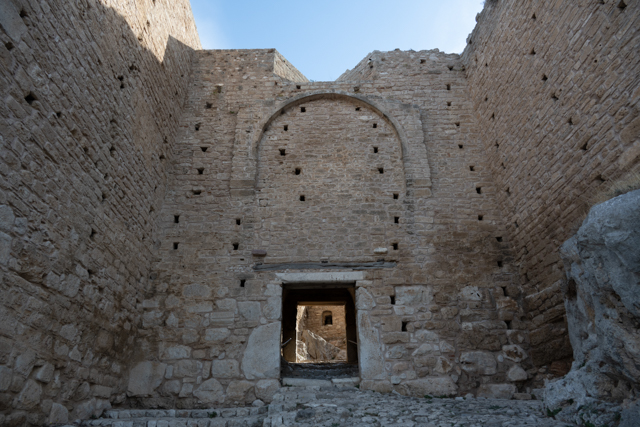
There is a tower near the top but unfortunately although it can be climbed you aren’t allowed out onto the roof to get views of the area and have to make do with the views from the base.
After exploring the Corinth area we carried on South along the coast of the Peloponnese to another busy campsite called Bekas Camping. There were a huge number of Large German campers here who were settled in all along the seafront pitches for long periods of time. We settled for a shaded spot away from the shore in a quieter part of the campsite.
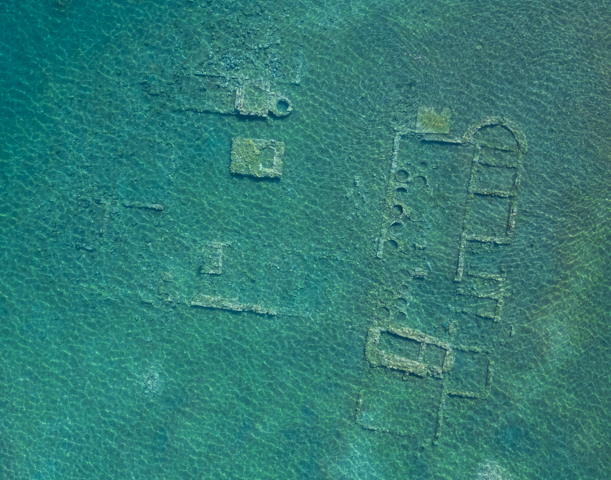
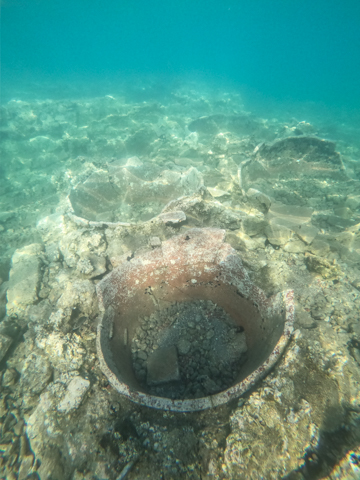
The campsite was on a long shingle beach but, about a 500m walk down the beach, there was easy access to snorkelling over the ruins of a Roman villa, where you could see the remains of large amphora. The outline of the walls were really obvious from a drone shot and even snorkelling you could see the walls up close.
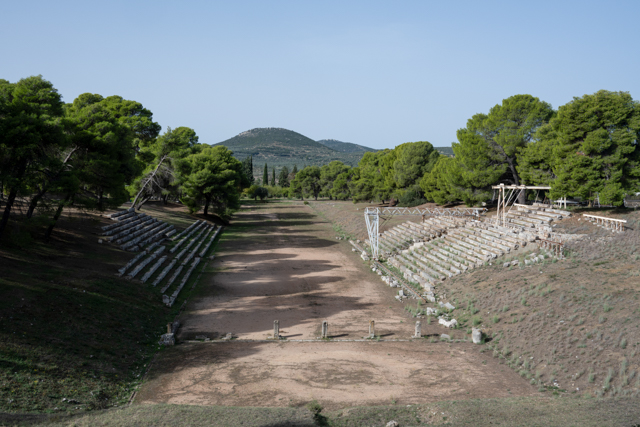
The campsite was also close to the Ancient city of Epidaurus, which is famous for its huge theatre and well preserved ball court. The rest of the ruins of the city are really only foundations and it is difficult to get too much of a sense of what they represent.
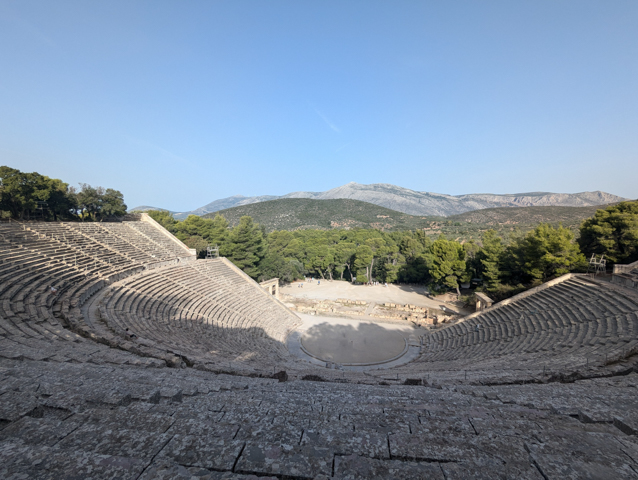
The theatre was constructed in the late 4th century BC and is considered to be one of the most perfect Ancient Greek theatres both in terms of acoustics and aesthetics. It was large enough to hold between 13 and 14 thousand spectators. There are 55 tiers of which 34 were reserved for priests and Lords.
At this point we had been moving quite a lot and had stayed in some busy campsites so we were craving a little peace and solitude. We had done some research and found a remote beach that we thought we could camp on in the South of the Eastern-most finger of the Peloponnese, so we decided to investigate.
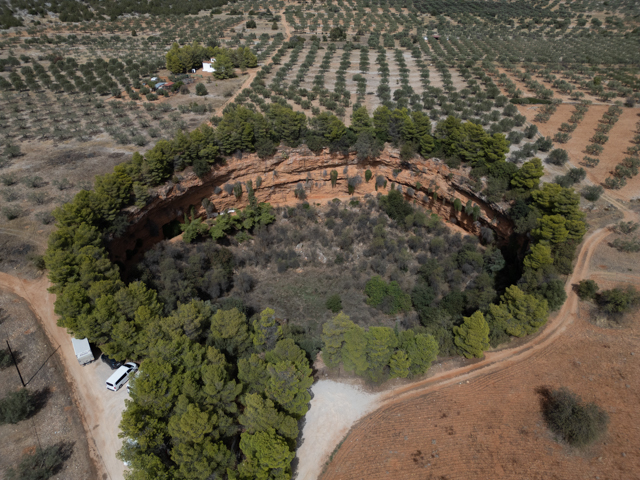
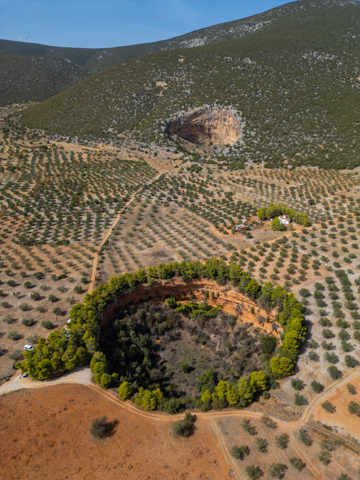
On the way there we stopped off at a pair of large sinkholes know as the Caves of the Twin Dolines. The smaller of the holes is accessed through a staircase that goes down a tunnel into the sinkhole and there are two rock cut churches within the hole itself.
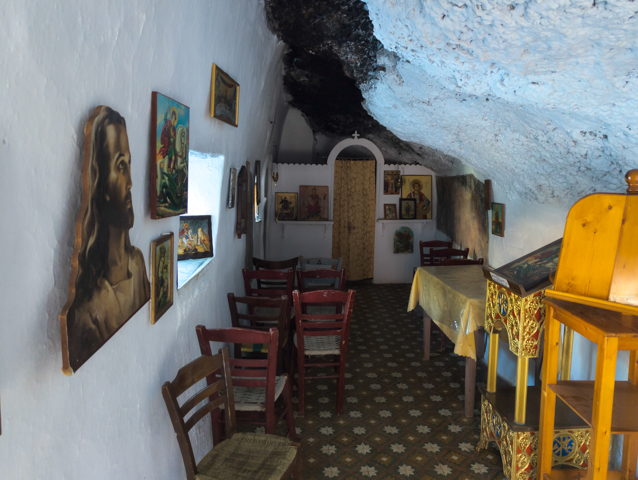
When we arrived in the sinkhole we found a television crew hard at work. They were from Poland and filming a TV series investigating what makes successful athletes such high achievers. We spoke to one of the producers and asked why they were filming there, he just shrugged and gestured around himself, because it’s beautiful. Well, we couldn’t argue with that.
It was a really hot day and we were ready for a swim so we carried on to the beach where we hoped we could stay the night and when we arrived we were really pleased to find that there were only a couple of motorhomes there and that it was otherwise deserted.
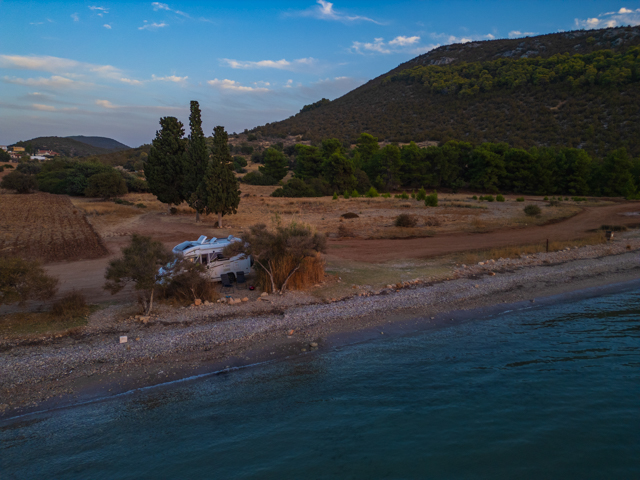
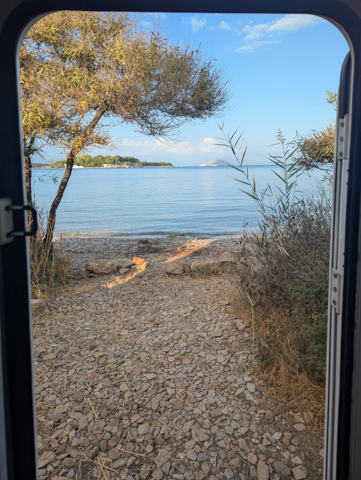
We found a spot only a couple of metres from the water, with some shade from some bamboo and what felt like our own little patio. We were to stay here for 4 nights, until a lack of food and drinking water (our planning had been poor) forced us to move on.
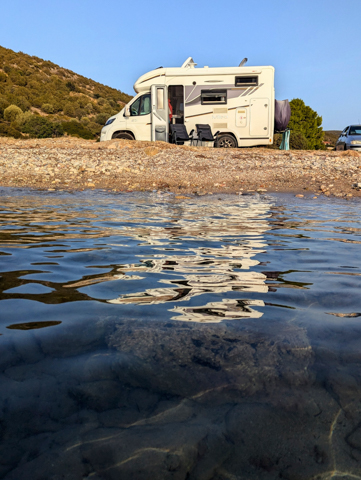
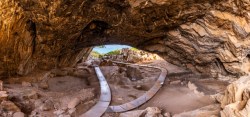
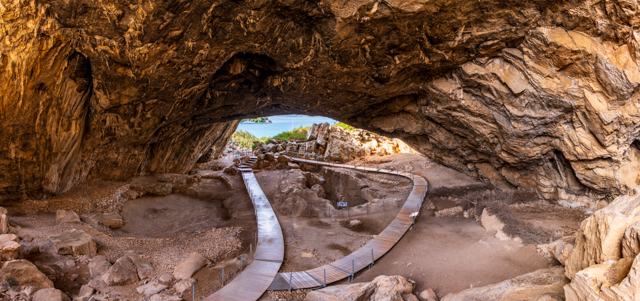
Apart from being a great location for swimming and snorkelling (I even saw a turtle), there is a cave around 500m around the cliffs from the beach (not accessible by vehicle), which has been inhabited since neolithic times. The cave has been well preserved and unusually for Greece there were some excellent signs explaining what we were seeing. The cave is called the Franchthi Cave and humans first occupied it in the Upper Paleolithic around 38,000 BC. It was occupied for 35,000 years until 3000 BC but even after that it was used as a shelter for shepherds and their flocks right up until the 20th century.
It was around this time that we realised we had woefully underestimated how long it would take us to drive around the Peloponnese and the one month we had allocated was never going to be enough. Still, it gives us the perfect excuse to come back another time!
 FromAtoB