The Long Road Home
Moving onto Montenegro we felt as if we were starting the proper part of our journey home, although there were a few outstanding places we still wanted to visit.
Our first port of call was Ulcinj. This was a small town that was founded in the 5th century BC. It has an old town and castle on top of one of the headlands but over the years the town has expanded and now wraps around the whole bay.
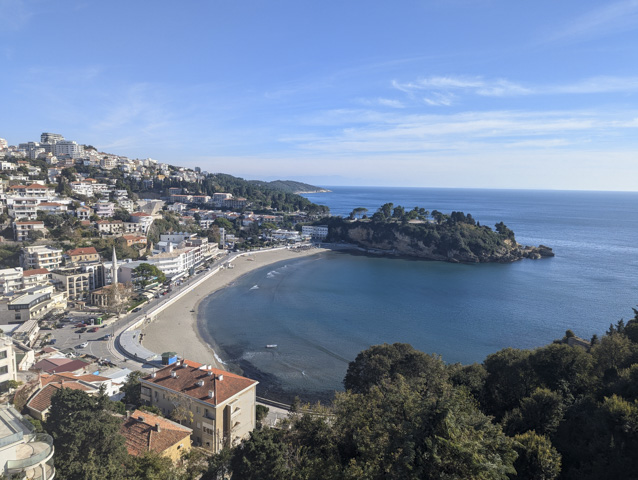
We explored the castle and old town but had to park well outside of the town centre and cycle in as the roads were becoming more and more narrow.
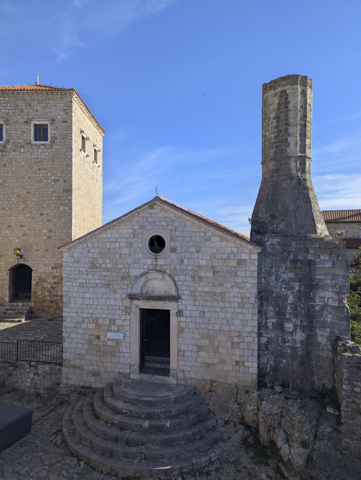
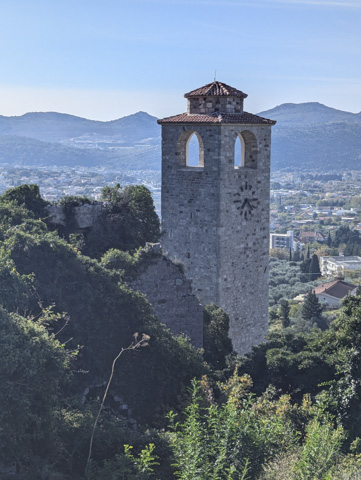
Ulcinj was just a quick stop and we continued on our way to the main attraction – Stari Bar, which is somewhere we have wanted to visit for a while. Stari Bar is actually a few kilometres inland from the new town – Bar, and sits atop a hill (of course it does!), overlooking the new town.
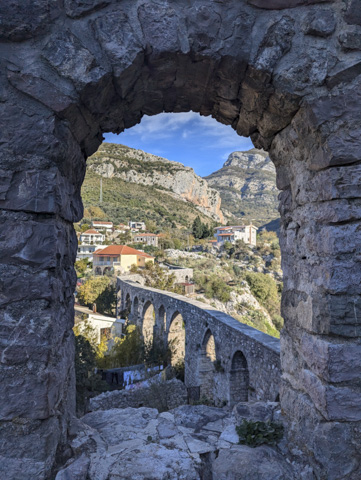
Stari Bar has changed hands many times over the years, being controlled by the Venetians, the Serbians, the Hungarians and the Ottoman Empire. It was finally captured back from the Turks in 1877 by the Montenegrins but it was eventually abandoned in 1977 after an earthquake destroyed the aqueduct that brought water to the city.
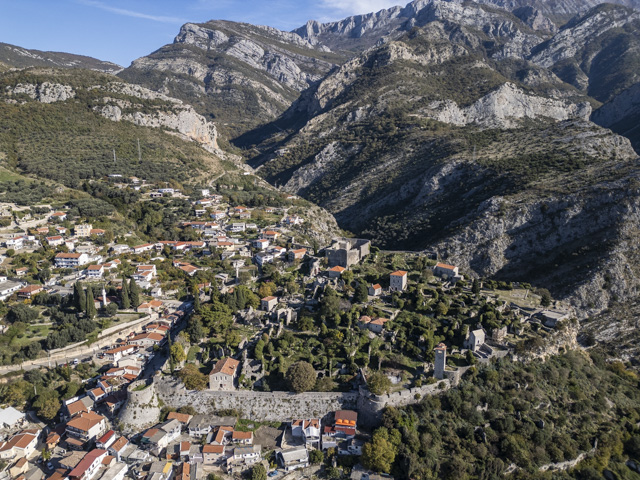
The old city has been restored in part and the overgrown ruins make a peaceful place to wander around but there are only a handful of buildings you can actually go in.
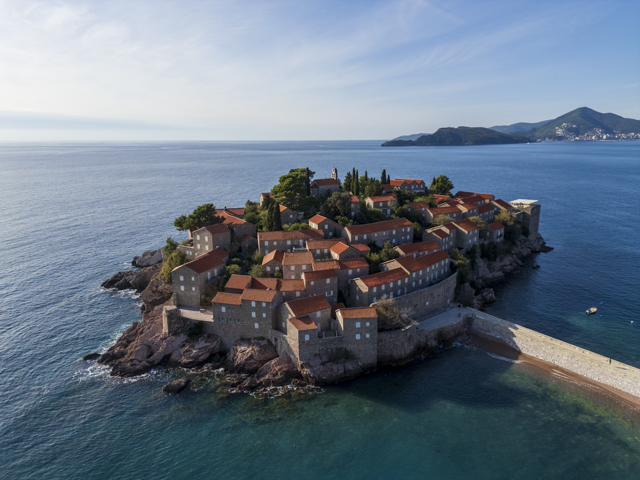
We couldn’t find anywhere to stay overnight here so we decided to drive to the old capital of the country, Cetinje. As we headed along the coast we drove past the island of Sveti Stefan which is now a very upscale hotel with rooms starting from €1,000 per night. Unsurprisingly we didn’t stop here for the night.
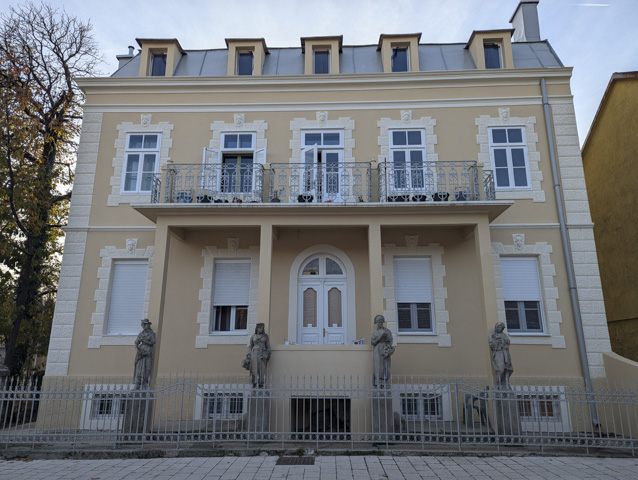
Cetinje was the Capital of independent Montenegro from 1878 to 1918, after which Montenegro became part of Yugoslavia. The capital of Montenegro was moved to Podgorica in 1946.
Despite being the old royal capital, Cetinje is a quiet, small town but, it is home to most of the museums of Montenegro and we were lucky as we arrived on a bank holiday when all the museums are free to enter. Not being able to resist a freebie, we got stuck in!
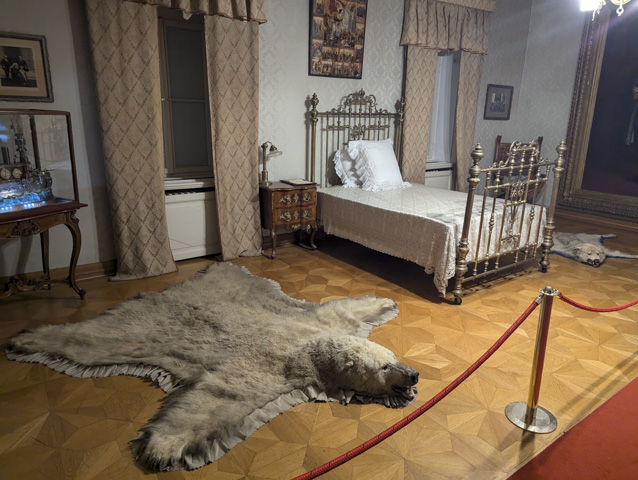
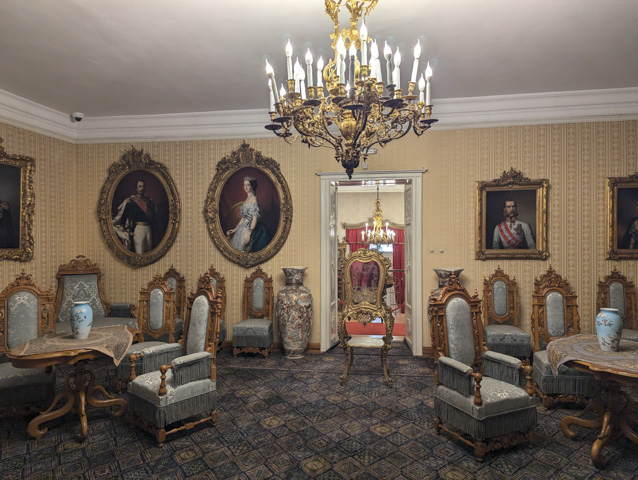
First on the list was King Nikola’s Palace. Nikola 1st was the reigning monarch in Montenegro from 1860 to 1918 when he was deposed and Montenegro joined the other Balkan states to form the Kingdom of Serbs, Croats and Slovenes, renamed Yugoslavia in 1929.
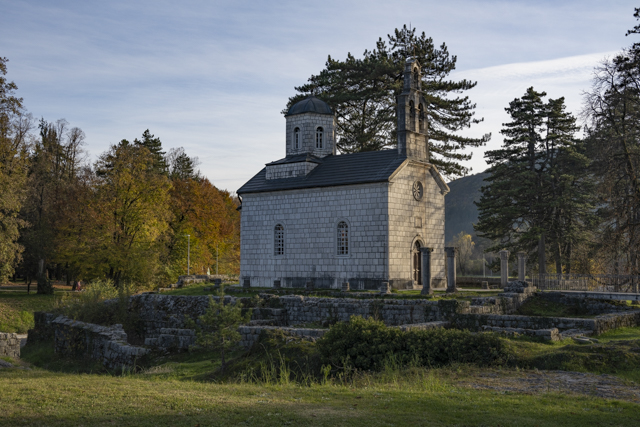
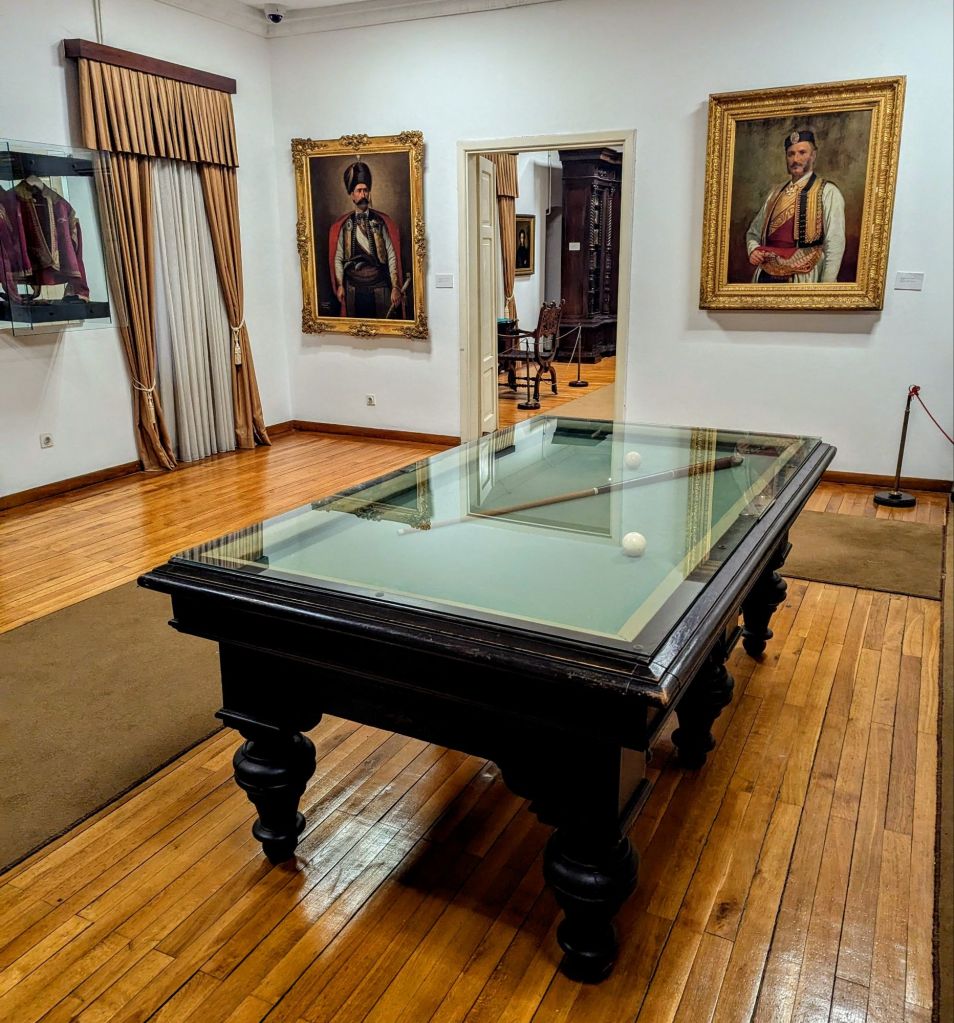
Many of the rooms of the palace were richly appointed and some of the furniture was very ornate. We then visited Billiard’s Palace, home of Prince-Bishop Petar II Petrovic-Njegos (more widely known as Njegos) who ruled from 1830 to 1851. If you find yourself in Cetinje and don’t want to visit all the museums, we found Billiard’s Palace to be the most interesting and informative.
After visiting the two Palaces we moved onto the Ethnographic Museum, which has numerous traditional costumes from different regions of Montenegro.
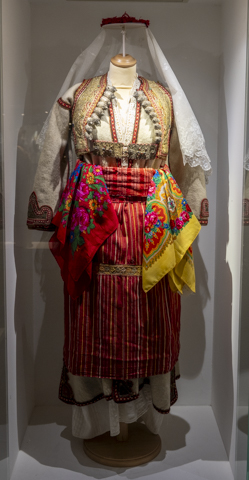
We learnt that Montenegro had been a very poor country and that 19th century Montenegrin society was considered primitive by its neighbours meaning that Montenegro was fairly divorced from the politics of the region.
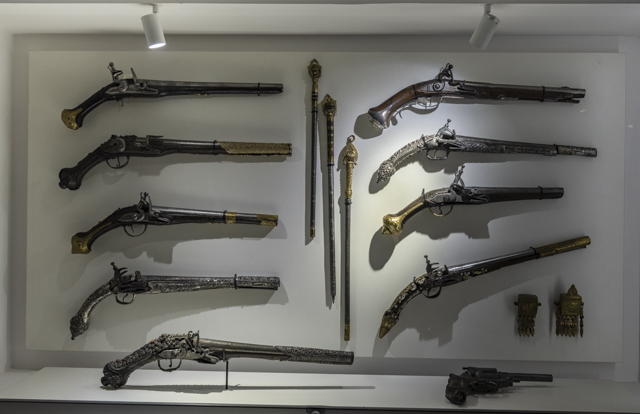
After all that exertion we took a pitstop at one of the cafes on the main square where we enjoyed a warming hot chocolate before heading back to the camper for the night.
Early the next morning we drove onto the current Capital City, Podgorica.
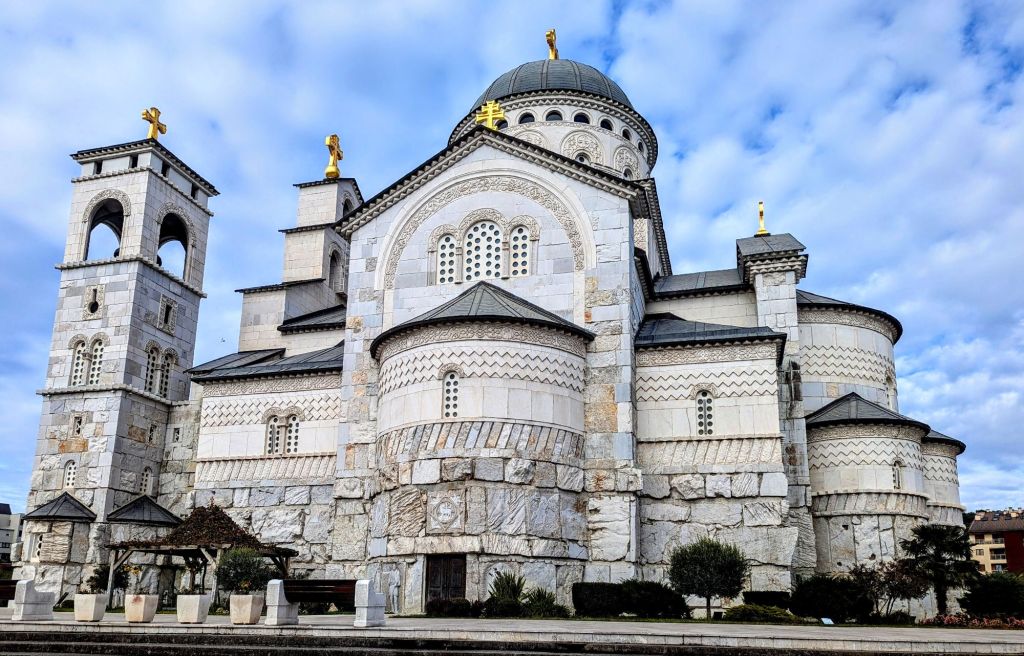
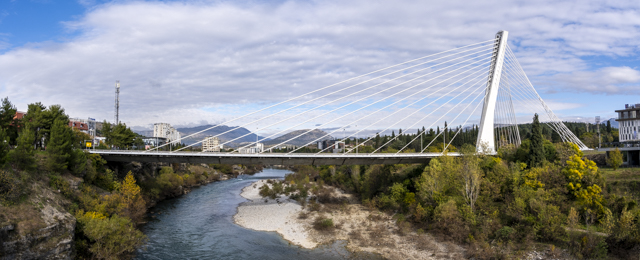
We were able to park right next to the Cathedral and then explored the town by bike. To be honest it didn’t take very long. For a Capital City we were surprised at how little there was to see here, other than the Cathedral, which is quite impressive, a new suspension bridge, the Old Roman Ribnica Bridge and an Ottoman era clock tower. You certainly wouldn’t be missing much if you decided to give this city a miss.
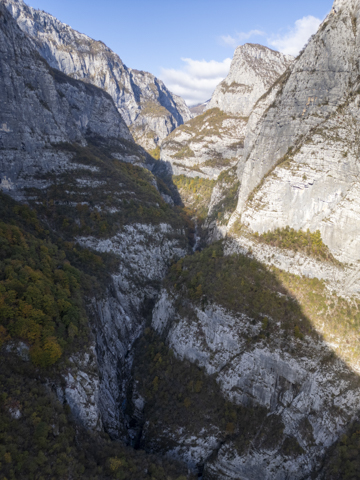
After visiting Podgorica we drove up into the mountains on a road we had already driven in the summer. We were heading to Mrtvica canyon which we had skipped in the summer because of the heat.
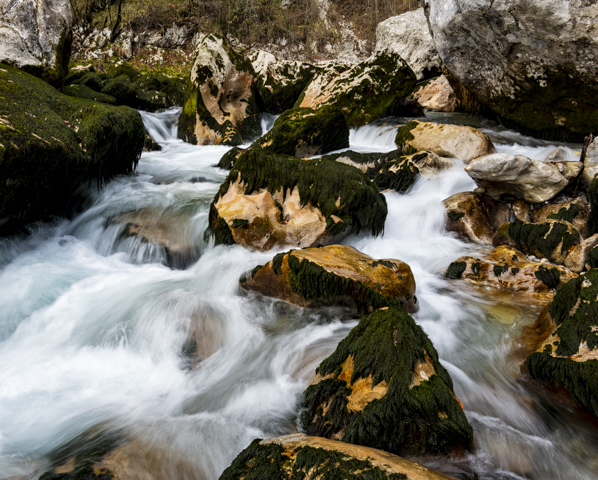
I got up early the next day and headed out for the hike from the main road to the canyon. It’s actually quite a hike to get to the start of the canyon, around 5km, and after that it was another 5km’s along the canyon to reach a channel that had been cut into the cliff walls which was part of an old military trail.
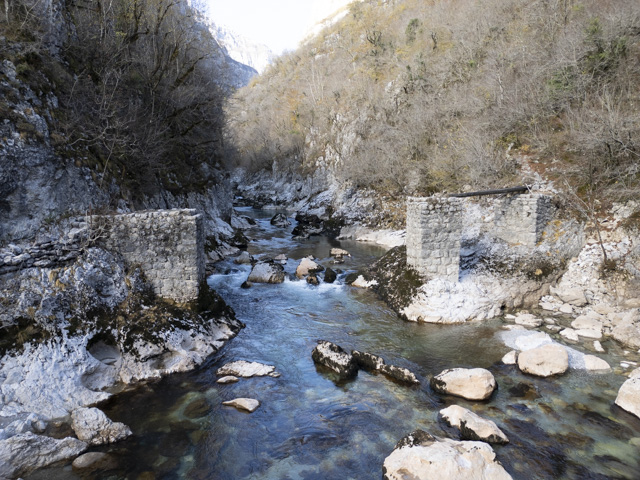
One of the first stops in the canyon is the ruin of a bridge – this actually links a couple of campsites with the trail but was washed away a few years ago.
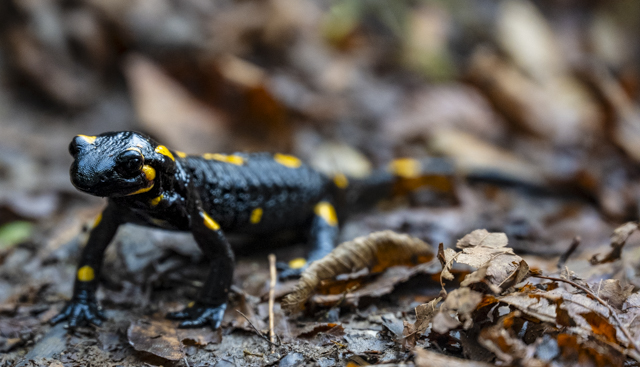
Next up was the “Gate of Wishes” where it is said that if you throw a coin through it your wish will be granted. I don’t know about wishes but I was pleasantly surprised to find a rare Fire Salamander crawling around right there.
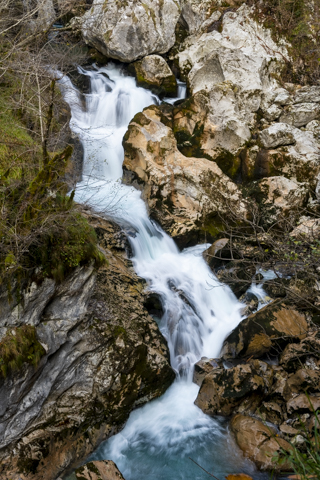
It was definitely a fun hike and I was glad to be here in the autumn rather than in the height of summer, as it was a 20km hike with over 700m of climbing – so quite hard work.
That afternoon we headed down out of the mountains and went right back to sea level to the town of Kotor. We had actually been here before a few years ago so we were just stopping off for the night.
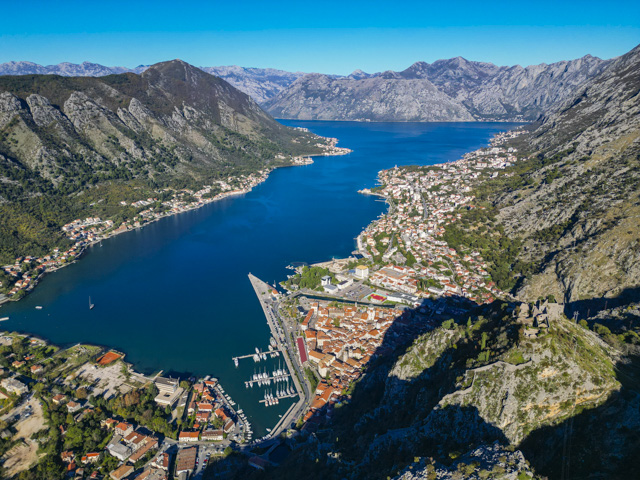
Kotor is a lovely city – like a small version of Dubrovnik – and, as there were no cruise ships in town, it was relatively deserted which was lovely. Parking here is at a premium, and we paid €20 to stay overnight in a car park with no services. However, the location was excellent, only 300m from the entrance to the city.
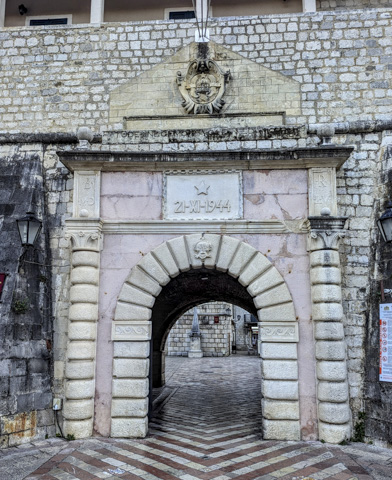
We were beginning to clock up the miles as we had that date with a ferry in our minds, so after only 1 night in Kotor we left Montenegro and headed back into Croatia.
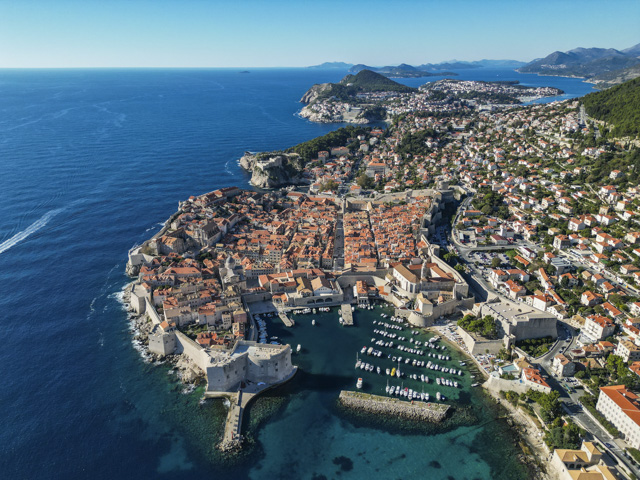
Having previously visited Dubrovnik and being on a tight deadline we drove right past it, stopping only for a quick photo opportunity. You used to have to drive through Bosnia to continue up the Croatian coast but a big new bridge links the Peljesac peninsula back to the mainland now making the journey much more straightforward.
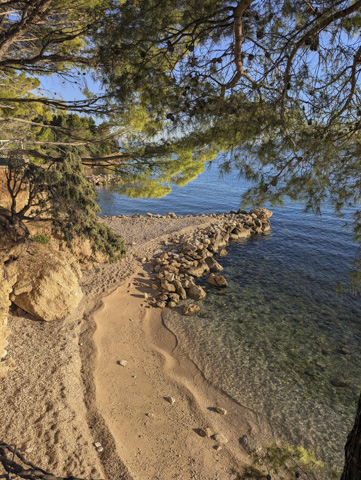
After reaching the Makarska coast we found a camp site for a couple of nights to take a break from the driving. The prices are much better in the off-season and we parked up in a pitch overlooking a pretty little cove. The beach was small so I am not sure how it would fare in the Summer months, but at this time of year it was perfect.
We were also really lucky with the weather and had a beautiful sunny day which was warm enough for us to spend on the beach swimming and sunbathing (in mid November), quite a shock as we were in hats and gloves the day before in Kotor. We had even packed away our shorts and swimsuits and dug out the hot water bottle as the weather had been much colder recently as we moved northwards.
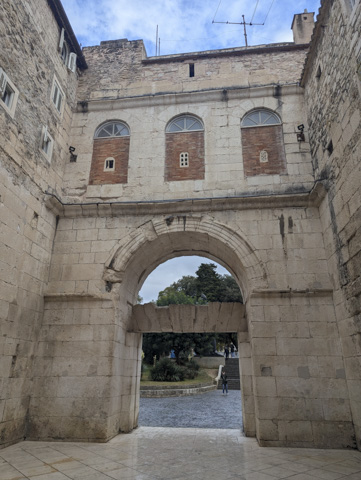
Previously on our way through Croatia we missed out on visiting Split, so we wanted to pop in and take a look this time around. The only motorhome parking in town is near the football stadium, in an industrial area that felt pretty sketchy to say the least but there were other campers there so we weren’t alone.
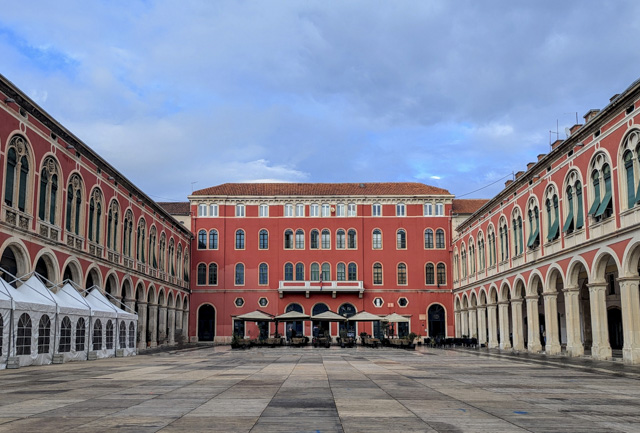
From the car park it was an easy cycle into town and we started by exploring the old town. It was a bit of a shock to the system as there were hordes of people everywhere. We soon realised that not only was their a huge cruise ship in the harbour but there was also a football match involving Croatia on that evening.
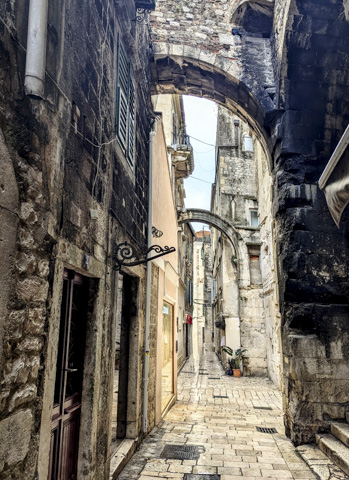
Fortunately in the afternoon the cruise ship passengers disappeared and the football fans seemed to settle into the harbour front bars so things calmed down enormously.
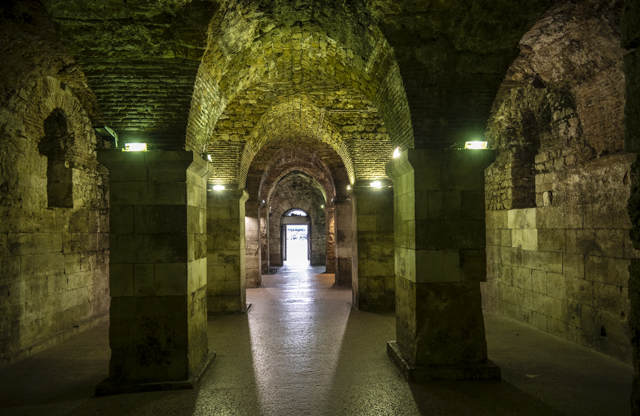
Split is the second biggest city in Croatia and was established as a Greek colony in the 2nd or 3rd century BC. In 305 AD it became the seat of Roman Emperor Diocletian and the heart of the old town is the Diocletian Palace.
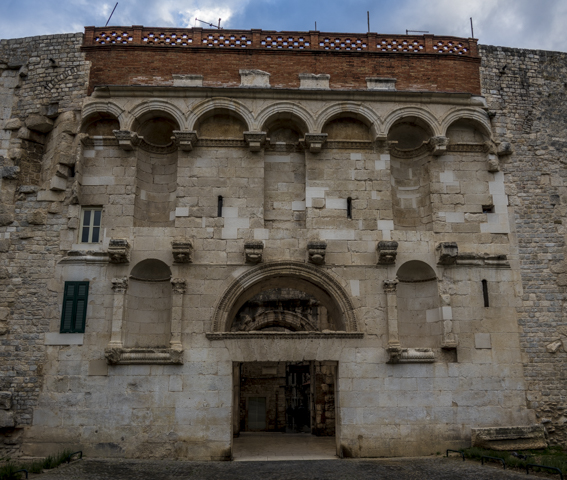
We decided to stay in the vicinity of Split for another day and visit the Roman ruins of Solona which are on the outskirts of the town.
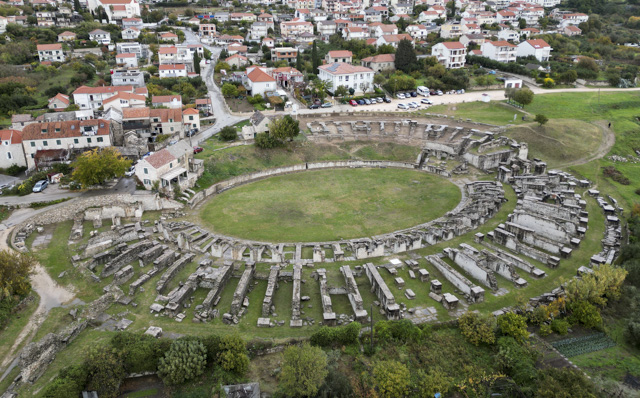
We parked near the old Ampitheatre of the city and walked across the site from there. There was no way to pay at this entrance so we were fortunate to have a free visit.
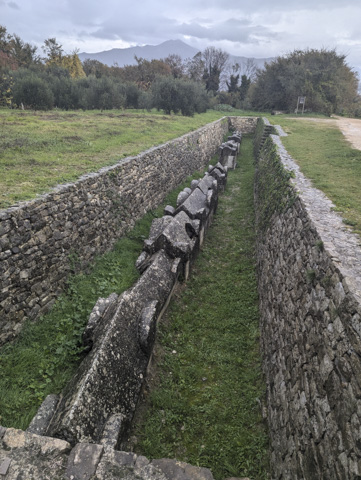
The ruins of the city are mostly just the foundations but there was a very interesting mass grave in a long trench that had a line of sarcophagi in it.
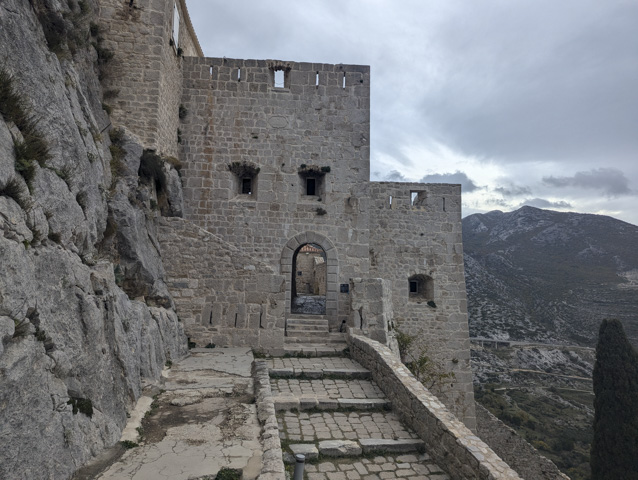
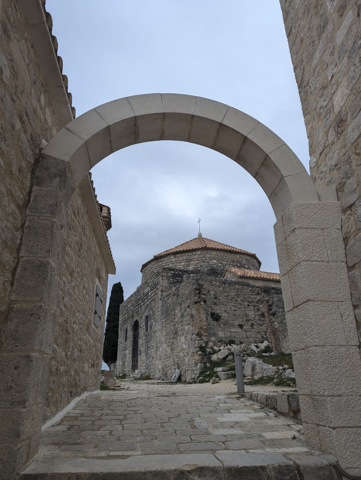
Above Salona is a cool castle called Klis Fortress. After the fall of the Romans this was the seat of a number of Croatian kings and was instrumental in defending Croatia from the Mongols and the Ottomans.
It has changed hands many times throughout history and has been controlled by the the Hungaro-Croatians, Turks, Romans, the Knights Templar, Venetians, Austrians, French and Yugoslavs.
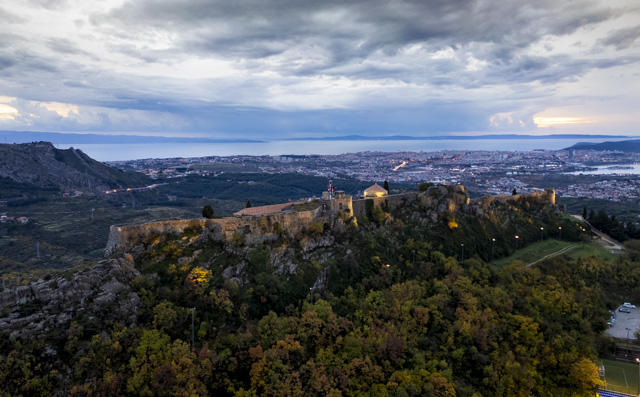
This fortress was one of the locations for Game of Thrones and, if you were a fan of the series, it was the castle in Meereen where Daenerys freed the slaves.
After spending the night below the fortress we got back on the road. The weather was definitely turning against us and as we moved further North we drove through some absolutely foul weather that stopped us visiting some places on our list. Well that just leaves something for next time.
We had been planning to head inland to visit Zagreb and Ljubljana but decided against this when the weather forecast was predicting nighttime temperatures as low as -12c. We’d need more than 1 hot water bottle to cope with that! So we decided to stick near the coast and visit Trieste where the temperatures were significantly warmer.
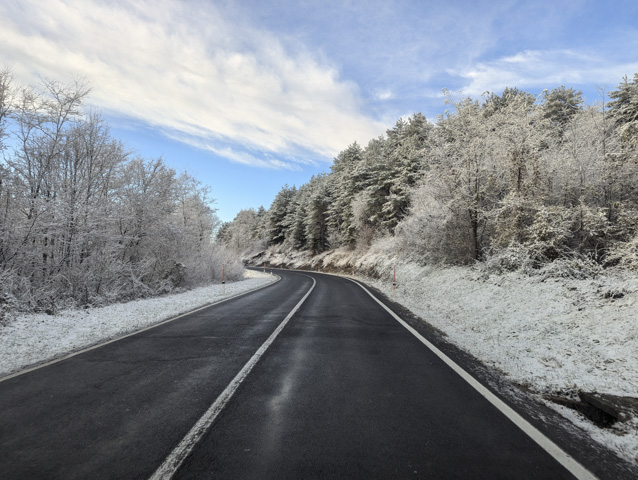
On the way through Slovenia to get to Trieste the weather improved although we were driving with snow on either side of the road. This made us worry a bit about the journey to come from Trieste through Slovenia and Austria as we didn’t have chains or winter tyres, which are legally mandated.
We arrived in Trieste and by the next day the sun was shining and things had warmed up nicely. We hopped on our bikes and off we went.
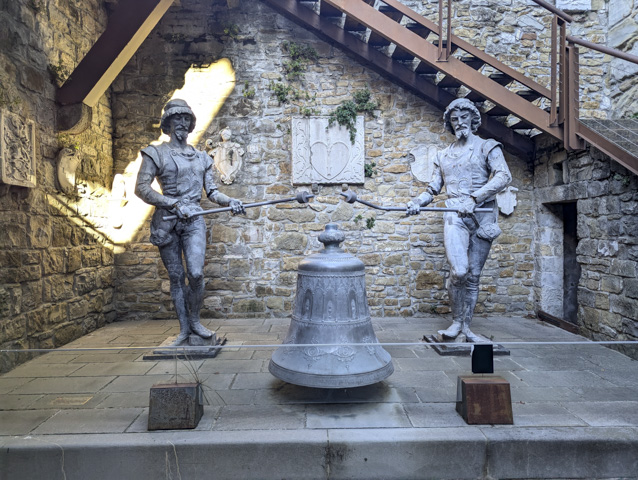
First stop was the San Giusto Castle which sits on a small hill above the harbour front, where the city centre is located. After Trieste came under the control of the Austrian empire in 1382, the Imperial Court ordered the construction of the fortress. The building work was lengthy to say the least and lasted from 1468 to 1636. After the Austrian Imperial Captains ceased to reside in the castle in 1750 it was converted for use as a garrison and a prison.
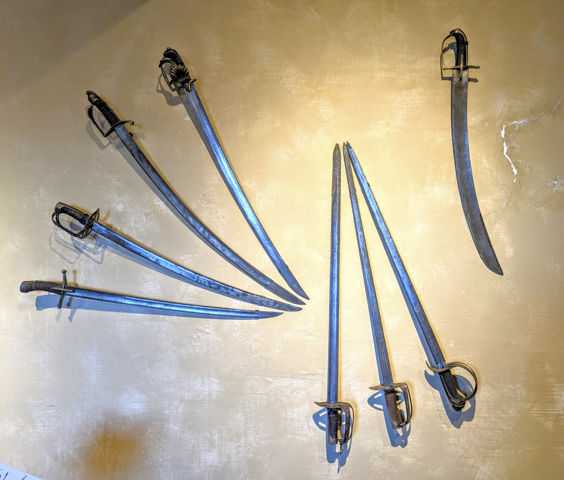
The castle has great views of the city from its ramparts and the museum room inside has a display of medieval weaponry which shows the development of weapons throughout history.
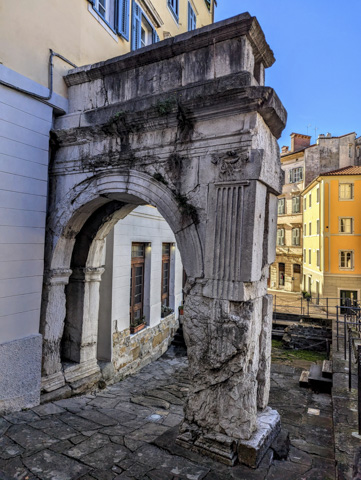
After gaining height to get to the castle we could free wheel back down to the harbour front – made only a little more difficult by the cobbled streets which were hard work on our wheels and our posteriors!
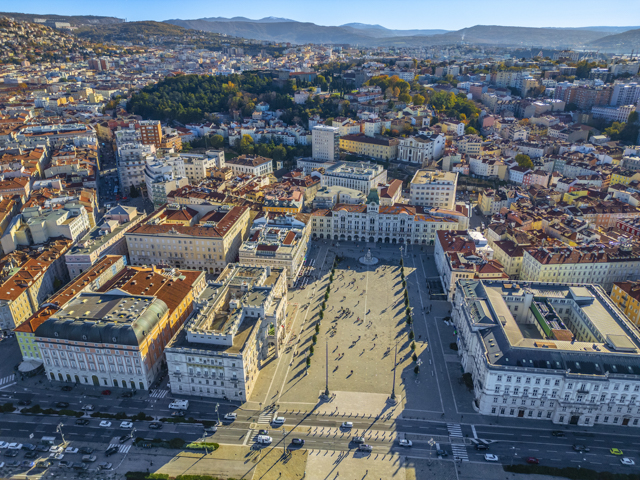
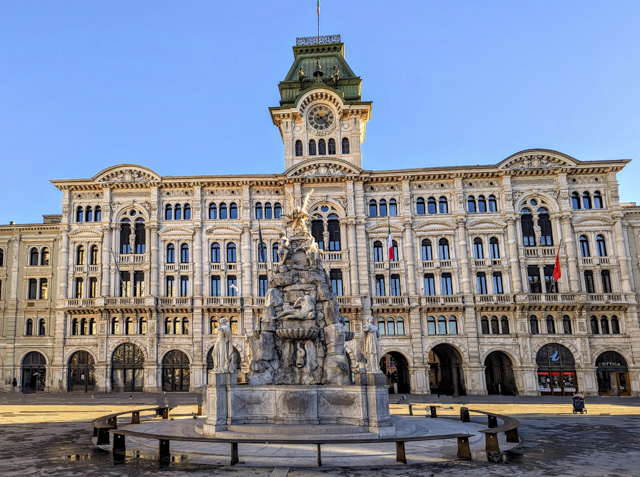
At the centre of Trieste is the Piazza Unita Italia, which is the largest square situated next to the sea in Europe. Several enormous and important buildings line the square including the Town Hall, the Palazzo del Lloyd Triestino, the Palazzo del Governo and the Palazzo Pitteri.
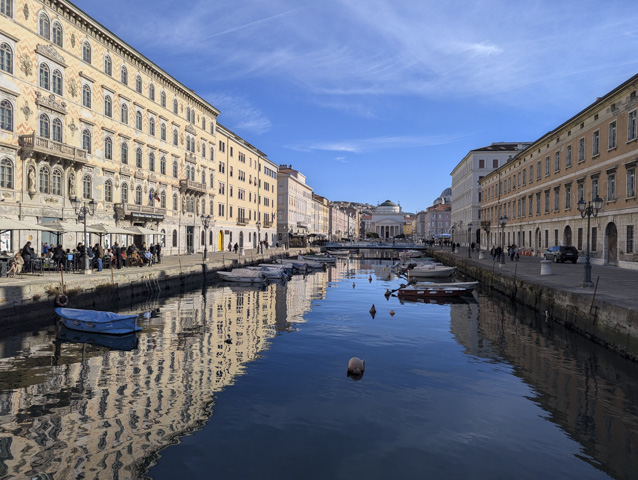
Running through the old town from here is the Canale Grande, which was a small waterway that allowed cargo barges to off load their goods directly into the city.
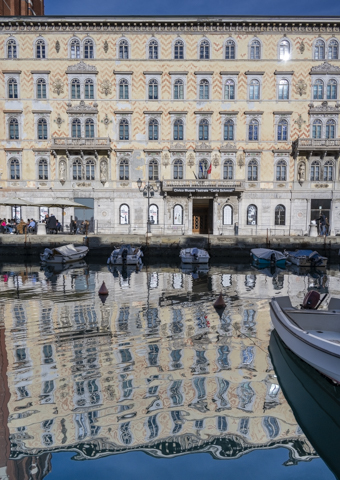
The Canal is lined with restaurants and we had a lovely lunch sitting in the sun and fending off the seagulls.
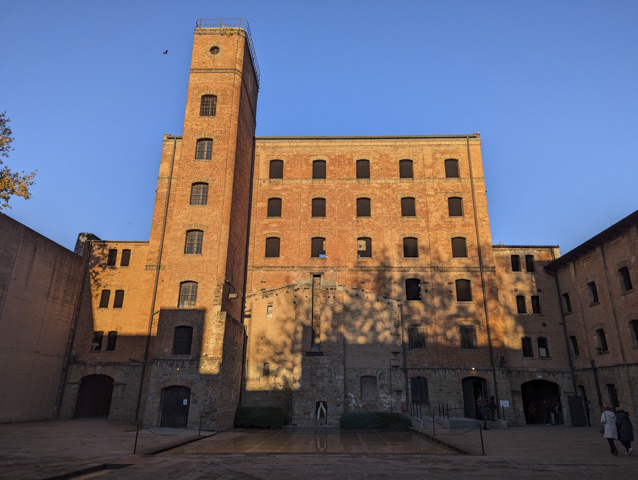
A few kilometres past the harbour is a national monument on the site of the an old Rice husking plant that became a concentration camp in WW2. It is called Risiera di San Sabba and was used for the detention and execution of political prisoners and also as a transit centre for Jews who were being transported mostly to Auschwitz. This was a sombre end to our stay in this beautiful town.
After leaving Trieste we had some big days of driving ahead of us. Our first drive day took us all the way from Trieste to Munich, where we travelled through a snowy landscape but thankfully with clear roads.
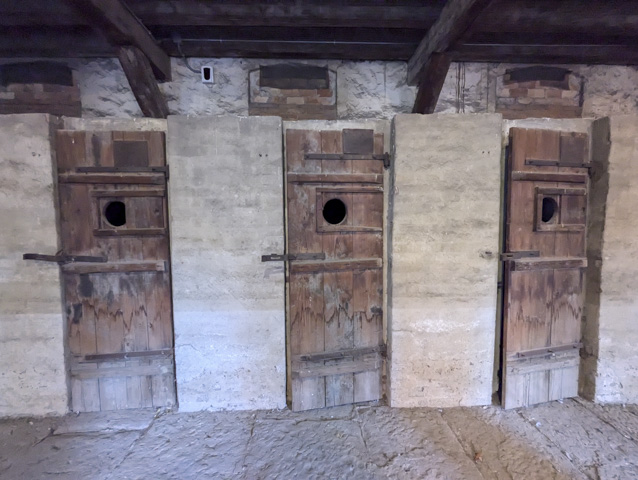
After a night in Munich we drove through Germany and stayed at a football stadium and bowls club close to the border with Luxembourg, before another big day where we ended up at Bruges. We had moved through the coldest part of Europe and Bruges was much warmer than it had been further South.
We had been to Bruges almost 20 years earlier but we thought it was time to revisit and see the Christmas decorations lighting up the town.
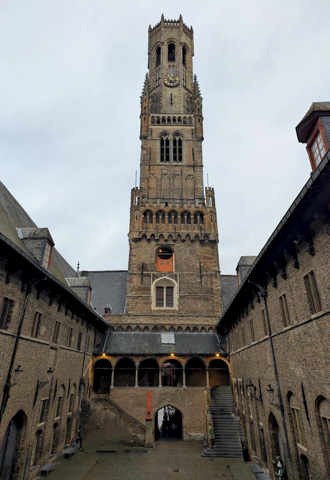
We made our way into town from the well-positioned Aire on the outskirts and spent a pleasant, if grey and drizzly day, wandering the sites, and eating and drinking. We visited the Torture museum which although very gruesome was actually really interesting. It’s quite horrific the medieval ways that were used to inflict pain.
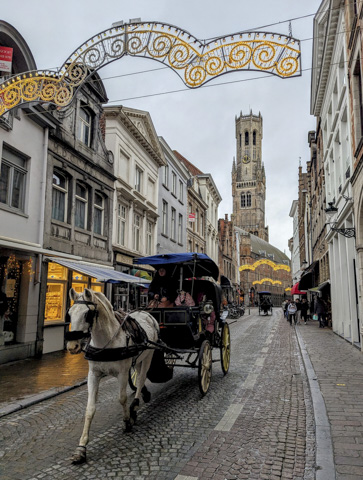
As we were nearing the end of our trip we decided to splash out on a nice lunch and visited a gastro pub, which had 400 beers on the menu. This made choosing a beer to have with lunch much harder than picking what to eat. Most of the beers were 7% or higher alcohol so fortunately they only came in bottles. The beer I actually chose was called De Poes and very tasty it was too. The food was also excellent.
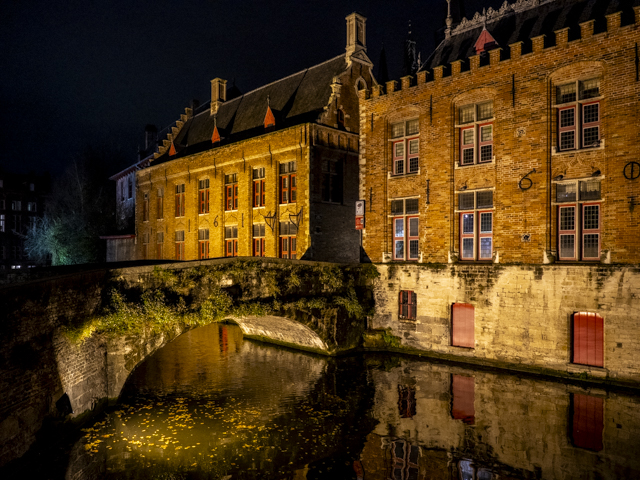
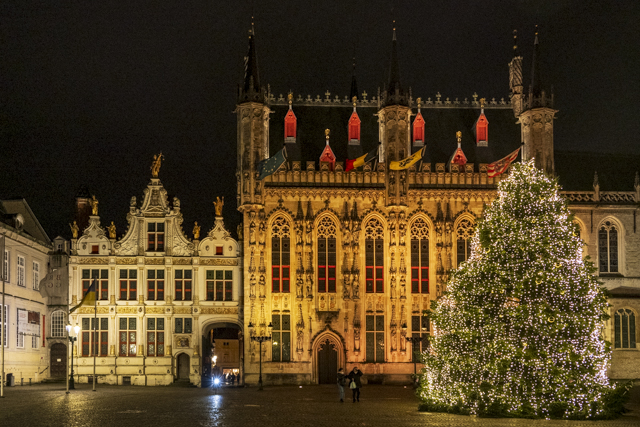
We did potter briefly around the Christmas market in the central square and although it was very pretty with the Christmas tree and the lights it was still disappointing, filled with the same gifts as all the other Christmas markets and selling overpriced food and drink.
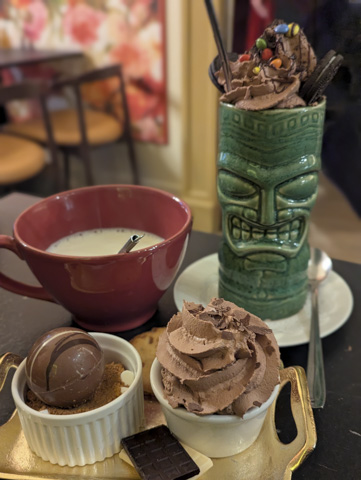
Belgium is of course renowned for its chocolate and by early evening we were in need of a pick-me-up, so we stopped off at a chocolate tea room for a much needed hot chocolate. The way they serve them is to give you a cup of hot milk and then you choose some additional plates of yummy things to add to the hot milk, including a bath bomb type ball of chocolate which melts in the milk. Needless to say they were delicious.
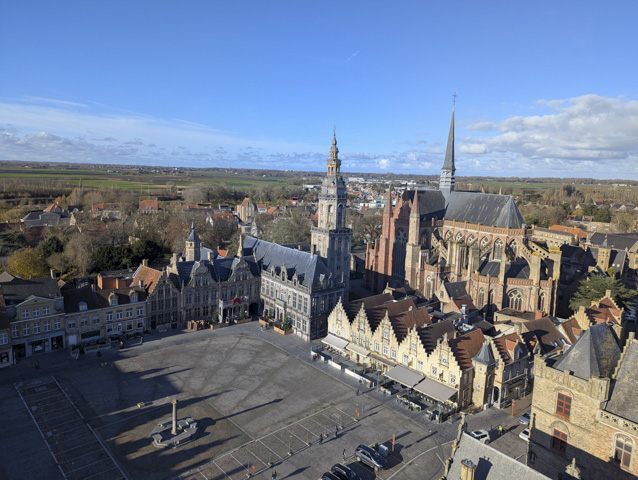
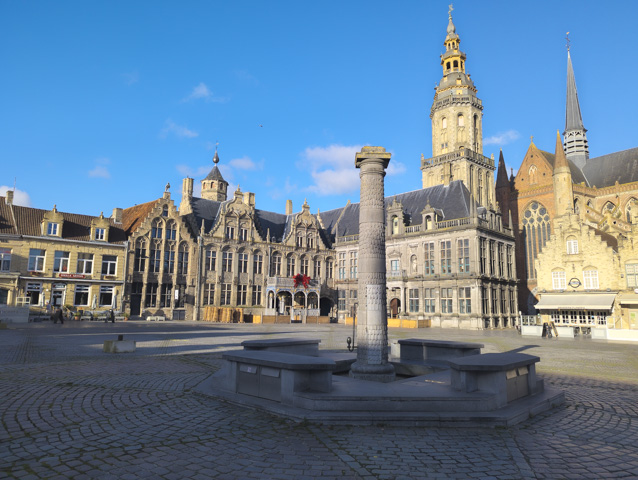
After Bruges it was almost time to head home and we only had one more stop to make on the way to France, in the town of Veurne. Veurne is a very small town but like many of the small towns in France and Belgium it has a lot of beautiful old buildings. In Veurne we visited the old townhall and court room and climbed the bell tower which was used during WW2 as a sniper and spotting tower.
We also stopped off for a cheeky sticky bun at a fantastic bakery in town but we had burnt a lot of calories climbing that tower!
After our brief visit to Veurne it was time to head to Calais and board our ferry home to spend Christmas with family and friends. And so ended our 7 month trip around the Balkans. We visited 15 countries in total and loved every single one of them (but definitely some more than others!).
 FromAtoB