Etosha in the Wet Season: Is it as bad as they say?
The thing about Namibia is that the distances between places are vast. The next stop on our trip was Etosha, which is a massive National Park. We decided to break the journey by stopping for the night in Outjo, around 100km before Etosha.
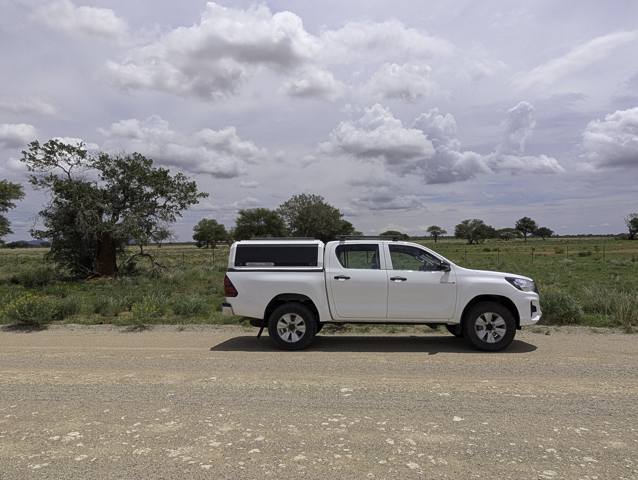
This gave us our first taste of the gravel roads in Namibia and we were pretty impressed. To be honest we have driven far worse paved roads. The gravel just makes for slow going though as we are limited to 80km/hr on gravel by the GPS tracker in the rental truck. If we go too fast it emits a loud piercing beep and if we have an accident within 5 minutes of the beep going off, the insurance is not valid. On the plus side, the rental company knows where we are at all times so if something does go wrong they would be able to find us. This is somewhat reassuring when you can drive for long stretches without seeing any signs of life.
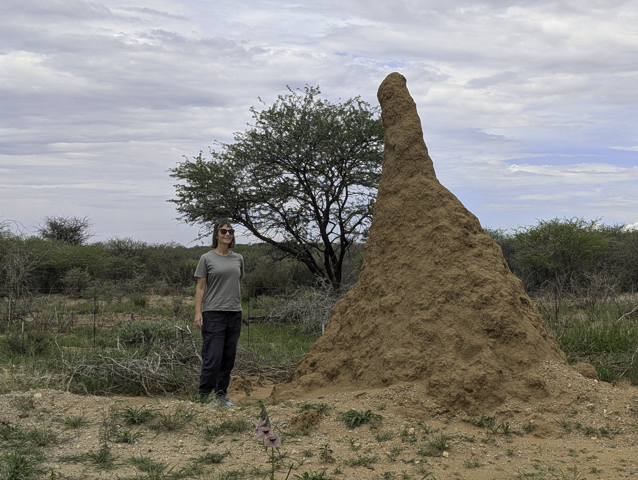
As we moved northwards the temperatures rose, the soil turned red and we started to be surrounded by hundreds of huge termite mounds.
The guesthouse in Outjo had a decent bar and restaurant so we relaxed there for the evening and drove onto Etosha early the next day.
We would be visiting Etosha in the middle of the rainy season. No one recommends coming here at this time of year due to the fact that the wildlife is more difficult to see. With plentiful water, the animals are more dispersed and do not cluster around the waterholes as they would in the dry season. However, on the plus side, there is hardly anyone else around so no traffic and, it’s baby season, so there are lots of very cute baby animals around.
We entered the park through Andersson gate and could immediately see that it had been raining with lots of standing water at the side of the road.
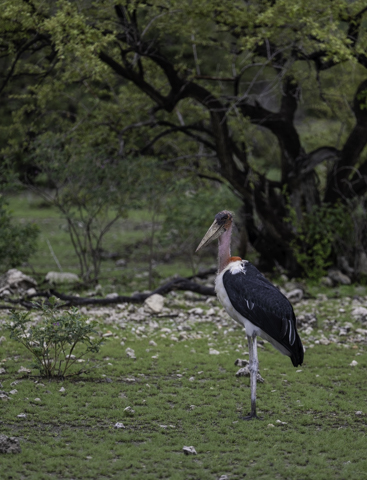
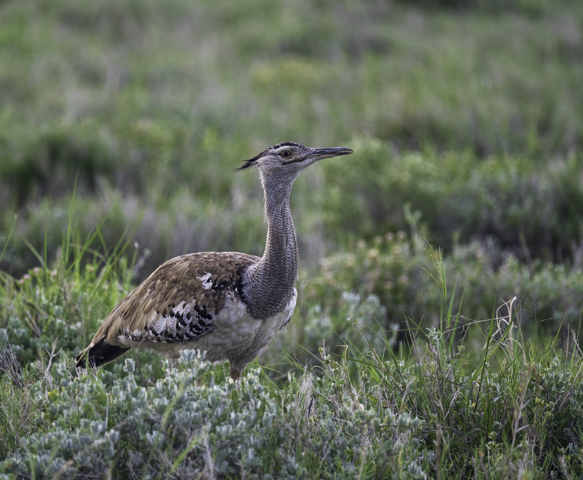
But nevertheless, it wasn’t long before we had our first sighting, a group or muster of Maribou Stork. These storks are very cool and can’t help but remind you of an undertaker with their stiff legged gait and weird cape like wings. These guys can grow to 150cm tall and have a wingspan as big as 2.6m.
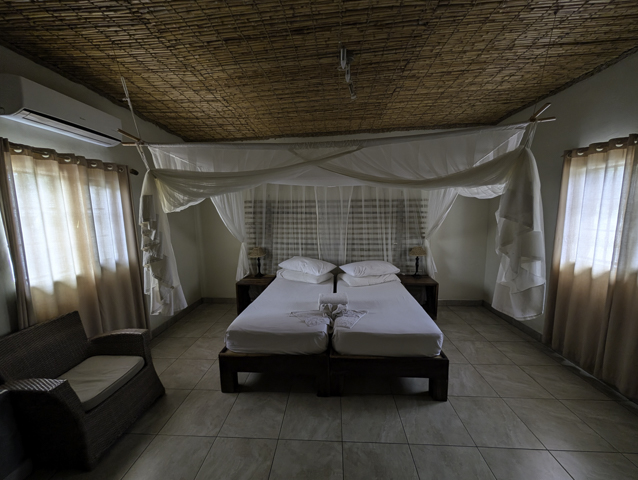
The camp that we were staying at, Okaukuejo camp, is only 17km from the gate so we quickly reached it and managed to check in to our room straight away. We had a large semi-detached room with a small kitchen/lobby and a bbq outside. It also had air conditioning, which we were very grateful for because the outside temperature was in the mid-30’s.
After dropping our stuff off we headed to the shop to purchase a map of the park. Disappointingly they told us they were out of stock, however we had already downloaded the Tracks4Africa app which turned out to be essential as we headed out on our first proper game drive. The great thing about self driving in a safari park is that you can pick and choose what you do and go as slow or fast as you like.
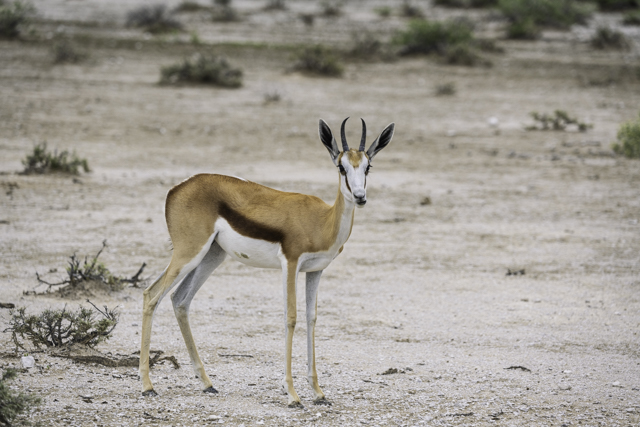
It wasn’t long before we saw our first herd of Springbok, and it wasn’t much longer after that when we realised that they were everywhere! In fact, we eventually banned each other from pointing out Springbok because they were so numerous.
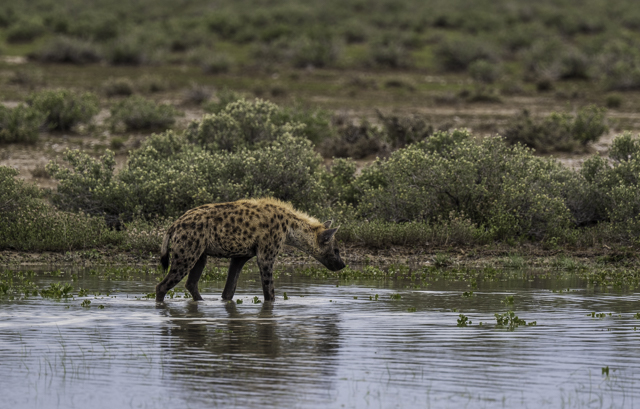
The highlight of our first game drive was spotting a hyena paddling around in large puddle. We saw him from a distance but as we drove closer he started to head away from us. We only managed to get a couple of shots but we were really happy at this great start to our Etosha experience.
This was definitely the highlight of our first game drive and we returned to camp to cool off in the air-conditioning in the heat of the afternoon.
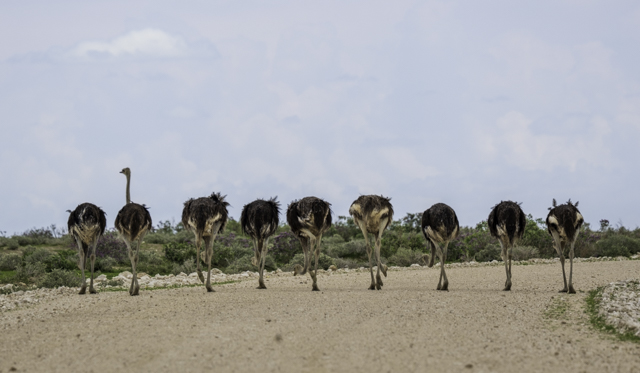
Around 4pm we headed out on another game drive this time going the other way from the camp. It wasn’t long before we spotted our first giraffes. Surprisingly they weren’t eating from trees but bending down to eat from the Spiky Mopane bushes that are apparently one of their favourite foods. They use there lips to strip the branches of the newer leaves oblivious to the nasty spikes.
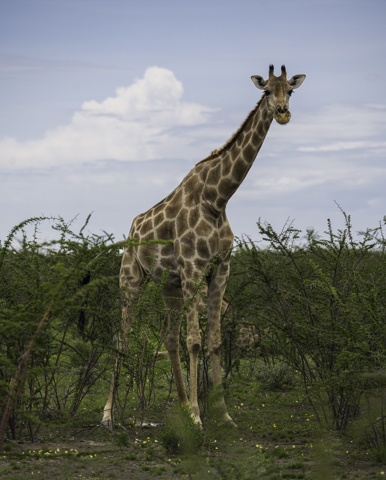
This was going to be a recurring sighting for us and we saw giraffes on every game drive that we did in Etosha.
The route that we picked this time involved some pretty waterlogged roads and some fairly deep mud. We actually engaged 4×4 for the first time. Along one of the roads we went past a dumper truck that had buried itself axle deep in some mud and a whole bunch of workmen were trying to pull it out with a grader. Not an easy job at the best of times but probably much harder when you have to keep an eye out for lions at the same time! Fortunately we managed to keep unstuck the whole route though.
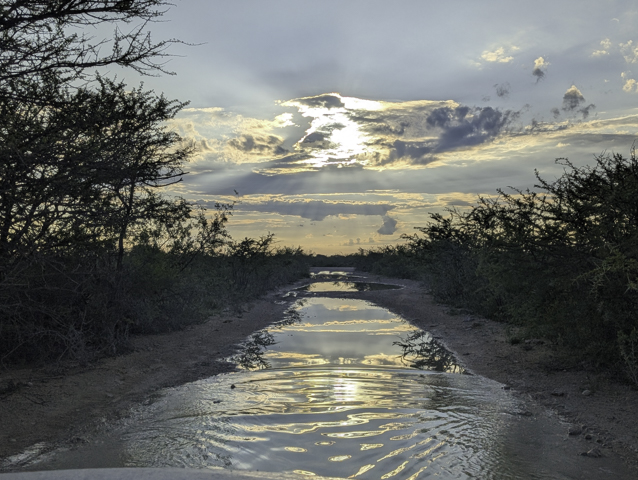
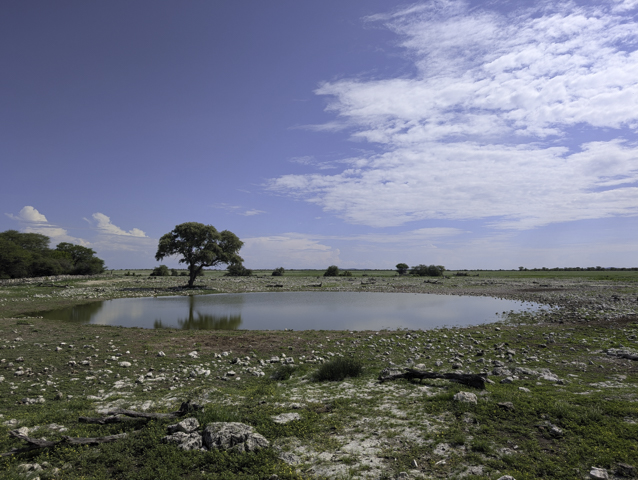
Normal advice for Etosha is to go to the waterholes as this is where animals gather to drink. Well, not in the wet season as there was water everywhere and nothing needed to risk exposing itself at a waterhole when water was easily accessible across the park – including some huge puddles across the roads. In fact, in our whole time in Etosha, we barely saw any animals at the waterholes except in the much more arid West of the park.
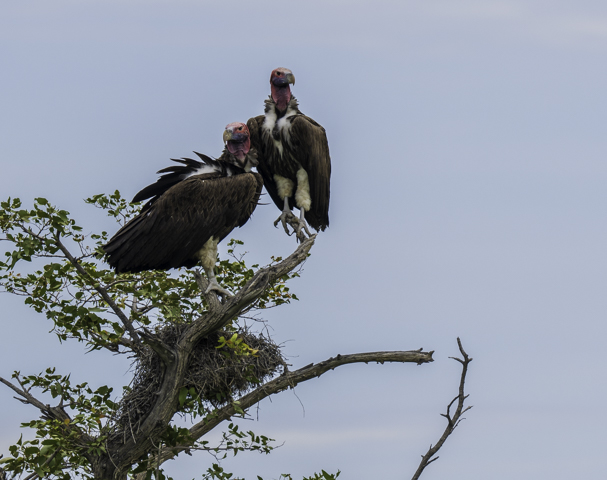
This means that you have to be very patient and spend significant periods of time driving the roads looking out for the wildlife. We found that you could actually go for quite a while without really seeing anything and then all of a sudden there would be a whole bunch of animals relatively near to each other.
We made it back to camp about 5 minutes before the gates closed at sunset and headed back to our chalet, checking out the camp’s waterhole on the way, but there was nothing to see.
We had brought some charcoal, firewood and food with us so that we could have a BBQ/ Braai in the evenings so we sat outside with a cold beer as we set about cooking dinner.
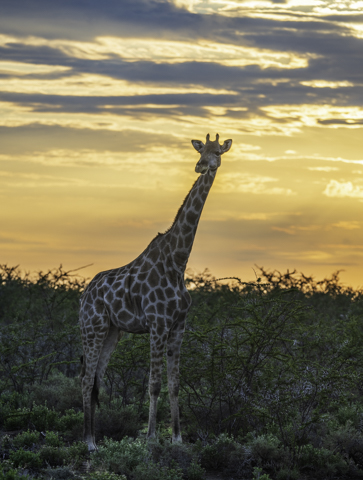
The next morning we were up early to be through the gates when they opened at sunrise. We saw giraffes again, really close to the camp with the sunrise in the background.
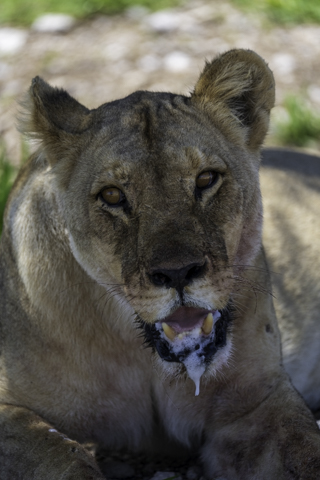
The absolute highlight of this drive, which came after checking out a whole bunch of waterholes with absolutely nothing to see, was a shady tree right next to the road where we spotted a lioness with a very full stomach resting in the shade. We were so surprised to see her right next to the road that we drove right past her and almost missed her. We quickly reversed, parked up and turned the engine off so as not to disturb her.
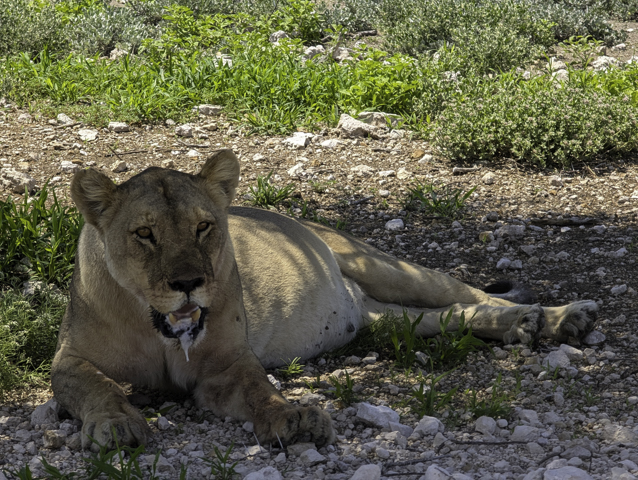
The red stains around her face and a big swollen belly were signs of a recent meal although we didn’t see any evidence of the kill nearby. It was such a privilege to be so close to such a beautiful animal and we sat and watched her for at least 30 minutes before moving off. The beauty of being here during off season is that despite being right by the road we were the only vehicle around and had her all to ourselves.
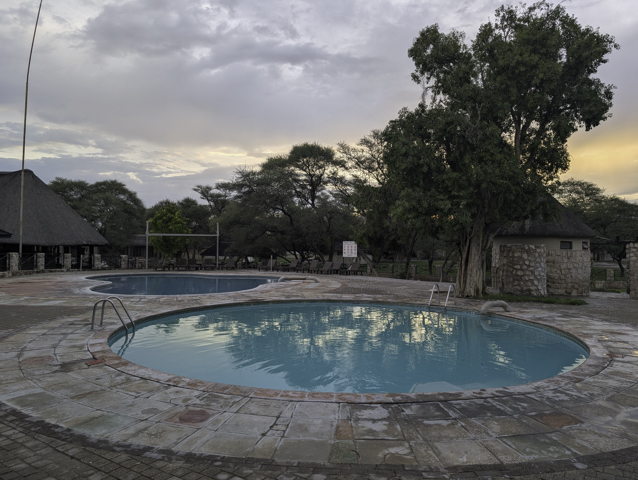
Around 1pm, after being in the park since 6.30am we went back to the camp for a bit of a break and took the opportunity to have a swim and sit by the pool for a couple of hours.
We went back out around 4.00pm for an evening game drive knowing that we had to be back to the camp before the gates shut at 7.30pm.
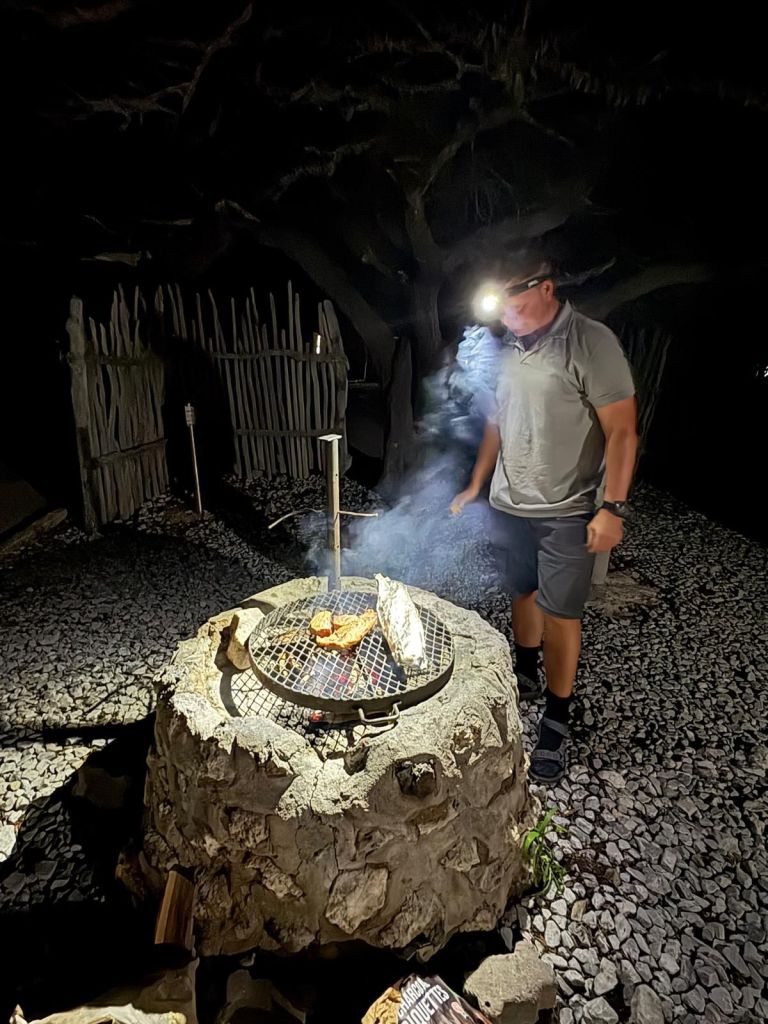
On returning to the camp it was time for another BBQ and we enjoyed some delicious Namibian steaks. The steaks in both South Africa and Namibia have been fantastic and so much cheaper than in Europe.
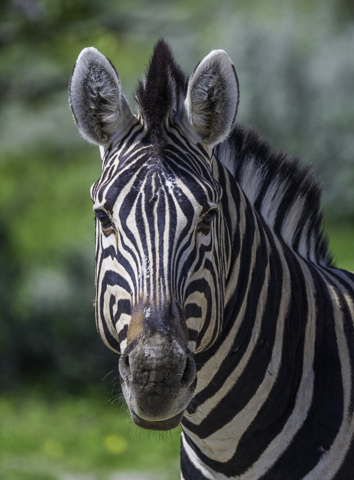
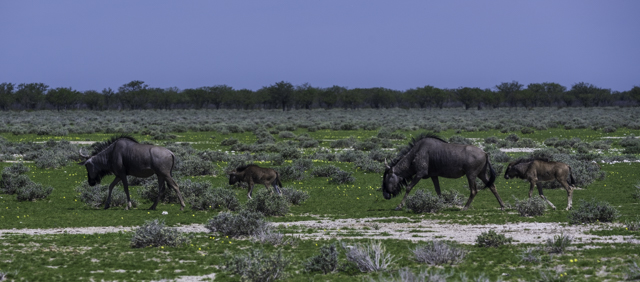
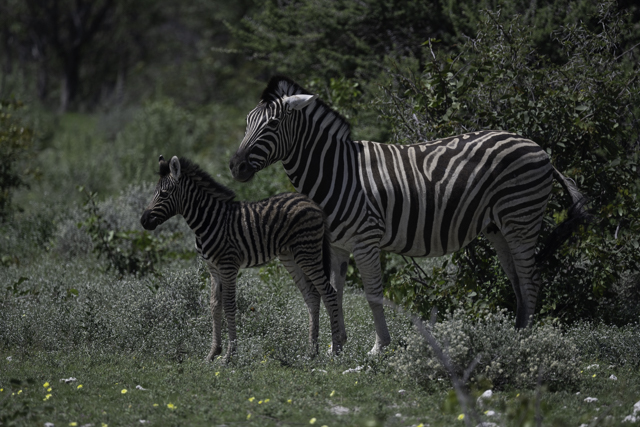
The next morning we were up early again and this time we headed out to explore an area called The Phantom Forest, which was home to big herds of Zebra. We must have seen a thousand Zebra in this area along with lots of Wildebeest and Springbok.
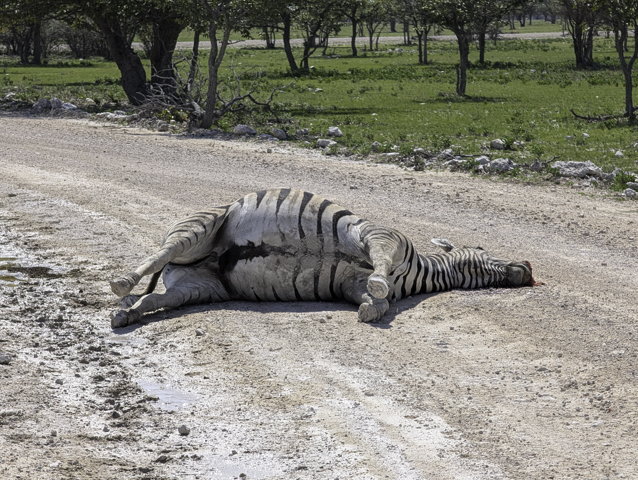
Turning down one road leading to a waterfall we sadly found a dead zebra lying across the road. Nothing was eating it and there were no marks on the body other than congealed blood around the nostrils. We later learnt from a ranger that this suggested the zebra had died of anthrax poisoning which apparently can be a problem in Etosha in the wet season as it is naturally occurring in the ground. Lions won’t touch the corpse but Hyenas and Vultures will as they are immune. We actually drove back the next morning and nothing was left but the bones, even the skin was gone.
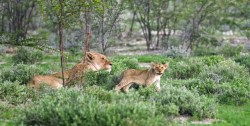
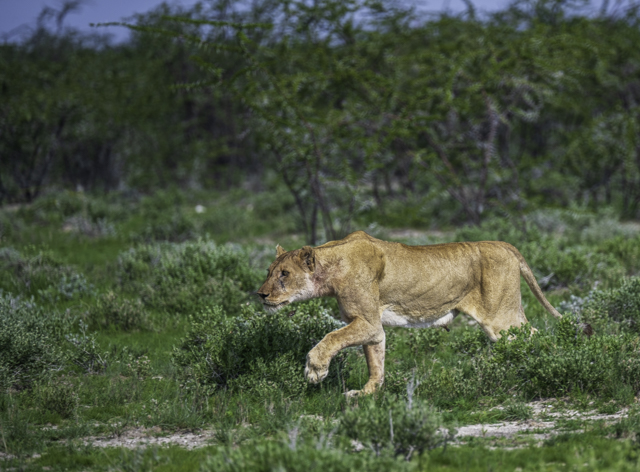
The highlight of the day for us was in the late afternoon when we came across a pride of lions lounging in the shade. There were 9 lionesses and 6 cubs and they were all about 30m from the road in the shade of some bushes.
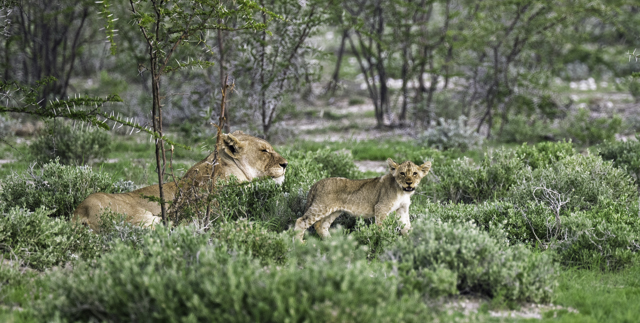
We settled in to watch them and ended up staying for around 2 hours while other vehicles came and went around us. The advantage of spending time with them was that while we were there, a small herd of wildebeest and then 2 small herds of zebras wandered by, very close to where they were resting.
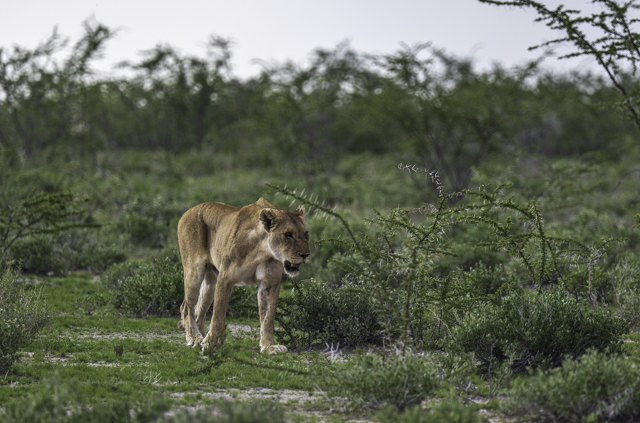
We could see the lions become more alert as the herds came closer and each time one of the lions would break off and decide to try and catch some dinner.
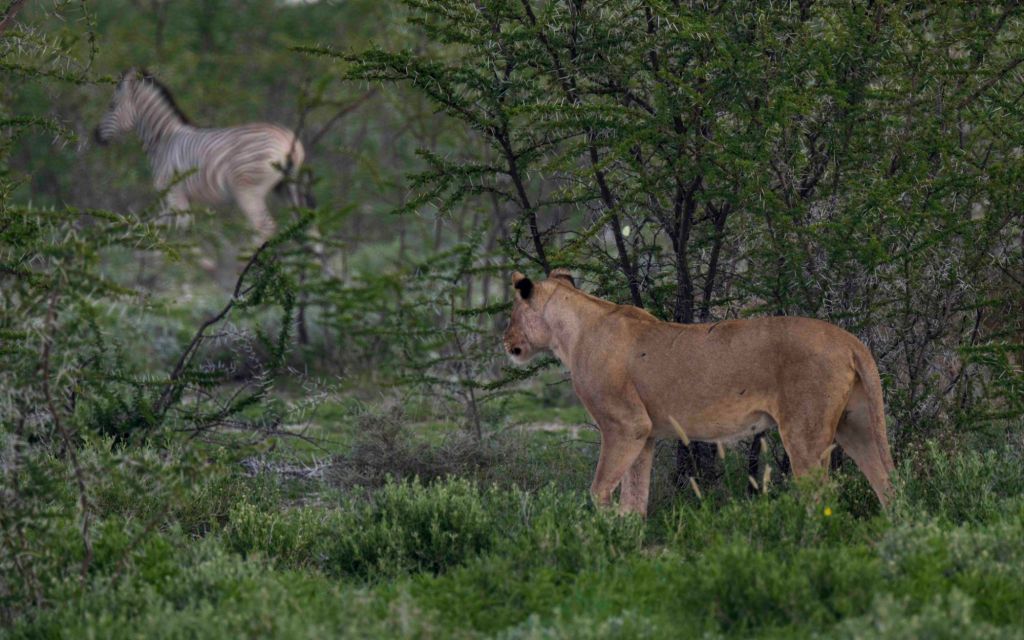
They didn’t seem to be working together and it was always a solo chase, each of which ended in failure. It was amazing to watch the lions leap into action and then slowly slink back to their location in the shade.
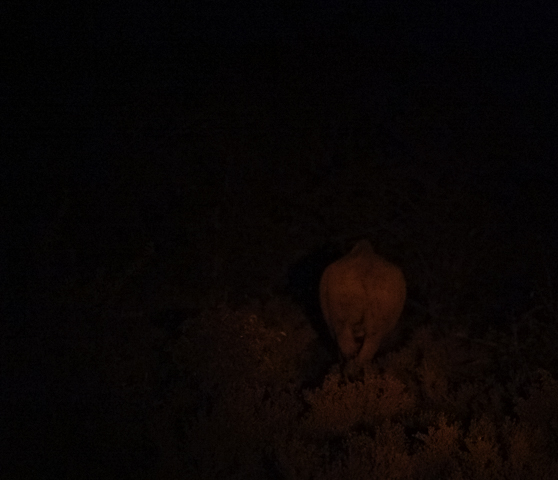
Unfortunately we couldn’t stay with them any longer as it was our last evening in Etosha and we had booked to go on a night drive so we had to get back to camp. This was a paid excursion in one of the National Park vehicles. We set out at 7pm for the 3 hour drive, so we had around an hour in fading light before it was pitch black.
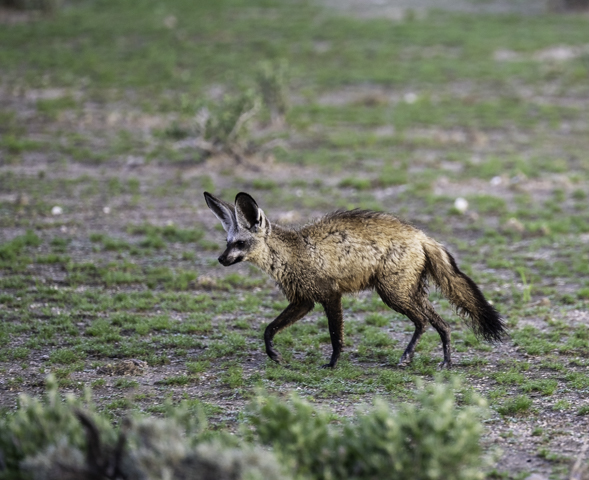
We did see a couple of rhinos in the dark, who were very keen to move away but no predators and overall the experience was quite disappointing. The issue was that the guide/driver had a red spotlight but that was the only light we had. It wasn’t very bright and it made spotting things very hard and even when something was found it wasn’t possible to take pictures or really see very much.
On our last day in the park we checked out and started the long drive to the Western end of the park. We needed to drive almost 200km through the park, which at safari pace (approx 25 kph) is a long drive.
It was an interesting drive as the landscaped changed the further west we went. Everything became much drier and it was here that we actually saw animals around some of the waterholes. The landscape also became hillier as we went west compared to the flat plains and big salt pan in the middle of the park.
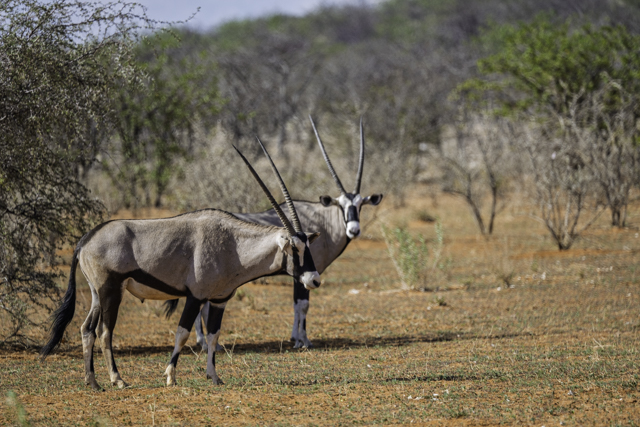
We saw our first Namibian Eland in the Western end of the park although they were very skittish and exited quickly before we could get a picture.
Eventually we reached the Western Gate and then had an hours journey to a nearby town where we had booked into a guesthouse for the night.
Overall we really enjoyed Etosha, it was very quiet and we didn’t see many other vehicles while we were out on the game drives. It’s definitely harder to find animals in the wet season however they are still out there and we felt that our patience was rewarded. You do need to be prepared for some bad roads in the park with quite a lot of water on them though. In South Africa we had been fine with a normal car in game parks after heavy rain but that car would not have coped with the road conditions in Etosha so spending a bit more on a truck instead turned out to be a good idea.
 FromAtoB