Exploring South West Norway
Norway had been a destination that we were keen to get to ever since we started travelling in our Motorhome. We had spent a long weekend there over 10 years ago and knew how beautiful the scenery was but also how brutally expensive eating out is.
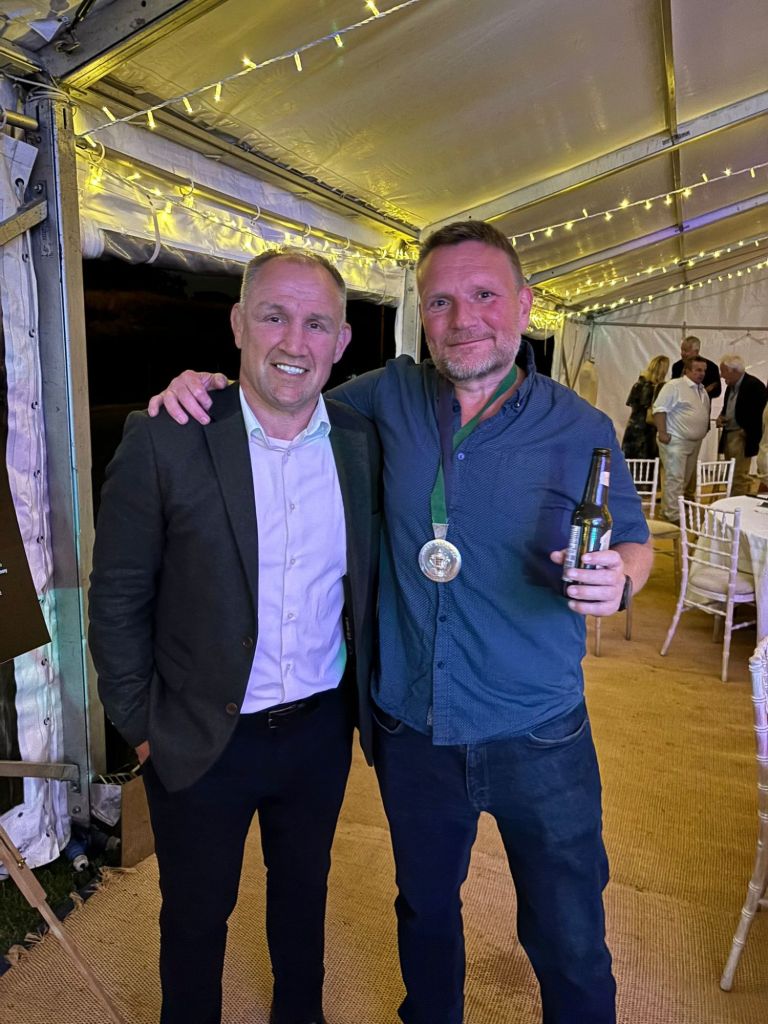
There was some socialising to do though before leaving home, my rugby clubs annual dinner. It was a great evening and I enjoyed speaking with Neil Back, from the England 2003 world cup winning side, as well as catching up with lots of friends.
So it was with a slight hangover the next morning that we started our journey to Calais via our usual stopover at the Canterbury Aire, enabling us to get an early morning ferry. We arrived in France early the next day and, as we wanted to make the most of our 90 days in the Schengen zone, we started to make the long drive North towards Denmark, only stopping for some shopping at a French hypermarket on the way.
Our plan was to make it to Hirtshals at the Northern tip of Denmark in just 2 days. This is where the ferry across to Kristiansand in Norway leaves from and is a journey of almost 1,300kms.
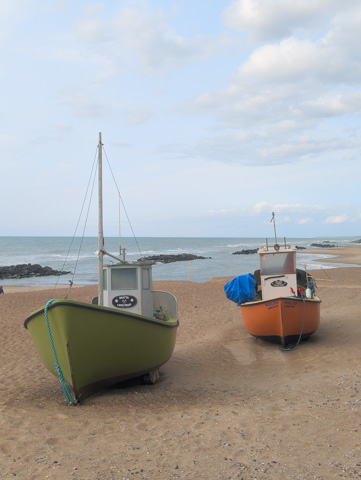
Our first stop was in Bremen in Germany where we found a small car park in a lovely wooded area to spend the night and making it to the small town of Hjorring in Denmark where we spent the second night at a lovely park-up right on the beach. The weather wasn’t great (which was to be the norm for the next four weeks), but we still managed to get out for a walk along the beach.
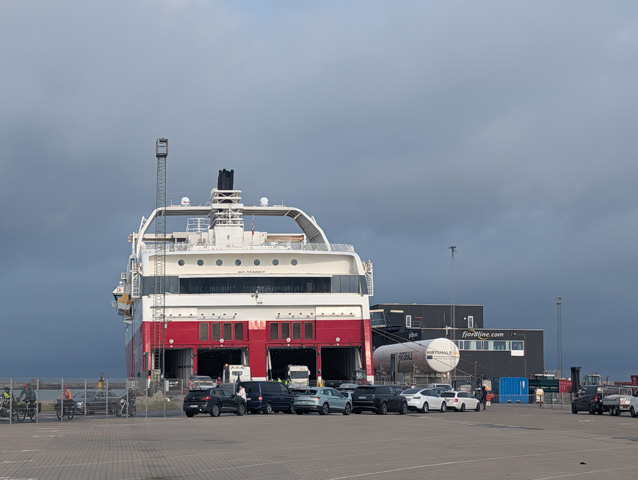
The next morning we were up early to get to the ferry dock in Hirtshals where we boarded the large ferry for the 3 hour trip across to Norway. The ferry was busy (with a vast number of motorhomes in the queue), but we managed to find somewhere to sit in the bar area – not actually open during the morning crossing – and before we knew It we were docking in Norway.
Arrival in Norway is just like arrival at Calais, there are no formalities or checks, you just drive straight off and get on your way.
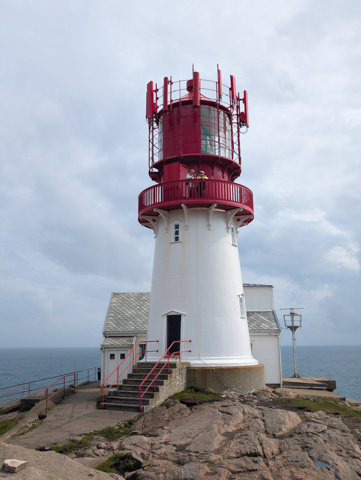
We had decided to spend our first night at the very popular Lindesnes lighthouse. We knew Norway would be busy with motorhomes but we were still shocked by just how busy it was at the beginning of June, with 40+ motorhomes parked up there for the night.
The car park was a pay spot but it included a ticket to see the lighthouse and museum.
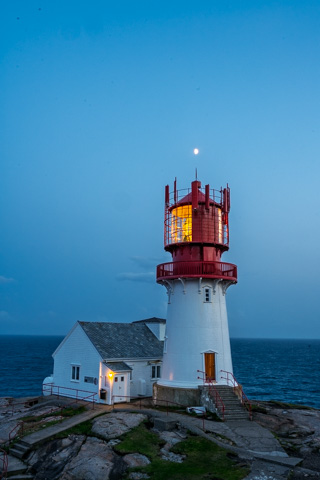
It was a nice spot for a first night in Norway and in the morning I went for a hike around the peninsula and along the coast.
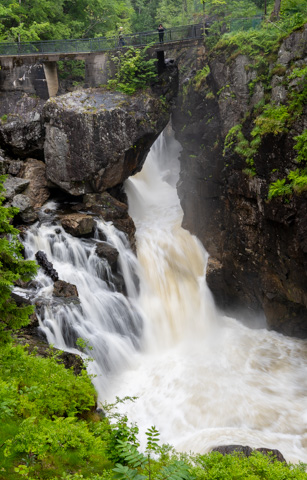
After having a good look around we left here and visited Kvasfossen, one of many waterfalls that we would see in Norway.
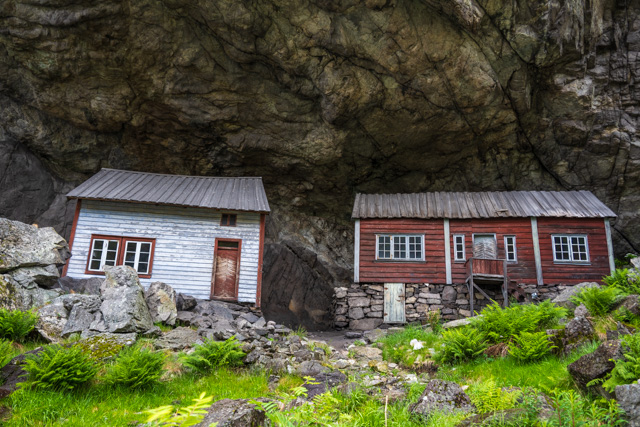
Our initial plan was to head up the coast towards Stavenger and we drove round our first of many Norweigan Fjords. This was Jossingfjord where there are two small houses built under a cliff overhang for protection. These houses were built in the early 19th century and were occupied until the 1920’s. They were the houses of poor families who made their living from a mixture of farming, sheep herding and fishing.
We carried on up the coast from here, intending to hike to the infamous Trollpiken Rock, but incessant heavy rain put paid to that plan.
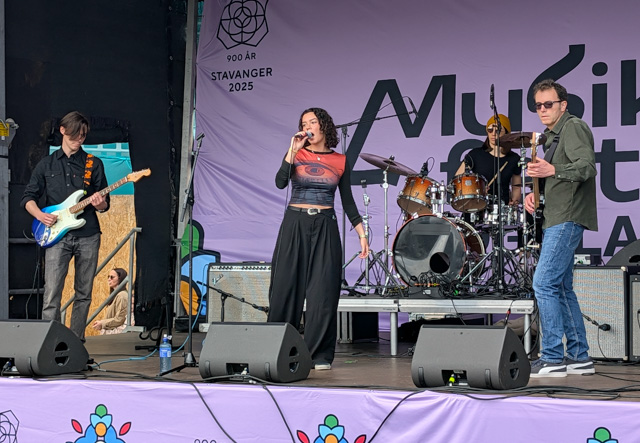
However the weather improved for our visit to Stavenger the next day. Stavenger is a lovely little port city and well worth a stopover. We were also lucky that on the day we visited, a festival was taking place around the harbour, with live bands, demonstrations of smithing and some historic boats that were open to the public.
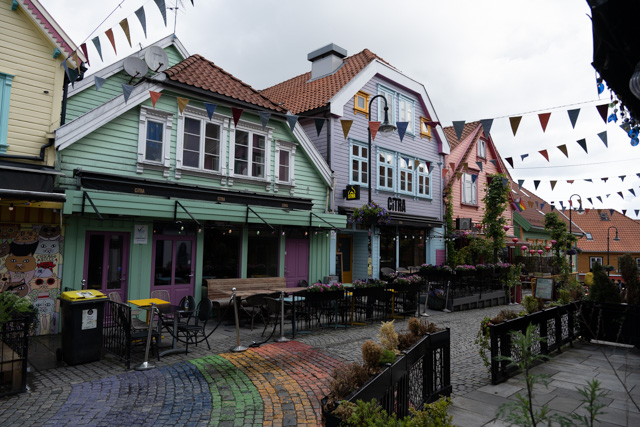
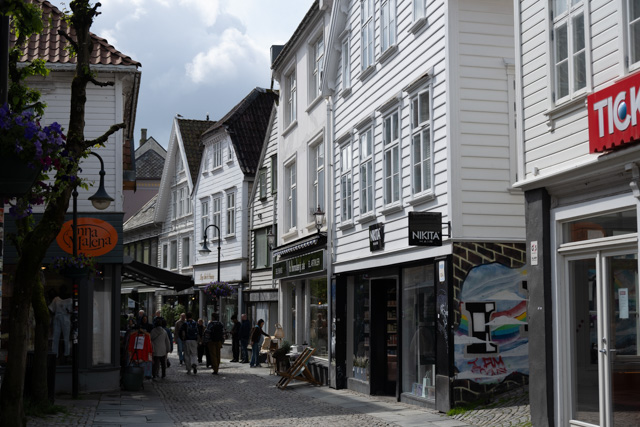
We dragged ourselves away from the buzzy dockside area to also visit the cathedral with its impressive pulpit, the brightly coloured Fargegaten Street and the very pretty historic old town (Gamle Stavenger), where all the houses are painted a uniform white.
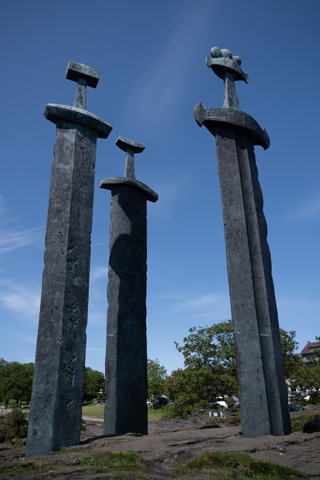
After a rejuvenating but pricey hot chocolate and slice of cake we took a short drive outside of town to visit the Swords in the Stone or Sver I Kjell. This is an impressive sculpture of three enormous swords sunk into the rock overlooking the sea, as a tribute to the Battle of Hafrsfjord in 872 where King Harald Fairhair unified Norway.
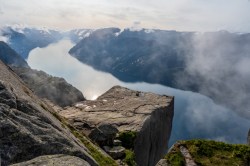
We couldn’t hand around in this area too long as we needed to be in Bergen in one week for a planned trip. So we kept moving North but of course had to stop to do the well known Preikestolen hike. This is more commonly known as Pulpit Rock and is one of the most famous walks in Norway.
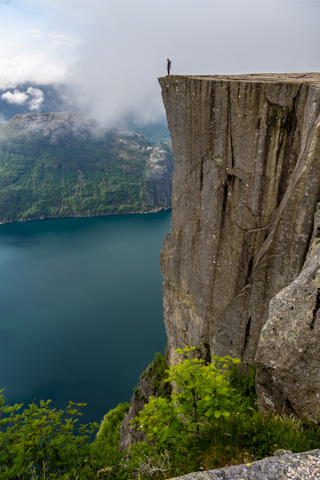
It is also one of the busiest so we found somewhere to spend the night nearby and aimed to get to the car park as soon as it opened – which was 6.30am.
This paid off for us, as not only did it start to get very busy later on but the best of the days weather was early in the day. It’s not a particularly hard hike with Pulpit Rock being only around 4km from the trailhead, but there are three steep climbs totalling about 400m of elevation.
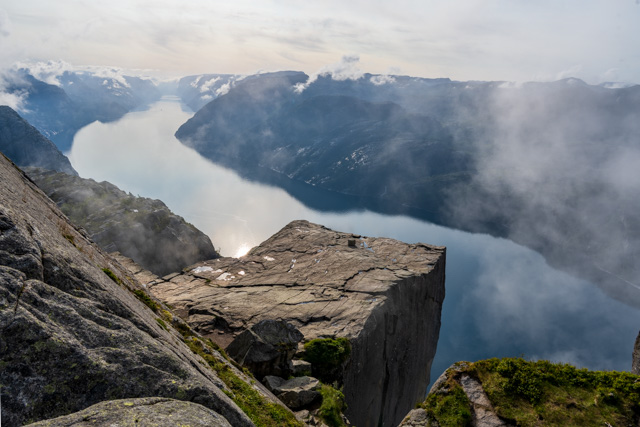
Once you get to the rock itself, in my opinion this gives you the worst view. It is much better to climb up a little further and get the view looking down onto it, although surprisingly very few people seemed to do this.
After leaving Pulpit Rock we soon came upon our first Norwegian ferry of the trip. This was right next door to a giant red chair (I don’t know why).
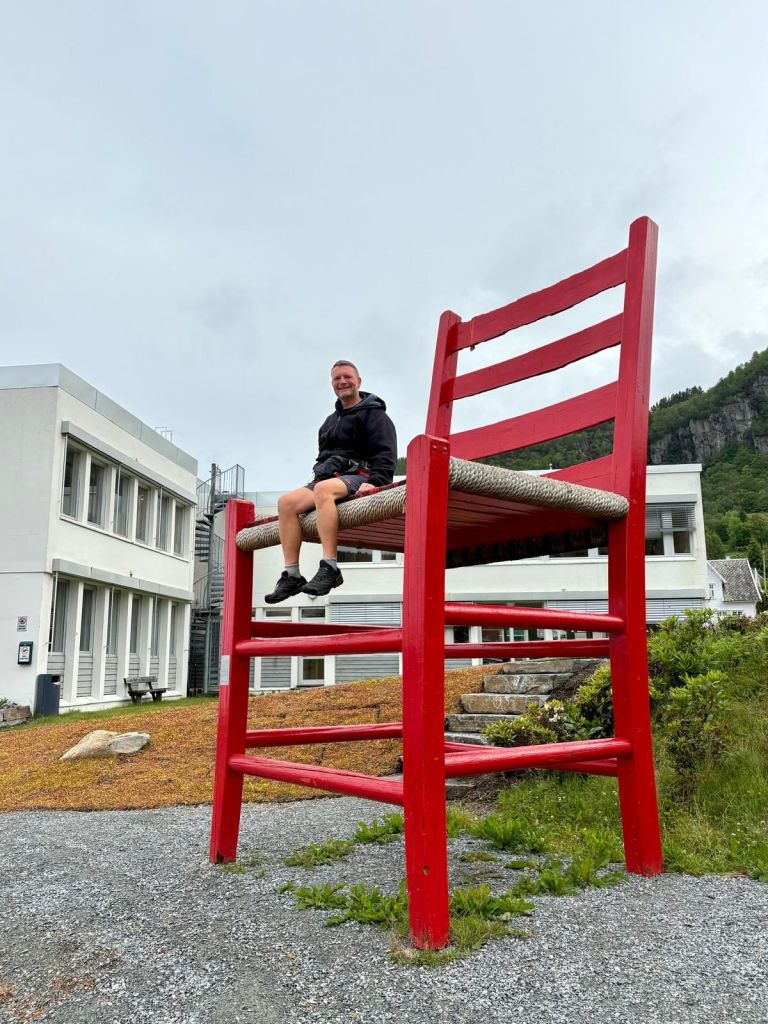
The ferries are very easy to navigate as you just drive straight on board. We had arranged for an electronic tag before we left home that automatically deals with all Norwegian road tolls and ferries – you even get a 50% discount on ferries. We used Flyt but there are others, collectively known as Autopass.no. The only downside is that they invoice you monthly and you have to pay by bank transfer – which for us means an additional £5 bank charge but you factor this into the savings you make.
The ferries and tolls individually aren’t that expensive but there are a lot of them and they add up. Fortunately as you get further North more of the ferries are free as they don’t get used by enough people per year. Tunnels often come with tolls in Norway but once the building costs are paid off they become free. There are a lot of tunnels in Norway too, from the roughly hewn unlit ones in more remote locations to ones with coloured lights and even roundabouts and junctions inside them. The longest tunnel in Norway stretches for 24.5kms!
Once you begin to get close to Bergen you enter the Fjordland region of Norway. This means lots of rain and while we were there, cold conditions. The temperature was only averaging about 12c each day. A bit chillier than we were expecting for this time of year but luckily we had packed a few jumpers as well as our rain gear.
The rain and the Fjords amount to a lot – and I mean A LOT – of waterfalls. It gets to the point where you ignore all but the most scenic of them, which for me is something new as I love a waterfall.
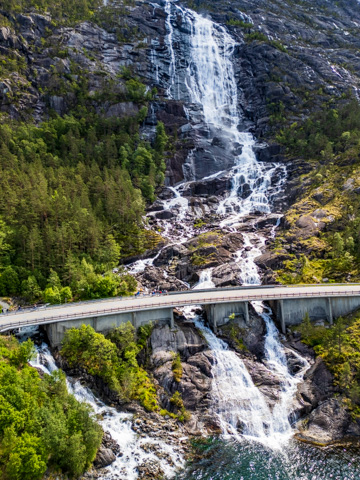
As we headed North we came to one of the most impressive and biggest waterfalls in Norway – Langfoss. This has a total height of 612m and the road actually runs across the bottom of it before it finally reaches the Fjord. CNN has actually named it one of the top ten waterfalls in the world, although its easy accessibility probably has something to do with that.
A less common sight but definitely worth looking around when you come across one, are the Stave churches. In North Western Europe, there used to be hundreds of Stave churches, which are built using a particular type of timber framing, but nowadays only 28 have survived in Norway and only 1 outside of Norway. They are generally over 800 years old but the pitch used to protect the wood unfortunately makes them very susceptible to fire!
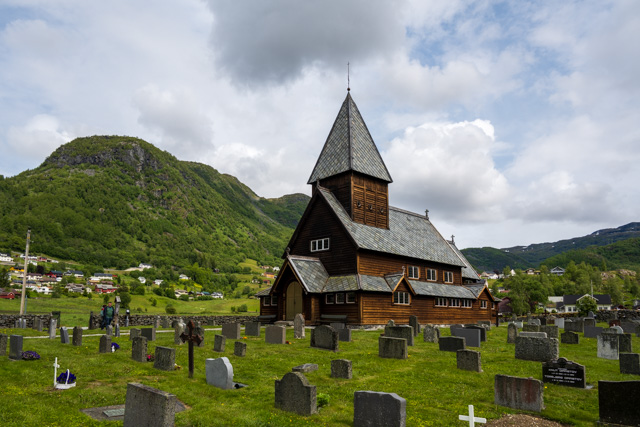
Our first visit to a Stave church was to Roldal, which was built in the 13th century and restored in the early 1900’s. Roldal was one of the most important sites for pilgrimages in Norway.
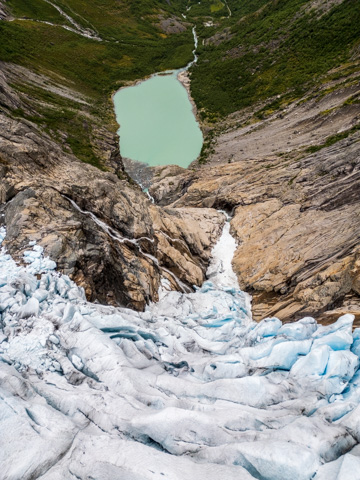
Before arriving in Bergen, the last major town we went through was Odda. This happens to be the nearest town for another famous hike, the Trolltunga or troll tongue walk. I had wanted to do this but after some research on parking fees and costs of the shuttle buses etc., it was going to cost around £80 to do a hike, which seemed excessive to me, so we decided to pick another hike in the area.
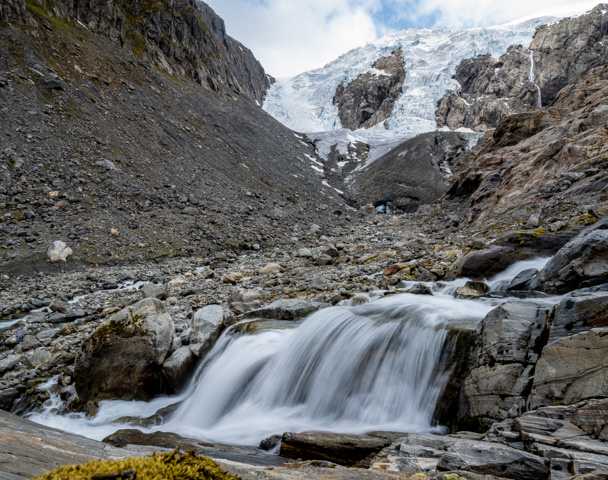
After staying the night in a very small car park which was absolutely packed with motorhomes and vans, we got up early the next morning and drove to the trail head for the Buarbreen Glacier hike. This is an out and back hike of only 5km with a 400m vertical. The hike is a little tricky with some ladders and chains in the latter part but nothing to scary. There aren’t many views on the way there but the payoff is at the end when you see the glacier falling off the ice sheet above. Thankfully, the weather held off and gave me some good views of the ice.
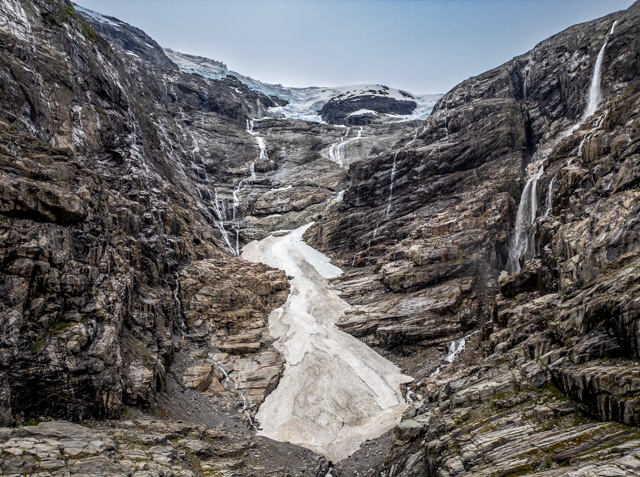
After finishing the hike it was onwards to Bergen, continuing past more epic waterfalls.
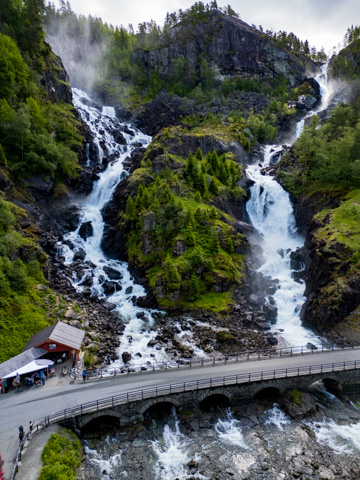
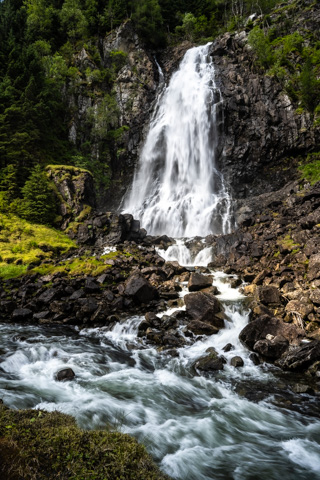
The first of which was Latefoss, which thunders down right beside and then underneath the road and secondly, Espelandfossen. They are located very close together with only a tiny parking area but with a little patience and a bit of driving back and forth we eventually got ourselves a spot.
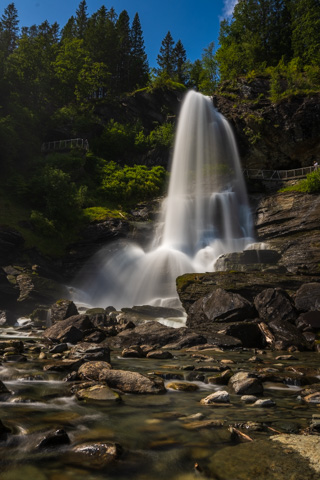
The next waterfall was Steindalsfossen, which is pretty cool as you can walk behind it (also note the old stone bridge leading up to it), and grab yourself a very nice ice-cream from the little on-site café.
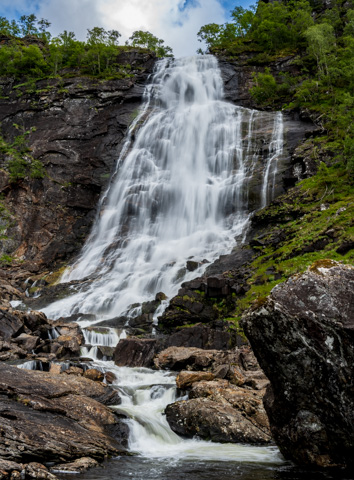
And lastly, there was Fossenbratte waterfall. This is a bit of a walk down from the road but if you are a waterfall fan, definitely worth it.
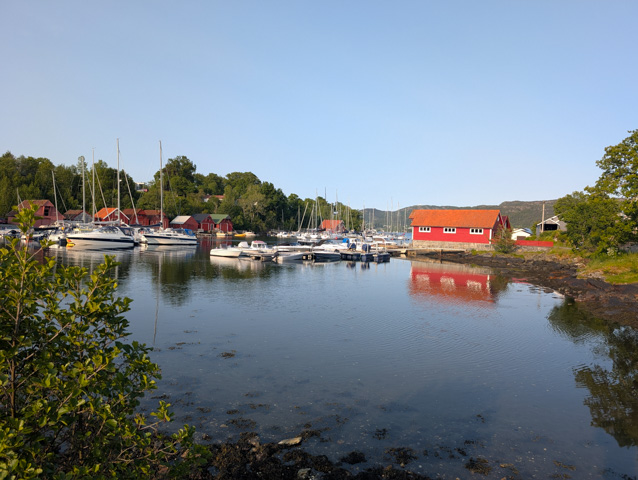
From here, as you approach Bergen, the surroundings start to get more built up but we managed to find a lovely peaceful park-up in the suburbs, on a cute little harbour right next to Bergen Botanical Gardens which are roam around. In fact, this was only a 10 minute drive from the airport so perfect for our flight the next day.
 FromAtoB