Fjords, snowy landscapes and glaciers
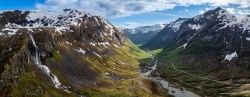
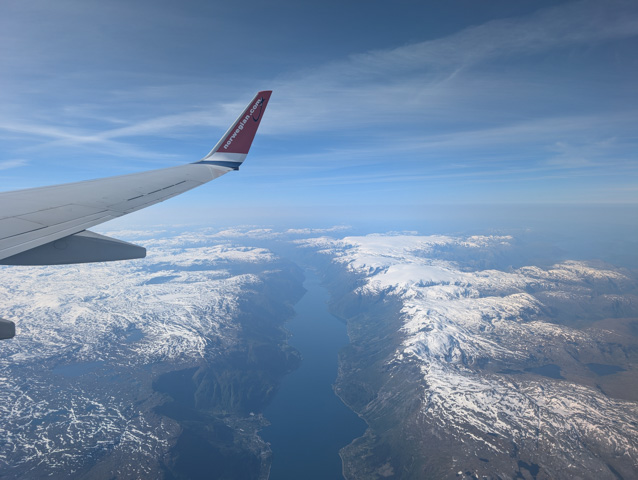
After parking in one of the big lots right next to Bergen airport we boarded our plane for Palma, Majorca via Oslo. It was all very straightforward flying with Norwegian Air and the views over the Fjords were spectacular.
On landing in Majorca it felt like summer had finally arrived as we moved from a cold and grey 12 degrees in Bergen to 30 degrees and blue skies in Majorca. This was a very welcome improvement.
We had a bit of time on our hands before everyone arrived so rather than jump in a taxi, we decided to take the bus instead, to Port de Soller, where we were meeting up with some friends. This proved easy enough and took just over an hour.
After leaving the bus it was only a short walk to the harbour where two of our friends were waiting for us, already happily ensconced in a bar. And that is exactly where we stayed until we were al kicked out at closing time. Two more friends had arrived in the meantime and one or two drinks may have been consumed!
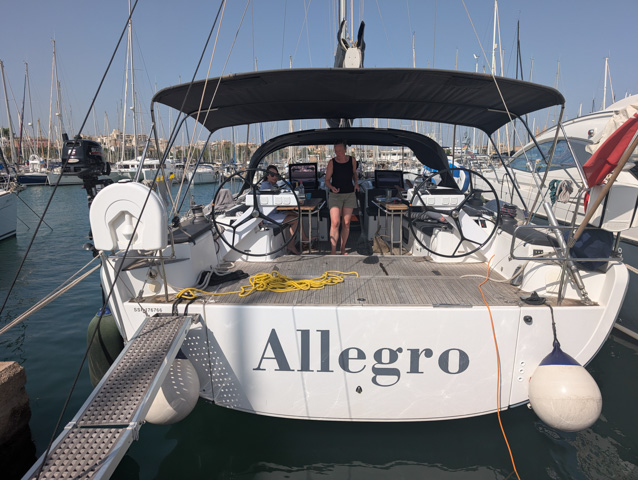
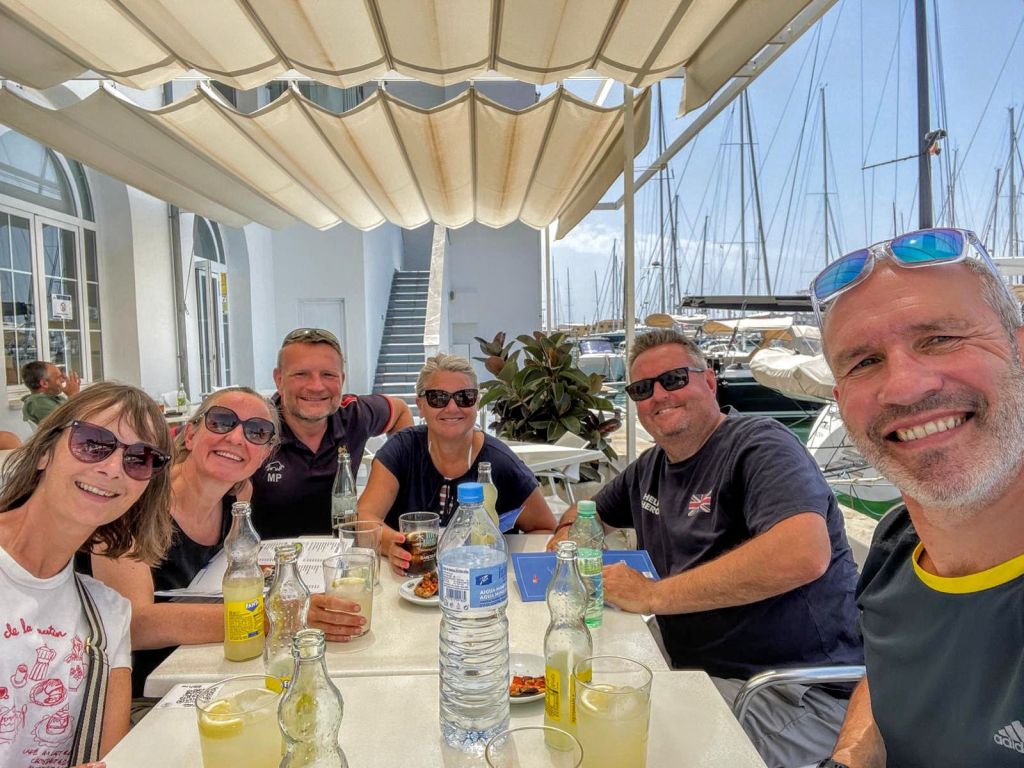
We had a lovely long weekend sailing around the coast back to Palma with this motley crew and with the beautiful weather it really felt like a proper holiday.
Unfortunately all good things must come to an end and waving our friends goodbye, we flew back to Bergen via Oslo. In our absence the weather had not improved and we returned late at night to a very cold and wet Norway.
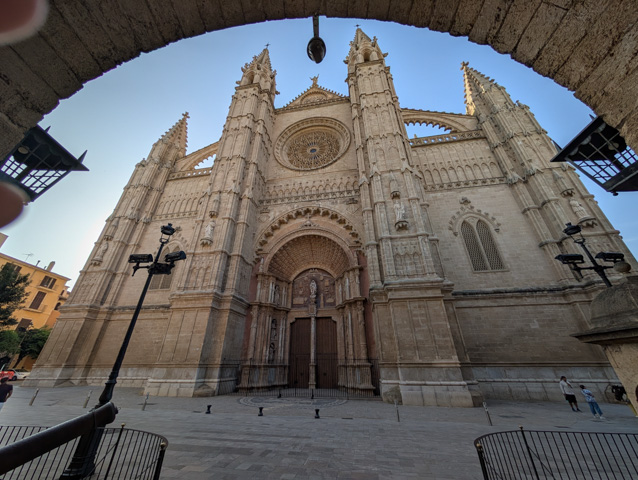
We found somewhere to park-up for the night and, due to more heavy rain the next day, we skipped visiting Bergen itself and drove until we reached Gudvangen, a beautiful valley with many waterfalls pouring down the sides (this much rainfall has its benefits). It rained continuously for two days so we just hunkered down and caught up on some lost sleep from our weekend away.
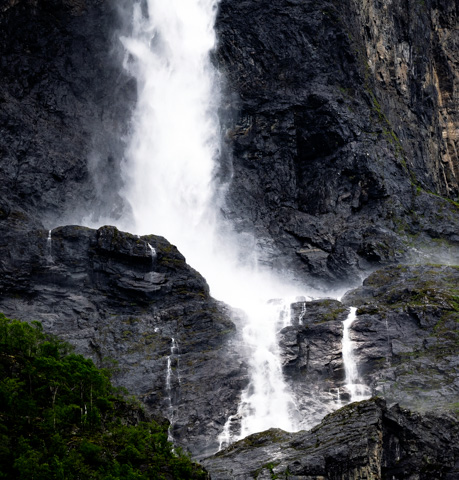
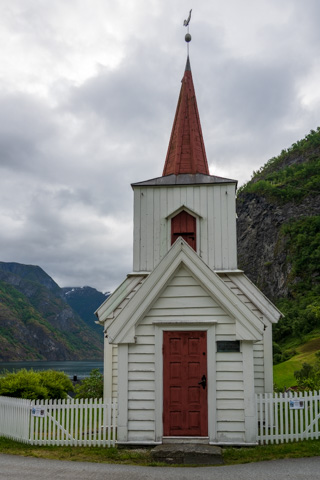
There is a popular tourist ferry from here, down a narrow fjord to the small town of Undredal, although we decided to drive there instead. It really is a tiny town with just a small church and a smattering of buildings but it’s very pretty and when we arrived first thing in the morning there was almost no one around.
At the end of the Fjord from here is the town of Flam, which is a very popular tourist stop. It is mentioned in our Lonely Planet guide as a must stop. The reality seemed a little different. It’s a tiny town and when we arrived there was a massive cruise ship moored alongside it, dwarfing the town and on the dock were hundreds of cruise ship passengers. We left pretty sharpish as this really wasn’t what we were looking for.
The obvious way to leave Flam is to go through the Laerdal tunnel which is the longest road tunnel in the world at 24.5 kms. However we decided to take the scenic route via the old road which goes over a pass in the mountains instead.
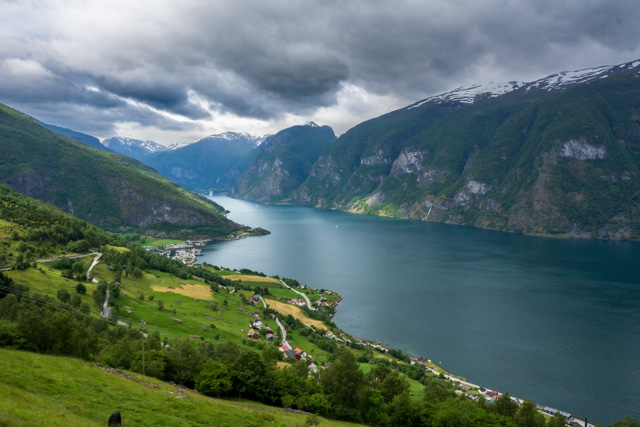
The first stop – which again is a very popular spot with the cruise ship passengers – is the Stegastein viewpoint, where a modern platform has been built off the side of the mountain to give amazing views of the Fjord below.
Thankfully it isn’t long until you leave the crowds behind. As we climbed further up into the highlands the temperature continued to drop. We had debated staying overnight in the mountains but with a daytime temperature of 3C we weren’t keen on finding out what it would drop down to over night, so we rapidly moved on.
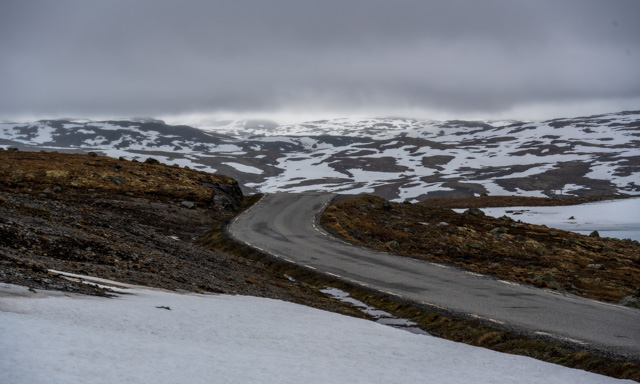
It was mid June by this stage of our trip but we’d yet to see any sign of summer in Norway. There was still plenty of snow in evidence and the lakes were still partially frozen. We don’t know if Summer comes late here or if this year the weather has been particularly bad but despite this, it is an undeniably beautiful landscape.
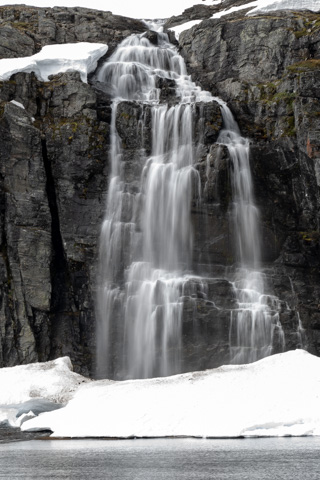
We took in a few sights as we made our way across the top. There was a very pretty walk across the tundra to a lake and waterfall at Flotane, where we also saw a couple of Norwegian Lemmings scurrying around (no picture though as they were too small and fast for us).
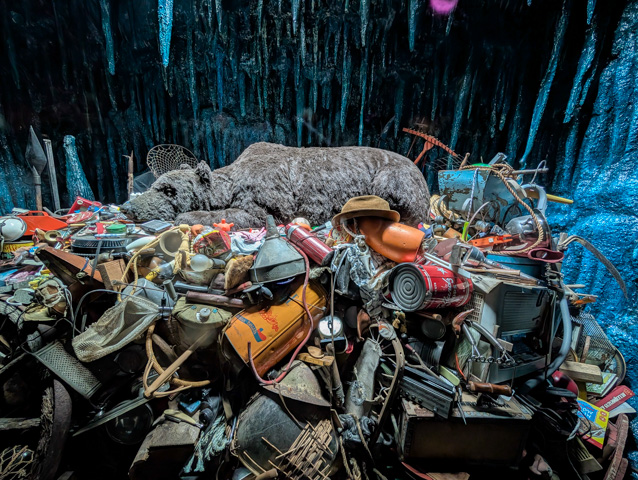
There is also a modern art installation along this route in a man-made cave – a bear on a rubbish heap, which is said to explore man’s impact on nature over time.
After dropping back down to Fjord level we found a nice place (albeit by the side of the road) to spend the night, looking out over the water. This was the first place we had stayed the night in Norway with a lovely view. The park-ups had not been living up to our expectations so far but things definitely improved the further North we went.
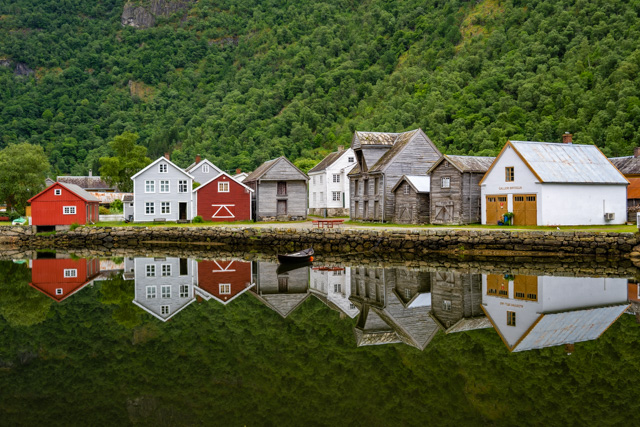
Having skipped the Laerdal tunnel to go over the mountains we arrived back down in Laerdal, which is a very pretty historic town. We visited early in the morning before any of the cruise ship passengers managed to make their way there.
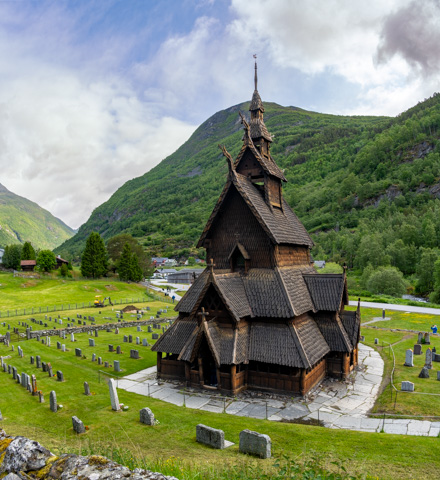
Just down the road from Laerdal is the Borgund Stave Church which is the biggest and best preserved of all the stave churches. The entrance fee to the church also includes the museum, which is informative and well worth a look.
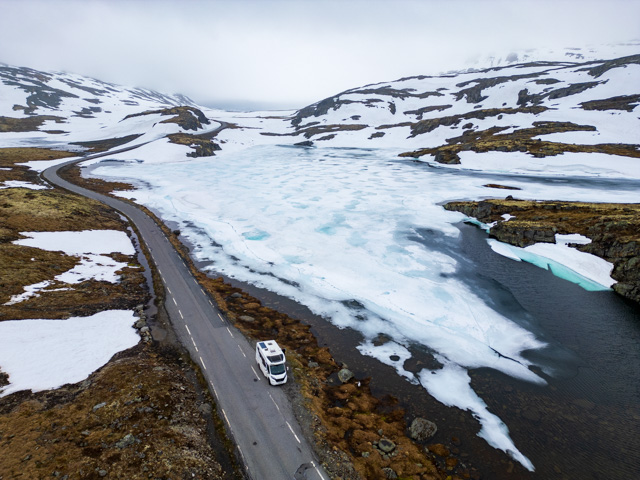
Next up we drove over another mountain pass road – The Tindevegen road which then goes into the Sognefjorden scenic road (you can find all of Norway’s scenic routes on the VisitNorway website). This took us across to the little town of Lom and another Stave Church.
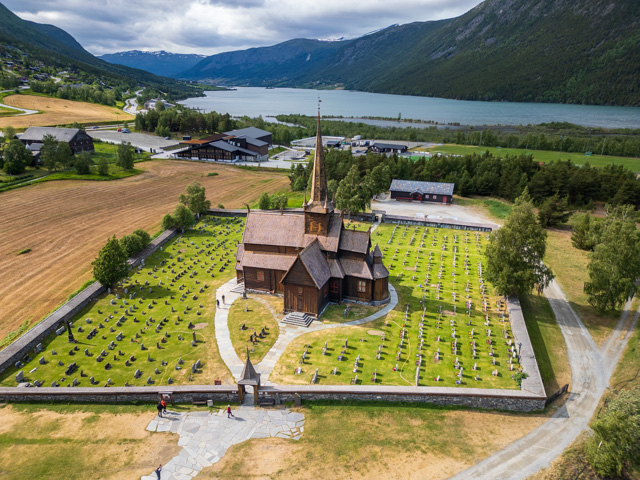
We spent the night wild camping near here next to a very loud fast flowing river. The amount of rain we’ve had means that all the rivers are currently raging torrents.
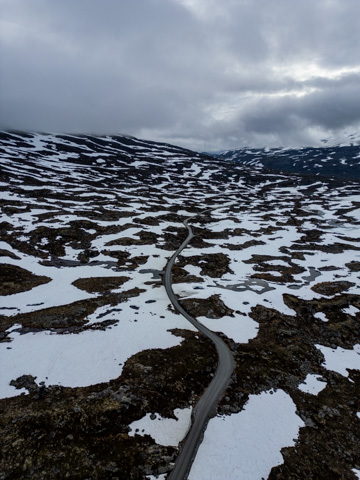
Up early the next morning we drove the absolutely beautiful (and unpronounceable) Gamle Strynefjellsvegen scenic route over another mountain pass. This one was shrouded in cloud but probably the snowiest and most scenic of all the ones that we have done so far.
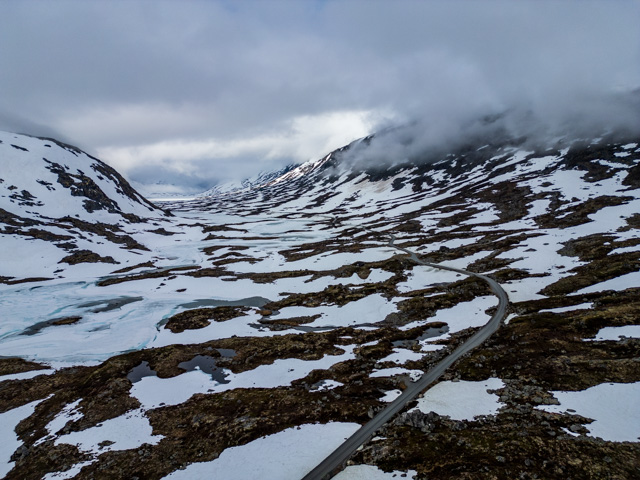
Once across the mountains where we had been mostly alone and blissfully free of all the crowds, we arrived back in another one of Norway’s heavily touristed areas, where the glaciers sweep down from the ice sheets.
We drove up one of the valleys that has a glacier at its head, the Kjendalbreen glacier. The last few km’s of road are a toll road that gets pretty narrow and a bit rough but you end up in a gravel car park that is only around 400m to the glacier viewpoint.
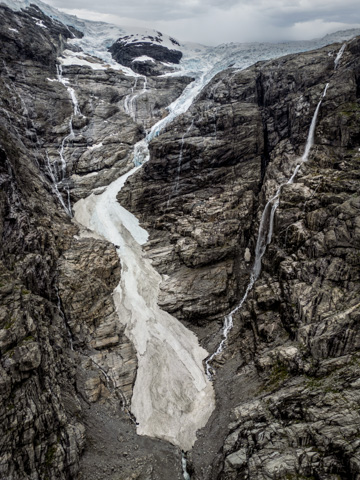
You can actually walk further along the valley but it gets pretty rough going as you have to walk along the very rocky river bed.
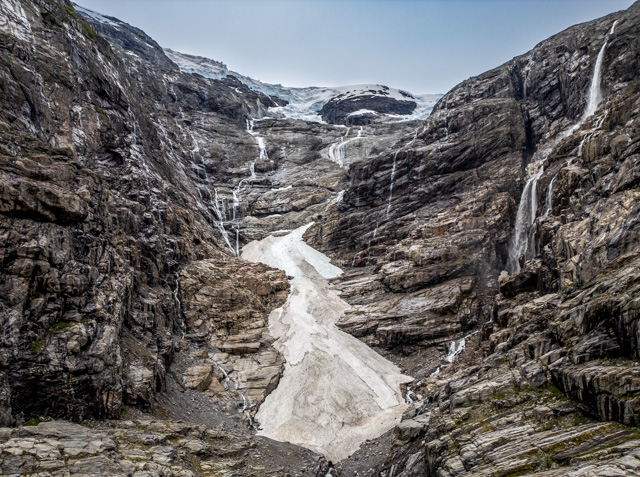
Retracing our steps back through the valley we drove south to the next valley and immediately knew this would be busier as we passed a cruise ship and saw a whole bunch of coaches ferrying passengers up the valley.
There is a big car park at the head of the valley but this glacier – the Briksdalbreen glacier – is a bit of hike, around 2.5km with 200m of ascent.
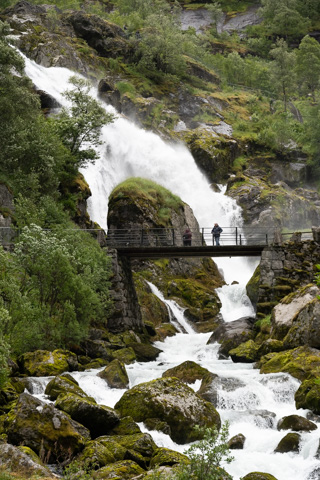
However, if you don’t want to walk you can take a ‘troll car’ up the road to the glacial lake although it’s a little pricey.
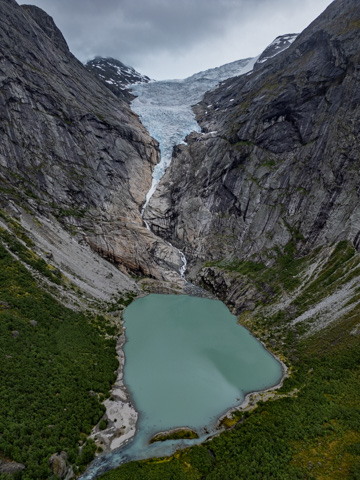
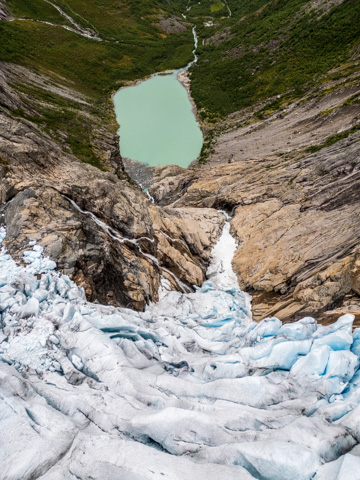
On the hike up you pass a huge waterfall and then eventually arrive at the moraine lake at the foot of the glacier. Unlike the last one, you can’t really get close to this glacier, but you do get some very good views. I actually realised on arriving at the lake that we had been here before when we spent a long weekend in Bergen 15 years ago!
We spent the night in the Briksdalbreen car park and the next morning set off early for the ferry dock at Helleslyt. This ferry is not a normal one that is part of the highway system but is instead a tourist ferry that has seats out on the deck and a commentary. It’s a bit expensive at approximately £80 but we decided to splash out.
The ferry traverses the famous Geirangerfjord which is a very narrow Fjord with lots of waterfalls cascading down the sides. Most famous of which is the seven sisters.
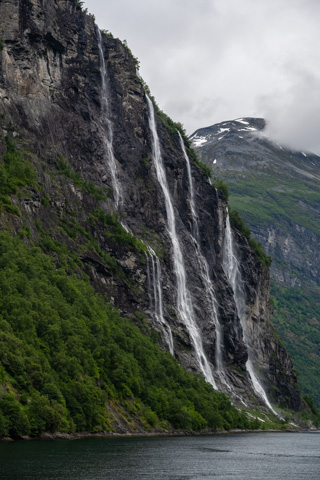
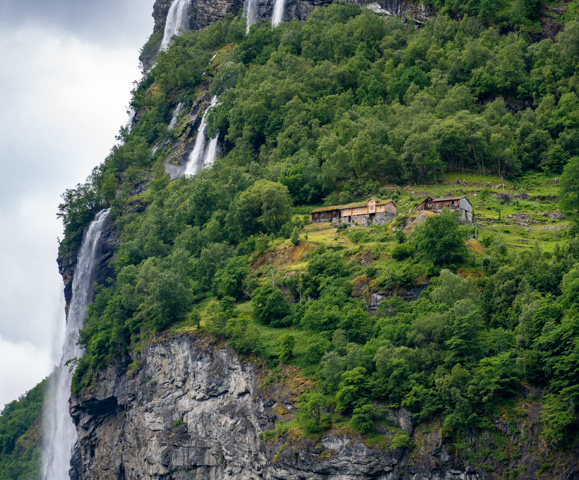
The most interesting parts of the ferry ride were seeing the abandoned farms that were perched on the nearly vertical valley sides. The slopes were so treacherous that their kids used to be tied by rope to the houses when they played to stop them falling into the Fjord. Despite the steep cliffs these farms used to produce potatoes, cabbage and carrots.
Once we got to the end of the ferry ride in Geiranger it was very busy. There were two big cruise ships docked and we immediately left town and joined the slow-moving traffic switch-backing up the mountainside. There is a viewpoint of the fjord on the way but it was so busy we couldn’t park, however the traffic was so bad that I managed to jump out, take some pictures and get back in while Sarah drove slowly past.
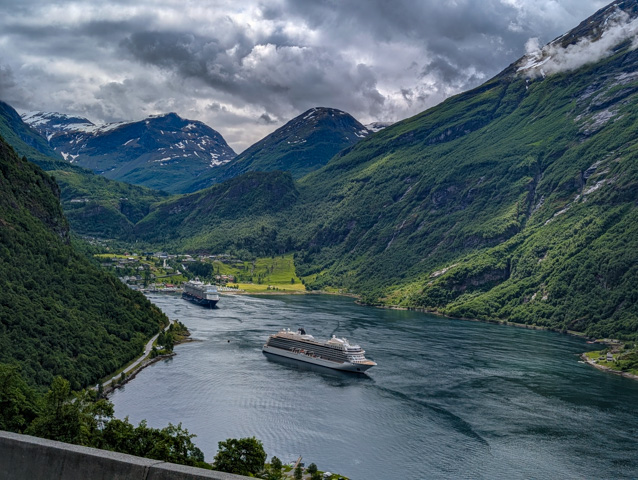
The road goes over a mountain pass and fortunately most of the traffic turns back after the viewpoint so it became much quieter. We were heading for a very famous Norwegian road called Trollstigen which switchbacks down from the mountains.
Unfortunately at the time we were there the road was closed as a result of landslides caused by melting snow.
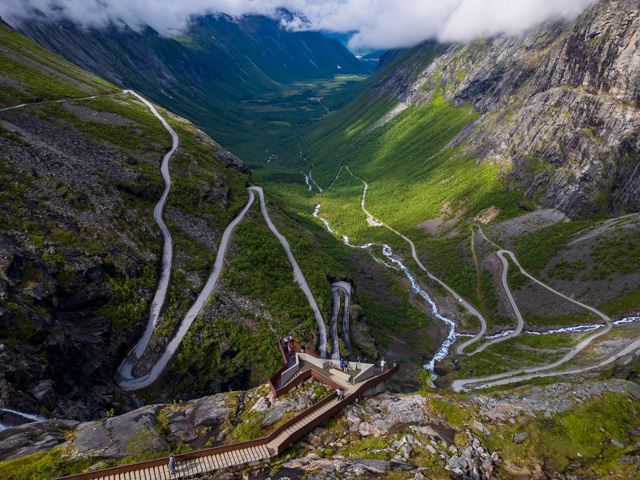
We were however able to drive the 30kms to the viewpoint over Trollstigen, which has a fantastic view of the switchbacks and the valley below towards the town of Andalsnes.
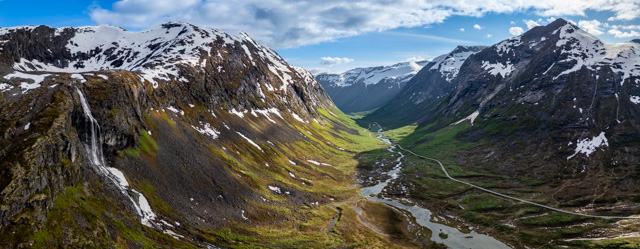
As we drove back along the quiet road we stopped in a big mountain valley for the night. It was our best wild camping spot in Norway so far with amazing views up and down the valley and a huge waterfall across the valley from us. It was a cold but beautiful evening and for perhaps the first time in Norway we were actually alone for the night.
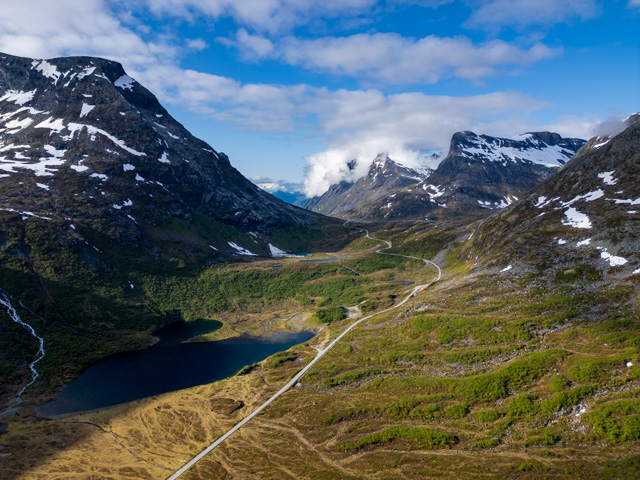
Getting back around to Andalsnes was a bit of a long trek with the pass road closed so we decided to head to Alesund as our a next city stop.
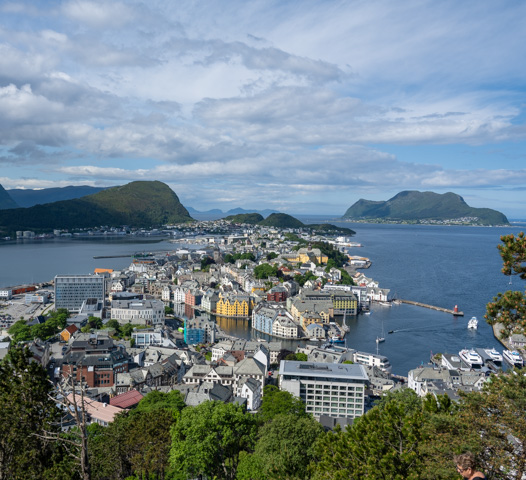
Alesund is a city which is spread out on number of islands at the mouth of Geirangerfjord. It was destroyed by fire in 1904 and when they rebuilt the city after that it was with a consistent Art Nouveau style.
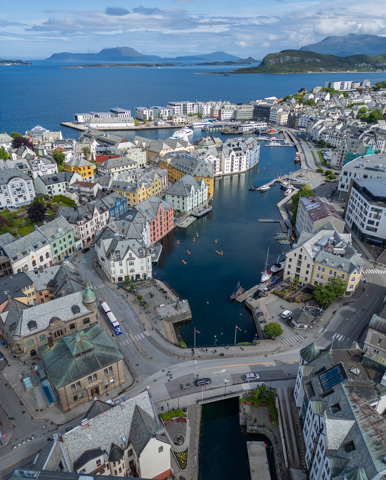
We wandered round the town with no real purpose, although Sarah visited the Art Nouveau Centre, which told the story of the town fire and reconstruction very well via a ‘time-machine’ and film, and the KUBE contemporary art museum while I climbed the 418 steps up the hill overlooking the town to get a view across the islands.
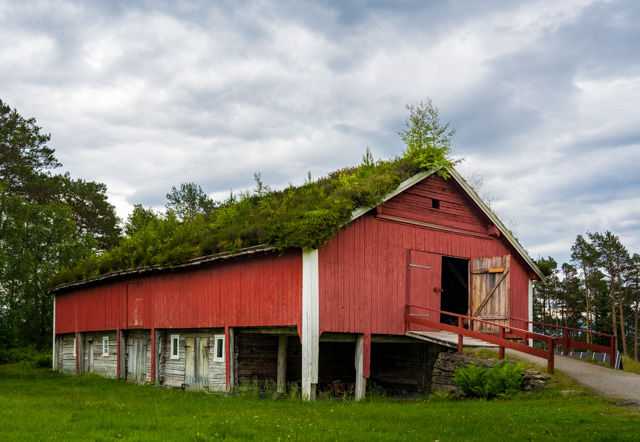
A short drive away, on the outskirts of the town is the Sunnmore museum. This is mainly an outdoor museum with lots of examples of traditional buildings from the history of the region, spanning medieval times up to WW2.
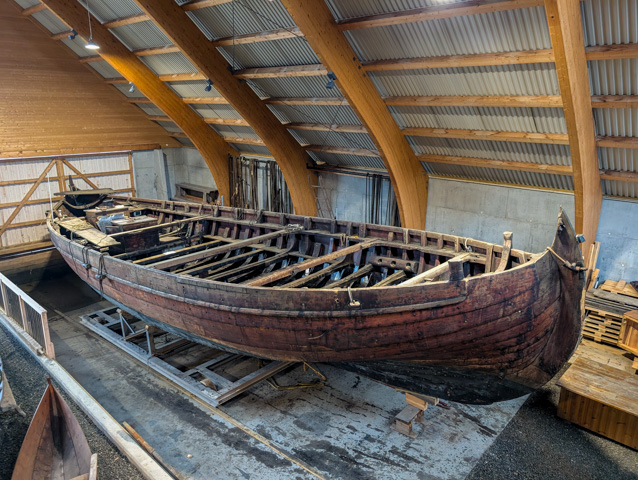
There are also some boat halls which have a range of historic fishing boats used in the region from Viking times up to the 20th century. The most interesting is probably a Viking boat from 780 AD. It’s about 18m long and was found in a marsh which helped to preserve its wooden structure.
 FromAtoB