Les Pionniers: Ice Hockey
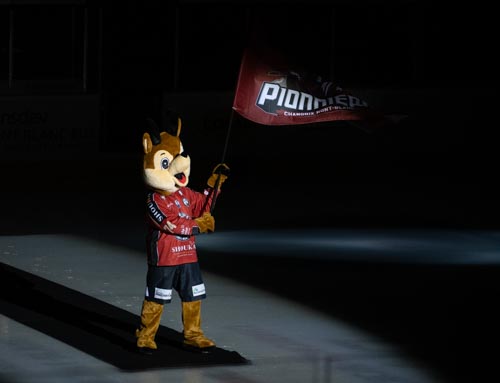
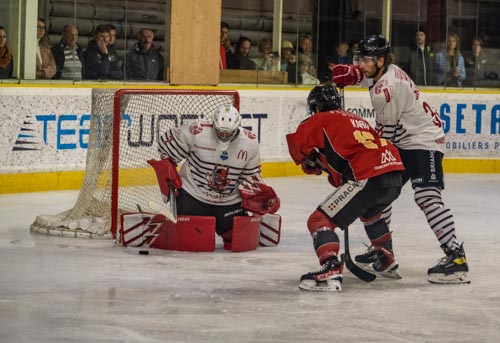
Les Pionniers are Chamonix’s professional ice hockey team which compete in France’s top league, Ligue Magnus.
They play at their central Chamonix home – Centre Sportif Richard Bozon – which is just off Place du Mont Blanc and during our time here we have watched a couple of matches despite knowing very little about the game!
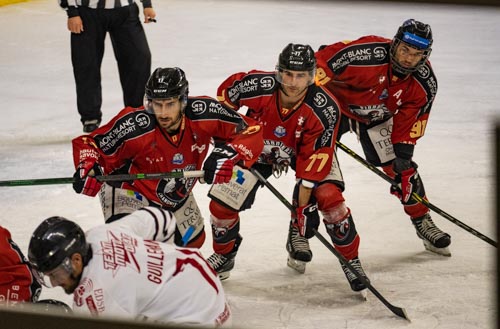
Both nights were enormous fun with a real party atmosphere. The bar is open throughout the game, with music and drumming at critical moments and some slapstick family entertainment between each of the periods. I would thoroughly recommend this to anyone who is visiting Chamonix whether you follow Ice Hockey or not.
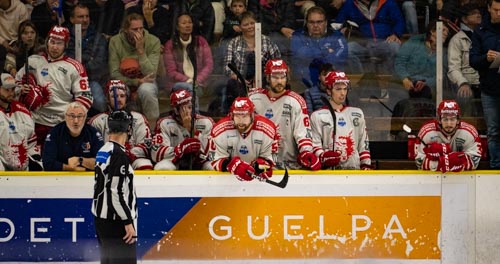
Chamonix have a long history of Ice Hockey and have been league winners on many occasions, however recent years have been more difficult and they have not been champions since they won their 30th crown in 1979.
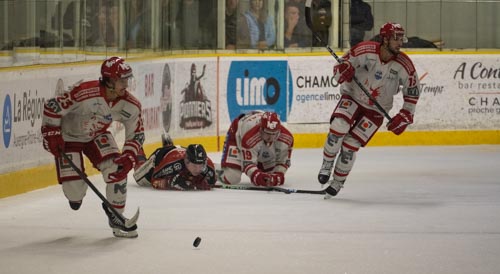
While we’ve been having great fun watching the matches I doubt the same could be said of the players as the 2022/2023 season hasn’t got off to the best of starts for them. We hope their luck improves and for anyone travelling to the area who is interested, the calendar of games can be viewed and tickets purchased online at pionniers-chamonix.com.
Grand Balcon Sud, Lac Blanc and Lacs des Cheserys
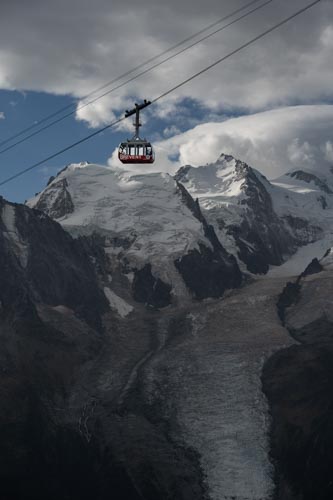
Having talked about the south side of the Chamonix valley in a previous post, the North side, although different, is equally stunning.
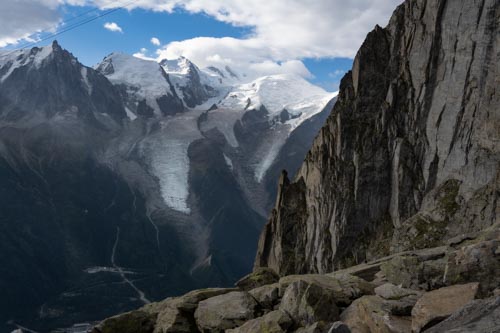
This side of the valley is accessed by two lifts which operate throughout the summer season, La Flegere which is in the Chamonix suburb of Les Praz (a short and free bus ride from Chamonix Centre or a 30 minute walk) and Plan Praz which is right in Chamonix town itself. Both of these lifts stop operating in mid-September so any exploration of the North side after that starts with a bracing hike up from the valley (basically a 1000m climb).
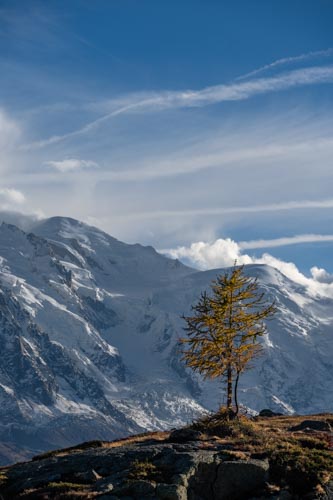
If you are lucky enough to be here before the lifts close, the Plan Praz lift connects with the Brevant lift and will take you up to 2525m with no effort at all. There is a great view of Mt Blanc from here but limited places to walk to. I linked Brevant to the classic Plan Praz walk which is heading up the valley and over the Col du Lac Cornu. Once over the col there is a large alpine lake called Lac Cornu and a short climb away are the two Lac Noir lakes which remain icy late into the summer. From these lakes it is possible to descend via the Col de Gliere to the Index lift (although there is a short sharp climb just before the lift) which links to La Flegere and takes you back down the mountain to Les Praz.
From Lac Cornu it is possible to walk a loop around to the lower of the Lac Noir lakes (Lac Noir d’en Bas). There is no actual path but following the ridge line around from the Petit Lac (not signposted but below Lac Cornu) you can climb up to the lake. I came up to the lake around where the stream exits and didn’t have to do any dangerous climbing to get there.
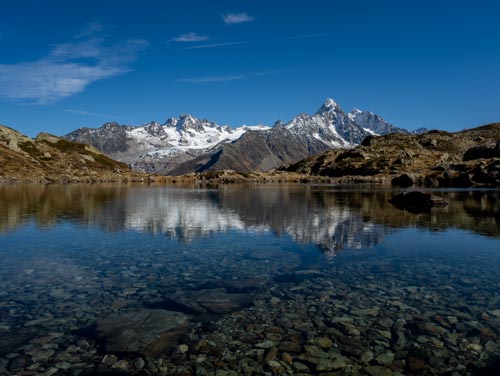
From the top of the La Flegere lift it is possible to connect with the Index chairlift that climbs another 500m. Leaving from L’Index the classic walk is to Lac Blanc, perhaps the most famous lake in the French Alps. There is a summer hut open here serving food and drink and also allows overnight stays. This walk avoids much climbing and makes a high alpine walk very accessible. The fame of this lake is reflected in the number of people who head here compared to many of the other trails.
At Lac Blanc an unsigned path leads up to the right of the lake climbing around 150m and after around 1 km Lac Perseverance can be found – and some real peace and quiet.
Once the lifts stop working the crowds in the high alpine definitely thin out but on weekends there are still plenty of people willing to brave the steep climbs.
There are two main routes up into the upper reaches of the North side of the valley. The first is a path through the woods that starts in the small village of Argentiere (easily accessible on the free Chamonix bus). From here it takes around 3 hours to reach Lac Blanc and is just over 1,100m of climbing.
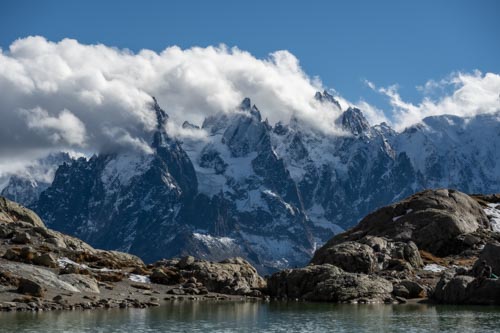
The second main route is from the Col du Montet which will probably need transport to get to. This starts with a steep 650m climb which then connects to the Grand Balcon Sud. There are great views of the La Tour and Argentiere glaciers from here and Lac Blanc can be reached by a brisk climb via Lac Cheserys and some ladders just above the lake. From the Col du Montet to Lac Blanc is only around 1,000m of climbing in total.
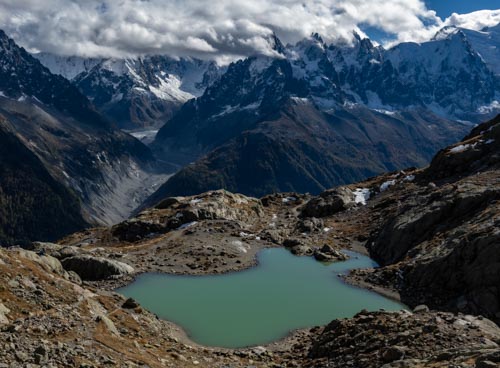
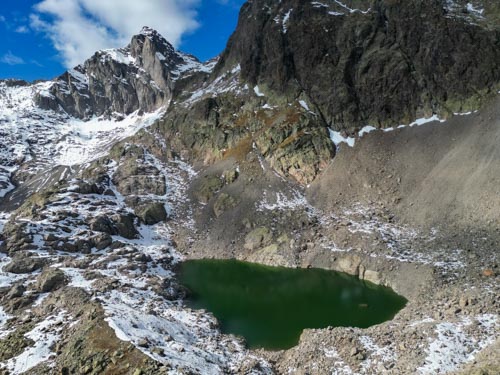
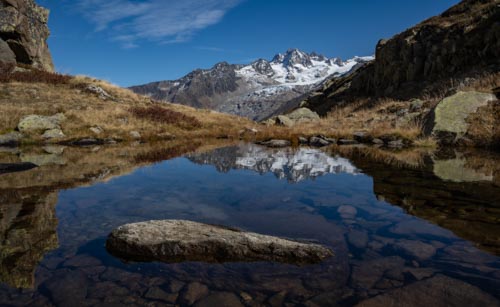
I would recommend, either on the outward or return trip, detouring via all 5 of the Lacs des Cheserys . These are beautiful and much quieter than the main route as most hikers don’t seem to visit them.
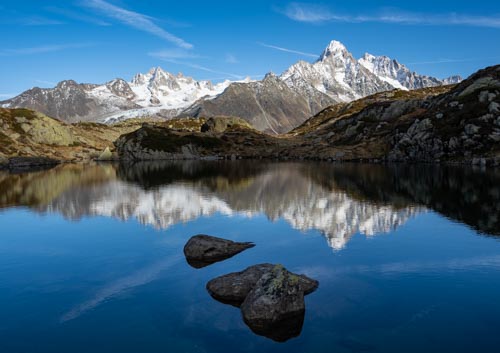
I spent a night at one of the Lacs des Cheserys and despite the freezing temperatures overnight the views in the morning were more than worth it. Camping is not allowed within 200m of Lac Blanc but in the rest of the area Bivouac is allowed. This means that it is possible to camp after 7pm as long as you pack up and go in the morning.
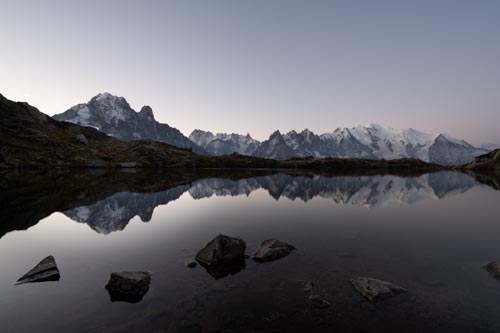
It’s also worth noting that swimming is banned in Lac Blanc but is allowed in the other lakes. Although I’ve not been brave enough to try.
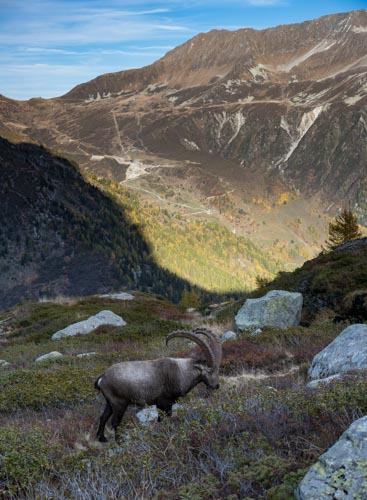
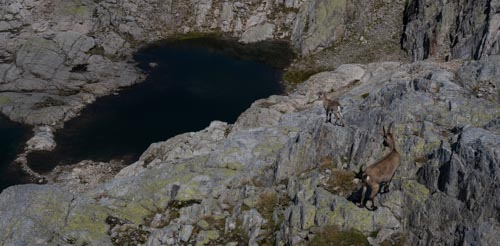
This side of the valley includes the Reserve Naturelle Aiguilles Rouges. In this area I have seen a number of Ibex. These are a type of wild goat that are native to Europe and grow up to 110cm tall and 120kg in weight. Both males and females have horns but the males horns can be substantially bigger.
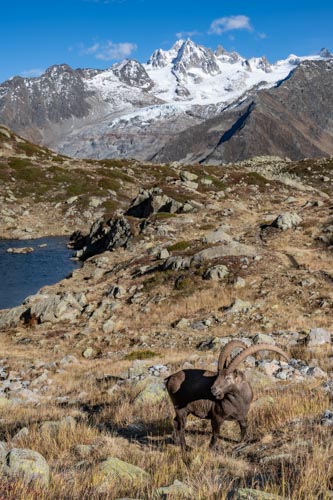
The Glaciers of Chamonix
The Southern side of the Chamonix Valley has a number of large glaciers.
From the top of the valley at Le Tour is the Le Tour glacier, the Argentiere glacier, the Mer de Glace and Glacier de Bosson. There are also a handful of smaller glaciers.
All of these glaciers are easily reached by ski lifts in the summer. Outside of the summer season it becomes a harder proposition involving significant hiking.
Glacier du Tour
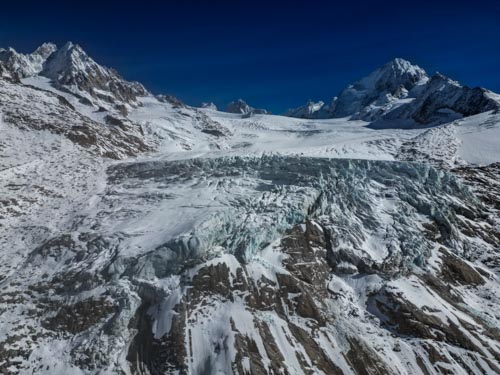
The face of this glacier is visible from the hamlet of Le Tour at the Eastern end of the Arve valley. The glacier itself is over 5km long and around 3km wide at its widest.

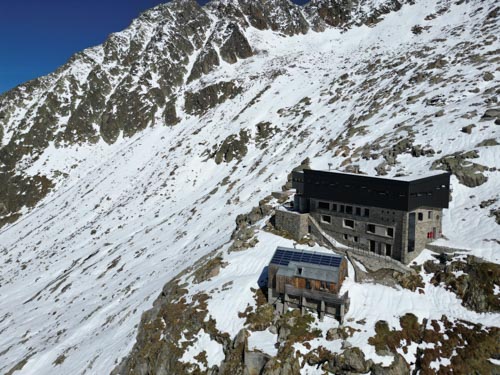
The Glacier du Tour can be reached from Le Tour (accessed by route 2 on the Chamonix Bus). From Le Tour there is a lift, the Charamillon, which links with the Autannes chairlift that connects to the Col D’Balme. From here only 500m of climbing will get you to the Albert Premier hut which has a commanding position above the glacier. Alternatively, there are two paths that lead directly up to the glacier itself, one via the Charamillon lift and the other straight up the lateral moraine of the glacier from La Tour which is very steep.

During 2022 the lifts in Le Tour have been closed for refurbishment so the only option has been to walk up and that involves at least 1300m of climbing.
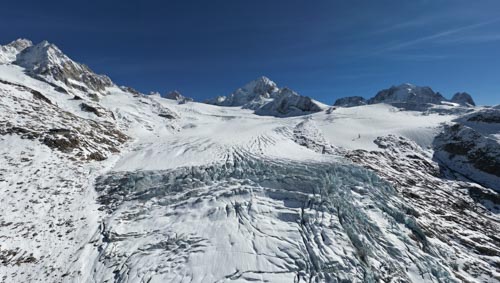
I chose to take the much longer but less steep route up to the Col D’Balme first and then onto the glacier itself. The hike was made significantly more difficult by deep snow on the last 200 vertical metres of the journey. Each step was a lottery and every so often I sunk to my thighs in the snow.
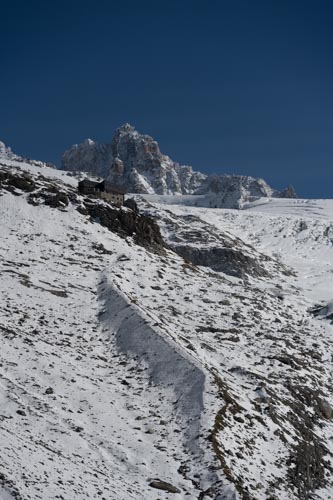
The final push to the Albert Premier hut involves some easy scrambling up a rock face to the hut itself. The very modern main hut is summer only but there is also a winter shelter for up to 30 hikers/climbers.
Argentiere Glacier
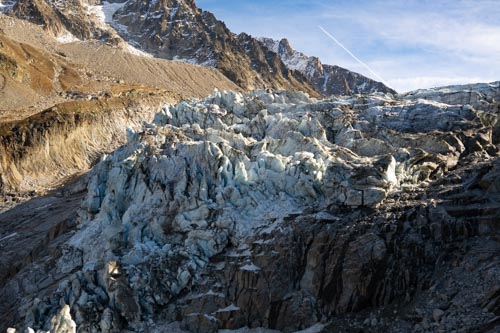
The Argentiere Glacier can be seen from the ski village of Argentiere which is up the valley from Chamonix. The glacier is one of the largest in the Mont Blanc massif and is around 9km long with its face at the top of a steep slope.
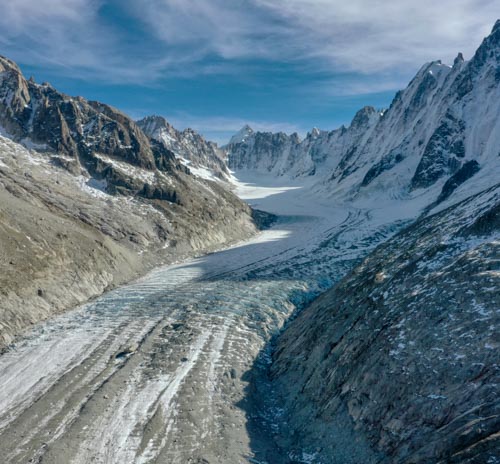
The glacier can be easily accessed in summer using the Plan Joran lift which leaves only a short walk and climb of around 300m. There are two main viewing points, one of which is directly in front of the face of the glacier and another higher viewpoint above the glacier itself.
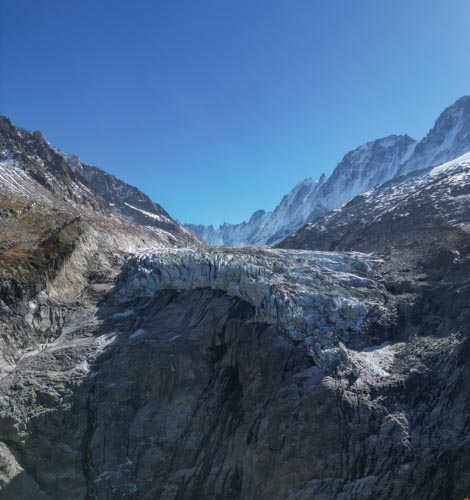
The walk up from the valley is around 1,100m of climbing and leaves from the Chosalets stop on the Chamonix bus network. The path switchbacks through the forest before emerging into the ski terrain above the tree line. After this a rough path climbs alongside the glacier leading to a viewpoint called Pointe du Vue or alternatively there is a path that dives down onto the glacier itself.
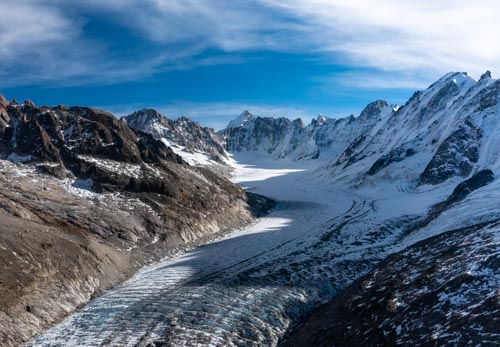
Mer de Glace
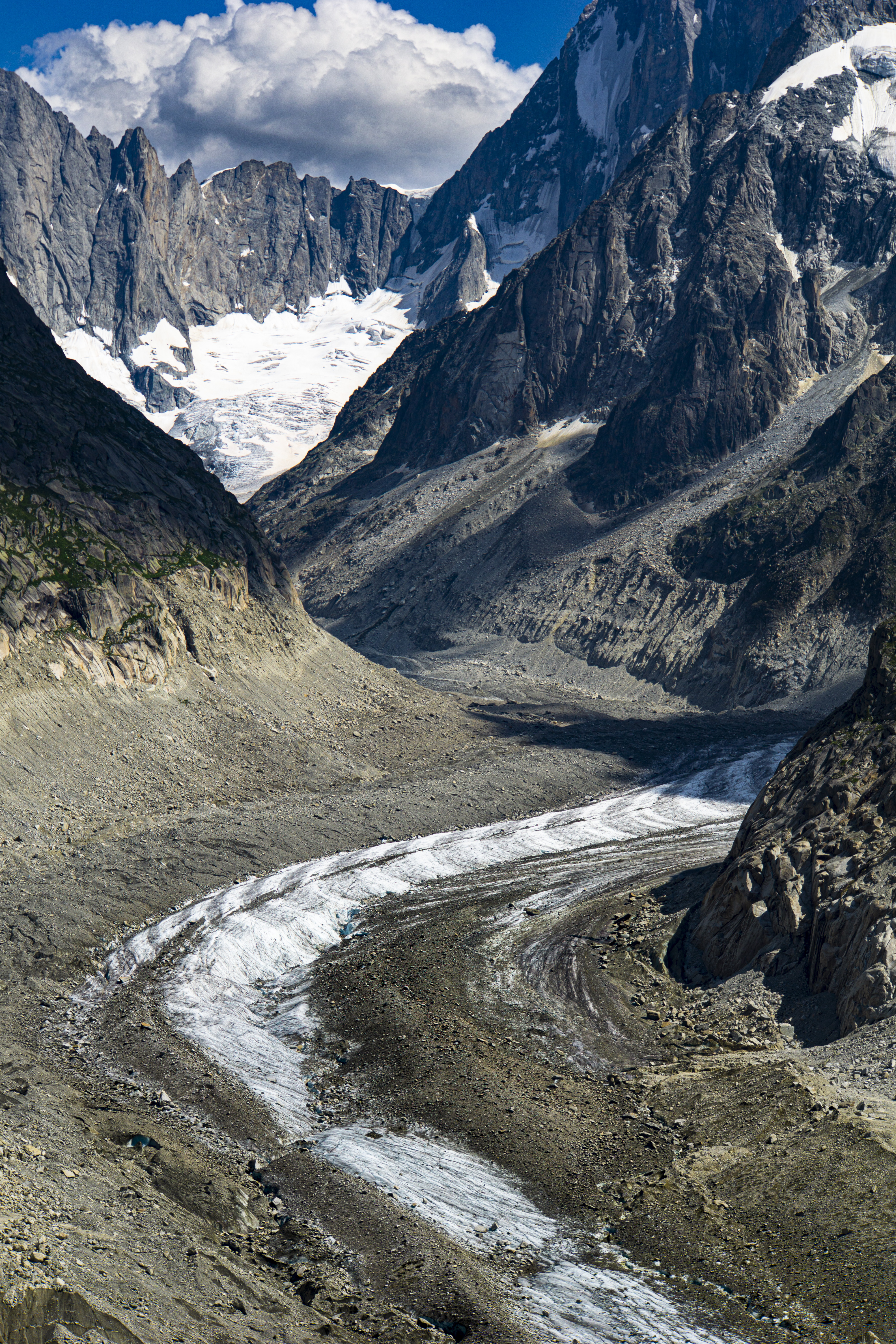
The Mer de Glace (Sea of Ice) is the glacier that is the last section of the famous Vallee Blanche. It is 7.5km long but when its tributary glaciers are taken into account it is the longest and largest glacier in France and second only to the Swiss Aletsch glacier in the alps.
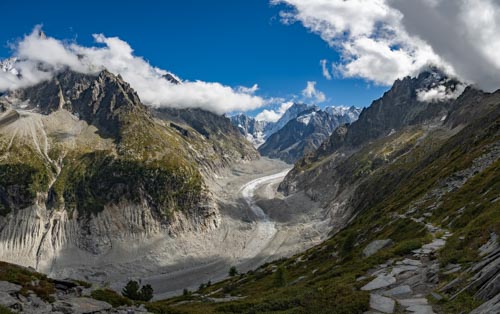
This is the most easily accessible of the Chamonix glaciers by virtue of a train station right above the glacier. The Mer de Glace train runs from its own station next to the main station in central Chamonix. It is also considered to be part of the lift system so any area ticket covers this train. The train station complex is currently being refurbishment and is expected to be completed in 2024 but in the meantime the trains are still running.
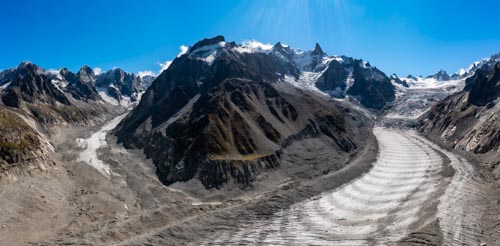
From the Montenvers train station at the glacier there is a short gondola ride down towards the surface of the glacier. In the past, this used to reach the glacier but as the glacier has receded a staircase with around 500 steps is now used to access the surface. Each year here an ice cave is dug in the glacier and it is also possible to try ice climbing in this area. The refurbishment of the Mer de Glace complex includes a new gondola which will remove the need for the 500 steps and make the glacier itself more accessible again.

Alternatively, a hike from the Planards ski area parallels the train line or there is a beautiful hike from the Plan D’aguille over signal forbes from which amazing views of the glacier can be seen.
Bossons Glacier
The Bossons glacier is clearly visible from the town of Chamonix and is right underneath Mont Blanc. It is the steepest glacier in the Alps and is around 7.5km long.
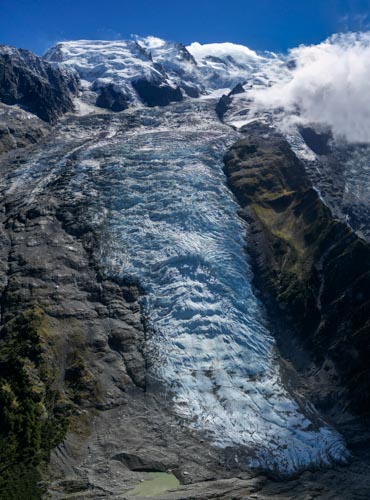
Access to the Glacier is either by hiking up to La Jonction – a 1500m vertical gain on the Western side of the glacier or via the Gare du Glaciers on the Eastern side and then traversing across.
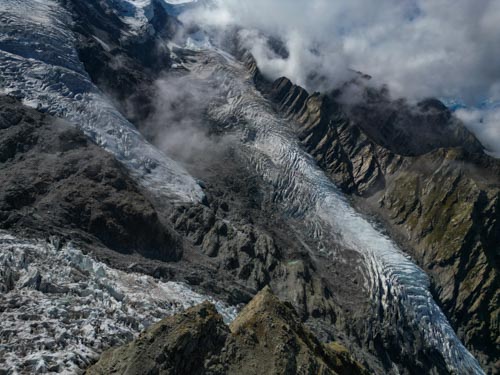
The easiest way to get up close to this glacier is by taking the Aiguille du Midi gondola to the Plan D’Aguille mid station and then heading to the Gare du Glaciers from there.
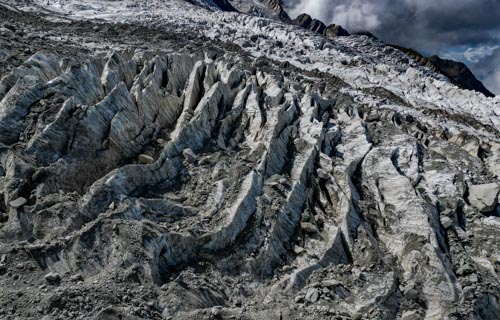
One of the routes to the summit of Mont Blanc begins with a traverse of the Bossons glacier – the Grand Mulets route. Unbelievably this route was used for the fastest speed ascent/descent of Mont Blanc which was only 5 hours. The upward journey of 3,800m taking only an incredible 3 hours 33 minutes.
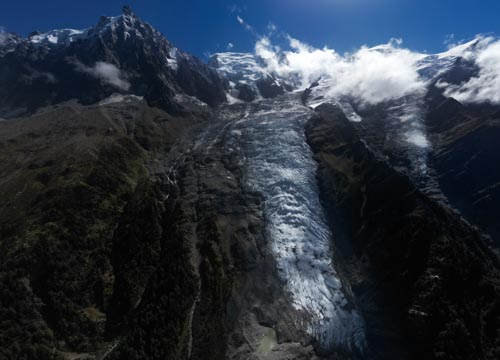
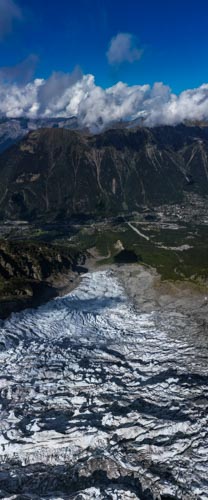
The glaciers of the Chamonix valley are beautiful and awe inspiring to view. Unsurprisingly however, climate change is having a huge impact on this amazing place and all of the glaciers have retreated over the last 100 years. This retreat has been speeding up and at the current rate the Alps is sadly predicted to be ice free by 2100. This just highlights the impact of global warming on our world.
Alpine Swimming
Despite arriving in the Alps in September the temperature in the valley was still almost 30c so we decided to spend a couple of days relaxing at the beach in between hiking days.
Given that the nearest coastline is hundreds of miles away, by beach I mean the sandy shores of two large swimming lakes around a 20-minute drive from Chamonix town. .
The first is Lac de Passy, unsurprisingly in the town of Passy, just outside the Chamonix valley and about 500m lower. This kilometre long lake with a large sandy beach at one end is surrounded by leisure facilities, making it a family friendly sporting complex including mini-golf, fishing, go karting and various watersports.
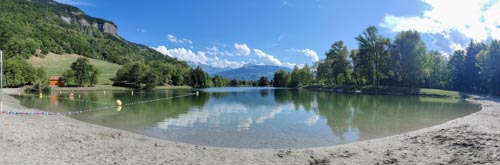
However, our favourite swimming lake, Les Lacs des Illetes, is a bit further away in Sallanches with beautiful views of the mountains. There are in fact three lakes here with one dedicated for fishing, one for windsurfing and one for swimming. The swimming lake has (basic) toilet facilities, a shower and a lifeguard and beach bar in the summer months but from the start of September it is blissfully quiet.
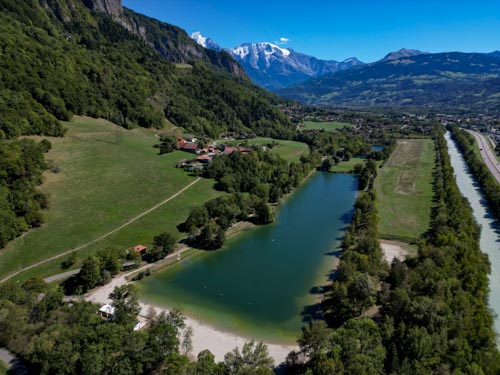
Both these lakes get very busy during the French holidays but outside that time they are great places to relax in nature and cool off (ok it’s not St Tropez, but it’s still the alps and the water is definitely fresh!).
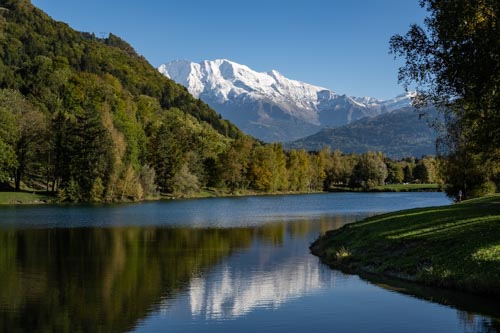
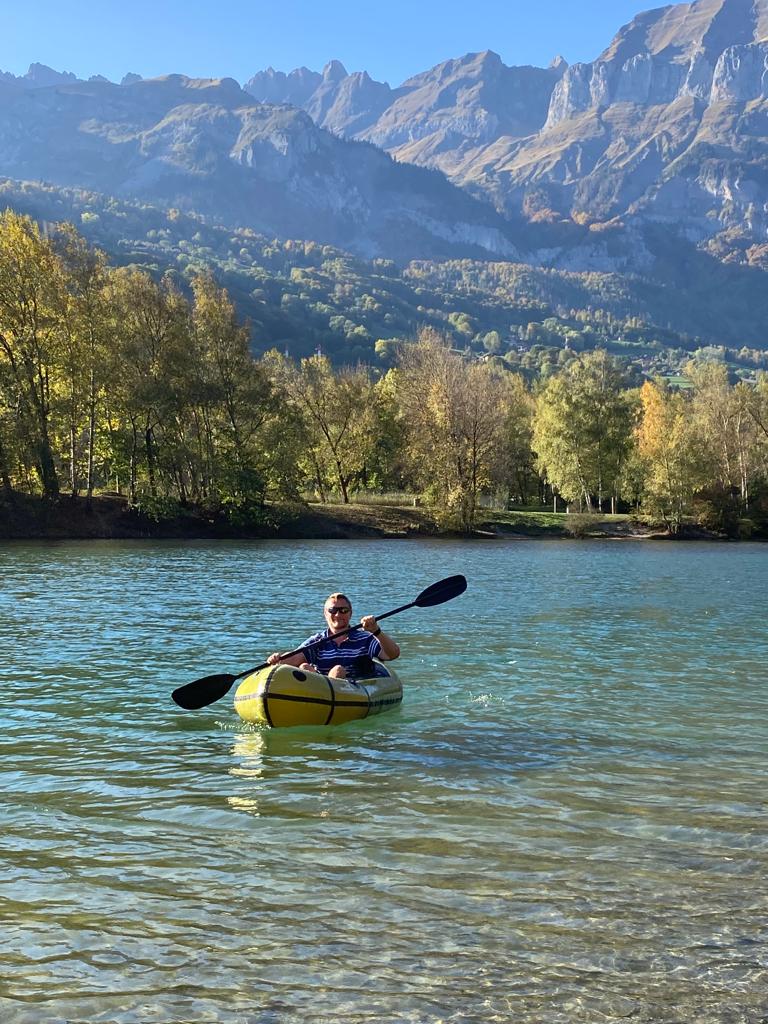
We’ve even done some kayaking there. The weather has even been good enough into mid October for days at the lake soaking up the sunshine and taking a refreshing dip.
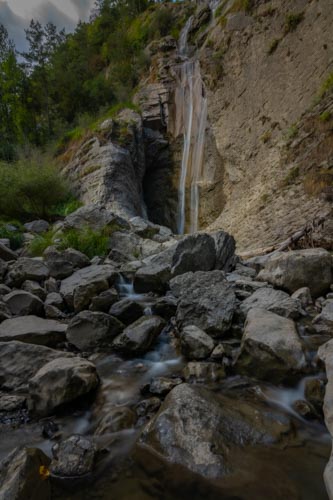
There is also a beautiful waterfall nearby which we took the time to visit.
The Aiguille du Midi and Grand Balcon Nord
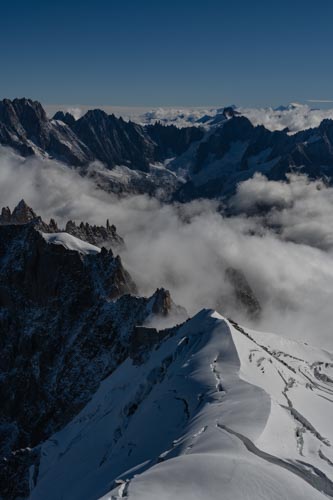
The north side of the Chamonix valley is accessed by a large modern gondola called the Aiguille du Midi. This is the really dramatic side of the valley with the biggest mountains including Mt Blanc which at 4,809m is a giant (for Europe) and the second most prominent peak in Europe. All of the glaciers – which are such a prominent feature of the Chamonix valley – are on this side (facing North).
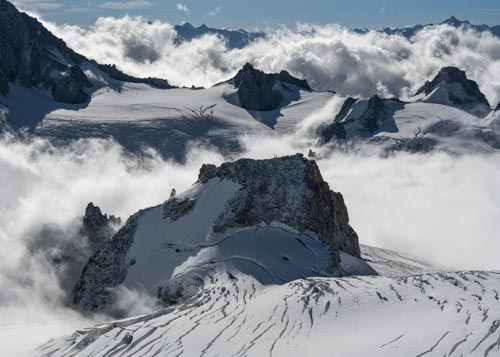
The Aiguille du Midi lift has two stages. The first takes you to the Plan du L’Aguille at 2,317m which is a perfect launchpad for hiking this side of the valley. The second stage of the cable car travels right up to the summit of the Aiguille du Midi at 3,842m. This is the highest mountain peak in the world serviced by a cable car. At the top, is a visitor centre with viewing platforms and a restaurant as well as another cable car travelling across to Point Helbronner in Italy. The Aiguille du Midi is the starting point for the famous skiing descent of the Vallee Blanche and for glacier hiking. However most tourists just take in the views.
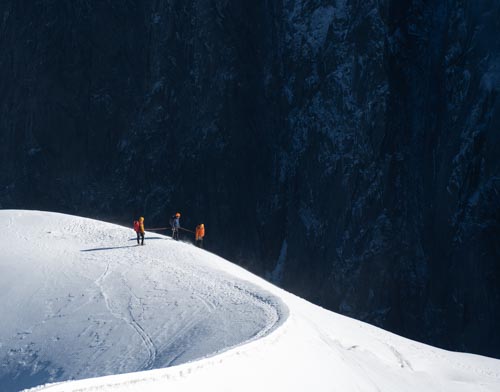
From the Plan du L’Aguille there are two directions you can take. The classic hike from here is to travel East along the Grand Balcon Nord (although on the south side of the valley it faces North) via the lookout point at Signal Forbes to the rail station at Montenvers which is the main access point for the Mer de Glace glacier. The train can be taken down from here meaning a high altitude hike is possible with very little elevation gain.
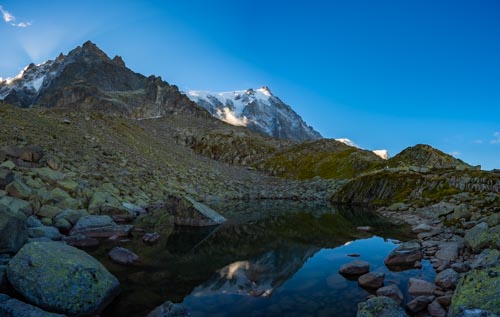
A small detour at the start of this hike can take you to a small mountain lake (Lac Bleu) which is slightly above the Plan du L’Aguille gondola station.
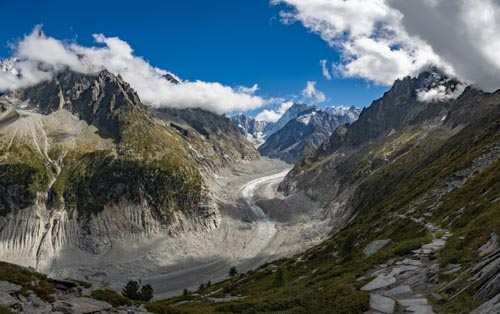
The views of the Mer de Glace from Signal Forbes are stunning and all along the Grand Balcon there are great views across to the Aguille Rouges range on the other side of the valley and of Chamonix itself.
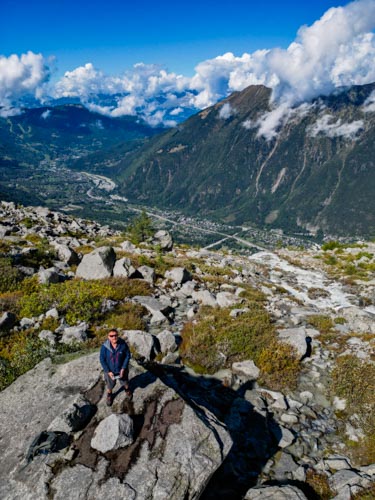
Turning in the other direction from the gondola, there is a path leading under a small glacier and its moraines and then up the mountainside to a disused cable car station. The old route runs across the glacier and involves climbing the moraines. This is no longer used and is very dangerous as the moraines are very unstable. I made the mistake of returning this way and am very grateful that I managed to exit unhurt. Don’t be foolhardy like me, the path around is the safe way to do this.
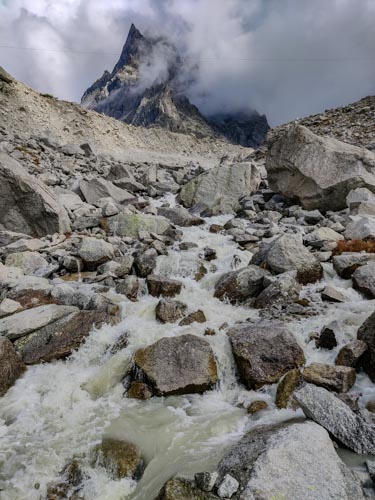
There is a glacial river to cross which is possible with a couple of jumps from rock to rock but the river runs fast and this is not a place to slip. The cable car is the Gare des Glaciers which was built for the Olympics in 1924 and was taken out of operation in 1951.
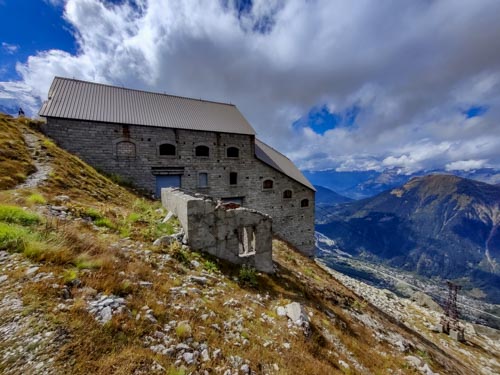
A path runs past the Gare des Glaciers and continues up to the very edge of the Glacier des Bossons.
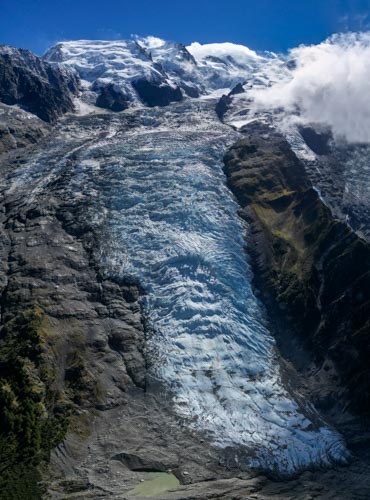
The views across the glacier from this path are amazing. The path does continue across the glacier and up to the summit of Mont Blanc but this is only for the well-equipped and experienced.
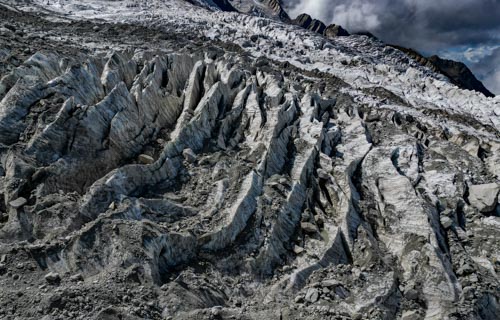
The Aiguille du midi cable car is open year round and is the only lift in the valley that remains open all year. This is an expensive lift but if you are feeling thrifty (and fit) paths do lead up to the Plan d’Aguille from the valley floor, one to the Montenvers train station through the forest largely following the train line and one via the Cascade du Dard and Gare des Glaciers.
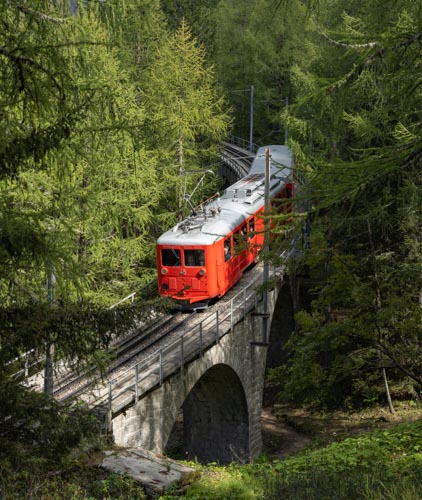
Cascade Du Dard
One of my favourite places in the Chamonix valley is the biggest waterfall in the valley itself. It’s such a beautiful and peaceful place.
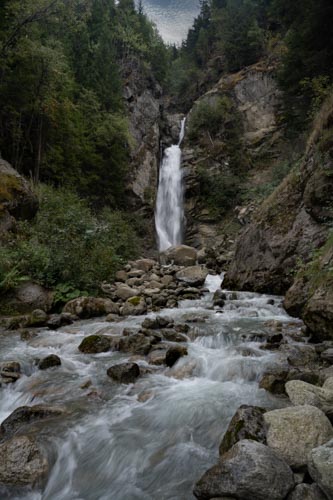
Sitting just below the Mont Blanc Tunnel and a short walk from Chamonix is the largest waterfall in the Chamonix valley.
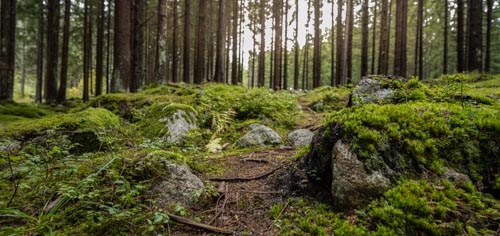
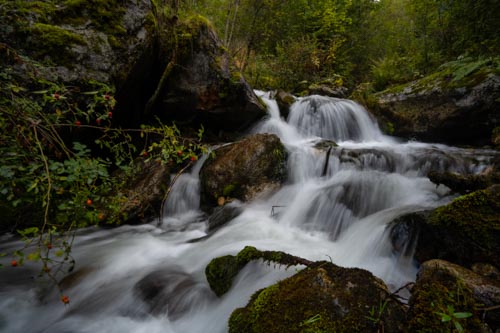
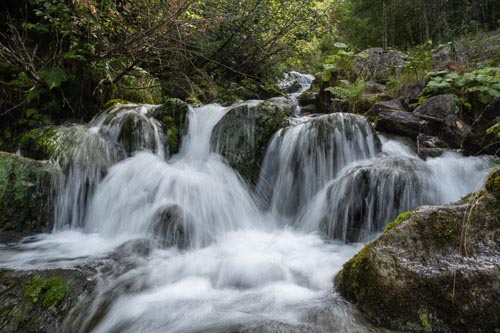
From town it is about a 45 minute walk which climbs quite steeply after leaving from the Grepon car park. The vertical gain is about 200m and it passes through the moss covered forest alongside the Torrent de Faverands.
Alternatively there is a car park on the road up to the Mont Blanc Tunnel and from there it is about a 100m walk to the falls. When you reach the first car park keep going up on an unmade road to find the nearest car park.
The waterfall is around 30m high and has a good volume of water flowing over it all year round.
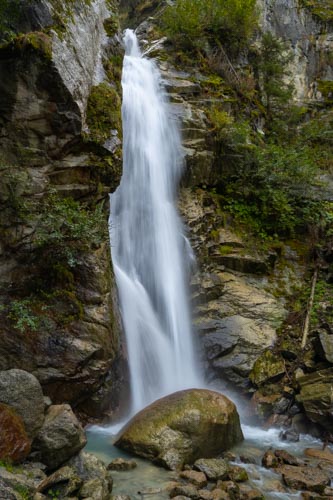
Just before reaching the waterfall is a lovely little tea house which serves everything from drinks to full meals. There is no charge for visiting the waterfall and there is no requirement to buy anything.
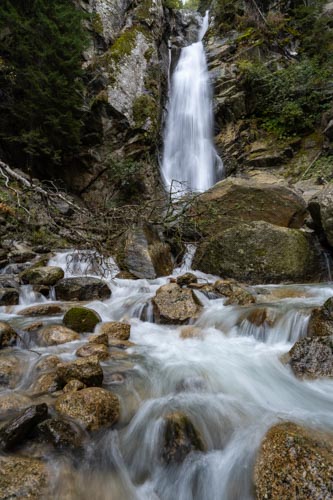
The waterfall is on the Torrent du Dard which merges with the Torrent de Faverands just downstream.
From here you can continue walking upwards along the Eastern side of the glacier de Boissons and you will eventually reach the gondola station at Plan D’Aiguille but it is a total of around 1000m of vertical to get that high.
Chamonix, France
After a long day (setting off at 5am) we arrived in Chamonix in the early evening where we met with the owner of the Air BnB apartment that is to be our home for the next couple of months. After a brief tour of our bijou (when in France!) apartment, we headed out for a celebratory beer and dinner at the nearby Monkey Bar and Canteen and left the unpacking for another day.
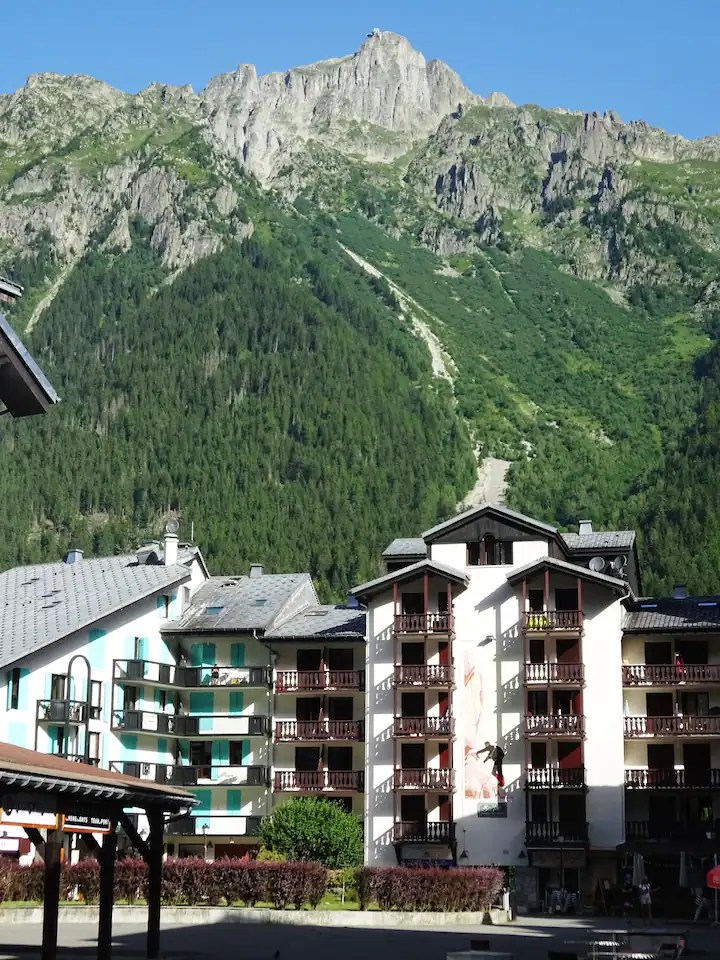
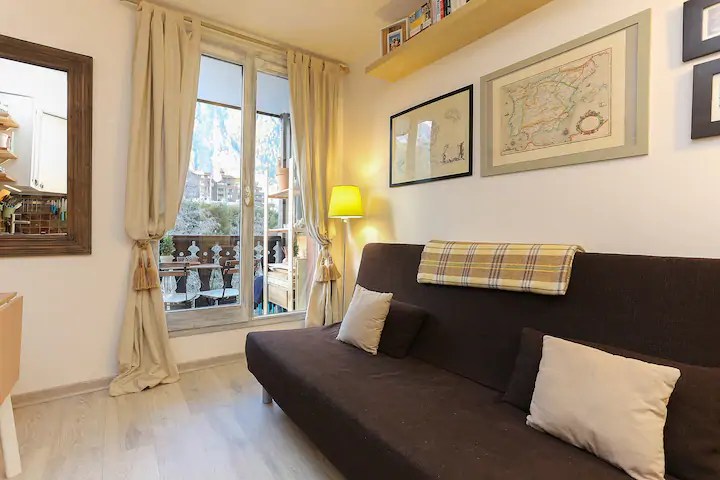
The next day we were ready to explore the town and get settled into our new home (which it is not an exaggeration to say is only a tiny bit bigger than ‘The Beast’ for those of you who followed our travels previously). However, it has been beautifully kitted out, has everything we need, is in a superb location just a stone’s throw from the town centre and the Aguille du Midi lift and has a lovely balcony overlooking the river and mountains, perfect for a sneaky sundowner.
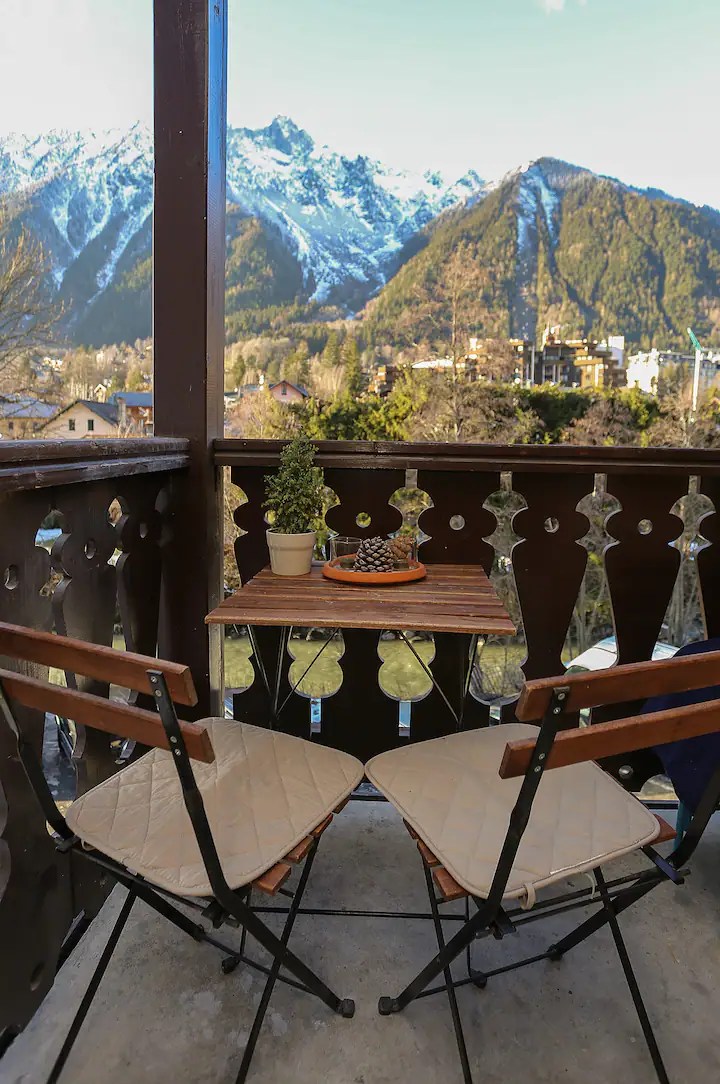
For those of you who are not familiar with Chamonix, it is incredibly beautiful, with fresh mountain air and fantastic views dominated by the Bosson glacier which hangs above the town.
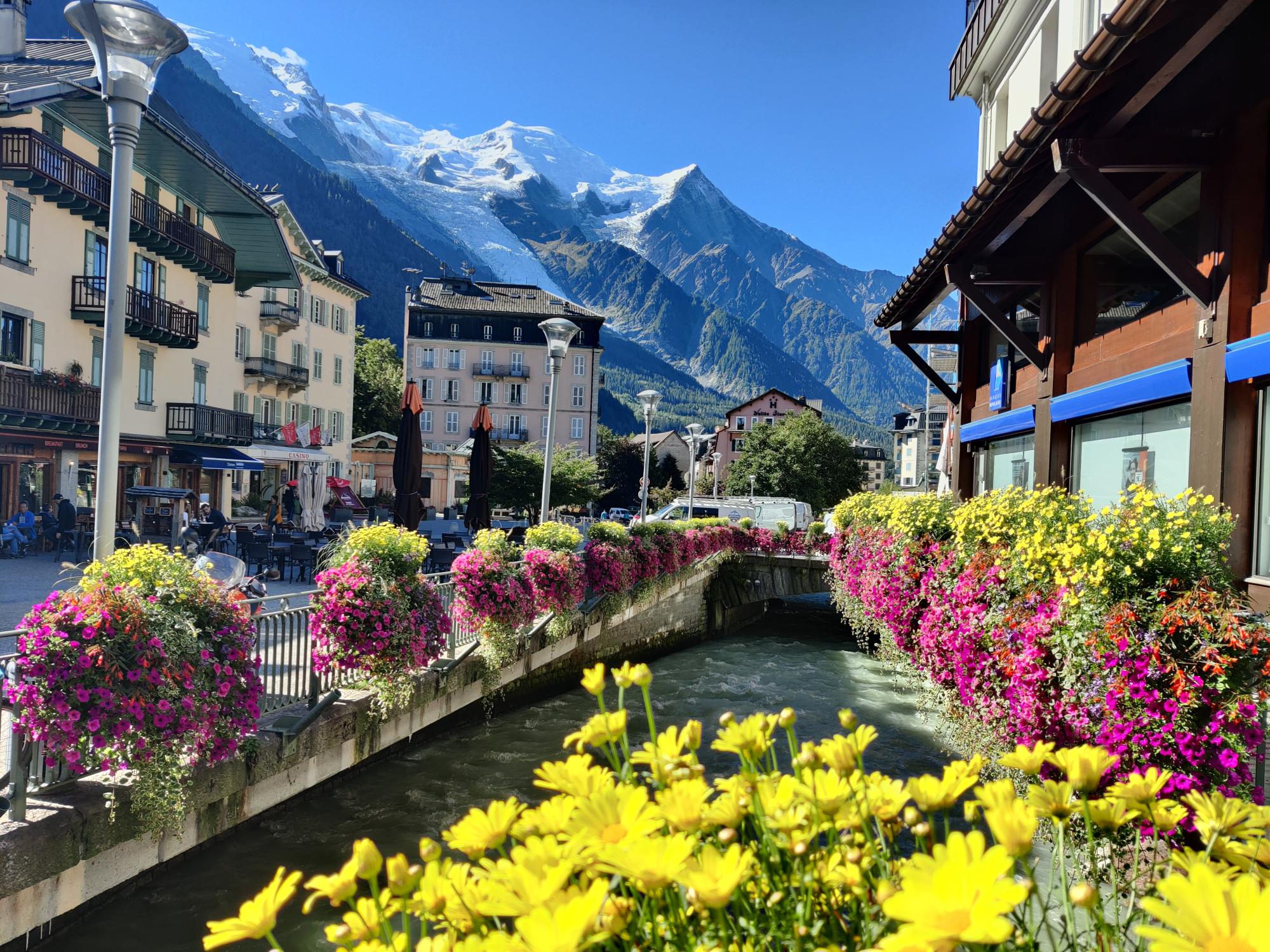
The weather we were greeted with was absolutely fabulous with temperatures in the mid 20’s, blue skies and bright sunshine.
A New Era
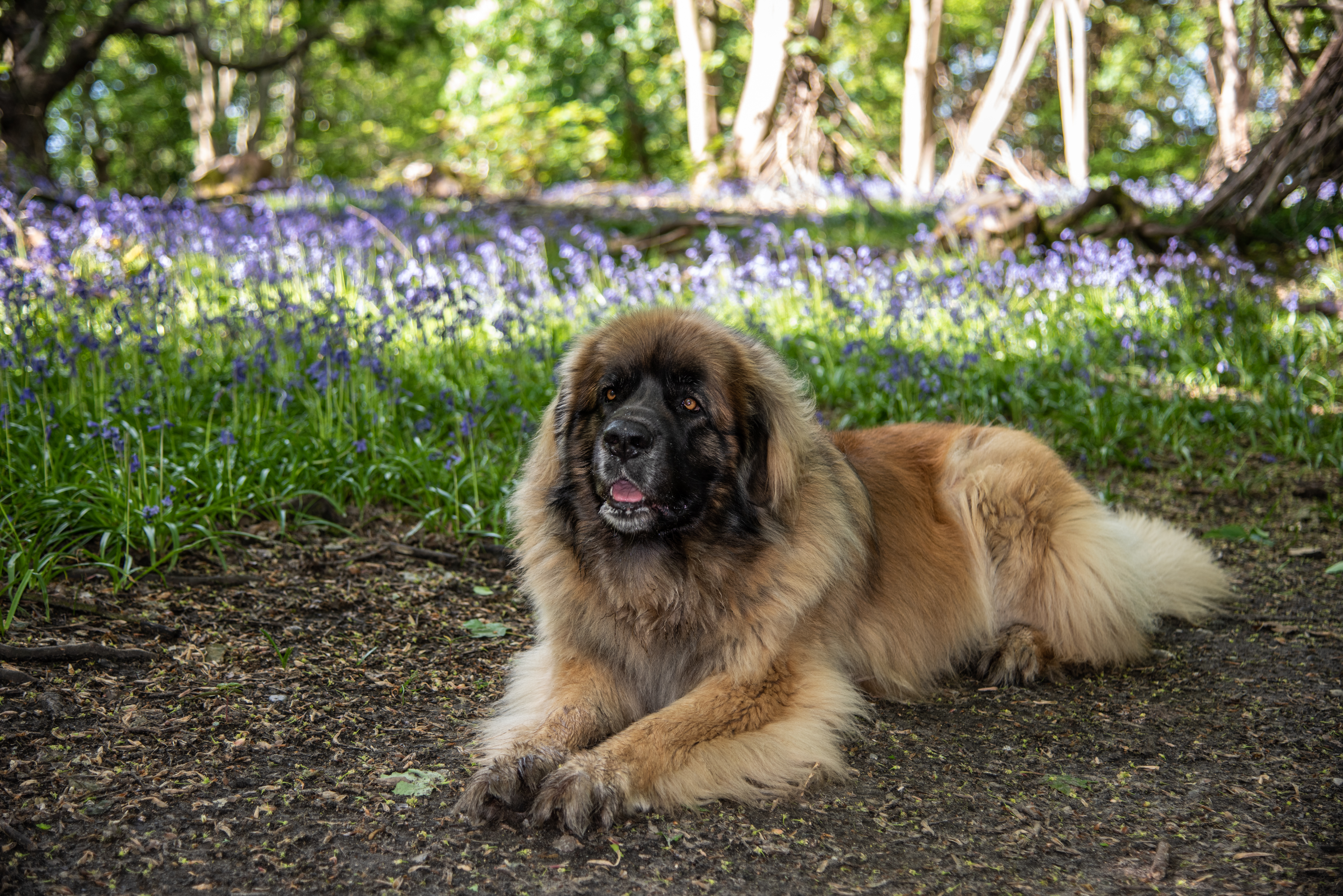
Its been almost ten years since we returned from South America. Ten years of living and working in London, moving home, sharing our lives with our amazing dog, Silke, who sadly passed earlier this year.
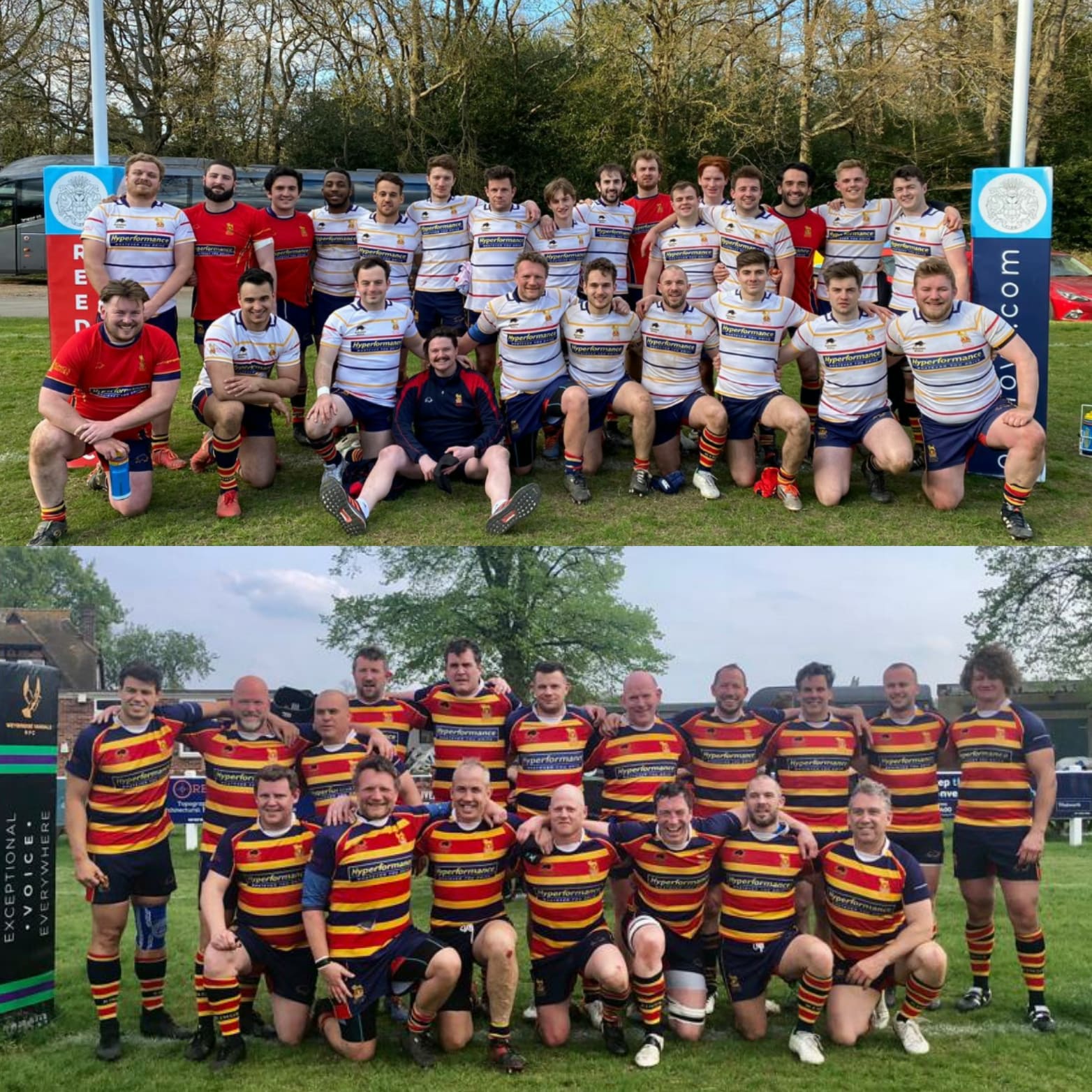
We are ten years older, maybe a bit wiser and a bit more battered. I (finally, Sarah would say) retired from rugby at the end of the last season on a high as my team managed to come second in our division, unfortunately just losing in the playoff final and better still, my vets team triumphed once again going undefeated. (I’ll leave the reader to guess which is the vets team).
It feels like a time of change for us and we have made the big decision to sell up and take some time out to travel again. We feel that our time living in the heart of London has come to an end and that when we eventually return home it will be to somewhere with a lot more green space. If the horrors of covid have taught us anything, it is that those ties to the city for work aren’t as important as they once were.
We have now left our jobs, packed up our home, tidied up any loose ends and are ready to head out into the world again for our next adventure.
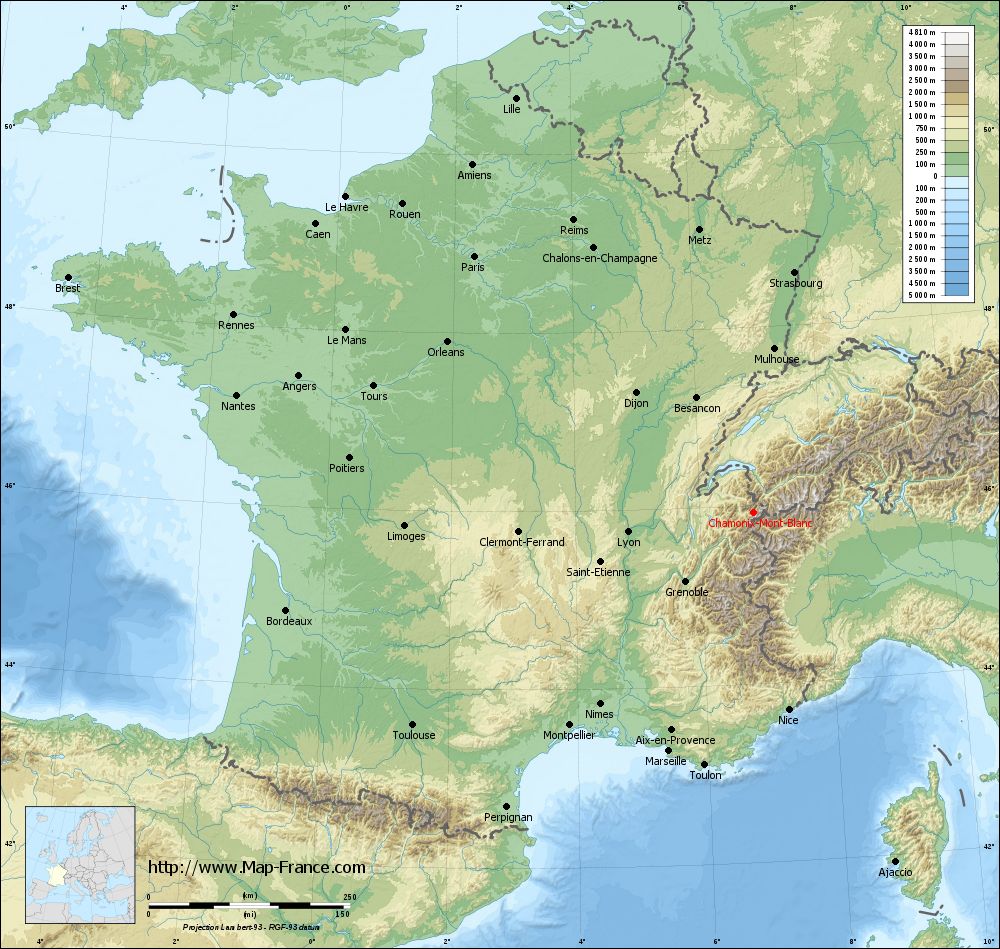
Our plans are, for the time-being, mainly focussed around Europe and we started by heading to France where we have arranged an apartment in Chamonix in the Alps for two months. With the car full to bursting (we have definitely packed too much!) and the channel tunnel booked, we headed for Folkstone, the start of our drive to Chamonix, which is right on the Swiss border about an hour’s drive from Geneva.
Rio de Janeiro
Our journey from Montevideo wasn’t the shortest route as we had to first fly across the Rio de Plata to Buenos Aires and from there we flew up to Rio.

We arrived late in Rio at around 10pm so we jumped straight in a cab to our hotel. As this was the last stop on our journey before heading home we had booked a decent hotel right on Copacabana beach to go out with a bang. Hotels in Rio are ridiculously expensive, even hostels are charging over 100 USD per night but we ponied up for a last treat.
Hotel Bar and Pool
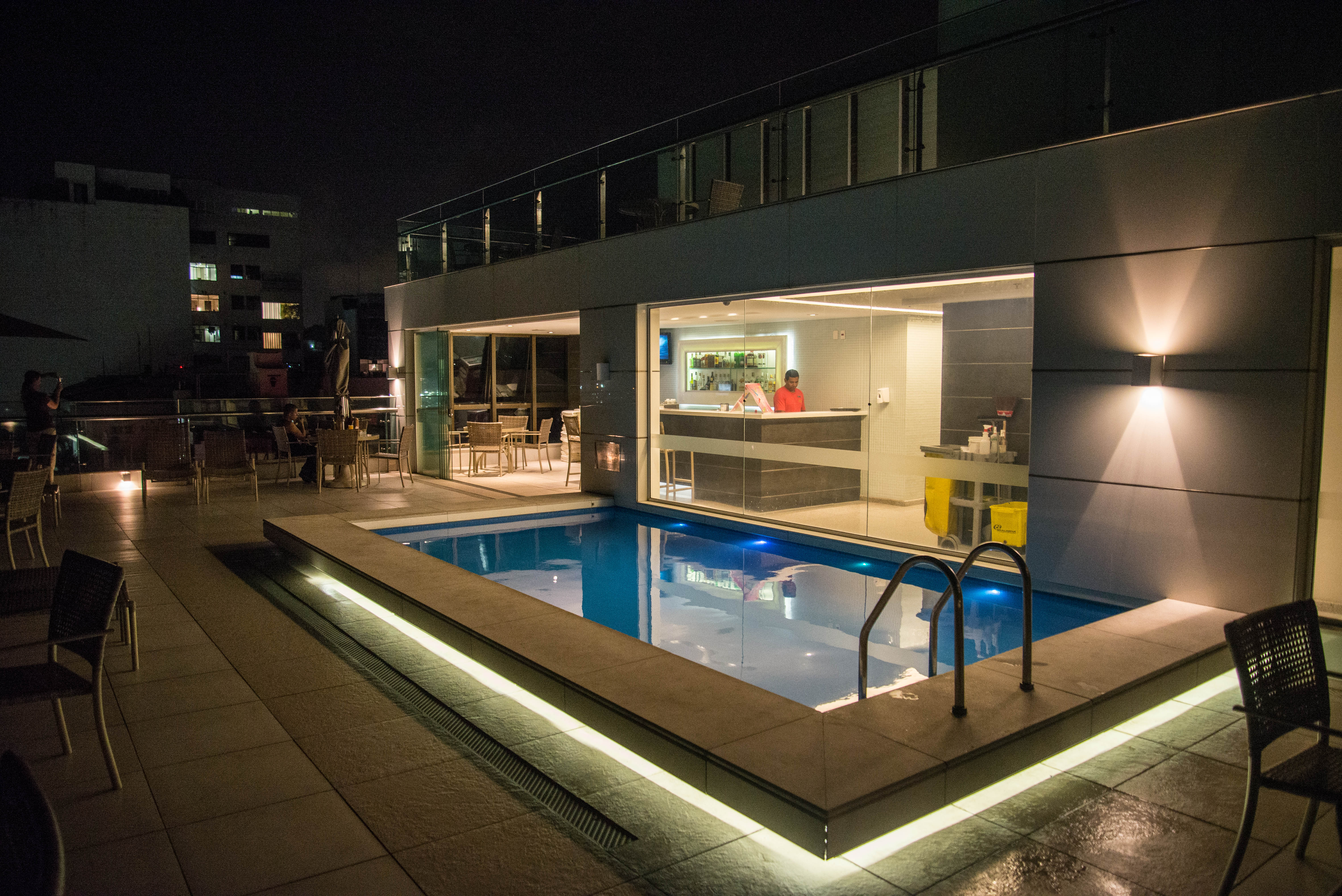
When we visited Copacabana in Bolivia we had sung the Barry Manilow song to ourselves even though that time it was misplaced. Now it was bang on the money and we couldn’t help humming to ourselves as we had a late night beer on the rooftop bar of our hotel looking out over the amazingly lit up beach.

We only had 4 nights in Rio and 3 full days to do as much exploring as possible. This meant that we had to plan our time to maximise what we would see and do.
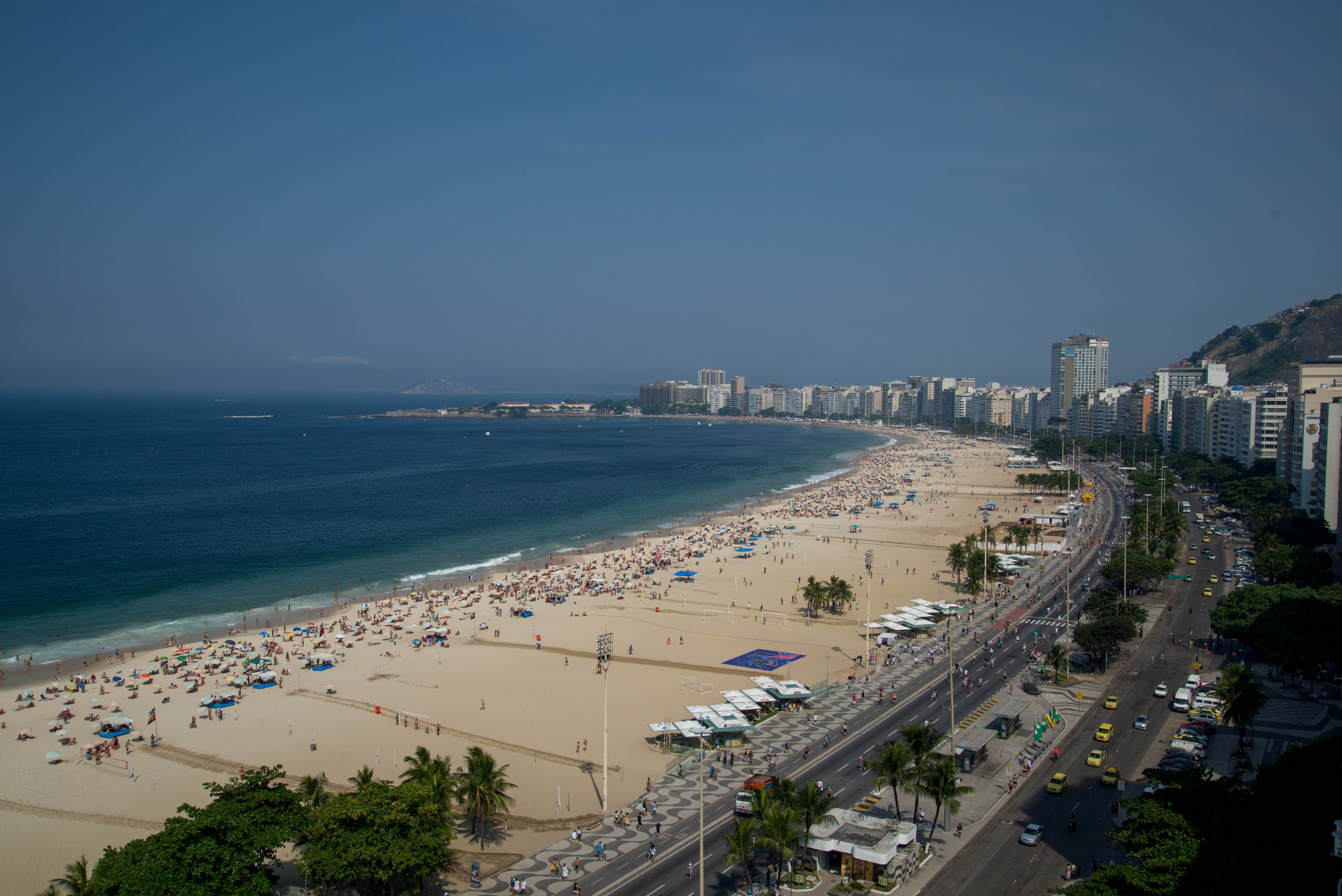
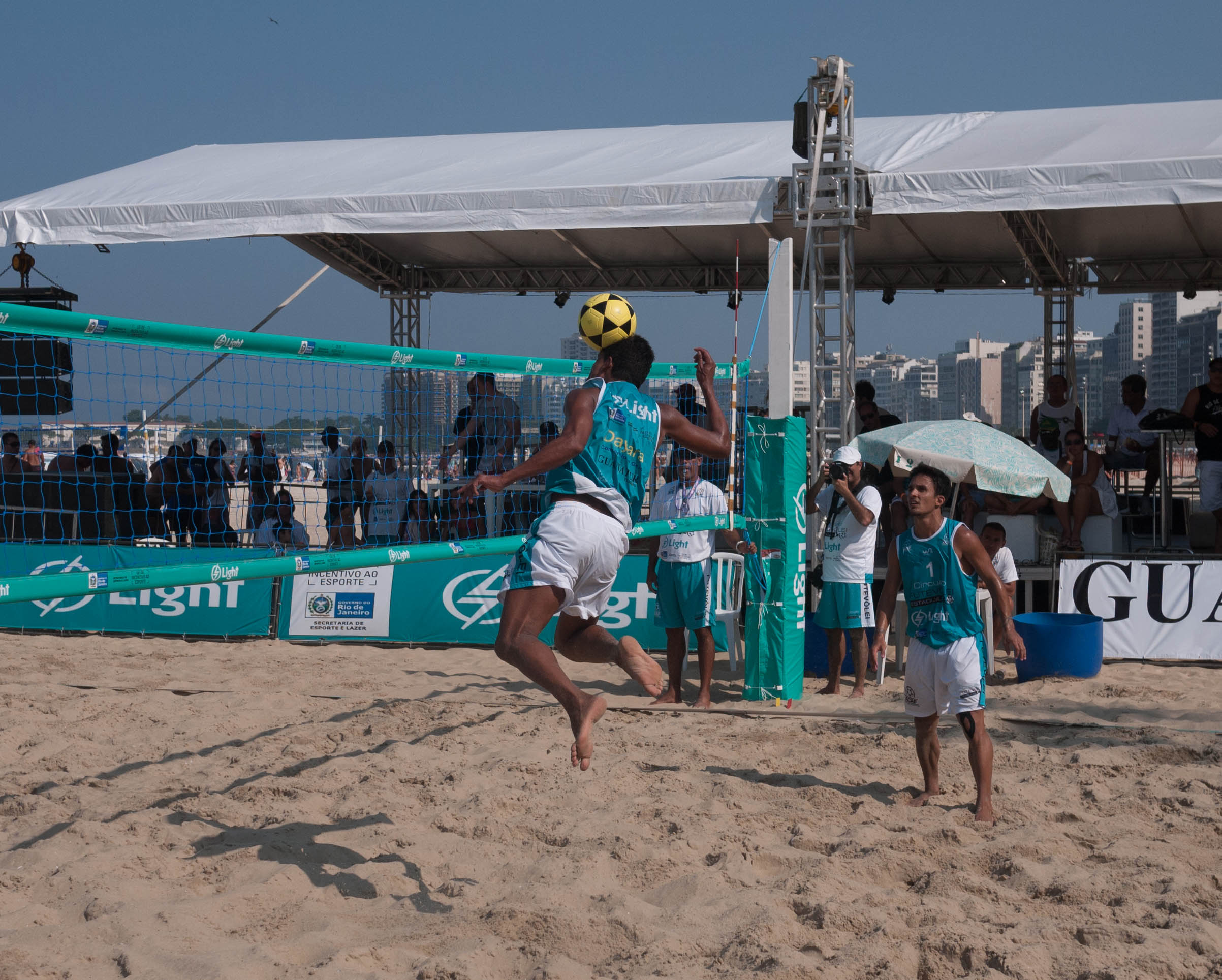
Our first full day was a Sunday and that meant that it was time to explore the beaches. At the weekend the Rio natives all hit the beaches and they are absolutely packed. This is Rio as you imagine it. There was a whole load of sport going on, all zoned in different areas. We saw football, volleyball and footvolley (volleyball played by kicking and heading the ball).
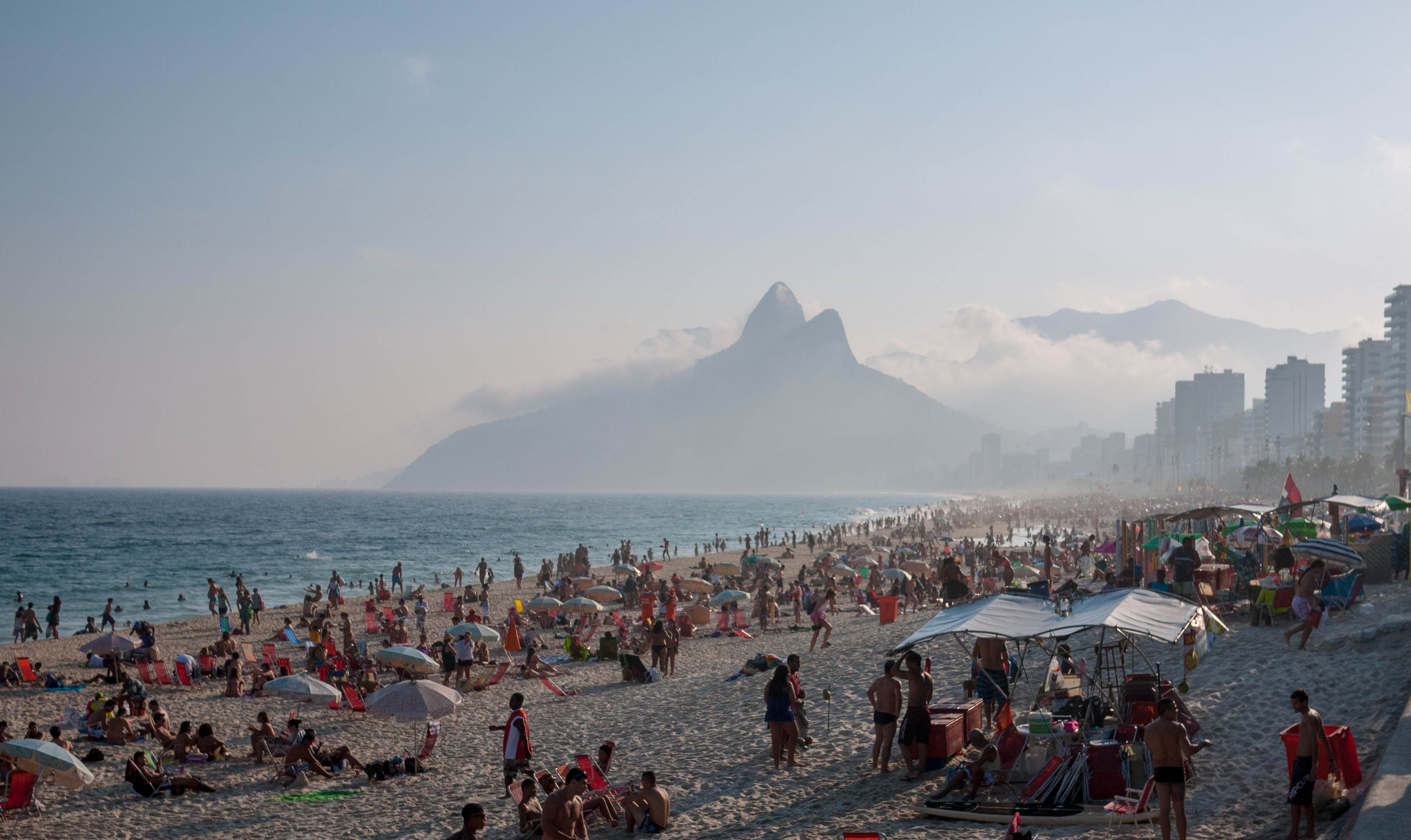
We walked the length of Copacabana and up into Ipanema and Leblon. It’s a great environment with so much going on and plenty of beachside bars to refresh you on the way. Of course it helps that its hot and the sun is shining.
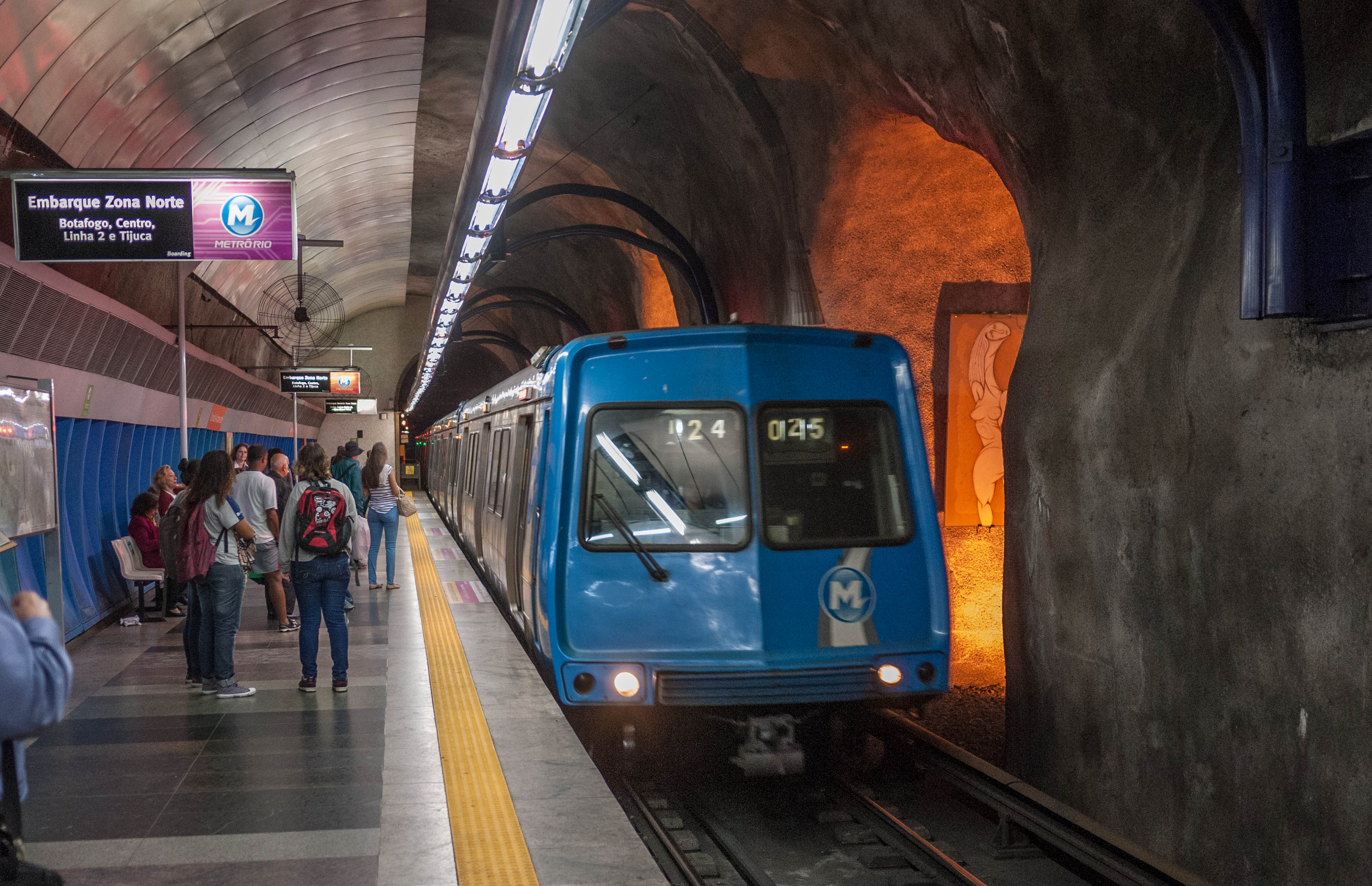
Day two of our Rio experience we caught the subway into the central business district.
Rio is a big city and the central area is very similar to a European city. It is definitely very busy with lots of traffic and lots of people going about their daily lives.
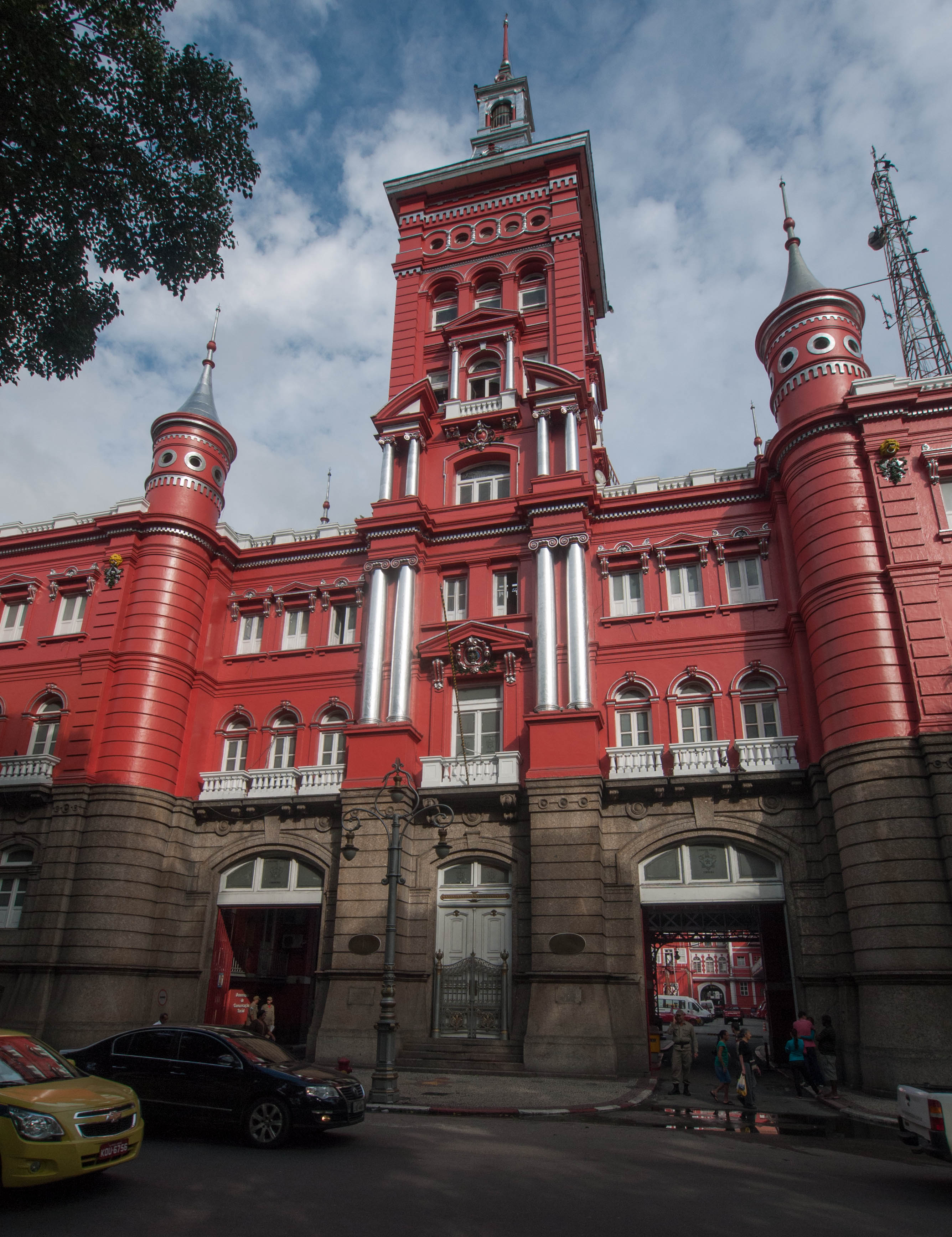
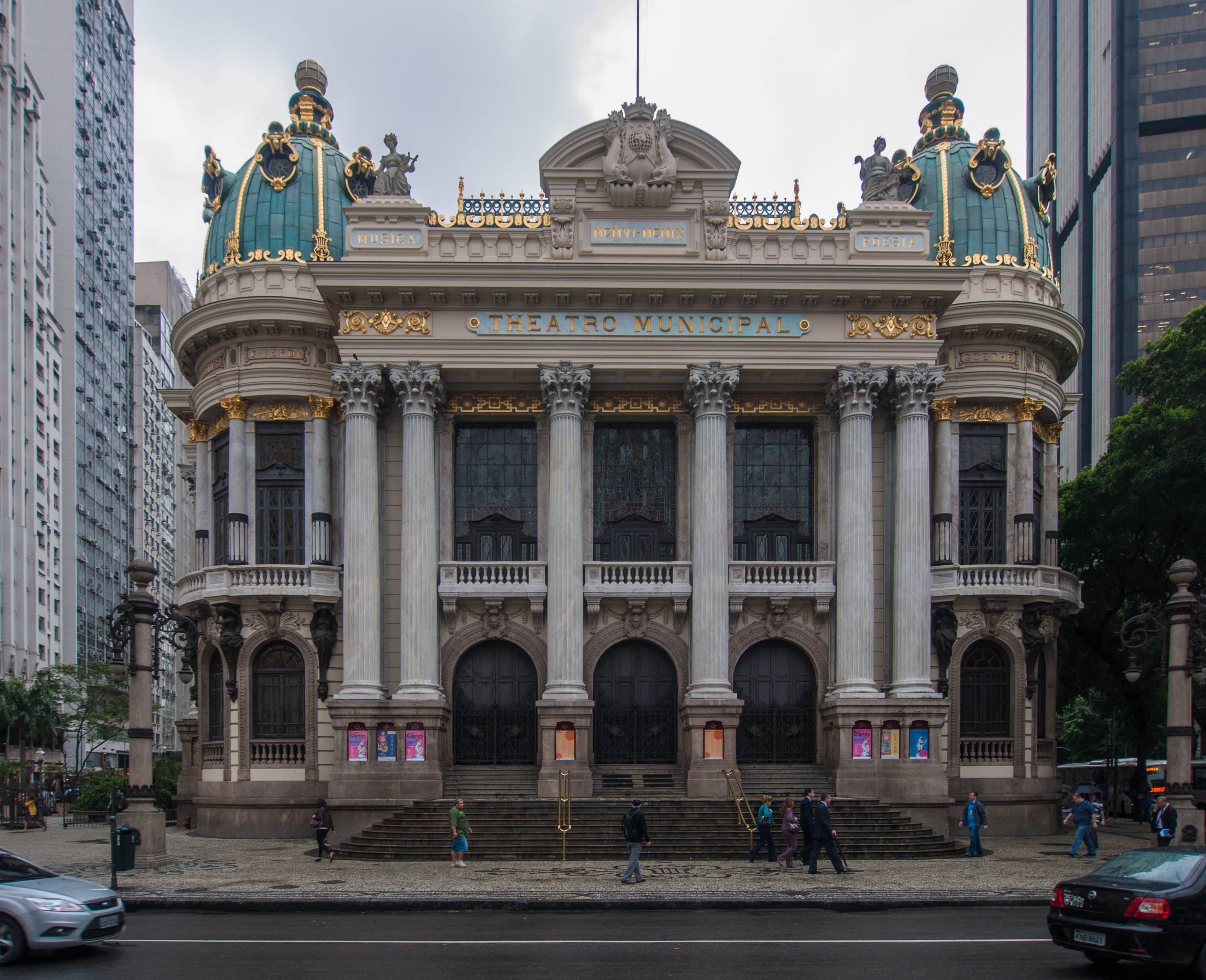
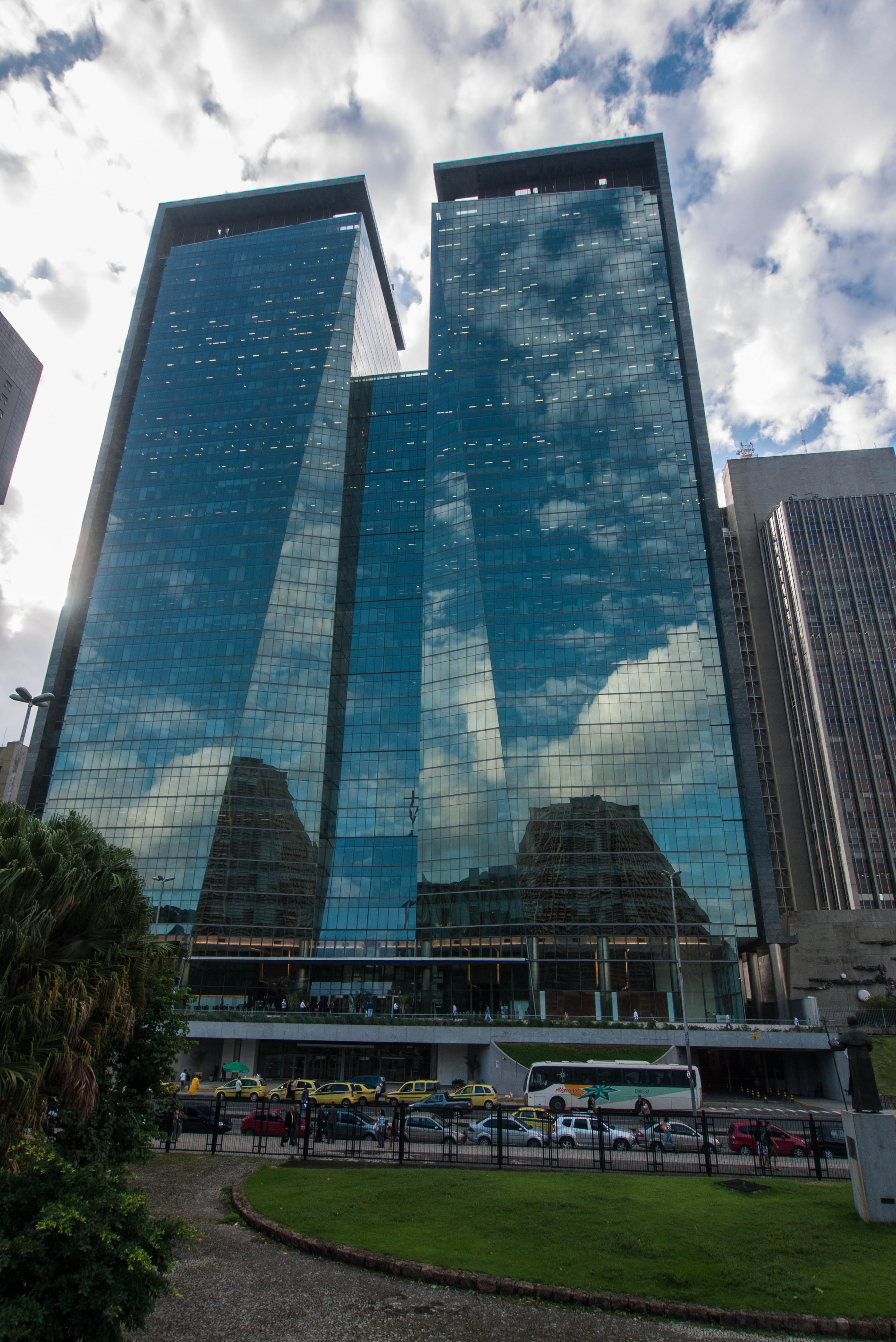
We enjoyed walking around checking out the many interesting buildings and having lunch in a city workers restaurant. After a full day walking around Rio we were knackered so really enjoyed going back to our lovely hotel room.
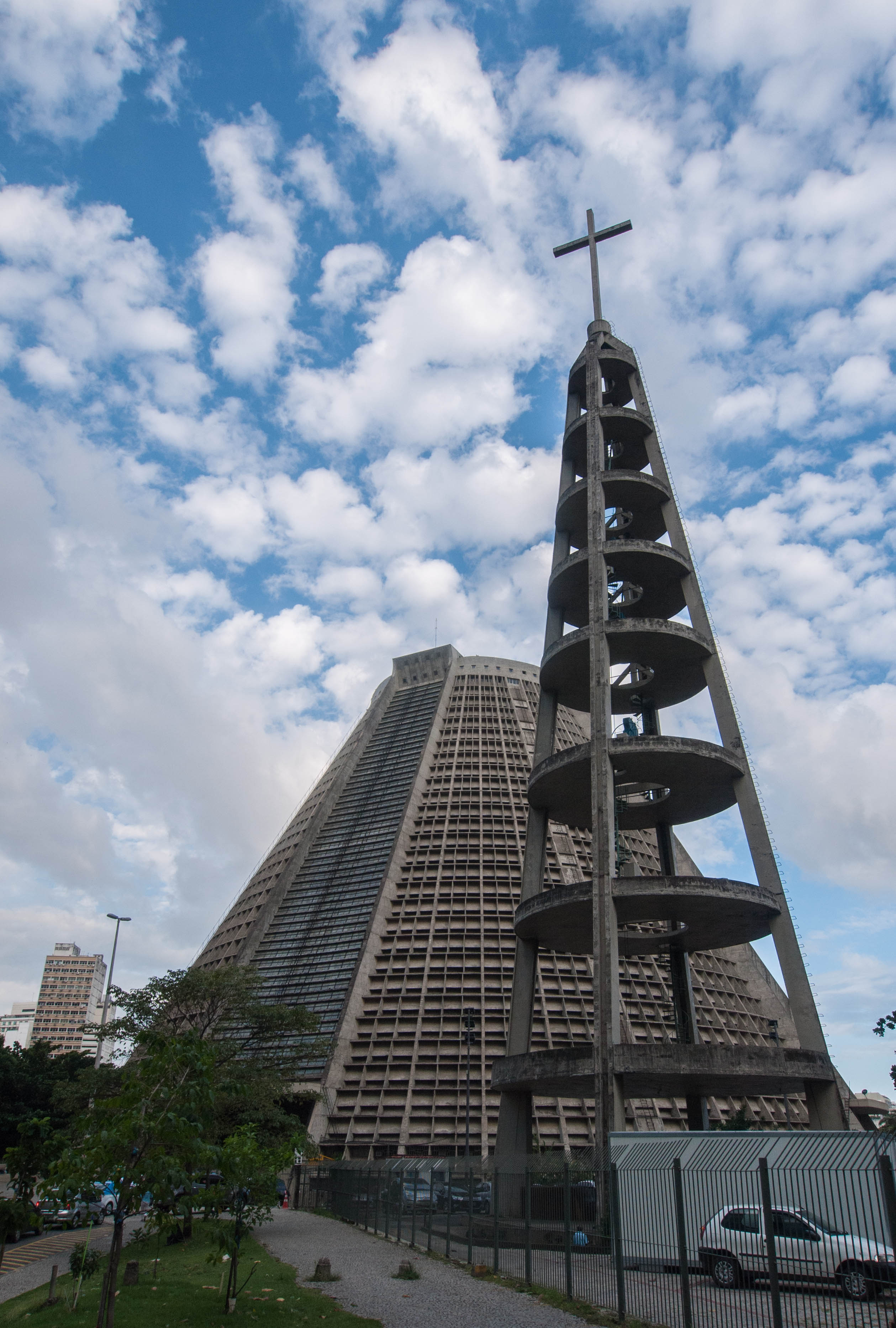
Rio Cathedral
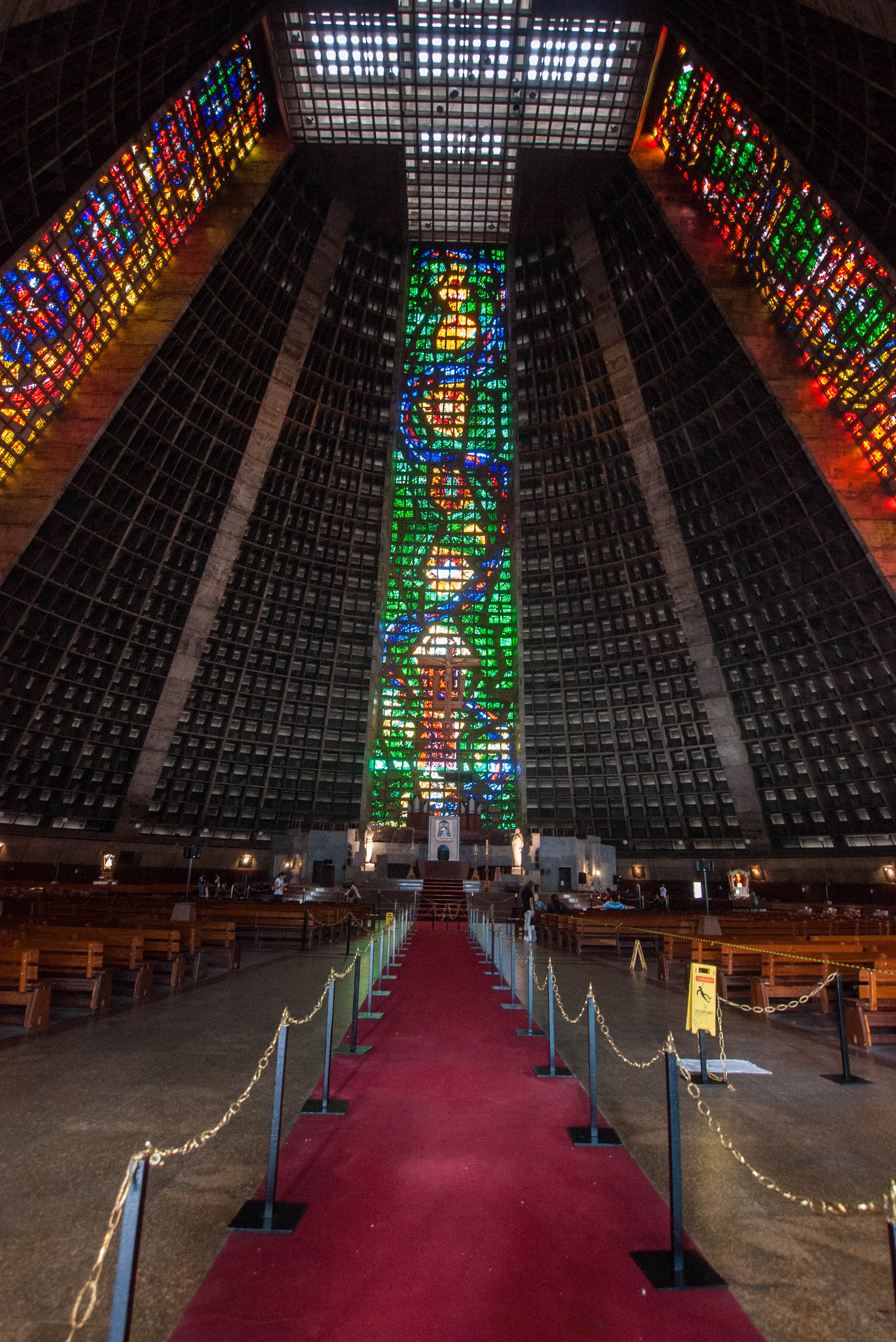
For our third day in Rio we had booked a tour to get us out to some of the slightly more difficult to get to places (well we were being a bit lazy and without the Beast we had lapsed from traveller mode into tourist mode but we also wanted to fit in as much as possible into our limited time). We got picked up early in the morning and headed off, through the appalling traffic, down the beaches to Sao Conrado beach. This is where hang gliders land having leapt off the platform 520m up at Pedra Bonita.
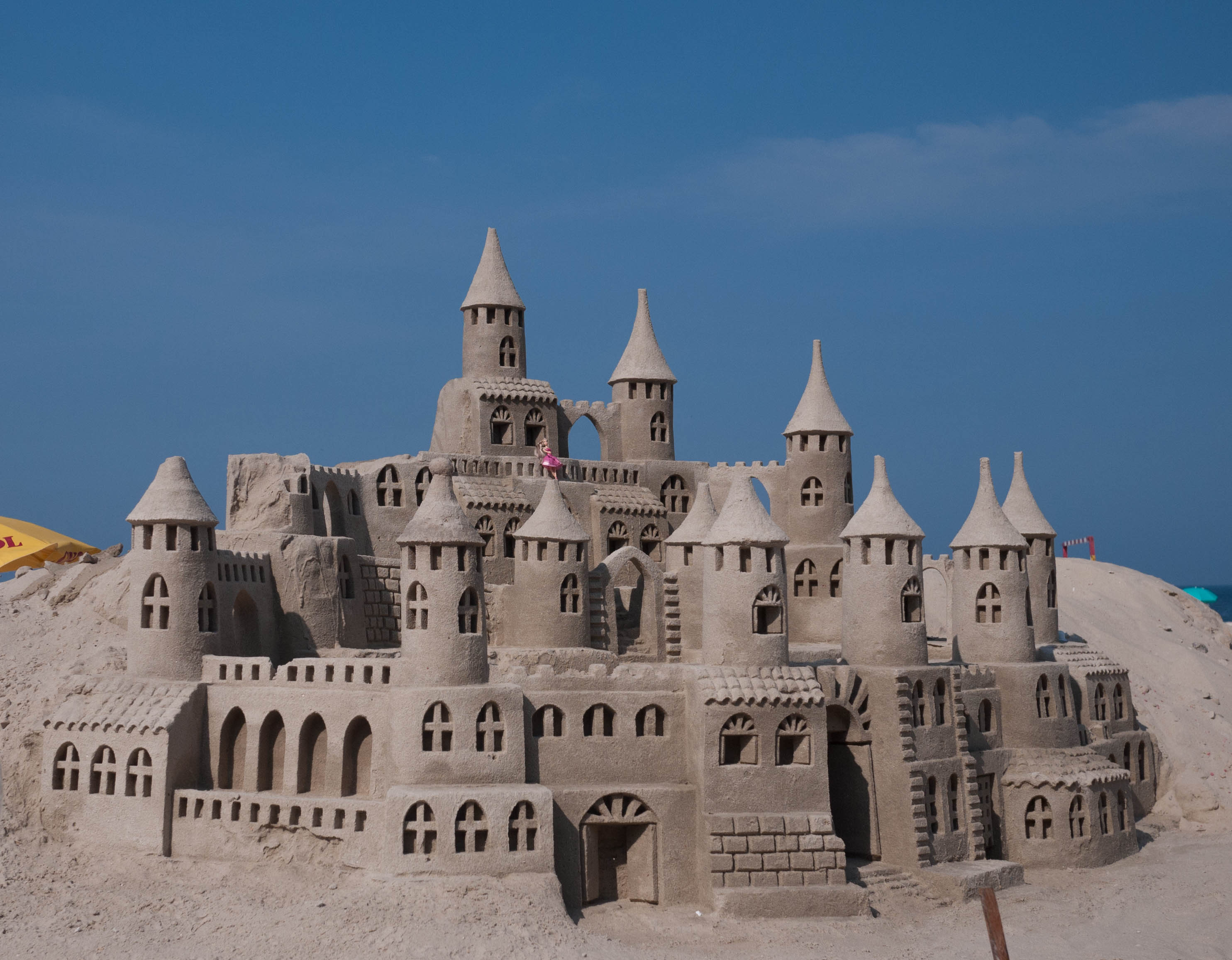
Sand Castle on Copacabana Beach
Our second stop was at the National Park of Tijuca Forest in the mountains above the city. As you drive up the winding roads the temperature noticeably drops and there is a cool freshness which is much appreciated. This has led to a number of exclusive neighbourhoods being in this area. In the forest we walked to a waterfall through the thick green woods. This would be a great place to spend a whole day cycling or hiking but on the tourist trail and with limited time it wasn’t long before we were herded back into the minibus and swept off on our whistle stop tour.
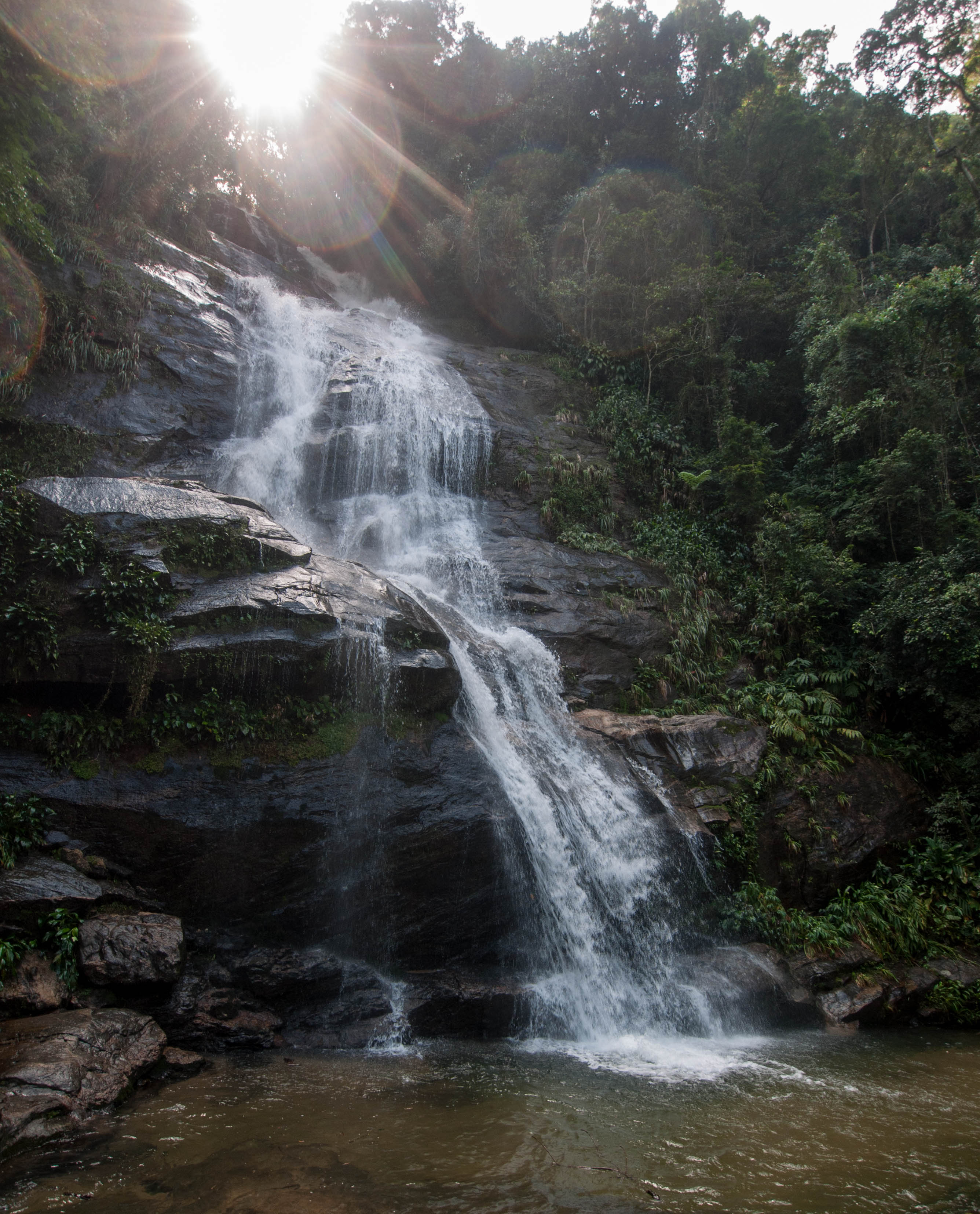
Waterfall In Rio Park
The highlight of the tour was the trip up to the top of Corcovado mountain (700m) where the 30m statue of Christ the Redeemer is situated. It is not possible to drive all the way to the top so we were transferred from one minibus onto another to take us to the small car park just below the base of the statue.
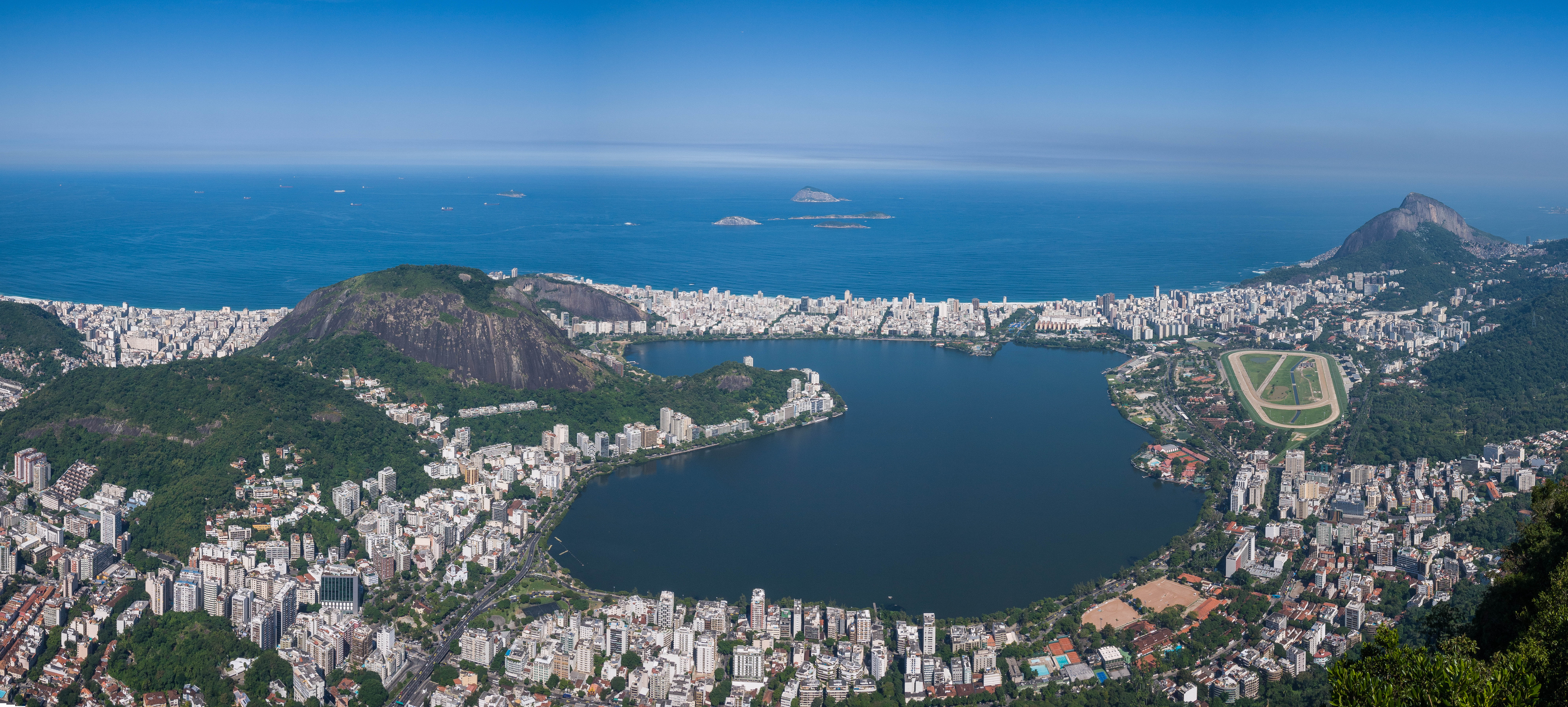
From here it’s a short walk up some stairs (or a lift ride) to the viewing platform at the foot of the statue. The view of the city is fantastic (despite being hazy). The only downside is the hordes of tourists – mostly trying to get pictures of themselves with Christ The Redeemer in the same pose.
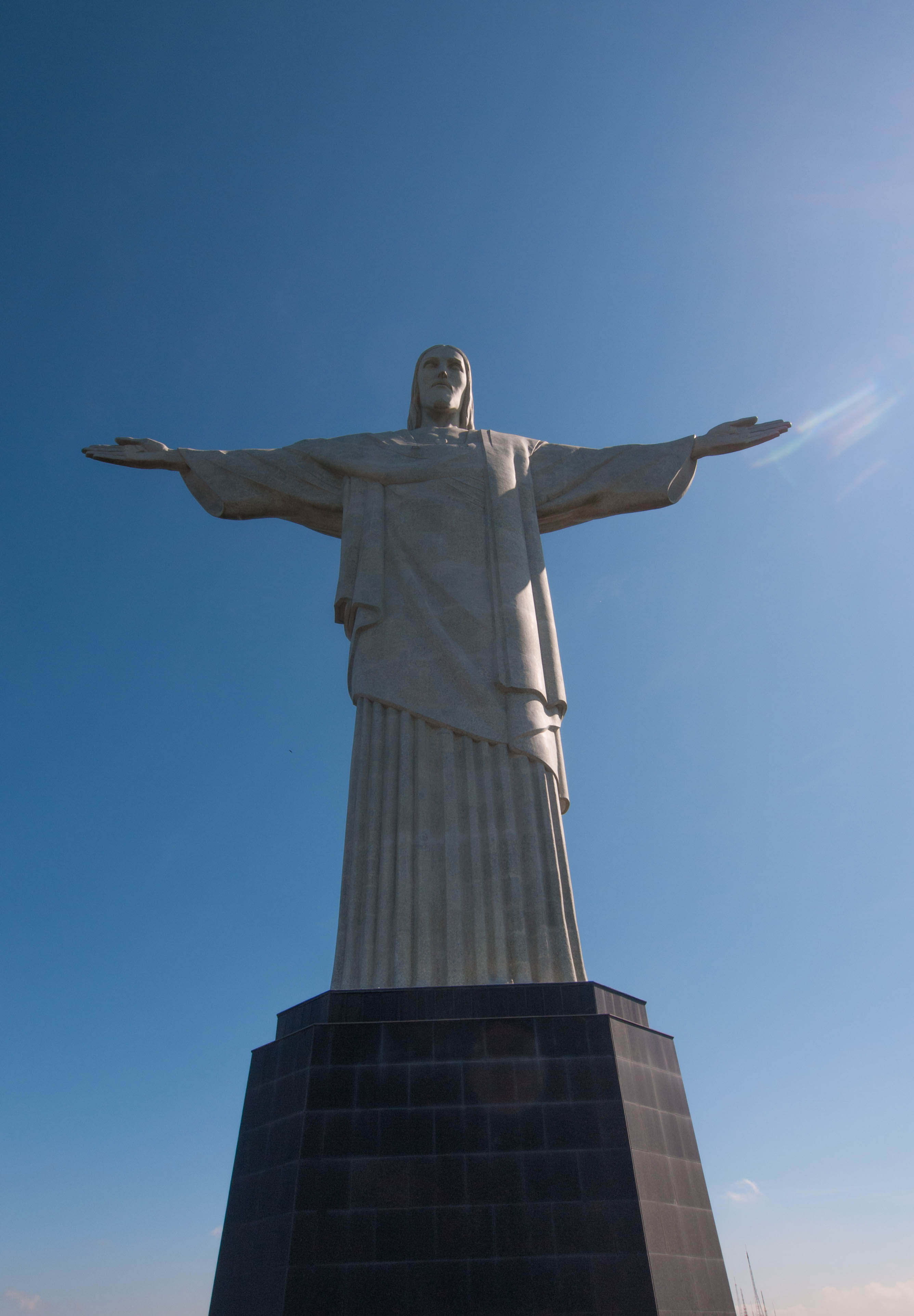
Christ the Redeemer
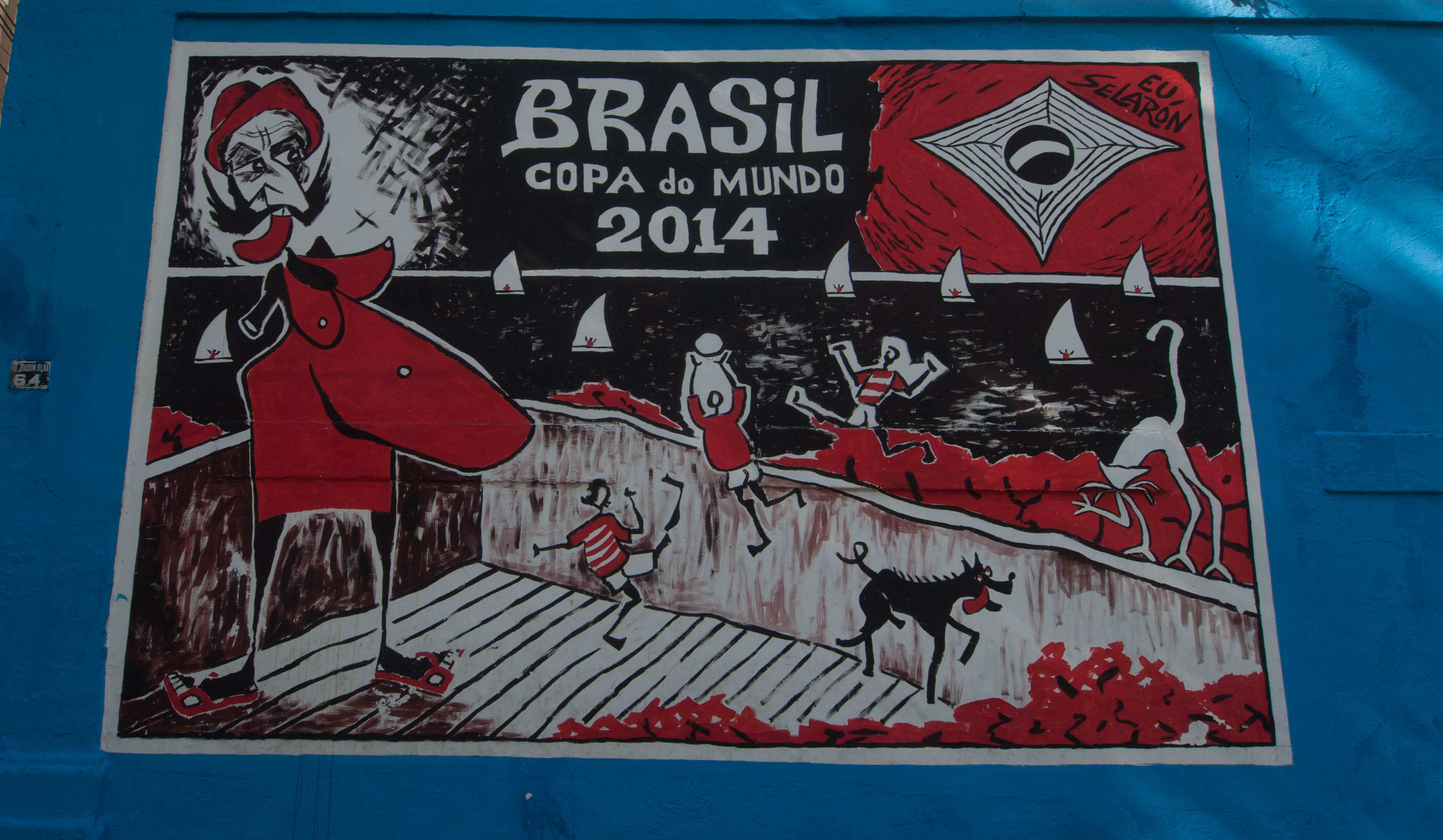
After coming down from the top of the Corcovado mountain our tour continued into the Lapa district which is just above the CBD. This is a bohemian neighbourhood (slightly dodgy in parts) with interesting café’s and art shops and famous for the Selaron stairs, otherwise known as the Lapa Steps. These were built by Jorge Selaron starting in 1990 and finally finishing at his death in 2013. He covered the stairs in hand painted tiles many depicting a pregnant African woman whose identity he never revealed.
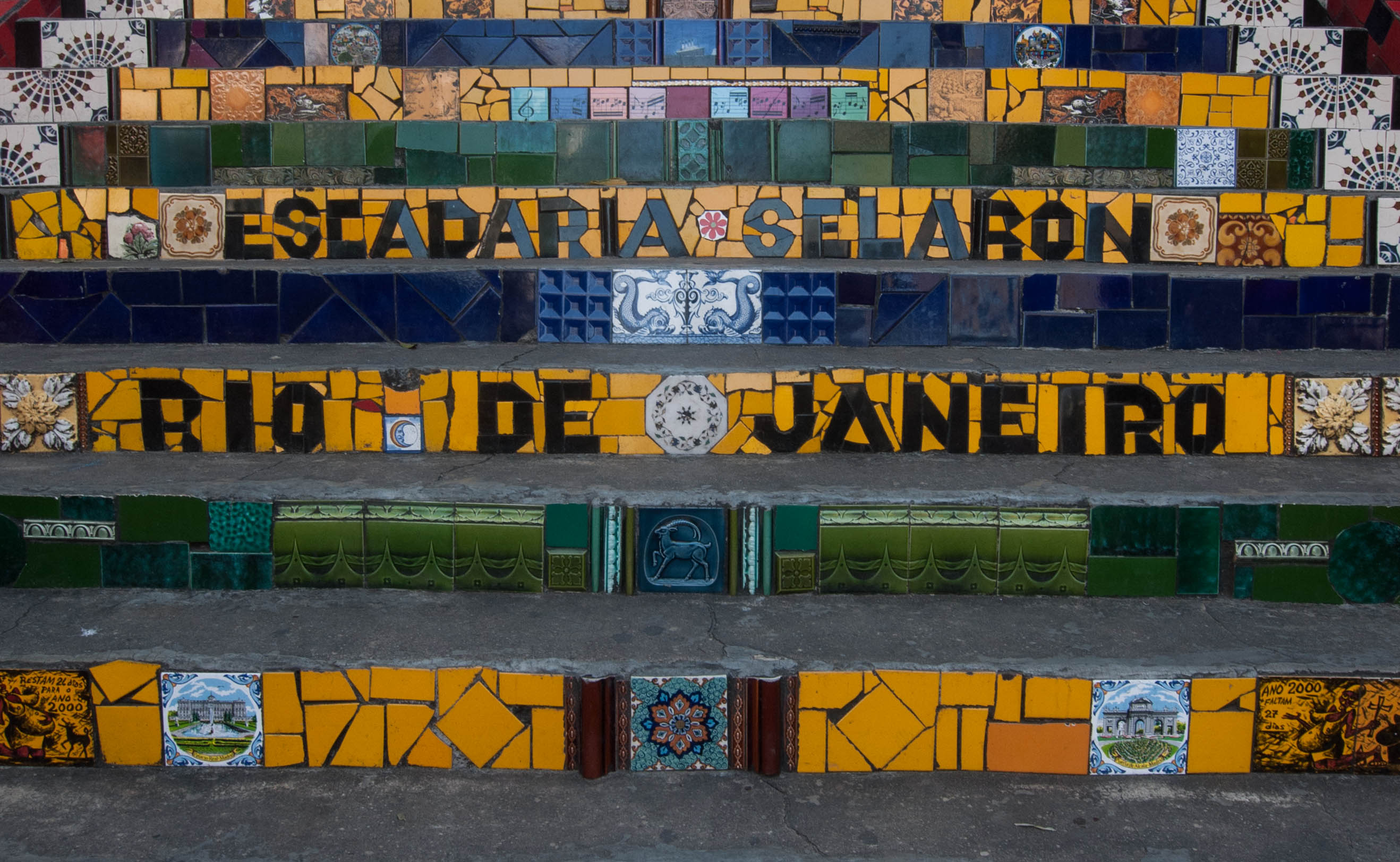
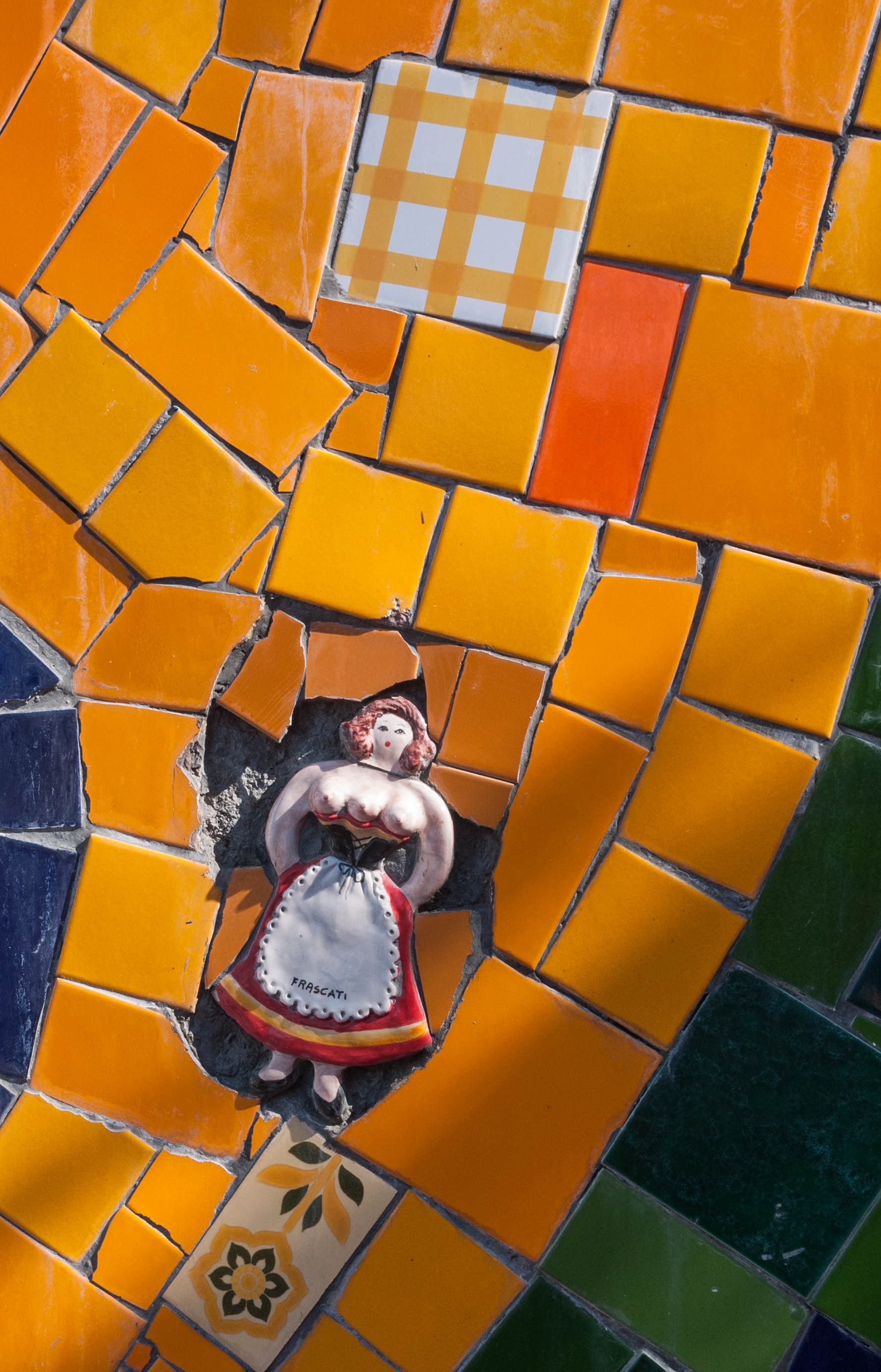
After stopping for a late lunch in a local café at the base of the stairs our tour finished by dropping us off at the base of the Sugarloaf mountain which it is possible to ascend by way of a cable car to get stunning views of the city. The cable car is in two sections; the first goes to the 220m high Morro da Urca and the second to Pao de Acuar which is 396m high.
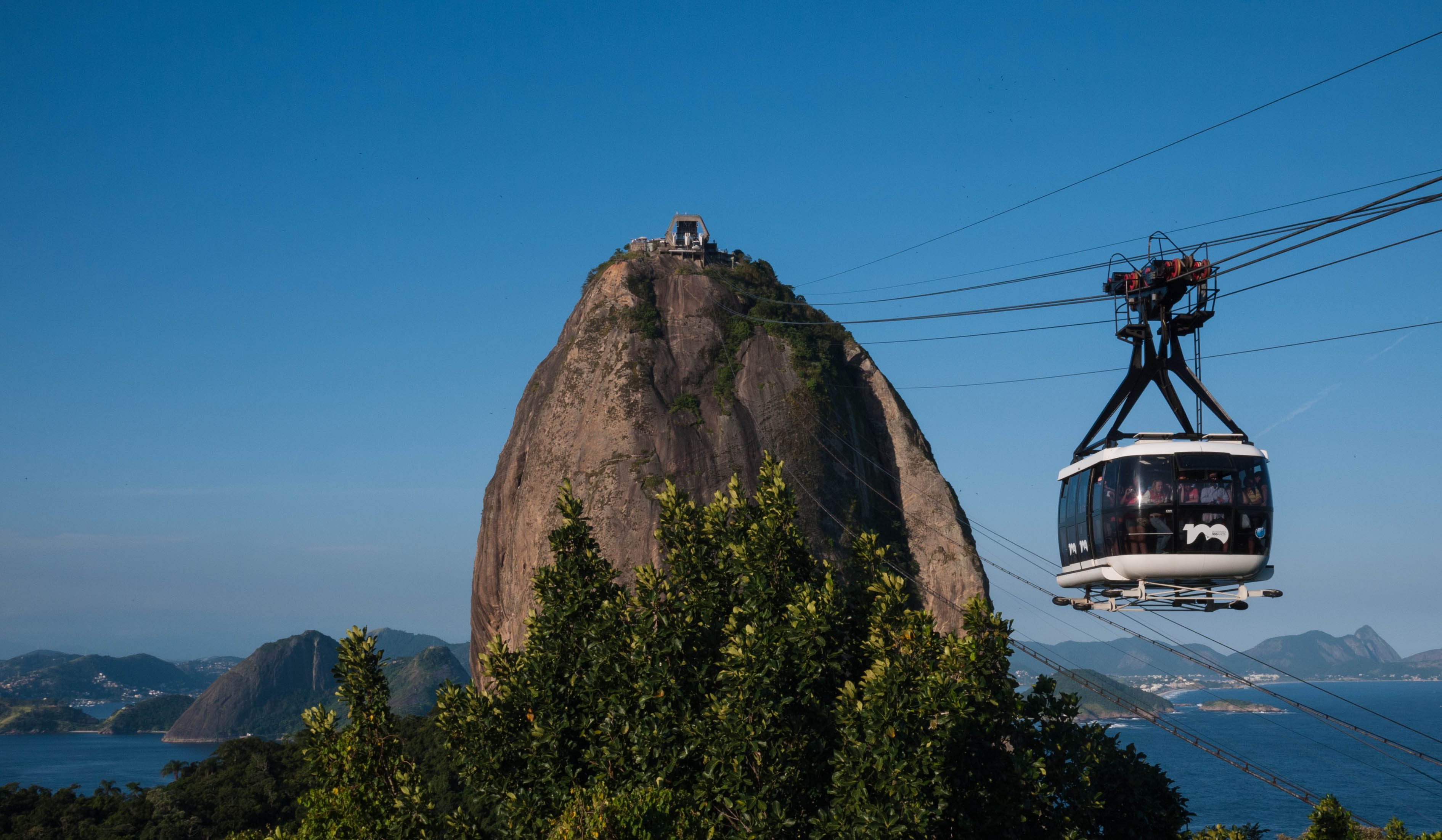
It was approaching sunset as we reached the top and we decided to stick around for the view but the Pao de Acuar became so crowded we went back down to the Morro da Urca for the sunset.
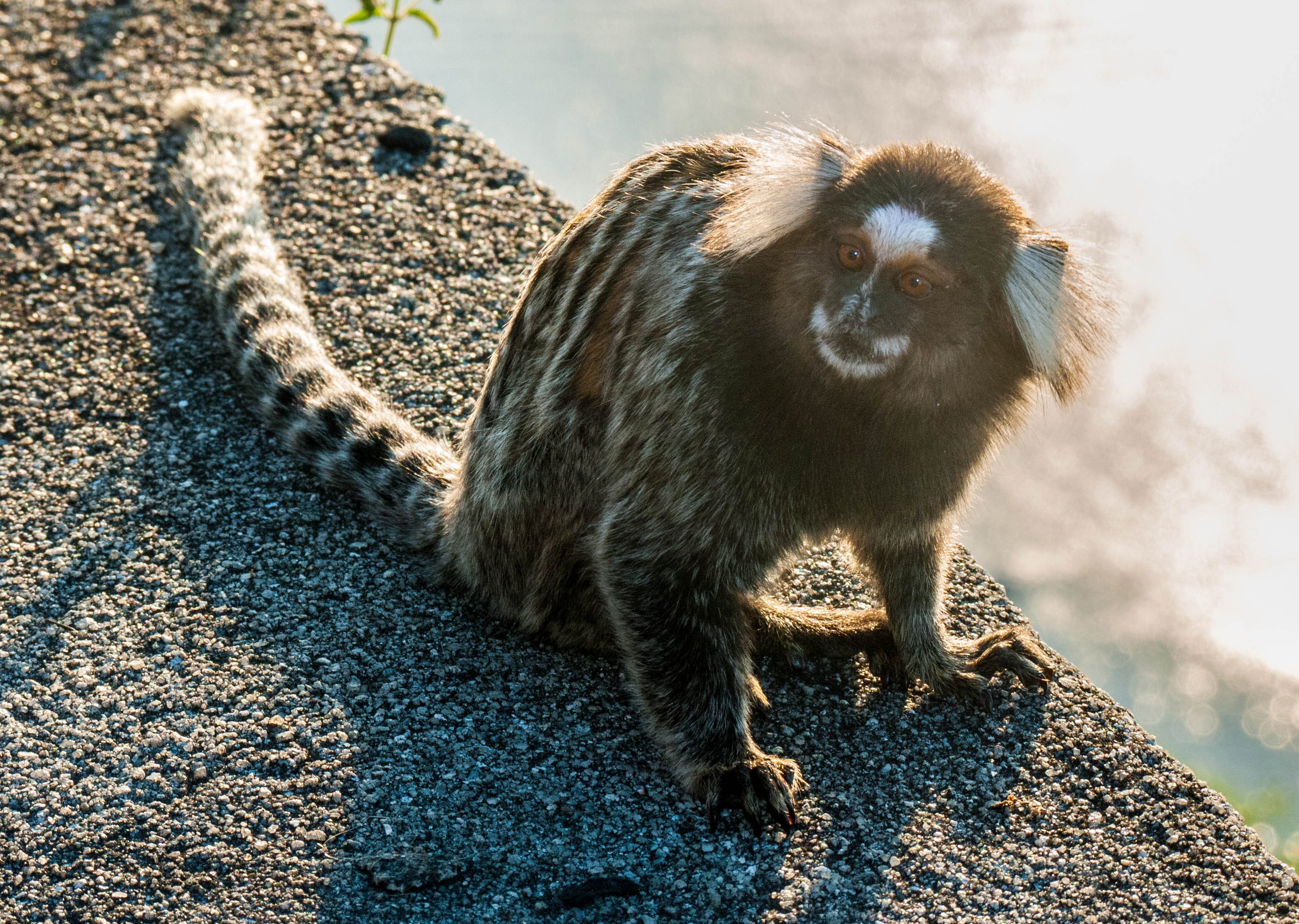
Marmoset
The other highlight was the many little marmosets that timidly appeared and just as quickly disappeared over the edge of the hilltop in an attempt to pick up any stray crumbs dropped by the masses.

Our last day in Rio we booked a tour to visit one the favelas, Rocinha, which is the largest favela in Rio. Favela is the Brasilian word for shanty town and this is how Rocinha started. These were originally lawless and run by drug cartels.
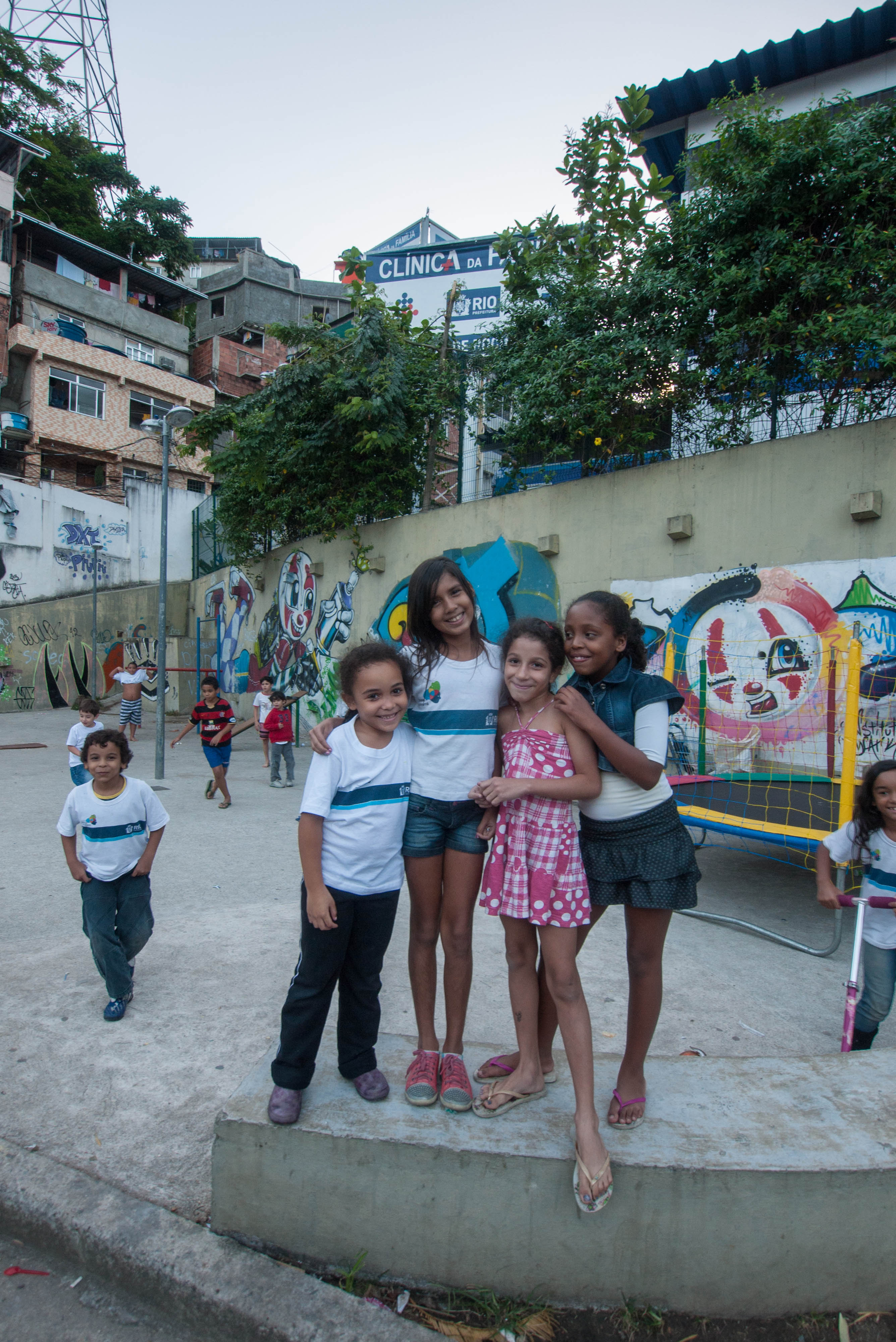
However the government has been pacifying the favelas one by one and investing money in them to bring in utilities and improve standards of living. Pacifying the favela means that the drug cartels have been run out and the police are now able to patrol inside.
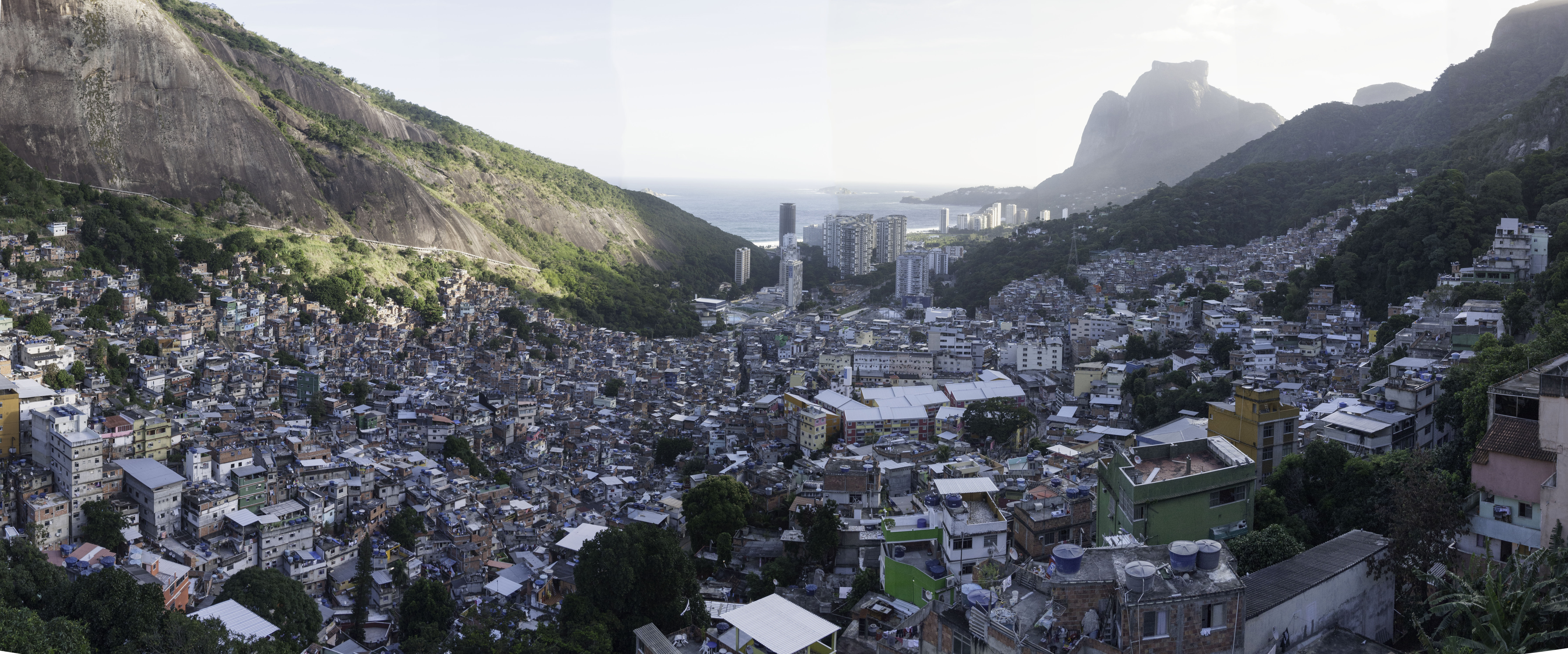
Rocinha Favela
We started our tour at the top of the Favela to get some fantastic views of the township as it stretches down the mountainside.

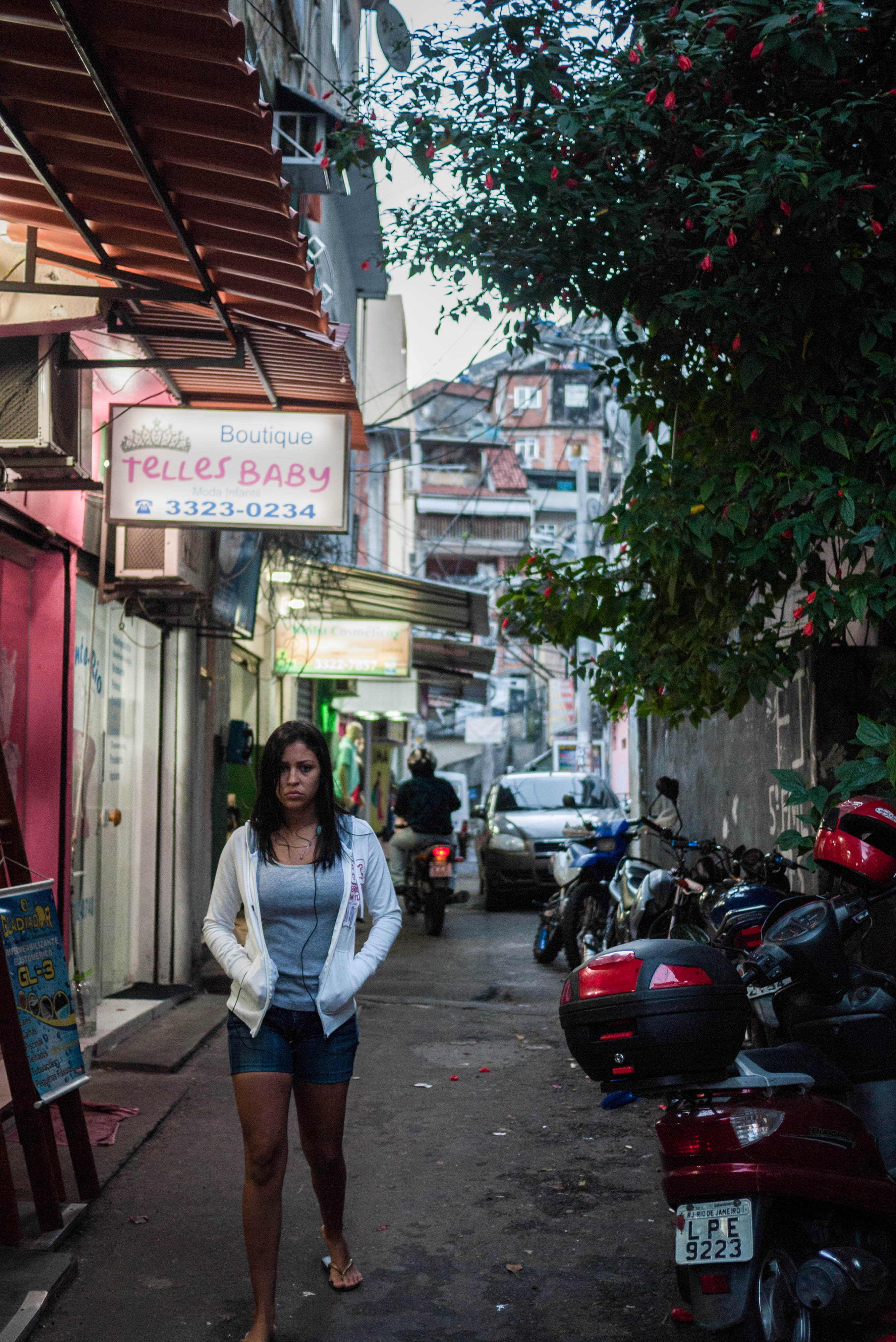
The tour involved walking down through tiny alleys through the Favela and down the mountainside. The alleys were a real maze however there is a main road that snakes its way through the Favela – mostly populated with motorbike taxis which seem the main way of getting around.
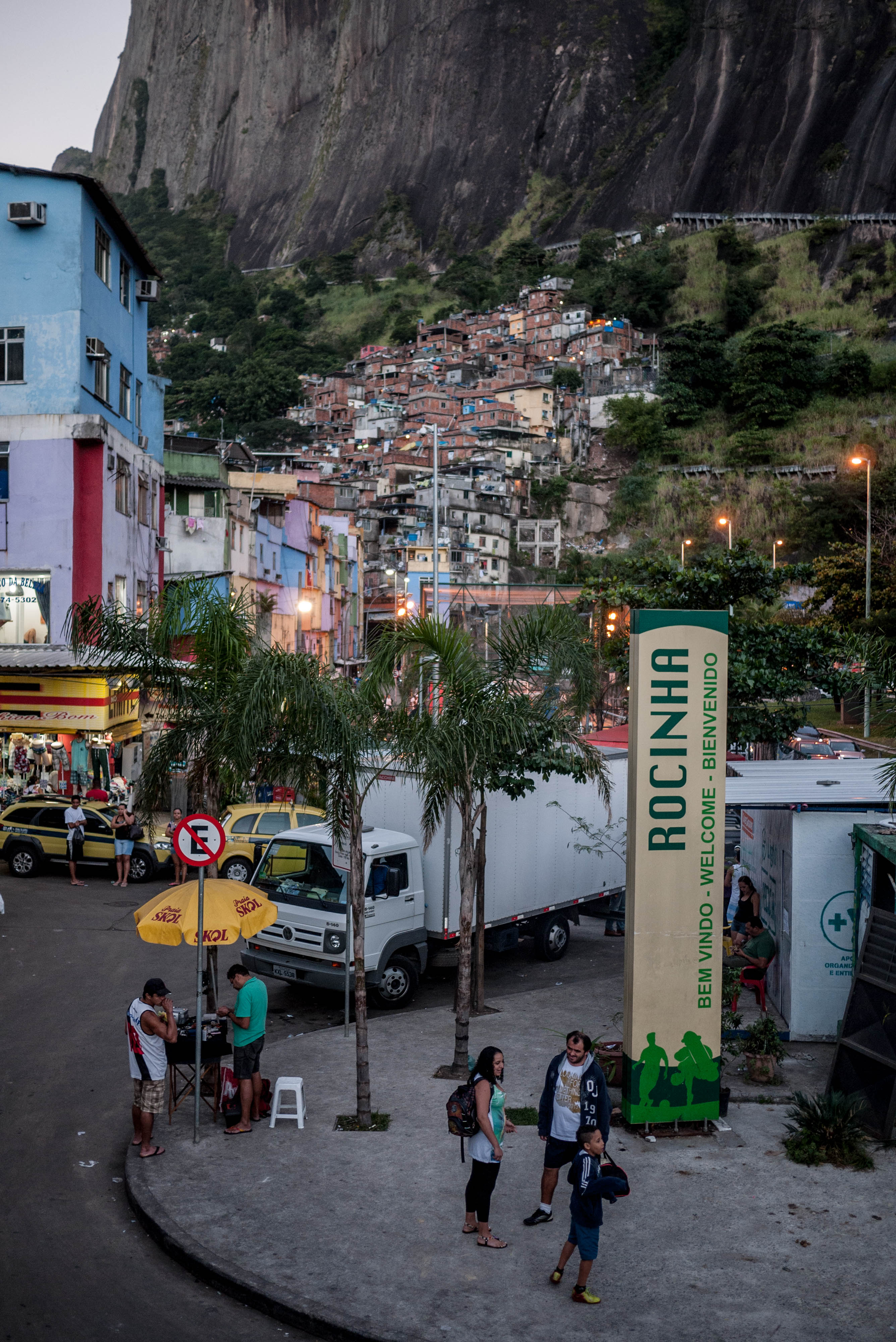
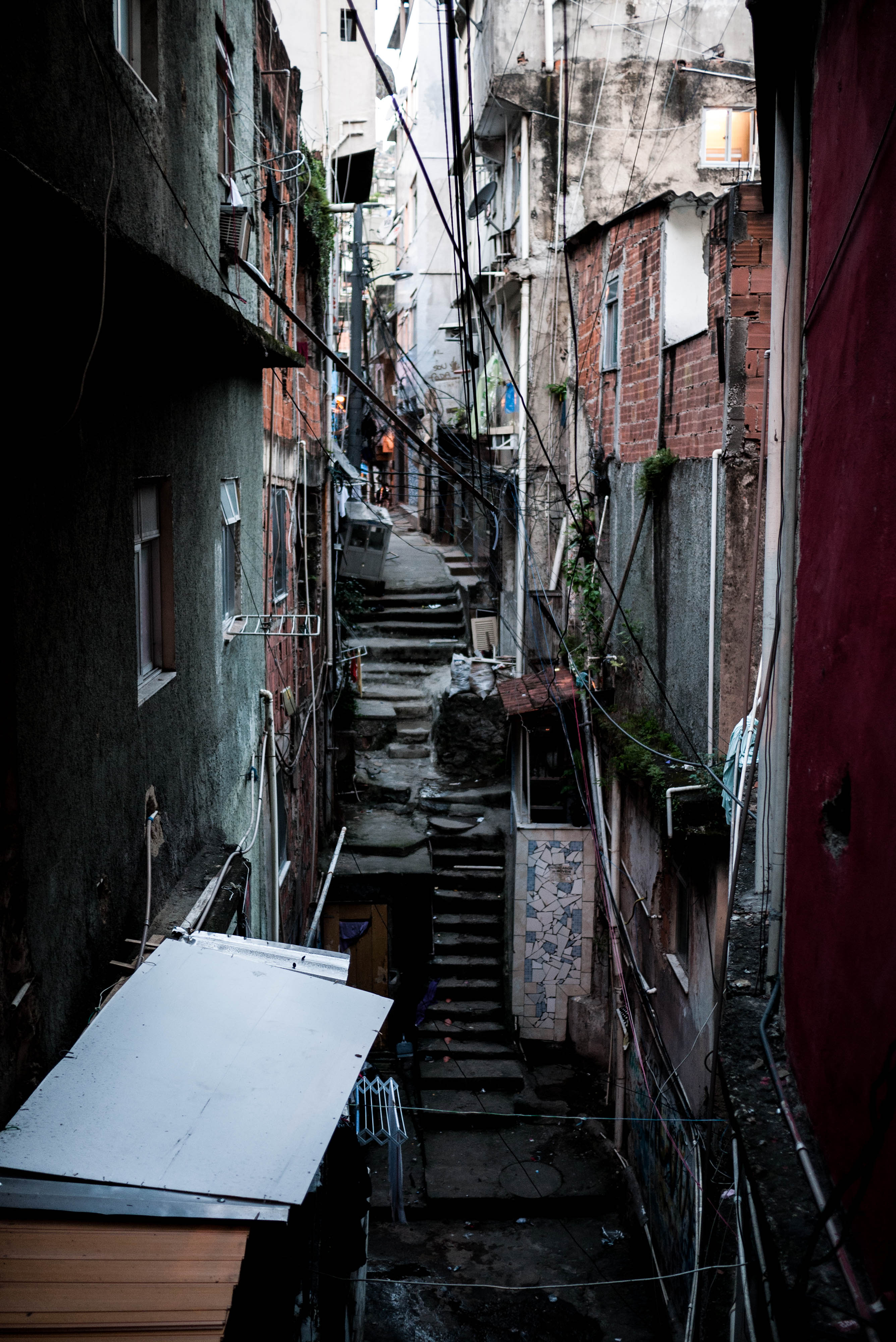
The thing that really struck us is that although the favela is not as nice as the rest of Rio, compared to the poorer countries in South and Central America the people living here are living quite well. We had seen far worse on our travels and were impressed by the government and the community’s drive to support, improve and development these neighbourhoods.
Having weaved our way down the hillside and reached the foot of the mountain the tour was over and we were dropped back at our hotel where we collected our bags and headed off to the airport – our time in Rio and indeed South America, was finally up.
Montevideo
Once we’d dropped off the Beast at the port we were free to enjoy Montevideo and we had a couple of nights booked in a central city hotel from which to explore the city.
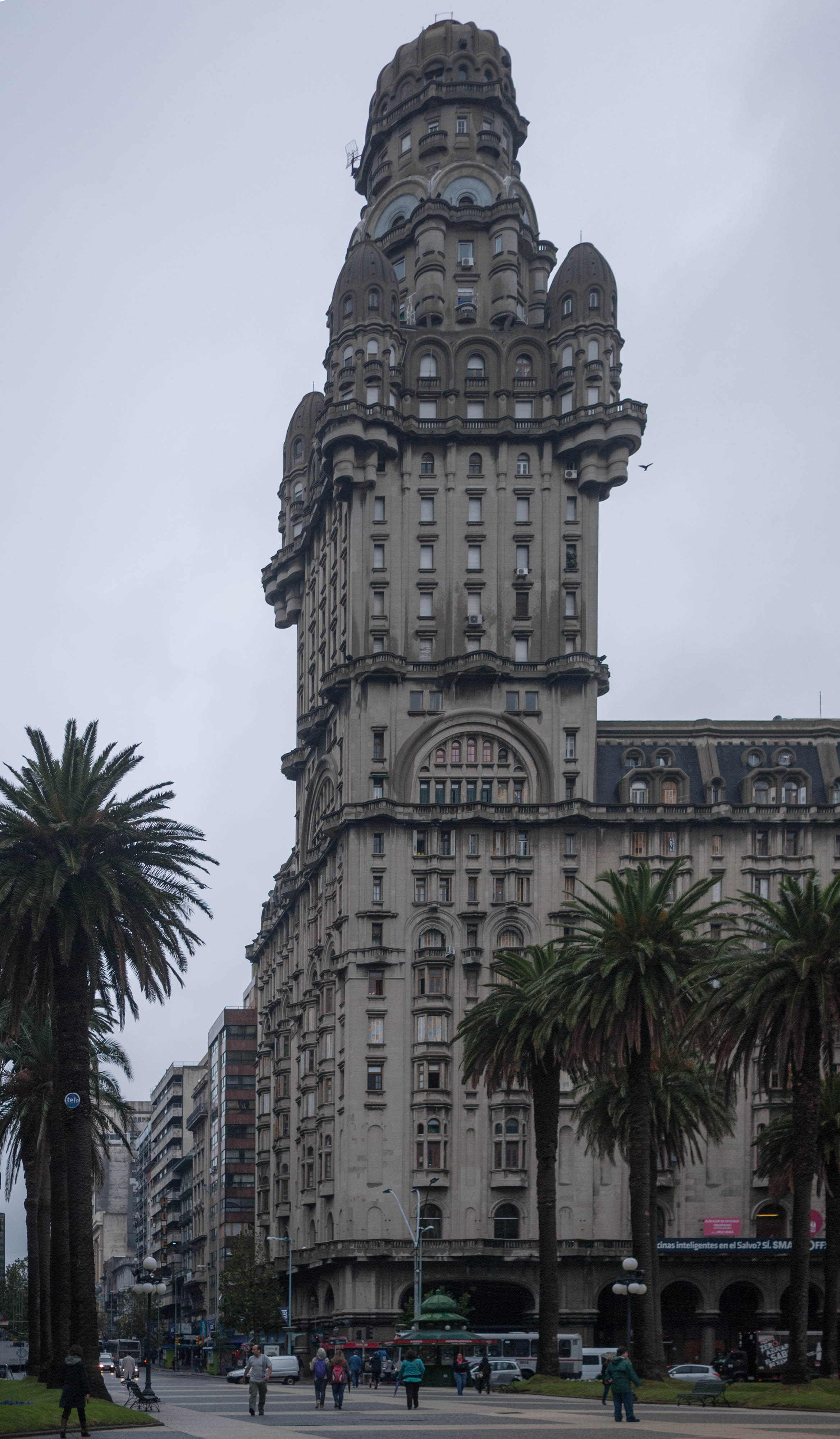
Our hotel was just round the corner from the central Independence square and this was where we started our exploration of the city. Montevideo doesn’t have the grandeur of its neighbour Buenos Aries, but that doesn’t mean that it is devoid of interest. There are grand buildings but they are interspersed between some hideous 1970’s eye sores.
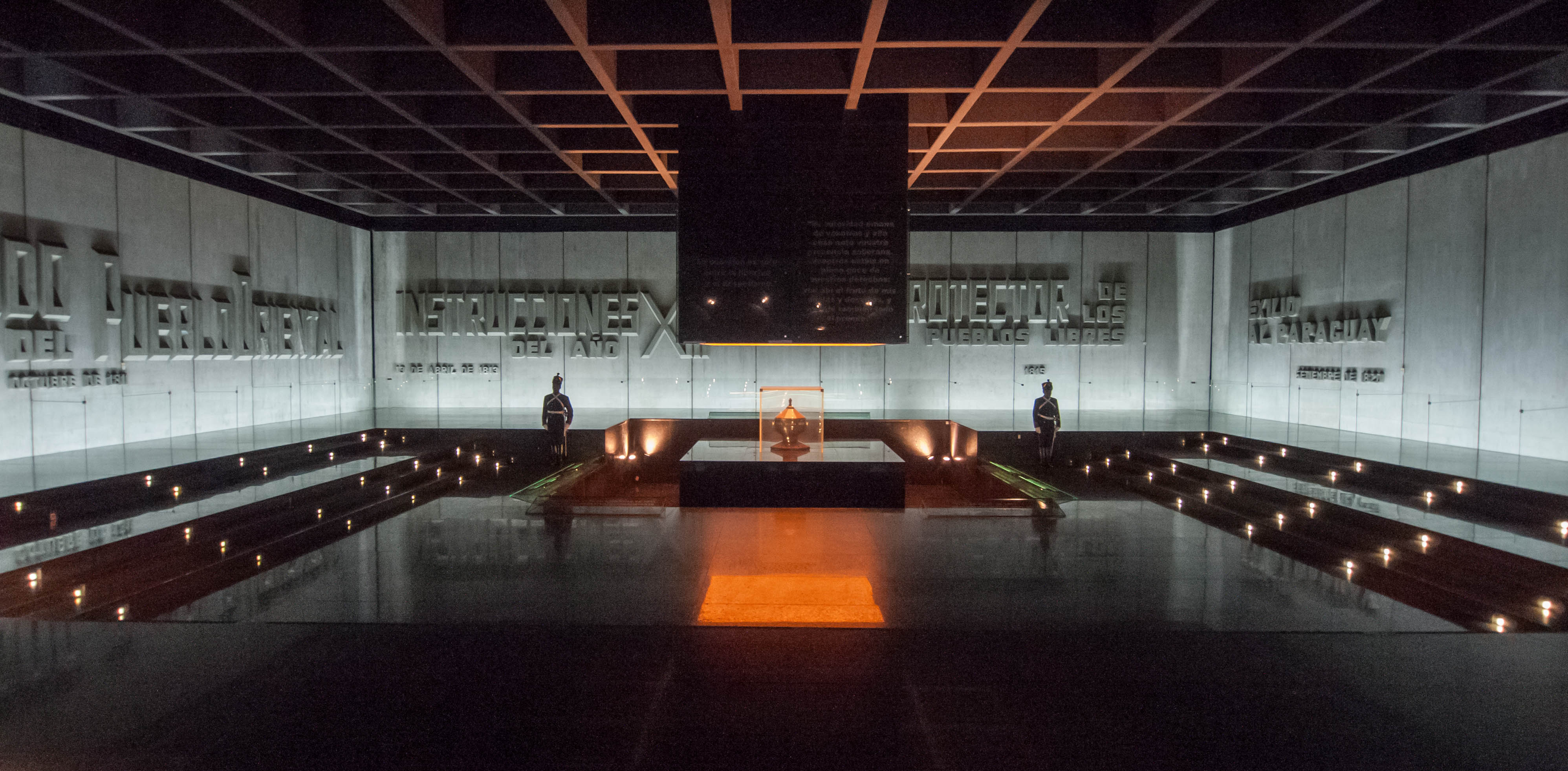
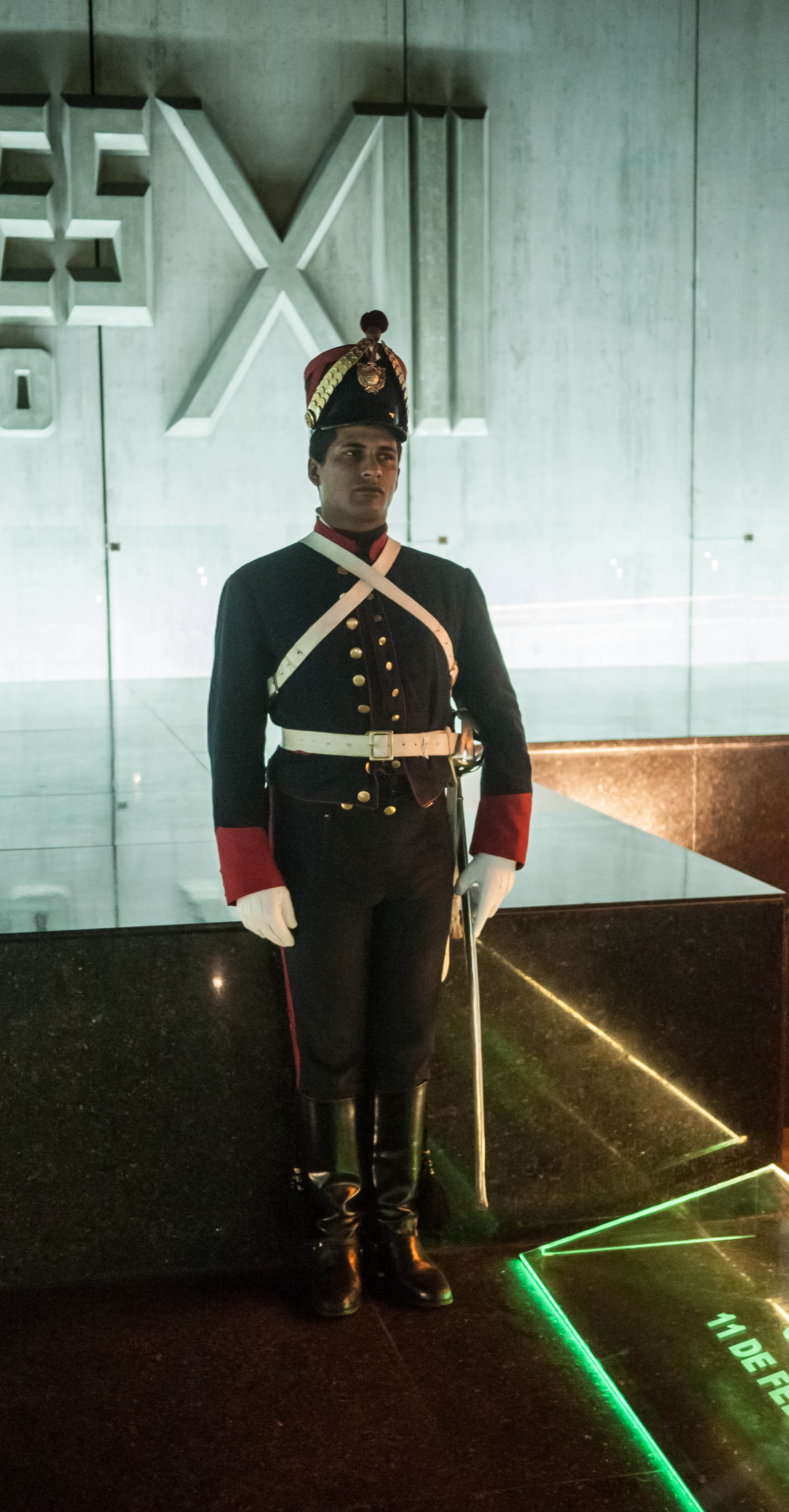
Tomb of Artigas
The centrepiece of Independence Square is the Mausoleo de Artigas, the tomb of Jose Gervasio Artigas, a Uruguayan hero often referred to as the “father of the Uruguayan nation”. Above ground there is a statue of Artigas atop his horse and below ground is the actual tomb with a permanent honour guard.
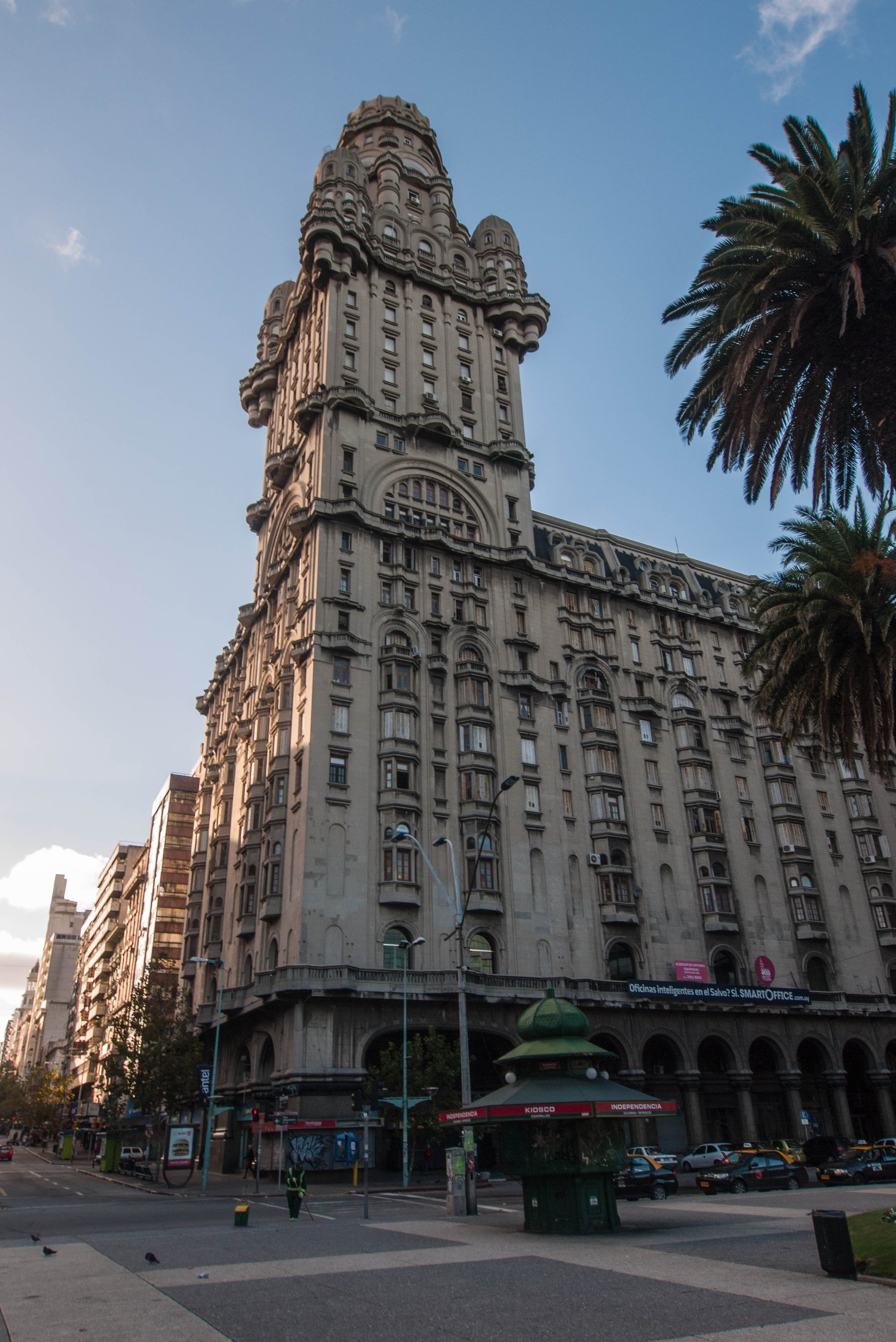
The other highlights of the square are the Palacio Salvo (surprisingly a mixture of apartments and commercial premises), the Presidential Palace and the Solis Theatre.
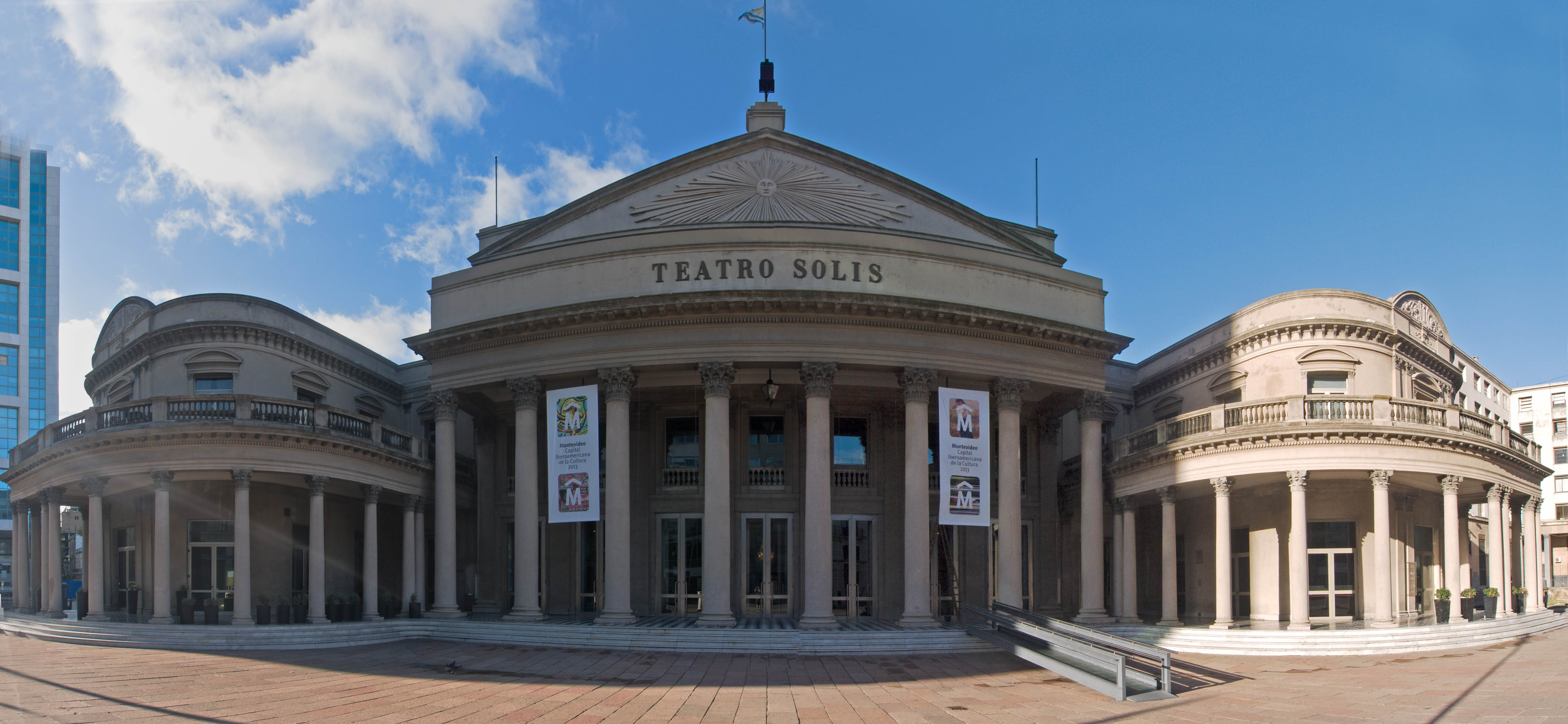
Solis Theatre
Adjoining Independence Square is the Puerta de la Ciudadela (Gateway of the Citadel) which is one of the last remaining parts of the original city wall. Passing through this we walked through the old city and down towards the docks. Montevideo is a really friendly, relaxed city which is enjoyable to walk around however it does lack the spectacular architecture of many other old cities worldwide.
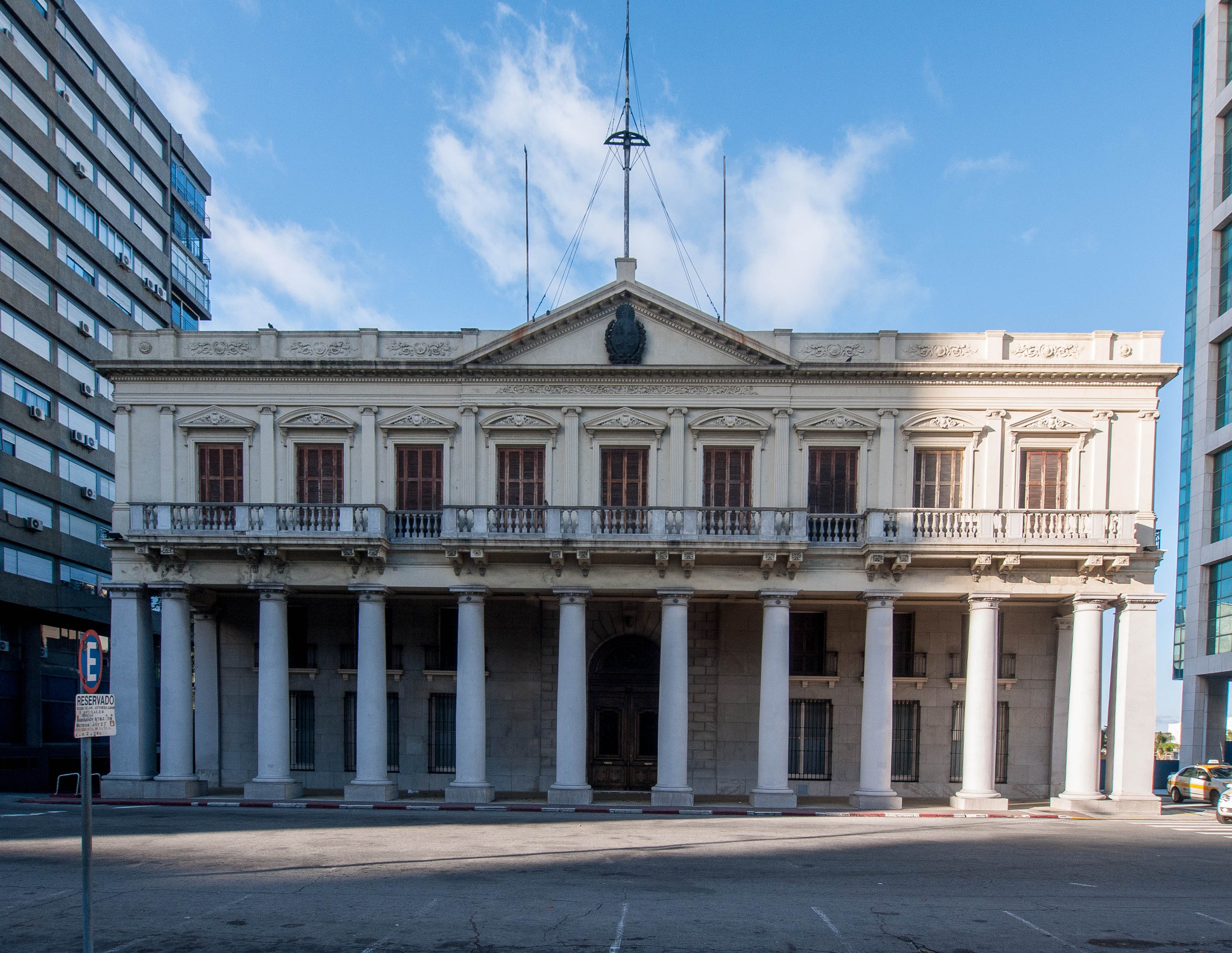
Presidential Palace
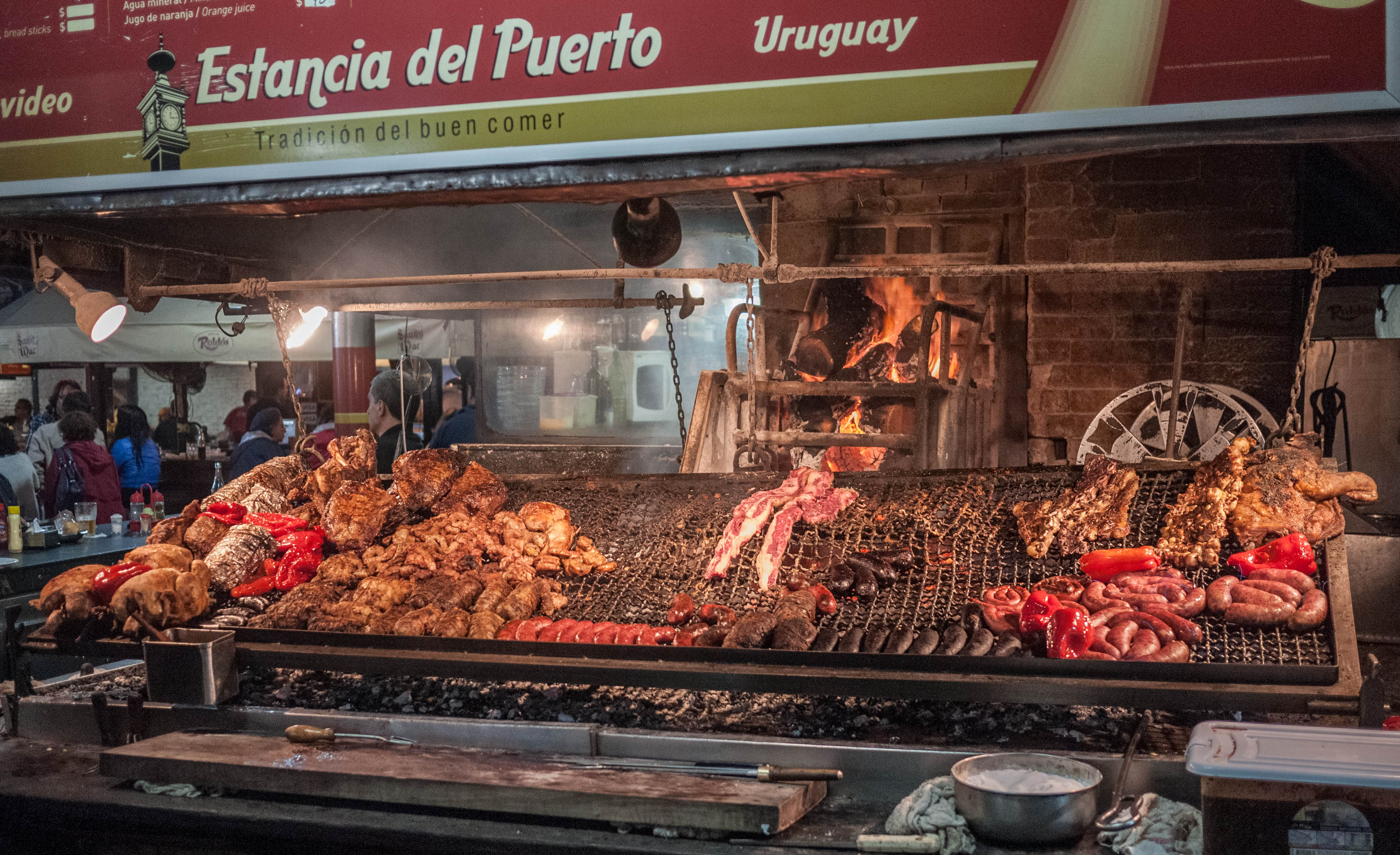
The area around the docks is considered to be quite dangerous after dark but during the day it’s a vibrant place with both locals and tourists visiting. The main attraction is the Mercado del Puerto which was opened in 1868 and was originally a market. It is now full of restaurants that are jammed together and is one of the best places to eat grilled meat in the world.
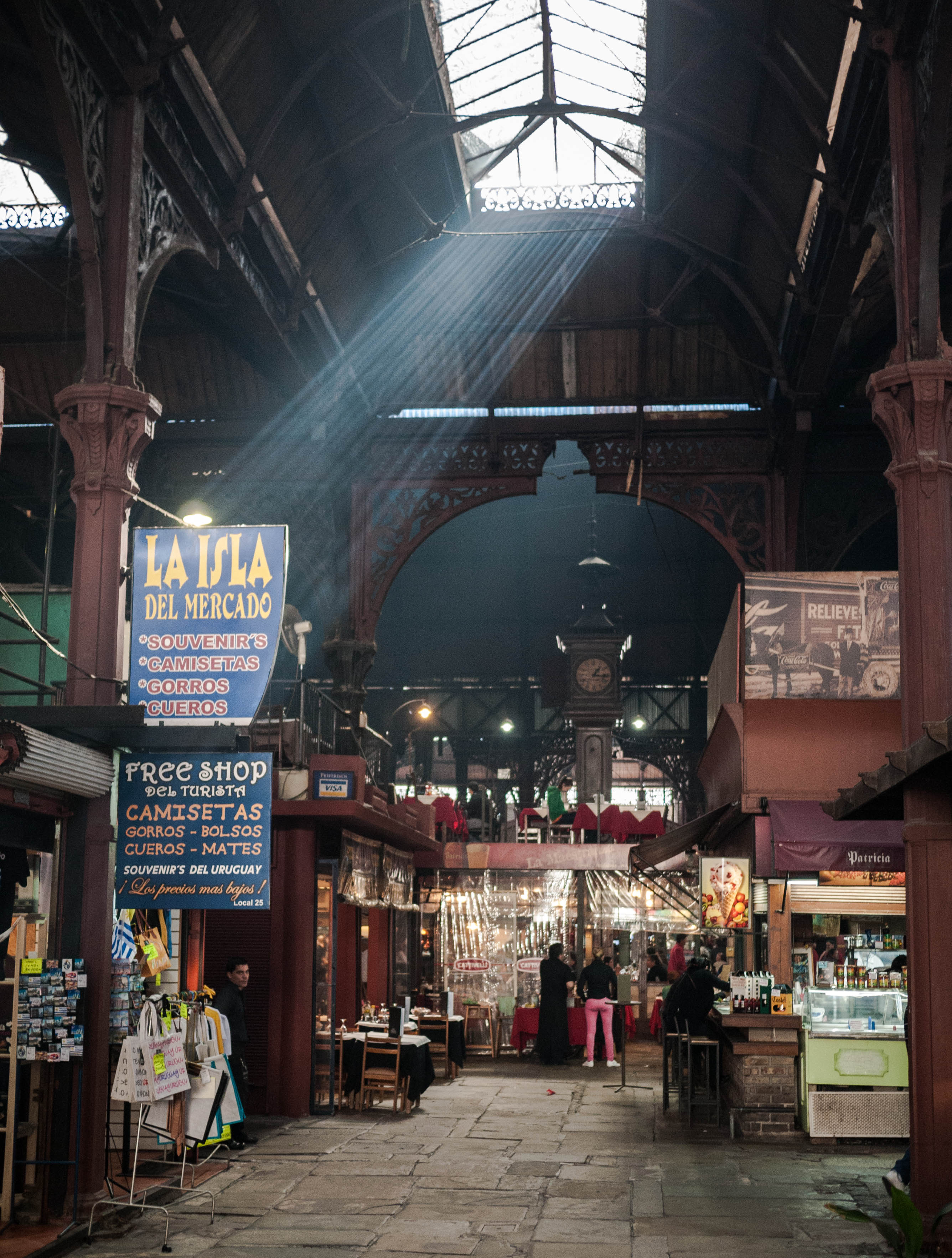
Mercado del Puerto
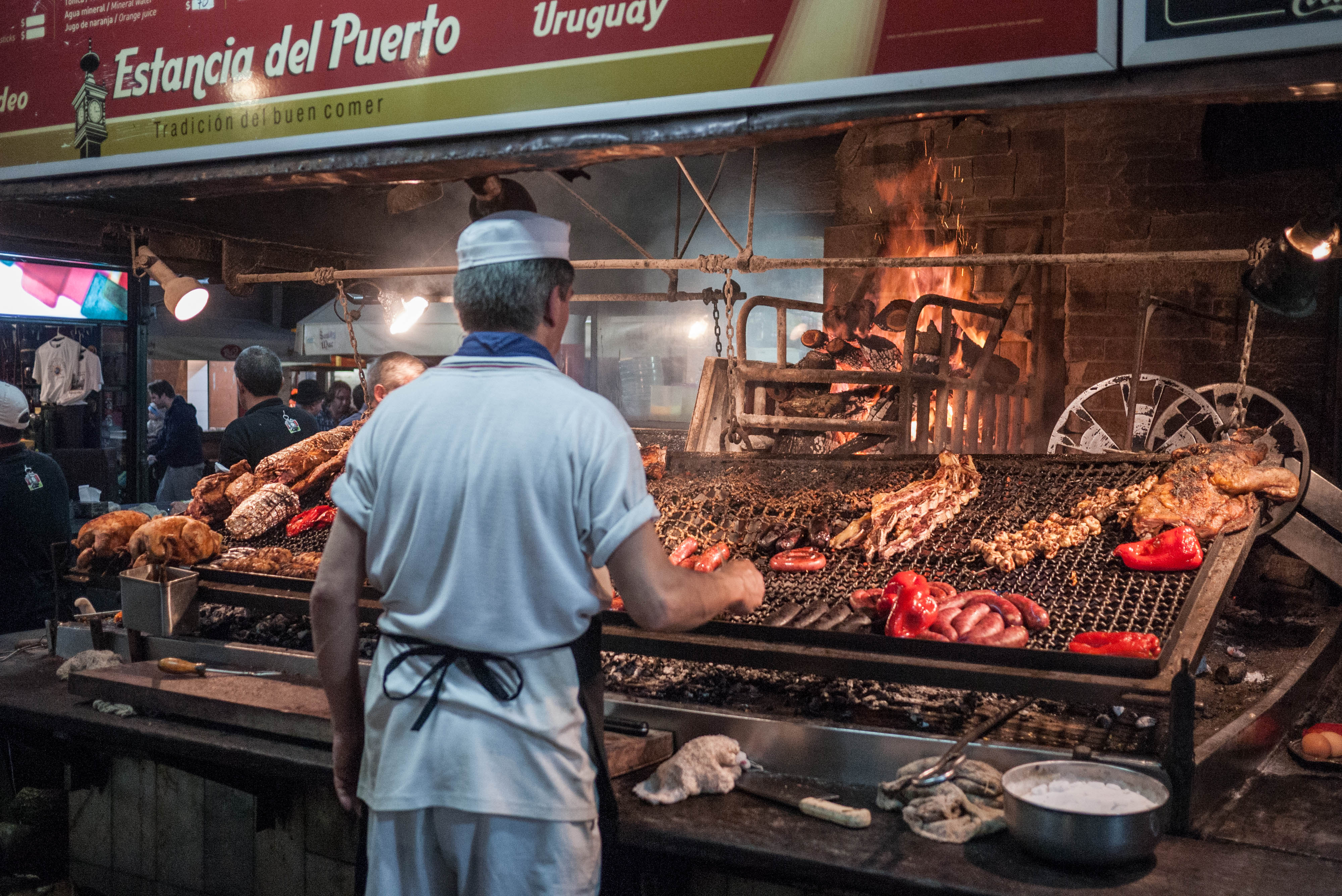
We loved this place so much that we actually came and ate here two days running. Our first lunch was at the famous “Estancia del Puerto”. We’d first seen this eatery on Anthony Bourdain’s “No Reservations”. We sat at the bar in front of the massive grill covered in amazing looking meat and ordered the BBQ for two.
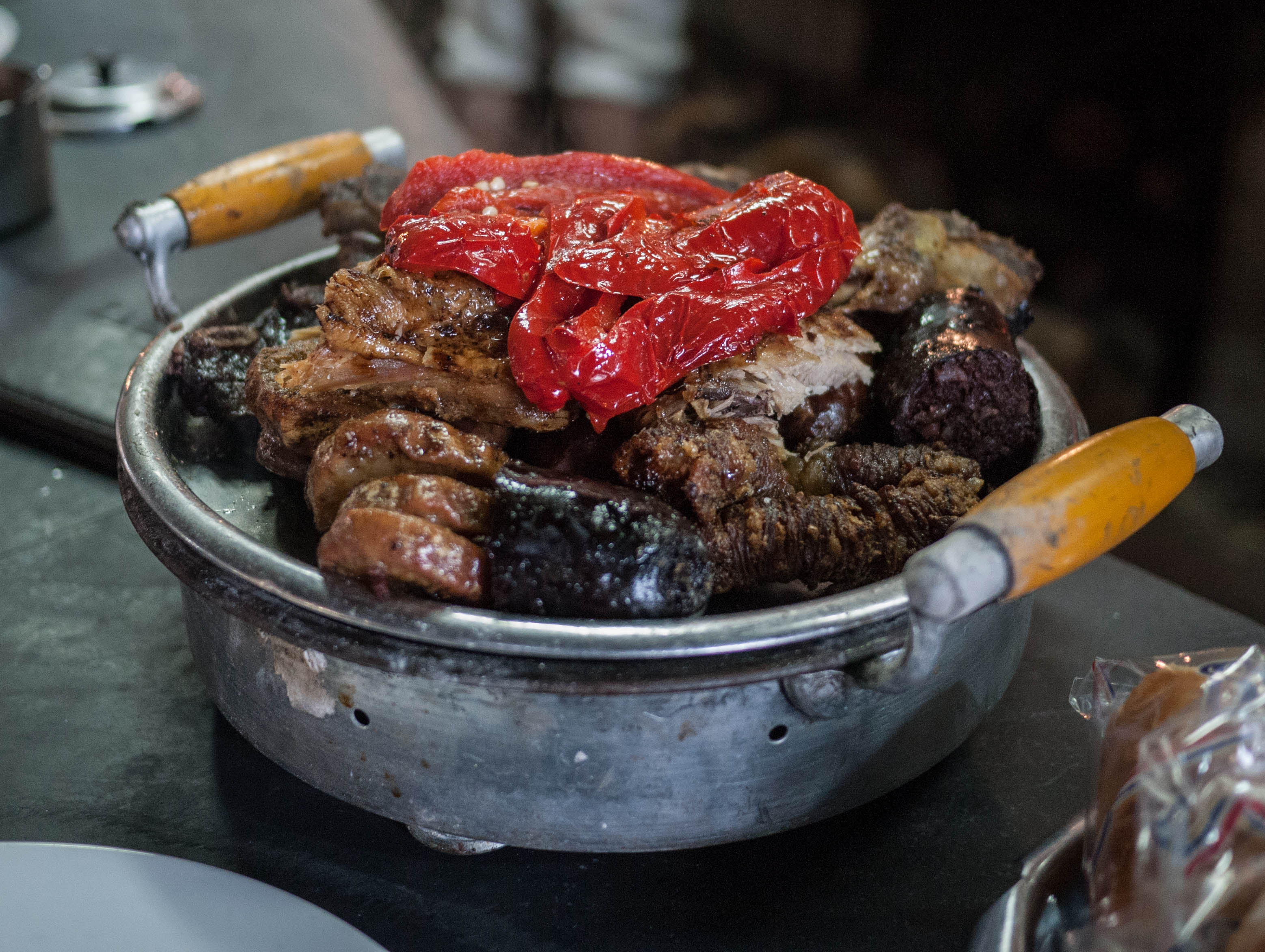
BBQ for two
An amazing bowl of meat was delivered to us and we enjoyed it immensely eating every scrap. About half way through we discovered what two of the items that we had been enjoying were, the large and small intestine of a cow. Actually very nice, although very rich and definitely not something that you find on your plate back home too often.
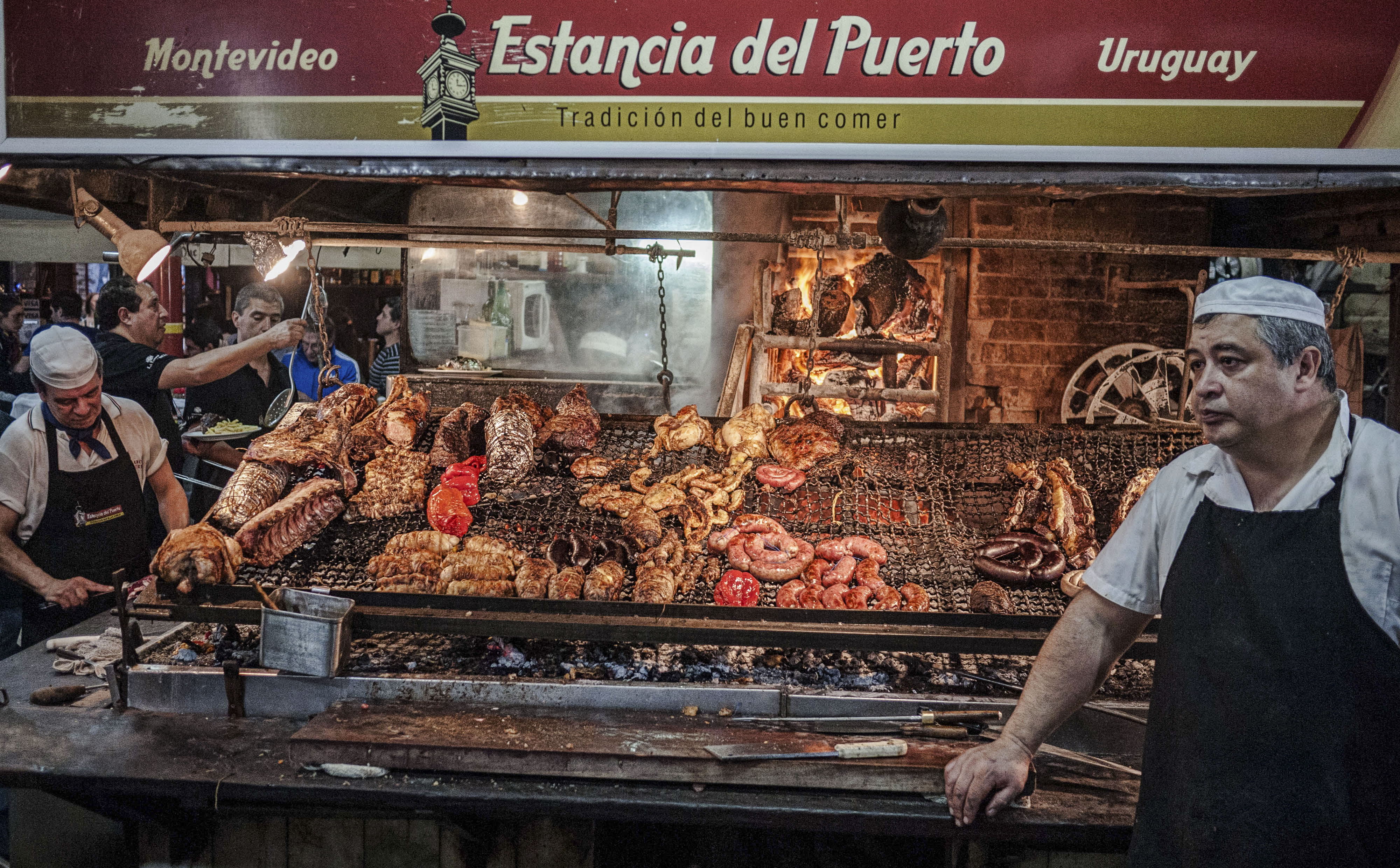
Estancia del Puerto
We liked this place so much that the next day we came back for some massive steaks at one of the other restaurant joints in the Mercado. We were treated to one of the best steak meals that we’ve ever had.
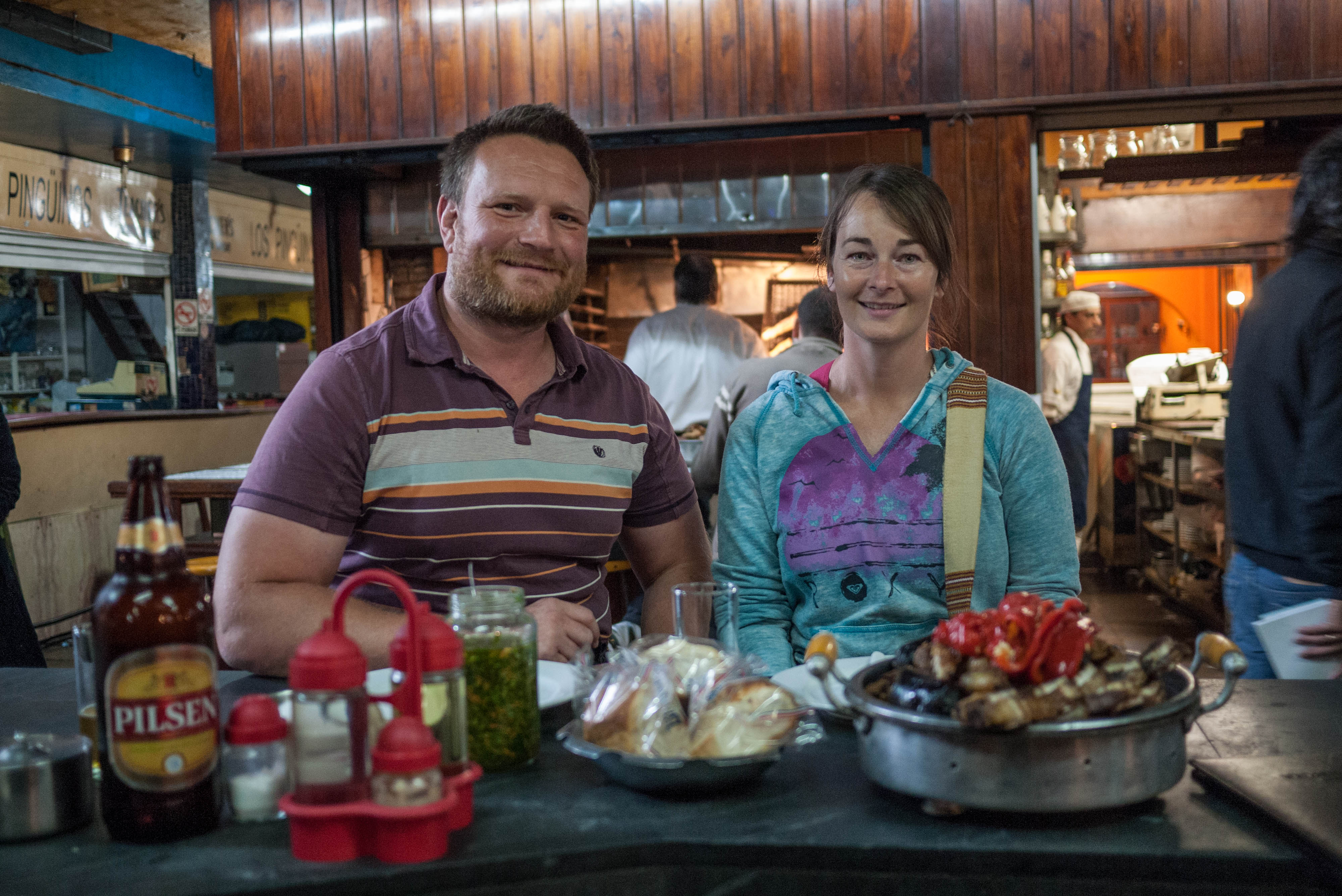
The only downside of the Mercado del Puerto is that the restaurants are not cheap but that does not mean that it isn’t value because the meat is some of the best and tastiest that you will have anywhere. We definitely found that eating here for lunch meant that no dinner was required.
For us two days in Montevideo was definitely enough (even if we could keep going back to Mercado del Puerto for lunch for ever!). Montevideo isn’t a spectacular city but its comfortable, friendly and holds enough of interest for a couple of days.
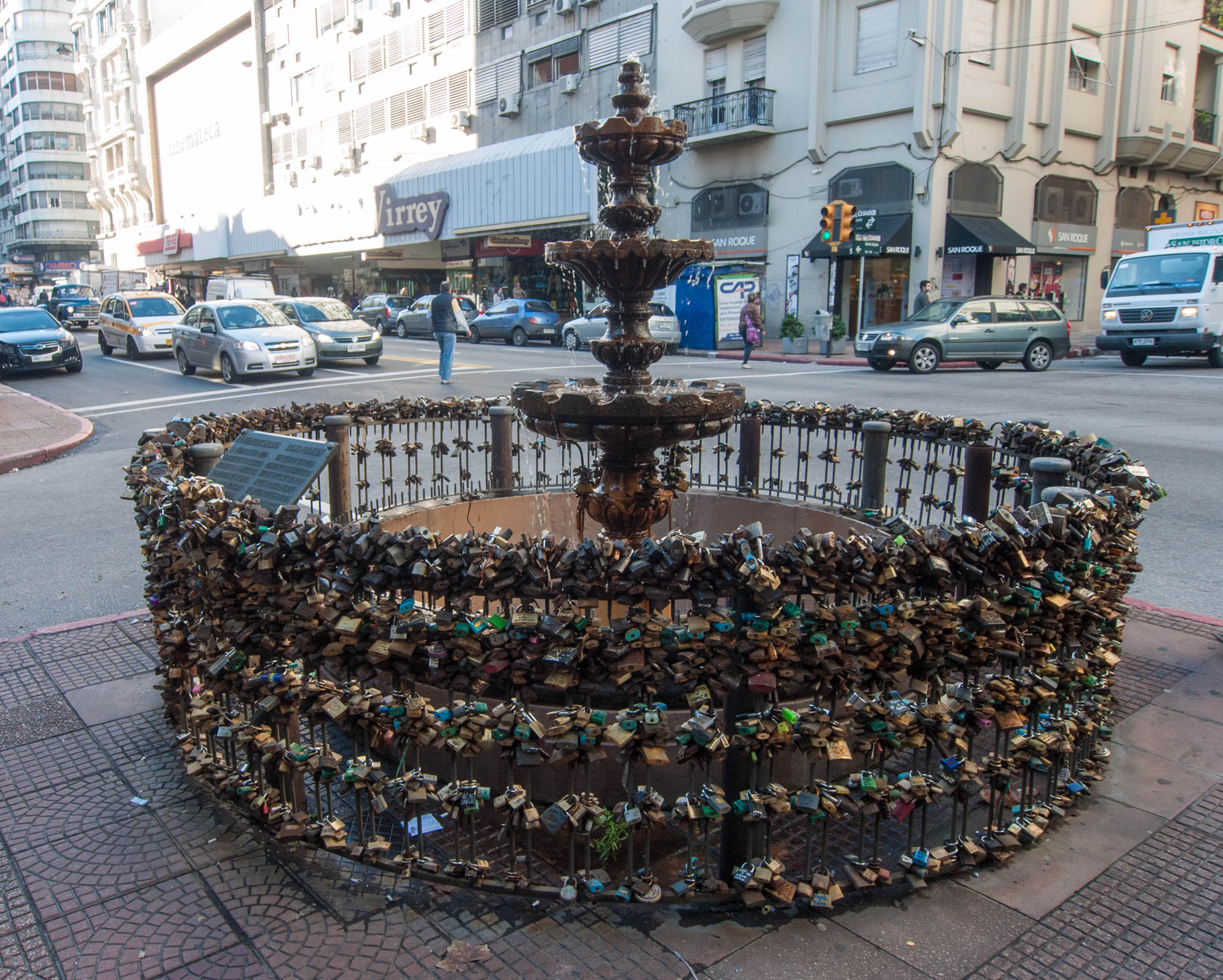
Fountain with locks
After our second visit to the Mercado del Puerto we needed to take a taxi and head to the airport. We had a flight to catch to send us on our way to Rio de Janeiro, our last stop on our tour of the Americas.
 FromAtoB