Canyoning in Rio Verde
I had wanted to go Canyoning for a long time and as Marc & Sue run an adventure activities business from Pequeno Paraiso we decided that this would be a great opportunity to give it a try – and at a really good price of only $50 as well!
The minimum group number is 4 so we had to wait for some other interested parties but when the Dragoman truck turned up we ended up with a party of 8.
First we had to get kitted out with a wetsuit, lifejacket, helmet and a climbing harness. I always feel a little ridiculous at this stage ! The equipment was all top notch.

To get to the canyoning site was a 15 minute ride in a pickup and then we only had a short walk until we were at the edge of the canyon.
Only a few meters in we came to the first obstacle – a small waterfall about a metre in height. The guides, Daniel and Marco, wanted us to turn around and fall backward into the pool below the fall. Easy enough but a shock when we hit the water as it was pretty cold.

The next obstacle was only a few metres further and was a much bigger waterfall at 3m. The only way down this is to jump and we were told to bomb it because it wasn’t very deep. 3m isn’t so big and everyone did this without problem. I hit the bottom gently on the way down but no problem.

After this we moved down the canyon through the river until we reached the biggest jump of the day, a 5m waterfall. There was the option to abseil round this which half the group took leaving only four of us to jump. Two girls did the jump and emerged from the water with no problem, then it was my turn.
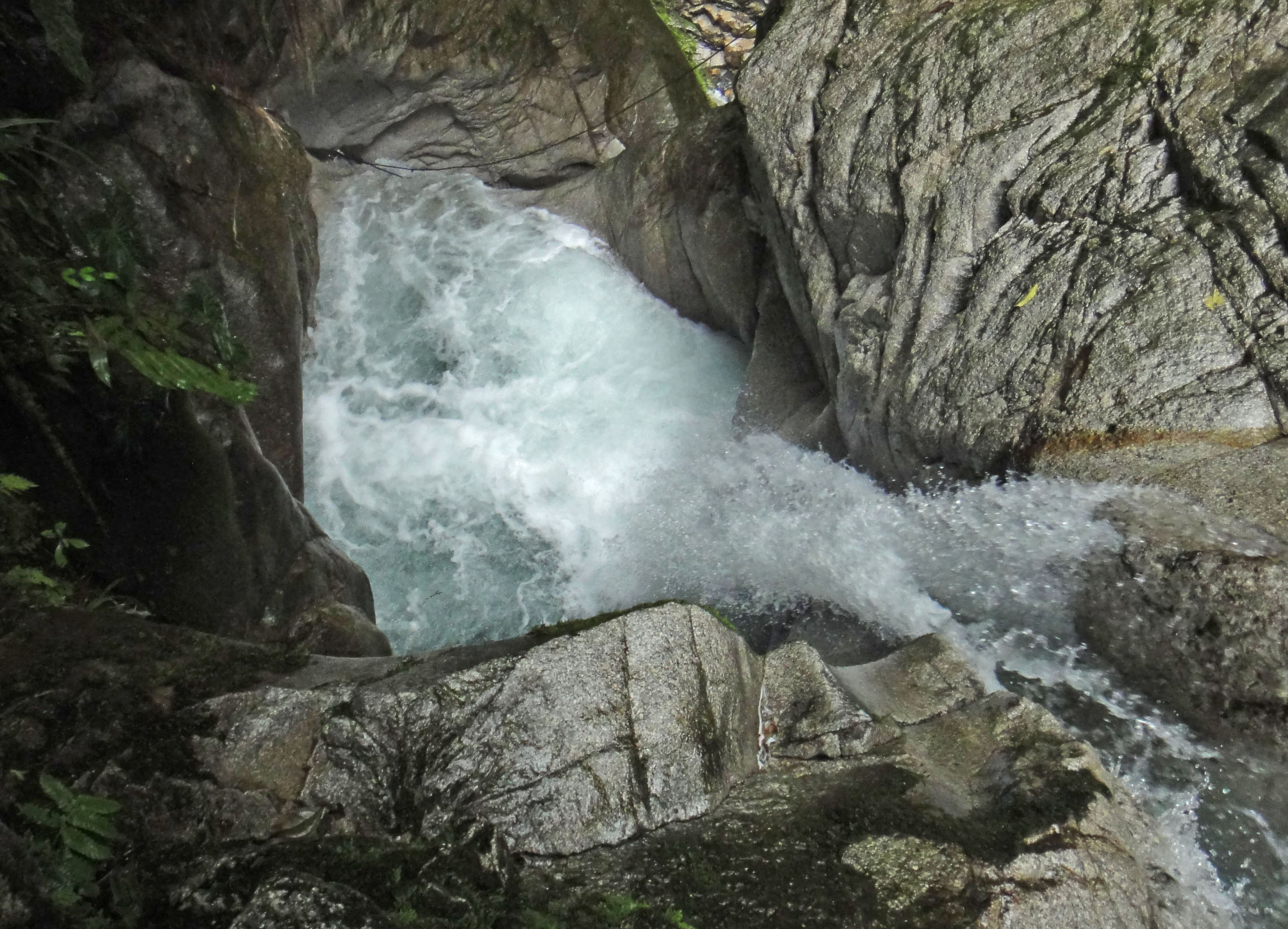
I’m always a little nervous of big jumps but I plucked up the courage and jumped. On hitting the water I plunged down and then tried to swim up and away from the waterfall. I was caught in a backflowing current taking me back towards the waterfall and back under the water. I managed to surface but was pinned by the current to a wall by the waterfall. One more attempt to swim out got me nowhere and back under the water. I was running out of air and time, so I dove down and under the waterfall heading for the other side of the canyon. I popped up at the other canyon wall where the water was pushing me away from the waterfall – I was out.

I was told after, that the guide had been throwing me a line trying to pull me out. I just couldn’t see anything while I was under the waterfall and knew that I had to rescue myself.
After all this drama there was one person left to jump and after a couple of minutes at the top he decided he’d prefer to abseil. Later he told me that after seeing what happened to me he lost his nerve.

At this stage we were only half way down a two part waterfall and the guides set up a zipline which we rode to the bottom.
By this stage everyone was beginning to feel a bit cold as we waded through the fast flowing river, clambering over rocks and through small waterfalls. Next up though was an abseil down a big waterfall.

This was pretty easy although the route down took you straight through the falling water making it difficult to keep your eyes open. This was the biggest abseil we would do.

Another big abseil down a waterfall allowed us to move down the slick rock wall but out of the water. However the abseil did not get you to the bottom and there was a slide about 2m down into the water and a strong current taking you away from the waterfall.

After this the trip was almost done, only a slide down a 1m waterfall to go and the canyon opened up and the river quietened down.
All in all the trip was incredibly exciting, pushing everyone to face their fears and presenting real adventure. Even though I got in a bit of trouble I would do this trip again in a heartbeat and I have no doubt that the guides, who are well trained, would have got me out if I hadn’t saved myself. No trip like this is 100% risk free but that is what makes the whole experience an adrenaline rush and worth doing !
A Little Bit of Paradise (Rio Verde/Banos)
We’ve been on the road for a year and we were ready for a break. Travelling can be tiring particularly when you are on the move almost every day.
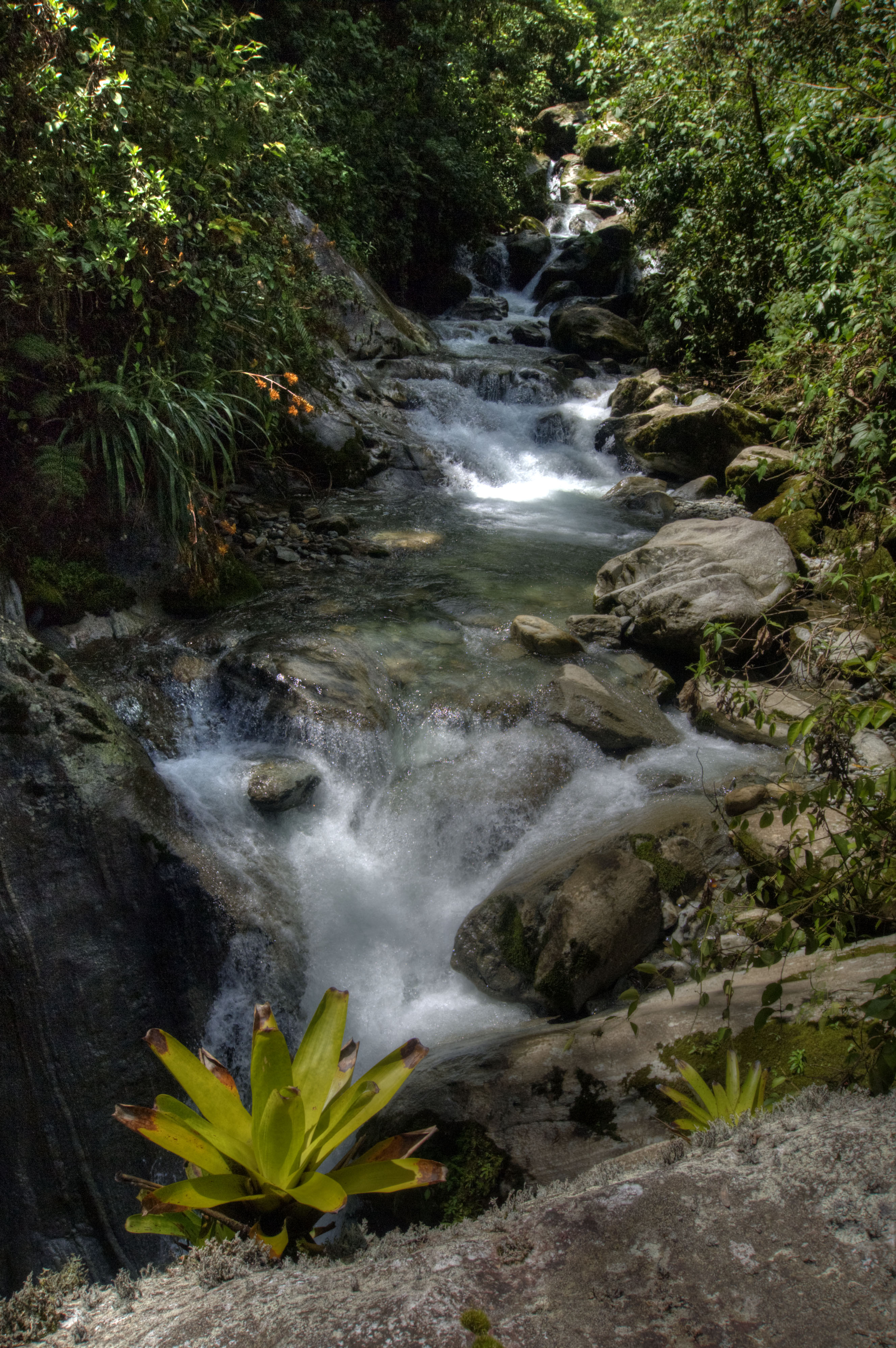
Fortunately we arrived in the spa town of Banos (well Rio Verde around 15km down the road) and discovered Pequeno Paraiso (literally a small paradise). This is a hostel and campground set amongst beautiful gardens. It is run by Marc and Sue, who are ex-overland crew for Toucan, and their gorgeous dogs Tasha and Pinga. Pequeno Paraiso is a stop off for all the commercial overland trucks who spend three nights here. Smaller campers can park in the gardens near the kitchen area but there is a separate area for bigger trucks on the other side of the property.
We ended up staying 2 weeks in Rio Verde and managed to more than fill our time while we were here. Although it is a fair distance from Banos buses go past the entrance every few minutes and it only takes 15 minutes and 50c to get all the way to Banos – they’ll pick up and drop off anywhere along the road so its really convenient.

Banos itself is a quiet town, during the week, but explodes with visitors at the weekends – many racing around on quad bikes and dangerous looking jalopies. Needless to say we avoided the town at the weekend. The claim to fame of Banos are the thermal baths fuelled by volcanically heated water – however we visited what is reputedly the best baths in town and decided that it wasn’t for us. Having recently been to the thermals at Papallacta there was no comparison and as it was a lovely sunny day, we weren’t in need of a hot soak.
There is a zoo just outside the town which we visited. The highlight of our visit here was watching two American girls who were interning here try and feed one of the owls. They had 3 live mice which they had been told to kill before feeding the owl. However they were too squeamish to do this so just threw them at the owl. The owl looked at them with disdain and flew off to another part of the cage. They’d been told they couldn’t leave live mice in the enclosure – so they then tried to catch the mice – one had disappeared in the foliage on the ground, another was making it’s way up one of the wooden poles and the third was trying to squeeze out of the cage. One of the girls tried to catch one of the mice by holding it down by it’s tail and then screamed when it swivelled around and bit her on the finger ! We left at this stage as they were becoming quite stressed and resentful of our giggles on the other side of the fence.

The best bit of the zoo were the spider monkeys who came right to the edge of their cage and reached out to us with their tails. They were after food but they just grabbed our feet and tried to pull them towards the cage ! Overall though we didn’t think too much of the zoo and weren’t too impressed with the standards of care – the cage to the Capybara was unlocked and swung open when I leaned on it with no sign of the Capybara – maybe it had gone for a walk ! However, we were very relieved to see that the Jaguar cage was securely shut!
Pequeno Paraiso is between two very big waterfalls. The first that we visited was called the Pailon del Diablo. This involved a trek down into the canyon until you reach a set of platforms to view the waterfall. Here there is a very low cave which you can crawl/walk through until you reach a ledge cut into the cliff right next to the waterfall – needless to say you get soaked getting there !

The highlight of our visit to the Pailon del Diablo was stopping for Empanadas at a small restaurant just before the entrance. The woman here freshly makes the empanadas to order and also makes some lovely Jugos (juices). The chicken and ham with cheese sauce were absolutely goregeous. My favourite Jugo is fresh Strawberry – it would be too expensive at home but here strawberries are easily and cheaply available. During our time in Rio Verde we came for lunch here 3 times – that’s how good it is !
The second waterfall was my favourite and is called the Machay waterfall and the entrance is only a 10 minute walk from Pequeno Paraiso. The descent into the canyon is down a steep staircase bolted into the rockface of the cliff. Once down at the bottom you cross a very wobbly swing bridge before reaching the base of the main waterfall.

A trail follows the river down from the main waterfall to a swimming hole below a second waterfall and then further down to the main river in the canyon where there are natural swimming holes , modified with concrete, where you can laze in relatively warm water watching the river flow by.
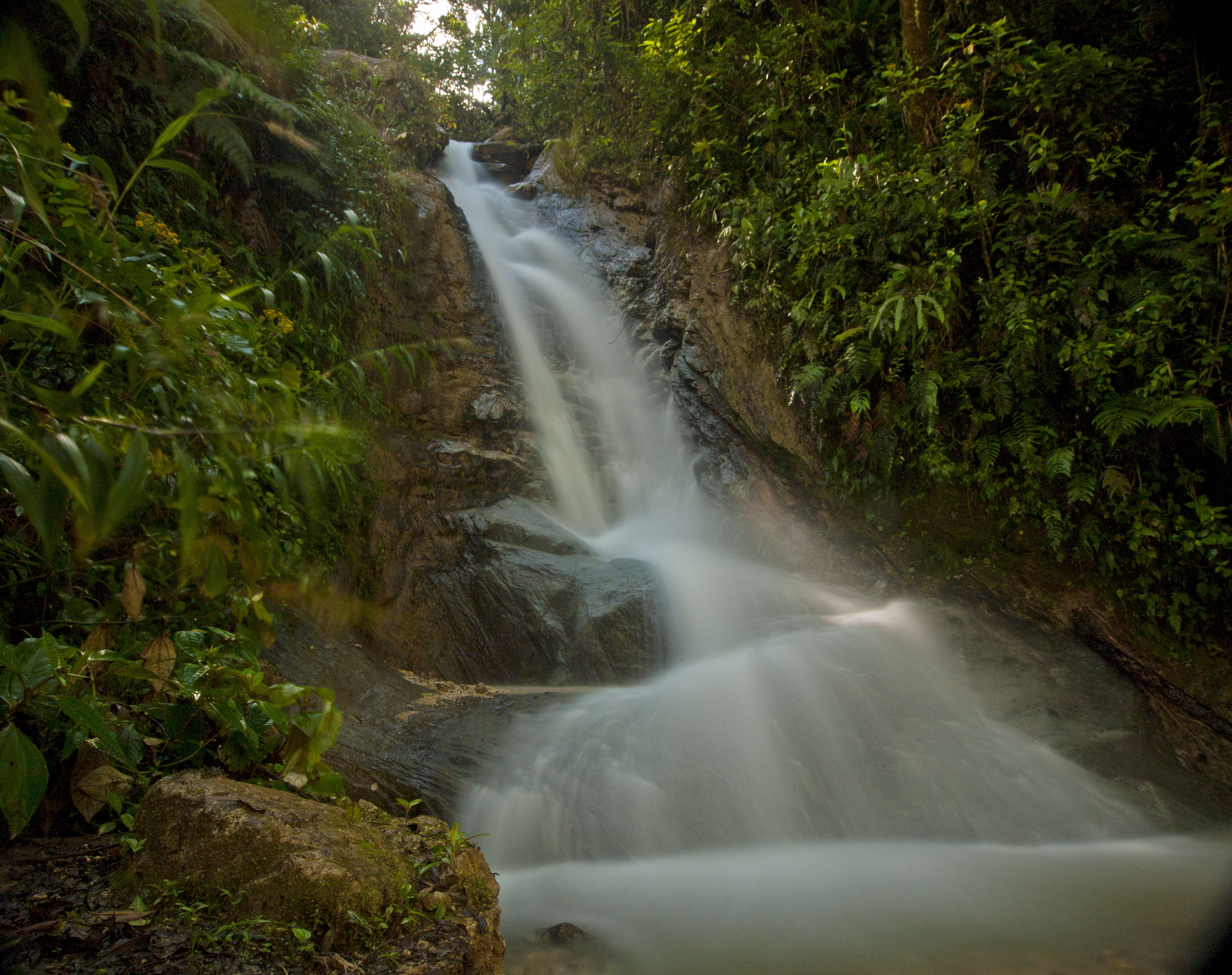
One of the days that we were in the area we went for a gorgeous walk with Marc, the dogs and Niamh, a tour leader for Kumuka who was on a break between trips. The walk was up a path from the village of Machay following a river with a number of waterfalls. The walk ended in a beautiful spot by a waterfall with a deep (very cold) emerald coloured swimming hole – the only issue was that there was no path to get to it so we had to bushwhack through waist high grass to get there down a very steep slope, praying there were no hidden snakes.


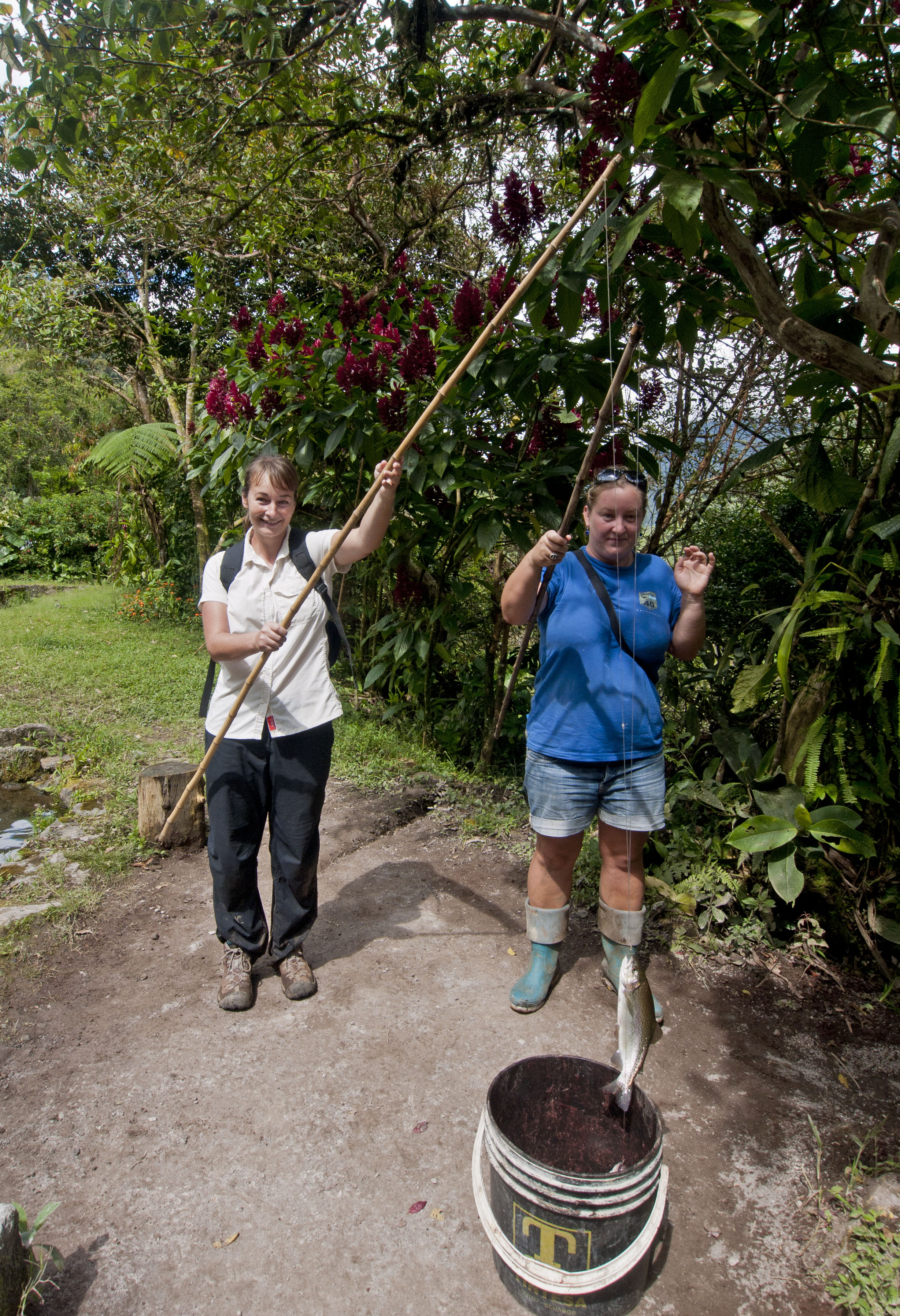
On the way back we stopped at a local restaurant/ trout farm, where you have to catch your own trout and they cook it up for you. Fortunately this wasn’t too challenging and we’d all bagged a juicy trout in the first 10 minutes. A trout dinner including a big beer was only $6 – so pretty good value!
One night we all went into Banos, Sarah and I, Niamh , Marc and Sue for a night out. Marc & Sue don’t get to go out very often with the business to run, so it was great to give them the excuse. We started with beers in the local brew pub, The Stray Dog – probably the best beer we’ve had since hitting Latin America, and then moved onto an Argentinian restaurant for large quantities of meat. We finished the night in another pub called The Leprechaun, with a roaring outdoor fire.

Between Banos and Rio Verde the River Pastaza runs in a deep canyon. There are a number of Taribatas (small cable cars) that run across the canyon allowing you to access the other side. They are sited where there are big waterfalls falling into the canyon. We decided to cross the canyon on the Manto de la Novia Tarabita and walk the trail on the other side before crossing back on the San Pedro Tarabita.
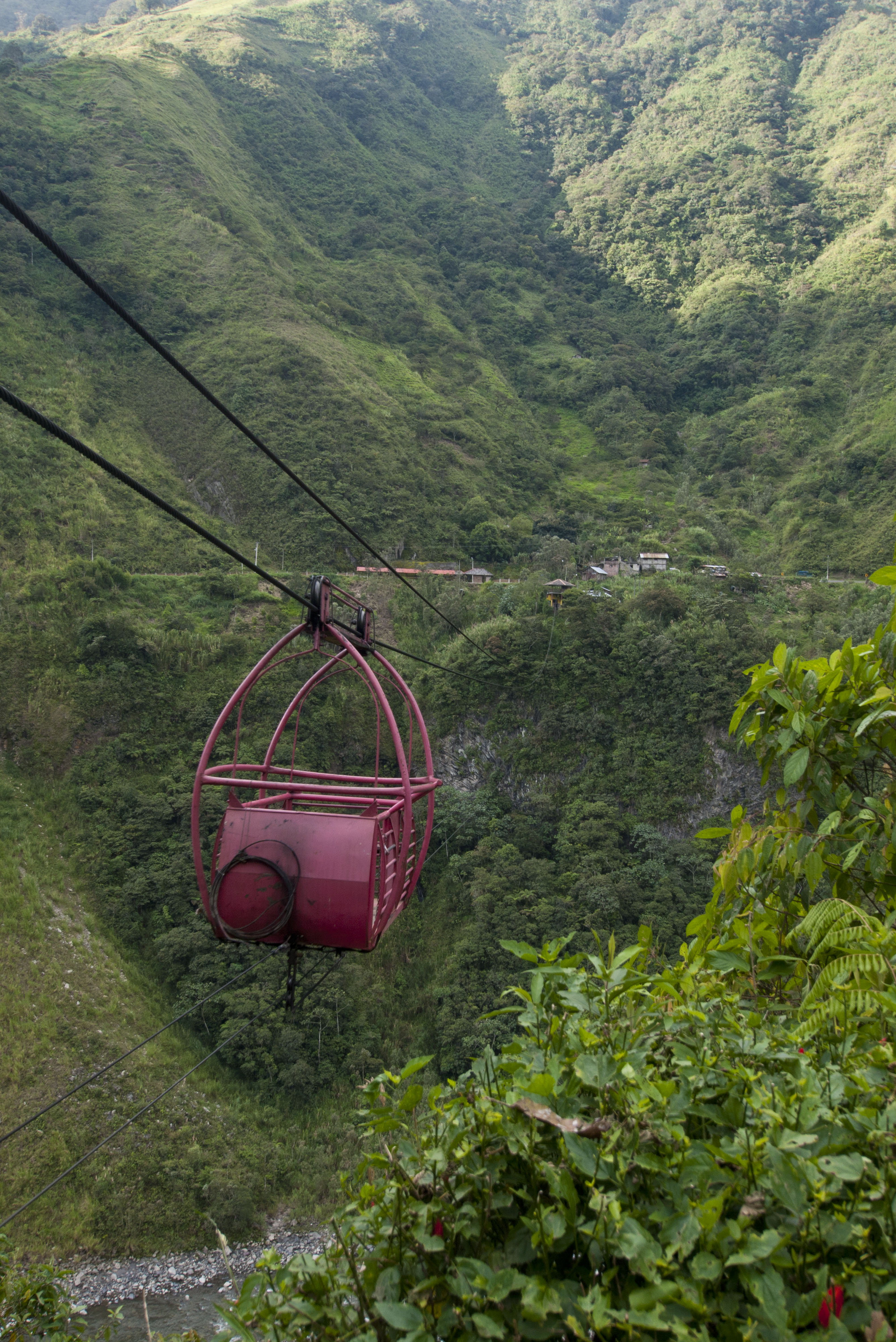
The Tarabitas accelerate really quickly when they start off which was a massive shock – I almost dropped my camera. They cross the canyon pretty quickly but the views of the waterfalls are amazing.
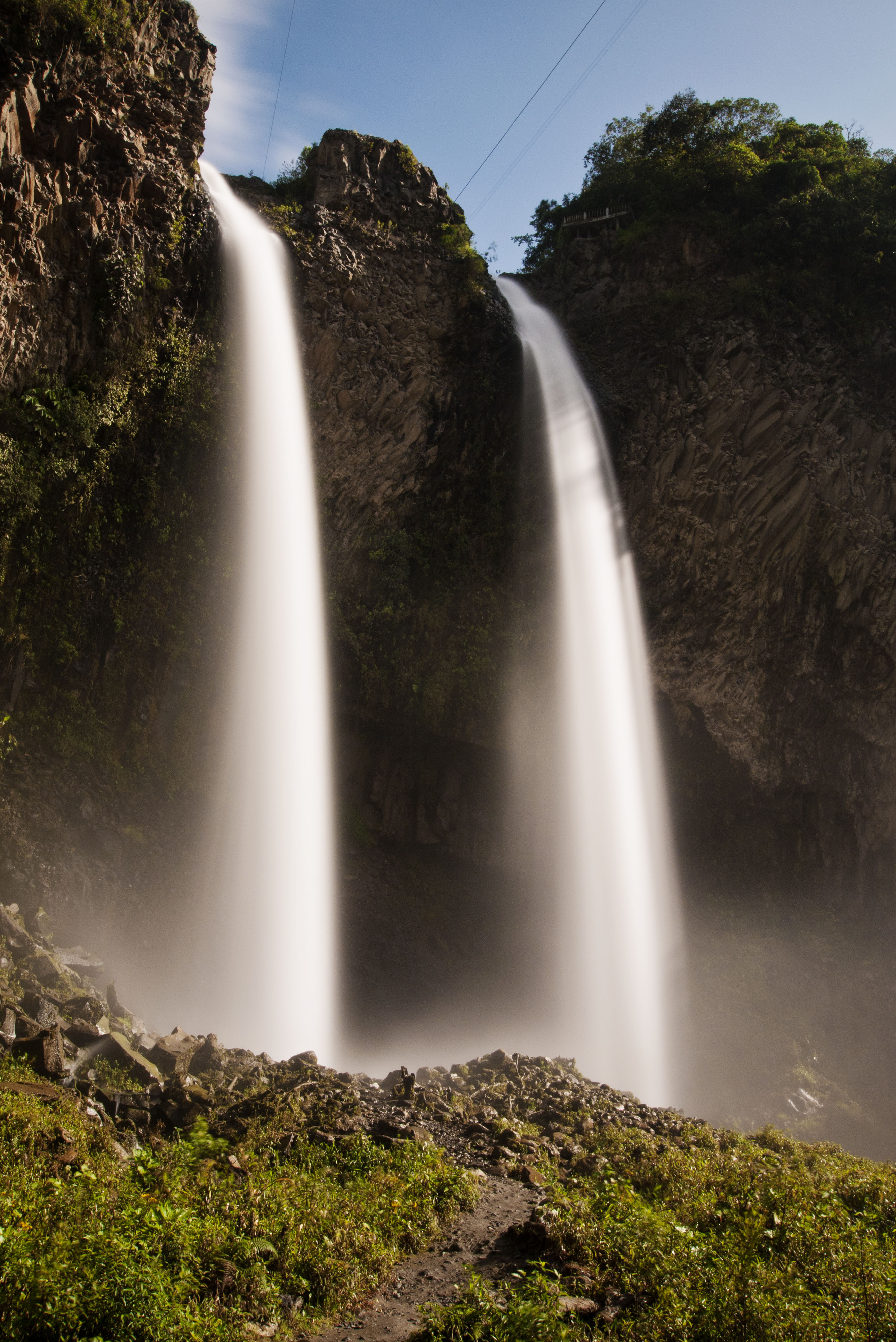
When we got across to the other side we walked right down to the bottom of the canyon to get to the foot of the Manto de la Novia falls. Then we walked all the way back up and followed the path along the canyon edge. This is an old smugglers path which was used to avoid the authorities on the main road the other side of the canyon.
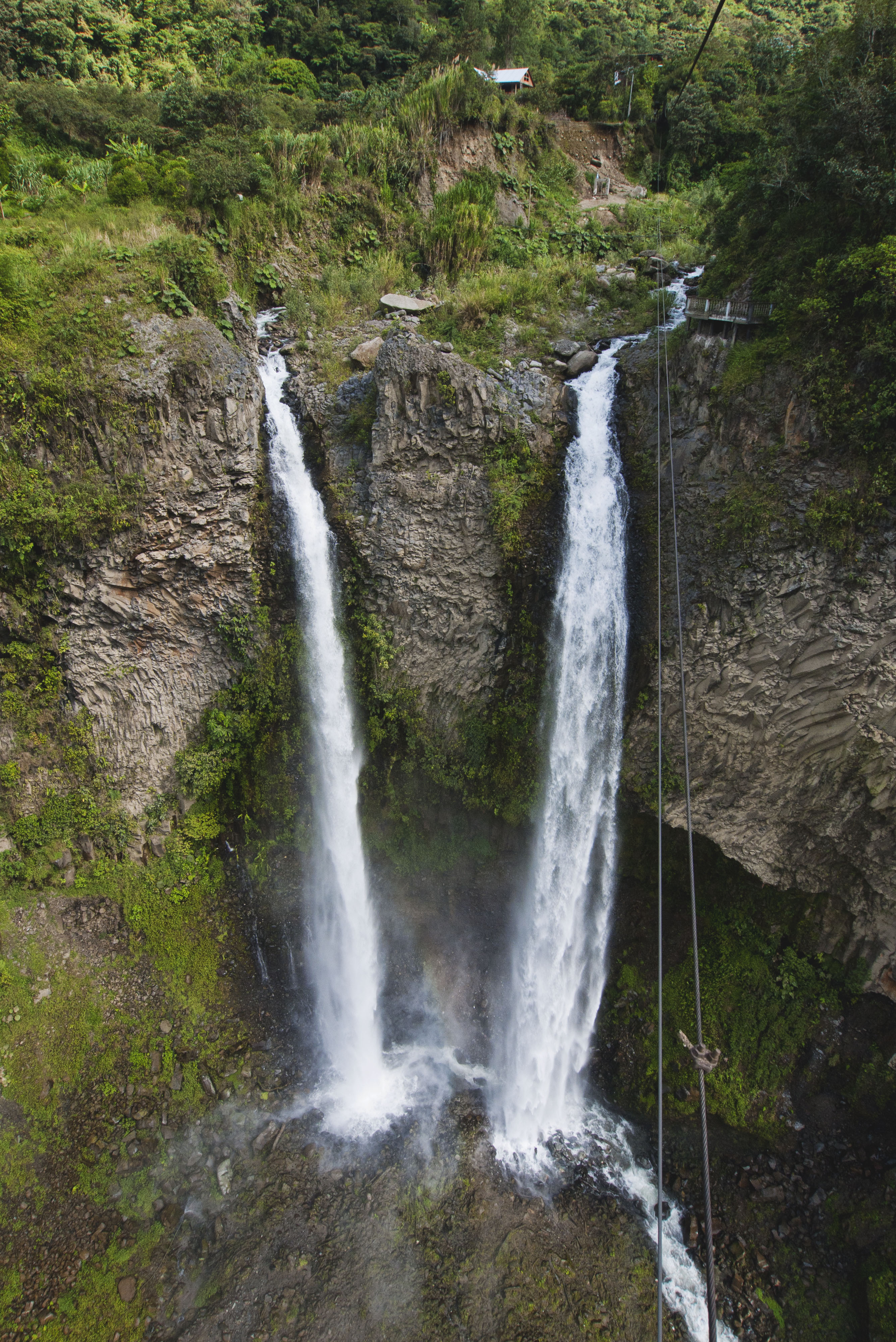
When we reached San Pedro we walked down a path which goes half way down to the bottom and lets you stand on a small ledge half way down the falls.

After seeing the falls we climbed back up and then caught the Tarabita back across the canyon before heading home.
We didn’t really intend to stay 2 weeks but it’s a beautiful hostel, there is plenty to do and Marc and Sue were superb hosts. We also wanted to try canyoning which is outstanding in this area and Marc and Sue run a canyoning business. We had to wait until a Dragoman truck arrived, fortunately with only 8 people on board – the recession is hitting overland truck numbers badly, until there were enough people for the canyoning.

Quilotoa Loop
Once back in the central valley from Papallacta we wanted to visit Cotopaxi national park. However the weather just didn’t cooperate with us and low cloud (well at over 3500m) covered the park. We decided to head West as things looked a little brighter that way and drive the Quilotoa Loop.
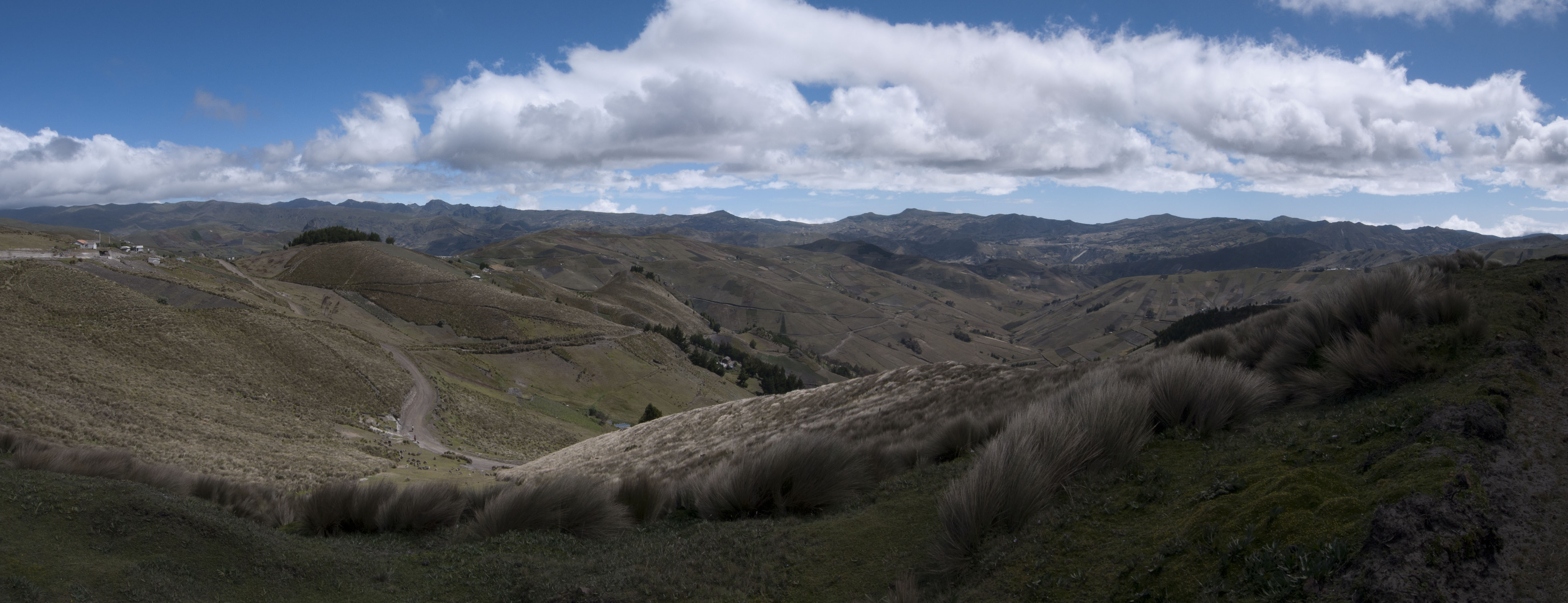
This is a roughly 200km or so drive that is around 50% paved roads, 25% dirt and 25% cobbles. It travels through highland Paramo and drops down to dry river valleys. The mid point of the route is a beautiful crater lake – at the village of Quilotoa.

The drive round the loop is beautiful but just before Quilotoa we were stopped for almost an hour by a landslide. There was a crew with JCB’s dumping all the rocks off the side of the road but the waiting locals gave the area a real party feel.
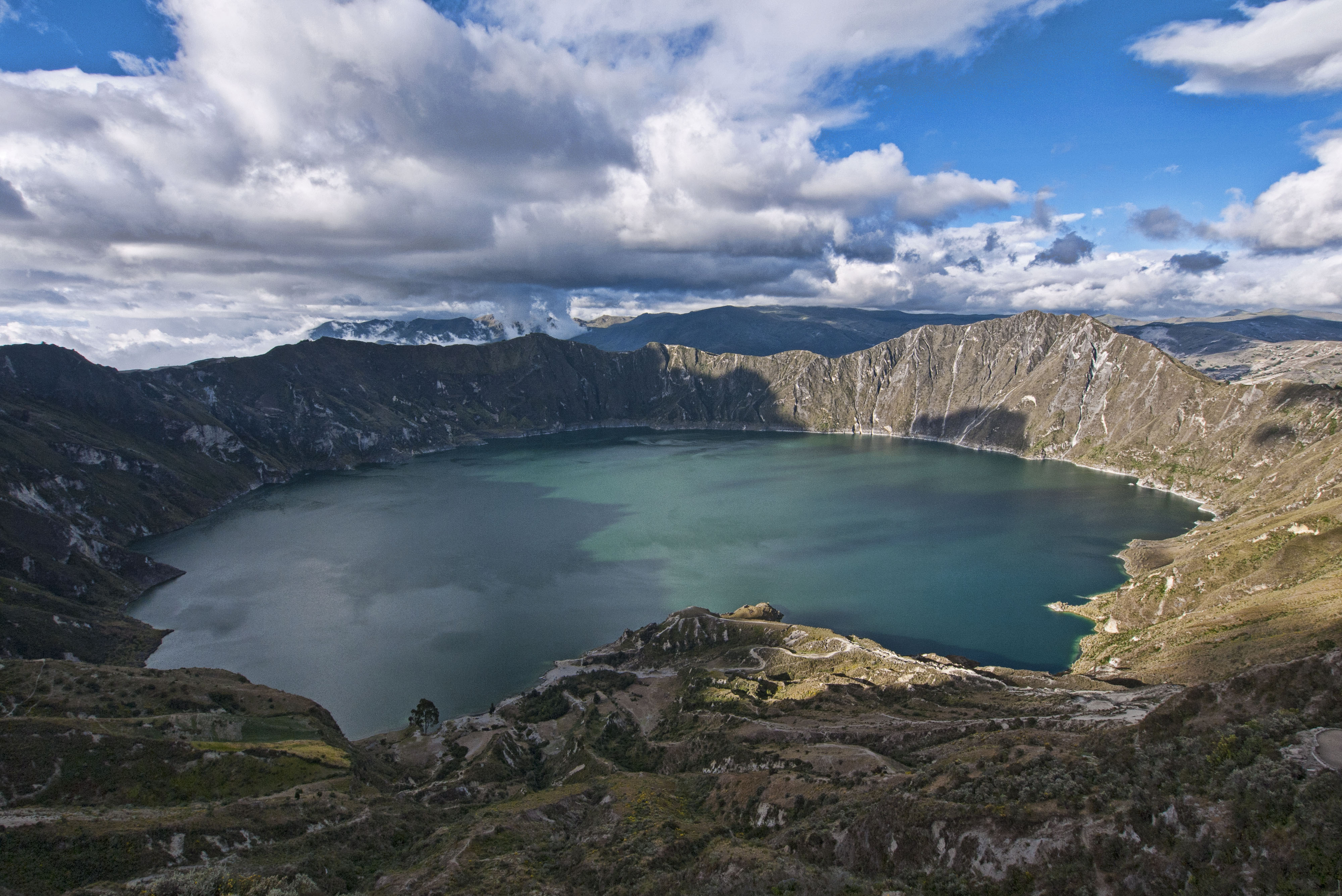
We arrived at Quilotoa at around 4.30pm which gave us time to admire the lake and walk around the area a bit before dark. We slept the night in the street outside a hostel that is being built there. However it was a pretty uncomfortable night as gale force winds rocked the Beast all night. In the morning we had intended to walk around the crater but the winds were just too strong. We thought we might walk down instead but the wind was blowing dust along the path making it very unpleasant.
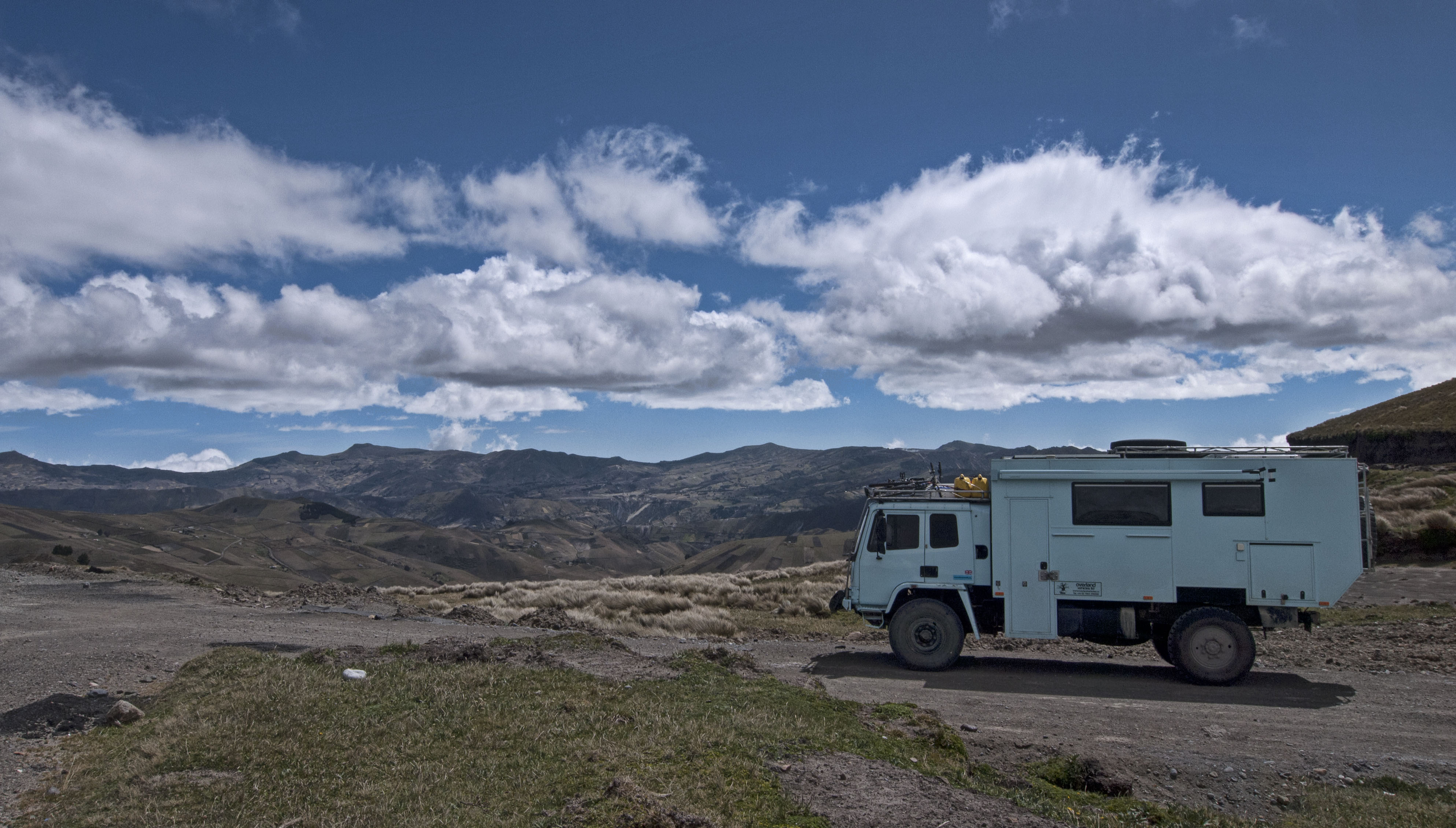
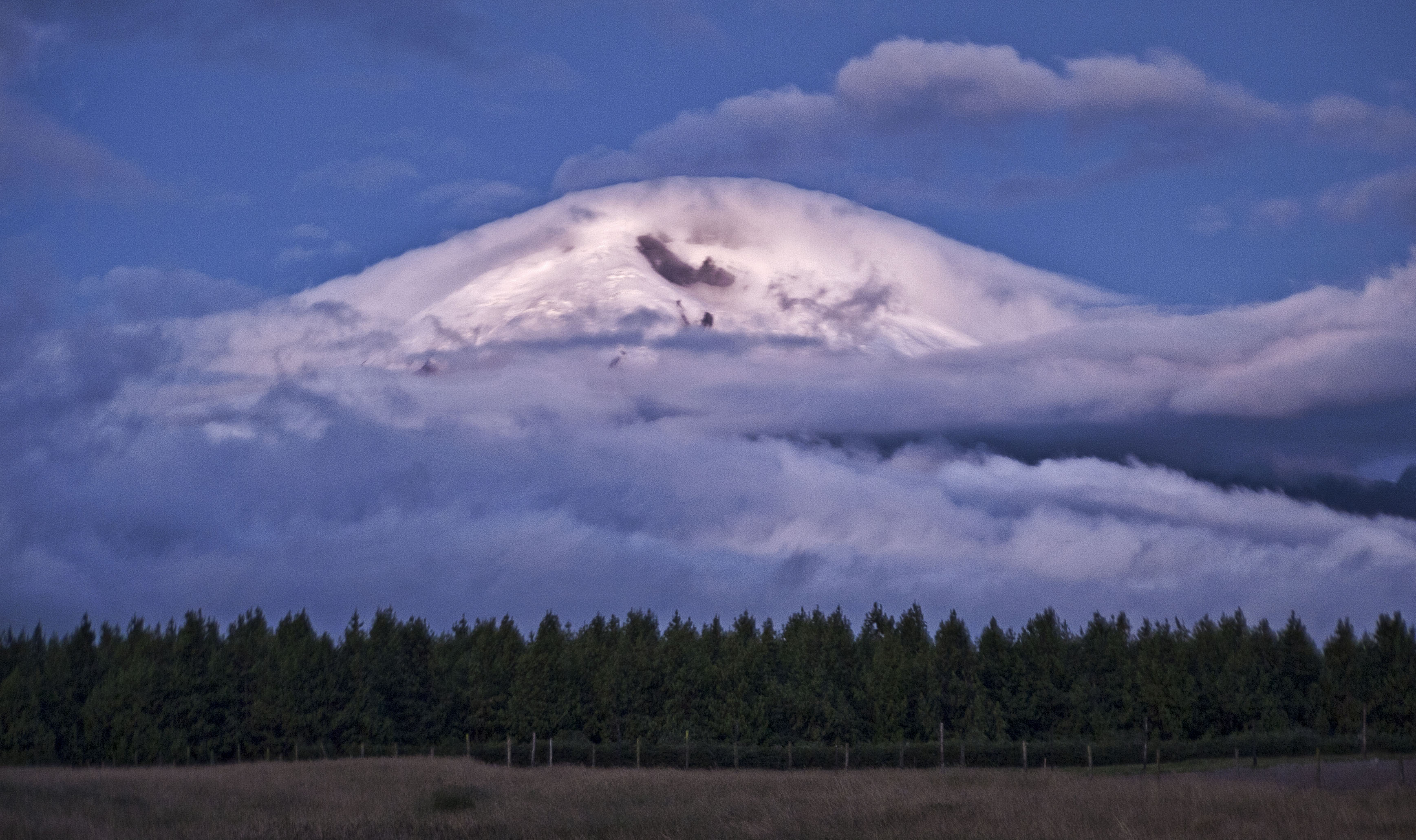
So instead we drove the other half of the loop, through the small town of Chugchilan and back to the PanAm. We had every intention to go to Cotopaxi the next day and were encouraged when the mountain appeared as it was getting dark. However the next morning we awoke to even lower cloud than before and decided to head East to Banos.
Papallacta
From Mindo we drove back to Quito and visited that all important supermarket. Its was another shopping centre with an underground car park – which have plagued us since hitting South America. We managed to find a side street where we could park but we had to pay an old man with a stick a couple of dollars for guarding the truck – it was obviously his patch.
Once we’d stocked up we jumped back in the truck and drove East from Quito up into the Hills and over a pass at 4100m – where it was very cold and wet – before dropping down towards the small mountain town of Papallacta.
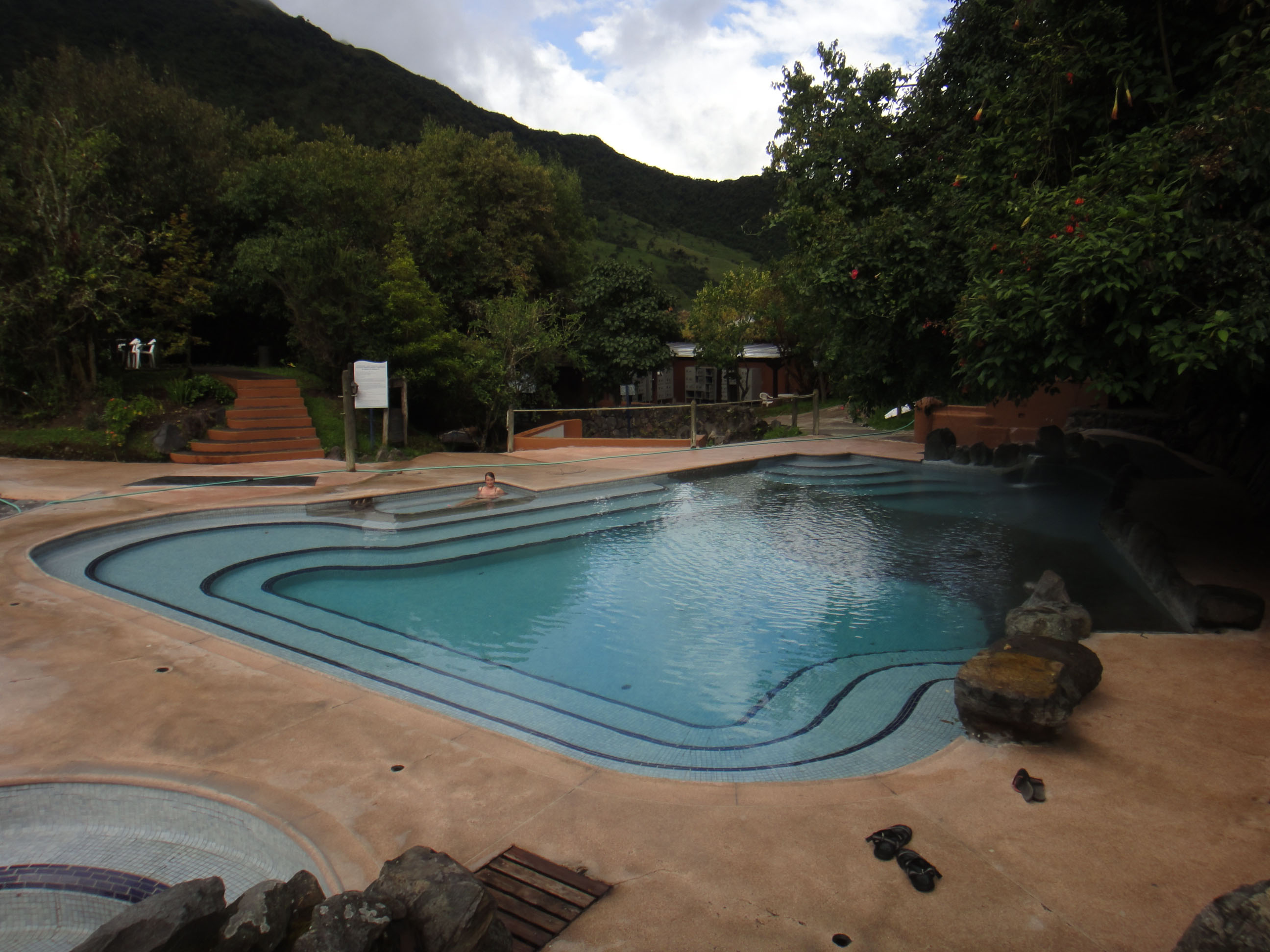
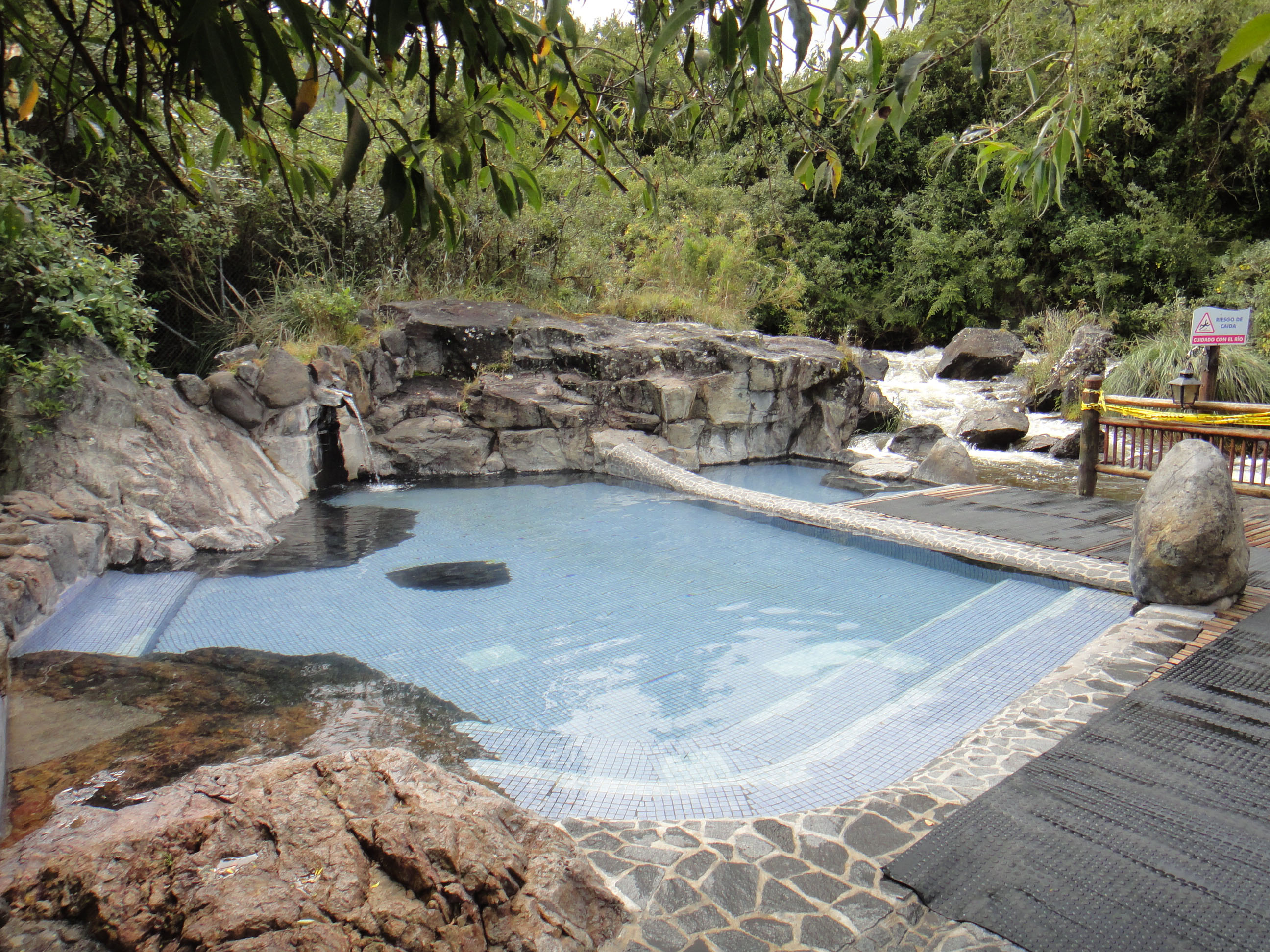
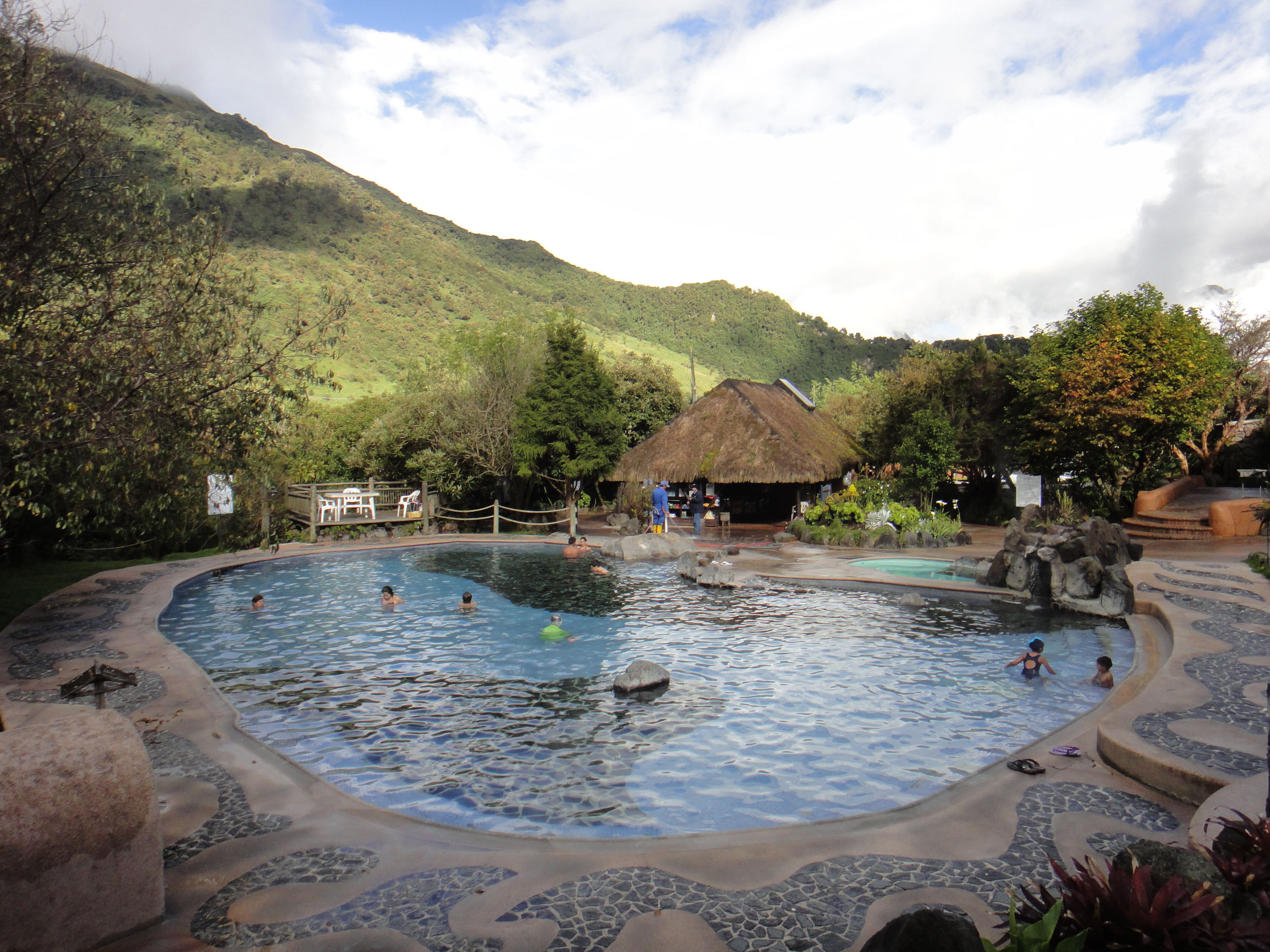
The reason for visiting Papallacta is the hot springs spa where there are 15-odd hot pools scattered in a picturesque setting next to a river. They allow camping in their parking lot as well which means that one entrance fee and you can pop in and out to the hot pools as many times as you want during the day.
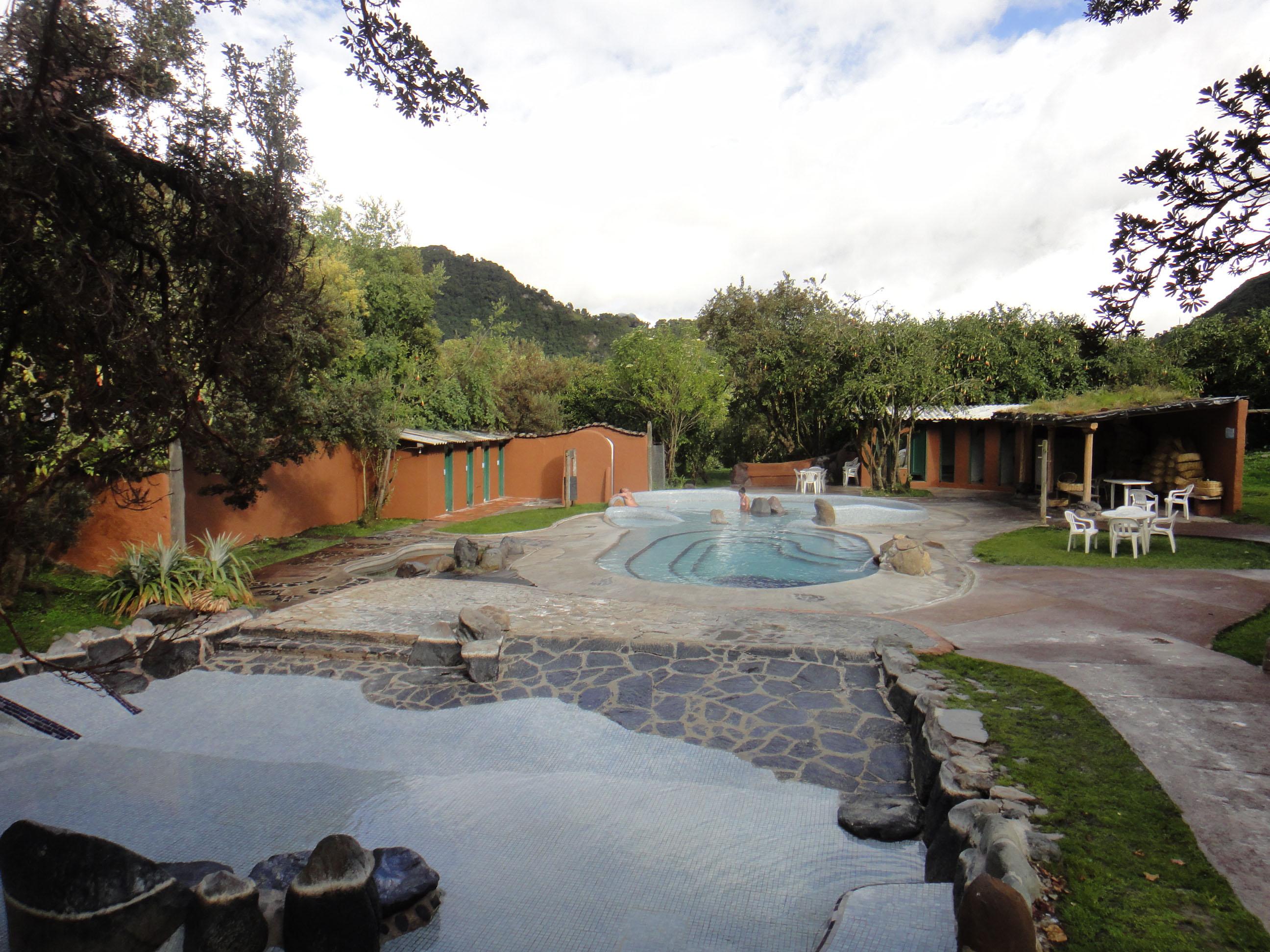
We had a very enjoyable, cold mountain day, soaking in the pools. I even had a cold dip in the river (which was very cold) between my hot soaks.
When we left and headed back to the central valley as we crossed the pass the weather started to improve and we emerged into bright sunshine after a day on the Amazon side of the mountains where it didn’t stop drizzling.
Mindo
From Mitdad del Mundo we drove for almost three hours to get to a small valley town called Mindo. The road was good but slow as it was up and down through the mountains and eventually down to around 1200m at Mindo itself.
Mindo is a great little town – small and quiet but with loads of guesthouses and backpacker places. Fortunately we arrived on a Sunday night and all was quiet – we couldn’t find anywhere formal to stay so we parked on the town square.
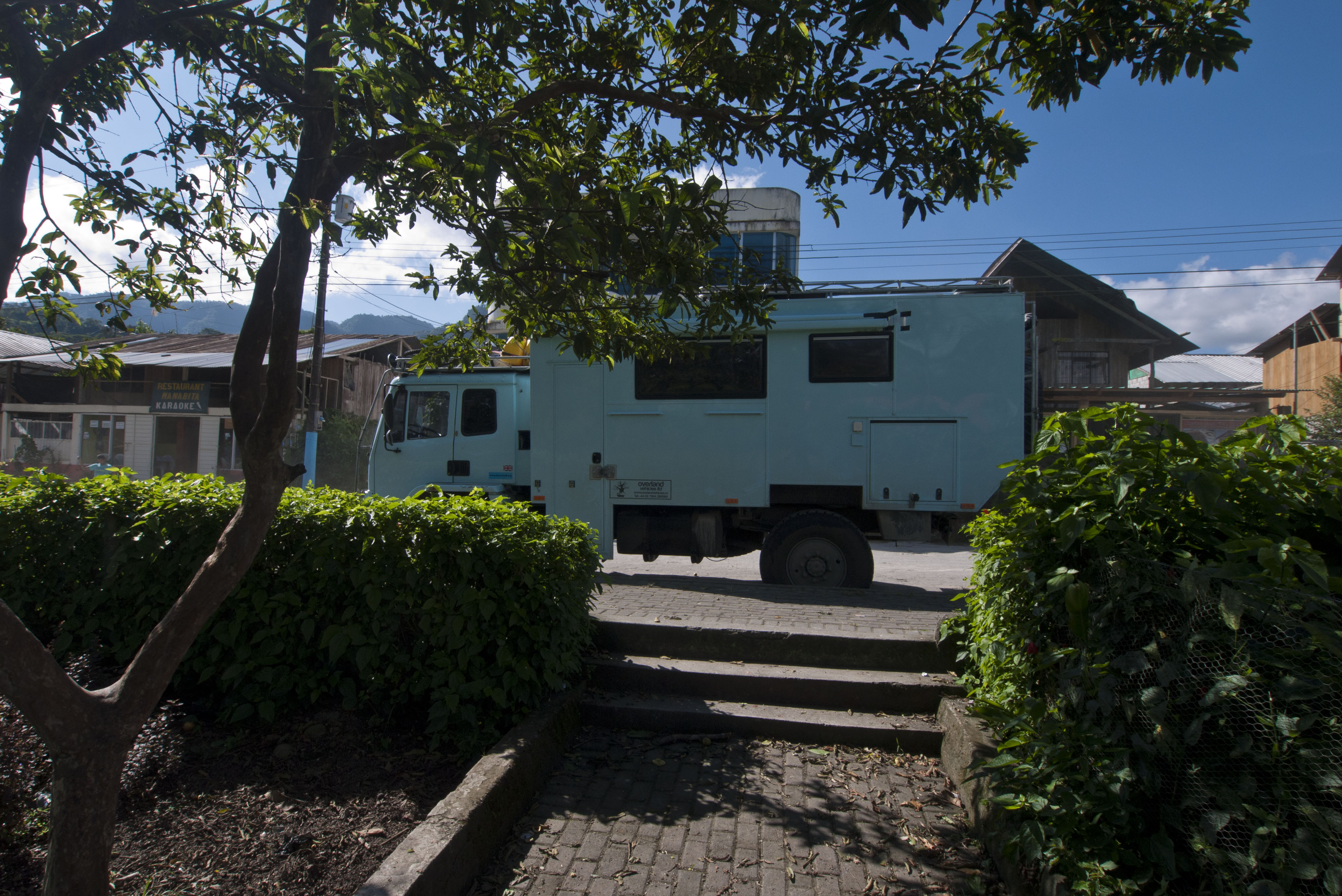
This was our first time parking on a town square and we were surprised how quiet it was overnight. A few children played round our truck sometimes even jumping on it once or twice but they all disappeared around 9pm so it wasn’t really a problem. In the end we stayed three nights on the square and would have stayed longer but we needed to stock up on groceries as supplies aren’t that readily available in Mindo.
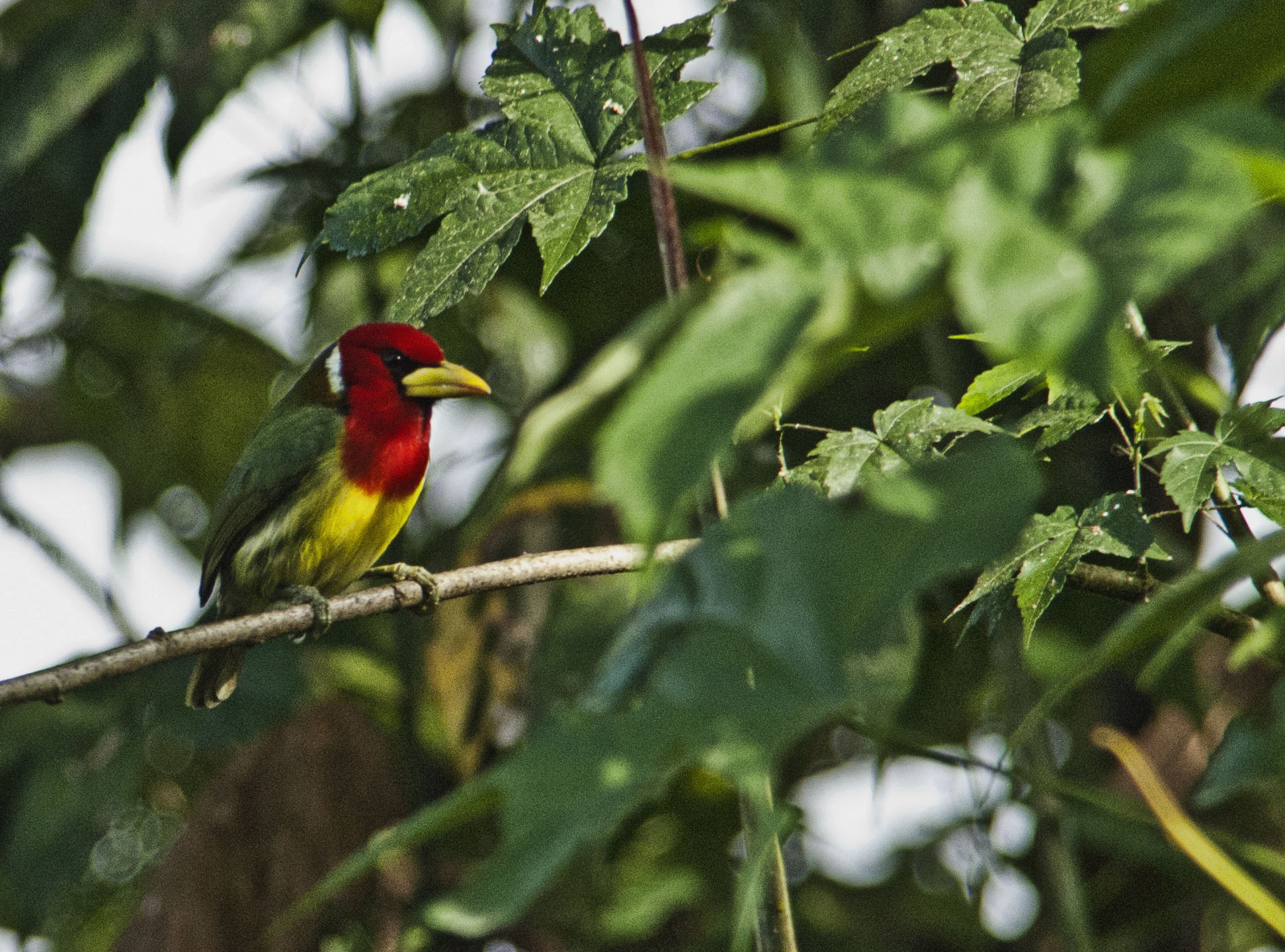
Mindo is the birdwatching capital of Ecuador so we thought that we should give it a try. We booked a birding day with a local guide through the owner of the local eco-hostal. This would be a great place to stay in a vehicle –we were just slightly too big for the parking spot around the back.
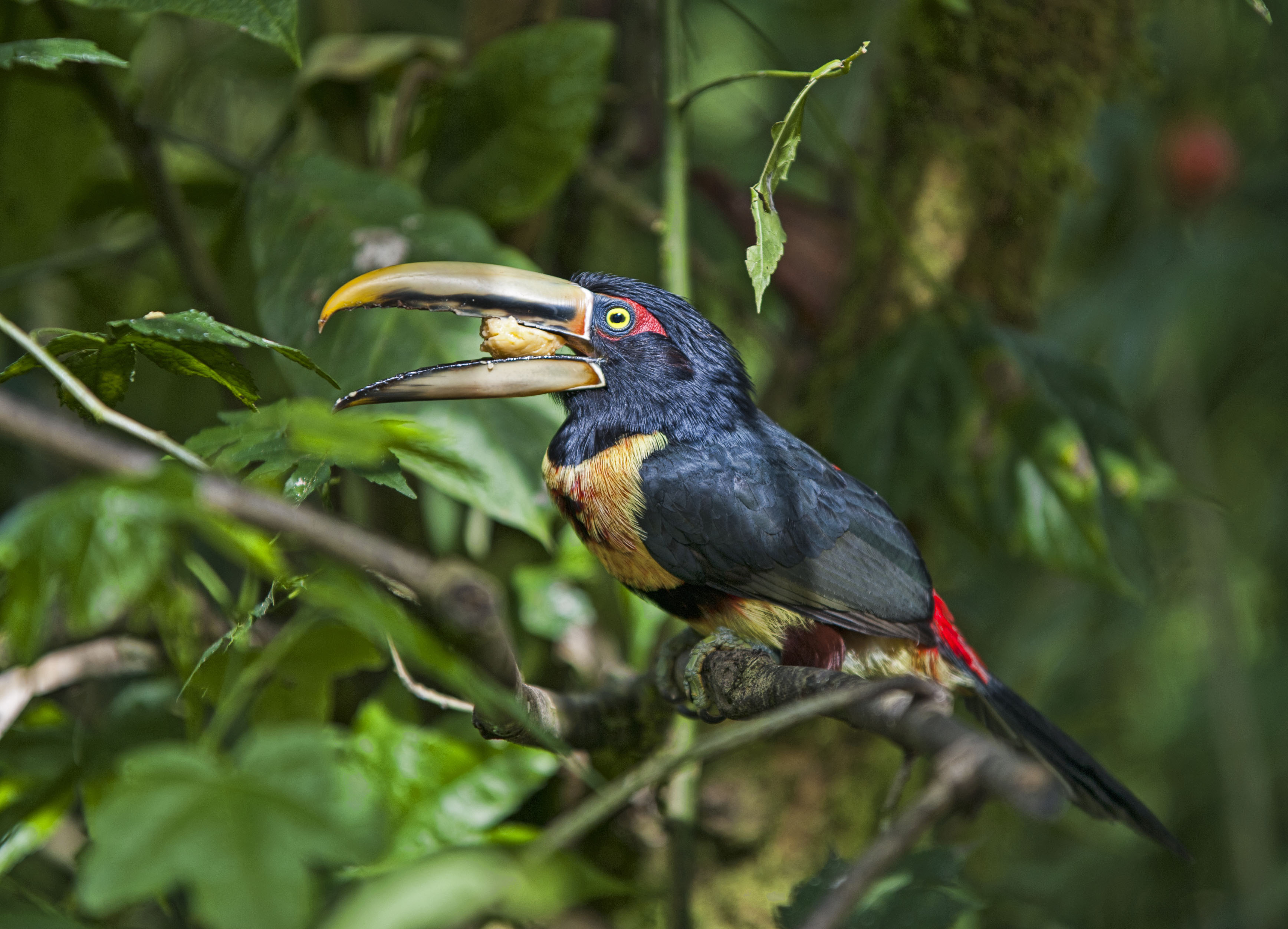
Our birding day started at 5.30am when we had to meet to get to a Lek (a place where birds go) for 6am. We stumbled up a narrow path through forest at the top of the valley in the semi dark as we made for the lek. Once we got there we saw the Andean Cock of the Rock for a few minutes – not really getting a good view before they disappeared with the light. We couldn’t get a picture because of the light which was a real shame.
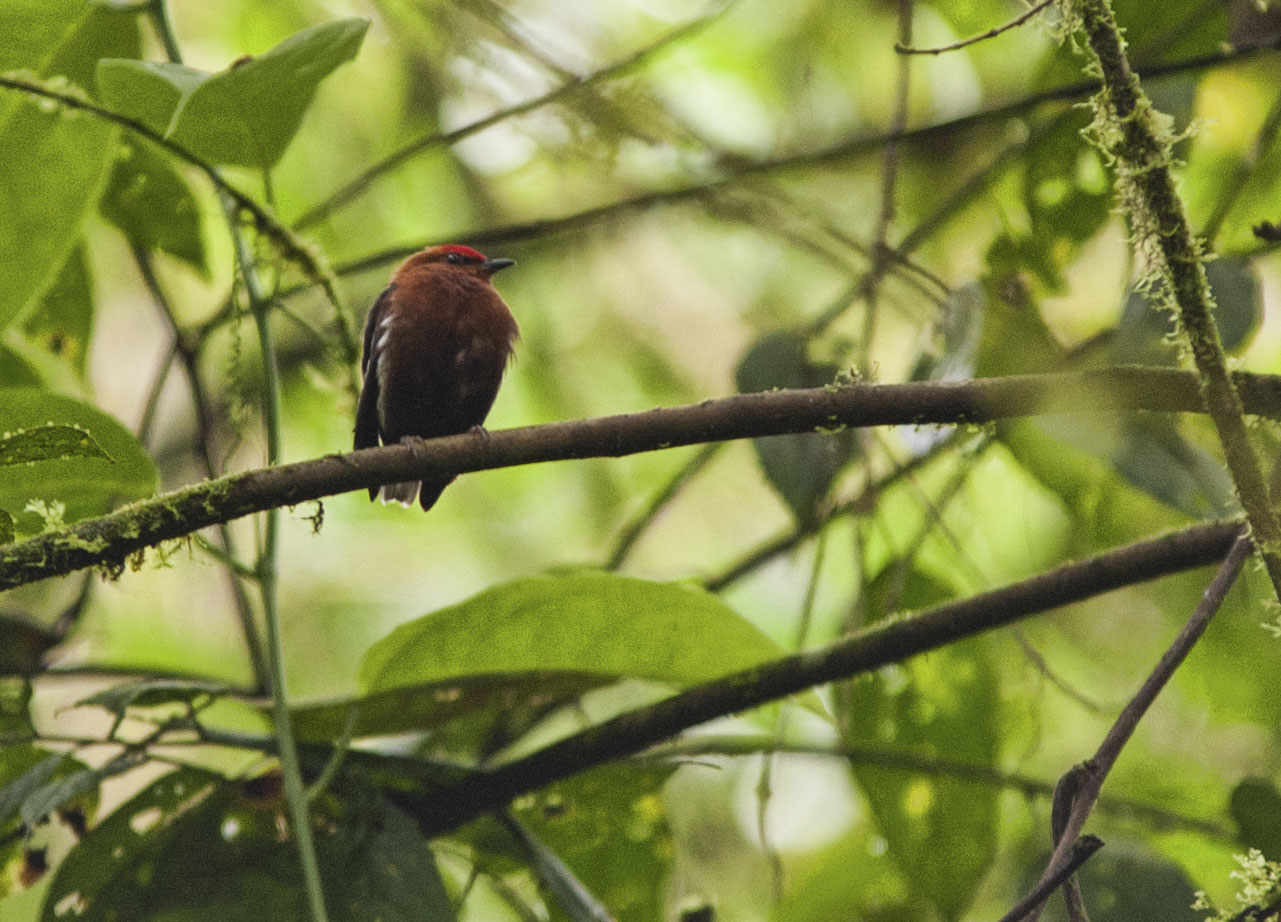
However there was a quetzal just next to the lek which we did see clearly – its times like these when the guide having a spotting scope is really important.
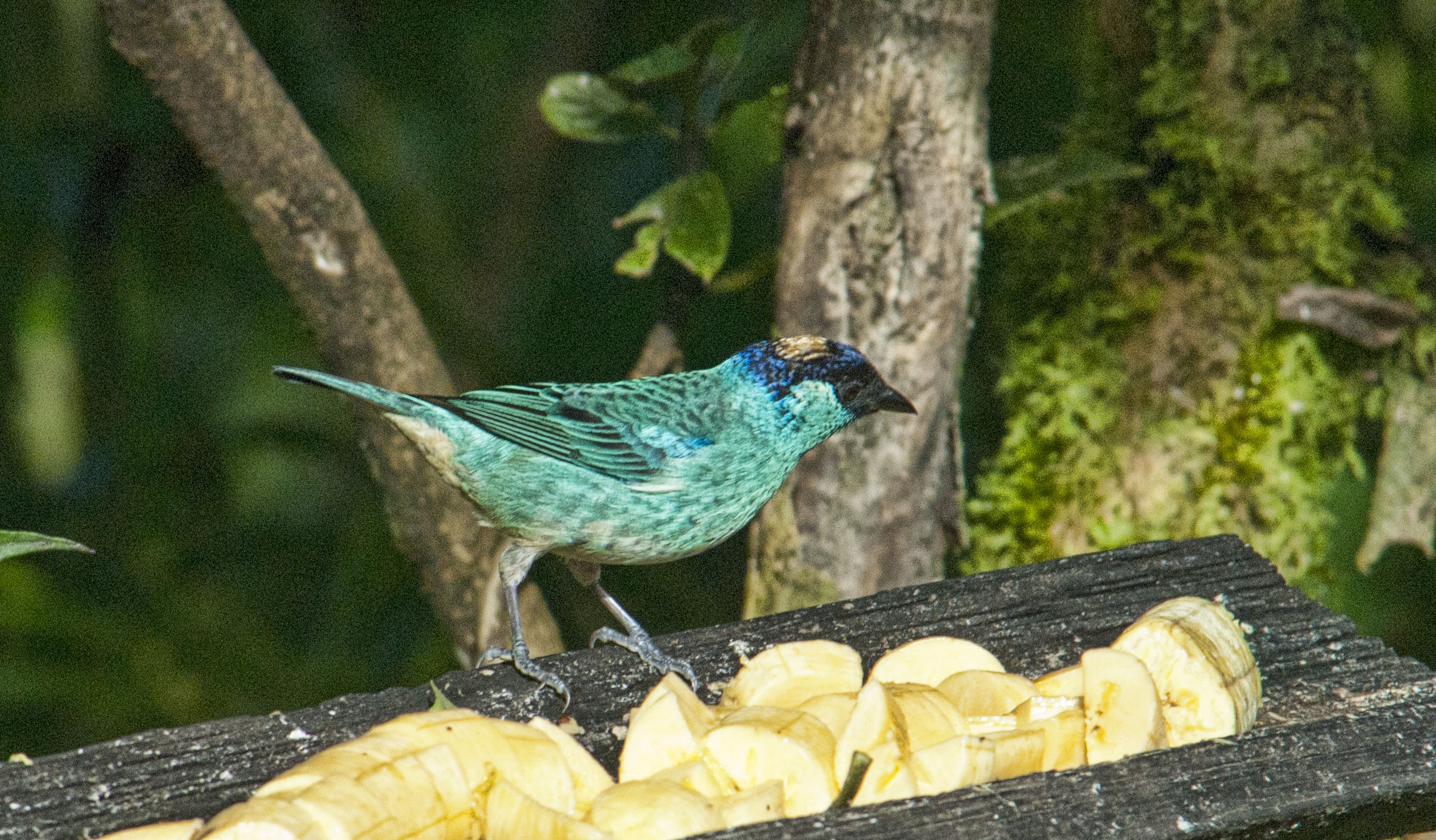
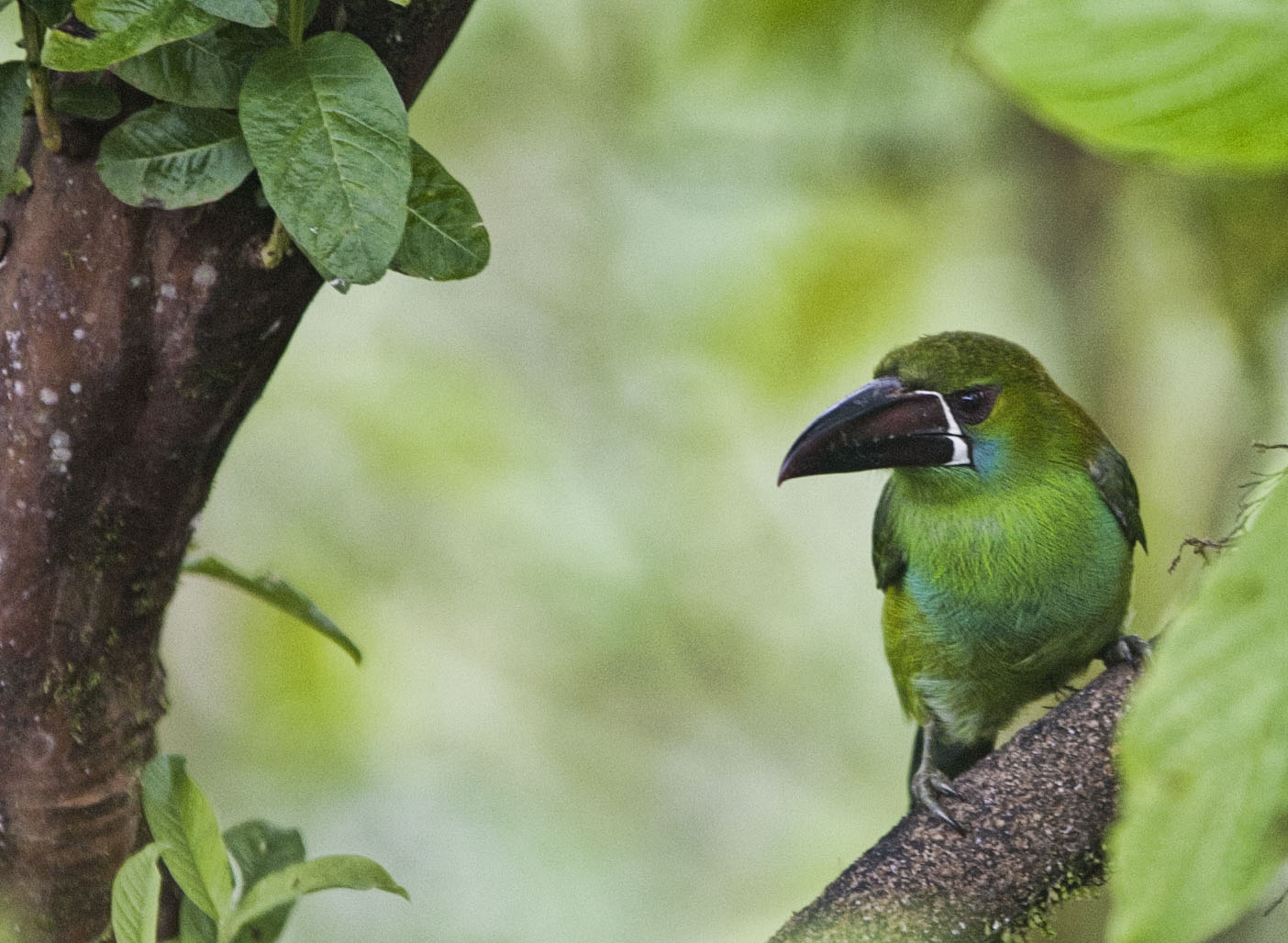
From the lek we were driven to a small lodge that had a feeding station for small birds – with bananas. While waiting here we saw loads of small birds and some toucans as well. Our guide had excellent knowledge of the birds and told us the names of all the ones we saw – not sure how many we remember now though.

After this we went to a large area of cloudforest called Milpe. They had hummingbird feeders near the entrance which we watched for a while and then we went on a loop walk through the forest.
Our guide had amazing eyes and ears, he also managed to imitate the calls of several birds to lure them into the open. We saw some rare birds on this walk including the Trogon. To be honest though we just like the pretty ones.
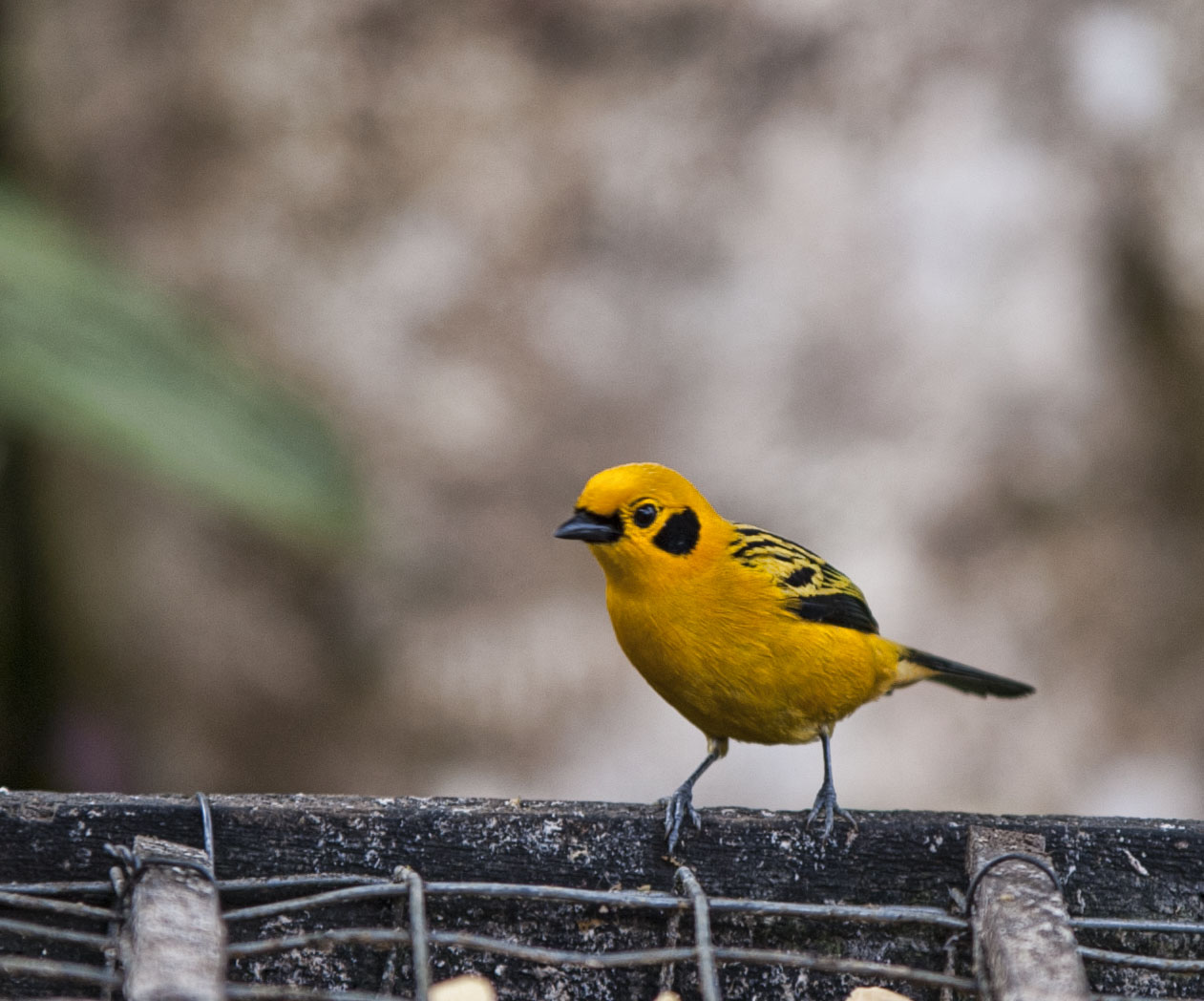
There was only one stop left after Milpe and that was for lunch in a nearby restaurant. They again had banana feeders and we saw a whole host of birds here too. The lunch was overpriced though and not that great.
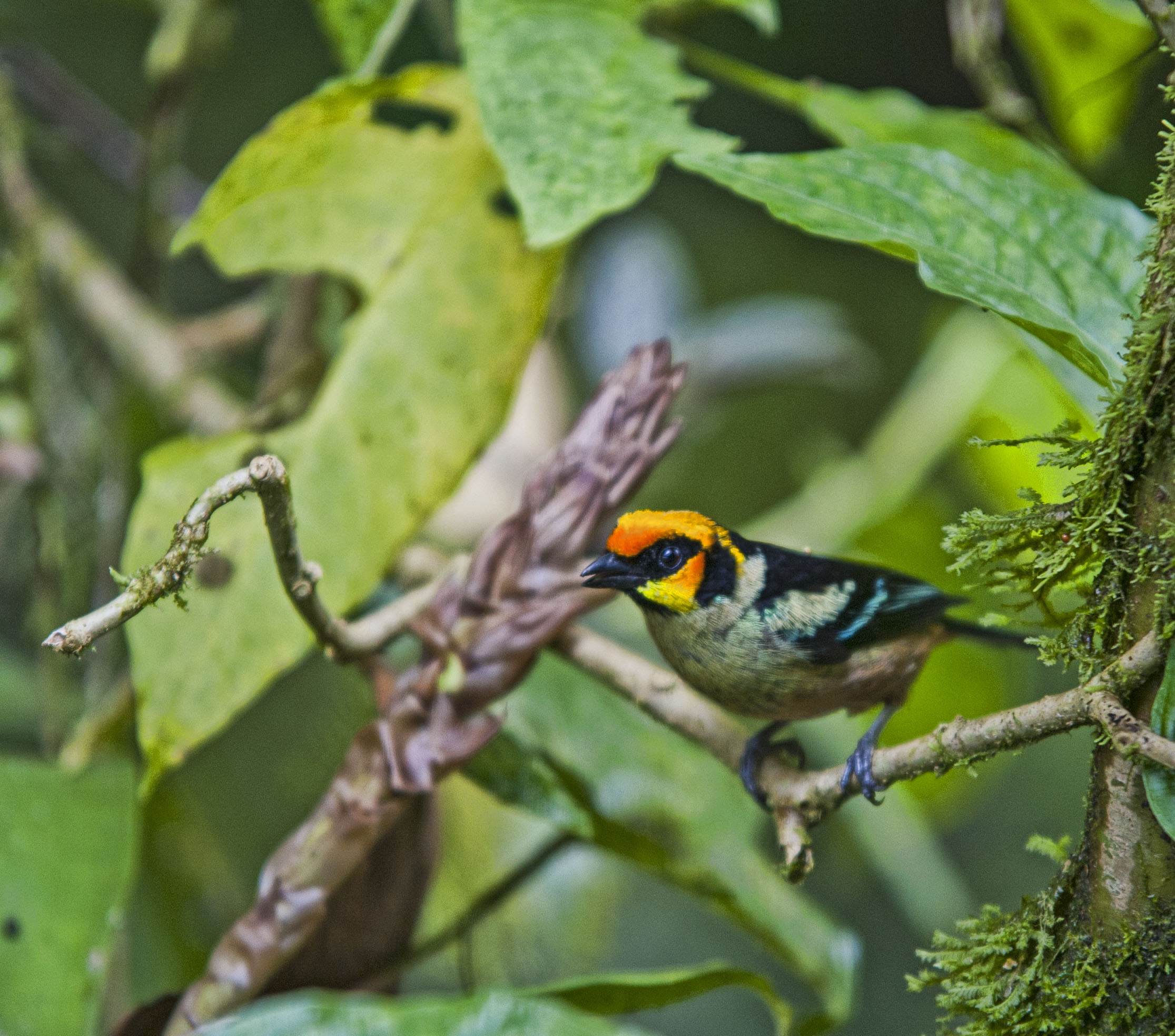
After lunch we got driven back to Mindo and we were pretty birded out. In all we saw 49 different types of birds.
The upside of not have any food in the fridge when we arrived in Mindo is that we had to eat out each night. This was great as the restaurants in Mindo are fantastic. One of the local restaurants that served Italian food (El Nomada) gave us the best pasta we’d had since leaving home !
Quito

On our return from the Galapagos we decided to stay another 2 nights in Hotel Quito as we had somewhere safe and easy to keep the truck. This would give us a day to explore the old town as well.

We took a cab early in the morning and got dropped off at the Plaza de la Independancia. We then spent a couple of hours walking round the old town of Quito. It’s nice but not stunning and was also pretty busy (on a Saturday). Quito has a terrible reputation for crime but we didn’t feel unsafe walking around at all – at night it might be a different matter.

In our travels so far we have eaten in a lot of small local restaurants and even from a lot of roadside food stands and we have never had a bad meal. “Typical” food is usually cheap, simple and tasty. Well in Quito we ended our run of luck and had a terrible meal. We made the mistake of going to a place recommended in our guide book and we picked at the food and didn’t really eat it. Instead of a tasty soup it was a watery greasy soup – our main course of chicken was scrawny and tasted like it had been boiled. This restaurant even gave us a pudding of liquid jelly! Ah well at least it was cheap.

After lunch we walked up to the Basilica del Voto which is an imposing neo-gothic monolith on a hill North of the Plaza de la Independencia. We first walked around the inside of the church which was grand but not as intricately worked as many we have seen.
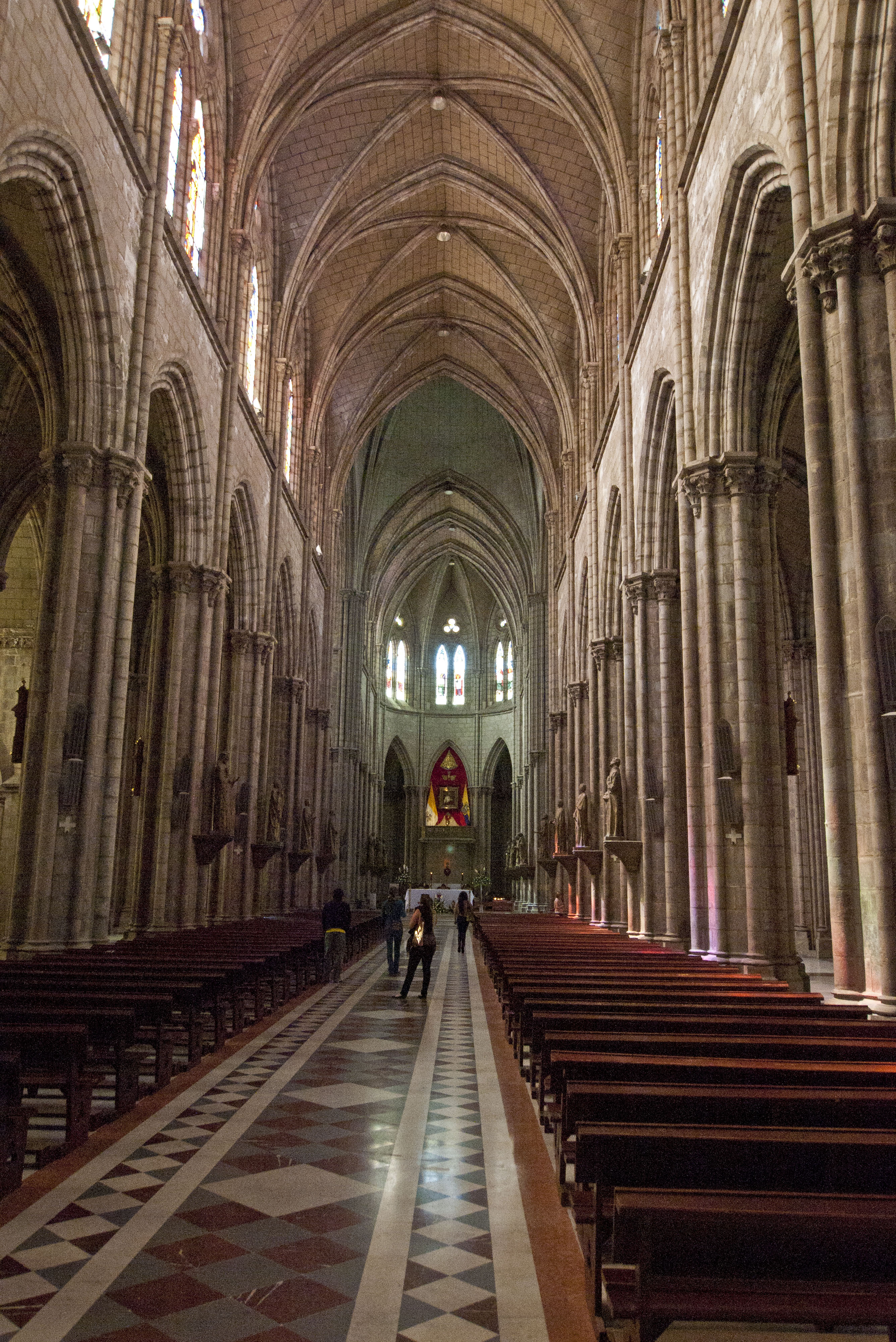
After our inside tour we went around to the main entrance and climbed up the towers. You can access towers on either end. At one end you climb up a series of precarious ladders up the outside of a tower to reach an open air platform with great views of the city.
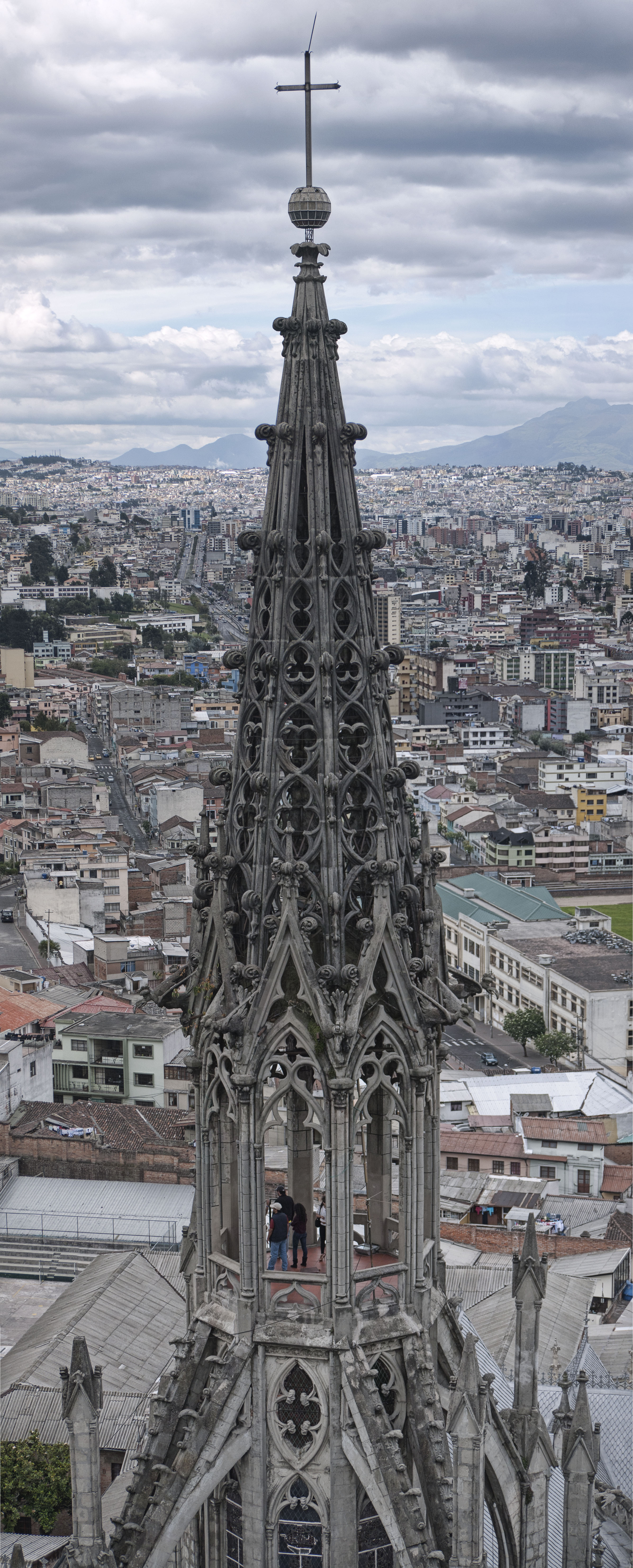
At the other end the climb feels less unsafe as you climb up the interior of one of the bell towers right up to a small room at the very top of the tower.
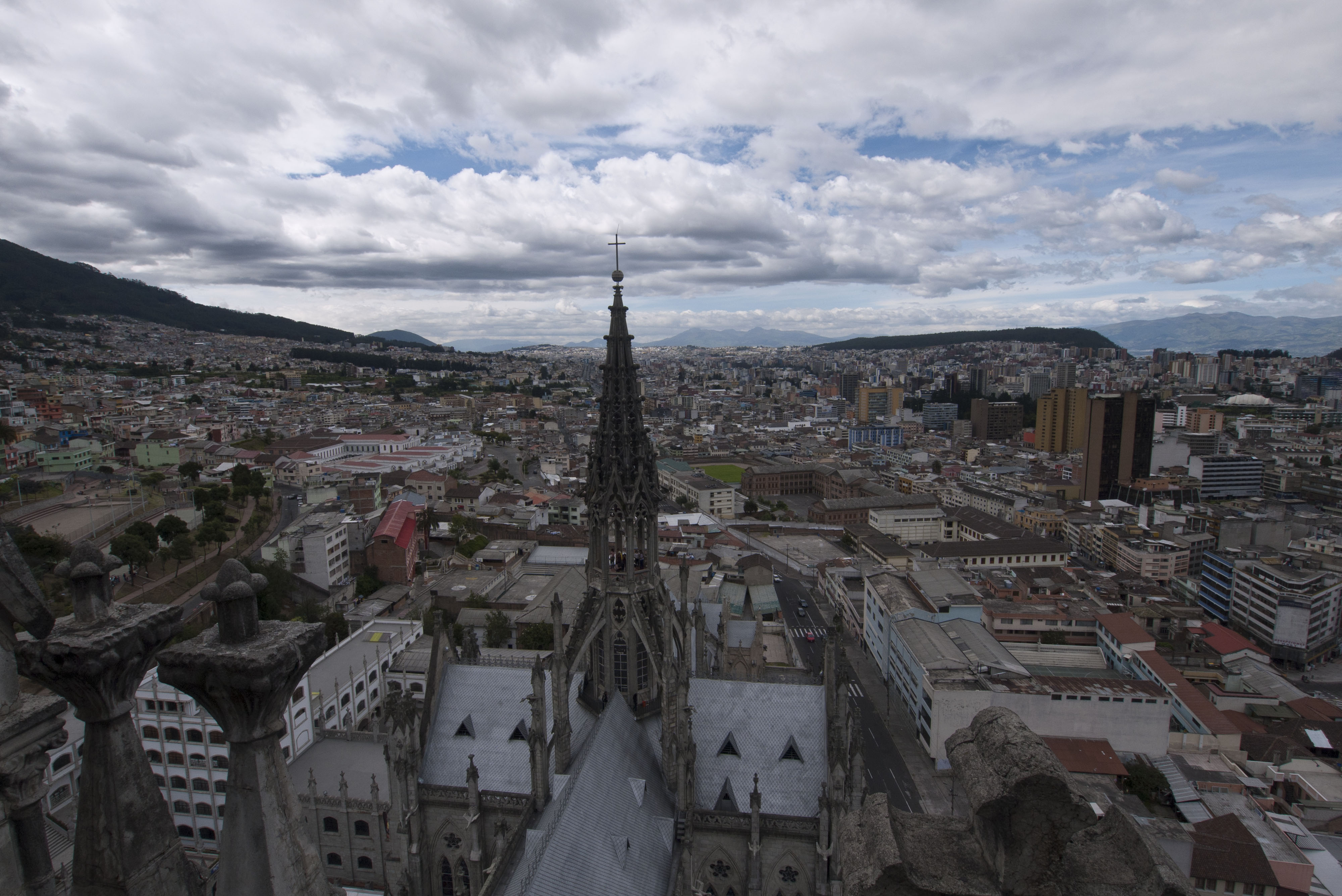
Once we’d come down from the towers we decided that we’d had enough and hailed a cab to takes us back to the truck. We had, what I would call a fairly normal evening if we were at home but what we now think of as a luxurious evening, where we picked up a takeaway pizza and a few beers and took them back to our hotel room to watch the French Open.
During the day we had noticed large numbers of people wearing Ecuadorian football shirts. We found out that this was because Ecuador were playing Argentina in the evening. Everywhere we walked past in the evening had the football on unfortunately Ecuador were soundly beaten 4-0.
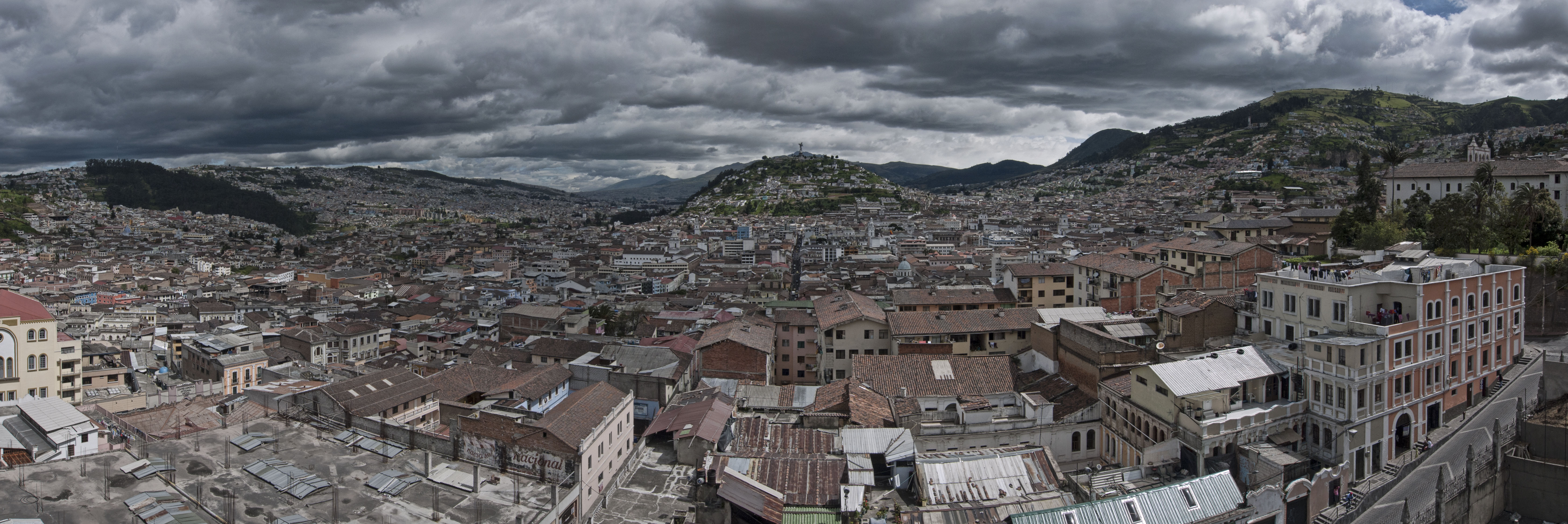
The next morning we headed off early. We checked out of the car park and drove up to the North of the City to a place called Mitad del Mundo which is a big equator monument. It’s a shame that they put it in the wrong place but this was in the days before GPS. Its only 100m or so from the real equator.

A word of advice if you visit is that the Planetarium is awful, not only that but its really uncomfortable as well so we would recommend absolutely not visiting.
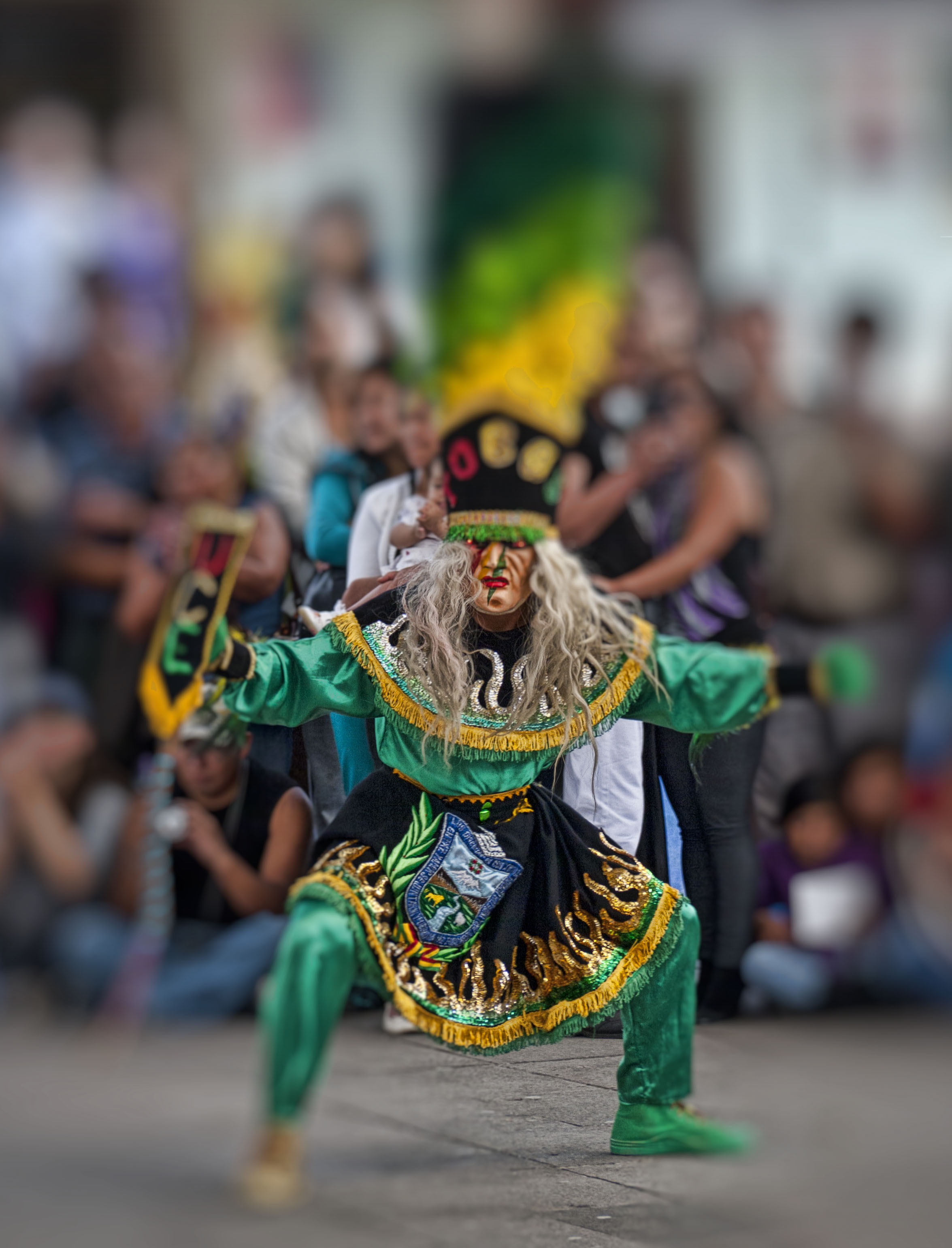
While we were there they had a demonstration of local indigenous dancing which was very enjoyable and the costumes were amazing.


Galapagos: Wrap-Up

The 10 days we spent in the Galapagos was very expensive for those of us on an Overlanding budget. However the amount of wildlife that we saw coupled with how easy it is to approach it really does make this a trip of a lifetime.
I want to thank the crew of the Beluga for basically being fantastic from the Panga handlers who made sure we were safe while snorkelling to the chef who prepared some fantastic food. A special mention for El Capitan whose playing music on a glass was truly memorable and also Jorge who served fantastic cocktails, kept our rooms clean and played a mean drum. Juan our guide was also amazing answering every question that was put to him all week and entertaining us with his singing and guitar playing.

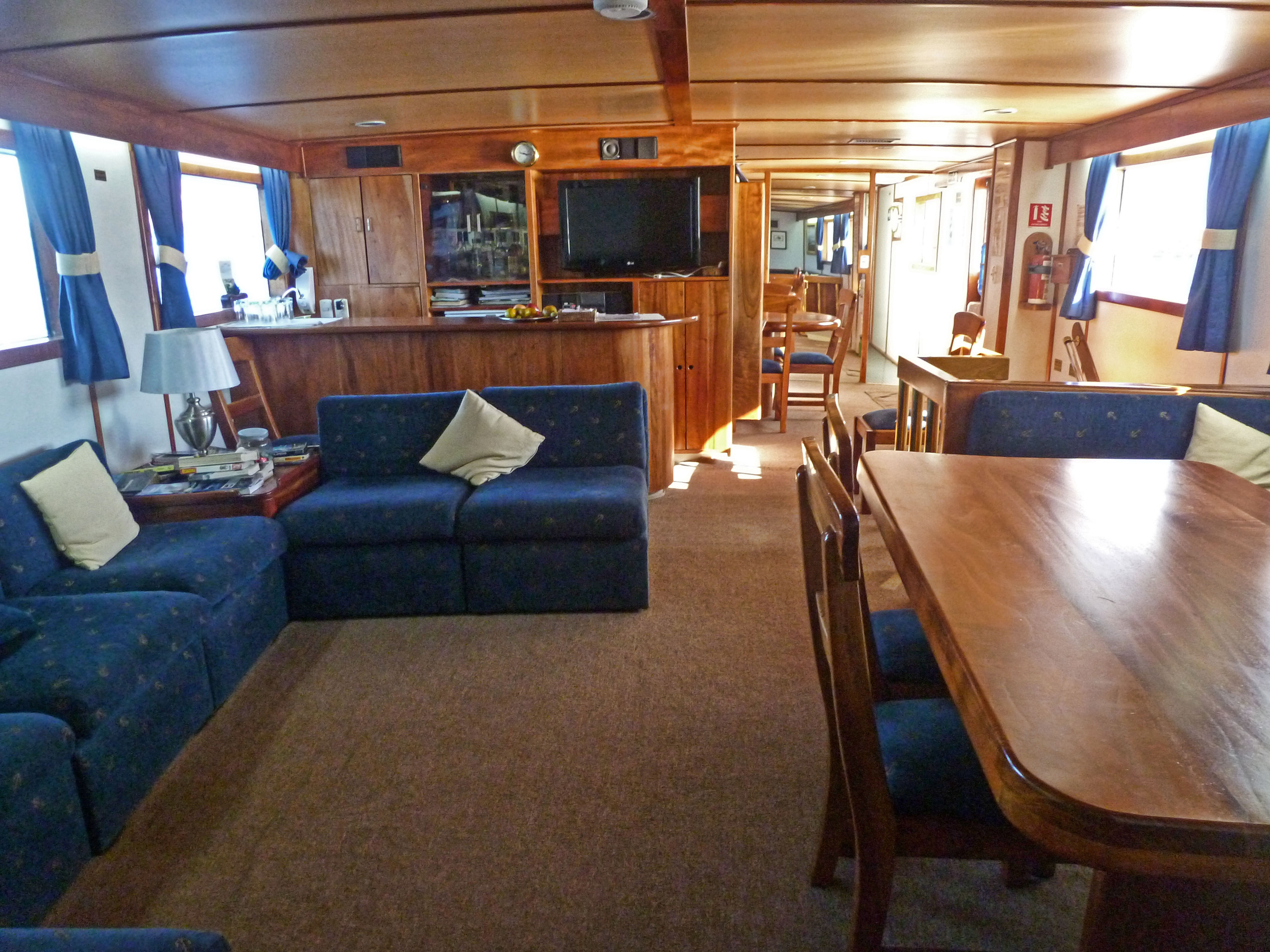
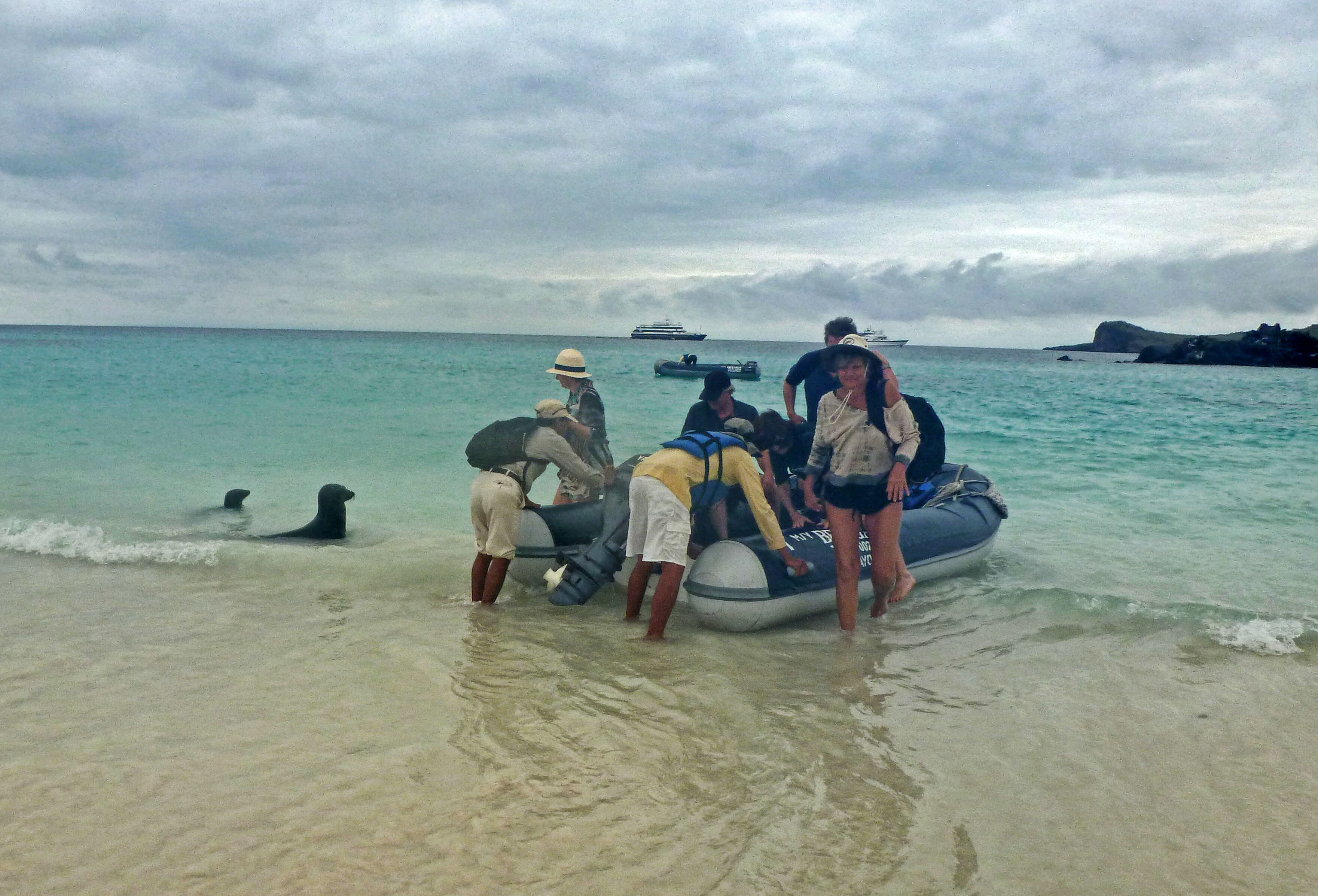
Beluga was a great boat to be on and had a maximum capacity of only 16 people. We feel this is really important in a boat. There are much bigger boats around, we even saw one which had a ship’s doctor, but smaller boats mean that everyone gets on the RIBs (Rigid Inflatable Boats) at one time for landings so you don’t have to wait around.
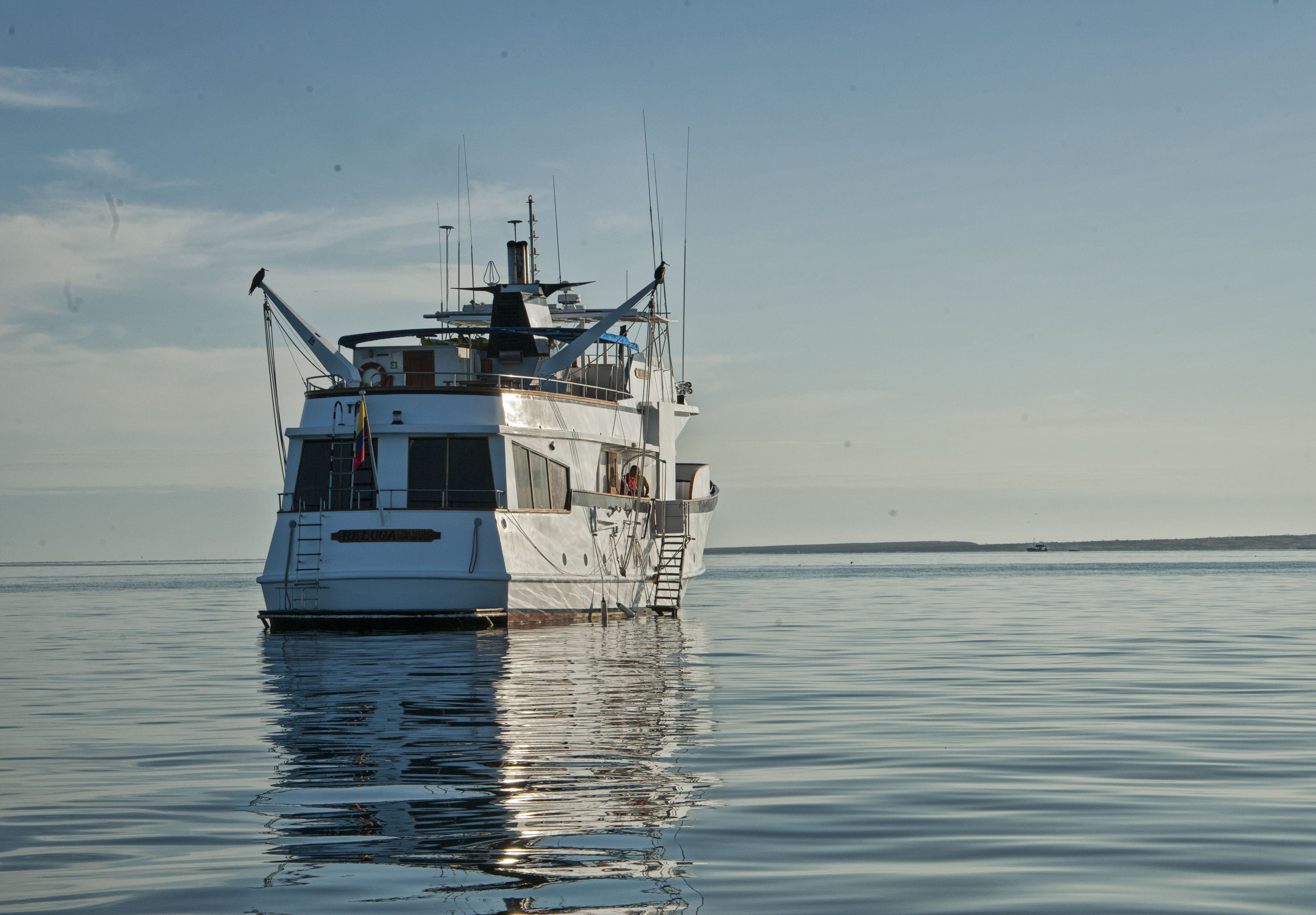
The bigger boats tend to have more facilities and do more sedate excursions. This tends to mean that the average age of the passengers is well upwards of 60 and we saw many people from this type of boat moving with walking sticks very slowly over the rocky terrain. The bigger boats also aren’t allowed to some of the sites because they will swamp them and also can’t anchor in some of the areas we did.

There are three levels of guide in the Galapagos. Juan was a level 3 guide of which there are only around 40 – with around 100 boats, some with multiple guides. This meant that he had 25 years experience as a guide and spoke fluent Spanish, English and German. Less experienced guides may have as much technical knowledge but their language skills may not be as good and Level 1 guides only have to speak Spanish.
There are two seasons in the Galapagos which are controlled by the ocean currents. January to June is the warm wet season and the water is warmer so more comfortable for snorkelling. This is also the calm season. The roughest time of year is July as you transition to the Cool Dry Season which lasts until December. In this season the sea is choppier and the skies are more overcast. Although we were in the Galapagos in the transitional period we had relatively calm seas and no rain.
When booking a trip to the Galapagos make sure that you study the Itinerary really carefully and that it goes to the islands that you want to go to. It takes 2 weeks to cover all the islands so any 1 week trip is always a compromise. Lonely Planet do a really good Galapagos guide book which tells you what you can expect to see on each island.
The Galapagos are all about taking a boat cruise. You can chill out on Santa Cruz or San Christobal but you won’t see the whole spread of wildlife and day trips to other islands are expensive. There are last minute trips available at the shops on Santa Cruz and you might get a bargain. However you might also wait around for a while before you find something that fits – all the while paying for accomodation ! Travel agents in Quito can also hook you up with last minute trips.

Galapagos Cruise – Day 8: Turtle Bay, Santa Cruz
We had to be packed up and ready to go first thing in the morning as we were leaving the ship today. However there was still time for an early morning nature trip to Turtle Bay on Santa Cruz Island.
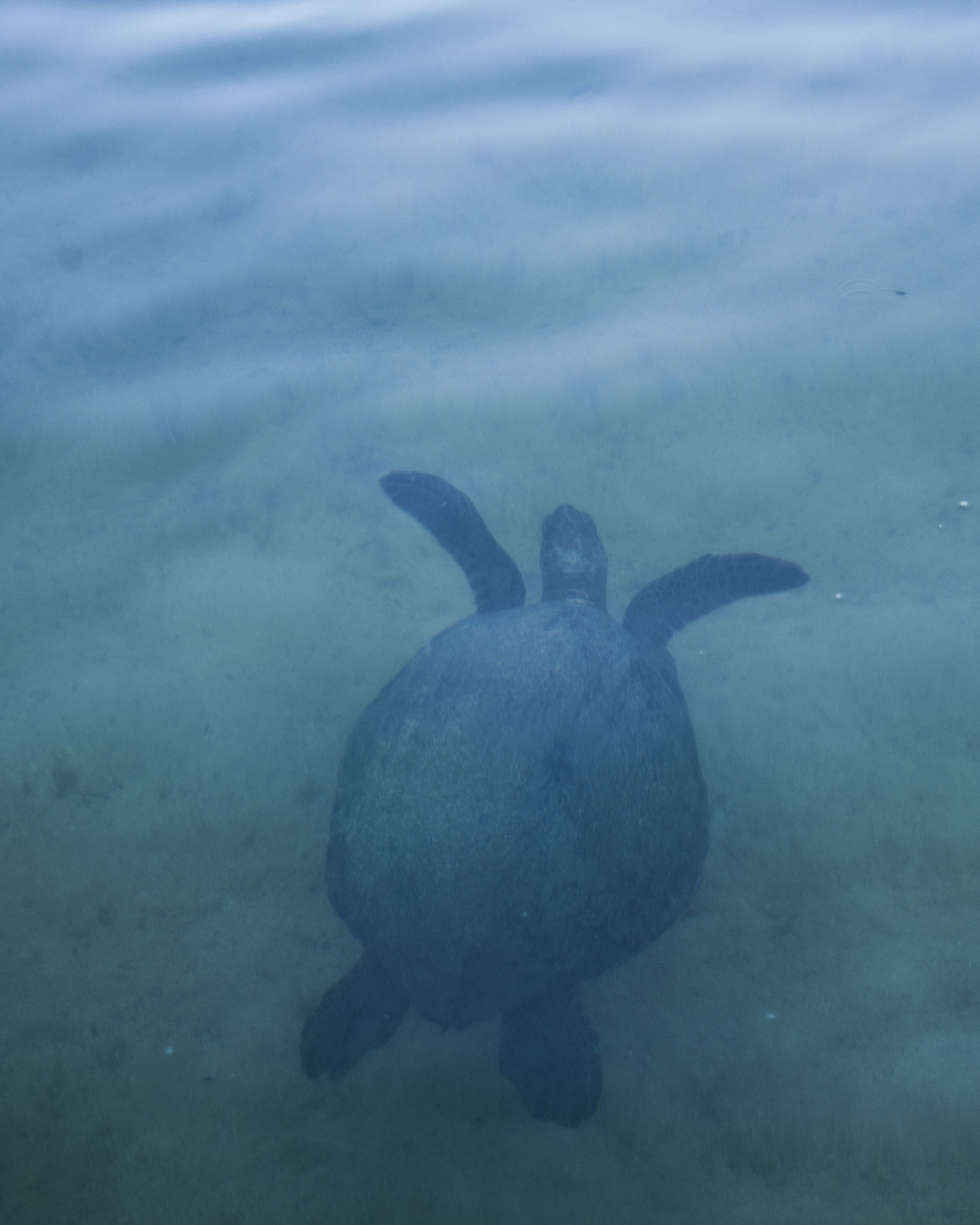
Landing is not allowed in this important Mangrove and nursery area so we would be cruising around in the RIBs using paddles to move.
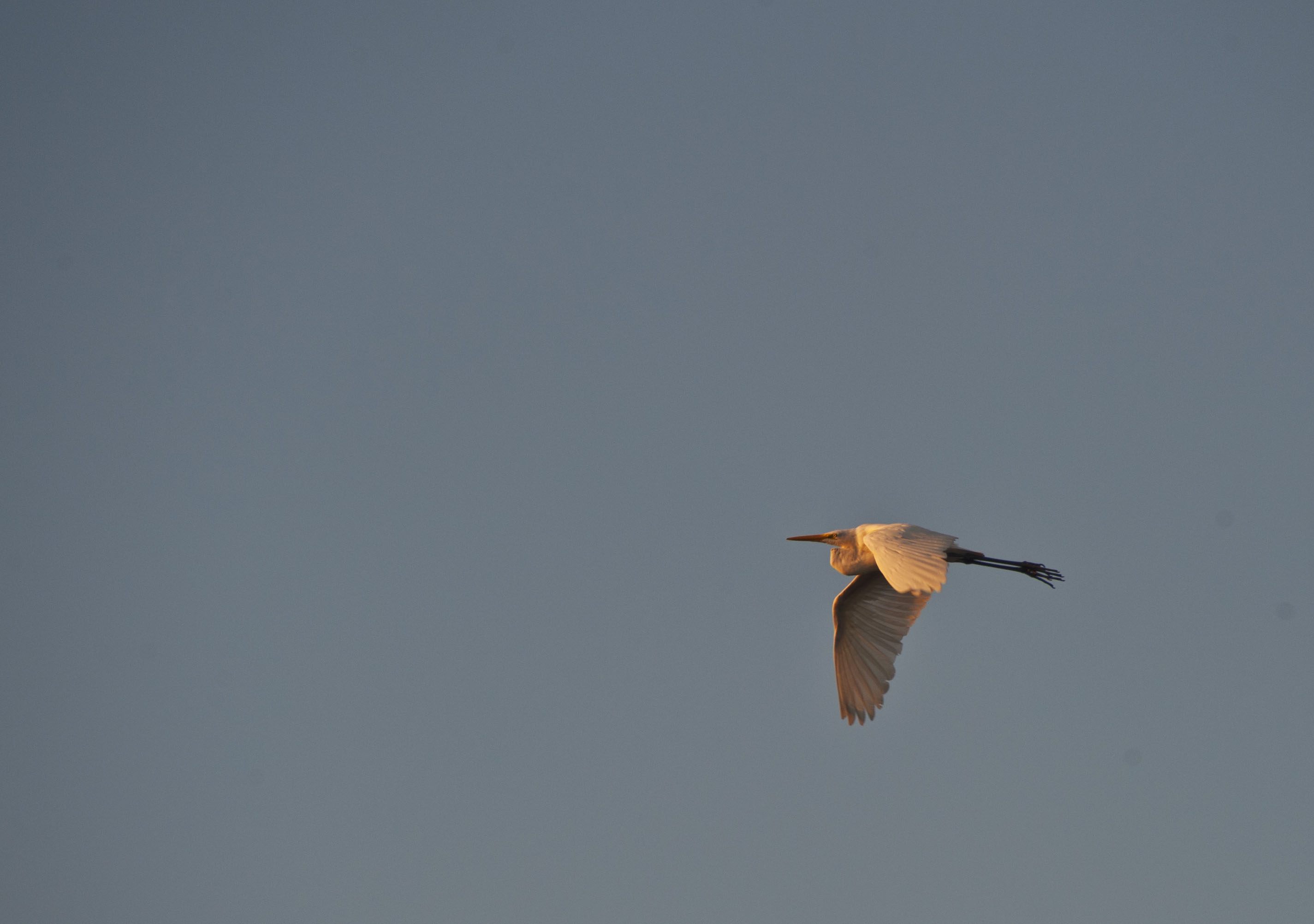
My expectations were low for this outing but I was pleasantly surprised by the beauty of the area and the amount of life to be found.
We started at 6am with the sun just coming up and headed off into the bay.

The first things we saw were some Pelicans and Blue Footed Boobies on the rocks and fishing in the water. We also saw some Lava Herons and American Oystercatchers on the rocks.

It wasn’t long before we spotted the first of many turtles cruising through the shallow water as well as small sharks and rays.

On the way out of the mangroves at the exit to the bay well over a thousand Blue Footed Boobies had arrived while we were on the RIBs. Soon after we came amongst them they all took off together as if by a prearranged signal. They were resting while on a hunting expedition looking for a big school of fish.

When we arrived back at the boat we ate breakfast and then it was time to leave the boat and take a bus from the jetty to the airport.

We had a couple of hours to wait before our flight but this was fairly uneventful and we were back in Quito by the early evening.
Galapagos Cruise – Day 7: Genovesa Island (Tower)

We left Santiago island straight after we got back on board for the longest cruise of the trip. We were crossing the equator and heading for Genovesa Island. The water was pretty rough and no-one onboard slept very well until we arrived at the safe harbour of a collapsed volcano crater at the island.

In the morning we woke to a cacophony of sea birds. Genovesa has millions of birds nesting, courting and living here as a result of the absence of any land based predators.
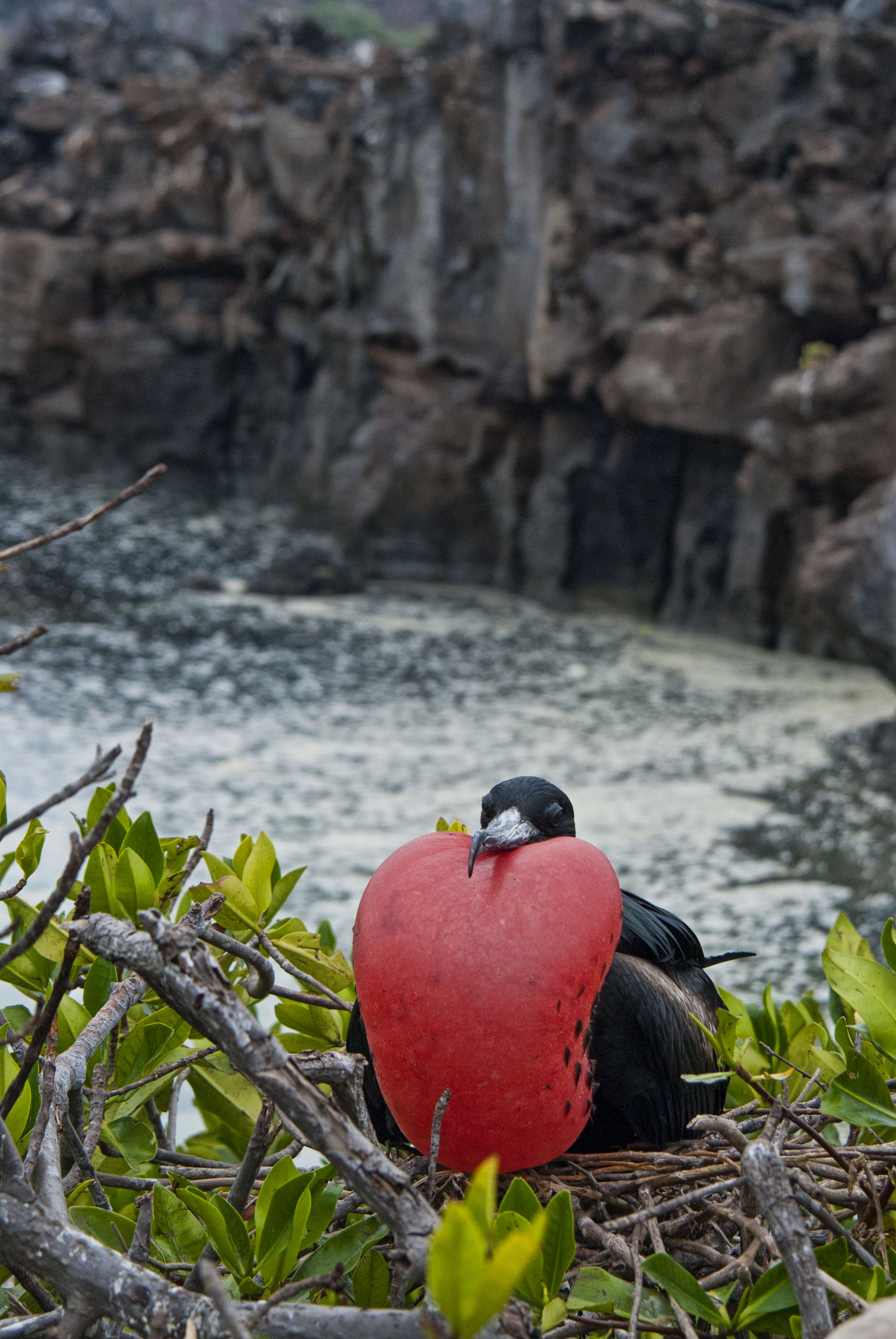
Our first excursion of the day was a wet landing on the beach at Darwin’s Bay. As soon as we landed we could see Great Frigate birds nesting, courting and flying around. The male frigate birds inflate a red pouch on their throats to attract females and this is very striking. The pouch can take 20 minutes to inflate and they can keep it inflated all day even while flying around.

We walked a rocky trail along the sea shore and in the trees around the path we caught our first glimpse of Red Footed Boobies who were nesting.
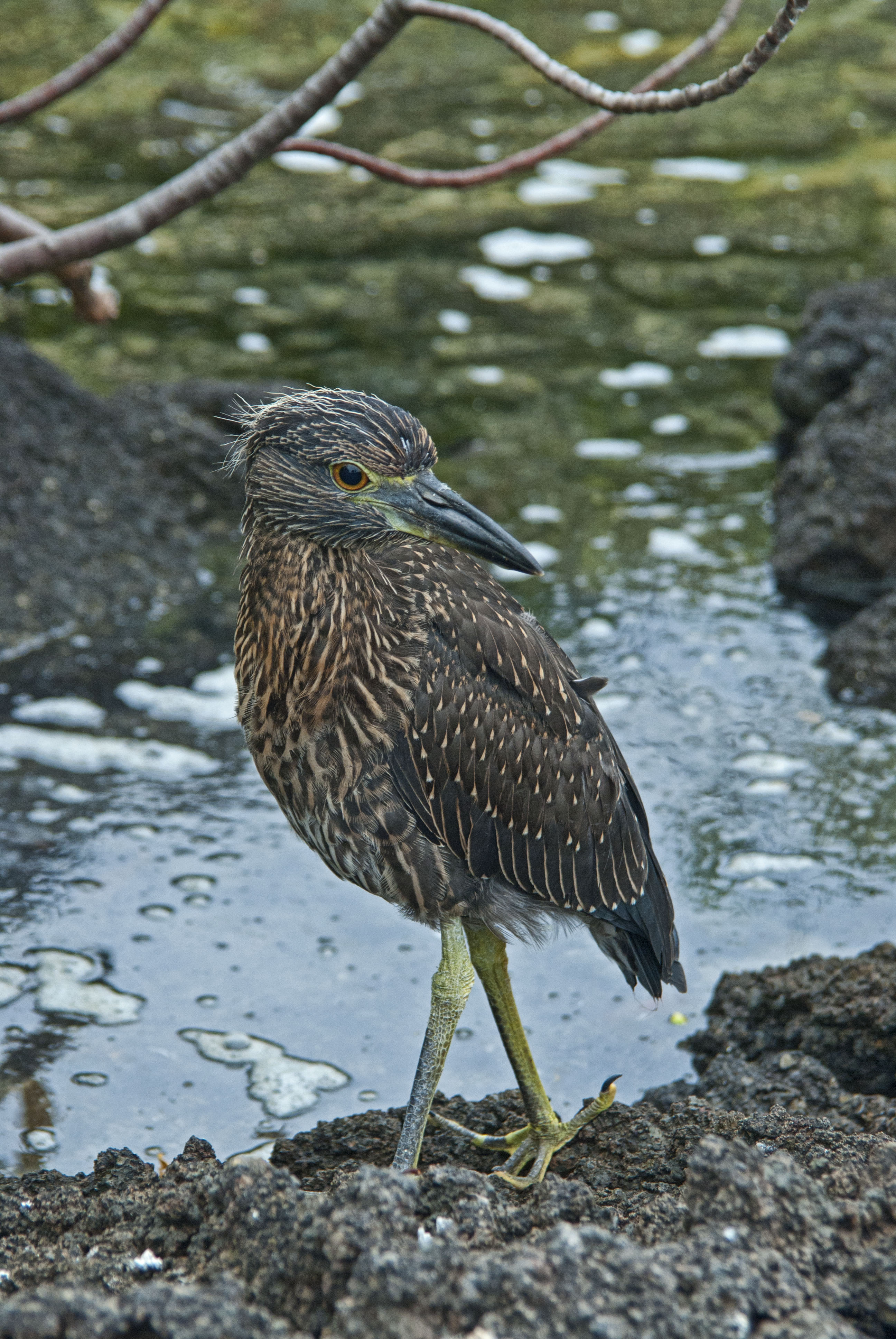
We also saw Egrets along the edge of a small brackish pool, Sealions lazing in the pool and Vampire Finches – a type of finch that has been known to suck blood from where the wing meets the body on Nazca Boobies. This type of activity has only been seen on Wolf Island though.
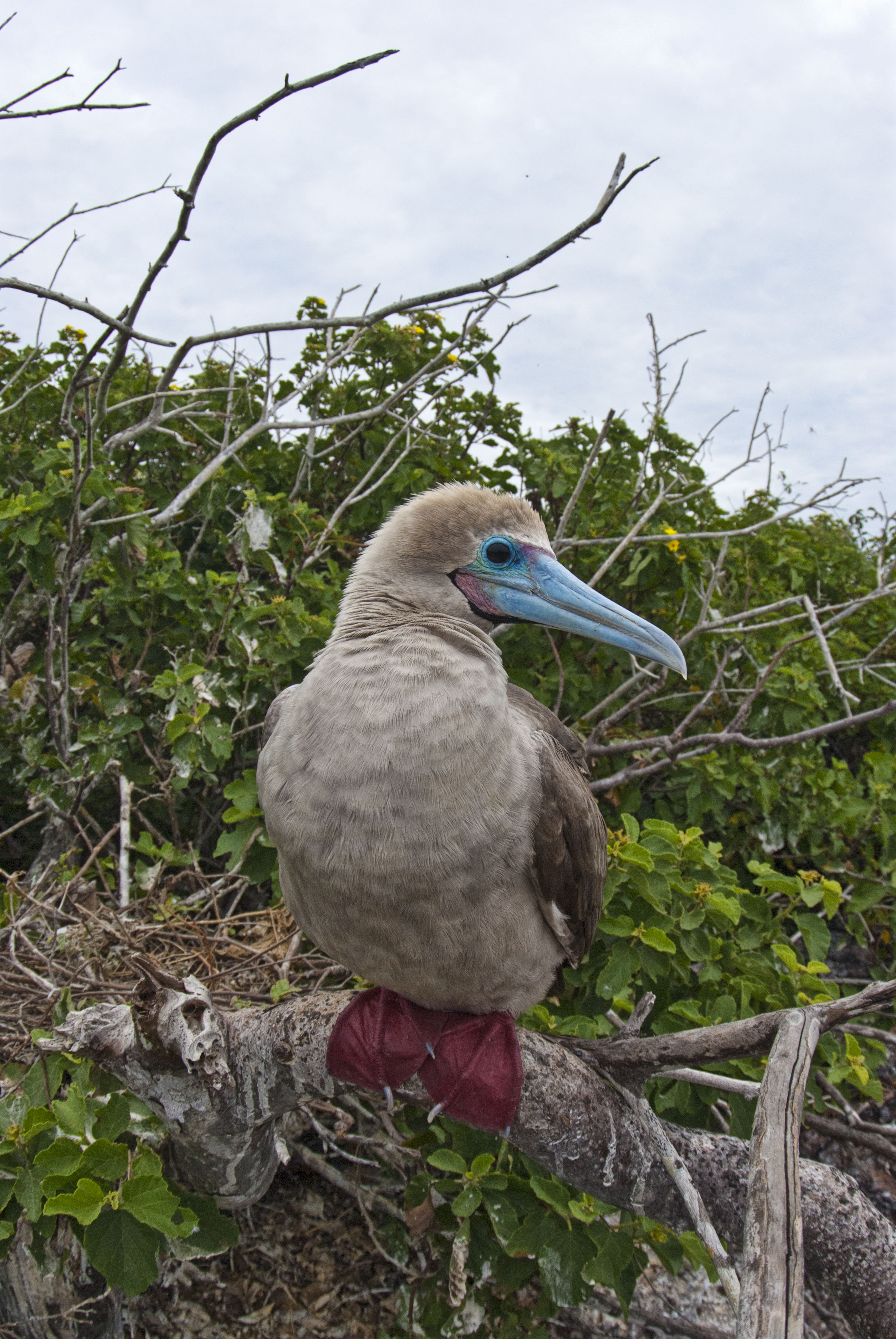
The walk ended at a point high up on the cliffs where we could watch the sea birds flying all around us, including hundreds of swallow tailed gulls that were nesting in the cliffs here.

Once we’d returned to the boat it was time to head out for the last snorkelling trip of the expedition. We were dropped along one side of the crater where the water was fairly rough and visibility wasn’t great. However there were Fur Seals resting on the rocks above the waterline.
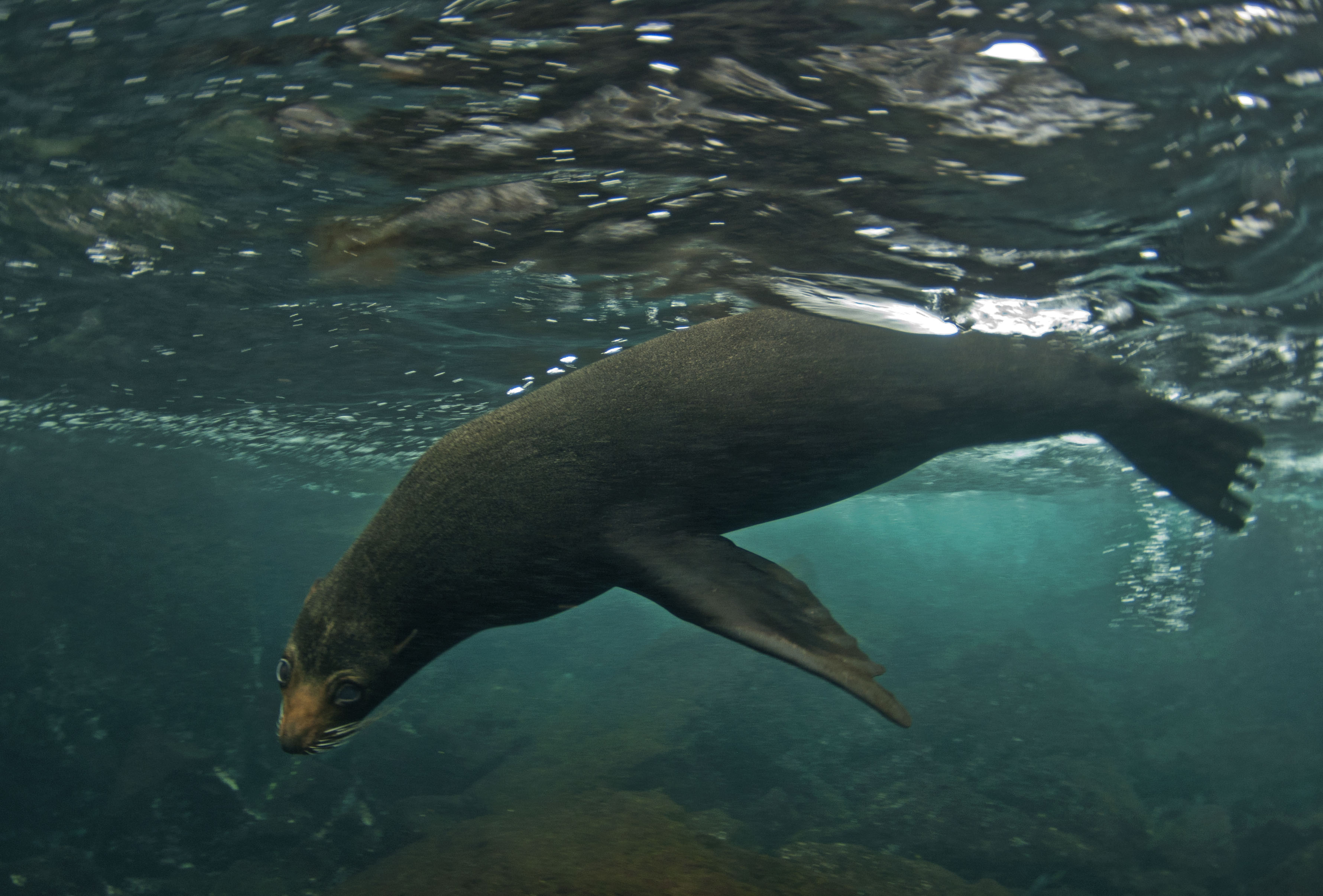
It wasn’t long until we encountered a Fur Seal in the water. You can see how different they are to Sealions as they have much bigger eyes and more fur. This was lucky as the seals tend to hunt at night and spend most of the day resting on the rocks.

Soon after encountering the Fur Seal most of the people got out of the water as it was so rough however I kept going and was treated to a group of 5 eagle rays swimming underneath me.

The afternoon excursion at Genovesa was to a landing spot called Prince Philips Stairs. Here a steep staircase climbed from water level up to the crater rim. When we reached the top we encountered hundreds of nesting Red Footed and Nasca Boobies. Many of the Nasca Boobies had chicks which were not so little balls of white fluff.

As we moved along the path we saw Frigate birds and many more Nasca Boobies (sometimes known as Green Footed Boobies). Across the flat top of the island we also saw thousands of Audobon Shearwaters, this is the only place in the world where they are known to fly in the day to avoid their main predator which is the Galapagos Short Eared Owl.


We spent most of the walk looking for an owl but despite seeing evidence of them, i.e. dead shearwaters, we were unlucky, making this the only creature on the whole trip that we missed seeing.
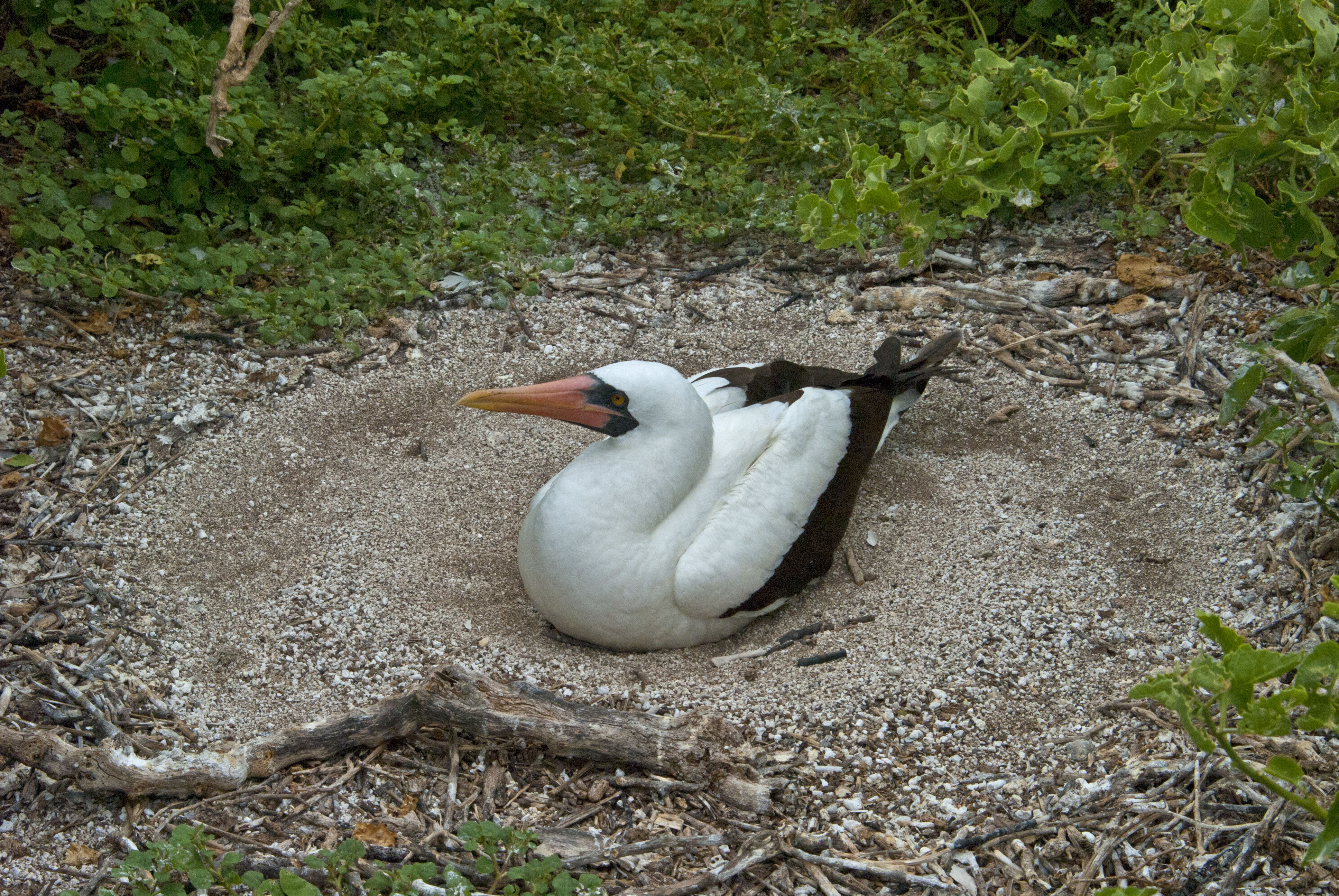
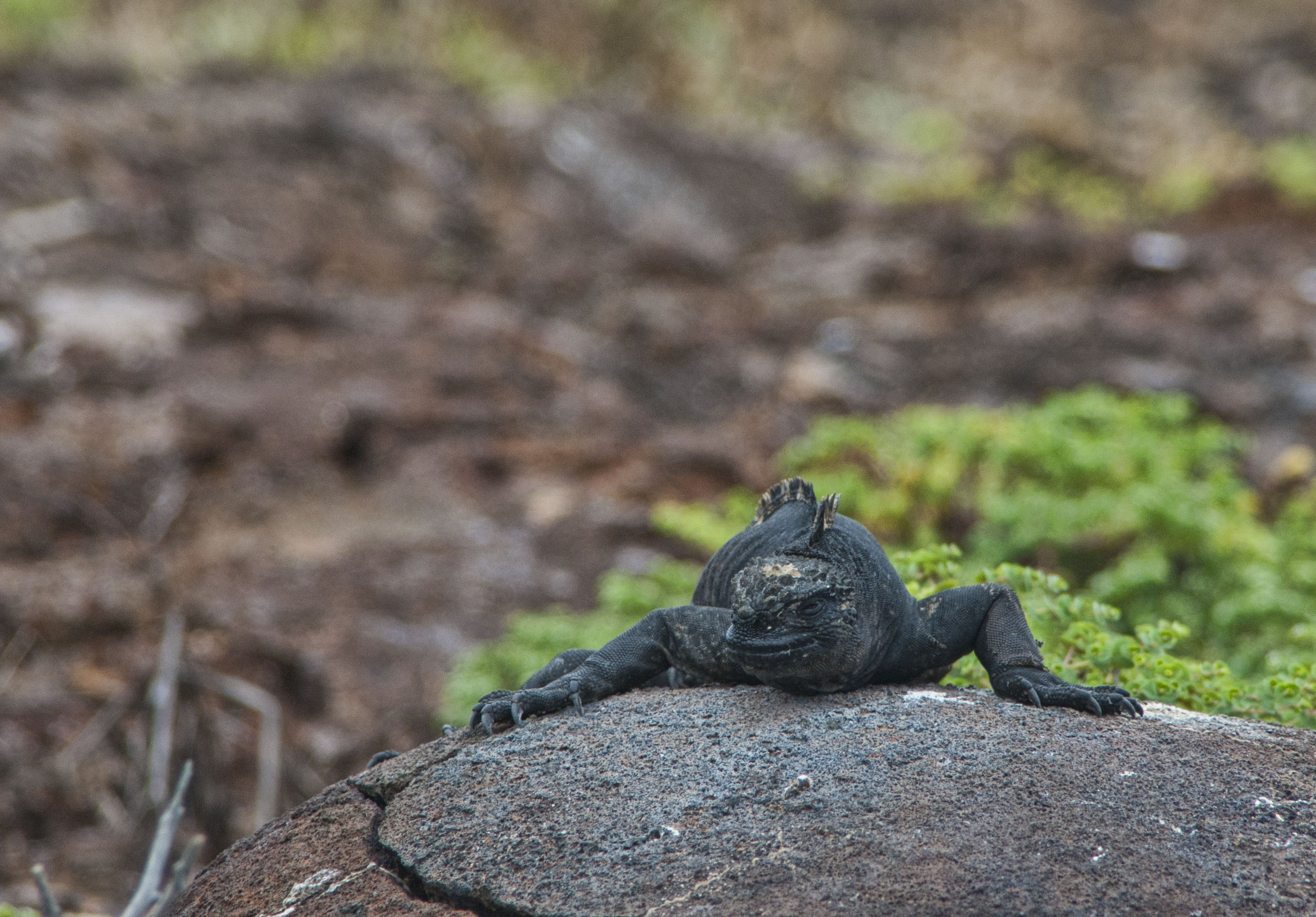
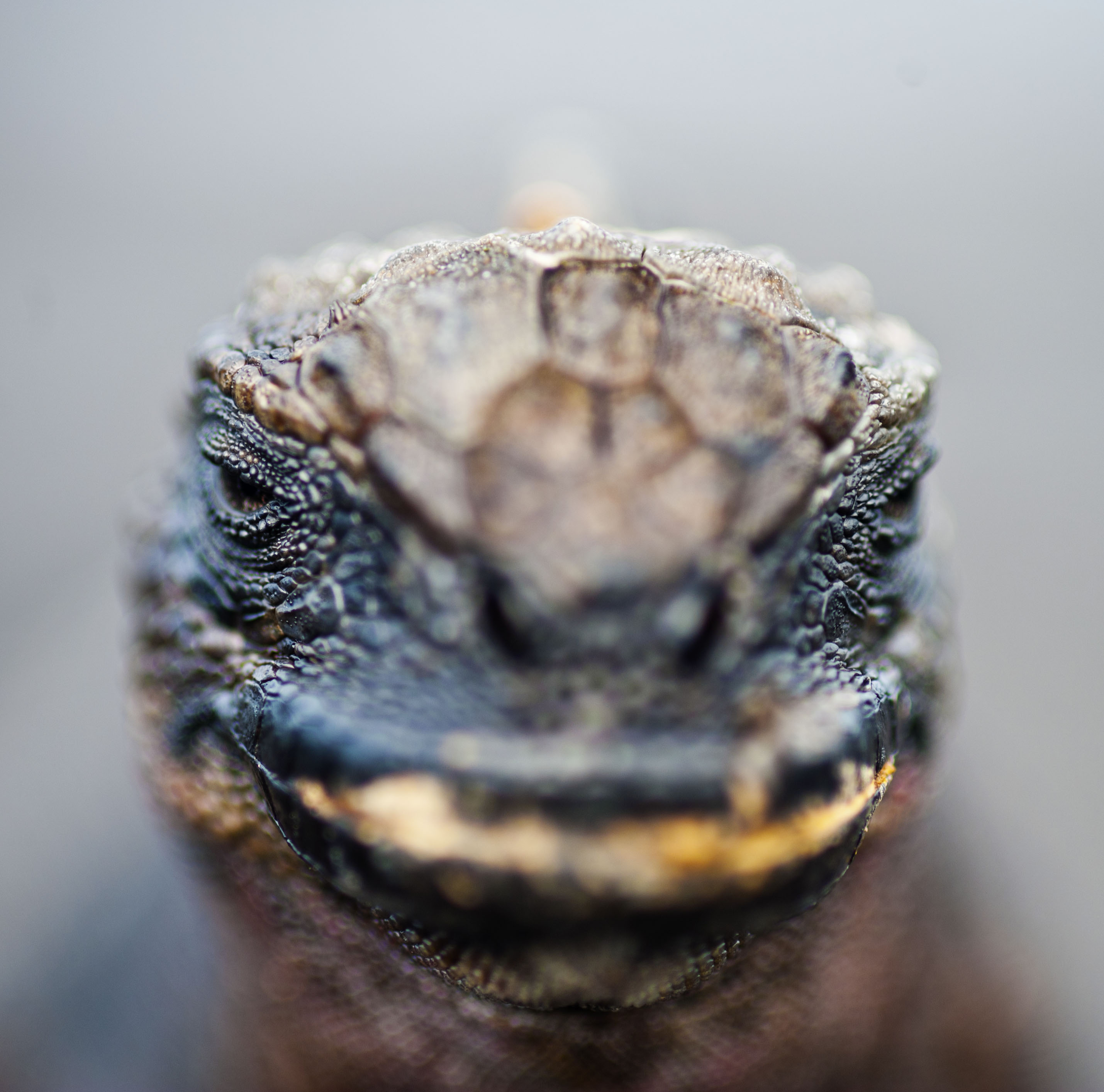
We did however see the Genovesa Marine Iguana which is the smallest species of marine iguana in the Galapagos.
The Beluga was steaming towards us as we got back to the stairs and we made the quick transfer back to the boat on the RIBs. We started the long journey back to Santa Cruz straight away and fortunately it was less rough than the previous night.

At around 8pm we reached the equator and everyone gathered in the bridge to watch the GPS countdown to zero. Juan celebrated the occasion with a song and we all had pictures with the captain. Back in the saloon we had a longer sing-song with Juan and some of the crew accompanied by a special equator cocktail produced by Jorge, the steward who was excellent and looked after us really well.


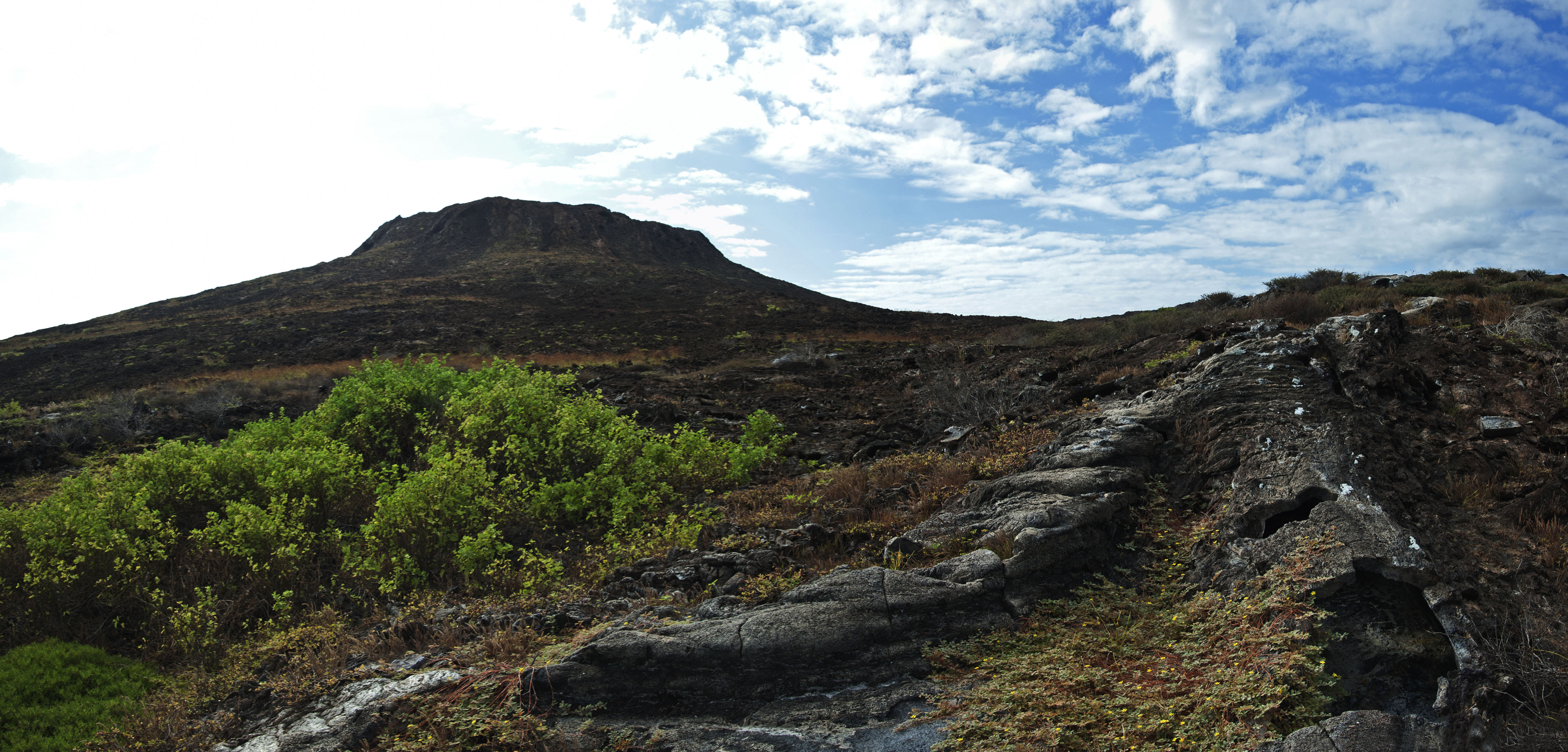
After leaving Santa Cruz the Beluga sailed North to the area of Santiago Island. Our first port of call early in the morning was a small volcanic island called Sombrero Chino (or Chinese Hat). It wasn’t difficult to see where it got its name.
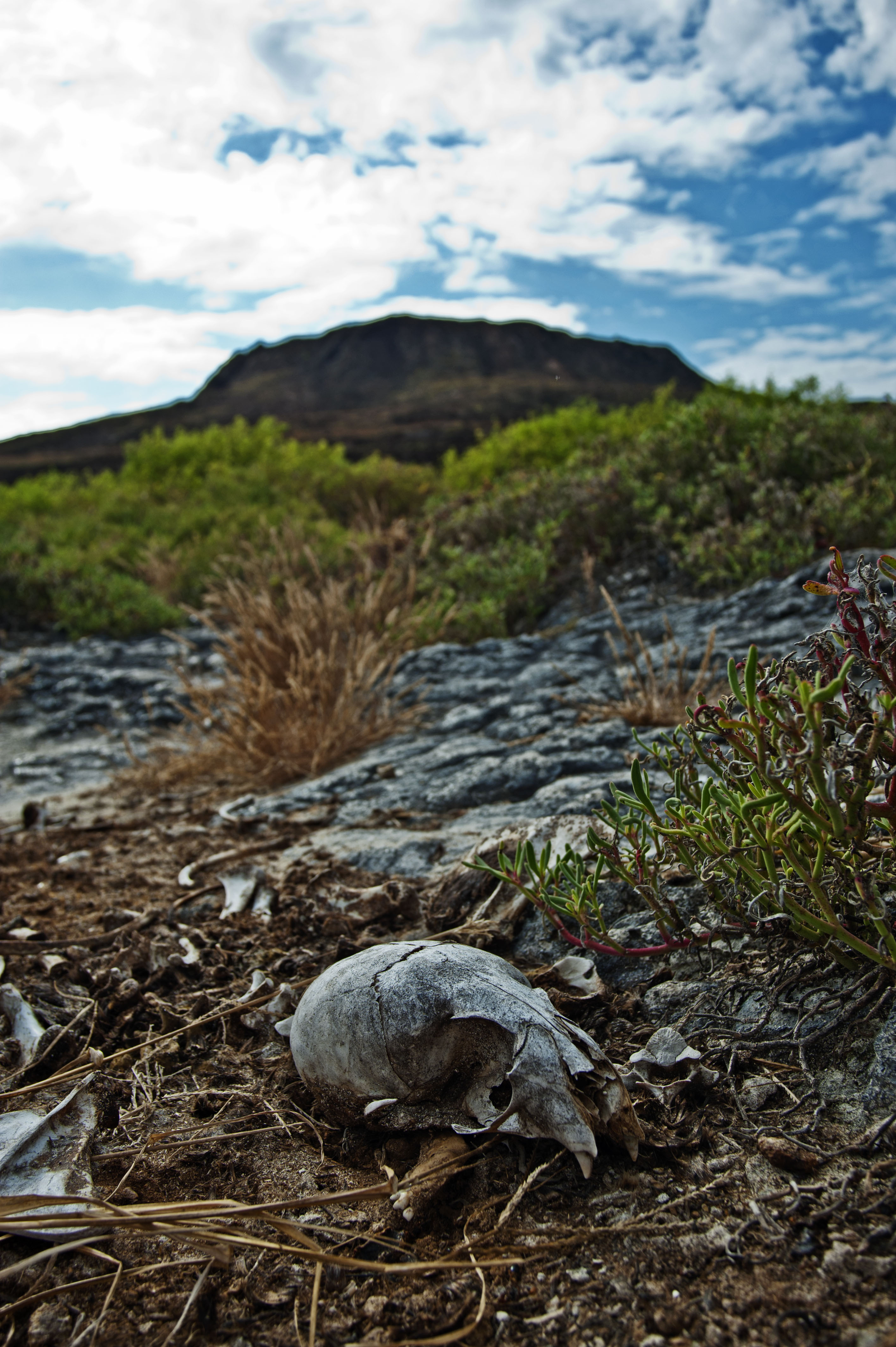
The trail that we walked on the island was pretty short but ended at a rocky wave cut platform covered in marine Iguanas.
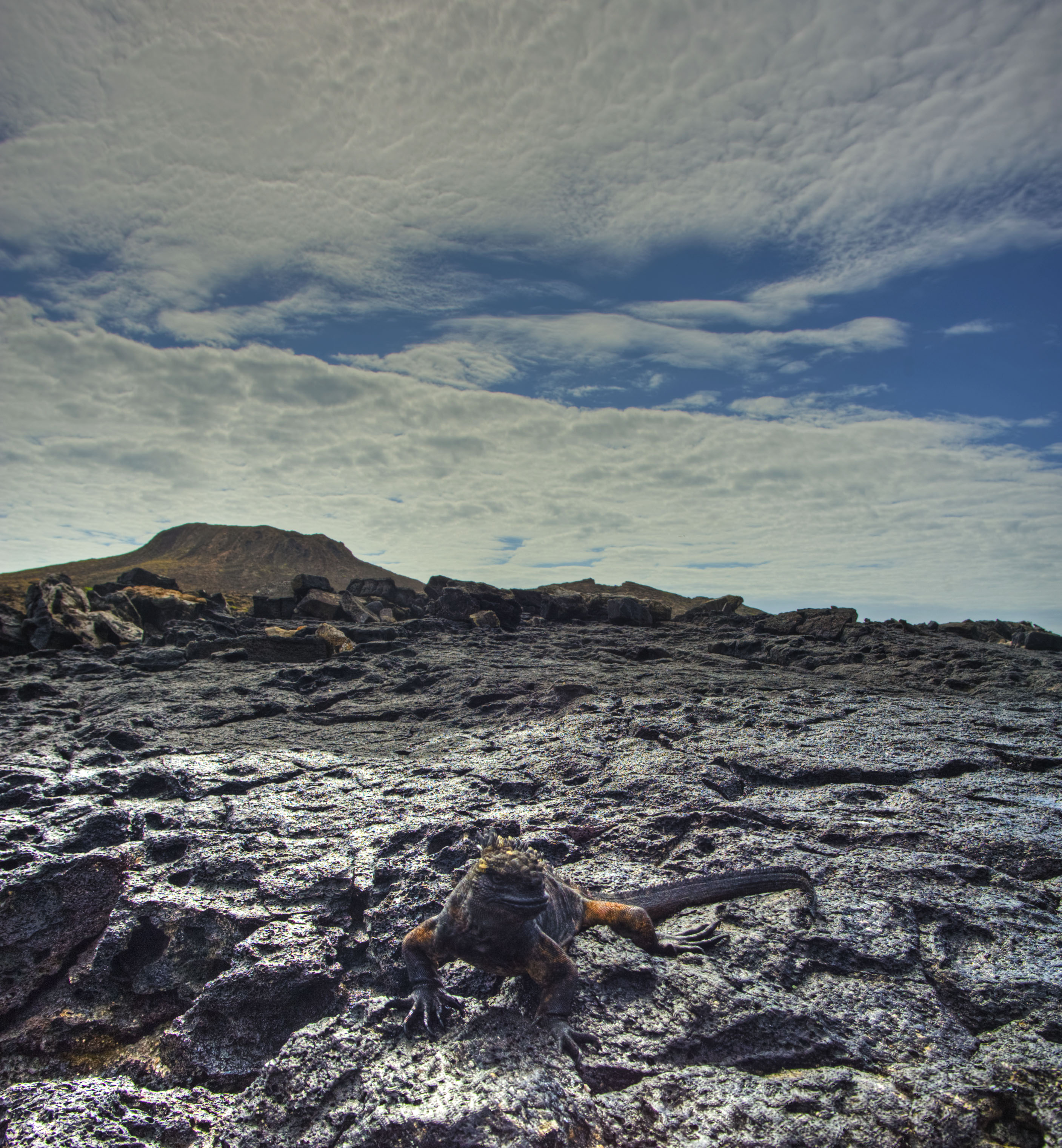
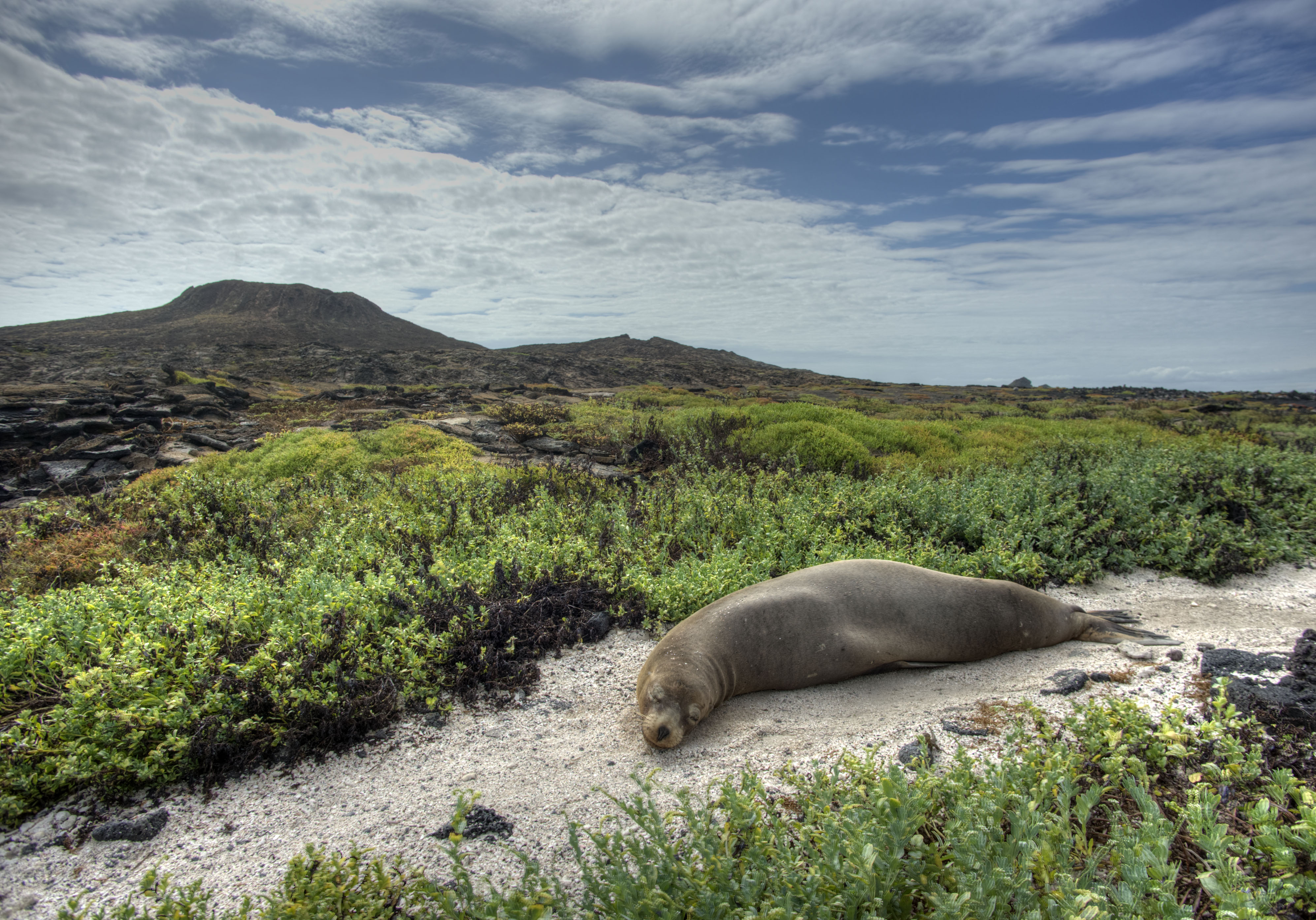
In the waters around the island there were sealions playing and we had to walk off the path at one stage to avoid a bull sealion plonked right in the middle.
The island itself was formed of lava and we walked across a number of very small lava tubes – where the lava outside hardens leaving a tube for the lava to flow through.
Returning to the boat we only had a few minutes to get ready for a snorkelling expedition where we dropped into the water next to a lava flow on the main island of Santiago opposite Sombrero Chino.

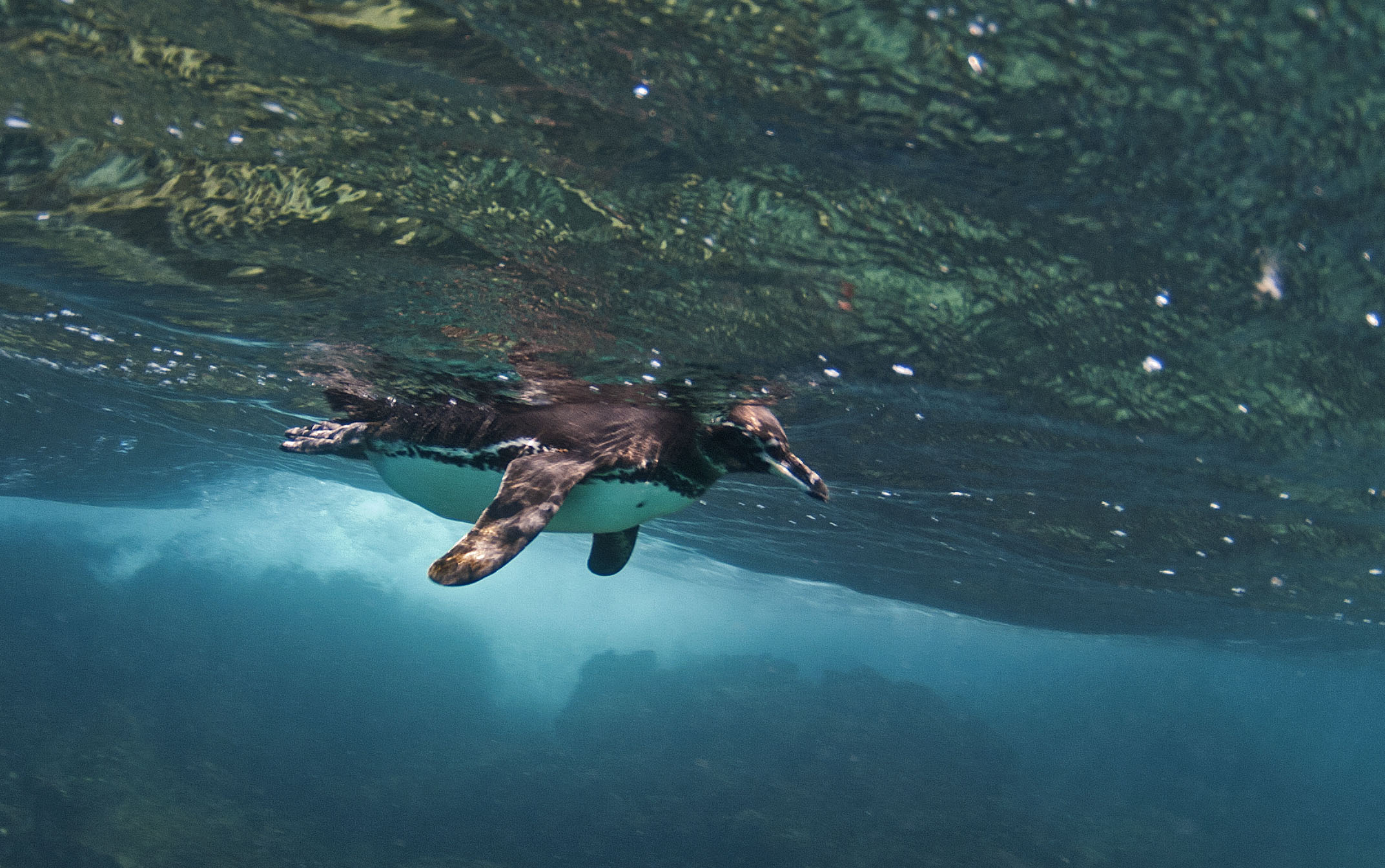
We’d been in the water for a few minutes when a blurred streak came flying past us. We waited where we were and the penguin flew past another couple of times chasing small schools of fish. The Galapagos penguin is the only penguin found in the Northern Hemisphere – although of course we were still in the Southern Hemisphere.
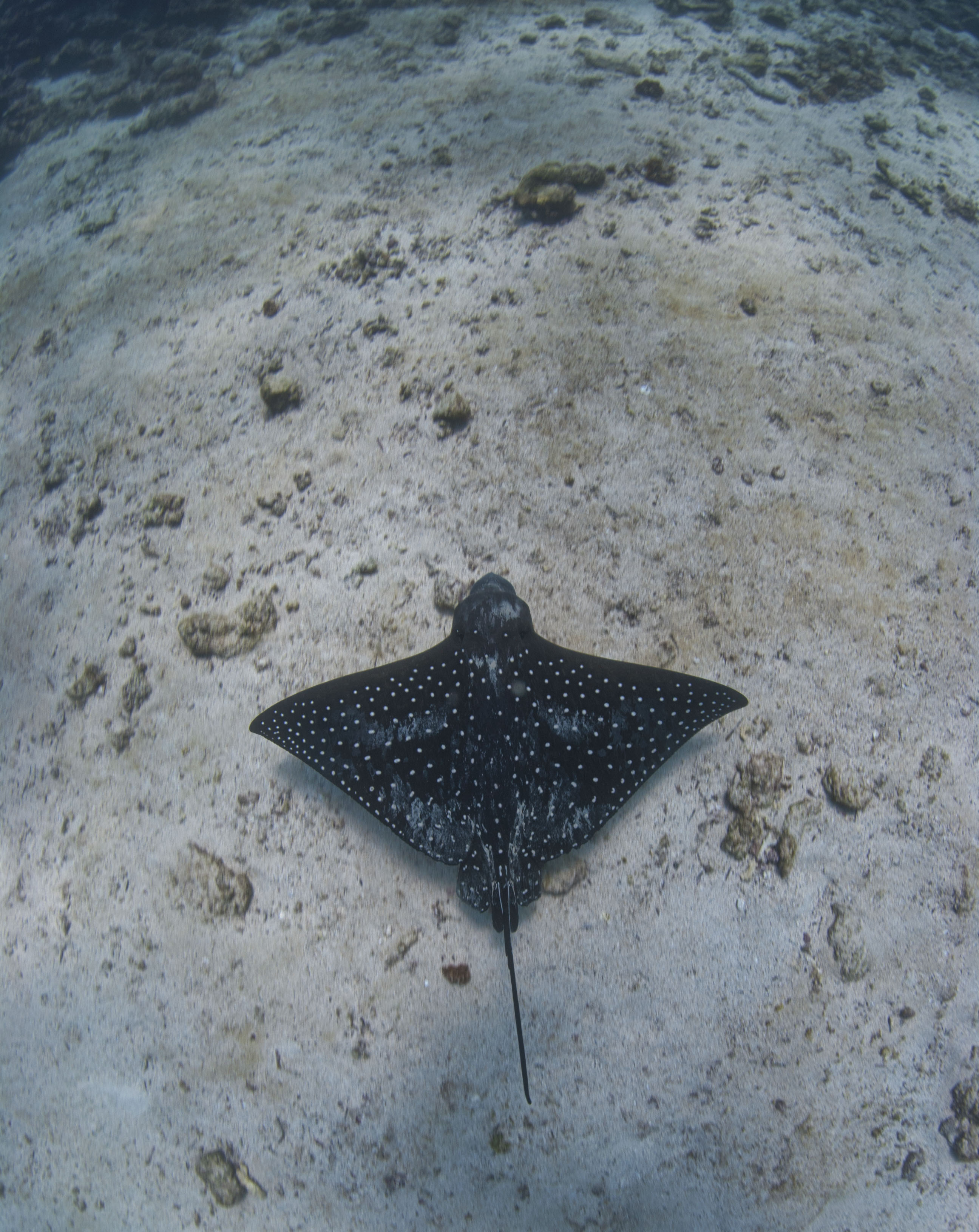
We returned to the Beluga for a quick bite to eat and then we were back in the water in Sullivan Bay on Santiago Island for another snorkelling session. People were getting tired by this stage of the trip and only a few people hit the water. This was a mistake because we were treated to more penguins, a marine iguana eating in the water and some eagle rays.
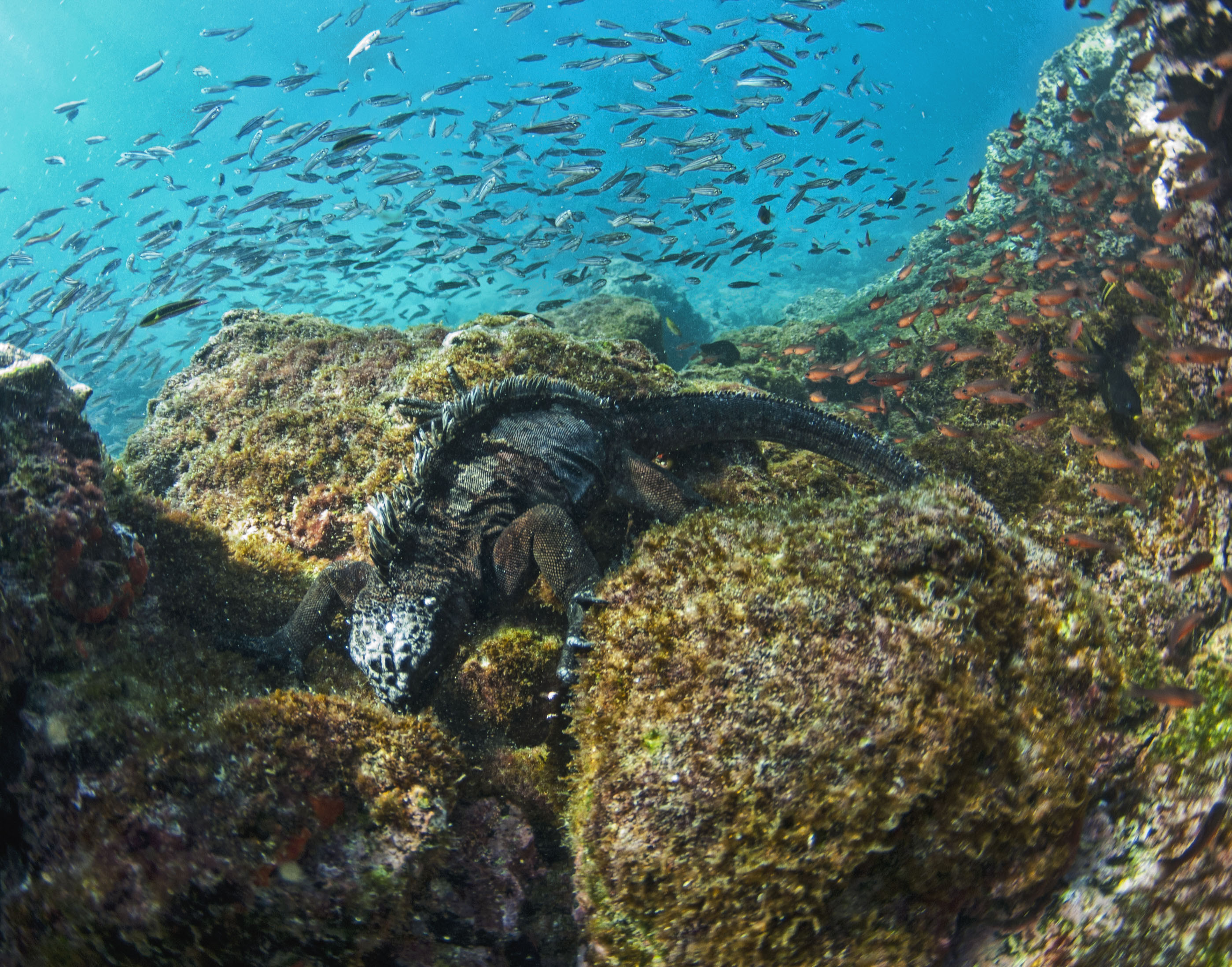
The penguins hunted around me for around 5 minutes and at times I could see three at a time. They move incredibly fast through the water but still seem to have a hard time catching the little fish that they are after.
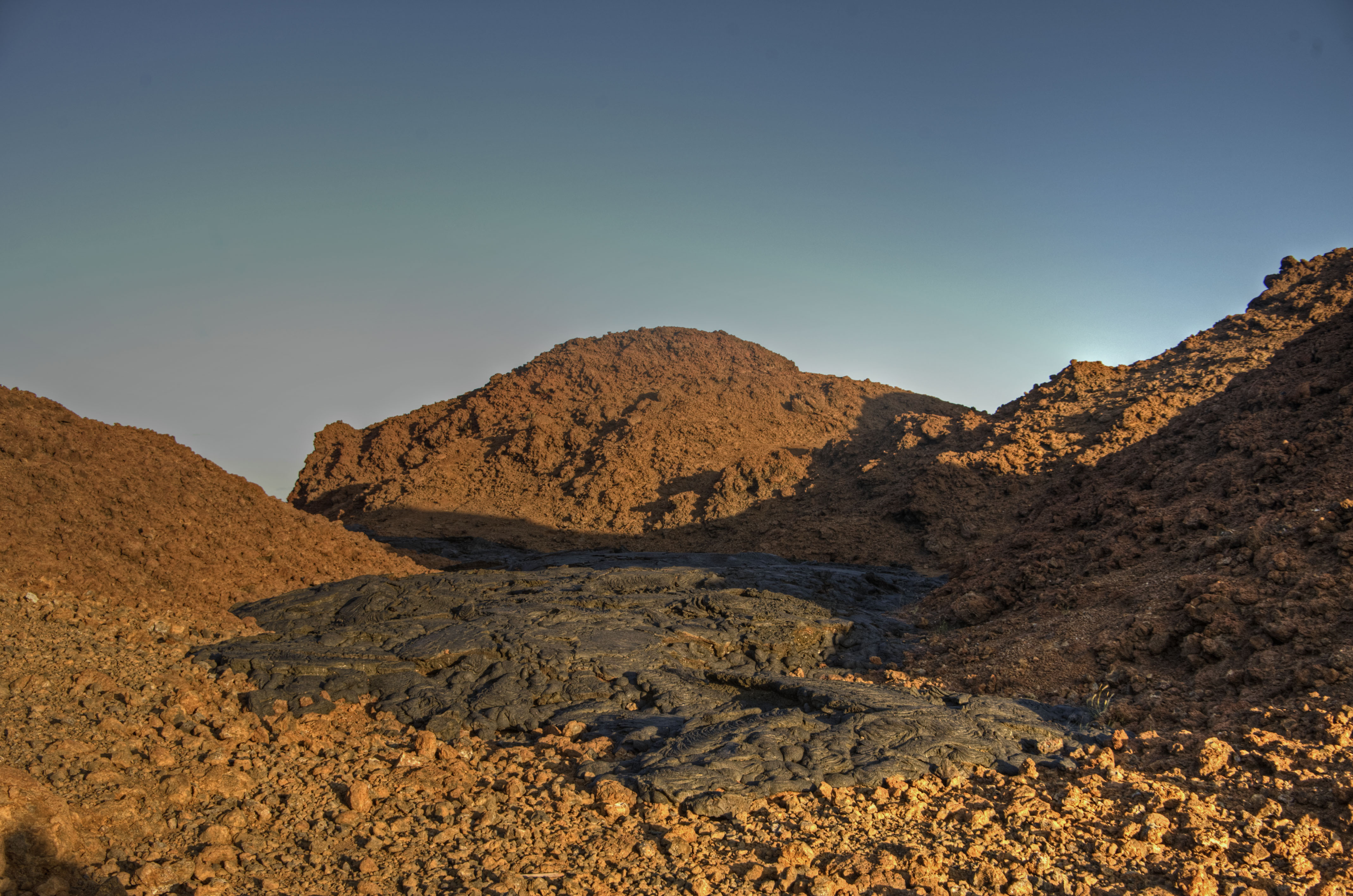
At around 4.30pm once the harsh sun had started to cool down we headed off for our second land excursion of the day. Landing on a desolate lava shore we hiked inland across a cracked and rough lava surface. The lava was still radiating serious heat but the sun was sinking low on the horizon. I think it would have been unbearable in the heat of the day. The lava flow from 1897 is a pahoehoe lave flow which means it has a ropey surface caused when the surface lava cools and is then rippled by the flowing lava underneath.
The point of the excursion was to search for the early adopters on the lava. These were some weed and a type of small cactus. Over merely a few million years these will allow a barren lava field to turn into semi-fertile vegetated land.
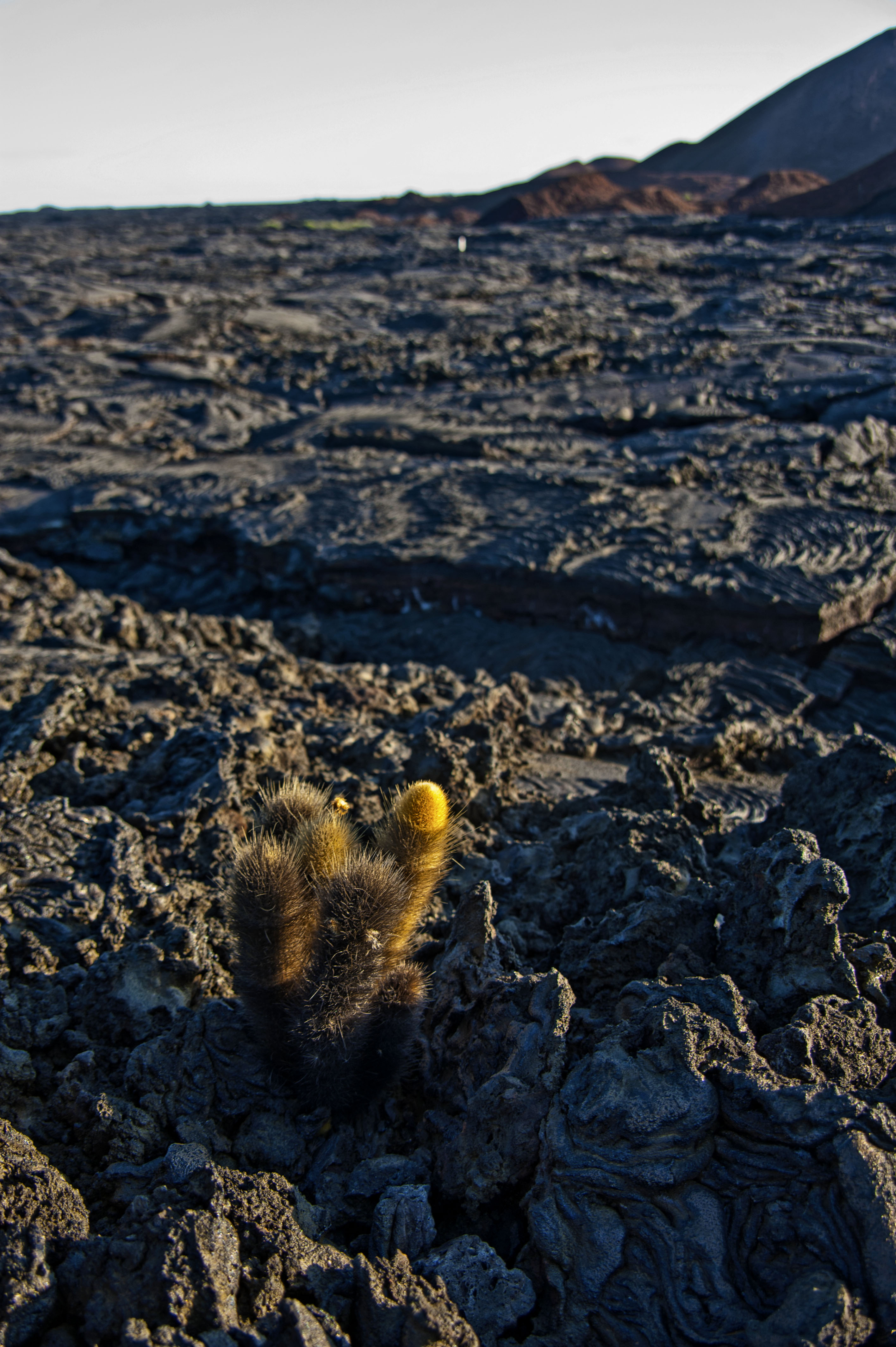
The only things we saw living were some marine iguanas on the shore, a couple of lava lizards and the odd bird exploring the area but who were not resident. There is much more to Santiago than this in the areas not affected by the lava flows but we did not visit these areas.
 FromAtoB