Shipping Part 3: Tips
Panama
1) When you enter the country make extra sure that the import document has the right information. If it is wrong you will have to get it amended before you pass the police inspection.
2) For the Police Inspection make sure you wear proper shoes and long trousers. Sandals and shorts are not acceptable to the Police. We actually saw someone turned away for wearing flip-flops.
3) When you are at customs at the Port don’t forget to get the vehicle stamp in your passport cancelled too.
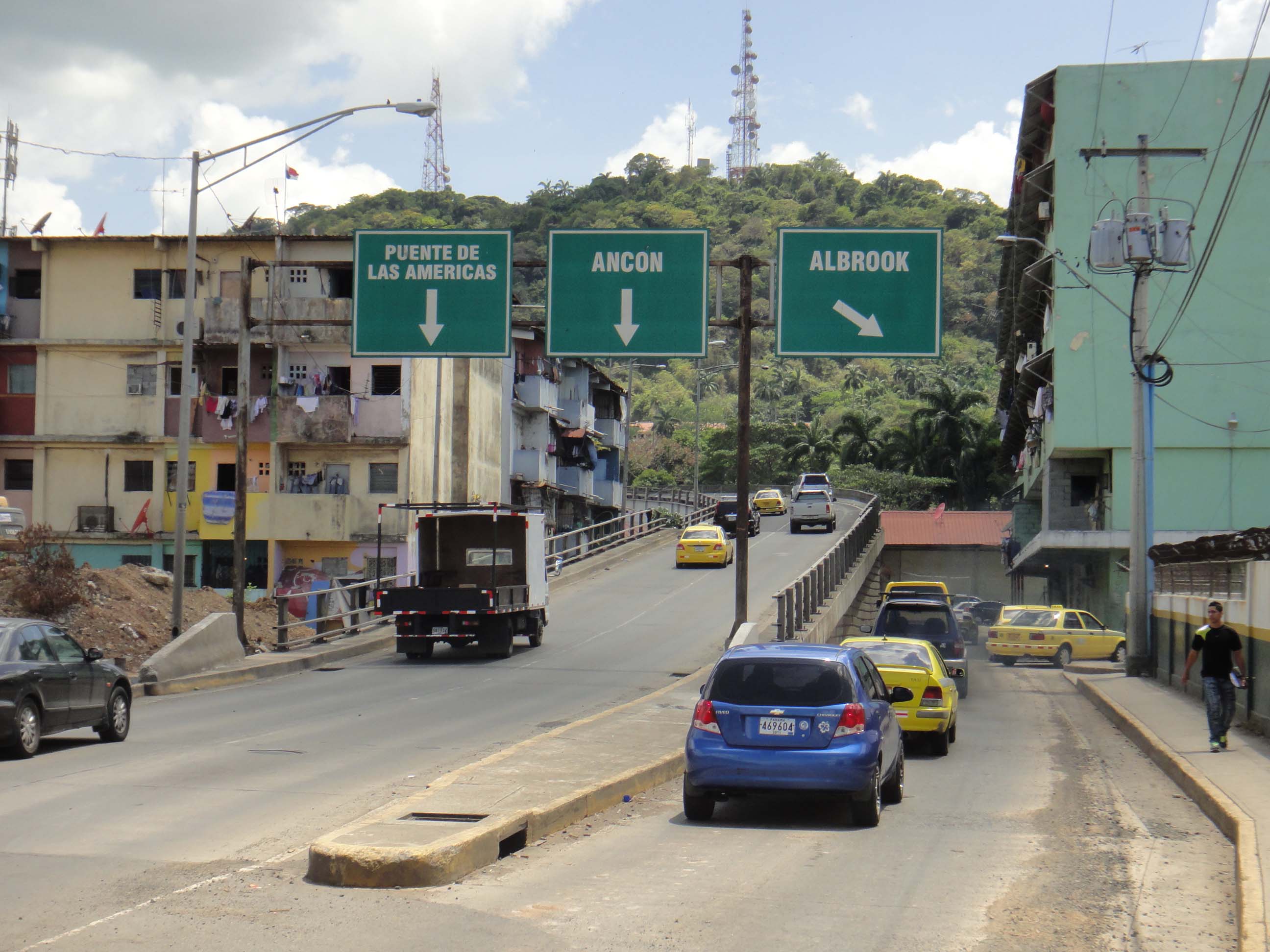
4) Don’t hang around in Colon. Get a taxi from the port (there are plenty around) to the bus station and then an express bus back to the main terminal in Panama at Allbrook. The express bus only costs $3 per person.
5) The Toll Road to Colon cost us $8.80 but it’s a good road and it should only take an hour from Panama City to Colon.
Colombia
1) When you go to the port make sure you have a secondary set of ID to give in at the security office (not your passport) to get a port security pass and don’t forget to get it back at the end before you drive off.
2) Before you pick up your vehicle work out where you are going to park it for the night as you could be pretty late leaving the port.
3) Have a copy of your travel insurance available as this might be requested to enter the port.
4) There is a good car park in Getsemani right next to the convention centre. We couldn’t use this because it was closed for the Summit of the Americas but normally it would be a good option.
Shipping Part 2: Cartagena
We had picked the worst weekend of the decade to go to Cartagena. The flights and hotels were all booked almost solid and prices were high. We didn’t realise why until we were there but the Summit of the Americas was being held this weekend. This means that all 34 presidents from North and South America were turning up for a tri-ennial conference along with what seemed like a million security guys.
We managed to book expensive flights from Panama City to Cartagena (via Bogota) on COPA for $350 each. The flight was fairly pleasant but there was one slight issue. I was told that my bag was checked through to Cartagena but it turned up on the baggage carousel at Bogota. Fortunately I thought to look as the lady at check-in didn’t instil me with a lot of confidence, so I was able to retrieve it and check-in again at Bogota. When we arrived at Cartagena two American guys (secret service we think because they told us they worked for the “Government” but were very evasive about it) who had also flown from Panama City were missing their luggage! I guess they didn’t check the carousel at Bogota.
On arrival in Cartagena we took a taxi to our hotel in the San Diego district of the walled city (Centro Historico). We soon discovered on checking the internet that our ship had been delayed and was not due to arrive until Friday. So our hope of getting the truck back before the weekend was gone. It seems to be fairly normal for ship schedules to slip so don’t believe the shippers when they tell you how quick the whole process will be.
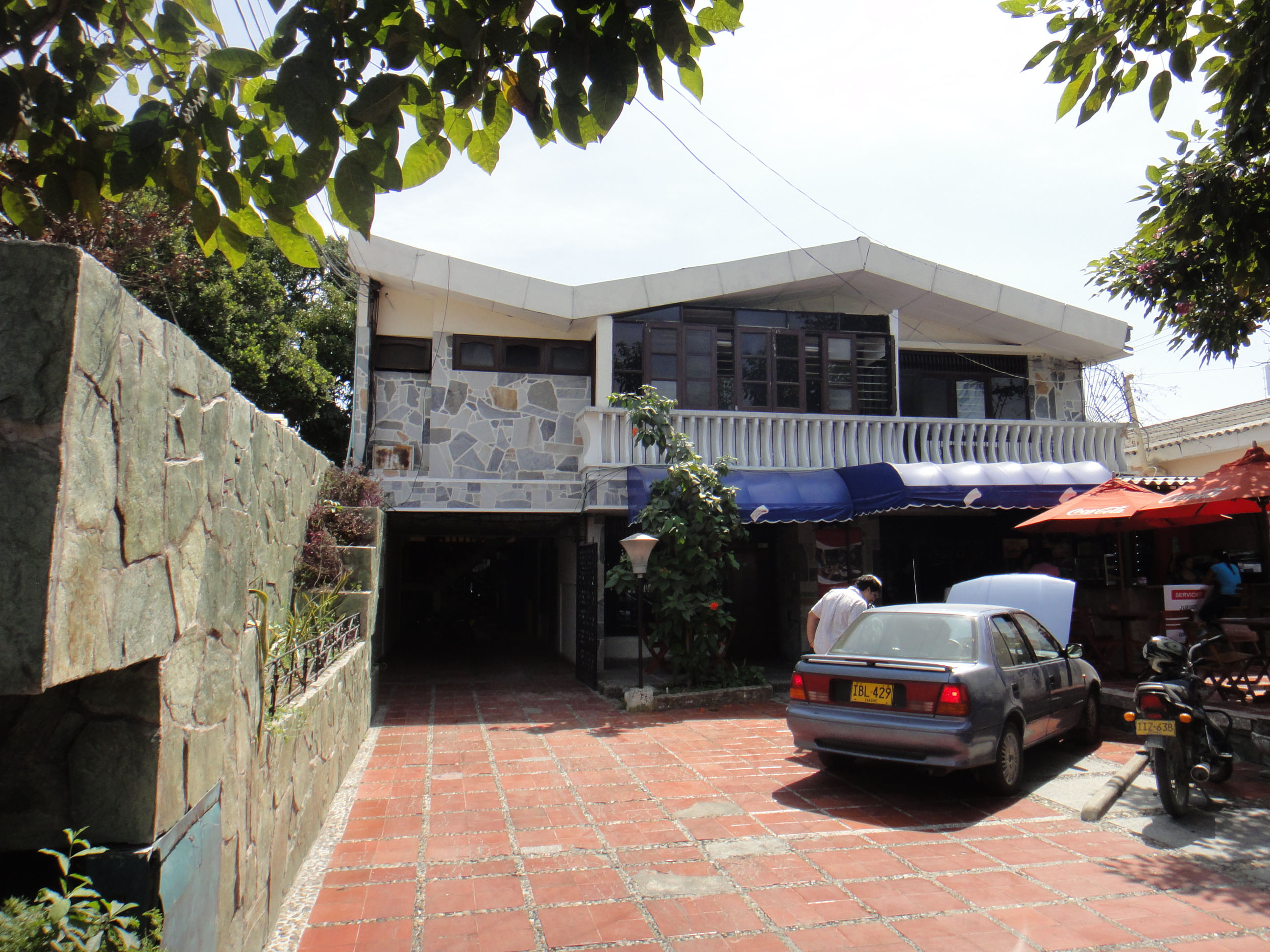
On Friday we went in the morning to visit Enlace Caribe in the Manga district – a shipping agent. The Manga district is South of the old town and we paid COL5000 each time we took a taxi there. Enlace Caribe is a family-run business by Luis, Sonia and their sons. Luis speaks fairly good English so we managed to get by. We went there on Friday thinking that we would just be arranging for them to represent us but they swung into action straight away.

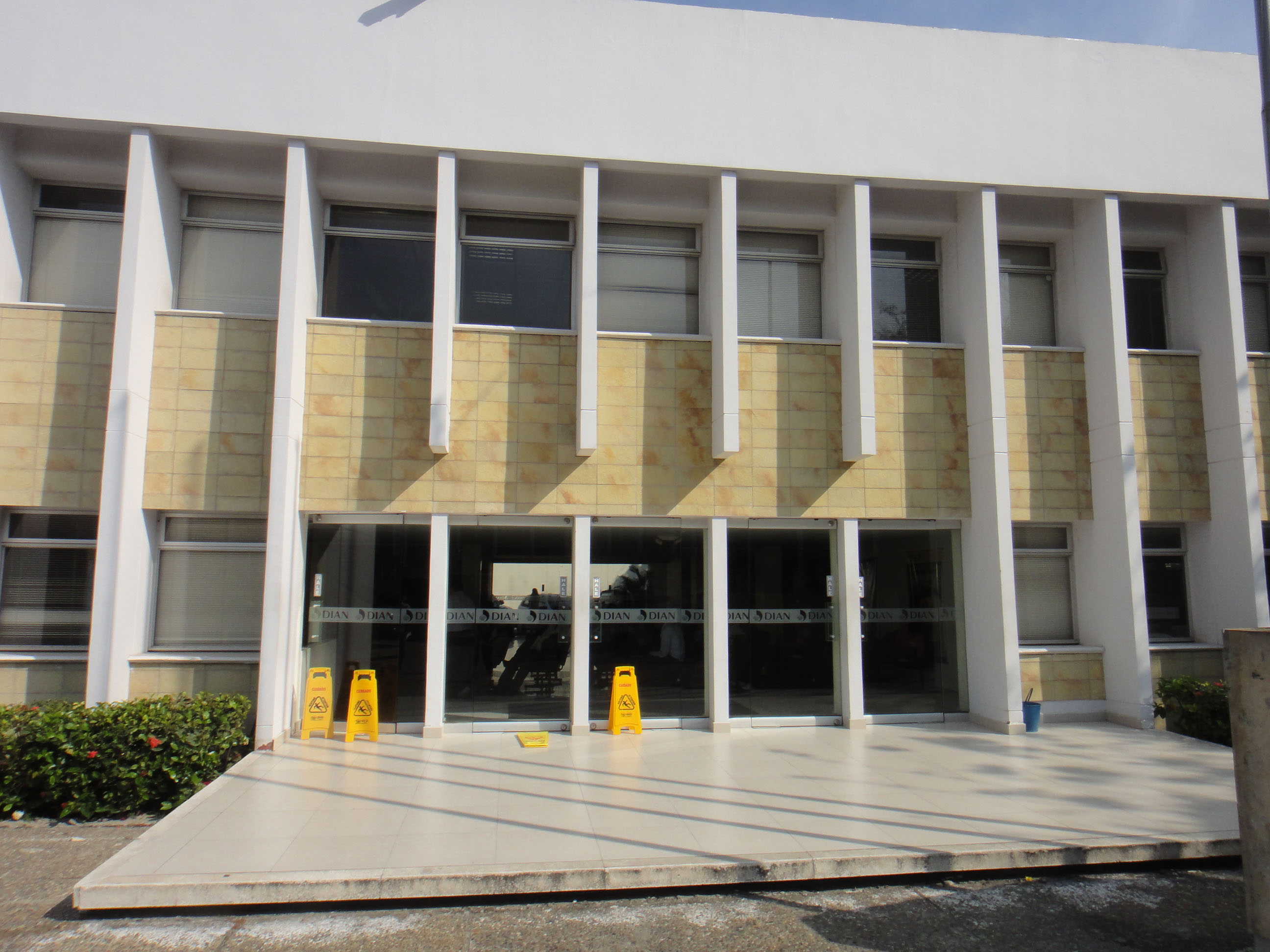
They needed a copy of our Bill of Lading, the vehicle registration and my passport and this enabled them to start the process. The disadvantage of having an agent was that for a lot of the processes I didn’t have a clue what was going on. There were a lot of forms and visits to various locations. The first place we went was DIAN (the main customs office – Direccion de Impuestas y Aduana Nacionales) where an inspection was booked for Monday morning and we got a Temporary Importation Form.
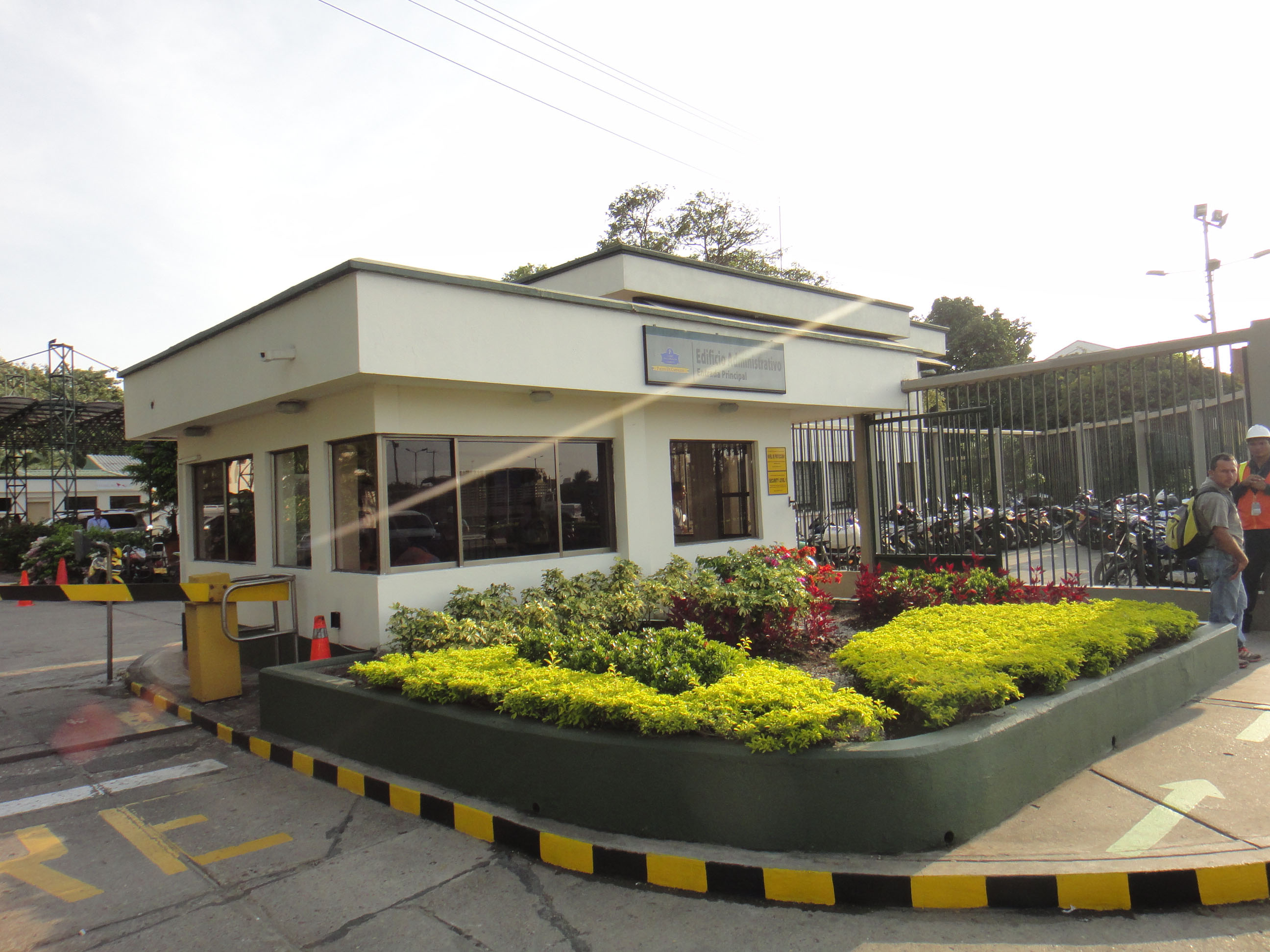
Then we went to the port administration office where we went inside (ID is needed to get a security pass) and then met with a women in an office who spent 10 minutes with my passport before giving us a form we needed. (pretty vague I know). At some stage Enlace paid our port fees for us and we paid them at the end. This was it for the day though and a good start had been made – we were told to be back at the office of Enlace Caribe at 8am on Monday morning.
On Monday morning we arrived just after 8am to find that Sonia had been to the customs inspection at 7am but that the inspector was too busy to write it up until later, so we wouldn’t be able to get the sign off we needed until 2pm. We headed back to the city for more tourist action (luckily there’s plenty to keep you busy in Cartagena).
When we returned at 2pm the documents were ready and waiting for us so we walked back across the road to the DIAN building and guided by Felipe (Luis & Sonia’s son) we went to the customs inspector to get our customs clearance. Unfortunately the inspector’s boss wasn’t around so we had to wait close to an hour before finally getting the clearance. From here we drove to Naves (Wallenius Wilhelmsen’s agent in Cartagena) to retrieve the original Bill of Lading which we needed to get the Beast back.
Felipe then drove us to the administration office of the port where we waited outside while he went in to get the Vehicle Exit Form. Then it was time to go to the actual port, which is about 5km South of the port we had been at. I had to surrender a piece of ID in the port office to get a security badge and then we went to the offices to arrange for someone to take me to the Beast. Once this was accomplished I went with Felipe to the main port vehicle entrance (Sarah went to the Cafeteria to wait). After about 15 minutes, a port employee screeched to a halt beside us driving a motorbike-based people mover to take me to the truck.
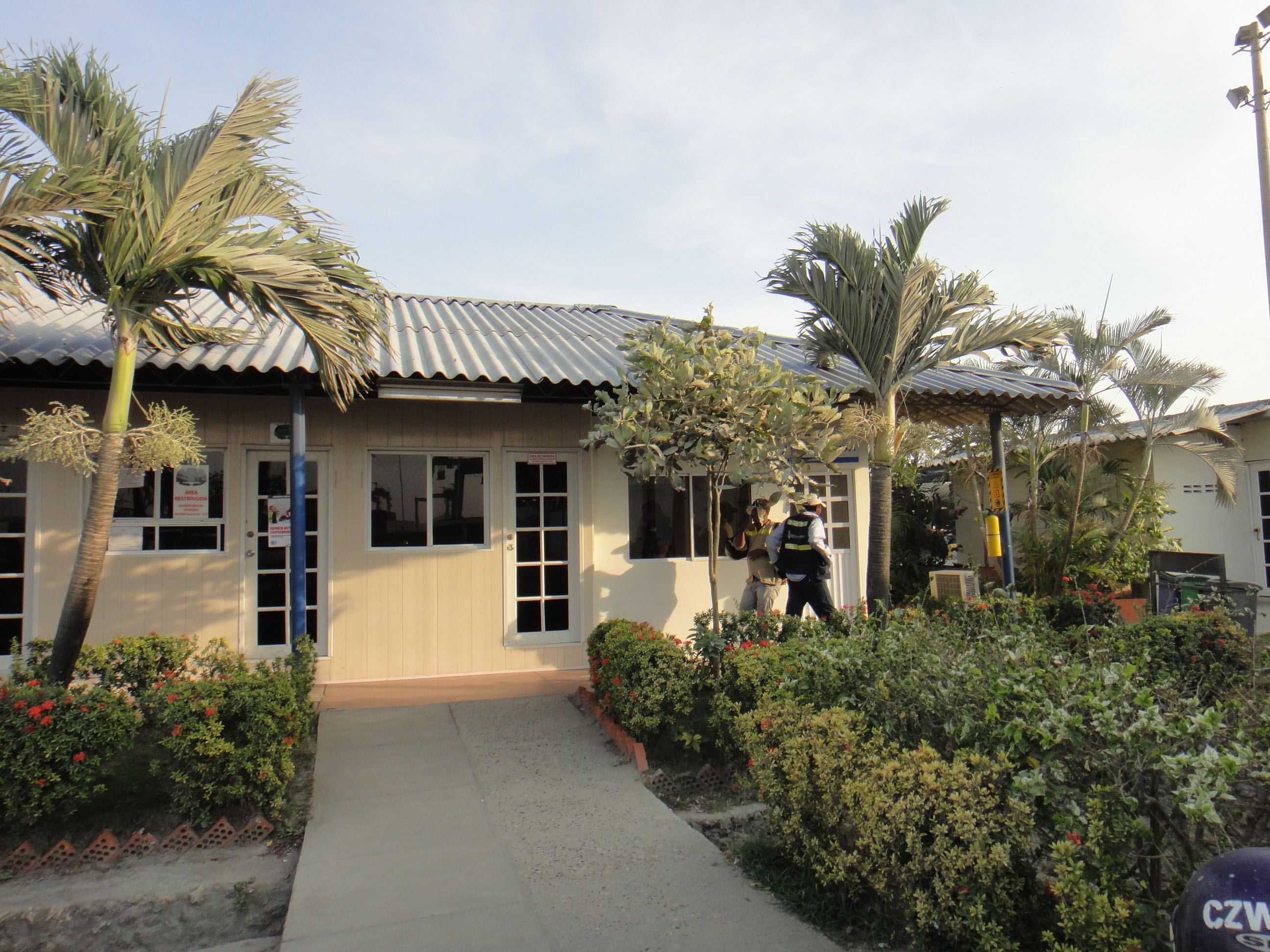
Our first stop in the port was a small office inside a warehouse where I handed over some of the documents we’d got from the Port and was given a long checklist in return to be used to sign back the truck. After this it was back on the bike and we started doing laps of the port area. The driver clearly had no idea where the Beast was and we visited several big lots full of row after row of shiny new cars but no Beast.
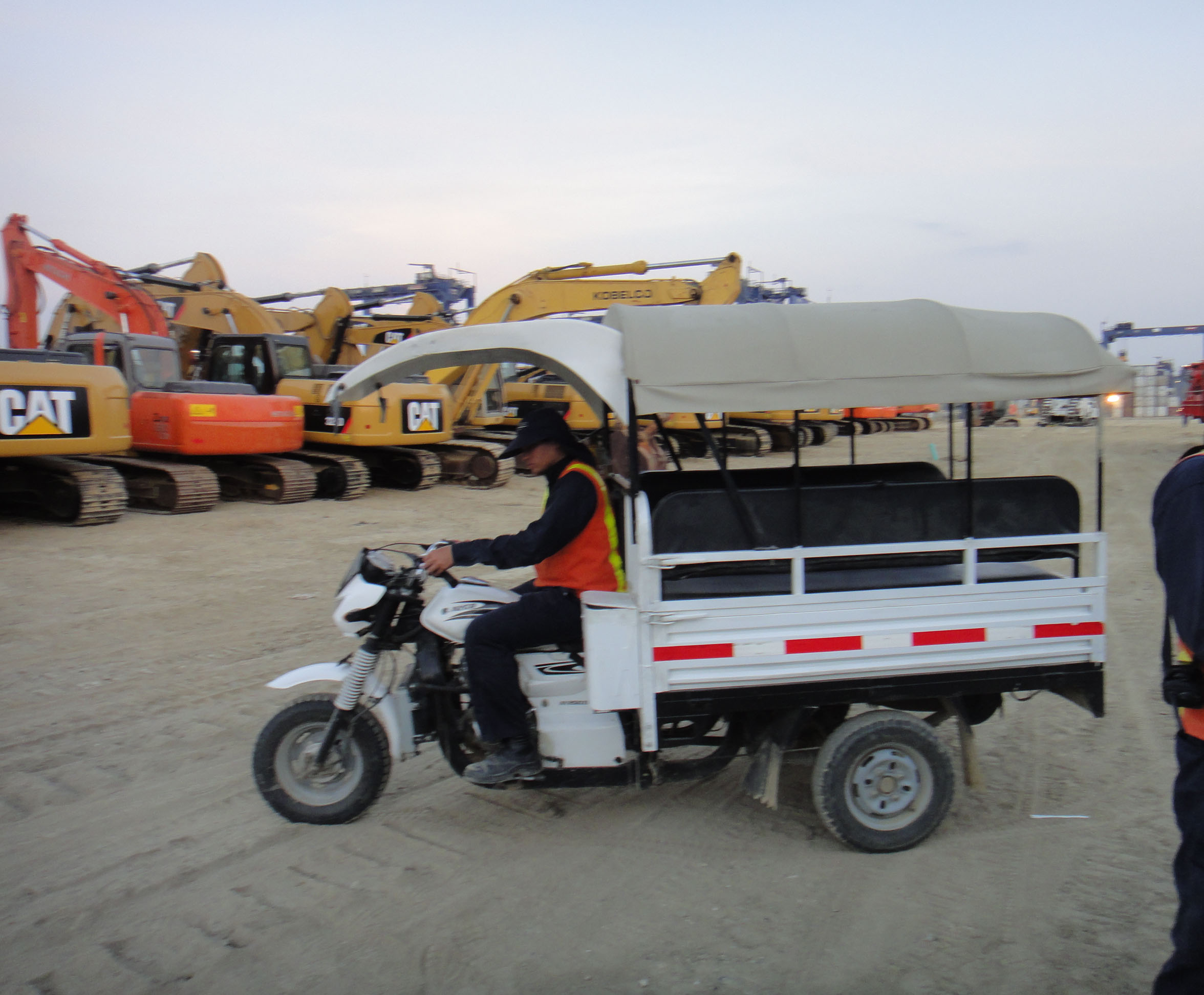
Eventually I managed to explain that the truck was big and was unlikely to be with the cars and he headed off to the far side of the port where the road was a pretty rough unpaved surface and we finally spotted The Beast alongside a row of diggers.
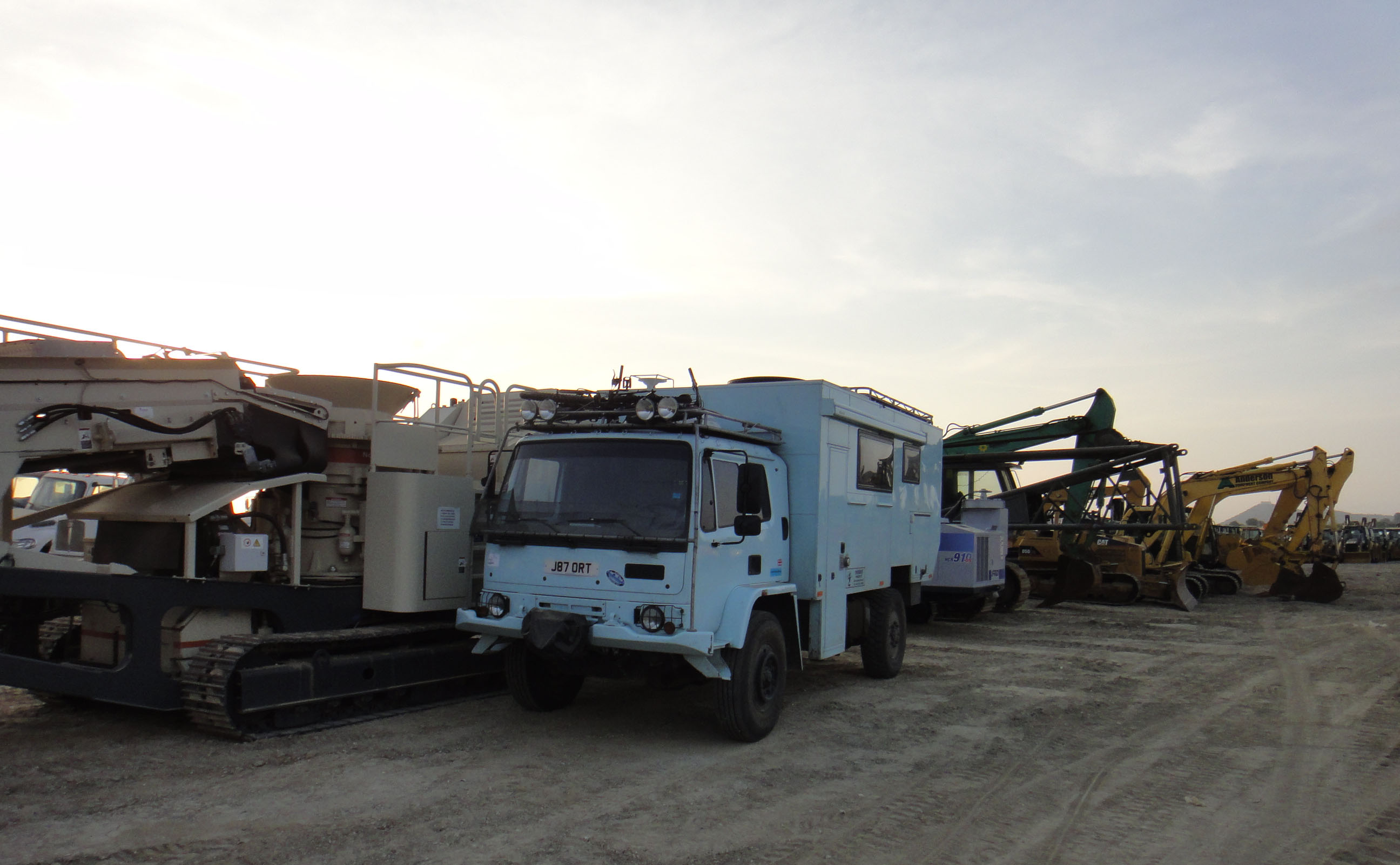
I quickly checked her over and to my complete relief found that nothing had been stolen or damaged. The keys were missing but I thought they must be on the way over.
After waiting at the truck for around 30 minutes another guy on a motorbike turned up who I gave the checklist to and we went over the truck looking for any problems. There were none and he signed off and told me to follow him out. I asked him where the keys were (although I had spares I wanted my original keys back). This flustered him a bit and he told me to wait while he fetched the keys.
I now had to wait for around an hour – only enlivened by Airforce 1 flying overhead as Obama left Cartagena – and it got dark. It was around 7pm before anyone reappeared, this time fortunately with the keys.
The guy on the motorbike told me to follow him and shot off at breakneck pace, in the dark, through the port on a pretty rough road – so I was pretty much bouncing around. At one stage he turned down a steep drop off and I managed to stop before following as there was a big rock below that would have hit my differential.
When we got back to the exit Felipe met me and took my paperwork to one final office (just before the exit to get a stamp on the vehicle exit form) and then gave it back to me and told me he’d get Sarah while I drove out after showing my papers to the guy at the gate (another five minute process). He also went to collect my ID from the security office.
So at around 7.30pm after starting the process for the day at 2pm we finally got out of the port and followed Felipe back to the Enlace Caribe office in Manga. Here we settled up with them. USD175 for their services (money well spent) and another USD175 for port fees.
It was good to be reunited with The Beast and we set off back to the Old Town where we had scouted out a car park by the Navy Museum. We left The Beast there and headed back to our hotel for our last night in the beautiful city of Cartagena. We did have 1 last thing to do the following day before we could leave Cartagena and that was to purchase the compulsory insurance (SOAT) required in Colombia before hitting the road. This was pretty straight-forward (Sonia had provided us with the address of the insurers in the old town) but pricey at COL 157,900 for 3 months (about $88). (The address of the insurance agent was HBL Seguros, 1st Floor, Centro Commercial, Calle de la Moneda). SOAT only covers you for damage to other people and property not vehicles but it’s better than nothing!
Finally we were on the road and ready to explore Colombia. The whole process was pretty time consuming and very expensive but not impossible. We used agents at both ends – it would be cheaper but probably longer doing it yourself and quite difficult I think, if like us, your Spanish is a little limited, to say the least.
Info
Enlace Caribe: Luis Ernesto La Rota R. Enlace Caribe Ltda. Manga, Calle 28 No. 26-47, Of. 103 Cartagena, ColombiaPh +57 (5) 660 8960
Mob + 57 315 758 5872
Email: gerencia@enlacecaribe.com
Note: The office is open 6 days a week but is shut between 12 and 2pm.
Enlace Caribe: N10 24.553 W75 31.944 DIAN: N10 24.598 W75 31.977 Naves: N10 24.567 W75 32.288 Port Admin Office: N10 24.390 W75 31.707 Port Entrance: N10 22.628 W75 30.376 Car Park by Navy Museum: N10 25.273 W75 33.162
Shipping From Panama to Cartagena Part 1: Panama
The process of shipping the Beast to South America had been hanging over us for a while now. Its an expensive and time consuming process that should be quick and easy but just isn’t. Ironically it looks like we may be some of the last overlanders to have to ship their vehicle as it looks like a new ferry service is going to start in May 2012. But of course this is Latin America so I’ll believe it when I see it – waiting for it would be crazy.
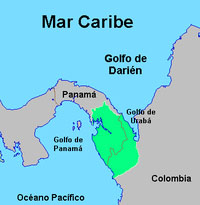
The necessity for shipping is driven by the Darien Gap which is a 100km hole in the Pan-American highway through inhospitable jungle stuffed full of drug gangs and paramilitary revolutionaries. The last successful motorised crossing of the Gap was in 1985 in a Jeep and took them 741 days. Obviously its not going to happen for us !
Over the last few weeks I had contacted Seaboard, Barwil and Marfret by email. The only reply I had was from Marfret who told me that they would contact me with a quote and then didn’t.
So on arriving at XS Memories (a real RV park around 100km short of Panama City) in Panama we hadn’t really made any progress with our shipping at all. Fortunately Sheila and Denis who run XS Memories were exceptionally helpful. Sheila got on the phone to Barwil Agencies (the agent for Wallenius Willhelmsen) and after about 5 calls we finally got through to someone who could help us.
Most people seem to deal with Evelyn Batista at Barwil but we didn’t speak to her at all and instead worked with Pamela Basurto who speaks good English and was very helpful. After speaking to her on the phone it became clear that we needed to go to the office to see her.
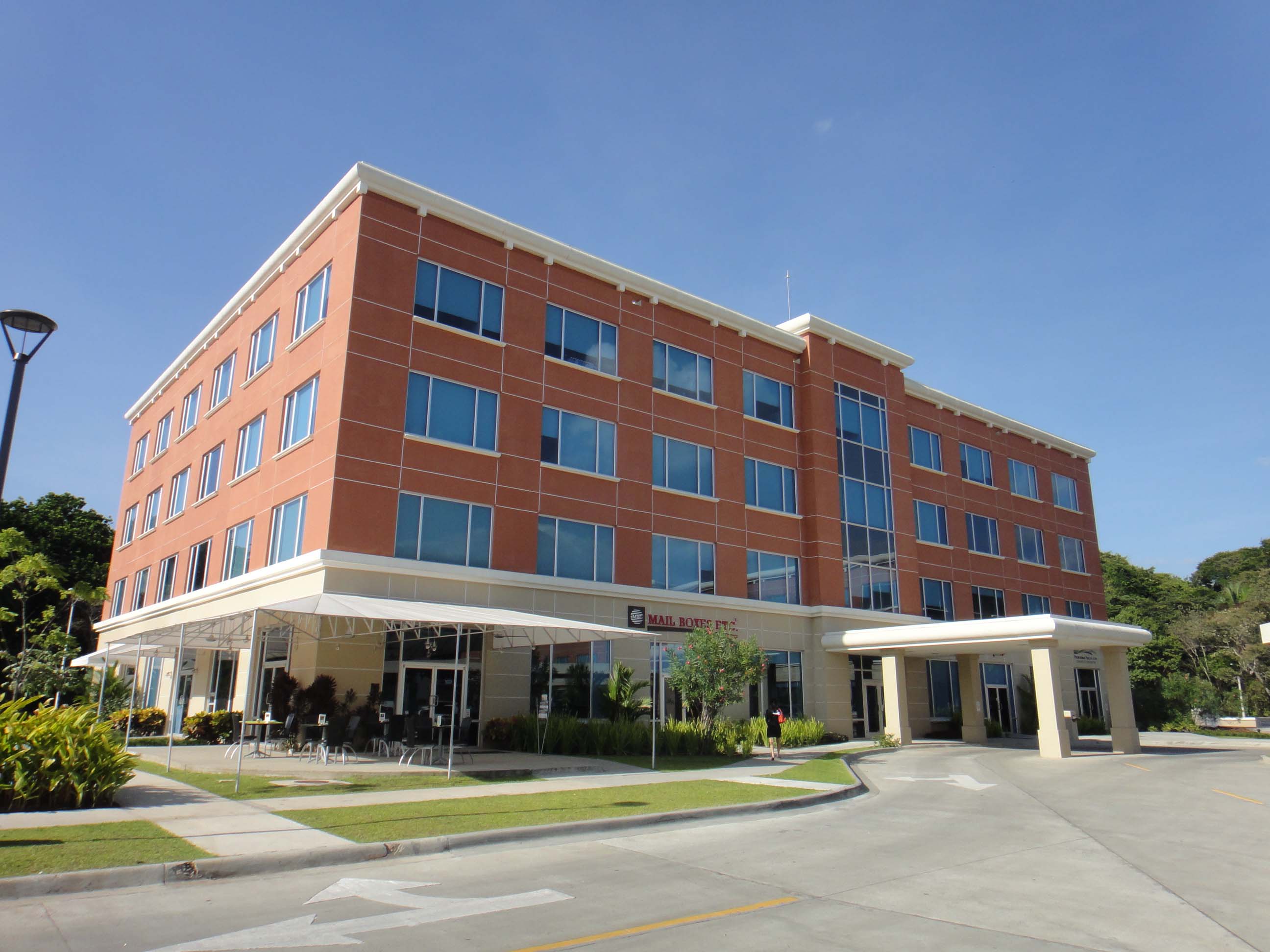
On our second day in Panama City we got Alex to take us out to Panama Pacifico (an out of town industrial estate) which is 4km West of the Bridge of the Americas to visit the office of Barwil (They have moved in the last couple of years so the old office in the city is not their location anymore). The office is very modern and could be anywhere in the world – unlike most other offices that we’ve seen in Central America.
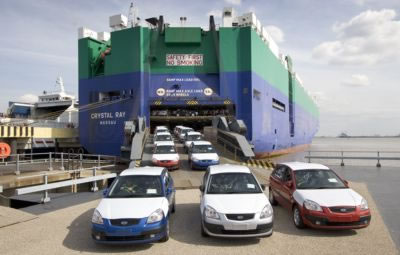
On talking to Pamela we were offered the choice of two ships both leaving the following week on consecutive days. One was RORO (Roll On/Roll Off) and one was LOLO (Lift On/Lift Off) but the price for both would be the same. In both cases we would have to hand over the keys to the cab of the truck. LOLO involves your vehicle being lifted onto the ship by a crane while sitting on a palette (Very Scary). On this basis we chose RORO as this reduced the chance of damage during the loading process.
Pamela wanted copies of my passport (including the vehicle stamp) and the Registration document for the truck. She used these to create a draft bill of lading for us. She also gave us a quote for the trip ($60 per cubic Metre + 25% for bunkers (fuel)). Pretty expensive but we were a bit stuck. There is much more flexibility if your vehicle can fit in a container.
She also explained the processes we would have to go to get permission to leave the country. After getting the clearance from the police we would have to return to Barwil and pay for the shipping (cash only !).
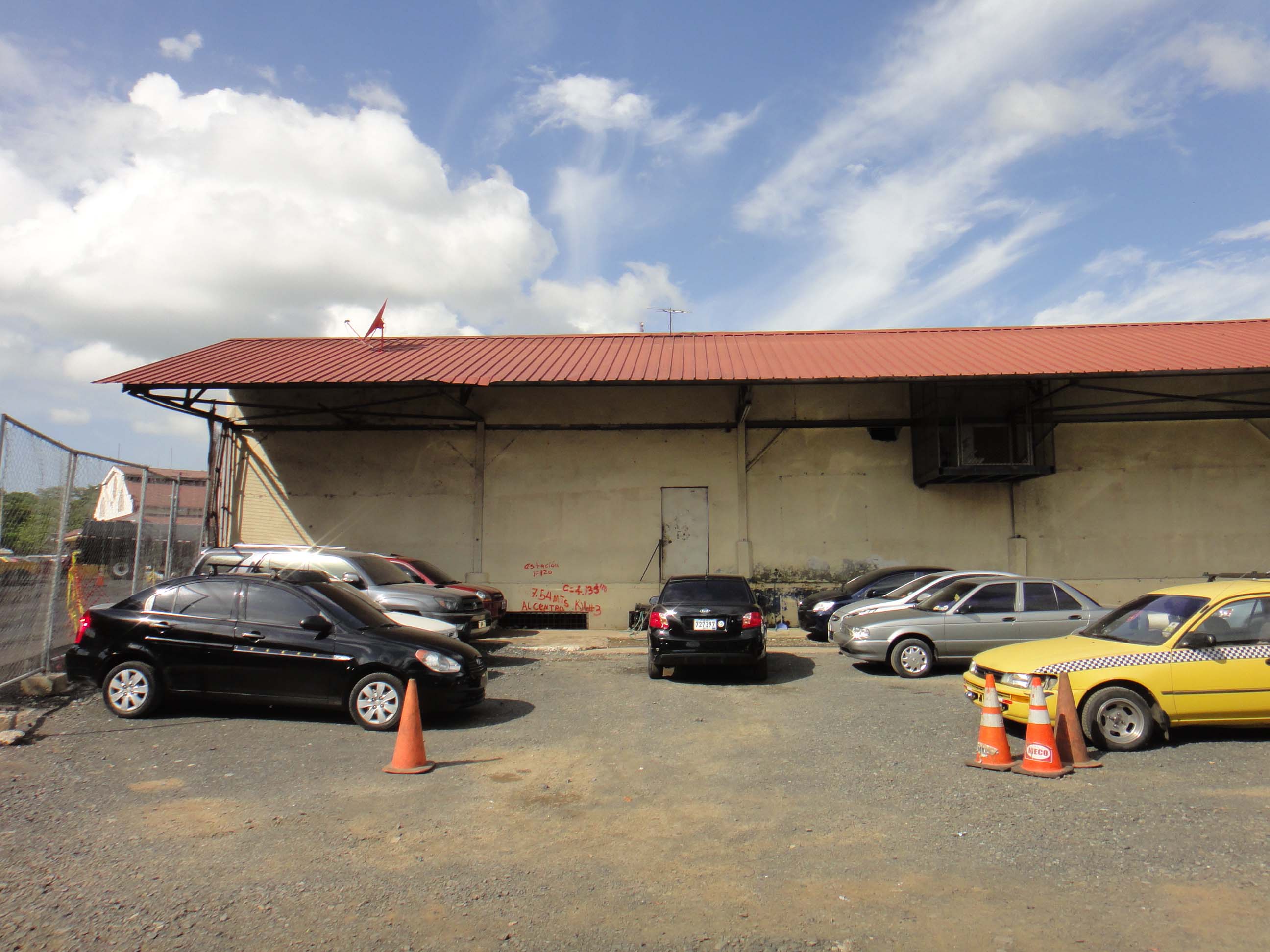
After leaving Barwil we got Alex to drive us to the police HQ where we would have to go with the truck to get our export clearance. I’m glad we did this because I’m not sure we wouldn’t have stopped in the right place as it looked like a builders lot ! Its in a pretty dodgy part of town so not somewhere you want to hang out !
This was all on Thursday and it was Easter weekend so we couldn’t do the inspection until Monday, then we’d have to deliver to the port on Tuesday for a Wednesday shipping. If all went well we would have the truck back in Colombia on Friday (as it turns out a vain hope !).
On Sunday night we drove the Beast into Panama City – a very slow and laborious journey as most of the city seemed to be returning from their Easter Weekend away. We spent the night in a big car park on the Amador Causeway and had a peaceful if hot night.
First thing on Monday morning we drove to the Policia Tecnica Judicial or DIJ. You need to arrive for 9am in order to register and get in the queue for inspections. It was pretty quiet though and there were only 2 others trying to get inspections. For this process you have to wear long trousers and shoes (not sandals) – in fact we saw one guy be told to change when he arrived in flip-flops ! You need to give them a pack of photocopies including your passport, registration document, vehicle stamp in your passport and draft Bill of Lading (BOL).

The inspections start at 10am but in fact we were done shortly before then. The inspector checked the registration and VIN number. We noticed on another van he checked the number of the engine too but ours is listed as unknown on our V5 (registration document).
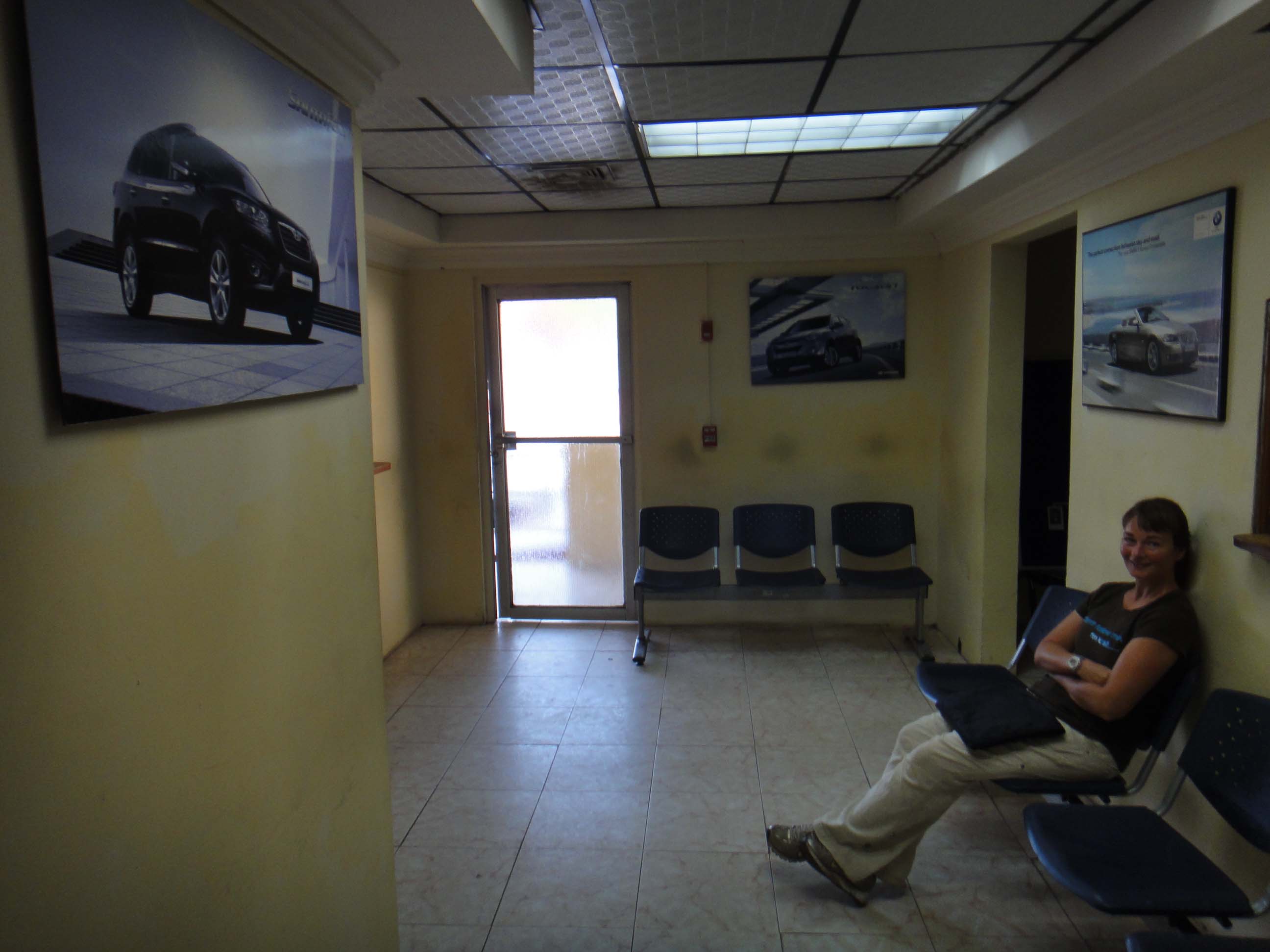
We were then told we could pick up the papers we need at 2pm from the Secretaria General which is across the main road from the DIJ.
Instead of sitting in the hot, slightly dangerous car park we decided to head to Allbrook mall for a few hours and indulge our long dormant shopping urges.
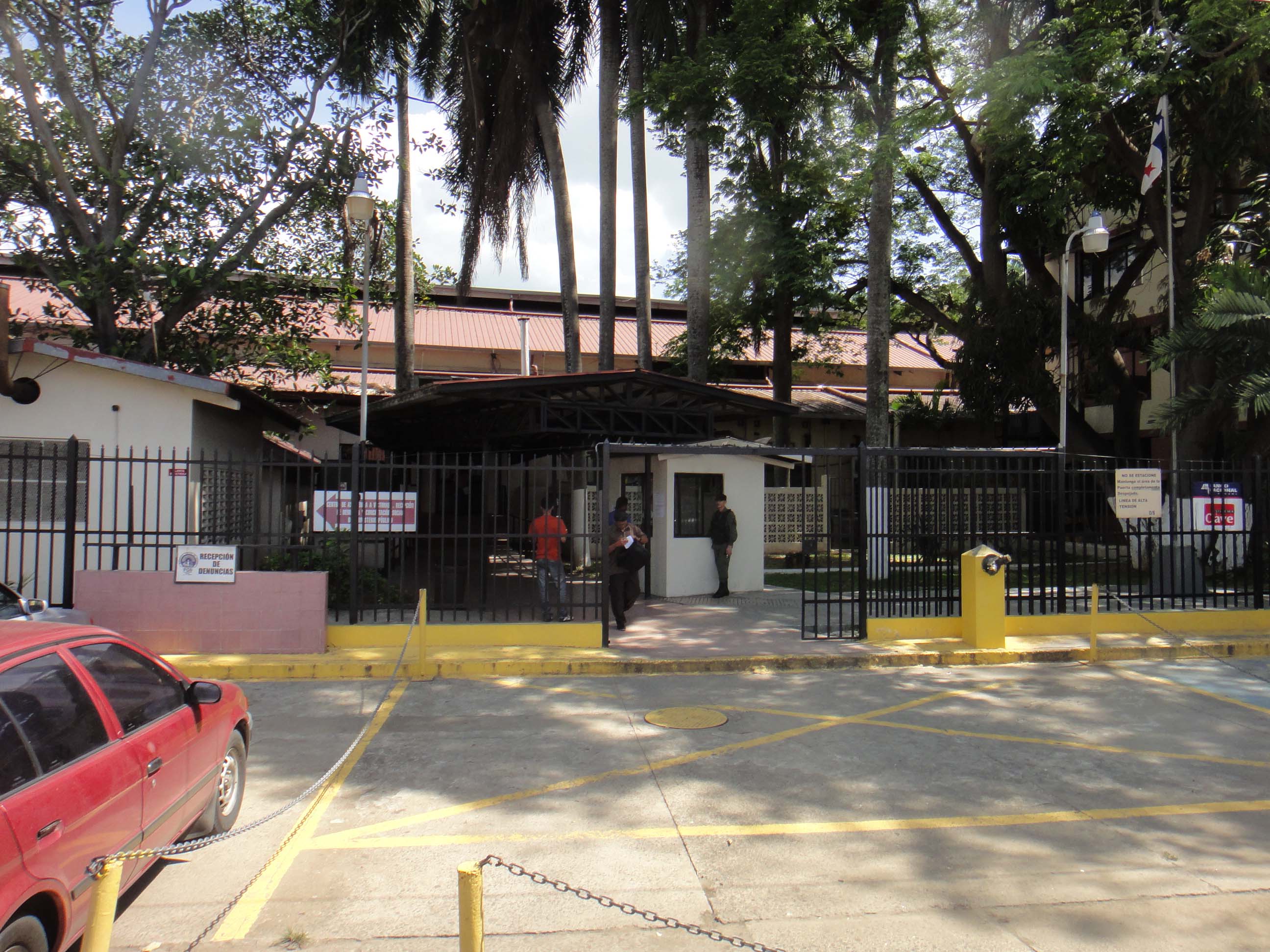
We got back to the DIJ car park just before 2pm and headed across the road to the main government building. You need to surrender a piece of ID to get in (not your passport) and then register at the front desk with your passport. The Secretaria General office is down a corridor to the left of the reception desk and is around the corner, first door on the left. It is clearly marked with a sign.
Once in this office you have to fill out a form and then you should be handed your clearance to export your vehicle. This is of course that you don’t have any outstanding issues with the police.
So we had to hot-tail it back to Barwil with a big bag of money to give to Pamela. She gave us a receipt for payment and then explained the port process. We would have to be at the Manzanillo port in Colon first thing in the morning.
We spent another night in the car park by the Causeway and spent the evening re-arranging the truck for shipping. Everything had to come out of the cab and we had to secure the access hatch from cab to back. Everything came off the roof and we had to empty our jerry cans into the tank. RORO shipping has a reputation for leading to petty thefts so we wanted to make everything as difficult as possible for any thief.
The road from Panama City to Colon is a big highway – although a toll road (tolls cost us $8.80) – and it only takes about an hour to drive across the country. Just before reaching the free trade zone in Colon you turn right towards the Manzanillo port. Just inside the main entrance to the port is a car park which is in front of the Barwil offices at the port.
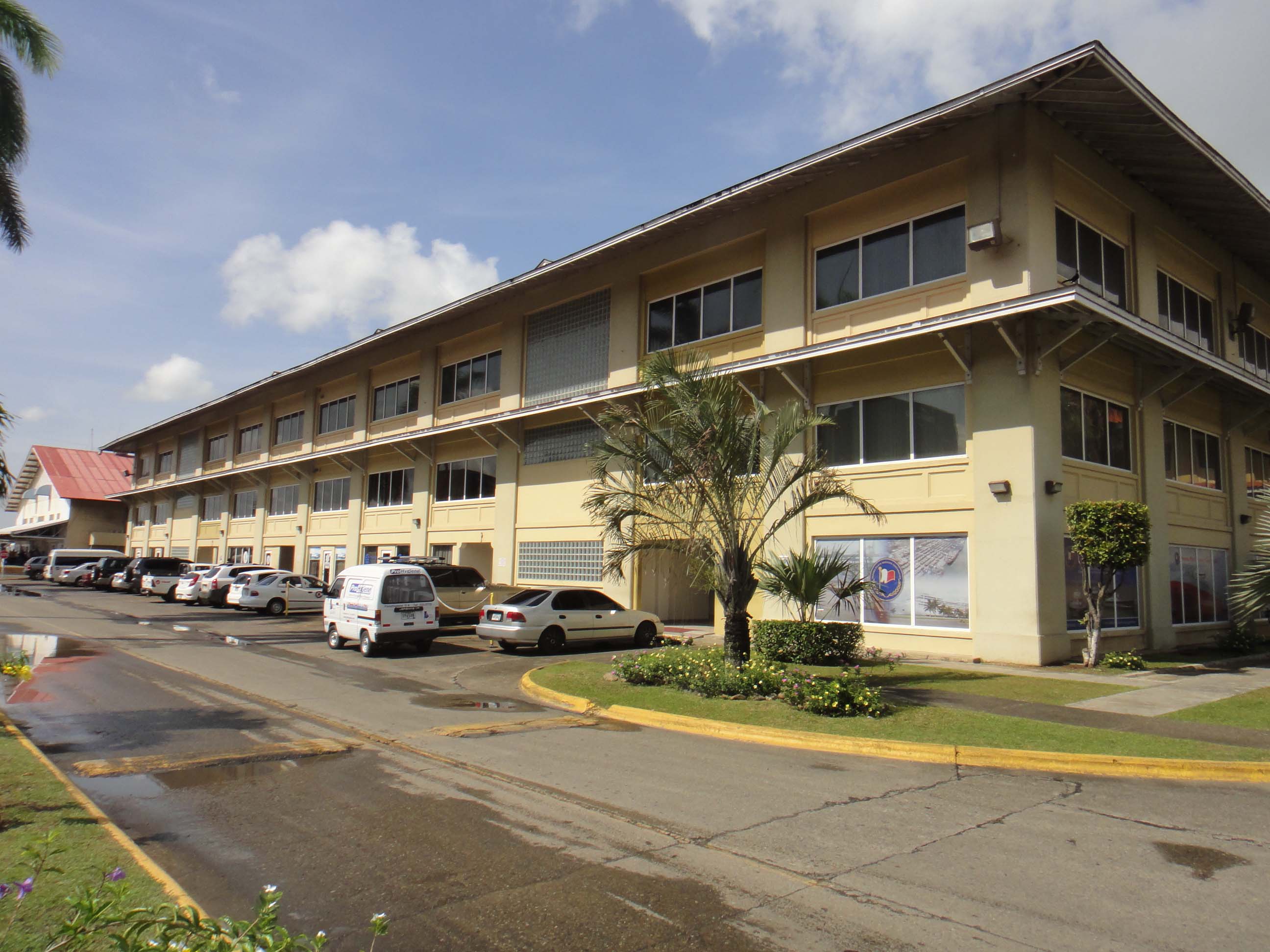
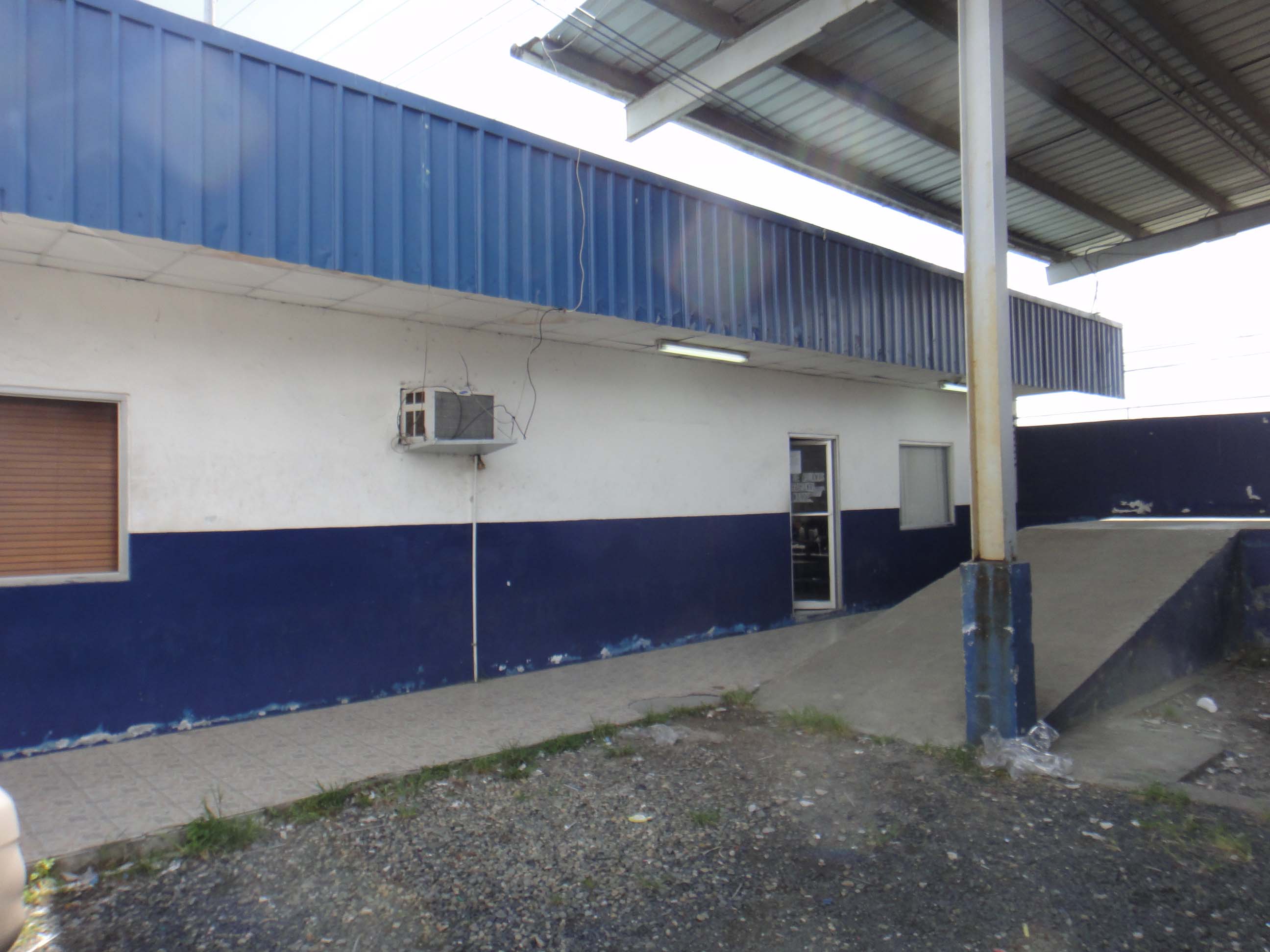
We had been told to meet Alfredo who would be our fixer for the day. Alfredo spoke some English but was fairly economical with words, to say the least. First thing we had to do was visit the customs office where they would stamp the exit documents and also cancel the stamp in my passport. This was a five minute drive from the port and in a fairly shabby pre-fab office round the back of the entrance gate. Most of Colon seems pretty shabby though !
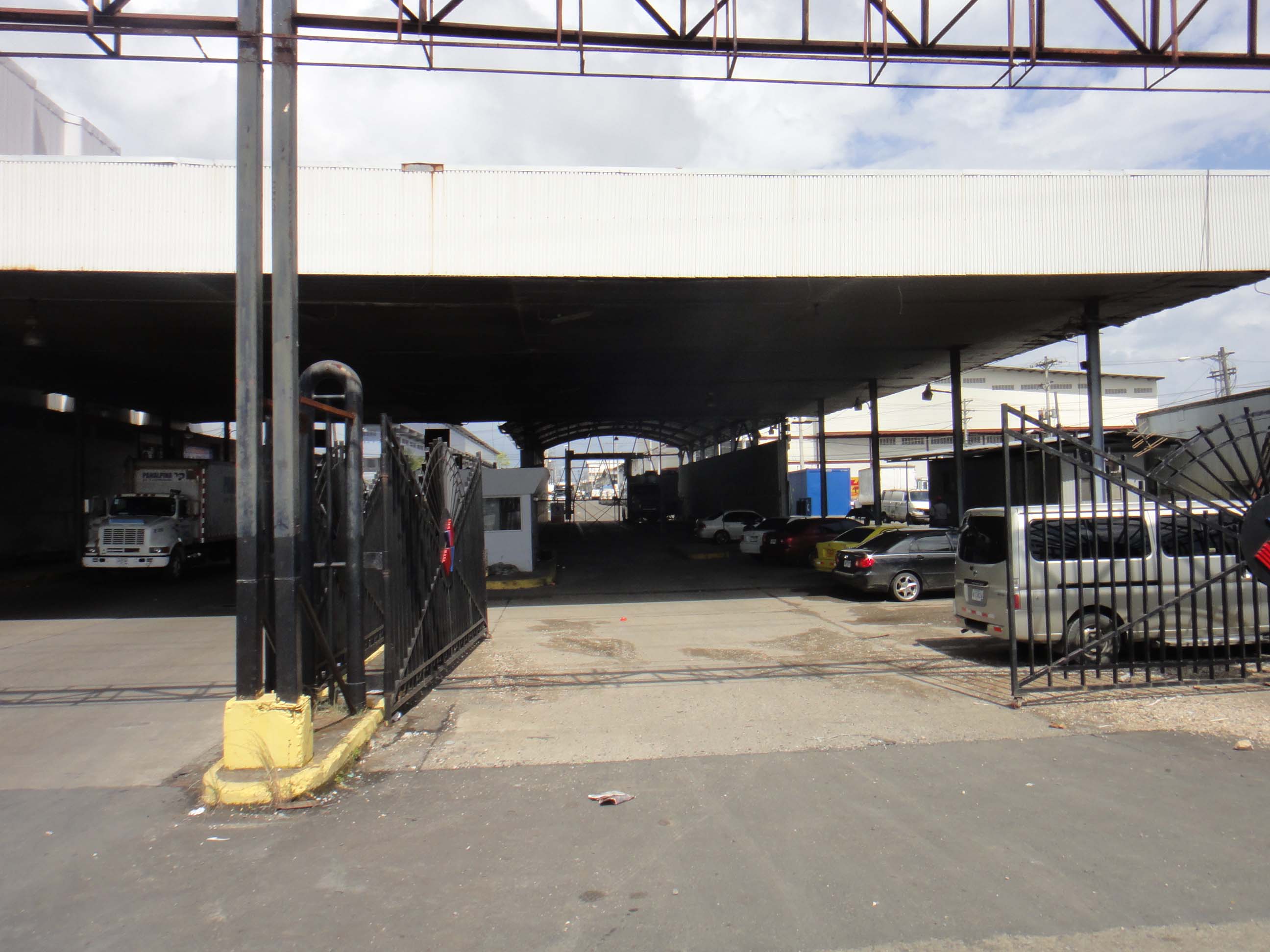
It only took about 10 minutes to get the clearance we needed though.
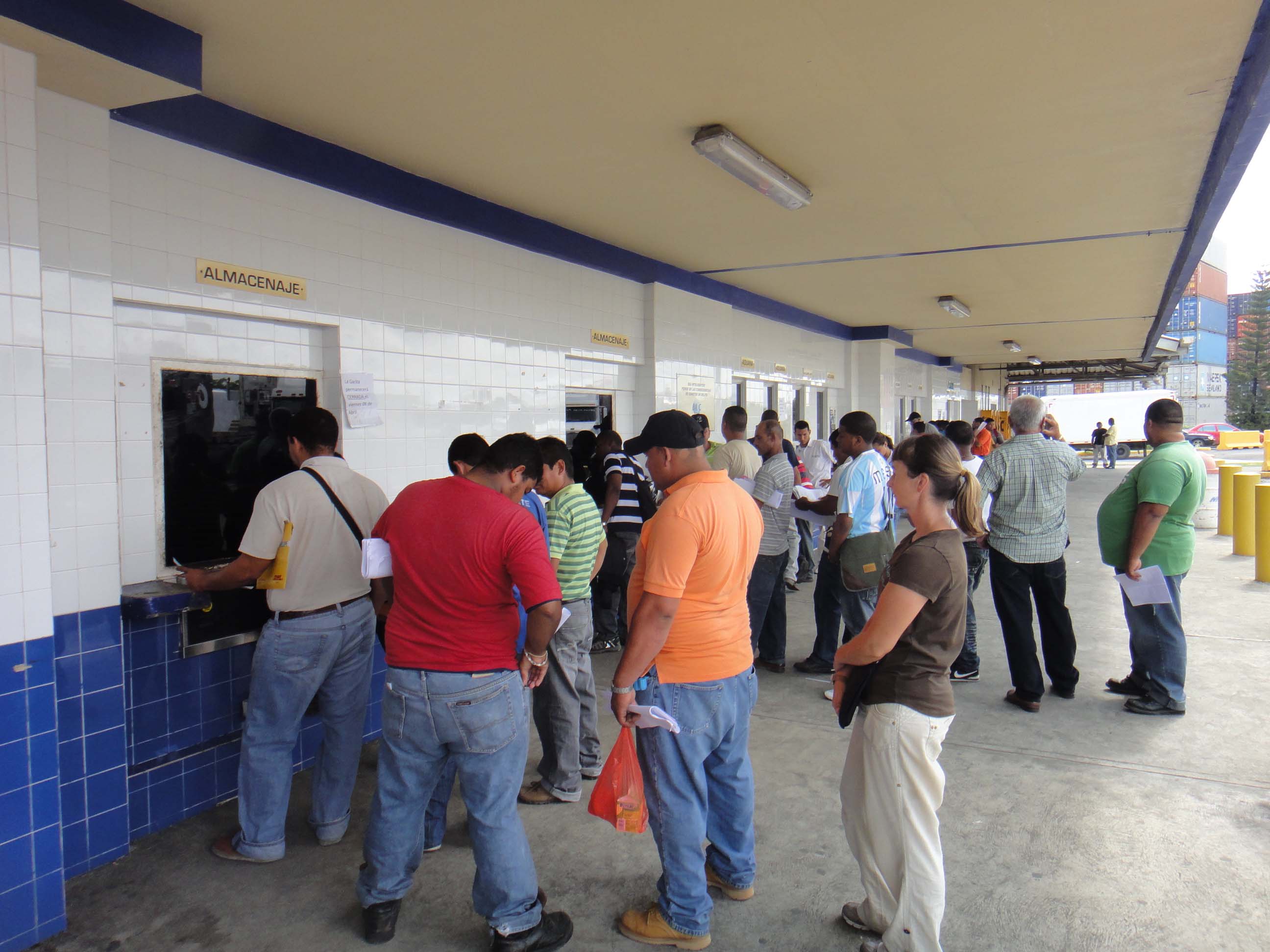
Next step was to go back to the Barwil office and visit the Aduana here to pay a fee of $54 and get permission to enter the port.
The last thing we had to do was drive the Beast to the main customs area of the port for an inspection. Sarah needed to get out and walk in, surrendering her passport for access, while I just drove the Beast in.
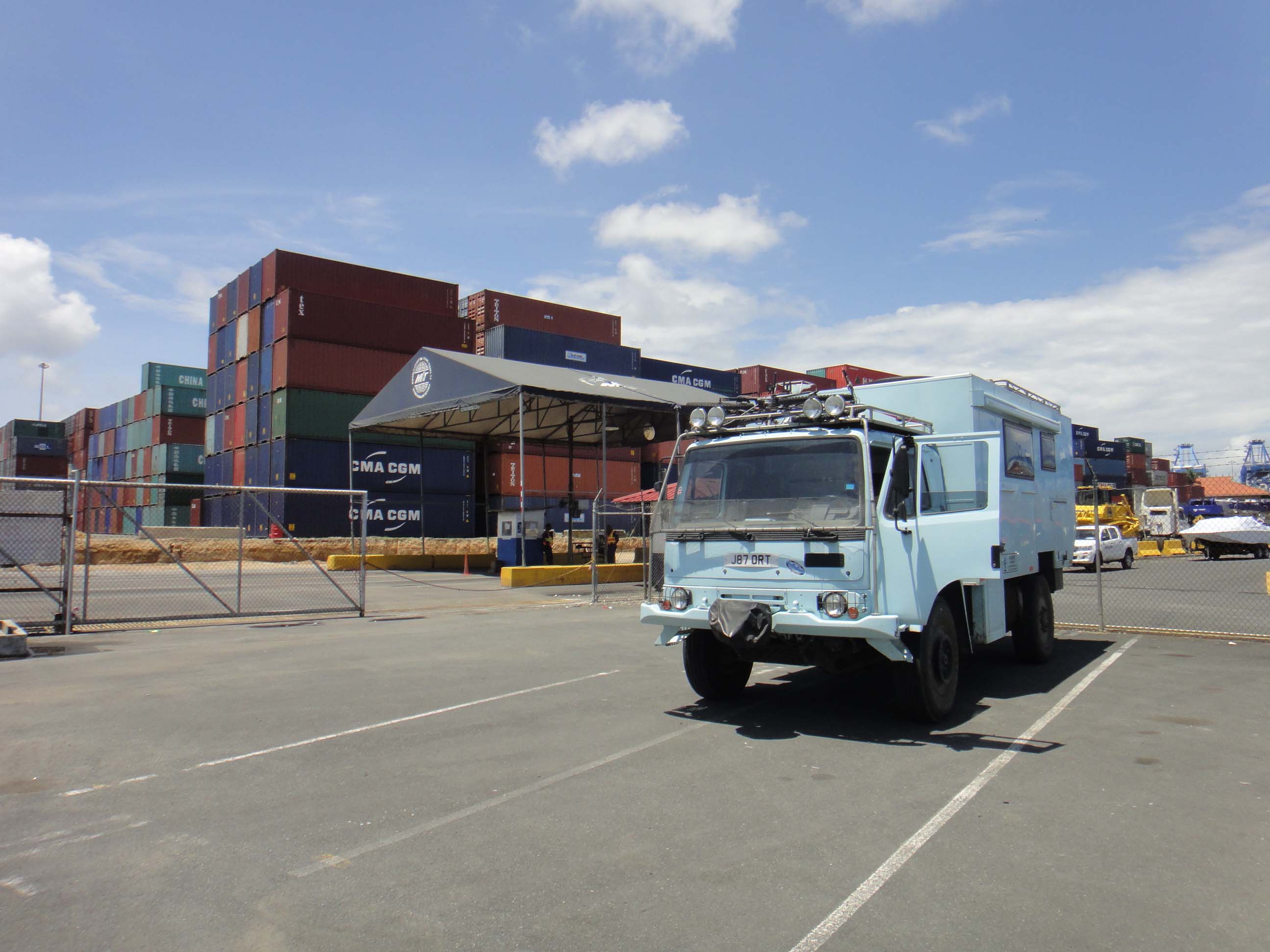
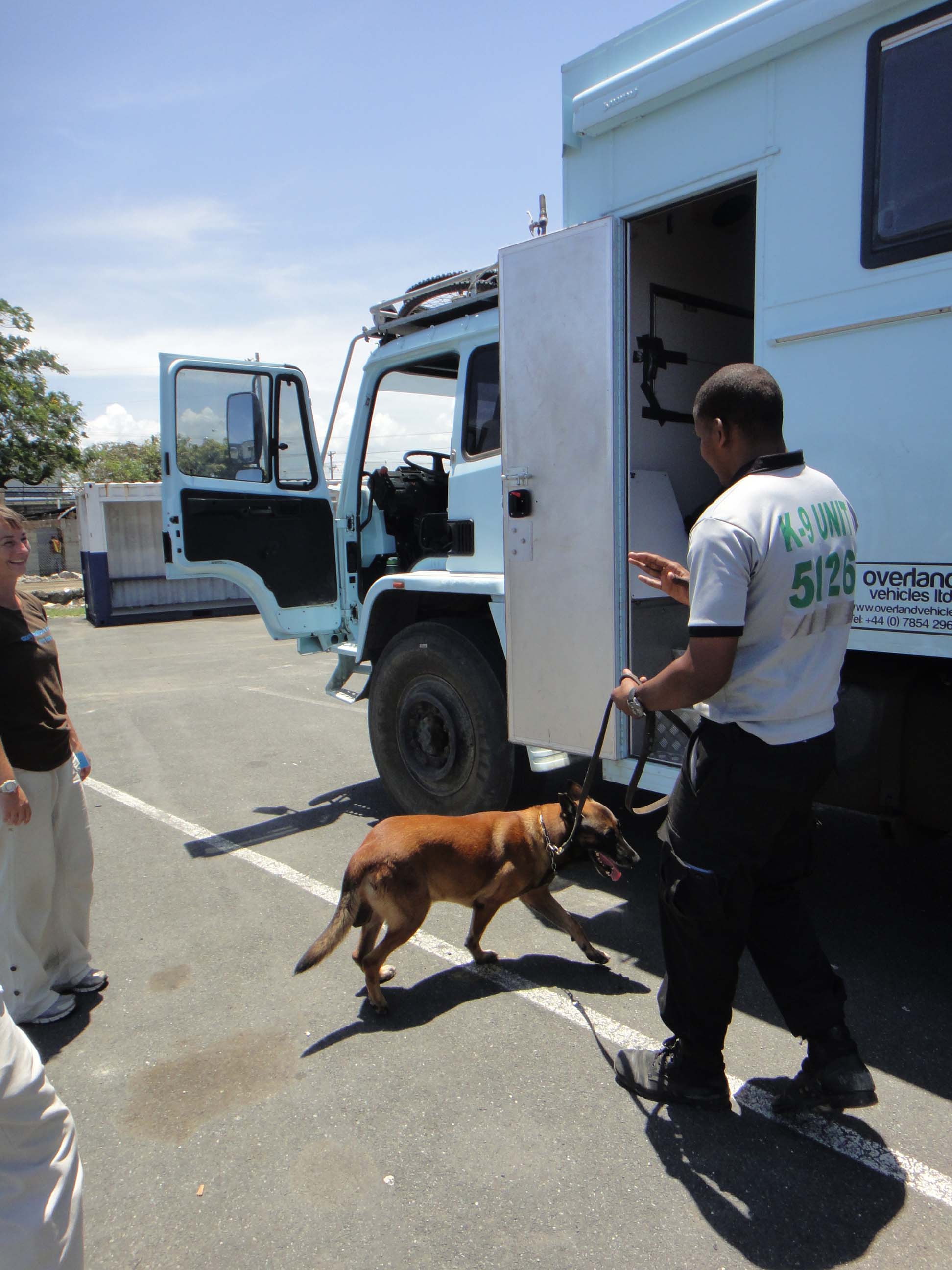
This was the most time consuming part of the process as we waited around for about an hour until the customs inspector was ready. He had a good look round the truck and then his drug dog arrived for a good sniff. Quite why they check for people smuggling drugs TO Colombia I don’t know !
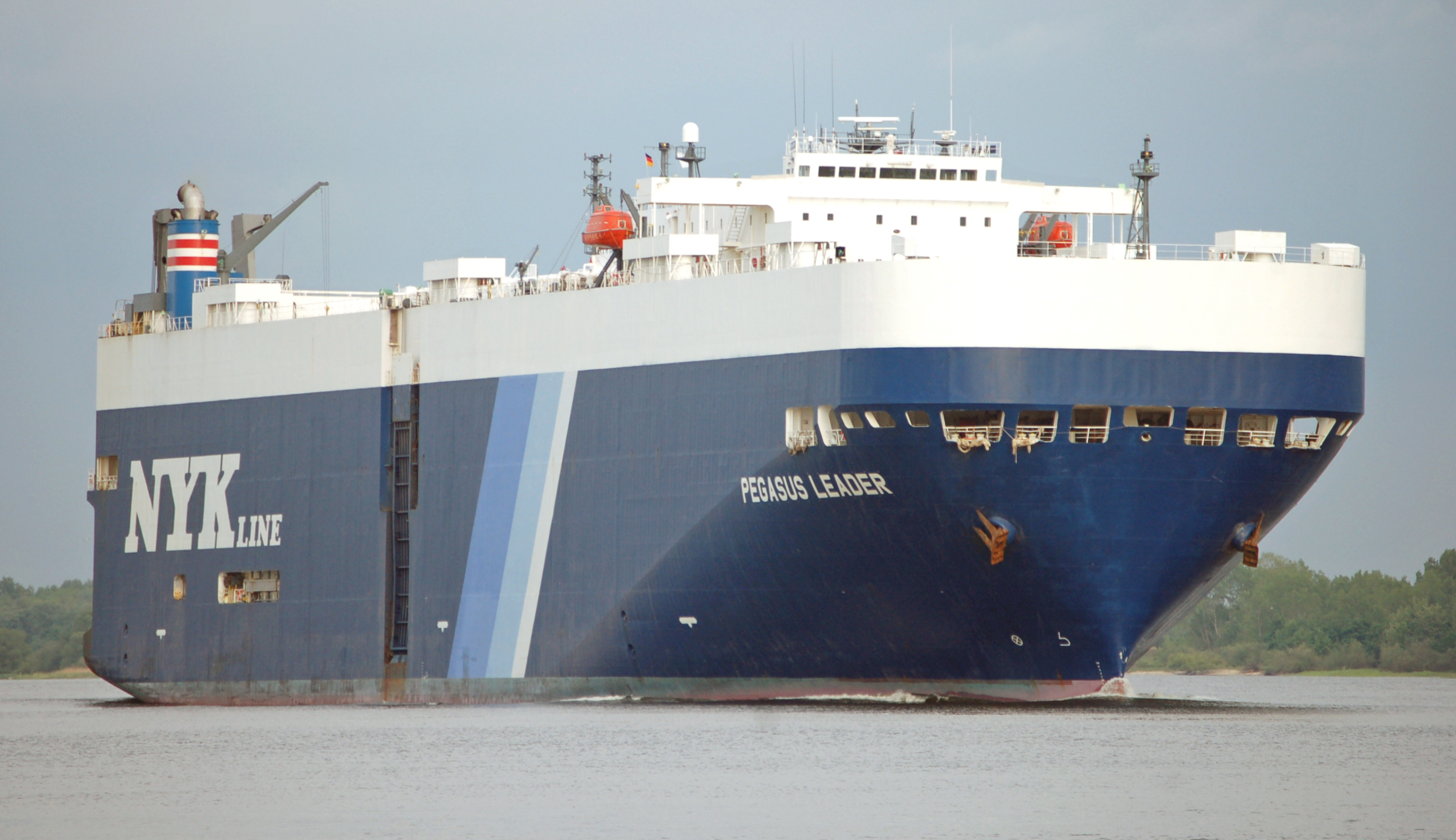
Once we were cleared through customs we were done and had to leave the ignition key behind and the driver’s door unlocked. The Beast would be loaded onto the Pegasus Leader the next day (Wednesday) and was due to arrive on Thursday in Cartagena. This should mean that we would get her back on Friday. – but this is Latin America !
A short cab ride took us to the bus terminal and we were on a bus back to Panama City. Colon is not the nicest area and we’d been advised not to hang around, particularly as we were carrying bags of our things for the next few days.
Other Shipping agents:
Using Marfret: gmartinez@therozogroup.com.pa
Seaboard: vdegracia@seaboardmarinepanama.com (didn’t get a response from this one though).
Info:
Barwil Agencies/Transcanal Panama Pacific International Business Park Building A Suite 401Phone: +507 263 7755
Fax: +507 223 0698
Office GPS is: N8 55.662 W79 35.561 Turn Off from Panam at: N8 57.142 W79 35.309 Secretaria General: N8 57.947 W79 32.719 DIJ Car Park and Inspection: N8 57.970 W79 32.690 Customs outside Manzanillo: N9 20.781 W79 52.731 Parking outide Barwill office at Manzanillo: N9 21.931 W79 52.849 Customs Inspection Lot at Manzanillo: N9 22.018 W79 52.748Panama City
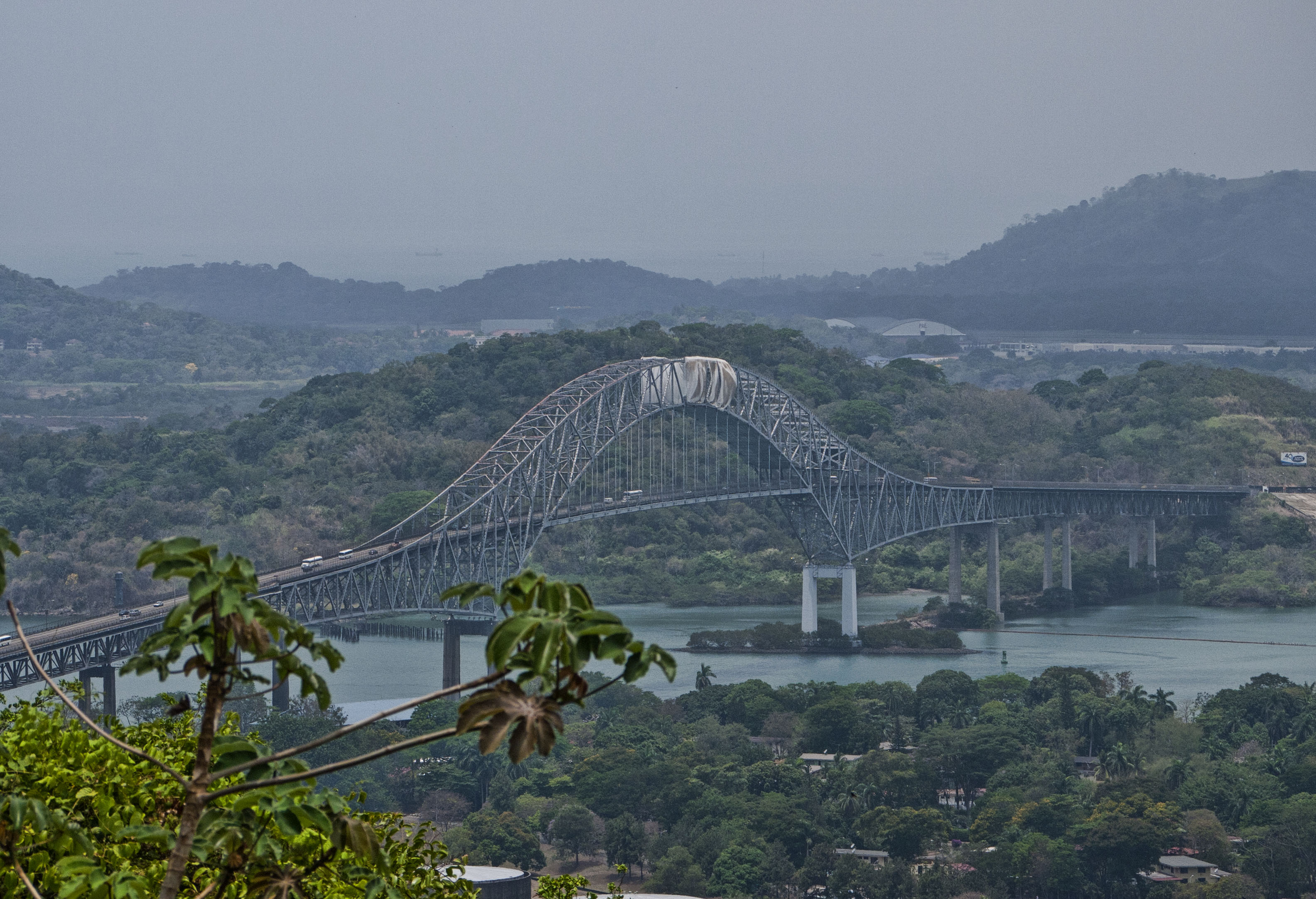
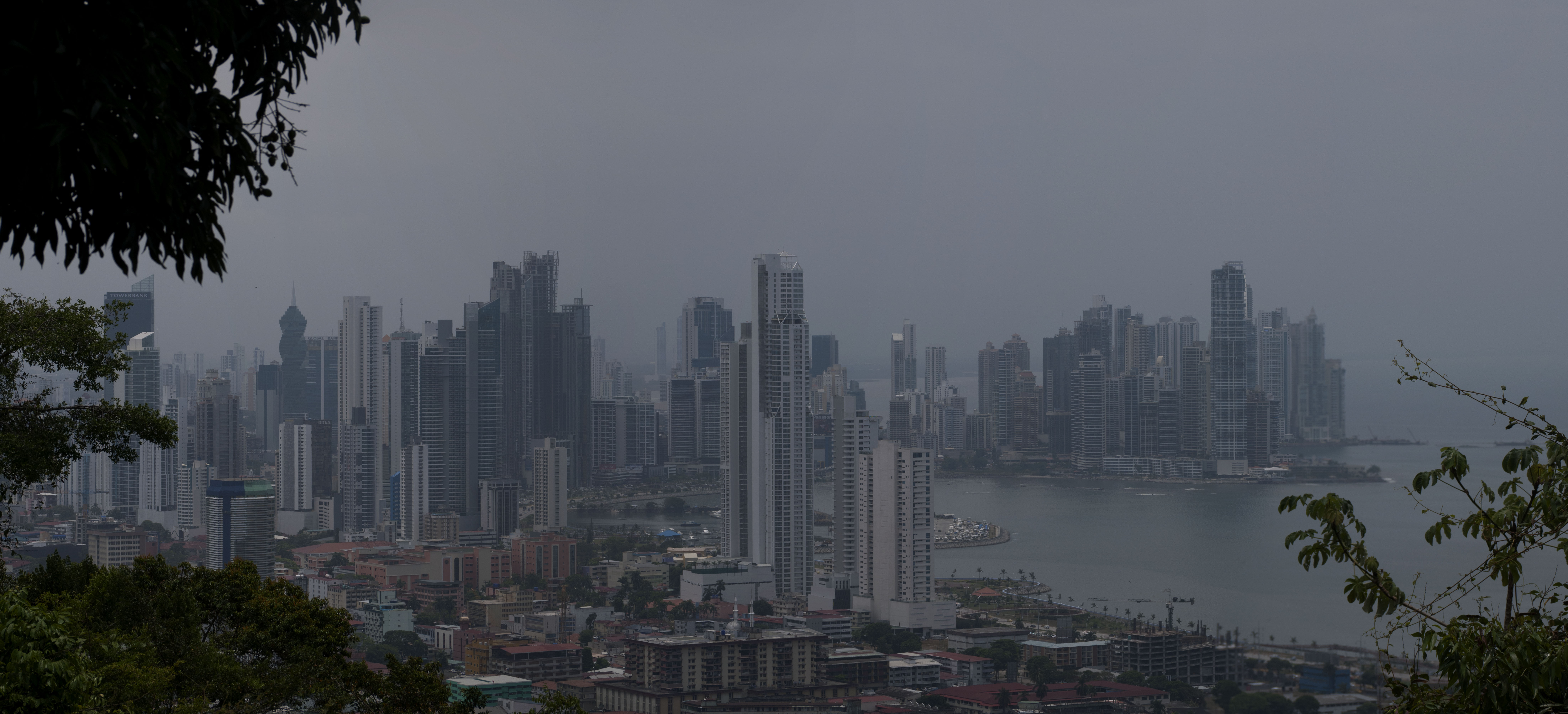
Panama City is a big modern city – surprising in its modernity. There are a lot of skyscrapers and there are even more being built. Despite running out of land there are proposals to fill in some of the coastal strip to enable more skyscrapers to be built. However many of the tower blocks of apartments are empty, having been bought as a means of laundering money !
We decided to leave the Beast outside town at XS Memories – a real RV Park – which is about 100km outside Panama City. From here it was easy to get a bus into the main Panama City terminal – called Allbrook.
We had arranged to meet with a driver here – posh I know – to see some of the sights of the city. Alex had come to us by recommendation of the guys at XS Memories and it was a great recommendation. Having a driver was a brilliant luxury as the attractions of Panama City are very spread out and you would need to take a number of taxis between the various areas. He also spoke very good English and has wealth of knowledge about Panama and Panama City (If you want to use Alex is phone number is 6-672 7663).

The first place that we went was up to the top of Ancon Hill to get a view of the city. From one side you can see the Canal area and the terminus of the railway. The other side gives you a view of the old town and the city centre with its strip of skyscrapers.

After this we headed out on to the Amador Causeway – the former American army base which has now become a popular recreational area. After a quick lunch at a local workers restaurant we drove back to the city and into the old town or Casco Viejo. The view from the old town back towards the new city is pretty spectacular.

To get to this area you drive through one of the most dangerous parts of town, called Chorrillo, and we’ve been told that only the last 8 blocks (the old town) are really safe. These are guarded by the Presidential Police which makes all the difference !

There is an enormous amount of building work going on in the old town and in a few years it will be restored to its former glories. For now however most of the buildings are fairly run down. It has the feel of Havana but obviously much smaller.


After the old town we went out of town to the Miraflores Locks of the Panama Canal. After the French failed to build a sea level canal the Americans succeeded with building a canal with locks fed by water from Gatun lake, which when it was created was the largest artificial lake in world. This guarantees that the interior around the lake will stay undeveloped as the forest is needed to maintain the water catchment of the lake and the prodigious amount of water that the canal uses. The canal was completed in 1914.
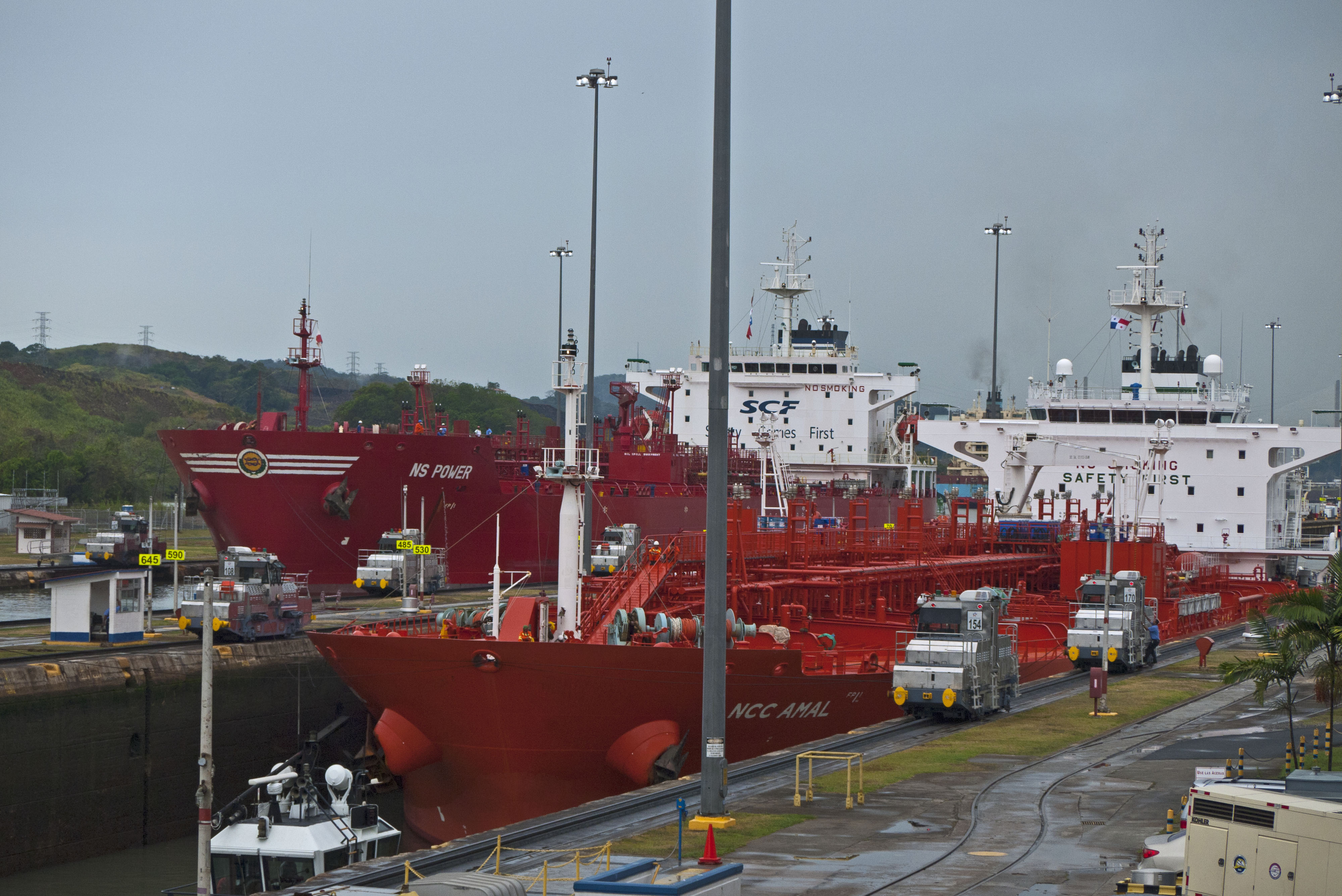
I was surprised to learn that a second canal is currently being built alongside the original which is much bigger and designed to take the very biggest ships. This one will recycle the water used in its locks. This will redefine the Panamax standard of ship increasing it by 30% and is expected to be completed in 2014.

Whilst at the locks we had the opportunity to see a couple of big ships cycle through heading for the Pacific, at the same time as there are two lanes to the locks. The water level in the locks moves pretty quickly and took less than 10 minutes to equalise. The ships are held steady by small locomotives connected by steel cables to the ship. The whole operation is pretty slick as you would expect from something that operates 24/7 365 days per year.
The canal is of critical importance to Panama as not only does it bring in a large amount of income but also ensures that other countries keep cordial relations so as not to endanger their ability to use the canal.

It had been a real pleasure having Alex drive us all day as he was an enormous source of knowledge about what we were seeing and the history of Panama. All day of Alex’s services – 11am – 6pm cost us $70 which seems like pretty good value to me – and we paid for his lunch but given lunch was only a couple of dollars each no big deal.

Our final stop for the day was our hotel in the EL Cangrejo district. We were staying in an upmarket hotel as it was Sarah’s Birthday and in the evening we went out to a well known local restaurant called Martin Fierro where we got to overdose on meat !

Las Lajas

We swapped the cool of the mountains for the heat of the coast but we managed to find our best beach yet. Las Lajas is a popular weekend destination for Panamanians who live in David. We managed to arrive on a Tuesday evening and had three nights parked right by the beach in wonderful solitude.
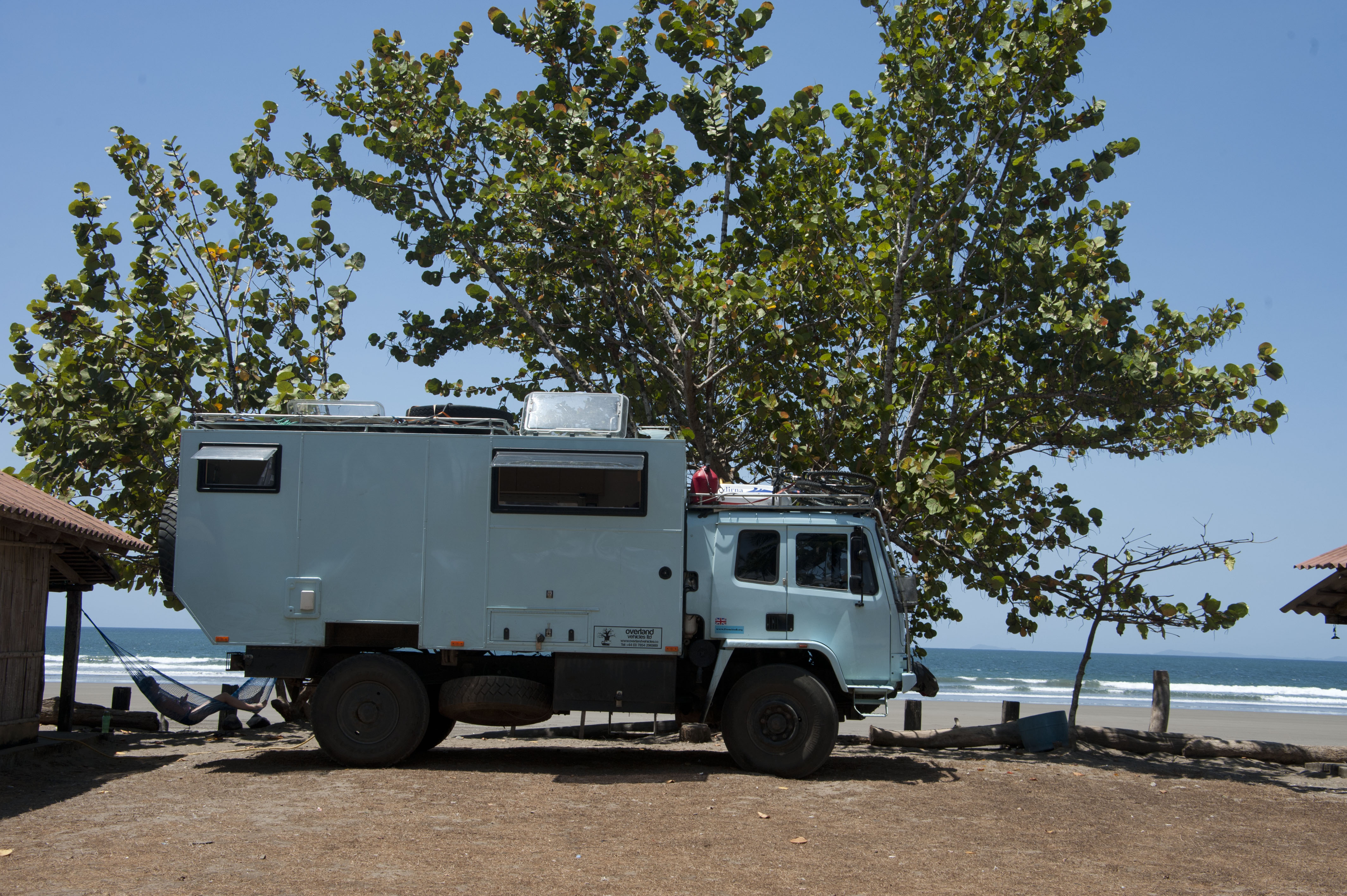
The beach here is white sand, long and wide – so long in fact that you can’t see either end when you stand on it. Almost the whole time we were there you could stand on the beach and as far as the eye could see there was not another soul.

We parked up at Las Lajas Beach Cabinas which allowed us to have power, showers and toilets by setting up between two cabins. Throughout the week they were empty but the owner was expecting a busy weekend. This is as close to perfection as we have found!
Boquete
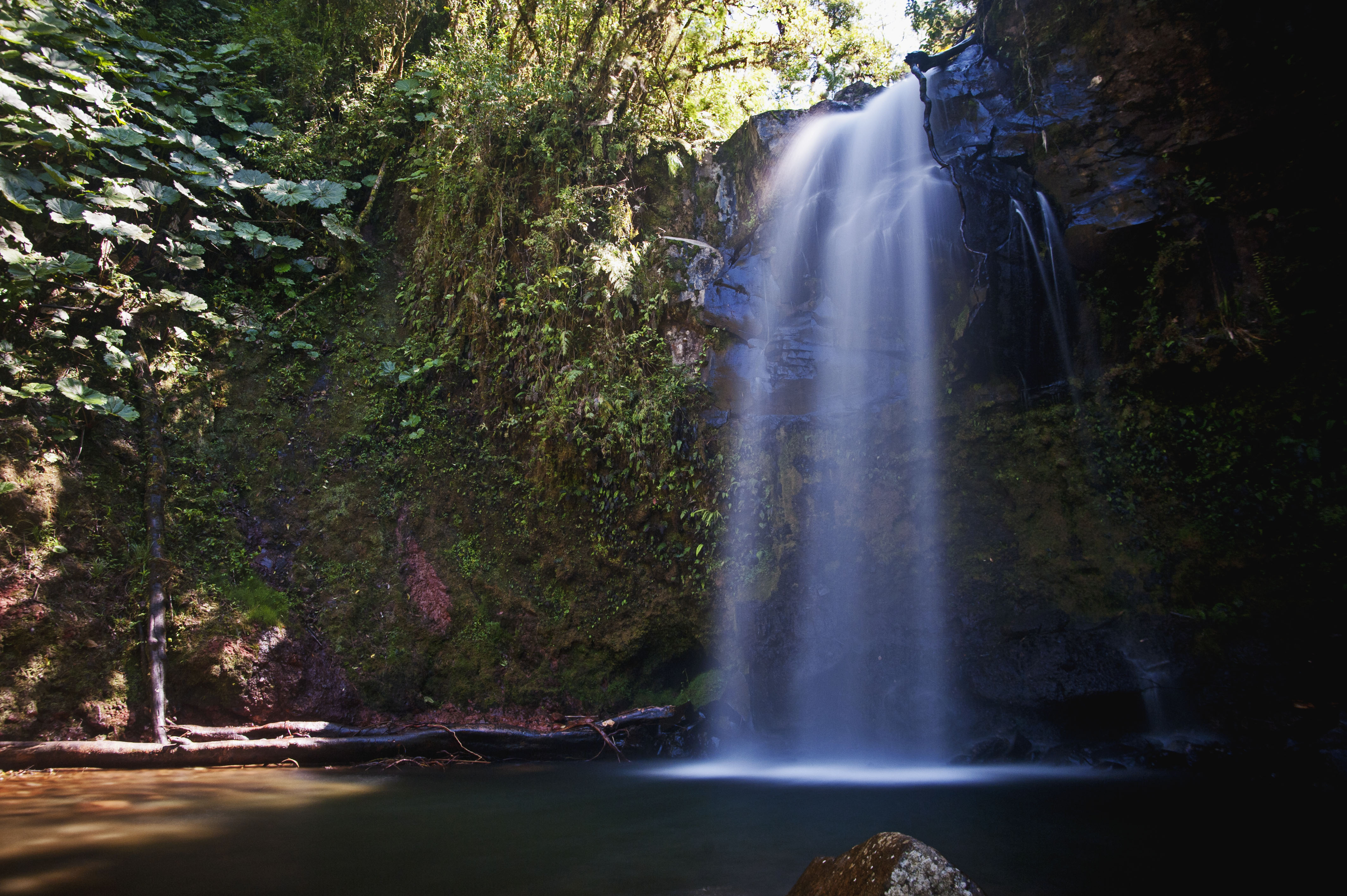
The third biggest city in Panama, David, is close to the Costa Rican border. From here there is a good road up into the mountains to the town called Boquete. Allegedly the 4th best place in the world to retire, which has led to a heavy gringo presence in the area.
Boquete has a cool climate as it is at over 1000m and this makes it ideal for growing coffee. Panama is the smallest producer of coffee in the world but has won the world coffee championships 5 times over the last 10 years.
After our border crossing we arrived at Boquete late in the evening and needed somewhere to stay. After driving through the town we headed along the river that flows through town and found a big gravel layby in the road next to the river. This made a good place for us to park overnight and after about 8pm there was no traffic at all.
Our first day in Boquete we decided to go on a coffee tour to learn about how coffee is made. We chose to go with Café Ruiz which is one of the most prestigious Panamanian brands. Their tour was also one of the most comprehensive taking you from planting to drinking of coffee.
We started off by being taken to one of Casa Ruiz’s (the company name) 11 farms where they undertake the first few processes of the coffee process.
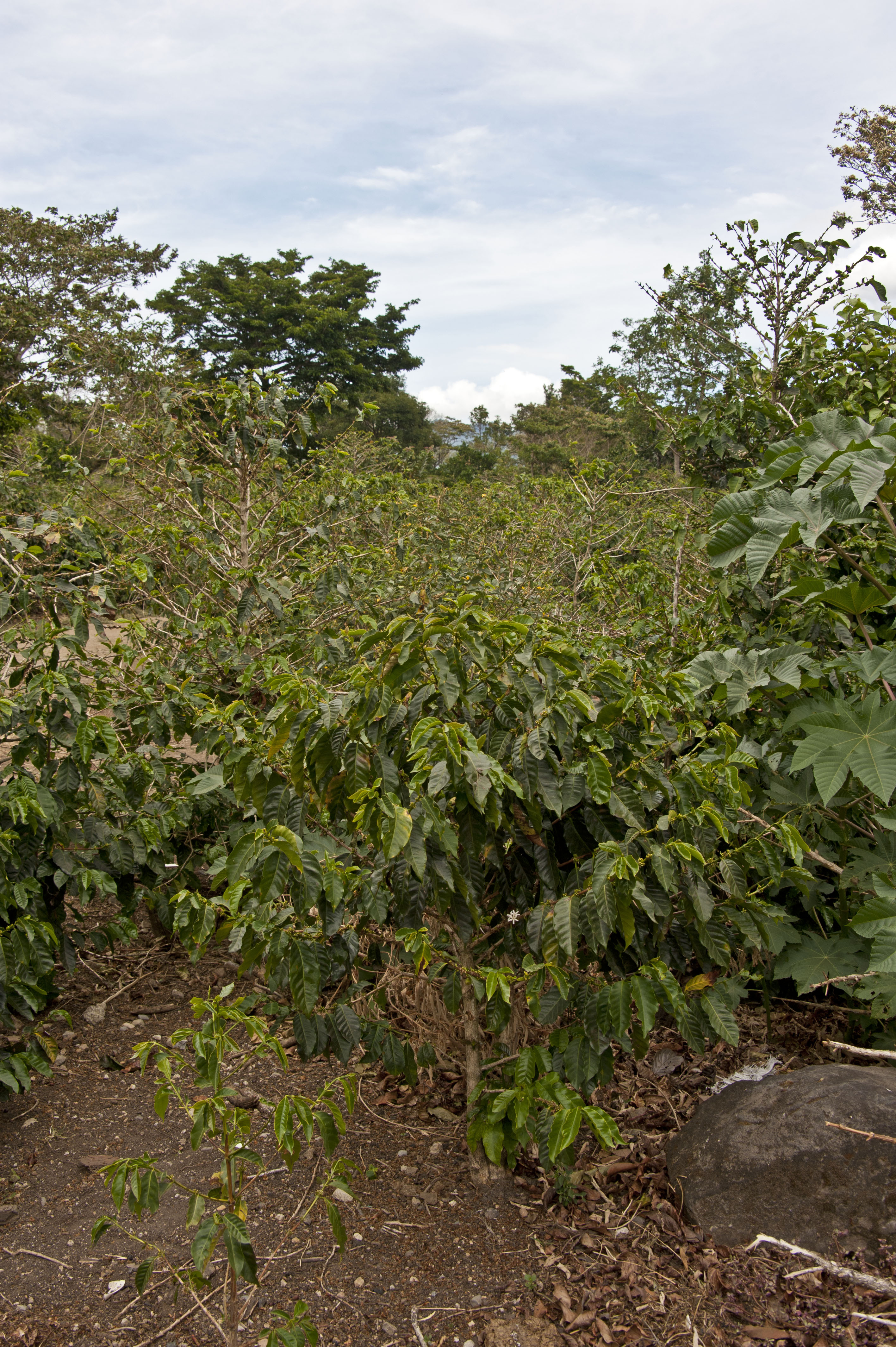
Coffee growing in Panama is done on relatively small farms where the coffee plants themselves are planted in fields with a mixed crop of other fruit trees .The other fruit trees provide shade and protection from pests as well as providing a secondary crop. The coffee beans are of course the seeds of the coffee plant (which is not native to the Americas although many plants from the same family are native). If planted the bean grows roots and is eventually lifted into the air where it becomes the first leaves of the new plant.

A new plant takes five years before it is ready to be harvested.
In Panama the harvesting of the coffee plants is done exclusively by hand. The advantage of this over machine harvesting is that the coffee cherries (the fruit that contains the bean) can be harvested at its peak ripeness as the cherries on any one plant ripen at different times. In Boquete most of the harvesting is done by the Ngobe-Bugle indigenous people. In the past children as young as 10 have worked on the harvest but now there are rules in place and only children over 14 can work for a limited number of hours during the school holidays.
Once the cherries have been harvested they must be dried and this can be done in two ways, by the wet method or the dry method. A combination of both is used in Panama.

In the wet method the cherries are immersed in water. The bad cherries will float and are removed. Throughout all the processes the bad beans are still retained and apparently sold to manufacturers of instant coffee such as Nescafe ! After the bad cherries are removed the cherries are allowed to ferment. This makes it easy to strip the fruit off the bean by further washing. After this the beans will be dried for up to 4 weeks to remove the moisture content.
The other method – the dry method involves drying the cherry intact and then removing the skin from the bean at the end of the process.
Drying can happen in two ways: sun drying on the ground or drying in machines heated by burning wood that dry the beans more quickly.
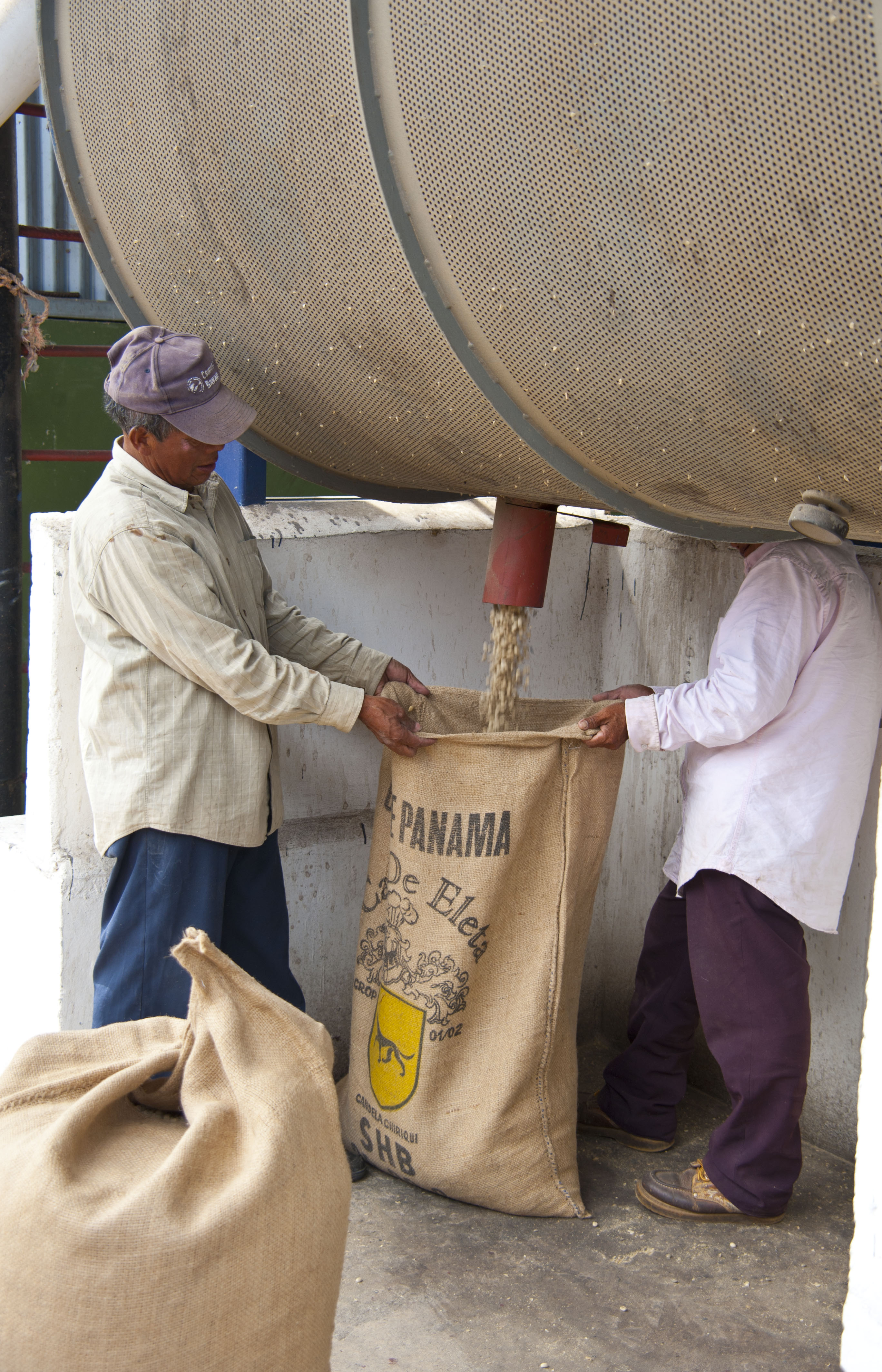
After the beans are fully dried they will be placed in sacks and stored for a length of time before moving to the next steps in the process. This storage period is to age the beans but is not excessive and will only be for a few months.
The beans have to be sorted after this. The first sorting is done by machine where they are sorted by size and density. The worst beans go to the instant coffee makers and the best are retained to make premium coffees.

Once the initial sorting has been done the beans are then sorted by hand for colour and any defective beans are removed. This is done by local women who earn USD 12 a day for a long day of work.

After this the beans are bagged up and mostly sold. The roasting tends to be done in the buyers markets to local tastes. However some beans are roasted in Panama for local consumption. The best Panamanian coffee is based on an Ethiopian Bean called Geisha. Geisha roasted beans have been sold for up to USD180 per pound!
Our coffee tour finished with a coffee tasting where we compared the different types of roasting processes. Neither of us really like coffee so the nuances were lost on us but the different roast definitely taste different. The lighter roasts allow more of the original coffee flavour to come through whereas a heavier roast promotes more of a burnt taste.

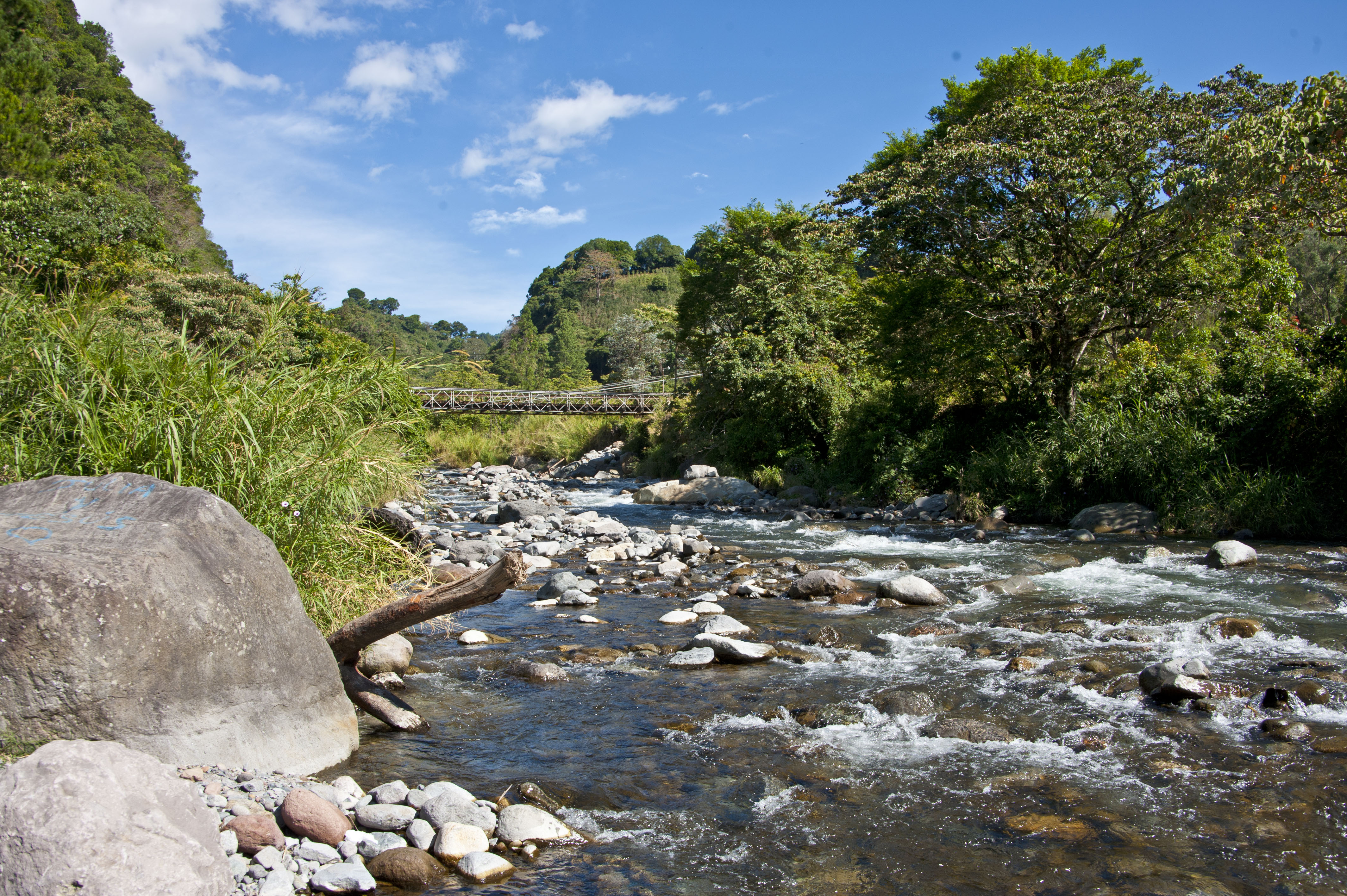
On our second day in Boquete we drove up towards the Volcan Baru national park where we went on a fairly strenuous walk through some cloudforest along a river to three different waterfalls. The walk was very pretty and we enjoyed it but without a guide we didn’t see much in the way of wildlife.

Our final stop off in Boquete was to visit some private gardens that are open to the public – called “Mi Casa es Su Casa”. They were beautifully laid out and there were lots of brightly coloured flowers – this is a great example of local philanthropy.

Diesel in Central America
(Avg. Prices in 1st Qtr 2012)
| Country |
USD per US Gallon |
Lowest Price per US Gallon |
| Mexico |
2.90 |
2.89 |
| Belize |
5.00 |
5.00 |
| Guatemala |
4.44 |
4.11 |
| El Salvador |
4.26 |
4.22 |
| Honduras |
4.29 |
4.22 |
| Nicaragua |
4.99 |
4.99 |
| Costa Rica |
4.35 |
4.35 |
| Panama |
4.06 |
3.84 |
Some Notes:
1) Throughout Central America distances are relatively small and gas stations are abundant. It is not necessary to worry about finding a gas station.
2) Costa Rica is the only country that does not post the price of its fuel on signs that are visible from the road.
3) Fuel is usually cheaper nearer the nations’ capital and outlying areas can have significantly higher costs. Try to fill up in the bigger towns.
4) The averages above are slightly distorted as a result of where we filled up. For example we filled in Northern Guatemala where the fuel cost 40c per Gallon more than near the capital.
The Process
In all the countries of Central America the fuel is provided by a pump attendant. It is important to watch the pump attendant to ensure that the pump zeros before it starts. Many of them will point at the pump to show you that it has zeroed. Having a locking gas tank is good here as they can’t start pumping until you’re there.
“Lleno” is Spanish for “Fill it up”. (pronounced lye-no)
Pump attendants take the cash and will give you change. Make it clear what cash you are handing over to ensure they do not try to cheat you.
Despite the above precautions no one has tried to cheat us and the pump attendants have generally been very friendly. Many of them will also wash your windscreen and check your tyre pressures.
It is not necessary to tip the attendant but you may want to !
Costa Rica – Panama Border (Paso Canoas)
This was definitely the most organised and easiest border that we’ve done since going into Mexico. Definitely no need for a Tramitador here as it is all very easy.
The last 50k or so of the PanAm before the border is in reasonably bad shape so is pretty bumpy – don’t worry as soon as you’re in Panama it’s a dual carriageway.

No photocopies are needed on the Costa Rican side. On Arriving at the Costa Rica side of the border. You need to Park somewhere near the blue immigration building. We parked opposite as all the parking spots were taken – there was a no parking sign but we ignored this.

First thing to do is to queue up at the window marked “Salida” for exiting the country. You will get your passport stamped after filling out a form (only takes a minute). This took us all of five minutes including queueing.
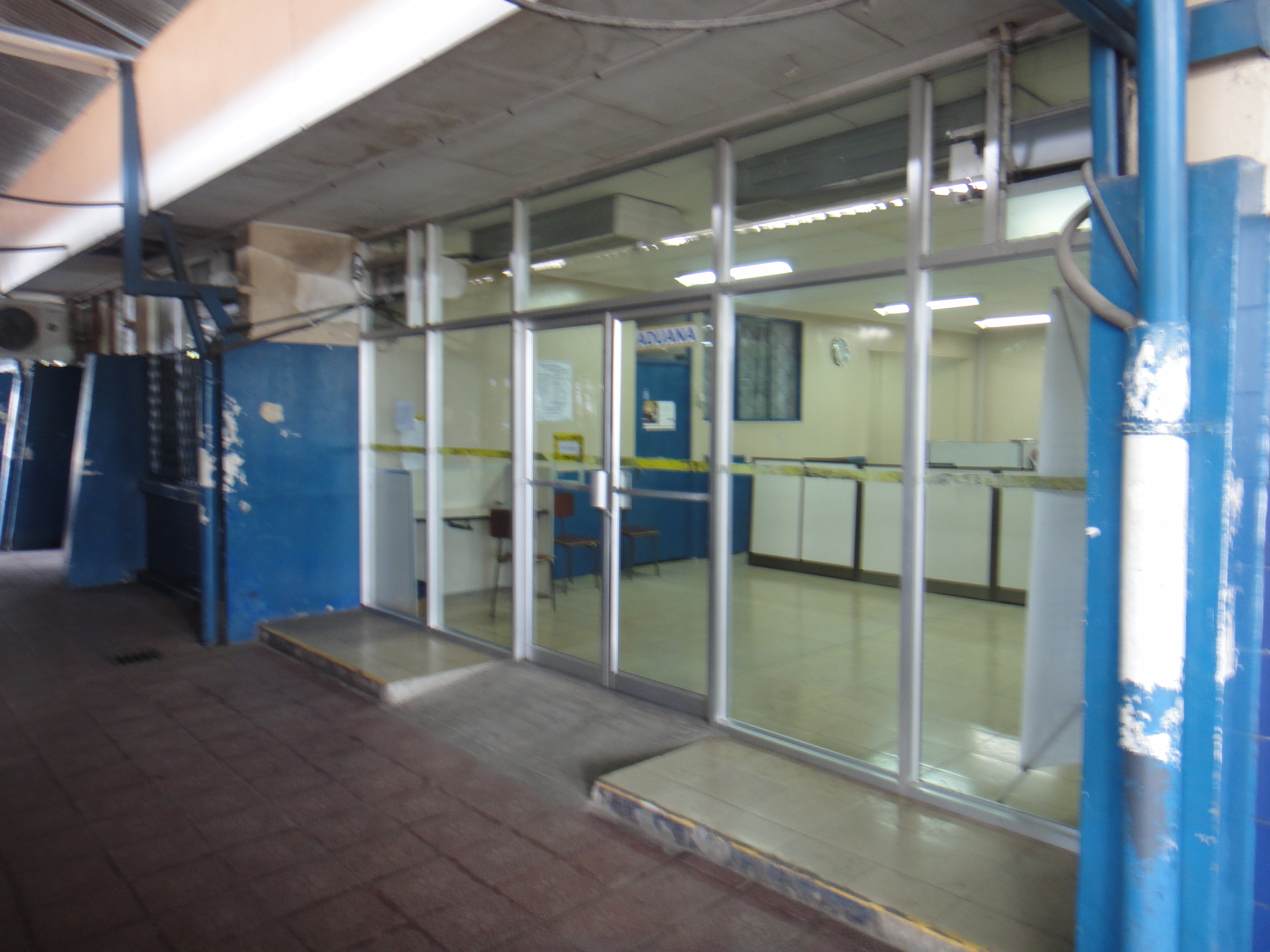
The next step is Aduana to cancel your import permit. To get here walk to your left and then turn right – it is a room with glass doors. Go in here and hand the guy inside your import permit and your passport. He will give you a form which you fill out – again very simple – and hand back. He will sign and stamp this and that’s it.
We were practically in shock at how easy this side of the border was – and no one wanted any money from us !
Get back in your vehicle and drive straight ahead. You will get to a junction after a couple of hundred metres and ahead you will see what looks like a big shed. This is the Panama side of the border. Cross the junction and pull in on the left.
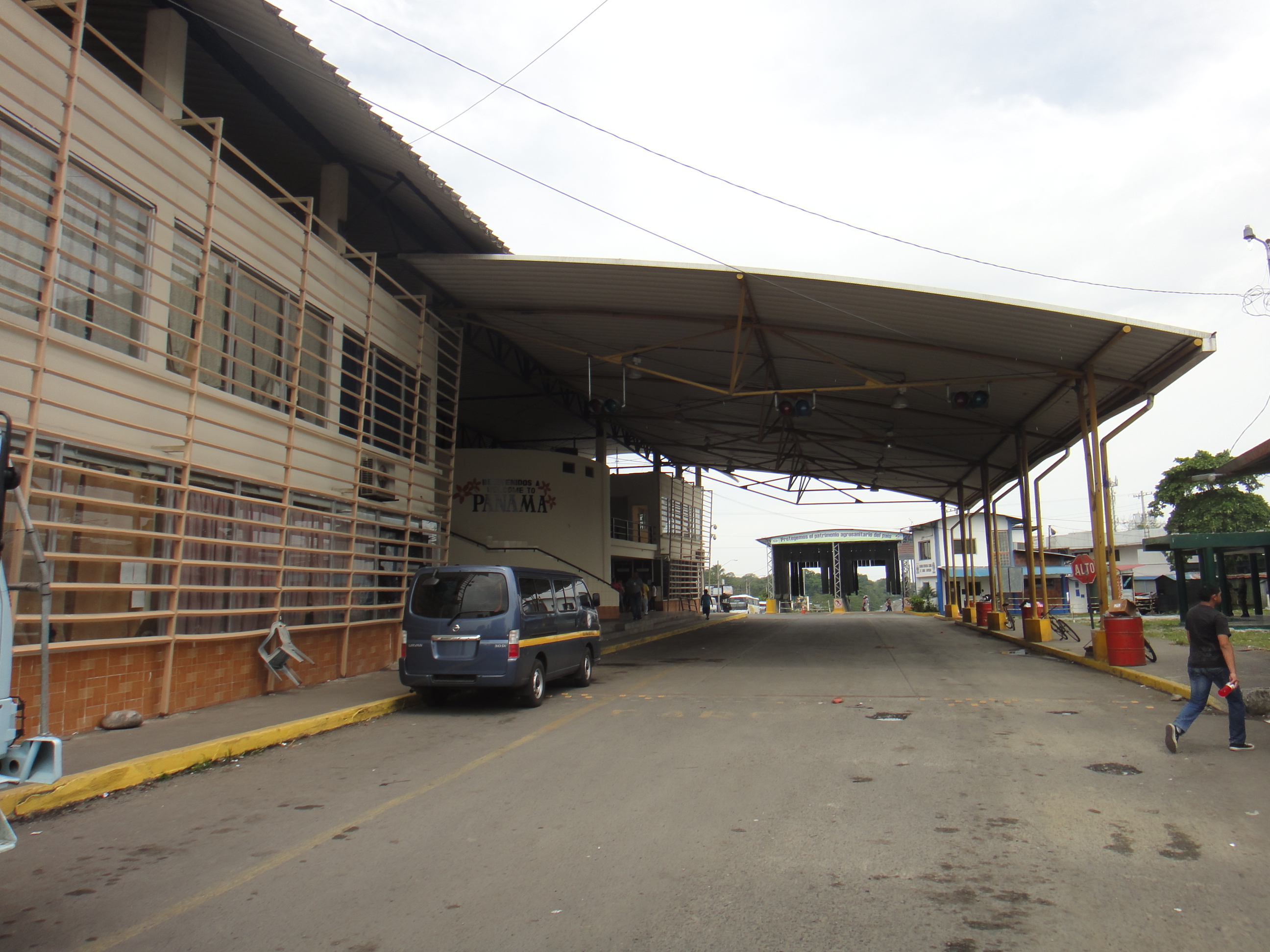
Immigration is at the far end of the building and is a window on the left hand side. When we arrived there was a big queue for migracion and it moved very slowly. Sarah got in the queue and I went to get the compulsory insurance.

The insurance office is across the road next to the Movistar office. It is marked with a big sign saying “Segurro para automovil”. Here you have to hand over copies of your registration/title and passport. If two of you will be driving then both passports. Originals are not needed here. The person at the counter will fill out a form on her computer and then print out 3 copies of the insurance forms. You sign them and pay USD15 and you should be given 2 of the copies. This office is also the photocopy station. (There is a slightly cheaper one on the other side of the migracion building next to the taxis – but there is only 5c per copy in it).


We finally got to the front of the Migracion queue after about 40 minutes and handed over our passports. The officer asked if we had onward tickets – which of course we don’t. I handed him a credit card which he looked at – that was enough for him. Then we had to look into a webcam and had our pictures taken – hi-tec for Central America indeed.
There are signs up saying that you have to prove you have USD 500 to enter the country if you don’t have an onward ticket. They American couple ahead of us didn’t have a credit card or the cash and were turned away.
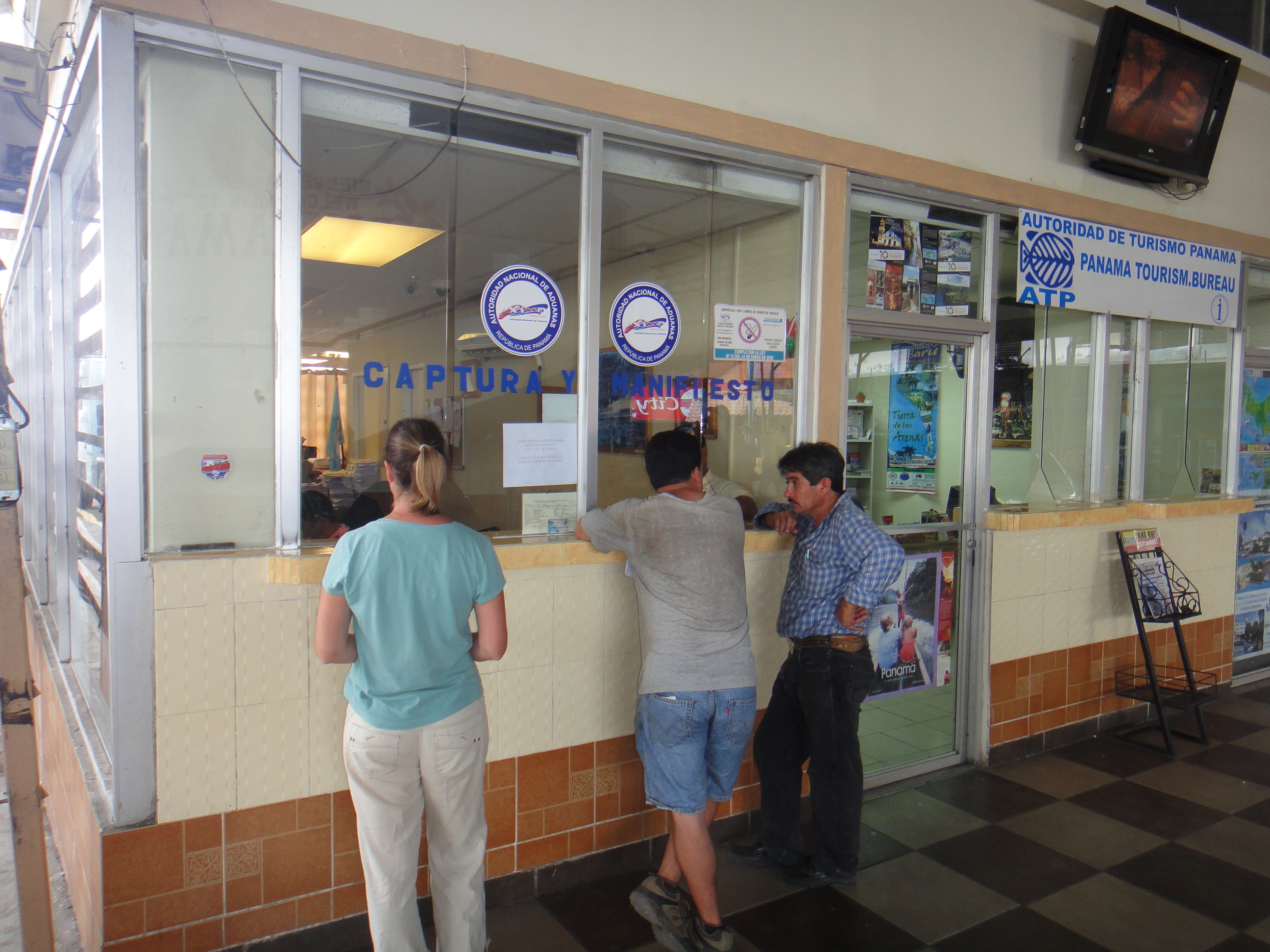
After this you go to the Aduana window which is directly behind you the other side of the circular office in the middle of the building. Here hand over one of the copies of your insurance, copy of your registration and passport – and also your original passport. A few minutes later you should get an import permit. Right next door to Aduana is a tourist office where you can pick up a free Panama map (not great but better than nothing).
Check this import permit really carefully for mistakes (particularly your VIN number).
You are not done yet – find a guy with a clipboard – they should be hanging around. They will sign off on the back of your import permit. They are meant to check your vehicle but it was slightly spitting with rain when we were there and the guy told us he didn’t want to get wet !
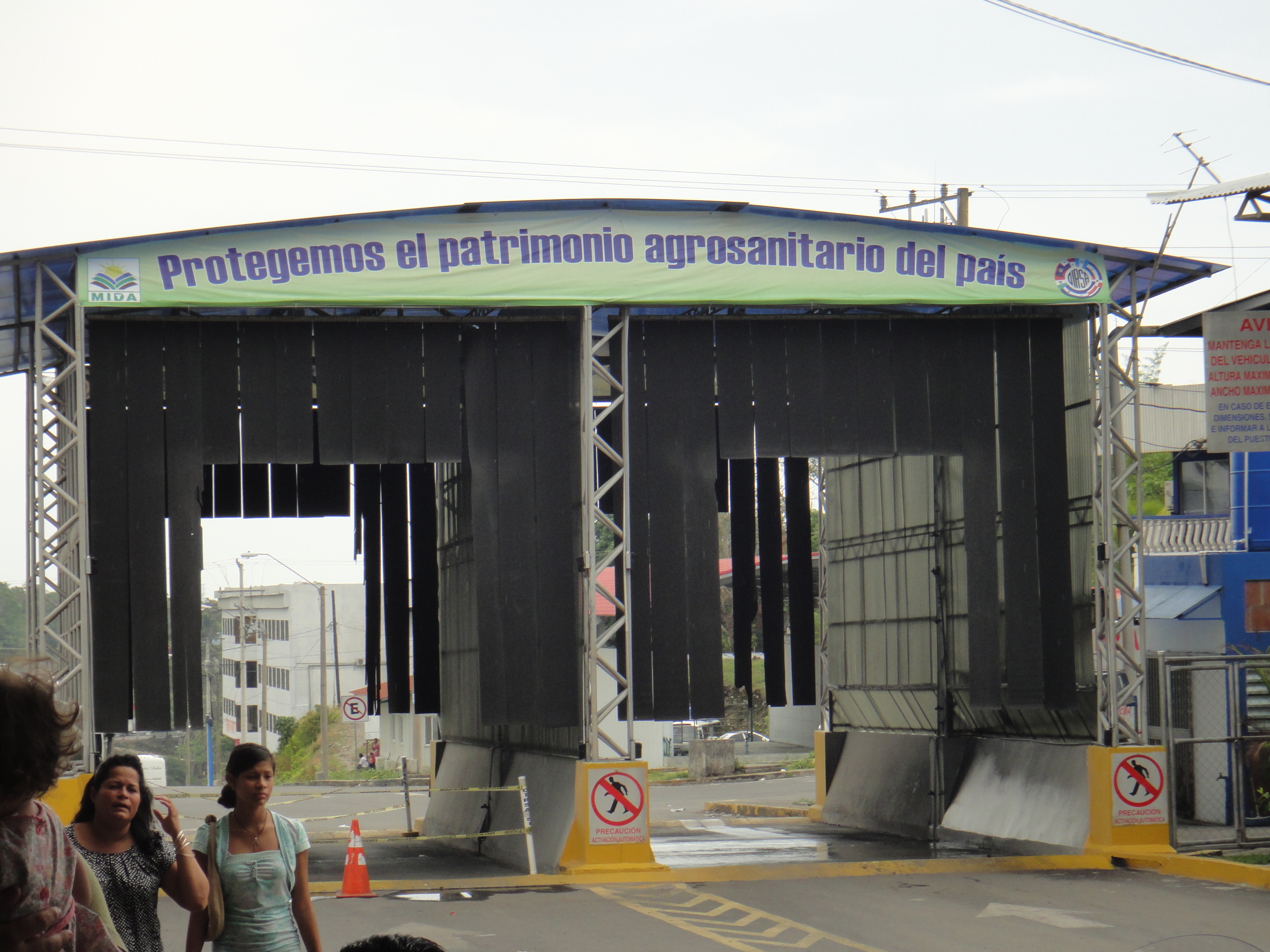
Almost done. Last thing to do is pay for fumigation – although I’m not sure what would happen if you didn’t as no one checked. The window is on the side of the building next to Migracion – a tiny slot. Hand over your import permit and USD 3 – in return you will get a fumigation receipt.
Before leaving we changed money with a moneychanger who was hanging out at the Costa Rica end of the building. He didn’t give a great rate but we didn’t see anyone on the Costa Rica side.
Then drive through the fumigation building – don’t forget to roll up your windows.
About 500m down the road (enjoy the dual carriageway) is a checkpoint where you will have your passports and import permit checked.
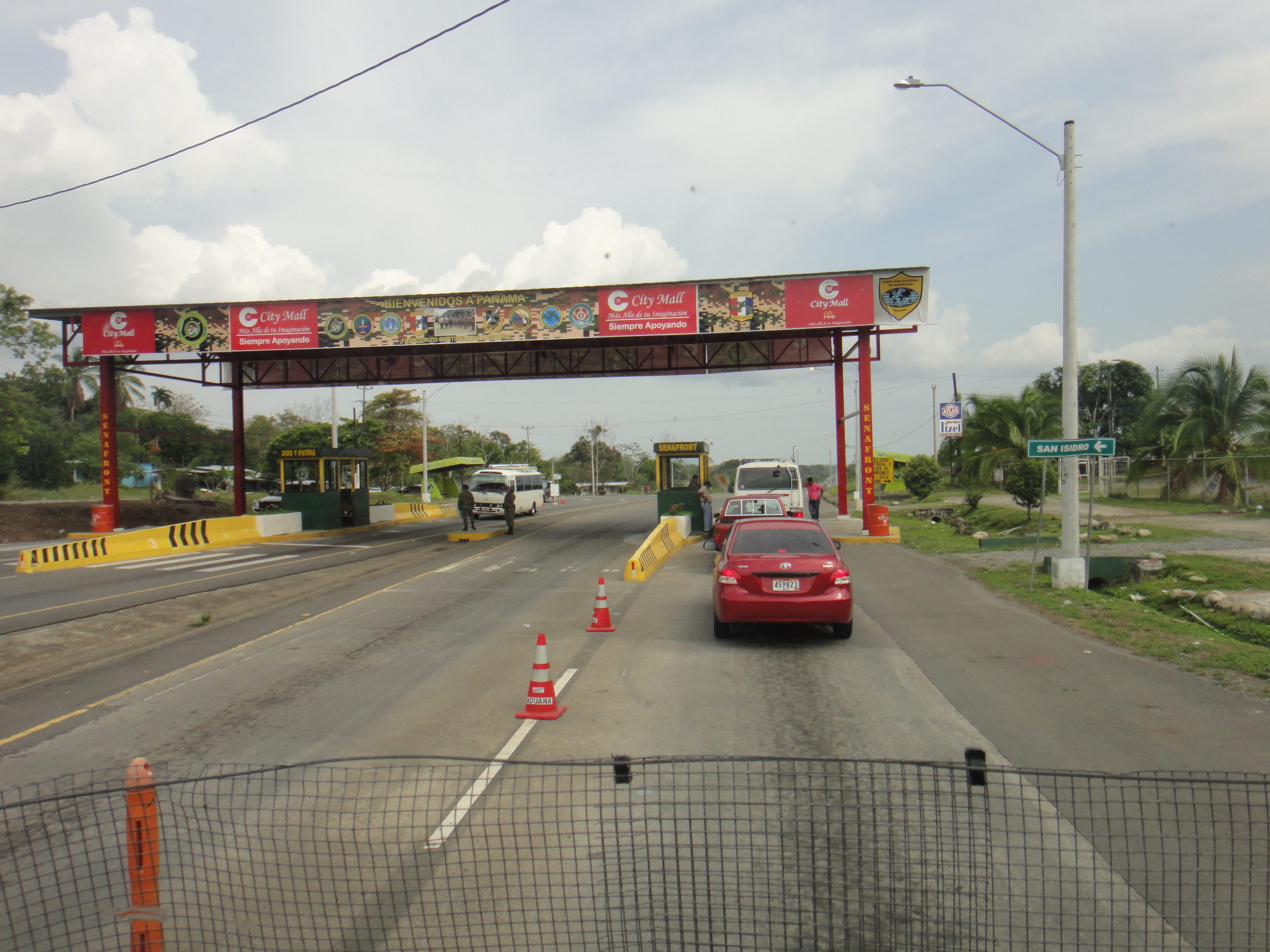
Be Very careful in the first couple of Km’s the speed limit is 50km/h and we saw two separate cops with speed guns. They can’t wait to catch you !
A Touch of Luxury
Ok we broke. After 9 months of living in The Beast with only one night in the last 5 months not in the camper we needed a break. So just along the coast from Dominical we found a small hotel called Villas Gaias with a gorgeous swimming pool and most importantly somewhere we could park the beast.
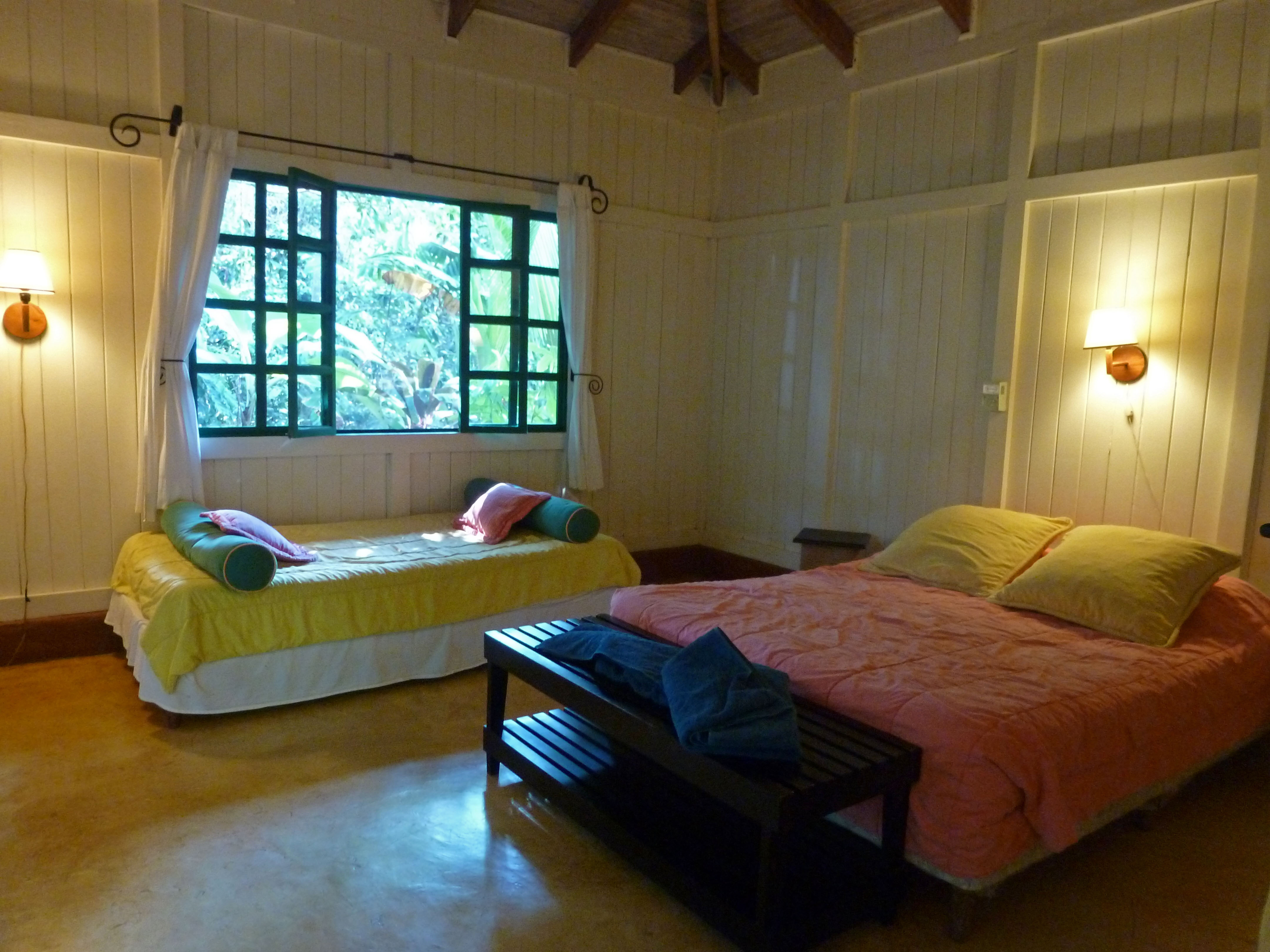
2 whole days sleeping in a fixed bed with bathroom. Real Luxury – I don’t think you can appreciate it unless you’ve been living in a truck for so long.

After relaxing and regaining some sanity (well some) it was time to leave expensive Costa Rica and carry on to Panama.
Dominical
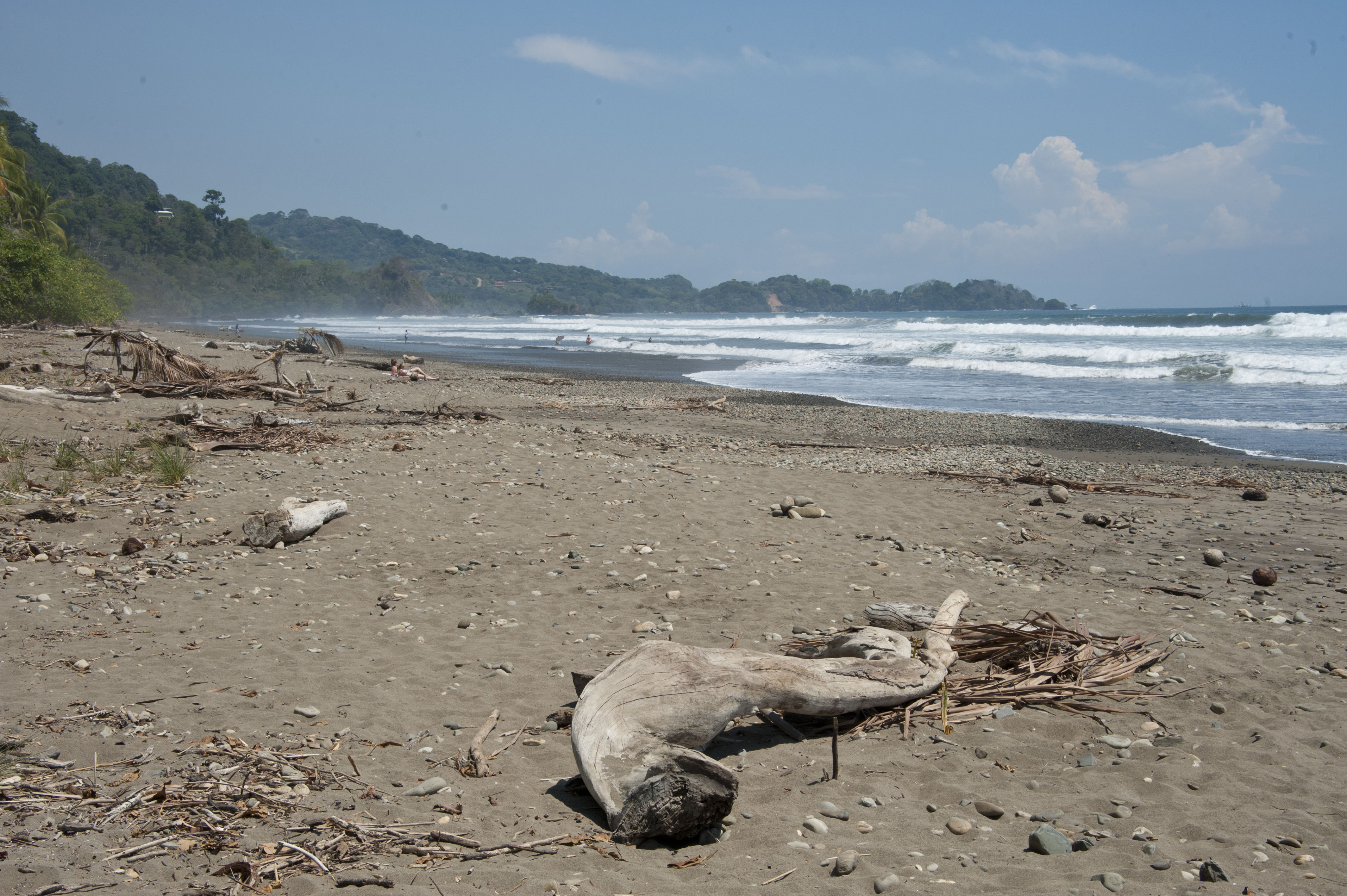
Dominical is a very small beach resort in the Southern part of Costa Rica. The town is very small with a smattering of hostels and hotels. The beach itself is long and sandy with a surfable break.

What makes Dominical great for the overlander is that there are no buildings along the beachfront and it is possible to park amongst shady trees right on the beach.

We settled into a spot on the beach just outside town and spent three nights here.
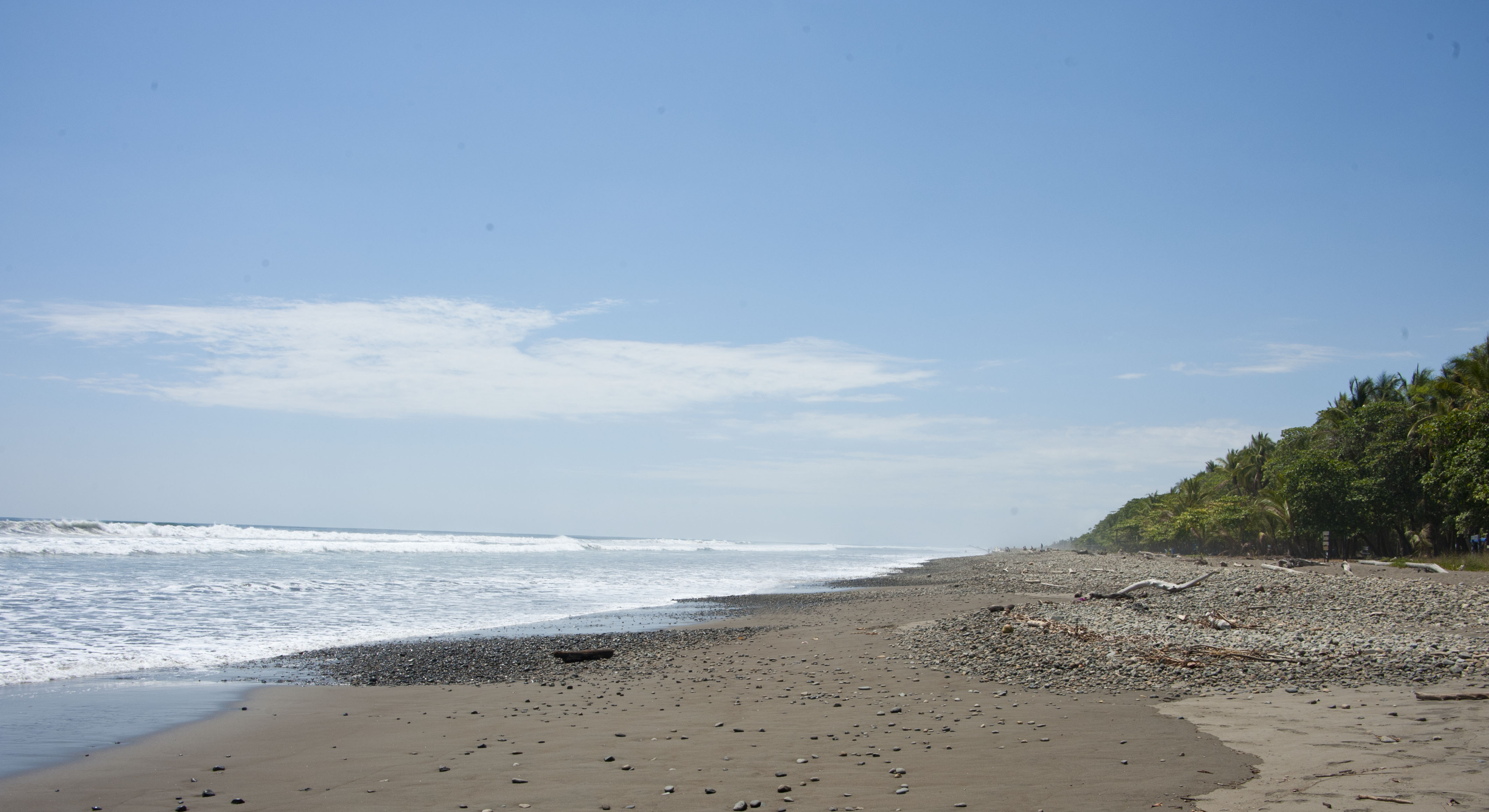
The first day I had arranged with the local dive shop to go diving in the local Marine Park called the Ballena Islands. I must say the diving was pretty disappointing with poor visibility (down to 2 metres at times) and not much marine life to see. It was good to be back in the water though.

The second day there we went to Manuel Antonio National Park which is about 30 kms down the road. We had learnt from our Monteverde experience and stumped up the dollars to go on a guided tour of the park.

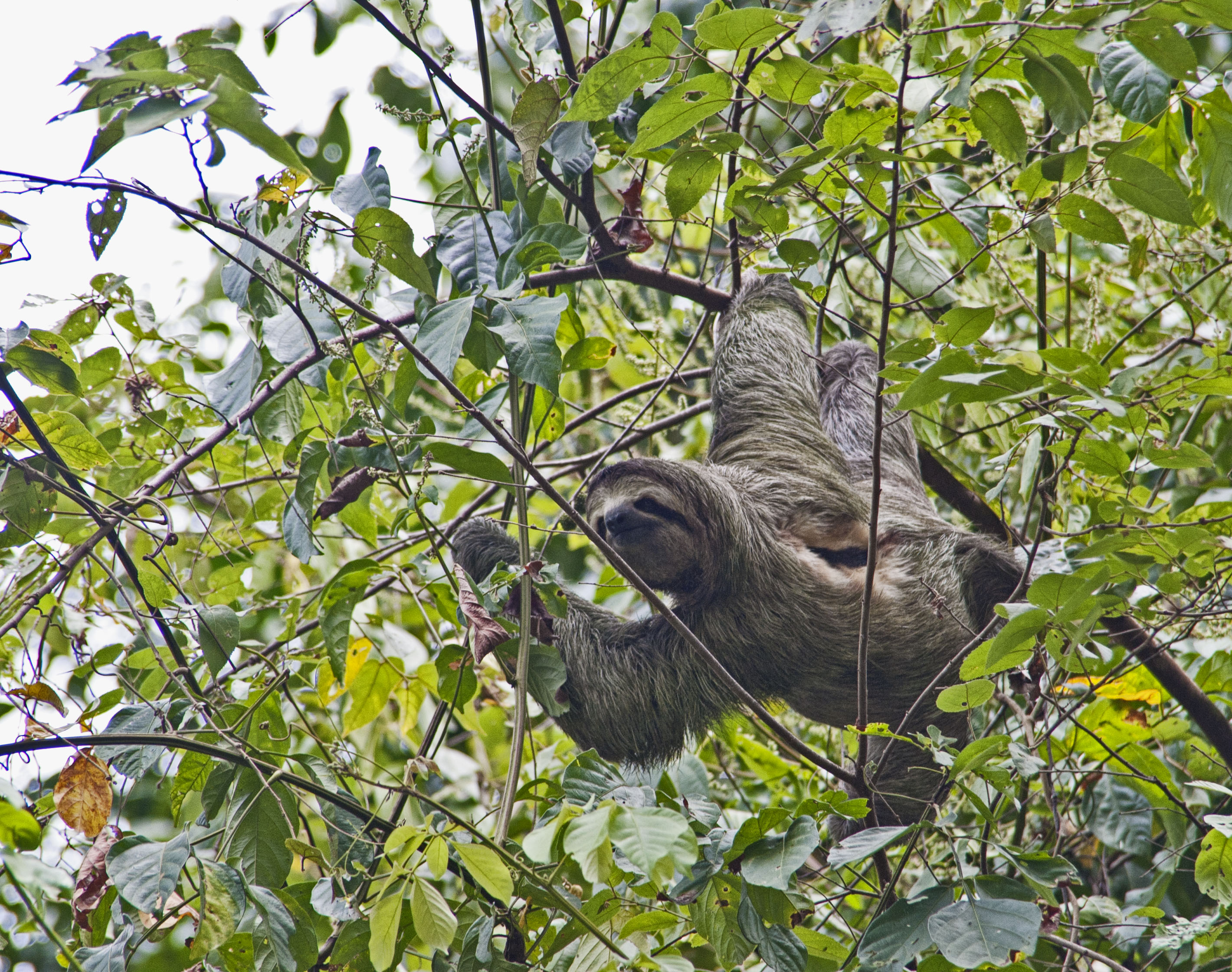
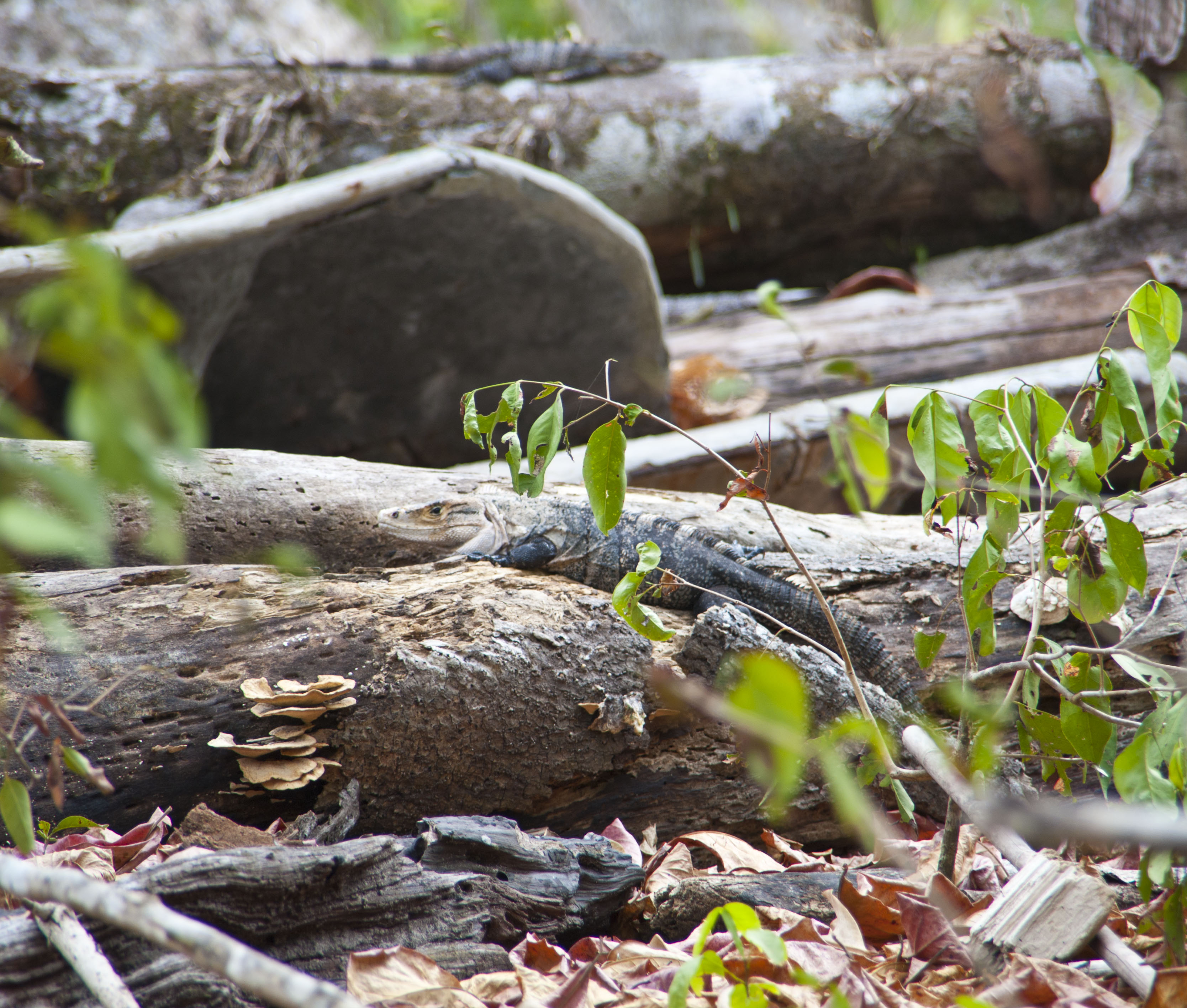
This was definitely worthwhile as we saw a lot of wildlife we wouldn’t have otherwise seen. We saw sloths (5 of them including a baby), capuchin monkeys, a red eyed tree frog, a Jesus Christ lizard, bats, a nightwing (a nocturnal bird sleeping on a tree), a hummingbird nest (how do they spot these things, it was tiny) and various iguanas.
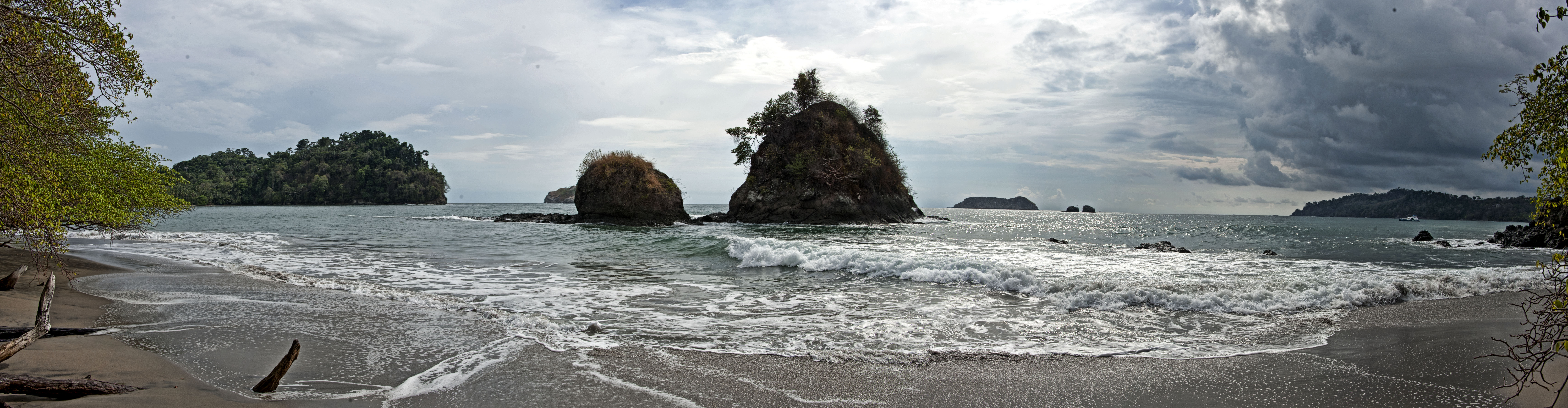
The beaches in the park are gorgeous and mostly swimmable without the big waves that pound much of the Pacific coast.
We decided not to stay in Manuel Antonio because it was very busy and headed back to our quiet spot in Dominical.


 FromAtoB