Quetzals
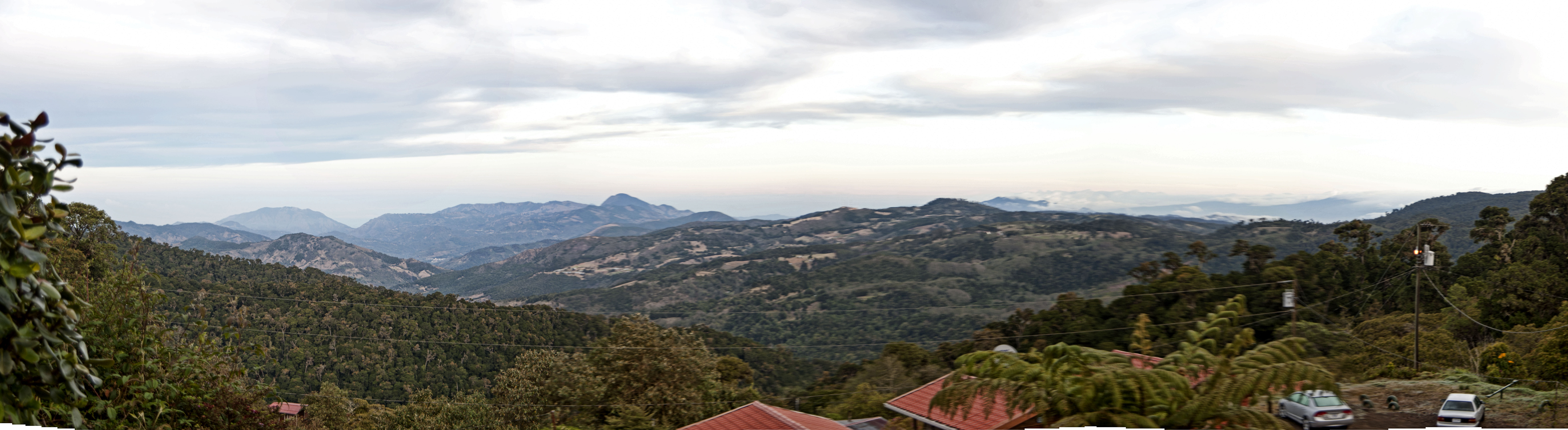
As the weather in the mountains around the central valley remained cloudy we decided to skip going to Volcan Irazu and head South. On the way we drove through San Jose and had to stop at a big American type shopping centre called Multiplaza. It was enjoyable just to walk around posh shops with air conditioning for half an hour or so!

At the Southern end of the central valley the PanAm climbs up through mountains to a pass called “Cerro de Muerte” at 3400m. It then drops over the next 30km or so to the town of San Isidro. Before reaching the pass we decided to stop at small hotel called Mirador de Quetzales, which has a large area of cloudforest in its grounds.

We arranged for an early morning hike to see some more quetzals and any other birds their might be. The hotel was up at 2800m and the temperature got down as low as 5c overnight – amazing that only 50km away on the beach it would be 28c.
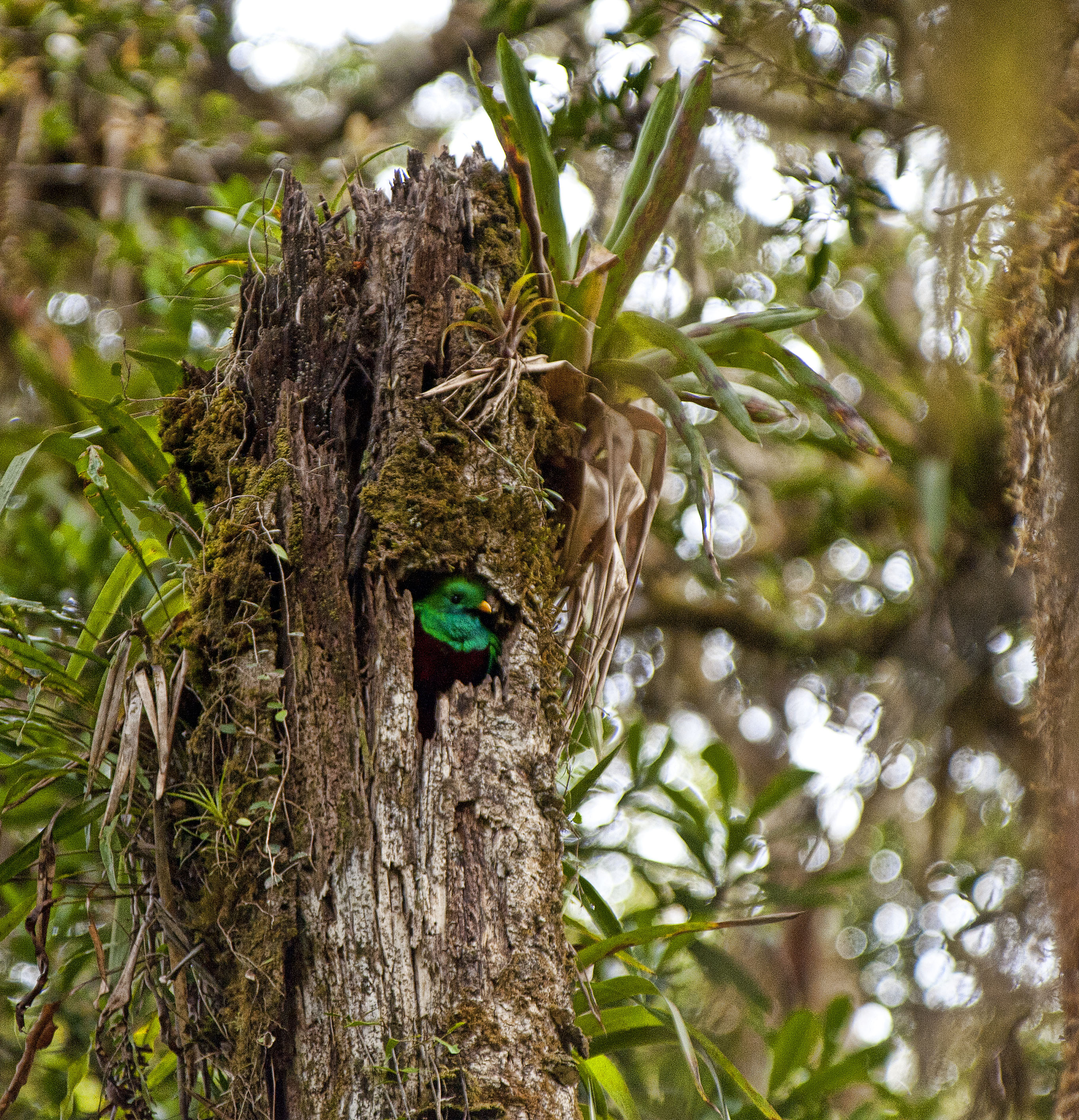
The Quetzal hike was bit disappointing as we only saw one of the birds and it was never very near. We decided to stay the whole day up here and went for an enjoyable hike through the cloudforest and in the evening we had the novelty of wearing jumpers and sleeping under a duvet!

Volcan Poas and La Paz Waterfall Gardens
We had heard that the best chance of getting a view of the crater of Volcan Poas was to be there early in the morning. The park doesn’t open until 8am so we decided to camp outside the park overnight and go in as soon as it opened.
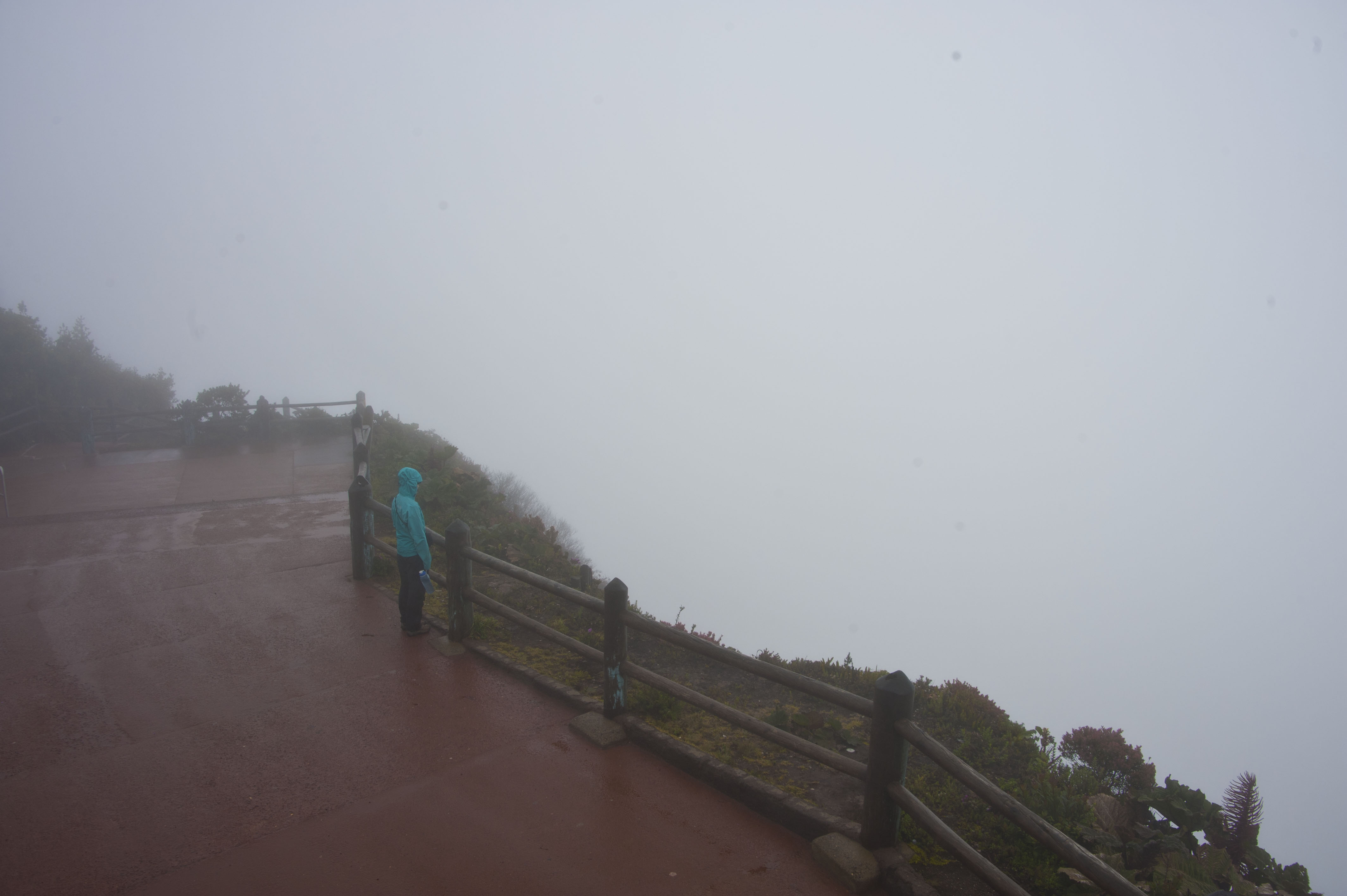
This didn’t go to plan though as we woke to rain and low cloud. We went into the park anyway but there were no views to be had. We did hike through the cloudforest though but didn’t really see anything exciting apart from a few orchids, Hummingbirds and Black Guans.
After this wash out we drove across to a place called La Paz Waterfall Gardens. We knew this was going to be expensive but had heard good things so we stumped up the cash ($35 each) to go in. As we were parking the attendant asked if we were staying the night – we thought this was a good idea and it meant we could get our monies worth by staying in the gardens all day.
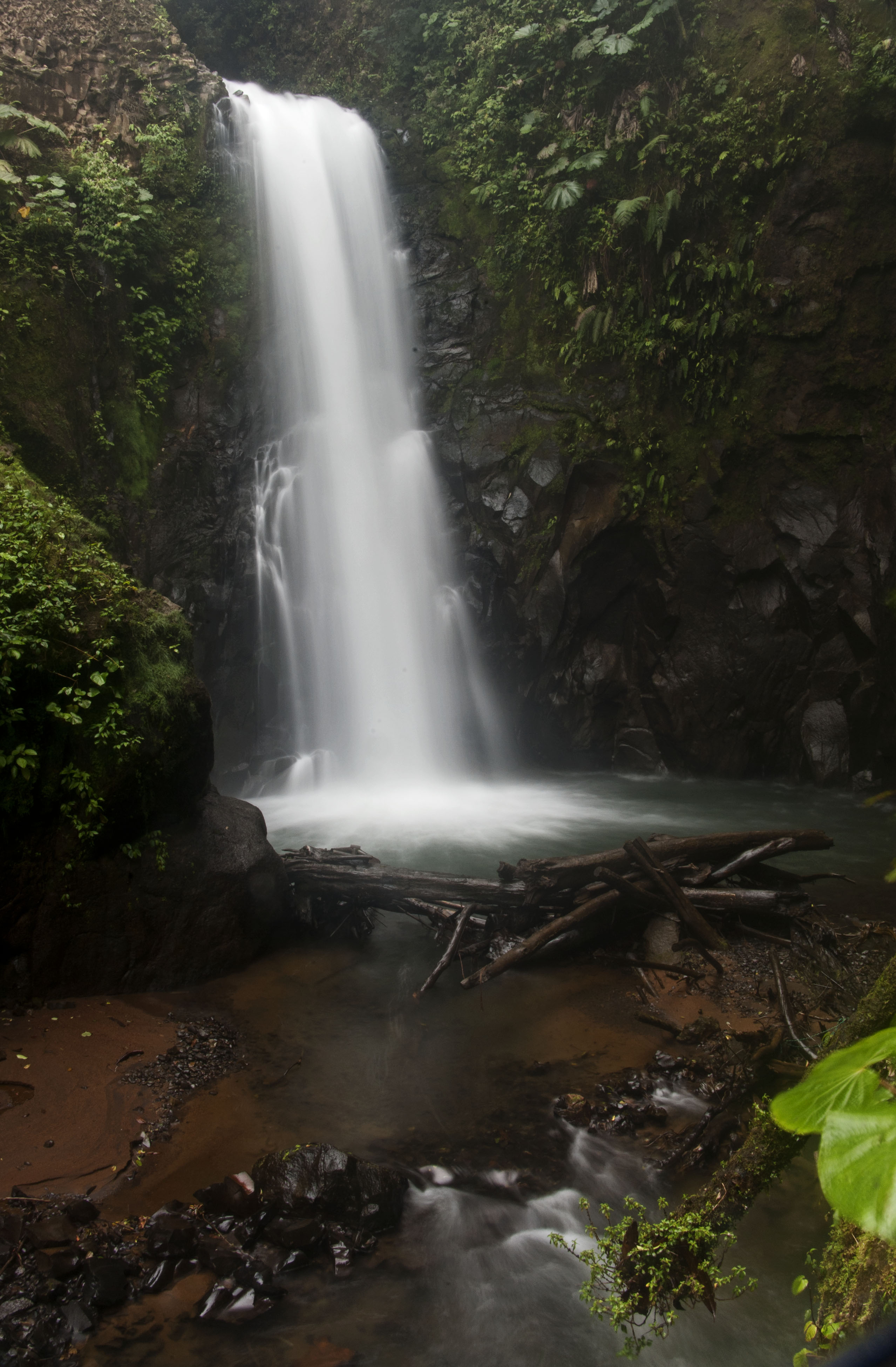
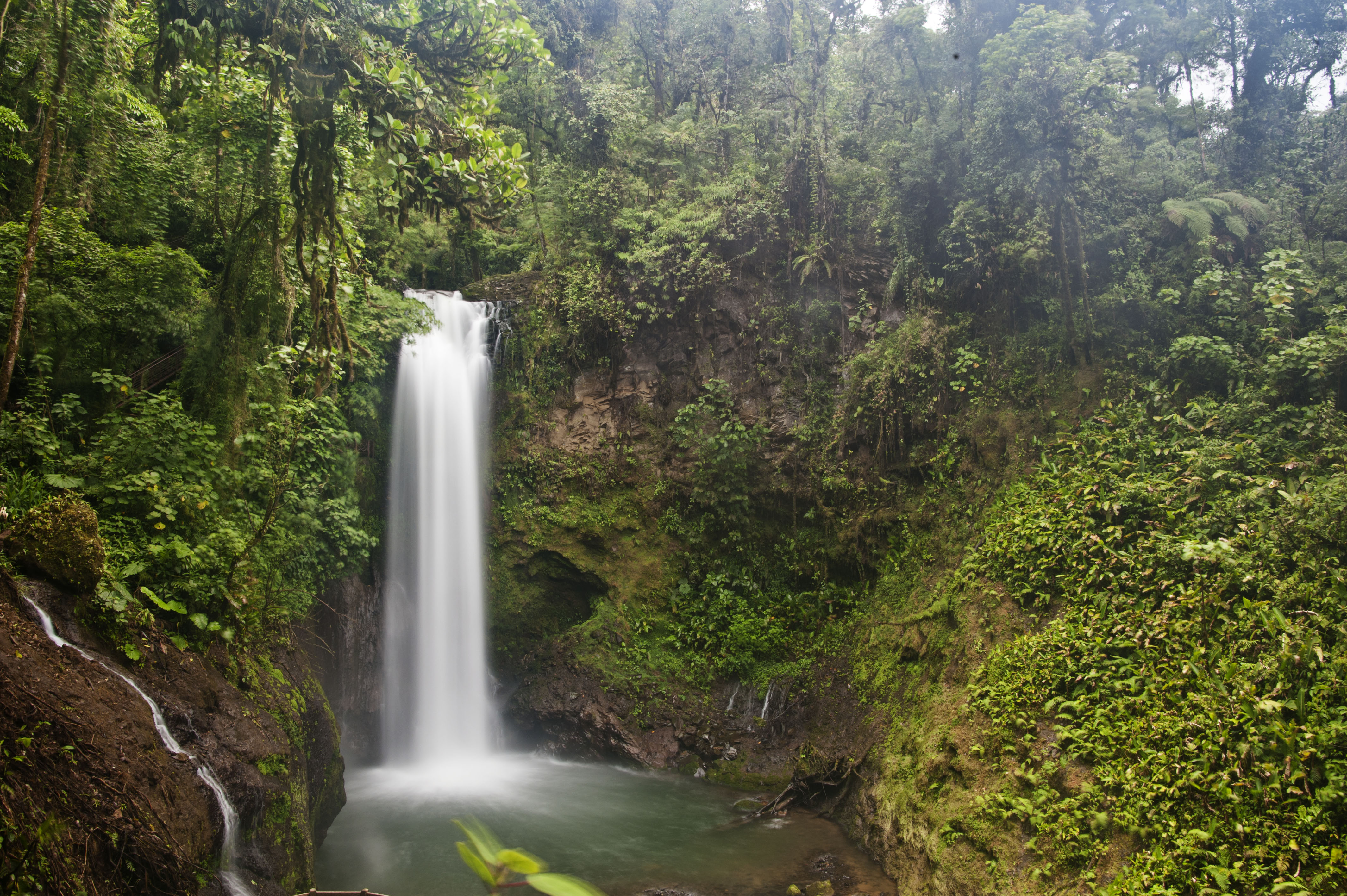
The main attraction at the Waterfall gardens is a walk through the rainforest along a river where there are three large waterfalls. However there is much more to the place than that.

The first area we went to was a big aviary that you can walk through. This was a big netted area where the birds were allowed to fly free – there were a few cages within the aviary for birds that wouldn’t play nicely with others. There was also a specific toucan room with free flying toucans.

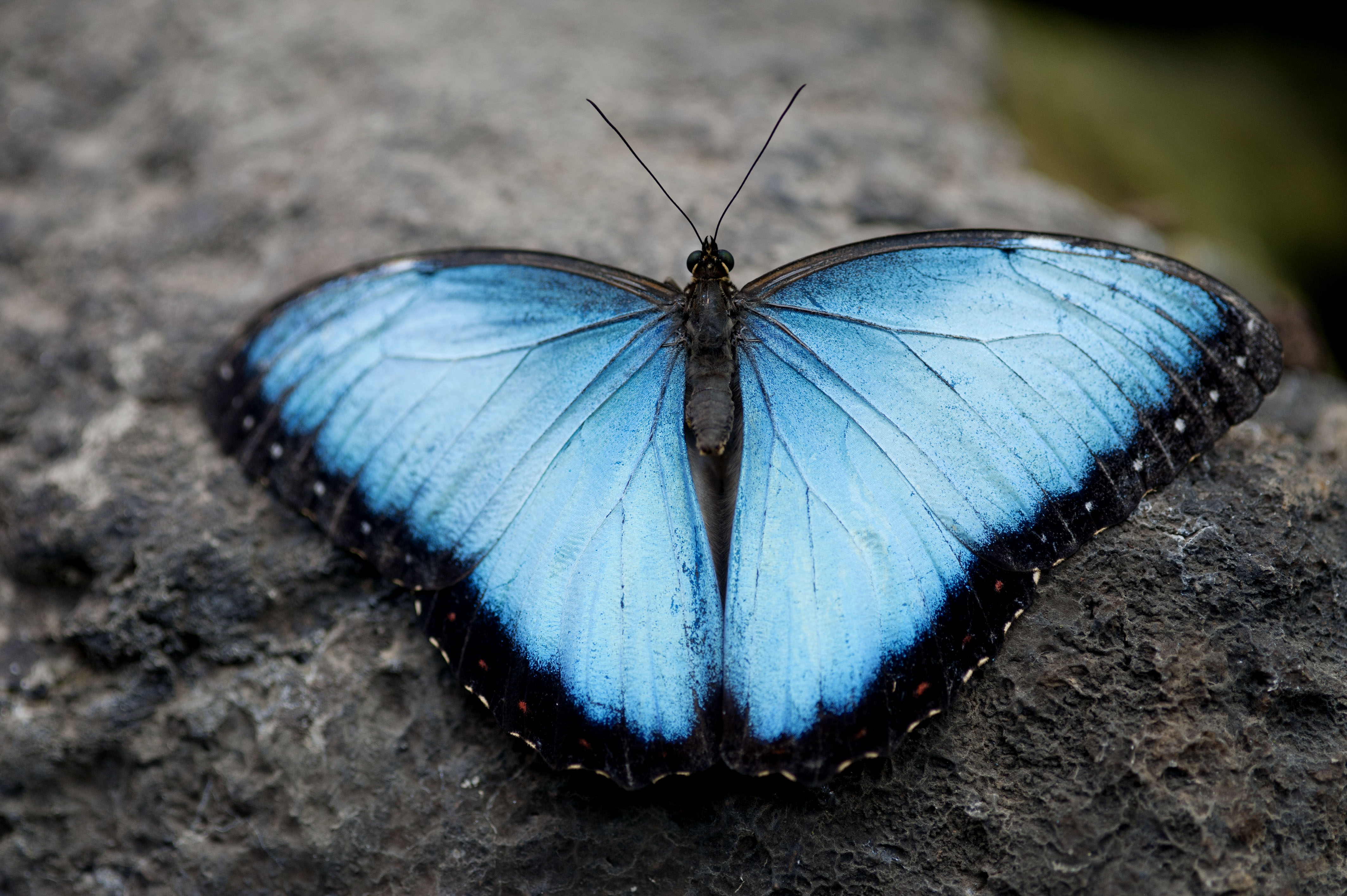
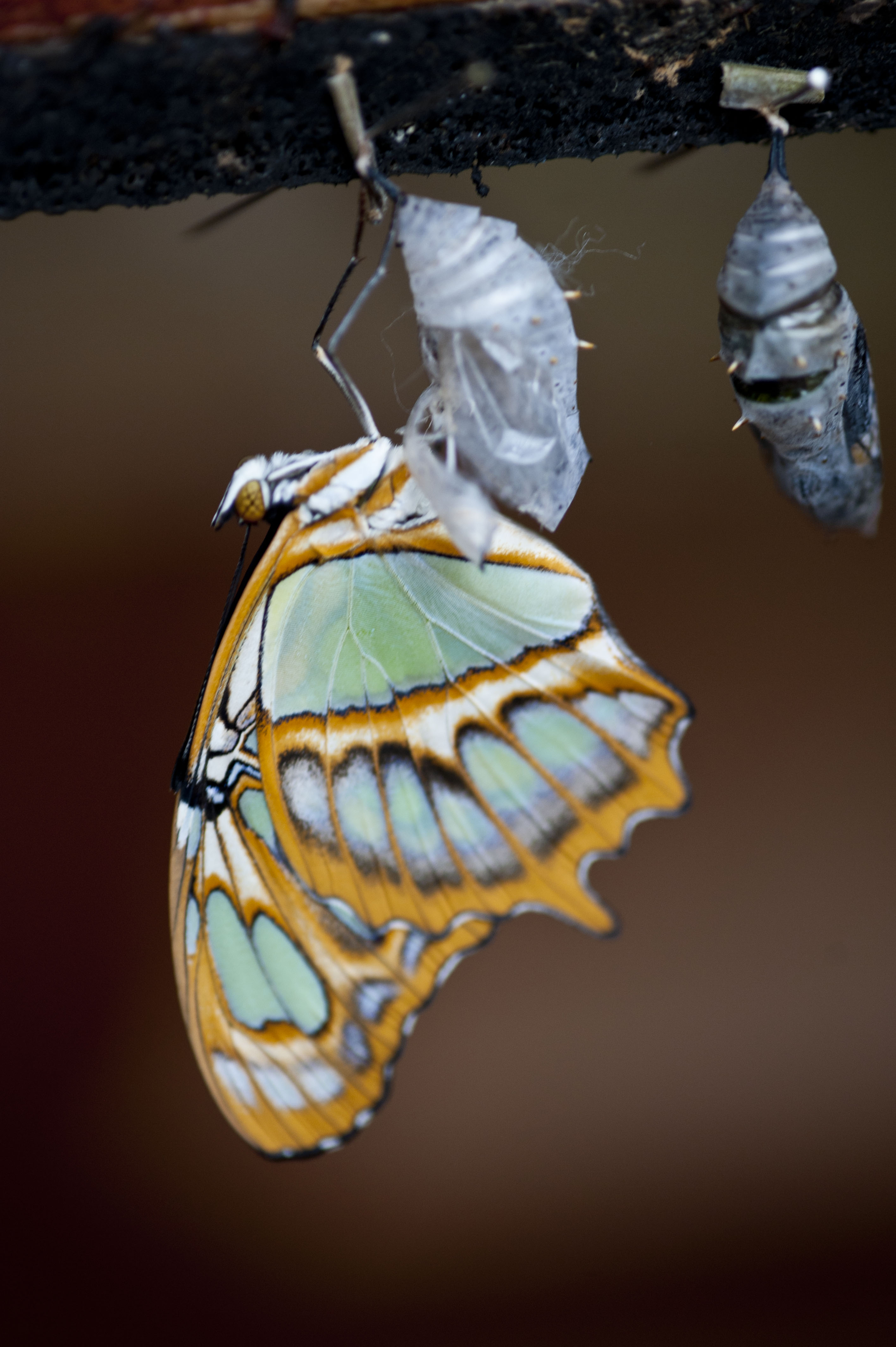
The next area was a big butterfly building. This had lots of flowers growing in it as well as hundreds of free flying butterflies. However they also breed butterflies here so there were trees with eggs on, caterpillars and also racks of chrysalis. Some of the chrysalis had butterflies emerging from them.

Also in this room was a cage with a Kinkajou in it that like having its belly rubbed – although it took a dislike to Sarah for some reason. There was also a cage with a mother and baby sloth in it – this was our first sloth encounter – they are fascinating creatures who move in slow motion like they are doing taichi.
We walked through an area with a whole bunch of hummingbird feeders around which there were a whole bunch of birds.

Next stop was to walk around the captive cats. There are margays, ocelots, pumas and the most impressive of them all a big male jaguar. We were lucky enough to see the jaguar moving around and its an awe inspiring sight. I’m just glad there were walls between us !

After the cats we went to the Serpentarium where each of the most poisonous central American snakes were housed. The surprise was how big the bushmaster is – the most dangerous of the snakes.

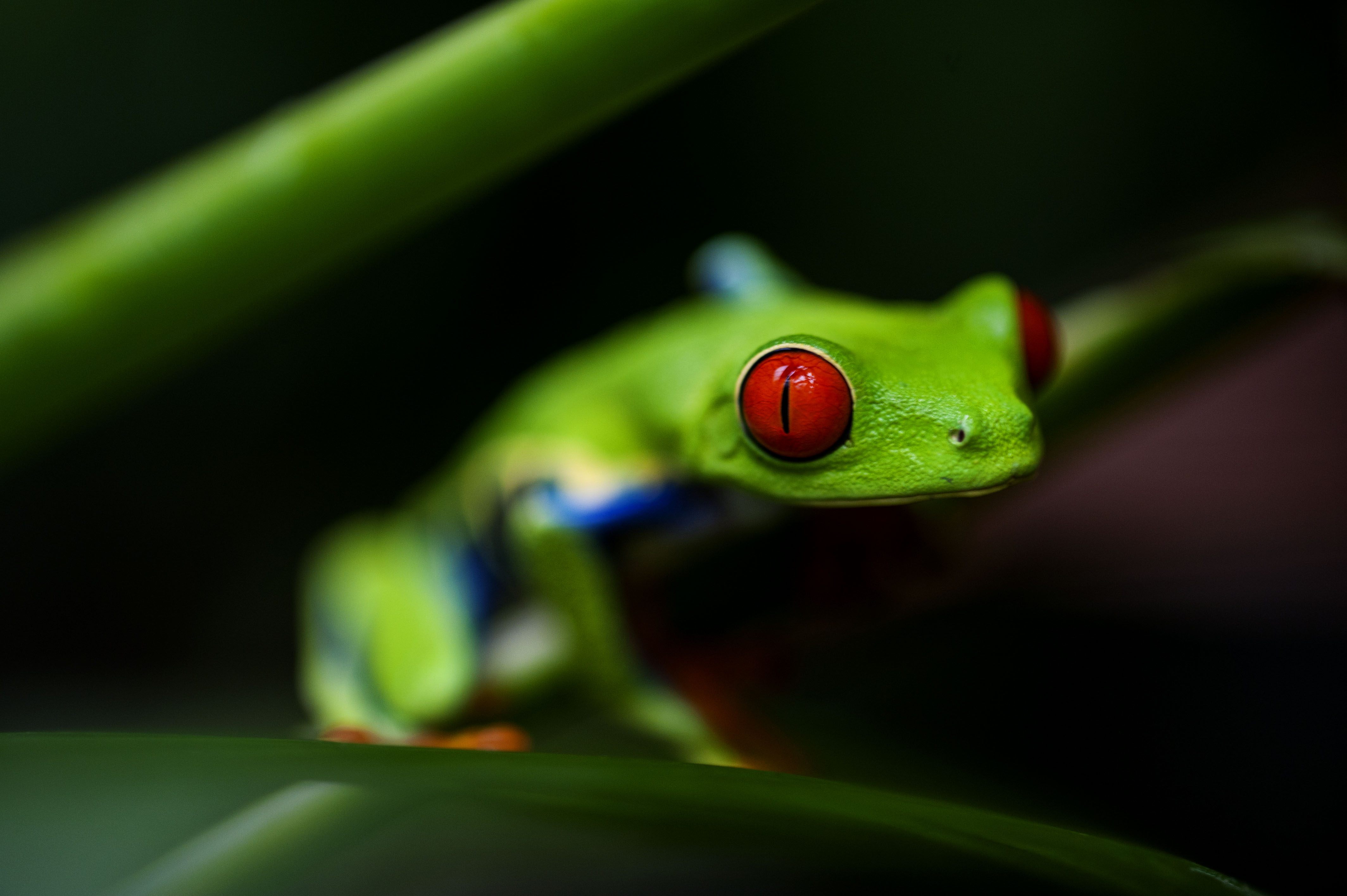
My favourite stop was the ranarium (that’s a frog house) where there were green eyed tree frogs as well as posion dart frogs. The frogs were all loose in the rooms and part of the fun was finding them in amongst the foliage.
All this plus an orchid garden and then we walked the waterfall trail which was a downhill walk along wooden walkways through forest alongside a river.
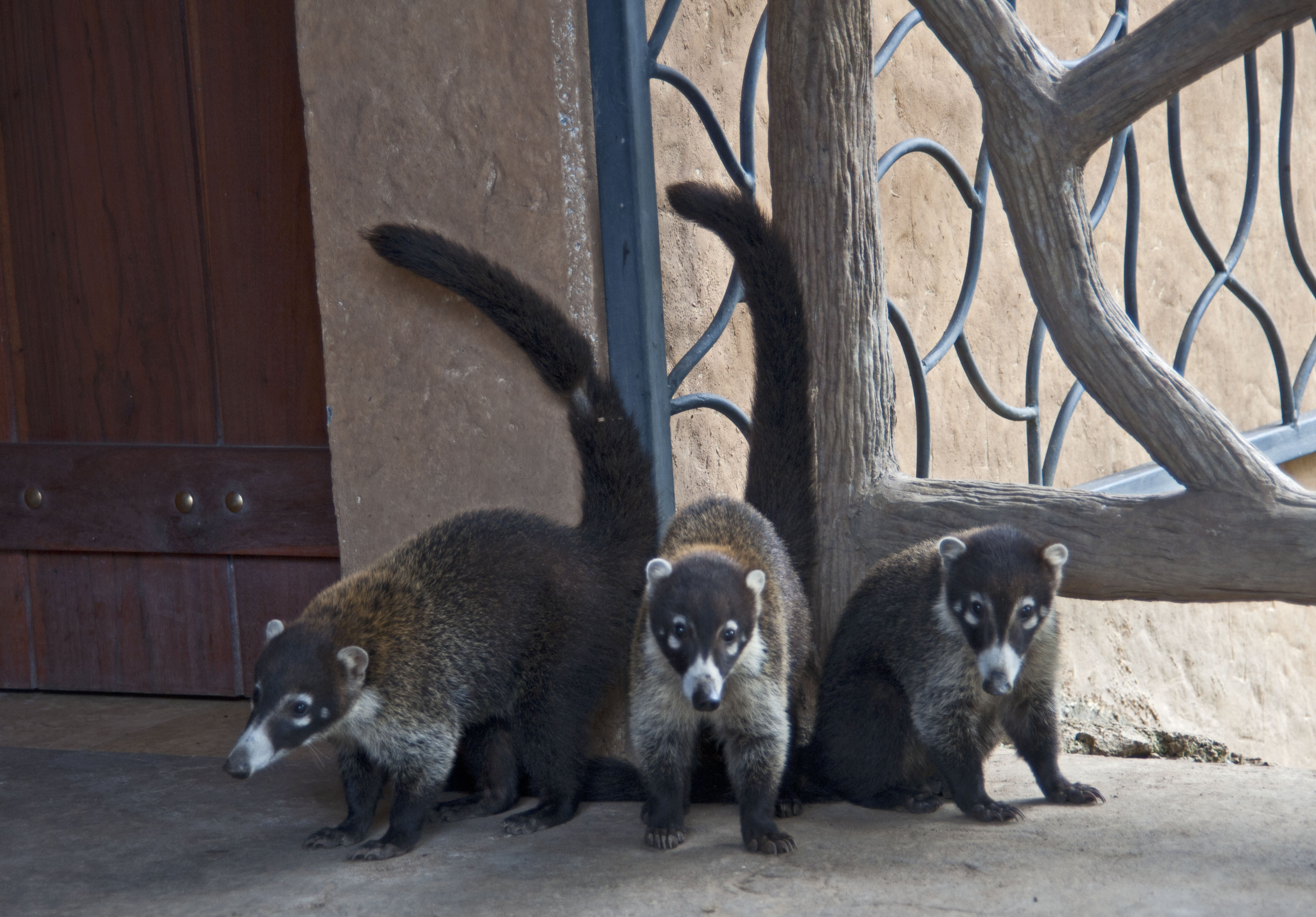
At the end of the walk is a gift shop (which was a surprise) and a shuttle bus back to the entrance (a nice touch because it’s a steep uphill walk back – the luxuries you get for $35). While we were waiting for the shuttle a group of Coatis came up out of the woods. They seemed very unafraid and one of them licked my leg as I was standing taking pictures!

Monteverde

From the Arenal area it’s a real pain to get to Monterverde as you have to retrace your steps around the lake until you take the turnoff at Tilaran. You’ve then got 30km or so of uphill gravel road until you get to Santa Elena. As we were to find out this route in is rougher than the more direct route from the PanAm via Sardinal.
Santa Elena is a small touristy town. Every other building is a hostel, coffee shop or tour agency. Flat space is at a premium and the roads are steep and it seems like every space is built on. So we were pleasantly surprised to find a vacant lot in the middle of town which was a good place for us to spend the night. At over 1000m, Monteverde is in cloudforest and is subject to a different climate – cool and wet, which was a welcome change from the heat of the lowlands.

We arranged to go for a guided hike in the Monteverde reserve the next morning. At the entrance to the reserve is a café and gift shop called the Hummingbird Gallery, which has several hummingbird feeders on the patio out front under constant assault from many different types of hummingbirds and a few insects as well.

We headed out on our guided hike in a small group of only four with a guide with great English. This was our first time in proper cloud forest and we learnt a lot about it. Monteverde is a privately run reserve and 90% of it is not accessible to tourists but is set aside as an untouched preserve. We also learnt that the secondary forest (where the original cloud forest has been cut down in the past) may take up to 1000 years to regenerate and even then it is estimated that it will only be 80% as bio-diverse as the primary forest.

We saw some howler monkeys in the forest which is pretty rare, they usually keep to the private part of the reserve so we were quite lucky to see them.

The highlight of the hike was seeing a pair of Quetzals (supposedly the most beautiful bird in the world) who were working on building a nest. They only have soft beaks but they still dig a hole in a tree to use as a nest – if the wood on the tree they pick is too hard they will abandon it.

We also saw a toucan, several Black Guans (big birds), a hummingbird in a nest (very small I can tell you), a squeaky door (type of bird which has a call just like a squeaking door) and an adult and baby Walking Stick (stick insect). The stick insect is nocturnal and seeing one in the day is very rare as they are incredibly well hidden in the foliage.


After our guided hike was over we also walked some of the other trails in the park. We saw a lot less without a guide though. The best bit of our self-guided hike was walking over a hanging bridge that effectively lifts you up into the canopy to give you a perspective of another layer of the forest. The number of airplants is amazing. In fact earlier, our guide had told us that a study of one tree had shown over 200 different species of plants living on it.

We spent the whole day in the cloudforest and then went back to Santa Elena for the night. In the morning we visited a coffee shop just next to where we had parked. As we were having some breakfast a white faced capuchin monkey came to the back door and hung around outside until it got it’s morning treat – a small banana. Yes that is the same type of monkey that Ross had in Friends !

Arenal Volcano (Sort of)
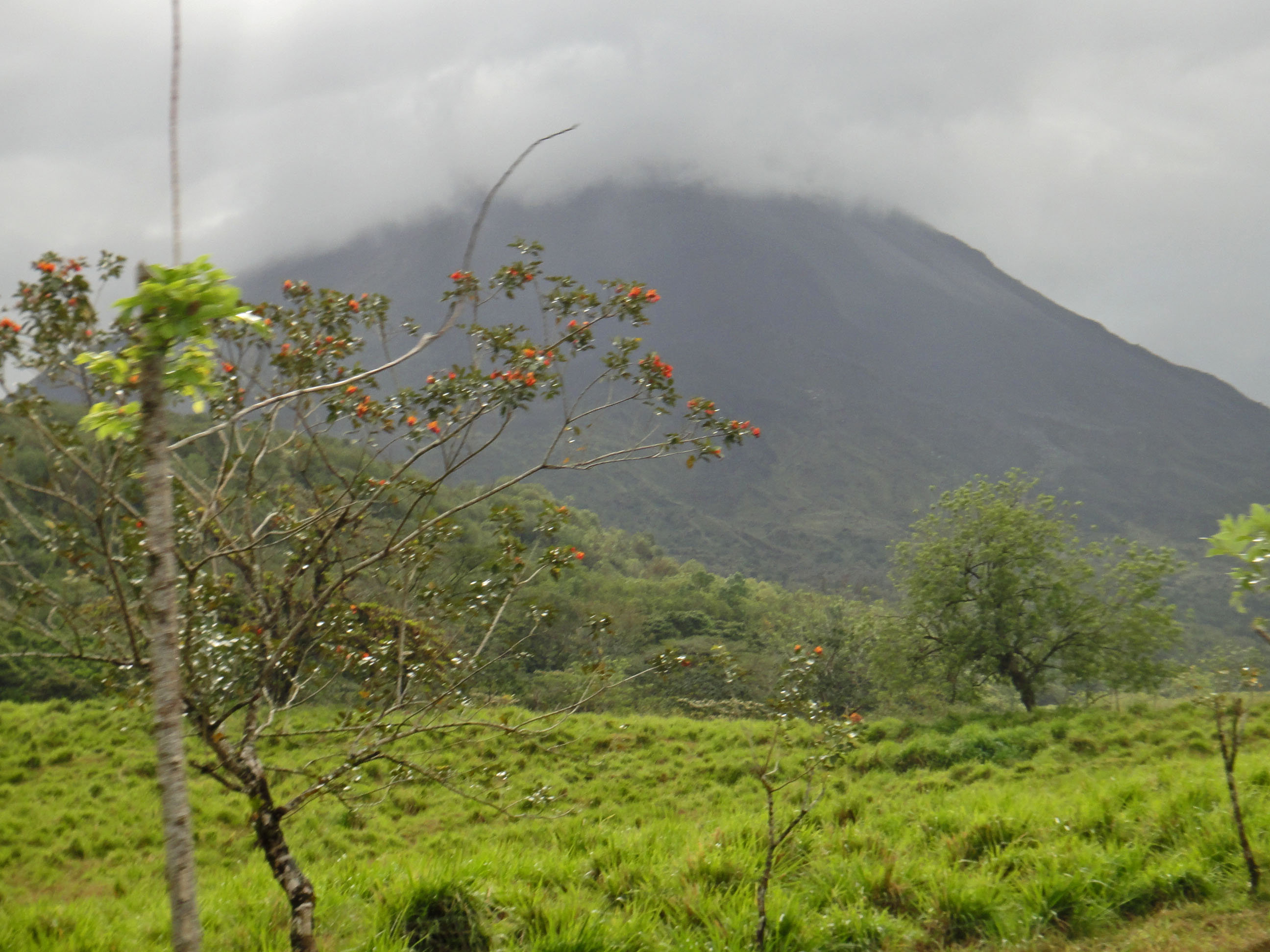
We continued our circuit of the lake and drove to the foot of the Arenal Volcano. There were low clouds around the top of it and since it hasn’t erupted for the last 18 months there wasn’t much to see.
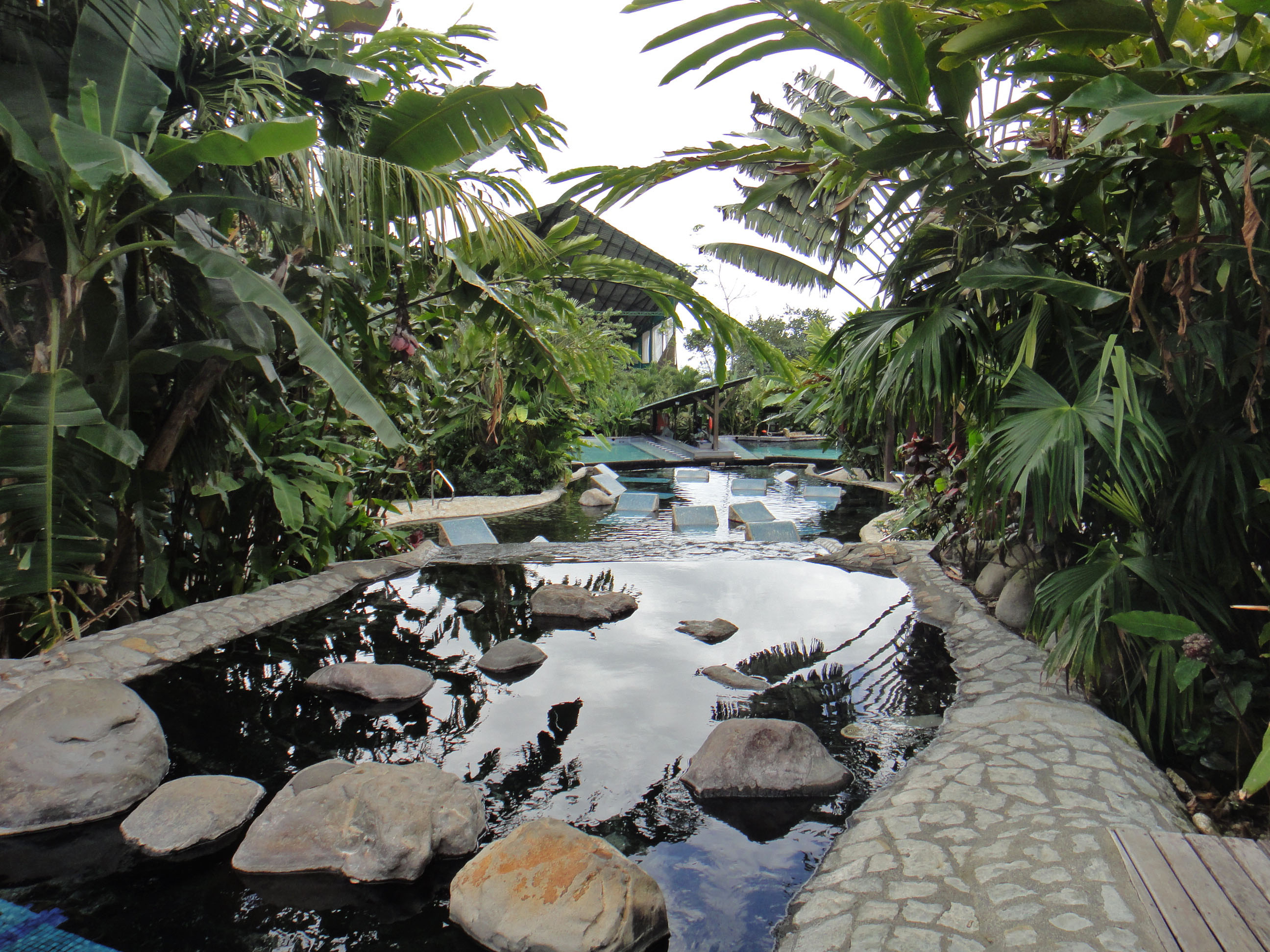
Instead we decided to treat ourselves by going to one of the natural hot spring resorts in the area. We decided to go to Baldi which has over 20 different hot pools as well as wet bars and water slides. We spent most of day there going in and out of the different pools and going on the slides. Water slides over here are different to the ones I’ve been on back home and seem to be much faster and more thrilling. I suppose health and safety isn’t a factor.

For the evening we camped by a river with a view of the Arenal Volcano (well the clouds anyway).


Lake Arenal

After gently simmering in the lowlands for a while we decided to drive up into the hills to find a cooler climate. The drive from Liberia starts off well but on nearing the lake the road becomes narrow, twisting and constantly changes elevation so becomes very slow.
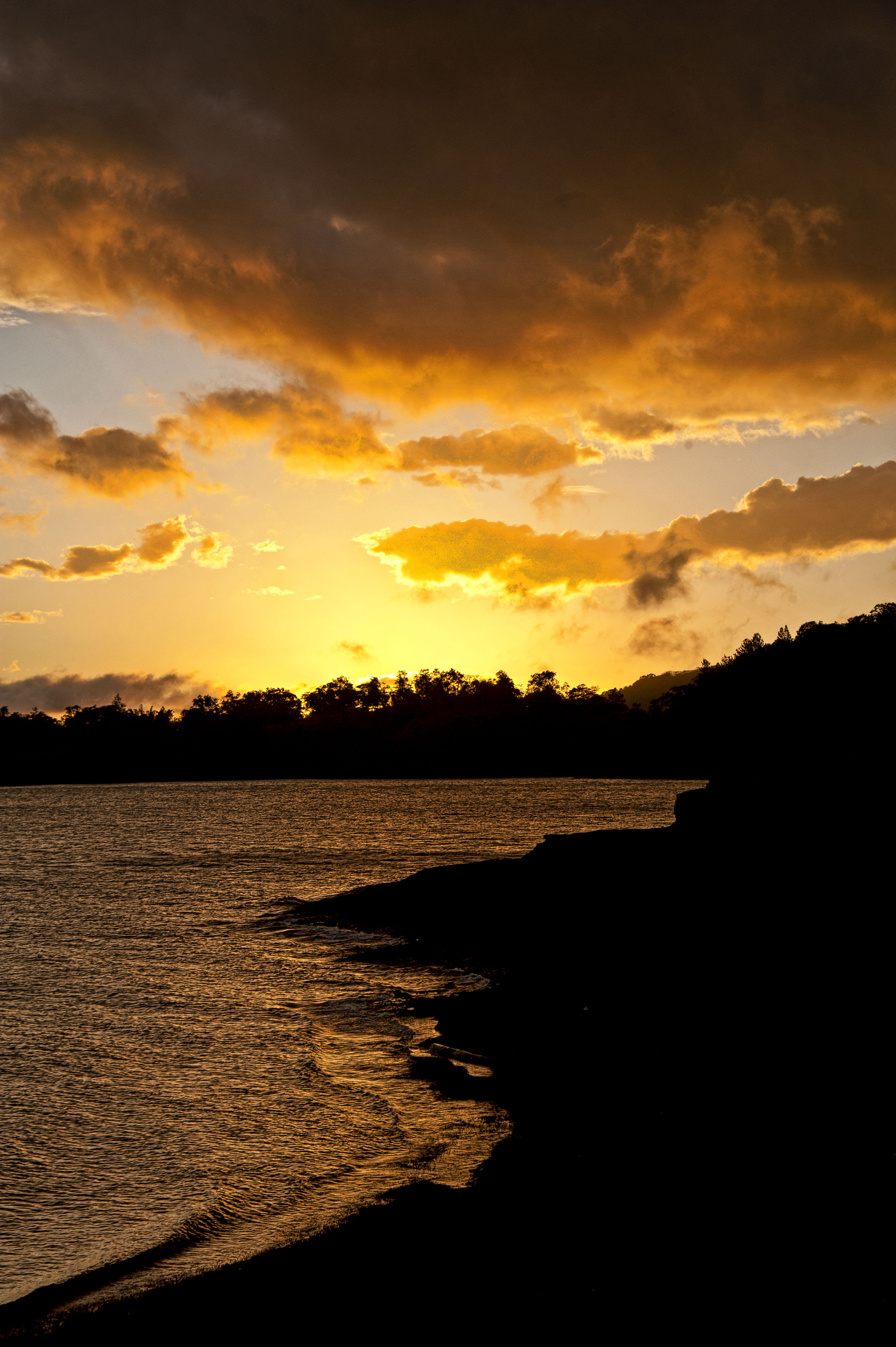
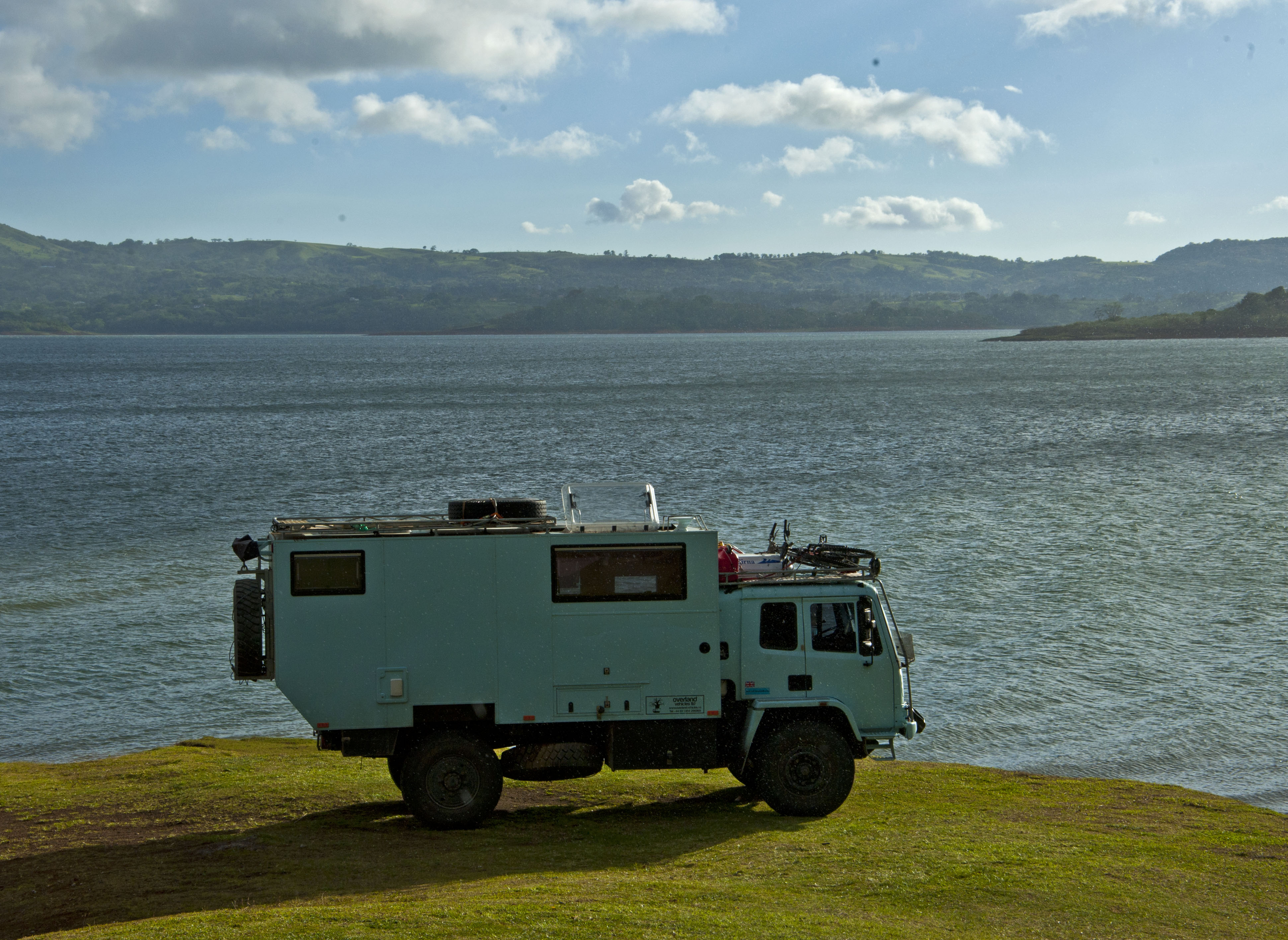
When we reached the town of Nuevo Arenal – the original was flooded when the lake was formed by a dam – we found a community camping area where we could park right by the lake and camp for free. Brilliant! We are really enjoying the freedom of being able to free camp again. The elevation of 500m was also enough to take the edge off the coastal heat. The undulating hillsides here are more like Scotland or the Lake District (in unusually good weather) than Central America and it feels quite homely.
Playa Grande
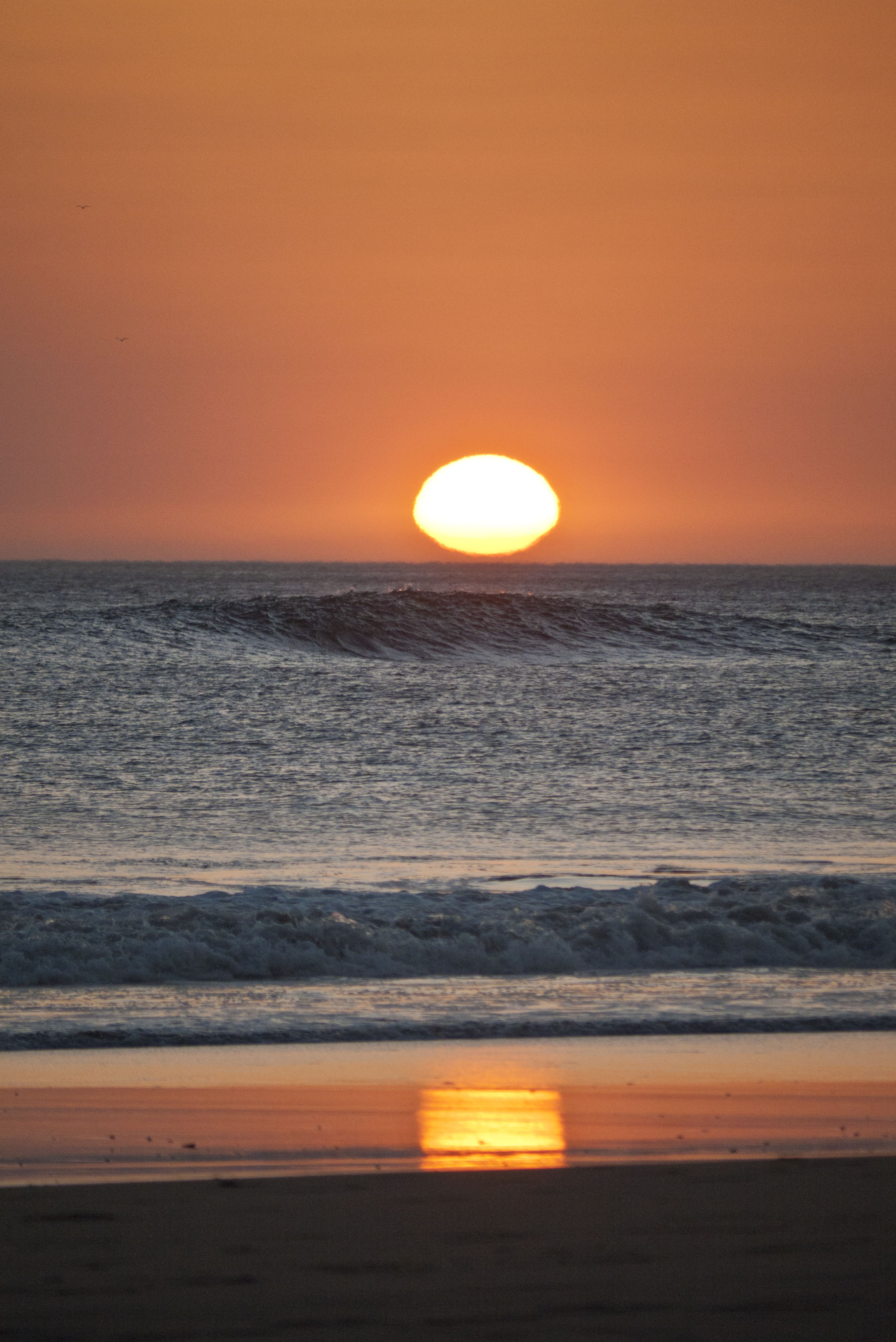
In Between our visits to Rincon de la Vieja we headed down to the coast on the Nicoya Peninsular. Our first port of call was Playa del Coco but although this is the most famous beach it’s a bit dirty, crowded and the beach itself isn’t very nice. We decided to head down the coast to Playa Grande.
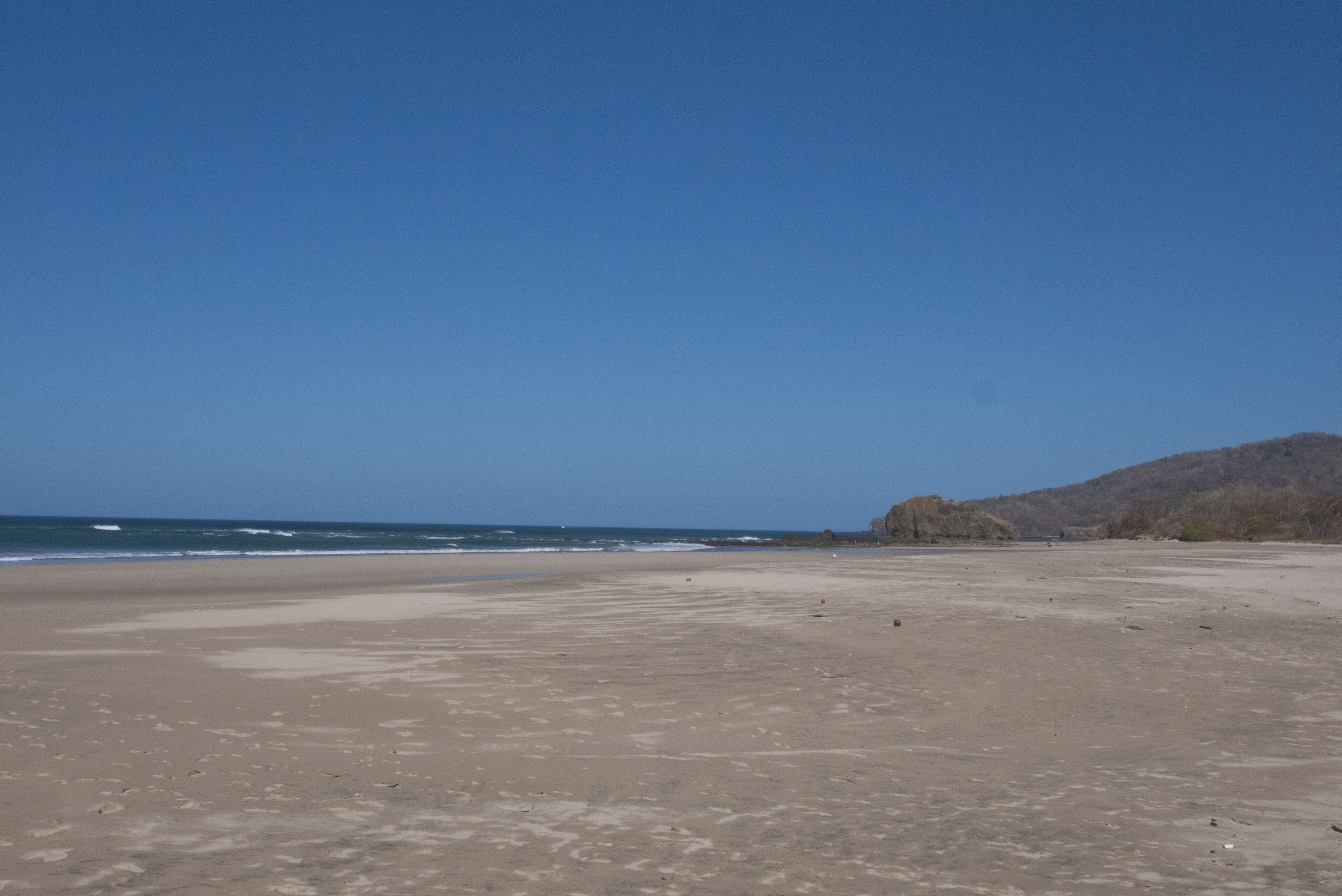
When we got here we were not disappointed. We were greeted by a wide beach with golden sand stretching as far as the eye could see. This was coupled with a great place to camp right next to the beach and not many people. Well we settled in for a couple of days.
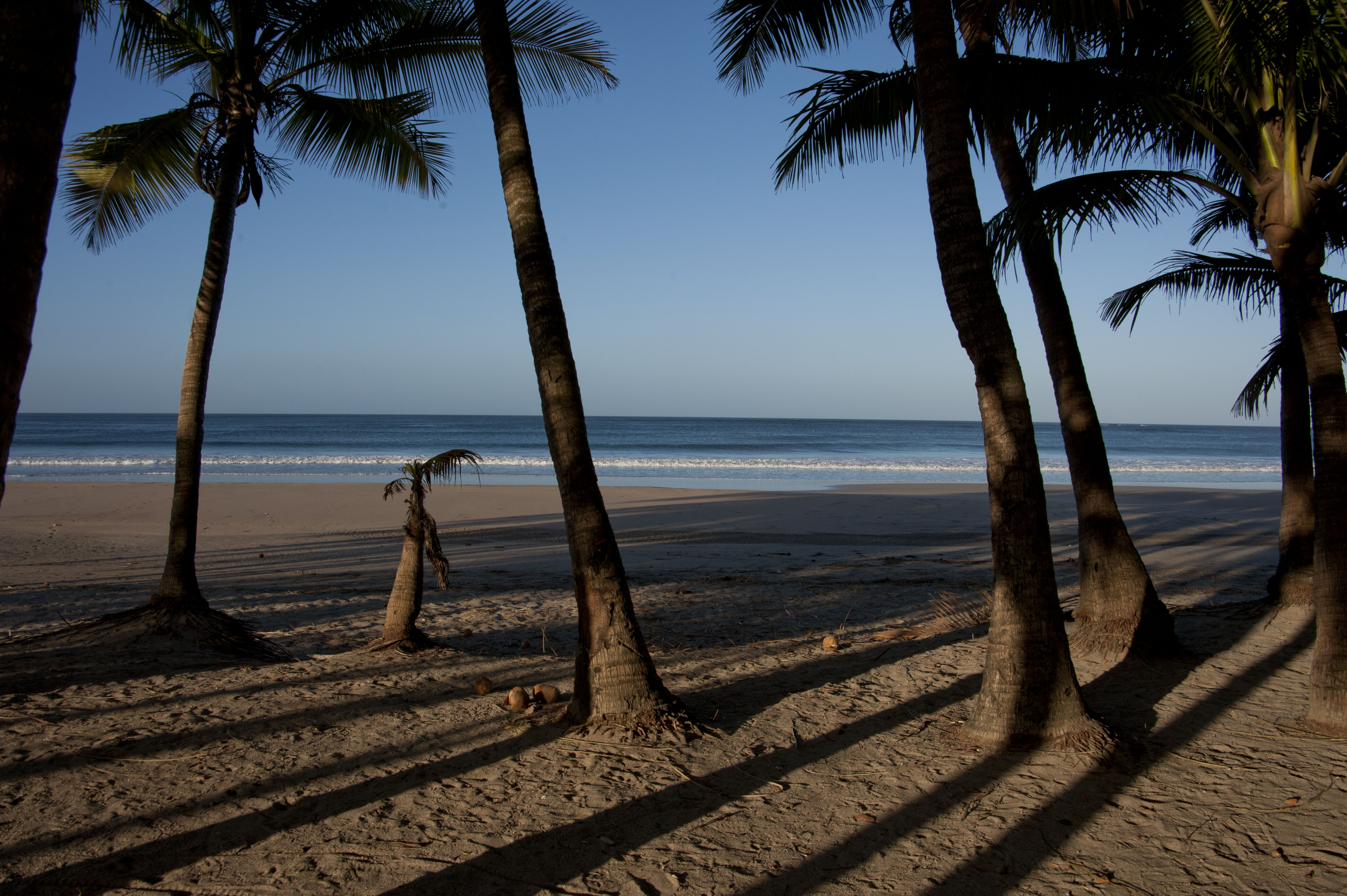
Playa Grande is a beach famous for its nesting turtles – however we had just missed the season and there were no turtles laying at this time.
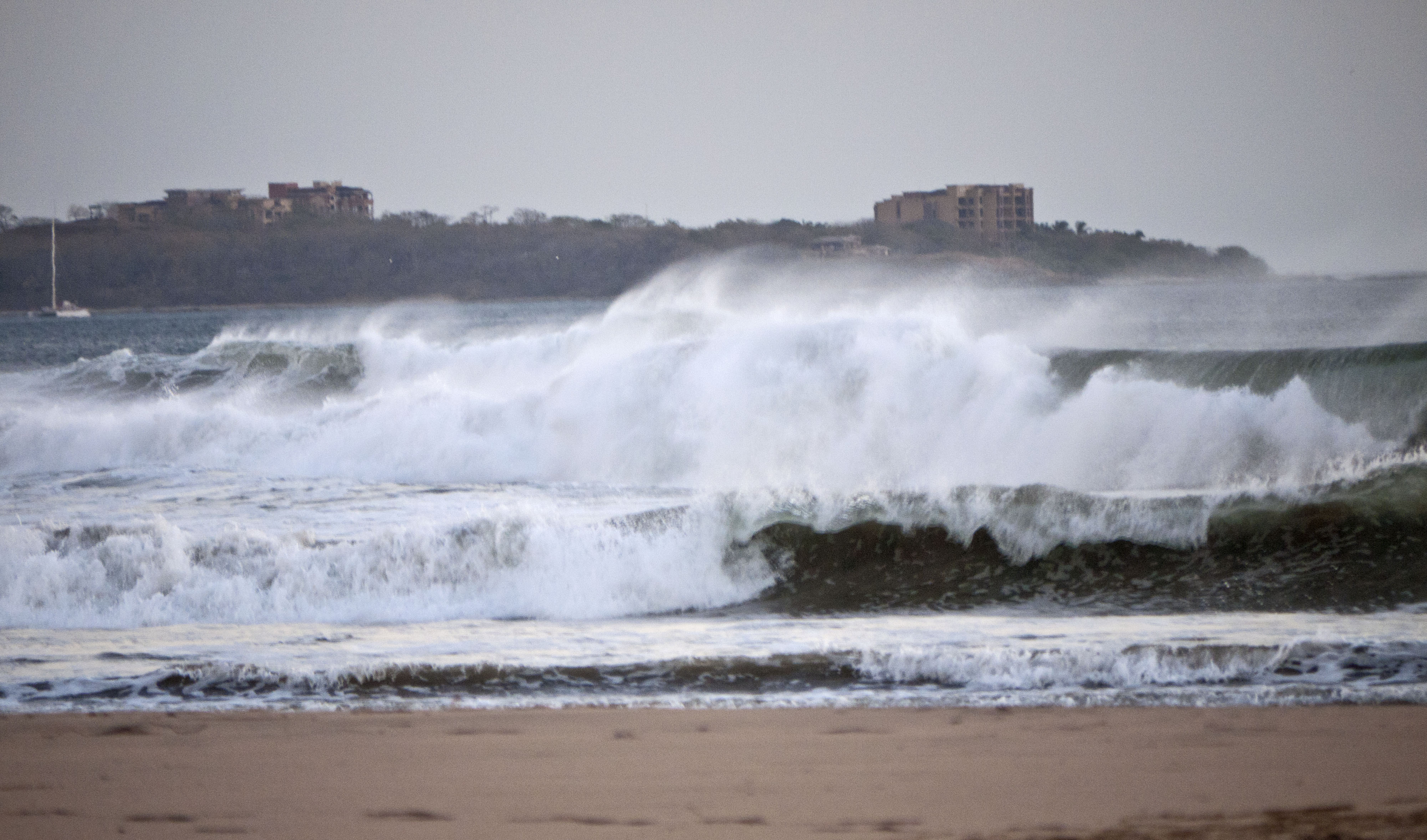
While in the area we visited a couple of other beaches – one at Tamarindo, which is small surfer town but a bit busy and Americanised and another called Avellana which just wasn’t that nice a beach.
Rincon de la Vieja
Rincon (Parque Nacional Rincon de la Vieja) is a national park in the dry highlands of Western Costa Rica. The park is on the slopes of a volcano which hasn’t erupted since 1998 but is still considered active. It’s a 15km drive from Liberia up a road which varies between paved to a fairly rotten gravel. However coaches make it up even though 4 wheel drive is recommended.
On arriving at the car park at the park there was a gale force wind blowing. The camper was rocking from side to side. We had intended to camp here but the strength of the wind soon changed our minds.
We settled down to have some lunch before heading into the park and opened one of the camper windows. Big mistake. The wind gusted and picked up the window flipped it up to vertical and it fell off ! Well we couldn’t fix it here so we headed off back down the mountain to somewhere it wasn’t so ridiculously windy. We stopped off at the Hotel Guachipelin which had a convenient wall which we could park next too and use as a ladder. We asked for some help at the hotel and the maintenance guy came out. The size of the window means it’s a two person job to fix back in.
Well window fixed we headed back to Liberia but we were determined to come back.
A couple of days later we headed back up the hill to the park. This was our first encounter with how expensive Costa Rican National Parks are – it was US$10 each. We paid up and had to register where we were going in the park with the Rangers.
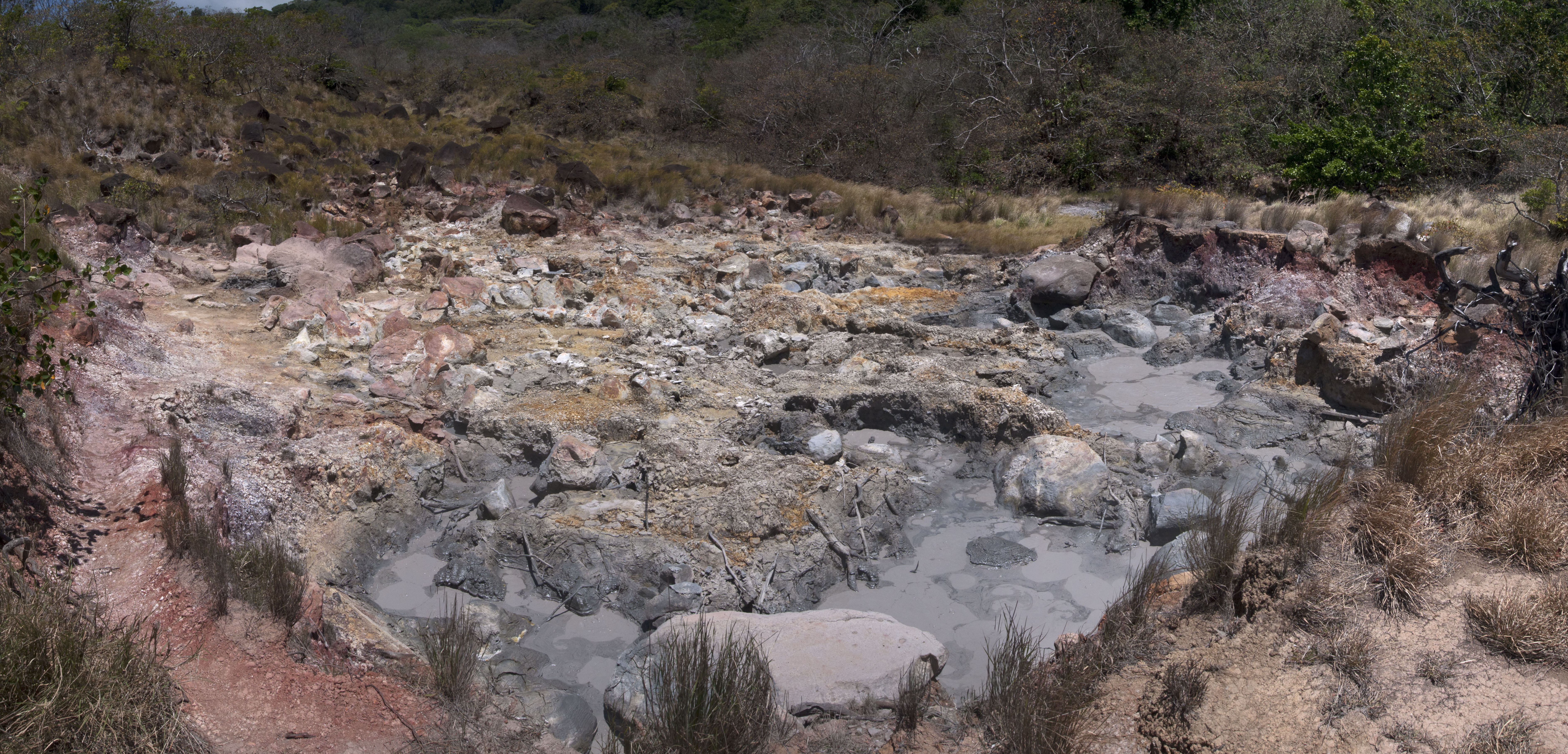
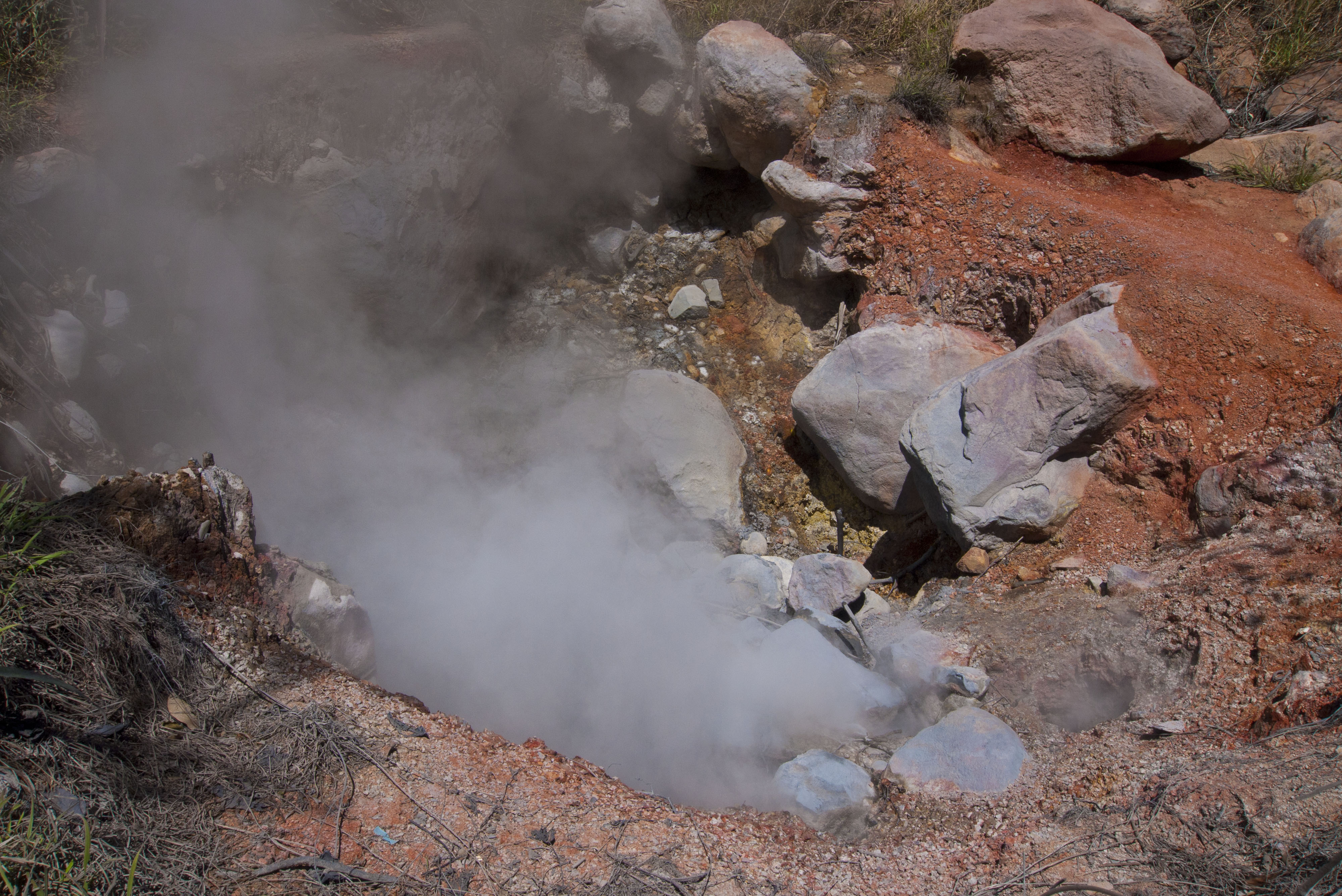
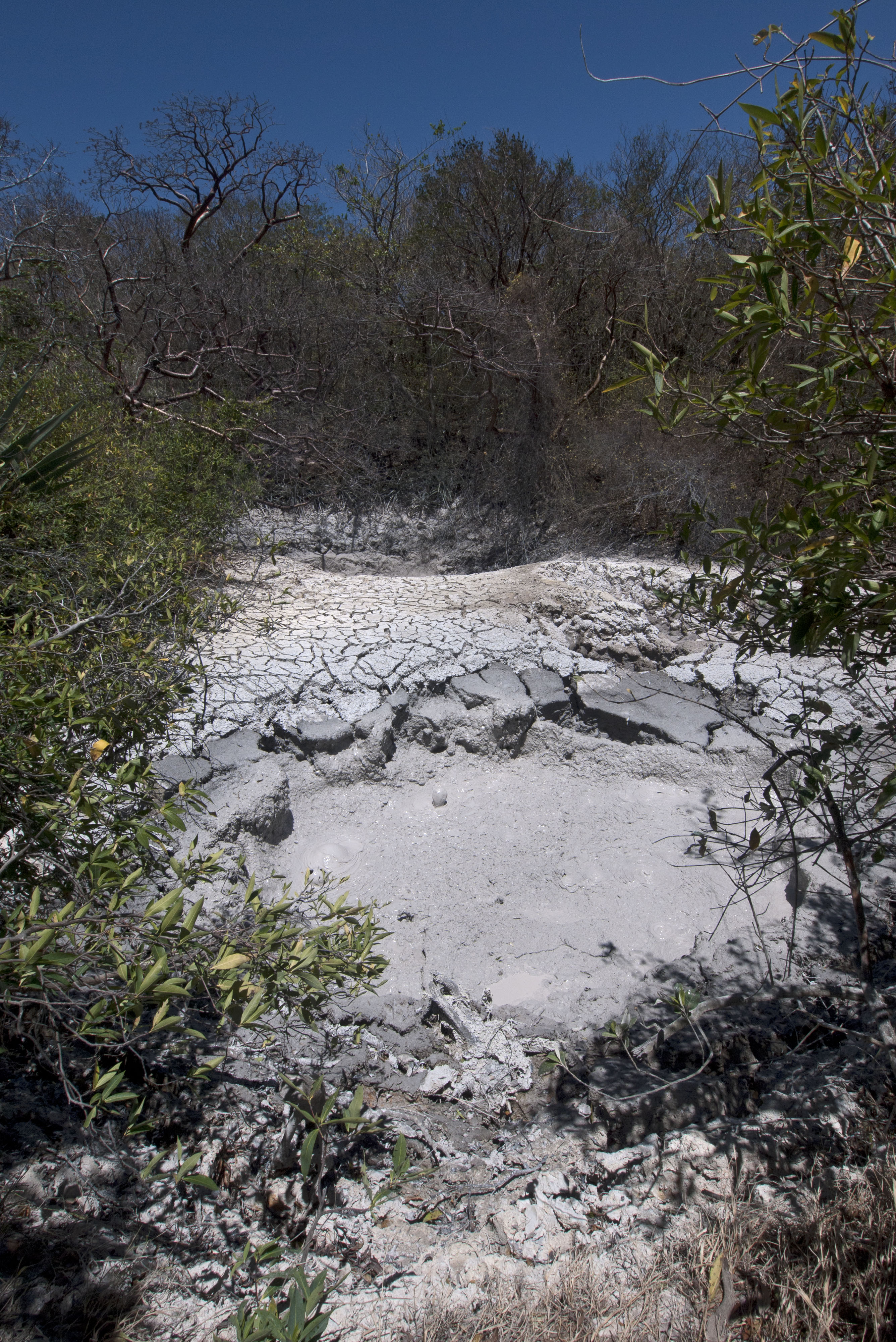
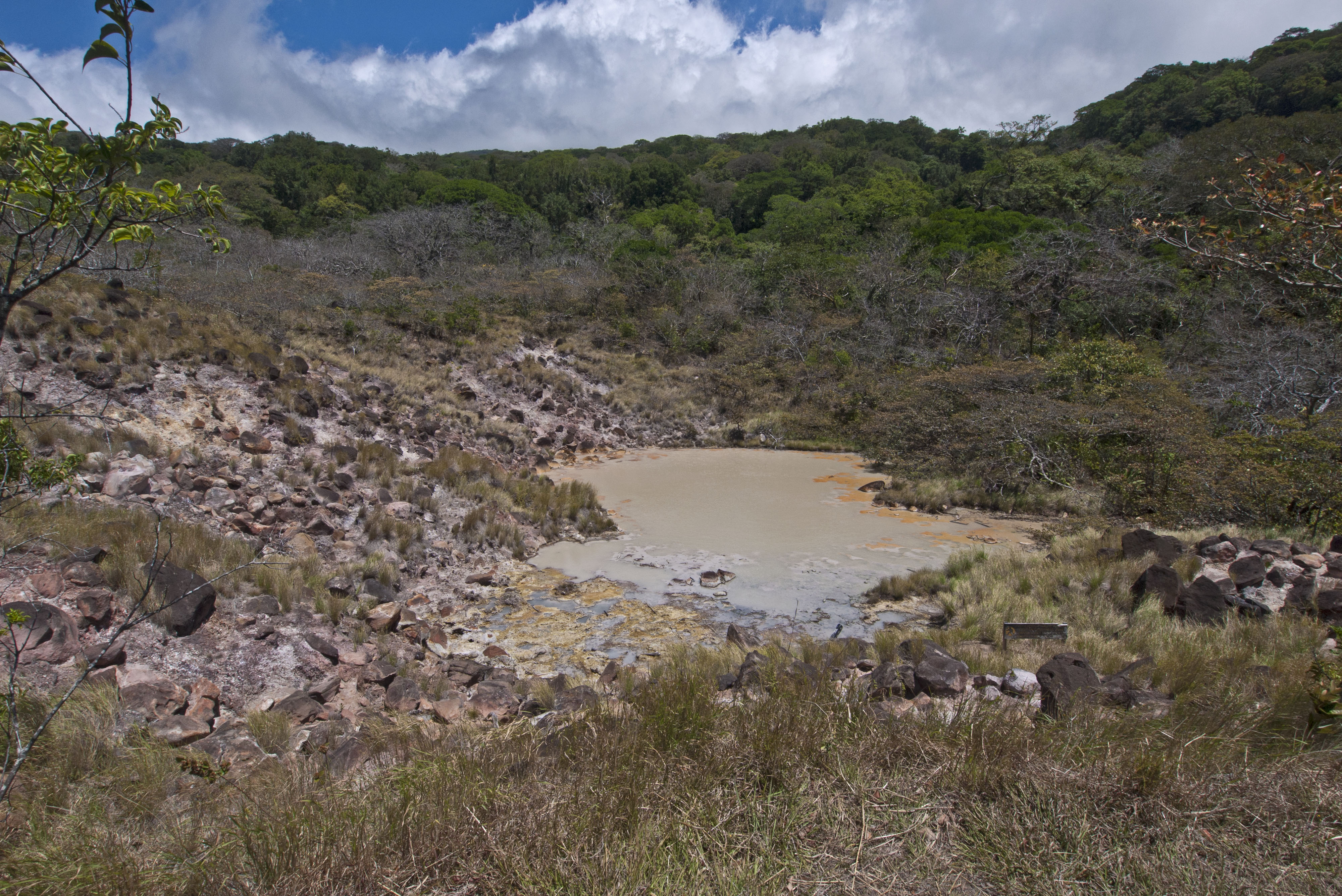
First off we did a simple loop walk which is what 90% of the visitors to the park do. This took us through some dry forest where we saw some monkeys to some geothermal features such as bubbling mud pools and a mini-volcano. It was a nice walk but a bit crowded at times and left us wanting more. Unfortunately the hike to the volcano crater was closed because of the wind as this is meant to be a beautiful hike.
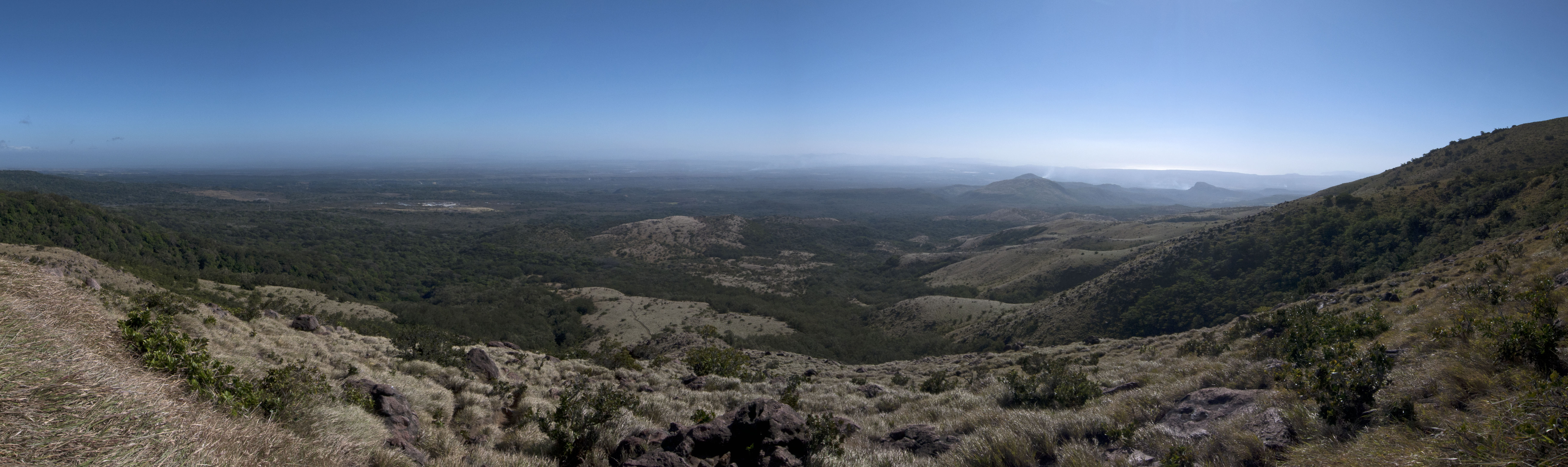
We came back to the entrance and decided to head off on one of the longer hikes to a waterfall. The trail started off through the forest but about half way it emerged into an upland meadow. It was at this point that the trail started to climb. There was a gale force wind straight in our faces which made walking hard work and you needed to constantly watch your balance as the wind could make you take a mis-step on the rocky and steep trail.#
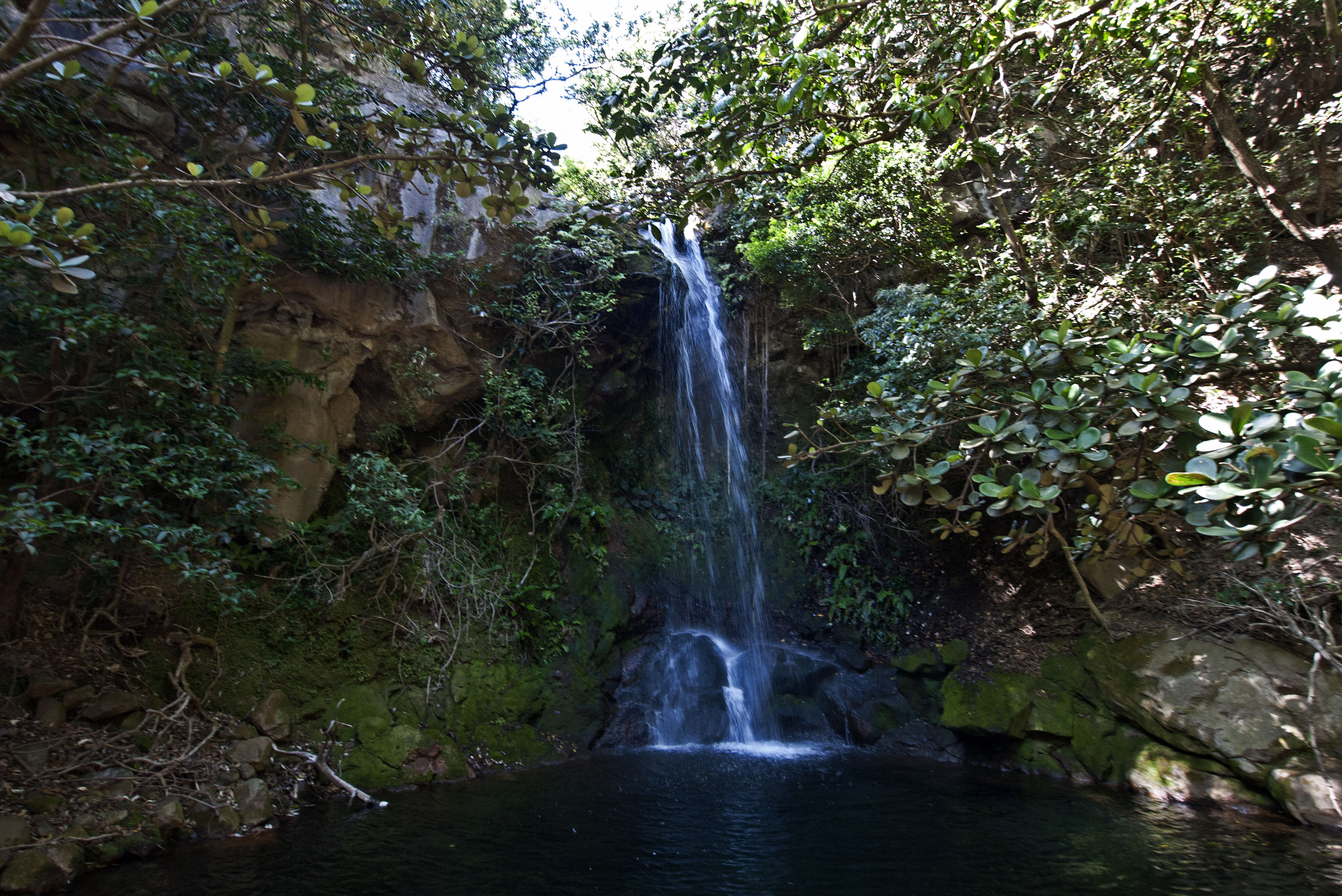
Once we reached the top of the hill the wind became almost too much. We were bent right over walking through it and barely making progress. We later learnt that someone had been killed here recently having been blown over a cliff. However we soon went over the top and descended to a small stream which we followed for a couple of 100 metres to a small but pretty shaded waterfall.
The walk back was more precarious as the wind was behind us as we descended.
We were glad to make it back to the parking lot and headed back down to Liberia as it was still to windy to open the windows and too hot to sleep with them shut !
Nicaragua – Costa Rica (Penas Blancas)
We are feeling really pleased with ourselves after having managed both side of this border crossing without any help from a tramitador. In fact this crossing had the least pushy Tramitadors of any that we have done, they just took no for an answer. This is pretty unusual because at other crossings we have said no and they helped us anyway – pretty clever because it usually turns out that we are grateful for their help and pay them.
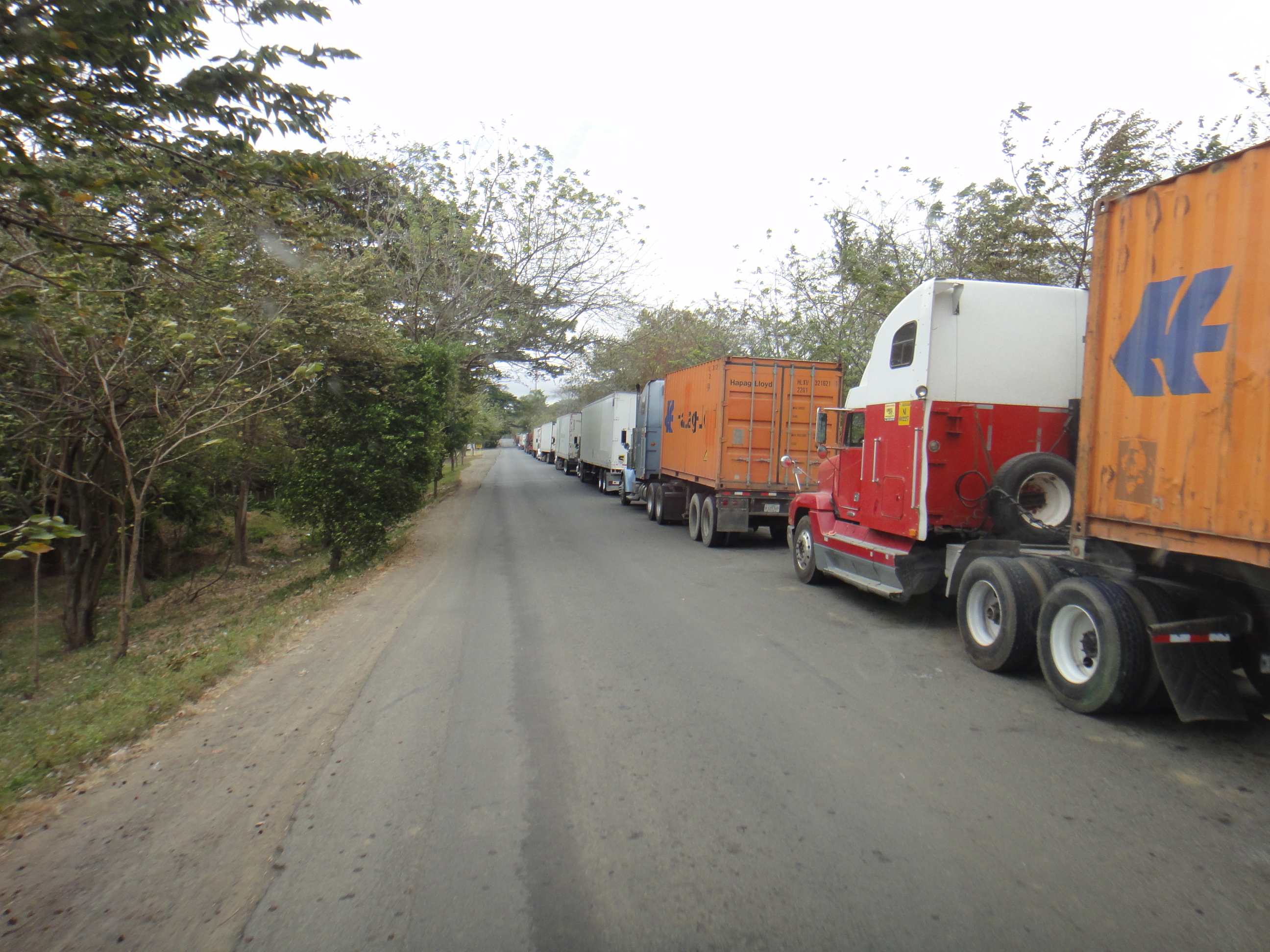
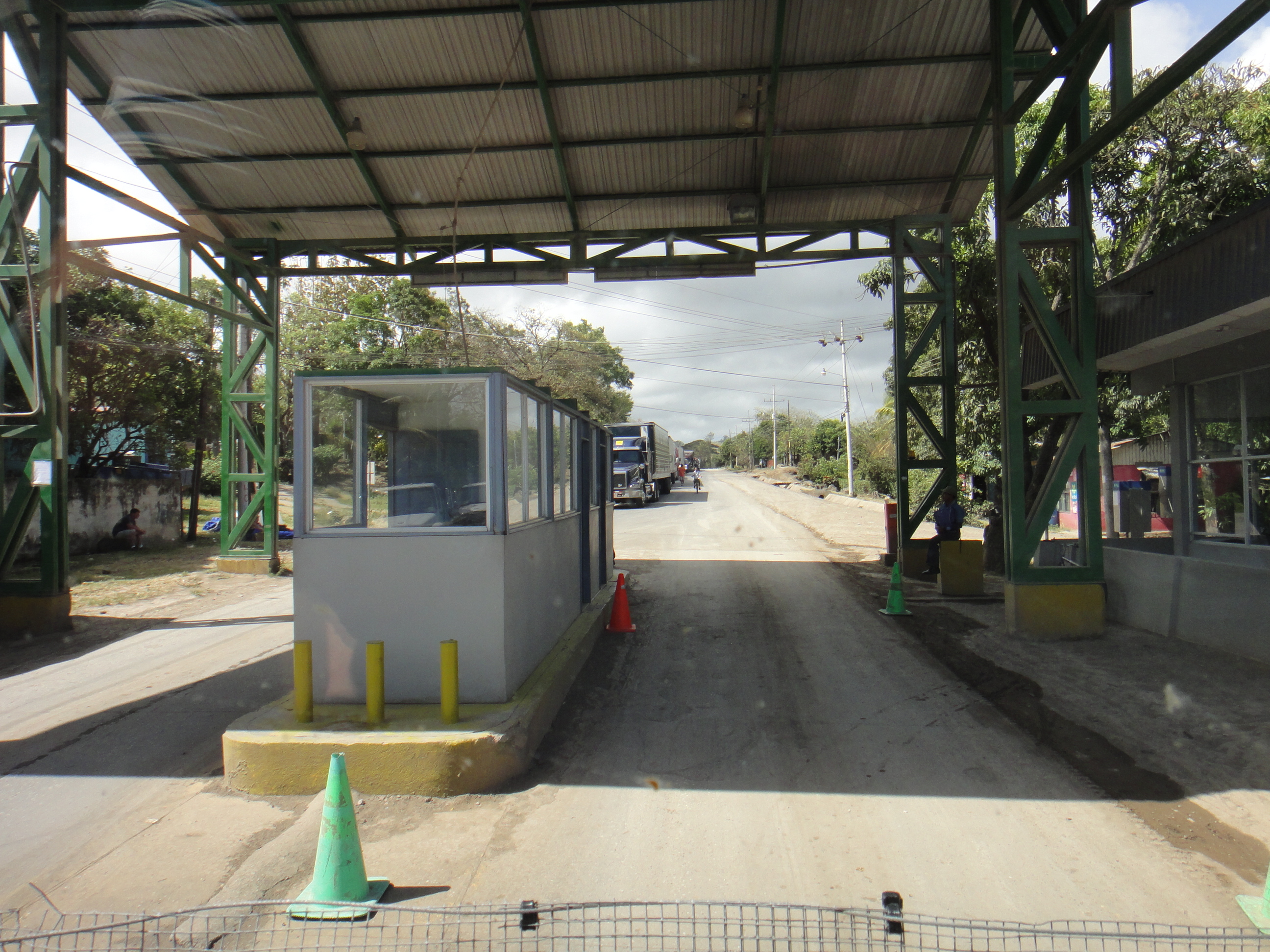
The border has the usual long line of trucks waiting to cross which you just have to drive straight past. I shudder to think how long you’d be here if you waited with them.
On first arriving at the Nicaraguan side of the border you stop at a booth where a man with a blue DGA polo shirt on will check your vehicle import permit and scribble something on it.
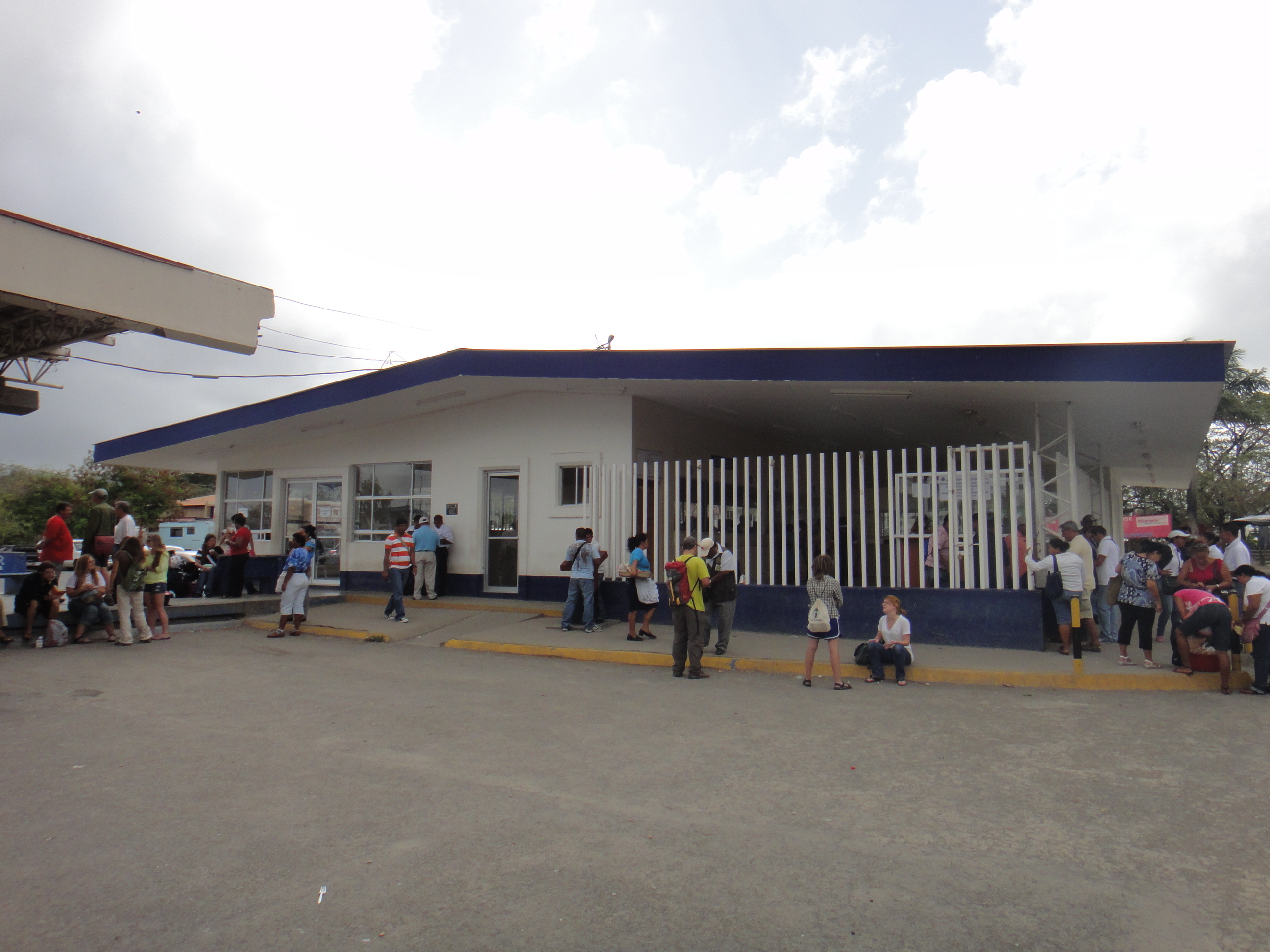
The border area has been moved around a bit in the last year (since 2010) so the info we’d got from other overlander’s was out of date. Good news is that no photocopies are needed at this border to exit.
Drive straight ahead and follow the sign’s for budget. You will turn left and enter a big car park. We parked right next to the Budget building.

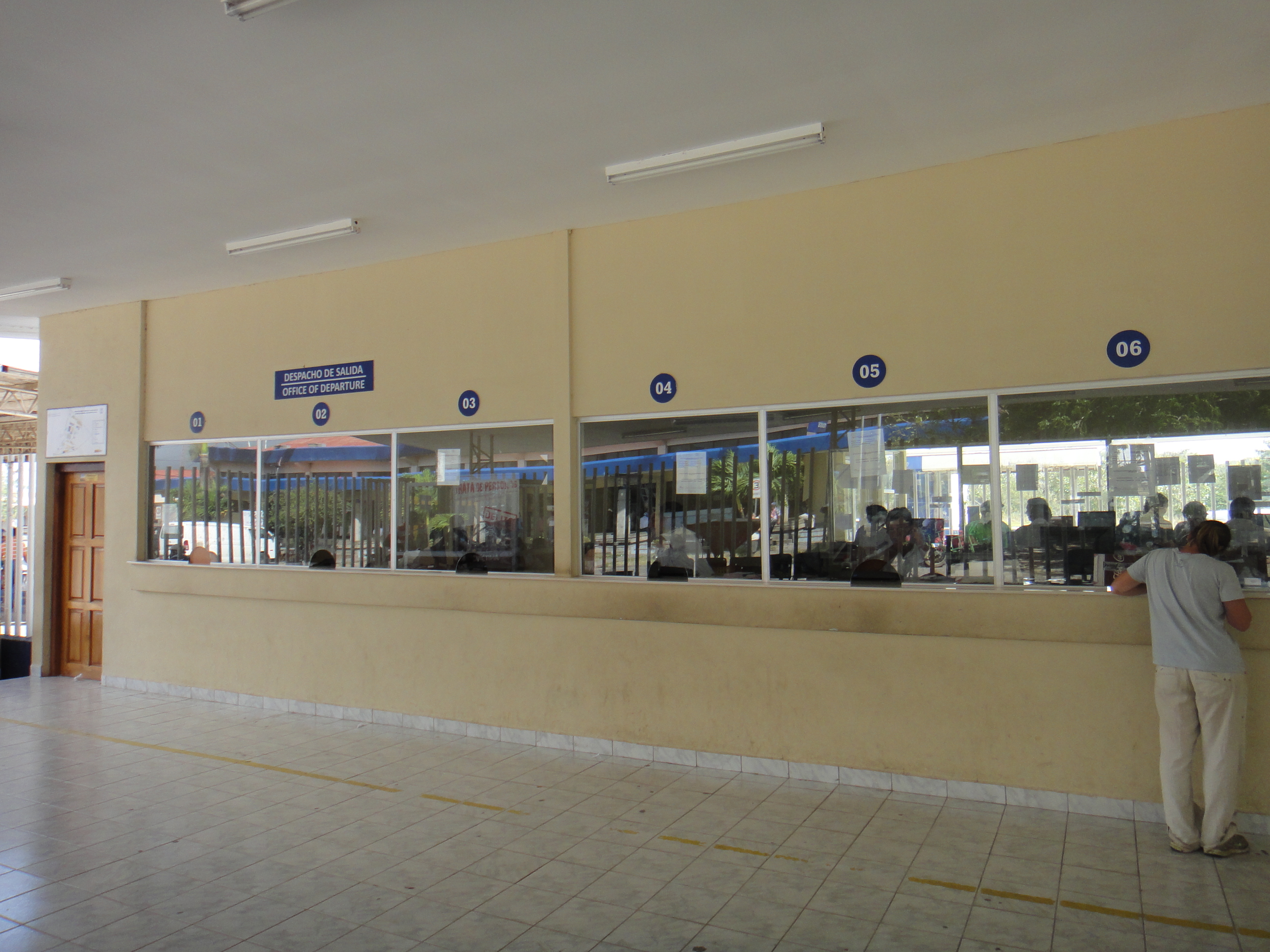
The first stop is immigration which is over the other side of the main blue and white building. There is a sign saying “Migracion”. At the entrance to immigration is a booth where you have to pay a Municipal tax of USD 1. No way of getting out of this unfortunately. After this you go to one of the windows where you fill out an exit form, pay an exit fee of USD 4 each and get your passport stamp.
Now you have to get your Import permit cancelled which isn’t that easy. First you need to find a man in a light blue DGA polo shirt. He will come over to your vehicle for an inspection. For us he checked the VIN number and came in the back where we had a little chat. He then signed off the import permit for us.

Next step is to get the police, who should also be around the parking lot, to sign off the permit too. We couldn’t find the police so the DGA man spoke to his colleagues and we didn’t have to get police sign off.
You then go the Aduana window which is in the same building but on one end as Migracion and go to the first window. Someone here will look at the import permit and your driving licence. They will sign it off and pass it to the person at the second window who will then stamp it. You are now free to go.

After this you drive straight pass the blue booths which are for trucks and to the exit. Here there is another DGA man who you give the cancelled permit to and you are through to the Costa Rican side.
Now take a breath because the Costa Rican side is more complicated and chaotic.

As you drive through you need to turn right past a small building, stop and pay for fumigation (USD 6) and then drive through the big fumigation tunnel. Don’t stop as it keeps spraying and roll up your windows.
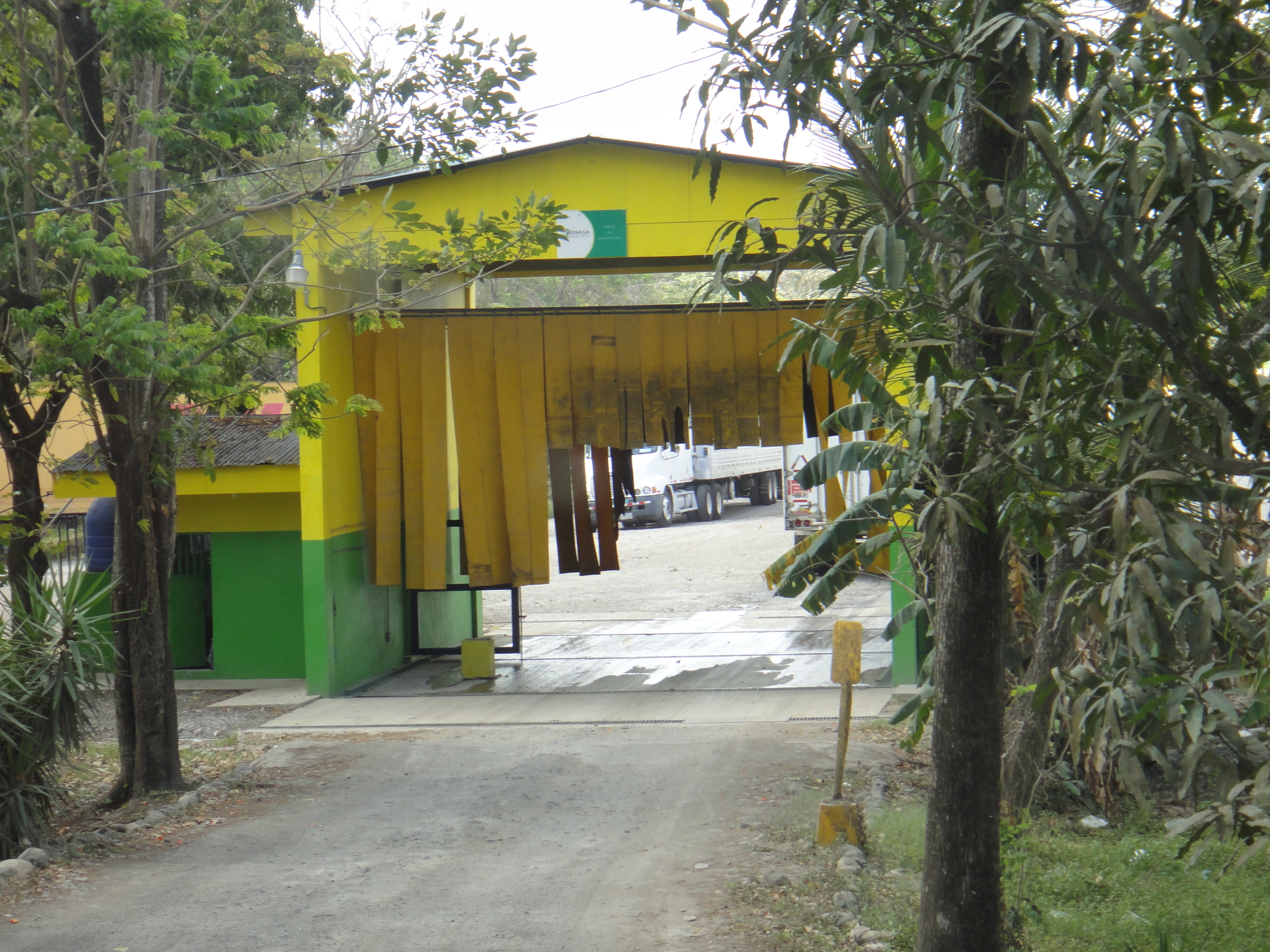
Continue driving and you will hit a paved road, turn left and drive until you reach a building which the road splits and goes around. You want to drive around the building and park up where you see all the buses.
There is some building work going on in the main building currently so when this is finished it may mean things have changed round a bit but as of March 2012 this is the setup.

First step is to go to Migracion – inside the main building. There will probably be a big queue – with a lot of gringos in it. When you get to the front give them a passport and the immigration form (we were given this by Nicaraguan migracion but there will also be guys handing them out outside).

This bit was easy. Now for the import permit and this takes a bit of running around. First step is to buy insurance. The insurance is for sale at the main customs building which is around 400m away from where you are parked. Walk through all the trucks until you see a big loading dock and then walk along this and the window is at one end. Insurance is compulsory and costs USD 17.

Now you need to get photocopies (just 1) of the insurance, your passport including immigration stamp for Costa Rica, your driving licence and your title/registration (easy for us Brits as we only have one document). You will need passport and driving licence of any 2nd driver too.

Then you walk back to the main area where there is a little hut opposite immigration. Go to the window here and hand over the copies (an originals) the guy here will give you a form to fill out. Once this is done he staples the copies together and then you have to go back to the aduana building by the loading dock.
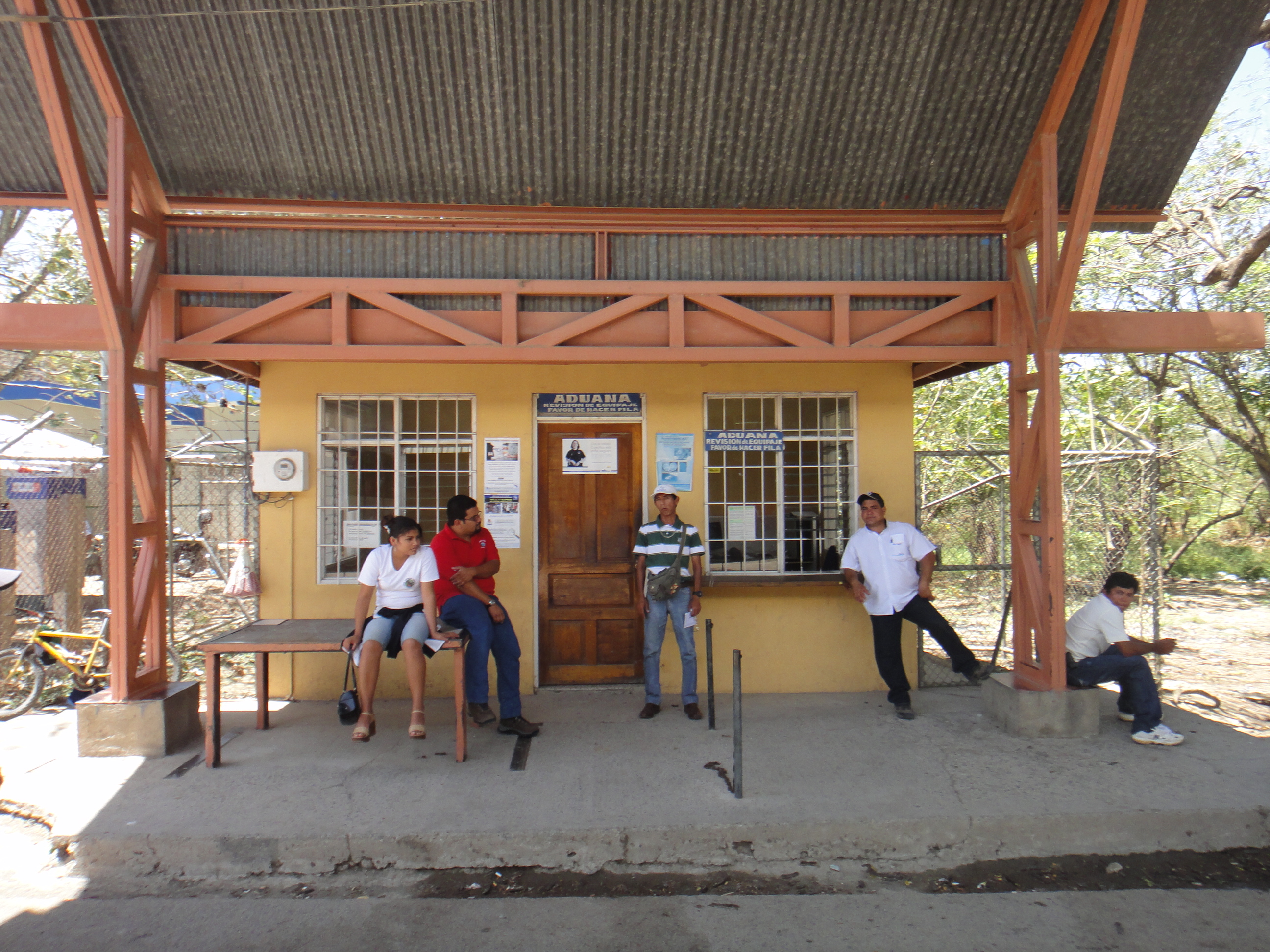
Here you go right round to the end where there is a door to an air conditioned waiting room. There was no on waiting and we went straight to a window where a guy took the form and photocopies checked everything and typed it into a computer. He then printed out our import permit which we checked and then we were done.

This all sounds very simple but finding out where to go took us some time and we ended up walking from one end to the other around 4 times. Everyone was very helpful and friendly. All in both borders took us three hours – a tramitador would have speeded it up but wouldn’t be as satisfying !
Once all this is done you are finished and can drive through the final checkpoint and out into Costa Rica.
Be aware that within the first 50km’s of Costa Rica we were stopped at 2 police checkpoints. The first we had to show passports and import permit and the second just the import permit.
Destruction in San Juan del Sur

San Juan de Sur is reputedly the nicest beach town on the Pacific side of Nicaragua. We decided to check it out and when we arrived found somewhere to park to explore a bit.
The seafront was half cordoned off by the police as there was a rather strange event going on. It was called Sexy on the Playa and seemed to involve pumping euro pop and women dressed like ladyboys dancing in front of a tv camera as well as some blokes in tiny speedos doing the same.
Anyway after having a nice lunch in a bar on the beach here we decided to spend the night here. We thought that the malecon (seafront) would make a good place to park. However due to it being half cordoned off we had to find our way around. This involved driving down some small back roads.
Half way down one road we heard an almighty crash and realised that we had snagged an overhead cable. I jumped out to look and found at least three cables draped across the top of the Beast coupled with one wrapped around our back axle. I cleared the cables away fully expecting someone to start shouting at us any minute If someone had said anything I would have happily paid for the damage. No one said a word to us although the street was lined with people standing watching. We thought we better get the hell out of Dodge and quickly drove out of town. That was the end of our visit to the Nicaraguan Beach !
As we drove away from the town we were expecting a police car to stop us at any moment but we seem to have got away with it. My theory is that they were probably illegal cables and no one wanted to make a fuss !
Isle of Ometepe
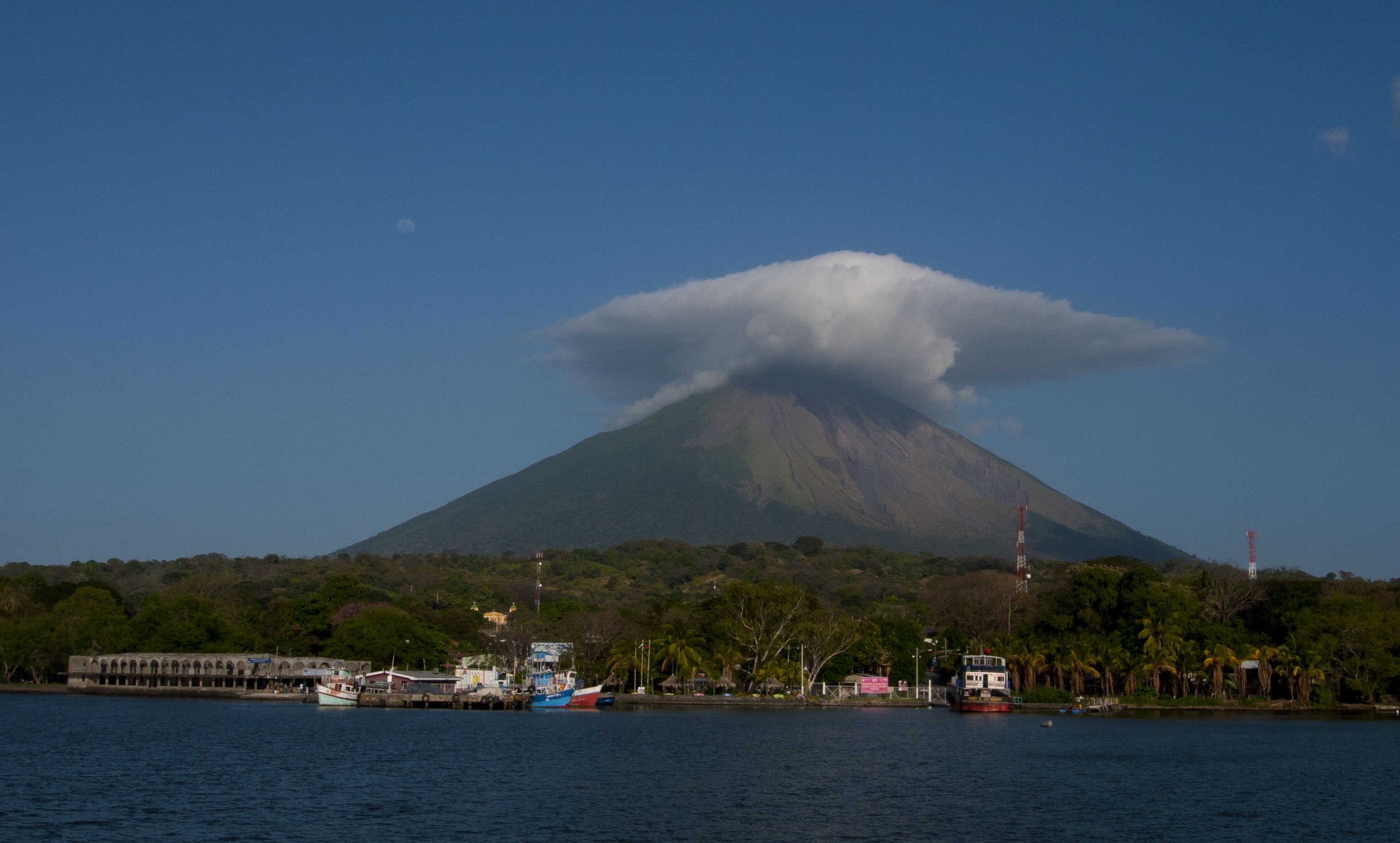
The biggest lake in Nicaragua is simply called Lake Nicaragua and in the middle of this lake is the Isle of Ometepe. This is an island shaped like a figure of 8 which has been formed by two volcanos which are joined by a thin isthmus of land. The two volcanoes are Maderas (1394m) and Concepcion (1,610m).
The main port to travel to the island is a small town called San Jorge. From here there are four ferries per day which take about an hour to cross the lake to Moyogalpa on the island. There are also some smaller lancha type boats but the lake is very choppy so a bigger boat gives a much smoother ride.
The ferries do take vehicles however they are fairly small with only room for two trucks and you need to book well in advance to get on with a bigger vehicle like ours. We had therefore decided to do a day trip to the island and catch the 6.30am ferry over.
When we arrived in Moyogalpa there was a tour guide from the UGO (an association of the independent tour guides of Ometepe) waiting at the dock and we arranged with him for a tour of the island visiting 4 sites of interest.
This would get us back to the dock to catch the 4.30 ferry back to the mainland.
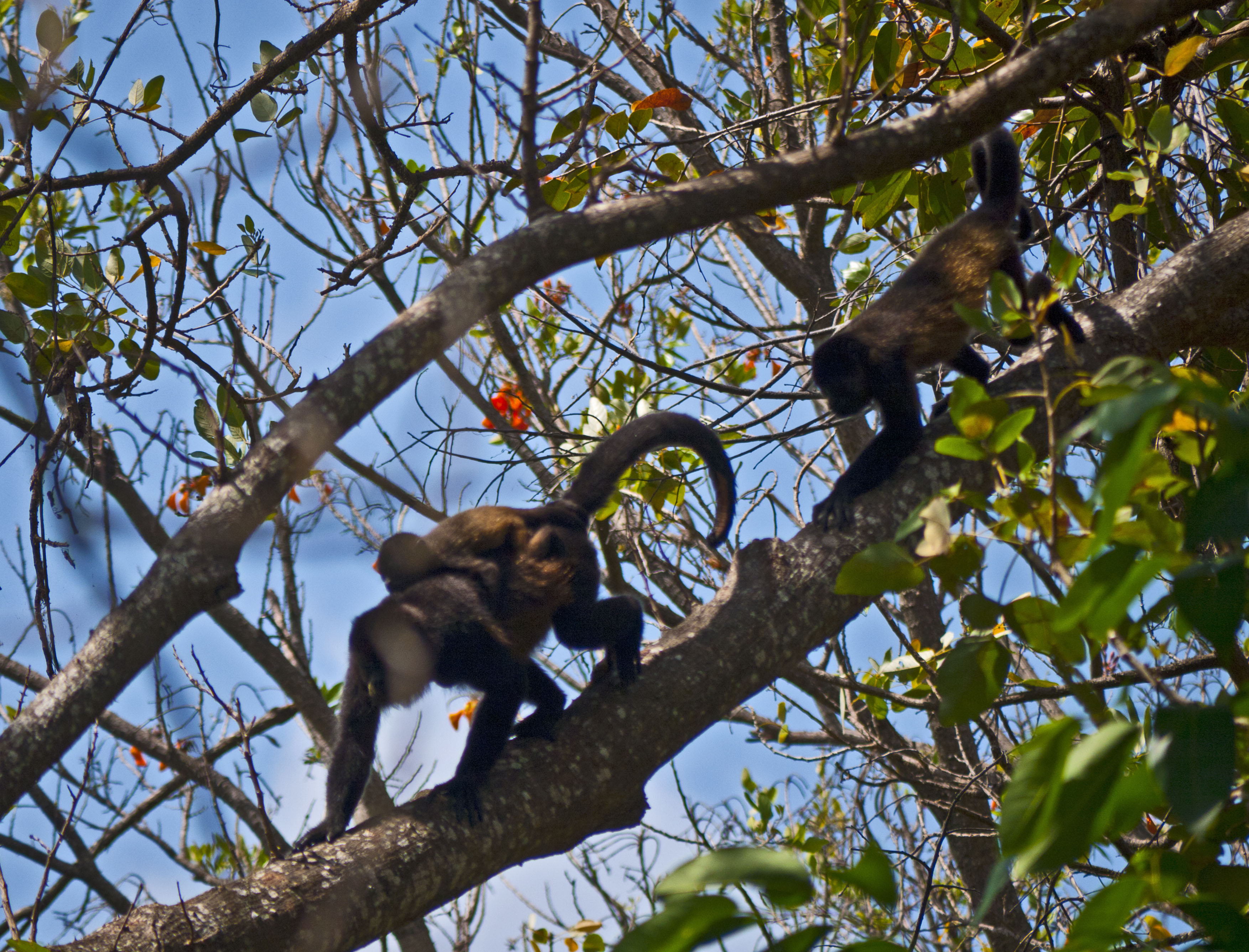
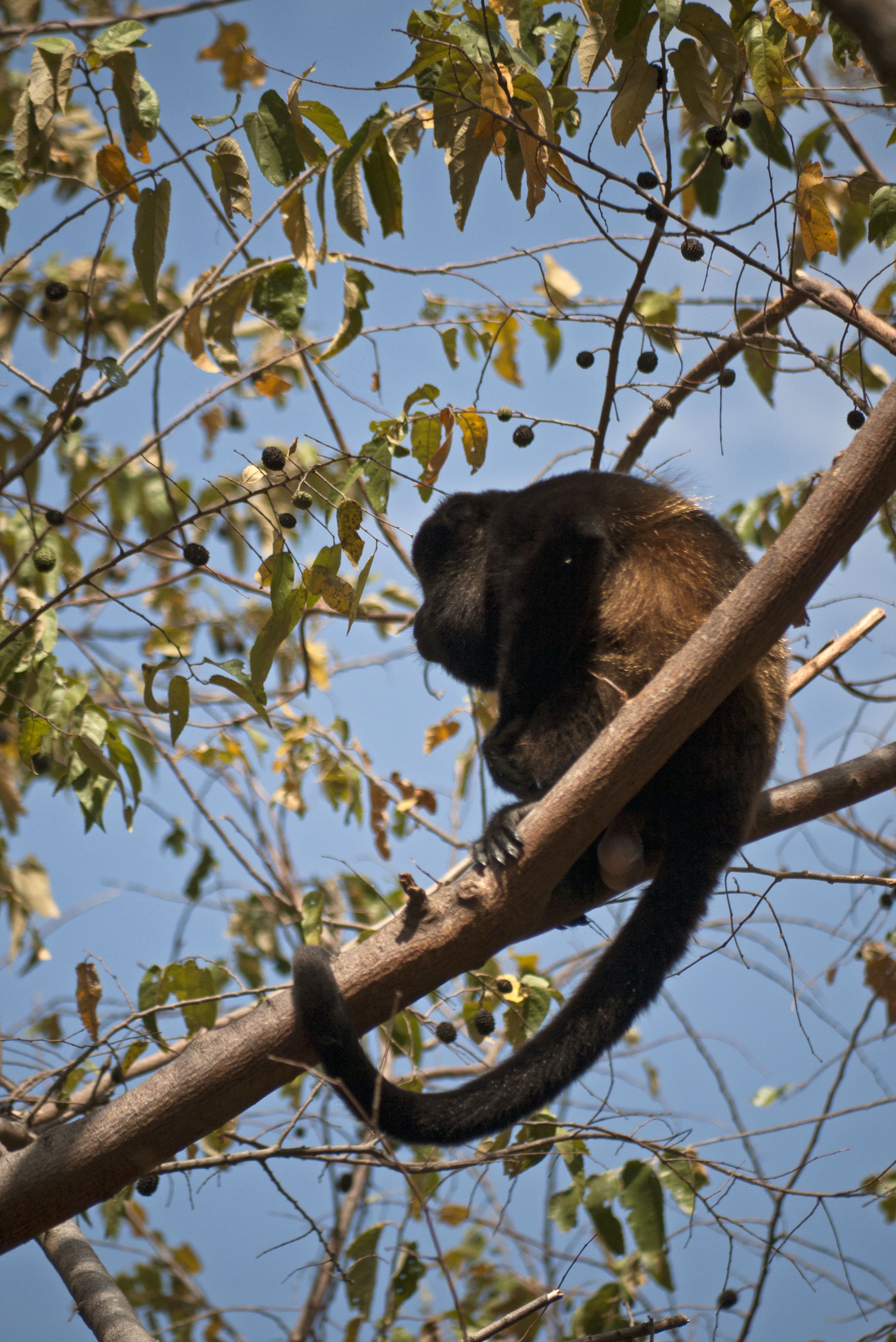
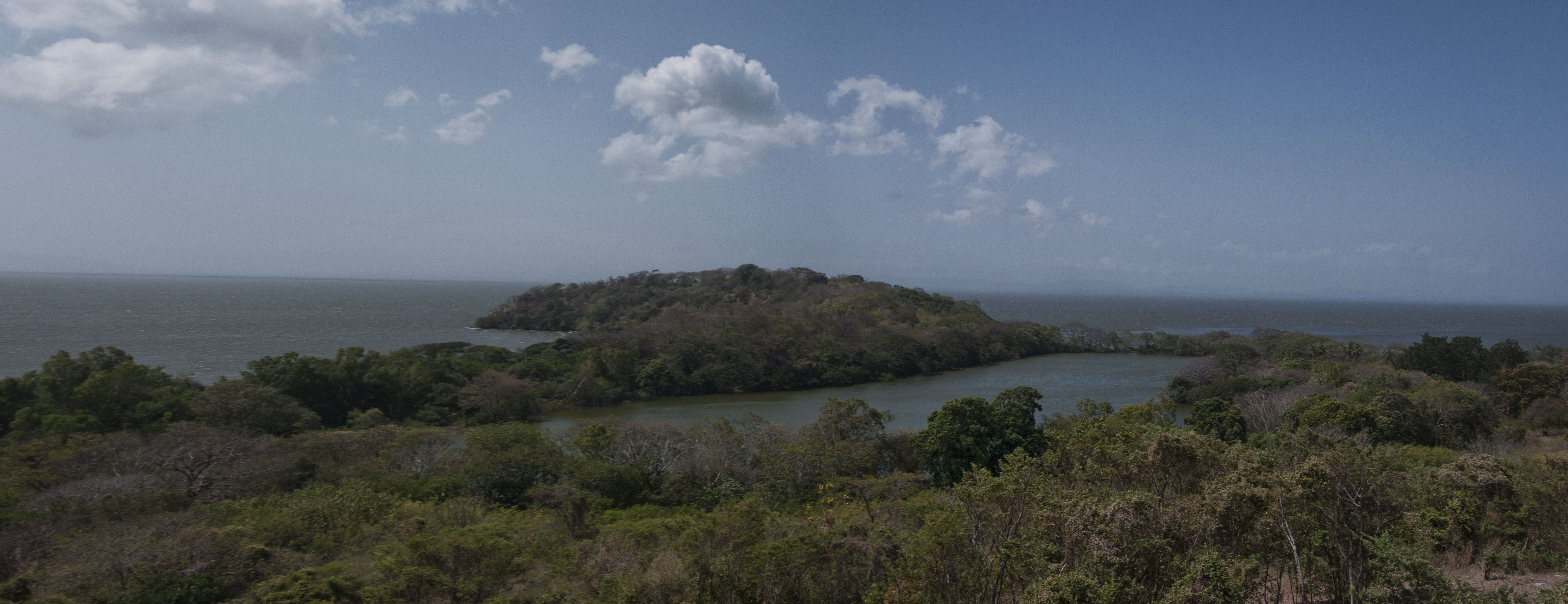
The first stop on out tour was to go to Charco Verde which is a nature reserve based around a lake which is connected to lake Nicaragua in the wet season. We went on a nature walk here and saw a number of Howler monkeys. The scenery was a dry forest with some agricultural land.
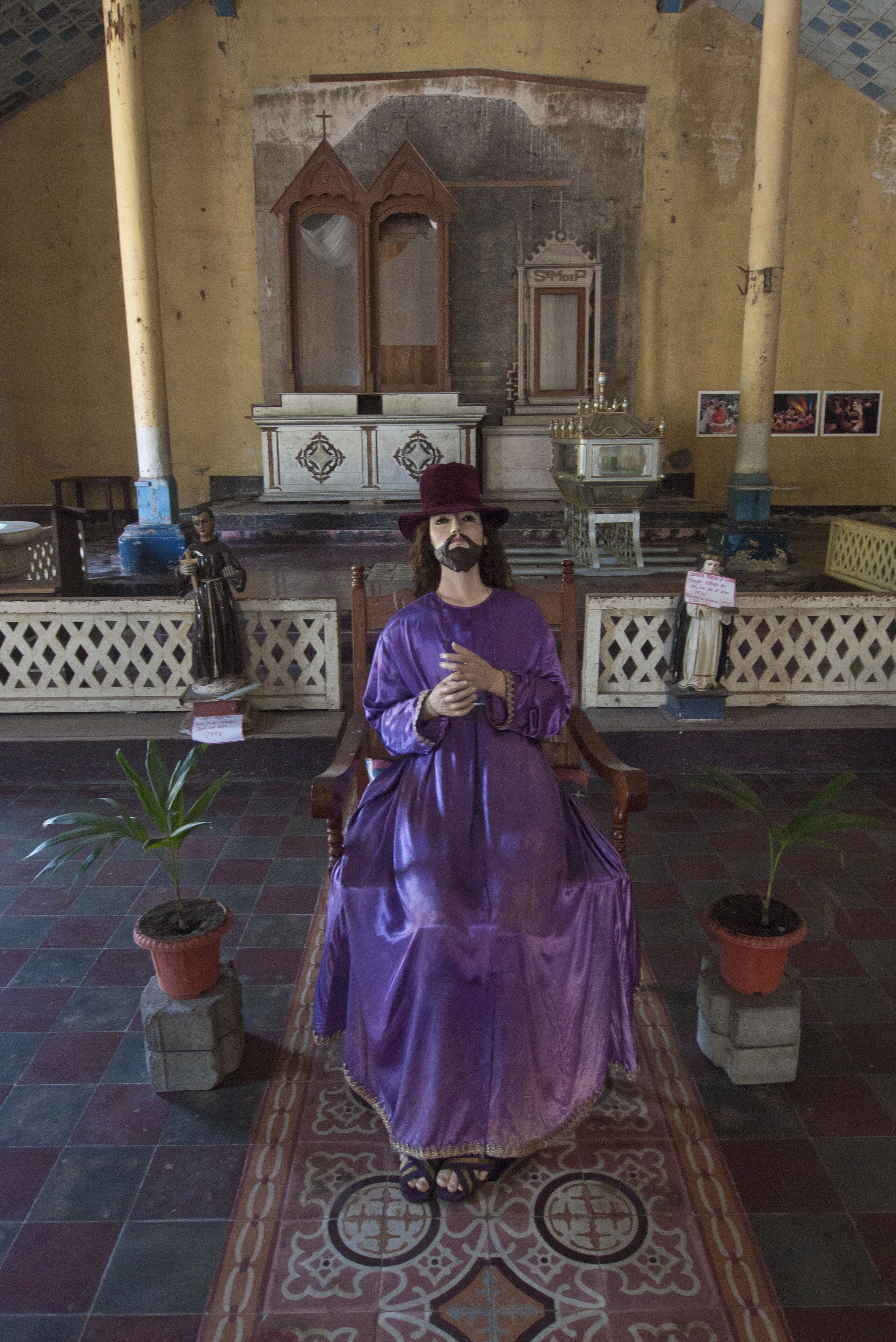
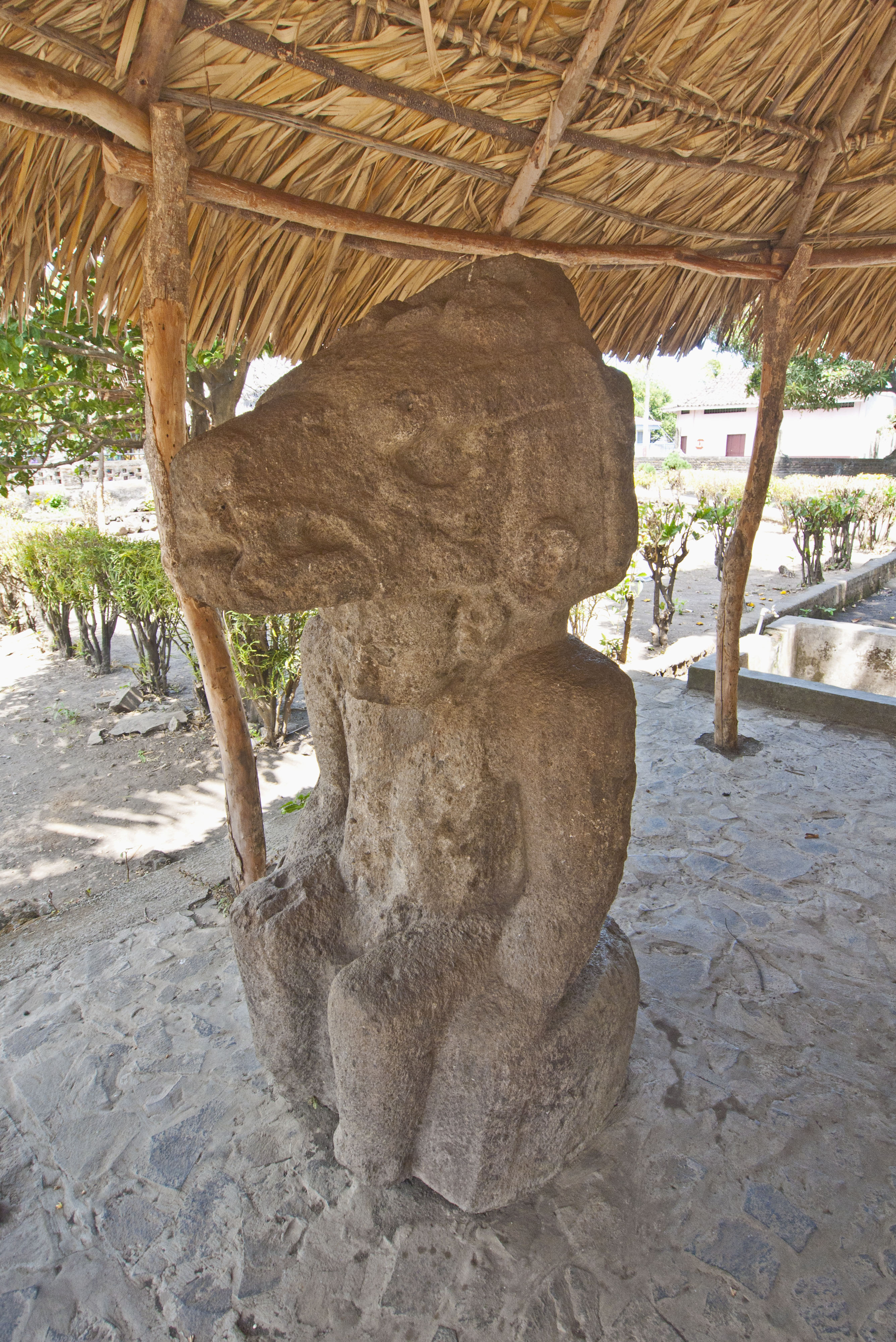
The next stop on the tour was the small town of Altagracia where there is an old church which has some ancient statues in the courtyard (around 1000 years old). The old church itself is falling down and a new church has been built behind it. Instead of preserving the old church they are just letting it fall down.
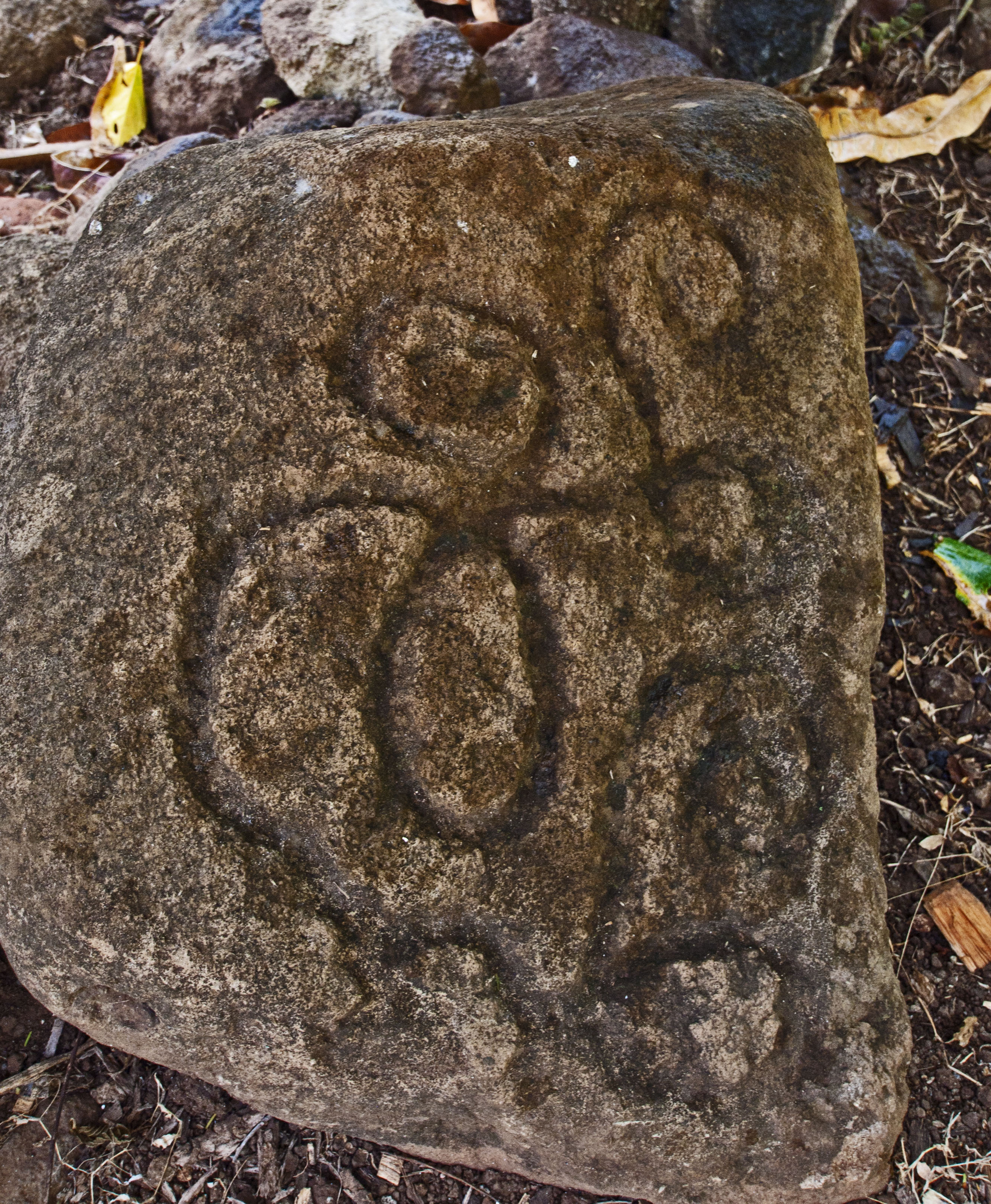
After this we visited a Finca on the other side of the island where there were a lot of Petroglyphs carved into the volcanic rock scattered around the property. These were interesting and were in shapes like monkeys, spirals and a warrior.
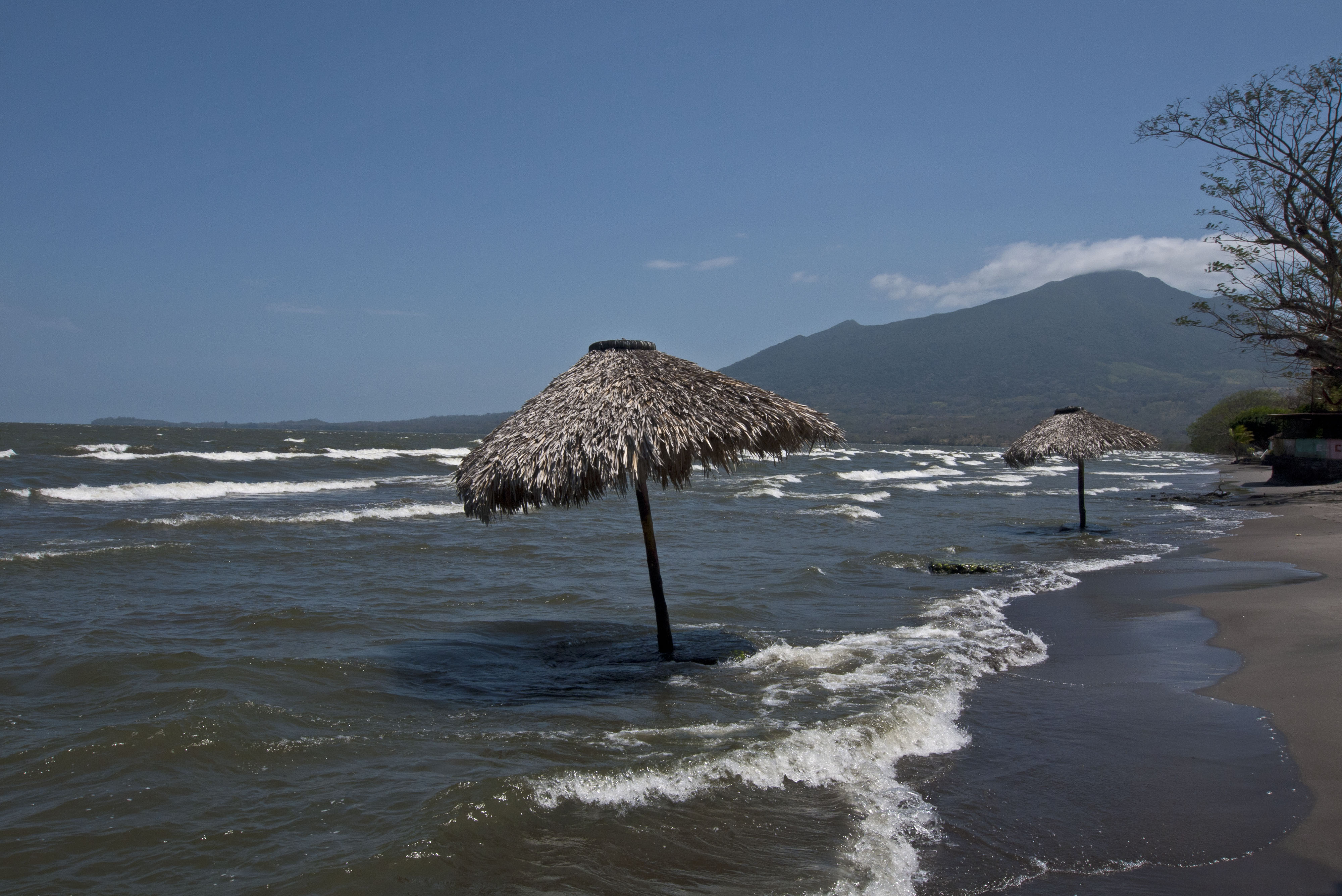
By the time we had finished there it was time for lunch and we stopped at small restaurant on the nicest beach on the island, Santo Domingo. The beach has suffered somewhat though over the last couple of years as El Nino weather conditions have meant a lot of rain which has raised the level of the lake thereby flooding the beach.
After lunch we were driven to the last stop on our itinerary which was the La Presa Ojo de Agua. This is a swimming hole fed by a natural spring. The water wasn’t hot but a lovely refreshing temperature and great to cool down in the heat of the day. It was also very clear and fresh. The water was flowing from one end of the pool to the other at a pretty fast rate so the spring must be fairly strong.
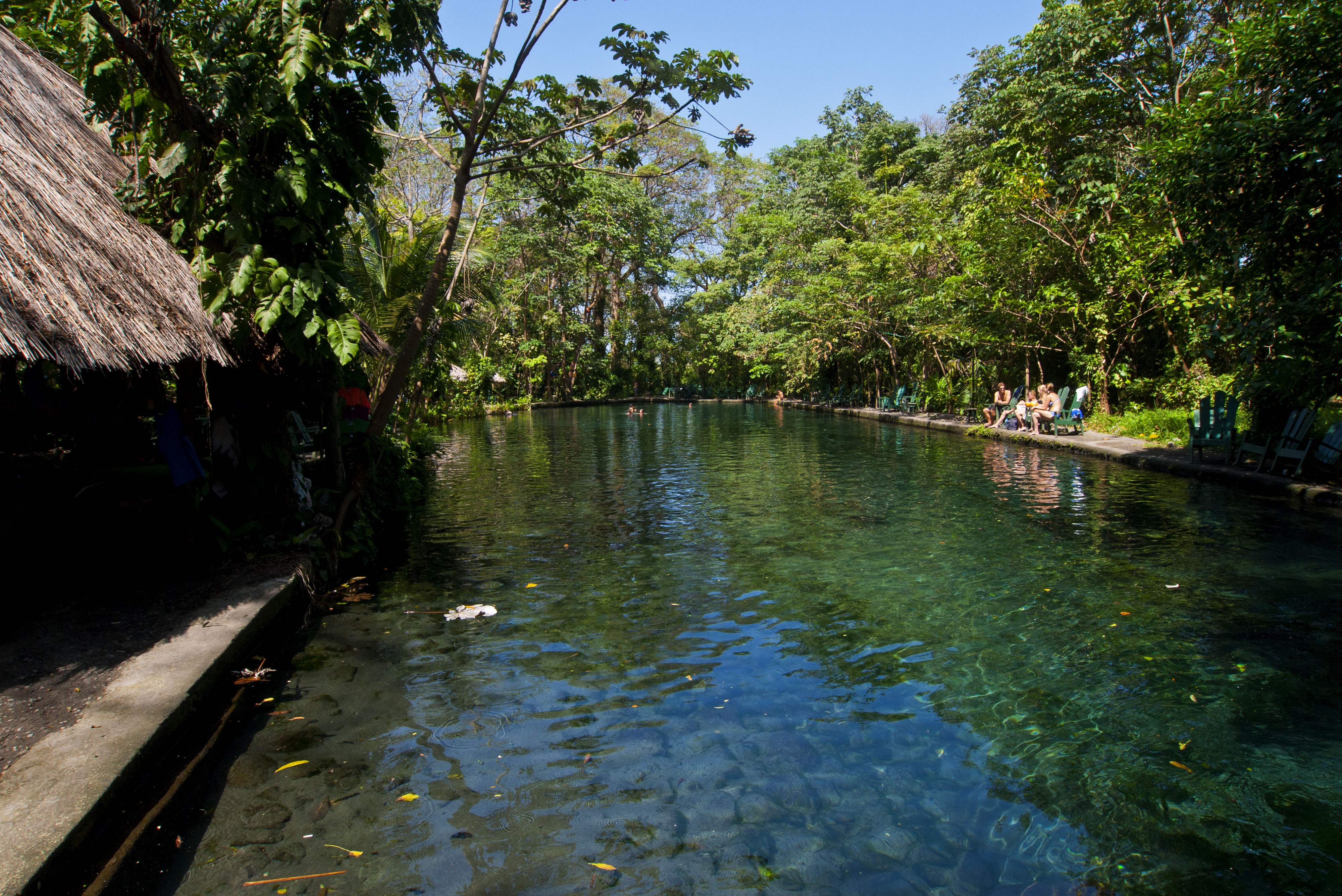
From here we were taken back to Moyogalpa and had time for a quick walk around before the ferry arrived to take us back to the Beast. The ferry on the way back was slightly different and had a indoor lounge with air-conditioning which was much appreciated after the hot day.
 FromAtoB